To eliminate any exceptions to the prohibition on States receiving an enhanced Federal matching rate for providing coverage to children whose family income exceeds 300 percent of the poverty line.
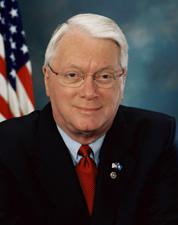 Sen. Jim Bunning (R-KY)
Legislative Activity
Stay on top of the latest movement without scrolling through every action
Senate amendment proposed (on the floor): Amendment SA 74 proposed by Senator Bunning.(consideration: CR S1015-1016, S1019-1025, S1029-1030, S1031; text: CR S1015; text as modified: CR S1031)
January 29, 2009
View full timeline
Senate amendment proposed (on the floor): Amendment SA 74 proposed by Senator Bunning.(consideration: CR S1015-1016, S1019-1025, S1029-1030, S1031; text: CR S1015; text as modified: CR S1031)
January 29, 2009
Roll call votes on amendments in Senate: Motion to table amendment SA 74 agreed to in Senate by Yea-Nay Vote. 54 - 44. Record Vote Number: 25.
January 29, 2009
Amendment SA 74 proposed by Senator Bunning. (consideration: CR S1015-1016, S1019-1025, S1029-1030, S1031; text: CR S1015; text as modified: CR S1031) To eliminate any exceptions to the prohibition on States receiving an enhanced Federal matching rate for providing coverage to children whose family income exceeds 300 percent of the poverty line.
January 29, 2009
Motion to table amendment SA 74 agreed to in Senate by Yea-Nay Vote. 54 - 44. Record Vote Number: 25.
January 29, 2009
Senate amendment submitted
January 28, 2009
Votes
1 roll call on this amendment
Text
Proposed
CHILDREN'S HEALTH INSURANCE PROGRAM REAUTHORIZATION ACT OF 2009

The ACTING PRESIDENT pro tempore. Under the previous order, the
Senate shall resume consideration of H.R. 2, which the clerk will
report.
The assistant legislative clerk read as follows:

A bill (H.R. 2) to amend title XXI of the Social Security
Act to extend and improve the Children's Health Insurance
Program, and for other purposes.

Pending:

Coburn amendment No. 49 (to H.R. 2, as amended), to prevent
fraud and restore fiscal accountability to the Medicaid and
SCHIP programs.
Coburn amendment No. 50 (to H.R. 2, as amended), to restore
fiscal discipline by making the Medicaid and SCHIP programs
more accountable and efficient.

The ACTING PRESIDENT pro tempore. The senior Senator from Nebraska is
recognized.

The Guest Chaplain

Mr. NELSON of Nebraska. Mr. President, I am very pleased that Rabbi
Daniel Fellman could join us today as guest Chaplain to deliver the
opening prayer for the Senate.
Rabbi Fellman, a native of Omaha and a respected religious leader,
currently is assistant rabbi at Anshe Emeth Memorial Temple in New
Brunswick, NJ. He is a much admired teacher who has served on the
faculty

[[Page S1008]]

at the Yavneh Day School in Cincinnati and numerous religious schools.
He served as student rabbi in congregations in Natchez, MS; Petoskey,
MI; Joplin, MO; and LaSalle, IL. He also served in summer rabbinic
positions in Nebraska and at the University of Cincinnati Hillel. In
Cincinnati, he helped foster interfaith understanding as a member of
the steering committee of the Catholic-Jewish Educators Dialogue of the
American Jewish Committee.
Rabbi Fellman received his undergraduate degree in political science
from Colorado College. He earned a master of arts in Hebrew letters
from Hebrew Union College-Jewish Institute of Religion in Cincinnati,
and he was ordained in June 2005.
On a more personal note, however, Rabbi Fellman is an Eagle Scout,
and, like me, Boy Scouts taught him the importance of dedication and
service to the community.
While he is still young now, I have counted him as a friend for a
long time. During my first campaign for Governor in 1990, I was
grateful when a teenage Daniel Fellman often showed up with his father,
University of Nebraska at Omaha political science professor Dick
Fellman--who is with us today, and his mother--to volunteer.
One night Daniel Fellman, a relatively green driver then, got into an
automobile accident. There were no serious injuries sustained, but news
reached one of my closest aides and my campaign manager the next
morning before Daniel arrived in the office. That was my great friend,
the late, great Sonny Foster.
The next morning, when Daniel did arrive at our campaign office,
Sonny greeted him: Hello, Crash. Ever since, to me and a few others, he
has been ``Crash Fellman,'' but now he is Rabbi Fellman. We understand
it is a nickname, always given and received by a smile.
I thank Rabbi Fellman and his parents and his family for being here
today and for his words of prayer this morning. May they guide us to do
what is right for America and for the world.

Recognition of the Minority Leader

The ACTING PRESIDENT pro tempore. The Republican leader is
recognized.

Economic Stimulus Legislation

Mr. McCONNELL. Mr. President, Republicans have had an opportunity
this week to highlight a number of our better ideas to ensuring low-
income children receive quality health care. We will continue to offer
our plans to improve this program. I think there is certainly a
possibility of finishing the SCHIP bill today, which will let us turn
to the economy next week.
We all know the economy is clearly the top issue on the minds of all
Americans. I think we all agree we need to act to strengthen our
economy and to create jobs. Unfortunately, the bill produced by the
Democratic Congress falls short on a number of important fronts. First,
it does not fix the main problem, which is housing. We need to address
that issue, and my colleagues will have better ideas to stimulate home
ownership. Next, we need to let taxpayers keep more of what they earn.
Finally, we should not be spending taxpayer dollars we do not have on
programs we do not need.
We have seen a lot of reports recently on what is in the bill--
everything from buying cars for Federal employees, to beautifying ATV
trails, to spiffing up the headquarters building at the Department of
Commerce. In a time of trillion-dollar deficits, we cannot afford
Washington business as usual. We should insist on the highest
standards. Are these projects really necessary? Will they stimulate the
economy? Will they create jobs? Should we ask the American people to
foot the bill? Republicans believe that letting individuals and
businesses keep more of what they earn will have a quicker stimulative
effect than having the Government spend it on projects, particularly
ones that are likely to be delayed for 3 to 4 years.
We look forward to offering amendments to improve this critical
legislation and move it back to the package President Obama originally
proposed--40-percent tax relief, no wasteful spending, and a bipartisan
approach.
Republicans have better ideas to dramatically improve this bill that
will go at the problem, create jobs, and stimulate the economy. We have
better ideas to address the housing crisis, which is where this problem
originated. But in order to pass these and other commonsense
amendments, we will need support from our friends on the other side of
the aisle. Fixing our economy requires innovative ideas, commonsense
solutions, and bipartisan cooperation. It is clear from last night's
vote in the House that the only thing that is bipartisan about this
bill is the opposition to it. It simply does not meet the standard of
bipartisan cooperation set by President Obama and welcomed by
Republicans in Congress.
Republicans stand ready to work with our friends across the aisle to
create truly bipartisan legislation which will actually stimulate the
economy and create jobs, and we are ready to start next week.
Mr. President, I suggest the absence of a quorum.
The ACTING PRESIDENT pro tempore. The clerk will call the roll.
The assistant legislative clerk proceeded to call the roll.
Mr. BAUCUS. Mr. President, I ask unanimous consent that the order for
the quorum call be rescinded.
The ACTING PRESIDENT pro tempore. Without objection, it is so
ordered.
Mr. BAUCUS. Mr. President, we had a good day on the Children's Health
Insurance Program bill yesterday. We considered 10 amendments; we
conducted 6 rollcall votes. All in all, I think it was a very
productive day because we are very close to finishing and passing the
Children's Health Insurance Program--reauthorizing it--so it can be
sent to the House. My expectation is the House will then take the
Senate bill and send it to the President so we can get it signed very
quickly.
This morning, at about 10 a.m., we expect Senator Hatch to come to
the floor to offer his amendment regarding the definition of an unborn
child. I know Senator Boxer, and perhaps some other Senators, wish to
be here to address that issue and speak on that as well.
Last night, Senator Coburn offered two amendments and spoke about
another, and we hope to work with him to process those amendments.
For the information of Senators, we are working to set up a series of
votes on amendments, perhaps later this morning. A specific time has
not been set. My guess is it will be quite late this morning. Frankly,
we are working to finish this bill this afternoon. This bill is moving
along very quickly, and I urge Senators to bring any remaining
amendments they may have to the floor so we can wrap it up.
This is a wonderful program. There aren't very many people who
disagree with the Children's Health Insurance Program as enacted by
Congress back in 1997. It was wonderful work on the part of Senator
Rockefeller, Senator Hatch, Senator Kennedy, and the late Senator John
Chafee. They worked very hard.
It is very interesting, there were very serious discussions on the
one hand, with many Senators who thought this should be another
entitlement program for children; on the other hand, some Senators
thought, no, this should not be an entitlement program, it should be a
block grant program. That was the compromise; that States get a big
chunk of money, to be matched by State payments to provide health
insurance for the working poor--for kids of families who are just above
the income levels set for Medicaid. It has worked very well. It is very
important, and I am very happy, frankly, and proud of the attempt that
was begun back in 1997 by the Senators I mentioned.
We had hoped to get this approved a couple years ago, late in 2007,
but unfortunately those two efforts were vetoed by President Bush. But
here we are today. This is 2009--a new era, a new opportunity--and I
think most Senators are quite proud of the efforts we are making to
help more kids get better health insurance.
I hope Senator Hatch gets to the floor soon so he can offer his
amendment and then we can proceed.
I yield the floor, and I suggest the absence of a quorum.
The ACTING PRESIDENT pro tempore. The clerk will call the roll.
The assistant legislative clerk proceeded to call the roll.
Mr. HATCH. Mr. President, I ask unanimous consent that the order for
the quorum call be rescinded.

[[Page S1009]]

The ACTING PRESIDENT pro tempore. Without objection, it is so
ordered.

Amendment No. 80

Mr. HATCH. Mr. President, I ask unanimous consent to set aside the
pending amendment and call up the Hatch amendment No. 80.
The ACTING PRESIDENT pro tempore. Without objection, it is so
ordered. The clerk will report.
The assistant legislative clerk read as follows:

The Senator from Utah [Mr. Hatch], for himself, Mr. Vitter,
Mr. Brownback, Mr. Thune, and Mr. Bennett, proposes an
amendment numbered 80.

Mr. HATCH. Mr. President, I ask unanimous consent that further
reading of the amendment be dispensed with.
The ACTING PRESIDENT pro tempore. Without objection, it is so
ordered.
The amendment is as follows:

(Purpose: To codify regulations specifying that an unborn child is
eligible for child health assistance)

On page 76, after line 23, add the following:

SEC. 116. TREATMENT OF UNBORN CHILDREN.

(a) Codification of Current Regulations.--Section
2110(c)(1) (42 U.S.C. 1397jj(c)(1)) is amended by striking
the period at the end and inserting the following: ``, and
includes, at the option of a State, an unborn child. For
purposes of the previous sentence, the term `unborn child'
means a member of the species Homo sapiens, at any stage of
development, who is carried in the womb.''.
(b) Clarifications Regarding Coverage of Mothers.--Section
2103 (42 U.S.C. 1397cc) is amended by adding at the end the
following new subsection:
``(g) Clarifications Regarding Authority to Provide
Postpartum Services and Maternal Health Care.--Any State that
provides child health assistance to an unborn child under the
option described in section 2110(c)(1) may--
``(1) continue to provide such assistance to the mother, as
well as postpartum services, through the end of the month in
which the 60-day period (beginning on the last day of
pregnancy) ends; and
``(2) in the interest of the child to be born, have
flexibility in defining and providing services to benefit
either the mother or unborn child consistent with the health
of both.''.

Mr. HATCH. Mr. President, America's Founders built their case for
independence on the foundation of self-evident truths; not party
platforms or partisan positions, not opinion polls or intellectual fads
but self-evident truths. Our Creator, they said, endows us with
inalienable rights, including the right to life. Government, they said,
exists to secure those rights. They believed that when America was
born, and I still believe that today. I offer this amendment in that
same spirit. The conviction about the essential dignity of our fellow
human beings motivates the Civil Rights movement here at home and the
human rights movement abroad. No matter what our income, race, sex,
religion, location or age, we all have our humanity in common.
I came to the Senate with the conviction and tried to act on that
conviction ever since by working to protect children's lives and
promote children's health. These go hand in hand. That is why I worked
so hard with Senator Kennedy and others to originally pass the
children's health program and bill. It was kind of a miracle that we
were able to get it done over 10 years ago when we did it. It was done
in the Finance Committee and became the glue that held both the
Republicans and Democrats together on the first balanced budget in over
40 years.
As I said, I came to the Senate with very strong convictions. Again,
I have tried to act on those convictions ever since by working to
protect children's lives and to promote children's health because I
believe they go hand in hand. Elaine and I have 6 children, 23
grandchildren, and 3 great-grandchildren, and we speak for children,
grandchildren, great-grandchildren, and beyond, all over America.
I cannot understand those who insist that we establish hundreds of
programs to help millions of people by spending billions of dollars but
who do not believe the lives of those very same people should be
protected.
The Children's Health Insurance Program is about promoting children's
health. My amendment does exactly that. A child in the womb is just as
alive, just as human as that very same child will be after he or she is
born. The CHIP program exists to help States promote children's health.
The children who need help might be in a house or an apartment, in a
city or out in the country, in a large family or single-parent home, in
a crib or in the womb. That just seems to me, well, self-evident.
Since October 2002, a regulation issued by the Department of Health
and Human Services has defined a child as anyone from conception to 18
years of age. It may sound a little odd to call someone who can drive,
vote, or serve in the military a child, but it is the most natural
thing in the world to say that when those very same individuals were in
the womb, they were children.
Under this HHS regulation, States have had the option of providing
CHIP coverage to children before as well as after birth. My amendment
would codify that regulation to continue helping States protect the
health of children.
I would point out to my colleagues that so far, 14 States have
approved plans to provide CHIP coverage to children before birth. Those
States include Arkansas, California, Oregon, Rhode Island, Tennessee,
Texas, Washington, and Wisconsin.
I also wish to clarify that my amendment would also provide health
coverage to pregnant women. Some have claimed that under this HHS
regulation, pregnant women would only get CHIP coverage for conditions
specifically related to their pregnancy. I want to assure my colleagues
that my amendment will ensure that States have the option of providing
services to benefit either the mother or the child or both.
My amendment also clarifies that States may provide mothers with
postpartum services for 60 days after they give birth. Mothers have
health needs before and after they give birth and their children have
health needs before and after they are born. My amendment ensures that
the CHIP program continues to meet those very important needs.
I urge my colleagues not to put the health of children at greater
risk by sidetracking my amendment with a bogus debate over abortion.
This is about children and their health, not abortion.
America itself is built on the foundation of inalienable rights which
we receive from God. Government exists to secure those rights. Those
rights do include the right to life, and they specifically include the
right to life. My life, your life, the life of each of my Senate
colleagues did not begin when we were born. Each of us was just as
alive, just as human the day before our birth as the day after--or as
we are today. Our efforts to promote children's health, including
through the CHIP program, flow from that self-evident truth.
My amendment will continue allowing States to promote the health of
children and their mothers before as well as after those children are
born. I urge all my colleagues to support it.
I yield the floor.
The ACTING PRESIDENT pro tempore. The Senator from California is
recognized.
Mrs. BOXER. Mr. President, with great respect for my friend from
Utah, I rise to oppose his amendment, not only as a Senator but as a
mom and a grandmother. What the Senator is seeking to do essentially is
separate the woman from the child she is carrying, separate her from
her pregnancy. I think I can speak with authority here. I know my
friend is a grandpa and a dad and has a magnificently beautiful family,
but I gave birth to two kids. I can assure my friend that when you
cover the pregnant woman, you are covering that child from the time
that child is a fetus to the time that child is born.
I would just say that it appears to me as if this amendment is a
diversionary amendment from this very important bill to expand and
improve the health of our children, including the health of our moms
who are pregnant, a diversion to a debate about when does life begin--
let's fight about abortion. You know what, we will have many
opportunities to have that argument. When we have that argument over
Roe v. Wade, I think pro-choice will prevail. But this is not the place
to have that argument. This is a place where my friend from Utah and I
should walk down this aisle being very happy that under this law that
is before us, this bill that is before us, States absolutely can choose
to cover a pregnant woman. This is a big step forward, and this is very
important.
Again, I think the idea behind this amendment is to divert us from
this

[[Page S1010]]

very important bill. In my State, it will expand coverage to more than
half a million kids and many pregnant women.
The debate over when life begins and all of that is a very
philosophical debate. My religion may teach something other than my
friend's. I totally respect every view on that subject. I also respect
the women of this country and the view they bring through their moral
code and their religion and whatever else they bring to the table as
human beings. On the day we debate that, I will be out here debating
it, but I am not going to get into this debate with my friend today
over when life begins. Today is a day where we are going to work on
making sure that our children are covered with health insurance and
that our pregnant women are covered with health insurance. The good
news I bring to the Senate today is that under this bill, pregnant
women will be covered by this. This is very important.
Again, to try to separate the woman from the child she is carrying,
from the fetus in her womb, is nonsensical. Maybe my friend sees it
another way. But when you take care of a pregnant woman, you are taking
care of her fetus, you are taking care of her pregnancy, you are
working hard to make sure that baby is healthy.
I just became a grandma 3 weeks ago, and my daughter had excellent
health care. I want to assure my friends on the other side of the aisle
that as she was being treated, so was the child she was carrying, my
beautiful grandson.
Let's not take a beautiful bill and start fighting over an issue that
has been a philosophical argument forever--what is the point at which
life begins? My religion teaches me one thing. My friend's religion may
teach him another. Who is right? Who is wrong? All we, as humankind,
can do is to give our best effort to figure that out. But in this bill,
what we are trying to do is bring health insurance to pregnant women,
bring health insurance to our kids. To divert it with this subject is a
disservice to the bill that is before us.
I know my friend is passionate on this point. I totally respect him
for that. But I hope we will defeat this amendment because it is a
diversion. It is a fight about Roe v. Wade. It is a fight about whether
a woman has a right to choose, and it does not belong on this bill.
Mr. President, I yield the floor.
The ACTING PRESIDENT pro tempore. The senior Senator from Utah is
recognized.
Mr. HATCH. Mr. President, as always, I care for the Senator from
California. We are good friends. You know, I hasten to point out that
her own State of California has approved unborn child State plans.
Look, this amendment by definition has nothing to do with abortion
since women who seek help covering their unborn children's health are
not women seeking abortion. They are separate, and the Senator should
not try to mix them. This is not an issue about abortion. This is an
issue about a living, unborn child and her or his mother.
I might add that 14 States have approved unborn child State plans,
including the States of Arkansas, California, Illinois, Louisiana,
Massachusetts, Minnesota, Michigan, Oklahoma, Oregon, Rhode Island,
Tennessee, Texas, Washington, and Wisconsin have all approved unborn
child State plans.
I agree with the Senator, the bill has worked beautifully, the CHIP
bill, for the last 10 years. I know. I wrote every word in it and did
so with Senators Kennedy, Rockefeller, Chafee, and others, as a matter
of fact. But I don't think anybody doubts that I carried the ball in
getting that bill through the Finance Committee and the whole Congress.
I see a one-sided attempt here to change the bill in ways that will
make it less effective and not cover as many children as it should.
Some argue the legislation already gives States the option to cover
pregnant women, so this amendment is not necessary. But the distinct
difference between this amendment and what is in the underlying bill is
that this amendment allows States to cover children before birth.
Children have health needs as much before as after they are born, so
legislation to promote children's health ought to cover them. Let me
emphasize that this is a State option, not a State requirement.
Some argue this amendment is an attempt to inject, as I think the
distinguished Senator from California has argued, the abortion issue
into a bipartisan effort to protect children's health through the
authorizing of the CHIP program. The truth is exactly the opposite. As
I said when introducing my amendment, this has nothing to do with
abortion. It has everything to do with promoting children's health, and
any reasonable person ought to be concerned about the unborn as much as
they are the born and, of course, the mother involved. This amendment
takes care of all three.
I feel very strongly about this. I do not think anybody should try to
make this an abortion issue--not myself, not the distinguished Senator
from California, or anybody else, for that matter. I don't see how
anybody can vote against an amendment that protects the life of the
unborn child after having read the Constitution about its great desire
to protect life, liberty, and the pursuit of happiness. That is what
this amendment is all about.
I feel strongly about it. I hope our colleagues will support it,
because it would be a great thing to help this bill along. I would feel
much better if this was amended. I have to admit, I do not feel good
about the approach that has been taken by my colleagues on the other
side of the aisle.
The fact is that Senator Grassley and I carried the ball for the last
2 years, working with Senators Reid, Baucus, Rockefeller, Durbin, and
others; working with the House, Speaker of the House Pelosi, Rahm
Emanuel and others who were there, including Steny Hoyer.
We worked closely together to do CHIPRA I. We got an overwhelming
vote in the Senate. On CHIPRA II, we got an overwhelming vote in the
Senate, enough to override the President's veto in the Senate. I do not
think that would have happened but for the bipartisan effort we put
together. We had a solid, strong vote in the House, but not enough to
override the President's veto.
Now, I have heard people run down President Bush for his vetoes on
CHIP. I think President Bush followed the advice of some very young
advisers in the White House who basically gave him bad advice. Had he
allowed CHIPRA I or CHIPRA II to go through, we would not be having
this awful debate today; we would all be together. The whole Congress
would have been together, and this whole effort would have been truly
bipartisan. We could have set a bipartisan tone right off the bat,
instead of this partisan tone that has been set by bringing up the bill
without even talking to the two lead Republicans who in 2007 worked so
carefully, honestly, and diligently to try and bring about a bipartisan
resolution for a new CHIP bill.
And, by the way, we took a lot of flack in the process from some in
the administration and some on our side for supporting the legislation
in 2007. We took it. We took it gladly. And our colleagues on the other
side saw us take it. They saw us stand firm. They saw Senator Grassley
and myself stand on the floor, along with a whole host of others, in a
bipartisan way, putting together what would have made CHIP even better
for the next certainly 5 years.
This bill only funds the CHIP program for 4\1/2\ years, because if
they had gone the extra half year, it would have priced the bill out of
the marketplace. But I have to say, we are going to have to come up
with that money anyway, and end up going that extra half year. So
everybody better understand all that is being done today by my friends
on the left, ignoring people, like me and Senator Grassley, who have
worked so closely with them--and they have a right to do that. I can
live with that, as I vote against their partisan bill.
All I can say is they have a right to do it. But it is the wrong
thing to do. It is the wrong way to start off this Congress after the
President himself has shown such a propensity to want to work together.
I have to say, I was there when the President came and spoke to our
caucus last Tuesday. He was impressive. He was friendly. He was making
every effort to be bipartisan. But he apparently had not fully examined
the stimulus bill that has been passed only in a partisan way by

[[Page S1011]]

the House. I would call people's attention to the Wall Street Journal
yesterday and their editorial on all the bad things that are in the
bill; or Investors Business Daily and their editorial, and how that it
is not a stimulus bill at all, but a great big potpourri of long-wanted
liberal programs that are not going to stimulate the economy the way
they should.
I am not saying there is not any stimulus in the bill, but there is
not much compared to the cost of the bill. When you add interest to the
bill, it is well over $1 trillion. Of course, you know, they keep
interest off because that would make it over $1 trillion. But interest
is going to have to be paid regardless.
Now, this particular bill on the floor right now is one where I have
a tremendous interest, namely, children and children's health. I am
going to continue to take great interest in it.
I want to caution my colleagues on the left that they are making a
tremendous mistake here. I think we could have had 95 votes for CHIPRA
II or CHIPRA I. That would send a tremendous message that has not been
sent around here in a long time.
Now, the CHIP program, so everybody understands, already covers
children before birth at the States' option. I read off the States that
have made that an option, including the distinguished Senator from
California's State.
This is not a new policy. It is already working. This amendment
simply continues that policy by codifying the HHS regulation. Women who
want their babies need this assistance. Women in California and other
States want this. Please do not deny this type of basic humane
assistance or help for women and their children with a fake argument
about abortion. Let's have an abortion debate on another day. Everybody
knows I am pro life. I feel very strongly about that. I will stand up
for the pro-life position. But it has nothing to do with what we are
debating here today. Let's help children and their mothers now.
Let's codify what a whole raft of States have said we ought to do,
including the very important State of California, one-seventh of the
whole economy, one-seventh, I should say, in size in the world economy
today, and a State I have a lot of regard for.
Fourteen states have gone along with this regulation. And, frankly, I
do not see one good argument against protecting unborn children and
their mothers who want those children covered through the wonderful
child health insurance program. This is a very important set of issues.
I yield the floor.
The ACTING PRESIDENT pro tempore. The Senator from California is
recognized.
Mrs. BOXER. Mr. President, my friend from Utah says he wants an
honest debate, and then he says, and I am quoting him--not word for
word--he says, pregnant women are not covered in this bill. That is a
dishonest debate.
States have the option to cover pregnant women, just as under the
Bush regulation they have the option to cover the unborn child. Okay?
So let's straighten it out.
My colleague has mentioned my State several times. My State was so
anxious to cover pregnant women that they did cover them under the
unborn child regulation which was put into place by George Bush,
because he injected the whole abortion debate into the CHIP program.
What we do is we get away from that. In this bill we talk about
covering pregnant women. So for anyone to stand up here and suggest
that the only way to cover pregnant women is by codifying George Bush's
regulation that, by the way, this Chamber voted down twice--let's be
clear.
My colleague says that this is a left-right issue. This is not a
left-right issue at all. When my colleagues voted on this a couple of
times before, it was bipartisan to reject the Allard amendment, which
was to codify the very law that my friend is suggesting we do today. I
will predict we will defeat this by a much bigger margin, because of
the elections that were just held.
I say again, with all respect, anyone who in their heart wants to
cover pregnant women, which means covering the child they are carrying,
should be very proud of this bill. Because that is what we do. So to
stand up here and say we have to codify George Bush's wording on this,
which was ``unborn child,'' saying if we do not pass this amendment,
pregnant women and their babies are not covered, this is a straw man or
a straw person. Pregnant women are covered. The fetus is covered from
the minute that woman goes to the doctor until the minute she gives
birth, and through all of those times in between. It is the ability of
the States to do it. But we refuse in this bill, and I hope we will
continue this, to put forward such a divisive issue and an argument
that does not belong on this bill.
If my friend was right, if he stood up here and said, right now
pregnant women are not covered, I would go over there and say, well,
let's work out some wording to make sure they are covered. But we do
not have to do that. They are covered.
What my friend wants is to codify what George Bush put into play, a
political decision to inject abortion politics into a children's health
bill. I think it is a sad day for the children of this country to be
drawn into a debate. And, again, mentioning my State several times,
when my State had no choice. If they wanted to cover pregnant women,
they had to cover them under this. Guess what. Now they will not have
to do it, because this bill corrects the problem.
So I have to say, when my friend says it is a left-right debate, it
has nothing do with left-right, and he knows it. In my State, some of
the strongest pro-choice constituents are Republicans, and some of the
strongest pro-life constituents are Democrats. This is not a left-right
issue. It is an issue we all address in our own way using our own
logic, our religion, our moral values, and we come to a conclusion.
Do not inject it into this bill. I hope we reject this, because this
is now the second abortion-related amendment my Republican friends have
offered in as many days. If that is what they think this election was
about, I think they are missing something. People want our kids to have
health care. They want our families to have health care. They want to
solve the economic problems.
Today we learned there are even more jobless claims. Millions of
people are unemployed. And we are having our second abortion-related
vote. I think if this party, this Grand Old Party does that, I see
several colleagues who may say, well, it is your right, it is your
privilege, I will debate you. I think we will prevail today.
But if every single bill we bring forward turns into an abortion-
related debate, I do not know where my colleagues are coming from.
Because let me reiterate, every pregnant woman has the right to have
this health care option should their State choose it.
We do not need to change the language and codify a very divisive
amendment which was a regulation under George Bush. It should be a new
day around here. We should not have to have this division. But I have
already heard they may offer more abortion-related amendments on this
children's bill.
Who knows what is to come? But you know what, I think my leader,
Harry Reid, is right. Let them come at us with these amendments. Let
the American people see the priorities, when everyone knows every
pregnant woman is eligible for coverage. To now indicate they are not
unless my friend's amendment passes is simply, if I could say, an out
and out falsehood. It is not true. It is not true.

I have the bill. I will read the section, if my friend needs me to.
I ask unanimous consent to print in the Record the last two votes we
had on this very same subject where those trying to inject the abortion
issue failed.
There being no objection, the material was ordered to be printed in
the Record, as follows;

U.S. Senate Roll Call Votes 110th Congress--2nd Session

As compiled through Senate LIS by the Senate Bill Clerk
under the direction of the Secretary of the Senate.

Vote Summary

Question: On the Amendment (Boxer Amdt. No. 4379).
Vote Number: 80; Vote Date: March 14, 2008, 12:11 AM.
Required For Majority: 1/2; Vote Result: Amendment Agreed
to.
Amendment Number: S. Amdt. 4379 to S. Con. Res. 70 (No
short title on file).
Statement of Purpose: To facilitate coverage of pregnant
women in SCHIP.

[[Page S1012]]

Vote Counts: YEAs--70; NAYs--27; Not Voting--3.

Vote Summary By Senator Name, By Vote Position, By Home State

Alphabetical by Senator Name
Akaka (D-HI), Yea
Alexander (R-TN), Yea
Allard (R-CO), Nay
Barrasso (R-WY), Nay
Baucus (D-MT), Yea
Bayh (D-IN), Yea
Bennett (R-UT), Nay
Biden (D-DE), Yea
Bingaman (D-NM), Yea
Bond (R-MO), Yea
Boxer (D-CA), Yea
Brown (D-OH), Yea
Brownback (R-KS), Nay
Bunning (R-KY), Nay
Burr (R-NC), Nay
Byrd (D-WV), Not Voting
Cantwell (D-WA), Yea
Cardin (D-MD), Yea
Carper (D-DE), Yea
Casey (D-PA), Yea
Chambliss (R-GA), Yea
Clinton (D-NY), Yea
Coburn (R-OK), Nay
Cochran (R-MS), Nay
Coleman (R-MN), Yea
Collins (R-ME), Yea
Conrad (D-ND), Yea
Corker (R-TN), Yea
Cornyn (R-TX), Yea
Craig (R-ID), Nay
Crapo (R-ID), Nay
DeMint (R-SC), Nay
Dodd (D-CT), Yea
Dole (R-NC), Yea
Domenici (R-NM), Not Voting
Dorgan (D-ND), Yea
Durbin (D-IL), Yea
Ensign (R-NV), Nay
Enzi (R-WY), Nay
Feingold (D-WI), Yea
Feinstein (D-CA), Yea
Graham (R-SC), Yea
Grassley (R-IA), Yea
Gregg (R-NH), Nay
Hagel (R-NE), Nay
Harkin (D-IA), Yea
Hatch (R-UT), Nay
Hutchison (R-TX), Yea
Inhofe (R-OK), Nay
Inouye (D-HI), Yea
Isakson (R-GA), Yea
Johnson (D-SD), Yea
Kennedy (D-MA), Yea
Kerry (D-MA), Yea
Klobuchar (D-MN), Yea
Kohl (D-WI), Yea
Kyl (R-AZ), Nay
Landrieu (D-LA), Yea
Lautenberg (D-NJ), Yea
Leahy (D-VT), Yea
Levin (D-MI), Yea
Lieberman (ID-CT), Yea
Lincoln (D-AR), Yea
Lugar (R-IN), Yea
Martinez (R-FL), Nay
McCain (R-AZ), Yea
McCaskill (D-MO), Yea
McConnell (R-KY), Yea
Menendez (D-NJ), Yea
Mikulski (D-MD), Not Voting
Murkowski (R-AK), Yea
Murray (D-WA), Yea
Nelson (D-FL), Yea
Nelson (D-NE), Yea
Obama (D-IL), Yea
Pryor (D-AR), Yea
Reed (D-RI), Yea
Reid (D-NV), Yea
Roberts (R-KS), Nay
Rockefeller (D-WV), Yea
Salazar (D-CO), Yea
Sanders (I-VT), Yea
Schumer (D-NY), Yea
Sessions (R-AL), Nay
Shelby (R-AL), Nay
Smith (R-OR), Yea
Snowe (R-ME), Yea
Specter (R-PA), Yea
Stabenow (D-MI), Yea
Stevens (R-AK), Yea
Sununu (R-NH), Nay
Tester (D-MT), Yea
Thune (R-SD), Nay
Vitter (R-LA), Nay
Voinovich (R-OH), Nay
Warner (R-VA), Yea
Webb (D-VA), Yea
Whitehouse (D-RI), Yea
Wicker (R-MS), Nay
Wyden (D-OR), Yea
Grouped By Vote Position

YEAs--70

Akaka (D-HI)
Alexander (R-TN)
Baucus (D-MT)
Bayh (D-IN)
Biden (D-DE)
Bingaman (D-NM)
Bond (R-MO)
Boxer (D-CA)
Brown (D-OH)
Cantwell (D-WA)
Cardin (D-MD)
Carper (D-DE)
Casey (D-PA)
Chambliss (R-GA)
Clinton (D-NY)
Coleman (R-MN)
Collins (R-ME)
Conrad (D-ND)
Corker (R-TN)
Cornyn (R-TX)
Dodd (D-CT)
Dole (R-NC)
Dorgan (D-ND)
Durbin (D-IL)
Feingold (D-WI)
Feinstein (D-CA)
Graham (R-SC)
Grassley (R-IA)
Harkin (D-IA)
Hutchison (R-TX)
Inouye (D-HI)
Isakson (R-GA)
Johnson (D-SD)
Kennedy (D-MA)
Kerry (D-MA)
Klobuchar (D-MN)
Kohl (D-WI)
Landrieu (D-LA)
Lautenberg (D-NJ)
Leahy (D-VT)
Levin (D-MI)
Lieberman (ID-CT)
Lincoln (D-AR)
Lugar (R-IN)
McCain (R-AZ)
McCaskill (D-MO)
McConnell (R-KY)
Menendez (D-NJ)
Murkowski (R-AK)
Murray (D-WA)
Nelson (D-FL)
Nelson (D-NE)
Obama (D-IL)
Pryor (D-AR)
Reed (D-RI)
Reid (D-NV)
Rockefeller (D-WV)
Salazar (D-CO)
Sanders (I-VT)
Schumer (D-NY)
Smith (R-OR)
Snowe (R-ME)
Specter (R-PA)
Stabenow (D-MI)
Stevens (R-AK)
Tester (D-MT)
Warner (R-VA)
Webb (D-VA)
Whitehouse (D-RI)
Wyden (D-OR)

NAYs--27

Allard (R-CO)
Barrasso (R-WY)
Bennett (R-UT)
Brownback (R-KS)
Bunning (R-KY)
Burr (R-NC)
Coburn (R-OK)
Cochran (R-MS)
Craig (R-ID)
Crapo (R-ID)
DeMint (R-SC)
Ensign (R-NV)
Enzi (R-WY)
Gregg (R-NH)
Hagel (R-NE)
Hatch (R-UT)
Inhofe (R-OK)
Kyl (R-AZ)
Martinez (R-FL)
Roberts (R-KS)
Sessions (R-AL)
Shelby (R-AL)
Sununu (R-NH)
Thune (R-SD)
Vitter (R-LA)
Voinovich (R-OH)
Wicker (R-MS)

Not Voting--3

Byrd (D-WV)
Domenici (R-NM)
Mikulski (D-MD)

____

U.S. Senate Roll Call Votes 110th Congress--2nd Session

As compiled through Senate LIS by the Senate Bill Clerk
under the direction of the Secretary of the Senate.

Vote Summary

Question: On the Amendment (Allard Amdt. No. 4233).
Vote Number: 81; Vote Date: March 14, 2008, 12:29 AM.
Required For Majority: 1/2; Vote Result: Amendment
Rejected.
Amendment Number: S. Amdt. 4233 to S. Con. Res. 70 (No
short title on file).
Statement of Purpose: To require that legislation to
reauthorize SCHIP include provisions codifying the unborn
child regulation.
Vote Counts: YEAs--46; NAYs--52; Not Voting--2.

Vote Summary By Senator Name, By Vote Position, By Home State

Alphabetical by Senator Name
Akaka (D-HI), Nay
Alexander (R-TN), Yea
Allard (R-CO), Yea
Barrasso (R-WY), Yea
Baucus (D-MT), Nay
Bayh (D-IN), Nay
Bennett (R-UT), Yea
Biden (D-DE), Nay
Bingaman (D-NM), Nay
Bond (R-MO), Yea
Boxer (D-CA), Nay
Brown (D-OH), Nay
Brownback (R-KS), Yea
Bunning (R-KY), Yea
Burr (R-NC), Yea
Byrd (D-WV), Not Voting
Cantwell (D-WA), Nay
Cardin (D-MD), Nay
Carper (D-DE), Nay
Casey (D-PA), Yea
Chambliss (R-GA), Yea
Clinton (D-NY), Nay
Coburn (R-OK), Yea
Cochran (R-MS), Yea
Coleman (R-MN), Yea
Collins (R-ME), Nay
Conrad (D-ND), Nay
Corker (R-TN), Yea
Cornyn (R-TX), Yea
Craig (R-ID), Yea
Crapo (R-ID), Yea
DeMint (R-SC), Yea
Dodd (D-CT), Nay
Dole (R-NC), Yea
Domenici (R-NM), Not Voting
Dorgan (D-ND), Nay
Durbin (D-IL), Nay
Ensign (R-NV), Yea
Enzi (R-WY), Yea
Feingold (D-WI), Nay
Feinstein (D-CA), Nay
Graham (R-SC), Yea
Grassley (R-IA), Yea
Gregg (R-NH), Yea
Hagel (R-NE), Yea
Harkin (D-IA), Nay
Hatch (R-UT), Yea
Hutchison (R-TX), Yea
Inhofe (R-OK), Yea
Inouye (D-HI), Nay
Isakson (R-GA), Yea
Johnson (D-SD), Nay
Kennedy (D-MA), Nay
Kerry (D-MA), Nay
Klobuchar (D-MN), Nay
Kohl (D-WI), Nay
Kyl (R-AZ), Yea
Landrieu (D-LA), Nay
Lautenberg (D-NJ), Nay
Leahy (D-VT), Nay
Levin (D-MI), Nay
Lieberman (ID-CT), Nay
Lincoln (D-AR), Nay
Lugar (R-IN), Yea
Martinez (R-FL), Yea
McCain (R-AZ), Yea
McCaskill (D-MO), Nay
McConnell (R-KY), Yea
Menendez (D-NJ), Nay
Mikulski (D-MD), Nay
Murkowski (R-AK), Nay
Murray (D-WA), Nay
Nelson (D-FL), Nay
Nelson (D-NE), Yea
Obama (D-IL), Nay
Pryor (D-AR), Nay
Reed (D-RI), Nay
Reid (D-NV), Nay
Roberts (R-KS), Yea
Rockefeller (D-WV), Nay
Salazar (D-CO), Nay
Sanders (I-VT), Nay
Schumer (D-NY), Nay
Sessions (R-AL), Yea
Shelby (R-AL), Yea
Smith (R-OR), Yea
Snowe (R-ME), Nay
Specter (R-PA), Nay
Stabenow (D-MI), Nay
Stevens (R-AK), Yea
Sununu (R-NH), Yea
Tester (D-MT), Nay
Thune (R-SD), Yea
Vitter (R-LA), Yea
Voinovich (R-OH), Yea
Warner (R-VA), Yea
Webb (D-VA), Nay
Whitehouse (D-RI), Nay
Wicker (R-MS), Yea
Wyden (D-OR), Nay
Grouped By Vote Position

YEAs--46

Alexander (R-TN)
Allard (R-CO)
Barrasso (R-WY)
Bennett (R-UT)
Bond (R-MO)
Brownback (R-KS)
Bunning (R-KY)
Burr (R-NC)
Casey (D-PA)
Chambliss (R-GA)
Coburn (R-OK)
Cochran (R-MS)
Coleman (R-MN)
Corker (R-TN)
Cornyn (R-TX)
Craig (R-ID)
Crapo (R-ID)
DeMint (R-SC)
Dole (R-NC)
Ensign (R-NV)
Enzi (R-WY)
Graham (R-SC)
Grassley (R-IA)
Gregg (R-NH)
Hagel (R-NE)
Hatch (R-UT)
Hutchison (R-TX)
Inhofe (R-OK)
Isakson (R-GA)
Kyl (R-AZ)
Lugar (R-IN)
Martinez (R-FL)
McCain (R-AZ)
McConnell (R-KY)
Nelson (D-NE)
Roberts (R-KS)
Sessions (R-AL)
Shelby (R-AL)
Smith (R-OR)
Stevens (R-AK)
Sununu (R-NH)
Thune (R-SD)
Vitter (R-LA)
Voinovich (R-OH)
Warner (R-VA)
Wicker (R-MS)

NAYs--52

Akaka (D-HI)
Baucus (D-MT)
Bayh (D-IN)
Biden (D-DE)
Bingaman (D-NM)
Boxer (D-CA)
Brown (D-OH)
Cantwell (D-WA)
Cardin (D-MD)
Carper (D-DE)
Clinton (D-NY)
Collins (R-ME)
Conrad (D-ND)
Dodd (D-CT)
Dorgan (D-ND)
Durbin (D-IL)
Feingold (D-WI)
Feinstein (D-CA)
Harkin (D-IA)
Inouye (D-HI)
Johnson (D-SD)
Kennedy (D-MA)
Kerry (D-MA)
Klobuchar (D-MN)
Kohl (D-WI)
Landrieu (D-LA)
Lautenberg (D-NJ)
Leahy (D-VT)
Levin (D-MI)
Lieberman (ID-CT)
Lincoln (D-AR)
McCaskill (D-MO)
Menendez (D-NJ)
Mikulski (D-MD)
Murkowski (R-AK)
Murray (D-WA)
Nelson (D-FL)
Obama (D-IL)
Pryor (D-AR)
Reed (D-RI)
Reid (D-NV)
Rockefeller (D-WV)
Salazar (D-CO)
Sanders (I-VT)
Schumer (D-NY)
Snowe (R-ME)
Specter (R-PA)
Stabenow (D-MI)
Tester (D-MT)
Webb (D-VA)
Whitehouse (D-RI)
Wyden (D-OR)

Not Voting--2

Byrd (D-WV)
Domenici (R-NM)
Mrs. BOXER. Again, I want my colleagues to understand, we are
debating a children's health care bill. Happily, I can say every
pregnant woman in this country is eligible for health care. It is a
wonderful thing. We avoid the divisive language of my friend's
amendment which is codifying something George Bush put into place. It
was not supported in the Senate. It was not supported twice. I respect
his right to offer it as many times as he wants and let the American
people see what we are debating. My State wanted so much to cover
pregnant women, they said: We will go along with this language. But now
they will not have to. They don't have to get engaged in an abortion
debate, when you are serving children. I view this, frankly, as a
needless debate. If the issue is covering pregnant women and their
children, we have taken care of it. If this amendment is about
injecting abortion and when life begins, it definitely succeeds.
I hope the Senate will speak loudly and clearly, regardless of how
one feels about when life begins because that is not a partisan issue.
Everybody comes

[[Page S1013]]

to their own conclusion. This is an attempt to inject the abortion
debate into a children's health care bill. It is diversionary. It is
unnecessary. We should be so proud this bill covers every pregnant
woman. It is one of those moments we could walk down the aisle together
saying isn't it wonderful because pregnant women will get health care.
That will lead to healthier children. We all know that.
I yield the floor.
The PRESIDING OFFICER (Mr. Udall of New Mexico). The Senator from
Utah.
Mr. HATCH. Mr. President, this is not an injection of abortion into
the debate. This is a children's health bill. I was the original author
of the one that worked so well for over 10 years. A raft of States have
determined that they should take care of the unborn through their CHIP
programs. It is not an issue of abortion. In the world view of those
who support abortion, the fact is, they don't want to give recognition
to the unborn child. That is their right, if they want to feel that
way. I think it is ridiculous. It is unspiritual. It is ignoring life
itself. But to make that part of this debate is the wrong thing to do.
We are trying to protect children.
The distinguished Senator from California said: All women are going
to be protected by this bill. That is not true. It is a state option so
they are covered only if a State decides to cover low-income, pregnant
women. We want to make sure that if the state has the option to not
just cover the woman but the unborn child as well. Anybody with brains
ought to want to do that and ought to avoid the whole issue of
abortion, which I am trying to do by protecting the mother and the
unborn child and codifying the 2002 regulation.
Section 111 of the bill says there is a State option to cover low-
income pregnant women under CHIP through a State plan amendment. Some
States have chosen to do that. But why not recognize the rights of the
unborn child? To try and make this into an abortion debate because they
just don't believe the unborn child lives is another thing. The point
of my amendment is to ensure States continue to have the option in the
future to cover unborn children, plain and simple, without any
ambiguity. We codify the 2002 regulation into law. Frankly, it is about
time we do things like that in a children's health bill. But to make
this abortion argument is--I hate to say it--completely wrong.
I am concerned not only with mothers, but I am also concerned about
those unborn children who deserve the best health we can give them. My
amendment gives the States the right to do that by codifying this
important regulation. I know some supporters of abortion rights are
afraid this will legitimize the fact that the unborn child is alive and
is a human being. That is another argument. I agree that argument is
right; that unborn child is alive, it is a living human being inside
the mother's womb. The point of when the spirit enters the body is a
legitimate question, I suppose, to some. But why would we be afraid to
protect the rights of that unborn child? Why would we be afraid to do
that? Why are folks so afraid if we legitimize the understanding that
this unborn child actually is a living being, that somehow or other it
is going to destroy their political world? It isn't going to do that.
This is a children's health bill. I take a tremendous interest in it.
I not only want to protect the pregnant woman, I want to protect that
unborn child. I don't know of any pregnant woman who wants her child
who would not want this type of protection. To make this into a bogus
argument is the wrong thing to do.
I yield the floor.
The PRESIDING OFFICER. The Senator from California is recognized.
Mrs. BOXER. Mr. President, the reason I want to respond to this, my
friend is so eloquent, and he is such a great debater, but I have to
bring us back to reality. If you are standing here today because you
care about kids and you want to make sure pregnant women get all the
health care they need so if there is trouble in the pregnancy, if there
is a problem--there are so many miraculous things that can be done, and
I have seen some of those in my own family, the things they can do to
make sure a child is healthy. If the purpose of my friend, out of his
love for his children and all children, which I know he has--if my
purpose in supporting this bill is to make sure children are healthy,
if that is our purpose, we could be very proud of this bill.
This bill says--and I will reiterate this as long as I have to--every
single poor pregnant woman in America today is eligible for health care
during her pregnancy, from the first day to the last day. Then, of
course, a poor child would continue to get that health care. So anyone
else who says that isn't true simply hasn't read the bill.
I ask unanimous consent to print in the Record, so my friend can't
say something that is without rebuttal, page 50 of the bill, section
2112, which talks about low-income pregnant women to be covered through
a State plan amendment.
There being no objection, the material was ordered to be printed in
the Record, as follows:

Subtitle B--Focus on Low-Income Children and Pregnant Women

SEC. 111. STATE OPTION TO COVER LOW-INCOME PREGNANT WOMEN
UNDER CHIP THROUGH A STATE PLAN AMENDMENT.

(a) In General.--Title XXI (42 U.S.C. 1397aa et seq.), as
amended by section 112(a), is amended by adding at the end
the following new section:

`SEC. 2112. OPTIONAL COVERAGE OF TARGETED LOW-INCOME PREGNANT
WOMEN THROUGH A STATE PLAN AMENDMENT.

`(a) In General.--Subject to the succeeding provisions of
this section, a State may elect through an amendment to its
State child health plan under section 2102 to provide
pregnancy-related assistance under such plan for targeted
low-income pregnant women.
`(b) Conditions.--A State may only elect the option under
subsection (a) if the following conditions are satisfied:
`(1) Minimum income eligibility levels for pregnant women
and children.--The State has established an income
eligibility level--
`(A) for pregnant women under subsection
(a)(10)(A)(i)(III), (a)(10)(A)(i)(IV), or (l)(1)(A) of
section 1902 that is at least 185 percent (or such higher
percent as the State has in effect with regard to pregnant
women under this title) of the poverty line applicable to a
family of the size involved, but in no case lower than the
percent in effect under any such subsection as of July 1,
2008; and
`(B) for children under 19 years of age under this title
(or title XIX) that is at least 200 percent of the poverty
line applicable to a family of the size involved.
`(2) No chip income eligibility level for pregnant women
lower than the state's medicaid level.--The State does not
apply an effective income level for pregnant women under the
State plan amendment that is lower than the effective income
level (expressed as a percent of the poverty line and
considering applicable income disregards) specified under
subsection (a)(10)(A)(i)(III), (a)(10)(A)(i)(IV), or
(l)(1)(A) of section 1902, on the date of enactment of this
paragraph to be eligible for medical assistance as a pregnant
woman.
`(3) No coverage for higher income pregnant women without
covering lower income pregnant women.--The State does not
provide coverage for pregnant women with higher family income
without covering pregnant women with a lower family income.
`(4) Application of requirements for coverage of targeted
low-income children.--The State provides pregnancy-related
assistance for targeted low-income pregnant women in the same
manner, and subject to the same requirements, as the State
provides child health assistance for targeted low-income
children under the State child health plan, and in
addition to providing child health assistance for such
women.
`(5) No preexisting condition exclusion or waiting
period.--The State does not apply any exclusion of benefits
for pregnancy-related assistance based on any preexisting
condition or any waiting period (including any waiting period
imposed to carry out section 2102(b)(3)(C)) for receipt of
such assistance.
`(6) Application of cost-sharing protection.--The State
provides pregnancy-related assistance to a targeted low-
income woman consistent with the cost-sharing protections
under section 2103(e) and applies the limitation on total
annual aggregate cost sharing imposed under paragraph (3)(B)
of such section to the family of such a woman.
`(7) No waiting list for children.--The State does not
impose, with respect to the enrollment under the State child
health plan of targeted low-income children during the
quarter, any enrollment cap or other numerical limitation on
enrollment, any waiting list, any procedures designed to
delay the consideration of applications for enrollment, or
similar limitation with respect to enrollment.
`(c) Option to provide presumptive eligibility.--A State
that elects the option under subsection (a) and satisfies the
conditions described in subsection (b) may elect to apply
section 1920 (relating to presumptive eligibility for
pregnant women) to the State child health plan in the same
manner as such section applies to the State plan under title
XIX.

[[Page S1014]]

`(d) Definitions.--For purposes of this section:
`(1) Pregnancy-related assistance.--The term `pregnancy-
related assistance' has the meaning given the term `child
health assistance' in section 2110(a) with respect to an
individual during the period described in paragraph (2)(A).
`(2) Targeted low-income pregnant woman.--The term
`targeted low-income pregnant woman' means an individual--
`(A) during pregnancy and through the end of the month in
which the 60-day period (beginning on the last day of her
pregnancy) ends;
`(B) whose family income exceeds 185 percent (or, if
higher, the percent applied under subsection (b)(1)(A)) of
the poverty line applicable to a family of the size involved,
but does not exceed the income eligibility level established
under the State child health plan under this title for a
targeted low-income child; and
`(C) who satisfies the requirements of paragraphs (1)(A),
(1)(C), (2), and (3) of section 2110(b) in the same manner as
a child applying for child health assistance would have to
satisfy such requirements.
`(e) Automatic enrollment for children born to women
receiving pregnancy-related assistance.--If a child is born
to a targeted low-income pregnant woman who was receiving
pregnancy-related assistance under this section on the date
of the child's birth, the child shall be deemed to have
applied for child health assistance under the State child
health plan and to have been found eligible for such
assistance under such plan or to have applied for medical
assistance under title XIX and to have been found eligible
for such assistance under such title, as appropriate, on the
date of such birth and to remain eligible for such assistance
until the child attains 1 year of age. During the period in
which a child is deemed under the preceding sentence to be
eligible for child health or medical assistance, the child
health or medical assistance eligibility identification
number of the mother shall also serve as the identification
number of the child, and all claims shall be submitted and
paid under such number (unless the State issues a separate
identification number for the child before such period
expires).
`(f) States Providing Assistance Through Other Options.--
`(1) Continuation of other options for providing
assistance.--The option to provide assistance in accordance
with the preceding subsections of this section shall not
limit any other option for a State to provide--
`(A) child health assistance through the application of
sections 457.10, 457.350(b)(2), 457.622(c)(5), and
457.626(a)(3) of title 42, Code of Federal Regulations (as in
effect after the final rule adopted by the Secretary and set
forth at 67 Fed. Reg. 61956-61974 (October 2, 2002)), or
`(B) pregnancy-related services through the application of
any waiver authority (as in effect on June 1, 2008).
`(2) Clarification of authority to provide postpartum
services- Any State that provides child health assistance
under any authority described in paragraph (1) may continue
to provide such assistance, as well as postpartum services,
through the end of the month in which the 60-day period
(beginning on the last day of the pregnancy) ends, in the
same manner as such assistance and postpartum services would
be provided if provided under the State plan under title XIX,
but only if the mother would otherwise satisfy the
eligibility requirements that apply under the State child
health plan (other than with respect to age) during such
period.
`(3) No inference.--Nothing in this subsection shall be
construed--
`(A) to infer congressional intent regarding the legality
or illegality of the content of the sections specified in
paragraph (1)(A); or
`(B) to modify the authority to provide pregnancy-related
services under a waiver specified in paragraph (1)(B).'.
(b) Additional Conforming Amendments.--
(1) No cost sharing for pregnancy-related benefits.--
Section 2103(e)(2) (42 U.S.C. 1397cc(e)(2)) is amended--
(A) in the heading, by inserting `or pregnancy-related
assistance' after `preventive services'; and
(B) by inserting before the period at the end the
following: `or for pregnancy-related assistance'.
(2) No waiting period.--Section 2102(b)(1)(B) (42 U.S.C.
1397bb(b)(1)(B)) is amended--
(A) in clause (i), by striking `, and' at the end and
inserting a semicolon;
(B) in clause (ii), by striking the period at the end and
inserting `; and'; and
(C) by adding at the end the following new clause:
`(iii) may not apply a waiting period (including a waiting
period to carry out paragraph (3)(C)) in the case of a
targeted low-income pregnant woman provided pregnancy-related
assistance under section 2112.'.

Mrs. BOXER. Let no one stand and say that unless we support the
amendment of the Senator from Utah, a pregnant woman and the child she
is carrying will not get coverage. That is false. What my friend wants
is to codify George Bush's regulation that he correctly pointed out my
State adopted. Why did my State adopt it? They were forced to adopt it
if they wanted to cover pregnant women. They had to use that language
of the unborn child. This is all about the abortion debate. It has to
be. Under this bill I support, every pregnant woman is covered or is
eligible for coverage. Under the amendment my friend is offering today,
every pregnant woman would be eligible. So it is just about the
language. That is the fact.
Let me repeat that. Under the bill, every pregnant poor woman is
eligible for coverage. Under the amendment of my friend, every poor
pregnant woman is eligible for coverage. What he insists on is that you
have to separate the woman from the child she is carrying in order to
make a political point about when life begins. This is not the
appropriate time to have that debate. Believe me, I look forward to the
debate. We have had it on the Senate floor. Tom Harkin had an amendment
a couple of times to say that Roe v. Wade ought to be codified. It
should not be overturned. We had votes on that. By the way, we did win
that vote. But that is not what this is about. This is about making
sure every pregnant woman gets coverage. Instead of being happy about
it, my friend is agitated about the language and wants to write it in
his way so we can then get into a debate about when life begins.
How you would ever separate a pregnant woman from the child she is
carrying goes against nature. I have had two kids. I know. It is all
about health care to the pregnant woman. When the child is born, it is
about health care to the woman and, yes, the baby. My friend can stand
here all he wants and say I am the one who is injecting abortion into
this debate. I am not the one offering a divisive amendment. I am not
the one raising the subject matter of when a fetus is a separate life
from the mother. That is for another time. We have work to do. We have
people struggling in this country. My friend attacked the stimulus
bill.
By the way, that debate is coming as well. But the one area I know we
should be able to work together on is making sure our kids are healthy.
We should walk down the aisle together being very pleased we have taken
care of that in this bill. Believe me, the more people lose their jobs
and they can't get another one, the more this program is going to be
necessary.
I hope we can have a vote on this in the near future. I guess I would
like to ask my friend if he wants to continue this debate. I can stay
all day. But I didn't know what his plan was.
Mr. HATCH. I don't want to continue it all day. I do believe there
are some people who want to speak on this side. I will just make one or
two comments.
Mrs. BOXER. I yield the floor at this time and retain my right to
respond.
The PRESIDING OFFICER. The Senator from Utah.
Mr. HATCH. Mr. President, let's not pit mothers against their
children. This is not an either/or situation. Let's protect both
mothers and their unborn children. In fact, the purpose of this bill is
to provide health care coverage to low income, uninsured children. The
Senator and I simply disagree. This amendment concerns unborn children
and covering them. She seems to think it is about abortion. I don't.
Her own State is covering unborn children through the regulation of the
prior administration. Thirteen other States are as well.
Mr. President, I think I have made the case. Let me say that I ask
unanimous consent that Senator Robert Casey be also listed as a prime
cosponsor on this amendment, along with the distinguished Senator from
Nebraska, Mr. Nelson.
The PRESIDING OFFICER. Without objection, it is so ordered.
Mr. HATCH. I feel very blessed to have these two very strong
Democrats willing to support a recognition that these unborn kids are
human beings, they are human life, and that a child health insurance
program bill ought to cover them.
With that, Mr. President, I know Senator Bunning is here and I will
yield the floor.
Mrs. BOXER. Mr. President, if I might have a moment before Senator
Bunning speaks.
The PRESIDING OFFICER. The Senator from California is recognized.
Mrs. BOXER. Thank you, Mr. President. Because some of the things that
are said around here--and, by the way, we will have a whole list of
Republicans helping us to defeat this, so I am

[[Page S1015]]

not going to name people. But let me say this: To stand up and say we
are pitting a woman against her child when we support this bill that
makes eligible for coverage every pregnant woman is simply a hurtful
and untrue remark, especially to say it to someone who adores her
children and her grandkids, and I take great offense. It is the
opposite.
This amendment separates a woman from her child because instead of
saying you are going to cover a pregnant women, you are saying you are
covering the unborn child. And what about the woman? She is not even
mentioned. I take offense at that line of attack.
We say when you cover a pregnant woman, you cover her child, you
cover that fetus from the moment that woman goes to get health care.
What my friend does is separate the woman from her child by saying we
are going to give the child health care while the child is in the womb
and do not even mention the woman--do not even mention the woman. So
who is separating the woman from her child?
Again, it is very clear that this is about the abortion debate. And
as many times as my friend says it--and he raises my State again, so
let me say again, yes, many States did provide health care under this
definition of unborn child. They had no choice because President Bush
put a regulation in place, and if my State wanted to help pregnant
women, they had no choice but to help them under that particular
regulation.
Well, what we are doing today is saying to States: You do not have to
get into the abortion debate. If a woman is poor and she is eligible
for Medicaid, and she is pregnant, she gets the health care as well as
the baby she is carrying.
So do not say that those of us who vote against this amendment are
separating women and children. It is the total opposite. For whatever
reason, under that old regulation, the child was mentioned and not the
woman. That defies science. That defies reality. You treat the woman
and the child she is carrying.
So, again, I take offense at this. I do not want to be jumping up
every time, but I will if there is something said here that is not
true. I have total respect for the other side on the abortion debate--
complete respect for them. And that is what this is about, and they
know it. Because if they only cared about the pregnant woman and her
child, they are taken care of in this bill.
Mr. President, I thank you very much, and I yield the floor.
The PRESIDING OFFICER. The Senator from Kentucky is recognized.
Mr. BUNNING. Mr. President, I am not entering into this debate.
Mr. President, I ask unanimous consent that Senator Hatch's amendment
be set aside so that I may offer another amendment.
The PRESIDING OFFICER. Without objection, it is so ordered. The
amendment is set aside.

Amendment No. 74

Mr. BUNNING. Mr. President, I call up my amendment No. 74.
The PRESIDING OFFICER. The clerk will report.
The legislative clerk read as follows:

The Senator from Kentucky [Mr. Bunning] proposes an
amendment numbered 74.

Mr. BUNNING. Mr. President, I ask unanimous consent that reading of
the amendment be dispensed with.
The PRESIDING OFFICER. Without objection, it is so ordered.
The amendment is as follows:

(Purpose: To eliminate any exceptions to the prohibition on States
receiving an enhanced Federal matching rate for providing coverage to
children whose family income exceeds 300 percent of the poverty line
and to use the savings for the outreach and enrollment grant)

Beginning on page 75, strike line 18 and all that follows
through page 76, line 2, and insert the following:
``(B) Increased funding for outreach and enrollment
grants.--
``(i) Appropriation.--In addition to amounts appropriated
under subsection (g) of section 2113 for the period of fiscal
years 2009 through 2013, there is appropriated, out of any
money in the Treasury not otherwise appropriated, the amount
described in clause (ii), for the purpose of the Secretary
awarding grants under that section.
``(ii) Amount described.--The amount described in this
clause is the amount equal to the amount of additional
Federal funds that the Director of the Congressional Budget
Office certifies would have been expended for the period
beginning April 1, 2009, and ending September 30, 2013, if
subparagraph (A) did not apply to any State that, on the date
of enactment of the Children's Health Insurance Program
Reauthorization Act of 2009, has an approved State plan
amendment or waiver to provide, or has enacted a State law to
submit a State plan amendment to provide, expenditures
described in such subparagraph under the State child health
plan.''.

Mr. BUNNING. Mr. President, I also ask unanimous consent that Senator
Collins from Maine and Senator Hatch from Utah be added as cosponsors
to this amendment.
The PRESIDING OFFICER. Without objection, it is so ordered.
Mr. BUNNING. I appreciate their support.
When SCHIP was created, I supported the bill and felt it filled a
need in our health care system. The bill focused on providing health
insurance to low-income children whose parents made too much money to
qualify for Medicaid but did not have private health insurance.
Many States have done a good job of keeping the focus of their SCHIP
programs on low-income children, including Kentucky that only covers
children below 200 percent of poverty. However, other States have
expanded their SCHIP programs to cover children in families most of us
would not consider low income. Some States are even covering adults,
including parents and childless adults. These expansions erode the
original intent of the program.
The Baucus SCHIP bill we are considering today further expands the
SCHIP program, including allowing States to cover children in families
up to 300 percent of the poverty level. That is $66,000 of income a
year for a family of four.
Personally, I think 300 percent is too high for SCHIP, and the focus
of this reauthorization bill should be reaching those kids who are
currently eligible for the program but are not enrolled.
The Baucus bill also allows States choosing to cover children above
300 percent of poverty to still get Federal money for their efforts but
only at their lower Medicaid matching rate, not the higher SCHIP
matching rate.
Two States--2 out of 50--however, get a special exemption under this
bill and will get their higher SCHIP matching rate for covering
children above 300 percent of poverty, specifically New York and New
Jersey.
New York wants to cover families up to 400 percent of poverty or that
is $88,000 a year for a family of four. New Jersey currently covers
families up to 350 percent of poverty or $77,000 a year for a family of
four.
These are certainly not low-income families, and I feel strongly the
States should not get additional Federal money for covering families
making up to $88,000 a year.
My amendment is fairly simple. It simply removes this exemption for
New York and New Jersey so they have to play by the same rules all the
other 48 States play by. If they go above 300 percent of poverty, they
get their Medicaid matching rate but not the higher SCHIP rate.
As I have said, I think 300 percent is too high, and if I were
writing the bill, I certainly would not allow States to get any Federal
money if they were covering families over 300 percent of poverty.
However, that is not the bill before us. So my amendment tries to
equalize the playing field between the 50 States and be a little more
fiscally responsible with taxpayers' dollars.
Under my amendment, New York and New Jersey can still choose to cover
children above 300 percent, they just will not get the higher SCHIP
matching rate. If the people in New York and New Jersey want to cover
families making up to $88,000 a year, they should be the ones paying
for the coverage, not requiring my citizens in Kentucky and other
citizens in all the other 48 States across America to foot the bill.
Finally, my amendment takes the savings from reimbursing New York and
New Jersey at the Medicaid matching rate and directs that money to more
outreach and enrollment dollars so we can get everybody who is eligible
for SCHIP enrolled. We are having difficulty doing that. Kentucky only
has 85 percent. I do not know how much some of the other States have.
But we ought to be able to get to 100 percent of coverage. The other
money that is saved by that would allow them to seek out those eligible
children under SCHIP.

[[Page S1016]]

The SCHIP reauthorization should be about making sure low-income
children who are eligible for SCHIP are covered, not about covering
children in families making up to $88,000 a year.
So with my amendment, you have two options: more money for outreach
and enrollment and requiring all States to play by the same rules or
requiring the people of your State to pay more taxes so that New York
and New Jersey can cover families who make $77,000 or $88,000 a year.
To me, the choice is simple, and I hope the other Members of the
Senate can support my amendment.
I yield the floor.
The PRESIDING OFFICER. The Senator from Utah is recognized.
Mr. HATCH. Mr. President, I am a cosponsor of the distinguished
Senator's amendment. I am proud of him and very pleased to support his
amendment on New York and New Jersey, and I rise in support of that
Bunning amendment. He is right. Why on Earth should States be rewarded
by getting a higher CHIP match rate for covering kids over 300 percent
of the Federal poverty level? That is around $64,000 for a family of
four.
Now, when we wrote the CHIP bill in 1997, with Senators Kennedy,
Rockefeller, and Chafee, CHIP was created to cover children of the
working poor, the only ones left out of the whole financial system--not
children from families of four whose income is $77,000 like New
Jersey's CHIP program or $88,000 like the CHIP waiver the state of New
York has filed. And that does not even count some of the income
disregards that may raise the income level to over $100,000. It is
ridiculous.
My colleague is right. Senator Bunning is right. These two States
should not receive the higher CHIP matching rate. I strongly support my
colleague's amendment, and I congratulate him for bringing it to the
floor. I hope our colleagues will work to support that amendment
because it makes a lot of sense.
Mr. President, I ask unanimous consent that Senator Sessions be added
as a cosponsor to the Hatch amendment No. 80.
The PRESIDING OFFICER. Without objection, it is so ordered.
Mr. HATCH. I yield the floor.
The PRESIDING OFFICER. The Senator from South Dakota is recognized.
Mr. JOHNSON. Mr. President, I ask unanimous consent that the pending
amendment be set aside.
The PRESIDING OFFICER. Without objection, it is so ordered.
Mr. JOHNSON. Mr. President, I rise to express my support for the CHIP
Reauthorization Act, and to urge my colleagues to improve CHIP and
cover an additional 4.1 million kids.
I voted to create this program in 1997, and I have watched with great
satisfaction as the number of uninsured children in our country has
dropped. Thanks to CHIP, my State can provide health insurance to about
11,000 kids every month. As a result, these kids have every chance to
do their best in school and live long, healthy, productive lives.
This is a great achievement, but we have more work to do. South
Dakota still has about 18,000 uninsured kids. Half of these kids meet
the income requirements for Medicaid and CHIP but remain uninsured.
With health insurance premiums doubling in the past 8 years and
unemployment on the rise, more families cannot keep up. Fortunately,
this bill helps these families when they need it the most and allows
States to cover more kids and provides bonus payments for focusing on
low-income kids. I am especially pleased that the bill allows children
whose private insurance does not include dental coverage to enroll in
the CHIP dental program.

I understand some of my colleagues object to allowing States to end
the 5-year waiting period for covered legal immigrant children and
pregnant women in Medicaid and CHIP. This debate is not about whether
to provide coverage but, rather, to end the 5-year wait these future
citizens must endure. A sick child does not have 5 years to wait, and
it is not in the spirit of our Founding Fathers to force legal
immigrants to wait 5 years for services they desperately need. I urge
my colleagues to remember that other than Native Americans, we are a
nation of immigrants.
On a personal note, I am pleased to join in the debate on CHIP this
year, as I missed much of the 2007 debate while recovering from my AVM.
That experience taught me the infinite value of good health insurance
and great health care, a lesson from which I hope we can all learn.
This bill, which is fully paid for over the reauthorization period,
is exactly what low-income families need during this time of economic
uncertainty. I urge my colleagues to join me in supporting the CHIP
Reauthorization Act.
I yield the floor, and I suggest the absence of a quorum.
The PRESIDING OFFICER. The clerk will call the roll.
The assistant legislative clerk proceeded to call the roll.
Mr. BAUCUS. Mr. President, I ask unanimous consent that the order for
the quorum call be rescinded.
The PRESIDING OFFICER. Without objection, it is so ordered.

Amendment No. 47

(Purpose: To ensure that children do not lose their private insurance
and that uninsured children can get access to private insurance)

Mr. BAUCUS. Mr. President, last night, Senator Coburn sought to bring
up his amendment No. 47. At that time, we asked him to withhold so we
might look at the amendment because we neglected to get the Coburn
amendment No. 47 until that moment. He spoke on the amendment. We have
looked at the amendment. So on behalf of Senator Coburn, I ask
unanimous consent that the pending amendments be temporarily laid aside
and that Senator Coburn's amendment No. 47 be called up.
The PRESIDING OFFICER. Without objection, it is so ordered. The clerk
will report.
The assistant legislative clerk read as follows:

The Senator from Montana [Mr. Baucus], for Mr. Coburn, for
himself and Mr. Thune, proposes an amendment numbered 47.

Mr. BAUCUS. Mr. President, I ask unanimous consent that the reading
of the amendment be dispensed with.
The PRESIDING OFFICER. Without objection, it is so ordered.
(The amendment is printed in the Record of Tuesday, January 27, 2009
under ``Text of Amendments.'')
Mr. BAUCUS. Mr. President, I suggest the absence of a quorum.
The PRESIDING OFFICER. The clerk will call the roll.
The assistant legislative clerk proceeded to call the roll.
Mr. LEVIN. Mr. President, I ask unanimous consent that the order for
the quorum call be rescinded.
The PRESIDING OFFICER. Without objection, it is so ordered.
Mr. LEVIN. Mr. President, I ask unanimous consent that Senator Dorgan
be recognized for 5 minutes and then Senator Grassley, who I expect
will be here at that time, be recognized for up to 10 minutes, and then
I will be recognized for up to 10 minutes.
The PRESIDING OFFICER. Without objection, it is so ordered.
The Senator from North Dakota.
Mr. DORGAN. Mr. President, we are debating the subject of children's
health care at a time when our economy is in desperate trouble. Most
all of us understand that 20,000 people today and 20,000 people
tomorrow will have lost their jobs. Think of that. We are experiencing
20,000 people a day losing their jobs in this country right now during
this economic difficulty. It was one thing at a time when the folks at
the bottom of the economic ladder had a job and then had to worry about
the issues understanding second job, second shift, second mortgage. But
now it is not even that. Now they do not have a job at all.
Last month, over half a million people lost their jobs. As that
happens, the question is about the necessities of life. How do you
provide for the necessities of life? How about your children's health
care?
I don't know what is second or third in everybody's life. I don't
know what might be in second, third or fourth place in people's lives.
But I know what ought to be in first place, and is for most people, and
that is their children, their well-being, the health of their children.
This legislation deals with that subject, trying to provide health
care to children who do not have health care, expanding the number of
children under the Children's Health Insurance Program. Nearly seven
million children are now enrolled. This expands it.

[[Page S1017]]

Four million additional children who do not have health care would
receive health care under this expansion. It makes a lot of sense.
In my State, we have 3,500 children receiving benefits under the
Children's Health Insurance Program. There are another 14,000 who are
uninsured in North Dakota. So surely this ought to represent one of the
significant priorities for the children of our country and for the
children of our individual States.
I have come to the floor talking a lot about health care for American
Indians. I have put up a couple charts on the floor talking about Avis
Little Wind. She lost her life. I have talked about Ta'Shon Rain Little
Light. She was 6 years old. She lost her life.
The fact is, these are children for whom we would expect health care
would be available, and it was not. Multiply that by a million or 10
million children who determine whether their health care needs are met
when they are sick by whether their parents have money in their
pockets. That ought not be a criteria by which we treat sick children
in this country ever--not ever.
One hundred years from now, we will all be gone and historians will
look back and evaluate us--who we were, what we did, what our values
were if you take a look at what we decided to spend money on, what kind
of a budget did we have. Historians 100 years from now can take a look
back and evaluate, at least in part, what our value system was. What
did we think was important? What was valuable to us? What was most
important to us?
The question that is begged by this legislation is, Are our children
important to us? Do we care about our children's health? Don't tell me
children are important if you are not willing to do almost anything
necessary to provide for your children's health.
We must do this. This is not difficult. A lot of issues come to the
floor of the Senate that are difficult and complicated and complex. You
have to try to evaluate all the nuances to try to figure how do we put
this together. This is not any of that. This is not difficult in terms
of the mechanics, how it works. We know it works. It is not difficult
in terms of the value system. Can you name two other things we do on
the floor of the Senate that are more important than preserving the
health of our children or treating a sick child who has no other
options to get treatment or go to a doctor or go to a health clinic?
Name something more important than that for your children or for the
children you love.
This is not difficult, and we should not make it difficult. What we
ought to decide is that this is a priority for this country. It is a
long-delayed priority. We passed it twice, and President George W. Bush
vetoed it twice. But its delay ought not concern us at this moment.
What ought concern us now is that we move and move quickly to address
this problem and say to America's children: You rank at the top of our
priorities, yes, in our personal lives and also in our public lives.
You rank at the top, and we are going to provide health care to
America's children who are uninsured.
That ought to represent the best of our country and the best of what
we can do in both political parties that serve in the Congress.
I yield the floor.
The PRESIDING OFFICER. The Senator from Iowa is recognized for up to
10 minutes.
Mr. GRASSLEY. Mr. President, for the benefit of my Members, I do not
think I will use 10 minutes, but it is always dangerous for me to say
that.
(The remarks of Mr. Grassley and Mr. Levin pertaining to the
introduction of S. 344 are printed in today's Record under ``Statements
on Introduced Bills and Joint Resolutions.'')
Mr. LEVIN. Mr. President, I yield the floor.
The PRESIDING OFFICER. The Senator from Mississippi is recognized.
Mr. WICKER. Mr. President, the SCHIP legislation the Senate is
considering this week purports to provide more health insurance for our
Nation's poorest children. But in truth, the bill shortchanges the
neediest of children in States such as Mississippi. Instead of paying
taxpayer dollars for our poorest children, those who need health
insurance the most, the bill we are considering today gives taxpayer-
funded health insurance to middle-class families in wealthy States. The
SCHIP bill we will be voting on today does nothing to ensure that all
American children under 200 percent of the poverty level have health
insurance. In fact, the bill diverts this important program, which I
have supported for years, away from its intended purpose. SCHIP was
designed to cover low-income children between 100 percent and 200
percent of the poverty level. That comes to $22,000 to $44,000 per year
for a family of four. These families require assistance under SCHIP
because they earn too much to qualify for Medicaid, but they are not
able to afford private health coverage for their children. This was the
intent of SCHIP.

What we ought to be doing in this bill is prioritizing low-income
American children and making sure as many uninsured poor kids as
possible are covered under the increased funding we are going to
provide. Instead, this bill allows States to expand their programs
without demonstrating they have covered the poorest children first. In
my State of Mississippi, for example, SCHIP covers 65,000 children, but
there are another 30,000 children below 200 percent of the poverty
level who are without health insurance. This bill would not cover those
children, even with the expanded funding.
Other States that are similarly situated include Iowa, Nebraska,
North Dakota, North Carolina, and Arkansas. I urge the Senators from
those States to join me in an effort to correct this inequity. I urge
all Senators to make this bill better so we make sure we include
poorest of the poor children first.
In the past decade since SCHIP was created, the number of uninsured
poor children has decreased from 28 percent to 15 percent. But we
cannot, in the face of that success story, neglect the remaining 15
percent. Many of them are in the States I have mentioned.
Fifteen percent of America's poorest children still do not have
health care, and we are debating a bill that would expand SCHIP beyond
its intended purpose, to cover higher income families and other adults.
SCHIP allotments in fiscal year 2009 will be $5 billion. Under this
bill we would almost double that amount to $9 billion per year. But
only an additional $79 million is needed to cover these poor uncovered
children in States such as Mississippi. If we are going to almost
double the size of the program, we ought to make sure poorest of the
poor are covered.
If this bill were really about health care for poor children, we
would guarantee each State sufficient funds to cover every child in a
family below 200 percent of the poverty level. It is that simple. And
we would do that before moving on to cover more affluent families in
the more affluent States.
Senator Cochran and I have submitted an amendment that would do that.
Our amendment would prohibit States from receiving funds to cover
individuals above 200 percent of the poverty level until we can
guarantee that 90 percent--not 100 percent but 90 percent--of the
poorest children nationwide are covered.
The result of our amendment would be that the more affluent States
would simply have to wait if they want to cover middle-class children,
if they want to cover families making as much as $88,000 a year or
more. They would have to wait until the poorest of the poor children in
Mississippi and Arkansas and North Carolina and North Dakota and
Nebraska and Iowa are covered.
I have been watching the votes this week. It appears the leadership
has locked in a majority to resist amendments of this nature. I thought
the bill was about making it easier to cover children under 200 percent
of the poverty level--between 100 percent and 200 percent. If
amendments such as that of Senator Cochran and myself are not agreed
to, we have to wonder is the real intent of this legislation to replace
our private health care system with a government-run system at the
expense of people who need help the most?
One of my colleagues yesterday said we are ruining SCHIP. I have to
concur with that, if this legislation is not amended. I urge my
colleagues to join me in bringing the focus of SCHIP back where it
belongs, on helping poor children.
Mr. President, I yield the floor. I suggest the absence of a quorum.

[[Page S1018]]

The PRESIDING OFFICER. The clerk will call the roll.
The legislative clerk proceeded to call the roll.
Mr. PRYOR. Mr. President, I ask unanimous consent the order for the
quorum call be rescinded.
The PRESIDING OFFICER. Without objection, it is so ordered.
Mr. PRYOR. Mr. President, I rise in full support of renewing and
improving the Children's Health Insurance Program. In Arkansas we know
this program as ARKids First, Part B. In my part of the country, the
program ensures that low-income children get the doctor visits and
medicines they need when they are sick and the checkups they need when
they are healthy. This program has been highly effective, and I believe
the bill before us will build upon that success.
Let me tell one story. In 2007, this program covered more than 64,000
Arkansas children and more than 4.4 million children nationally. There
is a young boy named Connar in a little town called Poyen, AR. Poyen is
in Grant County. The population of the whole town is 272 people. It is
on a State highway--229--in part of our State that is challenged in
getting health care to its citizens. At 5 years old, he had very
serious hearing problems. He underwent multiple surgeries to restore
his hearing. Without the Children's Health Insurance Program, his
grandmother would have never been able to afford the appointments and
medical care. The good news is, today, after these surgeries and after
his treatment, he has overcome his hearing loss and his related
developmental delays.
What that means is he will now be able to enter kindergarten with
other kids his age. We prepared him for a lifetime of success through
this program. That means he will not have to have special education, he
will not have to have other programs available to him for him to
function in society. We made the downpayment on his future with the
Children's Health Insurance Program.
But he is lucky because that same year, 2007, there were 9.4 million
children who went without access to doctors, lifesaving prescription
drugs, immunizations, preventive screenings, and the basic medical care
they need. That is 1 out of every 9 children in this country who
slipped through the cracks between Medicaid and private insurance.
Since then, since 2007, pink slips have multiplied and, more than
ever, parents are making the tough decision to provide their family
with a roof over their heads and forgo health care coverage. When these
kids don't get medicine and proper medical care, we see them in
emergency rooms in a lot of pain and at a greater cost to the taxpayer.
As you know, there have been studies--one I am familiar with in the
State of Arizona, but there have been many other studies--that compare
what this program costs to the cost of not having the program. It is
actually cheaper to the taxpayer, much cheaper to society in the big
picture to have this program get these kids the medical care they need
when they need it.
This body will have an important vote to cast this week that will
determine who will see a doctor and who will not. Will children such as
Connar receive the critical care they need or will we abandon them,
abandon him like we have 9 million others?
I ask my colleagues on both sides of the aisle not to turn this moral
issue into an ideological debate. Children deserve a healthy start in
life regardless of the parents' wealth. Senators Baucus and Rockefeller
have produced a compassionate and cost-effective bill that provides
this opportunity for millions of children. That is what I want for the
children in my State of Arkansas and for the children of our Nation.
I yield the floor and I suggest the absence of a quorum.
The PRESIDING OFFICER. The clerk will call the roll.
The bill clerk proceeded to call the roll.
Mr. BAUCUS. Mr. President, I ask unanimous consent the order for the
quorum call be rescinded.
The PRESIDING OFFICER. Without objection, it is so ordered.
Mr. BAUCUS. Mr. President, a few moments ago the Senator from
Mississippi, Senator Wicker, offered an amendment. Basically, it is
directed at the so-called August 17, 2007, directive that President
Bush promulgated. That directive issued strict guidelines to States
regarding Children's Health Insurance Program enrollment, focusing on
potential crowdout, and mandated that States adopt more restrictive so-
called crowdout policies. Among the policies in that August 17
directive was a requirement that the States prove that at least 95
percent of the children below 200 percent of the poverty level have
some coverage before they can enroll higher income children. The
amendment offered by the Senator from Mississippi would, in the same
vein, prohibit States from receiving the Federal match for individuals
under the program above 200 percent of the Federal level unless they
enrolled 90 percent of all children under 200 percent.
That is an impossibly high standard, one that cannot be met.
Certainly, the 95 percent in the August 17 directive could not be met.
That is why that directive was never put into effect.
It is too tight. It would not work. Yesterday, this body voted
against an amendment which would set the requirement at 80 percent, and
the amendment before us sets the requirement not at 80 percent but a
much higher rate; that is, 90 percent. These are impossible standards
for States to meet. It is virtually impossible for a State to meet 90
percent. Even mandatory provisions--let's take auto insurance. The
takeup rate in States is not 90 percent. Even where it is 90 percent, I
think the average is like in the eighties somewhere. This is not
mandatory. The CHIP program is not mandatory. It is an optional program
for States. It is optional whether a person wants to participate in
CHIP or participate in the private market. It is totally optional. So
it is impossible for a State to achieve a 90-percent rate. That is a
standard which is much too high.
Also, another reason it is so difficult for States to reach a 90-
percent rate is because of the economic downturn we are facing. With
the downturn we are facing, people are leaving employment, regrettably,
they are being laid off, which means they are losing health insurance.
The more people who are laid off, the more people lose health
insurance, the more difficult it is for a State to show that it is
meeting a 90-percent requirement.
That is just a mechanical effect of this amendment. The practical and
personal effect is that this is going to hurt kids because the
amendment has the effect of denying Federal dollars to States when they
cannot meet an impossibly high so-called takeup rate. Therefore, I urge
my colleagues to not vote for this amendment. It is not a good idea.
It does try to attempt to address something called crowdout, which
has been debated here on the floor for a long time. Frankly, this
crowdout debate is missing the mark here. We are not keeping our eye on
the ball. The ball really is, how do we get more kids covered under the
Children's Health Insurance Program?
For all of the reasons Senators have indicated, my gosh, we want our
kids to be healthy. Healthy kids go to school. Healthy kids in school
perform better in school. If they perform better in school, they are
going to do better when they graduate. We want healthy kids. The more
we have healthy kids, the more likely it is we are going to have
healthy families and more productive families and be able to address
some of the adverse consequences the recession now presents to us.
I yield the floor.
The PRESIDING OFFICER (Mrs. Hagan.) The Senator from Wyoming is
recognized.
Mr. ENZI. Madam President, I rise today to talk about the State
Children's Health Insurance Program, or what folks around here call
SCHIP. This program was created by a Republican Congress in 1997 to
help low-income kids get health insurance. The program expired in 2007,
and Congress has worked to pass temporary extensions through March of
this year. I am glad the Senate is now working on a longer term bill to
extend this vital program.
I am a cosponsor and a strong supporter of the ``Kids First Act,'' S.
326, which extends the current SCHIP program. This bill provides health
coverage to low-income kids and will give

[[Page S1019]]

States the resources they need to continue to operate their SCHIP
programs.
To help more low-income children get health coverage, the bill
provides $400 million over the next 4.5 years for States and other
qualified entities to improve outreach and enrollment for low-income
children. These funds will target the low-income children SCHIP was
meant to help. The bill also enhances private options that provide more
affordable and efficient care by encouraging premium assistance so that
parents can have enough money for private health insurance for their
children.
The Kids First Act also focuses on kids, not adults. Some States
currently spend SCHIP money on adults when this money was meant for
children. The bill takes the money spent on adults and uses it to
insure children. The Kids First Act requires that all States phase out
nonpregnant adults, including parents, and not allow the addition of
any new nonpregnant adults to the program.
American children are the top priority and primary focus of the bill
I support. The bill maintains existing law, which ensures that scarce
resources go to covering American citizens first.
The bill does all these things, and it does them in a fiscally
responsible way, without raising taxes. An economic recession is no
time to raise taxes or expand Government programs and inefficient
bureaucracies.
I have seen the potential for what SCHIP can do to help low-income
kids in my home State of Wyoming. Wyoming first implemented its SCHIP
program, Kid Care CHIP, in 1999. In 2003, Wyoming formed a public-
private partnership with Blue Cross Blue Shield of Wyoming and Delta
Dental of Wyoming to provide the health, vision, and dental benefits to
nearly 6,000 kids in Wyoming. These partnerships have made Kid Care
CHIP a very successful program in Wyoming.
All children enrolled in the program receive a wide range of benefits
including regular check-ups, immunizations, well-baby and well-child
visits, emergency care, prescription drugs, hospital visits, mental
health and substance abuse services, vision benefits, and dental care.
Families share in the cost of their children's health care by paying
copayments for a portion of the care provided. These copays are capped
at $200 a year per family.
Wyoming is also engaged in an outreach campaign targeted at finding
and enrolling the additional 5,000 kids that are eligible for Kid Care
CHIP but are not enrolled.
I am proud of the great job Wyoming is doing implementing its
program. I also want to note that Wyoming will get the same amount of
money under the Kids First Act that I support as compared to Senator
Baucus' bill, H.R. 2.

Unfortunately, all these descriptions apply to the Kids First Act,
which is not the bill before us today. The bill before us today is a
very partisan bill that fails to focus on low-income, American kids
first.
Senator Baucus' bill, H.R. 2, would encourage middle-class families
to drop their existing health insurance plans and instead get on the
taxpayer dime. That is just not right; we need to put low-income
children first.
Under H.R. 2, 2.4 million children will lose their private health
insurance coverage and be forced to enroll in Government-run programs,
where they may not have access to the physician and other health
provider services that they need. The bill will also make it easier for
both legal and illegal aliens to get covered under SCHIP.
Another important big difference is that the taxpayers will get to
keep fewer of their hard-earned dollars if this SCHIP bill is enacted.
At a time when the country faces a severe recession, raising taxes is
not a good solution for any problem.
I am disappointed Senator Baucus and the Democratic leadership in the
House and the Senate and the White House turned SCHIP into a partisan
exercise. Along with the American people, I too was looking forward to
change. I was encouraged by President Obama's call for change and was
ready to work with him to make sure we could focus on the 80 percent we
could agree on.
I was also encouraged by my discussions with Senator Daschle when he
came before my committee as a nominee to become the Secretary of Health
and Human Services. He committed to working with me and the other
Republicans on my committee so together, we could work on a bill to
reform our health care system. He promised bipartisanship and said he
would convince my Democratic colleagues on the committee to work
together to develop bipartisan solutions to our Nation's health care
problems.
Unfortunately, with this SCHIP bill, the Senate is taking a step away
from the process Senator Daschle described. The ranking member of the
Finance Committee, Senator Grassley, as well as Senators Hatch and
Roberts, among other members worked hard for a number of years on a
bipartisan bill, but that bill is not the bill before us today.
Rather than following the example set by Senators Grassley, Hatch and
Roberts, the sponsors of this bill chose to focus on the partisan
issues that highlight the 20 percent upon which it is impossible to
agree. I hope this is not the first taste of how the next 2 years will
be here in the Senate.
I will close my remarks, but I just want to remind folks that we can
do better. In general, if we work together on bipartisan bills, we can
produce a better product. I think the bill before us today should focus
on covering low-income, American kids first, and I hope that as we
continue working on health care reform, we can work together rather
than against each other so we can put the best policies possible before
the American people.
We can do better, we must do better. Following Wyoming's lead of
using the private market, we would insure every American kid whose
family is uninsured and below 300 percent of poverty. I think that is a
good answer for the family. We can do it without spending more. We can
do it so kids are not thrown out mid-year because their parent or
parents make a little more. They would be insured all year. So we would
increase their eligibility from 200 percent of poverty to 300 percent,
$40,000 a year to $60,000 a year, for a family of four and cover every
uninsured American kid. But we will see that amendment voted down so
statistics will look better. The current bill is a good statistics
bill, it increases the number covered dramatically to include adults
earning up to $120,000 a year in some instances and it is easier to
find more people to sign up, at the taxpayer's expense. No, let's
concentrate and force States to find the poor that are lost and
neglected.
Madam President, I yield the floor, and I suggest the absence of a
quorum.
The PRESIDING OFFICER. The clerk will call the roll.
The assistant legislative clerk proceeded to call the roll.
Mr. MENENDEZ. Madam President, I ask unanimous consent that the order
for the quorum call be rescinded.
The PRESIDING OFFICER. Without objection, it is so ordered.

Amendment No. 74

Mr. MENENDEZ. Madam President, I come to the floor to speak again on
behalf of children of New Jersey and others in the country and the
working families in my home State who seem to be under attack by some
of our colleagues here on the floor. I did not know there are different
values to the importance of the health care of a child regardless of
the happenstance of where they live, but it seems some think so.
On behalf of these children and families, I rise strongly to object
to Senator Bunning's amendment. In New Jersey, we cover over 130,000
children and, yes, we cover children to a higher percentage of the
Federal poverty level. But there is a reason for that, and I will go
through that right now. But there are only 3,300 New Jersey children
who are covered under that higher Federal poverty level from the
130,000 who are covered below the poverty level Senator Bunning and
others would want to maintain. So we are talking about 3,300 children
but 3,300 children whose health and development and well-being depend
upon the ability of States such as New Jersey to do this.
The families who are covered at this level are paying toward this.
They are not getting a free ride. They are paying $128 each month in
premiums and between $5 and $35 in copays each and every month. So this
is not a free ride. These families in New Jersey are working, and they
are working at some of

[[Page S1020]]

the toughest jobs we have. But they work at jobs in which they do not
have health care coverage, and they are working at jobs that do not
give them enough in the context of what it costs to live in New Jersey
to afford health care insurance. So somehow those people have to be
penalized when you listen to the other side.
Now, let me talk to those who want to talk about fairness. New Jersey
followed the law. The former administration approved New Jersey's
waiver to continue insuring kids at up to 350 percent of the Federal
poverty level because they understood the reality that a family living
in New Jersey--to make essential elements of their costs for housing,
food, transportation, childcare, and, yes, insurance--just was far
behind others in the Nation who, in fact, could achieve those goals for
a lot less money. So the Bush administration gave a waiver. They gave a
waiver. They understood it.
New Jersey needs to cover children up to 350 percent because New
Jersey families face higher living costs and they get less return on
their Federal dollar. Let me talk about that. I hear my colleagues
bemoaning the fact that my State allegedly wants some sort of special
treatment, that because we want to provide health benefits to children,
we are somehow taking advantage of the Federal Government. That is
simply ridiculous.
Let me put it in perspective. For every $1 a New Jersey taxpayer pays
in Federal dollars toward the Federal Government, our State only gets
back 65 cents. My colleague from Kentucky, who was on the floor and
whose amendment we are debating now and who rails about New Jersey--his
State gets $1.51 for every $1 Kentuckians send to the Federal Treasury.
So they get more back than, in fact, they pay.
Let's talk about fairness. The reality: One size does not fit all. As
shown on this chart, for a family in New Jersey, living in Middlesex
County, whose monthly income is about, roughly, $4,600, for their
housing, it is going to cost them $1,331; for food, it is about
$645.70; for childcare, it is $844.80; for their transportation, it is
$393.80; for their taxes, it is $479; and for their health insurance,
it is almost $1,800. So what do they end up with? They end up with a
negative amount in terms of their budget. These are people who are
working--working--trying to sustain their families. But they end up in
the negative if they try to provide health insurance for their
families. So the answer is, they cannot provide health insurance for
their families unless they get some help. Yes, one size does not fit
all.
So let's look at that same family. For that family in New Jersey to
get the same ability in terms of their purchasing power as a family in
Louisville, KY, that needs about $55,808--for that same family, whose
happenstance is that they live in New Jersey versus Louisville, KY, for
the same exact things, they need $77,000, roughly, in purchasing power.
Now, why do I have to hear an argument that says those families, in
fact, whether they be in Kentucky or Arizona or Oklahoma or Georgia or
Tennessee or Utah or in all these other States, who, in fact, deserve
to have their children covered--they deserve to have their children
covered, and I am fighting for their children to be covered as well--
but why do I have to listen to that, in fact, their children are more
valuable than my children in New Jersey who need this amount of money
to be able to meet the same goals and dreams and aspirations and health
care that they have? So they can get benefits under the bill, but my
children in New Jersey should be denied? That is the core of the
argument here. One size does not fit all. I would love for a family in
New Jersey at $55,000 to be able to make ends meet. That is simply not
the fact. So we need to ensure all children are covered within this
class.
I am simply baffled and I find it embarrassing that some in
Washington--those who have some of the best health care coverage in the
world--would propose to jeopardize coverage to some of America's
neediest families.
In this economy, in this recession, we cannot allow our children to
be the silent victims. It is morally wrong to jeopardize the health
care of these children. What have they done? What have they done to
deserve this? It is even more outrageous during a time when jobs and
homes are being taken away from their parents.
Where is the moral compass in this Chamber? I hear my colleagues
speaking eloquently about how our children are our most precious asset,
and they certainly are. But they are also our most vulnerable asset. Is
a child in New Jersey worth less than a child in other parts of the
country simply because of the happenstance of where they live and the
costs that are necessary in order for them to meet the same quality of
life?
So I hope my colleagues, as other amendments have been rejected, will
once again reject this amendment. This is about being for the value of
life. You cannot fulfill your God-given potential if you do not have
good health. You cannot say you are profamily when, in fact, you would
take away the insurance necessary for that family to be able to realize
their God-given potential. This is about all children, regardless of
where they happen to reside, the happenstance of what station in life
they were born into, that if they fall into this criteria that, in
fact, they should be covered.
That is why this amendment should be defeated. I hope, after having
considered amendment after amendment after amendment on the same
fundamental issue, we can finally move to final passage of this bill.
Madam President, I yield the floor and suggest the absence of a
quorum.
The PRESIDING OFFICER. The clerk will call the roll.
The legislative clerk proceeded to call the roll.
Mr. REID. Madam President, I ask unanimous consent that the order for
the quorum call be rescinded.
The PRESIDING OFFICER. Without objection, it is so ordered.
Mr. REID. Madam President, as we were completing our last vote last
night, I explained to the Members of the Senate what our schedule would
be the next few days. Following my statement, Senator Leahy and I
engaged in a discussion on the Senate floor about the timing for a vote
for Attorney General-designee Eric Holder.

Chairman Leahy expressed an opinion that he and I share: that with
the many difficult challenges facing the Obama administration, and
particularly the Justice Department, it is imperative for the Senate to
confirm Attorney General-designee Holder as soon as possible.
Unfortunately, while it was my strong preference to conduct the vote
this week--as I explained to Senator Leahy on more than one occasion I
was hoping we would do that when we completed work on CHIP, the
Children's Health Insurance Program--I had to inform him that I had a
conversation just a few minutes before I made my remarks on the floor
with Senator McConnell, and Senator McConnell said he didn't want to
move forward until Monday. In the conversation with Senator McConnell I
was pleasant, as most of our conversations have been, and I believed I
needed to explain to the Senate what the proposal was and what we were
planning on doing. The one thing I didn't do is explain to Senator
Leahy first--and I should have done that--that we weren't going to be
able to complete it after the Children's Health Insurance Program--on
the same day at least; we would have to wait and do it later because in
the Senate the power of the minority is significant.
I have privately discussed this with Chairman Leahy, that it was an
oversight on my part. He wasn't informed of the arrangement I had
reached with Senator McConnell before I announced it on the Senate
floor. So I apologize to my friend from Vermont, the chairman of the
Judiciary Committee. He has been a good friend, he and Marcel, for so
many years, and I am very sorry about the misunderstanding.
Chairman Leahy and I, along with virtually every Senator, agree that
we must confirm this exceptionally qualified and talented nominee--and
that includes Republicans who feel the same way--as quickly as possible
so we can begin the critical work of rebuilding the Justice Department
to fight terrorism, crime, and protect the constitutional rights of all
Americans. There is no one who has been more of an advocate for having
a strong, powerful, fair Justice Department than Senator Leahy. So I am
sorry about that confusion, and if I embarrassed him in any way, again,
I tell him I am sorry.

[[Page S1021]]

I note the absence of a quorum.
The PRESIDING OFFICER. The clerk will call the roll.
The legislative clerk proceeded to call the roll.
The PRESIDING OFFICER. The Senator from Florida is recognized.
Mr. NELSON of Florida. Madam President, I ask unanimous consent that
the order for the quorum call be rescinded.
The PRESIDING OFFICER. Without objection, it is so ordered.
Mr. NELSON of Florida. Madam President, it is such a delight to see
the Presiding Officer in the chair, the distinguished new Senator from
the great State of North Carolina whom, every time I look at her
wonderful smile, I think: That smile was born and bred in Florida. We
are so happy to have the Presiding Officer here as a part of the Senate
representing the great State of North Carolina.
Madam President, I, of course, am going to vote for S. 275, the
Children's Health Insurance Program. This reauthorization is a long
time coming. We went through the trauma of having it vetoed by the
President last year. We attempted to override that veto and got a close
vote but didn't get enough. So here we are. We will have the votes this
time.
My particular additional interest in this is because in my life
before the Senate, I had the privilege of being the elected State
treasurer in Florida, which is also--was then--under Florida law at the
time, the State insurance commissioner. In that capacity, I chaired
what is known as the Florida Healthy Kids Program. It was a very
innovative way in which we would reach out through the school system to
make health insurance more affordable for children under the theory
that if a child is sick, a child is clearly not going to learn. We know
by all of the sociological studies that if a child does not get the
proper medical observation and treatment during those formative years,
it can manifest itself in so many more complicated ways later on in
life which, just from a societal point of view, becomes a much greater
expense on society; whereas, if children can get the proper health
care, it is not only a good, humanitarian commonsense, Judeo-Christian
kind of practice, but in an overall cost to society it is much more
efficient and economical.
We saw in this innovative program in the 1990s in Florida, the
Healthy Kids Program, where we could make insurance available to
children through the school system according to their parents' ability
to pay. We piggybacked it on top of the School Lunch Program because
already there, you had a determination of a family's financial means
and capability. What we saw was that it spread like wildfire throughout
the Florida school system in each of the counties, and it became not
only very popular, it became very effective.
Here we have a program where we are applying that concept for the
whole country. It started back a couple of decades ago. We are
reauthorizing it, and we are enhancing it. It makes good common sense.
It clearly makes good health sense. It makes good economic sense. And
in America, where we want to give the best of every opportunity for our
children, it fulfills that dream and that desire as well. For these
reasons, it is hard for me to believe anyone would vote against the
reauthorization of this program.
I commend our leadership, that they have brought up this bill
basically as the first bill for us to pass.
Madam President, I suggest the absence of a quorum.
The PRESIDING OFFICER. The clerk will call the roll.
The legislative clerk proceeded to call the roll.
Mrs. LINCOLN. Mr. President, I ask unanimous consent that the order
for the quorum call be rescinded.
The PRESIDING OFFICER (Mr. Udall of Colorado). Without objection, it
is so ordered.
The Senator from Arkansas is recognized.
Mrs. LINCOLN. Mr. President, I rise today to speak in support of
legislation that is long overdue, the reauthorization of the Children's
Health Insurance Program, known as CHIP.
For those of us who have children who are young, in school, bringing
home all kinds of unbelievable colds, sniffles, and all the other
sickness, we realize our children today need health care. How wonderful
it is, as a nation, that we have gathered to put together a
comprehensive package that will help increase the number of children
who can be covered.
As a mother myself, as a daughter, as a wife, as the wife of a
physician, better understanding the opportunity we have as a nation to
do this makes me extremely proud because I see other mothers at school
who cannot afford to provide health insurance for their children.
A close friend of my boys was injured on the playground the other day
and was taken by emergency vehicle to the hospital. He was OK. But the
mother came up to me later and said: You know, I am working as hard as
I can, but I can't afford health insurance. What am I going to do? I
can't pay for this.
We have the opportunity in this job in the Senate to make an impact
on the lives of working families across this great country.
This is a bipartisan program that for the last 12 years has allowed
us to make health care coverage more accessible for millions of
children, coverage that is critical to the lifelong health of a child
and to a family's peace of mind.
In conjunction with Medicaid, CHIP has been tremendously successful
in reducing the number of uninsured children in my State and across
this country. We have done much work on this bill over the course of
the last couple of years to improve upon it, to talk about what we can
do to make it a better bill. And here we now come to the floor of the
Senate with an opportunity to pass something that will be monumental in
the lives of working families.
Since the program's inception, the number of children without health
care coverage has dropped by one-third. I am proud that Arkansas has
become a national leader in reducing its number of uninsured children
from 21 percent in 1997 to 9 percent today. Now more than 70,000 of
Arkansas's children currently receive coverage through CHIP which we
know in Arkansas as Our Kids First, a great program that helps working
families all across our State. Unfortunately, passage of SCHIP had been
held hostage for the past 2 years due to President Bush's two vetoes
which we tried to override and were unsuccessful.
At this critical time in our Nation's history, when working families
are struggling, they are faced with economic crisis all over this
country, I believe we have a moral obligation to extend this program
and provide health care coverage to millions of children who are now
uninsured.
Can you think of anything more important to the households of these
working families than to ease their minds, to create peace of mind by
saying to them: You are now eligible for a program that can help you
provide health insurance for your children.
It is interesting, when we talk about things that make us happy or
things that make us feel fulfilled, as we grow older, we realize it is
less and less about us and it is more and more about our children. It
is no different from my family to any other family across this great
land, to parents across this country who want desperately to be able to
provide for their children. Here is our opportunity to help them.
As parents, we are no different. Whether you are unemployed or
whether you are a Senator, what gives you that fulfillment is to be
able to see your children fulfilled, to see them healthy with access to
the kind of health care that will help them reach their potential
because we know that unhealthy children are less likely to learn, they
are less likely to become healthy adults. They are certainly going to
be more costly to the system if they depend on emergency services, not
to mention the chronic diseases that can occur because they are
neglected from getting the health care that they need early on.
There are so many good things in this bill and so many good things
this bill does. Peace of mind comes to mind, first, because I think of
those parents who are unable to provide that health insurance.
The bipartisan SCHIP bill provided by the Senate Finance Committee is
essentially the same bill that passed overwhelmingly in the last
Congress. As I mentioned before, we have discussed this bill, and we
have tried to work out compromises. Is it 100 percent of what everybody
in this body wants?

[[Page S1022]]

No, it is not. But no bill ever is. Are we going to miss an opportunity
to help working families across this country because it is not 100
percent of what every one of us wants? I hope as Senators, as parents,
we are not so blind that we would let that happen. It builds
tremendously upon the success of the program by giving States more of
the tools they need while preserving their flexibility to strengthen
their programs and, ultimately, cover more children.

I would remind you, Mr. President, and I would remind all my
colleagues, that we all have worked to keep flexibility in this bill.
We also must keep in mind that many of the provisions in this bill are
options to the States. Not a mandate that the State must cover but an
option that gives States the flexibility to be what they are and to
address the specific needs they may have in addressing both the chronic
conditions of their children and, more importantly, covering the
population of children who need coverage most in their States.
CHIP reauthorization will allow States to preserve coverage for the
children currently enrolled while reaching an additional 4.1 million
low-income children. I don't know of a greater way, quite frankly, that
we could show other countries who we are and what our value system is
than to reach out and cover 4.1 million more low-income children; to
express to the world where we put our values, where we want to make an
investment--an investment in future leaders, a future workforce, the
future leaders not just of our country but in the global community as
well.
This proposal would also provide much-needed funding to States for
outreach and enrollment efforts to enroll many of those who are
currently uninsured. This is critically important to me in my State of
Arkansas, where two out of three uninsured children are eligible for
ARKids First or Medicaid but are not enrolled. We need the resources to
reach out and ensure that these children and their families understand
what these great programs are and what they would mean to their
children.
It also takes additional steps to ensure infants and toddlers get a
healthy start by providing care for expectant mothers. At the age I was
when I delivered my twins, people thought I was Methuselah, but nobody
ever missed the opportunity to tell me how very important it was to
care for myself if I loved my children, and I did. I did everything I
possibly could to ensure that I could bring those children into this
world as healthy and happy as possible. It was a blessing to me. There
are other mothers out there--expectant mothers--who want desperately to
ensure that they can do everything possible to bring their children
into this world healthy and happy, and the key is prenatal care.
I have long been a supporter of improving access to health care
coverage for expectant mothers. I understand how important it is, both
as a mother myself but, more importantly, looking at what it means to
us as a country to ensure that we bring as many children into this
world as healthy and happy as we possibly can--not only because it is
vital to the health of both the mother and the infant but also because
it often reduces future health care costs, which we know can be high in
premature births. In fact, it was reported in 2005 that the
socioeconomic costs associated with preterm birth in the United States
were at least $26.2 billion. Every year, more than 500,000 infants are
born prematurely, and that is nearly one out of every eight babies.
I can remember delivering my children in the Medicaid section of the
University Hospital where my husband worked, and I remember going
upstairs to the NIC unit, and I took my dad with me. My dad was a dirt
farmer. He is no longer with us, but he is here in spirit with me
today, as he always is. But he was a dirt farmer in east Arkansas, and
I took him with me to the NIC unit. I had never seen my daddy cry
before then. But he looked at those premature babies, and he said: What
is their life going to be like?
The more we can provide the kind of health care that expectant
mothers need, we will not have to ask that question. We can ensure that
babies will be born healthy and happy.
As I mentioned before, it is of particular concern for me because
also, in recent reports, more than 14 percent of our births in Arkansas
are premature, ranking it among the States with the highest incidence
of preterm births. By taking these needed steps to improve access to
care for expectant mothers, I am confident we can make strides to
improve health outcomes for them and for their children.
The Finance Committee proposal also includes incentives to ensure
that States reach out to the lowest income kids first and phase out the
adult waivers that have been existent under the previous
administration.
In addition, the bill provides the Federal authority and resources to
invest in the development and testing of quality measures for
children's health care. This provision will help ensure that States and
other payers, providers, and consumers have the clinical quality
measures they need to assess and improve the quality and performance of
children's health care services. Making determinations on children's
health care based on studies that have been done on adults doesn't make
sense. It is critical that we focus on those quality measures based on
our research and study of children and applying it in the appropriate
way.
Additionally, it allows some States to use income eligibility
information from other Federal programs, such as school lunch programs,
to speed the enrollment of eligible children into the CHIP program or
into Medicaid. We have the income information about these families for
the school lunch program, which is critically important to the well-
being of our children, so why wouldn't we want to ensure that those
same families, meeting those same eligibility requirements, could move
quickly into the CHIP program to get the other health care needs of
their children met? This would certainly simplify the administrative
process for States, and it would reduce paperwork burdens that are put
upon hard-working, low-income families.
This bill would also provide greater access to much-needed dental
care for lower income children and would ensure that children enrolled
in CHIP would have access to mental health care that is on par with the
level of medical and surgical care that they are currently provided.
The dental portion, the wraparound, is twofold. I can remember when I
first visited one of the very first Head Start Programs in my
community, and I saw these children lined up with little Styrofoam cups
they had decorated. They had a donated toothbrush and a free sample of
toothpaste. They were so proud each day to be able to walk to the
community sink there in the Head Start facility and brush their teeth.
Dental care is essential. It is absolutely essential. All you have to
do is look at children of low-income families whose teeth are rotten,
who aren't getting dental care, who aren't getting supervision or not
being taught the life skills they need. When those teeth are rotten,
they hurt, they make those children sick, they are unable to eat, they
get no nutrition, and then we wonder why they cannot focus in the
classroom or why they cannot learn. This dental wraparound program is
excellent for ensuring not only that children will get the dental care
they need, but the wraparound portion of it ensures that we will not
see crowding out; that families who have private insurance which
doesn't cover dental can then get their dental coverage in a wraparound
package and maintain the other private insurance they have. Those are
critical needs and critical sensitivities we have looked at in this
bill to ensure that we are doing the most we possibly can for the
children of our country.
As you can see, this bipartisan bill is a step in the right direction
to provide care and coverage for our most precious resource--our most
precious asset in this great country--and that is our Nation's
children. We have to look no further than the children of this country
to understand that all of what we do today means nothing if we have not
given them the ability to carry on the great lessons of this great
country we are blessed to be a part of. And if they do not reach their
potential, whether it is because they haven't gotten dental care, they
haven't gotten immunizations, they haven't gotten the proper kind of
health care they need to be able to learn and flourish and reach their
potential, we will have done an injustice to our country.

[[Page S1023]]

As we move forward, I wish to encourage my colleagues to support this
important piece of legislation in the same bipartisan spirit that was
demonstrated when it was created 12 years ago. We are not here to
create a work of art. We are here to create a work in progress. After
12 years, we have come to understand the importance of what has changed
in our communities, what has changed in our economy, what has changed
among our working families, and to meet the needs that exist in today's
world. After 2 years of waiting, we cannot fail our Nation's children
yet again.
I hope every one of us in this body will think of a child who was
born 2 years ago, unable to access CHIP coverage--a family with a child
born 2 years ago. If we fail to do it now, and they have to wait 2 more
years, they have missed 4 years of critical development in their life
without health care. We will never, ever be able to reverse that.
This is the time. Now is the time. We have talked and talked, we have
reached out to one another to come up with the best possible solutions
we could, but now is the time to pass this bill. In a time when more
and more Americans are struggling to find affordable health care, it is
up to us to put politics aside, not only for the future of our Nation
but for the well-being of millions of our children across this great
Nation. It is not just our future. Most importantly, it is their
future. They are depending on us, and it is time we fulfill our
commitment to them.
Mr. President, I yield the floor.
The PRESIDING OFFICER. The Senator from Arizona is recognized.
Mr. KYL. Mr. President, I wish to speak in favor of the Bunning
amendment, which I hope we will be able to vote on a little while later
this afternoon.
It is a very simple amendment that sets the maximum amount for
eligibility under the SCHIP program at 300 percent of poverty. In other
words, we set the poverty level in this country three times that amount
that would be the qualifying level for a family to qualify their kids
under the SCHIP program. That is a lot more than what was originally
intended when the SCHIP program was put in effect, but it is a level
that represents the maximum for all but two States in the country.
Most States are somewhere around 200 percent of poverty. My State of
Arizona is exactly at 200 percent of poverty. The State of the chairman
of the committee, who is from Montana, is now at 175 percent, although
I understand there is legislation that will take that up to 250
percent. So with the States bunched around primarily the 200 percent of
poverty level, some now at the 300 percent, that represents a good
compromise on where the limit should be set, and we need to set the
limit for a variety of reasons I will go into in a moment.
Let me tell you what the implications of the amendment would be.
There are only two States that would have to cut back under the
program. In fact, they would not have to actually cut back in the
coverage of children, they would simply follow the same rules as
everyone else, and their reimbursement would be at the Medicaid rate
rather than the higher SCHIP rate for these higher income kids. So they
could still cover them; they just don't get quite as much reimbursement
from the Federal Government in order to do it.
Now, there would be some savings as a result of these two States not
having Federal funding at the SCHIP level, and that additional savings,
under the Bunning amendment, could be put into outreach and enrollment
grants to help find eligible, uninsured, low-income children. The
reason for that is, the whole point of the program is low-income
children. Yet there are millions of low-income children who are not
enrolled in the program. We have to find them, we have to get them
enrolled. That will cost some money. So the savings that are achieved
in this amendment would go toward that end.

The third and basic point here is that the Bunning amendment ensures
we keep our promise to preserve the SCHIP coverage for low-income
children and ensure parity amongst the States. If we have a limit of
300 percent, not all of the States would want to go to 300 percent but
they would know they could do that. If they wished to keep it below 300
percent, they would be paying less. They would be receiving less from
the Federal Government, but it would be uniform for everyone.
As I said, I think Senator Bunning is wise to set it at this level,
even though that means the average family of four has $66,000 in
income. That is hardly low income or poverty level. But $66,000 of
income would cover families who clearly could use the help. It is
obviously very generous. It is clearly way above poverty, so I do not
think Senator Bunning goes very far in limiting this to 300 percent of
poverty. These numbers translate to 200 percent of poverty is $44,000
income per year. Of the two States that are above the 300 percent, one
is New Jersey at 350 percent. That translates into $77,175 a year. The
other is New York at $88,200 per year.
We can all have some disagreements in this body, but nobody can argue
that $88,000-plus in income is a poor family, is a poverty or low-
income family. That is not what this program was designed to cover.
Add to that, you can add in $40,000 for expenses for transportation
and clothing and housing and so on, and you can actually get above
$120,000 in income and qualify for this low-income program for kids.
That is not right.
One thing I know that folks in Arizona, folks in New Mexico, folks in
Montana all say when they look to Washington is: We know we need to pay
income taxes, we know we need to spend money on things, but stop
wasteful Washington spending. I think sometimes they may view our
spending as more wasteful than it is, but the reality is there is a lot
of wasteful spending here. This is a lot of spending beyond what was
the original intent of the legislation.
When I talk in Arizona about low-income kids, people nod their heads
and say, yes, we need to help low-income families with kids. If I said
to them so that means $120,000 a year--most of the families in Arizona
don't make $120,000 a year, let alone calling that low income. It is
not. If only for truth in advertising purposes, we should support the
Bunning amendment and, again, he sets the level at 300 percent of
poverty or $66,000. In one sense you would have a tough time defending
that as a low-income program. But that is where he set it. At least
nobody can contend that he is trying to be too cheap here. Mr.
President, $66,000 a year for a family of four to qualify for a low-
income poverty program I think is quite generous.
I think I indicated I would answer a couple of questions here about
why we need to do this. One argument for the folks in New Jersey is we
have a higher cost of living in those States. Of course it is not twice
as high. It does not cost twice as much to buy a car in New York or New
Jersey or Arizona, so that argument only goes so far--and it is about
``this'' far.
Second, what these States have done is cover more kids at higher
income levels because it is easier. Think about it. You expand the
program to cover a lot of high-income kids. You can find those kids. It
is the very low income we are having the trouble finding. Those are the
ones who need to get registered in this program, but they are hard to
find. They are in our Indian reservations, in our inner cities, and
maybe some out in farm country in Montana or wherever. That is who we
should be focused on here.
It is easy to say let's raise this up to families making $88,000 a
year. Sure, you can find those kids. But the fact you are then
enrolling more kids in the SCHIP program doesn't mean you are getting
the ones who need the care the most.
There is another problem with that. The Congressional Budget Office
notes that with these higher income family kids, there is a one-to-one
ratio from adding a child onto SCHIP and losing health insurance
coverage in the private sector. For every one child who is added on, a
child loses health insurance coverage from an employer. The ratio
generally is between 25 and 50 percent, but at the higher income level
it reaches a one-to-one ratio. This is the crowdout effect we were
talking about before. It doesn't do us any good to add somebody to the
Government-run program if the only effect of that is to cause them to
lose their insurance policy from their family's employer. You

[[Page S1024]]

have not helped anybody in that case. All you have done is transferred
the expense from the employer to the taxpayer.
In the case of these high-cost States such as New York and New
Jersey, the people of New Mexico or Arizona or Montana, for example,
are paying twice as much for those kids as they are for the kids in
their own State.
We are sending money from Arizona to New York. Arizona has it at 200
percent of poverty, or a $44,000 income level. New York has twice that,
$88,000. The net effect of that is Arizonans are simply sending money
to New York to take care of the New York kids. That is not fair. That
was not what this program was originally designed to do. What Senator
Bunning has done is say let's cap it, not at some low level but the
relatively high level of 300 percent of poverty, $66,000 a year. If
they want to cover kids higher than that, they can, but they are
reimbursed at the somewhat lower Medicaid rate than the SCHIP rate, and
he takes the savings from that and helps us fund the kids who need the
coverage, the low-income kids.
I cannot for the life of me see why any of us, except perhaps the
four Senators from New Jersey and New York, would not support this
amendment. The only two States that would suffer at all under this
amendment are those two States because they have chosen to go far above
what the other States provide in terms of coverage. They can still
cover the kids, as I said, they just don't get quite as much money from
taxpayers in other States to do that.
Why wouldn't those of us from the other States support the Bunning
amendment? It is going to be very hard for some people to go home to
their constituents when those folks say, Why didn't you support the
Bunning amendment? Why should I have to pay money for somebody making
$88,000 in New York State to cover these higher income kids when that
probably means that their employer takes the obligation he has and
moves it over to the taxpayers? This is not very logical.
The Bunning amendment is a modest attempt to get the program back to
its original intent, slightly less expensive, to generate some funds to
get the low-income kids in, and have more equity among the States.
I cannot think of an amendment that would more reasonably try to deal
with all these problems, and I do urge my colleagues, for a moment
here, let's put partisanship aside. The President has urged us to do
that. We don't have to have just partisan votes on all of these
amendments--all the Democrats vote no, all the Republicans vote aye.
That doesn't get us anywhere. I hope my colleagues on the other side of
the aisle will put on their independent thinking hats. If they need to
say something to the leadership or whatever--look, this is a reasonable
amendment, I am going to support it--then do that. We do not have to be
in lockstep here. It may be that there is a Republican amendment that
deserves to be supported. This is one.
I urge my colleagues, let's approach this independently. This is a
good amendment. Let's support it. I hope my colleagues will consider
doing that when we vote on the Bunning amendment a bit later on this
afternoon.
The PRESIDING OFFICER. The Senator from Montana is recognized.
Mr. BAUCUS. Mr. President, basically the Bunning amendment is the
fourth amendment that would put a cap on eligibility. Yesterday the
Senate rejected the Cornyn amendment that would cap it at 200 percent
of poverty, a Roberts amendment with a cap of $65,000, and a Murkowski
amendment with a cap of 300 percent of poverty. All these amendments,
including the Bunning amendment, have the same flaw; that is, they
would raise the possibility of kicking kids off the Children's Health
Insurance Plan; that is, they are diminishing amendments. They do not
add, they subtract. The kids currently on the Children's Health
Insurance Plan are taken off. That is not something I think we want to
do.
The specific amendment in question here will have that effect. It
will basically say that because the States that have been mentioned
here essentially get a match rate according to the Children's Health
Insurance Plan, that because of the amendment--the amendment says they
will get less, they will get the Medicaid match rate, which is less
than the Children's Health Insurance Plan; therefore, those kids cannot
participate.
Theoretically there could be some participation because the match
rate in Medicaid, which I think is around 15 percent lower--in the case
of let's say New York or New Jersey--than the Children's Health
Insurance Plan match. But still the effect is the same. If this
amendment were to go into effect, children currently in, say, New
Jersey who receive the Children's Health Insurance Plan match rate will
probably get kicked off. A lot will be kicked off the Children's Health
Insurance Plan because the match rate is lower, down to the Medicaid
rate.
That is not right. The fact is all of these amendments, including the
Bunning amendment, are restrictive. It is constrictive. It is a
reducing amendment. It pressures to take children off the Children's
Health Insurance Plan rather than add children.
People talk about 200 percent of poverty, 300 percent of poverty, et
cetera. I think New Jersey is at 350 percent of poverty. One
interesting point there is they are at that rate, A, because they asked
for it and, B, because President Bush's administration gave a waiver
and said, yes, go ahead and do it. President Bush, his administration,
and the Republican Secretary of HHS, said, yes, New York, go ahead and
do that. That is fine. You should do that.
One can guess why they may have granted that waiver. The reason is
because when you talk poverty levels, such as 200 percent of poverty,
that is a national figure. It is not a different number for each State,
it is what is the national number. New Jersey, I think, has the highest
per capita income of any State in the Nation. Clearly, the Federal
poverty level which applies to New Jersey probably does not match what
the realities are in that State. The realities are if you take a family
a little bit above the national median income, a family in that State,
in New Jersey, is probably facing the same economic pressures and
difficulties--paying for health insurance, providing for the kids and
the kids' medical bills--as would the average family in a State where
the median income is the same as the national median income. That is
probably why New Jersey asked for that waiver and probably why the
Republican Secretary of Health and Human Services granted that waiver.
But that is where we are. That is history. It makes sense.
The fact is, this amendment says, no, we are going to undo that, even
though New Jersey is used to it, even though New Jersey applied for the
waiver and lawfully was granted the waiver, we say: No, no, not that
anymore. We are going to reduce the match rate you and New Jersey get
and it is again going to have the pressure of hurting kids in that
State and taking kids off the Children's Health Insurance Plan. That is
not the right thing to do.
I therefore respectfully urge Senators to not support this
restrictive amendment which does not add kids to the Children's Health
Insurance Plan. Rather, it takes kids off the Children's Health
Insurance Plan.
The PRESIDING OFFICER. The Senator from Iowa is recognized.
Mr. GRASSLEY. Mr. President, I rise for the purpose of supporting the
Bunning amendment. What I say will have some rebuttal to what the
distinguished chairman of the committee has said just.
Medicaid and the Children's Health Insurance Plan were created to
cover low-income children. An income of more than $63,000 for a family
of four is not low income. I know the Senators from the State of New
York and New Jersey will argue that $63,000 is low income in their
States. I know they will talk about the cost of living in those States.
As an example, the median home price in Des Moines is greater than
that in Binghampton, Buffalo, or Rochester in the State of New York.
The underlying bill says all States can cover above 300 percent of
the Federal poverty level. I think that should be limited, as it was in
the second bill that was a bipartisan bill passing the Senate in 2007.
But if we are going to allow States to cover above 300 percent, all
States should be treated equally, and an exception for two States--and
I might emphasize only two States--is not fair, and it is not

[[Page S1025]]

right. This amendment strikes that exception so all States are treated
equally.
I urge support for the Bunning amendment that we will vote on in a
little over an hour. I hope Senators coming to the Senate floor will
take that into consideration. Treating all States favorably is
essential.

Amendment No. 83

(Purpose: To provide H.R. 3963 (CHIPRA II) as a complete substitute)

The amendment I am going to introduce is the exact contents of the
bill we call the 2007 bipartisan bill No. 2 because that is the No. 2
bill vetoed by President Bush. This amendment I am offering today, I am
doing so with Senator Hatch because he was there with me through all of
that discussion in 2007 that brought us to a bipartisan bill.
The amendment is the bill that, 2 years ago, Speaker Pelosi called
``a definite improvement on the first bill,'' meaning the first bill
the President vetoed. This amendment I am going to soon lay before the
Senate is a bill I believe is the best bipartisan compromise we could
put together to cover as many low-income children as possible. This
amendment is that 2007 bill that told States they could not cover
children above 300 percent of poverty level in the Children's Health
Insurance Program. Why do we concentrate so much on that level and not
above that level?
In 2007, we thought letting States cover children above the national
median income diverted attention from the mission of Medicaid and the
Children's Health Insurance Program, which was obvious then and still
obvious today; that is, that we ought to be putting the emphasis on
low-income children.
The underlying bill allows States to cover children up to any income
level and, as I said, includes a special grandfathering exclusion for
New York to cover children and families with incomes up to $83,000 per
year. The second bipartisan children's health insurance bill--that is
the amendment before us or that I will put before us now--returns the
focus where it has been since 1997 in the CHIP bill. The emphasis is
upon getting low-income children into a plan so they have the health
care they need.
This amendment is the bill that includes a policy to address the
problem of crowdout that was the subject of an amendment yesterday. It
is a policy that is not in the underlying bill, which brings me to the
question: What exactly went wrong with the crowdout policies that so
many of us voted for in 2007?
Certainly, it is not because the Democrats have put forward a policy
that addressed crowdout in a better or more efficient manner.
Certainly, it is not because the Democrats have new analyses that
crowdout is no longer occurring, especially in the expansion of public
programs. When Children's Health Insurance Program dollars go to higher
income children who already have private coverage, that money could
have gone to low-income children. Make no doubt about it, 4 million new
people being covered does not take care of the problem of covering low-
income children. There are still going to be millions out there who
will not be covered whom we ought to have a focus on.
The second bipartisan children's health insurance bill of 2007 that
is now the amendment I am going to lay before the Senate returns the
focus to low-income children. Finally, this amendment-to-be is the bill
that we voted on in 2007 which did not have the divisive legal
immigrant issue in it. The underlying bill today has $1.3 billion of
coverage for legal immigrants, more than 100,000 of whom already have
private or public coverage, dollars that could have gone to cover more
low-income children.
The second bipartisan children's health insurance bill--that is the
amendment I am going to lay before the Senate--now returns the focus to
low-income children. Now, today in the Senate, there are 43 Democrats
and 12 Republicans, of which I am one, who were Members of the Senate
in 2007 and voted for this bill that my amendment is going to
represent.
Those 43 and 12 Republicans who are still here--that is 55 of us--if
we would stand together, we could still do great things. We could show
that bipartisan amendments still mean something in the Senate. When the
vote count ended, we would probably have more than 70 votes for this
amendment. Instead, I know if I call for a vote on this amendment, 43
ayes that were cast in 2007 would become ``no'' votes.
After watching the difficulty those 12 Republicans, including this
Republican, faced by voting aye and sticking together because we
thought we were doing good policy, watching 43 ayes turn to noes on the
very same policy is a bitter pill to swallow.
Mr. President, I ask unanimous consent to set aside the pending
amendment and to call up amendment No. 83.
The PRESIDING OFFICER. Without objection, the pending amendments are
set aside.
The clerk will report.
The bill clerk read as follows:

The Senator from Iowa [Mr. Grassley] proposes an amendment
numbered 83.

Mr. GRASSLEY. Mr. President, I ask unanimous consent that the reading
of the amendment be dispensed with.
The PRESIDING OFFICER. Without objection, it is so ordered.
(The amendment is printed in today's Record under ``Text of
Amendments.'')
Mr. GRASSLEY. Mr. President, I yield the floor.
The ACTING PRESIDENT pro tempore. The Senator from Utah is
recognized.
Mr. HATCH. Mr. President, I support this amendment of the
distinguished Senator from Iowa. Essentially, what we are doing is
striking the Baucus bill being considered on the floor and replacing it
with the CHIPRA II bill that passed overwhelmingly in this body in
2007, enough votes to override a Presidential veto. Not one Democrat
voted against this bill. Not one.
But what my good friend, Senator Grassley, and I are offering is a
bill that represents a solid bipartisan agreement that we worked out
with Senators Rockefeller and Baucus. I do not blame Senator Baucus for
the mess we are in right now, or this partisan approach to CHIP,
because he represents his side. But I do believe there has been a real
lack of effort by some on the Democratic side to work with us after all
of the time that we spent trying to make sure we had something that
would work in the last Congress.
What we have is a true bipartisan agreement where we were there from
start to finish. Senator Grassley and I, Senators Baucus and
Rockefeller, and those in the House--we spent hours together, months
together, working out the details of this bill. We spent morning, noon,
and night for 6 months to get the bill to that point. It was built on a
foundation of tough agreements and tough decisions. We were part of the
process from the very beginning and stayed with the process until the
very end. That resulted in a true bipartisan agreement.
The bill passed overwhelmingly in both the House and the Senate by a
veto-proof margin in the Senate. Senator Grassley and I worked our guts
out, put our hearts and souls into both CHIPRA I and CHIPRA II. We were
proud of our work with Senators Rockefeller and Baucus because that
work not only reauthorized the CHIP program for 5 additional years, it
covered more low-income uninsured children. It retained the original
goal of the original CHIP program, which, by anybody's measure, has
worked very well over the prior 10 years.

The bill before us today does not represent that agreement. We talked
to our colleagues at the beginning and then we were not included in the
discussions that evolved into the CHIP bill recently considered by the
Finance Committee and now on the Senate floor. We were not even
invited. It seems to me once we were not needed anymore we were more or
less thrown by the wayside because our votes were no longer needed.
This is not the way to start off the 111th Congress, especially after
the last campaign where our President said he wants to work in a
bipartisan way, he wants us to get together, he wants us to be able to
work with each other, he wants us to accomplish a great deal for this
country.
I think I am known for bipartisan work around here, and I certainly
have taken a lot of flack for some of the President's Cabinet people I
supported, and supported right off the bat, because they were qualified
people. I believe the President should have his

[[Page S1026]]

choice as long as they are qualified and not otherwise disqualified.
Well, I am going to support this amendment of Senator Grassley's,
which represents the true bipartisan agreement of 2007. Now, let me
mention a few of the highlights in CHIPRA II.
The amendment states there will be no Federal CHIP dollars for
coverage of children over 300 percent of poverty; that is around,
$63,000 for a family of four. Now, to be honest with you, when we did
the original CHIP bill, we wanted it to be 200 percent of poverty
because those kids were the only ones left out of the health care
system, the children of the working poor. We did it so we would have
enough money to try and cover all of the kids who really qualified for
CHIP. Even with that, we found we were not able to get to all of them.
So you can imagine, with the current economic difficulties, we are
going to have even more pressure to get to more and more kids. If we
start allowing states to cover over 300 percent of poverty, which at
least one State does and another is in the process of doing, it is not
going to be long until this program becomes a Federal Government
boondoggle where everybody will expect money from the Federal
Government for health coverage.
This amendment eliminates the earmark to allow New York to cover
children up to 400 percent of poverty, $84,800. By the time they use
income disregards, some estimate that families could be making over
$100,000 a year and still qualify for the CHIP program.
Now what does that do? That takes money from the 6 million kids who
are low income and uninsured. It is crazy. Yet that is what this bill
allows. Senator Grassley and I had to agree to go to 300 percent, which
is over $63,000 for a family of four in 2007. But to now go to 400
percent of poverty, admittedly New York City is an expensive place, but
New York's rural areas are not that different from other States, except
they are taxed to death in the State of New York. But that should not
be the problem of everybody in the country.
This amendment includes the bipartisan crowdout policy that addresses
the issue of families giving up private coverage in order to enroll in
a public program. Our amendment would require a number of studies on
crowdout, would improve data collection on the coverage of low-income
children, would require all States to adopt these ``best practices'' to
reduce crowdout, and would provide the Secretary with the authority to
hold States accountable for covering low-income children.
With regard to crowdout, we did our best to stop it so people would
not drop their health insurance that they can afford so their kids
would qualify for the CHIP program. That is one of the problems with
covering higher income families, because, naturally, if parents find
they are going to be better off opting for CHIP coverage as opposed to
private health coverage, they are going to crowd-out lower-income
children from CHIP coverage. That is what this bill really does.
It is a shame because it means less money and less health coverage
for those who are truly needy, those for whom this bill was meant.
If we covered the children of the working poor, the only ones who
were formerly left out of the health care system, we could probably do
a much better job if we kept it to 200 percent of poverty. But Senator
Grassley and I agreed to go to 300 percent of poverty in the interest
of a bipartisan agreement even though each of us felt that probably was
a mistake.
This amendment does not include the controversial legal immigrant
provision allowing States to claim a Federal match for coverage of
legal immigrant children and pregnant women.
Look, I started the Republican senatorial Hispanic task force. I
brought Hispanic leaders from the country to Washington at least twice
a year to help us understand how we could better assist Hispanic
people. We brought together Democrats, Independents, and Republicans. I
have a long reputation of trying to help Hispanic people.
Under our immigration laws, sponsoring families who brought others to
this country legally entered an agreement to take care of those
individuals for 5 years. It has worked. The current bill on the floor,
the partisan bill, wipes that all out. In the process, how many
children who are U.S. citizens are going to be left out because we have
expanded this program in ways that will not take care of them?
Mr. DURBIN. Will the Senator yield for a question?
Mr. HATCH. Sure.
Mr. DURBIN. I know he has an amendment pending relative to taking
care of providing prenatal care to make certain that children are born
healthy in the United States. I would like to ask the Senator if he is
arguing now that we should not provide maternal care for pregnant women
who are legal immigrants to the United States with the full knowledge
that the lack of that care may mean the child will be born sick and the
child will be a citizen of the United States?
Mr. HATCH. Heavens no.
Mr. DURBIN. Is the Senator arguing we should not provide obstetrical
care to pregnant legal immigrant women?
Mr. HATCH. Certainly not. And as the Senator knows, many States today
provide that care to legal immigrants through CHIP or otherwise. And
let me emphasize that all expenses are supposed to be provided by the
sponsoring families for 5 years. If that was the wrong time or it
should have been shortened, I would have worked with the distinguished
Senator to do that. But that was the deal. That was the rule. That was
what we worked on. That is what we thought would work. That is what we
thought was fair.
What I don't want to do is have our own children who are U.S.
citizens be without care while we cover those who were supposed to be
covered by their sponsor families who brought them to the United
States.
Mr. DURBIN. If the Senator will yield, if a person is here legally
though not a citizen, is a legal immigrant mother, is it not true that
her child born here will be a legal citizen?
Mr. HATCH. Yes, it is true. And they would be covered by CHIP.
Mr. DURBIN. Then if we deny care----
Mr. HATCH. What about those who were brought in who are not legal
citizens? I am not against helping them.
Mr. DURBIN. I don't think there should be a provision for
undocumented illegals.
Mr. HATCH. If I may take my time back, I am not against any children
receiving help. A lot of these children get help through our system of
health care. But I am talking about a CHIP bill that cannot take care
of our current children who are U.S. citizens and now we have included
a provision that would allow legal immigrants to be covered before the
5 year waiting period.
I might add, many States today provide coverage to legal immigrant
children. Many States do that. I commend them for doing it. But I am
worried about having a bill that can get broad bipartisan support that
literally first covers our children who are U.S. citizens. This bill
does not do that. Let's be honest about it, it doesn't. Today, there
are as many as 6 million or more low income, uninsured children who are
U.S. citizens who do not have health coverage some of whom could
potentially not be covered by CHIP because legal immigrant children
will now be covered through CHIP. It is my hope that their family
sponsors will take care of them. And if not, these legal immigrant
children and pregnant women are still going to be taken care of by the
States. I don't know of any pregnant woman who goes to an emergency
room and who isn't going to be taken care of.
I think this is a principle that is very important. We should be
doing what we can do. But what is more important is that we agreed to
not include the legal immigrant provision in CHIPRA II. It
overwhelmingly passed, and every Democrat voted for it. Now we come up
with a partisan approach that basically undermines that agreement. I am
very concerned about it. Frankly, I think Senator Grassley is right in
bringing up this amendment.
But don't let anybody fool you. There isn't a child I don't want to
help. In fact, the way this bill arose, two families from Provo, UT,
came to me. Both husbands worked; both wives worked. Both husbands and
wives worked. Neither family, at that time in 1994, earned more than
$20,000 combined income a year. Yet they were working poor who wanted
to work and not be on the dole, but they couldn't afford insurance for
their children, who were

[[Page S1027]]

the only kids, the working-poor kids, the only kids left out of the
process. So we came up with CHIP to try to resolve that issue. Even
with that, we were not able to do everything we wanted to do, but it
worked amazingly well. I don't know anybody who denies that fact. I
don't know anybody who would dispute me on this statement. I would like
to see them try.
The fact is, the bill worked well. Over the last 2 years, in a
bipartisan way, we worked to try to solve some of the problems that
arose, even with a good working CHIP bill. We worked in good faith. All
of a sudden, we find a bill brought up here without any input from us
that is a partisan bill, that makes it even more difficult to cover all
these kids.
Everybody knows I believe in health care, and I believe we ought to
cover everybody. I would like to do it, but I don't want to do it by
bankrupting the country or making those who do work have to take care
of those who don't. I am a very strong believer in helping those who
cannot help themselves but would if they could, but I am not very
excited about helping those who can help themselves but won't.
Unfortunately, we have a few of those types of people in this country.
What galls me is that I know the President wants to work in a
bipartisan way. But the House just acts like, so what, we are just
going to do what we want to do. I can understand that type of thinking
because they were irritated with some members in the House, even though
we ended up with a very strong vote in the House. It just wasn't enough
to override the veto. They were irritated with some of those who didn't
agree with CHIPRA I or CHIPRA II. But in the Senate, we had, as I
recall, 69 votes--more than we needed to override a veto. The reason we
did is because it was bipartisan.
I don't know how many people are going to vote for CHIPRA II at this
time, but I just remind my colleagues that every Democrat voted for it
when it came up. Frankly, even if we didn't get it passed because the
House sustained the veto, it was a tremendous victory.
I am not going to spend the rest of my life griping about it. But the
fact is, it is a shame that with a President who wants to be
bipartisan, the first thing out of the box, the first real bill out of
the box happens to be a bill that they know Senator Grassley and I
worked hard on, that we carried a lot of water on, that we took a lot
of flak for in 2007. Then we find out they are going to do something
that is just plain partisan, that isn't going to work as well, and it
is going to cost the American people a lot more.
I hope everybody in this body will support Senator Grassley's and my
amendment on the CHIPRA II bill. If they don't, personally, I can live
with it, but I won't be happy. I think what is going on is not fair,
and it is a direct slap in the face to those of us who worked so hard
with our friends on the other side. And they are friends. I mean, they
are all friends. I care for them. But this is a particularly important
bill to me. Right now, it looks as if it is turning into just a
partisan exercise.
I yield the floor.

Unanimous-Consent Agreement--Executive Calendar

The ACTING PRESIDENT pro tempore. The majority leader is recognized.
Mr. REID. If I could interrupt this very interesting debate, as in
executive session, I ask unanimous consent that on Monday, February 2,
at 3:15 p.m., the Senate proceed to executive session to consider the
nomination of Eric Holder to be Attorney General of the United States;
that there be 3 hours of debate with respect to the nomination, with
the time equally divided and controlled between Senators Leahy and
Specter, chairman and ranking member of the Judiciary Committee, or
their designees; that at 6:15 p.m., the Senate vote on confirmation of
the nomination; that upon confirmation, if there be confirmation, the
motion to reconsider be laid upon the table; that there be no further
motions in order, the President be immediately notified of the Senate's
action, and the Senate resume legislative session.
The ACTING PRESIDENT pro tempore. Without objection, it is so
ordered.
The Senator from Montana.
Mr. BAUCUS. Mr. President, I ask unanimous consent that at 3:10 p.m.
today, the Senate proceed to a series of votes in relation to the
following pending amendments in the order listed: Coburn No. 47,
Bunning No. 74, and Hatch No. 80; further, that no amendments be in
order to these amendments prior to the votes; that there be 2 minutes
of debate equally divided between the votes; and that all votes after
the first vote be limited to 10 minutes.
The ACTING PRESIDENT pro tempore. Without objection, it is so
ordered.
The assistant majority leader.
Mr. DURBIN. Mr. President, I would like to speak to the pending
matter before us.
Mr. HATCH. Will the Senator yield?
Mr. DURBIN. I am happy to yield to the Senator from Utah.
Mr. HATCH. I don't think I answered the question as well as I would
like to. The question was, Do we want any children of pregnant women,
legal immigrant children, not to be helped? Twenty-one States already
pay for that. I think most of the others do through emergency rooms.
They don't go without health care. But what is happening here is that
we are taking what 21 States are actually doing and we are basically
just alleviating them from having to do that, that which they are
capable of doing and wanted to do, and just taking it over by the
Federal Government when, in fact, these problems were solved in a way
that was reasonable, with not only families taking care of people they
brought into this country for 5 years under their obligation but also
because the States would take care of them with State money. I wanted
to make that clear. I do appreciate working with my colleagues on the
other side, but I am a little disappointed that it has turned out this
way.
Mr. DURBIN. Mr. President, let me preface my remarks by saying a word
of tribute to the Senator from Utah. I hope he doesn't leave the floor
because this may be historic, but I thank him personally for his
support of this SCHIP bill through the years. I know it has not always
been easy. Sometimes he has been a lone voice. And though we may
disagree about one aspect or another, I greatly admire the fact that he
has stood up and supported this. I hope at the end of the day he will
continue to because bipartisan support for this program is very
important. I salute him.
Mr. HATCH. If the Senator will yield, I thank him for his gracious
comments. He knows our friendship means a great deal, and also with the
distinguished chairman of the committee. I think he is a very fine man
who has done a very good job on this committee. But I am going to have
a difficult time supporting this bill without some bipartisan approach
that would work a lot better than this is going to work. But I thank
the Senator again.
Mr. DURBIN. Mr. President, I thank the Senator from Utah.
I want to try to bring this down to the bottom line. This really is a
debate about children's health coverage. This is not a debate about
immigration. I hope my colleagues will be willing to have that debate
about immigration, and soon, because it is long overdue in this
country.
Much of this debate is focused on the idea that this provision in the
bill would call on undocumented immigrants to abuse the system and that
our financially strapped system would be run down by an influx of these
undocumented immigrants jumping onboard.
Let me make it clear: Undocumented immigrants have never been
eligible for the major benefit programs in America, and this law does
not change that. We are talking about legal immigrants, people who are
in the United States legally, people who are working and paying taxes,
people who are more than likely to become tomorrow's citizens.
It is a different group. These are not those hiding in the shadows
because they are here illegally. These are people who have legal
documentation as to their presence in the United States. They can go to
work. They pay taxes. What we are talking about is making certain the
children of these legal immigrants have a chance to be healthy. It is
likely many of those children are already U.S. citizens, and many will
become U.S. citizens. Their being

[[Page S1028]]

unhealthy does not make sense for that family, and it certainly does
not make sense for our Nation.
Legal immigrants were able to get some assistance, but the 1996
Federal welfare law restricted those benefits by enacting a 5-year
waiting period. This was during the Gingrich era. The policy was
instated over 10 years ago, and almost immediately we started changing
it, realizing it really did not work as well as planned. Congress and
many States recognized we had gone too far and we were causing serious
harm to seniors and persons with disabilities and vulnerable families
throughout the country.
Over time, and with the support of Presidents from both political
parties--President Clinton and President George W. Bush--Congress
restored eligibility to many but not all lawfully residing immigrants
who needed Social Security assistance or food stamps. We have not yet
restored health care services to these individuals and families. We
have attempted to do so in the past.
During the debate on Medicare Part D prescription drugs for seniors,
the Senate version of the Medicare bill included this same language. We
all know how successful the effort was. It passed this Chamber with a
strong bipartisan vote of 76 to 21. When there was an attempt to change
it, water it down, it was rejected by the Senate by a vote of 65 to
33--a strong bipartisan vote.
In addition to longstanding support from Republicans, Democrats, and
Independents, the removal of legal immigrant barriers to health care is
also backed by diverse stakeholders. The National Governors Association
and the National Conference of State Legislatures are on record
supporting the approach of this bill.
In addition, the bipartisan U.S. Commission on Immigration Reform
called for lifting restrictions on legal immigrants' eligibility for
public benefits shortly after the 1996 restrictions went into place.
The arguments for such a policy are overwhelming.
According to a 2003 factsheet from Families USA, extending health
insurance to this population actually saves the health care system of
America a lot of money. Covering uninsured children and pregnant women
through Medicaid can reduce unnecessary hospitalizations by 22 percent.
Preventing unnecessary hospital visits results in substantial savings
in uncompensated care. Women without access to prenatal care are four
times more likely to deliver low birth weight babies and seven times
more likely to deliver prematurely with complications.
Avoiding these pregnancy complications is not only the humane thing
to do, it is the economic thing to do. It produces great savings to the
system. Like all of us, when immigrant kids are insured--legal
immigrant kids are insured--their families make better decisions when
it comes to the use of health care. They are twice as likely to have
seen a primary care doctor in the last year as those who are uninsured.
They are three times more likely to have preventive well-child visits.
They are more likely to get a flu shot.
In contrast, uninsured immigrant children are four times as likely to
have used an emergency room more than once as immigrant children who
are covered. ER care is expensive, sometimes unnecessary. We can avoid
it by doing the smart thing in providing health insurance for the
children of these legal immigrants.
So I say this: There is a lot of debate in this Chamber, and has been
over the last several days, about families, family values, life,
respecting life. Those are all valuable concepts and principles. But
isn't that the bottom line in this debate? If you really do respect
families and family values, if you really do respect life and children,
why would you deny basic health insurance to these children? They are
the children of legal residents of the United States, people paying
their taxes, who want the best for their kids, like we all do.
That is why this is so important. We have come at this in the last
couple days--and I salute the chairman of the Finance Committee for his
patience. We have come at this from 10 different directions. It is
still the bottom line. The bottom line is, if you value these kids, if
you want them to be healthy, if you want to give them a fighting chance
for a good life so they can be happy, healthy, and good citizens of the
United States, don't deny them this health care.
No child should have to wait 5 years for health care. Five years is a
lifetime to a child with a medical problem. Many of these conditions
have long consequences if we do not treat them early. So let's make
sure we do the right thing. As someone said in some of the debate the
other day, children are contagious. You cannot say, well, we are going
to put in a classroom those citizen kids with those legal resident
kids, and the legal resident kids do not get to go to the doctor. They
have to wait until they are really sick or the parent, in desperation,
has to take them to an emergency room, and it does not affect the whole
classroom. It does.
We are literally in this together. Our children and grandchildren are
in this together. Our country can do better. I hope we defeat these
amendments and stick with this basic bill.
Mr. President, I yield the floor.
The ACTING PRESIDENT pro tempore. The senior Senator from Montana is
recognized.
Mr. BAUCUS. Mr. President, I very much thank the Senator from
Illinois for his statement in several respects. One is that he
complimented the Senator from Utah. That was the proper thing to do
because the Senator from Utah has done a lot and led the way for
children's health care. I thank the Senator for making that point very
clear. It is true, Senator Hatch has been one of the real leaders in
helping to protect kids. He worked a few years ago on the original
Children's Health Insurance Program, and he, Senator Rockefeller, and
the late Senator John Chafee were several of the prime movers to get
children's health insurance passed in 1997.
I would like to say a word or two about the pending amendment offered
by my good friend from Iowa, Senator Grassley. He mentioned--and,
frankly, some of the speakers have mentioned--a lot about partisanship
and seeking bipartisanship, and so forth. We all want to work together.
That is clear. Frankly, to be honest, I do not like the word
``partisanship.'' I do not like the word ``bipartisanship'' because
that connotes there are two sides trying to force something together.
I, rather, think we should--without sounding corny about it--just try
to do what is right.
The amendment offered by my friend from Iowa, Senator Grassley, will
have the effect of taking about three-quarters of the million children
off the Children's Health Insurance Program or, to state it more
accurately, if you take the current bill before us, we will
add approximately 4 million children to the approximately 6 million
children who are currently covered. We are told 10 million kids would
be covered under the Children's Health Insurance Program.

Remember, the Children's Health Insurance Program is for low-income
kids of the working poor. These are families who are not as poor as
those who qualify for Medicaid. It is just the next level up, the
working poor. They have had a real tough time making ends meet. The
Children's Health Insurance Program is aimed at that group, at the
working poor.
Under the legislation before us, not only will the 6 million who
currently have children's health insurance coverage receive that care,
but 4 million more will be covered under the bill for a total of 10
million.
Cutting to the chase, the bottom line, the effect of the amendment
offered by Senator Grassley will be to deny coverage to three-quarters
of a million people who otherwise would be covered under the bill or,
to state it in very gross terms, if the total under the bill is 10
million covered, that means under the Grassley amendment it would be
9.25 million covered; that is, about 750,000 kids could not be
eligible. These are kids who currently in these times need help. These
are kids with families where, most likely, the parent is having a hard
time finding work or is maybe laid off, really struggling.
We know real wages have not gone up in this country at all in the
last decade. Times are tough for a lot of people. They may have lost
their house or are losing their house or they may find their rent has
gone up even more. There are a lot of reasons people are facing tough
economic times. These are the people we want to help.

[[Page S1029]]

Now, if these kids in working poor families do not get health
insurance, we all know the consequences. One is deferred health care.
They are not going to go to a doctor for checkups. They will not get
their checkups. One is deferred medication. They do not get their
medication. They will get sick more likely.
When they get sick, what happens? Well, if they get real sick, they
probably have to go to the emergency room. What happens there? They get
emergency care, deferred care. It is expensive care. It is postponed
care.
Then what happens? Well, they get the care in the emergency room, but
then what is the followup? They will not be seeing a doctor. They will
not be seeing a pediatrician. They will not be seeing an internist,
somebody who is a primary care doc, a family doc, who could follow up
to make sure the child is doing well.
What else happens? Well, the costs in the emergency room are passed
on to somebody else. Who are they passed on to? We all know they are
passed on to the hospitals, they are passed on to the doctors, who then
have to charge their private paying patients more. For those, frankly,
who are so concerned about private health insurance--and we all are
very much--the net effect of denying children coverage under the
Children's Health Insurance Program is not only deferred care, it also
means increased premiums for the private health insurance market. That
makes it sort of a vicious circle: the higher the premiums go, the
harder it is for people, for families to get private health insurance.
It is a big problem.
You might ask, who are the 750,000 people the Grassley amendment
would deny participation in the Children's Health Insurance Program?
Really, his amendment basically strikes the bill on the floor and
replaces it with what is called CHIP II. There is a big loss of
coverage for perfectly legal immigrants. These are people in our
country, frankly, who, for all intents and purposes, are Americans.
They stood in line in some country legally to get to the point where
they would enter our country. They are going through the process
legally. They pay property taxes when they are in America, if they own
real property. They, hopefully, pay some income taxes. That means they
would have a decent job. They certainly pay sales taxes in this
country. These are working people in our country.
They have served in our armed services. I am sure there are some over
in Iraq, some in Afghanistan right now. These are perfectly legal folks
in our country. The only difference is, they have to wait a little
longer to get full citizenship. But they are in line doing all that
they need to do under our law to get full citizenship.
They go to public schools in America. Legal immigrants go to school.
Those are public programs. So it seems to me, if you have public
programs, such as schools and the other public programs like that, then
certainly children's health insurance should be fully available to them
as well.
But, again, just as a basic reminder, the effect of the Grassley
amendment is to deny health insurance to about three-quarters of a
million people compared with the underlying bill. I do not think we
want to deny coverage to the kids of the working poor who do need
health insurance, especially during these very difficult economic
times. So, therefore, I urge Senators not to support that amendment.
The ACTING PRESIDENT pro tempore. The senior Senator from New Jersey
is recognized.
Mr. LAUTENBERG. Mr. President, I will take a minute to salute the
leadership of the Senator from Montana on the Finance Committee. He has
done a masterful job trying to keep things together as we get ourselves
back to a more stable economy. I congratulate him for the work done and
ask him to continue to exert the effort and leadership he has thus far.
Mr. President, I come to the floor to protect the well-being of more
than 3,000 children in New Jersey.

Amendment No. 74

A particular focus as we seek to stimulate an economic revival is to
preserve and protect the Children's Health Insurance Program which has
helped millions of kids get to a doctor for regular checkups to keep
them well and get them the medicines or treatment they need.
However, instead of continuing that safety net or strengthening it,
the Senator from Kentucky is targeting 3,000 children in my State,
putting their coverage at risk. It is an assault on equity in our
diverse country. Incomes vary and certainly costs of living differ and
Federal assistance to States reflects their subsistence needs.
This amendment will deprive children of essential health care. These
children are from working families who are producing income--modest as
it may be--not enough to take care of all their needs but,
nevertheless, essential in their family circumstance.
I wish to note that while our economy is going deeper and deeper into
a recession, there is an attack on children's well-being by a Senator
whose State in 2005 was the ninth largest recipient of Federal
assistance. His State--Kentucky--receives 90 cents more for every
dollar they pay to the Federal Government than New Jersey does. With
the way my Republican colleagues are talking, one might think too many
children in New Jersey are receiving health insurance.
While this assault is taking place, it is important to plead our case
in the Senate. Right now, the number of children in New Jersey without
health coverage is far above the national average. In fact, more than a
quarter of a million kids in my State do not have health insurance, and
now the Bunning amendment would put more children in my State at risk
of losing their health insurance.
One of the other serious problems with this amendment is it intimates
that costs among States are identical in each case. The Federal poverty
level cannot be applied, for instance, equally in New Jersey and
Kentucky. In New Jersey, we have the twin problems of very high costs
of living and very high health insurance costs. The cost of living in
the State of New Jersey is 30 percent higher than the national average.
In fact, only two other States have a higher cost of living than New
Jersey. Nearly all the families who rely on this program to get medical
care for their children still have to pay copays, monthly premiums, and
other out-of-pocket expenses.
This amendment is a bomb intended to disrupt the process the entire
country desperately wants to see accomplished--and that is protecting
children's health.
Given New Jersey's contribution when it comes to filling other
States' needs, I find it particularly offensive. We know other States
have different needs than we do, and we join in supporting these needs.
If there is a natural disaster in a particular State, for example, the
other 49 chip in. That is what our Republic demands.
Time and time again, New Jersey's taxpayers are asked to shoulder the
burden to help other areas of the country that are in need, and for
every dollar New Jersey gives to the Federal Government, we only
receive 61 cents back. As a matter of fact, we are last in the list of
States. Compare that with Kentucky. For every dollar Kentucky pays to
the Treasury, it gets back $1.51.
Whether it is the Universal Service Fund for phone service, Essential
Air Service in aviation or other programs, New Jersey gives far more
than it gets back.
The Bunning amendment is contrary to everything we are trying to
accomplish on the floor this week. More than 3,000 children in New
Jersey are depending upon us now to protect their health. Whether it is
illness, disease, violence, toxic pollution, terrorism or other
threats, it is our job to protect our children, particularly when they
are holding out their hands in need. Children in New Jersey are
depending on the Members of this institution to oppose the Bunning
amendment.
Two years ago, on a bipartisan vote, the Senate rejected a similar
amendment that was offered by the Senator from Kentucky. It is an
assault he continues with. I ask my colleagues to reject this amendment
once again. Do it with a flourish, and do it with emphasis, because we
have to stop States picking on other States in our moments of great
need.
Mr. President, I yield the floor and note the absence of a quorum.
The ACTING PRESIDENT pro tempore. The clerk will call the roll.
The legislative clerk proceeded to call the roll.

[[Page S1030]]

Mr. BAUCUS. Mr. President, I ask unanimous consent that the order for
the quorum call be rescinded.
The ACTING PRESIDENT pro tempore. Without objection, it is so
ordered.

Amendment No. 47

Mr. BAUCUS. Mr. President, I wish to address one of the amendments
that will be coming up. There is a series of votes at 3:10 this
afternoon. That is about 25 minutes from now. The first vote scheduled
will be on the Coburn amendment No. 47. That is the amendment that
deals with premium assistance.
Essentially, this amendment requires States to substitute premium
assistance for the traditional Children's Health Insurance Program and
Medicaid for children above the income eligibility determined by a
State as of January 1, 2009. Basically what that says is this: If a
State decides it wants to cover more children--let's not forget, when
this program was enacted in 1997, the decision was that this would be a
block grant program to give States the option, first, as to whether
they want to participate in the program and also the option to design
programs the way they think makes most sense in their States.
In 1997, the debate was should this be an entitlement program, such
as Medicaid, where children of the working poor are entitled to get
health insurance, as people are entitled to get health care under
Medicaid. This Congress made the decision, no, it should not be an
entitlement program, it should be a block grant program.
What does that mean? It means Congress, roughly every 5 years,
reauthorizes the Children's Health Insurance Program. It provides money
for the programs and money is allocated to the States under a formula.
Obviously, larger population States would get more dollars than lower
population States. But there is a match; that is, the Federal
Government will pay a certain percentage for the program and the States
pay another percentage. Under the formula, the Federal Government pays
a little more than do the States.
Nevertheless, that is what Congress decided in 1997, and this
legislation before us basically continues that same approach. It is a
State option. States can decide for themselves what children they want
to include. They can determine what level of poverty applies.
The Coburn amendment says: OK, let's say some States currently set
their eligibility rates for low-income children, let's say, at 175
percent of poverty. That is not unlikely. There are a lot of States
that are in that neighborhood. In fact, my State of Montana, until this
last year, had 175 percent of poverty. They passed a referendum raising
that to 250 percent of poverty.
This legislation says if a State wants to increase its eligibility
rate, any increase that is in effect after January 1 of this year means
that the State cannot put those children into the Children's Health
Insurance Program but, rather, must take the money and apply it to
premium assistance.
What does that mean? That means that money has to go to families to
buy private health insurance coverage for their children. They cannot
go into the program. But that money they get has to buy private health
insurance. The fancy term is ``premium assistance.''
The amendment goes further. It says, in addition to that, when you
have to buy private health insurance, with premium assistance, you have
to wait 6 months. You cannot get it right away. You have to wait 6
months. So there is going to be a period, 6 months, where kids will
have no health insurance. Not only are they not covered under the
Children's Health Insurance Program, but they cannot get health
insurance.
What if somebody gets sick during that 6-month period? They cannot
get insurance in the public program. They cannot get private health
insurance. They have to wait. Tell me what sense that makes. I cannot
understand how that makes any sense at all. The first requirement makes
no sense to me. It is wrong, in my view. The second adds insult to
injury.
For those reasons, I strongly encourage Members not to support the
Coburn amendment. It has a very restrictive effect. It makes it very
difficult for kids in working poor families to get health insurance.
Let's not forget we are in difficult times. These are recession times.
People do not have jobs. Health insurance is very expensive, extremely
expensive in the private market. There is discrimination in the
individual market. Insurance companies can discriminate against you. If
you have a preexisting condition, they can say: no health insurance. If
you have a history of medical care, they can say: Sorry, you have been
sick too much; we are not going to cover you, and for other reasons.
Let's say a child falls into this category; that is, the State raises
eligibility and this child is currently in a family that is 175 percent
of poverty, now at 250 percent of poverty. They are still the working
poor. That is a very poor family. Let's say that person applies for
health insurance because they lost their job. Let's say the insurance
company applies normal preexisting rules in the market. Not only can
that person not get health insurance in that 6-month period, they may
not get it at all.
I strongly urge Members not to support this amendment. The practical
effect of this amendment is to significantly discourage health
insurance for poor kids, kids belonging to working poor families. I
urge the amendment be defeated.
Mr. President, I yield the floor and suggest the absence of a quorum.
The ACTING PRESIDENT pro tempore. The clerk will call the roll.
The legislative clerk proceeded to call the roll.
Mr. BAUCUS. Mr. President, I ask unanimous consent that the order for
the quorum call be rescinded.
The ACTING PRESIDENT pro tempore. Without objection, it is so
ordered.

Amendment No. 83

Mr. BAUCUS. Mr. President, there are a lot of amendments around here
flying fast and furious. Frankly, we have read them in the past several
minutes. I have one amendment in my hand. We received that a few
minutes ago. It is hard to go through it quickly. I am not complaining.
That is sometimes the way the Senate operates.
As a consequence, I think I overstated, after my staff read the full
amendment, the number of kids that the Grassley amendment would cover
compared with the underlying bill.
As I mentioned earlier, current law covers about 6 million children.
The bill before us would add approximately 4 million more--roughly 10
million. I stated the amendment offered by Senator Grassley from Iowa
would have the effect of reducing coverage by about three-quarters of a
million people. I said about 750,000 fewer kids would be covered if the
Grassley amendment were adopted to this bill.
It looks as if I have overstated that figure. We checked with CBO. On
the other hand, we don't know what the right figure is. CBO does not
know. While I probably overstated the figure, it is probably less than
or fewer than 750,000 kids, but we don't know how much less.
Looking at the bill rationally, analytically, clearly the Grassley
substitute will cover fewer kids. Why? Because the Grassley substitute
does not allow coverage for legal immigrants who have not waited 5
years. That clearly means there are a lot of kids in that category.
Obviously, there are going to be fewer kids covered.
Second, the Grassley amendment uses the formulation in the second
vetoed bill in 2007, and that second vetoed bill is more restrictive
than the first vetoed bill. If we look at those two different
categories, first, legal immigrants, and, second, with the definition
of coverage under the second bill, compare the two with the underlying
bill and a good number of kids will not be covered.
We do not know exactly how many, but it will be quite a few. We
pretty much think it will not be 750,000 fewer, but it is going to be
quite a bit fewer.
I apologize to my good friend from Iowa for making that mistake. It
was an honest mistake. Things happen fast around here, and that was our
first impression looking at the amendment. After we called CBO and
studied it further to find the exact number, we realized I was
incorrect in the statement I gave. But again, we don't know what the
exact number is.
I yield the floor and suggest the absence of a quorum.

[[Page S1031]]

The ACTING PRESIDENT pro tempore. The clerk will call the roll.
The legislative clerk proceeded to call the roll.
Mr. BUNNING. Mr. President, I ask unanimous consent that the order
for the quorum call be rescinded.
The PRESIDING OFFICER (Mr. Casey). Without objection, it is so
ordered.

Amendment No. 74, as Modified

Mr. BUNNING. Mr. President, I ask unanimous consent to modify my
amendment, No. 74.
The PRESIDING OFFICER. Is there objection?
The Chair hears none, and the amendment is so modified.
The amendment, as modified, is as follows:

Beginning on page 75, strike line 18 and all that follows
through page 76, line 2.

Mr. BUNNING. Mr. President, when I have a chance during the 2 minutes
of debate, I will explain what the modification is.
I yield the floor.

Vote on Amendment No. 47

The PRESIDING OFFICER. Under the previous order, there is 2 minutes,
equally divided, prior to the vote on the Coburn amendment No. 47.
Mr. BAUCUS. Mr. President, I do not see Senator Coburn. I ask
unanimous consent that all time be yielded back on that amendment, and
I ask for the yeas and nays.
The PRESIDING OFFICER. Is there a sufficient second? There appears to
be a sufficient second. All time is yielded back.
The clerk will call the roll.
The bill clerk called the roll.
Mr. DURBIN. I announce that the Senator from Massachusetts (Mr.
Kennedy) is necessarily absent.
The PRESIDING OFFICER. Are there any other Senators in the Chamber
desiring to vote?
The result was announced--yeas 36, nays 62, as follows:

[Rollcall Vote No. 24 Leg.]

YEAS--36

Alexander
Barrasso
Bennett
Bond
Brownback
Bunning
Burr
Chambliss
Coburn
Cochran
Corker
Cornyn
Crapo
DeMint
Ensign
Enzi
Graham
Grassley
Gregg
Hatch
Hutchison
Inhofe
Isakson
Johanns
Kyl
Martinez
McCain
McConnell
Risch
Roberts
Sessions
Shelby
Thune
Vitter
Voinovich
Wicker

NAYS--62

Akaka
Baucus
Bayh
Begich
Bennet
Bingaman
Boxer
Brown
Burris
Byrd
Cantwell
Cardin
Carper
Casey
Collins
Conrad
Dodd
Dorgan
Durbin
Feingold
Feinstein
Gillibrand
Hagan
Harkin
Inouye
Johnson
Kaufman
Kerry
Klobuchar
Kohl
Landrieu
Lautenberg
Leahy
Levin
Lieberman
Lincoln
Lugar
McCaskill
Menendez
Merkley
Mikulski
Murkowski
Murray
Nelson (FL)
Nelson (NE)
Pryor
Reed
Reid
Rockefeller
Sanders
Schumer
Shaheen
Snowe
Specter
Stabenow
Tester
Udall (CO)
Udall (NM)
Warner
Webb
Whitehouse
Wyden

NOT VOTING--1

Kennedy

The amendment (No. 47) was rejected.
Mr. DURBIN. Mr. President, I move to reconsider the vote.
Mr. NELSON of Nebraska. I move to lay that motion on the table.
The motion to lay on the table was agreed to.
The PRESIDING OFFICER. The Senator from Montana is recognized.

Amendment No. 74

Mr. BAUCUS. Mr. President, the next amendment is the Bunning
amendment. I think under the agreement Senator Bunning is recognized to
speak for 1 minute.
The PRESIDING OFFICER. There is now 2 minutes of debate equally
divided on the Bunning amendment, as modified.
Mr. BUNNING. Mr. President, I have had to modify my amendment
slightly because CBO says directing more money to outreach and
enrollment creates a score. So I have taken the outreach section out.
However, the amendment is still very simple. It removes the exception
for New York and New Jersey to cover families above 300 percent of
poverty and get the highest SCHIP matching rate. Instead, they would
get the lower Medicaid matching rate covering these families like every
other State in the Union. So you have a choice today: Require the
people of your State to pay more taxes so New York and New Jersey can
cover families who make $77,000 or $88,000 or treat every State the
same.
The PRESIDING OFFICER. The Senator from Montana is recognized.
Mr. BAUCUS. The Bunning amendment is the fourth amendment this week
that would put a cap on the eligibility of the Children's Health
Insurance Program, a cap to prevent kids from entering the program.
Yesterday, we rejected a Cornyn amendment with a cap of 200 percent of
poverty, a Roberts amendment with a $65,000 cap, and a Murkowski
amendment with a conditional cap of 300 percent of poverty. Now the
Bunning amendment would set a hard cap at 300 percent of poverty. We
should vote this down for the same reasons we voted the others down;
that is, because it deprives kids of getting health insurance.
Mr. BUNNING. Mr. President, I ask for the yeas and nays.
Mr. BAUCUS. Mr. President, I move to table the Bunning amendment and
ask for the yeas and nays on the motion to table.
The PRESIDING OFFICER. Is there a sufficient second?
There appears to be a sufficient second.
The question is on agreeing to the motion.
The clerk will call the roll.
The assistant legislative clerk called the roll.
Mr. DURBIN. I announce that the Senator from Massachusetts (Mr.
Kennedy) is necessarily absent.
The PRESIDING OFFICER. Are there any other Senators in the Chamber
desiring to vote?
The result was announced--yeas 54, nays 44, as follows:

[Rollcall Vote No. 25 Leg.]

YEAS--54

Akaka
Baucus
Bayh
Begich
Bennet
Bingaman
Boxer
Brown
Burris
Byrd
Cantwell
Cardin
Casey
Conrad
Dodd
Dorgan
Durbin
Feingold
Feinstein
Gillibrand
Hagan
Harkin
Inouye
Johnson
Kaufman
Kerry
Klobuchar
Landrieu
Lautenberg
Leahy
Levin
Lieberman
Lincoln
McCaskill
Menendez
Merkley
Mikulski
Murray
Nelson (FL)
Pryor
Reed
Reid
Rockefeller
Sanders
Schumer
Shaheen
Stabenow
Tester
Udall (CO)
Udall (NM)
Warner
Webb
Whitehouse
Wyden

NAYS--44

Alexander
Barrasso
Bennett
Bond
Brownback
Bunning
Burr
Carper
Chambliss
Coburn
Cochran
Collins
Corker
Cornyn
Crapo
DeMint
Ensign
Enzi
Graham
Grassley
Gregg
Hatch
Hutchison
Inhofe
Isakson
Johanns
Kohl
Kyl
Lugar
Martinez
McCain
McConnell
Murkowski
Nelson (NE)
Risch
Roberts
Sessions
Shelby
Snowe
Specter
Thune
Vitter
Voinovich
Wicker

NOT VOTING--1

Kennedy

The motion was agreed to.
Mr. CARDIN. Mr. President, I move to reconsider the vote.
Mr. BAUCUS. I move to lay that motion on the table.
The motion to lay on the table was agreed to.

Amendment No. 80

The PRESIDING OFFICER. There is now 2 minutes equally divided on the
Hatch amendment No. 80.
The Senator from Utah.
Mr. HATCH. Mr. President, this amendment would codify the 2002 HHS
regulation which gives States the option of providing CHIP coverage to
children before as well as after birth. Fourteen States have already
approved plans to provide CHIP coverage to children before birth:
Arkansas, California, Illinois, Louisiana, Maine, Minnesota, Oklahoma,
Oregon, Rhode Island, Tennessee, Texas, Washington, and Wisconsin.
This amendment also allows States to provide health services to the
mother for 60 days after the birth of her child. In addition, the
amendment also would provide health coverage to pregnant women for
issues not relating to the pregnancy. This amendment will continue
allowing States to promote the health of children and their mothers
before and after birth by codifying the 2002 HHS regulation.

[[Page S1032]]

I am happy to have a number of cosponsors on this amendment,
including the distinguished Presiding Officer. I urge my colleagues to
support this amendment.
The PRESIDING OFFICER. The Senator from California.
Mrs. BOXER. Mr. President, the Hatch amendment would codify the
divisive Bush regulation that only covers the unborn child but not the
mother. In other words, they separate the two. What we do in the
underlying bill is we cover both. We cover the pregnant woman and the
child she is carrying. There is no reason to have this amendment. Look
at page 50 of the bill. It clearly states that prenatal care will be
delivered to that pregnant woman. This is about adding abortion to this
debate. It doesn't belong in this debate. It is not necessary. We have
already voted this down twice. I trust we will vote it down now.
I ask for the yeas and nays on the amendment.
The PRESIDING OFFICER. Is there a sufficient second?
There appears to be a sufficient second.
The question is on agreeing to amendment No. 80.
The clerk will call the roll.
The legislative clerk called the roll.
Mr. DURBIN. I announce that the Senator from Massachusetts (Mr.
Kennedy) is necessarily absent.
The PRESIDING OFFICER (Ms. Klobuchar). Are there any other Senators
in the Chamber desiring to vote?
The result was announced--yeas 39, nays 59, as follows:

[Rollcall Vote No. 26 Leg.]

YEAS--39

Alexander
Barrasso
Bennett
Bond
Brownback
Bunning
Burr
Casey
Chambliss
Coburn
Cochran
Corker
Cornyn
Crapo
DeMint
Ensign
Enzi
Graham
Grassley
Gregg
Hatch
Hutchison
Inhofe
Isakson
Johanns
Kyl
Lugar
Martinez
McCain
McConnell
Nelson (NE)
Risch
Roberts
Sessions
Shelby
Thune
Vitter
Voinovich
Wicker

NAYS--59

Akaka
Baucus
Bayh
Begich
Bennet
Bingaman
Boxer
Brown
Burris
Byrd
Cantwell
Cardin
Carper
Collins
Conrad
Dodd
Dorgan
Durbin
Feingold
Feinstein
Gillibrand
Hagan
Harkin
Inouye
Johnson
Kaufman
Kerry
Klobuchar
Kohl
Landrieu
Lautenberg
Leahy
Levin
Lieberman
Lincoln
McCaskill
Menendez
Merkley
Mikulski
Murkowski
Murray
Nelson (FL)
Pryor
Reed
Reid
Rockefeller
Sanders
Schumer
Shaheen
Snowe
Specter
Stabenow
Tester
Udall (CO)
Udall (NM)
Warner
Webb
Whitehouse
Wyden

NOT VOTING--1

Kennedy

The amendment (No. 80) was rejected.
Mrs. BOXER. Madam President, I move to reconsider the vote.
Mr. BAUCUS. I move to lay that motion on the table.
The motion to lay on the table was agreed to.
Mr. SPECTER. Madam President, I voted against the Hatch amendment for
the following reasons.
This amendment sought to codify in law a legal concept of unborn
children, therefore establishing the fetus as protected separately from
the mother. The need to provide health care coverage for expectant
mothers is clear and the State Children's Health Insurance Program
reauthorization being considered allows States to provide coverage to
pregnant mothers.
While I support the policy of providing health coverage to pregnant
mothers in the pending legislation, this amendment is an effort to
advance a political cause rather than provide a medical necessity.
This amendment has no practical effect in terms of health care
coverage for pregnant women.
The PRESIDING OFFICER. The Senator from Montana is recognized.
Mr. BAUCUS. Madam President, I am aware of only a couple more
amendments that require rollcall votes before we go to final passage. I
expect we may have a DeMint amendment on tax deductions. I expect that
amendment may require a rollcall vote. Second, shortly we will hear
from Senator Coburn on his substitute amendment No. 86, and I expect
this amendment may also require a rollcall vote. In addition, I hope we
can address two amendments by the ranking Republican member, Senator
Grassley, and I have some hope that we will be able to address those
amendments with voice votes. I am hoping the remaining amendments may
only require voice votes. So Senators should be aware that we are
getting close to finishing this bill. I am hoping we might be able to
vote again in an hour or 90 minutes, but we are closing in.
The PRESIDING OFFICER. The Senator from South Carolina is recognized.

Amendment No. 85

Mr. DeMINT. Madam President, I ask unanimous consent to set aside the
pending amendment and call up DeMint amendment No. 85.
The PRESIDING OFFICER. Without objection, it is so ordered.
The clerk will report.
The legislative clerk read as follows:

The Senator from South Carolina [Mr. DeMint] proposes an
amendment numbered 85.

Mr. DeMINT. Madam President, I ask unanimous consent that the reading
of the amendment be dispensed with.
The PRESIDING OFFICER. Without objection, it is so ordered.
The amendment is as follows:

(Purpose: To provide an above-the-line Federal income tax deduction for
health care costs of certain children in an amount comparable to the
average federal share of the benefit provided to any non-citizen child
for medical assistance or child health assistance)

At the appropriate place, insert the following:

SEC. --. INCOME TAX DEDUCTION FOR HEALTH CARE COSTS OF
CERTAIN CHILDREN.

(a) In General.--Part VII of subchapter A of chapter 1 of
subtitle A of the Internal Revenue Code of 1986 is amended--
(1) by redesignating section 224 as section 225, and
(2) by inserting after section 223 the following new
section:

``SEC. 224. DEDUCTION FOR HEALTH CARE COSTS OF CERTAIN
CHILDREN.

``(a) Deduction Allowed.--In the case of an individual who
is an eligible taxpayer, there shall be allowed as a
deduction for the taxable year an amount equal to so much of
the qualified child health care costs of the taxpayer for the
taxable year as does not exceed the amount that is--
``(1) $1,500, multiplied by
``(2) the number of qualifying children of the taxpayer.
``(b) Definitions.--For purposes of this section--
``(1) Eligible taxpayer.--The term `eligible taxpayer'
means a taxpayer whose taxable income for the taxable year
does not exceed the exemption amount applicable to such
taxpayer under section 55(d) for such taxable year.
``(2) Qualified child health care costs.--The term
`qualified child health care costs' means the aggregate
amount paid by the taxpayer for medical care (as defined in
section 213(d)) for all qualifying children of the taxpayer.
``(3) Qualifying child.--The term `qualifying child' has
the meaning given such term by section 24(c).
``(c) Identification Requirement.--No deduction shall be
allowed under this section to a taxpayer with respect to any
qualifying child unless the taxpayer includes the name and
taxpayer identification number of such qualifying child on
the return of tax for the taxable year.
``(d) Denial of Double Benefit.--The amount of the
deduction otherwise allowed under this section with respect
to any qualifying child for any taxable year shall be reduced
by the amount of any deduction allowed under section 213 with
respect to such child for such taxable year.
``(e) Coordination With SCHIP and Other Health Benefits.--
No deduction shall be allowed under this section to a
taxpayer with respect to any qualifying child if such child
is eligible for any benefit under any health assistance
program funded in whole or in part with Federal funds.''.
(b) Above-the-Line Deduction.--Subsection (a) of section 62
of the Internal Revenue Code of 1986 is amended by adding at
the end the following new paragraph:
``(22) Deduction for health care costs of certain
children.--The deduction allowed by section 224.''.
(c) Clerical Amendments.--The table of sections for part
VII of subchapter A of chapter 1 of subtitle A of the
Internal Revenue Code of 1986 is amended--
(1) by striking the item relating to section 224, and
(2) by adding at the end the following new items:

``Sec. 224. Deduction for health care costs of certain children.
``Sec. 225. Cross reference.''.

(d) Effective Date.--The amendments made by this section
shall apply to taxable years beginning after December 31,
2008.

Mr. DeMINT. Madam President, in deference to my colleague from
Oklahoma, I won't speak on the amendment at this point, but I will
briefly state its purpose.

[[Page S1033]]

The purpose of this amendment is to help American taxpayers pay for
their children's health care to the same degree we are forcing them to
help pay for the health care of noncitizen children in this underlying
bill. Specifically, it would provide all eligible American families
with an above-the-line Federal income tax deduction for each child
comparable to the average Federal share of the benefit provided to any
noncitizen child under the SCHIP legislation.
I will speak more about the bill following Senator Coburn's
introduction of his amendment, but for now I yield the floor.
The PRESIDING OFFICER. The Senator from Oklahoma is recognized.

Amendment No. 86

(Purpose: To ensure that American children have high-quality health
coverage that fits their individual needs)

Mr. COBURN. Madam President, I ask unanimous consent to set aside the
pending amendment and call up amendment No. 86.
The PRESIDING OFFICER. Without objection, it is so ordered.
The clerk will report.
The legislative clerk read as follows:

The Senator from Oklahoma [Mr. Coburn], for himself, Mr.
Burr, and Mr. Gregg, proposes an amendment numbered 86.

Mr. COBURN. I ask unanimous consent that the reading of the amendment
be dispensed with.
The PRESIDING OFFICER. Without objection, it is so ordered.
(The amendment is printed in today's Record under ``Text of
Amendments.'')
Mr. COBURN. Madam President, the bill we are considering is designed
to help low-income kids have coverage and have care. What do we know
about the kids who are in those programs and the care they have? Here
is one of the things we know: They don't have access to 60 percent of
the doctors in this country because the reimbursement rates are so low
they won't be seen. That is the first thing. No. 2 is they don't have
access to the best drugs because a lot of Medicaid programs and SCHIP
won't pay for the best drugs for those children.
I got to thinking about this bill and what it does and what it is
intended to do. What is in agreement in the Senate is that we want all
of the kids covered. We want every child in this country to be able to
have access to quality care with no limitation of their choice of who
their doctor is going to be--the one the child and the parent feel the
most comfortable with--because we know if that is the case, they are
going to be most compliant. So we want them to have the greatest care,
and we want every one of them to be able to have access to care.
This bill brings up Government payments under SCHIP to 300 percent of
the poverty level--60,000 bucks, essentially. Anybody making,
essentially, over that wouldn't be benefited by this bill but everybody
under it. It adds $70 billion worth of taxes to the American people to
be able to do that. As it does it, it takes 2 million kids who are
presently covered by insurance off insurance and gets 2 million out of
the 8.9 million or 9.8 million kids who aren't covered today with
anything. So we are going to spend $70 billion to get 4 million kids, a
little less than 4 million kids covered, of which we are going to
absorb the costs that are already being paid by businesses for those
kids right now.
By the way, I ask unanimous consent to add Senators McConnell, Enzi,
Cornyn, DeMint, Johanns, Kyl, Alexander, Graham, Burr, Chambliss,
Thune, and Barrasso as cosponsors of the amendment.
The PRESIDING OFFICER. Without objection, it is so ordered.
Mr. COBURN. So maybe it is instructive for us to look at what we are
doing right now and say: What could we do with that money? Right now,
we have 31 million kids in America who don't have private coverage. In
other words, we have 31 million out of the 78 million kids who don't
get to choose where they want to go, don't get to have the best drugs,
don't get the referral to the best centers, don't get the referral to
the best doctors because they are on a Government-run program. So 8.9
million kids aren't even covered by any program right now, and not all
of those 8.9 million kids are in families who are at 300 percent of the
poverty level or less. This is based on 2005 numbers, and we know it is
greater now, but these numbers for the number of children are accurate
right now. We are spending $67 billion to do that.
What does that mean? That means we are spending $2,160 each to cover
22 million kids. Well, if you divided the 31 million kids who are out
there into this number, you would get $2,160 available for every child
at 300 percent of the poverty level who is not covered right now by
their parents, and that includes Medicaid and SCHIP. So you have $2,160
to work with.
Now, the average price in the individual market in this country is
less than $1,200 a year. Some will say: Well, that coverage is not as
good. Well, let's make it $1,700, which is $300 more than what our kids
cost. Let's make it $1,700, or let's make it $1,800, or let's make it
$2,160. What could we buy for $2,160 for every kid at 300 percent of
the poverty level or less who is not on the program? What we could buy
for all of them is a top-grade policy outside of Government-run
programs that would give insurance to 100 percent of the children who
don't have insurance and give them 100 percent access to every quality
doctor in this country on a competitive basis and give them access to
the drugs the Members of Congress' kids have access to and the same
doctors to whom the Members of Congress have access.
The important point is, we have a government-run program and the
administrative costs and the inefficiencies of it cost more than
private insurance, than if we would just go out and buy every one of
these guys an FEHPB--Federal Employees Health Benefits Plan--a top-
drawer plan. Why would we run it through the Government? Why would we
take away choice? Why would we take away access by running it through a
government-run program and one that is highly inefficient?
There is another thing we should know. The rate of fraud in private
insurance products is about 3 percent. The rate of fraud in Medicaid is
10.4 percent, and in SCHIP it is 14 percent. So because the Government
is running the program and we can't run it well and we don't run it
well, we are losing about 11 percent or 11 cents out of every dollar
that we are trying to get to kids because we can't run efficient or
effective programs.
So wouldn't it be smarter, rather than to have all of this
gobbledygook government, to make sure that every kid in this country
whose parents don't make $60,000, who isn't covered with insurance
today, has access to a top-drawer health insurance policy that gives
them 100 percent access, gives them 100 percent quality, and gives them
100 percent access to the drugs and the physicians they want? Who is
going to argue with that?
As a matter of fact, several of my colleagues are cosponsors of the
Healthy Americans Act, and that is exactly what it does. It is going to
be very interesting to see if they are cosponsors of this bill but yet
don't vote for this for kids. And that is a bipartisan bill. So if it
is good enough for all of America and if it is good enough for the
Members of Congress and their kids and if it is good enough for Federal
employees, why can't we give that to the children of this country who
don't have health insurance? Why can't we do that? We can't do it
because it doesn't fit into the partisan rancor of Washington.
This is a commonsense proposal that doesn't cost a penny more than
what we spent in 2005. And we cover all of the kids, not just 4 million
more; we cover 8.9 million more with the same amount of money. All the
children have access.
It is not a child's fault if their parents can't afford or don't have
a job that gives them access to 100 percent of physicians or access to
the best medicines or access to equal care. It is not the child's
fault. So if we are going to spend this much of the American taxpayers'
money, why don't we get value for it? Why don't we decide we want value
for this money?
So if you take all the kids out there--31 million--on what we spent
in 2005, you can spend $2,160 on every one of them--every one of them--
and get them a top-drawer health insurance policy. Top drawer. Top of
the line. That is almost double what the charge is for an individual
policy now. So we could spend almost twice as much to get that same
coverage. Why would we

[[Page S1034]]

not do that? What is going to keep us from helping all the kids?
I will tell my colleagues the other aspect of it. We are also not
going to raise taxes $71 billion if we do this plan. Let me say that
again. President Obama said your taxes won't be raised. This bill
raises $71 billion--granted, from tobacco products, which I don't have
any objection to--but let's save the $71 billion on tobacco products
for something else when we can efficiently buy our kids health care and
buy them a health insurance policy.
Another key point: As somebody who has cared for Medicaid kids and
Medicaid moms, when you have the ``Medicaid'' stamp on your forehead,
it is not equivalent care. When we give all these children access to a
private insurance policy of their own, it is no longer a Medicaid
program, it is their insurance policy. Providers will never know how
they got that policy. They will never know if it was an employment-
based policy, an individually bought policy, or a policy that comes
through SCHIP and Medicaid.
What we do is we take the demeaning qualities and characteristics of
having to be dependent through a government program, and we throw that
out. So the bias goes out, the discrimination goes out, and the self-
esteem goes up.
What will happen if this passes? The first thing that will happen is
we will save $70 billion. The second thing that will happen is not 4
million kids--actually, it is a net 2 million kids will get coverage--
8.9 million kids will get coverage, and we will do it with the same
amount of money we spent in 2005. Every child will be covered. There
will be a real choice of who is going to be your provider. Right now
you get hustled into whoever will take care of you in these programs.
Some are great and some are not. Confidence will be restored. There
will be increased quality of outcome and increased access to
specialists who now today cannot afford to see a Medicaid or SCHIP
patient because their overhead is so great.
Finally, $70 billion--I know we are talking about $1 trillion in the
stimulus package--doesn't seem like much, but $70 billion is a lot of
money. If you look at it, it is about $2,000 per man, woman, and child
over the next 5 years that we will save in this country.
If the goal of SCHIP and all the speeches we have heard all week long
is to care for kids, to make sure kids have access, to make sure they
have care, if that is the goal, then anybody who is not going to vote
for this amendment is not secure in saying they want to cover all the
kids. This one will.
This substitute allows the Secretary to develop autoenrollment. There
is $100 million in this amendment so we can have outreach, trying to
get kids coverage. This takes away the negative consequences of
applying for Medicaid or applying for SCHIP when your parents cannot
afford to get you coverage.
The other thing it does is there is a compensation in terms of making
sure we help people who have insurance keep their insurance by
compensating to keep them on their employer's insurance, which costs a
whole lot less. It costs maybe $200 or $300 a year. But the most
important thing it does is it provides liberty and freedom and equal
access for every child in this country.
They are going to say this will not work. But notice there is not
going to be a point of order filed against this amendment because this
amendment does not cost any money. It saves money. It does not cost a
penny. It will not cost us and will cover so many more children.
My question to my colleagues, as we wrap up the SCHIP bill, is: Do
you want to do it right? Do you want to do it better? Do you want to
cover all the kids. Or do you want to play the games of Washington and
political gamesmanship and partisanship and say: Yes, I care about the
kids, but I couldn't do the right thing, the easy thing, the
commonsense thing, the things that are associated with order, priority,
and common sense that says: Gosh, we can buy and get better coverage
for less money; why wouldn't we do that?
We are going to hear all the reasons. We may not hear any because
most of the amendments I offered nobody will debate them. They know
they have the votes to defeat them so they will not debate. They will
not come out and say why this would not be a good idea.
The American taxpayers ought to think: Here is a great opportunity
for us to save a ton of money and do something very good socially:
cover innocent children with quality health care that they do not have
access to today, with no increase in cost--with no increase in cost.
Yet we are going to see a vote where they are going to say no. Then we
are going to know if you care about kids and whether you care about
access for kids.
I will end my debate at this time and yield to my colleague from
North Carolina, Senator Burr.
I ask unanimous consent to add Senator Vitter as a cosponsor.
The PRESIDING OFFICER. Without objection, it is so ordered.
The Senator from North Carolina is recognized.
Mr. BURR. Madam President, we are at a point where the rubber meets
the road. We are challenged daily in this institution and across the
country by the American people to find solutions to real problems. In
1997, we found a problem. It was called uninsured children. In the
House Energy and Commerce Committee, I was one of those who crafted the
original SCHIP program. It was the right way to go at that time.
Health care has changed a lot since 1997. We have continued to
reauthorize SCHIP. We have talked about expansions. As a matter of
fact, we debated, over the last couple days, why an expansion of
eligibility actually hurts low-income children, the ones below 300
percent of poverty. Why does a State want to increase the eligibility
income of beneficiaries under SCHIP? It is because there are some kids
who are hard to get to. They are hard to find to give them health care.
Rather than leave anything on the table, states would like for us to
make it easier by expanding the pool of eligibility so we can take
higher income kids and put them in the program.
In 2008, there were 7.4 million kids enrolled in SCHIP. It is a 4-
percent increase from 2007, but it is a little bit misleading because
within that 7.4 million, the monthly average was 5.5 million kids
enrolled in SCHIP. What that implies is there are 1.9 million kids who
sort of rotate in and rotate out of SCHIP because they possibly migrate
from one State to another. So they are not permanent enrollees.
Throughout these days, we have heard Members say our objective is
that we want to cover as many kids as possible. Now we have Members
standing and saying, as many kids as possible is not what the goal
should be of the Senate. The goal should be every child under 300
percent should be covered.
Dr. Coburn did a very good job of spelling out for us that we have
quite a large pool of individuals. We have 49 million kids under 300
percent of the poverty level. Of the 78 million kids in America, 22.1
million are currently under Federal programs--Medicaid and SCHIP; 8.9
million kids are uninsured.
We have a proposal in front of this body. That Baucus proposal is to
raise taxes of $70 billion-plus and to cover 5.7 million of the 8.9
million uninsured. Actually, that is not the case because of the 5.7
million, 2 million are currently covered by their parents' insurance.
We are actually going to increase the rolls by 3.7 million children for
$70 billion-plus. We still leave quite a few kids out there without
insurance, without coverage. Even though their families have too much
money for Medicaid, and they are not enrolled in SCHIP.
This is the time to reform this program. This is the time to say
let's design a program that catches 100 percent of the kids at 300
percent of poverty and below. This is the time to totally rethink how
we deliver this care.
As a matter of fact, the proposal that Dr. Coburn has made not only
can be funded without the $70 billion tax increase and cover 100
percent of the kids, but it actually saves the American taxpayers $144
billion over 5 years. There is the part you did not hear from Dr.
Coburn. We actually save $144 billion over 5 years.
You see, the current Baucus proposal on the table is going to
increase enrollment of uninsured children under 300 percent of poverty,
and it is going to cost $74 billion. If you add that to the number of
uninsured who remain in the pot, which is 2.9 million, under the way
they have approached this bill, it

[[Page S1035]]

would cost roughly $70 billion more to cover that pool of 2.9 million.
So, in fact, for my colleagues, if you want to know what we have done
in this amendment, as Dr. Coburn said, we have come up with a health
care proposal that covers 100 percent of the uninsured children under
300 percent of the poverty level, and in doing it, we have saved the
American taxpayers $144 billion over the next 5 years if--if--the goal
is to cover 100 percent of the uninsured children under 300 percent of
poverty. We only save $144 billion if that is the intent to cover all.

If the intent is to cover all, why in the world would you spend $144
billion more dollars if you can do it with today's dollars?
Congress--the Senate and the House--has been deficient since the
beginning of this program because we do not cover all the kids. Yet I
remember that was the objective the day we wrote the bill. Let's get on
a path to cover all.
We are also deficient in the fact that the way SCHIP is structured,
we rely on the 60 percent of all health care providers who actually see
this population. Forty percent of the health care professionals in this
country restrict access to Medicaid beneficiaries or SCHIP
beneficiaries. We have now limited the pool of professionals to 40
percent.
With the changes in this amendment, we now open the pool to 100
percent. We increase the choice of a child with Medicaid and SCHIP, and
we have now put them in a product where 100 percent of the health care
professionals, in fact, will invite them in and be their medical home
or their primary doctor, their pediatrician. Without this amendment, we
will continue to serve less than 100 percent of the 300 percent of
poverty and below, and we also limit the number of health care
professionals who are going to see these children, that generation whom
we feel incredibly committed to make sure are successful, not just in
life but in health.
This does not need to go on, but I do wish to make this point to my
colleagues. This is not another amendment. I know we have had votes on
amendments for the last 2 days, and we routinely come down here and it
is pretty much a party-line vote, although I learned earlier in this
debate that when one Republican votes for it out of committee, it is
now bipartisan. I am not sure that is the definition President Obama
had of ``bipartisanship'' when he gave a wonderful inauguration speech
on these Capitol stairs. Given that one Republican did vote for the
bill, it is now bipartisan.
This amendment is about the next generation. It is about the most at-
risk children in this country. It is about a real option and a real
choice, where that population has full coverage, sees any doctor,
enters any medical delivery point in the system, and saves $144 billion
over what we would have to spend under the current method. It does not
eliminate SCHIP. As a matter of fact, we reauthorize SCHIP for 2
additional years while the Secretary is able to put together the
architecture for this product to be in the marketplace.
This is a real opportunity for this body to change the direction and,
more importantly, to fulfill the promise that is made over and over on
this Senate floor, that what we are doing is to make sure every child
in America has health care coverage. If we adopt this amendment, if we
vote yes for Tom Coburn's amendment, we will have completed that
promise we made to America's children.
I yield the floor.
The PRESIDING OFFICER. The Senator from Iowa is recognized.
Mr. GRASSLEY. Madam President, I rise for three or four purposes that
I will do in succession.
No. 1, I would like to define bipartisanship for the Senator from
North Carolina. No. 2, I want to give a statement in support of the
Coburn amendment. No. 3, I would like to bring to final debate my
amendment 83, if the majority manager would like to vote on it at that
time--and that would be a voice vote--and then I would have my last
amendment to introduce, which is amendment No. 71 that I would speak
about.
First of all, I think I know something about establishing
bipartisanship in the Senate. I was part of a bipartisan proposal 2
years ago that maybe Senator Burr didn't like, but it was very
bipartisan. It is kind of an institutional thing, bipartisanship, as
far as I practice it in the Senate and as Senator Baucus has practiced
it, up until this particular amendment. What you do to get to be
bipartisan, you sit across the table from each other, Republican and
Democrat--and maybe more than one Republican, maybe more than one
Democrat--with expert staff, and you build up a piece of legislation
that is eventually put before the committee as a Baucus-Grassley bill
or as a Grassley-Baucus bill, depending on who is in the majority. Then
what you do is you make up your mind that you are going to be arm in
arm defending that through the committee process, through the Senate,
through conference, and all the way to the President. And you try to
maintain 65 to 70 votes within the Senate. That is the way I define
bipartisanship.
It is a little bit like if you and your wife were going to buy a new
car for that old jeep that you drive around. If you said it is going to
be a family affair, you would be sitting down with your wife and
asking: What kind of a car do you want? What color do you want? What
accessories do you want? You wouldn't go up to your wife, I hope, and
say: Honey, we are going to buy a new car. This is what we are going to
buy and it is a mutual decision. You wouldn't do that. You would work
with your wife to decide what kind of car you want.
So if you want bipartisanship in the Congress of the United States--
and I am sure that is what our President was talking about during his
campaign--you have to work together to get it. But it is not like this
issue was handled--or maybe I can speak more accurately about the
stimulus issue that will be up next week--where 48 hours or 24 hours
before it comes up, Republicans are given a document and are notified
that this is what we are going to do.
So I say to the Senator from North Carolina, that is my definition on
what bipartisanship is. I don't know whether you agree with it, but at
least that is what I have tried to practice, and I think Senator Baucus
has basically tried to practice that as well.
Mr. BURR. If the Senator will yield, that is the definition I
understand exactly. But that is not the process we completed on SCHIP
or the stimulus package. My hope is the President will win at the end
of the day.
Mr. GRASSLEY. Madam President, one of the reasons I said I came to
the floor was to speak about the Coburn amendment and to say why I am
going to vote for it. This amendment, which has been the product of
Senator Coburn's and Senator Burr's speeches a few minutes ago,
presents a fundamental choice about how we will go forward with health
care reform in this country. Now, I wish to emphasize ``how we will go
forward with health care reform,'' which is maybe the next health care
issue that is going to be before our Senate.
The underlying bill covers 4 million kids. It leaves 2 million kids
without coverage. Why? Well, as CBO has told us so often, if you ask
State government to go out and cover kids, as we do in Medicaid and the
Children's Health Insurance Program, States need more and more Federal
dollars to do so. So let's face it, that is exactly how this bill
works. We throw billions of dollars at the States, and the States go
out and find kids and pay for their health care. The more money we
throw at the States, the more kids they cover. The less money we throw
at States, the fewer kids they cover.
The Coburn amendment takes a totally different approach. This
amendment generally follows the successful way that the Medicare Part D
benefit works. By the way, let me say parenthetically about Medicare
Part D, which has been law now for 4 or 5 years, it is about the only
Federal program I know about that has come in under budget. I am not
talking about just for 1 year, I am talking about the projections CBO
made for it at that time for the 10 years into the future. I don't have
an exact figure in mind now, but maybe 6 months ago I used a figure
that was in the billions of dollars that it was under what we
anticipated spending.
So we are talking about a Coburn amendment that follows the pattern
of Part D Medicare, which works, and it

[[Page S1036]]

is financially a protection for the taxpayers' dollars. If the Federal
and State governments work together to create a healthier market, the
private sector will be more efficient in covering kids. That is the
Part D model. That is the model we have before us in the Coburn
amendment. It is the private sector, on the one hand, in that
philosophy, versus the public sector on the other hand.
I wish my colleagues had more time to fully develop this with the
Congressional Budget Office because the contrast this amendment paints
is one we are going to be facing in the health care reform. So I wish
to emphasize that the next health care debate we have is going to be
health care reform and we ought to have that debate and we ought to
bring about the reform that is necessary.
So let's think of that as laying the groundwork for a lot of debate
that we are going to have in the upcoming issue of health care reform.
Basic questions: Do we want a government-run solution? Is growing our
Government bureaucracy in the area of health care the pathway to
covering all Americans? Or do we want governments to help the market
work better; or possibilities of Government and private partnerships?
Do we want to harness the ingenuity that is out there in the private
sector in covering all Americans?
Now, I don't answer those questions, but those are questions
everybody in this body, and I hope grassroots America, will look at in
the coming months. With this vote, I am giving you a partial answer to
my approach to these questions.
I would like to go on to, hopefully, what will lead us to a vote on
amendment No. 83, I believe is the number of the amendment, but before
I do that, I would like to speak about an issue that came up when I was
off the floor earlier this afternoon. The chairman of the Senate
Finance Committee, my friend, Senator Baucus, characterized the
Grassley-Hatch amendment I offered earlier as not covering 750,000
individuals as compared to the underlying bill. This is about my
amendment 83.
Now, I understand Senator Baucus later came to the floor to
acknowledge that his characterization of the Grassley-Hatch amendment
was incorrect and he apologized, and I thank him for that. However, the
chairman is still inaccurate, from my point of view, in some
characterizations of the Grassley-Hatch amendment, and that is what I
wish to go into.
The chairman stated my amendment would cover fewer individuals
because it does not include the legal immigrant provision. I would like
to draw all my colleagues' attention, but particularly Senator Baucus'
attention, to footnote ``f'' on the enrollment table of the
Congressional Budget Office production on the underlying bill. Footnote
``f'' states:

The Medicaid and SCHIP figures and the Medicaid SCHIP total
may include some legal immigrant children and pregnant women
who receive health insurance provided through State-funded
programs.

In other words, the so-called new enrollments of legal immigrants are
actually individuals who are currently insured with State or local
funds. In terms of additional enrollment figures, the chairman notes
correctly that we don't have a CBO table. He is correct that we don't
know the actual enrollment numbers resulting from the Grassley-Hatch
amendment.
I would reiterate what I said earlier. The amendment we are going to
be voting on is the same bill that 55 Members of this body--and they
are presently Members of this body--voted on and successfully passed by
a wide margin in 2007. So I have to ask the question, before we vote on
my amendment: If it was good enough then, why isn't it good enough now?

If the majority doesn't want to vote on this now, I will go on to
offer my other amendment. Do I ask for the question, Madam President,
on amendment No. 83?
The PRESIDING OFFICER. The amendment is not the pending amendment.
The Senator from Montana.
Mr. BAUCUS. Madam President, there is no reason we can't make it the
pending amendment. But I would like to say, first, very briefly, that I
deeply appreciate the remarks by my good friend. I know all of us are
trying to get the right numbers, the accurate numbers. It is a search
for the truth, and CBO has not given us the right number, so it is hard
to know exactly what the effect will be.
It seemed to me, somewhat logically, that the inclusion of legal
immigrants would mean probably more people covered, even though some
may be covered some other ways. We don't know the number, but that is
sort of the effect. Therefore, I say to my colleagues, I think it is
better to include more people, more kids, in the Children's Health
Insurance Program and not fewer.
With respect to the vote on the last bill, where 55 Members of the
Senate supported it, and the Senator's question: If not then, why not
now, the answer is because now the underlying bill is a little better.
It covers more kids. It is better to cover a few more kids than not to
cover a few more kids. So that is why it is not right now where it
might have been right then.
Madam President, I ask unanimous consent that we proceed to the
Grassley amendment. Notwithstanding the other amendments, I ask that we
proceed to the Grassley amendment at this point.

Vote on Amendment No. 83

The PRESIDING OFFICER. Without objection, it is so ordered. The
amendment is now pending.
Is there further debate on the amendment? If not, the question is on
agreeing to the amendment.
The amendment (No. 83) was rejected.

Amendment No. 71

Mr. GRASSLEY. Madam President, I would, first of all, like to give my
rationale for an amendment I am going to present to the Senate before I
actually present it. It will be amendment No. 71, though.
Congress has known for some time that the Children's Health Insurance
Program faces expiration March 31 of this year. We all knew Congress
would have to act quickly once the new session got underway. The
majority had three different options they could have taken in moving
forward. First, they could have simply picked up one of the two vetoed
bills and quickly passed it. It would have received bipartisan support.
I would have preferred the second bill over the first, but I could have
probably found a way to support the first bill. Either of those bills
would have moved quickly and would have had significant bipartisan
support.
The second option the majority could have taken was to do a short-
term extension of the Children's Health Insurance Program while we
worked on broader health care reform. That is what this amendment does.
It is a six-quarter extension of SCHIP through the end of the next
fiscal year.
Now, I do understand there is a point of order against this
amendment. This amendment actually should have been done on the
stimulus bill, where everything and the kitchen sink appears to be
going, but that is a debate for next week. It would have been a drop in
the bucket on that bill.
If the underlying bill is enacted, it will provide coverage to many
people who were previously uninsured--approximately 4 million
children--by the year 2013. While I don't want to denigrate the
accomplishments of this bill, everyone in this Chamber knows we need to
roll up our sleeves and get to work on covering the other 42 million
uninsured Americans who will not benefit from this bill--millions of
whom are children this bill does not provide coverage for.
I wish to focus on that task. I want us to work in a bipartisan
manner to get coverage for all Americans, and everything in that
process so far has been bipartisan, but it is something we are going to
have to deal with on SCHIP again. So I am willing and ready to do the
hard work it is going to take. We could have set aside SCHIP while we
focused on that most important task of full-fledged health care reform.
Instead, the majority has chosen a third option: to bring up a bill
that walks away from the bipartisanship of 2007 and threatens
relationships moving forward with broad health care reform. I want to
emphasize ``threatens'' because so far everything has been bipartisan
in meetings and discussions and everything.

I have made no secret of my disappointment in the changes made in the
underlying bill. It is very important that people watching the debate
understand how totally unnecessary a

[[Page S1037]]

partisan fight is. The majority had bipartisan bills they could have
brought up for consideration. I had an amendment earlier that would
have replaced the underlying bill with the second of those earlier
bills. The majority could have done a simple extension of SCHIP while
we worked together on covering 46 million uninsured, not just the 4
million covered by this legislation. That is what this amendment does.
It is the last chance for cooler heads to prevail.
It was reported recently that the Speaker of the House said, ``We won
the election. We write the bills.'' Seeing the majority take that
approach on the Children's Health Insurance Program, an issue that
always had broad bipartisan support, does not give me comfort moving
forward on health care reform.
I ask unanimous consent to set aside the pending amendment and call
up my amendment, No. 71. I do not know how much debate there will be on
it, but I have nothing more to say on that amendment.
The PRESIDING OFFICER (Mr. Whitehouse). Without objection, it is so
ordered. The clerk will report.
The legislative clerk read as follows:

The Senator from Iowa [Mr. Grassley] proposes an amendment
numbered 71.

Mr. GRASSLEY. Mr. President, I ask unanimous consent that the reading
of the amendment be dispensed with.
The PRESIDING OFFICER. Without objection, it is so ordered.
The amendment is as follows:

(Purpose: To extend the State Children's Health Insurance Program for 6
quarters in order to enact bipartisan, comprehensive health care
reform)

Strike all after the enacting clause and insert the
following:

SECTION 1. SHORT TITLE.

This Act may be cited as the ``SCHIP Funding Extension Act
of 2009''.

SEC. 2. FUNDING THROUGH FISCAL YEAR 2010.

(a) Through Fiscal Year 2010.--
(1) In general.--Section 2104 of the Social Security Act
(42 U.S.C. 1397dd(a)), as amended by section 201(a)(1) of the
Medicare, Medicaid, and SCHIP Extension Act of 2007 (Public
Law 110-173) is amended--
(A) in subsection (a)(11), by striking ``and 2009'' and
inserting ``through 2010''; and
(B) in subsection (c)(4)(B), by striking ``2009'' and
inserting ``2010''.
(2) Availability of extended funding.--Funds made available
from any allotment made from funds appropriated under
subsection (a)(11) or (c)(4)(B) of section 2104 of the Social
Security Act (42 U.S.C. 1397dd) for fiscal year 2009 or 2010
shall not be available for child health assistance for items
and services furnished after September 30, 2010.
(b) Additional Allotments To Maintain SCHIP Programs
Through Fiscal Year 2010.--Section 2104 of the Social
Security Act (42 U.S.C. 1397dd) is amended by striking
subsection (l) and inserting the following new subsections:
``(l) Additional Allotments To Maintain SCHIP Programs for
Fiscal Year 2009.--
``(1) Appropriation; allotment authority.--For the purpose
of providing additional allotments described in subparagraphs
(A) and (B) of paragraph (3), there is appropriated, out of
any money in the Treasury not otherwise appropriated, such
sums as may be necessary, not to exceed $3,000,000,000 for
fiscal year 2009.
``(2) Shortfall states described.--For purposes of
paragraph (3), a shortfall State described in this paragraph
is a State with a State child health plan approved under this
title for which the Secretary estimates, on the basis of the
most recent data available to the Secretary, that the Federal
share amount of the projected expenditures under such plan
for such State for fiscal year 2009 will exceed the sum of--
``(A) the amount of the State's allotments for each of
fiscal years 2007 and 2008 that will not be expended by the
end of fiscal year 2008;
``(B) the amount, if any, that is to be redistributed to
the State during fiscal year 2009 in accordance with
subsection (f); and
``(C) the amount of the State's allotment for fiscal year
2009.
``(3) Allotments.--In addition to the allotments provided
under subsections (b) and (c), subject to paragraph (4), of
the amount available for the additional allotments under
paragraph (1) for fiscal year 2009, the Secretary shall
allot--
``(A) to each shortfall State described in paragraph (2)
not described in subparagraph (B), such amount as the
Secretary determines will eliminate the estimated shortfall
described in such paragraph for the State; and
``(B) to each commonwealth or territory described in
subsection (c)(3), an amount equal to the percentage
specified in subsection (c)(2) for the commonwealth or
territory multiplied by 1.05 percent of the sum of the
amounts determined for each shortfall State under
subparagraph (A).
``(4) Proration rule.--If the amounts available for
additional allotments under paragraph (1) are less than the
total of the amounts determined under subparagraphs (A) and
(B) of paragraph (3), the amounts computed under such
subparagraphs shall be reduced proportionally.
``(5) Retrospective adjustment.--The Secretary may adjust
the estimates and determinations made to carry out this
subsection as necessary on the basis of the amounts reported
by States not later than November 30, 2008, on CMS Form 64 or
CMS Form 21, as the case may be, and as approved by the
Secretary.
``(6) One-year availability; no redistribution of
unexpended additional allotments.--Notwithstanding
subsections (e) and (f), amounts allotted to a State pursuant
to this subsection for fiscal year 2009, subject to paragraph
(5), shall only remain available for expenditure by the State
through September 30, 2009. Any amounts of such allotments
that remain unexpended as of such date shall not be subject
to redistribution under subsection (f).
``(m) Additional Allotments To Maintain SCHIP Programs for
Fiscal Year 2010.--
``(1) Appropriation; allotment authority.--For the purpose
of providing additional allotments described in subparagraphs
(A) and (B) of paragraph (3), there is appropriated, out of
any money in the Treasury not otherwise appropriated, such
sums as may be necessary, not to exceed $4,000,000,000 for
fiscal year 2010.
``(2) Shortfall states described.--For purposes of
paragraph (3), a shortfall State described in this paragraph
is a State with a State child health plan approved under this
title for which the Secretary estimates, on the basis of the
most recent data available to the Secretary, that the Federal
share amount of the projected expenditures under such plan
for such State for fiscal year 2010 will exceed the sum of--
``(A) the amount of the State's allotments for each of
fiscal years 2008 and 2009 that will not be expended by the
end of fiscal year 2009;
``(B) the amount, if any, that is to be redistributed to
the State during fiscal year 2010 in accordance with
subsection (f); and
``(C) the amount of the State's allotment for fiscal year
2010.
``(3) Allotments.--In addition to the allotments provided
under subsections (b) and (c), subject to paragraph (4), of
the amount available for the additional allotments under
paragraph (1) for fiscal year 2010, the Secretary shall
allot--
``(A) to each shortfall State described in paragraph (2)
not described in subparagraph (B) such amount as the
Secretary determines will eliminate the estimated shortfall
described in such paragraph for the State; and
``(B) to each commonwealth or territory described in
subsection (c)(3), an amount equal to the percentage
specified in subsection (c)(2) for the commonwealth or
territory multiplied by 1.05 percent of the sum of the
amounts determined for each shortfall State under
subparagraph (A).
``(4) Proration rule.--If the amounts available for
additional allotments under paragraph (1) are less than the
total of the amounts determined under subparagraphs (A) and
(B) of paragraph (3), the amounts computed under such
subparagraphs shall be reduced proportionally.
``(5) Retrospective adjustment.--The Secretary may adjust
the estimates and determinations made to carry out this
subsection as necessary on the basis of the amounts reported
by States not later than November 30, 2010, on CMS Form 64 or
CMS Form 21, as the case may be, and as approved by the
Secretary.
``(6) Availability; no redistribution of unexpended
additional allotments.--Notwithstanding subsections (e) and
(f), amounts allotted to a State pursuant to this subsection
for fiscal year 2010, subject to paragraph (5), shall only
remain available for expenditure by the State through
September 30, 2010. Any amounts of such allotments that
remain unexpended as of such date shall not be subject to
redistribution under subsection (f).''.
(c) Extension of Treatment of Qualifying States.--
(1) In general.--Section 2105(g)(1)(A) of the Social
Security Act (42 U.S.C. 1397ee(g)(1)(A)) is amended by
striking ``or 2009'' and inserting ``2009, or 2010''.
(2) Applicability.--The amendment made by paragraph (1)
shall be in effect through September 30, 2010.
(3) Repeal of limitation on availability of fiscal year
2009 allotments.--Paragraph (2) of section 201(b) of the
Medicare, Medicaid, and SCHIP Extension Act of 2007 (Public
Law 110-173) is repealed.

The PRESIDING OFFICER. The Senator from Montana is recognized.
Mr. BAUCUS. Mr. President, very simply, I do not agree with this
amendment. Why? Because here we are. It is about 5 o'clock. We are on
the verge of passing a 4\1/2\ year reauthorization of the Children's
Health Insurance Program. We are on the 2-yard line. We are about ready
to put this ball across the goal to score a touchdown, to get this
passed. This amendment sets us back several yards, quite a few yards.
We are on the 2-yard line for a 4\1/2\ year reauthorization. If this is
agreed to, we are back to the 50-yard line.
I think it is better to get this bill past the goal line and pass
this 4\1/2\ year

[[Page S1038]]

legislation. I urge we do not adopt this amendment that sets us back.
The PRESIDING OFFICER. The Senator from Iowa is recognized.
Mr. GRASSLEY. Mr. President, I wish to emphasize that I do not
disagree with what he said, he said it accurately, but here is the
point I am trying to make. In just a few months, we are going to be
working on health care reform and we are going to be working, within
those few months, on how the Children's Health Insurance Program fits
in with it. We are going to be going through this exercise once again,
so we wasted a lot of time here for nothing.
I yield the floor.
Mr. BAUCUS. Mr. President, I hope not for nothing. This is pretty
productive.
The PRESIDING OFFICER. Is there further debate? If not, the question
is on agreeing to the amendment.
The amendment (No. 71) was rejected.
Ms. KLOBUCHAR. Mr. President, I suggest the absence of a quorum.
The PRESIDING OFFICER. The clerk will call the roll.
The assistant legislative clerk proceeded to call the roll.
Mr. DeMINT. Mr. President, I ask unanimous consent that the order for
the quorum call be rescinded.
The PRESIDING OFFICER. Without objection, it is so ordered.

Amendment No. 85

Mr. DeMINT. Mr. President, I would like to make some comments about
DeMint amendment No. 85. This is an amendment that I believe is very
important to American families, taxpayers. Here in Washington, there
seems to always be enough money to help those who cannot take care of
themselves. Most of the time, that is a good thing because we certainly
want to have those safety nets for those families, particularly
families who need health care for their children. The difficulty is
that those families who are working and are struggling and are being
independent often have to pay the price for that.
I have personal family experience that drives this whole issue home.
As we consider the expansion of the children's health bill to expand it
to folks with higher incomes, I realize that affects my own family.
My oldest son is married with a child, expecting another. He is back
in graduate school, doing some part-time work, struggling to make ends
meet and pay for his own health insurance. As they expect their second
child, with that high-deductible policy, they are paying for most of
their health care themselves.
As he heard about the debate on this issue as well as some of the
other bailout issues, he mentioned to me--he said: Dad, it is hard in
my situation to make enough money to pay for our own health care. I
want to be independent, but I realize the tax dollars I do pay are
paying for the benefits of others who are often making more than I am.
He has friends in school who are on welfare and food stamps and
Medicaid, taking everything they can from the Government. But most
Americans, most middle-class Americans and even those who fall below
middle class, are struggling today to make ends meet on their own and
not be dependent on the Government. The amendment I have introduced
tries to achieve some level of fairness to those American taxpayers who
are working and trying to make ends meet.
My son could qualify for SCHIP, this children's health program.
Certainly while he is in school he is below 200 percent of poverty. But
right now he pays for his own health care. We even charge him taxes on
the amount he has to spend for his own health care. Then his regular
taxes have to go to help all his friends who are living off the
Government dole.
If we are going to help families with children, we ought to be fair
about it. This bill we are considering expands the children's health
plan. The current law in America certainly covers American citizens,
but the Federal money is not allowed to be used for noncitizens. That
is basically part of our immigration deal. When folks come here and
they are sponsored, the agreement is that for 5 years they take care of
themselves and they are not a burden on the American taxpayer.
But the bill we are debating today changes that law. It gives
benefits, health care, to noncitizens at the expense of middle-class
working Americans. I do not want to take that away. That is not what
this bill is about, my amendment. I am not changing anything this bill
already offers.
But what this amendment does is it gives every American family with
children, qualifying children under the children's health plan we are
debating, an above-the-line deduction of up to $1,500. And what it is,
it gives American citizens the same benefit we are giving non-
Americans, noncitizens, in this underlying bill.
We do not ask the Government to pay for their health care. We say, as
a matter of fairness, we are not going to make them pay income taxes on
what they have to spend on health care for their children. That is what
this is about, a deduction for the cost of health care for children.
We phase this out as income goes up. If a family qualifies for the
AMT, they cannot get this deduction. So this is about middle-class
Americans, people who are actually out there today trying to make it on
their own without Government help, paying for their own health care. We
are not going to charge them taxes on the cost of their health care
with this amendment.
Specifically, the DeMint amendment, a taxpayer fairness amendment,
would allow American families, citizens and legal immigrant families,
the ability to receive a tax deduction of up to $1,500 for each child
to cover health care-related costs.
This deduction, per child, is comparable to the average Federal share
of the benefit provided to any child under this SCHIP bill, the
underlying child health care bill. But no family who is already
claiming SCHIP or Medicaid or any Federal health plan would be able to
use this deduction.
This deduction is for Americans with that spirit of independence who,
regardless of how little they are making, want to pay their own way.
And let's not penalize them for it. Let's not tax what they have to pay
for health care and then give it free to someone else. Let's not make
them pay taxes to help pay for someone else's health care and still
leave them out in the cold.
This is a matter of basic fairness. I encourage my colleagues,
Republican and Democrat, if the whole point of this legislation is to
help struggling families with children make sure they have health care
for their children, let's be fair to American citizens and at least
give them an equal benefit that we are giving to noncitizens. Let's not
make middle-class working Americans pay for health care for noncitizens
while we are basically taxing the struggling American worker who is
trying to pay for it on their own.
I think a vote on this amendment will be coming up relatively
shortly. Again, I encourage all of my colleagues to vote for the DeMint
taxpayer fairness amendment.
I reserve the remainder of my time, and I suggest the absence of a
quorum.
The PRESIDING OFFICER. The clerk will call the roll.
The assistant legislative clerk proceeded to call the roll.
Mr. DORGAN. I ask unanimous consent that the order for the quorum
call be rescinded.
The PRESIDING OFFICER. Without objection, it is so ordered.
Mr. DORGAN. I ask unanimous consent to speak in morning business for
10 minutes.
The PRESIDING OFFICER. Without objection, it is so ordered.

Buy American

Mr. DORGAN. Mr. President, this morning the Washington Post has a
front-page story that says ``Buy American Rider Sparks Trade Debate,
Proviso Limits Steel and Iron from Abroad.'' This is a story about a
provision that is in both the House stimulus bill and the Senate
stimulus bill that encourages, to the extent we are stimulating
investment in infrastructure projects--building roads and bridges and
dams and schools and repairing libraries and so on in order to try to
put people back to work--that the acquisitions to come from American
sources, where possible. If you are going to buy steel, buy iron, skid
steer loaders, any number of different kinds of equipment, it ought to
be coming from American factories so that we put people back on factory
floors and back to work.
The Washington Post has editorialized in opposition to this. The
story

[[Page S1039]]

itself almost sounds a bit like an opinion piece. It talks about
``opponents say it amounts to a declaration of war against free trade''
and ``will spark retaliation'' and so on.
I wanted to make a comment about this, because I think it is an
important issue and one we ought to discuss. If today is like most
other days recently, 20,000 people will have lost their jobs; 20,000
people will come home tonight and have to tell someone in the family
that they lost their job. And 20,000 people every day are losing their
jobs, 500,000 to 600,000 people a month. We don't know exactly what the
menu is to try to put this economy back on track, but we know that
doing nothing is not a solution. So the Congress is putting together a
stimulus proposal, an economic recovery proposal to try to do things
that would put people back on payrolls.
The quickest way to restore confidence is to put people back to work
so they are earning a salary, have a job, and can provide for their
families. And in the context of creating legislation that would put
people back to work, building roads and bridges and building water
projects and repairing schools and so on, the question is, we should
spend American taxpayer money on U.S.-made products in order to make
these repairs and build these projects. It's just common sense.
The Washington Post story had a number of things attached to it that
were not accurate. I want to talk about it for a moment. This provision
in the Senate bill says that public works projects that are funded by
this stimulus bill should use American steel, iron, and manufactured
goods. That is not radical. We ought not be embarrassed to suggest that
we try to use, where we can, products that are built in this country so
that we put people back to work on the manufacturing floors and the
plant floors building these products. That is the purpose of this
legislation.
The Washington Post suggests that the proposal has few exceptions.
That is not true. The proposal has a broad public interest exemption,
one that allows the administration to waive the ``Buy America'' program
if it deems it to be in the public interest to waive it. There are
exceptions where the products are not available. There are exceptions
where using domestic material would increase the cost of the project by
over 25 percent. There are plenty of exemptions and exceptions here--
public interest, 25 percent, not available. But in circumstances where
a domestic product is available, where it is available at a price that
is within the bounds of reason, and where we want to try to find a way
to acquire products that are made in this country in order to put
people back to work, that is a perfectly reasonable and important thing
to do.
The Washington Post also suggested and had other people suggest as
well that asking that we would purchase iron and steel and manufactured
products in this stimulus bill made in America would somehow violate
our trade agreements. That is simply untrue again. The Federal grant
programs that are in this stimulus bill to the States for
infrastructure investments, construction, repair and so on are not
covered by our international trade agreements. So it is not true that
what we are doing here would somehow violate trade agreements.
I had a reporter say to me: Some economists have said this harkens
back to 1920s protectionism. I said: Give me a break. I am so tired of
that nonsense. It cannot possibly be a sober economist. This country
has a $700 billion a year trade deficit. We buy $2 billion more each
day than we sell to foreign countries. We consume 3 percent more than
we produce. We have a giant trade deficit. How could anyone in their
right mind suggest this country is protectionist? It is absurd. How can
anybody decide that when we put together a stimulus package to try to
put people back to work, that we ought not buy things, to the extent we
can, that are manufactured and produced in this country? It makes no
sense to me.
The Washington Post also indicated that the foreign Governments could
retaliate if we did this. Again, we have a $700 billion trade deficit,
so it's hard to see how our trade imbalance could be less favorable.
But at any rate, let me say that Mr. Sarkozy in France said last
month, with respect to their stimulus package, they want to make sure
they are purchasing things that are made in France. It is a perfectly
logical thing.
No, this is not creating a trade war. This is an emergency situation
in which each of our countries is trying to put people back to work.
That is a perfectly logical thing to do.
The Washington Post story also pointed out that the previous stimulus
package, of which a fair amount was provided in tax cuts, went to
stimulate manufacturing in China. A fair amount of it went to Wal-Mart.
Eighty percent of the products in the Wal-Mart store shelves are made
in China. So we are not going to stimulate economic jobs by purchasing
Chinese goods. I am not suggesting somebody ought to stop their car at
the moment and not walk into Wal-Mart. That is not my point at all. My
point is, if we want to put people back on payrolls to try to put this
country back on track and give people some confidence at a time when
20,000 people are losing their jobs every single day, the way to do
that, with the hundreds of billions of dollars that are in this bill,
is to say, at least try to buy things that are made in America. That is
not unfair. It is not selfish. It is the right thing to do.
It is only in areas of the rarified air of our Nation's capital and
some other areas where we have ground our heads to such a point that we
don't understand what is logical. I understand it is a global economy.
I fully understand that. There are circumstances where you perhaps
cannot buy a product that is made here because there aren't any made
here. There are circumstances where the domestic product's price is
truly exorbitant. We don't want to do that. I understand all of that.
All of that is provided for in this Buy American provision. Yet you see
folks out in the hallways here having an apoplectic seizure over what
some economist is saying about something that is so fundamentally sound
in terms of what we ought to be doing to try to strengthen the economy
of this country, to reach out to American citizens and say: We
understand a job is important for you. We understand you have lost your
job. We understand it wasn't your fault, and we will see if we can help
you get a job back on the plant floor, back on the factory floor
someplace, producing products made in this country. It is a fair thing
to do and a critically important thing to do, if the result of this
stimulus program is going to do as advertised, and that is put
Americans back to work.
We have been through a long and tortured trail in recent months
trying to determine what has happened and what needs to happen to try
to fix what is wrong. What unites all of us is, none of us has been
here before. We have never seen the convergence of the collapse of our
financial system, the largest names in American finance sitting there
with toxic assets in their financial bellies trying to figure out how
they overcome the dreadful mistakes of the last 10 years with asset
bubbles and a carnival of greed. At the same time that we see this
collapse at the top of the financial system, we read about the subprime
loan scandal and the nearly unbelievable circumstances of bad business
that created it.

In addition to that, we read about companies that have taken massive
quantities of money from the American taxpayers in the form of TARP
funds, in the form of the Federal Reserve Board. By the way, it is
about $7.5 trillion that has now been committed in the name of the
American taxpayer in ways that I don't think is written in the
Constitution. But we have watched all this happen and we still see what
is going on on Wall Street. We hear about airplanes on order. We hear
about bonuses. We have watched that for the last 10 years and wondered,
how on Earth can this kind of house of cards continue to exist? The
answer is, it couldn't and it doesn't, except there is a lot for this
Congress to do with respect to oversight, investigation, and to require
accountability.
One piece of business, an attempt to try to deal with the wreckage of
this economy from this past decade of excess, one piece of business is
to try to see if we can stimulate the economy to put people back to
work. It is interesting how at the top everybody is interested in
bringing a pillow and some aspirin to say: Are you comfortable? Can we
help you? That is what happens

[[Page S1040]]

if you are a big bank. But how about at the bottom, the people who lost
their job and their house. Anybody around to say: We want to help you?
In a stimulus program, if we put together construction projects,
projects to create an asset for this country's future, and if we say:
We would like you to see if you can buy the products with which you
will produce those assets here in America so we can put people back on
the payroll and get them working once again, that is not radical; that
is the right thing to do. If there is a big, old dust storm and a whole
lot of angst about asking people if they can buy in this country during
this stimulus, that is too bad. That is exactly what we should do.
It is my intent, with respect to this legislation--I believe the
intent of many others--that we continue to keep this provision in the
stimulus bill as it moves through the Congress.
I yield the floor and suggest the absence of a quorum.
The PRESIDING OFFICER. The clerk will call the roll.
The assistant legislative clerk proceeded to call the roll.
Mr. BAUCUS. Mr. President, I ask unanimous consent that the order for
the quorum call be rescinded.
The PRESIDING OFFICER. Without objection, it is so ordered.
Mr. BAUCUS. Mr. President, I ask unanimous consent that the pending
amendments be temporarily laid aside so that the Senator from New
Mexico, Mr. Bingaman, can call up an amendment.
The PRESIDING OFFICER. Without objection, it is so ordered.
The Senator from New Mexico is recognized.

Amendment No. 63

Mr. BINGAMAN. Mr. President, I call up amendment No. 63.
The PRESIDING OFFICER. The clerk will report.
The bill clerk read as follows:

The Senator from New Mexico [Mr. Bingaman] proposes an
amendment Numbered 63.

Mr. BINGAMAN. Mr. President, I ask unanimous consent that the reading
of the amendment be dispensed with.
The PRESIDING OFFICER. Without objection, it is so ordered.
The amendment is as follows:

(Purpose: To clarify that new paperwork and enrollment barriers are not
created in the Express Lane Enrollment option and that income may be
determined by Express Lane agencies based on State income tax records
or returns)

On page 99, beginning on line 8 strike ``through'' and all
that follows through ``application,'' on line 10, and insert
``in writing, by telephone, orally, through electronic
signature, or through any other means specified by the
Secretary and''.
On page 108, between lines 3 and 4, insert the following:
``(H) State option to rely on state income tax data or
return.--At the option of the State, a finding from an
Express Lane agency may include gross income or adjusted
gross income shown by State income tax records or returns.''.

Amendment No. 63, as Modified

Mr. BINGAMAN. Mr. President, I send a modification of the amendment
to the desk.
The PRESIDING OFFICER. The amendment will be so modified.
The amendment, as modified, is as follows:

On page 99, beginning on line 9 after ``mation'' insert
``in writing, by telephone, orally, through electronic
signature, or through any other means specified by the
Secretary or by''.

On page 108, between lines 3 and 4, insert the following:
``(H) State option to rely on state income tax data or
return.--At the option of the State, a finding from an
Express Lane agency may include gross income or adjusted
gross income shown by State income tax records or returns.''.

Mr. BINGAMAN. Mr. President, I wish to briefly describe the import of
this amendment, as modified.
Express Lane enrollment seeks to address the problem that up to 6
million children in this country are eligible but are not enrolled in
either Medicaid or CHIP and that the vast majority of these children
are enrolled in other Federal programs at the same time.
Eligibility for other Federal programs--here I am speaking about food
stamps or the National School Lunch Program or the WIC Program--
enrollment in those programs is at lower levels of income eligibility
than Medicaid and CHIP, so those children identified by those other
Federal programs as low income are virtually, by definition, eligible
for Medicaid or for CHIP.
I have worked with Senator Baucus and my colleagues in the Finance
Committee to write a provision in the bill which will provide a State
option to utilize Express Lane eligibility to enroll children into the
CHIP program.
This amendment provides a very simple technical clarification that
parents may consent to their children's enrollment in CHIP or Medicaid
through various means established by the Secretary, including orally,
through electronic signatures, and otherwise. Without this
clarification, a child could be determined eligible through Express
Lane, but a parent might have to go to a State Medicaid agency to sign
a form instead of providing an electronic signature or authorizing
coverage over the phone. This is the exact kind of needless
bureaucratic hurdle Express Lane is intended to prevent.
So I urge my colleagues to support this amendment, as modified.
Mr. President, I yield the floor and suggest the absence of a quorum.
The PRESIDING OFFICER. The clerk will call the roll.
The bill clerk proceeded to call the roll.
Mr. BAUCUS. Mr. President, I ask unanimous consent that the order for
the quorum call be rescinded.
The PRESIDING OFFICER. Without objection, it is so ordered.

Amendment No. 85

Mr. BAUCUS. Mr. President, I wish to address two pending amendments.
The first one I will address is the DeMint amendment which provides for
a deduction for health care costs for certain children.
Essentially, the DeMint amendment allows for a deduction for health
care costs of children who are not in a Federal program, either
Medicaid or the Children's Health Insurance Program, up to $1,500. That
is up to the average federally funded program, which I understand is up
to $1,500.
On the face of it, that might sound like something people might want
to do, to give an extra tax deduction for children's health care
expenses. The trouble is, we are here today trying to make sure that
the Children's Health Insurance Program works and works better. A lot
of effort has gone into this legislation, and there have been a lot of
amendments from various Senators trying to improve on the bill.
First, this is not a tax bill. The Tax Code does allow employees who
receive health care benefits from their employer to not count that as
taxable income. That is true. It is a big provision in the Tax Code
today. I think it amounts to roughly $250 billion, $260 billion a year.
The employer is able to take the deduction of employer health care
expenses, whatever the expenses might be, and there is no limit today
in current law. All health care that is provided by the employer is not
taxable income to the employee. In fact, when we deal with health care
reform, we will have to look at that. We do not want to move away from
employer-provided coverage. That is something the American public is
used to. They understand it. Companies are used to it. They understand
it.
Some have suggested abolishing that tax and basically saying
individuals have to find their own insurance, irrespective of
employment. I do not think that is a good idea, and I think that is the
judgment of the Congress.
Senator DeMint wishes to add a tax provision basically providing the
children who are not covered by either the Children's Health Insurance
Program or Medicaid, as I understand the amendment, with a deduction
for health care expenses up to $1,500 every year. I do not think this
is the time and place to be coming up with single rifleshot, arbitrary
tax amendments on a nontax bill. These provisions have to be considered
together. These tax provisions have to be considered together,
certainly in the context of health care reform. We take up various ways
to give incentives to people to get health insurance, especially in the
private market, in the individual market right now because right now it
is very difficult for some people in the individual market to get
health insurance. We will probably provide health credits to assist
people in the private market.
We also could look to the employer exclusion and see if that can be
modified. All this should be addressed in the context of comprehensive
health care reform. We need comprehensive health

[[Page S1041]]

care reform in this country. We already know how much we pay for health
care in this country. We pay twice as much per capita than the next
expensive country. We have 46 million Americans not covered by health
insurance. It is an abomination. We are the only industrialized country
in the world that does not provide a mechanism to provide health
insurance for its people. That makes no sense. The United States is
slipping, frankly, in a lot of areas. Look at our financial banking
system. It is crumbling. In Davos, Switzerland, we have been roundly
criticized as a country for letting this happen to us. Of course, the
credit markets seized up. It is very complex. The fact is, it has
happened and we Americans have let it happen.
We also have to reform our health care system and reform it in a way
so Americans can get health care more easily than they can now, make
sure they are all covered, improve the costs, and improve our delivery
system. Our delivery system is in the dark ages. We in America
compensate doctors and hospitals on the basis of volume, not on the
basis of quality.
Many of us have ideas. We have to put all this together into
comprehensive health reform. I wrote a white paper months ago. I don't
mean to pat myself on the back, but most people feel that is the best
beginning to get comprehensive health care reform. Others have a lot of
ideas to add to it, subtract from it. But it is probably a pretty good
foundation of where we have to reform our health care system. That is
where we should take up provisions such as the DeMint amendment. That
is where we should decide whether it makes sense to change the Tax Code
to get better health care, outside of the children's health care
program.
This is not an amendment addressed to the Children's Health Insurance
Program. This is an amendment that has to do generally with children,
irrespective of income of families. This amendment has nothing to do
with income of families. It says basically if you are not covered, you
get a $1,500 contribution. I guess in some sense the proponents of the
amendment could argue this is for upper income people, for moderate
income people, for families whose children are not enrolled in the
Children's Health Insurance Program. That may be. But that issue must
be addressed in the context of comprehensive health care reform. That
is the best place. I do not think it makes sense to adopt this kind of
amendment. Then somebody else will have an amendment for a tax break
here, a tax break there, and who knows what. This should be taken up in
comprehensive health care reform or a comprehensive tax bill.
We are going to take up tax legislation later this year. There will
be lots of opportunities to address health care in our Tax Code. But
this is not the time and place. I urge Senators to resist the siren's
song, resist temptation because this is not the road we should go down,
not at this time. There is a time and place for everything. There is a
time and place for health care tax amendments. This is not the time and
place.
Frankly, I think the more we as a Congress are strategic, we plan a
little more, we don't just react to the idea of the instant but think
things through a little bit more, we will be a lot better off and we
will be serving our people better than we are at this moment.
I strongly urge Members to resist this amendment so we can get on to
health care reform and tax reform at a later date. I urge Senators not
to vote for the DeMint amendment because it, frankly, does not belong
on this bill.

Amendment No. 86

On another matter, I wish to speak to the Coburn amendment No. 86.
Essentially, this amendment would get rid of the Children's Health
Insurance Program, abolish it. That is right, abolish it. This is the
same program that had such strong support in America. Republicans have
supported it and Democrats have supported it over the decade. It
currently serves almost 7 million people, and with the legislation
before us, we will boost that to 10 million people. The same CHIP
program, the underlying bill, as I said, 10 million people, it works.
It worked for 12 years. It is effective. People like it. Why? Because
it works. It is a shared partnership between Uncle Sam and the States.
It makes no sense to throw this away because it has worked so well.
To be fair, the Senator from Oklahoma wants to not only abolish the
program but replace it with a private system. As I understand it--I
don't want to put words in his mouth--a private account system. It
sounds a lot like Social Security privatization, which is roundly
criticized. It is a good thing we didn't adopt that with the shape the
stock market is in. People putting savings in a private Social Security
account would find they would have lost a lot.
In the meantime, Social Security is strong, it is there, the benefits
are there. It is kind of like a defined benefit plan, a defined
contribution plan. Seniors can count on it. Social Security is there.
It is financed by the payroll tax. The trust fund is in very good
shape. The Social Security trust fund is not in jeopardy for, gosh, 30
years from now essentially. Seniors know that Social Security is there.
In the same vein, families, working poor families, families who do
not have the same income as others, should rest assure the Children's
Health Insurance Program is there. They need that constancy, that
predictability. Therefore, I urge Senators not to support the Coburn
amendment which essentially abolishes the CHIP program and replaces it
with a private system which is precarious at best, certainly given
these times.
The PRESIDING OFFICER. The Senator from Oklahoma.
Mr. COBURN. Mr. President, first, this does not get rid of the
system, and it certainly does not privatize it. What it does is it
guarantees every child in this country, all 3l million--which is
something this bill does not do--all 3l million who don't have an
insurance policy today will be insured with a plan equal to what we
have for our children.
What it doesn't get rid of is access. They only have access to 40
percent of the physicians now. It gives them access to 100 percent of
all the physicians. We are defending a system that, first, is only
going to enroll 4 million new kids, is still going to leave 5 million
not covered and 2 million of the 4 million they enroll are from those
who already have private insurance, and we are going to say we will
stick with a system to take care of the ones we have now and we are not
going to give real access, and with the not real access comes no choice
of a physician because we limited the number of physicians who can
participate because of the economics of it.
I will tell you what it does get rid of. It gets rid of $70 billion
of taxpayers' money that we are not going to use to cover every one of
these kids. Based on the 2005 numbers, we can buy a premium health
insurance policy for all 31 million kids--the 8.9 million who do not
have any coverage now and the 22 million who are covered in either
SCHIP or Medicaid today. We save all the administrative expense. We
autoenroll them so we don't have to worry about picking up only 4
million with an additional $70 billion in taxes.
To say this is privatization is a total mischaracterization of it.
What it does is it guarantees that all children will not have a
Medicaid stamp or SCHIP stamp on their forehead that says: Yes, we are
giving you coverage but you can't see all the physicians, you can't get
referrals to the best because you have a government-run program.
Not only do we increase access and quality, we save tremendous
amounts of money, and it will still be a government-run program because
it will be administered by the Secretary in a way that guarantees these
kids are autoenrolled. They will have premium health insurance coverage
and we still save money, even after that. We are spending $2,160 per
kid now based on 2005 numbers, and we will cover every one of these
kids and not spend more money than that.
To characterize this as getting rid of coverage is wrong. What it
does is greatly create and increase access for children in this country
to have the same access that our children have. It saves money and
markedly improves quality for those children. Every American child
ought to have access, and what we do is take the money we are spending
now and spend it more wisely, and create a system where they all have
coverage.
I yield the floor.
The PRESIDING OFFICER. Who seeks recognition?

[[Page S1042]]

Mr. BAUCUS. Mr. President, I suggest the absence of a quorum.
The PRESIDING OFFICER. The clerk will call the roll.
The legislative clerk proceeded to call the roll.
Mr. GRASSLEY. Mr. President, I ask unanimous consent that the order
for the quorum call be rescinded.
The PRESIDING OFFICER. Without objection, it is so ordered.
Mr. GRASSLEY. Mr. President, in closing today--and I know we have a
few votes, but we are about done--I wish to talk about bipartisanship.
I believe I have a history of getting bipartisan compromises done. Over
the last several years, I have worked to deliver important bipartisan
legislation on taxes, trade, and health care. We work together, we make
commitments, and we sometimes have to say no to Members of our own
party who would put their specific interests ahead of bipartisanship.
It is tough at times, but when we work together to produce legislation,
we are better off for doing so.
Lately, I have seen a disturbing change in the way bipartisanship
appears to be working around the Senate. Last year, on Medicare, we
were working together for months--I am talking about for months--on a
bipartisan bill to extend a lot of things in Medicare. It was jointly
drafted. There were many provisions in the bill I strongly supported.
But when we came to an impasse on some of the tough political issues,
the majority solved the tough issues the way they wanted them and moved
forward. That is not the way I think bipartisanship should work.
Then we have this bill before us today. It is largely the work of
Senators Baucus, Hatch, Rockefeller, and myself. It should be a
bipartisan piece of legislation, but it is not. In this case, the
majority decided to make some very political changes in the bill and
presented it to us as a ``take it or leave it'' proposition. Today, I
choose to leave it.
Some Senators have tried to argue that this bill is 90 percent the
bill we voted in 2007. I wonder that those Senators don't realize how
insulting it is to me to hear that. It is an open admission that the
majority unilaterally changed 10 percent of the bill and has presented
it to me as a take it or leave it; it can still be bipartisan, Chuck
Grassley, if you will just do what we tell you to do.
The stimulus bill coming next week is no better. We were presented
with a bill and asked if we wanted to sign on to it and call it
bipartisan. That approach shouldn't come as a surprise to anybody or
much of a surprise at all. As the Speaker said: We won the election, we
write the bills. I must admit I appreciate why House Republicans
decided yesterday they would not sign off on Speaker Pelosi's version
of bipartisanship.
We need to get back to real bipartisanship around here.
I yield the floor.
The PRESIDING OFFICER. The Senator from Montana is recognized.

Amendments Nos. 94, 95, and 96

Mr. BAUCUS. Mr. President, I have a series of amendments in the
nature of technical corrections that I have worked out with the ranking
Republican Member, so Senator Grassley and I send these to the desk. I
understand they have been cleared all the way around. So I send this
package of amendments to the desk, and I ask unanimous consent that
they be considered en bloc; that the amendments be agreed to and that
the motions to reconsider be laid upon the table.
The PRESIDING OFFICER. Is there objection?
Hearing no objection, it is so ordered.
The amendments were agreed to, as follows:

amendment no. 94

(Purpose: To make a technical correction to the option to cover legal
immigrant children and pregnant women)

Beginning on page 135, strike line 21 and all that follows
through page 136, line 2, and insert the following:
``(C) As part of the State's ongoing eligibility
redetermination requirements and procedures for an individual
provided medical assistance as a result of an election by the
State under subparagraph (A), a State shall verify that the
individual continues to lawfully reside in the United States
using the documentation presented to the State by the
individual on initial enrollment. If the State cannot
successfully verify that the individual is lawfully residing
in the United States in this manner, it shall require that
the individual provide the State with further documentation
or other evidence to verify that the individual is lawfully
residing in the United States.''.

amendment no. 95

(Purpose: To make technical corrections to the State option to provide
dental-only supplemental coverage)

Beginning on page 216, strike line 8 and all that follows
through page 219, line 21, and insert the following:
``(5) Option for states with a separate chip program to
provide dental-only supplemental coverage.--
``(A) In general.--Subject to subparagraphs (B) and (C), in
the case of any child who is enrolled in a group health plan
or health insurance coverage offered through an employer who
would, but for the application of paragraph (1)(C), satisfy
the requirements for being a targeted low-income child under
a State child health plan that is implemented under this
title, a State may waive the application of such paragraph to
the child in order to provide--
``(i) dental coverage consistent with the requirements of
subsection (c)(5) of section 2103; or
``(ii) cost-sharing protection for dental coverage
consistent with such requirements and the requirements of
subsection (e)(3)(B) of such section.
``(B) Limitation.--A State may limit the application of a
waiver of paragraph (1)(C) to children whose family income
does not exceed a level specified by the State, so long as
the level so specified does not exceed the maximum income
level otherwise established for other children under the
State child health plan.
``(C) Conditions.--A State may not offer dental-only
supplemental coverage under this paragraph unless the State
satisfies the following conditions:
``(i) Income eligibility.--The State child health plan
under this title--

``(I) has the highest income eligibility standard permitted
under this title (or a waiver) as of January 1, 2009;
``(II) does not limit the acceptance of applications for
children or impose any numerical limitation, waiting list, or
similar limitation on the eligibility of such children for
child health assistance under such State plan; and
``(III) provides benefits to all children in the State who
apply for and meet eligibility standards.

``(ii) No more favorable treatment.--The State child health
plan may not provide more favorable dental coverage or cost-
sharing protection for dental coverage to children provided
dental-only supplemental coverage under this paragraph than
the dental coverage and cost-sharing protection for dental
coverage provided to targeted low-income children who are
eligible for the full range of child health assistance
provided under the State child health plan.''.
(2) State option to waive waiting period.--Section
2102(b)(1)(B) (42 U.S.C. 1397bb(b)(1)(B)), as amended by
section 111(b)(2), is amended--
(A) in clause (ii), by striking ``and'' at the end;
(B) in clause (iii), by striking the period and inserting
``; and''; and
(C) by adding at the end the following new clause:
``(iv) at State option, may not apply a waiting period in
the case of a child provided dental-only supplemental
coverage under section 2110(b)(5).''.

amendment no. 96

(Purpose: To clarify that no eligible entity that receives an outreach
and enrollment grant is required to provide matching funds)

Beginning on page 80, strike line 22 and all that follows
through page 81, line 7, and insert the following:
``(e) Maintenance of Effort for States Awarded Grants; No
Match Required for Any Eligible Entity Awarded a Grant.--
``(1) State maintenance of effort.--In the case of a State
that is awarded a grant under this section, the State share
of funds expended for outreach and enrollment activities
under the State child health plan shall not be less than the
State share of such funds expended in the fiscal year
preceding the first fiscal year for which the grant is
awarded.
``(2) No matching requirement.--No eligible entity awarded
a grant under subsection (a) shall be required to provide any
matching funds as a condition for receiving the grant.

Mr. BAUCUS. Mr. President, I suggest the absence of a quorum.
The PRESIDING OFFICER. The clerk will call the roll.
The legislative clerk proceeded to call the roll.
Mr. BAUCUS. Mr. President, I ask unanimous consent that the order for
the quorum call be rescinded.
The PRESIDING OFFICER. Without objection, it is so ordered.
Mr. BAUCUS. Mr. President, I ask unanimous consent that at 7:30 p.m.
the Senate proceed to votes in relation to the following amendments in
the order listed: DeMint No. 85; Coburn No. 86, with 4 minutes equally
divided to debate prior to this vote; Coburn No. 50; Coburn No. 49;
Bingaman No. 63, as modified; Hutchison amendment--which doesn't have a
number, nevertheless the Hutchison amendment.
Further, that no amendments be in order to the amendments prior to
the

[[Page S1043]]

votes; upon disposition of the amendments listed, that no other
amendments be in order to the bill; the bill be read a third time; that
there be up to 4 minutes of debate equally divided between the chairman
and the ranking member, or their designee, prior to a vote on passage
of H.R. 2, the Children's Health Insurance Program Reauthorization
bill, as amended; that upon passage, the Senate insist on its
amendment; request a conference with the House on the disagreeing votes
of the two Houses and that the chair be authorized to appoint conferees
on the part of the Senate, with concurrence of the managers and the two
leaders; that there be 2 minutes of debate equally divided between the
votes; and that all votes after the first vote in the sequence be
limited to 10 minutes.
The PRESIDING OFFICER. Without objection, it is so ordered.
The PRESIDING OFFICER. The Senator from South Carolina is recognized.

Amendment No. 85

Mr. DeMINT. Mr. President, I would like to make a few comments about
my amendment, No. 85. Senator Baucus commented about it after I brought
it up. There are a few matters I would like to clear up.
The Senator mentioned this is not a tax bill, his children's health
bill. Yet it is a tax bill. There is a large tax increase on cigarettes
to pay for this bill, so it is very much dealing with taxes.
He also said this is not the place to deal with families with
children who have insurance through their employers or may be paying
for their own insurance. This is a time to deal with Americans with
children who cannot pay for health care. The underlying bill itself
increases the criteria all the way up to twice the poverty level or
more. It is dealing with many families with substantial incomes. It is
giving benefits to some families who are not paying for their own
insurance at the expense of those who are struggling to pay for their
own health insurance.
My amendment is very appropriate to the underlying bill. It is about
children's health care, and it is about being fair to American
citizens. The bill we are considering today gives generous benefits to
children who are not citizens of the United States. They are here and
my amendment does not change those benefits. But we should be fair and
give equal benefits to American families, workers, taxpayers, who are
paying for their own insurance.
My colleague, Senator Baucus, mentioned many of these families are
getting insurance through their employers. But just about all of them,
if not all of them, have to pay a part of that expense themselves,
which is very difficult. They cannot deduct that money.
We need to make sure this bill is fair. My amendment makes the bill
fair to every family with children. It gives them an above-the-line
deduction for up to $1,500 of their expenses, and that is up to the
amount we give to noncitizens in this children's health bill.
This is fair to Americans, and it is time we start being fair to
Americans. We cannot take money continuously from the middle class to
do our good deeds all over the country and then leave middle-class
Americans emptyhanded. If they are going to work and struggle to pay
for their own health insurance, the very least we can do is not tax the
money they spend to pay for their own health care. Why do we penalize
people who are trying to live themselves without government money? Most
Americans are doing everything they can to get by without government
support. Let's stop penalizing them. Let's stop asking them to pay for
all of our good deeds and good intentions.
This is a simple amendment that gives a deduction for people who are
paying for their own health insurance, a deduction that is equal to
what we are giving to noncitizens in this underlying bill.
Again, I encourage my colleagues to think twice, think about
Americans, our own middle-class workers. Give them a fair shot. Vote
for this amendment.
Mr. President, I yield the floor.
Mr. GRASSLEY. Mr. President, I suggest the absence of a quorum.
The PRESIDING OFFICER. The clerk will call the roll.
The legislative clerk proceeded to call the roll.
Mr. ROCKEFELLER. Mr. President, I ask unanimous consent that the
order for the quorum call be rescinded.
The PRESIDING OFFICER. Without objection, it is so ordered.

Amendment No. 97

Mr. ROCKEFELLER. Mr. President, notwithstanding the previous order, I
ask unanimous consent that the technical amendment which is at the desk
be considered and agreed to and the motion to reconsider be laid on the
table.
The PRESIDING OFFICER. Without objection, it is so ordered.
The amendment (No. 97) was agreed to, as follows:

On page 283, line 21, insert ``, 2009'' after April 1.

Mr. ROCKEFELLER. Mr. President, I suggest the absence of a quorum.
The PRESIDING OFFICER. The clerk will call the roll.
The assistant legislative clerk proceeded to call the roll.
Mr. TESTER. Mr. President, I ask unanimous consent that the order for
the quorum call be rescinded.
The PRESIDING OFFICER. Without objection, it is so ordered.

Vote on Amendment No. 85

Under the previous order, the question is on agreeing to amendment
No. 85 offered by the Senator from South Carolina.
Mr. TESTER. Mr. President, I ask for the yeas and nays.
The PRESIDING OFFICER. Is there a sufficient second?
There appears to be a sufficient second.
The clerk will call the roll.
The bill clerk called the roll.
Mr. DURBIN. I announce that the Senator from Massachusetts (Mr.
Kennedy) is necessarily absent.
The PRESIDING OFFICER (Mr. Udall of New Mexico). Are there any other
Senators in the Chamber desiring to vote?
The result was announced--yeas 40, nays 58, as follows:

[Rollcall Vote No. 27 Leg.]

YEAS--40

Alexander
Barrasso
Bayh
Bennett
Bond
Brownback
Bunning
Burr
Cantwell
Chambliss
Coburn
Cochran
Corker
Cornyn
Crapo
DeMint
Ensign
Enzi
Graham
Grassley
Gregg
Hatch
Hutchison
Inhofe
Isakson
Johanns
Kyl
Lugar
McCaskill
McConnell
Murkowski
Nelson (NE)
Risch
Roberts
Sessions
Shelby
Thune
Vitter
Webb
Wicker

NAYS--58

Akaka
Baucus
Begich
Bennet
Bingaman
Boxer
Brown
Burris
Byrd
Cardin
Carper
Casey
Collins
Conrad
Dodd
Dorgan
Durbin
Feingold
Feinstein
Gillibrand
Hagan
Harkin
Inouye
Johnson
Kaufman
Kerry
Klobuchar
Kohl
Landrieu
Lautenberg
Leahy
Levin
Lieberman
Lincoln
Martinez
McCain
Menendez
Merkley
Mikulski
Murray
Nelson (FL)
Pryor
Reed
Reid
Rockefeller
Sanders
Schumer
Shaheen
Snowe
Specter
Stabenow
Tester
Udall (CO)
Udall (NM)
Voinovich
Warner
Whitehouse
Wyden

NOT VOTING--1

Kennedy

The amendment (No. 85) was rejected.
Mrs. BOXER. Mr. President, I move to reconsider the vote, and I move
to lay that motion on the table.
The motion to lay on the table was agreed to.

Amendment No. 86

The PRESIDING OFFICER. Under the previous order, there will be 4
minutes of debate equally divided prior to a vote in relation to
amendment No. 86 offered by the Senator from Oklahoma.
The Senator from Oklahoma is recognized.
Mr. COBURN. Mr. President, this amendment really is the amendment
that is going to take care of our children. It is going to take the
Medicaid stamp and SCHIP stamp off their foreheads. It is going to
create access to the finest doctors, not just 40 percent of the doctors
as we see in Medicaid and SCHIP. It is going to give the same care to
all the children--those at the 300 percent poverty level and under--
that we give to our own kids. It does all that not spending the $70
billion in increased taxes that is in this bill and auto-enrolling
children so that we don't just pick up 4 million kids, we pick up all
8.9 million kids who are not insured.
To my colleagues who sponsored the Wyden bill, the Healthy Americans

[[Page S1044]]

bill, that is exactly what is in that bill, except we are going to do
it for children without increasing costs but increasing the quality,
increasing the care, and increasing the outcomes. We are going to truly
make children on the same level we are in terms of their access. They
are going to get to choose their doctor rather than have their doctor
chosen for them. They are going to get a referral to the best rather
than to one who will just take them. They are going to get the same
thing we get, and they deserve it, and we are not going to spend a
penny more than we are spending today.
We don't do away with SCHIP, we don't privatize SCHIP; what we do is
say we really care about kids and we are going to give them the same
thing we have. At the same time, we are going to save the American
taxpayers $70 billion.
I yield my time.
Mr. BAUCUS. Mr. President, this amendment phases out the Children's
Health Insurance Program as we know it. It strikes the underlying bill
and phases out the Children's Health Insurance Program over the next 2
years and replaces it with a competitive bidding procedure, somewhat
similar to Medicare Part D, where private plans that want to cover kids
will submit bids, submit their plans to Uncle Sam for approval. So
essentially it totally eliminates the Children's Health Insurance
Program over a 2-year period and replaces it with a competitive-bidding
process not too dissimilar from Medicare Part D where private plans
offer health insurance to participants. I think it is much too much of
a radical departure, and I urge its defeat.
Mr. President, I ask for the yeas and nays.
The PRESIDING OFFICER. Is there a sufficient second?
There appears to be a second.
All time is yielded back.
The question is on agreeing to amendment No. 86.
The clerk will call the roll.
The assistant legislative clerk proceeded to call the roll.
Mr. DURBIN. I announce that the Senator from Massachusetts (Mr.
Kennedy) is necessarily absent.
The PRESIDING OFFICER. Are there any other Senators in the Chamber
desiring to vote?
The result was announced--yeas 36, nays 62, as follows:

[Rollcall Vote No. 28 Leg.]

YEAS--36

Alexander
Barrasso
Bennett
Bond
Brownback
Bunning
Burr
Chambliss
Coburn
Cochran
Corker
Cornyn
Crapo
DeMint
Ensign
Enzi
Graham
Grassley
Gregg
Hatch
Hutchison
Inhofe
Isakson
Johanns
Kyl
Lugar
Martinez
McCain
McConnell
Risch
Roberts
Sessions
Shelby
Thune
Vitter
Wicker

NAYS--62

Akaka
Baucus
Bayh
Begich
Bennet
Bingaman
Boxer
Brown
Burris
Byrd
Cantwell
Cardin
Carper
Casey
Collins
Conrad
Dodd
Dorgan
Durbin
Feingold
Feinstein
Gillibrand
Hagan
Harkin
Inouye
Johnson
Kaufman
Kerry
Klobuchar
Kohl
Landrieu
Lautenberg
Leahy
Levin
Lieberman
Lincoln
McCaskill
Menendez
Merkley
Mikulski
Murkowski
Murray
Nelson (FL)
Nelson (NE)
Pryor
Reed
Reid
Rockefeller
Sanders
Schumer
Shaheen
Snowe
Specter
Stabenow
Tester
Udall (CO)
Udall (NM)
Voinovich
Warner
Webb
Whitehouse
Wyden

NOT VOTING--1

Kennedy

The amendment (No. 86) was rejected.
Ms. STABENOW. Mr. President, I move to reconsider the vote.
Mr. NELSON of Nebraska. I move to lay that motion on the table.
The motion to lay on the table was agreed to.
The PRESIDING OFFICER. The Senator from Montana.

Amendment No. 50

Mr. BAUCUS. Mr. President, I say to my good friend from Oklahoma, we
are prepared to accept the next Coburn amendment. I wonder if the
Senator is prepared to yield back the balance of his time so we can
accept it. He does. That is great.
The PRESIDING OFFICER. All time is yielded back. The question is on
agreeing to amendment No. 50.
The amendment (No. 50) was agreed to.

Amendment No. 49

Mr. BAUCUS. We are on the next amendment.
The PRESIDING OFFICER. There is 2 minutes equally divided on the next
amendment.
Mr. COBURN. Will the Chair state what the amendment is?
The PRESIDING OFFICER. Amendment No. 49.
Mr. COBURN. Mr. President, what this amendment does is it says you
have 14 percent improper payment rate in SCHIP, we have 10.6 percent
improper payment in Medicaid. The average improper payment rate across
the rest of the Federal Government on every agency--this amendment says
that before New York can go to 400 percent, they have to bring their
improper payment rates in line with the rest of the Federal Government.
The improper payment rate in New York--New York alone--accounts for 50
percent of the fraud in Medicaid. Fifty percent of that is in New York
State alone.
So what this amendment would do is it would delay the improper
payment reporting requirements and limit earmark program expansion
until the Medicaid and SCHIP improper payment rates match the Federal
average of improper payment rates. It is meant to help us get back on
track. We just started getting improper payment rates on Medicaid, and
they are out of control. We should not be delaying the onset of that,
and we should put teeth into it so that where it is bad, we don't
expand it and make it worse.
With that, I reserve the remainder of my time.
The PRESIDING OFFICER. The Senator's time has expired.
The Senator from Montana.
Mr. BAUCUS. Mr. President, this is yet another way to throw kids out
of or off the Children's Health Insurance Program. It is a cap. It is a
cap, the effect of which is to deny children coverage. It is similar to
several other amendments brought up in the past, where there is
sometimes a dollar cap, sometimes a percentage cap, and there are
various other ways. This is another one of those caps, and I think it
is not right to take kids off the Children's Health Insurance Program
rolls. So I urge its defeat.
Mr. COBURN. Mr. President, I ask for the yeas and nays.
Mr. BAUCUS. Mr. President, I think we could voice vote this.
Mr. COBURN. I agree. I withdraw my request.
The PRESIDING OFFICER. All time is yielded back. The question is on
agreeing to amendment No. 49.
The amendment (No. 49) was rejected.
Mrs. BOXER. Mr. President, I move to reconsider the vote, and I move
to lay that motion on the table.
The motion to lay on the table was agreed to.
The PRESIDING OFFICER. The Senator from Montana.

Amendment No. 63

Mr. BAUCUS. Mr. President, I think the next amendment is the Bingaman
amendment No. 63.
The PRESIDING OFFICER. The Senator is correct.
The Senator from New Mexico is recognized.
Mr. BINGAMAN. Mr. President, there are about 6 million children in
the country who are eligible for Medicaid or CHIP who are not enrolled.
In many of these cases, these are children who are also eligible for
and enrolled in other Federal programs that have similar or even more
severe requirements for eligibility. To fix this problem, we put a
provision in the bill--Senator Baucus and those in the Finance
Committee--included a provision for so-called express lane eligibility
as a way to sign up children for the CHIP program.
My amendment simply clarifies that the consent of the parent--not the
determination of eligibility but the consent of the parent--for the
enrollment of the child in the CHIP program or Medicaid can be
accomplished through something other than a formal signed document at
the Medicaid office. We give the Secretary the discretion to set that
up. We believe this is a great change and will help us to register the
children who ought to be registered for the CHIP program.

[[Page S1045]]

I urge my colleagues to support the amendment.
The PRESIDING OFFICER. The Senator's time has expired.
The Senator from Iowa.
Mr. GRASSLEY. Mr. President, this is where you get the wool pulled
over your eyes. Here we are, in the last moments of a very partisan
debate, and we have one last vote to abandon further compromises we
made in 2007. This one weakens fraud protection.
In that bill 2 years ago, we reached a carefully crafted compromise,
balancing access and program integrity. With this amendment, the
majority backs away from that compromise further. In 2007, we agreed
that an express lane application would require a signature from the
applicant acknowledging they were applying for Medicaid or SCHIP. This
change eliminates the signature requirement.
It is not technical, it is substantive, and it is going to lead to
fraud. We should vote this down because we don't want to promote fraud.
The PRESIDING OFFICER. The question is on agreeing to amendment No.
63, as modified.
Mr. GRASSLEY. Mr. President, I ask for the yeas and nays.
The PRESIDING OFFICER. Is there a sufficient second? There is not a
sufficient second.
Mr. GRASSLEY. What do you mean there is not a sufficient second?
The PRESIDING OFFICER. Now there is a sufficient second.
The question is on agreeing to amendment No. 63, as modified. The
clerk will call the roll.
The legislative clerk called the roll.
Mr. DURBIN. I announce that the Senator from Massachusetts (Mr.
Kennedy) is necessarily absent.
The PRESIDING OFFICER. Are there any other Senators in the Chamber
desiring to vote?
The result was announced--yeas 55, nays 43, as follows:

[Rollcall Vote No. 29 Leg.]

YEAS--55

Akaka
Baucus
Bayh
Begich
Bennet
Bingaman
Brown
Burris
Byrd
Cantwell
Cardin
Carper
Casey
Conrad
Dodd
Durbin
Feingold
Gillibrand
Hagan
Harkin
Inouye
Johnson
Kaufman
Kerry
Klobuchar
Kohl
Landrieu
Lautenberg
Leahy
Levin
Lieberman
Lincoln
Lugar
McCaskill
Menendez
Merkley
Mikulski
Murray
Nelson (FL)
Nelson (NE)
Pryor
Reed
Reid
Rockefeller
Sanders
Schumer
Shaheen
Snowe
Specter
Stabenow
Tester
Udall (CO)
Udall (NM)
Whitehouse
Wyden

NAYS--43

Alexander
Barrasso
Bennett
Bond
Boxer
Brownback
Bunning
Burr
Chambliss
Coburn
Cochran
Collins
Corker
Cornyn
Crapo
DeMint
Dorgan
Ensign
Enzi
Feinstein
Graham
Grassley
Gregg
Hatch
Hutchison
Inhofe
Isakson
Johanns
Kyl
Martinez
McCain
McConnell
Murkowski
Risch
Roberts
Sessions
Shelby
Thune
Vitter
Voinovich
Warner
Webb
Wicker

NOT VOTING--1

Kennedy

The amendment (No. 63), as modified, was agreed to.

Amendment No. 93

The PRESIDING OFFICER. Under the previous order, the Senator from
Texas is recognized for 1 minute.
Mrs. HUTCHISON. Mr. President, I call up amendment 93 and ask for its
immediate consideration.
The PRESIDING OFFICER. The clerk will report the amendment.
The assistant legislative clerk read as follows:

The Senator from Texas [Mrs. Hutchison] proposes an
amendment numbered 93.

Mrs. HUTCHISON. I ask unanimous consent to dispense with the reading
of the amendment.
The PRESIDING OFFICER. Without objection, it is so ordered.
The amendment is as follows:

(Purpose: To provide assistance for States with percentages of children
with no health insurance coverage above the national average)

Beginning on page 42, strike line 20 and all that follows
through page 43, line 11, and insert the following:
``(e) Availability of Amounts Allotted.--
``(1) In general.--Except as provided in paragraphs (2) and
(3), amounts allotted to a State pursuant to this section--
``(A) for each of fiscal years 1998 through 2008, shall
remain available for expenditure by the State through the end
of the second succeeding fiscal year; and
``(B) for fiscal year 2009 and each fiscal year thereafter,
shall remain available for expenditure by the State through
the end of the succeeding fiscal year.
``(2) Special rule extending availability for outreach and
enrollment for certain states.--
``(A) In general.--In the case of a State described in
subparagraph (B), any amounts allotted or redistributed to
the State pursuant to this subsection for a fiscal year that
are not expended by the State by March 31, 2009, (including
any amounts available to the State for the first 2 quarters
of fiscal year 2009 from the fiscal year 2009 allotment for
the State or from amounts redistributed to the State under
subsection (k) or allotted to the State under subsection (l)
for such quarters), shall remain available for expenditure by
the State through the end of fiscal year 2012, without regard
to the limitation on expenditures under section
2105(c)(2)(A).
``(B) State described.--A State is described in this
subparagraph if the State is 1 of the 5 States with the
highest percentage of children with no health insurance
coverage (as determined by the Secretary on the basis of the
most recent data available as of the date of enactment of the
Children's Health Insurance Program Reauthorization Act of
2009).
``(3) Availability of amounts redistributed.--Amounts
redistributed to a State under subsection (f) shall be
available for expenditure by the State through the end of the
fiscal year in which they are redistributed.''.
On page 38, line 18, insert ``subject to paragraph (5),''
after ``(3)(A),''.
On page 42, between lines 15 and 16, insert the following:
``(5) Authority to modify required number of enrollment and
retention provisions.--Upon the request of a State in which
the percentage of children with no health insurance coverage
is above the national average (as determined by the Secretary
on the basis of the most recent data available as of the date
of enactment of the Children's Health Insurance Program
Reauthorization Act of 2009), the Secretary may reduce the
number of enrollment and retention provisions that the State
must satisfy in order to meet the conditions of paragraph (4)
for a fiscal year, but not below 2.''.
On page 84, line 20, insert ``The Secretary shall
prioritize implementation of such campaign in States in which
the percentage of children with no health insurance coverage
is above the national average (as determined by the Secretary
on the basis of the most recent data available as of the date
of enactment of the Children's Health Insurance Program
Reauthorization Act of 2009).'' after ``title XIX.''.

Mrs. HUTCHISON. I yield for 30 seconds to the Senator from Florida.
Mr. MARTINEZ. Mr. President, can I ask the Senate be in order?
The PRESIDING OFFICER. The Senate will be in order.
The Senator from Florida is recognized for 30 seconds.
Mr. MARTINEZ. Mr. President, the amendment of the Senator from Texas
allows the States with the highest percentage of uninsured children to
be given priority for outreach and enrollment. Most importantly, it
contains language that ensures the five States with the highest number
of uninsured kids be given sufficient time to spend their current SCHIP
allocations and will be given the flexibility for using these funds for
outreach and enrollment.
I yield to the Senator from Texas.
The PRESIDING OFFICER. The Senator from Texas is recognized.
Mrs. HUTCHISON. Mr. President, the CBO scores this as an actual
savings. There will be no additional cost to the program and it has no
impact over any other State's funding.
I yield the remainder of my time.
The PRESIDING OFFICER. The Senator from Montana is recognized.
Mr. BAUCUS. Mr. President, we are prepared to vote in favor of the
amendment.
I yield the remainder of my time.
Mr. GRASSLEY. Mr. President, people on my side asked for a vote. That
is why I am asking for it.
I ask for the yeas and nays.
The PRESIDING OFFICER. Is there a sufficient second?
There is a sufficient second.
The question is on agreeing to the amendment.
The clerk will call the roll.
The assistant legislative clerk called the roll.
Mr. DURBIN. I announce that the Senator from Massachusetts (Mr.
Kennedy) is necessarily absent.
The PRESIDING OFFICER. Are there any other Senators in the Chamber
desiring to vote?
The result was announced--yeas 17, nays 81, as follows:

[[Page S1046]]

[Rollcall Vote No. 30 Leg.]

YEAS--17

Barrasso
Baucus
Bayh
Bennet
Bingaman
Bond
Cornyn
Ensign
Enzi
Hutchison
Inhofe
Inouye
Martinez
Nelson (FL)
Reid
Udall (CO)
Udall (NM)

NAYS--81

Akaka
Alexander
Begich
Bennett
Boxer
Brown
Brownback
Bunning
Burr
Burris
Byrd
Cantwell
Cardin
Carper
Casey
Chambliss
Coburn
Cochran
Collins
Conrad
Corker
Crapo
DeMint
Dodd
Dorgan
Durbin
Feingold
Feinstein
Gillibrand
Graham
Grassley
Gregg
Hagan
Harkin
Hatch
Isakson
Johanns
Johnson
Kaufman
Kerry
Klobuchar
Kohl
Kyl
Landrieu
Lautenberg
Leahy
Levin
Lieberman
Lincoln
Lugar
McCain
McCaskill
McConnell
Menendez
Merkley
Mikulski
Murkowski
Murray
Nelson (NE)
Pryor
Reed
Risch
Roberts
Rockefeller
Sanders
Schumer
Sessions
Shaheen
Shelby
Snowe
Specter
Stabenow
Tester
Thune
Vitter
Voinovich
Warner
Webb
Whitehouse
Wicker
Wyden

NOT VOTING--1

Kennedy

The amendment (No. 93) was rejected.
Mr. REID. Mr. President, I move to reconsider the vote.
Mr. BAUCUS. I move to lay that motion on the table.
The motion to lay on the table was agreed to.
The PRESIDING OFFICER. The majority leader is recognized.
Mr. REID. Mr. President, this will be the last vote today. We are
going to have the Holder debate Monday from 3:15 to 6:15. We will have
the vote at 6:15. Monday at about 2 o'clock, we are going to lay down
the economic recovery package. That is the stimulus. That will be the
Appropriations and Finance pieces. After the Holder vote, we encourage
Members to speak about the economic recovery package.
Tuesday, we are going to have a full day of amendments and I hope a
number of votes.
On Wednesday, we have a longstanding retreat that the Democrats are
going to have a short distance from here off campus. We are going to be
in session, come in at 10:30. We solicit the Republicans, while we are
in that retreat, to offer amendments. We would hope we would be back by
4:30 and could start voting on some amendments that were offered that
day.
Next week will be a long, hard slog. It is up to us how long this
takes. We hope we can work things out. I have had a number of
conversations with the Republican leader on a way to expedite what we
do. We want to make sure everyone has the opportunity to do what they
think is appropriate on this bill.
We are going to have some late nights next week. We will do
everything we can not to have to work next weekend, but I think that is
stretching things. But we will certainly try.
We have had no morning business all week, so, Senators, speak your
hearts out tomorrow.

section 214

Mr. AKAKA. Mr. President, my understanding is that section 214 of
H.R. 2 applies to pregnant women and children who are citizens of the
Republic of Palau, the Republic of the Marshall Islands, or the
Federated States of Micronesia, and who are lawfully residing in the
United States under the terms of the Compacts of Free Association
between the United States and each of these three Pacific island
nations.
Mr. INOUYE. I agree with my colleague from Hawaii. Section 214
applies to pregnant women and children who are nonimmigrants lawfully
residing in the United States under the terms of the Compacts of Free
Association.
Mr. AKAKA. Does the chairman agree with our interpretation?
Mr. BAUCUS. Mr. President, I agree with the interpretations of the
Senators from Hawaii regarding section 214.
Mr. AKAKA. I thank the Senator very much for that clarification.
Mr. President, I support the Children's Health Insurance Program
Reauthorization Act of 2009. This legislation increases access to
health care for an estimated 4.1 million children who are currently
uninsured. The legislation also includes $100 million in new grant
opportunities to fund outreach and enrollment efforts to increase the
participation of children in Medicaid and the Children's Health
Insurance Program. By increasing access to health insurance, more
children will be able to learn, be active, and grow into healthy
adults.
Mr. President, the legislation will also provide much needed
assistance to Hawaii hospitals that care for Medicaid beneficiaries and
the uninsured. Hawaii hospitals continue to struggle to meet the
increasing demands placed on them by a growing number of uninsured
patients and rising costs.
The legislation extends Medicaid disproportionate share Hospital,
DSH, allotments for Hawaii until December 31, 2011. This additional
extension authorizes the submission by the State of Hawaii of a State
plan amendment covering a DSH payment methodology to hospitals that is
consistent with the requirements of existing law relating to DSH
payments. The purpose of providing a DSH allotment for Hawaii is to
provide additional funding to the State of Hawaii to permit a greater
contribution toward the uncompensated costs of hospitals that are
providing indigent care. It is not meant to alter existing arrangements
between the State of Hawaii and the Centers for Medicare and Medicaid
Services, CMS, or to reduce in any way the level of Federal funding for
Hawaii's QUEST program. The extension included in this act provides an
additional $7.5 million for fiscal year 2010, $10 million for fiscal
year 2011, and $2.5 million for the first quarter of fiscal year 2012.
These additional DSH resources are intended to strengthen the ability
of hospitals to meet the increasing health care needs of our
communities.
I look forward to the swift enactment of this legislation so that
children have increased access to health care and so that our hospitals
in Hawaii are better able to care for the uninsured and Medicaid
beneficiaries.
Mr. SPECTER. Mr. President, I seek recognition to voice my support
for the Children's Health Insurance Program Reauthorization Act. In
voicing my support, I must note that the bipartisan support that
accompanied the drafting of this bill's predecessor in the 110th
Congress was absent in this bill's introduction in the 111th Congress.
The legislation was revised without working across the aisle, which has
resulted in a bill that is not as widely supported as its predecessor.
Children's health is the wrong issue on which to push partisan
politics.
When we last debated the Children's Health Insurance Program in the
110th Congress, I was proud to lend my support to what I believe was a
good, bipartisan bill. I voted in favor of the legislation twice, on
August 2, 2007 and again on September 25, 2007. I was very disappointed
in President Bush's veto of the legislation resulting in the delay of
critical access to health care for millions of children.
This important legislation will revise and expand the State
Children's Health Insurance Program, SCHIP, enabling it to provide
access to medical coverage to an additional 5.5 million children whose
parents earn too much to qualify for Medicaid, but not enough to afford
private health insurance. Nationwide, 7 million children are currently
enrolled in SCHIP, including 183,981 in Pennsylvania.
The reauthorized bill will provide an estimated 4.1 million children
with access to health care coverage. To achieve that increase, the bill
extends coverage to children in families with an annual income at or
below 300 percent of the poverty level, or $66,150 for a family of
four. The triple-the-poverty-level rate would bring the Nation in line
with Pennsylvania's current plan.
It is imperative that we take steps to ensure health care coverage
for our most important resource, our children. In a January 12, 2009,
column in The Washington Post, E.J. Dionne wrote, ``[S]tates have
enacted budget cuts that will leave some 275,000 people without health
coverage . . . By the end of this year, if further proposed [State
budget] cuts go through, the number losing health coverage nationwide
could rise to more than 1 million, almost half of them children.''
Congress can, and should, act to make sure children's health care does
not suffer as a result of the economic downturn.
Throughout my time in the Senate, I have consistently supported
providing

[[Page S1047]]

quality health care to children, including prenatal care. To improve
pregnancy outcomes for women at risk of delivering babies of low birth
weight and reduce infant mortality and the incidence of low-birth-
weight births, I initiated action that led to the creation of the
Healthy Start program in 1991. Working with the first Bush
administration and Senator Harkin, as chairman of the Appropriations
Subcommittee, we allocated $25 million in 1991 for the development of
15 demonstration projects. For fiscal year 2008, we secured $99.7
million for 96 projects in this vital program. Health care initiatives
like the Healthy Start program and the Children's Health Insurance
Program are key to improving the health and well-being of children in
this country.
The health care work of the 111th Congress will not be complete with
just the reauthorization of the State Children's Health Insurance
Program. This legislation will address the needs of some of the most
vulnerable children, but Congress must act in a bipartisan fashion to
address health reform so that all of America's 47 million uninsured
have access to adequate health care.
Mr. COCHRAN. Mr. President, I strongly support the Children's Health
Insurance Program and its reauthorization, and I am disappointed that
the Senate did not approve the Kids First Act that was offered as an
amendment. This legislation would have provided funding to cover low-
income children whose families are otherwise unable to afford coverage.
Instead of providing health coverage for American children, the Senate
decided to consider a bill that will expand government programs,
increase the burden on taxpayers, and shift the focus from the primary
reason for the creation of the SCHIP, which is the coverage of low-
income children. Before the Senate considers expanding SCHIP, we should
ensure that all children under 200 percent of the Federal poverty level
are covered. Under the current program, the State of Mississippi is
unable to cover all children under the current limit of 200 percent of
poverty, $44,000 per year. The Senate is now considering legislation
that will take tax money paid by Mississippians out of the State and
allow other States to cover children in families making up to $88,000 a
year. The expansion of benefits to legal immigrant children is also a
point of serious concern. Under current law, legal immigrants sign a
statement that they will not use Federal assistance programs such as
Medicaid and SCHIP for 5 years. This legislation would waive that 5-
year waiting period, thus further expanding this program to
noncitizens, while American children remain without health coverage. I
cannot support any legislation that disadvantages the children of
Mississippi even more. I hope this legislation will be changed in the
amendment process to reflect the original intent of the legislation and
ensure that low-income American children are provided health coverage.
Mr. LEVIN. Mr. President, Americans are fortunate to have access to
some of the best medical facilities and services in the world. Yet,
shamefully, 2007 U.S. Census data demonstrated that there are 45.7
million uninsured people in our country, of which, 8.7 million are
children, who do not have the access they need to these services.
Unfortunately, these numbers will likely increase as the Nation
continues to lose more jobs and the ranks of the unemployed continue to
rise.
How to provide everyone in America access to affordable, quality
health care is the subject of extensive debate. Over the years, though,
we have made some progress in making sure that the most vulnerable
members of our communities--including children--can receive basic
medical services.
The State Children's Health Insurance Program was created in the
Balanced Budget Act of 1997 in recognition of the need to provide
medical services for children from middle-income to lower income
families and has been widely hailed as a successful program. In the
past 12 years, we have seen that CHIP coverage leads to better access
to preventative and primary care services, better quality of care,
better health outcome and improved performance in school. CHIP
currently provides health care benefits to more than 7.4 million
children, of which more than 90 percent are from families with incomes
below $35,000 a year for a family of three, or 200 percent below the
Federal poverty level.
Michigan's CHIP program, called MIChild, has had impressive results:
Michigan currently has the second lowest rate of uninsured children in
the Nation, trailing only Massachusetts, which provides universal
health care coverage.
While CHIP has been a successful program nationwide, many children
who qualify for the program are unable to receive insurance because of
inadequate funding. In Michigan, approximately 50,000 children are
covered under CHIP every month, but there are still 158,000 uninsured
children in my home State, and more than 8 million uninsured children
nationwide.
To help address this problem, I am pleased that the Senate is taking
up a bipartisan bill--the Children's Health Insurance Program
Reauthorization Act of 2009--that would increase funding for the
program by approximately $32.8 billion over 4\1/2\ years. This bill
will allow more than 4 million additional children to enroll beyond the
7.4 million children already in CHIP. For Michigan, this means that
more than an estimated 80,000 more Michigan children would have access
to much needed health insurance.
A hardworking mother from Royal Oak, Michigan, wrote: ``As a single
working mother, I could not afford the family insurance that my
employer offered, and definitely could not afford private [insurance].
Without this insurance I do not know what I would have done. [CHIP]
offered us options, doctors instead of emergency rooms, less time
missed at work and school.''
We have a moral obligation to provide Americans access to affordable
and high quality health care. No person, young or old, should be denied
access to adequate health care, and the expanded and improved
Children's Health Insurance Program is an important step toward
achieving that goal.
Mr. LEAHY. Mr. President, I wish to express my strong support for the
reauthorization of the Children's Health Insurance Program. At a time
when our country is moving in a new direction, it is fitting that we
are considering this important measure among the first bills considered
this Congress. I believe the extension of CHIP will stand out as one of
the great accomplishments of this body. By passing this legislation, we
would state clearly that the health of children in this country is an
issue too important to be dealt with as business as usual.
Last time the Senate considered an expansion of CHIP, the measure
passed with bipartisan support and represented what can happen when
members from both sides of the aisle come together to form a consensus.
Unfortunately, providing health coverage for millions of kids was not a
priority of our former President and he vetoed the measure. By standing
in the way of this legislation, nearly 4 million children have had to
wait to receive critical health coverage. With families struggling more
than ever to make ends meet, passing this legislation is essential to
protecting our Nation's children.
This legislation is a matter of priorities, and I see no more
important issue than caring for our kids. Regrettably, there are some
who remain opposed to this legislation. I have heard some argue that
this bill should be opposed because it raises taxes. Anyone who opposes
the bill on these grounds is choosing big tobacco over children's
health.
Others have argued against including a provision that allows States
to waive the 5-year waiting period for legal immigrant children. These
children, who are lawful immigrants and who will eventually be U.S.
citizens, already have the ability to receive CHIP services. Requiring
kids to wait 5 years for health care is unconscionable and could create
life-long consequences for children. I have heard some claim that
allowing legal immigrant children to receive public health care
services would violate the conditions on which they entered the United
States. This argument is contrary to the position taken by the U.S.
Citizenship and Immigration Services, which does not believe an
immigrant's use of health care services such as Medicaid and SCHIP
constitutes a violation of these conditions. An immigrant can only
become a public charge if they receive direct

[[Page S1048]]

cash benefits, such as welfare, for their income. Health benefits are
expressly removed from this category. During hard economic times, we
should give states the ability to remove the restrictive barriers for
legal immigrant children and allow them to receive critical health care
services. Investing in early health care for all children is sound
policy.
I support this bill because I believe it is a travesty that in the
richest, most powerful, country in the world, there are more than 47
million people without health insurance. That is an absolutely shocking
number. It represents roughly one in six people who are going without
regular trips to the doctor, forgoing needed medications and are forced
to use the emergency room for care because they have no where else to
turn. These are our friends, our neighbors, and millions of our
children.
The legislation before us will extend and renew health care coverage
for over 10 million children. After years of increases to the number of
uninsured in this country, this is a solid step in the right direction.
Our recent economic crisis has left more Americans jobless and without
health coverage for themselves and their family members. No one is
arguing that this bill is the solution to our health care crisis, but
this bill represents significant progress. It covers 4 million more
kids and represents the first important step to begin reforming our
health care system.
In my home State of Vermont, we have been a national leader on
children's health care. Even before the creation of CHIP, we knew that
this was the right thing to do. Because of our early action, Vermont
has one of the lowest rates for uninsured kids in the country. This
bill will get us even closer to the goal of covering the thousands of
eligible kids in our State who remain uninsured. Further, the
provisions in this bill will reverse the Bush administration policies
to cut kids off the program and will ensure that thousands of Vermont
kids will still have health care.
We are faced with many choices here in the Senate. When it comes to
our Nation's kids, the choice is clear. This is a must-pass bill that
takes important steps to cover all children who deserve to have every
opportunity to lead a healthy and productive life. I urge all my
colleagues to stand with the children and support this bill.
Mr. McCONNELL. Mr. President, there is no debate among Republicans
concerning access to affordable health care for children--we believe
every child should have access to quality affordable health care.
Many of us are proud of our role in creating the children's health
program, SCHIP. We think it ought to be reauthorized responsibly.
But we are troubled by the direction the program has taken in recent
years. It has strayed from its original purpose--the purpose
Republicans support--of providing coverage to low-income, uninsured
children.
This bill before us would only exacerbate those troubling trends.
That is why I offered an alternative--the Kids First Act--to return
the children's health program to its original purpose of covering low-
income children.
Senate Republicans also believe we need to focus scarce resources on
those families who need it most. Mr. Cornyn  offered an amendment to
use any leftover state funds to help insure children who are eligible,
but not enrolled, rather than expanding to high-income beneficiaries.
Senate Republicans believe SCHIP should cover those children who
don't have insurance yet. Senator Kyl offered a commonsense amendment
which says kids should be able to keep the coverage they have, freeing
up resources to enroll more children who don't have insurance.
Senate Republicans believe that States should cover low-income
children who are not yet enrolled before they expand subsidies to
wealthier families. Senators Murkowski, Specter, Collins, and Johanns
offered an amendment to require just that.
Regrettably, our friends across the aisle rejected each and every one
of these commonsense proposals.
As a result, we are left with a bill that fails to address the
fundamental problems facing this children's health program--and that I
cannot support.
The PRESIDING OFFICER. Under the previous order, the question is on
the engrossment of the amendments and third reading of the bill.
The amendments were ordered to be engrossed and the bill to be read a
third time.
The bill was read the third time.
The PRESIDING OFFICER. Under the previous order, there is now 4
minutes of debate equally divided.
The Senator from Montana is recognized.
Mr. BAUCUS. Mr. President, today the Senate can right a wrong. In
2007, more than 3 million low-income, uninsured American kids were
waiting to be included in the Children's Health Insurance Program.
Those millions of low-income, uninsured children needed doctors visits
and medicines. But in 2007, President Bush wrongly vetoed the
legislation renewing and expanding the children's health program. The
chance at health insurance for those 3 million kids was lost.
We cannot get those 2 years back for those kids, but today the Senate
can keep all the children currently in CHIP covered--that is nearly 7
million--and we can reach more than 4 million more low-income,
uninsured children who are waiting--waiting on us, colleagues--to do
the right thing, who are waiting on us to fulfill the promise of the
program.
I strongly urge all of us to give a big vote. The winners are the
kids.
The PRESIDING OFFICER. The Senator from Iowa is recognized.
Mr. GRASSLEY. Mr. President, we all know the rest of this year in
health care we have big things ahead of us. We know the bill before us
today will make the difference for 4 million or so uninsured kids. So 4
million uninsured Americans down but 42 million uninsured Americans to
go. That is not going to be an easy task. If we are going to reform our
health care system to cover all Americans, if we are going to improve
the quality of care to provide for all Americans, if we are going to
bring down the cost of health care for all Americans, we need to work
together.
If we are going to work together, we need to get a better
understanding of what bipartisanship really means. It is not, we will
write 90 percent of the bill together and ask the minority to vote for
the last 10 percent, like it or not. It is not: here is the bill, does
the minority want to sign off on it and let us call it bipartisan?
It is, frankly, very difficult for me to believe we can return to
true bipartisanship. But we will finish this bill today, and then I am
going to roll up my sleeves. I am going to sit down with the majority
to try to improve our health care system for all Americans despite
recent evidence that true bipartisanship is elusive here in the Senate.
I know the issues in front of us are too important for me to do
anything less than my very best for all those Americans out there who
expect us to solve the problems of the day and make a better America
for tomorrow's children and all of us.
The PRESIDING OFFICER. All time is yielded back.
The question is, Shall the bill, as amended, pass?
Mr. REID. Mr. President, I ask for the yeas and nays.
The PRESIDING OFFICER. Is there a sufficient second?
There is a sufficient second.
The clerk will call the roll.
The assistant legislative clerk called the roll.
Mr. DURBIN. I announce that the Senator from Massachusetts (Mr.
Kennedy), is necessarily absent.
The PRESIDING OFFICER. Are there any other Senators in the Chamber
desiring to vote?
The result was announced--yeas 66, nays 32, as follows:

[Rollcall Vote No. 31 Leg.]

YEAS--66

Akaka
Alexander
Baucus
Bayh
Begich
Bennet
Bingaman
Boxer
Brown
Burris
Byrd
Cantwell
Cardin
Carper
Casey
Collins
Conrad
Corker
Dodd
Dorgan
Durbin
Feingold
Feinstein
Gillibrand
Hagan
Harkin
Hutchison
Inouye
Johnson
Kaufman
Kerry
Klobuchar
Kohl
Landrieu
Lautenberg
Leahy
Levin
Lieberman
Lincoln
Lugar
Martinez
McCaskill
Menendez
Merkley
Mikulski
Murkowski
Murray
Nelson (FL)
Nelson (NE)
Pryor
Reed
Reid
Rockefeller
Sanders

[[Page S1049]]

Schumer
Shaheen
Snowe
Specter
Stabenow
Tester
Udall (CO)
Udall (NM)
Warner
Webb
Whitehouse
Wyden

NAYS--32

Barrasso
Bennett
Bond
Brownback
Bunning
Burr
Chambliss
Coburn
Cochran
Cornyn
Crapo
DeMint
Ensign
Enzi
Graham
Grassley
Gregg
Hatch
Inhofe
Isakson
Johanns
Kyl
McCain
McConnell
Risch
Roberts
Sessions
Shelby
Thune
Vitter
Voinovich
Wicker

NOT VOTING--1

Kennedy

The bill (H.R. 2), as amended, was passed.
(The bill will be printed in a future edition of the Record.)
Mr. BAUCUS. I move to reconsider the vote and to lay that motion on
the table.
The motion to lay on the table was agreed to.
The PRESIDING OFFICER. Under the previous order, the Senate insists
on its amendments and requests a conference with the House on the
disagreeing votes on this measure.
The Presiding Officer appointed Senators Baucus, Rockefeller, Conrad,
Grassley, and Hatch conferees on the part of the Senate.
Mr. FEINGOLD. Mr. President, I am pleased that the Senate has
successfully passed the reauthorization of a popular program that has
reduced the number of uninsured children in our country by over 7
million. The Children's Health Insurance Program has helped lower the
rate of uninsured low-income children by one-third since its enactment
in 1997. That is a huge accomplishment, and has helped address a
problem in our country that is unacceptable--the millions of families
lacking insurance. Moreover, while the bill has a price tag of roughly
$31 billion over 4\1/2\ years, it is fully offset and would cover over
4 million more uninsured, low-income children. This program, according
to CBO and numerous economists, is the most efficient method of getting
health care insurance to low-income kids and parents, and that means
CHIP provides the best coverage available for low-income families.
In my home State of Wisconsin, CHIP is known as BadgerCare and it
provides health insurance for over 370,000 children and 17,000 pregnant
women. My State has done a very good job of covering uninsured
families, and the positive effects of this program are felt at schools,
in the workforce, and at home. This bill helps support Wisconsin's
efforts and provides low-income children in my State with better access
to preventive care, primary care, and affordable care. The end result
is healthier families. BadgerCare is vital to the well-being of many
families in Wisconsin and I am very pleased that this bill supports the
program in my State.
I am very pleased that Congress has taken a first step to relieve
States from unnecessary and burdensome barriers to enrolling low-income
children. The onerous citizenship documentation requirements
established in the 2005 Deficit Reduction Act, DRA, are keeping
hundreds of thousands of eligible beneficiaries from the health care
they need. This provision has created a serious new roadblock to
coverage. As a result of the provision, which requires U.S. citizens to
document their citizenship and identity when they apply for Medicaid or
renew their coverage, a growing number of States are reporting a drop
in Medicaid enrollment, particularly among children, but also among
pregnant women and low-income parents. Health care coverage is being
delayed or denied for tens of thousands of children who are clearly
citizens and eligible for Medicaid but who cannot produce the limited
forms of documentation prescribed by the regulations. These children
are having to go without necessary medical care, essential medicines
and therapies. In addition, community health centers are reporting a
decline in the number of Medicaid patients due to the documentation
requirements and are faced with treating more uninsured patients as a
result.
Over the first year and a half that the documentation requirements
were in effect, the Wisconsin Department of Health Services reported
that almost 33,000 children and parents lost Medicaid or were denied
coverage solely because they could not satisfy the Federal
documentation requirements. About two-thirds of these people are known
by the State to be U.S. citizens; most of the remainder are likely to
be citizens as well, but have yet to prove it.
A study of 300 community health centers, conducted by George
Washington University, found that the citizenship documentation
requirements have caused a nationwide disruption in Medicaid coverage.
Researchers estimate a loss of coverage for as many as 319,500 health
center patients, which will result in an immediate financial loss of up
to $85 million in Medicaid revenues. The loss of revenue hampers the
ability of safety net providers to adequately respond to the medical
needs of the communities they serve.
In addition to consequences suffered by eligible U.S. citizens,
States have reported incurring substantial new administrative costs
associated with implementing the requirement. They have had to hire
additional staff, retool computer systems, and pay to obtain birth
records. States are also reporting that the extra workload imposed by
the new requirement is diverting time and attention that could be
devoted to helping more eligible children secure and retain health
coverage.
States are in the best position to decide if a documentation
requirement is needed and, if so, to determine the most effective and
reasonable ways to implement it. States that do not find it necessary
to require such documentation could return to the procedures they used
prior to the DRA and avoid the considerable administrative and
financial burdens associated with implementing the DRA requirement.
Most importantly, these States could avoid creating obstacles to
Medicaid coverage for eligible U.S. citizens.
Despite significant support for allowing States to determine the best
way to document citizenship, that complete fix is not included in the
underlying bill. The restrictions are eased, and this is an important
first step, but I hope we can continue to move forward on this issue
and return this requirement to a State option.
I am also very pleased that this bill will allow States to waive the
Federal 5-year waiting period for legal immigrant children and legal
immigrant pregnant women to become eligible to enroll in the Children's
Health Insurance Program. The idea that a sick child or pregnant woman
legally in this country must wait 5 years to receive the care they need
is absurd. Timely coverage means that families will have the
opportunity to both prevent and treat conditions that can dramatically
affect a child's daily life, and long-term health. And in those tragic
incidences where a child suffers from life-threatening illnesses like
cancer, denying that child necessary health care is unacceptable.
Giving States the option to waive the 5-year waiting period is a
positive step towards removing barriers to enrollment that are
preventing our children from receiving the care they need.
In the midst of this recession, it is even more important that we
renew our commitment to this valued program. We know that for every 1
percent increase in unemployment, approximately 1 million Americans
become newly eligible for their State's Medicaid or CHIP programs.
Reauthorization of the Children's Health Insurance Program will help
millions of children and their families stay afloat and continue to
receive the health care they need. Over the past few days, my
colleagues have shared tragic stories of children who have suffered as
a result of being uninsured, and we have listened to the heartwarming
stories of families who have--quite literally--been saved by the
Children's Health Insurance Program. The Children's Health Insurance
Program Reauthorization marks an important leap forward in getting
coverage to those who need it. I was pleased to support this bill's
final passage, and I look forward to the day that everyone in our
country has access to the basic right of health care.
Mrs. BOXER. Mr. President, I am pleased that today the Senate voted
to reauthorize and expand the Children's Health Insurance Program,
which will extend health care to millions of children across the
Nation.
Right now, our Nation faces one of the gravest economic crises in our
history, and more and more Americans are having difficulty making ends

[[Page S1050]]

meet--especially when it comes to the rising costs of health care. All
too often it is children who pay the price.
For almost 12 years, the Children's Health Insurance Program has
provided health care for millions of children from working families
that do not qualify for Medicaid but cannot afford private insurance.
These are the children of working families.
Millions of Americans have found that as the cost of health insurance
rises an increasing number of employers are unable or unwilling to
provide health insurance to their employees and their families.
Approximately 45 million Americans, including nearly nine million
children, are living without health insurance, and the number of
families who do not have health insurance has continued to rise.
Currently, the Children's Health Insurance Program provides coverage
for 6.7 million children nationwide. This reauthorization provides
health care coverage for an additional 4.1 million children who are
uninsured today.
This bill is largely based on legislation that was twice vetoed by
President Bush. This legislation includes several improvements to the
Children's Health Insurance Program that would fund outreach and
enrollment efforts, allow States to use information from food stamp
programs and other initiatives for low-income families to find and
enroll eligible children, and give States the option to cover pregnant
women for prenatal care vital to healthy newborn children.
I also support a provision in this bill that gives States the option
to cover legal immigrant children and pregnant women under Medicaid and
CHIP with no waiting period. Under current law, lawfully present
pregnant women and children who entered the country after August 22,
1996 are barred from Medicaid and CHIP for the first 5 years they are
in the country. These restrictions have severely undermined the health
status of immigrant families across the Nation.
My home State of California has a higher cost of living than most
others, a lower rate of employer sponsored coverage, and a higher rate
of the uninsured. In California, CHIP funds cover approximately 1.4
million children and pregnant women. Currently, there are approximately
1.2 million children in California who do not have health insurance,
and about 694,000 of these children are eligible for CHIP coverage.
This legislation not only extends this essential program, but gives
States like California the flexibility they need to design a program
that best fits the needs of their children.
I would like to thank Senators Baucus and Rockefeller and the other
members of the Finance Committee who worked so tirelessly to keep the
focus of this bill where it should be--on the children.
There is not a man or woman in this chamber who wouldn't do
everything within their power to ensure the health of their own
children--we should do no less for the children of our Nation.
The PRESIDING OFFICER. The Senator from Montana.

____________________