To provide for the development of best practice recommendations and to ensure coverage of low income children.
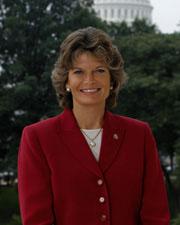 Sen. Lisa Murkowski (R-AK)
Legislative Activity
Stay on top of the latest movement without scrolling through every action
Senate amendment submitted
January 28, 2009
View full timeline
Senate amendment submitted
January 28, 2009
Roll call votes on amendments in Senate: Amendment SA 77 not agreed to in Senate by Yea-Nay. 47 - 51. Record Vote Number: 23.
January 28, 2009
Senate amendment not agreed to: Amendment SA 77 not agreed to in Senate by Yea-Nay. 47 - 51. Record Vote Number: 23.
January 28, 2009
Senate amendment proposed (on the floor): Amendment SA 77 proposed by Senator Murkowski.(consideration: CR S976-978, S986; text: CR S976)
January 28, 2009
Amendment SA 77 proposed by Senator Murkowski. (consideration: CR S976-978, S986; text: CR S976) To provide for the development of best practice recommendations and to ensure coverage of low income children.
January 28, 2009
Amendment SA 77 not agreed to in Senate by Yea-Nay. 47 - 51. Record Vote Number: 23.
January 28, 2009
Votes
1 roll call on this amendment
Text
Proposed
CHILDREN'S HEALTH INSURANCE PROGRAM REAUTHORIZATION ACT OF 2009

The ACTING PRESIDENT pro tempore. Under the previous order, the
Senate shall resume consideration of H.R. 2, which the clerk will
report.
The legislative clerk read as follows:

A bill (H.R. 2) to amend title XXI of the Social Security
Act to extend and improve the Children's Health Insurance
Program, and for other purposes.

Pending:

McConnell amendment No. 40 (to amendment No. 39), in the
nature of a substitute.
Grassley amendment No. 41 (to amendment No. 39), to strike
the option to provide coverage to legal immigrants and
increase the enrollment of uninsured low-income American
children.

Mr. McCONNELL. I suggest the absence of a quorum.
The ACTING PRESIDENT pro tempore. The clerk will call the roll.
The legislative clerk proceeded to call the roll.
Mr. BAUCUS. Madam President, I ask unanimous consent that the order
for the quorum call be rescinded.
The ACTING PRESIDENT pro tempore. Without objection, it is so
ordered.

Amendment No. 40

Mr. BAUCUS. Madam President, the amendment before us is the amendment
offered by the Senator from Kentucky, Mr. McConnell. It is a substitute
amendment to the bill before us. The bill before us is an expansion of
the Children's Health Insurance Program. It is very similar to the two
bills that were taken up by Congress in 2007. Both were vetoed by
President Bush. Both bodies had more than a majority. Both bodies
passed the program. But the House did not get enough votes to override
the President's veto.
The point is this is a very popular expansion of children's health
insurance. The fact is we would add approximately 4 million more low-
income, uninsured children who currently do not have health insurance.
Today about 6.7 million low-income kids have health insurance.
Clearly, in this very difficult time of recession, parents are losing
their jobs, their incomes are not what they once were. They have a hard
time getting health insurance for their kids.
We took the same bill--actually, there were two bills last year, but
they are very close--and mixed and matched a little bit, essentially
the same bills that passed in 2007 which President Bush vetoed, and we
are bringing up that same bill today, with one exception, and that is
including perfectly legal alien citizens. They are not citizens but
perfectly legal kids in America. Not illegals but legals.
The other side is opposing this bill because they do not want to
include perfectly legal kids in the program. I think that is a big
mistake because these children are here legally. Their parents pay
taxes. If you are an 18-year-old, you could be drafted if we had a
draft. These parents are in line to be full citizens after several
years. They have green cards, but they will be full citizens. The
perfectly legal folks in America receive food stamps. They are eligible
for lots of things. They are in public school. It seems to me,
therefore, they should be entitled to get health insurance, just like
every other kid.
What this comes down to is either you are for low-income, uninsured
kids getting health insurance or you are not. It is pretty simple. It
is pretty basic. I believe, and I think most people on this side of the
aisle believe, therefore, the bill should pass and the substitute
offered by the Senator from Kentucky, which does not include these
children, should not be adopted.
The other difference is the bill before us will add about 4 million
more children who are currently uninsured to the Children's Health
Insurance Program. The amendment before us does not add that many. It
adds about 2 million. Again, the point is, you are for kids or you are
not for kids. I think the answer to that is pretty clear. We do want to
add 4 million more low-income, uninsured kids to the Children's Health
Insurance Program.
We are going to hear from the other side: Gee, the underlying bill
crowds out private coverage; that is, some parents will say: Gee, if
the addition passes, I can no longer insure my child with a private
health insurance plan but, rather, go off private health insurance and
go into the public program.
The point is, that is a national phenomenon that occurs in a lot of
ways and in a lot of places. It occurs in Medicaid. For example, some
person might be on private health insurance but Medicaid might be
better. And if you compare the two bills; that is, the underlying bill
and the substitute being offered, essentially they are the same in that
about two-thirds of the additional children covered under the
underlying bill will go on the public program and about one-third will
come out from private coverage in the same proportion that occurs in
the substitute amendment--lower numbers but the same proportion.
It just seems to me that the main underlying point is we want low-
income, uninsured kids to have health insurance. That is what we want
here. In the next several months and in the next year, probably, we
will be doing health insurance reform, and then we can make sure
private health insurance is bolstered so people who are not insured--46
million, 47 million people in America uninsured--will be able to get
insurance either through the public program or private coverage.
It is a bit difficult to explain here, but the main point is if every
American has to have health insurance and the low-income people have to
have subsidies to get health insurance, that is something the Congress
should do. But at this point here today, let's reject the substitute
amendment. Why? Because, as I said, a lot of kids who are here,
perfectly legally, won't get health insurance, and that is not right.
It also doesn't go nearly as far as it should because there are so many
kids who don't have health insurance here today but who should get it.
The ACTING PRESIDENT pro tempore. The Senator from Iowa is
recognized.
Mr. GRASSLEY. Madam President, let me say to the Acting President pro
tempore that it is a shame she has to be in the chair every time I give
a speech, hearing the same things twice.

[[Page S951]]

The ACTING PRESIDENT pro tempore. I am enjoying that, I say to the
Senator.
Mr. GRASSLEY. I shouldn't have put the new Senator in that position,
but I thought a little bit of humor around here doesn't hurt anything,
does it?
I thank the Senator from Montana, the chairman of the committee, for
his remarks. Obviously, from what I stated yesterday, I have a
difference of opinion on that issue. I am not going to speak about that
because I spoke about it yesterday.
Madam President, I would like to speak generally about the SCHIP
bill, not about a specific amendment at this point, although I might
mention some differences we have with the original bill.
I have been a Member of the Senate now for quite a few years. I have
worked across the aisle on many initiatives in my time in the Senate.
We have worked together--we meaning Democrats and Republicans, and in
my case as an individual, the Senator from Iowa--and I am speaking
about a close working relationship I have with the Senator from
Montana, the chairman of the committee now. We have worked together on
major tax, trade, and health care legislation over the last few years
where we were able to set aside partisanship and work together to make
good policy. I know what it means to make a compromise. I know what it
means to keep that compromise.
In 2007, I worked with my friend Senator Baucus, as well as Senator
Hatch, a Republican, and Senator Rockefeller, a Democrat, to pass the
reauthorization to the Children's Health Insurance Program. We twice
passed a bill in the Senate with wide bipartisan margins. Was it a bill
Senator Hatch and I as Republicans would have written? No. Was it a
bill Senator Baucus and Senator Rockefeller would have written if they
were writing the bill all by themselves? No. The bill was a compromise,
so everybody gives a little bit. We compromised to get a bipartisan
vote, and we were successful in getting that bipartisan vote. We won a
veto-proof majority in the Senate. We came just a few votes close of a
veto-proof majority in the House. In fact, Senator Baucus and I worked
with House Republicans to try to get a few more House Republicans to
come around so we could have a bill on the books in 2007 or early 2008.
Unfortunately, that didn't work out. Unfortunately, at the time,
President Bush refused to sign the bill. I thought he was wrong to veto
the bill. I still think he was wrong to veto it. I said so loudly and
clearly.
I would like to refer to some comments I made 2 years ago to the
Senate at that particular time. I don't have the exact date, but it was
during the debate on the SCHIP bill at that particular time, and I
would quote from that debate. This is the Senator from Iowa saying this
2 years ago:

First, the President himself made a commitment to covering
more children. I wish to refer to the Republican National
Committee in New York City in 2004, and President Bush was
very firm in making a point on covering children. Let me tell
you what he said.

This is the quote I read from President Bush at that time, and he
refers to a new term, meaning the term that would start in 2005.

American children must also have a healthy start in life.
In a new term, we will lead an aggressive effort to enroll
millions of poor children who are eligible but not signed up
for the government's health insurance programs. We will also
not allow a lack of attention or information to stand between
these children and health care that they need.

Now, that is the end of the quote from President Bush in 2004. And,
Madam President, when I referred to the Republican National Committee
in that quote, I think I made a mistake 2 years ago. I was referring to
the convention and I said committee.
At that time during the debate in 2007, I went on to say:

That was back in New York City, early September 2004. Three
months later the President is reelected, with a mandate. It
seems to me the President was very clear in his convictions
then. Let me repeat his words because I think they are
important. He said he would lead an aggressive effort to
enroll millions of poor children in government health
insurance programs.

Then I go on to speak for myself:

President Bush, this is your friend Chuck Grassley helping
you to keep the promise you made in New York City, and
helping you keep your mandate that you had as a result of the
last election. But somewhere the priorities of this
administration seem to have shifted. The Congressional Budget
Office reports that the proposal for SCHIP included in the
President's fiscal year 2008 budget would result in the loss
of coverage, not an increase of coverage as the
administration had been advocating for in the year 2004; and
that the loss of coverage would add up to 1.4 million
children and pregnant women.

That is the end of my speech for that day to the Senate. But I want
to say that later in the debate, I referred to this again. So I was
trying to make very clear that I was speaking to the President of the
United States. This is quoting me:

I quoted the President making a promise at the Republican
Convention in New York. I did that yesterday. I want to state
again what the President said. You can't say it too many
times. I hope at some time the President remembers what he
said.

And this is the President from the Republican Convention:

We will lead an aggressive effort to enroll millions of
poor children who are eligible but not signed up for the
government's health insurance program.

That is the end of the President's quote, but continuing to quote
from myself.

An extension of law, which is what is going to happen if
the President vetoes this bill, will not carry out what the
President said at the Republican Convention in New York in
2004. Faced with that, your answer today on this bill, Mr.
President of the United States, should be yes. This bill gets
the job done that you said in New York City you wanted to do.
I hope the President's answer will be yes because if he
doesn't veto this bill, then we will do those things he said
he wanted to do. It will help more than 3 million low-income,
uninsured children. About half of the new money is just to
keep the program running. The rest of the new money goes to
cover more low-income children.

Before I go on with my remarks, I want to say that I think I and a
lot of other Republicans who voted for that SCHIP bill in 2007 were
vindicated when we made the point that, at $5 billion the President
didn't have enough money in his budget to cover kids currently enrolled
in SCHIP because the next year, the President's budget for SCHIP was
$20 billion. We kept saying to President Bush in 2007, you know, $5
billion isn't going to do it. But I think that by putting $20 billion
in for FY 2008, the President was admitting that $5 billion wasn't
enough.
Now, why do I go to the trouble of explaining to the Senators who are
listening what I said 2 years ago? Because we had a Republican
President.
I don't like the way this bill has worked out because the bill we
have before us today departs so much from that bipartisan compromise on
which so many of us worked so hard. So maybe people listening are
saying: Well, Chuck Grassley, a Republican, we have a Democratic
President, he is my President, but I am going to just be partisan. So I
want the public to know that I am approaching this issue in a way where
when I disagree with the policy--whether it is the policy of the Bush
administration at that time, or the policy of the partisan bill we have
before us now that I will speak out.
We have a President today who is going to sign this bill.
Unfortunately, we are here with a bill that goes back on those
compromises we worked so hard on 2 years ago. For reasons I still don't
fully understand, the majority is bound and determined to set aside
that hard work that led to that bipartisan agreement 2 years ago. They
have decided that going back on critical compromises is more important
than achieving the same bipartisan votes as we did in 2007. The Senate
should now be considering our second bill, our final compromise of
2007.
I am disappointed because the State Children's Health Insurance
Program is the product of a Republican-led Congress in 1997, signed
into law by a Democratic President. This has been a very bipartisan
issue for 11 years down the road. It is a targeted program designed to
provide affordable health coverage for low-income children of working
families. These families make too much to qualify for Medicaid but
struggle to afford private insurance.
In 2007, Senator Rockefeller made the point that, ``CHIP,'' the
Children's Health Insurance Program, ``legislation has a history of
bipartisanship. I am quite proud of it.'' That is what Senator
Rockefeller said. In 2009, however, the Democratic leadership, having
increased their majority, has decided to abandon a number of good-faith
agreements made between Members during the last Congress. In doing

[[Page S952]]

so, the Democratic majority has embarked on a reckless course of action
designed to alienate the very Republicans who stood up to President
Bush when he vetoed the SCHIP bills and who still carry the scars from
those fights. It is very disappointing, then, that the first health
bill the new Democratic Congress sends to the new Democratic President,
my President, is legislation that breaks from that bipartisan
tradition.
I want my colleagues to understand that I am very reluctantly in a
position of having to fight against this bill. After the bruising
battles over SCHIP in 2007, and with the emergence of health reform as
a priority for the 111th Congress, I wanted to avoid another fight over
the Children's Health Insurance Program and direct all efforts to
enacting a broadly bipartisan health reform bill, which I still think
is a possibility. At least the meetings we are having lead me to say
that at this point. Maybe 6 months from now I will be disappointed, but
I hope not.

However, the Democratic majority was determined on this bill that
they wanted a short-term ``win'' over a broader, larger effort, and
therefore I was told SCHIP was going to be one of the first bills
considered by the new Congress.
I was informed that rather than move forward with the second vetoed
bill--a bill with changes that Speaker Pelosi called, and this quote is
about that compromise of 2 years ago, which she said was ``a definite
improvement on the [first] bill''--the Democratic leadership had
decided to move ahead with the first vetoed bill instead of this
compromise that Speaker Pelosi said was better than the first bill.
Even though I could have insisted on negotiating off the second bill
which represented a number of improvements, as Speaker Pelosi said, and
I believed it strengthened the bill, I agreed to try to work out a
compromise somewhere between that first vetoed bill and the second
vetoed bill of 2007. Unbelievably, under pressure from Democratic
leadership, my willingness to work out a compromise that could have set
us on a bipartisan pathway was met with a resounding: Thanks, but no
thanks. No negotiations, no give and take, no compromises, no
bipartisanship: Take it or leave it.
The Senate has abandoned moving forward with a bill that generated a
great deal of Democratic praise just 2 years ago. The hard work and
bipartisan cooperation that went into the children's health insurance
bills in 2007 produced legislation that President Obama's new Chief of
Staff, Rahm Emanuel, who was a Member of the House of Representatives
at that time, said ``should have strong support from both Democrats and
Republicans.'' That is from 2 years ago.
However, on a number of key issues, the other side does not even want
to support the first children's health insurance bill of 2007.
The bill before the Senate now completely eliminates policies on
crowdout of private insurance that were in both vetoed bills, which
brings me to a question: What exactly was wrong with the crowdout
policy of both of those vetoed bills? The Congressional Budget Office,
in a 2007 report on crowdout, estimated that the Children's Health
Insurance Program has a crowdout rate of ``between a quarter and a half
of the increase in public coverage resulting from the Children's Health
Insurance Program.''
The Congressional Budget Office goes on to elaborate that ``for every
100 children who enroll as a result of SCHIP, there is a corresponding
reduction in private coverage of between 25 and 50 children.''
I would be very interested in learning the reasons those on that side
of the aisle completely eliminated the crowdout provisions from both of
the 2007 SCHIP bills. Certainly, it is not because Democrats have put
forward a policy that addressed crowdout in a better or more efficient
manner in the bill before the Senate now. Certainly, it is not because
Democrats have a new analysis that crowdout is no longer occurring, as
CBO says, especially in the expansion of public programs.
I hope Members of this body who supported the crowdout policy of 2007
and now are supporting its elimination will come to the floor and
explain to me and other Members of this body why the Democratic
majority is not concerned about the problem of replacing private
coverage with public coverage.
In other words, if people have insurance today, and you are setting
up a program that, even though it increases the number of people
covered will not cover all the children eligible for public programs,
why would you want to drive people out of private coverage into public
coverage? That is what happens, according to the Congressional Budget
Office. The Congressional Budget Office is a nonpartisan group of
people who are experts in this area.
As I said yesterday, I believe it was, in a comment directed to
something Senator Durbin of Illinois said--and I am not denigrating
what he said, I am supplementing what he said--he led us to believe the
reason you want to have this policy is because there might be some
people who have poor private coverage who would be better off in the
public program. I am not saying that might not be true. But the
Congressional Budget Office tells us you get most crowding out in upper
middle-income people, more than you do in lower income people. In other
words, maybe people who can afford it better and have higher incomes
decide: Why should I pay out of my pocket when I can go on the public
program?
I think it is wrong to throw aside something that we had in 2007 that
was going to keep people in private coverage and encourage them to go
where we do not have enough money to cover children who do not have
anything.
Neither bill vetoed by President Bush in 2007 included a provision to
allow States to be reimbursed at the Medicaid and SCHIP levels for
legal immigrant children and pregnant women. I am not going to go into
this issue in depth because I did that yesterday. But this issue does
open a difficult and contentious immigration issue that does need to be
brought up.
One of the reasons I was able to support the compromise of 2007 on
the Children's Health Insurance Program was it did not contain the
controversial provisions to direct Federal resources to the coverage of
legal immigrants. I said yesterday how in some instances it could end
up covering people who have come here illegally.
In the 1996 welfare reform bill, we required the sponsors of legal
immigrants to sign an affidavit that they would provide for those
immigrants for the first 5 years they were in the country. With this
bill we are allowing sponsors to go back on that commitment. If you
have a contractual relationship, it seems to me to be only morally
right that the Federal Government would want to have that moral
contract--not encourage ditching it. But this bill would allow that to
happen. We are allowing sponsors to go back on that commitment they
made to the taxpayers of this country.
Additionally, the $1.3 billion the bill provides for these immigrants
who were promised they would be taken care of is money that could be
far better spent on poor, uninsured American children. It is a little
bit the same argument I just gave about crowdout.
If you have people on private insurance, then save the public money
for people who are currently eligible for public programs, but who are
not insured. Use the $1.3 billion for those people.
In 2007, during the debate, the majority leader, Mr. Reid, said this
about the Children's Health Insurance Program. It was ``a very
difficult but rewarding process for me. It indicates to me that there
is an ability of this Congress to work on a bipartisan, bicameral
basis.''
You have an election in between, but it seems to me, kind of, comity
would dictate if that was a good statement to make in 2007, it would
hold true for 2009 as well. This should have been an easy and quick
bill to pick up and pass this year. Our bipartisan coalition fought
side by side to get the Children's Health Insurance Program done in
2007. Picking up that baton and carrying it across the finish line
should have been a straightforward exercise. For somebody like me in
the Republican Party who went against his own caucus to get a
bipartisan agreement, to stand against my own President and work hard
in the House of Representatives to get a few more Republican votes, it
kind of leaves us dangling out there. Without a show of appreciation,
how can you work in a bipartisan way?

Instead, what are we headed toward? A process that will end up with a
bill

[[Page S953]]

that many Republicans, like this Senator, who have been strong
supporters of the Children's Health Insurance Program are no longer
comfortable supporting.
In 2007, the Children's Health Insurance Program received high praise
from the other side. I would like to give a quote, ``a very difficult
but rewarding process,'' and one that indicated--showed the ability of
Congress, quoting again ``to work on a bipartisan, bicameral basis.''
If the Senator from Montana--I am going to smile at you. That is your
quote from 2 years ago.
The ACTING PRESIDENT pro tempore. The time of the Senator has
expired.
Mr. GRASSLEY. I have three sentences, if I can have unanimous consent
for those?
The ACTING PRESIDENT pro tempore. Without objection, it is so
ordered.
Mr. GRASSLEY. This is a very unfortunate beginning for the 111th
Congress. I regret the Democratic leadership has so quickly abandoned a
bipartisan process. It does not bode well for cooperative work in the
coming months.
I yield the floor.
The ACTING PRESIDENT pro tempore. The Senator from Montana is
recognized.
Mr. BAUCUS. I ask unanimous consent that at 10:55 a.m. the Senate
resume consideration of the Grassley amendment, No. 41, and proceed to
a vote on the amendment with no intervening action or debate; further,
that no amendment be in order to the Grassley amendment prior to the
vote; that upon disposition of the Grassley amendment, the Senate
resume consideration of the McConnell amendment under the previous
order.
The ACTING PRESIDENT pro tempore. Is there objection? Without
objection, it is so ordered.
Mr. BAUCUS. Madam President, I also want to inform my colleagues that
vote at 10:55 is expected to be a voice vote.
Mr. GRASSLEY. I have yielded the floor.
Mr. BAUCUS. How long does the Senator wish to speak?
Mr. KYL. Madam President, if I can take 4 minutes, that will be fine.
Mr. BAUCUS. I yield 5 minutes to the Senator from Arizona.
The ACTING PRESIDENT pro tempore. The Senator from Arizona is
recognized.

Amendment No. 40

Mr. KYL. Madam President, yesterday I spoke to this issue and
detailed the reasons the underlying legislation is not a good bill and
why the substitute that is being offered by Senator McConnell will be a
much better approach to this issue. I want to reiterate one of these
points because of a question a reporter asked me out in the hall. We
talked about the massive number of people, 2.4 million people, who will
leave their private insurance coverage in order to participate in this
Government-run program. It is called the crowdout effect.
The reporter said: Does it appear to you that this is just one more
step toward Government-run health care for Americans?
I said: Well, you can certainly conclude that. The reason I said it
was because there were efforts last year to try to fix this problem.
Everybody acknowledges there are almost 2.4 million people who will
leave private health insurance coverage because, obviously, the
businesses that are paying for that today would not have to pay for it
if their employees go to this Government-run program. It, obviously,
makes sense for them, therefore, to drop the coverage.
The reason I said what I did is because there is a way to handle
this. We tried to deal with it last year. When the legislation was
finally--the final version was written, it was written by the chairman
of the committee and by other Democratic leaders in the House and in
the Senate.
It was approved by both Houses. It included the language that dealt
with this crowdout effect. Now, it was not very meaningful language,
from my perspective, but at least it was a recognition of the problem.
Surprisingly, that language was dropped from this bill, and I never
have been able to figure out why.
So I offered an amendment in the committee to reinsert the same
language that the chairman and other Democratic leaders had put
together to deal with this problem. On essentially a party-line vote,
my amendment was defeated, so the problem remains. And it is the one of
many problems in the underlying bill.
The point of the Kids First Act, which is Senator McConnell's
alternative, is that it is targeted and it is a responsible
reauthorization to preserve health care coverage for millions of low-
income children. That is what the program is all about. That is what we
should be doing.
Unlike the underlying bill, the McConnell amendment adds 3.1 million
new children to SCHIP. It minimizes the reduction in private coverage,
as I said before, by targeting SCHIP funds to low-income children and
not high-income families who have access to private coverage. And
importantly, it is offset without new tax increases or a budget gimmick
as is the underlying bill.
So I think my colleagues and I have two choices here, either a budget
buster that does not protect SCHIP coverage for low-income children,
represents an open-ended burden on taxpayers, and takes a significant
step toward Government-run health care, or a fiscally responsible SCHIP
reauthorization that preserves coverage for low-income children and is
fully offset without a tax increase, and minimizes the effect on
employer-sponsored health coverage.
The answer is clear, the Kids First Act is the right solution, and I
urge my colleagues to vote yes on the McConnell amendment.
The PRESIDING OFFICER (Mrs. Hagan.) The Senator from Montana is
recognized.
Mr. BAUCUS. Madam President, the real question is, do we want more
low-income uninsured children to have health insurance? That is the
basic question. I am sure the answer to that question is yes. Most
Americans, certainly parents of low-income kids and low-income parents,
wish to have their children covered.
Next question: How do we do it? The Children's Health Insurance
Program is immensely popular. It was enacted, I think, in 1997. It was
set up as a block grant program. States had the option whether they
wanted to participate. And immediately, in a very short period of time,
all States decided, yes, they wanted to participate in the Children's
Health Insurance Program, because it so helps their kids get health
insurance.
Now, many people have private health insurance. That is good. The
question is, what about lower income people, not Medicaid levels, but
working poor who have private health insurance. What should they do?
And this legislation gives people the option, gives States the option
that a person can continue his private health insurance. If he or she
wants to, a person currently on private health insurance who has a
couple three kids and who qualifies for the Children's Health Insurance
Program, because the parents are working poor, has the option to keep
the private health insurance or to put the children in the Children's
Health Insurance Program.
Now, this question always arises, that is, when there is a public
program, a health program, there is always going to be a question for
those who have private coverage, should they stay in their private plan
or should they move to the public plan?
About one-third of the new children who have health insurance under
the underlying bill will come from the private sector; two-thirds have
no insurance whatsoever. The real answer to the dilemma is to make sure
that the people in our country have good private health insurance at
premiums they can afford, benefits that make sense. The Children's
Health Insurance Program has good benefits. So, clearly, a mother whose
income is quite low, not quite as low as Medicaid levels, but quite
low, will probably want her child to enroll in the Children's Health
Insurance Program.
We have to bolster private health insurance in this country. There
are 47 million Americans who do not have health insurance. That is
unconscionable. About 25 million Americans are underinsured; they have
got health insurance, but it is not very good.
So the answer to this question is, how do we insure more kids but in
a

[[Page S954]]

way that private health insurance is also a viable option for low-
income families. How do you do that?
We are going to take up health care reform this year in this
Congress. It is so important. It should be a result where all Americans
have health insurance. It also means we have to figure out ways to get
the cost down, because health insurance is so costly, and health care
is so costly.
Unfortunately, today, insurance in the individual markets is very
expensive. The benefits are not that great and the copays are pretty
high. It is not a good choice for low-income people. That is the
individual market, even small group markets in many cases. So the goal
here of national health insurance reform, through all kinds of
mechanisms, of health care delivery, and pay for performance, et
cetera, is to make sure that private health insurance is a viable
option for all Americans, more of an option than it is today.
That means insurance reform, eliminating preexisting conditions as a
means to deny coverage. The fancy term ``guarantee issues'' means that
when someone applies for health insurance, that health insurance
provides there is no discrimination on the basis of health care or age
or whatnot.
That is the goal we are all striving for. And, fortunately, it is a
goal that almost all of our colleagues agree with. I very much hope--it
is imperative that this year, this Congress move aggressively for
national health insurance reform, because that will then tend to
eliminate this question of crowdout.
But, more importantly, as we worry about crowdout, I do not think it
is that much of a worry, frankly. We should keep our eye on the ball
which is how do we get more low-income kids insured. That is what the
underlying bill does.
Madam President, I suggest the absence of a quorum and ask unanimous
consent that the time of the quorum be charged to both sides.
The PRESIDING OFFICER. The clerk will call the roll.
The legislative clerk proceeded to call the roll.
Mr. McCONNELL. Madam President, I ask unanimous consent that the
order for the quorum call be rescinded.
The PRESIDING OFFICER. Without objection, it is so ordered.
Mr. McCONNELL. Madam President, I wanted to make a few observations
on the pending amendment, the McConnell amendment, before the vote.
What we are trying to do here in this amendment is to refocus SCHIP
toward low-income children. This amendment would close loopholes that
allow States to use SCHIP funds to cover both adults and children in
higher income families.
What has happened here is some States have drifted off in the
direction that was not the original intent of the measure, which was
supported on an overwhelming bipartisan basis, and written by both
Republicans and Democrats in the 1990s.
So the goal of the Kids First amendment, upon which we are about to
vote, is to refocus the program on low-income children, and to take the
funds that are being diverted to high-income families and put them back
in to cover low-income children, and it probably would cover up to 2
million additional low-income children.
So if you are in favor of putting kids first and focusing the SCHIP
program as it was originally intended, I would recommend strongly that
you support the amendment upon which we are going to vote here shortly.
I yield the floor.

Amendment No. 41

The PRESIDING OFFICER. Under the previous order, the Senate resumes
consideration of amendment No. 41.
The question is on agreeing to the amendment.
The amendment (No. 41) was rejected.
Mr. BAUCUS. Madam President, I move to reconsider the vote.
Mr. MENENDEZ. Madam President, I move to lay that motion on the
table.
The motion to lay on the table was agreed to.
The PRESIDING OFFICER. The Senator from Montana is recognized.

Amendment No. 40

Mr. BAUCUS. Madam President, while we are waiting for the vote, which
occurs in a few minutes, I will make a couple of points here.
Mr. McCONNELL. Would the Senator from Montana yield?
Mr. BAUCUS. I will yield.
Mr. McCONNELL. Madam President, I am reminded that I have not
requested the yeas and nays yet on my amendment.
I ask for the yeas and nays.
The PRESIDING OFFICER. Is there a sufficient second?
There appears to be a sufficient second.
The yeas and nays are ordered.
The Senator from Montana is recognized.
Mr. BAUCUS. Madam President, very briefly in response to the Senator
from Kentucky, the underlying legislation adds 4 million more children
to the Children's Health Insurance Program for a total of about 10
million. I think that is a good goal. On the other hand, the substitute
amendment offered by the Senator from Kentucky does not go near that
far. It is about 2 million fewer children. I think we want to add more
kids to the Children's Health Insurance Program.
Second, he claims his substitute focuses more on low-income kids
first. I might say that the underlying bill, the bill offered by myself
and others, focuses on low-income first. How does it do so? There is a
bonus to States to seek out low-incomes first.
Second, the bill phases out coverage of childless adults. That has
been an issue; that is, should adults, who are not children, be covered
under the Children's Health Insurance Program? That is an issue because
this is a block grant program, and States have the option to cover whom
they want to. Some States have covered adults. Actually only one or two
have. And we are saying, no, no more of that. So we are phasing out the
ability of any State to cover an adult who does not have children.
Parents or pregnant women and kids are another issue. But childless
adults are being phased out. So we are focusing more on low-income kids
first. I might say too that there is a lower match rate for those
States at their own option that want to go to a higher level. Some
States want to go to a higher level. That is their choice under the
Children's Health Insurance Program, because it is a State option. That
is a choice those States can take.
But if they do so, the match is a lower rate than it otherwise might
be.
Again, I am trying to make sure that low-income kids are helped
first.
And, finally, under the underlying legislation, 91 percent of
children covered are at a level of 200 percent of poverty or lower; 91
percent, 200 percent or lower. So this legislation clearly is focused
on the working poor.
The PRESIDING OFFICER. All time has expired. The question occurs on
Amendment No. 40 offered by the Senator from Kentucky, Mr. McConnell.
The yeas and nays have been ordered.
The clerk will call the roll.
The assistant legislative clerk called the roll.
Mr. DURBIN. I announce that the Senator from Massachusetts (Mr.
Kennedy) is necessarily absent.
Mr. KYL. The following Senator is necessarily absent: the Senator
from Georgia (Mr. Chambliss).
The PRESIDING OFFICER. Are there any other Senators in the Chamber
desiring to vote?
The result was announced--yeas 32, nays 65, as follows:

[Rollcall Vote No. 18 Leg.]

YEAS--32

Alexander
Barrasso
Bennett
Brownback
Bunning
Burr
Coburn
Cochran
Corker
Cornyn
Crapo
DeMint
Ensign
Enzi
Graham
Gregg
Hutchison
Inhofe
Isakson
Johanns
Kyl
Martinez
McCain
McConnell
Risch
Roberts
Sessions
Shelby
Thune
Vitter
Voinovich
Wicker

NAYS--65

Akaka
Baucus
Bayh
Begich
Bennet
Bingaman
Bond
Boxer
Brown
Burris
Byrd
Cantwell
Cardin
Carper
Casey
Collins
Conrad
Dodd
Dorgan
Durbin
Feingold
Feinstein
Gillibrand
Grassley
Hagan
Harkin
Hatch
Inouye
Johnson
Kaufman
Kerry
Klobuchar
Kohl
Landrieu
Lautenberg
Leahy
Levin
Lieberman
Lincoln
Lugar
McCaskill
Menendez
Merkley
Mikulski
Murkowski
Murray
Nelson (FL)
Nelson (NE)
Pryor
Reed
Reid
Rockefeller
Sanders
Schumer
Shaheen
Snowe
Specter
Stabenow
Tester

[[Page S955]]

Udall (CO)
Udall (NM)
Warner
Webb
Whitehouse
Wyden

NOT VOTING--2

Chambliss
Kennedy

The amendment (No. 40) was rejected.
Mrs. MURRAY. Madam President, I move to reconsider the vote.
Mr. LAUTENBERG. I move to lay that motion on the table.
The motion to lay on the table was agreed to.
Mr. REID. Madam President, I note the absence of a quorum.
The PRESIDING OFFICER. The clerk will call the roll.
The assistant legislative clerk proceeded to call the roll.
Mr. REID. Madam President, I ask unanimous consent that the order for
the quorum call be rescinded.
The PRESIDING OFFICER. Without objection, it is so ordered.
Mr. REID. Madam President, it is my understanding that the Senator
from Florida, Senator Martinez, is going to offer an amendment. The
amendment, as I understand it, deals with the Mexico City issue.
I ask unanimous consent that Senator Martinez have 5 minutes to
speak, that he be followed by Senator Brownback for 5 minutes; Senator
Boxer for 5 minutes; Senator Durbin, 5 minutes; Senator McCain, 5
minutes; and following that, that Senator Menendez be allowed to speak
for up to 15 minutes. He is just going to speak on the bill. Then, I
would arrange--general debate for Senator Menendez.
I will work with Senator McConnell to follow up with a time for a
vote. We would like to do it before 12:30, but I will work with Senator
McConnell on that. Also, there would be no amendments in order to the
amendment offered by Senator Martinez.
The PRESIDING OFFICER. Is there objection?
Without objection, it is so ordered.

Amendment No. 65

Mr. MARTINEZ. Madam President, I call up amendment No. 65 and send it
to the desk.
The PRESIDING OFFICER. The clerk will report.
The assistant legislative clerk read as follows:

The Senator from Florida [Mr. Martinez], for himself, Mr.
Vitter, Mr. Wicker, Mr. Bunning, Mr. Enzi, Mr. Coburn, Mr.
Johanns, Mr. Brownback, Mr. Inhofe, and Mr. Chambliss,
proposes an amendment numbered 65.

Mr. MARTINEZ. Madam President, I ask unanimous consent that the
reading of the amendment be dispensed with.
The PRESIDING OFFICER. Without objection, it is so ordered.
The amendment is as follows:

(Purpose: To restore the prohibition on funding of nongovernmental
organizations that promote abortion as a method of birth control (the
``Mexico City Policy''))

At the appropriate place, insert the following:

SEC. __. RESTORATION OF PROHIBITION ON FUNDING OF
NONGOVERNMENTAL ORGANIZATIONS THAT PROMOTE
ABORTION AS A METHOD OF BIRTH CONTROL (``MEXICO
CITY POLICY'').

Notwithstanding any other provision of law, regulation, or
policy, including the memorandum issued by the President on
January 23, 2009, to the Administrator of the United States
Agency for International Development, titled ``Mexico City
Policy and Assistance for Voluntary Family Planning,'' no
funds authorized under part I of the Foreign Assistance Act
of 1961 (22 U.S.C. 2151 et seq) for population planning
activities or other population or family planning assistance
may be made available for any private, nongovernmental, or
multilateral organization that performs or actively promotes
abortion as a method of birth control.

Mr. MARTINEZ. Madam President, while we are debating SCHIP and
considering the best ways to promote healthy children in our country,
we are going to look at many amendments covering a wide range of
topics. Whether we support extending this program or not, everyone
wants children to have the best health care available. Into this broad-
ranging debate, I have also introduced an amendment to reinstate the
Mexico City policy--a policy that prohibits U.S. foreign assistance
from going to groups in foreign countries that support or perform
abortions.
The fact is, we often talk about promoting a culture of life. We talk
during political campaigns about how we wish we had fewer abortions and
how we wish to promote other alternatives such as adoption, and, in
fact, that we want abortions to be rare. However, actions do matter,
and last Friday President Obama changed the tone of this conversation
by approving the use of taxpayer dollars to fund international
organizations responsible for performing and promoting abortions in
every corner of the world.
Today, I am proposing an amendment to H.R. 2, the SCHIP bill, that
would return this policy to its original intent, which is to restrict
the use of taxpayer money to family planning organizations that are
known to perform and promote abortion. This policy, known as the Mexico
City policy, was first signed into Executive order by President Ronald
Reagan in 1984. Over the years, the policy has been wrongly attacked
and falsely characterized as a restriction on foreign aid for family
planning. This policy is not about reducing aid, but it is instead
about ensuring that family planning funds are given to organizations
dedicated to reducing abortions, instead of promoting them.
Reversing this policy means there is no longer a clear line between
funding organizations that aim to reduce abortions and those that
promote abortions as a means of contraception. If not reversed, the
funding would enable organizations to perform and promote abortions in
regions such as Latin America, countries in the Middle East, and
Africa, where the sanctity of life is not only respected but, in many
instances, is the law of the land and, in fact, where strong religious
convictions make this practice abhorrent.
The United States is a generous country. We give to countries around
the world for many reasons and for many purposes. At the same time, we
also want to be on the positive side of respecting the culture of so
many of the countries that would be impacted by this dramatic change in
what has been the U.S. policy abroad.
So I urge my colleagues to support this amendment restoring the
Mexico City policy first enacted by President Ronald Reagan and then
reenacted again by our last President. It is necessary--if we want to
continue fostering a culture of life where every life is sacred, every
child is celebrated, and life at all stages is given the dignity it
deserves--that we support this amendment in promoting life, in standing
for the things we say we believe in during campaigns, which is
promoting a culture of life and looking for abortions to be rare and to
be the last option and to not be something that comes into the picture
as a result of a desire to use it as a family planning tool and not
with the understanding that it is disrespecting the very sanctity of
life we all believe ought to be observed from the moment of conception
until the end of life.
Mr. President, I yield the floor.
The PRESIDING OFFICER (Mr. Casey). The Senator from California.
Mrs. BOXER. Mr. President, is Senator Brownback next?
The PRESIDING OFFICER. Yes.
The Senator from Kansas.
Mr. BROWNBACK. Mr. President, I thank my colleague from Florida for
raising this issue. This has come up recently as President Obama has
changed the Mexico City policy so that the United States can fund
abortions and groups that promote abortions overseas. This, of course,
was not the policy of the United States in the last administration for
the last 8 years. It was prior to that in the Clinton administration.
And prior to that in the Reagan and Bush years, it was not the policy.
This has been going back and forth for some time.
I think it is pretty clear as far as the U.S. public that they do not
like the idea of us funding abortions overseas. Some people may
tolerate it here at home and say, OK, that is something I will just
live with, but they do not like the idea of our taxpayers' dollars
going to fund abortions overseas. And at a time when we are staring at
$10 trillion in debt going to $12 trillion, with a stimulus package of
lots of different items, including some that do not seem particularly
stimulative, this does not make any sense to people. Then you go
overseas, and to a lot of places, it does not make any sense, either,
as Senator Martinez mentioned, that in Latin American countries,
African countries that are very strongly pro-life, in many cases, we
are supporting policies or groups or institutions that are promoting
abortion.

[[Page S956]]

What is going on with the United States? I thought you guys stood for
life and for the dignity of the individual, and then the United States
is funding this? This has been back and forth, a long seesaw battle,
within our overall discussion here. I simply point out that this does
not help us in foreign policy. This certainly does not help the budget
deficit or the debt. This certainly does not stimulate the economy.
There is no major policy reason to do this.
Some people will argue that we should be supporting this policy and
that this is something we ought to do to help people overseas. I think
most people overseas would much rather have us put this money in AIDS
prevention work, in malaria work, in working on neglected diseases that
affect so many people overseas that have a broad basis of support in
the United States and there, rather than this policy, which is such a
controversial, negative policy that is being promoted and pushed and
seen that way in so many places around the world. This does not help us
out at all.
Then we look at some countries such as China where situations arise
of forced abortions and forced sterilizations continuing to come out in
the media. We have family planning support there, in places where
forced abortions and forced sterilizations still take place. Our money
is associated with some of these efforts in different places around the
world. People do not like that policy. No matter how pro-choice they
are, they do not want us associated with that, and they do not see any
reason for us to be involved in it.
One can look at different things where one is on the choice or life
spectrum. I am pro-life. I am strongly pro-life. I believe life has
dignity from the very beginning to the very end and that it should be
protected. Then we add this into the mix, using U.S. taxpayers'
dollars, dollars that we approve here, dollars from all the United
States to promote something that a whole bunch of people in the United
States completely disagree with on a whole variety of grounds.
I ask my colleagues to back up for a second and say: Aren't there
better places for us to put this money if we are looking to do
something that is life-affirming and helping people who are in
difficulty? There are much better places we can certainly agree on, and
I listed several of those on which we could agree and we could work
together in this supposedly postpartisan period we are in, that we
could work together on these issues. I pushed a number of them, and I
can tell you for sure we have a need on neglected diseases in Third
World countries and that a little bit of interest and focus on our part
yields a whole bunch of saved lives. People dealing with malaria has
been a big one. But we need to go on to diseases such as elephantiasis,
sleeping sickness--there is a series of them that would build up a lot
of good will by the United States overseas, that would increase our
standing in places around the world, that there would be no controversy
whatsoever associated with but instead would be wholeheartedly embraced
both here and overseas.
For these reasons, I do not think it is wise for us to reengage with
groups that promote abortion overseas. I ask my colleagues not to do
that but to support the Martinez amendment and say to themselves: Let's
not do this. Let's do this better, let's do this together. Let's
support the Martinez amendment.
Mr. President, I yield the floor.
The PRESIDING OFFICER. The Senator from California.
Mrs. BOXER. Mr. President, I say to Senators, if you want to save the
lives of women around the world and you want to cut down on abortions,
vote against the Martinez-Brownback amendment.
I say to my friend who is asking for bipartisanship, this vote will
be bipartisan. We will have more than 60 people in this Senate, I
believe, who will vote against this amendment and affirm the action of
our new President, President Barack Obama, who very wisely understands
that with a stroke of a pen, undoing what the Bush-Cheney
administration did will indeed save the lives of women.
I could talk quite a bit about generalities and the thousands of
women who are waiting to have reproductive health care who cannot get
it because of this Mexico City gag rule which says to nongovernmental
organizations who work overseas: You cannot get U.S. funding if you
even speak about the possibility that abortion is an option; all of
your funds will be cut off. So many of these groups gave up the funds
so as not to be gagged.
If this was done in this country, it would be unconstitutional on its
face because what the gag rule says to international nongovernmental
organizations is: If you do not do what the Bush administration wants,
you cannot use your own money to provide health care which could
include, for example, counseling when there is an unintended pregnancy.
Let me tell you the story of a 13-year-old girl named Min Min because
I think it is important to put a face on this issue. She is from Nepal.
She was raped by a male relative. A relative helped her get an
abortion, and Min Min was sentenced to 20 years in jail while the male
relative walked. In Nepal at that time, abortion was illegal, even in
the cases of rape or incest. Because of the gag rule, organizations in
Nepal that wanted to help girls like Min Min and change the laws and
get children out of jail were told: You will lose all your U.S. funding
if you even talk about it. So you know what one particular organization
did? They gave up the money and they struggled, and then they did not
have funding for family planning or for reproductive health care.
That is the kind of cruel policy that is called the Mexico City gag
rule. That is the kind of cruel policy that my colleagues, Senator
Martinez and Senator Brownback, want to put back into place. And they
do it in the name of life? How is that being done in the name of life
when you put a 13-year-old child in prison because she was raped, the
relative who did this to her walks, and an organization that is seeking
justice is shut out of U.S. support? That is not life-affirming.
I applaud our President for doing this. Again, a lot of these issues
are difficult. This was a stroke of a pen. This is a reflection of a
bipartisan majority in this country who thinks that it is cruel and
wrong to tell these organizations they have to dance to the tune of
politics, the politics of America, before they get any funding from us
to prevent abortion, to promote family planning, to help a little child
such as Min Min get out of jail.
I am proud today to stand in front of you, Mr. President, and say
that with President Obama, this is just the start of the changes he
will bring that will help women, that will help families, that will
help children. I hope we will defeat this amendment with an
overwhelming vote, and I predict we will.
I yield the floor.
The PRESIDING OFFICER. The assistant majority leader.
Mr. DURBIN. Mr. President, I respect very much Senator Martinez and
Senator Brownback. Their views on the issue of abortion, I am sure, are
a matter of conscience. They come to us to raise this issue which has
been debated so many times in the Senate.
I say at this point in time that many of us who oppose abortion also
believe that a woman should be able to make that choice with her
family, with her doctor, with her conscience, and, of course, we
believe in the first instance that family planning avoids unintended
pregnancies. Unintended pregnancies lead to abortion. So reducing the
number of unintended pregnancies is going to give women a chance to
control their own lives and to reduce the likelihood of abortion.
It is the law of the United States of America, and it has been for
many years, in a provision added in 1973 by Senator Jesse Helms
explicitly banning the use of American taxpayer funds for overseas
abortion. Unequivocally, that is the law. Regardless of the Mexico City
policy, signed by President Obama or the situation before that, that is
the law. Not one penny of taxpayers' dollars can be used to fund
abortions overseas.
The issue here is whether an organization which also counsels women
that they have an option for abortion is going to be denied these funds
by this policy. Senator Martinez's amendment would deny them the funds
to even offer family planning if they counsel a woman that abortion is
an option. As Senator Boxer said, in the United States that is
unacceptable.

[[Page S957]]

You have to give doctors at least the opportunity, even if they do not
perform an abortion, to tell a woman what her legal rights are. But
that is what is at the core of this issue.
Mrs. BOXER. Will the Senator yield for a moment?
Mr. DURBIN. Let me make two or three other points and then I will.
There are several points I would like to make about the importance of
President Obama's decision.
First, when we provide family planning funds to organizations
overseas that may counsel abortion but not spend a single U.S. dollar
on abortions, when we provide that money, we literally reduce the
number of abortions worldwide. A report by Guttmacher Institute and the
U.N. Population Fund estimated that providing family planning services
to the 201 million women in developing countries whose needs are unmet
would prevent 52 million unintended pregnancies by family planning and
22 million abortions. So when you reduce the family planning, there are
more unintended pregnancies and more abortions.
Secondly, an estimated 536,000 women, mostly in developing countries,
die from pregnancy-related causes. By giving a woman family planning
counseling, the pill or something similar, they will have access to
contraception and pregnancy-related deaths will drop by 25 to 35
percent of women who would give birth.
Finally, the repeal would save the lives of children in many
developing countries. Many of these women have successive pregnancies
that they cannot control, and the children, sadly, are weaker and
weaker because the mothers cannot restore their bodily strength before
they have another child. That is the reality of this situation.
I will say, as I have traveled around the world with people such as
Senator Brownback, the most important single question one can ask in a
developing country is, How do you treat your women? We should treat the
women of the world with respect. We should give them access to sound
family planning. Let them plan their lives and plan their families.
There will be fewer abortions, fewer maternal deaths, and fewer
children dying as a result.
Mrs. BOXER. Well, first, I thank the Senator so much for adding those
numbers. We are talking about saving women's lives and we are talking
about stopping thousands of abortions. That is why it is so
inexplicable to me that this amendment is coming from the other side.
I wanted to ask a couple of questions of my friend. Senator Brownback
asked for us to find common ground, and I want to find common ground,
and I said we are going to find common ground with this vote. But
further, wouldn't my friend agree that family planning is the common
ground between those of us who support a woman's right to choose and
those who oppose it? Isn't family planning finding common ground?
Mr. DURBIN. I would say, through the Chair, that I am not one who
celebrates the incidence of abortion in this country or anywhere. I
wish to see far fewer abortions. But let's be honest. How do you reach
that goal? You reach that goal by educating women and giving them
opportunities to avoid unintended pregnancies. I think that is why this
amendment is inconsistent with the sponsor's goal. If you want fewer
abortions, give women an option, let them control their bodies and
their lives, and let them make family decisions that are right for
them, instead of being at the mercy of a situation they cannot control.
Mrs. BOXER. I have one last question to ask through the Chair.
The PRESIDING OFFICER. Time has expired.
Mrs. BOXER. I ask unanimous consent for 1 more minute, and to give
Senator McCain an extra minute if he wishes.
The PRESIDING OFFICER. Is there objection?
Without objection, it is so ordered.
Mrs. BOXER. Mr. President, I also wanted to make the point that this
denial of funds to these nongovernmental organizations--which the
Senator is absolutely right to stress--is far-reaching. Even if they
tell a woman what her options are, and as long as they know these
options are legal, it should be fine and they shouldn't be punished.
But does my friend know, because I wasn't clear until recently, that
this punishment of this gag rule goes beyond this?
In the case of Nepal, where a nongovernmental group wanted to simply
change the law so that abortion could be legal if a child was raped,
they were denied the funds because they wanted to go in front of their
government and say, sir and madam, let us have compassion for those
like this 13-year-old child. She is in jail for 20 years; she was
raped. So is my friend aware that is how far this global gag rule went?
Mr. DURBIN. I am glad the Senator from California made that point
clear.
I yield the floor.
The PRESIDING OFFICER. The Senator from Arizona.
Mr. McCAIN. Mr. President, I wish to address the issue of the
legislation before us, the SCHIP reauthorization.
We all know that the Children's Health Insurance Program is a vital
safety net program the Congress created to offer coverage to one of our
Nation's most vulnerable populations, and that is low-income children.
It is an objective that all of us stand behind. Unfortunately, the
measure before us is an attempt to take a good program, expand it far
beyond its original scope, and to fund it by imposing higher tobacco
taxes. Remarkable. That is not the right approach.
When it was created, it was done to address the needs of millions of
children who went without health coverage. I was pleased to join my
colleagues in supporting the establishment of the CHIP program. And
thanks to this program, many low-income children have been able to
obtain health care coverage they otherwise wouldn't have had. Today,
obviously, this bill would drastically expand coverage, and as has been
discussed several times on the floor, it contains loopholes, for
example, that would allow one State--the State of New York--to go ahead
with their planned expansion and cover children of families earning up
to $88,000 a year. That will have a crowdout effect, where 2.4 million
of the 6.5 million newly enrolled individuals would have had private
coverage without this legislation.
Some of us who look at this may view it as another effort to
eliminate, over time, private insurance in America, and I am concerned
about that. I am also concerned about the drastic expansion. We should
take the word ``children'' out of it, since it is now being expanded to
many other citizens than children. But what I find unacceptable here is
that we are basically going to count on Americans to use tobacco
products--smoking--in order to fund it.
Is there anyone in this body who doesn't know that smoking and the
use of tobacco products is harmful and a danger to the health of these
same children we are insuring? Is there anyone who isn't concerned
about what seems to be a rise in the use of tobacco amongst young
Americans? One of the reasons for that is because the deal that was
negotiated between the lawyers and the attorneys general of this
country was that these supposed funds from tobacco taxes were supposed
to go to advertising for antitobacco usage and for treatment of
illnesses associated with the use of tobacco, but it has now become
another source of revenue for every State in America.
Yesterday, during a Health and Education Committee roundtable
discussion, the topic of preventive measures was discussed at length,
and what did we talk about? We talked about the ill effects of the use
of tobacco, particularly smoking and secondhand tobacco, and yet here
we are funding an attempt to improve the health of young Americans with
billions and billions of dollars of taxes on tobacco products. Couldn't
we have found somewhere in our budget programs that could have been
reduced or even eliminated to fund the SCHIP program? Apparently not.
Apparently not.
So we now are at a point where the States no longer use the money in
the form of taxes on tobacco products that was supposed to go to
discourage the use of tobacco. We are now going to depend on a tax on
tobacco products for funding of insurance for children and others,
thereby, at least in some ways, encouraging the use of tobacco. So I am
very much opposed to this legislation.
I am proud of what we did initially. But it seems to me that using
the ill-

[[Page S958]]

gotten taxes from the use of tobacco--smoking in particular--in order
to fund any program is not an appropriate legislative remedy. So I
believe the bill differs drastically from the original intention of
SCHIP, and I disagree strongly with its funding mechanism of increased
tobacco taxes.
I support the ideas contained in the alternative bill, which would
keep the Children's Health Insurance Program focused on low-income
children, and would have done so without dramatic increases in Federal
spending or higher taxes.
Mr. President, I appreciate the courtesy of my colleagues, and I
yield the floor.
The PRESIDING OFFICER. The Senator from New Jersey.
Mr. MENENDEZ. Mr. President, today, this Congress is facing a
fundamental test of our values: whether to reauthorize the State
Children's Health Insurance Program and expand it to cover millions of
children who would otherwise be left uninsured. We must ask ourselves:
Is this good for our Nation's children? The answer is, clearly, yes.
And I say this as a father. There is nothing more important to parents
than the health of their children, and there is nothing more important
to helping them grow up to achieve their potential and contribute all
they can to our society.
It is no secret what a major financial burden health care can be. We
are reminded of the costs every time we go to the doctor or fill a
prescription at the pharmacy. There are parents who work every day in
some of the toughest jobs in our country, but their jobs don't offer
health insurance and their paychecks don't cover the cost of private
coverage.
They are not the only ones whose health is at serious risk because of
this lack of insurance. It is also a major risk for children. Parents
stay up at night worrying about whether the hard cough they hear coming
from their daughter's room means she has asthma; hoping that the pain
in their son's stomach doesn't mean he is going to need surgery;
wondering how they are going to pay for a routine checkup; and just
praying--praying--that everyone stays healthy until they can afford to
get the health care they need.
Here is one story: A boy named Jonathan took a trip to the New Jersey
shore with his family. His head started to throb on the ride from his
home in New Hampshire, and finally the pain became unbearable. I want
to read what Jonathan wrote about his experience. He wrote:

The pain was so bad; I had to crawl on the ground. My mom
drove me to the medical center. I remember my mom calling my
dad and asking the question, Do we still have medical
insurance? I remember being really scared. The doctor
explained that I had an arachnoid cyst about the size of an
ice cube growing on the left side of my brain. My mother
started to cry. There was another problem: Our insurance
coverage had ended. Going to the hospital and having all of
the CAT scans and MRI testing was super expensive. Suddenly,
insurance was a huge issue. Friends told us about a program
called New Hampshire Healthy Kids. My parents had to act
quickly and register my brothers and me for the program. The
people at NHHK were really helpful. I was able to get the
medical attention I needed.

Thank goodness Jonathan was okay. But stories such as this are why
the Federal Government and the States teamed up to create the State
Children's Health Insurance Program. It has been a great success across
the country, covering almost 7 million American children. In New
Jersey, it covers almost 130,000 of those American children. This year,
Congress has an opportunity to make children's health even more
inclusive, to pass a bill that will continue to provide health care to
the almost 7 million children already enrolled, and expand the program
to include 4 million children across America, and that includes another
100,000 in my home State of New Jersey.
As we are considering whether to reauthorize and expand children's
health, we all have to ask ourselves two questions: One, would we have
wanted Jonathan's story to have turned out differently? Absolutely not.
And two, are we going to sit back as millions of other stories such as
Jonathan's don't end up as happily? The decisions we make today have
very clear implications for hardworking families across the country.
The difference here between no and yes can mean, for millions of
children, the difference between helplessness, suffering, and pain
versus opportunity, health, and a better quality of life. That is how
high the stakes are.
Now, some in this Chamber may question whether we can afford health
care for our children. Let us look at the facts. First, this
legislation won't cost us a dime because it is completely paid for.
Second, making sure kids can get regular checkups and focus on
preventive care has the potential to reduce emergency room visits and
save costs down the line.
We also need to be very clear that public health insurance does not
mean free health insurance. Many families across America and in New
Jersey are responsible for copays and have to pay a premium every
month. They are part of supporting their children's health care
coverage.
But all that aside, let us look at the bigger budgetary picture, at
where our priorities have been for the last several years. The war in
Iraq is currently costing us $5,000 every second. With what is spent on
the war in Iraq in 40 days, we could insure over 10 million children in
America for 1 year. In fact, with the amount that has been spent on the
war, we could provide 2 years of health care coverage for all of the 47
million Americans who don't have health insurance, who play Russian
roulette every day with their lives and their wallets. And even after
providing all that health care for every American who doesn't have it,
we would still have $30 billion remaining.
If we are willing to look at our priorities and choose our children--
as we often say, and I have heard many of my colleagues speak on the
floor about how our children are our most precious resource, and they
are, but they are also our most vulnerable resource--tackling America's
health care crisis is something we can absolutely do within the
reasonable constraints of our budget.
Now, some of our colleagues have also objected--I have heard it here
on the floor--to how States such as New Jersey are treated under this
legislation. They object to my home State's ability to cover children
whose parents' salaries are up to 350 percent of the Federal poverty
level.
I want to give a round estimate of the monthly costs facing a family
living at 250 percent of the poverty level, or about $4,594 per month,
in one of our counties, in Middlesex, NJ.
When you look at that monthly income and then look at the costs for
housing, for food, for childcare so you can go to work, for
transportation, for the taxes paid there, and then what it costs for
health insurance, the reality is you have a set of circumstances where
that family has a monthly deficit, a debt of $898, which means they do
not have the wherewithal to do all of this. These are the basics. These
are no frills. They find themselves in debt.
On top of that, comparable private health insurance in my home State
can cost almost $1,800 a month.
What does a family have left at the end of the month? The answer is a
staggering load of debt. If they are making 250 percent of the Federal
poverty level, they are going to be in debt almost $900.
It is the same in other parts of the State as well. For example, if
they are living at that income level in Trenton, NJ, the State's
capital, they are going to be in debt about $856 every single month to
do the basics--to have a place to call home, to put food on the table,
to have childcare, to go to work, transportation to be able to achieve
that, to pay their taxes, and then to have health insurance. They do
not have enough money to make ends meet.
The Federal poverty level does not reflect the difference in cost of
living between States. For example, if you are a family making 250
percent of the Federal poverty level in Phoenix, AZ, after all is said
and done, under the same set of criteria--housing, food, childcare,
transportation, and taxes and health insurance--you have a monthly
surplus of about $1,347. That is left over at the end of the month
because the cost of living is lower.
There is a huge difference in the family's reality with a surplus and
being able to have all of these essentials versus having a debt in the
two examples I showed before.
Let me give another example. In Salt Lake City, UT, the same set of
circumstances--housing, food, childcare, transportation, taxes, health
insurance--you have a $1,469 surplus, so you

[[Page S959]]

have disposable income to be able to make other choices for your family
with the same set of circumstances in terms of the Federal poverty
level.
The reality is, we face a much higher cost of living. The
consequences are real to New Jersey families. Let's compare State by
State.
I understand 350 percent of the Federal poverty level sounds somewhat
high if you do not see the numbers. But what it takes to meet that
amount in New Jersey is, it takes a much less amount in all of these
States--from Kentucky, Arizona, Oklahoma, Georgia, Tennessee, Utah,
Missouri, North Carolina--much less. It takes much less to meet the
same level of the Federal poverty level.
The bottom line is, we simply have a higher cost of living and one
size does not fit all. I wish our citizens could get the same quality
of life in terms of the essentials for much less money, but that is not
the reality. So it makes perfect sense for different States to cover
children at different levels of income in order to accomplish the same
goal, which is ensuring that children at the end of the day are
covered.
Even former President Bush understood that when he approved New
Jersey's waiver, as he did for a long time. Even then, I would like to
point out, the number of New Jersey children who fall into that
category is just about 3,300 children, a tiny fraction of those
enrolled nationally. Only about 2.5 percent of our children are covered
under this level of the Federal poverty level.
Finally, the last time legislation to expand children's health came
up, hundreds of thousands of children were left out, children who are
legal--underline legal, emphasis legal--permanent residents of the
United States. They follow our laws every step of the way, children
whose parents work hard and pay taxes. Some of them are actually in the
service of their country. These children are eventually eligible for
Medicaid or CHIP, but the law says we have to bar them from coverage
for 5 years first.
To a young child, 5 years is a lifetime. Here is what it means to bar
legal permanent resident children and pregnant mothers from affordable
public health for that long. As it stands, a girl with asthma has to go
through 5 years of attacks before she can get an inhaler. A boy whose
vision gets so blurry he can't see the chalkboard in the fourth grade
has to wait until high school before he gets glasses. A pregnant woman
who urgently needs prenatal care can't get it until her child will be
ready for kindergarten.
I have not met anyone who is not outraged when they hear kids with
cancer would have to wait 5 years for chemotherapy. Most people cannot
believe that is the law, and it should not be. Children should not have
to wait a single day to get the care they need to save and improve
their lives. Good health care is essential for them to be able to fully
realize their God-given potential. Children, whether they be in a
classroom or on a playground, are contagious. So whether it is a legal
immigrant child or a U.S.-born citizen, the bottom line is they are
playing in that playground together, sitting in the classroom together.
If one has health care and the other doesn't because we have an
arbitrary bar, it is easy to get some cold or disease that is
contagious, so there is a public health interest for all of us.
We have the opportunity to do what is right and make a major step in
ensuring no child goes to bed at night without health care in the
greatest Nation on the Earth. This would bring a half million kids
nationwide into the State health insurance programs in this category.
Let me conclude. For all of us, this is a matter of values. Do we
value our children and do our actions match our values? For those who
value life, who have spoken very eloquently in this Chamber about its
sanctity, and those who value family, who consider it the bedrock of
our lives and our country, now is the time to show the depth of that
belief because if children's health is not about protecting life, I do
not know what is. If this bill is not profamily, I do not know what is.
Now is the time to give new security to millions of young lives to
help America's children achieve their God-given potential and to
replace fear in millions of minds with hope for a better day. That is
the opportunity before the Senate, and that is the one I hope we will
adopt at the end of this process.
I yield the floor.
Mr. LEAHY. Mr. President, I have listened to the debate on the
amendment offered by Senator Martinez to reverse President Obama's
decision to overturn the Mexico City policy. I have been struck by the
statements of proponents of the amendment that the President's action
means Federal funds will now be used for abortions overseas. That is
nothing more than a scare tactic and a flagrant misrepresentation of
fact.
As those who make such statements know well, U.S. law has banned the
use of Federal funds for abortion overseas for more than 30 years and
that is the law today. Most recently, it can be found in title III of
the fiscal year 2008 State and Foreign Operations Appropriations Act,
should they choose to refresh their memories. Whether or not the
Martinez amendment passes, no U.S. funds are available for abortion,
even in countries where, like the U.S., abortion is legal.
The irony of this debate is that the Martinez amendment would prevent
funding to private organizations that, thanks to the President's
action, would be eligible to receive U.S. funds for contraceptives
which prevent unwanted pregnancies and abortions. Yet they claim that
unless we pass the Martinez amendment the number of abortions will
increase. It is a counterintuitive, disingenuous argument that has been
consistently proven to be false. The facts are indisputable. Where
family planning services are available, the number of abortions
declines.
Another false claim by proponents is that unless we pass this
amendment U.S. funds will be used to support coercive family planning
policies in China. They know that is not true. The Mexico City policy
has nothing to do with coercion, pro or con. Another provision, also in
the State and Foreign Operations Appropriations Act, provides the
President with the authority to prohibit funds to any organization that
supports coercion. And the law explicitly prohibits the use of U.S.
family planning funds in China. The President's action reversing the
Mexico City policy does not change that.
We all want the number of abortions to decline. But one would hope
that even as we disagree on how best to achieve that, those who oppose
the President's decision would stick to the facts and not try to
distort or misrepresent U.S. law.
The Mexico City policy is discriminatory, it would be
unconstitutional in our own country, it would deny women in poor
countries access to family planning services, and it would increase
unwanted pregnancies and abortions. The amendment should be defeated.
The PRESIDING OFFICER. The Senator from Montana is recognized.
Mr. BAUCUS. Mr. President, I ask unanimous consent the vote in
relation to the Martinez amendment, No. 65, occur at 12:10 p.m. today,
and the additional time be divided and controlled by Senators Boxer and
Martinez or their designees, with the remaining provisions of the
previous order in effect.
The PRESIDING OFFICER. The Senator from Florida is recognized.
Mr. MARTINEZ. Mr. President, I ask unanimous consent to be allowed to
speak for 2 minutes to close on the amendment.
The PRESIDING OFFICER. Without objection, it is so ordered.
Mr. MARTINEZ. Mr. President, this amendment is to reinstate the
Mexico City policy which President Obama, just a couple of days ago,
eliminated with the stroke of a pen. Much has been said in opposition
to this amendment, which I think is erroneous. I think at the core of
what this amendment is about is whether we want U.S. taxpayer dollars--
my taxes, as someone who finds abortion to not be something I can live
with, which is not consistent with my faith and personal beliefs--
whether my tax dollars and those of other people similarly situated
should be utilized to fund family planning that utilizes abortion as a
means of family planning with organizations abroad.
That, I think, is wrong. That, I think, is abhorrent. It is not about
denying organizations family health assistance when they are simply
looking after a person's health. It is not about those rare exceptions
of rape and incest, which are dragged in to try to

[[Page S960]]

make what is unjustifiable justifiable. Abortion should not be utilized
as a means of family planning.
We talk about wanting to have fewer abortions not more, to have it be
rare not frequent, but then we do things like this, and that is
completely contrary to what is the avowed intent of what so often is
portrayed as the position on this issue during political campaigns.
This policy does not restrict foreign aid funding. It is to ensure
that American taxpayer dollars will not go to promote nor support
abortion or abortion-related services. I think it is that simple. I
hope my colleagues will join in this effort. This is about what the
taxpayer dollars of America should be funding overseas, in countries
where very often we find that the culture and the religion of the host
country is consistent with the Mexico City policy.
This is a vote to reinstate the Mexico City policy which has been the
policy of this country until last week. I hopefully urge my colleagues
to support amendment No. 65.
The PRESIDING OFFICER. The Senator from Montana is recognized.
Mr. BAUCUS. Mr. President, despite the previous unanimous consent
agreement, I ask consent the Senator from California be allowed to
speak for 1 minute prior to the vote.
The PRESIDING OFFICER. Without objection, it is so ordered. The
Senator from California is recognized.
Mrs. BOXER. Mr. President, I want to have an up-or-down vote on this
amendment. I am not going to make a motion to table. I think this is a
very bad amendment, an amendment that would consign women all over the
world to desperate situations because what Senator Martinez wants to do
is restore the gag rule. That means that nongovernmental organizations
overseas who help women get reproductive health care and tell them what
their legal options are and make birth control available to them so
they can plan their families will lose every dollar of American support
if they even try to do those things.
President Obama, like President Clinton, did the right thing. With
the stroke of a pen, he stood for the lives of women and for family
planning and for the health of women all over the world. We have
statistics that are very clear. Senator Durbin read them. Tens of
thousands of abortions will be avoided because of the actions of our
new President. For the life of me, I do not understand how someone who
is against abortion could offer such an amendment which in essence will
consign women to back-alley abortions and death.
If you really want to vote to promote life and health, vote against
the Martinez amendment and stand with President Obama on what I know
will be an overwhelming majority of Senators from both sides of the
aisle in favor of doing away with this global gag rule.
If it were tried in America, it would be unconstitutional. Stand for
freedom. Stand for women. Let's definitely vote this down.
I ask for the yeas and nays on the amendment.
The PRESIDING OFFICER. Is there a sufficient second? There is a
sufficient second.
The question is on agreeing to the amendment. The clerk will call the
roll.
The legislative clerk called the roll.
Mr. DURBIN. I announce that the Senator from Massachusetts (Mr.
Kennedy) is necessarily absent.
Mr. KYL. The following Senator is necessarily absent: the Senator
from Georgia (Mr. Chambliss).
The result was announced--yeas 37, nays 60, as follows:

[Rollcall Vote No. 19 Leg.]

YEAS--37

Alexander
Barrasso
Bennett
Bond
Brownback
Bunning
Burr
Coburn
Cochran
Corker
Cornyn
Crapo
DeMint
Ensign
Enzi
Graham
Grassley
Gregg
Hatch
Hutchison
Inhofe
Isakson
Johanns
Kyl
Lugar
Martinez
McCain
McConnell
Nelson (NE)
Risch
Roberts
Sessions
Shelby
Thune
Vitter
Voinovich
Wicker

NAYS--60

Akaka
Baucus
Bayh
Begich
Bennet
Bingaman
Boxer
Brown
Burris
Byrd
Cantwell
Cardin
Carper
Casey
Collins
Conrad
Dodd
Dorgan
Durbin
Feingold
Feinstein
Gillibrand
Hagan
Harkin
Inouye
Johnson
Kaufman
Kerry
Klobuchar
Kohl
Landrieu
Lautenberg
Leahy
Levin
Lieberman
Lincoln
McCaskill
Menendez
Merkley
Mikulski
Murkowski
Murray
Nelson (FL)
Pryor
Reed
Reid
Rockefeller
Sanders
Schumer
Shaheen
Snowe
Specter
Stabenow
Tester
Udall (CO)
Udall (NM)
Warner
Webb
Whitehouse
Wyden

NOT VOTING--2

Chambliss
Kennedy

The amendment (No. 65) was rejected.
Mrs. BOXER. I move to reconsider the vote.
Mr. BAUCUS. I move to lay that motion on the table.
The motion to lay on the table was agreed to.
The PRESIDING OFFICER (Mrs. Hagan). The Senator from Montana.
Mr. BAUCUS. Madam President, I ask unanimous consent that the next
speakers be the following Senators: Senator Murray for 10 minutes,
Senator Cornyn for 5 minutes, and Senator Roberts for 20 minutes.
The PRESIDING OFFICER. Without objection, it is so ordered.
The Senator from Washington.
Mrs. MURRAY. Madam President, regular health care is critical for a
child to grow up to be a strong and healthy adult. We all know that.
Yet every day millions of American children are denied access to this
very basic need. They cannot get regular checkups or see a family
doctor for sore throats or ear aches or fevers. So as our economy
continues to struggle, this problem is growing worse.
At the end of 2007, all of us came together on a bipartisan bill that
would have taken big steps toward helping millions more kids get health
care. It would have renewed the Children's Health Insurance Program and
made sure that almost 10 million low-income children would be covered.
It is a tragedy and a shame that children's health care became the
victim of a partisan fight. But, this week, now we have the opportunity
to make children's health a priority by renewing and expanding the
Children's Health Insurance Program and getting it signed into law. And
it could not come at a moment too soon.
In the year since former President Bush last vetoed CHIP,
unemployment has skyrocketed nationally and in my home State of
Washington. As a result, millions of families across our country have
lost their health care in just this last year alone. That is wrong, and
it is one of the reasons we have now put CHIP at the top of our agenda
this year.
In difficult times such as this, it is more important than ever we
make sure our Nation's children have a place to go where they can get
medical care. So I am here to urge all my colleagues to support the
2009 CHIP reauthorization. It is the smart thing to do for our economy.
It is the moral thing to do for our children.
Most of us in the Senate support reauthorizing and improving the
Children's Health Insurance Program because we share the goal of
ensuring that all our kids can get health care. Study after study has
shown the benefits. Children in this program are much more likely to
have regular doctor and dental care. The health care they do receive is
better quality. They do better in school because they are healthy.
This bill is almost identical to the one we passed overwhelmingly in
2007. It ensures the children already enrolled in CHIP will continue to
receive health care, and it provides another 3.9 million low-income
children with coverage. Most of those are kids who never had insurance
because their parents could not afford it or kids who lost Medicaid
coverage or kids who were recently dropped from private insurance
rolls. I think it is critical we expand health insurance to make sure
they are covered.
Now, there are a couple specific provisions in this bill I wish to
highlight to make sure everyone understands why it is so important to
pass this bill now.
First, as I said at the beginning of my remarks today, the economic
recession has made it even more critical that we make children's health
care a top priority and reauthorize this CHIP program.
On Monday of this week, some of the strongest companies in our Nation
announced they would cut 75,000 jobs

[[Page S961]]

combined. Unemployment is now at the highest level in 16 years, and we
are being told we have not seen the worst of it yet.
The Kaiser Family Foundation estimates every time the unemployment
rate increases a point, 700,000 more children lose their health
insurance. By those numbers, well over a million more children have
lost their insurance in the last year alone, and many more will lose
their coverage in the weeks and months to come.
This bill makes it easier for our States to ensure those children
will continue at least to get health care. It adds more flexibility to
the program and sets funding rates based on State budget projections,
so our States that are in the worst financial shape will get more money
to help pay for health care. This would be a huge help for my home
State of Washington and for the many families who are struggling to
provide health care for their children.
At the same time, the bill will strengthen CHIP by making sure
resources are targeted at covering the low-income, uninsured children
Congress meant to help when we created CHIP back in 1997. It gives
States new tools to raise awareness about CHIP in rural, minority, and
low-income communities to help reduce the disparity in care for
minority children and extend care where it is most needed. Also, it
creates a performance-based system that rewards our States for reducing
the number of uninsured children by making sure that the lowest income
children are the top priority for CHIP and Medicaid.

Finally, CHIP is paid for. The $32.8 billion cost is covered by a 61-
cent per pack tax increase on cigarettes and other tobacco products. We
aren't taking away from our other economic priorities, Social Security
isn't raided, and the deficit won't be increased. It is a win-win for
everyone because experts estimate that by increasing the cost of
cigarettes, almost 2 million adults will quit smoking and then we will
prevent millions of kids from ever getting hooked. It is good for our
children now and it will help millions stay healthy in the future as
well.
Although this bill does have broad bipartisan support, some of our
colleagues on the other side of the aisle have tried to throw up some
obstacles that distract us from the real issues. I wish to make clear
right now what this bill is about. It is about our kids. This
legislation is about making sure our children can see a doctor when
they are sick. It is about making sure they get medicine that will help
them get better. It is about honoring our promise to provide 10 million
kids with health care that will help ensure they can grow into happy
and healthy adults.
I come to the floor this afternoon to share a story about a little
girl from my home State because I think it puts the importance of this
legislation in perspective.
Meet Brenna. She is 6 years old, a bright and happy child, but she
has a serious genetic condition called cystic fibrosis. Brenna's family
lives in Marysville, WA, in a part of my State that has been hit
tremendously hard by the economic downturn. Like a lot of people with
cystic fibrosis, Brenna's health care costs are about 10 times more
than the average child. It is nearly impossible for her to get private
health insurance to cover the bills she and her family are facing. In
fact, almost half of the children with cystic fibrosis would not have
health care at all if they didn't have CHIP or Medicaid.
Brenna's mother Brandy recently wrote to me to tell me that her
family depends on CHIP for Brenna and to keep her family going. I wish
to read what she wrote. She said:

I don't know what I would do if I did not have this
wonderful program. I simply would not be able to pay for her
to receive the care she does now. I would be in never-ending
medical debt, and in the end of it all, I would most likely
lose my daughter either way.
The economy is rough enough right now. The SCHIP program is
something I am extremely thankful for. It provides me sanity
and strength every year to take care of my child and her
needs. Please allow this program to continue. Our lives
depend on it.

Those are heart-wrenching words from a mom. Most of us can't even
imagine being in Brandy's shoes. Her daughter's story shows us how
critical this Children's Health Insurance Program is. This bill in
front of us today is about Brenna and the millions of children like her
around the country.
What it comes down to is this: When a child gets a cut that needs
stitches, has a fever or an earache or develops a serious illness such
as cystic fibrosis, they should be able to get health care period. I
want to make sure Brenna's mom never has to worry about her going into
debt to keep her own child alive, or whether health care will be there
for her daughter.
So let me say it again: This bill is about making sure our kids can
see a doctor. Passing it is the smartest thing we can do for our
economy, but it is also the moral thing to do for our children. So on
behalf of 6-year-old Brenna, the 115,960 uninsured children in my home
State of Washington, and the almost 9 million uninsured children across
the country, I urge all of our colleagues to support this bill.
I yield the floor.
The PRESIDING OFFICER. The Senator from Texas is recognized.

Amendment No. 67

Mr. CORNYN. Madam President, I call up amendment No. 67 and ask for
its immediate consideration.
The PRESIDING OFFICER. The clerk will report.
The legislative clerk read as follows:

The Senator from Texas [Mr. Cornyn] proposes an amendment
numbered 67.

Mr. CORNYN. Madam President, I ask unanimous consent that the reading
of the amendment be dispensed with.
The PRESIDING OFFICER. Without objection, it is so ordered.
The amendment is as follows:

(Purpose: To ensure redistributed funds go towards coverage of low-
income children or outreach and enrollment of low-income children,
rather than to States that will use the funds to cover children from
higher income families)

On page 45, between lines 17 and 18, insert the following:
``(3) Limitation.--
``(A) In general.--A State shall not be a shortfall State
described in paragraph (2) if the State provides coverage
under this title to children whose family income (as
determined without regard to the application of any general
exclusion or disregard of a block of income that is not
determined by type of expense or type of income (regardless
of whether such an exclusion or disregard is permitted under
section 1902(r))) exceeds 200 percent of the poverty line.
``(B) Grants to states with unspent funds.--Of any funds
that are not redistributed under this subsection because of
the application of subparagraph (A), the Secretary shall make
grants to States as follows:
``(i) 75 percent of such funds shall be directed toward
increasing coverage under this title for low-income children.
``(ii) 25 percent of such funds shall be directed toward
activities assisting States, especially States with a high
percentage of eligible, but not enrolled children, in
outreach and enrollment activities under this title, such
as--

``(I) improving and simplifying enrollment systems,
including--

``(aa) increasing staffing and computer systems to meet
Federal and State standards;
``(bb) decreasing turn-around time while maintaining
program integrity; and

``(II) improving outreach and application assistance,
including--

``(aa) connecting children with a medical home and keeping
them healthy;
``(bb) developing systems to identify, inform, and fix
enrollment system problems;
``(cc) supporting awareness of, and access to, other
critical health programs;
``(dd) pursuing new performance goals to cut `procedural
denials' to the lowest possible level; and
``(ee) coordinating community- and school-based outreach
programs.''.

Mr. CORNYN. Madam President, I am here today to lend my full support
to the reauthorization of the State Children's Health Insurance
Program.
SCHIP was created with the noblest of intentions: to cover low-income
children whose families did not qualify for Medicaid but who could not
afford private health insurance. Unfortunately, there are too many
children today who are eligible for CHIP who are not enrolled. I
strongly believe that before we consider expanding the scope of this
program, as the present bill does, we need to focus on the currently
eligible population of low-income children.
That is why I have joined with a number of my colleagues in
supporting an alternative known as Kids First that focuses on the
original intent of SCHIP, and that is to cover low-income children.
Kids First provides funding to Texas--my State--over the next 5 years
at levels beyond projected spending by the Texas Health and Human
Services Commission.
Across the country, thousands of children are eligible but not
enrolled in health insurance programs such as

[[Page S962]]

Medicaid or SCHIP, and I believe we need to focus on those children
first. Frankly, in my State--not something I am proud of--850,000
children are eligible for Medicaid and SCHIP, but they are not
enrolled. I think it is important we focus our efforts on getting these
children covered. That is why Kids First provides $400 million for 5
years for outreach and enrollment.
We can all agree that during these tough times it is important that
we assist as many low-income children as we possibly can, but it is
also necessary that we accomplish this goal without placing excessive
burdens on taxpayers. Kids First protects taxpayer dollars and pays for
the funding by reducing administrative costs, duplicative spending, and
eliminating earmarks.
Unfortunately, the bill that is now on the floor is structured in
such a way that it provides billions of taxpayer dollars to cover
children whose parents earn up to $100,000 and more and eliminates the
requirement that States first cover low-income children before
expanding their programs. One might ask how that could possibly be so.
Well, through a mysterious thing known as ``income disregard'' that
would, under this bill, allow coverage at 300 percent, 350 percent, and
higher of poverty, but then allow States to disregard certain income
which, if fully employed, would mean that a family earning about
$120,000--a family of four--would be eligible for CHIP coverage, even
though children in my State with families of four who make only $42,000
would not be covered. It is important we take care of the low-income
children who are the original focus of the SCHIP program before we see
that money being drained off, using it in other States to cover adults
or to cover families making as much as 400 percent of poverty and more.
I think the bill on the floor takes an unfortunate step backward in
terms of fiscal responsibility as well. The bill imposes a regressive
tax on middle and low-income families and relies on the creation of 22
million new smokers to afford the future imposition of an additional
tax--a staggering fact.
To improve the bill and to focus on low-income children, I have
offered this amendment that prohibits redistributing funds to States
that have expanded their SCHIP program to higher income families or
adults, at least until we take care of the low-income kids first. The
current bill rewards States for exceeding their budget, even if they
spent outside of the original intent of the program. In fiscal year
2007, for example, of 14 shortfall States that received redistributed
funds, out of those 14, 7 of them had expanded the SCHIP program for
children beyond the 200 percent of poverty level. Of those 7, 4 had
expanded their programs above 300 percent. Redistributed funds should
be reserved for covering low-income children to assist States with
specific outreach and enrollment activities that will help enroll a
large number of low-income children who are eligible but not enrolled.
We have a choice. We can either focus on low-income children or we
can choose to expand the program and leave many low-income children
behind. I hope my colleagues will join me in refocusing our efforts to
cover low-income children first, which is what my amendment will do.
Madam President, I thank the Chair and I yield the floor.
The PRESIDING OFFICER. The Senator from Kansas is recognized.

Amendment No. 75

Mr. ROBERTS. Madam President, I ask unanimous consent to set aside
the pending amendment and call up amendment No. 75.
The PRESIDING OFFICER. Without objection, it is so ordered.
The clerk will report.
The legislative clerk read as follows:

The Senator from Kansas [Mr. Roberts], for himself and Mr.
Hatch, proposes an amendment numbered 75.

Mr. ROBERTS. Madam President, I ask unanimous consent that the
reading of the amendment be dispensed with.
The PRESIDING OFFICER. Without objection, it is so ordered.
The amendment is as follows:

(Purpose: To prohibit CHIP coverage for higher income children and to
prohibit any payment to a State from its CHIP allotments for any fiscal
year quarter in which the State Medicaid income eligibility level for
children is greater than the income eligibility level for children
under CHIP)

Strike section 114 and insert the following:

SEC. 114. LIMITATION ON FEDERAL MATCHING PAYMENTS.

(a) Denial of Federal Matching Payments for Coverage of
Higher Income Children.--Section 2105(c) (42 U.S.C.
1397ee(c)) is amended by adding at the end the following new
paragraph:
``(8) Denial of payments for expenditures for child health
assistance for higher income children.--
``(A) In general.--NO payment may be made under this
section for any expenditures for providing child health
assistance or health benefits coverage under a State child
health plan under this title, including under a waiver under
section 1115, with respect to any child whose gross family
income (as defined by the Secretary) exceeds the lower of--
``(i) $65,000; or
``(ii) the median State income (as determined by the
Secretary).
``(B) No payments from allotments under this title if
medicaid income eligibility level for children is greater.--
No payment may be made under this section from an allotment
of a State for any expenditures for a fiscal year quarter for
providing child health assistance or health benefits coverage
under the State child health plan under this title to any
individual if the income eligibility level (expressed as a
percentage of the poverty line) for children who are eligible
for medical assistance under the State plan under title XIX
under any category specified in sub-''paragraph (A) or (C) of
section 1902(a)(10) in effect during such quarter is greater
than the income eligibility level (as so expressed) for
children in effect during such quarter under the State child
health plan under this title.''.

Mr. ROBERTS. Madam President, first, I ask unanimous consent to add
Senator Collins as a cosponsor of this amendment, which is already
cosponsored by Senator Hatch.
The PRESIDING OFFICER. Without objection, it is so ordered.
Mr. ROBERTS. Madam President, I rise today to offer an amendment to
refocus this bill and to more accurately reflect our priorities in
regard to low-income children. After all, that is what this bill is
supposed to be all about.
The SCHIP program was established in title XXI of the Social Security
Act. We had one goal, and that goal was to cover targeted low-income
children. A targeted low-income child is defined as one who is under
the age of 19 with no health insurance, whose family makes too much
money to qualify them for Medicaid but not enough to be able to afford
to buy them health insurance.
The statute is very clear about who SCHIP is intended to cover. Low-
income children should be our priority. That is the intent of the
program. That is what the authors of the program had in mind when it
was first passed in 1997.
In Kansas, we take this priority very seriously. Our SCHIP is called
HealthWave, and it covers children under the age of 19 whose families'
incomes are up to 200 percent of the Federal poverty line. That is
about $44,000 per year for a family of four. In 2007, we were able to
cover nearly 40,000 children through HealthWave, but an estimated
32,000 low-income kids still remain uninsured. So my colleagues can
imagine my surprise and frustration when I learned that some States
were not following the intent of SCHIP. This was under the previous
administration. That administration had granted, I think, something
like 14 waivers to States that violated, in my mind, the intent of this
program. So instead of prioritizing low-income children, they were,
instead, exploiting loopholes and waivers granted by the previous
administration to cover high-income kids and even adults--adults being
covered by a program intended for low-income children. It shows us what
can happen to a program.
In the 2007 SCHIP reauthorization bill, which I and other Republicans
supported--and, I might add, at no small political cost--we worked hard
to close some of those loopholes and to refocus our priorities toward
low-income kids. Now, this new bill, H.R. 2, cancels all of our good
work.
I wish to ask my colleagues a question about H.R. 2: Do you know, and
do the folks back home whom you represent know, that this bill allows
youngsters from families with incomes of $128,000 in some States to be
eligible for SCHIP--$128,000? If that is low-income children--I don't
know what the allegory is. I will think of it. I will come back to it.
So consider this: Under H.R. 2, the State of New York will be allowed
to cover children from families with incomes up to 400 percent of the
Federal poverty line. Now, start right there.

[[Page S963]]

That is $88,200 for a family of four. In other States, 200 percent,
maybe 250 percent; in New York, 400 percent. When I asked the Senator
from New York how on Earth I could go back to Kansas taxpayers and say
why are you paying taxes--or why am I paying taxes, on the part of the
constituent for SCHIP for low-income kids, and yet you are providing it
to a State where they are having the income level at 88,200? The answer
I got back is that when you are poor in New York you are poorer than
you are in Kansas. My response to that is, they might want to move.

In addition, a State can use something called--now get this. This is
bureaucratic talk. This is--I don't know what kind of talk this is. It
is gobbledygook. A State can use something called an income disregard.
So we can use this income disregard which the expert panel at our
Finance Committee markup admitted could exclude as much as $40,000 of
additional income.
So in New York, a family of four making $128,000 per year could be
eligible to receive SCHIP. In the last SCHIP bill, we closed this
loophole. We put a hard cap on income at 300 percent of poverty, still
higher than some of us like, to target those low-income kids. It is a
lot easier to raise that level, find those kids, and add them to the
rolls than go after the low-income kids and give them the insurance the
program was intended to do. We came up with a compromise I thought was
worth the extra coverage for Kansas youngsters.
In addition, we disallowed the practice of block income disregards.
The current bill reverses that policy. How can I explain this to my
Kansas families making $40,000 a year? What does this say about our
priorities? We just considered an $825 billion economic stimulus bill
in the Finance Committee late last night, 9:30, with amendment after
amendment after amendment after amendment after amendment. It pretty
well wore us out. All were defeated except one by a party-line vote.
Now we are talking about an additional $33 billion to provide health
insurance to kids in families with incomes close to $130,000. I repeat,
with incomes close to $130,000. That does not make any sense.
I have one more question for my colleagues, Mr. President. Are they
aware that H.R. 2 could result in bonus payments being made to States
for expanding their Medicaid Programs to cover kids from families
making over $128,000 a year? Let me explain how this works.
In order to increase the enrollment of the lowest income kids into
Medicaid, which is a good cause, we establish a bonus payment program
for States that go out and identify and enroll these young people.
However, some States, using their existing Medicaid flexibility, have
added a new layer of Medicaid eligibility on top of their maximum SCHIP
income eligibility level. They mixed the two. This Medicaid group is
made up entirely of people with incomes that are above the maximum
SCHIP income levels, which we have seen under H.R. 2 could be over
$128,000.
We call this phenomenon in some circles the Medicaid-SCHIP sandwich.
It is an extra sandwich. It is frosting on the cake, and the cake is
$128,000. It will unintentionally result in States being eligible for
bonus payments for expanding their Medicaid enrollments to cover very
high income kids. It would be a nice thing to do if we could afford it,
but we cannot.
Obviously, this is a gross abuse of congressional intent. Increasing
the coverage of low-income children is and should be our priority with
these bonus payments. No more sandwiches to add on to SCHIP. Even so, I
still believe SCHIP is a program that is worth keeping and putting the
SCHIP program back where it belongs--on low-income children.
SCHIP is not supposed to be the Adult Health Insurance Program. It is
not the Rich Kid's Free Health Care Program. It is not the Pathway to
Government-Run Health Care for All Program. This program is supposed to
be targeting, again, low-income children. So let's make sure we take
care of them first. Let's get our priorities right.
The amendment I am offering will close some of the loopholes I
described in H.R. 2 that corrupt the intent of this program and skew
our priorities.
Let me say something I do not have in my prepared remarks, and it
refers to a good conversation I had with the former leader of the
Senate, Senator Tom Daschle, who is now the designee to be Secretary of
Health and Human Services. That is a job I would not want, and I told
him that when he came to the office and we had a nice chat.
He asked me: Pat, what could we do, like the President wants to do,
to reach out across the aisle, pass something bipartisan where
everybody could agree that we could do it, do it quickly, and say:
There, we have done something, instead of the back-and-forth politics
like last night when we had, what, 40 amendments--I don't know, 30, 40,
50 amendments, straight party-line votes. This is not the road we want
to take.
I said: Tom, why don't we take SCHIP that was passed in the last
Congress. It was vetoed by President Bush, but we had large majorities.
It could be passed again, same bill.
That did not happen. SCHIP popped out of the woodwork. The SCHIP
horse came out of the chute, and it was a different rodeo. Underneath
that saddle were four burrs. In the SCHIP program, there is a crowdout
provision in regard to private insurance. That is the problem we have
today. There is the problem of inserting immigration into this bill,
which is a very passionate issue. We should not do that either. There
are other things wrong with the bill.
This is not the bill we intended, we passed, everybody voted--not
everybody voted for it; some on our side, everybody over there--and we
passed it. It was the same thing in the House. We could have done it
again, the same bill, but the bill is changed. And, I might add, I
don't like the way it was done. This is not the way this place is
supposed to run. This is not the way the Senate is supposed to run. We
should have regular order. We should have committee jurisdiction. We
should have hearings. We could have passed that other SCHIP bill we
passed in the last session of Congress. It did not happen.
All of a sudden we had a new bill. I went to our ranking member, the
distinguished Senator from Iowa, Mr. Grassley. I said: What happened?
I went to the distinguished chairman of the committee, the Senator
from Montana, and I asked Senator Baucus: Max, I don't understand this.
We usually meet as Republicans; we meet as Democrats. We get together
and the Finance Committee is usually bipartisan and then we come up
with something and figure out if we cannot do a bipartisan bill, we
should not do it.
This is a brandnew ball game. This is not what the President said
yesterday when he met with Republicans and said: I want to work with
you. This is not what the President said when he said: I am going to
reach out; I need your suggestions. This is a cramdown. This is a thing
where we had SCHIP, and then, boom, here we are. We have SCHIP, a
different bill. I cannot now vote for it. I voted for the last one, but
I am not going to vote for this one because of the problems it has.
This is not the way to do business. I feel very badly I advised Tom
Daschle who, obviously, advised the transition team who may have
advised the President to start off with SCHIP. Now we have SCHIP and it
is not SCHIP; it is sandwich plus and plus and plus, most especially
for New York and New Jersey. I have been picking on New York. I might
as well pick on New Jersey.
The amendment I am offering will close some of the loopholes of H.R.
2 that corrupt the intent of the program and skew priorities. My
amendment strikes section 114 of H.R. 2 and replaces it with language
that prevents any State from receiving Federal SCHIP funds to cover
kids, young people, children, not adults, from families with incomes
which are the lower of $65,000 or the State median income for a family
of four.
Why do I do that? Because I want to target the program to the low-
income kids. You raise all of these caps and all of these income
disregards--income disregards; I love those two words, ``income
disregards.'' Does that make any sense? That is not an oxymoron; it is
something that does not make any sense. Income disregard. We are going
to disregard this income--your house, your car, I don't know, maybe
your dog. It would have to be a pure-bred dog.

[[Page S964]]

At any rate, this is ridiculous. You raise it and you spend money on
those folks, if you can find them. They are sure going to come to the
waterhole. But you need not do that and fine the low-income kids who
desperately need it. They desperately need it in Kansas and desperately
need it in every State. Again, we cover families with incomes which are
the lower of $65,000 the State median income for a family of four.
In addition, my amendment addresses the Medicaid-SCHIP sandwich--
SCHIP funding for bonus payments for higher income Medicaid kids.
To be sure, even if this amendment is accepted, a lot of my concerns
with this bill will remain, although this would be a giant step
forward.
I am also concerned--this is another one of the burrs under the
saddle of the SCHIP horse that came out from the chute looking entirely
different from the old SCHIP horse which was about to finish first in
the race. I am very concerned about the removal of the crowdout
provision that had been included in both SCHIP 1 and 2 of last year.
What am I talking about? My concerns are confirmed by the CBO's
estimate that over 2 million out of the 6 million new children who will
be covered by SCHIP or Medicaid under this new bill already have
insurance in the private market. So here we have 6 million youngsters,
2 million of whom are already covered by private insurance. That is the
very definition of crowdout, and it needs to be addressed.
What is going to happen to the insurance company that covers these
kids? Of course, we are trying to find the low-income kids. But we find
out that 2 million--actually it is more than that--are covered by
insurance. Do you think that insurance company is going to cover them?
Of course not. They are going to get the free Federal program. And what
does that do to the insurance company that is covering them now? It
means they will probably say: I think we are not going to go into that
business anymore. That could leave a lot of other people without
insurance. So it is crowding out private insurance, and that needs to
be addressed.
I am also upset that this debate over children's health insurance has
largely been hijacked by an amendment which inserted one of the most
passionate and divisive issues of the past decade into the bill. I am
obviously talking about immigration. That has been debated on the floor
before. That is the immigration issue. I am very disappointed it was
injected into this debate.
Finally, I reiterate my discouragement with the partisan character of
this new bill. I think I have indicated that. It is an insult to myself
and to my Republican colleagues who worked so very hard to convince our
own caucus in the Senate--very difficult--and over in the House to
reach across the aisle to work on a bipartisan basis on an issue of
huge importance to the children and families of this country. All of
that time in good faith. Again, the horse came out of the chute. Wrong
horse. Wasted now. It is unfortunate and sets a very negative tone for
future health care reform discussions in the 111th Congress.
I said when we started the debate on this bill, and I appealed to the
chairman who is a very fair man, a great chairman who works closely
with Senator Grassley--either one, it doesn't make a difference who is
chairman; we work in a bipartisan way--this tears at the fabric and the
comity of the Finance Committee, the very committee that is in charge
of the economic stimulus that affects every American. If we are going
to do this, simply ram it down our throats, burrs under the saddle and
everything, or fish hooks or whatever you want to call it, that is a
very bad precedent.
Now, all that being said, I hope my colleagues will support my
amendment. I hope we can recapture some of that bipartisan spirit that
accompanied the previous SCHIP bill just in the last session. And I
hope we can again--that we can again, Madam President--place our
priority on covering low-income children.
I yield the floor.
Madam President, it appears to me that a quorum is not present. I
suggest the absence of a quorum.
The PRESIDING OFFICER. The clerk will call the roll.
The legislative clerk proceeded to call the roll.
Mr. GRASSLEY. Madam President, I ask unanimous consent the order for
the quorum call be rescinded.
The PRESIDING OFFICER. Without objection, it is so ordered.
Mr. GRASSLEY. Madam President, I support the amendment offered by
Senator Roberts. I would like to say a few things about it at this
point.
The Roberts amendment would focus the Children's Health Insurance
Program back to the original purpose of the program, which is coverage
of low-income children. This amendment eliminates the earmarks in the
bill which make it easier for States to cover children from families
with incomes above 400 percent of poverty.
The amendment sets an actual threshold on a State's ability to expand
SCHIP at higher income levels. It does this by capping eligibility for
taxpayer-subsidized health coverage in the Children's Health Insurance
Program at $65,000 in annual income. The amendment fixes another
loophole in the bill which would permit States to set Medicaid
eligibility higher than the Children's Health Insurance Program.
Last night the Senate Finance Committee voted out an economic
stimulus package with $87 billion in increased Medicaid spending. The
increased Medicaid spending is in the form of higher Federal payments
to States for the coverage of people in the Medicaid Program.
We heard over and over, from the other side of the aisle, how the
Federal taxpayers need to pay for more Federal dollars going into
Medicaid because, if they do not, then States will cut benefits or cut
back on the already dismal payments for providers who see Medicaid
patients. In fact, I offered an amendment to that stimulus bill to
protect the safety net. It was defeated on a party-line vote.
My amendment essentially said that if Congress is going to give
States $87 billion for their Medicaid Programs, then we should make
sure they do not undermine access to vital services with cutbacks to
children's hospitals and public hospitals that are already struggling,
and we should make sure States do not cut funds for health centers and
for pediatricians.
The $87 billion in the so-called stimulus bill will not do much good
to protect low-income children and families' health coverage if States
are allowed to take these billions of dollars intended to protect the
safety net and instead use them as their own slush fund to do whatever
they want.
But, sadly, my amendments to protect the safety net were defeated.
What we now have is the so-called stimulus bill. In that is nothing
more than a $87 billion slush fund for the States.
With States crying out for a multibillion dollar bailout from the
Federal Government, it seems to me very ironic that we have come to
such a logjam over whether to allow States to expand income levels as
high as 300 percent to 400 percent of poverty.
In one State, I believe it is New York, that is above $87,000-a-year
income, plus $40,000 to disregard above that.
On the one hand, the other side is fighting so hard to allow States
to expand the Children's Health Insurance Program to allow coverage at
these higher income levels while, on the other hand, they are saying
that unless the Federal Government dumps billions of dollars into State
coffers, States will be forced to eliminate benefits and services at
very lowest income levels.
That argument obviously makes no sense whatsoever. We should be
focusing our efforts on covering low-income kids first. The other side
will come down here and say that is what they are doing. But when they
are unwilling to back up their rhetoric with changes to actually do
that, I wish to make sure everyone understands what we are talking
about with this legislation and particularly the Roberts amendment.
The Children's Health Insurance Program provides higher Federal
matching dollars to States to provide health coverage for low-income
children. That is what it does. The higher Federal matching dollars are
there to encourage States to expand their program and get these kids
covered. This program has been in place now since 1997--obviously 12
years--and still there are about 6 million low-income uninsured
children in America today. The Children's Health Insurance Program
reauthorization should be focused on getting these low-income kids
covered and

[[Page S965]]

that should be the top priority in this bill. But this bill goes in a
different direction. It allows coverage of kids and families with
incomes of $83,000.
The median family income in America is roughly $50,000, and I imagine
in my State it is probably even lower than that. The median income is
the point at which half the households have incomes above that level
and half have incomes below that level. So when the Government steps in
and says let's have the taxpayers pay for your health coverage, those
scarce dollars should be focused on the low-income kids this program is
intended to insure--those kids, obviously, who are still uninsured.
That ought to be our first priority.
But when the program is allowed to cover children in families at
$83,000, and even higher, that means families below the median income
are being forced to pay for the health care costs for children of
families in the top half, and they are being forced to have their taxes
go up to pay for that coverage in the top half, when they may not even
have coverage for their own children. That is just plain wrong.
What Senator Roberts' amendment does is cap the eligibility for
programs at families with incomes of $65,000. Some people are going to
say even that is too high. But at least we are kind of keeping it
toward the national median income. That is still a family income that
is above, obviously, the median income. A lot of people would say that
is still way too high. I cannot say that too many times because I know
what the grassroots of America are saying about what we do around here,
particularly in rural America; that it seems like we do not understand
how the average family lives. But the Roberts amendment is better than
the unlimited coverage this Children's Health Insurance Program bill
would allow.
But the other side does not want to have any amendments. This is a
fundamental difference we have in how we think about things. They
believe the Government has to be the solution. They will oppose putting
any income limits on eligibility. They want to allow States to expand
their programs so taxpayers in the bottom half of incomes in America
are helping to buy health coverage for people in the top half of the
income or in my State of Iowa, where the average income is less than
$50,000, they are going to say Iowans ought to support New York
families with incomes of $83,000 for a Children's Health Insurance
Program in that State. They believe Government has to be a solution to
cover higher income kids. They believe if the Government does not do
it, then it will not happen--even though we have about 6 million low-
income kids still uninsured in this country; even though States are
crying out for the multibillion dollar bailout that is going to be in
the stimulus package. They still want to say they will oppose putting
any limits on this program. It is outrageous.
When we are headed toward a Federal budget deficit of $2 trillion or
more this year, we need to get a grip on reality. Policies that
encourage expansions at such high income levels, $83,000 and above, are
counter to that effort and are at odds with the fiscal reality and the
current demands of States.
I say that every Member ought to take a look at the Roberts
amendment. It is a commonsense step to make this bill do what the
Children's Health Insurance Program was supposed to be doing for the
last 12 years, since it was first instituted in 1997--to help low-
income kids get the coverage that they would not otherwise have.
I support this amendment and urge my colleagues to do the same.
I yield the floor.
The PRESIDING OFFICER. The Senator from Maine is recognized.
Ms. SNOWE. Madam President, I rise today to offer my strong support
for the reauthorization of the State Children's Health Insurance
Program because I have been a longtime advocate. It is so crucial to my
State, to the Presiding Officer's State, and to the country in terms of
the magnitude of the problem it seeks to address with uninsured
children.
Before I address the merits of the legislation, I wish to recognize
the exceptional leadership of the chairman of our committee, Senator
Baucus, for bringing us to this point, for a long overdue
reauthorization. It has been quite a journey over the last few years.
I know there have been some differences, ones that have been
expressed by the ranking member, Senator Grassley, as we have heard
here on the floor, but he has been a constructive voice to bridge the
divide and to reach a mutually acceptable agreement on this
legislation. So his good-faith efforts always should be saluted.
Regrettably, the stakes are monumentally higher than when we first
tried to pass a reauthorization bill a year and a half ago. Just this
week, the Department of Health and Human Services announced that 7.4
million children were enrolled in the SCHIP program in 2008, which is a
4 percent increase over the previous year. While part of that increase
is attributed to state outreach efforts, which should certainly be
promoted, the fact remains that SCHIP is offsetting the continued
declines we have been experiencing in employer-sponsored coverage. And
we cannot turn a blind eye to the fact that a 1 percentage point rise
in the national unemployment rate boosts Medicaid and SCHIP enrollment
by 1 million, including 600,000 children.
For many working families struggling to obtain health care, if
benefits are even accessible to them, the costs continue to rise,
moving further out of their reach. In my own State of Maine, a family
of four can expect to pay $24,000 on the individual market for
coverage. For most, taking this path is unrealistic and unworkable.
The fact is, SCHIP for years has been a saving grace to millions of
parents who have had to make wrenching choices when it comes to
balancing adequate health insurance coverage with the cost of
mortgages, heating bills, trying to save for their child's college
education, and myriad other financial pressures. While some may
mistakenly characterize SCHIP coverage as a welfare benefit, they may
not realize that nearly 90 percent of uninsured children come from
families in which at least one parent is working.
The anguish of parents who work hard to make ends meet, yet still
cannot afford to pay for health coverage for their children, is truly
devastating indeed. They face decisions no parent should have to
confront such as whether their child ``is really sick enough'' to go to
the doctor. They worry about their children doing simple, everyday
activities such a playing on the playground, riding a bicycle, or
participating in sports, merely because they cannot afford the
consequences of a broken arm or a sprained ankle. All too often, their
only alternative is to ratchet up their credit card balances, often
irrespective of mounting debt.
And over the past 10 years, Maine has been one of the most aggressive
states in the nation in enrolling eligible children. Today, SCHIP
covers 15,000 children in Maine. Yet there are 11,000 children who are
eligible and still un-enrolled. That is why a strong reauthorization is
so critical. The bill before us will maintain health coverage for the
children who are already enrolled and reach nearly 4 million additional
children. It provides $100 million explicitly for outreach efforts. And
it changes the funding formula to recognize the gains States like Maine
have made in successfully enrolling low-income children, while at the
same time building in performance incentives for States that have room
to improve their outreach and enrollment efforts.

I know many in my caucus will have amendments that condition
eligibility expansions in the program to the ability of States to reach
nearly all eligible but un-enrolled children. Make no mistake, I share
their goal in trying to reach out to as many children as we can. One
way is through the ``express lane eligibility'' option which is already
part of this bill. More than 70 percent of low-income uninsured
children live in families that already receive benefits through Food
Stamps, the National School Lunch Program, or the Special Supplemental
Nutrition Program for Women, Infants, and Children, WIC. Giving States
the option to use Express Lane Eligibility will simplify the way States
determine who is eligible. It will lead to quicker and more meaningful
coverage gains.
Beyond simply enrolling children in the program, this bill provides
us an opportunity to emphasize preventive care, so not only are
children covered, but we also improve their care. I am

[[Page S966]]

particularly heartened that the package recognizes that dental care is
not a ``luxury'' benefit, but one that is paramount to the healthy
development of children. Under current law, dental coverage is not a
guaranteed benefit under SCHIP. While all States offer dental coverage
today, the lack of a Federal guarantee for dental care in SCHIP has
left children's oral health unstable and unavailable in some States. An
unstable benefit that a State may offer one year and then drop the next
threatens a dentist's ability to see a child regularly and can even
discourage dentists from participating in SCHIP altogether. That is why
I am pleased that the bill contains a guaranteed dental benefit under
SCHIP, a policy that Senator Bingaman and I have advocated both in the
Finance Committee and here on the Senate floor.
And even beyond access to a guaranteed benefit, we had an opportunity
to further meet an unmet need. Today, there are 4.1 million children in
our country under 200 percent of poverty who have private medical
coverage but not dental. That is why I am delighted that the Finance
Committee accepted by voice vote the Snowe-Bingaman-Lincoln amendment
that builds on a guaranteed dental benefit under SCHIP by giving States
the option to provide dental-only coverage to income eligible children.
A number of my colleagues have expressed concern about SCHIP crowding
out private coverage. Our amendment addresses part of that problem.
Anecdotal evidence suggests that some parents eventually drop employer-
sponsored coverage for a child in order to access dental coverage
through SCHIP. We give States this option so that working families
without dental coverage have an incentive to maintain private medical
coverage, while gaining parity with their peers who are now guaranteed
dental coverage through SCHIP. It is a win-win situation.
All children should have access to comprehensive, age-appropriate,
quality health care, including dental coverage, whether they are in
public coverage or private coverage. Proper dental care is crucial to a
child's health and well-being. Yet more than half of all children have
cavities by age 9, and that number rises to nearly 80 percent of
teenagers by the time they graduate from high school.
And if we required any more reason why we should support better
coverage of dental care, consider the heart-breaking story of the late
Deamonte Driver from Maryland. His tragedy puts an all-too-human face
on the critical need for proper preventive dental care. The cost of
treating his brain infection that resulted from an abscessed tooth at
Children's National Medical Center 2 years ago was over $250,000, and
despite their best efforts, the medical team failed to save his life.
Yet a tooth extraction in a dentist's office would have cost under
$100. In describing this tragedy, the Washington Post reported that
``there can't be a more vivid reminder of how shortsighted our system
is in not fostering access to preventive health care that saves not
only money, but lives.''
Another accomplishment of this bill is the option for States to
extend coverage to low-income pregnant women through SCHIP. It is
inconceivable to me that the most prosperous nation on earth continues
to lag behind the rest of the developed world in providing quality
health care to expectant mothers. The United States ranks 41st among
171 countries in the latest U.N. ranking of maternal mortality. Our
country is better than this. That is why Senator Lincoln and I have
long been involved in promoting investments in maternal health both in
this country and globally.
The benefits of covering pregnant women are clear. Women who
regularly see a physician during pregnancy are less likely to deliver
prematurely, and are less likely to have other serious medical issues
related to pregnancy. Sometimes, these medical problems can be caught
early on and can be addressed before the child is born. Other times,
knowing about these health issues ensures that the necessary facilities
will be available at the time of birth so that the baby has the best
chances for a healthy start. Without a doubt, coverage of low-income
pregnant women through SCHIP, combined with the development of quality
measures so we know how we can improve, will build stronger, healthier
families.
I also supported Senator Rockefeller's amendment to give States the
option to provide coverage of legal immigrant children. More than 20
States make this coverage available using their own dollars, and the
longer we wait to extend coverage to legal immigrant children and
pregnant women, the more likely they will be in worse health if they
eventually are covered by Medicaid and SCHIP. Allowing States the
option to extend coverage to new legal immigrants would reduce these
health disparities, as well as address inefficient health care spending
by ensuring access to preventive care, as opposed to relying on
expensive emergency room care.
I hope that my colleagues will see the true benefits of this bill and
support it. This bill would allow states to increase SCHIP eligibility
up to 300 percent of poverty, or $61,950 for a family of four, a boost
that represents the right policy in view of the fact that over 8
million children remain uninsured today in the United States. The data
available demonstrate that drawing the eligibility line at 300 percent
of poverty will help maximize the number of children we help with this
bill. In Maine alone, for example, approximately three-quarters of
uninsured children are from families with incomes of 300 percent of
poverty or below.
The bill contains exemptions for State expansions that are already in
place or for States that already have a State law allowing an expansion
in coverage in place today. From the start, States were given
flexibility in how they could count income. The reason is due to the
fact that there are strong variations among States in cost of coverage.
A poverty rate of 200 percent in the New York metropolitan area is very
different than that same rate in rural regions of the country.

This bill addresses the concerns over future coverage expansions.
Going forward, if a State wants to exclude large blocks of income and
expand beyond 300 percent of poverty, they can do so at the regular
Medicaid match not the enhanced SCHIP match. And to further ensure that
we are creating incentives for States to concentrate on the poorest
children before expanding to higher income children, the bill provides
over $3 billion in bonus incentives for increasing Medicaid enrollment
of eligible children.
And yet, inexplicably, we will hear a chorus of reasons why we should
not expand SCHIP. Some will express concerns about the size and cost of
the package, which is $32 billion. Given the fact that over 8 million
children in this country are uninsured, I would respond that it is a
reflection of the magnitude of the problem. Is it any wonder that
States have responded to the call of families who are struggling every
day with the cost of health insurance and are assuming a tremendous
burden in the absence of Federal action? This bill is a critical first
step towards greater health reform.
Some of my colleagues will say that SCHIP will crowd out private
coverage. Again, parents are choosing SCHIP because their employer
sponsored coverage is often too expensive if it is even offered at all.
In the early days of SCHIP, employers covered about 90 percent of the
cost of health insurance for employees. Today, it is loser to 73
percent. And according to a recent Corporate Executive Board survey,
one-fourth of large employers increased health insurance deductibles by
an average of 9 percent in 2008, and 30 percent plan to increase
deductibles by an average of 14 percent in 2009. This bill is reaching
out to these families who are struggling with the costs while aligning
the incentives for States towards coverage of families below 200
percent. And under this bill, 91 percent of children will come from
families under 200 percent of poverty.
Some of my colleagues will argue that SCHIP is the first step toward
Government-run health care. Our 10-year experience thus far with SCHIP
demonstrates that this absolutely has not happened. Moreover, these
claims ignore the fact that today, 73 percent of the children enrolled
in Medicaid received most or all of their health care services through
a managed care plan.
SCHIP has been the most significant achievement of the Congress over
the past decade in legislative efforts to assure access to affordable
health coverage to every American. Compromise

[[Page S967]]

on both sides of the aisle helped us create this program 10 years ago,
and hopefully a renewed sense of bipartisan commitment will help us
successfully reauthorize this vital program.
The PRESIDING OFFICER. The Senator from Montana.

Amendments Nos. 67 and 75

Mr. BAUCUS. Madam President, I ask unanimous consent that the Senate
debate concurrently the Cornyn amendment No. 67 and the Roberts
amendment No. 75.
The PRESIDING OFFICER. Without objection, it is so ordered.
Mr. BAUCUS. If I might continue, Madam President.
The PRESIDING OFFICER. Yes.
Mr. BAUCUS. That the time until 2:15 p.m. be equally divided between
the chairman and ranking member, or their designees; further, that at
2:15 p.m., the Senate proceed to a vote in relation to the Cornyn
amendment No. 67; following disposition of the Cornyn amendment, the
Senate proceed to a vote in relation to the Roberts amendment No. 75;
further, that no amendments be in order to the Cornyn and Roberts
amendments prior to the votes; that there be 2 minutes for debate
equally divided prior to the second vote; and that the second vote be
limited to 10 minutes.
The PRESIDING OFFICER. Is there objection?
Without objection, it is so ordered.
The Senator from Arizona.

Amendment No. 46

(Purpose: To reinstate the crowd out policy agreed to in section 116 of
H.R. 3963 (CHIPRA II), as agreed to and passed by the House and Senate)

Mr. KYL. Madam President, I ask unanimous consent that the pending
business be laid aside for the purpose of my offering amendment No. 46.
The PRESIDING OFFICER. Without objection, it is so ordered.
The clerk will report the amendment.
The legislative clerk read as follows:

The Senator from Arizona [Mr. Kyl] proposes an amendment
numbered 46.

Mr. KYL. Mr. President, I ask unanimous consent that reading of the
amendment be dispensed with.
The PRESIDING OFFICER (Mr. Cardin). Without objection, it is so
ordered.
(The amendment is printed in the Record of Tuesday, January 27, 2009,
under ``Text of Amendments.'')
Mr. KYL. Mr. President, this amendment deals with a problem we have
discussed before, the so-called problem of crowdout. This problem was
dealt with in the amendment by my colleague Senator McConnell. But the
Senate did not see fit to adopt that amendment, so I have now offered
the amendment to specify that as to this one specific problem,
hopefully, we can get together and resolve it.
First of all, what is ``crowdout''?
Put simply, the more individuals you enroll in a Federal health
program such as SCHIP, the more you crowd out or displace from
employer-sanctioned or sponsored coverage. In other words, the more
opportunity there is for the Government program, fewer employers will
offer insurance to their employees.
The Congressional Budget Office actually did a study of this in May
of 2007, and here are some of the things they said: For every 100
children who enroll as a result of SCHIP, there is a corresponding
reduction in private coverage of between 25 and 50 children. So that is
between 25 and 50 percent will leave private insurance to come to
SCHIP.
They said: The potential for SCHIP to displace employer-sponsored
coverage is greater than it was for the expansion of Medicaid because
the children eligible for SCHIP are from families with higher income
and greater access to private coverage. Again, that is from CBO.
Unfortunately, we have exacerbated this problem because, as I had
explained earlier, in the underlying bill we have actually allowed some
States to cover families with very high incomes.
For example, there is an exception for two States: New Jersey and New
York. New Jersey will be allowed to continue covering children from
families earning as much as $77,175 per year. New York will be allowed
to cover children from families earning as much as $88,200 per year.
That is 400 percent of poverty.
Making matters worse, the committee counsel acknowledged that States
can exploit a loophole in the current law whereby a State may disregard
thousands of dollars' worth of income in order to make a child eligible
for SCHIP.
So you add these numbers together. If we set an income level for New
York, for example, of $88,200, and then the State disregards an
additional $40,000 worth of income for expenses such as clothing or
transportation or the like, then children whose families earn over
$130,000 would be eligible.
Not only, obviously, is that wrong, not only is it unfair for those
of us who come from States that cover half that number--in other words,
our citizens would be subsidizing the coverage at twice as much as a
State such as Arizona provides--but it will also exacerbate the problem
of crowdout because these are higher income families more likely to
have insurance coverage that would then devolve to the SCHIP program.
So this is the essence of the problem of crowdout, the problem we are
seeking to deal with.
Mr. ROBERTS. Mr. President, will the distinguished Senator from
Arizona yield for a question?
Mr. KYL. I am happy to yield.
The PRESIDING OFFICER. The Senator from Kansas.
Mr. ROBERTS. Mr. President, I would ask the distinguished Senator
from Arizona, it is my understanding section 116, the anticrowdout
section from the previous bill--meaning SCHIP II which passed both the
House and the Senate by big majorities last year, and was recommended
by some of us as the first bill that should come up this year so we
could demonstrate bipartisan support, thinking, of course, the
anticrowdout legislation would be in it. It is my understanding that
section 116 was left out of the SCHIP bill that we are considering
today.
Section 116 required that all States submit a State plan amendment
detailing how each State will implement best practices to limit
crowdout--the very problem the Senator has been talking about. It also
required the Government Accountability Office to issue a report
describing the best practices by States in addressing the issue of
SCHIP crowdout. Finally, it required the Secretary of HHS to ensure
that States which include higher income populations in their SCHIP
program to cover a target rate of low-income children, or these States
would not receive any Federal payment. This is the very thing we are
talking about here whereby under H.R. 2, two States are allowed to
expand eligibility up to 400 percent of poverty--that is $88,200--and
then you allow income disregards on top of that--that is a marvelous
term: ``income disregard''--which allow you to subtract $10,000 for
your car; $10,000 for your house; $10,000 for your food, clothing,
whatever; up to $40,000 on top of $88,200--how on Earth am I going to
explain to a Kansas taxpayer, an Arizona taxpayer, any taxpayer that
you are giving a program intended for low-income kids to children of
people earning $128,000?

At any rate: Section 116 required that states that included these
higher income populations in their SCHIP programs cover a target rate
of low-income children, or these States would not receive any Federal
payment for such higher income children. That was section 116. What
happened to that?
Mr. KYL. Mr. President, well, that is exactly the point of my
amendment. The bill the Senator from Kansas voted for last year had
section 116 language in it. The Senator is precisely correct about what
it did. That was not Republican language. That was drafted by the
chairman of the committee and the leadership in the House, Democratic
leadership, and supported by Members on both sides of the aisle when
that bill passed. But in writing the bill this year, they dropped that
language.
Now, I do not know why they dropped it, but it was dropped. All my
amendment does is to add back that language. I have not changed a comma
or a period or a semicolon. I took the language they drafted last year,
in the bill that passed, and reinserted it in this bill.
Mr. ROBERTS. Mr. President, will the distinguished Senator from
Arizona yield for another question?
Mr. KYL. Mr. President, I would. If I could ask the Senator from
Texas, who has one of the pending amendments, if he wants to speak on
his amendment, I will yield.

[[Page S968]]

The PRESIDING OFFICER. The Senator's time has expired.
Mr. KYL. I thank the Chair.
The PRESIDING OFFICER. The Senator from Montana.
Mr. BAUCUS. Mr. President, first, I might remind all my colleagues 69
Senators voted for the underlying bill, essentially, when it was last
before the Senate in 2007, and that bill did not include the amendments
the Senators on the floor are now suggesting; that is, 69 Senators
voted for the bill without these two limiting amendments that are being
suggested on the floor.
The Children's Health Insurance Program is clearly helping lower
income families. In 2007, 91 percent of children enrolled in CHIP were
in families living at or below 200 percent of poverty. It is helping
those people. The bill also, I might say, with respect to this so-
called issue of crowdout, provides States with bonus payments--
additional money--to cover more uninsured low-income kids in Medicaid,
and those are the kids from the lowest income families. This bill
targets low-income people.
Also, there are other outreach initiatives designed to encourage
States to find low-income kids who are eligible but not enrolled.
Now, I must say, it is true in some States kids are eligible in
families earning more than twice the poverty level. These two
amendments would reduce Federal funding to these States. I think that
is not a good idea. We should resist efforts to kick kids off the
Children's Health Insurance Program. That is what those amendments
would do.
One of the hallmarks of the Children's Health Insurance Program is
giving States flexibility in designing their own programs. Remember,
this is a block grant program.
States have the option to participate. States decide if they want to
participate. I must also say this bill before us takes the more limited
version of the two bills that were voted on by very large margins in
this body last year with respect to the 300 percent of poverty.
What I am getting at is this. If the States want to go above 300
percent of poverty, they get the lower match rate. The lower Medicaid
rate. They do not get the higher Children's Health Insurance Program
match rate. It is a discouragement to those States that, at their own
option, decide they want to go above 300 percent of poverty.
Do not forget the poverty rate is a national figure. It is not the
poverty rate of one State versus another State. It is a national
figure. Some States are healthier States. Some incomes are higher than
they are in other States. So it makes sense some States, at their own
option, might decide they want to cover children above the national
Federal poverty level. But if they do so, the bill provides a lower
match rate. I must also say, this bill gives States a reduced Federal
match rate along the lines I have indicated.
Let me add to that and make one more point. It is a difficulty with
the Roberts amendment because it caps the Federal match at families
with $65,000 or median State income. What is the problem?
First, the amendment uses a flat dollar amount and does not index it
for inflation. Obviously, over time, that means the Federal funds would
have to be fewer and fewer for families because inflation would cut
into the families' ability to participate, as inflation eats away at
the value of the dollar.
Second, using median State income is an additional problem because
the program is directed at helping families who make just a little more
than Medicaid levels but not enough to afford private insurance.
The Federal poverty level for a family of four is just a little more
than $21,000. In many States, the median State income is less than
twice the Federal poverty level--less than twice, less than 200 percent
of the Federal poverty level. Thus, the Roberts amendment would
constrain Children's Health Insurance Program funding severely in those
States compared with other States.
For example, in Mississippi, the median household income is $35,900.
That is 170 percent of the Federal poverty level--not 200 percent; it
is 170 percent. That means we would have to cap the match rates in
Mississippi at lower than 200 percent of poverty; that is, at the 170
percent level.
In 10 States, the median household income is less than 200 percent of
poverty. Those States include New Mexico, Montana, Tennessee, Oklahoma,
Alabama, West Virginia, Kentucky, Louisiana, Arkansas, and Mississippi.
So the effect of the Roberts amendment would be to further constrain
States to take kids off CHIP--those kids who are in families at less
than 200 percent of poverty. I do not think that is what we want to do,
but that is the effect of the Roberts amendment.
The policy on low-income kids in the bill is the same policy that was
in this first Children's Health Insurance bill. The Senate passed that
bill with 69 votes, including Senator Roberts, I might say, and Senator
Hatch. They both voted for the underlying bill and without these
amendments that have been on the floor. True, that bill was vetoed by
President Bush, and the House was unable to override the veto. But 69
Senators voted for these policies that are in this bill, without the
amendments that have been suggested on the floor.
The PRESIDING OFFICER. The Senator from Texas.
Mr. CORNYN. Mr. President, I ask unanimous consent that the Senator
from North Carolina be recognized for 1 minute and that then I be
recognized for 1 minute following that.
The PRESIDING OFFICER. Is there objection?
Without objection, it is so ordered.
The Senator from North Carolina.
Mr. BURR. Mr. President, I thank my colleague.
The chairman alluded to the fact that some States need more
flexibility because the income in their States is higher. One of those
States that is grandfathered is the State of New Jersey. It is allowed
to include up to 350 percent of poverty for SCHIP participants.
Now, it is important to understand that when you increase
flexibility, you decrease the likelihood of people under 200 percent of
poverty being enrolled. New Jersey ranks 47th out of 50 States in the
enrollment of kids 100 percent above poverty to 200 percent above
poverty. Twenty-eight percent of the kids in that category in New
Jersey are uninsured.

Increase flexibility, decrease the number of enrollees targeted in
the 100 to 200 percent of poverty--the uninsured, at-risk, low-income
children. It is very simple.
I yield.
The PRESIDING OFFICER. The Senator from Texas is recognized.

Amendment No. 67

Mr. CORNYN. Mr. President, the question I think the American people
want to know every time we come to the floor with some legislation is,
Will it work? Will it work? Well, SCHIP, as laudable as it is, is not
working the way Congress intended when we passed it.
I came to the floor and mentioned the fact that with 850,000 Medicaid
and SCHIP-eligible children in Texas, that now the money that will be
spent on this program will be spent to insure much higher level income
families as well as adults without focusing on those low-income kids
first. My amendment would redirect those funds to make sure they are
reserved for covering low-income children or for outreach and
enrollment activities. I think it is important we put some money into
that, to let people know, to educate them that this is available for
their children and then sign them up, rather than the use of those
funds to cover children from higher income families.
This amendment sends a message that Congress will meet its
responsibility of putting first things first by taking care of low-
income children.
I yield the floor and urge my colleagues to support the amendment.
The PRESIDING OFFICER. The Senator from Montana has 1\1/2\ minutes
remaining.
Mr. BAUCUS. I thank the Chair.
Mr. President, this is very simple. The real question is, Do we want
to kick kids off of the Children's Health Insurance Program--kids who
are currently qualified, and qualified because that was a State
decision, that was the State option. Most States made that decision for
those kids to be included. The Federal poverty level is a national
figure, so we cannot apply the Federal poverty level fairly to New York
or Mississippi or other States because it

[[Page S969]]

is not relevant because the income levels of States are different. It
is not fair to take kids, in my judgment, off SCHIP. There are also
provisions in the States that eliminate childless adults, We do not
allow waivers. There was a waiver by President Bush that allowed New
Jersey to have that higher level.
The bottom line is let's keep the program. It is good. Sixty-nine
Senators voted for the underlying bill last time.
We did it for the right reasons. Let's do it again.
Mr. President, I move to table the Cornyn amendment and ask for the
yeas and nays.
The PRESIDING OFFICER. Is there a sufficient second?
There appears to be a sufficient second.
The question is on agreeing to the motion.
The clerk will call the roll.
The legislative clerk called the roll.
Mr. DURBIN. I announce that the Senator from Massachusetts (Mr.
Kennedy) is necessarily absent.
Mr. KYL. The following Senator is necessarily absent: the Senator
from Louisiana (Mr. Chambliss).
The PRESIDING OFFICER. Are there any other Senators in the Chamber
desiring to vote?
The result was announced--yeas 64, nays 33, as follows:

[Rollcall Vote No. 20 Leg.]

YEAS--64

Akaka
Baucus
Bayh
Begich
Bennet
Bingaman
Bond
Boxer
Brown
Burris
Byrd
Cantwell
Cardin
Carper
Casey
Collins
Conrad
Dodd
Dorgan
Durbin
Feingold
Feinstein
Gillibrand
Hagan
Harkin
Inouye
Isakson
Johnson
Kaufman
Kerry
Klobuchar
Kohl
Landrieu
Lautenberg
Leahy
Levin
Lieberman
Lincoln
McCaskill
Menendez
Merkley
Mikulski
Murkowski
Murray
Nelson (FL)
Pryor
Reed
Reid
Rockefeller
Sanders
Schumer
Shaheen
Snowe
Specter
Stabenow
Tester
Udall (CO)
Udall (NM)
Vitter
Voinovich
Warner
Webb
Whitehouse
Wyden

NAYS--33

Alexander
Barrasso
Bennett
Brownback
Bunning
Burr
Coburn
Cochran
Corker
Cornyn
Crapo
DeMint
Ensign
Enzi
Graham
Grassley
Gregg
Hatch
Hutchison
Inhofe
Johanns
Kyl
Lugar
Martinez
McCain
McConnell
Nelson (NE)
Risch
Roberts
Sessions
Shelby
Thune
Wicker

NOT VOTING--2

Chambliss
Kennedy

The motion was agreed to.
Mr. LEAHY. I move to reconsider the vote, and I move to lay that
motion on the table.
The motion to lay on the table was agreed to.

Amendment No. 75

The PRESIDING OFFICER. There is now 2 minutes of debate equally
divided on Roberts amendment No. 75.
Mr. ROBERTS. Mr. President, my amendment is very simple, I say to all
those milling about. My amendment strikes section 114 of H.R. 2 and
replaces it with language that prevents any State from receiving
Federal SCHIP funds to cover kids from families with incomes which are
the lower of $65,000 or the State median income for a family of four.
It also addresses the Medicaid-SCHIP sandwich by preventing States
from receiving SCHIP funding or bonus payments for any higher income
Medicaid kids.
We now have States that can cover kids with family incomes up to
$128,000. I do not think that is right.
Let me tell the chairman he is absolutely wrong if he says median
income is too low. It is median family income, as determined by the
Secretary, look at page 2 of my amendment. But how on Earth can we
explain to people that we are giving money to a $128,000 income family
of four when this is supposed to be for low-income kids? You are
ruining SCHIP.
The PRESIDING OFFICER. The Senator's time has expired.
The Senator from Montana is recognized for 1 minute.
Mr. BAUCUS. Mr. President, there are at least 10 States with median
incomes at such a level that the effect of this amendment would take
kids off the rolls, even when the parents' incomes are lower than 200
percent of poverty. That is because in those States, the median family
income is lower than what is prescribed in this amendment. I can list
the States. It makes no sense for kids of families who are at lower
than 200 percent of poverty to be taken off the Children's Health
Insurance Program. That is the effect of this amendment.
In addition, the amendment denies States the opportunity to set the
levels they want. Some States are much more wealthy than other States.
It is also an optional program. We also cut the reimbursement rate.
That is the match rate for States that are wealthier States.
The main point I want to say is, already 91 percent of the kids are
in families under 200 percent of poverty. The effect of this amendment
would take the kids lower than 200 percent of poverty in 10 States off
the rolls, and that is not the right thing to do.
The PRESIDING OFFICER. All time has expired.
The question is on agreeing to Roberts amendment No. 75.
Mr. BAUCUS. I ask for the yeas and nays.
The PRESIDING OFFICER. Is there a sufficient second?
There appears to be a sufficient second.
The clerk will call the roll.
The legislative clerk called the roll.
Mr. DURBIN. I announce that the Senator from Massachusetts (Mr.
Kennedy) and the Senator from Louisiana (Ms. Landrieu) are necessarily
absent.
Mr. KYL. The following Senator is necessarily absent: the Senator
from Georgia (Mr. Chambliss).
The PRESIDING OFFICER (Mr. Merkley). Are there any other Senators in
the Chamber desiring to vote?
The result was announced--yeas 36, nays 60, as follows:

[Rollcall Vote No. 21 Leg.]

YEAS--36

Alexander
Barrasso
Bennett
Brownback
Bunning
Burr
Coburn
Cochran
Corker
Cornyn
Crapo
DeMint
Ensign
Enzi
Graham
Grassley
Gregg
Hatch
Hutchison
Inhofe
Isakson
Johanns
Kyl
Lugar
Martinez
McCain
McConnell
Nelson (NE)
Risch
Roberts
Sessions
Shelby
Thune
Vitter
Voinovich
Wicker

NAYS--60

Akaka
Baucus
Bayh
Begich
Bennet
Bingaman
Bond
Boxer
Brown
Burris
Byrd
Cantwell
Cardin
Carper
Casey
Collins
Conrad
Dodd
Dorgan
Durbin
Feingold
Feinstein
Gillibrand
Hagan
Harkin
Inouye
Johnson
Kaufman
Kerry
Klobuchar
Kohl
Lautenberg
Leahy
Levin
Lieberman
Lincoln
McCaskill
Menendez
Merkley
Mikulski
Murkowski
Murray
Nelson (FL)
Pryor
Reed
Reid
Rockefeller
Sanders
Schumer
Shaheen
Snowe
Specter
Stabenow
Tester
Udall (CO)
Udall (NM)
Warner
Webb
Whitehouse
Wyden

NOT VOTING--3

Chambliss
Kennedy
Landrieu
The amendment (No. 75) was rejected.
Ms. STABENOW. Mr. President, I move to reconsider the vote, and I
move to lay that motion on the table.
The motion to lay on the table was agreed to.

Amendment No. 46

The PRESIDING OFFICER. The pending question is the amendment of the
Senator from Arizona, amendment No. 46.
Mr. KYL. Mr. President, this amendment which I laid down before the
last two votes deals with the problem of crowdout, the problem CBO
identified, that for every 100 children who enroll as a result of
SCHIP, there is a corresponding reduction in private insurance coverage
of between 25 and 50 percent. In fact, CBO's number, their estimate, as
a result of people leaving private coverage and going into the
Government program as a result of this bill, is nearly 2.5 million
individuals. That is what this amendment seeks to address.
The amendment is the identical language in the bill that was written
by the House majority last year, passed when that bill then came back
over to the Senate, passed this body, was sent to the President, and he
vetoed the language. It was not written by Republicans, it was written
by Democrats, and it attempted to deal with the problem of crowdout. I
will describe that after a while. It is not the language I would have
preferred, but at least it recognizes the problem.

[[Page S970]]

As a result, I ask my colleagues, what is wrong with the language?
Why do we not want to address this problem of crowdout? Since I
borrowed your language, didn't change a period or a comma, what is
wrong with including that in this bill?
The chairman of the committee noted that 69 percent of the Senators
voted for the original bill that did not have the language in it. True.
But also, whatever similar number voted for the bill after it passed
the House, that did have the language in it.
But that is not the important point. The important point is that,
recognizing there was a problem, the House, along with the chairman of
the committee here in the Senate, wrote the language, put it in the
bill, yet did not include it in the legislation that is pending before
us. That is why I have offered this amendment--the same language--to
try to deal with this problem.
I was told the Senator from Kansas had a question he wanted to ask,
and I yield for the purpose of a question.
Mr. ROBERTS. Mr. President, I ask whether the distinguished Senator
from Arizona will respond to a question?
Mr. KYL. Mr. President, I will be happy to.
Mr. ROBERTS. I am trying to figure out the practical effect of this.
You have already described the fact that this is exactly the same
legislation, the same language in the legislation that was passed by
this body and the House last year--CHIP I, CHIP II--and then it was
deleted. They were talking about crowding out, and that is what happens
when public subsidies encourage people to give up their private
insurance.
So I am sitting here trying to figure this out. The CBO analysis says
that 400,000 children will be covered in higher income families, but
another 400,000 children will drop their existing private coverage as a
result.
I think you had another figure that you just said.
Mr. KYL. Mr. President, the reason for the disparity is this: CBO
says 2.5--2.4, to be exact, 2.4 million people will lose coverage from
their private health insurance as a result of this legislation. For the
higher income, it is almost a 1-for-1, and that is the 400,000 number
the Senator from Kansas is talking about. Literally, for every person
who is added, a person is dropped.
Mr. ROBERTS. So the SCHIP legislation ensures one new child for the
cost of two. That doesn't seem like a very good deal.
But here is what I want to get to. Is this correct, in the view of
the Senator from Arizona. You are an insurance company--BlueCross
BlueShield in Kansas, for that matter, Arizona, or John Deere from
Iowa--I know they provide this kind of insurance for low-income
families. What happens to them when SCHIP expands and crowds them out?
And another thing, I'm assuming that providers get less in terms of
reimbursement from SCHIP than they do from private insurance. So if I
am a provider--and this story has been told in Medicaid, it has been
told in Medicare, and now it is going to be told in SCHIP--and I get
paid less, some providers are going to say: Adios. I am sorry, I am not
going to see you.
Basically, we had that with Medicare Part D and pharmacists, where
they were only reimbursed up to 70 percent, and some of them say: I am
not going to do this anymore.
Now we are doing it with SCHIP because we are crowding out the
private insurance companies. If you are a private insurance company, if
you are John Deere of Iowa, and all of a sudden somebody comes along
and takes away this number of youngsters from the coverage, how are you
going to exist?
Mr. KYL. Mr. President, the Senator from Kansas makes a very good
point. There are cascading effects of this, first, on private insurers,
who will not have the people to cover; second, the Senator mentioned
providers. Physicians, for example, will get paid a lot less under this
program than they would otherwise. We have seen what happens with
Medicare when they reduce their reimbursement to physicians. You have a
lot fewer physicians available to treat the patients, as a result of
which, probably not only will you have the problems I discussed, but
you will have a problem with access and quality of care as a result.
That is something that had not occurred to me, and I appreciate the
Senator from Kansas making that additional point.
Mr. ROBERTS. I thank the Senator.
Mr. KYL. Mr. President, I had promised the Senator from Michigan I
would go no more than 5 minutes, and I would appreciate being advised
when I am at the 5-minute mark.
The PRESIDING OFFICER. The Senator will be advised.
Mr. KYL. I appreciate that. My presentation is now going to have to
be interrupted yet a third time here.
I will describe what the amendment does in precise terms. It calls
for various reports and studies and efforts by States to ensure they
have a plan for making sure there is a minimum amount of crowdout and
calling for the Secretary to determine if a State is doing a good job
of covering these low-income kids. We can go into more detail about
that. Again, it is not language I wrote; it was written by the House
and Senate Democrats.
Why is this important? One of the reasons is that as we keep
expanding the people who are entitled to coverage here, why are not the
lower income kids being covered? There is a very simple explanation.
The Senator from North Carolina brought it out earlier: It is easier to
identify a higher income cohort of families and cover their kids than
it is to find the low-income kids.
This is the problem with a State such as New Jersey. It is why we
cover up to 350 percent of poverty there. What they are doing is taking
the higher income people. They can find them, they can get them
covered, they already have insurance. And as the Senator from Kansas
pointed out, on the higher income families, there is almost a one-to-
one ratio. You add a person on, one person drops off of private health
insurance coverage. It is much easier to do that and build up your
numbers than it is to do the tough work of finding those low-income
kids, and that is who this program is supposed to be all about. I
regret we did not adopt the amendment of the Senator from Kentucky,
because the thrust of his amendment was to find the low-income kids,
the kids at 200 percent of poverty or below, and get them into this
coverage. That is where we are failing.
Instead, under the bill we are considering, we keep adding more and
more people at higher incomes. Sure, you can find them, we are covering
more kids, but are we covering the kids who need the help? The answer
is no. That is why this is so important. That is why this crowdout
issue, in addition to the points the Senator from Kansas pointed out,
is so important for us to try to resolve.
Again, I do not understand why it is not appropriate to include the
same language that was in the legislation last year that went to the
President of the United States, because at least it is a modest effort
to address the problem of crowdout.
One more point here. What has happened since this effect has become
apparent to us. Since 1997, 11 States expanded their programs to make
families at 300 percent of the poverty level or higher eligible for
SCHIP. That is the problem, that we are going up, rather than finding
those kids in the lower income bracket.
When Secretary Leavitt tried to do something about that, and on
August 17 of last year issued his crowdout directive to try to cover
the low-income kids first, Members of this body objected. I will
predict that what will happen is that it is likely Secretary Leavitt's
directives are going to be rescinded because what they try to focus on
are the low-income kids, rather than simply allowing more higher income
kids to be covered.
If that happens, then the entire crowdout issue falls directly in our
lap. If we do not have language to deal with it, such as that which I
am proposing in my amendment, then not only will the bill become far
more expensive, not only will fewer families be covered by private
insurance with the attendant consequences there, but we will still have
the problem of the low-income kids who are not covered and who have not
been found.
We will be speaking more on this amendment before we have the vote on
it a little bit later on this afternoon. I will at that time deal with
a couple of other points that I want to make.
I yield the floor.
The PRESIDING OFFICER. The Senator from Michigan is recognized.

[[Page S971]]

Ms. STABENOW. Mr. President, I rise today in strong support of the
Children's Health Insurance Program, and the fact that we will be
adding 4 million children for a total of 10 million American children
from families predominately who are low income, who have parents who
are working but do not have insurance, and have a very difficult time
going into the private sector and paying very high premiums to try to
be able to cover their children.
We do not want families choosing between keeping the lights on and
keeping the heat on, food on the table, and whether their children can
get health care. And for too many families in America right now, that
is what is happening.
So I am pleased to be a part of this, to know we have a President who
will enthusiastically and quickly sign this bill as one of his first
actions. I think it will be very exciting to see that, after having
worked so hard on a bipartisanship basis with colleagues to pass not
once but twice children's health insurance, and to have it vetoed by
the former President.
This is a real opportunity for us. I certainly thank Chairman Baucus
and his staff for all of the work, and also the work of Senator
Rockefeller and Senator Grassley and Senator Hatch, who are expressing
concerns, but there has been a tremendous amount of bipartisan work
that has gone on.
Frankly, the bill we have in front of us is very much the bill that
we worked on together in a bipartisan way and brought to the floor in
the past. It was a compromise. There are things that, frankly, if I
were doing this by myself, I would want to go back and change if we
were not keeping to the bipartisan agreement. We were originally
talking about adding more children, a larger pricetag of $50 billion. I
would have been very happy to go back to that number.
But, again, in agreeing to work within the confines of the bipartisan
agreement from last session to be able to move it quickly, we did not
do that. Also, there are certainly elements relating to low-income
adults that I would like, coming from Michigan, to revisit. But we have
not done that.
So I think there has been a tremendous good-faith effort to operate
within the framework of the bill that was passed, worked on by leaders
on both sides of the aisle. We have a wonderful opportunity right now
to do something very important for the children of Michigan, the
children of Oregon, the children all across this country.
There are very important changes from the current program that we are
adding in this bill, making improvements in outreach and enrollment.
Our colleagues on the other side of the aisle have talked about
concerns about not having enough outreach to low-income children.
Dollars are placed in this bill that would allow more of that to occur.
I think that is very important.
Dental coverage. Mental health coverage. We have all heard the horror
stories of children who had tooth problems or an abscess turning into a
situation that in certain cases has caused death, tremendous tragedies.
It is inexcusable that in the United States of America we would have
children who could not get the dental care they needed or the mental
health care they needed.
I am very pleased to have worked on the areas of health information
technology where we are adding the ability to pilot a pediatric
electronic medical record to make it easier to track children and to be
able to have a more efficient way to gather the information about
children's health records and to have it available for providers.
This bill is a huge step forward in so many areas. The Children's
Health Insurance Program has been a success story since its beginning.
I was pleased as a new House Member from Michigan in 1997 to have voted
to pass the original Children's Health Insurance Program, and the
companion program with it under Medicaid, which has reduced the number
of uninsured children by over one-third. I think that is something we
should feel very proud about.
These gains have occurred even as health care costs have risen,
skyrocketing in many places, and employer-based coverage has,
unfortunately, been declining because of the cost. I know in my home
State of Michigan, the Children's Health Insurance Program and the
partner program of Medicaid have made a huge difference in people's
lives, a huge difference in a family's ability to care for their
children, to be able to sleep at night and not worry about what happens
if their children get sick.
Working families in Michigan have been losing their employer-
sponsored coverage for over a decade now, unfortunately, increasing the
need for an expansion of affordable health insurance options for
children. A report recently released from the University of Michigan
and Blue Cross-Blue Shield of Michigan found that between 2000 and the
year 2006, employer-sponsored insurance decreased over 10 percent,
meaning that we are talking about families who otherwise had insurance
through their employer and now they do not. They then turned to the
private individual marketplace. It is extremely expensive. And for many
families, that is not an option. So they have turned to this wonderful
public-private program called the Children's Health Insurance Program.
In Michigan it is known as MIChild. This is a wonderful partnership
that has helped families of working parents, folks who are working
hard, but who are not poor enough to be able to qualify for health care
under Medicaid for low-income individuals. They are not in a job or
wealthy enough to be able to purchase health care themselves in the
private sector, but they are working. They are working hard every day,
maybe one job, maybe two jobs, maybe three jobs. But they do not have
health insurance.

That is who we are focused on when we talk about the Children's
Health Insurance Program. It is not about rich kids, as we have heard
some discussion about. In Michigan, a family of four cannot make more
than $40,000 a year to qualify for MIChild. Those families are working
very hard, and that is not a lot of money to try to hold together a
family of four and pay the mortgage, put food on the table, and then
find some way to pay big insurance premiums.
Let me share a few stories from families in Michigan who have
contacted me. Five-year-old Ryland has a heart condition that causes
his heart to race. He had two unsuccessful surgeries for his condition
when the family lived in Canada. When they returned to Michigan, there
was no insurance company that would cover Ryland because he had a
preexisting condition--a very common story for families.
Michigan used a portion of its funding to expand what we call Healthy
Kids. Through that program, Ryland was able to receive a successful
surgery.
Six-year-old Ethan has a serious heart condition called long QT
syndrome, which causes seizures and blackouts and makes the heart race
until it stops completely. Ethan had received insurance through his
father's employer, but when his father died, his mother did not know
what to do. Luckily, Ethan's mother was able to enroll him in the
Michigan program MIChild. He was then able to get the care he needed to
get help for his heart condition early on. It has made a tremendous
difference in his life and in his mother's life.
This is not only the right thing to do, the moral thing to do;
treating illnesses and chronic conditions early also is the economical
thing to do. I do not want to put it in dollar terms because what is
most important is the ability for children to be able to be healthy and
live long lives and have opportunities for the future of this great
country. But we all know that if a parent is forced to wait until it is
an emergency situation and use the emergency room, or worse, in terms
of waiting until a child is in a very serious illness, we are talking
about huge costs. So this is the one time where we save money and save
lives. We save money and we improve the quality of life for 10 million
children in America through this program.
Sharing another story: Chad and his wife have two young children. He
works for a small landscaping business with an off-season of 3 to 4
months. Sometimes the winter can be pretty long in Michigan. If they,
Chad and his wife, purchased insurance through their employer, it would
be an additional $300 a month which, unfortunately, was not affordable
for them. But through MIChild children's health insurance, both of
their sons were able

[[Page S972]]

to get the inhalers they needed for their asthma. That significantly
changed their life, their qualify of life.
Pam is a full-time preschool teacher and mother. Her monthly premiums
of $384 a month would have taken up over 20 percent of her pay. She was
not able to do that. Through MIChild she was able to get the
specialized care she needed for her youngest daughter, who suffers from
a rare seizure disorder.
Pam's story, in particular, illustrates the problems facing working
families. According to the Commonwealth Fund, nearly three-quarters of
people living below 200 percent of poverty found it difficult or
impossible to afford coverage. That is what is happening to families
all across the country.
The situation is even worse for individuals with chronic conditions
such as asthma or diabetes. If they are able to purchase coverage in
the private individual market--if--then costs are much higher.
I would like to remind my colleagues that reauthorizing the
Children's Health Insurance Program is about all children--no matter
where they live, whether they live in the city, the suburbs, or in
rural Michigan or rural America.
The nonpartisan Carsey Institute found that in the vast majority of
States a higher percentage of rural children live in poverty today than
they did 5 years ago. This fact has translated into a higher need for
health care like children's health insurance in rural areas. In fact,
32 percent of all rural children rely on the Children's Health
Insurance Program and Medicaid compared to 26 percent of urban
children. So this is something that certainly affects every part of my
State--from the cities, to northern Michigan, to southwest Michigan,
and every part of this great country.
Because of the importance of the children's health program, I urge my
colleagues to put aside negative attacks and join to support a bill
that is basically the same bill we worked on together in a bipartisan
way that we brought to the floor in the last Congress that,
unfortunately, was vetoed. But we now are in a position, using this
document that was worked on with leaders across the aisle, to do
something about which we can all be very proud. This bill will make a
real difference in the lives of children and families across America,
and it is a great way to start the new year.
Thank you, Mr. President.
The PRESIDING OFFICER. The Senator from North Carolina.
Mrs. HAGAN. Thank you, Mr. President.
I rise today in support of the Children's Health Insurance Program,
more commonly known as CHIP. I believe the expansion we are considering
right now is long overdue. But I also must express my dismay at the way
in which we are paying for the expansion in this program.
Since 1997, the Children's Health Insurance Program has been helping
low-income and disadvantaged children access medical services to treat
or prevent conditions that can affect their ability to lead a healthy
and productive life. If this bill is not passed, we will be
jeopardizing coverage for the roughly 10 million young children whom
this bill helps, over 4 million of whom are currently without health
care. With our economy in dire straits, job losses increasing and job
opportunities decreasing, and with the rising cost of health care, the
staggering thought of 10 million young children without the health care
coverage they need is unacceptable to me and to many of my colleagues.
For every 1 point rise in our national unemployment--which we have
seen a lot of to date--700,000 more children join the ranks of the
uninsured. Importantly, 91 percent of all children covered under CHIP
live in families with incomes at or below 200 percent of the Federal
poverty level. In North Carolina, this would represent $42,000 for a
family of four, with which they would then have to purchase their own
insurance without the program.
Not passing this bill is simply not an option. But it is important to
note, too, that the original CHIP legislation passed almost 12 years
ago by a Republican Congress with the support of a Democratic
President, and it was an extremely bipartisan measure. So, too, was an
almost identical bill last year which was passed by two-thirds of the
Senate and vetoed by the President. This program has widespread
bipartisan support, and we should not allow differences over particular
provisions of this bill to obscure that fact.
I commend Chairman Baucus and Senator Rockefeller for the inclusion
of several important provisions, including providing financial
incentives for States, including my home State of North Carolina, to
lower the number of uninsured children by enrolling eligible children
in CHIP and Medicaid; creating an initiative within the U.S. Department
of Health and Human Services charged with developing and implementing
quality measures and improving State reporting of quality data--I think
over time this data will improve healthy outcomes in our children;
implementing initiatives to reduce racial and ethnic health care
disparities by improving outreach to our minority populations; and
prioritizing the coverage of children under this program, not the
adults without children and others who in the past have been given
waivers to participate.
But my vigorous support of this program itself does not mean I
approve of the way this expansion is being funded. I vehemently believe
the increase in the tax on cigarettes this bill includes is regressive
and patently unfair to States such as North Carolina, which employs
more than 65,000 people in jobs related directly to the tobacco
industry.
While 30 percent of the adults earning less than $15,000 are smokers,
only 15 percent of adults earning more than $50,000 are smokers.
Through the funding mechanism we are putting in place in this bill, the
result is this: We are asking for the lowest income households to pay
for the health care for children in homes that make more than they do.
Under this bill as written, in my home State of North Carolina a
package of cigarettes will ultimately cost $4.27, of which more than
half--51 percent--of the price represents Government taxes.
Furthermore, taxing cigarettes now is shortsighted and an unreliable
source of funding for this program.
Since fiscal year 1999, the average price of a package of cigarettes
has increased by 80.5 percent.
If we are going to include this provision on the assumption that
taxing cigarettes reduces youth smoking and therefore increases the
number of healthy, productive, and successful children in our country,
why aren't we also taxing sugary soft drinks, junk food, and sweets?
The obesity epidemic is so strong in children, yet the only funding
mechanism right now is cigarettes. All of the above lead to an increase
in conditions such as diabetes, heart disease, and high blood pressure
in our children, which in turn we know leads to an increase in health
care costs.
This is a matter of fairness. Taxing only tobacco could cost the
State of North Carolina up to 3,000 jobs and $32 million to $36 million
in revenue shortfalls for our State budget. While I applaud the desire
to pay for the increased spending under this bill, which I think we
should be doing, I believe singling out just one industry concentrates
the impact in a few States, such as North Carolina, in a way that is
fundamentally unfair. In 2009 alone, the 61-cent increase we are
proposing in this bill--61-cent increase in taxes on cigarettes--adds
up to $3.69 billion, and in 2010 that number increases to $7 billion
from one industry alone.
I am a cosponsor of and I would like to voice my support for the
amendment of my colleague, Senator Jim Webb, which would reduce the
proposed tax on cigarettes by 24 cents. As I have said before, the way
in which this bill taxes only cigarettes is unfair, and I believe the
proposed 61-cent increase per package is outrageous. It is my hope this
amendment represents a compromise palatable to all sides in this
debate.
I have outlined my complete support for this vital program but also
my dismay in the way in which it is funded. But this is the bill in
front of us, and this is what we are being asked to vote on. When I was
a State senator, I worked hard to protect and expand North Carolina's
SCHIP. As the mother of three children, I know what it is like when one
of your kids wakes up in the middle of the night with an earache or a
stomachache or worse. I have seen firsthand how important this program
is and the unmet need for its services.

[[Page S973]]

With the health and vitality of 10 million of our Nation's children
on our hands, I cannot in good faith vote against this bill. Less than
a month into my service here in the Senate, I am faced with a situation
in which the health of millions of my State's children is at odds with
a key industry in North Carolina. But, ultimately, I have to vote on
behalf of the 10 million low-income and disadvantaged children whom
this bill helps. In this economy, when families are being forced to
choose between paying their bills and putting food on their tables, I
cannot make it harder for them to keep their children healthy, safe,
and cared for.
I cast this vote in the affirmative as a mother and as a former
budget chairman for the State of North Carolina who knows how difficult
it is for the State to close the gap in funding for this critical
program when the Federal Government drops the ball and as a Senator who
sees in this bill a chance for our neediest families and our most
disadvantaged kids to get ahead in the face of the daunting odds they
will no doubt face in their future.
Mr. President, I yield the floor.
The PRESIDING OFFICER. The Senator from Montana.
Mr. BAUCUS. Mr. President, I compliment the Senator from North
Carolina. She is doing what a good Senator should do. First, she is
defending the interests of her State. She is here representing the
State of North Carolina, and she is doing an excellent job, pointing
out some of the problems this bill contains for constituents in her
State of North Carolina. But she also is looking at the larger picture,
too, and the status of low-income children. It is a classic case that
many of us face in the Senate. It is balancing interests and what is
most important. It is not an easy decision. But I highly compliment the
Senator from North Carolina for such articulation in expressing the
views of constituents in her State and the interests of her State but
also recognizing it is probably not right to deprive 10 million
uninsured, lower income children of health insurance. So I compliment
the Senator.
Mr. President, I suggest the absence of a quorum.
The PRESIDING OFFICER. The clerk will call the roll.
The bill clerk proceeded to call the roll.
Mr. GRASSLEY. Mr. President, I ask unanimous consent that the order
for the quorum call be rescinded.
The PRESIDING OFFICER. Without objection, it is so ordered.
Mr. GRASSLEY. Mr. President, if it is OK with my colleagues, I would
like to give a short statement as in morning business and then give a
longer one on the Kyl amendment. Is that OK?
Mr. BAUCUS. Mr. President, yes, that would be fine.
Mr. GRASSLEY. I thank the Senator.
Mr. President, first of all, I ask unanimous consent to speak as in
morning business for a few minutes.
The PRESIDING OFFICER. Without objection, it is so ordered.
(The remarks of Mr. Grassley are printed in today's Record under
``Morning Business.'')

Amendment No. 46

Mr. GRASSLEY. Mr. President, I wish to speak on Kyl amendment No. 46,
named after Senator Kyl from Arizona.
I strongly support the amendment that has been offered by Senator
Kyl. This is to the children's health insurance bill. This amendment
would reinstate the crowdout policies that were agreed to by both sides
in the bipartisan children's health insurance bills that we debated in
the Senate in 2007. For reasons that I cannot fathom, this important
section of the bill was dropped this year.
A high incidence of crowdout is problematic for many reasons. Before
we go any further, I wish to make sure it is clear what the term
``crowdout'' means. Crowdout can have many meanings, in fact, so let me
elaborate.
The crowdout we are referring to is when a family already has health
coverage for their child and they cancel that policy to put them on a
government program. This is referred to as crowdout with the idea that
when the government comes in and offers taxpayers subsidized health
coverage, it crowds out the coverage that was already there in the
first place. This is a bad thing when it happens for a number of
reasons, so I will go into those reasons.
First of all, crowdout makes it more difficult for employers to offer
health insurance coverage. It especially impacts small employers who
may be unable to meet health plan participation requirements. It has
implications for the cost of coverage for those who have private plans
because it removes a large number of young and healthy individuals from
the risk pool, thus spreading the cost of high-risk individuals across
smaller and, in most cases, older pools.
The second reason crowdout is bad is it inappropriately uses
taxpayers' dollars to fund coverage that could have been provided by an
employer. Individuals either leave coverage that had been funded in
part by their employer or do not enroll in plans offered and subsidized
by their employer to enroll in a private plan. When this occurs, the
employer contribution to those plans is replaced by taxpayer dollars.
So crowdout is bad because it crowds out health coverage that was
already there. It means taxpayer-subsidized coverage is gradually
creeping in and taking over the market. But it is also bad because it
is a waste of taxpayers' money. That is what we ought to emphasize
because even though this bill meets a good goal of millions of more
kids being covered, the question is, are we making the best use of
taxpayers' dollars because there are another several million out there
we ought to be covering. So when we are incentivizing people leaving
private coverage for taxpayer support, then that money isn't available
for the millions of people who aren't being covered.
When crowdout happens, it means the Federal taxpayers are being told
to pay for coverage for someone who already had coverage. If that child
already had coverage, then it goes without saying this child was not
uninsured.
Remember the whole problem is when the taxpayers end up paying for
coverage that was already there. So the more the children's health
insurance programs are allowed to expand to high incomes, the bigger
the problem of crowdout becomes.
The focus of this bill should be covering the millions of uninsured
kids we have in America with emphasis on the lower the income, the more
rationale there probably is for covering kids.
Crowdout is also a bigger problem when the children's health
insurance programs try to cover higher income kids. It is easy to see
why. Children who live in families with higher incomes are much more
likely to have access to private coverage. It means more taxpayer
dollars being spent on kids who already have coverage, and it means
fewer dollars to cover the lower income kids who are still uninsured.
So it is backwards when this happens.
When scarce taxpayer dollars are used to pay for coverage for someone
who wasn't uninsured in the first place, this is a complete waste and a
mismanagement of scarce resources, and it is a waste of scarce Federal
dollars at a time when we cannot afford to do that. It also means one
less dollar that could have been used to cover a child who doesn't have
any health insurance whatsoever.
The policies that Members on both sides of the aisle agreed to in
both of the bipartisan children's health insurance bills we debated in
2007 had a very good policy to minimize crowdout. First of all, those
bills--the similar children's health insurance bills that were debated
and passed in 2007--had very good policies to minimize this problem we
refer to as crowdout. First of all, those bills set out a process in
place to study the issue of crowdout. It asked the Government
Accountability Office to do a report for Congress describing the best
practices that each of the 50 States are using to address the issue of
crowdout and whether things such as geographic variation or family
income affects crowdout. The provision eliminated in the bill before
the Senate--and this is this year, in 2009--also would require the
Institute of Medicine to report on the most accurate, reliable, and
timely way to measure the coverage of low-income children and the best
way to measure crowdout. That provision was eliminated in this bill.
Based on these recommendations, the Secretary of Health and Human
Services was required to develop and publish recommendations regarding
best

[[Page S974]]

practices for States to address crowdout. The Secretary was also
required to implement a uniform standard for data collection by States
to measure and report on health coverage for low-income children and
crowdout.
The bipartisan crowdout policy of 2 years ago would also require
States, having received the recommendations from the Secretary, to
describe how the State was addressing the children's health insurance
program crowdout issue and how the State was incorporating the best
practices developed by the Secretary. The crowdout policy in both
bipartisan bills 2 years ago included an enforcement mechanism to hold
States accountable for minimizing crowdout when they expand to higher
income levels.

This is a very important issue because as we learned from the 2007
report from the Congressional Budget Office, crowdout is a particularly
acute problem in children's health insurance programs because crowdout
occurs more frequently at higher income levels.
The Congressional Budget Office report also concludes that:

In general, expanding the program to children in higher
income families is likely to generate more of an offsetting
reduction in private coverage than expanding the program to
more children in low-income families.

I wish to emphasize for the public at large--my colleagues know
this--the Congressional Budget Office is a nonpartisan, fiscal expert.
So this is not a partisan issue of that Congressional Budget Office
report.
Going on to refer to the Congressional Budget Office, that office
estimates that:

The reduction in private coverage among children is between
a quarter and a half of the increase in public coverage
resulting from SCHIP. In other words, for every 100 children
who enroll as a result of SCHIP, there is a corresponding
reduction in private coverage of between 25 and 50 children.

That is the end of the quote from CBO.
Therefore, under both bipartisan bills, the Secretary, using the
improved data mechanism, would determine if a State that was covering
children over 300 percent of poverty was doing a good job of covering
low-income children. That is to emphasize the point: What was the
purpose of SCHIP in 1997? To cover low-income kids who never had any
coverage. So you spend a lot of time covering higher income families,
and you have less money then to cover low-income kids, and then you
have the crowdout that exacerbates that problem.
If it was determined that a State was not doing a good job covering
low-income children, then the State will not be able to receive Federal
payments for children over 300 percent of poverty. So here there is
kind of a sense that we are not arguing if you want to cover people
above 300 percent, but, by golly, as a State, you aren't doing a good
job of taking care of the low-income kids--where the problem was and
why we passed the bill in the first place. You shouldn't be covering
people over 300 percent of poverty.
This crowdout policy in both bipartisan bills of 2007 would have
worked to minimize crowdout by making sure the States are staying
focused on covering low-income kids. So it is a very important issue,
and it is one on which we worked together on a bipartisan basis.
There was a lot of debate about crowdout in 2007 when we had
extensive discussions about the Children's Health Insurance Program.
Everybody recognized this to be a very big problem. So this is why I am
so entirely baffled as to why my Democratic colleagues would abandon a
provision they helped develop in a bipartisan bill 2 years ago. I don't
know why they would want to strike such an important part of the bill
and one that also helps blunt sharp criticism of the bill when it
allowed States to expand eligibility to 300 percent of poverty.
The bill before us now allows expansion to even higher and higher
income kids.
As the Congressional Budget Office says, the crowdout problem is
going to be even worse under this bill than it is already.
According to the Congressional Budget Office table detailing
estimates of enrollment based on this bill, 2.4 million children will
forgo private coverage for public coverage. This is a very troubling
number. The fact that the Senate bill does not address this problem and
goes back on policies that were worked out on a bipartisan basis is
problematic.
I hope Members will reevaluate their opposition to policies to reduce
crowdout and to vote in support of the amendment I have been talking
about that my colleague, Senator Kyl from Arizona, has offered.
We need to do the right thing here. We need to keep the Children's
Health Insurance Program focused where it first started out in 1997 on
lower income kids, for sure, in the case of a handful of States
covering more adults than they do even kids.
We need to prevent scarce taxpayer funds from being used to pay for
kids who already have health coverage. We need to put this bipartisan
policy that we had in two bills in 2007 back in this bill.
I urge my colleagues to support the Kyl amendment and do just that.
I yield the floor.
The PRESIDING OFFICER (Ms. Stabenow). The senior Senator from
Montana.
Mr. BAUCUS. Madam President, the Children's Health Insurance Program
Reauthorization Act of 2009 will extend the Children's Health Insurance
Program to cover more than 4 million additional children whose parents
work but cannot afford insurance on their own.
These low-income working families make too much to qualify for
Medicaid, but they cannot afford private insurance. Ninety-one percent
of the children covered by the State Children's Health Insurance
Program live in families making less than twice the poverty level.
Let me repeat that. Ninety-one percent of the children covered by
this program live in families making less than twice the poverty level.
That is not very much. These are the working poor. Ninety-one percent
of the kids covered by this program live in families who are working
poor. Let's not make perfect the enemy of good. Ninety-one percent is
pretty good. It is not 100 percent. It is 91 percent. That is pretty
good.
I know some of my colleagues are concerned that this bill will cause
individuals to drop their private coverage in order to join the
Children's Health Insurance Program. Around here that is called
crowdout; that is, leaving private health insurance coverage to move
over to the Children's Health Insurance Program.
The fact is that any attempt to reduce the number of uninsured will
inevitably result in some level of substitution of existing coverage.
It just happens. The Medicaid Program--not many, but some families who
may have had private insurance, as expensive as it is, decided Medicaid
is a little bit better, and they chose Medicaid. As with every public
program, it happens.
The next question is, what do we do to minimize too much of it? What
is the right policy? Where do we draw the line?
Clearly, we want kids to have health insurance. We want it done in an
efficient way, a way that makes sense that is good public policy but
not do it in a way that disrupts the private health insurance market.
But there is going to be some reduction in private coverage when kids
leave the private health insurance market to go to CHIP.
Why would a family want to do that? I can think of several. One is
the private coverage is not very good. The premiums are very high. The
benefits are pretty low. It is not good. It costs a lot, particularly
when we are talking about low-income families. It may not cost quite as
much, it may not be quite as much of a burden on someone making
$45,000, but it is going to be a big burden on somebody making $20,000
$30,000, $40,000, $50,000. They have to pay the food bills, make the
mortgage payments. They have a car payment. You name it. It is
expensive to also pay for private health insurance on top of all that.
I can very much understand some people--we are talking about low-
income families now--think it makes more sense to maybe try not to pay
those health insurance premiums but, rather, go on the Children's
Health Insurance Program.
Let's remember, SCHIP is optional. It is up to the States. States can
set the levels they want. That is their

[[Page S975]]

privilege. That is their option. This is not an entitlement program.
Some people think this is an entitlement program. It is not. It is a
block grant program. What does that mean? That means every several
years, Congress reauthorizes the program, allocates a certain amount of
dollars, and distributes them through a formula to the States, and it
ends after a certain period of time. This is a 4\1/2\-year
authorization. If you want to participate in this program, you have to
set up your own match rates. Uncle Sam will give you more than half of
it, but you have to come up with your own match rates. If they want to
set income eligibility levels a little higher because they are a State
with higher income than other States, that is their privilege, that is
what they should do, that is the State's option. It makes sense to me
that we should formulate policy to try to draw a line that is fair--
fair to States, fair to kids.
This legislation also recognizes the problem--if it is a problem--of
kids leaving private coverage to go to the Children's Health Insurance
Program. What do we do? A couple things. One, we make bonus payments to
States that focus more on low-income kids. If you have a program in
your State and you show you are putting out an extra effort to help
low-income kids, you get a bonus. That is very good because that means
with lower income people, there is less likely going to be this so-
called crowdout.
We also give premium assistance. What is that? We tell States, you
can take some of your money and help people pay their private health
insurance premiums so they stay on private insurance instead of moving
over to the Children's Health Insurance Program. So this bill
recognizes the issue that some say is extremely important, namely, we
give States the option to provide dollars for premium assistance, that
is dollars to families to help them pay their health insurance
premiums. That is only fair.
This is complicated. We are a big country. We have different States
with different income levels. And we are a Federal system. We have
Uncle Sam and we have States. It is very complicated. It is our job to
try to find a way to put it all together in a way that is fair and
makes sense.
The bottom line is what is fair and makes sense is give a little
priority to the kids. Let's find some way to help low-income kids in
the country, as we are still trying to be sensitive to concerns of
States and concerns of the private health insurance industry.
I believe it makes eminent sense for us to not adopt the amendment
offered by the good Senator from Arizona. What does that do? That
amendment basically tells States to try to affirmatively find ways to
restrict coverage which will have the effect of kids not getting off
private health insurance. Do all the things you can to prevent kids
from getting off private health insurance. That tilts the balance way
too far. It tilts away from the kids. The goal here is kids. We want
kids to get the best health insurance possible.
What this comes down to is the need for health reform in this
country. We need to reform our health system. When we do, when we
address the 46 million, 47 million Americans who do not have health
insurance and find ways to make health insurance work for people, then
this so-called issue will not be such because people will have the
ability to go to the Children's Health Insurance Program or private
health insurance that works.
Our legislation, if we pass it, will include health reform so the
individual market makes sense, so there is no discrimination in the
individual market, so the insurance company cannot discriminate on the
basis of health, history, age, and other bases which health insurance
companies now utilize to drive up premium costs for people trying to
buy into the individual market. That was a guaranteed issue. That is
the goal we are striving for, and the insurance companies know that
makes sense.
I have talked with many of their CEOs. They want to move down that
road. They know it is right. Even though it will change their business
model, a model from cherry-picking to one of guaranteed issue, they
will have more volume, they will make it up because everybody will have
health insurance. They will sell more health insurance policies and
give subsidies to people who cannot afford health insurance. That is
part of the plan. We are not quite there yet. We have a ways to go.
Then this will not be the issue that is raised today, and even today I
think it is a bit of a red herring. I don't think that is what is going
on here. What is going on here is some people do not want--I hate to
put it this way--do not want to use Government funds to give low-income
kids health insurance. That is basically what is going on here. I do
not want to overstate that point, but I think it is obvious.
Bottom line, I think the amendment should be defeated. Sixty-nine
Senators have already voted for this legislation, which did not include
this amendment. Sixty-nine Senators in 2007 voted for this very same
Children's Health Insurance Program which did not include this
amendment. If they could vote for it and it did not include this
amendment, I would think those who are here could vote for it again.
I yield the floor.
The PRESIDING OFFICER. The Senator from Rhode Island.
Mr. REED. Madam President, I don't know if we are going back and
forth. I know Senator Murkowski is here. I have about 5 or 6 minutes.
I rise in support of the legislation before us to renew and improve
the Children's Health Insurance Program. I begin by commending Chairman
Baucus for his work on this legislation, not just this year, but so
many years before. We brought this bill to the floor in 2007. We have
had successful votes, a tribute to the chairman's leadership. I know at
the same time he is working on the stimulus package, which is
critically important to our economy. I personally thank him and commend
him for all his efforts.
This bill is virtually identical to the legislation that I previously
voted for on two occasions. Indeed, I voted, along with a large
bipartisan majority, for this legislation in 2007. So I am hopeful
Congress will act swiftly in a bipartisan manner to present this bill
to President Obama for his signature. Uninsured children have already
waited for that moment for far too long.
This bill invests $32.8 billion to extend and expand CHIP through
fiscal year 2013. According to the Congressional Budget Office, it will
preserve coverage for 6.7 million children and expand coverage to an
additional 4.1 million uninsured children. In addition, the bill
facilitates enrollment and improves benefits by requiring dental
coverage and mental health parity.
For my State of Rhode Island, this bill is absolutely critical
because it would end the persistent funding shortfalls that have
required 11th hour stopgap measures. Over the years, I have been able
to secure $77 million in additional funding to cover these shortfalls,
but these efforts at the very last minute are not something that can be
sustained indefinitely.
This bill allocates funding based on actual spending and provides a
contingency fund for shortfalls. As a result, Rhode Island's allotment,
the amount of Federal funding available for the State to draw down,
will increase from $13.2 million to $69.5 million. This is the highest
percentage increase of any State. This will preserve coverage for about
12,500 children enrolled in RIte Care, which is our Children's Health
Insurance Program, and allow the State to expand SCHIP coverage.
With the current economic crisis, this bill could not be more timely.
As parents lose their jobs, they and their children will lose their
health coverage. Nationwide, the rise in unemployment has caused 1.6
million children to lose employer-based health insurance. In Rhode
Island, the unemployment rate is now in double digits at 10 percent.
Behind this number are real families who are struggling to pay their
medical bills and whose children may be forced to forgo doctor visits,
medicines, and immunizations they need to lead healthy, productive
lives.
Recently, Rhode Island was forced to make the very difficult choice
of dropping coverage for 1,300 children who are legally here because
there was no Federal match. For many years, the State had provided
coverage for these children using State funds alone. This bill could
result in expanded coverage by providing Federal funds for these
children who are legally here within the United States.
It also includes important provisions to increase enrollment of
people who

[[Page S976]]

are eligible for both the CHIP funding and Medicaid funding. The bill
allows States to use Social Security numbers to verify citizenship,
provides grants to States for outreach activities, and provides bonus
payments for the cost of increased enrollment in Medicaid.
However, I must point out, Rhode Island may not be able to fully
benefit from these latest provisions as they relate to Medicaid. In the
waning hours of the Bush administration, the State agreed to an
unprecedented cap on total spending. The cap is based on projections
that do not factor in potential increases in Medicaid enrollment
resulting from this legislation. As a result, the cap could prevent the
State from taking up the option to cover legal immigrant children and
pregnant women and could discourage the State from renewing its
outreach efforts, even though these were longstanding policies in the
State prior to the economic downturn. I have strong concerns about the
cap because there are too many unknowns about how it would interact
with both this bill and other efforts to expand Medicaid coverage.
States are struggling to grapple with rising health care costs,
enrollment is increasing, and indeed the Federal Government,
businesses, and families are also burdened by rising costs and the
absence of any discernible health care system. It is clear there can be
no economic recovery in the long term unless we at last confront the
critical challenge of comprehensive health reform. The time has come to
guarantee affordable, quality health care to all Americans. This bill
is an important step forward and a downpayment on this effort.
Let me finally emphasize how critical this bill is to the children's
health care program. It will dramatically increase the share that Rhode
Island is entitled to and it will prevent the eleventh-hour scramble to
fund shortfalls in the State. On the Medicaid side, I hope the State is
able to use these additional authorities to enroll more children who
could, in fact, receive help from this bill.
I yield the floor.
The PRESIDING OFFICER. The Senator from Alaska is recognized.
Ms. MURKOWSKI. Madam President, what is the pending business?
The PRESIDING OFFICER. Amendment No. 46, offered by Senator Kyl, is
the pending amendment.

Amendment No. 77

Ms. MURKOWSKI. Madam President, I ask unanimous consent to lay aside
the pending amendment, and I call up amendment No. 77.
The PRESIDING OFFICER. Is there objection?
Without objection, it is so ordered. The clerk will report.
The legislative clerk read as follows:

The Senator from Alaska [Ms. Murkowski], for herself, Mr.
Specter, and Mr. Johanns, proposes an amendment numbered 77.

Ms. MURKOWSKI. Madam President, I ask unanimous consent that the
reading of the amendment be dispensed with.
The PRESIDING OFFICER. Without objection, it is so ordered.
The amendment is as follows:

(Purpose: To provide for the development of best practice
recommendations and to ensure coverage of low income children)

At the appropriate place, insert the following:

SEC. __. DEVELOPMENT OF BEST PRACTICE RECOMMENDATIONS AND
COVERAGE OF LOW INCOME CHILDREN.

(a) Development of Best Practice Recommendations.--Section
2107 (42 U.S.C. 1397gg) is amended by adding at the end the
following:
``(g) Development of Best Practice Recommendations.--Not
later than 12 months after the date of enactment of this Act,
the Secretary, in consultation with States, including
Medicaid and CHIP directors in States, shall publish in the
Federal Register, and post on the public website for the
Department of Health and Human Services--
``(1) recommendations regarding best practices for States
to use to address CHIP crowd-out; and
``(2) uniform standards for data collection by States to
measure and report--
``(A) health benefits coverage for children with family
income below 200 percent of the poverty line; and
``(B) on CHIP crowd-out, including for children with family
income that exceeds 200 percent of the poverty line.
The Secretary, in consultation with States, including
Medicaid and CHIP directors in States, may from time to time
update the best practice recommendations and uniform
standards set published under paragraphs (1) and (2) and
shall provide for publication and posting of such updated
recommendations and standards.''.
(b) Limitation on Payments for States Covering Higher
Income Children.--
(1) In general.--Section 2105(c) (42 U.S.C. 1397ee(c)), as
amended by section 601(a), is further amended by adding at
the end the following new paragraph:
``(12) Limitation on payments for states covering higher
income children.--
``(A) Determinations.--
``(i) In general.--The Secretary shall determine, for each
State that is a higher income eligibility State as of October
1 of 2010 and each subsequent year, whether the State meets
the target rate of coverage of low-income children required
under subparagraph (C) and shall notify the State in that
month of such determination.
``(ii) Determination of failure.--If the Secretary
determines in such month that a higher income eligibility
State does not meet such target rate of coverage, no payment
shall be made as of April 30 of the following year, under
this section for child health assistance provided for higher-
income children (as defined in subparagraph (D)) under the
State child health plan unless and until the Secretary
establishes that the State is in compliance with such
requirement, but in no case more than 12 months.
``(B) Higher income eligibility state.--A higher income
eligibility State described in this clause is a State that--
``(i) applies under its State child health plan an
eligibility income standard for targeted low-income children
that exceeds 300 percent of the poverty line; or
``(ii) because of the application of a general exclusion of
a block of income that is not determined by type of expense
or type of income, applies an effective income standard under
the State child health plan for such children that exceeds
300 percent of the poverty line.
``(C) Requirement for target rate of coverage of low-income
children.--The requirement of this subparagraph for a State
is that the rate of health benefits coverage (both private
and public) for low-income children in the State is not
statistically significantly (at a p=0.05 level) less than 80
percent of the low-income children who reside in the State
and are eligible for child health assistance under the State
child health plan.
``(D) Higher-income child.--For purposes of this paragraph,
the term `higher income child' means, with respect to a State
child health plan, a targeted low-income child whose family
income--
``(i) exceeds 300 percent of the poverty line; or
``(ii) would exceed 300 percent of the poverty line if
there were not taken into account any general exclusion
described in subparagraph (B)(ii).''.
(2) Construction.--Nothing in the amendment made by
paragraph (1) or this section this shall be construed as
authorizing the Secretary of Health and Human Services to
limit payments under title XXI of the Social Security Act in
the case of a State that is not a higher income eligibility
State (as defined in section 2105(c)(12)(B) of such Act, as
added by paragraph (1)).

Ms. MURKOWSKI. Madam President, I am speaking on the floor about this
very important issue of how we provide for the best coverage, the
maximum coverage, for the rising number of Americans without health
insurance because we all recognize this is a problem. According to the
most recent data, 47 million Americans today are not receiving proper
medical care, so CHIP comes in--the Children's Health Insurance
Program.
This program has been an exceptionally important means of providing
the most vulnerable of our population--our children--with health care.
And we all know that when our children are sick, it is not just the
child who is impacted, it is the whole family--it is the parent who
misses time from work to care for their child because they don't want
to take their child to school for fear that the bug will spread. So the
social and economic impact of a sick child goes well beyond the need
for cough syrups and bandaids, and the impact in my State of Alaska is
felt even greater within our Native communities.
I think it is fair to say SCHIP has always been a bipartisan bill.
Since its inception back in 1977, with the then Republican-controlled
Senate, working with Democrats in Congress and a Democratic
administration, we were able to ensure that the poorest of our children
have access to health insurance. Since then, we have seen continued
success with this program, with Republicans, Democrats, and
Independents alike rejoicing in a health care bill that has broad
bipartisan support and that has been able to effectively cover our
poorest children.
I supported both of the CHIP bills that passed in 2007. It expanded
the SCHIP eligibility to 300 percent of the Federal poverty level--the
FPL--which is $66,600 for a family of four. But I will

[[Page S977]]

tell you I think the bill we have in front of us is not even close to
what we passed in 2007. And quite frankly, I am not sure why a bill
that enjoyed such broad bipartisan support was gutted and filled with
provisions which, as we have seen on the floor today and yesterday,
have been pretty controversial. I am perplexed that the decision has
been made to go in a different direction than the direction we took
when we overwhelmingly passed this legislation before.
There are some provisions, particularly with regard to ensuring that
our lowest income children are covered first, that have made this bill
difficult for some to support, even for some of those Senators who
spearheaded the SCHIP bills in the past. So I would like to offer an
amendment that I believe will improve this bill in a significant way
and will reassure many of us who are concerned about how we ensure that
the lowest income children will be covered.
I am offering an amendment to the CHIP bill that has been cosponsored
by Senator Specter, Senator Johanns, and Senator Collins. Senator
Specter, Senator Collins and myself were all on the previous SCHIP
bills. Senator Johanns, of course, is new to the Senate but a former
Governor.
Let me describe it quickly, briefly, because this is a pretty simple
amendment. You might say it sounds pretty similar to what we had before
us in the past, and you would be correct. The amendment includes three
basic principles that I believe are essential to the continued success
of the CHIP program.
First of all, it says we need to know and we need to have published
information on how States are addressing the best practices for
insuring low-income children--those children from families who are
earning less than 200 percent of the Federal poverty level.
So let's figure it out. We want to know, we need to publish it, we
need to accumulate the data, as to what States are doing to make sure
they are covering the poorest children. When we know what it is that
other States are doing to be successful, let's share that with other
States so they, too, can use similar types of approaches to make sure
we are not losing any of these children through the cracks; that we are
not overlooking them. Let's share these best practices.
The second piece of this amendment says we also need to know and have
published information on what factors are attributing to kids over 200
percent of FPL that are enrolling in their State CHIP. Of course, this
goes back to the crowdout issue that has been discussed a great deal on
the floor this afternoon. What is it? What are the factors? Let's know
and understand what it is that would be causing those families who may
have private insurance--what is causing the push then to enroll in
their State's CHIP. Again, let's try to understand better what is going
on.
I can't imagine there is anything controversial with either the first
or second part of this amendment.
The third part of the amendment says that if a State wants to exceed
300 percent of the Federal poverty level for CHIP, they will have the
flexibility in working with the Secretary of Health and Human Services
to ensure that the State first demonstrates an enrollment of at least
80 percent of the children below 200 percent of FPL. So we are saying:
OK, if you want to go above 300 percent, you are certainly able to do
so, but please first demonstrate to us that you have covered 80 percent
of your children who are below 200 percent of the Federal poverty
level.
Now, we had some target language out here earlier, and there was
actually target language in both CHIP I and CHIP II. This standard, if
you will, of 80 percent, is a much less rigorous and, quite honestly, a
much more obtainable standard. If you look through the list of States,
there are various FPLs for each State and then what their percentages
are in terms of how many of their children they are enrolling. I think,
if you look to the State of Michigan, you are at 200 percent of FPL. In
your State, you are doing actually very well in terms of enrolling your
children. You are about 90 percent. So you are in pretty good shape.
So for purposes of what I am laying out here, the State of Michigan
is absolutely unaffected. You can move forward. You don't have any
concern because you have done the job of insuring at least 80 percent.
In fact, you have gone to 90 percent.
So this is a target we are setting that I believe is reasonable and
achievable and workable. So what we are asking, again, is if you are
going to exceed 300 percent of FPL--if Michigan wanted to go above 300
percent, you could because you have demonstrated that you have covered
at least 80 percent of your children below the 200-percent Federal
poverty level. If you haven't, then no Federal payment match will be
made for those individuals over 300 percent FPL, unless and until the
Secretary establishes that the State is in compliance with these
regulations in an amount of time not to exceed 12 months. Again, if you
are a State that has already established you have covered that target
rate of 80 percent of your kids, you could go above the 300 percent
level.
My amendment is pretty straightforward. It allows the Secretary to
ensure that what we have is a built-in safeguard--a safeguard measure--
for at least 80 percent of the poorest of our children to be enrolled
in SCHIP or a Medicaid expansion program before children from higher
income families--those earning above 300 percent--are enrolled. This
amendment provides flexibility to the States in working with the
Secretary of Health and Human Services to ensure that we are protecting
our poorest kids by insuring them before we expand to higher income
populations.
I submit this is a very reasonable provision. Part of the components
of this amendment we have seen in CHIP I and CHIP II, which a broad
bipartisan group of Senators voted to back. I think it is reasonable, I
think it would be a good improvement to this bill, and I think it would
help to allay some of the concerns that we are not working first to
address the enrollment of at least 80 percent of our more needy
children.
With that, I would certainly encourage my colleagues to look
carefully at my amendment, I ask for their support, and I yield the
floor.
Mr. BAUCUS. Madam President, there is not a time agreement, so I
don't have to yield, but as a courtesy, as chairman, I yield for the
Senator from New Mexico.
The PRESIDING OFFICER. The Senator from New Mexico is recognized.
Mr. BINGAMAN. Madam President, I thank my colleague from Montana and
congratulate him for his leadership on this very important piece of
legislation.
I come to the floor to offer my strong support for the Children's
Health Insurance Program reauthorization. This is legislation that has
come out of the Finance Committee which Senator Baucus chairs. It will
ensure that 13 million American children will either maintain health
care coverage or receive that coverage for the first time.
We worked very hard in the committee to develop the best bill we
could. It is a major step forward for our Nation. As many Americans
face grave economic uncertainty, it is critical we move quickly to pass
this legislation and send it to President Obama for his signature.
The State Children's Health Insurance Program, or CHIP, represents a
partnership between the States and the Federal Government. It works by
providing States with an annual allotment at an enhanced matching rate
for health care coverage for low-income residents. Since CHIP was
created in 1997, it has been extremely successful. In fact, despite the
fact that private coverage has eroded significantly since CHIP was
created, many health care experts believe this program is the primary
reason the percent of low-income children in the United States without
health coverage has fallen by about a third during that same period.
CHIP is particularly important to my home State of New Mexico. The
people in New Mexico have a very difficult time acquiring health
insurance. We remain the second most uninsured State in the Nation.
Currently, more than 30,000 New Mexicans depend on CHIP for their
health coverage. Under this legislation, my State would receive $196
million for CHIP this year. This represents a 277-percent increase over
the State's current CHIP allotment. This represents the fourth largest
percentage increase of any State in the country.
With this additional funding, tens of millions of additional low-
income New

[[Page S978]]

Mexico children--and adults--would have access to health care for the
first time. This legislation also corrects an inequity in the Federal
law that, despite our very high uninsurance rate which we have in New
Mexico, this inequity has prevented New Mexico from covering many of
our children through Medicaid. It has required our State to return more
than $180 million to the Federal Government since 1997.
The bill also includes modest improvements to requirements that have
made it very difficult for New Mexicans to prove they are in fact
American citizens and, therefore, eligible for Medicaid. The State
estimates that approximately 10,000 New Mexico children who are
currently U.S. citizens have been denied health insurance because of
these requirements. I have offered an amendment to make further
improvement in this provision to ensure that U.S. citizens are not
inappropriately denied the health insurance to which they are entitled.
I am glad to report that the legislation also includes a provision I
have championed for many years that will allow States to automatically
enroll children in CHIP if they have already been deemed eligible for
another public program with comparable income standards, such as the
National School Lunch Program or the Food Stamp Program. This provision
is often referred to as ``express lane,'' and it would help States use
technology to cut through the bureaucracy that all too often prevents
Americans from receiving health benefits. Health experts tell us that
express lane is one of the most important ways we have to reduce the
number of uninsured Americans.
I also offered an amendment to clarify several of the express lane
provisions in the bill. It is my hope that can be accepted as well.
The bill contains many other provisions that are important to me,
such as a mandate to provide dental coverage for children receiving
CHIP benefits, as well as a wrap provision, which I proposed during the
committee markup, to allow children with private coverage who do not
receive dental benefits to receive such benefits through CHIP.
The legislation also includes very significant improvements in the
ability of States to perform outreach enrollment to Native American
populations, as well as providing outreach funding to Promotoras and
other community health workers. These people play a critical role in my
State and throughout the country in reaching some of the most isolated
populations.
Finally, the bill also protects the provision of mental health
services to children.
As I mentioned earlier, I have worked hard on this bill, as have many
of my colleagues. It is critical we move swiftly to get this to the
President for his signature. Given the urgency we face, I am surprised
by some of the opposition that has been expressed by my colleagues on
the other side of the aisle. As I read this legislation, it is very
similar to the bills that were strongly supported by both Democrats and
Republicans in the 110th Congress. These bills passed with a
filibuster-proof majority here in the Senate. Provisions in the bill
before us today regarding income eligibility, regarding adult coverage,
and the other issues being raised, remain more or less the same as in
the bills that were strongly supported by Republicans in the last
Congress. In fact, the most significant difference between the bill we
are now considering and the bill we passed last year is the addition of
a State option to remove the current 5-year ban for health care
coverage for legal immigrant children and pregnant women. I hope the
optional coverage for legal immigrants is not so objectionable to some
of my colleagues that they would walk away from the millions upon
millions of American children who receive care through this program.
Americans are struggling and our economy is in a very serious
situation. The bill before us is urgently needed by many in this
country. I hope my colleagues will support this important bill.
I yield the floor.
The PRESIDING OFFICER. The Senator from Virginia is recognized.

Amendment No. 58

(Purpose: To amend the Internal Revenue Code of 1986 to provide a
revenue source through the treatment of income of partners for
performing investment management services as ordinary income received
for performance of services and reduce accordingly the tobacco tax
increase as a revenue source)

Mr. WEBB. Madam President, I ask unanimous consent to set aside the
pending amendment and call up amendment No. 58.
The PRESIDING OFFICER. Without objection, it is so ordered. The clerk
will report.
The legislative clerk read as follows:

The Senator from Virginia [Mr. Webb] proposes an amendment
numbered 58.

Mr. WEBB. I ask unanimous consent that further reading of the
amendment be dispensed with.
The PRESIDING OFFICER. Without objection, it is so ordered.
(The amendment is printed in the Record of Tuesday, January 27, 2009,
under ``Text of Amendments.'')
Mr. WEBB. Madam President, I offered this amendment yesterday first
by saying, and I would reiterate today, that I firmly support the
legislation that is before us. I have a great sense of appreciation for
the Senator from Montana for all the work he and his staff have done to
bring this legislation to the floor. I offer this amendment in an
attempt to resolve what I believe are two issues of fundamental
fairness. They go to how this program is going to be paid for.
The first is that the offset being used right now, the 61-cent-per-
pack increase on cigarette tax, I believe--as does the Senator from
North Carolina, as well as other Members I have discussed this issue
with on the floor--that this is unfairly singling out one industry that
has already been heavily taxed. Right now, tobacco is federally taxed
at 39 cents per pack for this program and all 50 States and the
District of Columbia also impose an excise tax on top of that tax. In
Virginia that is a 30-cent tax on top of it. Our States, which are also
undergoing a lot of difficulty in their economies, are considering
raising that tax as well.
My grandmother used to say you can't get blood out of a turnip. I
think we are about at the point with this particular industry, that we
are getting as much out of it as possible, in a way that is inequitable
to the industry--and not just to the industry but, as I mentioned
yesterday, according to the Congressional Research Service, cigarette
taxes are especially likely to violate horizontal equity. They are
among the most burdensome taxes on lower income individuals, and so we
have something of an anomaly here where we are levying a tax on a large
proportion of people who are economically challenged in order to
assist, with this CHIP program, others who are economically challenged.
That to me seems a little bit anomalous.
The second issue of fundamental fairness, the ``pay for'' that I
proposed in this amendment, is to tax carried interest, which is
compensation based on a percentage of the profits that hedge fund
managers make. My legislation would tax their compensation as ordinary
earned income rather than the capital gains tax they presently pay.
This idea is not my own. President Obama campaigned in favor of
changing the carried interest tax rates during his campaign. Yesterday
I read from a variety of editorials of major newspapers. I will not go
through those in detail, but the Washington Post in a masthead
editorial 2 years ago said:

This is a make or break issue for Democrats. If they can't
unite around this issue then they aren't real Democrats.

The New York Times, in a masthead editorial, said:

Congress will achieve a significant victory for fairness
and for fiscal responsibility if it ends the breaks that are
skewing the Tax Code in favor of our most advantaged
Americans.

USA Today and the Philadelphia Inquirer had masthead editorials. Even
the Financial Times, which is a conservative newspaper, editorialized:

This repair should be done at once.

That was 2 years ago.
In my view, taking this particular tax break, which characterizes
earned income and calls it a capital gains with a much reduced tax, is
an imbalance in our system. I am all for people making money. The
American system is founded on entrepreneurship. But I am also for
people paying their fair share.
I proposed this amendment that would provide partial relief from the
cigarette tax. I still believe it would be

[[Page S979]]

a good amendment, but I also can count votes and I do not think this
amendment has a chance of passing, frankly. I know the Senator from
Montana has questions about it. I would appreciate very much if the
Senator from Montana could tell me his hesitation on this so we might
work it out.
The PRESIDING OFFICER. The Senator from Montana is recognized.
Mr. BAUCUS. Madam President, first, I strongly commend and applaud
the Senator from Virginia. He is doing what all good Senators do. He is
representing his State. He is quite concerned about the 61-cents-per-
pack tobacco tax to be levied, additional tax to be levied on
cigarettes. Certainly his State has a big interest, as do several other
State. I commend the Senator for what he is doing.
However, I must point out that this same provision passed this body
twice before. It passed the House of Representatives twice before--both
bodies--with large margins. It is, I think, understood by those who
support the Children's Health Insurance Program that this is the proper
way to pay for that program.
The alternative method of financing which the Senator recommends is
one which I think many Members of this body, including myself, believe
should be addressed. Those editorials to which the Senator referred
have more than a grain of truth in them. Carried interest is something
that must be dealt with and I think it will be dealt with in the
context of tax reform later this year or next year. But clearly we will
have tax legislation this year. We have to have tax legislation this
year because of the expiration of certain very important provisions.
Add it all together, I commend the Senator but say to the Senator I
do not think this is the proper time and place to bring up a very
important issue, namely carried interest. But there soon will be a time
that we will take up that very important issue. The Senator has my
assurance that I look at it extremely seriously. I have spoken about
this publicly, by the way, as have many others. But like a lot of
issues, there is a time and place for everything and this is not the
proper time and place but soon it will be. I commend the Senator.
The PRESIDING OFFICER. The Senator from Virginia is recognized.

Amendment No. 58 Withdrawn

Mr. WEBB. I appreciate the Senator's comments. Again, I would like to
emphasize my respect for the leadership that he has shown in our caucus
on all of these issues. I would also say, in my view, in terms of the
tobacco industry, this is a Virginia issue, but in terms of both of
these issues I believe they are larger issues of equity.
I have a concern for people across the country on both of those
issues, but I do take the Senator's point. There is a time and place
for everything. I would like to have seen the pay-for on this bill
mitigated in terms of people who use cigarettes. I am a reformed
smoker, like a lot of people in this body. I do not encourage people to
smoke. But it is a legal activity, and there are certain protections
that all businesses deserve.
At the same time, I do take the Senator's point. I appreciate his
comments and his earlier remarks about the issue of carried interest.
Keeping strongly in mind that we need to bring this legislation to a
prompt conclusion, I withdraw my amendment.
The PRESIDING OFFICER. The amendment is withdrawn.
The Senator from Montana is recognized.
Mr. BAUCUS. Madam President, I want to correct the Record. Not long
ago I misspoke. I said a moment ago the substance of the Kyl amendment
was not in the two previous children's health insurance measures that
passed this body.
I was incorrect. The substance of the Kyl amendment was in the two
bills to which I was referring. Why was the substance of the Kyl
amendment in those two bills? Very simply because they were a response
to the directive of President Bush on August 17. What was that, the
August 17 directive? It basically was a directive by the President to
States to develop policies to make it very difficult for people to
leave private health insurance to move into the Children's Health
Insurance Program.
That was Draconian. Frankly, it was so Draconian that we in the
Congress adopted the substance of the Kyl amendment to moderate that
directive because the directive was so Draconian. Well, times have
changed. We have a new President now; there is not going to be an
August 17 directive. It certainly will not be enforced. So there is no
need for the so-called section 116 provision to which the Kyl amendment
is referring.
So even though I misspoke; it was in those bills, I still firmly
believe because of the new election, a new President, the August 17
directive will not be enforced, that we do not need that moderating
language in the prior bill.
Accordingly, I will still vote for the underlying legislation.
I yield the floor, and I suggest the absence of a quorum.
The PRESIDING OFFICER. The clerk will call the roll.
The legislative clerk proceeded to call the roll.
Mr. SANDERS. Madam President, I ask unanimous consent that the order
for the quorum call be rescinded.
The PRESIDING OFFICER. Without objection, it is so ordered.
Mr. SANDERS. I rise in strong support of the SCHIP legislation. I
find it amazing that we have spent so much time debating it. This SCHIP
legislation would help more than 4 million children in this country get
the health insurance they desperately need. But I should point out it
leaves approximately 3 million kids still uninsured.
As you well know, the United States of America remains the only major
country in the industrialized world where this debate would take place.
We are spending weeks discussing an issue which every other country in
the industrialized world has long resolved.
So if we pass this piece of legislation tomorrow, and I hope we will,
3 million kids still remain without health insurance. The common sense
of insuring children is apparent to everybody because when kids are
insured, when parents are allowed to bring their children to a doctor,
when kids have access to medical care in a school, professionals can
pick up the medical problems kids have so 10 years later they do not
end up in a hospital with a serious illness and we spend hundreds of
thousands of dollars trying to cure a child whose problems could have
been detected when they were little.
This really is a no-brainer. Clearly, what we must do as a nation is
move to a national health care program guaranteeing health care to all
of our people, but a step forward will be passing this SCHIP
legislation.
I think the American people are more than aware that our health care
system is substantially broken. They understand not only do 46 million
Americans have no health insurance, they understand even more are
underinsured. They understand the absurdity of tying health care to
jobs because when we lose our jobs, then we lose our health care.
I hear some of my friends saying: Oh, the American people do not want
government health care. Well, you know what. Read the polls.
The American people do believe the U.S. Government should take the
responsibility of providing health care to every man, woman, and child,
and I hope as soon as possible we, in fact, do that. But not only do we
have 46 million Americans, including many children--and that issue we
are trying to deal with right now--who have no health insurance, what
we are also doing, because of the waste and inefficiency in our current
system, is we end up spending far more per capita on health care than
the people of any other country.
I know the Presiding Officer is more than aware that General Motors
spends more, for example, on health care than they do on steel in
building automobiles. What kind of sense is that? So I hope, at a
certain point--and I hope soon--we as a nation end up finally saying
health care is a right of all people. The absurdity that one child in
this country does not have health insurance is an international
embarrassment. Let's go forward, and let's develop the most cost-
effective way we can provide health care to all our people.
Now, here is the irony: that even if tomorrow we guaranteed health
care to all our children, even if the next day we guaranteed health
care to all our people, do you know what. That does not mean people are
going to be able to find doctors or dentists. Our infrastructure,
especially in primary care, is in

[[Page S980]]

such a bad condition that we need to revolutionize primary health care
in America.
We just had a hearing, chaired by Senator Harkin, who has been very
active in the whole issue of preventative care in the HELP Committee.
This is unbelievable. We had a physician who is a professor of medicine
at Harvard Medical School, in a State where presumably they have
universal health care, and she cannot find a primary health care
physician. A professor of medicine at Harvard Medical School cannot
find a primary health care physician. That is how absurd this situation
is.
We have over 50 million Americans today who do not have regular
access to a physician. We have many more who cannot find a dentist.
Meanwhile, if we were not depleting the medical infrastructure of Third
World countries, bringing in doctors and dentists from those countries,
our entire primary health care system would be in even worse shape than
it is right now.

Community Health Centers

Madam President, I do wish to say a word about legislation we will be
introducing next week--I am proud to tell you we have 15 original
cosponsors; I hope we will have more in the next few days--which
essentially begins to address the crisis in primary health care by
significantly expanding a program Senator Kennedy developed in the
1960s which has widespread support--not just from Democrats but from
Republicans, not just from President Obama, who was a cosponsor of
similar type legislation last year, but from Senator McCain, who talked
about community health centers during his campaign; and President Bush
was very supportive of the concept.
So we have widespread support, and now is the time to go forward and
say we will have a federally qualified community health center in every
underserved area in America. By expanding the number of FQCHCs from
about 1,100 to 4,800, at the end of the day, by providing primary
health care, dental care, mental health counseling, and low-cost
prescription drugs, do you know what we do. We save money. We save
substantial sums of money because we keep patients out of the emergency
room, we keep patients out of the hospital because we are treating
their illnesses at an early stage rather than allowing them to become
ill and then spending huge sums of money when they end up in the
hospital.
I am very proud we have Senator Kennedy as a cosponsor, and Senators
Durbin, Harkin, Schumer, Kerry, Boxer, Inouye, Leahy, Mikulski, Casey,
Cardin, Brown, Begich, Burris, and Wyden. I hope we will have more
cosponsors.
This is legislation we can pass. This is legislation which has
historically had bipartisan support because we all know primary health
care--giving people access to doctors, dentists, low-cost prescription
drugs--is the way to not only keep people healthy, it is the way to
save billions and billions of dollars.
Let me conclude by saying I hope very much we support this SCHIP
legislation. It will save us money by enabling kids to get to the
doctor before their problems become much more acute. It is the right
thing to do, and it is the beginning of the United States trying to
join the rest of the industrialized world in saying health care must be
a right of all people--all people--rather than a privilege of just the
few.
I yield the floor and suggest the absence of a quorum.
The PRESIDING OFFICER. The clerk will call the roll.
The assistant legislative clerk proceeded to call the roll.
Mr. BROWN. Mr. President, I ask unanimous consent that the order for
the quorum call be rescinded.
The PRESIDING OFFICER (Mr. Schumer). Without objection, it is so
ordered.

Amendment No. 79

Mr. BROWN. Mr. President, I ask unanimous consent to set aside the
pending amendments and call up amendment No. 79.
The PRESIDING OFFICER. Is there objection?
Without objection, it is so ordered.
The clerk will report.
The assistant legislative clerk read as follows:

The Senator from Ohio [Mr. Brown] proposes an amendment
numbered 79.

Mr. BROWN. Mr. President, I ask unanimous consent that reading of the
amendment be dispensed with.
The PRESIDING OFFICER. Without objection, it is so ordered.
The amendment is as follows:

(Purpose: To strengthen and protect health care access, and to benefit
children in need of cancer care or other acute care services)

After section 622 insert the following:

SEC. 623. ONE-TIME PROCESS FOR HOSPITAL WAGE INDEX
RECLASSIFICATION IN ECONOMICALLY-DISTRESSED
AREAS.

(a) Reclassifications.--
(1) Notwithstanding any other provision of law, effective
for discharges occurring on or after April 1, 2009, and
before March 31, 2012, for purposes of making payments under
section 1886(d) of the Social Security Act (42 U.S.C.
1395ww(d)) to St. Vincent Mercy Medical Center (provider
number 36-0112), such hospital is deemed to be located in the
Ann Arbor, MI metropolitan statistical area.
(2) Notwithstanding any other provision of law, effective
for discharges occurring on or after April 1, 2009 and before
March 31, 2012, for purposes of making payments under section
1886(d) of the Social Security Act (42 U.S.C. 1395ww(d)) to
St. Elizabeth Health Center (provider number 36-0064),
Northside Medical Center (provider number 36-3307), St.
Joseph Health Center (provider number 36-0161), and St.
Elizabeth Boardman Health Center (provider number 36-0276),
such hospitals are deemed to be located in the Cleveland-
Elyria-Mentor metropolitan statistical area.
(b) Rules.--
(1) Except as provided in paragraph (2), any
reclassification made under subsection (a) shall be treated
as a decision of the Medicare Geographic Classification
Review Board under section 1886(d)(10) of the Social Security
Act (42 U.S.C. 1395ww(d)(10)).
(2) Section 1886(d)(10)(D)(v) of the Social Security Act
(42 U.S.C. 1395ww(d)(10)(D)(v)), as it relates to
reclassification being effective for 3 fiscal years, shall
not apply with respect to a reclassification made under
subsection (a).

SEC. 624. TREATMENT OF CERTAIN CANCER HOSPITALS.

(a) In General.--
(1) Treatment.--Section 1886(d)(1)(B)(v) of the Social
Security Act (42 U.S.C. 1395ww(d)(1)(B)(v)) is amended--
(A) in subclause (II), by striking ``or'' at the end;
(B) in subclause (III), by striking the semicolon at the
end and inserting ``, or''; and
(C) by inserting after subclause (III) the following new
subclause:

``(IV) a hospital--

``(aa) that the Secretary has determined to be, at any time
on or before December 31, 2011, a hospital involved
extensively in treatment for, or research on, cancer,
``(bb) that is a free standing hospital, the construction
of which had commenced as of December 31, 2008; and
``(cc) whose current or predecessor provider entity is
University Hospitals of Cleveland (provider number 36-
0137).''.
(2) Initial determination.--
(A) A hospital described in subclause (IV) of section
1886(d)(1)(B)(v) of the Social Security Act, as inserted by
subsection (a), shall not qualify as a hospital described in
such subclause unless the hospital petitions the Secretary of
Health and Human Services for a determination of such
qualification on or before December 31, 2011.
(B) The Secretary of Health and Human Services shall, not
later than 30 days after the date of a petition under
subparagraph (A), determine that the petitioning hospital
qualifies as a hospital described in such subclause (IV) if
not less than 50 percent of the hospital's total discharges
since its commencement of operations have a principal finding
of neoplastic disease (as defined in section 1886(d)(1)(E) of
such Act (42 U.S.C. 1395ww(d)(1)(E))).
(b) Application.--
(1) Inapplicability of certain requirements.--The
provisions of section 412.22(e) of title 42, Code of Federal
Regulations, shall not apply to a hospital described in
subclause (IV) of section 1886(d)(1)(B)(v) of the Social
Security Act, as inserted by subsection (a).
(2) Application to cost reporting periods.--If the
Secretary makes a determination that a hospital is described
in subclause (IV) of section 1886(d)(1)(B)(v) of the Social
Security Act, as inserted by subsection (a), such
determination shall apply as of the first full 12-month cost
reporting period beginning on January 1 immediately following
the date of such determination.
(3) Base period.--Notwithstanding the provisions of section
1886(b)(3)(E) of the Social Security Act (42 U.S.C.
1395ww(b)(3)(E)) or any other provision of law, the base cost
reporting period for purposes of determining the target
amount for any hospital for which such a determination has
been made shall be the first full 12-month cost reporting
period beginning on or after the date of such determination.
(4) Requirement.--A hospital described in subclause (IV) of
section 1886(d)(1)(B)(v) of the Social Security Act, as
inserted by subsection (a), shall not qualify as a hospital
described in such subclause for any cost reporting period in
which less than 50 percent of its total discharges have a
principal finding of neoplastic disease (as defined in
section 1886(d)(1)(E) of such Act (42 U.S.C.
1395ww(d)(1)(E))).

[[Page S981]]

SEC. 625. RECONCILIATION AND RECOVERY OF ALL SERVICE-
CONCLUDED MEDICARE FEE-FOR-SERVICE DISEASE
MANAGEMENT PROGRAM FUNDING.

Notwithstanding any other provision of law, the Secretary
of Health and Human Services shall provide for the immediate
reconciliation and recovery of all service-concluded Medicare
fee-for-service disease management program funding.

Mr. BROWN. Mr. President, this amendment would accomplish two
important health care goals. It would correct a mistake in Medicare
payments to five hospitals in my State. It would correct mistakes that
jeopardize access to critical health care. It would correct mistakes
that threaten the jobs of nurses and other hospital personnel in areas
of Ohio that absolutely cannot afford more job loss. It would correct
mistakes that hamstring hospitals that should and must provide quality
health care but are receiving payments that reflect their costs.
My amendment would also enhance the ability of a NIH-designated
comprehensive cancer center in my State to offer hope to patients who
are fighting the most serious and deadly forms of cancer.
Eleven cancer hospitals across the country already receive
reimbursement from Medicare that reflects the costs of treating
patients who have exhausted standard treatments and who are battling
against steep odds to beat cancer.
These cancer hospitals deliver hope and results. They advance cancer
research. They establish protocols for addressing the most aggressive
forms of cancer.
The nonprofit University Hospitals system in Cleveland, OH, has
invested in establishing a 12th cancer facility of the same caliber of
those who today receive special reimbursement from Medicare.
The Ireland Cancer Center is already NIH designated, and, as I said,
it is being expanded and enhanced to maximize its ability to contribute
to the well-being of cancer patients and to the science of cancer care.
My amendment would ensure that the Ireland Cancer Center can fulfill
its mission and promote the public health. I know the amendment I am
offering will not only benefit Ohio and Ohioans, it will benefit our
Nation's health care system and our Nation's efforts to combat cancer.
My amendment is fully paid for. In fact, it is more than paid for.
Let me explain how it would be financed. There have been more than a
half a dozen programs testing disease management programming and, to
date, there have been very few successful outcomes. The fact that not
only have these results not borne fruit but that, amazingly, the
program participants are still drawing a benefit from the fees they
charged was neither the Congress's nor the agency's intent when
promulgating these initiatives.
The Centers for Medicare & Medicaid Services estimates that the
Government is owed more than $750 million from these programs--$750
million--and, in fact, the most recently concluded program, the
Medicare Health Support Program, has an outstanding price tag of more
than $80 million due to the program participants' failure to meet the
statutory savings and quality performance targets.
The bottom line is this: There are Medicare contractors who did not
meet performance goals. They are holding onto taxpayer dollars instead
of returning those dollars to the Federal Government. That is how my
amendment is paid for, and it is paid for and then some.
Instead of paying for cancer care, we are letting private contractors
earn interest on dollars they should never have had in the first place.
That is simply ridiculous. My amendment would recoup these tax dollars
to the great benefit of the public health. I ask my colleagues on both
sides of the aisle to support it.
Thank you, Mr. President.
The PRESIDING OFFICER. The Senator from Montana, the chairman of the
committee, is recognized.
Mr. BAUCUS. Mr. President, the amendment of the good Senator from
Ohio would do two things. It would allow five hospitals to receive
geographic reclassifications for the purpose of receiving higher
Medicare reimbursements; and, second, it would provide a prospective
payment service exemption to a cancer facility, which would make the
hospital eligible for extra Medicare reimbursement.
While I am sympathetic with the problems the Senator alludes to with
respect to, as I understand it, six facilities in his State of Ohio,
the fact is, these are so-called rifle shots. This is going to affect
the reclassification of five hospitals and change the reimbursement
system for one other.
I would like to help out, but I must tell my good friend from Ohio,
there are over 50 other requests from other Senators for
reclassifications in their home States. If we accept this, Katy bar the
door. I can tell the Senator from Ohio, I am thinking of one Senator
right now who talks to me constantly--constantly--about the
reclassification of hospitals in his home State, and there are many
others.
The classification issue in this country is nuts. It is how we pay
hospitals based upon--GPCI is the common phrase of what it is called in
other formulas for hospitals. And it does not make a lot of sense. It
is disparate. It is confusing. It is a mixture. It is not a fair way to
reimburse hospitals. So we will be taking this up in health care reform
legislation later on this year. And we have to. That is the proper time
and place to deal with it.
The same is also true for reclassification of cancer hospitals. That,
too, must be taken up. This Congress, frankly, is not competent to
decide which hospitals receive which reimbursements. There are so many
hospitals in this country that it is getting to the point where we are,
as Members of the Senate, asked to decide what the proper reimbursement
rate should be for individual hospitals. That is just hospitals. Think
of all the other individual, separate medical reimbursement questions
we are asked to make. We are not competent as Senators to make that
decision.
It is too complicated, and it is getting worse every year--worse
every year--because Senators and House Members, appropriately
representing their States and their congressional districts, come to
the committees of jurisdiction and say: Do this for our State, do this
for me, and so forth, as they appropriately should. But this has been
going on for year after year after year after year, and it is getting
more and more and more complicated. It is out of hand, and it is just
one reason why our health care system in this country is in such
disarray.
We do not have a health care system in this country. It is a
conglomeration, it is kind of a hodgepodge of individual providers,
patients, different groups, medical equipment manufacturers--kind of a
free market atmosphere--just asking for help for themselves, and they
come to Congress saying: Do this for me because I am not being treated
fairly.
So I say to my good friend from Ohio, there is a proper time and
place to do this to address geographic reclassifications. However, this
is not the time. Once we start going down this road on this bill, it is
Katy bar the door. That is another reason we shouldn't go down this
road because we didn't pass this children's health insurance
legislation pronto, right away, with the House, and get it to the
President's desk. The President very much wants us to get this
legislation passed very quickly.

I say to my good friend from Ohio if we start going down this road
and adopting amendments to reclassify hospitals in one State, virtually
every other Senator is going to come up here and say, What about my
State? You have to do it for me too. Then it is going to open up doors
even more.
I urge us all to refrain from going down that road right now. Let's
not allow any of these--there are no rifleshots at this bill. None.
These are rifleshots. There are none in this bill, with the exception
of a couple hospitals in Tennessee that were included in the last
children's health insurance bill 3 years ago. It was a commitment I
made to those two Senators from that State that they would be in this
bill too. That is the only commitment I have made. A deal is a deal. I
told them back then we would do it for various reasons, but other than
that, there are no rifleshots in this bill and I think it would be
wrong to include more and go down this road of reclassification.
I urge the Senator to either withdraw his amendment or I will urge
Senators not to vote for it.
The PRESIDING OFFICER. The Senator from Ohio is recognized.

[[Page S982]]

Mr. BROWN. Mr. President, I thank the chairman of the Finance
Committee and I appreciate his candor. I do plan to ask unanimous
consent to withdraw the amendment. We both want to see this children's
health insurance program pass quickly. We wish to pass it today; we
hope we can pass it tomorrow for sure and get it to the President. It
will have strong bipartisan support as it did last time when President
Bush vetoed it. We know President Obama will sign it. I want to get it
to him as quickly as possible. I ask Senator Baucus on the wage index
issue and on the cancer hospital, if we could work together in the
future.
Mr. BAUCUS. Absolutely. I make that commitment to the Senator,
because he makes a good point. There are a lot of hospitals in similar
situations.
Mr. BROWN. As I said, this hospital in Cleveland is NIH approved, so
it should be near the front of the line when we do fix this in the
future.

Amendment No. 79 Withdrawn

Mr. President, I ask unanimous consent to withdraw amendment No. 79.
The PRESIDING OFFICER. The amendment is withdrawn.
The Senator from Montana is recognized.
Mr. BAUCUS. Mr. President, I ask unanimous consent that at 5:30 p.m.,
the Senate resume consideration of the Kyl amendment No. 46; that the
Senate then proceed to a vote in relation to the Kyl amendment, with no
intervening action or debate; that upon disposition of the Kyl
amendment, the Senate proceed to a vote in relation to the Murkowski
amendment No. 77; that there be no amendments in order to the Kyl or
Murkowski amendments prior to the votes; and that there be 2 minutes of
debate equally divided between the two votes.
I amend that to say the balance of the time between now and 5:30 to
be equally divided and then 2 minutes for the Murkowski amendment.
The PRESIDING OFFICER. Is there objection?
Without objection, it is so ordered.

Amendment No. 46

Mr. KYL. Mr. President, that leaves about 6 minutes. What I wish to
do is speak for about 3 minutes and then reserve the balance of my time
and then close out the debate, if that would be all right.
Mr. President, again, to remind my colleagues, this amendment is
designed to deal with the problem of crowdout, which the Congressional
Budget Office says will affect 25 to 50 percent of the people on SCHIP.
In fact, about 2.4 million people would leave private health insurance
coverage and go to the public coverage of SCHIP. There are a lot of
problems with that, as we have discussed before.
The main argument I have heard is that the amendment I have offered
here would affirmatively restrict coverage and get kids off the rolls.
There are two answers to that. No, it wouldn't. In fact, it has exactly
the opposite effect; it would ensure coverage. Secondly, it is not my
language. This is language that was written by House and Senate
Democrats. Every single Democrat--in fact, every single Republican who
voted for this legislation last year that the President vetoed has
already voted for the precise language of my amendment. I didn't change
a word. I simply took the language the chairman and others in the House
had drafted to deal with the crowdout and put it into this bill.
It is actually very minimal language. The official description we
have is as follows: Provisions to prevent crowdout. It removes section
116--the underlying bill removes section 116 from the bill that was
passed last year. That section required that all States submit a State
plan detailing how each State will implement best practices to limit
crowdout. It requires the GAO to issue a report describing the best
practices and requires the Secretary of HHS to ensure that States which
include higher income populations in their SCHIP programs cover a
target rate of low-income children. In other words, as I said, ensuring
coverage rather than restricting coverage.
So the bottom line is it is the same language that was developed by
the Democrats in the House and the chairman last year. Every person who
voted for the bill last year has voted for this. There is nothing wrong
with it. I wish it would go further. But I think we have to acknowledge
that this is a very real problem. One of the reasons it is a real
problem is because, unfortunately, some of the States are adding more
and more higher income kids. Now, we understand why: because it is
easier to find them and cover them, and that is why the State of the
Presiding Officer, for example, covers kids up to 400 percent of
poverty. It is easier to find those populations. The tough kids to find
and get involved in the program are the very low income, at the poverty
level, or 200 percent of poverty. That is what we should be striving to
cover.
What our amendment does is to simply ensure that as many of the kids
who have private insurance as possible aren't going to lose their
private insurance, thus encouraging coverage of higher and higher
income kids.
Let me reserve the last 3 minutes of my time to see if there is
anything else I think I need to respond to.
I urge my colleagues to support this amendment. It is the same
language they have all already voted for. It certainly is not going to
do any harm, and I think it could do a lot of good.
The PRESIDING OFFICER. The Senator from Montana is recognized.
Mr. BAUCUS. Mr. President, I oppose the Kyl amendment. Senator Kyl
has mentioned that the provision which includes the substance of his
amendment was in the prior two bills, in the 2007 bills, and he is
correct. The Senator is correct. I voted for those, as did many other
Senators. However, the circumstances were different back then. That was
in response to what is called President Bush's August 17 directive.
That August 17 directive, in my judgment, was a Draconian effort by
States to essentially, in effect, not let children leave private health
insurance for the Children's Health Insurance Program. So Congress, as
a response to that directive, enacted this section we are talking about
here, section 116. However, that directive was never put in place. We
have a new President who is certainly not going to issue a similar
directive, which makes the legislation we put in earlier--legislation
to moderate the August 17 directive--not necessary.
So that is why I think it makes sense to vote for the bill, but not
put this unnecessary language back in. It is unnecessary because the
August 17 directive is no longer operable.
Let me also say a few words about the Murkowski amendment, which is
the second amendment we will be voting on. The Murkowski amendment
would take Federal funding away for kids above 300 percent of the
Federal poverty level if the State cannot prove that at least 80
percent of the kids below 200 percent of poverty are covered. States
cannot be held accountable for things beyond their control.

This amendment would make States responsible for things such as the
private insurance market, the percent of employers offering health
coverage, and the overall economy--matters which are beyond the control
of States. These factors and others contribute to the level of
uninsured kids. States should be encouraged to cover as many low-income
kids as possible, not penalized for doing so. This amendment draws an
arbitrary line between 200 percent and 300 percent of poverty. I don't
think that makes sense.
The Children's Health Insurance Program was started as a joint
partnership between States and the Federal Government--a joint
partnership. We want to continue this partnership, not limit State
flexibility, as was the intent of the original CHIP legislation. That
is the hallmark of the Children's Health Insurance Program.
The Murkowski amendment might sound reasonable, but the truth is that
it jeopardizes health care for kids. Setting arbitrary targets for
States to meet is unfair, it is inappropriate, in a program designed to
help kids--not discourage kids but to help kids--and to get them to the
doctor visits and the medicines they need.
I urge Members to vote against both the Kyl amendment, which will be
the next vote, and the Murkowski amendment, which will be the
subsequent vote.
The PRESIDING OFFICER. The Senator from Arizona is recognized.
Mr. KYL. Mr. President, I wonder if the chairman would respond to a
question. I am not certain I understood the point with regard to
Secretary Leavitt's August 17 directive.

[[Page S983]]

Do I understand that the chairman supports the policy directive of
August 17 dealing with crowdout?
Mr. BAUCUS. On the contrary, just the opposite. I do not support it.
I did not support it.
Mr. KYL. That is what I assumed was the case. Of course, the August
17 directive was designed to try to deal with the problem we are
talking about. It is quite likely that directive is not going to exist,
which is precisely the reason for the kind of language that we need to
have in this bill that is the Kyl amendment.
The whole point is that without something, either the directive such
as Secretary Leavitt issued, or the language that is in the Kyl
amendment, you are not going to have any Federal directive with respect
to States ensuring that the crowdout effect is kept to an absolute
limit. That is exactly why we need to do it. Circumstances are no
different than they were 6 months or so ago with respect to the problem
of crowdout, except that the problem is getting much worse because we
keep adding more and more higher income kids.
As the CBO said, and as the Senator from Kansas noted before, CBO
estimates that with regard to the higher income kids, it is about a
one-for-one ratio. For every one that you add, you take one away from
private health care. That is not something we should be fostering. I
don't think any of us intends that result. The only people who would
intend that result are those who want to wipe out private health
insurance coverage and get everybody on government health care. That is
where this is taking us. If that is the real motivation of people,
well, at least I can understand it, and this legislation certainly
would carry us in that direction. But I haven't heard too many people
who are willing to admit that that is what they are trying to do, and I
don't think that is what the chairman of the committee is trying to do.
So there needs to be something to deal with the problem of crowdout.
If it is not going to be the directive of Secretary Leavitt, then it
has to be the language prepared by the House and Senate Democrats when
they passed the bill last year that President Bush vetoed. That
language is not strong enough, in my view, but at least it does require
a study of best practices and it requires the States to show whether
they are putting those best practices into effect.
The final provision with respect to that is that with respect to two
States and two States only, were they not to do that, they would--there
would be a limit on the States of New York and New Jersey as a result
of the requirement of the best State practice. The higher income
States--and there are two--
The PRESIDING OFFICER. The Senator's time has expired.
The Senator from Montana is recognized.
Mr. BAUCUS. Mr. President, I ask unanimous consent that an additional
15 minutes equally divided be allocated on this amendment.
The PRESIDING OFFICER. Is there objection?
Without objection, it is so ordered.
Mr. KYL. Mr. President, I appreciate that. I certainly wouldn't need
the half of 15 minutes, but I certainly appreciate that, at least to
finish my thought, if not another couple of minutes.
The language that was written last year and that would be in my
amendment is that in the higher income States, the low-income kids must
be covered at a rate equal to the top 10 States, and if a higher income
State fails the test, then it wouldn't receive the payment only for
those higher income kids.
So there is no difference between all of the other States and even
New York and New Jersey with respect to the lower income kids, but the
incentive here is obviously not just to cherry pick the higher income
kids but to try to make sure you are covering the lower income kids
too.
To conclude my comment, either you go with something such as
Secretary Leavitt proposed--and I don't think that with the new
administration that is going to remain on the books--or you are going
to have to have something such as the language that was prepared by my
Democratic colleagues last year which at least minimally deals with the
problem of crowdout by identifying the best practices and ensuring that
the States at least have some kind of a plan to apply those best
practices to prevent this huge problem of crowdout.
The PRESIDING OFFICER. The Senator from Montana is recognized.
Mr. BAUCUS. Mr. President, without prolonging this debate, very
simply this comes down to whether you support the policy of President
Bush's so-called August 17 directive.
The amendment in question is kind of a watered-down version of that
August 17 directive. That directive basically discouraged States from
providing children's health insurance availability to kids of moderate
income. That is what the August 17 directive did. It discouraged States
from, at their own discretion, a State option, providing children's
health insurance coverage for kids who are above 200 percent poverty
and a little higher, which has a tendency to mean those families would
not have private health insurance but would have insurance under CHIP.
It is simple: If you are for discouraging kids going to the CHIP,
middle-income people--actually, lower than middle income--vote for the
Kyl amendment because that basically is a watered-down version of the
August 17 directive. If you are for the August 17 directive, you are
probably for the amendment. If you are not for the August 17 directive,
you are not for the Kyl amendment.
I oppose the amendment. I think most are opposed to it. We should not
vote for it. I don't mean to disparage the Senator, but it is a
watered-down version of the August 17 directive.
The PRESIDING OFFICER. The Senator from Arizona.
Mr. KYL. Mr. President, I find this argument curious because the
chairman of the committee made the point that the language he and
others drafted was in response to the August 17 directive of Secretary
Leavitt. This was their answer to it. They did not like it, so they
said: We don't like that directive, we are going to propose some
language that is going to solve the problem. It is going to solve it
his way, not our way. That is the Kyl language. It is the identical
language they wrote last year in response to the Leavitt directive.
That is the point. They did not like the Leavitt directive, so they
wrote this language.
The Leavitt directive is going to be history, I suspect, in short
order. They wrote this language because they knew there had to be
something to deal with the problem of crowdout. They could not support
the Leavitt directive, so they wrote their language.
I am the one who called it watered down. I will take authorship of
that phrase. It is watered down from what I would have done is what I
meant by that phrase. I am not speaking of it in pejorative terms. I
would have done much more. But my Democratic colleagues, in response to
the Leavitt directive, said: We don't like that; we are going to write
something that is better. And that is what they wrote.
They knew there had to be something in here dealing with crowdout.
All I am saying, since the Leavitt directive is likely to be history
soon, No. 1, and No. 2, we do need to do something about crowdout, and
No. 3, there isn't any other language they have been willing to adopt,
surely language they already voted for that they wrote would be OK.
So anybody who voted for the bill last year, you are flipping. By not
voting for this amendment, you are saying: I guess I was wrong then,
but I don't see how that could be, given the fact this was specifically
designed for the purpose the chairman identified.
I will close with this point. Everybody knows it is a problem. It is
real. CBO has identified it. I don't think anybody doubts the problem
of crowdout. You either do something about it or not, and I am doing
the least thing about it by taking the language proposed by Democrats
last year, passed by Democrats last year, and I don't know why the
language now, this year, all of a sudden is not any good. What is wrong
with the language? That question has never been answered. What is wrong
with the crowdout language that was written last year and passed last
year? We have to address the problem somehow. This is the least way to
do it, in my view.
I urge my colleagues, think about this and think about what you will
be

[[Page S984]]

voting against if you fail to support the Kyl amendment. I urge my
colleagues to support the Kyl amendment.
I thank the Chair.
The PRESIDING OFFICER. The Senator from Montana.
Mr. BAUCUS. Mr. President, very simply, what is wrong with this
amendment? What is wrong is we don't know the consequences, what it
will do to States. It may have consequences we have not anticipated.
Therefore, I think it is not proper.
Second, without belaboring the point, the provision we discussed here
was placed in legislation to counteract the August 17 directive. The
August 17 directive is now going to be withdrawn; therefore, there is
no need for this amendment. That is another reason this amendment is
not needed. The August 17 directive is going to be withdrawn totally.
That legislation was put in place to moderate the August 17 directive.
If there is no August 17 directive, there is no need to moderate;
therefore, we don't need the amendment.
I ask unanimous consent--unless the Senator wants to say something--
that a quorum call be placed until a quarter of the hour.
Mr. KYL. If I can conclude with a quick point, to the extent we do
not use time, we can have it run equally. If that would be part of the
unanimous consent request, I would support that.
The PRESIDING OFFICER. Without objection, it is so ordered.
Mr. KYL. Mr. President, this is a useful exchange because the
chairman has now made the point that the language of the Kyl amendment
was written in response to Secretary Leavitt's attempt to deal with the
problem of crowdout.
Again, everybody realizes the problem is real. Something should be
done about it. Secretary Leavitt did something about it. Most of my
Democratic colleagues did not like that, so they wrote the language of
the Kyl amendment to respond to that directive.
The Leavitt language is probably soon going to be history because of
the new administration. So the chairman of the committee is, in effect,
saying now that because that no longer exists, the Kyl language, the
language he supported before is not needed because we do not have to
top the Leavitt language. But, of course, what that means is there
would be no language dealing with crowdout.
I thought almost everybody agreed that it is a real problem and needs
to be dealt with and that States should be engaging in the best
practices to deal with it. That is all this amendment does, is to
require that the best practices be identified and that they apply those
best practices to deal with it. It is not much, but it is something,
and if the Kyl amendment is not adopted and nothing is done in
conference, then there is nothing. There is no Leavitt directive, there
is no crowdout language in this legislation. There is nothing to deal
with the problem that everybody acknowledges exists. The mere fact that
it was written in response to the Leavitt language and that the Leavitt
language is no longer going to be extant is an argument for the
language, not against it.
Perhaps the amendment would have done better if I had identified the
Democratic leadership in the House who actually drafted it, and instead
of calling it the Kyl amendment, I would call it the amendment of the
Democratic colleague in the House who drafted the language. Don't take
the fact that it now has that name to mean it cannot be any good.
I say to my colleagues on the Democratic side of the aisle, this is
something they supported before. It was a good idea then and a better
idea now given there is not going to be an administration directive to
deal with the problem and something has to be done to deal with the
problem.
The PRESIDING OFFICER. The Senator from Montana.
Mr. BAUCUS. Mr. President, the answer to this is to deal with it in
health care reform. Nobody knows the degree to which this is an issue.
There is a lot of talk about this issue, especially from the other
side. We don't know for sure what the dynamics are that cause or do not
cause. We don't know what the consequences are. We don't know how much
this really is a problem, frankly. That is why we should have health
care reform legislation.
This country does not have a health care system really, just a
hodgepodge of different people doing different things. Clearly, we want
a solution that is a combination of private insurance as well as public
insurance, a uniquely American solution that is a combination of public
insurance and private insurance.
There is a very strong role for private health insurance in this
country. In fact, the private health insurance industry wants health
care reform. When they start to insure 46 million, 47 million Americans
who do not have health insurance, it is an opportunity for them. They
also want to engage us in insurance reform. They will have to change
their business model, but they do agree the time has come to guarantee
issue. That is a fancy word saying anybody who applies for health
insurance is guaranteed to get it, and there is no discrimination on
preexisting conditions, no discrimination based on medical history, no
discrimination based on age.
There is a lot we need to do in this country to get meaningful health
care reform so everybody has health insurance, all Americans have
health insurance, and also so costs are brought down.
I remind my colleagues, we pay twice as much per capita on health
care in this country than the next most expensive country. If we keep
going down the road we have been going down--that is, not addressing
comprehensively health care in this country--then that trend will
continue to get worse and worse. That is a cost not just to families
and individuals who pay so much more, but it is also a cost to our
companies that have to pay so much more for health care than companies
in other countries. Third, it is a big cost to our State and Federal
budgets. Their budgets are so high because health care costs in this
country are so high.
Although this is more than an interesting question, we really do not
know the answer to it. We are addressing it by this amendment in a
piecemeal way. That is what is the whole problem with what we have been
doing for the last 15, 23 years in this country.
I do not mean to be critical of the Senator from Arizona and
disparage what he is doing. If we come back with different Senators and
different amendments to address another health care issue, it is like a
big balloon: push it here and it pops up someplace else. We don't look
at it comprehensively. I think the proper place to look, the place to
draw the line between public coverage and private coverage is in the
context of national health care reform.
The PRESIDING OFFICER. The Senator from Arizona is recognized.
Mr. KYL. Mr. President, that is a good point. I certainly concur with
the chairman that we need to do national health care reform. But that
is not an argument not to deal with crowdout in the very bill that is
going to deal with crowdout and in the very bill that we dealt with
crowdout last year. In other words, the language of the Kyl amendment
is the language that was put in the bill last year. It was not put in
comprehensive health care reform. It was put in the SCHIP bill because
it is in the SCHIP bill that the problem of crowdout occurs.
The chairman notes that we do not know exactly how big the problem
is, but CBO has given a good estimate. It provides that an Institute of
Medicine study would describe the best way to measure crowdout. That
has to be submitted 18 months after enactment. This is not exactly warp
speed. We have 18 months to figure out the magnitude of the problem.
GAO would submit a report to analyze the best way to address the
crowdout. And then within 6 months of receiving the reports, the
Secretary of Health and Human Services would develop recommendations on
how to deal with it. We are now 2 years from now, or when the bill
passes, and then 6 months after that the Secretary would publish the
recommendations, and eventually we get to the point, after the studies,
to figure out how big the problem is and what to do about it. The
Secretary publishes it, and then the States have the obligation to look
at these options and best practices and to institute them, probably
2\1/2\ years after this bill becomes law.
So we are not exactly jumping the gun here, and it is far more
appropriate to put the language in this bill, the

[[Page S985]]

SCHIP bill, as we did last year, than it is to wait for some future
health care legislation. I don't buy that argument.
Again, I urge my colleagues to support the Kyl amendment. It is the
same thing everybody who will be voting for this legislation voted for
last year.
The PRESIDING OFFICER. Senator Baucus has 2 minutes remaining.
Mr. BAUCUS. I am ready to vote.
They want us to wait 2 minutes, Mr. President. I suggest the absence
of a quorum to be equally divided.
The PRESIDING OFFICER. Without objection, it is so ordered. The clerk
will call the roll.
The assistant legislative clerk proceeded to call the roll.
Mr. BAUCUS. Mr. President, I ask unanimous consent that the order for
the quorum call be rescinded.
The PRESIDING OFFICER. Without objection, it is so ordered.
Mr. BAUCUS. Mr. President, I ask for the yeas and nays on the Kyl
amendment.
The PRESIDING OFFICER. Is there a sufficient second? There appears to
be a sufficient second.
The question is on agreeing to amendment No. 46. The clerk will call
the roll.
The assistant legislative clerk called the roll.
Mr. DURBIN. I announce that the Senator from Massachusetts (Mr.
Kennedy is necessarily absent.
The PRESIDING OFFICER. Are there any other Senators in the Chamber
desiring to vote?
The result was announced--yeas 42, nays 56, as follows:

[Rollcall Vote No. 22 Leg.]

YEAS--42

Alexander
Barrasso
Bennett
Bond
Brownback
Bunning
Burr
Chambliss
Coburn
Cochran
Collins
Corker
Cornyn
Crapo
DeMint
Ensign
Enzi
Graham
Grassley
Gregg
Hatch
Hutchison
Inhofe
Isakson
Johanns
Kyl
Lugar
Martinez
McCain
McConnell
Murkowski
Nelson (NE)
Risch
Roberts
Sessions
Shelby
Snowe
Specter
Thune
Vitter
Voinovich
Wicker

NAYS--56

Akaka
Baucus
Bayh
Begich
Bennet
Bingaman
Boxer
Brown
Burris
Byrd
Cantwell
Cardin
Carper
Casey
Conrad
Dodd
Dorgan
Durbin
Feingold
Feinstein
Gillibrand
Hagan
Harkin
Inouye
Johnson
Kaufman
Kerry
Klobuchar
Kohl
Landrieu
Lautenberg
Leahy
Levin
Lieberman
Lincoln
McCaskill
Menendez
Merkley
Mikulski
Murray
Nelson (FL)
Pryor
Reed
Reid
Rockefeller
Sanders
Schumer
Shaheen
Stabenow
Tester
Udall (CO)
Udall (NM)
Warner
Webb
Whitehouse
Wyden

NOT VOTING--1

Kennedy

The amendment (No. 46) was rejected.
Mr. BAUCUS. Mr. President, I move to reconsider the vote.
Mr. REID. I move to lay that motion on the table.
The motion to lay on the table was agreed to.
Mr. REID. Mr. President, this will be the last vote tonight. If there
are other amendments people wish to offer, we will deal with those.
We hope tomorrow we can start again early. We can come in probably
about 9:30 in the morning and start working on these amendments. We
have had a lot of votes.
I just had a conversation with the distinguished manager of the bill
on our side and he is looking at these amendments. He has indicated for
some of them--there are several of them he might look at favorably. But
what amendments we have, let's get to them and see if we can finish
this tomorrow at a reasonable hour.
I have spoken with the Republican leader. We have had a good
conversation. What we wish to consider, subject to the will of the
body, is to finish this tomorrow at a good time. We would come in at a
relatively decent time on Monday. We would be allowed to move to the
economic recovery package. We would complete the 2 or 3 hours on Holder
starting at 1 or so in the afternoon. We will have a vote that evening
and then spend the rest of the day on the economic stimulus bill--start
offering amendments on that on Tuesday or if somebody wanted to offer
some Monday night. I think we would save the time Monday night for
statements on that legislation and then work toward completing the
legislation on the stimulus as quickly as we can.
Remember, our goal is to finish the legislation so that on Monday of
the following week we can start doing the conference so we can complete
that before the Presidents Day recess.
The Republican leader and I have talked about another issue or two
that we might try to complete before the recess while the conference is
taking place. We will talk about that at a subsequent time. But I think
I have given a general overview of what we think will take place the
next week or so.
Mr. LEAHY. Mr. President, will the distinguished majority leader
yield for a question?
The PRESIDING OFFICER. The Senator from Vermont is recognized.
Mr. LEAHY. I understood from my earlier conversation with the
distinguished majority leader, and also a conversation with the
distinguished ranking member on the Judiciary Committee, that once we
finish this tomorrow--because of the real need to get somebody in our
top law enforcement office, which is a privileged matter--that we would
go to the nomination of Eric Holder tomorrow, even if it requires
tomorrow evening, and go for a vote. I note he passed after a lengthy
time. He has been waiting much longer than the past three Attorneys
General did, from the time he was announced to the time he got out of
the committee. He passed the committee by 17 to 2 today.
I had understood and actually told Mr. Holder and others, based on my
conversation with the distinguished leader, that we would go to Mr.
Holder tomorrow once this bill was finished.
Mr. REID. Mr. President, through the Chair to the distinguished
chairman of the Judiciary Committee, that was the conversation. It is
true it is a privileged motion but it is debatable. I think we should
quit while we are ahead.
If the minority will allow us to go to this at a set time on Sunday,
the fastest we could get to it anyway would be sometime--on Monday, I
am sorry--the quickest we could get to it likely anyway would be on
Sunday and I don't think we need to do that if we are going to have the
permission of the minority to allow us to do it sometime early in the
day on Monday.
I know there is some urgency in this, but the Senate, being as it is,
we only need one person on the other side to say to do it at a later
time and we are obligated to do that.
The PRESIDING OFFICER. The Senator from Vermont is recognized.
Mr. LEAHY. Mr. President, if I might respond to the distinguished
majority leader, my friend from Nevada, if somebody wants to vote
against Mr. Holder, let him speak and vote against him. But I do not
know, if there are only one or two people who want to hold him up, why
should we have to hold it up? We do not have an Attorney General now.
We aren't able to put in all the other spots. It is the premier law
enforcement office in this country. I would hate to think, over the
weekend, we had some major law enforcement crisis. I hope that with a
person who has been endorsed by every single law enforcement agency
across the spectrum in this country, we could go to him sooner. I am
happy to be here Friday. I am happy to be here Saturday if that is what
it takes to vote.
Mr. BYRD. Me too.
Mr. LEAHY. I hear the distinguished Senator from West Virginia. I was
supposed to lead a delegation to Davos, the World Economic Summit. I
have canceled that. I am prepared to go. Obviously, the leader is the
one who could bring up a privileged matter. I find it very frustrating
we are not going to go forward.
Mr. REID. I understand how my friend from Vermont feels. I have to
say I think we should accept ``yes'' for an answer. It may not be the
exact time we want, but I think it is a pretty good package.
We would go to work on this at a reasonable hour early in the
afternoon on Monday. The Attorney General will be approved sometime
early in the afternoon on Monday--probably about 5 o'clock. And we
would be able to go at that time to the economic recovery package. We
would not have to file on that.
I think we are doing pretty well here. Everyone seems to be getting
along well. I don't think we need to have a

[[Page S986]]

long debate that is unnecessary over the weekend when we would only
save, at most, 24 hours anyway.
I know how much the chairman has worked on this, but I think it is
better that we go as I have outlined.
The PRESIDING OFFICER. The Senator from Vermont.
Mr. LEAHY. Mr. President, obviously the leader could bring it up any
time. If he wants to do it differently than we had discussed earlier,
that is his option. I am disappointed.

Amendment No. 77

The PRESIDING OFFICER. There will now be 2 minutes of debate prior to
a vote on the amendment offered by the Senator from Alaska, Ms.
Murkowski.
The PRESIDING OFFICER. The Senator from Alaska is recognized.
Ms. MURKOWSKI. Mr. President, I ask that all Members listen for 1
minute. I would like to think I have earned the reputation of being a
relatively reasonable Senator in my approach. What I have before you
today is a pretty reasonable amendment.
What I am proposing in this amendment we have before us is if a State
wants to exceed the 300 percent FPL for CHIP, if they want to go above
that level, what my amendment says is, we are going to give the
flexibility for the States to be working with the Secretary to ensure
that before they do that, if they can ensure that 80 percent of the
children within their State are covered, those children below 200
percent of the Federal poverty level, if 80 percent of those are
covered, then you have the flexibility to go above that 300 percent.
What we are allowing for is to guarantee, if you will, that we are
covering those children we set out to do when we passed SCHIP in the
first place. So, 80 percent, look at your State's level. Just about all
States can meet this. We want to provide a level of flexibility, but we
want to ensure that the children from the neediest families are going
to be taken care of first. I ask for my colleagues' support.
The PRESIDING OFFICER. The Senator from Montana is recognized.
Mr. BAUCUS. Madam President, this is frankly a cleverly designed
amendment which has dire consequences. Essentially it takes away
Federal funding under the Children's Health Insurance Program where
States cover children above 300 percent of poverty where the State
cannot prove at least 80 percent of all the children in the State are
below 200 percent of poverty, as covered either under the CHIP program
or privately.
The problem is this: States cannot control their economies. Let's say
there is a recession. Let's say there is high unemployment. Let's say
people lose their private health insurance coverage. States cannot
control that. They cannot control what the total coverage in their
State will be, public and private.
If a State cannot guarantee that 80 percent, it cannot control it,
then that State loses its Federal funds. So I think that even though it
sounds pretty good on the surface, the trouble is States cannot control
the dynamics that are going to determine whether the States get those
Federal dollars.
Therefore, I urge that the amendment not be adopted.
I ask for the yeas and nays.
The PRESIDING OFFICER (Ms. Cantwell). Is there a sufficient second?
There is a sufficient second.
The clerk will call the roll.
The legislative clerk called the roll.
Mr. DURBIN. I announce that the Senator from Massachusetts (Mr.
Kennedy) is necessarily absent.
The PRESIDING OFFICER. Are there any other Senators in the Chamber
desiring to vote?
The result was announced--yeas 47, nays 51, as follows:

[Rollcall Vote No. 23 Leg.]

YEAS--47

Alexander
Barrasso
Begich
Bennett
Bingaman
Bond
Brownback
Bunning
Burr
Carper
Chambliss
Coburn
Cochran
Collins
Corker
Cornyn
Crapo
DeMint
Ensign
Enzi
Graham
Grassley
Gregg
Hatch
Hutchison
Inhofe
Isakson
Johanns
Klobuchar
Kyl
Lugar
Martinez
McCain
McCaskill
McConnell
Murkowski
Nelson (NE)
Risch
Roberts
Sessions
Shelby
Snowe
Specter
Thune
Vitter
Voinovich
Wicker

NAYS--51

Akaka
Baucus
Bayh
Bennet
Boxer
Brown
Burris
Byrd
Cantwell
Cardin
Casey
Conrad
Dodd
Dorgan
Durbin
Feingold
Feinstein
Gillibrand
Hagan
Harkin
Inouye
Johnson
Kaufman
Kerry
Kohl
Landrieu
Lautenberg
Leahy
Levin
Lieberman
Lincoln
Menendez
Merkley
Mikulski
Murray
Nelson (FL)
Pryor
Reed
Reid
Rockefeller
Sanders
Schumer
Shaheen
Stabenow
Tester
Udall (CO)
Udall (NM)
Warner
Webb
Whitehouse
Wyden

NOT VOTING--1

Kennedy

The amendment (No. 77) was rejected.
Mr. DURBIN. I move to reconsider the vote, and I move to lay that
motion on the table.
The motion to lay on the table was agreed to.
The PRESIDING OFFICER. The Senator from Oklahoma.

Amendment No. 49

Mr. COBURN. Madam President, I call up amendment No. 49.
The PRESIDING OFFICER. The clerk will report.
The legislative clerk read as follows:

The Senator from Oklahoma [Mr. Coburn] proposes an
amendment numbered 49.

Mr. COBURN. Madam President, I ask unanimous consent that reading of
the amendment be dispensed with.
The PRESIDING OFFICER. Without objection, it is so ordered.
The amendment is as follows:

(Purpose: To prevent fraud and restore fiscal accountability to the
Medicaid and SCHIP programs)

Strike section 602 and insert the following:

SEC. 602. LIMITATION ON EXPANSION.

Section 2105(c)(8) (42 U.S.C. 1397ee(c)(8)), as added by
section 114(a), is amended by adding at the end the
following:
``(C) Requirement.--Notwithstanding subparagraphs (A) and
(B), on or after the date of enactment of this subparagraph,
the Secretary may not approve a State plan amendment or
waiver for child health assistance or health benefits to
children whose family income exceeds 300 percent of the
poverty line unless the improper payment rate for Medicaid
and CHIP (as measured by the payment error rate measurement
(PERM)) is equal to or is less than 3.5 percent.''.

Mr. COBURN. Madam President, this is a pretty straightforward
amendment. I am having trouble understanding what we are doing. The
average improper payment rate, as published by GAO and OMB, is around
3.5 percent for the programs. We, just now, after 7 years, are starting
to see the improper payment rates for Medicaid and SCHIP reported.
What is interesting is that the payment Medicaid error rate for
fiscal 2008 is 10.5 percent. Madam President, $32 billion was
improperly paid out of Medicaid this last year; $18.6 billion of that
is the Federal share. The SCHIP rate was a 14.7-percent improper
payment rate.
This is the first time we have seen that SCHIP has reported its
improper payment numbers for a full year, and it is important in this
regard: The worst offender in the country is the State of New York,
with an estimated 40-percent improper payment rate. The purpose of this
amendment is to restore fiscal discipline by making the Medicaid and
SCHIP programs more accountable and efficient and to limit earmark
expansions until the programs are working at least within the range of
what other Government programs work.
Now, we have an earmark in this SCHIP bill for the State of New York
that allows citizens in the State of New York an elevated level of
access to the SCHIP program that is some $30,000 above the rest of the
country. We can decide to do that. That is fine. But what we should not
do is allow the worst State in terms of offense in fraud in Medicaid to
be able to expend additional moneys up to 400 percent of the poverty
level until, in fact, they bring their improper payment levels down.
Let me refer to a 2005 New York Times article where the former State
investigator of Medicaid abuse estimated that questionable claims
totaled 40 percent of all Medicaid spending in New York--nearly $18
billion a year in New York alone.
One dentist somehow built the State's biggest Medicaid dental
practice. This dentist--she--claimed to have performed 991 procedures a
day in 2003. Get that again: 991 procedures a day. Van services
intended as medical transportation for patients who cannot

[[Page S987]]

walk were regularly found to be picking up scores of people who walked
quite easily when a reporter was watching nearby. These rides cost
taxpayers $50 a round trip, adding up to $200 million a year, of which
a large portion of that was fraud.
So what this amendment does--it does not affect existing SCHIP
programs or States that wish to expand eligibility for families making
up to 300 percent of the Federal poverty level. What it says is, until
Medicaid and SCHIP payments reach the improved level of 3.5 percent--
the average of other Federal agencies--we should not give New York a
special earmark for people making 400 percent of the Federal poverty
level.
First of all, it is a matter of common sense. Why would we allow the
State with the worst fraud rate on Medicaid to have an additional
exception over everybody else in the country, when they are the least
efficient with spending their money on the people whom they are
covering today?
Now, I do not know if 40 percent is accurate. It may not be. But the
fact is, the whole Medicaid Program and SCHIP program are three to four
times what the rest of the Federal Government is in terms of fraud and
abuse. I think it is important we condition the expansion and the
earmark for New York State on them coming into alignment with the rest
of the Federal Government in terms of its abuse.
So with that, I yield the floor to the chairman.
He has no comments. I will move on to another amendment.

Amendment No. 50

Madam President, I call up amendment No. 50.
The PRESIDING OFFICER. Is there objection to setting the pending
amendment aside?
Mr. BAUCUS. Madam President, reserving the right to object, let me
get a sense of the lay of the land here. Let me see what this amendment
is first.
Madam President, I have no objection.
The PRESIDING OFFICER. Without objection, it is so ordered.
The clerk will report.
The legislative clerk read as follows:

The Senator from Oklahoma [Mr. Coburn] proposes an
amendment numbered 50.

Mr. COBURN. Madam President, I ask unanimous consent that reading of
the amendment be dispensed with.
The PRESIDING OFFICER. Without objection, it is so ordered.
The amendment is as follows:

(Purpose: To restore fiscal discipline by making the Medicaid and SCHIP
programs more accountable and efficient)

At the end of section 601, add the following:
(g) Time for Promulgation of Final Rule.--The final rule
implementing the PERM requirements under subsection (b) shall
be promulgated not later than 6 months after the date of
enactment of this Act.

Mr. COBURN. Madam President, this is another amendment. It is about
being prudent with the taxpayers' money. It is about us doing what we
are expected to do. It is about us controlling improper payments. This
amendment would require that the final rule implementing the payment
error rate measurement requirements under section 601(b) shall not be
made later than 6 months after the date of enactment of this act.
Now, the problem that we have is, the legislation, in its current
form, would effectively erase this long overdue progress by placing an
unnecessary moratorium on the reporting requirements for Medicaid
improper payment numbers. Let me say that again. In its current form,
this legislation erases this long overdue progress by placing a
moratorium on the reporting requirements for Medicaid improper payment
numbers.
Section 601 of the bill states:

The provision would prohibit the Secretary from calculating
or publishing national or state-specific error rates based on
PERM--

The ``payment error rate measurement''--

for CHIP until six months after the date on which a final
PERM rule, issued after the date of enactment of this Act, is
in effect for all states.

However, there is no deadline for the final rule.
So all we are saying with this is, if we really want improper payment
information released to the American public and released to Members of
the Senate, we ought to be able to get the PERM done within 6 months of
the enactment of this bill. It is a fair compromise between those
seeking clarification guidance on PERM while ensuring there will
eventually be progress and movement to guarantee the continuation of
the measuring of improper payments. For the life of me, I don't know
why we don't want to measure improper payments with the Medicaid
Program. Maybe it is because we know what we are going to see, as with
the first 17 States where we have a 10.3 percent error rate, of which
over 90 percent is payment out in error.
Six months is more than enough time for CMS to write the PERM
guidelines, especially since it took our Founding Fathers only 4 months
to write the Constitution.
The Medicaid composite error rate for 2008 is 10.5 percent. That is
$32 billion of Medicaid money that could have been redirected in a more
proper manner. This marks the first time the SCHIP has reported its
improper payment rate, and it was at 14.7 percent. To put that in
perspective, the Congressional Research Service notes the average for
each of the other Federal agencies is 3.5 percent. This bill, as it is
currently written, ignores a law that has been on the books and for
which CMS has 7 years to prepare. All we are saying is, after we pass
this bill, make them do it within 6 months. They can do it. They know
they can do it, and we have said no. I don't understand that. I am
willing to learn why we would not want improper payments reported to
both us and the American people. CMS itself has advocated for more
transparency on improper payment.
CMS is aware of the challenges and noted the lack of information
about payment error rates. We have actually had hearings in the
Financial Management Subcommittee on improper payment rates in both
Medicare, SCHIP, and Medicaid. Kerry Weems, the former Director of the
CMS stated: There is a substantial vulnerability in preventing and
detecting fraud, waste, and abuse in the Medicaid Program. Measuring
performance, publicly reporting the results, and providing payment
incentives that encourage high quality and efficient care are paramount
to keeping CMS accountable to the beneficiaries and the American
taxpayers.
What this bill does is strip the transparency and the information CMS
needs to detect and prevent waste, fraud, and abuse. Supporting this
amendment is consistent with what our new President has said in terms
of his pledge to make sure government works, that government is
transparent, and that we actually know where we are spending our money
and whether it is working and effective. We have a duty to make sure
taxpayers are only paying for the services and the people who are
entitled to benefits. This is a simple amendment to just shed
transparency on a government bureaucracy.
Madam President, I ask unanimous consent to set aside that amendment
and call up amendment No. 47.
Mr. BAUCUS. Madam President, reserving the right to object, I would
like to see the amendment.
Madam President, might I ask if the Senator from Oklahoma could right
now begin talking about his amendment while we have a chance to look at
it, and then we could bring it up as soon as we have a chance to look
at it. It saves some time.
Mr. COBURN. The Senator does not want to move on this amendment?
Mr. BAUCUS. I am just saying speak on the amendment. Then we will
make a decision to move it after we have had a chance to look at it.
Mr. COBURN. OK. I thank the Senator.
The PRESIDING OFFICER. The Senator from Oklahoma is recognized.

Amendment No. 47

Mr. COBURN. Madam President, the purpose of this amendment is to make
sure children don't lose their private insurance and uninsured children
can get access to private health insurance.
This amendment would require a premium assistance approach for new
Medicaid or SCHIP expansions under this act. It would cut bureaucratic
redtape for States to use a premium assistance approach.
I will be the first to say SCHIP was created for targeted low-income
children, those families making less than 200 percent of the Federal
poverty

[[Page S988]]

level, and I believe that is where the program should stay focused. The
Department of Health and Human Services just released new numbers on
the Federal poverty level. For a family of four, it is $22,050 a year.
That means the current SCHIP without expansions is available to
children whose families are making $44,000 a year. That is close to the
national median income of $50,000.
The underlying bill will expand the SCHIP program up to families
making $66,000 a year or $88,000 if you are fortunate enough to live in
the State of New York. I am concerned about this for a number of
reasons, but there is little question the majority has the votes to
pass the underlying bill and President Obama will pass it. Therefore,
my amendment is not about whether to expand SCHIP; my amendment is
about how to expand SCHIP.
Are we going to put the majority of American kids on a government-run
program? If that is our goal, then we should totally reject this
amendment. Or are we going to use an approach that ensures children in
America have access to market-based insurance?
Let me tell my colleagues why this is important. Today, only 40
percent of the physicians will take an SCHIP or a Medicaid patient.
Sixty percent would not even let them darken their door. So what we
have in essence done is put a stamp on the foreheads of people in these
programs that says: You get the doctors who are not busy enough so they
have to take SCHIP and Medicaid.
What this amendment is designed to do is, if they have an opportunity
for insurance, we give them that opportunity, which takes that stamp
off their foreheads. In other words, we don't relegate them to lower
class health care.
My amendment would require States to use a premium assistance
approach to keep kids in private coverage if they want to expand their
Medicaid or SCHIP under this bill. The American people know the market
generally does a better job of controlling costs and improving the
quality than government can. We know that because when we look at
outcomes of Medicare versus private insurance, we see it. When we look
at outcomes of private insurance versus Medicaid, we see it. When we
look at outcomes of private insurance versus SCHIP, we see it. We know
that is true. If they need a little extra help to get the private
insurance, this amendment would make sure they have it. I believe
parents--not government bureaucrats--should be able to make the
decisions about the health care of their kids. This amendment will
reduce crowdout of private insurance.
Anytime the government offers to give something away for free, it is
common sense that an employer or an individual will take them up on the
offer. As we offer free health care to higher income children, many of
whom already have coverage, we are going to see a resulting drop or
crowdout in the number of employers willing to pay for private
coverage.
The Massachusetts Institute of Technology economist Jonathan Gruber
has estimated the crowdout rate of expanding SCHIP to new eligibility
groups at 60 percent. The Congressional Budget Office shows that
400,000 children will be newly covered in higher income families, and
there will be a reduction in existing private insurance for another
400,000 children. That is our own Congressional Budget Office. If we
send the bill as it is written to President Obama, it is going to break
one of his campaign promises when he stated last fall:

If you already have insurance, the only thing that will
change under my plan is that we will lower your premiums.

Voting in support of this amendment ensures that President Obama can
keep his promise. Not only does crowdout take away the private coverage
higher income children have now, it is a bad deal for taxpayers.
For those new populations covered by CHIPRA 2009, the SCHIP
legislation, one new child for the cost of two. CBO says the bill will
cover 1.9 million SCHIP kids in 2013 at a cost of $2,160. However,
because of crowdout, taxpayers will actually pay $4,430 for every newly
insured kid because we are picking up the tab for those kids who
already had insurance. The purpose of this amendment is to minimize
that crowdout. Rather than encourage government dependence, it is to
help people stay in a private insurance plan. It is also cost effective
because the State will only have to subsidize the employee's share of
the health insurance benefit rather than having taxpayers pay the
entire benefit.

This amendment also cuts bureaucratic redtape to make it easier for
States to use a premium assistance approach. Current laws allow premium
assistance, but the administrative requirements are so cumbersome that
only a handful of States have premium assisted programs. I will note
that the underlying bill permits premium assistance but would also note
that the administrative burdens would once again discourage States from
using this approach.
According to the Kaiser Family Foundation, 55 percent of the 78.6
million children in America have employer-sponsored insurance. If that
coverage is working for the majority of American kids, why can't it
work for kids who are eligible for SCHIP? The answer is, it can and we
have a duty to make sure it does.
The premium assistance language in the underlying bill also denies
parents the right to choose certain types of coverage for their
children. This language gives parents the right to choose from more
coverage options. Parents, not bureaucrats, know best about what fits
the needs of their children. A parent should be able to use premium
assistance for their share of the employer-sponsored insurance, to buy
insurance in the nongroup market, or to buy a consumer-directed
product. All this does is give parents that right to make individual
decisions about what is best for their children, about what doctor they
will have for their children.
Don't forget most people in SCHIP don't get a real choice about who
is going to take care of their children. They have a very limited
choice. What this amendment does is ensures that a large portion of
them can actually choose the doctor they want for their child.
It is not about--this amendment isn't about whether we should cover
American kids; it is about the best way to cover those kids. I believe
keeping kids with their parents and market-based coverage is going to
be better for American kids, better for our country in the long run,
and I will guarantee it will give us better outcomes for the children
who are covered.
With that, I yield the floor.
Mr. BAUCUS. Madam President, I listened carefully to the Senator from
Oklahoma, and I might say he has some interesting thoughts and
interesting ideas. Let me think about them and maybe there is something
we can do about them, and I thank the Senator.
Mr. COBURN. I thank the chairman for his consideration.
Mr. BAUCUS. Madam Chairman, I yield the floor.
Mrs. SHAHEEN. Madam President, I do not wish to speak to the
amendments on the floor but to the underlying bill, and I rise today to
express my strong support for H.R. 2, the Children's Health Insurance
Program Improvements Act.
Providing children access to doctors and medicine is absolutely
critical to a good start in life, but there are many children in New
Hampshire and across this country whose families can't afford private
health insurance but who are also not eligible to receive help such as
Medicaid. It is the future of these children that we are considering
this week on the floor of the Senate.
This is an issue that is near and dear to me. After children's health
insurance was first passed--and I appreciate the efforts of so many
people in this body to get that done--I was the Governor of New
Hampshire, and I tried to start a children's health insurance program
in New Hampshire, but the State legislature was unwilling to fund New
Hampshire's share of the cost. I believed the program was important
enough to keep working on it, and so we secured a waiver to allow
private foundations to put up what would be the State's share. The
program was successful and the State's share was funded in the next
budget because there were so many families in New Hampshire who had
received health insurance for their children, they came to the
legislature and the legislature agreed to support it.
After enacting New Hampshire's children's health insurance program,
tens

[[Page S989]]

of thousands of New Hampshire children have obtained affordable
coverage through this program. I have seen firsthand what a difference
the program can make for middle-class working families.
Consider the case of Quint Stires from Keene, NH. I had the pleasure
of meeting Quint on the campaign trail last year. Quint had advanced
thyroid cancer, and he had to quit his job after becoming too sick to
work. Then his wife also lost her job. Of course, they lost their
health insurance. But, fortunately, in this instance, in the toughest
of circumstances, Quint and his wife didn't have to worry about how
they were going to provide health care for their two sons. They had New
Hampshire's children's health insurance.
Unfortunately, Quint has since passed away, and my thoughts go out to
his family. But I think it is important to share his story as we talk
about this children's health insurance legislation on the floor of the
Senate because sometimes we lose sight of the individuals the
legislation we enact is really going to help. The Children's Health
Insurance Program offered help to the Stires family when they needed it
the most, and we have the opportunity to make sure other families have
the same safety net available to them.
Due to the uncertain economy we face today, there are going to be
many more parents and children in tough circumstances. Families and
businesses are being forced to cut back on just about everything.
People are losing their jobs, and employers are struggling to offer
health care, leaving a rising number of Americans in need of affordable
coverage options for their kids.
The legislation we are considering reauthorizes children's health
insurance through September 2013 and provides enough funding to cover
an additional 4 million uninsured children across the country. In New
Hampshire, the estimate is that over two-thirds of our uninsured
children are eligible for either Medicaid or children's health
insurance, what we call New Hampshire Healthy Kids Silver. The Senate
legislation increases funding for outreach so we can identify eligible
children and enroll them, it streamlines the signup process, it
provides incentives to States that achieve enrollment benchmarks, and
it provides enough funding to cover every eligible child in New
Hampshire.
For those who are as concerned about our mounting national debt as I
am, the costs of this bill are fully offset through an increase in the
Federal tobacco tax. Moreover, it is simply more cost-effective to get
preventive health care for children than to have them treated in
emergency rooms or to suffer from permanent conditions due to lack of
care.
Today, more than 76,000 children in New Hampshire have health
coverage, either through Medicaid or through our Children's Health
Insurance Program. But I know we can do better because all children
need regular checkups, all children need access to medicine, all
children deserve a shot at preventing disease later in life, and all
families need to know they can provide for their kids without going
into insurmountable debt.
I am pleased that the Senate is considering this very important
legislation so early in the 111th Congress. I believe it reflects our
commitment to the children of this country. I urge my colleagues to
support the legislation.
I yield the floor.
The PRESIDING OFFICER (Mr. Begich). The Senator from Montana is
recognized.

Getting America working Again

Mr. TESTER. Mr. President, I rise today to urge the Senate and the
Congress to act now to put people back to work and begin taking the
steps necessary to restore economic growth in the near term and
opportunity over the long haul.
The House passed a jobs bill yesterday, and the Senate Appropriations
Committee passed its jobs bill out of committee on Tuesday. As a new
member of that committee, I look forward to working with my colleagues
from both sides of the aisle to pass a good jobs bill and get it to the
President so we can start to get people back to work now and lay the
foundation for broad-based economic growth and opportunity.
The need for this jobs bill is as plain as day. Each day, news brings
fresh evidence that America's economy is on the wrong track. According
to the experts, unemployment last month rose by 632,000 workers to 7.2
percent. Those are the highest levels in nearly 16 years, and the
trendline is downright scary. Even so-called growth companies, such as
Microsoft, are announcing layoffs, while retail companies such as
Circuit City go belly-up in the wake of the meltdown of the financial
markets. Just this week, Home Depot, Caterpillar, General Motors,
United Airlines, Pfizer, and Sprint Nextel have announced massive job
cuts, some 75,000 in 1 day, and the numbers continue to go higher and
higher.
In Montana, we unfortunately are not immune to the economic gloom.
Mining companies are experiencing significant layoffs. Car dealers are
struggling. And the timber industry in our State is on the verge of
collapse. The Montana Contractors Association said last month that the
construction sector in our State has fallen more than 7.5 percent in
the last year and a half. And the wild volatility of the worldwide
energy markets has left both consumers and producers in the Treasure
State feeling the effects of the boom-and-bust roller coaster ride.
Let me tell you, when you take away a worker's job, you take away the
family's hope for the future. Montanans do not want an unemployment
check. What they want is a job and a paycheck.
A recent picture in the Whitefish Pilot explained it well. A lone man
stood on a street corner with a cardboard sign that said, ``Work
needed.'' In the caption, he is quoted as saying:

It's humbling, but I'm a workaholic. I do whatever it takes
to pay my bills.

A woman from Kalispell wrote me about herself and her husband, both
of whom are out of work. She said:

I would be happy to clean your office, answer phones or do
office work for you . . . or I will sweep streets with a
broom if you can recommend me to the right person.

The unemployment rate hit 8.7 percent in Flathead County last month.
These are proud working folks, and they are not looking for a handout.
They are looking for a job, an opportunity to make a living, to provide
for their families.
I come to my job in the Senate from our family farm in Montana.
Although we might not register much more than a blip on the radar
screen of national statistics, let me tell you, folks in rural America
and our frontier communities feel the effects when the big picture is
out of whack. We feel the effects of a national turndown in a big way.
Virtually every economic recession in American history started in
farm country. This one is no different. Input costs are high and
commodity prices are low. This is a recipe for financial failure.
So what do we do? The first thing we need to do is pass a good jobs
bill, and we need to do it now. Rather than continuing to lurch from
bailout to bailout, we need a good jobs bill that will put people to
work right now and begin to rebuild our economy from the ground up by
investing in infrastructure.
Yesterday, the American Society of Civil Engineers gave efforts to
repair our Nation's infrastructure a grade of D. They said the repair
costs have grown more than $500 billion in the last 4 years.
Specifically, more than 26 percent--that is more than one in four--of
our Nation's bridges are either structurally deficient or functionally
obsolete. One-third of America's major roads are either poor or in
mediocre condition.
In Montana, water is a huge infrastructure. I will give a few
examples. The town of Stevensville's water supply dates to 1909, and
there have been no significant or substantial improvements to that
water system in 30 years. That town alone needs 150,000 bucks to
upgrade the system to bring it into compliance with Federal drinking
water standards and to ensure good public health. The town of Dutton,
MT, needs half a million dollars to rehabilitate wastewater lagoons
built back in 1946 to avert possible catastrophic dike failure and to
serve the citizens of the town in compliance with current standards.
These are just two examples of the need for infrastructure funding that
will get people working now, enhance quality of life, and set the

[[Page S990]]

groundwork for vigorous economic growth.

Some may criticize the need to upgrade infrastructure as nothing more
than filling potholes. But I can tell you that after many years of
failure at the national level to fund infrastructure, our national
``front end'' is a little more than a little out of alignment.
If we do it right, investing in infrastructure will be a win-win.
Smart long-term infrastructure projects will put people to work right
now and will also build for the future, for future generations, for our
kids and our grandkids.
We know that every billion dollars in infrastructure investment
produces 30,000 good jobs in our communities. When these infrastructure
dollars are spent correctly, they will result in good-paying jobs and
improvements that will allow our communities and businesses to grow and
prosper.
We have sound local projects in process right now. All they need is
an infusion of capital. These local projects will put people to work
building roads, bridges, water systems, modernizing schools, bringing
new sources of energy online, and the list goes on and on.
These Federal dollars will produce results that will benefit our
communities for generations to come. We need an effective partnership
on the Federal, State, and local levels to identify these priority
projects with rock-solid merit, and we will work as public servants to
get worthy projects the money they need to make them happen.
The jobs bill must have first-rate accountability. We have seen
enough bridges to nowhere to know a boondoggle when we see one. We need
full transparency so the American people can judge for themselves the
worthiness of individual projects through a process that is more open
than ever.
We need to pass this jobs bill in the Senate for one reason: We need
to get America working again. Beyond the bricks and mortar and asphalt
and concrete, we need to invest in our people. That is human
infrastructure. A good first step would be to pass the children's
health insurance bill that is on the floor right now to ensure the
youngest and most vulnerable Americans have access to quality,
affordable health care. I hope the Senate can get that goal done
tomorrow. We need to focus on education and training to equip middle-
class families to succeed over the long haul. We need to modernize our
schools with new technology and build new ones where necessary.
Unfortunately, we have seen some folks playing politics with our
country's future. They even criticize a proposal to increase Pell
grants for working families to send their kids to college. Anyone who
does not get how important college financial aid is to Middle America
is out of touch with the tough decisions that are made around kitchen
tables every day in this country.
It is also important to consider how we got here. Years of trickle-
down economics, massive tax breaks for the well-to-do and the well
connected, and a complete lack of regulation in the marketplace--that
is the legacy of greed and abuse we need to correct. Just like the
referees on the football field for Super Bowl Sunday, we need to put
the referees back on the field on Wall Street. We need to make sure the
crooks never again swindle honest people.
Our Founding Fathers said:

If men were angels, no government would be necessary.

Thomas Jefferson noted in his first inaugural address that among the
elements of good government is the need to ``restrain men from injuring
one another.''
We have our marching orders. We need to get to work. I serve on the
Senate Banking Committee, and I want to make sure the Treasury
Department, the Justice Department, and the Securities and Exchange
Commission all have the tools they need in their toolbox. If they need
more tools, we need to go out there and get them for them.
Over the long haul, we need balanced priorities to rebuild this
economy from the ground up. We need jobs. We need to put people first.
I am proud to give a voice to family farmers and ranchers. I want
Washington, DC, to start seeing the world through the eyes of rural
America. The wealthy special interests have had the run of this place
for all too long and have run this economy into the ditch.
I was pleased to hear the Senate minority leader state last week that
he intends to cooperate to pass a jobs bill and other vital
legislation. Working together always results in a better work product.
I am disappointed, though, that others have decided to play politics
at a time when so many American workers are struggling and families are
worried about how to make ends meet. We have financial markets melting
down, an economy that is cratered, and a future that is bleaker than
any we have faced in generations. We need a new plan. We need a new
direction. We need change.
I applaud President Obama for his leadership in proposing this new
jobs bill, and I stand ready to work with him and all my colleagues to
rebuild this economy from the ground up. We don't need bailouts. We
need jobs.
Mr. President, I yield the floor and suggest the absence of a quorum.
The PRESIDING OFFICER. The clerk will call the roll.
The assistant legislative clerk proceeded to call the roll.
Mr. TESTER. Mr. President, I ask unanimous consent that the order for
the quorum call be rescinded.
The PRESIDING OFFICER. Without objection, it is so ordered.

____________________