S.Amdt. 779
What it does: Adds SEC. ____. SENSE OF THE SENATE REGARDING UNWARRANTED TAXPAYER FUNDED BONUSES wherever appropriate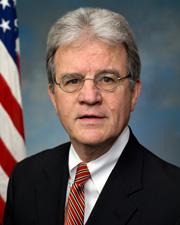 Sen. Tom Coburn (R-OK)
What it changes
1 change to S.Con.Res. 13
Adds SEC. ____. SENSE OF THE SENATE REGARDING UNWARRANTED TAXPAYER FUNDED BONUSES wherever appropriate
Adds a sectionInserted: SEC. ____. SENSE OF THE SENATE REGARDING UNWARRANTED TAXPAYER FUNDED BONUSES.
Inserted: (a) Findings.--The Senate finds the following:
Inserted: (1) Taxpayers are outraged that American International Group Inc. (AIG), the insurer bailed out with $182.5 billion from the United States Government, awarded $165 million of bonuses to the Financial Products unit, which nearly bankrupted the company. The bonuses were paid less than 2 weeks after AIG reported a $61.7 billion loss for the fourth quarter, the largest in United States corporate history.
Inserted: (2) The $165 million of bonuses paid to AIG employees is dwarfed by the billions of dollars of bonuses paid out to Federal contractors and senior government officials responsible for projects and programs that were over budget or failed to meet basic performance requirements.
Inserted: (3) The Department of Defense paid $8 billion in unwarranted bonuses to contractors for weapons programs that had severe cost overruns, performance problems, and delays between 1999 and 2004.
Inserted: (4) The Centers for Medicare and Medicaid Services pays more than $312 million per year in quality-of-care bonuses to nursing homes that provide below average care and have past violations of health-and-safety regulations.
Inserted: (5) The National Aeronautics and Space Administration (NASA) paid Boeing a bonus of $425.3 million for work on the space station that ran 8 years late and cost more than twice what was expected. Boeing estimates that it will incur an additional $76 million in overruns by the time the contract is completed.
Inserted: (6) NASA paid Raytheon a $103.2 million bonus for the Earth Observing System Data and Information System despite the project costing $430 million more and taking 2 years longer to complete than expected.
Inserted: (7) Lockheed collected a $17 million bonus from NASA for the Landsat-7 satellite even though the project was delayed 9 months even and the costs rose 20 percent to $409.6 million.
Inserted: (8) The Department of Commerce selected Northrop Grumman in 2002 to build a $6.5 billion satellite system that would conduct both weather surveillance and military reconnaissance that was supposed to save the Federal Government $1.6 billion. The first launch was scheduled for 2008 but hasn't happened, the project's budget has doubled to $13.1 billion, and Northrop's performance has been deemed unsatisfactory. Yet, from 2002 to 2005, the Federal Government awarded Northrop $123 million worth of bonuses.
Inserted: (9) In 2007, Harris Corp. developed a handheld device to collect data for the 2010 Census that failed to work properly and was $198 million over budget. Despite this costly failure that could cause delays in preparing for the nationwide head count, the Department of Commerce's Census Bureau awarded Harris $14.2 million in bonuses.
Inserted: (10) The Federal National Mortgage Association, a government sponsored mortgage enterprise better known as Fannie Mae, suffered $59 billion in losses last year and has requested $15 billion in taxpayer assistance. Yet it plans to pay $4.4 million or more in bonuses to its top executives. Fannie Mae's Chief Operating Officer is expected to receive a $1.3 million bonus, the Deputy Chief Financial Officer is slated for $1.1 million, and 2 executive vice presidents are each in line for $1 million each.
Show 13 more inserted paragraphsShow less
Inserted: (11) In 2006, more than $3.8 million in bonuses were paid out to senior officials at the Department of Veterans Affairs months after a $1 billion budget shortfall threatened to imperil the care of thousands of injured veterans returning from combat in Iraq and Afghanistan. Among those receiving bonuses were some who crafted the VA's flawed budget that was based on misleading accounting and the Deputy Undersecretary for Benefits, who helped manage a disability claims system that had a backlog of cases and delays averaging 177 days in getting benefits to injured veterans. The bonuses were awarded after Federal Government investigators had determined the VA repeatedly miscalculated, if not deliberately misled, taxpayers with questionable budgeting.
Inserted: (12) In 2006, the Department of Treasury abandoned a $14.7 million computer project intended to help detect terrorist money laundering. The failed project was 65 percent over its original budget, but the vendor, Electronic Data Systems Corp., was awarded a $638,126 bonus.
Inserted: (13) The repair and restart a Tennessee Valley Authority (TVA) nuclear reactor cost $90 million more than what the Federal utility budgeted, but TVA paid the primary contractors on the project, Bechtel Power Corp. and Stone and Webster Construction Inc., an extra $42 million in bonuses and other fees last year.
Inserted: (14) In 2008, the San Diego Unified school district spent more than $3 million in Federal funding for low-income students, child nutrition, and other Department of Education programs on bonuses for employees leaving the school district.
Inserted: (15) In 2008, the Department of Education paid nearly $1.7 million in bonuses to Denver Public Schools principals and assistant principals, including those at some of the lowest-performing schools in the city and 6 schools that have been closed because of poor performance.
Inserted: (16) The United States Postal Service is expecting a deficit of $6 billion in 2009, following deficits of $2.8 billion in 2008 and $5.1 billion in 2007 and, as a result, may increase the price of first-class mail stamps by 2 cents and end mail delivery 1 day a week. The Postmaster General, however, was paid a $135,000 bonus in 2008.
Inserted: (17) In 2008, 3 top executives in the Office of the Inspector General of the Department of Defense each received a cash bonus of $30,000 for outstanding leadership even though their agency has a history of weak management and strained relations between employees and supervisors.
Inserted: (b) Sense of the Senate.--It is the sense of the Senate that Congress and the President should enact legislation that would save the taxpayers billions of dollars every year by--
Inserted: (1) ensuring that all new contracts using award fees and bonuses link such fees and bonuses to acquisition outcomes, which should be defined in terms of program cost, schedule, performance, and outcome;
Inserted: (2) ensuring that no award fee or bonus is paid for contractor performance that is judged to be below satisfactory performance or performance that does not meet the basic requirements of the contract or significantly exceeds the original cost estimate;
Inserted: (3) providing that all award fees and bonuses are posted on a public website which would include an itemized, searchable databases of such award fees and bonuses, the amount of each, to whom the award fees and bonuses were paid, the reasons for the awards, and the name of the Department and agency that paid each such award;
Inserted: (4) prohibiting bonuses from being paid to agency and department managers and grant recipients overseeing a program with performance or over budget costs; and
Inserted: (5) directing the bipartisan congressional sunset commission established via a deficit-neutral reserve fund under section 212 of the fiscal year 2010 concurrent budget resolution to examine the number and total cost of unwarranted bonuses and award fees paid to contractors and Federal Government executives as part of the panel's review of nonperforming government programs.
The amendment doesn't say where this goes; the clerk decides.
Original wording
At the appropriate place, insert the following:
Read automatically from the Congressional Record. Check the original before relying on it.
As printed
SA 779. Mr. COBURN submitted an amendment intended to be proposed by him to the concurrent resolution S. Con. Res. 13, setting forth the congressional budget for the United States Government for fiscal year 2010, revising the appropriate budgetary levels for fiscal year 2009, and setting forth the appropriate budgetary levels for fiscal years 2011 through 2014; which was ordered to lie on the table; as follows:
At the appropriate place, insert the following:
SEC. ____. SENSE OF THE SENATE REGARDING UNWARRANTED TAXPAYER FUNDED BONUSES.
(a) Findings.--The Senate finds the following:
(1) Taxpayers are outraged that American International Group Inc. (AIG), the insurer bailed out with $182.5 billion from the United States Government, awarded $165 million of bonuses to the Financial Products unit, which nearly bankrupted the company. The bonuses were paid less than 2 weeks after AIG reported a $61.7 billion loss for the fourth quarter, the largest in United States corporate history.
(2) The $165 million of bonuses paid to AIG employees is dwarfed by the billions of dollars of bonuses paid out to Federal contractors and senior government officials responsible for projects and programs that were over budget or failed to meet basic performance requirements.
(3) The Department of Defense paid $8 billion in unwarranted bonuses to contractors for weapons programs that had severe cost overruns, performance problems, and delays between 1999 and 2004.
(4) The Centers for Medicare and Medicaid Services pays more than $312 million per year in quality-of-care bonuses to nursing homes that provide below average care and have past violations of health-and-safety regulations.
(5) The National Aeronautics and Space Administration (NASA) paid Boeing a bonus of $425.3 million for work on the space station that ran 8 years late and cost more than twice what was expected. Boeing estimates that it will incur an additional $76 million in overruns by the time the contract is completed.
(6) NASA paid Raytheon a $103.2 million bonus for the Earth Observing System Data and Information System despite the project costing $430 million more and taking 2 years longer to complete than expected.
(7) Lockheed collected a $17 million bonus from NASA for the Landsat-7 satellite even though the project was delayed 9 months even and the costs rose 20 percent to $409.6 million.
(8) The Department of Commerce selected Northrop Grumman in 2002 to build a $6.5 billion satellite system that would conduct both weather surveillance and military reconnaissance that was supposed to save the Federal Government $1.6 billion. The first launch was scheduled for 2008 but hasn't happened, the project's budget has doubled to $13.1 billion, and Northrop's performance has been deemed unsatisfactory. Yet, from 2002 to 2005, the Federal Government awarded Northrop $123 million worth of bonuses.
(9) In 2007, Harris Corp. developed a handheld device to collect data for the 2010 Census that failed to work properly and was $198 million over budget. Despite this costly failure that could cause delays in preparing for the nationwide head count, the Department of Commerce's Census Bureau awarded Harris $14.2 million in bonuses.
(10) The Federal National Mortgage Association, a government sponsored mortgage enterprise better known as Fannie Mae, suffered $59 billion in losses last year and has requested $15 billion in taxpayer assistance. Yet it plans to pay $4.4 million or more in bonuses to its top executives. Fannie Mae's Chief Operating Officer is expected to receive a $1.3 million bonus, the Deputy Chief Financial Officer is slated for $1.1 million, and 2 executive vice presidents are each in line for $1 million each.
(11) In 2006, more than $3.8 million in bonuses were paid out to senior officials at the Department of Veterans Affairs months after a $1 billion budget shortfall threatened to imperil the care of thousands of injured veterans returning from combat in Iraq and Afghanistan. Among those receiving bonuses were some who crafted the VA's flawed budget that was based on misleading accounting and the Deputy Undersecretary for Benefits, who helped manage a disability claims system that had a backlog of cases and delays averaging 177 days in getting benefits to injured veterans. The bonuses were awarded after Federal Government investigators had determined the VA repeatedly miscalculated, if not deliberately misled, taxpayers with questionable budgeting.
(12) In 2006, the Department of Treasury abandoned a $14.7 million computer project intended to help detect terrorist money laundering. The failed project was 65 percent over its original budget, but the vendor, Electronic Data Systems Corp., was awarded a $638,126 bonus.
(13) The repair and restart a Tennessee Valley Authority (TVA) nuclear reactor cost $90 million more than what the Federal utility budgeted, but TVA paid the primary contractors on the project, Bechtel Power Corp. and Stone and Webster Construction Inc., an extra $42 million in bonuses and other fees last year.
(14) In 2008, the San Diego Unified school district spent more than $3 million in Federal funding for low-income students, child nutrition, and other Department of Education programs on bonuses for employees leaving the school district.
(15) In 2008, the Department of Education paid nearly $1.7 million in bonuses to Denver Public Schools principals and assistant principals, including those at some of the lowest-performing schools in the city and 6 schools that have been closed because of poor performance.
(16) The United States Postal Service is expecting a deficit of $6 billion in 2009, following deficits of $2.8 billion in 2008 and $5.1 billion in 2007 and, as a result, may increase the price of first-class mail stamps by 2 cents and end mail delivery 1 day a week. The Postmaster General, however, was paid a $135,000 bonus in 2008.
(17) In 2008, 3 top executives in the Office of the Inspector General of the Department of Defense each received a cash bonus of $30,000 for outstanding leadership even though their agency has a history of weak management and strained relations between employees and supervisors.
(b) Sense of the Senate.--It is the sense of the Senate that Congress and the President should enact legislation that would save the taxpayers billions of dollars every year by--
(1) ensuring that all new contracts using award fees and bonuses link such fees and bonuses to acquisition outcomes, which should be defined in terms of program cost, schedule, performance, and outcome;
(2) ensuring that no award fee or bonus is paid for contractor performance that is judged to be below satisfactory performance or performance that does not meet the basic requirements of the contract or significantly exceeds the original cost estimate;
(3) providing that all award fees and bonuses are posted on a public website which would include an itemized, searchable databases of such award fees and bonuses, the amount of each, to whom the award fees and bonuses were paid, the reasons for the awards, and the name of the Department and agency that paid each such award;
(4) prohibiting bonuses from being paid to agency and department managers and grant recipients overseeing a program with performance or over budget costs; and
(5) directing the bipartisan congressional sunset commission established via a deficit-neutral reserve fund under section 212 of the fiscal year 2010 concurrent budget resolution to examine the number and total cost of unwarranted bonuses and award fees paid to contractors and Federal Government executives as part of the panel's review of nonperforming government programs.
Legislative Activity
Stay on top of the latest movement without scrolling through every action
Senate amendment submitted
March 31, 2009