To protect all patients by prohibiting the use of data obtained from comparative effectiveness research to deny coverage of items or services under Federal health care programs and to ensure that comparative effectiveness research accounts for advancements in genomics and personalized medicine, the unique needs of health disparity populations, and differences in the treatment response and the treatment preferences of patients.
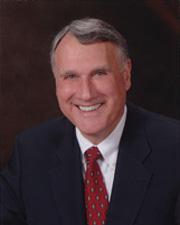 Sen. Jon Kyl (R-AZ)
Legislative Activity
Stay on top of the latest movement without scrolling through every action
Senate amendment not agreed to: Amendment SA 793 not agreed to in Senate by Yea-Nay Vote. 44 - 54. Record Vote Number: 127.
April 1, 2009
View full timeline
Senate amendment not agreed to: Amendment SA 793 not agreed to in Senate by Yea-Nay Vote. 44 - 54. Record Vote Number: 127.
April 1, 2009
Roll call votes on amendments in Senate: Amendment SA 793 not agreed to in Senate by Yea-Nay Vote. 44 - 54. Record Vote Number: 127.
April 1, 2009
Senate amendment proposed (on the floor): Amendment SA 793 proposed by Senator Kyl.(consideration: CR S4125-4128, S4150; text: CR S4125)
April 1, 2009
Amendment SA 793 proposed by Senator Kyl. (consideration: CR S4125-4128, S4150; text: CR S4125) To protect all patients by prohibiting the use of data obtained from comparative effectiveness research to deny coverage of items or services under Federal health care programs and to ensure that comparative effectiveness research accounts for advancements in genomics and personalized medicine, the unique needs of health disparity populations, and differences in the treatment response and the treatment preferences of patients.
April 1, 2009
Amendment SA 793 not agreed to in Senate by Yea-Nay Vote. 44 - 54. Record Vote Number: 127.
April 1, 2009
Senate amendment submitted
March 31, 2009
Votes
1 roll call on this amendment
Text
Proposed
CONGRESSIONAL BUDGET FOR THE UNITED STATES GOVERNMENT FOR FISCAL YEAR
2010

The ACTING PRESIDENT pro tempore. Under the previous order, the
Senate will resume consideration of S. Con. Res. 13, which the clerk
will report.
The legislative clerk read as follows:

A concurrent resolution (S. Con. Res. 13) setting forth the
congressional budget for the United States Government for
fiscal year 2010, revising the appropriate budgetary levels
for fiscal year 2009, and setting forth the appropriate
budgetary levels for fiscal years 2011 through 2014.

Pending:

Johanns amendment No. 735, to prohibit the use of
reconciliation in the Senate for climate change legislation
involving a cap-and-trade system.
Lieberman amendment No. 763, to protect the American people
from potential spillover violence from Mexico by providing
$550 million in additional funding for the Department of
Homeland Security and the Department of Justice and
supporting the administration's efforts to combat drug, gun,
and cash smuggling by the cartels, by providing $260 million
for Customs and Border Protection to hire, train, equip, and
deploy additional officers and canines and conduct exit
inspections for weapons and cash; $130 million for
Immigration and Customs Enforcement to hire, train, equip,
and deploy additional investigators; $50 million to Alcohol,
Tobacco, Firearms and Explosives to hire, train, equip, and
deploy additional agents and inspectors; $20 million for the
Human Smuggling and Trafficking Center; $10 million for the
Office of International Affairs and the Management
Directorate at DHS for oversight of the Merida Initiative;
$30 million for Operation Stonegarden; $10 million to the
Office of National Drug Control Policy for the High Intensity
Drug Trafficking Areas Program, to support state and local
law enforcement participation in the HIDTA Program along the
southern border; $20 million to DHS for tactical radio
communications; and $20 million for upgrading the Traveler
Enforcement Communications System.
Alexander amendment No. 747, to create runaway debt point
of order against consideration of a budget resolution that
projects the ratio of public debt to GDP for any fiscal year
in excess of 90 percent to ensure the continued viability of
the U.S. dollar and prevent doubling or tripling the debt
burden on future generations.
Sessions amendment No. 772, to restore the budget
discipline of the Federal Government by freezing nondefense
discretionary spending for fiscal years 2010 and 2011, and
limiting the growth of nondefense discretionary spending to 1
percent annually for fiscal years 2012, 2013, and 2014.

The ACTING PRESIDENT pro tempore. The Senator from North Dakota.
Mr. CONRAD. Mr. President, in the ongoing debate about the fiscal
condition of the country, we have heard once again the finger pointed
at President Obama. President Obama did not create this economic
collapse. He has only been President about 3 months--less than 3
months. This is not his concoction, nor are the deficits and debt piled
up by the previous administration his responsibility.
President Obama inherited a colossal mess--a debt that was doubled
during the previous administration, foreign holdings of U.S. debt that
were tripled during the previous administration, and an economic
collapse unparalleled since the Great Depression. In addition to that,
he inherited two wars.
President Obama is striving mightily to get us moving back in the
right direction. His budget, especially the first 5 years of his
budget, which emphasizes reducing our dependence on foreign energy, a
focus on excellence in education, fundamental health care reform, all
the while cutting the deficit by more than half and extending the
middle-class tax cuts from 2001 and 2003, has exactly the right
priorities for the country.
When I hear criticism of President Obama, I must say it is badly
misplaced. Our friends on the other side who complain about the fiscal
condition of the United States should look in the mirror because they
were there as silent sentinels when the previous administration stacked
up this record debt, these record deficits, and plunged this country
into a deep economic decline. That is their responsibility. President
Obama is in on the cleanup crew, and a remarkable job he is doing.
We now are prepared to enter into an order for the next several
amendments: Senator Casey to be recognized for 10 minutes; then Senator
Gregg or his designee for 1 minute; Senator Ensign for an amendment, 15
minutes on his side, 15 minutes for the chairman of the Budget
Committee or his designee;

[[Page S4113]]

then we will go to an amendment by Senator Kerry, who is seeking 15
minutes and will reserve just 1 minute in opposition or to comment. Is
that OK with the Senator from New Hampshire?
Mr. GREGG. Yes.
Mr. CONRAD. I think we are prepared to move forward on those three at
this point.
Mr. GREGG. Mr. President, we still have to work on this, but I would
like to be recognized to offer an amendment after Senator Kerry
completes his amendment.
Mr. CONRAD. It will be our intention--we need to work out times and
have a chance to look at the amendment--that Senator Gregg would go
after that. Our intention is to have a tranche of votes at 2:30 this
afternoon. So far, that would involve a vote on the Alexander amendment
offered yesterday, the Lieberman-Collins amendment offered yesterday,
the Sessions amendment offered yesterday, and then, of course, the
pending amendments--Casey, Ensign, Kerry, a potential for Johanns, and
a side-by-side from yesterday. We still have that to resolve. And
potentially Senator Gregg as well.
With that, Senator Casey is up.
The ACTING PRESIDENT pro tempore. The Senator from Pennsylvania.

Amendment No. 783

Mr. CASEY. Mr. President, I rise for two purposes: the first on an
amendment, and then I want to speak on the budget as well.
First, I ask unanimous consent to lay aside the pending amendment and
call up amendment No. 783, the Casey amendment on funding the Long-Term
Stability/Housing for Victims Program under the Violence Against Women
Act.
The ACTING PRESIDENT pro tempore. Is there objection?
Hearing no objection, it is so ordered. The clerk will report.
The legislative clerk read as follows:

The Senator from Pennsylvania [Mr. Casey] proposes an
amendment numbered 783.

Mr. CASEY. Mr. President, I ask unanimous consent to waive the
reading of the amendment.
The ACTING PRESIDENT pro tempore. Without objection, it is so
ordered.
The amendment is as follows:

(Purpose: To establish a reserve fund to fully fund the Long-Term
Stability/Housing for Victims Program)

At the end of title II, insert the following:

SEC. ___. DEFICIT-NEUTRAL RESERVE FUND TO FULLY FUND THE
LONG-TERM STABILITY/HOUSING FOR VICTIMS
PROGRAM.

The Chairman of the Senate Committee on the Budget may
revise the allocations of a committee or committees,
aggregates, and other levels and limits in this resolution
for one or more bills, joint resolutions, amendments,
motions, or conference reports that would fully fund the
Long-Term Stability/Housing for Victims Program under the
Violence Against Women Act which builds collaborations
between domestic violence service providers and housing
providers and developers to leverage existing resources and
create housing solutions that meet victims' need for long-
term housing at the authorized level, by the amounts provided
in that legislation for those purposes, provided that such
legislation would not increase the deficit over either the
period of the total of fiscal years 2009 through 2014 or the
period of the total of fiscal years 2009 through 2019.

Mr. CASEY. Mr. President, earlier this month I had the honor of
chairing the advisory board and participating in the release of a
report by the National Center on Family Homelessness that focused on
the increasing number of children that are homeless in our country.
The report is titled ``America's Youngest Outcasts''--a very
appropriate title and a heartbreakingly accurate one.
There are many very harmful consequences of homelessness for
children. But first I want to emphasize the nexus between domestic
violence and homelessness--and the reason why I am offering this
amendment.
Mr. President, this budget amendment creates a deficit-neutral
reserve fund for the Long-Term Stability/Housing for Victims Program,
which is authorized under the Violence Against Women Act, and I am
offering this amendment because I wanted to highlight two very serious
problems in this country. First of all, the relationship between
domestic violence and homelessness and the obvious impact that both of
these issues have on women and children in America; and in particular
the high number of women and children who are fleeing abusive
situations who then become homeless.
This program, under the Violence Against Women Act, will help
substantially to improve the lives of women and children in America who
become both victims of domestic violence and then become victims
because they are homeless as a result of that.
I want to defer further review of that for now because I want to move
to the second part of my remarks which focus on the budget, and in
particular the issue of health care.
As we know from the budget offered by President Obama, these are his
priorities in that budget: First of all, the creation of jobs, the
focus on health care--which I will speak of in a moment--energy
independence, and education. Two items not on that list are deficit
reduction, to cut the deficit in half over the next couple of years,
and, secondly, tax cuts--over $800 billion in tax cuts set forth in the
resolution that we are considering before the Senate.
At this point I will go to a second chart that very simply puts forth
a headline from the Reading Eagle newspaper in Reading, PA, dated
February 9 of this year: ``Tilden Township Woman Tends To Baby Born
Hours After Her Husband's Death,'' and then there is a very brief
introduction:

Just after noon on Thursday, Trisha Urban's husband, Andrew
D. Urban, died. Less than nine hours later, she gave birth to
their first child, Cora Catherine.

Andrew Urban was just 30 years old, Mr. President. It is hard to
describe the situation Trisha Urban was facing that day. Literally, at
the same time she was watching her husband die, she was being rushed to
the hospital to have their first child.
Let me read one excerpt from a letter she sent to me. Here is how her
first paragraph concludes:

Two ambulances were in my driveway. As the paramedics were
assessing the health of my baby and me, the paramedic from
the other ambulance told me that my husband could not be
revived.

She goes on to say in the letter:

Because of preexisting conditions, neither my husband's
health issues nor my pregnancy would be covered under private
insurance. I worked four part-time jobs and was not eligible
for health benefits.

Later in the letter she talks about the insurance company dropping
the coverage for her family.

We were left with close to $100,000 worth of medical bills.
Concerned with the upcoming financial responsibility of the
birth of our daughter and the burden of current medical
expenses, my husband missed his last doctor's appointment
less than 1 month ago.

And, of course, we know what happened next--her husband died and her
baby was born.
Those words and this story tell us all we need to know about the
challenge of health care--the challenge that is presented to the
Senate, the Congress, and the country. We cannot fail to do something
about this issue this year; not 2010, not 2011, or down the road. We
have to address this issue this year. I am glad the President has made
this a priority, and I am glad that Chairman Conrad has as well.
I want to read Chairman Conrad's words, the chairman of our Budget
Committee, when he talked about not just the importance of health care
but the connection between health care and fiscal responsibility in our
budget. When he was releasing the budget resolution, Chairman Conrad
said, in part:

Reforming our Nation's health care system is essential to
ensuring our long-term fiscal stability and economic
strength, in addition to the well-being of our citizenry.
Soaring health care costs are the biggest source of the
projected explosion in Federal debt in our long-term budget
outlook. Rapidly rising health care costs make it harder for
our businesses to compete globally, while putting a
tremendous strain on family budgets.

That is the challenge we have from a fiscal point of view if we don't
do anything about health care. But let's talk about costs and
families--rising costs and struggling families.
This chart is very simple. The orange line, of course, is the rise in
health insurance premiums from 1999 to 2008, a very dramatic and
unambiguous upward spike. The two lower lines, the light blue and the
red, depict workers' earnings, which have been, at best, near flat in
that time period. Then overall inflation is at about the same level, so
a 34-percent increase in wages at the same time health care premiums
are up 119 percent.

[[Page S4114]]

Going to the next chart, the insurance status of Americans under the
age of 65, you can see from that number we have 86 million Americans,
according to a recent report, who at some period of time in 2007 and
2008 had no health insurance. I might add those 86 million people, most
of them, almost 70 percent of them, didn't have health care for at
least 6 months.
Finally, we go to the employment status of people in Pennsylvania--
those who are uninsured. As you can see from this chart, more than
three-quarters of the people in Pennsylvania who are uninsured are
employed. So we are talking about working families not having health
insurance. That won't come as news to people across the country.
This really, when you get down to it, is not about these charts or
numbers. In the end, it is about people. It is about Trisha Urban and
her family and the horror they faced when her husband, the father of
her child, died at the very moment of birth of that child, but it is
also the horror of people who face a health insurance crisis that is
literally, in some cases, about life and death and about whether they
will survive.
Just consider this: Consider the costs we are talking about in terms
of the causes of death. The leading cause of death for Americans
between the ages of 55 and 64 are, No. 1, heart disease; No. 2, cancer;
but No. 3, in that age category, no insurance--the cause of death, not
just a problem, not just a crisis, but literally the third leading
cause of death in that age category. So that is what we are talking
about.
Finally, when we consider the challenges that families face, this is
also about a lot of small businesses. I am noting that in Pennsylvania
we have a strong tradition of making sure we support our small
businesses. One of the companies our office worked with is Bingaman &
Son Lumber Company. They have been in business 40 years, with 250
people employed, and they prided themselves on covering 80 percent of
their employees' medical and prescription drug costs. In December,
Bingaman & Son Lumber was notified that due to high medical bills the
company would have to increase their premiums by 37 percent.
We were able to work with them to provide some relief. But, again,
this points to the crisis in families but also the crisis in small
businesses--a 37-percent increase in their premiums.
Finally, Mr. President, I want to highlight President Obama's
principles for health care reform. They are very simple, and I will go
through them quickly. We know what they are: protecting families'
financial health, just as we spoke of today; making health care
affordable; aiming for universality, or covering everyone, which has to
be our objective; portability of coverage, so in the case of the Urban
family moving or changing jobs, it would not lead to a problem with
health insurance which could have been prevented; guaranteed choice;
investment in prevention and wellness, and we know the importance of
that; improving patient safety and quality care; and, finally,
maintaining long-term fiscal sustainability, or stability, as our
chairman has made a major priority of the budget resolution.
In conclusion, Mr. President, I would ask that we stay focused on
this issue, not just in this budget resolution but well beyond the
debate on the budget. And I want to come back to Trisha Urban. At the
end of her letter to me, she said the following:

I am a working class American and do not have the money or
the insight to legally fight the insurance company. I will
probably lose my home, my car, and everything we worked so
hard to accumulate in our life will be gone in an instant. I
am willing to pay the price of losing everything.

So, Mr. President, as I conclude, I would ask all of us in the Senate
who are debating this budget and wondering what is going to happen on
the issue of health care this question: What price will we be willing
to pay to make sure health care reform becomes a reality? The first
step in that goal is passing a budget resolution which makes health
care a priority.
Mr. President, I yield the floor, and I suggest the absence of a
quorum.
The ACTING PRESIDENT pro tempore. The clerk will call the roll.
The legislative clerk proceeded to call the roll.
Mr. ENSIGN. Mr. President, I ask unanimous consent that the order for
the quorum call be rescinded.
The ACTING PRESIDENT pro tempore. Without objection, it is so
ordered.

Amendment No. 804

Mr. ENSIGN. Mr. President, I ask unanimous consent to set aside the
pending amendment and call up amendment No. 804, an amendment to
protect middle-income taxpayers from tax increases.
The ACTING PRESIDENT pro tempore. Is there any objection?
Hearing no objection, it is so ordered. The clerk will report.
The legislative clerk read as follows:

The Senator from Nevada [Mr. Ensign] proposes an amendment
numbered 804.

Mr. ENSIGN. Mr. President, I ask unanimous consent that further
reading of the amendment be dispensed with.
The ACTING PRESIDENT pro tempore. Without objection, it is so
ordered.
The amendment is as follows:

(Purpose: To protect middle-income taxpayers from tax increases by
providing a point of order against legislation that increase taxes on
them, including taxes that arise, directly or indirectly, from Federal
revenues derived from climate change or similar legislation)

On page 68, after line 4, insert the following:

SEC. __. POINT OF ORDER AGAINST LEGISLATION THAT RAISES TAXES
ON MIDDLE-INCOME TAXPAYERS.

(a) In General.--After a concurrent resolution on the
budget is agreed to, it shall not be in order in the Senate
to consider any bill, resolution, amendment between Houses,
motion, or conference report that--
(1) would cause revenues to be more than the level of
revenues set forth for that first fiscal year or for the
total of that fiscal year and the ensuing fiscal years in the
applicable resolution for which allocations are provided
under section 302(a) of the Congressional Budget Act of 1974,
and
(2) includes a Federal tax increase which would have
widespread applicability on middle-income taxpayers.
(b) Definitions.--In this subsection:
(1) Middle-income taxpayers.--The term ``middle-income
taxpayers'' means single individuals with $200,000 or less in
adjusted gross income (as defined in section 62 of the
Internal Revenue Code of 1986) and married couples filing
jointly with $250,000 or less in adjusted gross income (as so
defined).
(2) Widespread applicability.--The term ``widespread
applicability'' includes the definition with respect to
individual income taxpayers in section 4022 (b)(1) of the
Internal Revenue Service Restructuring and Reform Act of
1998.
(3) Federal tax increase.--The term ``Federal tax
increase'' means--
(A) any amendment to the Internal Revenue Code of 1986
that, directly or indirectly, increases the amount of Federal
tax; or
(B) any legislation that the Congressional Budget Office
would score as an increase in Federal revenues.
(c) Supermajority Waiver and Appeal.--
(1) Waiver.--This section may be waived or suspended in the
Senate only by an affirmative vote of three-fifths of the
Members, duly chosen and sworn.
(2) Appeal.--An affirmative vote of three-fifths of the
Members, duly chosen and sworn, shall be required in the
Senate to sustain an appeal of the ruling of the Chair on a
point of order raised under this section.

Mr. CONRAD. Mr. President, through the Chair to the distinguished
Senator from Nevada, would he yield for a unanimous consent request?
Mr. ENSIGN. I will, without losing my right to the floor.
Mr. CONRAD. Absolutely.
The PRESIDING OFFICER (Mr. Bennet). Without objection, it is so
ordered.
Mr. CONRAD. I apologize to the Senator. We thought we had entered a
unanimous consent request. It was taken as more of a statement of times
rather than a unanimous consent request. We need to get that fixed;
otherwise, we could have a long delay here.
Mr. President, I ask consent the Ensign amendment we are on now--I
ask unanimous consent Senator Ensign have 15 minutes and it be 15
minutes for the chairman of the Budget Committee or his designee; then
we would go to the Kerry amendment, 15 minutes for Senator Kerry, 5
minutes for time in opposition; then the Cornyn amendment, 15 minutes
for Senator Cornyn, 15 minutes for the chairman of the committee or his
designee; then the Lincoln amendment on National Guard, 10 minutes for
Senator Lincoln and 5 minutes in opposition; then we would go to the
Gregg amendment, 15 minutes for Senator Gregg and 15 minutes for the
chairman of the committee or his designee. I ask unanimous consent that
we agree to that order.

[[Page S4115]]

The PRESIDING OFFICER. Is there objection to the request? Without
objection, it is so ordered. The Senator from Nevada.
Mr. ENSIGN. Mr. President, if I tried to imagine the worst policy we
could pursue during this time of economic duress, when jobs are being
shed from the economy, the worst policy would be to raise taxes on
individuals and businesses.
Every single day, we are buried in the news of our economic turmoil.
Thousands more are laid off, home foreclosures are reaching new highs,
property values are dipping to new lows, more businesses are shutting
their doors, and Americans are struggling to pay for life's essentials.
Therefore, what we should be discussing is extending tax relief for
individuals and families, and even going further to encourage savings
and investment that generates jobs and security.
Framed within this context, President Obama has promised not to raise
taxes on individuals making up to $200,000 and for families who make up
to $250,000. In his address to Congress, he said:

But let me [be] perfectly clear, . . . if your family earns
less than $250,000 a year, you will not see your taxes
increased a single dime. I repeat, not one single dime.

That was the quote from the President of the United States. The
President did not say I will not raise income taxes one single dime. He
said ``taxes,'' period. He did not define direct, indirect--he said
``not one single dime will be raised in taxes.''
That promise does not go far enough, in my view because, as we have
discussed, many middle-income families could be hit by increased energy
costs and other potential tax increases under this budget resolution.
Still, the promise was made by the President and by other Democrats
that those who make up to $250,000 will not have their taxes raised,
``not one single dime.'' I will be frank with my Democratic colleagues
when I say that many people doubt they will live up to this promise.
Many people making less than $250,000 fear tax increases on them in the
immediate future.
I believe we need to take action on this budget resolution that locks
in place a commitment that Congress will not raise taxes on middle-
income families. My amendment ensures that Congress and the President
will keep this promise not to raise taxes on individuals making
$200,000 a year or families making $250,000. If they decide to violate
this promise, then they will be held accountable.
To achieve this objective, my amendment would create a new budget
point of order against any legislation that would raise taxes on
middle-income taxpayers, those individuals making less than $200,000,
and families making less than $250,000. If the Democrats mean what they
say about not raising taxes on families making up to $250,000, then
they should embrace my amendment as a way of accomplishing it.
I define tax increase broadly because I think families were promised
``no tax increases'' and they don't care whether those tax increases
come directly or indirectly. My amendment would protect taxpayers
against indirect tax hikes yet to be forced upon the public.
Under the budget proposals, Americans, even those married couples
with incomes under $250,000 and singles under $200,000, would see
higher electricity, gas, heating oil, and other energy prices.
Americans would also see higher prices for other goods and services
that are themselves affected by higher energy costs.
This is the Trojan horse--the national sales tax on energy. This is
the indirect tax on people making less than $250,000 a year. A recent
MIT study, which modeled a national energy tax regime similar to
President Obama's budget proposal, estimated that annual revenues as
high as $366 billion would come to the Federal Government. This equals
tax increases of over $3,100 per household per year in the United
States. Higher energy costs under a national energy tax is not
speculation. Candidate Obama acknowledged his plan would lead to higher
energy prices. He said last year:

Under my plan of a cap and trade system, electricity rates
would necessarily skyrocket.

The OMB Director, the President's OMB Director, Director Orszag, said
in prepared testimony that ``[u]nder a cap-and-trade program, firms
would not ultimately bear most of the cost of the allowances but
instead would pass them along to their customers in the form of higher
prices . . . [T]he price increases would be essential to the success of
a cap-and-trade program.''
That was a direct quote from President Obama's OMB Director,
admitting that these higher prices are going to get passed on to the
American consumer. If you are raising cap-and-trade taxes, and that is
not an indirect tax, I don't know what is. More than anything else in
this budget, an energy tax poses perhaps the greatest risk to our
economy and to middle income livelihoods. In addition, this amendment
would also protect taxpayers against tax hikes yet to be developed by
those who want to expand the role of the Federal Government.
Now is the time to protect middle-income Americans who are at risk
from direct and indirect taxes. This amendment would be a good first
step in locking the budget into a direction in which middle-income
families are protected. Then we should work toward providing new tax
relief instead of raising taxes. With the economy in such bad state, we
should all be able to agree not to raise taxes. I urge all Members of
this body to support this important amendment.
In conclusion, the energy tax that has been proposed, this cap-and-
trade system, this national sales tax on energy. We did a hearing on
this the other night. What people do not realize is that not only do
the electricity rates skyrocket as the President said, but gasoline and
diesel prices go up significantly. That means transportation costs on
your food go up significantly. That means you have to raise the price
of food.
We had the fertilizer companies testifying before our committee. I
didn't know that much about fertilizer before the testimony in front of
the committee. It is amazing what a world commodity fertilizer is. The
energy tax is going to destroy jobs in the fertilizer industry, but it
will also raise prices of fertilizers in the United States. Guess what,
to grow food you need fertilizer. If you pay more for fertilizer, you
are going to pay more for food. That cost either has to be borne by
hard-working farmers and their families or it is going to be borne by
the consumer at the end.
The worst part of all this is that a national energy tax is the most
regressive form of taxation there is because it hits those in the low-
and middle-income categories much more severely as a percentage of
their income than it does people at the top.
My amendment is critical for the President to keep his word on not
raising taxes on individuals making up to $200,000 a year or families
making up to $250,000 a year. My amendment will ensure that the
President keeps not only his campaign pledge, but also what he pledged
in his first address to Congress and to the American people when he
took office after Inauguration Day.
I urge adoption of my amendment by all the Senators in this body.
Let's move forward and protect middle-class, middle-income taxpayers in
America.
I yield the floor.
The PRESIDING OFFICER. The Senator from North Dakota is recognized.
Mr. CONRAD. Mr. President, if I could get the attention of my
colleague, I would be willing to take the amendment on a voice vote--
oh, I am sorry. I have been advised that because of the way the
amendment is structured, it gives specific instructions to the Finance
Committee that we cannot do so in a budget resolution or the whole
budget resolution is no longer privileged. We went through this last
year, you may recall, with the Cornyn amendment. The same thing applies
here.
I will be required to raise the defense of germaneness against the
amendment. Let me say this, I support the amendment. I think it is the
right signal to send. But the Parliamentarian has advised us that if I
do not raise the defense of germaneness against the amendment, then the
entire privileged nature of the budget resolution is at risk. I hope
the Senator understands. It has nothing to do with the message the
Senator is trying to send. What it has to do with is, as I understand
it, the specific instructions to the Finance Committee that are
contained in this amendment. That is beyond the power of the Budget
Committee. We don't

[[Page S4116]]

have the authority to tell the committees of jurisdictions with
specificity what they are to do with the allocations they are given.
The power of the Budget Committee is to tell the committees what
numbers they have to hit. We don't have the ability to tell them how to
do it.
It is just like appropriators. We tell them how much money they have
to spend. We do not have the authority to tell them how to spend it.
If I were able to make a parliamentary inquiry?
The PRESIDING OFFICER. The Senator will state his inquiry.
Mr. CONRAD. Has the Parliamentarian had a chance to review the Ensign
amendment?
The PRESIDING OFFICER. Yes.
Mr. CONRAD. Is this amendment defective in the way that I have
described; that is, is it too prescriptive in terms of its language
with respect to the Finance Committee and therefore would it put at
risk the privileged status of the budget resolution itself?
The PRESIDING OFFICER. The Senator is correct.
Mr. CONRAD. Let me inquire further. If I fail to raise the defense of
germaneness against this amendment, that would put the budget
resolution's privileged status at risk?
The PRESIDING OFFICER. If the amendment were to be adopted, it would
put the privileged status at risk.
Mr. CONRAD. So if I raise the defense of germaneness and I were to
lose, that would put the privileged status of the budget resolution at
risk?
The PRESIDING OFFICER. Will the Senator restate his inquiry.
Mr. CONRAD. Excuse me?
The PRESIDING OFFICER. Would the Senator restate his inquiry.
Mr. CONRAD. If I were to raise a point of order that the amendment is
not germane for the reason we have discussed, and I were to lose that
point of order, would the resolution be at risk in terms of its
privileged status?
The PRESIDING OFFICER. It would.
Mr. GREGG. Only if it passes.
The PRESIDING OFFICER. It would.
Mr. GREGG. Mr. President, it would only be at risk if it passes?
The PRESIDING OFFICER. If the amendment were adopted, it would be at
risk.
Mr. CONRAD. So let's be very clear. If I raise--first of all, I have
to raise a point of order or the privileged status of the resolution is
at risk; is that correct?
The PRESIDING OFFICER. The Senator is correct.
Mr. CONRAD. If I lose the point of order, the privileged status of
the resolution is at risk?
The PRESIDING OFFICER. The Senator is correct.
Mr. GREGG. Well, only if it is adopted.
Mr. CONRAD. Wait. I have the floor.
I would ask the Senator from Nevada if it would not be possible for
us to work together on alternative language that would capture the
intent of the Senator from Nevada but that would not put the budget
resolution at risk.
Mr. ENSIGN. I would say to the Senator from North Dakota, we have
worked on language with the Parliamentarian, trying to overcome this
problem the Chairman is raising. The bottom line is, the intent of what
we are trying to do is to make sure taxes are not raised on people
making up to $250,000 a year.
From what we understand from the Parliamentarian, there was not
language we could draft that would fit the conforming factor with the
budget resolution. So we were going to have to have a vote on waiving
the germaneness.
Mr. CONRAD. Well the problem is, if the Senator proceeds, I am
required to raise the point of order. If I fail to do so, the entire
privileged status of the budget resolution is at risk. If I raise it
and I lose, the privileged status of the budget resolution is at risk.
This, in effect--I do not think this is the Senator's intention, to
threaten the entire budget resolution.
Mr. GREGG. Would the Senator yield on this point? If I might inquire
of the Chair, ``at risk'' does not mean the resolution has necessarily
gone over the level of being--of losing its privileged status?
This is, by the Chair's definition, a corrosive amendment. There
would have to be a series of corrosive amendments to meet the point
where the bill loses its status as privileged. One single amendment
that is corrosive does not necessarily mean the bill has lost its
privileged status. It simply means it is moving in the direction of
being at risk of losing its privileged status; is that true?
The PRESIDING OFFICER. The Senator is correct with respect to this
stage of the proceedings on this matter.
Mr. GREGG. So it is possible this amendment could pass. If passed, it
would be--could be deemed corrosive but would not be deemed fatal to
the privileged status of the bill?
The PRESIDING OFFICER. During this initial phase of consideration of
the resolution, that is correct.
Mr. CONRAD. Mr. President, further parliamentary inquiry: So let's
review because at least this Senator is getting a mixed message. Let's
revisit this. If I fail to raise a point of order against the Ensign
amendment, that threatens the privileged status of the resolution; is
that correct?
The PRESIDING OFFICER. The adoption of the Ensign amendment would
have a corrosive effect on the privilege of the resolution on the floor
at this time. It would have a fatal effect if the language were to be
retained in the conference report.
Mr. CONRAD. So let's revisit this once again. If I did not raise the
point of order, in fact, supported the Ensign amendment, and it passed,
as long as it did not come back from conference committee, the
privileged status of the budget resolution would be preserved?
The PRESIDING OFFICER. At this time, it would be corrosive. The
cumulative effect of the adoption of such amendments could prove fatal.
Mr. GREGG. Mr. President, if I might inquire. But the amendment
itself is not fatal?
The PRESIDING OFFICER. Not if it is adopted to the resolution at this
phase.
Mr. KERRY. Mr. President, I wish to try and clarify that now because
this has gone back and forth. What I understood you to say is--I wish
to have this clear--if it passes now, it has a corrosive effect, but if
it does not come back--if it comes back from conference committee, it
would be fatal?
The PRESIDING OFFICER. The Senator is correct.
Mr. KERRY. If it does not come back from the conference committee,
then the corrosive--whatever effect--is eliminated?
The PRESIDING OFFICER. The Senator is correct.
Mr. CONRAD. All right. I think it is clear to all of us. I hope that
is clear. Let me make one further parliamentary inquiry because I wish
to make certain: If I fail to raise the point of order at this point
against Senator Ensign's amendment, that has a corrosive effect,
potentially corrosive effect, but it is not fatal?
The PRESIDING OFFICER. The Senator is correct.
Mr. CONRAD. It would only be fatal if it came back from conference
committee?
The PRESIDING OFFICER. The Senator is correct.
Mr. CONRAD. I wish to indicate it would be my intention to support
the Ensign amendment. We will have a vote later on it. I would not
oppose it. But I wish to make clear to my colleagues this exchange.
Senator Ensign needs to know, I cannot bring this amendment back from
conference because that would be fatal to the privileged status of the
budget resolution. The Senator needs to offer this amendment knowing
that full well.
I also wish to say to others who might have similarly crafted
amendments, and I would ask the Parliamentarian at this time: If there
were a series of amendments such as this one that were adopted here but
did come back from the conference committee, would just the fact that a
series of amendments such as this were adopted be potentially fatal to
the privileged status of the budget resolution, even if they did not
come back from conference committee?
The PRESIDING OFFICER. It is impossible to predict the ultimate
corrosive effect. But there is a theoretical possibility it could
exist.
Mr. CONRAD. It is not theoretical in the sense that we have another
amendment coming very soon after this one that is the same. The Cornyn
amendment, as I understand, has exactly the

[[Page S4117]]

same flaw. So we are going to have to go through this exercise again.
Mr. ENSIGN. Another parliamentary inquiry: It is true that when you
say ``fatal,'' that just requires 60 votes instead of 51 votes?
The PRESIDING OFFICER. If a measures loses its privileged status,
when it is considered, it is fully debatable and could require 60 votes
to invoke cloture.
Mr. ENSIGN. Further parliamentary inquiry: That would indicate, if
they had 60 votes, they could pass the budget resolution even with this
amendment in it? So it actually is not fatal, it requires a higher
level of support from the Senate to pass it?
The PRESIDING OFFICER. It is fatal to the privileged status.
Mr. ENSIGN. But it does not kill the bill? The bill still could be
passed with 60 votes, passing the other hurdles that are in the way; is
that not correct?
The PRESIDING OFFICER. The Senator from Nevada is correct.
Mr. CONRAD. Mr. President, what is very clear is it is fatal to the
privileged status of the budget resolution. Requiring 60 votes on a
budget resolution, that is fatal. Let's be clear. We all know what this
means.
I would ask to make a further parliamentary inquiry: Does it make a
difference whether I offer the point of order against the Ensign
amendment to the risk of the budget resolution, even if it does not
come back in conference?
Am I clear? Let me restate this. If the Ensign amendment does not
come back from conference committee, does the fact that I raise a point
of order make a difference?
The PRESIDING OFFICER. Not if this does not come back from the
conference committee.
Mr. CONRAD. Well, I wish to say this to Senator Ensign straight from
the shoulder. I intend to support the amendment. I ask other colleagues
to support the amendment because it is clear to me it will not be fatal
to the privileged status of the budget resolution if it does not come
back from conference committee.
But let me say this to the Senator very clearly: There is no way it
is coming back from conference committee. I am not going to put the
entire budget resolution at risk for that.
Mr. ENSIGN. Mr. President, one last comment. We clearly established
that even if it was in the budget resolution, coming back from
conference it would require 60 votes at that point if somebody raised
the question of its privileged status. If that was the case, it would
require 60 votes, and there it would require bipartisan participation.
I guess bipartisanship around here means it is fatal.
Mr. CONRAD. Well, I would say this. Let's deal with the reality. The
reality is, I do not remember a budget resolution around here that has
gotten 60 votes. So to make the privileged status fatal, to be fatal to
the privileged status is to be fatal to a budget resolution. That is
the reality.
Mr. GREGG. Mr. President, as an aside, I think it is important to
note the chairman has said this will not come back from the conference
committee, which is interesting and informative. I think it is fair
that he has said that. It reflects the influence the chairman has on
the conference committee.
Therefore, I presume, since the chairman has said, relative to
reconciliation, it should not occur in the Senate on the issue of
health care or the carbon tax, national sales tax, that the chairman
will use the same influence to assure us we will not see those matters
come out of the conference committee.
In addition, I wish to ask a parliamentary inquiry: I understand
there is a wall, not a wall of debt--although that also is involved in
this bill--but there is a wall being built of corrosive activity,
potentially, with a series of amendments that might be adopted on the
floor that the Parliamentarian deems to be corrosive. At some point,
there is the theoretical possibility, as the Chair has said, that you
might even bring the budget resolution's privilege into issue on the
floor.
I guess my question is: Why, if this is just one element of that
wall, on the resolution as it reaches the floor, would it be definitive
relative to the conference report?
In other words, why doesn't there have to be a series of amendments
that are corrosive in order to make the conference report privilege
fatal? Why would one amendment make the conference report fatal if it
does not make the budget on the floor fatal, if the Chair understands
the question?
The PRESIDING OFFICER. The conferees would have the opportunity, upon
reflection, to remove corrosive matter from the conference report.
Mr. GREGG. I think my question was, to make it more succinct, if this
were the only corrosive matter in the conference report and since it
was not fatal to the budget resolution as a single corrosive matter on
the floor, why would it be fatal to the conference report? Why isn't
the conference report something that is subject to the same test of
corrosiveness as the budget resolution is on the floor?
The PRESIDING OFFICER. The conferees would have the ability to
reflect on the appropriateness of the matters sent to them.
Mr. GREGG. So is the Chair saying that it is possible--more than
theoretical but possible--that this amendment in the conference report
would not be fatal to the conference report's privilege but would
simply be corrosive of that privilege and that the conference report
could retain its privilege with this amendment in it, that that is a
possibility?
The PRESIDING OFFICER. A very remote possibility.
Mr. GREGG. But not theoretical?
The PRESIDING OFFICER. The Senator from Massachusetts.
Mr. KERRY. Is there any possibility that the resolution could be
challenged prior to going to conference on the basis of its privilege
and that it could lose its privilege prior to going to conference?
The PRESIDING OFFICER. Only on the accumulative effect of corrosive
amendments.
The Senator from North Dakota.
Mr. CONRAD. Mr. President, I thank my colleague for his confidence in
my ability to influence the outcome of the conference committee. I
don't think it may extend as far as he may wish or as far as I might
wish.
On a matter such as this, I don't see that there is any option. Many
of us support the intent of the amendment of the Senator from Nevada.
Unfortunately, it is drafted in a way that the Parliamentarian has
described to us clearly. If it comes back from conference committee, in
all likelihood that is fatal to the privileged status of the budget
resolution. That is not a risk we can afford to take as conferees. I am
confident the conferees will not permit that. At the same time, I don't
want people voting against the amendment of the Senator on a
technicality that then is misrepresented as their position on the
underlying position contained in this amendment.
With that, we have used as much time as we need on this amendment.
Senator Kerry is next.
The PRESIDING OFFICER. The Senator from Massachusetts.

Amendment No. 732

Mr. KERRY. I thank the distinguished Senator.
That was one of the more intriguing half hours we have spent in the
Senate in a long time. I might add, it is sort of interesting that we
are haggling about an amendment which raises one of those great red
herrings on the subject of global climate change and cap and trade
because we already have a cap-and-trade system in America. It is not an
automatic tax increase. It is not going to, if properly structured,
result in a tax increase. We like to tilt against goblins around here
sometimes. This is one of those amendments that do that in a very
political way.
I ask that amendment No. 732 be called up.
The PRESIDING OFFICER. The clerk will report.
The assistant legislative clerk read as follows:

The Senator from Massachusetts [Mr. Kerry], for himself,
Mr. Lugar, Mr. Leahy, Mr. Voinovich, Mr. Durbin, Mr. Kaufman,
Mr. Menendez, Mr. Dodd, Mrs. Feinstein, Mr. Brown, Mr.
Sanders, Mr. Lieberman, Mr. Casey, and Mr. Corker, proposes
an amendment numbered 732.

Mr. KERRY. I ask unanimous consent that reading of the amendment be
dispensed with.
The PRESIDING OFFICER. Without objection, it is so ordered.
The amendment is as follows:

[[Page S4118]]

(Purpose: To restore full funding for the President's request for the
international affairs budget, in support of development programs in
Pakistan and Afghanistan, nuclear nonproliferation, foreign assistance,
fighting global AIDS, promoting sustainable development, and other
efforts, with an offset)

On page 10, line 20, increase the amount by $4,000,000,000.
On page 10, line 21, increase the amount by $1,896,000,000.
On page 10, line 25, increase the amount by $1,104,000,000.
On page 11, line 4, increase the amount by $476,000,000.
On page 11, line 8, increase the amount by $272,000,000.
On page 11, line 12, increase the amount by $116,000,000.
On page 27, line 23, decrease the amount by $4,000,000,000.
On page 27, line 24, decrease the amount by $1,896,000,000.
On page 28, line 3, decrease the amount by $1,104,000,000.
On page 28, line 7, decrease the amount by $476,000,000.
On page 28, line 11, decrease the amount by $272,000,000.
On page 28, line 15, decrease the amount by $116,000,000.

Mr. KERRY. Mr. President, over the first 9 years of this new century,
we have learned a lot about national security. We learned the hard way
in 2001. Since then, with two wars, one in Afghanistan and one in
Pakistan, and also with the global economic crisis we face today, we
understand the degree to which in a globalized world our problems are
interconnected. Ultimately, our security is interconnected. We are
currently endangered by weak states and failed states as well as by
strong states because those weak and failed states become places where
terrorism can flourish. We are endangered also by diseases that know no
borders, by climate change half a world away. We are endangered when we
allow chaos and crisis to create conditions for ideologies of radical
hatred and violence to take root.
It is clear to all Members, who are, all of them, no matter what
committee on which they serve, forced to think hard about how to
protect our country, that it requires a lot more than just a strong
military in order to provide that protection. It requires, above all,
in this new world in which we live, a strengthened commitment to
diplomacy and to development. To put this as simply and as bluntly as
possible, that is why passing a robust foreign affairs budget is a
matter not only of America's world leadership but also of our practical
national security at home.
I call to the attention of my colleagues the words of Secretary of
Defense Bob Gates spoken almost a year and a half ago in Kansas where
he gave a speech while serving as President Bush's Secretary of
Defense. What he said there is the following:

What is clear to me is that there is a need for a dramatic
increase in spending on the civilian instruments of national
security--diplomacy, strategic communication, foreign
assistance, civic action, and economic reconstruction and
development.

The other day, I was told the story of our National Security Adviser,
former Marine Commandant Jim Jones, who was commenting how we have
powerful, enormous ships off the shores of Lebanon, but Hezbollah is
building schools and building homes and winning the hearts and minds of
people in that divided and volatile country by doing so. In effect, he
described a situation where, as powerful as our military is, we are not
able to win the contest for ideas at the center of security issues
today.
Secretary of State Hillary Clinton, our former colleague, testified
in her confirmation the following:

The relatively small but important amount of money we do
spend on foreign aid is in the best interests of the American
people and promotes our national security and advances our
interests and reflects our values.

When our soldiers and generals join our top diplomats in demanding
increased civilian capacity and increased civilian funding, even in the
midst of this economic crisis, that is when you know there is not only
a growing consensus, there is a sense of urgency behind the
strengthening of our civilian mission.
We just had an elaborate, long period where I think three studies
were commissioned by President Bush, and then President Obama
recommissioned another evaluation of what is happening in Afghanistan
and Pakistan. It is clear that we cannot achieve our objectives unless
we have the kind of robust budget in the foreign affairs account
President Obama asked for. Regrettably, that is not what the budget
resolution currently calls for, even when we add the supplemental
budgets to it. It falls about $4 billion short from the $53.8 billion
the President asked for.
I believe that returning diplomacy and development to their rightful
place is not going to be achieved by talking about it. It is going to
take money to drive civilian foreign policy. If it keeps us safer, and
it is the consensus of our military and our diplomats that it does
that, then that is money well spent. Full funding of the President's
international affairs budget is a vital step toward greater civilian
capacity.
I urge colleagues to support this amendment. Senator Lugar, Senators
Leahy, Voinovich, Durbin, Kaufman, Menendez, Dodd, Feinstein, Brown,
Sanders, Lieberman, Casey, and Corker have all joined together to
cosponsor this amendment. We ask for the approval of the Senate to add
$4 billion worth of funding to the President's fiscal year 2010
international affairs budget request for the function 150 account.
There is an offset. The offset that would pay for this transfer would
come from the function 920 account.
The reality is that we are just not doing enough today to invest in
the vital components of both diplomacy and development. I was recently
in the Middle East, in Egypt and Jordan and in the West Bank and Israel
and Syria, Lebanon. I saw firsthand the degree to which people we
support in many ways are struggling to push back against enormous
spending by Iran and other actors who seek to destabilize the region.
If the United States talks about democracy and doesn't support people
in the same way the people trying to disrupt it do, we lose our
credibility and, more importantly, we walk away from people who are
literally putting their lives on the line to live up to the standards
we have set and the beliefs we have espoused so powerfully.
It is extraordinary to me that the funding for the Department of
Defense today, with all of these restraints we see on its ability to
achieve our goals, as powerful as we know it is and as much as we
admire the sacrifices and the extraordinary capability of our modern
military--the fact is, we spent over half a trillion dollars on it.
Then in 2008, the Army added about 7,000 soldiers to the total. I
supported that. I believed we needed to do that to relieve pressure on
the current deployments. But 7,000 soldiers is more people than serve
in the entire Foreign Service every year all the time. The fact is,
1,100 Foreign Service officers could be hired for the cost of a single
C-17 military cargo plane, and $4 billion, which is what we are looking
for here, is less than 2 percent of what the Government has given to
AIG over the course of the last year and a half.
This is a vital context to put this discussion into. We have to
decide around here what is really important to us. What really makes a
difference to the security and safety of the American people? The
President requested $53.8 billion in this year to fund next year's
budget. That is an increase of 8 percent over last year's funding level
of 49.8.
Why is this so important? Well, first of all, let me put this in
context, if I can. The total request of the President for this entire
context of America's security comes to about 1.4 percent of our whole
budget. In fact, if you break out the entire national security budget,
which is our defense, homeland security, all the components of
security, you are only talking about 6.8 percent of the entire national
security budget of our country for some of the most important things
that prevent people from becoming terrorists or from being able to
engage in their terrorist acts with impunity.
Some people try to assert that the President's request has increased
41 percent from last year's total of $38 billion. Let me say very
clearly, right now, that is not accurate. The figure of $38 billion
does not include last year's supplemental appropriations. And those
supplemental appropriations raised the total to about $50 billion.
What President Obama did was break the practice of past Presidents of
sending in a phony half budget or a three-quarter budget and then we do
the rest of it through the supplementals. He decided the American
people ought to see

[[Page S4119]]

it as it is, they ought to know what we are doing, we ought to make the
request we need. So he put in the request for the $53 billion because
that is, in fact, reflecting what we actually spent last year, plus
what we need to do for Afghanistan and Pakistan in this year. This is a
more straightforward way of doing business, frankly. Rather than hiding
the amount of money or massaging the spending figures by tucking extra
spending into the supplemental bills, President Obama has been up front
and open, and he has put it into one bill and says: Here is what I
need. That is why my colleague, the chairman of the Budget Committee,
who labors unbelievably hard under these difficult circumstances to
make all this work--and I respect him enormously in those efforts--has
praised President Obama's approach in this openness.
So the real question is sort of, What is this $4 billion going to get
us? What is the difference it is going to make? First of all, we have a
vital new package the President announced yesterday that Senator Lugar
and I will be introducing in a few days to provide additional
assistance for Pakistan and Afghanistan. The $4 billion is going to
help build civilian capacity and put our diplomats back on the front
lines of American foreign policy. It will provide lifesaving treatment
for people with HIV/AIDS and continue the program that was perhaps the
single most successful program of the Bush administration, which is the
PEPFAR efforts in Africa. This $4 billion will help make people all
over the world safer and in the process help keep America safer.
Ultimately, these kinds of efforts are the key to the strategy in
Afghanistan. Our on-the-ground ability to be able to win, hold, and
build is the whole strategy to be able to win people back over to us
and prevent the Taliban from supplanting or filling the vacuum that
currently exists.
We need to reverse years of neglect in those two countries. Pakistan
has nuclear weapons. We just saw the other day an attack on police
recruits in the heart of Pakistan itself--not out in the Fatah or in
Baluchistan or the areas we know are harder to control. So we see that
insurgency with a message clearly sent that they can act with impunity.
So it is critical for the United States to step up and show President
Zardari and the Government of Pakistan, who are courageously trying to
forge forward with their youthful democracy, that, in fact, we are
supportive and we are there to help them.
I ask my colleagues to imagine a nation as populous as Iraq,
Afghanistan, and North Korea combined, a nation with a full arsenal of
nuclear weapons and ballistic missiles capable of delivering them
anywhere in a 1,000-kilometer range. Imagine a nation with a population
that is overwhelmingly moderate, overwhelmingly committed to democracy
and the rule of law, but deeply suspicious of its leadership and of
America's friendship. Imagine a nation in which Osama bin Laden and the
leadership of al-Qaida have found sanctuary for the past 7 years--a
haven from which they and their confederates have plotted and carried
out attacks on their host country, on neighboring countries, and on
sites around the globe. That nation can serve as a keystone for a new,
cooperative relationship between the Western and Muslim worlds, or, if
we do not do our job, it could become an epicenter for radicalism and
violence on a cataclysmic scale.
So I believe we are at a critical crossroads, and we need a bold new
strategy for Pakistan. Our current path has not brought success, and
tinkering around the margins is absolutely guaranteed to fail. That is
why President Obama has called on Congress to pass the Enhanced
Partnership With Pakistan Act that Senator Lugar and I will introduce
very soon that authorizes up to $1.5 billion annually in order to help
shape this new relationship with Pakistan.
We also might mention again the importance of standing up with
respect to Iran. When you look back at what happened in the war with
Israel and Lebanon, the southern part of the country of Lebanon was
significantly damaged. Iran, using its surrogate Hezbollah, immediately
painted flags on the houses--their flags, Hezbollah flags--and
essentially asserted: Don't worry, we are here, and we are going to
rebuild this.
So last year both parties came together. We had 73 votes to pull
together, in addition to the budget, to provide $48 billion over 5
years. Today, it is imperative that we fund these programs, and I ask
my colleagues for their support for this amendment.
The PRESIDING OFFICER. Who yields time in opposition to the
amendment?
The Senator from North Dakota.
Mr. CONRAD. Mr. President, when the Senator approached me about this
yesterday, I told him I would strongly oppose this amendment. I told
him that because this has been hard to put together, and we have tried
to have an equal sharing of sacrifice between all of the spending
elements of a budget. We have tried to do it with respect to domestic
spending, defense spending. We have tried to do it with mandatory
spending. And international is a component of the discretionary side of
the budget, so we thought it would only be fair that they be asked to
make a contribution.
When I told the Senator yesterday that I would strongly resist this
amendment, I did not know, I was not aware, he had an offset for that
amendment, and that does alter the situation. That makes it more
palatable because we maintain the same bottom line.
But it does concern me that we are upsetting the balance of what I
think is a fair distribution of the pain of the cutbacks we have had to
make. I want to be very clear about that. I am concerned that other
parts of the budget are being asked to take reductions from the
President's request and now international will not. So I want to say I
find that troubling.
I understand absolutely the substance of the argument the Senator is
making, and he is right to make it. He is chairman of the Foreign
Relations Committee. But I do hope colleagues think carefully about
kind of the equity of the burden here--the equity of the burden.
The second thing I want to say with respect to this amendment is that
it uses a 920 offset. We came out of the committee with about $7
billion in savings in 920. That is general overhead of all of the
agencies; in other words, it is across the board, goes to their travel
accounts, goes to their overhead accounts. Could we take somewhat more
in 920? Yes, but not much more.
We came out of the committee at $7 billion. I have always tried to
stay at about $10 billion in 920. This would take us to $11 billion. So
I am troubled by that as well.
With that said, I do not intend to oppose this amendment, but I do
find it troubling on those two grounds: One, it does affect the
fairness of the distribution of the pain, if you will, of the cutbacks
we have had to make; and No. 2, it adds to the section 920 offsets in a
way that, to me, takes it a little past the realm of what is
reasonable. But with that said, I do not intend to oppose this
amendment or ask colleagues to vote against it.
I yield the floor.
Mr. President, Senator Cornyn is next. Senator Cornyn has another one
of these corrosive amendments. I told Senator Cornyn, this is the third
year he has offered a corrosive amendment, that he is very much in
danger of being dubbed ``Corrosive Cornyn.'' I hope he takes that with
the good humor it was intended.
The PRESIDING OFFICER. The Senator from Texas.
Mr. CORNYN. Mr. President, I appreciate the new moniker the
distinguished chairman of the Budget Committee is trying to confer on
me, but I would say it is not warranted for a number of reasons. The
chairman has a great sense of humor, which I appreciate sometimes and
not as much on other occasions.

Amendment No. 806

Mr. President, I ask unanimous consent to set aside the pending
amendment and to call up my amendment No. 806 and ask for its immediate
consideration.
The PRESIDING OFFICER. Without objection, it is so ordered.
The clerk will report.
The assistant legislative clerk read as follows:

The Senator from Texas [Mr. Cornyn] proposes an amendment
numbered 806.

Mr. CORNYN. Mr. President, I ask unanimous consent that reading of
the amendment be dispensed with.

[[Page S4120]]

The PRESIDING OFFICER. Without objection, it is so ordered.
The amendment is as follows:

(Purpose: To protect small businesses from higher taxes)

At the end of subtitle A of title III, insert the
following:

SEC. . POINT OF ORDER ON LEGISLATION THAT RAISES INCOME TAX
RATES ON SMALL BUSINESSES.

(a) In General.--In the Senate, it shall not be in order,
to consider any bill, joint resolution, amendment, motion, or
conference report that includes any provision which increases
Federal income tax rates.
(b) Definition.--In this section, the term ``Federal income
tax rates'' means any rate of tax imposed under subsection
(a), (b), (c), (d), or (e) of section 1, 11(b), or 55(b) of
the Internal Revenue Code of 1986.
(c) Waiver.--This section may be waived or suspended in the
Senate only by an affirmative vote of three-fifths of the
Members, dully chosen and sworn.
(d) Appeals.--An affirmative vote of three-fifths of the
Members of the Senate, duly chosen and sworn, shall be
required to sustain an appeal of the ruling of the Chair on a
point of order raised under this section.

Mr. CORNYN. Mr. President, my colleagues, when they listen to what my
amendment does, are going to experience a sense of deja vu. As the
chairman says, we have been here before. As a matter of fact, 2 years
ago, when I offered this amendment, which would create a budget point
of order requiring 60 votes for any legislation that would raise taxes
on small businesses--a couple years ago--we got 63 votes for that
amendment, including these Democrats, as shown on this chart, folks on
the other side of the aisle, making this a truly bipartisan proposal.
Two years ago, when we had the same amendment offered, we had a little
bit different group, but 58 Senators, representing a bipartisan
majority of the Senate, believed it was a correct move to limit this
Congress's ability to raise taxes on small businesses.
I know the chairman has raised this issue of corrosive but not fatal
to the privileged status of the budget resolution, and I have some
answers. We have corresponded with the Parliamentarian, and he has been
good to give us some guidance, and I think there is a pathway for us to
move forward for the conference committee to consider this amendment
and to perhaps modify it in the conference and yet sustain its
viability as a budget point of order for a tax increase on small
businesses.
Why are we focusing on small businesses? Well, almost 400,000 small
businesses in Texas, my State, employ about 4 million people. Frankly,
as the chief job-creation engine of our country, small businesses
disproportionately add to the job creation in our country, and I think
it would do nothing but destroy or certainly impair their ability to
continue to create jobs in this country by raising taxes on small
businesses. So I think it is appropriate, before we do, that we have an
extra hurdle--at least 60 votes--to waive any budget point of order to
make us consider the seriousness of our decision and also the
ramifications of any tax increase on small businesses.
Last month, I visited Tyler, TX. That is in East Texas, a midsized
city of over 100,000 people, where I had the chance to sit down and
visit with local business leaders, community leaders, about how the
economy is going, unemployment rates--the things we could do here in
Washington to perhaps make those businesses' job-creation capability a
little easier. I met with Don Thedford, who 30 years ago opened a
business called Don's TV and Appliance. He did that 30 years ago with
just one other employee; in other words, there were just two of them.
Today, Don's business has 50 employees who sell and service appliances
and electronics.

Don was able to grow his business early in this decade in part
because of the tax relief we passed in 2001 and 2003. Since 2000, Don
has hired eight additional workers to install and deliver appliances,
seven more service technicians, six more clerical workers, four more
sales people, and two more in management. So this is the kind of job
creation we love to see: 30 years ago, two people; now 50 people
working productively in this small business. Don has also added a new
retirement plan for all of his employees, in addition to the health
benefits he has offered to his employees for years.
As have many small businesses in this recession, he has seen his
sales fall off. Of course, when families aren't buying and selling as
many homes, there is less demand for appliances and electronics. Higher
taxes would force Don, as well as other small businesses, to lay off
some employees he has hired and scale back on some of the benefits he
has offered, including health care.
We know more than half of the small businesses with 20 or more
employees will get hit with a tax increase under President Obama's
budget proposal. We also know, as I indicated earlier, small businesses
create a majority of the net new jobs we have seen over the past
decade, and two-thirds of those jobs were created by businesses similar
to those that are now threatened by a proposed tax increase. Given the
administration's stated goal and, indeed, our stated goal--I don't know
any Member of the Senate who doesn't come to the floor and say we need
to help our employers create and certainly, at least, retain the jobs
they have in this down cycle--I am left wondering why anyone would
oppose this budget point of order that would make it harder to raise
taxes on small businesses because I know we all appreciate, intuitively
and otherwise, that raising taxes on small businesses would be
counterproductive to our ultimate goal of job creation.
I have said this every time I have offered this amendment--and now it
is the third time--that this point of order is an insurance policy when
Congress decides to look at the pocketbook of small business owners
such as Don for more money instead of looking for ways to eliminate
waste and fraud and abuse in Government programs. We know the Office of
Management and Budget has reviewed more than 1,000 Government programs
and found 20 percent of them to be nonperforming. Why don't we look for
ways to save money by eliminating that waste and nonperforming programs
as opposed to raising taxes on the chief job creators in our economy?
Raising taxes before we eliminate wasteful spending or fix the ones
that are broken is the wrong signal to our No. 1 job creators.
I share the chairman's concern, of course, about the debt. In fact, I
offered an amendment in the Budget Committee that would have reduced it
by more than $55 billion but, unfortunately, it was defeated by a
party-line vote. But with concerns that families and small businesses
have about the economy, now is not the time to increase taxes.
As former Chief Justice John Marshall noted, ``The power to tax is
the power to destroy.'' We should not use this power to destroy small
businesses such as Don's.
For this reason, I ask my colleagues once again to sign on to this
amendment and to join me in voting with the same sort of bipartisan
support that we have enjoyed the past two times this amendment has been
offered and pass it as a statement of this body that we are going to be
extra careful and take extra precautions and look for alternatives
before we end up raising taxes on small businesses because that would
be exactly the wrong prescription for what ails this economy.
Finally, let me say I know the concerns the Budget chairman, the bill
manager, has on the privileged nature of this budget resolution. But I
suggest to him that this is something that if the amendment is passed,
he can take up, and the conference committee can take up and modify the
amendment while retaining its essential core principles and eliminate
the concerns the Parliamentarian has voiced about this being corrosive,
if not fatal, to the privileged nature of the budget resolution.
So it is my hope, when we have an opportunity to vote on this, that
we will get a strong bipartisan statement out of the Senate that we are
not going to raise taxes on small businesses without at least the
deliberation required and the overwhelming vote of 60 Senators to do so
because it would be exactly the wrong thing to do in this economic
downturn.
Mr. President, I yield the floor.
The PRESIDING OFFICER (Mr. Casey). The Senator from North Dakota is
recognized.
Mr. CONRAD. Mr. President, this amendment creates the same issue the
previous amendment created, the Ensign amendment, and that is because
it is overly prescriptive in terms of the Finance Committee, it puts at
risk the privileged status of the budget resolution. So I wish to make
a parliamentary inquiry.

[[Page S4121]]

The PRESIDING OFFICER. The Senator will state the inquiry.
Mr. CONRAD. Parliamentary inquiry: If this amendment were adopted but
not brought back from conference committee, would the privileged status
of the budget resolution remain intact?
The PRESIDING OFFICER. It would.
Mr. CONRAD. I thank the Chair. I thank the Parliamentarian.
Mr. President, we have Senator Lincoln who will be on her way
momentarily, and I note the absence of a quorum.
The PRESIDING OFFICER. The clerk will call the roll.
The assistant legislative clerk proceeded to call the roll.
Mrs. LINCOLN. Mr. President, I ask unanimous consent that the order
for the quorum call be rescinded.
The PRESIDING OFFICER. Without objection, it is so ordered.

Amendment No. 775

Mrs. LINCOLN. Mr. President, I will soon call up amendment No. 775,
which is one of the amendments I filed on the budget.
This is a simple amendment. It is to ask that we make an investment
that would reflect our Nation's commitment to the men and women serving
in our Nation's Selected Reserve.
The amendment I offer with Senators Crapo and Klobuchar would create
room in the budget to ``enhance future GI Bill benefits for members of
the National Guard and Reserve by ensuring those benefits keep pace
with the national average cost of tuition.''
Since its inception in 1984, the Selected Reserve GI bill has served
as an important tool for recruiting young men and women into the
National Guard and Reserves. Those who initially join for 6 years are
automatically entitled to these benefits and the current monthly rate
of $329 for full-time study and training.
Unfortunately, however, Selected Reserve GI bill benefit rates are
simply not reflective of the critical role guardsmen and reservists
play in today's military. Since September 11, 2001, these benefits have
increased an average of less than 3 percent each year.
As so many people know, the Guard, Reserve, and Selected Reserve are
doing a tremendous duty now that is much different than what it was
pre-
9/11.
They have also not kept pace with the Active-Duty GI bill benefit
increases--plunging in value from the historic benchmark of 48 percent
of the Active-Duty GI bill to just 25 percent today.
By failing to make an appropriate investment in the men and women of
our National Guard and Reserves, this trend sends a very poor message
that the Reserve component is being devalued.
Given the current economic climate, it is imperative we make a
greater investment in these fabulous men and women who serve us from
each of our States in the Guard and Reserves. The rising price of
higher education, increases in the interest rates on student loans, and
the limited earnings ability of those with only high school credentials
make educational benefits a primary means of investing in our future.
During tough economic times, they may also face increased competition
for financial aid dollars as our colleges and universities see more
applicants.
As we know, an increasingly competitive job market encourages more
high school graduates to pursue higher education rather than risk
finding stable employment. At the same time, more working adults are
going back to school to gain additional skills to make them more
marketable. We want to encourage our Guard and Reserves, and we want to
encourage our Selected Reservists to take advantage of educational
opportunities to further their positions in the Guard and Reserves but
also to be able to further their positions in business and in industry
and where they are going to be working in our communities.
Last year, Congress made a tremendous investment in our men and women
in uniform by passing a 21st century GI bill that greatly expanded GI
bill benefits and made college more affordable for servicemembers and
veterans.
Senators Webb, Akaka, and others deserve our gratitude for their
tremendous leadership on that issue.
For Active-Duty servicemembers and Reservists called to Active Duty
for more than 90 days, these benefits will be absolutely critical.
My State of Arkansas has recently welcomed home over 3,000 National
Guardsmen from a 1-year tour in Iraq. For many of them, it was their
second tour in just 3 years. I am proud we will be providing them with
education benefits that are more commensurate with their increased
service to our great Nation.
One of the provisions of the newly enhanced GI bill will tie the
Active-Duty GI bill rate to the national average cost of tuition.
My amendment would simply create budget room to do the same thing for
the Selected Reserve GI bill. Therefore, when the national average cost
of tuition increases, Selected Reserve GI bill rates would increase by
the same percentage, making sure they keep up as we move forward, as
opposed to continually falling behind in their percentage rate toward
educational benefits for the Selected Reserve.
This required increase is very modest. Yet it would send a powerful
message to the men and women serving in our Nation's Selected Reserve.
Our military simply could not function without them--particularly in
today's world. While those who are activated and sent overseas deserve
our utmost respect and gratitude, we must also not forget the thousands
of men and women at armories and bases all across our States who serve
a critical role in making sure other members of their units are
qualified and ready to deploy.
They are the police officers, the doctors, the schoolteachers, the
mayors, and the neighborhood pharmacists in communities across our
Nation.
Providing enhanced Selected Service GI bill benefits makes an
investment in these men and women who are not only holding up the
economies in our local small communities across the States in this
great Nation, but they are also willing to serve in a military fashion
that is much needed to back up those men and women who are deployed. It
also enhances the GI bill to more effectively serve as a recruitment
and retention tool for our Armed Forces.
Ultimately, it enhances our Nation's competitiveness through the
development of a more highly educated and productive workforce.
As the daughter of a Korean war veteran, who was an infantryman, I
was taught from an early age about the sacrifices our troops have to
make to keep our Nation free. I have been grateful all my life, and
continue to be, as my colleagues are, for the service of so many of our
brave men and women, particularly from Arkansas and certainly across
the Nation.
I urge my colleagues to support this amendment. It is the least we
can do for those to whom we owe so much and to reassure future
generations that a grateful nation will provide for them should they
devote themselves to serving our Nation in uniform.
I appreciate the time I have had today to bring up this amendment. I
look forward to being able to talk on other amendments when the time is
available.
Mr. President, at this point, under the previous order, I ask
unanimous consent that the pending amendment be set aside in order to
call up my amendment No. 775.
The PRESIDING OFFICER. Without objection, it is so ordered.
The clerk will report.
The bill clerk read as follows:

The Senator from Arkansas [Mrs. Lincoln] on behalf of
herself, Mr. Crapo, and Ms. Klobuchar, proposes an amendment
numbered 775.

Mrs. LINCOLN. Mr. President, I ask unanimous consent that reading of
the amendment be dispensed with.
The PRESIDING OFFICER. Without objection, it is so ordered.
The amendment is as follows:

(Purpose: To enhance future GI Bill benefits for members of the
National Guard and Reserve by ensuring those benefits keep pace with
the national average cost of tuition)

On page 41, line 24, insert after ``Indemnity
Compensation,'' the following: ``enhance servicemember
education benefits for members of the National Guard and
Reserve by ensuring those benefits keep pace with the
national average cost of tuition,''.

Mrs. LINCOLN. Mr. President, I yield the floor.
The PRESIDING OFFICER. The Senator from North Dakota is recognized.

[[Page S4122]]

Mr. CONRAD. Mr. President, I thank the Senator for her amendment. It
is a very well-thought-out amendment. We appreciate her raising it and
it will be in order.
I suggest the absence of a quorum.
The PRESIDING OFFICER. The clerk will call the roll.
The bill clerk proceeded to call the roll.
Mr. CONRAD. Mr. President, I ask unanimous consent that the order for
the quorum call be rescinded.
The PRESIDING OFFICER. Without objection, it is so ordered.
Mr. CONRAD. Mr. President, I know the Senator from Arkansas has a
second amendment. It is not formally in the queue, but she is free to
talk about it at this time. I am happy to yield her time to do that--to
talk about it at this time but not call it up.
The PRESIDING OFFICER. The Senator from Arkansas is recognized.
Mrs. LINCOLN. Mr. President, I wish to thank the chairman of the
Budget Committee and the ranking member, Senator Gregg, for being so
thoughtful in this debate. I continue to especially compliment the
chairman on coming up with an incredible balance in the budget, having
worked so hard to reflect what so many of us want to see and the
President's priorities. I think he has has done a remarkable job
focusing on the priorities that many of us and the President feel are
very important to focus on now and to do it with such a fiscally
responsible as well as a very balanced approach. I think he has reached
a tremendous balance. I applaud him and his staff and all those who
have worked on this budget. I do believe they have come up with a good,
sound proposal, something that reflects so much of what we want to see
happening in this great country.
I rise to support an amendment that I will be offering, which is
filed, but I will bring it up later. It will be offered on behalf of
approximately 500,000 foster children across our Nation, and the
foster, kinship, and adoptive parents who play such a crucial role in
their lives.
My amendment would create room in the budget for making improvements
to our child welfare system and specifically for additional efforts to
recruit and retain more foster families.
I am so grateful to be joined in this effort by Senator Collins from
Maine and Senator Landrieu from Louisiana, who have long been
tremendous advocates on behalf of our Nation's foster children.
As we all know, our States face ongoing challenges in recruiting and
retaining families to care for children in our foster care system.
Tragically, while the number of children coming into the system has
increased in recent years, the number of foster families has steadily
decreased. All anybody has to do is look at the economy around us.
Working families are struggling. Unfortunately, those hard-working
families, who are the diligent, giving souls who open their homes to
foster children to embrace and love them and to give them a home, are
struggling as much, if not more than, anybody else, and their ability
to open their hearts and homes is being restricted by this economy.
With nearly 25 percent of families leaving the system each year, we
simply cannot sustain these losses. In my State of Arkansas, we are
grateful for our 1,200 foster families, but we desperately need more to
cover the number of children in need.
Given the current economic climate, many of these parents, most of
whom are low- to middle-income families, have experienced tremendous
difficulties maintaining employment and providing for their families.
That makes them even more hesitant to take on the additional
responsibilities of caring for a foster child. This problem will only
exacerbate unless we do something to stem the tide.
My amendment would allow for initiatives, such as the grant program
provided under the Resource Family Recruitment and Retention Act, a
bipartisan bill I have introduced with six of my Senate colleagues.
Specifically, this grant program would provide States more
opportunities to develop innovative methods of education and support
for resource families.
Among other demonstration projects, it would also allow States to
establish peer-to-peer support and mentoring groups; programs to
provide foster families with reliable and accessible respite care to
help them avoid burnout. We are seeing, as they put more and more of
their resources and energies and more and more of their hearts and
souls into wanting to reach out to foster children and bring them into
their homes, a tremendous amount of burnout. We also want to train them
to care for children with special needs, which is, again, a growing
need among foster children.
As lawmakers, it is our role to honor the critical role that foster
families play in the lives of foster youth and provide them with the
services and the support they need. Foster children seek nothing more
than a safe, loving, and permanent home, and resource families often
help address this need. By strengthening efforts to recruit and retain
these families, we also enhance our best tool to recruit other families
and retain prospective adoptive resources.
As Members of this body, we have an obligation to do right by those
we represent each and every day. We also have a moral obligation to do
everything we can on behalf of the most vulnerable in our society.
For the over 500,000 children who are in foster care today, and many
more who are headed into the foster care system, the many thousands of
families who have provided them with the love and support they
desperately need, it is the least we can do.
I call on my colleagues to join me in this effort to make sure we
recognize that in these difficult economic times, we have multitudes of
good American families, hard-working families who want to do what is
right, who want to reach out and help these children who need a loving
home. We need to provide the help in order for them to do that.
Mr. President, I yield the floor.
The ACTING PRESIDENT pro tempore. The Senator from New Hampshire.
Mr. GREGG. Mr. President, before the Senator leaves the floor, we
would be amenable to taking both of the Senator's amendments by
unanimous consent if she is amenable to that.
Mrs. LINCOLN. Absolutely. How grateful.
Mr. GREGG. Has the Senator called up her second amendment? I suggest
she call it up.

Amendment No. 774

Mrs. LINCOLN. Mr. President, I believe under the previous order I
need to also ask unanimous consent that the pending amendment be set
aside in order to call up my second amendment, which is amendment No.
774.
The ACTING PRESIDENT pro tempore. Without objection, it is so
ordered. The clerk will report.
The bill clerk read as follows:

The Senator from Arkansas [Mrs. Lincoln], for herself, Ms.
Collins, and Ms. Landrieu, proposes an amendment numbered
774.

The amendment is as follows:

(Purpose: To provide a deficit-neutral reserve fund for improving child
welfare)

At the end of title II, add the following:

SEC. __. DEFICIT-NEUTRAL RESERVE FUND FOR IMPROVING CHILD
WELFARE.

The Chairman of the Senate Committee on the Budget may
revise the allocations, aggregates, and other levels in this
resolution by the amounts provided by one or more bills,
joint resolutions, amendments, motions, or conference reports
that would make improvements to child welfare programs,
including strengthening the recruitment and retention of
foster families, or make improvements to the child support
enforcement program, by the amounts provided in that
legislation for that purpose, provided that such legislation
would not increase the deficit over either the period of the
total of fiscal years 2009 through 2014 or the period of the
total of fiscal years 2009 through 2019.

Mr. GREGG. Mr. President, I ask unanimous consent that the two
amendments recently called up by the Senator from Arkansas be agreed
to.
The ACTING PRESIDENT pro tempore. Without objection, it is so
ordered. The amendments are agreed to.
The amendments (Nos. 774 and 775) were agreed to.
Mrs. LINCOLN. I thank my colleagues.
Mr. CONRAD. I thank the Senator. I thank our colleague, the ranking
member, as well.
In terms of the unanimous consent agreement, the next amendment is
the Gregg amendment?
The ACTING PRESIDENT pro tempore. The Gregg amendment; that is
correct.

[[Page S4123]]

Mr. CONRAD. Senator Gregg.
Mr. GREGG. Mr. President, just to clarify the procedure, as I
understand it, we will go to my amendment which deals with a task force
on how we deal with entitlement reform, tax reform, and the amendment
after that will be Senator Kyl's amendment on health care rationing.
Then I think we take a break. I am not sure about that, but I believe
there will be a break. Then there will be a series of votes on the
pending amendments. After the votes--this is not in the form of a
request; it is a statement of where we are--we will be going to Senator
McCain, who has an amendment. From there we still have not decided.
The ACTING PRESIDENT pro tempore. The Senator from North Dakota is
recognized.
Mr. CONRAD. Mr. President, I note that we also have a Shaheen
amendment after the Kyl amendment.
Mr. GREGG. Correct.
Mr. GREGG. Should we lock that in? Can I get the chairman's
attention? Can we lock in that order?
Mr. CONRAD. Mr. President, why doesn't the Senator proceed.

Amendment No. 835

Mr. GREGG. Mr. President, I ask the clerk to report my amendment. I
ask unanimous consent to set aside the pending amendment.
The ACTING PRESIDENT pro tempore. Without objection, it is so
ordered. The clerk will report.
The bill clerk read as follows:

The Senator from New Hampshire [Mr. GREGG], for himself,
Mr. McConnell, Mr. Voinovich, Mr. Alexander, Mr. Martinez,
Mr. Enzi, and Mr. Lieberman, proposes an amendment numbered
835.

Mr. GREGG. Mr. President, I ask unanimous consent that the reading of
the amendment be dispensed with.
The ACTING PRESIDENT pro tempore. Without objection, it is so
ordered.
The amendment is as follows:

(Purpose: To establish a deficit-neutral reserve fund to address our
Nations long term fiscal problems)

On page 49, between lines 3 and 4, insert the following:

SEC. ___. DEFICIT-NEUTRAL RESERVE FUND TO ADDRESS OUR NATIONS
LONG TERM FISCAL PROBLEMS.

The Chairman of the Senate Committee on the Budget may
revise the allocations of a committee or committees,
aggregates, and other appropriate levels and limits in this
resolution for one or more bills, joint resolutions,
amendments, motions, or conference reports that would
authorize the creation of a bipartisan task force to examine
the long term fiscal imbalances facing our Nation and directs
the bipartisan task force to report, with the majority
approval of each participating party, legislative
recommendations to address those imbalances, and provides
legislative fast track procedures to ensure a vote on the
legislative recommendations, by the amount provided in that
legislation for those purposes, provided that such
legislation would not increase the deficit over either the
period of the total of fiscal years 2009 through 2014 or the
period of the total of fiscal years 2009 through 2019.

Mr. GREGG. Mr. President, this is actually a pretty significant
amendment. In fact, it is a very significant amendment if we are able
to follow through on its purposes. It is something the chairman and I
have worked on a great deal for a number of years. I believe, and I
think I speak correctly that the chairman believes, our problems in
this Nation relative to the cost of the Government in the years to
come, especially as we move into the full retirement of the baby boom
population, are extraordinary; that we are facing massive amounts of
expenditures to support the baby boom generation in retirement.
As we know, the baby boom generation essentially doubles from 35
million to 70 million. The cost of the entitlement programs that
support that generation and others simply overwhelm the ability of the
Government to pay those programs and forces us into a situation where
the debt of the Government will overwhelm our children.
The discussion on this issue has been broad and extensive in our
Nation, carried forward in large part by a number of citizen groups
which are totally dedicated to trying to address constructive action in
this area, especially the Peterson Group, which is headed by the former
Comptroller General, David Walker.
This amendment is an attempt to start addressing that issue sooner
rather than later through a task force procedure. But it is not your
typical task force. We have all seen commissions and task forces. In
fact, on these specific issues--Medicare reform, Social Security
reform, and tax reform--we have seen a lot of task forces. This is a
little different--substantially very different.
Essentially, what this does is create a task force which is
bipartisan so there can be no question about everybody being at the
table and everybody having a fair hearing of their views, which
involves the players who are involved in the decision process--Members
of Congress and members of the administration.
The idea is to set up a procedure where that task force reaches
agreements, hopefully, on issues such as reforming Social Security, so
we continue to deliver high-quality Social Security benefits to our
retirees, reforming Medicare along the same lines so people continue to
get high-quality Medicare and health care who are retired, reforming
our tax laws so we basically have the opportunity to make sure we have
a tax law that works for the Nation and produces the revenues we need.
It moves down the road, coming forward with policy in all those areas
so those programs, specifically the entitlement side--Social Security,
Medicare, and Medicaid--become either solvent over their actuarial life
or move dramatically down the road toward solvency.
The problem we have is those three programs alone--Social Security,
Medicare, and Medicaid--presently have an unfunded liability of $60
trillion over their actuarial life. Mr. President, $60 trillion is a
massive amount. The goal is to try to reduce that unfunded liability in
a constructive way that allows the benefits to still be robust and
reasonable, while the cost is affordable to the younger generation that
has to pay those benefits through their tax burden.
The reason we have chosen this procedure is that we have concluded
that if you put policy on the table initially, if you say, OK, we are
going to change this element of Social Security or this element of
Medicare or this element of tax law, there are constituencies in this
city who immediately surround you and start shooting at you for a
variety of reasons. Some genuinely disagree with the policy. Much of it
is essentially the way Washington works. There are a lot of
constituency groups in the city that basically generate their revenues
from the fact that they are able to create concern amongst the people
who participate in their group. And as a result of our putting a policy
on the table--somebody putting a policy on the table--they try to use
that as a mechanism to generate concern and raise money for their
organization.
It has never worked. A lot of different people tried putting the
policy on the table first. All that happens is everybody goes to their
corners and starts shooting away. What we have concluded is we should
have a procedure that drives the policy, and it is a procedure that
leads to policy action.
So this task force, which will be absolutely bipartisan in its
makeup, would be required to report in a way that is absolutely
bipartisan, which is what is critical, so their report would be seen
and would be actually fair and bipartisan. We would have a series of
initiatives, of policies, which would then come to the Congress and
have to be voted on with supermajorities. It would have to be voted on
what is known as fast track around here, where there is no way to avoid
voting on it and where you cannot hide behind amendments. You actually
have to vote up or down on the various policies proposed by this task
force. Then, of course, it would go to the President. He would have the
right to veto it if he did not like it, but it would get to the
President because it would be a fast-track event. It would lead to
action on these core issues that are really at the essence of our
problems as a society relative to going forward and being fiscally
sound as a nation and also being able to take care of people who are
retired and make sure our children have a nation they can afford and a
government they can afford. It is a pretty significant step if we were
able to pursue this course.
I congratulate the chairman for being a force on this issue for many
years.
That is basically the amendment, which essentially says we want to
pursue that course of action. It, unfortunately, does not legally
create this

[[Page S4124]]

event because that type of an action would require legislation, and as
those who follow the budget process know, the budget is not signed by
the President. It is a resolution; it is not a bill. In order to
execute on this, it would require an actual piece of legislation signed
by the President. But this amendment makes a fairly definitive
statement that this is the course of action we need to get about doing.
We do need to get about doing it. We do need to.
I think it is a positive statement on a very critical issue. If we
were to do this, if we were to actually pursue this initiative on a
task force as the chairman and I have talked about for a while, my
goodness, we would be doing good work for the American people. We
really would. We would be taking on what is so critical to making sure
we pass on to our kids a better nation.
I hope it will be supported. It has bipartisan support. My primary
cosponsors are Senators Lieberman and Voinovich. I have been working
with the chairman. Hopefully, he is reasonably comfortable with it. As
we move down the road, hopefully we can accomplish this.
Mr. President, I ask of my time--not at this point, but at some point
down the road that is convenient to the chairman and myself in the
debate--that 5 minutes be reserved for the Senator from Ohio, Mr.
Voinovich, so he can speak on this matter.
The ACTING PRESIDENT pro tempore. Without objection, it is so
ordered.
The Senator from North Dakota.
Mr. CONRAD. Mr. President, this is a painful moment for me because I
subscribe to virtually every element of what Senator Gregg is
proposing, with one exception. The exception is on page 2, this
reference ``in this resolution for one or more bills, joint
resolutions, amendments, motions, or conference reports that would
authorize the creation of a bipartisan task force to examine the long
term fiscal imbalances facing our Nation and directs the bipartisan
task force to report, with the majority approval of each participating
party. . . .''
That is something to which I have not agreed, could not agree. I
think that alters in a very significant way the dynamic.
Senator Gregg and I embarked on this effort several years ago. At
that point, with Republicans in control of the White House and
Democrats in control of the House and the Senate, we agreed to a
formulation that the majority in the House would get four Members, the
minority three, the same in the Senate, four and three, and there be
two representatives of the administration. That is 16 in total, and it
would have been eight Democrats and eight Republicans.
The problem that has happened since--and it would take 12 of the 16
to report. That means you could have all the Democrats and half the
Republicans or vice versa. You could have all the Republicans and half
the Democrats, and with that number, you could bring the matter to the
Senate for a vote.
What has happened in the interval? Democrats have captured control of
the White House, as well as increased the numbers in the House and the
Senate. So now to have a requirement to have a majority approval of
each participating party I think is unreasonable. I think it is
unreasonable and is not in keeping with the formula to which we had
originally agreed.
Why is it unreasonable? Because Republicans don't have a majority in
the House or the Senate and don't control the White House, yet all of a
sudden it takes a majority of them to agree on a solution for our long-
term fiscal problems. That just gives disproportionate power to the
minority, and a minority that is not only a minority in the House and
the Senate but a party that does not control the White House either. So
I could not support that. If that were not part of this, I would have a
different view because then it would be very much in line with what we
have talked about for several years.
Let me go to the basic concept because the basic concept I do
support, the basic concept being that we have to have some special
process in order to address these long-term fiscal imbalances. You are
never going to do it in a 5-year budget resolution. You can make a
downpayment there and you can certainly get going in the right
direction, which I think we do in this budget resolution, but Senator
Gregg, when he says you have to have a process to get to a policy, I
believe, is exactly right. I don't believe anybody who leads with a
policy is going to get an answer here. I believe it is going to take a
process to get there. But I think it has to be a process that
recognizes the political reality of this moment in time. At this moment
in time, Democrats are in control of the White House as well as the
House and the Senate. So to put in a clause that the bipartisan task
force, in order to report, has to have majority approval of each
participating party simply goes beyond what I have agreed to in the
past or what I could agree to now. So I would be constrained to object
to the passage of this proposal as written.
Mr. GREGG. Mr. President, I would just note on this number--because
the number is important--that I disagree with the logic here that the
chairman has put forth because the purpose is bipartisanship. It is not
that one party controls the Government or the other party controls the
Government; the whole purpose here is to get bipartisanship so that the
American people are confident that whatever this task force reports is
fair because this task force is going to have very significant
authority and extra legislative authority, and it is not going to work
unless people are comfortable.
Regrettably, under the format the chairman is talking about, you
would only need two of the six Republicans. There would only be 6 of
the 16 who would be Republicans, and only 2 would have to vote with the
majority in order to report it, and that means that doesn't work. You
don't end up with bipartisanship that way, I don't think. That is why a
majority vote means you would have to have four of the six Republicans
vote with it, and one presumes that is not going to be the problem.
Hopefully, all 6 and all 10--all 16--will be voting for whatever the
proposal is.
You can't create a situation where one side will be viewed as having
the capacity to roll the other side within this task force. That is the
opposite of the purpose of a task force. That is why we went to this
proposal. In fact, the original concept was 16--8 and 8--back when the
Democratic Party controlled the Congress and we controlled the
administration, and with the 8 and 8 split, it took 4 members of either
party--half of either party's membership on the task force--to vote for
it. So that concept of having a commitment of the membership from both
sides to the bill--at least the majority of both sides--is something we
have actually had in the past.
In any event, I would regret it if the chairman opposes this because
I think it will undermine our ability to move forward. But I see
Senator Kyl is here, and he has the next amendment.
Mr. CONRAD. Mr. President, just to review the history, because I
don't agree with what was just described, in our original formulation
it was 16, and 14 were Members of Congress, with the majority in the
Senate getting 4 Members, the minority 3; the same in the House, the
majority 4, the minority 3; two representatives of the administration,
which was then the Bush administration. That meant 16 in total--8
Democrats and 8 Republicans--and it would take 12 to issue a report, 12
of the 16. That meant, at that time, that you could have all Democrats
and half the Republicans or all the Republicans and half the Democrats.
Now fast-forward to this year. In our negotiations, despite the fact
that our previous formula, instead of producing an 8-8, would now
produce 10-6 Democrats to Republicans because the Democrats have just
won the White House and the White House was to have two
representatives, I agreed to alter that and to go from 10-6 Democrats
to Republicans to 9-6 Democrats to Republicans but still have 12 to
report. That would still mean you would have to have at least half of
the Republicans. If you had all the Democrats, you would still have to
have half of the Republicans. That, to me, is absolutely in keeping
with what we had agreed to previously, where there were 16, it would
take 12 to report, and since there were 8 Democrats and 8 Republicans,
you would have to have at least half the Republicans, or if you had all
the Republicans, you would have to have at least half the Democrats.

[[Page S4125]]

So I could not agree, and I just think, look, Democrats are never
going to agree on a formulation, when they control the Senate, they
control the House of Representatives, and they control the White House,
Democrats are never going to agree that each party has to have a
majority approval. I would never agree to that. I don't think it
reflects the political reality that exists today. So I would
reluctantly oppose it.
Mr. President, I think we are now at the time that we could go to
Senator Kyl.
The ACTING PRESIDENT pro tempore. The Senator from Arizona is
recognized.
Mr. KYL. I thank the chairman, and I ask unanimous consent to lay
aside the pending amendment for the purpose of offering an amendment.
The ACTING PRESIDENT pro tempore. Without objection, it is so
ordered.

Amendment No. 793

Mr. KYL. Mr. President, at this time, I call up amendment No. 793,
relating to comparative effectiveness research.
The ACTING PRESIDENT pro tempore. The clerk will report the
amendment.
The legislative clerk read as follows:

The Senator from Arizona [Mr. Kyl] proposes an amendment
numbered 793.

Mr. KYL. Mr. President, I ask unanimous consent that further reading
of the amendment be dispensed with.
The ACTING PRESIDENT pro tempore. Without objection, it is so
ordered.
The amendment is as follows:

(Purpose: To protect all patients by prohibiting the use of data
obtained from comparative effectiveness research to deny coverage of
items or services under Federal health care programs and to ensure that
comparative effectiveness research accounts for advancements in
genomics and personalized medicine, the unique needs of health
disparity populations, and differences in the treatment response and
the treatment preferences of patients)

On page 31, line 9, insert ``does not curb growth in health
care spending by using data obtained from comparative
effectiveness research to deny coverage of items or services
under Federal health care programs, ensures that comparative
effectiveness research accounts for advancements in genomics
and personalized medicine, the unique needs of health
disparity populations, and differences in the treatment
response and the treatment preferences of patients, and''
after legislation.

Mr. KYL. Actually, Mr. President, the amendment is about as long as
it took me to say that, but I will describe it nonetheless.
I hope this amendment will receive very strong bipartisan support
because the entire essence of it is to ensure that nothing we have done
so far here will allow health care in the United States to be rationed
by the Federal Government. There is a reason for the concern, and I
would like to discuss it.
First, of course, I would note that protecting the doctor-patient
relationship and ensuring access to the highest quality medical care is
fundamental to any health care reform effort. Comparative effectiveness
research can be used to provide patients and doctors with information
so that they may make informed health care decisions. For example, a
study might compare a drug versus a surgery and determine that the drug
is just as effective or even better at improving a patient's quality of
life. But without appropriate safeguards, the Government may misuse
comparative effectiveness research as a tool to ration or deny health
care, and since private insurers tend to follow the Federal
Government's lead, this has significant implications for all patients.
The American Recovery and Reinvestment Act of 2009--more commonly
known as the stimulus bill--included $1.1 billion for comparative
effectiveness research, and it created a national board called the
Federal Coordinating Council to oversee that research. We all know the
stimulus bill was written quickly and passed quickly and unfortunately,
because of the phrasing there, we believe, could lead to unintended
consequences. For example, nothing in the stimulus bill prevents the
Government from using the $1.1 billion to compare the cost of health
care treatments, even though the chairman of the Finance Committee
tried to prevent that, nor would it prevent the Secretary of Health and
Human Services from using the research to deny coverage of a health
care treatment, or reject a one-size-fits-all approach to medicine, or
protect advancements in genomics and personalized medicine, or require
the Government to consider differences in patient treatment response or
preferences, or account for the unique needs of health disparity
populations--frequently minority populations.
Some may say: Oh, we will never ration health care in America. Well,
don't take my word; take the word of our former colleague, Tom Daschle,
who wrote a book. In his book, ``Critical: What We Can Do About the
Health Care Crisis,'' he recommends that the United States follow the
lead of other countries and use this cost-based research--the very
research funded by the stimulus bill--to limit patients' access to
care. And here is what he acknowledges in his book:

Doctors and patients might resent any encroachment on their
ability to choose certain treatments, even if they are
expensive or ineffective compared to alternatives.

Well, you are darned right they might resent it. Think about this a
moment: Do you want Washington bureaucrats, such as those who brought
you the AIG mess, making your health care decisions for you and your
family? The answer, of course, is no, no rationing of health care.
Well, what is the real issue here? In February, the Wall Street
Journal ran a story that chronicled patients' experiences with Canadian
health care, which is a good comparison of what happens when government
makes these kinds of decisions I am talking about. Let me share one of
those stories:

In March 2005, Shona Holmes began losing her vision and
experiencing headaches, anxiety attacks, extreme fatigue, and
weight gain. An MRI showed that she had a brain tumor. The
government told her that she would need to wait months before
she could see a specialist about the brain tumor. By June,
her vision had deteriorated so severely that she traveled to
the Mayo Clinic in Arizona. The doctors told her that she
needed immediate surgery to prevent permanent vision loss and
potentially death. But the Canadian Government's solution was
more doctors' appointments, more tests, more waiting time.
Left with very few options, Ms. Holmes traveled back to
Arizona and paid for her surgery out of her own pocket and
had the necessary surgery.

In the British health care system, we have heard similar stories.
They have an entity called NICE, which actually does the rationing, but
it is not so nice. Take the word of the British Government Web site
that describes the rationale for their rationing of health care:

With the rapid advancements in modern medicine, most people
accept that no publicly funded health care system can
possibly pay for every new medical treatment which becomes
available. The enormous costs involved mean that choices have
to be made. It makes sense to focus on treatments that
improve the quality and/or length of someone's life and,--

And I stress this part, Mr. President----

at the same time, are an effective use of NHS resources.

That is the national health care service resources. They go on:

Each drug is considered on a case-by-case basis. Generally,
however, if a treatment costs more than 20,000 to 30,000
pounds--

And that is an equivalent of 28,000 to 43,000 in U.S. dollars----

per quality adjusted life year, then it would not be
considered cost effective.

So in other words, the British Government, not physicians and
patients, sets the rules and makes health care decisions. And the
British formula, in U.S. dollars, is that an extra year of your life is
estimated to be worth no more than $28,000 to $43,000. So if the
treatment exceeds that, you are out of luck. The Government decides
whether your treatment is an effective use of its resources and puts a
price tag on what an extra year of your life is worth.
This budget lays the foundation for doing precisely the same thing in
the United States. Our view and the public's view is that the
Government should not make these decisions. Only patients, in
consultation with their physicians, should make these kinds of health
care decisions about their lives.
Those decisions should not be dictated by a formula based upon
Government research.
I would also just add this point. Cost-based research applied this
way can be very shortsighted. It leads to a one-size-fits-all approach
to medicine that

[[Page S4126]]

standardizes care for diverse patients who may have the same medical
condition, which is completely contradictory to the efforts of today's
leading scientists. Scientists--for example those at TGen in my home
State of Arizona--are exploring exciting advancements in genomics and
personalized medicine; in other words, the right drug for the right
patient at the right time.
Personalized medicine will offer an entirely new approach to
medicine, including more accurate assessments of disease risk, better
predictions of response to treatment, and safe, more effective
treatments. This research will lead to better health care for all
patients and long-term savings in the cost of health care.
Unfortunately, the stimulus bill was written in such a way that it
does not incorporate targeting therapies, and it could stall
innovation. I believe this is our opportunity to act to ensure that no
Washington bureaucrat makes health care decisions for patients or
undermines the sacred doctor-patient relationship. Already our own U.S.
Government is taking steps toward this result.
Last Thursday, the acting National Institutes of Health Director
announced that the NIH may use the stimulus money to compare the cost
of health care treatments. In fact, NIH released a list of research
topic areas, many of which include a cost component. One of the topics
is entitled ``Integrating Cost-Effectiveness Analysis into Clinical
Research.'' Here is how the description reads. This should be chilling.

[T]his initiative calls for the inclusion of rigorous cost-
effectiveness analysis in the design and testing of new and
innovative interventions. . . . Cost-effectiveness research
will provide accurate and objective information to guide
future policies that support the allocation of health
resources for the treatment of acute and chronic diseases.

The allocation of health resources is, of course, a euphemism for
rationing. So this is not hypothetical. This is what our own Government
proposes to do with this research. For some of the sickest patients
suffering from chronic diseases, the Government wants to decide if
their treatment is a good allocation of resources. It is clear that if
Congress fails to protect patients, then comparative research will be
used as a tool to ration care.
For this reason I have offered this pro-patient amendment that would
send a clear message to the administration and clarify the Senate's
intent regarding the stimulus funding. My amendment States two
principles: No. 1, the Federal Government shall not use the data
obtained from comparative effectiveness research to deny coverage of a
health care treatment under a Federal health care program--very
simple--and, No. 2, the Federal Government shall ensure that such
research accounts for advancements in genomics and personalized
medicine, the unique needs of health disparity populations, and
differences in the treatment response and treatment preferences of
patients.
We all agree with that. My amendment puts patients first. It is a
nonpartisan issue. I do not know of anyone in this body who wants the
Government to ration care or stifle innovation. I believe in the right
of every American to choose the doctor, hospital, or health plan of
their choice. No Washington bureaucrat should interfere with that right
or substitute the Government's judgment for that of a physician.
I hope my colleagues will join me in standing for patients--all of us
in America.
The PRESIDING OFFICER (Mrs. Hagan). The Senator from Kansas is
recognized.
Mr. ROBERTS. Madam President, I rise today as a cosponsor and in
support of the amendment offered by my friend from Arizona, Senator
Kyl. I thank the Senator for introducing the amendment on behalf of
health care providers not only in Arizona and Kansas but all across the
country, and, as a result, the patients they serve.
I think we all know we have marching orders, if I can describe it
that way, from the administration and from others to complete health
care reform this year. But the President has been a little vague about
what he envisions, stating that he will leave the details to the
Congress, and the devil is, indeed, in those details. Senator Kyl has
certainly pointed out one of the details that has to be fixed.
Let me be clear. I am not opposed to health care reform. I don't know
who would be opposed to health care reform. But we must beware of what
lurks under the banner of reform. I do support, as do many others, a
system of affordable, accessible health care for all Americans. But I
do not support a system that replaces the judgment of your doctor with
that of a government agency, as described so ably by Senator Kyl. For
this reason I share the concern of the Senator regarding the
implementation of something called comparative effectiveness research.
I wish more of my colleagues were in the Chamber to listen to this--
listen to the description of what could happen in regards to something
called comparative effectiveness research. The acronym for that, by the
way, is CER.
This gets in the woods of health care reform. Comparative
effectiveness research, or CER, is simply research that compares the
effectiveness of two or more health care services or treatments. CER is
not necessarily a bad thing. In fact, it has the potential to provide
benefits to medical science and also, obviously, to patients. However,
with CER policy--again, the devil is in the details. When discussing
the details of comparative effectiveness research, we need to focus on
another term, ``least costly alternative.'' This is where comparative
effectiveness research has the potential to have a huge and negative
impact on patient and doctor choice.
If comparative effectiveness research is used to deem two health care
services or treatments to be interchangeable, then CMS, within the
Department of Health and Human Services, will be able to invoke the
least costly alternative to only reimburse the health care provider
based on the cost of the cheapest treatment.
One need not look any further than the Congressional Budget Office's
Budget Options, Volume I, Health Care, written under the direction of
OMB Director Orszag, to see that the use of least costly alternative
authority to restrict doctors' decisions and ration health care is
clearly on the table.
Here is a good example. One of the CBO health care budget options
discussed the savings that could be realized if CMS applied Medicare's
least costly alternative policy to include something called
viscosupplements. You use viscosupplements to treat a degenerative
joint disease of the knees called osteoarthritis. A lot of Senators
have knee problems--not only weak knees but sometimes knees that need a
little help. So even though CBO recognizes that there may be
justifiable reasons your doctor would choose to provide one
viscosupplement over another to help your knees, this option would
allow the Government to use least costly alternative authority to
interfere with and restrict your doctors's decision. This is very
dangerous territory.
Rather than having to depend on the rigorous clinical trials
conducted by the Food and Drug Administration, the CMS could use the
much lower bar of comparative effectiveness research to declare that
the two treatments are interchangeable and thus can be subject to the
least costly alternative policy.
This type of Government interference in the doctor-patient
decisionmaking process ignores the very large and important differences
that exist among people, among patients--I think that should be
obvious--in favor of a one-size-fits-all health care solution that
could and would lead to rationing of health care.
Let this be a warning to all patients, all doctors, all hospitals,
all nurses, all ambulance providers, all pharmacists, all home health
care providers--all of the people who provide health care throughout
America, rural and urban. You are on notice that this policy
combination--comparative effectiveness research and least costly
alternative--may be the Holy Grail of cost containment at the expense
of patient care. That is what Senator Kyl's amendment gets at.
My colleague's amendment prohibits the use of comparative
effectiveness research to deny coverage of health care treatments under
a Federal health program. It requires that comparative effectiveness
research take into account

[[Page S4127]]

the individuals and their treatment responses and their preferences,
and it does protect doctor and patient sovereignty over health care
decisions.
For these reasons I urge my colleagues to vote yes on the Kyl
amendment.
I yield the floor.
The PRESIDING OFFICER. The Senator from North Dakota is recognized.
Mr. CONRAD. Madam President, when I hear the description of this
amendment given by our colleagues on the other side, and then I read
it--to me, there is a bit of a disconnect. I don't see comparative
effectiveness. I have been involved in writing comparative
effectiveness legislation with the chairman of the Finance Committee. I
don't see that as having anything to do with rationing. I don't see
that has having anything to do with rationing.
Comparative effectiveness research is really to determine what works
in health care. It helps ascertain what are the treatment regimes that
are most effective at treating different disease states. It is the
scientific process.
It is exactly what happened in the revolution of modern medicine at
Johns Hopkins back in the early 1900s, in the 19-teens, with respect to
the application of the scientific method to medicine, to test what
actually works because one of the things we know in medicine today is
that we are using many strategies that simply are not effective--and
that is in no one's interest. That is certainly not in the patient's
interest. It is not in a hospital's interest or a clinic's interest.
What comparative effectiveness research is designed to do, at least
that which the chairman of the Finance Committee and I have been
involved in, is to get the research done and then get the information
in the hands of caregivers and patients so they can make a
determination as to what is the best course for treatment. It has
nothing to do with our efforts in rationing health care--nothing at
all.
The chairman of the Finance Committee is here, and I will yield the
floor.
The PRESIDING OFFICER. The Senator from Montana is recognized.
Mr. BAUCUS. Madam President, we in Congress this year are embarked on
major efforts to enact health care reform. It is very much in the
President's budget. President Obama very much wants to enact health
care reform this year. There are provisions in the budget resolution to
encourage us as a body, a Congress, to enact health care reform.
The basic reason is because it is so needed. It is incredibly
important that our Nation enact health care reform this year. I am not
going to get into all the details and the various provisions that we
must enact in order to get meaningful health care reform. By meaningful
health care reform, I mean controlling costs. I remind my colleague, we
in America spend about $2.5, $2.6 trillion on health care. That is this
year. If we do not do anything, those costs are going to almost double
in 6 to 8 years.
We can't continue to spend what we do on health care. We spend almost
twice as much as the next most expensive country. It is a huge cost of
business. It is a very big cost to American business. American
companies are becoming less competitive. Why? Because health care costs
are too high; business costs are too high.
In addition, look at our Medicare budget. It is going out of sight.
If we do nothing, if we don't curb our underlying Medicare budget
costs, our budget, along with Medicaid, will probably double in another
8 or 9 or 10 years. That is unsustainable, to say nothing about
individual costs to individual Americans, the personal costs, the
family costs, the premium costs. We don't have a system in this
country. We have a hodgepodge of lots of different functions--doctors,
nurses, insurance companies, medical equipment suppliers, PMDs--
everything is part of the system, and they are all trying to help
supply health care, but because it is so disjointed we have a nonsystem
where costs are just rising exponentially. We also have a nonsystem
where 46 million Americans don't have health insurance, and about 25
million additional Americans are underinsured. It is ridiculous. This
is the only industrialized country without health insurance. What we
need is a solution which is uniquely an American solution.
We are not Canada, we are not Great Britain, we are not France, we
are not Sweden, we are the United States of America. By ``uniquely
American,'' I mean it should be a combination of public and private.
That $2.6 trillion we spend today is divided half in private and half
in public. We must find a way to curb costs, to get coverage to
Americans retaining that uniquely American approach of private and
public coverage.
We are working hard to try to find that solution. Part of the
solution is reducing unnecessary costs and waste in our system. There
is immense waste in the American health care system--immense waste.
Basically, it is because of practice patterns, it is because of the way
we reimburse on volume and quantity, not quality.
We have to move much more toward reimbursement; that is, paying
doctors and hospitals on the basis of quality, not volume, and concepts
such as bundling and medical home and health IT, which is in the
budget, so we have information technology assistance to help, in
several years, get to the point where we reduce health care cost.
But another is, frankly, comparative effectiveness. We need to know
the comparative effectiveness of drugs, procedures, medical equipment,
et cetera, so we get the best, highest quality, and we, therefore, will
probably know which ones will tend to cost more than others. Doctors
can make choices, patients can make choices, and insurance companies
can make choices as to which procedure, which drug makes more sense.
Basically, it is up to the doctor to decide which way makes the most
sense.
Now, the effect of the Kyl amendment, as I understand, is, frankly,
to say that you have to pay for a very costly procedure that somebody
deems to be not only ineffective, it may be harmful, and you have to
pay for it. That does not make sense. Rather, I think the Senator from
Arizona agrees with me, we are trying to figure out a way to use
comparative effectiveness to help doctors have more information, and
hospitals more information, as to which works better, has higher
quality, and works better when compared to something else.
We are going to have to get into issues such as evidence-based
medicine to help determine quality. Lots of concepts here that make a
lot of sense. But I wished to say that whereas the intention--I
somewhat understand the intention of the amendment, somewhat. I do not
entirely understand the intention of the amendment.
But the effect of the amendment is to say that a procedure--let me
get this straight. The language does not curb growth in health care
spending by using data obtained by comparative effectiveness. It says
there can be a procedure determined to be totally ineffective or may be
harmful, but it has to be used. The doctor has to use it. That does not
make sense.
I think it is a doctor's choice as to whether, by looking at the
various procedures, what makes more sense compared to something else,
using the data we provide by this process. But that is still a doctor's
choice. That doctor, he or she, that doctor should decide which of
these makes the most sense.
Therefore, I think it makes much more sense, frankly, that this not
be approved. It is not necessary. It kind of gets in the way.
Senator Hatch and I and Senators Grassley and Enzi are introducing a
comparative effectiveness amendment. It gets to what I think the
Senator from Arizona wants us to move toward; that is, comparative
effectiveness, where we look at comparative quality of procedures,
which is what we are trying to do--not cost but quality.
There was a big dustup in the stimulus debate about comparative
effectiveness because somebody thought we were putting a cost-benefit
analysis in it. We are not. We took that out. I must say to my friends,
I went to the mat, frankly, to make sure cost was taken out. We took it
out. It is just comparing quality.
The bill I hope to introduce--working to get support from Senators
Grassley, Hatch, and Enzi--would take cost out. It is just looking at
quality. That is what we want to do. It is based on quality.
I think the Senator from Arizona will be very happy with that bill we
are going to be introducing because it gets

[[Page S4128]]

at what I think the Senator wants: Let's compare quality, but let's not
put the cost component into it because that would not be appropriate at
this time.
Mr. CONRAD. Madam President, if I might, what we would like to do is
get a unanimous consent agreement. Would Senator Baucus want more time
on this matter?
Mr. BAUCUS. No.
Mr. CONRAD. I ask unanimous consent that Senator Kyl have an
additional minute, that Senator Coburn have an additional 5 minutes.
That would take us to close to 1 o'clock. I ask Senator Isakson, how
much time would he need to call up his amendment? One minute. Then we
would go to Senator Isakson for 1 minute to call up his amendment. Then
we would go to Senator Shaheen. Senator Shaheen would have 20 minutes
equally divided. Then we will make a further determination at that
point.
The PRESIDING OFFICER. Without objection, it is so ordered.
The Senator from Arizona is recognized.
Mr. KYL. The chairman of the Finance Committee raised two points. I
wish to make very clear that nothing in this amendment deals with the
question of patient safety. For example, if FDA says a drug is not
efficacious, then obviously you do not prescribe the drug. The doctor
makes that decision. As the chairman said, it is the doctor's choice.
That is precisely where we want to leave it.
The other question was, though: It is not necessary, it will just get
in the way, nobody is intending to do that.
There are two responses to that. First of all, if nobody is intending
to do it, then there is no problem in saying you cannot do it.
But, secondly, they are intending to do it. Here is a direct
quotation from the Acting Director of the NIH less than 1 week ago.
Cost effectiveness research will provide accurate and objective
information to guide future policies that support the allocation of
health resources for the treatment of acute and chronic diseases.
That is the purpose of it. It is not merely to decide what works,
which is the good side of cost-effectiveness research, but to allocate
health care resources. Allocating health care resources is another way
of saying rationing of health care. If we all agree we do not want
that, and we do not think anybody is going to try to do it, then what
is the harm in having an amendment that says we are not going to do it?
The PRESIDING OFFICER. The Senator from Oklahoma.
Mr. COBURN. Madam President, as somebody who is still practicing
medicine, I wish to tell you, we see comparative effectiveness every
day. We cannot even get recertified unless we know comparative
effectiveness.
The NIH last year spent $267 million on comparative effectiveness
research, not associated with cost but based on quality outcomes. What
is in this bill is a short-term look to say who is going to cookie-
cutter cut a way to practice medicine that a bureaucrat will say is the
best way, rather than what the science says.
There is no question we have tons of waste. The biggest inhibition
for anybody getting into the health care system today is cost. The
chairman of the Finance Committee is right, there is tons of waste. The
reason there is tons of waste is 61 percent of the health care in this
country is controlled by the Government today.
I can document it fully, each component of it, 61 percent. It is
designed to create the mess we are in. If you want to change this
system to where we get better value for the dollars we put into health
care, let's create a clear, transparent, competitive market where you
know quality and you know cost before you ever enter it. That is a goal
we can all agree on.
We should know what it costs, and we know what the quality parameters
should be. What comparative effectiveness as outlined by the acting
head of the NIH is, what is the cheapest treatment we can do to get it
there? Not what is best for the patient in consideration of that
patient's particular needs and what is the best thing the doctor could
recommend.
There are conflicts of interest. I do not deny that. Here is the No.
1 thing that comparative effectiveness fails to remember: Everybody
thinks we can take the science over here and we can fix everybody.
Well, I have news for you. Medicine is 40 percent art. Since we will
not pay for physicians and providers to take the time to listen to
their patients, to actually know what is going on with them, we have
created a system where we spend a ton of money that does not have
anything to do with a better outcome for the patients.
Two examples. Two patients in the last 4 years in my own practice,
denied, under comparative effectiveness, MRIs; did not have a hard sign
at all, had soft signs. Both of them had cancer of the brain. Both
insurance companies and Medicare denied that they needed an MRI because
it did not match with the guidelines.
That goes to show you that when you just use guidelines, you are not
going to really care for the patients. The art of medicine has to be
included. Comparative effectiveness never considers the art of
medicine. That is 40 percent of taking care of people and giving them
great health care and great outcomes. This amendment is a good
amendment. The reason it should be there is we seek comparative
effectiveness. You cannot get reboard certified unless you know
comparative effectiveness, at every chance, at every corner, for every
disease.
Do we need more? Yes. But we are spending billions every year on
comparative effectiveness research. We finished a 7-year study on the
heart. You know what it told us after we spent $100 million on that
study? We do not have the answer on which is the best. A double-blind,
progressive, controlled study, and we do not have the answer. What
makes us think some bureaucrats can take less research and come to a
better conclusion than the best scientists in this country? What we are
looking for is an answer in the wrong place.
The way we fix health care in this country is to truly allow doctor
and patient relationships that will take advantage of the scientific
advances that are out there and do so in a transparent way, where you
know quality and you know price.
It is called performance for pay, rather than pay for performance. If
you perform, you get paid more. If you do not perform, you do not. We
apply market forces to everything we are doing, much less so since the
new administration came in, but if we would apply that, we would have a
tremendous advantage in terms of quality outcomes in this country.
I support the amendment and yield back the remainder of time.
The PRESIDING OFFICER. The Senator from Georgia.

Amendment No. 762

Mr. ISAKSON. I ask unanimous consent that the pending amendment be
set aside and the clerk report amendment No. 762.
The PRESIDING OFFICER. Without objection, it is so ordered.
The clerk will report.
The legislative clerk read as follows:

The Senator from Georgia [Mr. Isakson] proposes an
amendment numbered 762.

Mr. ISAKSON. Madam President, I ask unanimous consent that the
reading of the amendment be dispensed with.
The PRESIDING OFFICER. Without objection, it is so ordered.
The amendment (No. 762) is as follows:

(Purpose: To provide for a deficit-neutral reserve fund for providing a
nonrefundable Federal income tax credit for the purchase of a principal
residence during a 1-year period)

At the appropriate place in title II, insert the following:

SEC. --. DEFICIT-NEUTRAL RESERVE FUND FOR PROVIDING A
NONREFUNDABLE FEDERAL INCOME TAX CREDIT FOR THE
PURCHASE OF A PRINCIPAL RESIDENCE DURING A 1-
YEAR PERIOD.

The Chairman of the Senate Committee on the Budget may
revise the allocations, aggregates, and other levels in this
resolution by the amounts provided by a bill, joint
resolution, amendment, motion, or conference report that
would provide a one-time nonrefundable Federal income tax
credit for the purchase of a principal residence during a 1-
year period in the amount of the lesser of $15,000 or 10
percent of the purchase price of such residence, exclusive of
any other credit available for the purchase of a residence,
provided that such legislation would not increase the deficit
over either the period of the total of fiscal years 2009
through 2014 or the period of the total of fiscal years 2009
through 2019.

[[Page S4129]]

Mr. ISAKSON. Madam President, I have 1 minute. I spoke last night at
length about this amendment, so I will not take the Senate's time
again. I know Senator Shaheen is about to offer her amendment.
But this is an amendment that carves out a deficit-neutral reserve in
the budget in order to fund a $15,000 tax credit for the purchase of a
single-family home in America.
That is an amendment the Senate passed, the House rejected but is a
pending bill before the Senate. This would reserve that money in the
account, so that if the bill is passed, it can be paid for, and it is a
deficit-neutral amount.
At an appropriate time, I will ask for the support of the Members.
I yield the floor and I suggest the absence of a quorum.
The PRESIDING OFFICER. The clerk will call the roll.
The legislative clerk proceeded to call the roll.
Mr. VOINOVICH. Madam President, I ask unanimous consent that the
order for the quorum call be rescinded.
The PRESIDING OFFICER. Without objection, it is so ordered.

Amendment No. 835

Mr. VOINOVICH. Madam President, I rise to support Senator Gregg's
amendment to create a deficit-neutral reserve fund for the creation of
a task force to address tax entitlement reform and reduce our Nation's
long-term fiscal gap.
The amendment would fund a vehicle to examine our tax and entitlement
systems and present long-term solutions to place the Senate on a
fiscally sustainable course and ensure the solvency of our entitlement
programs for future generations.
Senator Lieberman and I have introduced a very similar amendment, and
I understand that Senator Lieberman is going to be willing to support
this amendment. I am not going to go into detail. The chairman and the
ranking member of the Budget Committee have laid out in very
frightening terms where we are in terms of our deficits and our
national debt.
Frankly, I have been talking about this since I have come to the
Senate in 1999. I said we have to do something about this growing debt
that is blossoming. Now we are talking about the possibility of it
doubling in the next 5 years. So we have to get at entitlements and tax
reform.
The thing that is encouraging to me is, there is legislation I am
introducing in the Senate that has been introduced in the House. It is
called the SAFE Commission. It is sponsored by 52 House Members, 26
Republicans, 26 Democrats. It has the support of the Business
Roundtable, the Heritage Foundation, the Concord Coalition, the
Peterson Foundation. They have all voiced support.
What we are trying to do with this amendment to the budget is to have
an acknowledgement of the fact that money is set aside to fund a
commission that will be set up.
I am hoping my colleagues don't get involved in one of these, ``Well,
I don't like the language of this,'' because we haven't gotten to the
language yet. I am saying to my colleagues on the other side of the
aisle and on my side that we have to negotiate the kind of vehicle we
are going to use. Two years ago, the vehicle we had had more
Republicans than Democrats because we controlled the Presidency, the
House, and the Senate. The new legislation coming out, that I will
support, will have more Democrats because the Democrats have the
Presidency and the Senate and the House. It does provide that in order
to get something, it be fast-tracked. They spend, say, 6 months looking
at it and come up with tax and entitlement reform. They send it on an
expedited procedure to the House and Senate. Before they do that, they
have to have 75 percent of the people supporting it, and you have to
have at least two Republicans. That does bring in minority
participation.
What I am afraid of is that I have heard Senator Conrad say: I don't
like the idea that it has to be even-steven. The main thing is, I would
like the Senate to go on record that we will create a fund that will
fund a commission that will finally get to the entitlement problem we
have had now for a long time. The bottom line is, we have this
avalanche that has hit us. We are in trouble. But at the same time,
underlying that, we have the problem of this long-term national debt.
Everybody is aware of the challenge.
Recently, Premier Wen pointed out that he is concerned about what we
are doing. Europe is concerned about what we are doing. Canada is
worried about it. They are saying: You folks haven't been willing to
take on your entitlement and tax reform. What bothers me is that if we
don't deal with this and our neighbors start to get leery of what we
are doing, we could see interest rates skyrocket because everybody
acknowledges that as long as we are getting money from China, Japan,
and the OPEC nations, we will be able to borrow money at a cheap rate.
But if they lose confidence that we have not been willing to stand and
do what we are supposed to, that could change dramatically.
I urge my colleagues to look at this not as we are drafting the
legislation. What we are saying is, we acknowledge there is a problem
that needs to be dealt with. Peter Orszag understands there is a
problem. He was with this effort 2 years ago. Now he has been ``I am
not sure how we want to do this.'' All I would like to do is to come in
with a bipartisan commission that says: We are willing to tackle this.
Give it to the administration and say: If you don't like it, what is
better than what we have?
We have to get going on this. We cannot keep putting it under the
rug. We need to deal with it.
I have a lot of other words to speak today, but I hope I get the
message across to everyone that all we are basically doing is setting
aside money to pay for a commission, the complexity of which and the
rules of which are something we will have to try and come up with a
compromise on. We have an amendment, Senator Lieberman and I, that is
less restrictive than Senator Gregg's. Apparently, that language
bothers Senator Conrad. All I know is, I would like us to go on record
that we know there is a problem. We know we can't get it done in the
regular order doing tax reform and entitlement reform. We need a
commission to take it on as we did with Social Security. They took it
on. We got together, came back with a recommendation, and got it done.
I urge colleagues to look at the big picture and not get tied in with
this is a Republican thing or a Democratic thing. It is a problem for
America. It is a Republican and Democratic problem. It is America's
problem. We have to do something about it.
I yield the floor.
The PRESIDING OFFICER. The Senator from New Hampshire.

Amendment No. 776

Mrs. SHAHEEN. Madam President, I ask unanimous consent to set aside
the pending amendment, call up my amendment No. 776, and ask for its
immediate consideration.
The PRESIDING OFFICER. Without objection, it is so ordered.
The clerk will report.
The assistant legislative clerk read as follows:

The Senator from New Hampshire [Mrs. Shaheen], for herself,
Mr. Kaufman, and Ms. Mikulski, proposes an amendment numbered
776.

Mrs. SHAHEEN. I ask unanimous consent that reading of the amendment
be dispensed with.
The PRESIDING OFFICER. Without objection, it is so ordered.
The amendment is as follows:

(Purpose: To establish a reserve fund for monitoring of FHA-insured
lending)

At the end of title II, insert the following:

SEC. ___. DEFICIT-NEUTRAL RESERVE FUND FOR MONITORING OF FHA-
INSURED LENDING.

The Chairman of the Senate Committee on the Budget may
revise the allocations of a committee or committees,
aggregates, and other appropriate levels and limits in this
resolution for one or more bills, joint resolutions,
amendments, motions, or conference reports that would
increase the capacity of the Inspector General of the
Department of Housing and Urban Development to investigate
cases of mortgage fraud of Federal Housing Administration
loans, by the amounts provided in such legislation for those
purposes, provided that such legislation would not increase
the deficit over either the period of the total of fiscal
years 2009 through 2014 or the period of the total of fiscal
years 2009 through 2019.

Mrs. SHAHEEN. Madam President, I ask unanimous consent that Senators
Kaufman and Mikulski be added as cosponsors.
The PRESIDING OFFICER. Without objection, it is so ordered.

[[Page S4130]]

Mrs. SHAHEEN. Madam President, my amendment is simple and
straightforward. It would establish a deficit-neutral reserve fund to
monitor FHA-approved loans. The Federal Housing Administration, the
FHA, plays an increasingly critical role in promoting home ownership
during these tough economic times. The FHA insures one-third of all new
mortgages. The number of FHA-approved lenders has doubled in the past 2
years. However, the Department of Housing and Urban Development has not
received additional resources to expand its efforts to investigate
claims of fraud.
Recent reports of a rise in borrowers who haven't made even one
payment suggest that fraudulent activity has increased among FHA-backed
loans. Should that activity continue to increase, FHA and its critical
work could be put at risk. As we all know, in the runup to the subprime
crisis, many fraudulent lenders pushed borrowers into mortgages and
refinancings that they could not afford just to collect the commissions
and fees. We need to make sure we prevent that activity from migrating
to federally insured loans which would put taxpayers at risk for
footing the bill of another bailout. This amendment addresses the need
for HUD to properly investigate and remove fraudulent lenders from the
program wherever appropriate. It creates a deficit-neutral reserve
fund--a deficit-neutral fund--to increase the capacity of the inspector
general of Housing and Urban Development to investigate cases of fraud
of FHA loans.
I am hopeful my colleagues will join in this effort and support my
amendment. As we all know, at this critical time when we are trying to
make sure there are stimulus funds available and that we are doing all
we can in Government to support the ability of the private sector to
respond to this economic decline we are in, we need to make sure we
have the oversight capability to run programs as effectively and
efficiently as possible. That is what this amendment would help
accomplish.
I yield the floor and suggest the absence of a quorum.
The PRESIDING OFFICER. The clerk will call the roll.
The assistant legislative clerk proceeded to call the roll.
Mr. CRAPO. Madam President, I ask unanimous consent that the order
for the quorum call be rescinded.
The PRESIDING OFFICER. Without objection, it is so ordered.

Amendment No. 844

Mr. CRAPO. Madam President, in a few moments I am going to send an
amendment to the desk. It is on its way over here right now. I would
like to speak about it for a few minutes until it arrives, at which
point I will ask to set aside the pending amendment and offer the
amendment.
The amendment I wish to offer is very critical. We debate budgets
every year in Congress, and most of the years I have served here--I was
elected in 1993 and served 6 years in the House, and now I am in my
second term in the Senate--most of those years we have adopted a budget
resolution. Some of those years we were not able to get the necessary
votes to adopt one. But as we proceeded and moved forward in the
deliberations of these budgets, I noted an interesting thing: Some
years we would have a 10-year budget we looked at. We would have the
year we were actually working on--and in this case, we are working on
the 2010 budget--and then we would project out 9 more years and say: We
expect, in the next 10 years following the year we are working on, to
see the following budget numbers be honored with regard to defense
spending or nondefense discretionary spending or the like. Sometimes we
only look out 5 years.
This year, the President submitted a budget that looked out 10 years.
The Budget Committee, however, took that budget window and reduced it
to 5 years. The reason I point this out is because as we talk about
what the budget is going to do and what the fiscal impact of the
decisions we are debating today is going to be, we always talk about
whether the budget is going to get us on a glide path to balancing our
Federal budget, what kinds of deficits are going to mount in the
outyears, what kinds of tax increases or tax reductions are going to be
accomplished in the budget. Yet, if you look closely at these budget
documents and if you look closely at this budget document, all the
tough decisions are always in the outyears. I should not say that is
always the case because I have to say that occasionally Congress has
stepped up to the plate and has made some tough decisions. But it is
not the commonplace occurrence.
Let me give you an example. The amendment I am going to offer would
cap the first 3 years of this proposed budget in terms of nondefense
discretionary spending. In other words, it would say this budget
proposes the following spending in nondefense discretionary categories
for 2010, 2011, and 2012, and thereafter, and my amendment would say
that the numbers that are proposed in this budget will be binding on
Congress. In other words, if we adopt this budget, we will follow it.
And I am only saying for 3 years. I am not even saying for the full 5-
year window the Budget Committee has put forward or for the full 10-
year window the President has put forward.
Why is this so important? Sometimes I jokingly say that during the
time I have served in Congress, I have never made it to year 2 of any
budget because every time we do a budget--whether it is a 10-year
budget or a 5-year budget--we always implement the first year of that
budget and then next year, when we come back, we seem to forget about
what the budget projections were and what our promises to the American
public were, and we start all over again and we do another 5-year
budget. And year 1 of the next 5-year budget does not even look like
what year 2 of the last budget was.
Let me give you an example. I was going to have some charts ready,
but the opportunity to speak came before the charts got here. If I
could show you those charts, I would show you that for the 2010 budget
year we are working on today, if you had looked at what Congress said
it was going to do this year 3 or 4 years ago, and then you looked at
what Congress said it was going to do this year 2 years ago, and then
you looked at what Congress said it was going to do this year 1 year
ago, and then you looked at what Congress is proposing to do this year,
they are not at all similar. As you might guess, the proposed spending
in this year's budget for this year is far in excess of what the
projections were in the previous budgets which we debated and voted on.
Let me put it another way. This year, we are looking at a 5-year
window. The increase in nondefense discretionary spending in the first
year of this budget we are talking about is approximately 7.3 percent--
well over double the rate of the growth of the economy.
Just as a note, last year, the budget that we adopted finally in the
Omnibus appropriations bill increased nondefense discretionary spending
by about 10 percent. So in just 2 years, we have seen nondefense
discretionary spending increase by about 15 to 17 or maybe even more
percent.
Well, back to the budget. The proposed increase in nondefense
discretionary spending for this year in this budget is about 7.3
percent. But the promise is: OK, we have to spend that much this year,
but we are going to be better in the outyears. So in the second year of
this budget, the proposed increase is down, I believe, around 1
percent. In the third year, I believe that proposed increase is about
1.5 to 2 percent.
But my point is, we are not going to get to those years. We never
adopt the next year--the second year and the third year and the fourth
year and the fifth year in these budgets we debate.
So all my amendment will do is this: If we are telling the American
public we have to increase our discretionary spending by 15 to 20
percent over the last 2 years--7 percent alone in this budget year--but
that we are going to be fiscally more conservative and responsible in
the outyears, let's make that binding. Let's at least say for the next
couple of years we have to follow the budget we are debating. All we
would need to do in order to accomplish that is to put some caps on
that nondefense discretionary spending as we move into it in the
outyears.
Every time we look at this, the spending goes up. If you look at the
actual rate of growth in our budget, it is unsustainable. What we need
to do is to be straightforward with the American people as we approach
this. Anything else is just window dressing. All of the numbers we are
talking about today

[[Page S4131]]

and all of the projections we are talking about--how we are going to
try to bring the deficit under control or reduce the national debt--are
simply window dressing if we do not make them binding, other than the
first year of this budget. That is what will really be binding.
I will say it again: The only thing that will really be binding in
this budget, if we adopt this budget resolution, is the first year.
This amendment would make, in the nondefense discretionary spending
portion of the budget, the second and the third year numbers binding.
By doing so, Congress would actually be setting some parameters for
itself so we could have a firm confidence that as we move forward, we
will be able to have the kind of deficit reduction and spending
restraint we always talk about.
Madam President, at this time, I send to the desk an amendment.
The PRESIDING OFFICER. Without objection, the pending amendment is
set aside.
The clerk will report the amendment.
The assistant legislative clerk read as follows:

The Senator from Idaho [Mr. Crapo] proposes an amendment
numbered 844.

Mr. CRAPO. Madam President, I ask unanimous consent that reading of
the amendment be dispensed with.
The PRESIDING OFFICER. Without objection, it is so ordered.
The amendment is as follows:

(Purpose: to protect the fiscal discipline on discretionary spending
exercised by the reported budget resolution by extending the
resolution's discretionary spending limits to exactly the same level as
already assumed in the resolution to make sure that debt is not
increased further than contemplated by this budget resolution as a
result of subsequent budget resolutions or appropriation bills)

On page 50, line 12, strike ``and''.
On page 50, insert after line 15:
``(3) for fiscal year 2011, $1,092,921,000 in new budget
authority;
(4) for fiscal year 2012, $1,112,047,000 in new budget
authority; and''.
On page 49, insert on line 12 after the word ``bill'':
``, concurrent resolution,''.

Mr. CRAPO. Madam President, as I have said, the amendment is very
simple, and it really speaks for itself. It simply says that instead of
debating numbers that do not mean anything, let's put some meaning and
some authority behind the numbers we are debating. Let's not continue
the game Congress continues to play year after year whereby we adopt a
budget with no hard decisions in the first year, which is the only
binding year, and all the tough decisions in the outyears are not
binding and never reached. And let's say we are serious about it.
I have even agreed in my amendment to accept the high numbers in the
first year. I personally would prefer to have some restraint now in the
first year of this budget, and instead of increasing spending in this
Government by 7.3 percent, I would rather reduce it to the rate of the
growth of the economy or below that, and let's start catching up a
little bit with regard to the spending we are engaged in.
Many people have said on this floor that this budget spends too much,
it taxes too much, and it borrows too much. The most significant
portion of all of that occurs in this first year. Let's get to some of
the restraint that is promised in the second and third years by
adopting this amendment, putting the caps on the nondefense
discretionary spending categories, and make sure Congress, like the
households and businesses across this Nation, tightens its belt and
follows a budget.
Madam President, I yield the floor.
Mr. CONRAD. Madam President, first of all, I wish to thank the
Senator for his amendment and especially thank him for the contribution
he makes on budget issues. He is a thoughtful and responsible Member. I
thank him for his service.
With respect to the amendment he has offered, we have a difference on
this issue, and the difference is this: What he said is exactly right
in the sense that we have a budget which is really effective for 1 year
because we have caps for 1 year. But more than that, we are going to be
back doing another budget resolution next year, so, frankly, having
outyear caps doesn't mean very much. What matters are the caps for this
year, and the caps we have in this budget pertain to this year. The
outyear caps he is referencing--we will have another budget next year,
and we will deal with that next year.
Unfortunately, what has happened in the past on these caps is people
have found a way to game them, and especially in the outyears. How do
they do that? They come up with all of these advanced funding schemes
to get around the outyear caps. What else do they do? They label as
``emergencies'' things that are really not. For example, we saw war
funding in the third year of the war in Iraq and in the fourth year of
the war in Iraq labeled as emergency by the previous administration as
if we didn't know the war was still going on.
So I say to our colleagues, the budget resolution before us has a cap
for 2010, and the outyear caps, to me, are superfluous because we are
going to have another budget resolution next year.
I wish to also point out that the budget that is before us, in fact,
has reduced the President's request on domestic spending by over $160
billion, and $15 billion in this year alone.
I say to my colleagues, anybody who doesn't understand the magnitude
of those cuts, come and join me in my office, or come and join me at
the meetings, such as the meeting I had yesterday with certain of my
colleagues who were very upset because for the next 5 years, the
average annual increase in non-defense discretionary spending is 2.5
percent--2.5 percent. The Senator says, fairly, that you can have a
budget that says that, but if it is not enforced by caps, it will be
revised.
The truth is, that is the case whether you have outyear caps or not.
It is just the reality because we will be doing a budget next year, and
more than that, because there is nothing quite so creative as the mind
of man.
I will tell my colleagues, in my 22 years on the Budget Committee, I
have seen every conceivable dodge to get around caps. I think I have
learned them all. I just hope very much that we get about the business
of putting together a longer-term plan that deals with reforming the
entitlements, reforming the tax structure, so we can get on a much more
sustainable, long-term base.
With that, could the Chair inform me how much time remains?
The PRESIDING OFFICER. The Senator from North Dakota has used 4
minutes, and the Senator from Idaho has used 2 minutes.
Mr. CONRAD. And how much time remains?
The PRESIDING OFFICER. There is 56 minutes remaining for the Senator
from North Dakota and 58 minutes for the Senator from Idaho.
Mr. CRAPO. Madam President, could I just have a couple of minutes
before we move on to the next item?
Mr. CONRAD. How much more time would the Senator like on this?
Mr. CRAPO. Two or three minutes is all.
Mr. CONRAD. Madam President, I ask unanimous consent that the Senator
from Idaho have an additional 3 minutes, that I have an additional
minute on this matter, and then--what is the next order of business?
The PRESIDING OFFICER. There is no amendment to follow.
Mr. CONRAD. OK. I think we have been trying to go back and forth.
Senator Tester, I see, is here. How much time does the Senator seek?
Mr. TESTER. Five or ten minutes. I will probably use 5 minutes.
Mr. CONRAD. OK. Would it be OK if we ask for 7 minutes?
Mr. TESTER. That is perfect.
Mr. CONRAD. Seven minutes for the Senator from Montana, and then who
is up next, Senator Bunning?
Mr. BUNNING. I have about 15 minutes.
Mr. CONRAD. And will the Senator want to offer an amendment?
Mr. BUNNING. I am going to talk about two amendments, but I am going
to wait to offer them through the vote-a-rama tomorrow.
Mr. CONRAD. The Senator deserves a special place. What a good example
for other colleagues.
So we go to Senator Bunning, then, for 15 minutes after Senator
Tester. Is Senator Ensign seeking time?
Mr. ENSIGN. I need about 10 minutes.
Mr. CONRAD. We have Senator Reed coming at 1:45. He would be next for
how long? Well, maybe we could allocate 10 minutes to Senator Reed, and
then Senator Ensign, how much time?

[[Page S4132]]

Mr. ENSIGN. I would need just 10 minutes. If I could just get my
amendment pending then I could speak later in the day.
Mr. CONRAD. We have not seen the amendment.
Mr. ENSIGN. This is the Medicare prescription Part D, means testing
amendment.
Mr. CONRAD. If we could then do Senator Ensign for 10 minutes.
Mr. ENSIGN. Would you allow me to offer it to get it pending and then
I can come back later?
Mr. CONRAD. Yes. Is that acceptable?
Mr. ENSIGN. I am not going to speak now; I just wish to get it
pending at this point.
Mr. CONRAD. Well, they have another Senator coming. The problem is,
we have now allocated time that is going to go way past what is in this
consent agreement.
If Senator Ensign just called up his amendment, would that be----
Mr. ENSIGN. That is all I want to do.
Mr. CONRAD. OK. Let's go then in the order we had. Senator Crapo had
a couple of more minutes, and then I would take some time and then we
would go back to Senator Tester and then to Senator Bunning.
Mr. CRAPO. Should we let Senator Ensign go right now?
Mr. CONRAD. If you would just call it up.

Amendment No. 805

Mr. ENSIGN. Madam President, I ask unanimous consent that the pending
amendment be set aside and that I be allowed to call up amendment No.
805.
The PRESIDING OFFICER. Without objection, it is so ordered.
The clerk will report.
The assistant legislative clerk read as follows:

The Senator from Nevada [Mr. Ensign], for himself, Mrs.
Feinstein, Mr. Gregg, Mr. Graham, and Mr. Enzi, proposes an
amendment numbered 805.

Mr. ENSIGN. Mr. President, I ask unanimous consent that the reading
of the amendment be dispensed with.
The PRESIDING OFFICER. Without objection, it is so ordered.
The amendment is as follows:

(Purpose: To require certain higher-income beneficiaries enrolled in
the Medicare prescription drug benefit to pay higher premiums, as is
currently required for physicians' services and outpatient services,
and as proposed in the budget of the United States Government most
recently submitted by the President)

On page 4, line 15, decrease the amount by $303,420,000.
On page 4, line 16, decrease the amount by $475,732,000.
On page 4, line 17, decrease the amount by $599,908,000.
On page 4, line 18, decrease the amount by $755,924,000.
On page 4, line 24, decrease the amount by $303,420,000.
On page 4, line 25, decrease the amount by $475,732,000.
On page 5, line 1, decrease the amount by $599,908,000.
On page 5, line 2, decrease the amount by $755,924,000.
On page 5, line 8, decrease the amount by $303,420,000.
On page 5, line 9, decrease the amount by $475,732,000.
On page 5, line 10, decrease the amount by $599,908,000.
On page 5, line 11, decrease the amount by $755,924,000.
On page 5, line 18, decrease the amount by $303,420,000.
On page 5, line 19, decrease the amount by $779,152,000.
On page 5, line 20, decrease the amount by $1,379,060,000.
On page 5, line 21, decrease the amount by $2,134,984,000.
On page 6, line 1, decrease the amount by $303,420,000.
On page 6, line 2, decrease the amount by $779,152,000.
On page 6, line 3, decrease the amount by $1,379,060,000.
On page 6, line 4, decrease the amount by $2,134,984,000.
On page 21, line 3, decrease the amount by $300,000,000.
On page 21, line 4, decrease the amount by $300,000,000.
On page 21, line 7, decrease the amount by $460,000,000.
On page 21, line 8, decrease the amount by $460,000,000.
On page 21, line 11, decrease the amount by $560,000,000.
On page 21, line 12, decrease the amount by $560,000,000.
On page 21, line 15, decrease the amount by $680,000,000.
On page 21, line 16, decrease the amount by $680,000,000.
On page 27, line 3, decrease the amount by $3,420,000.
On page 27, line 4, decrease the amount by $3,420,000.
On page 27, line 7, decrease the amount by $15,732,000.
On page 27, line 8, decrease the amount by $15,732,000.
On page 27, line 11, decrease the amount by $39,908,000.
On page 27, line 12, decrease the amount by $39,908,000.
On page 27, line 15, decrease the amount by $75,924,000.
On page 27, line 16, decrease the amount by $75,924,000.

Mr. ENSIGN. Madam President, I yield the floor.
The PRESIDING OFFICER. The Senator from Idaho is recognized.
Mr. CRAPO. Madam President, I ask unanimous consent that we return to
the previous amendment.
The PRESIDING OFFICER. Without objection, it is so ordered.

Amendment No. 844

Mr. CRAPO. Madam President, I will be brief. I do appreciate Senator
Conrad and the service he provides to us as the chairman of the Budget
Committee. He makes some very good points. It is true that Congress can
come back at any time and change the caps that we might put on today,
but at least the Congress would have to debate that and would have to
make a conscious decision that America could watch, and Congress would
have to say to America: You know what. We are not going to do what we
said we would do. If we don't put caps on this budget, then there is
nothing the Congress has to do but adopt another budget resolution.
By the way, I also appreciate the fact that some of the emergency
spending and the other games that are used in Congress to get around
caps are identified by the chairman as difficult problems. We need to
have much less of that gamesmanship and much more following of the
rules in our budget so that Americans can truly see how much is spent
and how much is being taxed as we move into these budgets.
I wish to give a couple of examples to show what I am talking about
before I conclude. If we were to look at the fiscal year budget
authority for 2009; that is, the budget year we have just finished with
the Omnibus appropriations bill a few weeks back--in 2006, we said in
2009 we were going to spend $409-plus billion. In 2007, we didn't get a
budget report because we couldn't reach agreement on one. In 2008, we
said that number was going to be $465 billion. In 2009, we actually
said it was going to be about $480 billion--or $488 billion. The real
number ended up being almost $800 billion.
I realize there was some stimulus package money in there, some TARP
spending, and so forth. The point is, it went up from the projection in
2006 of $409 billion to a reality, even without the TARP and other
dollars, of around $500 billion.
What about this year we are talking about right now? The proposed
budget for this year, I think, is around $525 million for nondefense
discretionary spending. That is what we are debating on the floor
today. Well, in 2006 when we debated the budget and set our
projections, that number was around $409 billion; in 2008, $476
billion; in 2009, $492 billion; now, as we move forward to the final
projection, $525 billion.
The point I make is that every year Congress says this is what we are
going to spend in the outyears, and every time we come back to it we
never follow those requirements. We should put caps on at least the
first 2 outyears so that when Congress comes back to deliberate again,
and when the President submits a budget to us next year, there are
fiscal caps for nondefense discretionary spending requiring the
restraint we are promising Americans we will someday get to.
Congress has a pattern of spending more and more and more every year.
As I have indicated, nondefense discretionary spending has gone up 15
to 17 percent the last 2 years. The fact is, it is time for us to adopt
this amendment and put caps on the first 3 years of this budget to
force some fiscal restraint in Congress.
Thank you, Madam President. I yield the floor.
Mr. CONRAD. Madam President, just briefly, in a way, the Senator
makes my point because none of us can foresee what happens 2 and 3
years from now. That is why we do an annual budget resolution. The
numbers he just cited--who knew we were going to fall off the edge and
have a precipitous decline in the economy?

[[Page S4133]]

So what really matters to me is to have a 1-year cap that is
enforceable. We will be right back here with a budget resolution next
year and can extend enforceable caps at that time.
According to the order that has been entered into, I am happy to
yield back my time and go to Senator Tester for 7 minutes.
The PRESIDING OFFICER. The Senator from Montana.
Mr. TESTER. Madam President, I thank the Senator from North Dakota. I
rise today to talk more globally about the budget. After 8 long years
of failed Federal policies that have driven our economy into the ditch,
the Senate this week is finally considering a budget that sets us on
the right path--a path that will get us out of the ditch--with balanced
priorities for the American people. It is about time.
Last week, more than 5.5 million people filed for unemployment claims
in this country. Unfortunately, that is a new record. Overall, the
economy declined at an annual rate of 6.3 percent in the fourth quarter
of last year, and experts say it is continuing to shrink. We are
feeling the effects in Montana in the mining industry, wood products
industry, and especially in the construction industry.
In fact, every county in northwestern Montana is suffering from
unemployment that is at 10 percent or worse. At last week's annual
employment expo in Kalispell, MT, 4,000 Montanans showed up looking for
a job. That is an increase of 1,500 from last year; nearly a 40-percent
increase. Times are tough.
Some DC politicians say: Don't worry about it; the recession is
temporary. But let me tell my colleagues, for folks who have lost their
jobs or who fear they will lose their jobs at any time, that kind of
attitude is out of touch. We need action now, and this Congress is
working with the President to provide that help.
Earlier this year, we passed the American Recovery and Reinvestment
Act, which I call the JOBS bill. The JOBS bill is creating and keeping
millions of jobs, and it is pumping hundreds of millions of dollars
into our State's economy to build roads, water systems, repair our
schools, health care facilities, and energy projects. Throughout
Montana and across rural America our infrastructure is worn out. This
JOBS bill is a first step to rebuild our economy from the ground up by
reinvesting in infrastructure and providing tax relief for hard-working
Americans. This budget is the next step in that effort.
For far too long in this town budget policies were set by folks whose
ideology said ``deficits don't matter,'' as Vice President Cheney
famously put it.
That was nonsense then and it is nonsense now. Unfortunately, the
legacy of that ideology is a national debt that doubled between 2001
and 2007. I thank the chairman of the Budget Committee, Kent Conrad. We
are cutting those record Republican deficits in half in just 3 years.
That cannot be the end of the story, but it is a good start.
Once we get the economy up and running again, we are going to need
tough fiscal discipline to pay off the piles of debt run up by the
previous administration and its allies in Congress.
Some DC politicians claim the budget mess left to us by the Bush
administration is an excuse to do nothing on urgent priorities such as
energy, education, health care, and tax relief for middle-class
families and Main Street small businesses. Continuing to accept those
excuses would be the worst mistake we could possibly make.
For example, we must take action on comprehensive plans to overhaul
our energy policy to make America energy secure once and for all. Our
national security depends on us getting that right. Energy security is
national security. Ask the Eastern Europeans how it felt when the
Russians cut off their natural gas supply in the middle of winter. We
need to take aggressive action on energy policy. We cannot wait until
gasoline prices push to $5 a gallon again. We must try to develop a
broad-based energy policy, and we must act now.
Instead of a balanced energy policy to ensure our security with
renewables and conservation measures, some people want to see us
drilling more in our untouched hunting and fishing habitat places, such
as the Rocky Mountain Front. This makes no sense. There are places we
should drill, and Rocky Mountain Front is not one of them.
Montana has always been an energy resources-producing State, and we
always will be. But we need to protect our outdoor heritage and invest
in sustainable, renewable sources of energy such as biofuels, wind,
solar, and geothermal power.
This budget outline builds on the JOBS bill's investment in renewable
energy, efficiency and conservation, low carbon coal technology, and
modernizing the electrical grid.
This budget also puts a priority on education. My life tells the
story of the power of education and the opportunity it provides. For
me, the grandson of dry land homesteaders, to be selected by my friends
and neighbors in the State of Montana to serve them in the Senate, that
is a story that is only possible because of my education. Smart
investments in education generate economic growth and jobs. Education
and training prepare our workers to compete in a global economy.
This budget prioritizes education from early childhood initiatives,
such as Head Start, all the way up to Pell grants to make college more
affordable.
Some on the other side also argue their budget deficits are an excuse
not to reform health care in this country, but I believe we cannot
afford to wait. We have to rebuild our health care system because it is
broken. Too many Americans lack health care. Too many families live
every day in fear that one illness could ruin them.
This budget starts us down the road of allowing Congress and the
President to work together to reform our Nation's health care system so
our families can thrive.
I know this budget process is always a partisan exercise, but it is
my hope that when we start to work out the details of health care
reform, we do it in a bipartisan manner. That is an issue that impacts
every American family. So I hope we can work together to pass
commonsense solutions.
Again, I thank Senator Conrad and the Budget Committee for producing
a budget that continues to support one of my highest priorities since
coming to the Senate--honoring the service and commitment of our
Nation's veterans and their families.
This budget builds on bipartisan efforts in the last 2 years to boost
funding to get the VA into working order. At long last, the quality of
care at the VA is starting to improve. We have begun to bring some
priority 8 veterans back into the system. This budget provides
resources to continue those important steps.
Finally, we need to pass this budget resolution to ensure middle-
class tax relief, so ordinary folks can get ahead and our Main Street
small businesses can prosper.
This budget resolution is our national mission statement. The mission
of this Congress is to work with the President to get us out of the
ditch and rebuild our economy from the ground up by cutting the
Republican deficit in half and investing in important priorities, such
as energy, education, health care, middle-class families, and small
businesses.
No budget is perfect, and I look forward to supporting amendments
that can improve this one. But this is a responsible budget with
balanced priorities. I urge the Senate to pass it.
I yield the floor.
The PRESIDING OFFICER. The Senator from Kentucky is recognized.
Mr. BUNNING. Madam President, I rise to discuss the fiscal year 2010
budget. I also plan to discuss two amendments--Nos. 817 and 818--which
I would like to see considered.
As a member of the Budget Committee, I spoke on this budget last week
during the committee consideration. I was unable to support it then,
and unless truly major changes are made on the Senate floor this week,
I will not be able to support it as it comes up for a vote.
Since the President first gave us a preview of his plan, we have
heard a lot about this year's budget. I have found it to be very
troubling. The budget proposed by the Obama administration is
unworkable, and I think everyone knows that. It spends too much, taxes
too much, and borrows too much.
The numbers in the President's proposal were appalling to anyone who
believes in any kind of fiscal restraint. It got even worse 2 weeks
ago, when the Congressional Budget Office predicted

[[Page S4134]]

the numbers used by the administration were far too optimistic. The
President's proposal would double the publicly held national debt to
more than $15 trillion. Annual spending would leap from $24,000 per
household to about $32,000 per household. This plan would also raise
taxes by $1.4 trillion over 10 years. The increase in debt is also
staggering. The President's proposal would double the debt held by the
public in 5 years and nearly triple it over 10 years.
In fact, the proposal would create more debt than every previous
President from George Washington to George W. Bush. With numbers such
as that, it is not surprising that the authors of this budget
resolution before us today had to make some changes.
While I applaud the efforts of Chairman Conrad to attempt to rein in
some of the worst aspects of the administration's budget proposal, it
appears we may only have an ``Obama lite'' version before us. In fact,
Peter Orszag, Director of the Office of Management and Budget, tells us
the two versions are 98 percent the same. The budget on the floor still
has the same problems and, in some cases, new problems.
President Obama promised a new era of transparency in Government.
This is one reason why he submitted a 10-year budget proposal. However,
the proposal before us is only a 5-year projection. Also, the
President's budget assumed that Congress would continue to patch the
alternative minimum tax, which digs deeper and deeper into the middle
class each year. This budget assumes it will be fixed for only the
first 3 years of this 5-year plan. Everyone here knows we are going to
have to take care of those other 2 years, as we should. However, it
looks like we still have more tax increase here.
It defies logic that this budget targets tax hikes on the very people
who are good at creating jobs. We know that 70 percent of all job
growth in the United States--when we had it--came from small business.
This budget penalizes the people who are responsible for two-thirds of
the small business jobs. One of the most basic economic principles is
that if you want less of an activity, you tax it more. Well, we must
want less job creation.
Maybe we only want to create jobs for Government bureaucrats who
spend other people's money and our grandchildren's and children's
money.

As I have outlined, this budget has many other problems. It spends
too much, taxes too much, and borrows too much. I urge my colleagues to
join me in supporting changes that would make this a responsible and
fair piece of legislation.
I also wish to take a few minutes to talk about the two amendments I
will be introducing later in the marathon we have tomorrow. The first
is especially important for many of our seniors because it deals with
taxes on Social Security benefits. The amendment I will be offering
sets up a deficit-neutral reserve fund to repeal the 1993 increase in
the income tax on Social Security benefits. I brought this issue before
the House and before this Chamber before. In fact, earlier this year on
a stimulus bill, I offered an amendment to repeal this unfair tax for
just 1 year. That amendment failed.
With this amendment, I am taking a different tack and using a
deficit-neutral reserve fund to repeal the 1993 Social Security tax
increase completely. This should be familiar to the chairman of the
Senate Budget Committee, since he offered a similar amendment using a
deficit-neutral reserve fund during the budget consideration last year.
I remind my colleagues that his amendment passed last year by a vote of
53 yeas to 46 nays.
When the Social Security program was created, benefits were not taxed
at all. However, in 1983, Congress changed the rules of the game by
passing legislation to taxing up to 50 percent of a senior's Social
Security benefit if their income was over $25,000 for a single
individual or $32,000 for a couple. In 1993, as I sat on the Ways and
Means Committee at the time, Congress felt that taxing 50 percent of
benefits wasn't good enough.
That year, Congress passed, and President Clinton signed, a bill that
allows 85 percent of a senior's Social Security benefits to be taxed if
their income was above $34,000 for a single taxpayer or $44,000 for a
couple. The additional money this tax raises doesn't even go to help
Social Security's solvency. It goes, instead, to the Medicare Part A
Program. I opposed this tax increase then, and I oppose it today,
because 14 million seniors are hit by an 85-percent tax on their Social
Security benefits.
On one hand, we tell seniors to plan and save for retirement; on the
other hand, we tax them for doing just that. This amendment puts the
Senate on record that this 85-percent tax tier would be eliminated, and
the maximum amount of Social Security benefits that could be taxed
would be 50 percent.
If Congress passed legislation to do this, millions of seniors would
be able to keep more of their Social Security benefits. I hope my
colleagues can support this amendment when it comes up for
consideration.
I am offering another amendment to pave the way for relieving
taxpayers who have suffered devastating capital losses during these
troubled economic times. Many taxpayers have been forced to sell their
homes, stocks or any kind of capital asset at a loss. Our constituents
will be stunned to learn they can only deduct $3,000 of those losses
from their adjusted gross income. The $3,000 limit was set in 1976,
when tax writers seemed to be ignorant about the impact of inflation.
That limit is ridiculous in today's dollars.
My amendment creates a deficit-neutral reserve fund for increasing
the capital loss deduction. If it helps struggling taxpayers, we have
to do it because if we raised that deduction from $3,000 and adjusted
it for inflation, it would be over what I propose--at $15,000, which
you could deduct from your adjusted gross. Prominent economists have
noted that by eliminating some of the downside risks of investing,
increasing the capital loss deduction will stimulate investment and
economic growth.
This amendment is a winner for taxpayers and a winner for our economy
at a time when they both need some wins.
I yield the floor.
The PRESIDING OFFICER (Mr. Cardin). The Senator from Rhode Island is
recognized.
Mr. REED. Mr. President, I rise in support of this budget resolution.
I particularly commend Senator Conrad for his extraordinary work.
Later, at the conclusion of my brief remarks, I will call up an
amendment.
We have a situation that is unprecedented in the history of the
country--extraordinary economic challenges, extraordinary international
challenges. This budget resolution is designed to and will, I believe,
help get our economy moving again and serve as a catalyst for job
creation and for long-term growth. It will also put this Nation on a
sustainable path in a fiscal dimension. The budget resolution reflects
a commitment to transparency and restores honesty and integrity to the
process. The budget incorporates the cost of the wars in Iraq and
Afghanistan, which were notably neglected in past budgets. It enhances
oversight of Government, including defense procurement spending, to
root out waste, fraud, and abuse.
We are in very challenging circumstances, both domestically and
internationally, and this budget reflects and faces up to those
challenges.
Against these daunting challenges, the priorities reflected in the
budget are clear: lower the tax burden on working men and women and
small businesses, trim health care costs, invest in education, and
reduce our dependency on foreign oil.
For too long, these challenges have undermined our economic vitality,
and they will continue to drive down progress unless we take essential
steps, as reflected in this budget, to deal with them. These are
reasonable and necessary provisions. They represent a way to grow our
economy and put more money in the pockets of middle-class Americans.
We are inheriting a weakened fiscal position based on the policies of
the last 8 years, marked by an economic ideology that extended
significant tax cuts to the very wealthiest, skewing these tax cuts so
they benefitted a very few rather than ordinary Americans.
The Obama administration inherited an economic mess, a $1.3 trillion
budget deficit and a near doubling of the public debt, rising from $3.3
trillion in 2001 to $5.8 trillion in 2008. This doubling of our debt
occurred at a time of

[[Page S4135]]

macroeconomic prosperity and strong productivity growth. Yet, for
middle-class Americans who have been working harder and more
innovatively, there is little or no job creation. In fact, family
incomes fell $2,000 between 2000 and 2007. Simply put, most families
saw their income fall by $2,000 in a period of economic boom and
prosperity, and we have to reverse that. We have to make an economy
that will provide the jobs and the growth of income that Americans
depend upon to educate their children, provide for their health care
needs, and to contribute to their community.
This budget will provide that path of sustainable economic growth. It
will do so by making investments to counter some of the downward spiral
we have seen over the last several years.
It will invest in tax reform. This budget provides tax cuts for 95
percent of working Americans. It will close tax loopholes to ensure
that we are all paying our fair share. It will eliminate some
complicated, sophisticated tax shelters that benefit the wealthy but do
not benefit working families.
In addition, it will focus on health care reform, which is necessary
not only for our position as citizens but also for our economic future.
Despite technological innovation, despite technological advances in
medicine, far too many of these basic services are out of reach of
Americans. They are simply not affordable or accessible. This budget
will set the parameters for significant health care reform.
It will also begin to address the issue of global warming, which has
huge implications internationally.
Mr. CONRAD. Mr. President, if I can speak to the Senator through the
Chair.
The PRESIDING OFFICER. The Senator from Rhode Island has the floor.
Mr. REED. I gladly yield to the Senator.
Mr. CONRAD. In addressing the Chair, first of all, I apologize to the
Senator for interrupting. It is important that we get another unanimous
consent agreement in effect at this moment.
I ask unanimous consent that at the conclusion of Senator Reed's
discussion, Senator Johanns be recognized for 12 minutes and that
Senator Whitehouse then be recognized for 12 minutes. I make that
request.
The PRESIDING OFFICER. Is this for debate only?
Mr. CONRAD. This is for debate only.
The PRESIDING OFFICER. Is there objection?
Mr. CONRAD. Does Senator Johanns have an amendment to offer?
Mr. JOHANNS. It is not an amendment but a motion. I can provide it to
the Senator from North Dakota.
Mr. CONRAD. If the Senator could discuss it but not formally offer it
so we get it in the right place in the queue--would that be acceptable
to the Senator?
Mr. JOHANNS. Mr. President, that is acceptable.
Mr. GREGG. Mr. President, I want to make sure the Senator's rights
are protected.
The PRESIDING OFFICER. The Senator from New Hampshire.
Mr. GREGG. We are going to get a vote on the Senator's amendment
prior to the vote-arama?
Mr. CONRAD. Absolutely.
The PRESIDING OFFICER. Is there objection to the request of the
Senator from North Dakota?
Mr. CONRAD. I ask unanimous consent that Senator Reed be able to call
up his amendment.
The PRESIDING OFFICER. Without objection, it is so ordered.
Mr. REED. Mr. President, may I inquire how much time I have
remaining?
The PRESIDING OFFICER. We are doing some quick arithmetic. There is 4
minutes remaining.
Mr. REED. Mr. President, can you remind me or let me know when 1
minute remains?
The PRESIDING OFFICER. The Chair will so advise the Senator.
Mr. REED. Mr. President, we are dealing with a plethora of issues
that are absolutely critical to the economic success of the country. I
mentioned climate effects. I mentioned investment in reducing our
carbon footprint. All of these have been outlined and provided for in
this budget resolution.
We are also going a long way to invest in the future of the country
through education. I am pleased to see that this proposal includes a
deficit-neutral reserve fund for higher education to allow for
expanding student aid.
I have worked with Senator Collins on an amendment to ensure that
this reserve fund may be used for increased investments in the
Leveraging Educational Assistance Partnership or LEAP program which
provides critical need-based grant aid and support services to low-
income students.
This budget also provides for increased spending on Pell Grants, and
as such, invests in our greatest resource, the talent and innovation
and imagination of America. In that sense, I think this is a very
strong step forward.
The budget helps deal with the issues facing small business in terms
of providing, for example, $880 million for the Small Business
Administration. It is small businesses, indeed, that create the jobs.
Too often in the past, we have talked the talk but not walked the walk.
This budget provides real resources for the Small Business
Administration.
We have very difficult decisions to make, but we have made them
before. I can recall being elected in 1990, beginning in 1991 with a
huge deficit. Through the tough decisions we made here, a Democratic
Congress following a Democratic Congress, we were able to not only turn
the economy around but reduce the deficit. That is something we have to
do going forward, and we must do that. I think this budget will
position us to do that.
We have a difficult series of choices before us. I believe this
budget and the work of Senator Conrad have positioned us to respond to
the crisis of the moment and positioned us to take opportunities of the
future.

Amendment No. 836

Mr. President, I ask unanimous consent to set aside the pending
amendment and call up amendment No. 836, the Reed-Snowe LIHEAP
amendment.
The PRESIDING OFFICER. Without objection, it is so ordered.
The clerk will report.
The legislative clerk read as follows:

The Senator from Rhode Island [Mr. Reed], for himself, Ms.
Snowe, Mr. Dodd, Mr. Kennedy, Mr. Kerry, Mr. Leahy, Mr.
Lieberman, Mr. Sanders, Mr. Schumer, and Mr. Whitehouse,
proposes an amendment numbered 836.

The amendment is as follows:

(Purpose: To increase funding for the Low-Income Home Energy Assist
(LIHEAP) by $1.9 billion in FY 2010)

On page 21, line 24, increase the amount by $1,900,000,000.
On page 21, line 25, increase the amount by $1,330,000,000.
On page 22; line 4, increase the amount by $532,000,000.
On page 22; line 8, increase the amount by $38,000,000.
On page 27, line 23, decrease the amount by $1,900,000,000.
On page 27, line 24, decrease the amount by $1,330,000,000.
On page 28. line 3, decrease the amount by $532,000,000.
On page 28, line 7, decrease the amount by $38,000,000.

Mr. REED. Mr. President, very briefly, this amendment would enhance
and increase funding for the LIHEAP program. It is a program that is
absolutely essential as we see energy prices begin to creep up again.
When it hits again next winter, we will need these funds. When heating
costs increase this summer in the Southwest and Southeast, we will need
these funds.
I am proud to join Senator Snowe in supporting this amendment. I urge
my colleagues to support it when it comes up for a vote.
Mr. President, I yield the floor.
The PRESIDING OFFICER. The Senator from North Dakota.
Mr. CONRAD. Mr. President, under the consent agreement, I believe
Senator Johanns is recognized for 12 minutes, followed by Senator
Whitehouse. Then I understand Senator Graham would like to speak on the
Johanns amendment for 5 minutes. I ask unanimous consent that after
Senator Whitehouse, Senator Graham be recognized for 5 minutes.
The PRESIDING OFFICER. Without objection, it is so ordered.
The Senator from Nebraska is recognized.
Mr. JOHANNS. Mr. President, just so we are clear on this procedure, I
supplied a copy of my motion to the chairman of the Budget Committee.
It is being reviewed. I would like the opportunity to speak on it now.
I rise to discuss this motion which I firmly believe would bring a
bit of fiscal responsibility back to Washington

[[Page S4136]]

at a time where I fear spending restraint has gone out the door.
The budget before us increases nondefense discretionary spending by 9
percent. That translates into $42 billion over last year's levels. My
motion would instruct the Budget Committee to take the budget
resolution back to the committee and limit the overall increases to
CBO's projected rate of inflation. The motion asks that we do this for
each of the budget years. The motion would save $36 billion in 2010 and
$194 billion over the 5-year budget window.
I would like to point out that my motion does not attempt to dictate
which programs are prioritized for funding or which are cut back.
Instead, my motion ties the aggregate spending to the rate of
inflation. It asks the Budget Committee to take a scalpel to the budget
line by line, which is exactly what the President has promised to do.
Government simply cannot be everything to everyone, and at some point,
tough spending decisions do have to be made.
Some may wonder why I chose to limit spending to the rate of
inflation. The answer to that is very straightforward. If the average
cost of goods and services for folks has increased by a certain
percentage, I believe it makes common sense to require the Federal
Government to spend within the same range. The American people cut back
during tough economic times. Yet their Government is blatantly
rejecting that commonsense principle. If you do not have enough money
to pay for something, well, you shouldn't buy it. While most American
families are planning to spend less this year compared to last year,
isn't it eminently sensible that their Government increase spending no
more than the rate of inflation?
It is clear that this budget does not have enough revenue to pay for
its price tag, $3.6 trillion, even though it levies a massive tax
increase on hard-working Americans to the collective tune of $1.7
trillion. Instead, the budget piles more debt on more debt, so much so
that the debt per household for fiscal year 2010 would be $74,000.
Considering that the average hourly wage in my home State is about $17
an hour, it would take most Nebraskans about 4,200 hours to earn that
much money. That is an astronomical amount of debt.
But why should people back home worry about the debt the Government
continues to amass? Because debt becomes unsustainable. When this
occurs, the interest consumes more and more of the revenue, leaving
virtually no money left to fund programs. Then you find yourself
borrowing more and more to offset the difference. It is not a
productive dance--taking one step forward, two steps back, then one
forward, three back, year after year, until pretty soon you are not on
the dance floor, and if you are not careful, you are not even in the
dancehall. We will be so indebted to our creditors, such as China, that
we will be watching through the dancehall window as economic engines of
other nations carry the world economy.
Consider this sobering thought: If this budget passes, a few years
from now we will be spending more on finance charges than on the entire
defense budget. Put another way, our finance charges will be eight
times the Nation's education budget. The budget before us is comparable
to a family running up so much credit card debt that their finance
charges are more than the house payment. We have lost our way.

Gone are the days when $1 million was a significant amount of money
to invest in a program. Some think it is a bargain if we just spend
$100 million or even $1 billion. More and more commonplace are bills
that actually spend $1 trillion. How did we get spending so out of
control?
It seems as if every time legislation is passed, we end up by just
nonchalantly raising the debt limit. How long do you think our Nation
can keep going down this course of unrestrained spending? Not very
long.
We have a country that lives on credit, and we are close to maxing it
out. Then what? Well, I will tell you what. Our dollar will be worth
nothing. No one will want to invest in the United States, and economic
growth will stall. I shudder at the thought.
I mentioned China a minute ago. They are the largest foreign holder
of our debt. Why do we allow that to happen? I don't know about you,
but we need something to change the course. This motion just simply
takes a step back from bloated spending and a step forward to fiscal
responsibility.
Before I yield the floor, I would like to offer a few short and very
straightforward comments about an amendment that I offered on Monday.
It has not yet come up for a vote. I hope the delay means my colleagues
are thinking long and hard because it is an amendment that stands for
the Senate.
It basically says: Don't use reconciliation for climate change
legislation. First, climate change and energy are important enough that
the Senate should deliberate these issues carefully. Haste leads to
error and consequences. I remind my colleagues that budget
reconciliation means far-reaching cap-and-trade legislation would only
get 20 hours of debate. That is right. If the leadership keeps the
Senate floor open all night long, a $250-per-month increase in energy
bills could pass the Senate in just 1 day.
Second, let's not permit the House to dictate how we do business in
the Senate. I tried to suggest to my colleagues that the House budget
is a Trojan horse meant to force the Senate's hand. Many of my
colleagues understand and know exactly what the House leadership has in
mind.
I know the chairman of the Budget Committee has indicated he will
resist. I applaud him for that. I thank the chairman. I note also that
the chairman has been careful and thoughtful in his comments regarding
the use of budget reconciliation. Again, I applaud that. I think my
amendment just lays this issue before us and gives us the chance to
stand for the Senate.
I would like to emphasize one other point. I have tried to make clear
that the merits of climate change are not at issue. This body will
thoughtfully consider climate change given the chance. What is
uncertain--and the issue before us--is whether we have an open, robust
debate and the opportunity to share with our constituents the content
of the legislation and the amendments we offer.
I thank most Members on the other side of the aisle for their support
and their reasoned approach. In fact, eight Members who are Democrats
joined me in a letter to the leadership of the Budget Committee. My
amendment directly addresses the concerns in that letter. In reality,
the proposed solution in the letter is exactly what my amendment is
doing.
Additionally, a man I respect a great deal, another Democratic
Senator, the junior Senator from North Dakota, also indicated his
opposition in his own letter. My amendment addresses these concerns.
The chairman of the Finance Committee has indicated that using
reconciliation ``is not a good idea.'' I could not agree more. House
Democrats on the Energy and Commerce Committee urge the use of
``hearings, markup and regular order'' instead of budget
reconciliation.
I could quote on and on from Members on both sides who have stood
with me on this issue and have expressed their concern long before I
arrived. I thank them for protecting the integrity of the Senate
process, and I offered that amendment in that bipartisan spirit.
I yield the floor, and I yield my time.
The PRESIDING OFFICER. The Senator from North Dakota is recognized.
Mr. CONRAD. Mr. President, under the order, Senator Whitehouse is
next.
If I could just say, Senator Whitehouse is a very valued member of
the Senate Budget Committee. He brings a wealth of experience to the
committee, especially on health care, and he has been extremely
energized on the issue of the use of information technology to reduce
cost and improve health care outcomes. He has also been very focused on
health care reform and the significant opportunity that is for the
country, and, of course, global climate change, protecting the planet,
and being concerned about environmental values.
We are very fortunate to have Senator Whitehouse as part of the
committee.
The PRESIDING OFFICER. The Senator from Rhode Island is recognized.
Mr. WHITEHOUSE. Mr. President, I thank the distinguished chairman
very much for those very kind and gracious

[[Page S4137]]

remarks, and I am indeed here to discuss the budget, and particularly
the health care aspects of the budget.
This is the season. Here we go again, into the annual budget process,
and as we have seen today on the Senate floor, our friends across the
aisle are doing a great deal of complaining and not a great deal of
contributing.
Are their complaints sincere? Well, perhaps. I am sure some are
sincere. But in evaluating them, we should bear this in mind: Under
George Bush, the difference between the budget projections he inherited
from President Clinton and the budget performance he left for President
Obama was a negative nearly $9 trillion--a massive, reckless landslide
of fair-weather debt.
Mr. CONRAD. Mr. President, will the Senator yield? Again, I apologize
for interrupting.
Mr. WHITEHOUSE. Of course, I will yield.
Mr. CONRAD. Just for a moment, for the purpose of a unanimous consent
request.
Mr. President, I ask unanimous consent that after Senator Whitehouse
is done, Senator Graham be recognized for 5 minutes and then Senator
Enzi for 5 minutes.
The PRESIDING OFFICER. Without objection, it is so ordered.
Mr. CONRAD. I apologize for this interruption, but I have to go to
another committee to introduce someone who is up for a nomination. So I
needed to do it at this moment to make certain there is a good flow.
I thank the Senator very much.
Mr. WHITEHOUSE. I understand perfectly, and I appreciate the
chairman's diligence in ensuring a smooth flow of this important
legislation.
So we have this litany of complaints from the side that is
responsible for the Bush debt of nearly $9 trillion. Now that President
Obama has to dig out from under the Bush economic collapse, now that we
are in a deep economic recession, now, in the one time when Government
spending and borrowing is justified to get us through the economic
trough we are going through, we are treated to lectures about debt from
our free-borrowing friends. The party of ``deficits don't matter''
wakes up to this concern just in time, coincidently, to thwart our new
President.
The grotesque folly of the Bush debt was that it addressed things
such as lowering tax rates for America's billionaires, not the core
American priorities we need to address, in a country that is failing to
educate its children as well as international competitors do, a country
whose energy policy hurts everyone except oil-producing nations and the
oil and coal industry, and a country mired in a disastrous health care
system. President Obama's budget addresses these priorities.
Indeed, one of the highest priorities in our budget proposal for
fiscal year 2010 is a badly needed and long-overdue reform of that
broken and dysfunctional health care system. I have spoken on this
subject in the Chamber many times because unless something is done
soon, health care's massive costs will overwhelm us. Already, the
system costs well over $2 trillion a year, and as our population ages,
we face $35 trillion in unfunded Medicare liabilities, with not a
nickel set aside against those liabilities.
No one seriously now questions the need for fundamental health care
reform, and it is time to come together to determine what that reform
will look like and how we can get it done. That would be a productive
thing to talk about with regard to this budget.
An event last Thursday marked an important step forward on health
care reform. The American Cancer Society, the American Diabetes
Association, the American Heart Association, and Consumers Union came
together to issue a joint statement on the vital importance of
including health care delivery system reform as part of any
comprehensive health care legislation that Congress should move this
year. I was proud to join them at their announcement, together with
Senator Schumer and Senator Rockefeller.
These organizations represent tens of millions of Americans--
Americans living with chronic illness, with cancer, with diabetes, with
heart disease, and millions more who are consumers of health care in
this country. These organizations and their members understand the
failures and the tragedies of our health care system. Separate and
together, their voices are powerful, and I would like to share some of
what they said.

The number of uninsured Americans exceeds 45 million.
Health care costs are rising faster than incomes. We spend at
least twice as much per capita on health care as our major
trading partners, and we rank 37th in the World Health
Organization's evaluation of health systems worldwide. The
major chronic diseases--cancer, diabetes, cardiovascular
diseases, and stroke--account for three out of every four
deaths in the United States, and the estimated total direct
and indirect health care costs for these chronic diseases
exceeds $700 billion each year. Much of America's chronic
disease burden could be avoided through better coordination
of care and by applying known best practices to prevent the
onset and progression of these conditions at the primary,
secondary, and tertiary levels.
While insurance coverage for all Americans is an important
goal, we must give equal weight in the health care reform
debate to changes that improve the quality of care, increase
and improve the delivery of preventive services, and ensure
that individuals always receive care that is safe, efficient,
and without unnecessary interventions, tests, and treatment.
To achieve these goals we must make structural changes:
Improve our health information technology infrastructure;
align financial incentives with evidence-based and cost-
effective decision making; and develop a reliable process for
assessing the health value of new technologies.

That is a part of the joint statement the American Cancer Society,
the American Diabetes Association, the American Heart Association, and
Consumers Union issued last Thursday.
Mr. President, I ask unanimous consent to have printed in the Record
the full text of the joint statement I have just referred to.
The PRESIDING OFFICER. Without objection, it is so ordered.
(See exhibit 1.)
Mr. WHITEHOUSE. Also, on Thursday, Mr. President, Consumers Union
presented new polling data about Americans' experiences with the health
care delivery system that confirms the urgent need for delivery system
reform. In the poll, 18 percent of respondents reported that either
they or an immediate family member contracted an infection following a
medical procedure, and more than 60 percent of those reported that the
infection was severe or life-threatening. Mr. President, 13 percent of
respondents have had their medical record misplaced, and 9 percent have
received the wrong prescription from the pharmacist. Only half of
adults--only half of adults--receive routine preventive medical tests,
and for adults 35 years and younger, only 30 percent even visit a
doctor for routine testing.
At our event last week, these organizations emphasized the importance
of preventive care. As is so often the case in our health care system,
no data or information is as compelling as a personal story, and we
were fortunate on Thursday to hear an extraordinary one.
Gina Gavlak is a diabetes center and emergency department nurse and
the vice chair of the American Diabetes Association's advocacy
committee.
Gina was diagnosed with diabetes at age 10, and has been living with
the disease for the last 29 years. She has worn an insulin pump 24
hours a day, 7 days a week, 365 days a year for the past 12 years.
Before using the pump, Gina took over 21,000 insulin injections, an
average of 6 times a day.
Gina has battled pre-existing condition rules and outrageously high
insurance premiums, but her biggest battle has been the daily
management of her disease. She has taken on this battle with
extraordinary determination and diligence, and with exemplary results.
Through extremely careful monitoring and management, she has had only
two hospitalizations and one emergency department visit due to
diabetes. She has never missed a day of work because of diabetes. She
has had two uncomplicated pregnancies resulting in the birth of her two
healthy children.
Gina's story is both poignant and important. It shows the tremendous
benefits that come from comprehensive management of chronic disease--
both in quality of life and in reduced cost of care. But not everyone
has Gina's unique drive and commitment. Many patients will need an
interactive, organized, and prevention-focused health care system to
effectively manage their care.
Unfortunately, this is not the health care system we have. The Cancer
Society, the Diabetes Association, the

[[Page S4138]]

Heart Association, and Consumers Union wrote:

The promise of . . . delivery system reform measures to
lower costs is the most humane avenue to a financially
sustainable health care system . . .
Although coverage for all Americans is a vital component of
this change--a simultaneous effort aimed at securing high-
quality, cost-effective preventive care is equally important
. . . the time for comprehensive health care reform has
arrived and our organizations will work together to help
create a health care system capable of consistently
delivering the most effective, patient-centered care.
These efforts will improve the quality of life and health
outcomes for millions of people who suffer from a chronic
disease, and lead to more efficient use of our nation's
health resources.

The time has indeed come, not only for coverage reforms that will
bring all Americans the security and stability that health insurance
provides, but also for a fundamental overhaul of the way our delivery
system provides care. That is a necessary investment this budget makes.
We have to be smart about this. We know how bad the system is; we see
its looming catastrophic costs; we must invest the time, the money and
the effort to transition to a modern, safe, efficient and healing
health care system.
That is why this President's budget matters. That is why President
Obama's budget is worth passing; it looks beyond the sorry politics of
today and addresses the real problems Americans have to cope with day
to day, in their regular lives.
I ask unanimous consent that statements by Dr. Timothy J. Gardner and
Dan Smith, and a Consumer's Union Release be printed in the Record.
There being no objection, the material was ordered to be printed in
the Record, as follows:

Congressional Briefing on Health System Reform

(Prepared Remarks for Dr. Timothy J. Gardner, Mar. 26, 2009)

I am pleased to be here today on behalf of the American
Heart Association to highlight the need for health system
reforms that will result in the high-quality, cost-effective
care that our patients deserve. The Heart Association is very
pleased to be joined at today's event by Senators Whitehouse,
Rockefeller and Schumer and to be collaborating on the
statement we're announcing today with the American Cancer
Society, the American Diabetes Association, and the Consumers
Union.
Cardiovascular disease, including heart attack and stroke,
is the nation's leading cause of death and the most costly
disease. Cumulatively, the leading chronic diseases--heart
disease, stroke, cancer and diabetes--account for three out
of every four deaths in the U.S. and the estimated total cost
for these diseases exceeds $700 billion each year.
The American Heart Association supports reforms that will
extend affordable coverage to all Americans. Equally
important, the Heart Association supports measures that will
improve the value of cardiovascular and other chronic disease
prevention and care. Delivery system changes that speed the
translation of new knowledge to practitioners and strategies
that improve care coordination are essential to reducing
mortality and morbidity from heart disease, stroke and other
chronic diseases and to improve the value of the care
provided.
The reality is that in our country health care remains
largely fragmented and uncoordinated, and as a result, we
miss many opportunities to both improve the quality of care
that patients receive and prevent disease altogether.
Unfortunately, a patient with chronic diseases like heart
disease, stroke, cancer or diabetes often serves as the
poster-child for these missed opportunities. As a heart
surgeon, I have witnessed many such examples--both in the
prevention and treatment of patients with cardiovascular
disease. I see conditions that could have been prevented or
caught at an earlier, more treatable stage if risk factors--
such as hypertension or high cholesterol--had been identified
and treated appropriately. And I have seen problems that
could have been avoided if evidence-based guidelines were
followed.
For example, we know that patients who develop a hospital-
acquired infection after undergoing coronary artery bypass
surgery have worse outcomes and are twice as likely to be
readmitted to the hospital compared to those without an
infection. We also know that administering an antibiotic
before surgery reduces a patient's risk of a post-operative
infection 5-fold. And yet studies have shown that correct
antibiotic use preoperatively continues to be uneven, which
results in unnecessary complications and re-hospitalizations
for some patients.
As a physician, I can also attest to the tremendous
challenge that doctors and other healthcare professionals
face in staying current on the latest evidence and
guidelines. As the Institute of Medicine said in its landmark
2001 report, Crossing the Quality Chasm, ``[Health care]
today is characterized by more to know, more to do, more to
manage, more to watch, and more people involved than ever
before.''
The American Heart Association and other scientific
organizations have invested a great deal of time, effort, and
money developing evidence-based guidelines and science
statements to help healthcare professionals give their
patients the highest quality care possible. The Heart
Association's Get With The Guidelines quality improvement
programs, now being used in over 1600 hospitals around the
country, are translating many of our science-based Guidelines
into practical systems of care that reflect best practices.
Interdisciplinary health professional team training and
programs that promote the coordination of acute patient care
are helping our health providers manage increasingly complex
medical care. For example, the Heart Association launched its
Mission: Lifeline program, which seeks to decrease critical
time to treatment and increase adherence to evidence-based
therapies for patients with the deadliest type of heart
attack by establishing regional systems of care.
During the briefing session, I shared some of the tools and
strategies developed by the American Heart Association that
can serve as models of what needs to be done to systemically
increase quality of care, with the added benefit of spending
healthcare dollars more effectively. By doing so, we will be
doing our part to ``bend the cost curve'' for cardiovascular
disease.
We look forward to working with Senators Whitehouse,
Rockefeller, Schumer and others in Congress, as well as with
our partners in the chronic disease and consumer community,
to enact meaningful health reform that not only provides
health insurance coverage to all Americans but also makes
care more patient-centered, reliable, and efficient. Thank
you.
____

Health Care Delivery System Reform Press Conference

(Dan Smith, President, ACS CAN, Mar. 26, 2009)

I want to thank you--Senator Whitehouse, Rockefeller and
Schumer for gathering us all here today to talk about the
importance of fixing the way we deliver health care in this
country. We are encouraged by the work that Congress is
already doing in this regard and we look forward to working
with you as you move forward.
The American Cancer Society Cancer Action Network, the
advocacy affiliate of the American Cancer Society is adding
its voice to this discussion because the quality of our
nation's health care system will affect our success in the
fight against cancer.
Providing all Americans with access to high quality health
care will significantly reduce the rates of cancer incidence
and mortality and will measurably improve the quality of life
for all people with cancer.
I am happy to be standing with my friends from The American
Heart Association, The American Diabetes Association, and
Consumers Union.
Five years ago, the American Cancer Society, the American
Heart Association, and the American Diabetes Association
joined forces to create the Preventive Health Partnership.
The Partnership's goal is to reduce the burden of chronic
disease by focusing health care policy on prevention. Our
organizations all agree that insurance reform by itself is
not sufficient. Real reform must include changes in the way
we deliver services to people.
We believe all Americans should have access to adequate
health care coverage. But coverage is not enough. We must
also fundamentally transform the health care delivery system.
That is why we must move from a system focused on episodic
treatment of disease to one that focuses much more heavily on
wellness, disease prevention and early detection.
We must also:
Increase the delivery of prevention services to detect and
mitigate the potential harm of serious diseases and
conditions;
Enhance knowledge and awareness of how good outcomes can be
achieved; and
Reward providers that utilize them.
In fact, by applying proven prevention and early detection
strategies that we have available right now up to \2/3\ of
all cancers can be prevented.
Investing in these strategies will improve the health of
our nation and slow the growth of health care spending.
All four of our organizations are releasing a joint
statement today in support of health care delivery system
reform.
We all agree that the signs and symptoms of our broken
health care system are numerous.
We must address not only coverage and access, but
fundamental delivery system reform.
We believe that the time for comprehensive health care
reform has arrived. Our organizations stand ready to help
create a health care system that delivers effective patient-
centered care.
____

Consumer Reports Poll: More Americans Acquiring Medical Infections and
Experiencing Medical Errors

Washington D.C.--A new Consumer Reports poll finds that 18
percent of Americans say they or an immediate family member
have acquired a dangerous infection following a medical
procedure and more than one-third report that medical errors
are

[[Page S4139]]

common in everyday medical procedures. The new poll, which
assessed people's experiences with the health care system,
also found that only half of adults participate in routine
preventive medical testing.
``Healthcare-acquired infections and medical errors can
devastate American families who are already struggling with
the cost of health care,'' said Consumers Union President Jim
Guest. ``These preventable errors and infections can cost
families hundreds--if not thousands--of extra dollars each
year, and add tens of billions of dollars to our national
health care costs. It is imperative that Congress pass health
care reform legislation that includes simple safety
provisions to help save lives and fix our broken health care
system.''
The new poll was released in conjunction with a
Congressional briefing on health care delivery system reform
with the American Cancer Society, American Diabetes
Association and the American Heart Association. The poll was
performed March 12-16, 2009, and interviewed more than 2,000
adults on issues such as acquired infections, medical errors,
and preventive care.

Healthcare Acquired Infections

The Center for Disease Control and Prevention (CDC) reports
that almost 100,000 people die each year from an infection
they contract while in the hospital. Data from the new poll
shows that the risks of medical infections continue to be
very real.
Nearly one-in-five (18%) reported that they or an immediate
family member had acquired an infection owing to a hospital
stay or other medical procedure. More than 6 out of 10
reporting an infection told Consumer Reports the infection
was severe or life-threatening.
The risk of an infection increased 45 percent if a patient
spent the night in the hospital.
Fifty-three percent of Americans polled said these
infections required additional out of pocket expenses to
treat the infection.
Sixty-nine percent had to be admitted to a hospital or
extend their stay because of the infection.

Errors in Diagnostic Testing and Treatment

Many Americans told Consumer Reports they regularly
encounter errors in routine medical procedures like lab work,
CAT scans or blood testing.
More than one-third of Americans polled believe it was very
common or somewhat common for an error to occur during a
diagnostic procedure.
Thirteen percent have had their medical records lost or
misplaced.
Twelve percent have had a diagnostic test that was not done
properly.
Nine percent have been given the wrong medicine by a
pharmacist when they filled their doctor's prescription

Early Detection Testing

Early detection testing is the key to fighting many common
illnesses. The new poll highlights the number of adults who
have not been screened for common diseases.
While 94 percent of consumers felt it was important to have
routine tests for diseases, only 59 percent have discussed
testing with their doctors and only 55 percent have actually
undergone tests.
This behavior increased sharply with age: Among those 65
years and older, 73 percent have visited their doctor for
routine testing, but among adults 35 years and younger, that
percentage drops to 30 percent.
``The findings of this poll clearly show that we need to
make fundamental improvements in the quality of care that is
delivered to American families,'' said Jim Guest. ``Consumers
are paying to fix bureaucratic errors and medical harm that
can easily be avoided. We need to make sure more Americans
have access to basic public information on hospitals quality
of care and disclosure of infection rates and medical
errors.''
About the poll
The Consumer Reports National Research Center conducted a
telephone survey of a nationally representative probability
sample of telephone households. A total of 2,005 interviews
were completed among adults ages 18+. The margin of error is
+/- 2.2% points at a 95% confidence level.

Exhibit 1

American Cancer Society, American Diabetes Association,
American Heart Association, American Stroke
Association, Consumers Union.

Joint Statement on Health Care Delivery System Reform

Our health care system is in desperate need of reform. The
number of uninsured Americans exceeds 45 million; health care
costs are rising faster than incomes; health disparities
persist; and although we spend at least twice as much per
capita on health care as our major trading partners, we rank
37th in the World Health Organization's evaluation of health
systems worldwide. The signs and symptoms of a broken health
care system are numerous and unmistakable, and we must
address not only coverage and access, but fundamental
delivery system reform, to truly cure what ails us.
The major chronic diseases--cancer, diabetes,
cardiovascular diseases, and stroke--account for three out of
every four deaths in the United States and the estimated
total direct and indirect health care costs for these chronic
disease areas exceed $700 billion each year. These staggering
human and economic costs will increase as our population ages
and as risk factors common to cancer, diabetes, and
cardiovascular disease rise in prevalence.
For Americans who struggle with a chronic disease, failure
of the health care system to provide quality care throughout
the life stages compounds the problems of coverage and cost.
Much of America's chronic disease burden could be avoided
through better coordination of care, and by applying known
best practices to prevent the onset and progression of these
conditions, at the primary, secondary and tertiary levels.
While insurance coverage for all Americans is an important
goal, we must give equal weight in the health care reform
debate to changes that improve the quality of care, increase
and improve the delivery of preventive services, and ensure
that individuals always receive care that is safe, efficient
and without unnecessary interventions, tests, and treatment.
To achieve these goals, we must make structural changes:
improve our health information technology infrastructure;
align financial incentives with evidence-based and cost-
effective decision making; and develop a reliable process for
assessing the health value of new technologies.
The promise of these delivery system reform measures to
lower costs is the most humane avenue to a financially
sustainable health care system.
The American Cancer Society, the American Diabetes
Association, and the American Heart Association, joined by
Consumers Union, share a common objective: to reduce the toll
of chronic disease on individuals, families, and our nation.
Although coverage for all Americans is a vital component of
this change--a simultaneous effort aimed at securing high-
quality, cost-effective preventive care is equally important.
We believe that the time for comprehensive health care
reform has arrived and our organizations will work together
to help create a health care system capable of consistently
delivering the most effective, patient-centered care. These
efforts will improve the quality of life and health outcomes
for millions of people who suffer from a chronic disease, and
lead to more efficient use of our nation's health resources.

The PRESIDING OFFICER. The Senator from Wyoming is recognized.
Mr. ENZI. Mr. President, I have been allocated 5 minutes. I ask the
Chair to let me know when 1 minute is remaining.
The PRESIDING OFFICER. The Chair will so notify the Senator. The
Senator from Wyoming is recognized.
Mr. ENZI. Mr. President, today is April Fool's Day and the biggest
prank I have seen so far is the one proponents of this budget are
trying to pull on the American taxpayer.
Proponents of this budget say the plan is transparent, but the
authors knowingly hide a stunning explosion in long-term debt by
conveniently dropping the last 5 years of their budget.
Proponents of this budget say the plan cuts taxes for low- and
middle-income families, but right there on page 32 is the blueprint for
a plan that would raise taxes on anyone who drives a car or heats their
home that probably includes almost everybody.
Proponents of this budget will say that it cuts spending, but this
plan adds nearly $5 trillion to the public debt in just 5 short years.
Proponents of this budget say this plan is honest because for the
first time it extends protections against the tenacious reach of the
alternative minimum tax, but revenues from the AMT mysteriously
reappear in 2013 and 2014.
Proponents of this budget will say it contains no reconciliation
instructions and preserves an important minority privilege. But this
budget doesn't preclude reconciliation either, and my colleagues know
that our brethren in the House of Representatives are banging on our
Chamber doors with a budget that does include reconciliation--which is
odd because they don't need it at their end at all. They have a Rules
Committee that takes care of all that.
Now I know folks back home in Wyoming are listening to me, scratching
their heads and saying ``what the heck is reconciliation and why should
I care?'' Let me sum it up this way: reconciliation is the on-ramp to a
national energy tax. Reconciliation will make it impossible for me to
protect your family from higher energy prices. Reconciliation will make
it impossible for me to protect your community from cost-cutting
layoffs. Reconciliation will make it impossible for me to make your
voice heard here in Washington, DC.
Reconciliation does not allow for a full and open debate.
Reconciliation does not allow a thorough vetting and amendment process.
Reconciliation's fast-track nature shuts out members of the minority
party and will shut out

[[Page S4140]]

many centrist Democrats too. Reconciliation is the declaration that any
idea other than the majority party idea has no place at the drafting
table--just as, so far, there has been no recognition of a Republican
idea. I know all the ideas aren't great--but not even one?
As a former committee chairman and the co-author of many successful
bipartisan bills, I know firsthand that ramming through reconciliation
is not a successful model for good government, and it is certainly
counter to the way Senator Kennedy and I work together on the HELP
Committee. Senator Kennedy and I strive to work together in a
bipartisan fashion to achieve legislation that both sides can support.
Laws like the Pension Protection Act, the Head Start reauthorization,
and the MINER Act were hundreds of pages in length but passed with
little dissent in the Senate. The budget resolution we have adopt for
the new fiscal year ought to follow a similar bipartisan model,
especially on issues like education and health care which are so
important to the future of our Nation.
Misusing the reconciliation process to get a health care bill is not
the right approach and it conflicts with the new bipartisan spirit that
President Obama has promised. A bill passed without work and agreement
by both parties on the front end is more like a shotgun wedding than
legislating.
This budget includes a massive tax increase--$361 billion in explicit
tax hikes and $1.3 trillion embedded in 27 different reserve funds. And
despite the ``Robin Hood'' rhetoric of taxing just the ``rich,'' the
tax increases contained in this budget will hit all Americans. No one
is spared: This budget raises taxes on energy. If you drive a car or
heat your home, your taxes will go up. That comes under cap and trade,
and there is a clever little thing in here which is where they get the
tax cut from. They are going to raise your taxes on all the energy you
use, then they are going to give it back to you so you can pay for
that. But it will not be an equal distribution based on what you are
using.

This budget raises taxes on senior citizens who are dependent on
dividend and capital gains income for the retirement income.
This budget raises taxes on charitable contributions at a time when
we need charity the most.
This budget reinstates the death tax, making it harder to keep the
family ranch or family farm or family business in the family.
This budget raises taxes on small business. More than half of all
small businesses that employ between 20 and 500 employees will see
their tax bills rise and jobs eliminated. Small business is the
incubator for entrepreneurship and we should protect it and nurture it,
not tax it. That is where the community donations come from.
And most foolish of all, none of this ``new'' money will help reduce
the deficit. Instead, this budget directs all new taxpayer money to the
expansion of big Government--more Government programs we can't afford.
I think a newspaper columnist, Diane Badget from Lovell, WY, said it
best when she wrote how her mother would react to what is happening in
Washington today. Diane wrote, ``Momma always said, `If you don't have
enough money to buy a quart of milk you don't take someone else's hard-
earned cash and buy ice cream.' ''
The budget we are debating this week certainly would put us on the
hook for a lot of figurative ice cream all right--all kinds of flavors.
This budget charts ominous new policy directions for healthcare,
education and energy.
I ask unanimous consent her entire article be printed in the Record
at the conclusion of my remarks.
The PRESIDING OFFICER. Without objection, it is so ordered. (See
exhibit 2)
Mr. ENZI. Peter Orszag, Director of the Office of Management and
Budget, has argued that we need to fix health care in order to address
our current economic crisis--a sentiment echoed by many in this
Chamber. But this argument misses an important point. If we enact the
wrong health care fix, our budget crisis will get even worse. Simply
throwing more money at the problem--as this budget suggests--is not a
solution.
I am concerned about the direction of energy policy in this budget.
This budget leaves open the possibility of putting in place a carbon
cap-and-trade system which will lead to higher energy prices for
families and small businesses. Enacting such a system is the equivalent
of placing a national tax on energy usage. Raising energy prices at a
time when families are struggling to make ends meet just doesn't make
sense.
I don't support Federal policies that will increase energy costs,
even in good economic times, but it is especially troubling that the
budget lays the framework for this national energy tax when
unemployment is above 8 percent and rising.
What we need to do now is prepare for the worst and hope for the
best. That is the way to make a better future because in the end this
budget isn't about numbers. It is about people. But this budget doesn't
prepare us for the future. It robs from it.
America, this budget taxes too much, spends too much and borrows too
much. I am not fooled by this budget and I hope you are not either.

Exhibit 1

[From the Lovell Chronicle, Mar. 26, 2009]

If Ma Was in Charge

(By Diane Badget)

Gee, I wish my mom was in charge in Washington. Things
would be a lot different with her up there watching every
move. She had eyes in the back of her head and nothing got
past her radar.
Ma would have taken one look at the stimulus package and
had a fit. ``You have one minute to explain to me what you
were thinking. Your time started yesterday.''
She would have chewed out our president for spending so
many hours each day in front of TV cameras pushing his
inflated budget and stimulus package at the expense of
everything else. ``Barack,'' she would scold, ``you get out
of that TV set right now and let someone else have a turn.
For heaven's sake, you are a President now, not a candidate--
start acting like it.''
Boy, she would have let Congress have it! ``You kids have
until the count of three to stop that arguing and stomping
around. Don't make me come up there or you'll all be sorry!''
There'd be a long pause and then she'd warn, ``I don't CARE
who started it--if I have to come up there I know who'll end
it!''
If Ma asked a plain question she'd expect a plain answer,
and that would mean accepting responsibility for mistakes
immediately. I can hear her now: ``Don't you be blaming this
mess on each other. I know when someone is wetting on my leg
and telling me it's a rainstorm.''
Ma didn't believe in complex ideas. Heck, I'm not even sure
she understood them. ``If you keep things simple,'' she'd be
telling the economists, ``you don't have so much to remember
and fix later.''
I don't think the banking executives would get by
unscathed, either. ``Now, fellas, how much sense does it make
to bounce a check and then send the bank another check to
cover your overdraft? You know better than that! If you can't
learn how to handle money then we need to rethink your
allowances.''
She would have rolled those incredible blue eyes and
questioned the experts. ``We have to jump start the banks,
jump start the auto industry, and jump start the economy?
Maybe it's time to stop jump starting and just replace the
stupid battery!''
Throwing good money after bad was a pet peeve of hers, and
she'd flat let the politicians hear about it. ``Doggone it!
If you drop a one dollar bill in the john and are dumb enough
to throw a five dollar bill in after it to see what's gonna
happen, don't whine when someone else comes along and flushes
the toilet.''
She wouldn't have cared that Congress has its own agenda
and that it has nothing to do with what she would think was
best. She'd hit the hallowed halls of the Capitol Building
yelling, ``As long as you are under MY roof you'll do as
you're told.''
Ma didn't believe in politics. She never voted. With an air
of superiority I once made the mistake of telling her that if
she didn't vote she really shouldn't be complaining about the
people who got elected. I don't remember much after that.
Senators and Representatives wouldn't stand a chance
against her common sense and strong moral fiber. She'd give
one of those guaranteed-to-have-you-regret-your-conception
looks and pull no punches. ``I don't care what the Speaker of
the House said to do. If she told you to jump off a cliff
would you do it?'' Um, no Ma, not with you at the bottom
ready to kick my behind when I landed.
She definitely wouldn't be happy about the amount of money
being discussed. ``What in the heck is wrong with you? If you
don't have enough money to buy a quart of milk you don't take
someone else's hard earned cash and buy ice cream.'' And she
never would have understood the concept of deficit spending.
``You be careful with that money. When it's gone, it's
gone.''
If she'd known about the way health care reform would be
buried in the stimulus package she would I have come
uncorked. ``Alright, just for that little stunt I'm going to
sneak broccoli into everything you eat--and

[[Page S4141]]

you'll eat it and be grateful. There are thousands of
starving Americans who would be thrilled to have what you
have.''
She would have chewed them out for being wasteful and for
hoping that waste would somehow make things all better.
``Garbage is garbage. No point in giving it a fancy name
because it won't change the smell.''
She'd look at all the palms outstretched waiting for their
share of the bailout and just shake her head. ``I told you
what would happen if you got too big for your britches,''
she'd lecture. ``You got yourselves into this mess, so now
you get yourselves out.''
What Washington needs is a good dose of Ma. She'd get them
back on track. I think they've forgotten that you can't fill
up the bathtub unless you put the plug in the drain first.
Good Grief! It's finally happened. I sound just like my
mother! Thank you, Lord.

The PRESIDING OFFICER. The Senator from California is recognized.
Mrs. BOXER. Mr. President, what is the order now?
The PRESIDING OFFICER. The current order is for the Senator from
South Carolina to speak for 5 minutes, whom I do not see on the floor.
Mrs. BOXER. Since he is not on the floor, I ask the way we would
proceed is, Senator Barrasso wanted to speak in his stead--is that it--
for 5 minutes, followed by Senator Whitehouse, followed by me for 5
minutes, if that is OK?
The PRESIDING OFFICER. Without objection, it is so ordered. The
Senator from Wyoming is recognized.

Amendment No. 735

Mr. BARRASSO. Mr. President, I rise today in support of Johanns
climate change amendment, No. 735. Budget reconciliation was designed
to facilitate passage of legislation to reduce the deficit with a
simple majority. It was never meant to pass major policy initiatives
such as cap and trade.
I was pleased to sign a letter written by both Senator Byrd and
Senator Johanns opposing the idea of using budget reconciliation to
pass climate change. The letter has broad bipartisan support.
Cap and trade would be one of the most dramatic expansions of
Government in American history. It is a trillion-dollar climate bailout
scheme. This weekend, Thomas Friedman stated in the New York Times that
``we need a climate bailout along with our economic bailout.'' I tend
to disagree.
The American people, including my constituents in Wyoming, are very
skeptical about any bailouts. So how important is climate change in the
interest of the American people? The Pew Research Center did a poll and
they showed that climate change ranked dead last with the public in
terms of what was important to them. The American public is dealing
with the reality of an economic meltdown. This is a real and immediate
problem. Trillions of taxpayer dollars are being directed to stimulate
the economy. Every step Congress takes to spend additional funds is
being watched closely, as it should be, by the American public.
We have passed numerous bailout bills over the past 6 months. We have
just passed a $787 billion bailout for an economic plan intended to
save or create millions of jobs. The American people deserve the
opportunity to have any climate bailout go through the regular order.
Frankly, the American people are demanding the opportunity to have a
climate bailout go through regular order. Such legislation should not
be enacted using procedures that limit debate and do not otherwise
provide the kind of transparency the people of this country want and
demand.
I urge Members on both sides of the aisle to support the Johanns
amendment.
I yield the floor.
The PRESIDING OFFICER (Mr. Merkley). The Senator from Rhode Island is
recognized.
Mr. WHITEHOUSE. Mr. President, I want to respond very briefly before
I yield to the distinguished chairman of the Environment and Public
Works Committee on this question of reconciliation and climate change.
One really has to have had their sense of irony surgically removed to
keep a straight face on the Senate floor today as the party of
reconciliation comes to the floor, over and over again, to complain
about the use of reconciliation.
The party of reconciliation is the Republican Party. They have used
it 13 times. They used it for George Bush's tax cuts for billionaires.
If you have bloody hands from reconciliation, the Republican Party has
blood above the elbows from reconciliation. Yet they come to the floor,
as innocent as lambs, to say: Oh, my gosh, what a terrible thing it
would be if we used reconciliation for something important like
protecting the planet from climate change as opposed to just something
like, say, our favorite: tax cuts for billionaires.
I think climate change is a little bit too serious for that quality
of rhetoric and debate. If the Republican Party in the Senate is
willing to stand and say that climate change is not real, then we can
have that discussion. But the Senator from Wyoming and the Senator from
Idaho and Senators across the other side of the aisle have all had
their health directors from their home States come to the Environment
and Public Works Committee to say that climate change is real, and it
is dangerous for the health of their constituents. I think it is
incumbent on us to do something about it. I don't think it is helpful
to call it a bailout or to call it a tax. You could unwind the most
vigorous rhetoric you like, but it doesn't change the point that we
have to do something about climate change.
The fundamental fact that they are defending and the fundamental
point that is lurking behind this rhetoric about bailout, rhetoric
about a tax, is they want to continue to make it free for industry to
pollute our atmosphere with carbon and greenhouse gases.
Behind it all, that is the proposition for which opposition to cap
and trade stands. If you are opposed to cap and trade, then what you
are saying is, it should be free, it should continue to be free for
industry to pollute our atmosphere and warm our planet and compromise
the quality of lives of our children. And we, as a party, the
Republicans are going to stand and defend that proposition.
Well, of course, they cannot say that. So they instead talk about
bailouts and taxes. But I very much hope we will look behind that
screen, that we will treat this problem as a serious one, as it should
be treated, and if we need to go to reconciliation to solve it, well,
by gosh, this would be a far better use of it than the tax rates for
billionaires that was the Republican's favorite use for reconciliation.
I yield the floor to my distinguished Chairman.
The PRESIDING OFFICER. The Senator from California.
Mrs. BOXER. Mr. President, I hope America is watching this debate. I
think Senator Whitehouse was very on point when he exposed what the
Republicans are doing. We all know it is perfectly in order to utilize
something called reconciliation, which is a way to get around a
filibuster, and it is the way to govern with a majority.
The fact is, as Senator Whitehouse has said, since 1980,
reconciliation has been used 19 times, 16 times by my Republican
friends who now come to the floor and say: Oh, my God, we should not
use it for health care, we should not use it for climate change, we
should not use it at all.
They do not want to use it because they want to be able to obstruct
progress. Now, the reason I hope America is watching this debate is
because they will see the difference in the parties. If you listen to
the Republicans, what are they saying?
No. We are not going to do any health care reform of any meaning. We
are not going to do education reform of any meaning. We say no--they
say no--to global warming legislation. They say no to energy
legislation. They are the party of nope, and I am in the party of hope.
Here is where we stand. Same old politics.
All they want is tax breaks for billionaires, tax breaks for
millionaires. We saw where that led us, along with the war in Iraq,
budget deficits as far as the eye could see, a recession that is as
close as we have come to the Great Depression.
Same old politics, same old policies that got us into this crisis in
the first place. So every time they speak, I urge you, America, to
listen. It is no. No. No. No. It is no to this new President who ran on
fixing the education system. It is no to this President who ran on
fixing the health care system. It is no to this President who ran on
doing something about global warming. It is no. No. No. No on energy
reform.
This budget is so important to be passed because it is, in fact,
brought to

[[Page S4142]]

us by this new President who had a very strong debate with John McCain,
who won a convincing victory, who is off now taking his first foreign
trip. I hope that we can make that trip more pleasant for him by
rallying around his priorities.
Now, we are going to be facing a slew of amendments that try to
undermine and undercut President Barack Obama and the priorities I
talked about. We talked a little about reconciliation. When people
listen, they do not get what it means, so I will try and explain it. It
is a way you can bring up a bill and avoid a filibuster. It is a way
you can bring up a bill and pass it with majority votes instead of a
supermajority vote.
That is a very important option for us to have when we are dealing
with very important issues. I think it is important to be stated right
now, important to be stated right now, that in this Senate budget there
are no reconciliation instructions regarding climate change. There are
no reconciliation instructions.
But the other side is not happy with that. They want to make sure we
can vote on it. So Senator Johanns has a very simple and
straightforward resolution that says: Reconciliation will not be used
related to climate change. Senator Whitehouse and I have a side by side
with that that says: Fine, we will not use it unless the Senate finds
that the public health--I ask unanimous consent for an additional 5
minutes.
The PRESIDING OFFICER. Without objection, it is so ordered.
Mrs. BOXER. Senator Whitehouse and I, and I think the Presiding
Officer will be interested in this, have said: OK, we will not use
reconciliation unless the Senate finds that the public health, the
economy, and national security are jeopardized by inaction on global
warming.
What we are doing is saying: If we find that our people are in danger
because of inaction on global warming, and if we find we are facing a
filibuster from the Republicans on getting anything done, then we
should be able to use reconciliation and get around a filibuster. That
is what we are saying.
Why did we put in here economy? It is very clear why we did that.
Because we believe if we turn out to be the only Nation in the world,
in the industrialized world, that is doing nothing, this could hurt us.
Because other nations can say: Well, you know what. Until the United
States acts, we are not going to have free trade with the United
States. We can find ourselves isolated.
We could learn that as a result of inaction, we are not creating the
green jobs that we should create and that business wants to create. We
should have that opportunity to come together and, with a majority
vote, pass global warming legislation.
We could find out from the FBI, the CIA, our Defense Department that
tensions are growing around the world due to global warming. We already
see in Darfur--and a lot of experts believe that is what has happened
to the climate there and the fight over water there. We could learn
that our national security has worsened because of climate change.
We already know it is a major issue with the intelligence community.
What Senator Whitehouse and I are saying in this side by side is, we
will not use this procedure unless we find out there is an emergency.
We hope colleagues will realize that to take a very legitimate tool off
the table is wrong.
The last point I wish to make is my colleagues on the Republican side
keep intimating and saying that any bill on climate change will involve
a tax. Nothing could be further from the truth. We are going to rebate
funds to people. We are going to rebate funds to our families.
We have turned our back on a tax. Although some of my Republican
friends said they would rather see a carbon tax, I rejected it. I do
not want a tax. I want to model climate change legislation after the
acid rain legislation and set up a free market mechanism to put a price
on carbon.
So there is no tax. There is going to be a break for people. They are
going to get rebates. Our States are going to get funded. So you can
stand and call me a Republican. You can call me a Republican morning,
noon, and night. I am not a Republican. I am a Democrat. You can call
cap and trade a tax morning, noon, and night. It is not a tax. It is
the opposite. It is an allowance.
It is a permit. It is a way to cap the amount of carbon going into
the air by requiring that people who pollute purchase the allowance to
pollute. Those funds will be given out to the people of the United
States of America as we transition to a clean energy future.
I did not expect this budget debate would turn into a battle about
climate change. But it has. I am here to say that I welcome this
debate. I am very proud that over in the other body, in the House, they
have begun their work on climate change. I look forward to seeing the
progress that is made over there.
In closing, I hope we will see support for the Whitehouse-Boxer
alternative to the Johanns amendment. I hope, at the end of the day, we
have support for President Obama's very first budget. The people in
this country support our President. They support him over party lines.
Those who are Independent support him.
This is his first budget, folks, his first chance to show to the
American people the priorities he laid out in his campaign and that are
in this budget. Let's not forget it. If we support education and health
care and action to clean up this environment, if we support deficit
reduction--which is part of this package--then let us support this
budget and let us defeat some of these nefarious amendments that are
meant to undermine our new President and this budget.
I yield back my remaining time and I suggest the absence of a quorum.
The PRESIDING OFFICER. The clerk will call the roll.
The assistant legislative clerk proceeded to call the roll.
Mr. CONRAD. I ask unanimous consent that the order for the quorum
call be rescinded.
The PRESIDING OFFICER. Without objection, it is so ordered.
Mr. CONRAD. Earlier, Senator Graham was in a unanimous consent
agreement for 5 minutes. Other Senators were here at the time and took
the time. It would be appropriate if we allowed Senator Graham 5
minutes at this point. I ask unanimous consent that Senator Graham be
allowed to speak for up to 5 minutes.
The PRESIDING OFFICER. Without objection, it is so ordered.
The Senator from Georgia.
Mr. GRAHAM. I thank the chairman for the courtesy.
As we talk about different views of the budget, one thing I would
like to comment upon to the people of North Dakota, I have been very
struck and impressed by the way the people of North Dakota have come
together with the flood. It looks like tough going there but a hearty
group. We all wish them well. The two Senators from North Dakota
represent their State well.
The Johanns amendment is what I would like to talk about a bit. This
idea to most people of a debate about reconciliation probably is mind-
numbing and not very interesting. But there is a process in the
Congress where you can take legislation and basically put it on a fast
track. It is subject to 50 votes.
The Senate has served the country well. When you are in the majority,
you don't appreciate the minority's role too much. But the one thing
about the Senate, it changes hands fairly often.
The AIG legislation in the House where there is going to be a 90-
percent tax on bonuses because people are upset--I can understand
people being upset about AIG, but that wasn't the right response,
creating a retroactive tax on a limited group of people because you are
mad. The power to tax somebody is a pretty awesome power. It should be
used in a constitutional and lawful way. Our friends in the House are
up every 2 years, and sometimes they get carried away in the moment. I
guess sometimes the Senate does as well.
The whole idea of the Senate kind of cooling things down has served
the country well. In that regard, to end debate you need 60 votes. If
41 Senators are opposed to a piece of legislation, strongly enough to
come to the floor every day and talk about it, that legislation doesn't
go anywhere. I argue that is probably a good rule. There were times
when we were in the majority that we didn't particularly like the

[[Page S4143]]

rule. But if 41 Senators from one party or a bipartisan group believes
that strongly, it is probably worth sitting down and thinking about.
If you took climate change and health care, two very controversial,
big-ticket items, and put them on the reconciliation track, you would
basically be doing a lot of damage to the role of the Senate in a
constitutional democracy.
Senator Byrd, who is one of the smartest people to ever serve in the
Senate about rules and parliamentary aspects of the Senate, said that
to put climate change and health care reform in reconciliation is like
``a freight train through Congress'' and is ``an outrage that must be
resisted.''
Senator Conrad said:

I don't believe reconciliation was ever intended for this
purpose.

I think both of them are right. Under the law, you cannot put Social
Security into reconciliation because we know how controversial and
difficult that is. I come here in support of the Johanns amendment that
rejects that idea.
Our majority leader said something a little bit disturbing. He said
climate change cap-and-trade revenues could be used to pay for health
care. If we put climate change in reconciliation, you have really
abused the process and will create a bad climate for the Congress.
There is a lot of bipartisan support not to go down that road to abuse
reconciliation. From the climate change debate, there are some
Democratic and Republican Senators who are opposed to 100 percent
auction. We believe climate change is real but do not want to go down
the road the administration has charted. I believe manmade emissions
are heating up the planet. But if you take the revenue stream from the
climate change bill to fund the Government, you will lose a lot of
support for climate change. The money that is generated from a cap-and-
trade system should go back into the energy sector to allow people to
comply with the cost of a cap-and-trade system. The Obama proposal,
$3,000 per family, is a very expensive proposal. There is bipartisan
support for climate change legislation with a mix of auctions and
credits that could be done in a reasonable way.
The idea of putting climate change or health care in reconciliation
will bring the Congress to a halt. It would be everything opposite of
what the President ran on in terms of bringing us together. There is a
lot of Democratic push back for this idea. I applaud my Democratic
colleagues who think it is a bad idea because it is.
I do pledge to work on climate change. Health care will be tough. We
will certainly try that. But there is bipartisan support for climate
change legislation through the normal process. For those who disagree
that it is a problem, they can have their say and we can get the votes
necessary to put together a bipartisan climate change bill through the
normal process.
Senator Johanns from Nebraska has done the Senate a service by
putting this amendment forward. I urge its adoption and yield the
floor.
Mr. CONRAD. Mr. President, I want to indicate for all colleagues what
is happening. We are about to go to a series of votes. It is not clear
how many in total. I would say it is probably at least nine, perhaps
more, rollcall votes. We are waiting for the unanimous consent
agreement to be entered into.
When we start this process, we are going to have 2 minutes equally
divided before each amendment. We will start with the Lieberman-Collins
amendment and then go to the Alexander amendment, then the Sessions
amendment--at least this is the understanding at this point--then we
will proceed until all of the amendments have been dispensed with.
Then, once those are completed, the ranking member and I will work on
another series of amendments to have in order.
This evening, there will be an opportunity for Members to present
their amendments. We have not yet decided if they would be able to call
them up or just speak on them and then call them up tomorrow. This goes
to the question of trying to make sure there is some fairness going
back and forth between the two sides. We do not have a Sessions
modification on which we are waiting.
Mr. COBURN. Will the Senator yield for a question?
Mr. CONRAD. Yes.
Mr. COBURN. I ask if we could bring up some amendments. They would be
voted in the vote-arama, and I have no problem with that, not wanting a
specific vote before that, but we could get them up and get them
pending.
Mr. CONRAD. We can't do that with amendments we have not yet seen.
Mr. COBURN. Every one of them has been filed.
Mr. CONRAD. We have 150 amendments that have been filed. Before we go
to somebody to call up an amendment, we need to be able to see it
because if we start the debate, we need, for the effective and
efficient ordering of the debate, to be able to answer the amendment.
Mr. COBURN. I ask unanimous consent to speak on the budget until the
time should come up for the UC and not to exceed 15 minutes.
Mr. CONRAD. I want to make certain that we have a chance to interrupt
and go immediately to the votes.
Mr. COBURN. Mr. President, if we have a unanimous consent agreement,
I will cease the discussion.
Mr. CONRAD. All right.
So, Mr. President, I ask unanimous consent that Senator Coburn be
permitted to talk on the budget generally for up to 15 minutes, but if
we have the unanimous consent request ready to go, that he be
interrupted so we can get on to votes as quickly as possible because we
are already 15 minutes behind schedule.
The PRESIDING OFFICER. Is there objection?
The Senator from California.
Mrs. BOXER. Mr. President, reserving the right to object, I say to
the chairman of the Budget Committee, I have no problem with this. I
want to do two things. First, I want to make sure the Whitehouse-Boxer
amendment is at the desk and would be considered in order when we have
another tranche of votes later tonight. Is that done?
Mr. CONRAD. That is in the unanimous consent request we are working
on. We have not yet agreed to the whole package, but it is in the
proposal to be agreed on next.
Mrs. BOXER. OK. I would ask, if Senator Coburn does use the full 15
minutes, I would like to have 5 minutes when he is done, if we are not
voting. And if we are, obviously, I do not need the 5 minutes.
The PRESIDING OFFICER. Is there objection?
Without objection, it is so ordered.
The Senator from Oklahoma.
Mr. COBURN. Mr. President, first off, I thank the chairman for his
graciousness.
If you are sitting at home right now and you have a job and you see
the tough times that are out there, or you are sitting at home and
looking for a job, one of the things you are doing is you are starting
to say: Here is what is coming in and here are the mandatory things
that have to go out, and you are starting to prioritize.
We have a budget before us that prioritizes two things. It
prioritizes growing the Federal Government by a huge amount over the
next 10 years. If you were running a business and you were at these
times, the last thing you would do is go borrow money to expand a
business into a market that is not growing. Yet we have before us the
biggest budget in the history of the country--a budget that will, in
fact, double the debt that is going to our kids over the next 5 years
and triple it over the next 10 years. It does not fit what any of us
would do with our own families' budgets or our own businesses' budgets.
Why is it we are afraid to say that what we really need to do is live
within our means? Instead, we are going to have a $1.7 trillion, maybe
a $1.8 trillion, maybe even a $2 trillion deficit this year and
something very close to that next year.
Instead of cutting some of the $380 billion of documented waste,
fraud, and abuse associated with the Federal Government, we are not
looking at it at all. When President Obama ran for the office, he said
one of the things he was going to do was a line-by-line item analysis
of every Department, at every area, to make sure it was effective and
efficient at accomplishing the task it was set out to do. We have not
seen any of that, and there is none of that in this budget. If, in
fact, we were to do that, here is what we would find. We would find $50
billion worth of wasted money at the Pentagon. There is no effort to do
that in this budget.
The PRESIDING OFFICER. The Senator from North Dakota.

[[Page S4144]]

Mr. CONRAD. Mr. President, will the Senator yield?
Mr. COBURN. Mr. President, I will be happy to yield.
Mr. CONRAD. Mr. President, I would say to the Senator, we are now
prepared to go forward with the unanimous consent request to set up the
votes, and if the Senator would permit us to do that, we could get an
earlier start on the votes.
Mr. COBURN. Mr. President, I would be happy to. I would like to have
1 minute to wind up the one point.
Mr. CONRAD. Fair enough.
Mr. COBURN. Thank you.
We have $80 billion worth of fraud in Medicare. Yet we are going to
talk about health care, but we are not going to fix the problem with
Government-run health care and the fraud that is associated with it. We
have $40 billion in Medicaid. There is no attachment to do that. So
what we are doing is we are not trimming spending anywhere, we are
going to raise taxes significantly, and we are going to grow the
Federal Government in a time when we can least afford to grow it.
The idea that we can have prosperity out of the Government instead of
out of our own individual efforts is counterintuitive to everything
this country stands for.
With that, I will carry on my debate at a later time, and I thank the
Chair.
The PRESIDING OFFICER. The Senator from North Dakota.
Mr. CONRAD. Mr. President, I thank the Senator from Oklahoma for his
courtesy. It is gracious of him, as is typically the case with the
Senator from Oklahoma.
Mr. President, I ask unanimous consent that at 3:20 p.m. today, the
Senate proceed to vote in relation to the amendments listed below and
that prior to each vote there be 2 minutes of debate, equally divided
and controlled in the usual form; that after the first vote in this
sequence, the succeeding votes be limited to 10 minutes each; that no
intervening amendments or motions be in order during this vote sequence
prior to a vote in relation to the amendments, except if a point of
order is raised and a motion to waive the relevant point of order is
made; that all time consumed during the votes be counted against the
time remaining on the budget resolution; the order of the amendments is
as follows: Lieberman-Collins No. 763, and that the purpose line be
changed as noted at the desk; Alexander No. 747; Sessions No. 772, and
that the amendment be modified with the changes at the desk; Casey No.
783; Ensign No. 804; Kerry No. 732; Cornyn No. 806; Gregg No. 835;
Isakson No. 762; Shaheen No. 776; Crapo No. 844; Reed No. 836; Johanns
No. 735; and Whitehouse-Boxer as a side by side with the Johanns
amendment.
The PRESIDING OFFICER. Is there objection?
The Senator from New Hampshire.
Mr. GREGG. Mr. President, reserving the right to object,
traditionally--I think we ought to go back to the usual order on
Whitehouse-Boxer. It being a second degree, it would go first.
Mr. CONRAD. Well, that is the typical order. Let's take a quick
pause, and we will check with the Senator.
I suggest the absence of a quorum.
The PRESIDING OFFICER. The clerk will call the roll.
The assistant legislative clerk proceeded to call the roll.
Mr. CONRAD. Mr. President, I ask unanimous consent that the order for
the quorum call be rescinded.
The PRESIDING OFFICER. Without objection, it is so ordered.
Mr. CONRAD. Mr. President, I would refine my request to have the
Whitehouse-Boxer amendment that is a side by side to Johanns be voted
on first, and then Johanns amendment No. 735.
Mr. GREGG. Mr. President, reserving the right to object, how did we
decide to deal with Senator Kyl's amendment?
Mr. CONRAD. Senator Kyl's amendment is awaiting a side by side from
Senator Baucus.
Mr. KYL. That would be included within this list we have, however,
with or without the side by side?
Mr. CONRAD. I have not seen the side by side. Could we do this, could
we begin on these?
Mr. KYL. Of course.
Mr. CONRAD. Then we will work diligently to come up with something
that is acceptable.
The PRESIDING OFFICER. Is there an objection?
Without objection, it is so ordered.
The purpose to amendment No. 763 was changed to read as follows:

(Purpose: To protect the American people from potential spillover
violence from Mexico by providing $550 million in additional funding
for the Department of Homeland Security and the Department of Justice
and supporting the Administration's efforts to combat drug, gun, and
cash smuggling by the cartels by providing: $260 million for Customs
and Border Protection to hire, train, equip, and deploy additional
officers and canines and conduct exit inspections for weapons and cash;
$130 million for Immigration and Customs Enforcement to hire, train,
equip and deploy additional investigators; $50 million to Alcohol,
Tobacco, Firearms, and Explosives to hire, train, equip, and deploy
additional agents and inspectors; $20 million for the Human Smuggling
and Trafficking Center, $10 million for the Office of International
Affairs and the Management Directorate at DHS for oversight of the
Merida Initiative; $30 million for Operation Stonegarden; $10 million
to the Department of Justice for competitive grants to support local,
State, and Tribal law enforcement agencies located along the southern
border and in High Intensity Drug Trafficking Areas to address drug-
related criminal activity; $20 million to DHS for tactical radio
communications; and $20 million for upgrading the Traveler Enforcement
Communications System)

The amendment (No. 772), as modified, is as follows:

On page 4, line 14, decrease the amount by $33,165,000,000.
On page 4, line 15, decrease the amount by $36,815,000,000.
On page 4, line 16, decrease the amount by $42,696,000,000.
On page 4, line 17, decrease the amount by $47,420,000,000.
On page 4, line 18, decrease the amount by $53,806,000,000.
On page 4, line 23, decrease the amount by $22,465,000,000.
On page 4, line 24, decrease the amount by $36,115,000,000.
On page 4, line 25, decrease the amount by $40,846,000,000.
On page 5, line 1, decrease the amount by $46,570,000,000.
On page 5, line 2, decrease the amount by $52,956,000,000.
On page 5, line 7, decrease the amount by $22,465,000,000.
On page 5, line 8, decrease the amount by $36,115,000,000.
On page 5, line 9, decrease the amount by $40,846,000,000.
On page 5, line 10, decrease the amount by $46,570,000,000.
On page 5, line 11, decrease the amount by $52,956,000,000.
On page 5, line 17, decrease the amount by $22,465,000,000.
On page 5, line 18, decrease the amount by $58,580,000,000.
On page 5, line 19, decrease the amount by $99,426,000,000.
On page 5, line 20, decrease the amount by
$145,996,000,000.
On page 5, line 21, decrease the amount by
$198,952,000,000.
On page 5, line 25, decrease the amount by $22,465,000,000.
On page 6, line 1, decrease the amount by $58,580,000,000.
On page 6, line 2, decrease the amount by $99,426,000,000.
On page 6, line 3, decrease the amount by $145,996,000,000.
On page 6, line 4, decrease the amount by $198,952,000,000.
On page 26, line 24, decrease the amount by $165,000,000.
On page 26, line 25, decrease the amount by $165,000,000.
On page 27, line 3, decrease the amount by $815,000,000.
On page 27, line 4, decrease the amount by $815,000,000.
On page 27, line 7, decrease the amount by $2,196,000,000.
On page 27, line 8, decrease the amount by $2,196,000,000.
On page 27, line 11, decrease the amount by $4,420,000,000.
On page 27, line 12, decrease the amount by $4,420,000,000.
On page 27, line 15, decrease the amount by $7,306,000,000.
On page 27, line 16, decrease the amount by $7,306,000,000.
On page 27, line 23, decrease the amount by
$33,000,000,000.
On page 27, line 24, decrease the amount by
$22,300,000,000.
On page 28, line 2, decrease the amount by $36,000,000,000.
On page 28, line 3, decrease the amount by $35,300,000,000.
On page 28, line 6, decrease the amount by $40,500,000,000.
On page 28, line 7, decrease the amount by $38,650,000,000.
On page 28, line 10, decrease the amount by
$43,000,000,000.
On page 28, line 11, decrease the amount by
$42,150,000,000.
On page 28, line 14, decrease the amount by
$46,500,000,000.
On page 28, line 15, decrease the amount by
$45,650,000,000.

[[Page S4145]]

On page 50, line 13, decrease the amount by
$33,000,000,000.
On page 50, line 14, decrease the amount by
$22,300,000,000.

Amendment No. 763

The PRESIDING OFFICER. There will now be 2 minutes of debate prior to
a vote on the Lieberman-Collins amendment.
Mr. GREGG. Mr. President, we would be willing to take the Lieberman-
Collins amendment by unanimous consent.
Mr. CONRAD. There would be no objection on this side to taking
Lieberman-Collins by unanimous consent.
Mr. GREGG. Mr. President, I ask unanimous consent that the Lieberman-
Collins amendment be agreed to.
The PRESIDING OFFICER. Is there further debate on the Lieberman-
Collins amendment?
If not, without objection, the amendment is agreed to.
The amendment (No. 763) was agreed to.
Mr. DURBIN. I move to reconsider the vote.
Mr. CONRAD. I move to lay that motion on the table.
The motion to lay on the table was agreed to.

Amendment No. 747

Mr. CONRAD. Mr. President, next is the Alexander amendment.
May I say to colleagues, if staffs are listening, Members are
listening, the Alexander amendment is next in line, then the Sessions
amendment, then the Casey amendment, then the Ensign amendment, then
the Kerry amendment, then the Cornyn amendment. It is very helpful if
Senators are here when their amendments are called up. Also I say to
colleagues, after the first vote, we are going to be dealing with 10-
minute votes.
So, again, we have done the Lieberman-Collins amendment.

Amendment No. 747

The Alexander amendment is next, and Senator Alexander is here.
The PRESIDING OFFICER. The Senator from Tennessee.
Mr. ALEXANDER. Thank you, Mr. President.
Mr. President, I understand I have 60 seconds.
The PRESIDING OFFICER. That is correct.
Mr. ALEXANDER. Mr. President, this is the runaway debt limit
amendment. It says 60 Senators have to agree before a budget can raise
our national debt to more than 90 percent of U.S. gross domestic
product, which this budget does every single year.
We saw this week the leverage a lender can have over a borrower when
the President of the United States fired the president of General
Motors. Well, China, Japan, and Middle Eastern oil countries already
own $1.4 trillion of U.S. debt. So vote yes on the runaway debt limit
amendment if you do not want China, Japan, and Middle Eastern oil
countries telling the United States how to run our business in the same
way our Government is telling General Motors how to run its business.
The PRESIDING OFFICER. Who yields time?
The Senator from North Dakota.
Mr. CONRAD. Mr. President, this is a well-motivated amendment, but I
think it is fatally flawed. The cure here is to make it harder to do a
budget. If we are serious about reducing deficits and debt, I think all
of us would want to do everything we can to encourage a budget
resolution because it contains the fundamental disciplines to prevent
deficits and debt from growing larger.
So I would say to my colleagues, while I understand the sentiment,
and share in it, I think we all have to be concerned about burgeoning
debt. To make it harder to get a budget resolution, actually, I think
undermines the effort to establish fiscal discipline because you lose
all of the disciplines that are provided for in a budget resolution,
all of the special points of order, the supermajority votes that are
required to increase spending beyond what the budget resolution
provides.
So I urge my colleagues to vote no on the Alexander amendment.
Mr. CONRAD. I ask for the yeas and nays.
The PRESIDING OFFICER. Is there a sufficient second?
There appears to be a sufficient second.
The question is on agreeing to amendment No. 747.
The clerk will call the roll.
The assistant legislative clerk called the roll.
Mr. DURBIN. I announce that the Senator from Massachusetts (Mr.
Kennedy) is necessarily absent.
The PRESIDING OFFICER. Are there any other Senators in the Chamber
desiring to vote?
The result was announced--yeas 43, nays 55, as follows:

[Rollcall Vote No. 119 Leg.]

YEAS--43

Alexander
Barrasso
Bennett
Bond
Brownback
Bunning
Burr
Chambliss
Coburn
Cochran
Collins
Corker
Cornyn
Crapo
DeMint
Ensign
Enzi
Graham
Grassley
Gregg
Hatch
Hutchison
Inhofe
Isakson
Johanns
Klobuchar
Kyl
Lugar
Martinez
McCain
McConnell
Murkowski
Nelson (NE)
Risch
Roberts
Sessions
Shelby
Snowe
Specter
Thune
Vitter
Voinovich
Wicker

NAYS--55

Akaka
Baucus
Bayh
Begich
Bennet
Bingaman
Boxer
Brown
Burris
Byrd
Cantwell
Cardin
Carper
Casey
Conrad
Dodd
Dorgan
Durbin
Feingold
Feinstein
Gillibrand
Hagan
Harkin
Inouye
Johnson
Kaufman
Kerry
Kohl
Landrieu
Lautenberg
Leahy
Levin
Lieberman
Lincoln
McCaskill
Menendez
Merkley
Mikulski
Murray
Nelson (FL)
Pryor
Reed
Reid
Rockefeller
Sanders
Schumer
Shaheen
Stabenow
Tester
Udall (CO)
Udall (NM)
Warner
Webb
Whitehouse
Wyden

NOT VOTING--1

Kennedy

The amendment (No. 747) was rejected.
Mr. CONRAD. Mr. President, I move to reconsider the vote.
Mrs. MURRAY. I move to lay that motion on the table.
The motion to lay on the table was agreed to.

Amendment No. 772, as Modified

The PRESIDING OFFICER. Under the previous order, there will now be 2
minutes of debate, equally divided, prior to a vote in relation to
amendment No. 772, as modified, offered by the Senator from Alabama,
Mr. Sessions.
The Senator from Alabama is recognized.
Mr. SESSIONS. Mr. President, this amendment would call for the level
funding of nondefense--my amendment earlier today was nonveteran
discretionary spending--by leveling the funding for 2 years and having
a 1-percent growth for 3 years.
This is reasonable and responsible, No. 1. No. 2, let me recall to
our colleagues the stimulus package that we passed a few weeks ago,
which increases nondefense discretionary spending by an average of 30
percent over the next 3 years. We are not cutting our spending for
discretionary accounts this year. We are seeing them surge. But in
light of the stimulus package, this will be an excellent way to contain
spending and save $200 billion over 5 years.
The PRESIDING OFFICER. The Senator from North Dakota is recognized.
Mr. CONRAD. Mr. President, freezing domestic spending is a mistake at
a time of sharp economic downturn. You would be freezing education
spending, freezing health care and transportation and freezing law
enforcement.
Beyond that, the Senator sought earlier to freeze veterans, and then
he had an amendment to add back $1 billion for veterans. The problem
is, the additional spending for veterans in the chairman's mark is $5.5
billion. If you want to cut veterans $4.5 billion from the chairman's
mark, vote for the Sessions amendment. If you want to keep veterans
whole, vote no.
The PRESIDING OFFICER. All time has expired.
Mr. CONRAD. I thank the Chair.
Mr. SESSIONS. Mr. President, I ask for the yeas and nays.
The PRESIDING OFFICER. Is there a sufficient second? There is a
sufficient second.
The question is on agreeing to amendment No. 772, as modified.
The clerk will call the roll.
The bill clerk called the roll.
Mr. DURBIN. I announce that the Senator from Massachusetts (Mr.
Kennedy) is necessarily absent.
The PRESIDING OFFICER (Mr. Burris). Are there any other Senators in
the Chamber desiring to vote?

[[Page S4146]]

The result was announced--yeas 40, nays 58, as follows:

[Rollcall Vote No. 120 Leg.]

YEAS--40

Alexander
Barrasso
Bayh
Bennett
Bond
Brownback
Bunning
Burr
Chambliss
Coburn
Cochran
Corker
Cornyn
Crapo
DeMint
Ensign
Enzi
Graham
Grassley
Gregg
Hatch
Hutchison
Inhofe
Isakson
Johanns
Kyl
Lugar
McCain
McConnell
Murkowski
Risch
Roberts
Sessions
Shelby
Snowe
Specter
Thune
Vitter
Voinovich
Wicker

NAYS--58

Akaka
Baucus
Begich
Bennet
Bingaman
Boxer
Brown
Burris
Byrd
Cantwell
Cardin
Carper
Casey
Collins
Conrad
Dodd
Dorgan
Durbin
Feingold
Feinstein
Gillibrand
Hagan
Harkin
Inouye
Johnson
Kaufman
Kerry
Klobuchar
Kohl
Landrieu
Lautenberg
Leahy
Levin
Lieberman
Lincoln
Martinez
McCaskill
Menendez
Merkley
Mikulski
Murray
Nelson (FL)
Nelson (NE)
Pryor
Reed
Reid
Rockefeller
Sanders
Schumer
Shaheen
Stabenow
Tester
Udall (CO)
Udall (NM)
Warner
Webb
Whitehouse
Wyden

NOT VOTING--1

Kennedy

The amendment (No. 772), as modified, was rejected.
Mr. REID. Mr. President, I move to reconsider the vote, and I move to
lay that motion on the table.
The motion to lay on the table was agreed to.
The PRESIDING OFFICER. The Senator from New Hampshire.

Amendments Nos. 783, 732, 762, and 776

Mr. GREGG. Mr. President, I ask unanimous consent that we approve the
following amendments, agreed to by both sides: Senator Casey, amendment
No. 783; Senator Kerry, amendment No. 732; Senator Isakson, amendment
No. 762; and Senator Shaheen, amendment No. 776.
Mr. CONRAD. No objection.
The PRESIDING OFFICER. Without objection, it is so ordered. The
amendments are agreed to.
The PRESIDING OFFICER. The Senator from North Dakota.
Mr. CONRAD. Mr. President, I thank the Senators who agreed to allow
us to take their amendments by voice vote. I thank them for their
courtesy to their colleagues. Senator Casey, Senator Kerry, Senator
Isakson, and Senator Shaheen set a very good example for our colleagues
and we appreciate it.
The PRESIDING OFFICER. The Senator from Massachusetts.
Mr. KERRY. Mr. President, I thank the distinguished managers of the
bill. One of the amendments that was just accepted--and I want to make
clear Senator Lugar is a cosponsor of it, together with Senator Corker
and others on that side of the aisle.
This is an amendment that adds to the function 150 account. I want to
make clear to colleagues why that was so important. Secretary Gates, a
year and a half ago, while he was still Secretary serving with
President Bush, said the following:

What is clear to me is that there is a need for a dramatic
increase in spending on the civilian instruments of national
security, diplomacy, strategic communications, foreign
assistance, civic action, and economic reconstruction and
development.

National Security Adviser Jim Jones, just the other day, mentioned
that we have huge warships off the coast of Lebanon, but Hezbollah is,
in fact, gaining more foothold because they are building schools and
building homes and involved on the ground. Our diplomacy and our
foreign policy needs to do that. With the acceptance of this amendment,
hopefully, we are going to.
I thank the distinguished managers.
The PRESIDING OFFICER. The Senator from New Hampshire.
Mr. GREGG. Mr. President, I remind our colleagues that these are 10-
minute votes. This is sort of like the hors d'oeuvre for tomorrow. Get
used to this. Please try to stick around.
The PRESIDING OFFICER. The Senator from North Dakota.
Mr. CONRAD. Mr. President, Senator Ensign is next.

Amendment No. 804

The PRESIDING OFFICER. Under the previous order, there will be 2
minutes of debate equally divided prior to a vote in relation to
amendment No. 804 offered by the Senator from Nevada, Mr. Ensign.
Mr. ENSIGN. Mr. President, this amendment is very simple. The
President, during his campaign, as well as during his speech to the
Nation--his first major speech to the Nation--promised Americans who
made less than $250,000 as a family that not one dime of their taxes
would be raised. Repeatedly he has said it, time and again, and he
listed taxes and basically said any taxes. That means direct and
indirect taxes.
My amendment makes the Senate and the House keep that promise made by
the President.
There is going to be a point made that the Parliamentarian is going
to rule that this threatens the nature of the budget resolution being a
privileged resolution. We submitted some questions to the
Parliamentarian. We asked him:

When was the last budget that lost its privileged status?

Never happened. We also asked:

Has one amendment ever resulted in a budget resolution
losing its privileged status?

That has never happened.
The PRESIDING OFFICER. The Senator's time has expired.
Mr. ENSIGN. Mr. President, I ask for 30 additional seconds.
The PRESIDING OFFICER. Is there objection?
Mr. CONRAD. Mr. President, I hope we do not do that because if we
start adding time on both sides--
Mr. ENSIGN. Just 30 seconds to explain because we had a big
discussion with the Parliamentarian.
Mr. CONRAD. Because of the unusual nature of this, go ahead.
The PRESIDING OFFICER. Without objection, it is so ordered.
Mr. ENSIGN. Mr. President, just to finish, Senator Gregg offered
earlier--because the Parliamentarian was saying that one amendment
could threaten but not necessarily kill this budget resolution, we
asked the Parliamentarian to clarify. He said this has never happened.
One amendment has never brought down a budget resolution from a
privileged process. So do not make that as an excuse on this budget for
stripping this amendment out of the conference report when it comes
back, if it is adopted.
The PRESIDING OFFICER. The Senator from North Dakota.
Mr. CONRAD. Mr. President, I intend to vote for the Ensign amendment.
I don't think any of us want to raise taxes on those earning less than
$250,000 a year, and so I intend to vote for the Ensign amendment.
On the question of threatening the special status of the budget
resolution, the Parliamentarian made clear this morning in a series of
questions that if we brought this matter back from conference, that
would threaten the privileged nature of a budget resolution. That would
be a very serious matter. But in the Senate, I intend to support the
Ensign amendment.
Mr. President, I ask for the yeas and nays.
The PRESIDING OFFICER. Is there a sufficient second? There appears to
be a sufficient second.
The question is on agreeing to the amendment.
The clerk will call the roll.
The assistant legislative clerk called the roll.
Mr. DURBIN. I announce that the Senator from Massachusetts (Mr.
Kennedy) is necessarily absent.
The PRESIDING OFFICER. Are there any other Senators in the Chamber
desiring to vote?
The result was announced--yeas 98, nays 0, as follows:

[Rollcall Vote No. 121 Leg.]

YEAS--98

Akaka
Alexander
Barrasso
Baucus
Bayh
Begich
Bennet
Bennett
Bingaman
Bond
Boxer
Brown
Brownback
Bunning
Burr
Burris
Byrd
Cantwell
Cardin
Carper
Casey
Chambliss
Coburn
Cochran
Collins
Conrad
Corker
Cornyn
Crapo
DeMint
Dodd
Dorgan
Durbin
Ensign
Enzi
Feingold
Feinstein
Gillibrand
Graham
Grassley
Gregg
Hagan
Harkin
Hatch
Hutchison
Inhofe
Inouye
Isakson
Johanns
Johnson
Kaufman
Kerry
Klobuchar
Kohl
Kyl
Landrieu
Lautenberg
Leahy
Levin
Lieberman
Lincoln
Lugar
Martinez
McCain
McCaskill
McConnell
Menendez
Merkley
Mikulski

[[Page S4147]]

Murkowski
Murray
Nelson (FL)
Nelson (NE)
Pryor
Reed
Reid
Risch
Roberts
Rockefeller
Sanders
Schumer
Sessions
Shaheen
Shelby
Snowe
Specter
Stabenow
Tester
Thune
Udall (CO)
Udall (NM)
Vitter
Voinovich
Warner
Webb
Whitehouse
Wicker
Wyden

NOT VOTING--1

Kennedy

The amendment (No. 804) was agreed to.
Mr. CONRAD. Mr. President, I move to reconsider the vote.
Mr. MENENDEZ. I move to lay that motion on the table.
The motion to lay on the table was agreed to.

Amendment No. 806

The PRESIDING OFFICER. Under the previous order, there will now be 2
minutes of debate equally divided prior to a vote in relation to
amendment No. 806, offered by the Senator from Texas, Mr. Cornyn.
The Senator from Texas is recognized.
Mr. CORNYN. Mr. President, my amendment creates a 60-vote point of
order against legislation that will raise income taxes on small
businesses. This is the third year in a row that I have offered this
amendment. Previously, it has received as many as 63 votes. Last year,
it got 58 votes, but it nevertheless was a strong bipartisan showing.
For my colleagues' information, the National Federation of
Independent Business supports this because they recognize what we all
know, and that is that small businesses are the economic engine that
creates jobs. Particularly in a tough economy, exactly the wrong thing
to do is to raise taxes on the job creators, our small businesses.
I urge my colleagues to support this amendment.
The PRESIDING OFFICER. The Senator from North Dakota is recognized.
Mr. CONRAD. Mr. President, colleagues should know that the
Parliamentarian has told us that if this amendment comes back from the
conference committee, it would endanger the special privilege of a
budget resolution. With that said, I intend to vote for it here in the
Senate. I encourage colleagues to vote for it, if they are so inclined.
The PRESIDING OFFICER. The Senator from Texas.
Mr. CORNYN. Mr. President, I understand what the chairman, Senator
Conrad, has said. My hope is that the conference committee would not
reflexively strip this amendment, if it passes by a large bipartisan
majority, from the conference report but perhaps modify it in a way
that it not render the budget resolution unprivileged.
The PRESIDING OFFICER. The Senator from North Dakota.
Mr. CONRAD. Mr. President, I ask unanimous consent that to the end of
the list of amendments to be considered in this tranche, we add the Kyl
amendment No. 793. That is according to the commitments we had made to
colleagues that that would be added to this tranche.
The PRESIDING OFFICER. Without objection, it is so ordered.
The question is on agreeing to amendment No. 806.
Mr. CONRAD. I ask for the yeas and nays.
The PRESIDING OFFICER. Is there a sufficient second? There is a
sufficient second.
The clerk will call the roll.
The bill clerk called the roll.
Mr. DURBIN. I announce that the Senator from Massachusetts (Mr.
Kennedy) is necessarily absent.
The PRESIDING OFFICER. Are there any other Senators in the Chamber
desiring to vote?
The result was announced--yeas 82, nays 16, as follows:

[Rollcall Vote No. 122 Leg.]

YEAS--82

Akaka
Alexander
Barrasso
Baucus
Bayh
Begich
Bennet
Bennett
Bond
Boxer
Brownback
Bunning
Burr
Burris
Cantwell
Carper
Chambliss
Coburn
Cochran
Collins
Conrad
Corker
Cornyn
Crapo
DeMint
Dodd
Dorgan
Ensign
Enzi
Feinstein
Gillibrand
Graham
Grassley
Gregg
Hagan
Hatch
Hutchison
Inhofe
Inouye
Isakson
Johanns
Johnson
Klobuchar
Kohl
Kyl
Landrieu
Lautenberg
Leahy
Levin
Lieberman
Lincoln
Lugar
Martinez
McCain
McCaskill
McConnell
Menendez
Mikulski
Murkowski
Murray
Nelson (FL)
Nelson (NE)
Pryor
Reid
Risch
Roberts
Schumer
Sessions
Shaheen
Shelby
Snowe
Specter
Stabenow
Tester
Thune
Udall (CO)
Udall (NM)
Vitter
Warner
Webb
Wicker
Wyden

NAYS--16

Bingaman
Brown
Byrd
Cardin
Casey
Durbin
Feingold
Harkin
Kaufman
Kerry
Merkley
Reed
Rockefeller
Sanders
Voinovich
Whitehouse

NOT VOTING--1

Kennedy

The amendment (No. 806) was agreed to.
Mr. CONRAD. Mr. President, I move to reconsider the vote.
Mr. GREGG. I move to lay that motion on the table.
The motion to lay on the table was agreed to.

Amendment No. 835

The PRESIDING OFFICER. Under the previous order, there will be 2
minutes of debate equally divided prior to a vote in relationship to
amendment No. 835 offered by the Senator from New Hampshire, Mr. Gregg.
The Senator from New Hampshire is recognized.
Mr. GREGG. Mr. President, I ask unanimous consent that Senator
Isakson be added as a cosponsor.
The PRESIDING OFFICER. Without objection, it is so ordered.
Mr. GREGG. Mr. President, this amendment is an attempt to move down
the road in resolving what is at the center of the problems which we
have as a nation for fiscal policy in the future, which is that we are
passing on to our children a country they cannot afford, primarily
driven by the cost of entitlement programs. There are $66 trillion of
unfunded entitlements.
This is a proposal to start to address that issue through using a
fast-track procedure, with a bipartisan task force. The debate this
morning was about how that task force is structured. We believe, I feel
strongly, that the task force must be bipartisan or will not be viewed
as fair.
In order to be bipartisan, a majority of both the minority members of
the task force and the majority members of the task force have to vote
for the proposal, whether or not there is going to be a membership
which gives the majority a significant number of members more than the
minority. But that minority membership has to vote as its group as a
majority. It is the only fair way to do this; otherwise, you could end
up with a report where, let's say, there are six Republicans on the
task force and only two approve it. That would not work properly. We
need bipartisanship in this effort.
The PRESIDING OFFICER. The Senator from North Dakota.
Mr. CONRAD. Mr. President, this is actually a proposal that Senator
Gregg and I have made. But this is at variance from our earlier
agreement. Let me explain why. We talked about a membership of 16, 8
Democrats and 8 Republicans. But that is when the Republicans
controlled the White House; Democrats controlled the House and the
Senate.
Now Democrats have more numbers in the House and the Senate and
control the White House. Yet the requirement of this task force is that
the bipartisan task force, to report, has to have majority approval of
each participating party.
That gives our friends who are in the minority an unfair ability to
influence the outcome. That does not recognize the political reality of
the Senate controlled by Democrats, the House controlled by Democrats,
the White House controlled by Democrats.
Absolutely it should be bipartisan. But it should not be something
that weights both parties the same. I urge my colleagues to vote no.
The PRESIDING OFFICER. The question is on agreeing to the amendment.
Mr. GREGG. Mr. President, I ask for the yeas and nays.
The PRESIDING OFFICER. Is there a sufficient second?
There is a sufficient second.
The clerk will call the roll.
The legislative clerk called the roll.
Mr. DURBIN. I announce that the Senator from Massachusetts (Mr.
Kennedy) is necessarily absent.
The PRESIDING OFFICER (Mrs. Hagan.) Are there any other Senators in
the Chamber desiring to vote?

[[Page S4148]]

The result was announced--yeas 44, nays 54, as follows:

[Rollcall Vote No. 123 Leg.]

YEAS--44

Alexander
Barrasso
Bennett
Bond
Brownback
Bunning
Burr
Chambliss
Coburn
Cochran
Collins
Corker
Cornyn
Crapo
DeMint
Ensign
Enzi
Graham
Grassley
Gregg
Hatch
Hutchison
Inhofe
Isakson
Johanns
Kyl
Lieberman
Lugar
Martinez
McCain
McConnell
Murkowski
Nelson (NE)
Risch
Roberts
Sessions
Shelby
Specter
Thune
Vitter
Voinovich
Warner
Webb
Wicker

NAYS--54

Akaka
Baucus
Bayh
Begich
Bennet
Bingaman
Boxer
Brown
Burris
Byrd
Cantwell
Cardin
Carper
Casey
Conrad
Dodd
Dorgan
Durbin
Feingold
Feinstein
Gillibrand
Hagan
Harkin
Inouye
Johnson
Kaufman
Kerry
Klobuchar
Kohl
Landrieu
Lautenberg
Leahy
Levin
Lincoln
McCaskill
Menendez
Merkley
Mikulski
Murray
Nelson (FL)
Pryor
Reed
Reid
Rockefeller
Sanders
Schumer
Shaheen
Snowe
Stabenow
Tester
Udall (CO)
Udall (NM)
Whitehouse
Wyden

NOT VOTING--1

Kennedy

The amendment (No. 835) was rejected.
Mr. CONRAD. Madam President, I move to reconsider the vote.
Mr. LEVIN. I move to lay that motion on the table.
The motion to lay on the table was agreed to.

Amendment No. 844

The PRESIDING OFFICER. Under the previous order, there will now be 2
minutes of debate equally divided prior to a vote in relation to
amendment No. 844 offered by the Senator from Idaho, Mr. Crapo.
The Senator from Idaho.
Mr. CRAPO. Madam President, this amendment is straightforward. One of
the reasons Congress cannot control its runaway spending is that we
always have 5-year budgets, where the tough decisions are made in the
outyears, and in the first year of the budget, we don't make any tough
decisions. This amendment will put a cap on the nondefense
discretionary spending for the first 3 years of this budget using the
very numbers of the budget.
Why do we want to do this? Look at the budget. In the first year of
this budget, nondefense discretionary spending grows by 7.3 percent. It
is true that in the second and third and outyears, that rate of growth
is projected to go down to under 2 percent. But we never get to the
second year of any of our budgets because next year we will come back
and start all over. We will have a budget where all the pain is in the
outyears and the first year doesn't make any hard choices. We need to
support this effort to put some teeth into the budget, put caps on at
least the first 3 years of the numbers this budget proposes.
The PRESIDING OFFICER. The Senator from North Dakota.
Mr. CONRAD. Madam President, I urge colleagues to vote against this
amendment. At this time of extraordinary uncertainty, multiyear caps
are especially unwise. Beyond that, we have a 1-year cap. This is a
budget that will be revisited next year. A 1-year cap makes sense.
Multiyear caps at a time of this uncertainty would be most unwise.
I urge colleagues to vote no.
Mr. CRAPO. I ask for the yeas and nays.
The PRESIDING OFFICER. Is there a sufficient second?
There is a sufficient second.
The question is on agreeing to amendment No. 844.
The clerk will call the roll.
The bill clerk called the roll.
Mr. DURBIN. I announce that the Senator from Massachusetts (Mr.
Kennedy) is necessarily absent.
The PRESIDING OFFICER (Mr. Nelson of Nebraska). Are there any other
Senators in the Chamber desiring to vote?
The result was announced--yeas 43, nays 55, as follows:

[Rollcall Vote No. 124 Leg.]

YEAS--43

Alexander
Barrasso
Bayh
Bennett
Bond
Brownback
Bunning
Burr
Chambliss
Coburn
Cochran
Collins
Corker
Cornyn
Crapo
DeMint
Ensign
Enzi
Graham
Grassley
Gregg
Hatch
Hutchison
Inhofe
Isakson
Johanns
Kyl
Lugar
Martinez
McCain
McConnell
Murkowski
Nelson (NE)
Risch
Roberts
Sessions
Shelby
Snowe
Specter
Thune
Vitter
Voinovich
Wicker

NAYS--55

Akaka
Baucus
Begich
Bennet
Bingaman
Boxer
Brown
Burris
Byrd
Cantwell
Cardin
Carper
Casey
Conrad
Dodd
Dorgan
Durbin
Feingold
Feinstein
Gillibrand
Hagan
Harkin
Inouye
Johnson
Kaufman
Kerry
Klobuchar
Kohl
Landrieu
Lautenberg
Leahy
Levin
Lieberman
Lincoln
McCaskill
Menendez
Merkley
Mikulski
Murray
Nelson (FL)
Pryor
Reed
Reid
Rockefeller
Sanders
Schumer
Shaheen
Stabenow
Tester
Udall (CO)
Udall (NM)
Warner
Webb
Whitehouse
Wyden

NOT VOTING--1

Kennedy

The amendment (No. 844) was rejected.
Mr. DURBIN. Mr. President, I move to reconsider the vote.
Mr. CONRAD. I move to lay that motion on the table.
The motion to lay on the table was agreed to.

Amendment No. 836

The PRESIDING OFFICER. Under the previous order, there will now be 2
minutes of debate equally divided prior to a vote in relation to
amendment No. 836, offered by the Senator from Rhode Island, Mr. Reed.
The Senator from Rhode Island.
Mr. REED. Mr. President, I am very pleased to offer this amendment
with my colleague, Senator Snowe of Maine. It is a bipartisan amendment
that would increase funding for LIHEAP from $3.2 billion to $5.1
billion. That $5.1 billion is the total we spent this year.
This is a program critical to seniors, critical to low-income people.
With unemployment rates soaring in double digits, there are more and
more people who will qualify. If we do not raise this ceiling,
approximately 1.5 million households will lose help with their heating
bills, not only in the wintertime but in the hot months in the areas of
the Southwest and Southeast because they, too, benefit from LIHEAP.
Mr. President, I would be prepared to accept a voice vote, hopefully
a very positive voice vote. If not, I would ask for the yeas and nays.
The PRESIDING OFFICER. The Senator from New Hampshire.
Mr. GREGG. Mr. President, I ask unanimous consent that the amendment
be approved.
Mr. CONRAD. Without objection.
The PRESIDING OFFICER. If there is no further debate, the question is
on agreeing to the amendment.
The amendment (No. 836) was agreed to.
The PRESIDING OFFICER. The Senator from North Dakota.

Amendment No. 869

Mr. CONRAD. Mr. President, the next amendment that is in order is the
Whitehouse-Boxer amendment.
Senator Whitehouse.
The PRESIDING OFFICER. The Senator from Rhode Island.
Mr. WHITEHOUSE. Thank you very much, Mr. President.
Mr. President, this amendment requires the Senate to balance, on the
one hand, the newfound concern of our Republican colleagues about the
reconciliation procedure they have used no less than 14 times for
purposes such as raising the national debt to give America's suffering
billionaires a tax cut against, on the other hand, jeopardy to the
economy, to the public health or to the national security of the United
States.
It allows the reconciliation procedure to be considered if the Senate
finds that inaction on climate change will jeopardize the public
health, the economy or the national security of the United States.
I urge my colleagues to vote in favor of the economy, the national
security, and the public health of the United States. I call up the
amendment.

The PRESIDING OFFICER. The clerk will report.
The bill clerk read as follows:

The Senator from Rhode Island [Mr. Whitehouse], for himself
and Mrs. Boxer, proposes an amendment numbered 869.

[[Page S4149]]

Mr. GREGG. Mr. President, I ask unanimous consent that the reading of
the amendment be dispensed with.
The PRESIDING OFFICER. Without objection, it is so ordered.
The amendment is as follows:

Section 202 is amended by inserting at the end the
following: ``(c) The Chairman of the Senate Committee on the
Budget shall not revise the allocations in this resolution if
the legislation provided for in subsections (a) or (b) is
reported from any committee pursuant to section 310 of the
Congressional Budget Act of 1974,'' unless, the Senate finds
that public health, the economy and national security of the
United States are jeopardized by inaction on global warming.

The PRESIDING OFFICER. Who yields time in opposition? The Senator
from Nebraska.
Mr. JOHANNS. Mr. President, I ask my colleagues to vote against this
amendment. I ask them to vote against this amendment because it is
important for Senate tradition.
Some weeks ago, a man whom I respect a tremendous amount, Senator
Byrd, and I circulated a letter. It was directed to the chairman of the
Budget Committee. It simply said: Please don't use reconciliation to
pass complex legislation such as climate change. We got over 30
signatures on that--very bipartisan. We had Democrats and we had
Republicans join in that.
If we allow this amendment to pass, basically what we are saying is,
under the terms of this language, a majority of Senators can arrive and
simply take away our ability to have a robust debate, to have the
ability to debate this issue the way it deserves, and this is
enormously significant legislation.
So I ask my colleagues to vote no on this amendment. It is important
to the tradition of the Senate.
The PRESIDING OFFICER (Mrs. Hagan). The Senator from New Hampshire is
recognized.
Mr. GREGG. Madam President, the pending amendment is not germane to
the measure now before the Senate. I raise a point of order under
section 305(b)2 of the Budget Act.
Mrs. BOXER. Madam President, I ask unanimous consent to waive the
point of order.
The PRESIDING OFFICER. The Senator from Rhode Island is recognized.
Mr. WHITEHOUSE. Pursuant to section 904 of the Congressional Budget
Act of 1974, I move to waive the applicable sections of that act for
purposes of the pending amendment, and I ask for the yeas and nays.
The PRESIDING OFFICER. Is there a sufficient second? There appears to
be.
The question is on agreeing to the motion.
The clerk will call the roll.
The legislative clerk proceeded to call the roll.
Mr. DURBIN. I announce that the Senator from Massachusetts (Mr.
Kennedy) is necessarily absent.
The PRESIDING OFFICER. Are there any other Senators in the Chamber
desiring to vote?
The yeas and nays resulted--yeas 42, nays 56, as follows:

[Rollcall Vote No. 125 Leg.]

YEAS--42

Akaka
Baucus
Bayh
Bennet
Bingaman
Boxer
Brown
Burris
Cardin
Carper
Casey
Conrad
Dodd
Durbin
Feinstein
Gillibrand
Harkin
Inouye
Johnson
Kaufman
Kerry
Klobuchar
Kohl
Lautenberg
Leahy
Lieberman
Menendez
Merkley
Mikulski
Nelson (FL)
Pryor
Reed
Reid
Sanders
Schumer
Shaheen
Tester
Udall (CO)
Udall (NM)
Warner
Whitehouse
Wyden

NAYS--56

Alexander
Barrasso
Begich
Bennett
Bond
Brownback
Bunning
Burr
Byrd
Cantwell
Chambliss
Coburn
Cochran
Collins
Corker
Cornyn
Crapo
DeMint
Dorgan
Ensign
Enzi
Feingold
Graham
Grassley
Gregg
Hagan
Hatch
Hutchison
Inhofe
Isakson
Johanns
Kyl
Landrieu
Levin
Lincoln
Lugar
Martinez
McCain
McCaskill
McConnell
Murkowski
Murray
Nelson (NE)
Risch
Roberts
Rockefeller
Sessions
Shelby
Snowe
Specter
Stabenow
Thune
Vitter
Voinovich
Webb
Wicker

NOT VOTING--1

Kennedy

The PRESIDING OFFICER. On this vote, the yeas are 42, the nays are
56. Three-fifths of the Senators duly chosen and sworn not having voted
in the affirmative, the motion is rejected.
The point of order is sustained and the amendment falls.
Mr. CONRAD. Madam President, I move to reconsider the vote, and I
move to lay that motion on the table.
The motion to lay on the table was agreed to.

Amendment No. 735

The PRESIDING OFFICER. There is now 2 minutes of debate, equally
divided, on the Johanns amendment.
Who yields time?
Mr. CONRAD. Senator Johanns has time in support.
The PRESIDING OFFICER. The Senator from Nebraska is recognized.
Mr. JOHANNS. Madam President, let me thank my colleagues for their
thoughtful approach to a very important issue.
What this amendment essentially does is say that the budget
reconciliation process will not be used to pass climate change
legislation. There are many in this body who can talk about this
institution and the importance of approaches such as this.
Budget reconciliation was designed to reduce the deficit. It was
never designed to pass complex legislation such as climate change. What
this amendment does is it very clearly says that. It simply says
reconciliation will not be used for that process.
I urge my colleagues to vote yes on this amendment. It is enormously
important. I think it is an enormously important statement for this
institution.
I ask for the yeas and nays.
The PRESIDING OFFICER. Is there a sufficient second? There is a
sufficient second.
The yeas and nays were ordered.
The Senator from North Dakota is recognized.
Mr. CONRAD. I yield the time in opposition to Senator Boxer.
The PRESIDING OFFICER. The Senator from California is recognized.
Mrs. BOXER. Madam President, I wish to give you two reasons to vote
no on this important, precedent-setting issue. Why would we start down
this road taking a legal Senate procedure off the table? Have we ever
done this before? We have looked it up and the answer is no.
On the contrary, let me tell you when the Republicans used
reconciliation. They used it 14 times in the 19 times it has been
used--to cut food stamps, to cut energy assistance, to cut impact aid,
to cut title I, to cut dairy price supports, and to cut the Social
Security minimum benefit.
Did I ever hear any of them then say: Oh, my goodness, reconciliation
should not be used. Oh, no, which brings me to my second reason for
voting no on this: hypocrisy and duplicity. Let me tell you what else
the Republicans used it for: to cut Federal civilian and military
retirement and disability COLAs, to delay and cut disaster loans to
farmers. Let's stand tall for what we have a right to have, our rules.
Thank you.
The PRESIDING OFFICER. The Senator's time has expired.
The question is on agreeing to the amendment.
The yeas and nays have been ordered.
The clerk will call the roll.
The assistant legislative clerk called the roll.
Mr. DURBIN. I announce that the Senator from Massachusetts (Mr.
Kennedy) is necessarily absent.
The PRESIDING OFFICER (Ms. Cantwell). Are there any other Senators in
the Chamber desiring to vote?
The result was announced--yeas 67, nays 31, as follows:

[Rollcall Vote No. 126 Leg.]

YEAS--67

Alexander
Barrasso
Baucus
Bayh
Begich
Bennet
Bennett
Bingaman
Bond
Brownback
Bunning
Burr
Byrd
Cantwell
Casey
Chambliss
Coburn
Cochran
Collins
Conrad
Corker
Cornyn
Crapo
DeMint
Dorgan
Ensign
Enzi
Feingold
Graham
Grassley
Gregg
Hagan
Hatch
Hutchison
Inhofe
Isakson
Johanns
Klobuchar
Kohl
Kyl
Landrieu
Levin
Lincoln
Lugar
Martinez
McCain
McCaskill
McConnell
Murkowski
Murray
Nelson (NE)
Pryor
Risch
Roberts
Rockefeller
Sessions
Shelby
Snowe
Specter
Stabenow
Tester
Thune
Vitter
Voinovich
Warner
Webb
Wicker

[[Page S4150]]

NAYS--31

Akaka
Boxer
Brown
Burris
Cardin
Carper
Dodd
Durbin
Feinstein
Gillibrand
Harkin
Inouye
Johnson
Kaufman
Kerry
Lautenberg
Leahy
Lieberman
Menendez
Merkley
Mikulski
Nelson (FL)
Reed
Reid
Sanders
Schumer
Shaheen
Udall (CO)
Udall (NM)
Whitehouse
Wyden

NOT VOTING--1

Kennedy

The amendment (No. 735) was agreed to.
Mr. CARPER. Madam President, I move to reconsider the vote and to lay
that motion on the table.
The motion to lay on the table was agreed to.

Amendment No. 793

The PRESIDING OFFICER. There will now be 2 minutes of debate equally
divided on amendment No. 793.
Who yields time? The Senator from Arizona.
Mr. KYL. Madam President, my amendment prohibits Federal rationing of
health care. A provision of the stimulus bill has raised a lot of
concern. Madam President, $1.1 billion has been allocated for
comparative effectiveness research.
Here is the exact effective language from my amendment:

The Secretary of Health and Human Services shall not use
data obtained from the conduct of comparative effectiveness
research to deny coverage of an item or service under a
Federal health care program.

That is all it does. Some say: Why do you need that? We are never
going to do that.
Well, then, we might as well say we are not going to do that. But
when it came to Medicare Part D, we wanted to be sure we did not
withhold coverage of a prescription drug, and as a result we provided
that kind of language.
Just last Thursday, the Acting Director of the NIH talked about
research in terms of guiding future policies that support the
allocation of health resources for the treatment of acute and chronic
diseases. That is deciding what to cover and not cover.
My amendment does not prevent the Secretary from protecting patients
from unsafe or ineffective drugs. It is simply about using this kind of
research to ration health care.
The PRESIDING OFFICER. The Senator from Montana.
Mr. BAUCUS. Madam President, this is a rather remarkable amendment.
It basically says we cannot pay any attention to the fruits of clinical
research in making decisions about what is covered under health care
reform. I find that pretty amazing.
For example, let's say that clinical research shows a certain
procedure is not only not good but it is harmful, such as Vioxx, which
caused problems for seniors. This amendment says we cannot use that
evidence. We cannot use that information. We can't do that because it
might suggest we can't use a certain procedure--Vioxx.
This is an ostrich amendment. This is a head-in-the-sand amendment.
We want to have the benefits of clinical research so that doctors can
make up their own minds what is the best procedure. We want the fruits
and the benefit of clinical research to address the quality of health
care.
I urge Members to vote for health care and vote against this
amendment.
I might say, too, Madam President, that I misspoke earlier when I
said who is a cosponsor of the bill. We are urging Senators Enzi and
Hatch to cosponsor the bill. They haven't quite done that yet, but I
think it is going to happen.
The PRESIDING OFFICER. Time has expired.
Mr. KYL. I ask for the yeas and nays.
The PRESIDING OFFICER. Is there a sufficient second? There appears to
be a sufficient second.
The question is on agreeing to the amendment.
The clerk will call the roll.
The legislative clerk called the roll.
Mr. DURBIN. I announce that the Senator from Massachusetts (Mr.
Kennedy) is necessarily absent.
The PRESIDING OFFICER. Are there any other Senators in the Chamber
desiring to vote?
The result was announced--yeas 44, nays 54, as follows:

[Rollcall Vote No. 127 Leg.]

YEAS--44

Alexander
Barrasso
Bennett
Bond
Brownback
Bunning
Burr
Chambliss
Coburn
Cochran
Collins
Corker
Cornyn
Crapo
DeMint
Ensign
Enzi
Feingold
Graham
Grassley
Gregg
Hatch
Hutchison
Inhofe
Isakson
Johanns
Kyl
Lieberman
Lugar
Martinez
McCain
McConnell
Murkowski
Nelson (NE)
Risch
Roberts
Sessions
Shelby
Snowe
Specter
Thune
Vitter
Voinovich
Wicker

NAYS--54

Akaka
Baucus
Bayh
Begich
Bennet
Bingaman
Boxer
Brown
Burris
Byrd
Cantwell
Cardin
Carper
Casey
Conrad
Dodd
Dorgan
Durbin
Feinstein
Gillibrand
Hagan
Harkin
Inouye
Johnson
Kaufman
Kerry
Klobuchar
Kohl
Landrieu
Lautenberg
Leahy
Levin
Lincoln
McCaskill
Menendez
Merkley
Mikulski
Murray
Nelson (FL)
Pryor
Reed
Reid
Rockefeller
Sanders
Schumer
Shaheen
Stabenow
Tester
Udall (CO)
Udall (NM)
Warner
Webb
Whitehouse
Wyden

NOT VOTING--1

Kennedy

The amendment (No. 793) was rejected.
Mr. GREGG. Madam President, I move to reconsider the vote and lay
that motion on the table.
The motion to lay on the table was agreed to.

Amendment No. 806

Mr. GRASSLEY. Madam President, everyone in this body knows that small
businesses are an extremely important dynamic part of the U.S. economy.
I like to say that small business is the engine that drives the U.S.
economy. President Obama agrees that small businesses have generated 70
percent of net new jobs over the past decade. I was pleased to see that
Senator Cornyn's small business amendment passed earlier tonight by an
overwhelming vote of 82 to 16.
America's small businesses have been suffering during this recession.
Big banks have been cranking down lending to small businesses.
In addition, job losses for small businesses have been staggering. A
national employment report released today by Automatic Data Processing
shows that 742,000 nonfarm private sector jobs were lost from February
to March 2009. Of those 742,000 lost jobs, 614,000, or 83 percent, were
from small businesses. Let me repeat that. From February to March,
small businesses lost 614,000 jobs, or 83 percent of all nonfarm
private sector job losses.
The President's recent efforts to increase lending to the small
business sector are commendable. The centerpiece of his small business
plan will allow the Federal Government to spend up to $15 billion to
purchase the small-business loans that are now hindering community
banks and lenders. However, the positives that will come to small
businesses from these loans which will ultimately have to be paid back
will be heavily outweighed by the negative impact of the President's
proposed tax increases. Helping small businesses get loans just to take
that money back in the form of tax hikes is not wise.
The President's Budget proposes to raise the top two marginal rates
from 33 percent and 35 percent to 40 percent and 41 percent
respectively, when PEP and Pease are fully reinstated. President
Obama's marginal rate increase would mean an approximately 20 percent
marginal tax rate increase on small business owners in the top two
brackets.
Many of my friends on the other side will say that while they agree
that successful small businesses are vital to the success of the U.S.
economy, the marginal tax increases for the top two brackets will not
have a significant negative impact on small businesses.
Proponents of these tax increases seek to minimize their impact by
referring to Tax Policy Center data that indicate about 2 percent of
small business filers pay taxes in the top two brackets. They argue
that a minimal amount of small business activity is affected.
However, there are two faulty assumptions to this small business
filer argument.
The first faulty assumption is that the percentage of small business
filers is static. In fact, small businesses move in and out of gain and
loss status depending on the nature of the business and business cycle.
Also, the 2 percent figure from the Tax Policy Center is

[[Page S4151]]

well below the percentage actually reported by the Government. For
example, a 2007 Treasury study states that, for flow-through businesses
in 2006, 7 percent to 9 percent of small business owners paid the top
two marginal rates.
The second faulty assumption is that the level of small business
activity, including employment, is proportionate to the filer
percentage.
According to NFIB survey data, 50 percent of owners of small
businesses that employ 20 to 249 workers would fall in the top two
brackets. According to the Small Business Administration, about two-
thirds of the Nation's small business workers are employed by small
businesses with 20 to 500 employees.
Do we really want to raise taxes on these small businesses that
create jobs and employ two-thirds of all small business workers? With
these small businesses already suffering from the credit crunch, do we
really think it is wise to hit them with the double-whammy of a 20-
percent increase in their marginal tax rates?
Newly released data from the Joint Committee on Taxation demonstrates
that in 2006, the last year for which data is available, 65 percent of
the flow-through business income was earned by those making over
$250,000. That flow-through business income will be subject to this
budget's tax increases. This is a conservative number because it
doesn't include flow-through business owners making between $200,000
and $250,000 that will also be hit with the budget's proposed tax
hikes.
If the proponents of the marginal rate increase on small business
owners agree that a 20 percent tax increase for half of the small
businesses that employee two-thirds of all small business workers is
not wise, then they should either oppose these tax increases or present
data that show a different result.
Madam President, today is April 1. It is known as April Fools Day. It
is a day when folks play jokes on one another. But the state of our
job-creating machinery, small business America, is no joke.
Sadly, Senators Kerry and Snowe found out in a Small Business
Committee hearing a short time ago that small business is getting the
short end of the stick from the big banks. I suspect the treatment is
even worse when the big banks getting the bailout money is considered.
I put that question to the TARP oversight team the other day in a
Finance Committee TARP oversight hearing.
I told one of the witnesses, Professor Warren from Harvard, that we
Senators need to stand behind the oversight committee, so that we can
get answers from the Treasury.
In any event, it seems to me that we need to step back from the big
pieces of recent economic policy and take a look at the big picture. We
need to look at what we are doing. The three pieces I am referring to
are the TARP program, the stimulus bill, and this budget. All of these
efforts involve trillions of taxpayer dollars.
If our goal is doing the best we can to get jobs to every American
who wants a job, then we need to recalibrate our actions. We ought to
focus, as President Clinton once said, like a laser beam on job
creation.
President Obama and all of us agree at least 70 percent of new jobs
come from small business. Let's take a look at how each of these three
major pieces of legislation affects small business. On TARP, it looks
like we need to make sure that the TARP recipients are providing credit
to small business. On stimulus, less than one-half of 1 percent of the
$787 billion went to small business tax relief. Less than one-half of 1
percent.
Now, on the budget, 82 Senators, a big bipartisan margin, agreed with
Senator Cornyn that we ought to not raise taxes on small business.
Senator Snowe, likewise, will be pressing the case for small business
in a separate amendment.
It may be April Fools Day, but this is no joke. We need to keep our
eye on the job creation ball. Rather than hitting a foul ball with
taxes on small business, we can hit a home run if we leave their taxes
low. Future jobs depend on it.
Mr. CONRAD. Madam President, I ask unanimous consent that when the
Senate resumes consideration of the budget resolution on Thursday,
April 2, there be 90 minutes remaining for debate, equally divided
between the chair and ranking member or their designees, with 40
minutes of that time for debate with respect to the McCain substitute
amendment, with 20 minutes deducted from each manager, with the time
for debate on the McCain amendment equally divided and controlled in
the usual form; that for the remainder of today's session, no sense-of-
the-Senate amendments be in order to the budget resolution; that for
the remainder of this evening, members be permitted to debate
amendments they expect to offer during Thursday's session; that on
Thursday, with respect to a vote sequence of amendments, the sequence
would be established with the chair and ranking members concurring on
any order; that during any sequence of votes established, there be 2
minutes of debate prior to a vote, equally divided and controlled in
the usual form; that after the first vote in any sequence, the
remaining votes would be 10 minutes in duration.
The PRESIDING OFFICER. Without objection, it is so ordered.
Mr. GREGG. Madam President, for the information of my colleagues on
my side of the aisle, we intend to proceed, and I will list the
speakers that we have this evening who have informed us that they wish
to have time. Tomorrow, when we start the voting sequence, their
amendments will be in order relative to the sequence that they are
speaking here tonight; so the purpose of that being they do not have to
call up their amendment tonight to protect their position in the order.
We are going to begin with Senator McCain for 15 minutes. It is
understood that there will be alternating speakers. On our side:
McCain, 15 minutes; Senator Vitter, 10 minutes; Senator Coburn for 10
minutes; Hutchison for 10 minutes; Bennett for 10 minutes; Senator
Brownback for 10 minutes; Senator Snowe for 10 minutes; Senator
Barrasso for 10 minutes.
That is not a unanimous consent request. That is for the information
of my colleagues. Actually, I ask unanimous consent that this evening,
as these people arrive, these Senators be granted those times.
The PRESIDING OFFICER. Without objection, it is so ordered.
Mr. CONRAD. Madam President, in the morning, after the McCain
amendment is disposed of, Senator Sanders would be the first to be able
to offer an amendment on our side.
For the information of Senators, tomorrow will be the so-called vote-
arama. That means Senators need to be ready to answer votes every 10
minutes, and we will try to move expeditiously and with dispatch.
We thank all Senators for their cooperation today, and I think next
up is Senator McCain.
The PRESIDING OFFICER. The Senator from Arizona.

Amendment No. 882

(Purpose: In the nature of a substitute)

Mr. McCAIN. Madam President, I have an amendment at the desk, and I
ask for its immediate consideration.
The PRESIDING OFFICER. The clerk will report.
The legislative clerk read as follows:

The Senator from Arizona [Mr. McCain] proposes an amendment
numbered 882.

Mr. McCONNELL. I ask unanimous consent that the reading of the
amendment be dispensed with.
The PRESIDING OFFICER. Without objection, it is so ordered.
(The amendment is printed in today's Record under ``Text of
Amendments.'')
Mr. McCAIN. Madam President, tonight I am pleased to be joined by
Senators Coburn, Graham, and Hutchison to offer an amendment that will
serve as an alternative to the 5-year budget offered by the chairman of
the Senate Budget Committee and the 10-year budget offered by the
President. Except for defense and veterans affairs, our proposal would
cap discretionary funding, reduce our Nation's deficit and debt more
than the proposals offered either by the Senate Budget Committee or the
President.
This 10-year budget alternative would cap discretionary funding at
baseline levels, plus inflation, except for defense and veterans.
Defense is increased by $190 billion above baseline over 5 years.
Veterans is increased by $25 billion above baseline over 5 years,

[[Page S4152]]

and other discretionary spending, $62 billion less than the Senate
budget proposal over 5 years, $229 billion less than the President's
proposal over 5 years, and $759 billion less than the President's
proposal over 10 years. Mandatory spending is $373 billion less than
the Budget Committee proposal over 5 years, $922 billion less than the
President's proposal over 5 years, and $3.2 trillion less than the
President's proposal over 10 years.
The deficit would be at $484 billion in 2014, the Conrad budget, the
Senate Budget Committee budget deficit would be $508 billion, the
President's would be $749 billion. It would be $448 billion by the year
2019, compared with the President's $1.189 trillion deficit over 10
years, and the Senate Budget Committee proposal is a 5-year budget.
This results in a cumulative deficit reduction of $369 billion more
than the Senate budget proposal, $977 billion more in reductions than
the President's proposal, and $3.44 trillion--the deficit would be
reduced--than the President's budget.
The national debt would be $767 billion less than the Budget
Committee over 5 years, $2 trillion less than the President's budget
over 5 years, and $3.5 trillion less than the President's over 10
years. In other words, why, why are we offering this alternative? It is
simple. Our current national debt is $10.7 trillion. I know when we
throw these numbers around, like $10.7 trillion, people's eyes glaze
over.
But we are talking about numbers that are unprecedented in the
history of this country. The projected deficit for 2009 is $1.7
trillion. The total cost of the stimulus bill enacted last month is
$1.18 trillion. We gave the TARP, the Troubled Asset Relief Program,
$700 billion. Everyone expects the administration will request up to an
additional $75 billion more.

President Obama recently signed an Omnibus appropriations bill
totaling $410 billion. The Federal Reserve recently pumped another $1.2
trillion into our markets, and the President's budget request totals
$3.6 trillion.
Earlier this week the administration laid out a plan that will
provide even more taxpayer dollars to the domestic automakers. The
measure offered by the chairman of the Senate Budget Committee
increases spending by $225 billion over current levels and raises at
least $361 billion in taxes and borrows $1.1 trillion more than what we
expect to borrow under current law.
The President's budget doubles the public debt in 5 years and nearly
triples it in 10 years. As a consequence, beginning in 2019, the
Government will spend more on interest than on the defense of our
Nation: $806 billion we will be spending on interest, $720 billion on
defense. That is eight times more than we will spend on education,
eight times more than we will spend on transportation.
The budget proposals offered by the President and by the Senate
Budget Committee put us on an unsustainable fiscal path, and we will
pass on to future generations unprecedented levels of debt that they
will never be able to afford.
As I said on the floor of the Senate earlier this week, the
President's budget numbers are staggering. On average, his budget adds
$1 trillion to the debt every year for the next 10 years and contains
$1.4 trillion in tax increases. It reinstates the death tax, and it
discourages investment by raising taxes on capital gains and dividends.
It would create more debt than under every President from George
Washington to George W. Bush combined. As others have already warned,
the Nation would be bankrupt. This is not just generational theft, it
is multigenerational theft.
That we are on a dangerous path is not just my opinion, in fact, it
has been acknowledged by the President's Director of the Office of
Management and Budget. In a recent interview, Peter Orszag was asked to
respond to this statement:

What deficit hawks are really saying is that the number is
so huge that it is literally going to swarm over us and
destroy us if we do not start dealing with it today.

Mr. Orszag replied:

There is no question that we are on an unsustainable fiscal
course, and we need to change course.

The Federal budget must address the most pressing issues facing our
Nation, and among these priorities are keeping Americans safe and our
Nation secure and all of the other issues with which we are familiar.
The budget must also ensure that taxpayers' dollars are managed in
the most fiscally responsible manner by targeting resources to
priorities, spending no more than needed, and holding their Government
accountable to the taxpayer. This is exactly what our alternative will
do. Our plan meets America's needs by spending less and reducing the
debt faster than the Democrats' proposals. It caps discretionary
spending, except for defense and veterans, at baseline, and increases
defense spending by $190 billion. I would point out we are still in two
wars.
It also increases veterans spending by $25 billion over 5 years. It
reduces the deficit to $484 billion by 2014, compared to the Budget
Committee's $508 billion and the President's $749 billion. It keeps
taxes low, and it shaves, by 2014, $767 billion more off the national
debt than Chairman Conrad's 5-year budget and nearly $3.5 trillion more
than the President's 10-year budget.
Today, the ranking member of the House Budget Committee unveiled the
Republican alternative to the House budget resolution. In an op-ed
about his plan in today's Wall Street Journal, Representative Paul Ryan
wrote:

House Republicans will offer an alternative plan. This too
is no ordinary budget. As the opposition party, we believe
this moment must be met by offering the American people a
different way forward--one based on our belief that America
is an exceptional nation, and we want to keep it that way.
Our budget applies our country's enduring first principles to
the problems of our day. Rather than attempting to equalize
the results of people's lives and micromanaging their
affairs, we seek to preserve our system of protecting our
natural rights and equalizing opportunity for all.

I agree with Congressman Ryan's assessment, and that is why we are
here tonight. My friends on the other side of the aisle have become
fond of criticizing Republicans for just saying no and offering no
alternatives or specifics.
Well, we offered an alternative on the stimulus package. We offered
an alternative on the omnibus bill. And we will continue, as members of
the loyal opposition, to propose alternatives, complete with specifics
and reflecting our philosophy as fundamentally fiscal responsible. I
hope this will put an end once and for all to that argument.

Our proposal budgets for 10 years. It achieves lower deficits than
the Democratic plan in every year. By 2019, it yields nearly half the
deficit proposed by the President. In doing so, we control Government
debt so that under our plan, debt held by the public is $3.5 trillion
less during the budget period. It gives priority to national defense
and veterans health care. It addresses our critical energy goals. It
takes steps to ensure health and retirement security by making these
problems fiscally sustainable while preserving existing Medicare
benefits for those beneficiaries age 55 and older. It does not raise
taxes and extends the 2001 and 2003 tax laws. The nearly identical
proposals of the House and Senate Republicans share the same goals of
attaining health and retirement security, controlling our Nation's
debt, putting our economy on a path of growth, and preserving the
American legacy of leaving the next generation better off.
We obviously are living in perilous economic times, but we will
emerge from this period with strong job growth, rising incomes,
restored confidence, and the ability to meet our obligation of passing
on to the next generation the opportunity to make their lives safer,
more prosperous, and more enriching than our own. We are dealing with a
financial crisis, a housing crisis, and a consumer-led recession. Why
then does the President's budget envision borrowing trillions of
dollars for new initiatives without spending discipline or offsets?
Addressing our most important and immediate problems should be our
urgent priority. For two centuries, Americans have worked hard so their
children could have better lives and greater opportunity. Are we going
to reverse that order and force our children to work hard to pay off
our debts because we didn't have the courage to make tough economic
choices now? That is what this alternative is about--tough but
realistic decisions designed to secure the future prosperity of our
country. We were

[[Page S4153]]

promised change, and that is what our proposal offers.
In the op-ed I mentioned earlier, Congressman Ryan also wrote that
``America is not the greatest nation on earth by chance. We earned this
greatness by rewarding individual achievement, by advancing and
protecting natural rights, and by embracing freedom. We (Republicans)
intend to continue this uniquely American tradition.'' The Congressman
is exactly right. We have an opportunity to put our Nation back on
sound fiscal footing. Let us seize that opportunity. Let us propose,
reason, debate and exhaust every means to invest in the future of this
country according to our faith in free people and free markets, a faith
that has produced more good for more people than ever imagined by our
Forefathers. Let us not exploit this crisis for political gain. Let us
do what every preceding generation has managed to do--bequeath
subsequent American generations a land of unlimited opportunities.
We can, and must do better, I urge my colleagues to support this
alternative proposal.
I ask unanimous consent to have printed in the Record other
provisions in this proposal.
There being no objection, the material was ordered to be printed in
the Record, as follows:

Our proposal also includes:
RESERVE FUNDS FOR:
BRAC-like Social Security and Medicare & Medicaid
Commissions that would provide recommendations to reduce
mandatory spending by at least 4 percent over the next 5
years, and 7 percent over the next decade.) For the purposes
of this Resolution, for individuals 55 or older, Medicare
will not be changed (other than income-relating to the
prescription drug benefit).
Sense of the Senate to Protect Seniors. This budget should
preserve existing Medicare benefits for those beneficiaries
age 55 or older (other than means testing for high-income
beneficiaries under the Medicare prescription drug benefit.
To make the program sustainable and dependable, those 54 and
younger should be able to enroll in a new Medicare Program
with health coverage similar to what is now available to
Members of Congress and Federal employees. Starting in 2021,
seniors should receive support payments based on income, so
that low income seniors receive extra support, and high
income seniors receive support relative to their incomes.
Comprehensive health reform legislation that reduces the
costs, increases access to health insurance, and improves
quality of care for Americans.
Enhanced eligibility for disabled military retirees and
their survivors to receive retired pay, veterans' disability
compensation, and survivor benefit plan annuities.
Energy security activities, including funding for waste
storage alternatives, clean energy deployment, refurbishing
the transmission grid and increasing the use of nuclear
power.
Tax code modernization, including income (includes AMT
revenue) and payroll tax reform that makes the tax code fair,
more pro-growth, easier to administer, improves compliance,
and aids U.S. international competitiveness.
Defense acquisition and contracting reform.
Bipartisan and comprehensive investigation into the
underlying causes of the current economic crisis and to
recommend ways to avoid another crisis.
ENFORCEMENT MECHANISMS:
Point of Order against mandatory spending legislation that
increases the deficit until the President submits and
legislation is enacted to restore solvency to the Social
Security system.
Point of Order against a budget resolution containing a
debt held by the public-to-GDP ratio that exceeds 65%.
Point of Order against a budget resolution containing
deficit levels exceeding 8% of GDP.
Additional provisions include discretionary spending
limits, program integrity initiatives, and points of order
against advance appropriations and legislation increasing
short-term deficit.

Mr. McCAIN. We, as the loyal opposition, are required to offer an
alternative to the President's budget and that passed by the Senate
Budget Committee on a party-line vote. These are tough decisions that
have to be made. We must continue to fund defense and take care of our
veterans. But we are also going to have to reform entitlement programs,
and we all know that. There is no expert or ordinary citizen in America
who doesn't agree that we have to reform Medicare, Social Security, and
other mandatory spending programs which are consuming a larger part of
our budget. We need a bipartisan commission that has the BRAC
imperatives, that they meet and we come up with a solution to the
burgeoning fiscal problems posed by entitlement programs and other
mandatory spending programs.
I was in the other body in 1983, when Ronald Reagan and Tip O'Neill
sat down together across the table and negotiated and saved Social
Security for decades. That is what we need to do again. After this
budget debate is over, why don't we sit down, the President,
Republicans, and Democrats, together, and try and solve our Nation's
problems. Americans voted for change. Americans want change. That
change is to address these compelling and terrible issues that affect
this Nation and our future in a bipartisan fashion. It is pretty clear
what is going to pass tomorrow night sometime, but wouldn't it be time
for us to sit down together and chart a path for the Nation's future in
an environment committed to fiscal responsibility on both sides of the
aisle and ensuring our children's future?
We will be discussing this more for a short period of time before the
vote tomorrow.
I yield the remainder of my time.
The PRESIDING OFFICER. The Senator from Utah.

Amendment No. 759

Mr. BENNETT. Madam President, I have listened with interest to the
comments of the Senator from Arizona. I would like to point out one
fact to fellow Senators and to the country: In this proposed budget,
there is roughly $2.2 trillion worth of revenue. There is also roughly
$2.2 trillion worth of mandatory spending. The mandatory spending eats
up all the revenue. That means everything else we spend in a
discretionary way--and that includes defense--is going to come out of
borrowed money. That is the first time we have ever had that situation
outside of wartime. It is a cautionary note. I salute the Senator from
Arizona for his remarks.
I rise to comment upon an amendment I have submitted, No. 759. I ask
unanimous consent that Senator Hatch be added as a cosponsor of the
amendment.
The PRESIDING OFFICER. Without objection, it is so ordered.
Mr. BENNETT. This amendment deals with the tax treatment of
charitable contributions. In the trillions of dollars we have been
talking about today, it may seem a relatively small amount. But to the
people who are involved in it, it becomes a very major issue. It is
worth focusing on. As I have said before, I have been called upon by
arts organizations in the State of Utah that are very concerned that
the contributions that keep them alive have dropped off as a result of
the slowing down of the economy. They are hoping they might recover
some of that dropoff from Federal dollars. Interestingly enough, the
President's proposal calls for a reduction in the tax incentive for
people to give money to charitable contributions. So the President is
proposing something that will hurt the charities, will cause their
income to go down in the name of fiscal responsibility and saying we
need more Federal money, so let's change the tax treatment so we get
more Federal money from those who would otherwise contribute to
charitable contributions, and then turns around and watches the
charities come in and say: We have to make that up or we will have to
start laying off people. The President talks about saving jobs. The
nonprofits provide over 10 million jobs. If they cannot get the money
from their contributors and they cannot get the money from the Federal
Government, they will lose jobs. It is foolish for us to say: All
right, in the name of fiscal responsibility, let's take the money away
from the contributors and bring it into the Federal coffers and then,
to save the jobs, let's take the money out of the Federal coffers and
give it to the charities so the Federal Government becomes the
decisionmaker as to which charities get the money rather than the
people themselves.
Charitable giving is an almost unique American experience. As we look
at other countries around the world, they do not have the level of
charitable contributions we have. We contribute an enormous amount to
nonprofit organizations, and we do it on the basis of what we want to
support. We, unlike European nations, do not have governmental support
in the form of expenditures made to churches. You go to churches in
other countries, and it is the government that supports them.

[[Page S4154]]

Their pews are empty by comparison to the religious services held in
the United States because people don't take it seriously. Here the
Government stays out of funding churches and says: If you want to have
a viable church, a viable religious experience, you have to provide
sufficient incentive to the people who align themselves with your
church that they will support it out of their own pockets.
That is what has made religion so viable and vigorous in America,
because people do support it out of their own pockets, and it does not
have a direct Government expenditure, but it does have Government
approval of those kind of expenditures in the tax treatment of
charitable contributions, tax treatment which the President now says he
wants to change. That is a foolish thing to do, and that is why I have
offered the amendment, along with my cosponsors. I hope the amendment
will be voted on in appropriate fashion tomorrow.
I yield the floor.
The PRESIDING OFFICER. The Senator from Colorado.

Amendment No. 799

Mr. BENNET. Madam President, I rise to discuss amendment No. 799 that
prioritizes small towns and rural communities in Colorado and all over
this Nation at a time when so many there do not have sufficient access
to quality, affordable health care. My amendment establishes a reserve
fund that addresses inequalities in Medicare and Medicaid reimbursement
that fall most harshly on rural areas.
I thank Senator Roberts of Kansas for his strong support on this
issue. Rural health disparities are truly a bipartisan issue, and I am
honored that the distinguished Senator has cosponsored this amendment.
I also thank Senator Lincoln of Arkansas for her cosponsorship. I ask
unanimous consent to print letters of support for my amendment in the
Congressional Record following my remarks.
The PRESIDING OFFICER. Without objection, it is so ordered.
(See exhibit 1.)
Mr. BENNET. The current system disadvantages rural areas in primary
care and outpatient services, hospitals, and the supply of providers in
the workforce. The problem is truly widespread. In Colorado, almost 75
percent of the counties are considered rural. Health care providers in
our rural communities are under enormous pressure to provide broad
access to quality health care. They need our help. My amendment can
open doors to reducing these disparities. It is important to know that
this amendment is written to ensure deficit-neutrality as well. Thus,
it is fiscally responsible.
Colorado, like many other States, has a strong backbone of rural
communities that work with the limited resources they have. For years,
there have been payment disparities between rural and urban areas in
Medicare and Medicaid. This imbalance only discourages providers from
staying in rural communities and underfunds hospitals that serve as a
safety-net for a majority of my population.
Over 90 percent of Colorado counties are considered health
professional shortage areas. These areas are severely underserved. They
lack an adequate workforce. For example, six counties in Colorado do
not have a full-time primary care physician. Fourteen counties do not
even have a hospital. We will work hard to ensure that every family has
insurance coverage, but this alone will not lead to access to health
care services. Small communities need doctors and nurses, along with
many other providers. Yet it must be worth their while to take new
Medicare and Medicaid patients. Understanding this reality is critical
if we are to improve our health care system.
My amendment would highlight that future health care legislation
should address rural disparities in a deficit-neutral way. I thank the
chairman for all his good work on this budget resolution. I urge
support from all my colleagues on this issue and the chairman's
thoughtful, important underlying legislation.
I yield the floor.

Exhibit 1

Colorado Rural Health Center,

Aurora, CO, March 31, 2009.
To Whom It May Concern: The Colorado Rural Health Center
(CRHC) is writing this letter of support for Senator Bennet's
proposed amendment, which emphasizes the importance of
Medicaid and Medicare reimbursement in accessing healthcare
services in rural areas of the United States. Serving as the
State Office of Rural Health, representing 29 Critical Access
Hospitals and 44 Rural Health Clinics throughout Colorado,
CRHC would like to encourage Congress to consider rural
clinics and hospitals, when deciding future budgetary
actions. CRHC understands these are tough economic times, but
it is essential that these rural safety net clinics,
hospitals, and other providers are able to survive since they
are often the sole source of healthcare services serving a
community or county.
There are a number of primary care clinics across rural
Colorado that are not designated as Federally Qualified
Health Centers (FQHCs) also known as Community Health
Centers. These rural clinics that are not FQHCs are valuable
safety net clinics, yet they have not received the same sort
of boost in funding from the federal stimulus package nor do
they receive the same amount of assistance from the federal
government, leaving them to rely more on reimbursement rates
from Medicare and Medicaid to remain viable.
In addition to the Rural Health Clinics and Critical Access
Hospitals with whom CRHC directly works, there are numerous
other non-FQHC clinics that deliver care to rural Coloradans.
As stated above, for some of these clinics, it is the
Medicaid and/or Medicare reimbursement rates that help keep
their doors open. Any substantial cut in Medicaid and/or
Medicare provider rates greatly impacts and potentially
threatens the viability of healthcare in rural and
underserved areas of our state. At current reimbursement
rates, it is becoming more and more difficult for providers
to continue to accept Medicare and Medicaid patients due to
the abysmal reimbursement. Colorado is set to cut provider
rates yet again this year, due to the $1 billion dollar
shortfall in our state general funds. Unfortunately, this
means the federal government is being looked to in order to
help strengthen these vital rural healthcare services.
CRHC understands difficult decisions need to be made in
regards to the federal budget. We urge you to please consider
and improve rural healthcare services by improving the
sustainability of Medicare and Medicaid reimbursement rates.
Thank you for your consideration.
Lou Ann Wilroy,
Executive Director.
____

National Rural

Health Association,

Kansas City, MO, April 1, 2009.
Hon. Michael Bennet,
U.S. Senate,
Washington, DC.
Dear Senator Bennet: The National Rural Health Association
(NRHA) strongly supports your amendment to S. Con. Res. 13,
the Budget Resolution, to improve the health of 62 million
rural Americans. Your amendment, which creates a deficit-
neutral reserve fund to target the grave inequities in rural
areas, will not only protect the fragile rural health care
safety net, it will make health care more accessible and
affordable for all rural Americans.
Health care reform which will expand health care coverage
is necessary and laudable--in fact, rural Americans lack
insurance at a higher rate than their urban counterparts--but
there is a greater crisis in rural America: access to health
care. Coverage does not equate to access. Over 50 million
Americans live in areas where there are too few providers to
meet their basic primary care needs. Yet these rural patients
face the most daunting of health care challenges. Per capita,
rural populations are older, poorer and sicker than their
urban counterparts, and illnesses associated with poverty,
including infant mortality, are much more pronounced in rural
populations.
Rural providers struggle, due to grave inequities in
Medicare and Medicaid payments, to keep their doors open.
Several Medicare payment provisions, vital to the
sustainability of rural providers, are once again set to
expire, thereby critically jeopardizing the rural health care
safety net providers and seniors' access to care.
Senator, for any health reform to be a success, the health
care crisis in rural America must first be resolved--for it
does not matter if you have health insurance coverage if you
do not have access to a doctor or other health provider. For
health reform to be a success, the rural health care safety
net must be prevented from crumbling. Three reforms are
crucial:
1. Equity in reimbursement must occur;
2. The workforce shortage crisis must be abated;
3. Decaying rural health care infrastructure must be
repaired and non-existent infrastructure must be created.
Senator Bennet, the NRHA applauds your efforts and could
not support your amendment more. Creating a reserve fund to
address the systemic inequities in rural health care and
prioritizing eliminating those inequities as a part of health
care reform will finally create equity for the 62 million
people who call rural America home.
Sincerely,
Beth Landon,
President.

The PRESIDING OFFICER. The Senator from Louisiana.

Amendment Nos. 751 and 787

Mr. VITTER. Madam President, I rise to present two amendments to the

[[Page S4155]]

budget resolution. They will be made in order and voted on tomorrow.
The first is amendment No. 751. The idea behind that is very simple but
important. It is to protect against what many of us fear, which is
significant energy tax increases that will hit consumers,
manufacturers, farmers, many others in our economy and hurt them as we
are trying to recover from this crippling recession.
Specifically, my amendment would add language to what is currently in
the budget resolution in the area of the deficit-neutral reserve fund
to invest in clean energy and preserve the environment. In that section
of the budget resolution, my amendment would simply insert language
that it would ``not increase the cost of producing energy from domestic
sources, including oil and gas from the Outer Continental Shelf or
other areas, would not increase the cost of energy for American
families, would not increase the cost of energy for domestic
manufacturers, farmers, fishermen, or other domestic industry, and
would not enhance foreign competitiveness against U.S. businesses.''
No one in this body--in fact, no one across America I know of--has a
problem with efforts to invest in clean energy and to preserve the
environment.
There is no debate there. What we have a problem with is when we come
up to Washington and get in this stale either/or debate--either it is
that or it is traditional oil and gas, as if the two have to be at
constant loggerheads and as if we do not have to produce under both of
those headings very aggressively to get out of the energy deficit we
are in. I believe in new alternative renewable energy. I believe in new
technology. But I also believe in traditional energy sources as an
absolutely necessary bridge to get us to that future.
That gives rise to my amendment. I think it is crucial that we reject
those aspects of the Obama budget which would tax traditional energy
such as oil and gas, put an enormous burden on those providers in
Louisiana and many other places around the country--folks who provide
good, reliable energy domestically for our Nation right now--and I
believe it would be a similar mistake to adopt whole hog in its present
form the President's climate change proposals which would also place
heavy taxes and heavy cost increases on energy consumers.
Now, where am I pulling this from? I am pulling it from the
President's own budget proposals, his concrete, specific proposals on
climate change and taxing domestic energy, and I am pulling it
specifically from what he has laid out in terms of movement in that
direction.
Perhaps the single clearest expression we have in that regard is a
statement the President made about his cap-and-trade proposals in
January of 2008 as he was in the midst of his Presidential campaign. He
was speaking about cap and trade. He was very straightforward, very
clear, and said:

Under my plan of a cap and trade system, electricity rates
would necessarily skyrocket regardless of what I say . . .
that will cost money. They will pass that money on to
consumers.

Electricity costs, energy costs, not just increasing at the margin
but skyrocketing. Unfortunately, the President has followed through on
that promise with regard to his specific climate change and energy
proposals. When you look at his budget, they, in fact, ensure this sort
of skyrocketing, both in terms of climate change proposals, which this
quote directly refers to, but also in terms of producing traditional
energy here in this country in areas of oil and gas.
The President of the United States has laid out significant tax
increases on domestic energy. This would cost real jobs here and now.
It would be a significant antistimulus, and it would hamper domestic
production exactly when we need it the most.
Let me repeat--let me back up and repeat--I support investment in new
technology. I support development of new alternative and particularly
renewable forms of energy, and I have cast many votes in support, in
furtherance of that goal. But it is not either/or. It has to be all of
the above because we need to build that new energy future based on new
renewable sources and new technology, but we also need to get there,
and we also need the bridge to get there, which includes traditional
energy, produced in this country, particularly natural gas, also oil,
so we can cross that bridge, get to the future, without bankrupting
ourselves in the process.
It is interesting, just as we are still apparently caught up in this
stale either/or debate and we are attacking and taxing and burdening
domestic oil and gas production, it is interesting that our neighbor to
the north, Canada, is doing exactly the opposite. They are doing
exactly the positive thing I am talking about by encouraging both--by
encouraging new renewable forms of energy and at the same time
encouraging domestic production of oil and gas.
Specifically, in early March of this year, March 3, the government of
Alberta announced a new three-point incentive program specifically
designed to help keep Albertans working in the province's energy sector
during the current global economic slowdown. The highlights of the
three-point plan include a drilling royalty credit for new conventional
oil and natural gas wells; a new well incentive program, which offers a
maximum 5-percent royalty rate for the first year of production from
new oil or gas wells; and to encourage the cleanup of inactive oil and
gas wells, the province will invest $30 million in a fund committed to
abandoning and reclaiming old well sites. Those are exactly the sort of
incentives in present law that the President would get rid of. Those
are exactly the sort of areas where President Obama proposes moving in
the opposite direction with tax increases which are disincentives for
much needed domestic production.
To quote the Canadian Energy Minister, Mel Knight, on this
announcement of their policy:

While we cannot make up for the impact that global
financial markets are having on Alberta, we are doing what we
can. This short-term incentive program introduces innovative
ways to help spur activity in our energy drilling and service
sector during this economic downturn.

That is exactly the sort of approach we should be taking here in this
country. Yes, let's invest in new technology. Yes, let's develop new
sources of energy, new and renewable. But at the same time, let's
maintain and expand the domestic production of oil and gas as that
bridge to the future, as that bridge to that new energy future that
will take some time to build.
Unfortunately, our President is moving in the opposite direction. He
is proposing to levy significant tax increases on domestic oil and gas
production. That is bad for our energy security, and it is a major
antistimulus which will keep us in recession even longer.
So, again, my amendment No. 751 is very simple. It would simply add
to the relevant part of the budget resolution the following language,
that it:

would not increase the cost of producing energy from domestic
sources, including oil and gas from the Outer Continental
Shelf or other areas; would not increase the cost of energy
for American families; would not increase the cost of energy
for domestic manufacturers, farmers, fishermen, or other
domestic industries; and would not enhance foreign
competitiveness against U.S. businesses. . . .

I commend that amendment to all of my colleagues, Democratic and
Republican.
Secondly, Madam President, I will also formally present and have a
vote on a second amendment tomorrow, amendment No. 787. Amendment No.
787 has to do with the TARP program, the so-called Troubled Asset
Relief Program. Again, it is very simple. It would simply say, except
for the TARP money which is already out the door and except for the
$100 billion that is committed to the Treasury's newest plan to buy up
toxic assets--which was the original point all along--with those two
exceptions, the remainder of the TARP money will be returned to the
taxpayer and bring down the debt, will reduce the debt. That is a
significant amount of money. The entire TARP program, of course, is
$750 billion. So far, approximately $371 billion is out the door. It
would also create an exception under my amendment for $100 billion for
this newly announced program of troubled assets. The remainder would go
to buy down debt, not increase as much this horrendous debt we are on
the road to doubling and tripling under this budget. That would save
literally hundreds of billions of

[[Page S4156]]

dollars. I daresay, of all of the myriad dozens and dozens of budget
amendments we will be asked to consider and vote on, this probably
saves the most money, reduces debt the most. If it is not No. 1, it is
very close to that.
CBO says they would expect us to never recoup all of that TARP money
we are sending out the door. They are guesstimating we will only recoup
half of that. So building that into the formula, this amendment will
save hundreds of billions of dollars.
But there is another even more important reason to adopt this
amendment; that is, to get back to the original intent of the TARP
program and not allow it to continue to be used for a slush fund--first
by the Bush administration, now by the Obama administration--for every
random idea they develop every other week.
As we know, that is exactly the history of this fund and this
program. It was proposed specifically to allow the Treasury to buy up
troubled assets, to get those off the books of the troubled banks, and
that is how it was sold to the Congress, 100 percent lock, stock, and
barrel. In fact, Secretary Paulson, at the time, specifically said he
did not want to, did not think it was a good idea to invest directly in
troubled institutions and get preferred stock. Congress, without my
vote, passed the program.

Then, within a few weeks, literally within a few weeks of that
passage, everything changed. The original troubled asset program model
was thrown out the window and the Treasury started doing exactly what
Secretary Paulson said it should not do, exactly what he had previously
rejected by directly infusing capital into banks and taking preferred
stock.
Since then, there have been at least five other uses of the TARP
program which have been imagined and instituted by, really, executive
fiat because the underlying legislation has not changed at all.
Then we finally came around full circle this past month under the new
Obama administration. Secretary Geithner said: Gee, why don't we use
TARP, the Troubled Asset Relief Program, to actually buy up troubled
assets? What a novel idea. It was the original idea. I guess if you go
round and round often enough, you will eventually come back to where
you started. And that is the new program that the Secretary said would
take $100 billion.
My amendment, again, is simple. It says the money that is out the
door is out the door. We cannot do anything about that, unfortunately.
And we will reserve the $100 billion for that newly announced program,
which was the original intent, sole intent of TARP. But everything
else--everything else that was imagined and that TARP was used and
abused to authorize since it was first passed--everything else has to
stop. If the new administration thinks some of these things are
necessary ideas, great; they should come back to Congress and get real
and proper and appropriate authority for that activity, which TARP
never was.
In doing so, in adopting this sort of amendment, we will save the
taxpayer and reduce the debt several hundred billion dollars, well over
$150 billion by any estimate. If we want to get serious about the debt,
if we want to heed the call of the American people to control that
runaway deficit and debt, this is the single biggest thing we can do in
sight to do that to begin to turn the corner. I urge my colleagues to
support this amendment. In contrast, voting against this amendment will
essentially be a vote for everything Treasury has done and continues to
do outside the original stated intent of the TARP program. I believe
that is a very bad vote, both on the substance and in terms of where
the American people rightly are.

I commend both of these amendments to all my colleagues. I look
forward to further debate and voting on them as we proceed on the
budget resolution tomorrow. I thank the Chair.
With that, I yield the floor.
The PRESIDING OFFICER (Mrs. Shaheen). The Senator from Michigan is
recognized.
Ms. STABENOW. Madam President, I wish to speak this evening about an
amendment I have filed. Do I understand it is not actually in order to
offer amendments at this time; is that correct?
The PRESIDING OFFICER. The Senator is correct.

Michigan State in the Final Four

Ms. STABENOW. Madam President, before talking about a very important
and serious amendment I will be offering, I wish to take a point of
personal privilege to speak about my alma mater, Michigan State
University, that is in the final four. I have to say for the record, I
knew they would get there. The final four is in Detroit. We are
thrilled at Ford Field, a state-of-the-art facility. They play on
Saturday night, and I am saying ``go State'' right now. For all those
listening who are Michigan State fans, let's root them on because it is
a point of terrific pride for Michigan State University, after a hard-
fought year with, I think, the best coach in the league, Tom Izzo, who
is now going to represent us in the final four. I appreciate that.

Amendment No. 879

Madam President, I have an amendment I will be offering that has been
filed, amendment No. 879. I will be offering it tomorrow. I wish to
read it briefly because I think it is important to read what this is.
This is about climate change and it is about being for something and
not just against something, and we have had a lot of amendments doing
that.
The amendment says we will decrease greenhouse gas emissions with a
policy that will invest in energy technologies, reduce greenhouse
gases, create new jobs, strengthen the manufacturing competitiveness of
the United States, diversify the domestic clean energy supply, protect
consumers and regions, and include opportunities for agriculture and
forestry.
This is the text of the amendment. As I indicated before, my
amendment is about what we should be for. We have seen a number of
amendments on the floor saying what we shouldn't do and what we can't
do. This is about what we can do and what we should do.
This budget is about investing in America's future. Our policy on
climate change must do the same thing. As will the budget, if it is
done right--and I believe we can do this right--climate change
legislation will create new jobs in the great State of Michigan, in the
great State of New Hampshire, and all across this country and
revolutionize and revitalize our economy if this is done right.
Coming from a Midwestern State where economic troubles are not new--
in fact, we now have 12 percent unemployment. I could spend a lot of
time, as I have in the past on this floor, talking about what is
happening to our families. I understand the risks associated with
poorly designed climate policy, but I also understand that our
economy--Michigan's economy, the U.S. economy--cannot go forward with
the same old policies, dependent on foreign oil and pollution, that
harms both our health and our economic interests. Climate change
legislation, if designed right, will be a significant opportunity for
new jobs and an economic transformation for our country.
Climate change can and must look out for working families and
businesses, whether it be a farmer, a manufacturer or a cleantech
engineer. That is why I propose this amendment, so the budget instructs
the future of climate policy to be well balanced, so it creates new
jobs, strengthens manufacturing, and breaks America of our dangerous
addiction to foreign oil.
We can no longer rely on the same old technologies and the same old
fuels. With new energy solutions come new jobs and new industries.
America has always led the world in innovation and invention, and we
can do it again with green energy. With or without a climate policy,
energy companies, industries, and entrepreneurs must make investments
for the future. This amendment will ensure that a cap-and-trade policy
will provide direction for future investments. This amendment will
direct us toward a smart climate policy that will protect and
strengthen manufacturing.
First, we can ensure a level playing field in the world economy by
bringing other countries into an international agreement and ensuring
that jobs remain in the United States by preventing rising energy costs
from being a factor. Second, new manufacturing opportunities will
arise. For example, to meet the needs of new clean energy production,
new technologies must be produced. The massive scale of this need will
create new markets for American manufacturers.

[[Page S4157]]

Recent history has shown what happens when we rely primarily on
foreign sources of energy. We subject ourselves to less than friendly
international governments that can leverage unstable supplies and
higher prices against the people we represent. This amendment will take
us steps further to reducing our dangerous addiction to foreign oil.
Furthermore, our domestic energy needs will increase over time, and
all sources of clean energy should be added to our portfolio. Good
investing, wise investing always requires diversification, so we must
bring new clean sources of energy into the mix.
This is a national and international problem, and we have to solve
this together. Our President now has been spending time with global
leaders talking about issues we know we need to be working together on.
As he is reaching out to them, we must do that as well. But we know
that through this amendment, we will ensure that all regions contribute
equitably and help each other as America transitions to a clean energy
future.
A successful climate policy also has to include all stakeholders.
Agriculture and forestry can make significant contributions to
greenhouse gas reductions--as much as 20 percent--with the right
incentives. This amendment will provide clear and certain opportunities
for landowners as to how they can achieve emission reductions and
benefit from doing so.
Overall, this amendment is the road map, I believe, to a reasonable,
balanced climate policy. With policies that meet these objectives, we
can ensure the American public that greater economic opportunity lies
ahead. We can do this while meeting the ambitious emission reduction
targets set by President Obama.

Instead of arguing about what we can't do, I urge the Senate to
embrace what we can do and what we must do to create jobs for the
future, to get us off our dependence on foreign oil, and to improve our
environment. This is about the future of the country. I ask my
colleagues to support this amendment that gives us a road map on how to
get there.
Thank you very much.
I suggest the absence of a quorum.
The PRESIDING OFFICER. The clerk will call the roll.
The assistant legislative clerk proceeded to call the roll.
The PRESIDING OFFICER. The Senator from Oklahoma.
Mr. COBURN. Madam President, I ask unanimous consent that the order
for the quorum call be rescinded.
The PRESIDING OFFICER. Without objection, it is so ordered.
Mr. COBURN. Madam President, I wish to spend some time tonight
talking about the budget that is before us as well as some good
Government things we can do.
If you are a typical American family, husband and wife working and
you are bringing home $3,500 a month, and all of a sudden one of you
gets a cut in pay, where now you are bringing $3,000 a month home, what
is the first thing you do? The first thing you do, knowing the kind of
economic times we are in, is you start saying: What is necessary and
what is not? Where can we make up this difference? What can we not
spend money on so that, in fact, we are not using our credit cards to
finance a living standard that is less than what we have today? Almost
every family in America would do that. They would go through and they
would say: Well, utilities are important, food is important, clothing
for the kids is important, automobile repair, gasoline is important,
but building a new addition onto our house isn't important right now.
It needs to wait. Going to the movies may not be important. Going out
to eat may not be important, in terms of a list of priorities. Every
family would look at what their expenditures are and say: Where do we
cut spending?
This budget does exactly the opposite of that. We have markedly
declining revenues, and we are going to increase spending $1.3
trillion. The net effect of that is not so much that we might want to
do good things for people, but it is that we are going to be doing
those good things by taking the money--not from us and not even from
our kids--but from our grandkids. So within this budget--the real
budget, the Obama budget--are the plans for us to grow Government
spending over the next 10 years to a level we have never seen before
and at a rate of growth we have never seen before.
Why would we do that? We wouldn't do it with our own home and our own
family; we certainly wouldn't do that with our own business. Why is it
Congress thinks, and this budget purports, that we can borrow our way
and spend our way out of financial difficulty? The fact is, we can't.
We cannot do that. It is impossible for us to do that.
The dread secondary effect of that is to cripple potential growth in
the future. Let me explain how that works. As we go from $11 trillion
in debt to $30 trillion in debt, what is going to happen to us? How
much inflation ultimately will come about because we do that kind of
borrowing? Well, what will happen is everything you have and everything
you try to buy will cost more and everything you own will be worth
less. So what we are doing is we are generationally thieving, stealing
money for us today so we don't have as much problem recognizing the
pain.
What is called for in our country today is not growing the
Government, it is shrinking the Government. Here is what we do know,
according to GAO and IG reports that are published and that any
American can find: that out of the money we do spend every year, at
least $380 billion of it is lost to fraud, duplication or waste.
Nowhere in this budget is there any attention to any of that; not one
place is there attention to it. My friend, President Obama, campaigned
on the fact that the first thing he was going to do was a line-by-line
analysis of every department of every program and get rid of the things
that don't work and the things that work marginally, make them better.
Well, that comes up to $380 billion. That is what it comes up to.
Tonight I am going to introduce a series of amendments--I know they
can't be called up by the unanimous consent agreement we are operating
under, but they will be voted on during our votes tomorrow--that are
plain common sense and that we would all do with our own business or
with our own family; that we would actually put into place. The first
thing we would do is we wouldn't give somebody a bonus who is repairing
our house who didn't repair our house. Yet every year in this country,
this Government pays out about $7 billion to bonuses to people who
didn't perform.
We create a reserve fund so we don't do that anymore. Let me give
some examples. We have paid $8 billion to contractors for
nonperformance bonuses--they didn't perform but got paid bonuses
anyhow--in the Defense Department. Why would we continue to do that? I
will put into the Record throughout the evening the line-by-line areas
associated with that.
The first amendment says we are going to quit paying for performance
that we didn't get, so we will save $8 billion a year, or $80 billion
over the next 10 years. It will get voted on, and everybody will vote
for it, but then in conference it will get stripped out. That is the
game we are playing in the Senate this week. Anything that passes, and
we put it in, we will take it out in conference. Why would we continue
to pay extra money for something that didn't perform the way it was
supposed to? I am not talking about not paying the bills--that is a
totally different question--and about absolutely not meeting the
contract.
I will give you an example. The Census Department had a contract--a
no-bid contract with Harris Corporation--for hand-held recorder devices
for the census. Oversight hearings were done in the Senate, and we
said: What is your plan B if it doesn't work? They said it is going to
work, no problem. Now we have spent $700 billion and paid $26 million
in bonuses for something that doesn't work and will not be used by the
census.
Why would we do that and allow that to continue to happen? The
Government is rife with that. So why would we not put a prohibition
into the budget that has teeth, which says we are not going to pay
bonuses for work that didn't meet performance standards? Yet we will
vote on it, and it will get jerked right out when it goes to conference
because of the connectedness of the elite in this country.
The second thing I have an amendment for creates a reserve fund so we
will do exactly what President Obama

[[Page S4158]]

said we would do and that is a line-by-line analysis of every
Government program: Does it work? Is it accomplishing what it is
supposed to? If it is not, we should be eliminating it or fixing it.
That may or may not pass. But it will get pulled out, even though that
was a campaign promise--not only in the campaign, but in his inaugural
statement, as well as in his statement to the Nation. He has embraced
the very idea that we need to do that. Everybody knows we need to do
that. If you are running a business and have hard times, you go through
what is not working and get rid of it. But we don't do that in the
Federal Government.
One of the other amendments we will have says we will apply metrics
to every program we have. In other words, we will say here is the goal,
and we will put in measurements as to whether we are achieving the
goal. Then we can, for sure, tell what we are doing. The fact is that
50 percent of the programs aren't living up; 12 programs, specifically,
have been on the warning list by the GAO for 10 years, and Congress has
done nothing about that. The reason is because they don't want to put a
metric system in because they don't know what it is. It might cause
them to lose a vote with somebody if, in fact, it is not an effective
program.
The third amendment is to offer a reserve fund to set up metrics, so
that when we do that and see that things aren't working, we can get rid
of them.
The fourth amendment we will offer is another one President Obama
advocated. He said this time after time and he believes it and I
believe it. The question is whether we will do it. There ought not to
be any no-bid contracts for anything above $25 million. We mandate that
there has to be competitive bidding.
It is interesting that when we passed the stimulus, we all voted for
it, but when it came out of conference, there was no competitive
bidding requirement in the over $870 billion worth of spending. What
does that mean to the average taxpayer? That means you are not going to
get good value for the money we are spending. So there is no mandate,
even though that is a commitment that was made, and we should live up
to it.
So we will have an amendment that says no bonuses if you don't earn
it; No. 2, line-by-line going through the budget; No. 3, metrics
performance measurements; No. 4, competitive bidding.
Then, finally, an amendment I will offer is something that will make
a real difference in people's lives today. The Senator from Texas and I
worked on that during the stimulus. What it says is that if you have an
IRA or 401(k) and you are underwater on your mortgage and you have
money in that 401(k) or IRA and you want to take that money and apply
it to your primary residence mortgage, where you are underwater, you
can do that without a 10-percent penalty. In other words, we are not
going to penalize you for taking out money you have saved to get
yourself out of trouble today.
That will be a controversial amendment, I am sure. The fact is, that
is something that would make a big difference for families because they
have money locked up, but we have such a harsh penalty for them to take
it out; they have to give the Government 10 percent so they can use it
to get themselves out of trouble on their mortgage.
There will be two other amendments I will offer. One will be with
Senator McCain on an alternative budget, which describes what we should
do, and it will save over $3.5 trillion, compared to this budget, which
shrinks the size of the Federal Government and doesn't allow it to grow
in terms of nondiscretionary spending, except for defense and veterans.
It puts a cap on how fast it can grow. It doesn't raise taxes like this
budget does.
The last thing we should be doing--we know the history of what we did
wrong in the 1930s and at other times--is raising taxes on individuals
and corporations at a time when we are in a deep recession. That is
exactly the wrong tax policy to create jobs. So we will be offering all
those amendments come tomorrow.
The draft budget increases the veterans spending by $25 billion over
5 years to take care of the commitments we have made to our veterans.
It increases the defense spending, which we need to do rather than
decrease it, in terms of real dollars, $190 billion. It decreases some
of our real problems, which is our mandatory spending in Medicaid,
Medicare, and Social Security, by $3.2 trillion less than what the
President's budget and this budget will portend. It doesn't play any
games with AMT, as far as paying for it. It doesn't raise taxes. It
will reduce the cumulative deficit, over the next 10 years, by $3.5
trillion. It also will give us $3.5 trillion less debt. It is a budget
that reflects a family's budget, that reflects the real times we are
in, and it is a budget that says we recognize that if we are going to
do something for our kids and grandkids, some sacrifice has to come
now. Will people peel at it and shoot at it? You bet.
The fact is, we have a way too big Federal Government. It is highly
inefficient. It wastes at least 10 percent of everything it does every
year--at least. That is a very conservative estimate. What we are going
to put forward is a budget that doesn't do any of those things. When we
waste $80 billion a year through fraud in Medicare, think what that
means. That means 20 percent of the money spent in Medicare is
defrauded. Our biggest problem is we are not going to be able to keep
up with Medicare. Yet we have 20 percent of it that we are not doing a
thing about in getting rid of fraud and improper payments. We have at
least $40 billion in terms of Medicaid. We have a Medicaid Program here
and a health care program that will save the States $880 billion over
the next 10 years, and the Federal Government $400 billion over the
next 10 years. That is $1.3 trillion. It will cover everybody at a
level, where every doctor--no matter who they are--will take their
insurance and will take the stamp of being a Medicaid patient right off
their forehead, and nobody will ever know they are a Medicaid patient
because they will have an insurance card just like everybody else. We
can buy for them something better than they have and also save $1.3
trillion.
Why wouldn't we want to do that? That is in our budget. Why wouldn't
we want to do that? Why wouldn't we want to create the opportunity so
people will have an option? Instead of going to a nursing home, they
can have a program that gives them in-home care, and we can still save
money.
Going back to what we were talking about on bonuses, do you realize
that CMS paid out $322 million last year to nursing homes that were
also on their list as substandard nursing homes? Think about that. We
paid out in excess of $300 million in bonuses to nursing homes that had
significant problems in terms of giving the care and meeting Medicare
standards in the first place, but we still paid it. Why? Why wouldn't
we fix that? We don't want to. It is hard to fix--except our budget
would fix that. This budget will cause us to not waste as much money.
This budget recognizes that we have real problems in our country, and
the way to get out of it is not to borrow more money and spend more
money. It is to be frugal and learn what we were taught by our
grandmothers: If you have a penny, spend it wisely. If you have a
dollar, don't spend it all. If you get fortunate enough to get more
than a dollar, make sure you are saving something for the future.
We all know that is right, but we don't apply it to the Federal
Government. Consequently, what will happen is the standard of living of
our grandchildren will erode. We are in a seminal moment in this
country, where we are going to become on an equal basis with Europe.
What does that mean? That means the standard of living in this country
is getting ready to drop 30 percent, both by what we spend and the
printed money that will come after that in terms of the inflation that
will devalue everybody else's assets in this country.
There are a lot of ways to run this Government, but the way we are
running it now wouldn't pass muster anywhere in anybody's household.
Nobody would throw 10 percent of their money away every year. Nobody
would give bonuses to people who didn't deserve it. Nobody would not
make measurements about what they are doing to see if it was working.
We need a change. The seminal moment is coming. We may not win the
budget battle but, in fact, if we don't win the budget battle, the
problems are just going to be that much more severe.

[[Page S4159]]

The debt load we will carry with this President's budget will shackle
the next two generations in this country for their entire lifetime.
With that, I yield the floor.
The PRESIDING OFFICER. The Senator from South Carolina is recognized.
Mr. GRAHAM. I would like to discuss amendments I intend to offer
tomorrow. I thank the Senator from Texas for allowing me to speak
briefly. The first amendment is No. 898, which is a point of order
against new mandatory spending if the Social Security trust fund dips
below $5 billion.
There is talk about this economy and the effects of a recession, and
they are real. But one of the things we found out a couple of days ago
is the Social Security trust fund spent more than it took in, in
February. The projections for next year are to have a $3 billion
surplus, so the day of reckoning that Senator Coburn was talking about,
when it comes to Social Security, is upon us even quicker than we
thought. Everybody thought it would be 2018 when we would pay out more
benefits than we collect in taxes.
If this trend continues, that will be accelerated by several years.
That means the longer we delay in finding a fix for Social Security,
the harder the mountain will be to climb. If we put this off one
Congress after the next, the solutions that will get us to solvency are
going to be too draconian and will hurt people. We need to act now
because this problem is getting bigger faster than anybody anticipated.
If we do responsible things about readjusting the benefits for upper
income Americans and for Senators, where if we took $10 less a month
when we retire, it would bring about 70 percent of the solvency needed
to get Social Security back in balance. Do something on the age that is
prospective, that realizes we all live longer. Do something on
modernizing the program, so you could have savings on top of the Social
Security. There are ways to get there. Increase revenues by raising the
cap to have a transition. Let's make sure that people who live past
80--the fastest growing demographic in America--do not outlive their
401(k) plans.

So we have a challenge and an opportunity, and this amendment says
that there will be a budget point of order against any budget when
there is not a $5 billion surplus in Social Security.
The second one would be a point of order against any bill that would
impose a national energy tax on middle-income Americans. The reason we
talk about this is cap and trade. We have to be smart about how we deal
with climate change. If we don't watch it, we will create a cap-and-
trade system that will be a huge burden on average, everyday Americans.
Every time they flip on a light switch, there will be a sales tax. So
this point of order is against an energy tax on middle-income
Americans.
Madam President, with that, I yield the floor, and I look forward to
discussing these amendments when I offer them tomorrow. And I thank the
Senator from Texas for allowing me to speak.
The PRESIDING OFFICER (Mr. Merkley). The Senator from Texas is
recognized.

Amendments Nos. 866, 868, and 867

Mrs. HUTCHISON. Mr. President, I am pleased the Senator from South
Carolina is going to have amendments that will try to bring this
budget, which is going to increase the debt in our country, down to a
level that can sustain our future generations. So I am proud to work
with him to try to do that.
I rise to discuss three amendments I will offer tomorrow as well. I
truly believe we have made some progress today because some of the
amendments that have passed will have an effect that I think will be
positive on this budget.
Anywhere I go in my State, or anywhere I go in this country, people
are talking about the mounting debt. It is almost breathtaking because
we have never seen this kind of debt. This debt, juxtaposed against our
gross domestic product, is the highest we have seen since World War II.
We know that World War II and the Great Depression before that were
extraordinary times. Clearly, these, too, are extraordinary times, but
we have a responsibility to our country and to the hard-working people
of our country, and the people who have lost their jobs in our country,
to act responsibly.
We have already passed a trillion-dollar stimulus package. We passed
another trillion dollars in spending just for this year, much of which
was duplicative with the stimulus package. So that is $2 trillion we
have obligated in the first 2 months of this year. Now we are looking
at a budget that, over a 10-year period, is going to increase the debt
by another $9 trillion. That is not sustainable. We are coming to a
tipping point in which we will not be able to sell our debt because
there will be a fear that we cannot repay it. That will be a financial
crisis for sure.
So I am offering three amendments, and I would like to start with
amendment No. 866. It would provide permanent marriage penalty relief.
My amendment would establish a point of order against any legislation
that would impose or increase a marriage penalty, which is the most
egregious antifamily action in our Tax Code.
One of my highest priorities in the Senate has been to relieve
American taxpayers of this punitive burden. The marriage penalty pushes
married couples into a higher tax bracket than two single earners
earning the same combined income. After years of fighting this issue of
equity, the 2001 and 2003 tax cuts made a great stride toward
eliminating the marriage penalty by lowering tax rates, doubling the
standard deduction, and simplifying other elements of the Tax Code.
Prior to the Bush tax cuts, an estimated 25 million couples paid a
penalty for being married in 1999, amounting to approximately $1,400
per couple.
Enacting marriage penalty relief was a giant step for tax fairness.
But we may lose it. Even as married couples use the money they now save
to put food on the table, buy clothes for their children, or send them
to college, the budget that has been proposed by the President would
raise taxes on the top two income brackets, both of which still include
a marriage penalty. As a result of increasing the tax rates on this
bracket, the President further exacerbates the marriage penalty for
married couples in those brackets, effectively reversing the progress
we have made in ensuring that marriage would not be a taxable event.
The benefits of marriage are well-established. Yet, without marriage
penalty relief, the Tax Code gives a disincentive for people to become
married. My amendment would affirm this body's commitment to the
institution of marriage by creating a point of order against any
legislation that would impose or increase a marriage penalty. We should
be celebrating marriage. Marriage and families are the core of our
society. We should not be penalizing it.
Amendment No. 868 enacts a permanent deduction for State and local
sales taxes. I have worked, since I came to the Senate, to rectify a
tax inequity that plagues eight States. They are the eight States that
have a sales tax but not an income tax.
Before 1986, taxpayers in these States--Texas, Washington, Nevada,
Wyoming, South Dakota, Alaska, Florida, and Tennessee--had the ability
to deduct their sales taxes, like every taxpaying citizen from States
that impose income taxes. Unfortunately, citizens of some States were
treated differently after 1986 when the deduction for State and local
taxes--sales taxes, that is--was eliminated.
Together, the eight States that impose sales taxes in lieu of income
taxes fought to correct this injustice from 1986 until 2004, when we
finally did correct it. Since then, we have provided extensions every
few years, with the current extension set to expire at the end of this
year. While the budget before us assumes an extension of that valuable
relief for an additional 2 years--through 2011--what we really need is
to make this relief permanent.
The majority leader has an amendment, which I have cosponsored, to
accomplish this goal. I support his effort, and I welcome his
leadership on the issue because it is an initiative that we must
accomplish to ensure fairness for our constituents. He certainly was
one of the leaders in correcting the inequity in 2004, and I appreciate
that.
While I support his effort--I am not opposed to the approach he is
taking--I do today rise to offer an alternative approach that ensures a
permanent sales tax extension by actually accounting for it directly in
the budget.

[[Page S4160]]

There is a key distinction between our amendments. The majority
leader's amendment requires our States' tax equity to be paid for by
other changes in the budget, whether it is spending cuts or other tax
increases. I disagree that our States should have to pay for tax relief
that not only pays for itself but is granted to taxpayers who do not
have sales taxes but do have income taxes, or maybe they have sales
taxes and income taxes. It is a fundamental issue of fairness.
While I will support any measure that makes the sales tax deduction
permanent, I think we should not have to be held to a higher standard
than other States when we are dealing with tax relief that really pays
for itself. We should be equal in this country. The Federal Government
should not be giving breaks to people who have income taxes but not the
same breaks to people who have sales taxes. All the States collect
taxes. They do it in different ways. The Federal Government should not
pick winners and losers.
The amendment I am offering today will permanently end the
discrimination suffered by the eight States that have no income tax but
do have a sales tax and don't have the option of that deduction. There
should be a deduction, and you should be able to choose. People in
income tax States should be able to choose that as their deduction; or
if they would prefer, they could also deduct sales taxes. But the
people in sales tax States that don't have an income tax should have
the same rights.

So I urge the adoption of amendment No. 868 when it is brought
forward tomorrow.
Mr. President, I have a third amendment, No. 867. This is the Outer
Continental Shelf expansion budget resolution amendment. I wish to
speak in support of the amendment I have filed with my colleagues,
Senators Bond, Vitter, and Murkowski, which ensures that we will expand
domestic offshore energy production on the Outer Continental Shelf.
Section 202 of the budget resolution directs that we reduce our
dependence on foreign sources of energy by producing green jobs,
promoting renewable energy development, establishing a clean energy
investment fund, and encouraging conservation and efficiency. While I
support these initiatives, which will play a role in making our country
more energy independent, we cannot overlook our own domestic oil and
gas resources in the Outer Continental Shelf, which this budget before
us does.
The goal of reducing our Nation's dependence on foreign sources of
oil is one on which both sides of the aisle should be able to agree.
Our President has said we must reduce our Nation's imports of oil. It
is irresponsible to put our economic and national security in the hands
of unstable and unfriendly regimes. Today, we import over 60 percent of
our energy needs, and too much of it comes from unstable and unfriendly
regimes, such as Venezuela and parts of the Middle East. In 2008 alone,
we spent close to $475 billion on imported oil.
This amendment I have will reduce America's dependence on foreign
sources of energy, minimize future increases in gasoline prices, and
help reduce the debt with new lease revenue. We must reduce our
dependence on dictators, such as Hugo Chavez, who control our energy
supplies. Increased domestic oil and gas production right here at home,
in the waters off our shores, will help us reduce our foreign
dependency and make us more energy independent, and we can do it in an
environmentally safe manner.
Expanded energy production off U.S. shores will also help us minimize
future price increases. With a lack of supply that could force up
energy prices, increasing supply will certainly bring it back down.
Some will say: Well, oil prices are low now. Why should we drill?
That is exactly the kind of attitude that will ensure that prices go
up. We could sit back and wait for oil prices to go back up and then
act, but we have more responsibility and hopefully more leadership in
the Senate than to wait because we know that if supplies dwindle,
prices will go up.
We have oil right here off our own shores. We need to use it. We are
the only Nation in the world that has an abundance of energy supplies
yet refuses to use them. Other nations either don't have energy
supplies or they are trying very hard to get some kind of energy in
their own countries. We have the capability to provide for our energy
independence and we are not doing it. And we are letting down the
people of our country if we don't.
So I urge support for amendment No. 867 when we vote tomorrow.
Mr. President, I just want to end by saying that I am a cosponsor of
Senator McCain's amendment that would be a substitute for this budget.
I hope to be able to talk on the floor tomorrow about his substitute. I
believe we must produce an alternative to this budget. We have
certainly criticized how big it is and how much we have to borrow to
pay for it and the taxes that would have to be raised. The budget
currently before us spends too much, borrows too much, and taxes too
much. We can do better in this country. The substitute of Senator
McCain and myself and other cosponsors will certainly do more in the
area of bringing our budget down to a sustainable size and doing what
is right for this country.
It basically freezes spending and adds as the rate of inflation, so
the programs in place right now would be able to grow with inflation,
but it will show the American people that we mean to cut back in the
outyears of this spending so we will not increase the debt. In fact,
the McCain substitute will lower the debt that is envisioned in this
Obama budget by $3.9 trillion. This would be our first step toward
fiscal responsibility and doing what the Senate ought to do.
I hope to talk more about the McCain substitute of which I am a
cosponsor because I think it is the responsible approach and I think it
is our responsibility to provide an alternative.
I ask unanimous consent to add Senator Brownback as a cosponsor of
marriage penalty amendment No. 866.
The PRESIDING OFFICER. Without objection, it is so ordered.
Mrs. HUTCHISON. I urge my colleagues to support these amendments when
they come up, and I yield the floor.
Mr. President, I suggest the absence of a quorum.
The PRESIDING OFFICER. The clerk will call the roll.
The bill clerk proceeded to call the roll.
Mr. BROWN. Mr. President, I ask unanimous consent that the order for
the quorum call be rescinded.
The PRESIDING OFFICER. Without objection, it is so ordered.

Amendment No. 808

Mr. BROWN. Mr. President, I rise to discuss amendment No. 808, an
amendment I will offer tomorrow that will protect seniors from identity
theft. Every day, some 44 million Americans are at risk of having their
identity stolen--simply because they are Medicare beneficiaries. Why is
that? We have talked in Congress for years now about removing Social
Security numbers from Medicare cards. I think it is time to demonstrate
that we are serious about taking action on something that, when you get
right down to it, is pretty simple.
It is common sense that Americans should avoid carrying their Social
Security number around with them because of identity theft. In fact,
the Social Security Administration itself insists citizens should not
``routinely carry . . . documents that display [their Social Security
number].'' Yet Medicare cards clearly display the Medicare
beneficiary's health insurance claim number, which is the Social
Security number followed by a letter. So anyone interested in identity
theft when stealing a purse or billfold containing a Medicare card gets
the Social Security number and can then have a Social Security number
and can exploit having that Social Security number.
What is worse, on the back of each card, beneficiaries are told to
``carry your card with you when you are away from home.'' Medicare says
you should carry your card with you, Social Security says don't carry
your Social Security number with you.
Something needs to change. It is not acceptable for the Government to
be unnecessarily putting millions of Americans at risk of identity
theft. That is why I will offer amendment No. 808, which will give the
budget authority to make this change.
Medicare thought, back in 2005--we don't have the numbers since--that

[[Page S4161]]

identity theft costs the country $1.5 billion in 1 year. That is a
conservative estimate.
The Congressional Budget Office says, for whatever reason, it will
cost $25 million to remove Social Security numbers from all future
cards, so that is the amount we have raised under pay-go in this. It is
a downpayment on fully addressing this problem. We owe it to seniors to
include the language in our budget. I am confident we can find the $25
million in savings by reducing waste, fraud, and abuse. That is why
this amendment has the support of the Consumers Union and AARP. They
both endorsed it. That is how the amendment is paid for. It is budget
neutral. Let's demonstrate we are committed to protecting seniors from
identity theft.
To recap, Medicare suggests to seniors they should carry their
Medicare card with them at all times. Medicare has made a decision to
put a Social Security number on the Medicare card. Social Security
says: Don't carry your Social Security number with you because if it is
stolen, whatever you have with you and that number is stolen, then you
can be a victim of identity theft.
We just want a commonsense solution. We want seniors to carry their
Medicare card, but we don't want seniors to be victims of identity
theft, so we want to take the Social Security number off the card.
Medicare could use another identification that protects seniors'
confidentiality, protects privacy, and protects the public from anyone
interested in identity theft from being able to get access to that
Social Security number.
It is a simple amendment. I urge my colleagues to support amendment
No. 808.
I yield the floor.
The PRESIDING OFFICER. The Senator from Kansas is recognized.

Amendment No. 840

Mr. BROWNBACK. Mr. President, I will be calling up amendment No. 840
tomorrow. It is an amendment I put forward before. It is an amendment
that passed this body last year in the budget debate. We talked about
it. I think it is one of the things we need to do to try to be
efficient with Government programs, and effective, and to make sure
that if we have waste, fraud, and abuse or duplicative programs, they
get eliminated.
I draw the attention of my colleagues to a report card. I don't know
if they know this, but the Federal Government itself does a report card
on itself as to whether its programs are meeting the design of the
programs they put forward, are meeting the criteria of the program that
was put forward by the Congress, and then this is scored by the Federal
Government itself and it gets a report card.
I am not very pleased to note to my colleagues and to the public that
the Federal Government, giving itself a grade on this card--if you did
it in A, B, C, D, you would see that the Federal Government's GPA is
1.14. A 1.14 GPA is what the Federal Government has for its own
programs, whether they pass or fail this test of whether the program is
duplicative, whether the program has accomplished its purpose, whether
the program is effective at all.
You can go down through here and you can see--the State Department
actually has the highest score that the Government grades for its
programs that were reviewed, whether they are hitting the targets the
program was designed to do--the highest score. They get a C-plus. You
see down here we have the Labor Department, HUD, Education, all with
failing scores, and D-minuses at EPA, Homeland Security; a D at
Interior, HHS, Agriculture, and Justice.
This is a bad report card. It is never seen as having much
significance because nothing happens at the end of the report card,
unlike when I was going to school or when my kids now are in school.
There is a consequence to not getting a good grade, and you try to
improve it. On this one, there is kind of no consequence to it: OK. We
got an F. So what? Because there is no consequence.
What I want to do is put a consequence into a Federal program failing
to meet its target. And that is this amendment. It is called the
Commission on Budgetary Accountability and Review of Federal Agencies;
it is called CARFA. It would basically create a commission. Every 4
years, each Federal program would be reviewed. That program would be
scored. If the program receives an F, it would be put in the groups of
Federal programs that all get failing scores and then be required to be
voted on by this body, by the House, whether the program is continued
or not. So all the bundled 500 programs--however many there are--those
that fail, we would have to vote whether to continue those programs or
discontinue those programs altogether, no amendment, limited time
period for debate, deal or no deal. Do we eliminate the wasteful
programs that have failed? Do we keep them?
This is a process we have done on military bases--it has worked--on
consolidating bases to ones from lower priority to higher priority
ones. It has not cut military spending, but it has made it more
efficient and effective. That is what we should at least be looking at
in the Federal Government, to make the Federal programs more efficient
and more effective. That is what this amendment would do.

I had a group of college students in today. They were talking about
the need to be able to do work programs abroad, study-abroad programs,
all which I think are great. They say it has a price tag of about $3
billion. Look at the deficit we are looking at. That is just way too
high. But what if you said: OK, that is a good idea, or, we want to
declare war on cancer--that is one I think we ought to uptick on this,
saying we want to get a country where within a decade there are no
longer deaths by cancer in the United States. If you decide to take
care of yourself, the right treatments, this is treated as a chronic
disease, not as a death sentence. That is something worth investing in.
Typically, what we do here is say: OK, let's just put it in the stack
and we will see if we can get at it. It goes along with all the other
programs, even though these programs are failing, and we just try to
add it on. What if we said we are going to take out the failing
programs within these agencies we are going to eliminate them and take
that money and put it on higher priority programs like a war on cancer,
like maybe it is work experience abroad. I don't know if that is it or
maybe it is green jobs and new energy, a big energy project. We want to
get more energy production from the United States. Great, let's
eliminate those that have not worked and take that money and spend it
on programs that are higher priority.
Maybe these are programs that have accomplished their purposes. We
don't need them anymore. It is a novel notion that maybe the Federal
Government started a program and it actually accomplished its purposes
and we don't need it anymore, so we should move on past it. Yet the way
the budget process so often works, the appropriations process works,
once it gets in, it never leaves. It just continues on and on rather
than us reappraising it or saying is it really meeting the need or is
it not meeting the need. This is the way we get at waste, fraud, and
abuse, duplication, and programs that have accomplished their purposes.
Everybody here in this body would declare themselves against waste,
fraud, and abuse in the Federal Government and say we are going to get
to the bottom of this program and we are going to make sure it is
efficient and effective. We have heard that from President Obama.
Frankly, we hear it from every President who gets into office, that
they are going to get at the bottom of this and they are going to make
sure these programs are working, efficient and working. Yet the Federal
Government, giving itself its own scorecard after President after
President said this--and we have a 1.14 grade average, most of the
programs failing to be able to do that--they say: Well, so? What are
you going to do about it? We are going to continue to get our funding
next year anyway.
This is conservative Presidents, this is liberal Presidents who come
in. We are always going to create and make a better system and we are
going to stop this wastefulness, and it just doesn't happen. This would
get added by putting a procedure in place, a required procedure that
would cause these programs to be effective or face the consequences.
This is sensible, bipartisan, good-government, an efficient way to move
forward. It will work, and it is something we need to do.

[[Page S4162]]

In closing, I ask that my colleagues would look at this program, and
if we get it passed again this year--not strip it out in the conference
report, that we would actually do something like this--it would send a
notice of credibility to the American public that we are actually going
to go at programs, and if they don't work, we are actually going to
pull them out. Right now, the public does not believe we will do that.
This creates a mechanism, a culling process that we eliminate those,
and we could have some credibility with the public that we are going to
eliminate programs that don't work, that have waste, fraud, and abuse
within them. We have had good bipartisan support of this idea and this
proposal in the past. I hope we could have it again in this budget
proposal.
Overall on the budget, I still think we are going seriously the wrong
way. I did a townhall meeting, tele-townhall meeting last night in my
State, talking about the budget. People are not satisfied at all with
this process. They think there is way too much deficit spending in it.
They think it is failing to hit the mark. They are very upset about a
lot of the payouts for big entities. They are saying: What about us?
Who is taking care of us? They look at those deficit numbers and the
tax increases that are probably going to come behind them, and they
just don't like it. They do not agree with it, and they do not think
that is a way to move forward as a country; that what we ought to do is
really get our house in order.
I am pleased to see people putting forward other options for how they
can deal with the budget and with the deficit. I urge my colleagues to
vote against this one, and let's start over. Let's get one where we can
have bipartisan agreement. Let's get one that cuts back on that
deficit. Let's get one that doesn't raise taxes on Americans. Let's get
one that can really help us move forward in this crisis we are in today
rather than this one that is highly partisan, deficit oriented, tax
increase oriented, and is not supported by the vast majority of the
American public.
I yield the floor.
Mr. DURBIN. Mr. President, I am pleased to support the Kerry/Lugar
amendment that restores the full amount of the President's request for
the international affairs budget.
The Budget Committee has recommended a cut of $15 billion out of $540
billion from total nondefense discretionary spending--a reduction of
2.8 percent. But it has recommended a $4 billion cut out of $53.8
billion from the international affairs account--a reduction of more
than 7 percent.
The foreign affairs account, already relatively small in the overall
budget, is being asked to carry more than double the percentage
spending cut than the rest of nondefense discretionary spending.
Furthermore, the small investment in our overseas engagement is
barely 1.5 percent of the entire proposed Federal budget and only 6.8
percent of the national security budget, which includes defense and
homeland security. Even at this level of spending, the international
affairs budget represents only 0.35 percent of GDP.
Our foreign affairs account is modest compared to what many other
similarly wealthy nations spend on such programs.
As we take stock of America's image in the world, it is clear that we
need to do more to improve the lives of the world's poor and help
stabilize fragile governments and economies.
America's generosity and ability to help other countries are becoming
more important to the effectiveness our foreign policy. In many cases
our own security depends on the stability of far-flung places beyond
our borders.
With this relatively small account, the international affairs budget
funds programs that: reduce tensions with other nations through
diplomacy and engagement; lift millions out of poverty through
educational, health, and economic programs; bring clean water and
sanitation to the world's poor; strengthen fragile democracies and weak
states; help with humanitarian, refugee and peacekeeping needs; and
send some of most talented Americans to work in some of the most
difficult corners of the planet.
At a time when the need for such engagement is stark, we haven't made
the investment we need in these critical foreign policy tools.
For example, America's lead development agency, the U.S. Agency for
International Development, at one point in its history had more than
5,000 full time Foreign Service officers working on health, education,
agricultural, and political development around the world.
Today, while engaged in a global war of ideas and values, USAID has
just over 1,000 Foreign Service officers. Its budget in real dollars
has been cut by almost a quarter from a high in the 1980s.
Similarly, the Peace Corps, one of our most successful programs at
both sharing American values and assistance while also exposing our
young people to the people and cultures of other worlds, has seen its
budget in real dollars cut by almost 40 percent since its inception in
1967.
At a time when more failed states are in need of international
peacekeeping missions, the United States is millions of dollars in
arrears in U.N. peacekeeping dues.
This budget is an essential component of our national security.
Defense Secretary Gates has said:

The problem is that the civil side of our government--the
Foreign Service and foreign-policy side, including our aid
for international development--[has] been systematically
starved of resources for a quarter of a century or more . . .
We have not provided the resources necessary, first of all,
for our diplomacy around the world; and second, for
communicating to the rest of the world what we are about and
who we are as a people.

Secretary of State Hillary Clinton echoed,

The relatively small but important amount of money we do
spend on foreign aid is in the best interests of the American
people'' and ``promotes our national security and advances
our interests and reflects our values.

The 2006 National Security Strategy, the Quadrennial Defense Review,
and the 9/11 Commission all support increased investment in America's
diplomatic and development capabilities.
As the Obama administration works to address multiple difficult and
dangerous international problems, we have to fully fund the basic tools
needed for such engagement.
Last year, 73 Senators, including 24 Republicans, voted for an
amendment to restore the international affairs budget to the level
requested by the President. The bipartisan message was clear we must
continue to invest in our country's international affairs programs.
America's international affairs programs are as important foreign
policy tools as diplomacy and defense. Let's make sure they are funded
as such.
Mr. KYL. Mr. President, last fall, in a debate with my Arizona
colleague, Senator McCain, President Obama decried the ``orgy of
spending and enormous deficits'' that occurred under President Bush.
At a recent press conference, the President told us that America must
shun the ``borrow and spend'' policies of the past and embrace plans to
``save and invest.'' I agree that we have to curtail Government
spending now to protect future generations from historic debt.
So why, after denouncing deficit spending, is President Obama
proposing to borrow and spend more than any President ever? His budget
is not only the biggest in history; it also creates more debt than the
combined debt under every President since George Washington.
Senator McCain told us during the campaign that spending and deficits
are two sides of the same coin, that President Obama's spending
promises would raise deficits to unsustainable levels; and that huge
tax hikes--and not just for the wealthy--would be required to pay for
it all.
Now, the President's own Office of Management and Budget Director
Peter Orzag has confirmed what Senator McCain said all along, that: the
budget will lead to ``rising debt-to-gross domestic product ratios in a
manner that would ultimately not be sustainable.''
Let's consider some numbers to put that into perspective.
Last year we had a $459 billion deficit. The Congressional Budget
Office now projects it will more than triple this year, to $1.669
trillion deficit. This budget will double the public debt in 5 years
and triple it in 10. This budget does not contemplate one-time
investments followed by years of reduced

[[Page S4163]]

spending. Instead, billions in new outlays will continue indefinitely.
So it is not just about massive spending, but about the permanent
accruement of power in Washington.
After bottoming out at $658 billion in 2012--a level still more than
40 percent above the highest deficit during the Bush administration--
the Congressional Budget Office projects the total debt to increase to
$9.2 trillion in 2019, or 82.4 percent of GDP! The Washington Post
recently editorialized, ``President Obama's budget plan would have the
government spending more than 23 percent of gross domestic product
throughout the second half of the this decade while collecting less
than 19 percent in revenue.''
Is this the legacy we want to leave for the next generation?
Unprecedented debt?
And let's not forget the finance charges. Beginning in 2012 and every
year thereafter, the Government will spend more than $1 billion per day
paying finance charges to holders of U.S. debt.
What does this mean for the average American family? Federal spending
on finance charges for our Government's debt will be about $1,500 per
household for 2009. Under President Obama's budget, this number would
soar to nearly $5,700 per household by 2019. The interest on the
national debt would be so big that it would be the largest single
expenditure item in the budget by 2019.
Then there are the tax increases this budget contemplates. President
Obama said he will cut taxes for 95 percent of Americans. But his
budget would raise taxes by $1.4 trillion over 10 years. It not only
lets some of the existing tax rates expire--thus raising taxes--but
implements a new $646 billion energy tax that will impact every
American household--regardless of income--and is estimated to increase
energy costs for every family by $3,168 annually. And it's described as
a ``down payment,'' meaning there is more to come.
What about President Obama's suggestion that this deficit spending
constitutes ``investments'' for the future? Most of us would agree that
short-term deficits are sometimes necessary to help finance future
prosperity. As Stephen Moore writes in the latest Weekly Standard,
``The 1980s deficits were probably one of the highest-return
investments in American history. We bought a victory over the Evil
Empire in the Cold War and borrowed to finance reductions in tax rates
that launched America's greatest period of wealth and prosperity: 1982-
2007.''
But much of the new spending in this year's budget is not what the
IRS or a well-run business would classify as an investment. Most of it
is earmarked for services whose long-term value is difficult to
measure.
I'll quote Stephen Moore's article again: ``The debt we are now
incurring is paying for windmills . . . new cars for federal employees,
weatherizing homes, high-speed trains to nowhere, and the like. It buys
almost nothing of long-term economic benefit.''
Senator McCain was right. President Obama has promised to spend so
much that we are looking at record deficits and tax increases on
everyone just to start paying for it all. We need to get a handle on
this budget before it is too late.
Mr. BYRD. Mr. President, I thank the chairman of the Budget Committee
and his staff for their hard work on this year's budget resolution.
I regret, however, that the discretionary spending level is less than
President Obama's request. The Obama administration, to its great
credit, recognizes the serious consequences of the previous
administration's lack of investment in American infrastructure. I will
continue to support President Obama's full discretionary budget
request. I look forward to working with the chairman of the Budget
Committee on this matter as the resolution moves forward.
I also compliment the chairman for making the right decision to
forego reconciliation instructions in this budget. Unfortunately, the
House budget resolution does include reconciliation instructions, and
that should be of concern to every Senator.
The House provisions open the door in conference to language
requiring as many as five Senate committees to report reconciliation
legislation--the Commerce, Science, and Transportation Committee, the
Energy and Natural Resources Committee, the Finance Committee, the
Environment and Public Works Committee, and the Health, Education,
Labor, and Pensions Committee. While the House reconciliation
instructions are ostensibly for health reform and education bills, they
could also be used to report other bills under the jurisdictions of
those committees--including climate legislation--as long as the bill
complies with the budget's net deficit reduction instructions. Whatever
legislation those committees decide to report, their bills would
require only 51 votes for Senate passage. Under the Budget Act, debate
is limited to 20 hours, and amendments are sharply curtailed.
I am one of the authors of the reconciliation process. Its purpose is
to adjust revenue and spending levels in order to reduce deficits. It
was not designed to cut taxes. It was not designed to create a new
climate and energy regime, and certainly not to restructure the entire
health care system. The ironclad parliamentary rules are stacked
against a partisan minority, and also against dissenting views within
the majority caucus. It is such a dangerous process that in the 1980s,
the then-Republican majority and then-Democratic minority adopted
language, now codified as the Byrd Rule, intended to prohibit
extraneous matter from being attached to these fast-track measures. The
budget reconciliation process will not air dissenting views about
health and climate legislation. It will not allow for feedback from the
people or amendments that might improve the original proposals.
If there are rules--such as the Byrd Rule--that frustrate Senators, I
hope that they will take the time to understand that those rules exist
for a reason. They protect every Senator, regardless of whether they
are in the majority or minority party, because even a Democrat in the
majority today may have a viewpoint in the minority tomorrow.
I understand the White House and congressional leadership want to
enact their legislative agenda. I support a lot of that agenda, but I
hope it will not require using the reconciliation process. Again, I
commend the chairman of the Budget Committee for excluding
reconciliation instructions, and look forward to working with him to
ensure those instructions are not included in conference.
Mr. LEAHY. Mr. President, I am in strong support of the amendment
offered by Senators Kerry and Lugar which I and many other Senators on
both sides of the aisle have cosponsored to restore $4 billion to the
international affairs function of the budget.
This amendment would not have any effect on the top line for
nondiscretionary spending. It is budget neutral.
We have two choices. Cut $4 billion from the President's Fiscal year
2010 budget for national security and diplomacy programs as the budget
resolution would do, or restore those funds, as the Kerry-Lugar-Leahy-
Durbin amendment would do, and which both the Secretary of State and
the Secretary of Defense have said is vital.
This $4 billion is an insignificant amount when it comes to having an
appreciable effect on the deficit over the long term, but it will pay
immediate dividends in restoring United States influence around the
world where it is desperately needed.
The difference we are talking about is whether to freeze funding for
international assistance programs at the 2009 level, or to step up to
the plate and fund the initiatives President Obama, and Members of
Congress of both parties, have recognized are urgently needed.
These funds will be used to put the United States back in the
driver's seat on climate change. They will support the increases for
Pakistan and Afghanistan that the Secretary of Defense says are
critical elements of our counterterrorism strategy there. It is not
just a military strategy. It is also a diplomatic and development
strategy.
These are the funds to support that. They will support treatment for
millions of people infected with HIV/AIDS. Lifesaving drugs that
represent the best of America.
Years from now, countries in Africa, South Asia, the Middle East, and
Central Asia will remember what we do today. China is expanding its
influence

[[Page S4164]]

around the globe. We can step back and watch that happen, or we can
show once again that the United States is going to lead by example.
Not very long ago we had that chance with Russia. But rather than
look for ways to put past hostilities and distrust behind us and embark
on a new relationship, we sought to take advantage in ways that
exacerbated that distrust.
Today the relationship is a far cry from what it could and should be,
and it will require significant investments in diplomacy to rebuild it.
We can lead in the world, we can build new alliances and work to
solve conflicts, promote stability and develop new markets, or we can
turn inward. That is the choice we face with this amendment. We are
part of a global economy. We face grave challenges, from al-Qaida in
Pakistan to drug cartels in Mexico. Climate change threatens the
survival of species in ways that may profoundly affect our own survival
not fifty million years from now, but within the lifetimes of our
children and grandchildren.
This is no time to trifle with the need for American leadership. I
thank all Senators for supporting this amendment.
Ms. SNOWE. Mr. President, I rise today in support of the passage of a
truly bipartisan amendment to the budget resolution that Senator Cardin
and I are introducing. This vital amendment would address the
Government Accountability Office's, GAO, recent recommendations to
improve the Small Business Administration's, SBA, management and
oversight of the Historically Underutilized Business Zone, HUBZone
Program and ensure that only eligible firms participate in this crucial
program.
As former chair and now ranking member of the Senate Committee on
Small Business and Entrepreneurship, I have long championed critical
small business programs such as the HUBZone Program, which provides
Federal contracting assistance to small firms located in economically
distressed areas, with the intent of stimulating economic development
and job creation. According to the GAO, as of February 2008, 12,986
certified businesses have participated in the HUBZone Program, since
its inception in 1997. And in fiscal year 2007 alone, over 4,200
HUBZone firms obtained approximately $8.5 billion in Federal contracts.
During these troubling financial times, the HUBZone Program is an
essential tool in helping small businesses drive our national economic
recovery.
Unfortunately, the GAO recently found in its three reports--Small
Business Administration: Additional Actions Are Needed to Certify and
Monitor HUBZone Businesses and Assess Program Results, GAO-08-643;
HUBZone Program: SBA's Control Weaknesses Exposed the Government to
Fraud and Abuse, GAO-08-964T; and HUBZone Program: SBA's Control
Weaknesses Exposed the Government to Fraud and Abuse, GAO-08-964T--that
the mechanisms that the SBA uses to certify and monitor HUBZone firms
provide limited assurance that only eligible firms participate in the
program. The GAO report found that of 125 applications submitted in
September of 2007, the SBA only requested supporting documentation,
which helps to clarify the eligibility of the business, for 36 percent
of the applications and only conducted a single site visit for all 125
applicants. While the SBA's policies and procedures require program
examinations, the agency only conducts them on 5 percent of certified
HUBZone firms each year. This is a glaring lack of oversight that must
be rectified.
The amendment we introduce today would take immediate steps to
correct the lack of effective administrative oversight by incorporating
all recommendations that GAO provided for improving the HUBZone
Program. This measure would require more routine and consistent
supporting documentation during the program's application process. In
its report, the GAO found that the SBA relies on Federal law to
identify qualified HUBZone areas, but the map it uses to publicize
HUBZone areas is inaccurate, and the economic characteristics of
designated areas vary widely. Our amendment would require that the SBA
take immediate steps to correct and update the map that the SBA uses to
identify HUBZone areas and implement procedures to ensure that the map
is accurately updated with the most recently available data on a more
frequent basis.
The GAO also found that the mechanisms that the SBA uses to certify
and monitor firms provide limited assurance that only eligible firms
participate in the program. It reported that more than 4,600 firms that
had been in the program for at least 3 years went unmonitored. This
amendment would require the SBA to develop and implement guidance to
more routinely and consistently obtain supporting documentation and
conduct more frequent site visits, as appropriate, to ensure that firms
applying for certification are indeed eligible. These commonsense,
achievable steps would help to eliminate participant fraud and
misrepresentation and ensure that firms applying for HUBZone
certification are truly lawful and eligible businesses.
In its reports, the GAO illustrates the SBA lack of a formal policy
on how quickly it needs to make a final determination on decertifying
firms that may no longer be eligible for the HUBZone Program. According
to the GAO, of the more than 3,600 firms proposed for decertification
in fiscal years 2006 and 2007, more than 1,400 were not processed
within 60 days--the SBA's targeted timeline. As a result of these
weaknesses, there is an increased risk that ineligible firms have
participated in the program and had opportunities to receive Federal
contracts based on their HUBZone certification. This failure in
oversight hurts new and deserving firms in their quest to receive
assistance through the HUBZone Program, which is the last thing we need
during these challenging and perilous economic times. Our amendment
would require the SBA to formalize and adhere to a specific timeframe
for processing firms proposed for decertification in the future, as
well as require further developed measures in assessing the
effectiveness of the HUBZone Program.
Moreover, the Federal Government must strive to continue to provide
additional contracting opportunities to those who are legitimate
HUBZone firms. I am dismayed by the myriad ways that Government
agencies have time and again egregiously failed to meet most of their
small business contracting goals. I am alarmed that only one Federal
small business contracting program--the Small Disadvantaged Business
Program--has met its statutory goal and that the three other small
business goaling programs have all fallen drastically short. For
example, in fiscal year 2007, the HUBZone Program met only 2.2 percent
of its 3 percent Government-wide goal. The Federal Government can and
must provide more to our country's hard-working small businesses, and I
am confident that this amendment will pave the way for more qualified
firms to receive HUBZone assistance. In my home State of Maine, only
127 of 41,026 small businesses are qualified HUBZone businesses.
HUBZones represent a tremendous tool for replacing lost jobs across all
industry sectors in distressed geographic areas--clearly, this program
should be better utilized.

____________________