S.Amdt. 829
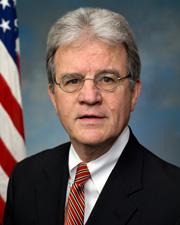 Sen. Tom Coburn (R-OK)
Text
Submitted
SA 829. Mr. COBURN submitted an amendment intended to be proposed by him to the concurrent resolution S. Con. Res. 13, setting forth the congressional budget for the United States Government for fiscal year 2010, revising the appropriate budgetary levels for fiscal year 2009, and setting forth the appropriate budgetary levels for fiscal years 2011 through 2014; which was ordered to lie on the table; as follows:
On page 68, strike lines 6 through line 17 and insert the following:
SEC. 311. OVERSIGHT OF GOVERNMENT PERFORMANCE.
(a) In General.--In the Senate, all committees are directed to review programs within their jurisdiction to root out waste, fraud, and abuse in program spending, giving particular scrutiny to issues raised by Government Accountability Office reports. Based on these oversight efforts and committee performance reviews of programs within their jurisdiction, committees are directed to include recommendations for improved governmental performance in their annual views and estimates reports required under section 301(d) of the Congressional Budget Act of 1974 to the Committees on the Budget.
(b) Sense of the Senate Regarding Supporting the President in His Efforts to Go “Line by Line” Through the Federal Budget.--
(1) Findings.--The Senate finds that--
(A) as of March 30, 2009, the national debt of the United States currently stands at $11,045,554,110,788.22 , the largest in world history;
(B) each United States citizen's share of this debt is $36,155.97;
(C) the fiscal year 2010 Senate Budget Resolution will increase the total United States national debt by at least $5,000,000,000,000 over the next 10 years;
(D) the power of the purse belongs to Congress;
(E) Congress authorizes and appropriates all Federal discretionary spending and creates new mandatory spending programs;
(F) Congress annually funds programs that are wasteful, inefficient, and duplicative that result in taxpayer losses in the billions;
(G) it is irresponsible for Congress to continue funding wasteful, inefficient, or duplicative Government programs that will result in borrowing from Social Security, Medicare, foreign nations, or future generations of Americans;
(H) every cent that the United States Government loses on wasteful, inefficient, or duplicative programs is money stolen from future generations of Americans and from important programs, including Social Security and Medicare, on which our senior citizens depend for their retirement security;
(I) President Obama declared on November 25, 2008, “In these challenging times, when we are facing both rising deficits and a sinking economy, budget reform is not an option. It is an imperative. We cannot sustain a system that bleeds billions of taxpayer dollars on programs that have outlived their usefulness, or exist solely because of the power of politicians, lobbyists, or interest groups.”; and
(J) President Obama pledged, on November 25, 2008, to go through the Federal Budget “page by page, line by line, eliminating those programs we don't need, and insisting that those we do operate in a sensible, cost-effective way.”.
(2) Sense of the senate.--It is the sense of the Senate that Congress should support the President in his efforts to go line by line through the Federal budget to eliminate wasteful spending by--
(A) requiring the head of every Federal department and agency to provide a report to Congress, within 90 days of the date of adoption of this resolution, on programs that are duplicative, inefficient, or failing, with recommendations for elimination and consolidation of such programs;
(B) requiring the Office of Management and Budget, within 90 days of the date of adoption of this resolution, to provide a report to Congress on programs that are duplicative government-wide, with recommendations for elimination or consolidation of such programs; and
(C) requiring every standing committee of Congress to conduct at least one oversight hearing per fiscal year to identify wasteful, inefficient, outdated, and duplicative programs that could be eliminated.
Legislative Activity
Stay on top of the latest movement without scrolling through every action
Senate amendment submitted
April 1, 2009