S.Amdt. 832
What it does: Adds SEC. __. SENSE OF THE SENATE REGARDING THE NEED FOR TRANSPARENCY FOR DOCUMENTS RELATED TO THE AMERICAN RECOVERY AND REINVESTMENT ACT OF 2009 wherever appropriate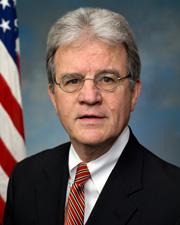 Sen. Tom Coburn (R-OK)
What it changes
1 change to S.Con.Res. 13
Adds SEC. __. SENSE OF THE SENATE REGARDING THE NEED FOR TRANSPARENCY FOR DOCUMENTS RELATED TO THE AMERICAN RECOVERY AND REINVESTMENT ACT OF 2009 wherever appropriate
Adds a sectionInserted: SEC. __. SENSE OF THE SENATE REGARDING THE NEED FOR TRANSPARENCY FOR DOCUMENTS RELATED TO THE AMERICAN RECOVERY AND REINVESTMENT ACT OF 2009.
Inserted: (a) Findings.--The Senate finds the following:
Inserted: (1) On September 16, 2008, the Board of Governors of the Federal Reserve, after consulting with Treasury Department, issued a press release announcing it "authorized the Federal Reserve Bank of New York to lend up to $85 billion to the American International Group (AIG) under section 13(3) of the Federal Reserve Act.".
Inserted: (2) On October 8, 2008, the Board of Governors of the Federal Reserve issued a press release, announcing it would loan AIG an additional $37.8 billion, stating, "Under this program, the New York Fed will borrow up to $37.8 billion in investment-grade, fixed-income securities from AIG in return for cash collateral.".
Inserted: (3) On November 10, 2008, the United States Treasury issued a press release announcing it would "purchase $40 billion in senior preferred stock from the American International Group (AIG) as part of a comprehensive plan to restructure federal assistance to the systemically important company.".
Inserted: (4) On November 25, 2008, the Treasury Department used funds from the Troubled Asset Relief Program (TARP) to purchase the $40 billion in preferred shares in AIG.
Inserted: (5) The November 10, 2008, a Treasury Department press release also stated, relating to compensation for AIG executives in light of the recent taxpayer-funded purchase of senior preferred stock, "Under the agreement AIG must be in compliance with the executive compensation and corporate governance requirements of Section 111 of the Emergency Economic Stabilization Act. AIG must comply with the most stringent limitations on executive compensation for its top five senior executive officers as required under the Emergency Economic Stabilization Act. Treasury is also requiring golden parachute limitations and a freeze on the size of the annual bonus pool for the top 70 company executives.".
Inserted: (6) On January 26, 2009, H.R. 1, the American Recovery and Reinvestment Act of 2009 was introduced in the House with no language on executive compensation requirements for Troubled Asset Relief Program (TARP) recipients.
Inserted: (7) On January 28, 2009, H.R. 1 passed the House of Representatives by a vote of 244-188, with no language included on executive compensation requirements for TARP recipients.
Inserted: (8) On January 30, 2009, the Senate began consideration of Senate Amendment 98, a substitute amendment to H.R. 1, which did not include language on executive compensation requirements for TARP recipients.
Inserted: (9) On February 5, 2009, during consideration of Senate Amendment 98, the Senate adopted by voice vote, Senate Amendment 354, which would prohibit the payment of bonuses to the top 25 executives at firms in receipt of TARP funds.
Inserted: (10) On February 7, 2009, Senate Amendment 98 was withdrawn in the Senate, and Senate Amendment 570, a substitute amendment was ordered to be printed in the Senate, which included Senate Amendment 354, previously approved by the Senate.
Show 21 more inserted paragraphsShow less
Inserted: (11) On February 10, 2009, Senate Amendment 570 passed the Senate by a vote of 61 - 37.
Inserted: (12) On February 13, 2009, the conference report to H.R. 1 was approved by both the Senate and the House of Representatives, and contained a new provision, not included in either the Senate-passed or House-passed bills, specifically exempting bonuses agreed to before February 11, 2009, for executives at companies that received TARP funds.
Inserted: (13) Senators were given less than 24 hours to review any changes that were made to the conference report, which totaled more than 1,000 pages.
Inserted: (14) According Senate Rule XXVIII, paragraph 2(a), "Conferees shall not insert in their report matter not committed to them by either House, nor shall they strike from the bill matter agreed to by both Houses.".
Inserted: (15) According Senate Rule XXVIII, paragraph 9(a)(1), "It shall not be in order to vote on the adoption of a report of a committee of conference unless such report has been available to Members and to the general public for at least 48 hours before such vote. If a point of order is sustained under this paragraph, then the conference report shall be set aside.".
Inserted: (16) On March 18, 2009, CNN reported that one United States senator "denied inserting that exemption at the 11th hour, and insisted he doesn't know how it got in there.".
Inserted: (17) On March 19, 2009, ABC News reported that one United States senator stated the following regarding the executive compensation language included in H.R. 1, "And frankly it was such a rush, talking about the stimulus bill now, to get it passed, I did not have time, other conferees did not have time to address many of the provisions that were modified significantly. We do the best we can, but we missed that stuff as a result.".
Inserted: (18) On March 19, 2009, The Hill Newspaper reported that, according to the Speaker of the House of Representatives, the language in question did not originate in the House of Representatives, stating "This was never brought to conference, . . .This never came to the House side, and you can talk to any of our conferees. It's a matter of fact and record.".
Inserted: (19) On March 19, 2009, the Wall Street Journal reported that White House officials suggested they did not request the legislative change, saying that "Administration officials said the Treasury didn't suggest any language or say how the amendment should be changed. They said they noted legal issues that could likely lead to challenges, but was the end of their involvement. The official said Mr. Dodd and Congress made the final changes on their own.".
Inserted: (20) On March 19, 2009, in an interview with CNN, Treasury Secretary Timothy Geithner stated that "Treasury staff did express concern about whether this provision was vulnerable to legal challenge.".
Inserted: (21) On March 19, an ABC news story reported that "Two separate federal agencies have begun investigations into how the provisions ended up in the legislation. . .".
Inserted: (22) On March 28, 2009, the Hartford Courant reported that the Attorney General of the State of Connecticut had sent a letter to the Chairman of the Board of Governors of the Federal Reserve contending that the AIG bonuses payments were not protected under Connecticut's wage act, calling such arguments, "flawed legal bluffs". Earlier in the week, the Chairman had testified to Congress that he wanted to legally challenge the bonuses but was advised not to because of the potential liability from the wage act. But, according to a March 25 story in the Hartford Courant, the Federal Reserve had not been in contact with the State Attorney General's office to discuss the matter.
Inserted: (23) Additionally, section 215 of this resolution encourages increased "transparency at the Federal Reserve System, including audits of the Board of Governors of the Federal Reserve System and the Federal reserve banks and increased public disclosure with respect to the recipients of all loans and other financial assistance it has provided since March 4, 2008".
Inserted: (24) The secret change in the language relating to executive compensation for TARP recipients' calls into question the integrity of the Senate and the legislative process, and the executive branch has seen fit to investigate such matters.
Inserted: (b) Sense of the Senate.--It is the sense of the Senate that not later than 14 days after the adoption of this resolution, the Department of Treasury and the Board of Governors of the Federal Reserve, should post a clearly labeled section on the front page of the website of each such agency, that contains, in a searchable format, all documents relating to the origination, development, and insertion of the language described in subsection (a) into the conference report to H.R. 1, including--
Inserted: (1) any relevant correspondences, memorandums, electronic communications, meeting summaries, and telephone logs; and
Inserted: (2) all communication, in any medium or manner, with--
Inserted: (A) each Senate Office;
Inserted: (B) the President and any officials employed or associated with the Administration of the President;
Inserted: (C) American International Group; and
Inserted: (D) the Office of the Attorney General of the State of Connecticut.
The amendment doesn't say where this goes; the clerk decides.
Original wording
At the appropriate place, insert the following:
Read automatically from the Congressional Record. Check the original before relying on it.
As printed
SA 832. Mr. COBURN submitted an amendment intended to be proposed by him to the concurrent resolution S. Con. Res. 13, setting forth the congressional budget for the United States Government for fiscal year 2010, revising the appropriate budgetary levels for fiscal year 2009, and setting forth the appropriate budgetary levels for fiscal years 2011 through 2014; as follows:
At the appropriate place, insert the following:
SEC. __. SENSE OF THE SENATE REGARDING THE NEED FOR TRANSPARENCY FOR DOCUMENTS RELATED TO THE AMERICAN RECOVERY AND REINVESTMENT ACT OF 2009.
(a) Findings.--The Senate finds the following:
(1) On September 16, 2008, the Board of Governors of the Federal Reserve, after consulting with Treasury Department, issued a press release announcing it “authorized the Federal Reserve Bank of New York to lend up to $85 billion to the American International Group (AIG) under section 13(3) of the Federal Reserve Act.”.
(2) On October 8, 2008, the Board of Governors of the Federal Reserve issued a press release, announcing it would loan AIG an additional $37.8 billion, stating, “Under this program, the New York Fed will borrow up to $37.8 billion in investment-grade, fixed-income securities from AIG in return for cash collateral.”.
(3) On November 10, 2008, the United States Treasury issued a press release announcing it would “purchase $40 billion in senior preferred stock from the American International Group (AIG) as part of a comprehensive plan to restructure federal assistance to the systemically important company.”.
(4) On November 25, 2008, the Treasury Department used funds from the Troubled Asset Relief Program (TARP) to purchase the $40 billion in preferred shares in AIG.
(5) The November 10, 2008, a Treasury Department press release also stated, relating to compensation for AIG executives in light of the recent taxpayer-funded purchase of senior preferred stock, “Under the agreement AIG must be in compliance with the executive compensation and corporate governance requirements of Section 111 of the Emergency Economic Stabilization Act. AIG must comply with the most stringent limitations on executive compensation for its top five senior executive officers as required under the Emergency Economic Stabilization Act. Treasury is also requiring golden parachute limitations and a freeze on the size of the annual bonus pool for the top 70 company executives.”.
(6) On January 26, 2009, H.R. 1, the American Recovery and Reinvestment Act of 2009 was introduced in the House with no language on executive compensation requirements for Troubled Asset Relief Program (TARP) recipients.
(7) On January 28, 2009, H.R. 1 passed the House of Representatives by a vote of 244-188, with no language included on executive compensation requirements for TARP recipients.
(8) On January 30, 2009, the Senate began consideration of Senate Amendment 98, a substitute amendment to H.R. 1, which did not include language on executive compensation requirements for TARP recipients.
(9) On February 5, 2009, during consideration of Senate Amendment 98, the Senate adopted by voice vote, Senate Amendment 354, which would prohibit the payment of bonuses to the top 25 executives at firms in receipt of TARP funds.
(10) On February 7, 2009, Senate Amendment 98 was withdrawn in the Senate, and Senate Amendment 570, a substitute amendment was ordered to be printed in the Senate, which included Senate Amendment 354, previously approved by the Senate.
(11) On February 10, 2009, Senate Amendment 570 passed the Senate by a vote of 61 - 37.
(12) On February 13, 2009, the conference report to H.R. 1 was approved by both the Senate and the House of Representatives, and contained a new provision, not included in either the Senate-passed or House-passed bills, specifically exempting bonuses agreed to before February 11, 2009, for executives at companies that received TARP funds.
(13) Senators were given less than 24 hours to review any changes that were made to the conference report, which totaled more than 1,000 pages.
(14) According Senate Rule XXVIII, paragraph 2(a), “Conferees shall not insert in their report matter not committed to them by either House, nor shall they strike from the bill matter agreed to by both Houses.”.
(15) According Senate Rule XXVIII, paragraph 9(a)(1), “It shall not be in order to vote on the adoption of a report of a committee of conference unless such report has been available to Members and to the general public for at least 48 hours before such vote. If a point of order is sustained under this paragraph, then the conference report shall be set aside.”.
(16) On March 18, 2009, CNN reported that one United States senator “denied inserting that exemption at the 11th hour, and insisted he doesn't know how it got in there.”.
(17) On March 19, 2009, ABC News reported that one United States senator stated the following regarding the executive compensation language included in H.R. 1, “And frankly it was such a rush, talking about the stimulus bill now, to get it passed, I did not have time, other conferees did not have time to address many of the provisions that were modified significantly. We do the best we can, but we missed that stuff as a result.”.
(18) On March 19, 2009, The Hill Newspaper reported that, according to the Speaker of the House of Representatives, the language in question did not originate in the House of Representatives, stating “This was never brought to conference, . . .This never came to the House side, and you can talk to any of our conferees. It's a matter of fact and record.”.
(19) On March 19, 2009, the Wall Street Journal reported that White House officials suggested they did not request the legislative change, saying that “Administration officials said the Treasury didn't suggest any language or say how the amendment should be changed. They said they noted legal issues that could likely lead to challenges, but was the end of their involvement. The official said Mr. Dodd and Congress made the final changes on their own.”.
(20) On March 19, 2009, in an interview with CNN, Treasury Secretary Timothy Geithner stated that “Treasury staff did express concern about whether this provision was vulnerable to legal challenge.”.
(21) On March 19, an ABC news story reported that “Two separate federal agencies have begun investigations into how the provisions ended up in the legislation. . .”.
(22) On March 28, 2009, the Hartford Courant reported that the Attorney General of the State of Connecticut had sent a letter to the Chairman of the Board of Governors of the Federal Reserve contending that the AIG bonuses payments were not protected under Connecticut's wage act, calling such arguments, “flawed legal bluffs”. Earlier in the week, the Chairman had testified to Congress that he wanted to legally challenge the bonuses but was advised not to because of the potential liability from the wage act. But, according to a March 25 story in the Hartford Courant, the Federal Reserve had not been in contact with the State Attorney General's office to discuss the matter.
(23) Additionally, section 215 of this resolution encourages increased “transparency at the Federal Reserve System, including audits of the Board of Governors of the Federal Reserve System and the Federal reserve banks and increased public disclosure with respect to the recipients of all loans and other financial assistance it has provided since March 4, 2008”.
(24) The secret change in the language relating to executive compensation for TARP recipients' calls into question the integrity of the Senate and the legislative process, and the executive branch has seen fit to investigate such matters.
(b) Sense of the Senate.--It is the sense of the Senate that not later than 14 days after the adoption of this resolution, the Department of Treasury and the Board of Governors of the Federal Reserve, should post a clearly labeled section on the front page of the website of each such agency, that contains, in a searchable format, all documents relating to the origination, development, and insertion of the language described in subsection (a) into the conference report to H.R. 1, including--
(1) any relevant correspondences, memorandums, electronic communications, meeting summaries, and telephone logs; and
(2) all communication, in any medium or manner, with--
(A) each Senate Office;
(B) the President and any officials employed or associated with the Administration of the President;
(C) American International Group; and
(D) the Office of the Attorney General of the State of Connecticut.
Legislative Activity
Stay on top of the latest movement without scrolling through every action
Senate amendment submitted
April 1, 2009