An amendment numbered 3 printed in Part A of House Report 112-73 to implement basic offshore drilling safety reforms recommended by the independent BP spill commission. The Commission found that the root causes of the BP spill were "systematic" and could have been prevented. The Markey amendment would set specific new minimum standards for blow-out preventers, cementing and well design.
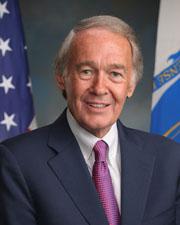 Rep. Edward J. Markey (D-MA)
Description
Amendment sought to set minimum standards for blowout preventers; require new standards on safe well design and cementing to ensure multiple redundant barriers within the well against uncontrolled oil or gas flow leading to a blowout; require independent third party certification of blowout preventers and well designs; and to ensure that the Department of Interior can institute better alternatives for increased safety as they become available.
Legislative Activity
Stay on top of the latest movement without scrolling through every action
House amendment offered
May 10, 2011
View full timeline
House amendment offered
May 10, 2011
House amendment offered/reported by: Amendment (A003) offered by Mr. Markey.(consideration: CR H3135-3137, H3142-3143; text: CR H3135-3136)
May 10, 2011 • 5:54 PM
House amendment not agreed to: On agreeing to the Markey amendment (A003) Failed by recorded vote: 176 - 237 (Roll no. 301).
May 10, 2011 • 7:11 PM
Roll call votes on amendments in House
May 10, 2011 • 7:11 PM
Amendment failed in Committee of the Whole
May 10, 2011 • 7:11 PM
Amendment (A003) offered by Mr. Markey. (consideration: CR H3135-3137, H3142-3143; text: CR H3135-3136)
May 10, 2011 • 5:54 PM
On agreeing to the Markey amendment (A003) Failed by recorded vote: 176 - 237 (Roll no. 301).
May 10, 2011 • 7:11 PM
Votes
1 roll call on this amendment
Text
Offered
PUTTING THE GULF OF MEXICO BACK TO WORK ACT
The SPEAKER pro tempore (Ms. Ros-Lehtinen). Pursuant to House
Resolution 245 and rule XVIII, the Chair declares the House in the
Committee of the Whole House on the State of the Union for the further
consideration of the bill, H.R. 1229.
{time} 1734
In the Committee of the Whole
Accordingly, the House resolved itself into the Committee of the
Whole House on the State of the Union for the further consideration of
the bill (H.R. 1229) to amend the Outer Continental Shelf Lands Act to
facilitate the safe and timely production of American energy resources
from the Gulf of Mexico, with Mr. Womack in the chair.
The Clerk read the title of the bill.
The CHAIR. When the Committee of the Whole rose earlier today, all
time for general debate had expired.
Pursuant to the rule, the amendment printed in the bill is adopted.
The bill, as amended, shall be considered as an original bill for the
purpose of further amendment under the 5-minute rule and shall be
considered as read.
The text of the bill, as amended, is as follows:
H.R. 1229
Be it enacted by the Senate and House of Representatives of
the United States of America in Congress assembled,
SECTION 1. SHORT TITLE.
This Act may be cited as the ``Putting the Gulf of Mexico
Back to Work Act''.
TITLE I--AMENDMENT TO THE OUTER CONTINENTAL SHELF LANDS ACT
SEC. 101. AMENDMENT TO OUTER CONTINENTAL SHELF LANDS ACT.
(a) Amendment.--Section 11(d) of the Outer Continental
Shelf Lands Act (43 U.S.C. 1340(d)) is amended to read as
follows:
``(d) Drilling Permits.--
``(1) In general.--The Secretary shall by regulation
require that any lessee operating under an approved
exploration plan--
``(A) must obtain a permit before drilling any well in
accordance with such plan; and
``(B) must obtain a new permit before drilling any well of
a design that is significantly different than the design for
which an existing permit was issued.
``(2) Safety review required.--The Secretary shall not
issue a permit under paragraph (1) without ensuring that the
proposed drilling operations meet all--
``(A) critical safety system requirements, including
blowout prevention; and
``(B) oil spill response and containment requirements.
``(3) Timeline.--
``(A) The Secretary shall decide whether to issue a permit
under paragraph (1) within 30 days after receiving an
application for the permit. The Secretary may extend such
period for up to two periods of 15 days each, if the
Secretary has given written notice of the delay to the
applicant. The notice shall be in the form of a letter from
the Secretary or a designee of the Secretary, and shall
include the names and titles of the persons processing the
application, the specific reasons for the delay, and a
specific date a final decision on the application is
expected.
``(B) If the application is denied, the Secretary shall
provide the applicant--
``(i) in writing, clear and comprehensive reasons why the
application was not accepted and detailed information
concerning any deficiencies, and
``(ii) an opportunity to remedy any deficiencies.
``(C) If the Secretary has not made a decision on the
application by the end of the 60-day period beginning on the
date the application is received by the Secretary, the
application is deemed approved.''.
(b) Deadline for Certain Permit Applications Under Existing
Leases.--
(1) In general.--Notwithstanding the amendment made by
subsection (a), a lease under which a covered application is
submitted to the Secretary of the Interior shall be
considered to be in directed suspension during the period
beginning May 27, 2010, and ending on the date the Secretary
issues a final decision on the application, if the Secretary
does not issue a final decision on the application--
(A) before the end of the 30-day period beginning on the
date of enactment of this Act, in the case of a covered
application submitted before such date of enactment; or
(B) before the end of the 30-day period beginning on the
date the application is received by the Secretary, in the
case of a covered application submitted on or after such date
of enactment.
(2) Covered application.--In this subsection the term
``covered application'' means an application for a permit to
drill under an oil and gas lease under the Outer Continental
Shelf Lands Act in effect on the date of enactment of this
Act, that--
(A) represents a resubmission of an approved permit to
drill (including an application for a permit to sidetrack)
that was approved by the Secretary before May 27, 2010; and
(B) is received by the Secretary after October 12, 2010,
and before the end of the 30-day period beginning on the date
of enactment of this Act.
SEC. 102. EXTENSION OF CERTAIN OUTER CONTINENTAL SHELF
LEASES.
(a) Definition of Covered Lease.--In this section, the term
``covered lease'' means each oil and gas lease for the Gulf
of Mexico outer Continental Shelf region issued under section
8 of the Outer Continental Shelf Lands Act (43 U.S.C. 1337)
that--
(1)(A) was not producing as of April 30, 2010; or
(B) was suspended from operations, permit processing, or
consideration, in accordance with the moratorium set forth in
the Minerals Management Service Notice to Lessees and
Operators No. 2010-N04, dated May 30, 2010, or the decision
memorandum of the Secretary of the Interior entitled
``Decision memorandum regarding the suspension of certain
offshore permitting and drilling activities on the Outer
Continental Shelf'' and dated July 12, 2010; and
(2) by its terms would expire on or before December 31,
2011.
(b) Extension of Covered Leases.--The Secretary of the
Interior shall extend the term of a covered lease by 1 year.
(c) Effect on Suspensions of Operations or Production.--The
extension of covered leases under this section is in addition
to any suspension of operations or suspension of production
granted by the Minerals Management Service or Bureau of Ocean
Energy Management, Regulation and Enforcement after May 1,
2010.
TITLE II--JUDICIAL REVIEW OF AGENCY ACTIONS RELATING TO OUTER
CONTINENTAL SHELF ACTIVITIES IN THE GULF OF MEXICO
SEC. 201. DEFINITIONS FOR TITLE.
In this title--
(1) the term ``covered civil action'' means a civil action
containing a claim under section 702 of title 5, United
States Code, regarding agency action (as defined for the
purposes of that section) affecting a covered energy project
in the Gulf of Mexico; and
(2) the term ``covered energy project'' means the leasing
of Federal lands of the Outer Continental Shelf (including
submerged lands) for the exploration, development,
production, processing, or transmission of oil, natural gas,
wind, or any other source of energy in the Gulf of Mexico,
and any action under such a lease, except that the term does
not include any disputes between the parties to a lease
regarding the obligations under such lease, including
regarding any alleged breach of the lease.
SEC. 202. EXCLUSIVE VENUE FOR CERTAIN CIVIL ACTIONS RELATING
TO COVERED ENERGY PROJECTS IN THE GULF OF
MEXICO.
Venue for any covered civil action shall not lie in any
district court not within the 5th circuit unless there is no
proper venue in any court within that circuit.
SEC. 203. TIME LIMITATION ON FILING.
A covered civil action is barred unless filed no later than
the end of the 60-day period beginning on the date of the
final Federal agency action to which it relates.
[[Page H3132]]
SEC. 204. EXPEDITION IN HEARING AND DETERMINING THE ACTION.
The court shall endeavor to hear and determine any covered
civil action as expeditiously as possible.
SEC. 205. STANDARD OF REVIEW.
In any judicial review of a covered civil action,
administrative findings and conclusions relating to the
challenged Federal action or decision shall be presumed to be
correct, and the presumption may be rebutted only by the
preponderance of the evidence contained in the administrative
record.
SEC. 206. LIMITATION ON PROSPECTIVE RELIEF.
In a covered civil action, the court shall not grant or
approve any prospective relief unless the court finds that
such relief is narrowly drawn, extends no further than
necessary to correct the violation of a legal requirement,
and is the least intrusive means necessary to correct that
violation.
SEC. 207. LIMITATION ON ATTORNEYS' FEES.
Sections 504 of title 5, United States Code, and 2412 of
title 28, United States Code (together commonly called the
Equal Access to Justice Act) do not apply to a covered civil
action, nor shall any party in such a covered civil action
receive payment from the Federal Government for their
attorneys' fees, expenses, and other court costs.
The CHAIR. No further amendment to the bill, as amended, shall be in
order except those printed in part A of House Report 112-73. Each
further amendment may be offered only in the order printed in the
report, may be offered only by a Member designated in the report, shall
be considered as read, shall be debatable for the time specified in the
report equally divided and controlled by the proponent and an opponent,
shall not be subject to amendment, and shall not be subject to a demand
for division of the question.
Amendment No. 1 Offered by Mr. Polis
The CHAIR. It is now in order to consider amendment No. 1 printed in
part A of House Report 112-73.
Mr. POLIS. Mr. Chairman, I have an amendment at the desk.
The CHAIR. The Clerk will designate the amendment.
The text of the amendment is as follows:
Page 4, strike ``and'' after the semicolon at line 4,
strike the period at line 6 and insert ``; and'', and after
line 6 insert the following new subparagraph:
``(C) all requirements of all applicable statutes and
regulations, including the National Environmental Policy Act
of 1969, the Endangered Species Act of 1973, the Marine
Mammal Protection Act of 1972, and any law protecting fishing
and recreation jobs.
The CHAIR. Pursuant to House Resolution 245, the gentleman from
Colorado (Mr. Polis) and a Member opposed each will control 5 minutes.
The Chair recognizes the gentleman from Colorado.
Mr. POLIS. Mr. Chairman, following last year's BP Deepwater Horizon
disaster, one would think that a foundational and critical element of
any bill related to offshore deepwater oil drilling would be to improve
our safety and environmental safeguards based on the lessons that we
learned the hard way from a horrific national tragedy, costing jobs and
reducing health and damaging the environment.
While H.R. 1229 does include a provision that states that the
Secretary shall not issue a permit without ensuring that the proposed
drilling operation meets critical safety system requirements and oil
spill response and containment requirements, it fails to make mention
of and omits requiring the Secretary to ensure that critical
environmental and economic laws are adhered to, a prolific problem
leading up to the Deepwater Horizon spill.
Mr. Chairman, for years an ongoing problem in issuing permits for
offshore drilling has been the Department of the Interior's failure to
follow requirements set out under our Nation's foundational
environmental protection laws and fisheries laws. These laws, like the
Endangered Species Act, the National Environmental Protection Act, the
Marine Mammal Protection Act, and the Magnusson-Stevens Fishery Act,
protect wildlife as well as fisheries and beaches that sustain the
gulf's fishing and tourism industries.
In the gulf region, the number of jobs dependent on tourism and
fishing is five times the number of jobs related to the oil and gas
industry.
While reforms within the Obama administration are moving in the right
direction, the fact is that this bill, in its current form, leaves out
a major chunk of what should be included in any safety or oversight
review that we require of the Secretary, and I'm grateful for the rule
for allowing a full discussion and vote on this amendment.
Mr. Chairman, a May 2010 New York Times article, entitled, ``U.S.
Said to Allow Drilling Without Needed Permits,'' outlines the roots of
this problem in detail. The article clearly explains how the Endangered
Species Act and the Marine Mammal Protection Act, the Department of the
Interior's drilling permit agency is required to get permits for
drilling where it might harm endangered species and marine animals.
The National Oceanic and Atmospheric Administration, or NOAA, is
partially responsible for protecting endangered species and marine
mammals. It said on repeated occasions that drilling in the gulf does
affect these animals. That's simply science. The records show that
permits for hundreds of wells, including the BP disaster well itself,
were granted without getting the permits required under existing
Federal law.
Federal records show that NOAA instructed the minerals agency that
continued drilling in the gulf was actually harming wildlife and needed
to get permits in compliance with Federal law; but, sadly, those
permits were never sought.
With regard to the National Environmental Protection Act, the
government has time and time again performed cursory environmental
assessments, failed to integrate NEPA analyses with related Federal
statutes, and even exempted entire projects from NEPA review, including
the Macondo well. In the past, the only way to ensure permits have
complied with NEPA has unfortunately been through lawsuits. My
amendment would require these assurances from the Secretary before the
permit is issued.
[From the New York Times, May 13, 2010]
U.S. Said To Allow Drilling Without Needed Permits
(By Ian Urbina)
Washington.--The federal Minerals Management Service gave
permission to BP and dozens of other oil companies to drill
in the Gulf of Mexico without first getting required permits
from another agency that assesses threats to endangered
species--and despite strong warnings from that agency about
the impact the drilling was likely to have on the gulf.
Those approvals, federal records show, include one for the
well drilled by the Deepwater Horizon rig, which exploded on
April 20, killing 11 workers and resulting in thousands of
barrels of oil spilling into the gulf each day.
The Minerals Management Service, or M.M.S., also routinely
overruled its staff biologists and engineers who raised
concerns about the safety and the environmental impact of
certain drilling proposals in the gulf and in Alaska,
according to a half-dozen current and former agency
scientists.
Those scientists said they were also regularly pressured by
agency officials to change the findings of their internal
studies if they predicted that an accident was likely to
occur or if wildlife might be harmed.
Under the Endangered Species Act and the Marine Mammal
Protection Act, the Minerals Management Service is required
to get permits to allow drilling where it might harm
endangered species or marine mammals.
The National Oceanic and Atmospheric Administration, or
NOAA, is partly responsible for protecting endangered species
and marine mammals. It has said on repeated occasions that
drilling in the gulf affects these animals, but the minerals
agency since January 2009 has approved at least three huge
lease sales, 103 seismic blasting projects and 346 drilling
plans. Agency records also show that permission for those
projects and plans was granted without getting the permits
required under federal law.
``M.M.S. has given up any pretense of regulating the
offshore oil industry,'' said Kieran Suckling, director of
the Center for Biological Diversity, an environmental
advocacy group in Tucson, which filed notice of intent to sue
the agency over its noncompliance with federal law concerning
endangered species. ``The agency seems to think its mission
is to help the oil industry evade environmental laws.''
Kendra Barkoff, a spokeswoman for the Interior Department,
said her agency had full consultations with NOAA about
endangered species in the gulf. But she declined to respond
to additional questions about whether her agency had obtained
the relevant permits.
Federal records indicate that these consultations ended
with NOAA instructing the minerals agency that continued
drilling in the gulf was harming endangered marine mammals
and that the agency needed to get permits to be in compliance
with federal law.
Responding to the accusations that agency scientists were
being silenced, Ms. Barkoff added, ``Under the previous
administration, there was a pattern of suppressing science in
decisions, and we are working very hard to change the culture
and empower scientists in the Department of the Interior.''
On Tuesday, Interior Secretary Ken Salazar announced plans
to reorganize the
[[Page H3133]]
minerals agency to improve its regulatory role by separating
safety oversight from the division that collects royalties
from oil and gas companies. But that reorganization is not
likely to have any bearing on how and whether the agency
seeks required permits from other agencies like NOAA.
Criticism of the minerals agency has grown in recent days
as more information has emerged about how it handled drilling
in the gulf.
In a letter from September 2009, obtained by The New York
Times, NOAA accused the minerals agency of a pattern of
understating the likelihood and potential consequences of a
major spill in the gulf and understating the frequency of
spills that have already occurred there.
The letter accuses the agency of highlighting the safety of
offshore oil drilling operations while overlooking more
recent evidence to the contrary. The data used by the agency
to justify its approval of drilling operations in the gulf
play down the fact that spills have been increasing and
understate the ``risks and impacts of accidental spills,''
the letter states. NOAA declined several requests for
comment.
The accusation that the minerals agency has ignored risks
is also being levied by scientists working for the agency.
Managers at the agency have routinely overruled staff
scientists whose findings highlight the environmental risks
of drilling, according to a half-dozen current or former
agency scientists.
The scientists, none of whom wanted to be quoted by name
for fear of reprisals by the agency or by those in the
industry, said they had repeatedly had their scientific
findings changed to indicate no environmental impact or had
their calculations of spill risks downgraded.
``You simply are not allowed to conclude that the drilling
will have an impact,'' said one scientist who has worked for
the minerals agency for more than a decade. ``If you find
the risks of a spill are high or you conclude that a
certain species will be affected, your report gets
disappeared in a desk drawer and they find another
scientist to redo it or they rewrite it for you.''
Another biologist who left the agency in 2005 after more
than five years said that agency officials went out of their
way to accommodate the oil and gas industry.
He said, for example, that seismic activity from drilling
can have a devastating effect on mammals and fish, but that
agency officials rarely enforced the regulations meant to
limit those effects.
He also said the agency routinely ceded to the drilling
companies the responsibility for monitoring species that live
or spawn near the drilling projects.
``What I observed was M.M.S. was trying to undermine the
monitoring and mitigation requirements that would be imposed
on the industry,'' he said.
Aside from allowing BP and other companies to drill in the
gulf without getting the required permits from NOAA, the
minerals agency has also given BP and other drilling
companies in the gulf blanket exemptions from having to
provide environmental impact statements.
Much as BP's drilling plan asserted that there was no
chance of an oil spill, the company also claimed in federal
documents that its drilling would not have any adverse effect
on endangered species.
The gulf is known for its biodiversity. Various endangered
species are found in the area where the Deepwater Horizon was
drilling, including sperm whales, blue whales and fin whales.
In some instances, the minerals agency has indeed sought
and received permits in the gulf to harm certain endangered
species like green and loggerhead sea turtles. But the agency
has not received these permits for endangered species like
the sperm and humpback whales, which are more common in the
areas where drilling occurs and thus are more likely to be
affected.
Tensions between scientists and managers at the agency
erupted in one case last year involving a rig in the gulf
called the BP Atlantis. An agency scientist complained to his
bosses of catastrophic safety and environmental violations.
The scientist said these complaints were ignored, so he took
his concerns to higher officials at the Interior Department.
``The purpose of this letter is to restate in writing our
concern that the BP Atlantis project presently poses a threat
of serious, immediate, potentially irreparable and
catastrophic harm to the waters of the Gulf of Mexico and its
marine environment, and to summarize how BP's conduct has
violated federal law and regulations,'' David L. Perry, a
lawyer acting on behalf of Kenneth Abbott, a BP contractor,
wrote in a letter to officials at the Interior Department
that was dated May 27.
The letter added: ``From our conversation on the phone, we
understand that M.M.S. is already aware that undersea
manifolds have been leaking and that major flow lines must
already be replaced. Failure of this critical undersea
equipment has potentially catastrophic environmental
consequences.''
Almost two months before the Deepwater Horizon exploded,
Representative Raul M. Grijalva, Democrat of Arizona, sent a
letter to the agency raising concerns about the BP Atlantis
and questioning its oversight of the rig.
After the disaster, Mr. Salazar said he would delay
granting any new oil drilling permits.
But the minerals agency has issued at least five final
approval permits to new drilling projects in the gulf since
last week, records show.
Despite being shown records indicating otherwise, Ms.
Barkoff said her agency had granted no new permits since Mr.
Salazar made his announcement.
Other agencies besides NOAA have begun criticizing the
minerals agency.
At a public hearing in Louisiana this week, a joint panel
of Coast Guard and Minerals Management Service officials
investigating the explosion grilled minerals agency officials
for allowing the offshore drilling industry to be essentially
``self-certified,'' as Capt. Hung Nguyen of the Coast Guard,
a co-chairman of the investigation, put it.
In addition to the minerals agency and the Coast Guard, the
Deepwater Horizon was overseen by the Marshall Islands, the
``flag of convenience'' under which it was registered.
No one from the Marshall Islands ever inspected the rig.
The nongovernmental organizations that did were paid by the
rig's operator, in this case Transocean.
I reserve the balance of my time.
Mr. LAMBORN. Mr. Chairman, I rise in opposition to this amendment.
The CHAIR. The gentleman from Colorado is recognized for 5 minutes.
Mr. LAMBORN. I yield myself such time as I may consume.
Although well intended, this amendment is duplicative and would add
delays to the permitting process and production of American-made
energy. It is the responsibility of the Department of the Interior as
overseers of permitting in the gulf to ensure safe and environmentally
responsible drilling in the gulf.
Since the spill last year, the Department of the Interior has made
extensive changes to permitting requirements for offshore operations.
Every drilling permit is required to go through multiple environmental
reviews before the application can be approved. This begins with an
initial programmatic environmental impact statement and is followed by
a lease sale-specific environmental impact statement and continues with
additional environmental reviews as drilling activities move forward.
{time} 1740
In carrying out its responsibilities, the department already must
comply with numerous environmental statutes, regulations, and Executive
orders. These regulations include the National Environmental Policy
Act, the Endangered Species Act, the Marine Mammal Protection Act, the
Coastal Zone Management Act, the Clean Air Act, and the Fishery
Conservation and Management Act. And I may have left some out. This
demonstrates the redundancy in this amendment and why it is not
necessary.
Administration officials and even Director Bromwich have stated on
numerous occasions to both the Natural Resources Committee and the
American people that they would not permit operations if they did not
believe they meet all the requirements to be conducted safely,
efficiently, and in an environmentally responsible manner. The Interior
Department already complies with these particular environmental
regulations when approving permits. And the fact that the Department is
permitting operations, although at a slower pace than I would like to
see, demonstrates that they have confidence in the regulations that the
agency has set for offshore drilling operations. The real effect of
this amendment, whether intended or not, is more delays to offshore
energy production and more lengthy and burdensome lawsuits.
So, Mr. Chairman, I oppose this amendment and I urge a ``no'' vote.
I reserve the balance of my time.
Mr. POLIS. Mr. Chairman, this underlying legislation's very basic
safety review provision simply doesn't address the broad swath of
problems that need to be addressed by any serious offshore drilling
bill. My amendment is a simple way of ensuring that the many
shortcomings are at least considered by the Secretary, as articulated
in Federal law, and are discussed during this debate.
Unfortunately, this bill does not take into account the lessons our
country learned from the terrible BP Deepwater disaster. In addition to
accepting my amendment, I certainly hope that the committee will
address these problems with even stronger language in any future work
it does on this bill or on the issue of offshore drilling in general
with regard to safety and the environment.
[[Page H3134]]
I yield back the balance of my time.
Mr. LAMBORN. I would like to yield 2\1/2\ minutes to the gentleman
from Texas (Mr. Gohmert).
Mr. GOHMERT. Mr. Chairman, I appreciate the proponent of this
amendment in his zeal to ensure that the environment is properly
addressed, but those concerns are properly addressed in the permitting
policy. The problem is that we had a company with around 800 safety
violations, British Petroleum, that was allowed to continue drilling,
and you wonder why. Could it be that they were negotiating at the very
time of the blowout with Democrats in the Senate for making the big
announcement that they supported the administration's cap-and-trade
bill? Could it be that they were going to be involved in the carbon
credit business and would work with the administration?
Perhaps a better question than the effect on the environment is, How
close will the applicant for a drilling permit be politically with this
administration? Because what we see time after time is a situation of
political payback. We see crony capitalism. If you're a good buddy at
GE, you're going to do well. If you're on Wall Street and you
contribute four to one to this administration over its opponent, then
you're going to do well. You may have to endure being called a fat cat
from time to time; but, otherwise, we're going to make sure your
profits exceed anything you have ever seen before.
We have seen this administration rush to Libya. We have seen this
administration rush, appropriately, to help our friend Japan. We have
seen them rush all over the place. But when it came to really helping
the gulf coast region, this administration rushed in and did more
damage to people's lives by putting this moratorium on than the spill
itself did. At some point, it's time for the administration to stop the
political payback game.
Perhaps Louisiana would be better off if they dissociated themselves
from Texas. We know that you can have 500,000 acres burned and have it
be a disaster area. You can have 2 million in Texas, and they won't
come to your help because this administration is partisan and bitterly
so. But it's time for this administration to quit playing political
games and help people where they need it in our own country, on our own
gulf coast.
Let's vote ``no'' on the amendments and get this bill through.
Mr. LAMBORN. I yield back the balance of my time.
The CHAIR. The question is on the amendment offered by the gentleman
from Colorado (Mr. Polis).
The question was taken; and the Chair announced that the noes
appeared to have it.
Mr. POLIS. Mr. Chairman, I demand a recorded vote.
The CHAIR. Pursuant to clause 6 of rule XVIII, further proceedings on
the amendment offered by the gentleman from Colorado will be postponed.
Amendment No. 2 Offered by Mr. Garamendi
The CHAIR. It is now in order to consider amendment No. 2 printed in
part A of House Report 112-73.
Mr. GARAMENDI. Mr. Chairman, I have an amendment at the desk.
The CHAIR. The Clerk will designate the amendment.
The text of the amendment is as follows:
Page 4, after line 6, insert the following (and redesignate
accordingly):
``(3) Consultation with independent safety organization.--
In making any determination under paragraph (2), the
Secretary shall consult with one or more independent safety
organizations that are not affiliated with the American
Petroleum Institute.
The CHAIR. Pursuant to House Resolution 245, the gentleman from
California (Mr. Garamendi) and a Member opposed each will control 5
minutes.
The Chair recognizes the gentleman from California.
Mr. GARAMENDI. Mr. Chairman, we just heard a pretty good discussion
here a moment ago about the safety issues in the gulf. And the
legislation before us seems to ignore every one of the recommendations
that the bipartisan, independent commission made about how to conduct
deepwater drilling in a safe manner. Actually, BP did have a terrible
record. I am pleased that my colleague from Texas pointed out the 800
violations that BP had. There was, however, a bit of a problem for at
least 11 members of the gulf oil industry: They died as a result of the
inattention to safety.
The proposal that I have before us deals with one of the
recommendations that the commission made, and that is that there be an
independent safety organization created to provide an additional level
of review of the requirements that drilling be done safely. The
legislation before us ignores that recommendation by the commission and
basically says that the American Petroleum Institute is quite capable
of doing this. Well, the independent, bipartisan commission, said,
``The American Petroleum Institute is culturally ill-suited to drive a
safety revolution in the industry. For this reason, it is essential
that the safety enterprise operate apart from the American Petroleum
Institute,'' and I could not agree more, Mr. Chairman.
My amendment would require that, as the Secretary is trying to
determine whether permit applications meet the critical safety
requirements, he must consult with an independent safety organization,
and that organization must not be affiliated with the American
Petroleum Institute.
Now the institute has said, No problem; we'll create our own. Well,
I'm sorry, but that's not the way to provide the appropriate safety
standard. We don't need to have more deaths. We don't need to have more
blowouts. We need to do the drilling safely, and that it be done in a
manner that ensures that lives will not be lost and that oil will not
be spilled in the ocean. That's what this amendment does by providing
an outside independent organization with the requirement that they
consult with the Secretary on the applications. We do not change the
50-day requirement. That remains in place; so there is a timeframe. We
don't change any of the requirements with regard to losses and the
rest, which I think are inappropriate; but nonetheless, we don't change
that in this legislation.
I would ask for the adoption of this amendment.
I reserve the balance of my time.
Mr. LAMBORN. Mr. Chairman, I rise in opposition to this amendment.
The CHAIR. The gentleman from Colorado is recognized for 5 minutes.
Mr. LAMBORN. I yield myself such time as I may consume.
I do oppose this amendment. Although well intended, the Putting the
Gulf of Mexico Back to Work Act itself makes drilling already safer by
requiring that the Secretary ensure that any proposed drilling
operation be subject to a safety review--it's there in the bill
already--and that it meet established critical safety system
requirements, including blowout prevention and oil spill response and
containment requirements, and this has to be done before the issuance
of a permit.
{time} 1750
The decision to approve individual permit applications is the
responsibility of the Department of the Interior. I don't believe it
should be farmed out to other organizations that may or may not have
the background, the expertise, or the resources to evaluate drilling
permits.
In fiscal year 2011, House Republicans voted to increase funding for
the Department of the Interior in order to ensure that they have the
resources to safely, responsibly, and effectively approve permits.
The Interior Department has a responsibility, as it drafts
legislation, to solicit public comment; and they do take advice and
counsel from all Americans, including those with expertise in these
areas. However, once the standards are set, it is the responsibility of
the government to enforce the standards.
Oversight is the Federal Government's responsibility, and it should
not be delegated to outside organizations. Whether intended or not,
this amendment would slow down and make more complicated the already
lengthy and involved permitting process. So I urge opposition to this
amendment, and urge opponents to vote ``no'' on it.
I reserve the balance of my time.
Mr. GARAMENDI. An interesting discussion from my colleague from
Colorado. I would note that there are numerous examples where the
Federal Government does rely upon outside safety organizations. For
example, the Institute of Nuclear Power Operations provides safety
standards for our nuclear industry, specifically, not allowing the
nuclear power industry to do
[[Page H3135]]
the safety reviews, but, rather, an outside organization.
We're simply calling for a level of review that is not associated
with those two organizations that caused the problem. The Department of
the Interior, and I was the Deputy Secretary of the Department of the
Interior in the 90s, has some familiarity of the comings and goings,
the shortcomings as well as the strength of that Department.
This particular section of the Department of the Interior has proved
beyond a shadow of a doubt that, over time, it has not been able to
regulate properly the safety and other elements of the natural gas and
oil industry. We need to provide an outside level of review on the
safety requirements, both to keep the Department of the Interior on the
proper course and the industry itself on the proper course.
That's what the amendment does. I think it makes an eminent amount of
sense, and we're really talking about both environmental issues here,
that is, the health of environment in the coast, which was seriously
compromised, and also the well-being of the men and women that work on
these oil platforms. And we know that their fate has been jeopardized
in the past and should not be jeopardized in the future.
I ask for an ``aye'' vote on this amendment, both here and later on
the floor.
I yield back the balance of my time.
Mr. LAMBORN. Mr. Chairman, I would point out that there is a public
comment period that is available right now, and that is a proper and
appropriate forum for an outside group to make the kind of standards-
related comments that would be possibly helpful.
But when it comes to actually issuing the permit, that is something
that should be delegated to the Federal Government. They do have the
resources. In fact, they have expanded resources to do a better job of
that, hopefully, in the future.
So, for those reasons, Mr. Chairman, I would urge a ``no'' vote on
this amendment.
I yield back the balance of my time.
The CHAIR. The question is on the amendment offered by the gentleman
from California (Mr. Garamendi).
The question was taken; and the Chair announced that the noes
appeared to have it.
Mr. GARAMENDI. Mr. Chairman, I demand a recorded vote.
The CHAIR. Pursuant to clause 6 of rule XVIII, further proceedings on
the amendment offered by the gentleman from California will be
postponed.
Amendment No. 3 Offered by Mr. Markey
The CHAIR. It is now in order to consider amendment No. 3 printed in
part A of House Report 112-73.
Mr. MARKEY. Mr. Chairman, I have an amendment at the desk.
The CHAIR. The Clerk will designate the amendment.
The text of the amendment is as follows:
Page 4, after line 6, insert the following (and redesignate
accordingly):
``(3) Other safety and environmental requirements.--The
regulations required under paragraph (1) shall ensure that
the proposed drilling operations meet requirements for--
``(A) third-party certification of safety systems related
to well control, such as blowout preventers;
``(B) performance of blowout preventers, including
quantitative risk assessment standards, subsea testing, and
secondary activation methods;
``(C) independent third-party certification of well casing
and cementing programs and procedures;
``(D) mandatory safety and environmental management systems
by operators on the outer Continental Shelf;
``(E) procedures and technologies to be used during
drilling operations to minimize the risk of ignition and
explosion of hydrocarbons; and
``(F) ensuring compliance with other applicable
environmental and natural resource conservation laws,
including the response plan requirements of section 311(j) of
the Federal Water Pollution Control Act (33 U.S.C. 1321(j)).
``(4) Regulatory standards for blowout preventers, well
design, and cementing.--
``(A) In general.--In promulgating regulations under this
subsection related to blowout preventers, well design, and
cementing, the Secretary shall ensure that such regulations
include the minimum standards included in subparagraphs (B),
(C), and (D), unless, after notice and an opportunity for
public comment, the Secretary determines that a standard
required under this subsection would be less effective in
ensuring safe operations than an available alternative
technology or practice. Such regulations shall require
independent third-party certification, pursuant to
subparagraph (E), of blowout preventers, well design, and
cementing programs and procedures prior to the commencement
of drilling operations. Such regulations shall also require
recertification by an independent third-party certifier,
pursuant to subparagraph (E), of a blowout preventer upon any
material modification to the blowout preventer or well design
and of a well design upon any material modification to the
well design.
``(B) Blowout preventers.--Subject to subparagraph (A),
regulations issued under this subsection for blowout
preventers shall include at a minimum the following
requirements:
``(i) Two sets of blind shear rams appropriately spaced to
prevent blowout preventer failure if a drill pipe joint or
drill tool is across one set of blind shear rams during a
situation that threatens loss of well control.
``(ii) Redundant emergency backup control systems capable
of activating the relevant components of a blowout preventer,
including when the communications link or other critical
links between the drilling rig and the blowout preventer are
destroyed or inoperable.
``(iii) Regular testing of the emergency backup control
systems, including testing during deployment of the blowout
preventer.
``(iv) As appropriate, remotely operated vehicle
intervention capabilities for secondary control of all subsea
blowout preventer functions, including adequate hydraulic
capacity to activate blind shear rams, casing shear rams, and
other critical blowout preventer components.
``(v) Technologies to prevent a blowout preventer failure
if the drill pipe is moved out of position due to a situation
that poses a threat of loss of well control.
``(C) Well design.--Subject to subparagraph (A),
regulations issued under this subsection for well design
standards shall include at a minimum the following
requirements:
``(i) In connection with the installation of the final
casing string, the installation of at least two independent,
tested mechanical barriers, in addition to a cement barrier,
across each flow path between hydrocarbon bearing formations
and the blowout preventer.
``(ii) That wells shall be designed so that a failure of
one barrier does not significantly increase the likelihood of
another barrier's failure.
``(iii) That the casing design is appropriate for the
purpose for which it is intended under reasonably expected
wellbore conditions.
``(iv) The installation and verification with a pressure
test of a lockdown device at the time the casing is installed
in the wellhead.
``(D) Cementing.--Subject to subparagraph (A), regulations
issued under this subsection for cementing standards shall
include at a minimum the following requirements:
``(i) Adequate centralization of the casing to ensure
proper distribution of cement.
``(ii) A full circulation of drilling fluids prior to
cementing.
``(iii) The use of an adequate volume of cement to prevent
any unintended flow of hydrocarbons between any hydrocarbon-
bearing formation zone and the wellhead.
``(iv) Cement bond logs for all cementing jobs intended to
provide a barrier to hydrocarbon flow.
``(v) Cement bond logs or such other integrity tests as the
Secretary may prescribe for cement jobs other than those
identified in clause (iv).
``(E) Independent third-party certification.--The Secretary
shall issue regulations that establish appropriate standards
for the approval of independent third-party certifiers
capable of exercising certification functions for blowout
preventers, well design, and cementing. For any certification
required for regulations related to blowout preventers, well
design, or cementing, the operator shall use a qualified
independent third-party certifier chosen by the Secretary.
The costs of any certification shall be borne by the
operator. The regulations issued under this subparagraph
shall require the following:
``(i) Prior to the commencement of drilling through a
blowout preventer at any covered well, the operator shall
obtain a written and signed certification from an independent
third party approved and assigned by the appropriate Federal
official pursuant to paragraph (3) that the third party--
``(I) conducted or oversaw a detailed physical inspection,
design review, system integration test, and function and
pressure testing of the blowout preventer; and
``(II) in the third-party certifier's best professional
judgment, determined that--
``(aa) the blowout preventer is designed for the specific
drilling conditions, equipment, and location where it will be
installed and for the specific well design;
``(bb) the blowout preventer and all of its components and
control systems will operate effectively and as designed when
installed;
``(cc) each blind shear ram or casing shear ram will
function effectively under likely emergency scenarios and is
capable of shearing the drill pipe or casing, as applicable,
that will be used when installed;
``(dd) emergency control systems will function under the
conditions in which they will be installed; and
[[Page H3136]]
``(ee) the blowout preventer has not been compromised or
damaged from any previous service.
``(ii) Not less than once every 180 days after commencement
of drilling through a blowout preventer at any covered well,
or upon implementation of any material modification to the
blowout preventer or well design at such a well, the operator
shall obtain a written and signed recertification from an
independent third party approved and assigned by the
appropriate Federal official pursuant to paragraph (3) that
the requirements in subclause (II) of clause (i) continue to
be met with the systems as deployed. Such recertification
determinations shall consider the results of tests required
by the appropriate Federal official, including testing of the
emergency control systems of a blowout preventer.
``(iii) Certifications under clause (i), recertifications
under clause (i), and results of and data from all tests
conducted pursuant to this paragraph shall be promptly
submitted to the appropriate Federal official and made
publicly available.
``(5) Rulemaking dockets.--
``(A) Establishment.--Not later than the date of proposal
of any regulation under this subsection, the Secretary shall
establish a publicly available rulemaking docket for such
regulation.
``(B) Documents to be included.--The Secretary shall
include in the docket--
``(i) all written comments and documentary information on
the proposed rule received from any person in the comment
period for the rulemaking, promptly upon receipt by the
Secretary;
``(ii) the transcript of each public hearing, if any, on
the proposed rule, promptly upon receipt from the person who
transcribed such hearing; and
``(iii) all documents that become available after the
proposed rule is published and that the Secretary determines
are of central relevance to the rulemaking, by as soon as
possible after their availability.
``(C) Proposed and draft final rule and associated
material.--The Secretary shall include in the docket--
``(i) each draft proposed rule submitted by the Secretary
to the Office of Management and Budget for any interagency
review process prior to proposal of such rule, all documents
accompanying such draft, all written comments thereon by
other agencies, and all written responses to such written
comments by the Secretary, by no later than the date of
proposal of the rule; and
``(ii) each draft final rule submitted by the Secretary for
such review process before issuance of the final rule, all
such written comments thereon, all documents accompanying
such draft, and all written responses thereto, by no later
than the date of issuance of the final rule.
The CHAIR. Pursuant to House Resolution 245, the gentleman from
Massachusetts (Mr. Markey) and a Member opposed each will control 5
minutes.
The Chair recognizes the gentleman from Massachusetts.
Mr. MARKEY. Mr. Chairman, I yield myself 2 minutes.
Mr. Chairman, 1 year has passed since the Deepwater Horizon accident.
Yet BP, Transocean, Halliburton, and Cameron continue to argue in court
which of them deserves more blame for the 11 deaths and environmental
devastation.
BP continues to fight the estimates of the amount of oil spilled in
order to minimize its liability. And more than 1 year after the
beginning of this disaster, Congress has still not passed any
legislation to improve the safety of offshore drilling and ensure that
the lessons of the BP spill are incorporated into future drilling.
The co-chairs of the independent BP commission have testified before
the Natural Resources Committee that the accident could have been
prevented, and the commission found that the root causes of the
disaster were systemic to the entire industry. Their extensive reports
documented numerous specific failures of the cementing, well design and
testing and maintenance associated with the Deepwater Horizon well.
And recently, the Department of the Interior's contractor, Det Norske
Veritas, released its report on the forensic investigation of the
Deepwater Horizon blowout preventer, and here's what they found: the
results indicated that the drilling pipe inside of the blowout
preventer had buckled due to the force of the blowout; and the cutting
devices, therefore, couldn't fully sever the drill pipe and seal off
the well.
According to the forensic report, contrary to the claims of the oil
industry that blowout preventers are fail-safe devices, it seems
unclear whether blowout preventers can actually prevent major blowouts
at all once they are underway.
But here we are today with the Republicans bringing out legislation
that has no meaningful safety protections for the industry.
I reserve the balance of my time.
Mr. LAMBORN. Mr. Chairman, I rise in opposition to this amendment.
The CHAIR. The gentleman from Colorado is recognized for 5 minutes.
Mr. LAMBORN. I yield myself such time as I may consume.
This amendment was already rejected by a bipartisan vote of the full
Natural Resources Committee and, once again, I urge opposition to it.
This amendment micromanages and dictates specific safety and blowout
preventer standards for permit applications. Many of these standards
would do little or nothing different than what is already being done by
the Department of the Interior.
However, these restrictions would, if this amendment passes, be
etched into law, making Congress the technical arbiter and micromanager
of Outer Continental Shelf regulations, and reducing the flexibility
and ability of the Department to adapt to new technology and new
development in drilling safety. So if we're lagging behind developments
in the industry, this would actually prevent us, or could prevent us,
from adopting those new and better standards in the future.
The technical standards proposed in this amendment have not been
subject to a thorough review or understanding of the impacts of such
changes. This is particularly troubling when you consider that this
language was written before we even knew why the blowout preventer
failed.
H.R. 1229 already takes steps to increase the safety of offshore
drilling by requiring the Secretary of the Interior to conduct a safety
review to ensure that the proposed drilling operations meet ``critical
safety system requirements, including blowout prevention and oil spill
response and containment requirements.'' That language is lifted
straight out of the bill.
So my colleagues on the other side are acting as if nothing has
changed and no safety reforms have been made. By doing so, they are
ignoring the facts on the ground and the actions of their own party's
administration. I'm not willing to indict the administration and say
that they have done nothing in this regard.
I reserve the balance of my time.
{time} 1800
Mr. MARKEY. I yield myself 2 minutes.
Mr. Chairman, here is the BP Blue Ribbon Commission report that was
conducted to investigate and to make recommendations as to what the
causes were and what can be done to prevent it from happening again.
Right now, nothing that is in this report has been implemented in terms
of legislation here on the House floor. So I will tell you what my bill
does. It will require multiple lines of defense against a blowout and
ensures that these defenses are redundant so that failure of one does
not lead to cascading failures of the entire system as occurred with
BP's Macondo well.
First, the amendment sets minimum standards for blowout preventers,
including a requirement that blowout preventers operate as intended
even when the force of an ongoing blowout shifts the drill pipe out of
position.
The amendment also requires new standards on safe well design and
cementing to ensure multiple redundant barriers within the well against
uncontrolled oil or gas blow that could lead to a blowout.
The amendment also requires independent third-party certification of
blowout preventers and well designs.
Finally, the language ensures that if the Department of the Interior
finds by some other measures that it has or may one day require would
provide an even higher level of safety, that the Secretary can
substitute those better alternatives instead.
This is the direction we should be heading in.
I reserve the balance of my time.
Mr. LAMBORN. Mr. Chairman, I yield 1 minute to the gentleman from
Louisiana (Mr. Landry).
Mr. LANDRY. I would like to point out to my colleague that one of my
colleagues, the gentleman from Louisiana (Mr. Scalise), H.R. 56 puts
into law a portion of that report. And since he is so interested in
making sure that some of the information in the President's report
becomes law, I certainly hope he
[[Page H3137]]
will cosponsor that legislation. I am sure those in the gulf would
appreciate that piece.
I didn't know that he was an expert in oil and gas drilling. Because
when I go back home and I talk to those in Louisiana, they tell me that
they have already instituted safety guidelines above and beyond what
the gentleman from Massachusetts puts forth here.
The industry is safer today than it was the day before the Deepwater
accident. In addition to that, we have the ability now, today, in the
Gulf of Mexico, that no one else has in the world, to cap the type of
incident that happened in the Gulf.
Mr. MARKEY. Mr. Chairman, I yield myself the remaining time.
I agree with the gentleman from Louisiana; I am not an expert on
drilling. We are congressional experts. And that is an oxymoron, a
contradiction in terms, like ``jumbo shrimp'' or ``Salt Lake City night
life.'' There is no such thing. We rely upon real experts.
Here are the real experts: The Blue Ribbon Commission put together to
study what went wrong and what needs to be done, and that is what my
amendment will do. My amendment is very close to the legislation that
passed 48-0 out of the Commerce Committee last year and was later
adopted by the House. So all we are doing is just reflecting what all
of these experts recommended and were finally incorporated.
So we can ignore the experts, but then we roll the dice. And, once
again, a part of our coastline could be held hostage to an oil company
that was trying to save money but at risk of endangering the lives and
the livelihood of millions of people off of the coastline off of our
country.
I urge an ``aye'' vote for the Markey amendment.
Mr. LAMBORN. Mr. Chairman, I would close by saying that the experts
that we should rely on are those that are in the Department of the
Interior, Director Michael Bromwich with BOEMRE and all the way down,
who have been working on this for the last year. They have extensive
regulations. Some of what is proposed are actually regulations right
now.
And while the bill does call for certain safety standards to be
satisfied and met, we have delegated the responsibility for the exact
language and implementation of those regulations to those who deal with
this 8 hours a day, day in and day out, week in and week out, year in
and year out. So there is a balance. We give the broad parameters. They
carry out, as a regulatory agency, every last final detail.
And Congress, as has been admitted, does not have the technical
expertise to foresee every single development and foresee every single
problem that could arise. So while overseeing, we have to do some
delegation. This bill does that. We strike that fine balance.
And the administration's department has been doing a strong job of
strengthening the safety requirements. I do take issue with the pace of
their permitting. But as far as the safety implementation, they have
put very aggressive safety measures into place.
For those reasons, Mr. Chairman, I oppose this amendment, and I would
urge a ``no'' vote.
I yield back the balance of my time.
The CHAIR. The question is on the amendment offered by the gentleman
from Massachusetts (Mr. Markey).
The question was taken; and the Chair announced that the noes
appeared to have it.
Mr. MARKEY. Mr. Chairman, I demand a recorded vote.
The CHAIR. Pursuant to clause 6 of rule XVIII, further proceedings on
the amendment offered by the gentleman from Massachusetts will be
postponed.
Amendment No. 4 Offered by Ms. Hanabusa
The Acting CHAIR (Mr. Dold). It is now in order to consider amendment
No. 4 printed in part A of House Report 112-73.
Ms. HANABUSA. Mr. Chair, I have an amendment at the desk.
The Acting CHAIR. The Clerk will designate the amendment.
The text of the amendment is as follows:
Page 4, after line 6, insert the following (and redesignate
the succeeding paragraph accordingly):
``(3) Worst-case discharge scenario certification.--The
Secretary shall not issue a permit under paragraph (1)
without certifying that the applicant--
``(A) has calculated a worst-case discharge scenario for
the proposed drilling operations; and
``(B) has demonstrated to the satisfaction of the Secretary
that the applicant possesses the capability and technology to
respond immediately and effectively to such worst-case
discharge scenario.
The Acting CHAIR. Pursuant to House Resolution 245, the gentlewoman
from Hawaii (Ms. Hanabusa) and a Member opposed each will control 5
minutes.
The Chair recognizes the gentlewoman from Hawaii.
Ms. HANABUSA. Mr. Chair, I yield myself such time as I may consume.
The amendment that I propose is a very simple and a commonsense
amendment. First of all, let us recall where we come from.
Title 43, section 1340, entitled ``Geological and Geophysical
Explorations,'' is what is the subject of H.R. 1229; specifically,
subsection D, entitled ``Drilling Permits.''
Under that subsection, it states: The Secretary may, by regulation,
require any lessee operating under an approved exploration plan to
obtain a permit to drilling any well in accordance with such plan.
What the amendments are proposing here today and what my amendment
addresses is what is set forth at page 4. And I propose that it amends
after line 6 and includes a subsection 3, which addresses the worst-
case discharge scenario certification. This amendment requires: The
Secretary shall not issue a permit under paragraph 1 without certifying
that the applicant, first, has calculated a worst-case discharge
scenario for the proposed drilling operations; and, B, has demonstrated
to the satisfaction of the Secretary that the applicant possesses the
capability and technology to respond immediately and effectively to
such worst-case discharge scenario.
Mr. Chairman, we are talking here to the people, the people across
this Nation and in the world who watched the worst-case scenario, what
happened in the BP oil spill. What we are simply saying is that before
any permit is issued, that the Secretary take the precaution of, first,
having assessed what that worst-case scenario could be; and, second,
that applicant who is seeking this permit has both the capability and
technology, and has demonstrated as such, to address that worst-case
scenario.
Mr. Chairman, it is a simple statement and it is a requirement that
the people would like to see. No one wants to sit there and experience
a BP oil spill again.
I reserve the balance of my time.
{time} 1810
Mr. LAMBORN. Mr. Chairman, I rise in opposition to the amendment.
The Acting CHAIR. The gentleman from Colorado is recognized for 5
minutes.
Mr. LAMBORN. I yield myself such time as I may consume.
I do oppose this amendment because it is duplicative and unnecessary.
This amendment attempts to expand upon the language in the bill that
already mandates that the Secretary conduct a safety review to affirm
oil spill response and containment capability prior to issuing a
permit. We believe that the Department of the Interior already requires
that applicants must calculate worst-case discharge before approving a
permit.
On June 18 of last year, the Department issued a notice to lessees
outlining the information requirements and standards to be met before a
permit could be approved. In the notice it is required that a lessee
``describe the assumption and calculations that you used to determine
the volume of your worst-case discharge scenario.''
This exact language, this exact intention has already been addressed,
so I would oppose this amendment as redundant and unnecessary.
Mr. Chairman, I reserve the balance of my time.
Ms. HANABUSA. I yield myself 1 minute.
Mr. Chair, if this amendment is duplicative, it should not be an
issue, because what it does do is it contains the language that the
people want to hear. The people want to hear, What is the worst case
scenario? I also contend that it really does not do that. It is not
duplicative.
[[Page H3138]]
What is contained in the bill is the statement of critical safety
system requirements, including blowout prevention and oil spill
response and contamination requirements. It does not say ``the worst
case scenario'' and it does not require the applicant to show, to show
the Secretary that it has the capability and the technological ability
to address that. So it is not duplicative.
But to the extent that the opposer would like to say that it is
duplicative, then I believe that they should not object to this
because, after all, it does say what people want to hear. People want
to be guaranteed that the BP oil spill does not happen again.
I reserve the balance of my time.
Mr. LAMBORN. Mr. Chairman, I yield 2 minutes to a member of the
Energy and Commerce Committee who has a district in the State of
Louisiana (Mr. Cassidy).
Mr. CASSIDY. Rarely are the goals of our country as aligned as they
are now. Clearly we need economic recovery with good jobs and with good
benefits for those who frankly right now have a problem with
unemployment. As it turns out, we also have the goal of increasing our
energy security and, lastly, a goal of protecting our environment. Now,
let's just go through these in order.
As regards jobs, let's just talk about the oil and gas industry. The
President, the administration's estimates of the economic impact of the
moratorium and the permitorium are hundreds of thousands of jobs lost
and about $2.5 billion in lost economic activity.
This is not just the gulf coast and it is not just the oil rig
workers. It is also those who work on pipelines. It is boat builders.
Indeed, as it turns out, one of the boat builders in Louisiana is the
largest customer worldwide of Caterpillar engines. An engine that is
built in the State of Illinois using steel from the Midwest is used on
the coast of Louisiana to build boats to service those rigs. Needless
to say, those Caterpillar engines are not now being ordered. That steel
order going to Caterpillar to build these is not being done. So the
jobs that ripple out are not just in the gulf coast, but go all the way
across the country.
We also have a goal to increase our energy security. Prior to
Macondo, one-third of the domestically produced oil in the United
States came from the Outer Continental Shelf. Since we have limited
further exploration, we have lost that potential to increase our
domestic supply of energy, to increase our security, to insulate us, if
you will, from those issues in North Africa which are currently driving
up our fuel prices.
Lastly, we have a goal to protect our environment. Oh, we all care
about that. In Louisiana, we particularly care about that. We do not
take this for granted. But in Louisiana, we realize you have to be both
pro-business as well as pro-environment, and we take that very
seriously.
So what are the facts on this? The President right after the Macondo
bill appointed a blue ribbon commission from the National Academy of
Engineering. These engineers that the President picked said that the
causes of the oil spill are identifiable and correctable and that a
prolonged moratorium will not, will not, will not appreciably improve
safety.
The Acting CHAIR. The time of the gentleman has expired.
Mr. LAMBORN. I yield the gentleman an additional 30 seconds.
Mr. CASSIDY. So what we have seen since, though, is not a
recommendation that the President's blue ribbon commission is right,
but rather a regulatory hurdle set upon regulatory hurdle set upon
regulatory hurdle. Now we have a notice to lessees which demands that
which this amendment also demands, so we are going to have not just a
notice to lessees, but we are going to have this amendment on top of
it. At some point your hostility to an industry becomes hostility to
workers, becomes hostility to our energy security and, frankly, becomes
a hostility to our environment.
I oppose this amendment. I think it is bad for our workers, I think
it is bad for our economy, and I think it is bad for our environment.
Ms. HANABUSA. May I inquire of the Chair as to how much time is
remaining on both sides.
The Acting CHAIR. The gentlewoman from Hawaii has 1\3/4\ minutes
remaining, and the gentleman from Colorado has 1\1/2\ minutes
remaining.
Ms. HANABUSA. I yield myself 1 minute.
Mr. Chair, I am sure that the gentleman from Louisiana has no
intentions of saying that anyone who may want an amendment to this bill
is somehow hostile or somehow anti-jobs, anti-energy security and anti-
environment, because that is not the intent.
This bill has been labeled Putting the Gulf of Mexico Back to Work
Act. We have no objection to that, Mr. Chair. But why can't it also say
Putting the Gulf of Mexico Back to Work Act Safely? That is all that is
being requested here.
Let's look at what happened at the BP oil spill. Let's just make sure
it doesn't happen again. Another spill like that, by taking these
precautions, can be avoided, and by doing that, by doing that, we will
not be faced with a situation where someone from that district would
say we are hostile because we are not encouraging jobs or not
encouraging energy security or not encouraging the environment. This is
exactly what we are trying to do. We are trying to do all of these, and
it has a ripple effect throughout the Nation.
I reserve the remainder of my time.
Mr. LAMBORN. Mr. Chairman, I have no other speakers, so at this point
I am going to wait and close as soon as the gentlelady is done.
I reserve the balance of my time.
Ms. HANABUSA. Mr. Chair, I request an ``aye'' vote on this amendment.
It is a very straightforward, commonsense amendment. It addresses what
the people want to hear and want to know, that we are ready to address
the worst-case scenario, and the Secretary will not issue a permit
until it is addressed, it is not only identified, but that the
applicant has both the technological skills plus the capabilities to do
it and prevent such a spill.
We are all interested in the jobs and the economic security of the
gulf and all the neighboring States in that area, plus its ripple
effect. That is why we want to see that it never happens again, and
that is why we want the people, the people, to be confident that we in
Congress have addressed their concerns.
I request an ``aye'' vote.
Mr. LAMBORN. Mr. Chairman, I will close by saying that this
amendment, though well intended, is duplicative; and I think that has
been admitted by the other side and therefore is unnecessary.
I would urge a ``no'' vote.
I yield back the balance of my time.
The Acting CHAIR. The question is on the amendment offered by the
gentlewoman from Hawaii (Ms. Hanabusa).
The question was taken; and the Acting Chair announced that the noes
appeared to have it.
Ms. HANABUSA. Mr. Chair, I demand a recorded vote.
The Acting CHAIR. Pursuant to clause 6 of rule XVIII, further
proceedings on the amendment offered by the gentlewoman from Hawaii
will be postponed.
The Chair understands that amendment No. 5 will not be offered.
Amendment No. 6 Offered by Mr. Holt
The Acting CHAIR. It is now in order to consider amendment No. 6
printed in part A of House Report 112-73.
Mr. HOLT. I have an amendment at the desk.
The Acting CHAIR. The Clerk will designate the amendment.
The text of the amendment is as follows:
Page 5, strike lines 5 through 9 and insert closing
quotation marks and a following period.
The Acting CHAIR. Pursuant to House Resolution 245, the gentleman
from New Jersey (Mr. Holt) and a Member opposed each will control 5
minutes.
The Chair recognizes the gentleman from New Jersey.
{time} 1820
Mr. HOLT. I thank the Chair.
H.R. 1229 includes language that would add a timeline to the
permitting process for offshore oil and gas drilling. This provision
states that, ``If the Secretary has not made a decision on the
application by the end of the 60-day period beginning on the date the
application is received by the Secretary, the
[[Page H3139]]
application is deemed approved.'' My amendment would simply strike this
section. In other words, as it stands in the legislation before us, if
for whatever reason--incomplete information, new information--the
Secretary has not made a decision whether or not to approve the
application, then the application will be considered from then on
approved.
There are a number of provisions in this bill that could make
offshore drilling less safe. My amendment is aimed at perhaps the most
dangerous of those provisions. This bill short-circuits existing
requirements to protect oil industry workers and those who depend on
marine resources for their livelihoods and so forth. Ensuring that
environmental and safety standards are met--so that the new permits
will not result in a repeat of the Deepwater Horizon disaster--is
really too important to allow permits to go through the door
prematurely and automatically simply because of an arbitrary timeline
imposed by this legislation.
Depending on the dedication of a particular Secretary to safety and
environmental protection, H.R. 1229 would produce either precipitous
automatic approval of an application to drill or unjustified rejection
of a valid application if the review is not completed within the
allotted time. Either way, the imposition of an arbitrary deadline is
bad policy. It's based on a presumption that environmental and safety
reviews are worthless and that there is really no value in getting the
review right.
My amendment would leave in place the permitting timeline set in H.R.
1229, creating the sense of urgency my colleagues are seeking. But it
would remove the automatic approval of drilling applications after that
60-day timeline. If we've learned anything from the Deepwater Horizon
disaster, it is that we must do more--not less--to protect those who
work in the oil industry and those who depend on offshore resources and
onshore resources for their livelihood.
I urge my colleagues to support this amendment.
I reserve the balance of my time.
Mr. LAMBORN. Mr. Chairman, I rise in opposition to the amendment.
The Acting CHAIR. The gentleman from Colorado is recognized for 5
minutes.
Mr. LAMBORN. I yield myself such time as I may consume.
The legislation on the floor today is designed to put Americans in
the gulf region back to work and to ensure that permits are processed
in a timely fashion and that bureaucratic delays are not hampering the
Nation's energy production. There are critics of the timeline that is
proposed in this bill on both sides of that timeline. Some say it's too
short. Others say it is too long. It's important that people understand
that nowhere in this bill do we require the administration to do
anything but reach a decision, whatever that decision might be. They
may deny an application at any time in the process as long as they
provide a clear description of why they are doing so.
Prior to the incident in the gulf, the administration was very
capable of processing permits in 5 to 15 days on average. The 30-day
timeline in the bill is significantly longer, and allows the
administration extensions. In the end, the administration must reach a
decision. The provision this amendment proposes to remove is the final
deadline that the administration must meet and one that should be firm
to ensure that decisions are made in a timely manner and that no de
facto moratorium or permitorium is instituted.
This amendment, if adopted, would simply further delay offshore
energy production. It would continue to allow the Department to
arbitrarily impose a de facto drilling moratorium that could cost
thousands of jobs and allow higher prices on energy with less supply.
I oppose this amendment and urge my colleagues to vote ``no.''
I reserve the balance of my time.
Mr. HOLT. May I ask the Chair the time remaining?
The Acting CHAIR. Each side has 3 minutes remaining.
Mr. HOLT. Mr. Chair, my friend from Colorado talked about the harm
that this bill would do and why it's important that the application be
approved even if the review is not complete, even if the review is not
yet done right. I wonder if the gentleman from Colorado thinks that
maybe a student should graduate even if he hasn't taken the exam
because the semester is coming to an end. Well, time's up. I guess we
should just declare the student duly passed--even if the review hasn't
been done.
That's a question. If the gentleman feels that a student should be
deemed passed because the semester is coming to an end, even if the
review of that student's work has not been completed. I would yield to
the gentleman if he cares to answer that. If not, I will continue.
This legislation might make sense if we thought there was some
economic need for it, if we thought that there was some safety need for
it, if we thought it was important to grease the skids and move through
the environmental review quickly. But none of those things apply. This
will not bring down prices. Certainly, release of oil from the
Strategic Petroleum Reserve would do more for prices at the pump than
this. This won't make a bit of difference in the price at the pump,
this legislation. It certainly won't help support an important but
troubled industry. Actually, this industry is not troubled. This
industry is going to take home about $100 billion dollars in profits
this year. We don't need to grease the skids and make things easier for
this industry because getting the review right would subject them to
undue hardship. No. In fact, this is a very dangerous provision in a
bill that is part of the set of ``Amnesia Acts.'' The bill is part of
these three bills that pretend that there are no lessons to be learned
from 2010; the bill that pretends the gulf oil blowout never occurred;
that wills amnesia on the policy of the United States so that we forget
that the worst oil spill in history from which there are real lessons
to be learned never occurred.
I urge passage of this amendment.
I yield back the balance of my time.
Mr. LAMBORN. I want to apologize. I was confused as to whether the
gentleman was asking a rhetorical question or really wanted to have a
colloquy. By the time I figured that out, he had moved on to the
remainder of his argument. I would have been happy to and hopefully in
the future I could have a colloquy on that with him.
At this point, Mr. Chairman, I would like to yield 1 minute to the
gentleman from Louisiana (Mr. Landry).
Mr. LANDRY. The gentleman must not understand that he wants to
reinstate the de facto moratorium that is plaguing the Gulf of Mexico
with this amendment. It is exactly what he's trying to put in place,
which is allow the administration to drag its feet not only on the
wells on the drilling in deep water but also on the Shelf as well. He
must also be confused, because what the Democrats have proposed, what
the other side has proposed in removing the tax breaks for these
companies, would make oil and gas--the Congressional Research Service
has reported that proposal would make oil and natural gas more
expensive for U.S. consumers and likely increase our foreign
dependence.
What are we here to do today? We're here to bring relief to Americans
at the pump and get the Gulf of Mexico back to work.
Mr. LAMBORN. I will conclude by saying that what this bill wants to
accomplish is that the administration must reach a decision on whether
a permit should be issued. This amendment proposes to remove the final
deadline that the administration would have to meet and one that should
be firm to ensure that decisions are made in a timely manner and that
no de facto moratorium is instituted.
{time} 1830
This amendment would simply further delay offshore energy production.
That does not help jobs. It does not help the supply or cost of energy
in this country. It would allow the Department to arbitrarily impose a
de facto drilling moratorium that would cost thousands of jobs.
I oppose this amendment. I urge my colleagues to vote ``no.''
I yield back the balance of my time.
The Acting CHAIR. The question is on the amendment offered by the
gentleman from New Jersey (Mr. Holt).
The question was taken; and the Acting Chair announced that the noes
appeared to have it.
[[Page H3140]]
Mr. HOLT. Mr. Chairman, I demand a recorded vote.
The Acting CHAIR. Pursuant to clause 6 of rule XVIII, further
proceedings on the amendment offered by the gentleman from New Jersey
will be postponed.
Amendment No. 7 Offered by Mr. Polis
The Acting CHAIR. It is now in order to consider amendment No. 7
printed in part A of House Report 112-73.
Mr. POLIS. Mr. Chairman, I have an amendment at the desk.
The Acting CHAIR. The Clerk will designate the amendment.
The text of the amendment is as follows:
Page 5, strike the closing quotation marks and second
period at line 9, and after line 9 insert the following new
subparagraph:
``(D) This paragraph shall not apply before the date the
Secretary publishes a determination that the agency or bureau
of the Department of the Interior that administers this
section has been given adequate staff and budget resources to
properly review and process every application for a permit
under this subsection in order to ensure that no application
is processed without thorough review.''.
The Acting CHAIR. Pursuant to House Resolution 245, the gentleman
from Colorado (Mr. Polis) and a Member opposed each will control 5
minutes.
The Chair recognizes the gentleman from Colorado.
Mr. POLIS. Mr. Chairman, H.R. 1229 would impose an artificial and
arbitrary 30-day deadline, with up to two 15-day extensions, for a
total of 60 maximum days for Interior Department action on drilling
permit applications. If at the end of the 30- to 60-day period Interior
has not acted by approving or disapproving the permit, the permit is
``deemed'' approved automatically even if the environmental and safety
review processes haven't been completed. If the Secretary decides that
the agency hasn't had enough time to approve the permit, then his only
choice is to deny the permit, undoubtedly leading to additional
lawsuits from companies.
Mr. Chairman, this legislation doesn't get to the root of the
problem. We all know through the numerous hearings last year that one
of the fundamental causes of the BP spill was a lack of not only enough
inspectors but a lack of inspectors with high levels of expertise and
engineering knowledge. You wouldn't referee a game by doing away with
the rules because the referee didn't know them; you'd get a better
referee.
If the Department isn't going to be given enough resources and
expertise to do the job right and on time, the Department shouldn't be
forced to do the job too fast. We should be working to make government
more efficient and more effective. My amendment addresses the root of
this issue by lifting the arbitrary timeline requirements if the
Department isn't given the necessary resources it needs to properly
process applications expeditiously. I urge a ``yes'' vote on my
amendment.
Mr. Chair, instead of taking this opportunity to correct the
fundamental problems underlying the BP Deepwater Horizon oil spill,
this bill simply moves to cut any last semblance of oversight or
safeguards our country has placed on the inherently risky process of
offshore deepwater oil drilling.
H.R. 1229 would impose an artificial and arbitrary 30-day deadline,
with up to two 15-day extensions, for a total of 60 days maximum, for
Interior Department action on drilling permit applications. If at the
end of that 30- to 60-day period Interior has not acted by approving or
disapproving the permit, the permit is ``deemed'' approved
automatically even if the environmental and safety reviews have not
been completed.
This is the exact wrong legislative response to the BP disaster.
Rather than acting to make off-shore drilling safer and smarter, the
underlying bill would make drilling faster and more reckless. Under
this bill, we could actually have less rigorous oversight and review of
offshore drilling than we had before the Deepwater Horizon disaster.
By imposing an artificial and arbitrary deadline, the bill heavily
biases the permitting process toward approval, placing undue burdens on
reviewers to accelerate the process regardless of safety and
environmental concerns.
If the Secretary decides that the agency hasn't had enough time to
approve the permit, then his only choice is to deny the permit
undoubtedly leading to additional lawsuits from companies and the
unrelenting onslaught of industry and Republican criticism. This bill
is simply a catch 22 for the Department to either risk another
disaster, or open up the Department even more to the vitriolic and
false claims from industry and the Majority party of being anti-
business or anti domestic energy--not that the facts have kept that
misinformation from being spread in the past.
Mr. Chair, this legislation doesn't get to the root of the problem.
We all know through the numerous hearings last year that one of the
fundamental causes of the BP spill was a lack of not only enough
inspectors, but a lack of inspectors with high levels of expertise and
engineering knowledge. Prior to the spill, the few inspectors the
government did have simply had to take the oil companies' word that
everything was in order.
I'm sure we all remember when the big five oil companies were caught
pointing the finger of blame squarely at BP in a hearing last year,
only to have it disclosed moments later that every one of their spill
response documents and other application material was not only
identical, but included completely inaccurate information, listing for
example walruses as a critical species for the Gulf of Mexico and
citing as an emergency contact a professor from Florida Atlantic
University, who had long since passed away.
We shouldn't have to take a company's word for it when there is so
much at stake. We should ensure that the watchdogs have the tools they
need to verify that everything is done properly. This is what
my amendment aims to do. Congress shouldn't set an arbitrary timeline
if Congress doesn't give the Department enough resources they need to
properly do their job within that timeline.
In fact, the recommendations of the National Commission on the BP
Deepwater Horizon spill contain an entire section on ``The Need for
Adequate Funding for Safety Oversight and Environmental Review,'' which
lists a number of policy options letting the oil companies, not the
American people, foot the bill. Sadly, the underlying legislation
includes none of them.
Mr. Chair, you wouldn't referee a game by doing away with the rules
because the referee didn't know them; you'd get a better referee.
The fact is that the regulators been grossly underfunded and
understaffed in the past. With the Continuing Resolution's partial step
toward reversing the ``shameful'' and years-long underfunding of
offshore oversight, it was only half of what's needed to do the job
right. The Director of the agency that oversees permitting, Michael
Bromwich, just last month said: ``That is less than we need, but it is
a significant sum, especially in a constrained budget environment where
the funding of most other agencies is being cut. We desperately need
more environmental scientists and more personnel to do environmental
analysis. We desperately need more personnel to help us with the
permitting process and much more.''
If the Department isn't going to be given enough resources and
expertise to do the job right, then the Department shouldn't be forced
to do the job fast. Instead of creating unnecessary catch 22's for
government, we should be working to make government more efficient and
more effective. My amendment addresses the root of this issue by
lifting the arbitrary timeline requirements if the Department isn't
given the necessary resources it needs to properly process
applications.
I yield back the balance of my time.
Mr. LAMBORN. Mr. Chairman, I rise in opposition to the amendment.
The Acting CHAIR. The gentleman from Colorado is recognized for 5
minutes.
Mr. LAMBORN. I yield myself such time as I may consume. I will do my
best to be brief.
The purpose of H.R. 1229 is to get residents of the gulf back to work
in producing offshore energy. It is not only good for them; it is good
for the entire country.
This amendment, whether intended or not, would allow the
administration to continue to impose a de facto moratorium that would
delay American energy production and keep thousands of people out of
work. The residents of the gulf are simply in a holding pattern,
waiting for their jobs to come back. Some of them are even seeing their
jobs outsourced to other countries as rigs leave the Gulf of Mexico,
bound for other parts of the world.
Now, there is an established process for the administration to
propose and advocate for funding and resources, which is different from
what this amendment addresses. This annual process, the budget process,
provides ample opportunity for considering what is needed to safely and
responsibly oversee offshore energy production. Let us note that the
House Republican majority, in enacting a budget, acted to increase
funding for reviewing and approving offshore permits for the current
year, which was not done by the Democratic Congress last year.
This amendment would delay American energy production. For that
reason, I oppose it. I urge my colleagues to vote ``no.''
[[Page H3141]]
I yield back the balance of my time.
The Acting CHAIR. The question is on the amendment offered by the
gentleman from Colorado (Mr. Polis).
The question was taken; and the Acting Chair announced that the noes
appeared to have it.
Mr. POLIS. Mr. Chairman, I demand a recorded vote.
The Acting CHAIR. Pursuant to clause 6 of rule XVIII, further
proceedings on the amendment offered by the gentleman from Colorado
will be postponed.
Announcement by the Acting Chair
The Acting CHAIR. Pursuant to clause 6 of rule XVIII, proceedings
will now resume on those amendments printed in part A of House Report
112-73 on which further proceedings were postponed, in the following
order:
Amendment No. 1 by Mr. Polis of Colorado.
Amendment No. 2 by Mr. Garamendi of California.
Amendment No. 3 by Mr. Markey of Massachusetts.
The Chair will reduce to 5 minutes the time for any electronic vote
after the first vote in this series.
Amendment No. 1 Offered by Mr. Polis
The Acting CHAIR. The unfinished business is the demand for a
recorded vote on the amendment offered by the gentleman from Colorado
(Mr. Polis) on which further proceedings were postponed and on which
the noes prevailed by voice vote.
The Clerk will redesignate the amendment.
The Clerk redesignated the amendment.
Recorded Vote
The Acting CHAIR. A recorded vote has been demanded.
A recorded vote was ordered.
The vote was taken by electronic device, and there were--ayes 167,
noes 245, not voting 19, as follows:
[Roll No. 299]
AYES--167
Ackerman
Andrews
Baca
Baldwin
Bass (CA)
Becerra
Berkley
Berman
Bishop (GA)
Bishop (NY)
Blumenauer
Boswell
Brady (PA)
Braley (IA)
Brown (FL)
Butterfield
Capuano
Carnahan
Carney
Carson (IN)
Castor (FL)
Chandler
Chu
Cicilline
Clarke (MI)
Clarke (NY)
Clay
Cleaver
Clyburn
Cohen
Connolly (VA)
Courtney
Crowley
Cuellar
Cummings
Davis (CA)
Davis (IL)
DeFazio
DeGette
DeLauro
Deutch
Dicks
Dingell
Doggett
Doyle
Edwards
Ellison
Engel
Eshoo
Farr
Fattah
Filner
Frank (MA)
Fudge
Garamendi
Gonzalez
Grijalva
Gutierrez
Hanabusa
Hastings (FL)
Hayworth
Heinrich
Higgins
Himes
Hirono
Holt
Honda
Hoyer
Inslee
Israel
Johnson (GA)
Johnson, E. B.
Kaptur
Keating
Kildee
Kind
Kissell
Kucinich
Larsen (WA)
Larson (CT)
Lee (CA)
Levin
Lewis (GA)
Lipinski
Loebsack
Lofgren, Zoe
Lowey
Lujan
Lynch
Maloney
Markey
Matsui
McCarthy (NY)
McCollum
McDermott
McGovern
McIntyre
McNerney
Meeks
Michaud
Miller (NC)
Miller, George
Moore
Moran
Murphy (CT)
Nadler
Napolitano
Neal
Olver
Pallone
Pascrell
Pastor (AZ)
Payne
Pelosi
Perlmutter
Peters
Pingree (ME)
Polis
Price (NC)
Quigley
Rahall
Rangel
Reichert
Richardson
Richmond
Rothman (NJ)
Roybal-Allard
Ruppersberger
Rush
Ryan (OH)
Sanchez, Linda T.
Sanchez, Loretta
Sarbanes
Schakowsky
Schiff
Schrader
Schwartz
Scott (VA)
Scott, David
Serrano
Sewell
Sherman
Shuler
Sires
Slaughter
Smith (WA)
Stark
Sutton
Thompson (CA)
Thompson (MS)
Tierney
Tonko
Towns
Van Hollen
Velazquez
Visclosky
Walz (MN)
Wasserman Schultz
Waters
Watt
Weiner
Welch
Wilson (FL)
Woolsey
Wu
Yarmuth
Young (FL)
NOES--245
Adams
Aderholt
Akin
Alexander
Altmire
Amash
Austria
Bachmann
Bachus
Barletta
Barrow
Bartlett
Barton (TX)
Bass (NH)
Benishek
Berg
Biggert
Bilbray
Bilirakis
Bishop (UT)
Black
Blackburn
Bonner
Bono Mack
Boren
Boustany
Brady (TX)
Brooks
Broun (GA)
Buchanan
Bucshon
Buerkle
Burgess
Burton (IN)
Calvert
Camp
Campbell
Canseco
Cantor
Capito
Cardoza
Carter
Cassidy
Chabot
Chaffetz
Coble
Coffman (CO)
Cole
Conaway
Cooper
Costa
Costello
Cravaack
Crawford
Crenshaw
Critz
Culberson
Davis (KY)
Denham
Dent
DesJarlais
Diaz-Balart
Dold
Donnelly (IN)
Dreier
Duffy
Duncan (SC)
Duncan (TN)
Ellmers
Emerson
Farenthold
Fincher
Fitzpatrick
Flake
Fleischmann
Fleming
Flores
Forbes
Fortenberry
Foxx
Franks (AZ)
Frelinghuysen
Gallegly
Gardner
Garrett
Gerlach
Gibbs
Gibson
Gingrey (GA)
Gohmert
Goodlatte
Gosar
Gowdy
Granger
Graves (GA)
Graves (MO)
Green, Gene
Griffin (AR)
Griffith (VA)
Grimm
Guinta
Guthrie
Hall
Hanna
Harper
Harris
Hartzler
Heck
Hensarling
Herger
Herrera Beutler
Holden
Huelskamp
Huizenga (MI)
Hultgren
Hunter
Hurt
Issa
Jenkins
Johnson (IL)
Johnson (OH)
Jones
Jordan
Kelly
King (IA)
King (NY)
Kingston
Kinzinger (IL)
Kline
Labrador
Lamborn
Lance
Landry
Lankford
Latham
LaTourette
Latta
Lewis (CA)
LoBiondo
Long
Lucas
Luetkemeyer
Lummis
Lungren, Daniel E.
Mack
Marchant
Marino
Matheson
McCarthy (CA)
McCaul
McClintock
McCotter
McHenry
McKeon
McKinley
McMorris Rodgers
Meehan
Mica
Miller (FL)
Miller (MI)
Miller, Gary
Mulvaney
Murphy (PA)
Myrick
Neugebauer
Noem
Nugent
Nunes
Olson
Owens
Palazzo
Paulsen
Pearce
Pence
Peterson
Petri
Pitts
Platts
Poe (TX)
Pompeo
Posey
Price (GA)
Quayle
Rehberg
Renacci
Ribble
Rigell
Rivera
Roby
Roe (TN)
Rogers (AL)
Rogers (KY)
Rogers (MI)
Rohrabacher
Rokita
Rooney
Ros-Lehtinen
Roskam
Ross (AR)
Ross (FL)
Royce
Runyan
Ryan (WI)
Scalise
Schilling
Schmidt
Schock
Schweikert
Scott (SC)
Scott, Austin
Sensenbrenner
Sessions
Shimkus
Shuster
Simpson
Smith (NE)
Smith (NJ)
Smith (TX)
Southerland
Stearns
Stivers
Stutzman
Sullivan
Terry
Thompson (PA)
Thornberry
Tiberi
Tipton
Turner
Upton
Walberg
Walden
Walsh (IL)
Webster
West
Westmoreland
Whitfield
Wilson (SC)
Wittman
Wolf
Womack
Woodall
Yoder
Young (AK)
Young (IN)
NOT VOTING--19
Capps
Conyers
Giffords
Green, Al
Hastings (WA)
Hinchey
Hinojosa
Jackson (IL)
Jackson Lee (TX)
Johnson, Sam
Langevin
Manzullo
Nunnelee
Paul
Reed
Reyes
Speier
Tsongas
Waxman
{time} 1857
Messrs. FLAKE and TURNER changed their vote from ``aye'' to ``no.''
Ms. HAYWORTH, Ms. MOORE, and Ms. McCOLLUM changed their vote from
``no'' to ``aye.''
So the amendment was rejected.
The result of the vote was announced as above recorded.
Amendment No. 2 Offered by Mr. Garamendi
The Acting CHAIR. The unfinished business is the demand for a
recorded vote on the amendment offered by the gentleman from California
(Mr. Garamendi) on which further proceedings were postponed and on
which the noes prevailed by voice vote.
The Clerk will redesignate the amendment.
The Clerk redesignated the amendment.
Recorded Vote
The Acting CHAIR. A recorded vote has been demanded.
A recorded vote was ordered.
The Acting CHAIR. This is a 5-minute vote.
The vote was taken by electronic device, and there were--ayes 169,
noes 240, not voting 22, as follows:
[Roll No. 300]
AYES--169
Ackerman
Altmire
Andrews
Baca
Baldwin
Bartlett
Bass (CA)
Becerra
Berkley
Berman
Blumenauer
Boswell
Brady (PA)
Braley (IA)
Brown (FL)
Buchanan
Butterfield
Capps
Capuano
Carnahan
Carson (IN)
Castor (FL)
Chu
Cicilline
Clarke (MI)
Clarke (NY)
Clay
Cleaver
Clyburn
Cohen
Connolly (VA)
Cooper
Costello
Courtney
Critz
Crowley
Cummings
Davis (CA)
Davis (IL)
DeFazio
DeGette
DeLauro
Deutch
Dicks
Dingell
Doggett
Doyle
Edwards
Ellison
Engel
Eshoo
Farr
Fattah
Filner
Frank (MA)
Fudge
Garamendi
Gonzalez
Grijalva
Gutierrez
Hanabusa
Hanna
Hastings (FL)
Heinrich
Higgins
Himes
Hirono
Holden
Holt
Honda
Hoyer
Inslee
Israel
Johnson (GA)
Johnson, E. B.
Jones
Kaptur
Keating
Kildee
Kind
Kissell
Kucinich
Larsen (WA)
Larson (CT)
Lee (CA)
Levin
Lewis (GA)
Lipinski
Loebsack
Lofgren, Zoe
Lowey
Lujan
Lynch
Maloney
Markey
Matsui
McCarthy (NY)
McCollum
McDermott
McGovern
McIntyre
McNerney
Meeks
Michaud
Miller (NC)
Miller, George
Moore
Moran
[[Page H3142]]
Murphy (CT)
Nadler
Napolitano
Neal
Olver
Pallone
Pascrell
Pastor (AZ)
Payne
Pelosi
Peters
Pingree (ME)
Polis
Price (NC)
Quigley
Rahall
Rangel
Richardson
Ros-Lehtinen
Rothman (NJ)
Roybal-Allard
Ruppersberger
Rush
Ryan (OH)
Sanchez, Linda T.
Sanchez, Loretta
Sarbanes
Schakowsky
Schiff
Schrader
Schwartz
Scott (VA)
Scott, David
Serrano
Sewell
Sherman
Sires
Slaughter
Smith (WA)
Stark
Sutton
Thompson (CA)
Thompson (MS)
Tierney
Tonko
Towns
Van Hollen
Velazquez
Visclosky
Walz (MN)
Wasserman Schultz
Waters
Watt
Waxman
Weiner
Welch
Wilson (FL)
Woolsey
Wu
Yarmuth
Young (FL)
NOES--240
Adams
Aderholt
Akin
Alexander
Amash
Austria
Bachmann
Bachus
Barletta
Barrow
Barton (TX)
Bass (NH)
Benishek
Berg
Biggert
Bilbray
Bilirakis
Bishop (GA)
Bishop (UT)
Black
Blackburn
Bonner
Bono Mack
Boren
Boustany
Brady (TX)
Brooks
Broun (GA)
Bucshon
Buerkle
Burgess
Burton (IN)
Calvert
Camp
Campbell
Canseco
Cantor
Capito
Cardoza
Carter
Cassidy
Chabot
Chaffetz
Chandler
Coble
Coffman (CO)
Cole
Conaway
Costa
Cravaack
Crawford
Crenshaw
Cuellar
Culberson
Davis (KY)
Denham
Dent
DesJarlais
Diaz-Balart
Dold
Donnelly (IN)
Dreier
Duffy
Duncan (SC)
Duncan (TN)
Ellmers
Emerson
Farenthold
Fincher
Fitzpatrick
Flake
Fleischmann
Fleming
Flores
Forbes
Fortenberry
Foxx
Franks (AZ)
Frelinghuysen
Gallegly
Gardner
Garrett
Gerlach
Gibbs
Gibson
Gingrey (GA)
Gohmert
Goodlatte
Gosar
Gowdy
Granger
Graves (GA)
Graves (MO)
Green, Gene
Griffin (AR)
Griffith (VA)
Grimm
Guinta
Guthrie
Hall
Harper
Harris
Hartzler
Hayworth
Heck
Hensarling
Herger
Herrera Beutler
Huelskamp
Huizenga (MI)
Hultgren
Hunter
Hurt
Issa
Jenkins
Johnson (IL)
Johnson (OH)
Jordan
Kelly
King (IA)
King (NY)
Kingston
Kinzinger (IL)
Kline
Labrador
Lamborn
Lance
Landry
Lankford
Latham
LaTourette
Latta
Lewis (CA)
LoBiondo
Long
Lucas
Luetkemeyer
Lummis
Lungren, Daniel E.
Mack
Marchant
Marino
Matheson
McCarthy (CA)
McCaul
McClintock
McCotter
McHenry
McKeon
McKinley
McMorris Rodgers
Mica
Miller (FL)
Miller (MI)
Miller, Gary
Mulvaney
Murphy (PA)
Myrick
Neugebauer
Noem
Nugent
Nunes
Olson
Owens
Palazzo
Paulsen
Pearce
Pence
Perlmutter
Peterson
Petri
Pitts
Platts
Poe (TX)
Pompeo
Posey
Price (GA)
Quayle
Rehberg
Reichert
Renacci
Ribble
Richmond
Rigell
Rivera
Roby
Roe (TN)
Rogers (KY)
Rogers (MI)
Rohrabacher
Rokita
Rooney
Roskam
Ross (AR)
Royce
Runyan
Ryan (WI)
Scalise
Schilling
Schmidt
Schock
Schweikert
Scott (SC)
Scott, Austin
Sensenbrenner
Sessions
Shimkus
Shuler
Shuster
Simpson
Smith (NE)
Smith (NJ)
Smith (TX)
Southerland
Stearns
Stivers
Stutzman
Sullivan
Terry
Thompson (PA)
Thornberry
Tiberi
Tipton
Turner
Upton
Walberg
Walden
Walsh (IL)
Webster
West
Westmoreland
Whitfield
Wilson (SC)
Wittman
Wolf
Womack
Woodall
Yoder
Young (AK)
Young (IN)
NOT VOTING--22
Bishop (NY)
Carney
Conyers
Giffords
Green, Al
Hastings (WA)
Hinchey
Hinojosa
Jackson (IL)
Jackson Lee (TX)
Johnson, Sam
Langevin
Manzullo
Meehan
Nunnelee
Paul
Reed
Reyes
Rogers (AL)
Ross (FL)
Speier
Tsongas
{time} 1904
So the amendment was rejected.
The result of the vote was announced as above recorded.
Stated for:
Mr. CARNEY. Mr. Chair, on rollcall No. 300, had I been present, I
would have voted ``yes.''
Stated against:
Mr. MEEHAN. Mr. Chair, on rollcall No. 300, I was unavoidably
detained. Had I been present, I would have voted ``no.''
Amendment No. 3 Offered by Mr. Markey
The Acting CHAIR. The unfinished business is the demand for a
recorded vote on the amendment offered by the gentleman from
Massachusetts (Mr. Markey) on which further proceedings were postponed
and on which the noes prevailed by voice vote.
The Clerk will redesignate the amendment.
The Clerk redesignated the amendment.
Recorded Vote
The Acting CHAIR. A recorded vote has been demanded.
A recorded vote was ordered.
The Acting CHAIR. This is a 5-minute vote.
The vote was taken by electronic device, and there were--ayes 176,
noes 237, not voting 18, as follows:
[Roll No. 301]
AYES--176
Ackerman
Andrews
Baca
Baldwin
Bass (CA)
Bass (NH)
Berkley
Berman
Bishop (NY)
Blumenauer
Boswell
Brady (PA)
Braley (IA)
Brown (FL)
Buchanan
Butterfield
Capps
Capuano
Carnahan
Carney
Carson (IN)
Castor (FL)
Chu
Cicilline
Clarke (MI)
Clarke (NY)
Clay
Cleaver
Clyburn
Cohen
Connolly (VA)
Cooper
Costello
Courtney
Crowley
Cummings
Davis (CA)
Davis (IL)
DeFazio
DeGette
DeLauro
Dent
Deutch
Dicks
Dingell
Doggett
Doyle
Edwards
Ellison
Engel
Eshoo
Farr
Fattah
Filner
Fitzpatrick
Frank (MA)
Fudge
Garamendi
Gonzalez
Grijalva
Gutierrez
Hanabusa
Hastings (FL)
Heinrich
Higgins
Himes
Hirono
Holt
Honda
Hoyer
Inslee
Israel
Johnson (GA)
Johnson, E. B.
Kaptur
Keating
Kildee
Kind
Kissell
Kucinich
Lance
Larsen (WA)
Larson (CT)
Lee (CA)
Levin
Lewis (GA)
Lipinski
LoBiondo
Loebsack
Lofgren, Zoe
Lowey
Lujan
Lynch
Maloney
Markey
Matsui
McCarthy (NY)
McCollum
McDermott
McGovern
McIntyre
McNerney
Meeks
Michaud
Miller (NC)
Miller, George
Moore
Moran
Murphy (CT)
Nadler
Napolitano
Neal
Olver
Owens
Pallone
Pascrell
Pastor (AZ)
Paulsen
Payne
Pelosi
Perlmutter
Peters
Pingree (ME)
Polis
Price (NC)
Quigley
Rahall
Rangel
Reichert
Richardson
Richmond
Ros-Lehtinen
Rothman (NJ)
Roybal-Allard
Ruppersberger
Rush
Ryan (OH)
Sanchez, Linda T.
Sanchez, Loretta
Sarbanes
Schakowsky
Schiff
Schrader
Schwartz
Scott (VA)
Scott, David
Serrano
Sewell
Sherman
Shuler
Sires
Slaughter
Smith (NJ)
Smith (WA)
Stark
Sutton
Thompson (CA)
Thompson (MS)
Tierney
Tonko
Towns
Van Hollen
Velazquez
Visclosky
Walz (MN)
Wasserman Schultz
Waters
Watt
Waxman
Weiner
Welch
Wilson (FL)
Woolsey
Wu
Yarmuth
Young (FL)
NOES--237
Adams
Aderholt
Akin
Alexander
Altmire
Amash
Austria
Bachmann
Bachus
Barletta
Barrow
Bartlett
Barton (TX)
Benishek
Berg
Biggert
Bilbray
Bilirakis
Bishop (GA)
Bishop (UT)
Black
Blackburn
Bonner
Bono Mack
Boren
Boustany
Brady (TX)
Brooks
Broun (GA)
Bucshon
Buerkle
Burgess
Burton (IN)
Calvert
Camp
Campbell
Canseco
Cantor
Capito
Cardoza
Carter
Cassidy
Chabot
Chaffetz
Chandler
Coble
Coffman (CO)
Cole
Conaway
Costa
Cravaack
Crawford
Crenshaw
Critz
Cuellar
Culberson
Davis (KY)
Denham
DesJarlais
Diaz-Balart
Dold
Donnelly (IN)
Dreier
Duffy
Duncan (SC)
Duncan (TN)
Ellmers
Emerson
Farenthold
Fincher
Flake
Fleischmann
Fleming
Flores
Forbes
Fortenberry
Foxx
Franks (AZ)
Frelinghuysen
Gallegly
Gardner
Garrett
Gerlach
Gibbs
Gibson
Gingrey (GA)
Gohmert
Goodlatte
Gosar
Gowdy
Granger
Graves (GA)
Graves (MO)
Green, Gene
Griffin (AR)
Griffith (VA)
Grimm
Guinta
Guthrie
Hall
Hanna
Harper
Harris
Hartzler
Hayworth
Heck
Hensarling
Herger
Herrera Beutler
Holden
Huelskamp
Huizenga (MI)
Hultgren
Hunter
Hurt
Issa
Jenkins
Johnson (IL)
Johnson (OH)
Jones
Jordan
Kelly
King (IA)
King (NY)
Kingston
Kinzinger (IL)
Kline
Labrador
Lamborn
Landry
Lankford
Latham
LaTourette
Latta
Lewis (CA)
Long
Lucas
Luetkemeyer
Lummis
Lungren, Daniel E.
Mack
Marchant
Marino
Matheson
McCarthy (CA)
McCaul
McClintock
McCotter
McHenry
McKeon
McKinley
McMorris Rodgers
Meehan
Mica
Miller (FL)
Miller (MI)
Miller, Gary
Mulvaney
Murphy (PA)
Myrick
Neugebauer
Noem
Nugent
Nunes
Olson
Palazzo
Pearce
Pence
Peterson
Petri
Pitts
Platts
Poe (TX)
Pompeo
Posey
Price (GA)
Quayle
Rehberg
Renacci
Ribble
Rigell
Rivera
Roby
Roe (TN)
Rogers (AL)
Rogers (KY)
Rogers (MI)
Rohrabacher
Rokita
Rooney
Roskam
Ross (AR)
Ross (FL)
Royce
Runyan
Ryan (WI)
Scalise
Schilling
Schmidt
Schock
Schweikert
Scott (SC)
Scott, Austin
Sensenbrenner
Sessions
Shimkus
Shuster
Simpson
Smith (NE)
Smith (TX)
Southerland
Stearns
Stivers
Stutzman
Sullivan
Terry
Thompson (PA)
Thornberry
Tiberi
Tipton
Turner
Upton
Walberg
[[Page H3143]]
Walden
Walsh (IL)
Webster
West
Westmoreland
Whitfield
Wilson (SC)
Wittman
Wolf
Womack
Woodall
Yoder
Young (AK)
Young (IN)
NOT VOTING--18
Becerra
Conyers
Giffords
Green, Al
Hastings (WA)
Hinchey
Hinojosa
Jackson (IL)
Jackson Lee (TX)
Johnson, Sam
Langevin
Manzullo
Nunnelee
Paul
Reed
Reyes
Speier
Tsongas
{time} 1912
So the amendment was rejected.
The result of the vote was announced as above recorded.
PERSONAL EXPLANATION
Mr. AL GREEN of Texas. Mr. Chair, today I was unavoidably detained
and missed the votes on:
Polis (CO) Amendment (#1). Requires review of permits by the Interior
Department to take into consideration all applicable safety,
environmental and fisheries laws, such as the National Environmental
Policy Act, the Endangered Species Act and the Marine Mammal Protection
Act. Had I been present, I would have voted ``no''' on this amendment.
Garamendi (CA) Amendment (#2). Implements the independent BP spill
commission's recommendation by requiring that in reviewing a drilling
permit, the Secretary consult with an independent drilling safety
organization not affiliated with the American Petroleum Institute. Had
I been present, I would have voted ``no''' on this amendment.
Markey (MA) Amendment (#3). Implements offshore drilling safety
reforms recommended by the BP Spill Commission and would set specific
new minimum standards for blow-out preventers, cementing and well
design. Had I been present, I would have voted ``no''' on this
amendment.
Mr. BISHOP of Utah. Mr. Chairman, I move that the Committee do now
rise.
The motion was agreed to.
Accordingly, the Committee rose; and the Speaker pro tempore (Mr.
Graves of Georgia) having assumed the chair, Mr. Dold, Acting Chair of
the Committee of the Whole House on the state of the Union, reported
that that Committee, having had under consideration the bill (H.R.
1229) to amend the Outer Continental Shelf Lands Act to facilitate the
safe and timely production of American energy resources from the Gulf
of Mexico, had come to no resolution thereon.
____________________