An amendment numbered 12 printed in Part B of House Report 112-111 to strike Section 3 of the legislation, which would convert the U.S. patent system from `first-to-invent' to `first-to-file.'.
What it does: 14 changes: strikes a provision, replaces text in 10 places, strikes text in 3 places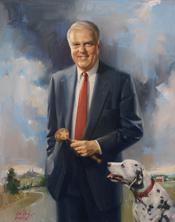 Rep. F. James Sensenbrenner, Jr. (R-WI)
Description
Amendment sought to strike section 3 of the bill which created a first-to-file patent system.
What it changes
14 changes to H.R. 1249 · 3 shown in the bill's text
We couldn't read part of this amendment. That part is shown as written below.
Change 1: Strikes section 3
StrikesIn H.R. 1249 · Reported in House
Struck: SEC. 3. FIRST INVENTOR TO FILE.
Struck: (a) Definitions.--Section 100 of title 35, United States Code, is amended--
Struck: (1) in subsection (e), by striking "or inter partes reexamination under section 311"; and
Struck: (2) by adding at the end the following:
Show 126 more struck paragraphsShow less
Struck: "(f) The term 'inventor' means the individual or, if a joint invention, the individuals collectively who invented or discovered the subject matter of the invention.
Struck: "(g) The terms 'joint inventor' and 'coinventor' mean any 1 of the individuals who invented or discovered the subject matter of a joint invention.
Struck: "(h) The term 'joint research agreement' means a written contract, grant, or cooperative agreement entered into by 2 or more persons or entities for the performance of experimental, developmental, or research work in the field of the claimed invention.
Struck: "(i)(1) The term 'effective filing date' for a claimed invention in a patent or application for patent means--
Struck: "(A) if subparagraph (B) does not apply, the actual filing date of the patent or the application for the patent containing a claim to the invention; or
Struck: "(B) the filing date of the earliest application for which the patent or application is entitled, as to such invention, to a right of priority under section 119, 365(a), or 365(b) or to the benefit of an earlier filing date under section 120, 121, or 365(c).
Struck: "(2) The effective filing date for a claimed invention in an application for reissue or reissued patent shall be determined by deeming the claim to the invention to have been contained in the patent for which reissue was sought.
Struck: "(j) The term 'claimed invention' means the subject matter defined by a claim in a patent or an application for a patent.".
Struck: (b) Conditions for Patentability.--
Struck: (1) In general.--Section 102 of title 35, United States Code, is amended to read as follows:
Struck: "Sec. 102. Conditions for patentability; novelty
Struck: "(a) Novelty; Prior Art.--A person shall be entitled to a patent unless--
Struck: "(1) the claimed invention was patented, described in a printed publication, or in public use, on sale, or otherwise available to the public before the effective filing date of the claimed invention; or
Struck: "(2) the claimed invention was described in a patent issued under section 151, or in an application for patent published or deemed published under section 122(b), in which the patent or application, as the case may be, names another inventor and was effectively filed before the effective filing date of the claimed invention.
Struck: "(b) Exceptions.--
Struck: "(1) Disclosures made 1 year or less before the effective filing date of the claimed invention.--A disclosure made 1 year or less before the effective filing date of a claimed invention shall not be prior art to the claimed invention under subsection (a)(1) if--
Struck: "(A) the disclosure was made by the inventor or joint inventor or by another who obtained the subject matter disclosed directly or indirectly from the inventor or a joint inventor; or
Struck: "(B) the subject matter disclosed had, before such disclosure, been publicly disclosed by the inventor or a joint inventor or another who obtained the subject matter disclosed directly or indirectly from the inventor or a joint inventor.
Struck: "(2) Disclosures appearing in applications and patents.--A disclosure shall not be prior art to a claimed invention under subsection (a)(2) if--
Struck: "(A) the subject matter disclosed was obtained directly or indirectly from the inventor or a joint inventor;
Struck: "(B) the subject matter disclosed had, before such subject matter was effectively filed under subsection (a)(2), been publicly disclosed by the inventor or a joint inventor or another who obtained the subject matter disclosed directly or indirectly from the inventor or a joint inventor; or
Struck: "(C) the subject matter disclosed and the claimed invention, not later than the effective filing date of the claimed invention, were owned by the same person or subject to an obligation of assignment to the same person.
Struck: "(c) Common Ownership Under Joint Research Agreements.--Subject matter disclosed and a claimed invention shall be deemed to have been owned by the same person or subject to an obligation of assignment to the same person in applying the provisions of subsection (b)(2)(C) if--
Struck: "(1) the subject matter disclosed was developed and the claimed invention was made by, or on behalf of, 1 or more parties to a joint research agreement that was in effect on or before the effective filing date of the claimed invention;
Struck: "(2) the claimed invention was made as a result of activities undertaken within the scope of the joint research agreement; and
Struck: "(3) the application for patent for the claimed invention discloses or is amended to disclose the names of the parties to the joint research agreement.
Struck: "(d) Patents and Published Applications Effective as Prior Art.-- For purposes of determining whether a patent or application for patent is prior art to a claimed invention under subsection (a)(2), such patent or application shall be considered to have been effectively filed, with respect to any subject matter described in the patent or application--
Struck: "(1) if paragraph (2) does not apply, as of the actual filing date of the patent or the application for patent; or
Struck: "(2) if the patent or application for patent is entitled to claim a right of priority under section 119, 365(a), or 365(b), or to claim the benefit of an earlier filing date under section 120, 121, or 365(c), based upon 1 or more prior filed applications for patent, as of the filing date of the earliest such application that describes the subject matter.".
Struck: (2) Continuity of intent under the create act.--The enactment of section 102(c) of title 35, United States Code, under paragraph (1) of this subsection is done with the same intent to promote joint research activities that was expressed, including in the legislative history, through the enactment of the Cooperative Research and Technology Enhancement Act of 2004 (Public Law 108-453; the "CREATE Act"), the amendments of which are stricken by subsection (c) of this section. The United States Patent and Trademark Office shall administer section 102(c) of title 35, United States Code, in a manner consistent with the legislative history of the CREATE Act that was relevant to its administration by the United States Patent and Trademark Office.
Struck: (3) Conforming amendment.--The item relating to section 102 in the table of sections for chapter 10 of title 35, United States Code, is amended to read as follows:
Struck: "102. Conditions for patentability; novelty.".
Struck: (c) Conditions for Patentability; Nonobvious Subject Matter.-- Section 103 of title 35, United States Code, is amended to read as follows:
Struck: "Sec. 103. Conditions for patentability; non-obvious subject matter "A patent for a claimed invention may not be obtained, notwithstanding that the claimed invention is not identically disclosed as set forth in section 102, if the differences between the claimed invention and the prior art are such that the claimed invention as a whole would have been obvious before the effective filing date of the claimed invention to a person having ordinary skill in the art to which the claimed invention pertains. Patentability shall not be negated by the manner in which the invention was made.".
Struck: (d) Repeal of Requirements for Inventions Made Abroad.--Section 104 of title 35, United States Code, and the item relating to that section in the table of sections for chapter 10 of title 35, United States Code, are repealed.
Struck: (e) Repeal of Statutory Invention Registration.--
Struck: (1) In general.--Section 157 of title 35, United States Code, and the item relating to that section in the table of sections for chapter 14 of title 35, United States Code, are repealed.
Struck: (2) Removal of cross references.--Section 111(b)(8) of title 35, United States Code, is amended by striking "sections 115, 131, 135, and 157" and inserting "sections 131 and 135".
Struck: (3) Effective date.--The amendments made by this subsection shall take effect upon the expiration of the 18-month period beginning on the date of the enactment of this Act, and shall apply to any request for a statutory invention registration filed on or after that effective date.
Struck: (f) Earlier Filing Date for Inventor and Joint Inventor.--Section 120 of title 35, United States Code, is amended by striking "which is filed by an inventor or inventors named" and inserting "which names an inventor or joint inventor".
Struck: (g) Conforming Amendments.--
Struck: (1) Right of priority.--Section 172 of title 35, United States Code, is amended by striking "and the time specified in section 102(d)".
Struck: (2) Limitation on remedies.--Section 287(c)(4) of title 35, United States Code, is amended by striking "the earliest effective filing date of which is prior to" and inserting "which has an effective filing date before".
Struck: (3) International application designating the united states: effect.--Section 363 of title 35, United States Code, is amended by striking "except as otherwise provided in section 102(e) of this title".
Struck: (4) Publication of international application: effect.-- Section 374 of title 35, United States Code, is amended by striking "sections 102(e) and 154(d)" and inserting "section 154(d)".
Struck: (5) Patent issued on international application: effect.-- The second sentence of section 375(a) of title 35, United States Code, is amended by striking "Subject to section 102(e) of this title, such" and inserting "Such".
Struck: (6) Limit on right of priority.--Section 119(a) of title 35, United States Code, is amended by striking "; but no patent shall be granted" and all that follows through "one year prior to such filing".
Struck: (7) Inventions made with federal assistance.--Section 202(c) of title 35, United States Code, is amended--
Struck: (A) in paragraph (2)--
Struck: (i) by striking "publication, on sale, or public use," and all that follows through "obtained in the United States" and inserting "the 1-year period referred to in section 102(b) would end before the end of that 2-year period"; and
Struck: (ii) by striking "prior to the end of the statutory" and inserting "before the end of that 1-year"; and
Struck: (B) in paragraph (3), by striking "any statutory bar date that may occur under this title due to publication, on sale, or public use" and inserting "the expiration of the 1-year period referred to in section 102(b)".
Struck: (h) Derived Patents.--
Struck: (1) In general.--Section 291 of title 35, United States Code, is amended to read as follows:
Struck: "Sec. 291. Derived Patents
Struck: "(a) In General.--The owner of a patent may have relief by civil action against the owner of another patent that claims the same invention and has an earlier effective filing date, if the invention claimed in such other patent was derived from the inventor of the invention claimed in the patent owned by the person seeking relief under this section.
Struck: "(b) Filing Limitation.--An action under this section may be filed only before the end of the 1-year period beginning on the date of the issuance of the first patent containing a claim to the allegedly derived invention and naming an individual alleged to have derived such invention as the inventor or joint inventor.".
Struck: (2) Conforming amendment.--The item relating to section 291 in the table of sections for chapter 29 of title 35, United States Code, is amended to read as follows:
Struck: "291. Derived patents.".
Struck: (i) Derivation Proceedings.--Section 135 of title 35, United States Code, is amended to read as follows:
Struck: "Sec. 135. Derivation proceedings
Struck: "(a) Institution of Proceeding.--An applicant for patent may file a petition to institute a derivation proceeding in the Office. The petition shall set forth with particularity the basis for finding that an inventor named in an earlier application derived the claimed invention from an inventor named in the petitioner's application and, without authorization, the earlier application claiming such invention was filed. Any such petition may be filed only within the 1-year period beginning on the date of the first publication of a claim to an invention that is the same or substantially the same as the earlier application's claim to the invention, shall be made under oath, and shall be supported by substantial evidence. Whenever the Director determines that a petition filed under this subsection demonstrates that the standards for instituting a derivation proceeding are met, the Director may institute a derivation proceeding. The determination by the Director whether to institute a derivation proceeding shall be final and nonappealable.
Struck: "(b) Determination by Patent Trial and Appeal Board.--In a derivation proceeding instituted under subsection (a), the Patent Trial and Appeal Board shall determine whether an inventor named in the earlier application derived the claimed invention from an inventor named in the petitioner's application and, without authorization, the earlier application claiming such invention was filed. The Director shall prescribe regulations setting forth standards for the conduct of derivation proceedings.
Struck: "(c) Deferral of Decision.--The Patent Trial and Appeal Board may defer action on a petition for a derivation proceeding until the expiration of the 3-month period beginning on the date on which the Director issues a patent that includes the claimed invention that is the subject of the petition. The Patent Trial and Appeal Board also may defer action on a petition for a derivation proceeding, or stay the proceeding after it has been instituted, until the termination of a proceeding under chapter 30, 31, or 32 involving the patent of the earlier applicant.
Struck: "(d) Effect of Final Decision.--The final decision of the Patent Trial and Appeal Board, if adverse to claims in an application for patent, shall constitute the final refusal by the Office on those claims. The final decision of the Patent Trial and Appeal Board, if adverse to claims in a patent, shall, if no appeal or other review of the decision has been or can be taken or had, constitute cancellation of those claims, and notice of such cancellation shall be endorsed on copies of the patent distributed after such cancellation.
Struck: "(e) Settlement.--Parties to a proceeding instituted under subsection (a) may terminate the proceeding by filing a written statement reflecting the agreement of the parties as to the correct inventors of the claimed invention in dispute. Unless the Patent Trial and Appeal Board finds the agreement to be inconsistent with the evidence of record, if any, it shall take action consistent with the agreement. Any written settlement or understanding of the parties shall be filed with the Director. At the request of a party to the proceeding, the agreement or understanding shall be treated as business confidential information, shall be kept separate from the file of the involved patents or applications, and shall be made available only to Government agencies on written request, or to any person on a showing of good cause.
Struck: "(f) Arbitration.--Parties to a proceeding instituted under subsection (a) may, within such time as may be specified by the Director by regulation, determine such contest or any aspect thereof by arbitration. Such arbitration shall be governed by the provisions of title 9, to the extent such title is not inconsistent with this section. The parties shall give notice of any arbitration award to the Director, and such award shall, as between the parties to the arbitration, be dispositive of the issues to which it relates. The arbitration award shall be unenforceable until such notice is given. Nothing in this subsection shall preclude the Director from determining the patentability of the claimed inventions involved in the proceeding.".
Struck: (j) Elimination of References to Interferences.--(1) Sections 134, 145, 146, 154, and 305 of title 35, United States Code, are each amended by striking "Board of Patent Appeals and Interferences" each place it appears and inserting "Patent Trial and Appeal Board".
Struck: (2)(A) Section 146 of title 35, United States Code, is amended--
Struck: (i) by striking "an interference" and inserting "a derivation proceeding"; and
Struck: (ii) by striking "the interference" and inserting "the derivation proceeding".
Struck: (B) The subparagraph heading for section 154(b)(1)(C) of title 35, United States Code, is amended to read as follows:
Struck: "(C) Guarantee of adjustments for delays due to derivation proceedings, secrecy orders, and appeals.--".
Struck: (3) The section heading for section 134 of title 35, United States Code, is amended to read as follows:
Struck: "Sec. 134. Appeal to the Patent Trial and Appeal Board".
Struck: (4) The section heading for section 146 of title 35, United States Code, is amended to read as follows:
Struck: "Sec. 146. Civil action in case of derivation proceeding".
Struck: (5) The items relating to sections 134 and 135 in the table of sections for chapter 12 of title 35, United States Code, are amended to read as follows:
Struck: "134. Appeal to the Patent Trial and Appeal Board. "135. Derivation proceedings.".
Struck: (6) The item relating to section 146 in the table of sections for chapter 13 of title 35, United States Code, is amended to read as follows:
Struck: "146. Civil action in case of derivation proceeding.".
Struck: (k) Statute of Limitations.--
Struck: (1) In general.--Section 32 of title 35, United States Code, is amended by inserting between the third and fourth sentences the following: "A proceeding under this section shall be commenced not later than the earlier of either the date that is 10 years after the date on which the misconduct forming the basis for the proceeding occurred, or 1 year after the date on which the misconduct forming the basis for the proceeding is made known to an officer or employee of the Office as prescribed in the regulations established under section 2(b)(2)(D).".
Struck: (2) Report to congress.--The Director shall provide on a biennial basis to the Judiciary Committees of the Senate and House of Representatives a report providing a short description of incidents made known to an officer or employee of the Office as prescribed in the regulations established under section 2(b)(2)(D) of title 35, United States Code, that reflect substantial evidence of misconduct before the Office but for which the Office was barred from commencing a proceeding under section 32 of title 35, United States Code, by the time limitation established by the fourth sentence of that section.
Struck: (3) Effective date.--The amendment made by paragraph (1) shall apply in any case in which the time period for instituting a proceeding under section 32 of title 35, United States Code, had not lapsed before the date of the enactment of this Act.
Struck: (l) Small Business Study.--
Struck: (1) Definitions.--In this subsection--
Struck: (A) the term "Chief Counsel" means the Chief Counsel for Advocacy of the Small Business Administration;
Struck: (B) the term "General Counsel" means the General Counsel of the United States Patent and Trademark Office; and
Struck: (C) the term "small business concern" has the meaning given that term under section 3 of the Small Business Act (15 U.S.C. 632).
Struck: (2) Study.--
Struck: (A) In general.--The Chief Counsel, in consultation with the General Counsel, shall conduct a study of the effects of eliminating the use of dates of invention in determining whether an applicant is entitled to a patent under title 35, United States Code.
Struck: (B) Areas of study.--The study conducted under subparagraph (A) shall include examination of the effects of eliminating the use of invention dates, including examining--
Struck: (i) how the change would affect the ability of small business concerns to obtain patents and their costs of obtaining patents;
Struck: (ii) whether the change would create, mitigate, or exacerbate any disadvantages for applicants for patents that are small business concerns relative to applicants for patents that are not small business concerns, and whether the change would create any advantages for applicants for patents that are small business concerns relative to applicants for patents that are not small business concerns;
Struck: (iii) the cost savings and other potential benefits to small business concerns of the change; and
Struck: (iv) the feasibility and costs and benefits to small business concerns of alternative means of determining whether an applicant is entitled to a patent under title 35, United States Code.
Struck: (3) Report.--Not later than the date that is 1 year after the date of the enactment of this Act, the Chief Counsel shall submit to the Committee on Small Business and Entrepreneurship and the Committee on the Judiciary of the Senate and the Committee on Small Business and the Committee on the Judiciary of the House of Representatives a report on the results of the study under paragraph (2).
Struck: (m) Report on Prior User Rights.--
Struck: (1) In general.--Not later than the end of the 4-month period beginning on the date of the enactment of this Act, the Director shall report, to the Committee on the Judiciary of the Senate and the Committee on the Judiciary of the House of Representatives, the findings and recommendations of the Director on the operation of prior user rights in selected countries in the industrialized world. The report shall include the following:
Struck: (A) A comparison between patent laws of the United States and the laws of other industrialized countries, including members of the European Union and Japan, Canada, and Australia.
Struck: (B) An analysis of the effect of prior user rights on innovation rates in the selected countries.
Struck: (C) An analysis of the correlation, if any, between prior user rights and start-up enterprises and the ability to attract venture capital to start new companies.
Struck: (D) An analysis of the effect of prior user rights, if any, on small businesses, universities, and individual inventors.
Struck: (E) An analysis of legal and constitutional issues, if any, that arise from placing trade secret law in patent law.
Struck: (F) An analysis of whether the change to a first- to-file patent system creates a particular need for prior user rights.
Struck: (2) Consultation with other agencies.--In preparing the report required under paragraph (1), the Director shall consult with the United States Trade Representative, the Secretary of State, and the Attorney General.
Struck: (n) Effective Date.--
Struck: (1) In general.--Except as otherwise provided in this section, the amendments made by this section shall take effect upon the expiration of the 18-month period beginning on the date of the enactment of this Act, and shall apply to any application for patent, and to any patent issuing thereon, that contains or contained at any time--
Struck: (A) a claim to a claimed invention that has an effective filing date as defined in section 100(i) of title 35, United States Code, that is on or after the effective date described in this paragraph; or
Struck: (B) a specific reference under section 120, 121, or 365(c) of title 35, United States Code, to any patent or application that contains or contained at any time such a claim.
Struck: (2) Interfering patents.--The provisions of sections 102(g), 135, and 291 of title 35, United States Code, as in effect on the day before the effective date set forth in paragraph (1) of this subsection, shall apply to each claim of an application for patent, and any patent issued thereon, for which the amendments made by this section also apply, if such application or patent contains or contained at any time--
Struck: (A) a claim to an invention having an effective filing date as defined in section 100(i) of title 35, United States Code, that occurs before the effective date set forth in paragraph (1) of this subsection; or
Struck: (B) a specific reference under section 120, 121, or 365(c) of title 35, United States Code, to any patent or application that contains or contained at any time such a claim.
Struck: (o) Study of Patent Litigation.--
Struck: (1) GAO study.--The Comptroller General of the United States shall conduct a study of the consequences of litigation by non-practicing entities, or by patent assertion entities, related to patent claims made under title 35, United States Code, and regulations authorized by that title.
Struck: (2) Contents of study.--The study conducted under this subsection shall include the following:
Struck: (A) The annual volume of litigation described in paragraph (1) over the 20-year period ending on the date of the enactment of this Act.
Struck: (B) The volume of cases comprising such litigation that are found to be without merit after judicial review.
Struck: (C) The impacts of such litigation on the time required to resolve patent claims.
Struck: (D) The estimated costs, including the estimated cost of defense, associated with such litigation for patent holders, patent licensors, patent licensees, and inventors, and for users of alternate or competing innovations.
Struck: (E) The economic impact of such litigation on the economy of the United States, including the impact on inventors, job creation, employers, employees, and consumers.
Struck: (F) The benefit to commerce, if any, supplied by non-practicing entities or patent assertion entities that prosecute such litigation.
Struck: (3) Report to congress.--The Comptroller General shall, not later than the date that is 1 year after the date of the enactment of this Act, submit to the Committee on the Judiciary of the House of Representatives and the Committee on the Judiciary of the Senate a report on the results of the study required under this subsection, including recommendations for any changes to laws and regulations that will minimize any negative impact of patent litigation that was the subject of such study.
Struck: (p) Sense of Congress.--It is the sense of the Congress that converting the United States patent registration system from "first inventor to use" to a system of "first inventor to file" will promote the progress of science by securing for limited times to inventors the exclusive rights to their discoveries and provide inventors with greater certainty regarding the scope of protection granted by the exclusive rights to their discoveries.
Struck: (q) Sense of Congress.--It is the sense of the Congress that converting the United States patent registration system from "first inventor to use" to a system of "first inventor to file" will harmonize the United States patent registration system with the patent registration systems commonly used in nearly all other countries throughout the world with whom the United States conducts trade and thereby promote a greater sense of international uniformity and certainty in the procedures used for securing the exclusive rights of inventors to their discoveries.
Original wording
Strike section 3 (“First Inventor to File”)
Change 2: Replaces “section 18” through “3(n)(1)” with “section 17 and in paragraph (3), shall apply to any patent for which an application is fi…”
In H.R. 1249 · Reported in House
(2) Applicability.--
(A) In general.--The amendments made by subsection (d) shall take effect upon the expiration of the 1-year period beginning on the date of the enactment of this Act and, except as provided in section
[struck: 18][inserted: 17] and in paragraph (3), shall apply to any patent[struck: that ][inserted: for which an application ]is[struck: described in section 3(n)(1)][inserted: filed on or after that effective date].(B) Limitation.--The Director may impose a limit on the number of post-grant reviews that may be instituted under chapter 32 of title 35, United States Code, during each of the first 4 1-year periods in which the amendments made by subsection (d) are in effect.
Original wording
Page 68, line 9, strike “section 18” and all that follows through “3(n)(1)” on line 11 and insert “section 17 and in paragraph (3), shall apply to any patent for which an application is filed on or after that effective date”.
Change 3: Replaces “derivation” with “interference”
[struck: derivation][inserted: interference]Original wording
Page 74, line 3, strike “derivation” and insert “interference”.
Change 4: Replaces “derivation” with “interference”
[struck: derivation][inserted: interference]Original wording
Page 74, line 7, strike “derivation” and insert “interference”.
Change 5: Replaces “Derivation” with “Interference”
[struck: Derivation][inserted: Interference]Original wording
Page 76, line 7, strike “Derivation” and insert “Interference”.
Change 6: Replaces “a derivation” with “an interference”
[struck: a derivation][inserted: an interference]Original wording
Page 76, lines 7 and 8, strike “a derivation” and insert “an interference”.
Change 7: Replaces “derivation” with “interference”
[struck: derivation][inserted: interference]Original wording
Page 76, lines 12 and 25, strike “derivation” and insert “interference”.
Change 8: Replaces “a derivation” with “an interference”
[struck: a derivation][inserted: an interference]Original wording
Page 77, line 6, strike “a derivation” and insert “an interference”.
Change 9: Replaces “derivation” with “interference”
[struck: derivation][inserted: interference]Original wording
Page 77, line 10, strike “derivation” and insert “interference”.
Change 10: Replaces “a derivation” with “an interference”
[struck: a derivation][inserted: an interference]Original wording
Page 77, line 23, strike “a derivation” and insert “an interference”.
Change 11: Strikes “as in effect” through “3(n)(1),”
Struck: as in effect … 3(n)(1),
Original wording
Page 113, line 20, strike “as in effect” and all that follows through “3(n)(1),” on line 22.
Change 12: Strikes “(as in” through “date)”
Struck: (as in … date)
Original wording
Page 113, line 25, strike “(as in” and all that follows through “date)” on page 114, line 1.
Change 13: Strikes “(as in effect” through “3(n)(1)”
Struck: (as in effect … 3(n)(1)
Original wording
Page 114, line 9, strike “(as in effect” and all that follows through “3(n)(1)” on line 11.
Change 14: Replaces “6(f)(2)(A)” with “5(f)(2)(A)”
In H.R. 1249 · Reported in House
(E) The Director may institute a transitional proceeding only for a patent that is a covered business method patent.
(2) Effective date.--The regulations issued under paragraph (1) shall take effect upon the expiration of the 1-year period beginning on the date of the enactment of this Act and shall apply to any covered business method patent issued before, on, or after that effective date, except that the regulations shall not apply to a patent described in section
[struck: 6][inserted: 5](f)(2)(A) of this Act during the period in which a petition for post-grant review of that patent would satisfy the requirements of section 321(c) of title 35, United States Code.(3) Sunset.--
Original wording
Page 115, line 10, strike “6(f)(2)(A)” and insert “5(f)(2)(A)”.
Shown as written
as amended, beginning on page 5, line 1, and redesignate succeeding sections and references thereto (and conform the table of contents) accordingly.
In section 7 (“Patent Trial and Appeal Board”), as amended, strike subsection (d) (“Conforming Amendments”) and insert the following:
Read automatically from the Congressional Record. Check the original before relying on it.
As printed
Strike section 3 (“First Inventor to File”), as amended, beginning on page 5, line 1, and redesignate succeeding sections and references thereto (and conform the table of contents) accordingly.
Page 68, line 9, strike “section 18” and all that follows through “3(n)(1)” on line 11 and insert “section 17 and in paragraph (3), shall apply to any patent for which an application is filed on or after that effective date”.
Page 74, line 3, strike “derivation” and insert “interference”.
Page 74, line 7, strike “derivation” and insert “interference”.
Page 76, line 7, strike “Derivation” and insert “Interference”.
Page 76, lines 7 and 8, strike “a derivation” and insert “an interference”.
Page 76, lines 12 and 25, strike “derivation” and insert “interference”.
Page 77, line 6, strike “a derivation” and insert “an interference”.
Page 77, line 10, strike “derivation” and insert “interference”.
Page 77, line 23, strike “a derivation” and insert “an interference”.
In section 7 (“Patent Trial and Appeal Board”), as amended, strike subsection (d) (“Conforming Amendments”) and insert the following:
(d) Conforming Amendments.--
(1) Amendments to title 35.--Sections 134, 145, 146, 154, and 305 of title 35, United States Code, are each amended by striking “Board of Patent Appeals and Interferences” each place that term appears and inserting “Patent Trial and Appeal Board”.
(2) Atomic energy act of 1954.--Section 152 of the Atomic Energy Act of 1954 (42 U.S.C. 2182) is amended, in the third undesignated paragraph, by striking “Board of Patent Appeals and Interferences” each place it appears and inserting “Patent Trial and Appeal Board”.
(3) Title 51.--Section 20135 of title 51, United States Code, is amended, in subsections (e) and (f), by striking “Board of Patent Appeals and Interferences” each place it appears and inserting “Patent Trial and Appeal Board”.
Page 113, line 20, strike “as in effect” and all that follows through “3(n)(1),” on line 22.
Page 113, line 25, strike “(as in” and all that follows through “date)” on page 114, line 1.
Page 114, line 9, strike “(as in effect” and all that follows through “3(n)(1)” on line 11.
Page 115, line 10, strike “6(f)(2)(A)” and insert “5(f)(2)(A)”.
Legislative Activity
Stay on top of the latest movement without scrolling through every action
House amendment offered
June 23, 2011
View full timeline
House amendment offered
June 23, 2011
House amendment offered/reported by: Amendment (A012) offered by Mr. Sensenbrenner.(consideration: CR H4491-4493, H4501; text: CR H4491)
June 23, 2011 • 3:26 PM
House amendment not agreed to: On agreeing to the Sensenbrenner amendment (A012) Failed by recorded vote: 129 - 295 (Roll no. 486).
June 23, 2011 • 5:02 PM
Amendment failed in Committee of the Whole
June 23, 2011 • 5:02 PM
Roll call votes on amendments in House
June 23, 2011 • 5:02 PM
Amendment (A012) offered by Mr. Sensenbrenner. (consideration: CR H4491-4493, H4501; text: CR H4491)
June 23, 2011 • 3:26 PM
On agreeing to the Sensenbrenner amendment (A012) Failed by recorded vote: 129 - 295 (Roll no. 486).
June 23, 2011 • 5:02 PM
Votes
1 roll call on this amendment