An amendment numbered 7 printed in Part A of House Report 112-200 to strike subparagraph (d) of subsection (6) of Sec. (9) which is part of the definition of `high quality charter schools.' Would strike the following language: `(D) has demonstrated success in increasing student academic achievement for the subgroups of students described in section 1111(b)(2)(C)(v)(II).'.
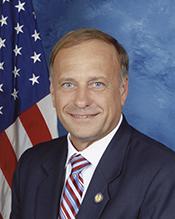 Rep. Steve King (R-IA)
Description
Amendment sought to strike the requirement that for charter schools to qualify for grants, they must be open and available to students that fall within all of the following 4 categories: economically disadvantaged students; students from major racial and ethnic groups; students with disabilities; and students with limited English proficiency.
Legislative Activity
Stay on top of the latest movement without scrolling through every action
Amendment failed in Committee of the Whole
September 13, 2011 • 1:49 PM
View full timeline
Amendment failed in Committee of the Whole
September 13, 2011 • 1:49 PM
House amendment not agreed to: On agreeing to the King (IA) amendment (A008) Failed by recorded vote: 43 - 374 (Roll no. 703).(consideration: CR H6119-6120)
September 13, 2011 • 1:49 PM
Roll call votes on amendments in House
September 13, 2011 • 1:49 PM
On agreeing to the King (IA) amendment (A008) Failed by recorded vote: 43 - 374 (Roll no. 703). (consideration: CR H6119-6120)
September 13, 2011 • 1:49 PM
House amendment offered
September 8, 2011
House amendment offered/reported by: Amendment (A008) offered by Mr. King (IA).(consideration: CR H6003-6005; text: CR H6003)
September 8, 2011 • 3:34 PM
Amendment (A008) offered by Mr. King (IA). (consideration: CR H6003-6005; text: CR H6003)
September 8, 2011 • 3:34 PM
Votes
1 roll call on this amendment
Text
Offered
EMPOWERING PARENTS THROUGH QUALITY CHARTER SCHOOLS ACT
Mr. KLINE. Mr. Speaker, I ask unanimous consent that all Members may
have 5 legislative days in which to revise and extend their remarks and
include extraneous material on H.R. 2218.
The SPEAKER pro tempore. Is there objection to the request of the
gentleman from Minnesota?
There was no objection.
The SPEAKER pro tempore. Pursuant to House Resolution 392 and rule
XVIII, the Chair declares the House in the Committee of the Whole House
on the state of the Union for the consideration of the bill, H.R. 2218.
{time} 1405
In the Committee of the Whole
Accordingly, the House resolved itself into the Committee of the
Whole House on the state of the Union for the consideration of the bill
(H.R. 2218) to amend the charter school program under the Elementary
and Secondary Education Act of 1965, with Mr. Womack in the chair.
The Clerk read the title of the bill.
The CHAIR. Pursuant to the rule, the bill is considered read the
first time.
The gentleman from Minnesota (Mr. Kline) and the gentleman from
California (Mr. George Miller) each will control 30 minutes.
The Chair recognizes the gentleman from Minnesota.
Mr. KLINE. Mr. Chairman, I rise today in support of H.R. 2218, and I
yield myself such time as I may consume.
The Empowering Parents through Quality Charter Schools Act is a key
component of our efforts to reform the Nation's education system and
ensure more students have access to a quality learning experience. I
join my colleagues on both sides of the aisle who have been strong
proponents of charter schools for the breadth of opportunities they
offer students and parents.
These innovative institutions empower parents to play a more active
role in their child's education and offer students the priceless
opportunity to escape underperforming schools. They also open doors for
educators to experiment with the fresh teaching methods uniquely geared
to meeting the needs of their individual students.
The stories of charter school success are impressive. Students who
previously had little hope have been inspired by excellent teachers to
reach new heights. The tales of groundbreaking programs and initiatives
at local charter schools have motivated surrounding public schools to
improve. Parents have witnessed children of all backgrounds transition
from struggling to excelling as a result of their charter school
education.
Unfortunately, there are not enough charter schools to meet demand
and hundreds of thousands of students remain on wait lists each year.
{time} 1410
The legislation we consider today takes important steps to encourage
and support the establishment of more high-quality charter schools in
communities across the United States.
The bipartisan Empowering Parents through Quality Charter Schools Act
will consolidate funding under the Federal Charter School Program into
the existing State grant program. This will allow State educational
agencies, State charter school boards, and governors the freedom to
award subgrants to support new charter schools as well as replicate or
expand high-quality charter schools.
To ensure States are facilitating the growth and expansion of charter
schools, this act will give funding priority to those that lift
arbitrary caps on the number of charter schools permitted in the State.
The legislation
[[Page H5989]]
also will provide priority to States that take additional steps to
encourage charter school growth, such as allowing more than one State
or local agency to authorize charter schools, or promoting charters as
a solution to improve struggling public schools.
As we work to increase the presence of charter schools in the United
States, we must also protect limited taxpayer funds and make sure every
dollar is well spent. It has been said that charter schools are the
epitome of performance-based education: In exchange for increased
flexibility and autonomy, these schools are held accountable for
results. The Empowering Parents through Quality Charter Schools Act
will ensure charter schools continue to be held accountable by
supporting an evaluation of schools' impact on students, families, and
communities, while also encouraging shared best practices between
charter and traditional public schools.
Charter schools are a valuable part of our efforts to improve the
education available to our children. This legislation does not
represent the whole solution. All of us recognize that additional
measures must be enacted to support excellence and innovation in the
American education system. However, this act takes an important step in
the right direction.
I am very pleased that members of the Education and Workforce
Committee have put their differences aside and worked through a very
bipartisan process to develop an exceptional piece of legislation. I
would like to thank Members and their staffs for these efforts. I urge
my colleagues on both sides of the aisle to join with us in supporting
this positive legislation.
I reserve the balance of my time.
Mr. GEORGE MILLER of California. Mr. Chairman, I yield myself 5
minutes.
I rise today in support of the Empowering Parents through Quality
Charter Schools Act, and I want to thank the chairman of the committee,
Mr. Kline, and the subcommittee chair, Mr. Hunter, for all of their
cooperation and support in working with the minority on this side of
the aisle on this legislation. Both sides of the aisle have strong
proponents of this legislation and of the charter school movement in
this country.
This legislation, because of that cooperation, is the first
bipartisan piece of reauthorization of the Elementary and Secondary
Education Act. It passed the Education Committee with bipartisan
support, and I'm hopeful that it will receive similar support from the
full Congress.
This country is facing a severe education crisis. Our schools are
simply not meeting the educational needs of our students, and it is a
threat to our global competitiveness and to our economic security.
Charter schools began 20 years ago as a laboratory for innovation to
help tackle the stagnant education system at that time and to give
options to parents who felt helpless. These schools have often become
the myth busters of what is possible for a demographic of children that
have all too often been written off. Currently, they serve about 4
percent of all public school students. In urban areas, that number is
much higher. Charter schools are not a silver bullet and will not solve
all of the education challenges, but they have become an important part
of the education system. We need to update the law to reflect that
reality.
The Empowering Parents through Quality Charter Schools Act encourages
effective reforms that will help transform schools and communities.
First, this bill makes significant improvements to the existing
Charter School Program and addresses issues that we have heard from
education advocates across the country. It rightfully returns charter
schools to their original purpose--public schools that identify and
share innovative practices that lead to improvements in academic
achievement for all public schools. It requires that charters be
brought back into the traditional public school system as opposed to
running in a parallel system. And it requires charters to actually
serve all student populations and therefore provides more parents with
real choices.
Second, this bill prioritizes accountability. It puts student
achievement first, and it greatly increases the accountability of
charter school authorizers and oversight by State education
authorities.
Third, this bill addresses a recurring problem in charter schools,
which is the lack of service to students with disabilities and English
language learners. In this bill, we dramatically improve access for
underserved populations. We require better recruitment and enrollment
practices for underserved populations.
Lastly, this bill rightly focuses on our students and what they need
to succeed. In many States, high-performing charter schools are a great
option for some students. These schools are closing achievement gaps
and shattering the low expectations that have stood in the way of
student success.
Charter schools have been on the forefront of bold ideas and
innovation in education. They have shown that, given the right tools,
all students can achieve at high levels. We are learning from great
charter schools about what works for students and what students need to
be able to compete in the global economy. Replicating this success will
help our students, our communities, and our economy.
With this legislation, we can help ensure that the positive reforms
happening at some charter schools will happen at all charter schools,
and we can help ensure that best practices are shared throughout that
school district. But this legislation is only one piece of the
education reform puzzle. Unfortunately, we are not taking up the whole
Elementary and Secondary Education Act, but just one part.
This country is in the midst of the most dynamic education reform
atmosphere that I have seen in my tenure in Congress. The
reauthorization of the Elementary and Secondary Education Act presents
an opportunity to take hold of that momentum and bring our education
system into the future.
The bill before us today is good, but we need to do much more. It
will be a tremendous disservice for our children and our country if we
do not provide relief for schools that are struggling under an outdated
law. This relief should come in the form of a full, comprehensive
reauthorization of ESEA. To do that, we must take on all of the real
issues facing all our schools, not just charters. We need to address
accountability, data, assessments, and college- and career ready
standards and modernizing the teaching profession. We all have to hold
true to the reason that the Federal Government has a role in education
in the first place: to ensure equal opportunity for every student in
this country to access a great education.
We know what it will take to fix our schools. It isn't a mystery. But
accomplishing that goal isn't easy. It takes real political will to
overcome ideology and to stay focused on what's best for kids.
I hope my colleagues will join me in supporting this legislation, and
I hope that we can get to a much more comprehensive reauthorization of
ESEA in the near future.
I reserve the balance of my time.
Mr. KLINE. Mr. Chairman, at this time, I am very pleased to yield 5
minutes to the gentleman from California (Mr. Hunter), the chair of the
K-12 Subcommittee.
Mr. HUNTER. I also want to extend my appreciation to Chairman Kline
for his leadership and tireless work toward improving the quality of
education for America's children, as well as Ranking Member Kildee, my
colleague on the subcommittee and full committee, Ranking Member
Miller, as well as Jared Polis from Colorado, who is not even on this
full committee but was very supportive of this legislation.
Mr. Chairman, the Empowering Parents through Quality Charter Schools
Act is a bill that will have a direct impact on our Nation's children.
Expanding access to high-performing charter schools has the potential
to make a world of difference for students across the Nation simply by
adding a much needed layer of choice and competition that is good for
the entire school system, not just charters.
Unlike traditional public schools, the charter school model is not
limited by a one-size-fits-all approach. Instead, these institutions
enjoy increased freedom from State and local rules and regulations in
exchange for greater accountability.
Also, the flexibility afforded to charter schools allows teachers and
school
[[Page H5990]]
administrators to adjust schedules and course work to better serve a
wide range of students in their individual communities, including
disadvantaged students. For example, a Louisiana charter school
established in the wake of Hurricane Katrina enrolled many students who
had fallen significantly behind other students their age after the
disaster forced them to miss a full year of school. Despite these
difficult circumstances, dedicated teachers tailored ground-breaking
coursework to meet the needs of these students. Student achievement
levels soared, and this charter school is now the third most successful
high school in New Orleans.
Improved academic achievement in even the most troubled school
districts is one reason why charter schools are in such high demand,
with more than 400,000 students across the Nation on wait lists. Even
so, many States have imposed arbitrary caps on the total number of
charter schools permitted as well as the total number of students
allowed to attend these schools. These provisions unnecessarily stifle
parental choice and keep students trapped in low-performing schools.
Charter schools also have difficulty securing adequate funding.
Current law awards funding for the establishment of new charter schools
but does not support funds for replication, updates, or improvements.
As a result, charter schools with a proven record of high student
achievement may be unable to secure funding to replicate their
educational model in a new community.
The Empowering Parents through Quality Charter Schools Act will help
put an end to these barriers to charter school growth by streamlining
and modernizing the Federal Charter Schools Program.
{time} 1420
The law will facilitate the ability of States to access funding for
the expansion and replication of the best charter schools through the
simplification of the Federal grant program. Additionally, the
legislation incentivizes charter school development by offering
priority grant funding to States that remove arbitrary caps on charter
school growth.
Charter schools provide an opportunity for students who might
otherwise spend their formative years stuck in subpar classrooms. We
cannot allow arbitrary measures or partisan differences to stand in the
way of providing all children access to a high quality education. I
strongly encourage my colleagues on both sides of the aisle to unite in
support of a better future for the Nation's students and vote ``yes''
on the Empowering Parents Through Quality Charter Schools Act.
Mr. GEORGE MILLER of California. I yield 2 minutes to the gentleman
from Texas (Mr. Hinojosa).
Mr. HINOJOSA. Mr. Chairman, I rise today to express my strong support
for H.R. 2218, the Empowering Parents through Quality Charter Schools
Act. This bill strengthens our Nation's charter schools by making much
needed improvements to current law, and I commend Chairman John Kline
and Ranking Member George Miller of the Education and Workforce
Committee for their leadership on this issue.
As ranking member of the Subcommittee on Higher Education, I want to
help K-12 schools to give us college-ready high school graduates and to
send them to colleges or 4-year universities. That's why I support H.R.
2218.
In regard to accessibility, this bill helps to ensure that English
language learners and students with disabilities have an opportunity to
attend and excel in high quality charter schools. Under this proposal,
charter school authorizers must ensure that charter schools comply with
the Civil Rights Act, as well as Individuals With Disabilities Act and
the Rehabilitation Act, and monitor the schools in recruiting,
enrolling, and meeting the needs of students with disabilities and
English language learners.
I am pleased that the manager's amendment to H.R. 2218 requires
authorizers to ensure that charter schools solicit and consider input
from parents and community members on the implementation and operation
of charter schools.
This bill prioritizes high quality charter schools. By adding a new
definition for high quality charter schools and providing priority
consideration for States with high quality charter schools, this bill
encourages States to set higher expectations for our Nation's charter
schools.
This legislation improves charter authorizing. H.R. 2218 ensures that
authorizers within the State monitor the performance of charter schools
and require charter schools to conduct and publicly report financial
audits.
The CHAIR. The time of the gentleman has expired.
Mr. GEORGE MILLER of California. I yield the gentleman an additional
30 seconds.
Mr. HINOJOSA. In my congressional district, the IDEA public high
schools, a network of high quality public charter schools, have done a
terrific job of preparing minorities, English language learners, and
students with disabilities for college and careers. Currently, IDEA
public schools operate 20 schools in 10 communities in the Rio Grande
Valley.
This year, all the IDEA public schools were rated exemplary, the
highest district rating issued by the Texas Education Agency; and our
IDEA college preparatory school in Donna, Texas, has been recognized as
one of the very best high schools in the Nation. In fact, 100 percent
of IDEA public school graduates are enrolled in a community college or
university.
I urge my colleagues on both sides of the aisle to support H.R. 2218.
I applaud Tom Torkelsen, JoAnn Gama, co-founders of the IDEA Public
Schools, as well as the teachers, parents, staff, and community members
for their outstanding track record and unwavering commitment to fulfill
IDEA's mission of `College For All Children.'
Out nation's public charter schools must strive to be high-performing
and inclusive; have the highest standards of excellence,
accountability, and transparency; and foster strong, healthy
partnerships with traditional public schools that yield successful
outcomes for all students.
Mr. KLINE. I yield 4 minutes to the gentleman from Tennessee, a
member of the committee and the chairman of the Health Subcommittee,
Dr. Roe.
Mr. ROE of Tennessee. Mr. Chairman, I rise in strong support of the
Empowering Parents through Quality Charter Schools Act. It's heartening
to see strong, bipartisan support for a bill that will do a lot of good
for America's children.
A high quality education should be the birthright of every American
child. As a society, we must ensure that they have the tools needed to
chase their dreams and to succeed in an increasingly competitive global
marketplace. A child growing up in Cocke County, Tennessee, today will
some day compete for jobs with young people in China, India, and around
the world. It's our duty to prepare our children and this great country
for this reality.
Sadly, we're falling short in this responsibility. While many of our
traditional public schools are outstanding, others leave students
falling through the cracks. That's why an increasing number of parents
are turning to charter schools to educate their children. But the
supply has been unable to keep up with the demand. An estimated 420,000
students are on the waiting list to be admitted to charter schools.
It's heartbreaking to know that the trajectory of these children's
lives will be, in no small part, determined by a lottery. We can and
must do better.
H.R. 2218 will help more students gain access to a quality education
by facilitating the development of high performing charter schools. It
reauthorizes the charter school program, which provides start-up grants
to help charter schools open the doors, buy classroom materials, and
teach new students. The bill also encourages States to support the
development and expansion of charter schools, while ensuring an
emphasis on quality and innovation.
The best educational system is one in which parents, teachers, and
local school boards collaborate to set the agenda, not Washington, DC.
This bill puts more power in the hands of those who know our children
best and their needs best.
Charter schools are not a silver bullet, but they offer a way out for
students who otherwise would be trapped in a failing school. Every
charter school that is supported through this program is one more
choice a parent will have to ensure their children's future success.
[[Page H5991]]
I thank my colleagues for their bipartisan support, and I urge my
colleagues to vote ``yes.''
Mr. GEORGE MILLER of California. I yield 3 minutes to the gentlewoman
from California (Ms. Woolsey), a member of the committee.
Ms. WOOLSEY. Mr. Chairman, I rise to speak on H.R. 2218, the
Empowering Parents through Quality Charter Schools Act.
During my first visit to a charter school years ago, when charter
schools were first on the horizon, I was so impressed. I was impressed
with the small class sizes. I was impressed with the level of parental
involvement and the individualized learning programs. In fact, when I
left the school, I was actually teary; I mean, I was overcome because I
wanted every single child in the United States of America to have this
same rich educational experience.
All charter schools aren't quite that successful and all public
schools aren't failing, but charter schools were created to develop
best practices and innovative learning methods, and, if they were
successful, those methods could be brought back and used in all public
schools. While some charter schools have found new ways to promote
academic achievement, other public schools have yet to benefit from
this investment.
This bill will return charter schools to their original mission by
helping improve the public school system and ensuring that charters no
longer operate in isolation without strict accountability.
For many years, I've been concerned that charter schools, using
taxpayer dollars, would function at the expense of public schools
instead of complementing them. For instance, without reform, the most
talented and motivated students could simply go to the charter schools,
while public schools would be left with the most challenging
situations, especially students with disabilities, English language
learners, and students who come from broken homes and are having a hard
time just keeping up in general. And that was totally contrary to the
intent of the charter schools movement; it would weaken, rather than
strengthen, our public school system.
So to address this problem, this bill stood up and, in a very
bipartisan way, our committee put together a bill that we have here on
the House floor that requires charter schools to adopt practices that
promote inclusion, that allow for increased enrollment of students with
disabilities and limited English skills, and provides an information
sharing system regarding systems programs.
There are many other necessary reforms included in H.R. 2218, and
they'll all ensure charter schools fill their original purpose. With
these reforms, charter schools will play the constructive role in our
education system that they were designed to play.
Mr. KLINE. Mr. Chairman, I am pleased to yield 3 minutes to the
gentleman from Michigan, the chair of the Workforce Protection
Subcommittee, Mr. Walberg.
{time} 1430
Mr. WALBERG. I thank the chair and committee leadership for bringing
this bill forward, H.R. 2218, for which I urge my colleagues' support.
In the Northwest Ordinance, the same language in that ordinance, as
well as what was then put into many of our State constitutions, says
this: ``Religion, morality, and knowledge being necessary to good
governments and the happiness of mankind, schools and the means of
education, shall forever be encouraged.''
I believe this bill, H.R. 2218, does just that. It's a simple bill.
It promotes a charter school program that accomplishes three goals.
Those being, one, to provide parents greater options for their
children's education; two, consolidating education programs and
reducing the authorization level; and, three, supporting the
development of high-quality charter schools. That's what we're about in
education. That's what we ought to be concerned with.
This bill accomplishes our goal of modernizing and streamlining the
program by consolidating the current programs to one program and one
authorization line. The result in savings still affords the taxpayer,
the parent, and the educator with even more opportunity for growth of
proven charter school models and new innovative charter schools.
The bill ensures that charter schools and charter school authorizers
reach out to parents to serve students who can benefit from these
schools. The legislation supports quality initiatives in the
authorizing world without putting any new mandates on the schools.
The legislation has broad support, including a community that
includes the U.S. Chamber of Commerce, Business Roundtable, National
Alliance of Public Charter Schools, Texas Charter School Association,
Chiefs for Change, the National Association of State Directors of
Special Education, just to name a few.
Charter schools were created in Michigan, my State, 15 years ago. And
since that time nothing but proven educational success has taken place,
with children in tough school districts before now receiving education
that is promoting success for them and their future prosperity in an
education opportunity that expands in the real-world experience.
For that reason and many others, I urge the support of H.R. 2218 as a
proposal that does exactly what our Northwest Ordinance says. It
encourages schools and the means of education for quality, students,
and future people that will work in our system.
Mr. GEORGE MILLER of California. I yield 2 minutes to the gentleman
from New Jersey (Mr. Andrews).
(Mr. ANDREWS asked and was given permission to revise and extend his
remarks.)
Mr. ANDREWS. I thank my friend for yielding.
In the earliest days of our Republic, our prosperity came from our
abundant natural resources. Then in later days, our prosperity came
from the fact that we were bordered by two vast oceans to our east and
west which gave us an isolated domestic market.
In the days after the Second World War, our prosperity was grounded
in the fact that we were the sole remaining industrial power untouched
by the Second World War, relatively speaking.
All of those advantages relatively speaking are gone; and the way
we're going to be prosperous today and in the future is by having the
best educated, best motivated workforce anywhere in the world. We're
not going to have that best educated and best motivated workforce
without a high-quality education for every child in America.
I see this bill as a step in that direction by enriching and making
more accountable the charter school movement in our country.
Make no mistake about it: all charter schools are not perfect. Many
charter schools, frankly, are very troubled. But the charter school
movement has been a positive step forward for our country. This bill
adds accountability to that movement and adds new resources that I
think are welcome.
I would echo the words of Ranking Member Miller and note that 90
percent of children in America's schools are in public schools. And the
principal legislative action we have on those public schools is the
Elementary and Secondary Education Act. I know that the chairman of the
committee has worked very diligently to prepare the committee for the
work we could do on that. And I'm hopeful that we can have the same
kind of cooperative effort for the ESEA reauthorization as we have for
this charter school bill.
There is much more to do, but today is a good first step. I urge a
``yes'' vote.
Mr. KLINE. I yield 3 minutes to the gentleman from Indiana, Dr.
Bucshon.
Mr. BUCSHON. Thank you, Chairman Kline.
Mr. Chairman, first let me thank Representative Hunter, Chairman
Kline, Ranking Member Miller, and others for their hard work and
leadership on this legislation.
I rise today as a cosponsor of H.R. 2218, the Empowering Parents
through Quality Charter Schools Act. Where American education was once
a world leader, over the past few decades we are losing our advantage.
The Empowering Parents through Quality Charter Schools Act will
facilitate the development and replication of high-performing charter
schools that will help America regain its stature as a leader in
educating its citizens.
Charter schools are created through a contract with local education
providers that allow flexibility and innovation in educating our
children while maintaining the same requirements and accountability of
traditional public schools. Charter schools are able to
[[Page H5992]]
bring innovation and special programming into the curriculum that is
uniquely tailored to the needs of their specific student population.
This not only allows choice for parents whose children may be better
suited for this kind of flexibility, but also can inspire progress in
traditional schools by raising the bar and creating greater
transparency.
By increasing funding opportunities for the replication of successful
charter schools and facilities assistance, H.R. 2218 encourages States
to invest in charter schools.
Further, H.R. 2218 supports the evaluation of the impact of charter
schools on their students, faculty, parents, and communities to ensure
that high-quality education is available for every child and parents
can choose the correct venue for their child's education.
In my district in Evansville, Indiana, Signature School was ranked
the top high school in the Midwest and the number three charter school
in the country by The Washington Post. These rankings were based on
data that indicate how well a school prepares its students for college
based on Advanced Placement tests or International Baccalaureate
completions. Signature School is an example of a high-performing
charter school that this legislation aims to replicate.
Replicating schools like Signature School that have a proven history
for effectively preparing our children for college is not only in the
best interest of students and parents but also in the best interest of
the economy. By increasing the number of students that are college
ready, we build a more educated generation, more prepared to take on
the complex jobs in health care, engineering, science and technology
and others that future industries will demand.
With an unemployment rate near 9 percent, educating our students is
critical. By increasing our students' access to high-quality charter
schools, H.R. 2218 will prepare our children for the high-tech jobs of
the future. This is essential if we are to maintain our competitiveness
in a global economy.
Mr. GEORGE MILLER of California. I yield 2 minutes to the gentleman
from Colorado (Mr. Polis), the intellectual architect of all of this.
Mr. POLIS. I thank the gentleman from California and the gentleman
from Minnesota.
There is a lot of good in public education today. When we look across
our country, just as we see examples of what doesn't work--drop-out
factory schools where kids are falling further and further behind each
year, schools that are unsafe learning environments for their kids--
just as we have that, we also have examples of what works, what works
with our most at-risk populations in this country showing that every
student in this country can learn and can achieve, given the right
opportunity and the right school environment.
Now, charter schools aren't the silver bullet or the solution, but
they are a tool in the arsenal of school districts in the States to
address the learning needs of all students.
Nationally, there's over 5,000 charter schools representing just over
5 percent of all public schools in the country. Many of those charter
schools couldn't have gotten off the ground without the Federal start-
up grant that this bill reauthorizes. Importantly, again because we
have examples that this works, this bill, for the first times, allows
States to use the money to expand and replicate learning models that
work.
I point to one in Colorado, the Ricardo Flores Magon Academy. Ninety-
three percent free and reduced lunch, 86 percent English language
learners, and yet they scored far above the State average in the past 3
years, 95 to 100 percent proficient in math and about 20 percent higher
than the State average score--the State average score that includes
wealthy suburban districts as well.
{time} 1440
Yes, these students can learn, and schools like Ricardo Flores Magon
Academy will now under this new authorization have access to expansion
and replication money.
So, when models work--whether that's a model like KIPP nationally,
which has successfully served some of our most at-risk communities, or
whether it's grassroots efforts across our country--they will be able
to access resources to serve more students and grow or to open up
additional branches of the same school. National, State, and local
research consistently shows that, yes, not all charter schools work.
Some underperform other public schools. Some perform at the same level,
and some do better.
What we do with this bill is we provide for best practices
nationally. We've learned a lot in the last 10 years with regard to
charter schools. We now have some best practices in this bill, like
removing caps on the number of charter schools in districts. Through
the manager's amendment, we ensure that charter schools can participate
in food services as well as in transportation services in districts. I
want to point out the importance of the transportation because, to make
choice meaningful, to add the emphasis to choice, you have to have
transportation options to get the most at-risk kids to school;
otherwise choice is simply an empty promise.
By focusing Federal investments, as H.R. 2218 does, it ensures that
we maximize the impact of our limited Federal resources on improving
student achievement and reducing the learning gap across the country.
To succeed as a Nation, we need to do a better job with our human
capital in preparing the next generation of Americans for the next
generation of jobs, and this bill will be an important tool in that
arsenal.
I strongly support this bill.
Mr. KLINE. Mr. Chairman, may I inquire as to the time remaining on
both sides?
The CHAIR. The gentleman from Minnesota has remaining 16 minutes. The
gentleman from California has remaining 15 minutes.
Mr. KLINE. It is my understanding that the gentleman from California
has several more speakers.
Mr. GEORGE MILLER of California. They're here in spirit. They're not
here in person, unfortunately.
Mr. KLINE. I am prepared to reserve and let you call on speakers.
Mr. GEORGE MILLER of California. I thank the gentleman. I have one or
two other speakers. We've put out a call to them, but they've not
responded. I'll see if we can maybe fit them in on the manager's
amendment if they want to speak because I'll be very brief on the
manager's amendment on this side.
So let me just close by again thanking everyone on the committee for
their support. I certainly want to thank the staff on both sides of the
aisle but particularly the staff on this side of the aisle, and the
members of our committee, for helping me with this legislation. I want
to recognize Jamie Fasteau, Ruth Friedman, Kara Marchione, Laura
Schifter, Daniel Brown, Megan O'Reilly, and Adam Schaefer for all of
their contributions to this successful bipartisan effort.
Finally, I would just like to say, as many speakers have said, all
charter schools aren't perfect; this isn't a silver bullet. What we
hope to be able to do is to really continue to grow the entrepreneurial
spirit of young people across the board looking at our education
system, thinking how it can be done better, what are the best
practices, what are the indicators of successful schools, of successful
learning environments, of successful teaching environments for
teachers, for students, and focusing on the academic achievement and
the benefits to the students. And then to be able to share those models
across the charter school spectrum, across the traditional public
school spectrum so that all of us can learn and benefit from that, and
most importantly so we can create those environments where America's
children will have the opportunity to have access to a first-class
education that will serve them the rest of their lives.
I believe that that effort is facilitated by the charter school
movement. I believe that this legislation is a substantial improvement
on the original authorization for charter schools to participate in
this area, and I look forward to the passage of this legislation.
With that, I've danced as long as I can. I yield back the balance of
my time.
Mr. KLINE. I yield myself the balance of my time.
Mr. Chairman, I want to add my thanks to those of Ranking Member
Miller's to the staffs on both sides, to
[[Page H5993]]
the members of the committee on both sides, and to our colleagues not
on the committee, like Mr. Polis, for their input and help on this
legislation.
All of us were elected to Congress with the promise to enact laws
that will make this country a better place for our children and our
grandchildren. This starts with ensuring that every child has access to
a quality education.
For many students and their parents, charter schools are a beacon of
hope and, in some cases, the only beacon of hope. They symbolize
opportunity, choice, and educational excellence, and it is past time to
ensure more families and communities across the United States have
access to these groundbreaking institutions.
By approving the Empowering Parents through Quality Charter Schools
Act today, we can help put more students on the path to a successful
future. I urge my colleagues to put differences aside and to join
together in supporting this legislation for the sake of those students
trapped in underperforming schools across America.
I yield back the balance of my time.
The CHAIR. All time for general debate has expired.
Pursuant to the rule, the amendment in the nature of a substitute
printed in the bill shall be considered as an original bill for the
purpose of amendment under the 5-minute rule and shall be considered
read.
The text of the committee amendment in the nature of a substitute is
as follows:
H.R. 2218
Be it enacted by the Senate and House of Representatives of
the United States of America in Congress assembled,
SECTION 1. SHORT TITLE.
This Act may be cited as the ``Empowering Parents through
Quality Charter Schools Act''.
SEC. 2. REFERENCES.
Except as otherwise specifically provided, whenever in this
Act a section or other provision is amended or repealed, such
amendment or repeal shall be considered to be made to that
section or other provision of the Elementary and Secondary
Education Act of 1965 (20 U.S.C. 6301 et seq.).
SEC. 3. PURPOSE.
Section 5201 (20 U.S.C. 7221) is amended to read as
follows:
``SEC. 5201. PURPOSE.
``It is the purpose of this subpart to--
``(1) provide financial assistance for the planning,
program design, and initial implementation of charter
schools;
``(2) expand the number of high-quality charter schools
available to students across the Nation;
``(3) evaluate the impact of such schools on student
achievement, families, and communities, and share best
practices between charter schools and other public schools;
``(4) encourage States to provide support to charter
schools for facilities financing in an amount more nearly
commensurate to the amount the States have typically provided
for traditional public schools;
``(5) improve student services to increase opportunities
for students with disabilities, English language learners,
and other traditionally underserved students to attend
charter schools and meet challenging State academic
achievement standards; and
``(6) support efforts to strengthen the charter school
authorizing process to improve performance management,
including transparency, monitoring, and evaluation of such
schools.''.
SEC. 4. PROGRAM AUTHORIZED.
Section 5202 (20 U.S.C. 7221a) is amended to read as
follows:
``SEC. 5202. PROGRAM AUTHORIZED.
``(a) In General.--This subpart authorizes the Secretary to
carry out a charter school program that supports charter
schools that serve elementary school and secondary school
students by--
``(1) supporting the startup, replication, and expansion of
charter schools;
``(2) assisting charter schools in accessing credit to
acquire and renovate facilities for school use; and
``(3) carrying out national activities to support--
``(A) charter school development;
``(B) the dissemination of best practices of charter
schools for all schools; and
``(C) the evaluation of the impact of the program on
schools participating in the program.
``(b) Funding Allotment.--From the amount made available
under section 5211 for a fiscal year, the Secretary shall--
``(1) reserve 15 percent to support charter school
facilities assistance under section 5204;
``(2) reserve not more than 5 percent to carry out national
activities under section 5205; and
``(3) use the remaining amount after the Secretary reserves
funds under paragraphs (1) and (2) to carry out section 5203.
``(c) Prior Grants and Subgrants.--The recipient of a grant
or subgrant under this subpart, as such subpart was in effect
on the day before the date of enactment of the Empowering
Parents through Quality Charter Schools Act, shall continue
to receive funds in accordance with the terms and conditions
of such grant or subgrant.''.
SEC. 5. GRANTS TO SUPPORT HIGH-QUALITY CHARTER SCHOOLS.
Section 5203 (20 U.S.C. 7221b) is amended to read as
follows:
``SEC. 5203. GRANTS TO SUPPORT HIGH-QUALITY CHARTER SCHOOLS.
``(a) In General.--From the amount reserved under section
5202(b)(3), the Secretary shall award grants to State
entities having applications approved pursuant to subsection
(f) to enable such entities to--
``(1) award subgrants to eligible applicants for--
``(A) opening new charter schools;
``(B) opening replicable, high-quality charter school
models; or
``(C) expanding high-quality charter schools; and
``(2) provide technical assistance to eligible applicants
and authorized public chartering agencies in carrying out the
activities described in paragraph (1) and work with
authorized public chartering agencies in the State to improve
authorizing quality.
``(b) State Uses of Funds.--
``(1) In general.--A State entity receiving a grant under
this section shall--
``(A) use 90 percent of the grant funds to award subgrants
to eligible applicants, in accordance with the quality
charter school program described in the entity's application
approved pursuant to subsection (f), for the purposes
described in subparagraphs (A) through (C) of subsection
(a)(1); and
``(B) reserve 10 percent of such funds to carry out the
activities described in subsection (a)(2), of which not more
than 30 percent may be used for administrative costs which
may include technical assistance.
``(2) Contracts and grants.--A State entity may use a grant
received under this section to carry out the activities
described in subparagraphs (A) and (B) of paragraph (1)
directly or through grants, contracts, or cooperative
agreements.
``(c) Program Periods; Peer Review; Diversity of
Projects.--
``(1) Program periods.--
``(A) Grants.--A grant awarded by the Secretary to a State
entity under this section shall be for a period of not more
than 5 years.
``(B) Subgrants.--A subgrant awarded by a State entity
under this section shall be for a period of not more than 5
years, of which an eligible applicant may use not more than
18 months for planning and program design.
``(2) Peer review.--The Secretary, and each State entity
receiving a grant under this section, shall use a peer review
process to review applications for assistance under this
section.
``(3) Diversity of projects.--Each State entity receiving a
grant under this section shall award subgrants under this
section in a manner that, to the extent possible, ensures
that such subgrants--
``(A) are distributed throughout different areas, including
urban, suburban, and rural areas; and
``(B) will assist charter schools representing a variety of
educational approaches.
``(d) Limitations.--
``(1) Grants.--A State entity may not receive more than 1
grant under this section for a 5-year period.
``(2) Subgrants.--An eligible applicant may not receive
more than 1 subgrant under this section per charter school
for a 5-year period.
``(e) Applications.--A State entity desiring to receive a
grant under this section shall submit an application to the
Secretary at such time and in such manner as the Secretary
may require. The application shall include the following:
``(1) Description of program.--A description of the
entity's objectives in running a quality charter school
program under this section and how the objectives of the
program will be carried out, including a description--
``(A) of how the entity--
``(i) will support both new charter school startup and the
expansion and replication of high-quality charter school
models;
``(ii) will inform eligible charter schools, developers,
and authorized public chartering agencies of the availability
of funds under the program;
``(iii) will work with eligible applicants to ensure that
the applicants access all Federal funds that they are
eligible to receive, and help the charter schools supported
by the applicants and the students attending the charter
schools--
``(I) participate in the Federal programs in which the
schools and students are eligible to participate; and
``(II) receive the commensurate share of Federal funds the
schools and students are eligible to receive under such
programs;
``(iv) in the case in which the entity is not a State
educational agency--
``(I) will work with the State educational agency and the
charter schools in the State to maximize charter school
participation in Federal and State programs for charter
schools; and
``(II) will work with the State educational agency to
adequately operate the entity's program under this section,
where applicable;
``(v) will ensure eligible applicants that receive a
subgrant under the entity's program are prepared to continue
to operate the charter schools receiving the subgrant funds
once the funds have expired;
``(vi) will support charter schools in local educational
agencies with large numbers of schools that must comply with
the requirements of section 1116(b);
``(vii) will work with charter schools to promote inclusion
of all students and support all students once they are
enrolled to promote retention;
``(viii) will work with charter schools on recruitment
practices, including efforts to engage groups that may
otherwise have limited opportunities to participate in
charter schools;
``(ix) will share best and promising practices between
charter schools and other public schools;
[[Page H5994]]
``(x) will ensure the charter schools they support can meet
the educational needs of their students, including students
with disabilities and English language learners; and
``(xi) will support efforts to increase quality
initiatives, including meeting the quality authorizing
elements described in paragraph (2)(E);
``(B) of the extent to which the entity--
``(i) is able to meet and carry out the priorities listed
in subsection (f)(2); and
``(ii) is working to develop or strengthen a cohesive
statewide system to support the opening of new charter
schools and replicable, high-quality charter school models,
and expanding high-quality charter schools;
``(C) how the entity will carry out the subgrant
competition, including--
``(i) a description of the application each eligible
applicant desiring to receive a subgrant will submit,
including--
``(I) a description of the roles and responsibilities of
eligible applicants, partner organizations, and management
organizations, including the administrative and contractual
roles and responsibilities; and
``(II) a description of the quality controls agreed to
between the eligible applicant and the authorized public
chartering agency involved, such as a contract or performance
agreement, and how a school's performance on the State's
academic accountability system will be a primary factor for
renewal; and
``(ii) a description of how the entity will review
applications; and
``(D) in the case of an entity that partners with an
outside organization to carry out the entity's quality
charter school program, in whole or in part, of the roles and
responsibilities of this partner.
``(2) Assurances.--Assurances, including a description of
how the assurances will be met, that--
``(A) each charter school receiving funds under the
entity's program will have a high degree of autonomy over
budget and operations;
``(B) the entity will support charter schools in meeting
the educational needs of their students as described in
paragraph (1)(A)(x);
``(C) the entity will ensure that the authorized public
chartering agency of any charter school that receives funds
under the entity's program--
``(i) ensures that the charter school is meeting the
obligations under this Act, part B of the Individuals with
Disabilities Education Act, title VI of the Civil Rights Act
of 1964, and section 504 of the Rehabilitation Act of 1973;
and
``(ii) adequately monitors and helps the schools in
recruiting, enrolling, and meeting the needs of all students,
including students with disabilities and English language
learners;
``(D) the entity will provide adequate technical assistance
to eligible applicants to--
``(i) meet the objectives described in clauses (vii) and
(viii) of paragraph (1)(A) and paragraph (2)(B); and
``(ii) enroll traditionally underserved students, including
students with disabilities and English language learners, to
promote an inclusive education environment;
``(E) the entity will promote quality authorizing, such as
through providing technical assistance, to support all
authorized public chartering agencies in the State to improve
the monitoring of their charter schools, including by--
``(i) using annual performance data, which may include
graduation rates and student growth data, as appropriate, to
measure the progress of their schools toward becoming high-
quality charter schools; and
``(ii) reviewing the schools' independent, annual audits of
financial statements conducted in accordance with generally
accepted accounting principles, and ensuring any such audits
are publically reported; and
``(F) the entity will work to ensure that charter schools
are included with the traditional public school system in
decision-making about the public school system in the State.
``(3) Requests for waivers.--A request and justification
for waivers of any Federal statutory or regulatory provisions
that the entity believes are necessary for the successful
operation of the charter schools that will receive funds
under the entity's program under this section, and a
description of any State or local rules, generally applicable
to public schools, that will be waived, or otherwise not
apply to such schools.
``(f) Selection Criteria; Priority.--
``(1) Selection criteria.--The Secretary shall award grants
to State entities under this section on the basis of the
quality of the applications submitted under subsection (e),
after taking into consideration--
``(A) the degree of flexibility afforded by the State's
public charter school law and how the entity will work to
maximize the flexibility provided to charter schools under
the law;
``(B) the ambitiousness of the entity's objectives for the
quality charter school program carried out under this
section;
``(C) the quality of the strategy for assessing achievement
of those objectives;
``(D) the likelihood that the eligible applicants receiving
subgrants under the program will meet those objectives and
improve educational results for students;
``(E) the proposed number of new charter schools to be
opened, and the number of high-quality charter schools to be
replicated or expanded under the program;
``(F) the entity's plan to--
``(i) adequately monitor the eligible applicants receiving
subgrants under the entity's program; and
``(ii) work with the authorized public chartering agencies
involved to avoid duplication of work for the charter schools
and authorized public chartering agencies;
``(G) the entity's plan to provide adequate technical
assistance, as described in the entity's application under
subsection (e), for the eligible applicants receiving
subgrants under the entity's program under this section; and
``(H) the entity's plan to support quality authorizing
efforts in the State, consistent with the objectives
described in subparagraph (B).
``(2) Priority.--In awarding grants under this section, the
Secretary shall give priority to State entities to the extent
that they meet the following criteria:
``(A) In the case in which a State entity is located in a
State that allows an entity other than the State educational
agency to be an authorized public chartering agency or a
State in which only a local educational agency may be an
authorized public chartering agency, the State has an appeals
process for the denial of an application for a charter
school.
``(B) The State entity is located in a State that does not
impose any limitation on the number or percentage of charter
schools that may exist or the number or percentage of
students that may attend charter schools in the State.
``(C) The State entity is located in a State that ensures
equitable financing, as compared to traditional public
schools, for charter schools and students in a prompt manner.
``(D) The State entity supports full-, blended-, or hybrid-
online charter school models.
``(E) The State entity is located in a State that uses
charter schools and best practices from charter schools to
help improve struggling schools and local educational
agencies.
``(F) The State entity partners with an organization that
has a demonstrated record of success in developing management
organizations to support the development of charter schools
in the State.
``(G) The State entity demonstrates quality policies and
practices to support and monitor charter schools through
factors, including--
``(i) the proportion of high-quality charter schools in the
State; and
``(ii) the proportion of charter schools enrolling, at a
rate similar to traditional public schools, traditionally
underserved students, including students with disabilities
and English language learners.
``(g) Local Uses of Funds.--An eligible applicant receiving
a subgrant under this section shall use such funds to open
new charter schools or replicable, high-quality charter
school models, or expand existing high-quality charter
schools.
``(h) Reporting Requirements.--Each State entity receiving
a grant under this section shall submit to the Secretary, at
the end of the third year of the 5-year grant period and at
the end of such grant period, a report on--
``(1) the number of students served and, if applicable, how
many new students were served during each year of the grant
period;
``(2) the number of subgrants awarded under this section to
carry out each of the following--
``(A) the opening of new charter schools;
``(B) the opening of replicable, high-quality charter
school models; and
``(C) the expansion of high-quality charter schools;
``(3) the progress the entity made toward meeting the
priorities described in subsection (f)(2), as applicable;
``(4) how the entity met the objectives of the quality
charter school program described in the entity's application
under subsection (e);
``(5) how the entity complied with, and ensured that
eligible applicants complied with, the assurances described
in the entity's application; and
``(6) how the entity worked with authorized public
chartering agencies, including how the agencies worked with
the management company or leadership of the schools in which
the subgrants were awarded.
``(i) State Entity Defined.--For purposes of this section,
the term `State entity' means--
``(1) a State educational agency;
``(2) a State charter school board; or
``(3) a Governor of a State.''.
SEC. 6. FACILITIES FINANCING ASSISTANCE.
Section 5204 (20 U.S.C. 7221c) is amended to read as
follows:
``SEC. 5204. FACILITIES FINANCING ASSISTANCE.
``(a) Grants to Eligible Entities.--
``(1) In general.--From the amount reserved under section
5202(b)(1), the Secretary shall award not less than 3 grants
to eligible entities that have applications approved under
subsection (d) to demonstrate innovative methods of assisting
charter schools to address the cost of acquiring,
constructing, and renovating facilities by enhancing the
availability of loans or bond financing.
``(2) Eligible entity defined.--For purposes of this
section, the term `eligible entity' means--
``(A) a public entity, such as a State or local
governmental entity;
``(B) a private nonprofit entity; or
``(C) a consortium of entities described in subparagraphs
(A) and (B).
``(b) Grantee Selection.--
``(1) Evaluation of application.--The Secretary shall
evaluate each application submitted under subsection (d), and
shall determine whether the application is sufficient to
merit approval.
``(2) Distribution of grants.--The Secretary shall award at
least one grant to an eligible entity described in subsection
(a)(2)(A), at least one grant to an eligible entity described
in subsection (a)(2)(B), and at least one grant to an
eligible entity described in subsection (a)(2)(C), if
applications are submitted that permit the Secretary to do so
without approving an application that is not of sufficient
quality to merit approval.
``(c) Grant Characteristics.--Grants under subsection (a)
shall be of a sufficient size, scope, and quality so as to
ensure an effective demonstration of an innovative means of
enhancing credit for the financing of charter school
acquisition, construction, or renovation.
[[Page H5995]]
``(d) Applications.--
``(1) In general.--To receive a grant under subsection (a),
an eligible entity shall submit to the Secretary an
application in such form as the Secretary may reasonably
require.
``(2) Contents.--An application submitted under paragraph
(1) shall contain--
``(A) a statement identifying the activities proposed to be
undertaken with funds received under subsection (a),
including how the eligible entity will determine which
charter schools will receive assistance, and how much and
what types of assistance charter schools will receive;
``(B) a description of the involvement of charter schools
in the application's development and the design of the
proposed activities;
``(C) a description of the eligible entity's expertise in
capital market financing;
``(D) a description of how the proposed activities will
leverage the maximum amount of private-sector financing
capital relative to the amount of government funding used and
otherwise enhance credit available to charter schools,
including how the entity will offer a combination of rates
and terms more favorable than the rates and terms that a
charter school could receive without assistance from the
entity under this section;
``(E) a description of how the eligible entity possesses
sufficient expertise in education to evaluate the likelihood
of success of a charter school program for which facilities
financing is sought; and
``(F) in the case of an application submitted by a State
governmental entity, a description of the actions that the
entity has taken, or will take, to ensure that charter
schools within the State receive the funding the charter
schools need to have adequate facilities.
``(e) Charter School Objectives.--An eligible entity
receiving a grant under this section shall use the funds
deposited in the reserve account established under subsection
(f) to assist one or more charter schools to access private
sector capital to accomplish one or both of the following
objectives:
``(1) The acquisition (by purchase, lease, donation, or
otherwise) of an interest (including an interest held by a
third party for the benefit of a charter school) in improved
or unimproved real property that is necessary to commence or
continue the operation of a charter school.
``(2) The construction of new facilities, including
predevelopment costs, or the renovation, repair, or
alteration of existing facilities, necessary to commence or
continue the operation of a charter school.
``(f) Reserve Account.--
``(1) Use of funds.--To assist charter schools to
accomplish the objectives described in subsection (e), an
eligible entity receiving a grant under subsection (a) shall,
in accordance with State and local law, directly or
indirectly, alone or in collaboration with others, deposit
the funds received under subsection (a) (other than funds
used for administrative costs in accordance with subsection
(g)) in a reserve account established and maintained by the
eligible entity for this purpose. Amounts deposited in such
account shall be used by the eligible entity for one or more
of the following purposes:
``(A) Guaranteeing, insuring, and reinsuring bonds, notes,
evidences of debt, loans, and interests therein, the proceeds
of which are used for an objective described in subsection
(e).
``(B) Guaranteeing and insuring leases of personal and real
property for an objective described in subsection (e).
``(C) Facilitating financing by identifying potential
lending sources, encouraging private lending, and other
similar activities that directly promote lending to, or for
the benefit of, charter schools.
``(D) Facilitating the issuance of bonds by charter
schools, or by other public entities for the benefit of
charter schools, by providing technical, administrative, and
other appropriate assistance (including the recruitment of
bond counsel, underwriters, and potential investors and the
consolidation of multiple charter school projects within a
single bond issue).
``(2) Investment.--Funds received under this section and
deposited in the reserve account established under paragraph
(1) shall be invested in obligations issued or guaranteed by
the United States or a State, or in other similarly low-risk
securities.
``(3) Reinvestment of earnings.--Any earnings on funds
received under subsection (a) shall be deposited in the
reserve account established under paragraph (1) and used in
accordance with such subsection.
``(g) Limitation on Administrative Costs.--An eligible
entity may use not more than 2.5 percent of the funds
received under subsection (a) for the administrative costs of
carrying out its responsibilities under this section
(excluding subsection (k)).
``(h) Audits and Reports.--
``(1) Financial record maintenance and audit.--The
financial records of each eligible entity receiving a grant
under subsection (a) shall be maintained in accordance with
generally accepted accounting principles and shall be subject
to an annual audit by an independent public accountant.
``(2) Reports.--
``(A) Grantee annual reports.--Each eligible entity
receiving a grant under subsection (a) annually shall submit
to the Secretary a report of its operations and activities
under this section.
``(B) Contents.--Each annual report submitted under
subparagraph (A) shall include--
``(i) a copy of the most recent financial statements, and
any accompanying opinion on such statements, prepared by the
independent public accountant reviewing the financial records
of the eligible entity;
``(ii) a copy of any report made on an audit of the
financial records of the eligible entity that was conducted
under paragraph (1) during the reporting period;
``(iii) an evaluation by the eligible entity of the
effectiveness of its use of the Federal funds provided under
subsection (a) in leveraging private funds;
``(iv) a listing and description of the charter schools
served during the reporting period, including the amount of
funds used by each school, the type of project facilitated by
the grant, and the type of assistance provided to the charter
schools;
``(v) a description of the activities carried out by the
eligible entity to assist charter schools in meeting the
objectives set forth in subsection (e); and
``(vi) a description of the characteristics of lenders and
other financial institutions participating in the activities
undertaken by the eligible entity under this section
(excluding subsection (k)) during the reporting period.
``(C) Secretarial report.--The Secretary shall review the
reports submitted under subparagraph (A) and shall provide a
comprehensive annual report to Congress on the activities
conducted under this section (excluding subsection (k)).
``(i) No Full Faith and Credit for Grantee Obligation.--No
financial obligation of an eligible entity entered into
pursuant to this section (such as an obligation under a
guarantee, bond, note, evidence of debt, or loan) shall be an
obligation of, or guaranteed in any respect by, the United
States. The full faith and credit of the United States is not
pledged to the payment of funds which may be required to be
paid under any obligation made by an eligible entity pursuant
to any provision of this section.
``(j) Recovery of Funds.--
``(1) In general.--The Secretary, in accordance with
chapter 37 of title 31, United States Code, shall collect--
``(A) all of the funds in a reserve account established by
an eligible entity under subsection (f)(1) if the Secretary
determines, not earlier than 2 years after the date on which
the eligible entity first received funds under this section
(excluding subsection (k)), that the eligible entity has
failed to make substantial progress in carrying out the
purposes described in subsection (f)(1); or
``(B) all or a portion of the funds in a reserve account
established by an eligible entity under subsection (f)(1) if
the Secretary determines that the eligible entity has
permanently ceased to use all or a portion of the funds in
such account to accomplish any purpose described in
subsection (f)(1).
``(2) Exercise of authority.--The Secretary shall not
exercise the authority provided in paragraph (1) to collect
from any eligible entity any funds that are being properly
used to achieve one or more of the purposes described in
subsection (f)(1).
``(3) Procedures.--The provisions of sections 451, 452,
and 458 of the General Education Provisions Act shall apply
to the recovery of funds under paragraph (1).
``(4) Construction.--This subsection shall not be construed
to impair or affect the authority of the Secretary to recover
funds under part D of the General Education Provisions Act.
``(k) Per-pupil Facilities Aid Program.--
``(1) Definition of per-pupil facilities aid program.--In
this subsection, the term `per-pupil facilities aid program'
means a program in which a State makes payments, on a per-
pupil basis, to charter schools to provide the schools with
financing--
``(A) that is dedicated solely for funding charter school
facilities; or
``(B) a portion of which is dedicated for funding charter
school facilities.
``(2) Grants.--
``(A) In general.--From the amount reserved under section
5202(b)(1) remaining after the Secretary makes grants under
subsection (a), the Secretary shall make grants, on a
competitive basis, to States to pay for the Federal share of
the cost of establishing or enhancing, and administering per-
pupil facilities aid programs.
``(B) Period.--The Secretary shall award grants under this
subsection for periods of not more than 5 years.
``(C) Federal share.--The Federal share of the cost
described in subparagraph (A) for a per-pupil facilities aid
program shall be not more than--
``(i) 90 percent of the cost, for the first fiscal year for
which the program receives assistance under this subsection;
``(ii) 80 percent in the second such year;
``(iii) 60 percent in the third such year;
``(iv) 40 percent in the fourth such year; and
``(v) 20 percent in the fifth such year.
``(D) State share.--A State receiving a grant under this
subsection may partner with 1 or more organizations to
provide up to 50 percent of the State share of the cost of
establishing or enhancing, and administering the per-pupil
facilities aid program.
``(E) Multiple grants.--A State may receive more than 1
grant under this subsection, so long as the amount of such
funds provided to charter schools increases with each
successive grant.
``(3) Use of funds.--
``(A) In general.--A State that receives a grant under this
subsection shall use the funds made available through the
grant to establish or enhance, and administer, a per-pupil
facilities aid program for charter schools in the State of
the applicant.
``(B) Evaluations; technical assistance; dissemination.--
From the amount made available to a State through a grant
under this subsection for a fiscal year, the State may
reserve not more than 5 percent to carry out evaluations, to
provide technical assistance, and to disseminate information.
``(C) Supplement, not supplant.--Funds made available under
this subsection shall be used to supplement, and not
supplant, State, and local public funds expended to provide
per
[[Page H5996]]
pupil facilities aid programs, operations financing programs,
or other programs, for charter schools.
``(4) Requirements.--
``(A) Voluntary participation.--No State may be required to
participate in a program carried out under this subsection.
``(B) State law.--
``(i) In general.--To be eligible to receive a grant under
this subsection, a State shall establish or enhance, and
administer, a per-pupil facilities aid program for charter
schools in the State, that--
``(I) is specified in State law; and
``(II) provides annual financing, on a per-pupil basis, for
charter school facilities.
``(ii) Special rule.--A State that is required under State
law to provide its charter schools with access to adequate
facility space may be eligible to receive a grant under this
subsection if the State agrees to use the funds to develop a
per-pupil facilities aid program consistent with the
requirements of this subsection.
``(5) Applications.--To be eligible to receive a grant
under this subsection, a State shall submit an application to
the Secretary at such time, in such manner, and containing
such information as the Secretary may require.''.
SEC. 7. NATIONAL ACTIVITIES.
Section 5205 (20 U.S.C. 7221d) is amended to read as
follows:
``SEC. 5205. NATIONAL ACTIVITIES.
``(a) In General.--From the amount reserved under section
5202(b)(2), the Secretary shall--
``(1) use not less than 50 percent of such funds to award
grants in accordance with subsection (b); and
``(2) use the remainder of such funds to--
``(A) disseminate technical assistance to State entities in
awarding subgrants under section 5203;
``(B) disseminate best practices; and
``(C) evaluate the impact of the charter school program,
including the impact on student achievement, carried out
under this subpart.
``(b) Grants.--
``(1) In general.--The Secretary shall make grants, on a
competitive basis, to eligible applicants for the purpose of
carrying out the activities described in section 5202(a)(1),
subparagraphs (A) through (C) of section 5203(a)(1), and
section 5203(g).
``(2) Terms and conditions.--Except as otherwise provided
in this subsection, grants awarded under this subsection
shall have the same terms and conditions as grants awarded to
State entities under section 5203.
``(3) Eligible applicant defined.--For purposes of this
subsection, the term `eligible applicant' means an eligible
applicant that desires to open a charter school in--
``(A) a State that did not apply for a grant under section
5203;
``(B) a State that did not receive a grant under section
5203; or
``(C) a State that received a grant under section 5203 and
is in the 4th or 5th year of the grant period for such grant.
``(c) Contracts and Grants.--The Secretary may carry out
any of the activities described in this section directly or
through grants, contracts, or cooperative agreements.''.
SEC. 8. RECORDS TRANSFER.
Section 5208 (20 U.S.C. 7221g) is amended--
(1) by inserting ``as quickly as possible and'' before ``to
the extent practicable''; and
(2) by striking ``section 602'' and inserting ``section
602(14)''.
SEC. 9. DEFINITIONS.
Section 5210 (20 U.S.C. 7221i) is amended--
(1) in paragraph (1)--
(A) by striking ``and'' at the end of subparagraph (K);
(B) by striking the period at the end of subparagraph (L)
and inserting ``; and''; and
(C) by adding at the end, the following:
``(M) may serve prekindergarten or post secondary
students.'';
(2) in paragraph (3)(B), by striking ``under section
5203(d)(3)''; and
(3) by inserting at the end the following:
``(5) Expansion of a high-quality charter school.--The term
`expansion of a high-quality charter school' means a high-
quality charter school that either significantly increases
its enrollment or adds one or more grades to its school.
``(6) High-quality charter school.--The term `high-quality
charter school' means a charter school that--
``(A) shows evidence of strong academic results, which may
include strong academic growth as determined by a State;
``(B) has no significant issues in the areas of student
safety, financial management, or statutory or regulatory
compliance;
``(C) has demonstrated success in significantly increasing
student academic achievement and attainment for all students
served by charter schools; and
``(D) has demonstrated success in increasing student
academic achievement for the subgroups of students described
in section 1111(b)(2)(C)(v)(II).
``(7) Replicable, high-quality charter school model.--The
term `replicable, high-quality charter school model' means a
high-quality charter school that will open a new campus under
an existing charter.''.
SEC. 10. AUTHORIZATION OF APPROPRIATIONS.
Section 5211 (20 U.S.C. 7221j) is amended to read as
follows:
``SEC. 5211. AUTHORIZATION OF APPROPRIATIONS.
``There are authorized to be appropriated to carry out this
subpart $300,000,000 for fiscal year 2012 and each of the 5
succeeding fiscal years.''.
SEC. 11. CONFORMING AMENDMENTS.
(a) Repeal.--Subpart 2 of part B of title V (20 U.S.C. 7223
et seq.) is repealed.
(b) Table of Contents.--The table of contents in section 2
is amended--
(1) by striking the item relating to section 5203 and
inserting the following:
``Sec. 5203. Grants to support high-quality charter schools.'';
(2) by striking the item relating to section 5204 and
inserting the following:
``Sec. 5204. Facilities Financing Assistance.''; and
(3) by striking subpart 2 of part B of title V.
The CHAIR. No amendment to the committee amendment in the nature of a
substitute shall be in order except those printed in part A of House
Report 112-200. Each such amendment may be offered only in the order
printed in the report, may be offered only by a Member designated in
the report, shall be considered as read, shall be debatable for the
time specified in the report equally divided and controlled by the
proponent and an opponent, shall not be subject to amendment, and shall
not be subject to a demand for division of the question.
Amendment No. 1 Offered by Mr. Kline
The CHAIR. It is now in order to consider amendment No. 1 printed in
part A of House Report 112-200.
Mr. KLINE. Mr. Chairman, I have an amendment at the desk.
The CHAIR. The Clerk will designate the amendment.
The text of the amendment is as follows:
Page 4, beginning on line 6, strike ``English language
learners'' and insert ``limited English proficient
students''.
Page 5, line 19, insert ``or subpart 2'' after ``this
subpart''.
Page 7, line 16, insert ``Grant Number and Amount;'' after
``Review;''.
Page 7, line 17, insert ``; Waivers'' after ``Projects''.
Page 8, after line 6, insert the following:
``(3) Grant number and amount.--The Secretary shall ensure
that the number of grants awarded under this section and the
award amounts will allow for a sufficient number of new
grants to be awarded under this section for each succeeding
fiscal year.''.
Page 8, line 7, redesignate paragraph (3) as paragraph (4).
Page 8, after line 15, insert the following:
``(5) Waivers.--The Secretary may waive any statutory or
regulatory requirement over which the Secretary exercises
administrative authority except any such requirement relating
to the elements of a charter school described in section
5210(1), if--
``(A) the waiver is requested in an approved application
under this section; and
``(B) the Secretary determines that granting such a waiver
will promote the purpose of this subpart.''.
Page 11, line 16, strike ``English language learners'' and
insert ``limited English proficient students''.
Page 12, line 5, strike ``expanding'' and insert ``the
expansion of''.
Page 12, line 7, insert ``of'' before ``how''.
Page 12, line 17, strike ``and''.
Page 13, after line 2, insert the following:
``(III) a description of how the eligible applicant will
solicit and consider input from parents and other members of
the community on the implementation and operation of each
charter school receiving funds under the entity's program;
and''
Page 13, line 4, strike ``and''.
Page 13, line 9, strike the period and insert ``; and''.
Page 13, after line 9, insert the following:
``(E) of how the entity will help the charter schools
receiving funds under the entity's program consider the
transportation needs of the schools' students; and
``(F) of how the entity will support diverse charter school
models, including models that serve rural communities.''.
Page 13, line 22, strike ``the charter school'' and insert
``each charter school''.
Page 14, line 1, strike ``and''.
Page 14, line 2, insert before the semicolon, ``, the Age
Discrimination Act of 1975, and title IX of the Education
Amendments of 1972''.
Page 14, beginning on line 3, strike ``the schools'' and
insert ``each charter school''.
Page 14, beginning on line 6, strike ``English language
learners'' and insert ``limited English proficient
students''.
Page 14, line 7, insert ``and'' after the semicolon.
Page 14, after line 7, insert the following:
``(iii) ensures that each charter school solicits and
considers input from parents and other members of the
community on the implementation and operation of the
school;''.
Page 14, line 15, strike ``English language learners'' and
insert ``limited English proficient students''.
Page 14, beginning on line 22, amend clause (i) to read as
follows:
``(i) assessing annual performance data of the schools,
including, as appropriate, graduation rates and student
growth; and''.
Page 15, line 8, strike ``and''.
Page 15, line 12, strike the period at the end and insert
``; and''.
Page 15, after line 12, insert the following:
``(G) the entity will ensure that each charter school in
the State make publicly available, consistent with the
dissemination requirements of the annual State report card,
[[Page H5997]]
the information parents need to make informed decisions about
the educational options available to their children,
including information on the educational program, student
support services, and annual performance and enrollment data
for the groups of students described in section
1111(b)(2)(C)(v)(II).''.
Page 16, line 17, insert ``proposed'' before ``number''.
Page 17, line 7, strike ``and''.
page 17, line 10, strike the period at the end and insert
``; and''.
Page 17, insert after line 10, the following:
``(I) the entity's plan to solicit and consider input from
parents and other members of the community on the
implementation and operation of the charter schools in the
State.''.
Page 18, beginning on line 7, strike subparagraph (D).
Page 18, line 9, redesignate subparagraph (E) as
subparagraph (D).
Page 18, line 13, redesignate subparagraph (F) as
subparagraph (E).
Page 18, line 18, redesignate subparagraph (G) as
subparagraph (F).
Page 18, line 20, strike the comma after ``factors''.
Page 19, line 2, strike ``English language learners'' and
insert ``limited English proficient students''.
Page 19, after line 2, insert the following:
``(G) The State entity supports charter schools that
support at-risk students through activities such as dropout
prevention or dropout recovery.
``(H) The State entity authorizes all charter schools in
the State to serve as school food authorities.''.
Page 19, line 12, insert ``by each subgrant awarded under
this section'' after ``number of students served''.
Page 19, line 14, strike ``grant'' and insert ``subgrant''.
Page 20, line 10, strike ``in which the subgrants were
awarded'' and insert ``that received subgrants under this
section''.
Page 20, line 23, strike ``not less than 3 grants to
eligible entities that have'' and insert ``grants to eligible
entities that have the highest-quality''.
Page 20, line 24, after ``subsection (d)'' insert ``, after
considering the diversity of such applications,''
Page 21, beginning on line 11, amend subsection (b) to read
as follows:
``(b) Grantee Selection.--The Secretary shall evaluate each
application submitted under subsection (d), and shall
determine whether the application is sufficient to merit
approval.''.
Page 26, beginning on line 2, strike ``subsection'' and
insert ``paragraph''.
Page 32, line 23, strike ``To'' and insert ``Except as
provided in clause (ii), to''.
Page 33, line 7, strike ``A'' and insert ``Notwithstanding
clause (i), a''.
Page 33, line 10, insert ``, but which does not have a per-
pupil facilities aid program for charter schools specified in
State law,'' after ``space''.
Page 34, line 7, insert ``, and eligible entities and
States receiving grants under section 5204'' before the
semicolon.
Page 36, line 8, strike ``inserting'' and insert
``adding''.
Page 37, line 4, strike ``subgroups'' and insert
``groups''.
The CHAIR. Pursuant to House Resolution 392, the gentleman from
Minnesota (Mr. Kline) and a Member opposed each will control 5 minutes.
The Chair recognizes the gentleman from Minnesota.
Mr. KLINE. Mr. Chairman, I rise in support of the manager's amendment
offered by myself and Mr. Miller.
In all our goals for an improved education system, one stands above
the rest: ensuring students have access to a quality education. My
colleagues and I firmly believe supporting the growth of high-
performing charter schools will help us reach that goal.
Charter schools epitomize choice and flexibility in education, and
represent an efficient way school districts can transform an
underperforming traditional public school into a dynamic learning
institution. Thanks to the additional autonomy afforded to these
institutions, charter schools have become renowned for their ability to
effectively meet the needs of the unique student population.
A great case study of adaptability of charters is Locke High School,
located in the tough South Central area of Los Angeles. Students in
this area face a multitude of challenges--from gang violence to poverty
to troubled homes. Locke High School had some of the lowest test scores
and highest dropout rates in the country. Only roughly 5 percent of its
students went on to 4-year colleges and universities.
In 2007, the LA Unified School District agreed to transform Locke
High School into a public charter school. Charter school officials
instituted broad changes to the school, such as improved facilities,
new teachers, parental volunteer hours, uniforms, and strict
disciplinary measures. As a result, attendance rates have increased to
90 percent--a real success story.
Stories of charter schools that inspire success in students no matter
the circumstance exist beyond Locke High School. These institutions
have benefited children and communities in cities across the United
States. Unfortunately, charter schools are not growing as they should.
This act will facilitate the development of high-performing charter
schools by consolidating Federal funding streams, incentivizing States
to support the development and expansion of these institutions, and
evaluating the benefits these schools offer to students and their
families.
However, as my colleagues and I continued to work together on this
legislation, we realized even more could be done to help charter
schools assist a variety of students, including those most at risk. The
accomplishments of a charter school like Locke High School should be
encouraged and supported. That's why we have developed language in the
manager's amendment that would offer incentives to States that use
charter schools to reach out to special populations, such as at-risk
students.
Additionally, Members on both sides of the aisle decided steps must
be taken to help Federal Charter School Program grants remain on a
sustainable path. The manager's amendment directs the Secretary of
Education to undertake proper planning efforts to ensure sufficient new
grants can be awarded annually to the best applicants.
As we work to ensure all students have access to a quality education,
this act is a step in the right direction. Mr. Chairman, the manager's
amendment makes commonsense adjustments to improve the underlying
legislation, and I urge my colleagues to lend their support.
I reserve the balance of my time.
{time} 1450
Mr. GEORGE MILLER of California. Mr. Chairman, I claim time in
opposition, although I am not in opposition to the manager's amendment.
The CHAIR. Without objection, the gentleman is recognized for 5
minutes.
There was no objection.
Mr. GEORGE MILLER of California. I will be brief here because I want
to yield to the gentleman from Colorado, but I want to point out that
the manager's amendment again was a lot of hard work by the staff to
put together the various ideas from the members of the committee on
both sides of the aisle, but I think they have done a spectacular job,
and the chairman and myself both support this legislation.
I am very supportive of the efforts in the manager's amendment to
make sure that parent and community input is a priority in the
implementation of the charter school improvement and the operation of
those charter schools. We require that, as you consider the beginning
of a charter school, you take into consideration, and the State
entities take into consideration, the input of parents and the
community. I think this is very important.
We know that there are many, many parents that want to be involved in
creating charter schools, sustaining a charter school, thinking about
what they want to do with the schools in their neighborhood. I think
this is an important component that I hope to see in the
reauthorization of the ESEA, that more consideration is given to
community and to parents about how we turn schools around so that they
have some skin in the game, they have some interest in the game, and
they have a stake in the outcome of that.
The manager's amendment also requires that each charter school in the
State make publicly available information on the educational program,
the student support services, teachers, and annual performance
enrollment data for all students by the subgroups, and it strengthens
the application process that includes application and description of
how schools will consider the transportation needs of their students,
and also on how the schools and entities will support diverse charter
school models, including those serving rural areas.
With that, I would like to yield to the gentleman from Colorado to
talk about the replication of high-quality charters.
Mr. POLIS. I thank the gentleman.
Mr. Chairman, again, this process really demonstrates strong
bipartisan leadership and a commitment to our
[[Page H5998]]
Nation's children from both Chairman Kline and Ranking Member Miller,
as well as all the members of the committee and their staff. And I
express not only my deep appreciation but, I am sure, the deep
appreciation of the many millions of children that this bill will help
provide additional opportunities for to them both.
This manager's amendment makes a good bill even better, including
allowing priority for States that allow charters to have autonomous
school food services. It's critical charter schools are allowed to have
independent food services. Many lack cafeteria space in some
facilities, and this amendment will prioritize States that allow for
that. We all know how important nutrition is for success.
Transportation to and from charter schools is also critical.
The bill also allows for the expansion, for the very first time, a
replication of successful charter school models, again deferring to
States in that regard. Previously, these monies were only eligible for
the establishment of innovative new charter schools, a worthy goal and
one that is preserved under this bill as well. But we are now 10 years
later down the road. We know a little bit about what works and what
doesn't work.
Based on that, the bill in the manager's amendment, A, upped the ante
on the best practices for the States in terms of being good
authorizers, and, B, allowed some of the funds to be used to expand and
replicate proven success, as well as preserving some for the continued
innovation, which is also necessary to drive our education system
forward.
This manager's amendment also supports dropout prevention and
recovery and rural needs. Figuring out how charter schools can fit in
the context of rural and smaller school districts has also been an
important learning curve over the last 10 years. This bill and the
manager's amendment incorporate some of the very best thinking in that
regard in terms of making sure that States have plans to ensure that
charter schools can also benefit rural areas.
This bipartisan amendment exemplifies the great work of the committee
leadership overall in the bill and truly does improve upon the base
bill. I am very proud to be strongly supportive of the manager's
amendment as well as the underlying bill.
Mr. GEORGE MILLER of California. I yield back the balance of my time.
Mr. KLINE. Mr. Chairman, I yield back the balance of my time.
The CHAIR. The question is on the amendment offered by the gentleman
from Minnesota (Mr. Kline).
The amendment was agreed to.
Amendment No. 2 Offered by Mrs. Davis of California
The CHAIR. It is now in order to consider amendment No. 2 printed in
part A of House Report 112-200.
Mrs. DAVIS of California. Mr. Chairman, I have an amendment at the
desk.
The CHAIR. The Clerk will designate the amendment.
The text of the amendment is as follows:
Page 3, line 17, redesignate paragraph (1) as paragraph
(2), and insert the following:
``(1) improve the United States education system and
educational opportunities for all Americans by supporting
innovation in public education in public school settings that
prepare students to compete and contribute to the global
economy;''.
Page 3, line 20, redesignate paragraph (2) as paragraph
(3).
Page 3, line 22, redesignate paragraph (3) as paragraph
(4).
Page 4, line 1, redesignate paragraph (4) as paragraph (5).
Page 4, line 5, redesignate paragraph (5) as paragraph (6).
Page 4, line 10, redesignate paragraph (6) as paragraph
(7).
The CHAIR. Pursuant to House Resolution 392, the gentlewoman from
California (Mrs. Davis) and a Member opposed each will control 5
minutes.
The Chair recognizes the gentlewoman from California.
Mrs. DAVIS of California. Mr. Chairman, this amendment simply
stresses the need to constantly seek ways to improve and find
innovative ways to teach our students in the public education system.
Given the state of the economy, we need to encourage economic and job
growth from every angle. We need to do whatever is possible to compete
in the global economy. The best way to stay on the cutting edge is to
build a workforce that can compete against the best and the brightest
in the world. We need schools to find new and innovative ways to teach
our students, particularly in the key subjects of math, science, and
engineering.
One example of an innovative school is the High Tech High charter
school in San Diego, which has the goal of bringing highly skilled
employees into the workforce.
With the support of technology companies such as Qualcomm and
Microsoft, High Tech High has taken innovation in its curriculum to a
new level. Since 2003, the result has been that 100 percent of High
Tech High's graduates have gone on to attend college at such
universities as NYU, MIT, and Yale.
High Tech High has successfully found innovative ways to teach
innovation. And what does innovation in education mean? It means
teachers and principals who find ways to inspire and get students
excited to learn. It can mean teaching students and children how to
think, how to work together, how to think across disciplines, and, most
importantly, how to act on their knowledge. It will take innovation to
meet these goals to consistently improve instruction in the classroom.
Steve Jobs, as we know, led Apple to become one of the largest and
most successful technology companies in history. His visions led to
such products as the iPod, the Mac computer, and, recently, the iPad.
Mr. Jobs once said Apple's success is not just about how much money
it invests in research and development; it's about the people and
creative vision. ``It's about the people you have, how you're led, and
how much you get it,'' Mr. Jobs told Fortune magazine in 1998.
``People,'' Mr. Chairman, ``people'' is the key word. With better and
more innovative schools, we will have more creative people entering our
workforce.
Unfortunately, the World Economic Forum just announced that the
United States dropped to fifth place in the world's most competitive
economies behind nations such as Switzerland and Singapore. Well, Mr.
Chairman, that's the wrong direction and we need to turn it around.
If America is going to reach its potential, we need schools that
cultivate entrepreneurs and visionaries. We need more companies such as
Apple that can compete globally.
Please join me in stressing the need to support innovation, beginning
with our approach to education. I applaud the efforts of our bipartisan
team here that's worked so hard on this underlying bill and the
amendments.
Mr. Chairman, I yield back the balance of my time.
Mr. KLINE. Mr. Chairman, I claim time in opposition to the amendment,
although I do not intend to oppose it.
The CHAIR. Without objection, the gentleman from Minnesota is
recognized for 5 minutes.
There was no objection.
Mr. KLINE. Thank you, Mr. Chairman.
This amendment is entirely consistent with the underlying purpose of
the charter school movement. It improves the bill. I support the
amendment.
Mr. GEORGE MILLER of California. Will the gentleman yield?
Mr. KLINE. I yield to the gentleman from California.
Mr. GEORGE MILLER of California. I thank the gentleman for yielding.
Mr. Chairman, I rise in support of this legislation.
I think one of the intents of this bill and, hopefully, in our
reforms of the Elementary and Secondary Education Act is to keep our
eye on global competition and understand that we must prepare today's
students for tomorrow's global economy and the global competition that
that suggests.
I strongly support and have had long conversations with the
gentlewoman on this amendment and agree to it.
Mr. KLINE. I yield back the balance of my time.
The CHAIR. The question is on the amendment offered by the
gentlewoman from California (Mrs. Davis).
The amendment was agreed to.
Amendment No. 3 Offered by Mr. Paulsen
The CHAIR. It is now in order to consider amendment No. 3 printed in
part A of House Report 112-200.
Mr. PAULSEN. I have an amendment at the desk.
The CHAIR. The Clerk will designate the amendment.
[[Page H5999]]
The text of the amendment is as follows:
Page 8, line 22, after ``period'' insert ``, unless the
eligible applicant demonstrates to the State entity not less
than 3 years of improved educational results in the areas
described in subparagraphs (A) and (D) of section 5210(6) for
students enrolled in such charter school''.
The CHAIR. Pursuant to House Resolution 392, the gentleman from
Minnesota (Mr. Paulsen) and a Member opposed each will control 5
minutes.
The Chair recognizes the gentleman from Minnesota.
{time} 1500
Mr. PAULSEN. Mr. Chairman, I rise today in support of the underlying
bill, H.R. 2218, the Empowering Parents through Charter Schools Act,
and to offer this amendment that will give America's students more
opportunities to succeed.
My amendment will make it easier for successful charter schools to
replicate and expand in a timely manner because by giving these schools
the ability to receive an expansion grant after 3 years rather than the
current 5 years, they will be able to grow and offer quality education
to even more students and provide expanded choices to parents in a
shorter period of time.
So this amendment will also strengthen the bill by continuing to
break down barriers to help quality charter schools grow to meet their
staggering demand.
Currently, Mr. Chairman, an estimated 420,000 students across the
country are being kept on waiting lists to attend the charter school of
their choice. We should be giving these students more opportunities to
attend and learn and be successful.
My home State of Minnesota has seen tremendous success because we
have been a pioneer in expanding educational options and choice. In
1991, we were the first State to pass a charter school law, and we now
have 149 registered charter schools with over 35,000 students attending
them. Today, over 40 States and the District of Columbia have
established charter school laws of their own.
I support the underlying bill which was crafted bipartisanly. It
encourages States to support the development of charter schools. It
streamlines funds to reduce administrative burdens and improve funding
opportunities for the replication of successful charter schools and
facilities assistance. It also supports an evaluation of the school's
impact on students, families, and communities while encouraging best
practices sharing between charters and traditional public schools.
There is no doubt that charter schools are a prime example that
innovative education methods are constantly at work, and this bill will
give our schools the ability to do even more for our children.
We all know that these charter schools consistently rank as top
performers among the U.S. Department of Education's Blue Ribbon
Schools, and multiple national rankings of the Best High Schools in
America. It is no surprise that public support and demand for these
charter schools is steadily increasing.
So, Mr. Chairman, the legislation recognizes the opportunity to
enhance the empowerment of parents and should go forward, allowing them
to play an active role in their child's education. This amendment will
give the most successful schools the ability to grow and offer even
more quality education options to more parents and students.
I want to thank Chairman Kline for his leadership, the ranking member
from California for his leadership, and I also want to thank
Representative Polis for cosponsoring this amendment and for his
leadership and his true advocacy, his steadfast advocacy for expansion
of school choice and opportunities across the country.
I reserve the balance of my time.
Mr. POLIS. I claim time in opposition, although I am not opposed to
the amendment.
The CHAIR. Without objection, the gentleman from Colorado is
recognized for 5 minutes.
There was no objection.
Mr. POLIS. Mr. Chairman, I am proud to bring forward this bipartisan
bill. Let me express why it is important. To delay the expansion of a
successful charter school for 5 years and prevent States from having
the flexibility to deploy these resources after 3 proven years only
consigns more kids to failure and lack of opportunity. It is an
important amendment because it provides flexibility for States and
charter schools to expand what works. And 1 year could be an
aberration, 2 years of proven success can be lucky, but 3 years of
success is hard to dispute.
When a school has 3 years of proven success, to make it wait 5 full
years before it's eligible to expand with Federal money only consigns
all of those students who would have been served to otherwise reside on
the waiting list and are forced to attend schools that provide less
educational opportunity. We are only young once in life, and that's why
with regard to education and improving the quality of our public
schools, we all feel the fierce urgency of now.
When a charter school starts out, it is not possible to predict
whether it will be successful or not, and that's the purpose of the
innovation grants. Without this amendment, charter schools that have
proven success could be forced to wait 5 years before being able to
replicate and expand, a wait that our Nation can't afford and, most of
all, those kids on the waiting list can't afford.
This revision is especially needed for charter schools that don't use
the grants for planning, which is another year before the charter
school starts, so it could be 1 year or 3 or 4 years. But if they don't
use the year for a planning year, it is actually a full 5-year wait
before the school would have access to expansion and replication
resources without this amendment. So I am particularly glad of Mr.
Paulsen's effort to bring this forward.
The national activity section of the bill already reflects this. In
fact, the national activity section provides funding after 3 years of
demonstrated success, but that's only 2.5 percent of the total funds of
the bill. Most of the funds under this bill are pushed to the States
and allowed for the dual purpose of innovation and expansion and
replication. And essentially what this bill remedies, it reflects the
national activities language in saying that the States have the
discretion, they are actually allowed to require 5 years of
demonstrated success. I wouldn't encourage them to do that, but they
have the flexibility to do it with 3 years of demonstrated success to
ensure that proven educational opportunities for kids can reach more
kids sooner under this amendment which is why I am proud to lend it my
support.
I yield back the balance of my time.
Mr. PAULSEN. Mr. Chairman, I ask for adoption of this bipartisan
amendment and the underlying bill, and I yield back the balance of my
time.
The CHAIR. The question is on the amendment offered by the gentleman
from Minnesota (Mr. Paulsen).
The amendment was agreed to.
Amendment No. 4 Offered by Mr. Lujan
The CHAIR. It is now in order to consider amendment No. 4 printed in
part A of House Report 112-200.
Mr. LUJAN. Mr. Chairman, I have an amendment at the desk.
The CHAIR. The Clerk will designate the amendment.
The text of the amendment is as follows:
Page 11, line 12, insert before the semicolon ``,
including, where appropriate, instruction and professional
development in science, math, technology, and engineering
education''.
The CHAIR. Pursuant to House Resolution 392, the gentleman from New
Mexico (Mr. Lujan) and a Member opposed each will control 5 minutes.
The Chair recognizes the gentleman from New Mexico.
Mr. LUJAN. Mr. Chairman, the United States has the best research
facilities and educational facilities in the world, and we continue to
be a leader in developing cutting-edge technology in fields spanning
from renewable energy to medicine. But our Nation's competitiveness
depends upon our ability to educate our students and equip them with
the skills they need to succeed in the jobs of the future.
The President, congressional leadership, and business have all agreed
that our Nation must do better in order to compete and excel globally
in science, technology, engineering and math, or STEM fields. My
amendment today simply says that entities include in their application
a description of how
[[Page H6000]]
the school's program would share best practices between charter schools
and other public schools, including best practices in instruction and
professional development in STEM education. This amendment supports the
identification of best practices and encourages opportunities for
teacher training and mentoring in STEM.
According to the National Center for Education Statistics, U.S. high
school seniors recently tested below the international average for 21
countries in mathematics and science. This is simply not acceptable. We
must make a commitment to restore science and innovation as keys to a
new American economy. We must ensure that America's students are
trained to be innovators, critical thinkers, problems solvers, and
prepared to become part of the work force for the 21st century.
I urge my colleagues to support my amendment.
Mr. GEORGE MILLER of California. Will the gentleman yield?
Mr. LUJAN. I yield to the gentleman from California.
Mr. GEORGE MILLER of California. I thank the gentleman for yielding,
thank him for offering the amendment, and I rise in strong support of
this amendment.
Mr. LUJAN. Mr. Chairman, I yield back the balance of my time.
Mr. KLINE. Mr. Chairman, I claim time in opposition to the amendment,
but I do not intend to oppose it.
The CHAIR. Without objection, the gentleman from Minnesota is
recognized for 5 minutes.
There was no objection.
Mr. KLINE. This amendment simply emphasizes the importance of STEM
education. It is widely recognized in the business community, the
education community and throughout America that there is a growing gap
that we need to fill in STEM education. By underscoring the importance
of STEM education, this is helpful to the bill. I encourage my
colleagues to support the amendment.
I yield back the balance of my time.
The CHAIR. The question is on the amendment offered by the gentleman
from New Mexico (Mr. Lujan).
The amendment was agreed to.
Amendment No. 5 Offered by Mr. Polis
The CHAIR. It is now in order to consider amendment No. 5 printed in
part A of House Report 112-200.
Mr. POLIS. Mr. Chairman, I have an amendment at the desk.
The CHAIR. The Clerk will designate the amendment.
The text of the amendment is as follows:
Page 17, begining on line 14, strike subparagraph (A), and
insert the following:
``(A) In the case of a State entity located in a State that
allows an entity other than a local educational agency to be
an authorized public chartering agency, the State has a
quality authorized public chartering agency that is an entity
other than a local educational agency.''.
The CHAIR. Pursuant to House Resolution 392, the gentleman from
Colorado (Mr. Polis) and a Member opposed each will control 5 minutes.
The Chair recognizes the gentleman from Colorado.
Mr. POLIS. Mr. Chairman, again, one of the best practices that I
think we have learned over the last 10 years is the importance of
having alternative authorizing agencies. In fact, 32 States have
created alternative authorizing agencies, including my home State of
Colorado which has a charter school institute. In other States it takes
the form of vesting mayors, university board of regents, or State
boards of education as alternative authorizers.
{time} 1510
Doing so ensures that bold ideas for charter schools brought forth by
parents and grassroots community members are more likely to get a fair
shot at being considered if there is an alternative authorizer, instead
of what's already in the bill, which also should be present, which is
an appeals process. An appeals process automatically kind of sets up a
kind of adversarial relationship. We have that as well in Colorado.
When I served on the State Board of Education, we heard appeals
processes. So if a district turned down a charter school, it was
appealed to the State Board. We could then overrule that district and
force them to grant it. But it set up a very adversarial relationship.
What has proven to work better in 32 States that have it is having an
alternative authorizer in addition to an appeals process so that
districts that simply don't want to be in the charter authorizing
business or that refuse to grant any charter schools or don't have an
application process for them can simply allow another entity to provide
the quality oversight that's needed for a charter school in the
district.
One of the great evolutions of the last 10 years has been the
responsibility of charter school authorizers. It's not simply a charter
school that needs to reform. It's the authorizer, the public entity,
that needs to hold that charter school responsible for the performance
of its students. In my State of Colorado, our charter school institute
approved 22 charter schools serving 10,000 students in the 6 years that
we've had it. That's 22 out of about 120 charter schools that exist in
the State. The State University of New York and the University of
Indiana in Michigan have also approved some of those States' most
successful charter schools.
Local school boards look at things in a different way sometimes. They
appropriately consider their district's own financial situation when
voting on charter schools. But that focus sometimes interferes with
their consideration of the greater good and local control. Quiet,
quality, viable public school choices for parents and students that
address the diverse learning needs of their district. Unreasonable
denials by school districts can be appealed in States. And that's
already one of the provisions of this. But from my own experience on
the State Board of Education, I know that the appeals process is really
less desirable for a number of reasons. First of all, it's only
reactive and only addresses the merits of whether a particular school
board denial was valid or not. It's not proactive in terms of
developing innovative learning models and supporting the quality,
development, and authorizing practice of charter schools. Two, appeals
can address school district delays in approving charter schools.
There's also a way of kind of killing by delay--burying under
paperwork, unreasonable request after unreasonable request from the
school district to the founders of the charter school that ultimately
lead to the abandonment of the idea.
Appeals are often limited in scope and criteria. And appeals are also
a drain on State resources, State Board of Education members' time,
Department of Education staff time, State attorney generals' time. So
while they have their role, it really should be a last resort and
shouldn't be prioritized as the best practice. That's why I'm proposing
to add a priority for multiple charter authorizers. Again, States will
be able to determine the best form that that should take.
I should also point out this is very important for rural areas and
small districts. It is very, very difficult if not impossible for a
small district or rural school district to be a quality authorizer. In
many cases, they recognize that, and would rather not be. In fact, in
Colorado, most of the districts that have welcomed the State authorizer
and said for the local applicants to apply to them instead of their
district are districts that know that they can't engage in a meaningful
approval or oversight process. By having a Statewide entity you allow
some scale to the very important business of being an authorizer--a
scale that small and rural districts lack. We can empower community
members in those districts with the power of school choice and charters
by ensuring that there is a multiple authorizer.
This amendment is supported by the National Alliance for Public
Charter Schools as well as--and very important, a newer entity at the
national level--the National Association for Charter School
Authorizers, which is actually composed of districts and State
authorizing agencies, both of whom have endorsed this amendment.
Again, it simply establishes this as a priority for funding, ensuring
that this best practice that we've come to learn over the last decade
can better be reflected and that hopefully States that haven't yet had
the chance to look at a way to create an alternative authorizing agency
will be able to learn from the States that have under this, and do so,
to ensure that charter schools get a fair hearing, prevent the
adversarial outcomes that too frequently come from the appeals process,
and ensure
[[Page H6001]]
that choice is given meaning in rural school districts and small school
districts.
I urge support of my amendment, and I yield back the balance of my
time.
Mr. KLINE. Mr. Chairman, I claim time in opposition, although I do
not intend to oppose the amendment.
The CHAIR. Without objection, the gentleman from Minnesota is
recognized for 5 minutes.
There was no objection.
Mr. KLINE. Thank you, Mr. Chairman.
The gentleman from Colorado has very succinctly, clearly, and I would
even say eloquently explained the problem in the authorizing business
in charter schools and offered a very, very good solution. This is a
good amendment. It improves the bill. I support it.
I yield back the balance of my time.
The CHAIR. The question is on the amendment offered by the gentleman
from Colorado (Mr. Polis).
The amendment was agreed to.
Amendment No. 6 Offered by Ms. Moore
The CHAIR. It is now in order to consider amendment No. 6 printed in
part A of House Report 112-200.
Ms. MOORE. Mr. Chairman, I have an amendment at the desk.
The CHAIR. The Clerk will designate the amendment.
The text of the amendment is as follows:
Page 20, line 13, insert ``or'' after the semicolon.
Page 20, line 14, strike ``; or'' and insert a period.
Page 20, line 15, strike paragraph (3).
The CHAIR. Pursuant to House Resolution 392, the gentlewoman from
Wisconsin (Ms. Moore) and a Member opposed each will control 5 minutes.
The Chair recognizes the gentlewoman from Wisconsin.
Ms. MOORE. Thank you, Mr. Chairman.
I encourage my colleagues to support my amendment to H.R. 2218, which
would strike a provision that allows Governors to apply and receive
direct grants from the Federal Government and preempts State education
agencies from their oversight and operational responsibilities. Let me
say before I defend this amendment that I think that H.R. 2218 makes
very critical changes to the charter school program that are long
overdue, and it moves in the right direction in terms of being more
inclusive of students, including groups that have typically had limited
access to charters such as students with disabilities and English
language learners. I believe that my amendment will secure and protect
these improvements and expansions of charter school programs.
I really question the wisdom of putting Governors' offices in the
business of overseeing charter programs and implementing these
extremely complex programs. We do know that Governors' offices do not
have the infrastructure, expertise, or staff to do the job--a job which
includes close monitoring of schools, holding authorities accountable,
and much more. These are intricate programs with multiple moving parts
that require time and labor-intensive administration.
I do believe that in my own State of Wisconsin, for example, we have
constitutionally elected superintendents of public instruction. And it
should remain within their purview to oversee and administer this
program. Certainly, we all want Governors to be involved. But I think
that my amendment makes it really clear that the ultimate
responsibility should stay with those State public instruction
agencies.
I reserve the balance of my time.
Mr. KLINE. Mr. Chairman, I claim time in opposition to the amendment.
The CHAIR. The gentleman from Minnesota is recognized for 5 minutes.
Mr. KLINE. All across the country we've seen Governors and other
State and local officials stand up in support of important education
reform efforts that put the interest of children first. The underlying
legislation before us today expands the number of State entities that
may compete for charter school funding, allowing Governors to act on
their support for charter schools. It addresses a real concern that has
arisen in States that do not have a State education agency which
supports charter schools.
Today, there are more than 420,000 students on charter school wait
lists. And we've all seen the recent documentaries, ``Waiting for
Superman'' and ``The Lottery.'' These chronicle low-income students
trapped in failing schools, desperate for better education
opportunities. Instead of helping States meet this truly incredible
demand for more high quality charter schools, unfortunately, this
amendment would actually stifle charter school growth by limiting a
Governor's ability to support these institutions.
At the core of this bill is our desire to see more quality charter
schools available for more students. More choice, more opportunity.
Less ``Waiting for Superman.'' And so I oppose this amendment because
it works in opposition to what the underlying bill is trying to do and
what we're trying to do--and that's give the States more opportunities
to create and replicate more quality charter schools.
{time} 1520
Mr. GEORGE MILLER of California. Will the gentleman yield?
Mr. KLINE. I yield to the gentleman from California.
Mr. GEORGE MILLER of California. I know Ms. Moore has reserved her
time so she can respond to this, but I just want to say I think we
tried to work this out in this legislation in the fashion that if a
Governor makes application, he must do this in conjunction with the
SEA. And the idea that the Governor would do this on his own, or
whatever, we forced that working together simply because, as you point
out, most Governors' offices would not have the internal capacity to
carry out the responsibilities under the grant. But to deny the
Governor the opportunity seems to me doesn't make sense when it's
required that the SEA be involved.
I will just say I know why you're offering the amendment, and I am
obviously reluctant to oppose it, but I think we have addressed this
concern in the legislation.
I thank the gentleman for yielding.
Mr. KLINE. I reserve the balance of my time.
Ms. MOORE. I want to thank the gentlemen for responding, even though
they are opposed.
Let me say that I am old enough to have gone through several
gubernatorial races; and Governors run for office based on crime
prevention and crime control, economic development, lowering taxes,
environmental protection, and even welfare reform. And so the public in
many States have elected to elect separate constitutional officers that
deal solely with educational opportunity. And by not adopting this
amendment, we are literally cutting off the legs of the statewide
constitutional officers to do the only duty for which they are elected,
and that is for educational purposes, and transferring those duties to
a Governor whose agenda may have nothing to do with education at all.
With respect to the notion that the Governor has to work with the
statewide superintendent of public instruction, under current law right
now, superintendents do work with the Governor. And so I am sad that
this is being opposed by both the majority and the minority on this
committee because I do think that, rather than expanding opportunities
for these 420,000 charter school students, it is going to really put
them all under the purview of some ideology of some Governor, Democrat,
Republican, independent, whatever. They are going to be subsumed by
ideology instead of under the purview of a publicly elected State
public instruction superintendent.
I yield back the balance of my time.
Mr. KLINE. Mr. Chairman, again, I rise in opposition to this
amendment. I believe that the underlying legislation, as Ranking Member
Miller alluded to, has language in it that strongly encourages, at the
very least, Governors to work with their SEAs. But I would underscore
the point that States are different. Some States are set up with
different relationships between the different elected officers. They're
not all elected the same way they are maybe in Wisconsin or something.
Our underlying purpose here is to expand access to quality charter
schools, and I believe this amendment gets in the way of that.
So I oppose the amendment, and I yield back the balance of my time.
[[Page H6002]]
The CHAIR. The question is on the amendment offered by the
gentlewoman from Wisconsin (Ms. Moore).
The amendment was rejected.
Amendment No. 7 Offered by Mr. Holt
The CHAIR. It is now in order to consider amendment No. 7 printed in
part A of House Report 112-200.
Mr. HOLT. Mr. Chairman, I have an amendment at the desk.
The CHAIR. The Clerk will designate the amendment.
The text of the amendment is as follows:
Page 33, after line 19, insert the following:
``(6) Priority.--In awarding grants under this subsection,
the Secretary is encouraged to give priority to States that
encourage green school building practices and
certification.''.
The CHAIR. Pursuant to House Resolution 392, the gentleman from New
Jersey (Mr. Holt) and a Member opposed each will control 5 minutes.
The Chair recognizes the gentleman from New Jersey.
Mr. HOLT. I thank Chairman Kline, Ranking Member Miller, and their
staffs for their work to produce this reauthorization bill that makes a
good deal of progress from the existing law. I share many of the
concerns of our colleagues who want to see even more improvement in the
accountability, equity and transparency of charter schools as we
continue to move the bill forward.
I have a simple amendment today in this bill that reauthorizes the
Charter School Program. My amendment encourages the Secretary of
Education to award a priority for green school building practices to
ensure that any Federal investment in charter school facilities would
improve the energy efficiency and environmental advantages of those
schools.
Energy bills are the second highest operating expenditure for schools
after personnel costs. So we must do all we can to help schools
implement green building practices and reduce their energy costs. My
amendment will help ensure that schools spend educational resources on
educating students rather than heating and cooling inefficient
buildings.
According to the Environmental Protection Agency, 30 percent of
energy consumed in buildings is used unnecessarily or inefficiently. By
using green building techniques to eliminate areas where energy is used
unwisely and is wasted, a school's operating costs can be reduced
significantly. A dollar wasted on inefficient heating is lost forever.
A dollar invested in a child will pay dividends forever.
The U.S. Green Building Council supports this amendment and in a
letter to me they wrote: ``On average, green schools save $100,000 per
year--enough to hire two new teachers, buy 200 new computers, or
purchase 5,000 new textbooks.'' They go on to note that green schools
don't cost more, but in fact can be built at or below regional cost and
operated within existing facilities' budgets and save money.
Now, I'm disappointed that the bill we are considering today
reauthorizes only charter school programs. We should be considering
full reauthorization of the Elementary and Secondary Education Act. We
should be considering a public school construction bill. Assisting
local school districts with school construction and modernization would
help rebuild and upgrade local schools and create jobs.
But I do want to see this amendment included in the bill. It will
help schools all across America. It will save energy; it will create
jobs; it will improve education.
I urge its passage.
Mr. GEORGE MILLER of California. Will the gentleman yield?
Mr. HOLT. Mr. Chairman, may I inquire of the time remaining, please.
The CHAIR. The gentleman from New Jersey has 2 minutes remaining.
Mr. HOLT. I yield 30 seconds to the gentleman from California.
Mr. GEORGE MILLER of California. I rise in support of this amendment.
I think it is very important for all the reasons the gentleman from New
Jersey cited.
In terms of the savings, we are seeing more and more schools taking
economic liabilities, if you will, such as parking lots and vacant land
around the school, turning them into economic assets, and saving the
kind of money--it has been recorded now for a number of years the money
that is actually saved in these design practices in the schools that
free up those resources for other educational purposes.
I want to thank the gentleman for offering the amendment.
Mr. HOLT. Mr. Chairman, I yield 1 minute to the gentleman from
Colorado (Mr. Polis).
Mr. POLIS. I think the gentleman from New Jersey has, as he put it,
good language that should not only be included in this bill, but I
think in other relevant construction bills as well.
Very simply, it encourages the Secretary to give priority to States
that encourage green building practices and certification. Again, that
could be as simple as a State making sure that those options are
available. Other States have tax credits or other methods of
incentivizing green school development.
When we are talking about our national energy policy, we are talking
about how frustrated our constituents are with gas prices; we're
talking about our national security as a Nation and our energy
security. I think that for this Congress to ensure that in every bill,
large and small, we encourage--again, without any mandate to school
districts, without any requirement, but encourage the Secretary to give
priority to States that have at least some system for encouraging green
school building development, I think this is a good thing to start
right here in a small way, in a bill that certainly won't on its own
turn around the energy future of our country, but on its own does have
the potential to help drive scale of green technology without
compromising educational outcomes.
Again, I think this is an appropriate addition to the bill and will
hopefully lead to improvements of energy efficiency in charter schools
across the country.
I thank the gentleman for yielding.
{time} 1530
Mr. KLINE. Mr. Chairman, I claim time in opposition to this
amendment.
The CHAIR. The gentleman from Minnesota is recognized for 5 minutes.
Mr. KLINE. The underlying bill maintains and strengthens Federal
support to assist charter schools in accessing credit for facilities
construction, as it has in the past and will in this, but it doesn't
get into the details of school construction. It doesn't take another
step towards getting the Federal Government involved in school
construction.
I understand there's a great excitement in some areas about putting
green in any construction, or in anything for that matter. If it's
green, apparently it's better.
This amendment, I'm afraid, will actually weaken efforts at the State
level to fund school construction. It will dramatically increase the
cost of building elementary and secondary charter schools. Where
there's already limited funds available, some States, school districts,
and charter schools will be forced to use union workers to construct
public charter schools and to comply with this need for green schools.
Instead of imposing new burdens on charter schools, we should support
State and local efforts to raise student academic achievement, stay out
of the school construction business. This amendment is not an
appropriate role for the Federal Government. I urge opposition to the
amendment.
I reserve the balance of my time.
Mr. HOLT. Mr. Chairman, I think the chairman of the committee reads
too much into this amendment. It says, in awarding grants, the
Secretary is encouraged to give priority to States that encourage green
building practices and certification. In other words, if it certifiably
will save energy and thereby save the school district money, it should
be encouraged. What in the world could be wrong with that?
I would urge my chair to reconsider after he has read this amendment
and support us in the passage of this amendment.
I yield back the balance of my time.
The CHAIR. The question is on the amendment offered by the gentleman
from New Jersey (Mr. Holt).
The question was taken; and the Chair announced that the ayes
appeared to have it.
Mr. KLINE. Mr. Chairman, I demand a recorded vote.
The CHAIR. Pursuant to clause 6 of rule XVIII, further proceedings on
the amendment offered by the gentleman from New Jersey will be
postponed.
[[Page H6003]]
Amendment No. 8 Offered by Mr. King of Iowa
The CHAIR. It is now in order to consider amendment No. 8 printed in
part A of House Report 112-200.
Mr. KING of Iowa. Mr. Chairman, I have an amendment at the desk.
The CHAIR. The Clerk will designate the amendment.
The text of the amendment is as follows:
Page 36, line 22, insert ``and'' after the semicolon.
Page 37, line 2, strike ``; and'' and insert a period.
Page 37, beginning on line 3, strike subparagraph (D).
The CHAIR. Pursuant to House Resolution 392, the gentleman from Iowa
(Mr. King) and a Member opposed each will control 5 minutes.
The Chair recognizes the gentleman from Iowa.
Mr. KING of Iowa. Thank you, Mr. Chairman. The gentleman from Iowa is
happy to be recognized.
Addressing this issue, in particular it's this: that the intent of
this bill is a good intent, and I support it, providing an extra
incentive for high quality charter schools. It rewards those high
quality charter schools with an opportunity to receive grants that are
rewards for that excellence that's there, and I certainly support the
initiative and the philosophy behind that.
It also identifies high quality charter schools as those that have
achieved strong academic results, student safety, financial management,
statutory and regulatory compliance, and has demonstrated significantly
increasing student academic achievement for all students. And I
emphasize ``all students.''
But when I read the bill, then it says, also has demonstrated success
in increasing student academic achievement for the subgroups of
students described in, and that's where a lot of people stop reading
the bill. But when you go back and look at the reference, it sets it up
so that it requires not just that the schools be open and available to
students that meet these categories, four categories, Mr. Chairman--
economic disadvantaged students, students from major racial and ethnic
groups, students with disabilities, and students with limited English
proficiency--but, in fact, the language of the bill requires that all
four categories must be met in order to qualify for these grants.
I know there's misinformation out there, but this language has been
something we have drilled through now for days.
What my amendment does is strike that requirement that they meet all
four categories. They will have to show academic achievement for all
students, and that's what I hope to achieve with this amendment. We go
back to all students, which automatically includes the redundant list
that is, I think, unnecessarily in the bill. And the result will be, if
the King amendment doesn't go on, then we'll have high quality charter
schools that will have to meet four standards, those four standards of
minorities and disabilities, economically disadvantaged, and limited
English proficiencies.
For example, an inner city school that might have all African
American students with no limited English proficiencies might qualify
on the other three categories but be disqualified because they must
meet all four. That's the purpose of my amendment. I urge its adoption.
I reserve the balance of my time.
Mr. GEORGE MILLER of California. Mr. Chairman, I claim the time in
opposition to the amendment.
The CHAIR. The gentleman is recognized for 5 minutes.
Mr. GEORGE MILLER of California. Mr. Chairman, I rise in opposition
to the amendment offered by Mr. King of Iowa.
We should be very clear about this amendment, what it would do and
why it would be incredibly detrimental to our students, our schools,
and to our country.
In this bill, we require the performance of poor and minority
students and students with disabilities to be considered when measuring
the success of charter schools. That's as we chose to do when we passed
No Child Left Behind, not a perfect education act by any means. But a
very important component was the disaggregation of the data so that the
parents of each and every one of those children, so the community
leaders representing each and every one of those children would know
how those children were doing.
We used to have the day when we asked how these students are doing,
how this school is doing and all we got were the averages, and
everybody said, oh, it's better. The fact of the matter is this is to
assure that we understand how those children who have access to these
schools, how, in fact, they're individually doing.
These are Title I public schools. They happen to be charter schools.
And the point of that is to make sure that poor and minority children,
English learners, students with disabilities have the full access to an
appropriate education. And to go back to a time when we start to hide
those results or we don't hold schools accountable for that is to rip
away the fabric of accountability that parents and communities and
taxpayers are asking for from those schools.
The idea that you would be held accountable for English learners if
you had no English learners in your school is simply hokum. It just
isn't what the law says.
This would be an absolute disservice to parents, to the students, and
to our communities. It takes us back to the time prior to No Child Left
Behind when schools would participate in hiding their failures and
champion what they were trying to present to the community as their
successes, and that's why we have the charter school movement. That's
why we have accountability now that we never had before. That's why
this amendment is opposed by so many people who are involved in the
promotion of the educational opportunities for these populations: the
National Alliance for Public Charter Schools, the Center for American
Progress, the Children's Defense Fund, and many others on the list that
I would ask to be put into the Record. The National Counsel of La Raza,
the National Disability Rights Network.
List of Groups Against King Amendment
The National Alliance for Public Charter Schools; 50CAN;
Center for American Progress; Children's Defense Fund;
Democrats for Education Reform; Education Equality Project;
KIPP; Massachusetts Charter Public School Association;
National Counsel of LaRaza; National Disability Rights
Network; NewSchools Venture Fund; Council for Exceptional
Children; National Center for Learning Disabilities; Easter
Seals Leadership Conference on Civil Rights.
____
National Alliance for
Public Charter Schools,
Washington, DC, September 8, 2011.
Dear Members of Congress: On behalf of nearly 2 million
children attending more than 5,000 public charter schools
across the country, we applaud you on your successful efforts
to bring H.R. 2218, Empowering Parents through Quality
Charter Schools Act, to the House Floor for a vote. This
legislation will improve the core federal charter school
programs that are imperative in helping charter schools
overcome state and local inequities as they work to provide
more families with high-quality public school options.
We urge you to reject the amendment offered by
Representative Steve King (R-IA). Rep. King's amendment would
strike a key provision that defines a high-quality charter
school as one that is showing achievement gains for students
from historically disadvantaged groups, including low-income
and minority students, students with disabilities, and
students who are non-native English speakers. As you well
know, demonstrating student achievement for all children is
imperative for a successful accountability system and one
that we fully support.
Thank you for your consideration of this important matter.
Sincerely,
The National Alliance for Public Charter Schools, 50CAN,
Center for American Progress, Children's Defense Fund,
Democrats for Education Reform, Education Equality
Project, KIPP, Massachusetts Charter Public School
Association, National Council of LaRaza, National
Disability Rights Network, NewSchools Venture Fund,
Texas Charter School Association, Wyoming Association
of Public Charter Schools.
____
Council for Exceptional Children,
Arlington, VA, September 7, 2011.
Re: Oppose Amendment #9 to H.R. 2218: Empowering Parents
through Quality Charter Schools Act
Dear Member of Congress: On behalf of the Council for
Exceptional Children (CEC), whose members serve over 10
million children and youth with disabilities and/or gifts and
talents as teachers, administrators, parents, and
researchers, I urge you to vote against amendment #9 to H.R.
2218, the Empowering Parents through Quality Charter Schools
Act offered by Congressman King (IA). This misguided
amendment would
[[Page H6004]]
weaken protections for students with disabilities in charter
schools, and severely undermine the bill, which CEC supported
and which passed out of the Education and the Workforce
Committee on a bi-partisan vote.
CEC and its members have long been concerned by reports
that demonstrate both a lack of access for students with
disabilities to charter schools and a lack of oversight to
ensure that students with disabilities in charter schools are
appropriately served and receive all of their rights under
the Individuals with Disabilities Education Act (IDEA).
Several provisions within H.R. 2218 support increased access,
service and accountability, thereby addressing many of the
existing issues for students with disabilities in charter
schools. Key to addressing these issues, however, is a
provision within H.R. 2218 which defines a High Quality
Charter School as one that has demonstrated success in
increasing academic achievement for all students, and
specifically students with disabilities. Congressman King's
amendment would remove this important requirement and lower
the standard. Specifically, it would strike language that
requires charter schools to have a record of success in
working with student subgroups (i.e. students with
disabilities, students from low-income backgrounds, English
language learners) to receive federal dollars. Striking this
important language would weaken protections added in direct
response to reports of inequities in charter schools. If
included, CEC would no longer support this legislation.
Provisions for students with disabilities in H.R. 2218 have
bi-partisan support and represent a step forward for
education policy in our nation by acknowledging that charter
schools must include and appropriately serve students with
disabilities. CEC supports the passage of H.R. 2218, as it
passed out of the Education and the Workforce Committee, and,
therefore, urges you to vote against Amendment #9 by
Congressman King (IA). This misguided amendment will only
weaken this bill and allow inequities for students with
disabilities to continue.
Please do not hesitate to contact me with any questions.
Sincerely,
Deborah A. Ziegler,
Associate Executive Director, Policy and Advocacy Services,
Council for Exceptional Children.
____
National Center for
Learning Disabilities
Washington, DC, September 8, 2011.
Dear Representative: The National Center for Learning
Disabilities urges you to oppose the King amendment to H.R.
2218, the Empowering Parents through Quality Charter Schools
Act. This amendment would roll back an important and much
needed provision focused on the achievement of students with
disabilities and other at-risk populations.
H.R. 2218 makes a number of improvements in how charter
schools will enroll, serve, and be held accountable for the
achievement of all students, including students with
disabilities. Unfortunately, the King amendment would reverse
one of these significant improvements by striking the focus
on achievement of students with disabilities, English
language learners, and other at-risk populations from the
definition of a high quality charter school. Rather than
embracing the bill's emphasis on improving educational
experiences for all students, the amendment alters this
critical improvement made to ensure high quality charter
schools are focusing on every enrolled student, including
those with disabilities and other at-risk populations.
This bill and its focus on all students represents a
critical first step to improving the quality of instruction
and educational experiences provided in charter schools.
Chairman Kline and Ranking Member Miller deserve credit for
crafting a bipartisan bill that will help both charter
schools and the students with disabilities which they serve.
The King amendment reverses this course and we urge you to
oppose the amendment.
Sincerely,
James H. Wendorf,
Executive Director.
____
National Disability
Rights Network,
Washington, DC, September 8, 2011.
Dear Representatives: On behalf of protection and advocacy
agencies that represent students with disabilities and their
families, we thank you for your work to bring the
``Empowering Parents through Quality Charter Schools Act''
(H.R. 2218) to a floor vote. The National Disability Rights
Network (NDRN) is the national membership association for the
57 Protection & Advocacy (P&A) agencies that advocate on
behalf of persons with disabilities in every state, the
District of Columbia, and U.S. territories. For over 30
years, the P&A agencies have been mandated by Congress to
protect and enhance the civil rights of individuals with
disabilities of any age and in any setting. A central part of
the work of the P&As has been to advocate for opportunities
for students with disabilities to receive a quality education
with their peers.
NDRN believes that H.R. 2218 improves for students with
disabilities the current charter school program, but we urge
you to reject the amendment offered by Representative King
(R-IA). The amendment strikes a critical provision included
in the definition of a high-quality charter school. A
successful accountability system is imperative to ensure that
charter schools are meeting the needs of students with
disabilities, and the amendment will remove the provision
that requires high quality charter schools to demonstrate
their success in increasing student academic achievement for
underserved groups of students, including students with
disabilities.
Thank you for considering our views. If you have any
questions, please do not hesitate to contact Cindy Smith,
Public Policy Counsel at [email protected] or 202-408-9514
ext 101.
Sincerely,
Curt Decker, J.D.,
Executive Director.
____
Easter Seals,
Office of Public Affairs,
Washington, DC, September 8, 2011.
Dear Representative: Today, you will have the opportunity
to vote on H.R. 2218, Empowering Parents through Quality
Charter Schools Act. Easter Seals urges you to vote in favor
of this legislation that seeks to improve the federal charter
school program and make charter schools more available to
students with disabilities.
We urge you to oppose the amendment offered by
Representative Steve King (R-IA) to H.R. 2218. Our experience
is that students who have their academic progress measured
and reported get taught. Mr. King's amendment strips away key
policies within the Elementary and Secondary Education Act
that require the disaggregation of data of student progress
by student subgroup. Currently students with disabilities are
a subgroup for which disaggregated data is required. Easter
Seals strongly believes that such data is essential for
students with disabilities to have opportunities to achieve
academic success.
For nearly 100 years, Easter Seals has been advocating for
public policies that allow children and adults with
disabilities to live, learn, work and play in their
communities. Thank you for considering our views.
Sincerely,
Katy Beh Neas,
Senior Vice President, Government Relations.
With that, I would like to yield 1 minute to the gentleman from
Minnesota (Mr. Kline), the chairman of the committee.
Mr. KLINE. I thank the gentleman for yielding.
I reluctantly rise in opposition to the gentleman from Iowa's
amendment. That's an unusual place for me to be on the floor of this
House, but I believe that the gentleman from California has correctly
outlined the problem.
One of the strengths of an otherwise pretty seriously flawed law in
No Child Left Behind was the disaggregation of data. It was allowing
parents and, in this case, authorizers and Governors and school boards
to look in and make sure that there was no element in a school body
that was being left behind. It is important, since we're trying to
replicate high quality schools, that that information be available. I'm
afraid the gentleman from Iowa's amendment would, in fact, end up
masking that information and depriving those who need to make decisions
of the kind of information they need in order to make sure that we're
replicating high quality charter schools.
{time} 1540
Mr. GEORGE MILLER of California. I yield the balance of my time to
the gentleman from Virginia (Mr. Scott).
The CHAIR. The gentleman is recognized for 1\1/2\ minutes.
Mr. SCOTT of Virginia. Mr. Chairman, I rise in opposition to the
amendment offered by the gentleman from Iowa.
The purpose of No Child Left Behind was to ensure that all children
are provided a quality education regardless of race, ethnicity, income,
language, status, or disability. Although the original legislation was
not perfect and needs improvement, it has helped shed light on
achievement gaps facing certain groups of children who are in fact
being left behind by the current system. We are aware of this
deficiency in its enormity because we collect data by subgroups, and we
can begin to fix the problem through educational reform.
Now, this bill we're debating today is limited to charter schools.
H.R. 2218 includes a definition of high quality charter schools as a
school that has demonstrated success in increasing student achievement
for subgroup students described in ESEA, namely economically
disadvantaged students, students of racial and ethnic minorities,
students with disabilities, and students with limited English
proficiency.
Unfortunately, this amendment would strip away the efforts to
identify the students who are not performing and will cover up the fact
that some groups of students are in fact being left behind. Any school
that is leaving groups of students behind should not be
[[Page H6005]]
considered high quality. I think we really ought to be collecting this
data for all of the schools, not just those trying to achieve high
quality, but we need to hold all schools accountable for the success of
all students. This amendment goes in the opposite direction, and
therefore ought to be defeated.
Mr. KING of Iowa. I yield myself such time as I may consume.
First, I appreciate the tone and the tenor of this debate, and I'm
completely convinced that all parties involved here want to accomplish
the same thing, and that is to provide an opportunity for all young
people in America to achieve to the extent of their ability. That's the
purpose of this legislation that's before us, high quality charter
schools, and it's the intent of Mr. Miller and Mr. Scott and Mr. Kline
and everyone else that likely will vote for this bill. It's also my
intent.
I strongly want to see people reach the highest level of their
achievement. We need to be in the business in this Congress and aware
of it on a daily basis of seeking to increase the average annual
productivity of our people. We can do that one at a time, every three-
hundred-and-six millionth of us. Every one of us that increases our
productivity on a daily basis helps the whole.
Every class, every generation of people that improves their
productivity is good for all of us. It takes the load off of the higher
earners to have the income coming on the lower earners, for example. It
brings that balance about. I want that. I think that's the intent of
this bill.
When the gentleman from California says it's not what the law says,
that I have somehow misunderstood this, I will tell you that I think it
has been misrepresented by some analysts behind the scenes--not on this
floor--and I will just read this into the record in short version. I
will compress it and then I will give you the quote.
High-quality charter schools means a charter school that, A, shows
strong academic results; B, that has no significant issues in the areas
of student safety, financial management, statutory, regulatory
compliance; C, has demonstrated success in significantly increasing
student and academic achievement and attainment for all students served
by charter schools. I want that. We want that.
But D says, has demonstrated success in increasing student academic
achievement for subgroups of students described, and they are this:
economically disadvantaged students. Now, that's fine. Most kids are
going to be economically disadvantaged. Some students from racial and
ethnic groups, that may not be the case. North Dakota or Montana, for
example, might have to go a long way to find someone who meets that
category.
Students with disabilities? Perhaps, but not always. Are we going to
ask them to go out and recruit students with disabilities in order to
qualify as a high school, and a high-academic achieving school, high-
quality charter school?
And the fourth one is students with limited proficiency. That doesn't
exist in every region in America where there is a need for a charter
school.
This sets up a requirement that all four categories be met. If we
wanted reporting, as the chairman of the committee has suggested, I
would say then let's ask for a report rather than write this all in as
a requirement that can't be met because there only can be two results
of this. Either we're going to follow the law, if it becomes law, in
which case many, many schools will be disenfranchised, will not be able
to become high-quality charter schools, or we're going to ignore the
law. I don't like either of those results.
I want to follow in here with the intent of this legislation. That's
why I've offered this amendment. I would urge its adoption.
I yield back the balance of my time.
The CHAIR. The question is on the amendment offered by the gentleman
from Iowa (Mr. King).
The question was taken; and the Chair announced that the noes
appeared to have it.
Mr. KING of Iowa. Mr. Chairman, I demand a recorded vote.
The CHAIR. Pursuant to clause 6 of rule XVIII, further proceedings on
the amendment offered by the gentleman from Iowa will be postponed.
Mr. KLINE. Mr. Chairman, I move that the Committee do now rise.
The motion was agreed to.
Accordingly, the Committee rose; and the Speaker pro tempore (Mr.
Chaffetz) having assumed the chair, Mr. Womack, Chair of the Committee
of the Whole House on the state of the Union, reported that that
Committee, having had under consideration the bill (H.R. 2218) to amend
the charter school program under the Elementary and Secondary Education
Act of 1965, had come to no resolution thereon.
____________________