To strike the provisions relating to clarifying a memorandum of understanding between the Federal Aviation Administration and the Occupational Safety and Health Administration.
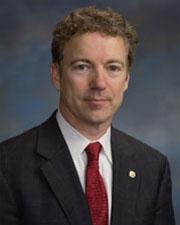 Sen. Rand Paul (R-KY)
Legislative Activity
Stay on top of the latest movement without scrolling through every action
Roll call votes on amendments in Senate: Motion to table amendment SA 18 agreed to in Senate by Yea-Nay Vote. 52 - 47. Record Vote Number: 22.
February 17, 2011
View full timeline
Roll call votes on amendments in Senate: Motion to table amendment SA 18 agreed to in Senate by Yea-Nay Vote. 52 - 47. Record Vote Number: 22.
February 17, 2011
Considered by Senate. (consideration: CR S809, S823-824)
February 17, 2011
Motion to table amendment SA 18 agreed to in Senate by Yea-Nay Vote. 52 - 47. Record Vote Number: 22.
February 17, 2011
Considered by Senate. (consideration: CR S768)
February 16, 2011
Considered by Senate. (consideration: CR S710)
February 15, 2011
Considered by Senate. (consideration: CR S653)
February 14, 2011
Senate amendment proposed (on the floor): Amendment SA 18 proposed by Senator Paul.
February 8, 2011
Amendment SA 18 proposed by Senator Paul. (consideration: CR S625-626; text: CR S626) To strike the provisions relating to clarifying a memorandum of understanding between the Federal Aviation Administration and the Occupational Safety and Health Administration.
February 8, 2011
Senate amendment submitted
February 1, 2011
Votes
1 roll call on this amendment
Text
Proposed
FAA AIR TRANSPORTATION MODERNIZATION AND SAFETY IMPROVEMENT ACT

The ACTING PRESIDENT pro tempore. Under the previous order, the
Senate will resume consideration of S. 223, which the clerk will report
by title.
The legislative clerk read as follows:

A bill (S. 223) to modernize the air traffic control
system, improve the safety, reliability, and availability of
transportation by air in the United States, provide for
modernization of the air traffic control system, reauthorize
the Federal Aviation Administration, and for other purposes.

Pending:

Wicker modified amendment No. 14, to exclude employees of
the Transportation Security Administration from the
collective bargaining rights of Federal employees and provide
employment rights and an employee engagement mechanism for
passenger and property screeners.
Blunt amendment No. 5, to require the Under Secretary of
Transportation for Security to approve applications from
airports to authorize passenger and property screening to be
carried out by a qualified private screening company.
Nelson (FL) amendment No. 34, to strike section 605.
Paul amendment No. 21, to reduce the total amount
authorized to be appropriated for the Federal Aviation
Administration for fiscal year 2011 to the total amount
authorized to be appropriated for the Administration for
fiscal year 2008.
Rockefeller (for Wyden) amendment No. 27, to increase the
number of test sites in the National Airspace System used for
unmanned aerial vehicles and to require one of those test
sites to include a significant portion of public lands.
Inhofe amendment No. 6, to provide liability protection to
volunteer pilot nonprofit organizations that fly for public
benefit and to the pilots and staff of such nonprofit
organizations.
Inhofe amendment No. 7, to require the Administrator of the
Federal Aviation Administration to initiate a new rulemaking
proceeding with respect to the flight time limitations and
rest requirements for supplemental operations before any of
such limitations or requirements be altered.
Rockefeller (for Ensign) amendment No. 32, to improve
provisions relating to certification and flight standards for
military remotely piloted aerial systems in the National
Airspace System.
McCain amendment No. 4, to repeal the essential air service
program.
Rockefeller (for Leahy) amendment No. 50, to amend title 1
of the Omnibus Crime Control and Safe Streets Act of 1968 to
include nonprofit and volunteer ground and air ambulance crew
members and first responders for certain benefits, and to
clarify the liability protection for volunteer pilots that
fly for public benefit.

The ACTING PRESIDENT pro tempore. The majority leader.

Amendments Nos. 54 and 55

Mr. REID. Madam President, I ask unanimous consent to set aside the
pending amendment so I can call up amendments Nos. 54 and 55.
The ACTING PRESIDENT pro tempore. Without objection, it is so
ordered.
The clerk will report the amendments en bloc.
The legislative clerk read as follows:

The Senator from Nevada [Mr. Reid] proposes en bloc
amendments numbered 54 and 55.

The amendments are as follows:

AMENDMENT NO. 54

(Purpose: To allow airports that receive airport improvement grants for
the purchase of land to lease the land and develop the land in a manner
compatible with noise buffering purposes)

On page 27, strike line 11 and all that follows through
``or transfer'' on line 23, and insert the following:
(2) in subsection (c)--
(A) in paragraph (2)--
(i) in subparagraph (A)(i), by striking ``purpose;'' and
inserting the following: ``purpose, which includes serving as
noise buffer land that may be--
``(I) undeveloped; or
``(II) developed in a way that is compatible with using the
land for noise buffering purposes;''; and
(ii) in subparagraph (B)(iii), by striking ``paid to the
Secretary for deposit in the Fund if another eligible project
does not exist.'' and inserting ``reinvested in another
project at the airport or transferred to another airport as
the Secretary prescribes.'';
(B) by redesignating paragraph (3) as paragraph (5); and
(C) by inserting after paragraph (2) the following:
``(3)(A) A lease by an airport owner or operator of land
acquired for a noise compatibility purpose using a grant
provided under this subchapter shall not be considered a
disposal for purposes of paragraph (2).
``(B) The airport owner or operator may use revenues from a
lease described in subparagraph (A) for ongoing airport
operational and capital purposes.
``(C) The Administrator of the Federal Aviation
Administration shall coordinate with each airport owner or
operator to ensure that leases described in subparagraph (A)
are consistent with noise buffering purposes.
``(D) The provisions of this paragraph apply to all land
acquired before, on, or after the date of the enactment of
this paragraph.
``(4) In approving the reinvestment or transfer

amendment no. 55

(Purpose: To require the Secretary of the Interior to convey certain
Federal land to the city of Mesquite, Nevada)

On page 311, between lines 11 and 12, insert the
following:

SEC. 7__. CONVEYANCE OF LAND TO CITY OF MESQUITE, NEVADA.

(a) Definitions.--
(1) City.--The term ``city'' means the city of Mesquite,
Nevada.
(2) Map.--The term ``map'' means the map entitled
``Mesquite Airport Conveyance'' and dated February 6, 2011.
(3) Secretary.--The term ``Secretary'' means the
Secretary of the Interior, acting through the Bureau of Land
Management.
(b) Conveyance of Land to City.--
(1) In general.--As soon as practicable after the date of
enactment of this Act, subject to valid existing rights, and
notwithstanding the land use planning requirements

[[Page S623]]

of sections 202 and 203 of the Federal Land Policy and
Management Act of 1976 (43 U.S.C. 1712, 1713), the Secretary
shall convey to the city, without consideration, all right,
title, and interest of the United States in and to the land
described in paragraph (2).
(2) Description of land.--The land referred to in
paragraph (1) consists of land managed by the Bureau of Land
Management described on the map as ``Remnant Parcel''.
(3) Map and legal description.--
(A) In general.--As soon as practicable after the date of
enactment of this Act, the Secretary shall finalize the legal
description of the parcel to be conveyed under this section.
(B) Minor errors.--The Secretary may correct any minor
error in--
(i) the map; or
(ii) the legal description.
(C) Availability.--The map and legal description shall be
on file and available for public inspection in the
appropriate offices of the Bureau of Land Management.
(4) Costs.--The Secretary shall require the city to pay
all costs necessary for the preparation and completion of any
patents for, and transfers of title to, the land described in
paragraph (2).
(5) Withdrawal.--Subject to valid existing rights, until
the date of the conveyance under paragraph (1), the parcel of
public land described in paragraph (2) is withdrawn from--
(A) location, entry, and patent under the public land
mining laws; and
(B) operation of the mineral leasing, geothermal leasing,
and mineral materials laws.
(6) Reversion.--If the land conveyed under paragraph (1)
ceases to be used by the city for the purposes described in
section 3(f) of Public Law 99-548 (100 Stat. 3061), the land
shall, at the discretion of the Secretary, revert to the
United States.

The ACTING PRESIDENT pro tempore. The Senator from New Mexico.

Amendment No. 49

Mr. UDALL of New Mexico. Madam President, I ask unanimous consent to
set aside the pending amendment so that I may call up my amendment No.
49, which is at the desk.
The ACTING PRESIDENT pro tempore. Without objection, it is so
ordered.
The clerk will report.
The legislative clerk read as follows:

The Senator from New Mexico [Mr. Udall] proposes an
amendment numbered 49.

Mr. UDALL of New Mexico. I ask unanimous consent that the reading of
the amendment be dispensed with.
The ACTING PRESIDENT pro tempore. Without objection, it is so
ordered.
The amendment is as follows:

(Purpose: To authorize Dona Ana County, New Mexico, to exchange certain
land conveyed to the County for airport purposes)

At the appropriate place insert the following:

SEC. ----. DONA ANA COUNTY AIRPORT.

(a) In General.--Notwithstanding section 23 of the Airport
and Airway Development Act of 1970 (as in effect on August 4,
1982), or sections 47125 and 27153 of title 49, United States
Code, the Secretary of Transportation may, subject to
subsection (b), grant releases from any of the terms,
conditions, reservations, and restrictions contained in the
deed of conveyance numbered 30-82-0048 and dated August 4,
1982, under which the United States conveyed certain land to
Dona Ana County, New Mexico, for airport purposes.
(b) Conditions.--Any release granted by the Secretary under
subsection (a) shall be subject to the following conditions:
(1) The County shall agree that in conveying any interest
in the land that the United States conveyed to the County by
the deed described in subsection (a), the County shall
receive an amount for the interest that is equal to the fair
market value.
(2) Any amount received by the County for the conveyance
shall be used by the County for the development, improvement,
operation, or maintenance of the airport.

Mr. UDALL of New Mexico. Madam President, this amendment is simple.
It provides for a no-cost, fair-value land exchange between Dona Ana
County in southern New Mexico and the adjacent property owners.
The Dona Ana County airport in Santa Teresa is a key component for
economic growth in the region.
Unfortunately, when the land patent was granted to the county in
1982, it was described in aliquot parts. This created several triangles
of land that have been difficult to improve because they meet at their
corners an do not share common boundaries.
The county has requested the land exchange so that they may create a
secondary access to the airport for general aviation. This new access
would separate general vehicle traffic from taxiing aircraft.
The land exchange will also provide an alternate entry to the
airport's fuel farm. And it will allow the county to expand airport
capabilities to meet the needs of this growing community.
This region of New Mexico is growing and the airport needs to be able
to expand to meet increased demand.
This land exchange will help achieve that goal and will improve the
economic opportunities in this region. I hope my colleagues will concur
that this amendment should be agreed to.

Amendment No. 51

Mr. UDALL of New Mexico. Madam President, I ask unanimous consent to
set aside the pending amendment so that I may call up amendment No. 51,
which is at the desk.
The ACTING PRESIDENT pro tempore. Without objection, it is so
ordered.
The clerk will report.
The legislative clerk read as follows:

The Senator from New Mexico [Mr. Udall] proposes an
amendment numbered 51.

Mr. UDALL of New Mexico. I ask unanimous consent that the reading of
the amendment be dispensed with.
The ACTING PRESIDENT pro tempore. Without objection, it is so
ordered.
The amendment is as follows:

(Purpose: To require that all advanced imaging technology used as a
primary screening method for passengers be equipped with automatic
target recognition software)

On page 311, between lines 11 and 12, insert the following:

SEC. 733. PRIVACY PROTECTIONS FOR AIRCRAFT PASSENGER
SCREENING WITH ADVANCED IMAGING TECHNOLOGY.

(a) In General.--Section 44901 is amended by adding at the
end the following:
``(l) Limitations on Use of Advanced Imaging Technology for
Screening Passengers.--
``(1) In general.--The Assistant Secretary of Homeland
Security (Transportation Security Administration) shall
ensure that advanced imaging technology is used for the
screening of passengers under this section only in accordance
with this subsection.
``(2) Implementation of automated target recognition
software.--Beginning January 1, 2012, all advanced imaging
technology used as a primary screening method for passengers
shall be equipped with automatic target recognition software.
``(3) Definitions.--In this subsection:
``(A) Advanced imaging technology.--The term `advanced
imaging technology'--
``(i) means a device that creates a visual image of an
individual's body and reveals other objects on the body as
applicable, including narcotics, explosives, and other
weapons components; and
``(ii) includes devices using backscatter x-rays or
millimeter waves and devices referred to as `whole-body
imaging technology' or `body scanning'.
``(B) Automatic target recognition software.--The term
`automatic target recognition software' means software
installed on an advanced imaging technology machine that
produces a generic image of the individual being screened
that is the same as the images produced for all other
screened individuals.
``(C) Primary screening.--The term `primary screening'
means the initial examination of any passenger at an airport
checkpoint, including using available screening technologies
to detect weapons, explosives, narcotics, or other
indications of unlawful action, in order to determine whether
to clear the passenger to board an aircraft or to further
examine the passenger.''.
(b) Report.--
(1) In general.--Not later than March 1, 2012, the
Assistant Secretary of Homeland Security (Transportation
Security Administration) shall submit to the appropriate
congressional committees a report on the implementation of
section 44901(l) of title 49, United States Code, as added by
subsection (a).
(2) Elements.--The report required by paragraph (1) shall
include the following:
(A) A description of all matters the Assistant Secretary
considers relevant to the implementation of such section.
(B) The status of the compliance of the Transportation
Security Administration with the provisions of such section.
(C) If the Administration is not in full compliance with
such provisions--
(i) the reasons for such non-compliance; and
(ii) a timeline depicting when the Assistant Secretary
expects the Administration to achieve full compliance.
(3) Security classification.--The report required by
paragraph (1) shall be submitted, to the greatest extent
practicable, in an unclassified format, with a classified
annex, if necessary.
(4) Appropriate congressional committees defined.--In this
subsection, the term ``appropriate congressional committees''
means--
(A) the Committee on Commerce, Science, and Transportation
and Committee on Homeland Security and Governmental Affairs
of the Senate; and
(B) the Committee on Homeland Security of the House of
Representatives.

Mr. UDALL of New Mexico. Madam President, this amendment would
significantly improve the privacy protections for passengers being
screened by TSA whole body scanners, also referred to as advanced,
imagining technology, or AIT.

[[Page S624]]

In 2010, the TSA greatly expanded the use of AIT machines at airport
checkpoints around the United States.
The image produced by an AIT machine is highly revealing and many
passengers are uncomfortable being screened by the technology.
Unfortunately, TSA's policy for passengers who refuse AIT screening is
to conduct a full pat-down, hardly an ideal alternative for someone
with privacy concerns.
There is a promising option to address the ongoing privacy concerns
with AIT. New software, called automatic target recognition, can be
installed on existing AIT machines to enhance privacy by eliminating
passenger-specific images and instead detecting potential threat items
and indicating their location on a generic outline of a person.
This month, TSA will begin testing the new software at Las Vegas
McCarran International Airport, Hartsfield Jackson Atlanta
International, and Ronald Reagan Washington National Airport.
Senate amendment No. 51 would require TSA to have automatic target
recognition software installed on all AIT machines by January 1, 2012.
This will provide ample time for TSA to thoroughly field test the
software and work with the manufacturers to make necessary adjustments.
However, by imposing a deadline, it will ensure that TSA and the
manufacturers make the implementation of the software a priority and
will eliminate the potential for unnecessary delay.
This is an issue that has received bi-partisan attention and I hope
that this amendment will receive strong support from both sides of the
aisle.
In closing, I would like to thank my chairman and ranking member for
their hard work on the underlying bill.
It is an honor to serve with them and I look forward to working
together on the many important issues before the committee.
Just to conclude, I thank our chairman of the Commerce Committee, Jay
Rockefeller. I think both Chairman Rockefeller and ranking member Kay
Bailey Hutchison have done an excellent job on this FAA authorization
bill. I do not have any doubt that they, working in the committee, have
pulled us all together. It is a remarkable bill because it is a job-
creating bill. It is a bill that we need right now with the economic
slowdown we have in America.
The other aspect of this bill that I think is very important is
updating the air traffic control system. That is something that is
terribly important. It is called NextGen. We are moving on to the next
generation of air traffic control. I think it is important to remind
people that we are behind the country of Mongolia when it comes to air
traffic control. So it is very important that we get this bill passed.
I agree with Leader Reid when he said we cannot be on this forever.
We need to move it along. I look forward to helping with that process.
I yield the floor.
The ACTING PRESIDENT pro tempore. The Senator from West Virginia.
Mr. ROCKEFELLER. Madam President, I want to reiterate something the
leader has said and what the Senator from New Mexico said; that is, the
vast importance of this bill. I have said many times on this floor
there are 11 million people who work for the aviation industry. That is
only the direct jobs. There are probably 2 or 3 million indirect jobs.
It is one of the major parts of our economy.
Here we stand, after 17 delays sort of kicking it down the road for 3
months, completely messing up FAA's ability to work with runways or
make improvements. We cannot fiddle around with runways. If something
goes wrong, they have to be fixed or people die. So the stakes are
enormous. This business of slots has become a decision people will have
to make. Do they want to see a bill which fails, which goes down, and
we go into our 18th or 19th, whatever it is--I have stopped counting--
or do they want to see something which is major to the American
economy, major in terms of NASA research, in terms of air traffic
control systems and which is major in terms of a passenger bill of
rights. We have a lot of people stuck. I drove back from Clarksburg,
WV, to Washington on Saturday. The reason I drove back is I was so sick
of that airline that comes out of Clarksburg getting canceled or having
mechanical problems, which means they probably didn't have enough
passengers because we are a small State. We often don't have enough
passengers to meet the bottom line. I drove back. It was 6\1/2\ hours.
That was fine. I am prepared to do that. I hate doing that because it
is a waste of my time. But the stakes are here.

This is huge, this bill. We have one good amendment, which we will do
this morning when Senator Nelson of Florida comes down, and then I
think we have to proceed. I appreciate the majority leader being quite
tough about all this and saying he is going to lay down cloture. He
doesn't want to fool around with this bill. There is only one part of
this bill which is in any way contentious. That is slots. That has much
more to do with campaign commitments than with the good of the Nation.
Nobody gets everything they want. In West Virginia we get almost
nothing. I don't complain. I understand we are at the end of the food
chain because we are a little State. Whenever there is a recession or
airlines aren't doing very well financially because of fuel prices, we
get cut off. My view about that is sort of more bitter but more maybe
widespread and trying to look at the public good in general. As the
tide rises, all the boats rise.
I strongly plead with Senators to consider the broader national
interest and air traffic control system, which is digitalized GPS and
which is three or four times more safe. I know whenever there is a near
miss in the airways, when somebody has not calculated the distance
correctly, either the pilot or the air traffic controller, I know about
those things. They happen very frequently. There were several in the
papers last week. We are playing with life and death. We are playing
with the major exporter, by far the major exporter the United States
has to other countries in terms of products and goods. Yet people sort
of want to have just what they want to have because that is what they
said last year, and they can't back off because, if they did, they
would look weak or they are trying to protect a certain airline.
This, to me, is not about airlines. It is about passengers. The heck
with airlines. We need to have more passengers going west because the
West is growing faster than the East. They are underserved. There is
one flight a day from DC to Los Angeles. That doesn't make any sense.
All these things can be cured if people will be reasonable and not try
to win out over some other group, some other constituency. My
constituency is the national interest in this bill.
I don't mean to sound prudish, but I so say and believe very deeply.
If it is all right with the Presiding Officer, I will yield the floor
to Senator Ben Nelson. He will make his amendment pending and then
debate on the Nelson of Florida amendment will start at about 10:20.

Amendment No. 58

The ACTING PRESIDENT pro tempore. The Senator from Nebraska.
Mr. NELSON of Nebraska. I call up the amendment at the desk.
The ACTING PRESIDENT pro tempore. Without objection, it is so
ordered.
The clerk will report.
The legislative clerk read as follows:

The Senator from Nebraska [Mr. Nelson], for himself, Mr.
Schumer, Mr. Akaka, Mrs. Shaheen, Mr. Tester, Mr. Whitehouse,
and Mr. Menendez, proposes an amendment numbered 58.

Mr. NELSON of Nebraska. I ask unanimous consent that reading of the
amendment be dispensed with.
The ACTING PRESIDENT pro tempore. Without objection, it is so
ordered.
The amendment is as follows:

(Purpose: To impose a criminal penalty for unauthorized recording or
distribution of images produced using advanced imaging technology
during screenings of individuals at airports and upon entry to Federal
buildings)

At the end of title VII, add the following:

SEC. 733. CRIMINAL PENALTY FOR UNAUTHORIZED RECORDING OR
DISTRIBUTION OF SECURITY SCREENING IMAGES.

(a) In General.--Part I of title 18, United States Code, is
amended by adding at the end the following:

``CHAPTER 124--UNAUTHORIZED RECORDING AND DISTRIBUTION OF SECURITY
SCREENING IMAGES

``Sec.

[[Page S625]]

``2731. Criminal penalty for unauthorized recording and distribution of
security screening images.

``SEC. 2731. CRIMINAL PENALTY FOR UNAUTHORIZED RECORDING AND
DISTRIBUTION OF SECURITY SCREENING IMAGES.

``(a) In General.--Except as specifically provided in
subsection (b), it shall be unlawful for an individual--
``(1) to photograph or otherwise record an image produced
using advanced imaging technology during the screening of an
individual at an airport, or upon entry into any building
owned or operated by the Federal Government, without express
authorization pursuant to a Federal law or regulation; or
``(2) to knowingly distribute any such image to any
individual who is not authorized pursuant to a Federal law or
regulation to receive the image.
``(b) Exceptions.--The prohibition under subsection (a)
shall not apply to an individual who, during the course and
within the scope of the individual's employment, records or
distributes an image described in subsection (a) solely to be
used in a criminal investigation or prosecution or in an
investigation relating to foreign intelligence or a threat to
the national security.
``(c) Penalty.--An individual who violates the prohibition
in subsection (a) shall be fined under this title, imprisoned
for not more than 1 year, or both.
``(d) Definitions.--In this section:
``(1) Advanced imaging technology.--The term `advanced
imaging technology'--
``(A) means a device that creates a visual image of an
individual showing the surface of the skin and revealing
other objects on the body; and
``(B) may include devices using backscatter x-rays or
millimeter waves and devices referred to as `whole-body
imaging technology' or `body scanning'.
``(2) Foreign intelligence; threat to the national
security.--The terms `foreign intelligence' and `threat to
the national security' have the meanings given those term in
part VII of the guidelines entitled `The Attorney General's
Guidelines for Domestic FBI Operations', dated September 29,
2008, or any successor thereto.''.
(b) Technical and Conforming Amendment.--The table of
chapters for part I of title 18, United States Code, is
amended by inserting after the item relating to chapter 123
the following:

``124. Unauthorized recording and distribution of security screening
images..................................................2731''.....

Mr. NELSON of Nebraska. Madam President, the amendment Senators
Schumer, Akaka, Shaheen, Tester, Whitehouse, Menendez, and I have
offered is a commonsense approach to address the serious issue of
protecting individuals' privacy when they pass through security
checkpoints at both airports and public buildings. Senator Schumer and
I have been working on this issue for some time, and I appreciate very
much his input and counsel in taking this approach. I appreciate the
support of the additional sponsors as well as the Presiding Officer,
who is one of those sponsors.
By creating a deterrent and establishing criminal penalties for those
who take and distribute body scan images inappropriately, we will help
protect the American people's privacy while making sure we are using
every resource available to try and assure their safety at the same
time.
This is not an abstract concern. There has already been a case where
these images, some 30,000, have been taken and posted, some of them,
online inappropriately. It is our hope this amendment will help prevent
that from occurring again.
By including this amendment in the FAA reauthorization, we are
telling our constituents we will not ignore their privacy in the
process of making sure we have safe airports and Federal buildings.
That is what they are asking of us. That is what we are going to
deliver. I ask my colleagues to support our amendment when it comes up
for a rollcall vote.
I yield the floor.

Amendment No. 34

The ACTING PRESIDENT pro tempore. Under the previous order, there
will now be 10 minutes of debate, equally divided, between the Senator
from Florida and the Senator from Texas or their designees.
Who yields time?
The Senator from Texas.
Mrs. HUTCHISON. Madam President, while Senators are getting ready to
speak, we have made good progress on the bill. Amendments are now
coming in. Cloture is going to be filed Monday, so we need to have all
the relevant amendments in by then.
I support the Nelson of Florida amendment on which we will vote at
10:30. We agreed last year, in a preconference meeting, that the
amendment he has to drop language from the bill would be dropped. I
support the amendment. The NASA Reauthorization Act has intervened, and
that is the law of the land. It was passed unanimously by the Senate. I
believe the Nelson of Florida amendment is a good one.
I yield the floor.
Mr. ROCKEFELLER. Madam President, I yield time to the distinguished
Senator from Ohio.
The ACTING PRESIDENT pro tempore. The Senator from Ohio.
Mr. BROWN of Ohio. Madam President, I rise in support of the Nelson
amendment. The amendment would strike section 605, as Senator Hutchison
said, from the FAA bill. Section 605 would establish an advisory
committee on the future of aeronautics to, among other things, consider
transferring responsibility for civil aeronautics research and
development from NASA to other existing departments. The sole purpose
is to take away aeronautics from NASA. That is unacceptable. It belies
the very purpose of NASA in our space and aeronautics mission. NASA
stands for the National Aeronautics and Space Administration. His
amendment ensures that NASA stays that way. This is a question of
maintaining our space, aeronautics, and economic competitiveness.
Remember, one of our Nation's top manufacturing exports--and we don't
export nearly enough manufactured goods--is aerospace, which includes
civilian aircraft components. Ohio is the center for the aerospace
industry. We make billions of dollars in components both for Boeing and
Airbus and many other manufacturers. Section 605 would jeopardize
America's dominance in aerospace and would shift the programs that have
strengthened our Nation's global leadership away from the experience
and expertise at NASA. A consortium of nonprofits and colleges and
private corporations and other government agencies can be effective and
have been effective to promote public-private partnerships and economic
development. But none of these entities, either by themselves or even
working together, will ever be able to conduct aerospace and
aeronautics research and development better than NASA. Its fundamental
aeronautics research capability is already fully integrated. It ensures
the future success of NASA space missions.
Furthermore, section 605 is in direct contradiction to the NASA
Authorization Act of 2010, which reaffirmed that aeronautics research
remains vital to NASA's mission and deserves continued support. Simply
put, section 605 jeopardizes not only the future of NASA but America's
dominance in the global aerospace marketplace.
NASA centers across the country are unique in their ability to
leverage space and aviation systems through their experienced technical
researchers. These NASA centers in Cleveland and nine other places
around the country are stewards and operators of the Nation's civil
aeronautics R&D test infrastructure.
I applaud Senator Nelson of Florida for offering this amendment and
his leadership on the Science and Space Committee.
I ask my colleagues to join Senator Hutchison and me in supporting
the amendment.
I yield the floor.
The ACTING PRESIDENT pro tempore. The Senator from Texas.
Mrs. HUTCHISON. Madam President, I yield to Senator Paul to allow him
to offer an amendment into the pending amendments so we will have that
done before cloture is filed.
The ACTING PRESIDENT pro tempore. The Senator from Kentucky.

Amendment No. 18

Mr. PAUL. I ask unanimous consent to set aside the pending amendment
and call up amendment 18.
The ACTING PRESIDENT pro tempore. Without objection, it is so
ordered.
The clerk will report.
The legislative clerk read as follows:

The Senator from Kentucky [Mr. Paul] proposes an amendment
numbered 18.

Mr. PAUL. I ask unanimous consent that reading of the amendment be
dispensed with.
The ACTING PRESIDENT pro tempore. Without objection, it is so
ordered.
The amendment is as follows:

[[Page S626]]

(Purpose: To strike the provisions relating to clarifying a memorandum
of understanding between the Federal Aviation Administration and the
Occupational Safety and Health Administration)

Strike section 509.

Mr. PAUL. Madam President, the amendment I am offering is to continue
to have the airlines exempt from OSHA. This isn't because I am not
concerned with safety. It is that we have been doing it this way for 30
or 40 years. The FAA voluntarily adheres to OSHA standards in their own
manual. I take the President and the opposing party at their word that
they are concerned with adding frivolous paperwork and frivolous
regulations when, in reality, we are not doing anything to add to
safety since the FAA is already adhering to these standards through
their own manual. I also suspect that the FAA may be a little bit
better in learning to have their own safety manuals and regulations
than would OSHA since they specifically have been involved in this.
We would like to ask Members to vote against allowing OSHA to become
involved in the FAA.
I yield the floor.

Amendment No. 34

The ACTING PRESIDENT pro tempore. The Senator from Florida.
Mr. NELSON of Florida. Madam President, do I need to set aside the
pending amendment to call up amendment 34?
The ACTING PRESIDENT pro tempore. The amendment is now pending, under
the previous order.
Mr. NELSON of Florida. Madam President, others have already spoken on
this amendment. It is to take out unnecessary language in the bill that
has been superseded by the NASA authorization bill we have passed. The
letters in NASA, the first A is aeronautics, the National Aeronautics
and Space Administration. Aeronautics research is a big part of the
NASA bill. We have plussed up a lot of money for aeronautics research.
There is superfluous language in the bill about a study. Other studies
have already been done. We want to get rid of that redtape.
I ask for the yeas and nays.
The ACTING PRESIDENT pro tempore. Is there a sufficient second?
There is a sufficient second.
The yeas and nays were ordered.
Mr. ROCKEFELLER. Madam President, we yield back any remaining time on
our side.
Mrs. HUTCHISON. Madam President, we yield back.
The ACTING PRESIDENT pro tempore. The question is on agreeing to the
Nelson amendment No. 34.
The yeas and nays have been ordered.
The clerk will call the roll.
The legislative clerk called the roll.
Mr. DURBIN. I announce that the Senator from Wisconsin (Mr. Kohl),
the Senator from Connecticut (Mr. Lieberman), and the Senator from New
Jersey (Mr. Menendez) are necessarily absent.
The PRESIDING OFFICER (Mr. Rockefeller). Are there any other Senators
in the Chamber desiring to vote?
The result was announced--yeas 96, nays 1, as follows:

[Rollcall Vote No. 14 Leg.]

YEAS--96

Akaka
Alexander
Ayotte
Barrasso
Baucus
Begich
Bennet
Bingaman
Blumenthal
Blunt
Boozman
Boxer
Brown (MA)
Brown (OH)
Burr
Cantwell
Cardin
Carper
Casey
Chambliss
Coats
Cochran
Collins
Conrad
Coons
Corker
Cornyn
Crapo
DeMint
Durbin
Ensign
Enzi
Feinstein
Franken
Gillibrand
Graham
Grassley
Hagan
Harkin
Hatch
Hoeven
Hutchison
Inhofe
Inouye
Isakson
Johanns
Johnson (SD)
Johnson (WI)
Kerry
Kirk
Klobuchar
Kyl
Landrieu
Lautenberg
Leahy
Lee
Levin
Lugar
Manchin
McCain
McCaskill
McConnell
Merkley
Mikulski
Moran
Murkowski
Murray
Nelson (NE)
Nelson (FL)
Paul
Portman
Pryor
Reed
Reid
Risch
Roberts
Rockefeller
Rubio
Sanders
Schumer
Sessions
Shaheen
Shelby
Snowe
Stabenow
Tester
Thune
Toomey
Udall (CO)
Udall (NM)
Vitter
Warner
Webb
Whitehouse
Wicker
Wyden

NAYS--1

Coburn

NOT VOTING--3

Kohl
Lieberman
Menendez
The amendment (No. 34) was agreed to.
The PRESIDING OFFICER. The motion to reconsider is laid upon the
table.
The Senator from Kansas is recognized.
Mr. ROBERTS. Mr. President, I ask unanimous consent that I may
proceed for 10 minutes as in morning business.
The PRESIDING OFFICER. Without objection, it is so ordered.

Honoring the 1st Infantry Division at Fort Riley

Mr. ROBERTS. Mr. President, I rise today to honor the hard work and
dedication of our men and women in the U.S. Army and all branches of
service.
Just a couple of weeks ago, I had the pleasure of attending the
uncasing ceremony at Fort Riley, KS. It was an honor. For those who
have not attended an uncasing ceremony, it symbolizes a homecoming, and
certainly that was the case at Fort Riley. It signifies the presence of
the command and resumption of that command's authority. It offers a
time to reflect on the heroic efforts and the leadership of the men and
women of the Big First.
Since returning to Kansas in 2006, the 1st Infantry Division's
headquarters deployed to Iraq. But this was not the first time the
division has uncased its colors at Fort Riley. In fact, it was the
fifth time in 55 years.
During their time in Basra, Iraq, the men and women of the Big Red
One assisted in completing many vital projects.
Approximately 850 soldiers deployed from Fort Riley in February of
last year. The division's efforts were supported by other services and
also government agencies. The mission was more offensive than
defensive--a change for the men and women of the Big Red One.
To quote Fort Riley's outstanding commanding general, MG Vincent
Brooks:

The Big Red One as U.S. Division-South was a trusted
partner to the Iraqi Security Forces, to 9 U.S. Provincial
reconstruction teams led by the U.S. Department of State,
with participants from other agencies of the U.S. Government,
and to other U.S. forces in Iraq, the Big Red One ensured
that the hard-earned stability emerging in Iraq would never
drift away. Their success was our success.

The accomplishments of the Big Red One are numerous and merit the
attention of my colleagues.
The division assisted Iraqis in completing the Basra Children's
Hospital, a cancer center noted as one of the most modern facilities in
the Middle East.
I was fortunate to spend time at the ceremony with about 30 soldiers
in the unit. One noncommissioned officer in particular stood out. I
asked all of them how many deployments they had made to Iraq or, for
that matter, Afghanistan, and the answers were two or three or four.
But this one noncommissioned officer had five deployments. I asked him
what on Earth was wrong with the deployment situation in his case. He
said: Oh, no, I wanted to come back to my unit, to the Big Red One; I
wanted to come back to Iraq and continue the work I thought was so
important. I asked him what the difference was, and he said: Well, when
I was here first in Iraq, we lost nine in our unit; nine paid the
ultimate sacrifice. But in this deployment, no shots were fired.
If there ever was testimony from somebody on the front line, and
obviously the NCOs run the Army, with due respect to the officers, but
he summed it up pretty well: first deployment, nine fatalities; last
deployment, no shots fired.
I am truly grateful that all of the soldiers deployed from the Big
Red One's division headquarters returned safe this time around.
By the way, General Vincent Brooks, remember that name as I am sure
you will hear it again, will soon be receiving his third star and will
be reassigned to the Central Command. Anyone who knows General Brooks
and his wife, Dr. Carole Brooks, is not surprised. This promotion in
the new command comes as no surprise to anyone in the area, especially
the people who served under General Brooks and have had the privilege
of knowing him. Simply put, he is an inspirational leader with an
outstanding record.
From the Kansas congressional delegation, General, well done, sir.
You will be missed, but our pride in your success, your future success,
and the job you have done and the job you will do make us all proud. It
is a pride we all share.

[[Page S627]]

I ask unanimous consent to have General Brooks's comments printed in
the Record.
There being no objection, the material was ordered to be printed in
the Record, as follows:

1ID Colors Uncasing

(By MG Brooks, 20 Jan. 10)

Good morning ladies and gentlemen. I want to first thank
the division band, the CG's Mounted Color Guard, Salute
Battery outside in the cold air--you both look and sound
great. You look and sound great and you make it possible for
us to be back.
We are joined today by many distinguished guests. Let me
first begin by saying thanks to Governor Sam Brownback,
Senator Pat Roberts--it seems we cannot have an important
ceremony without a major snowstorm--we certainly appreciate
you honoring us by taking the journey here to come here under
the conditions to be with us today. We're just honored by
your presence. Our civilian aide to the Secretary of the
Army. Other distinguished local, state and national elected
officials or their representatives, all of whom serve as
champions for the interests of Fort Riley in their official
capacities. Our friends from Kansas State University also who
had the opportunity to witness first-hand the great work our
soldiers in Iraq and the real opportunity that exists in
Iraq--we thank them for being bold enough to make the
journey. As I turn and look at this crowd I see many faces of
friends. Faces we have come to know not only as neighbors and
colleagues, but as dear friends.
Thank you all for joining us today as the division
headquarters symbolically and ceremonially returns from
accomplishing our mission and as we bring to a close another
chapter in the history of this great division.
This is a fitting occasion--because uncasing the 1st
Infantry Division Colors at Fort Riley, after accomplishing a
mission overseas has become a well-established practice. For
today marks the 5th time in the last 55 years that these
Colors--the Colors of America's 1st Division in name and in
fact, have been removed from their traveling case and opened
at Fort Riley.
Just as in 1955, 1970, 1991, and 2006, today in 2011 we
again uncase and unfurl these gallant Colors with new history
having been added to the Colors since they were last seen
here. Truly, Fort Riley is the home of the Big Red One and
now that we are back, again, we are truly at home in the
heartland. And it's good to be back home.
I hope you will indulge me for a few moments to tell you a
few highlights of the many accomplishments and achievements
that happened through our time of deployment and to thank
some people along the way. This is going to be a bit longer
than my usual speeches, certainly much longer than the one I
gave on the 3rd of January upon our return. I will do my best
to highlight some remarkable things that happened in our
campaign here as well as our campaign there, overseas. Plus,
it's been a while since most of you haven't had a speech from
me in a year. So I have to make up for some lost time. So
bare with me.
Let me begin by saying that the accomplishments on the
homefront here at Fort Riley were at least as impressive as
those that occurred in southern Iraq. I want to say that
something so that everybody is absolutely certain of that
great team that you have here.
You may recall that in this field house over a year ago the
division headquarters and the Victory 5 marched off to do our
duty first, leaving a rear command supported by a mostly
civilian mission support element and a mostly civilian U.S.
Army garrison command.
Brigadier General David ``Pete'' Petersen and Command
Sergeant Major Darrell ``Buddy'' Wallace took the lead for
Fort Riley, standing forth bravely in what is still, in many
ways, a journey in uncharted waters. You represented the
command exceedingly well and I am very proud of both of you
for all you did to shoulder a very, very heavy load with
really hard work to do. Thanks to your ladies, Karen and
``Lefty'' also for your grace and patience and support of
these two warriors. General Pete, congratulations on your
upcoming promotion to Major general and recognition. And
Command Sergeant Major Buddy Wallace, congratulations on the
culminating role of a great career as you transition into the
``U.S. Army--Retired'' ranks.

[Applaud]

Believe me, the rear command would not have succeeded in
the extraordinarily tough work that had to be done if there
had not been a group of professionals, Army civilians, called
the mission support element and led by Mr. Ollie Hunter. They
were the surrogate staff--referred to as the ``M staff''
seated on the right behind BG Petersen and CSM Wallace, and
they were magnificent.
The primary task of generating forces for deployment abroad
fell to you--bringing together the modernization of equipment
with the arrival of personnel to the individual and
collective training that leads to forces ready to be
deployed--from four different bases in four different
states--in a year when every brigade under the division's
responsibility deployed or redeployed, in part or in-toto, in
some cases with a short-notice changes of theater and in some
cases with a significantly shortened period of training--no
matter the circumstances, no matter the curve ball pitched at
you--you knocked it out of the park.
Nothing was normal about what you were asked to do, nothing
was routine, there was no handbook and no standing operating
procedure. Yet, you accomplished the mission in true Big Red
One style, demonstrating what it means to say no mission too
difficult, no sacrifice too great, duty first. Well done.
Ladies and gentlemen, please join me in a round of applause.

[Applaud]

Then, there is the U.S. Army garrison command under the
visionary and persistent leadership of Colonel Kevin Brown,
Ms. Linda Hoeffner, Command Sergeant Major Ian Mann, and
Colonel John Dvoracek all guiding the finest group of
professional civilian directors in the entire Army.
What you have accomplished here in one year is absolutely
amazing--and believe me that is understating the reality.
You moved the Fort Riley Campaign plan 2015, initiated last
January, into a solid set of accomplishments. The opening of
the Army's first warrior transition battalion complex; the
expanded community covenants connecting Fort Riley even more
to the 22 communities around Fort Riley; the start of the
ongoing construction of the Army's newest community hospital;
trail blazing resilience initiatives not only for soldiers
but for military family members as well--programs that have
been recognized as best practices throughout the Army;
attracting national level leaders to come to Fort Riley to
see the premier division level installation, in the making,
and to gain their support for initiatives like military
family housing and school expansion; the forward momentum of
the Flint Hills Regional Council; and the generation of . . .
conservatively . . . over $2.2 billion of revenue for the
state of Kansas.
These accomplishments, ladies and gentlemen, are figurative
ice chips from an iceberg of excellence. I am immensely proud
of the Garrison Command, and ladies and gentlemen please join
me in applauding their efforts.

[Applaud]

I want to take this opportunity also to say thanks to our
community leaders, our neighbors, our friends, for your
patience through the challenges of the last year, and for
your steadfast support not only of the leadership here at
Fort Riley but all the efforts I have already highlighted,
and also of our deployed soldiers and of our families who
stayed behind in the Flint Hills while we were gone.
Believe me when I say we truly could not have done what we
did without you. You are our reason for doing what we do and
we are forever indebted to you and we are joyous to be back
with you again.
Finally, I want to thank the families of the warriors who
were (and I should add: still are) deployed. You carry a
burden that cannot be described adequately, compared
accurately, or appreciated fully. You are our hope and our
inspiration. You are the focus of what we look forward to
while we are gone. You are the finest examples of grace and
strength. Thank you for who you are and for all you give. It
is so good to be back in your embrace.
Ladies and gentlemen, bear with me for just a few more
moments while I highlight what was accomplished by the
soldiers who stand before you and all who served under the
colors of the 1st Infantry Division in its role as United
States Division--South, responsible for all U.S. operations
in the southern half of the country of Iraq, 9 of the 18
provinces--and an area positioned between Iran to the east,
Kuwait to the south and Saudi Arabia to the west. An area
where ancient human history meets the future of the middle
east.
Roughly 850 soldiers deployed from Fort Riley to fulfill
this headquarters mission which we officially began on the
2nd of February 2010 from our headquarters in Basra, the
second largest city in Iraq.
We commanded units from every part of our Army, and were
augmented by Navy, Air Force, Marine and Coast Guard and
other government agency teammates joined together as a pick-
up team that resembled an all-star team.
The deployment was fast-paced, high-stakes, more
psychological than physical, more offensive than defensive,
more indirect than direct.
An abbreviated way to describe our greatest accomplishment
is to say--the Big Red 1 as U.S. Division--South was a
trusted partner to the Iraqi security forces, to 9 U.S.
provincial reconstruction teams led by the U.S. Department of
State with participants from other agencies of the U.S.
Government, and to the other U.S. Forces out there in Iraq,
ensuring that the hard-earned stability emerging in Iraq
would never drift away. Their success was our success.
All we had to do was help Iraq become the sovereign,
stable, and self-reliant strategic partner the U.S. has been
looking for in the Middle East--all in the face of internal
political intrigue and violence, and the ever-present
legitimate and illegitimate influences of neighboring
countries, especially Iran.
Our soldiers faced violence, uncertainty, and danger
courageously while also seizing every emerging every
opportunity to meet the challenges in new and creative ways
that led to remarkable successes and an acceleration of the
stability in southern Iraq well ahead of the rest of the
country.
16 Soldiers lost their lives while serving under the Colors
of the Big Red One, brigades and battalions assigned to us.
They

[[Page S628]]

will forever be a part of our history, they will always be in
our prayers and our thoughts go out to their families. Yet,
thanks be to God, every one of the 850 soldiers who deployed
from Fort Riley as part of the division headquarters returned
safely, despite repeated rocket attacks on our bases,
ambushes against our vehicles, hundreds of hours in aerial
flight, and the harsh conditions of extreme heat, Biblical
dust storms, and unforgiving military equipment.
These are the soldiers who developed the intelligence to
defeat the enemy networks so that they found no sanctuary.
These are the soldiers who planned the operations to
provide the surveillance that supported the Iraqis who then,
on their own, arrested the violent extremists and who taught
the Iraqi investigators and the judges how to gather evidence
that led to convictions under the rule of law.
These are the soldiers who established the satellite
communications to reach everywhere even places where no other
Army unit has been able to extend communications.
These are the soldiers who determined which Iraqis we
should develop relationships with to gain influence, who
committed money like a weapons system to change the
environment around us, who determined which projects should
receive our attention and fought for successful completion
and closure of 628 separate projects.
And these are the soldiers who planned and executed the
drawdown ending operation Iraqi Freedom, beginning operation
New Dawn, including the movement of 1,200 trucks, 14,000
separate pieces of equipment, $286 million dollars worth of
U.S. property, responsibly moved out of the country of Iraq
and the closure of 30 of 58 military bases in southern Iraq
in only 6 months, including the conversion of a former prison
complex into a logistics city for commercial enterprises to
establish themselves.
These are the soldiers who created through their own
initiative a program and center for building resilience even
while deployed.
What a legacy to have been left by 800 Americans.
Ladies and gentlemen, these soldiers have truly added to
the illustrious history of the Big Red 1 and have earned
these decorations Command Sergeant Major Champagne and I
affixed to the Colors and I would ask you please join me in a
round of applause for these warriors.
Iraq is on the pathway to becoming sovereign, stable and
self-reliant and we helped them have a chance. Now we are
home and our attention is turned to rejoining our friends and
loved ones--on building our resilience--and finally on our
Fort Riley 2015 Campaign Plan which continues to move
forward. We will address all of these with the same vigor,
reunited and energized by the growth we have all experienced
over the last 12 months. Exciting times await us. Forward the
Big Red One.
Thank you again for joining us today. May God continue to
bless you all and may his protection be with those who remain
deployed and upon their families.
Duty First.

Mr. ROBERTS. Mr. President, I suggest the absence of a quorum.
The PRESIDING OFFICER. The clerk will call the roll.
The assistant legislative clerk proceeded to call the roll.
Mr. SESSIONS. Mr. President, I ask unanimous consent that the order
for the quorum call be rescinded.
The PRESIDING OFFICER. Without objection, it is so ordered.

President's Talk With Chamber of Commerce

Mr. SESSIONS. Mr. President, President Obama talked with the chamber
of commerce yesterday. I think that was a good step, but talk and
rhetoric are not policy and not action. It is reported that he received
applause from two different lines, and he got that in a 35-minute
address, which is a bit unusual.
It does appear the President understands he has a serious problem
with the job-creating community and is willing to at least meet with
people. But the problem really is policy and action. I am disappointed
he has not gone further to deal, in a realistic way, with the job
problems this Nation has.
He talked about lowering corporate taxes but not reducing the burden
of government borne by these companies. In other words, he talked about
lowering the rate through eliminating loopholes, and some of the
loopholes, I am sure, are not justified. Some of them may be very
effective in helping us to be competitive and create growth, not just
eliminating those and making it appear that the corporate tax burden
has been reduced.
I talked to the chamber of commerce and businesspeople, and they tell
me we are in a competitive world environment, and businesses decide
where to make products and hire workers based on the cost of doing
business in that area. A CEO in North America, for an international
company in my home State, told me: We thought we were going to add 200
jobs--at an Alabama plant that he oversees to make a chemical product.
But his headquarter company in Europe said: No, after considering
taxes, we are not going to build that plant in Alabama. It is going to
be in a foreign country. In other words, they had won the competition
on costs. Another country with lower tax rates on a corporation had won
the bid. The idea that you can have a high tax rate is not good.
We have the highest tax rate in the developed world--as soon as Japan
brings theirs down, which they are planning to do, then we will be the
highest corporate tax country in the world. This makes us less
competitive, and it creates fewer jobs. Simply to eliminate loopholes
and bring it down from 35 to the high twenties, as apparently is being
discussed, does not reduce the burden of taxes on corporations. Many of
our corporations are going to have a significant increase in their tax
rates, and they will be less able to hire workers. This is a major
issue that I think we have to confront. It is a competitiveness issue.
The President continued to talk, as he did in the State of the Union,
about more investment spending. We don't have the money to do more
spending. I am disappointed that he has not begun to realize that the
day is over that we can just waltz in with a lot of good ideas for new
spending programs. He continued to talk about spending and the role of
democracy in this region and key industries at a time when we need to
streamline regulations that are killing jobs in America. He did not
call for a vigorous and realistic plan to reduce spending.
I appreciate the opportunity to speak. I appreciate the President
beginning to enter into a dialog with the folks who create jobs. I am
not suggesting that we need to reduce corporate rates to be nice to
corporations. I do not have any grief to bear to try to make it somehow
easier for corporate executives to make big amounts of money.
What I do understand is if we overtax American corporations, they
will move other places. Canada is looking to reduce its corporate tax
rate to 16 percent. If we are at 35 percent and Canada goes to 16, will
that not be a factor in us losing jobs in competition with Canada? We
have to defend our interests.
I see the distinguished majority leader. I know he is busy.
I yield the floor.
The PRESIDING OFFICER. The majority leader.

____________________