To limit the application of the Davis-Bacon Act in the case of projects funded under this Act.
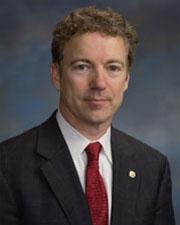 Sen. Rand Paul (R-KY)
Legislative Activity
Stay on top of the latest movement without scrolling through every action
Roll call votes on amendments in Senate: Motion to table amendment SA 19 agreed to in Senate by Yea-Nay Vote. 55 - 42. Record Vote Number: 11.
February 3, 2011
View full timeline
Roll call votes on amendments in Senate: Motion to table amendment SA 19 agreed to in Senate by Yea-Nay Vote. 55 - 42. Record Vote Number: 11.
February 3, 2011
Senate amendment proposed (on the floor): Amendment SA 19 proposed by Senator Paul.
February 3, 2011
Amendment SA 19 proposed by Senator Paul. (consideration: CR S533-535; text: CR S533) To limit the application of the Davis-Bacon Act in the case of projects funded under this Act.
February 3, 2011
Motion to table amendment SA 19 made in Senate.
February 3, 2011
Motion to table amendment SA 19 agreed to in Senate by Yea-Nay Vote. 55 - 42. Record Vote Number: 11.
February 3, 2011
Senate amendment submitted
February 1, 2011
Votes
1 roll call on this amendment
Text
Proposed
FAA AIR TRANSPORTATION MODERNIZATION AND SAFETY IMPROVEMENT ACT--
Continued

The PRESIDING OFFICER. S. 223 is the pending measure.
Mr. ROCKEFELLER. I thank the Chair.
The PRESIDING OFFICER. The Senator from Kentucky.

Amendment No. 21

Mr. PAUL. Madam President, I ask unanimous consent to set aside the
pending amendments and call up amendment No. 21.
The PRESIDING OFFICER. Is there objection? Without objection, it is
so ordered.
The clerk will report the amendment.
The assistant bill clerk read as follows:

The Senator from Kentucky [Mr. Paul] proposes an amendment
numbered 21.

Mr. PAUL. I ask unanimous consent the reading of the amendment be
dispensed with.
The PRESIDING OFFICER. Without objection, it is so ordered.
The amendment is as follows:

(Purpose: To reduce the total amount authorized to be appropriated for
the Federal Aviation Administration for fiscal year 2011 to the total
amount authorized to be appropriated for the Administration for fiscal
year 2008)

At the end of title I, add the following:

SEC. 108. AUTHORIZATION OF APPROPRIATIONS FOR FEDERAL
AVIATION ADMINISTRATION AT FISCAL YEAR 2008
LEVELS.

Notwithstanding any other provision of, or amendment made
by, this title, the total amount authorized to be
appropriated by this title to the Federal Aviation
Administration for fiscal year 2011 is $14,719,000,000.

Mr. PAUL. Madam President, the amendment I have presented to the
floor for the FAA bill is an amendment that I think is a first step
toward looking at budgetary restraint. The President, in his State of
the Union Address, talked about freezing spending at 2010 levels. If we
were to do that at the inflated levels of 2010, we would add $3.8
trillion to the debt over the next 5 years. It does nothing to the
looming debt crisis to leave things at 2010 levels because these were
levels where we had already increased spending by over 20 percent.
What I am asking is a very modest proposal; that is, that all
spending go back to the 2008 levels. This is not a significant cut. We
have increased things dramatically in recent years. FAA has been
increased in funding by 50 percent over the last 8 years. We can fund
the upgrading of NextGen and various things by looking for cost savings
within the bill. These are things we must do.
The American people are demanding cost savings. The American people
do not understand why we must pay inflated rates for our wages for the
workers on Federal projects. They do not understand why Davis-Bacon
wages, which were often 30 percent higher than the wages paid on other
projects, private projects, must be paid. People are familiar with this
even in their home States when you talk about the building of schools,
how schools cost 20 and 30 percent more because of having to have
inflated wages and extra regulations, extra paperwork that the Davis-
Bacon laws require.
What we are looking for is cost savings everywhere--in this bill, in
every bill that comes forward. As long as I am able to and as long as I
am allowed, we will ask for spending reductions.
Many people in this city are for a balanced budget. They say they are
for a balanced budget amendment. But how can they be for a balanced
budget amendment if they are not willing to cut spending? This is a
very small, almost token cut in spending, but we have to do it
everywhere.
When people ask how will you balance the budget, you have to say I
will cut spending. This is a very small first step to take the spending
for this particular department to 2008 levels. I think it is a step
long overdue. It is a chance for Members who say they are for a
balanced budget to put their vote where their mouth is.
Let's vote to cut spending. Let's vote to cut spending on this bill
now.
I yield the floor.
The PRESIDING OFFICER. The Senator from Texas.
Mrs. HUTCHISON. I suggest the absence of a quorum.
The PRESIDING OFFICER. The clerk will call the roll.
The assistant bill clerk proceeded to call the roll.
Mr. ROCKEFELLER. I ask unanimous consent that the order for the
quorum call be rescinded.
The PRESIDING OFFICER (Mr. Webb). Without objection, it is so
ordered.

Amendment No. 27

Mr. ROCKEFELLER. Mr. President, I ask unanimous consent that
amendment No. 27, offered by the Senator from Oregon, Mr. Wyden, be
added to the list of pending amendments.
The PRESIDING OFFICER. Without objection, it is so ordered.
The clerk will report the amendment.
The legislative clerk read as follows:

The Senator from West Virginia [Mr. Rockefeller], for Mr.
Wyden, proposes an amendment numbered 27.

The amendment is as follows:

[[Page S532]]

(Purpose: To increase the number of test sites in the National Airspace
System used for unmanned aerial vehicles and to require one of those
test sites to include a significant portion of public lands)

On page 96, lines 4 and 5, strike ``at 4 test sites in the
National Airspace System by 2012'' and insert ``by 2012 at 10
test sites in the National Airspace System, one of which
shall include a significant portion of public lands (as
defined in section 203 of the Public Lands Corps Act of 1993
(16 U.S.C. 1722))''.

Mr. ROCKEFELLER. I suggest the absence of a quorum.
The PRESIDING OFFICER. The clerk will call the roll.
The legislative clerk proceeded to call the roll.
Mr. HARKIN. I ask unanimous consent that the order for the quorum
call be rescinded.
The PRESIDING OFFICER. Without objection, it is so ordered.
Mr. HARKIN. Mr. President, I rise to discuss an alarming trend that
seems to be developing on this, the first substantive legislation we
are considering in this new Congress. At least three amendments have
been filed--one of which has already been offered, others expected to
be offered shortly--that make unnecessary and misplaced attacks on
basic rights and protections for American workers.
I find it deeply disturbing that in this difficult economy, some of
my colleagues on the other side of the aisle seem to be chomping at the
bit to bring American workers down a notch or two more. I don't think
the safety of our skies has to come at the expense of fair wages, safe
working conditions, and other basic workplace rights. I hope all
Republicans in this Chamber don't share that radical viewpoint.

Amendment No. 14

The first amendment I will focus on today would deny transportation
security officers basic collective bargaining rights. That amendment
was offered by my friend, the distinguished Senator from Mississippi.
Well, that is fundamentally unfair and a poor way to treat hard-working
people who are on the frontlines of our effort to keep America safe.
Currently, most Federal employees--including other employees at the
Department of Homeland Security, such as Border Patrol, Immigration and
Customs officials, and the Coast Guard--all have a voice in the
decisions that affect their safety, their families, and their future.
Other Federal security employees also have these protections--the
right to collective bargaining--including Border Patrol agents, Capitol
Police officers, Customs and Border inspection officers, and Federal
Protective Service officers.
That is right. All these wonderful policemen we see out here day
after day, who are doing a hard job protecting us, protecting all the
people who work in the Capitol and all these buildings around here, all
our Capitol Police officers--guess what--have the fundamental right of
being organized and collectively bargaining for their hours, wages, and
conditions of employment. Do we feel any less safe because of that? Of
course not.
Despite working side by side with these colleagues, transportation
security officers, TSOs, are denied the rights these other employees
enjoy. They do not have a voice at work. They do not have statutory
whistleblower protections or the right to appeal if they are subject to
discrimination or unfair treatment by their supervisors.
The absence of collective bargaining rights has made TSA less
effective. Our transportation security officers, TSOs, have twice the
average rate of injury for Federal employees. A recent Best Places to
Work survey ranked TSA 220 out of 224 Federal employers, and turnover
rates are among the highest for any Federal agency. Let me repeat that.
Turnover rates at TSA are among the highest for any Federal agency.
I submit that low morale and high turnover at a frontline security
agency are a recipe for disaster, and Senator Wicker's amendment will
only exacerbate the problem and make it worse.
I have heard some deeply disturbing rhetoric from my Republican
colleagues about the effects of granting TSOs collective bargaining
rights. They say collective bargaining rights keep security workers
from performing their jobs effectively. Well, these insinuations are an
insult to every man and woman in uniform who works under a collective
bargaining agreement across this country. To suggest that unionized
workers will not do what is best for our country in the event of an
emergency is scandalous.
How many remember that image of 9/11--9/11--when we saw the towers
come crumbling down, and we saw men and women running to escape the
disaster, running away from it? Who was running into it? Our
firefighters, our emergency medical teams, our police officers--all of
them unionized, members of organized labor, operating under a
collective bargaining agreement.
Does anyone question their loyalty, their devotion to duty--many of
whom lost their lives or are severely impaired for life because they
did their duty--simply because they were union members? We are saying
somehow they are less, they are less than others simply because they
belong to a union?
Also, on 9/11, Department of Defense employees, operating under a
collective bargaining agreement, were required to report wherever they
were told, regardless of their usual work assignments. No Federal union
tried to hold up this process in any way to bargain or seek
arbitration, and not one single grievance was filed to challenge the
redeployments after the fact--not one.
Increasing employees' voices at work has the potential to improve the
functioning of our security systems. Think about this: When you travel
abroad, you go through screening devices. Go to London, go to Paris, go
to Luxembourg, go to Rome, go to Tokyo, go to Brisbane, go to Sydney,
go anywhere around the world where they have airport screeners and--
guess what--they all work under collective bargaining agreements. The
unions that represent these screeners have worked hand in hand with
their governments to improve security procedures and to make our skies
safer.
Senator Wicker referenced a 2003 memo from the Under Secretary of
Transportation for Security for the rationale for his bill. Well,
currently TSA is reviewing that 2003 decision and is expected to make a
determination soon about the relationship between safety and collective
bargaining. I think we should defer to that agency's expertise on this
issue rather than hastily approving an amendment that would limit the
administration's ability to adapt.
Collective bargaining, I believe, is the best way to bring dignity,
consistency, and fairness to a workplace. It will make our TSO
workforce more safe and stable, enhancing the security of our skies.
Restoring these essential rights is long overdue. I urge my colleagues
to oppose the Wicker amendment.
I yield the floor.
I suggest the absence of a quorum.
The PRESIDING OFFICER. The clerk will call the roll.
The assistant editor of the Daily Digest proceeded to call the roll.
Mr. REID. Mr. President, I ask unanimous consent that the order for
the quorum call be rescinded.
The PRESIDING OFFICER. Without objection, it is so ordered.
Mr. REID. Mr. President, I ask unanimous consent that Senator Paul be
recognized to call up amendment No. 19 which deals with the Davis-Bacon
issue; that there be 30 minutes of debate equally divided between
Senators Paul and Rockefeller or their designees; that upon the use or
yielding back of time, there be 10 minutes of debate equally divided on
the Whitehouse amendment No. 8 dealing with laser pointers; that this
time be equally divided between Senators Whitehouse and Hutchison or
their designees; that upon the use or yielding back of time, the Senate
proceed to vote in relation to the Whitehouse amendment, to be followed
by a vote in relation to the Paul amendment; further, that there be no
amendments or points of order in order to the amendments prior to the
votes; and that the motions to reconsider be considered made and laid
upon the table, with no intervening action or debate.
The PRESIDING OFFICER. Without objection, it is so ordered.
Mr. REID. That being the case, we will have votes probably around
5:30, give or take a few minutes. Everyone should be alerted that there
is likely to be some time yielded back. If that is the case, we will
begin voting sooner.
The PRESIDING OFFICER. The Senator from Kentucky.

[[Page S533]]

Amendment No. 19

Mr. PAUL. Mr. President, I ask unanimous consent to temporarily set
aside the pending amendment so I may call up my amendment, amendment
No. 19, which is at the desk.
The PRESIDING OFFICER. The clerk will report.
The assistant editor of the Daily Digest read as follows:

The Senator from Kentucky [Mr. Paul] proposes an amendment
numbered 19.

Mr. PAUL. I ask unanimous consent that the reading of the amendment
be dispensed with.
The PRESIDING OFFICER. Without objection, it is so ordered.
The amendment is as follows:

(Purpose: To limit the application of the Davis-Bacon Act in the case
of projects funded under this Act)

On page _, between lines _ and _, insert the following:

SEC. __. NONAPPLICATION OF DAVIS-BACON.

None of the funds made available under this Act (or an
amendment made by this Act) may be used to administer or
enforce the wage-rate requirements of subchapter IV of
chapter 31 of part A of subtitle II of title 40, United
States Code (commonly referred to as the ``Davis-Bacon Act'')
with respect to any project or program funded under this Act
(or amendment).

Mr. PAUL. Mr. President, the amendment I have offered to the FAA bill
is an amendment to exempt the FAA from the Davis-Bacon restrictions.
Most of us know, when we talk about schools being built in our district
or in our neighborhood, the cost of schools and anything built under
Davis-Bacon determines prevailing wages. This means if you are a
carpenter making usually $14 an hour in Bowling Green, KY, the
government comes in and says, Well, you need to pay $35 an hour. It
inflates the cost of building projects and it does us no good as a
society. What happens is we build less schools, less airports, and we
are unable to have enough money in our country to provide for the
things we want. We can build 20 to 30 percent more airports if we don't
force union wages that are above the market wages on our government
projects.
I think it is inexcusable, at a time when we run a deficit of between
$1.5 trillion and $2 trillion in a year, that we want to inflate the
cost of government projects. The marketplace should determine market
wages, and we should have a marketplace that allows us to build more
airports and more schools.
I think it is not a good idea to have the government get involved by
forcing wages above the market wage. If you pass this and you allow an
exemption from Davis-Bacon, you will save about $500 million just in
this department. If you would allow this across government, you would
save $11 billion.
My point in bringing this up is that this won't balance the budget,
but you have to start somewhere. Everybody says we have to do
something, but nobody is willing to do anything that will reduce
government expenditures. I think this is one small step forward, and if
you can't vote for this one small step forward, you are not serious
about balancing the budget. That is why the American people are unhappy
with us in Congress, because we won't do anything, we won't step
forward, we will not be bold, and we will not start cutting spending.
I recommend to the Senate that we pass this amendment as one small
step forward but an important step toward trying to get our fiscal
house in order.
I yield to Senator Hutchison.
Mrs. HUTCHISON. Mr. President, how much time does Senator Paul
control?
The PRESIDING OFFICER. There is 12\1/2\ minutes remaining.
Mrs. HUTCHISON. Mr. President, I want to withhold until the other
side has had a chance to speak. Then I will take part of Senator Paul's
time.
The PRESIDING OFFICER. Who yields time?
Mr. ROCKEFELLER. Mr. President, does the Senator from Iowa wish to
speak?
Mr. HARKIN. Yes, I will. Mr. President, I assume the chairman of the
committee yields me whatever time I want to consume, and I am reserving
some time also for the chairman.
Here we go again. It is not the first time we have had an attack on
Davis-Bacon. I am sure it will not be the last. Again, we have to get
the facts out and not be led astray by misconceptions and by lack of
really good data.
The fact is that Davis-Bacon doesn't just create good jobs, it saves
government money in Federal construction costs. Again, my friend from
Kentucky has said this is going to cost more money. Well, I would like
to see the studies because we have had a lot of studies on this over
the years, and they show that prevailing wage laws lead to reductions
in the costs and responsible contractors that pay workers at least a
prevailing wage, higher productivity, and fewer safety problems.
We need Davis-Bacon so that our infrastructure projects are built
safely for the hundreds of millions of Americans who rely on them,
because contractors that pay prevailing wages hire higher skilled and
better trained workers, and they produce safer buildings, airports,
bridges, roads, and tunnels. Senator Paul's amendment would undermine
public safety by making it much easier for less responsible contractors
to build important public infrastructure projects with shoddy
construction.
Congress has rejected attacks on Davis-Bacon before, going clear back
to 1931. It should do so again. In the most recent vote in the Senate,
in 2007, a bipartisan vote of Democrats and Republicans voted against
an amendment to strip Davis-Bacon protection from funds to repair
bridges. There has always been bipartisan support in this body for
Davis-Bacon. In fact, we ought to read history. Senator Davis and
Representative Bacon were both Republicans. It was originally a
Republican bill. I hope my colleagues will recognize the value of
continuing to support fair wages in these difficult economic times.
This is the wrong time to start pulling the rug out from underneath
our construction workers. Our fair wages that we have under Davis-Bacon
are a key component of middle-class security for working families. Now
is the wrong time to be attacking these essential protections.
Prevailing-wage laws, such as Davis-Bacon, require that workers be
paid the prevailing local wages and benefits. These laws ensure that
federally supported construction projects don't undermine local labor
standards. By removing these protections, Senator Paul's amendment
would drive down wages, creating a dangerous race to the bottom. Again,
that is the wrong approach to take in this troubled economy, the wrong
approach to take for worker safety, the wrong approach to take for
making sure what we build with taxpayer money is built well, with well-
trained, well-motivated, and well-paid workers.
We want a real recovery. These working families--construction workers
who haul steel, pour concrete, build the bridges and the walls and do
all these things--build the infrastructure of our country. We want to
make sure they have good, family-supporting jobs, with fair wages and
decent benefits. That is what Davis-Bacon is about.
I urge a defeat of the Paul amendment.
I yield the floor.
The PRESIDING OFFICER. The Senator from West Virginia.
Mr. ROCKEFELLER. Mr. President, I oppose this amendment also. There
are reasons for Davis-Bacon. One of them, for example, is it protects
communities and employers by keeping the wage standards of low-wage
areas from being imported into high-wage areas, and also the reverse.
What do I mean by that? Obviously, West Virginia has a very different
wage level than New York or Maryland or many parts of Virginia. They
could come in and bid on a contract and either bid very low and do a
bad job or bid very high and get it, for whatever reason. This prevents
artificially inflating wages.
The inference was that it costs more to have Davis-Bacon. Some people
don't like Davis-Bacon, and I understand that. But the law specifically
requires that all workers must be paid no less than the prevailing
wages and benefits that are paid in similar projects in that area. So
it attaches the Davis-Bacon concept onto the regional local wage area.
Virginia and Maryland are not far from West Virginia, so people want
contracts, and they are likely to bid.
Since it was enacted, Davis-Bacon has protected taxpayers and workers
from low-ball contractors who try to compete. You know that song. We
all see it so much. They come in and bid a

[[Page S534]]

low price, and they get it, and there are all kinds of extra things
added on--cost-plus. It doesn't happen under this; it isn't allowed. So
the law effectively makes sure the taxpayers get their money's worth.
As the Senator from Iowa indicated, numerous studies indicate that
projects built under Davis-Bacon are more likely to be completed on
time, within budget, and with fewer repair costs.
So this is a very significant amendment. But it is not about bilking
the taxpayers. It is protecting the taxpayers. Davis-Bacon puts the
contract wages in line with what is prevailing locally. That is the
law. It makes sense to me. I strongly oppose the amendment.
The PRESIDING OFFICER. The Senator from Texas is recognized.
Mrs. HUTCHISON. Mr. President, I rise to speak in favor of the Paul
amendment.
The Davis-Bacon Act was passed in 1931. We had a very different labor
and diversity of wages. There were not minimum wages to the extent we
have today. Today, every State has a different cost of living,
different standards of what kinds of construction requirements there
are, and thousands of buildings in this country are built in the
private sector very safely, very efficiently. But when Davis-Bacon
kicks in, for a government program, it skews the entire wage scale of
that community, causing an inflation to other projects.
The studies I have seen prove that Davis-Bacon increases costs
throughout a community because it sets an artificial standard, not
taking into account the cost of living in that area. No one can argue
that the cost of living in New York is very different from the cost of
living in Texas or West Virginia or Tennessee. We should not be trying
to change the norm in an area by artificially inflating the costs, and
that is exactly what Davis-Bacon does.
If we are going to hear the voice of the people, who said last
November: We are tired of business as usual in Washington and in
Congress, we will pass the Paul amendment because this is the first
step toward efficiency--to say that the projects going forward in this
bill will not be subject to Davis-Bacon; they will be subject to
bidding on contracts. And bidders do not necessarily win because they
have the lowest bid. The person who is doing the contracting has the
leeway to take into account quality and the reputation of the builder.
So it is not as if the lowest bidder gets every bid. It is a process
that is orderly. But Davis-Bacon does inflate the cost.
I think the Paul amendment is an excellent one. I think it will show
that the people in this Senate got the message in November--that we
don't have to sit with a 1931 law that is no longer necessary because
the protections are in place, and we need to build our taxpayer-funded
facilities in the most efficient way that saves taxpayer dollars.
I support the Paul amendment and hope it will pass.
The PRESIDING OFFICER. The Senator from Tennessee.
Mr. ALEXANDER. Mr. President, I congratulate the Senator from
Kentucky. He is on the mark. Our priorities are two: One, to make it
easier and cheaper to create private sector jobs; two, to reduce the
Federal debt.
The Paul amendment makes it easier and cheaper to create private
sector jobs. Why? Because it permits more contractors to hire more
people to do more work at the lowest possible cost to the taxpayer.
Also, according to the General Accounting Office, it will help lower
the Federal debt. In fact, the GAO has recommended changes to the
Davis-Bacon Act as a means for trimming the Federal deficit. Leaving
the law the way it is, applying the Davis-Bacon law to construction
projects all over the country, will mean fewer jobs, less construction,
higher taxes, and a higher Federal debt.
Passing the Rand Paul amendment will mean that we will make it easier
and cheaper to create private sector jobs. Day after day in this
Senate, we should be acting on legislation that remembers that in
Tennessee, for example, we have had 24 straight months of unemployment
above 9 percent.
I am glad to be a cosponsor of the Paul amendment because, in my
State and across the country, it will make it easier and cheaper to
create private sector jobs instead of adding to the debt, creating
fewer jobs, less construction, slower airport contracts, and higher
taxes.
I yield the floor.
The PRESIDING OFFICER (Mr. Franken). Who yields time?
Mrs. HUTCHISON. Mr. President, if I may, I ask the Senator from
Kentucky if he is ready to yield back time and I ask the majority if
they are ready to yield back time on the Paul amendment. If so, we can
move on to the Whitehouse amendment.
Mr. HARKIN. I say to my friend from Texas, I would like to have an
additional 2 minutes.
Mrs. HUTCHISON. I will reserve an additional 2 minutes for Senator
Paul, and we can close this out.
The PRESIDING OFFICER. The Senator from Iowa.
Mr. HARKIN. Mr. President, I heard my friend from Tennessee--and he
is my friend--talk about how this will be cheaper, it would be cheaper
to build things. The new Senator from Kentucky referred to that too.
Sometimes cheapest is not always the least expensive. Sometimes
cheapest can turn out to be the most expensive, depending upon the
quality of the work, how long these projects are, and whether they are
done on time.
I have a friend in Iowa who happens to be one of the largest
contractors in the Midwest, if not in the entire country. He has big
earth-moving equipment. He is a huge contractor. He probably does work
in Tennessee, Kentucky, Texas, and everyplace else.
He told me once: I will only hire union labor. I asked him why. He
said: Because they have a great apprenticeship and training program.
Plus, he said: I know I get well-trained workers on my construction
jobs.
He said: I don't mind Davis-Bacon because I get apprenticeship, I get
training, plus I get workers I don't have to look over their shoulders
all the time. I get quality work done.
He said: I didn't get big by undercutting everybody. I got big
because I did good work, and I got good quality.
He is able to go head to head with nonunion contractors, and he has
become the largest contractor because of the quality of his work.
That is why I say to my friend, sometimes the cheapest is not always
the best in terms of the interest of the taxpayers and of this country.
I yield back the remainder of my time.
The PRESIDING OFFICER. The Senator from Kentucky.
Mr. PAUL. Mr. President, this amendment is not about quality. It is
not about unions. It is about a Federal Government that is spending too
much money, and it is about an enormous debt we have. It is about
starting somewhere.
People agree that you save money if you do not have to pay the
prevailing wage. Everybody knows it. The gallery knows it. The public
knows it. In Kentucky, schools cost 30 percent more if you have
prevailing wage. You build less schools. Your money does not go as far.
It is not a good efficient use of your money.
With regard to quality, to imply that you cannot have quality unless
it is union labor, unless it is prevailing wage, completely ignores
what goes on in our economy; that is to say, the 90 percent of things
that are made in our country that are nonunion and nonprevailing wage
do not have quality. The argument is specious. It has no substance.
What this is about is making a first step toward controlling our
deficit. We need to cut costs in government. If we cannot do these
little things--this would save $500 million on this bill. It is a small
amount in Washington. It is a large amount to us in Kentucky, to
individuals. It is a small amount, but it is a first step toward saying
we are going to be responsible as a Congress and say: Enough is enough;
we cannot live with $2 trillion deficits each year. It is out of
control. We are headed toward financial ruin, and this is one first
step forward.
I hope the rest of the Senate will support this amendment to exempt
from the FAA bill the considerations of Davis-Bacon.
I yield back the remainder of my time.
The PRESIDING OFFICER. Is all time yielded back on the pending
amendment?

[[Page S535]]

Mr. ROCKEFELLER. We yield back all time.
Mrs. HUTCHISON. Mr. President, I ask for the yeas and nays on the
Paul amendment.
The PRESIDING OFFICER. Is there a sufficient second?
There is a sufficient second.
The yeas and nays were ordered.
The PRESIDING OFFICER. The Senator from West Virginia.
Mr. ROCKEFELLER. Mr. President, I move to table the amendment. I ask
for the yeas and nays on the motion to table.
The PRESIDING OFFICER. Is there a sufficient second?
There is a sufficient second.
The yeas and nays were ordered.
The PRESIDING OFFICER. The amendment will be set aside.

Amendment No. 8

There is now 10 minutes evenly divided on the Whitehouse amendment.
Who yields time?
The Senator from Rhode Island.
Mr. WHITEHOUSE. Mr. President, I wish to speak to this amendment
which makes it a Federal criminal offense to target an aircraft with a
laser.
The prevalence of this activity has increased enormously. According
to the FAA, there were 2,836 instances of lasers aimed at airplanes in
2010, which is a ninefold increase over the past 5 years.
The consequences of one of these attacks in the cockpit of an
aircraft are significant. I am reading from a news report:

Glendale, CA, police Sgt. Steve Robertson remembers the
first time he encountered a laser strike. He says his
helicopter was hit by a powerful beam of green light one
night while he was on patrol. ``It immediately [lit] up the
whole cockpit and it hit both of my eyes and burned both of
my corneas,'' said the veteran pilot. ``Instantly, I was
blinded. It felt like I was hit in the face with a baseball
bat--just an intense, burning pain.''
Robertson was momentarily incapacitated and would have
crashed if his co-pilot hadn't been able to land the chopper.

Thankfully, he recovered from his injuries.
I express my appreciation to both Senators Boxer and Feinstein who
are cosponsors of this amendment. Clearly, it is a major issue in
California. I thank Senator Mark Kirk of Illinois who is the lead
Republican cosponsor.
O'Hare Airport is one of the busiest airports in the country. It had
98 of these events take place in 2010.
Senator Durbin also of Illinois is a cosponsor as well. I express my
appreciation to him.
The House has passed a similar measure. There is every reason to
believe that if we take this step we will be able to help defend our
airspace from these attacks. Obviously, they are most dangerous near
airports when planes are taking off or landing or in low level flight,
as police sergeant Steve Robertson was.
It has the support of the National Association of Police Agencies and
the Pilots Association.
I hope very much that my colleagues will vote in favor of it and take
this simple step to protect our aircraft travel from a new and emerging
risk.
Does the chairman wish to speak? I yield back our time but for the 2
minutes to the chairman.
The PRESIDING OFFICER. The Senator from West Virginia.
Mr. ROCKEFELLER. Mr. President, this is an enormously important
amendment. To be quite truthful, I think Senator Whitehouse would have
been satisfied with just having it accepted by both sides, which it
would have been. I said: Please bring it to a vote.
This is a national security threat. The technology is going to get
much better. He spoke about the pilot who was temporarily blinded,
whose corneas were affected. As the technology increases, it is going
to blind pilots permanently. Maybe if they are accurate, they can get
both the pilot and the copilot.
All of this will take place around airports where there is obviously
room to sight in on these people taking off and landing, particularly
landing, I would think. It is absolutely a threat, and the numbers in
the last 2 years absolutely prove it.
I wish to emphasize, yes; this is on a Federal aviation bill, but it
could be on an Armed Services Committee bill. It could be on an
Intelligence Committee bill. It could be on a Homeland Security
Committee bill. It is a very powerful vote because there will be a
future for terrorists in this business, so the criminal penalties have
to be established. The Whitehouse amendment, which I strongly support,
does that.
The PRESIDING OFFICER. The Senator from Texas.
Mrs. HUTCHISON. Mr. President, I support the Whitehouse amendment. It
will add to the security of our aircraft flying. I urge my colleagues
to support it as well.
If time has been yielded back, I call for a vote.
Mr. WHITEHOUSE. Mr. President, I ask for the yeas and nays.
The PRESIDING OFFICER. Is there a sufficient second?
There appears to be a sufficient second.
If all time is yielded back, the question is on agreeing to amendment
No. 8. The clerk will call the roll.
The assistant legislative clerk called the roll.
Mr. DURBIN. I announce that the Senator from Virginia (Mr. Warner) is
necessarily absent.
Mr. KYL. The following Senators are necessarily absent: the Senator
from Oklahoma (Mr. Coburn) and the Senator from Utah (Mr. Hatch).
The PRESIDING OFFICER. Are there any other Senators in the Chamber
desiring to vote?
The result was announced--yeas 96, nays 1, as follows:

[Rollcall Vote No. 10 Leg.]

YEAS--96

Akaka
Alexander
Ayotte
Barrasso
Baucus
Begich
Bennet
Bingaman
Blumenthal
Blunt
Boozman
Boxer
Brown (MA)
Brown (OH)
Burr
Cantwell
Cardin
Carper
Casey
Chambliss
Coats
Cochran
Collins
Conrad
Coons
Corker
Cornyn
Crapo
DeMint
Durbin
Ensign
Enzi
Feinstein
Franken
Gillibrand
Graham
Grassley
Hagan
Harkin
Hoeven
Hutchison
Inhofe
Inouye
Isakson
Johanns
Johnson (SD)
Johnson (WI)
Kerry
Kirk
Klobuchar
Kohl
Kyl
Landrieu
Lautenberg
Leahy
Lee
Levin
Lieberman
Lugar
Manchin
McCain
McCaskill
McConnell
Menendez
Merkley
Mikulski
Moran
Murkowski
Murray
Nelson (NE)
Nelson (FL)
Portman
Pryor
Reed
Reid
Risch
Roberts
Rockefeller
Rubio
Sanders
Schumer
Sessions
Shaheen
Shelby
Snowe
Stabenow
Tester
Thune
Toomey
Udall (CO)
Udall (NM)
Vitter
Webb
Whitehouse
Wicker
Wyden

NAYS--1

Paul

NOT VOTING--3

Coburn
Hatch
Warner
The amendment (No. 8) was agreed to.
The PRESIDING OFFICER. The majority leader.
Mr. REID. Mr. President, we have made good progress on this bill. We
are working through the amendments. The staff has been doing yeomen's
work. The Finance Committee is going to meet on Tuesday to report out
funding for this bill. They have a path forward to do that. We need to
keep the amendments relative to the Federal Aviation Administration and
that has been good. We have made, as I indicated, progress. We have had
some substantive amendments we worked on. We are voting on a couple
here this evening and staff have worked on a number that they can
resolve.
We are going to make more progress next week. We hope to complete
action early in the week of February 14. As indicated--it has been
scheduled for a long period of time--the Democratic Senators have a
retreat next week. We are going to have votes Monday night and Tuesday
morning. Everyone can count on that. But we believe, looking at the
schedule tomorrow, we can accomplish just as much with having the
Senate in session tomorrow. The majority will be here taking amendments
or doing whatever is necessary on this bill. If somebody wants to give
a speech on whatever their heart desires, they will be able to do that
tomorrow also.
This next vote will be the last vote of the week.
The PRESIDING OFFICER. The Republican leader.
Mr. McCONNELL. Mr. President, we are making good progress on this
bill. This bill is being handled as we have been accustomed in the old
days to

[[Page S536]]

handling bills in the Senate. I commend the majority leader for that.
We are going to be able to work our way through it with amendments
related to the subject from here on in and wrap it up, as he suggests,
the week of February 14.
The PRESIDING OFFICER. The question is on agreeing to the motion to
table the amendment of the Senator from Kentucky. The yeas and nays
have been ordered.
The clerk will call the roll.
The bill clerk called the roll.
Mr. DURBIN. I announce that the Senator from Virginia (Mr. Warner) is
necessarily absent.
Mr. KYL. The following Senators are necessarily absent: the Senator
from Oklahoma (Mr. Coburn) and the Senator from Utah (Mr. Hatch).
The ACTING PRESIDENT pro tempore. Are there any other Senators in the
Chamber desiring to vote?
The result was announced--yeas 55, nays 42, as follows:

[Rollcall Vote No. 11 Leg.]

YEAS--55

Akaka
Baucus
Begich
Bennet
Bingaman
Blumenthal
Boxer
Brown (OH)
Cantwell
Cardin
Carper
Casey
Conrad
Coons
Durbin
Feinstein
Franken
Gillibrand
Hagan
Harkin
Inouye
Johanns
Johnson (SD)
Kerry
Kirk
Klobuchar
Kohl
Landrieu
Lautenberg
Leahy
Levin
Lieberman
Manchin
McCaskill
Menendez
Merkley
Mikulski
Murkowski
Murray
Nelson (NE)
Nelson (FL)
Pryor
Reed
Reid
Rockefeller
Sanders
Schumer
Shaheen
Stabenow
Tester
Udall (CO)
Udall (NM)
Webb
Whitehouse
Wyden

NAYS--42

Alexander
Ayotte
Barrasso
Blunt
Boozman
Brown (MA)
Burr
Chambliss
Coats
Cochran
Collins
Corker
Cornyn
Crapo
DeMint
Ensign
Enzi
Graham
Grassley
Hoeven
Hutchison
Inhofe
Isakson
Johnson (WI)
Kyl
Lee
Lugar
McCain
McConnell
Moran
Paul
Portman
Risch
Roberts
Rubio
Sessions
Shelby
Snowe
Thune
Toomey
Vitter
Wicker

NOT VOTING--3

Coburn
Hatch
Warner
The motion was agreed to.

Amendment No. 6

The ACTING PRESIDENT pro tempore. The Senator from Oklahoma is
recognized.
Mr. INHOFE. Mr. President, I ask unanimous consent to set aside the
pending amendment for consideration of Inhofe amendment No. 6.
The ACTING PRESIDENT pro tempore. Is there objection?
Mr. KERRY. Reserving the right to object, I ask the indulgence of the
Senator, before he engages in a discussion of his amendment, if he
would permit Senator McCain and me to send to the desk a resolution
with respect to Egypt. We would both like to speak very briefly on it.
Mr. INHOFE. Mr. President, all I want to do is get two amendments in
the queue in 30 seconds.
Mr. KERRY. I have no objection.
The ACTING PRESIDENT pro tempore. Without objection, it is so
ordered.
The clerk will report.
The legislative clerk read as follows:

The Senator from Oklahoma [Mr. Inhofe] proposes an
amendment numbered 6.

Mr. INHOFE. I ask unanimous consent that reading of the amendment be
dispensed with.
The ACTING PRESIDENT pro tempore. Without objection, it is so
ordered.
The amendment is as follows:

(Purpose: To provide liability protection to volunteer pilot nonprofit
organizations that fly for public benefit and to the pilots and staff
of such nonprofit organizations, and for other purposes)

At the end of title VII, insert the following:

SECTION 732. LIABILITY PROTECTION FOR CERTAIN VOLUNTEER
PILOTS.

(a) Short Title.--This section may be cited as the
``Volunteer Pilot Organization Protection Act of 2011''.
(b) Findings and Purpose.--
(1) Findings.--Congress finds the following:
(A) Many volunteer pilot nonprofit organizations fly for
public benefit and provide valuable services to communities
and individuals.
(B) In calendar year 2006, volunteer pilot nonprofit
organizations provided long-distance, no-cost transportation
for more than 58,000 people during times of special need.
(C) Such nonprofit organizations are no longer able to
purchase non-owned aircraft liability insurance to provide
liability protection at a reasonable price, and therefore
face a highly detrimental liability risk.
(D) Such nonprofit organizations have supported the
homeland security of the United States by providing volunteer
pilot services during times of national emergency.
(2) Purpose.--The purpose of this section is to promote the
activities of volunteer pilot nonprofit organizations that
fly for public benefit and to sustain the availability of the
services that such nonprofit organizations provide, including
the following:
(A) Transportation at no cost to financially needy medical
patients for medical treatment, evaluation, and diagnosis.
(B) Flights for humanitarian and charitable purposes.
(C) Other flights of compassion.
(c) Liability Protection for Volunteer Pilot Nonprofit
Organizations That Fly for Public Benefit and to Pilots and
Staff of Such Nonprofit Organizations.--Section 4 of the
Volunteer Protection Act of 1997 (42 U.S.C. 14503) is
amended--
(1) in subsection (a)(4)--
(A) by redesignating subparagraphs (A) and (B) as clauses
(i) and (ii), respectively;
(B) by striking ``the harm'' and inserting ``(A) except in
the case of subparagraph (B), the harm'';
(C) in subparagraph (A)(ii), as redesignated by this
paragraph, by striking the period at the end and inserting
``; and''; and
(D) by adding at the end the following:
``(B) the volunteer--
``(i) was operating an aircraft in furtherance of the
purpose of a volunteer pilot nonprofit organization that
flies for public benefit; and
``(ii) was properly licensed and insured for the operation
of such aircraft.''; and
(2) in subsection (c)--
(A) by striking ``Nothing in this section'' and inserting
the following:
``(1) In general.--Except as provided in paragraph (2),
nothing in this section''; and
(B) by adding at the end the following:
``(2) Exception.--A volunteer pilot nonprofit organization
that flies for public benefit, the staff, mission
coordinators, officers, and directors (whether volunteer or
otherwise) of such nonprofit organization, and a referring
agency of such nonprofit organization shall not be liable for
harm caused to any person by a volunteer of such nonprofit
organization while such volunteer--
``(A) is operating an aircraft in furtherance of the
purpose of such nonprofit organization;
``(B) is properly licensed for the operation of such
aircraft; and
``(C) has certified to such nonprofit organization that
such volunteer has insurance covering the volunteer's
operation of such aircraft.''.

Amendment No. 7

Mr. INHOFE. I ask unanimous consent to set aside the pending
amendment for the consideration of Inhofe amendment No. 7.
The ACTING PRESIDENT pro tempore. Without objection, it is so
ordered.
The clerk will report.
The legislative clerk read as follows:

The Senator from Oklahoma [Mr. Inhofe] proposes an
amendment numbered 7.

Mr. INHOFE. I ask unanimous consent that reading of the amendment be
dispensed with.
The ACTING PRESIDENT pro tempore. Without objection, it is so
ordered.
The amendment is as follows:

(Purpose: To require the Administrator of the Federal Aviation
Administration to initiate a new rulemaking proceeding with respect to
the flight time limitations and rest requirements for supplemental
operations before any of such limitations or requirements may be
altered)

On page 230, between lines 7 and 8, insert the following:

SEC. 565. RESTRICTION ON ALTERATION OF FLIGHT TIME
LIMITATIONS AND REST REQUIREMENTS FOR
SUPPLEMENTAL OPERATIONS.

(a) In General.--The flight time limitations and rest
requirements for supplemental operations under subpart S of
part 121 of title 14, Code of Federal Regulations (as in
effect on the day before the date of the enactment of this
Act), shall remain in effect unless and until the
Administrator of the Federal Aviation Administration issues a
final rule in a rulemaking proceeding described in subsection
(b).
(b) Rulemaking Proceeding Described.--A rulemaking
proceeding described in this subsection is a rulemaking
proceeding--
(1) with respect to modernizing the flight time limitations
and rest requirements only with respect to supplemental
operations under subpart S of part 121 of title 14, Code of
Federal Regulations; and
(2) that is not a part of, or otherwise connected to, the
rulemaking proceeding under Docket No. FAA-2009-1093, as
described in the notice of proposed rulemaking published in
the Federal Register on September 14, 2010 (75 Fed. Reg.
55852).
(c) Rule of Construction.--Nothing in this section requires
the Administrator of the Federal Aviation Administration to
conduct a rulemaking proceeding with respect to the flight
time limitations and rest requirements for supplemental
operations

[[Page S537]]

under subpart S of part 121 of title 14, Code of Federal
Regulations, if the Administrator determines that the flight
time limitations and rest requirements under that subpart (as
in effect on the day before the date of the enactment of this
Act) are sufficient to ensure the safety of supplemental
operations.

Mr. INHOFE. I yield the floor.
The ACTING PRESIDENT pro tempore. The Senator from Massachusetts.

Egypt

Mr. KERRY. Mr. President, I will not send the resolution to the desk.
It is currently being hotlined in both offices. It may actually be
dealt with in a short period in wrap-up. Senator McCain and I wish to
speak briefly to this resolution.
This is a resolution which expresses the deep concern of the Senate
over the events taking place in Egypt at this time. We acknowledge the
long relationship and importance of the relationship with Egypt. Most
important, we call attention to the need at this moment for the
Government of Egypt and for all the parties involved to take every step
possible to avoid violence, to respect the rights of people to
assemble, to express their rights, to fight for and demonstrate for a
transition in their lives and in their country.
This is now a many-days-long demonstration, the longest in the
history of Egypt. Hundreds have been killed, many thousands wounded. It
is our hope--and we express this--that over the next days, responsible
leadership will stand on all sides and work toward a transition process
that respects people's rights and that builds a future that meets the
aspirations expressed so passionately in the streets of cities all
across Egypt. We hope this process will respect the right of
journalists to report on the events in Egypt to the people of Egypt as
well as the people of the world who are watching. We ask the leadership
there to find a path by which they can transition to some kind of
interim government over these next days that will build toward
elections that can be free and fair and set an example for how any
country in this kind of crisis can deal with it and, most importantly,
meet the aspirations of their people.
I am privileged to join with Senator McCain, Senator Graham, and
others in an effort to try to send this message from the Senate about
our deep concern over the violence and our hopes and prayers that in
the next hours and days responsible leadership will step up and do what
is right.
I yield the floor.
The ACTING PRESIDENT pro tempore. The Senator from Arizona.
Mr. McCAIN. Mr. President, on behalf of Senator Kerry, the
distinguished chairman of the Foreign Relations Committee, myself, and
others, we will send this resolution to the desk. I will send it after
I finish my remarks. We will not be seeking a vote at this time because
we are hotlining the resolution.
This is a seminal moment in the history of the Middle East and the
world. We are seeing an uprising and a movement that spread across the
entire Middle East. Egypt is the heart and soul of the Arab world. What
we have been watching unfold in the last week has grieved and concerned
all of us. There is every possibility that this crisis lurches into a
genuine massacre. We cannot afford that. We must do everything in our
power to see that it stops. Our resolution urges the Egyptian military
to demonstrate maximum professionalism and restraint and emphasizes the
importance of working to peacefully restore common order, while
allowing for free and nonviolent freedom of expression. We do not want
the Egyptian military to encourage thugs. We do not want the Egyptian
military to be a party to increased violence.
We are concerned about an interim government. That interim government
must be representative of all democratic forces within Egypt. In the
resolution, we call on President Mubarak to immediately begin an
orderly and peaceful transition to a democratic political system,
including the transfer of power to an inclusive interim caretaker
government in coordination with leaders from Egypt's opposition, civil
society, and the military.
Again, I emphasize, I know my colleagues know, the Egyptian military
is the most respected institution in Egypt. They risk turning the
people of Egypt against them unless they act as a genuine peacemaker in
Egypt.
I have been involved in Middle Eastern affairs for many years. I have
traveled many times to the region. What is happening is a seminal
event. How it turns out will affect the future of the 21st century. If
Egypt turns to radical Islamic extremism and other countries as well,
it poses not only a threat to America's national security but to the
well-being of tens or hundreds of millions of people who have the God-
given right of life, liberty, and the pursuit of happiness as we
guarantee to all people.
I thank Senator Kerry again. We are sending a message from the Senate
that I am sure the overwhelming majority of my colleagues will agree
with: Stop the bloodletting. Let's start a peaceful transition to a
free and open society and a government that can regain and hold the
trust of the people of Egypt. This is a seminal moment and one that I
believe the future of peace in the world will be relied upon.
I thank my colleagues. We look forward to further discussion. We
wanted to bring this up now. It is very important, since tomorrow could
be a very critical day in the history of the Egyptian people's struggle
for independence and freedom.
The ACTING PRESIDENT pro tempore. The Senator from South Carolina.
Mr. GRAHAM. Mr. President, I congratulate and compliment my
colleagues from Massachusetts and Arizona. This resolution represents
the best of the Senate. We have two people who are very well versed in
the ways of the world and understand America and what we stand for.
They have crafted a document I would like to cosponsor.
I ask unanimous consent that I be added as a cosponsor.
The ACTING PRESIDENT pro tempore. Without objection, it is so
ordered.
Mr. GRAHAM. Tomorrow is a big day for the future of Egypt. Senator
McCain said it well: To the Army, I doubt if they are watching C-SPAN,
but they have a chance to bring order out of chaos and to continue to
have respect throughout the world and within the borders of Egypt. Do
not let this opportunity pass. An interim government should be formed
quickly, as this resolution urges. When it comes to the Egyptian
people, I have faith that the young women who are risking life and limb
in the square tonight and tomorrow are not doing so to be required to
wear a burqa in the future. I have faith that the young men who are
risking life and limb tonight and tomorrow would not want such a fate
for their daughters and their wives. I have great respect for Islam.
Radical Islam, similar to any other form of radical religion, is a
threat to all we hold dear. The Egyptian people have a chance to chart
a new way for the future of the Arab world and the world at large. This
resolution is a statement of principle by the Senate that we stand with
you and all those who believe in tolerance and the dignity of mankind.
This statement is bipartisan. It is well thought out. I think it
reflects where the American people want to be in relation to Egypt.
To those in Congress who want to act quickly about defunding our
relationship with Egypt, please consider the consequences of such
action. Give the Egyptian people a chance to work this out. Give the
Army a chance to bring order out of chaos. It is in our national
security interest that we have a stable Egypt. The army is the most
respected institution.
Mr. McCAIN. Will the Senator yield?
Mr. GRAHAM. Yes.
Mr. McCAIN. Isn't it time to urge democracy and freedom and not the
time to threaten? There is plenty of time to threaten the Government
and people of Egypt with reprisal. The time now is to urge democracy
and freedom.
Mr. GRAHAM. Well said. It is now time for the United States to say
what we are for and urge the Egyptian people to realize their hopes and
dreams and that we want to be their partner. Now is not the time to
sever the partnership. Now is the time to stand by a future partnership
that would be beneficial to both countries. This resolution is a
statement of principle that I hope the Egyptian people will see as an
acknowledgment by the Senate that we are with them when it comes to
their best hopes and dreams.
The ACTING PRESIDENT pro tempore. The Senator from Minnesota.
Ms. KLOBUCHAR. I also ask unanimous consent to be added as a
cosponsor of the resolution.

[[Page S538]]

The ACTING PRESIDENT pro tempore. Without objection, it is so
ordered.
Ms. KLOBUCHAR. I also commend these two great leaders, Senator Kerry
and Senator McCain, for coming together on this resolution. A lot of
people try to bring us apart in this institution. But they were counted
here today with one voice. I was in Vietnam with Senator McCain. I
couldn't get over all the people who came up to him and still talked
about the work he and Senator Kerry had done together, with POWs and
other issues, how they had gone to Vietnam together. Well, once again,
they have come together at a time of great crisis to have the Senate
tell the people of Egypt that we are there with them and we are behind
them.

Mr. President, I yield the floor.
The ACTING PRESIDENT pro tempore. The Senator from Hawaii is
recognized.

Amendment No. 14

Mr. AKAKA. Mr. President, I rise today to strongly oppose Senator
Wicker's amendment to prevent Transportation Security Administration
employees from being able to collectively bargain.
There is no need for the Senate to use valuable time considering this
issue right now. Congress gave the Administrator of TSA the authority
to determine if and how collective bargaining should take place in the
Air Transportation Security Act, which established TSA in the wake of
the attacks of September 11.
Administrator Pistole, who has a strong national security background,
is evaluating this issue in detail and I believe we should let him
complete his review.
Although I believe Administrator Pistole should be given time to make
the decision on granting collective bargaining rights to TSA employees,
I want to address the arguments some are making in opposing TSA
workers' rights.
I believe giving TSA employees a greater voice in the workplace would
be good for security. TSA suffers from low morale, high attrition, and
high injury rates.
National security is jeopardized when agencies charged with
protecting our safety continually lose trained and talented employees
due to workplace injuries and a lack of employee protections.
Moreover, the vast majority of Federal employees have collective
bargaining rights. This includes other employees of the Department of
Homeland Security performing similar security functions, such as Border
Patrol agents, Federal Protective Service officers, and Immigration and
Customs Enforcement officers.
In addition, there currently are some private airport screeners with
full collective bargaining rights. Airport security is handled by
contract screeners in a handful of airports, including some large ones.
These contract employees have full collective bargaining rights.
Ironically, some have recently been arguing for contracting security at
more airports, saying the security is better there. To be clear, I
strongly support federalized airport security, but if there are any
benefits where security is contracted, perhaps it is because the
screeners are unionized, not because they are privatized.
Proponents of collective bargaining restrictions say they are
necessary so that TSA has the flexibility to respond to emergencies.
That is simply not true. Under Federal law, agencies are provided
authority to take any actions they deem necessary to carry out their
missions during an emergency. Granting collective bargaining rights
would not in any way hinder TSA's flexibility to transfer employees in
the event of a national emergency.
Moreover, under civil service laws, TSA employees, as other Federal
employees, would be prohibited from striking if they are granted
collective bargaining rights.
We all remember the heroic first responders who rushed into the World
Trade Center and the Pentagon on September 11, 2001. I vividly recall
the Capitol Police officers working frantically to protect our safety
when it appeared the fourth plane could strike the Capitol. These were
unionized workers. Like the heroes of 9/11, the brave men and women of
TSA have dedicated themselves to protect our security. There is
absolutely no basis for the Republicans to argue that TSA employees
would invoke union contract restrictions rather than rise to the
occasion in an emergency.
I urge all Senators to protect TSA employees' opportunity to have a
voice in their workforce by opposing the Wicker amendment.
Mr. President, I yield back my time.
I suggest the absence of a quorum.
The ACTING PRESIDENT pro tempore. The clerk will call the roll.
The legislative clerk proceeded to call the roll.
Mr. ROCKEFELLER. Mr. President, I ask unanimous consent that the
order for the quorum call be rescinded.
The ACTING PRESIDENT pro tempore. Without objection, it is so
ordered.

Amendment No. 32

Mr. ROCKEFELLER. Mr. President, I ask unanimous consent to set aside
the pending amendment to call up, on behalf of Senator Ensign, Ensign
amendment No. 32.
The ACTING PRESIDENT pro tempore. Without objection, it is so
ordered.
The clerk will report.
The legislative clerk read as follows:

The Senator from West Virginia [Mr. Rockefeller], for Mr.
Ensign, Mr. Conrad, and Mr. Hoeven, proposes an amendment
numbered 32.

Mr. ROCKEFELLER. I ask unanimous consent that the reading of the
amendment be dispensed with.
The ACTING PRESIDENT pro tempore. Without objection, it is so
ordered.
The amendment is as follows:

(Purpose: To improve provisions relating to certification and flight
standards for military remotely piloted aerial systems in the National
Airspace System)

Beginning on page 96, strike line 9 and all that follows
through page 97, line 8, and insert the following:
(3) establishes a process to develop--
(A) air traffic requirements for all unmanned aerial
systems at the test sites; and
(B) certification and flight standards for nonmilitary
unmanned aerial systems at the test sites;
(4) dedicates funding for unmanned aerial systems research
and development relating to--
(A) air traffic requirements; and
(B) certification and flight standards for nonmilitary
unmanned aerial systems in the National Airspace System;
(5) encourages leveraging and coordination of such research
and development activities with the National Aeronautics and
Space Administration and the Department of Defense;
(6) uniquely addresses the requirements of military and
nonmilitary unmanned aerial system operations;
(7) ensures the unmanned aircraft systems integration plan
is incorporated in the Administration's NextGen Air
Transportation System implementation plan; and
(8) provides for integration into the National Airspace
System of safety standards and navigation procedures
validated--
(A) under the pilot project created pursuant to paragraph
(1); or
(B) through other related research and development
activities carried out pursuant to paragraph (4).
(b) Test Site Criteria.--The Administrator shall take into
consideration geographical and climate diversity in
determining where the test sites to be established under the
pilot project required by subsection (a)(1) are to be
located.
(c) Certification and Flight Standards for Military
Unmanned Aerial Systems.--The Secretary of Defense shall
establish a process to develop certification and flight
standards for military unmanned aerial systems at the test
sites referred to in subsection (a)(1).

____________________