S.Amdt. 2134
What it does: Adds SEC. 10__. MARKET MANIPULATION WITH RESPECT TO DRUGS IN SHORTAGE at the end of title X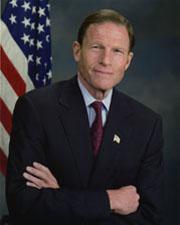 Sen. Richard Blumenthal (D-CT)
What it changes
1 change to S. 3187 · shown in the bill's text
Adds SEC. 10__. MARKET MANIPULATION WITH RESPECT TO DRUGS IN SHORTAGE at the end of title X
Adds a sectionIn S. 3187 · Placed on Calendar Senate
(e) Guidance Regarding Repackaging.--Not later than 1 year after the date of enactment of this Act, the Secretary shall issue guidance that clarifies the policy of the Food and Drug Administration regarding hospital pharmacies repackaging and safely transferring repackaged drugs among hospitals within a common health system during a drug shortage, as identified by the Secretary.
Inserted: SEC. 10__. MARKET MANIPULATION WITH RESPECT TO DRUGS IN SHORTAGE.
Inserted: (a) Definitions.--In this section:
Inserted: (1) Drug.--The term "drug" has the meaning given such term in section 201(g)(1) of the Federal Food, Drug, and Cosmetic Act (21 U.S.C. 321(g)(1)) and is intended for human use.
Inserted: (2) Drug shortage.--The term "drug shortage" or "shortage", with respect to a drug defined in section 506C(a) of the Federal Food Drug and Cosmetic Act (21 U.S.C. 356c(a)), means a period of time when the demand or projected demand for the drug within the United States exceeds the supply of the drug (as defined in section 506(c) of the Federal Food Drug and Cosmetic Act (21 U.S.C. 356(c)).
Inserted: (b) Prohibition on Market Manipulation.--It shall be unlawful for any person to directly or indirectly use any manipulative or deceptive device or contrivance, in connection with the purchase or sale of a drug in shortage, in contravention of rules or regulations the Federal Trade Commission may prescribe as necessary or appropriate in the public interest or for the protection of United States citizens.
Inserted: (c) Prohibition on False Information.--It shall be unlawful for any person to report or distribute information related to the purchase or sale of a prescription drug in shortage if the person knew the information to be false or misleading, in order to support activities described in subsection (b).
Inserted: (d) Enforcement by Federal Trade Commission.--
Inserted: (1) Unfair or deceptive acts or practices.--A violation of subsection (b) shall be treated as an unfair and deceptive act or practice in violation of a regulation under section 18(a)(1)(B) of the Federal Trade Commission Act (15 U.S.C. 57a(a)(1)(B)) regarding unfair or deceptive acts or practices.
Inserted: (2) Powers of commission.--
Inserted: (A) In general.--The Federal Trade Commission shall enforce this section in the same manner, by the same means, and with the same jurisdiction, powers, and duties as though all applicable terms and provisions of the Federal Trade Commission Act (15 U.S.C. 41 et seq.) were incorporated into and made a part of this section.
Inserted: (B) Privileges and immunities.--Any person who violates this section shall be subject to the penalties and entitled to the privileges and immunities provided in the Federal Trade Commission Act (15 U.S.C. 41 et seq.).
Inserted: (e) Enforcement by States.--
Show 47 more inserted paragraphsShow less
Inserted: (1) In general.--In any case in which the attorney general of a State has reason to believe that an interest of the residents of the State has been or is threatened or adversely affected by the engagement of any person in an act that violates subsection (b), the attorney general of the State may, as parens patriae, bring a civil action on behalf of the residents of the State in an appropriate district court of the United States--
Inserted: (A) to enjoin further violation of such subsection by such person;
Inserted: (B) to compel compliance with such subsection;
Inserted: (C) to obtain damages, restitution, or other compensation on behalf of such residents;
Inserted: (D) to obtain such other relief as the court considers appropriate; or
Inserted: (E) to obtain civil penalties in the amount determined under paragraph (2).
Inserted: (2) Civil penalties.--
Inserted: (A) In general.--In addition to any penalty applicable under the Federal Trade Commission Act (15 U.S.C. 41 et seq.), any person that violates subsection (b) or (c) shall be subject to a civil penalty of not more than $1,000,000.
Inserted: (B) Method.--The civil penalty provided under subparagraph (A) shall be obtained in the same manner as civil penalties imposed under section 5 of the Federal Trade Commission Act (15 U.S.C. 45).
Inserted: (C) Multiple offenses; other considerations.--In assessing the civil penalty under this paragraph--
Inserted: (i) each day of a continuing violation shall be considered a separate violation; and
Inserted: (ii) the seriousness of the violation, and the efforts of the person committing the violation to remedy the harm caused by the violation shall be considered.
Inserted: (D) Adjustment for inflation.--Beginning on the date on which the Bureau of Labor Statistics first publishes the Consumer Price Index after the date that is 1 year after the date of the enactment of this Act, and annually thereafter, the maximum amount specified in subparagraph (A) shall be increased by the percentage increase in the Consumer Price Index published on that date from the Consumer Price Index published the previous year.
Inserted: (3) Rights of federal trade commission.--
Inserted: (A) Notice to federal trade commission.--
Inserted: (i) In general.--Except as provided in clause (iii), the attorney general of a State shall notify the Federal Trade Commission in writing that the attorney general intends to bring a civil action under paragraph (1) before initiating the civil action.
Inserted: (ii) Contents.--The notification required by clause (i) with respect to a civil action shall include a copy of the complaint to be filed to initiate the civil action.
Inserted: (iii) Exception.--If it is not feasible for the attorney general of a State to provide the notification required by clause (i) before initiating a civil action under paragraph (1), the attorney general shall notify the Federal Trade Commission immediately upon instituting the civil action.
Inserted: (B) Intervention by federal trade commission.--The Federal Trade Commission may--
Inserted: (i) intervene in any civil action brought by the attorney general of a State under paragraph (1); and
Inserted: (ii) upon intervening--
Inserted: (I) be heard on all matters arising in the civil action; and
Inserted: (II) file petitions for appeal of a decision in the civil action.
Inserted: (4) Investigatory powers.--Nothing in this subsection may be construed to prevent the attorney general of a State from exercising the powers conferred on the attorney general by the laws of the State to conduct investigations, to administer oaths or affirmations, or to compel the attendance of witnesses or the production of documentary or other evidence.
Inserted: (5) Preemptive action by federal trade commission.--If the Federal Trade Commission institutes a civil action or an administrative action with respect to a violation of subsection (b), the attorney general of a State may not, during the pendency of such action, bring a civil action under paragraph (1) against any defendant named in the complaint of the Commission for the violation with respect to which the Commission instituted such action.
Inserted: (6) Venue; service of process.--
Inserted: (A) Venue.--Any action brought under paragraph (1) may be brought in--
Inserted: (i) the district court of the United States that meets applicable requirements relating to venue under section 1391 of title 28, United States Code; or
Inserted: (ii) another court of competent jurisdiction.
Inserted: (B) Service of process.--In an action brought under paragraph (1), process may be served in any district in which the defendant--
Inserted: (i) is an inhabitant; or
Inserted: (ii) may be found.
Inserted: (7) Actions by other state officials.--
Inserted: (A) In general.--In addition to civil actions brought by attorneys general under paragraph (1), any other officer of a State who is authorized by the State to do so may bring a civil action under paragraph (1), subject to the same requirements and limitations that apply under this subsection to civil actions brought by attorneys general.
Inserted: (B) Savings provision.--Nothing in this subsection may be construed to prohibit an authorized official of a State from initiating or continuing any proceeding in a court of the State for a violation of any civil or criminal law of the State.
Inserted: (f) Reporting of Market Manipulation With Respect to Drugs in Shortage, Referrals, and Education and Outreach.--
Inserted: (1) Logging and acknowledging complaints of market manipulation.--Not later than 1 year after the date of the enactment of this Act, the Federal Trade Commission shall establish a process by which the Commission shall log and acknowledge the receipt by the Commission of each complaint submitted to the Commission by a person in which the person--
Inserted: (A) complains of a violation of subsection (b) about which the person certifies a reasonable belief or knowledge of such violation; or
Inserted: (B) claims to be a victim of a violation of such section.
Inserted: (2) Referrals.--To the degree practicable, the Commission shall refer each person from whom the Commission receives a complaint under paragraph (1) to an appropriate entity for--
Inserted: (A) in the case of a victim of a violation of subsection (b), assistance in mitigating any damages caused by such violation; or
Inserted: (B) enforcement of such subsection.
Inserted: (3) Program of education and outreach.--The Commission shall carry out a program of education and outreach whereby the Commission informs consumers of the following:
Inserted: (A) The prohibition set forth in subsection (b).
Inserted: (B) Common ways in which such subsection is violated and how consumers can protect themselves from violations of such subsection.
Inserted: (C) The process established under paragraph (1).
Inserted: (g) Authorization of Appropriations.--There are authorized to be appropriated such sums as may be necessary to carry out this section.
Original wording
At the end of title X, insert the following:
Read automatically from the Congressional Record. Check the original before relying on it.
As printed
SA 2134. Mr. BLUMENTHAL submitted an amendment intended to be proposed by him to the bill S. 3187, to amend the Federal Food, Drug, and Cosmetic Act to revise and extend the user-fee programs for prescription drugs and medical devices, to establish user-fee programs for generic drugs and biosimilars, and for other purposes; which was ordered to lie on the table; as follows:
At the end of title X, insert the following:
SEC. 10__. MARKET MANIPULATION WITH RESPECT TO DRUGS IN SHORTAGE.
(a) Definitions.--In this section:
(1) Drug.--The term “drug” has the meaning given such term in section 201(g)(1) of the Federal Food, Drug, and Cosmetic Act (21 U.S.C. 321(g)(1)) and is intended for human use.
(2) Drug shortage.--The term “drug shortage” or “shortage”, with respect to a drug defined in section 506C(a) of the Federal Food Drug and Cosmetic Act (21 U.S.C. 356c(a)), means a period of time when the demand or projected demand for the drug within the United States exceeds the supply of the drug (as defined in section 506(c) of the Federal Food Drug and Cosmetic Act (21 U.S.C. 356(c)).
(b) Prohibition on Market Manipulation.--It shall be unlawful for any person to directly or indirectly use any manipulative or deceptive device or contrivance, in connection with the purchase or sale of a drug in shortage, in contravention of rules or regulations the Federal Trade Commission may prescribe as necessary or appropriate in the public interest or for the protection of United States citizens.
(c) Prohibition on False Information.--It shall be unlawful for any person to report or distribute information related to the purchase or sale of a prescription drug in shortage if the person knew the information to be false or misleading, in order to support activities described in subsection (b).
(d) Enforcement by Federal Trade Commission.--
(1) Unfair or deceptive acts or practices.--A violation of subsection (b) shall be treated as an unfair and deceptive act or practice in violation of a regulation under section 18(a)(1)(B) of the Federal Trade Commission Act (15 U.S.C. 57a(a)(1)(B)) regarding unfair or deceptive acts or practices.
(2) Powers of commission.--
(A) In general.--The Federal Trade Commission shall enforce this section in the same manner, by the same means, and with the same jurisdiction, powers, and duties as though all applicable terms and provisions of the Federal Trade Commission Act (15 U.S.C. 41 et seq.) were incorporated into and made a part of this section.
(B) Privileges and immunities.--Any person who violates this section shall be subject to the penalties and entitled to the privileges and immunities provided in the Federal Trade Commission Act (15 U.S.C. 41 et seq.).
(e) Enforcement by States.--
(1) In general.--In any case in which the attorney general of a State has reason to believe that an interest of the residents of the State has been or is threatened or adversely affected by the engagement of any person in an act that violates subsection (b), the attorney general of the State may, as parens patriae, bring a civil action on behalf of the residents of the State in an appropriate district court of the United States--
(A) to enjoin further violation of such subsection by such person;
(B) to compel compliance with such subsection;
(C) to obtain damages, restitution, or other compensation on behalf of such residents;
(D) to obtain such other relief as the court considers appropriate; or
(E) to obtain civil penalties in the amount determined under paragraph (2).
(2) Civil penalties.--
(A) In general.--In addition to any penalty applicable under the Federal Trade Commission Act (15 U.S.C. 41 et seq.), any person that violates subsection (b) or (c) shall be subject to a civil penalty of not more than $1,000,000.
(B) Method.--The civil penalty provided under subparagraph (A) shall be obtained in the same manner as civil penalties imposed under section 5 of the Federal Trade Commission Act (15 U.S.C. 45).
(C) Multiple offenses; other considerations.--In assessing the civil penalty under this paragraph--
(i) each day of a continuing violation shall be considered a separate violation; and
(ii) the seriousness of the violation, and the efforts of the person committing the violation to remedy the harm caused by the violation shall be considered.
(D) Adjustment for inflation.--Beginning on the date on which the Bureau of Labor Statistics first publishes the Consumer Price Index after the date that is 1 year after the date of the enactment of this Act, and annually thereafter, the maximum amount specified in subparagraph (A) shall be increased by the percentage increase in the Consumer Price Index published on that date from the Consumer Price Index published the previous year.
(3) Rights of federal trade commission.--
(A) Notice to federal trade commission.--
(i) In general.--Except as provided in clause (iii), the attorney general of a State shall notify the Federal Trade Commission in writing that the attorney general intends to bring a civil action under paragraph (1) before initiating the civil action.
(ii) Contents.--The notification required by clause (i) with respect to a civil action shall include a copy of the complaint to be filed to initiate the civil action.
(iii) Exception.--If it is not feasible for the attorney general of a State to provide the notification required by clause (i) before initiating a civil action under paragraph (1), the attorney general shall notify the Federal Trade Commission immediately upon instituting the civil action.
(B) Intervention by federal trade commission.--The Federal Trade Commission may--
(i) intervene in any civil action brought by the attorney general of a State under paragraph (1); and
(ii) upon intervening--
(I) be heard on all matters arising in the civil action; and
(II) file petitions for appeal of a decision in the civil action.
(4) Investigatory powers.--Nothing in this subsection may be construed to prevent the attorney general of a State from exercising the powers conferred on the attorney general by the laws of the State to conduct investigations, to administer oaths or affirmations, or to compel the attendance of witnesses or the production of documentary or other evidence.
(5) Preemptive action by federal trade commission.--If the Federal Trade Commission institutes a civil action or an administrative action with respect to a violation of subsection (b), the attorney general of a State may not, during the pendency of such action, bring a civil action under paragraph (1) against any defendant named in the complaint of the Commission for the violation with respect to which the Commission instituted such action.
(6) Venue; service of process.--
(A) Venue.--Any action brought under paragraph (1) may be brought in--
(i) the district court of the United States that meets applicable requirements relating to venue under section 1391 of title 28, United States Code; or
(ii) another court of competent jurisdiction.
(B) Service of process.--In an action brought under paragraph (1), process may be served in any district in which the defendant--
(i) is an inhabitant; or
(ii) may be found.
(7) Actions by other state officials.--
(A) In general.--In addition to civil actions brought by attorneys general under paragraph (1), any other officer of a State who is authorized by the State to do so may bring a civil action under paragraph (1), subject to the same requirements and limitations that apply under this subsection to civil actions brought by attorneys general.
(B) Savings provision.--Nothing in this subsection may be construed to prohibit an authorized official of a State from initiating or continuing any proceeding in a court of the State for a violation of any civil or criminal law of the State.
(f) Reporting of Market Manipulation With Respect to Drugs in Shortage, Referrals, and Education and Outreach.--
(1) Logging and acknowledging complaints of market manipulation.--Not later than 1 year after the date of the enactment of this Act, the Federal Trade Commission shall establish a process by which the Commission shall log and acknowledge the receipt by the Commission of each complaint submitted to the Commission by a person in which the person--
(A) complains of a violation of subsection (b) about which the person certifies a reasonable belief or knowledge of such violation; or
(B) claims to be a victim of a violation of such section.
(2) Referrals.--To the degree practicable, the Commission shall refer each person from whom the Commission receives a complaint under paragraph (1) to an appropriate entity for--
(A) in the case of a victim of a violation of subsection (b), assistance in mitigating any damages caused by such violation; or
(B) enforcement of such subsection.
(3) Program of education and outreach.--The Commission shall carry out a program of education and outreach whereby the Commission informs consumers of the following:
(A) The prohibition set forth in subsection (b).
(B) Common ways in which such subsection is violated and how consumers can protect themselves from violations of such subsection.
(C) The process established under paragraph (1).
(g) Authorization of Appropriations.--There are authorized to be appropriated such sums as may be necessary to carry out this section.
Legislative Activity
Stay on top of the latest movement without scrolling through every action
Senate amendment submitted
May 22, 2012