To require contractors to notify small business concerns that have been included in offers relating to contracts let by Federal agencies.
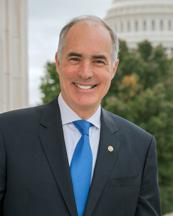 Sen. Robert P. Casey Jr. (D-PA)
Legislative Activity
Stay on top of the latest movement without scrolling through every action
Roll call votes on amendments in Senate: Amendment SA 216 agreed to in Senate by Yea-Nay Vote. 99 - 0. Record Vote Number: 43.
March 16, 2011
View full timeline
Roll call votes on amendments in Senate: Amendment SA 216 agreed to in Senate by Yea-Nay Vote. 99 - 0. Record Vote Number: 43.
March 16, 2011
Senate amendment agreed to: Amendment SA 216 agreed to in Senate by Yea-Nay Vote. 99 - 0. Record Vote Number: 43.
March 16, 2011
Senate amendment proposed (on the floor): Amendment SA 216 proposed by Senator Landrieu for Senator Casey.
March 16, 2011
Amendment SA 216 proposed by Senator Landrieu for Senator Casey. (consideration: CR S1716-1717, S1744-1746; text: CR S1717) To require contractors to notify small business concerns that have been included in offers relating to contracts let by Federal agencies.
March 16, 2011
Amendment SA 216 agreed to in Senate by Yea-Nay Vote. 99 - 0. Record Vote Number: 43.
March 16, 2011
Senate amendment submitted
March 15, 2011
Votes
1 roll call on this amendment
Text
Proposed
SBIR/STTR REAUTHORIZATION ACT OF 2011

The ACTING PRESIDENT pro tempore. Under the previous order, the
Senate will resume consideration of S. 493, which the clerk will
report.
The legislative clerk read as follows:

A bill (S. 493) to reauthorize and improve the SBIR and
STTR programs, and for other purposes.

Pending:

Nelson (NE) amendment No. 182, of a perfecting nature.
McConnell amendment No. 183, to prohibit the Administrator
of the Environmental Protection Agency from promulgating any
regulation concerning, taking action relating to, or taking
into consideration the emission of a greenhouse gas to
address climate change.
Vitter amendment No. 178, to require the Federal Government
to sell off unused Federal real property.
Inhofe (for Johanns) amendment No. 161, to amend the
Internal Revenue Code of 1986 to repeal the expansion of
information reporting requirements to payments made to
corporations, payments for property and other gross proceeds,
and rental property expense payments.
Snowe amendment No. 193, to strike the Federal
authorization of the National Veterans Business Development
Corporation.

Amendment No. 182

The ACTING PRESIDENT pro tempore. Under the previous order, there is
now 2 minutes of debate equally divided prior to a vote in relation to
amendment No. 182, offered by the Senator from Nebraska, Mr. Nelson.
The Senator from Nebraska.
Mr. NELSON of Nebraska. Madam President, I rise to speak on my
amendment proposing a sense-of-the-Senate agreement to cut the Senate's
budget by at least 5 percent.
When I go home every weekend, people come up to me at the grocery
store, hardware store and elsewhere, and they tell me they are
concerned about our national debt and deficit. They want Washington to
cut spending and bring down the cloud of debt that hangs over our
economic environment.
As chairman of the Senate Appropriations Legislative Branch
Subcommittee, I have been pursuing a 5-percent cut in this year's
budget for Congress and agencies and offices on Capitol Hill. We cut
this budget a year ago, we are cutting it this year, and we will be
back for further cuts next year.
My amendment says that as Congress pursues comprehensive debt
reduction while conducting major military action on two fronts, all in
the midst of a fragile economic recovery, Congress still should not be
exempt from the pain. Fiscal restraint starts at home and with our own
budget.
I yield the floor.
The ACTING PRESIDENT pro tempore. The Senator from Mississippi.
Mr. WICKER. Madam President, I rise to agree with my colleague from
Nebraska, to support his amendment, and to congratulate him for his
newfound enthusiasm for this idea.
Actually, on January 10, the House of Representatives passed a rule
to reduce its spending by 5 percent. This measure was passed on a
rollcall vote of 410 to 13. Soon thereafter, I was the first Senator to
call on my colleagues in the Senate to cut their office expenditures by
5 percent. This small but symbolic step could save the taxpayers over
$20 million.
On February 4, some 6 weeks ago, I requested unanimous consent to
take up a sense-of-the-Senate resolution I authored, urging all
Senators to take such action. Unfortunately, at that time and since
then, there has been an objection from the other side of the aisle to
this unanimous consent request.
My effort was bipartisan. I was joined by 14 of my colleagues,
Republicans and Democrats, and I thank them.
We now have an agreement to take up my sense-of-the-Senate resolution
by unanimous consent later in the day so as to expedite and refine
enactment of the provisions of the Nelson amendment. Based on that
understanding----
The ACTING PRESIDENT pro tempore. The Senator's time has expired.
Mr. WICKER. I commend the Senator from Nebraska for coming to this
idea somewhat late. But I support his amendment nonetheless.
The ACTING PRESIDENT pro tempore. The Senator from Louisiana.
Ms. LANDRIEU. Is there any time remaining?
The ACTING PRESIDENT pro tempore. There is no time remaining.
Ms. LANDRIEU. Madam President, I ask for the yeas and nays.
The ACTING PRESIDENT pro tempore. Is there a sufficient second? There
is a sufficient second.
The question is on agreeing to the amendment.
The clerk will call the roll.
The legislative clerk called the roll.
Mr. DURBIN. I announce that the Senator from West Virginia (Mr.
Rockefeller) is necessarily absent.
The ACTING PRESIDENT pro tempore. Are there any other Senators in the
Chamber desiring to vote?
The result was announced--yeas 98, nays 1, as follows:

[Rollcall Vote No. 41 Leg.]

YEAS--98

Akaka
Alexander
Ayotte
Barrasso
Baucus
Begich
Bennet
Bingaman
Blumenthal
Blunt
Boozman
Boxer
Brown (MA)
Brown (OH)
Burr
Cantwell
Cardin
Carper
Casey
Chambliss
Coats
Coburn
Cochran
Collins
Conrad
Coons
Corker
Cornyn
Crapo
DeMint
Durbin
Ensign
Enzi
Feinstein
Franken
Gillibrand
Graham
Grassley
Hagan
Harkin
Hatch
Hoeven
Hutchison
Inhofe
Inouye
Isakson
Johanns
Johnson (SD)
Johnson (WI)
Kerry
Kirk
Klobuchar
Kohl
Kyl
Landrieu
Lautenberg
Leahy
Lee
Levin
Lieberman
Lugar
Manchin
McCain
McCaskill
McConnell
Menendez
Merkley
Mikulski
Moran
Murkowski
Murray
Nelson (NE)
Nelson (FL)
Paul
Portman
Pryor
Reed
Reid
Risch
Roberts
Rubio
Sanders
Schumer
Shaheen
Shelby
Snowe
Stabenow
Tester
Thune
Toomey
Udall (CO)
Udall (NM)
Vitter
Warner
Webb
Whitehouse
Wicker
Wyden

NAYS--1

Sessions

NOT VOTING--1

Rockefeller

The amendment (No. 182) was agreed to.

[[Page S1716]]

The ACTING PRESIDENT pro tempore. The motion to reconsider is
considered made and laid on the table.

Amendment No. 193

Under the previous order, there is now 2 minutes of debate equally
divided prior to a vote in relation to amendment No. 193 offered by the
Senator from Maine, Ms. Snowe.
The Senator from Maine is recognized.
Ms. SNOWE. Madam President, this bipartisan amendment is supported by
me; Chair Landrieu; Senator Kerry, the former chair of the committee;
Senator Coburn; and Senator Webb.
This amendment is based on a report that was conducted by the Small
Business Committee back in 2008, when Senator Kerry was chair of the
committee, and we both requested an investigation into the National
Veterans Business Development Corporation, also known as TVC, and found
egregious mismanagement. TVC was engaged in mismanagement, misuse of
taxpayer money, and did not abide by its statutory obligations.
Our committee issued a very detailed report explaining how they
misused hundreds of thousands if not millions of dollars. In light of
our investigation and subsequent efforts, they do not receive any
federal appropriations now.
But we want to remove them from statute so they do not have any
Federal linkage, any Federal charter, or any ability to use the
auspices of the Federal Government for any activities in the future.
So I urge support of this amendment and note that both the Veterans
of Foreign Wars and the American Legion supported discontinuing the
funding for this organization, after our report was released.
The ACTING PRESIDENT pro tempore. The Senator from Louisiana.
Ms. LANDRIEU. Madam President, I will speak for just a moment, if I
could.
I know people in Washington and people in America do not believe we
can actually eliminate a program. We are getting ready to eliminate one
now in a bipartisan fashion to cut funding and to cut a program that
has not worked. I just want to underline that we most certainly can do
that in a bipartisan way. That is what this vote is about.
I do not believe there is any opposition, so I yield back the
remaining time.
Ms. SNOWE. Madam President, I ask for the yeas and nays.
The ACTING PRESIDENT pro tempore. Is there a sufficient second?
There appears to be a sufficient second.
The question is on agreeing to the amendment.
The clerk will call the roll.
The assistant legislative clerk called the roll.
Mr. DURBIN. I announce that the Senator from West Virginia (Mr.
Rockefeller) is necessarily absent.
The ACTING PRESIDENT pro tempore. Are there any other Senators in the
Chamber desiring to vote?
The result was announced--yeas 99, nays 0, as follows:

[Rollcall Vote No. 42 Leg.]

YEAS--99

Akaka
Alexander
Ayotte
Barrasso
Baucus
Begich
Bennet
Bingaman
Blumenthal
Blunt
Boozman
Boxer
Brown (MA)
Brown (OH)
Burr
Cantwell
Cardin
Carper
Casey
Chambliss
Coats
Coburn
Cochran
Collins
Conrad
Coons
Corker
Cornyn
Crapo
DeMint
Durbin
Ensign
Enzi
Feinstein
Franken
Gillibrand
Graham
Grassley
Hagan
Harkin
Hatch
Hoeven
Hutchison
Inhofe
Inouye
Isakson
Johanns
Johnson (SD)
Johnson (WI)
Kerry
Kirk
Klobuchar
Kohl
Kyl
Landrieu
Lautenberg
Leahy
Lee
Levin
Lieberman
Lugar
Manchin
McCain
McCaskill
McConnell
Menendez
Merkley
Mikulski
Moran
Murkowski
Murray
Nelson (NE)
Nelson (FL)
Paul
Portman
Pryor
Reed
Reid
Risch
Roberts
Rubio
Sanders
Schumer
Sessions
Shaheen
Shelby
Snowe
Stabenow
Tester
Thune
Toomey
Udall (CO)
Udall (NM)
Vitter
Warner
Webb
Whitehouse
Wicker
Wyden

NOT VOTING--1

Rockefeller

The amendment (No. 193) was agreed to.
The ACTING PRESIDENT pro tempore. The motion to reconsider is
considered made and laid on the table.
The Senator from Arizona.
Mr. McCAIN. Madam President, I ask unanimous consent to engage in a
colloquy with the distinguished Republican leader for 3 minutes.
The ACTING PRESIDENT pro tempore. Without objection, it is so
ordered.

Defense Appropriations

Mr. McCAIN. Madam President, I say to my friend and leader and to all
my colleagues, it is of deep concern to the Secretary of Defense and to
this Member, and I am sure many other Members, that we are defending
this Nation on a 2-week-to-2-week basis, and it is harming our ability
to defend this Nation's national security. I know we are probably now
going to go into another 3-week continuing resolution.
Is it the intention of the Republican leader, along with myself and
others, that we will not do another continuing resolution unless we
take up a Defense appropriations bill for the year? We can't do this to
the men and women who are serving--deprive them of the equipment, the
training, and wherewithal--when we are in two wars. It is vital, in my
view, that we not allow another continuing resolution without
addressing the Defense appropriations bill for, hopefully, what should
be the remainder of the year.
Mr. McCONNELL. I would say to my friend from Arizona, he is entirely
correct. I don't intend, myself, to support another continuing
resolution. It does not contain the full-year Defense appropriations
bill. I think everybody understands the urgency of that. My friend from
Arizona, our leader on these issues, has been very clear and articulate
about it. I can say with total confidence that the House and Senate are
not going to be passing another continuing resolution without the
funding for the Defense Department for the remainder of this fiscal
year.
Mr. McCAIN. I thank the Republican leader, and I thank my colleague
from Louisiana. I hope this message is transmitted to our friends and
colleagues on the other side of the Capitol; that they should not send
over another CR without funding the Defense Department for the rest of
the year.
Mr. McCONNELL. I would say to my friend, I believe his position is
shared by the leadership of our party in the House, and I think there
is no chance we will not complete work on the Defense appropriations
bill in the next few weeks.
Mr. McCAIN. I thank the Senator.
The ACTING PRESIDENT pro tempore. The Senator from Louisiana.
Ms. LANDRIEU. Madam President, before I get into the business before
us, which is SBIR and STTR reauthorization, a very important small
business program, let me just add a few thoughts to the colloquy of the
Senator from Arizona and the minority leader. I would most certainly
support that view, and there may be others on the Democratic side who
feel that way as well. As chair of the Homeland Security Appropriations
Committee, let me be very clear that I don't think we should go to
another short-term CR without a full-year appropriation of Homeland
Security. Not only is the Defense Department appropriations bill
absolutely essential to the well-being of this Nation, but so is the
Homeland Security budget. They have complete jurisdiction over Customs
and Immigration, over safety and security at our ports and our airports
and train stations. We most certainly can't let our guard down as it
pertains to our overseas operations, but we absolutely cannot let our
guard down as it pertains to our safety here at home.
I hope both Republican and Democratic leadership, as we find our way
through this complicated and difficult appropriations process, will
remember Defense and Homeland Security.
I see Senator Cornyn on the floor. I know he is going to call up,
with no objection from me, his amendment.

Amendment No. 216

Before that, I ask unanimous consent to call up Casey amendment No.
216 to be put in the pending column. Senator Casey will be here shortly
to discuss his amendment, and then we will go in just a minute to
Senator Cornyn.
The ACTING PRESIDENT pro tempore. The clerk will report.
The assistant legislative clerk read as follows:

The Senator from Louisiana [Ms. Landrieu], for Mr. Casey,
proposes an amendment numbered 216.

[[Page S1717]]

Ms. LANDRIEU. I ask unanimous consent that the reading of the
amendment be dispensed with.
The ACTING PRESIDENT pro tempore. Without objection, it is so
ordered.
The amendment is as follows:

(Purpose: To require contractors to notify small business concerns that
have been included in offers relating to contracts let by Federal
agencies)

At the end of title III, add the following:

SEC. 3__. SUBCONTRACTOR NOTIFICATIONS.

Section 8(d) of the Small Business Act (15 U.S.C. 637(d))
is amended by adding at the end the following:
``(13) Notification Requirement.--
``(A) In general.--An offeror with respect to a contract
let by a Federal agency that is to be awarded pursuant to the
negotiated method of procurement that intends to identify a
small business concern as a potential subcontractor in the
offer relating to the contract shall--
``(i) notify the small business concern that the offeror
intends to identify the small business concern as a potential
subcontractor in the offer; and
``(14) Reporting by Subcontractors.--The Administrator
shall establish a reporting mechanism that allows a
subcontractor to report fraudulent activity by a contractor
with respect to a subcontracting plan submitted to a
procurement authority under paragraph (4)(B).''.

Ms. LANDRIEU. Our intention is for Senator Casey to have an
opportunity when he comes to the floor.
Before Senator Cornyn speaks, for just one moment I wish to add a few
comments about what happened this morning. We did get two amendment
votes on the bill. Those were the first two amendments, the Nelson of
Nebraska amendment, and then Senator Snowe and I offered an amendment.
We have approximately six other amendments pending not yet scheduled
for a vote. Most of them were discussed at some length yesterday on the
floor, the most notable Senator McConnell's amendment, which Senator
Boxer and others strongly opposed.
I wish to say one thing, as respectfully as I can, in response to a
comment Senator Wicker made regarding the Nelson amendment. He said
something along the lines that Senator Nelson had found some new--how
did he say it--new-found enthusiasm for cutting the budget. In defense
of Senator Nelson, I wish to say his enthusiasm is most certainly not
new found. He has been a leader on our side in cutting the agencies and
departments respectfully and appropriately under his jurisdiction. He
has been the lead sponsor of legislation for a long time that has cut
legislative spending. I might say it is very difficult with his bill
because he also has had to absorb $22 million in additional expenses
related to the operation of the Visitor Center which all of our
constituents enjoy and support. So he has absorbed that into his
operating budget and still managed to cut.
I know Senator Wicker is relatively new to the Senate, but I do wish
to remind him and others that Senator Nelson has been a leader in that
field.
I yield the floor.
The ACTING PRESIDENT pro tempore. The Senator from Texas.

Amendment No. 186

(Purpose: To establish a bipartisan commission for the purpose of
improving oversight and eliminating wasteful government spending)

Mr. CORNYN. Madam President, I ask unanimous consent to call up
amendment No. 186 and ask for its immediate consideration, and I ask
unanimous consent that any pending amendments be set aside.
The ACTING PRESIDENT pro tempore. Without objection, it is so
ordered.
The clerk will report.
The assistant legislative clerk read as follows:

The Senator from Texas [Mr. Cornyn] proposes an amendment
numbered 186.

Mr. CORNYN. I ask unanimous consent that the reading of the amendment
be dispensed with.
The ACTING PRESIDENT pro tempore. Without objection, it is so
ordered.
(The amendment is printed in the Record of Tuesday, March 15, 2010,
under ``Text of Amendments.'')
Mr. CORNYN. Madam President, this is a very important amendment,
which addresses the three critical issues that face our country today:
too many people out of work, the Federal Government engaged in runaway
spending, and our unsustainable national debt. This actually comes from
a portion of President Barack Obama's fiscal commission report, which
pointed out a Texas program that had been in place since 1977 and its
impact on providing oversight and review of wasteful or no longer
needed programs for spending.
That is what this amendment does. It establishes a bipartisan U.S.
Authorization and Sunset Commission.
Actually, it would be composed of eight Members of Congress, who
would go through programs that have spending associated with them but
have not been authorized by the Congress, and who review redundancies
and duplicative programs such as those pointed out most significantly
by the General Accounting Office within the last week to 10 days.
As I said, this is modeled after the sunset process that my State
instituted in 1977, which has been enormously successful. It has
eliminated more than 50 different State agencies and saved taxpayers in
the hundreds of millions of dollars.
I ask unanimous consent that Senators Vitter, Enzi, DeMint, Rubio,
Paul, Ensign, Ayotte, and Risch be added as cosponsors to my amendment.
The ACTING PRESIDENT pro tempore. Without objection, it is so
ordered.
Mr. CORNYN. This is what the President's own fiscal commission has
said about such a concept. I know Members of the Senate and the
political parties are divided about many things, but this is something
that should be noncontroversial and should be bipartisan. I hope my
colleagues will listen briefly and consider cosponsoring and joining us
in passing this important amendment establishing this sunset
commission. Again, this is what the President's own fiscal commission
said about this concept:

Such a committee has been recommended many times, and has
found bipartisan support. The original and arguably most
effective committee exists at the State level in Texas. The
legislature created a sunset commission in 1977 to eliminate
waste and inefficiency in government agencies. Estimates from
reviews conducted between 1982 and 2009 showed 27-year
savings of over $780 million, compared with expenditures of
$28.6 million. Based on the estimated savings achieved, for
every dollar spent on the sunset process, the State received
$27 in return.

We all know the challenges we face in Washington when it comes to
proper oversight. Once programs are created--even so-called temporary
programs--they tend to take on a life of their own. Indeed, I think
that must be what Ronald Reagan was talking about in one of my favorite
quotations, when he said that ``the closest thing to eternal life here
on earth is a temporary government program.''
We all know what happens once a program is created. A constituency is
created, and they come in and ask for a cost of living or other
increase, and they grow and grow, and there is no one--I am not
criticizing the standing committees, but there is not adequate time or
opportunity given to looking at these programs to see whether they are
still needed or whether their budgets are justified. So you see these
programs growing and Federal spending growing and no real time and
effort given to cutting out wasteful spending and eliminating programs
that have not been authorized or which are duplicative or redundant, as
pointed out by the GAO.
My hope is that when we soon have a chance to vote on this amendment,
we can all answer this important call. I think in the process we can
ask the single most important question Congress can ask when it comes
to spending and programs, which is: Is this program still needed?
A sunset commission would help us do our job of oversight and
accountability. It would help rein in runaway Federal spending and,
hopefully, along with growth in the private sector and investments by
the job creators and entrepreneurs, help us get past where we are now,
where we have not only runaway spending but unsustainable debt, and a
private sector sitting on the sidelines not creating new jobs the way
we need them to do it.
I yield the floor and thank the manager.
Ms. LANDRIEU. Will the Senator yield for a question on his amendment?
Mr. CORNYN. Yes.
Ms. LANDRIEU. Most of the programs I am familiar with at the Federal
level have built-in sunsets, because they have limited authorization.

[[Page S1718]]

How does the Senator's amendment either override that or undercut that?
Why is his amendment necessary?
Mr. CORNYN. Madam President, I am glad to respond to the question. As
the Senator knows, many programs that are currently up and running are
operating on the basis of an appropriation without an authorization by
the committee of jurisdiction, and that is part of what the sunset
commission would look at because, frankly, it hasn't been authorized,
the kind of oversight that is needed in order to scrub the numbers and
make sure the program is still necessary and the spending is
appropriate doesn't happen.
This also is designed specifically to deal with what the GAO pointed
out in the last 7 to 10 days, where we have dozens of programs designed
to do exactly the same thing. In other words, rather than making sure
that existing programs work, we tend to layer those on over time,
forgetting that those existing programs are even there. So this would
be designed primarily to do two things: one, to deal with programs
where there is spending because there has been an appropriation made
but no authorization; and it would also deal with that duplication.
If, in fact, Congress comes back and authorizes the program, that is
one way they could respond to the report of the commission.
Ms. LANDRIEU. I thank the Senator. I will comment, and I know the
Senator wants to genuinely root out the waste and duplication. I only
say that for programs that are operating under appropriations only. The
Senator will know that that authorization is only intact for 1 year
under the general rules. When you appropriate money, it is only for 1
year at a time. It can only be extended by an act of this body every
year. On the authorizing programs, to my knowledge--and I will get the
committee to check on that--Homeland Security has jurisdiction over
government operations. It is my understanding that every authorized
program has a length of time and that each committee here is
responsible for their own oversight.
If the Senator is suggesting that committees either can't, or don't,
do their work and we need an extra commission, we will consider that. I
understand what the Senator is trying to do. I will have the Homeland
Security team look at it on our side and we will respond.
Mr. CORNYN. I don't think anybody believes the way things are
operating now is appropriate. What this does is it seeks to bring a new
set of eyes, particularly regarding the spending levels in programs--
whether they are necessary. As the President's own fiscal commission
pointed out, this is not a partisan issue. We know with that kind of
increased scrutiny, we can begin to cut out duplicative and unnecessary
spending and prioritize those that are important, such as homeland
security.
Part of the problem we have is that the spending levels we have now
make it almost impossible for us to decide what our priorities are and
fund those because everything seems to be a priority. Well, everything
can't be a priority, everything cannot be essential. This is a
commonsense approach, based on an effective State model, that would
allow Congress to do its job better and deal with the most important
issues that face the country today, which is runaway spending and
unsustainable debt, and too high unemployment.
I yield the floor.
Ms. LANDRIEU. I thank the Senator from Texas.
Hopefully, as we go through the day, we will have a discussion on
that amendment and others. I will try to give a recap. My ranking
member is on the floor, and we wish to proceed today as we did
yesterday, fairly orderly. We have made progress. We got two amendments
voted on already. There are now several amendments pending. I want to
ask this for clarification. We have Johanns 161, Vitter 178, McConnell
183, Casey 216, and Cornyn 186. Those are all pending, but no time has
been established for a vote. Can I ask the Chair to confirm that?
The ACTING PRESIDENT pro tempore. The Senator is correct.
Ms. LANDRIEU. Can I also ask the Chair this: We have filed and
discussed Hutchison 197, Paul 199, and Sanders 207, which are not
pending but have been discussed on the floor. Does that list exist at
the desk?
The ACTING PRESIDENT pro tempore. Those amendments have been filed
and will need to be offered.
Ms. LANDRIEU. Let me say again how pleased I am that only a handful
of amendments out of the 68 that are pending actually pertain directly
to the programs we are getting ready, hopefully, to authorize.
Actually, out of the 68 amendments pending, only 14 are related to this
particular program, and 3 others to the Small Business Administration
itself. I want to believe that is because Senator Snowe and I have
tried hard to take all Members' views into consideration as we have
moved the bill through the process. As I said, yesterday, we worked on
reauthorization of this important program--the largest Federal research
program for small business in the country, the largest program--we have
worked on this reauthorization for 6 years. So in the last three
Congresses this bill has been debated, both in committee and on the
floor, in the House and in the Senate. It has been modified many
different times to accommodate different views.
The great news is that the bill is still strong, very focused. It
provides an additional percentage of funding for small business so they
can actually have access to the research and development dollars like
big businesses, which often have better access. It gives an open door
and an opportunity for small businesses--for some of our best patents,
our best inventors, our strongest risk takers, which are often very
small startups. We want to encourage that, because the country is
fighting its way--and I mean that--out of this recession. It is not
easy, and it will not happen automatically. It will happen by what
actions the Federal Government takes, State governments, and local
governments, creating atmospheres so the private sector can grow. This
bill helps to improve that atmosphere. That is why we are talking about
this.
Many people have come to the floor and said: Why aren't we talking
about closing the deficit? We are talking about reducing the deficit
and debt, because one of the ways we do that is by creating private-
sector jobs. This bill is one of the bills filed in this Congress--I am
not saying it is the top or the absolute best, but I can promise you
that it is one of the best bills that is filed that will have a direct
and immediate impact on job creation in America. That is why Senator
Snowe and I are spending our time talking about it because it is a jobs
bill. It is also a deficit closing bill. It is also a debt reduction
bill. It is also a great bill that is going to help level the playing
field between large and small companies and say to some of those risk
takers out there who look at Washington and shake their head and say,
What is going on, doesn't anyone pay attention to us, yes, we are
paying attention, we know you are out there. We know if we can provide
open-door access to Federal Government research and development
dollars, we can have literally hundreds of companies grow and expand.

One example I gave yesterday--and I will give many more today--is
Qualcomm, unknown 35 years ago. It started in Dr. Jacobs' den. It
received early funding through this program, SBIR. They received
multiple grants. You can get multiple grants as your technology
improves and it shows promise. Of course, it showed promise. At a
point, they were recognized by the venture capital community and
investors came in. History has shown now that company employs 17,500
people and last year their local San Diego-based company paid taxes to
local governments in California and around the country of $1 billion.
That covers half the cost of this entire program--one company.
That is why Senator Snowe and I have spent so much time on this
reauthorization and why she has been fighting for this program for
actually almost 20 years, since she was a Member of Congress. This
program is one that works. We have tweaked it. We have improved it. We
are extending our authorizations from 4 years to 8 years to give
certainty.
Those are some of the comments I wanted to make about the bill. We
have, as I said, 68 amendments that have been filed. I ask Members, if
they are interested in getting their amendments pending, to come to the
floor to see what we can do to work that out. I

[[Page S1719]]

am not sure we will get to final passage of the bill this week, but we
want to do as much work on the bill as we can so when we get back, it
will hopefully be the first order of business. We will see. Maybe there
will be a breakthrough in the next 2 or 3 days and we can get it done
before we leave. That would send a positive signal. We are working with
the leadership to see if that can be done. If not, we will continue to
work this week to get as many amendments offered and pending and some
votes today and tomorrow.
I see the ranking member on the floor. I wish to turn the time over
to her now.
The ACTING PRESIDENT pro tempore. The Senator from Maine.
Ms. SNOWE. Madam President, I certainly concur in the comments that
have been made by the Chair of the Small Business Committee, Senator
Landrieu, who has exhibited tremendous leadership in bringing these
initiatives to the floor for reauthorization. It has been a long
journey for these programs, reaching the point of reauthorizing them
for the first time since 2008. In the intervening years, the programs
have had to rely on multiple extensions to continue to operate.
These programs are of indisputable value to the growth in America
when it comes to innovation and invention on the part of small
businesses. They undeniably have been critically effective. When they
have had access to venture capital and research and development dollars
that are available in more than 11 agencies across the government,
including the National Institutes of Health, the Department of Defense,
the Department of Energy, to name a few, they have provided invaluable
support to the entrepreneurial spirit that is so critical to this
country.
As the Chair indicated, it is the small businesses in America, the
one segment of the economy that undeniably creates the kinds of jobs
that are so important to this country. In fact, they create two-thirds
of all the net new jobs. We have to do everything we can to make sure
that they are getting access to the kind of capital and support and the
research and development dollars that are available at the national
level.
These two programs, were created back in 1982. As the Chair
indicated, I was an original cosponsor of that legislation when I was
serving in the House of Representatives because we knew it could
ultimately be a great catalyst for innovative and technological ideas
in America. It has provided it, without question.
The National Academy of Sciences study of the SBIR Program--which is
a landmark study--called the program sound in concept and effective in
practice. Just over 20 percent of companies they surveyed were founded
partly or entirely because of the SBIR program. Over two-thirds of the
respondents said that the SBIR projects would not have taken place
without the funding. Each year, over one-third of firms awarded SBIR
funds participate in the program for the first time.
Again, it is encouraging innovation across a broad spectrum of
businesses and creating additional competition among suppliers for the
Federal Government's procurement agencies. We see that it produces over
and over again the benefits, the jobs, the creativity.
The Chair spoke about Qualcomm. That is true. We saw the Sonicare
toothbrush. In May, we had a company called Tex Tech that developed
armor for our troops in Iraq and Afghanistan. If we can give the
infusion of these dollars--dollars already being expended by Federal
agencies but redirected to small businesses and making sure that they
are getting a fair share of the Federal pie--then they can put that
money to good use in creating the kinds of jobs and the inventions that
are so important to moving this country forward in the 21st century.
I am very pleased we are at this point. Hopefully, we will be able to
get this legislation through and signed into law because it is critical
to venture capital investments. It is a prominent source of investment
in biotechnology research and development. As we know, it takes 10 to
15 years of work and hundreds of millions of dollars to bring a drug to
market and to complete the testing of the drug process along the way
costs millions of dollars. The biotechnology companies are able to
commercialize their technologies with this kind of backing from these
programs and money that is being expended at the Federal level in these
key agencies, such as the National Institutes of Health. Such
investments in biotechnology and medical device industries totaled more
than $1 billion in 2007.
Again, it is a demonstration of the kind of value and results we
achieve through this program without providing additional Federal
appropriations. It is not as if we are spending more money on a new
program. We are not. What we are saying is that with the research and
development dollars that are already being appropriated within the
Federal agencies, we are asking that they set aside more than $2.5
billion in Federal research and development to fund our Nation's
smallest firms because they are the ones that are most likely to create
the jobs and to commercialize their products. They have demonstrated
time and again, year after year, at an all-time high, that the
innovations coming out of small businesses are directly through these
two programs. Their inventions reach the marketplace. They
commercialize them.
Qualcomm, 25 years ago started with a $1.5 million grant from the
SBIR Program. They had less than a dozen employees. Currently, they
have more than 17,000 employees in their company, and are a
multibillion dollar Fortune 500 company. Again, it is an example how
this program can work.
The Information Technology Innovation Foundation indicated in its
report recently that 25 percent of the top 100 innovations came from
small businesses funded through the SBIR Program, and stated further
that it is a powerful indication that this program has become a key
force in the innovation economy of the United States.
If there were ever a time that we should be supporting these programs
and promptly and expeditiously, it is here and now. We saw last month
where we created 200,000 jobs. But the month prior was 36,000 jobs. In
order to reach prerecession levels of unemployment, it would take eight
consecutive years of creating jobs at a rate of 200,000 a month in
order to achieve the prerecession levels of unemployment of 5 percent.
That is an indication of how far we need to go to create jobs in this
economy, and it is creating the anxiety, the apprehension, the fear all
across this country because people are struggling to find jobs or to
keep the ones they have. This would go a long way to benefitting the
sector of the economy that does create the jobs, and that is, of
course, small businesses.
Again, I hope that we can move quickly to get this legislation
enacted and signed into law and create the kinds of jobs people in this
country undeniably deserve.
I yield the floor.
The ACTING PRESIDENT pro tempore. The Senator from Louisiana.
Ms. LANDRIEU. Mr. President, at this time, Senator Casey, whose
amendment is pending, wishes to speak a few minutes. I know at 12
o'clock, under a unanimous consent agreement, we will have a speech
from the Senator from Connecticut.
I ask unanimous consent that at 2:30 p.m., Senator Portman be
recognized for up to 20 minutes as in morning business for the purpose
of giving his maiden speech.
The ACTING PRESIDENT pro tempore. Without objection, it is so
ordered.
The Senator from Pennsylvania.
Mr. CASEY. Madam President, first, I thank Senator Landrieu for her
leadership on these many issues and especially on this critically
important legislation to small businesses and for allowing me for a few
minutes to talk about the amendment I have submitted. It is amendment
No. 216. It addresses a crucial issue that affects subcontractors,
particularly subcontractors who are minority owned or women-owned firms
in the United States of America.
When I was the auditor general of Pennsylvania, we audited a similar
program at the State level and found all kinds of problems, all kinds
of abuses when prime contractors do not do what they are supposed to
do. In many instances, prime contractors will routinely list a
minority-owned firm or women-owned firm to make their application in a
competitive process

[[Page S1720]]

without informing the named subcontractor. It puts that subcontractor
at a disadvantage. Once the contract is awarded, the business is not
given to the named subcontractor.
The purpose of this amendment is very simple. It will ensure that all
subcontractors are aware of their inclusion in Federal procurement bids
by prime contractors and establish a system in which those
subcontractors can report any fraudulent activity. It is a simple but
critically important remedy to part of this problem. We have more work
to do on this issue, but it will give subcontractors the ability to
more fairly and more fully participate in contracting. That is the
least we should be doing at a time when so many small businesses are
struggling to survive and to thrive.
I am grateful Senator Landrieu gave me this opportunity. I yield the
floor.
Ms. LANDRIEU. I thank the Senator from Pennsylvania. I do intend to
support his amendment. It is an excellent one. Hopefully, we can get a
vote on it sometime today or tomorrow.
At this time, pursuant to a unanimous consent agreement, we will hear
a speech from the Senator from Connecticut.
The PRESIDING OFFICER (Mr. Franken). The Senator from Connecticut.

Fighting for Connecticut's Interests

Mr. BLUMENTHAL. Mr. President, the people of Connecticut sent me here
to fight for their interests and today I rise to amplify their voices
and share their concerns in my first remarks from the floor of the
United States Senate.
I know these voices firsthand from listening day after day, year
after year, traveling the State to be with people and to see people
where they live and work, and recently on a 2-week listening tour as
one of my first actions as a Member of the Senate.
What I am hearing is people are still hurting, still struggling,
trying to stay in their homes, make ends meet, find jobs, and keep
their families together. They feel rightly that Washington is not
listening, Washington is not heeding their voices or responding with
the right action or results.
The people of Connecticut are clear about their priorities. They want
to be back at work with good jobs and a growing economy and
responsible, smart cuts in government spending to reduce our debt and
deficit. They want to know that Washington is listening to them and
that their leaders are fighting for them, standing up and speaking out
against powerful special interests and predatory wrongdoing. And that
is the kind of listener and leader they sent me here to be.

In the northeast corner of my State, known as the ``Quiet Corner,''
the president of Nutmeg Container Corporation, Charlie Pious, tells me
he is hoping to hire more workers, but he has difficulty finding people
with the skills he needs.
Not far away, in Putnam, at a meeting at the Putnam Bank with
chairman Thomas Borner, one after another small business leaders tell
me they could create more jobs with more certainty and consistency in
government action.
In Hartford, our State's capital, we celebrate a Jobs Corps
graduating class--kids who dropped out and came back through training
and determination.
In Bridgeport, unemployed, older workers are crowding the WorkPlace,
a highly successful job training center. There and all around the
state, people simply want work.
At the Fuel Cell Energy Corporation in Torrington, R. Daniel Brdar,
the president of this cutting-edge green energy manufacturer, plans to
expand his workforce, but he needs to know that he can continue to
count on the renewable energy tax credit and workers with the right
skills.
In Waterbury, at a meeting hosted by Joe Vrabley, president of
Atlantic Steel, small business manufacturers described again and again
how they are facing unfair competition from companies in countries
breaking the rules.
At Crescent Manufacturing in Burlington, Steve Wilson demonstrates
the destructive consequences of Chinese currency manipulation, when
they effectively devalue their money and subsidize their exports so the
prices of their products undercut Connecticut-made goods and jobs.
The people of Connecticut don't need Washington to tell them what is
wrong; they need help making it right. They want job creation to be the
priority in Washington, just as it is in Connecticut. They are
frustrated because Washington seems beholden not to them but to some of
the financial gamblers who made the economy their own personal casino
and put millions of Americans out of work and out of their homes.
On Main Street, small businesses struggle to get started and ongoing
businesses face roadblocks when they try to grow. They can't get
capital, credit, or loans. They can't find workers with the skills they
need. They face unfair trade practices from foreign governments
promoting the products of their manufacturers.
Taxpayers are angry for good reason, not just for themselves but for
their children and the growing danger to the American dream, the great
fear they will be the first generation to leave the next a lesser
America and trillions in unpaid bills.
A new report from the Government Accountability Office documents what
we instinctively have known: Waste and duplication in government costs
taxpayers billions of dollars every year--early estimates say between
$100 billion and $200 billion. And experts say we could save tens of
billions of dollars by aggressively prosecuting health care waste and
abuse, just as we saved millions of dollars going after health care
fraud when I was attorney general.
The people of Connecticut--indeed, of America--will not tolerate and
should not tolerate billions in waste and duplication. It must be cut.
That is where we should focus, not on the thoughtless slashing of
essential services that provide a safety net for our most vulnerable
citizens. When we cut, let's be smart about it.
The people of Connecticut are sick of the special breaks and tax
loopholes that have been protected for far too long--tax breaks to
companies that send jobs overseas; subsidies to huge oil and gas
interests, some of them the most profitable companies in the history of
the planet; and giveaways to giant agribusinesses, many given tax
dollars not to grow anything.
Shutting down those loopholes and special breaks and sweetheart deals
will take a fight, but the people of Connecticut and the country are
ready for that fight, and so am I. And we must fight. That fight will
require support for the prosecutors and enforcers who prevent and go
after waste, abuse, and lawbreaking. Cutting enforcement funds may make
appealing political sound bites until we realize that real-world
lawlessness has real-world consequences. Consistent, vigorous
enforcement is critical. Good cops on the beat make a difference.
These steps--responsible cuts in spending, clear rules, and
consistent, rigorous enforcement--are absolutely necessary to help our
economy grow again, but they alone are not enough to create jobs.
Washington must provide tools and remove obstacles to the people and
small businesses that are the real job creators. We have to make ``Made
in Connecticut'' and ``Made in America'' mean something again. We must
invest more, we must make more, and we must invent more right here in
the United States.
Step No. 1, we must invest more. We must invest in infrastructure and
education--in roads, transmission lines, and airports, in everything
from our grade schools to our community colleges and job-training
programs. In New Haven, as just one example, cutting-edge
biotechnologies are taking root and growing thanks to the Downtown
Crossing project, where a new building and road rebuilding are
necessary for dynamic growth. Instead of thoughtless threats to slash
Downtown Crossing transportation grants, we should be encouraging this
promising development.
In the coming weeks, I will introduce new legislation that will help
small businesses to set aside money to invest and reinvest in their
business.
Step 2, making more, which means more manufacturing and fair trade,
and strengthening ``Buy American'' requirements to ensure that our tax
dollars are creating jobs here not abroad. Chinese currency
manipulation is costing us jobs and undermining our businesses, and it
must be stopped. And we need stronger enforcement of laws to prevent
foreign export subsidies and intellectual property theft.

[[Page S1721]]

Third, we must invent more. The renewable energy tax credits and
other incentives which encourage businesses to create and produce green
energy solutions should be made permanent. The R&D tax credit, which
creates incentives for businesses to invest in research, should be
extended indefinitely and expanded.
The people of Connecticut want bipartisan efforts to achieve job
creation and economic growth. They want partnerships among business,
labor, and education. They want bipartisan efforts to help our veterans
so that after those veterans serve our country, they return to a
paycheck instead of an unemployment line. That is why, in coming weeks,
I will introduce a bill to help secure job opportunities for our
veterans and provide training, health care, higher education, and more.
As I travel across the State of Connecticut, I listen to people like
the Squatritos of Carla's Pasta. Their business is in South Windsor. An
immigrant from Italy, Carla Squatrito started making pasta in her
kitchen and grew it into a successful small business. This year, thanks
to smart, targeted tax incentives, Carla's financial recipe includes
investing in a fuel cell from the Fuel Cell Energy Corporation in
Torrington to provide a low-cost source for most of her company's
electricity needs. This cleaner, greener energy source will lower their
energy bills and allow them to hire more workers and create more
Connecticut jobs.
The people of Connecticut sent me here to fight for them--to fight
for jobs and justice, to fight against a Capitol that caters to
powerful special interests. The best moments of my career have been
when we fought and won battles for ordinary people--for Skylar Austin
and others when their health insurance companies wrongly denied them
medically necessary, sometimes lifesaving treatment; for businesspeople
such as Kathy Platt when General Motors sought wrongfully and unfairly
to shut down her car dealership, Alderman Motors; or Terry, a marine,
like many veterans, who returned from Iraq or other military service
only to be denied proper treatment from our own government. I am here
because the people of Connecticut know me as a fighter, and in the
challenging time, again, I will fulfill that trust by listening to them
and working for them and fighting for them.
As we gather today, young Americans are serving and sacrificing at
home and abroad. Like all of you, I am grateful to them every day, and
to all the veterans who have served and sacrificed before them, for
giving us the freedoms we enjoy every day, including the extraordinary
opportunity to speak today in this historic Chamber and participate in
the greatest democracy in the greatest Nation the world has ever known.
Mr. President, I yield the floor, and I suggest the absence of a
quorum.
The PRESIDING OFFICER. The clerk will call the roll.
The bill clerk proceeded to call the roll.
Ms. LANDRIEU. Mr. President, I ask unanimous consent the order for
the quorum call be rescinded.
The PRESIDING OFFICER. Without objection, it is so ordered.
Ms. LANDRIEU. Mr. President, while we are waiting for Senators to
come to the floor, I would like to put a couple other quotes or
comments from very well-respected organizations about the importance of
this bill into the record. I, again, appreciate the 84 Members of the
Senate who voted yes to bring this bill to the floor because those 84
Members of the Senate understand we cannot close budget gaps and reduce
deficits without growing the economy. Those 84 Members understand that
in order to grow the economy, helping government create the atmosphere
for the private sector to grow is absolutely imperative. If we would
spend a little less hot air time around here and a little more on
illuminating discussion, the benefits of programs such as this would be
clear. It is actually a Federal program, but it is a Federal program
that establishes a partnership with the private sector that is exciting
and that works and that helps to create jobs.
The Biodistrict in New Orleans, which was newly formed after Katrina,
sent a document to the office that said, in reference to the temporary
extensions of this program:

These repeated, temporary extensions have wreaked havoc on
agencies' ability to make strategic decisions in regard to
the programs.

The Small Business Technology Council says:

Not only does this program spur technological innovation
and entrepreneurship, it helps create high-tech jobs, and
does so without increasing Federal spending.

The National Small Business Association, another strong supporter,
said:

The uncertain future of the program has deterred potential
participants and investors.

We do not want to deter anyone. We do not want to discourage anyone
from making that investment or taking that step to create the next
business that could create not just a handful of jobs but dozens,
hundreds, and potentially thousands. That is why President Obama is
talking about--and I support his efforts--the need to outinnovate and
outcompete, to fight our way out of this recession.
This bill of Senator Snowe and mine might be a relatively small bill
from a small agency, but it packs a lot of power and potential to
create the jobs that people--in your home State of Minnesota, in my
home State of Louisiana, in Maine, and other places--want to see us
creating, with virtually no additional cost to the Federal Government.
We are simply setting aside a slightly larger portion of research and
development moneys already budgeted for cutting-edge research and
development and targeting those to small businesses that have proven
themselves to produce excellent innovations, technology, and in fact
have a disproportionate share of high-impact patents.
The National Venture Capital Association says:

At a time when our country needs to build new businesses,
the venture capital industry believes the best use of
government dollars is to leverage public/private
partnerships. . . .

That is what this does. I know there are a few people around this
place who do not think the Federal Government can do anything right. I
am not one of them. I actually think the Federal Government can do lots
of things right. Yes, we make mistakes; yes, there is money wasted;
yes, there is duplication; and, yes, sometimes there is even fraud. But
programs such as this need to be reauthorized. We have been debating
now for 6 years whether this program should be authorized.
If it takes us 6 years to reauthorize one of the best programs in the
Federal Government, I wonder how long it is going to take us to
reauthorize some of those that are not as well run and to give us the
opportunity to make them run better instead of just running around,
throwing up our hands, saying nothing works, nothing ever works,
everything in Washington is broken. This program is not broken, and it
deserves to be reauthorized.
According to the U.S. Chamber of Commerce:

The SBIR program serves as an important avenue by which
agencies harness the creativity and ingenuity of small
business to meet specific research and development needs of
the Federal Government.

Might I say, they may be the today needs of the Federal Government;
such as we need a way to cool our tanks in Afghanistan and Iraq because
our tanks are operating in temperatures that are excessive. That was a
real need of the Defense Department. They sent out, basically, an SOS:
Can anybody come up with a better way?
Not only did we come up with a better way in a radiator out of
technology we actually developed in Louisiana, but as you know, these
technologies do not stay in the Department of Defense. Once they go out
to be used in our tanks, helping keep our war fighters safe and helping
win the wars we send them to fight, this technology can now be
deployed, potentially, in the racing car industry or in Detroit or some
of our other car manufacturing. While it is launched by Federal
scientists and inventors and people who are good employees and good,
solid Americans who are looking for a better way, it finds its way out
into the general public for all of our benefit.
Let me give two more quotes. I see the Senator from Kentucky. The
BioTechnology Industry Organization says:

This bill represents a balanced approach to ensure that
America's most innovative small businesses can access
existing incentives to grow jobs by commercializing new
discoveries.

[[Page S1722]]

Finally, from the University of California, the CONNECT group says:

Because acquiring funding through traditional lending
sources continues to prove difficult in today's tight credit
market, SBIR/STTR grants provide tech start-up companies
another viable chance to compete for early-stage funding.

Yes, there are many venture capitalists out there. There are always
very savvy inventors looking for the next best thing. But before the
next best things are invented, there has to be somebody betting on the
human capital in our Federal agencies, the human capital in our
academic institutions, and the human capital in small businesses that
take the risks and believe they can invent that next best thing.
This financing is early. It is high risk. Not every SBIR grant works.
But according to the man who gave us the review of this program, if
every one of these inventions works, we are not running the program
correctly. This program is early, before it is clear whether it is
going to work, a chance to get it to work. But the upside is so great
when one or more does work, and we have hundreds of companies that have
sort of broken out.
I see the Senator from Kentucky. I will rest my discussion. I do want
to put some other things in the Record, but to keep the debate moving
forward, this would be a good time for him to proceed.
The PRESIDING OFFICER. The Senator from Kentucky.

Amendment No. 199

Mr. PAUL. I ask unanimous consent to set aside the pending amendment
and call up my amendment, No. 199.
The PRESIDING OFFICER. Without objection, the clerk will report.
The legislative clerk read as follows:

The Senator from Kentucky [Mr. Paul] proposes an amendment
numbered 199.

Mr. PAUL. I ask unanimous consent the reading of the amendment be
dispensed with.
The PRESIDING OFFICER. Without objection, it is so ordered.
The amendment follows:

(Purpose: To cut $200,000,000,000 in spending in fiscal year 2011)

At the appropriate place, insert the following:

TITLE ___--CUT FEDERAL SPENDING ACT OF 2011

SEC. __01. SHORT TITLE AND DEFINITION

(a) Short Title.--This title may be cited as the ``Cut
Federal Spending Act of 2011''.
(b) Defund.--In this Act, the term ``defund'' with respect
to an agency or program means--
(1) all unobligated balances of the discretionary
appropriations, including any appropriations under this Act,
made available to the agency or program are rescinded; and
(2) any statute authorizing the funding or activities of
the agency or program is deemed to be repealed.

SEC. __ 02. LEGISLATIVE BRANCH.

Amounts made available for fiscal year 2011 for the
legislative branch are reduced by $654,000,000.

SEC. __ 03. JUDICIAL BRANCH.

Amounts made available to the judicial branch for fiscal
year 2011 are reduced on a pro rata basis by the amount
required to bring total reduction to $155,000,000.

SEC. __ 04. AGRICULTURE.

Amounts made available to the Department of Agriculture for
fiscal year 2011 are reduced on a pro rata basis by the
amount required to bring total reduction to $1,427,000,000.

SEC. __ 05. COMMERCE.

Amounts made available to the Department of Commerce for
fiscal year 2011 are reduced on a pro rata basis by the
amount required to bring total reduction to $2,700,000,000.

SEC. __ 06. DEFENSE.

Amounts made available to the Department of Defense for
fiscal year 2011 are reduced on a pro rata basis by the
amount required to bring total reduction to $30,000,000,000.

SEC. __ 07. EDUCATION.

Amounts made available to the Department of Education for
fiscal year 2011 are reduced on a pro rata basis by the
amount required to bring total reduction to $46,258,000,000,
except for the Pell grant program which shall be capped at
$17,000,000,000.

SEC. __ 08. ENERGY.

Amounts made available to the Department of Energy for
fiscal year 2011 are reduced on a pro rata basis by the
amount required to bring total reduction to $9,602,000,000.

SEC. __ 09. HEALTH AND HUMAN SERVICES.

Amounts made available to the Department of Health and
Human Services for fiscal year 2011 are reduced on a pro rata
basis by the amount required to bring total reduction to
$26,510,000,000.

SEC. __ 10. HOMELAND SECURITY.

Amounts made available to the Department of Homeland
Security for fiscal year 2011 are reduced on a pro rata basis
by the amount required to bring total reduction to
$4,603,000,000.

SEC. __ 11. HOUSING AND URBAN DEVELOPMENT.

Amounts made available to the Department of Housing and
Urban Development for fiscal year 2011 are reduced on a pro
rata basis by the amount required to bring total reduction to
$22,000,000,000.

SEC. __ 12. INTERIOR.

Amounts made available to the Department of the Interior
for fiscal year 2011 are reduced on a pro rata basis by the
amount required to bring total reduction to $1,808,000,000.

SEC. __ 13. JUSTICE.

Amounts made available to the Department of Justice for
fiscal year 2011 are reduced on a pro rata basis by the
amount required to bring total reduction to $4,811,000,000.

SEC. __ 14. LABOR.

Amounts made available to the Department of Labor for
fiscal year 2011 are reduced on a pro rata basis by the
amount required to bring total reduction to $3,260,000,000.

SEC. __ 15. STATE.

Amounts made available to the Department of State for
fiscal year 2011 are reduced on a pro rata basis by the
amount required to bring total reduction to $8,216,000,000.

SEC. __ 16. INTERNATIONAL ASSISTANCE.

International assistance programs are defunded effective on
the date of enactment of this Act.

SEC. __ 17. TRANSPORTATION.

Amounts made available to the Department of Transportation
for fiscal year 2011 are reduced on a pro rata basis by the
amount required to bring total reduction to $14,724,000,000.

SEC. __ 18. VETERANS' AFFAIRS.

The Department of Veterans' Affairs shall not be subject to
funding cuts in fiscal year 2011.

SEC. __ 19. CORPS OF ENGINEERS.

Amounts made available to the Corps of Engineers for fiscal
year 2011 are reduced on a pro rata basis by the amount
required to bring total reduction to $4,135,000,000.

SEC. __ 20. ENVIRONMENTAL PROTECTION AGENCY.

Amounts made available to the Environmental Protection
Agency for fiscal year 2011 are reduced on a pro rata basis
by the amount required to bring total reduction to
$3,506,000,000.

SEC. __ 21. GENERAL SERVICES ADMINISTRATION.

Amounts made available to the General Services
Administration for fiscal year 2011 are reduced on a pro rata
basis by the amount required to bring total reduction to
$1,140,000,000.

SEC. __ 22. NATIONAL AERONAUTICS AND SPACE ADMINISTRATION.

Amounts made available to the National Aeronautics and
Space Administration for fiscal year 2011 are reduced on a
pro rata basis by the amount required to bring total
reduction to $480,000,000.

SEC. __ 22. NATIONAL SCIENCE FOUNDATION.

Amounts made available to the National Science Foundation
for fiscal year 2011 are reduced on a pro rata basis by the
amount required to bring total reduction to $1,733,000,000.

SEC. __ 23. OFFICE OF PERSONNEL MANAGEMENT.

Amounts made available to the Office of Personnel
Management for fiscal year 2011 are reduced on a pro rata
basis by the amount required to bring total reduction to
$133,000,000.

SEC. __ 24. SOCIAL SECURITY ADMINISTRATION.

The Social Security Administration shall not be subject to
funding cuts in fiscal year 2011.

SEC. __ 25. REPEAL OF INDEPENDENT AGENCIES.

The following agencies are defunded effective on the date
of enactment of this Act:
(1) Affordable Housing Program.
(2) Commission on Fine Arts.
(3) Consumer Product Safety Commission.
(4) Corporation for Public Broadcasting.
(5) National Endowment for the Arts.
(6) National Endowment for the Humanities.
(7) State Justice Institute.

Mr. PAUL. This amendment would cost $200 billion in spending. Earlier
this morning we voted, nearly unanimously in this body, to cut 5
percent from our legislative budget. Similar to so much in Washington,
it sounds good. I voted for it. But 5 percent of our legislative budget
will be a few million dollars. We have a deficit this year of $1.65
trillion. We are awash in debt. It is America's No. 1 problem. Even the
administration has said our national debt is our No. 1 threat to our
national security at this point. We have to get our fiscal house in
order.
Voting to cut our own budget by 5 percent is wonderful. It is a first
step. It is about $1 million--a couple million dollars. It will not put
a dent in the overall problem.
If we were truly concerned as a body about our deficit, we could cut
the entire budget by 5 percent. It has gone up by 25 percent in the
last couple years.

[[Page S1723]]

If we were to cut our entire budget by 5 percent, it would be about
$200 billion. That is what I am proposing, a $200 billion cut in
spending.
Are we bold enough? Will we do it? If we do not do it, what happens?
My fear is, if we do not have significant cuts in Federal spending,
that ultimately in the next few years we could have a debt crisis. This
amendment will give us a chance, will give the Members of this body a
chance to say: Are we serious? Are we serious about addressing the debt
problem or do we only want to do token things such as cutting our
legislative budget 5 percent?
It is a good start, but it is not enough. This was actually only a
sense-of-the-Senate resolution, so we didn't cut our budget by 5
percent. We said we might be in favor of that. This would be a real
cut, $200 billion.
I hope the Senate will support it.
I yield the floor.
The PRESIDING OFFICER. The Senator from Vermont.
Mr. SANDERS. Mr. President, I ask the Senate set aside the pending
amendment so I can call up amendment No. 207.
The PRESIDING OFFICER. Without objection, it is so ordered.

Amendment No. 207

Mr. SANDERS. Mr. President, I call up amendment No. 207.
The PRESIDING OFFICER. Without objection, the clerk will report.
The legislative clerk read as follows:

The Senator from Vermont [Mr. Sanders], for himself, Mr.
Brown of Ohio, Ms. Boxer, Ms. Stabenow, Mr. Whitehouse, and
Mr. Lautenberg, proposes an amendment numbered 207.

Mr. SANDERS. I ask unanimous consent the reading of the amendment be
dispensed with.
The PRESIDING OFFICER. Without objection, it is so ordered.
The amendment is as follows:

(Purpose: To establish a point of order against any efforts to reduce
benefits paid to Social Security recipients, raise the retirement age,
or create private retirement accounts under title II of the Social
Security Act)

At the end, add the following:

TITLE VI--SOCIAL SECURITY PROTECTION ACT

SEC. 601. SHORT TITLE.

This title may be cited as the ``Social Security Protection
Act of 2011''.

SEC. 602. FINDINGS.

Congress makes the following findings:
(1) Social Security is the most successful and reliable
social program in our Nation's history.
(2) For 75 years, through good times and bad, Social
Security has reliably kept millions of senior citizens,
individuals with disabilities, and children out of poverty.
(3) Before President Franklin Roosevelt signed the Social
Security Act into law on August 14, 1935, approximately half
of the senior citizens in the United States lived in poverty;
less than 10 percent of seniors live in poverty today.
(4) Social Security has succeeded in protecting working
Americans and their families from devastating drops in
household income due to lost wages resulting from retirement,
disability, or the death of a spouse or parent.
(5) More than 53,000,000 Americans receive Social Security
benefits, including 36,500,000 retirees and their spouses,
9,200,000 veterans, 8,200,000 disabled individuals and their
spouses, 4,500,000 surviving spouses of deceased workers, and
4,300,000 dependent children.
(6) Social Security has never contributed to the Federal
budget deficit or the national debt, and benefit cuts should
not be proposed as a solution to reducing the Federal budget
deficit.
(7) Social Security is not in a crisis or going bankrupt,
as the Social Security Trust Funds have been running
surpluses for the last quarter of a century.
(8) According to the Social Security Administration, the
Social Security Trust Funds currently maintain a
$2,600,000,000,000 surplus that is project to grow to
$4,200,000,000,000 by 2023.
(9) According to the Social Security Administration, even
if no changes are made to the Social Security program, full
benefits will be available to every recipient until 2037,
with enough funding remaining after that date to pay about 78
percent of promised benefits.
(10) According to the Social Security Administration,
``money flowing into the [Social Security] trust funds is
invested in U.S. Government securities .  .  . the
investments held by the trust funds are backed by the full
faith and credit of the U.S. Government. The Government has
always repaid Social Security, with interest.''.
(11) All workers who contribute into Social Security
through the 12.4 percent payroll tax, which is divided
equally between employees and employers on income up to
$106,800, deserve to have a dignified and secure retirement.
(12) Social Security provides the majority of income for
two-thirds of the elderly population in the United States,
with approximately one-third of elderly individuals receiving
nearly all of their income from Social Security.
(13) Overall, Social Security benefits for retirees
currently average a modest $14,000 a year, with the average
for women receiving benefits being less than $12,000 per
year.
(14) Nearly 1 out of every 4 adult Social Security
beneficiaries has served in the United States military.
(15) Social Security is not solely a retirement program, as
it also serves as a disability insurance program for American
workers who become permanently disabled and unable to work.
(16) The Social Security Disability Insurance program is a
critical lifeline for millions of American workers, as a 20-
year-old worker faces a 30 percent chance of becoming
disabled before reaching retirement age.
(17) Proposals to privatize the Social Security program
would jeopardize the security of millions of Americans by
subjecting them to the ups-and-downs of the volatile stock
market as the source of their retirement benefits.
(18) Raising the retirement age would jeopardize the
retirement future of millions of American workers,
particularly those in physically demanding jobs as well as
lower-income women, African-Americans, and Latinos, all of
whom have a much lower life expectancy than wealthier
Americans.
(19) Social Security benefits have already been cut by 13
percent, as the Normal Retirement Age was raised in 1983 from
65 years of age to 67 years of age by 2022.
(20) According to the Social Security Administration,
raising the retirement age for future retirees would reduce
benefits by 6 to 7 percent for each year that the Normal
Retirement Age is raised.
(21) Reducing cost-of-living adjustments for current or
future Social Security beneficiaries would force millions of
such individuals to choose between heating their homes,
putting food on the table, or paying for their prescription
drugs.
(22) Social Security is a promise that this Nation cannot
afford to break.

SEC. 603. LIMITATION ON CHANGES TO THE SOCIAL SECURITY
PROGRAM FOR CURRENT AND FUTURE BENEFICIARIES.

(a) In General.--Notwithstanding any other provision of
law, it shall not be in order in the Senate or the House of
Representatives to consider, for purposes of the old-age,
survivors, and disability insurance benefits program
established under title II of the Social Security Act (42
U.S.C. 401 et seq.), any legislation that--
(1) increases the retirement age (as defined in section
216(l)(1) of the Social Security Act (42 U.S.C. 416(l)(1)))
or the early retirement age (as defined in section 216(l)(2)
of the Social Security Act (42 U.S.C. 416(l)(2))) for
individuals receiving benefits under title II of the Social
Security Act on or after the date of enactment of this Act;
(2) reduces cost-of-living increases for individuals
receiving benefits under title II of the Social Security Act
on or after the date of enactment of this Act, as determined
under section 215(i) of the Social Security Act (42 U.S.C.
415(i));
(3) reduces benefit payment amounts for individuals
receiving benefits under title II of the Social Security Act
on or after the date of enactment of this Act; or
(4) creates private retirement accounts for any of the
benefits individuals receive under title II of the Social
Security Act on or after the date of enactment of this Act.
(b) Waiver or Suspension.--
(1) In the senate.--The provisions of this section may be
waived or suspended in the Senate only by the affirmative
vote of two-thirds of the Members, present and voting.
(2) In the house.--The provisions of this section may be
waived or suspended in the House of Representatives only by a
rule or order proposing only to waive such provisions by an
affirmative vote of two-thirds of the Members, present and
voting.
(c) Point of Order Protection.--In the House of
Representatives, it shall not be in order to consider a rule
or order that waives the application of paragraph (2) of
subsection (b).
(d) Motion to Suspend.--It shall not be in order for the
Speaker to entertain a motion to suspend the application of
this section under clause 1 of rule XV of the Rules of the
House of Representatives.

Mr. SANDERS. Mr. President, this amendment is identical to the Social
Security Protection Act I introduced yesterday with Senators Mikulski,
Boxer, Sherrod Brown, Blumenthal, Stabenow, Akaka, Whitehouse, Begich,
and Lautenberg.
This legislation has the strong support of the National Committee to
Preserve Social Security and Medicare, the American Federation of
Federal Employees, the Paralyzed Veterans of America, the Military
Order of the Purple Heart, and the Jewish Veterans of America, among
others.
Social Security is the most successful and reliable Federal program
in our Nation's history. For 75 years, through good times and bad, when
the economy was strong and when the economy was weak, Social Security
has paid out

[[Page S1724]]

every nickel owed to every eligible American. While we take that for
granted, that, in fact, is an extraordinary accomplishment. It is all
done at very modest administrative costs.
Social Security has been enormously successful in accomplishing
exactly what its founders hoped to accomplish. Before President
Roosevelt signed the Social Security Act into law in August of 1935,
approximately half our senior citizens lived in poverty. Before Social
Security, about half our seniors lived in poverty. Today, fewer than 10
percent of seniors live in poverty. That number is too great, but it is
a significant improvement over what occurred before the establishment
of Social Security.
What we should be very clear about, given the volatility of today's
economy--there is a great deal of anxiety among the American people
about whether they are going to be able to retire with dignity. At a
time when millions of Americans have seen the value of their private
retirement plans plummet, at a time when major corporations have
significantly cut back on the defined benefit pension plans and 401(k)
contributions, it makes no sense to me that anybody in this Chamber
would contemplate dismantling the one retirement program that has been
there for 75 years and has worked for 75 years.
There was an interesting article in USA Today yesterday. These are
just a couple facts they threw out in yesterday's USA Today. The
percentage of workers who are not at all confident about saving enough
money for a comfortable retirement reached 27 percent in 2011 compared
with 22 percent just last year--a significant increase in a 1-year
period. When combined with those who said they are ``not too
confident,'' the total reaches 50 percent of workers. So we are in a
situation, according to USA Today, where almost 50 percent of American
workers lack confidence about whether they are going to have enough
money to retire with dignity. There is another point that the article
made. This is what they say:

Quite a few workers virtually have no savings or
investments. In 2011, 29 percent said they have less than
$1,000.

Well, you are not going to go too far in your retirement with less
than $1,000.

56 percent said that their savings and investments,
excluding their home value, totals less than $25,000.

The bottom line is, for a variety of reasons, A, the Wall Street
collapse of a few years ago, the fact that wages for millions of
workers have not kept up with inflation, a significant part of our
older workforce today is extremely worried about what will happen to
them when they retire.
Within that context, why there are people in the Congress who would
want to start dismantling the one program that has, without fail, been
there for 75 years, makes no sense to me at all. Let me also make
another point. I think it is important to make this point 24 hours a
day because we hear so much misinformation coming to us from pundits,
from the media, and from Members of Congress. So let me be very clear.
This country has a very serious national debt problem and a very
serious deficit problem. We just heard about that, a $1.6 trillion
deficit. That is serious business. In my view, Congress has to be
aggressive to address that issue. But here is the point. Social
Security has not contributed one nickel to the Federal deficit or the
national debt--not one penny.
So when you hear people say we have a serious deficit problem,
therefore we have to cut benefits in Social Security or raise the
retirement age, what they are saying makes no sense at all. These are
two very separate issues.
In fact, Social Security currently has a $2.6 trillion surplus. Let
me repeat that. Social Security has a $2.6 trillion surplus. That is
projected to grow to $4.2 trillion in 2023. In 1983, when we look back
a little bit, it turns out that Social Security did face a crisis. At
that point, in 1983, if the Congress and then-President Reagan had not
acted, Social Security was projected to run out of necessary funding in
6 months--6 months. That is a crisis.
As a result of the discussions and negotiations and a committee put
together by the President, Tip O'Neill, et cetera, a resolution was
reached to that problem. The Congress overwhelmingly voted for it.
Today is not 1983. Today the Social Security Administration has
estimated that Social Security will be able to pay out 100 percent of
promised benefits to every eligible recipient for the next 26 years.
This country does face a whole lot of crises: Unemployment is off the
wall; childhood poverty is too high; we have serious deficit problems;
two wars; we are worried about global warming. We have a lot of
problems. But it seems to me to be totally absurd that people would
say: Oh, my goodness, we have to cut Social Security because it can
only pay out benefits for the next 26 years.
Go to Minnesota and say to a business person: If you could pay out
all that you owe for the next 26 years, do you think it is a crisis?
People would be shaking their heads.
I should point out that after those 26 years, if nothing is done--and
I think something should be done--Social Security will be able to fund
about 78 percent of promised benefits. So it seems to me that given the
enormous importance of Social Security not only to the elderly but to
people with disabilities, to people who are widows and orphans who have
lost the income that a bread winner had brought into the family, we
have to do everything we can to protect Social Security.
We have to make it very clear that Social Security is strong, can pay
out every benefit for 26 years, that has not contributed one nickel to
the deficit. And that is the amendment that I will be bringing up as
soon as I possibly can.
Ms. LANDRIEU. Would the Senator yield for a question?
Mr. SANDERS. I sure would.
Ms. LANDRIEU. Would the Senator explain--I think he knows because he
is quite an expert on this program. I agree 100 percent with the views
he just expressed. What is the basic average Social Security income
that a person might receive? I understand it is somewhere between
$7,000 and $10,000.
Mr. SANDERS. I think it is a hair higher than that. I think it is
about $14,000 a year. But the point is, I would say to the Senator from
Louisiana, there are millions of seniors for whom that is either all or
almost all of their income. That is it. That is it. In this day and
age, that is the average. So your point is, there are people certainly
below the average.
Ms. LANDRIEU. The reason I ask the Senator that is because it is
striking to me that some Members from the other side of the aisle will
come and argue that programs like this should be slated for cuts and
reductions, and yet failed to vote favorably to raise slightly the
income tax on families making over $1 million a year in annual income.
I, frankly, Senator, do not understand that. I am not sure people
listening to this understand it.
Could you enlighten us?
Mr. SANDERS. Here is the story. I agree with you. I find it hard to
understand that there are people who get up here--and we hear the
speeches every day. They say we have a serious deficit crisis. It is
unfair to leave that burden to our kids and our grandkids. We agree
with that.
We say, OK, let's address the deficit crisis. But let's do it in a
way that is not on the backs of the sick, the elderly, the children,
the most vulnerable people in the country. So what this Senator is
pointing out is that in the last number of years what we have seen is
that the people on top have been doing very well--the top 1 percent now
earns about 23 percent of all income, which is more than the bottom 50
percent. The effective tax rate for the very wealthiest people in this
country is about 16 percent, which is the lowest in recent history. We
have given huge amounts of tax breaks in recent years to these very
same people.
So what I think the Senator from Louisiana is saying, and I agree
with her, is, if we are going to go forward with deficit reduction,
which you and I agree we should, let's do it in a way that calls for
shared sacrifices.
The Senator from Louisiana knows that H.R. 1, the Republican House-
passed bill, would throw over 200,000 kids off of Head Start. Millions
of students who are trying to get through college would either get
lower Pell grants or no Pell grants at all.
It is an attack, a devastating attack, a cruel attack, against some
of the most vulnerable people in this country. They are cutting back on
the Supplemental Nutrition Program for Women,

[[Page S1725]]

Infants, and Children. There are low-income women now, who are trying
to make sure they do not give birth to low-weight babies--cut back on
their program. But when we say, well, maybe billionaires--who are doing
phenomenally well--might be asked to pay a little bit more in taxes,
oh, my word. We will have none of that at all.
So the issue is shared sacrifice. Do not balance the budget on the
backs of the weak and the vulnerable.
Ms. LANDRIEU. I thank the Senator from Vermont for that eloquent and
very accurate description of the situation we are in. I see the Senator
from Oklahoma here for an amendment. We want to keep these amendments
being discussed. So I thank the Senator from Oklahoma for joining us.

The PRESIDING OFFICER. The Senator from Oklahoma.
Mr. COBURN. Mr. President, so the chairman knows, my planned time to
introduce these amendments is 3:30. That is what they have given me
time on. I did want to engage in some of the comments of the Senator
from Vermont.
As someone who was on the deficit commission and looking at that, the
first presumption was making Social Security solvent was our goal,
making it solvent for 75 years. The flaw in the argument given by my
colleague from Vermont is the assumption that the IOU at the Treasury
for Social Security is good.
It is good as long as people will loan us money. It is not any good
if they will not. So when people say, why fix Social Security? We can
fix Social Security by taking the very haircut from the people the
Senator from Vermont just described and markedly lessening the
benefits, even though they continue to pay into Social Security, that
they will receive, the billionaires and the millionaires. We can do
that. But if, in fact, we do not send a signal to the international
financial community that on the largest expenditure we have, that we
are going to make it solvent, then we will not be in the market and
available and have the ability to borrow the $2.8 trillion.
Now, one other thing on which I would disagree: The Social Security
trust fund trustees say Social Security is running a net deficit this
last year and will run one this year and for every year forward in
terms of what comes in versus what goes out. There is no question I
want to keep our commitments. Nobody is talking about eliminating
benefits except to the very rich in this country in terms of Social
Security. As a matter of fact, the deficit commission raised the
benefits in Social Security for the poorest in this country. So we
actually did the opposite of what the Senator claims that Republicans
might want to do.
What we have to do is to make sure Social Security is viable for the
future. And having looked at every aspect of Social Security, I can
tell you if we are not able to borrow the $2.6 trillion, the benefits
will not be there. The money has been stolen. There is no trust fund.
There is no money there. If you read what the head of the OMB said in
1999, he said it is not there.
So what is really happening in Social Security? Congresses, under
both Republican and Democratic control, both Republican and Democratic
Presidencies, have stolen money from Social Security and spent it. The
money is gone. It has been used for another purpose.
So there are two ways of solving this: One is to make Social Security
the priority and not fund anything but that until we get it paid back
or we can actually refund that $2.6 trillion by going to the debt
market, to which we will go every year from now forward under the
present plan on Social Security. The rate of taxes between now and 2035
that will be taxed will rise from $106,000 or, I think, $107,000 to
$168,000 between now and then. That is a 60-percent increase in the
taxes on the wealthy that is planned and programmed right now.
Even with that, Social Security will run a deficit every year, every
year now forward. Even with the $2.8 trillion, it still is in a
negative cashflow. So to deny the fact, if we do not want to fix Social
Security, then what we are saying is we do not want to fix it for our
children's children or our children.
Mr. SANDERS. Will my friend yield?
Mr. COBURN. I would like to finish my point. It is not about taking
something away, except from the very wealthy, the fix from the deficit
commission. That is what it did. We also added back. When you reach
80--and a lot of people may be running out of their combination of what
their retirement was plus their Social Security--we give another little
bump.
So what the deficit commission did was significantly increase the
viability for Social Security for the next 75 years. The Social
Security trustees know we have to do this. Everybody knows we have to
do this. The question is, Does this Congress owe that $2.8 trillion
back to Social Security? Yes. But where do we get the money to repay
it?
Unless we can calm down the international financial markets, where we
make major changes not just in Social Security but in discretionary
spending--$50 billion out of the Pentagon, modifying Medicare, where we
get the fraud waste and abuse out of Medicare--unless we do those
things, we are not going to be able to borrow the money.
One final fact and then I will yield back to my chairman because I
have a meeting to go to. So far, in the last 5 months, who do you think
has bought our bonds to finance the deficit? We ran a $223 billion
deficit in the month of February.
Who bought them? Was it the Chinese? Who was the biggest buyer? The
Federal Reserve bought 70 percent of the bonds we put on the market.
What are they doing? They are debasing our currency and creating future
inflation which will hurt the very people who are going to be on Social
Security because the cost of living index will never truly keep up with
the real cost of inflation.
All of us have received letters from constituents wondering why there
was no COLA. We know why there was no COLA. When we look at food and
transportation costs and what they have done in the last 3 years, that
is what is important to seniors--their health care costs, housing
costs, food costs. Yet we have a COLA system that does not recognize
that we may get into a period of hyperinflation because the Federal
Reserve is buying the bonds because nobody else will buy them. Right
now, 30 percent are bought in the market.
Final point. The largest bond trader in the world, PIMCO, last week
sold every U.S. Government bond they had. They expect the price of the
bonds to go down because they expect the interest rates to go up. What
happens to us if we don't fix Social Security? If the interest rates
are going to be a lot higher on our debt and if they are a lot higher
and we owe $14 trillion for every 1 percent increase in the cost of
borrowing that we have, it adds to our deficit $140 billion.
I am honored Senator Sanders is adamant about making sure we keep our
commitments. But in terms of cashflow, it isn't there. We have to
address that. That is the only way we create confidence for the
international financial community to say: You have a solvent program
for 75 years--the largest segment of our expenditures--and we are going
to loan you money. If we don't do that, interest costs are going to be
higher, and we are going to pay for it anyway. Right now, we are almost
to the point where these decisions will not be controlled by us. I
would rather us be in a situation of control.
This is not a partisan issue. There isn't one Senator who wants to
take money away from needy seniors. This is about making changes far
down the road that will affect people 30, 40, 50 years from now. It
makes sense to do that.
I yield the floor.
The PRESIDING OFFICER. The Senator from Vermont.
Mr. SANDERS. Mr. President, let me make a few points, if I may.
Is the Senator leaving?
Mr. COBURN. I have to.
Mr. SANDERS. I did wish to make a few points.
No. 1, the Senator from Oklahoma gave his understanding about what
the debt commission would do to Social Security. I do not agree with
his characterization. In point of fact, what the debt commission does
do is cut retirement benefits by more than 35 percent for young workers
entering the workforce today. Today's 20-year-old workers who retire at
age 65 would see their benefits cut by 17 percent if their wages
average $43,000 over their working lives, by 30 percent if their wages

[[Page S1726]]

average $69,000 over their working lives, and by 36 percent if their
wages average $107,000 over their working lives, according to the
Social Security Chief Actuary. The proposed cuts would apply to
retirees, disabled workers and their families, children who have lost
parents, widows, and widowers. It is not accurate to say that the debt
commission left unscathed workers--quite the contrary. There are
devastating cuts to young workers.
If the Senator from Oklahoma wants to make sure Social Security is
financially solvent for the next 75 years--and I want to see that as
well--there is an easy and fair way to do it. It is a way that doesn't
require slashing benefits for younger workers. When Barack Obama ran
for President, he had a pretty good idea. I hope he still has that
idea. What he said is that it is important to understand that right now
somebody making $1 million a year pays the same amount of money into
the Social Security trust fund as somebody who makes $106,000. If we
lift that cap, start at $250,000, ask those people to contribute into
the Social Security trust fund, we will go a very long way to solving
the financial solvency of Social Security. I think we should do that.
That is certainly not what the deficit reduction commission
recommended.
We keep hearing that the Social Security trust fund has a pile of
worthless IOUs. The fact is, Social Security invests the surplus money
it receives from workers, from the payroll tax, into U.S. Government
bonds, the same bonds China or anybody else purchases. These bonds are
backed by the full faith and credit of the U.S. Government. And in our
entire history--and many of us want to make sure this continues--the
U.S. Government has never defaulted on its debt obligations.
The point is, to say these are worthless IOUs is not dissimilar to
saying: Guess what. Because we have a deep deficit and a deep national
debt, we don't have any money to fund equipment for soldiers who are in
the field in Afghanistan or Iraq. They are just worthless IOUs, and we
can't fund them.
That is, of course, nonsense.
Do we have to address the deficit crisis? Yes, we do. But my friend
from Oklahoma did not respond to the issue of why, if he and his
friends are so concerned about our deficit crisis, they vote year after
year for hundreds of billions of dollars in tax breaks for the
wealthiest people or why they want to repeal the estate tax, which will
provide $1 trillion dollars in tax breaks to the top three-tenths of 1
percent.
I yield the floor.
The PRESIDING OFFICER. The Senator from Louisiana.
Ms. LANDRIEU. Mr. President, this has been a very interesting debate.
It really gets to the heart of the larger amendment on Capitol Hill and
in the minds of all Americans. How are we going to close this budget
deficit, annual deficit, and how are we going to substantially reduce
the national debt?
I am pleased this discussion is taking place on this bill because the
intention of this legislation is to close that gap by creating jobs.
Some Senators actually believe we can accomplish that by cutting
discretionary spending alone.
The Senator from Kentucky, Mr. Paul, was arguing along that line,
that if we just accept his amendment, which I will strongly object to,
and cut $200 billion out of the discretionary side of the budget, that
will get us in the direction we need to go. All that will do is eat the
seed corn this country needs to invest in important things such as
infrastructure and education to secure the future for our children and
grandchildren.
I remind Senators that since 1982, military discretionary spending
has never dropped below 5.5 percent in any given year. The Paul
amendment, if adopted--and I doubt it will be--would propose a 50-
percent reduction in the discretionary funding of Education, Energy,
Housing and Urban Development. It is a drastic cut that would not
support a foundation for growth and expansion.
Having said that, the other offensive thing to that approach is that
there never seems to be a discussion of a reduction of the military
budget when it comes to waste, fraud, and abuse. There are billions of
dollars, hundreds of millions of dollars documented in the Defense
Department by the Secretary of Defense himself that people object to in
trying to get to a balanced budget. Then we have Members who are trying
to use the Social Security situation to argue for their point that the
roof is falling in, the world is collapsing, and we have to cut back on
Social Security.
I wish to add to what Senator Sanders said and clarify something. I
respect Senator Coburn. No Member has worked harder on the issue of
deficits and debt reduction. I do not agree with all the things he
suggests, but I most certainly recognize effort when I see it. Senator
Coburn has most certainly put in the effort. When he says the Social
Security Program is running a deficit in terms of money in and money
out, he is correct. But, as Senator Sanders pointed out, the reason is
because the Federal Government used the surplus over the last 15 or 20
years to fund other operations of government. But the Social Security
Program itself is intact. When that money is paid back, it will have a
surplus. Using the fact that it is running an annual deficit to argue
for either cutting benefits to Social Security or cutting benefits from
education or from health to pay for Social Security is not a legitimate
argument. Again, Social Security is intact. It is actually running a
surplus. They would have a surplus right now in the account if the
money had been left there.
It continues to amaze me that even in this discussion, we never, ever
hear from the other side a willingness to raise $50 billion, if we are
trying to get to $100 billion in cuts--and some people want to get to
200, but we would like to close the gap by anywhere from $10 to $100
billion--if we want to get 50 of that billion by raising the income tax
on people who make over $1 million, we could get halfway to $100
billion by doing that. But we never hear that. We just hear: Cut Social
Security benefits, cut education, cut health care, cut Pell grants, cut
homeland security.
I know we have to cut back on spending. I know we have to get our
deficit under control. I know our debt is too high. But we are not
going to achieve the goal of fiscal responsibility by cutting
discretionary spending on the domestic side, which means cutting Head
Start, Pell grants, and education, and adamantly refusing to raise the
income tax for people who make over $1 million.
This is going to be a very interesting debate over the next couple of
weeks. It will not be settled on the SBIR bill, but it will be settled
sometime in the next couple of weeks in this Congress. I, for one, look
forward to the debate. I believe the American people need to have an
open and honest debate about what is actually going on.
I yield the floor.
The PRESIDING OFFICER. The Senator from Iowa.

Amendment No. 183

Mr. GRASSLEY. Mr. President, I believe there is a pending amendment,
which hopefully we will vote on, called the McConnell amendment. It
basically takes away from the Environmental Protection Agency the
authority to regulate greenhouse gases. The Environmental Protection
Agency gets this power from a Supreme Court decision that said they had
the authority to do so. That decision was about 2 or 3 years ago. It
came about 16 or 17 years after the 1990 Clean Air Act was passed.
Those of us who were around here and debated and worked on the Clean
Air Act of 1990 don't remember any discussion about EPA under that
legislation having the authority to regulate greenhouse gases, but
obviously the Supreme Court read the law differently than we intended.
The Environmental Protection Agency was told it could regulate
greenhouse gases. The Environmental Protection Agency did not have to
do that, but I suppose they are like regulators, generally. Some ask:
Why do cows moo? Why do pigs squeal? And why do regulators regulate?
Because regulators know how to regulate, and that is all they know how
to do. So they are going to issue a regulation if they think they have
the authority.
The situation is this: If we don't take away the authority--and in a
sense overturn the Supreme Court case--EPA is going to put us in a
position of being economically uncompetitive with the rest of the
world, particularly in manufacturing.
When you increase the cost of energy by anywhere from $1,800, under
one

[[Page S1727]]

study, to $3,000, under another study, per household, you are very
dramatically increasing the cost of manufacturing. If we are worried
about too many manufacturing jobs going overseas--and we if would let
the EPA follow through with what they want to do, increasing the cost
of energy--we will lose all our manufacturing overseas.
I have not checked the record, but my guess is a lot of my colleagues
who are fighting the McConnell amendment and think it is not the right
thing to do are the very same people who are very chagrined because
jobs are going overseas and are blaming American industry.
Well, if we are going to pass a law that increases the cost of energy
in this country, we are not going to have a level playing field with
our competitors overseas. That is why I have always said, if we want to
regulate CO<inf>2</inf>, we need to do it by international agreement.
Because if China is not on the same level playing field as we are, then
we are going to lose our manufacturing to China and other countries.
It happens that China puts more CO<inf>2</inf> in the air than we do.
Take China and Brazil and India and Indonesia, and they put a lot more
CO<inf>2</inf> into the air than the United States does. Yet somehow
EPA is of the view that the United States acting alone can solve the
global warming problem? Well, even the EPA Director has testified
before committees of Congress that if the rest of the world does not do
it, we are not going to make a dent in CO<inf>2</inf> just by the
United States doing it.
But the argument goes that the United States ought to show political
leadership in this global economy we have, and if the United States
would do something about CO<inf>2</inf>, the rest of the world would
follow along. But China has already said they are not going to follow
along. Even Japan, which signed on to the Kyoto treaty, said they would
not be involved in extending the Kyoto treaty beyond 2012.
If the United States did it by itself, under the guise of being a
world leader and setting an example, and the rest of the world did not
do it, Uncle Sam would soon become ``Uncle Sucker,'' and we would find
our manufacturing fleeing the United States to places where they do not
have regulation on CO<inf>2</inf>, where energy expenses are not as
high, and we would lose the jobs accordingly. In a sense, then, those
people who have complained for decades about American manufacturing
moving overseas would destine the United States to lose more of it.
I do not understand how people who are concerned about losing jobs
overseas could be fighting the McConnell amendment. Because if we want
to preserve jobs in America, our industry has to be competitive with
the rest of the world. So I hope the McConnell amendment will be
adopted, and I hope there will be some consistency in the reasoning of
people who are concerned about the movement of jobs overseas, that it
is intellectually dishonest to support EPA adopting regulations that
are going to make America uncompetitive.
There is nothing wrong with seeking a solution to the CO<inf>2</inf>
problem. There is nothing wrong with working on the issue of global
warming. But it ought to be a level playing field for American industry
so we can be competitive with the rest of the world and not lose our
industry, not lose our manufacturing overseas, and not lose the jobs
that are connected with it.
But it often is the case that when either the courts or the Congress
delegates broad powers to the executive branch agencies, it seems like
we give them an inch and they take a mile.
There are plenty of other examples as well--and I will go into some
of them in just a moment--of EPA having some authority and moving very
dramatically beyond what Congress intended in a way that does not meet
the commonsense test.
The work of EPA on CO<inf>2</inf> is a perfect example of this kind
of overreach. First of all, they did not have to do it just because the
Supreme Court said they could do it. But like regulators, they want to
regulate, and they are moving ahead.
I suppose they are moving ahead also because, in 2009, the House of
Representatives passed a bill regulating CO<inf>2</inf>--a bill that
would have made the United States very uncompetitive, as I have stated
the EPA will--but the Senate declined to take it up. I think this
administration is intent upon getting the job done, and so they go to
EPA to issue a rule because Congress will not pass the legislation it
wants.
It is so typical of so many things this administration is doing; that
because Congress will not pass a law they want, they see what they can
do by regulation. So they are setting out to accomplish a lot of change
in public policy that Congress declines to endorse, but they are going
to act anyway. If they claim the authority to do it, they will probably
get away with it and avoid the will of the people, the will of the
people expressed through the Congress of the United States. So if
Congress decides to not do something, can the administration ignore the
will of the people? Yes, they can, if they want to, but they should
not, in my judgment.
It brings me to not only the McConnell amendment but a lot of other
things we should be doing around here to prevent this outrageous
overreach by not only the Environmental Protection Agency but by a lot
of other agencies as well.
Because when the EPA and other agencies promulgate rules that go
beyond the intent of Congress--and never could have passed Congress--it
undermines our system of checks and balances. The American people can
hold their member of Congress accountable for passing laws they do not
like. However, when unelected bureaucrats implement policies with the
force of law that they would not have been able to get through the
Congress--and that is without direct accountability when a regulator
acts instead of Congress acting--something is very wrong, and it is
against the will of the people.
I think it is time for Congress to reassert its constitutional role.
We try to do this from time to time in a process called the
Congressional Review Act. I recall last June the Senator from Alaska,
Ms. Murkowski, proposed doing that on these very rules affecting
CO<inf>2</inf>. We did not get a majority vote, so it did not happen.
Maybe in the new Congress such an attempt would get a majority vote.
We cannot apply that Congressional Review Act again to those same
rules, so that brings about the McConnell amendment I am speaking
about--to take away the authority of EPA to do it. But perhaps we can
use the congressional Review Act on a lot of other issues yet that
regulators are regulating maybe against the will of the people, and I
hope we will.
But there is one measure Senator Paul has suggested and I ask
unanimous consent to be added as a cosponsor to amendment No. 231.
The PRESIDING OFFICER. Without objection, it is so ordered.
Mr. GRASSLEY. He uses the acronym REINS, but it is called the
Regulations From the Executive in Need of Scrutiny Act. Basically, what
it does--and I applaud Senator Paul for his amendment, and I will
surely vote for it--and that is, when we delegate authority to agencies
in the executive branch of government to write regulations, and if
those regulations are considered ``major rules,'' then they would have
to be submitted to the Congress for our approval before they can go
into effect and then would also have to be signed by the President
before they would go into effect.
It seems to me that is a natural extension of Congress's authority
under the Constitution to legislate and to be the only branch of
government that can legislate. It seems to me to be a very adequate
check on out-of-control bureaucracy, that they can only do those things
Congress intended they do in the legislation they pass.
I would extend my remarks on something a little bit unrelated to the
McConnell amendment but still to the overreach of the Environmental
Protection Agency; this is, in regard to some of their regulations on
agriculture. When it comes to their regulation of agriculture, instead
of EPA standing for Environmental Protection Agency, I think it stands
for ``End Production Agriculture.'' That is not their intent. But in
this city of Washington--and I describe it sometimes as an island
surrounded by reality--it is evidence of not enough common sense being
put into the thought process of issuing regulations. I could give
several examples, but I may just give a few.
Before I give those examples, I wish to compliment EPA on one thing.
A

[[Page S1728]]

year or two ago, when one of their subdivision heads testified before
Congress--and the issue was agriculture, and she said she had never
been on a family farm, in the 20-some years they had been working in
the EPA and yet dealing with agriculture issues--I invited her to a
family farm and she came and showed a great deal of interest. We had a
very thorough tour of some facilities in research, agriculture, and
biofuels industries within our State. They were very thankful we did
it. I believe it has helped their consideration of the impact that
maybe some of their regulation writing has on agriculture.
But, still, I am not totally convinced. So I would use one or two
examples of regulation that is out of control. One of them would deal
with what I call the fugitive dust issue.
``Fugitive dust'' is a term EPA uses to regulate what they call
particulate matter. The theory behind fugitive dust rules is that if
you are making dust that is harmful, then you have to keep it within
your property line. So let's see the reality of that.
You are farming. The wind is blowing, and you have to work in the
fields. The wind is blowing so hard that you cannot keep the dust, when
you are tilling the fields, within your property line.
Well, are you supposed to not farm? Are you supposed to not raise
food? Are you supposed to not be concerned about the production of food
that is so necessary to our national defense and the social cohesion of
our society? Because we are only nine meals away from a revolution. If
you go nine meals without eating, and you do not have prospects of it,
are we going to have revolts such as they have in other countries
because they do not have enough food? No, we have a stable supply of
food in this country, so we do not have to worry about it. But suppose
we did have to worry about it. Well, there is more to farming than just
the prosperity of rural America. There is the national defense and
social cohesion, and all those issues.
But the point is, they are thinking about issuing a rule--in fact,
they started a process, 2 or 3 years ago, of issuing a rule maybe a
year or two from now--hopefully, they will decide not to--that says you
have to keep the dust within your property line. I wonder, when I talk
about the common sense that is lacking in this big city--not only in
EPA, but in a lot of agencies--do they realize only God determines when
the wind blows? Do they realize only God determines when soybeans have
13 percent moisture in September or October, and at 13 percent moisture
you have to harvest them and you only have about 2 or 3 days of ideal
weather to harvest them? When you combine soybeans, dust happens; and
if dust happens and you can't keep it within your property lines, you
are going to violate the EPA regulation. What are you supposed to do,
shut down and let a whole year's supply of food stay in the field? No.
Good business practices would say when beans get to 13 percent
moisture, whether the wind is blowing or not, you are going to take
your combine out into the field and not worry about the dust. Does
somebody at EPA think John Deere and Caterpillar and New Holland and
all of those companies are thinking about: Well, we have this problem
with EPA; we have to do something about the dust and we have to control
it coming out of our combines? Or, when our tillage equipment goes
across the field we have to consider the dust that comes up from
tilling the field? Well, we have asked these manufacturers. They don't
have any solutions to these problems. I think they probably think it is
ridiculous, after 6,000 years of agriculture throughout our society,
that it is an issue. But there are people down at EPA who think it is
an issue. So I use fugitive dust as one example as to whether they
realize what they are doing to production agriculture.

Another one would be spilled milk. Milk has fat in it. So now they
are saying if dairy farmers have above-the-ground tanks to store their
milk, they are the same as above-the-ground oil tanks and they are
going to have the same regulation applied to them as applied to
petroleum. The compliance requirements on this have been delayed
pending action on an exemption, so maybe this won't go through. But
think how ridiculous it is that people at the Environmental Protection
Agency are saying if you are a dairy farmer and you happen to spill a
little milk, you have to follow the same environmental requirements as
an oil company if they spill oil with respect to the cleanup. But that
is where we are on these sorts of rules.
I have other examples such as Atrazine, and the potential application
of Chesapeake Bay requirements to the rest of the country. But I hope
we will take a look at this McConnell amendment that speaks to carbon
dioxide plus the examples I have given of the harm EPA regulations will
do to family farming and stop to think about it. We have to find ways
to stop EPA from doing things that don't make common sense. I think a
start would be to vote for the McConnell amendment, and I am going to
vote for it.
I yield the floor and I suggest the absence of a quorum.
The PRESIDING OFFICER (Mr. Udall of New Mexico). The clerk will call
the roll.
The assistant legislative clerk proceeded to call the roll.
Mr. SCHUMER. Mr. President, I ask unanimous consent that the order
for the quorum call be rescinded.
The PRESIDING OFFICER. Without objection, it is so ordered.
Mr. SCHUMER. Mr. President, I ask unanimous consent that at 2 o'clock
I be given 5 minutes to speak, and the Senator from Texas, Mrs.
Hutchison, speak immediately after me.
The PRESIDING OFFICER. Without objection, it is so ordered.
Mr. SCHUMER. I suggest the absence of a quorum.
The PRESIDING OFFICER. The clerk will call the roll.
The bill clerk proceeded to call the roll.
Mr. SCHUMER. Mr. President, I ask unanimous consent that the order
for the quorum call be rescinded.
The PRESIDING OFFICER. Without objection, it is so ordered.

Federal Budget Debate

Mr. SCHUMER. Mr. President, I rise today to speak about the current
debate over the Federal budget. Yesterday, we had a very telling and
troubling vote in the House of Representatives. On the 3-week
continuing resolution needed to avoid a government shutdown on March
18, Speaker Boehner was forced to rely on votes from House Democrats in
order to pass a measure he himself had negotiated. The reason was that
conservative Republicans abandoned their party leadership in droves out
of anger that the measure lacks special interest add-ons dealing with
ideological issues, such as abortion, global warming, and net
neutrality.
In all, 54 conservative Republicans rejected the measure, even though
it was necessary to avert a shutdown and even though it included $6
billion in cuts to domestic discretionary spending.
This is a bad omen. This was not supposed to happen. Last week, the
Senate held two test votes--one on H.R. 1 and one on a Democratic
alternative. We knew that neither one would have the votes to pass, but
we held the votes anyway. And, sure enough, they both went down. The
purpose of those votes was to make it clear that both sides' opening
bids in this debate were nonstarters and thus pave the way for a
serious, good-faith compromise. But, unfortunately, an intense
ideological tail continues to wag the dog over in the House of
Representatives. Speaker Boehner had hoped after H.R. 1 failed in the
Senate that it would convince his conservatives of the need to
compromise. Instead, those conservatives have only dug in further. Not
only will they not budge off $61 billion in extreme cuts on the long-
term measure and special-interest add-ons, but they also won't support
any more stopgaps to avert a shutdown. So Speaker Boehner is now caught
between a shutdown and a hard place.

The Speaker has said all along he wants to avoid a shutdown at all
costs, and I believe him. He is a good man. The problem is, a large
percentage of those in his party don't feel the same way. They think
``compromise'' is a dirty word. They think taking any steps to avert a
shutdown would mean being the first to blink. And don't take my word
for it. Here is what some in the other Chamber are saying: Conservative
House Member Mike Pence said passing a 3-week bill to keep the
government running would ``only delay a

[[Page S1729]]

confrontation that must come. I say, let it come now. It's time to take
a stand.'' That is what Congressman Pence said. Michelle Bachmann said,
``If a Member votes for the continuing resolution, that vote
effectively says, `I am choosing not to fight.' ''
Outside forces on the far right are also cheerleading a shutdown. Tea
Party Nation, for example, has called on Republicans to oppose any more
budget measures unless they repeal health care and do away with family
planning.
The tea party element in the House is digging in its heels. That is
putting the Speaker in a real bind. His need to avoid a shutdown is in
conflict with his political desire to keep his tea party base happy.
I don't envy the position the Speaker is in, but he is going to have
to make a choice one way or the other. There are two choices but only
one of them is responsible. The Republican leadership can cater to the
tea party element and, as Mike Pence has suggested, ``pick a fight''
that will inevitably cause a shutdown on April 8 or the leadership can
abandon the tea party in these negotiations and forge a consensus among
more moderate Republicans and a group of Democrats. I think we all know
what the right answer is. Speaker Boehner wouldn't have been able to
pass this short-term measure without Democratic votes, and he won't be
able to pass a long-term one without Democratic votes either. It is
clear that there is no path to compromise that goes through the tea
party. We urge Speaker Boehner to push ahead without them. We are ready
to work with him if he is willing to buck the extreme elements in his
party.
Throughout this debate, Democrats have repeatedly shown a willingness
to negotiate, a willingness to meet Republicans somewhere in the
middle. Yet the rank-and-file of the House GOP has been utterly
unrelenting. They have wrapped their arms around the discredited,
reckless approach advanced by H.R. 1, and they won't let go. Worse, the
last few days have taught us that spending cuts alone will not bring a
compromise.
The new demand from the far right is that we go along with all their
extraneous riders. They do not belong on a budget bill, but they were
shoehorned onto H.R. 1 anyhow. Now these hardliners in the House want
them in any deal. These measures are like a heavy anchor bogging down
the budget.
In recent days, a number of rightwing interest groups, such as the
Family Research Council, began encouraging Republicans to vote against
any budget measure that doesn't contain some of these controversial
policy measures. That is why a compromise has been so hard to come by
on the budget. It is because hard-right Republicans want more than
spending cuts; they want to impose their entire social agenda on the
back of a must-pass budget. Those on the right are entitled to their
policy positions, but there is a time and a place to debate these
issues and, Mr. President, this ain't it.
If this debate were only about spending cuts, we could possibly come
to an agreement before too long, but we will have a hard time coming to
an agreement with those on the far right threatening the budget as an
opportunity to enact a far-ranging social agenda.
The tea party lawmakers are putting a drag on the progress of these
budget talks. Many Republicans in the House recognize the
unreasonableness of the hardliners. Kevin McCarthy was reported to have
gotten into a ``tense exchange'' with Mr. Pence, one of the lead
defectors. Republican Mike Simpson acknowledged it was ``unexpected''
to have so many defections yesterday. Steve LaTourette of Ohio said
passing the 3-week stopgap was ``exactly what people expect us to do--
find cuts and continue to talk.'' And Michael Grimm, from my home State
of New York, said the tea party lawmakers were ``a big mistake.'' This
shows there are enough commonsense conservatives in the House to go
along with reasonable Democrats that Speaker Boehner can find a way
around the tea party. In order to avoid a dead end on these budget
talks, he should abandon the tea party and work to find a bipartisan
consensus. It is the only way out of this bind.
Mr. President, I yield the floor.
The PRESIDING OFFICER (Mr. Sanders). The Senator from Texas.

Amendment No. 197

Mrs. HUTCHISON. Mr. President, I ask unanimous consent that the
pending amendment be set aside, and I call up amendment No. 197.
The PRESIDING OFFICER. Is there objection?
Ms. LANDRIEU. No objection, Mr. President, but may I ask--I see
Senator Murray on the floor and Senator Stabenow is on the floor, so I
ask unanimous consent that after Senator Hutchison from Texas, we
recognize Senator Murray for 7 minutes and Senator Stabenow for 7
minutes.
The PRESIDING OFFICER. Will the Senator from Texas so modify her
request to allow the others to speak after her?
Mrs. HUTCHISON. I do, Mr. President. I would like to have my
amendment called up, then speak, and then I am happy to have the
unanimous consent so that they know the order following me.
The PRESIDING OFFICER. The Senator from Washington.
Mrs. MURRAY. May I request of the Senator how long she intends to
speak?
Mrs. HUTCHISON. For 10 minutes.
The PRESIDING OFFICER. Without objection, the request is granted.
The clerk will report the amendment.
The bill clerk read as follows:

The Senator from Texas [Mrs. Hutchison] proposes an
amendment numbered 197.

Mrs. HUTCHISON. Mr. President, I ask unanimous consent that the
reading of the amendment be dispensed with.
The PRESIDING OFFICER. Without objection, it is so ordered.
The amendment is as follows:

(Purpose: To delay the implementation of the health reform law in the
United States until there is final resolution in pending lawsuits)

At the end of title V, add the following:

SEC. 504. EFFECTIVE DATE OF PPACA.

(a) In General.--Notwithstanding any other provision of
law, the provisions of the Patient Protection and Affordable
Care Act (Public Law 111-148) and the Health Care and
Education Reconciliation Act of 2010 (Public Law 111-152),
including the amendments made by such Acts, that are not in
effect on the date of enactment of this Act shall not be in
effect until the date on which final judgment is entered in
all cases challenging the constitutionality of the
requirement to maintain minimum essential coverage under
section 5000A of the Internal Revenue Code of 1986 that are
pending before a Federal court on the date of enactment of
this Act.
(b) Promulgation of Regulations.--Notwithstanding any other
provision of law, the Federal Government shall not promulgate
regulations under the Patient Protection and Affordable Care
Act (Public Law 111-148) or the Health Care and Education
Reconciliation Act of 2010 (Public Law 111-152), including
the amendments made by such Acts, or otherwise prepare to
implement such Acts (or amendments made by such Acts), until
the date on which final judgment is entered in all cases
challenging the constitutionality of the requirement to
maintain minimum essential coverage under section 5000A of
the Internal Revenue Code of 1986 that are pending before a
Federal court on the date of enactment of this Act.

Mrs. HUTCHISON. Mr. President, I do wish to thank the Senator from
Louisiana, who is managing the bill for her side, for allowing us to go
forward with amendments. I think that is very important, and I do have
an amendment that I think will help our small businesses and our States
throughout the country. The cosponsors to amendment No. 197 are
Senators Hatch, Kyl, Barrasso, Burr, Johanns, Murkowski, Cochran,
Moran, and Ensign.
We are approaching the 1-year anniversary of health care reform
becoming law, and it is important to highlight the reality of what this
bill has done to every American family, every patient, every doctor,
health care provider, and every small business in this country.
One year later, the skyrocketing cost of health care is still the No.
1 concern among our Nation's job creators. Just today, my office heard
from a small business in Corpus Christi, TX, that has 34 employees.
This company has now gotten the bids for renewal of the policies they
had before, and the cheapest option for their health insurance
represents a 44-percent increase from last year's cost. They have until
April 1 to decide whether to continue to offer their employees health
insurance and to try to figure out how they are going to compensate for
that increase in cost. But this isn't the first small business I have
heard from that is telling me the same thing--that their premiums are
coming up for renewal, they

[[Page S1730]]

are getting bids, they are trying to get the best bid they possibly
can, and the costs are skyrocketing.
These price increases have not happened in a vacuum. They are the
result of the 2,000-page, $2.6 trillion health care bill signed into
law 1 year ago. One year after that bill was signed, small businesses
are facing unprecedented premium increases. Their policies are being
canceled as insurers close up shop because of new Federal regulations.
The reality of the small business tax credits touted by the
administration are really just an empty promise that a majority of
small businesses will never see. In fact, the Obama administration
estimated that by 2013 as many as 80 percent of small businesses will
not even be offering their current health care plan anymore due to the
new Federal regulations and mandates and the increasing costs, leaving
the promise our President made--if you like what you have, you can keep
it--as a distant memory.
A former Director of the Congressional Budget Office has warned that
health reform includes strong incentives for employers and employees to
drop employer-sponsored health insurance for as many as 35 million
Americans.
A recent employer survey conducted by the National Business Group on
Health reports that 81 percent of employers have experienced increased
administrative burdens because of health reform. This same survey also
reported that because of the increased cost from health reform, 68
percent of employers are increasing the contributions required for
dependent insurance coverage. The Congressional Budget Office agrees
and has reported that these increased burdens and mandates on employers
will result in fewer jobs, as well as a shift from full-time to part-
time jobs in our country. The Congressional Research Service adds that
lower wages will also become a reality because of the new employer
mandates.
The only good news our small businesses have gotten recently on this
health care reform bill is from the courts. Two Federal courts have
found the law unconstitutional--one in Virginia and one in Florida. In
January, the Florida judge voided the entire law because the
Constitution doesn't allow Congress to force individuals, small
businesses, or families to purchase anything just because you live in
this country. That is why I am offering an amendment to S. 493, the
small business innovation bill, that would delay any further
implementation of health reform until the Supreme Court rules whether
the law is actually a valid law.
Included within the 2,000 pages of the law are provisions that harm
small businesses, their employees, and families. The health reform law
contains $500 billion in new taxes, cuts nearly $500 billion from
Medicare to fund the new government entitlement, and puts the Federal
Government between patients and their doctors. Health reform requires
individuals and businesses to buy government-approved health care or
have IRS agents knocking at their door. If business owners want to grow
their business and hire new employees, health reform says: If you have
over 50 employees, there will be costly new Federal regulations with
which you have to comply. Small businesses across the country that now
have 48 or 49 employees are facing a Federal mandate that discourages
them from hiring more people. And this is occurring during one of the
highest unemployment rates in our country's history.
We need to get government off the backs of small businesses, our job
creators, and stop putting up miles of redtape that restrict
innovation. This bill is the perfect place to do it.
My amendment would pause further implementation of this law so that
we don't spend millions of our taxpayer dollars and our small business
dollars implementing a bill that ultimately could be struck down by the
highest Court in the land in a case that has already said the law is
unconstitutional. It is making its way to the Supreme Court as we
speak.

In addition to the effects on the individuals and small businesses of
our country, State legislators and Governors across our country are
also making very tough decisions needed to close nearly $125 billion in
budget shortfalls. They too are having to meet the Federal mandates of
health care reform. Their Medicaid systems are being drastically
impacted.
Some States are saying, because of the Florida judge's ruling, they
are not going to go further in implementing the law. They do not want
to spend the millions if the law is going to be declared
unconstitutional by the Supreme Court. On the other hand, we are
putting them in the position of taking a chance because there are fines
if they do not implement the law in a timely way, according to the law
that was passed. If they do not implement it, while the court has said
the law is unconstitutional, they could pay, on the other end, by
having fines because they did not implement it.
My home State of Texas is going forward with implementation, but they
are facing a $27 billion shortfall in their budget. Yet they are
spending money that may be money down a rat hole to implement a law
that may not be a valid law.
Today we could take one Federal mandate off the list. Today we can
make it easier for job creators to create jobs. The least we can do for
the businesses and States and families in our country is to delay the
burden, the mandates, the regulations and taxes until the highest Court
in the land rules on whether it is a valid law.
This amendment would not affect any of the law that has already been
implemented. We are not doing something that is retroactive at all. But
when this bill passes, everything going forward would be halted until
the Supreme Court has ruled on whether, in fact, the health care law
that was passed last year is a valid law. I ask my colleagues to join
me in taking this heavy burden from our employers and our States.
I yield the floor.
The PRESIDING OFFICER. The Senator from Washington.
Mrs. MURRAY. Mr. President, let me thank the Senator from Louisiana,
Ms. Landrieu, for her tremendous work on the bill in front of us today,
the small business bill. It is so important that we keep focusing on
what is most important right now for families and small business owners
across the country; that is, to continue working to create jobs and
boost the economy. That is exactly what this bill is all about.
Last month our economy added over 200,000 private sector jobs, and
the unemployment rate fell to the lowest in 2 years. We have a long way
to go, but I am confident we have turned the corner and we are now
beginning to move in the right direction. But we have to continue to
make progress. That is exactly why I strongly support this long-term
reauthorization of the Small Business Innovation Research Program,
which supports research and development efforts by small businesses
that will help them grow and create jobs.
That is why I will continue working with all of our colleagues to
make sure we pass a budget for this year that cuts spending responsibly
while continuing to invest in programs that create jobs and boost our
economy.
The Small Business Innovation Research Program, or SBIR, is a
bipartisan bill that has been successfully creating jobs since it was
signed into law by President Reagan in 1982. The resources this program
has provided to small businesses over the years have led to new
products, new ideas, and new innovations. In fact, small business tech
firms that receive SBIR grants produce 38 percent of our country's
taxes, they employ 40 percent of America's scientists and engineers,
and they have produced many of the most important innovations that have
driven our economy forward.
This program has been especially important in my home State of
Washington, for over 200,000 grants have been awarded to small
businesses totaling close to $700 million. One company that received
the support of the Small Business Innovation Research Program is
Infinia, in the Tri-Cities area of my State. Infinia was founded in
1985 as an R&D firm, but they have been able now to successfully
transition to commercial production and have emerged as a leader in our
State's clean-tech industry.
With support from SBIR's other programs, Infinia has been able to
develop their products and grow from 30 employees to over 150. These
are good family-wage jobs in that community. This is such a great
example of what

[[Page S1731]]

small businesses can do with just a little bit of support.
There are thousands of companies across the country with similar
stories that have received a critical boost from SBIR. Unfortunately,
the Small Business Innovation Research Program has been operating now
under a short-term authorization over the last several years, and that
creates uncertainty and makes planning very difficult for companies
that do want to participate in this program.
I hope we support this long-term legislation that will help our
innovative small businesses develop their products and expand and
create jobs and we do not continue to see all these extraneous measures
added onto it that will stop us from getting it passed in the Senate
and moving to a place that can help create jobs and grow our economy.
I also want to mention another issue we are going to be discussing on
the floor because it is directly connected to Senate Democrats' efforts
to get workers back on the job; that is, the need to pass a long-term
budget bill to keep the government open through the end of this fiscal
year.
I am disappointed that the same Republicans who came into office
saying they were going to focus on the economy have now put forward a
very damaging and short-sighted budget proposal that would literally
destroy hundreds of thousands of jobs and devastate our workers and
small businesses and undermine our fragile economic recovery.
I am disappointed that at a time when our middle-class families still
need some support to get back on their feet, Republicans have proposed
this very highly politicized slash-and-burn budget that is going to
pull the rug out from under these families at a critical time.
I am disappointed that while on this side, Senate Democrats have put
forward some ideas to make responsible and prudent budget cuts that
will allow us to continue to out-innovate, out-educate, and out-build
our competitors, that we need to do, we are seeing a Republican budget
proposal that is going to hack away at the investments that strengthen
our ability to compete right now and improve the quality of life for
all of our families in this country.
The proposal they put forward would slash programs such as Head
Start. It would decimate housing and economic development. It would
eliminate community health centers that the Presiding Officer has
worked so hard to put in place. It would cut off critical investments
for our workers and our infrastructure.
Independent analysts have said their plan would destroy up to 700,000
American jobs. That includes 15,000 in my home State. That is a hit we
cannot take right now. It would be devastating.
Senate Democrats are trying to put forward a proposal that goes in a
very different direction. We will cut spending billions of dollars, but
we will do it in a responsible and measured way to protect our middle-
class families and not kill jobs and continue making the investments we
need to compete and win in the 21th-century economy.
Unfortunately, as we all know, we were not able to pass that proposal
last week. Now, unfortunately, we are back to passing a short-term
funding bill just to keep the government from shutting down. I have to
tell you, weekly spending bills are no way to run the government. I am
hopeful that moderate Republicans will say no to the extreme members of
their party and come to the table to work with us to pass a responsible
long-term budget that will help us create jobs and invest in middle-
class families and workers across the country. That is what this is all
about: creating jobs, getting our economy back on track, and setting
our country up for continued success and prosperity now and in the
future. That is exactly why this debate is so important, and it is also
why having the Small Business Research Investment Program is so
critical.
I urge my colleagues today to support this reauthorization, to
support small businesses and investment in innovation and growth. I
hope we can get rid of these extraneous matters for all of us to come
together and do something that helps create jobs and gets our economy
back on track rather than diving into all the political debates of the
past and offering all the amendments we can think of in order to slow
it down.
This bill is important, and I hope we can move it forward to final
passage.
I yield the floor.
The PRESIDING OFFICER. The Senator from Michigan.
Ms. STABENOW. Mr. President, I rise today in strong support of the
Small Business Innovation Research Act. I congratulate and thank our
distinguished chair, the Senator from Louisiana, for her leadership and
advocacy for small business. I was pleased to join with her as we
worked very hard last fall to pass the Small Business Jobs Act to
create more capital for small businesses to be able to grow and thrive
and start a new business, expand their business. The eight different
tax cuts that were in that proposal as well are beginning to take
effect and help our small businesses.
This particular bill in front of us is one more opportunity for us to
partner with small businesses that are on the cutting edge of
innovation and new ideas. We just passed a patent change to update our
patent laws last week. I am proud the one satellite patent office in
the country is in Detroit because we are the heart of innovation and
new technology. We need to make sure small businesses are able to
compete successfully and have the partnership knowledge they need to
create these innovations. That is what this legislation does.
We know small businesses create two-thirds of all new jobs in
America. Our top priority should be working with them to create an
environment so small businesses can thrive and create jobs. I have to
say, even in our wonderful automobile industry, which is roaring back,
the majority of our jobs are in the small- and medium-size suppliers.
It is very much about small business and medium-size businesses.
This particular program was first created by President Reagan in
1982, and it has helped literally tens of thousands of small businesses
create jobs--new ideas, new innovations in our economy. We have led the
way in a variety of military and communication and health care
innovations. It has been extremely successful. In fact, small business
tech firms have participated in SBIR producing 38 percent of our
patents. Thirty-eight percent of America's patents have come from small
businesses involved in the tech sector partnering with the Federal
Government on new innovative opportunities--13 times more patents than
coming from large businesses.
This is a big deal. This is very much about out-innovating in a
global economy so we can compete globally and create jobs. Our small
businesses in the tech sector employ about 40 percent of our scientists
and engineers. They produced 25 percent of our Nation's crucial
innovations over the last three decades. Unfortunately, this important
partnership has been allowed to nearly lapse, and it had to be
reauthorized 10 different times in the last 3 years--over and over
again, for just a few months at a time. It is impossible for small
businesses to plan for the future and be able to create those
innovative investments and partnerships without a long-term view.
We have in front of us a bill that would reauthorize this important
partnership for the next 8 years and give some opportunity to plan a
little bit more long term, which I think is also critical.
We have many outstanding small businesses that are partnering right
now with our universities and with our Federal agencies to create jobs
and innovations. One of those outstanding entities is Cybernet Systems
in Ann Arbor, a leader in research and development in the medical and
defense fields. They are one of the largest small business innovative
research contract winners. Because of their success they have now added
up to 60 employees, and they have had 30 patents as a result of the
SBIR Program.
Another important entity is Niowave in Lansing, MI, a high-tech
business specializing in superconducting particle accelerators. They
have been doubling their staff, and talking to them today, tripling
their workforce because of new innovations they have created, they have
now been nominated for the National SBIR business of the year.
Finally, an important part of our economy in Michigan--and nationally
as we look to alternatives to bring down gas prices by having better
competition for alternatives, alternative

[[Page S1732]]

energy through battery policy and electric vehicles--has been aided by
the small business program in front of us today.
As an example, A123 Systems is a company that has received SBIR
support. I was very pleased in September of last year to join with them
when they opened the largest lithium ion battery manufacturing plant in
North America, in Livonia, MI, and they are now creating 400 jobs.
I could go on and on. I will not in the interest of time. But
focusing on small business, focusing on innovation, new technologies,
will create jobs, allow us to out-compete in a global economy, and
allow us to grow our economy. We in Michigan are very proud to be
helping to lead the way.
The PRESIDING OFFICER. The Senator from Louisiana.
Ms. LANDRIEU. I know Senator Portman is here on the floor, and under
a previous order will be recognized in a few minutes. But before that,
for clarification purposes on the previous agreement, I want to state
that the next first-degree amendment in order after Senator Hutchison,
who spoke a minute ago, will be from the Democratic side.
As a recap, there are, I think, seven amendments pending. We are
hoping to get some votes on those amendments that are pending later
this afternoon, potentially in the morning. If there are other
amendments Senators have to offer, come down to floor. We want to
limit, of course, what we can. It is very important for us to move this
bill forward.
I yield the floor.
The PRESIDING OFFICER. The Senator from Ohio.

twin challenges

Mr. PORTMAN. Mr. President, I appreciate being given the time to make
a few remarks as a new Senator from Ohio. To be in the Senate,
representing the people of Ohio, is a great honor and solemn
responsibility, particularly at this critical time in our Nation's
history.
And it is actually not an honor I expected to have. After
representing southern Ohio in the U.S. House for 12 years, and serving
in the Bush administration, I returned home to Cincinnati, OH, 4 years
ago. Although we had kept our home in Cincinnati, and raised our kids
there, I had commuted for 15 years, and it was time to be home with
three teenagers, my amazing wife Jane, and other family members
including my dad, one of my true heroes.
At that time, my predecessor, Senator George Voinovich, was serving
with distinction here, and had said he intended to run for reelection.
I was happy to be back in the private sector, involved in two small
family businesses, practicing law, teaching at the Ohio State
University and enjoying being a dad, including getting to coach my
daughter's soccer teams. But I was also watching with apprehension the
worsening economy and the way the administration and Congress were
responding.
When George Voinovich announced he would not seek reelection to the
Senate, I made the decision to run because I was so concerned with the
direction of my State and our country. I saw the bottom falling out of
the Ohio economy. And I saw firsthand the pain that comes with layoffs
and downsizing.
Like others, I was frustrated that while Ohio small businesses and
families were making the tough decisions to deal with a deepening
recession, the Federal Government seemed immune, and out of touch.
Instead of cutting expenses and figuring out how to do more with less,
and focusing on private sector job growth, the Obama administration and
Congress responded with a big government approach. Unfortunately, the
$800 billion stimulus package had less to do with creating private
sector jobs than growing the size and scope of government.
And, in the midst of all this, I saw a new national health care bill
working its way through the system that would substantially increase
the Federal Government role and lock in place the unsustainable costs
and inefficiency of our health care system, making health care even
more expensive for families and small businesses and making it harder
to deal with the exploding costs of health care in the Federal budget.
And I saw record deficits building up to dangerous levels of debt
that further threatened our economy.
These issues, these deep concerns over jobs and the direction of our
economy and fiscal crisis we face as a nation are my focus now in the
Senate. And I am not alone. Whether Republican, Democrat, or
Independent, I believe Ohioans understand that our State and our
country are in trouble, and it is going to take real change and all of
us working together across party lines to set things right.
I believe the twin challenges of our time are how to revive the
American economic miracle, and how to stop the reckless overspending by
government that threatens to extinguish the American dream. And one
affects the other. Without a growing economy and more jobs we cannot
hope to reverse the dangerous trend of record deficits and deepening
debt.
And without getting our spending under control, we can not get our
economy moving. It is not one or the other.
These two goals are not inconsistent; in fact, they are reinforcing.
With the fiscal time bomb on our doorstep and all the uncertainty it
creates, we will never see the kind of strong recovery we hope for. We
have to do both.
In addition to taking steps to get our fiscal house in order, we
revive the American economic miracle by moving aggressively to create
the climate for job growth, for innovation, invention, and
entrepreneurship. We need an environment that encourages risk-taking
and private investment, which economists will tell you is the biggest
challenge we face in this weak recovery. The current economic climate
encouraged by Washington is one of uncertainty and apprehension. I have
seen it all over Ohio.
Last fall, I visited an independent trucking company, Wooster
Trucking, based in Wayne County, OH. Paul Williams, the owner, pulled
together a dozen or so local small business owners from the area for a
roundtable discussion, one of the many I have had in the last couple
years. Struggling in a tough economy, these small businesses all
wondered the same thing: why has Washington made it harder on them to
grow and create jobs, not easier? They talked about the threat of new
EPA regulations that will drive up energy costs. Depending on their
business, they were worried about other specific Federal regulations or
mandates in trucking, manufacturing and banking that would drive up
their compliance make them less competitive.
They talked about the threat of higher income taxes coming, which
creates uncertainty at a time when the opposite is needed to
incentivize businesses to invest and grow. Like the vast majority of
small businesses, most of those businesses around the table that day
pay their taxes as individuals not corporations. The temporary
extension of tax rates and capital gains and death taxes, with the very
real possibility of higher taxes soon reduces their incentive to invest
and create the jobs we need.
Every single small business owner around the table talked about
health care. All of them said the same thing. They said, since the
health care bill passed, their health care costs are going up more, not
less, and how that was increasing their cost of doing business and
hurting their ability to create jobs. They talked about premium
increases of 10 to 25 percent, eating away any profit and chance to
expand even after cutting other expenses.
At one of the 80 factory visits I have made in the past 2 years,
Bruce Beeghley, an impressive small business entrepreneur in northeast
Ohio, told me his orders were picking up but he was not hiring. He was
paying overtime instead of hiring permanent workers for the long-term
because of the embedded and increasing cost of health care.
And our education system and Federal worker retraining system is
failing us in Ohio: Around the State, high-tech companies have told me
they cannot find the skilled workers they need. This is wrong: At a
time of soaring unemployment, there is a skills gap in America. There
are high-skilled, high-wage jobs available but our schools are not
producing a sufficient supply of well-trained American workers.
You cannot be out there talking to workers and management without
seeing these issues. But I have heard it closer to home. In fact, I am
the product of small family business. My dad,

[[Page S1733]]

Bill Portman, who we lost at age 88 last year, was one of those small
business risk takers. He took a big risk when I was a kid. At age 40,
he left a job. He had a good job with a big company as a salesman. He
had health care coverage and retirement benefits. He gave it all up to
start his own business, Portman Equipment Company, with five other guys
and my mom as bookkeeper.
He could not get a loan and his family did not have the money and the
bank would not lend him money, so he borrowed money from my mom's
uncle. The company lost money over the first few years, but they kept
it alive through hard work, ingenuity, and sacrifice. My brother took
the reins later and took it to a new level. By the time my dad retired
the company employed almost 300 people, 300 families.
We all worked there, and when I was growing up, the discussion around
the kitchen table was often about how government--taxes, rules, and
regulations--affected Portman Equipment and other Ohio small
businesses. My dad is among my heroes because of his hard work and
sacrifice. Because with my mom they built something of value. I have
seen it done, and I know the role government can play and should not
play in helping to create jobs and opportunities.
About a year ago, I asked my dad if he would take the same risk
today. He said, ``I don't know, there's a lot of uncertainty out there
. . . That is a word I hear a lot from small business owners all over
Ohio. That is why a lot of job creators, or potential job creators are
staying on the sidelines, and keeping their cash on the sidelines, and
keeping their cash on the sidelines rather than investing in plant,
equipment, and people.
Leadership is needed to create a positive climate which spurs job
growth, drives opportunity and restores the American dream. Leadership
is needed to get a handle on our serious fiscal issues. Instead, we are
debating at the margins. You will see it play out on the floor of the
Senate this week. We are locked in a fierce partisan debate about less
than 1 percent of Federal outlays, actual federal spending, for this
fiscal year. And we are not even addressing the biggest and fastest
growing part of the budget, which is the important, but, unsustainable,
entitlement programs.
In fact, as American families have tightened their belts over the
past couple of years and businesses have had to do more with less, the
Federal Government has taken the opposite path, spending more, growing
bigger, and becoming more involved in our private economy and our
lives.
Over the past 2 years, Paul Williams at that trucking company in
Wooster I told you about had to cut expenses to stay afloat. They had
to sell some of their trucks and let folks go. Here in Washington
during that same time, the U.S. Government, though going deeper into
debt, borrowing more money, brought on more government employees, and
grew in size. During these same 2 years, Washington spent 27 percent
more in its so-called domestic discretionary spending that is being
debated this week. And that does not count the stimulus bill and other
one-time spending, which gave us staggering 80 percent increase in this
type of spending in 2 short years.
This historic failure to control spending, directly affects all of us
because it affects our economy and the ability to create jobs. It
pushes up interest rates, affecting car loans, mortgages, and student
loans, and crowds out private investment, and leaves us with three bad
choices, far higher taxes, even more borrowing, or both.
This will surprise no one, but recently, a group of 47 respected
business economists agreed that the greatest threat to our economy was
our debt and deficits.
Restoring fiscal restraint is critical to creating the certainty that
employers and entrepreneurs need to create jobs across Ohio and our
country. It is truly dangerous because left unchecked, these mounting
debts are likely to lead to the kind of debt crisis we have seen in
Greece and other countries.
The government spending more than it takes in hurts our economy today
and mortgages the future for our children and grandchildren. Think
about this: every child born in America today automatically, through no
fault of their own, inherits $45,000 in U.S. debt.
People are looking for a better way. People are looking for
leadership from Washington that takes on those challenges that Ohio's
businesses and workers face. The status quo is not working. There is an
urgency about this that the American people get, even while many in
Washington seem to be in denial. We must rise to the challenge and work
together across party lines to meet our economic and fiscal problems
head-on by aggressively putting in place pro-growth measures and
spending restraint, and we must do it now.
We must think and act differently to compete and win in the global
economy, regain America's place in the world and give working families
the hope of a better tomorrow. We can no longer rest on our laurels, no
longer afford the luxury of living with a substandard education system
that does not produce young people with the 21st century skills they
need to succeed. We cannot afford a bureaucratic regulatory regime and
a hopelessly complicated Tax Code that favors social engineering over
sound business decisions. We can no longer sit back while our
dependence on imported oil charts our destiny rather than American
technology and innovation.
And we cannot compete and win if our health care system is so
inefficient that its costs are double the rest of the developed world
while outcomes are unsatisfactory, especially for those millions of
American families without coverage. This is wrong for the small
businesses at the roundtable I talked about earlier who are trying to
provide health care and yet stay afloat. And it is wrong for working
families whose rising costs are eating away at their opportunity to
move up the ladder.
To revive the American economic miracle, we need to revolutionize the
way we think about all the major institutions of our economy. We need
structural reform of our regulatory system, energy policy, tax code,
worker retraining and education, health care delivery, our trade policy
and legal system. And of course, we must fix our broken budgeting
process that has us so deeply in debt.
These challenges are not insurmountable. I know because we are
Americans and we have done this before. We waged a World War that
required more resources and sacrifices than anything we face today, and
we have come out stronger. We survived a Civil War, a Great Depression,
and a Cold War to emerge as the beacon of hope and opportunity for the
rest of the world.
There is a long line of distinguished Senators from Ohio who were
part of these historic times, including Warren G. Harding and William
Henry Harrison.
One famous predecessor is John Glenn, an American hero who, along
with his wife, Annie, I have been honored to know and work with over
the years. And immediately follow Senator George Voinovich--one of the
very finest public servants our State has ever known. Jane and I are
grateful to George and Janet for their support and friendship, and for
the extraordinary legacy they leave.
And there is another former Ohio Senator whose desk I requested and
speak from today: Robert A. Taft, a fellow Cincinnatian, who actually
worked at the same law firm where I was a partner before being elected
to Congress. Like me, he also served in the executive branch. Unlike
me, he was first in his class in high school, college and law school
and was said to have had ``the best mind in Washington.'' Democrats
joked that ``he had the best mind in Washington until he made it up.''
He was a principled and effective Republican leader. In fact, when his
peers commissioned a review of the top five U.S. Senators in history,
he was selected to be among them. That is why he is one of only five
Senators to have a portrait in the President's Room off the Senate
floor. He was a featured ``Profile in Courage'' in John Kennedy's book;
on his memorial across Constitution Avenue it is written that it
``stands as a tribute to the honesty, indomitable courage and high
principles of free governments symbolized by his life.''
It is always dangerous to predict how a former Senator would react to
today's predicaments. But I am confident that were Robert A. Taft among
us today, he would rise in full-throated

[[Page S1734]]

support of addressing the twin challenges we have talked about today.
His honesty would force him to admit that our economic systems are not
up to the global competition of the 21st century, his courage would
force him to insist we address our budget woes, including entitlements,
and his love of liberty would compel him to fight for solutions to our
economic challenges that promote free markets and the power and dignity
of the individual over the heavy hand of government.
As we have discussed, there is a lot of hard work to do. In my role,
I hope to be worthy of this great and temporary privilege. I will rely
on my faith, my family, and the good people of Ohio. I will work
constructively with my colleagues to achieve results, including working
with the senior Senator from Ohio, Sherrod Brown, and others across the
aisle. I will work every day to try to earn the confidence and trust
the people of Ohio have placed in me. As we go forward together, may
God bless Ohio and this great Nation and help guide us in our shared
commitment to a better future.
I yield the floor.
The PRESIDING OFFICER. The Republican leader.
Mr. McCONNELL. Mr. President, I say to my friend from Ohio, I have
listened with great interest to his first speech in the Senate. I was
particularly interested in his reference to Robert A. Taft, whose
portrait is in the Republican leader's office and has been there for
some time. In fact, the place that is currently the office of the
Republican leader became the office of the Republican leader about the
time Senator Taft, in that all-too-brief period, was majority leader.
He was actually only in that position for about 8 months before he
passed away, but he left an incredible impression in this town, which
the junior Senator from Ohio pointed out.
Listening to the new Senator from Ohio, he is entirely able to fill
the shoes of those who have come before representing the great State of
Ohio in the Senate. He made reference to some of them. I predict by the
time the Senator from Ohio leaves this body, he will be widely referred
to in the same category.
I thank him for his important first contribution in the Senate.
The PRESIDING OFFICER. The Senator from Ohio.
Mr. BROWN of Ohio. Mr. President, I join the Republican leader in
congratulating Senator Portman on his first speech on the Senate floor.
I remember those days some 4 years ago when I had the honor of doing
that. I know how close Rob and Jane are and their children. I have seen
them often over the last year, and I know the sacrifice and difficulty
of leaving home, as he points out. I know he feels that way about his
family. I look forward to this relationship. I look forward to what we
have been working to do, especially on manufacturing, on jobs. Senator
Portman has visited some 80 manufacturing plants in the last 3 years.
He sees what I see on the shop floors. If we keep these jobs in the
United States--much of the innovation is done on the shop floor--we
will continue to lead the world in innovation and continue to lead the
world in job creation. That is the importance of working with small-
and medium-size and large manufacturing companies.
I also would add that Senator Portman already understands Ohio is the
home of two major Federal installations, NASA Glenn in Cleveland and,
in the part of the State I live in, Wright Patterson Air Force Base
near Dayton. In the part of the State Senator Portman lives in, there
is the Battelle Memorial Institute, in Columbus, which, while not a
Federal agency per se, serves much of the Federal Government by running
the country's energy labs. There is synergism among those three,
coupled with Ohio State and Case Western. I met today with President
Williams of the University of Cincinnati, Senator Portman's hometown.
The kind of synergism that comes out of this and innovation and high-
end manufacturing and all the kinds of things that he and Senator
Portman and I will do together in job creation, whether it is USEC in
southern Ohio or the solar industry in Toledo or the auto industry in
the north or the aerospace industry in the southwest and throughout the
State, this kind of work will absolutely matter to put people back to
work and create the kinds of good-paying industrial jobs and good-
paying other jobs Ohioans aspire to, to create a strong, vibrant middle
class.
I congratulate Senator Portman.
I yield the floor and suggest the absence of a quorum.
The PRESIDING OFFICER. The clerk will call the roll.
The legislative clerk proceeded to call the roll.
Ms. LANDRIEU. Mr. President, I ask unanimous consent that the order
for the quorum call be rescinded.
The PRESIDING OFFICER (Mr. Merkley). Without objection, it is so
ordered.
Ms. LANDRIEU. Mr. President, I wish to thank all of my colleagues for
really helping us to focus on this debate yesterday and today. We
started discussing the reauthorization of the SBIR and STTR Programs
within the Small Business Administration. Senator Snowe has been on the
floor most of the day yesterday and part of the day today as we have
managed this bill.
As I have said many times, this particular program is the Federal
Government's largest research program for small business. It was
started in 1982 by a bipartisan group of Senators and House Members who
believed small businesses in America had something to contribute in the
technological and scientific advances in this country, and they were
right. They said the Federal Government spends billions of dollars
every year on research and development, and yet some of our most
promising small businesses--maybe independent scientists or researchers
or engineers or inventors of all different backgrounds and
persuasions--could not really get in the front door of the Department
of Defense or NIH. In those days, people only wanted to see people from
big companies.
Well, not only was that not allowing small business an opportunity,
but it was shortchanging the taxpayers because what taxpayers want is
the best technology. It does not matter to them whether it comes from a
small shop down the street operating on the second floor above a
doughnut shop--like my father got started many years ago--or whether it
comes from the back office of IBM. They just want the best, and they
deserve it. This program delivers it. So this is about innovation and
jobs.
One thing I want to stress again: Several people have come down to
the floor and said, why aren't we--I guess meaning Democrats--focused
like a laser on closing the budget gap?
Let me say that this is an effort to close the budget gap and to
reduce the debt and to close the annual deficit because that can be
done by cutting discretionary spending, cutting defense spending, where
it is wasteful and not effective, raising revenues where it is
appropriate--particularly for those making over $1 million a year would
be a good place to start--and most importantly or equally important to
all of the above is creating an atmosphere so the private sector can
get about the business of creating jobs. That is what this program
does. That is why Senator Snowe and I are on the floor. That is why our
committee voted this bill out 18 to 1. We know it is important.
Innovation creates jobs.
I want to show you just three examples, as we are waiting for
Senators to come to the floor to talk about their amendments. I want to
share one story. This is from Connecticut.
Might I say that over the 20-plus years of this program, there have
been small businesses in every State that have benefited either through
grants or through contracts. The Department of Defense has about $1
billion of their research and development set aside for this purpose.
Other departments call them grants. The Department of Defense actually
enters into contracts with small businesses.
I am not sure if this example came out of the Department of Defense.
It is not noted on the chart. But one of our agencies thought it might
be important to create a device to safely transport toxic chemicals.
I am from Louisiana. We have a tremendous and are proud of our
industrial base in petrochemicals. Some things we produce are really
safe. Some things we produce are quite dangerous but necessary to
undergird our economy. So the transport of these toxic

[[Page S1735]]

chemicals--to do it safely--is important.
So one of the agencies--and I do not have exactly which one--
identified a company in Connecticut that might be able to come up with
some such device. They did. That particular company, which is now ATMI,
paid more than 10 times in taxes now that that invention has been
commercialized, as we can see here on this chart. But what people
really need to know is that this company paid more than 10 times in
taxes than what they received from the program. This is just one
example.
ATMI went from 40 employees to employing 800 people worldwide. I am
hoping their company is still located in Danbury, CT, and I am hoping
most of these 800 people are working in America. There is no
requirement in this particular program for that to occur, and we would
not want to have that requirement because we are producing technology
and innovation for America and for the world, and our people will
benefit from it. But let's hope that is the case. That is just one
example.
A second example comes from Ann Arbor, MI. Senator Stabenow was on
the floor earlier today, and I thank her so very much. She was a very
strong supporter of our very important small business jobs and
innovation bill in the last Congress. I am pleased the leadership has
given our committee an opportunity to be on the floor with another
important bill so early in this Congress.
I think Leader Reid knows and feels strongly--as strongly as I do--
that there are more ways to cut a deficit than the one being trumpeted
on the other side of this Capitol, and it is not even a way because it
will not work. All we hear from the other Chamber is cut discretionary
spending and you will get there. A, we will not get there, and B, we
are going to shoot off both feet in the process of trying to go down
that road because it is a road to a dead end.
You cannot get to where we want to go the way some people are
arguing. We can get to reducing our deficit, eliminating our debt, by
doing all four of the things I mentioned, and one of them is creating
jobs and doing it in the private sector.
This is a Cybernet ammo sorter, as shown on this chart. This did come
from the Defense Department. When people ask, how can you save millions
of dollars, well, this particular invention has saved the government
hundreds of millions of dollars in defense costs over 5 years. It
started in Michigan. Now it is expanding to Florida. That will make
Senator Nelson very happy. It was initially implemented at one of our
camps in Kuwait. It was in support of Operation Iraqi Freedom. It is
now also in use at Fort Irwin, the National Training Center in the
Mojave Desert, where troops train before deployment. It sorts
ammunition in a way that saves our troops many manhours and hundreds of
millions of dollars.
So there is another way to cut spending besides just slashing and
burning some of the best programs in the world, literally. Some of the
best programs in the world have been left on the chopping block--not
just in America, in the world, have been left on the chopping block--on
the House of Representatives floor.
I might suggest that they think outside the box and they think of
other ways to reduce spending, which is investing in smart investments
that streamline operations, that create efficiencies and save taxpayers
money and create jobs at the same time; thus, companies can pay in more
taxes at the local, State, and Federal levels, and we continue to get
spending under control and reduce our deficit.
So that is Cybernet's Automated Tactical Ammunition Classification
System. Leave it to the Department of Defense to make up such a name.
As shown on this chart, this is Beacon Interactive Systems' TurboWork
out of Cambridge, MA. This company created technology to help sailors
keep the fleet safe through streamlined and uniformed maintenance. It
will be going now into all 250 ships in the Navy, and 460,000 sailors
will use this technology developed out of the SBIR Program every day to
protect and preserve our warships. In its first full year of
implementation, the software should give a 300-percent return on the
initial SBIR investment.

The Presiding Officer knows this because he has been a very strong
advocate nationally--not just in the State of Oregon--for small
business. The Presiding Officer knows that with a little investment at
the right time, there can be a tremendous upside, and that is what we
are seeing here with this program.
Our initial grants are only $150,000. People might say, geez, what
can you do with $150,000? Well, $150,000 given to the scientist or the
engineer or the inventor at the right time can help provide that half-
year or year of research and development necessary to grow and to
mobilize the technologies to develop it into something that could work.
Then phase II comes in with the potential: If it looks inviting and
exciting and interesting to the agency, they might award such a grantee
another $150,000 for phase II, and then it can go up to $1.5 million.
That is the way these companies or these ideas grow.
At some point, this program ceases to be necessary because what
happens is it either becomes clear to the people managing it that this
idea has failed, the technology is not going to work and the grant is
simply shut down or the contract comes to end, then, yes, that money
will be lost. But what often happens, although not in every case, is
that technology goes to such a phase that it becomes so promising that
venture capitalists step in, as they should, and other investors step
in and take that company way up. That is what happened to Qualcomm.
Twenty years ago nobody ever heard of them. They got a small grant from
this program and they were one of the winners. We were winners too, not
just the company, because now they employ 17,800 people operating in
more than 30 countries worldwide. They paid in taxes in 1 year half of
the cost of this entire program.
As the doctor who researched this program said to us in our hearing--
we have five new members of our committee from the Republican side and
Senator Snowe and I wanted to give them a chance to understand this
bill. I am proud to say all but one supported it coming out of
committee when they understood--of course, some of them had served in
the House before and were familiar with this. But when they understood
that this has been one of the most successful programs, and when it was
reviewed by--I think it was Dr. Wessner who gave us a review of the
program, he said, Let me tell you, Senator: If every single grant
produces a company, you are running the wrong kind of program. Because
this is a high-risk effort, but it is a risk that over time has paid
off tremendously to the taxpayer and will continue if it continues to
run in that fashion.
We have tightened up fraud and abuse statutes in this bill. We have
put in more oversight, which Senator Snowe and I thought was important,
not to heavily burden the program but to make sure the people in our
Departments, whether it is in Defense or NIH or the NASA program, are
utilizing this program to the extent and with the spirit Congress
intends. So we have made some adjustments, some perfections through
some adjustments and modifications, and we think we have made this
program hopefully even stronger.
Not every grant that is given will result in jobs, and it will be
folded. But when it works, it works, and we are so benefited as a
nation. In fact, there was also testimony given before our committee
that countries all over the world are trying to model some of their
programs after this one. They keep asking: How is it in America you
have such an innovative spirit? How is it you start so many small
businesses, and many of them--not all--succeed? What is it?
It is a number of things. It is our own nature and spirit. It is also
because people have traditionally had a variety of accesses to capital,
whether it is equity in their homes or a savings account or a banking
system that is for the most part very honest and transparent. We have
had some difficulties in the past few years with some of the antics on
Wall Street that caused people to catch their breath. Generally,
compared to many other countries in the world, our people have access
to those things--private property they own. In many countries people
can't even own private property. They can't even get a clear title to
property, so how can they borrow against it to start a business? They
don't.

[[Page S1736]]

There are many things that go into this miracle we call the American
economy, and this is a big part of it. The Federal Government doesn't
do it all. But I am hoping, as people consider this debate, every State
in the Union will create a similar program. Some of them already have.
I will try to provide to all the Members here a list of what their
individual States have done. Because if we think about it, the large
cities, whether it be New York or San Francisco or Detroit or Chicago--
if every city government would think about setting aside a small
portion of some of their research and development money to push out the
small businesses that aren't obvious sometimes to Wall Street and New
York or they are not obvious to Pennsylvania Avenue and Washington or
they are not exactly located in the Silicon Valley in California, but
there are budding entrepreneurs and Americans with great ideas and
great drive and great determination--I am hoping our government can be
smarter. I would like the Federal Government to be as smart as it can
possibly be, and I am hoping our State governments will look at this
program as a model and, potentially, cities.
I can tell my colleagues one thing I am very excited about. I haven't
talked with them about it specifically, but I have spoken at some
length to the Goldman Sachs executives, and I wish to speak for a
minute about a program I am very impressed with. It is not something we
are doing. It is something they are doing, but I think it is worth
mentioning here.
Goldman Sachs has decided to try to create 10,000 new small
businesses in America--not new small businesses. They are trying to
grow 10,000 small businesses in America. They have a very strategic
plan and one I am watching very closely for a number of reasons. One,
their model is scaleable and other companies could potentially do it
and maybe we could model some kind of Federal program, if theirs is
successful.
Secondly, I am watching it closely because one of the cities they
chose for their pilot is the City of New Orleans, the city I represent.
My brother serves as mayor there now. He is very engaged with the
leadership there, because New Orleans has become a hotbed of
innovation. When I hear President Obama talking about out-competing and
out-innovating, that is not going to happen on Pennsylvania Avenue or
right down on the intersection of M and Wisconsin in Georgetown. It is
going to happen on Canal Street and in the lower ninth ward in New
Orleans east, in Gentilly, and places all over the world.
Goldman Sachs is saying, All right, Mr. Mayor, you get the city
leadership and one of the community colleges to get the training. We
jointly choose these entrepreneurs that have promise--they are already
established and they have proven they can run a business and they can
turn a profit, but they are stagnating. They are smaller. They have the
potential to be larger, but they are not. What is it that is causing
this? Maybe lack of knowledge, lack of capital. Our Delgado Community
College--and I am very proud of Delgado. It is one of the finest
community colleges in the country. Delgado stepped up and said, Let us
put them through the training. When they succeed and successfully exit
the training--and I believe it is a 6-month to 9-month program--at the
other end, Goldman Sachs gives them a check for X amount of money. I am
not sure if it is $25,000 or $100,000 or $200,000. I will get that into
the Record so we can be clear. But they give them a check so they have
the capital and know-how and then they have the support of some of the
nonprofits in the area to help them grow.
Think about that. If that is something only one company is doing,
think about what companies such as Chevron--and I see them
advertising--what they are doing to help small business. I think about
other companies. American Express with their Plum card, if I am
correct, talks about what they are doing. I am not promoting these
companies, but they are examples of programs that are out there
supporting small business. The Federal Government can do its part as
well, and we have an obligation. We can't do everything, but we most
certainly can do our part, as many large companies around the country
and the world are also thinking about what they can do to help grow
small businesses in their area. That is just one example.

We are going to watch the success of some of these programs in the
private sector, and then we will get some of their best ideas and
potentially even strengthen our partnership. But this is a partnership
between the Federal Government and private small businesses throughout
our country.
Let me switch for a minute to mention a couple of the organizations
that are supporting this program. I don't see anyone on the floor at
this time to speak, so let me read into the Record again some of the
comments we have received from very strong organizations.
The Small Business Technology Council says:

Not only does this SBIR program spur technological
innovation and entrepreneurship, it helps create high-tech
jobs and does so without increasing the Federal deficit.

The National Small Business Association says:

The uncertain future of this program--

and as I said, for 6 years it has been operating on short-term
arrangements: 3 months here, 2 months there. For 6 years, nobody has
had any idea, either from the private sector, from some of the best
labs, from our agencies, whether this program would be there next week.
That is unconscionable. That is why Senator Snowe and I have fought so
hard to get this program authorized.
I see Senator Coburn on the floor, the Senator from Oklahoma, and I
wish to thank him, because as a result of his good compromising efforts
with us last Congress we will be able to authorize this program for 8
years, as the Senator will know, because he has been a strong advocate
for good management and streamlining. Programs such as this need
certainty. The labs, our agencies need to know. We are looking out 2
years or 3 years for this new technology, but if there is a company out
here we think could provide it to us, we need to know. So this 8-year
authorization is important. I thank the Senator from Oklahoma, because
some programs are only authorized for 4 years or 5 years. But we feel
because we have been in limbo for 6 years, it would be a good idea to
get an 8-year authorization.
One more comment for 30 seconds and I will yield the floor. I wish to
read into the Record the letters of support from a short list of
companies, and as additional ones come in we will read into the Record
their support:
The Bay Area Innovation Alliance has sent their support. The Bio
District of New Orleans, the Biotechnology Industry Organization,
Connect of California, the National Defense Industrial Association, the
New England Innovation Alliance, the National Small Business
Association, the National Venture Capital Association, the Small
Business Association of New England--and I wish to thank Senator
Shaheen particularly for her support--Small Businesses of California,
Small Business Technology Council, V-Labs, Inc./American Chemical
Society, and the United States Chamber of Commerce, to name a few.
Let's keep this debate moving forward. We have had a number of
amendments today. I see Senator Coburn on the floor.
I yield the floor at this time.
The PRESIDING OFFICER. The Senator from Oklahoma.
Mr. COBURN. I thank the chairwoman for her kind words. It is
necessary that we move this bill, I agree. I am thankful to Senator
Landrieu and the ranking member for the movement on some of the
commitments they made to me on programs that don't work within the
small business area.
I have multiple amendments, but in due deference to the chairwoman, I
will not call those up. I am going to call up two. I wish to explain
both of them.
Amendment No. 184. Everybody was excited about the GAO report that
looked at the first third of the Federal Government in terms of all the
duplication. We don't know the extent of that duplication, and we are
going to have to do some hard work to winnow out a lot of savings, but
there are a lot of savings. People don't agree with me on my estimate,
but nobody knows these programs better than I do. I have been studying
them for 6 years. There is at least $100 billion where we can

[[Page S1737]]

save the American taxpayers and actually do a better job through
redesigning the programs and eliminating the bureaucracies that make
them less than effective.
So one of the things we need to do to help GAO is have the agencies
report to OMB and to us on a yearly basis on their programs. There are
at least 2,100 programs that we know of in the Federal Government. When
GAO looks at this, it is very difficult for them to ferret it all out.
We only have one agency that publishes a list of their programs every
year, and that is the Department of Education. The book is very thick,
and it lists all their programs. That will make it much easier for GAO
to do the next third.
This is a simple amendment that requires every department of the
Cabinet to fulfill to OMB, within a short period of time, all their
programs and also report to us. When that happens that will make GAO
much more effective in how it brings to us this next group of
duplications. So it is a straightforward amendment. I hope it can be
accepted.

Amendment No. 184

Mr. President, I ask unanimous consent to call up amendment No. 184
and make it pending.
The PRESIDING OFFICER. Is there objection?
Ms. LANDRIEU. There is no objection. But before we do that, I ask the
Senator a question. I actually like this amendment, No. 184. The
Senator spoke with me about this previously. It has some merit. I thank
the Senator for being cooperative.
If he could identify his other number, I would like to suggest that
if we can get a Democratic amendment slid in between these, we might
call up his two and the Democratic one.
Mr. COBURN. The other amendment is No. 220.
Ms. LANDRIEU. Would the Senator mind explaining that amendment, and I
will make sure it is cleared on our side and we will see what we can
do.
Mr. COBURN. Mr. President, I understand my first amendment is up and
pending; is that correct?
The PRESIDING OFFICER. Without objection, the clerk will report the
amendment.
The assistant legislative clerk read as follows:

The Senator from Oklahoma [Mr. Coburn] proposes an
amendment numbered 184.

Mr. COBURN. I ask unanimous consent that reading of the amendment be
dispensed with.
The PRESIDING OFFICER. Without objection, it is so ordered.
The amendment is as follows:

(Purpose: To provide a list of programs administered by every Federal
department and agency)

At the end of title V, add the following:

SEC. __. REQUIREMENT TO IDENTIFY AND DESCRIBE PROGRAMS.

(a) Each fiscal year, the head of each Federal agency
shall--
(1) identify and describe every program administered by the
agency, including the mission, goals, purpose, budget, and
statutory authority of each program;
(2) report the list and description of programs to the
Office of Management and Budget, Congress, and the U.S.
Government Accountability Office; and
(3) post the list and description of programs on the
agency's public website.
(b) Not later than 120 days after the date of enactment of
this Act, the Director of the Office of Management and Budget
shall prescribe regulations to implement this section.
(c) This section shall be implemented beginning in the
first full fiscal year occurring after the date of the
enactment of this Act.

Amendment No. 220

Mr. COBURN. Mr. President, I will discuss amendment No. 220 now. Is
the chairman's intention that I defer calling up that amendment right
now?
Ms. LANDRIEU. I may not have an objection. We are trying to get it
cleared on our side. If the Senator will explain it, we can get back to
him in short order.
Mr. COBURN. Amendment No. 220 is about making sure we don't send good
money after bad. When you go to the pump today to buy gasoline that is
blended with ethanol, you pay, as a taxpayer, $1.78. As a taxpayer, you
pay that before you ever pay the $3.51 we are paying per gallon,
through incentives, tax credits, and rebates for ethanol and blending.
This doesn't take away incentives on corn-based ethanol. It says that
because we already have a mandate that says 15 billion gallons of
ethanol must be available and put through the system this year, no
longer is there a necessity to have a blender's credit to the tune of
$6 billion a year. So what this does is two things: One, it takes away
an incentive that is no longer needed because we have already mandated
the ethanol will be there. But it saves us $6 billion that we are
paying to firms that are going to do the business whether we pay it or
not.
So it is silly to continue to spend $6 billion of American taxpayer
money of which almost $3 billion of it will be borrowed money from
either the Federal Reserve or from the Chinese to incentivize something
that is already mandated to happen.
If we look at ethanol, it is two-thirds as efficient when blended as
gasoline. It gets poorer mileage, and there is no savings in terms of
carbon output or pollution. So we are incentivizing the use of a fuel
that goes against what most people would like to do environmentally. It
causes us to markedly increase the cost of food, which we are seeing in
our country and around the world today, and we are incentivizing
something that is going to happen anyway.
So it is a straightforward amendment. It says on the blender's tax
credit we are no longer going to give a credit for something on which
we already have a market--we are going to do without it. Some will say
that is a tax increase. But when we send $6 billion to a small segment
of American industry, and it is not going to impact their sales at all,
what is the purpose for having tax credits? If we use tax credits or
expenditures to expand the economy and it is not doing that, why would
we continue to do it?
As part of the President's deficit commission, we looked at that and
said it is a no-brainer. There is no reason we would incent something
that is already mandated by law and has to happen. I know it is a
controversial subject for a lot of my colleagues from farm States. But
the fact is, worldwide sophistication and food preference has markedly
increased. This is creating an enormous pressure in taking food stocks
out of the human food chain and putting it into the energy chain. So we
are not stopping that. There are still all the other credits available,
incentives and mandates. But we are saying we should not spend $6
billion of American taxpayer money that we don't have--by the way, we
do not have it--for something they are going to do anyway.
The other point I make is that we are now a net exporter of ethanol.
A lot of people don't recognize that. Through November 2010, we
exported 397 million gallons of ethanol. That is almost 1 billion
gallons since 2005. Not counting the blender's credit but all the other
credits, we are supporting that to the tune of $1.20 a gallon.
Now we are subsidizing the consumption of ethanol in Europe to the
tune of $1.20 a gallon. That makes no sense when, in fact, we have
significant energy needs ourselves.
My hope is that we will consider this amendment and that we will vote
on it. I recognize it is going to be a close vote. My count is at 55,
and I know we have to get 60. I want the other 45 Members of our body
to go and explain to their constituents why we are sending $6 billion
to something that is going to happen anyway. It is a gift. That is all
it is. We don't have $6 billion to spend that way.
The other point I will make is that with the trouble we are in, we
are not going to get out of it by cutting $200 billion at a time. We
are going to get out of it $6 billion at a time. Senator Begich and I
found $1 billion in the FAA bill from earmarks that are tied up. So if
we do it $1 billion, $2 billion, $3 billion, $4 billion, $5 billion, or
$6 billion at a time, pretty soon it will add up and we will take
pressure off our country in terms of funding our debt.
The ultimate course has to be to convince the world that we get it,
that we can't continue to borrow 40 percent of our expenditures in the
world financial market and expect them to continue to loan us money. It
is very straightforward.
My corn farmers in Oklahoma don't like it, and I understand that. It
is about doing the right thing for our country. Now is the time to do
it.
I yield the floor.
Ms. LANDRIEU. Mr. President, I appreciate the cooperation of the
Senator from Oklahoma. We have been able to

[[Page S1738]]

get his amendment No. 184 pending in the list of seven others, which
gives us eight pending but not yet set for a vote. If he would allow me
to get back to him about whether I will be able to clear that, I would
appreciate it. Senator Snowe is not on the floor, and we need to
consult with her.
The number of the Senator's other amendment is 220. I will let him
know within the hour about that.
Senator Shaheen is here. I appreciate her letting me say--and she
will ask to be recognized--that she has been an outstanding member of
our Small Business Committee. She most certainly was the job creator in
chief in New Hampshire and has brought a tremendous amount of expertise
to the Senate. I am very pleased to have her input on many of these
bills that come out of our committee.
I yield the floor.
The PRESIDING OFFICER. The Senator from New Hampshire is recognized.
Mrs. SHAHEEN. Mr. President, I thank the Senator from Louisiana, Ms.
Landrieu, for those nice words and also for her leadership. We are all
indebted to Senator Landrieu and Ranking Member Snowe for their
leadership of the Small Business Committee and in bringing forward this
legislation before us, the small business innovation research program.
They worked very hard in the last session of Congress to get this
bill through the Senate, and it would have passed then except the House
adjourned before taking it up. I am thrilled that we are getting back
to it this early in this session.
I think most of us recognize that our future economic prosperity
depends on whether this country continues to be a leader in science and
innovation. We can't compete with India, China, and other Third World
countries for low-wage manufacturing jobs. That is not our future.
America's future is to be the global leader in science and technology.
America makes the best, most innovative products and services. That
ingenuity and excellence is our chief economic strength as a nation.
As a former small business owner, I understand it is the private
sector and business, and not government, that is responsible for most
of the job creation in this country. But I also understand that
government has a critical role to play in fostering the positive
business climate that we need in this country to remain competitive. I
believe there are a few things we can do through policy to unleash the
innovative spirit that is so alive and well throughout this country,
and particularly in my State of New Hampshire.

One of those policy initiatives that we can do that is essential in
maintaining the creative dominance that has allowed us to lead the
world in innovation is to enact a long-term reauthorization of the
Small Business Innovation Research Program or the SBIR Program.
SBIR is not just a typical grant program. Under the SBIR Program, a
small business is able to compete for research that Federal agencies
need to accomplish their mission--agencies such as the Department of
Defense. Small businesses employ about one-third of America's
scientists and engineers and produce more patents than large businesses
and universities. Yet small business receives only about 4 percent of
Federal research and development dollars.
SBIR ensures that small business gets a tiny fraction of the existing
Federal research dollars. Just in the last few weeks, I visited three
New Hampshire companies that are doing cutting edge research because of
the SBIR Program. Those three are Airex in Somersworth, Spire
Semiconductor in Hudson, and Active Shock in Manchester. The research
they have done under the SBIR Program has allowed them to develop new
products, to add customers, and hire new workers--in other words,
create jobs. All three have done essential research for the Department
of Defense.
Airex, for example, has developed a state-of-the-art program to
manufacture critical components for our Nation's strategic missiles.
This SBIR award positioned them perfectly to compete and win a contract
to manufacture motors for use in military programs and to commercialize
their research. They have been able to expand from a workforce of 10
to, currently, 25 workers since they got that SBIR award, and they are
continuing to grow.
In Hanover, we have a company called Creare that is a poster child
for the economic benefit that can be reaped through the SBIR Program.
Senator Landrieu has talked on the floor about Qualcomm in San Diego.
We should put Creare in Hanover, NH, in the same category as Qualcomm.
Creare can trace more than $670 million of revenues they have earned
because of the SBIR Program, its spinoffs, and technology licensees for
the commercialization of its SBIR projects.
Many New Hampshire small businesses have successfully competed for
SBIR funding in the 28 years since the program has been in existence.
All across New Hampshire, small businesses that otherwise would not be
able to compete for Federal R&D funding have won competitive SBIR
grants that advance technology and science and create good jobs--what
we all want to happen right now in this economy.
In just the last 2 years, New Hampshire firms have won 80 SBIR
awards, and, in fact, despite its small size, New Hampshire is ranked
22nd in the country for the total grants awarded through the Department
of Defense under the SBIR Program.
As a Senator from New Hampshire, I take particular pride in the SBIR
Program because it was New Hampshire Senator Warren Rudman who, back in
1982, sponsored the Small Business Innovation Development Act which
established the SBIR Program.
SBIR has a proven track record and its cost, as Chair Landrieu has
said so often on the floor, is minimal. CBO estimates that implementing
this bill would cost only $150 million over the next 5 years, and most
of that minimal cost would have zero impact on the budget. That is
because what this bill does is establish a 3-year pilot program that
authorizes participating agencies to use the same dollars they set
aside anyway for SBIR research to pay for administrative costs. That
means we will not be using general operating funds to pay for
administrative costs, and this bill imposes no mandates on business and
imposes no costs on State and local governments.
We need to address the long-term deficit and debt in this country.
Our colleague from Oklahoma just spoke very eloquently to the need to
do that and what it is going to take. We all know that. But the best
way we can start dealing with the debt and deficit is through more
robust economic growth. Objecting to the SBIR Program, as some have
done, on the grounds that we should be focusing on the deficit alone
makes no sense at all because the jobs created by the SBIR Program will
lower the deficit.
Just like stopgap budgeting is bad for business, so are stopgap
extensions of the SBIR Program. Unfortunately, SBIR has been operating
under short-term extensions--10 of them--since 2008. Short-term
extensions are a problem because, as I hear and I know we all hear
regularly from businesses--they need certainty in planning. This bill
reauthorizes the SBIR Program for 8 years. It is a reasonable period of
time, and it will allow small businesses and Federal agencies to
effectively plan their research.
I know we have heard from some quarters and it has become fashionable
on the part of some people to say that this country's best days are
behind us. But I do not believe that for one moment. As I have traveled
around New Hampshire, I see cutting-edge innovators who are creating
jobs. We in the Senate know what needs to be done. We just need the
will to do it.
I urge all our colleagues to join Senator Landrieu, Ranking Member
Snowe, and the Small Business Committee in voting to reauthorize and
strengthen the SBIR Program.
I yield the floor. I suggest the absence of a quorum.
The PRESIDING OFFICER. The clerk will call the roll.
The assistant legislative clerk proceeded to call the roll.
Ms. LANDRIEU. Mr. President, I ask unanimous consent that the order
for the quorum call be rescinded.
The PRESIDING OFFICER. Without objection, it is so ordered.

Tribute to Frank Buckles

Ms. LANDRIEU. Mr. President, we are waiting 10 or 15 minutes for
Senators to come to the floor to speak

[[Page S1739]]

about the bill. Senator Snowe, myself, and others have fairly described
it for hours today and yesterday. I thought I would take a minute to
pay honor to a gentleman, the last U.S. veteran of World War I, who was
laid to rest in Arlington Cemetery just yesterday and to put into the
Congressional Record an article. I would like to read as much of it as
I am able before the other Members come because it struck me as
something important. It is a beautifully written article in the Post
this morning. I hope many people got to see it. I am hoping many of our
Members are able to read it. I learned some things I had actually no
idea about, which will become apparent as I read this short article. It
was beautifully written by Paul Duggan.
I thought I would take a minute to read it into the Record. This is
the last U.S. veteran of World War I so, of course, it was not just any
ordinary funeral--not that any funeral is ordinary. It was extremely
special to our country and to the world. President Obama was in
attendance. Vice President Joe Biden was in attendance. I would like to
read as much of it as I can:

A lowly corporal of long ago was buried Tuesday at
Arlington National Cemetery, ushered to his grave with all
the Army's Old Guard solemn pomp.
Frank Woodruff Buckles lived to be 110, the last of nearly
5 million U.S. veterans of a dimly remembered war--a
generation now laid to rest.
In a late-day chill, after hundreds of strangers had paid
their respects in public viewings since the weekend, soldiers
carried the former doughboy's flag-draped coffin partway up a
knoll and set it on polished rails above his plot, a stone's
toss from the grave of his old supreme commander, Gen. John
J. ``Blackjack'' Pershing.
A chaplain commended his soul to God; rifle volleys
cracked; a bugler sounded taps below the gentle rise. With
flags at half-staff throughout the U.S. military and
government, it was a fine send-off for the country's last
known veteran of World War I, who died peacefully Feb. 27 in
his West Virginia farmhouse.
Yet the hallowed ritual at grave No. 34-581 was not a
farewell to one man alone. A reverent crowd of the powerful
and the ordinary--President Obama and Vice President Biden,
laborers and store clerks, heads bowed--came to salute
Buckles's deceased generation, the vanished millions soldiers
and sailors he came to symbolize in the end.
Who were they? Not the troops of ``the Greatest
Generation,'' so celebrated these days, but the unheralded
ones of 1917 and 1918, who came home to pats on the back and
little else in an era before the country embraced and
rewarded its veterans. Their 20th-century narrative, poignant
and meaningful, is seldom recalled.
``I know my father would want me to be here,'' said Mike
Oliver, 73, a retiree from Alexandria, leaning on a cane near
the cemetery's amphitheater hours before the burial. Inside,
a hushed procession of visitors filed past Buckles's closed
coffin in the chapel.
``I'm here for Mr. Buckles, and I'm here for what he
represents,'' Oliver said. On his left lapel, he wore a tiny
gold pin, the insignia of his long-dead father's infantry
division in World War I, the Army's 80th. ``I'm here to say
goodbye to my dad,'' he said.
Buckles, who fibbed his way into the Army at 16, was a
rear-echelon ambulance driver in war-ravaged France, miles
behind the battlefront. More than 116,000 Americans died,
about half in the fighting, most of the rest from illnesses,
in the nation's 19-month long engagement in a conflict that
scorched Europe for four years.
Now the veterans who survived are all gone. What's left is
remembrance--the collective story of 4.7 million lives, an
obituary for a generation.
Arriving stateside in 1918 and 1919, many of them, scarred
in mind and limb, they were met by postwar recession and
joblessness.
A lot of veterans thought that they were owed a boost, that
they ought to be compensated for the good civilian wages they
had missed. But--

Unfortunately, my words--

lawmakers, year after year, said no.
``Oh, the YMCA did give me a one-month free membership,''
Buckles recalled when he was a very old fellow. Except for
the $60 most veterans got from the government when they
mustered out, the YMCA gift was ``the only consideration I
ever saw given to a soldier after the war,'' the last
doughboy said.
What he and other veterans finally received, in 1924, were
bonus certificates redeemable for cash in 1945. And Congress
had to override a veto to secure even that.
With the 1920s roaring by then, the young veterans tucked
away their certificates and went about their lives. Buckles
became a purser on merchant ships, traveling the globe.
Then the Depression hit, and their generation's legacy took
on another aspect, one of activism that helped propel a
reshaping of the nation's social landscape.
Thousands of ruined veterans were left with nothing of
value but the promise of eventual bonuses. In 1932, while
Buckles was at sea, a ragtag army of ex-servicemen descended
on Washington with their wives and kids to lobby for early
redemption of the certificates, and a disaster ensued that
would long reverberate.

This is the part I had no idea about, and I think it is important to
recall it, to remember it:

Living for weeks in a sprawling shantytown on mud flats in
the Anacostia and in tents and hovels near the U.S. Capitol,
the dirt poor ``Bonus Army,'' numbering more than 20,000,
defied orders to disperse. So the White House unleashed the
military.
Infantrymen, saber-wielding cavalry troops and a half-dozen
tanks swept along the avenues below the Capitol, routing the
veterans and their families in a melee of blood and tear gas.
Then soldiers cleared out the Anacostia shacks and set them
ablaze.
Two veterans died, and hundreds were injured. Four years
later, after a Florida hurricane killed 259 destitute
veterans at a makeshift federal work camp, political support
finally tipped for the bonuses, and the generation that
fought World War I finally got a substantial benefit.
``I think mine was $800,'' Buckles said of his bonus, equal
of $12,000 today. He said he gave it to his father, an
Oklahoma Dust Bowl farmer barely hanging on.
The Bonus Army debacle weighed on Congress and the
Roosevelt administration during World War II. With 16 million
Americans in uniform--more than three times the World War I
total--policymakers feared massive unrest if the new veterans
got the same shabby treatment that Buckles' generation had
received.
The result, in 1944, was the GI Bill, widely viewed as the
most far-reaching social program in U.S. history.

I underscore that to say widely viewed as the most far-reaching
social program in world history.

It made college and homeownership possible for the great
wave of returning World War II veterans, when such
opportunities were considered luxuries, and spurred a vast,
decades-long expansion of America's middle class.
Unfortunately for the veterans of Buckles's era, the bill
wasn't retroactive.
Tuesday's hours-long viewing in the amphitheater chapel was
a consolation. Buckles's family and members of West
Virginia's congressional delegation had wanted him to lie in
honor in the Capitol Rotunda.

They wanted him to lie in honor here, but it was not to be
permissible.

So the people of Arlington came to say goodbye.

The article continues:

A generation's end.
When Murial Sue Kerr met Buckles--

This was his wife--

in the 1970s, she was a secretary at the Alexandria
headquarters of Veterans of World War I of the USA, which had
a large office staff at the time, scores of chapters across
the country and a quarter-million members out of 750,000
surviving veterans of the war.
``The commander,'' Kerr calls Buckles, who got that title
in 2008 when the only other living member, a Florida man,
passed away.
The group was formed in 1948 after millions of World War II
veterans swelled the ranks of the American Legion and similar
organizations.

It goes on to quote Kerr:

``The World War II guys had business loans, home loans,
education, all kinds of things,'' she said. ``My World War I
guys? Nothing. So they said, `Okay . . . we'll go start our
own bunch.' ''
Which included Buckles, who had been captured by the
Japanese while working in Manila at the outbreak of
hostilities in the Pacific. Although he spent World War II in
an enemy prison camp, he was a civilian, so the GI Bill
didn't extend to him.
In 1974, when Kerr was hired, most of the men were
retirees.

She said:

``Every year they'd come to Washington, bus loads of them,
and testify before Congress,'' she recalled. They wanted
money for eyeglasses, hearing aids, dentures. ``And a little
pension,'' she said. ``Good ol' H.R. 1918--it was a bill they
were always putting in to give them $50 a month. But, of
course, it never, ever passed.''
Just lot of memoirs now--the lobbying, the quarterly
magazine, the big annual conventions in Hot Springs and
Daytona Beach. Time ran out for all but the heartiest of the
Veterans of World War I of the USA, and they died fast. By
1993, when the office shut for good, Kerr, then in her 40s,
was the only staff member left.
And occasionally she got phone calls from some of the few
remaining members, whose frail voices broke her heart.
``The typical sad things you'll hear from the elderly,''
she said. ``I had one of my guys, he was absolutely in tears.
He was from Nevada, and his new nurse wouldn't cut the crust
off of his sandwich.''
They were buried with honors Tuesday as scores of somber
onlookers crowded the hillside, a distant generation borne to
the grave with the last old veteran, who was cared for
lovingly by his family to the end.
In the waning afternoon, the soldiers of the burial detail
strode in formation up the avenue from the grand marble
amphitheater to Section 34 of the cemetery, escorting the
horse-drawn caisson with Buckles's metal coffin, the
procession slow and deliberate, like the march of time.

[[Page S1740]]

After the prayer and the echoes of the bugle and the rifles
had faded, the Army's vice chief of staff, Gen. Peter W.
Chiarelli, knelt before Buckles's daughter, seated by the
grave, and handed her a tri-folded American flag. He
whispered words of comfort, then stood and walked away.
No more doughboys now.
So long. Rest in peace.

Madam President, I thought this was an article worth entering into
the Record. I am pleased I had the time today, before Senators came to
the floor, to actually read it into the Record so that we could pause
to remember this week the burial of the last veteran of World War I and
what an obligation we have to our veterans today and the kind of
determination that we must continue to foster to honor them for the
sacrifices they make, whether it was this generation, which we in large
measure failed to do, the veterans of World War II, the veterans of
Vietnam and Korea, of course, Desert Storm, our veterans from Iraq and
from Afghanistan who are currently fighting those battles. It helps us
to remember that the important work we do here--the bills passing,
particularly bills that provide these kinds of fair and equitable
benefits--is most certainly something the Federal Government must
continue to keep as one of its highest priorities.
I yield the floor.
The PRESIDING OFFICER (Mrs. Hagan). The Senator from Arkansas.

Amendment No. 229

Mr. PRYOR. Madam President, I am sorry for the delay, but we wanted
to make sure we had our i's dotted and our t's crossed.
Madam President, I ask unanimous consent to call up and make pending
the Pryor amendment numbered 229, the Patriot Express loan program.
The PRESIDING OFFICER. Without objection, it is so ordered. The clerk
will report the amendment.
The assistant legislative clerk read as follows:

The Senator from Arkansas [Mr. Pryor] proposes an amendment
numbered 229.

Mr. PRYOR. Madam President, I ask unanimous consent that the reading
of the amendment be dispensed with.
The PRESIDING OFFICER. Without objection, it is so ordered.
The amendment is as follows:

(Purpose: To establish the Patriot Express Loan Program under which the
Small Business Administration may make loans to members of the military
community wanting to start or expand small business concerns, and for
other purposes)

On page 116, after line 24, add the following:

SEC. 504. PATRIOT EXPRESS LOAN PROGRAM.

(a) Program.--
(1) In general.--Section 7(a)(31) of the Small Business Act
(15 U.S.C. 636(a)(31)) is amended by adding at the end the
following:
``(G) Patriot express loan program.--
``(i) Definition.--In this subparagraph, the term `eligible
member of the military community'--

``(I) means--

``(aa) a veteran, including a service-disabled veteran;
``(bb) a member of the Armed Forces on active duty who is
eligible to participate in the Transition Assistance Program;
``(cc) a member of a reserve component of the Armed Forces;
``(dd) the spouse of an individual described in item (aa),
(bb), or (cc) who is alive;
``(ee) the widowed spouse of a deceased veteran, member of
the Armed Forces, or member of a reserve component of the
Armed Forces who died because of a service-connected (as
defined in section 101(16) of title 38, United States Code)
disability; and
``(ff) the widowed spouse of a deceased member of the Armed
Forces or member of a reserve component of the Armed Forces
relating to whom the Department of Defense may provide for
the recovery, care, and disposition of the remains of the
individual under paragraph (1) or (2) of section 1481(a) of
title 10, United States Code; and

``(II) does not include an individual who was discharged or
released from the active military, naval, or air service
under dishonorable conditions.

``(ii) Loan guarantees.--The Administrator shall establish
a Patriot Express Loan Program, under which the Administrator
may guarantee loans under this paragraph made by express
lenders to eligible members of the military community.
``(iii) Loan terms.--

``(I) In general.--Except as provided in this clause, a
loan under this subparagraph shall be made on the same terms
as other loans under the Express Loan Program.
``(II) Use of funds.--A loan guaranteed under this
subparagraph may be used for any business purpose, including
start-up or expansion costs, purchasing equipment, working
capital, purchasing inventory, or purchasing business-
occupied real estate.
``(III) Maximum amount.--The Administrator may guarantee a
loan under this subparagraph of not more than $1,000,000.
``(IV) Guarantee rate.--The guarantee rate for a loan under
this subparagraph shall be the greater of--

``(aa) the rate otherwise applicable under paragraph
(2)(A);
``(bb) 85 percent for a loan of not more than $500,000; and
``(cc) 80 percent for a loan of more than $500,000.''.
(2) GAO report.--
(A) Definition.--In this paragraph, the term ``programs''
means--
(i) the Patriot Express Loan Program under section
7(a)(31)(G) of the Small Business Act, as added by paragraph
(1); and
(ii) the increased veteran participation pilot program
under section 7(a)(33) of the Small Business Act, as in
effect on the day before the date of enactment of this Act.
(B) Report requirement.--Not later than 1 year after the
date of enactment of this Act, the Comptroller General of the
United States shall submit to the Committee on Small Business
and Entrepreneurship of the Senate and the Committee on Small
Business of the House of Representatives a report on the
programs.
(C) Contents.--The report submitted under subparagraph (B)
shall include--
(i) the number of loans made under the programs;
(ii) a description of the impact of the programs on members
of the military community eligible to participate in the
programs;
(iii) an evaluation of the efficacy of the programs;
(iv) an evaluation of the actual or potential fraud and
abuse under the programs; and
(v) recommendations for improving the Patriot Express Loan
Program under section 7(a)(31)(G) of the Small Business Act,
as added by paragraph (1).
(b) Fee Reduction.--Section 7(a)(18) of the Small Business
Act (15 U.S.C. 636(a)(18)) is amended--
(1) in subparagraph (A), in the matter preceding clause
(i), by striking ``With respect to'' and inserting ``Except
as provided in subparagraph (C), with respect to''; and
(2) by adding at the end the following:
``(C) Military community.--For an eligible member of the
military community (as defined in paragraph (31)(G)(i)), the
fee for a loan guaranteed under this subsection, except for a
loan guaranteed under subparagraph (G) of paragraph (31),
shall be equal to 75 percent of the fee otherwise applicable
to the loan under subparagraph (A).''.
(c) Technical and Conforming Amendments.--
(1) Small business act.--Section 7(a) of the Small Business
Act (15 U.S.C. 636(a)) is amended--
(A) by striking paragraph (33); and
(B) by redesignating paragraphs (34) and (35) as paragraphs
(33) and (34), respectively.
(2) Small business jobs act of 2010.--Section 1133(b) of
the Small Business Jobs Act of 2010 (Public Law 111-240; 124
Stat. 2515) is amended by striking paragraphs (1) and (2) and
inserting the following:
``(1) by striking paragraph (33), as redesignated by
section 504(c) of the SBIR/STTR Reauthorization Act of 2011;
and
``(2) by redesignating paragraph (34), as redesignated by
section 504(c) of the SBIR/STTR Reauthorization Act of 2011,
as paragraph (33).''.
(d) Reduction of Government Printing Costs.--
(1) Strategy and guidelines.--Not later than 180 days after
the date of enactment of this Act, the Director of the Office
of Management and Budget shall coordinate with the heads of
the Executive departments and independent establishments, as
those terms are defined in chapter 1 of title 5, United
States Code--
(A) to develop a strategy to reduce Government printing
costs during the 10-year period beginning on September 1,
2011; and
(B) to issue Government-wide guidelines for printing that
implements the strategy developed under subparagraph (A).
(2) Considerations.--
(A) In general.--In developing the strategy under paragraph
(1)(A), the Director of the Office of Management and Budget
and the heads of the Executive departments and independent
establishments shall consider guidelines for--
(i) duplex and color printing;
(ii) the use of digital file systems by Executive
departments and independent establishments; and
(iii) determine which Government publications might be made
available on Government Web sites instead of being printed.
(B) Essential printed documents.--The Director of the
Office of Management and Budget shall ensure that printed
versions of documents that the Director determines are
essential to individuals entitled to or enrolled for benefits
under part A of title XVIII of the Social Security Act (42
U.S.C. 1395 et seq.) or enrolled for benefits under part B of
such title, individuals who receive old-age survivors' or
disability insurance payments under title II of such Act (42
U.S.C. 401 et seq.), and other individuals with limited
ability to use or access the Internet have access to printed
versions of documents that the Director are available after
the issuance of the guidelines under paragraph (1)(B).

Mr. PRYOR. Madam President, I wish to thank Senator Landrieu and
Senator Snowe for their efforts to get this bill to the floor, to
handle these

[[Page S1741]]

amendments, and to show the leadership we need to try to really focus
on and emphasize small business.
I am convinced that if we are going to get the full economic recovery
we all want to see, the private sector--and especially small business--
is going to have to drive that recovery. That brings me to the
amendment that I have filed today and that I have called up.
In 2007, there were roughly 25,000 veteran-owned small businesses in
my State. So you can do the math on that. There are probably 2 million
around the country or more--maybe 3 million veteran-owned small
businesses around the country.
In 2007, the SBA created the Patriot Express Pilot Loan Initiative
for members of the military community. That is part of the 7(a)
program. My amendment would move that Patriot Express loan program from
a pilot program to a fully authorized one, and this would ensure that
veterans and members of the military community continue to have the
ability to access capital when starting a new business or even when
operating an existing one.
The Patriot Express pilot program has been a very successful program,
issuing close to 7,000 loans valued at $560 million and increasing
veteran participation in the SBA programs. The amendment would make the
Patriot Express loan program available to all members of the military
community, including Active and non-Active members, veterans, spouses
and children, widows and widowers of servicemembers. It would increase
the maximum loan amount from $500,000 to $1 million. It would guarantee
rates would be 85 percent for loans of $500,000 or less and 80 percent
for loans over $500,000 up to $1 million. It would also reduce the fees
imposed by the SBA for all veterans to 75 percent of the fees otherwise
applicable under the 7(a) and express programs.
This is a way we can really help our men and women in uniform. And
one of the reasons I think this particular pilot program has been a
success is because obviously these folks are hard-working, they are
disciplined, they are well trained, and they are serious because of
what they have been through for our country. But also one of the
reasons I think this is compelling is that they have given years of
their lives to military service. If they are in the Reserve or National
Guard, these can be very disruptive years. It is hard for them to get
anything going and in some cases hard to maintain a job over a period
of years because they are being deployed, they are back and forth doing
the training and fulfilling the requirements the country has required
of them. So it is a very disruptive time during what otherwise would be
potentially strong earning years where they could be really building
their businesses.
So this pilot program has been very effective and successful in
providing access to capital, speeding the process along for our men and
women in uniform, and we want to encourage small business ownership, we
want to encourage that innovation, and I think this is a great way to
do it. Again, this is a program that has been on the books, has proven
to be successful, and we certainly hope we can move it from a pilot
program to a fully authorized program.
With that, Madam President, I yield the floor.
Ms. LANDRIEU. Madam President, I really appreciate the Senator coming
to the floor, and I thank him for his help in advancing this bill and
supporting many of the proposals.
The ranking member is not on the floor, so until we run this through
the other side for review, I am not sure we will be able to support it.
But we are looking at it now, and I thank the Senator for offering it.
Madam President, I suggest the absence of a quorum.
The PRESIDING OFFICER. The clerk will call the roll.
The assistant legislative clerk proceeded to call the roll.
Mr. INHOFE. Madam President, I ask unanimous consent the order for
the quorum call be rescinded.
The PRESIDING OFFICER. Without objection, it is so ordered.
Mr. INHOFE. Madam President, we are currently, it is my
understanding, on my amendment No. 183 to S. 493, is that correct?
The PRESIDING OFFICER. That is not the pending amendment at this
time.

Amendment No. 183

Mr. INHOFE. I ask unanimous consent to set the pending amendment
aside for the purpose of considering amendment No. 183.
The PRESIDING OFFICER. Without objection, it is so ordered.
Mr. INHOFE. Madam President, I notice we did not have any speakers
here so I thought I would come down. We do have a bill in consideration
right now, in process for a vote. It is my understanding there will be
a vote on amendment No. 183 in the next perhaps hour or so, maybe in a
few minutes.
Let me give a little background on what happened on this, where we
are today. Back in the early 1990s we had the Kyoto treaty that was up
for consideration. That was during the Clinton administration. The
Kyoto treaty was one we looked at and studied here in this Senate. One
of the concerns about it was it was assuming we have catastrophic
global warming that was due to manmade gases, anthropogenic gases--
methane. That assumption everybody thought probably was right, because
everybody said it was--until such time as we thought what the cost
would be if at that time we would have ratified the Kyoto treaty and
lived by its emissions restrictions. The cost would be somewhere
between $300 and $400 billion. That actually came from the Wharton
School.
We looked at that and thought we better look at that pretty closely.
Over some debate we decided, if this treaty came back--which President
Clinton signed but had to come to the Senate for ratification--if it
came to the Senate for ratification we would not ratify any treaty that
had either one of two things--No. 1, would be devastating to our
economy and, No. 2, it would not treat developing countries the same as
developed countries.
As it turned out, it did both. It is one that only affected the
developed countries and, of course, with the reports we had on the
cost, it would be very expensive. But that was back in the 1990s.
Starting around the year 2000 and specifically 2003, this was called
to our attention at that time. I say to you, Madam President, I was the
chairman of the Environment and Public Works Committee that had
jurisdiction. We looked at this and evaluated the science that was
behind it as well as we could. The science on which this is predicated
came from the United Nations. Actually, in 1988 the IPCC, the
International Panel on Climate Change, was formed. This came in the
United Nations and the science behind it was pretty much confined to
recommendations from the IPCC.
We started getting phone calls from well-respected scientists all
over the country and these scientists would say to us that the IPCC is
a closed society. They would not let anyone in to offer their judgment
unless they agreed that in fact anthropogenic gases were causing
catastrophic global warming.
These scientists started piling up until, I believe it was around
2003, we had a couple of hundred of them. I remember standing at this
podium and talking on the floor about all the scientists who disagreed
with the science of the IPCC. At that time I made a statement that
became quite an irritant to a lot of people when I said: The notion
that we are having catastrophic global warming due to anthropogenic
gases could be the greatest hoax ever perpetrated on the American
people.
I remember going to one of the meetings. Every year the United
Nations throws a big party. We just had our 15th, I would add. Everyone
remembers a year ago it was Copenhagen. This year it was Cancun. Back
then, in 2003, it happened to be in Milan, Italy. I was kind of
detested by everyone there because everyone else there was saying we
have to do something about this catastrophe that was about to hit us.
As the years went by we had bills. We had the bill in 2003, the bill
in 2005, the bill in 2007, in 2009, the last one was the Markey-
Waxman--Waxman-Markey bill. Each time those who were behind this,
seeking to pass some kind of cap-and-trade bill, were fewer every time
we voted. The last count there were a total of 30 Members of the Senate
who would say they would vote for the last cap-and-trade bill.
The interesting thing about the bill coming up now is that they were
unable to pass it legislatively, which is what we should be doing. We
should be

[[Page S1742]]

handling this through legislation. We tried. We considered it and it
went through the process and it failed. Now they are trying to do it
through regulations. It has been speculated that the cost to the
American people would be even greater if done through the Environmental
Protection Agency than if it were done legislatively.
It was not long ago we had a hearing. I have a great deal of respect
for President Obama's Director of the Environmental Protection Agency,
Lisa Jackson. She testified before our committee live on TV, and I
asked the question. I said if we were to pass this--it might have been
the Waxman-Markey bill--it doesn't matter, they are all the same. Cap-
and-trade is cap-and-trade--it would have cost between $300 and $400
billion if we ratified Kyoto and the same would be true of any of the
five or six cap-and-trade bills we have defeated since then.
But I said let's say we pass this and have it signed into law. Would
this reduce CO<inf>2</inf> emissions? That is the whole idea.
CO<inf>2</inf> emissions were supposed to be causing all this. I was
very proud of her, because it took a lot of courage to give the
response she did. She said in response: No, it wouldn't, because it
would only affect the United States of America.
Then I would take it one step further. What would happen if we have
cap-and-trade--whether it is by legislation or by regulation, it
doesn't matter--what they are going to do is regulate everything that
is out there in our society. As I say, the cost would be between $300
and $400 billion.
What I do, since I am not as smart as the rest of them around here,
when I hear the billions and trillions of dollars, I try to see what
does this cost my people in Oklahoma. I did the math, and in Oklahoma,
if we take the total number of people who have filed tax returns, and
divide it into the amount of taxes this would cost, it would be about
$3,100 per family in my State of Oklahoma.
What do you get if you get it? You get something even the EPA
Director said is not going to lower worldwide CO<inf>2</inf> emissions,
so you don't get anything for it.
The big vote coming up in a few minutes is on a bill I have
introduced, and we have now introduced this as an amendment to this
small business bill, that would say to the EPA: You no longer have
jurisdiction--which they should not have, and I questioned that they
have it in the first place--over the regulation of CO<inf>2</inf>.
There is a lot of talk about the Clean Air Act. I was a very strong
supporter of the Clean Air Act. Several people who take a different
position from me on the vote that is coming up talk about the Clean Air
Act and all the wonderful things it has done--and I agree. It has. So I
feel strongly about it. We have cleaner air now than we have had in a
long period of time. The thing is, it was designed to take care of six
known pollutants. CO<inf>2</inf> was not one, it was not a pollutant.
The Court said you do not have to count it as a pollutant but if you
want to you can do it. So it was optional to the Environmental
Protection Agency and to the government of our country.
They elected to do that. In order to do that they have to have an
endangerment finding. An endangerment finding is something that says
CO<inf>2</inf> is an endangerment to public health. When the same
administrator, Administrator Jackson, was before our committee--and
this was right before Copenhagen; this would have been a year ago last
December--I can remember making a statement to her, again in the same
public meeting: Madam Administrator, I have a feeling when I leave for
Copenhagen tomorrow you are going to have an endangerment finding.

I could see a few smiles. I said: If that happens, it has to be based
on some science, doesn't it?
She said yes, it does.
What science do you base it on?
Well, primarily the IPCC.
Primarily--this was right before all the Climategate stuff came out,
where they saw that they were falsifying science. All the things we
found during the mid-1990s about scientists coming in, they were
correct after all and they had been cooking the science on this thing.
So that is another problem we have that we are faced with.
The way to solve the problem, and I think many of my Democratic
friends--many of them said they agree this should be a matter of the
legislature and not a matter of the EPA making these decisions. This
morning I quoted some of them. I have it right here.
Senator Baucus, a Democratic Senator, said:

I mentioned I do not want the EPA writing these
regulations. I think it is too much power in the hands of one
single agency, but rather climate change should be a matter
essentially left to Congress.

I agree with that and it was left to Congress. We considered five or
six bills on this.
Senator Ben Nelson, another Democrat from Nebraska, said:

Controlling the levels of carbon emissions is the job of
Congress. We don't need EPA looking over Congress' shoulder
telling us we are not moving fast enough.

I agree with him. In addition to that, we have eight other Democratic
Senators who said essentially the same thing, so I think that is pretty
well understood.
One reason I wanted to mention this before the vote takes place, my
wife thinks the greatest problem facing America is the price of gas at
the pump. My wife is not the only wife around here believing that, I
know. She was saying for a long period of time, what causes these
things? And it is very easy.
Even my grandkids understand supply and demand. That is taught in
elementary schools nowadays. So supply and demand is at work here. We
have supply in the United States of America. We have--and I am going to
show you in just a minute--in fact, I will go ahead and do that now
because I want everyone who votes on this to understand anyone,
Democrat or Republican, who votes against my amendment is voting to
increase dramatically the price of gas at the pumps.
The next time we hear someone say we have--this is something you keep
hearing, that we have just 3 percent of the oil in this country. I
think that is interesting because they say 3 percent of the proven
reserves. Well, proven reserves cannot take place until such time as
you drill to prove it.
We have Members of the majority, along with the White House, the
majority of the Members of the Senate have disallowed us to go out and
drill. So if you cannot drill--something like 83 percent of our public
lands where we could be drilling for oil, we cannot do it because they
will not let us do it. So if they will not let us do it, then there
cannot be proven reserves.
But they do have recoverable reserves. Our recoverable reserves right
now in America are 135 billion barrels. All we have to do, in order to
do that, is go out and take advantage of that and use these recoverable
reserves.
With the CRS report that came out--the CRS is something that is
recognized as an impartial, bipartisan or nonpartisan study group. They
study these things. They said that, as of 1 year ago, the United States
of America--now this is very important because the United States of
America has the largest recoverable reserves in coal, gas, and oil of
any of the nations. There they are right there. These are the reserves
of coal--this is all three, isn't it? Fossil fuels. Yes, coal, gas, and
oil. There it is. This is the United States of America.
If you add this up, we have more than Saudi Arabia, China, Canada,
and Iraq combined. That is what we have. But the problem is,
politically, they will not let us drill for it.
I know--and I regret to say this because I was just challenged, but
it was true because I was there--21 years ago we had the Exxon Valdez.
It was a disaster. It took place up in Prince William Sound. Most
people here remember that now. It was an accident where you had a
deficient ship that had leaked in that beautiful, pristine water up
there.
I went up there. Quite frankly, there are a bunch of the far left who
were celebrating that it happened. Why would they celebrate a disaster
such as that? They celebrated because they said: We are going to parlay
this into stopping oil production on ANWR or on the North Slopes of
Alaska.
Well, that is kind of interesting that they are going to parlay that
into that. I said: How do you figure that? Because Prince William
Sound, the Exxon Valdez, that was a transportation accident. That hit
something causing it to break.

[[Page S1743]]

Then, I said: If you do away with drilling in America, that means we
are going to have to transport it in from foreign countries, and the
likelihood of it happening again is far greater. Nonetheless, they
said: We are going to use that.
I hate to say this also, but when we had our spill in the gulf not
too long ago, a lot of people were saying: Aha, now we are going to
stop all drilling, deepwater drilling in the Gulf.
We have tremendous reserves down there in the gulf. While the
moratorium was lifted, the administration has only issued one deepwater
drilling permit since that happened.
What I am saying is, we have all these reserves out there, and we can
do it. I am talking about gas and oil and coal. It is not just the oil
and gas, but we have another opportunity out there.
We have talked about oil. We have talked about gas. In oil, if we
would just export our own resources, that is what we know is there, the
reserves that we have in oil and in gas, it would run this country, in
oil and gas, for 90 years. That is our own stuff. That is not from
Saudi Arabia. It is not from the Middle East. It is not even from
Mexico. That is our stuff.
The same is true with the coal reserves. There is the United States,
28 percent of all the coal reserves. Right now, 50 percent of the power
generated in the United States is generated with coal-fired generation,
and they are trying to do away with that. So that is a target.
But again, we have these tremendous reserves in the United States--
let's not forget--so we can run this country for 100 years on just what
we have, except the politicians will not let us go in and recover our
own reserves.
Let's not forget about oil shale. Right now oil shale is something--
yes, there are several pilot projects to prove the shale's commercial
viability. The Green River Formation, located in Colorado, Wyoming, and
Utah, contains the equivalent of 6 trillion barrels of oil. Let me say
that again, 6 trillion barrels of oil. The Department of Energy
estimates that of the 6 trillion, approximately 1.38 trillion barrels
are potentially recoverable. That is the equivalent of more than five
times the oil reserves in Saudi Arabia.
When I made this statement about having all these reserves, more than
any other country, I was not counting shale because that is not quite
here yet--almost but not quite. Another domestic energy source that
could lessen our dependence is methane hydrates. I think everybody
knows that. But I did not count that either.
So all these things that we could have counted are not there. But the
point is this: We have enough reserves to take care of all the problems
we have in this country for the years to come. I look at--some people
will come in, and they are well-meaning people, they will say: Well, we
have to go to green energy. I am for green energy.
But if you have something that is under development, and it might be
1 year, it might be 20 years or 30 years before it comes, you have to
continue to run this machine called America in the meantime. What do we
know works and what is available? It is oil, gas, and coal.
Just for a minute, I am going to deviate over there to what has
happened in Japan. We just came from a hearing. I am very proud that
not just our administration, the President and the Secretary of Energy,
but also the Nuclear Regulatory Commission has said that should not
affect what we are doing right now. We currently have 12 applications
pending. Two of them are pending for almost immediate consideration for
nuclear reactors, so that we will get into nuclear. Right now, we only
develop about 20 percent of our energy from nuclear. France, for
example, does 80 percent. So that is something that is out there.
I would say, in my opinion, as one Member of the Senate, in order to
stop, not reduce but stop, our dependance upon the Middle East
altogether, all we have to do is keep working on all of the above. I
want wind, I want solar, and all that. But I also want those things
that are developed and available today--coal, gas, and oil.
You may wonder what I am getting around to with these charts. It is
the fact that we have a--everyone admits that the goal of this
administration--I am looking for it right now--is to get prices so
high, oil and gas so high that we will have to be dependent upon other
things.
President Obama said, not long ago: Under this cap and trade--we are
talking about it could either be legislative or it could be
regulations--``electricity prices would necessarily skyrocket.'' Notice
he said, ``necessarily skyrocket.'' His administrator, or the Secretary
of Energy, to give you an idea of what is behind this, the high price
of gas at the pumps, said--now this is Steven Chu, Secretary of Energy
for the Obama administration. He said: ``Somehow we have to figure out
a way to boost the price of gasoline to the levels in Europe.''
Let me repeat that. ``Somehow we have to figure out a way to boost
the price of gasoline to the levels in Europe.''
What are the levels in Europe? The United Kingdom, $7.87 per gallon;
Italy, $7.54; France, $7.50; Germany, $7.41. That is the motivation out
there to do this. I think we have many others whom we could quote from
the administration, but I do not want this to turn into something that
gives the appearance that we are just criticizing the administration.

The fact is, we have to do something about developing our own
resources. If we do that, we are going to be able to bring down the
price--do two things. First of all, for our national security, quit
worrying about depending upon the Middle East for our oil. We can stop
that just by developing our own resources. Secondly, go right back to
elementary supply and demand. If we can supply the oil and gas and
coal, then we will lower the price and lower it dramatically.
Everybody knows that. That is why this vote that is coming up is so
important. Because the vote is not just to try to keep us from having
between a $300 and $400 billion tax increase on the American people
that will not accomplish anything. Remember what I said the
Administrator of the EPA said--not only that we would stop that kind of
a tax increase but also that we can stop the rise of gas at the pump.
So if somebody votes against this amendment, all it does is say that
the--which many Democrats, all Republicans and many Democrats agree--we
are going to find out how many--the Congress should be the one to
address these issues, not the Environmental Protection Agency. So that
is what the amendment is all about. Anyone who is going to be voting
against the amendment is saying we do not want to develop our own
resources. That is one of the most serious problems we are dealing with
right now.
We have other problems that have to do with the EPA right now with
all the regulations. They have this minimum achievable technology on
emissions, on other things such as boilers and other things that would
end up increasing the cost to do business. Ultimately, it is the
consumer who pays. I actually have a quote I cannot seem to find right
now, since I am not using notes, that says we do have the technology to
do all these things. Yet we are going to allow this to happen, even
though it is not necessary. So we have a big vote coming up. That vote
is: Do you think the EPA should regulate the emissions of
CO<inf>2</inf> in America or do you think Congress should do it?
If you think the EPA should do it, get ready for a tax increase,
because I can assure you, the President is just waiting to sign
something that will allow them to continue down the road of
overregulating. There is a cost to regulation. I think we all know
that. It is one that is huge.
If you look at the regulations we have, I have already mentioned the
$300 to $400 billion and how that relates to everybody in my State of
Oklahoma who files a tax return. The boiler regulation that is coming
out right now--the same EPA--that would affect 800,000 jobs in America.
The utility MACT--that is something the Director of the EPA just had a
news conference on today. The minimum achievable reduction in utilities
would cost about $100 billion. The ozone and the PM would be about $90
billion.
As I say, we would be talking about a pretty big jobs bill but only
on this. I wish to make sure everyone understands. My very good friend,
John Barrasso, a Senator from Wyoming, has a bill that is going to go a
lot further than this. I am a strong supporter

[[Page S1744]]

of his legislation. It will go into the--keeping the EPA from using
CO<inf>2</inf> to change the Clean Air Act, the Clean Water Act, the
Endangered Species Act. That is very good. That is not what this is.
I heard something this morning that I want to make sure to clarify
because it is important because there are all kinds of things out there
people are saying will happen if we pass this amendment.
They are saying that is going to somehow affect--in fact, they said I
respectfully asked the members of the committee to keep in mind that
EPA's implementation of the Clean Air Act saves millions of American
adults and children from debilitating and expensive illnesses that
occur when smokestacks and tailpipes release unrestricted amounts of
pollution. Yes, I agree with that. But let's keep in mind, I was a
strong supporter when the Clean Air Act came out and when the
amendments came out.
It was designed for the six criteria pollutants at the heart of the
Clean Air Act: lead, ozone, nitrogen oxide, sulphur dioxide, carbon
monoxide, and particulate matter. These are real pollutants, not
imaginary pollutants such as CO<inf>2</inf>. But that is what was
targeted by the Clean Air Act.
Of course, it has nothing to do with anything else. So those things
are still going to be restricted. We have had some people say--and I
have heard this several times today--this amendment would block the
administration's announced plan to follow up with the Clean Air Act
standards for cars and light trucks. This is not at all true. That is
all done by the National Highway Traffic Safety Administration. That is
not within the jurisdiction of the EPA. That is NHTSA, they call it.
It has nothing do with mileage on cars, nothing do with the whole
effort to increase mileage.
EPA is contributing practically nothing to the administration's
global warming car deal--about 4 percent of the joint EPA-NHTSA
program's emissions reductions. Dropping EPA would, therefore, have a
meaningless effect on oil consumption. According to the EPA, its
greenhouse gas car standards would mean that ``global mean
temperature'' is reduced by ``0.006 to 0.0015 [Celsius] by 2100.''
That is not even measurable. Don't let anyone use the argument that
this has anything to do with CAFE standards. It doesn't affect anything
that is harmful for people to breathe.
The amendment will be coming up soon. We are going to find out who
wants to keep us from developing our own resources. It should be a very
interesting vote.
I yield the floor.
The PRESIDING OFFICER. The Senator from Hawaii.
Mr. INOUYE. Madam President, the amendment from the Senator from
Kentucky seeks to reduce discretionary spending by $200 billion. The
actual amendment would cut in excess of $155 billion from domestic
discretionary spending programs and the balance from security-related
programs. While I am sure the Senator is serious in his desire to cut
spending, I would point out to my colleagues that for the remaining 6
months of this fiscal year, with the passage of the next short-term
continuing resolution, the Federal Government will have less than $200
billion in fiscal year 11 funds remaining for domestic discretionary
spending.
My colleagues need to be advised that the CR that has passed the
House will set a ceiling on domestic discretionary funding for the
whole year at $400 billion. Since we are half way through the fiscal
year, we have already allocated approximately half of these resources.
Moreover, during the first 6 months of the fiscal year the government
was funded at a higher rate, approximately $405 billion. Therefore, we
only have approximately $195 billion remaining for the balance of the
year to spend on all discretionary domestic programs. While there are
examples where unobligated balances remain in some agencies, in general
it is fair to say the Senator's amendment would cut this year's
remaining domestic spending by 80 percent.
The amendment stipulates that the Consumer Product Safety Commission,
the National Endowments for the Arts and Humanities, the Corporation
for Public Broadcasting are all abolished. If this wasn't bad enough,
the amendment would also cut more funding from the Department of
Education than they have remaining for the balance of the fiscal year.
It would cut more than remains available for the Department of Housing
and Urban Development and from the Office of Personnel Management.
Some domestic agencies would have sufficient resources to survive
this cut, but none without dire consequences.
A cut of 35 percent to the EPA would seriously curtail funding for
sewer and drinking water infrastructure, while leaving the agency with
little funding to pay its personnel for the balance of the fiscal year.
For the Department of the Interior, the Paul amendment would almost
certainly necessitate the closure of our national parks and Indian
schools.
On security funding, the bill would slash the State Department's
budget 75 percent below last year's level, effectively eliminating
funding for most State Department functions worldwide with devastating
consequences for ongoing operations in Iraq, Afghanistan, and Pakistan.
The $30 billion cut to the Department of Defense would likely delay
or terminate procurement programs supported by the Congress as the
Department uses its authority to target cuts away from readiness and
personnel programs toward investment programs.
The Energy Department's nuclear weapons program would be cut by $2.5
billion. This would put the safety, security and reliability of our
nuclear weapons at risk.
The only thing that many agencies would be able to do if they were
faced with cuts of this magnitude would be to plan their shut down
operations.
Not a single Member of this Chamber can responsibly vote for this
amendment.
I yield the floor and suggest the absence of a quorum.
The PRESIDING OFFICER. The clerk will call the roll.
The legislative clerk proceeded to call the roll.
Mr. CASEY. Madam President, I ask unanimous consent that the order
for the quorum call be rescinded.
The PRESIDING OFFICER. Without objection, it is so ordered.

Amendment No. 216

Mr. CASEY. Madam President, I rise to speak about an amendment I have
offered and we will be voting on in a little while. It is amendment No.
216, and it is a basic, very simple amendment, but it will rectify or
remedy a problem we have in our contracting.
We have all kinds of businesses across the country that are part of
the contracting process. But often when we have prime contractors who
will have the opportunity to bid on Federal work, they will list
subcontractors in their application. In some cases those subcontractors
happen to be minority-owned firms and women-owned firms, known, of
course, by the acronyms MBE and WBE. So the prime contractors will list
them to make their applications more competitive, without informing--
this is where the problem comes in--without informing the
subcontractor.
This amendment does two basic things, and it is an amendment all of
about 13 lines when we get to the heart of it. Basically, what it
requires in these instances is that the prime contractor notify the
subcontractor. That is part one. Part two is, in these instances where
there may be an allegation of fraud or other problems the subcontractor
wants to report, the Administrator, in this case, will establish a
reporting mechanism that allows that subcontractor to report fraudulent
activity by the contractor.
So two very basic elements: a notification provision, so if you are a
firm that is listed on paperwork a prime contractor files, you be
notified of that--that is No. 1--and, in addition to the notification
of the subcontractor, that the Administrator set up a program, a method
where you can report fraudulent activity by the contractor.
It is that simple. At a time when we are trying to create jobs and
support small businesses across the Commonwealth of Pennsylvania and
across the country, I think it is a very basic change that needs to be
made.
So I commend the work Chairman Landrieu has done on this bill and her
leadership but in particular her support for this amendment.

[[Page S1745]]

I yield to Senator Landrieu.
The PRESIDING OFFICER (Mr. Whitehouse). The Senator from Louisiana.
Ms. LANDRIEU. Mr. President, I appreciate the Senator from
Pennsylvania being so supportive and so helpful. I think this is an
amendment we can support. I am hoping to get clarification to actually
go to a vote on this amendment sometime in the next 20 minutes or so.
We do not have that cleared at this point, but we are hoping to be able
to vote on this amendment.
I would like to ask the Presiding Officer, though, to read the
pending amendments just by number and name because I think we have
seven or eight pending amendments. Could the Presiding Officer clarify
what amendments are currently pending?
The PRESIDING OFFICER. The pending amendments are No. 183, a
McConnell amendment; No. 178, a Vitter amendment; No. 161, an Inhofe
for Johanns amendment; No. 216, a Landrieu for Casey amendment; No.
186, a Cornyn amendment; No. 199, a Paul amendment; No. 207, a Sanders
amendment; No. 197, a Hutchison amendment; No. 184, a Coburn amendment;
and, finally, No. 229, a Pryor amendment.
Ms. LANDRIEU. Thank you, Mr. President. That is what our records
show.
I appreciate all these Members being very patient. We have their
amendments pending. We are going to try to line up votes for them,
hopefully, sometime either later tonight or tomorrow.
We also have a few other Members who have said they would like to
have their amendments considered. I would simply ask if they can come
down to the floor. Tonight would be a good time because we have had a
very good, open, encompassing debate on a variety of different issues.
Of course, the underlying bill before us is the reauthorization of the
SBIR and STTR Programs that have been operating on a very short term
with very ineffectual authorizations that do not allow these programs
to have the benefit for taxpayers they deserve. So we have struggled
now for 6 years, three Congresses. It is time to get this done.
So while we have many, many amendments that have been filed, I am
happy to report that there are probably just a few more Members who
want to actually come and speak on their amendments. Some have said: We
will take up our amendments on a later day. Many of the Members who
have filed five and six amendments have said: I am only going to go
with one, Senator Landrieu and Senator Snowe.
We are very grateful for everyone's cooperation.
So, hopefully, we can vote on the Casey amendment tonight, and then
have a queue of other amendments potentially in this order or some
revision of this order. But all those pending will be, of course,
provided an opportunity for a vote. We do have some outstanding
questions about one of the Coburn amendments we have not cleared on
either side.
So I am hoping we can have that vote tonight, and we will know
something in a few minutes.
I yield the floor.
I suggest the absence of a quorum.
The PRESIDING OFFICER. The clerk will call the roll.
The legislative clerk proceeded to call the roll.
Ms. LANDRIEU. Mr. President, I ask unanimous consent that the order
for the quorum call be rescinded.
The PRESIDING OFFICER. Without objection, it is so ordered.

Amendment No. 216

Ms. LANDRIEU. Mr. President, I ask unanimous consent that we resume
consideration of the Casey amendment No. 216; that there be 2 minutes
equally divided before we proceed to a vote in relation to the
amendment; that there be no amendments in order to the Casey amendment
prior to the vote; that the motion to reconsider be considered made and
laid upon the table, with no intervening action or debate, and that the
vote occur at 5:25.
The PRESIDING OFFICER. Is there objection?
Without objection, it is so ordered.
Ms. LANDRIEU. Mr. President, as we are waiting for Senator Casey, I
don't think there is any opposition to this amendment. I see the
ranking member on the floor and I am wondering if she has anything she
wishes to add at this point.
I said earlier Members have been very cooperative in trying to
minimize--still have an open debate but nevertheless minimize--the
issues and the amendments so we can pass this important bill and get it
over to the House and onto the President's desk.
The PRESIDING OFFICER. The Senator from Maine.
Ms. SNOWE. Mr. President, I thank the Chair as well. I wish to speak
to the amendment offered by the Senator from Pennsylvania. I think it
is a critical amendment for the contracting process. As the Chair well
understands, because I know the Chair has called many meetings on
contracts and processes, and over the years we have attempted to
rectify and mitigate many of the problems that have arisen during the
course of a contract to make sure there is access for small business
within the Federal agencies, I have heard, as I know the Chair has as
well, from countless small businesses who feel abused by large prime
contractors. During the procurement process when preparing for
government bids, oftentimes large prime contractors do not fulfill
their obligations to use small businesses as outlined in the
subcontracting plan. They identify the small businesses in their own
plan that they submit to the government, they win the contract, and
then they turn around and don't use the small businesses they have
identified in their bid they have submitted to the Federal Government.
So I wish to congratulate the Senator from Pennsylvania for identifying
an important way to make sure small businesses are not left out of this
process, because they are required--once they have been identified in
an open, large prime contractor's plan, they are required to use that
small business. But, unfortunately, if a small business is not notified
that the large prime contractor has won that bid from the Federal
agency, they have no way of pursuing a process by which they make sure
they are part of that overall bid.
I think it is very important that small businesses have access to the
procurement process, and when large contractors are including small
businesses, we have to make sure they notify the small businesses about
their intent to use them in the bid process, and to make sure they are
aware that they have won the contract as well. This becomes paramount
because small businesses then have the opportunity to contract with
Federal agencies because the Federal Government is the largest
purchaser of goods and services in the world, spending more than $500
billion in fiscal year 2000 alone. For small firms that are struggling
to stay afloat and maintain their workforce, Federal contracting can be
an instrumental part of the larger strategy for broadening their
customer base in creating jobs. So it is a commonsense amendment that
protects small businesses from abuses during the Federal procurement
process.
Also, I think the reporting mechanism that is created by the
Senator's amendment will allow small businesses to report fraudulent
activity with respect to subcontracting plans. These small business
protections will benefit small contracting firms without adding an
undue burden to the government's acquisition workforce. I think it is
an amendment that is not only practical but critical in making sure
small business has fair access and opportunities for procurement within
the Federal agencies, and more to curb the abuses that have occurred
with large prime contractors that either disguise themselves as small
businesses and go through the contracting process or use small
businesses in their bid but never notify the small businesses of their
intent to use them and, therefore, small businesses have no opportunity
to pursue the legal process, due process to make sure they can report
these abuses.
I urge support of the Casey amendment.
The PRESIDING OFFICER. The Senator from Pennsylvania.
Mr. CASEY. Mr. President, I already spoke earlier on the amendment--
actually, twice today, so I won't reiterate those points. I wish to
thank and commend the work done by Senator Landrieu and Senator Snowe
and the way they have worked together in a bipartisan manner to move
this bill forward but in particular to help us pass

[[Page S1746]]

this amendment. We are looking forward to the vote, and I want to thank
them for their help.
I yield the floor.
Ms. LANDRIEU. Mr. President, how much time remains before the vote?
The PRESIDING OFFICER. There are 45 seconds remaining.
Ms. LANDRIEU. Let me use the 45 seconds to ask unanimous consent to
be listed as a cosponsor of the Casey amendment.
The PRESIDING OFFICER. Without objection, it is so ordered.
Ms. LANDRIEU. I wish to join Senator Snowe in supporting this
amendment. We have received actually many complaints from small
businesses at any number of the roundtables we have held in our
committee about the old bait and switch that is going on, where their
names are used by large contractors to actually succeed in receiving
the bid or winning the bid, and then, as Senator Snowe stated, their
companies are switched out and they don't even know it. This also puts
an enforcement mechanism in place and actually mandates the SBA to come
up with an enforcement mechanism so we can have more honesty and
transparency.
Mr. President, I ask for the yeas and nays.
The PRESIDING OFFICER. Is there a sufficient second?
There is a sufficient second.
The question is on agreeing to amendment No. 216.
The clerk will call the roll.
The assistant legislative clerk called the roll.
The PRESIDING OFFICER (Mr. Bennet). Are there any other Senators in
the Chamber desiring to vote?
Mr. DURBIN. I announce that the Senator from West Virginia (Mr.
Rockefeller) is necessarily absent.
The result was announced--yeas 99, nays 0, as follows:

[Rollcall Vote No. 43 Leg.]

YEAS--99

Akaka
Alexander
Ayotte
Barrasso
Baucus
Begich
Bennet
Bingaman
Blumenthal
Blunt
Boozman
Boxer
Brown (MA)
Brown (OH)
Burr
Cantwell
Cardin
Carper
Casey
Chambliss
Coats
Coburn
Cochran
Collins
Conrad
Coons
Corker
Cornyn
Crapo
DeMint
Durbin
Ensign
Enzi
Feinstein
Franken
Gillibrand
Graham
Grassley
Hagan
Harkin
Hatch
Hoeven
Hutchison
Inhofe
Inouye
Isakson
Johanns
Johnson (SD)
Johnson (WI)
Kerry
Kirk
Klobuchar
Kohl
Kyl
Landrieu
Lautenberg
Leahy
Lee
Levin
Lieberman
Lugar
Manchin
McCain
McCaskill
McConnell
Menendez
Merkley
Mikulski
Moran
Murkowski
Murray
Nelson (NE)
Nelson (FL)
Paul
Portman
Pryor
Reed
Reid
Risch
Roberts
Rubio
Sanders
Schumer
Sessions
Shaheen
Shelby
Snowe
Stabenow
Tester
Thune
Toomey
Udall (CO)
Udall (NM)
Vitter
Warner
Webb
Whitehouse
Wicker
Wyden

NOT VOTING--1

Rockefeller

The amendment (No. 216) was agreed to.
The PRESIDING OFFICER. The Senator from Montana.
Mr. BAUCUS. Mr. President, I ask unanimous consent to speak as in
morning business.
The PRESIDING OFFICER. Without objection, it is so ordered.

National Agriculture Week

Mr. BAUCUS. Mr. President, I rise today to highlight the importance
of agriculture and celebrate National Agriculture Week.
President Dwight D. Eisenhower once said:

Farming looks mighty easy when your plow is a pencil and
you're a thousand miles away from a cornfield.

This week reminds us that it is our job to bridge the gap between
plowing fields and crafting laws and make sure our ranchers and farmers
have the tools they need.
In my home State of Montana, agriculture is the heart and soul of our
economy. It is an essential part of who we are. In Montana, agriculture
is not simply a livelihood, it is our way of life. Growing up on a
ranch outside of Helena taught me firsthand the values of hard work,
faith, family, and doing what is right--values I try to bring with me
to work every day.
Fifty percent of Montana's economy is tied to ranching and farming,
and one in five Montana jobs is tied in some way to agriculture. It is
our No. 1 industry. Each year, Montana ranchers and farmers produce
nearly $3 billion of the highest quality agricultural goods produced
anywhere in the world.
As a nation, we are blessed with a safe, affordable, and abundant
food supply. Our farmers and ranchers in our country put food on the
tables of families around the world, and they help create good-paying
jobs here at home. Every year, the average American farmer feeds 155
people worldwide.

While agriculture stands in the spotlight this week, it is critical
to remember the words of President Eisenhower and recognize the needs
of our ranchers and farmers every day throughout the year.
Next week, I will be holding a series of listening sessions across
Montana to discuss the next farm bill. I did that last time around and
they were terrific. I learned so much by having these listening
sessions all across our State. I will be starting Monday in the eastern
part of Montana--in towns such as Forsyth and Miles City--and over the
next year I will work my way across the State collecting ideas and
information from Montana's farmers and ranchers to make sure the next
farm bill works for them.
I am lucky to represent so many ranchers and farmers in our State who
have dedicated their life to the land. It is so important, and it roots
us in our State. It grounds us. I am proud to honor these folks today
during National Agriculture Week.
Mr. LEAHY. Mr. President, I am pleased that the Senate is proceeding
to consider legislation to reauthorize the Small Business Innovation
Research Program and Small Business Technology Transfer Program, SBIR/
STTR. Our Nation's small businesses and start-ups are crucial to
maintaining America's position as the world leader in technology and
innovation. The SBIR/STTR programs improve the ability of small
businesses to take part in federally funded research.
Last week, the Senate voted 95-5 to pass another bill to help small
businesses and our economic recovery, the America Invents Act. This
legislation will provide our small businesses and start-ups the legal
landscape that they need to protect and commercialize their inventions
to create jobs and boost our economy.
The Small Business and Entrepreneurship Council, in strongly
endorsing the America Invents Act, wrote that ``[p]atent reform is
needed to clarify and simplify the system; to properly protect
legitimate patents; and to reduce costs in the system, including when
it comes to litigation and the international marketplace.''
Similarly, Louis Foreman, an inventor and advocate for other
independent inventors wrote that the legislation ``will make
independent inventors, such as myself, more competitive in today's
global marketplace.''
Both the council and Mr. Foreman specifically noted the importance of
transitioning to ``first-inventor-to-file'' and ending fee diversion at
the U.S. Patent and Trademark Office.
The America Invents Act will benefit small businesses and start-ups
in several specific ways. First, the legislation will make it more
difficult for large infringers to harass a patent owner through
successive administrative challenges of the patent or challenges that
have no likelihood of success. Large corporations often use these
challenges to avoid license fees or discourage an infringement suit.
For small businesses, patent owners and independent inventors, the
expense of countering these tactics can make enforcement of their
patents difficult to impossible. The improvements that this legislation
makes to the inter partes system will limit harassment.
Second, the America Invents Act requires discounts for small
businesses at the Patent and Trademark Office, PTO. Specifically, the
bill mandates that the PTO provide a 50-percent reduction in fees for
small business, and a 75-percent reduction in fees for businesses that
receive a new ``micro-entity'' designation as truly small and
independent inventors. Together, these provisions ensure that the PTO's
need to collect fees for services is not done on the backs of small
businesses. Small businesses will, therefore, be able to afford patent
protection better than today.

[[Page S1747]]

Third, as part of the transition to first-inventor-to-file, the
America Invents Act eliminates costly interference proceedings as the
method for determining the right to a patent between competing
inventors in favor of a derivation proceeding. Under current law,
before enactment of the American Invents Act, when more than one
application claiming the same invention is filed, the patent is given
to the applicant who has the resources to prove their claim to the
invention. This costly proceeding is almost always won by larger
corporations. A derivation proceeding is far simpler and does not
require meticulous notes by the inventor, which gives large
corporations an advantage, because the key date is the date of
application.
Finally, the legislation will improve patent quality overall. Roughly
half of all patents in litigation have claims invalidated. When there
are too many patents out there that are not able to withstand court
scrutiny, it leads to a more difficult climate for small businesses to
license their inventions and raise capital from investors. By improving
our patent system, we can provide confidence that when a patent is
granted, it is of high quality, and investors can rely on that.
The New York Times editorialized last week that today, ``The patent
system is too cumbersome, and it doesn't protect the small inventor.
The America Invents Act is a smart reform.'' Indeed, the legislation is
crucial to fulfilling the promise that we make to small businesses and
independent inventors that if they put in the hard work, the United
States is the place where a great invention will be rewarded. I thank
the 95 Senators who voted in favor of Senate passage of the America
Invents Act and look forward to continuing our work with Chairman Smith
the House of Representatives to get the legislation to the President's
desk without unnecessary delay. We tried to make sure that patent
reform in the America Invents Act helps small businesses and increases
their ability to serve as an engine for economic growth and good jobs
here in America.
Mr. President, I yield the floor, and I suggest the absence of a
quorum.
The PRESIDING OFFICER. The clerk will call the roll.
The bill clerk proceeded to call the roll.
Ms. LANDRIEU. Mr. President, I ask unanimous consent that the order
for the quorum call be rescinded.
The PRESIDING OFFICER. Without objection, it is so ordered.

____________________