S.Amdt. 2212
What it does: Adds SEC. 122___. FARM DUST REGULATION PREVENTION on page 1009, line 11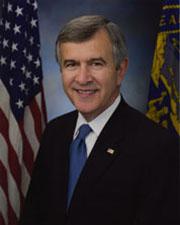 Sen. Mike Johanns (R-NE)
What it changes
1 change to S. 3240
Adds SEC. 122___. FARM DUST REGULATION PREVENTION on page 1009, line 11
Adds a sectionPrinted pageInserted: SEC. 122___. FARM DUST REGULATION PREVENTION.
Inserted: (a) Short Title.--This section may be cited as the "Farm Dust Regulation Prevention Act of 2012".
Inserted: (b) Nuisance Dust.--Part A of title I of the Clean Air Act (42 U.S.C. 7401 et seq.) is amended by adding at the end the following:
Inserted: "SEC. 132. REGULATION OF NUISANCE DUST PRIMARILY BY STATE, TRIBAL, AND LOCAL GOVERNMENTS.
Inserted: "(a) Definition of Nuisance Dust.--
Inserted: "(1) In general.--In this section, the term 'nuisance dust' means particulate matter that--
Inserted: "(A) is generated primarily from natural sources, unpaved roads, agricultural activities, earth moving, or other activities typically conducted in rural areas;
Inserted: "(B) consists primarily of soil, other natural or biological materials, or any combination of soil or other natural or biological materials;
Inserted: "(C) is not emitted directly into the ambient air from combustion, such as exhaust from combustion engines and emissions from stationary combustion processes; and
Inserted: "(D) is not comprised of residuals from the combustion of coal.
Inserted: "(2) Exclusions.--The term 'nuisance dust' does not include radioactive particulate matter produced from uranium mining or processing.
Inserted: "(b) Applicability.--Except as provided in subsection (c), any reference in this Act to particulate matter dos not include nuisance dust.
Show 6 more inserted paragraphsShow less
Inserted: "(c) Exception.--Subsection (b) does not apply to any geographical area in which nuisance dust is not regulated under State, tribal, or local law if the Administrator, in consultation with the Secretary of Agriculture, finds that--
Inserted: "(1) nuisance dust (or any subcategory of nuisance dust) causes substantial adverse public health and welfare effects at ambient concentrations; and
Inserted: "(2) the benefits of applying standards and other requirements of this Act to nuisance dust (or any subcategory of nuisance dust) outweigh the costs (including local and regional economic and employment impacts) of applying those standards and other requirements to nuisance dust (or any subcategory of nuisance dust).".
Inserted: (c) Sense of Congress.--It is the sense of Congress that the Administrator of the Environmental Protection Agency should implement an approach to excluding exceptional events, or events that are not reasonably controllable or preventable, from determinations of whether an area is in compliance with any national ambient air quality standard applicable to coarse particulate matter that--
Inserted: (1) maximizes transparency and predictability for States, tribes, and local governments; and
Inserted: (2) minimizes the regulatory and cost burdens States, tribes, and local governments bear in excluding exceptional events.
Original wording
On page 1009, after line 11, add the following:
Read automatically from the Congressional Record. Check the original before relying on it.
As printed
SA 2212. Mr. JOHANNS (for himself and Mr. Grassley) submitted an amendment intended to be proposed by him to the bill S. 3240, to reauthorize agricultural programs through 2017, and for other purposes; which was ordered to lie on the table; as follows:
On page 1009, after line 11, add the following:
SEC. 122___. FARM DUST REGULATION PREVENTION.
(a) Short Title.--This section may be cited as the “Farm Dust Regulation Prevention Act of 2012”.
(b) Nuisance Dust.--Part A of title I of the Clean Air Act (42 U.S.C. 7401 et seq.) is amended by adding at the end the following:
“SEC. 132. REGULATION OF NUISANCE DUST PRIMARILY BY STATE, TRIBAL, AND LOCAL GOVERNMENTS.
“(a) Definition of Nuisance Dust.--
“(1) In general.--In this section, the term ‘nuisance dust' means particulate matter that--
“(A) is generated primarily from natural sources, unpaved roads, agricultural activities, earth moving, or other activities typically conducted in rural areas;
“(B) consists primarily of soil, other natural or biological materials, or any combination of soil or other natural or biological materials;
“(C) is not emitted directly into the ambient air from combustion, such as exhaust from combustion engines and emissions from stationary combustion processes; and
“(D) is not comprised of residuals from the combustion of coal.
“(2) Exclusions.--The term ‘nuisance dust' does not include radioactive particulate matter produced from uranium mining or processing.
“(b) Applicability.--Except as provided in subsection (c), any reference in this Act to particulate matter dos not include nuisance dust.
“(c) Exception.--Subsection (b) does not apply to any geographical area in which nuisance dust is not regulated under State, tribal, or local law if the Administrator, in consultation with the Secretary of Agriculture, finds that--
“(1) nuisance dust (or any subcategory of nuisance dust) causes substantial adverse public health and welfare effects at ambient concentrations; and
“(2) the benefits of applying standards and other requirements of this Act to nuisance dust (or any subcategory of nuisance dust) outweigh the costs (including local and regional economic and employment impacts) of applying those standards and other requirements to nuisance dust (or any subcategory of nuisance dust).”.
(c) Sense of Congress.--It is the sense of Congress that the Administrator of the Environmental Protection Agency should implement an approach to excluding exceptional events, or events that are not reasonably controllable or preventable, from determinations of whether an area is in compliance with any national ambient air quality standard applicable to coarse particulate matter that--
(1) maximizes transparency and predictability for States, tribes, and local governments; and
(2) minimizes the regulatory and cost burdens States, tribes, and local governments bear in excluding exceptional events.
Legislative Activity
Stay on top of the latest movement without scrolling through every action
Senate amendment submitted
June 7, 2012