To prohibit mandatory or compulsory check off programs.
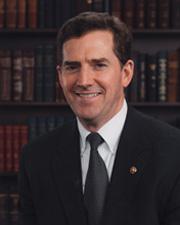 Sen. Jim DeMint (R-SC)
Legislative Activity
Stay on top of the latest movement without scrolling through every action
Roll call votes on amendments in Senate: Amendment SA 2276 not agreed to in Senate by Yea-Nay Vote. 20 - 79. Record Vote Number: 138.
June 19, 2012
View full timeline
Roll call votes on amendments in Senate: Amendment SA 2276 not agreed to in Senate by Yea-Nay Vote. 20 - 79. Record Vote Number: 138.
June 19, 2012
Senate amendment not agreed to: Amendment SA 2276 not agreed to in Senate by Yea-Nay Vote. 20 - 79. Record Vote Number: 138.
June 19, 2012
Senate amendment proposed (on the floor): Amendment SA 2276 proposed by Senator DeMint.(consideration: CR S4281-4282; text: CR S4281)
June 19, 2012
Amendment SA 2276 proposed by Senator DeMint. (consideration: CR S4281-4282; text: CR S4281) To prohibit mandatory or compulsory check off programs.
June 19, 2012
Amendment SA 2276 not agreed to in Senate by Yea-Nay Vote. 20 - 79. Record Vote Number: 138.
June 19, 2012
Senate amendment submitted
June 11, 2012
Votes
1 roll call on this amendment
Text
Proposed
AGRICULTURE REFORM, FOOD, AND JOBS ACT OF 2012

The PRESIDING OFFICER. Under the previous order, the Senate will
resume consideration of S. 3240, which the clerk will report.
The legislative clerk read as follows:

A bill (S. 3240) to reauthorize the agriculture programs
through 2017, and for other purposes.

Pending:

Reid (for Stabenow/Roberts) amendment No. 2389, of a
perfecting nature.
Reid amendment No. 2390 (to amendment No. 2389), to change
the enactment date.
Reid motion to recommit the bill to the Committee on
Agriculture, Nutrition, and Forestry, with instructions, Reid
amendment No. 2391, of a perfecting nature.
Reid amendment No. 2406 (to (the instructions) amendment
No. 2391), to eliminate certain working lands conservation
programs.
Reid amendment No. 2407 (to amendment No. 2406), to convert
all mandatory spending to discretionary spending subject to
annual appropriations.

The PRESIDING OFFICER. Under the previous order, the motion to
recommit and amendment No. 2390 are withdrawn and a Stabenow-Roberts
amendment No. 2389 is agreed to.
The Senator from Michigan.

Amendment No. 2440

Ms. STABENOW. Mr. President, I ask unanimous consent that we have 2
minutes of debate equally divided prior to the vote on the first Akaka
amendment, No. 2440.
The PRESIDING OFFICER. Without objection, it is so ordered.
The Senator from Hawaii.
Mr. AKAKA. Mr. President, I rise today to speak in favor of amendment
No. 2440 to the farm bill. This amendment would improve implementation
of an existing program at USDA which provides loans to purchasers of
highly fractionated Indian lands.
One unfortunate legacy of policies of the late 1800s is that many
Indian lands are highly fractionated. This means that one parcel of
land might have hundreds or even thousands of owners. Highly
fractionated parcels make putting these Indian lands to viable use
virtually impossible. This goes against any well-established Federal
Indian policies encouraging the productive use of Indian lands.
As chair of the Committee on Indian Affairs, I have worked with the
USDA and stakeholders to craft this amendment to improve agricultural
land use for tribal governments and individual Indians. I urge my
colleagues to support this amendment.
The PRESIDING OFFICER. The Senator's time has expired.
The Senator from Kansas.
Mr. ROBERTS. This is a technical amendment. I rise in support of it,
and I yield back the remainder of my time.
Mr. AKAKA. Mr. President, I call up my amendment and speak in favor
of amendment No. 2396, a bipartisan amendment Senator Thune and I are
offering to the farm bill.
The PRESIDING OFFICER. The Senator from Michigan.
Ms. STABENOW. Mr. President, if I might take a moment, I believe we
want to first dispose of the Akaka amendment No. 2440. Our ranking
member has indicated no opposition, so at this point I would ask that
we proceed, unless there is a reason not to do so.
On behalf of Senator Akaka, I call up amendment No. 2440 and ask that
we proceed with a voice vote.
The PRESIDING OFFICER. Without objection, it is so ordered.
The clerk will report the amendment.
The legislative clerk read as follows:

The Senator from Hawaii [Mr. Akaka] proposes an amendment
numbered 2440.

The amendment is as follows:

(Purpose: To improve a provision relating to loans to purchasers of
highly fractionated land)

Strike section 5102 and insert the following:

SEC. 5102. LOANS TO PURCHASERS OF HIGHLY FRACTIONATED LAND.

(a) In General.--The first sentence of Public Law 91 229
(25 U.S.C. 488) is amended--
(1) in subsection (a), in the first sentence, by striking
``loans from'' and all that follows through ``1929)'' and
inserting ``direct loans in a manner consistent with direct
loans pursuant to chapter 4 of subtitle A of the Consolidated
Farm and Rural Development Act'';
(2) in subsection (b)(1)--
(A) by striking ``pursuant to section 205(c) of the Indian
Land Consolidation Act (25 U.S.C. 2204(c))''; and
(B) by inserting ``or to intermediaries in order to
establish revolving loan funds for the purchase of highly
fractionated land under that section'' before the period at
the end; and
(3) by adding at the end the following:
``(c) Consultation Required.--In determining regulations
and procedures to define eligible purchasers of highly
fractionated land under this section, the Secretary of
Agriculture shall consult with the Secretary of the
Interior.''.
(b) Relationship to Other Amendment.--Section 6002 is
amended by striking subsection (bb).

Ms. STABENOW. Mr. President, I ask unanimous consent that we proceed
with a voice vote.
The PRESIDING OFFICER. If there is no further debate, the question is
on agreeing to the amendment.
The amendment (No. 2440) was agreed to.
The Senator from Hawaii.

Amendment No. 2396

Mr. AKAKA. I rise today to speak in favor of amendment No. 2396, a
bipartisan amendment Senator Thune and I are offering to the farm bill.
This amendment would make permanent the Office of Tribal Relations at
the USDA.
This office was created to ensure that the USDA upholds Federal
Indian policy and maintains its government-to-government relationship
with tribes. Permanently establishing this office will ensure that
tribal governments can develop their programs in parity with their
neighbors in rural America. It will ensure that the USDA consults with
tribal governments and that tribes can participate in programs related
to agricultural, infrastructure, and economic development
opportunities.
I encourage all my colleagues to support this bipartisan amendment to
the farm bill.
I thank the Chair, I yield back the remainder of my time, and I call
up amendment No. 2396.
The PRESIDING OFFICER. The clerk will report the amendment.
The legislative clerk read as follows:

The Senator from Hawaii [Mr. Akaka] proposes an amendment
numbered 2396.

Mr. AKAKA. I ask unanimous consent that further reading of the
amendment be dispensed with.
The PRESIDING OFFICER. Without objection, it is so ordered.
The amendment is as follows:

(Purpose: To establish the Office of Tribal Relations in the Office of
the Secretary of Agriculture)

On page 1009, after line 11, add the following:

SEC. 12207. OFFICE OF TRIBAL RELATIONS.

(a) In General.--Title III of the Department of Agriculture
Reorganization Act of 1994 is amended by adding after section
308 (7 U.S.C. 3125a note; Public Law 103 354) the following:

``SEC. 309. OFFICE OF TRIBAL RELATIONS.

``The Secretary shall establish in the Office of the
Secretary an Office of Tribal Relations.''.
(b) Conforming Amendments.--Section 296(b) of the
Department of Agriculture Reorganization Act of 1994 (7
U.S.C. 7014(b)) (as amended by section 12201(b)) is amended--
(1) in paragraph (8), by striking ``or'' at the end;
(2) in paragraph (9), by striking the period at the end and
inserting ``; or''; and
(3) by adding at the end the following:
``(10) the authority of the Secretary to establish in the
Office of the Secretary the Office of Tribal Relations in
accordance with section 309.''.

The PRESIDING OFFICER. Who yields time in opposition?
Mr. ROBERTS. Mr. President, this amendment makes permanent the
current Office of Tribal Relations with the Department of Agriculture,
and that is very important in terms of outreach for Native American
farmers and ranchers.
We have no objection, and I yield back the remainder of my time.
The PRESIDING OFFICER. If there is no further debate, the question is
on agreeing to the amendment.

[[Page S4267]]

The amendment (No. 2396) was agreed to.
The PRESIDING OFFICER. The Senator from New Hampshire.

Amendment No. 2192

Ms. AYOTTE. Mr. President, I call up Ayotte amendment No. 2192.
The PRESIDING OFFICER. The clerk will report the amendment.
The legislative clerk read as follows:

The Senator from New Hampshire proposes an amendment
numbered 2192.

(The amendment is printed in the Record of Thursday, June 7, 2012
under ``Text of Amendments.'')
The PRESIDING OFFICER. There is now 2 minutes of debate equally
divided.
The Senator from New Hampshire.
Ms. AYOTTE. Mr. President, my amendment seeks to reform the value-
added grant program. The USDA has awarded $240 million in grants over
the lifetime of this program, but the USDA has not been transparent and
has failed to adequately account for the grants and how they are
awarded.
The last assessment of this program was in 2006 and indicated that
more than 40 percent of the grant recipients went out of business just
3 years after having completed their grant project. My amendment would
allow the program to go forward, but it would reform this program to be
more accountable to taxpayers.
The program has awarded 62 grants totaling $12.1 million to ethanol
facilities. It does eliminate grants to ethanol facilities. We should
not be wasting further taxpayer dollars to give to ethanol producers
when we have already given them so many taxpayer opportunities here.
At least 105 wine industry groups and wineries have received $10.5
million.
The PRESIDING OFFICER. The Senator's time has expired.
Ms. AYOTTE. Mr. President, I would just say this is a good amendment
for taxpayers to reform this program and make it accountable.
The PRESIDING OFFICER. The Senator from Michigan.
Ms. STABENOW. Mr. President, unfortunately, I would urge my
colleagues to vote no on this amendment. It cuts in half funding for a
program that helps food entrepreneurs--small businesses and farmers who
want to create new kinds of products and to commercialize them and get
them to the marketplace.
This is really what we are trying to do--to leverage more dollars in
this bill to support not only the farmer on the farm but also to move
into commercialization and to create new food products and jobs. In
fact, we have created hundreds of jobs at wineries. We have done this
all across the country--created jobs by helping small businesses and
entrepreneurs to take a great idea and to move it to commercialization
and add value to their product.
I would strongly urge a ``no'' vote, and I would ask for the yeas and
nays.
The PRESIDING OFFICER. Is there a sufficient second?
There appears to be a sufficient second.
All time has expired.
The question is on agreeing to the amendment. The clerk will call the
roll.
The legislative clerk called the roll.
Mr. KYL. The following Senator is necessarily absent: the Senator
from Illinois (Mr. Kirk).
The PRESIDING OFFICER. Are there any other Senators in the Chamber
desiring to vote?
The result was announced--yeas 38, nays 61, as follows:

[Rollcall Vote No. 123 Leg.]

YEAS--38

Alexander
Ayotte
Barrasso
Boozman
Brown (MA)
Burr
Chambliss
Coats
Coburn
Corker
Cornyn
Crapo
DeMint
Enzi
Graham
Hatch
Heller
Hutchison
Inhofe
Isakson
Johnson (WI)
Kyl
Lee
Manchin
McCain
McConnell
Murkowski
Paul
Portman
Risch
Rubio
Sessions
Shelby
Snowe
Thune
Toomey
Vitter
Wicker

NAYS--61

Akaka
Baucus
Begich
Bennet
Bingaman
Blumenthal
Blunt
Boxer
Brown (OH)
Cantwell
Cardin
Carper
Casey
Cochran
Collins
Conrad
Coons
Durbin
Feinstein
Franken
Gillibrand
Grassley
Hagan
Harkin
Hoeven
Inouye
Johanns
Johnson (SD)
Kerry
Klobuchar
Kohl
Landrieu
Lautenberg
Leahy
Levin
Lieberman
Lugar
McCaskill
Menendez
Merkley
Mikulski
Moran
Murray
Nelson (NE)
Nelson (FL)
Pryor
Reed
Reid
Roberts
Rockefeller
Sanders
Schumer
Shaheen
Stabenow
Tester
Udall (CO)
Udall (NM)
Warner
Webb
Whitehouse
Wyden

NOT VOTING--1

Kirk

The amendment (No. 2192) was rejected.
The PRESIDING OFFICER. The majority leader.
Mr. REID. Mr. President, for the benefit of all Senators--if I could
have the attention of the Senate--we have before us why we are here.
This was very difficult, to get to the point we are now, where we have
a very important bill. We do these every 5 years. Senators Stabenow and
Roberts have worked very hard to get us to this point. I congratulate
them both, but we have a long way to go.
First of all, everyone understand all the next votes will be 10-
minute votes. That means at the end of 15 minutes we are going to cut
off the vote. It doesn't matter if a Democrat is missing or Republican
is missing; it does not matter. If it is a close vote, we always are
careful with that, we understand, but let's understand when the time is
up, we are going to turn in the vote.
Second, I have instructed all of the presiders, we are going to have
1-minute speeches--1 minute for Democrats, 1 minute for Republicans.
When the time is up, the time is going to end so everyone will be
treated the same. We have 73 amendments we have to work through. We
have a lot to do the rest of this week, but this is important. No. 1,
we are going to keep the vote. I have an important meeting at 4
o'clock. I have instructed my staff, if I am not here I will not be
counted. That is what we have to do. If you have important meetings,
you might have to miss a vote or two.
Second, I repeat, we will have 2 minutes equally divided before each
vote, and it will be 2 minutes.

Amendment No. 2429

The PRESIDING OFFICER. The Senator from Montana.
Mr. TESTER. Mr. President, I call up amendment No. 2429.
The PRESIDING OFFICER. The clerk will report.
The legislative clerk read as follows:

The Senator from Montana [Mr. Tester], for Mr. Baucus, for
himself and Mr. Tester, proposes an amendment numbered 2429.

Mr. TESTER. I ask unanimous consent the reading of the amendment be
dispensed with.
The PRESIDING OFFICER. Without objection, it is so ordered.
The amendment is as follows:

(Purpose: To improve the livestock forage disaster program)

On page 128, between lines 16 and 17, insert the following:
(iii) Annual payment based on drought conditions determined
by means other than the u.s. drought monitor.--

(I) In general.--An eligible livestock producer that owns
grazing land or pastureland that is physically located in a
county that has experienced on average, over the preceding
calendar year, precipitation levels that are 50 percent or
more below normal levels, according to sufficient
documentation as determined by the Secretary, may be
eligible, subject to a determination by the Secretary, to
receive assistance under this paragraph in an amount equal to
not more than 1 monthly payment using the monthly payment
rate under subparagraph (B).
(II) No duplicate payment.--A producer may not receive a
payment under both clause (ii) and this clause.

Mr. TESTER. Mr. President, I urge my colleagues to support the
Baucus-Tester amendment No. 2429. The Baucus-Tester amendment fixes a
problem in the livestock forage program to make sure that ranchers who
suffer losses in their herds because of drought are able to get the
help they need. If you are in grass-based agriculture, folks, for those
ranchers the grass is the heartbeat of your operation. If you do not
have it, you cannot survive. It was critical this last year when record
droughts devastated the Southwest. Wild fires burned more than 2
million acres in Texas.
This program has moved into title I of the farm bill. This amendment
fixes a problem we have seen in one of those programs. I urge my
colleagues to support this amendment.
The PRESIDING OFFICER. Who yields time in opposition?
The Senator from Michigan.

[[Page S4268]]

Ms. STABENOW. Mr. President, can we proceed with a voice vote on this
amendment?
Mr. ROBERTS. Mr. President, I know of no objection at this point. I
yield the remainder of our time.
The PRESIDING OFFICER. All time is yielded back.
The question is on agreeing to amendment No. 2429.
The amendment was agreed to.

Amendment No. 2190, As Modified

Ms. STABENOW. Mr. President, it is my understanding we are ready with
the amendment of Senator Snowe. I ask she be the next amendment in
order.
The PRESIDING OFFICER. Without objection, it is so ordered.
The Senator from Maine.
Ms. SNOWE. I call up amendment No. 2190.
The PRESIDING OFFICER. The clerk will report.
The legislative clerk read as follows.

The Senator from Maine (Ms. Snowe), for herself and Mrs.
Gillibrand, proposes an amendment numbered 2190.

Ms. SNOWE. I ask unanimous consent that amendment 2190 be modified
with the changes I am sending to the desk.
The PRESIDING OFFICER. Is there objection?
Without objection, it is so ordered.
The amendment, as modified, is as follows.

(Purpose: To require Federal milk marketing order reform)

At the end of part III of subtitle D of title I, insert the
following:

PART IV--FEDERAL MILK MARKETING ORDER REFORM

SEC. 1481. FEDERAL MILK MARKETING ORDERS.

(a) Amendments.--The Secretary shall provide an analysis on
the effects of amending each Federal milk marketing order
issued under section 8c of the Agricultural Adjustment Act (7
U.S.C. 608c), reenacted with amendments by the Agricultural
Marketing Agreement Act of 1937 (in this part referred to as
a ``milk marketing order''), as required by this section.
(b) Use of End-product Price Formulas.--In carrying out
subsection (a), the Secretary shall--
(1) consider replacing the use of end-product price
formulas with other pricing alternatives; and
(2) submit to the Committee on Agriculture of the House of
Representatives and the Committee on Agriculture, Nutrition,
and Forestry of the Senate a report describing the findings
of the Secretary on the impact of the action considered under
paragraph (1).

The PRESIDING OFFICER. There is now 2 minutes of debate equally
divided.
The Senator from Maine.
Ms. SNOWE. Mr. President, I rise in strong support of this amendment
I have offered along with Senator Gillibrand of New York on a
bipartisan basis. I thank the Chair and ranking member for working with
us on the modifications in support of this amendment.
The underlying bill establishes a margin insurance program that helps
very large dairy producers but provides little assistance to small
family-owned dairy producers who have exponentially fewer cows and do
not produce the surplus amounts of milk. Without this amendment, these
small dairy farmers face possible extinction due, in part, to the
excessive price volatility. The prices in Europe influence the price
our farmers right here at home receive from the government.
This amendment will help resolve this inequity by requiring the
Department of Agriculture to provide an analysis on the effects of
amending each Federal milk marketing order and deciding how best to
update the system of Federal orders, which is now 12 years old. I hope
we will adopt this amendment.
The PRESIDING OFFICER. Who yields time?
Ms. STABENOW. Mr. President, I support this amendment and yield the
remainder of our time. It is my understanding we can proceed with a
voice vote on this amendment.
The PRESIDING OFFICER. If there is no further debate, the question is
on agreeing to amendment No. 2190, as modified.
Those in favor, say aye.
(Chorus of ayes.)
All opposed, no.
(Chorus of nays.)
The PRESIDING OFFICER. The nays appear to have it.
All those in favor, say aye.
(Chorus of ayes.)
All those opposed, no.
(Chorus of nays.)
The PRESIDING OFFICER. The nays appear to have it.
Ms. STABENOW. I ask for a record rollcall.
The PRESIDING OFFICER. Is there a sufficient second?
There is a sufficient second.
The clerk will call the roll.
The legislative clerk called the roll.
Mr. KYL. The following Senator is necessarily absent: the Senator
from Illinois (Mr. Kirk).
The PRESIDING OFFICER (Mr. Franken). Are there any other Senators in
the Chamber desiring to vote?
The result was announced--yeas 66, nays 33, as follows:

[Rollcall Vote No. 124 Leg.]

YEAS--66

Akaka
Ayotte
Baucus
Begich
Bingaman
Blumenthal
Brown (MA)
Brown (OH)
Cantwell
Cardin
Carper
Casey
Coburn
Cochran
Collins
Conrad
Coons
Corker
Franken
Gillibrand
Graham
Grassley
Hagan
Harkin
Hatch
Inouye
Kerry
Klobuchar
Landrieu
Lautenberg
Leahy
Lee
Levin
Lieberman
Manchin
McCain
McCaskill
McConnell
Menendez
Merkley
Mikulski
Moran
Murkowski
Murray
Nelson (FL)
Portman
Pryor
Reed
Reid
Roberts
Rockefeller
Rubio
Sanders
Schumer
Sessions
Shaheen
Shelby
Snowe
Stabenow
Tester
Toomey
Udall (NM)
Vitter
Warner
Webb
Whitehouse

NAYS--33

Alexander
Barrasso
Bennet
Blunt
Boozman
Boxer
Burr
Chambliss
Coats
Cornyn
Crapo
DeMint
Durbin
Enzi
Feinstein
Heller
Hoeven
Hutchison
Inhofe
Isakson
Johanns
Johnson (SD)
Johnson (WI)
Kohl
Kyl
Lugar
Nelson (NE)
Paul
Risch
Thune
Udall (CO)
Wicker
Wyden

NOT VOTING--1

Kirk

The amendment (No. 2190), as modified, was agreed to.
The PRESIDING OFFICER. The Senator from New Mexico.

Amendment No. 2364 Withdrawn

Mr. BINGAMAN. Mr. President, let me speak for a moment with regard to
amendment No. 2364 that Senator Hutchison and I had intended to offer.
We have been in consultation with the managers of the legislation. They
have agreed to some changes in the report language that accommodate our
concern.
Our concern is about water conservation and ensuring that water
conservation, particularly in the arid West but in any part of the
country where there are underground aquifers and wherever there is
depletion of water supplies that is going to make farming and
agricultural activities impossible in the future. The managers have
agreed to some changes in the report language that accommodate our
concerns. They have agreed to a colloquy that accommodates our
concerns. Accordingly, we will not proceed with the amendment.
Before I withdraw the amendment, could I ask Senator Hutchison to
make any comments she would like to make.
The PRESIDING OFFICER. The Senator from Texas.
Mrs. HUTCHISON. Mr. President, I appreciate the sponsors of the bill
working with us. Just as an example, the Ogallala Aquifer has gone down
100 feet since irrigation has been allowed from this water source. It
is a source for cities such as the city of San Antonio and other cities
around New Mexico and Texas. That is just one example. It is happening
all over our country. So conservation has to be a part of keeping our
farms and ranches alive, and that is the purpose of the amendment.
We appreciate the managers working with us and hope we can go forward
and highlight the importance of conservation to keep our water
resources for our farmers and ranchers.

WATER CONSERVATION IN MULTI-STATE AQUIFERS

Mr. BINGAMAN. Mr. President, I rise to discuss the Ogallala Aquifer--
also known the High Plains Aquifer--region, an area that is impacted on
a daily basis by groundwater pumping for agriculture. In fact, that
region leads the Nation in the amount of groundwater pumped for
irrigation purposes, with some 17 billion gallons per day being
withdrawn for irrigation. I

[[Page S4269]]

have for many years been concerned about the rapid groundwater
depletion occurring in the southern portion of that aquifer. There are
parts of the Ogallala underlying New Mexico that have seen a decline in
water levels of more than 150 feet since groundwater pumping for
agriculture first started.
Mrs. HUTCHISON. Mr. President, I share the concern of the Senator
from New Mexico. A large area in western Texas overlies the Ogallala
Aquifer as well. We, too, have seen alarmingly high levels of
groundwater depletion. Water is a precious resource in our part of the
country, and the Ogallala is a major source of water for agriculture,
our communities, and industrial development.
Mr. BINGAMAN. I understand that the bill before the Senate will make
resources available to address the problem of the declining groundwater
resources in the Ogallala. It would be helpful to my colleague from
Texas and me if the chairwoman and ranking member of the Agriculture
Committee could confirm our understanding on certain aspects of the
bill. First, am I correct that substantial funds under the
Environmental Quality Incentive Program, EQIP, will continue to be made
available for practices that result in the conservation of groundwater,
including the use of more efficient irrigation systems and conversion
to less water-intensive crops or dryland farming, which may, within the
discretion of the Secretary of Agriculture, include long-term grassland
rotation?
Ms. STABENOW. Yes, the Senator is correct.
Mrs. HUTCHISON. I understand that the Regional Conservation
Partnership Program is intended to address water quantity as well as
water quality issues, so funding under the program could be directed to
address situations where high historic levels of groundwater depletion
have occurred due to agricultural use. Is that correct?
Mr. ROBERTS. Yes, that is correct.
Mr. BINGAMAN. With respect to the designation of critical
conservation areas under section 2401 of the bill, I would encourage
USDA to look to areas where they already have initiatives in place
addressing the area. I understand that any funding under this program
would be in addition to funding that would otherwise be available to
the region under any other provision of the bill. Finally, it is my
expectation and understanding that in determining whether an area would
be designated as a critical conservation area and in determining the
level of funding to be directed to the area, the Secretary would
carefully consider areas where continued agricultural activities are
threatened by groundwater depletion.
Ms. STABENOW. The Senator is correct in his understanding.
Mr. ROBERTS. I agree.
Mrs. HUTCHISON. I thank the chairwoman and ranking member.
Mr. BINGAMAN. I thank them as well.
Mr. President, in light of the comments we have just made, we will
not call up the amendment.
The managers can go to the next amendment.
The PRESIDING OFFICER. The Senator from Michigan.
Ms. STABENOW. Mr. President, if I may take a moment to thank Senator
Bingaman and Senator Hutchison. Both New Mexico and Texas have strong
and passionate advocates. They are lucky to have them, and we are
looking forward to working with them to make sure the issues they have
raised are addressed.
Also, just for those following along in order, I would just indicate
that Senator Collins, in light of the passage of the Snowe amendment,
will not be proceeding with her amendment, just for the information of
the Senate.
The PRESIDING OFFICER. The Senator from Iowa.

Amendment No. 2167

Mr. GRASSLEY. Mr. President, I call up my marketing loan amendment,
amendment No. 2167.
The PRESIDING OFFICER. The clerk will report.
The assistant legislative clerk read as follows:

The Senator from Iowa [Mr. Grassley] proposes an amendment
numbered 2167.

Mr. GRASSLEY. Mr. President, I ask unanimous consent that reading of
the amendment be dispensed with.
The PRESIDING OFFICER. Without objection, it is so ordered.
The amendment is as follows:

(Purpose: To provide payment limitations for marketing loan gains and
loan deficiency payments)

On page 140, strike line 1 and insert the following:
(b) Limitation on Marketing Loan Gains and Loan Deficiency
Payments for Peanuts and Other Covered Commodities.--Section
1001 of the Food Security Act of 1985 (7 U.S.C. 1308) is
amended by striking subsection (d) and inserting the
following:
``(d) Limitation on Marketing Loan Gains and Loan
Deficiency Payments for Peanuts and Other Covered
Commodities.--The total amount of marketing loan gains and
loan deficiency payments received, directly or indirectly, by
a person or legal entity (except a joint venture or general
partnership) for any crop year under subtitle B of the
Agriculture Reform, Food, and Jobs Act of 2012 (or a
successor provision) for--
``(1) peanuts may not exceed $75,000; and
``(2) 1 or more other covered commodities may not exceed
$75,000.''.
(c) Conforming Amendments.--
On page 143, line 9, strike ``(c)'' and insert ``(d)''.

Mr. GRASSLEY. Mr. President, I tried to get this amendment adopted in
the 2008 farm bill. It got 57 votes, but it was under a 60-vote rule,
so obviously it did not get adopted.
This amendment would cap payments that one farmer can get on
marketing loans and loan deficiency payments. We cannot have 70 percent
of the farm payments going to 10 percent of the largest farmers.
I think this amendment will help add integrity to the program. We
should have caps on title I commodity programs. This will add
defensibility to this bill, along with the payment limit reforms we
were able to put in in the committee before the bill was voted out.
Opponents will argue--I am sure you will hear this argument--that
this would increase forfeitures of crop. But I believe they are
overstating that issue, especially given current prices. And even if a
farmer did forfeit crop----
The PRESIDING OFFICER. The Senator's time has expired.
Mr. GRASSLEY. Well, this is a commonsense amendment. I hope you will
vote for it.
The PRESIDING OFFICER. The Senator from Georgia.
Mr. CHAMBLISS. Mr. President, I rise in opposition to this amendment.
Limiting MLGs and LDPs is disruptive to orderly marketing because USDA
lacks the ability in real time to track eligibility. Consequently, a
producer may exceed his loan limit under this amendment and USDA have
no idea he has exceeded his loan limit, so he is going to have to come
back later on and obviously repay that in very difficult times.
Most farming operations secure financing for annual production costs
as well as incur long-term debt for equipment and land. Introducing
limits on marketing loan benefits makes this financing more difficult
to obtain and more difficult to administer from a farmer's standpoint
as well as a banking standpoint.
I urge opposition to the amendment.
The PRESIDING OFFICER. The question is on agreeing to the amendment.
Ms. STABENOW. Mr. President, I ask for the yeas and nays on the
amendment.
The PRESIDING OFFICER. Is there a sufficient second?
There appears to be a sufficient second.
The clerk will call the roll.
The assistant legislative clerk called the roll.
Mr. KYL. The following Senator is necessarily absent: the Senator
from Illinois (Mr. Kirk).
The PRESIDING OFFICER. Are there any other Senators in the Chamber
desiring to vote?
The result was announced--yeas 75, nays 24, as follows:

[Rollcall Vote No. 125 Leg.]

YEAS--75

Akaka
Alexander
Ayotte
Barrasso
Baucus
Begich
Bennet
Bingaman
Blumenthal
Boxer
Brown (MA)
Brown (OH)
Cantwell
Cardin
Carper
Casey
Coats
Coburn
Collins
Coons
Corker
Crapo
DeMint
Durbin
Enzi
Feinstein
Franken
Gillibrand
Grassley
Harkin
Hatch
Heller
Inouye
Johanns
Johnson (SD)
Kerry

[[Page S4270]]

Klobuchar
Kohl
Kyl
Lautenberg
Lee
Levin
Lieberman
Lugar
Manchin
McCain
McCaskill
McConnell
Menendez
Merkley
Mikulski
Murkowski
Murray
Nelson (NE)
Nelson (FL)
Paul
Portman
Reed
Reid
Risch
Roberts
Rockefeller
Rubio
Schumer
Shaheen
Snowe
Stabenow
Tester
Thune
Toomey
Udall (CO)
Udall (NM)
Webb
Whitehouse
Wyden

NAYS--24

Blunt
Boozman
Burr
Chambliss
Cochran
Conrad
Cornyn
Graham
Hagan
Hoeven
Hutchison
Inhofe
Isakson
Johnson (WI)
Landrieu
Leahy
Moran
Pryor
Sanders
Sessions
Shelby
Vitter
Warner
Wicker

NOT VOTING--1

Kirk

The amendment (No. 2167) was agreed to.

Amendment No. 2445

Mr. BROWN of Ohio. Mr. President, I call up my amendment No. 2445.
The PRESIDING OFFICER. The clerk will report.
The assistant legislative clerk read as follows:

The Senator from Ohio [Mr. Brown] proposes an amendment
numbered 2445.

Mr. BROWN of Ohio. Mr. President, I ask unanimous consent that the
reading of the amendment be dispensed with.
The PRESIDING OFFICER. Without objection, it is so ordered.
The amendment is as follows:

(Purpose: To strengthen rural communities and foster the next
generation of farmers and ranchers)

On page 574, between lines 11 and 12, insert the following:
``(C) Mandatory funding.--Of the funds of the Commodity
Credit Corporation, the Secretary shall use to carry out this
subsection $12,500,000 for each of fiscal years 2014 through
2017, to remain available until expended.
On page 606, between lines 4 and 5, insert the following:
``(E) Mandatory funding for fiscal years 2013 through
2017.--Of the funds of the Commodity Credit Corporation, the
Secretary shall use to carry out this paragraph $3,750,000
for each of fiscal years 2014 through 2017, to remain
available until expended.
On page 782, between lines 14 and 15 and insert the
following:

SEC. 6203. FUNDING OF PENDING RURAL DEVELOPMENT LOAN AND
GRANT APPLICATIONS.

(a) In General.--The Secretary shall use funds made
available under subsection (b) to provide funds for
applications that are pending on the date of enactment of
this Act in accordance with the terms and conditions of
section 6029 of the Food, Conservation, and Energy Act of
2008 (Public Law 110 246; 122 Stat. 1955).
(b) Funding.--Notwithstanding any other provision of law,
beginning in fiscal year 2014, of the funds of the Commodity
Credit Corporation, the Secretary shall use to carry out this
section $50,000,000, to remain available until expended.
On page 832, line 6, strike ``$50,000,000 for fiscal year
2013'' and insert ``$17,000,000 for each of fiscal years 2013
through 2017''.

The PRESIDING OFFICER. There is 2 minutes of debate, equally divided.
Mr. BROWN of Ohio. Mr. President, Congress has provided an average of
$400 million for farm bills in the rural development title. The bill we
are considering includes no funding at all. My fiscally responsible
amendment funds rural business development programs, a portion of the
backlog of wastewater infrastructure projects, and will help bring a
new generation of farmers into agriculture.
As a member of the Agriculture Committee, I know how important it is
that this amendment maintain our committee's commitment to save at
least $23 billion in the farm bill. I yield the rest of my time to the
chairwoman, Senator Stabenow.
Ms. STABENOW. Mr. President, let me add my strong support for the
amendment. We have reformed this title on rural development. We have
eliminated 16 different authorizations, tightened it up. The amendment
stays within our parameters of $23 billion in deficit reduction. In
effect, this benefits every small town and community across America
that counts on rural development. I would strongly support this
amendment.
The PRESIDING OFFICER. The Senator from Kansas.
Mr. ROBERTS. Mr. President, I oppose this amendment. I do so
reluctantly with my colleague on the committee. But the committee bill
contains no mandatory funding in the rural development title. This
amendment would take savings achieved in the bill from 23.4--used to be
26.3--now we are down to 23.4. That would take it down to 23.2 and
redirect $150 million mandatory spending into a few rural development
programs.
Nothing against them, but if we are going to achieve savings in this
bill, we have to hold the line. I reluctantly oppose the amendment.
The PRESIDING OFFICER. The question is on agreeing to the amendment.
Ms. STABENOW. I ask for the yeas and nays.
The PRESIDING OFFICER. Is there a sufficient second?
There is a sufficient second.
The clerk will call the roll.
The assistant legislative clerk called the roll.
Mr. KYL. The following Senator is necessarily absent: the Senator
from Illinois (Mr. Kirk).
The PRESIDING OFFICER. Are there any other Senators in the Chamber
desiring to vote?
The result was announced--yeas 55, nays 44, as follows:

[Rollcall Vote No. 126 Leg.]

YEAS--55

Akaka
Baucus
Begich
Bennet
Bingaman
Blumenthal
Boxer
Brown (MA)
Brown (OH)
Cantwell
Cardin
Carper
Casey
Collins
Conrad
Coons
Durbin
Feinstein
Franken
Gillibrand
Hagan
Harkin
Heller
Inouye
Johnson (SD)
Kerry
Klobuchar
Kohl
Landrieu
Lautenberg
Leahy
Levin
Lieberman
Manchin
Menendez
Merkley
Mikulski
Murray
Nelson (NE)
Nelson (FL)
Pryor
Reed
Reid
Rockefeller
Sanders
Schumer
Shaheen
Stabenow
Tester
Udall (CO)
Udall (NM)
Warner
Webb
Whitehouse
Wyden

NAYS--44

Alexander
Ayotte
Barrasso
Blunt
Boozman
Burr
Chambliss
Coats
Coburn
Cochran
Corker
Cornyn
Crapo
DeMint
Enzi
Graham
Grassley
Hatch
Hoeven
Hutchison
Inhofe
Isakson
Johanns
Johnson (WI)
Kyl
Lee
Lugar
McCain
McCaskill
McConnell
Moran
Murkowski
Paul
Portman
Risch
Roberts
Rubio
Sessions
Shelby
Snowe
Thune
Toomey
Vitter
Wicker

NOT VOTING--1

Kirk

The amendment (No. 2445) was agreed to.
The PRESIDING OFFICER. The Senator from Alabama.

Amendment No. 2174

Mr. SESSIONS. Mr. President, I call up amendment No. 2174.
The PRESIDING OFFICER. The clerk will report.
The assistant legislative clerk read as follows:

The Senator from Alabama [Mr. Sessions] proposes an
amendment numbered 2174.

The amendment is as follows:

(Purpose: To limit categorical eligibility for the supplemental
nutrition assistance program to those who receive cash assistance)

On page 312, between lines 8 and 9, insert the following:

SEC. 4002. LIMITATION ON CATEGORICAL ELIGIBILITY.

Section 5 of the Food and Nutrition Act of 2008 (7 U.S.C.
2014) is amended--
(1) in the second sentence of subsection (a), by striking
``households in which each member receives benefits'' and
inserting ``households in which each member receives cash
assistance''; and
(2) in subsection (j), by striking ``or who receives
benefits under a State program'' and inserting ``or who
receives cash assistance under a State program''.

Mr. SESSIONS. Mr. President, food stamp spending has quadrupled--gone
up four times--since 2001, increasing twice the rate that the other
major poverty program, Medicaid, has increased. It is now the second
largest Federal welfare program. An individual on food stamps, with all
other government programs they may be eligible for, can receive as much
as $25,000 a year.
Under this bill food stamps will average $80 billion a year for 10
years; whereas, the agriculture farm programs will average $20 billion
a year. It is by far the dominant factor in this entire piece of
legislation.
Amendment No. 2174 deals with the problem through a system known as
categorical eligibility. Forty-three States now provide benefits to
individuals whose income exceeds the statutory limit--incomes and
assets. Only 11 States did that in 2007.

[[Page S4271]]

I ask that we be able to fix this problem, and I urge my colleagues
to vote for it.
The PRESIDING OFFICER. The Senator from Michigan.
Ms. STABENOW. Mr. President, I strongly urge a ``no'' vote. We
actually rejected this amendment last fall. I ask that we do it again.
It is true that food assistance has gone up as the economy has had a
rough time. As unemployment goes up, food costs go up. Unemployment is
coming down, and in this bill we reflect savings. As the economy is
getting better, food help goes down. It is no different than crop
insurance helping the farmer in a disaster. This helps families in a
disaster.
Unfortunately, this amendment would completely change the structure
of food help. It would dramatically affect children and families. For
example, it would affect someone's ability to get to work because the
value of their car would somehow be reflected in a way that would
require them to possibly give up their car when they are trying to get
to work in order to be able to put food on the table for their
families. It makes no sense.
This bill has commonsense reforms to make sure every dollar goes
where it should. I urge a ``no'' vote.
The PRESIDING OFFICER. The question is on agreeing to the amendment.
Mr. SESSIONS. Mr. President, I ask for the yeas and nays.
The PRESIDING OFFICER. Is there a sufficient second?
There is a sufficient second.
The clerk will call the roll.
The assistant legislative clerk called the roll.
Mr. KYL. The following Senator is necessarily absent: the Senator
from Illinois (Mr. Kirk).
The PRESIDING OFFICER (Mrs. Shaheen). Are there any other Senators in
the Chamber desiring to vote?
The result was announced--yeas 43, nays 56, as follows:

[Rollcall Vote No. 127 Leg.]

YEAS--43

Alexander
Ayotte
Barrasso
Blunt
Boozman
Burr
Chambliss
Coats
Coburn
Cochran
Corker
Cornyn
Crapo
DeMint
Enzi
Graham
Grassley
Hatch
Hoeven
Hutchison
Inhofe
Isakson
Johanns
Johnson (WI)
Kyl
Lee
Lugar
McCain
McCaskill
McConnell
Moran
Murkowski
Paul
Portman
Risch
Roberts
Rubio
Sessions
Shelby
Thune
Toomey
Vitter
Wicker

NAYS--56

Akaka
Baucus
Begich
Bennet
Bingaman
Blumenthal
Boxer
Brown (MA)
Brown (OH)
Cantwell
Cardin
Carper
Casey
Collins
Conrad
Coons
Durbin
Feinstein
Franken
Gillibrand
Hagan
Harkin
Heller
Inouye
Johnson (SD)
Kerry
Klobuchar
Kohl
Landrieu
Lautenberg
Leahy
Levin
Lieberman
Manchin
Menendez
Merkley
Mikulski
Murray
Nelson (NE)
Nelson (FL)
Pryor
Reed
Reid
Rockefeller
Sanders
Schumer
Shaheen
Snowe
Stabenow
Tester
Udall (CO)
Udall (NM)
Warner
Webb
Whitehouse
Wyden

NOT VOTING--1

Kirk

The amendment (No. 2174) was rejected.
The PRESIDING OFFICER. The Senator from Washington.

Amendment No. 2370

Ms. CANTWELL. I call up amendment No. 2370.
The PRESIDING OFFICER. The clerk will report the amendment.
The legislative clerk read as follows:

The Senator from Washington [Ms. Cantwell] proposes an
amendment numbered 2370.

Ms. CANTWELL. I ask unanimous consent that the reading of the
amendment be dispensed with.
The PRESIDING OFFICER. Without objection, it is so ordered.
The amendment is as follows:

(Purpose: To encourage the purchase of pulse crop products for school
meals programs)

On page 361, between lines 8 and 9, insert the following:

SEC. 4208. PULSE CROP PRODUCTS.

(a) Purpose.--The purpose of this section is to encourage
greater awareness and interest in the number and variety of
pulse crop products available to schoolchildren, as
recommended by the most recent Dietary Guidelines for
Americans published under section 301 of the National
Nutrition Monitoring and Related Research Act of 1990 (7
U.S.C. 5341).
(b) Definitions.--In this section:
(1) Eligible pulse crop.--The term ``eligible pulse crop''
means dry beans, dry peas, lentils, and chickpeas.
(2) Pulse crop product.--The term ``pulse crop product''
means a food product derived in whole or in part from an
eligible pulse crop.
(c) Purchase of Pulse Crops and Pulse Crop Products.--In
addition to the commodities delivered under section 6 of the
Richard B. Russell National School Lunch Act (42 U.S.C.
1755), the Secretary shall purchase eligible pulse crops and
pulse crop products for use in--
(1) the school lunch program established under the Richard
B. Russell National School Lunch Act (42 U.S.C. 1751 et
seq.); and
(2) the school breakfast program established by section 4
of the Child Nutrition Act of 1966 (42 U.S.C. 1773).
(d) Evaluation.--Not later than September 30, 2016, the
Secretary shall conduct an evaluation of the activities
conducted under subsection (c), including--
(1) an evaluation of whether children participating in the
school lunch and breakfast programs described in subsection
(c) increased overall consumption of eligible pulse crops as
a result of the activities;
(2) an evaluation of which eligible pulse crops and pulse
crop products are most acceptable for use in the school lunch
and breakfast programs;
(3) any recommendations of the Secretary regarding the
integration of the use of pulse crop products in carrying out
the school lunch and breakfast programs;
(4) an evaluation of any change in the nutrient composition
in the school lunch and breakfast programs due to the
activities; and
(5) an evaluation of any other outcomes determined to be
appropriate by the Secretary.
(e) Report.--As soon as practicable after the completion of
the evaluation under subsection (d), the Secretary shall
submit to the Committee on Agriculture, Nutrition, and
Forestry of the Senate and the Committee on Education and the
Workforce of the House of Representative a report describing
the results of the evaluation.
(f) Authorization of Appropriations.--There is authorized
to be appropriated to carry out this section $10,000,000, to
remain available until expended.

Ms. CANTWELL. Madam President, I rise in support of this amendment
offered by my colleague, Senator Murray, and others, to include in the
school lunch program a pilot program dealing with dry beans, peas,
lentils, and chickpeas.
My amendment works to improve the nutritional value of school meals
across America at a very economical price. With the level of obesity of
children between 2 and 19, it is very important we have this program
included.
I yield 30 seconds to my colleague from North Dakota.
The PRESIDING OFFICER. The Senator from North Dakota.
Mr. HOEVEN. Madam President, I thank Senator Cantwell, and I rise to
speak in support of this amendment. I cosponsored the legislation.
This would provide that pulse crops--peas, beans, and lentils--are
used in school lunch programs. It does not add additional cost. They
are a high source of protein, very cost effective, and it is a
growing--no pun intended--crop in our country.
The PRESIDING OFFICER. The Senator from Kansas.
Mr. ROBERTS. Madam President, I am supportive of this amendment.
I have been notified a record vote is being requested, so I ask for
the yeas and nays.
The PRESIDING OFFICER. Is there a sufficient second?
There appears to be a sufficient second.
The question is on agreeing to the amendment.
The clerk will call the roll.
The bill clerk called the roll.
Mr. KYL. The following Senator is necessarily absent: the Senator
from Illinois (Mr. Kirk).
The PRESIDING OFFICER. Are there any other Senators in the Chamber
desiring to vote?
The result was announced--yeas 58, nays 41, as follows:

[Rollcall Vote No. 128 Leg.]

YEAS--58

Akaka
Baucus
Begich
Bennet
Bingaman
Blumenthal
Boxer
Brown (OH)
Cantwell
Cardin
Carper
Casey
Conrad
Coons
Crapo
Durbin
Feinstein
Franken
Gillibrand
Hagan
Harkin
Hoeven
Inouye
Johanns
Johnson (SD)
Kerry
Klobuchar
Kohl
Landrieu
Lautenberg
Leahy
Levin
Lieberman
Lugar
Manchin
Menendez
Merkley
Mikulski
Murray
Nelson (NE)
Nelson (FL)
Pryor

[[Page S4272]]

Reed
Reid
Risch
Roberts
Rockefeller
Sanders
Schumer
Shaheen
Stabenow
Tester
Udall (CO)
Udall (NM)
Warner
Webb
Whitehouse
Wyden

NAYS--41

Alexander
Ayotte
Barrasso
Blunt
Boozman
Brown (MA)
Burr
Chambliss
Coats
Coburn
Cochran
Collins
Corker
Cornyn
DeMint
Enzi
Graham
Grassley
Hatch
Heller
Hutchison
Inhofe
Isakson
Johnson (WI)
Kyl
Lee
McCain
McCaskill
McConnell
Moran
Murkowski
Paul
Portman
Rubio
Sessions
Shelby
Snowe
Thune
Toomey
Vitter
Wicker

NOT VOTING--1

Kirk

The amendment (No. 2370) was agreed to.

Amendment No. 2243

Mr. NELSON of Nebraska. Madam President, I rise to call up my
amendment No. 2243.
The PRESIDING OFFICER. The clerk will report.
The legislative clerk read as follows:

The Senator from Nebraska [Mr. Nelson] proposes an
amendment numbered 2243.

Mr. NELSON of Nebraska. I ask that reading of the amendment be
dispensed with.
The PRESIDING OFFICER. Without objection, it is so ordered.
The amendment is as follows:

(Purpose: To ensure that performance bonus payments are used by State
agencies only to carry out the supplemental nutrition assistance
program)

On page 335, between lines 8 and 9, insert the following:

SEC. 4011. PERFORMANCE BONUS PAYMENTS.

Section 16(d) of the Food and Nutrition Act of 2008 (7
U.S.C. 2025(d)) is amended by adding at the end the
following:
``(5) Use of performance bonus payments.--A State agency
may use a performance bonus payment received under this
subsection only to carry out the program established under
this Act, including investments in--
``(A) technology;
``(B) improvements in administration and distribution; and
``(C) actions to prevent fraud, waste, and abuse.''.

Mr. NELSON of Nebraska. Madam President, I rise to call up this
amendment addressing Federal performance payments that States receive
to make sure Americans in tough times who need Supplemental Nutrition
Assistance Program benefits receive them and those who don't do not get
them.
It is a commonsense, good government amendment that builds on a 2002
bipartisan agreement between the States, the previous Bush
administration, and Congress. In my view, Congress shouldn't eliminate
incentives to improve efficiency in SNAP, as some are proposing.
Congress should, though, better target these Federal performance bonus
funds so States can use them only--and let me emphasize ``only''--to
improve their SNAP.
My amendment ensures that the incentive payments go toward activities
that improve efficiency, effectiveness, and the integrity of SNAP.
These efforts have results. Since these incentives were put in place,
the SNAP error rate--and overpayment and underpayment rates--has fallen
nearly 43 percent.
The PRESIDING OFFICER. The Senator's time has expired.
Mr. NELSON of Nebraska. That is a good investment.
I urge the adoption of my amendment.
The PRESIDING OFFICER. Who yields time in opposition?
Mr. ROBERTS. I yield back the remainder of our time.
Ms. STABENOW. Madam President, I believe a voice vote is OK.
The PRESIDING OFFICER. The question is on agreeing to the amendment.
The amendment (No. 2243) was agreed to.

Amendment No. 2172

Mr. SESSIONS. Madam President, I appreciate my good friend's
amendment. I do not think it deals with the problem completely and
appropriately. I have offered amendment No. 2172, which would end the
bonus payments for increasing registration on the Food Stamp Program.
States currently receive bonuses for increasing enrollment in the Food
Stamp Program. This amendment would end that policy and would save a
modest $480 million--if you call that modest--out of $800 billion being
spent on this program over 10 years, according to the CBO.
One of the problems we have with the Food Stamp Program, if you just
think about it, is that all the money comes from the Federal Government
but all the administration comes from the States. They have no
incentive to manage the program in a way to reduce waste, fraud, and
abuse. It really helps their economy if more money comes in from out of
State. For the Federal Government to have a program that rewards States
on top of their natural incentives would be wrong.
I urge support of my amendment.
The PRESIDING OFFICER. The time of the Senator has expired.
Mr. SESSIONS. I ask for the yeas and nays and call up amendment No.
2172.
The PRESIDING OFFICER. The clerk will report.
The legislative clerk read as follows:

The Senator from Alabama [Mr. Sessions] proposes an
amendment numbered 2172.

The amendment is as follows:

(Purpose: To end the State bonus payments for administering the
supplemental nutrition assistance program)

On page 335, between lines 8 and 9, insert the following:

SEC. 4011. REPEAL OF STATE BONUS PAYMENTS.

Section 16 of the Food and Nutrition Act of 2008 (7 U.S.C.
2025) is amended by striking subsection (d).

Mr. SESSIONS. Madam President, I ask for the yeas and nays.
The PRESIDING OFFICER. Is there a sufficient second?
There is a sufficient second.
The yeas and nays were ordered.
The PRESIDING OFFICER. Who yields time?
The Senator from Michigan.
Ms. STABENOW. Madam President, I strongly oppose this amendment. We
are talking about improvements in managing errors, reducing errors in
the nutrition program. The amendment of the Senator would eliminate the
error-reduction bonuses that go to State governments.
We have seen a 43-percent drop in payment errors as a result of the
program Senator Nelson has now strengthened with his amendment. In his
amendment, he would ensure that all of the additional funds that go to
States are used only to carry out improvements in SNAP, to lower the
error rates. Those savings to taxpayers dwarf the costs of this
incentive to States to improve their processes. It is working well.
In addition, in this bill we eliminate any lottery winners or
students living at home with their parents from receiving assistance.
We crack down further on trafficking in retail establishments.
I urge a ``no'' vote.
The PRESIDING OFFICER. The question is on agreeing to the amendment.
The yeas and nays have been ordered.
The clerk will call the roll.
The bill clerk called the roll.
Mr. KYL. The following Senator is necessarily absent: the Senator
from Illinois (Mr. Kirk).
The PRESIDING OFFICER. Are there any other Senators in the Chamber
desiring to vote?
The result was announced--yeas 41, nays 58, as follows:

[Rollcall Vote No. 129 Leg.]

YEAS--41

Alexander
Ayotte
Barrasso
Blunt
Boozman
Burr
Chambliss
Coats
Coburn
Cochran
Corker
Cornyn
Crapo
DeMint
Enzi
Graham
Grassley
Hatch
Hoeven
Hutchison
Inhofe
Isakson
Johanns
Johnson (WI)
Kyl
Lee
Lugar
McCain
McConnell
Moran
Paul
Portman
Risch
Roberts
Rubio
Sessions
Shelby
Thune
Toomey
Vitter
Wicker

NAYS--58

Akaka
Baucus
Begich
Bennet
Bingaman
Blumenthal
Boxer
Brown (MA)
Brown (OH)
Cantwell
Cardin
Carper
Casey
Collins
Conrad
Coons
Durbin
Feinstein
Franken
Gillibrand
Hagan
Harkin
Heller
Inouye
Johnson (SD)
Kerry
Klobuchar
Kohl
Landrieu
Lautenberg
Leahy
Levin
Lieberman
Manchin
McCaskill
Menendez
Merkley
Mikulski
Murkowski
Murray
Nelson (NE)
Nelson (FL)
Pryor
Reed
Reid
Rockefeller
Sanders
Schumer
Shaheen
Snowe
Stabenow
Tester
Udall (CO)
Udall (NM)
Warner
Webb
Whitehouse
Wyden

[[Page S4273]]

NOT VOTING--1

Kirk

The amendment (No. 2172) was rejected.
The PRESIDING OFFICER. The Senator from Pennsylvania.

Amendment No. 2238

Mr. CASEY. I call up my amendment No. 2238.
The PRESIDING OFFICER. The clerk will report.
The legislative clerk read as follows:

The Senator from Pennsylvania [Mr. Casey] proposes an
amendment numbered 2238.

Mr. CASEY. I ask unanimous consent that the reading of the amendment
be dispensed with.
The PRESIDING OFFICER. Without objection, it is so ordered.
The amendment is as follows:

(Purpose: To require more frequent dairy reporting)

On page 110, line 7, strike ``no less'' and insert
``more''.
On page 110, line 22, strike ``no less'' and insert
``more''.
On page 112, after line 21, add the following:
(c) Study.--
(1) In general.--The Secretary shall conduct a study of the
feasibility of establishing 2 classes of milk, a fluid class
and a manufacturing class, to replace the 4 class system in
effect on the date of enactment of this Act in administering
Federal milk marketing orders.
(2) Federal milk market order review commission.--The
Secretary may elect to use the Federal Milk Market Order
Review Commission established under section 1509(a) of the
Food, Conservation, and Energy Act of 2008 (Public Law 110
246; 122 Stat. 1726), or documents of the Commission, to
conduct all or part of the study.
(3) Report.--Not later than 180 days after the date of
enactment of this Act, the Secretary shall submit to the
Committee on Agriculture of the House of Representatives and
the Committee on Agriculture, Nutrition, and Forestry of the
Senate a report that describes the results of the study
required under this subsection, including any
recommendations.

Mr. CASEY. Madam President, I am calling up this amendment, which is
very simple. It is about two things: First of all, it would increase
the frequency of so-called dairy price reporting that goes on already.
The Department of Agriculture does this reporting on a rather frequent
basis. We are just going to suggest that we codify, or make law, what
the USDA is already doing. So, first, it would increase the frequency
of reporting from ``no less than once a month'' to ``more than once a
month.'' So it just puts into law what is already in practice.
Secondly, this amendment would require the USDA to study--only to
study--the feasibility of having two classes of milk as opposed to
four. This would help clarify whether folks who want to do that--it
requires that study. But, particularly, in the first part of the
amendment, we need to make sure our farmers have as much information
about pricing to help the farmers themselves, dairy buyers, and dairy
suppliers.
I urge a ``yes'' vote on this amendment.
The PRESIDING OFFICER. The Senator's time has expired.
Who yields time?
The Senator from Kansas.
Mr. ROBERTS. Thank you, Madam President. A recorded vote has been
requested, so I ask for the yeas and nays.
The PRESIDING OFFICER. Is there a sufficient second?
There appears to be a sufficient second.
The question is on agreeing to the amendment.
The clerk will call the roll.
The bill clerk called the roll.
Mr. KYL. The following Senator is necessarily absent: the Senator
from Illinois (Mr. Kirk).
The PRESIDING OFFICER (Mr. Casey). Are there any other Senators in
the Chamber desiring to vote?
The result was announced--yeas 73, nays 26, as follows:

[Rollcall Vote No. 130 Leg.]

YEAS--73

Akaka
Alexander
Ayotte
Baucus
Begich
Bennet
Bingaman
Blumenthal
Blunt
Boozman
Brown (OH)
Cantwell
Cardin
Carper
Casey
Chambliss
Coats
Collins
Conrad
Coons
Corker
Crapo
Durbin
Franken
Gillibrand
Grassley
Hagan
Harkin
Heller
Hutchison
Inouye
Isakson
Johanns
Johnson (SD)
Kerry
Klobuchar
Kohl
Landrieu
Lautenberg
Leahy
Levin
Lieberman
Lugar
Manchin
McCaskill
Menendez
Merkley
Mikulski
Murkowski
Murray
Nelson (NE)
Nelson (FL)
Portman
Pryor
Reed
Reid
Risch
Roberts
Rockefeller
Sanders
Schumer
Shaheen
Snowe
Stabenow
Tester
Toomey
Udall (CO)
Udall (NM)
Vitter
Warner
Webb
Whitehouse
Wyden

NAYS--26

Barrasso
Boxer
Brown (MA)
Burr
Coburn
Cochran
Cornyn
DeMint
Enzi
Feinstein
Graham
Hatch
Hoeven
Inhofe
Johnson (WI)
Kyl
Lee
McCain
McConnell
Moran
Paul
Rubio
Sessions
Shelby
Thune
Wicker

NOT VOTING--1

Kirk

The amendment (No. 2238) was agreed to.
The PRESIDING OFFICER. The Senator from Kentucky.

Amendment No. 2181

Mr. PAUL. Mr. President, I call up amendment No. 2181.
The PRESIDING OFFICER. The clerk will report.
The legislative clerk read as follows:

The Senator from Kentucky [Mr. Paul] proposes an amendment
numbered 2181.

The amendment is as follows:

(Purpose: To establish an average adjusted gross income limitation of
$250,000 for all payments and benefits under the Farm Bill)

Strike section 1605 and insert the following:

SEC. 1605. AVERAGE ADJUSTED GROSS INCOME LIMITATION.

Section 1001D of the Food Security Act of 1985 (7 U.S.C.
1308 3a) is amended by striking subsection (b) and inserting
the following:
``(b) Limitations.--Notwithstanding any other provision of
law, a person or legal entity shall not be eligible to
receive any payment or other benefit under the Agriculture
Reform, Food, and Jobs Act of 2012, or any amendment made by
that Act, during a crop, fiscal, or program year, as
appropriate, if the average adjusted gross income of the
person or legal entity exceeds $250,000.''.

The PRESIDING OFFICER. There will be 2 minutes of debate equally
divided.
The Senator from Kentucky.
Mr. PAUL. Mr. President, this amendment will limit all payments or
all farm subsidies to persons with an adjusted gross income of less
than $250,000.
My friends across the aisle are commonly saying: Why don't those of
means pay more or receive less? This amendment would do precisely that.
Nine percent of farmers earn more than $250,000 worth of adjusted
gross income. This would limit their payments. Currently, 9 percent of
the farmers--who are the well-off farmers--are receiving nearly a third
of the benefits.
A good question for the Senate might be: What do Scottie Pippen,
Larry Flynt, and David Rockefeller have in common? The answer would be:
that besides being very rich, they have all gotten farm subsidies in
the past. I think this should change and that the wealthy should not be
receiving farm subsidies. This amendment would get rid of this.
I yield back the remainder of my time and encourage Senators to
support this amendment.
The PRESIDING OFFICER. The Senator from Michigan.
Ms. STABENOW. Mr. President, I would urge a ``no'' vote on this
amendment. The good news is, the people who were mentioned will no
longer be able to get farm subsidies under this bill because of the
reforms we have already put in place. We have already lowered the
adjusted gross income. We have put a $50,000-per-person cap on
payments, which is less than half than what farmers currently receive.
Let me say, this would cap across the board, including conservation,
and conservation of land and water is critically important to us as a
country.
I yield now the remainder of my time to my ranking member.
Mr. ROBERTS. It is not only commodity programs, I say to my
chairwoman. This would also affect all of our conservation programs,
crop insurance, rural development programs, research, dairy, and
livestock. I doubt if Larry Flynt has anything to do with any of those.
The PRESIDING OFFICER. The question is on agreeing to amendment No.
2181.
Ms. STABENOW. I ask for the yeas and nays.

[[Page S4274]]

The PRESIDING OFFICER. Is there a sufficient second?
There appears to be a sufficient second.
The clerk will call the roll.
The assistant legislative clerk called the roll.
Mr. KYL. The following Senator is necessarily absent: the Senator
from Illinois (Mr. Kirk).
The PRESIDING OFFICER. Are there any other Senators in the Chamber
desiring to vote?
The result was announced--yeas 15, nays 84, as follows:

[Rollcall Vote No. 131 Leg.]

YEAS--15

Ayotte
Burr
DeMint
Hatch
Heller
Johnson (WI)
Kohl
Kyl
Lee
McCain
Murkowski
Paul
Portman
Rubio
Toomey

NAYS--84

Akaka
Alexander
Barrasso
Baucus
Begich
Bennet
Bingaman
Blumenthal
Blunt
Boozman
Boxer
Brown (MA)
Brown (OH)
Cantwell
Cardin
Carper
Casey
Chambliss
Coats
Coburn
Cochran
Collins
Conrad
Coons
Corker
Cornyn
Crapo
Durbin
Enzi
Feinstein
Franken
Gillibrand
Graham
Grassley
Hagan
Harkin
Hoeven
Hutchison
Inhofe
Inouye
Isakson
Johanns
Johnson (SD)
Kerry
Klobuchar
Landrieu
Lautenberg
Leahy
Levin
Lieberman
Lugar
Manchin
McCaskill
McConnell
Menendez
Merkley
Mikulski
Moran
Murray
Nelson (NE)
Nelson (FL)
Pryor
Reed
Reid
Risch
Roberts
Rockefeller
Sanders
Schumer
Sessions
Shaheen
Shelby
Snowe
Stabenow
Tester
Thune
Udall (CO)
Udall (NM)
Vitter
Warner
Webb
Whitehouse
Wicker
Wyden

NOT VOTING--1

Kirk

The amendment (No. 2181) was rejected.
The PRESIDING OFFICER. The Senator from Delaware.

Amendment No. 2426

Mr. COONS. Mr. President, I call up my amendment No. 2426.
The PRESIDING OFFICER. The clerk will report.
The legislative clerk read as follows:

The Senator from Delaware [Mr Coons] proposes an amendment
numbered 2426.

The amendment is as follows:

(Purpose: To provide for studies on the feasibility of establishing a
business disruption insurance policy for poultry producers and a
catastrophic event insurance policy for poultry producers)

On page 970, between lines 5 and 6, insert the following:

SEC. 11019. POULTRY BUSINESS DISRUPTION INSURANCE POLICY.

Section 522(c) of the Federal Crop Insurance Act (7 U.S.C.
1522(c)) (as amended by sections 11016, 11017, and 11018) is
amended by adding at the end the following:
``(21) Poultry business disruption insurance policy and
catastrophic disease program.--
``(A) Definition of poultry.--In this paragraph, the term
`poultry' has the meaning given the term in section 2(a) of
the Packers and Stockyards Act, 1921 (7 U.S.C. 182(a)).
``(B) Authority.--The Corporation shall offer to enter into
1 or more contracts with qualified entities to carry out--
``(i) a study to determine the feasibility of insuring
commercial poultry production against business disruptions
caused by integrator bankruptcy; and
``(ii) a study to determine the feasibility of insuring
poultry producers for a catastrophic event.
``(C) Business disruption study.--The study described in
subparagraph (B)(i) shall--
``(i) evaluate the market place for business disruption
insurance that is available to poultry producers;
``(ii) assess the feasibility of a policy to allow
producers to ensure against a portion of losses from loss
under contract due to business disruption from integrator
bankruptcy; and
``(iii) analyze the costs to the Federal government of a
Federal business disruption insurance program for poultry
producers.
``(D) Reports.--Not later than 1 year after the date of
enactment of this paragraph, the Corporation shall submit to
the Committee on Agriculture of the House of Representatives
and the Committee on Agriculture, Nutrition, and Forestry of
the Senate a report that describes the results of--
``(i) the study carried out under subparagraph (B)(i); and
``(ii) the study carried out under subparagraph (B)(ii).''.

Mr. COONS. Mr. President, I thank the leaders who have worked so hard
on this bipartisan farm bill, especially Chairwoman Stabenow and
Ranking Member Roberts.
On this bipartisan farm bill, Senator Chambliss and I are grateful to
have our amendment heard. Poultry is a critical industry in Delaware,
Georgia, and in many States. Between the recession and the volatile
cost of chickenfeed, there will be a rising number of factors that can
have a catastrophic impact on local economies that are well beyond the
control of our farmers and integrators. The two studies we propose in
this amendment would explore whether insurance programs might make
sense as a tool for helping poultry farmers and integrators continue to
thrive during uncertain economic times and would specifically study
protection from catastrophic loss from disease outbreaks or bankruptcy
of poultry integrators.
This amendment is at no additional cost to taxpayers. I urge my
colleagues to join Senator Chambliss and me in supporting it.
The PRESIDING OFFICER. The Senator from Kansas.
Mr. ROBERTS. Mr. President, we yield back the remainder of our time.
The PRESIDING OFFICER. All time is yielded back.
The question is on agreeing to the amendment No. 2426.
The amendment (No. 2426) was agreed to.
The PRESIDING OFFICER. The Senator from California.

Amendment No. 2422

Mrs. FEINSTEIN. Mr. President, I call up my amendment 2422.
The PRESIDING OFFICER. The clerk will report.
The legislative clerk read as follows:

The Senator from California [Mrs. Feinstein], for herself,
Mrs. Boxer, and Mr. Kyl, proposes an amendment numbered 2422.

The amendment is as follows:

(Purpose: To modify a provision relating to conservation innovation
grants and payments)

Strike section 2207 and insert the following:

SEC. 2207. CONSERVATION INNOVATION GRANTS AND PAYMENTS.

Section 1240H of the Food Security Act of 1985 (16 U.S.C.
3839aa 8) is amended--
(1) in subsection (b)(2), by striking ``2012'' and
inserting ``2017''; and
(2) by adding at the end the following:
``(c) Reporting.--Not later than December 31, 2013, and
every 2 years thereafter, the Secretary shall submit to the
Committee on Agriculture, Nutrition, and Forestry of the
Senate and the Committee on Agriculture of the House of
Representatives a report on the status of projects funded
under this section, including--
``(1) funding awarded;
``(2) project results; and
``(3) incorporation of project findings, such as new
technology and innovative approaches, into the conservation
efforts implemented by the Secretary.''.

Mrs. FEINSTEIN. Mr. President, I present this amendment on behalf of
Senator Kyl, Senator Boxer, and myself. It is a very simple amendment.
It maintains a provision from the 2008 farm bill that sets aside $37.5
million for air quality improvement projects.
This program has been used to replace old diesel tractor engines with
newer, cleaner ones. This improves efficiency for the farmer and air
quality in the region. It has helped thousands of farmers comply with
EPA, State, and local air quality regulations.
In California's Central Valley, we have some of the poorest air
quality in the country. It is an EPA extreme nonattainment zone, and
the EPA and the State have set very strict standards for emissions.
This funding has achieved the equivalent of removing more than
408,000 cars from California highways in the last 5 years. I urge its
passage.
The PRESIDING OFFICER. Who yields time?
The Senator from Michigan.
Ms. STABENOW. Mr. President, I wish to take a moment--the ranking
member has yielded some time to me--to thank Senator Feinstein. This is
an excellent amendment. She has done a tremendous amount of work on it.
I urge a ``yes'' vote.
The PRESIDING OFFICER. If there is no further debate on the
amendment, the question is on agreeing to the amendment.
The amendment (No. 2422) was agreed to.
The PRESIDING OFFICER. The Senator from Tennessee is recognized.

Amendment No. 2191

Mr. ALEXANDER. Mr. President, I call up my amendment No. 2191.
The PRESIDING OFFICER. The clerk will report.
The legislative clerk read as follows:

The Senator from Tennessee [Mr. Alexander] proposes an
amendment numbered 2191.

[[Page S4275]]

The amendment is as follows:

(Purpose: To provide that any cooperative organization or other entity
that receives a business and industry direct or guaranteed loan for a
wind energy project is ineligible for any other Federal benefit,
assistance, or incentive for the project)

On page 596, between lines 12 and 13, insert the following:
``(12) Other federal benefits.--Notwithstanding any other
provision of law, any cooperative organization or other
entity that receives a loan or loan guarantee under this
subsection for a wind energy project shall be ineligible for
any other Federal benefit, assistance, or incentive for the
project under any other provision of law.

Mr. ALEXANDER. Mr. President, if my colleagues think it is a good
idea to give rich developers of wind turbines a double dip into the
Federal Treasury at a time when we are borrowing 40 cents of every $1,
then this provision in the farm bill is for you. If you think a single
dip into the Treasury is justified, then this amendment is for you.

The farm bill gives new loans, new loan guarantees for wind turbines.
That is on top of the 14 billion Federal tax dollars we are spending
over 5 years for wind turbines--$6 billion through the production tax
credit and the other $8 billion through the section 603 grants. This
simply says: No double-dipping. Only one dip. If you do the tax credit,
you can't do the farm bill.
Vote yes if you don't like double-dipping into the Federal Treasury.
The PRESIDING OFFICER. The Senator from Michigan.
Ms. STABENOW. Mr. President, I rise to oppose this amendment. I
appreciate the interest and concern of the Senator from Tennessee. Let
me just say that this amendment would cut off access for farmers and
small businesses that are looking to develop wind energy projects that
will create jobs. I have to say, as someone coming from Michigan, when
I look at one of those big wind turbines, I see 8,000 parts, and every
single one of them can be made in Michigan or across the country--we
would prefer Michigan. But the reality is this is about jobs.
We are in the middle of a global clean energy race with countries
such as China, and this is about giving our businesses a leg up to be
able to win that race. Frankly, it is about getting us off of foreign
oil. This is one way to do that and to create jobs.
Since 2005, wind energy companies have contributed more than $60
billion to the economy, with over 400 facilities in 43 States. It is
about jobs. It is about manufacturing.
I would urge a ``no'' vote.
Mr. ALEXANDER. How much time do we have?
The PRESIDING OFFICER. All time has expired.
Ms. STABENOW. I ask for the yeas and nays.
The PRESIDING OFFICER. Is there a sufficient second?
There appears to be a sufficient second.
The question is on agreeing to the amendment.
The clerk will call the roll.
The assistant legislative clerk called the roll.
Mr. KYL. The following Senator is necessarily absent: the Senator
from Illinois (Mr. Kirk).
The PRESIDING OFFICER. Are there any other Senators in the Chamber
desiring to vote?
The result was announced--yeas 33, nays 66, as follows:

[Rollcall Vote No. 132 Leg.]

YEAS--33

Alexander
Ayotte
Barrasso
Blunt
Burr
Chambliss
Coats
Coburn
Cochran
Corker
Cornyn
Crapo
DeMint
Enzi
Graham
Hatch
Isakson
Johnson (WI)
Kyl
Lee
McCain
McConnell
Murkowski
Paul
Portman
Risch
Rubio
Sessions
Shelby
Snowe
Toomey
Vitter
Wicker

NAYS--66

Akaka
Baucus
Begich
Bennet
Bingaman
Blumenthal
Boozman
Boxer
Brown (MA)
Brown (OH)
Cantwell
Cardin
Carper
Casey
Collins
Conrad
Coons
Durbin
Feinstein
Franken
Gillibrand
Grassley
Hagan
Harkin
Heller
Hoeven
Hutchison
Inhofe
Inouye
Johanns
Johnson (SD)
Kerry
Klobuchar
Kohl
Landrieu
Lautenberg
Leahy
Levin
Lieberman
Lugar
Manchin
McCaskill
Menendez
Merkley
Mikulski
Moran
Murray
Nelson (NE)
Nelson (FL)
Pryor
Reed
Reid
Roberts
Rockefeller
Sanders
Schumer
Shaheen
Stabenow
Tester
Thune
Udall (CO)
Udall (NM)
Warner
Webb
Whitehouse
Wyden

NOT VOTING--1

Kirk

The amendment (No. 2191) was rejected.

Amendment No. 2199

The PRESIDING OFFICER. The Senator from Massachusetts.
Mr. KERRY. Mr. President, I call up Senator McCain's and my amendment
No. 2199.
The PRESIDING OFFICER. The clerk will report.
The legislative clerk read as follows:

The Senator from Massachusetts [Mr. Kerry], for himself and
Mr. McCain, proposes an amendment numbered 2199.

Mr. KERRY. Mr. President, I ask unanimous consent that further
reading be dispensed with.
The PRESIDING OFFICER. Without objection, it is so ordered.
The amendment is as follows:

(Purpose: To repeal a duplicative program relating to inspection and
grading of catfish)

At the end, add the following:

SEC. 12207. REPEAL OF DUPLICATIVE PROGRAM.

(a) In General.--Effective on the date of enactment of the
Food, Conservation, and Energy Act (7 U.S.C. 8701 et seq.),
section 11016 of that Act (Public Law 110 246; 122 Stat.
2130) and the amendments made by that section are repealed.
(b) Application.--The Agricultural Marketing Act of 1946 (7
U.S.C. 1621 et seq.) and the Federal Meat Inspection Act (21
U.S.C. 601 et seq.) shall be applied and administered as if
section 11016 of the Food, Conservation, and Energy Act
(Public Law 110 246; 122 Stat. 2130) and the amendments made
by that section had not been enacted.

The PRESIDING OFFICER. The time of debate will be equally divided.
Mr. KERRY. Mr. President, Senator McCain and I, along with a strong
bipartisan group of our colleagues, are offering this amendment to
repeal the 2008 farm bill's catfish language. Our amendment would
repeal this language because it is unfair to importers, it is costly to
taxpayers, and it provides no food safety benefit. It is duplicative of
the other programs, and it never received consideration or debate in
the House or Senate and should never have passed in the first place. It
doesn't make sense to have a catfish category for the regulation of
fish, and then all other fish are in a completely separate category.
The GAO concluded in its recent report:

To enhance the effectiveness of the food safety system for
catfish and avoid duplication of effort and cost, Congress
should consider repealing provisions of the Farm Bill that
assigned USDA responsibility for examining catfish and for
creating a catfish inspection program.

Five years later, they are still debating what a catfish is. This is
entirely duplicative, a waste of time, and hurts consumers and
processors.
I hope colleagues will support us in this effort.
The PRESIDING OFFICER. Who yields time in opposition?
The Senator from Arkansas.
Mr. PRYOR. Mr. President, let me give the other side of the story
here. We have a lot of fish that gets imported from important trading
partners such as Vietnam and other Asian countries. It is disputed
whether they meet the definition of catfish. They certainly aren't an
American variety of catfish; they are probably some other type of fish.
But regardless of all of the science there, it is important that we
inspect these fish as they come in because they are not grown in the
same sanitary conditions we have in the United States. They use
different herbicides and pesticides, and they have different
pollutants. In fact, we have seen documented cases where they are
raised in sewage water--water contaminated with sewage.
We need to make sure these fish are inspected when they come into the
United States. That is what the underlying bill provides, and that is
what I support.
The PRESIDING OFFICER. All time has expired.
The question is on agreeing to the amendment.
Ms. STABENOW. Mr. President, it is my understanding that we can
proceed with a voice vote on this amendment.
The amendment (No. 2199) was agreed to.
Mr. KERRY. Mr. President, I move to reconsider the vote, and I lay
that motion on the table.
The motion to lay on the table was agreed to.

[[Page S4276]]

Amendment No. 2309

The PRESIDING OFFICER. The Senator from California.
Mrs. FEINSTEIN. Mr. President, I call up amendment No. 2309.
The PRESIDING OFFICER. The clerk will report.
The legislative clerk read as follows:

The Senator from California [Mrs. Feinstein], for herself
and Mr. Chambliss, proposes an amendment numbered 2309.

The amendment is as follows:

(Purpose: To require a study into the feasibility of an insurance
product that covers food safety recalls)

On page 968, between lines 4 and 5, insert the following:

SEC. 11017. STUDY OF FOOD SAFETY INSURANCE.

Section 522(c) of the Federal Crop Insurance Act (7 U.S.C.
1522(c)) (as amended by section 11016) is amended by adding
at the end the following:
``(19) Study of food safety insurance.--
``(A) In general.--The Corporation shall offer to enter
into a contract with 1 or more qualified entities to conduct
a study to determine whether offering policies that provide
coverage for specialty crops from food safety and
contamination issues would benefit agricultural producers.
``(B) Subject.--The study described in subparagraph (A)
shall evaluate policies and plans of insurance coverage that
provide protection for production or revenue impacted by food
safety concerns including, at a minimum, government, retail,
or national consumer group announcements of a health
advisory, removal, or recall related to a contamination
concern.
``(C) Report.--Not later than 1 year after the date of
enactment of this paragraph, the Corporation shall submit to
the Committee on Agriculture of the House of Representatives
and the Committee on Agriculture, Nutrition, and Forestry of
the Senate a report that describes the results of the study
conducted under subparagraph (A).''.

Mrs. FEINSTEIN. Mr. President, I offer this amendment on behalf of
Senator Chambliss and myself. This is a simple amendment. It simply
authorizes a study into how we can better cover farmers affected by
recalls they did not cause.
When a food safety recall occurs--such as spinach, tomatoes,
cantaloupe--consumers stop purchasing the product regardless of what
farm the food came from. When this happens, producers suffer major
financial losses because of a recall they did not cause.
This amendment directs the USDA to conduct a study into the
feasibility of a crop insurance product that would cover a producer's
losses after these kinds of events.
The amendment has zero cost, it has bipartisan support, and it is
endorsed by United Fresh.
The PRESIDING OFFICER. The Senator's time has expired.
Mrs. FEINSTEIN. Mr. President, I urge an ``aye'' vote. I don't
believe a rollcall vote is necessary.
The PRESIDING OFFICER. Who yields time in opposition?
Ms. STABENOW. Mr. President, I strongly commend Senator Feinstein and
strongly support the amendment.
It is my understanding we do have those who have asked for a rollcall
vote on this amendment.
I yield to my ranking member.
The PRESIDING OFFICER. The Senator from Kansas.
Mr. ROBERTS. Mr. President, we have a request on our side for a
recorded vote. I ask for the yeas and nays.
The PRESIDING OFFICER. Is there a sufficient second?
There appears to be a sufficient second.
The question is on agreeing to the amendment.
The clerk will call the roll.
The assistant legislative clerk called the roll.
Mr. KYL. The following Senator is necessarily absent: the Senator
from Illinois (Mr. Kirk).
The PRESIDING OFFICER (Mr. Bennet). Are there any other Senators in
the Chamber desiring to vote?
The result was announced--yeas 76, nays 23, as follows:

[Rollcall Vote No. 133 Leg.]

YEAS--76

Akaka
Alexander
Ayotte
Baucus
Begich
Bennet
Bingaman
Blumenthal
Blunt
Boozman
Boxer
Brown (MA)
Brown (OH)
Burr
Cantwell
Cardin
Carper
Casey
Chambliss
Cochran
Collins
Conrad
Coons
Cornyn
Crapo
Durbin
Feinstein
Franken
Gillibrand
Grassley
Hagan
Harkin
Hutchison
Inouye
Isakson
Johanns
Johnson (SD)
Kerry
Klobuchar
Kohl
Landrieu
Lautenberg
Leahy
Levin
Lieberman
Lugar
Manchin
McCaskill
Menendez
Merkley
Mikulski
Moran
Murkowski
Murray
Nelson (NE)
Nelson (FL)
Portman
Pryor
Reed
Reid
Risch
Rockefeller
Sanders
Schumer
Shaheen
Snowe
Stabenow
Tester
Udall (CO)
Udall (NM)
Vitter
Warner
Webb
Whitehouse
Wicker
Wyden

NAYS--23

Barrasso
Coats
Coburn
Corker
DeMint
Enzi
Graham
Hatch
Heller
Hoeven
Inhofe
Johnson (WI)
Kyl
Lee
McCain
McConnell
Paul
Roberts
Rubio
Sessions
Shelby
Thune
Toomey

NOT VOTING--1

Kirk

The amendment (No. 2309) was agreed to.
The PRESIDING OFFICER. The Senator from Pennsylvania.

Amendment No. 2217

Mr. TOOMEY. Mr. President, I call up amendment No. 2217.
The PRESIDING OFFICER. The clerk will report.
The legislative clerk read as follows:

The Senator from Pennsylvania [Mr. Toomey] proposes an
amendment numbered 2217.

The amendment is as follows:

(Purpose: To eliminate the organic certification cost share assistance
program)

Beginning on page 980, strike line 13, and all that follows
through page 983, line 20.

The PRESIDING OFFICER. There are 2 minutes of debate equally divided.
Mr. TOOMEY. Mr. President, the bill we are debating today has a
provision called the Organic Certification Cost Share and Agricultural
Management Assistance Program. This creates $115 million of mandatory
spending over the next 5 years. It continues existing policy except at
a much higher spending level. It is a 53-percent increase over the 2008
farm bill. Half of the funding goes to pay producers. Half of this
funding goes to have taxpayers pay the cost of producers that want to
certify that they grow an organic product. I have nothing against
organic farming, but it is a $31 billion industry. It has had a 50-
percent growth rate just since 2008, and this applies only to large
producers because small producers are not required to seek this
certification. This is a great market. There is a great deal of
interest in organic products, but I think these large producers can pay
for their own certification.

The other half goes to duplicative conservation efforts.
The PRESIDING OFFICER. The Senator's time has expired.
Mr. TOOMEY. Thank you, Mr. President.
Mr. LEAHY. Mr. President, I strongly oppose the Toomey amendment,
which would completely eliminate funding for the organic certification
cost-share assistance, risk management education, and agricultural
management assistance. These programs are highly effective and have
helped farmers across the entire country, which is why they have
widespread bipartisan support. They ensure that all producers have
equal access to the organic certification process, support sustainable
farm practices, and help disseminate information about the intricate
crop insurance system to those who traditionally have not had access.
The farm bill is about fairness, equity, job growth, and protecting
farmers eliminating these vital programs runs counter to these
fundamental goals.
The National Organic Certification Cost Share Program and the
Agricultural Management Assistance program have proven to be highly
cost-effective tools for farmers. With grants of up to $750, they allow
organic producers and handlers to defray a portion of their rising
organic certification costs. These small grants help the many producers
who already follow organic practices complete the costly certification
process. In fiscal year 2011 alone, over 9,300 operations in 49 states
received assistance through these 2 programs.
Demand from the marketplace has fueled the skyrocketing production of
organic food. This food frequently yields higher prices for producers
and gives consumers greater choice. Many small producers who often sell
their goods directly to consumers--have trouble obtaining organic
certification, which is the last hurdle that must be

[[Page S4277]]

overcome to access these valuable markets. The National Organic
Certification Cost Share Program brings equity to the system and
enables producers to properly label their goods. This ensures that
consumers can find American organic products and rest assured that they
have been produced according to organic standards.
The Agricultural Management Assistance, AMA, program also helps
producers make the conservation improvements that they would like to
make--such as water quality and erosion controls. This program is
completely voluntary and helps farmers in states where participation in
Federal Crop Insurance has remained low. Agricultural Management
Assistance helps farmers develop sustainable practices that protect
their farmland and ensure the health of our shared water systems. This
is the type of program that pays long-term dividends and greatly
reduces future mitigation costs for our Nation's farmers.
Last year Tropical Storm Irene devastated the landscape in Vermont,
eroding soil and spreading contaminants into our water system. Fertile
soil was wiped away leaving only bedrock behind. To the extent we can,
we should try to lessen the toll of natural disasters like Irene by
implementing the conservation practices that AMA supports. Eliminating
programs like AMA kicks the can down the road, increasing the size and
impact of problems that our children and grandchildren will be left to
fix.
I urge all Senators to stand with our farmers and oppose this
amendment.
The PRESIDING OFFICER. The Senator from Michigan.
Ms. STABENOW. I rise to oppose this amendment. One of the important
principles in this bill is that we support the great diversity of
American agriculture. This particular amendment would go after a very
small part of this bill--a provision to support the fastest growing
part of agriculture, which is organic farming.
We have reformed this bill, as we have every other part of the bill.
We continue what has been in the farm bills of the past.
I might add this amendment would also reduce funding available for
conservation and risk management assistance for States that have been
underserved by crop insurance.
I urge a ``no'' vote on the amendment.
The PRESIDING OFFICER. The question is on agreeing to amendment No.
2217.
Ms. STABENOW. I ask for the yeas and nays.
The PRESIDING OFFICER. Is there a sufficient second?
There appears to be a sufficient second.
The clerk will call the roll.
The bill clerk called the roll.
Mr. KYL. The following Senator is necessarily absent: the Senator
from Illinois (Mr. Kirk).
The PRESIDING OFFICER. Are there any other Senators in the Chamber
desiring to vote?
The result was announced--yeas 42, nays 57, as follows:

[Rollcall Vote No. 134 Leg.]

YEAS--42

Alexander
Ayotte
Barrasso
Blunt
Boozman
Burr
Chambliss
Coats
Coburn
Cochran
Corker
Cornyn
Crapo
DeMint
Enzi
Graham
Grassley
Hatch
Heller
Inhofe
Isakson
Johanns
Johnson (WI)
Kyl
Lee
Lugar
Manchin
McCain
McConnell
Moran
Murkowski
Paul
Portman
Risch
Roberts
Rubio
Sessions
Shelby
Thune
Toomey
Vitter
Wicker

NAYS--57

Akaka
Baucus
Begich
Bennet
Bingaman
Blumenthal
Boxer
Brown (MA)
Brown (OH)
Cantwell
Cardin
Carper
Casey
Collins
Conrad
Coons
Durbin
Feinstein
Franken
Gillibrand
Hagan
Harkin
Hoeven
Hutchison
Inouye
Johnson (SD)
Kerry
Klobuchar
Kohl
Landrieu
Lautenberg
Leahy
Levin
Lieberman
McCaskill
Menendez
Merkley
Mikulski
Murray
Nelson (NE)
Nelson (FL)
Pryor
Reed
Reid
Rockefeller
Sanders
Schumer
Shaheen
Snowe
Stabenow
Tester
Udall (CO)
Udall (NM)
Warner
Webb
Whitehouse
Wyden

NOT VOTING--1

Kirk

The amendment (No. 2217) was rejected.
The PRESIDING OFFICER. The Senator from New York.

Amendment No. 2156

Mrs. GILLIBRAND. Mr. President, I call up my amendment No. 2156.
The PRESIDING OFFICER. The clerk will report.
The legislative clerk read as follows:

The Senator from New York [Mrs. Gillibrand], for herself,
Mr. Lautenberg, Mr. Schumer, Mr. Reed, and Mr. Wyden,
proposes an amendment numbered 2156.

Mrs. GILLIBRAND. Mr. President, I ask unanimous consent that reading
of the amendment be dispensed with.
The PRESIDING OFFICER. Without objection, it is so ordered.
The amendment is as follows:

(Purpose: To strike a reduction in the supplemental nutrition
assistance program and increase funding for the fresh fruit and
vegetable program, with an offset that limits crop insurance
reimbursements to providers)

Beginning on page 312, strike line 9 and all that follows
through the end of page 313.
On page 361, strike lines 1 through 8 and insert the
following:

SEC. 4207. PURCHASE OF COMMODITIES BY COMMODITY CREDIT
CORPORATION.

When the Secretary considers the purchasing of commodities
by the Commodity Credit Corporation or under section 32 of
the Act of August 24, 1935 (7 U.S.C. 612c), in addition to
other appropriate considerations, the Secretary may consider
the needs of the States and the demands placed on emergency
feeding organizations.

SEC. 4208. FRESH FRUIT AND VEGETABLE PROGRAM.

Section 19(i) of the Richard B. Russell National School
Lunch Act (42 U.S.C. 1769a(i)) is amended--
(1) by redesignating paragraphs (4) through (7) as
paragraphs (5) through (8), respectively; and
(2) by inserting after paragraph (3) the following:
``(4) Mandatory funding.--In addition to any other amounts
made available to carry out this section, on October 1, 2012,
and on each October 1 thereafter through October 1, 2021, out
of any funds in the Treasury not otherwise appropriated, the
Secretary of the Treasury shall transfer to the Secretary to
carry out this section $50,000,000, to remain available until
expended.''.
On page 953, between lines 8 and 9, insert the following:

SEC. 11011. ANNUAL LIMITATION ON DELIVERY EXPENSES AND
REDUCED RATE OF RETURN.

(a) Annual Limitation on Delivery Expenses.--Section
508(k)(4) of the Federal Crop Insurance Act (7 U.S.C.
1508(k)(4)) is amended by adding at the end the following:
``(G) Annual limitation on delivery expenses.--Beginning
with the 2014 reinsurance year, the amount paid by the
Corporation to reimburse approved insurance providers and
agents for the administrative and operating costs of the
approved insurance providers and agents shall not exceed
$825,000,000 per year.''.
(b) Reduced Rate of Return.--Section 508(k)(8) of the
Federal Crop Insurance Act (7 U.S.C. 1508(k)(8)) (as amended
by section 11010) is amended by adding at the end the
following:
``(G) Reduced rate of return.--Beginning with the 2014
reinsurance year, the Standard Reinsurance Agreement shall be
adjusted to ensure a projected rate of return for the
approved insurance producers not to exceed 12 percent, as
determined by the Corporation.''.

Amendment No. 2156, as Modified

Mrs. GILLIBRAND. Mr. President, I ask unanimous consent that my
amendment be modified with the changes at the desk.
The PRESIDING OFFICER. Is there objection?
Without objection, the amendment is so modified.
The amendment, as modified, is as follows:

Beginning on page 312, strike line 9 and all that follows
through the end of page 313.
On page 361, strike lines 1 through 8 and insert the
following:

SEC. 4207. PURCHASE OF COMMODITIES BY COMMODITY CREDIT
CORPORATION.

When the Secretary considers the purchasing of commodities
by the Commodity Credit Corporation or under section 32 of
the Act of August 24, 1935 (7 U.S.C. 612c), in addition to
other appropriate considerations, the Secretary may consider
the needs of the States and the demands placed on emergency
feeding organizations starting in 2014.

SEC. 4208. FRESH FRUIT AND VEGETABLE PROGRAM.

Section 19(i) of the Richard B. Russell National School
Lunch Act (42 U.S.C. 1769a(i)) is amended--
(1) by redesignating paragraphs (4) through (7) as
paragraphs (5) through (8), respectively; and
(2) by inserting after paragraph (3) the following:
``(4) Mandatory funding.--In addition to any other amounts
made available to carry out this section, on October 1, 2014,
and on

[[Page S4278]]

each October 1 thereafter, out of any funds in the Treasury
not otherwise appropriated, the Secretary of the Treasury
shall transfer to the Secretary to carry out this section
$50,000,000, to remain available until expended.''.
On page 953, between lines 8 and 9, insert the following:

SEC. 11011. ANNUAL LIMITATION ON DELIVERY EXPENSES AND
REDUCED RATE OF RETURN.

(a) Annual Limitation on Delivery Expenses.--Section
508(k)(4) of the Federal Crop Insurance Act (7 U.S.C.
1508(k)(4)) is amended by adding at the end the following:
``(G) Annual limitation on delivery expenses.--Beginning
with the 2014 reinsurance year, the amount paid by the
Corporation to reimburse approved insurance providers and
agents for the administrative and operating costs of the
approved insurance providers and agents shall not exceed
$825,000,000 per year.''.
(b) Reduced Rate of Return.--Section 508(k)(8) of the
Federal Crop Insurance Act (7 U.S.C. 1508(k)(8)) (as amended
by section 11010) is amended by adding at the end the
following:
``(G) Reduced rate of return.--Beginning with the 2014
reinsurance year, the Standard Reinsurance Agreement shall be
adjusted to ensure a projected rate of return for the
approved insurance producers not to exceed 12 percent, as
determined by the Corporation.''.

The PRESIDING OFFICER. There will now be 2 minutes of debate equally
divided.
The Senator from New York.
Mrs. GILLIBRAND. Let me be clear, Mr. President, about what this
amendment does and does not do. This amendment does not extend or
expand the Food Stamp Program. It provides the exact same benefits
families are receiving today.
Half of the food stamp beneficiaries are children, 17 percent are
seniors, and, unfortunately, now 1.5 million households are veteran
households that are receiving food stamps.
This amendment does not take a penny from our farmers. These cuts are
not about waste, fraud, and abuse. According to CBO, it is $90 a month
from these families' kitchen tables.
We all here in this Chamber take the ability to feed our children for
granted. That is not the case for too many families in America. Put
yourselves for just a moment in their shoes. Imagine being a parent who
cannot feed your children the food they need to grow. It is beneath
this body to cut food assistance for those who are struggling the most
among us.
The PRESIDING OFFICER. The Senator's time has expired.
The Senator from Michigan.
Ms. STABENOW. Mr. President, I must, regretfully, oppose this
amendment. I deeply care about protecting nutrition assistance
programs. I hope that is not in doubt. But here is what is going on. In
a handful of States, they have found a way to increase the SNAP
benefits for people in their States by sending $1 checks in heating
assistance to everyone who gets food assistance. Now, it is important
to consider what a family's heating bill is when determining how much
help they need, which is why the two programs are linked. But sending
out $1 checks to everyone is not the intent of Congress. For the small
number of States that are doing that, it is undermining the integrity
of the program, in my judgment.
I appreciate we have turned down those amendments that would, in
fact, change this structure and lower benefits. But this is about
accountability and integrity within the program, and I must oppose the
amendment.
The PRESIDING OFFICER. The Senator from Kansas.
Mr. ROBERTS. Mr. President, I strongly oppose this amendment. This
amendment would shield over 82 percent of farm bill spending from
deficit reduction and prevent the bill from addressing a serious breach
in nutrition program integrity.
Let me be clear. Tightening the LIHEAP loophole does not affect SNAP
eligibility for anyone using SNAP.
To add insult to this injury, this amendment then pillages money from
crop insurance----
The PRESIDING OFFICER. The Senator's time has expired.
Mr. ROBERTS. Did we not have a minute apiece?
Ms. STABENOW. I would ask the Presiding Officer if there is any time
remaining in the debate?
The PRESIDING OFFICER. All debate time has expired.
Mr. ROBERTS. Well, we will stop at ``pillaging.''
Ms. STABENOW. Mr. President, I ask for the yeas and nays.
The PRESIDING OFFICER. Is there a sufficient second?
There appears to be a sufficient second.
The question is on agreeing to the amendment, as modified.
The clerk will call the roll.
The bill clerk called the roll.
Mr. KYL. The following Senator is necessarily absent: the Senator
from Illinois (Mr. Kirk).
The PRESIDING OFFICER. Are there any other Senators in the Chamber
desiring to vote?
The result was announced--yeas 33, nays 66, as follows:

[Rollcall Vote No. 135 Leg.]

YEAS--33

Akaka
Begich
Blumenthal
Boxer
Brown (MA)
Brown (OH)
Cantwell
Cardin
Casey
Coons
Feinstein
Gillibrand
Heller
Kerry
Lautenberg
Leahy
Levin
Lieberman
Menendez
Merkley
Mikulski
Murkowski
Murray
Reed
Reid
Rockefeller
Sanders
Schumer
Shaheen
Snowe
Udall (NM)
Whitehouse
Wyden

NAYS--66

Alexander
Ayotte
Barrasso
Baucus
Bennet
Bingaman
Blunt
Boozman
Burr
Carper
Chambliss
Coats
Coburn
Cochran
Collins
Conrad
Corker
Cornyn
Crapo
DeMint
Durbin
Enzi
Franken
Graham
Grassley
Hagan
Harkin
Hatch
Hoeven
Hutchison
Inhofe
Inouye
Isakson
Johanns
Johnson (SD)
Johnson (WI)
Klobuchar
Kohl
Kyl
Landrieu
Lee
Lugar
Manchin
McCain
McCaskill
McConnell
Moran
Nelson (NE)
Nelson (FL)
Paul
Portman
Pryor
Risch
Roberts
Rubio
Sessions
Shelby
Stabenow
Tester
Thune
Toomey
Udall (CO)
Vitter
Warner
Webb
Wicker

NOT VOTING--1

Kirk

The amendment (No. 2156), as modified, was rejected.
The PRESIDING OFFICER. The majority leader.
Mr. REID. Mr. President, we have done very well today. We have 2\1/2\
pages, and we almost have a page of our amendments finished. We are
going to have 2 hours of debate of the time set forth for the
resolution of disapproval. That will start at 7:50 tonight or
thereabouts. One of the Senators agreed to take a voice vote, and that
saved us 15 minutes. So we gave them 10 minutes off.
If everybody will look at these amendments, we have to finish this
bill and flood insurance this week. We have to do that. I don't want to
be crying wolf that we are going to have to be here Friday. We need to
finish our work, and we can do that. People have been here, and we have
finished some of our votes before the time even expired. That is
difficult. The floor staff has a difficult time recapping the votes,
but everybody did a good job.
I hope one of the things we can look at is that perhaps Senators
Boxer and Inhofe could look at giving back an hour of their time for
debate. I think virtually everybody knows how they will vote on this
issue. The debate could be stunning and somebody could change, but I
doubt it. If they will consider giving back an hour of their time out
of the 4, it will help us.
I don't want to be here until 2 o'clock Friday morning. I don't want
to do that. I hope we can work through this. We will have a limited
amount of morning business tomorrow and we will start voting as soon as
we can and we will move quickly like we have today. I ask everybody to
look at the amendments and see if they are willing to take a voice
vote. We are going to stop voting at about 7:50 p.m.
The PRESIDING OFFICER. The Senator from South Carolina is recognized.

Amendment No. 2263

Mr. DeMINT. Mr. President, I call up amendment No. 2263.
The PRESIDING OFFICER. The clerk will report.
The bill clerk read as follows:

The Senator from South Carolina [Mr. DeMint] proposes an
amendment numbered 2263.

The amendment is as follows:

(Purpose: To maintain funding at current levels for programs providing
access to broadband telecommunications services in rural areas)

On page 770, strike lines 7 through 11 and insert the
following:
(7) in subsection (k)(1), by striking ``2012'' and
inserting ``2017''; and

[[Page S4279]]

The PRESIDING OFFICER. There will be 2 minutes of debate, equally
divided, on the amendment.
Mr. DeMINT. Mr. President, the President's 2013 budget asks for about
$9 million for the Rural Utility Service to expand broadband services
in rural areas. The average spending over the last 10 years for that
service is about $14 million. The current level of spending is at $25
million. If anything, given our $16 trillion in debt, one would think
we would come in somewhat below that. But the farm bill doubles our
current level from $25 million to $50 million.
My amendment keeps spending at the $25 million level. That is the
least we can do, given the President has asked for $9 million. The
average is $14 million, and we are now at $25 million. We at least need
to keep it there.
I encourage my colleagues to have a brief moment of fiscal sanity and
vote for my amendment.
I yield the floor.
The PRESIDING OFFICER. The Senator from Michigan.
Ms. STABENOW. Mr. President, I rise to oppose the amendment that
would cut funding for critical programs for small businesses in rural
communities across the country. In the 1930s and 1940s we made a
commitment to rural electrification and extended what was a fairly new
technology to communities across the country. We had a boom in
innovation and economic growth.
Our country no longer has a divide between urban ``haves'' and rural
``have-nots'' as a result of that. Today, the Internet is the new
dividing line. Too many communities still don't have access to high-
speed broadband Internet for businesses in these locations. It is a
real competitive disadvantage for them, especially in a global economy.
I urge that we support what we have done to invest in small
businesses and the ability to connect. We don't need the new urban
``haves'' and rural ``have-nots.'' This is about investing in rural
communities.
The PRESIDING OFFICER. The question is on agreeing to the amendment.
Mr. DeMINT. Mr. President, I ask for the yeas and nays.
The PRESIDING OFFICER. Is there a sufficient second?
There is a sufficient second.
The clerk will call the roll.
The bill clerk called the roll.
Mr. KYL. The following Senator is necessarily absent: the Senator
from Illinois (Mr. Kirk).
The PRESIDING OFFICER (Mr. Udall of Colorado). Are there any other
Sentors in the Chamber desiring to vote?
The result was announced--yeas 45, nays 54, as follows:

[Rollcall Vote No. 136 Leg.]

YEAS--45

Alexander
Ayotte
Barrasso
Blunt
Boozman
Brown (MA)
Burr
Chambliss
Coats
Coburn
Cochran
Collins
Corker
Cornyn
Crapo
DeMint
Enzi
Graham
Grassley
Hatch
Heller
Hoeven
Hutchison
Inhofe
Isakson
Johanns
Johnson (WI)
Kyl
Lee
Lugar
McCain
McConnell
Moran
Paul
Portman
Risch
Roberts
Rubio
Sessions
Shelby
Snowe
Thune
Toomey
Vitter
Wicker

NAYS--54

Akaka
Baucus
Begich
Bennet
Bingaman
Blumenthal
Boxer
Brown (OH)
Cantwell
Cardin
Carper
Casey
Conrad
Coons
Durbin
Feinstein
Franken
Gillibrand
Hagan
Harkin
Inouye
Johnson (SD)
Kerry
Klobuchar
Kohl
Landrieu
Lautenberg
Leahy
Levin
Lieberman
Manchin
McCaskill
Menendez
Merkley
Mikulski
Murkowski
Murray
Nelson (FL)
Nelson (NE)
Pryor
Reed
Reid
Rockefeller
Sanders
Schumer
Shaheen
Stabenow
Tester
Udall (CO)
Udall (NM)
Warner
Webb
Whitehouse
Wyden

NOT VOTING--1

Kirk

The amendment (No. 2263) was rejected.
The PRESIDING OFFICER. The Senator from North Carolina.

Amendment No. 2366

Mrs. HAGAN. Mr. President, I call up Hagan amendment No. 2366.
The PRESIDING OFFICER. The clerk will report the amendment.
The bill clerk read as follows:

The Senator from North Carolina [Mrs. Hagan] proposes an
amendment numbered 2366.

Mrs. HAGAN. I ask unanimous consent that further reading of the
amendment be dispensed with.
The PRESIDING OFFICER. Without objection, it is so ordered.
The amendment is as follows:

(Purpose: To require the Risk Management Agency and the Federal Crop
Insurance Corporation to use plain language and a website to make crop
insurance more accessible)

At the end of title XI, add the following:

SEC. 110__. GREATER ACCESSIBILITY FOR CROP INSURANCE.

(a) Findings.--Congress finds that--
(1) due to changes in commodity and other agricultural
programs made by the Agriculture Reform, Food, and Jobs Act
of 2012, it is more important than ever that agricultural
producers be able to fully understand the terms of plans and
policies of crop insurance offered under the Federal Crop
Insurance Act (7 U.S.C. 1501 et seq.); and
(2) proposed reductions by the Secretary in the number of
State and local offices of the Farm Service Agency will
reduce the services available to assist agricultural
producers in understanding crop insurance.
(b) Requirement for Use of Plain Language.--
(1) In general.--In issuing regulations and guidance
relating to plans and policies of crop insurance, the Risk
Management Agency and the Federal Crop Insurance Corporation
shall, to the greatest extent practicable, use plain
language, as required under Executive Orders 12866 (5 U.S.C.
601 note; relating to regulatory planning and review) and
12988 (28 U.S.C. 519 note; relating to civil justice reform).
(2) Report.--Not later than 180 days after the date of
enactment of this Act, the Secretary shall submit to the
Committee on Agriculture of the House of Representatives and
the Committee on Agriculture, Nutrition, and Forestry of the
Senate a report describing the efforts of the Secretary to
accelerate compliance with the Executive Orders described in
paragraph (1).
(c) Website.--
(1) In general.--Not later than 1 year after the date of
enactment of this Act, the Secretary, in consultation with
the approved insurance providers (as defined in section
502(b) of the Federal Crop Insurance Act (7 U.S.C. 1502(b)),
shall improve the existing Internet website through which
agricultural producers in any State may identify crop
insurance options in that State.
(2) Requirements.--The website described in paragraph (1)
shall--
(A) provide answers in an easily accessible format to
frequently asked questions; and
(B) include published materials of the Department of
Agriculture that relate to plans and policies of crop
insurance offered under that Act.
(d) Administration.--Nothing in this section authorizes the
Risk Management Agency to sell a crop insurance policy or
plan of insurance.

The PRESIDING OFFICER. There will be 2 minutes of debate equally
divided.
Mrs. HAGAN. Mr. President, as everyone knows, Federal crop insurance
policies are extremely technical and complex. My amendment seeks to
give farmers additional access to clear, concise information about crop
insurance policies and programs approved by the USDA.
This commonsense amendment seeks to accomplish this goal in two ways:
First, it will require the Secretary of Agriculture to report back to
Congress on the status of the agency's effort to comply with the
President's Executive order to require the use of plain language. My
hope is that this simple measure will force USDA to move quickly to
provide information necessary for our farmers in North Carolina and
other parts of the country to make informed decisions about signing up
for the crop insurance plans that meet their specific needs.
Second, my amendment requires the Risk Management Agency to improve
its existing Web site so that agriculture producers in any State can
access easily understandable information on crop insurance.
The PRESIDING OFFICER. The Senator's time has expired.
Mrs. HAGAN. I urge my colleagues to support this commonsense
amendment.
The PRESIDING OFFICER. Who yields time?
Ms. STABENOW. Mr. President, on behalf of the ranking member and
myself, I yield back the time.
It is my understanding that we may proceed with a voice vote on this
amendment.
The PRESIDING OFFICER. If there is no further debate, the question is
on agreeing to the amendment.
The amendment (No. 2366) was agreed to.

Amendment No. 2262

The PRESIDING OFFICER. The Senator from South Carolina.

[[Page S4280]]

Mr. DeMint. Mr. President, I call up my amendment No. 2262.
The PRESIDING OFFICER. The clerk will report.
The bill clerk read as follows:

The Senator from South Carolina [Mr. DeMint] proposes an
amendment numbered 2262.

(Purpose: To express the sense of the Senate that nothing in this Act
or an amendment made by this Act should manipulate prices or interfere
with the free market)

At the appropriate place, insert the following:

SEC. _____. SENSE OF THE SENATE.

It is the sense of the Senate that nothing in this Act or
an amendment made by this Act should manipulate prices or
interfere with the free market.

The PRESIDING OFFICER. There will now be 2 minutes of debate equally
divided.
Mr. DeMINT. Mr. President, this amendment is a sense of the Senate
that reflects what all of us talk about not just with the farm bill but
with the whole U.S. economy--the importance of a free market and
letting our competitive system work.
This amendment says that nothing in the farm bill would interfere
with the free market by setting prices or doing anything that I think
all of the proponents of the bill say it will do--that it will protect
the free market.
So it is a sense of the Senate, and I agree to a voice vote on this,
but I encourage my colleagues to add their voice to the free market
system and support this amendment.
The PRESIDING OFFICER. The Senator from Michigan.
Ms. STABENOW. Mr. President, on behalf of the ranking member and
myself, I yield back all time, and we both agree to a voice vote.
The PRESIDING OFFICER. If there is no further debate, the question is
on agreeing to the amendment.
The amendment (No. 2262) was agreed to.

Amendment No. 2187

The PRESIDING OFFICER. The Senator from Massachusetts.
Mr. KERRY. Mr. President, I call up my amendment No. 2187.
The PRESIDING OFFICER. The clerk will report.
The bill clerk read as follows:

The Senator from Massachusetts [Mr. Kerry] proposes an
amendment numbered 2187.

(Purpose: To extend eligibility for certain emergency loans to
commercial fishermen)

On page 398, line 1, insert ``(including a commercial
fisherman)'' after ``farmer''.

The PRESIDING OFFICER. There will now be 2 minutes of debate equally
divided.
Mr. KERRY. Mr. President, this is an amendment on behalf of myself,
Senator Murkowski, Senator Brown, and others.
In these very difficult economic times, we have also had a problem
for the fishermen of the Northeast and in other parts of the country
where the fishing stocks have been greatly reduced for a lot of
different reasons, and a lot of fishermen are sitting there with their
boats, where they are trying to get through the season in order to be
able to fish in the future, with greatly restricted fishing capacity
and availability. This is not unlike farmers who wind up with crops
being affected by floods and other disasters, things that take place.
All we are seeking is the ability to do away with an inequity in the
law that denies fishermen access to a loan under Federal emergency loan
standards for when an emergency arises and they need to have some
ability to stay over.
The Congressional Budget Office determined that this amendment has no
score. There is no score.
We believe commercial fishermen deserve access to the same type of
assistance commercial farmers and other people in this country get. We
hope colleagues will do away with this anomaly that denies them the
ability to simply apply, through normal standards, for a loan.
The PRESIDING OFFICER. The Senator from Michigan.
Ms. STABENOW. Mr. President, we yield back all time. I understand we
can proceed with a voice vote.
The PRESIDING OFFICER. The question is on agreeing to the amendment.
The amendment (No. 2187) was agreed to.
Mr. JOHANNS. Mr. President, Senate amendment No. 2187 offered by
Senator Kerry has now been voice voted onto the farm bill. It is
unfortunate that this significant change of USDA policy occurred
without a recorded vote.
While it may sound innocuous to add commercial fishermen to the list
of those eligible for USDA emergency farm loans, it is not without its
negative implications.
Support for commercial fishermen has typically been the
responsibility of the Department of Commerce. Thus, USDA has little to
no experience serving commercial fishermen.
Additionally, funding for farm emergency loans is limited. Amendment
No. 2187 would further dilute this limited pool of funding and divert
it from its core mission--assisting our farmers and ranchers.
While this amendment may have been voice voted, I would have voted
nay on this amendment had there been a recorded vote. I hope this is an
issue that we can revisit and rectify in conference committee.

Amendment No. 2268

The PRESIDING OFFICER. The Senator from South Carolina.
Mr. DeMINT. Mr. President, I call up my amendment No. 2268.
The PRESIDING OFFICER. The clerk will report.
The bill clerk read as follows:

The Senator from South Carolina [Mr. DeMint] proposes an
amendment numbered 2268.

(Purpose: To prohibit the Secretary from making loan guarantees)

At the appropriate place, insert the following:

SEC. ____. PROHIBITION ON PROVISION OF LOAN GUARANTEES.

Notwithstanding any other provision of this Act, including
any amendment made by this Act, no loan guarantee may be
provided by the Secretary or any other Federal official or
agency for any project or activity carried out by the
Secretary.

The PRESIDING OFFICER. There will now be 2 minutes of debate equally
divided.
Mr. DeMINT. Mr. President, as we look at some of the loan
guarantees--such as Solyndra--that have gone bad, this amendment would
prohibit loan guarantees for the farm bill. There are many programs
that guarantee loans that expose the American taxpayers to millions of
dollars. This bill would prohibit those guarantees--not prohibit the
programs themselves and the crop insurance and things farmers count on
but just the liability we put on the American taxpayers. CBO has said
loan guarantees do cost the taxpayers money. So I encourage my
colleagues to support this amendment and save the American taxpayers
from this additional liability.
The PRESIDING OFFICER. The Senator from Michigan.
Ms. STABENOW. Mr. President, I rise to oppose this amendment. The FDA
loan guarantees are critical to our farmers, our rural small
businesses, and community banks in small towns across the country. The
loan guarantee programs help support commercial and farm credit lending
when farmers and ranchers face tough times. It is also an important
program to help beginning farmers and ranchers who don't have a long
history of credit but who are certainly qualified to receive loans to
start their operations.
We know that the average age of an American farmer is 57 years and
that one-quarter of our farmers are 65 years of age or older. If
agriculture in America is going to survive, we need to have young
people engaged in farming. This amendment would make it much harder. So
I oppose the amendment.
The PRESIDING OFFICER. The question is on agreeing to the amendment.
Mr. DeMINT. Mr. President, I ask for the yeas and nays.
The PRESIDING OFFICER. Is there a sufficient second?
There is a sufficient second.
The clerk will call the roll.
The legislative clerk proceeded to call the roll.
Mr. DURBIN. I announce that the Senator from Iowa (Mr. Harkin) is
necessarily absent.
Mr. KYL. The following Senator is necessarily absent: the Senator
from Illinois (Mr. Kirk).
The PRESIDING OFFICER. Are there any other Senators in the Chamber
desiring to vote?
The result was announced--yeas 14, nays 84, as follows:

[[Page S4281]]

[Rollcall Vote No. 137 Leg.]

YEAS--14

Ayotte
Burr
Coburn
Corker
DeMint
Graham
Inhofe
Johnson (WI)
Kyl
Lee
McCain
Paul
Rubio
Toomey

NAYS--84

Akaka
Alexander
Barrasso
Baucus
Begich
Bennet
Bingaman
Blumenthal
Blunt
Boozman
Boxer
Brown (MA)
Brown (OH)
Cantwell
Cardin
Carper
Casey
Chambliss
Coats
Cochran
Collins
Conrad
Coons
Cornyn
Crapo
Durbin
Enzi
Feinstein
Franken
Gillibrand
Grassley
Hagan
Hatch
Heller
Hoeven
Hutchison
Inouye
Isakson
Johanns
Johnson (SD)
Kerry
Klobuchar
Kohl
Landrieu
Lautenberg
Leahy
Levin
Lieberman
Lugar
Manchin
McCaskill
McConnell
Menendez
Merkley
Mikulski
Moran
Murkowski
Murray
Nelson (NE)
Nelson (FL)
Portman
Pryor
Reed
Reid
Risch
Roberts
Rockefeller
Sanders
Schumer
Sessions
Shaheen
Shelby
Snowe
Stabenow
Tester
Thune
Udall (CO)
Udall (NM)
Vitter
Warner
Webb
Whitehouse
Wicker
Wyden

NOT VOTING--2

Harkin
Kirk

The amendment (No. 2268) was rejected.
The PRESIDING OFFICER. The Senator from Louisiana.

Amendment No. 2321

Ms. LANDRIEU. Mr. President, I call up my amendment No. 2321.
The PRESIDING OFFICER. The clerk will report.
The legislative clerk read as follows:

The Senator from Louisiana [Ms. Landrieu] proposes an
amendment numbered 2321.

The amendment is as follows:

(Purpose: To move a section from the rural development title to the
credit title)

On page 508, strike lines 13 and 14 and insert the
following:

``SEC. 3430. PROHIBITION ON USE OF LOANS FOR CERTAIN
PURPOSES.

``(a) In General.--Except as provided in subsections (b)
and (c), the Secretary may not approve a loan under this
subtitle to drain, dredge, fill, level, or otherwise
manipulate a wetland (as defined in section 1201(a) of the
Food Security Act of 1985 (16 U.S.C. 3801(a))), or to engage
in any activity that results in impairing or reducing the
flow, circulation, or reach of water.
``(b) Prior Activity.--Subsection (a) does not apply in the
case of--
``(1) an activity related to the maintenance of a
previously converted wetland; or
``(2) an activity that had already commenced before
November 28, 1990.
``(c) Exception.--This section shall not apply to a loan
made or guaranteed under this subtitle for a utility line.

``SEC. 3431. AUTHORIZATION OF APPROPRIATIONS AND ALLOCATION
OF FUNDS.

Beginning on page 750, strike line 14 and all that follows
through page 751, line 6.

The PRESIDING OFFICER. There will now be 2 minutes of debate, equally
divided.
Ms. LANDRIEU. Mr. President, I don't believe there is any opposition
to this amendment, but I would like a minute to explain. Under current
law, any rural development project is automatically excluded from even
applying for a loan under current law. That was not the intention of
the farm bill, but it was put in the farm bill, the last one. I would
like to remove that language so small rural communities of 20,000 or
less can apply to build a hospital, fire station, et cetera.
They do not have to be given the permit. They still need to get the
wetland permit from the Corps of Engineers, but this removes an
automatic prohibition. The agriculture department supports it. I do not
believe there is any opposition, and I thank the Chair and ranking
member.
The PRESIDING OFFICER. The Senator from Michigan.
Ms. STABENOW. Mr. President, we agree to a voice vote.
The PRESIDING OFFICER. Who yields time?
Ms. STABENOW. I yield the remainder of the time.
The PRESIDING OFFICER. All time having expired, the question is on
agreeing to the amendment.
The amendment (No. 2321) was agreed to.

Amendment No. 2276

The PRESIDING OFFICER. The Senator from South Carolina.
Mr. DeMINT. Mr. President, I believe this will be the last vote of
today, DeMint amendment 2276.
The PRESIDING OFFICER. The clerk will report.
The legislative clerk read as follows:

The Senator from South Carolina [Mr. DeMint] proposes an
amendment numbered 2276.

The amendment is as follows:

(Purpose: To prohibit mandatory or compulsory check off programs)

At the appropriate place, insert the following:

SEC. ___. PROHIBITION ON MANDATORY OR COMPULSORY CHECK OFF
PROGRAMS.

No program to promote and provide research and information
for a particular agricultural commodity without reference to
specific producers or brands (commonly known as a ``check-off
program'') shall be mandatory or compulsory.

The PRESIDING OFFICER. There will now be 2 minutes of debate, equally
divided.
Mr. DeMINT. Mr. President, this amendment would give individual
businesses and small farmers the freedom to refrain from joining 1 of
the 19 check-off programs against their will. Right now, a lot of
businesses are forced into programs they do not want to be a part of.
As a lot of us know, a lot of the large corporate farmers, a lot of
large businesses love to form these check-off programs to force the
smaller companies to pay into them.
This just makes it strictly voluntary, so any company that wants to
be a part of this, any farmer who wants to be a part of it, can. But it
makes no sense to continue to force small businesses into these check-
off programs against their will.
I reserve the remainder of my time.
The PRESIDING OFFICER. The Senator from Michigan.
Ms. STABENOW. Mr. President, I would urge my colleagues to oppose
this amendment that would prohibit the zero cost check-off programs.
These programs are funded by the private industry, not taxpayers. They
are incredibly beneficial to farmers and businesses who want to help
market their products. For example, the ``Got Milk'' campaign came from
a check-off program used by the dairy industry. The ``Incredible Edible
Egg'' is another one. No single egg farmer is going to have the
resources to run a national television ad encouraging folks to eat more
eggs.
Let's be clear. This is a program that commodity groups vote on and
agree to. The ``Got Milk'' campaign happened because dairy farmers got
together, voted, and decided they wanted to go ahead and do research
and a promotion program. Let's not take the ability for the industry to
come together, pool their own money, and market their product.
I would urge a ``no'' vote and ask for the yeas and nays.
Mr. DeMINT. How much time do we have?
The PRESIDING OFFICER. The Senator from South Carolina has 10
seconds.
Mr. DeMINT. I will remind everyone that while it is not taxpayer
money, we are forcing businesses to do things they don't necessarily
want to do. My amendment would allow any business to join the check-off
program voluntarily. That is the American way.
The PRESIDING OFFICER. Is there a sufficient second?
There is a sufficient second.
The question is on agreeing to the amendment.
The clerk will call the roll.
The assistant legislative clerk called the roll.
Mr. KYL. The following Senator is necessarily absent: the Senator
from Illinois (Mr. Kirk).
The PRESIDING OFFICER. Are there any other Senators in the Chamber
desiring to vote?
The result was announced--yeas 20, nays 79, as follows:

[Rollcall Vote No. 138 Leg.]

YEAS--20

Ayotte
Brown (MA)
Burr
Coats
Coburn
Cornyn
DeMint
Graham
Hatch
Heller
Johnson (WI)
Kyl
Lee
McCain
McConnell
Murkowski
Paul
Rubio
Sessions
Toomey

NAYS--79

Akaka
Alexander
Barrasso
Baucus
Begich
Bennet
Bingaman
Blumenthal
Blunt
Boozman
Boxer
Brown (OH)
Cantwell
Cardin
Carper
Casey
Chambliss
Cochran
Collins
Conrad
Coons
Corker
Crapo
Durbin

[[Page S4282]]

Enzi
Feinstein
Franken
Gillibrand
Grassley
Hagan
Harkin
Hoeven
Hutchison
Inhofe
Inouye
Isakson
Johanns
Johnson (SD)
Kerry
Klobuchar
Kohl
Landrieu
Lautenberg
Leahy
Levin
Lieberman
Lugar
Manchin
McCaskill
Menendez
Merkley
Mikulski
Moran
Murray
Nelson (NE)
Nelson (FL)
Portman
Pryor
Reed
Reid
Risch
Roberts
Rockefeller
Sanders
Schumer
Shaheen
Shelby
Snowe
Stabenow
Tester
Thune
Udall (CO)
Udall (NM)
Vitter
Warner
Webb
Whitehouse
Wicker
Wyden

NOT VOTING--1

Kirk

The amendment (No. 2276) was rejected.
Mrs. FEINSTEIN. Mr. President, I rise to express my deep
disappointment that the Senate will not be considering amendment No.
2252, the Egg Products Inspection Act Amendments of 2012.
Unanimous consent was required for this amendment to be voted on, but
it is my understanding that there were objections to its consideration.
That is unfortunate because this was a bipartisan amendment
cosponsored by Senators Blumenthal, Scott Brown, Cantwell, Collins,
Kerry, Lieberman, Menendez, Merkley, Murray, Sanders, Vitter, and
Wyden.
The amendment was supported by the vast majority of the egg industry,
and it was supported by the vast majority of animal welfare
organizations.
The major opposition to this amendment came from groups wholly
unaffected by it.
Without Congressional action, the egg industry in California and the
rest of this Nation is very much in jeopardy. Individual State
standards threaten to cripple the industry.
That is why I introduced this amendment--to give the industry a
chance to survive.
The amendment would have set a national standard for the treatment of
egg-laying hens and would have established standards for egg labeling.
Let me briefly explain the specifics:
The size of new and existing hen cages would have had to be increased
over the next 18 years.
The practice of depriving hens of food and water to increase egg
production would have been outlawed.
Minimum air quality standards would have been put in place for hen
houses, protecting workers and birds.
And clear requirements for egg labeling would have been created, so
consumers know whether the eggs they buy come from hens that are caged,
housed in enriched cages, cage-free or free range.
As I said earlier, this bill is strongly supported by the Nation's
largest egg producer organization, the United Egg Producers. And it is
supported by the largest animal welfare organization, the Humane
Society of the United States.
After years of disagreement, the Humane Society and the egg producers
decided to work together, and they were able to agree on a reasonable
and practical compromise. The text of this amendment is the product of
their negotiations.
The reason for the compromise is clear: The current laws governing
the treatment of egg-laying hens and the labeling of eggs vary from
State to State. This makes it difficult for producers to do business in
multiple States.
In 2008, California voters passed Proposition 2 with 64 percent of
the vote. This initiative requires egg producers to increase cage size
so that the birds can stand up and extend their wings.
Similar initiatives passed in Michigan, Arizona, Washington, Ohio and
Oregon. And there may be more if Federal legislation is not enacted.
The result of the varying State laws is that producers will not be
able to ship eggs freely across State lines.
The amendment would have addressed this problem by setting a single
national standard that is consistent with the existing State laws. And
it would have given consumers peace of mind knowing that eggs were
raised humanely. It should have been a win-win and an example of what
can happen when groups decide to work together.
But instead, a group of unaffected parties decided to make this
amendment a rallying cry, and they spread mis-information about what
this amendment would really do and who it would really impact.
I understand that many of my colleagues have heard from these other
industries. Even though this amendment will not come up, I still want
to set the record straight.
The first misconception is that this amendment will set precedent
beyond egg producers and impact other industries such as pork, beef, or
poultry.
Let me be clear. This amendment applies only to egg producers and is
the result of careful negotiations between the only industry that is
impacted and animal welfare groups.
Regulations governing eggs date back 30 years and have had no effect
on other industries to date. For instance, the FDA has on-farm
enforcement authority for egg farms but not for meat or poultry farms.
This amendment will not change that.
Furthermore, the meat industry has insisted on preemption of State
laws and emphasized the importance of national standards for decades.
This legislation applies the same principle to the egg industry.
Another argument I hear is that this bill will hurt small producers.
But small producers--farmers with 3,000 birds or fewer--are exempt
from the requirements under this amendment.
Even moderate-sized operations, with more than 3,000 birds, have
built-in protections--most notably the long phase-in period--up to 18
years.
Over such a long period, many producers would have replaced existing
cages due to normal wear and tear. This amendment will just require
producers to purchase slightly larger cages in the coming years.
Even the smallest companies can plan for an investment 18 years out.
This amendment will have positive effects for all producers by
providing certainty about the rules with which they must comply.
All producers, regardless of size, face a disadvantage when there is
a complicated web of different State regulations.
A third misconception is that this amendment is not based on sound
science. Nothing could be farther from the truth.
The amendment is endorsed by the American Veterinary Medical
Association, the Association of Avian Veterinarians, the American
Association of Avian Pathologists, the Center for Food Safety, and the
Center for Science in the Public Interest.
Multiple studies demonstrate that larger, enriched colony cages
result in decreased mortality, decreased contamination, and increased
egg production.
One survey from Feedstuffs magazine found that hen mortality in
larger, enriched cages declined by 45 percent compared to conventional
battery cages.
The survey also found that the number and quality of eggs per hen
improved, from an average of 399 eggs to 421 in enriched cages.
The weight-per-case of eggs also increased, from 47.93 pounds to 49.4
pounds.
I ask my colleagues to look at the data before jumping to
conclusions. This amendment is good for animals and good for the
industry.
Finally, I want to set the record straight with regard to consumers
and egg prices. A new study released last week by the consulting firm
Agralytica found that this amendment would not have a substantial
effect on consumers.
Between 2013 and 2030, egg prices are expected to increase only 1
percent as a result of this amendment.
A 1-percent increase translates to about a penny and a half per dozen
eggs, or one-eighth of 1 cent per egg.
The Agralytica study attributes the low impact to the long phase-in
period, giving producers ample time to adjust to the new requirements.
The bill has been endorsed by the Consumer Federation of America and
the National Consumers League.
And it is important to understand that this amendment captures what
is already occurring with consumer demand.
Polls indicate broad support for the provisions in this amendment.
The survey found that:
Consumers support this bill by a 4-to-1 margin;
Consumers prefer a Federal standard over State standards by a 2-to-1
margin; and,
92 percent of consumers support the industry transitioning to
enriched cages.

[[Page S4283]]

It is not often that we have the opportunity to enact legislation
that helps industry, reflects consumer demand, and is supported by a
broad coalition of advocates on both sides of an issue. If my
colleagues have any doubts about the support for this bill, take a look
at the list of supporters. As of today it is 13 pages long.
We wouldn't have gotten this far if it weren't for the strong support
and leadership of the United Egg Producers. Without this amendment, the
livelihood of the egg producers nationwide will be compromised by the
confusing tapestry of State laws.
We had the opportunity to fix this problem before more damage is
done--so the fact that we are not even going to consider the amendment
makes it all the more disappointing.
The egg industry was prepared to make these investments, and animal
welfare advocates and consumers will approve of the end result.
This was a reasonable and widely supported solution to a costly
problem.
I hope to work with my colleagues on both sides of the issue to have
this legislation considered at a later date. The future of the industry
is dependent on it, and I am confident we will be able to get there.
Thank you Mr. President, I yield the floor.

Agriculture

Mr. LIEBERMAN. Mr. President, I wish to engage my colleague, Senator
Stabenow, in a colloquy.
I thank Senator Stabenow and the other members of the Senate
Committee on Agriculture, Nutrition and Forestry for their collective
efforts in passing S. 3240, the Agriculture Reform, Food and Jobs Act
of 2012. This bill promises to save taxpayers money and concentrate
funds in the areas in which they will have the greatest impact, making
them work better for producers.
As the Senator knows, Long Island Sound, LIS, and its watershed
contain some of the most important farm, forest, and water resources in
the country. The estuary is home to a historically significant and now
burgeoning aquaculture industry. The Sound provides natural habitats to
more than 1,200 species of invertebrates, 170 species of fish, and
hundreds of species of migratory birds. Commercial and recreational
shellfishers harvest oysters, crabs, and lobsters from its waters. More
than 23 million people live within 50 miles of the Sound. The estimated
annual value to the local economy of LIS is $8.91 billion. Federal,
State, and local partners operate together throughout its six-State
watershed using formal, shared priorities that provide a strong basis
for applying conservation practices to improve soil and water quality,
farm and producer productivity, and to restore wetlands and wildlife
habitat. The Sound and its watershed are recognized by NRCS as a
multistate partnership area. The watershed's major river, the
Connecticut River, was just designated as the Nation's first Blueway.
Is it the Senator's intent to provide a framework where strong
partnerships between producers and conservation organizations, like
exist in the Long Island Sound watershed, can succeed by putting forth
projects that work to achieve locally or regionally established goals
and metrics?
Ms. STABENOW. I thank Senator Lieberman for his leadership on
environmental issues facing his State and the Long Island Sound. Yes,
that is my intent through the Regional Conservation Partnership
Program.
Mr. LIEBERMAN. I thank the Senator for her leadership and assistance
and cooperation in ensuring that the intent of this important bill is
allowed to be carried out in areas where greatest impact will result.
The PRESIDING OFFICER. The Senator from Michigan.
Ms. STABENOW. I ask unanimous consent that Bennet-Crapo amendment No.
2202, which has been cleared by both sides, be in order.
The PRESIDING OFFICER. Is there objection?
Without objection, it is so ordered.
The Senator from California.

Unanimous conset Agreement S.J. Res. 37

Mrs. BOXER. Mr. President, I ask unanimous consent that the time for
debate this evening on the motion to proceed to S.J. Res. 37 be in
order, even though the motion to proceed will not be made until
Wednesday's session.
The PRESIDING OFFICER. Without objection, it is so ordered.
Mrs. BOXER. Mr. President, I am going to make a unanimous consent
request that Senator Carper open this debate--and I give thanks to
Senator Inhofe for allowing that--for 8 minutes, and then Senator
Inhofe will use 15 minutes at his discretion. Then we will go to
Senator Shaheen for up to 10 minutes. Then we go back to Senator Inhofe
for another 15 minutes from his side, and then our side will be Senator
Lautenberg for 10, Senator Merkley for 10, and Senator Whitehouse for
10.
Mr. INHOFE. Reserving the right to object.
The PRESIDING OFFICER. The Senator from Oklahoma.
Mr. INHOFE. It is my understanding that we would have our three
speakers after that, but not necessarily restricted to 5 minutes. It
will not be much more than that. But since our speakers will be
speaking in these three sessions, I would like a little latitude, maybe
6 or 7 minutes on those three.
Mrs. BOXER. Why not give us an exact time. I think it is important.
So we are saying instead of 15 minutes of time--I would just say some
of my people--can the Senator from Oklahoma take the first segment for
15 minutes--because I know Senator Shaheen is going to be waiting to
speak--and then we will give you 20 minutes after that?
Mr. INHOFE. For my three who come after Senator Carper, 6 minutes
apiece.
Mrs. BOXER. So 18 minutes.
Mr. INHOFE. Yes.
Mrs. BOXER. OK. Then we will go to Senator Shaheen for 10 and back to
Senator Inhofe for 18 minutes.
Mr. INHOFE. Yes, that would be fine.
Mrs. BOXER. All right. Then the others will have 10 minutes apiece
after that.
The PRESIDING OFFICER. Without objection, it is so ordered.
The Senator from Delaware.
Mr. CARPER. My thanks to Senator Boxer and to Senator Inhofe.
Over the years, I have been privileged to hold a bunch of different
jobs, including newspaper boy, pots-and-pan man in college, naval
flight officer, and Governor of my State, just to name a few. The most
cherished and important job I have ever held is that of the role of
father. I am blessed with three wonderful sons who make me proud and
thankful every day.
Celebrating Father's Day this past weekend, I was reminded that a
major motivator in my own life has been my love for our boys and my
desire to make the world a better place for them. Today, 2 days later,
I am reminded of just how important this clean air fight is for my
children and for children across the country.
Unbeknownst to a lot of us, our children actually listen to what we
say. More importantly, they watch just about everything we do. They
notice the choices we make and the company we keep. They hear us talk
about playing by the rules and treating others the way we would like to
be treated. They watch carefully to see if we actually practice what we
preach--if we play fair, and if we do try to follow the Golden Rule as
we go about our lives. They hear us talk about chores, homework, and
responsibility, but they watch to see if we actually pitch in and do
our fair share.
It strikes me that much of the country's ongoing efforts to clean up
the air pollution is about playing fair and doing our share. My home
State of Delaware has done our homework and worked hard on that front
and, as a result, we have made great strides in cleaning up our own air
pollution. Unfortunately, a number of the upwind States to the west of
us have not made the same commitment to clean air. In fact, 90 percent
of Delaware's pollution comes from our neighboring States. This
pollution endangers our hearts, lungs, and brains, and it costs us a
great deal in medical bills and in the quality of our lives.
Some of this air pollution, such as poisonous mercury, settles into
our streams and our fish, threatening the health of this generation and
generations to come. That doesn't sound like the Golden Rule to me.
Even though the First State is doing its part to protect our air and
public health, some of our neighbors are not. Yet those of us who live
at the end of America's tailpipe end up suffering. It just is not fair.

[[Page S4284]]

Fortunately, Federal clean air protections established by the Clean
Air Act have been created to right that wrong. These protections were
forged by both Democrats and Republicans who believe that playing fair
and doing our share when it comes to cleaning up America's air is
profoundly important.
The Clean Air Act, signed by President Richard Nixon in 1970 and
updated in 1990 by President George Herbert Walker Bush, was approved
each time by Congress with overwhelming bipartisan support. In fact,
many in this Congress on both sides of the aisle supported the passing
of the Clean Air Act Amendments of 1990. Those Members include my
friends, Senator Boxer and Senator Inhofe, and me.
This landmark law to protect public health and the environment has
proven time and again to be a success. In fact, I am told the Clean Air
Act delivers about $30 of health savings for every $1 we invest in
clean air--not a bad return on our investment. Moreover, the Clean Air
Act has helped create hundreds of thousands of jobs in new technologies
as America develops clean air solutions that our businesses can export
around the globe.
The bipartisan vision embodied in our Nation's clean air laws has
been translating into healthier, longer, and more productive lives for
millions of Americans.
While much of the Clean Air Act has been in place improving health
for years, some key aspects of the law have never been implemented.
They include requirements to reduce deadly mercury and other toxic air
emissions from some of our oldest and dirtiest coal-fired plants. These
toxic air pollutants are known to cause cancer, neurological damage,
and other health concerns.
One example of particular concern is mercury. Up to 10 percent of
childbearing women in this country have unsafe levels of mercury in
their bodies. Today, all 50 States have mercury fish consumption
advisories. In fact, there are more fish consumption advisories in the
United States for mercury than for all other contaminants combined.
Uncontrolled coal-fired utilities are our largest source of mercury
in this country. Fortunately, current control technology can
dramatically reduce mercury emissions and mercury in our local
environments.
This is why Senator Alexander, several of our colleagues, and I have
been trying for years to reduce emissions through legislation. It is
also why 18 States have their own powerplant mercury standards. Yet,
until recently, we lacked a Federal standard.
Last December, after years of delay, the EPA finally implemented--
under court order--Clean Air Act protections to require dirty coal
powerplants to clean up their mercury and air toxic emissions. The EPA
did so through something called the mercury and air toxics standards
rule.
By targeting our Nation's largest sources of mercury emissions, this
regulation requires dirty coal plants to reduce their mercury emissions
by 90 percent. This will reduce the mercury that contaminates our
streams and oceans, pollutes our fish, and harms our children's health.
In implementing these long overdue regulations, the EPA has provided
a reasonable and achievable schedule for our powerplants to reduce
these harmful emissions. EPA's new standard gives utilities until 2016
to comply. The EPA has also made it clear it is willing to give
companies 2 additional years to address reliability concerns if needed.
Delaware's powerplants have already met these standards. So do half of
the powerplants throughout America. Most communities will see great
benefits from these rules, and I am told that nationally we will see up
to $90 billion in public health benefits.
As someone who tried for years to work across the aisle to find a way
to clean up our Nation's powerplants, I welcomed the EPA's decision to
act to finally address these harmful emissions.
Regrettably, some of our colleagues do not share the appreciation
that many of us feel for the EPA's efforts to protect public health and
our environment. They want to prevent these efforts from moving
forward, despite court orders requiring the EPA to do just that. I find
it remarkable that some in Congress would seek to prevent the EPA from
following through on a law passed overwhelmingly by Congress 22 years
ago and signed by a Republican President.
The EPA is doing what Congress told them to do over two decades ago.
If we let them do their job, their efforts will reduce harmful
pollution and improve the health of generations of children to come.
As much as I hate to say it, given my friendship with the author of
this proposal, a vote for this Congressional Review Act would delay any
real hope we have of cleaning up our largest source of mercury. A vote
for the Congressional Review Act signals uncertainty and a lack of
commitment--a commitment to make good on the law we passed
overwhelmingly 22 years ago to protect public health in this country.
We cannot afford to delay the mercury and air toxics rule. This is
the time to modernize our energy fleet. This is the time to clean up
our dirtiest, most inefficient plants. And this is the time to clean up
our rivers, lakes, and streams so that all children can look forward to
living healthier lives.
So today I rise in strong opposition to this last-ditch effort to
prevent the EPA from doing its job--a job we should have done--and
reducing these deadly emissions, and I hope my colleagues will join us.
My decision to oppose this effort is not based solely on the fact that
I am a dad--like a lot of our colleagues here--but knowing that the
implementation of this rule will positively impact the lives and health
of my sons weighs heavily on my mind. It should weigh heavily on the
minds of all of us.
Our children really do hear us when we talk to them and to others.
They are watching today to see if we really walk the walk. Whether we
are Democrats, Independents, or Republicans, we are still mothers and
fathers, aunts and uncles, grandfathers and grandmothers. So let's
continue to lead the way by following the Golden Rule this day. Let's
treat our neighbors as we would like to be treated, and let's work
together across America to keep the Clean Air Act resilient and strong
and to make our air cleaner. Our children and their children are
counting on us.
Thank you, Mr. President.
The PRESIDING OFFICER (Mr. Whitehouse). The Senator from Oklahoma.
Mr. INHOFE. Mr. President, I would ask that the Senator from Nebraska
Mr. Johanns be recognized for 7 minutes.
The PRESIDING OFFICER. The Senator from Nebraska.
Mr. JOHANNS. Mr. President, I rise today to support S.J. Res. 37. The
rule addresses emissions from powerplants. However, in my judgment,
this rule goes too far, too fast, and tries to achieve too much in too
little time, at too high a cost to our families.
Oftentimes, we hear concerns in my office about rules and
regulations. Too often, those rules and regulations come from the EPA.
And when EPA rules are the topic, sometimes I have to ask: Which EPA
rule are you talking about? Because, let's face it, the list of EPA
job-killing regulations is downright dizzying.
However, this resolution addresses only one, which hammers coal-fired
electricity generation, especially large coal-fired plants.
In Nebraska's case, the rule would require the addition of expensive
new equipment to control particulate matter and certain exhaust gases.
Well, how expensive would these additions be? One of our States's
largest utilities has estimated they would need to spend about $900
million to $1.3 billion over the next 3 years to get into compliance.
So one might ask, where is that money going to come from? Well, in our
State, every single penny of these capital expenditures comes directly
from users--essentially every Nebraskan. You see, in our State, the
State of Nebraska, we are 100 percent public power. That means no
stockholders, no shareholder equity, no profits to draw down.
How quickly would they need to come up with that money? The
compliance period is just 3 years. These are major projects, so 3 years
is not an adequate timeline. Now, 3 years may sound like plenty of time
to some, but the actual process that needs to occur, all in a specific
sequence, makes a 3-year timeline especially challenging. Preliminary
engineering comes first,

[[Page S4285]]

then financing, then opening the projects for bidding, and bidding, and
then determining whether compliance with bidding has occurred before
you could even start the project. For public power, there are rules and
procedures that control each one of these steps. In other words, there
is no shortcut.
Normally, our utilities try to get these projects done in the periods
known as the shoulder months. In Nebraska, these are the months of
early spring and early fall--before the summer heat hits the Midwest
and before the winds of winter knock at our door and take temperatures
down. If the compliance schedule precludes the powerplant from using
these shoulder months, then the project costs go up because of the need
to buy power from outside of the system. So what does that mean? It
means we are faced with compliance that is nearly impossible. And the
compliance dates keep changing. The cross-State air pollution rule--
another rule the EPA has finalized just in the last several months--was
put on hold by a Federal court after many States affected by the rule
challenged the EPA. And we may hear any day now as to whether the court
will tell EPA to go back to the drawing board and rewrite the rule.
But the main point is that the stream of rules coming out of EPA is
huge and compliance is nearly impossible. In Fremont, NE, a Nebraska
city manager described it this way:

Smaller utilities in rural areas . . . will have difficulty
in getting vendors and contractors to supply and install the
equipment in this timeframe. Being Public Utilities we have
to follow a public letting process and cannot just negotiate
a design build contract with a contractor as an investor
owned utility can.

So what happens to Fremont's 26,000 residents? Well, they will face
rate increases of between 20 and 25 percent to cover the compliance
costs of this rule, when combined with the requirements of two other
rules. Increasing electricity bills by one-fourth is huge. It is a huge
impact on Fremont families.
The city of Grand Island, NE, estimates that the Utility MACT rule
will cost $35 million and require 3 to 5 years of planning and
financing and construction.
For Hastings, NE, the same sobering outlook--big expense, rushed
timeframe, and a worried community trying to figure out how they pay
for it. For Hastings alone, the costs of compliance with this rule and
the cross-State rule are estimated to be $95 million over 5 years. Now,
Hastings has 25,000 residents. You do not need a degree in economics to
know this is an enormous burden for the small businesses, small
manufacturers, and households. They will carry the load.
So the vote for this resolution is a vote to tell EPA their approach
is not achievable. It cannot work. It is a vote that means there is
substantial opposition to the rule and the country does not support
EPA.
It is also important to note what this vote is not. No. 1 and most
significantly, this is not a vote against clean air. Everybody in my
State wants clean air. Everybody wants to comply. They just want some
clear, achievable rules on a timeline that is reasonable. The Agency
needs to go back to the drawing board.
No. 2, this resolution does not strip EPA of its power. If the
resolution passes, EPA would not be barred from trying another rule----
The PRESIDING OFFICER. The Senator has used 7 minutes.
Mr. JOHANNS. Let me just close by saying that I hope my colleagues
will support us on this resolution.
Thank you, Mr. President.
Mr. INHOFE. Mr. President, I thank the Senator.
I now ask that the Senator from Georgia be recognized for 5 minutes.
The PRESIDING OFFICER. The Senator from Georgia.
Mr. CHAMBLISS. Mr. President, I thank my friend from Oklahoma, and I
would ask the Chair to let me know when I have utilized 4 minutes,
please.
The PRESIDING OFFICER. The Chair will do so, gladly.
Mr. CHAMBLISS. Mr. President, I rise to speak out against the EPA's
mercury and air toxics standards--known as Utility MACT--and in support
of the resolution disapproving this rule introduced by my colleague
from Oklahoma, Senator Inhofe.
This set of standards--one of the most expensive of its kind ever
issued by EPA--will cause a rise in electric bills for my constituents
in Georgia and for Americans all across this country. As our economy
continues to stagnate, we can hardly afford to increase the cost of
electricity, which will be an economic burden for individuals and
businesses and will hamper economic recovery.
Higher electric bills are especially unwarranted when the regulations
that will cause the electricity cost increase are expected to provide
negligible benefits for the American public. The poor and individuals
on fixed incomes, such as the elderly, can hardly afford higher
electricity bills. These are precisely the groups disproportionately
affected by Utility MACT.
EPA estimates that compliance with this rule will cost $9.6 billion
annually in 2015, which is more conservative than many industry
figures. One electric company in my home State estimates that by 2014
Utility MACT could cost them up to $250 million annually to implement.
This does not take into account the hundreds of millions of additional
dollars the company expects to spend on complying with existing
environmental statutes and regulations. Even going by EPA's own
conservative $9.6 billion cost estimate, studies have shown that the
costs will lead to job loss, both directly at utilities and indirectly
through industries and manufacturers affected.
I hear every day from businesses of every size in my home State that
say the regulatory overreach of this administration threatens the very
well-being of their particular business. Utility MACT is yet another
example of this overreach.
Instead of promulgating a limited rule to regulate mercury and air
toxics--known as hazardous air pollutants--as the title ``Mercury and
Air Toxics Standards'' implies, EPA has extended its reach by focusing
a great deal of attention on particulate matter in these standards.
Particulate matter emissions, not characterized as hazardous air
pollutants, are already subject to other EPA regulations, so with
Utility MACT, EPA is going beyond what Congress directed the Agency to
do. The extra regulations tacked on to the mercury standard add
significantly to the expected cost of this rule.
Furthermore, the standards for new facilities, as set forth by
Utility MACT, might very well prove to be unattainable. Due to the
methodology employed by EPA to gather the data used to set the
standards, even certain manufacturers of the emissions control
equipment say they cannot guarantee their technology will be able to
achieve the standards in practice. How can we require utilities to
reduce emissions to such a level that cannot even be guaranteed
achievable with current technology? It makes no sense. That will spell
the end of any new coal-fired plants in the United States, drastically
reducing our ability to use one of our most abundant domestic energy
resources, even in more environmentally friendly ways.
The cumulative impact of these EPA rules coming down the pipeline,
one after another, causes further concern. Aptly called a ``train
wreck'' by many, by forcing the retirement of one coal-fired plant
after another, these rules will put at risk the reliability of our
electric supply system.
Some state that a delay in implementation, enacted through
legislation or otherwise, will be a sufficient remedy. However, a delay
will not address the substantive concerns with this rule as written,
including the significant issue of certain standards being
unattainable.
I thank my colleague from Oklahoma for introducing this disapproval
resolution and showing leadership on this issue. Over 200 companies and
associations have joined the Senator from Oklahoma in calling for
Utility MACT to be overturned.
I urge my colleagues to support this resolution disapproving the
EPA's Utility MACT rule. By doing so, we take a step toward preventing
higher electricity prices and grid unreliability while preserving clean
air.
The point of supporting this Congressional Review Act resolution of
disapproval is to force EPA to go back to the drawing board to craft a
narrower rule that properly protects human health in a manner that is
not outweighed by its cost, that is actually attainable, and one that
will not threaten the reliability of our electrical grid.

[[Page S4286]]

I yield the floor.
Mr. INHOFE. I thank the Senator. Mr. President, I ask now that the
Senator from Wyoming be recognized for 6 minutes.
The PRESIDING OFFICER. The Senator from Wyoming.
Mr. ENZI. Mr. President, I rise to express my support for legislation
that will force a partial cease-fire in the Obama administration's war
on coal.
If we move forward with Senator Inhofe's resolution of disapproval,
we will end one of the most egregious rules promulgated by an
administration that, in the words of President Obama, hopes to see the
price of electricity necessarily skyrocket.
Coal is our Nation's most abundant energy resource. It provides
approximately half our Nation with low-cost, reliable electricity. In
my State of Wyoming, more than 6,800 people are employed directly by
the coal industry. They make an average salary of more than $77,000
each year, which is $35,000 more than the average wage in the State.
When we count those employed directly and indirectly, nearly 30,000
people in Wyoming depend on the coal mining industry for jobs.
Nationwide, the numbers are much larger. The coal industry employs
136,000 people directly, with an average salary of $73,000 per year.
For every coal mining job in the United States, we see 3.5 jobs created
in another part of the economy. Simply put, the coal industry puts
people to work. In an economy that is struggling to recover, the coal
industry provides high-paying jobs for workers in Wyoming and in other
States such as West Virginia, Pennsylvania, and Virginia.
Coal provides low-cost electricity across the country that can power
our Nation's manufacturing base. It provides high-paying jobs across
the country at a time when our Nation's unemployment rate is at an
unacceptable 8.2 percent, and the most recent jobs report shows no
signs that the economy is recovering. With the tremendous benefits coal
can provide, it is so puzzling to me that the administration seeks to
end our use of this important, affordable energy source.
Since being sworn into office, President Obama's rulemaking machine
released rule after rule designed to make it more expensive to use
coal. The administration's greenhouse gas standard would make it
impossible to build a new coal-fired powerplant in the United States.
The stream buffer zone rule would make it more difficult to mine coal.
Those are just 2 of the 11 regulations the President is considering
that would grievously wound the coal mining industry and hurt an
already ailing economy. In total, the regulations could cost up to $130
billion to retrofit existing coal-fired powerplants and could, by some
estimates, lead to shutting down as much as 20 percent of the existing
coal-fired powerplant fleet.
Today, we have a chance to stop one of those regulations. In
February, the EPA finalized a standard that requires a strict reduction
in air emissions from electric generating utilities. It is known as the
Utility MACT rule. Similar to many of the rules coming from the EPA,
the costs of this regulation are great and the benefits are limited.
EPA estimates that the rule would create between $500,000 and $6
million in benefits related to mercury reductions, at a cost of nearly
$10 billion annually for implementation of the rule. The cost-benefit
ratio, assuming the EPA's best-case scenario, is 1,600 to 1.
These costs will be passed on to consumers and will result in higher
electricity prices. According to the Industrial Energy Consumers of
America, a nonpartisan association of manufacturing companies with more
than 650,000 employees, these increased costs will lessen
competitiveness, threaten U.S. manufacturing jobs, and make our
electric grid less reliable. It is everything not to like in a policy--
all costs, no benefits.
National Economic Research Associates has studied the Utility MACT
rule and found it would cause between 180,000 and 215,000 job losses by
2015. Further, it found that the Utility MACT rule would increase
electricity rates by 6.5 percent on average and by as much as 19.1
percent in some areas of the country. An average household could see
their electricity bills go up by at least $400 per year--a cost that
will disproportionately impact those with lower fixed incomes, such as
many older Americans.
This resolution is the best opportunity to begin fighting back
against President Obama's war on coal. By passing S.J. Res. 37, we can
take a stand against this administration's goal of higher electricity
costs. I plan to vote for Senator Inhofe's resolution and urge my
colleagues to do the same.
I yield the floor and reserve the remainder of the time.
Mr. INHOFE. Mr. President, it is my understanding that we have used
this element of our time. The Senator from New Hampshire will be
recognized for 10 minutes, after which time we will be recognized for
18 minutes.
The PRESIDING OFFICER. The Senator from New Hampshire is recognized.
Mrs. SHAHEEN. Mr. President, I rise in strong opposition to the
efforts to nullify the Environmental Protection Agency's mercury and
air toxics standards or MATS. This far-reaching resolution would
severely and permanently undermine EPA's authority to protect our
Nation's air from harmful and dangerous pollutants.
In New Hampshire, we have long enjoyed bipartisan cooperation when it
comes to crafting policies that ensure clean air, a strong economy, and
healthy citizens. We do have coal-fired powerplants in New Hampshire,
but they have scrubbers on them to clean up the air. When I was
Governor, we passed the pollutant bill to address mercury, and it
passed with bipartisan support.
Nobody appreciates our clean air more than a woman named Lia Houk,
from Henniker, NH. She has lived with cystic fibrosis for the past 40
years. In order to breathe, she must use a nebulizer three times a day
and has to exercise daily to clear her lungs. When pollution poisons
the air, she suffers from chest tightness and lung hemorrhaging that
can lead to hospitalization. Pollution also worsens the long-term
effects of cystic fibrosis, such as lung scarring, and it causes her
disease to progress more rapidly.
To protect Lia and millions like her, Congress passed the Clean Air
Act, and it has long been one of our most successful public health and
environmental laws. Yet despite the success of the Clean Air Act, we
now face efforts to prohibit the Environmental Protection Agency from
regulating toxic air pollutants.

At issue are the new mercury and air toxics standards, which will
require powerplants to control the pollution that affects Lia and
others who suffer from respiratory problems. For the first time, the
standards set Federal limits on the amount of mercury, arsenic,
chromium, nickel, and acid gases that powerplants can release into our
air. These standards will eliminate emissions of these poisonous
chemicals from the powerplants by 90 percent by 2015.
The new nationwide standards are based on widely available pollution
control technologies that are already in place at powerplants across
the country. They represent a realistic, achievable goal. Yet opponents
of MATS argue the environmental regulations will hurt the economy. That
is simply not true. These standards will benefit our health, our
economy, and our environment.
By removing the largest source of many of these toxins, the new
standards will prevent an estimated 17,000 premature deaths and 11,000
heart attacks each year. America's children will be spared 120,000
asthma incidents and 11,000 cases of acute bronchitis. That is
particularly important for us in the Northeast. The Presiding Officer,
who is from Rhode Island, knows what this is because we are in the
tailpipe of the Nation in New England in the Northeast. We get all the
pollution coming out of the Midwest from those dirty powerplants. In
New Hampshire, we have one of the highest children's asthma rates in
the country because of that pollution.
Far from being job killers, these regulations will mean new work for
the innovative American companies that supply the equipment needed for
plants to comply with the law. In fact, a study by the Economic Policy
Institute found that enactment of these standards would create a net
gain of 117,000 jobs.
Of course, clean air is also vital to the tourism and outdoor
recreation economy, which, in my State, is the second largest industry.

[[Page S4287]]

All the beautiful sights of our State, from the White Mountains to
the Great Bay, can only be enjoyed if our air is free of smog and clean
to breathe.
So as we consider whether to keep the Clean Air Act in place, we
don't have to choose between helping people such as Lia or helping our
economy. We can and we must do both.
I urge my colleagues to reject the resolution that Senator Inhofe has
offered and to continue to protect the health and welfare of our
citizens.
I yield the floor.
The PRESIDING OFFICER. The Senator from Oklahoma.
Mr. INHOFE. Mr. President, the next speaker will be Senator Hoeven
for 6 minutes.
The PRESIDING OFFICER. The Senator from North Dakota.
Mr. HOEVEN. Mr. President, I rise to speak on the Utility MACT issue.
EPA's Utility MACT rule is a clear example of how overzealous
regulations and a lack of a sensible energy policy are derailing
investment and costing America jobs.
I support good, responsible policies to protect human health and
safeguard our environment. These rules, however, need to bear the
qualities of all good rules: They need to be simple, efficient,
achievable, and affordable. In short, they need to make sense from both
an environmental and economic perspective.
Unfortunately, as written, the Utility MACT rule--and others similar
to it that the EPA is proposing--fails to find that proper balance. To
the contrary, burdensome and complex new rules for the coal industry
will not only discourage responsible energy growth but will prompt the
complete shutdown of dozens of powerplants.
That will increase energy costs for consumers and businesses and,
sadly, force thousands of hard-working Americans onto the unemployment
rolls.
Utility MACT alone will require powerplants to install costly
emission controls by 2015, with a pricetag for compliance of nearly $10
billion annually.
Moreover, EPA has made it clear there will only be limited extensions
to give utilities the time they need to make the changes. We now have
an opportunity to vote either to retain or reject the Utility MACT rule
under the Congressional Review Act.
In fact, it is exactly this kind of rule that the Congressional
Review Act was designed to address, by allowing Congress to review a
new regulation and overrule it if that regulation is unfair or
overreaching.
So we can send the EPA back to the drawing board and insist that the
Agency come up with a plan that is simpler, more affordable and, most
important, that is fairer by taking into account the livelihoods of
hard-working Americans and their families. That is exactly what we need
to do.
In my State of North Dakota, we have a lot of coal-fired electric
generation. We supply power not only to our State but to the
surrounding States as well--Minnesota, South Dakota, Montana, and well
beyond. The reality is that we are producing more power, more
electricity, and we are doing it with better environmental stewardship
because, in our State, we have created the right legal tax and
regulatory climate to stimulate that private investment, which is
driving the new technology. In fact, we not only produce coal-fired
electricity, we convert coal into synthetic natural gas. But we are
successfully doing that because we are driving the investment that is
spurring the new technology that is producing more energy. And as we
produce more energy, that same technology is also enabling us to do it
with better environmental stewardship.

That is the win that we all seek. That is the win we all seek.
Because that is not only about providing more electricity, more power,
more energy for this country at a lower cost so that consumers benefit,
it is also about creating high-quality, high-paying jobs for our
American workers and, at the same time, providing better environmental
technology through this investment, providing better environmental
stewardship through this investment in new technologies. That is
exactly what is happening, because we are empowering the industry to
produce more electricity to develop, to grow and, again, to develop the
technology that produces more technology with the better stewardship.
That is the direction we need to go, and that is why I urge my
colleagues to vote for this Congressional Review Act that would require
EPA to go back and redraft this rule. It is in the interest of the
American workers whose jobs depend on the coal industry, and,
ultimately, it is in the best interest of Americans who not only need
the energy but, again, as we are able to continue to develop the
technology, we produce better and better environmental stewardship.
With that, Mr. President, I yield the floor.
Mr. INHOFE. I thank the Senator, and I now recognize the Senator from
Alabama for 6 minutes.
The PRESIDING OFFICER. The Senator from Alabama.
Mr. SESSIONS. Mr. President, I thank my colleague Senator Inhofe, who
has been such a leader on these issues and has contributed so much to
the national discussion as we wrestle with the challenges of trying to
have affordable energy for Americans to maintain our business
competitiveness and improve the quality of our air and environment. And
we can do those things. We have been doing those things, and we are
going to continue to do those things. But this Senate Joint Resolution
37 dealing with Utility MACT provides us an opportunity to make a
strong statement and reject the program the EPA has adopted that will
damage this economy, will drive up the cost of energy for every
American throughout this country, drive up the cost of energy for
American businesses that are struggling now to hire workers and be
competitive.
If we have an advantage on the world market today, every expert tells
us it is because of a decline in natural gas prices, and we have
competitive electricity prices from coal. So we have competitive
electricity prices from our largest source--coal--and we have
surprising, wonderful new finds in natural gas that are allowing our
energy to be cheaper too. This helps us create jobs and growth.
Yet we have within the administration a number of people--and, I hate
to say, all the way to the top--who seem to believe that cheap energy
is not a goal, that cheap energy is not something that should be
brought forth, I guess because that would make their alternative
sources--solar and wind and other things--even less competitive than
they are today. We will develop those programs. We can seek to advance
those programs. But in truth, we should not be mandating these much
higher costs on the American people, hammering our economy, which, in
effect, is a tax increase on the American economy.
So this is a $90 billion rule--the most expensive environmental rule
in our Nation's history. And $90 billion is the amount the EPA
acknowledges this rule will cost. The Congressional Review Act that
Senator Inhofe has triggered says we can have this vote, this review of
any regulation over $100 million, and $90 billion is 900 times larger
than $100 million. It is the largest rule in American history. It
changes the course of our economy. It is the kind of thing that Members
who are elected to answer to the American people should be voting on,
not having it done within basically a bureaucratic process, without
having elected individuals engaged in it.
But the Congressional Review Act has a fundamental weakness. That
weakness is that if the Congress votes to overturn an act, the
President can veto it. We have this odd situation where the President
appoints the bureaucrats. He appoints the head of the EPA. And all the
people working throughout the executive branch and for the President,
directly or indirectly--directly, really--produce the regulations the
President desires they produce. They do not produce regulations he does
not desire they produce. So the result is that Congress has an awfully
difficult time overturning it because the President can veto what we
pass. We need something like the REINS Act that would actually replace
this unconstitutional, nontraditional procedure of impacting our
economy with monumental regulations and putting that back to the
Congress so that Congress is required to vote on the regulation.
My time, I know, is running out, but I want to reiterate that the
impact of the regulations, if not changed, will

[[Page S4288]]

drive up the cost of energy for every single American and for all
businesses in America. It will achieve only a modest improvement in
mercury reductions over what President Bush proposed, and it is so
extreme that it hammers coal processing and energy production in
America, basically making coal no longer a realistic way to produce
electricity in America. That is a huge event that impacts the economy.
Fundamentally, this regulation would say that, yes, we have reduced
mercury emissions by 50 percent.
The PRESIDING OFFICER. The Senator's time has expired.
Mr. SESSIONS. Mr. President, I ask unanimous consent for 1 additional
minute.
The PRESIDING OFFICER. Without objection, it is so ordered.
Mr. SESSIONS. Yes, we would reduce the emissions of mercury since
1990 by 50 percent. Yes, President Bush proposed a very effective,
sophisticated plan to further reduce those emissions by 75 percent--75
percent more. But there were problems with it. The courts found a
problem with it. But instead of pursuing the matter in the fashion
President Bush did, the new regulations call for this dramatic 90-
percent reduction of mercury emissions, far more than we are able to do
technologically and financially, I believe. That is why I salute
Senator Inhofe for this resolution and I will support him.
I thank the Chair, and I yield the floor.
Mr. INHOFE. How much time do we have remaining, including the 40
seconds we didn't use?
The PRESIDING OFFICER. Five minutes on the Senator's side.
Mr. INHOFE. First, let me comment on something I am glad the Senator
from Alabama brought up because it is very significant. The frailty in
the CRA, for a lot of our fellow Members who are not familiar with the
history of that, is that the President can veto it. I am a little
hopeful in this case, if we are successful, because I wonder if the
President wants to veto, a few months before the election, a bill that
is going to cost the American people over 200,000 jobs this year, along
with all of the other costs they admit.
The EPA itself says it will cost $10 billion, but it is going to be
considerably more than that in nearly everyone else's view. So I hold
that out as a hope, that even though he would love to veto it, if we
are successful, I don't think he will do it because he wants to get
reelected more than he wants to veto this.
I would also comment that I think it is worth bringing up that the
other side had an opportunity to do something about real pollution--and
we are talking about NO<inf>X</inf>, SO<inf>X</inf>, and mercury, not
CO<inf>2</inf>. Remember the Clear Skies Act that was such a successful
operation? That was back during the Bush administration. That would
have mandated the 75-percent reduction the Senator from Alabama talked
about in SO<inf>X</inf>, NO<inf>X</inf>, and mercury. Those are real
pollutants. But it was held hostage because it didn't include
CO<inf>2</inf>. At that time that was the crown jewel of their efforts.
So all I can say in this remaining time we have is that everything
has been said, although it hasn't been said by everybody, and I am not
going to repeat that and be redundant. But I think the points were made
by all the Senators who spoke, looking at the economy of this and how
devastating this would be in terms of jobs in America. But if you look
at Utility MACT, it is not about public health, it is about killing
coal. And everybody knows that. Everybody knows that. People from coal
States are trying to act as if that is not the case, but it is the
case. I think we are all very much aware of that.
According to EPA's own analysis, Utility MACT will cost $10 billion,
though others have it up higher than that. However, if $10 billion a
year to implement it is correct, then it will only yield $6 million in
projected benefits--health benefits. This is the EPA talking, not me.
And that is at 1600-to-1 ratio. That is not a very good ratio to depend
on.
I wish to address the myth that top EPA officials are perpetrating,
and that is the idea coal is not being killed by the EPA regulations
but by the cheaper price of natural gas. EPA Administrator Lisa Jackson
said recently it is simply a coincidence that EPA's rules are coming
out at the same time natural gas prices are low, so utilities are
naturally moving toward natural gas. So her message was, don't blame
the EPA. The truth is the EPA itself has admitted the agency
deliberately and consciously made a decision to kill coal.
EPA Region 1 Administrator Curt Spalding was caught on tape saying:

Lisa Jackson has put forth a very powerful message to the
country. Just two days ago, the decision on greenhouse gas
performance standard and saying basically gas plants are the
performance standard which means if you want to build a coal
plant you got a big problem.

He also went on to say the decision by the EPA to kill coal was
``painful every step of the way'' because you have got to remember if
you go to West Virginia, you go to Pennsylvania--and he could have
included other States in there too, such as Ohio, Illinois and
Missouri--but he said ``and all those places, you have coal communities
who depend on coal.'' And they are going to put those people out. This
is a very serious attack that is taking place right now, I think, when
we saw the attack on fossil fuels, as presented by Region 6
Administrator Armendariz, when he said the truth is EPA's ``general
philosophy'' is to ``crucify'' and ``make examples'' of oil companies
and gas companies.
I only bring that up because many people think this is just about
coal. No, it is very clear about fossil fuels. This has been a
relentless war of this President on fossil fuels; that is, coal, gas,
and oil, ever since he has been in office. It was the president of the
Sierra Club who said a short while ago, yes, Utility MACT is about
killing coal. Fine, we can kill coal, but that doesn't mean we want to
change and start using natural gas because it is also a fossil fuel.
It may be that over in the House it took Nancy Pelosi 6 months to
recognize natural gas is a fossil fuel, but it is. So this is just the
beginning. This is the one where they are admittedly trying to kill
coal because it is an easier target. In their belief, there are fewer
States that are the big producers of coal, so go after them first.
I know my time has expired. I only want to say in closing that we
will have another opportunity tomorrow. There are many other people
wanting to be heard who don't want to kill coal and have this dramatic
negative effect on our economy, our jobs, and our ability to produce
the necessary energy to run this machine called America.
If we are dependent upon just under 50 percent for our entire
generation ability on coal, imagine, if they are successful, what is
going to happen to the price of the remaining available fuel? And of
course they would be subject next. So I would urge our people to forget
for a short period of time this President's obligation to certain small
groups and oppose the Utility MACT.
We went through the same thing with greenhouse gases and we fought
that battle before, I say to my good friend Senator Boxer from
California. At that time, there were many legislative efforts to kill
greenhouse gases, and yet every time there was a vote, the people who
were answerable to the American people were the ones who voted it down.
Now there might be, at most, 25 left in the Senate in favor of
greenhouse gas emissions.
I urge Members to pass my CRA and let the President decide what he is
going to do about vetoing this issue.
The PRESIDING OFFICER. The Senator's time has expired.
The PRESIDING OFFICER. The Senator from California.
Mrs. BOXER. Mr. President, I would like to take 3 minutes now, then
yield up to 15 minutes to the Senator from New Jersey. I would then ask
my friend, the Senator from Rhode Island--who is in the chair--to take
up to 15 minutes, if he would like, and I will sit in the chair.
The PRESIDING OFFICER. Without objection, it is so ordered.
Mrs. BOXER. Mr. President, I just wish to say to my colleague Senator
Inhofe before he leaves, that under this President we have seen more
domestic energy production than we have seen probably in decades and
decades--more domestic energy production and less reliance on imported
oil than we have seen in decades and decades. So let's not attack
President Obama for not working to ensure that we have the

[[Page S4289]]

domestic capacity here at home to produce energy, because we are
producing it from all sources.
The other point I wish to make is that my friends on the other side
are ignoring the facts. The facts are that for every $1 to $3 that will
be invested in clean utilities, we get back $9 in benefits. The
Presiding Officer has spoken on this quite often, and the fact is there
are many benefits to doing this.
The other point I wish to make--which is very important--is that one-
half of our coal-fired powerplants have already made these important
technology upgrades. That is wonderful news. Why would we reward
companies that haven't done what these others have done, that are
continuing to spew forth the most dangerous chemicals? The list of them
goes on and on. But we are talking about mercury, we are talking about
arsenic, lead, and formaldehyde. I will get into that, but if we allow
this congressional resolution to pass, why would we be rewarding the
most recalcitrant utilities that are not cleaning up when the
technology is clearly there?
There is a cost-benefit ratio. Our kids will breathe better. Later on
tonight, I will spell out how many deaths will be avoided, how many
asthma attacks will be avoided. We hear a little coughing in the
Chamber today. That is the sound, unfortunately, we hear in classrooms
all over this country. If we go into a classroom and we ask how many
kids have asthma, one-third of the kids will raise their hand. If we
say: How many of you know someone with asthma or have asthma yourself,
half the kids will raise their hand.
So this isn't benign. What my colleague is doing is essentially
pushing forward a resolution that would stop the Environmental
Protection Agency from doing its job that we asked them to do 20 long
years ago when we passed the Clean Air Act amendments.
It is my privilege to yield up to 15 minutes to Senator Lautenberg,
followed by the Presiding Officer, Senator Whitehouse.
The PRESIDING OFFICER. The Senator from New Jersey.
Mr. LAUTENBERG. Mr. President, I thank Senator Boxer for her
leadership in resisting these attempts to be able to permit companies
to continue to pollute the air, a risk to our children, and marshaling
the forces to say no to this.
I feel this may be a lesson I learned when I was in business school
at Columbia: If we spend money here, we might save it there. But if we
don't spend it, we are liable to lose something--a child, the child's
ability to function. What kind of a proposition are we looking at? This
isn't an accounting exercise. We are talking about the well-being of
our children.
I will say, we may have disagreements between our sides, but I
believe Republicans care as much about their kids on their side as we
do on ours. But in this debate, they would say they have to take care
of the power companies and permit them to emit poisonous ingredients
into the air. So I think the sentence would be more completely said:
Rather than take advantage of protecting our children, we would rather
continue the profit buildup. It is preposterous when we think about it.
We have to continue the standards for powerplants that emit mercury
pollution, which is brain poison for our children. We have to make sure
we don't relinquish and permit this contagious material to continue to
be put into the air.
Under the proposal of our friend from Oklahoma, Senator Inhofe,
companies should be free to spew toxic air pollution out of their
smokestacks, regardless of whether it goes into neighborhoods where our
children play or in the path of their exercise and games.
This is a picture we would see. We have all seen it at different
times in our lives. But we have learned something over the years. We
have learned we can reduce this threat that comes out of these
smokestacks.
We have a devil of a time in the State of New Jersey because it is
from States to the west of us from which we get much of the pollution
in our communities. Even if we had a State's option, fully, we couldn't
do much about it if our neighbors to the west permit their companies to
emit poisons into the air.
The standards Senator Inhofe wants to overturn--the Clean Air Act
amendments--were approved by Republicans and Democrats over 20 years
ago, in 1990. Most Americans would be disappointed to learn that
powerplants have been free to put unlimited amounts of mercury into the
air that our children breathe. After years of delay and dirty air, the
new standards will finally require powerplants to cut mercury
pollution. Mercury is a highly toxic brain poison. Even in low doses,
mercury can cause damage to fetuses and infants that permanently affect
the child's development.
Every year, 630,000 babies are born with unsafe levels of mercury in
their blood. Let's be clear about what this means. Mercury is poison,
and children are being born with it coarsing through their veins. These
children suffer from brain damage, learning disabilities, hearing loss.
The mercury they are born with can damage their kidneys, liver, and
nervous systems.
The powerplants that spew mercury also emit pollutants that trigger
asthma attacks. Unfortunately, I have had the ability to see a child
with an asthma attack. It happens to be my grandson. When he is gasping
for air, if someone said: How much would you pay to relieve your
grandson of the gasping or the trauma that comes with that kind of
condition, there is no cost that would be too much. Anyone who has seen
an asthmatic child wheeze and struggle to breathe knows we would do
anything in our power to prevent asthma attacks.

EPA standards prevent 130,000 asthma attacks from occurring each
year. Imagine that. We are protecting 130,000 asthma attacks from
occurring to our kids every year. So why are Republicans proposing to
erase limits on mercury pollution? We already know EPA's new standards
will save and improve lives.
EPA estimates this rule would prevent 130,000 asthma attacks, 4,700
heart attacks, and up to 11,000 premature deaths. What kind of a
calamity is worse than that? There isn't any. Heaven help those
families who are tortured by learning that the problems they have for
their children's school accomplishments could have been avoided and for
every $1 we spend to reduce pollution, we get $3 to $9 in health
benefits. A child with pollution in her body is set back from day one
and is going to carry that disability for her full life.
The polluters ignore the cost to American families. These companies
think their right to pollute is more important than our kids' right to
breathe. I can't believe they are willing to risk the health of a baby
in their home or their grandchildren's home.
They say that cleaning up their act will cut into their profits, but
we know clean air isn't just good for our health; it can be good for
business. For proof, we look no further than in my State of New Jersey
and our largest utility, Public Service Electric & Gas. They invested
$1.5 billion to upgrade their powerplants. PSE&G cut emissions of
mercury and acid gases by 90 percent or more, and they created more
than 1,600 new jobs in the process. That is the real picture. That is
what happens. It is clear what this resolution, as proposed, would do.
It would effectively kill any EPA action to reduce mercury now or in
the future. It is unacceptable.
I say to those people who come from coal States: Clean up the air.
Spend the money. You are going to spend it one way or another. Wouldn't
you rather spend it on doing something that is positive for the
environment rather than risking your child's health? I think there is
no comparison.
We had an unfortunate incident in my family. I had a sister who was
asthmatic. When she traveled, she always carried a respirator that she
could plug into a cigarette lighter, and if she started to feel
uncomfortable from beginning to wheeze, she could put this on and her
breathing would clear up. She had been elected to the school board.
She was at a school board meeting and she felt an attack coming on.
She got up to go to her car in the parking lot to get some relief from
her inability to breathe. She collapsed in the parking lot and 3 days
later she expired. She was 53 years old.
What is the price of a life? This was an adult. What about the life
of a child, and we compare it to the costs? That is all we have heard
about. The other side sounds like a bunch of accountants

[[Page S4290]]

when they talk about how much will this cost. How much does it cost for
a child who can't learn? How much does it cost to live life with a
child whose body is impaired and they can't function? What is the cost?
The cost can't be explained in dollars. The cost is: What is right in
our society? Do we have the obligation to try and protect the children
who live in our country? I think so. Let the companies figure out ways
to improve the quality of their air emissions. It is pretty simple. If
they do, the problem can be solved. But to say no, no, this will cost
too much--I think of a schoolyard full of little kids and I say I would
like to ask them: What is it worth to see these little kids sing ring-
around-the-rosie, and be happy compared to saying to the company, no,
your job is to clean up your act. You have time to do it but you must
do it. You cannot avoid it any longer.

It is clear what this resolution would do. It would effectively kill
any EPA action to reduce mercury now or in the future. That is
unacceptable. I say to my colleagues: Defeat this measure. Look at your
children, look at your grandchildren, and say to yourself: What will I
do to protect her; to protect him; to hear their voices nice and clear;
to see them learning; to see them growing?
What is more important, to protect the powerplant that wants to emit
more poisonous air and refuses to do its share? They are going to do it
one way or the other. Look at your children. Look at your
grandchildren. I urge my colleagues to defeat this measure.
I yield the floor.
The PRESIDING OFFICER (Mrs. Boxer). Under the previous order, Senator
Whitehouse of Rhode Island is recognized for up to 15 minutes.
Mr. WHITEHOUSE. Madam President, it is one thing to say things and it
is another to say things that are true. Let us review some of the
things that have been said on the floor of the Senate today in the
context of this discussion.
One of my colleagues said that this rule, which will for the first
time require our powerplants to meet mercury emission standards that
other industries have had to meet, and have successfully met for years,
is now coming on, to use his words, ``too far and too fast.''
The Clean Air Act was passed 30 years ago and, specific to this, in
the year 2000 EPA began the process that has culminated in this rule
determining that it would be appropriate and necessary to have a rule
on this kind of hazardous air pollution being emitted by powerplants.
Here we are in 2012 and we are being told that it is too fast that
utilities are obliged to comply with a program that was first announced
as appropriate and necessary in the year 2000. It would seem to me that
a dozen years' notice is enough, particularly where other industries
have already met these standards.
On that note, the same colleague said that compliance with these
standards is ``nearly impossible.'' It is obviously not nearly
impossible if other industries have already complied with the standard
with which the electric utility industry is being asked to comply. More
specifically, this rule sets the mark at a level where the highest
performing 12 percent of emitters already are. They are already there.
So it is not a question of compliance being nearly impossible.
Compliance is actually already achieved by the good-behaving and
responsible utilities that have put the technology to work to clean up
their exhausts.
I have a letter that I ask unanimous consent to have printed in the
Record at the conclusion of my remarks.
The PRESIDING OFFICER. Without objection, it is so ordered.
(See exhibit 1.)
Mr. WHITEHOUSE. In this letter, 16 of my colleagues, led by myself
and the distinguished Chair of the Environment and Public Works
Committee, Barbara Boxer, wrote to the President supporting this rule.
We described, for one thing, a utility called Constellation, which has
invested to add environmental controls and a new scrubber to its
Brandon Shores facility in Maryland, cutting mercury emissions by 90
percent. Also, in addition, it created 1,385 jobs at peak construction,
not counting the many more jobs manufacturing those clean air
technologies. So this is not ``nearly impossible,'' this is being done
regularly.
The other remark that was made by this colleague is that the country
does not support EPA on this. To the contrary, actually, public health
groups and officials across the country support this: the Academy of
Pediatrics, the Association of Respiratory Care, the Heart Association,
the Lung Association, the American Nurses Association, the Public
Health Association, the March of Dimes--it is a considerable number of
public health supporters.
If you want to go beyond the public health community, it is
interesting to note that the faith community is very actively
supporting our position, everything from the Evangelical Environmental
Network to the Evangelical Lutheran Church in America, to the General
Baptist Convention of Texas, to the National Council of Churches USA,
to the Jewish Council on Public Affairs, to the U.S. Conference of
Catholic Bishops, and the United Methodist Church. To say that America
does not support the EPA I think is to take a very constricted view of
America. Perhaps the occupants of the electric utility boardrooms in
America would be more precise.
Some of the folks who support this, interestingly, are not just
health groups, but they are the electric utilities themselves. Half of
the fossil fuel electric generation in the country is controlled by
electric utilities that support the EPA rule. Let me read some examples
from this same letter.
The chairman, president and CEO of Wisconsin Energy said, ``We really
see very little impact on customer electric rates or our capital plan
between now and 2015 as a result of all the new EPA regulations that
have been proposed . . . . '' Very little impact.
The Senior Vice President of Energy Policy at Seminole Electric
Cooperative indicated, ``If the EPA adopts a mercury role as currently
proposed, Seminole would already be meeting that standard.'' So much
for it being almost impossible.
Duke Energy's CEO noted, ``I think 3 years is doable,'' not too fast,
doable as a compliance timeline. And the CEO of PSEG stated, ``We are
also well-positioned to meet the anticipated requirements under EPA's .
. . regulation.'' ``We believe these regulations are long overdue.''
Not coming too fast, ``long overdue.''
``Our experience shows that it is possible to clean the air, create
jobs and power the economy, all at the same time.''
Another one of my colleagues said that higher electric bills should
be measured, on the one hand, against the negligible benefits on the
other hand. That was a theme that a number of colleagues adopted.
Another one said this was all costs, no benefits.
A third said this bill fails to find the proper balance between cost
and benefit. And a fourth said this rule would be ``hammering our
economy, in effect a tax increase.''
What are the facts? The facts are that although the rule will cost
$9.6 billion to implement, because there is better health, because
there are beneficial effects of not polluting our country with all of
these dangerous chemicals, the benefits are between $37 and $90
billion; $9 billion in costs, $37 to $90 billion every year in savings,
in benefit to our economy. On the whole, this is a huge economic win
for the country. The only place where it is a problem is, again, in the
boardrooms of the electric utility companies that have not been good
citizens, that have not put the scrubbers on, that are trailing the
rest of the industry and do not want to be forced to catch up to where
other industries, and half of their industry, now is.
If you want to move off, as Senator Lautenberg so movingly did, the
accounting of this $9 billion in cost versus $37 billion to $90 billion
in benefits, there are the 11,000 lives that will be saved every year.
You cannot put a price on a human life. This will save them.
The last point is that the distinguished ranking member of the
Environment and Public Works Committee described a relentless war, and
what he was referring to is an imagined war by the Obama administration
against the

[[Page S4291]]

coal industry. I think if there is a relentless war out here, and I am
speaking now as a Senator from Rhode Island, it is a relentless war of
these polluting coal plants against the northeastern States in
particular, my State in particular, that carries the burden of all the
fallout of that exhaust and that pollution that they do not bother to
treat at the source so it lands in our State.
I ask unanimous consent to have printed in the Record at the
conclusion of my remarks the resolution in support of the EPA mercury
and air toxic standards for powerplants that was adopted by the U.S.
Conference of Mayors.
The PRESIDING OFFICER. Without objection, it is so ordered.
(See exhibit 2.)
Mr. WHITEHOUSE. I will not read the whole thing. Let's just read the
concluding paragraph:

Now, therefore, be it resolved that the U.S. Conference of
Mayors strongly supports the EPA's issued Mercury and Air
Toxics Standards for Power Plants.

There were no Federal standards for mercury until now for our
powerplants. You would think we should have done this by now but--yes,
we should have done it by now but at least we are here. At least we
will achieve the benefits of $1 in cost for $3 to $9 in savings and in
benefits to Americans. We should be celebrating this sensible and yet
significant public health achievement.
Instead, we are engaged in a debate that I think is confounded, on
their side--their arguments are confounded by the actual facts.
The benefits are staggering, in addition to the 11,000 lives saved,
4,700 fewer heart attacks, 130,000 fewer cases of children suffering
asthma attacks, 5,700 fewer emergency visits each year.
Let me close by mentioning one specific. Mercury is a neurotoxin. The
reason that people use the phrase ``mad as a hatter'' is because
hatters, making hats, used mercury and mercury poisoned them, made them
mad, affected their brains. It is a neurotoxin.
That affects Rhode Island quite considerably. First of all, we are a
State that is downwind. Every Rhode Islander has heard, as we drive
into work on a bright summer weekday morning, the radio warning: Today
is a bad air day in Rhode Island; children, people with breathing
difficulties, seniors should stay indoors today in their air
conditioning.
It is a beautiful day. People have a right to be out of doors on a
beautiful day. They should be celebrating, playing, picnics, going to
the beach. But, no, stay indoors because there is ozone pollution
settling on us from the powerplants.
In addition, the mercury comes in and that creates a different set of
harms in Rhode Island. One harm is that small children should not eat
any freshwater fish in Rhode Island, according to our health
department. Here is a wonderful Norman Rockwell picture, sort of an
emblematic American scene, grandfather is taking his grandson fishing.
The excitement as the fish comes up out of the pond--that image in
Rhode Island is shattered by the fact that this small child would not
be allowed to eat any freshwater fish that he caught with his
grandfather because of this mercury pollution that has bombarded us by
these out-of-State powerplants that did not clean up their act.
Furthermore, no one in Rhode Island should eat more than one serving
of freshwater fish caught in our State each month, so if the
grandfather caught two fish, he could eat one, for a month, but he
should not eat the other because of the health effects of the mercury
that has piled up in the bodies of the fish.
There are some bodies of water that seem to be more in the gunsights
of these polluting dirty Midwestern powerplants than others for reasons
that nobody can explain. But Quidnick Reservoir, Wincheck Pond, and
Yawgoog Pond in Rhode Island--no one should ever eat any of the fish
caught in those three bodies of water because of the mercury
poisoning. So when we talk about every dollar a utility will spend to
clean up its pollution being offset by $3 to $9 in benefits, that
figure doesn't take into account these intangible benefits. It doesn't
take into account the intangible benefit of being able to enjoy the
emblematic American pastime of taking your grandson or going with your
grandfather to go fishing in a pond, to be able to catch something,
bring it home, fry it up, and have it for supper. The utility polluters
get to wreck that for free in this equation, but we should not forget
it in this Chamber.

There are many aspects of the American way of life that should not
yield to the bottom line of those polluters that are not willing to
meet the same rules that so many of their colleagues already do and
that so many industries already do.

Exhibit 1

U.S. Senate,

Washington, DC,

December 16, 2011.
The President,
The White House,
Washington, DC.
Dear Mr. President: Respectfully, we urge the
Administration to finalize the Utility Air Toxics Rule as
scheduled on December 16, 2011, and to adhere to the
compliance schedule set forth in Section 112 of the Clean Air
Act. Our nation has waited far too long for a federal limit
on mercury and other hazardous air pollution emitted by power
plants.
The electric utility industry has been on notice for a
decade that the EPA intended to limit its hazardous air
pollution. In 2000, the EPA determined it was ``appropriate
and necessary'' to set hazardous air pollution standards for
power plants, based on the serious health effects of this
pollution. Power plants are the biggest emitters of mercury,
a neurotoxin that can stunt cognitive development in children
and infants. Power plants are also significant emitters of
toxic metals--for instance, they emit 62% of all such arsenic
pollution in the air we breathe--and acid gases such as
hydrochloric acid which can cause respiratory tract ailments
and fluid buildup in the lungs. The rule is expected to save
up to 17,000 lives per year by cutting this pollution.
Plants in 17 states have begun to control for mercury
pollution. These projects protect public health, and
demonstrate that updating our energy infrastructure triggers
investment in new technologies and the creation of tens of
thousands of jobs. Consider: Constellation invested $885
million to add environmental controls and a new scrubber to
its Brandon Shores facility in Maryland, cutting mercury
emissions by 90 percent. This investment created 1,385 jobs
at peak construction, and many more jobs manufacturing the
clean air technologies; PSEG retrofitted two of its coal
facilities and installed scrubbers, creating 1,600
construction-related jobs over two years, and 24 permanent
jobs; and AEP retrofitted one of its coal facilities and
created more than 1,000 construction-related jobs building a
scrubber, and 40 permanent jobs in operations.
AEP CEO Michael Morris said this year that when a utility
retrofits a plant to comply with the Clean Air Act, ``jobs
are created in the process--no question about that.'' Good
environmental policy is good economic policy, as the jobs
numbers--and the United States' $11 billion trade surplus in
environmental technologies--demonstrate.
Most electric utilities in this country are ready for this
rule. Indeed, operators of half of the fossil fuel electric
generation in this country have gone on record on this point.
For instance:
The Chair, President and CEO of Wisconsin Energy noted
that, ``We really see very little impact on customer electric
rates or our capital plan between now and 2015 as a result of
all the new EPA regulations that have been proposed. . . .''
The Senior Vice President of Energy Policy at Seminole
Electric Cooperative, Inc., indicated that ``If the EPA
adopts a mercury rule as currently proposed, Seminole would
already be meeting the standard.''
Duke Energy's CEO noted that ``I think three years is
doable'' as a compliance timeline for the Utility Air Toxics
Rule.
The CEO of PSEG stated that, ``We are also well-positioned
to meet the anticipated requirements under EPA's HAPs/MACT
regulation, which is scheduled to be issued on December 16.
We believe these regulations are long overdue. Our experience
shows that it is possible to clean the air, create jobs and
power the economy, all at the same time.''
Some utilities, however, are arguing that this rule will
compromise their ability to provide reliable service. We do
not believe the facts support this argument. Earlier this
month, your Department of Energy released a report finding
that even under the most conservative assumptions, utilities
could comply with both the Transport Rule and the Utility Air
Toxics Rule while providing adequate electric power in each
region of the country.
Meanwhile, new generation capacity is being built. Over the
next four years, utilities are constructing nearly 78 GW of
new capacity, including about 38 GW of natural gas. Natural
gas prices are dropping rapidly, driving both the
construction of new gas-fired plants and the utilization of
existing gas capacity. These gas plants are starting to out-
compete inefficient coal units on price alone, separate and
apart from any Clean Air Act rules.
If localized reliability issues emerge, or if a unit needs
more time to comply with the Utility Air Toxics Rule, current
law and long-standing practice provide off-ramps on a case-
by-case basis. Upon request, EPA and

[[Page S4292]]

the states may grant a unit a fourth year to comply. If the
unit needs more time to install controls, or if it plans to
retire but needs to stay online to ensure reliability, EPA
may enter into legally binding agreements with the utility to
provide that necessary time.
Given that so many utilities are well-positioned to comply
with the Utility Air Toxics Rule, and the flexibility
afforded particular units, there is no reason for an across-
the-board delay of this important public health measure. We
applaud the work that EPA has undertaken to limit dangerous
air pollution from power plants, and urge the
Administration's approval of a final rule to be in place by
December 16, 2011.
Sincerely,
Sheldon Whitehouse.
Patrick J. Leahy.
Joseph I. Lieberman.
Patty Murray.
Frank R. Lautenberg.
Benjamin L. Cardin.
Jeanne Shaheen.
Kirsten E. Gillibrand.
Barbara Boxer.
John F. Kerry.
Daniel K. Akaka.
Maria Cantwell.
Robert Menendez.
Bernard Sanders.
Jeff Merkley.
Richard Blumenthal.
____

Exhibit 2

In Support of EPA Mercury and Air Toxics Standards for Power Plants

Whereas, mayors recognize that mercury pollution, the
majority of it coming from coal-fired power plants,
represents a particularly widespread threat to families
nationwide; and
Whereas, in 1990, 3 industry sectors made up \2/3\ of the
total mercury emissions in the nation including Medical Waste
Incinerators, Municipal Waste Combustors (Waste-to-Energy);
and Power Plants; and
Whereas, The first two sectors have already had to comply
with mercury and air toxics rules and have reduced their
mercury emission by 95%; and
Whereas, the technology to retrofit these facilities
already exists and is being utilized in the other two
industries; and
Whereas, because of local mercury contamination, all 50
states have fish consumption advisories in place to warn
residents of the potential health effects of eating fish
caught from area waters; and
Whereas, mercury poses a particular threat to vulnerable
populations such as pregnant women and small children; and
Whereas, mercury is a potent neurotoxin that affects a
developing child's ability to talk, walk, read and write, and
in addition to learning disabilities, in utero exposure can
result in severe birth defects such as blindness, deafness
and cerebral palsy; and
Whereas, EPA's analysis projects that the annual cost to
the regulated industry for the year 2016 (the first year in
which EPA expects the standards to be fully implemented),
would be $9.6 billion and the aggregate benefits for that
year would be between $37 $90 billion; and
Whereas, for every dollar spent to reduce this pollution,
Americans get 3 9 dollars in health benefits; and
Whereas, the Environmental Protection Agency (EPA) projects
that the new Clean Air Act protections from reduced mercury
and air toxics will save citizens as much as $90 billion
annually when fully implemented through lower health care
costs. Each year, this translates into as many as 11,000
lives saved, 4,700 heart attacks and 130,000 asthma attacks
prevented, and 5,700 hospital visits avoided; and
Whereas, the benefits are widely distributed and are
especially important to minority and low income populations
who are disproportionately impacted by asthma and other
debilitating health conditions; and
Whereas, clean, healthy air and water are fundamental
American rights,
Now, therefore, be it Resolved that the U.S. Conference of
Mayors strongly supports the EPA's issued Mercury and Air
Toxics Standards for Power Plants (MATS).

Mr. WHITEHOUSE. I yield the floor. I suggest the absence of a quorum
The PRESIDING OFFICER. The clerk will call the roll.
The assistant bill clerk proceeded to call the roll.
Mrs. BOXER. Mr. President, I ask unanimous consent that the quorum
call be rescinded.
The PRESIDING OFFICER (Mr. Whitehouse). Without objection, it is so
ordered.
Mrs. BOXER. I wish to thank the Presiding Officer very much for
taking the Chair again and for his beautiful statement. I thought the
Senator definitely debated the issue and took apart the argument that
my Republican friends made against a rule that is widely supported by
the American people. The Senator cited some of the amazing
organizations. I will do that again tomorrow in the debate.
Just for the sake of the folks who are still working here tonight, I
don't plan to go much more than 5 minutes. It has been a very long day
for everyone who works here and I respect that.
It is not only these amazing groups that are with us that want us to
defeat this very dangerous resolution--my colleague named some of
them--the American Nurses are among those who understand what health
care is about. They see people struggling to find a breath when they
come in with these attacks. Also, religious organizations recognize we
are only as good as the weakest among us. As Senator Lautenberg pointed
out so eloquently, it is our kids who get the real impact of this many
times as well as adults.
What I wish to do in closing out the debate tonight--and we will have
another hour of debate tomorrow--is just run through a few charts that
tell the tale. The first one is: What does this resolution do? Because
I know people may be following us and saying: What exactly do Senator
Inhofe and his colleagues want to do? They want to repeal the rule that
is about to go into place and block the Environmental Protection Agency
from implementing the first-ever national mercury and air toxics
standards for powerplants. These powerplants are giving off these
poisons, and these poisons are going into the air.
In the case of mercury, we wind up poisoning fish, which was such a
great part of my colleague Senator Whitehouse's presentation. So
poisons are being spewed into the air from these powerplants.
In 1990, by a vote of 89 to 10 and in the House 401 to 25, we passed
the Clean Air Act. Those were the amendments. It was signed by George
Herbert Walker Bush. More than 20 years later, we have a court order
because we didn't do what we were supposed to do. Now President Obama
is doing the right thing to protect the people by moving forward with
this first-ever national standard. We have to defeat this push to stop
the Obama administration from doing what we wanted done since 1990 and
what we wanted the then-EPA to do and it has taken this much time to
get it done. Just as we are on the brink of getting this protective
rule, which is so cost-efficient--for every $1 to $3, we save $9--they
want to turn it around.
What is at stake? There are 4,200 to 11,000 additional premature
deaths. So when people say what we do doesn't matter, I say look at
this. If this rule is repealed, more people will die prematurely. We
will have 4,700 heart attacks, 130,000 cases of childhood asthma
symptoms, 6,300 cases of acute bronchitis, 5,700 emergency room visits
and hospital admissions, 540,000 days of missed work due to respiratory
illness. Again, it is $3 to $9 in benefits for every $1 invested in the
powerplants, one-half of which have already done the right thing. Half
the coal powerplants have done this already. So we are talking about
ensuring that the rest of them do the same.
Many companies have addressed their mercury and air toxic emissions.
We should thank the coal companies that have already cleaned up their
act, not reward those that have delayed in installing the pollution-
control equipment. Anyone on the other side who says there is no
pollution-control equipment that is available and this can't be done
and it is going to result in increased electric utility rates should
listen to the facts. They should talk to the people who already
installed these important mechanisms. They created jobs doing it, and
as far as electricity prices, there was no impact.
I talked about the jobs that are provided. When we clean up these
utilities, there will be 8,000 long-term jobs and 46,000 short-term
jobs. It is actually a jobs bill when we clean up to current standards.
What poisonous emissions does the clean air rule address? I think
this is basically where I am going to end it. I am going to mention
these things, and they sound scary because they are. Mercury and lead,
this is what we are asking them to clean up, and my colleagues say, no,
keep on polluting. Mercury and lead damages the nervous system of
children and harms the brains of infants. Arsenic sound scary? It is.
It causes cancer and damages the nervous system, kidneys, and the
liver. My Republican friends say: Oh, it is OK. Who cares? We should
all care. How about selenium? It harms the reproductive system of
wildlife. Other heavy metals such as cadmium and chromium cause cancer
and harm vital organs. Benzene causes cancer and

[[Page S4293]]

damages immune and reproductive systems. How about this one,
formaldehyde. It sounds scary. It is scary. It is a carcinogen, and
that means it causes cancer--no question about that. Acid gases sound
scary? They are scary. They damage the heart, the lungs, and the
nervous system. Imagine breathing in acid gases and what that does to
our pulmonary system. Toxic soot pollution causes respiratory illness,
including asthma attacks, chronic bronchitis, heart attacks, and
premature death.
Tomorrow I will go into these in greater detail. It is just a
rhetorical question, but why would anyone in their right mind stand in
the way of cleaning up these poisons. They say it costs too much. No,
it doesn't because the companies that already did it say it is working.
For every $1 we invest, we save $3 to $9. So it doesn't cost too much.
Is it just about doing business as usual? That is fine if all we are
doing is something that is benign. This is not benign.
My colleague Senator Inhofe attacked the President and said our
President is stymieing domestic energy production when we have the
opposite truth. We have seen a tremendous increase in domestic energy
production under this President, more than we have seen for decades. So
don't blame this President and say he is trying to stymie domestic
energy production. He has embraced an all-of-the-above strategy.
Mr. President, I ask unanimous consent to have printed in the Record
a paper entitled ``Develop and Secure America's Energy Supplies.''
There being no objection, the material was ordered to be printed in
the Record, as follows:

Develop and Secure America's Energy Supplies--Expand Safe and
Responsible Domestic Oil and Natural Gas Development and Production

``All these actions can increase domestic oil production in
the short and medium term. But let's be clear--it is not a
long-term solution''--President Obama, March 11, 2010.

The Challenge

America's oil and natural gas supplies are critical
components of our Nation's energy portfolio. Their
development enhances our energy security and fuels our
Nation's economy. Recognizing that America's oil supplies are
limited, we must develop our domestic resources safely,
responsibly, and efficiently, while taking steps that will
ultimately lessen our reliance on oil and help us move
towards a clean energy economy.
Over the last two years, domestic oil and natural gas
production has increased. In 2010, American oil production
reached its highest level since 2003, and total U.S. natural
gas production reached its highest level in more than 30
years. Much of this increase has been the result of growing
natural gas and oil production from shale formations as a
result of recent technological advances. These resources,
when developed with appropriate safeguards to protect public
health, will play a critical role in domestic energy
production in the coming decades.
America's public lands and Federal waters provide resources
that are critical to the nation's energy security. To
encourage robust exploration and development of the nation's
resources, the Administration has offered millions of acres
of public land and Federal waters for oil and gas leasing
over the last two years. Oil production from the Outer
Continental Shelf increased more than a third--from 446
million barrels in 2008 to more than 600 million barrels of
estimated production in 2010. Responsible oil production from
onshore public lands also increased over the past year--from
109 million barrels in 2009 to 114 million barrels in 2010.
These increases are occurring at the same time that oil
imports are decreasing; for the first time in a decade,
imports accounted for less than half of what we consumed.

Mrs. BOXER. It shows how U.S. crude oil production is way up under
President Obama. It is way up. Over the last 2 years domestic oil and
natural gas production has increased. In 2010, American oil production
reached its highest level since 2003 and total U.S. natural gas
production has reached its highest level in more than 30 years. How can
my colleagues stand and say this President doesn't like the coal
companies and is trying to push them out of business so we will have
less energy production? Wrong. What he is trying to do and we are
trying to do--those of us who are going to oppose the Inhofe
resolution--is say we want to see coal continue, but we don't want it
to spew forth--mercury, arsenic, selenium, other heavy metals, benzene,
formaldehyde, acid gases, and toxic soot. It is pretty straightforward.
Clean it up.
When I was a kid, my mother said: Clean your room. She said: You made
a mess so clean it. I see some of the pages are smiling because their
mothers say the same to them. What I found as I matured over the years
is that we need to come back to some of those basics. Clean up your
mess. They are making a mess. But it is not the benign mess that is in
some of the bedrooms of our kids, with toys, papers, and clothes
scattered around; it is dangerous toxins, and it has to be cleaned up.
Tomorrow is an important vote. I hope tonight people will think about
this debate because a lot of the things we do here maybe don't have
such a direct impact on people's lives. This has a direct impact. What
we breathe and the fish we eat are all related to what is going to
happen tomorrow. I hope we will vote no on the Inhofe resolution and
allow the EPA to do its work which 75 percent of the American people
support. They want clean air, they want clean water, and we want to
make sure they get it without interference. Let's vote down the Inhofe
resolution and move forward with clean air. I think we will all be
proud tomorrow if we can defeat that resolution.
I note the absence of a quorum and yield the floor.
The PRESIDING OFFICER. The clerk will call the roll.
The assistant bill clerk proceeded to call the roll.
Mrs. BOXER. Mr. President, I ask unanimous consent that the order for
the quorum call be rescinded.
The PRESIDING OFFICER. Without objection, it is so ordered.

____________________