To improve access to broadband telecommunication services in rural areas.
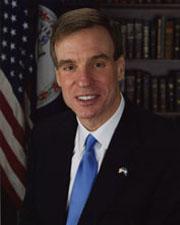 Sen. Mark R. Warner (D-VA)
Text
Modified
This amendment's own text couldn't be picked out of its Congressional Record passage, so the passage is shown in full.
AGRICULTURE REFORM, FOOD, AND JOBS ACT OF 2012
The ACTING PRESIDENT pro tempore. Under the previous order, the
Senate will resume consideration of S. 3240, which the clerk will
report by title.
The assistant legislative clerk read as follows:
A bill (S. 3240) to reauthorize agricultural programs
through 2017, and for other purposes.
The ACTING PRESIDENT pro tempore. The Senator from West Virginia.
Amendment No. 2345
Mr. MANCHIN. Madam President, I call up amendment No. 2345.
The ACTING PRESIDENT pro tempore. The clerk will report.
The assistant legislative clerk read as follows:
The Senator from West Virginia [Mr. Manchin] proposes an
amendment numbered 2345.
Mr. MANCHIN. Madam President, I ask unanimous consent that the
reading of the amendment be dispensed with.
The ACTING PRESIDENT pro tempore. Without objection, it is so
ordered.
The amendment is as follows:
(Purpose: To require national dietary guidelines for pregnant women and
children from birth until the age of 2)
On page 361, between lines 8 and 9, insert the following:
SEC. 4208. DIETARY GUIDELINES FOR AMERICANS.
Section 301(a) of the National Nutrition Monitoring and
Related Research Act of 1990 (7 U.S.C. 5341(a)) is amended by
adding at the end the following:
``(3) Pregnant women and young children.--Not later than
the 2020 report and in each report thereafter, the
Secretaries shall include national nutritional and dietary
information and guidelines for pregnant women and children
from birth until the age of 2.''.
The ACTING PRESIDENT pro tempore. There will be 2 minutes of debate
equally divided, 1 minute for each side.
Mr. MANCHIN. Madam President, I do not believe there is opposition to
this amendment. I urge my colleagues to support this bipartisan,
commonsense amendment that will address a very urgent need in this
country: helping our children develop healthy eating habits at a very
young age.
I wish to thank my cosponsor, Senator Kelly Ayotte from New
Hampshire, for working with me on this amendment. All this does is
require the Department of Health and Human Services and the Department
of Agriculture to develop, implement, and promote national dietary
guidelines for pregnant women and for children up to 2. It is the only
segment we have not done. If you are 2 years of age or older, we do it.
We try to tell you how to stay healthy, what you should eat, what you
should feed your child. This basically fills in the gap for woman from
when they become pregnant until 2 years of age.
I urge support of this amendment.
The ACTING PRESIDENT pro tempore. The Senator from Michigan.
Ms. STABENOW. Madam President, I yield back all time. It is my
understanding that we can proceed with a voice vote on this amendment.
The ACTING PRESIDENT pro tempore. Without objection, all time is
yielded back.
The question is on agreeing to the amendment.
The amendment (No. 2345) was agreed to.
The ACTING PRESIDENT pro tempore. The Senator from Oregon.
Amendment No. 2382
Mr. MERKLEY. Madam President, I call up my amendment No. 2382.
The ACTING PRESIDENT pro tempore. The clerk will report.
The assistant legislative clerk read as follows:
The Senator from Oregon [Mr. Merkley] proposes an amendment
numbered 2382.
The amendment is as follows:
[[Page S4335]]
(Purpose: To require the Federal Crop Insurance Corporation to provide
crop insurance for organic crops under similar terms and conditions to
crop insurance provided for other crops)
On page 970, between lines 5 and 6, insert the following:
SEC. 11019. CROP INSURANCE FOR ORGANIC CROPS.
(a) In General.--Section 508(c)(6) of the Federal Crop
Insurance Act (7 U.S.C. 1508(c)(6)) is amended by adding at
the end the following:
``(D) Organic crops.--
``(i) In general.--As soon as possible, but not later than
the 2015 reinsurance year, the Corporation shall offer
producers of organic crops price elections for all organic
crops produced in compliance with standards issued by the
Department of Agriculture under the national organic program
established under the Organic Foods Production Act of 1990 (7
U.S.C. 6501 et seq.) that reflect the actual retail or
wholesale prices, as appropriate, received by producers for
organic crops, as determined by the Secretary using all
relevant sources of information.
``(ii) Annual report.--The Corporation shall submit to the
Committee on Agriculture of the House of Representatives and
the Committee on Agriculture, Nutrition, and Forestry of the
Senate an annual report on progress made in developing and
improving Federal crop insurance for organic crops,
including--
``(I) the numbers and varieties of organic crops insured;
``(II) the progress of implementing the price elections
required under this subparagraph, including the rate at which
additional price elections are adopted for organic crops;
``(III) the development of new insurance approaches
relevant to organic producers; and
``(IV) any recommendations the Corporation considers
appropriate to improve Federal crop insurance coverage for
organic crops.''.
(b) Conforming Amendment.--Section 522(c) of the Federal
Crop Insurance Act (7 U.S.C. 1522(c)) (as amended by section
11018) is amended--
(1) by striking paragraph (10); and
(2) by redesignating paragraphs (11) through (20) as
paragraphs (10) through (19), respectively.
The ACTING PRESIDENT pro tempore. There will now be 2 minutes of
debate equal divided on the amendment.
The Senator from Oregon.
Mr. MERKLEY. Madam President, this bill is about holding USDA
accountable. Organic farmers, when they get crop insurance, pay a 5-
percent premium upfront. The whole concept was that on the back end
they would be compensated at the value of their organic crop should
they need to utilize their insurance. However, to establish the price
of the organic crop, USDA has to do a study. We instructed them to do
this study 4 years ago, and they have been dragging their feet. They
have done four crops out of the many dozens.
Our organic farmers are left in the most untenable position of paying
the premiums upfront but not getting the fair organic prices on the
back end. This amendment says to get the studies done, which you were
told to do 4 years ago, so the equation is fair to our farmers.
I am pleased that Senator Olympia Snowe is a cosponsor.
I yield the floor and reserve the remainder of my time.
Ms. STABENOW. Madam President, just for the information of the
Senate, Senator DeMint's amendment was next, but we have not seen him
on the floor yet. So we moved to this amendment. As soon as he arrives,
we will return to the DeMint amendment.
It is my understanding that we can proceed to a voice vote in the
meantime.
The ACTING PRESIDENT pro tempore. Who yields time?
Ms. STABENOW. I yield back all time.
The ACTING PRESIDENT pro tempore. All time is yielded back.
The question is on agreeing to the amendment.
Mr. ROBERTS. Madam President, I ask for the yeas and nays.
The ACTING PRESIDENT pro tempore. Is there a sufficient second?
There is a sufficient second.
The clerk will call the roll.
The assistant legislative clerk called the roll.
Mr. KYL. The following Senator is necessarily absent: the Senator
from Illinois (Mr. Kirk).
The PRESIDING OFFICER (Mr. Franken). Are there any other Senators in
the Chamber desiring to vote?
The result was announced--yeas 63, nays 36, as follows:
[Rollcall Vote No. 140 Leg.]
YEAS--63
Akaka
Baucus
Begich
Bennet
Bingaman
Blumenthal
Boxer
Brown (MA)
Brown (OH)
Cantwell
Cardin
Carper
Casey
Coats
Collins
Conrad
Coons
Corker
Durbin
Feinstein
Franken
Gillibrand
Grassley
Hagan
Harkin
Hoeven
Inouye
Johnson (SD)
Kerry
Klobuchar
Kohl
Landrieu
Lautenberg
Leahy
Levin
Lieberman
Lugar
Manchin
McCaskill
Menendez
Merkley
Mikulski
Moran
Murkowski
Murray
Nelson (NE)
Nelson (FL)
Pryor
Reed
Reid
Rockefeller
Sanders
Schumer
Shaheen
Snowe
Stabenow
Tester
Udall (CO)
Udall (NM)
Warner
Webb
Whitehouse
Wyden
NAYS--36
Alexander
Ayotte
Barrasso
Blunt
Boozman
Burr
Chambliss
Coburn
Cochran
Cornyn
Crapo
DeMint
Enzi
Graham
Hatch
Heller
Hutchison
Inhofe
Isakson
Johanns
Johnson (WI)
Kyl
Lee
McCain
McConnell
Paul
Portman
Risch
Roberts
Rubio
Sessions
Shelby
Thune
Toomey
Vitter
Wicker
NOT VOTING--1
Kirk
The amendment (No. 2382) was agreed to.
The PRESIDING OFFICER. The Senator from South Carolina.
Amendment No. 2273
Mr. DeMINT. Mr. President, I wish to bring up amendment No. 2273.
The PRESIDING OFFICER. The clerk will report the amendment.
The assistant legislative clerk read as follows:
The Senator from South Carolina [Mr. DeMint] proposes an
amendment numbered 2273.
The amendment is as follows:
(Purpose: To eliminate the authority of the Secretary to increase the
amount of grants provided to eligible entities relating to providing
access to broadband telecommunications services in rural areas)
Beginning on page 765, strike line 9 and all that follows
through page 766, line 16, and insert the following:
``(B) Maximum.--The amount of any grant made under this
section shall not exceed 50 percent of the development costs
of the project for which the grant is provided.
``(C) Grant rate.--The Secretary shall establish the grant
rate for each project in accordance with regulations issued
by the Secretary that shall provide for a graduated scale of
grant rates that establish higher rates for projects in
communities that have--
``(i) remote locations;
``(ii) low community populations;
``(iii) low income levels; and
``(iv) developed the applications of the communities with
the participation of combinations of stakeholders,
including--
``(I) State, local, and tribal governments;
``(II) nonprofit institutions;
``(III) institutions of higher education;
``(IV) private entities; and
``(V) philanthropic organizations.'';
The PRESIDING OFFICER. There will now be 2 minutes of debate equally
divided.
Mr. DeMINT. Mr. President, the farm bill adds a new grant component
to the existing rural utility service broadband loans and loan
guarantee program. My amendment would eliminate the authority of the
Secretary of the Department of Agriculture to increase the taxpayer
share of these broadband grants beyond 50 percent.
Please keep in mind that these are not direct loans, these are grants
that require no payback. It is important that recipients have some skin
in the game so that they make good decisions. My amendment allows the
50-percent threshold cost sharing but does not allow the Secretary to
waive that and make that a 75-percent share by the taxpayer.
I encourage my colleagues to support this moment of fiscal sanity
here.
The PRESIDING OFFICER. The Senator from Michigan.
Ms. STABENOW. Mr. President, I rise today to oppose this amendment.
It has a similar impact to one yesterday we defeated by this Senator.
It basically goes to the question of whether we are going to allow
investment in rural communities--the hardest hit communities, the
farthest apart communities--and whether they will have access to
broadband. It really goes to small businesses, in small towns and
villages, and whether they are going to have access to sell their
products to consumers around the globe. We are in a global economy.
In the 1930s and 1940s, we did rural electrification to make sure the
farmer
[[Page S4336]]
at the end of the road was connected with electricity. This is the same
kind of thing, but it is the Internet. It is broadband. We want to make
sure everybody is connected, even those in the remote, rural areas.
I yield back the remainder of my time, and I ask for the yeas and
nays.
The PRESIDING OFFICER. Is there a sufficient second?
There appears to be a sufficient second.
The question is on agreeing to the amendment.
The clerk will call the roll.
The assistant bill clerk called the roll.
Mr. KYL. The following Senator is necessarily absent: the Senator
from Illinois (Mr. Kirk).
The PRESIDING OFFICER. Are there any other Senators in the Chamber
desiring to vote?
The result was announced--yeas 44, nays 55, as follows:
[Rollcall Vote No. 141 Leg.]
YEAS--44
Alexander
Ayotte
Barrasso
Blunt
Boozman
Brown (MA)
Burr
Chambliss
Coats
Coburn
Cochran
Collins
Corker
Cornyn
Crapo
DeMint
Enzi
Graham
Grassley
Hatch
Heller
Hoeven
Hutchison
Inhofe
Isakson
Johanns
Johnson (WI)
Kyl
Lee
McCain
McCaskill
McConnell
Paul
Portman
Risch
Roberts
Rubio
Sessions
Shelby
Snowe
Thune
Toomey
Vitter
Wicker
NAYS--55
Akaka
Baucus
Begich
Bennet
Bingaman
Blumenthal
Boxer
Brown (OH)
Cantwell
Cardin
Carper
Casey
Conrad
Coons
Durbin
Feinstein
Franken
Gillibrand
Hagan
Harkin
Inouye
Johnson (SD)
Kerry
Klobuchar
Kohl
Landrieu
Lautenberg
Leahy
Levin
Lieberman
Lugar
Manchin
Menendez
Merkley
Mikulski
Moran
Murkowski
Murray
Nelson (NE)
Nelson (FL)
Pryor
Reed
Reid
Rockefeller
Sanders
Schumer
Shaheen
Stabenow
Tester
Udall (CO)
Udall (NM)
Warner
Webb
Whitehouse
Wyden
NOT VOTING--1
Kirk
The amendment (No. 2273) was rejected.
Mr. REID. Mr. President, I move to reconsider the vote, and I move to
lay that motion on the table.
The motion to lay on the table was agreed to.
The PRESIDING OFFICER. The Senator from Oklahoma.
Amendment No. 2289
Mr. COBURN. Mr. President, I call up my amendment No. 2289.
The PRESIDING OFFICER. The clerk will report.
The bill clerk read as follows:
The Senator from Oklahoma [Mr. Coburn] proposes an
amendment numbered 2289.
Mr. COBURN. Mr. President, I ask unanimous consent that the amendment
be considered as read.
The PRESIDING OFFICER. Without objection, it is so ordered.
The amendment is as follows:
(Purpose: To reduce funding for the market access program and to
prohibit the use of funds for reality television shows, wine tastings,
animal spa products, and cat or dog food)
On page 293, strike lines 16 through 19, and insert the
following:
SEC. 3102. FUNDING FOR MARKET ACCESS PROGRAM.
Section 211(c) of the Agricultural Trade Act of 1978 (7
U.S.C. 5641(c)) is amended--
(1) in paragraph (1)(A)--
(A) by striking ``and'' after ``2005,''; and
(B) by inserting ``, and $160,000,000 for each of fiscal
years 2013 through 2017'' after ``2012,''; and
(2) by adding at the end the following:
``(3) Prohibition on use of funds for certain activities.--
None of the funds made available to carry out this subsection
shall be used for--
``(A) wine tastings;
``(B) animal spa products;
``(C) reality television shows; or
``(D) cat or dog food.''.
Mr. COBURN. This is an amendment that falls in line with the
recommendation of the administration as well as every outside group
that has ever looked at this program.
The Department of Agriculture has five access to marketing programs.
This is just one of them. The administration recommended a 20-percent
reduction. We have put forward an amendment to reduce it by 20 percent.
We spend $2 billion over the next 10 years on market access. American
contribution of total world agricultural products is on the decline in
spite of these programs, and the waste in these programs--if we look at
where the money is spent--is unbelievable.
Mr. President, I reserve the remainder of my time.
The PRESIDING OFFICER. The Senator from Michigan.
Ms. STABENOW. Mr. President, I rise to oppose my colleague's
amendment.
The reality for us is that American agricultural exports is one of
the few places where we have a trade surplus right now, and we want to
continue that. The current program the Senator is speaking about is all
about exports. It is all about jobs. For every $1 invested in this
particular market access program, $35 is generated back into economic
activity. I think that is a pretty good investment.
We know it is a very important part of the future not only for our
traditional production agricultural parts of the country but for
smaller value-added food products which really is in exports, and this
supports that.
Mr. President, I reserve the remainder of my time.
The PRESIDING OFFICER. The Senator from Oklahoma.
Mr. COBURN. Mr. President, I assume by the chairman's response that
she supports the $20 million that went into a reality TV show in India
to purchase cotton other than ``made in the United States.'' That is
where $20 million of it went. That is what is wrong with this program.
I am not objecting to the fact that we ought to have market access
programs. But when we are wasting $20 million on something that has no
connection whatsoever with American agricultural products, we ought to
reduce or eliminate it.
The PRESIDING OFFICER. The Senator's time has expired.
Ms. STABENOW. Mr. President, let me say again--and I am not familiar
with this. I know we are trying to redevelop an American denim
industry. I had a chance to actually visit a denim factory in Texas. We
are trying to support our cotton industry. I am not familiar with this,
but I urge a ``no'' vote.
Mr. COBURN. I ask for the yeas and nays.
The PRESIDING OFFICER. Is there a sufficient second?
There appears to be a sufficient second.
The question is on agreeing to the amendment.
The clerk will call the roll.
The bill clerk called the roll.
Mr. KYL. The following Senator is necessarily absent: the Senator
from Illinois (Mr. Kirk).
The PRESIDING OFFICER (Mr. Udall of New Mexico). Are there any other
Senators in the Chamber desiring to vote?
The result was announced--yeas 30, nays 69, as follows:
[Rollcall Vote No. 142 Leg.]
YEAS--30
Alexander
Ayotte
Burr
Coats
Coburn
Corker
Cornyn
Crapo
DeMint
Graham
Grassley
Hatch
Inhofe
Johnson (WI)
Kyl
Lee
McCain
McCaskill
McConnell
Paul
Portman
Risch
Rubio
Sessions
Shelby
Tester
Thune
Toomey
Vitter
Wicker
NAYS--69
Akaka
Barrasso
Baucus
Begich
Bennet
Bingaman
Blumenthal
Blunt
Boozman
Boxer
Brown (MA)
Brown (OH)
Cantwell
Cardin
Carper
Casey
Chambliss
Cochran
Collins
Conrad
Coons
Durbin
Enzi
Feinstein
Franken
Gillibrand
Hagan
Harkin
Heller
Hoeven
Hutchison
Inouye
Isakson
Johanns
Johnson (SD)
Kerry
Klobuchar
Kohl
Landrieu
Lautenberg
Leahy
Levin
Lieberman
Lugar
Manchin
Menendez
Merkley
Mikulski
Moran
Murkowski
Murray
Nelson (NE)
Nelson (FL)
Pryor
Reed
Reid
Roberts
Rockefeller
Sanders
Schumer
Shaheen
Snowe
Stabenow
Udall (CO)
Udall (NM)
Warner
Webb
Whitehouse
Wyden
NOT VOTING--1
Kirk
The amendment (No. 2289) was rejected.
The PRESIDING OFFICER. The Senator from Oklahoma.
Amendment No. 2293
Mr. COBURN. Mr. President, I call up the pending amendment No. 2293.
[[Page S4337]]
The PRESIDING OFFICER. The clerk will report the amendment.
The legislative clerk read as follows:
The Senator from Oklahoma [Mr. Coburn] proposes an
amendment numbered 2293.
Mr. COBURN. Mr. President, I ask unanimous consent that reading of
the amendment be dispensed with.
The PRESIDING OFFICER. Without objection, it is so ordered.
The amendment is as follows:
(Purpose: To limit subsidies for millionaires)
At the appropriate place, insert the following:
SEC. __. ADJUSTED GROSS INCOME LIMITATION FOR CONSERVATION
PROGRAMS.
Section 1001D(b)(2)(A) of the Food Security Act of 1985 (7
U.S.C. 1308 3a(b)(2)(A)) is amended--
(1) by striking ``Limits.--'' and all that follows through
``clause (ii),'' and inserting ``Limits.--Notwithstanding any
other provision of law,''; and
(2) by striking clause (ii).
Mr. COBURN. Mr. President, reducing our national debt--which now
exceeds $15.8 trillion--is the most critical issue facing our nation.
Our country simply cannot survive if we continue down this
unsustainable course. Every area of the Federal budget should be
examined to determine, which programs should be priorities.
Federal conservation programs are a good place to start. These
programs pay farmers and ranchers to either implement conservation
measures on their farms, ``working lands'', or to idle their land for
conservation purposes, and ``land retirement''.
Oftentimes, the financial assistance offered by these programs
incentivizes what is already in the best financial interests of
farmers. Natural, market-based incentives already exist to achieve the
efficiency and conservation purposes of these programs without taxpayer
dollars. Not only that, but these programs also pay farmers and
companies that have adjusted gross incomes, AGI, of $1 million or more.
Special rules allow the USDA to waive income limitations for certain
programs, which it does on a regular basis. The result is millions paid
to otherwise ineligible millionaires each year.
In fact, over the past 2 years, USDA waived the $1 million AGI cap
for the programs discussed below and paid a total of $89,032,263 to
individuals or entities with an AGI of $1 million or more. Allowing
federal conservation programs to make payments to those with an
adjusted gross income, AGI, of $1 million or more is simply not a
priority for taxpayers.
This amendment would prevent USDA from paying millionaires by
eliminating the ability to issue waivers that exempt program
participants who have an AGI of $1 million or more from adhering to the
program's payment limit rules.
In total, over a 2-year period, USDA waived program requirements and
awarded over $84 million to individuals and entities with an AGI of $1
million or more.
In 2009, the USDA waived program requirements and paid two
millionaires a total of $10,234,520, which consisted mainly of a $10
million payment to an investment company in California for restoring
wetlands to protect the Riparian Brush Rabbit.
In 2010, the Wetland Reserve Program, WRP, program paid eight
individuals with an AGI of $1 million over $74 million. These included
almost $22 million to a ranch in Florida. The company that owns the
ranch describes itself as a ``privately held, family-owned company with
agricultural, commercial real estate, and asset management
operations.'' That company also states that it owns a number of
commercial real estate properties in New Jersey and Florida. The
company also claims holdings that include multi-tenant office
buildings, parking lots, a for-profit educational institution,
restaurants, and retail property.
In 2010, USDA also paid over $31 million to another ranch in Florida.
The payment was part of an $89 million purchase by USDA of an easement
that places deed restrictions on the use of the land along 26,000 acres
of the Fisheating Creek Watershed, partially located on the ranch. USDA
claimed that the easement purchase would provide support for the
crested caracara, Florida panther, and the red-cockaded woodpecker.
Recently, the owners of the ranch listed 2,600 acres for sale for
$18.2 million. The property is described as a working ranch with
``tremendous recreation and hunting attributes.'' The local newspaper
has also reported that same ranch was slated for a new 12,000 unit
planned community.
Other entities and individuals with an AGI of $1 million or more that
received WRP payments in 2010 include:
$7.92 million to a company in Texas for ``restoration and protection
of critical and unique wetlands'' on a property known as East Nest Lake
and Osceola Plantation; $5.8 million to a farm in North Carolina to
promote a ``habitat for migratory birds and wetland dependent
wildlife;'' $5.4 million to a ranch in Florida for land with ``high
potential to significantly improve waterfowl and wading bird habitat''
$900,853 to an individual in Kansas to ``protect and [for] restoring .
. . valuable wetland resources . . . for migratory birds and other
wildlife;'' $227,203 to a company in New Hampshire for ``wetland
restoration;'' and $80,000 to two individuals in Mississippi to
``restore, protect and enhance wetlands.''
In 2010, USDA waived the $1 million AGI requirement and paid a ranch
holding company over $2.7 million through Grassland Reserve Program,
GRP, for ``protection of critical and unique grasslands.''
Last year, USDA paid four millionaires a total of $592,097 through
the Environmental Quality Incentive Program, EQIP, $299,847 of which
was aimed at protecting the Sage Grouse by a ranch in California;
$50,000 went to a farm. That farm is owned by the W.C. Bradley Company,
which is best known for producing Char-Broil outdoor grills and Zebco
fishing supplies; remaining amounts of $35,250 and $210,000 went to two
family trusts.
The Wildlife Habitat Incentive Program paid $737,000 to three
millionaire recipients, with the majority of the funds $449,662 going
to protect the Sage Grouse by a family trust in California. A farm in
Georgia also received $100,000 through WHIP for ``promotion of at-risk
species habitat conservation.'' The remaining $187,540 went to a
company in New Jersey.
Farm and Ranch Land Protection Program, FRPP paid $630,000 to a
company in 2009 to protect Raspberry Farms in Hampton Falls, New
Hampshire. Raspberry Farms formerly operated as a ``popular pick-your-
own berries and retail farm stand'' in the 1980s and early 1990s.
The former farm was scheduled to be developed for housing, but
instead, NRCS, in partnership with local entities, paid a total of $1.6
million to ensure the land will never be developed.
In 2010 USDA paid four individuals and entities with an AGI of $1
million or more a total of $75,540.
Again, this is a very straightforward amendment. Last year the
Department of Agriculture paid $10 million to two different
individuals, who had an adjusted gross income of over $1 million,
through a waiver granted by the Department of Agriculture. Both of
these were ineligible, but we give the Department of Agriculture the
right to waive that. This amendment would restrict that right for a
waiver for people making more than $1 million a year in terms of
conservation payments.
There is nothing wrong with conservation programs, but most often
these payments are paid in addition to what people are going to do
anyway. So what the Department of Agriculture has done is given well
over $180 million to millionaires through our conservation payment on
programs they would have otherwise done themselves.
The PRESIDING OFFICER. The Senator's time has expired.
Mr. COBURN. I thank the Chair.
The PRESIDING OFFICER. The Senator from Michigan.
Ms. STABENOW. Mr. President, I would indicate that the conservation
program is a very strong, effective program, but I am not objecting,
nor is the ranking member, to moving forward with the vote. I believe
the Member wishes to have a record rollcall, is that correct? So we
would yield back time and ask for a record rollcall vote.
Mr. COBURN. I ask for the yeas and nays.
The PRESIDING OFFICER. Is there a sufficient second?
There appears to be a sufficient second.
The question is on agreeing to the amendment.
The legislative clerk called the roll.
Mr. KYL. The following Senator is necessarily absent: the Senator
from Illinois (Mr. Kirk).
[[Page S4338]]
The PRESIDING OFFICER. Are there any other Senators in the Chamber
desiring to vote?
The result was announced--yeas 63, nays 36, as follows:
[Rollcall Vote No. 143 Leg.]
YEAS--63
Alexander
Ayotte
Barrasso
Bennet
Bingaman
Blunt
Boozman
Brown (MA)
Brown (OH)
Burr
Chambliss
Coats
Coburn
Cochran
Collins
Conrad
Corker
Cornyn
Crapo
DeMint
Enzi
Graham
Grassley
Hatch
Heller
Hoeven
Hutchison
Inhofe
Isakson
Johanns
Johnson (WI)
Kerry
Kyl
Landrieu
Lee
Levin
Lieberman
Lugar
Manchin
McCain
McCaskill
McConnell
Menendez
Merkley
Mikulski
Moran
Murkowski
Nelson (NE)
Paul
Portman
Risch
Roberts
Rockefeller
Rubio
Sessions
Shelby
Snowe
Stabenow
Thune
Toomey
Vitter
Wicker
Wyden
NAYS--36
Akaka
Baucus
Begich
Blumenthal
Boxer
Cantwell
Cardin
Carper
Casey
Coons
Durbin
Feinstein
Franken
Gillibrand
Hagan
Harkin
Inouye
Johnson (SD)
Klobuchar
Kohl
Lautenberg
Leahy
Murray
Nelson (FL)
Pryor
Reed
Reid
Sanders
Schumer
Shaheen
Tester
Udall (CO)
Udall (NM)
Warner
Webb
Whitehouse
NOT VOTING--1
Kirk
The amendment (No. 2293) was agreed to.
The PRESIDING OFFICER. The Senator from Michigan.
Amendment No. 2453
Ms. STABENOW. I call up my amendment 2453 and ask unanimous consent
to add Senator Snowe as a cosponsor.
The PRESIDING OFFICER. Without objection, it is so ordered.
The clerk will report.
The legislative clerk read as follows:
The Senator from Michigan [Ms. Stabenow] proposes an
amendment numbered 2453.
Ms. STABENOW. I ask unanimous consent that the reading of the
amendment be dispensed with.
The PRESIDING OFFICER. Without objection, it is so ordered.
The amendment is as follows:
(Purpose: To provide assistance for certain losses)
On page 1006, between lines 21 and 22, insert the
following:
``(4) Additional availability.--
``(A) In general.--As soon as practicable after October 1,
2013, the Secretary shall make assistance available to
producers of an otherwise eligible crop described in
subsection (a)(2) that suffered losses--
``(i) to a 2012 annual fruit crop grown on a bush or tree;
and
``(ii) in a county covered by a declaration by the
Secretary of a natural disaster for production losses due to
a freeze or frost.
``(B) Assistance.--The Secretary shall make assistance
available under subparagraph (A) in an amount equivalent to
assistance available under paragraph (1), less any fees not
previously paid under paragraph (2).''.
Ms. STABENOW. This amendment simply addresses what has happened with
severe and devastating freezes across the country for those who have
food crops and don't have access to crop insurance. This Farm Bill
makes great strides in expanding crop insurance for fruit and vegetable
growers in the United States. However, these new programs will not be
available to producers who suffered substantial--and in some cases
complete--losses this year. This amendment would simply allow those in
the States that are affected to buy into a program we have, called the
Non-Insured Disaster Program, that allows them to get some kind of help
for the freezes.
This provides them the same coverage they will have in the years
going forward--this is the same kind of extension for 2012 losses that
is available for livestock producers. 29 States in every part of the
country have reported major crop losses for 2012 due to frost or
freeze. I urge my colleagues to support this amendment so these farmers
aren't losing their business because of bad weather.
I believe we can move forward with a voice vote.
The PRESIDING OFFICER. Is there further debate on the amendment?
If not, the question is on agreeing to the amendment.
The amendment (No. 2453) was agreed to.
Mr. BEGICH. Mr. President, I move to reconsider the vote.
Ms. KLOBUCHAR. I move to lay that motion on the table.
The motion to lay on the table was agreed to.
The PRESIDING OFFICER. The Senator from Massachusetts.
Amendment No. 2454
Mr. KERRY. I call up amendment No. 2454, my amendment together with
Senator Lugar.
The PRESIDING OFFICER. The clerk will report.
The legislative clerk read as follows:
The amendment is as follows:
(Purpose: To prohibit assistance to North Korea under title II of the
Food for Peace Act unless the President issues a national interest
waiver)
At the end of subtitle A of title III, add the following:
SEC. 3015. PROHIBITION ON ASSISTANCE FOR NORTH KOREA.
(a) In General.--No amounts may be obligated or expended to
provide assistance under title II of the Food for Peace Act
(7 U.S.C. 1721 et seq.) to the Democratic People's Republic
of Korea.
(b) National Interest Waiver.--The President may waive
subsection (a) if the President determines and certifies to
the Committees on Agriculture, Nutrition, and Forestry and
Foreign Relations of the Senate and the Committees on
Agriculture and Foreign Affairs of the House of
Representatives that the waiver is in the national interest
of the United States.
Mr. KERRY. Mr. President, the Kerry-Lugar amendment is a side-by-side
amendment, frankly, which will counter the amendment of the Senator
from Arizona, Mr. Kyl.
We all join in abhorring the conduct of the Government of North
Korea. Nobody contests that. The question here is whether we want to
have a complete prohibition on any humanitarian assistance, without the
possibility of a Presidential waiver in the event that the President,
as a matter of national policy, as a matter of our humanitarian policy,
decides that something has changed in North Korea or there is behavior
that has been altered by North Korea, as in Burma. If we don't have a
Presidential waiver, the Kyl amendment permanently locks in--until
there is other congressional action--a complete prohibition on any
humanitarian assistance to the people--not the government but the
people, the children and families of North Korea.
Ronald Reagan said very clearly that ``a hungry child knows no
politics.'' I believe we ought to uphold that principle and have the
Presidential waiver in this particular case.
The PRESIDING OFFICER. The Senator from Arizona.
Mr. KYL. I oppose the Kerry amendment and hope it will be defeated
and that my amendment will be adopted.
Senator Kerry has appropriately characterized the amendment as being
food aid to North Korea. However, it is not just about abhorring North
Korea's bad behavior but also the administration's bad behavior. On
four separate occasions, the State Department assured Members of this
Senate that food aid would not be used as a condition to negotiations
with the North Koreans; that under no circumstances would the United
States provide any incentives or rewards, is the way they put it, to
North Korea. In each case, we inquired, and we specifically talked
about the food aid. Four times they said no, it wouldn't be done. Two
weeks before the negotiations were to begin this spring, all of a
sudden, $240 million in food aid was put on the table, and only because
the North Koreans launched their so-called satellite long-range missile
were those negotiations canceled.
So a national security interest that can simply be provided by the
President based on his views----
The PRESIDING OFFICER. The Senator's time has expired.
Mr. KYL. Does not solve the problem.
The PRESIDING OFFICER. The Senator from Massachusetts.
Mr. KERRY. Mr. President, there is much to counter that, but we do
not have the time to do it. But I ask for the yeas and nays.
The PRESIDING OFFICER. Is there a sufficient second?
There appears to be a sufficient second.
The question is on agreeing to the amendment.
The clerk will call the roll.
The bill clerk called the roll.
Mr. KYL. The following Senator is necessarily absent: the Senator
from Illinois (Mr. Kirk).
The PRESIDING OFFICER. Are there any other Senators in the Chamber
desiring to vote?
[[Page S4339]]
The result was announced--yeas 59, nays 40, as follows:
[Rollcall Vote No. 144 Leg.]
YEAS--59
Akaka
Baucus
Begich
Bennet
Bingaman
Blumenthal
Blunt
Boxer
Brown (MA)
Brown (OH)
Cantwell
Cardin
Carper
Casey
Collins
Conrad
Coons
Durbin
Feinstein
Franken
Gillibrand
Hagan
Harkin
Inouye
Johnson (SD)
Kerry
Klobuchar
Kohl
Landrieu
Lautenberg
Leahy
Levin
Lugar
Manchin
McCaskill
Menendez
Merkley
Mikulski
Murkowski
Murray
Nelson (NE)
Nelson (FL)
Portman
Pryor
Reed
Reid
Rockefeller
Sanders
Schumer
Shaheen
Snowe
Stabenow
Tester
Udall (CO)
Udall (NM)
Warner
Webb
Whitehouse
Wyden
NAYS--40
Alexander
Ayotte
Barrasso
Boozman
Burr
Chambliss
Coats
Coburn
Cochran
Corker
Cornyn
Crapo
DeMint
Enzi
Graham
Grassley
Hatch
Heller
Hoeven
Hutchison
Inhofe
Isakson
Johanns
Johnson (WI)
Kyl
Lee
Lieberman
McCain
McConnell
Moran
Paul
Risch
Roberts
Rubio
Sessions
Shelby
Thune
Toomey
Vitter
Wicker
NOT VOTING--1
Kirk
The amendment (No. 2454) was agreed to.
Mr. KERRY. Mr. President, I move to reconsider the vote.
Mr. LEAHY. Mr. President, I move to lay that motion on the table.
The motion to lay upon the table was agreed to.
Amendment No. 2354
Mr. KYL. Mr. President, I call up my amendment which is at the desk,
No. 2354. I ask for its consideration.
The PRESIDING OFFICER. The clerk will report.
The legislative clerk read as follows:
The Senator from Arizona [Mr. Kyl] proposes an amendment
numbered 2354.
The amendment is as follows:
(Purpose: To prohibit assistance to North Korea under title II of the
Food for Peace Act)
At the end of subtitle A of title III, add the following:
SEC. 3015. PROHIBITION ON ASSISTANCE FOR NORTH KOREA.
No amounts may be obligated or expended to provide
assistance under title II of the Food for Peace Act (7 U.S.C.
1721 et seq.) to the Democratic People's Republic of Korea.
Mr. KYL. Mr. President, what I said before was, on four separate
occasions over just a couple of months, the administration had assured
Members of the Senate that it would not use food aid as an enticement
to the North Koreans to come to the negotiating table.
Here are direct quotations from the State Department, comments such
as ``had no intention of rewarding them for their actions that their
government has already agreed to take.'' Reaffirmed, ``There are no
financial incentives for North Korea to meet the precepts or engage in
talks.''
Deputy Secretary of State Bill Burns, ``To be clear, the
Administration will not provide any financial incentives to Pyongyang.
. . .'' et cetera, on the negotiations. And further that ``any
engagement with North Korea will not be used as a mechanism to funnel
financial or other rewards to Pyongyang.''
We also heard media reports and asked them about them. They said no:
These media reports are not accurate. U.S. policy toward
North Korea has not changed. We have no intention of
rewarding North Korea--
And so on. And a mere 3 weeks later, we do exactly the opposite. That
is why a waiver for the President to say otherwise does not do any good
and why I urge support----
The PRESIDING OFFICER. The Senator's time has expired.
Mr. KYL. For my resolution which simply prevents the administration
from providing food aid to North Korea.
The PRESIDING OFFICER. The Senator from Massachusetts.
Mr. KERRY. Mr. President, there is an important distinction here. If
you are going to provide humanitarian assistance in some circumstance,
and the administration made good on its promise to do that, it is hard
to separate it from the events as they are going forward that you do
not control. No matter who is President, the Senate should not tie the
hands of any President with respect to this policy.
Ronald Reagan said it best when he said very clearly that ``a hungry
child knows no politics.'' That was Ronald Reagan's policy. That is the
policy of churches all across our country. The fact is that if the Kyl
amendment were to pass, you will have tied the hands of any President
on a sensitive national security issue where the President deserves
that kind of flexibility.
Without a national interest waiver, you lock into place a prohibition
in North Korea. What happens if suddenly you had a change, as in Burma?
You would be locked in and unable to respond to it.
The PRESIDING OFFICER. The Senator's time has expired.
Mr. KERRY. You would take away the option of the President. In the
case of Burma or other places, the President has shown the flexibility.
The President ought to have the flexibility here. I hope we will not
have a total prohibition on humanitarian assistance.
The PRESIDING OFFICER. The question is on agreeing to the amendment.
Mr. KYL. I ask for the yeas and nays.
The PRESIDING OFFICER. Is there a sufficient second?
There is a sufficient second.
The clerk will call the roll.
The assistant bill clerk proceeded to call the roll.
Mr. KYL. The following Senator is necessarily absent: the Senator
from Illinois (Mr. Kirk).
The PRESIDING OFFICER (Mr. Cardin). Are there any other Senators in
the Chamber desiring to vote?
The result was announced--yeas 43, nays 56, as follows:
[Rollcall Vote No. 145 Leg.]
YEAS--43
Alexander
Ayotte
Barrasso
Boozman
Burr
Chambliss
Coats
Coburn
Cochran
Collins
Corker
Cornyn
Crapo
DeMint
Enzi
Graham
Grassley
Hatch
Heller
Hoeven
Hutchison
Inhofe
Isakson
Johanns
Johnson (WI)
Kyl
Lee
Lieberman
McCain
McConnell
Moran
Paul
Portman
Risch
Roberts
Rubio
Sessions
Shelby
Snowe
Thune
Toomey
Vitter
Wicker
NAYS--56
Akaka
Baucus
Begich
Bennet
Bingaman
Blumenthal
Blunt
Boxer
Brown (MA)
Brown (OH)
Cantwell
Cardin
Carper
Casey
Conrad
Coons
Durbin
Feinstein
Franken
Gillibrand
Hagan
Harkin
Inouye
Johnson (SD)
Kerry
Klobuchar
Kohl
Landrieu
Lautenberg
Leahy
Levin
Lugar
Manchin
McCaskill
Menendez
Merkley
Mikulski
Murkowski
Murray
Nelson (NE)
Nelson (FL)
Pryor
Reed
Reid
Rockefeller
Sanders
Schumer
Shaheen
Stabenow
Tester
Udall (CO)
Udall (NM)
Warner
Webb
Whitehouse
Wyden
NOT VOTING--1
Kirk
The amendment (No. 2354) was rejected.
Mr. KERRY. Mr. President, I move to reconsider the vote.
Mrs. MURRAY. I move to lay that motion on the table.
The motion to lay on the table was agreed to.
The PRESIDING OFFICER. The Senator from Colorado is recognized.
Amendment No. 2295
Mr. UDALL of Colorado. Mr. President, I call up my amendment No.
2295.
The PRESIDING OFFICER. The clerk will report.
The legislative clerk read as follows:
The Senator from Colorado [Mr. Udall], for himself, Mr.
Thune, Mr. Bennet, and Mr. Baucus, proposes an amendment
numbered 2295.
The amendment is as follows:
(Purpose: To increase the amounts authorized to be appropriated for the
designation of treatment areas)
On page 866, line 21, strike ``$100,000,000'' and insert
``$200,000,000''.
Mr. UDALL of Colorado. Mr. President, I have offered this amendment
with my colleague Senator Thune from South Dakota.
This is a commonsense amendment that would increase resources to land
managers to address insect and disease epidemics spreading across our
forests, while maintaining the farm bill's more than $23 billion in
mandatory savings, and that is important.
This bark beetle epidemic, which is in many States, has left
dangerous dead and dying stands of trees that worsen the threat from
forest fires. This is particularly evident to Coloradans because,
today, we have an 86-
[[Page S4340]]
square-mile fire, and more than 1,600 brave firefighters are
challenging this blaze, which is already the most destructive fire in
Colorado's history. We don't expect to fully defeat this fire or bring
it to ground for several weeks.
The Forest Service has set a goal of doubling the number of acres
treated to address beetle kill and prevent forest fires. This amendment
would help them reach that goal. If we don't pass the amendment, they
will not have the wherewithal and resources to do so.
I ask my colleagues to support this bipartisan amendment.
The PRESIDING OFFICER. Who yields time in opposition?
Mr. ROBERTS. Mr. President, I am not going to speak in opposition,
but I do ask for the yeas and nays.
The PRESIDING OFFICER. Is there a sufficient second? There is a
sufficient second.
The question is on agreeing to the amendment.
The clerk will call the roll.
The assistant legislative clerk called the roll.
Mr. KYL. The following Senator is necessarily absent: the Senator
from Illinois (Mr. Kirk).
The PRESIDING OFFICER. Are there any other Senators in the Chamber
desiring to vote?
The result was announced--yeas 77, nays 22, as follows:
[Rollcall Vote No. 146 Leg.]
YEAS--77
Akaka
Alexander
Barrasso
Baucus
Begich
Bennet
Bingaman
Blumenthal
Blunt
Boozman
Boxer
Brown (OH)
Cantwell
Cardin
Carper
Casey
Coburn
Cochran
Collins
Conrad
Coons
Crapo
Durbin
Enzi
Feinstein
Franken
Gillibrand
Graham
Hagan
Harkin
Heller
Hoeven
Inouye
Isakson
Johanns
Johnson (SD)
Kerry
Klobuchar
Kohl
Kyl
Landrieu
Lautenberg
Leahy
Levin
Lieberman
Lugar
Manchin
McCain
McConnell
Menendez
Merkley
Mikulski
Murkowski
Murray
Nelson (NE)
Nelson (FL)
Pryor
Reed
Reid
Risch
Roberts
Rockefeller
Sanders
Schumer
Sessions
Shaheen
Shelby
Snowe
Stabenow
Tester
Thune
Udall (CO)
Udall (NM)
Warner
Webb
Whitehouse
Wicker
NAYS--22
Ayotte
Brown (MA)
Burr
Chambliss
Coats
Corker
Cornyn
DeMint
Grassley
Hatch
Hutchison
Inhofe
Johnson (WI)
Lee
McCaskill
Moran
Paul
Portman
Rubio
Toomey
Vitter
Wyden
NOT VOTING--1
Kirk
The amendment (No. 2295) was agreed to.
The PRESIDING OFFICER. The Senator from Utah.
Amendment No. 2313
Mr. LEE. Mr. President, I call up amendment No. 2313.
The PRESIDING OFFICER. The clerk will report the amendment.
The assistant bill clerk read as follows:
The Senator from Utah [Mr. Lee] proposes an amendment
numbered 2313.
The amendment is as follows:
(Purpose: To repeal the forest legacy program)
Beginning on page 862, strike line 15 and all that follows
through page 863, line 2, and insert the following:
SEC. 8103. FOREST LEGACY PROGRAM.
(a) In General.--Section 7 of the Cooperative Forestry
Assistance Act of 1978 (16 U.S.C. 2103c) is repealed.
(b) Conforming Amendments.--
(1) Section 2A(c) of the Cooperative Forestry Assistance
Act of 1978 (16 U.S.C. 2101a(c)) is amended--
(A) in paragraph (3), by inserting ``and'' after the
semicolon;
(B) in paragraph (4), by striking ``; and'' and inserting a
period; and
(C) by striking paragraph (5).
(2) Section 19(b)(2) of the Cooperative Forestry Assistance
Act of 1978 (16 U.S.C. 2113(b)(2)) is amended--
(A) in subparagraph (B), by inserting ``and'' after the
semicolon;
(B) in subparagraph (C), by striking ``; and'' and
inserting a period; and
(C) by striking subparagraph (D).
The PRESIDING OFFICER. There will now be 2 minutes of debate, with
the Senator from Utah recognized for 1 minute.
Mr. LEE. Mr. President, I offer this amendment to repeal the Forest
Legacy Program. This is a program designed to protect lands in the
United States. It is important to remember that the Federal Government
is already a massive landowner. It has abundant programs already in
place to conserve that land, to protect it. The Federal Government owns
about two-thirds of the land in my own State. It owns nearly 30 percent
of the land mass within the territorial boundaries of the United
States. We do a lot to conserve that land. But when we use this money--
money estimated to amount to about $200 million a year in
authorization, about $1 billion over a 5-year period--we are using that
money to take land out of use. We are using that money to pay people
not to use their land for anything. Whenever we look for areas in which
we can save money, one area is to not pay people not to use their land.
The PRESIDING OFFICER. The Senator's time has expired.
Who yields time in opposition?
The Senator from Vermont.
Mr. LEAHY. Mr. President, I strongly oppose the Lee amendment to
repeal the Forest Legacy Program, and urge all Senators to do the same.
For more than two decades, this program has led to the conservation of
over 2.2 million acres of working forest lands in 49 states. The
National Association of Forest Owners estimates that U.S. forests
support more than 2.9 million jobs and contribute $115 billion towards
the gross domestic product.
Better still, the Forest Legacy Program does not use taxpayer dollars
for Federal funds, but instead relies on a very small percentage of oil
drilling receipts. The benefits of this program far outweigh any cost
to the taxpayer, a claim that cannot be made by many other Federal
programs.
Repealing this program would be a tragic mistake, especially at a
time when the Nation's forests are under attack from real estate
development and urban sprawl, among other enemies. The U.S. is
projected to lose up to 75 million acres of forest over the next half
century. As forest areas are fragmented and disappear, so too do the
benefits they provide. This program is essential to protect these
benefits and ensure that we have a healthy environment and strong rural
economies in the future. I strongly oppose this amendment and urge all
Senators to do the same.
The PRESIDING OFFICER. The Senator's time has expired.
The question is on agreeing to amendment No. 2313.
Mr. LEE. Mr. President, I ask for the yeas and nays.
Mr. CARDIN. Is there a sufficient second?
There appears to be a sufficient second.
The clerk will call the roll.
The assistant legislative clerk called the roll.
Mr. DURBIN. I announce that the Senator from Maryland (Ms. Mikulski)
is necessarily absent.
Mr. KYL. The following Senator is necessarily absent: the Senator
from Illinois (Mr. Kirk).
The PRESIDING OFFICER. Are there any other Senators in the Chamber
desiring to vote?
The result was announced--yeas 21, nays 77, as follows:
[Rollcall Vote No. 147 Leg.]
YEAS--21
Barrasso
Blunt
Coats
Coburn
Cornyn
DeMint
Enzi
Hatch
Inhofe
Johanns
Johnson (WI)
Kyl
Lee
McCain
McConnell
Moran
Murkowski
Paul
Rubio
Toomey
Vitter
NAYS--77
Akaka
Alexander
Ayotte
Baucus
Begich
Bennet
Bingaman
Blumenthal
Boozman
Boxer
Brown (MA)
Brown (OH)
Burr
Cantwell
Cardin
Carper
Casey
Chambliss
Cochran
Collins
Conrad
Coons
Corker
Crapo
Durbin
Feinstein
Franken
Gillibrand
Graham
Grassley
Hagan
Harkin
Heller
Hoeven
Hutchison
Inouye
Isakson
Johnson (SD)
Kerry
Klobuchar
Kohl
Landrieu
Lautenberg
Leahy
Levin
Lieberman
Lugar
Manchin
McCaskill
Menendez
Merkley
Murray
Nelson (NE)
Nelson (FL)
Portman
Pryor
Reed
Reid
Risch
Roberts
Rockefeller
Sanders
Schumer
Sessions
Shaheen
Shelby
Snowe
Stabenow
Tester
Thune
Udall (CO)
Udall (NM)
Warner
Webb
Whitehouse
Wicker
Wyden
NOT VOTING--2
Kirk
Mikulski
The amendment (No. 2313) was rejected.
[[Page S4341]]
Mr. REID. Mr. President, I move to reconsider the vote.
Mr. LEAHY. I move to lay that motion on the table.
The motion to lay on the table was agreed to.
The PRESIDING OFFICER. The majority leader.
Mr. REID. Mr. President, right now we have 34 amendments left plus
final passage. That is 11 hours. I was hoping we could dispose of quite
a few of these on voice, but that has not worked out very well. We have
had a number of people who offered to have their votes by voice, but
those were objected to.
We have to finish this bill. We have to do flood insurance this week.
I know people have schedules. We have all kinds of things going on, but
we have to show a little bit of understanding about the ordeal we have
ahead of us.
I am confident we are not going to stay here until 2 o'clock this
morning, but we are going to stay here a while because until we have a
way of finishing this bill that is set in stone, we are going to have
to proceed forward. This is an important piece of legislation but also
flood insurance is an extremely important piece of legislation. If we
do not complete that by the end of this month, there will be thousands
and thousands of people who cannot close their loans every day--not a
month, every day.
With the economy in the state it is in now, we need to close every
loan, every home that is purchased, every commercial piece of property
that is bought. We have to close those now. We cannot tell the American
people we tried to get it done, but we could not because we were--
whatever.
People have indicated they want to get out of here early tonight.
There may be somebody who wants to get out of here earlier tonight than
I, but I would be happy to debate that subject with them. But we need
to show some cooperation. We have two of the finest Senators we could
have managing this bill. Let's work together and get this done.
The PRESIDING OFFICER. The Senator from Virginia.
Amendment No. 2457, as Modified
Mr. WARNER. Mr. President, I ask to call up amendment No. 2457 and
ask the clerk to report.
The PRESIDING OFFICER. The clerk will report.
The legislative clerk read as follows:
The Senator from Virginia [Mr. Warner], for himself, Mrs.
Shaheen, Mr. Kirk, and Mr. Bennet, proposes an amendment
numbered 2457.
(The text of the amendment is printed in the Record of Tuesday, June
19, 2012, under ``Text of Amendments.'')
Mr. WARNER. I further ask the amendment be modified with the changes
at the desk.
The PRESIDING OFFICER. Without objection, it is so ordered.
The amendment, as modified, is as follows:
(Purpose: To improve access to broadband telecommunication services in
rural areas)
Strike section 6104 and insert the following:
SEC. 6104. ACCESS TO BROADBAND TELECOMMUNICATIONS SERVICES IN
RURAL AREAS.
Section 601 of the Rural Electrification Act of 1936 (7
U.S.C. 950bb) is amended--
(1) in subsection (a), by striking ``loans and'' and
inserting ``grants, loans, and'';
(2) in subsection (b), by striking paragraph (3) and
inserting the following:
``(3) Rural area.--The term `rural area' means any area
described in section 3002 of the Consolidated Farm and Rural
Development Act.'';
(3) in subsection (c)--
(A) in the subsection heading, by striking ``Loans and''
and inserting ``Grants, Loans, and'';
(B) in paragraph (1), by inserting ``make grants and''
after ``Secretary shall'';
(C) by striking paragraph (2) and inserting the following:
``(2) Priority.--
``(A) In general.--In making grants, loans, or loan
guarantees under paragraph (1), the Secretary shall--
``(i) establish not less than 2, and not more than 4,
evaluation periods for each fiscal year to compare grant,
loan, and loan guarantee applications and to prioritize
grants, loans, and loan guarantees to all or part of rural
communities that do not have residential broadband service
that meets the minimum acceptable level of broadband service
established under subsection (e);
``(ii) give the highest priority to applicants that offer
to provide broadband service to the greatest proportion of
unserved rural households or rural households that do not
have residential broadband service that meets the minimum
acceptable level of broadband service established under
subsection (e), as--
``(I) certified by the affected community, city, county, or
designee; or
``(II) demonstrated on--
``(aa) the broadband map of the affected State if the map
contains address-level data; or
``(bb) the National Broadband Map if address-level data is
unavailable; and
``(iii) provide equal consideration to all qualified
applicants, including those that have not previously received
grants, loans, or loan guarantees under paragraph (1).
``(B) Other.--After giving priority to the applicants
described in subparagraph (A), the Secretary shall then give
priority to projects that serve rural communities--
``(i) with a population of less than 20,000 permanent
residents;
``(ii) experiencing outmigration;
``(iii) with a high percentage of low-income residents; and
``(iv) that are isolated from other significant population
centers.''; and
(D) by adding at the end the following:
``(3) Grant amounts.--
``(A) Eligibility.--To be eligible for a grant under this
section, the project that is the subject of the grant shall
be carried out in a rural area.
``(B) Maximum.--Except as provided in subparagraph (D), the
amount of any grant made under this section shall not exceed
50 percent of the development costs of the project for which
the grant is provided.
``(C) Grant rate.--The Secretary shall establish the grant
rate for each project in accordance with regulations issued
by the Secretary that shall provide for a graduated scale of
grant rates that establish higher rates for projects in
communities that have--
``(i) remote locations;
``(ii) low community populations;
``(iii) low income levels;
``(iv) developed the applications of the communities with
the participation of combinations of stakeholders,
including--
``(I) State, local, and tribal governments;
``(II) nonprofit institutions;
``(III) institutions of higher education;
``(IV) private entities; and
``(V) philanthropic organizations; and
``(v) targeted funding to provide the minimum acceptable
level of broadband service established under subsection (e)
in all or part of an unserved community that is below that
minimum acceptable level of broadband service.
``(D) Secretarial authority to adjust.--The Secretary may
make grants of up to 75 percent of the development costs of
the project for which the grant is provided to an eligible
entity if the Secretary determines that the project serves a
remote or low income area that does not have access to
broadband service from any provider of broadband service
(including the applicant).'';
(4) in subsection (d)--
(A) in paragraph (1)(A)--
(i) in the matter preceding clause (i), by striking ``loan
or'' and inserting ``grant, loan, or'';
(ii) by striking clause (i) and inserting the following:
``(i) demonstrate the ability to furnish, improve in order
to meet the minimum acceptable level of broadband service
established under subsection (e), or extend broadband service
to all or part of an unserved rural area or an area below the
minimum acceptable level of broadband service established
under subsection (e);'';
(iii) in clause (ii), by striking ``a loan application''
and inserting ``an application''; and
(iv) in clause (iii)--
(I) by striking ``the loan application'' and inserting
``the application''; and
(II) by striking ``proceeds from the loan made or
guaranteed under this section are'' and inserting
``assistance under this section is'';
(B) in paragraph (2)--
(i) in subparagraph (A)--
(I) in the matter preceding clause (i)--
(aa) by striking ``the proceeds of a loan made or
guaranteed'' and inserting ``assistance''; and
(bb) by striking ``for the loan or loan guarantee'' and
inserting ``of the eligible entity'';
(II) in clause (i), by striking ``is offered broadband
service by not more than 1 incumbent service provider'' and
inserting ``are unserved or have service levels below the
minimum acceptable level of broadband service established
under subsection (e)''; and
(III) in clause (ii), by striking ``3'' and inserting
``2'';
(ii) by striking subparagraph (B) and inserting the
following:
``(B) Adjustments.--
``(i) Increase.--The Secretary may increase the household
percentage requirement under subparagraph (A)(i) if--
``(I) more than 25 percent of the costs of the project are
funded by grants made under this section; or
``(II) the proposed service territory includes 1 or more
communities with a population in excess of 20,000.
``(ii) Reduction.--The Secretary may reduce the household
percentage requirement under subparagraph (A)(i)--
``(I) to not less than 15 percent, if the proposed service
territory does not have a population in excess of 5,000
people; or
[[Page S4342]]
``(II) to not less than 18 percent, if the proposed service
territory does not have a population in excess of 7,500
people.''; and
(iii) in subparagraph (C)--
(I) in the subparagraph heading, by striking ``3'' and
inserting ``2''; and
(II) in clause (i), by inserting ``the minimum acceptable
level of broadband service established under subsection (e)
in'' after ``service to'';
(C) in paragraph (3)--
(i) in subparagraph (A), by striking ``loan or'' and
inserting ``grant, loan, or''; and
(ii) in subparagraph (B), by adding at the end the
following:
``(iii) Information.--Information submitted under this
subparagraph shall be--
``(I) certified by the affected community, city, county, or
designee; and
``(II) demonstrated on--
``(aa) the broadband map of the affected State if the map
contains address-level data; or
``(bb) the National Broadband Map if address-level data is
unavailable.'';
(D) in paragraph (4)--
(i) by striking ``Subject to paragraph (1),'' and inserting
the following:
``(A) In general.--Subject to paragraph (1) and
subparagraph (B),'';
(ii) by striking ``loan or'' and inserting ``grant, loan,
or''; and
(iii) by adding at the end the following:
``(B) Pilot programs.--The Secretary may carry out pilot
programs in conjunction with interested entities described in
subparagraph (A) (which may be in partnership with other
entities, as determined appropriate by the Secretary) to
address areas that are unserved or have service levels below
the minimum acceptable level of broadband service established
under subsection (e).'';
(E) in paragraph (5)--
(i) in the matter preceding subparagraph (A), by striking
``loan or'' and inserting ``grant, loan, or''; and
(ii) in subparagraph (C), by inserting ``, and proportion
relative to the service territory,'' after ``estimated
number'';
(F) in paragraph (6), by striking ``loan or'' and inserting
``grant, loan, or'';
(G) in paragraph (7), by striking ``a loan application''
and inserting ``an application''; and
(H) by adding at the end the following:
``(8) Transparency and reporting.--The Secretary--
``(A) shall require any entity receiving assistance under
this section to submit quarterly, in a format specified by
the Secretary, a report that describes--
``(i) the use by the entity of the assistance, including
new equipment and capacity enhancements that support high-
speed broadband access for educational institutions, health
care providers, and public safety service providers
(including the estimated number of end users who are
currently using or forecasted to use the new or upgraded
infrastructure); and
``(ii) the progress towards fulfilling the objectives for
which the assistance was granted, including--
``(I) the number and location of residences and businesses
that will receive new broadband service, existing network
service improvements, and facility upgrades resulting from
the Federal assistance;
``(II) the speed of broadband service;
``(III) the price of broadband service;
``(IV) any changes in broadband service adoption rates,
including new subscribers generated from demand-side
projects; and
``(V) any other metrics the Secretary determines to be
appropriate
``(B) shall maintain a fully searchable database,
accessible on the Internet at no cost to the public, that
contains, at a minimum--
``(i) a list of each entity that has applied for assistance
under this section;
``(ii) a description of each application, including the
status of each application;
``(iii) for each entity receiving assistance under this
section--
``(I) the name of the entity;
``(II) the type of assistance being received;
``(III) the purpose for which the entity is receiving the
assistance; and
``(IV) each quarterly report submitted under subparagraph
(A); and
``(iv) such other information as is sufficient to allow the
public to understand and monitor assistance provided under
this section;
``(C) shall, in addition to other authority under
applicable law, establish written procedures for all
broadband programs administered by the Secretary that, to the
maximum extent practicable--
``(i) recover funds from loan defaults;
``(ii)(I) deobligate awards to grantees that demonstrate an
insufficient level of performance (including failure to meet
build-out requirements, service quality issues, or other
metrics determined by the Secretary) or wasteful or
fraudulent spending; and
``(II) award those funds, on a competitive basis, to new or
existing applicants consistent with this section; and
``(iii) consolidate and minimize overlap among the
programs;
``(D) with respect to an application for assistance under
this section, shall--
``(i) promptly post on the website of the Rural Utility
Service--
``(I) an announcement that identifies--
``(aa) each applicant;
``(bb) the amount and type of support requested by each
applicant; and
``(II) a list of the census block groups or proposed
service territory, in a manner specified by the Secretary,
that the applicant proposes to service;
``(ii) provide not less than 15 days for broadband service
providers to voluntarily submit information about the
broadband services that the providers offer in the groups or
tracts listed under clause (i)(II) so that the Secretary may
assess whether the applications submitted meet the
eligibility requirements under this section; and
``(iii) if no broadband service provider submits
information under clause (ii), consider the number of
providers in the group or tract to be established by
reference to--
``(I) the most current National Broadband Map of the
National Telecommunications and Information Administration;
or
``(II) any other data regarding the availability of
broadband service that the Secretary may collect or obtain
through reasonable efforts; and
``(E) may establish additional reporting and information
requirements for any recipient of any assistance under this
section so as to ensure compliance with this section.'';
(5) in subsection (e)--
(A) by redesignating paragraph (2) as paragraph (3); and
(B) by striking paragraph (1) and inserting the following:
``(1) In general.--Subject to paragraph (2), for purposes
of this section, the minimum acceptable level of broadband
service for a rural area shall be at least--
``(A) a 4-Mbps downstream transmission capacity; and
``(B) a 1-Mbps upstream transmission capacity.
``(2) Adjustments.--
``(A) In general.--At least once every 2 years, the
Secretary shall review, and may adjust, the minimum
acceptable level of broadband service established under
paragraph (1) to ensure that high quality, cost-effective
broadband service is provided to rural areas over time.
``(B) Considerations.--In making an adjustment to the
minimum acceptable level of broadband service under
subparagraph (A), the Secretary may consider establishing
different transmission rates for fixed broadband service and
mobile broadband service.'';
(6) in subsection (f), by striking ``make a loan or loan
guarantee'' and inserting ``provide assistance'';
(7) in subsection (g), by striking paragraph (2) and
inserting the following:
``(2) Terms.--In determining the term and conditions of a
loan or loan guarantee, the Secretary may--
``(A) consider whether the recipient would be serving an
area that is unserved; and
``(B) if the Secretary makes a determination in the
affirmative under subparagraph (A), establish a limited
initial deferral period or comparable terms necessary to
achieve the financial feasibility and long-term
sustainability of the project.'';
(8) in subsection (j)--
(A) in the matter preceding paragraph (1), by striking
``loan and loan guarantee'';
(B) in paragraph (1)--
(i) by inserting ``grants and'' after ``number of''; and
(ii) by inserting ``, including any loan terms or
conditions for which the Secretary provided additional
assistance to unserved areas'' before the semicolon at the
end;
(C) in paragraph (2)--
(i) in subparagraph (A), by striking ``loan''; and
(ii) in subparagraph (B), by striking ``loans and'' and
inserting ``grants, loans, and'';
(D) in paragraph (3), by striking ``loan'';
(E) in paragraph (5), by striking ``and'' at the end;
(F) in paragraph (6), by striking the period at the end and
inserting ``; and''; and
(G) by adding at the end the following:
``(7) the overall progress towards fulfilling the goal of
improving the quality of rural life by expanding rural
broadband access, as demonstrated by metrics, including--
``(A) the number of residences and businesses receiving new
broadband services;
``(B) network improvements, including facility upgrades and
equipment purchases;
``(C) average broadband speeds and prices on a local and
statewide basis;
``(D) any changes in broadband adoption rates; and
``(E) any specific activities that increased high speed
broadband access for educational institutions, health care
providers. and public safety service providers.''; and
(9) by redesignating subsections (k) and (l) as subsections
(l) and (m), respectively;
(10) by inserting after subsection (j) the following:
``(k) Broadband Buildout Data.--
``(1) In general.--As a condition of receiving a grant,
loan, or loan guarantee under this section, a recipient of
assistance shall provide to the Secretary address-level
broadband buildout data that indicates the location of new
broadband service that is being provided or upgraded within
the service territory supported by the grant, loan, or loan
guarantee--
``(A) for purposes of inclusion in the semiannual updates
to the National Broadband Map that is managed by the National
Telecommunications and Information Administration (referred
to in this subsection as the `Administration'); and
``(B) not later than 30 days after the earlier of--
``(i) the date of completion of any project milestone
established by the Secretary; or
``(ii) the date of completion of the project.
[[Page S4343]]
``(2) Address-level data.--Effective beginning on the date
the Administration receives data described in paragraph (1),
the Administration shall use only address-level broadband
buildout data for the National Broadband Map.
``(3) Corrections.--
``(A) In general.--The Secretary shall submit to the
Administration any correction to the National Broadband Map
that is based on the actual level of broadband coverage
within the rural area, including any requests for a
correction from an elected or economic development official.
``(B) Incorporation.--Not later than 30 days after the date
on which the Administration receives a correction submitted
under subparagraph (A), the Administration shall incorporate
the correction into the National Broadband Map.
``(C) Use.--If the Secretary has submitted a correction to
the Administration under subparagraph (A), but the National
Broadband Map has not been updated to reflect the correct by
the date on which the Secretary is making a grant or loan
award decision under this section, the Secretary may use the
correction submitted under that subparagraph for purposes of
make the grant or loan award decision.'';
(11) subsection (l) (as redesignated by paragraph (9))--
(A) in paragraph (1)--
(i) by striking ``$25,000,000'' and inserting
``$50,000,000''; and
(ii) by striking ``2012'' and inserting ``2017''; and
(B) in paragraph (2)(A)--
(i) in clause (i), by striking ``and'' at the end;
(ii) in clause (ii), by striking the period at the end and
inserting ``; and''; and
(iii) by adding at the end the following:
``(iii) set aside at least 1 percent to be used for--
``(I) conducting oversight under this section; and
``(II) implementing accountability measures and related
activities authorized under this section.''; and
(12) in subsection (m) (as redesignated by paragraph (9))--
(A) by striking ``loan or'' and inserting ``grant, loan,
or''; and
(B) by striking ``2012'' and inserting ``2017''.
The PRESIDING OFFICER. There will be 2 minutes of debate. The Senator
from Virginia is recognized.
Mr. WARNER. Mr. President, this is a broad, bipartisan amendment--
Warner-Crapo-Kirk-Shaheen-Bennet-Webb. It basically does three things
in the broadband area. It accelerates access to those areas that are
underserved. As a matter of fact, we have a 2009 USDA IG report which
showed that less than 3 percent of loans provided by RUS went toward
unserved communities. This will move forward in that area.
Second, it creates greater access and transparency and accountability
standards for RUS and applicants. These are items that were brought
forward from the GAO and the IG of the USDA and CRS. It also allows
greater levels of accountability in ensuring that those States that
collect data by address--that that information is related to RUS, so we
don't have counties where certain parts are served and other parts are
left unserved, never able to get access. It has the broad support of
the U.S. Conference of Catholic Bishops, National Taxpayers Union, the
League of Rural Voters.
I ask bipartisan support of this amendment.
Mr. LEAHY, Mr. President, I have long believed that Congress must
work to enact policies that promote the deployment of broadband in
rural America. There is no doubt that rural areas lag behind the rest
of the country when it comes to access to affordable, quality, high-
speed Internet. As the Internet rapidly evolves beyond what the slow
speeds offered by dial up service can handle, broadband service is no
longer a luxury, it is a necessity. Today, I voted against an amendment
that, while well intentioned, may have the unintended consequence of
making it harder for the Rural Utilities Service to incentivize
broadband expansion and competition in rural areas like Vermont.
I support the provisions in the underlying farm bill that seek to
provide additional forms of assistance to broadband projects in rural
areas, and I had hoped that the Senate would not significantly alter
these provisions. It is important to ensure that the Rural Utilities
Service has the flexibility it needs to provide assistance to rural
areas--both those that have no service at all and those that have
inadequate service.
Senator Warner's amendment does contain elements that I support,
including provisions that will help to improve transparency and
accountability within the Rural Utilities Service Program.
Unfortunately, it may go too far in refocusing the scope of the program
at the expense of rural communities in Vermont.
I look forward to continuing my work in the Senate to expand
broadband service and competition in rural America.
The PRESIDING OFFICER. Who yields time in opposition?
Ms. STABENOW. I am not yielding time in opposition. I commend Senator
Warner and everyone on this amendment for their tremendous amount of
work. It makes a tremendous amount of sense. It is real reform. I
believe we have an understanding to proceed with a voice vote on this
amendment.
The PRESIDING OFFICER. The question is on agreeing to amendment No.
2457, as modified.
The amendment (No. 2457), as modified, was agreed to.
Mr. BEGICH. Mr. President, I would like to have the Record reflect if
there had been a rollcall vote, I would have voted no on this item.
Mr. NELSON of Nebraska. I wish to be recorded also as I would have
voted no.
The PRESIDING OFFICER. The Senator from Utah.
Amendment No. 2314
Mr. LEE. Mr. President, I call up my amendment No. 2314 at the desk.
The PRESIDING OFFICER. The clerk will report the amendment.
The legislative clerk read as follows:
The Senator from Utah [Mr. Lee] proposes an amendment
numbered 2314.
The amendment is as follows:
(Purpose: To repeal the conservation stewardship program and the
conservation reserve program)
Strike subtitles A and B of title II and insert the
following:
SEC. 2001. REPEAL OF CONSERVATION RESERVE PROGRAM.
Subchapter B of chapter 2 of subtitle D of title XII of the
Food Security Act of 1985 (16 U.S.C. 3831 et seq.) is
repealed.
SEC. 2101. REPEAL OF CONSERVATION STEWARDSHIP PROGRAM.
Subchapter B of chapter 2 of subtitle D of title XII of the
Food Security Act of 1985 (16 U.S.C. 3838d et seq.) is
repealed.
The PRESIDING OFFICER. There is 2 minutes of debate, equally divided.
The Senator from Utah is recognized for 1 minute.
Mr. LEE. Mr. President, I propose amendment No. 2314 to repeal the
Conservation Reserve Program and the Conservation Stewardship Program.
Here we have another instance of the Federal Government paying people
not to use their land. In this circumstance, they are being paid not to
grow crops on their land, not to use agricultural land.
We have an almost $16 trillion debt. CBO says this amendment would
save over $15 billion in mandatory spending over 10 years. Not doing
something is something that should be free. Only the Federal Government
would try to defend the practice of spending billions and billions of
dollars--
The PRESIDING OFFICER. The Senator will suspend for a moment.
Senators will please take their conversations out of the well.
The Senator from Utah.
Mr. LEE. Only the Federal Government would try to defend the
barbaric, outmoded practice of paying people billions of dollars not to
use their land. That is what these programs do. We need to get rid of
them. That is why I propose this amendment. I invite my colleagues to
join me in supporting it.
The PRESIDING OFFICER. Who yields time?
Ms. STABENOW. Mr. President, I strongly oppose this amendment. We
have over 643 conservation and environmental groups from every State in
the Union supporting our conservation reforms in this bill. This is
about protecting land and water and air habitat, wetlands. Ducks
Unlimited is a huge supporter of what we have been doing.
The Conservation Reserve Program, which has been in place for 25
years, was shown last year, with the drought, to have had a tremendous
effect. We saw some of the worst droughts on record since the Dust Bowl
in the last number of months, but we did not have a Dust Bowl and that
is because the CRP prevented erosion and the soil stayed where it
should stay. This is about our country, protecting our land, resources
for our children and grandchildren.
I strongly urge a ``no'' vote.
[[Page S4344]]
The PRESIDING OFFICER. The question is on agreeing to the amendment.
All those in favor, signify by saying aye.
(Chorus of ayes.)
The PRESIDING OFFICER. No?
(Chorus of nays.)
The PRESIDING OFFICER. The noes appear to have it.
Mr. LEE. Mr. President, I ask for the yeas and nays.
The PRESIDING OFFICER. Is there a sufficient second?
There appears to be a sufficient second.
The clerk will call the roll.
The assistant legislative clerk called the roll.
Mr. KYL. The following Senator is necessarily absent: the Senator
from Illinois (Mr. Kirk).
The PRESIDING OFFICER (Mr. Merkley). Are there any other Senators in
the Chamber desiring to vote?
The result was announced--yeas 15, nays 84, as follows:
[Rollcall Vote No. 148 Leg.]
YEAS--15
Ayotte
Coats
Coburn
Corker
DeMint
Hatch
Johnson (WI)
Kyl
Lee
McCain
Murkowski
Paul
Rubio
Toomey
Vitter
NAYS--84
Akaka
Alexander
Barrasso
Baucus
Begich
Bennet
Bingaman
Blumenthal
Blunt
Boozman
Boxer
Brown (MA)
Brown (OH)
Burr
Cantwell
Cardin
Carper
Casey
Chambliss
Cochran
Collins
Conrad
Coons
Cornyn
Crapo
Durbin
Enzi
Feinstein
Franken
Gillibrand
Graham
Grassley
Hagan
Harkin
Heller
Hoeven
Hutchison
Inhofe
Inouye
Isakson
Johanns
Johnson (SD)
Kerry
Klobuchar
Kohl
Landrieu
Lautenberg
Leahy
Levin
Lieberman
Lugar
Manchin
McCaskill
McConnell
Menendez
Merkley
Mikulski
Moran
Murray
Nelson (NE)
Nelson (FL)
Portman
Pryor
Reed
Reid
Risch
Roberts
Rockefeller
Sanders
Schumer
Sessions
Shaheen
Shelby
Snowe
Stabenow
Tester
Thune
Udall (CO)
Udall (NM)
Warner
Webb
Whitehouse
Wicker
Wyden
NOT VOTING--1
Kirk
The amendment (No. 2314) was rejected.
Ms. STABENOW. Mr. President, I move to reconsider and to lay that
motion on the table.
The motion to lay on the table was agreed to.
Amendment No. 2427
Ms. STABENOW. Mr. President, before moving to Senator Wyden's
amendment, we want to go back to an agreed-upon amendment, which is
Schumer amendment No. 2427, to increase research, education, and
promotion of maple products.
I call up amendment No. 2427, and I ask unanimous consent that we
move forward with a voice vote.
The PRESIDING OFFICER. The clerk will report.
The legislative clerk read as follows:
The Senator from Michigan [Ms. Stabenow], for Mr. Schumer,
proposes an amendment numbered 2427.
The amendment is as follows:
(Purpose: To support State and tribal government efforts to promote
research and education related to maple syrup production, natural
resource sustainability in the maple syrup industry, market promotion
of maple products, and greater access to lands containing maple trees
for maple-sugaring activities, and for other purposes)
On page 1009, after line 11, add the following:
SEC. 12207. ACER ACCESS AND DEVELOPMENT PROGRAM.
(a) Grants Authorized; Authorized Activities.--The
Secretary of Agriculture may make grants to States and tribal
governments to support their efforts to promote the domestic
maple syrup industry through the following activities:
(1) Promotion of research and education related to maple
syrup production.
(2) Promotion of natural resource sustainability in the
maple syrup industry.
(3) Market promotion for maple syrup and maple-sap
products.
(4) Encouragement of owners and operators of privately held
land containing species of tree in the genus Acer--
(A) to initiate or expand maple-sugaring activities on the
land; or
(B) to voluntarily make the land available, including by
lease or other means, for access by the public for maple-
sugaring activities.
(b) Applications.--In submitting an application for a grant
under this section, a State or tribal government shall
include--
(1) a description of the activities to be supported using
the grant funds;
(2) a description of the benefits that the State or tribal
government intends to achieve as a result of engaging in such
activities; and
(3) an estimate of the increase in maple-sugaring
activities or maple syrup production that the State or tribal
government anticipates will occur as a result of engaging in
such activities.
(c) Relationship to Other Laws.--Nothing in this section
preempts a State or tribal government law, including any
State or tribal government liability law.
(d) Definition of Maple Sugaring.--In this section, the
term ``maple-sugaring'' means the collection of sap from any
species of tree in the genus Acer for the purpose of boiling
to produce food.
(e) Regulations.--The Secretary of Agriculture shall
promulgate such regulations as are necessary to carry out
this section.
(f) Authorization of Appropriations.--There is authorized
to be appropriated to carry out this section $20,000,000 for
each of fiscal years 2012 through 2015.
Ms. STABENOW. I yield back all time.
The PRESIDING OFFICER. All time is yielded back. The question is on
agreeing to the amendment.
The amendment (No. 2427) was agreed to.
Ms. STABENOW. Mr. President, I appreciate Senator Wyden allowing us
to go out of order. I will now turn it over to Senator Wyden for his
amendment.
The PRESIDING OFFICER. The Senator from Oregon.
Amendment No. 2388
Mr. WYDEN. I call up my farm-to-school amendment No. 2388.
The PRESIDING OFFICER. The clerk will report.
The assistant legislative clerk read as follows:
The Senator from Oregon [Mr. Wyden] proposes an amendment
numbered 2388.
Mr. WYDEN. I ask unanimous consent that reading of the amendment be
dispensed with.
The PRESIDING OFFICER. Without objection, it is so ordered.
The amendment is as follows:
(Purpose: To modify a provision relating to purchases of locally
produced foods)
On page 360, after line 24, add the following:
SEC. 4207. PURCHASES OF LOCALLY PRODUCED FOODS.
Section 9(j) of the Richard B. Russell National School
Lunch Act (42 U.S.C. 1758(j)) is amended--
(1) by redesignating paragraphs (1) through (3) as
subparagraphs (A) through (C), respectively, and indenting
the subparagraphs appropriately;
(2) by striking ``The Secretary'' and inserting the
following:
``(1) In general.--The Secretary'';
(3) in paragraph (1) (as so redesignated)--
(A) in subparagraph (B)--
(i) by striking ``paragraph (1) of the policy described in
that paragraph and paragraph (3)'' and inserting
``subparagraph (A) of the policy described in that
subparagraph and subparagraph (C)''; and
(ii) by striking ``and'' at the end;
(B) in subparagraph (C), by striking the period at the end
and inserting ``; and''; and
(C) by adding at the end the following:
``(D) not later than 1 year after the date of enactment of
this subparagraph, in accordance with paragraphs (2) and (3),
conduct not fewer than 5 demonstration projects through
school food authorities receiving funds under this Act and
the Child Nutrition Act of 1966 (42 U.S.C. 1771 et seq.) to
facilitate the purchase of unprocessed and minimally
processed locally grown and locally raised agricultural
products.''; and
(4) by adding at the end the following:
``(2) Selection.--In conducting demonstration projects
under paragraph (1)(D), the Secretary shall ensure that at
least 1 project is located in a State in each of--
``(A) the Pacific Northwest Region;
``(B) the Northeast Region;
``(C) the Western Region;
``(D) the Midwest Region; and
``(E) the Southern Region.
``(3) Priority.--In selecting States for participation in
the demonstration projects under paragraph (2), the Secretary
shall prioritize applications based on--
``(A) the quantity and variety of growers of local fruits
and vegetables in the State;
``(B) the demonstrated commitment of the State to farm-to-
school efforts, as evidenced by prior efforts to increase and
promote farm-to- school programs in the State; and
``(C) whether the State contains a sufficient quantity of
school districts of varying population sizes and geographical
locations.''.
Mr. WYDEN. Mr. President, the American Academy of Pediatrics, the
country's pediatricians, is recommending to the Senate that this
amendment be passed to encourage healthier foods for our kids. The
Congressional Budget Office has stated that this amendment has no cost.
This amendment would, for the first time, test out farm-to-school
programs through a competitive pilot program with at least five farm-
to-school demonstration projects so it would be possible to fill in the
information void
[[Page S4345]]
about what works and what doesn't. The Agriculture Department's own
Economic Research Service reports that ``data and analysis of farm-to-
school programs are scarce.''
Under this amendment, the schools win, the farmers win, and the
taxpayers win. I hope we can accept it with a voice vote.
Ms. STABENOW. Mr. President, I yield back all time, and we do have an
agreement on a voice vote.
The PRESIDING OFFICER. All time is yielded back.
The question is on agreeing to amendment No. 2388.
The amendment was agreed to.
The PRESIDING OFFICER. The Senator from Arkansas.
Amendment No. 2355
Mr. BOOZMAN. I call up amendment No. 2355, which is at the desk.
The PRESIDING OFFICER. The clerk will report.
The legislative clerk read as follows:
The Senator from Arkansas [Mr. Boozman] proposes an
amendment numbered 2355.
The amendment was as follows:
(Purpose: To support the dissemination of objective and scholarly
agricultural and food law research and information)
On page 860, between lines 15 and 16, insert the following:
SEC. 7602. OBJECTIVE AND SCHOLARLY AGRICULTURAL AND FOOD LAW
RESEARCH AND INFORMATION.
(a) Findings.--Congress finds that--
(1) the farms, ranches, and forests of the United States
are impacted by a complex and rapidly evolving web of
international, Federal, State, and local laws (including
regulations);
(2) objective, scholarly, and authoritative agricultural
and food law research and information helps the farm, ranch,
and forestry community contribute to the strength of the
United States through improved conservation, environmental
protection, job creation, economic development, renewable
energy production, outdoor recreational opportunities, and
increased local and regional supplies of food, fiber, and
fuel; and
(3) the vast agricultural community of the United States,
including farmers, ranchers, foresters, attorneys,
policymakers, and extension personnel, need access to
agricultural and food law research and information provided
by an objective, scholarly, and neutral source.
(b) Partnerships.--The Secretary, acting through the
National Agricultural Library, shall support the
dissemination of objective, scholarly, and authoritative
agricultural and food law research and information by
entering into partnerships with institutions of higher
education that have expertise in agricultural and food law
research and information.
(c) Restriction.--For each fiscal year, the Secretary shall
use not more than $1,000,000 of the amounts made available to
the National Agricultural Library to carry out this section.
Mr. BOOZMAN. Mr. President, the farms, ranches, and forests of the
United States are impacted by a complex and rapidly evolving web of
international, Federal, State, and local laws.
The vast agricultural community of the United States--including
farmers, ranchers, foresters, attorneys, policymakers and extension
personnel--needs access to agricultural and food law research and
information provided by an objective, scholarly, and neutral source.
This amendment encourages the Secretary of Agriculture, acting through
the National Agricultural Library, to get the information out by
entering into partnerships with institutions of higher education that
have expertise in this area.
The amendment does not authorize a new program or increase the
authorization for the National Agricultural Library. Again, CBO says it
has no cost.
I urge a voice vote in the affirmative.
The PRESIDING OFFICER. The Senator from Michigan.
Ms. STABENOW. Mr. President, I strongly support this amendment, as
does my ranking member. I wish to congratulate Senator Boozman on great
work on this amendment. I believe we can proceed with a voice vote.
The PRESIDING OFFICER. The question is on agreeing to amendment No.
2355.
The amendment was agreed to.
The PRESIDING OFFICER. The Senator from Oregon.
Amendment No. 2442
Mr. WYDEN. I call up amendment No. 2442.
The PRESIDING OFFICER. The clerk will report.
The legislative clerk read as follows:
The Senator from Oregon [Mr. Wyden] proposes an amendment
numbered 2442.
Mr. WYDEN. I ask unanimous consent that the reading of the amendment
be dispensed with.
The PRESIDING OFFICER. Without objection, it is so ordered.
The amendment is as follows:
(Purpose: To establish a pilot loan program to support healthy foods
for the hungry)
At the end of section 3201 of the Consolidated Farm and
Rural Development Act (as added by section 5001), add the
following:
``(e) Pilot Loan Program to Support Healthy Foods for the
Hungry.--
``(1) Definition of gleaner.--In this subsection, the term
`gleaner' means an entity that--
``(A) collects edible, surplus food that would be thrown
away and distributes the food to agencies or nonprofit
organizations that feed the hungry; or
``(B) harvests for free distribution to the needy, or for
donation to agencies or nonprofit organizations for ultimate
distribution to the needy, an agricultural crop that has been
donated by the owner of the crop.
``(2) Program.--Not later than 180 days after the date of
enactment of this subsection, the Secretary shall establish,
within the operating loan program established under this
chapter, a pilot program under which the Secretary makes
loans available to eligible entities to assist the entities
in providing food to the hungry.
``(3) Eligibility.--In addition to any other person
eligible under the terms and conditions of the operating loan
program established under this chapter, gleaners shall be
eligible to receive loans under this subsection.
``(4) Loan amount.--
``(A) In general.--Each loan issued under the program shall
be in an amount of not less than $500 and not more than
$5,000.
``(B) Redistribution.--If the eligible recipients in a
State do not use the full allocation of loans that are
available to eligible recipients in the State under this
subsection, the Secretary may use any unused amounts to make
loans available to eligible entities in other States in
accordance with this subsection.
``(5) Loan processing.--
``(A) In general.--The Secretary shall process any loan
application submitted under the program not later than 30
days after the date on which the application was submitted.
``(B) Expediting applications.--The Secretary shall take
any measure the Secretary determines necessary to expedite
any application submitted under the program.
``(6) Paperwork reduction.--The Secretary shall take
measures to reduce any paperwork requirements for loans under
the program.
``(7) Program integrity.--The Secretary shall take such
actions as are necessary to ensure the integrity of the
program established under this subsection.
``(8) Maximum amount.--Of funds that are made available to
carry out this chapter, the Secretary shall use to carry out
this subsection a total amount of not more than $500,000.
``(9) Report.--Not later than 180 days after the maximum
amount of funds are used to carry out this subsection under
paragraph (8), the Secretary shall submit to the Committee on
Agriculture of the House of Representatives and the Committee
on Agriculture, Nutrition, and Forestry of the Senate a
report that describes the results of the pilot program and
the feasibility of expanding the program.
Mr. WYDEN. Mr. President, again, I hope we can handle this amendment
on a voice vote. This is an amendment that would help the gleaners all
across the country, who, of course, are the volunteers across America
who help get surplus food that would otherwise be wasted out to the
hungry at senior centers and at various kinds of food kitchens and
other critical hunger programs. Thirty-four million tons of food waste
is generated each year. That could feed a lot of people.
The gleaners are trying to make sure this perfectly good food goes on
the plates of struggling Americans as opposed to millions of pounds of
it going into landfills and incinerators.
This amendment, again, costs no money. It simply makes----
The PRESIDING OFFICER. The Senator's time has expired.
Mr. WYDEN.--it possible to collect and preserve edible food. I hope
we accept it on a voice vote.
The PRESIDING OFFICER. The Senator from Kansas.
Mr. ROBERTS. Mr. President, I encourage my colleagues to join with me
to oppose the amendment.
The amendment would provide government loans for brick-and-mortar
projects, including food refrigeration capacity. We are talking about
refrigerators--big refrigerators. At a time when we are working to
streamline current programs and reduce the size of government, I am
concerned we would be expanding the size to serve a new pool of
applicants competing for very limited resources at the Department of
[[Page S4346]]
Agriculture. In this regard, the gleaners would be taken to the
cleaners.
I encourage my colleagues to oppose the amendment.
Mr. WYDEN. Mr. President, has all time expired?
The PRESIDING OFFICER. Time in opposition remains.
Mr. WYDEN. I will only state this costs no additional money. Senator
Stabenow supports it, and I yield to her.
The PRESIDING OFFICER. The Senator from Michigan.
Ms. STABENOW. Mr. President, I would just simply say that I strongly
support the amendment.
The PRESIDING OFFICER. All time has expired.
Is there further debate in opposition? If there is no further debate,
the question is on agreeing to the amendment.
All those in favor say aye.
(Chorus of ayes.)
All those opposed, no.
(Chorus of nays.)
The nays appear to have it.
Mr. WYDEN. I ask for a recorded vote.
The PRESIDING OFFICER. Is there a sufficient second?
There is not a sufficient second at this time.
Mr. ROBERTS. Mr. President, I ask for a division vote.
The PRESIDING OFFICER. All those in favor of the amendment will stand
and be counted.
Now would all those opposed stand and be counted.
On a division, two-thirds of the Senators present having voted in the
affirmative, the amendment No. 2442 was agreed to.
The Senator from Arkansas.
Mr. BOOZMAN. Mr. President, I send a modification to the desk to my
amendment No. 2360.
The PRESIDING OFFICER. Is there objection to the modification?
Mr. WHITEHOUSE. Reserving the right to object.
The PRESIDING OFFICER. The Senator from Rhode Island.
Mr. WHITEHOUSE. I yield to the Senator from Michigan.
The PRESIDING OFFICER. The Senator from Michigan.
Ms. STABENOW. I am sorry, Mr. President. We were in discussions. At
this moment if we might just pause, we will just object for a moment. I
object.
The PRESIDING OFFICER. The Senator from Michigan.
Ms. STABENOW. We are now told that this has been reviewed, and so we
have no objection to proceeding to it.
The PRESIDING OFFICER. The Senator from Arkansas.
Amendment No. 2360, as Modified
Mr. BOOZMAN. Mr. President, I call up amendment No. 2360, as
modified.
The PRESIDING OFFICER. Without objection, the clerk will report the
amendment, as modified.
The legislative clerk read as follows:
The Senator from Arkansas [Mr. Boozman] proposes an
amendment No. 2360, as modified.
The amendment is as follows:
(Purpose: To provide for emergency food assistance, and for other
purposes)
At the appropriate place in title IV, insert the following:
SEC. 4____. QUALITY CONTROL BONUSES.
Section 16 of the Food and Nutrition Act of 2008 (7 U.S.C.
2025) is amended--
(1) in subsection (c)--
(A) in the first sentence of paragraph (4), by striking
``payment error rate'' and all that follows through
``subsection (d)'' and inserting ``liability amount or new
investment amount under paragraph (1) or payment error
rate''; and
(B) in the first sentence of paragraph (5), by striking
``payment error rate'' and all that follows through
``subsection (d)'' and inserting ``liability amount or new
investment amount under paragraph (1) or payment error
rate'';
(2) by striking subsection (d); and
(3) in subsection (i)(1), by striking ``subsection (d)(1)''
and inserting ``subsection (c)(2)''.
On page 337, line 8, strike ``$28,000,000'' and insert
``$71,000,000''.
On page 337, line 10, strike ``$24,000,000'' and insert
``$67,000,000''.
On page 337, line 12, strike ``$20,000,000'' and insert
``$63,000,000''.
On page 337, line 14, strike ``$18,000,000'' and insert
``$61,000,000''.
On page 337, line 16, strike ``$10,000,000'' and insert
``$53,000,000''.
Mr. BOOZMAN. My amendment redirects funding currently going to the
States for the administration of SNAP. It puts that money in TEFAP,
which provides funding to the Secretary of Agriculture to make
commodity purchases given to food banks.
I am sure my colleagues are aware of the difficult situation in our
food banks right now. They are under immense pressure in these very
difficult economic times.
The importance of TEFAP is it provides food banks with commodities.
This amendment takes money currently used to encourage the States to do
something that they ought to be doing anyway and reinvests in a program
that actually provides food to Americans who need it the most.
I urge a ``yes'' vote and yield back my time.
The PRESIDING OFFICER. The Senator from Michigan.
Ms. STABENOW. Mr. President, I rise to reluctantly oppose the
amendment of my colleague. I appreciate what he is trying to do. I
couldn't agree more about the needs of food banks. That is why in this
legislation we increase food bank funding by $174 million.
The problem is the way the Senator wants to do this, which is by
reducing the funding available to stop food stamp fraud efforts. It
would reduce the SNAP error rates efforts. Right now, what has been
done to tackle waste, fraud, and abuse has actually reduced error rates
dramatically--by 43 percent. We want to keep that going.
So I certainly support what he is trying to do but not by taking
money away from waste, fraud, and abuse efforts within the food
assistance program. So I have to ask for a ``no'' vote.
The PRESIDING OFFICER. All time has expired.
The PRESIDING OFFICER. The question is on agreeing to the amendment.
Mr. BOOZMAN. I ask for a recorded vote.
The PRESIDING OFFICER. Is there a sufficient second?
There appears to be a sufficient second.
The clerk will call the roll.
The legislative clerk called the roll.
Mr. PAUL (when his name was called). Present.
Mr. KYL. The following Senator is necessarily absent: the Senator
from Illinois (Mr. Kirk).
The PRESIDING OFFICER. Are there any other Senators in the Chamber
desiring to vote?
The result was announced--yeas 35, nays 63, as follows:
[Rollcall Vote No. 149 Leg.]
YEAS--35
Ayotte
Barrasso
Blunt
Boozman
Burr
Chambliss
Coats
Cochran
Cornyn
Crapo
Enzi
Graham
Grassley
Hoeven
Hutchison
Inhofe
Isakson
Johanns
Kyl
Lugar
McConnell
Moran
Nelson (FL)
Portman
Pryor
Risch
Roberts
Rubio
Sessions
Shelby
Thune
Toomey
Vitter
Webb
Wicker
NAYS--63
Akaka
Alexander
Baucus
Begich
Bennet
Bingaman
Blumenthal
Boxer
Brown (MA)
Brown (OH)
Cantwell
Cardin
Carper
Casey
Coburn
Collins
Conrad
Coons
Corker
DeMint
Durbin
Feinstein
Franken
Gillibrand
Hagan
Harkin
Hatch
Heller
Inouye
Johnson (SD)
Johnson (WI)
Kerry
Klobuchar
Kohl
Landrieu
Lautenberg
Leahy
Lee
Levin
Lieberman
Manchin
McCain
McCaskill
Menendez
Merkley
Mikulski
Murkowski
Murray
Nelson (NE)
Reed
Reid
Rockefeller
Sanders
Schumer
Shaheen
Snowe
Stabenow
Tester
Udall (CO)
Udall (NM)
Warner
Whitehouse
Wyden
ANSWERED ``PRESENT''--1
Paul
NOT VOTING--1
Kirk
The amendment (No. 2360) was rejected.
Mr. LEAHY. I move to reconsider the vote.
Mr. REID. I move to lay that motion on the table.
The motion to lay on the table was agreed to.
The PRESIDING OFFICER. The Senator from Vermont.
Amendment No. 2204
Mr. LEAHY. Mr. President, I call up my amendment No. 2204.
The PRESIDING OFFICER. The clerk will report.
The legislative clerk read as follows:
The Senator from Vermont [Mr. Leahy] proposes an amendment
numbered 2204.
Mr. LEAHY. Mr. President, I ask unanimous consent that reading of the
amendment be dispensed with.
[[Page S4347]]
The PRESIDING OFFICER. Without objection, it is so ordered.
The amendment is as follows:
(Purpose: To support the State Rural Development Partnership)
On page 652, between lines 12 and 13, insert the following:
``SEC. 3707. STATE RURAL DEVELOPMENT PARTNERSHIP.
``(a) Definitions.--In this section:
``(1) Agency with rural responsibilities.--The term `agency
with rural responsibilities' means any executive agency (as
defined in section 105 of title 5, United States Code) that
implements a Federal law, or administers a program, targeted
at or having a significant impact on rural areas.
``(2) Partnership.--The term `Partnership' means the State
Rural Development Partnership continued by subsection (b).
``(3) State rural development council.--The term `State
rural development council' means a State rural development
council that meets the requirements of subsection (c).
``(b) Partnership.--
``(1) In general.--The Secretary shall support the State
Rural Development Partnership comprised of State rural
development councils.
``(2) Purposes.--The purposes of the Partnership are to
empower and build the capacity of States, regions, and rural
communities to design flexible and innovative responses to
their rural development needs in a manner that maximizes
collaborative public- and private-sector cooperation and
minimizes regulatory redundancy.
``(3) Coordinating panel.--A panel consisting of
representatives of State rural development councils shall be
established--
``(A) to lead and coordinate the strategic operation and
policies of the Partnership; and
``(B) to facilitate effective communication among the
members of the Partnership, including the sharing of best
practices.
``(4) Role of federal government.--The role of the Federal
Government in the Partnership may be that of a partner and
facilitator, with Federal agencies authorized--
``(A) to cooperate with States to implement the
Partnership;
``(B) to provide States with the technical and
administrative support necessary to plan and implement
tailored rural development strategies to meet local needs;
``(C) to ensure that the head of each agency with rural
responsibilities directs appropriate field staff to
participate fully with the State rural development council
within the jurisdiction of the field staff; and
``(D) to enter into cooperative agreements with, and to
provide grants and other assistance to, State rural
development councils.
``(c) State Rural Development Councils.--
``(1) Establishment.--Notwithstanding chapter 63 of title
31, United States Code, each State may elect to participate
in the Partnership by entering into an agreement with the
Secretary to recognize a State rural development council.
``(2) Composition.--A State rural development council
shall--
``(A) be composed of representatives of Federal, State,
local, and tribal governments, nonprofit organizations,
regional organizations, the private sector, and other
entities committed to rural advancement; and
``(B) have a nonpartisan and nondiscriminatory membership
that--
``(i) is broad and representative of the economic, social,
and political diversity of the State; and
``(ii) shall be responsible for the governance and
operations of the State rural development council.
``(3) Duties.--A State rural development council shall--
``(A) facilitate collaboration among Federal, State, local,
and tribal governments and the private and nonprofit sectors
in the planning and implementation of programs and policies
that have an impact on rural areas of the State;
``(B) monitor, report, and comment on policies and programs
that address, or fail to address, the needs of the rural
areas of the State;
``(C) as part of the Partnership, facilitate the
development of strategies to reduce or eliminate conflicting
or duplicative administrative or regulatory requirements of
Federal, State, local, and tribal governments; and
``(D)(i) provide to the Secretary an annual plan with goals
and performance measures; and
``(ii) submit to the Secretary an annual report on the
progress of the State rural development council in meeting
the goals and measures.
``(4) Federal participation in state rural development
councils.--
``(A) In general.--A State Director for Rural Development
of the Department of Agriculture, other employees of the
Department, and employees of other Federal agencies with
rural responsibilities shall fully participate as voting
members in the governance and operations of State rural
development councils (including activities related to grants,
contracts, and other agreements in accordance with this
section) on an equal basis with other members of the State
rural development councils.
``(B) Conflicts.--Participation by a Federal employee in a
State rural development council in accordance with this
paragraph shall not constitute a violation of section 205 or
208 of title 18, United States Code.
``(d) Administrative Support of the Partnership.--
``(1) Detail of employees.--
``(A) In general.--In order to provide experience in
intergovernmental collaboration, the head of an agency with
rural responsibilities that elects to participate in the
Partnership may, and is encouraged to, detail to the
Secretary for the support of the Partnership 1 or more
employees of the agency with rural responsibilities without
reimbursement for a period of up to 1 year.
``(B) Civil service status.--The detail shall be without
interruption or loss of civil service status or privilege.
``(2) Additional support.--The Secretary may provide for
any additional support staff to the Partnership as the
Secretary determines to be necessary to carry out the duties
of the Partnership.
``(3) Intermediaries.--The Secretary may enter into a
contract with a qualified intermediary under which the
intermediary shall be responsible for providing
administrative and technical assistance to a State rural
development council, including administering the financial
assistance available to the State rural development council.
``(e) Matching Requirements for State Rural Development
Councils.--
``(1) In general.--Except as provided in paragraph (2), a
State rural development council shall provide matching funds,
or in-kind goods or services, to support the activities of
the State rural development council in an amount that is not
less than 33 percent of the amount of Federal funds received
from a Federal agency under subsection (f)(2).
``(2) Exceptions to matching requirement for certain
federal funds.--Paragraph (1) shall not apply to funds,
grants, funds provided under contracts or cooperative
agreements, gifts, contributions, or technical assistance
received by a State rural development council from a Federal
agency that are used--
``(A) to support 1 or more specific program or project
activities; or
``(B) to reimburse the State rural development council for
services provided to the Federal agency providing the funds,
grants, funds provided under contracts or cooperative
agreements, gifts, contributions, or technical assistance.
``(3) Department's share.--The Secretary shall develop a
plan to decrease, over time, the share of the Department of
Agriculture of the cost of the core operations of State rural
development councils.
``(f) Funding.--
``(1) Authorization of appropriations.--There is authorized
to be appropriated to carry out this section $5,000,000 for
each of fiscal years 2013 through 2017.
``(2) Federal agencies.--
``(A) In general.--Notwithstanding any other provision of
law limiting the ability of an agency, along with other
agencies, to provide funds to a State rural development
council in order to carry out the purposes of this section, a
Federal agency may make grants, gifts, or contributions to,
provide technical assistance to, or enter into contracts or
cooperative agreements with, a State rural development
council.
``(B) Assistance.--Federal agencies are encouraged to use
funds made available for programs that have an impact on
rural areas to provide assistance to, and enter into
contracts with, a State rural development council, as
described in subparagraph (A).
``(3) Contributions.--A State rural development council may
accept private contributions.
``(g) Termination.--The authority provided under this
section shall terminate on September 30, 2017.''.
The PRESIDING OFFICER. There will now be 2 minutes of debate equally
divided.
The Senator from Vermont.
Mr. LEAHY. This amendment will reestablish authorization for National
Rural Development Partnerships--renamed State Rural Development
Partnerships--in the 2012 farm bill. Reauthorization of these effective
and efficient councils will allow them to continue their important work
of strengthening rural communities in Vermont and across the country.
This reauthorization would recognize the State councils' on-the-
ground leadership in rural communities, and allow them to continue
their vital work. I would note that this amendment does not cost a
single farm bill dollar; it would merely maintain the States' statutory
authority to establish these State-run rural development councils.
I urge all Senators to support this amendment.
The PRESIDING OFFICER. The Senator from Michigan.
Ms. STABENOW. Mr. President, first, I commend Senator Leahy, who, as
a former chairman of the Agriculture Committee, is a tremendous
champion not only for Vermont but for the entire country on these
issues.
I yield back the time. I believe we have agreement for a voice vote.
The PRESIDING OFFICER. If there is no further debate, the question is
on agreeing to the amendment.
[[Page S4348]]
The amendment (No. 2204) was agreed to.
Mr. LEAHY. Mr. President, I move to reconsider the vote.
Mrs. BOXER. I move to lay that motion on the table.
The motion to lay on the table was agreed to.
The PRESIDING OFFICER. The Senator from Pennsylvania.
Amendment No. 2226
Mr. TOOMEY. Mr. President, I call up amendment No. 2226, which is at
the desk.
The PRESIDING OFFICER. The clerk will report.
The legislative clerk read as follows:
The Senator from Pennsylvania [Mr. Toomey] proposes an
amendment numbered 2226.
The amendment is as follows:
(Purpose: To eliminate biorefinery, renewable chemical, and biobased
product manufacturing assistance)
Beginning on page 888, strike line 5, and all that follows
through page 890, line 21.
The PRESIDING OFFICER. There will now be 2 minutes of debate equally
divided.
Mr. TOOMEY. Mr. President, this is an amendment that repeals the
Biorefinery Assistance Program. This is a program that primarily
provides loan guarantees to cellulosic ethanol plants.
The fact is the taxpayers are already subsidizing ethanol plants in
many ways. The Federal Government already provides a tax credit of $1 a
gallon to ethanol. The Federal Government creates a mandate that forces
consumers to buy this product whether they want to or not, thereby
creating a market for ethanol.
We provide grants for ethanol. Do taxpayers also have to risk their
money by guaranteeing loans to subsidize this activity? I do not think
that is a good idea. This is the same idea that got us into trouble in
so many ways. A similar loan program was the source of hundreds of
millions of dollars of losses to Solyndra. And just this year, this
very program cost $40 million with the bankruptcy of Range Fuels.
I urge my colleagues to vote for a modest reform here. Repeal this
one narrow program, the Biorefinery Assistance Program. I urge a
``yes'' vote on the amendment.
The PRESIDING OFFICER. The Senator from Michigan.
Ms. STABENOW. Mr. President, I strongly oppose this amendment. In
fact, we are not talking about ethanol. We are talking about, first of
all, advanced biofuels using food waste or animal waste or biomass
materials. We are talking about biobased manufacturing, which is an
exciting new opportunity in making things and growing things together
in our country, whether it is corn or wheat byproducts, whether it is
soybeans. In fact, if you drive a Ford vehicle today, a new vehicle, a
new Chevy Volt, you sit on seats with soy-based foam that is
biodegradable, more lightweight, and you get better fuel economy, grown
by American soybean growers.
So this is the opportunity for new growth in jobs that is in this
bill. It is a part I am very excited about for the future for every
part of this country. It involves more than 3,000 innovative companies
right now engaging in new cutting-edge manufacturing to use
agricultural products----
The PRESIDING OFFICER. The Senator's time has expired.
Ms. STABENOW.--to get us off of foreign oil.
I urge a ``no'' vote.
The PRESIDING OFFICER. The question is on agreeing to the amendment.
Those in favor say aye.
(Chorus of ayes.)
Those opposed say nay.
(Chorus of nays.)
The nays appear to have it.
Mr. TOOMEY. I ask for the yeas and nays.
The PRESIDING OFFICER. Is there a sufficient second?
There is a sufficient second.
The clerk will call the roll.
The assistant bill clerk proceeded to call the roll.
Mr. KYL. The following Senator is necessarily absent: the Senator
from Illinois (Mr. Kirk).
The PRESIDING OFFICER. Are there any other Senators in the Chamber
desiring to vote?
The result was announced--yeas 36, nays 63, as follows:
[Rollcall Vote No. 150 Leg.]
YEAS--36
Alexander
Ayotte
Barrasso
Begich
Blunt
Boozman
Burr
Chambliss
Coats
Coburn
Corker
Cornyn
DeMint
Enzi
Graham
Hatch
Heller
Hutchison
Inhofe
Isakson
Johnson (WI)
Kyl
Lee
McCain
McConnell
Moran
Murkowski
Paul
Portman
Roberts
Rubio
Sessions
Shelby
Snowe
Toomey
Vitter
NAYS--63
Akaka
Baucus
Bennet
Bingaman
Blumenthal
Boxer
Brown (MA)
Brown (OH)
Cantwell
Cardin
Carper
Casey
Cochran
Collins
Conrad
Coons
Crapo
Durbin
Feinstein
Franken
Gillibrand
Grassley
Hagan
Harkin
Hoeven
Inouye
Johanns
Johnson (SD)
Kerry
Klobuchar
Kohl
Landrieu
Lautenberg
Leahy
Levin
Lieberman
Lugar
Manchin
McCaskill
Menendez
Merkley
Mikulski
Murray
Nelson (NE)
Nelson (FL)
Pryor
Reed
Reid
Risch
Rockefeller
Sanders
Schumer
Shaheen
Stabenow
Tester
Thune
Udall (CO)
Udall (NM)
Warner
Webb
Whitehouse
Wicker
Wyden
NOT VOTING--1
Kirk
The amendment (No. 2226) was rejected.
The PRESIDING OFFICER (Ms. Klobuchar). The Senator from Nebraska.
Amendment No. 2242
Mr. NELSON of Nebraska. Madam President, I rise to call up my
amendment No. 2242.
The PRESIDING OFFICER. The clerk will report.
The legislative clerk read as follows:
The Senator from Nebraska [Mr. Nelson], for himself, Mr.
Johanns, Mr. Johnson of South Dakota, and Mr. Moran, proposes
an amendment numbered 2242.
The amendment is as follows:
(Purpose: To amend section 520 of the Housing Act of 1949 to revise the
census data and population requirements for areas to be considered as
rural areas for purposes of such Act)
At the end of subtitle C of title XII, add the following:
SEC. 12207. DEFINITION OF RURAL AREA FOR PURPOSES OF THE
HOUSING ACT OF 1949.
The second sentence of section 520 of the Housing Act of
1949 (42 U.S.C. 1490) is amended--
(1) by striking ``1990 or 2000 decennial census shall
continue to be so classified until the receipt of data from
the decennial census in the year 2010'' and inserting ``1990,
2000, or 2010 decennial census, and any area deemed to be a
`rural area' for purposes of this title under any other
provision of law at any time during the period beginning
January 1, 2000, and ending December 31, 2010, shall continue
to be so classified until the receipt of data from the
decennial census in the year 2020''; and
(2) by striking ``25,000'' and inserting ``35,000''.
Mr. NELSON of Nebraska. Madam President, this amendment would ensure
that rural communities in all our States will remain eligible for
housing assistance from the Department of Agriculture.
My amendment simply extends the grandfathering clause these
communities have operated under since 1990 and ensures that these
communities remain eligible through 2020. This is a bipartisan
amendment that is supported by my colleagues, Senators Johanns, Moran,
chairman of the Banking Committee, Senator Johnson, and my good friend
and neighbor Senator Tester.
I urge adoption of my amendment.
The PRESIDING OFFICER. The Senator from Nebraska.
Mr. JOHANNS. I rise to take 10 seconds to support the amendment of my
colleague from Nebraska. It keeps in place a program that has been in
place since 1990. It is a good amendment.
Ms. STABENOW. Madam President, I commend both Senators from Nebraska.
I thank Senator Nelson for this amendment. I support it.
I believe we have an agreement for a voice vote on this amendment, so
I yield back all time.
The PRESIDING OFFICER. Hearing no further debate, the question is on
agreeing to the amendment.
The amendment (No. 2242) was agreed to.
The PRESIDING OFFICER. The Senator from Pennsylvania is recognized.
Amendment No. 2433
Mr. TOOMEY. Madam President, I call up amendment No. 2433.
The PRESIDING OFFICER. The clerk will report.
The legislative clerk read as follows:
The Senator from Pennsylvania [Mr. Toomey], for himself,
Mrs. Shaheen, and Mr.
[[Page S4349]]
Lugar, proposes an amendment numbered 2433.
The amendment is as follows:
(Purpose: To reform the sugar program)
Strike subtitle C of title I and insert the following:
Subtitle C--Sugar
SEC. 1301. SUGAR PROGRAM.
(a) Sugarcane.--Section 156(a) of the Federal Agriculture
Improvement and Reform Act of 1996 (7 U.S.C. 7272(a)) is
amended--
(1) in paragraph (4), by striking ``and'' after the
semicolon at the end;
(2) in paragraph (5), by striking the period at the end and
inserting ``; and''; and
(3) by adding at the end the following:
``(6) 18 cents per pound for raw cane sugar for each of the
2013 through 2017 crop years.''.
(b) Sugar Beets.--Section 156(b)(2) of the Federal
Agriculture Improvement and Reform Act of 1996 (7 U.S.C.
7272(b)(2)) is amended by striking ``2012'' and inserting
``2017''.
(c) Effective Period.--Section 156(i) of the Federal
Agriculture Improvement and Reform Act of 1996 (7 U.S.C.
7272(i)) is amended by striking ``2012'' and inserting
``2017''.
SEC. 1302. FLEXIBLE MARKETING ALLOTMENTS FOR SUGAR.
(a) In General.--Section 359b of the Agricultural
Adjustment Act of 1938 (7 U.S.C. 1359bb) is amended--
(1) in subsection (a)(1)--
(A) in the matter before subparagraph (A), by striking
``2012'' and inserting ``2017''; and
(B) in subparagraph (B), by inserting ``at reasonable
prices'' after ``stocks'';
(2) in subsection (b)(1)--
(A) in subparagraph (A), by striking ``but'' after the
semicolon at the end and inserting ``and''; and
(B) by striking subparagraph (B) and inserting the
following:
``(B) appropriate to maintain adequate domestic supplies at
reasonable prices, taking into account all sources of
domestic supply, including imports.''; and
(3) in subsection (c)(2)(C), by striking ``if the
disposition of the sugar is administered by the Secretary
under section 9010 of the Farm Security and Rural Investment
Act of 2002''.
(b) Establishment of Flexible Marketing Allotments.--
Section 359c of the Agricultural Adjustment Act of 1938 (7
U.S.C. 1359cc) is amended--
(1) in subsection (b)--
(A) in paragraph (1)--
(i) in subparagraph (A), by striking ``but'' after the
semicolon at the end and inserting ``and''; and
(ii) by striking subparagraph (B) and inserting the
following:
``(B) appropriate to maintain adequate supplies at
reasonable prices, taking into account all sources of
domestic supply, including imports.''; and
(B) in paragraph (2)(B), by inserting ``at reasonable
prices'' after ``market''; and
(2) in subsection (g)--
(A) by striking ``Allotments.--'' and all that follows
through ``Subject to subparagraph (B), the'' and inserting
``Allotments.--The''; and
(B) by striking subparagraph (B).
(c) Suspension or Modification of Provisions.--Section 359j
of the Agricultural Adjustment Act of 1938 (7 U.S.C. 1359jj)
is amended by adding at the end the following:
``(c) Suspension or Modification of Provisions.--
Notwithstanding any other provision of this part, the
Secretary may suspend or modify, in whole or in part, the
application of any provision of this part if the Secretary
determines that the action is appropriate, taking into
account--
``(1) the interests of consumers, workers in the food
industry, businesses (including small businesses), and
agricultural producers; and
``(2) the relative competitiveness of domestically produced
and imported foods containing sugar.''.
(d) Administration of Tariff Rate Quotas.--Section 359k of
the Agricultural Adjustment Act of 1938 (7 U.S.C. 1359kk) is
amended to read as follows:
``SEC. 359K. ADMINISTRATION OF TARIFF RATE QUOTAS.
``(a) Establishment.--Notwithstanding any other provision
of law, at the beginning of the quota year, the Secretary
shall establish the tariff-rate quotas for raw cane sugar and
refined sugar at no less than the minimum level necessary to
comply with obligations under international trade agreements
that have been approved by Congress.
``(b) Adjustment.--
``(1) In general.--Subject to subsection (a), the Secretary
shall adjust the tariff-rate quotas for raw cane sugar and
refined sugar to provide adequate supplies of sugar at
reasonable prices in the domestic market.
``(2) Ending stocks.--Subject to paragraphs (1) and (3),
the Secretary shall establish and adjust tariff-rate quotas
in such a manner that the ratio of sugar stocks to total
sugar use at the end of the quota year will be approximately
15.5 percent.
``(3) Maintenance of reasonable prices and avoidance of
forfeitures.--
``(A) In general.--The Secretary may establish a different
target for the ratio of ending stocks to total use if, in the
judgment of the Secretary, the different target is necessary
to prevent--
``(i) unreasonably high prices; or
``(ii) forfeitures of sugar pledged as collateral for a
loan under section 156 of the Federal Agriculture Improvement
and Reform Act of 1996 (7 U.S.C. 7272).
``(B) Announcement.--The Secretary shall publicly announce
any establishment of a target under this paragraph.
``(4) Considerations.--In establishing tariff-rate quotas
under subsection (a) and making adjustments under this
subsection, the Secretary shall consider the impact of the
quotas on consumers, workers, businesses (including small
businesses), and agricultural producers.
``(c) Temporary Transfer of Quotas.--
``(1) In general.--To promote full use of the tariff-rate
quotas for raw cane sugar and refined sugar, notwithstanding
any other provision of law, the Secretary shall promulgate
regulations that provide that any country that has been
allocated a share of the quotas may temporarily transfer all
or part of the share to any other country that has also been
allocated a share of the quotas.
``(2) Transfers voluntary.--Any transfer under this
subsection shall be valid only on voluntary agreement between
the transferor and the transferee, consistent with procedures
established by the Secretary.
``(3) Transfers temporary.--
``(A) In general.--Any transfer under this subsection shall
be valid only for the duration of the quota year during which
the transfer is made.
``(B) Following quota year.--No transfer under this
subsection shall affect the share of the quota allocated to
the transferor or transferee for the following quota year.''.
(e) Effective Period.--Section 359l(a) of the Agricultural
Adjustment Act of 1938 (7 U.S.C. 1359ll(a)) is amended by
striking ``2012'' and inserting ``2017''.
On page 897, strike lines 8 through 15, and insert the
following:
SEC. 9009. REPEAL OF FEEDSTOCK FLEXIBILITY PROGRAM FOR
BIOENERGY PRODUCERS.
(a) In General.--Section 9010 of the Farm Security and
Rural Investment Act of 2002 (7 U.S.C. 8110) is repealed.
(b) Conforming Amendments.--
(1) Section 359a(3)(B) of the Agricultural Adjustment Act
of 1938 (7 U.S.C. 1359aa(3)(B)) is amended--
(A) in clause (i), by inserting ``and'' after the semicolon
at the end;
(B) in clause (ii), by striking ``; and'' at the end and
inserting a period; and
(C) by striking clause (iii).
(2) Section 359b(c)(2)(C) of the Agricultural Adjustment
Act of 1938 (7 U.S.C. 1359bb(c)(2)(C)) is amended by striking
``, except for'' and all that follows through `` of 2002''.
The PRESIDING OFFICER. There will now be 2 minutes of debate on the
amendment.
The Senator from Pennsylvania.
Mr. TOOMEY. Madam President, I will claim the first minute and yield
the first 30 seconds to the Senator from New Hampshire.
The PRESIDING OFFICER. The Senator from New Hampshire.
Mrs. SHAHEEN. Madam President, I am pleased to join my colleague from
Pennsylvania in supporting his amendment. This is the last opportunity
for a bipartisan amendment to reform sugar subsidies that are costing
consumers $3.5 million a year and losing 20,000 jobs a year in this
country.
This amendment maintains the current sugar program but rolls back the
additional subsidies that were provided for sugar in the 2008 farm
bill.
Mr. TOOMEY. I thank the Senator from New Hampshire. Let me point out
that this amendment is such a modest reform. It lowers the price
support on raw sugar, for instance, from 18.75 cents per pound all the
way down to 18 cents per pound.
This is an amendment that will save consumers money, save taxpayers
money and, most importantly, it will save jobs. As the Department of
Commerce pointed out, for every job saved by the sugar program, three
jobs are lost. It is a modest amendment that simply restores us to the
policy prior to 2008.
The PRESIDING OFFICER. The Senator from Michigan.
Ms. STABENOW. Madam President, I strongly oppose this argument. If we
want to jeopardize 142,000 American jobs, this is the vote to do it. We
will see these jobs shipped overseas.
The bottom line is that this program operates at zero cost to the
taxpayers. The Congressional Budget Office says it will continue
operating at zero cost for the next 10 years. This is about American
jobs in American communities all across this country. We are talking
about 142,000 jobs. If we are importing cheap sugar at a point where we
undermine American jobs, what have we gained? We want to export our
products, not our jobs. That is what this amendment would do.
I urge strongly a ``no'' vote.
The PRESIDING OFFICER. The question is on agreeing to the amendment.
[[Page S4350]]
Mr. TOOMEY. I ask for the yeas and nays.
The PRESIDING OFFICER. Is there a sufficient second?
There is a sufficient second.
The clerk will call the roll.
The bill clerk called the roll.
Mr. KYL. The following Senator is necessarily absent: the Senator
from Illinois (Mr. Kirk).
The PRESIDING OFFICER. Are there any other Senators in the Chamber
desiring to vote?
The result was announced--yeas 46, nays 53, as follows:
[Rollcall Vote No. 151 Leg.]
YEAS--46
Alexander
Ayotte
Blumenthal
Blunt
Boozman
Brown (MA)
Brown (OH)
Carper
Casey
Coats
Coburn
Collins
Coons
Corker
Cornyn
DeMint
Durbin
Feinstein
Graham
Grassley
Hatch
Heller
Hutchison
Inhofe
Johnson (WI)
Kohl
Kyl
Lautenberg
Lee
Lugar
McCain
McCaskill
McConnell
Menendez
Merkley
Paul
Portman
Reed
Sessions
Shaheen
Snowe
Toomey
Warner
Webb
Whitehouse
Wyden
NAYS--53
Akaka
Barrasso
Baucus
Begich
Bennet
Bingaman
Boxer
Burr
Cantwell
Cardin
Chambliss
Cochran
Conrad
Crapo
Enzi
Franken
Gillibrand
Hagan
Harkin
Hoeven
Inouye
Isakson
Johanns
Johnson (SD)
Kerry
Klobuchar
Landrieu
Leahy
Levin
Lieberman
Manchin
Mikulski
Moran
Murkowski
Murray
Nelson (NE)
Nelson (FL)
Pryor
Reid
Risch
Roberts
Rockefeller
Rubio
Sanders
Schumer
Shelby
Stabenow
Tester
Thune
Udall (CO)
Udall (NM)
Vitter
Wicker
NOT VOTING--1
Kirk
The amendment (No. 2433) was rejected.
The PRESIDING OFFICER (Mr. Udall of New Mexico). The Senator from
Minnesota.
Amendment No. 2299
Ms. KLOBUCHAR. I call up my amendment No. 2299.
The PRESIDING OFFICER. The clerk will report the amendment.
The legislative clerk read as follows:
The Senator from Minnesota [Ms. Klobuchar] proposes
amendment numbered 2299.
Ms. KLOBUCHAR. I ask unanimous consent that further reading of the
amendment be dispensed with.
The PRESIDING OFFICER. Without objection, it is so ordered.
The amendment is as follows:
(Purpose: To require the Secretary of Agriculture and Secretary of
Transportation to conduct a study on rural transportation issues)
On page 782, between lines 14 and 15, insert the following:
SEC. 6203. STUDY OF RURAL TRANSPORTATION ISSUES.
(a) In General.--The Secretary and the Secretary of
Transportation shall jointly conduct a study of
transportation issues regarding the movement of agricultural
products, domestically produced renewable fuels, and
domestically produced resources for the production of
electricity for rural areas of the United States, and
economic development in those areas.
(b) Inclusions.--The study shall include an examination
of--
(1) the importance of freight transportation, including
rail, truck, and barge, to--
(A) the delivery of equipment, seed, fertilizer, and other
products important to the development of agricultural
commodities and products;
(B) the movement of agricultural commodities and products
to market;
(C) the delivery of ethanol and other renewable fuels;
(D) the delivery of domestically produced resources for use
in the generation of electricity for rural areas;
(E) the location of grain elevators, ethanol plants, and
other facilities;
(F) the development of manufacturing facilities in rural
areas; and
(G) the vitality and economic development of rural
communities;
(2) the sufficiency in rural areas of transportation
capacity, the sufficiency of competition in the
transportation system, the reliability of transportation
services, and the reasonableness of transportation rates;
(3) the sufficiency of facility investment in rural areas
necessary for efficient and cost-effective transportation;
and
(4) the accessibility to shippers in rural areas of Federal
processes for the resolution of grievances arising within
various transportation modes.
(c) Report to Congress.--Not later than 1 year after the
date of enactment of this Act, the Secretary and the
Secretary of Transportation shall submit a report to Congress
that contains the results of the study required under
subsection (a).
(d) Periodic Updates.--The Secretary and the Secretary of
Transportation shall publish triennially an updated version
of the study described in subsection (a).
SEC. 6204. AGRICULTURAL TRANSPORTATION POLICY.
Section 203 of the Agricultural Marketing Act of 1946 (7
U.S.C. 1622) is amended by striking subsection (j) and
inserting the following:
``(j) Policy Development Proceedings.--The Secretary shall
participate on behalf of the interests of agriculture and
rural America in all policy development proceedings or other
proceedings of the Surface Transportation Board that may
establish freight rail transportation policy affecting
agriculture and rural America.''.
Ms. KLOBUCHAR. Mr. President, I rise today to urge my colleagues to
support this bipartisan amendment. Senator Hoeven of North Dakota is a
cosponsor, and this helps address the transportation needs of rural
America.
This amendment simply calls for a study on rural transportation and
takes a close look at the issue of captive shippers. Farmers, energy
producers, and manufacturers who depend on freight rail service find
themselves trapped today in a back-to-the-future world, struggling with
a problem that has resurfaced from a century ago. Many of these end
users--these captive customers--have only one railroad to serve them.
Three decades ago there were 63 class I railroads and today only 7
remain. This amendment simply looks at the effect this situation has on
transportation in rural areas. It is supported by nearly 40 national
and regional agricultural and energy organizations.
I urge my colleagues to support this amendment, and I ask for a voice
vote.
The PRESIDING OFFICER. The Senator from Michigan.
Ms. STABENOW. Mr. President, I strongly support Senator Klobuchar's
amendment and appreciate her great work.
I yield back the remaining time, and it is my understanding we can
proceed to a voice vote.
The PRESIDING OFFICER. If there is no further debate, the question is
on agreeing to the amendment.
The amendment (No. 2299) was agreed to.
The PRESIDING OFFICER. The Senator from Utah.
Motion to Recommit
Mr. LEE. Mr. President, I have a motion to recommit at the desk.
The PRESIDING OFFICER. The clerk will report the motion.
The legislative clerk read as follows:
The Senator from Utah [Mr. Lee] moves to recommit the bill,
S. 3240, to the Committee on Agriculture, Nutrition and
Forestry with instructions to report the same back to the
Senate with a reduction in spending to 2008 levels so that
overall spending shall not exceed $714,247,000,000.
The PRESIDING OFFICER. There will now be 2 minutes of debate equally
divided.
Mr. LEE. Mr. President, I introduce this motion to recommit to move
us back to 2008 levels. We cannot continue to kick this can down the
road in perpetuity. Our spending levels threaten to impair our ability
to fund everything from defense to entitlements and everything that
falls in between. This is a good start, and this is something that
would cut the 10-year cost of this bill by $254 billion. We need to do
it. We need to send it back to the committee, where the committee will
have discretion on exactly how to accomplish that.
I reserve the remainder of my time.
The PRESIDING OFFICER. The Senator from Michigan is recognized.
Ms. STABENOW. Madam President, I strongly oppose this motion to
recommit. I want to read the cost estimate of the bill prepared by the
Congressional Budget Office. This bill spends $23.6 billion less than
we project would be spent if those programs were continued as under
current law. This bill is $23 billion in deficit reduction, according
to the nonpartisan, independent Congressional Budget Office.
Frankly, we believe, in agriculture, on a bipartisan basis, that we
have done our job. We have scoured every page, reduced the deficit by
$23 billion-plus, and eliminated 100 different programs and
authorizations within our jurisdiction. Frankly, I think we are
offering, within what we can do, reform and deficit reduction of which
we should all feel very proud.
The PRESIDING OFFICER (Ms. Klobuchar). The Senator from Utah.
[[Page S4351]]
Mr. LEE. Madam President, in my approximately 20 seconds remaining,
let me say that if we want to continue the same budgeting process that
has put us nearly $16 trillion in debt, then we should proceed to vote
against this. If, on the other hand, we want to turn this around and
maintain our ability to fund essential government programs, we need to
pass this.
I urge my colleagues to support the motion to recommit, and I ask for
the yeas and nays.
The PRESIDING OFFICER. Is there a sufficient second?
There appears to be a sufficient second.
The yeas and nays were ordered.
Ms. STABENOW. Madam President, let me take just 1 second to say that
this bill turns us in a different direction--$23 billion-plus in
deficit reduction. It may be the only bipartisan deficit reduction
proposal we will pass in the Senate before the election.
I urge a ``no'' vote.
The PRESIDING OFFICER. The question is on agreeing to the motion.
The clerk will call the roll.
The bill clerk called the roll.
Mr. KYL. The following Senator is necessarily absent: the Senator
from Illinois (Mr. Kirk).
The PRESIDING OFFICER. Are there any other Senators in the Chamber
desiring to vote?
The result was announced--yeas 29, nays 70, as follows:
[Rollcall Vote No. 152 Leg.]
YEAS--29
Ayotte
Barrasso
Blunt
Burr
Coburn
Corker
Cornyn
Crapo
DeMint
Enzi
Graham
Hatch
Inhofe
Johnson (WI)
Kyl
Lee
McCain
McConnell
Moran
Murkowski
Paul
Risch
Roberts
Rubio
Sessions
Shelby
Toomey
Vitter
Wicker
NAYS--70
Akaka
Alexander
Baucus
Begich
Bennet
Bingaman
Blumenthal
Boozman
Boxer
Brown (MA)
Brown (OH)
Cantwell
Cardin
Carper
Casey
Chambliss
Coats
Cochran
Collins
Conrad
Coons
Durbin
Feinstein
Franken
Gillibrand
Grassley
Hagan
Harkin
Heller
Hoeven
Hutchison
Inouye
Isakson
Johanns
Johnson (SD)
Kerry
Klobuchar
Kohl
Landrieu
Lautenberg
Leahy
Levin
Lieberman
Lugar
Manchin
McCaskill
Menendez
Merkley
Mikulski
Murray
Nelson (NE)
Nelson (FL)
Portman
Pryor
Reed
Reid
Rockefeller
Sanders
Schumer
Shaheen
Snowe
Stabenow
Tester
Thune
Udall (CO)
Udall (NM)
Warner
Webb
Whitehouse
Wyden
NOT VOTING--1
Kirk
The motion was rejected.
The PRESIDING OFFICER. The Senator from Michigan is recognized.
Amendments Nos. 2195, 2246, 2403, 2443, 2363, as Modified
Mrs. STABENOW. Madam President, we have been hard at work to pull
together some amendments we need to do in a vote. I ask unanimous
consent the following amendments that are in order under the unanimous
consent agreement be agreed to: Ayotte No. 2195, Blunt No. 2246, Moran
No. 2403, Moran No. 2443, and Vitter No. 2363, as modified with the
changes at the desk.
The PRESIDING OFFICER. Is there objection? Without objection, it is
so ordered.
The amendments were agreed to, as follows:
AMENDMENT NO. 2195
(Purpose: To require a GAO report on crop insurance fraud)
At the appropriate place, insert the following:
SEC. ____. GAO CROP INSURANCE FRAUD REPORT.
Section 515(d) of the Federal Crop Insurance Act (7 U.S.C.
1515(d)) is amended by adding at the end the following:
``(6) GAO crop insurance fraud report.--As soon as
practicable after the date of enactment of this paragraph,
the Comptroller General of the United States shall conduct,
and submit to Congress a report describing the results of, a
study regarding fraudulent claims filed, and benefits
provided, under this subtitle.''.
AMENDMENT NO. 2246
(Purpose: To assist military veterans in agricultural occupations)
On page 999, strike line 13 and insert the following:
``actions with employees of the Department.
``(c) Contracts and Cooperative Agreements.--For purposes
of carrying out the duties under subsection (b), the Military
Veterans Agricultural Liaison may enter into contracts or
cooperative agreements with the research centers of the
Agricultural Research Service, institutions of higher
education, or nonprofit organizations for--
``(1) the conduct of regional research on the profitability
of small farms;
``(2) the development of educational materials;
``(3) the conduct of workshops, courses, and certified
vocational training;
``(4) the conduct of mentoring activities; or
``(5) the provision of internship opportunities.''.
AMENDMENT NO. 2403
(Purpose: To increase the minimum level of nonemergency food
assistance)
On page 291, lines 20 and 21, strike ``15 percent'' and
insert ``20''.
AMENDMENT NO. 2443
(Purpose: To improve farm safety at the local level)
In section 7408, strike ``(2) in subsection (h)--'' and
insert the following:
(2) by redesignating subsection (h) as subsection (i);
(3) by inserting after subsection (g) the following:
``(h) State Grants.--
``(1) Definition of eligible entity.--In this subsection,
the term `eligible entity' means--
``(A) an agency of a State or political subdivision of a
State;
``(B) a national, State, or regional organization of
agricultural producers; and
``(C) any other entity determined appropriate by the
Secretary.
``(2) Grants.--The Secretary shall use such sums as are
necessary of funds made available to carry out this section
for each fiscal year under subsection (i) to make grants to
States, on a competitive basis, which States shall use the
grants to make grants to eligible entities to establish and
improve farm safety programs at the local level.''; and
(4) in subsection (i) (as redesignated by paragraph (2))--
AMENDMENT NO. 2363, AS MODIFIED
(Purpose: To ensure that extras in film and television who bring
personal, common domesticated household pets do not face unnecessary
regulations and to prohibit attendance at an animal fighting venture)
At the end of title XII, add the following:
SEC. 12207. ANIMAL WELFARE.
Section 2(h) of the Animal Welfare Act (7 U.S.C. 2132(h))
is amended by adding ``an owner of a common, domesticated
household pet who derives less than a substantial portion of
income from a nonprimary source (as determined by the
Secretary) for exhibiting an animal that exclusively resides
at the residence of the pet owner,'' after ``stores,''.
SEC. 12208. PROHIBITION ON ATTENDING AN ANIMAL FIGHT OR
CAUSING A MINOR TO ATTEND AN ANIMAL FIGHT;
ENFORCEMENT OF ANIMAL FIGHTING PROVISIONS.
(a) Prohibition on Attending an Animal Fight or Causing a
Minor to Attend an Animal Fight.--Section 26 of the Animal
Welfare Act (7 U.S.C. 2156) is amended--
(1) in subsection (a)--
(A) in the heading, by striking ``Sponsoring or Exhibiting
an Animal in'' and inserting ``Sponsoring or Exhibiting an
Animal in, Attending, or Causing a Minor To Attend'';
(B) in paragraph (1)--
(i) in the heading, by striking ``In General'' and
inserting ``Sponsoring or Exhibiting''; and
(ii) by striking ``paragraph (2)'' and inserting
``paragraph (3)'';
(C) by redesignating paragraph (2) as paragraph (3); and
(D) by inserting after paragraph (1) the following new
paragraph:
``(2) Attending or causing a minor to attend.--It shall be
unlawful for any person to--
``(A) knowingly attend an animal fighting venture; or
``(B) knowingly cause a minor to attend an animal fighting
venture.''; and
(2) in subsection (g), by adding at the end the following
new paragraph:
``(5) the term `minor' means a person under the age of 18
years old.''.
(b) Enforcement of Animal Fighting Prohibitions.--Section
49 of title 18, United States Code, is amended--
(1) by striking ``Whoever'' and inserting ``(a) In
General.--Whoever'';
(2) in subsection (a), as designated by paragraph (1) of
this section, by striking ``subsection (a),'' and inserting
``subsection (a)(1),''; and
(3) by adding at the end the following new subsections:
``(b) Attending an Animal Fighting Venture.--Whoever
violates subsection (a)(2)(A) of section 26 of the Animal
Welfare Act (7 U.S.C. 2156) shall be fined under this title,
imprisoned for not more than 1 year, or both, for each
violation.
``(c) Causing a Minor To Attend an Animal Fighting
Venture.--Whoever violates subsection (a)(2)(B) of section 26
(7 U.S.C. 2156) of the Animal Welfare Act shall be fined
under this title, imprisoned for not more than 3 years, or
both, for each violation.''.
The PRESIDING OFFICER. The Senator from Delaware is recognized.
Amendment No. 2287
Mr. CARPER. I call up amendment No. 2287 and ask unanimous consent
that the reading be dispensed with.
[[Page S4352]]
The PRESIDING OFFICER. The clerk will report.
The legislative clerk read as follows:
The Senator from Delaware [Mr. Carper], for himself and Mr.
Boozman, proposes an amendment numbered 2287.
The amendment is as follows:
(Purpose: To modify a provision relating to high-priority research and
extension initiatives)
On page 805, strike lines 18 through 22 and insert the
following:
(43), (47), (48), (51), and (52);
(B) by redesignating paragraphs (6), (9), (10), (40), (44),
(45), (46), (49), and (50) as paragraphs (1), (2), (3), (4),
(5), (6), (7), (8), and (9), respectively; and
(C) by adding at the end the following:
``(10) Corn, soybean meal, cereal grains, and grain
byproducts research and extension.--Research and extension
grants may be made under this section for the purpose of
carrying out or enhancing research to improve the
digestibility, nutritional value, and efficiency of use of
corn, soybean meal, cereal grains, and grain byproducts for
the poultry and food animal production industries.'';
The PRESIDING OFFICER. There will now be 2 minutes of debate equally
divided.
Mr. CARPER. Madam President, roughly two-thirds of the cost of
raising a chicken is the cost of feed. In recent years, the cost of
feed, including the cost of corn, has, as we know, risen dramatically,
raising with it the cost of chicken and other meats in our
supermarkets. These rising costs have placed a strain on the poultry
industry, among others, and on consumers too. That is why I joined with
Senator Boozman in offering an amendment to this bill that makes
improving the efficiency, digestibility, and nutritional value of feed
for poultry and livestock--including corn, soybean meal, grains and
grain byproducts--a top research priority at the U.S. Department of
Agriculture.
By improving the food used to raise our chickens and livestock we can
provide the poultry and livestock industry with a greater variety of
feed choices for use in their operations. But this research will not
only benefit our country's food producers, it also benefits our
Nation's families by continuing to provide consumers with affordable
high-quality food.
Senator Boozman and I urge its adoption.
Ms. STABENOW. I commend Senator Carper. I have to say he has
mentioned to me many times there are 300 chickens for every person in
Delaware. I think I have that in my memory now. I commend him for his
work.
We are yielding back time, and we have agreed to a voice vote.
The PRESIDING OFFICER. If there is no further debate, the question is
on agreeing to the amendment.
The amendment (No. 2287) was agreed to.
Motion To Recommit With Instructions
Mr. JOHNSON of Wisconsin. Madam President, I have a motion at the
desk.
The legislative clerk read as follows:
Mr. Johnson the Senator from Wisconsin, moves to recommit
the bill S. 3240 to the Committee on Agriculture, Nutrition,
and Forestry of the Senate with instructions to report the
same back to the Senate after removing the title relating to
nutrition and to report to the Senate as a separate bill the
title related to nutrition.
The PRESIDING OFFICER. There will now be 2 minutes of debate equally
divided.
The Senator from Wisconsin.
Mr. JOHNSON of Wisconsin. This is a pretty straightforward motion. It
recommits the bill in the Senate back to the committee to have that
committee report back to the full Senate two separate bills. It
recognizes the reality that what we have in front of us is not really a
farm bill but a food stamp bill.
The history is that in 1964 we made food stamps permanent. In 1973 we
combined the food stamp portion with the farm bill to ease passage of
both votes--to make it easier to spend money. That has worked pretty
well because when the food stamp bill was first passed, it cost $375
million--million--per year. Really, 500,000 people were eligible. Since
that point in time it is now going to cost $772 billion over 10 years.
It is now 78 percent the size of this entire package.
Again, I think it is more than appropriate to split these bills in
two so both bills, the food stamp bill and the farm bill, would get
more scrutiny and there would be more debate.
The PRESIDING OFFICER. Who yields time?
Mr. JOHNSON of Wisconsin. I ask for the yeas and nays.
Ms. STABENOW. Madam President, I rise to oppose the motion to
recommit. After all the hard work we have been doing, I am not sure we
want to do it twice this year on a farm bill. But on a more serious
note, let me just indicate, again, these are major reforms, $23
billion-plus in deficit reduction. It addresses the diversity of
agriculture--16 million jobs are connected to agriculture in every
corner of our country. All of us have a stake in food security. We have
the safest, most affordable food supply in the world thanks to a lot of
hard-working folks all across this country.
We believe what we have put forward is something worthy of support.
We appreciate all the hard work everyone is doing, the changes that are
being made. But I urge we not recommit this bill.
Mr. JOHNSON of Wisconsin. Madam President, I ask for the yeas and
nays.
The PRESIDING OFFICER. Is there a sufficient second?
There appears to be a sufficient second.
The question is on agreeing to the motion.
The clerk will call the roll.
The bill clerk called the roll.
Mr. KYL. The following Senator is necessarily absent: the Senator
from Illinois (Mr. Kirk).
The PRESIDING OFFICER. (Mr. Manchin). Are there any other Senators in
the Chamber desiring to vote?
The result was announced--yeas 40, nays 59, as follows:
[Rollcall Vote No. 153 Leg.]
YEAS--40
Alexander
Ayotte
Barrasso
Blunt
Boozman
Burr
Chambliss
Coats
Coburn
Corker
Cornyn
Crapo
DeMint
Enzi
Graham
Grassley
Hatch
Heller
Hutchison
Inhofe
Isakson
Johanns
Johnson (WI)
Kyl
Lee
McCain
McConnell
Moran
Murkowski
Paul
Portman
Risch
Roberts
Rubio
Sessions
Shelby
Thune
Toomey
Vitter
Wicker
NAYS--59
Akaka
Baucus
Begich
Bennet
Bingaman
Blumenthal
Boxer
Brown (MA)
Brown (OH)
Cantwell
Cardin
Carper
Casey
Cochran
Collins
Conrad
Coons
Durbin
Feinstein
Franken
Gillibrand
Hagan
Harkin
Hoeven
Inouye
Johnson (SD)
Kerry
Klobuchar
Kohl
Landrieu
Lautenberg
Leahy
Levin
Lieberman
Lugar
Manchin
McCaskill
Menendez
Merkley
Mikulski
Murray
Nelson (NE)
Nelson (FL)
Pryor
Reed
Reid
Rockefeller
Sanders
Schumer
Shaheen
Snowe
Stabenow
Tester
Udall (CO)
Udall (NM)
Warner
Webb
Whitehouse
Wyden
NOT VOTING--1
Kirk
The motion was rejected.
The PRESIDING OFFICER. The Senator from Vermont.
Amendment No. 2254
Mr. SANDERS. Mr. President, I call up my amendment No. 2254.
The legislative clerk read as follows:
The Senator from Vermont [Mr. Sanders] proposes an
amendment numbered 2254.
Mr. SANDERS. Mr. President, I ask that reading of the amendment be
dispensed with.
The PRESIDING OFFICER. Without objection, it is so ordered.
(Purpose: To improve the community wood energy program)
On page 914, line 14, strike ``Section'' and insert the
following:
(a) Definition of Biomass Consumer Cooperative.--Section
9013(a) of the Farm Security and Rural Investment Act of 2002
(7 U.S.C. 8113(a)) is amended--
(1) by redesignating paragraphs (1) and (2) as paragraphs
(2) and (3), respectively; and
(2) by inserting before paragraph (2) (as so redesignated)
the following:
``(1) Biomass consumer cooperative.--The term `biomass
consumer cooperative' means a consumer membership
organization the purpose of which is to provide members with
services or discounts relating to the purchase of biomass
heating products or biomass heating systems.''.
(b) Grant Program.--Section 9013(b)(1) of the Farm Security
and Rural Investment Act of 2002 (7 U.S.C. 8113(b)(1)) is
amended--
(1) in subparagraph (A), by striking ``and'' after the
semicolon at the end;
(2) in subparagraph (B), by striking the period at the end
and inserting ``; and''; and
(3) by adding at the end the following:
``(C) grants of up to $50,000 to biomass consumer
cooperatives for the purpose of establishing or expanding
biomass consumer cooperatives that will provide consumers
with services or discounts relating to--
[[Page S4353]]
``(i) the purchase of biomass heating systems;
``(ii) biomass heating products, including wood chips, wood
pellets, and advanced biofuels; or
``(iii) the delivery and storage of biomass of heating
products.''.
(c) Matching Funds.--Section 9013(d) of the Farm Security
and Rural Investment Act of 2002 (7 U.S.C. 8113(d)) is
amended--
(1) by striking ``A State or local government that receives
a grant under subsection (b)'' and inserting the following:
``(1) State and local governments.--A State or local
government that receives a grant under subparagraph (A) or
(B) of subsection (b)(1)''; and
(2) by adding at the end the following:
``(2) Biomass consumer cooperatives.--A biomass consumer
cooperative that receives a grant under subsection (b)(1)(C)
shall contribute an amount of non-Federal funds (which may
include State, local, and nonprofit funds and membership
dues) toward the establishment or expansion of a biomass
consumer cooperative that is at least equal to 50 percent of
the amount of Federal funds received for that purpose.''.
(d) Authorization of Appropriations.--Section
Mr. SANDERS. Mr. President, this is a noncontroversial amendment
which, according to the CBO, has zero costs. It is supported by the
National Wildlife Federation, the American Forest Foundation, the
Biomass Thermal Energy Council, and the Trust for Public Land.
This amendment would simply allow, under the Community Wood Energy
Program, a new category of small grants to be created which would
provide seed capital for biomass cooperatives through grants of up to
$50,000. These cooperatives would have the opportunity to work with
local wood pellet or wood chip manufacturers to supply bulk purchases
that provide consumers with modest discounts.
This amendment can help our Nation move forward to more locally
produced renewable biomass heating. Again, according to the CBO, it has
zero costs, and I would ask for the support of my colleagues.
The PRESIDING OFFICER. The Senator from Michigan.
Ms. STABENOW. Mr. President, I support the amendment by the Senator
from Vermont and yield back time. It is my understanding that we will
proceed to a voice vote.
The PRESIDING OFFICER. All time is yielded back.
The question is on agreeing to the amendment.
The amendment (No. 2254) was agreed to.
The PRESIDING OFFICER. The Senator from Michigan.
Amendment No. 2363, as Modified
Ms. STABENOW. Mr. President, I ask unanimous consent that the
adoption of Vitter amendment No. 2363, as modified, be vitiated; and
further, that the Vitter amendment, as modified, be subject to a 60-
affirmative-vote threshold.
I turn now to Senator Vitter.
The PRESIDING OFFICER. Is there objection?
Without objection, it is so ordered.
The PRESIDING OFFICER. The Senator from Louisiana.
Mr. VITTER. Mr. President, I expect this amendment to pass, but I
know some Members expected a vote, and I certainly wanted to provide
them that vote with a 60-vote threshold.
I urge support of this bipartisan amendment. It does two things.
First of all, it clears up a situation in the context of the film
industry where there are certain unintended regulations of extras and
actors bringing their pets on the set. All of a sudden that is being
captured by regulation which is intended for zoo animals and circus
animals, and things such as that. There is no opposition to this part
of the amendment at all.
Secondly, because of the modification, which adds a provision
supported by myself and Senators Blumenthal, Kirk, and others, that
would make it illegal under Federal law to attend an animal fight. It
is already outlawed to help organize an animal fight under Federal law.
It is also illegal to attend one under State law in 49 States. This
will make Federal law similar to State law and will help Federal
authorities work with local government in sting operations, and that is
what they normally do.
I ask support for this amendment.
The PRESIDING OFFICER. The majority leader is recognized.
Mr. REID. Mr. President, I have been in contact with Senator
McConnell. We are making good progress here. The goal is to get down to
10 votes. Once we get down to 10 votes, we will stop for the night. We
should be able to do that in the next hour or hour and half, give or
take a few minutes. I think the goal is reachable.
We will come in tomorrow. We have some important votes tomorrow.
Don't forget that we have flood insurance. I hope we can move up the
vote on cloture on flood insurance tomorrow. If not, we are going to
have to vote on it on Friday. We have done that in the past. We should
be able to do that. The goal is 10 votes left by the time we leave here
this evening.
The PRESIDING OFFICER. Is there further debate on the Vitter
amendment?
Mr. VITTER. I ask for the yeas and nays.
The PRESIDING OFFICER. Is there a sufficient second?
There appears to be a sufficient second.
The yeas and nays were ordered.
Ms. STABENOW. Mr. President, if I might, I am not sure if we have
anyone in opposition. I rise in strong support of this amendment. We
know that there are Members who wanted the opportunity to vote and
record a ``no'' vote. I hope that since we passed this by a voice vote
a bit ago, we will have an overwhelming affirmative vote for this
amendment. I urge a ``yes'' vote.
The PRESIDING OFFICER. The question is on agreeing to the amendment.
The yeas and nays have been ordered.The clerk will call the roll.
The assistant bill clerk called the roll.
Mr. KYL. The following Senator is necessarily absent: the Senator
from Illinois (Mr. Kirk).
The PRESIDING OFFICER. Are there any other Senators in the Chamber
desiring to vote?
The result was announced--yeas 88, nays 11, as follows:
[Rollcall Vote No. 154 Leg.]
YEAS--88
Akaka
Ayotte
Barrasso
Baucus
Begich
Bennet
Blumenthal
Blunt
Boozman
Boxer
Brown (MA)
Brown (OH)
Cantwell
Cardin
Carper
Casey
Chambliss
Coats
Cochran
Collins
Conrad
Coons
Corker
Cornyn
Crapo
Durbin
Enzi
Feinstein
Franken
Gillibrand
Grassley
Hagan
Harkin
Hatch
Heller
Hoeven
Hutchison
Inouye
Isakson
Johanns
Johnson (WI)
Johnson (SD)
Kerry
Klobuchar
Kohl
Kyl
Landrieu
Lautenberg
Leahy
Levin
Lieberman
Lugar
Manchin
McCain
McCaskill
McConnell
Menendez
Merkley
Mikulski
Moran
Murkowski
Murray
Nelson (NE)
Nelson (FL)
Portman
Pryor
Reed
Reid
Risch
Roberts
Rockefeller
Sanders
Schumer
Shaheen
Shelby
Snowe
Stabenow
Tester
Thune
Toomey
Udall (CO)
Udall (NM)
Vitter
Warner
Webb
Whitehouse
Wicker
Wyden
NAYS--11
Alexander
Bingaman
Burr
Coburn
DeMint
Graham
Inhofe
Lee
Paul
Rubio
Sessions
NOT VOTING--1
Kirk
The PRESIDING OFFICER. Under the previous order requiring 60 votes
for the adoption of this amendment, as modified, the amendment is
agreed to.
The Senator from Georgia.
Amendment No. 2438
Mr. CHAMBLISS. Mr. President, I call up Chambliss amendment No. 2438.
The PRESIDING OFFICER. The clerk will report.
The legislative clerk read as follows:
The Senator from Georgia [Mr. Chambliss] proposes an
amendment numbered 2438.
The amendment is as follows:
(Purpose: To establish highly erodible land and wetland conservation
compliance requirements for the Federal crop insurance program)
At the end of subtitle G of title II, add the following:
SEC. 2609. HIGHLY ERODIBLE LAND AND WETLAND CONSERVATION FOR
CROP INSURANCE.
(a) Highly Erodible Land Program Ineligibility.--
(1) In general.--Section 1211(a)(1) of the Food Security
Act of 1985 (16 U.S.C. 3811(a)(1)) is amended--
(A) in subparagraph (C), by striking ``or'' at the end;
(B) in subparagraph (D), by adding ``or'' at the end; and
(C) by adding at the end the following:
``(E) any portion of premium paid by the Federal Crop
Insurance Corporation for a plan or policy of insurance under
the Federal Crop Insurance Act (7 U.S.C. 1501 et seq.);''.
(2) Exemptions.--Section 1212(a)(2) of the Food Security
Act of 1985 (16 U.S.C. 3812(a)(2)) is amended--
[[Page S4354]]
(A) in the first sentence, by striking ``(2) If,'' and
inserting the following:
``(2) Eligibility based on compliance with conservation
plan.--
``(A) In general.--If,'';
(B) in the second sentence, by striking ``In carrying'' and
inserting the following:
``(B) Minimization of documentation.--In carrying''; and
(C) by adding at the end the following:
``(C) Crop insurance.--In the case of payments that are
subject to section 1211 for the first time due to the
amendment made by section 2609(a) of the Agriculture Reform,
Food, and Jobs Act of 2012, any person who produces an
agricultural commodity on the land that is the basis of the
payments shall have until January 1 of the fifth year after
the date on which the payments became subject to section 1211
to develop and comply with an approved conservation plan.''.
(b) Wetland Conservation Program Ineligibility.--Section
1221(b) of the Food Security Act of 1985 (16 U.S.C. 3821) is
amended by adding at the end the following:
``(4) Any portion of premium paid by the Federal Crop
Insurance Corporation for a plan or policy of insurance under
the Federal Crop Insurance Act (7 U.S.C. 1501 et seq.).''.
Mr. CHAMBLISS. Mr. President, this amendment would require those who
receive crop insurance protection from the Federal Government to now
follow conservation compliance laws. Conservation compliance was
enacted as part of the 1985 farm bill and has contributed almost
singlehandedly to almost three decades of progress in limiting erosion,
cleaning up waterways, and protecting wetlands. For those of us who
love to fish and hunt, that has been of critical importance. No other
program has done more for protecting our farmland and topsoil than
conservation compliance.
In 1996 Congress exempted crop insurance from the conservation
requirement. Back then, the reason for doing so was to increase
participation in the Crop Insurance Program. And that is exactly what
we have seen. We have seen premium subsidies increase by 500 percent.
The farm bill we are debating now will incentivize farmers to move
from title I programs to crop insurance, and as a result soil and
wetland conservation will not be a policy priority. And it should be.
This shift will likely adversely impact soil and conservation without
this amendment.
If crop insurance is going to be the preferred safety net for
farmers, then we also need to make sure the program does not
incentivize farmers to eliminate the gains we have made in the last 25
years.
The PRESIDING OFFICER. The Senator's time has expired.
Mr. CHAMBLISS. I urge adoption of the amendment.
Who yields time?
The Senator from Kansas.
Mr. ROBERTS. Mr. President, I rise to speak in opposition to the
amendment of my friend and colleague.
The battle cry for conservation compliance requirements to be
attached to crop insurance seems, strangely, to assume that
conservation compliance is somehow eliminated in commodity programs in
this new bill. This is not true. Conservation compliance is attached to
the new farm revenue program in title I of the bill. Conservation
compliance is also attached to the marketing loan program.
To duplicate the same requirements in crop insurance is wasteful of
government resources, taxpayer dollars, and will cause a lot more
paperwork. When your farmers find out you are wasting taxpayer dollars
and are in charge of a duplicative effort and making them fill out more
paperwork, you will have to hide in your office for 4 weeks. Do not
hide in your office for 4 weeks. Vote no.
Mr. GRASSLEY. Amen.
The PRESIDING OFFICER. The question is on agreeing to the amendment.
Mr. CHAMBLISS. I ask for the yeas and nays.
The PRESIDING OFFICER. Is there a sufficient second?
There appears to be a sufficient second.
The clerk will call the roll.
Mr. KYL. The following Senator is necessarily absent: the Senator
from Illinois (Mr. Kirk).
The PRESIDING OFFICER. Are there any other Senators in the Chamber
desiring to vote?
The result was announced--yeas 52, nays 47, as follows:
[Rollcall Vote No. 155 Leg.]
YEAS--52
Bennet
Bingaman
Boozman
Boxer
Brown (MA)
Brown (OH)
Burr
Cardin
Carper
Casey
Chambliss
Collins
Coons
Durbin
Feinstein
Franken
Graham
Hagan
Harkin
Hatch
Inouye
Isakson
Johnson (SD)
Kerry
Klobuchar
Kohl
Kyl
Landrieu
Lautenberg
Leahy
Levin
Lieberman
Manchin
Menendez
Merkley
Mikulski
Murkowski
Pryor
Reed
Reid
Rockefeller
Rubio
Sanders
Schumer
Shaheen
Snowe
Tester
Udall (NM)
Warner
Webb
Whitehouse
Wyden
NAYS--47
Akaka
Alexander
Ayotte
Barrasso
Baucus
Begich
Blumenthal
Blunt
Cantwell
Coats
Coburn
Cochran
Conrad
Corker
Cornyn
Crapo
DeMint
Enzi
Gillibrand
Grassley
Heller
Hoeven
Hutchison
Inhofe
Johanns
Johnson (WI)
Lee
Lugar
McCain
McCaskill
McConnell
Moran
Murray
Nelson (NE)
Nelson (FL)
Paul
Portman
Risch
Roberts
Sessions
Shelby
Stabenow
Thune
Toomey
Udall (CO)
Vitter
Wicker
NOT VOTING--1
Kirk
The amendment (No. 2438) was agreed to.
Amendment No. 2437
The PRESIDING OFFICER. The Senator from South Dakota.
Mr. THUNE. Mr. President, I call up amendment No. 2437.
The PRESIDING OFFICER. The clerk will report.
The assistant legislative clerk read as follows:
The Senator from South Dakota [Mr. Thune] proposes an
amendment numbered 2437.
Mr. THUNE. Mr. President, I ask unanimous consent that the reading of
the amendment be dispensed with.
The PRESIDING OFFICER. Without objection, it is so ordered.
The amendment is as follows:
(Purpose: To limit the amount of premium subsidy provided by the
Federal Crop Insurance Corporation on behalf of any person or legal
entity with an average adjusted gross income in excess of $750,000,
with a delayed application of the limitation until completion of a
study on the effects of the limitation)
At the appropriate place, insert the following:
SEC. ____. LIMITATION ON PREMIUM SUBSIDY BASED ON AVERAGE
ADJUSTED GROSS INCOME.
Section 508(e) of the Federal Crop Insurance Act (7 U.S.C.
1508(e)) (as amended by section 11023(b)) is amended by
adding at the end the following:
``(9) Limitation on premium subsidy based on average
adjusted gross income.--
``(A) Definition of average adjusted gross income.--In this
paragraph, the term `average adjusted gross income' has the
meaning given the term in section 1001D(a) of the Food
Security Act of 1985 (7 U.S.C. 1308 3a(a)).
``(B) Limitation.--Notwithstanding any other provision of
this subtitle and beginning with the 2014 reinsurance year,
in the case of any producer that is a person or legal entity
that has an average adjusted gross income in excess of
$750,000 based on the most recent data available from the
Farm Service Agency as of the beginning of the reinsurance
year, the total amount of premium subsidy provided with
respect to additional coverage under subsection (c), section
508B, or section 508C issued on behalf of the producer for a
reinsurance year shall be 15 percentage points less than the
premium subsidy provided in accordance with this subsection
that would otherwise be available for the applicable policy,
plan of insurance, and coverage level selected by the
producer.
``(C) Application.--
``(i) Study.--Not later than 1 year after the date of
enactment of this Act, the Secretary, in consultation with
the approved insurance providers, shall carry out a study to
determine the effects of the limitation described in
subparagraph (B) on--
``(I) the overall operations of the Federal crop insurance
program;
``(II) the number of producers participating in the Federal
crop insurance program;
``(III) the amount of premiums paid by participating
producers;
``(IV) any potential liability for approved insurance
providers;
``(V) any crops or growing regions that may be
disproportionately impacted;
``(VI) program rating structures;
``(VII) creation of schemes or devices to evade the impact
of the limitation; and
``(VIII) underwriting gains and losses.
``(ii) Effectiveness.--The limitation described in
subparagraph (B) shall not take effect unless the Secretary
determines, through the study described in clause (i), that
the limitation would not--
``(I) increase the premium amount paid by producers with an
average adjusted gross income of less than $750,000;
``(II) result in a decline in the availability of crop
insurance services to producers; and
[[Page S4355]]
``(III) increase the costs to the Federal government to
administer the Federal crop insurance program established
under this subtitle.''.
Mr. THUNE. Mr. President, in the years 1994 to 2003, the Congress
appropriated over $36 billion in ad hoc or emergency assistance for
farmers and ranchers across this country above and beyond the normal
farm program payments. Let me say that again--$36 billion in a 10-year
period between 1994 and 2003 above and beyond normal farm program
payments.
Since the emergence of the Crop Insurance Program, we have seen those
disaster ad hoc emergency bills go away. The Crop Insurance Program is
the centerpiece of this farm policy. That is what this entire farm bill
is built around. That is what farmers and producers in this country
said they wanted.
There is going to be an amendment offered by our colleagues Senators
Durbin and Coburn that would limit the availability of that to people
who have adjusted gross incomes under $750,000. What I would say to
that is that this amendment--the amendment I am offering--is not about
those who are making more than $750,000; it is about those who make
less whose premiums would go up as a result of that change.
We need a good, strong Crop Insurance Program for the farmers in this
country. That is what this farm bill is built upon. We should not take
any chances with it.
The PRESIDING OFFICER. The Senator from Illinois.
Mr. DURBIN. Mr. President, this is a good farm bill. It eliminates
direct payments and a lot of subsidies. But there is one aspect of
Federal subsidy in this bill that goes untouched; it is the Federal
subsidy from our Treasury to pay for the crop insurance premiums.
Sixty-two percent, the GAO tells us, of crop insurance premiums are
paid for by taxpayers, which means those who are using crop insurance
are relying on the Treasury.
So Senator Coburn and I, a political odd couple I will admit, said,
for at least those making over $750,000 a year, we are going to trim
the Federal subsidy by 15 percentage points. How many farmers would be
affected by this nationwide--15,000 farmers out of 1.5 million.
The Thune amendment says: We cannot reduce this subsidy, even though
it saves us $1 billion. We cannot reduce this subsidy--in his
language--if it adds any administrative expense. So if it costs $1 to
even figure out who the 15,000 farmers are, no way we are going to save
$1 billion.
Vote against the Thune amendment and then vote for Durbin-Coburn.
Voting for both does not get the job done.
The PRESIDING OFFICER. The Senator's time has expired.
Mr. THUNE. Mr. President, I ask unanimous consent to be able to
respond to the comments of the Senator from Illinois.
The PRESIDING OFFICER. Is there objection?
Mr. DURBIN. Mr. President, how much time does he have remaining?
The PRESIDING OFFICER. No time is remaining.
Is there objection?
Mr. DUBIN. Objection.
The PRESIDING OFFICER. Objection is heard.
The question is on agreeing to the amendment.
Mr. THUNE. Mr. President, I ask for the yeas and nays.
The PRESIDING OFFICER. Is there a sufficient second?
Ms. STABENOW. Mr. President, I would support the yeas and nays and
just strongly urge a ``yes'' vote on the Thune amendment.
Mr. ROBERTS. Mr. President, I will support the yeas and nays and
stand with the chairwoman and Senator Thune.
The PRESIDING OFFICER. Is there a sufficient second?
There is a sufficient second.
The clerk will call the roll.
The assistant legislative clerk called the roll.
Mr. KYL. The following Senator is necessarily absent: the Senator
from Illinois (Mr. Kirk).
The PRESIDING OFFICER (Mr. Bennet). Are there any other Senators in
the Chamber desiring to vote?
The result was announced--yeas 44, nays 55, as follows:
[Rollcall Vote No. 156 Leg.]
YEAS--44
Alexander
Barrasso
Begich
Blunt
Casey
Chambliss
Coats
Collins
Cornyn
Crapo
Enzi
Feinstein
Gillibrand
Hagan
Hatch
Heller
Hoeven
Hutchison
Inhofe
Isakson
Johanns
Johnson (SD)
Klobuchar
Landrieu
Leahy
Lugar
McCaskill
McConnell
Moran
Murkowski
Nelson (NE)
Nelson (FL)
Reid
Risch
Roberts
Sanders
Schumer
Shelby
Snowe
Stabenow
Tester
Thune
Vitter
Wicker
NAYS--55
Akaka
Ayotte
Baucus
Bennet
Bingaman
Blumenthal
Boozman
Boxer
Brown (MA)
Brown (OH)
Burr
Cantwell
Cardin
Carper
Coburn
Cochran
Conrad
Coons
Corker
DeMint
Durbin
Franken
Graham
Grassley
Harkin
Inouye
Johnson (WI)
Kerry
Kohl
Kyl
Lautenberg
Lee
Levin
Lieberman
Manchin
McCain
Menendez
Merkley
Mikulski
Murray
Paul
Portman
Pryor
Reed
Rockefeller
Rubio
Sessions
Shaheen
Toomey
Udall (CO)
Udall (NM)
Warner
Webb
Whitehouse
Wyden
NOT VOTING--1
Kirk
The amendment (No. 2437) was rejected.
The PRESIDING OFFICER. The Senator from Oklahoma.
Amendment No. 2439
Mr. COBURN. I call up amendment No. 2439.
The PRESIDING OFFICER. The clerk will report the amendment.
The legislative clerk read as follows:
The Senator from Oklahoma [Mr. Coburn], for himself and Mr.
Durbin, proposes an amendment numbered 2439.
The amendment is as follows:
(Purpose: To limit the amount of premium subsidy provided by the
Federal Crop Insurance Corporation on behalf of any person or legal
entity with an average adjusted gross income in excess of $750,000,
with a delayed application of the limitation until completion of a
study on the effects of the limitation)
At the appropriate place, insert the following:
SEC. ____. LIMITATION ON PREMIUM SUBSIDY BASED ON AVERAGE
ADJUSTED GROSS INCOME.
Section 508(e) of the Federal Crop Insurance Act (7 U.S.C.
1508(e)) (as amended by section 11023(b)) is amended by
adding at the end the following:
``(9) Limitation on premium subsidy based on average
adjusted gross income.--
``(A) Definition of average adjusted gross income.--In this
paragraph, the term `average adjusted gross income' has the
meaning given the term in section 1001D(a) of the Food
Security Act of 1985 (7 U.S.C. 1308 3a(a)).
``(B) Limitation.--Notwithstanding any other provision of
this subtitle and beginning with the 2014 reinsurance year,
in the case of any producer that is a person or legal entity
that has an average adjusted gross income in excess of
$750,000 based on the most recent data available from the
Farm Service Agency as of the beginning of the reinsurance
year, the total amount of premium subsidy provided with
respect to additional coverage under subsection (c), section
508B, or section 508C issued on behalf of the producer for a
reinsurance year shall be 15 percentage points less than the
premium subsidy provided in accordance with this subsection
that would otherwise be available for the applicable policy,
plan of insurance, and coverage level selected by the
producer.
``(C) Application.--
``(i) Study.--Not later than 1 year after the date of
enactment of this Act, the Secretary, in consultation with
the Government Accountability Office, shall carry out a study
to determine the effects of the limitation described in
subparagraph (B) on--
``(I) the overall operations of the Federal crop insurance
program;
``(II) the number of producers participating in the Federal
crop insurance program;
``(III) the level of coverage purchased by participating
producers;
``(IV) the amount of premiums paid by participating
producers and the Federal Government;
``(V) any potential liability for participating producers,
approved insurance providers, and the Federal Government;
``(VI) different crops or growing regions;
``(VII) program rating structures;
``(VIII) creation of schemes or devices to evade the impact
of the limitation; and
``(IX) administrative and operating expenses paid to
approved insurance providers and underwriting gains and loss
for the Federal government and approved insurance providers.
``(ii) Effectiveness.--The limitation described in
subparagraph (B) shall not take effect unless the Secretary
determines, through the study described in clause (i), that
the limitation would not--
``(I) significantly increase the premium amount paid by
producers with an average adjusted gross income of less than
$750,000;
[[Page S4356]]
``(II) result in a decline in the crop insurance coverage
available to producers; and
``(III) increase the total cost of the Federal crop
insurance program.''.
The PRESIDING OFFICER. Who yields time?
The Senator from Oklahoma.
Mr. COBURN. Mr. President, this is an amendment that both Senator
Durbin and I have offered. It is not nearly as severe as the GAO's
recommendation for this program.
The very wealthiest of farmers, in terms of income in this country,
are the people most likely to buy less crop insurance, not more. Yet we
subsidize them at the same rate as we do the middle-income and lower
income farmers.
This is straightforward. If you want to save $1 billion, if you want
to tackle the debt, here is a way that will allow us to save $1 billion
and not put anybody at risk. Highly capitalized farmers don't insure at
the same rate as lower capitalized farmers.
This will be the only program, if this amendment doesn't pass, that
doesn't have a payment limitation on it in terms of adjusted gross
income. So there should be no question we should do this just in terms
of fairness of all the sacrifices we are going to ask everybody else in
this country to make in the coming years. This ought to be part of this
farm program.
I yield back.
The PRESIDING OFFICER. The Senator's time has expired.
Who yields time? The Senator from Kansas.
Mr. ROBERTS. Mr. President, on behalf of Chairwoman Stabenow, myself,
Senator Thune, and every farm organization and commodity group in
America, I rise in opposition to this amendment. It will impact every
single producer in the program, not those that exceed this arbitrary
limit or ``rich producers.'' The rest will pay higher premiums when
they are out of the program because that is what happens with an
insurance pool.
I have no doubt, just as sure as I am standing here and the Senator
from Oklahoma is sitting there and contemplating this, that under this
amendment we will soon return to the days of low crop insurance
participation, multibillion-dollar ad hoc disaster programs, just as in
the 1990s--$36 billion over 10 years, $11 billion in 1 year. These are
a disaster to plan, to legislate, and to implement.
If you are for these ad hoc disaster programs, you better hide for at
least 6 weeks in your office. We just passed two where you are hiding
for 2 and 4. Now you are going to have to hide in your office for 6
weeks. Don't hide in your office for 6 weeks. Vote no.
The PRESIDING OFFICER. The Senator's time has expired.
Mr. COBURN. I ask for the yeas and nays.
The PRESIDING OFFICER. Is there a sufficient second?
There appears to be a sufficient second.
The question is on agreeing to the amendment.
The clerk will call the roll.
The assistant legislative clerk called the roll.
Mr. KYL. The following Senator is necessarily absent: the Senator
from Illinois (Mr. Kirk).
The PRESIDING OFFICER. Are there any other Senators in the Chamber
desiring to vote?
The result was announced--yeas 66, nays 33, as follows:
[Rollcall Vote No. 157 Leg.]
YEAS--66
Akaka
Alexander
Ayotte
Begich
Bennet
Bingaman
Blumenthal
Boxer
Brown (MA)
Brown (OH)
Burr
Cantwell
Cardin
Carper
Casey
Coburn
Collins
Conrad
Coons
Corker
DeMint
Durbin
Feinstein
Franken
Graham
Grassley
Harkin
Hatch
Heller
Inouye
Johnson (SD)
Johnson (WI)
Kerry
Klobuchar
Kohl
Kyl
Lautenberg
Lee
Levin
Lieberman
Manchin
McCain
Menendez
Merkley
Mikulski
Murkowski
Murray
Nelson (FL)
Paul
Portman
Reed
Reid
Rockefeller
Rubio
Schumer
Sessions
Shaheen
Shelby
Snowe
Toomey
Udall (CO)
Udall (NM)
Warner
Webb
Whitehouse
Wyden
NAYS--33
Barrasso
Baucus
Blunt
Boozman
Chambliss
Coats
Cochran
Cornyn
Crapo
Enzi
Gillibrand
Hagan
Hoeven
Hutchison
Inhofe
Isakson
Johanns
Landrieu
Leahy
Lugar
McCaskill
McConnell
Moran
Nelson (NE)
Pryor
Risch
Roberts
Sanders
Stabenow
Tester
Thune
Vitter
Wicker
NOT VOTING--1
Kirk
The amendment (No. 2439) was agreed to.
Mr. REID. Mr. President, I move to reconsider the vote and I move to
lay that motion on the table.
The motion to lay on the table was agreed to.
Mr. REID. Mr. President, we have made a lot of progress on this
legislation. We are down to 10 or 11 amendments. We are going to come
in tomorrow and finish this bill. We are going to try to get
permission--I understand we can--to have a cloture vote tomorrow.
We have to figure out where we are going on flood insurance. It is
obvious, with all the problems we are having with flood insurance, we
are not going to finish that tomorrow or the next day; but we have to
work toward completing that as quickly as we can next week. Remember,
the program expires at the end of the month--and the end of the month
is coming very quickly. We have two voice votes, but this will be the
last recorded vote. We will come in tomorrow and work through these. We
will have the staff work with the requests people have for time on the
floor and other things that need to be done.
We don't know exactly what time we are coming in tomorrow or what
time the votes will start, but as soon as we can. There will be votes
all through the lunch hour. Everybody should understand that. We hope
to be able to finish by 3 p.m. tomorrow afternoon.
Amendment No. 2340
The PRESIDING OFFICER. The Senator from Georgia is recognized.
Mr. CHAMBLISS. Mr. President, I call up Chambliss amendment No. 2340.
The PRESIDING OFFICER. The clerk will report.
The assistant legislative clerk read as follows:
The Senator from Georgia [Mr. Chambliss], for himself and
Mr. Isakson, propose an amendment numbered 2340.
The amendment is as follows:
(Purpose: To move the sugar import quota adjustment date forward in the
crop year)
On page 69, strike line 15 and insert the following:
(2) Sugar import quota adjustment date.--Section 359k(b) of
the Agricultural Adjustment Act of 1938 (7 U.S.C. 1359kk(b))
is amended--
(A) by striking ``April 1'' each place it appears and
inserting ``February 1''; and
(B) by striking ``April 1'' each place it appears and
inserting ``February 1''.
(3) Effective period.--Section 359l(a) of
Mr. CHAMBLISS. Mr. President, the amendment I am offering has a very
focused and modest reform objective--specifically, to accelerate by 60
days the date on which USDA may increase the import quota, if in the
agency's judgment such action is needed to adequately supply the
Nation's demand for sugar.
The current farm bill prohibits the USDA from adjusting the minimum
sugar quota imports until April 1 of the crop year unless there is an
emergency shortage of sugar that is caused by war, flood, hurricane, or
other natural disaster, or other similar event as determined by the
Secretary.
Experience with the April 1 date has been very unsatisfactory to
independent domestic sugar refiners and their refined sugar customers
who have annually experienced shortfalls in the supply of sugar and
endured the elevated prices that ensue from inadequacy of timely
supply. The April 1 date leaves precious little time in the balance of
the sugar crop year for USDA's complex bureaucratic process.
I ask support for this amendment.
The PRESIDING OFFICER. The Senator's time has expired.
The Senator from Michigan.
Ms. STABENOW. Mr. President, I ask that we take this as a voice vote.
We have an agreement to proceed to do that.
The PRESIDING OFFICER. If there is no further debate on the
amendment, the question is on agreeing to the amendment.
The amendment (No. 2340) was agreed to.
Amendment No. 2432
Mr. CHAMBLISS. Mr. President, I ask that my amendment No. 2432 be
called up.
The PRESIDING OFFICER. The clerk will report.
[[Page S4357]]
The assistant legislative clerk read as follows:
The Senator from Georgia [Mr. Chambliss] proposes an
amendment numbered 2432.
The amendment is as follows:
(Purpose: To repeal mandatory funding for the farmers market and local
food promotion program) In section 10003(7), strike subparagraph (A).
Mr. CHAMBLISS. Mr. President, this amendment simply strikes $20
million annually in mandatory funds from the Farmers Market Promotion
Program. The program will still retain its authorization for annual
appropriations at $20 million per year.
I understand the important role that farmers markets play in
connecting consumers with the farmers who grow their food. However,
this is a grant program that should be funded with discretionary
appropriations. We can't give every program in the farm bill mandatory
money at a time of fiscal crisis.
The number of farmers markets in the United States has grown
exponentially over the last 5 years. The Agriculture Marketing Service
reports that in mid-2011, there were 7,175 farmers markets in the
United States. This was a 17-percent increase over 2010.
This amendment will save the government $200 million over the next 10
years while still allowing the program to retain its integrity. I ask
for consideration and for an affirmative vote.
Ms. STABENOW. Mr. President, I strongly oppose this amendment. This
relates to a very important growth area in agriculture regarding
farmers markets. We now have farmers markets all across the country in
every community, providing the chance for local growers to come
together, for families to receive healthy food and have access to local
food in their communities.
I know in Michigan for every $10 families spend at a farmers market
we have $40 million in economic activity--just in Michigan alone, for
$10.
I strongly urge a ``no'' vote on this amendment.
The PRESIDING OFFICER. The question is on agreeing to the amendment.
The amendment (No. 2432) was rejected.
The PRESIDING OFFICER. The Senator from Michigan.
Ms. STABENOW. Mr. President, I first want to say thank you to all of
our colleagues for their wonderful work today--and apologize. I think
when I was speaking a moment ago I was not exactly clear, after
numerous hours on the floor. It is true that if a family spends $10 at
a farmers market, it generates economic activity in Michigan of $40
million--that is if every family in Michigan spent $10. I don't know if
that is any clearer, but I apologize. I think at the end of the day I
was not clear.
Before going to a unanimous consent request, I thank the leader--both
our leaders for their patience and diligence and for supporting our
efforts. We have had a long day. People have worked very hard. We are
near the end. We are going to have a farm bill. We are going to have
major reform, $23 billion in deficit reduction. We are doing it
altogether through a process where we propose amendments and vote on
amendments, and the Senate is operating in regular order. We appreciate
everybody's hard work, hanging in there with us as we get this done,
which we are on the path to do tomorrow.
Amendment No. 2202
I ask unanimous consent that the Bennet-Crapo amendment No. 2202 be
agreed to.
The PRESIDING OFFICER. Is there objection? Without objection, it is
so ordered.
The amendment (No. 2202) was agreed to, as follows:
(Purpose: To improve agricultural land easements)
On page 205, line 4, insert ``by eligible entities'' after
``purchase''.
On page 207, lines 10 and 11, strike ``contiguous acres''
and insert ``areas''.
On page 208, line 24, insert ``if terms of the easement are
not enforced by the holder of the easement'' before the
semicolon at the end.
Easement and Insect Infestation
Mr. BENNET. Mr. President, I rise today to speak in strong support of
the farm bill we have on the floor, and to recognize chairwoman
Stabenow and ranking member Roberts for constructing a bill that passed
the Committee with strong, bipartisan support.
I would like to express my strong support for the bill's work on
conservation including a reformed and stronger conservation title, and
a provision known as ``sodsaver'' that was authored by Senator Thune of
South Dakota. I was a proud cosponsor of the provision when we marked
up the bill in committee, and I am glad to see it in the package on the
floor.
I would also thank the Chair for including the Bennet-Crapo amendment
regarding conservation easements in the consent agreement, and I look
forward to the amendment's expected passage later today.
Finally, I hope to continue to work with the chair and ranking member
on two topics.
The first is easement policy. In my State of Colorado, easements are
an important tool for protecting environmentally vital and valuable
grasslands. We did a lot of great work in committee to simplify this
program and make it easier for the administration, partner entities,
and landowners to use. One great thing S. 3240 does is provide a waiver
for grasslands of significance, making it easier for the Secretary to
enter into agreements to conserve these areas. The west is experiencing
grassland loss, which impacts soil and water quality. Anything we can
do to make it easier to protect this land is needed.
The second issue centers on treating insect infestations in our
national forests. My State and others are experiencing epidemic levels
of insect infestations causing unbelievable levels of tree mortality. I
have been working with Senator Bingaman, Senator Baucus, Senator Wyden,
Senator Mark Udall and others to make sure we have the right policies
in place to react to the situation.
It is my understanding that the chairwoman would be willing to work
with me on these important issues; is that correct?
Ms. STABENOW. I thank the Senator for his leadership as chairman of
our conservation subcommittee. I have been glad to work with the
Senator on this legislation and I am committed to continuing to work
with him on easement and forestry issues.
Conservation Easement Program
Mrs. SHAHEEN. Mr. President, I ask permission to engage in a colloquy
with the Senators from Michigan and Vermont, Senators Stabenow and
Leahy. I wish to address a problem that affects many farmers and
agricultural producers in States, including New Hampshire, with
significant forest cover. Agricultural producers face tremendous
development pressures as the value of land increases. As chairwoman of
the Agriculture Committee, I know Senator Stabenow has a great
familiarity with this issue.
Ms. STABENOW. I thank my friend, the senior Senator from New
Hampshire, for bringing attention to this important matter and for her
incredible leadership on forestry issues. Since she was first sworn
into the Senate, we have worked together on forest conservation
efforts, which are so important for the Granite State and the Great
Lakes State. As my friend knows, development and sprawl are certainly
pressuring our productive agricultural lands. One critical component of
the Agriculture Reform, Food, and Jobs Act of 2012, the Agricultural
Conservation Easement Program, provides continued funding to allow
farmers and ranchers to voluntarily purchase easements on their land to
keep it in agricultural use.
Mrs. SHAHEEN. I agree that easement programs are an essential part of
the effort to keep land available for agriculture. In New Hampshire,
the Farmland Protection Program has provided a crucial backstop against
development pressures, but the program has not been as effective as it
can be. I know Senator Leahy helped to create the Farmland Protection
Program when he was chairman of the Agriculture Committee and his State
has used this program very effectively.
Mr. LEAHY. Like New Hampshire, Vermont is one of the most forested
States in the country. Even farms with a significant amount of open
space tend to have significant forested acreage and both are feeling
tremendous development pressures. While many agricultural producers in
my state would like to purchase easements to keep
[[Page S4358]]
their lands working, a 2008 Natural Resource Conservation Service rule
prohibited the agency from protecting tracts with more than two-thirds
of their acres under forest cover. This rule has hampered conservation
efforts in Vermont. Has it had a similar effect in Michigan?
Ms. STABENOW. It has. Like New Hampshire and Vermont, Michigan is
heavily forested and this NRCS rule has impacted the ability of
agricultural producers to purchase on their working lands. I would like
to clarify that it is not the intent of Congress to limit eligibility
for critical easement programs based on the forested acreage of
otherwise eligible land.
Mrs. SHAHEEN. I thank my friend for making that critical
clarification. Agricultural producers in New Hampshire and many other
States work primarily on small farms. They may actively use only a
small number of their acres at any given time, and the rest of their
parcels tend to be forested. We need to ensure that Federal programs
are tailored to fit local conditions and doing away with restrictions
on forested land is an important part of making NRCS easement programs
as effective as they can be.
Mr. LEAHY. I completely agree. We need to ensure that Federal
programs are carried out in a manner that ensures we keep as much
agricultural land in working production as we possibly can. In Vermont,
our forests are an important part of that agricultural landscape,
especially with our maple syrup producers who depend on these
productive and working forestlands. According to USDA, the Northeast
and many other heavily forested regions of the country have experienced
long-term declines in cropland and forestland use as a result of urban
pressures.
Ms. STABENOW. That is exactly right. Once rural land is developed it
rarely reverts back to agricultural uses, which is why Federal programs
are such a critical part of giving farmers alternatives to converting
their land to nonagricultural uses. Our agricultural producers should
be able to access these tools regardless of the percentage of their
land they keep forested.
Mrs. SHAHEEN. I couldn't agree more. I thank the Senator from
Michigan and the Senator from Vermont for engaging in this colloquy to
address the importance of allowing agricultural producers who own
heavily forested tracts to access NRCS easement programs. This issue is
of critical importance to farmers in New Hampshire, Michigan, and many
other States.
Multi-year Price Declines
Mr. REID. Mr. President, I would like to engage in a colloquy with my
good friends and colleagues the Senator from Michigan and Chair of the
Agriculture Committee, Senator Stabenow, and the Chairman of the
Finance Committee, Senator Baucus from Montana.
The Senate has been working the past few weeks to get an agreement to
move forward and complete our work on the Farm Bill. The Senate
Agriculture Committee passed a strong bipartisan bill out of the
committee under the strong leadership of Senator Stabenow.
The Farm Bill is a reform bill which cuts federal spending by $23
billion. This is a rare example, this Congress, of Senators working
across the aisle to pass a bill which helps to expand our markets
abroad, keep food on the table for working families, and ensure our
conservation dollars are funding projects to protect the land for years
to come.
With all of the changes in the farm bill the largest changes have
been made to the Commodity Title of the Farm Bill.
Congress has eliminated direct payments for a market-based safety net
which will pay producers when they actually experience a loss, known as
the Agricultural Risk Coverage program. As direct payments are
eliminated in this farm bill, how does the bill protect producers
against multi-year price declines?
Mr. BAUCUS. I agree with my good friend, the majority leader, that
this farm bill is a reform bill. And I would like to answer your
questions about how it addresses--or struggles to address--multi-year
price declines.
I worked very closely with Chairwoman Stabenow, through the Senate
Agriculture Committee markup this spring, along with my colleagues,
Senators Conrad and Hoeven, to ensure the Agricultural Risk Coverage
program worked for farmers in the Northern Great Plaines--not just the
Midwest.
I commend the Chairwoman for working with me through that markup, and
supporting my amendment which improved the farm level coverage option
and her commitment for continued work to improve the bill for grain
farmers in my home State of Montana.
One of the lingering questions is what happens to the Agricultural
Risk Coverage program should we have a few years of consecutive price
collapses in the market. I agree that the Agricultural Risk Program
should follow market signals, and I commend this bill for doing just
that. But when the market fails, there has to be a failsafe to prevent
our farm policy from driving off a cliff--taking jobs and food security
with it.
So although the bill is a step forward in creating a market-oriented
safety net, it does not provide optimal protection for multi-year price
declines. I filed an amendment which would have added price protection
should we have multi-year price declines while ensuring it does not
distort the marketplace.
This is a remaining concern I have with the Agricultural Risk
Coverage program and I ask the majority leader and Chairwoman Stabenow
for the continued commitment to ensure any agreement which comes out of
a conference report with the House addresses this weakness in the
Agricultural Risk Coverage program.
Mr. REID. I thank Senator Baucus. I look forward to working with the
Senator to ensure any final measure on the farm bill will address the
Senators remaining concerns on multi-year price declines. It is vital
to our farmers across the country that their safety net is not actually
a rug that can be pulled out from underneath them.
Ms. STABENOW: I thank the majority leader and Senator Baucus for
their continued work and advocacy for ensuring the farm bill works for
parts of the country and all commodities.
Through the committee process, Senator Baucus has been true a leader
to improve the Agricultural Risk Coverage program so it offers an
adequate safety net to all farmers.
I think we have made great strides through the Senate Agriculture
Committee markup in April but I understand that is the beginning of the
process and not the end.
I believe the amendment Senator Baucus filed is thoughtful and would
provide the Agricultural Risk Coverage program with an additional layer
of protection from several years of steep price declines. I will
continue to work with my colleague from Montana to ensure as the
process moves forward Senator Baucus has my full support to address
this issue in conference and include a market-based solution to multi-
year price declines.
The farm bill supports over 16 million jobs nationwide. The farm bill
is the truest jobs bill Congress has considered in the 112th Congress.
As Senator Baucus said, we need to guarantee that our farmer's safety-
networks for every farmer and rancher in America.
vote explanations
Ms. McCASKILL. Mr. President, Senator Nelson of Nebraska's amendment
No. 2242 to S. 3240 passed the Senate today by voice vote. I was not in
the Senate chamber at the time the voice vote on the amendment was
taken. Had I been present or had the amendment been subject to a roll
call vote, I would have voted ``present.''
Mr. TESTER. Mr. President, had there been a recorded vote on
amendment No. 2457 I would have opposed it. This amendment creates new
and unnecessary reporting requirements that will burden rural broadband
companies and could slow down the growth of broadband expansion in
states like Montana.
Ms. STABENOW. Mr. President, I believe we are waiting on another
possibility of an agreement on amendments that may come tomorrow. But
at this point, I yield the floor.
The PRESIDING OFFICER. The Senator from Louisiana.
Ms. LANDRIEU. Mr. President, if I ask unanimous consent to speak for
5 minutes to introduce a bill, not anything related to the farm bill,
is that appropriate?
The PRESIDING OFFICER. Without objection, it is so ordered.
[[Page S4359]]
Ms. LANDRIEU. Mr. President, first let me say thank you to the
Senator from Michigan and the Senator from Kansas for conducting
another very long session today on agriculture. They did an
extraordinary job helping us move through this important bill. I thank
them very much, and I know we are going to take that up tomorrow.
(The remarks of Ms. Landrieu pertaining to the introduction of S.
3321 are located in today's Record under ``Statements on Introduced
Bills and Joint Resolutions.'')
The PRESIDING OFFICER. The Senator from Georgia.
Mr. CHAMBLISS. Mr. President, I ask unanimous consent that following
my comments, which will not be more than about 10 minutes, Senator
Brown of Ohio follow me for 10 minutes.
The PRESIDING OFFICER. Without objection, it is so ordered.
____________________Legislative Activity
Stay on top of the latest movement without scrolling through every action
Senate amendment proposed (on the floor): Amendment SA 2457 proposed by Senator Warner.(consideration: CR S4341-4343)
June 20, 2012
View full timeline
Senate amendment proposed (on the floor): Amendment SA 2457 proposed by Senator Warner.(consideration: CR S4341-4343)
June 20, 2012
Senate amendment agreed to: Amendment SA 2457 as modified agreed to in Senate by Voice Vote.(text as modified: CR S4341-4343)
June 20, 2012
Amendment SA 2457 proposed by Senator Warner. (consideration: CR S4341-4343) To improve access to broadband telecommunication services in rural areas.
June 20, 2012
Amendment SA 2457 as modified agreed to in Senate by Voice Vote. (text as modified: CR S4341-4343)
June 20, 2012
Senate amendment submitted
June 18, 2012