S.Amdt. 3007
What it does: Adds SEC. 1084. SENSE OF THE SENATE ON NEGOTIATING CONCESSIONS WITH TERRORISTS at the end of subtitle H of title X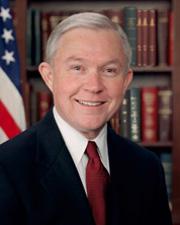 Sen. Jeff Sessions (R-AL)
What it changes
1 change to S. 3254 · shown in the bill's text
Adds SEC. 1084. SENSE OF THE SENATE ON NEGOTIATING CONCESSIONS WITH TERRORISTS at the end of subtitle H of title X
Adds a sectionIn S. 3254 · Placed on Calendar Senate
(2) to strongly urge the Department of Defense to investigate innovative mechanisms (subject to all appropriate security requirements) to access to the pool of talent of non- United States citizens with advanced scientific and technical degrees from United States institutions of higher education, especially in those scientific and technical areas that are most vital to the national defense (such as those identified by the Assistant Secretary of Defense for Research and Engineering and the Armed Forces).
Inserted: SEC. 1084. SENSE OF THE SENATE ON NEGOTIATING CONCESSIONS WITH TERRORISTS.
Inserted: (a) Findings.--The Senate makes the following findings:
Inserted: (1) The United States has a longstanding policy of opposing negotiations with terrorists and terrorist organizations on concessions of any kind, including ransom demands, prisoner releases, and hostage exchanges. This longstanding policy has been repeated by numerous administrations over the past four decades.
Inserted: (2) For example, at an August 4, 1975, meeting between President Gerald Ford and Secretary of State Henry Kissinger and President of Yugoslavia Josip Tito, Secretary Kissinger explained that the United States' "position is, as it has always been, that we refuse to negotiate and to pay ransom in these cases. We do this in order not to encourage the capture of other Americans for the same purpose."
Inserted: (3) In his comments to President Tito, Secretary Kissinger explained the basis for the United States' policy, as well as his expectation that the United States would never change this no-negotiation policy: "The American Government will always refuse to negotiate because that is the only way we can keep demands from being made upon us."
Inserted: (4) In the same conversation, President Ford said, "It's our strong feeling that if we were to breach this hard line that we take there would be no end to the demands being made upon us. We have to be tough and that is right in the long run."
Inserted: (5) On January 20, 1986, President Ronald Reagan issued National Security Decision Directive Number 207, which prohibits negotiations with terrorist organizations regarding the release of hostages.
Inserted: (6) National Security Decision Directive 207 sets forth in unequivocal terms the United States' "firm opposition to terrorism in all its forms" and makes clear the government's "conviction that to accede to terrorist demands places more American citizens at risk. This no-concessions policy is the best way of protecting the greatest number of people and ensuring their safety."
Inserted: (7) National Security Decision Directive 207 continues to say: "The [United States Government] will pay no ransoms, nor permit releases of prisoners or agree to other conditions that could serve to encourage additional terrorism. We will make no changes in our policy because of terrorist threats or acts."
Inserted: (8) Department of State Publication 10217, which was released in similar formats by the administrations of George H.W. Bush in 1991 and Bill Clinton in 1994, espouses the same no-concessions policy and makes clear the United States "will not support the freeing of prisoners from incarceration in response to terrorist demands".
Inserted: (9) On April 4, 2002, President George W. Bush said, "Terror must be stopped. No nation can negotiate with terrorists, for there is no way to make peace with those whose only goal is death."
Inserted: (10) Secretary of State Hillary Clinton, while serving in the United States Senate, wrote in 2007 that the United States "cannot negotiate with individual terrorists; they must be hunted down and captured or killed".
Show 3 more inserted paragraphsShow less
Inserted: (b) Sense of the Senate.--It is the sense of the Senate that--
Inserted: (1) the United States Government should firmly maintain its longstanding policy against negotiating with terrorists and terrorist organizations on any concession or demand; and
Inserted: (2) any abandonment or weakening of this policy would endanger the safety of United States citizens, including members of the Armed Forces, and increase terrorist kidnappings, hostage demands, and murders.
Original wording
At the end of subtitle H of title X, add the following:
Read automatically from the Congressional Record. Check the original before relying on it.
As printed
SA 3007. Mr. SESSIONS submitted an amendment intended to be proposed by him to the bill S. 3254, to authorize appropriations for fiscal year 2013 for military activities of the Department of Defense, for military construction, and for defense activities of the Department of Energy, to prescribe military personnel strengths for such fiscal year, and for other purposes; which was ordered to lie on the table; as follows:
At the end of subtitle H of title X, add the following:
SEC. 1084. SENSE OF THE SENATE ON NEGOTIATING CONCESSIONS WITH TERRORISTS.
(a) Findings.--The Senate makes the following findings:
(1) The United States has a longstanding policy of opposing negotiations with terrorists and terrorist organizations on concessions of any kind, including ransom demands, prisoner releases, and hostage exchanges. This longstanding policy has been repeated by numerous administrations over the past four decades.
(2) For example, at an August 4, 1975, meeting between President Gerald Ford and Secretary of State Henry Kissinger and President of Yugoslavia Josip Tito, Secretary Kissinger explained that the United States' “position is, as it has always been, that we refuse to negotiate and to pay ransom in these cases. We do this in order not to encourage the capture of other Americans for the same purpose.”
(3) In his comments to President Tito, Secretary Kissinger explained the basis for the United States' policy, as well as his expectation that the United States would never change this no-negotiation policy: “The American Government will always refuse to negotiate because that is the only way we can keep demands from being made upon us.”
(4) In the same conversation, President Ford said, “It's our strong feeling that if we were to breach this hard line that we take there would be no end to the demands being made upon us. We have to be tough and that is right in the long run.”
(5) On January 20, 1986, President Ronald Reagan issued National Security Decision Directive Number 207, which prohibits negotiations with terrorist organizations regarding the release of hostages.
(6) National Security Decision Directive 207 sets forth in unequivocal terms the United States' “firm opposition to terrorism in all its forms” and makes clear the government's “conviction that to accede to terrorist demands places more American citizens at risk. This no-concessions policy is the best way of protecting the greatest number of people and ensuring their safety.”
(7) National Security Decision Directive 207 continues to say: “The [United States Government] will pay no ransoms, nor permit releases of prisoners or agree to other conditions that could serve to encourage additional terrorism. We will make no changes in our policy because of terrorist threats or acts.”
(8) Department of State Publication 10217, which was released in similar formats by the administrations of George H.W. Bush in 1991 and Bill Clinton in 1994, espouses the same no-concessions policy and makes clear the United States “will not support the freeing of prisoners from incarceration in response to terrorist demands”.
(9) On April 4, 2002, President George W. Bush said, “Terror must be stopped. No nation can negotiate with terrorists, for there is no way to make peace with those whose only goal is death.”
(10) Secretary of State Hillary Clinton, while serving in the United States Senate, wrote in 2007 that the United States “cannot negotiate with individual terrorists; they must be hunted down and captured or killed”.
(b) Sense of the Senate.--It is the sense of the Senate that--
(1) the United States Government should firmly maintain its longstanding policy against negotiating with terrorists and terrorist organizations on any concession or demand; and
(2) any abandonment or weakening of this policy would endanger the safety of United States citizens, including members of the Armed Forces, and increase terrorist kidnappings, hostage demands, and murders.
Legislative Activity
Stay on top of the latest movement without scrolling through every action
Senate amendment submitted
November 27, 2012