To repeal the expansion of information reporting requirements for payments of $600 or more to corporations, and for other purposes.
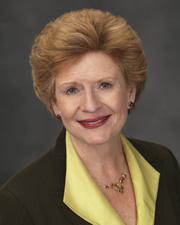 Sen. Debbie Stabenow (D-MI)
Legislative Activity
Stay on top of the latest movement without scrolling through every action
Senate amendment agreed to: Amendment SA 9 agreed to in Senate by Unanimous Consent.
February 2, 2011
View full timeline
Senate amendment agreed to: Amendment SA 9 agreed to in Senate by Unanimous Consent.
February 2, 2011
Roll call votes on amendments in Senate: Motion to waive all budgetary discipline with respect to amendment SA 9 agreed to in Senate by Yea-Nay Vote. 81 - 17. Record Vote Number: 8.
February 2, 2011
Considered by Senate. (consideration: CR S434, S474)
February 2, 2011
Point of order raised in Senate with respect to amendment SA 9.
February 2, 2011
Motion to waive all budgetary discipline with respect to amendment SA 9 agreed to in Senate by Yea-Nay Vote. 81 - 17. Record Vote Number: 8.
February 2, 2011
Amendment SA 9 agreed to in Senate by Unanimous Consent.
February 2, 2011
Senate amendment proposed (on the floor): Amendment SA 9 proposed by Senator Stabenow.
February 1, 2011
Senate amendment submitted
February 1, 2011
Amendment SA 9 proposed by Senator Stabenow. (consideration: CR S382; text: CR S382) To repeal the expansion of information reporting requirements for payments of $600 or more to corporations, and for other purposes.
February 1, 2011
Votes
1 roll call on this amendment
Text
Proposed
FAA AIR TRANSPORTATION MODERNIZATION AND SAFETY IMPROVEMENT ACT

The PRESIDING OFFICER. Under the previous order, the Senate will
proceed to the consideration of S. 223, which the clerk will report by
title.
The legislative clerk read as follows:

A bill (S. 223) to modernize the air traffic control
system, improve the safety, reliability, and availability of
transportation by air in the United States, provide for
modernization of the air traffic control system, reauthorize
the Federal Aviation Administration, and for other purposes.

The PRESIDING OFFICER. The Senator from Texas.
Mrs. HUTCHISON. Mr. President, I suggest the absence of a quorum.
The PRESIDING OFFICER. The clerk will call the roll.
The assistant editor of the Daily Digest proceeded to call the roll.
Mr. ROCKEFELLER. Madam President, I ask unanimous consent that the
order for the quorum call be rescinded.
The PRESIDING OFFICER (Ms. Klobuchar). Without objection, it is so
ordered.
Mr. ROCKEFELLER. Madam President, I ask unanimous consent that the
Senate proceed to a period of debate only on the FAA authorization bill
for the purposes of opening remarks from the chairman--that being me--
and ranking member--that being Senator Hutchison--of the Commerce
Committee.
The PRESIDING OFFICER. Without objection, it is so ordered.
Mr. ROCKEFELLER. Madam President, I wish to thank the majority leader
for bringing this bill to the floor so promptly--the first bill of this
year, the 112th Congress. The Air Transportation Modernization and
Safety Improvement Act reauthorizes the Federal Aviation
Administration. It has been postponed 17 times over the last 4 years,
to the consternation of all of us who care about this subject. There
are three Commerce Committee members in the Chamber right now, and we
are all frustrated about getting it done. So it is the first piece of
legislation.
The bill which I introduced and which we are considering is the text
of the FAA reauthorization bill that was approved by the whole Senate
last year by a vote of 93 to nothing. All of the matters of safety and
air traffic control systems and all the rest of it that we talk about
are all incorporated already in this bill. Although the Senate and the
House of Representatives informally conferenced, it was not productive,
and we were unable to come to a final resolution, so here we are once
again. I thought that beginning this year's consideration of the FAA
reauthorization bill with the legislation that did pass unanimously
last year would signal a commitment to bringing forward a bill that had
broad bipartisan support--at least last year. It wasn't that long ago.
There are some new Members, and some issues still stand out. We didn't
resolve all of them.
I wish to say at the beginning that this is a monumentally important
bill. I would also say that I recognize without rancor that there are a
lot of Members of the Congress who don't really keep up with aviation
because they kind of take it for granted. It is highly technical and
not always interesting but always important--always important. It
employs 11 million people, just for a start. It is a vastly important
bill, and we are vastly behind where we should be, and this bill will
help us move forward.

[[Page S378]]

I wish to thank particularly Senator Hutchison, the ranking member of
the Commerce Committee and my able partner, for her efforts on this
bill last year. I look forward to working with her again this year in
passing this bill, as I know she wants to have it happen, and get it
enacted into law. She and I can't sign it into law, but we want to have
a good bill signed into law. I believe this bill reflects a shared
vision and our mutual goal of making sure the United States continues
to have the safest, most efficient, and most modern aviation system
possible.
Given the importance of the airline industry to our Nation's
economy--again, many people take this for granted, but it is a vast
industry--I can't think of a more important piece of legislation to our
Nation's long-term economic competitiveness. It is the right bill to
start with. We know this legislation will create and support good-
paying American jobs. It already does--11 million is a lot of jobs.
That is slightly more than the population of West Virginia. The bill
improves the safety and efficiency of our Nation's aviation system by
preventing something called runway incursions, which people often
aren't aware of unless their plane runs into another on the tarmac,
which happens infrequently but does happen. People would be shocked to
know how often and how many times incursions are just about to happen
until they are rescued by an understaffed control tower which says:
Hey, head right, head left, stop--whatever. It also modernizes our air
traffic control system. That is an easy phrase--``modernizes our air
traffic control system.'' It is a vast, new concept. We are living in
an age when everybody else is GPS and digitalized, and I include
Mongolia. I would like to include Mongolia because it does have a GPS
system, and the thought of Mongolia being ahead of us is deeply
disturbing to me, and it is a way of making a point, I think one would
agree. I wish to reduce delays that frustrate fliers, and we do that.
It opens the door to better economic development, especially in rural
and underserved areas. It makes a very big point of that, with
essential air service, airport improvement programs, and other
programs.
Simply put, this bill helps protect our position as the global leader
in aviation. Now, I said ``global leader.'' We are. We are. The
aviation needs and goals of Texas and West Virginia are the same.
People might not believe it, but they are. My good friend Senator
Hutchison represents some of the largest airports in the country. I
represent some of the finest smaller airports in the Nation. All of our
airports are critical economic engines to their respective communities.
Senator Hutchison may have more flights in and out of Texas than we
have in West Virginia--in fact, I guarantee she does--but we both know
the importance of air service to economic growth and global
competitiveness.
Every one of our constituents wants the safest aviation system
possible. Before assuming our current roles, Senator Hutchison and I
rotated being chairman and ranking member of the aviation subcommittee.
We did that for 10 years, so we are pretty heavily into the subject,
and we agree on virtually everything--virtually everything. But we
share a passion for aviation because we know how critical this industry
is to our economy, to the comfort and mobility of our people, and to
our Nation's future. We both share a strong desire to get this
legislation enacted into law. I have already said that. It has been far
too long--4 years--since the last FAA reauthorization bill was enacted.
Our Nation cannot afford to wait one second longer.
Sadly, when many people think of flying, their first reaction is
often negative, and that is usually what we hear--people complaining
about TSA lines, about delays, about weather; airlines are meant to
control weather. Actually, they don't, statutorily or otherwise. But
people are not happy, so there is sort of a grumpiness about this
subject, which we don't address, but we try to take away the causes of
grumpiness.
I will be the first to admit from my own point of view that travel is
not always enjoyable. That is a symptom of a number of expectations we
have somehow developed over the years. Air travel has changed with
deregulation. Oh, how well I remember regulation. American Airlines,
big jets in Charleston, WV; United Airlines, big jets in Charleston,
WV; Eastern Airlines, big jets in Charleston, WV; deregulation, and one
month later, no more jets, and we now subsist basically on prop planes
with two propellers. If you are my height, it takes an hour or so to
restore your blood flow after you get out of one of those--if you are
lucky enough to get an exit seat. If you are not, it may take 2 or 3
hours. Anyway, some of the changes with deregulation have been for the
better. Not all of those changes have been for the best. There have
been frustrating changes for travelers as the industry has adapted to
this new reality. There have been many other benefits, primarily
cheaper tickets to more places for the average flier.
We must also remember that aviation is more than just a commercial
air travel service. Aviation accounts for $1 trillion-plus worth of
economic activity for the country and, again, supports more than 11
million jobs. It is a critical sector of our economy. Boeing is the
Nation's largest exporter, and aerospace sales from large and small
producers provide billions of dollars toward balanced trade for the
United States with international buyers. This is a great success story,
but we haven't been tending to it. That is why we are doing this bill
now.
In 2010, the United States did not have a single commercial aviation
fatality. That is a truly remarkable statistic. It is one we should not
only be thankful for but very proud of. Safety is the No. 1 priority of
the Federal Aviation Administration, the airline industry, and the
people who work for both, and it is the No. 1 priority of Senator
Hutchison and myself, and well as the Commerce Committee as a whole. It
always is and has to be. It is through the hard and dedicated work of
the thousands of FAA and airline industry employees that we do, in
fact, have the safest aviation system in the world. Improving the
safety of our aviation system has been a huge priority for all of us.
You can't rest on your laurels in aviation in any respect. The industry
is always shaky. The public is always a little bit shaky. Times are
shaky--bad times, fewer passengers; better times, more passengers. That
sounds like good news--more passengers--but I am copping to that. It
isn't necessarily good news that there will be more passengers in the
future.
I strongly believe this bill is fundamentally about the future of
aviation, and it is vastly important. This bill is about making sure we
have the most technologically advanced satellite-based air traffic
control system in the world. This bill is about catapulting our air
traffic control system out of the 19th century and into the 21st
century with every other industrialized country in the world. We do not
share that with them now. More people drive rented cars with GPS
systems than airplanes have. It sort of doesn't make sense, but that is
a fact. Today, as I said, we are behind Europe and even Mongolia. We
have to remedy that fact, and we have to do it quickly.
This bill is about making sure we continue to have the most dynamic
aviation industry in the world. I will say it again. The U.S. civil
aviation sector generates $1 trillion a year in economic activity and
employs 11 million people. All of that activity creates jobs in every
sector of our economy, including airport construction jobs and building
airplanes, from the smallest general aviation planes to Boeing's state-
of-the-art 787 Dreamliner. All this activity creates jobs--jobs in
airlines, jobs in general aviation, such as the small airports that dot
both Senator Hutchison's State and mine, the rural parts thereof, as
well as the Presiding Officer's. Airports and the aviation industry
support millions of indirect jobs. That makes sense. One need only
look--and this is sort of the most obvious presentation of it--at the
growth around Dulles, Dallas/Fort Worth, and Denver International.
Denver International was built out in the middle of the desert. Not
anymore. I don't think Dallas/Fort Worth was ever out in the middle of
the desert, but the growth is extraordinary. It attracts jobs. People
don't want to bicycle to Dallas or Charleston or anywhere else; they
want to go by air. Business decisions are made by air. So that point
speaks for itself.

[[Page S379]]

In Beckley, WV, which is not huge but has a wonderful airport, what
is interesting is that it also has an enormously successful business
park at that facility. Our major airports in Charleston and Huntington
have direct flights to the major headquarters of chemical and energy
companies that allow businesses to grow in West Virginia.
I believe the future of the U.S. aviation system has unlimited
potential. We face serious challenges in making sure we reach that
potential, but I know we are up to it. To make it work, we have to
upgrade our 1950s-era, antiquated air traffic control system. Investing
in technology and infrastructure is a very good place to start. It is
embarrassing that some of our newer cars have more sophisticated global
positioning systems than many of our aircraft in the skies. That has to
change, and it costs money. It has everything to do with lives and
safety. It is going to get much bigger, with many more passengers. We
have about 750 million people flying every year now. In another decade
it will be nearly 1 billion. So it is almost like a 50-percent increase
in the number of people flying. Everything gets more complicated and
crowded.
It is eye-opening to see the speed with which China and other
developing nations are investing in their air traffic control systems
and their airports. They know what they are doing. They take nothing
for granted. Growth is on their minds. Again, we have to make the
effort to get ahead or we will be left far behind. I am sorry, but that
is the way it works. It is not a sentimental industry. It is one that
needs to be treated well, nurtured, and supported.
If we don't act quickly, we are at risk for falling behind our global
competitors. We will lose the cargo hubs, the aircraft manufacturing
plants, and the economic development that aviation causes. I cannot
understate the importance of a vibrant and strong aviation system. I
have made no attempt to be shy on that account. I cannot be. It is
fundamental to our Nation's long-term economic growth and to my State's
ability to attract new investment.
When choosing to invest in an area, the quality of air service is the
prime consideration. I say ``the''; you could say ``a.'' You can have a
great quality of life, but it doesn't give you a factory. Quality of
life is good, but it isn't preemptive. The ability to fly from West
Virginia to almost any corner of the world, which we now have, is
critical for our ability to attract new businesses and jobs.
Why do we have 20 Japanese companies in West Virginia? That is
actually a cerebrally interesting question. The reason is, because we
have good air service and good workers. But if we had good workers and
no particularly good air service, we would not have them. You have a
lot more of that in Texas, but for West Virginia that is a phenomenal
statistic. All of our futures are tied to modern aviation systems.
Over the last several years, we have focused more on the
inconveniences of air travel, rather than trying to solve the
underlying problems that make air travel so challenging.
Most Americans do not understand how fragile our air transportation
system is. The economic downturn of the last several years masked this
fragility because fewer people flew, so there was less pressure on the
system.
As our economy recovers, I am afraid the inherent weakness of our
system will loom larger than ever in years to come as we get to 1
billion passengers a year.
The possibility of a meltdown of the air traffic control system may
become reality, unless we modernize it. This will create more than
inconvenience; it will put passenger safety at a very substantial and
unnecessary risk.
These are not the only troubling signs, as I noted. There were no
commercial aviation fatalities in 2010, but that doesn't mean the
system is working to perfection. We were lucky and people worked hard.
Over the last few years, the FAA and the industry have faced serious
questions over their commitment to safety. That commitment has been
called into question.
The grounding of thousands of aircraft throughout the system in 2008
raised questions about the quality of airline maintenance practices and
the FAA's ability to provide sufficient oversight of air carriers and
their maintenance, not just domestic but also overseas, which is
another subject.
The tragic accident, the downing of flight 3407 on that snowy night
in Buffalo, exposed problems with pilot training, flight crew fatigue,
particularly pilot fatigue, and the ability of the industry to assure
the traveling public that there is one level of safety throughout the
entire system. This bill addresses that through a number of
stipulations, but we are making it a rule. We have to get this into
law. The FAA is putting some of this into practice, but we have to make
it into law. People have to get enough sleep. Above 10,000 feet, they
can talk about something other than aviation, but below 10,000 feet,
where the crowd gathers and aviation is being scrutinized by air-
traffic control folks, you have to have what is called a sterile
cockpit, where nobody talks about anything but landing. So I am deeply
proud of the reforms we have put into place in the area of safety, and
they offer even more incentive to pass the bill quickly.
Before I close, I wish to recognize the efforts of former Senator
Byron Dorgan and I think Senator Hutchison would join me in saying
this--for his hard work on behalf of the safety issue. I am pleased to
say the FAA is currently working on implementing the two dozen
provisions of the law that he helped, with others, to create.
I feel very strongly that improving our aviation system is a national
priority. My passion comes from a deep belief that our future is tied
to a healthy aviation industry. America is the cradle of aviation. I
don't want to see that change.
Since 1988, I have worked diligently, as the chairman of the Aviation
Subcommittee and now as chairman of the Commerce Committee, to support
our aviation system and to address its challenges; to wit, inadequate
funding for the FAA, a chronically unprofitable commercial aviation
industry, and minimal investment in aerospace research.
Nobody moves forward in industry without doing research, and we will
not pay for it. So a lot of it is not done.
In some areas, we have made progress. We have increased our
investment in airport infrastructure, we have opened new markets for
U.S. air carriers and, thanks to the Obama administration, we have
finally begun to make serious investments in modernizing our air
traffic control system. It is a multi-year process, highly expensive.
I know many of my colleagues will say we cannot afford to make those
investments in aviation at this time. But now, it seems to me, it is
the precise time to make them.
The recession has prevented widespread delays from occurring. So we
were lulled into thinking everything was going well. Over the last
decade, airlines dramatically cut capacity and parked hundreds of
planes in the desert. We don't have them in West Virginia, and I don't
know where they are parked--somewhere in the desert. They were taken
offline because of a lack of passenger demand. Anyway, we cannot make
shortsighted budget decisions. The cost of inaction will be far
greater.
I ask my colleague from Texas, I am proceeding well, but I am not
finished; is that acceptable?
Mrs. HUTCHISON. Yes.
Mr. ROCKEFELLER. I thank the Senator. Our economy has begun to slowly
turn around, and the demand for air travel has slowly begun to grow.
Airlines have cautiously increased capacity. If we act now, we can be
prepared to meet the challenges of adding millions of passengers to the
system in the next decade. If we fail to act, congestion will plague
the system again, delays will be a fact of life, and today will look
like the golden age of travel.
The benefits of investing in air traffic control modernization extend
far beyond the ability to handle more passengers. Most important, the
Next Generation Air Transportation System, what we call NextGen, will
dramatically improve the safety of our air transportation system by
providing pilots and air traffic controllers with better situational
awareness. Now you can't tell if there is a mountain in front of you,
you can't tell about the ground situation, and you can't tell very well
about separation. It is inefficient. Planes land, but they could land

[[Page S380]]

more quickly. You cannot read the distance and altitude between one
plane flying in for a landing or one taking off. It is inefficient--
dangerous, in fact. So we have to do this. We have to be able to see
other aircraft and detailed weather maps in real time and to be able to
go from one place to another in a straight shot. That is what NextGen
will do for us. Now planes are going all over the place, avoiding this
and that, as they go from one TRACON to another TRACON, a weather
system or an unexpected flight. GPS NextGen will allow for straight
flights. That saves a lot of fuel and a lot of time, and delays cost
the American economy over $30 billion a year.
So, again, we have to provide our pilots and air traffic controllers
with better situational awareness. They will be able to see other
aircraft and detailed weather maps, and that becomes important.
A new satellite-based ATC system will allow airplanes to move more
efficiently by taking more direct routes, which saves our economy
billions of dollars on an annual basis.
Greater operational efficiency will also create substantial
environmental benefits. Drastic reductions in fuel consumption means
not only that we will achieve lower carbon emissions--less of them will
be spewed out--but almost every community near an airport will benefit
greatly from this effort. Also, planes are becoming quieter. In all
ways they are getting better. We still have to guide them correctly.
As I noted, the President clearly recognizes the value of investing
in our air transportation system, and this was reflected in his budget
request. The administration proposed a total of over $1 billion in
fiscal year 2011 for NextGen programs, which is more than a 30-percent
increase from the fiscal year 2010 budget. Is that bad in this time and
age of skepticism about budgets? I hope we can continue this level of
budget, even in lean budget years.
Modernizing the ATC system will require a sustained focus and
substantial resources. This legislation takes concrete steps to make
sure the FAA accelerates and achieves key NextGen programs and that the
agency implements modernization efforts in an effective and efficient
manner in the long run. How many airports can be done by 2014 and by
2018? It is laid out in the bill.
Let me discuss a few key measures in S. 223 that further address
modernization. To improve accountability, this bill establishes an air
traffic modernization board, and it designates a chief NextGen officer
to provide specific oversight of the FAA's modernization activities.
Oversight is what Congress is for, and we don't do it well enough
because we are all on too many committees and have too much work to do.
Putting somebody in who is responsible for overseeing NextGen within
the FAA is a good idea, not a silly one.
The bill also establishes specific deadlines for the implementation
of the key NextGen programs. It has fancy names for them. Area
Navigation, or RNAV, and Required Navigation Performance, or RNP,
procedures must be developed at the Nation's largest 30 airports by
2014. Where these technologies are already in place, we are seeing
dramatic benefits in reduced fuel consumption and many other benefits.
All aircraft are required to be equipped with Automatic Dependent
Surveillance-Broadcast. I will not bore you with what that is about. It
is called ADS-B, and it is the cornerstone of the FAA's traffic control
modernization effort. It provides controllers and pilots with an
aircraft's immediate position. Pilots will be able to see the real-time
position of other aircraft in their vicinity and receive the same
information the controllers are seeing in their towers. They will see
them in their cockpit.
The FAA estimates that NextGen will cost probably about $20 billion
through 2025 and the airlines another $20 billion in aircraft equipage.
In other words, they have to match--the airlines--to a certain extent
what the Federal Government is doing. They will do that. Again, some
will argue we cannot afford this investment. I say it is the other way
around.
This bill is paid for. It makes a substantial commitment to providing
the FAA with the resources it needs. I have worked with Senators Inouye
and Baucus to reach an agreement that moves us in the right direction.
S. 223 will create a new subaccount with the aviation trust fund to
fund FAA's modernization efforts. This modernization subaccount will
dedicate $400 annually to NextGen efforts and to nothing else. So it is
boxed right in. Our colleagues have worked hard on this issue.

A word on small community air service. That is another core
challenge. Every part of my State of West Virginia is basically rural,
and every State has some rural parts. Everybody thinks of LaGuardia and
JFK, but try upstate New York, try around the Saranac or west of that
into Buffalo. They deal with small aircraft. That is where the small
aircraft crash took place, in Buffalo. The pilot was drowsy.
The continuing economic crisis has hit the U.S. airline industry very
hard. Rural communities are at the end of the food chain. If something
bad happens at the top of the food chain, there will be some suffering.
But the real suffering takes place at the bottom of the food chain.
That is where the flights get cut off, that is where they get limited,
that is where some flights suddenly stop going to places. There is hope
for better times, but we do not have them yet. We are in crisis.
The reduction or elimination of air service has a devastating effect
on the economy of the community nearby. I stipulate that with the
previous sentence. Having adequate air service is not just a matter of
convenience but also a matter of economic survival. Without access to
reliable air service, no business is going to locate their operations
there. I already talked about that issue. Small airlines and small
airports are important.
When Congress deregulated the airline industry in 1978, we made a
promise to small communities--an official promise--that they would
continue to have access to the Nation's air transportation system. I
believe that the Federal Government needs to provide additional
resources and tools for small communities to help them attract adequate
air service. This legislation does this by building on existing
programs.
Authorized funding for the Essential Air Service program is increased
to $200 million annually. The EAS program is critical to dozens of
communities throughout this country. I made that point. It is needed.
It also provides a lot of flexibility to EAS, and what small airports
can do with EAS. Someone may be phasing out being a commercial EAS
airport and headed to being a general aviation airport. This allows
that transition to move forward.
I am almost at the end. Consumer protection is key. We are about
protecting lives, protecting people, protecting passengers. The bill
strengthens passenger protections by incorporating elements of the
passenger bill of rights which came right out of the Commerce Committee
to deal with the most egregious flight delays and cancellations.
Talk about angry travelers. This is where you run into them. The
industry would be required to take basic steps to improve the passenger
experience. To wit, passengers must be provided with information
regarding on-time arrivals and chronically delayed flights when they
purchase tickets. Most of them will do that online so the airlines have
to publish what is their record for on-time takeoffs or on-time
landings, what is their delay, what is their cancellation. That has to
be posted so that fliers who want to purchase tickets can compare and
go elsewhere if they want.
Air carriers are also required to permit passengers to deplane after
3 hours have elapsed. We all heard about 9-hour waits on the tarmac. It
is usually not as dramatic as that. If you are a mother and have three
children, 3 hours not moving is a long time. Three hours moving is a
long time, but not moving is a very long time. They would have, after 3
hours, the right to deplane. It is their right to deplane. Airlines
cannot stop that unless the pilot has a certain belief that they are
just about to take off. They have to be given water and medical
attention, if they need it, bathroom facilities, and the rest of it.
The Department of Transportation has taken steps to improve customer
protections, and I applaud their actions. But I for one believe
statutory protections are better than when a government agency decides
to do it.
In conclusion, when we began work on this bill, I at least had four
simple goals: One, take steps to address critical safety concerns; two,
establish a

[[Page S381]]

roadmap for the implementation of NextGen and accelerate the FAA's key
modernization programs; three, make sure we adequately invest in
airport infrastructure; and four, continue to improve small
communities' access to the Nation's aviation system. This bill takes
those steps.
I feel very strongly about the bill. The Airport Improvement Program,
which is part of this bill, is estimated to support 120,000 jobs
annually. This bill authorizes a total of $8.1 billion for this
account. Moving forward with NextGen will certainly help us keep our
position as a global leader. This is the culmination of more than 4
years of work with Senator Hutchison and myself and the hard-working
members of the Commerce Committee.
Again, this language passed 93 to 0 less than 12 months ago. It is an
important bill--important for the safety of the traveling public,
important to our ability to create jobs, important to sustaining an
aerospace industry, important to having healthy airlines, important to
general aviation's future, and important to our future competitiveness.
I urge my colleagues to support this bill, and I welcome ideas on how
we might improve it. I ask my colleagues to join me in our
determination to complete our work and reauthorize FAA.
The PRESIDING OFFICER (Mr. Franken). The Senator from Texas.
Mrs. HUTCHISON. Mr. President, as ranking member of the Committee on
Commerce, Science and Transportation, I, too, wish to discuss the FAA
reauthorization bill and agree with the chairman, Senator Rockefeller,
who has just spoken, that we have worked in a bipartisan way on this
bill for 4 years.
I am glad he mentioned Senator Dorgan, who was the chairman of the
subcommittee, who pushed so hard last year for us to come to a
conclusion and try to pass a permanent bill.
The bill that is before us is the bill that passed last year. There
are many good provisions in this bill. It passed unanimously in the
Senate, and we were on our way to conference with the House. But the
House bill was quite different. We never got to the point of being able
to work out the differences.
I do think there was one part of the bill, which I will discuss more
later, where we worked on a compromise to achieve a goal of easing the
perimeter rule at Washington's Reagan Airport. We were able to come to
an agreement among the leaders on the committee, but we were not able
to get the full agreement of the Senate. That was a gentlemen's
agreement, if you will, that we would work on putting that into the
conference report, but that never came to pass.
The perimeter rule around National Airport has slot restrictions and
mileage restrictions on how far a plane can go directly in and out of
National Airport. The perimeter rule prohibits flights traveling to or
from points that are more than 1,250 miles from National Airport unless
there is an exemption. Many Western States would like more of those
exemptions, especially given that the airport can now handle additional
capacity.
I want to be clear at the onset of this process, I cannot support a
final bill that does not address this issue. We need to work out either
a consensus majority or an agreement that addresses the issue rather
than just leaving it out.
The FAA has operated under a series of short-term extensions since
2007; 18 short-term extensions have occurred. That is not providing the
policy to keep us in the forefront of modernization of our air traffic
system. We need to have a bipartisan, commonsense, multiyear FAA
reauthorization to provide the stability that the FAA and its
stakeholders--the airlines and passengers--need to make sound
investment decisions for our future aviation system.
The current short-term extension expires March 31. If we address
these issues in our Senate bill, I believe we can work with the House
that has already begun to formulate the basis of its bill and have a
true multiyear reauthorization bill that would be able to pass on March
31 instead of yet another short-term extension.
The House version last year was quite different from our bill. While
a year now has almost elapsed, many of the bill's provisions need to be
updated. The one we have before us would modernize the air traffic
control system, NextGen, which was mentioned by Senator Rockefeller. It
would improve aviation and it would ensure passengers are treated well,
especially if they are delayed and stuck in an aircraft for more than 3
hours. I call it the captive passenger rule that we need to enact.
First, modernization. Probably the most important area we address in
this bill is expediting the FAA's air traffic control air modernization
program, known as NextGen. The FAA operates the largest and safest air
traffic control system in the world. In fact, the FAA's air traffic
control system handles almost half of the world's air traffic activity.
The United States has been a leader in developing and implementing new
technologies to create a safer and more efficient airspace system.
However, today's air traffic control system is not much different
from that which was started in the 1960s. The system is based on radar
tracking and ground-based infrastructure. NextGen will move much of the
air traffic infrastructure from ground based to satellite based by
replacing antiquated, costly ground infrastructure with orbiting
satellites and onboard automation. By doing this, the FAA will be able
to make our aviation system more safe and efficient while increasing
capacity at our Nation's busiest airports.
Some of the modernization provisions in the bill include establishing
clear deadlines for the adoption of existing Global Positioning System
navigation technology. It mandates 100 percent coverage at the top 35
airports by 2014, with the entire national airspace system to be
required to be covered by 2018.
Aviation safety. As a former vice chairman of the National
Transportation Safety Board, I understand well the critical and
difficult mission the FAA has in overseeing our Nation's airlines and
aviation system. Aviation safety and the public trust that goes along
with it are the bedrock of our national aviation policy, and we simply
cannot allow any degradation of safety for the flying public. This bill
goes a long way to advance and promote the air travel system.
Last August, as part of one of the short-term extensions, several of
the important safety provisions were enacted into law that were the
direct result of weaknesses identified from the tragic crash and
aftermath of Colgan flight 3407 in Buffalo, NY. While those provisions
were of great importance and will have an impact on creating one level
of safety through all sectors of aviation, we still have important work
to do, and in this bill we do it, such as addressing inconsistent
application of airworthiness directives by improving the voluntary
disclosure reporting process to ensure adequate actions are taken in
response to reports; limiting the ability of FAA inspectors to work
with air carriers over which they had oversight.
The PRESIDING OFFICER. Will the Senator yield?
Mrs. HUTCHISON. I will be happy to yield if the leaders allow me to
come in when they are finished and continue.
The PRESIDING OFFICER. Without objection, it is so ordered.
Mr. REID. Mr. President, I ask unanimous consent that Senator
Stabenow be recognized to offer an amendment related to 1099 reporting
forms; that she give her speech regarding this after Senator McConnell
offers an amendment relating to health care, and the amendments be
debated concurrently.
Senator McConnell can do whatever he feels appropriate, but he will
speak before Senator Stabenow. How much more time does the Senator from
Texas need?
Mrs. HUTCHISON. Probably about 5 or 6 minutes.
Mr. REID. So whatever she and Senator McConnell decide on that is
fine with me.
Mrs. HUTCHISON. So I will speak after Senator McConnell, and before
Senator Stabenow.
Mr. McCONNELL. My statement is pretty brief, if the Senator from
Texas would not mind. I think Senator Stabenow is willing to let me do
my statement and lay down my amendment.
Mr. REID. Then Senator Stabenow will be willing to let the Senator
from Texas finish her statement.

[[Page S382]]

I ask unanimous consent that Senator Stabenow be recognized to offer
her amendment and then Senator McConnell would offer his.
The PRESIDING OFFICER. Is there objection?
Without objection, it is so ordered.

Amendment No. 9

Ms. STABENOW. Mr. President, I have an amendment at the desk,
amendment No. 9, and I ask for its immediate consideration.
The PRESIDING OFFICER. The clerk will report the amendment.
The assistant legislative clerk read as follows:

The Senator from Michigan [Ms. Stabenow] proposes an
amendment numbered 9.

Ms. STABENOW. I ask unanimous consent that the reading of the
amendment be dispensed with.
The PRESIDING OFFICER. Without objection, it is so ordered.
The amendment is as follows:

(Purpose: To repeal the expansion of information reporting requirements
for payments of $600 or more to corporations, and for other purposes)

On page 335, after line 20, insert the following:

TITLE XI--REPEAL OF EXPANSION OF INFORMATION REPORTING REQUIREMENTS

SEC. 1101. REPEAL OF EXPANSION OF INFORMATION REPORTING
REQUIREMENTS.

(a) In General.--Section 9006 of the Patient Protection and
Affordable Care Act, and the amendments made thereby, are
hereby repealed; and the Internal Revenue Code of 1986 shall
be applied as if such section, and amendments, had never been
enacted.
(b) Rescission of Unspent Federal Funds to Offset Loss in
Revenues.--
(1) In general.--Notwithstanding any other provision of
law, of all available unobligated funds, $44,000,000,000 in
appropriated discretionary funds are hereby rescinded.
(2) Implementation.--The Director of the Office of
Management and Budget shall determine and identify from which
appropriation accounts the rescission under paragraph (1)
shall apply and the amount of such rescission that shall
apply to each such account. Not later than 60 days after the
date of the enactment of this Act, the Director of the Office
of Management and Budget shall submit a report to the
Secretary of the Treasury and Congress of the accounts and
amounts determined and identified for rescission under the
preceding sentence.
(3) Exception.--This subsection shall not apply to the
unobligated funds of the Department of Defense, the
Department of Veterans Affairs, or the Social Security
Administration.

Recognition of the Minority Leader

The PRESIDING OFFICER. The Republican leader is recognized.
Mr. McCONNELL. Mr. President, I thank the Senator from Texas very
much for letting me make a brief statement about the amendment I am
about to offer, and apologize for interrupting her comments.
What we have today is an opportunity--an opportunity--for the
majority to reevaluate what it has done on the issue of health care and
to take another path. It is no secret the American people don't like
the health care bill that was passed last year. If you have talked with
doctors or nurses or anybody else involved in health care over the last
year, most of them will tell you they do not like it either. Employers,
big and small, have been desperately trying to get the message across
of how damaging this bill will be to their ability to create jobs. They
tell us the impact of the bill is severe--higher taxes, penalties for
hiring workers, new regulations that have already run to more than
6,000 pages, and mountains of new paperwork all at a time when
businesses want to create jobs and millions of Americans are looking
for one.
Don't take it from me. Here is how the National Federation of
Independent Business puts it:

Small business owners everywhere are rightfully concerned
that the unconstitutional new mandates, countless rules and
new taxes in the health care law will devastate their
businesses and their ability to create jobs.

Yesterday, a Federal court in Florida found the crux of the law to be
unconstitutional. So we have an opportunity today--an opportunity for
all those who supported the health law--to reevaluate your vote and to
listen to your constituents, who are desperately trying to get your
attention. You can say, perhaps, this was a mistake, we can do this
better or you can continue to dismiss the majority of the people in
this country as not knowing what they are talking about.
It is not every day that you get a second chance on a big decision
after you know all the facts. Today is one of those days. For all of us
who opposed the health care bill, today we reaffirm our commitment to
work a little harder to get it right. We can't afford to get it wrong.
I urge my colleagues to move beyond party affiliation. Look at the
facts before us. If everyone in this Chamber evaluated this bill for
what it is, we would repeal it right now, and then we would begin to
work on achieving our mutual goal of delivering health care at a higher
quality for lower cost. Let us not miss this opportunity.

Amendment No. 13

Mr. President, I send an amendment to the desk, and I ask for its
immediate consideration.
The PRESIDING OFFICER. The clerk will report the amendment.
The assistant bill clerk read as follows:

The Senator from Kentucky [Mr. McConnell] proposes an
amendment numbered 13.

The amendment is as follows:

(Purpose: To repeal the job-killing health care law and health care-
related provisions in the Health Care and Education Reconciliation Act
of 2010)

At the appropriate place, insert the following:

TITLE __--REPEAL OF JOB-KILLING HEALTH CARE LAW

SEC. _01. SHORT TITLE.

This title may be cited as the ``Repealing the Job-Killing
Health Care Law Act''.

SEC. _02. REPEAL OF THE JOB-KILLING HEALTH CARE LAW AND
HEALTH CARE-RELATED PROVISIONS IN THE HEALTH
CARE AND EDUCATION RECONCILIATION ACT OF 2010.

(a) Job-Killing Health Care Law.--Effective as of the
enactment of Public Law 111-148, such Act is repealed, and
the provisions of law amended or repealed by such Act are
restored or revived as if such Act had not been enacted.
(b) Health Care-Related Provisions in the Health Care and
Education Reconciliation Act of 2010.--Effective as of the
enactment of the Health Care and Education Reconciliation Act
of 2010 (Public Law 111-152), title I and subtitle B of title
II of such Act are repealed, and the provisions of law
amended or repealed by such title or subtitle, respectively,
are restored or revived as if such title and subtitle had not
been enacted.

SEC. _03. BUDGETARY EFFECTS OF THIS TITLE.

The budgetary effects of this title, for the purpose of
complying with the Statutory Pay-As-You-Go Act of 2010, shall
be determined by reference to the latest statement titled
``Budgetary Effects of PAYGO Legislation'' for this title,
submitted for printing in the Congressional Record by the
Chairman of the Committee on the Budget of the House of
Representatives, as long as such statement has been submitted
prior to the vote on passage of this title.

Mr. McCONNELL. Mr. President, I thank the Senator from Texas, and I
yield the floor.
The PRESIDING OFFICER. The Senator from Texas.
Mrs. HUTCHISON. Mr. President, I am pleased we are starting on the
FAA bill and having an open amendment process so everyone can be heard.
I will finish my remarks, as the ranking member of the Commerce
Committee, and then I know Senator Stabenow wants to speak on the first
amendment that is going to be offered. It is probably unrelated to our
FAA bill but nevertheless is very important for our country.
Let me go back to where I was on the part of the FAA reauthorization
bill that addresses aviation safety. We do limit the ability of FAA
inspectors to work for air carriers over which they have had oversight,
and we will require the conducting of independent reviews of safety
issues identified by employees.
We also need to require enhanced safety oversight of foreign repair
stations, including a minimum of two FAA inspections annually, with
exceptions for those that have comprehensive bilateral aviation safety
maintenance agreements with the United States, and requiring alcohol
and drug testing at any foreign facilities that perform maintenance on
U.S. commercial aircraft.
Finally, the bill also provides infrastructure investment to our
Nation's airports. As we all know, you can have the best planes and the
best air traffic system but they mean nothing without the proper
airport infrastructure in place.
This bill contains many important provisions and deserves the support
of the Senate. We have been operating under short-term extensions for
far too

[[Page S383]]

long. It is also one of the reasons we need to finally address the DCA
perimeter rule, which has impeded the passage of this bill on too many
occasions. While I have been talking about what is in the bill, this is
the one issue that is currently not included in the bill and must be
addressed if we are to have a successful final passage.
After months of negotiation last year, the chairman, the subcommittee
chairman, western Senators, and our ranking member on the subcommittee
and I reached a compromise agreement that we hoped would finally
resolve the issue, but we didn't have an opportunity to bring the
consensus version to the floor before we adjourned. It is a very
reasonable approach. Here are the provisions of the compromise:
It would add five new round-trip flights beyond the perimeter for new
entrants or limited incumbents, which means airlines that have very
small bases at National Airport now. This means we would add
competition with the five new round-trip flights.
It allows for conversion of 16 round-trip flights from large hub
airports inside the perimeter to any airport outside the perimeter
phased in over 2 years.
The conversion concept seeks to address congestion concerns by
replacing existing flights rather than creating more new flights. Since
2000, there have only been 12 new flights at National Airport. That is
since the year 2000. Now we are asking for five more new flights, which
would increase competition. The conversion flights would have no impact
on congestion at the airport because they will not be new flights.
It prohibits the use of wide-body aircraft for converted flights to
address any noise concerns from local residents. But in reality, the
noise issue is so different today than it was when the first aviation
authorization was passed. We have Stage 3 aircraft now, which are much
quieter than the planes that have gone in and out in the past. And not
to allow the use of bigger aircraft protects the residents who might
live around the airport. In fact, I would argue it gives them an added
convenience, because those residents would also have access to the
long-haul flights at an airport convenient to them.
The DOT would evaluate the proposed flights and be able to disapprove
of the conversions if they determined they are not in the public
interest.
The air carriers could only convert flights currently used to operate
flights to large hubs within the perimeter in an effort to protect
small communities. So, in other words, you would not see conversions
from very small airports to be able to take long-haul flights away. It
would only be conversions from a big hub airport to another big hub
airport. So our small communities should not feel threatened by this.
Carriers would be prohibited from selling, trading, leasing or
otherwise transferring the rights to fly beyond the perimeter.
It also eliminates financial restrictions in place between National
and Dulles that would allow for revenuesharing between the two
airports, which is comparable to other airport systems across the
country to address any financial impact on the airport authority.
I lived through, dealt with, and negotiated the Wright amendment in
Texas and the lifting of the Wright amendment that allowed an
incremental easing of the Wright amendment restrictions at Dallas's
Love Field. That was put in place to protect DFW Airport when it was
first built. That was much of the reason for the restrictions at
National Airport when Dulles Airport was built, to assure that Dulles
would be financially secure. Dulles is financially secure. So it is
time to deal with the issue of allowing National to have more service
to the western half of America. The people out West deserve to have
more access to National Airport if that is where they choose to fly.
I think Dulles has captured the international flights, and I think
that has been a good way for Dulles to become one of our busiest
airports and certainly one of our most successful. So I know these are
difficult issues, because I dealt with them in my own State, but now I
think this modest expansion of only five new flights out of Reagan
National should be very doable. I think the western Senators have come
up with a compromise, with the conversions, that will not affect the
traffic or the congestion around National but will allow better access,
which I think is a win-win for everyone.
So especially for you, Mr. President, with some humor, I find it a
bit ironic that tomorrow is Groundhog Day--February 2. If ever there
were a piece of legislation that fits the bill, this one is it. Since
starting this legislation in 2007, 18 short-term extensions later, and
this being the third consideration of the FAA bill on the floor, it
does feel like Groundhog Day. And in a nod to that holiday--that
esteemed important holiday in America--let us hope there are no shadows
seen and winter will quickly end in a well-debated and bipartisan FAA
bill.
Mr. President, I thank the Senator from Michigan, the majority
leader, the Republican leader, and my chairman for allowing us to start
the debate on this bill and finish our remarks. I know we will have
many amendments, but I hope in the end we have a good bill that
satisfies everyone's needs and that we can say permanently that winter
is over.
I yield the floor.
The PRESIDING OFFICER. The Senator from Michigan.
Ms. STABENOW. Mr. President, first, I want to congratulate Senator
Rockefeller and Senator Hutchison for their leadership in putting
together what is such an important bill for 280,000 jobs that are saved
or created as a result of this bill, and focusing on our ability to
out-innovate and out-build in a global economy. We can't do that
without a 21st century FAA system--airports, air traffic control, and
so on. So I join with Senator Hutchison in hoping that--and I am sure
it will be true--at the end of the day we will have a strong bipartisan
vote, because they are moving forward in the spirit in which we have
all come together in saying we want to move forward; that is, working
hard and focusing on jobs. That is what the American people want us to
do, focus on jobs, and find common ground, working across the aisle.
That is evident from this bill.
I am very appreciative of the fact they are focusing, and I want to
thank our leader for making sure that the first bill we are bringing up
is about jobs. We understand that too many families--certainly in my
State--are still looking for work. They have worked hard all their
lives, and they never thought in a million years they would find
themselves in the situation they are now facing. They want us to be
laser-focused on jobs and the economy and outcompeting in the global
economy, as the President said. This bill is exactly the kind of policy
on which we should be focused. What is concerning to me is that while
we are doing that, we are now going to have a debate that is very
divisive, really looking backward rather than looking forward.

One of the things the President talked about--again, which I agree
with strongly--is that in the area of health care, what we passed last
year, we know there are measures we can fix to make our system more
competitive, to make it better for families, to put families back in
control rather than insurance companies. We know we can make it better.
Certainly no one has been more of a champion than our leader on this
legislation, now the chairman of the Commerce Committee but one of the
leaders, the No. 2 on the Finance Committee, who brought his passion to
the issue of health care as well. We know this can be fixed, and we
want to work together to make it better but not fight old fights,
create old political fights and division, and certainly not roll back
the clock where we put all the control in the insurance companies and
we see our families losing the freedom and security to make sure their
children, their families have the health care they need.
Let me first talk about my amendment and then why I believe we should
be focused on this kind of amendment to fix the bill that passed last
year, the new law, to make it better rather than rolling the clock
back. Certainly we have heard now, if you follow the polls, that four
out of five Americans are saying: Don't go back and just repeal what
was done; fix it. So the majority of people are not supporting going
back to old political fights or going back, frankly, to a system that
is an uncontrolled system where insurances companies can raise rates
20, 30, 40 percent

[[Page S384]]

every year without some plan, some focus to be able to lower costs, to
be able to get people out of emergency rooms and into the doctors'
offices, and, frankly, for people who have insurance not to be placed
into a situation where they continually see their rates go up to pay
for people who do not, which is what we have put in place.
There is a provision that has been a concern of mine and many others.
We have debated it on the floor. We have attempted to get it fixed
several different times. I hope today, I hope tomorrow--whenever we
vote--that we will actually be able to get this fixed. This has been
supported on both sides of the aisle, and it deals with eliminating
redtape and burdensome IRS reporting requirements for our businesses,
particularly small businesses.
We are particularly concerned about what this means for small
businesses. The provision that was placed into the bill that now, as we
look at how the IRS would implement it, is clearly too burdensome--my
amendment would repeal that. It would allow business owners to spend
their time growing their companies and creating jobs instead of filling
out paperwork from the IRS. We want them creating jobs. It is a
commonsense solution to an issue that has come up. Basically, it would
make sure that the provision that would require a 1099 form for every
vendor when a company has a purchase of $600 or more for goods would no
longer be in place. This is a provision that actually does not take
effect until next year, but we want to send a very clear message to
businesses that have expressed great concern about this, about what is
coming for them at the end of the year. We want to let them know that
we will not continue the new provision. We would allow small businesses
that already create 64 percent of the jobs to be able to keep creating
those jobs, and we would make sure we are not putting in place
additional paperwork for them.
It is important to note that, according to the IRS, the provision we
want to repeal if left unchecked would impact about 40 million American
businesses and 26 million of them are sole proprietorships--our
smallest businesses. They would be overwhelmed with the paperwork that
is involved. It does not make any sense.
We passed a great small business jobs bill last fall that created
eight different tax cuts and focused on making capital loans more
available for small businesses. We don't want to now go in the other
direction and see a mountain of paperwork added to the small businesses
we have been very committed to fighting for and supporting.
Unfortunately, if this provision were allowed to stand, it would
require a 2000-percent increase in 1099 filings. Frankly, that does not
make sense.
This particular provision would repeal what was placed into the new
health care law. We pay for the repeal by cutting $44 billion in
unobligated spending. We do make it clear that certainly this does not
affect Medicare or Social Security benefits in any way. I would not
support that. I know colleagues on the floor would not as well. It
makes it clear that the Departments of Defense and Veterans Affairs and
the Social Security Administration are not included. But it would give
the Office of Management and Budget the ability to look at the
possibility in areas for cuts, and they would then report back to us in
60 days after enactment--to the Secretary of Treasury and the
Congress--concerning the amounts and the accounts they would be using
in order to cut back, in order to save this particular provision.
This is an area where we can come together, where Democrats and
Republicans--both sides of the aisle--who care passionately about small
businesses can come together and eliminate redtape and burdensome IRS
reporting provisions. We would get that off the table and make it clear
to small businesses that there is no intent or actuality that this is
going to happen. We can do that together.
But what we should not be doing is what the next amendment, the
Republican leader's amendment, would do because his amendment would
take us back to the time of uncontrolled insurance company increases,
of no accountability, and it would put the control of health care
coverage and costs back in the hands of insurance companies. What I
support and what the new law allows is the freedom and security for
families to make sure they can get the medical care they need when they
need it.
I have two beautiful grandchildren, a granddaughter age 3 and a
grandson age 1, and they are the most beautiful children in the world,
just for the record. I want my son and daughter-in-law picking up the
phone and calling the doctor when they get sick, not fighting with the
insurance company. If this is repealed, they go back to fighting with
the insurance company. I want to ensure that my children, as well as my
grandchildren, my mom, everyone else in my family, as well as everyone
in Michigan and the country, is getting the medical care they need, not
fighting with the insurance companies, not worrying that because their
child has juvenile diabetes or leukemia or some other disease or
condition, the insurance company is going to say: Tough luck, we are
not going to cover your child even though your child needs care or you
suddenly get sick and they say: You know, there is some fine print over
here, and we know you are sick, but we are going to cancel your
coverage or we have 10 treatments we will provide even though the
doctor says you need 20.
Right now, because of what we have done in the Patients' Bill of
Rights that was put into place, we put those decisions in the hands of
families and doctors instead of insurance companies. I certainly am not
going to vote to taking it back to putting it in the hands of insurance
companies.
Frankly, I have had many families approach me to say ``thank you''
who now have the ability, the freedom, the security to put their
child--this 22-,
23-, 25-year-old--on their insurance. They get that first job, and it
doesn't have health insurance, but they can go out, get started, and
know they have the peace of mind that they have health insurance. That
would be taken away under what the Republican leader is proposing. We
would see young people going back to no insurance as a result of that.
Right now, we have seniors who know they are going to have their
freedom and security to be able to get the cancer screening they need,
the wellness visits, even if they do not have the out-of-pocket--the
copay and deductible they were used to being charged in the past
because there is no co-pay and deductible now. They will be able to get
what they need in preventive care.

They will have the peace of mind, the security to know that if they
use a lot of medicine and they fall in a gap in coverage, the cost in
that gap is going to be cut in half for any brand-named drugs--cut in
half. What does that do? It means my mom, who is 84, has the security
to know that her great-grandchildren are going to have her around
longer--a lot longer, I hope--because she is going to be able to play
with those kids. Every older person is going to know they have a better
chance to be around for their grandkids because they are going to be
able to afford the medicine that will help them get healthy. That is
taken away with the Republican leader's amendment, the freedom and
security for seniors to know they can stay healthy, they can stay in
their homes, they can have the medicine they need or the doctors'
visits they need to be able to stay healthy and live a long, healthier
life. That is taken away.
There will be the freedom and security for women to know that we are
not going to pay twice as much as men for insurance--which, by the way,
in the majority of policies prior to passing this legislation, if women
went out to buy an insurance policy, in over half the policies, women
paid as much as twice as much. We changed that.
We have also said that things such as maternity care ought to be a
basic part of a health insurance policy. Maybe we will not be 39th in
the world in the number of babies who live through the first year in
their lives if moms are able to get the prenatal care they need and
babies are able to get it through the first year of their lives. This
gives women the freedom and security of knowing they are going to get
what they need to have healthy babies. Isn't that what we all want?
That is taken away with the amendment of the Republican leader.
Among many other things, I will just mention two others. For the
first time, we are putting accountability on the

[[Page S385]]

insurance industry--again, our chairman of the Commerce Committee led
this effort and the Finance Committee--to say that you know that if you
pay a hard-earned dollar out of your pocket for health insurance, and
it is tough and the rates are high--and unfortunately, until we get
this implemented, they keep going up, they keep having it go up until
they have to stop--the majority of that is going to go for medical
care. So, depending upon the size of your policy, either 80 or 85
percent that you pay out has to go into medical care, not executive
compensation or bureaucracy but medical care. What does that mean? It
means it will limit the rate increases over time and put more
accountability on the company. The amendment of the Republican leader
rolls that back. We have companies now that spend 60 percent of every
dollar you give on medical care or 70 percent. This would say that 80
or 85 percent, the majority of your hard-earned dollars--they are hard
to come by in this economy--if it is for health care, then it should be
used on health care. That is what is repealed in this--accountability
on insurance companies.
Finally, what is also repealed is a major focus in this bill on
supporting small businesses to be able to get a better deal on health
insurance, and this takes away the freedom and security for a small
business to get the leverage they need, like a big business, to get a
better deal on rates. This was something that took effect. If we were
going to change something, I wish we could speed that up. That needs to
be faster, in my judgment, and not having to wait for the next 3 years
because we have all kinds of small businesses that are going to be able
to band together and be able to get a better rate like a big business
through competition in the marketplace--not government control, private
sector competition.
I had an opportunity to talk to a gentleman who runs a program for
our automakers and other manufacturers for retirees. It is a health
exchange, exactly like we passed in the new law. He said to me: I don't
think, Senator, even you guys realize how good it is, in terms of what
we have done in creating a marketplace and bringing rates down.
He said: We bring rates down about 30 percent for the auto companies,
for retirees, about 30 percent, because of competition in this bill,
leveraged for small businesses, and tax cuts to help small businesses
pay for it in the new law, taken away by the McConnell amendment.
I hope in the spirit of the underlying bill, which is a great jobs
bill, a great bill for innovation--it is about rebuilding our
infrastructure; it is about competing in a global economy; it is about
being the best we can be--I would hope in the spirit of the FAA bill,
we would not succumb to this backward, divisive, political debate on
repeal. If we want to join on something on health care, I strongly urge
a 100-percent vote on eliminating the burdensome provision for small
businesses, eliminate the redtape, eliminate this IRS provision on
1099. Let's do something together that both sides agree should be done.
Let's fix the things that need to be fixed, but let's not roll back the
clock and put insurance companies in charge of everything, every
medical decision, every rate increase as they were in the past.
I urge adoption of the Stabenow amendment.
We will have a number of colleagues in the process of joining. I
don't have a whole list. We have a number of colleagues who will be
cosponsors. I thank Senator Baucus for his leadership, his ongoing
leadership on this amendment as well. I urge adoption of this amendment
to fix what we know needs to be fixed, and then let us go on to jobs.
The PRESIDING OFFICER (Mrs. Shaheen). The Senator from West Virginia.
Mr. ROCKEFELLER. Madam President, I don't see any other folks who
want to speak on the FAA bill for the moment or on much else for the
moment. I will suggest the absence of a quorum but not yet. I am hoping
Senator Baucus and Senator Hatch will come down to oversee the 1099
argument and repeal of the health care bill, which is about the worst
idea I have ever heard. I think it will be voted down, and I believe
the minority knows that. I don't know who they are trying to speak to.
When I think of the health care bill and all the work that went into
it--the work that went into it is not that important, it is the product
that came out. When he says the American people are against it, that
was actually quite true for a year and a half, maybe almost 2 years,
because we were in the process of making the bill and it was kind of
like making sausage, and people turned against it. But now it is going
in quite the opposite direction. Now as people begin to get some of the
benefits, they understand some of the conditions they will be unbonded
from, that they won't be slaves anymore to costs determined by others
who don't care about their health care, I think the momentum is
swinging.
What we would be condemned to, if the amendment were to pass and
health care were to be repealed, in that there aren't any particular
ideas of note which were put forward by the other party about what we
should do to make it better other than to repeal it, is another 2 or 3
years trying to write a bill and not having a bill. We would be in a
situation as follows: I recall in the year 2008--and I just happen to
recall this because we worked on this in the Commerce Committee--the
five largest health insurance companies in America made profits of
$12.4 billion. I don't have a problem with that. What I do have a
problem with is what they were doing and what will continue to happen
if we repeal the health care bill; that is, while they were making all
that money, they were, through the process of rescission--and that
means a unilateral decision that because somebody has acne or has been
through a C-section or asthma or any number of things--they actually
insured 3 million fewer people while they were making that $12.4
billion by the sole act, which is their right under previous law, which
we corrected, to do rescission. That is, by their own decision to
simply remove health care from people who made an agreement with them,
signed up, had been sending in premiums and all the rest of it.
I also think about a young 8-year-old I met in Charleston at a town
meeting. He had had leukemia for a while. Without this health care
bill, there are lifetime limits and annual limits on what one can get
in the way of health insurance. And when you have leukemia, the lid is
lifted off. The boy died. He died because he couldn't get insurance.
His family obviously couldn't afford to pay for it, and he couldn't get
it so he died. People say that is kind of an extra dramatic example.
Unfortunately, it is not. It is very common.
Something else that would disappear, if the health care bill were
repealed, is something which nobody ever talks about but which is sort
of the philosophical basis for a lot of this, and it is called the fee-
for-service system which we now have in America on medical care,
particularly with Medicare, but generally. That is the person who
provides the service or the medical equipment person who provides the
medical equipment or the hospital which provides the service, they
provide the service, and they bill Medicare. Medicare doesn't ask any
questions. Medicare just pays the bill. That is one of the reasons, of
many, if the bill is repealed, we will go into hock $1.3 trillion more
on our deficit, because our bill saves that kind of money. Their bill
would vitiate that savings. Fee-for-service is not the way health care
ought to work. The way it ought to work is that like anything else,
this very bill, there is no tree on this bill. What happened in the
Senate? It was an epiphany of some sort. We decided to be transparent
and accountable. So anybody can offer amendments on anything. And
indeed, they are and will. But accountability causes efficiency and
makes better results. Under the bill that has been passed, people are
held accountable for what they do. Hospitals, for example, or doctors
or medical equipment people, are measured by their outcomes. In other
words, it is evidence-based outcomes. What are the results of what you
have been doing in health care? Are they better? Are they worse? Did
fewer people die? MRSA is a reason hundreds of thousands of people in
this country die. Basically that comes from relatively unclean
bathrooms in hospitals that don't pay attention to that and
accreditation folks who don't pay enough attention to that either. That
is a disease which is easily cured, one, by cleaning up

[[Page S386]]

bathrooms and, secondly, it is just automatically a part of the expense
part of health care and it should not be. Evidence-based outcomes, you
prove to me that you are doing a better job this year than you were in
the last 2 or 3 years, or whatever the range might be. So it is not
fee-for-service. It is fee after the explanation of the efficacy and
the lifesaving quality of the service.
That is the direction health care has to go. That isn't discussed but
if this whole bill is repealed, that is exactly what will happen.
Everybody is held accountable. We are being held more accountable. The
big three automobile companies were held more accountable. They were
embarrassed, but they have come back pretty nicely. The way we make our
progress in America now is to make sure that people do what they are
meant to be doing, and they do it well, and they can show it. Actually
some of the paperwork is you have to convince the folks from Medicaid
and Medicare, whatever else it is, that you are doing a better job. If
half of all Medicare is spent, as it is, in the last 6 months of life,
that bears analysis. Why is that so? What are we doing? What are we not
doing? Don't just pay the bill because it is sent to you. You look at
it and you ask questions. That is the direction of the new health care.
I think it is a fair direction. It is one which I am sure the Mayo
Clinic does routinely. But it is not a good idea.
I will speak on this more later. I am now waiting for Senators Baucus
and Hatch to handle both matters since it is within their jurisdiction.
I am on the Finance Committee. I am close to Senator Baucus, but I am
not Senator Baucus. He needs to be down here to do that. I hope he will
be down shortly.
Pending that situation, I suggest the absence of a quorum.
The PRESIDING OFFICER. The clerk will call the roll.
The bill clerk proceeded to call the roll.
Mr. CORNYN. Madam President, I ask unanimous consent that the order
for the quorum call be rescinded.
The PRESIDING OFFICER. Without objection, it is so ordered.
Mr. CORNYN. Madam President, I wish to speak briefly on the amendment
that has been offered by the Republican leader, Senator McConnell, that
would, in effect, repeal the health care bill that was passed on
Christmas Eve at 7 a.m. in the morning about 1 year ago--1 year ago
this last Christmas Eve.
Since the time the bill was passed, strictly along party lines, with
60 votes--all our colleagues on the Democratic side voted for it; all
the folks on our side voted against it--we predicted this bill would
lead to an increase in premiums for those who have health insurance, it
would raise taxes on everyone in order to fund this huge expansion of
the Federal Government--some $2.7 trillion worth of extra spending--and
it would also take a $\1/2\ trillion from Medicare--which, as you know,
is one of our troubled entitlement programs that is sorely in need of
reform--it takes $\1/2\ trillion from Medicare to fund yet a new
entitlement program, this health care bill.
We also know that on at least two occasions now a Federal judge has
found that this bill violates the Constitution of the United States
because both these judges have said Congress has overreached its
authority under the Constitution.
The arguments were made that this was within Congress's power, but
actually I agree with a law professor, Jonathan Turley, whose comments
I saw today, who said that if the Supreme Court of the United States
upholds this health care bill as being within Congress's power,
federalism is dead.
There is no limit to the Federal Government's authority if the
Federal Government can compel you or me or anyone else to buy a
government-approved product. There are no limitations. The 10th
amendment of the U.S. Constitution that says all powers not delegated
to the Federal Government are reserved to the States and to the people
might as well be written out of the Constitution.
So that is why I think these decisions are very important--the one in
Florida and the earlier one in Virginia--because they reveal a defect
in this bill over and above the others I have already mentioned:
raising taxes, taking from Medicare to create a new entitlement
program, and, of course, imposing this onerous mandate.
But the real problem with this bill is more nuanced than my remarks
would suggest. What it does is, by imposing a mandate on employers to
provide government-approved health insurance or pay a penalty--what
many employers are going to find out is, it will cost them less to pay
the penalty than it will to provide health insurance for their
employees. Thus, many Americans who have health coverage they like,
which the President promised them time and time again they would be
able to keep if they liked it, will find that is not the case because
employers will--making a rational business decision, where it costs
less to pay the penalty than it does to provide the government-mandated
health insurance--they will simply choose to drop their employees and,
thus, they will have to go into the exchanges which are supposed to be
created by 2014 under this bill.
What is wrong with that? Well, we know this bill was gamed in all
sorts of ways to try to provide a Congressional Budget Office score
which actually only reflects a fraction of its true cost, implemented
over 10 years. The most accurate estimate I have seen is this bill
actually will cost some $2.7 trillion over 10 years as opposed to the
roughly $1 trillion pricetag the Congressional Budget Office has given,
in part, because it was scored over a 10-year period of time but with
only 6 years of implementation and through various other ways. As I
say, that score--the true cost of this bill--was gamed.
But one of the things the bill provides is that individuals who go to
the State-based exchanges to buy their health insurance because they do
not have it available from their employer will be subsidized by the
Federal taxpayers up to, I believe, $88,000 for a family of four. What
happens if a whole lot more people drop their coverage or their
employers drop their coverage and they are forced to go to the State-
based exchanges in order to buy their health care, which is subsidized
to this degree? Well, it is going to explode the costs of this health
care bill in ways the Congressional Budget Office score does not
adequately reflect.
I am not quibbling with the Congressional Budget Office. They take
the assumptions they are asked to take and they do the best they can to
try to predict what the costs will be. But, again, it is possible and,
indeed, this is an example to game the Congressional Budget Office
scoring process to make it look much cheaper than it will actually be,
once fully and finally implemented.
So at a time when we are going to be asked to raise the debt limit--
our credit card is maxed out, nearly maxed out at $14 trillion-plus--at
a time when our deficits are $1.5 trillion--that is just for this
current, last fiscal year--we are left with the question, everything
else aside about this health care bill: Can we and can the American
people afford it? I would say the answer to that is absolutely not.
Because we can do so much better by making sure the government does not
get between patients and their doctor and by leaving the flexibility
and the choices in the hands of consumers to make decisions that are in
their best interests.
We could, if we tried--and I hope we will--come up with a better way
of delivering health care because, unfortunately, this bill did not--
well, we squandered an opportunity to try to help bend that cost curve
down. Indeed, all the evidence is, it bends the cost curve up and makes
it more expensive.
Let me conclude on this thought. At a time when the President's own
fiscal commission says our fiscal situation is dire and is
unsustainable, at a time when the President--I had hoped during his
State of the Union Message he would say: This fiscal commission I
appointed has come up with a report. We need to take this seriously and
need to work, on a bipartisan basis, to try to fix what is broken about
our Federal Government's finances. The President did not do that. He
talked about investment, which we all know when the Federal Government
invests money, it is code for more spending, and we have been on a
spending binge the last 2 years, with 42 cents of every dollar borrowed
from the next generation and beyond, and we know we cannot keep it up.

[[Page S387]]

So beyond the fundamental problems with this bill--No. 1, that it is
unconstitutional, so held by two Federal judges; that it continues to
make health care more expensive rather than more affordable; that it
denies people the opportunity to keep what they have because of the
incentives it puts on employers to dump their employees into the
exchanges and that they will get the subsidies that Congress voted on,
which will make this bill even more expensive than it was originally
thought to be--this bill is one that should be repealed. We can,
working together on a bipartisan basis, do better.
This is what happens when one side or the other overreaches. They
think the victory is worth it when, in fact, what we find out is, there
is a tremendous backlash by the American people, reflected in the
November 2 election. The more they learn about this bill, they do not
like it more, they like it less. Now that two Federal judges have held
that this bill is unconstitutional, it is time for us to take up this
matter again--once we repeal this bill--and do a better job, which we
should have done in the first place.
I yield the floor.
The PRESIDING OFFICER. The Senator from Arizona.
Mr. KYL. Madam President, I wish to commend my colleague from Texas,
a former Texas Supreme Court justice, for analyzing the legal issues,
as he has just done. It is yet another indication of why it is time for
us to start over. I join him in urging repeal and replacement of this
health care bill.
I would like to speak briefly about yet another reason why this needs
to be done, and it is a very specific example. It concerns my home
State of Arizona. There are other States that are in the same position,
but I can speak to the specifics with respect to my own State. It has
to do with just one of the many burdensome new mandates.
In this bill, as we know, there are mandates on individuals to
purchase insurance, for example, as my colleague was just saying. There
are mandates on families and companies and mandates on States as well.
I wish to talk about the mandate on States, with respect to the
Medicaid provisions of the bill, which is called the maintenance of
effort mandate or MOE mandate.
Let me describe what that is. The maintenance of effort requirement
forces an unfunded Medicaid mandate on States by denying them the full
ability to manage their Medicaid Programs to fit their own budgets and
their own unique Medicaid populations.
This is a huge problem because Arizona, along with most other States,
is experiencing a dire budget crisis. Our State has lost over 300,000
jobs in the last few years, and revenue collections are down by 34
percent since the start of the recession. In the 2010 fiscal year,
Arizona collected about $3 billion less in gross revenues than it did
just 3 years prior in 2007.
During this same period, enrollment in Arizona's Medicaid Program has
increased by 44 percent. Think of that. More than 1.3 million Arizonans
are now covered by Medicaid. That is more than 20 percent of the entire
population of our State.
Ordinarily, the State would be able to dial back that coverage in
order to fit within its budget. But believe it or not, the ObamaCare
law that was passed prevents a State from managing its own Medicaid
Program by determining who is going to be covered by that program.
Right now, the Arizona Medicaid Program consumes almost 30 percent of
the State's general fund spending. That is an increase of 17 percent
over 4 years ago. So Arizona could, as I said, dial this back, except
for one thing; that is, ObamaCare.
As our Governor, Jan Brewer, noted in a recent letter to Speaker
Boehner:

The growth in Arizona Medicaid spending is a key cause of
our state budget crisis and is unsustainable. . . . We cannot
afford this increase without gutting every other state
priority such as education and public safety.

So the Arizona legislature has taken steps to address this. They have
now cut $2.2 billion in spending from a $10 billion budget, but that
does not go far enough to address the rest of their budget problems.
Despite these cuts, the budget shortfall is projected to be $1.2
billion in the next fiscal year.
So let me describe how this maintenance of effort requirement or
mandate affects Arizona's budget. In 2009, the Federal Government
imposed a mandate on States by which States could not change their
Medicaid eligibility standards or methodologies and procedures in place
on July 1, 2008.
This sounds identical to the maintenance of effort requirement in
ObamaCare, but there is one crucial difference: The Federal
Government's maintenance of effort stimulus requirement--the
requirement I am talking about that was in the stimulus bill--was
funded by the Federal Government. So the State was not adversely
affected from a budget standpoint. Under the stimulus, the States
received an enhanced Federal share of their Medicaid costs. But under
ObamaCare, the maintenance of effort requirement is still there, except
that the States have to pick it up. They are stuck with an unfunded
mandate.
So even though States such as Arizona cannot afford their current
Medicaid obligations, ObamaCare has forced an extension of the
maintenance of effort requirement until 2014 but without providing any
assistance to pay the exorbitant costs. In June of 2011, when stimulus
funds expire, Arizona's share of its Medicaid Program will increase by
an astounding $700 million. The annual cost of the mandate is almost $1
billion, which is simply unaffordable. This problem is especially acute
for Arizona and a handful of other States because we actually expanded
Medicaid eligibility for childless adults beyond Federal requirements.
So Arizona, in an effort to cover more people, by law, included
additional people in the Medicaid coverage--adults without children.
Rather than allow States such as Arizona to cut back to the level of
other States--for example, to forgo that coverage at least for now--the
health care law, ObamaCare, freezes in all of the existing disparities.
So there are big differences between or among the States, depending
upon how liberal, in effect, their coverage is.

We have tried to do our best to find ways to ameliorate the problem.
We have devoted more resources toward Medicaid fraud prevention. There
have been some very difficult decisions made, for example, including
reimbursing health care providers with less money. As my colleagues can
imagine, that hasn't gone over well. Even more controversial and very
sad: Arizona has stopped Medicaid funding for several kinds of
transplant surgeries effective October 1. This is actually a kind of
rationing that is required by ObamaCare. The State cannot afford to
provide the most expensive procedures and, therefore, it has to cut
them back, all because they are prevented by law from dialing back the
coverage of these adults without children. So the one place where they
can cut is transplants--a very sad day, as I said. There is nothing
good to say about it. Nobody is pleased with the outcome, but there is
no other option.
But even that option obviously doesn't save enough money to forestall
this budget crisis. Many of those who have been critics of the decision
with respect to transplants have failed to tell the whole story which
is that the Governor had to make that difficult decision because the
health care reform bill eliminated a key option that she otherwise
would have had to dial back the coverage to the level of other States.
Before enactment of the President's health care bill, the Federal
Government and States were partners in health care delivery. Now States
are merely a financing mechanism for the Federal Government's demands.
What States need is permanent reduced Medicaid demand by way of
authority to reduce eligibility standards for their Medicaid programs.
As I am suggesting, all Arizona wants the authority to do is dial it
back to where other States are.
Governor Brewer recently made a formal request to HHS Secretary
Sebelius for a waiver from the maintenance-of-effort provision. Since
the administration has granted over 700 waivers to companies and labor
unions, one can only hope that the same fairness will be provided to
States that are much more crucial partners to the Federal Government in
the delivery of health care. Under the terms of the waiver request,
Arizona would preserve

[[Page S388]]

Medicaid coverage for 1 million Arizonans who represent the core of
Medicaid's mission--the aged, disabled, the blind, pregnant women, and
children.
I support the Governor's request and I urge the administration to
grant the waiver. But ultimately, only repeal of this law will provide
permanent relief to all of the States such as Arizona and all of the
other States similarly situated. So I am strongly in support of the
amendment that provides for repeal and replacement with something that
will work and will not punish our families, our residents, and our
States.
The PRESIDING OFFICER. The Senator from New York.
Mr. SCHUMER. Madam President, I have come to address two amendments
that are before us. First, I wish to salute my colleagues Senator
Rockefeller and Senator Hutchison and all of those on both sides of the
aisle who have brought this FAA bill before us. It is something that is
needed. It is something that is long overdue. It is sad that in America
we don't have a GPS system--and just about every western country does--
even Mongolia does; Tibet does not--to move forward and modernize our
airports. It is important for jobs. It is important for travelers'
convenience, but I would say most of all it is important for America's
productivity. When people sit and wait on a runway, when planes are
delayed or flights canceled, the amount of output that our country
loses is enormous. We are losing much more than France or Germany or
England because they have these systems. It is about time we put them
in.
I will make one more point about it. There are some who say, Let's go
back to the 2006 level of spending. In 2006, the budget did not have a
GPS system. Certainly we have to cut where there is waste, but just an
across-the-board, roll-the-clock-back approach doesn't make much sense.
Technology advances, the world advances, and we cannot march backward.
There are certain things we need to keep this country strong, and the
President talked about some of those in his address. Investments--and
transportation has always been one since the days of the Erie Canal,
which caused my city, New York City, to become the largest city in the
country and it still is, praise God.
But I came to talk about the two amendments that are here before us.
It is sort of a ``do and don't,'' in my opinion. We had a long debate
on the health care bill. We all know how long it was. The American
people decided--the majority did not want to repeal the bill. In fact,
80 percent don't. Even those who want to change it, the majority say,
Don't repeal it, just change it. That is the point here.
Senator Stabenow is offering an amendment to change something in the
bill that very much needs changing. The change in the reporting
requirements to 1099 put an onerous obligation on small business
people. My dad was a small businessman, and I know how small business
people struggle. To ask them to file paperwork every time they bought
something new, even at low cost, is a bit over the top. So I am glad we
are repealing that. No one is claiming ownership. It is going to pass
in a bipartisan way.
None of us on this side of the aisle is saying the health care bill
can't be improved, but just repealing it without putting anything in
place creates a number of problems. One problem, which we will see
tomorrow when the actual vote is called, is it would increase the
deficit by $260 billion in the first decade and $1 trillion in the
second, because the health care bill actually does cut some costs, and
we know there is a tremendous amount of duplication, inefficiency,
waste in our health care system. It is the best in the world. It is
also probably the least efficient in the world. Our goal and our job is
to keep that quality of care for people but at the same time reduce the
inefficiencies that cost the government and cost businesses. So it does
reduce the deficit.
When our colleagues are calling for repeal, when Senator McConnell,
the Republican leader, calls for its repeal, he is going to increase
the deficit. So we have all this talk: ``We have to reduce the
deficit,'' and then the first move the other side makes, whether you
like the health care bill or not, is to increase the deficit. Why
wouldn't they propose $260 billion in other cuts to at least keep the
bill deficit neutral?
The second point I would make is this: Repeal says get rid of
everything. It is simple, it is easy, it is quick. It is wrong. There
are many good things in this bill supported not only by the majority of
Americans--the vast majority--many of which are supported by the
majority of Republican voters who were polled, but even supported by
many Members on the other side of the aisle. I have heard them speak.
Even the new freshman class that is coming into the House--very
militant--says, But I am not for repealing this, or I am not for
repealing that. So why can't our colleagues on the other side of the
aisle at least acknowledge there are very good things people like?
When they say repeal, do they want to repeal the provision that makes
it easier for senior citizens to pay for prescription drugs? That is
the so-called doughnut hole that says after you--and this comes from
the Medicare bill that George Bush put forth, not from this health care
bill, but they didn't have enough money to pay for it. So they said
that after $2,500, seniors would have to pay prescription drug costs on
their own. Any of us who buy prescription drugs--I do; I am taking one
for my back because my back went out yesterday--knows how expensive
they are. You get up to $2,500 when you are a senior citizen and need
eight medications--one to lower your blood pressure, one for diabetes,
one for cholesterol, you name it. When you get up to that number, our
seniors in my State and I am sure in the Presiding Officer's State and
in any one of the other 48 States, are having real trouble paying for
prescription drugs once they reach that doughnut hole, once they reach
the level after which Medicare no longer pays. Well, in the health care
bill, we deal with that. We reduce their costs 50 percent in the first
year. That saves the average senior citizen--and this is not chicken
feed--$550. By the time it is fully implemented, we save them $2,400 a
year. They want to repeal that? Well, when they vote for repeal, they
are voting to repeal it.

How about this one: There are countless American families who have
kids in their early 20s. They get out of college, they get a job, let's
hope. It is hard to get a job these days. By the way, we should be
focusing on job creation, not on repealing this bill, and the FAA bill
does that, as I mentioned. They have a dilemma. These jobs are new,
they are not paying top dollar, most of them, and they don't come with
health care. What are these young people to do? They can't afford
health care themselves--$800, $900, $1,000 a month. They are not making
that much money, but they know, God forbid, if they get into a car
accident or they get a serious disease, how can they be without health
care? It is a dilemma that has plagued American families from coast to
coast, from North to South and East to West. The health care bill
corrects it. Here is what it says, very simply: Any young person 21 to
26 can stay on their family's health care plan. It is a great idea. It
is very popular. I wish to ask my colleagues on the other side of the
aisle who are going to vote for repeal, are they for taking away the
benefit of young people 21 to 26 to stay on their family's health care
plan if they wish? I doubt it.
How about this one: We all know preventive medicine saves billions,
so in the health care bill every senior citizen on Medicare gets a
wellness checkup free once a year to encourage them to go in. Why? Not
because we want some giveaway, but the statistics show overwhelmingly
and without doubt conclusively that when senior citizens get a
preventive care checkup, not only are they healthier, but it saves the
Medicare system billions and billions of dollars. God forbid someone
has a melanoma. Before the melanoma gets into the lymph nodes, it is a
simple operation rather than thousands and thousands of dollars and
months and months of agony and illness. Do they want to stop those
checkups? When people get a colonoscopy or any of these other
preventive exams, including mammography, it saves the taxpayers much
money. The recipient is healthier. That is why we put it in the bill.
Do they want to repeal those? Do they want to tell every senior
citizen, You don't get that wellness checkup which will save billions?
I can't believe they would want to do that, I say to

[[Page S389]]

my colleagues on the other side of the aisle.
How about this one: Small businesses. Small businesses are not
required to have health care now, and under our bill, if they have
under 50 employees, they won't be required to. But some of them provide
health care for their employees. Some do it because it is a good way to
retain a good, young employee, or a good middle-aged or a good older
employee. Some do it because the employer is just a good guy or gal.
Well, what we tell them is, if you have a business that makes less than
$1.2 million and has fewer than 25 workers, we will give you a 35-
percent tax credit for that health care. It is a great thing. Hundreds
of thousands of businesses in my State of New York will benefit. It
started January 1. What does it mean? It means, A, more people get
health care; B, it means businesses have more money to spend on job
creation, small businesses, because some of their health care costs are
being defrayed; and C, it may mean a small business that wasn't going
to provide health care for its workers can now. Do my colleagues on the
other side want to get rid of that tax credit for small businesses, the
mainstay of America? I don't think they do.
How about this one: We all have heard of people calling their
insurance company and saying my wife, my husband, my daughter, or my
son has gotten this terrible illness and it requires an operation that
costs a whole lot of money. Then you get a call back from the insurance
company and they say, You know what, your policy doesn't quite cover
this. Or when you signed it, you were supposed to check this little box
and you didn't. You are out. If you don't dot every I and cross every
T--they usually let you get away with it because they are collecting
your money, but not when somebody has a serious illness that might cost
them thousands and thousands and thousands of dollars. Now the
insurance company calls you and it is basically, Tough rocks, Jack.
Under our bill, that can't happen anymore. And when the insurance
companies decide to raise their rates dramatically, there is an
insurance commissioner in the State and Federal authorities who can
say, You have to show us that you needed to raise the rates as much as
you did. Do my colleagues want to get rid of that and let insurance
companies rule the roost? I don't think so.
There is so much in this bill that is good, that is supported by the
overwhelming majority of Democrats, Independents, and Republicans.
There is so much in this bill that moves us forward. If you think
there are things that should not be in the bill, come talk to us. Madam
President, 1099 is a bipartisan effort. Senator Stabenow has been out
front. Senators Klobuchar, Cantwell, and Nelson sent a letter to
Speaker Boehner saying: Please get us a 1099 bill. Senator Johanns has
done a good job. It is bipartisan.
We are not saying everything is perfect in this bill and that it
can't be improved. We are saying: Let's work together in a bipartisan
manner to make it better. But the other side is saying: Just repeal
it--repeal the good things, the things they don't like, create a huge
hole in our deficit, and leave us with nothing. The slogan was going to
be ``repeal and replace,'' but we have only heard the first part of
that. Where is the ``replace''? I will tell you why there is no
replace. It is hard to take this huge, unwieldy, inefficient health
care system and shape it up. That is why it took us so long, and that
is why it created a great deal of controversy. I will be the first to
admit that. But I don't see a substitute.
If you wanted to be fair and you were being straight with the
American people about actually improving people's health care, you
would have a replacement on the floor, and then we could compare the
repeal of what you want to what you propose. We will wait. Maybe we
should have a clock--the first day without repeal and replace, the
second day, and so forth. I have a feeling we are not going to see a
replacement. Do you know what that would say? That this is just
political, throwing out some red meat, but don't dare show a
replacement because, guess what, to replace is hard, and you really
don't have a solution for replacement.
I urge that we vote strongly against the McConnell amendment. I urge
my colleagues on the other side to rethink it.
I look forward to hearing the remarks of not only the chairman of the
Commerce Committee, who is head of the FAA bill, but also the No. 2
person, the ranking Democrat on the Finance Committee on which I serve,
who has made so many invaluable contributions to the bill, on the cost-
cutting side, in terms of the 80 and 85 percent rule and all the other
things we have done.
With that, I will be happy to yield the floor so that we might hear
my distinguished colleague, the senior Senator from West Virginia,
speak for a few minutes.
The PRESIDING OFFICER. The Senator from West Virginia.
Mr. ROCKEFELLER. Madam President, after that last sentence, I had to
drink a little water to sort of balance myself out. To be praised at
such length by Senator Schumer--one can't take it lightly.
I wish to make a few comments on the health care bill, which, in and
of itself, interests me because we are here doing FAA. If I remember
correctly, I stood here at excessive length and gave a speech about the
importance of the FAA bill. Kay Bailey Hutchison did the same. Then,
all of a sudden, here we are on health. That is very interesting
because we have sort of made ourselves entirely transparent. Anybody
can offer amendments. The leader doesn't fill up the tree, so it is
open. And what happens is, immediately everybody pops in with their
favorite amendment. I don't resent that; I just say it is an
interesting phenomenon which is showing itself on the very first day.
Whether that will last, I don't know.
In any event, I think they are still working--Senators Baucus and
Hatch and others--on the FAA stuff and the 1099 matter, so I wish to
talk about a couple of things on health care.
I think it is very important--and I mentioned this in my earlier
comments--when you say the American people don't want this bill, there
was a period of time when that was correct because the bill was made in
front of everybody on C-SPAN--whoever watches it, but enough people did
because a lot of people were interested in what was happening--and it
wasn't a very pretty process.
The public option, for example--Al Franken and I put a public option
bill on the floor and thought it would save the world. Then all the
talk shows took it up, either blasting it or loving it--in excess in
both cases. There was one problem with the public option: It didn't
have any votes in the Finance Committee, which means it couldn't have
gotten far. That was based on a $50 billion Medicare benchmark. So it
was a real cost saver and a very good--obviously, to get a nonprofit
option as you buy your health care is very appealing--all of which is
true but all of which was unpersuasive because it sounded like too much
government. Maybe if we had called it the freedom option, it would have
been different. That doesn't matter. It didn't get the votes. My
version got 10 votes, and Chuck Schumer got 8 votes on his--or maybe it
was the opposite. We then came up with a medical loss ratio, which
nobody understood because of the ridiculous wording, except that it
works.
I want to talk about a couple of things like that until somebody
comes, and then I will humbly and gladly yield the floor.
Does the Senator wish to speak?
Mr. BARRASSO. After the Senator finishes.
Mr. ROCKEFELLER. I will not be too long.
As it happens, on the poll, over a period of months and months,
people saw this thing happening, and they didn't like it. People lined
up on one side or the other--mostly one side--and they didn't like it.
It turns out that the New York Times and CBS did a poll--I don't
necessarily have to trust them because they took a poll; I don't trust
polls--that says 80 percent of Americans oppose repeal. I found that in
the cloakroom. I don't live by polls. But that is based on January 20
of this year. Let's suppose it is off by 10 percent or 15 percent. One
thing that becomes clear from the generalization of that number--
certainly it could go lower--is that people don't want repeal.
Then that takes you to, well, what if we do have repeal? Does the
repeal then lead you to a thought-out process

[[Page S390]]

that would then be substituted for what we created and the President
signed? And then very quickly one comes to the realization that there
isn't an alternative from the other side. There never has been. From
that, it quickly follows that the deduction is what they want is the
present system. If that is not true, then they can come down and tell
me about that. That is what I have to believe because I haven't heard
the new ideas or the alternatives to what it was we worked on and
accomplished over a very difficult period of many months and much
angst, agony, and screaming at townhalls and all the rest of it, which
was worth it.
The bill, although not perfect, was a real step forward. It looks at
the fee-for-service system, which has always been a fallacy in the
American health care system, that you automatically get paid for
whatever you do if you are a doctor, a hospital, or you sell medical
equipment, no questions asked. You don't save money, you don't improve
health care by doing that. Productivity, efficiency, and excellence are
done by oversight, by accountability, by asking questions, asking
people to show, through the evidence of what they have done for a
particular service, that it is better than it was the year before.
I will mention--unpleasant probably and not fit for this floor--that
one of the biggest problems we have in health care today is something
called MRSA. MRSA is in almost every hospital in the country.
Unfortunately, it emanates from bathrooms that are not kept that clean.
So if we don't do our bill and it is repealed and hospitals then are
not judged on MRSA and many other things, such as too many MRIs in one
hospital, too many MRIs in one town that can only support two but has
seven because you have to make money off of them but they are not used
very much--all of these have to be checked and looked at carefully
before people are paid. That is the way you save money, and that is the
reason the health care bill that was finally signed saves $1.3 trillion
over 20 years and $240 million or $280 million in the very first year.
It is a cost saver.
So, by definition, if we went back to the present system, you would
have to start with the fact that we would be losing those savings and
therefore adding it onto our deficit. So we would have $1.3 trillion
more in deficit over 20 years, et cetera, et cetera. It is unwise. But
then cost isn't absolutely everything. We understand that. The Senator
from New Hampshire understands that. We have to use good judgment.
Then you look at the public option, which didn't work, and then you
look at the medical loss ratio. Folks don't know what that is--even
some in this body. It is a simple system where you simply say--and it
will disappear if Senator McConnell's amendment passes--that health
insurance companies are required to spend 80 percent of all--85 percent
if it is a large institution or, if it is a small business or an
individual, 80 percent--they have to spend that percentage of their
premiums they collect on health care, and then they have to show to HHS
that it is being spent on health care that makes Americans better or at
least keeps them where they are. The bathrooms get cleaner, to be crude
about it but actually quite accurate about it.
That is a very good system because it is not sort of mandating; it is
called oversight. The American people should want to do oversight over
their health care dollars because it is so much of their income they
have to spend on health care. The medical loss ratio--a strange name
but a sound principle--is where 85 or 80 percent of all premium dollars
have to be spent on health care, and health care cannot just be health
care but better than it was in the previous year or 2 or 3 years.
Obviously, we are not into that system entirely yet and won't be until
2014.
Is it possible for me to explain that I am very disturbed that this
bill we are now wanting to repeal will insure 32 million people who
don't have health insurance, and then I am saying to myself that there
are a lot more than that who are uninsured in this country, but that is
all we could afford to do because we didn't have enough money. So let's
say it is really 45 million and then decide there are many millions
more than that who are underinsured. You may be dealing with 50 million
people, and all of a sudden, their prospects for getting health
insurance disappear. They simply disappear because we repeal the bill.
Now, truth in telling, the 32 million people--we weren't going to be
able to get that all done until 2020 because of the lack of funds. We
had to do as much as we could as soon as we could, but we couldn't do
more than that because we didn't have the money. Everything was scored
by CBO, which is very tough. But I am astounded by the prospect of the
excellent people who are on that side of the aisle--they are like us; a
different party, but so what--saying that 32 million would lose their
health insurance--or they were going to get health insurance, but now
they will not, so they are on their own.
What happens then? Well, they take up the practice, which I saw first
when I was chairman of the Children's Commission for 4 years in the
early 1980s or the late 1980s--we went out to Chicago in one visit, to
Cabrini-Green, and Chicago was a robust health care city, and the folks
out there told me that in that particular year, eight emergency rooms
in hospitals had closed down. Why? Because they were being overwhelmed
even then.

Secondly, they are by far the most expensive part of the hospital.
They cost the most. They drain health care because of all the emergency
service. People wait 5, 6 hours--we have all been through it--and they
get their health care, maybe. It is so inefficient, so brutal, such an
awful system where more attention, because of health insurance, would
allow more cautious, attentive, logical work to be done on patients.
That is gone. That is simply gone.
Emergency rooms are important, but a lot of them are going out of
business because they still cannot afford to stay open. They are too
expensive for the hospital corporation that makes that decision. I do
not blame them for that.
I know my colleague wants to speak. I think of when I was a VISTA
volunteer--I sometimes talk about that on the floor--a long time ago.
There were no jobs, no health care. Nobody went to school because the
schoolbus did not come to pick up any of the kids because we were
considered too far away. It was kind of a bad community. I latched on
to that community. It is the reason I went to West Virginia and then
stayed in West Virginia.
They depended on a rural community center. It was right next door,
the Lincoln County Community Health Center. It was not a hospital so
they did not have to worry about going up in an elevator because many
of them in very rural parts of the State have not been in an elevator
before, have not crossed a traffic light, red or green. That is new to
them. They live in rural places. They deal with it that way. I suspect
it is true in parts of New Hampshire, although New Hampshire has gotten
sophisticated.
People trust rural health centers. Why? Because they are not
hospitals. They are on the first floor. They are an old Kroger store,
an old Safeway store, an old hardware store. But inside are doctors,
nurses, and now health IT, which is in this bill and heavily promoted,
which may be coming on its own, but I doubt it.
This bill is really important to health IT. They could communicate
with any university, any medical center, not just in West Virginia but
in the world. They can get experts to look at, let's say, a mole on a
14-year-old's arm. Is that just a mole or is that cancer? I have seen
that done. A doctor at West Virginia University--this was 20 years
ago--I can't believe that--looking at a kid in Moscow with a physician
assistant attending. They put the then-technology on that mole. The
doctor in West Virginia was able to analyze it and say it is not
cancerous. That was a wonderful event.
People gravitate to community centers. Poor people gravitate to them.
Rural people gravitate to them. They are easily accessible. They have
very good doctors. There is a lot in the bill to help with those kinds
of doctors, those kinds of nurses, the staff, those kinds of places and
the whole health IT issue which makes the work they do there checkable,
accessible anywhere else in the State, the country, or in the world.
Those would be gone.
We have $10 billion in our bill for 1,000 new community health
centers all across America. I am excited about

[[Page S391]]

that. I think that is great for rural America, and a lot of America is
rural. Most of America is rural. That goes.
Then I think about subsidies for small business. I spoke to a Chamber
of Commerce in a rural part of West Virginia, a conservative part of
West Virginia. They did not like the bill. That is why I went there.
They were all small business people. There are no big businesses down
there. I spent 3 hours with them. I went through the whole health care
bill.
What was unusual to them is I stayed around and answered all their
questions. That was interesting. In other words, you do not just say
this is good, this is bad, here I am. You say: Have at me and I will
answer you as best as I can. Where you do not agree with me, you tell
me that.
They had no idea that they get a 35-percent tax reduction, a tax
credit for giving health insurance. They cannot afford to give health
insurance. Maybe 35 percent is not enough, but they get that, and they
get that until 2014. And then after 2014, it goes up to 50 percent.
They did not know that. All of a sudden the possibility of keeping
their employees and doing the right thing by their employees--people in
New Hampshire, people in Wyoming, and people in West Virginia care
about each other. That is one of the beauties of small States. People
really care. They want to do the right thing because they all live
together. They do not commute out to the suburbs. There are not a lot
of suburbs around. That was impressive to me.
When I left, I got a standing ovation. I am going to put that aside
because I cannot believe that standing ovation, but what I do believe
is that they were interested. They at that point did not know it was in
the bill and there is no reason they should have known it was in the
bill. Then someone who had been a major part in writing that bill talks
to them and answers all their questions, the end point of which is 3
hours, and I get up and leave. That perplexes me.
If the minority leader's amendment prevails in that I do not think
there is an alternative coming, we go back to the present system. That
all goes. The Senator from Wyoming, when he speaks, may say, yes, there
is an alternative, and we will have to listen to that. If we do an
alternative, that whole negotiation may be 2 to 3 more years. I do not
think people can wait that long.
In any event, I worry about the doughnut hole. Madam President, you
know that. It is so unfair that seniors pay up to a certain amount,
they get their prescription drugs, and they keep paying the premiums.
But then from $2,000 something to $5,000 something, they have to keep
paying their premiums but they do not get any prescription drugs. That
is the doughnut hole which we close, again not until the year 2020, but
they know it is going to close. That is gone. They have to work the
system as best they can, pay their premiums if they can, and if they
cannot they are out of luck. They will get cut off.
To me it would be brutally devastating if preexisting conditions, for
children in particular, which starts right away, which is in effect
now, disappears. I was speaking about a 9-year-old kid who had cancer.
He was killed by the fact that he could not get any treatment because
of annual limits. That is in effect now, and no lifetime limits is in
effect now. Annual comes into effect in 2014. He died. I was a friend
of that kid. I met with that kid. I met with his parents. I keep in
touch with them. He died. He could not get health care under the
present system. Under our bill, he would have gotten health care. One
can say maybe it was too late, but that does not matter in the sense
that he is just an example of somebody who is sick, who could get
health care, and who otherwise could not get health care and he died.
I am haunted by that because I remember his face. His name was Sam.
He was a lovely kid. He is not around any longer because of the old
health care system.
Health care is a very hard subject. It uses all kinds of words and
acronyms. It is true in the Federal aviation bill, too, if we ever get
back to that. Acronyms are not bad, they are just not friendly. They
still mean something, and because something is complicated it does not
mean it is bad or wrong, it means it is complicated.
Health care by definition has to be complicated. People have to
understand how the parts work together. It is very hard to do. I plead
with my colleagues to be cautious about repealing something which is in
place which appears people do not want to see repealed. They certainly
want to give it a chance. They certainly are seeing the benefits from
it. We are already reading about those things, and it has just
literally started. It is a month-and-a-half old or a month old. We need
to be cautious about that, particularly on repeal if it means going
back to our present system or any substantial part of our present
system. That would be a tragedy.
I thank the Presiding Officer and yield the floor.
The PRESIDING OFFICER. The Senator from Wyoming.
Mr. BARRASSO. Madam President, I ask unanimous consent that when I am
finished with my remarks, the junior Senator from South Dakota be
allowed to speak.
The PRESIDING OFFICER. Without objection, it is so ordered.
Mr. BARRASSO. Madam President, I come to support Senator McConnell's
amendment to repeal this health care law. I listen very carefully. I
listen to the people in Wyoming. The University of Wyoming conducted a
survey. Sixty-eight percent of people in my home State want this law
repealed. The people of Wyoming have great concerns about the
unfairness of the law. Our seniors who rely on Medicare are concerned
with the unfairness of a law that takes over $500 billion from them,
from our seniors on Medicare, not to help Medicare, not to save
Medicare, not to secure Medicare, but to start a whole new government
entitlement program for someone else.
Let's look at the specific cuts to Medicare: $155 billion from
hospitals; $202 billion from the 11 million seniors on Medicare
Advantage, and there is an advantage to Medicare Advantage. That is why
so many seniors have signed up for it. Nearly $15 billion from nursing
homes; another $40 billion from home health agencies; and $7 billion
from hospice.
The President the other night, in his State of the Union Address,
said: If you have some ideas on ways to get down the cost of care and
improve care, I want to listen. Republicans have been bringing ideas to
the floor during the entire year-long debate, and those ideas have been
ignored and rejected. I suggest the President listen to his own Debt
Commission. He appointed the Commission. They had a lengthy discussion.
What the members of the Debt Commission said is that if you cut
Medicare, a program designed for seniors, do not do what you did, do
not do what you suggested, Mr. President, do not do what the Democrats
in the Senate have suggested, do not do what Nancy Pelosi wanted. If
you cut that kind of money from Medicare, the Commission says, you
should use that to help and save Medicare, not start a new government
entitlement.
The Commission also said that we should repeal the CLASS Act. That is
a part of this health care law. It is called the CLASS Act. It has been
described by Democrats as a Ponzi scheme that would make Bernie Madoff
proud because of the fact they use trickery, gimmicks to say: We will
bring in money now and the big costs will not show up until 10 years
from now.
I heard my distinguished colleague from West Virginia talking about
small business and the tax credits. The small business owners in
Wyoming looked to that. What they found is if they want to hire an
additional worker, if they are at 10 or 11 workers and want to go to
12, they lose part of the credits. Do you know how much low-paying jobs
have to be to get the tax credits? The average income has to be
$25,000. It cannot be higher than $25,000 a year. If you want to give
someone a raise, you are going to lose your tax credits.
Small business owners across the country who looked closely at this
issue have said this does not help me at all. They are saying we need
to make it cheaper and easier to create private sector jobs, and this
health care law, with its expensive mandates and obligations, makes it
more expensive and tougher to create private-sector jobs. We want this
law repealed.
Just yesterday, a court in Florida ruled that this entire health care
law

[[Page S392]]

was unconstitutional. There has been a separate ruling in Virginia
prior to the beginning of this year. I will tell you that ruling in
Florida yesterday is a second stake in the heart of this health care
law.
This government, this Senate, the House does not have a right to go
into the homes of the people of my State of Wyoming or anywhere around
the country and say to them: You must buy a product. You must purchase
something. If the government can tell people they have to buy health
insurance, where does it stop? That is why I am encouraged, as are
Americans all across this country, when I see the ruling coming out of
Florida. People inherently understand this is unconstitutional. The
health care law even fails to meet the President's own promise. In
Wyoming, we have a code of the West that says: If you give your word,
keep it. The President promised this health care law would actually
bring down the cost of care, he said by $2,500 a family. What are we
seeing with insurance costs? The costs continue to go up and up and up.
The President said: If you like what you have, you can keep it. That
hasn't been true either. In terms of the insurance people have, they
are losing what they have, if they like it. And even though several
pages of the health care law may have implied that, when the Secretary
of Health and Human Services came out with over 100 pages of
regulations, it was clear that if you get your insurance through work--
big company, small company--the majority of Americans will not be able
to keep the health insurance they have and that they like.

A recent poll, released today, said that 58 percent of Americans
would like to have this health care law repealed. The interesting thing
about this was that this recent polling went further to say that when
you poll people who have actually talked to a nurse or talked to a
doctor or talked to a physician's assistant or an EMT or people
involved in the health care area, even more of those people who have
talked to a health care provider want this health care law repealed.
As Nancy Pelosi said, first you have to pass it to find out what is
in it. And as more and more people become aware of what is in it, more
and more people want this health care law repealed. The mandates are
excessive and they are expensive, and States--with Governors of both
parties--are being impacted by these huge expenses.
It is interesting. There was an article in Saturday's New York Times
entitled: ``For Governors, Medicaid Looks Ripe for Slashing.'' That is
Governors of both parties. Well, what is Medicaid? They are going to
slash Medicaid. The article states:

Hamstrung by Federal prohibitions against lowering Medicaid
eligibility, governors from both parties are exercising their
remaining options in proposing bone-deep cuts to the program.

I have just heard other colleagues on the Senate floor talk about
this huge expansion of Medicaid. That is the solution; that is the
President's solution; that is the Democrats' solution; to cram more
people onto Medicaid, a program initially designed for the poor, with
low reimbursements rates and where over half of the doctors in the
country won't see Medicaid patients. That is their solution.
I listened to my colleagues on the other side of the aisle talk about
coverage and talk about care and they use the words interchangeably.
That is misleading to the American people. You can get a Medicaid card
but that doesn't mean you can get in to see a doctor in the way that
you might think. Half of the doctors don't want to see patients. Why?
Because the reimbursement is so low.
The New York Times article of Saturday speaks to U.S. aid running dry
and States proposing Medicaid cuts, and the first person they cite is
Governor Jerry Brown of California, a Democrat, and under him, Andrew
Cuomo, a Democrat of New York. What does it say? It says:

The shrinking of Medicaid programs, if approved by the
state legislatures, would come at a tenuous moment for the
Obama administration. Starting in 2014, the health care law
calls for an enormous expansion of Medicaid eligibility that
is expected to add 16 million beneficiaries by 2019.

The health care law puts in place a program that will hire IRS agents
to make sure people buy health insurance, but it doesn't pay to train
the doctors and the nurses needed to take care of those patients. As
the article goes on, it says:

States have already cut payments to health care providers
and scaled back benefits over the last few years, so these
new proposed cuts are much more painful.

I will tell you, the people of Wyoming want this law repealed. The
chairman of our health committee in our State Senate--and I served
under him for 5 years when I was a member of the Wyoming State Senate--
whose name is Charles Scott, has been in the State Senate over two
decades and has studied this extensively. He had an article in the
Caspar Star Tribune on January 30 speaking to this.
Mr. President, I ask unanimous consent to have printed in the Record
this article.
There being no objection, the material was ordered to be printed in
the Record, as follows:

Repeal of ``Obamacare'' Would Help Wyoming

(By Charles Scott)

Contrary to the assertions made in Barb Rea's and Jan
Drury's Jan. 22 Star-Tribune guest column, ``Repealing health
care law doesn't help Wyoming,'' repeal of Obamacare would
help Wyoming because that law is a disaster for our country
and especially for Wyoming.
We need health care reform. Our American health care system
costs too much. There are too many uninsured. On average,
Americans die earlier than citizens of any other developed
country. Unfortunately the Obama reform makes these problems
worse. The Obama strategy for controlling costs is to attack
the health insurance companies. There is much to dislike
about insurance companies. Too often their strategy's to make
money by not insuring anyone who might get sick and not
paying for it when they do. However what they are telling us
with their high prices is that our health care system is out
of control. We pay for too many medical tests and procedures
that do us little good. The Obamacare strategy amounts to
shooting the messenger and doesn't solve the underlying cost
problem.
The Centerpiece of the Obama effort to insure the uninsured
is to expand the Medicaid program, the existing program for
poor people. This is the most expensive way available to
insure the uninsured. The Medicaid program is designed to be
a high-cost program. The federal government has required a
set of Medicaid benefits that are richer than any insurance
the rest of us can buy. The feds forbid most of the effective
cost controls the rest of us face. One consequence is that
Medicaid clients are free to use the hospital emergency room
for things most of us take care of at home. The health care
costs for an adult in Medicaid are one and a half times
larger than for a comparable adult insurance by our largest
private insurer and a child costs two and a half times as
much. The federal government cannot afford the Medicaid
expansion without a massive tax increase and neither can the
state government once the law is changed so we have to pay
our normal share.
So what is the Legislature doing to deal with the problem?
Last year, three weeks before Obamacare passed, we passed
the Healthy Frontiers pilot project. It is an effort to
insure the working uninsured using incentives for cost
control. It has an expanded prevention package and a health
savings account. The individual pays part of the cost on a
sliding scale according to income. The strategy is to spend
more up-front on everyone to save by reducing the need for
very expensive care later. Right now it is funded for only
about 200 people and only through June 30. We have
legislation this time to expand the numbers to 3,000 so we
can find out if it really will save money. Our computer
models say it will, but there is no substitute for trying it
with real people. If Obamacare is not repealed this will give
us an alternative to the expensive Medicaid expansion. If it
is repealed, then Healthy Frontiers is an alternative way to
solve the problem of the uninsured and could be imitated by
private insurance to reduce costs for everyone.
Obamacare will make our existing shortage of doctors,
particularly primary care doctors, even worse. To help solve
this problem my committee is proposing expanding the
community health centers. They can recruit doctors better
than anyone else in the state because they are not subject to
our tort liability system. They are under the federal tort
claims act so their doctors are not bothered by our
malpractice problems. Our failure to reform our tort
liability system makes it too hard to recruit enough doctors
to the state otherwise.
Obamacare mandates organizations called insurance exchanges
which can either be ways to improve competition among private
insurance companies (the Utah model) or pass out government
subsidies (the Massachusetts model). To work effectively
these may require more people to spread the costs of running
the exchanges than Wyoming has. We are examining this concept
and the federal requirements to see if they can work in
Wyoming.

[[Page S393]]

Obamacare requires federal agencies to write several
hundred sets of new federal regulations. We fully expect some
of these rules to be impractical for a small state like
Wyoming or to go beyond what the federal law allows in very
expensive ways. My committee has proposed a litigation fund
so we can fight these regulations in court when need to. I
have also proposed a constitutional amendment to keep the
state from participating an any attempts to explicitly ration
care which I expect to eventually be part of the effort to
have the government take over our health care system.

Mr. BARRASSO. Mr. President, the headline of the article is: ``Repeal
of `Obamacare' Would Help Wyoming.'' I want to cite a few excerpts:

Repeal of Obamacare would help Wyoming because that law is
a disaster for our country. Our American health care system
costs too much. There are too many uninsured. Obama reform
makes these problems worse. The centerpiece of the Obama
effort to insure the uninsured is to expand the Medicaid
program, the existing program for poor people. This is the
most expensive way available to insure the uninsured.

This is from someone who has studied this for 20 years. He goes on to
say:

The Medicaid program is designed to be a high-cost program.
The Federal Government has required a set of Medicaid
benefits that are richer than any insurance the rest of us
can buy. The Feds forbid most of the effective cost controls
the rest of us face. One consequence is that Medicaid clients
are free to use the hospital emergency room for things most
of us take care of at home. The health care costs for an
adult in Medicaid are one and a half times larger than for a
comparable adult insurance by our largest private insurer and
a child costs two and a half times as much.

Those are the things we are dealing with. That is the solution the
Democrats have presented to the country. That is what has been passed.
This solution is not a solution. What we need to do is repeal and
replace this health care law.
The American people notice when month after month the Secretary of
Health and Human Services rolls out more waivers for people under this
health care law. Last week, she granted 500 new waivers. We now have
2.2 million Americans to whom this law does not apply. They have gotten
their waivers, so it doesn't apply to them.
You might say: Who are these people? Well, they are people with
friends in high places, because 166 of these are union benefit funds--
166 entities covering 860,000 Americans. These are some of the same
union members who lobbied Congress, who contributed in ways to say we
need this health care law. Yet they say: Oh, once we have looked at
it--followed Nancy Pelosi's idea and actually read the bill to see what
was in it after it got passed--we don't want it to apply to us.
So 40 percent of all the waivers have gone to unions, even though
union workers only account for 7 percent of the private workforce in
this country. Well, if this health care law is so great for the
country, why should companies and unions need waivers? And why can't
the rest of America receive a waiver and get the same treatment?
That is why I come to the floor today, to tell my colleagues this
health care law is bad for patients, it is bad for providers--the
nurses and the doctors who take care of those patients--and it is bad
for the taxpayers. By voting to repeal this health care law, we will
give these waivers to every American and give them the opportunity and
the freedom they request, and the flexibility they need to get the
health care that works best for them, not a one-size-fits-all approach
that comes out of Washington loaded with Washington wasteful spending.
Mr. President, I yield the floor.
The PRESIDING OFFICER (Mr. Casey). The Senator from South Dakota.
Mr. THUNE. Mr. President, I wish to add to the comments made by my
colleague from Wyoming, who in his former life was a physician, and so
he understands this issue probably better than any of us here in the
Chamber. I think he very eloquently pointed out why this amendment we
are hopefully going to be voting on, which will repeal the health care
law, is so important.
Obviously, there is a big debate that has been raging in the country
over the past year about this legislation as it was being considered
here in the Congress, and I think the one thing that is clear about the
public's view of this is that they think it was a bad idea. And that
hasn't changed. That was true a year ago, that was true 6 months ago,
and that is still true today.
I think the administration had tried to argue they had merely done a
poor job of communicating to the American people how great this health
care reform idea was. But that excuse misses the point entirely. The
American people are not clueless. They know a bad idea when they see
one, and they understand that the Democratic health care plan was a bad
idea. So despite the administration's full court PR press in trying to
reverse the public opinion, the health spending law remains unpopular
in the polls.
In fact, as was quoted by my colleague from Wyoming, there was a poll
that came out today where 58 percent of likely voters in a recent
Rasmussen poll favor repeal. In fact, if you drill down a little
further into that survey, it says 47 percent strongly favor repeal, 38
percent oppose repeal, and 29 percent strongly oppose repeal. But you
have a decisive majority in this country--58 percent of the
population--saying they wish to see this repealed, and nearly half are
strongly committed to that position.
So notwithstanding efforts by the administration to reverse the
public's view, the American people still get it. I think the
administration had hoped this would get behind them, that people would,
once they were educated about the benefits, come to a different
conclusion, but I think they see clearly now that hasn't happened. That
hasn't been the case.
This whole health care law has failed the test of being something the
American people think is important and something they want to see done.
I don't doubt for a minute they want to see the issue of health care
addressed in this country--health care reform. Unfortunately, this
particular proposal didn't do anything to reform health care. It
expanded health care dramatically and expanded the cost most people are
going to bear when it comes to paying for their health insurance
premiums. So it failed the test of public support of the people in this
country who have been following this debate very carefully, because it
affects them in a very personal and profound way. Health care is
something every American understands. It is something they get, and it
is regrettable we passed it. I think the American people have turned a
thumbs down on it, and that should speak to the importance of this
amendment and our trying to go back and do this the right way.
The other test it failed--which everybody here talks about, and there
is a great deal of lip service and a great deal of rhetoric paid to
it--is the issue of jobs. Honestly, I think if there was a message
coming out of November's election it was this: The American people want
us focused on three things. They want us focused on jobs, they want us
focused on spending, and they want us focused on the debt.
On the issue of jobs, this also fails the test. Why? Because it
raises taxes so dramatically. If you look at the tax increases in the
bill--$569 billion in taxes on virtually every sector of the American
economy. For instance, the measure penalizes employers for hiring more
workers by raising the Medicare payroll tax by $210 billion, levying
new taxes on many small businesses that will serve as the engine of
economic growth and job creation.
If we want to get this economy recovering again and creating jobs,
the one thing you don't want to do is to impose new mandates, new
burdens, new taxes, new regulations on the economic engine, the job
creators in America today, and that is our small businesses. So if we
are serious about the issue of jobs, this certainly didn't do anything
to create jobs.
I think the American people made it plain, and it is clear, they want
us focused on jobs. They want us exclusively focused on getting this
economy back on track, creating jobs and getting the American people
back to work. So it failed on that test.
How about on the test of spending? I think the American people
understand that very basic sort of adage--if you want to call it that--
which says when you are in a hole, you don't keep digging. What we have
done is we have dramatically expanded the size of government at a time
when we are running year-over-year trillion-dollar deficits. So what
did this do? When it is fully implemented, it will increase spending by
$2.6 trillion. That is the 10-year score between 2014 and 2023. That is
a massive expansion--the most dramatic

[[Page S394]]

expansion we have seen in government, literally, since the 1960s.
So this doesn't do anything to address the issue that the American
people spoke loudly about, and that is getting Washington spending
under control.
Arguably, as I said before, I think they care deeply about the issue
of health care and getting health care costs under control. As I will
get to in a minute, this does little, if anything, to address health
care costs. But it certainly increases Federal spending and increases
the role and the size of government at a time when most Americans are
saying we want the government reined in. We want less government. We
want the government to start living within its means. Instead, we have
increased and expanded the size of government dramatically.
How about the issue of debt? A lot has been made by our colleagues on
the other side that if we were to repeal this, it is going to add to
the deficit. Let's go back to the reason why they can make that
argument. The reason they can make that argument is because of all the
gimmicks, all the phony accounting that was included when this bill was
passed in the first place.
We have all referenced and talked about the double counting of
Medicare savings, to the tune of about $400 billion, new payroll taxes,
savings that are supposed to be achieved by reductions in Medicare
spending double counted, counted both as a ``paid for,'' an offset to
pay for the new health care entitlement program, and as a credit to the
Medicare trust fund. You cannot double count. You cannot score these
things in a way that dips into the same revenues twice. That was one of
the great ironies of this legislation, when it was being debated here,
that issue did not become more fully discussed, the way this thing was
accounted for and the way in which the trust funds were credited with
saving or extending the lifespan of Medicare at the same time the same
dollars were being used to pay for this new health care entitlement.
You cannot spend the same money twice and that is exactly what
happened.
The American people get that. I cannot feature any other place in
America where you could get away with what happened here during the
health care debate. So you had the $400 billion--$398 billion, to be
exact--that was double counted on Medicare. You also had $29 billion in
Social Security revenues that was double counted as well. The Social
Security trust fund was credited with $29 billion at the same time the
revenue that was coming in from higher Social Security payroll taxes
because some changes that were made in the legislation were counted to
pay for the new health care entitlement. So you had Social Security and
Medicare payroll taxes that were double counted, that were essentially
scored twice, to credit the Social Security trust fund and the Medicare
trust fund, at the same time they were being used to finance the new
health care entitlement.
Add in the $70 billion that was listed as revenues to pay for this
from yet another new entitlement program called the CLASS Act, which is
a long-term care entitlement program. As was described by my colleague
from Wyoming, even the Senate Budget Committee chairman, the Senator
from North Dakota, described the CLASS Act as a Ponzi scheme of the
highest order, something Bernie Madoff would be proud of. Yet $70
billion was scored as being a revenue raiser to pay for the new health
care entitlement program, knowing that full well, at some point in the
future, the people who paid premiums into this new program were going
to demand some sort of payment when it came time to stake a claim
against that, against that trust fund, those benefits were going to
have to be paid out. So in the outyears it dramatically expands and
explodes the deficit, even though in the near term it was counted as
revenue that was used to shield the true cost of the health care bill.
If you add in the cost of implementation, which turned out to be $115
billion, something that was not discussed nor included in the debate
nor was it included in the initial CBO score, you have about a $208
billion cost to do the doctors fix, to take care of the physician fee
issue, which will be coming to us, which was left out of this bill to
understate the true cost of this bill to put it into balance, my point
simply is, by any objective measure, if you look at the games that were
played, the gimmicks that were used, the phony accounting that was used
to claim that somehow this was going to be a positive impact on the
deficit, it does not pass the smell test. No rational American would
look at this and say this makes any sense at all.
In fact, if you add up everything I just said, if you take all these
accounting gimmicks, all the phony accounting that was used, and you
offset that against what is claimed as a budget savings, you actually
get not a $143 billion savings, you get about a $700 billion deficit.
That is what we would be looking at over the 10 years.
Remember also that you have the 6 years of spending in this bill in
the first 10-year window, which is what the CBO used to score this, and
about 10 years of revenues. So the tax increases start right away, the
revenues are counted immediately, but the spending doesn't come until
later. You front-load the revenue, you back-end load the spending in
that decade and try to claim that somehow this thing balances out.
Again, the American people see through this. They get it, which is why
they have taken the position they have on the health care bill in the
first place. On the test of debt, on the test of how does this impact
the deficit, how does this impact America's long-term fiscal standing,
this bill is a failure.
One other point I would like to make--I wanted to come back to it
earlier--I think a lot of Americans were hoping that when Congress took
on this issue of health care, it actually would be with an eye toward
reducing the cost of health care insurance premiums for most Americans.
What we are seeing is the contrary. Actually, what we predicted would
happen is coming true. Many of us who were involved in that debate
said, at the time, this was going to lead to higher health care costs
for most Americans, and it is actually true. Actually, the CBO said the
same thing. They said the individual health insurance premiums would
increase by about $2,100 per family as a result of the new law and that
some consumers would face total premium increases of more than 20
percent. Those are things we are seeing come to fruition now. A lot of
people are seeing their health insurance premiums go up. That is a
fact. It is a reality. It is a complete contradiction of what was
promised when this bill was being debated.
You have not only higher taxes on small businesses that are costing
us jobs, that are destroying jobs, you have this massive expansion of
spending, you have the debt and the deficit which, in the outyears, are
going to explode because of all these accounting gimmicks, and then
when all is said and done, you still have not done anything that lowers
health care costs for most Americans. I believe, for most Americans,
that is what they wanted to see come out of the health care debate in
the Congress. They wanted to see reforms passed that put downward
pressure on health care costs to them and their families rather than
increase it. In fact, what we have seen is the opposite. It has not
decreased cost; it has increased costs. I think we are going to
continue to see costs go up because as these tax increases kick in, a
lot of businesses around the country obviously are going to pass these
costs on to the American consumer. So it fails the test of doing
anything to lower costs for most Americans.
Finally, it is also now failing the legality test, as we are seeing
these courts coming out and determining that this whole exercise was
unconstitutional. That triggers a whole other debate in this country, a
debate that I think we are going to watch probably for a while, but I
hope, as this moves through the courts, it does engage the American
public about what is the role of the government and how intrusive
should it be and what kind of mandates can it impose on the American
people. There was a very well-reasoned decision that came out of the
Florida court yesterday which says this legislation is
unconstitutional. Again, that makes the argument that many of us were
making as this was being debated last year.
The bottom line is, we are in a position to do something about it.
This is not the end. This should not be the end

[[Page S395]]

of the debate. We should look at this as an opportunity. If the
amendment that was offered by the Senator from Kentucky, Mr. McConnell,
actually were to pass and we were to repeal this, we could start over.
We could go about this in a way that actually does reform health care
in this country in a way that lowers costs rather than raises costs for
most Americans. I think that would be a welcome thing for the American
people.

The other side is going to argue we do not need to do this. We do not
need to repeal this. We just need to ``repair'' it. We can make these
little modifications to it. But the fundamental fact is, this was a
mistake in the first place and we should acknowledge it. I think,
again, the fact that it passed last year on a total party-line vote, a
total partisan vote--there was not a single Republican in the Senate
who voted for this. Usually, when you are doing big, bold things, when
you look historically in the country, it is done in a bipartisan way.
It is done in a way that incorporates the best thoughts, best ideas,
best inputs from both sides, and you generally get a bipartisan vote in
support of something such as that. This was passed on a party-line
vote. It is now facing a challenge--and I think a very direct
challenge--in the courts, which is going to play out in the course of
the next several months. But we in the Senate could do something by
repealing this law and starting over and going about this the right
way. That is not to say for a moment there are not issues that need to
be addressed with regard to health care in this country. Many of them
have been touched upon by speakers who have come down here before me.
But there is a better way to do it. There is a way to do this that does
not dramatically expand, increase the size of our Federal Government,
that does not add and explode the debt in the outyears, that does not
raise taxes on our small businesses when we are asking them to create
jobs, that actually does lower the cost of health care insurance for
most people in this country rather than increasing it and is done in a
way consistent with what our Framers intended, in terms of the basic
parameters that are allowed by our Constitution.
I hope the McConnell amendment will be voted on. I think it is
important for all of us, obviously, to be on record. But I hope my
colleagues on the other side may reconsider the position they took when
this was voted last year and conclude with many of us that this was a
failure and that starting over is the very best solution for the
American people, if we are serious about giving them a health care
system in this country that is affordable, that delivers the high
quality they expect, and enables them to have the maximum amount of
choice and decisionmaking authority when it comes to something that is
so personal and so important to them; that is, their health.
I yield the remainder of my time.
The PRESIDING OFFICER. The Senator from Maryland.
Mr. CARDIN. Mr. President, I listened to my friend from South Dakota.
I was thinking about how long we have been debating health care reform.
If we were to repeal the bill we enacted last year, how long would it
be before we would be able to get back to serious health care changes?
It took us 1 year to debate and pass the bill that was ultimately
signed by the President, but it took us 30 years to get to this subject
and several administrations, both Democratic and Republican, that
offered proposals where we could bring down the cost of health care and
make it more available to the people of this country.
We brag, and rightly so, that we have the highest quality, most
technologically advanced health care in the world in the United States.
I look at my own State of Maryland, and I know people come from all
over the world to get their health care needs met and get their doctors
trained, whether it is at Johns Hopkins University or the University of
Maryland Medical Center or what is happening at NIH. I know the
Presiding Officer can tell us about the great institutions in the State
of Pennsylvania, and that is true.
The problem is, it is out of the reach for too many Americans. It is
too expensive. We don't have access to care in too many communities in
America. The Congress last year did something about that. We took major
steps forward to help the people of our Nation.
I have gotten hundreds of letters and phone calls from people in
Maryland who told me their stories about fighting health insurance
companies or their stories about trying to get access to preventive
health care and how they were denied under our current system. I have
talked to seniors in Maryland. I know how expensive health care is to
them.
Seniors are very fortunate in that they have Medicare. But seniors,
as an age group, have the highest out-of-pocket costs of any group of
Americans. There are too many gaps in the system. We have to improve
the system.
The problem I have with the amendment of Senator McConnell is, if we
repeal what we did last year, we have to understand what consequences
that will mean. We are not sure when Congress will be able to deal with
this subject again. It might be 30 years from now. If we just repeal
the bill, as suggested by Senator McConnell, the consequences of that
action will be very damaging to the seniors in Maryland and around the
Nation.
Let me tell you why. The bill we enacted last year started to deal
with the gap in coverage for prescription drugs. Seniors last year
received $250. This gap--after you spend a couple thousand dollars on
prescription medicines, you then have to pay 100 percent of the costs
of your prescription medicines under current law, until you spend
another couple thousand. For many seniors, they cannot afford that.
That means doing without prescriptions, cutting pills in half,
compromising their own health care.
I have received many letters from seniors in Maryland telling me: I
had to leave a prescription on the counter because I couldn't afford it
and I have Medicare and I have coverage under Medicare D, but I could
not afford it because I fell within the coverage gap. Do something
about it.
It is not fair. Taking medicine to keep me healthier--I should be
able to get that coverage here in the wealthiest Nation in the world.
We did something about it last year, and repeal would eliminate that
protection. We are going to close totally that coverage gap, that so-
called doughnut hole. This year, the benefits are going to be worth
about $500 to seniors who fall within that coverage gap. That would be
lost if the McConnell amendment were adopted and became law. We can't
let that happen. Next year, it will even be a better benefit because it
gets up to about $2,400. That would be lost if we were to repeal the
legislation.
It goes beyond that. We are now providing a wellness exam every year
to seniors. They will be able to get covered for their preventive
health care. They don't have that today. We expand their benefits. We
guarantee their benefits will be provided, but we go beyond that. We
eliminate a lot of the copayments on preventive health care. We make
the program stronger, increasing the benefits for seniors.
At the same time, we do something which is extremely important: We
make the program safer for tomorrow. We extend the solvency of the
Medicare trust fund for a decade. That is what we did last year.
If we repeal the bill, if the McConnell amendment becomes law, the
Medicare system will be on much weaker ground, making it much more
vulnerable to the types of attacks some of my Republican colleagues
have been talking about, much more likely that would become a reality.
That is what this bill means for the seniors of Maryland and the
seniors of West Virginia and the seniors of Pennsylvania.
That is what we did. We strengthened the program. That would be lost
if the McConnell amendment were to become law.
It goes beyond seniors. It goes to all families. I can't tell my
colleagues how many families I have run into who have said to me:
Senator Cardin, we want to cover our children, but under the old law,
once they became 21 or 22, they lost coverage, even though they still
needed insurance coverage.
We changed that to the age of 26. Under this law, one is allowed to
be on their parents' policy until age 26. That is the law of the land
right now. The McConnell amendment will repeal that. It will tell these
young people who perhaps have graduated from college, who may be in
their first job but

[[Page S396]]

they don't have insurance available, that they will not have an
affordable option for health coverage. They can't be on their parents'
policy. Do we want to do that? That doesn't help American families.
That moves us in the wrong direction.
We have told the private insurance marketplace that your premium that
you pay, whether you do it through work and your employer and your own
contributions or the premium you pay, that most of that premium should
go for health benefits. It should not go for bonuses for insurance
company executives. It should not go for nonmedical expenses. Most of
it should go for benefits. The bill we passed last year says that now
80 to 85 percent of the premium you pay for your health insurance must
go for benefits. If it doesn't, you will get a rebate. The money will
actually come back to you in your pocket. That is taking on the private
insurance companies, telling them they have to work within at least
acceptable ranges. That is going to provide real benefits, improved
coverage for the people. If the McConnell amendment were to become law,
that would be lost. We would be at the mercy of private insurance
companies.
How many constituents have we heard from who have told us examples of
insurance companies using preexisting conditions to block their
coverage? I could tell you about a family in Montgomery County. A
husband and wife with two children had to take out two insurance
policies because the insurance company said that one of their children
had a preexisting condition. They had to take out two insurance plans,
paying two premiums and two deductibles. That is outrageous. We have
done away with preexisting conditions for children.
We are going to do away with preexisting conditions for all
Americans, as we should. You buy insurance to protect you. I was
surprised to learn how many Americans, if they try to buy insurance
today without government protection, would run into an insurance
company that tells them they have a preexisting condition. If you have
high blood pressure, even if it is under control--preexisting
condition. God forbid you should need to see a cardiologist--not
covered. If you have high cholesterol, take a pill, it is under
control. You think you are in good shape. Your cholesterol numbers are
still good. Not for the insurance company; that has been considered a
preexisting condition. If you are a victim of domestic violence, that
is considered a preexisting condition. Quite frankly, some insurance
companies consider women to be a preexisting condition, the way they
write their policies. We do away with that. If the McConnell amendment
were to become law, all that protection is gone.
If you think we will be able to pass it again quickly in this
Congress, come down here and watch the way Congress works. Thirty years
it took us to bring this bill up and get it passed. These are
protections that are critically important to families. We need to make
sure these are protected.
Caps. You buy an insurance plan and find out you have annual caps and
lifetime caps which you thought you were buying protection against in a
catastrophe. It is not there. We have done away with the caps to
protect American families. That would be gone if the McConnell
amendment were to become law.
I have heard a lot of discussion about small businesses. One of the
reasons I worked so hard for passage of the Affordable Care Act is to
help small businesses. They are discriminated against. It costs a small
business owner more for the same coverage for its employees than a
large company. On average, it is about 20 percent higher for smaller
companies to insure their employees. That is just wrong. We take steps
to correct that immediately by giving small businesses a credit. We
help them by making it more affordable for them to cover their
employees.
I heard my colleagues complain that premiums are going up. Yes, they
are, because of the current system, the one we have changed or are in
the process of changing. It is going to take some time for us to get
full implementation of that law. That is understandable. It is wrong. I
wish we could do more to bring it down quicker. But for this bill the
premiums would be even higher. We know that.
This bill helps us to start to get a handle on helping small
businesses have affordable coverage for their employees. Once again, if
the McConnell amendment were adopted and became law, that protection,
that help for small businesses would be lost.
Let me talk about taxpayers for a moment. There is a lot of
discussion on both sides of the aisle--and I hope we are able to reach
agreement--about bringing down the deficit. We need to do that for the
sake of our economy and for our children and grandchildren. It is wrong
for us to pass on our debt to future generations. We need to be serious
about deficit reduction. I hope we do come up with a game plan in order
to bring that about, but you don't do that by repealing the health
reform bill.
Our own Congressional Budget Office, our independent evaluators,
tells us that repealing this bill will add about $1.5 trillion to the
national deficit over the next 20 years. I know people who are
listening to me may not believe what I say. I understand that. I
understand there has been a lot of misinformation given out. My
colleagues on both sides of the aisle have tried to oversell this.
The Congressional Budget Office is our independent evaluator.
I remember when Senator Rockefeller was working on this bill, and we
thought we had a pretty good understanding on how to bring the bill
out. But, unfortunately, the CBO said: We can't give you all the
savings you think you are going to get by keeping people healthy.
Senator Rockefeller and the Finance Committee had to go back and find
some additional savings in order to meet the CBO's requirement so that
we made sure we didn't add to the deficit. In fact, we reduced the
deficit with this bill.
So what do my colleagues in the House do? They say the CBO doesn't
mean anything. If we do that with every bill we pass here, we will
never attack the deficit. We have to have objective rules for
evaluating what we do and its impact on the deficit.
One thing is clear by the objective scorekeepers: The McConnell
amendment will add $1.5 trillion to the national debt because of what
we were able to do in the Affordable Care Act.
We could argue this from many different sides. I am always amazed
that my friends on the other side of the aisle say this is what the
American people want us to do. I have looked at the polls. They go back
and forth. Americans are divided on this issue, but most Americans want
us to move forward. They want us to deal with job creation and job
growth.
The bill my friend from West Virginia has brought forward, the FAA
bill, is a very important bill for the American people. It is going to
make our air traffic safer, but it will also create more jobs in
communities--the exact type of bill we should be bringing forward. We
should be working today to create more jobs and keep more jobs. That is
what this underlying bill does, not the McConnell amendment. That won't
help us create jobs. That will add to the deficit and make it more
difficult for Americans to keep and get affordable health care. That is
not what we should be doing.
I invite my Republican friends, we should be working together on this
bill. We should be looking at ways to improve health care. We never
said, when we completed our work last year, that we know there is no
more work to be done. We know there are ways we can improve health
care. Let's work today to do that, but let's not go backward. Let's
move forward for the American people. Let's create the jobs we need for
our economy. Let's continue to make health care accessible to more and
more Americans and affordable to more and more Americans. Let's provide
the quality of care that is befitting of this great Nation to all of
our citizens.

In my State of Maryland, we have a person whom we will never forget--
Diamante Driver, a 12-year-old who lived in Prince George's County. In
the wealthiest Nation in the world, in 2007, he needed to see a dentist
but had no health insurance. So his mom tried to get him to a dentist.
No dentist would treat him because he had no money. So he went to a
social worker. His mom took him there. They made a lot of calls. No one
would treat him. His condition got worse. He went to an emergency room,
which is what happens

[[Page S397]]

with a lot of people who have no health insurance. Talk about saving
money. One of the ways we save money under the Affordable Care Act is
to bring people out of the emergency rooms and into our clinics and get
them the health care they need. Diamante Driver went to an emergency
room months after he should have seen the dentist. Because his tooth
had become abscessed and had gone into his brain, he had severe
headaches. He went to the emergency room because of his headaches. They
found that the only way they had a chance to save his life was through
emergency surgery.
Two surgeries later, $\1/4\ million spent, where it would have cost
$80 to take care of his need, Diamante Driver lost his life in 2007 in
the wealthiest Nation in the world.
I understand that health care is personal to every person. Everyone
looks at how they are going to be taken care of in this health care
bill. That is what they should do. We think the overwhelming majority
of Americans benefit by the bill we passed last year. But I would hope
every American wants to make sure we have no more Diamante Drivers,
that every person has access to affordable quality care. That was the
signature accomplishment in the last Congress. We did it in a way that
helped seniors, that helped families, that helped small businesses,
that helped taxpayers and helped America to become at long last a
Nation that said health care is a right, not a privilege. All that is
lost if the McConnell amendment were to become law.
I urge my colleagues to think before they vote on this amendment as
to whether they want to be on the right side of an issue that has
helped define the Nation. I urge my colleagues to reject the McConnell
amendment.
I yield the floor.
The PRESIDING OFFICER. The Senator from West Virginia.
Mr. ROCKEFELLER. Mr. President, that was a magnificent speech.
For the information of all Senators, there will be no rollcall votes
this evening. I will continue to work with my ranking member, Senator
Hutchison, and the leadership on both sides of the aisle on an
agreement to dispose of the pending amendments tomorrow. Actually, it
is on the FAA bill. Remember that? We sort of started out the day doing
that. That is a very important bill, as the Senator from Maryland
pointed out.
I ask unanimous consent that there be debate only on the FAA
authorization bill for the remainder of the evening.
The PRESIDING OFFICER. Without objection, it is so ordered.
Mr. ROCKEFELLER. Mr. President, I suggest the absence of a quorum.
The PRESIDING OFFICER. The clerk will call the roll.
The assistant bill clerk proceeded to call the roll.
Mr. COBURN. Mr. President, I ask unanimous consent that the order for
the quorum call be rescinded.
The PRESIDING OFFICER (Mr. Bennet). Without objection, it is so
ordered.
Mr. COBURN. Mr. President, I have come to the floor today to talk
about the amendment Senator McConnell brought forward in terms of
repealing the health care bill. I am probably going to approach this
differently than a lot of my colleagues have. I do not doubt that the
intent of what was passed a year ago last December was well
intentioned, with the thought of solving health care problems in this
country.
My experiences, as a physician for 25 years, and as a manufacturer in
the medical device field for the 10 years before that, gives me a
little bit different take on what the consequences are associated with
this bill.
During that hardy debate we all had, I made some claims that people
doubted in this Chamber which have become absolutely apparent and true.
Costs are going through the roof, faster than we thought; portions of
people cannot tolerate the plans, so we are giving them exemptions
because it will not work in the business model to keep people covered
but, most importantly, what is getting ready to happen is what happens
between a patient and their access and their care and their provider.
As well meaning as the bill was, the destruction of that aspect of
health care will cause us to rue the day we put into motion what we are
putting into motion.
Let me explain. Most of the doctors in this country became very
interested in this health care bill, and rightly so. They are the ones
who are going to be impacted, along with their patients, because they
are the ones delivering the care. When you poll those doctors, what do
you find, now that they actually know what this bill is going to do?
Well, some pretty significant statistics have come out--one by
Thomson Reuters--where two-thirds of the doctors in this country
absolutely believe the care of their patients is going to suffer as a
consequence of this legislation.
Think for a minute if you are an individual needing to access care
and we are in 2014, 2015, and the Advisory Payment Board of Medicare is
intact. We also know what the Medicare trustees have said about that,
that when this is fully impacted, the payment under Medicare--this is a
very important point--the payment under Medicare will be less than the
reimbursement for Medicaid.
So all of a sudden who was your family physician or who was your
surgeon is no longer there. You see, this bill is about whether you can
walk in and have the attention and care of somebody dedicated to you,
who has your best interests at heart in terms of your health. What we
are moving to is somebody who is going to have their best interests of
survival at heart and your interests second.
That is the real tragedy of what is happening with this bill and the
implementation of it. Not only are we going to have payments reduced in
Medicare--that is the only way the bill works, by the way; it is the
only way we can ever get out of the jam until we address fixing
Medicare--but 55 percent of the specialists in this country today will
not see Medicaid patients at the reimbursement rate we have, and we are
going to have a reimbursement rate for Medicare lower than Medicaid.
Let me give you another example. What we know on Medicaid is, if you
have no insurance and you go to an emergency room with a significant
illness versus if you have Medicaid and you go to an emergency room
with the same illness, the outcome for you with no insurance is better
than the outcome for you with Medicaid. That has been repeated in four
different studies now, and we are putting 18 million people into a
system who are not going to have access to the best doctors because the
payment is so low that there is a loss every time you see a patient.
So describe to yourself for a minute what happens to the mother who
has three young children and has their 4-year-old all of a sudden sick
with a fever, and there is no primary care doctor available under the
18 million new people who are going into Medicaid, and this child does
not get seen for 72 hours. The mother thinks: Well, I will wait the
fever out. I don't have a doctor I can call. I will wait the fever out.
When the child gets to the emergency room, because there was not a
primary care doctor for that Medicaid patient to call, what do they
find? They find the 4-year-old not with otitis media any longer, but
with the early stages of meningitis. What was a simple, treatable
disease--because access, even though guaranteed, was denied because
there are not the available resources to care for that child--the child
ends up with a very complicated hospital stay and potentially the loss
of hearing or brain damage. Those are the real consequences of what we
are talking about as we put 18 million people into a Medicaid system.
We have had several Senators today talk about the cost and the
gimmicks. I am not going to do that. But I want to talk about the real
issues. The one place we failed in health care is we did not fix the
real problem. The real problem is, everybody's health care costs too
much. We did not ask the right question: How do you drive costs down?
Even when you go through all the numbers that have been given by CBO,
Medicare trustees, Medicaid trustees, and outside studies, what we know
is, what we did not do is drive any costs down. In fact, in the short
term we have actually driven costs up.
So how do we do that? The way we do that is put some responsibility
on both the physician and the purchaser of health care for the cost. It
is human nature. If I gave you an insurance card for your groceries,
and once your deductible was met all you had to pay was 20 percent of
that cost from then

[[Page S398]]

on out, your diet would significantly improve in terms of the quality
and price of the products you buy. That is all in our human nature.
What we have failed to do is to address the real cost drivers. That
cost driver is: There is no connection with my purchasing of health
care with the actual payment of health care. How do we know if we
connect it, it works?
Go to any place in the country that has Amish folks. They do not have
health insurance--none of them. They do not buy health insurance. What
do they do? They are grand consumers and very discretionary consumers
of health care because they come forward and they want to know what
they are getting and what it costs before they buy it, every time. I
have delivered over 500 Amish babies, and there was not one time I
wasn't asked at the time the patient came to see me: What is the price
for this? Will you take a cash payment up front so I can buy for
cheaper? Are there some other places where I can get the tests done?
Every test I ordered, I would be questioned on whether they absolutely
needed the test. They were discretionary purchasers and very sharp in
their discretion on how they wanted to pay for health care.
Consequently, their cost for the same thing was 40 percent less than
anybody who walked in with insurance.

So we have totally missed this connection of market forces allocating
scarce resources by making discerning consumers out of the purchasers
of health care. We have gone exactly the other way. We have taken
people who are at 133 percent of poverty and said: You are going into
Medicaid, and by the way, you can't buy private insurance even if you
want to. You have to be in Medicaid--a far substandard health care
system. All the studies show the outcomes are poor, even after you
equate for social disparities. We are going to put 18 million into that
program, and we are going to have a shortage of over 100,000 primary
care doctors in this country in the next 10 years. So who is going to
see them?
Let me give another example. It happened this weekend. A patient--90
years of age--severely bent over from kyphoscoliosis, bad aging and
kyphoscoliosis, is running a fever and can't breathe well. She goes to
the ER. She had seen a physician on Friday. She had a chest x ray, and
no pneumonia showed. She goes to the ER that night. She has a pulse ox
of 81 percent. Normal is 93, 94 percent. They put her on oxygen, change
her antibiotics, and send her home.
Well, what happened? Had we not interceded--I personally as a
physician making a call to another physician--she would be dead by now
because what she had was a full-blown, raging pneumonia and restrictive
lung disease, but she was sent home from the ER because a physician--
not a doctor--a physician did not see her. So consequently she goes
back to the ER the same night and is admitted to the hospital. They
take a chest x ray, and all of a sudden they see this full-blown
pneumonia. She had all the symptoms, but the person seeing her in the
ER didn't have the experience to make the judgment. So is that really
what we want? We want substandard care, so somebody can go home and die
versus coming to the hospital? Today, she is 200 percent better. She is
eating. Her pulse ox, now on room air, is 91 percent.
We actually saved her life because a real physician put hands on a
patient and made the right diagnosis. But we are going to put people
into a system where that doesn't happen because we are going to use
physician extenders. That doesn't mean they are bad; they just don't
have the same experience, and people die when they don't have the same
experience. But we are going to inflate the utilization of less than a
physician to care for the vast majority of these people who are going
into Medicaid.
These are real examples of what the consequences are of what we have
done.
As I started, I said I don't doubt the intent of my colleagues in
terms of what they were trying to get to, but the biggest disease
Washington has is fixing the wrong problem. We have expanded health
care access under this bill, but access doesn't mean you are going to
get care. And when you add 18 million people to the Medicaid rolls, let
alone what is going to happen to the States, ultimately, with the cost
on the maintenance of effort where they have Medicaid now and we are
going to go to 133 percent, what you have done is put the States in a
pinch, and they are in a pinch already.
So my question to my colleagues is, Where are the things that drive
the costs down? Where is the discerning consumerism that allocates
scarce resources in the most effective way? In this bill, it is not
there. Nowhere is it there.
Now, what is there? What is there is a tremendous amount of new
taxes. There is $52 billion over 10 years on employers who fail to
comply with the insurance mandate; 40 percent excise tax on high-cost
health plans, $32 billion; ban on purchase of over-the-counter drugs
from somebody's health savings account, $5 billion; increased Medicare
tax on wages of small businesses, nine-tenths of 1 percent; a 3.8-
percent surtax on investment income, and that is $210 billion; increase
from 7.5 percent to 10 percent of income the threshold after which you
can make a medical deduction; $2,500 annual cap on flexible spending
account contributions--and I could go through this and through this.
The point is, we are increasing spending on health care by $2.6
trillion after this is truly in play. Also, the gimmickry in terms of
accounting and the problems associated with that have been discussed on
the floor.
One of the things that is there that concerns me as a physician,
getting back to talking about patients, is cost comparative
effectiveness. It was really cheap to send that 90-year-old person
home. There was an ER visit, a little bit of oxygen, a change in
antibiotics. That was really cheap. Comparative effectiveness would
have said: Oh, that is OK--except she would have been dead in 24 hours.
Every physician who is maintaining their license or their specialty
certification studies comparative effectiveness every day. They read it
in the journals. They do it to get recertified. They know the
comparative effectiveness. What they don't know is that we are going to
mandate what they will do, what is the cheapest--not what is the best,
what is the cheapest.
Well, I will tell my colleagues, if you look at heart disease in our
country, if you look at cancer cure rates in our country, if you look
at recovery rates from massively serious illnesses in our country from
both trauma and otherwise, what you will see is the highest rate of
recovery in the world. We have the highest 5-year survival rate on
almost every cancer by 20 or 30 percent over every other system in the
world. Do we really want to take that away?
In 2003, I was diagnosed with colon cancer. I had metastatic colon
cancer. I am so thankful for the health care system we had that
generated new devices, that incentivized great care, and after a major
surgery where half of my colon was taken out, radical lymphadenectomy
was carried out, and 6 months of chemotherapy, I stand before you
today, 7 years after that. I want to tell you, had I been in England or
Canada, my cure rate would have been about 35 percent. Do we know what
it is in this country for somebody with metastatic colon cancer? It is
nearly 70 percent. Now, what created that? What gave us the technology
to do that? It is because we looked at the best clinical effectiveness,
not the best price. We said: How do we best and most effectively get an
outcome of cure?
This bill goes the other way. This bill is going to be a mandate from
Washington on what your doctor can do for you, and it is also going to
mandate from Washington what price should be paid. There is no question
that, according to the trustees for Medicare, for us to maintain what
has been put in this bill, Medicare reimbursement rates will fall below
Medicaid rates. Do we really want that to happen? I will tell my
colleagues, for those in my condition, those people who are diagnosed
today with colon cancer, you don't want that to happen.
Now, how do we get the cost down? There is no question that there is
tons of waste in our health care system. We have not attacked in the
way we should attack--and I can say as a practicing physician that I
wasted money caring for people because I didn't concentrate on that
individual because that individual wasn't paying the bill. Some
nebulous insurance company was paying the bill. Some government program
was paying the bill. But when

[[Page S399]]

somebody such as an Amish patient looks you in the face and you know
that what you spend of their hard-earned money is going to come
directly out of their pocket, all of a sudden the other obligation of a
physician jumps up: How do I do this in the most efficient and
effective way that still gives the best outcome? And we have totally
missed that.
The most personal of all interchanges between humans besides those
within a family are between patients and their physicians, and we are
going to interrupt that. We are going to undermine it, and we are going
to undermine it because somebody from Washington is going to be looking
and saying: Did you do it the way we said to do it, Doctor?
Now, what is the doctor's oath? Is it to do what Medicare says or is
it to do what is in the best interests of the patient? So that is the
rub. That is where we are going with this program. So what we are going
to have is, first of all, we are going to have tens of thousands of
physicians retire over age 55--our best, most experienced physicians.
They are leaving. They are not going to play this game. And then we are
going to give physician extenders the role as primary care. They are
very good in what their limited knowledge will give them but not
anywhere compared to a full 8 years of medical training, including
residency. They have 2 years. And then we are going to treat all of
these people. What do we think the cost of that is going to be in terms
of lost lives, in terms of delayed diagnosis? Delayed care is denied
care. What good is it if I have Medicaid and I can't see a doctor?
So the problems are very real with this bill, and I don't say that as
a fiscal hawk. I want to fix health care, and I want to drive the costs
down. And we can drive the costs down $300 billion or $400 billion a
year.
Thomson Reuters did a study. I talked about it in our debate last
year. The fact is, we know that over $580 billion a year is blown in
health care. That is enough to cut everybody's health care costs 20
percent. But we didn't address any of those issues. Not one of the
issues that Thomson Reuters has brought up that said, here is what is
wrong, here is why health care is more expensive--we didn't address
those in the health care bill that was passed. Yet we wonder why we are
out here wanting to change this bill. It is not so we can say: You did
it wrong; it is because we really care, as you do, that we have to fix
the real problem, and this bill didn't fix the real problem.
So I hope my colleagues will take in the spirit that it is intended--
that we don't believe we have done anything except expand coverage
under a very broken system that is highly inefficient, that tells
people they are going to have care, but they are not going to have
care, and those who have a doctor are going to be told by the Federal
Government what care they are going to have. It is exactly the opposite
of what we should have done, and we did it in haste.
We know there are 1,600 new sets of rules coming, of which about 100
are through. We have another 1,500 to go.
CBO says that is $100 billion in costs just to implement all this,
which was never even considered in the cost of this bill. That doesn't
consider the cost of complying with all of the new rules and
regulations.
My time is up. I will be back to talk on this again. My hope is
that--now we have three physicians in the Senate and we have all seen
the same thing. I am a primary care OB, one is an ophthalmologist, and
one is an orthopedist. We pretty well have it covered.
What we have done is not going to work. We are going to be sorry we
did it. But do you know who will be the most unfortunate receivers? It
is the people who think they have care but don't, the people who get
seen by less than qualified individuals for the care they need, and we
are going to pay twice what it should cost.
I yield the floor.
The PRESIDING OFFICER. The Senator from Alabama is recognized.
Mr. SHELBY. I ask unanimous consent that I may proceed as in morning
business for 10 minutes.
The PRESIDING OFFICER. Without objection, it is so ordered.
(The remarks of Mr. Shelby and Mr. Udall pertaining to the
introduction of S.J. Res. 4 are located in today's Record under
``Statements of Introduced Bills and Joint Resolutions.'')
The PRESIDING OFFICER. The Senator from Missouri.
Mr. BLUNT. Mr. President, I have the opportunity to speak on the
floor of the Senate for the first time as part of the work of the
Senate. I am pleased to be here on a day when the Senate is addressing
the topic of health care because clearly it was a major topic on the
minds of Missourians and all Americans last year.
I support the amendment the Senator from Kentucky has offered that
would repeal the health care bill and make us start again looking at
how we make the health care system work better.
This is my first speech to the Senate, so let me say a couple things
about that.
As I look in the desk drawer, I understand the tradition of the
Senate is that people who have used this desk, the desk I get to use on
the Senate floor--and coming from the House where nobody had a desk, it
is quite an accomplishment just to get a desk--but the desk I will use
on the Senate floor has names carved in it by other Missourians who
have used that desk before: Senator Truman, Senator Eagleton, Senator
Danforth, and Senator Bond.
I am honored and humbled to get to sit at the same desk those
individuals used as they served our State, and they all served our
State in a dedicated way. In fact, the collective service of those
Senators, in various jobs working for Missourians, probably totals
about two centuries of collective service, where they worked hard for
Missourians and worked hard to advance the views they believed were so
important.
Senator Bond, whose place I am taking on the Senate floor this year,
for 24 years in the Senate, I think, showed an unmatched understanding
of our State and in recent years a real understanding of the national
security issues we face and what is necessary to protect the country.
He was a great competitor on the Senate floor and in all other ways a
great friend of mine, and certainly my wife Abby and I value the
friendship we have had with Senator Bond and his wife Linda.
In fact, as I campaigned last year all over our State in 931 events,
I never had a single person tell me they thought I would be a better
Senator than Kit Bond and for good reason.
I am here today thinking about those events all over our State last
year. At first, I was surprised, having campaigned in Missouri before,
at the level of engagement on the domestic issues the country was
facing. I truthfully had never seen anything like it, where people were
ready to talk about the specifics of the issues about which the country
was talking.
As I thought more and more about it, it occurred to me why wouldn't
they be engaged. This is not like we are trying to decide what your
family's position is going to be on the missile defense system. This is
not like we are trying to decide your family's position about foreign
policy toward the Middle East. This was an election about jobs and
health care and taxes and, in our State, whether your utility bill
might double in 10 years. Why wouldn't people be engaged in ways that
were extraordinary? They were.
They said they want government to move over and allow them the chance
to get the economy back on the right track. They understood that
government jobs, while some of them are necessary--and I am glad to
have one--do not pay the bill; government jobs are the bill. We need to
be focused on private sector jobs and how to create those jobs. The
questions were: Why is the Federal Government spending so much more
money than it has ever spent before? Where are the private sector jobs?
Frankly, I would have thought that would be the overriding topic of the
first speech I had a chance to give on the Senate floor.
But as I think about those two questions, I do not know that anything
is a bigger issue in this health care discussion than the impact the
health care bill has had on private sector job creation and on our
estimates of future government spending.
The biggest single deterrent to job creation is uncertainty. We have
certainly done great things in the last few years to create a sense of
uncertainty. If you do not know what your tax liability is going to
look like, if you do

[[Page S400]]

not know what your utility bill will be, if you do not know what your
health care expenses are going to be, you are less likely to take that
risk that anybody takes when they create a private sector job than you
would be if you had a greater sense of those questions.
In health care, for every job they create or every job a job creator
would think about continuing, this is a time they have to wonder: What
is the obligation going to be? What is the cost going to be?
I was with a group of small businesspeople in northwest Missouri one
day last year, right after the health care bill passed, about 30 days
after the health care bill passed. I was at Rock Port, MO. Somebody at
that meeting said: I have 47 employees. I have looked at the health
care bill and my accountants have looked at the health care bill. I
need 4 or 5 more people right now, but I am not going to hire them
because I am not going to get 1 employee closer to 50 than I am now
because 50 creates new obligations that 49 or 48 or 47 does not. I am
not going to hire those people. What am I going to do? I am going to
pay overtime in the short term, but in the long term I am going to look
at what I am doing that is not making much money, and I am going to
quit doing that.
There is somebody telling me a handful of jobs ready to be created
that he believed he needed to create are not going to happen because he
does not want to get any closer to this health care moment. He does not
want to get any closer to where the government comes in and says: We
are going to make you do things you do not have to do if you do not
create these jobs.
People I talked with in Columbia, MO, in the middle of the State, in
the fast food industry, said: We are going to try to figure out how not
to have full-time employees. What he said was the person who gives you
your breakfast sandwich in the morning may be the same person who,
across the street, gives you your fast food lunch because we are not
going to have that person as a full-time employee if we can figure out
how not to have that obligation.
Real, sustainable private sector job creation does not happen in an
environment of uncertainty. We need to be focused on jobs that are
family supporting. We need to be focused on economic growth that
includes letting American families keep more of what they earn, which
includes economic incentives for small businesses and employers, and
encourages the government to get out of the way so employers of all
sizes can create self-sustaining, stable, private sector jobs.
We need a government that meets the requirements of the Constitution.
Rarely do we have a chance to revisit a misguided decision. In fact,
this decision and this bill was the result of a set of circumstances
that nobody would have anticipated.
When this bill was passed by the Senate with the 60 votes the Senate
required at that moment, nobody thought this bill would be the final
product. Not a single person who voted for that bill thought that is
the bill that will go to the President's desk. Everybody who voted for
the bill thought this will be a bill that gets the Senate to conference
with the other part of the Congress, and we will work out all the
things in the conference that need to be worked out between the two.
What happened was, suddenly the 60 votes that passed that bill were
not there anymore. That became the only bill that could become law. The
plan the Republican leader, the minority leader, advances lets us go
back and revisit this discussion and do this the right way.
Two Federal courts have already ruled that the law, one said, did not
meet the constitutional standard and could not go forward. Why was
that? That was because of the way the bill was put together, in a way
that did not have the normal legislative language that would allow
severability, that would allow if something is unconstitutional.
Nobody thought this was going to be the bill, and the American people
are the victims of having to rush forward with a bill that was not
ready to become law.
Another Federal judge said part of the law is unconstitutional, that
which makes people buy a commercially available product. I, along with
a lot of other people, have thought from day one that there is nothing
in the Constitution that allows that to be a requirement.

Voters in the State of Missouri, my State, on the primary election
day--the second biggest election we have had; we had hundreds of
thousands of people vote--were faced with a question the legislature
put on the ballot that essentially said: Do you want to be part of this
process? Do you want to be part of the mandatory obligation to buy
insurance? Do you want to be part of the health care bill?
Over 70 percent of the voters who voted that day said no. They were
the first voters anywhere in the United States to go to the polling
place and have a chance to say at the ballot box how they felt about
this law that would go forward. They said they did not want to be part
of it. Those voters understood that this was a misguided plan, that it
put government between people and their doctors in ways Dr. Coburn
talked about earlier today, in a meaningful way that he and other
doctors who join us as Members of this body would understand.
It puts government between people and their doctors. It implodes the
current health care system. I believe the current health care system
will not survive this bill, not that the current health care system is
perfect. But it certainly produces great results for people who come
here from all over the world.
This is a bill that cuts Medicare to pay the bill. Missourians
understood that. I heard it over and over at the ballot box. They said
they did not want to be part of it. I thought, for three election
opportunities--2004, 2006, and 2008--that health care would become the
biggest domestic issue. It maybe is too complicated, maybe too
difficult to deal with, maybe too personal and people did not want to
engage and they did not engage.
This law gives us the opportunity now to go back and get it right. We
needed to deal with health care for a long time. When I worked in this
Capitol on the other side of the building, we sent medical liability
reform to the Senate seven times in 10 years. We sent plans half a
dozen times where people could join together in what we were calling
associated health plans and get their insurance that way and become
part of however big a group they could figure out to associate with.
It is not as if nobody was doing anything, but there was not enough
pressure. This bill very likely creates the pressure we need to go back
and look for better solutions. They are there, such as this idea of
associated health plans, where you can join other individuals who are
somehow similar to you or other small businesses similar to your small
business. Medical liability reform saves the most money of anything
that can be done for taxpayers, but it also saves money for taxpayers
who are paying for their own health care because it takes a lot of
expense out of the whole system.
Certainly, we want people to have access to insurance coverage who
have preexisting conditions. In fact, I proposed in the past and will
propose again this year, along with other ways, to expand risk pools so
people can have access to coverage but not coverage they wait for until
they are in the ambulance and need it, coverage they get because they
want it.
We need to empower families. One of the reasons government-designed
anything does not work very well is the one-size-fits-all concept does
not fit very well. In fact, the so-called one size fits all almost
never fits anybody. That is what I think this bill does for the health
care that means so much to American families.
Somebody told me one time that when everybody in your family is well,
you have lots of problems, and when somebody in your family is sick,
you have one problem. This discussion of health care focused
Missourians and Americans on one problem: How do we have access to
health care that is the best health care we can have and also is health
care that is affordable? There is no real competition in this system,
so I am for buying across State lines.

You aren't going to see anybody on television tonight advertising
health care insurance, but it is pretty hard to watch television for a
couple hours in the evening and not see people competing for your
business in every other

[[Page S401]]

area of insurance. There is no little green lizard for health care.
There are all kinds of other people competing to get your other
insurance business, but this hasn't really had a marketplace. It hasn't
been transparent, it hasn't been competitive. We can achieve all those
things, and we need to achieve all those things. Choice plus
competition equals quality and price. And in health care, we haven't
had enough choice or competition, so we haven't seen that reflected in
quality and price.
I don't believe the government has the authority to penalize citizens
for refusing to buy private health insurance. I don't believe taxpayers
will benefit from this bill that is built on too many false premises.
The idea that we are going to cut compensation to doctors back to
levels of a decade ago is not going to happen, and it is $\1/4\
trillion of the so-called pay-fors in this bill. It is not going to
happen. It is almost equally unlikely that $500 billion of Medicare
costs are not going to happen. And if we can find savings in Medicare,
we should find them and use them to save Medicare. Only in Washington,
DC, would you say: Look, we have one program that is about to get in
really big trouble in a handful of years, so let's cut that program to
start another program. I don't think those pay-fors are going to
happen, either, Mr. President.
When employers are telling us they are not hiring because of the
uncertainty created by this new law, when courts are ruling the law
unconstitutional, when voters are overwhelmingly rejecting it, we need
to understand why. Americans deserve a country where the people are
bigger than the government. This health care bill opens the door to a
future where the government is bigger than the people, and I think we
should reject the law, repeal it now, move forward with more
competition, more transparency, and better health care.
Better health care at a lower cost is achievable if we do the right
things. I believe this bill does the wrong things, and the more the
American people look at it, the more they are convinced that it leads
us to a future that is not the health care future they want.
So, Mr. President, I am pleased to be able to speak on the Senate
floor, and I am pleased to be able to represent Missourians.
I yield the floor.
The PRESIDING OFFICER. The Republican leader.
Mr. McCONNELL. If I may, Mr. President, I believe this is the first
opportunity the new Senator from Missouri has had to address the Senate
and his colleagues, and he certainly has chosen a most important topic
to begin his career here in the Senate. I wish to express my admiration
not only for the comments he just made on what many of us believe is
right near the top of the list of America's priorities but also his
extraordinary service in the House of Representatives over the last 14
years and also to welcome the Senator from Missouri to the Senate. As I
indicated, he certainly picked an appropriate topic on which to make
his maiden speech to the Senate.
Mr. President, I yield the floor.
The PRESIDING OFFICER. The Senator from Ohio.
Mr. BROWN of Ohio. Mr. President, I appreciate Senator Blunt's maiden
speech, too. I had the honor of listening to it. Of course, I disagree
with his comments.
I have heard all this before. I have heard Republicans say this is a
bad law, that we have to deal with all these issues. I hear that over
and over. But I also notice, by even a cursory observation or a look
back at our Nation's recent history, that when President Bush was in
office, when our Republicans controlled the House of Representatives
and they controlled the Senate, the only thing they did on anything
relating to health care or pensions was try to privatize Social
Security. They didn't really do anything to try to provide health
insurance for people who did not have it. They passed no real consumer
protections in terms of eliminating preexisting conditions. They did
nothing for a 23-year-old to stay on their parents' health insurance
plan. They were woefully inadequate in their efforts to assist small
businesses in providing health insurance for their employees.
So, Mr. President, it really is the same kind of empty rhetoric we
have heard from Republicans for years. They do not like doing it this
way, they want to repeal and fix it, but they don't really want to fix
it because they haven't really offered anything to fix it, particularly
when they had the ability to pass something through both Houses and get
it signed by the President. They really don't ever stand up to the
insurance interests. The Republican Party receives huge contributions
from the insurance industry. The Republican Party receives huge
contributions from the pharmaceutical industry and the medical device
industry. So they really have shown little interest in providing for
the kind of people whose letters I am about to share.
We hear Republicans say: Well, we will provide insurance by selling
across State lines and enacting malpractice reform. Well, even the most
optimistic estimates reveal that might insure 2 or 3 million more
people and cut costs in health care by a minuscule--I don't even know
if it is 1 percent but nothing substantive that really matters in
people's lives or to any degree, not to mention that it takes away a
person's ability to get redress when they have been injured by a
negligent hospital or provider.
So this is mostly empty rhetoric from Republicans in this whole
debate. But I want to bring it back and put a human face on it. The law
of the land today--much of what we passed a year ago--will affect
people's lives.
I am particularly troubled when I hear people stand on the House and
Senate floor--or people in attorneys general offices in Columbus and
around my State or around the country--and say they are in favor of
bringing a suit against this health care bill. When I think about that,
I think about conservative politicians who have been the beneficiaries,
they and their families have been the beneficiaries of taxpayer-
financed health insurance for their whole careers, but now they want to
take benefits away from voters and citizens and families in my State.
They want to take benefits from seniors--some of their Medicare
benefits. They want to take benefits away from families. And it just
strikes me as rank hypocrisy.
But I can illustrate this better by reading these letters than I can
just by talking.
Megan, from Summit County, is a college student. Megan is from the
Akron area, and she says:

Being a 22-year-old college student, it can be very
demanding trying to keep a successful schedule going to
maintain health care under my parents. As for my brother, who
does not attend college, health care is nearly impossible
because of costs. This law will allow both of us to remain
under our parents for a little while longer while we get our
feet planted.

Megan knows even when she graduates how difficult it will be to find
a good job with good-quality health insurance, so she knows she has the
option, because of this law, to stay on her parents' health insurance
until her 27th birthday. When Republicans talk about repealing this
health insurance law, what are they going to tell Megan or promise
Megan in return? I assume nothing.
Rose, from Cuyahoga County in the Cleveland area, northeast Ohio, is
a small business owner. She says:

As a small business owner, I do not want the new health
care bill to be repealed. We are excited at the small
business tax credit for health care and also the new plans
being rolled out that will give us more choices. This bill
will help us to continue to offer health care to our
employees.

Rose, if she has fewer than 50 employees, is not required to buy them
health insurance, but she will have available to them a 35-percent tax
credit, beginning last fall, which she can use to insure her employees,
and most small employers want to do that. Most employers, period, want
to do that. Also, by 2014, Rose will be able to benefit in her small
business with a 50-percent tax credit.

Richard, from Huron County, west and south of where I live in the
Norwalk area, writes:

I've been reading where Mitch McConnell wants to force a
vote in the Senate on the repeal of the health care law. If
he does this, when you are allotted the time to speak, will
you ask all the Republicans if they will give up their
Federal health care since they are so opposed to this bill?
Ask them if they are willing to keep the insurance provided
by the government, but yet at the same time take away the
help for seniors toward their prescriptions or the preventive
checkups. Or ask them to tell all the families that their
sons

[[Page S402]]

and daughters aren't covered under their family's policies.

Richard understands there are a bunch of people in this town and a
bunch of conservative politicians who do not believe in government but
who are enjoying their taxpayer-financed insurance. Yet they are
willing to take Medicare benefits away from seniors, and they are
willing to take benefits away from families.
Tawnya, from Warren County, southwest Ohio near Cincinnati, writes:

Please fight the repeal of the Health Care law. Please
don't let them take away pap smears and mammograms from being
part of preventive health. People with pre-existing medical
conditions need insurance, too. There is a lot of good in
this bill that will be erased if it is repealed. Please fight
so all Americans can have basic care.

Craig, from Cuyahoga County, has children who are college-aged, and
he writes:

A number of years ago, my 23-year-old daughter was in a bad
car accident. She had no health insurance because her
employer did not offer it. Since she had no good access to
good health care, she received substandard care and she
continues to suffer. Contrast this to the present. My 21-
year-old son is taking a year off to earn money to return to
school. We cannot afford his tuition and living expenses as
he pursues a double major in physics and economics. In the
past, he would be uncovered by insurance unless he could
afford his own. In case of an accident, his prognosis is much
better than his sister's. Now, he is covered under my
insurance until he either gets a job or turns 26. Thank
goodness. My point with all this is to beg you to keep the
health care bill intact and fight for it.

This is the last letter I will read. This is from Sue of Franklin
County, the center of the State, the capital of Columbus, where the
Presiding Officer lived for a little while. Sue writes:

Please do not let the Republicans take away my daughter's
health insurance. My husband and I are retired civil servants
on a fixed income. I was overjoyed when my health insurance
company informed me that my 21-year-old daughter could remain
on my policy until she is 26. Currently, she is a senior at
the Ohio State University and under the old regime, would
have been dropped from my policy in April 2011, when she
turns 22. This may not seem like a big deal to you, but my
daughter has a preexisting condition that requires her to
take three prescriptions a day, not to mention doctor
appointments and blood work. I paid for private insurance for
my older daughter for 3 years until her husband's employer
covered her. By the end of the 3 years, I was paying almost
$200 a month for my daughter's policy and she was a healthy
25-year-old without preexisting conditions.

We know the kinds of hardships the repeal of this health care bill
will inflict on all kinds of Americans--the college student, the recent
graduate, the child with a preexisting condition, the senior who wants
to be able to have access to mammograms and a checkup and an
osteoporosis screening. We know the small businessperson really needs
this tax credit so she can cover her 5 to 10 employees, not because the
law tells her to but because she wants to. All these reasons just
underscore to me how outrageous it is that a bunch of people dressed
like this--who get elected to offices and who enjoy government
insurance, so they and their families have benefited from taxpayer-
funded insurance--are willing to continue to take their insurance,
continue to enjoy those benefits, but are willing to take them away
from so many seniors, so many families, so many small businesspeople,
so many people who are working hard and playing by the rules and trying
to achieve the American dream, but in many cases this just stops them
cold in their tracks.
Mr. President, I yield the floor, and I suggest the absence of a
quorum.
The PRESIDING OFFICER. The clerk will call the roll.
The legislative clerk proceeded to call the roll.
Mr. GRAHAM. Mr. President, I ask unanimous consent that the order for
the quorum call be rescinded.
The PRESIDING OFFICER (Mr. Udall of Colorado). Without objection, it
is so ordered.
Mr. GRAHAM. Mr. President, the country is debating a lot of issues.
We passed the health care bill last year. Now there is an effort in the
House to repeal and replace it. I join my House colleagues with the
idea that we should start over and come up with some product that is
truly bipartisan that will lower costs. All the information we received
about this bill since it was passed is showing it is going in the wrong
direction. In May 2010, CBO Director Doug Elmendorf stated:

Rising health care costs will put tremendous pressure on
the Federal budget during the next few decades. In CBO's
judgment, health legislation enacted earlier this year does
not substantially diminish that pressure.

We are getting more and more input about the effect this bill has on
cost because there are over 700 waivers now in terms of the mandates.
Forty percent of all the waivers given are to union health care plans,
and the union workforce is 7 percent of the total workforce. The idea
that more and more people are asking for waivers indicates that the
cost component of this bill is a real problem for the country.
The whole goal of health care reform is lower cost and improved
quality. I am afraid what we have done with the health care bill is we
have increased costs, consolidated power in the Federal Government, and
Medicare and Medicaid already are unsustainable when it comes to
Federal financial obligations. The Obama health care bill, if fully
enacted by 2014, would extend Medicaid coverage in the State of South
Carolina to 29 percent; 29 percent of South Carolinians would be
covered by Medicaid. That is a substantial increase over the number of
people on Medicaid today. That would require my State to come up with
$1 billion more of State matching money, in the next 7 years, to get
the Federal Government Medicaid dollars.
The second largest expense in South Carolina today is the State's
matching requirement to get existing Medicaid dollars from the Federal
Government. If you expand Medicaid, you are going to bankrupt South
Carolina.
I think there is a better way to deliver health care to low-income
Americans. I was on a bipartisan bill with Senators Wyden and Bennett
that did cover everyone, but it allowed people to buy health care in
the private sector with tax credits that took deductions away from
employers. That is a lot of money. It took that pool of money and
allowed individuals to buy their own health care in a more competitive
environment.
At the end of the day, it looks like we are going to be taking a vote
here soon in the Senate, I hope, to repeal and replace the health care
law that was passed last year. If it is repealed, it should be
replaced. The way you replace something this complicated, that affects
one-fifth of the economy, is you do it deliberately, you do it in a
bipartisan manner. Let's remember how this bill became law. It got
exactly 60 votes, a party-line vote in the Senate. It was passed on
Christmas Eve more than a year ago.
At the end of the day, the process I thought was not befitting of the
Senate. There were a lot of provisions given to Senators in particular
States. Such as in Florida, the Medicare Advantage participants had a
lot more Medicare Advantage availability than other States. Ohio,
Michigan--some health care companies in those States got special deals.
At the end of the day, it was done in a backroom, partisan fashion,
not transparent, not negotiated before C-SPAN, as President Obama
promised. It reinforced the worst of politics, and it is no surprise to
me that something that came out of that process is not going down well.
What I say today with Mr. Barrasso, a physician, a Senator from
Wyoming, is allow States to opt out if they choose to. If this is such
a good deal, let the State legislatures throughout the country decide
whether they want to be covered by the individual mandate, the employer
mandate or Medicaid expansion. I know the answer in South Carolina. My
Governor, my legislators, want to opt out of expanded Medicaid because
it will bankrupt the State, and they do not want any part of the
employer mandates. I will challenge the Congress, if repeal and replace
doesn't work, let the individual States have a say about whether they
want to be in the system.
I do hope we can repeal it and replace it. That vote is coming up
soon. But the amount of tax increases in this bill--$17 billion in
individual penalties, $52 billion in employer penalties, $500 billion
taken out of Medicare to help pay for the uninsured--at the end of the
day, the formula, the construct of this bill I think is going to grow
the size and scope of the Federal Government when it comes to health
care at a

[[Page S403]]

time we need more private sector competition in medicine. It is going
to increase taxes on businesses at a time when we should lower their
taxes. It is going to make it very hard in the future for senior
citizens to find doctors to take Medicare because, at the end of the
day, the more you consolidate power in the Federal Government, the more
obligations the Federal Government has when it comes to health care,
the less we can pay because we are so broke.
I hope this vote will happen soon. To my colleagues who want to keep
this bill, I respectfully disagree, but that is what debate is all
about. We can have a civil debate about the future of health care. I
think the Congress would be wise to start over and come up with a new
product. It does put pressure on Republicans, if we do repeal this
bill, to replace it with something that makes sense. What makes sense
to me is to lower cost and make sure people have access to health care
and that the uninsured are taken care of. But one size does not fit
all.
I look forward to casting my vote to repeal and replace. If that does
not work, I look forward to having my amendment, along with Senator
Barrasso, on the floor of the Senate, allowing States to opt out if
they choose.
My guess will be that a majority of the States would opt out of the
individual mandate, the employer-mandated Medicaid expansion, and some
Democratic Governors are going to be talking to the Members of this
body about how their States will be devastated by Medicare expansion. I
think you are going to have some big States in the hands of Democratic
Governors that are going to feel the impact of this Medicaid expansion.
They are going to petition this Congress to do something about it, and
I hope we listen to them.
This vote should happen soon. We are in a new Congress. There are new
people here with new ideas and now is the time to allow the American
people to participate because most of this bill was passed in secret,
without a whole lot of bipartisan give and take. Now is the time to
start over, take the idea of health care reform, a blank sheet of
paper, and see what we come up with in a bipartisan, incremental
fashion. The only way we can do that is to replace the bill we have
before us.
I look forward to this debate. I look forward to the vote. This issue
is not going away. Between now and 2012 we are going to have a very
serious debate about the future of health care in America. I would
argue that anybody running for Governor between now and 2012 should be
asked the question: If you could, would you opt your State out of the
provisions I just described, the individual mandate, employer mandate,
and Medicaid expansion? Those are good questions to ask and answer and
maybe they would have a good answer why they would say no. But anybody
running for the statehouse throughout the country should have a genuine
debate about whether their State should be included in Obama health
care. That is why I hope, if we do not repeal and replace the bill with
the current amendment that will be offered by Senator McConnell, that
we not abandon this debate.
Debating policy in a civil way is the essence of democracy. At the
end of the day, I do believe there is a better way to come up with
health care reform than that chosen by our Democratic colleagues in the
last couple years.
Having said that, the status quo is unacceptable. I am very much for
eliminating the preexisting illness exclusion that denies Americans the
ability to buy health care when they get sick. I am very much for
shopping around and buying a plan that is best for you and your family
and, if you are a low-income person, helping you make that purchase but
I don't want to consolidate any more power in the Federal Government
when it comes to health care because the health care obligations of the
Federal Government, Medicare and Medicaid alone, in 20 years, are going
to cost as much as the entire Federal Government does today. This is an
unsustainable course. Entitlement reform has to be embraced. But until
we get to that day, I would like to restart the debate, have a new
dialog with new Members of Congress who heard, loudly and clearly in
the last election, the displeasure the American people have for the
process--a bill that was passed in the dead of night on Christmas Eve,
with a lot of chicanery, replace it with a new process that leads to a
better bill.

That puts us all on the hook to try to find middle ground. There was
no middle ground found last time. Frankly, I don't think a lot of
people looked for middle ground. Those days are behind us. There is a
new Congress. If this election said anything to us in Washington, it
ought to be that the country does not like what we are doing--
Republicans or Democrats--and the health care bill, the way it was
passed, is the worst of Washington, not the best. I look for better
days.
I know the Senate president tonight has genuinely tried to reform
this institution to make it more reflective of the American people's
hopes and dreams. The health care bill was passed in a way that none of
us, quite frankly, should be proud of. If we start over, the obligation
exists for all of us to find some middle ground to move the debate
forward.
The vote will be soon. It will probably be less than 60, but that
doesn't mean the debate ends. There are other ways to address this
issue. I can assure the people in South Carolina that this fight will
continue, that I will do the best I can as a Senator from South
Carolina to make sure the Obama health care bill, President Obama's
plan that was passed by the Democratic Congress, is dramatically
changed and altered before it takes hold and becomes irreversible.
We have a chance, in the next year or so, to fix this before it gets
out of control. I hope we will take advantage of it. I look forward to
the debate. I look forward to offering solutions. I look forward to
more than just saying no, but I do look forward to a genuine debate,
where I do have a say and hopefully people on the other side will
listen.
With that, I yield. The Senator from Pennsylvania is next.
The PRESIDING OFFICER. The Senator from Pennsylvania is recognized.
Mr. CASEY. Mr. President, I ask to speak as in morning business, ask
unanimous consent to do that.
The PRESIDING OFFICER. Without objection, it is so ordered.

Honoring our Armed Forces

Mr. CASEY. Mr. President, I rise tonight to speak about the conflict
in Afghanistan from one perspective; that is, of those who have given
their lives in the service of our country. I do so, knowing we have a
lot of work to do this year, to debate and discuss and spend a good
deal of time this year talking about the policy, what is happening in
Afghanistan, whether it is our policy as it relates to security or
governance or development. But tonight I just wish to focus on those
who gave, as Lincoln said, ``the last full measure of devotion to their
country.''
At times such as this, we have to ask maybe one threshold question.
For me, it is this question: How do we adequately pay tribute to our
fighting men and women serving in Afghanistan or anywhere around the
world? I guess the other part of that question is, How do we adequately
express our gratitude for those who are serving, those who served and
came back with no injury or were able to get back to some semblance of
a normal life, those who served and came back but are suffering
grievously from an injury, and finally how do we adequately express our
gratitude to those who were killed in action and express gratitude to
their families as well?
The answer to all those questions is we cannot adequately express our
gratitude. But even though it is inadequate, even though it falls short
of what we hope it could be, we still have to thank them--we still have
to--and should express our gratitude. I do that tonight, with a healthy
dose of humility, with recognition it is very difficult to express our
altitude.
We are a nation at war. As we pay tribute to the troops who are
fighting for us, we should also never forget the sacrifices of their
families, the families who support those fighting men and women--and of
course, by extension, support all of us--an enormous sacrifice when a
loved one goes overseas. Even, as I said before, if they serve and come
back and are OK at the end of that service, just the time away, the
things they miss in their families' lives, month after month, year
after

[[Page S404]]

year--they miss family celebrations, birthdays and weddings and
literally the birth of a child is sometimes missed because of their
deployment. That is nowhere near an exhaustive list. We do want to pay
tribute, in a very personal way, to the families as well.
Sometimes--when we talk about our troops and talk about our country,
we search for language and stories and meaning--we look to the
Scriptures. As I have often done, we quote Abraham Lincoln. We can also
look to some of our more modern and current artists, and there are
plenty of them we can cite. I am thinking a lot about some words from
the great recording artist Bruce Springsteen.
He wrote a series of songs that connected to or were inspired by the
horrific events of 9/11. Most of the songs on that, what we used to
call an album, ``The Rising,'' were connected to the events of 9/11.
But he wrote one song, of which I think the words and the theme of the
song have direct application to folks who are serving our country and
who are, in fact, missing from their families. There is a repetition of
some lines in that song where he says: You are missing. At one point
the song goes like this. He says: You are missing. When I shut out the
lights, you are missing. When I close my eyes, you are missing. And he
finally says: When I see the sunrise, you are missing.
I always thought that made a lot of sense to me in terms of trying,
as best I can, to understand what our families are going through when a
loved one is deployed, that that family is missing that family member
when they are serving in Iraq or Afghanistan or anywhere around the
world.
Of course, it is especially meaningful and poignant and sad and
moving when it means you are missing because you have been killed in
action. And every day they are missing, when someone is turning out the
lights at night, when they are sleeping, and when they see the sun rise
in the morning.
So we think of those words and the fact that there are a lot of
people missing today from their families, because of their deployment,
or because of their death.
I have read the names of those who were killed in action in Iraq over
time, in 2007, 2008 and 2009. We got through that list of those who had
lost their lives in Iraq. In that conflict to date, 197 Pennsylvanians
lost their lives. As we remember those who were killed in action,
from--in this case I will be referring to Pennsylvanians--we also must
remember the wounded warriors who have returned from the battlefield.
In Pennsylvania that is, to date, 398 brave men and women who have been
wounded in this war, the war in Afghanistan.
Last week I met two courageous young men, Army CPL Russell Carter of
Springfield, PA, Delaware County, right outside of the city of
Philadelphia, and Marine CPL David Noblit of Herndon, PA. That is in
North Umberland County in the middle of our State. They had just
returned from Afghanistan, both wounded, remarkably strong and capable
soldiers fighting for us, and not a word--the Presiding Officer knows
from the soldiers he has spoken to--not a word of complaint about what
happened to them, not a word of complaint about their care. And they
are getting great care at Walter Reed.
I salute obviously their bravery and their valor, but we also, of
course, salute the sacrifice of their families at this time. We commend
the efforts of the Walter Reed staff who take care of them, remarkable,
almost miraculous care and treatment of our soldiers. They work every
day to make sure that those soldiers not only are cared for but that
they are progressing because of that care, because of that dedicated
care at so many facilities, whether it is Walter Reed or veterans
hospitals or whatever across the country.
One of the reasons they do that is to ensure that the future choices
of those young service members are not determined by an IED blast or by
the bullet from a sniper; that because of the rehabilitation, because
of the healing and hope that comes from that work, that that soldier's
future is determined and will be determined by that soldier and not by
the enemy.
The rehabilitation work done at Walter Reed is remarkable. We are
reminded when we see those soldiers in that care of their strength, we
are reminded of their skills, the dignity that comes as a result of
that care and treatment over time. And they, in fact, will determine
their own future because of that care.
So what I will do now for the next couple of moments is I will read
the names of Pennsylvanians who have been killed in action in
Afghanistan in Operation Enduring Freedom. I will do so in alphabetical
order and read their hometown. But the alphabetical order, of course,
will be based on the last name of the soldier. I will start with
someone actually from my home county:

SGT Jan Argonish of Scranton, PA; SFC Scott Ball of
Carlisle, PA; LTC Richard Berrettini of Wilcox, PA; CPT David
Boris of Pottsville, PA; PVT Matthew Brown of Zelienople, PA;
SGT Douglas Bull of Wilkes-Barre, PA; SGT Joseph Caskey of
Pittsburgh, PA; 1LT Jeffrey Deprimo of Pittston, PA; PFC
James Dillion, Jr., of Grove City, PA; PFC Michael Dinterman
of Littlestown, PA; SSG Troy Ezernack of Lancaster, PA; LCPL
Ralph Fabbri of Gallitzin, PA; SGT Louis Fastuca of West
Chester, PA; SFC Robert Fike of Conneautville, PA; SSG Sean
Flannery of Wyomissing, PA; SGT James Fordyce of Newtown
Square, PA; PO3 John Fralish of New Kingstown, PA; LCPL
Michael Freeman of Fayetteville, PA; A1C Austin Gates Benson
of Hellertown, PA; SGT Christopher Geiger of Northampton, PA;
2LT Michael Girdano of Apollo, PA.
CPL Joshua Harton of Bethlehem, PA; SGT Michael Heede, Jr.,
of Delta, PA; SGT Brett Hershey of State College, PA; SP
Derek Holland of Wind Gap, PA; SFC Bryan Hoover of West
Elizabeth, PA; LCPL Abram Howard of Williamsport, PA; SSG
Matthew Ingham of Altoona, PA; PFC David Jefferson of
Philadelphia, PA; LCPL Larry Johnson of Scranton, PA; SGT
Nathan Kennedy of Claysville, PA; CPL Jarrid King of Erie,
PA; SP Dale Kridlo of Hughestown, PA; PFC Serge Kropov of
Hawley, PA; SSG Patrick Kutschbach of McKees Rocks, PA; SGT
Ryan Lane of Pittsburgh, PA; MSG Arthur Lilley of Smithfield,
PA; CPT Ronald Luce, Jr., of Wayne, PA; SP Jonathan Luscher
of Scranton, PA; MSGT Thomas Maholic of Bradford, PA; SGT
Jonathan McColley of Gettysburg, PA; SGT Andrew McConnell
of Carlisle, PA.
1SG Christopher Rafferty of Brownsville, PA; SP Jesse Reed
of Orefield, PA; SGT Joshua Rimer of Rochester, PA; GYSGT
Justin Schmalstieg of Pittsburgh, PA; SGT Derek Shanfield of
Hastings, PA; SFC Michael Shannon of Canadensis, PA; CWO4
Michael Slebodnik of Gibsonia, PA; SSG Marc Small of
Collegeville, PA; SSG Glen Stivison, Jr. of Blairsville, PA;
CPL Sascha Struble of Philadelphia, PA; PFC Brandon Styer of
Lancaster, PA; SSG Paul Sweeney of Lakeville, PA; SSG Richard
Tieman of Waynesboro, PA; CPL Eric Torbert, Jr. of Lancaster,
PA; LCPL Joshua Twigg of Indiana, PA; SP Anthony Vargas of
Reading, PA; SSG William Vile of Philadelphia, PA; SGT David
Wallace III of Sharpsville, PA; SGT Jonathan Walls of West
Lawn, PA; SSG David Weigle of Philadelphia, PA; CPT Bryan
Willard of Hummelstown, PA; and CPL Anthony Williams of
Oxford, PA.

Those are the names of those Pennsylvanians who have been killed in
action in Afghanistan. We now have a total of 64 brave servicemembers
from the Commonwealth of Pennsylvania, who as I said before, quoting
Lincoln, gave the last full measure of devotion to their country.
Twenty-seven of these young men came from towns with less than 5,000
people. You notice in that list some came from big cities such as
Pittsburgh and Philadelphia and other big cities such as Erie and
Allentown. But 27 of the 64 came from very small communities where the
death of one soldier in a town of 5,000 or less has a seismic impact, a
searing impact, first and foremost on that soldier's family and on
their relatives and loved ones, but obviously even on the community
itself.
All we can do at times like this, when it comes to paying tribute, is
to do our best to convey a sense of gratitude, a sense of respect, and
also to commit ourselves not only to helping the living, to help those
who come after them, who have been wounded, their family and others.
Lincoln also talked about ``him who has borne the battle,'' and
talked about those who have been wounded and their families. But all we
can do for those who have been killed is, as best we can, to help their
families and to pay tribute to their service and their memory, but also
to make sure we are doing everything possible to get this policy right,
to make sure that our policy is commensurate with their sacrifice.
In one sense, as my father said a long time ago, in reference to the
gulf war of 1991: We pray for them who serve. We pray for them and we
pray for ourselves that we may be worthy of their valor.

[[Page S405]]

So tonight we do that, not only for those killed in action that I
have read from Pennsylvania, but for those who have lost their lives
from States across the country, including the State of Colorado that
our Presiding Officer represents.
I yield the floor and I suggest the absence of a quorum.
The PRESIDING OFFICER. The clerk will call the roll.
The legislative clerk proceeded to call the roll.
Mr. CASEY. I ask unanimous consent that the order for the quorum call
be rescinded.
The PRESIDING OFFICER. Without objection, it is so ordered.

____________________