Amendment blocks State or local education agencies from being eligible for funds should they facilitate the transfer of an employee if they know, or have probable cause to believe, that the employee has engaged in sexual misconduct with a minor. Agencies must also require employees be subjected to background checks in compliance with the Adam Walsh Child Protection and Safety Act.
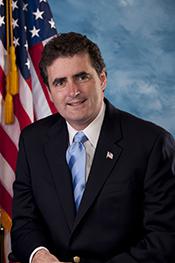 Rep. Michael G. Fitzpatrick (R-PA)
Description
An amendment numbered 23 printed in House Report 113-158 to provide a funding condition for a state or local educational agency to be eligible for funds, agency personnel cannot facilitate the transfer of an employee if they know, or have probable cause to believe, that the employee has engaged in sexual misconduct with a minor. Agencies must also require employees be subjected to background checks in compliance with the Adam Walsh Child Protection and Safety Act.
Text
Offered
This amendment's own text couldn't be picked out of its Congressional Record passage, so the passage is shown in full.
{time} 0915
STUDENT SUCCESS ACT
The SPEAKER pro tempore (Mr. Rodney Davis of Illinois). Pursuant to
House Resolution 303 and rule XVIII, the Chair declares the House in
the Committee of the Whole House on the state of the Union for the
further consideration of the bill, H.R. 5.
Will the gentleman from Georgia (Mr. Collins) kindly take the chair.
{time} 0915
In the Committee of the Whole
Accordingly, the House resolved itself into the Committee of the
Whole House on the state of the Union for the further consideration of
the bill (H.R. 5) to support State and local accountability for public
education, protect State and local authority, inform parents of the
performance of their children's schools, and for other purposes, with
Mr. Collins of Georgia (Acting Chair) in the chair.
The Clerk read the title of the bill.
The Acting CHAIR. When the Committee of the Whole rose on Thursday,
July 18, 2013, amendment No. 21 printed in House Report 113-158 offered
by the gentleman from Georgia (Mr. Broun), had been disposed of.
Amendment No. 22 Offered by Mr. Culberson
The Acting CHAIR. It is now in order to consider amendment No. 22
printed in House Report 113-158.
Mr. CULBERSON. Mr. Chairman, I have an amendment at the desk.
The Acting CHAIR. The Clerk will designate the amendment.
The text of the amendment is as follows:
Page 481, after line 22, insert the following new subpart:
``Subpart 4--Restoration of State Sovereignty Over Public Education and
Parental Rights Over the Education of Their Children
``SEC. 5561. STATES TO RETAIN RIGHTS AND AUTHORITIES THEY DO
NOT EXPRESSLY WAIVE.
``(a) Retention of Rights and Authorities.--No officer,
employee, or other authority of the Secretary shall enforce
against an authority of a State, nor shall any authority of a
State have any obligation to obey, any requirement imposed as
a condition of receiving assistance under a grant program
established under this Act, nor shall such program operate
within a State, unless the legislature of that State shall
have by law expressly approved that program and, in doing so,
have waived the State's rights and authorities to act
inconsistently with any requirement that might be imposed by
the Secretary as a condition of receiving that assistance.
``(b) Amendment of Terms of Receipt of Federal Financial
Assistance.--An officer, employee, or other authority of the
Secretary may release assistance under a grant program
established under this Act to a State only after the
legislature of the State has by law expressly approved the
program (as described in subsection (a)). This approval may
be accomplished by a vote to affirm a State budget that
includes the use of such Federal funds and any such State
budget must expressly include any requirement imposed as a
condition of receiving assistance under a grant program
established under this Act so that by approving the budget,
the State legislature is expressly approving the grant
program and, in doing so, waiving the State's rights and
authorities to act inconsistently with any requirement that
might be imposed by the Secretary as a condition of receiving
that assistance.
``(c) Special Rule for States With Biennial Legislatures.--
In the case of a State with a biennial legislature--
``(1) during a year in which the State legislature does not
meet, subsections (a) and (b) shall not apply; and
``(2) during a year in which the State legislature meets,
subsections (a) and (b) shall apply, and, with respect to any
grant program established under this Act during the most
recent year in which the State legislature did not meet, the
State may by law expressly disapprove the grant program, and,
if such disapproval occurs, an officer, employee, or other
authority of the Secretary may not release any additional
assistance to the State under that grant program.
``(d) Definition of State Authority.--As used in this
section, the term `authority of a State' includes any
administering agency of the State, any officer or employee of
the State, and any local government authority of the State.
``(e) Effective Date.--This section applies in each State
beginning on the 90th day after the end of the first regular
session of the legislature of that State that begins 5 years
after the date of the enactment of the Student Success Act
and shall continue to apply in subsequent years until
otherwise provided by law.
``SEC. 5562. DEDICATION OF SAVINGS TO DEFICIT REDUCTION.
``Notwithstanding any formula reallocations stipulated
under the Student Success Act, any funds under such Act not
allocated to a State because a State did not affirmatively
agree to the receipt of such funds shall not be reallocated
among the States.
``SEC. 5563. DEFINITION OF STATE WITH BIENNIAL LEGISLATURE.
``In this Act, the term `State with a biennial legislature'
means a State the legislature of which meets every other
year.
``SEC. 5564. INTENT OF CONGRESS.
``It is the intent of Congress that other than the terms
and conditions expressly approved by State law under the
terms of this subpart, control over public education and
parental rights to control the education of their children
are vested exclusively within the autonomous zone of
independent authority reserved to the States and individual
Americans by the United States Constitution, other than the
Federal Government's undiminishable obligation to enforce
minimum Federal standards of equal protection and due
process.''.
The Acting CHAIR. Pursuant to House Resolution 303, the gentleman
from Texas (Mr. Culberson) and a Member opposed each will control 5
minutes.
The Chair recognizes the gentleman from Texas.
Mr. CULBERSON. Mr. Chairman, I yield myself such time as I may
consume.
My amendment will restore state sovereignty over public education and
restore parental rights over the education of their children by
restoring the State legislature's power to accept or reject Federal
education grant dollars.
I've worked closely with the committee to ensure that this amendment
supports the goals of local control and flexibility as promoted by H.R.
5, and I sincerely appreciate Chairman Kline's support of this
important amendment, as well as his continued leadership to improve our
Nation's education system.
[[Page H4732]]
State legislatures, Mr. Chairman, should have the ability to make an
informed decision regarding Federal grant dollars just as a patient
consents to a medical procedure after a doctor explains the risks and
benefits.
I'm grateful for RSC Tenth Amendment Task Force Chairman Rob Bishop's
support and co-authorship of legislation we filed in this regard and
the support of the National Taxpayers Union and the Council for
Citizens Against Government Waste because my amendment will actually
ensure that if State legislatures reject the grant dollars, they will
be dedicated to reducing the deficit and paying off our outstanding
national debt.
Finally, it should be noted that the Congressional Budget Office
indicates that my amendment will have no impact on directed spending.
I want to thank Chairman Kline again for his support and urge my
colleagues to support both my amendment and the underlying bill, and I
reserve the balance of my time.
Mr. TIERNEY. Mr. Chair, I rise in opposition to the amendment.
The Acting CHAIR. The gentleman from Massachusetts is recognized for
5 minutes.
Mr. TIERNEY. Mr. Chair, I yield myself such time as I may consume.
I oppose this amendment because it endangers education funding for
sort of a political exercise here.
This amendment would actually require State legislatures to approve
every single grant program from the Department of Education before
States receive the money. So taking the authority from the local
communities, local education agencies, putting it back into the State
malaise of legislative process is overly burdensome on States, creates
a mountain of unnecessary paperwork, and delays students and schools
from receiving the much-needed funding. And when the shortsighted State
legislatures may refuse that funding, this amendment would take the
money and send it back, returning it to the deficit, as opposed to its
intended use, which is the education of disadvantaged students.
I sometimes wonder if my colleagues remember why the Federal
Government is involved in education K-12 at all, and that is the
mandated addressing of a shortage of attention to disadvantaged
students.
This is just another attempt by the majority to slash education
funding. Mr. Chair, it's not the time to play politics now. Now is the
time to increase our investment in education and in our children so
that we can be competitive and so that they can have an opportunity
moving forward.
This amendment is simply a distraction to the very real and very big
problems that this entire bill, H.R. 5, has, and it lets students down.
H.R. 5 guts education funding because it locks in that automatic cut of
sequestration. It does nothing to ensure students improve learning, and
it does nothing to ensure that they graduate from school. It lets
students with disabilities be taught to a different, lower standard,
and H.R. 5 block grants funds and forces States to give the money to
private schools and for-profit companies instead of students.
For these reasons, Mr. Chairman, I urge that my colleagues vote
``no'' on this amendment, and I reserve the balance of my time.
Mr. CULBERSON. I yield myself such time as I may consume.
Mr. Chairman, I'd point out that the amendment, in fact, upholds our
system of dual sovereignty and ensures local control over local
dollars, and the legislatures will actually be able to conduct this
vote as a part of their regular legislative proceedings during their
annual budget vote.
As it says in the language itself, the vote will be taken by the
State legislatures as a part of their budget vote. This is a vote they
take as a part of their regular legislative session. It's no additional
burden on the States. We are simply ensuring transparency and ensuring
that the legislatures fully understand the implications of accepting
the Federal dollars. Those dollars, for example, that Texas rejects, we
want to make sure go toward deficit reduction and paying down the
national debt.
It will be no additional burden on the states. In fact, this
amendment will reaffirm and restore our Constitution system of dual
sovereignty where the States retain a residuary and viable sovereignty
over those issues that deal exclusively with the citizens of their own
State.
I want to thank Chairman Kline again for his support and urge Members
to adopt this amendment and the underlying bill.
With that, I reserve the balance of my time.
Mr. TIERNEY. Mr. Chair, I yield myself such time as I may consume.
Look, I just want to give a little historical perspective to this
again. The whole reason that the Federal Government is involved in K-12
education is because States weren't doing the job when it came to
addressing disadvantaged students. There was a judicial mandate that
said that States had to step up and do that. They, the States, then had
a problem with the fact of how much that was going to cost, so the
Federal Government stepped forward and said you can have some Federal
moneys if you do the job. So we've had that tension between how they'll
do the job and how we'll hold them accountable for years.
But this notion of saying that the State government will now decide
whether or not local communities will accept the grant--and if they
don't, we're not going to apply that money to actually educating those
children that are disadvantaged, we're going to toss it back into the
Treasury--is no other than a way of cutting education funding. We don't
need education cuts at this point in time. We need an investment in
education.
With that, I reserve the balance of my time.
Mr. CULBERSON. Mr. Chairman, I yield myself such time as I may
consume.
Actually, the money will continue to flow to the States as it does
today. The State law already sets up a mechanism for the money to flow
through the States to local school districts. So that money will
continue to flow. Also, under the language of my amendment, the Federal
Government has an unshakeable obligation to ensure equal protection and
due process.
So that 14th Amendment obligation on the Federal Government is
undiminished and is expressly reaffirmed in my amendment so that there
will be no discrimination nor imposition on every American's right to
equal protection and due process.
I reserve the balance of my time.
Mr. TIERNEY. I yield myself such time as I may consume.
Mr. Chair, I don't want to beat a dead horse here, but simply the
notion is that States that were already at fault for not doing the job,
now get to not do the job again as long as their State legislatures are
the ones that make the decision. The language doesn't make it quite as
simple as to how they'll vote in the State legislature. There will be a
delay, if it's done at all. And if a State should make the unwise
decision, as they have done historically, which gave the reason for us
being involved at all in the first place at the Federal level, then
you're cutting education money; you're not applying it to the use of
educating disadvantaged students.
I yield back the balance of my time.
Mr. CULBERSON. Mr. Chairman, I urge the House to adopt the amendment
and support Chairman Kline's underlying bill and move for passage.
I yield back the balance of my time.
The Acting CHAIR. The question is on the amendment offered by the
gentleman from Texas (Mr. Culberson).
The question was taken; and the Acting Chair announced that the ayes
appeared to have it.
Mr. TIERNEY. Mr. Chairman, I demand a recorded vote.
The Acting CHAIR. Pursuant to clause 6 of rule XVIII, further
proceedings on the amendment offered by the gentleman from Texas will
be postponed.
Amendment No. 23 Offered by Mr. Fitzpatrick.
The Acting CHAIR. It is now in order to consider amendment No. 23
printed in House Report 113-158.
Mr. FITZPATRICK. Mr. Chairman, I have an amendment at the desk.
The Acting CHAIR. The Clerk will designate the amendment.
The text of the amendment is as follows:
At the end of subpart 3 of part E of title V of the
Elementary and Secondary Education Act of 1965, as proposed
to be amended by
[[Page H4733]]
section 501 of the bill, add the following new section:
``SEC. 5552. CRIMINAL BACKGROUND CHECKS.
``(a) Condition of Receipt of Funds.--A local educational
agency or State educational agency shall be ineligible for
funds under this Act if such agency--
``(1) employs an individual who--
``(A) refuses to consent to a criminal background check
that includes--
``(i) a search of the State criminal registry or repository
in the State where the individual resides and each State
where such individual previously resided;
``(ii) a search of State-based child abuse and neglect
registries and databases in the State where the individual
resides and each State where such individual previously
resided;
``(iii) a search of the National Crime Information Center;
``(iv) a Federal Bureau of Investigation fingerprint check
using the Integrated Automated Fingerprint Identification
System; and
``(v) a search of the National Sex Offender Registry
established under the Adam Walsh Child Protection and Safety
Act of 2006 (42 U.S.C. 16901 et seq.);
``(B) makes a false statement in connection with such
criminal background check;
``(C) is registered or is required to be registered on a
State sex offender registry or the National Sex Offender
Registry established under the Adam Walsh Child Protection
and Safety Act of 2006 (42 U.S.C. 16901 et seq.); or
``(D) has been convicted of a felony consisting of--
``(i) homicide;
``(ii) child abuse or neglect;
``(iii) a crime against children, including child
pornography;
``(iv) domestic violence;
``(v) a crime involving rape or sexual assault;
``(vi) kidnapping;
``(vii) arson; or
``(viii) physical assault, battery, or a drug-related
offense, committed on or after the date that is 5 years
before the date of the individual's criminal background check
under this section; or
``(2) knowingly facilitates the transfer of an employee if
the agency knows, or has probable cause to believe, that the
employee engaged in sexual misconduct with a student.
``(b) Fees for Background Checks.--The Attorney General or
a State may charge any applicable fees for conducting a
criminal background check under this section.''.
At the end of the bill add the following:
TITLE VIII--MISCELLANEOUS PROVISIONS
SEC. 801. FINDINGS; SENSE OF THE CONGRESS.
(a) Findings.--The Congress finds as follows:
(1) To avoid negative attention and litigation, some local
educational agencies have entered into agreements with
employees who are suspected of abusing or are known to have
abused students.
(2) Instead of reporting sexual misconduct with minors to
the proper authorities such as the police or child welfare
services, under such agreements the local educational
agencies, schools, and employees keep the information private
and facilitate the employee's transfer to another local
educational agency.
(b) Sense of the Congress.--It is the sense of the Congress
that--
(1) confidentiality agreements between local educational
agencies or schools and suspected child sex abusers should be
prohibited;
(2) the practice of employee transfers after suspected or
proven sexual misconduct should be stopped, and States should
require local educational agencies and schools to provide law
enforcement with all information regarding sexual conduct
between an employee and a minor; and
(3) Congress should help protect children and help stop
this unacceptable practice in our schools.
The Acting CHAIR. Pursuant to House Resolution 303, the gentleman
from Pennsylvania (Mr. Fitzpatrick) and a Member opposed each will
control 5 minutes.
The Chair recognizes the gentleman from Pennsylvania.
Mr. FITZPATRICK. I yield myself such time as I may consume.
Mr. Chairman, I would like to thank the chairman of our committee,
Mr. Kline, for his important work on the Student Success Act.
This amendment, Mr. Chairman, is designed to stop the abhorrent
practice in America's schools known as ``passing the trash.''
``Passing the trash'' is a term used to describe those cases where
school administrators deceitfully move to other school districts
teachers who are known or suspected of being sexual predators.
The predator is allowed to resign their employment--often keep their
teaching certificate--and move on to a new, unsuspecting school to
continue their deplorable crimes. Sometimes they are moved with a
recommendation of their previous employer.
The matter of passing the trash was first brought to my attention in
2006 when I learned of the story of 12-year-old Jeremy Bell, who was
drugged, abused, and then murdered by his elementary school principal.
Jeremy Bell's principal had been passed between schools and school
districts despite multiple allegations of sexual misconduct brought to
the attention of school administrators and school boards.
Sadly, Jeremy's story is not the only one of its kind. Reports show
that nearly 10 percent of students are targets of educator sexual
misconduct sometime during their school career.
These predators must be stopped.
This amendment would block State or local education agencies from
receiving funds if they facilitate the transfer of an employee and they
know or have probable cause to believe that the employee has engaged in
sexual misconduct with a minor. Furthermore, the amendment would
require the hiring of employees to be compliant with the Adam Walsh
Child Protection and Safety Act background check requirements.
Teachers play an important part in the development of our children,
and in doing so they shape the future of our Nation. Many of us are
here today thanks to the devotion of a teacher or teachers who saw the
potential in us and took it upon themselves to go above and beyond in
our education.
We know that the overwhelming majority of educators are committed,
caring individuals who are deeply invested in the development of their
students. Because of this, we owe it to them to rid our schools of the
bad actors. This amendment ensures that the days of sweeping child
predators under the rug are over. By holding all educators to the very
high standards set by their peers, we can ensure that quality education
for all children will be a reality, while also doing everything we can
to protect their innocence.
I urge my colleagues to vote ``yes'' on this amendment and on the
underlying bill, and I reserve the balance of my time.
Mr. TIERNEY. Mr. Chairman, I rise in support of amendment No. 8
offered by the gentleman from Pennsylvania.
The Acting CHAIR. Without objection, the gentleman from Massachusetts
is recognized for 5 minutes.
There was no objection.
Mr. TIERNEY. I yield myself such time as I may consume.
Mr. Chairman, the essence of this provision is included in the
Democratic substitute amendment that Mr. Miller is offering with the
intent of protecting children's safety in all the schools throughout
the country. Mr. Miller wants to thank the gentleman for joining the
Democrats in this effort.
Congressman Fitzpatrick's amendment would require all schools to
conduct comprehensive background checks for all of their employees,
including FBI fingerprint checks, State criminal records, child abuse
registries, and the National Sex Offender Registry.
The amendment also includes a critical provision that denies Federal
funds to schools from employing any individual who is found by these
checks to be a potential danger to children. Schools would also lose
Federal funds if they transfer such employee to another school, which
unfortunately happens too many times.
Tragically, the abuse of students by trusted adults has become a
regular occurrence. We read about students being abused in the
headlines. Every child deserves a safe and abuse-free learning
environment. That's why we include a similar provision in the
Democratic substitute and why earlier this session Mr. Miller
introduced a similar bill, the Protecting Students From Sexual and
Violent Predators Act, H.R. 2083. That bill overwhelmingly passed the
House in a bipartisan fashion just 2\1/2\ years ago.
Mr. Miller's bill and his amendment are stronger versions of Mr.
Fitzpatrick's amendment because his provisions also cover school
contractors, and the checks also include any crime against a child,
even if it's a misdemeanor. But this amendment is a step in the right
direction.
This amendment and these provisions are needed in Federal law, Mr.
Chairman, because according to a recent General Accountability Office
study conducted by Mr. Miller's office, State laws are inconsistent in
their coverage of the types of checks, types of crimes covered, and the
individuals
[[Page H4734]]
who must be checked. Some States only check licensed employees, and
some States don't check contractors, leading to some school districts
unknowingly hiring offenders.
Children in school need to be safe from any adult who has access to
them, regardless of their position.
The GAO investigations also highlighted a wide range of cases in
numerous States where convicted sex offenders working in schools had
previously targeted children. In other cases, the GAO found that
districts knowingly passed a potential predator to another school
district, allowing the offender to resign instead of reporting him. The
inconsistencies and glaring holes in the way schools screen prospective
employees lead to gaps in student protection and all too often to
abuse.
A child's safety in school is too important to leave to chance. We
must ensure all children, regardless of where they live, are free from
the abuse of violent sexual predators. There is no place for this in
our Nation's schools.
The vast majority of school staff is trustworthy and work hard every
day to support students' learning needs. We honor and respect their
work, which is so central to the success of the Nation. These criminal
background checks are essential, however, to ensure that schools and
school districts are doing everything they possibly can to protect
children's safety. That is the most fundamental of our priorities.
Mr. Chairman, again we want to thank Mr. Fitzpatrick and Mr. Meehan
for offering this amendment and urge a ``yes'' vote.
I yield back the balance of my time.
{time} 0930
Mr. FITZPATRICK. Mr. Chairman, I thank the gentleman for his support
of the amendment and for his comments here this morning. I urge my
colleagues to support this amendment and to support the underlying
bill.
I yield back the balance of my time.
The Acting CHAIR. The question is on the amendment offered by the
gentleman from Pennsylvania (Mr. Fitzpatrick).
The amendment was agreed to.
Amendment No. 24 Offered by Ms. Jackson Lee
The Acting CHAIR. It is now in order to consider amendment No. 24
printed in House Report 113-158.
Ms. JACKSON LEE. Mr. Chairman, I have an amendment at the desk.
The Acting CHAIR. The Clerk will designate the amendment.
The text of the amendment is as follows:
At the end of the bill add the following:
TITLE VIII--MISCELLANEOUS PROVISIONS
SEC. 801. STUDY AND REPORT.
(a) Study.--The Secretary shall conduct a study on--
(1) the use of State educational agencies to monitor,
supervise, or control underperforming local educational
agencies; and
(2) whether equal educational opportunities are being
provided to students in the local educational agencies
described in paragraph (1), and the impact the use of State
educational agencies as described in such paragraph would
have on such opportunities.
(b) Report.--Not later than 180 days after the date of
enactment of this Act, the Secretary shall report to Congress
the results of the study conducted under subsection (a). Such
report shall include recommendations regarding--
(1) the advisability of authorizing a State educational
agency to close a local educational agency over the
opposition of a locally elected school board; and
(2) best practices governing the exercise of authority by a
State educational agency in monitoring, supervising, and
controlling underperforming local educational agencies, with
particular emphasis on rural local educational agencies and
urban local educational agencies that are disproportionately
minority.
The Acting CHAIR. Pursuant to House Resolution 303, the gentlewoman
from Texas (Ms. Jackson Lee) and a Member opposed each will control 5
minutes.
The Chair recognizes the gentlewoman from Texas.
Ms. JACKSON LEE. Mr. Chairman, I am pleased to be on the floor with
Mr. Tierney and the gentleman from California, and their commitment and
their comments on the question of the equality of education for at-risk
children. I think if there is anything that comes out of this important
discussion, and from the chairman's presence on the floor, it should be
that we should be focused with tunnel vision on the concern about at-
risk children.
My amendment is a straightforward amendment. It is an amendment that
gives information. Specifically, it calls for a study and a report
containing recommendations regarding the advisability of authorizing a
State education authority to close a school district over the
opposition of the locally elected school board, families, students,
teachers, and calls for best practices governing the exercise of
authority by a State education agency in monitoring, supervising, and
controlling underperforming school districts, with particular emphasis
on rural and underserved districts and underserved communities.
Our children are our precious resource, and I have been in schools
and school districts where children loved the atmosphere in which they
are in. They clamor for the teachers. There is a mutual respect and
coming together, and all they need is a focus of resources and
improvement. But rather than getting that, authority is used to either
undermine the funding of those school districts or in essence say to
those school teachers and all of those who have been working--and
taxpayers--that, in fact, this school will not be given dollars to
improve.
The Center on Reinventing Public Education assessed a number of
States, and the interesting determination was that States spent less on
improving school districts and schools, less on improving, but more on
shutting them down or not allowing them to go forward in at-risk areas.
This chart gives you the balance of distribution of performance and
improvement; and many States, such as Texas, spend less than 5 percent
on performance.
So what does my amendment do? It provides balance between local
control over schools and our State educational agencies by providing a
report. It makes sure that taxpayers and locally elected officials are
not ignored by the State. It also has a way of preventing communities
from being blamed as the problem and engaging the community. It
prevents poorly prepared State-elected officials who've been placed in
positions to run schools from taking money from those schools as
opposed to investing in those schools.
It makes sure that minor problems are fixed before you go to drastic
concerns. It allows a determination of a structure of appeal so that
the appeal is allowed broadly by those who are impacted, taxpayers, for
example, who are very important. And it allows a determination whether
the State authorities are given the effective oversight of a rural
district, an at-risk district; and then it provides the opportunity to
ensure that there is fair play and that we are interested in the
quality of education.
I ask my colleagues to support the amendment.
I reserve the balance of my time.
Mr. Chair, I thank Chairman Kline and Ranking Member Miller for their
work to improve education for our Nation's children. I thank the Rules
Committee for making in order Jackson Lee Amendment #24 for full
consideration by the House of Representatives.
My amendment to H.R. 5, the ``Student Success Act,'' is simple and is
an important addition to this bill. I believe that my amendment to H.R.
5 can be supported by every member of the House.
Jackson Lee Amendment #24
This amendment directs the Secretary of Education to conduct a study
and produce a report to Congress with recommendations regarding the
advisability of authorizing a state education authority to close a
school district over the opposition of a locally elected school board,
and regarding best practices governing the exercise of authority by a
state education agency in monitoring, supervising and controlling
underperforming school districts with particular emphasis on rural and
underrepresented school districts.
The purpose of the amendment is to create an opportunity for states
to receive information guidance on what is happening around the Nation
regarding forced school district mergers or closures.
Forced school district mergers and closures by a state without
careful consideration of the sensitivity of the communities impacted
can result in unintended consequences.
A report can provide recommendations regarding the advisability of an
authorized state education authority to close a school district over
the opposition of a locally elected school board.
Having access to the knowledge and experience of other state
education agencies to factor into the decision to close or merge a
[[Page H4735]]
school board can be of benefit to the 24 states with laws that allow
these types of actions.
A report is not intended to suggest that there are no circumstances
when a state may need to exercise its authority to intervene and act in
the best interest of children or communities if the school district is
unable to do so.
The report can provide easy access to lessons learned and a list of
voluntary best practices that may be of great benefit to states that
have the authority to close a locally elected school board.
The 24 states with the authority to close or merge a school district
include: Alabama, Mississippi, Kentucky, Tennessee, Texas, South
Carolina, North Carolina, Missouri, Arkansas, California, and New
Mexico.
There are important reasons why states need to have the report
proposed by this amendment as resources they can reference when making
a difficult decision regarding a school district's future.
Much of the reason for such a report flow from the same arguments
many of my colleagues make regarding the power of the federal
government.
When states close or merge local school districts their actions:
reduce local control over schools and increases state authority over
school districts; imply that the community has the problem and the
states have the answers, and assumes that states have the ability to
effectively run school districts; routinely place poorly prepared
state-selected officials in positions to run school districts, which
means there is little possibility of any meaningful change occurring in
the classroom; usually focus on cleaning up minor problems and
incompetent administration but do not go to the root of the social
problems facing disadvantaged students in urban and rural school
districts; foster negative connotations and impressions that hinder
self-esteem of school board members, administrators, teachers, students
and parents; and produce unnecessary showdowns between state and local
officials which slow the overhaul of management practices, drain
resources from educational reforms and reinforce division between
impacted citizens and state government.
Another damaging impact of forced school district closures are the
foreseeable hardened negative feelings toward state government that
result.
The parents, students or elected school boards have no voice in the
decision by the state to close or merge a school district.
This amendment does not assume that there is no role or circumstance
under which the 24 state governments with laws that allow intervention
and closure of school districts should not be able to act. The
amendment seeks to provide information to these states on the
experience of other states with the power to close a school district.
The benefit of the report can be accessed by all states who may want to
weigh the pros and cons of pursuing action against school districts as
well as provide guidance on best practices.
Due process that is transparent and supports the principle that all
school districts within a state will be treated the same would be a
strong step forward in raising public confidence in the decisions of
state government. It would be very prudent to be sure that when a state
decides to act to help a failing school they can recruit the best
experts in the field. Finally, local engagement in the decision making
process removes tension and raises the possibility of a successful
outcome.
My Congressional district once included the North Forest Independent
School District, which was closed by the Texas Education Agency on July
1, 2013.
The decision to close North Forest Independent School District by the
Texas Education Association displayed a reckless disregard for the
children, parents, teachers, and administrators of the North Forest
Independent School District.
There was no reason to close the school district and many reasons to
work with the elected school board and engaged community to address the
issues raised by the Texas Education Association.
The decision to deprive the community served by the school district
did not give parents any say or control over the decision to dissolve
the locally elected 7-member North Forest Independent School District
board and was not in the interest of the education of the students
served by the schools in that district. All of the members of the
former North Forest Independent School board were African American. The
North Forest School District was 70% African American and 29% Hispanic.
In making the decision to close the district, the Texas Education
Agency took a ``guillotine'' approach to resolving the problems
associated with the North Forest Independent School District--an
approach that was wholly unnecessary given the progress the district
has made as well as the availability of viable and less disruptive
alternatives, including a proposed partnership between North Forest
Independent School District and local public charter schools that was
announced on March 8, 2013.
There must be a remedy to prevent this from happening to any other
school districts. Jackson Lee Amendment #24 is designed to prevent this
from happening by providing Congress with much needed information on
the impact to school districts that face closure or merging.
The practice of closing and merging school districts is
disproportionally happening to school districts serving rural and
underserved students. This amendment is intended to provide Congress
with more information about what happens to these school districts and
discover better remedies when there are goals that are established by
States that can mean the closing or merging of a school district.
A study conducted by S.L. Bowen in 2007, titled ``Is bigger that much
better? School district size, high school completion, and post-
secondary enrollment rates in Maine,'' published in the Maine View
suggests the best interest of students are not being served. This study
supported by the Maine Heritage Policy Center compared high school
completion rates of the 15 largest and 15 smallest school districts in
Maine and found that the graduation rate for smaller districts was six
percent higher than for larger districts.
Another study, by A. Howle & C. Howley conducted in 2006 on the
subject of small schools and the pressure to consolidate is available
in the Educational Policy Analysis Archives, 14(10), 1-23.
This report on school size reviewed the research on the effects of
small schools. The report states that children from economically
disadvantaged families have higher achievement in small schools and
small districts; the relationship between aggregate student achievement
and socioeconomic status is consistently weaker in smaller schools and
districts (equity effects of size); dropout rates are lower in smaller
schools; students' school activity participation is higher in smaller
schools; and smaller high schools can offer adequate curriculum.
There is research to indicate that this would be a worthwhile
amendment that the full House can support.
I urge all members to vote in favor of Jackson Lee Amendment #24.
Seven Reasons Why the Jackson Lee Amendment is Needed
The Jackson Lee Amendment would: Balance local control over
schools with state authority over school districts; make sure
that taxpayers and locally elected officials are not ignored
by the State; prevent communities from being blamed as the
problem and the states as having all of the answers; prevent
poorly prepared state-selected officials from being placed in
positions to run school districts; make sure that minor
problems and incompetent administration issues can be dealt
with without merging or closing school districts; make sure
that state appointed heads of school districts have effective
oversight to be sure that a fair and impartial process for
decision making is established and maintained; and prevent
unnecessary showdowns between state and local officials which
slow the overhaul of management practices, drain resources
from educational reforms and reinforce division between
impacted citizens and state government.
In Support of Jackson Lee Amendment #24--North Forest Independent
School District
The facts about NFISD:
The closure of North Forest Independent School District was
unnecessary given the progress the district had made as well
as the availability of viable and less disruptive
alternatives, including a proposed partnership between North
Forest Independent School District and local public charter
schools that was announced on March 8, 2013.
The North Forest Independent School District electoral
district had 50,000 registered voters whose voting power was
diluted because they will be absorbed into the Houston
Independent School District but no additional seats will be
added to the Houston Independent School District board.
There was no reason to close the North Forest Independent
School District since it was solvent; had received awards for
excellence and had received significant outside funding to
continue.
The North Forest Independent School District proposed a
sound alternative plan to the Texas Education Agency that was
applauded by the U.S. Department of Education and supported
by experts like Dr. Rod Paige, former Secretary of the
Department of Education.
The North Forest Independent School District was the victim
of an unfair process since there was no provision for an
appeal of an adverse decision by the Governor, who appears to
have unfettered discretion.
The State appointed official that made the decision to
close North Forest was the only person to hear opposition to
their plan. There was no appeals process to check the
discretion of the state appointed official.
When states close or merge local school districts, their actions:
Reduce local control over schools and increase state
authority over school districts; imply that the community has
the problem and the states have the answers, and assumes that
states have the ability to effectively run school districts;
routinely place
[[Page H4736]]
poorly prepared state-selected officials in positions to run
school districts, which means there is little possibility of
any meaningful change occurring in the classroom; usually
focus on cleaning up minor problems and incompetent
administration but do not go to the root of the social
problems facing disadvantaged students in urban and rural
school districts; foster negative connotations and
impressions that hinder self-esteem of school board members,
administrators, teachers, students and parents; and produce
unnecessary showdowns between state and local officials which
slow the overhaul of management practices, drain resources
from educational reforms and reinforce division between
impacted citizens and state government.
Mr. KLINE. Mr. Chairman, I claim the time in opposition to the
amendment.
The Acting CHAIR. The gentleman from Minnesota is recognized for 5
minutes.
Mr. KLINE. Mr. Chairman, this amendment requires the Secretary of
Education to conduct a study to examine underperforming school
districts, whether equal educational opportunities are being afforded
to students in those school districts, and the impact of closing these
school districts.
Mr. Chairman, as the amendment clearly states, this is a State
activity in which the Federal Government has no role and should not be
involved. We do not need recommendations from the U.S. Department of
Education on how States are to protect the constitutional rights of
students. This is the law of the land today.
I urge my colleagues to oppose this amendment and support the Student
Success Act.
I yield back the balance of my time.
Ms. JACKSON LEE. Mr. Chairman, well, as we started, the reason why
the Federal Government got engaged in education is because I remember
times in the South and across America when there was unequal education
and we needed the U.S. Department of Education. More importantly, we
needed the courts. Today I stand here and ask for a simple inquiry made
by the U.S. Department of Education: Are State agencies effectively
closing school districts and not seeking to improve them?
A very fine example is the closure of the North Forest Independent
School District in Houston, Texas. It's solvent, 50,000 registered
voters, 7,000 students, had received awards, and what did the State
agency do, the State agency came in, to the opposition of the
community, teachers, supporters of a combined effort between a public
school and charter school, proposed coming together to put forward the
best proposal to keep this school teaching our children, support by
Republicans and Democrats, and an autocratic State agency closed the
school district.
So this is a simple inquiry. It is an inquiry as to whether or not
you want to boost up the taxpayers and boost up the parents who have no
standing. It is a question of whether or not you want to make sure that
there is a basis of a fair appeal as opposed to an autocratic process,
a dictatorial process. I ask my colleagues, all of them have faced
this. No one wants to interfere with the running of a school district
or interfere with the administrators or educators; but what you do want
to interfere with is business decisions closing rural school districts
and closing urban school districts and not allowing the people, the
teachers to be able to understand and to give input into the best
process, Mr. Chairman.
I would like to refer to the Center on Reinventing Public Education,
and I would argue in closing, Mr. Chairman, that this amendment gives
opportunity. I ask you to support the Jackson Lee amendment.
I yield back the balance of my time.
The Acting CHAIR. The question is on the amendment offered by the
gentlewoman from Texas (Ms. Jackson Lee).
The question was taken; and the Acting Chair announced that the noes
appeared to have it.
Ms. JACKSON LEE. Mr. Chairman, I demand a recorded vote.
The Acting CHAIR. Pursuant to clause 6 of rule XVIII, further
proceedings on the amendment offered by the gentlewoman from Texas will
be postponed.
Amendment No. 25 Offered by Mr. Cantor
The Acting CHAIR. It is now in order to consider amendment No. 25
printed in House Report 113-158.
Mr. CANTOR. Mr. Chairman, I have an amendment at the desk.
The Acting CHAIR. The Clerk will designate the amendment.
The text of the amendment is as follows:
Insert after section 128, the following new section:
SEC. 129. TITLE I PORTABILITY.
Chapter B of subpart 1 of part A of title I (20 U.S.C. 6331
et seq.) is amended by adding at the end the following new
section:
``SEC. 1128. TITLE I FUNDS FOLLOW THE LOW-INCOME CHILD STATE
OPTION.
``(a) In General.--Notwithstanding any other provision of
law and to the extent permitted under State law, a State
educational agency may allocate grant funds under this
chapter among the local educational agencies in the State
based on the number of eligible children enrolled in the
public schools served by each local educational agency.
``(b) Eligible Child.--
``(1) Definition.--In this section, the term `eligible
child' means a child aged 5 to 17, inclusive, from a family
with an income below the poverty level on the basis of the
most recent satisfactory data published by the Department of
Commerce.
``(2) Criteria of poverty.--In determining the families
with incomes below the poverty level for the purposes of this
section, a State educational agency shall use the criteria of
poverty used by the Census Bureau in compiling the most
recent decennial census, as the criteria have been updated by
increases in the Consumer Price Index for All Urban
Consumers, published by the Bureau of Labor Statistics.
``(c) Student Enrollment in Public Schools.--
``(1) Identification of eligible children.--On an annual
basis, on a date to be determined by the State educational
agency, each local educational agency that receives grant
funding in accordance with subsection (a) shall inform the
State educational agency of the number of eligible children
enrolled in public schools served by the local educational
agency.
``(2) Allocation to local educational agencies.--Based on
the identification of eligible children in paragraph (1), the
State educational agency shall provide to a local educational
agency an amount equal to the sum of the amount available for
each eligible child in the State multiplied by the number of
eligible children identified by the local educational agency
under paragraph (1).
``(3) Distribution to schools.--Each local educational
agency that receives funds under paragraph (2) shall
distribute such funds to the public schools served by the
local educational agency--
``(A) based on the number of eligible children enrolled in
such schools; and
``(B) in a manner that would, in the absence of such
Federal funds, supplement the funds made available from non-
Federal resources for the education of pupils participating
in programs under this subpart, and not to supplant such
funds.''.
The Acting CHAIR. Pursuant to House Resolution 303, the gentleman
from Virginia (Mr. Cantor) and a Member opposed each will control 5
minutes.
The Chair recognizes the gentleman from Virginia.
Mr. CANTOR. Mr. Chairman, a good education is the first step in the
long walk to living the American Dream. That is what this amendment is
about, Mr. Chairman.
I reserve the balance of my time.
Mr. GEORGE MILLER of California. Mr. Chairman, I rise to claim the
time in opposition.
The Acting CHAIR. The gentleman is recognized for 5 minutes.
Mr. GEORGE MILLER of California. Mr. Chairman, this amendment is not
about a good education. This is an amendment suggesting an approach
that in fact the amendment doesn't enable to happen, and that is the
idea that a student can choose the school under the guise of
portability, when in fact it doesn't set up any mechanisms for the
students to do that.
The suggestion here somehow is that, in fact, the students will make
this choice or the parents will make this choice. We've had the right
under No Child Left Behind for students to make the choice to elect to
go to any schools in the district in which they sought to do that. Of
course, what we found out, in many instances, it's less than 2 to 3
percent of the parents who make that decision. There are many reasons
why they don't do that. In fact, it's a decision that it doesn't work
for them because of lack of transportation in poor neighbors, lack of
issues of personal safety of the students.
The difference in my district, in some parts of my district of going
to the school that's next to your home or walking the six or eight or
10 blocks to where the next school is, it's a matter of personal safety
for those children. We have children, unfortunately, who are harmed
every day on our streets, in
[[Page H4737]]
some cases killed on those streets. So for parents, this isn't just a
choice; that it's a better school.
Also under the Cantor amendment, you would be requiring school
districts to engage in an entirely complex accounting system, and I
don't know why we'd burden them with that. We currently have in many,
many districts open enrollment. And as I say, parents can choose that
if they want, but in many cases they can't because of barriers to that
enrollment. So this is a suggestion somehow that you can just pick up
and move your child.
What we see in survey after survey after survey is what parents want,
and they want their neighborhood school, the school next to them, they
want that school to be functioning at a high level so that their child,
their children, can get an education at that school.
I know that maybe the author of this amendment isn't familiar with
these parents, that these parents are struggling between their jobs,
their work, holding their families together. Very often it's individual
working women supporting these families. This is a difficult task. And
the idea that the burden won't be on the district to improve that local
school, but we'll just leave it be under the guise that parents can opt
to send their children somewhere else when, in fact, that's not a real
option for them.
This amendment doesn't address the concern about open enrollment, it
doesn't address the systems that the States have set up, and it clearly
doesn't address the needs of the parents. And it fails to recognize
that in many school districts, there's only one school, there's only
one middle school, there's only two elementary schools. That's not the
issue here. This isn't like a panoply of wide choices that are made
available. That's why many of us have encouraged charter schools inside
these districts so parents will have that choice that is within reach
of them.
With that, I reserve the balance of my time.
Mr. CANTOR. Mr. Chairman, I yield 2 minutes to the gentlewoman from
Alabama (Mrs. Roby).
Mrs. ROBY. Mr. Chairman, I rise today in support of Leader Cantor's
amendment to H.R. 5. It's an amendment that would allow title I dollars
to actually follow the student to the school of their choice. I thank
the leader for recognizing me.
We all agree that every child deserves equal access to quality
education--one that challenges them, builds critical-thinking skills,
and enhances their opportunity for success. But all too often, the
system fails those who need it most. For too long, we have perpetuated
failure by not demanding accountability for results.
This amendment would allow title I dollars to follow the child to the
school that their parent deems best.
As a mother of a child in public school, I understand firsthand how
important it is for parents to be able to choose the school that best
fits their child's needs. School choice can help drive innovation,
healthy competition and, most importantly, accountability.
If a low-income parent makes the brave and noble decision to seek a
better opportunity for their child, the last thing we should do here is
make it more difficult by withholding funding meant to help educate
that child.
Mr. Chairman, we can't afford to do the same old thing expecting
different results. I urge my colleagues to adopt this amendment and
pass the Student Success Act. Let's get Washington out of the way to
ensure a brighter future for our children.
Mr. GEORGE MILLER of California. Mr. Chairman, I yield 1 minute to
the gentlewoman from Connecticut (Ms. DeLauro).
Ms. DeLAURO. Mr. Chairman, I rise in support of the Miller substitute
amendment and in strong opposition to the underlying bill which, as it
is, drastically underfunds our education system and sets up our
children and our Nation to fail.
Right now, the majority's bill freezes education funding through the
end of the decade at just above the sequestration level in 2013.
Compared to last year's level, this means a $570 million cut to
education funding--one of our fundamental priorities as a Nation--for
each of the next 5 years.
Nor does the majority's bill allow for annual increases due to
inflation or enrollment growth. In effect, the majority is trying to
lock in Federal education spending at a level far below what is needed
and then simply walking away from our schools and our kids. And keep in
mind, all of these cuts come on top of several earlier rounds of deep
cuts by the majority to education spending.
{time} 0945
Mr. Chairman, without access to quality education, there is no middle
class. The compact is broken that allows hard work to pay off and
allows future generations to do better. We cannot allow this to happen.
I urge my colleagues to support the Miller substitute to this flawed
bill.
Mr. CANTOR. Mr. Chairman, I yield 1 minute to the gentleman from Utah
(Mr. Bishop).
Mr. BISHOP of Utah. Mr. Chairman, my home State has been one of the
leaders in the area of equitable funding for kids, so that whether you
come from a wealthy mountain resort or the inner city of Salt Lake City
or a west desert rural ranching family, the same amount of money
follows the kid to their schools in any situation. And we did that
simply because we care about kids, and we established a fair system of
disbursing the money.
When we did a GI bill, the money followed the GI.
Only in Washington, here, with these particular funds, where the
Department of Education does not have an equitable disposal mechanism,
do we find this situation in which we treat kids differently.
It appears to me that some of the outside groups that may be opposed
to this are simply saying they like this antiquated disposal system,
which means that some title I schools get a whole lot of money, and
other title I schools don't get very much money, if any at all, because
we don't have an equitable system for disbursing our funds.
We need to do what many States are doing right now and make sure that
we have an equitable distribution system. This amendment moves us in
that direction.
Mr. GEORGE MILLER of California. Mr. Chairman, how much time do I
have?
The Acting CHAIR. The gentleman has 30 seconds remaining.
Mr. GEORGE MILLER of California. I yield myself the balance of my
time.
Mr. Chairman, this amendment just doesn't address the realities of
the current law. First of all, the underlying bill takes away the
choice that parents have today. This amendment wants to pretend like
it's a choice.
When the gentleman from Utah says the money follows the child, no, in
Utah they have State equalization. It's the same amount of money
wherever you go. No money follows you.
The suggestion in the Cantor amendment is that somehow this money
will follow you, except that it requires States and districts to set up
an entirely new bookkeeping system. These are people who say they don't
want to burden those districts.
The fact of the matter is, under current law, parents can choose to
send their children to another school. Whether all of the money will
follow them or not, under the Cantor amendment, there's no mechanism
and there's no money. There is no full entitlement to the money.
I know the gentleman wanted to have vouchers, and this is an
imitation voucher, but it doesn't work. It simply doesn't work for the
child, for the parents, or for the school districts.
I yield back the balance of my time.
Mr. CANTOR. Mr. Chairman, I yield myself the remaining time.
Mr. Chairman, what I'd say to the gentleman from California, first of
all, this is an amendment which provides States the option, if they
want, to allow this type of funding or flow of Federal dollars. No
one's forcing any State to do anything or any local school district.
I'd also point out, Mr. Chairman, that I believe there are several
cities--I think one in the gentleman's State, in San Francisco--which
actually have allowed for State dollars to follow the kids. So I think
to the point that it's a bookkeeping difficulty, certainly there are
localities, school districts who've figured out that this can be easily
done.
And I want to follow up on the point that the gentleman from Utah has
[[Page H4738]]
made. This is about how Federal dollars currently are allocated under
title I. And in the school districts, once the school districts have
the money, the way the Federal requirement is now, there are some
schools that receive a lot of title I money, and there are others that
could receive none, if very little title I money. But, in fact, what
the amendment is about is trying to provide all title I kids with the
resources that I think all of us want them to have.
Mr. GEORGE MILLER of California. Will the gentleman yield?
Mr. CANTOR. I yield to the gentleman.
Mr. GEORGE MILLER of California. The reason some schools don't have a
lot of title I money, or some title I money, is they don't have title I
students. It follows the students to those schools.
Mr. CANTOR. Reclaiming my time, Mr. Chairman, the state of the law is
such that there is a requirement now that title I moneys at the local
level go to schools with 75 percent or higher of population. It is the
overpopulated, poorest schools that are, in the law, said to get the
moneys first.
The problem is: What if your school doesn't quite make that cutoff?
What if that population isn't quite at that benchmark? What about the
title I kids in those schools?
That's what this is trying to address, Mr. Chairman.
And so, again, too many of our underprivileged children today are
finding themselves in schools that cannot address the problem, and this
amendment is aimed at trying to restore those children and those
parents' ability to have the quality of education that all of us want.
Again, this amendment does so by granting the States the power, if they
so choose, to allow title I funds to follow the students.
I believe the current system clearly is leaving some kids behind that
exist in these schools that aren't getting any money. And the lack of
access to quality schools and quality teachers will and can hold
children back, and, most especially, those children living in poverty
and those often with special needs who do require help.
Many States are reforming their system to address these inequities
and these shortcomings and, in fact, as I indicated earlier, there were
some major school systems, and I know of one in the gentleman's State,
that have actually tried to redirect State and local moneys according
to this spirit, which is: allow every child to have equal access to
funds and resources. But, unfortunately, those States don't have the
flexibility to match up Federal funds with these type of reform efforts
that are ongoing at the local and State level.
Federal title I funding was created to help the most vulnerable of
our students--foster children, the homeless, those living below the
poverty line--and this amendment will give States the option to allow
title I funds to follow each student to the public school--including
charter school--of their choice.
Again, right now, Federal dollars do not follow all of the students
that they are supposed to help. This amendment will make certain that,
no matter what school a low-income student attends, he or she will
benefit from these dollars.
Mr. Chairman, improving our education system is a bipartisan issue,
and this amendment builds on the bipartisan work being done at the
State level.
Mr. Chairman, I'd like to, at this time, just thank the leadership of
the gentleman from Minnesota, the Chairman of the Education and the
Workforce Committee, for his commitment to responding to the desires of
all of our constituents who believe that education is the fundamental
building block for all to achieve the American Dream. I salute him and
his work and his tenacity to try and get things right in the reforms
that are necessary to allow for that promise to be realized by all of
our kids.
I urge my colleagues to support this amendment.
I yield back the balance of my time.
The Acting CHAIR. The question is on the amendment offered by the
gentleman from Virginia (Mr. Cantor).
The amendment was agreed to.
Amendment No. 26 Offered by Mr. George Miller of California
The Acting CHAIR. It is now in order to consider amendment No. 26
printed in House Report 113-158.
Mr. GEORGE MILLER of California. Mr. Chairman, I have an amendment in
the nature of a substitute at the desk.
The Acting CHAIR. The Clerk will designate the amendment.
The text of the amendment is as follows:
Strike the text and insert the following:
SECTION 1. SHORT TITLE.
This Act may be cited as the ``Student Success Act''.
SEC. 2. REFERENCES.
Except as otherwise expressly provided, whenever in this
Act an amendment or repeal is expressed in terms of an
amendment to, or repeal of, a section or other provision, the
reference shall be considered to be made to a section or
other provision of the Elementary and Secondary Education Act
of 1965 (20 U.S.C. 6301 et seq.).
SEC. 3. TABLE OF CONTENTS.
The table of contents for this Act is as follows:
Sec. 1. Short title.
Sec. 2. References.
Sec. 3. Table of contents.
TITLE I--IMPROVING THE ACADEMIC ACHIEVEMENT OF THE DISADVANTAGED
Sec. 101. Statement of purpose.
Sec. 102. Authorization of appropriations.
Sec. 103. State plans.
Sec. 104. Eligible school attendance areas.
Sec. 105. Academic assessment and local educational agency and school
improvement; school support and recognition.
Sec. 106. Parental involvement.
Sec. 107. Comparable allocation of expenditures.
Sec. 108. Coordination requirements.
Sec. 109. Reservation of funds for the outlying areas and Bureau of
Indian Education schools.
Sec. 110. Support for high-quality assessments.
TITLE II--TEACHERS AND LEADERS
Sec. 201. Great teachers and leaders.
Sec. 202. HEA conforming amendments.
TITLE III--LANGUAGE INSTRUCTION FOR LIMITED ENGLISH PROFICIENT AND
IMMIGRANT STUDENTS
Sec. 301. Language instruction.
TITLE IV--21ST CENTURY SCHOOLS
Sec. 401. 21st Century schools.
TITLE V--WELL-ROUNDED STUDENTS AND ENGAGED FAMILIES
Subtitle A--Public Charter Schools
Sec. 501. Purpose.
Sec. 502. Program authorized.
Sec. 503. Grants to support high-quality charter schools.
Sec. 504. Facilities Financing Assistance.
Sec. 505. National activities.
Sec. 506. Records transfer.
Sec. 507. Definitions.
Sec. 508. Authorization of appropriations.
Sec. 509. Conforming amendments.
Subtitle B--Fund for the Improvement of Education
Sec. 511. Fund for the Improvement of Education.
Subtitle C--Family Engagement in Education Programs
Sec. 521. Family engagement in education programs.
TITLE VI--FLEXIBILITY AND ACCOUNTABILITY
Sec. 601. Flexibility and accountability.
TITLE VII--INDIAN, NATIVE HAWAIIAN, AND ALASKA NATIVE EDUCATION
Sec. 701. In general.
Subtitle A--Indian Education
Sec. 711. Purpose.
Part 1--Formula Grants to Local Educational Agencies
Sec. 721. Formula grant purpose.
Sec. 722. Grants to local educational agencies, tribes, and indian
organizations.
Sec. 723. Amount of grants.
Sec. 724. Applications.
Sec. 725. Authorized services and activities.
Sec. 726. Student eligibility forms.
Sec. 727. Technical assistance.
Part 2--Special Programs and Projects to Improve Educational
Opportunities for Indian Children
Sec. 731. Professional development for teachers and education
professionals.
Part 3--National Activities
Sec. 741. National activities.
Sec. 742. Improvement of academic success for students through Native
American language.
Subtitle B--Native Hawaiian Education; Alaska Native Education
Sec. 751. Native Hawaiian education and Alaska Native education.
Sec. 752. Findings.
Sec. 753. Purposes.
Sec. 754. Native Hawaiian Education Council grant.
Sec. 755. Grant program authorized.
Sec. 756. Administrative provisions; authorization of appropriations.
Sec. 757. Definitions.
TITLE VIII--IMPACT AID
Sec. 801. Purpose.
[[Page H4739]]
Sec. 802. Payments relating to Federal acquisition of real property.
Sec. 803. Payments for eligible federally connected children.
Sec. 804. Policies and procedures relating to children residing on
Indian lands.
Sec. 805. Application for payments under sections 8002 and 8003.
Sec. 806. Construction.
Sec. 807. Facilities.
Sec. 808. State consideration of payments providing State aid.
Sec. 809. Administrative hearings and judicial review.
Sec. 810. Definitions.
Sec. 811. Authorization of appropriations.
Sec. 812. Conforming amendments.
TITLE IX--GENERAL PROVISIONS
Sec. 900. General amendments.
Subtitle A--Protecting Students From Sexual and Violent Predators
Sec. 901. Background checks.
Sec. 902. Conforming amendment.
Subtitle B--Evaluation Authority
Sec. 911. Evaluation authority.
Subtitle C--Keeping All Students Safe
Sec. 911. Keeping All Students Safe.
Subtitle D--Protecting Student Athletes From Concussions
Sec. 931. Protecting Student Athletes from Concussions.
TITLE X--EDUCATION FOR HOMELESS CHILDREN AND YOUTHS
Sec. 1001. Education for Homeless Children and Youths.
TITLE I--IMPROVING THE ACADEMIC ACHIEVEMENT OF THE DISADVANTAGED
SEC. 101. STATEMENT OF PURPOSE.
Section 1001 (20 U.S.C. 6301) is amended to read as
follows:
``SEC. 1001. STATEMENT OF PURPOSE.
``The purpose of this title is to ensure that all children
have a fair, equal, and significant opportunity to obtain a
high-quality education and to graduate ready to succeed in
college and the workforce by--
``(1) meeting the educational needs of low-achieving
children in our Nation's highest-poverty schools, English
learners, migrant children, children with disabilities,
Indian children, and neglected or delinquent children;
``(2) ensuring high-quality college and career ready
standards, academic assessments, accountability systems,
teacher preparation and training, curriculum, and
instructional materials are developed and implemented to
prepare students to compete in the global economy;
``(3) closing the achievement gap between high- and low-
performing children, especially between minority and
nonminority students and between disadvantaged children and
their more advantaged peers;
``(4) holding schools, local educational agencies, and
States accountable for improving the academic achievement for
all students including the mastery of content knowledge and
the ability to think critically, solve problems, and
communicate effectively, ensuring all students graduate ready
to succeed in college and the workforce;
``(5) distributing and targeting resources to support local
educational agencies and schools with the greatest need;
``(6) improving and maintaining accountability for student
achievement and graduation rates, and increasing local
flexibility and authority to improve schools; and
``(7) ensuring parents have substantial and meaningful
opportunities to participate in the education of their
children.''.
SEC. 102. AUTHORIZATION OF APPROPRIATIONS.
Section 1002 (20 U.S.C. 6302) is amended--
(1) by amending subsection (a) to read as follows:
``(a) Local Educational Agency Grants.--For the purpose of
carrying out part A, there are authorized to be appropriated
$30,000,000,000 for fiscal year 2014 and such sums as may be
necessary for each of the 5 succeeding fiscal years.'';
(2) in subsection (c)--
(A) by striking ``$410,000,000'' and inserting
``$500,000,000''; and
(B) by striking ``2002'' and inserting ``2014''; and
(3) in subsection (d)--
(A) by striking ``$50,000,000'' and inserting
``$55,000,000''; and
(B) by striking ``2002'' and inserting ``2014''.
SEC. 103. STATE PLANS.
Section 1111 (20 U.S.C. 6311) is amended to read as
follows:
``SEC. 1111. STATE PLAN.
``(a) Plans Required.--
``(1) In general.--For any State desiring to receive a
grant under this part, the State educational agency shall
submit to the Secretary a plan, developed by the State
educational agency, in consultation with representatives of
local educational agencies, teachers, school leaders,
specialized instructional support personnel, early childhood
education providers, parents, community organizations,
communities representing underserved populations, and Indian
tribes, that satisfies the requirements of this section, and
that is coordinated with other programs of this Act, the
Individuals with Disabilities Education Act, the Carl D.
Perkins Career and Technical Education Act of 2006, the Head
Start Act, the Adult Education and Family Literacy Act, and
the McKinney-Vento Homeless Assistance Act.
``(2) Consolidated plan.--A State plan submitted under
paragraph (1) may be submitted as a part of a consolidated
plan under section 9302.
``(b) College and Career Ready Content Standards,
Assessments, and Achievement Standards.--
``(1) General requirements.--Each State plan shall include
evidence that the State's college and career ready content
standards, assessments, and achievement standards under this
subsection are--
``(A) vertically aligned from kindergarten through grade
12; and
``(B) developed and implemented to ensure that proficiency
in the content standards will signify that a student is on-
track to graduate prepared for--
``(i) according to written affirmation from the State's
public institutions of higher education, placement in credit-
bearing, nonremedial courses at the 2-and 4-year public
institutions of higher education in the State; and
``(ii) success on relevant State career and technical
education standards.
``(2) College and career ready content standards.--
``(A) In general.--Each State plan shall demonstrate that,
not later than the 2013-2014 school year the State
educational agency will adopt and implement high-quality,
college and career ready content standards that comply with
this paragraph.
``(B) Subjects.--The State educational agency shall have
such high-quality, academic content standards for students in
kindergarten through grade 12 for, at a minimum, English
language arts, math, and science.
``(C) Elements.--College and career ready content standards
under this paragraph shall--
``(i) be developed through participation in a State-led
process that engages--
``(I) kindergarten through-grade-12 education experts
(including teachers and educational leaders); and
``(II) representatives of institutions of higher education,
the business community, and the early learning community;
``(ii) be rigorous, internationally benchmarked, and
evidence-based, requiring students to demonstrate the ability
to think critically, solve problems, and communicate
effectively;
``(iii) be either--
``(I) validated, including through written affirmation from
the State's public institutions of higher education, to
ensure that proficiency in the content standards will signify
that a student is on-track to graduate prepared for--
``(aa) placement in credit-bearing, nonremedial courses at
the 2-and 4-year public institutions of higher education in
the State; and
``(bb) success on relevant State career and technical
education standards; or
``(II) State-developed and voluntarily adopted by a
significant number of States;
``(iv) for standards from kindergarten through grade 3,
reflect progression in how children develop and learn the
requisite skills and content from earlier grades (including
preschool) to later grades; and
``(v) apply to all schools and students in the State.
``(D) English language proficiency standards.--Each State
educational agency shall develop and implement statewide,
high-quality English language proficiency standards that--
``(i) are aligned with the State's academic content
standards;
``(ii) reflect the academic language that is required for
success on the State educational agency's academic content
assessments;
``(iii) predict success on the applicable grade level
English language arts content assessment;
``(iv) ensure proficiency in each of the domains of
speaking, listening, reading, and writing in the appropriate
amount of time; and
``(v) address the different proficiency levels of English
learners.
``(E) Early learning standards.--The State educational
agency shall, in collaboration with the State agencies
responsible for overseeing early care and education programs
and the State early care and education advisory council,
develop and implement early learning standards across all
major domains of development for preschoolers that--
``(i) demonstrate alignment with the State academic content
standards;
``(ii) are implemented through dissemination, training, and
other means to applicable early care and education programs;
``(iii) reflect research and evidence-based developmental
and learning expectations;
``(iv) inform teaching practices and professional
development and services; and
``(v) for preschool age children, appropriately assist in
the transition to kindergarten.
``(F) Assurance.--Each State plan shall include an
assurance that the State has implemented the same content
standards for all students in the same grade and does not
have a policy of using different content standards for any
student subgroup.
``(3) High-quality assessments.--
``(A) In general.--Each State plan shall demonstrate that
the State educational agency will adopt and implement high-
quality assessments in English language arts, math, and
science not later than the 2014-2015 school year that comply
with this paragraph.
``(B) Elements.--Such assessments shall--
[[Page H4740]]
``(i) be valid, reliable, appropriate, and of adequate
technical quality for each purpose required under this Act,
and be consistent with relevant, nationally recognized
professional and technical standards;
``(ii) measure the knowledge and skills necessary to
demonstrate proficiency in the academic content standards
under paragraph (2) for the grade in which the student is
enrolled;
``(iii) be developed as part of a system of assessments
providing data (including individual student achievement data
and individual student growth data), that shall be used to--
``(I) improve teaching, learning, and program outcomes; and
``(II) make determinations of individual principal and
teacher effectiveness for the purposes of evaluation and
professional development under title II;
``(iv) be used in determining the performance of each local
educational agency and school in the State in accordance with
the State's accountability system under subsection (c);
``(v) provide an accurate measure of--
``(I) student achievement at all levels of student
performance; and
``(II) student academic growth;
``(vi) allow for complex demonstrations or applications of
knowledge and skills including the ability to think
critically, solve problems, and communicate effectively;
``(vii) be accessible for all students, including students
with disabilities and English learners, by--
``(I) incorporating principles of universal design as
defined by section 3(a) of the Assistive Technology Act of
1998 (29 U.S.C. 3002(a)); and
``(II) being interoperable when using any digital
assessment, such as computer-based and online assessments.
``(viii) provide for accommodations, including for
computer-based and online assessments, for students with
disabilities and English learners to provide a valid and
reliable measure of such students' achievement;
``(ix) produce individual student interpretive,
descriptive, and diagnostic reports that allow parents,
teachers, and school leaders to understand and address the
specific academic needs of students, and include information
regarding achievement on academic assessments, and that are
provided to parents, teachers, and school leaders, as soon as
is practicable after the assessment is given, in an
understandable and uniform format, and to the extent
practicable, in a language that parents can understand; and
``(x) may be partially delivered in the form of portfolios,
projects, or extended performance tasks as long as such
assessments meet the requirements of this subsection.
``(C) Administration.--Such assessments shall--
``(i) be administered to all students, including all
subgroups described in subsection (c)(3)(A), in the same
grade level for each content area assessed, except as
provided under subparagraph (E), through--
``(I) a single summative assessment each school year; or
``(II) multiple statewide assessments over the course of
the school year that result in a single summative score that
provides valid, reliable, and transparent information on
student achievement for each tested content area in each
grade level;
``(ii) for English language arts and math--
``(I) be administered annually, at a minimum, for students
in grade 3 through grade 8; and
``(II) be administered at least once, but not earlier than
11th grade for students in grades 9 through grade 12; and
``(iii) for science, be administered at least once during
grades 3 through 5, grades 6 through 8, and grades 9 through
12.
``(D) Native language assessments.--Each State educational
agency with at least 10,000 English learners, at least 25
percent of which speak the same language that is not English,
shall adopt and implement native language assessments for
that language consistent with State law. Such assessments
shall be for students--
``(i) for whom the academic assessment in the student's
native language would likely yield more accurate and reliable
information about such student's content knowledge;
``(ii) who are literate in the native language and have
received formal education in such language; or
``(iii) who are enrolled in a bilingual or dual language
program and the native language assessment is consistent with
such program's language of instruction.
``(E) Alternate assessments for students with the most
significant cognitive disabilities.--In the case of a State
educational agency that adopts alternate achievement
standards for students with the most significant cognitive
disabilities described in paragraph (4)(D), the State shall
adopt and implement high-quality statewide alternate
assessments aligned to such alternate achievement standards
that meet the requirements of subparagraphs (B) and (C), so
long as the State ensures that in the State the total number
of students in each grade level assessed in each subject does
not exceed the cap established under subsection
(c)(3)(E)(iii)(II).
``(F) English language proficiency assessments.--Each State
educational agency shall adopt and implement statewide
English language proficiency assessments that--
``(i) are administered annually and aligned with the
State's English language proficiency standards and academic
content standards;
``(ii) are accessible, valid, and reliable;
``(iii) measure proficiency in reading, listening,
speaking, and writing in English both individually and
collectively;
``(iv) assess progress and growth on language and content
acquisition; and
``(v) allow for the local educational agency to retest a
student in the individual domain areas that the student did
not pass, unless the student is newly entering a school in
the State, or is in the third, fifth, or eighth grades.
``(G) Special rule with respect to bureau funded schools.--
In determining the assessments to be used by each school
operated or funded by the Department of the Interior's Bureau
of Indian Education receiving funds under this part, the
following shall apply:
``(i) Each such school that is accredited by the State in
which it is operating shall use the assessments the State has
developed and implemented to meet the requirements of this
section, or such other appropriate assessment as approved by
the Secretary of the Interior.
``(ii) Each such school that is accredited by a regional
accrediting organization shall adopt an appropriate
assessment, in consultation with and with the approval of,
the Secretary of the Interior and consistent with assessments
adopted by other schools in the same State or region, that
meets the requirements of this section.
``(iii) Each such school that is accredited by a tribal
accrediting agency or tribal division of education shall use
an assessment developed by such agency or division, except
that the Secretary of the Interior shall ensure that such
assessment meets the requirements of this section.
``(H) Assurance.--Each State plan shall include an
assurance that the State educational agency will conduct an
inventory of statewide and local educational agency-wide
student assessments, including an analysis of assessment
purposes, practices, and use, and a description of the
actions the State will take to reduce duplicative
assessments.
``(I) Accommodations.--Each State plan shall describe the
accommodations for English learners and students with
disabilities on the assessments used by the State and include
evidence of their effectiveness in maintaining valid results
for the appropriate population.
``(J) Adaptive assessments.--In the case of a State
educational agency that develops and administers computer
adaptive assessments, such assessments shall meet the
requirements of this paragraph, and must measure, at a
minimum, each student's academic proficiency against the
State's content standards as described in paragraph (2) for
the grade in which the student is enrolled.
``(4) College and career ready achievement and growth
standards.--
``(A) In general.--Each State plan shall demonstrate that
the State will adopt and implement college and career ready
achievement standards in English language arts, math, and
science by the 2013-2014 school year that comply with this
paragraph.
``(B) Elements.--Such academic achievement standards shall
establish at a minimum, 3 levels of student achievement that
describe how well a student is demonstrating proficiency in
the State's academic content standards that differentiate
levels of performance to--
``(i) describe 2 levels of high achievement (on-target and
advanced) that indicate, at a minimum, that a student is
proficient in the academic content standards under paragraph
(2) as measured by the performance on assessments under
paragraph (3); and
``(ii) describe a third level of achievement (catch-up)
that provides information about the progress of a student
toward becoming proficient in the academic content standards
under paragraph (2) as measured by the performance on
assessments under paragraph (3).
``(C) Vertical alignment.--Such achievement standards are
vertically aligned to ensure a student who achieves at the
on-target or advanced levels under subparagraph (B)(i)
signifies that student is on-track to graduate prepared for--
``(i) placement in credit-bearing, nonremedial courses at
the 2- and 4-year public institutions of higher education in
the State; and
``(ii) success on relevant State career and technical
education standards.
``(D) Alternate achievement standards.--If a State
educational agency adopts alternate achievement standards for
students with the most significant cognitive disabilities,
such academic achievement standards shall establish, at a
minimum, 3 levels of student achievement that describe how
well a student is demonstrating proficiency in the State's
academic content standards that--
``(i) are aligned to the State's college and career ready
content standards under paragraph (2);
``(ii) are vertically aligned to ensure that a student who
achieves at the on-target or advanced level under clause
(v)(I) signifies that the student is on-track to access a
postsecondary education or career;
``(ii) reflect concepts and skills that students should
know and understand for each grade;
``(iv) are supported by evidence-based learning
progressions to age and grade-level performance; and
``(v) establish, at a minimum--
[[Page H4741]]
``(I) 2 levels of high achievement (on-target and advanced)
that indicate, at a minimum, that a student with the most
significant cognitive disabilities is proficient in the
academic content standards under paragraph (2) as measured by
the performance on assessments under paragraph (3)(E); and
``(II) a third level of achievement (catch-up) that
provides information about the progress of a student with the
most significant cognitive disabilities toward becoming
proficient in the academic content standards under paragraph
(2) as measured by the performance on assessments under
paragraph (3)(E).
``(E) Student growth standards.--Each State plan shall
demonstrate that the State will adopt and implement student
growth standards for students in the assessed grades that
comply with this subparagraph, as follows:
``(i) On-target and advanced levels.--For a student who is
achieving at the on-target or advanced level of achievement,
the student growth standard is not less than the rate of
academic growth necessary for the student to remain at that
level of student achievement for not less than 3 years.
``(ii) Catch-up level.--For a student who is achieving at
the catch-up level of achievement, the student growth
standard is not less than the rate of academic growth
necessary for the student to achieve an on-target level of
achievement by the end of the student's current grade span or
within 3 years, whichever occurs first.
``(F) Modified achievement standards.--If a State
educational agency has modified achievement standards in
accordance with section 200.1(e) of title 34, Code of Federal
Regulations, prior to the date of the enactment the Student
Success Act, the State educational agency may continue to use
such modified achievement standards for the purposes
established as of the day before the date of enactment of
such Act through not later than the implementation of the
assessments under paragraph (3).
``(5) Rule of construction.--Nothing in paragraph (3) shall
be construed to prescribe the use of the academic assessments
established pursuant to such paragraph for student promotion
or graduation purposes.
``(c) Accountability and School Improvement System.--The
State plan shall demonstrate that not later than the 2013-
2014 school year, the State educational agency, in
consultation with representatives of local educational
agencies, teachers, school leaders, parents, community
organizations, communities representing underserved
populations, and Indian tribes, has developed a single
statewide accountability and school improvement system (in
this subsection known as the `accountability system') that
ensures all students have the knowledge and skills to
successfully enter the workforce or postsecondary education
without the need for remediation by complying with this
subsection as follows:
``(1) Elements.--Each State accountability system shall, at
a minimum--
``(A) annually measure academic achievement for of all
students, including each subgroup described in paragraph
(3)(A), in each public school, including each charter school,
in the State, including--
``(i) student academic achievement in accordance with the
academic achievement standards described in subsection
(b)(4);
``(ii) student growth in accordance with the student growth
standards described in subsection (b)(4)(E); and
``(iii) graduation rates in diploma granting schools;
``(B) set clear performance and growth targets in
accordance with paragraph (2) to improve the academic
achievement of all students as measured under subparagraph
(A) of this paragraph and to close achievement gaps so that
all students graduate ready for postsecondary education and
the workforce;
``(C) annually differentiate performance of schools based
on the achievement measured under subparagraph (A) and
whether the schools meet the performance and growth targets
set under paragraph (2), and identify for the purposes under
section 1116, at a minimum--
``(i) persistently low-achieving schools that--
``(I) have the lowest performance in the local educational
agency and the State using current and prior year academic
achievement, growth, and graduation rate data;
``(II) have a 4-year adjusted cohort graduation rate at or
below 60 percent; or
``(III) as of the date of enactment of the Student Success
Act, have been identified under section 1003(g);
``(ii) schools in need of improvement that have not met one
or more of the performance targets set under paragraph (2)
for any subgroup described in paragraph (3)(A) in the same
grade level and subject, for two consecutive years; and
``(iii) reward schools that have--
``(I) the highest performance in the State for all students
and student subgroups described in paragraph (3)(A); or
``(II) made the most progress over at least the most recent
2-year period in the State in increasing student academic
achievement and graduation rates for all students and student
subgroups described in paragraph (3)(A);
``(D) establish improvement indicators to diagnose school
challenges and measure school progress within the improvement
system described in section 1116, including factors to
measure--
``(i) student engagement, including student attendance
rates, student discipline data including suspension and
expulsion rates, incidents of bullying and harassment, and
surveys of student engagement;
``(ii) student advancement, such as student on-time
promotion rates, on-time credit accumulation rates, course
failure rates, postsecondary entry rates, and workforce entry
rates;
``(iii) educator quality, such as teacher attendance,
vacancies, turnover, and rates of qualified or effective
teachers; and
``(iv) academic learning, such as the percentage of
students taking a college-preparatory curriculum, and student
success on State or local educational agency end-of-course
examinations; and
``(E) may establish multiple measures for all students
described in paragraph (3)(A), including as an index, to
further differentiate among the categories of schools
described in subparagraph (C) and as part of the improvement
system described in section 1116, which may include
indicators that measure--
``(i) college and career readiness, such as--
``(I) credit accumulation in and completion of a college
and career ready course of study aligned with admissions
requirements set by institutions of higher education in the
State;
``(II) participation and success on Advanced Placement
(AP), International Baccalaureate (IB), SAT, WorkKeys, ASVAB,
or State-developed college readiness or career readiness
assessments; or
``(III) college enrollment and persistence rates;
``(ii) evidence of academic learning, such as--
``(I) valid and reliable academic assessments that meet the
requirements of subsection (3) in subjects other than reading
and math, such as science, social studies, or writing;
``(II) percentage of students successfully completing
rigorous coursework that aligns with State college and career
ready standards described under subsection (b)(2) such as
dual enrollment, Advanced Placement (AP), or International
Baccalaureate (IB) courses;
``(III) assessments developed by local educational agencies
that meet the requirements of subsection (3)(b), are aligned
with State college and career ready standards, and are
comparable across all schools within the local educational
agency; or
``(IV) student performance-based assessments that are
valid, reliable, and comparable across a local educational
agency and meet the requirements of subsection (3)(b);
``(iii) Evidence of successful learning conditions, such as
the improvement indicators described in subparagraph (D); or
``(iv) Evidence of parent and family engagement.
``(2) Goals and targets.--
``(A) In general.--Each State educational agency shall
establish goals and targets for the State accountability and
school improvement system that comply with this paragraph.
Such targets shall be established separately for all
elementary school and secondary school students, economically
disadvantaged students, students from major racial and ethnic
groups, students with disabilities, and English learners.
``(B) Achievement goals.--Each State educational agency
shall set goals that are consistent with the academic and
growth achievement standards under subsection (b)(4) to
ensure that all students graduate prepared to enter the
workforce or postsecondary education without the need for
remediation.
``(C) Performance targets.--Each State educational agency
shall set ambitious, but achievable annual performance
targets separately for each subgroup of students described in
paragraph (3)(A), for each grade level and in English
language arts and math, to assist the State educational
agency in achieving its academic achievement goals
established under subparagraph (B) that either--
``(i) within 6 years of setting such performance targets,
reduce by half the percentage of all students and each
subgroup described in paragraph (3)(A), who are not,
according to student performance as of the year such targets
are set, at the on-target or advanced level of achievement;
or
``(ii) result in ambitious, but achievable annual targets
for local educational agencies and schools for all students
and each subgroup of students described in paragraph (3)(A)
within a specified period of time, approved by the Secretary,
such that--
``(I) the targets are equally rigorous as those in
subsection (i); and
``(II) the targets reflect the progress required for all
students and each subgroup of students described in paragraph
(3)(A) to reach the on-target or advanced level of
achievement within the specified period of time.
``(D) Growth targets.--Each State educational agency shall
set ambitious but achievable growth targets that--
``(i) assist the State in achieving the academic
achievement goals described in subparagraph (B); and
``(ii) include targets that ensure all students, including
the subgroups of students described in paragraph (3)(A), meet
the growth standards described in subsection (b)(4)(E).
``(E) Graduation rate goals and targets.--
``(i) Graduation goals.--Each State educational agency
shall set a graduation goal of not less than 90 percent.
[[Page H4742]]
``(ii) Graduation rate targets.--Each State educational
agency shall establish graduation rate targets which shall
not be less rigorous than the targets approved under section
200.19 of title 34, Code of Federal Regulations (or a
successor regulation).
``(iii) Extended-year graduation rate targets.--In the case
of a State that chooses to use an extended-year graduation
rate in the accountability and school improvement system
described under this subsection, the State shall set
extended-year graduation rate targets that are more rigorous
than the targets set under clause (ii) and, if applicable,
are not less rigorous than the targets approved under section
200.19 of title 34, Code of Federal Regulations (or a
successor regulation).
``(3) Fair accountability.--Each State educational agency
shall establish fair and appropriate policies and practices,
as a component of the accountability system established under
this subsection, to measure school, local educational agency,
and State performance under the accountability system that,
at a minimum, comply with this paragraph as follows:
``(A) Disaggregate.--Each State educational agency shall
disaggregate student achievement data in a manner that
complies with the State's group size requirements under
subparagraph (B) for the school's, local educational
agency's, and the State's performance on its goals and
performance targets established under paragraph (2), by each
content area and each grade level for which such goals and
targets are established, and, if applicable, by improvement
indicators described in paragraph (1)(D) for each of the
following groups:
``(i) All public elementary and secondary school students.
``(ii) Economically disadvantaged students.
``(iii) Students from major racial and ethnic groups.
``(iv) Students with disabilities.
``(v) English learners.
``(B) Subgroup size.--Each State educational agency shall
establish group size requirements for performance measurement
and reporting under the accountability system that--
``(i) is the same for all subgroups described in
subparagraph (A);
``(ii) does not exceed 15 students;
``(iii) yields statistically reliable information; and
``(iv) does not reveal personally identifiable information
about an individual student.
``(C) Participation.--Each State educational agency shall
ensure that--
``(i) not less than 95 percent of the students in each
subgroup described subparagraph (A) take the State's
assessments under subsection (b)(2); and
``(ii) any school or local educational agency that does not
comply with the requirement described in clause (i) of this
subparagraph may not be considered to have met its goals or
performance targets under paragraph (2).
``(D) Averaging.--Each State educational agency may average
achievement data with the year immediately preceding that
school year for the purpose of determining whether schools,
local educational agencies, and the State have met their
performance targets under paragraph (2).
``(E) Students with the most significant cognitive
disabilities.--
``(i) In general.--In calculating the percentage of
students scoring at the on-target levels of achievement and
the graduation rate for the purpose of determining whether
schools, local educational agencies, and the State have met
their performance targets under paragraph (2), a State shall
include all students with disabilities, even those students
with the most significant cognitive disabilities, and--
``(I) may include the on-target and advanced scores of
students with the most significant cognitive disabilities
taking alternate assessments under subsection (b)(3)(E)
provided that the number and percentage of such students who
score at the on-target or advanced level on such alternate
assessments at the local educational agency and the State
levels, respectively, does not exceed the cap established by
the Secretary under clause (iii) in the grades assessed and
subjects used under the accountability system established
under this subsection; and
``(II) may include students with the most significant
cognitive disabilities, who are assessed using alternate
assessments described in subsection (b)(3)(E) and who receive
a State-defined standards-based alternate diploma aligned
with alternate achievement standards described in
subparagraph (4)(D) and with completion of the student's
right to a free and appropriate public education under the
Individuals with Disabilities Education Act, as graduating
with a regular secondary school diploma, provided that the
number and percentage of those students who receive a State-
defined standards-based alternate diploma at the local
educational agency and the State levels, respectively, does
not exceed the cap established by the Secretary under clause
(iii).
``(ii) State requirements.--If the number and percentage of
students taking alternate assessments or receiving a State-
defined standards-based alternate diploma exceeds the cap
under clause (iii) at the local educational agency or State
level, the State educational agency, in determining whether
the local educational agency or State, respectively, has met
its performance targets under paragraph (2), shall--
``(I) include all students with the most significant
cognitive disabilities;
``(II) count at the catch-up level of achievement or as not
graduating such students who exceed the cap;
``(III) include such students at the catch-up level of
achievement or as not graduating in each applicable subgroup
at the school, local educational agency, and State level; and
``(IV) ensure that parents are informed of the actual
academic achievement levels and graduation status of their
children with the most significant cognitive disabilities.
``(iii) Secretarial duties.--The Secretary shall establish
a cap for the purposes of this subparagraph which--
``(I) shall be based on the most recently available data
on--
``(aa) the incidence of students with the most significant
cognitive disabilities;
``(bb) the participation rates, including by disability
category, on alternate assessments using alternate
achievement standards pursuant to subsection (b)(3)(E);
``(cc) the percentage of students, including by disability
category, scoring at each achievement level on such alternate
assessments; and
``(dd) other factors the Secretary deems necessary; and
``(II) may not exceed 1 percent of all students in the
combined grades assessed.
``(4) Transition provisions.--
``(A) In general.--The Secretary shall take such steps as
necessary to provide for the orderly transition to the new
accountability and school improvement systems required under
this subsection from prior accountability and school
improvement systems in existence on the day before the date
of enactment of the Student Success Act.
``(B) Transition.--To enable the successful transition
described in this paragraph, each State educational agency
receiving funds under this part shall--
``(i) administer assessments that were in existence on the
day before the date of enactment of the Student Success Act
and beginning not later than the 2014-2015 school year,
administer high-quality assessments described in subsection
(b)(3);
``(ii) report student performance on the assessments
described in subparagraph (I), consistent with the
requirements under this title;
``(iii) set a new baseline for performance targets, as
described in paragraph (2)(C) and (2)(D), once new high-
quality assessments described in subsection (b)(3) are
implemented;
``(iv) implement the accountability and school improvement
requirements of sections 1111 and 1116, except--
``(I) the State shall not be required to identify new
persistently low achieving schools or schools in need of
improvement under section 1116 for 1 year after high-quality
assessments described in subsection (b)(3) have been
implemented; and
``(II) shall continue to implement school improvement
requirements of section 1116 in persistently low achieving
schools and schools in need of improvement that were
identified as such in the year prior to implementation of new
high-quality assessments; and
``(v) assist local educational agencies in providing
training and professional development on the implementation
of new college and career ready standards and high-quality
assessments.
``(C) End of transition.--The transition described in this
paragraph shall be completed by no later than 2 years from
the date of enactment of the Student Success Act.
``(d) Other Provisions to Support Teaching and Learning.--
Each State plan shall contain the following:
``(1) Descriptions.--A description of--
``(A) how the State educational agency will carry out the
responsibilities of the State under section 1116;
``(B) a plan to identify and reduce inequities in the
allocation of State and local resources, including personnel
and nonpersonnel resources, between schools that are
receiving funds under this title and schools that are not
receiving such funds under this title, consistent with the
requirements in section 1120A, including--
``(i) a description of how the State will support local
educational agencies in meeting the requirements of section
1120A; and
``(ii) a description of how the State will support local
educational agencies to align plans under subparagraph (A),
efforts to improve educator supports and working conditions
described in section 2112(b)(3), and efforts to improve the
equitable distribution of teachers and principals described
in section 2112(b)(5), with efforts to improve the equitable
allocation of resources as described in this subsection;
``(C) how the State educational agency will ensure that the
results of the State assessments described in subsection
(b)(3) and the school evaluations described in subsection
(c)(1), respectively, will be provided to local educational
agencies, schools, teachers, and parents promptly, but not
later than before the beginning of the school year following
the school year in which such assessments, other indicators,
or evaluations are taken or completed, and in a manner that
is clear and easy to understand;
``(D) how the State educational agency will meet the
diverse learning needs of students by--
``(i) identifying and addressing State-level barriers to
implementation of universal design for learning, as described
in section
[[Page H4743]]
5429(b)(21), and multi-tier system of supports; and
``(ii) developing and making available to local educational
agencies technical assistance for implementing universal
design for learning, as described in section 5429(b)(21), and
multi-tier system of supports;
``(E) for a State educational agency that adopts alternate
achievement standards for students with the most significant
cognitive disabilities under subsection (b)(4)(D)--
``(i) the clear and appropriate guidelines for
individualized education program teams to apply in
determining when a student's significant cognitive disability
justifies alternate assessment based on alternate achievement
standards, which shall include guidelines to ensure--
``(I) students with the most significant cognitive
disabilities have access to the general education curriculum
for the grade in which the student is enrolled;
``(II) participation in an alternate assessment does not
influence a student's placement in the least restrictive
environment;
``(III) determinations are made separately for each subject
and are re-determined each year during the annual
individualized education program team meeting;
``(IV) the student's mode of communication has been
identified and accommodated to the extent possible; and
``(V) parents of such students are informed of and
understand that their child's achievement will be based on
alternate achievement standards and whether participation in
such assessments precludes the student from completing the
requirements for a regular high school diploma; and
``(ii) the procedures the State educational agency will use
to ensure and monitor that individualized education program
teams implement the requirements of clause (i); and
``(iii) the plan to disseminate information on and promote
use of appropriate accommodations to increase the number of
students with the most significant cognitive disabilities who
are assessed using achievement standards described in
subparagraphs (B) and (C) of subsection (b)(4);
``(F) how the State educational agency will meet the needs
of English learners, including--
``(i) the method for identifying an English learner that
shall be used by all local educational agencies in the State;
``(ii) the entrance and exit requirements for students
enrolled in limited English proficient classes, which shall--
``(I) be based on rigorous English language standards; and
``(II) prepare such students to successfully complete the
State's assessments; and
``(iii) timelines and targets for moving students from the
lowest levels of English language proficiency to the State-
defined English proficient level, including an assurance
that--
``(I) such targets will be based on student's initial
language proficiency level when first identified as limited
English proficient and grade; and
``(II) such timelines will ensure students achieve English
proficiency by 18 years of age, unless the State has obtained
prior approval by the Secretary;
``(G) how the State educational agency will assist local
educational agencies in improving instruction in all core
academic subjects;
``(H) how the State educational agency will develop and
improve the capacity of local educational agencies to use
technology to improve instruction; and
``(I) how any State educational agency with a charter
school law will support high-quality public charter schools
that receive funds under this title by--
``(i) ensuring the quality of the authorized public
chartering agencies in the State by establishing--
``(I) a system of periodic evaluation and certification of
public chartering agencies using nationally-recognized
professional standards; or
``(II) a statewide, independent chartering agency that
meets nationally-recognized professional standards;
``(ii) including in the procedure established pursuant to
clause (i) requirements for--
``(I) the annual filing and public reporting of
independently audited financial statements including
disclosure of amount and duration of any nonpublic financial
and in-kind contributions of support, by each public
chartering agency, for each school authorized by such agency,
and by each local educational agency and the State; and
``(II) a legally binding charter or performance contract
between each charter school and the school's authorized
public chartering agency that--
``(aa) describes the rights, duties, and remedies of the
school and the public chartering agency; and
``(bb) bases charter renewal and revocation decisions on an
agreed-to school accountability plan which includes financial
and organizational indicators, with significant weight given
to the student achievement on the achievement goals,
performance targets, and growth targets established pursuant
to subparagraphs (B), (C), and (D) of subsection (c)(2),
respectively, for each student subgroup described in
subsection (c)(3)(A), as well as
``(iii) developing and implementing, in consultation and
coordination with local educational agencies, a system of
intervention, revocation, or closure for charter schools and
public chartering agencies failing to meet the requirements
and standards described in clauses (i) and (ii), which, at a
minimum provides for--
``(I) initial and regular review, no less than once every 3
years, of each public chartering agency; and
``(II) intervention, revocation, or closure of any charter
school identified for school improvement under section 1116.
``(2) Assurances.--Assurances that--
``(A) the State educational agency will participate in
biennial State academic assessments of 4th, 8th, and 12th
grade reading, mathematics, and science under the National
Assessment of Educational Progress carried out under section
303(b)(2) of the National Assessment of Educational Progress
Authorization Act, if the Secretary pays the costs of
administering such assessments;
``(B) the State educational agency will--
``(i) notify local educational agencies and the public of
the content and student academic achievement standards and
academic assessments developed under this section, and of the
authority to operate schoolwide programs; and
``(ii) fulfill the State educational agency's
responsibilities regarding local educational agency and
school improvement under section 1116;
``(C) the State educational agency will encourage local
educational agencies to consolidate funds from other Federal,
State, and local sources for school improvement activities
under 1116 and for schoolwide programs under section 1114;
``(D) the State educational agency has modified or
eliminated State fiscal and accounting barriers so that
schools can easily consolidate funds from other Federal,
State, and local sources for schoolwide programs under
section 1114;
``(E) that State educational agency will coordinate data
collection efforts to fulfill the requirements of this Act
and reduce the duplication of data collection to the extent
practicable;
``(F) the State educational agency will provide the least
restrictive and burdensome regulations for local educational
agencies and individual schools participating in a program
assisted under this part;
``(G) the State educational agency will inform local
educational agencies in the State of the local educational
agency's authority--
``(i) to transfer funds under title VI;
``(ii) to obtain waivers under part D of title IX; and
``(iii) if the State is an Ed-Flex Partnership State, to
obtain waivers under the Education Flexibility Partnership
Act of 1999;
``(H) the State educational agency will work with other
agencies, including educational service agencies or other
local consortia and comprehensive centers established under
the Educational Technical Assistance Act of 2002, and
institutions to provide professional development and
technical assistance to local educational agencies and
schools;
``(I) the State educational agency will ensure that local
educational agencies in the State comply with the
requirements of subtitle B of title VII of the McKinney-Vento
Homeless Assistance Act (42 U.S.C. lll17); and
``(J) the State educational agency has engaged in timely
and meaningful consultation with representatives of Indian
tribes located in the State in the development of the State
plan to serve local educational agencies under its
jurisdiction in order to--
``(i) improve the coordination of activities under this
Act;
``(ii) meet the purpose of this title; and
``(iii) meet the unique cultural, language, and educational
needs of Indian students.
``(e) Family Engagement.--Each State plan shall include a
plan for strengthening family engagement in education. Each
such plan shall, at a minimum, include--
``(1) a description of the State's criteria and schedule
for review and approval of local educational agency
engagement policies and practices pursuant to section
1112(e)(3);
``(2) a description of the State's system and process for
assessing local educational agency implementation of section
1118 responsibilities;
``(3) a description of the State's criteria for identifying
local educational agencies that would benefit from training
and support related to family engagement in education;
``(4) a description of the State's statewide system of
capacity-building and technical assistance for local
educational agencies and schools on effectively implementing
family engagement in education practices and policies to
increase student achievement;
``(5) an assurance that the State will refer to Statewide
Family Engagement Centers, as described in section 5702,
those local educational agencies that would benefit from
training and support related to family engagement in
education; and
``(6) a description of the relationship between the State
educational agency and Statewide Family Engagement Centers,
parent training and information centers, and community parent
resource centers in the State established under sections 671
and 672 of the Individuals with Disabilities Education Act.
``(f) Peer Review and Secretarial Approval.--
``(1) Secretarial duties.--The Secretary shall--
``(A) establish a peer-review process to assist in the
review of State plans;
``(B) appoint individuals to the peer-review process who
are representative of parents, teachers, State educational
agencies, local educational agencies, and experts and who
[[Page H4744]]
are familiar with educational standards, assessments,
accountability, the needs of low-performing schools, and
other educational needs of students;
``(C) approve a State plan within 120 days of its
submission unless the Secretary determines that the plan does
not meet the requirements of this section;
``(D) if the Secretary determines that the State plan does
not meet the requirements of this section immediately notify
the State of such determination and the reasons for such
determination;
``(E) not decline to approve a State's plan before--
``(i) offering the State an opportunity to revise its plan;
``(ii) providing technical assistance in order to assist
the State to meet the requirements of this section; and
``(iii) providing a hearing; and
``(F) have the authority to disapprove a State plan for not
meeting the requirements of this part, but shall not have the
authority to require a State, as a condition of approval of
the State plan, to include in, or delete from, such plan one
or more specific elements of the State's academic content
standards or to use specific academic assessment instruments
or items.
``(2) State revisions.--A State plan shall be revised by
the State educational agency if the revision is necessary to
satisfy the requirements of this section.
``(3) Public review.--Notifications under this subsection
shall be made available to the public through the website of
the Department, including--
``(A) State plans submitted or resubmitted by a State;
``(B) peer review comments;
``(C) State plan determinations by the Secretary, including
approvals or disapprovals;
``(D) amendments or changes to State plans; and
``(E) hearings.
``(g) Duration of the Plan.--
``(1) In general.--Each State plan shall--
``(A) remain in effect for the duration of the State's
participation under this part or 4 years, whichever is
shorter; and
``(B) be periodically reviewed and revised as necessary by
the State educational agency to reflect changes in the
State's strategies and programs under this part, including
information on progress the State has made in--
``(2) Renewal.--A State educational agency that desires to
continue participation under this part shall submit a renewed
plan every 4 years, including information on progress the
State has made in--
``(A) implementing college- and career-ready content and
achievement standards and high-quality assessments described
in paragraph (b);
``(B) meeting its goals and performance targets described
in subsection (c)(2); and
``(C) improving the capacity and skills of teachers and
principals as described in section 2112.
``(2) Additional information.--If significant changes are
made to a State's plan, such as the adoption of new State
academic content standards and State student achievement
standards, new academic assessments, or new performance goals
or target, growth goals or targets, or graduation goals or
targets, such information shall be submitted to the Secretary
for approval.
``(h) Failure to Meet Requirements.--If a State fails to
meet any of the requirements of this section, the Secretary
may withhold funds for State administration under this part
until the Secretary determines that the State has fulfilled
those requirements.
``(i) Reports.--
``(1) Annual state report card.--
``(A) In general.--A State that receives assistance under
this part shall prepare and disseminate an annual State
report card. Such dissemination shall include, at a minimum,
publicly posting the report card on the home page of the
State educational agency's website.
``(B) Implementation.--The State report card shall be--
``(i) concise; and
``(ii) presented in an understandable and uniform format
and, to the extent practicable, provided in a language that
the parents can understand.
``(C) Required information.--The State shall include in its
annual State report card--
``(i) information, in the aggregate, and disaggregated and
cross-tabulated by race, ethnicity, gender, disability
status, migrant status, English proficiency, and status as
economically disadvantaged, except that such disaggregation
and cross-tabulation shall not be required in a case in which
the number of students in a category is insufficient to yield
statistically reliable information or the results would
reveal personally identifiable information about an
individual student on--
``(I) student achievement at each achievement level on the
State academic assessments described in subsection (b)(3),
including the most recent 2-year trend;
``(II) student growth on the State academic assessments
described in subsection (b)(3), including the most-recent 2-
year trend;
``(III) the four-year adjusted cohort rate, the extended-
year graduation rate (where applicable), and the graduation
rate by type of diploma, including the most recent 2-year
trend;
``(IV) the State established improvement indicators under
subsection (c)(1)(D);
``(V) the percentage of students who did not take the State
assessments; and
``(VI) the most recent 2-year trend in student achievement
and student growth in each subject area and for each grade
level, for which assessments under this section are required;
``(ii) information that provides a comparison between the
actual achievement levels and growth of each group of
students described in subsection (c)(3)(A) and the
performance targets and growth targets in subsection (c)(2)
for each such group of students on each of the academic
assessments and for graduation rates required under this
part;
``(iii) if a State adopts alternate achievement standards
for students with the most significant cognitive
disabilities, the number and percentage of students taking
the alternate assessments and information on student
achievement at each achievement level and student growth, by
grade and subject;
``(iv) the number of students who are English learners, and
the performance of such students, on the State's English
language proficiency assessments, including the students'
attainment of, and progress toward, higher levels of English
language proficiency;
``(v) information on the performance of local educational
agencies in the State regarding school improvement, including
the number and names of each school identified for school
improvement under section 1116 and information on the
outcomes of the improvement indicators outlined in section
1111(c)(1)(D);
``(vi) the professional qualifications of teachers in the
State, the percentage of such teachers teaching with
emergency or provisional credentials, and the percentage of
classes in the State not taught by qualified teachers, in the
aggregate and disaggregated by high-poverty compared to low-
poverty schools which, for the purpose of this clause, means
schools in the top quartile of poverty and the bottom
quartile of poverty in the State;
``(vii) information on teacher effectiveness, as described
in section 2112(b)(1)(C), in the aggregate and disaggregated
by high-poverty compared to low-poverty schools which, for
the purpose of this clause, means schools in the top quartile
of poverty and the bottom quartile of poverty in the State;
``(viii) a clear and concise description of the State's
accountability system, including a description of the
criteria by which the State educational agency evaluates
school performance, and the criteria that the State
educational agency has established, consistent with
subsection (c), to determine the status of schools with
respect to school improvement; and
``(ix) outcomes related to quality charter authorizing
standards as described in subsection (d)(1)(I), including, at
a minimum, annual filing as described in subsection
(d)(1)(I)(ii)(I).
``(2) Annual local educational agency report cards.--
``(A) Report cards.--A local educational agency that
receives assistance under this part shall prepare and
disseminate an annual local educational agency report card.
``(B) Minimum requirements.--The State educational agency
shall ensure that each local educational agency collects
appropriate data and includes in the local educational
agency's annual report the information described in paragraph
(1)(C) as applied to the local educational agency and each
school served by the local educational agency, and--
``(i) in the case of a local educational agency--
``(I) the number and percentage of schools identified for
school improvement under section 1116 and how long the
schools have been so identified; and
``(II) information that shows how students served by the
local educational agency achieved on the statewide academic
assessment compared to students in the State as a whole;
``(III) per-pupil expenditures from Federal, State, and
local sources, including personnel and nonpersonnel
resources, for each school in the local educational agency,
consistent with the requirements under section 1120A;
``(IV) the number and percentage of secondary school
students who have been removed from the 4-year adjusted
cohort by leaver code, and the number and percentage of
students from each adjusted cohort that have been enrolled in
high school for more than 4 years but have not graduated with
a regular diploma; and
``(V) information on the number of military-connected
students (students who are a dependent of a member of the
Armed Forces, including reserve components thereof) served by
the local educational agency and how such military-dependent
students achieved on the statewide academic assessment
compared to all students served by the local educational
agency; and
``(ii) in the case of a school--
``(I) whether the school has been identified for school
improvement; and
``(II) information that shows how the school's students
achievement on the statewide academic assessments and other
improvement indicators compared to students in the local
educational agency and the State as a whole.
``(C) Other information.--A local educational agency may
include in its annual local educational agency report card
any other appropriate information, whether or not such
information is included in the annual State report card.
[[Page H4745]]
``(D) Data.--A local educational agency or school shall
only include in its annual local educational agency report
card data that are sufficient to yield statistically reliable
information, as determined by the State, and that do not
reveal personally identifiable information about an
individual student.
``(E) Public dissemination.--The local educational agency
shall publicly disseminate the report cards described in this
paragraph to all schools in the school district served by the
local educational agency and to all parents of students
attending those schools in an accessible, understandable, and
uniform format and, to the extent practicable, provided in a
language that the parents can understand, and make the
information widely available through public means, such as
posting on the Internet, distribution to the media, and
distribution through public agencies.
``(3) Preexisting report cards.--A State educational agency
or local educational agency that was providing public report
cards on the performance of students, schools, local
educational agencies, or the State prior to the date of
enactment of the Student Success Act may use those report
cards for the purpose of this subsection, so long as any such
report card is modified, as may be needed, to contain the
information required by this subsection.
``(4) Cost reduction.--Each State educational agency and
local educational agency receiving assistance under this part
shall, wherever possible, take steps to reduce data
collection costs and duplication of effort by obtaining the
information required under this subsection through existing
data collection efforts.
``(5) Annual state report to the secretary.--Each State
educational agency receiving assistance under this part shall
report annually to the Secretary, and make widely available
within the State--
``(A) information on the State's progress in developing and
implementing
``(i) the college and career ready standards described in
subsection (b)(2);
``(ii) the academic assessments described in subsection
(b)(3);
``(iii) the accountability and school improvement system
described in subsection (c); and
``(iv) teacher and principal evaluation systems described
in section 2112(b)(1); and
``(B) the annual State report card under paragraph (1).
``(6) Report to congress.--The Secretary shall transmit
annually to the Committee on Education and the Workforce of
the House of Representatives and the Committee on Health,
Education, Labor, and Pensions of the Senate a report that
provides national and State-level data on the information
collected under paragraph (4).
``(7) Parents right-to-know.--
``(A) Achievement information.--At the beginning of each
school year, a school that receives funds under this subpart
shall provide to each individual parent--
``(i) information on the level of achievement and growth of
the parent's child on each of the State academic assessments
and, as appropriate, other improvement indicators adopted in
accordance with this subpart; and
``(ii) timely notice that the parent's child has been
assigned, or has been taught for four or more consecutive
weeks by, a teacher who is not qualified or has been found to
be ineffective consistent with the local educational agency
evaluation, as described in section 2112(b)(1).
``(B) Qualifications.--At the beginning of each school
year, a local educational agency that receives funds under
this part shall notify the parents of each student attending
any school receiving funds under this part, information
regarding the professional qualifications of the student's
classroom teachers, including, at a minimum, the following:
``(i) Whether the teacher has met State qualification and
licensing criteria for the grade levels and subject areas in
which the teacher provides instruction.
``(ii) Whether the teacher is teaching under emergency or
other provisional status through which State qualification or
licensing criteria have been waived.
``(iii) Whether the teacher is currently enrolled in an
alternative certification program.
``(iv) Whether the child is provided services by
paraprofessionals or specialized instructional support
personnel and, if so, their qualifications.
``(C) Format.--The notice and information provided to
parents under this paragraph shall be in an understandable
and uniform format and, to the extent practicable, provided
in a language that the parents can understand.
``(j) Privacy.--Information collected under this section
shall be collected and disseminated in a manner that protects
the privacy of individuals.
``(k) Technical Assistance.--The Secretary shall provide a
State educational agency, at the State educational agency's
request, technical assistance in meeting the requirements of
this section, including the provision of advice by experts in
the development of college and career ready standards, high-
quality academic assessments, and goals and targets that are
valid and reliable, and other relevant areas.
``(l) Voluntary Partnerships.--A State may enter into a
voluntary partnership with another State to develop and
implement the academic assessments and standards required
under this section.
``(m) Definitions.--In this section:
``(1) Adjusted cohort; extended-year; entering cohort;
transferred into; transferred out.--
``(A) Adjusted cohort.--Subject to subparagraph (D)(ii)
through (G), the term `adjusted cohort' means the difference
of--
``(i) the sum of--
``(I) the entering cohort; plus
``(II) any students that transferred into the cohort in any
of grades 9 through 12; minus
``(ii) any students that are removed from the cohort as
described in subparagraph (E).
``(B) Extended year.--The term `extended year' when used
with respect to a graduation rate, means the fifth or sixth
year after the school year in which the entering cohort, as
described in subparagraph (C), is established for the purpose
of calculating the adjusted cohort.
``(C) Entering cohort.--The term `entering cohort' means
the number of first-time 9th graders enrolled in a secondary
school 1 month after the start of the secondary school's
academic year.
``(D) Transferred into.--The term `transferred into' when
used with respect to a secondary school student, means a
student who--
``(i) was a first-time 9th grader during the same school
year as the entering cohort; and
``(ii) enrolls after the entering cohort is calculated as
described in subparagraph (B).
``(E) Transferred out.--
``(i) In general.--The term `transferred out' when used
with respect to a secondary school student, means a student
who the secondary school or local educational agency has
confirmed has transferred to another--
``(I) school from which the student is expected to receive
a regular secondary school diploma; or
``(II) educational program from which the student is
expected to receive a regular secondary school diploma.
``(ii) Confirmation requirements.--
``(I) Documentation required.--The confirmation of a
student's transfer to another school or educational program
described in clause (i) requires documentation from the
receiving school or program that the student enrolled in the
receiving school or program.
``(II) Lack of confirmation.--A student who was enrolled,
but for whom there is no confirmation of the student having
transferred out, shall remain in the cohort as a non-graduate
for reporting and accountability purposes under this section.
``(iii) Programs not providing credit.--A student enrolled
in a GED or other alternative educational program that does
not issue or provide credit toward the issuance of a regular
secondary school diploma shall not be considered transferred
out.
``(F) Cohort removal.--To remove a student from a cohort, a
school or local educational agency shall require
documentation to confirm that the student has transferred
out, emigrated to another country, or is deceased.
``(G) Treatment of other leavers and withdrawals.--A
student who was retained in a grade, enrolled in a GED
program, aged-out of a secondary school or secondary school
program, or left secondary school for any other reason,
including expulsion, shall not be considered transferred out,
and shall remain in the adjusted cohort.
``(H) Special rule.--For those secondary schools that start
after grade 9, the entering cohort shall be calculated 1
month after the start of the secondary school's academic year
in the earliest secondary school grade at the secondary
school.
``(2) 4-year adjusted cohort graduation rate.--The term `4-
year adjusted cohort graduation rate' means the percent
obtained by calculating the product of--
``(A) the result of--
``(i) the number of students who--
``(I) formed the adjusted cohort 4 years earlier; and
``(II) graduate in 4 years or less with a regular secondary
school diploma; divided by
``(ii) the number of students who formed the adjusted
cohort for that year's graduating class 4 years earlier;
multiplied by
``(B) 100.
``(3) Extended-year graduation rate.--The term `extended-
year graduation rate' for a school year is defined as the
percent obtained by calculating the product of the result
of--
``(A) the sum of--
``(i) the number of students who--
``(I) form the adjusted cohort for that year's graduating
class; and
``(II) graduate in an extended year with a regular
secondary school diploma; or
``(III) graduate before exceeding the age for eligibility
for a free appropriate public education (as defined in
section 602 of the Individuals with Disabilities Education
Act) under State law; divided by
``(ii) the result of--
``(I) the number of students who form the adjusted cohort
for that year's graduating class; plus
``(II) the number of students who transferred in during the
extended year defined in paragraph (1)(B), minus
``(III) students who transferred out, emigrated, or died
during the extended year defined in paragraph (1)(B);
multiplied by
``(B) 100.
``(4) Leaver code.--The term `leaver code' means a number
or series of numbers and letters assigned to a categorical
reason for why a student left the high school from which she
or he is enrolled without having
[[Page H4746]]
earned a regular high school diploma, except that--
``(A) an individual student with either a duplicative code
or whom has not been assigned a leaver code shall not be
removed from the cohort assigned for the purpose of
calculating the adjusted cohort graduation rate; and
``(B) the number of students with either a duplicative
leaver code or who have not been assigned a leaver code shall
be included in reporting requirements for the leaver code.
``(5) Multi-tier system of supports.--The term `multi-tier
system of supports' means a comprehensive system of
differentiated supports that includes evidence-based
instruction, universal screening, progress monitoring,
formative assessment, and research-based interventions
matched to student needs, and educational decision-making
using student outcome data.
``(6) Graduation rate.--The term `graduation rate' means a
4-year adjusted cohort graduation rate and the extended-year
graduation rate.
``(7) Regular secondary school diploma.--The term `regular
secondary school diploma' means the standard secondary school
diploma awarded to the preponderance of students in the State
that is fully aligned with State standards, or a higher
diploma. Such term shall not include GED's, certificates of
attendance, or any lesser diploma award.''.
SEC. 104. ELIGIBLE SCHOOL ATTENDANCE AREAS.
Section 1113(c)(3) (20 U.S.C. 6313(c)(3)) is amended to
read as follows:
``(3) Reservation.--
``(A) In general.--A local educational agency shall reserve
such funds as are necessary under this part to provide
services comparable to those provided to children in schools
funded under this part to serve--
``(i) homeless children who are attending any public school
served by the local educational agency, including providing
educationally related support services to children in
shelters and other locations where children may live;
``(ii) children in local institutions for neglected
children; and
``(iii) if appropriate, children in local institutions for
delinquent children, and neglected or delinquent children in
community day school programs.
``(B) Reservation of funds.--Notwithstanding the
requirements of subsections (b) and (c) of section 1120A,
funds reserved under subparagraph (A) may be used to provide
homeless children and youths with services not ordinarily
provided to other students under this part, including
providing transportation pursuant to section
722(g)(1)(J)(iii) of such Act.
``(C) Amount reserved.--The amount of funds reserved under
subparagraph (A)(i) shall be determined by an assessment of
the numbers and the needs of homeless children and youths in
the local educational agency.''.
SEC. 105. ACADEMIC ASSESSMENT AND LOCAL EDUCATIONAL AGENCY
AND SCHOOL IMPROVEMENT; SCHOOL SUPPORT AND
RECOGNITION.
Section 1116 (20 U.S.C. 6316) is amended to read as
follows:
``SEC. 1116. SCHOOL IMPROVEMENT.
``(a) Local Review.--
``(1) In general.--Each local educational agency receiving
funds under this part shall--
``(A) use the State academic assessments, including
measures of student growth, and graduation rates to review,
annually, the progress of each school served under this part
to determine whether the school is meeting the performance
targets, growth targets, and graduation targets established
under section 1111(c)(2);
``(B) based on the review conducted under subparagraph (A),
determine whether a school served under this part is--
``(i) in need of improvement as described under section
1111(c)(1)(C)(ii); or
``(ii) a persistently low-achieving school that meets the
State parameters established under paragraph (2);
``(C) publicize and disseminate the results of the local
annual review described in subparagraph (A) to parents,
teachers, principals, schools, and the community so that the
teachers, principals, other staff, and schools can
continually refine, in an instructionally useful manner, the
program of instruction to help all children served under this
part meet the college and career ready achievement standards
established under section 1111(b); and
``(D) use the school improvement indicators established
under section 1111(c)(1)(D), and may include the multiple
measures described under section 1111(c)(1)(E), to diagnose
school challenges and measure school progress in carrying out
the school improvement activities under this section.
``(2) Persistently low-achieving schools.--The State
educational agency shall establish parameters, consistent
with section 1111(c)(1)(C)(i), to assist local educational
agencies in identifying persistently low-achieving schools
within the local educational agency that--
``(A) shall use student achievement on the assessments
under section 1111(b)(3), including prior year data;
``(B) shall use student growth data on the assessments
under section 1111(b)(3), including prior year data;
``(C) shall use graduation rate data, including prior year
data;
``(D) shall include schools with 4-year adjusted cohort
graduation rates below 60 percent as persistently low-
achieving schools; and
``(E) may use data on the improvement indicators
established under section 1111(c)(1)(D) and the multiple
measures described under section 1111(c)(1)(E), except that
the local educational agency may not use such indicators to
change the schools identified based on the parameters
established under subparagraphs (A) through (D).
``(3) Opportunity to review and present evidence; time
limit.--
``(A) Identification.--Before identifying an elementary
school or a secondary school as a school in need of
improvement or a persistently low-achieving school under
paragraph (1), a local educational agency shall provide the
school with an opportunity to review the school-level data,
including academic assessment data, on which the proposed
identification is based.
``(B) Evidence.--If the principal of a school proposed as a
school in need of improvement or a persistently low-achieving
school believes, or a majority of the parents of the students
enrolled in such school believe, that the proposed
identification is in error for statistical or other
substantive reasons, the principal may provide supporting
evidence to the local educational agency, which shall
consider that evidence before making a final determination.
``(C) Final determination.--Not later than 30 days after a
local educational agency provides the school with the
opportunity to review such school-level data, the local
educational agency shall make public a final determination on
the status of the school with respect to identification as a
school in need of improvement or a persistently low-achieving
school.
``(b) School Improvement.--
``(1) In general.--Each school served under this part
determined to be a school in need of improvement pursuant to
section 1111(c)(1)(C)(ii) or a persistently low-achieving
school pursuant to 1111(c)(1)(C)(i), shall form a school
improvement team described in paragraph (2) to develop and
implement a school improvement plan described in paragraph
(3) to improve educational outcomes for all students.
``(2) School improvement team.--
``(A) In general.--Each school described in paragraph (1)
shall form a school improvement team, which shall include
school leaders, teachers, parents, community members, and
specialized instructional support personnel.
``(B) Schools in need of improvement.--Each school
improvement team for a school in need of improvement may
include an external partner and representatives of the local
educational agency and the State educational agency.
``(C) Persistently low-achieving schools.--Each school
improvement team for a persistently low-achieving school
shall include an external partner and representatives of the
local educational agency and the State educational agency.
``(3) School improvement plan.--
``(A) In general.--A school improvement team shall develop,
implement, and make publicly available a school improvement
plan that uses information available under the accountability
and school improvement system established under section
1111(c), data available under the early warning indicator
system established under subsection (c)(5), and other
relevant data to identify--
``(i) each area in which the school needs support for
improvement;
``(ii) the type of support required;
``(iii) how the school plans to use comprehensive,
evidence-based strategies to address such needs;
``(iv) how the school will measure progress in addressing
such needs using the goals and targets and improvement
indicators established under paragraphs (2) and (1)(D) of
section 1111(c), respectively, and identify which of the
goals and targets are not currently being met by the school;
and
``(v) how the school will review its progress and make
adjustments and corrections to ensure continuous improvement.
``(B) Planning period.--The school improvement team may use
a planning period, which shall not be longer than one school
year to develop and prepare to implement the school
improvement plan.
``(C) Plan requirements.--Each school improvement plan
shall describe the following:
``(i) Planning and preparation.--The activities during the
planning period, including--
``(I) the preparation activities conducted to effectively
implement the budgeting, staffing, curriculum, and
instruction changes described in the plan; and
``(II) how the school improvement team engaged parents and
community organizations.
``(ii) Targets.--The performance, growth, and graduation
targets that contributed to the school's status as a school
in need of improvement or persistently low-achieving school,
and the school challenges identified by the school
improvement indicators under section 1111(c)(1)(D).
``(iii) Evidence-based, school improvement strategies.--
Evidence-based, school improvement strategies to address the
factors and challenges described in clause (ii), to improve
instruction, including in all core academic subjects, to
improve the achievement of all students and address the needs
of students identified at the catch-up level of achievement.
[[Page H4747]]
``(iv) Needs and capacity analysis.--A description and
analysis of the school's ability and the resources necessary
to implement the evidence-based, school improvement
strategies identified under clause (iii), including an
analysis of--
``(I) staffing resources, such as the number, experience,
training level, effectiveness, responsibilities, and
stability of existing administrative, instructional, and non-
instructional staff;
``(II) budget resources, including how Federal, State, and
local funds are being spent for instruction and operations to
determine how existing resources can be aligned and used to
support improvement;
``(III) the school curriculum;
``(IV) the use of time, such as the school's schedule and
use of additional learning time; and
``(V) any additional resources and staff necessary to
effectively implement the school improvement activities
identified in the school improvement plan.
``(v) Identifying roles.--The roles and responsibilities of
the State educational agency, the local educational agency,
the school and, if applicable, the external partner in the
school improvement activities, including providing
interventions, support, and resources necessary to implement
improvements.
``(vi) Plan for evaluation.--The plan for continuous
evaluation of the evidence-based, school improvement
strategies, including implementation of and fidelity to the
school improvement plan, that includes at least quarterly
reviews of the effectiveness of such activities.
``(D) Additional requirements for persistently low-
achieving schools.--For a persistently-low achieving school,
the school improvement plan shall, in addition to the
requirements described in subparagraph (B), describe how the
school will--
``(i) address school-wide factors to improve student
achievement, including--
``(I) establishing high expectations for all students,
which at a minimum, align with the achievement standards and
growth standards under section 1111(b)(4);
``(II) improving school climate, including student
attendance and school discipline, through the use of school-
wide positive behavioral supports and interventions and other
evidence based approaches to improving school climate;
``(III) ensuring that the staff charged with implementing
the school improvement plan are engaged in the plan and the
school turnaround effort;
``(IV) establishing clear--
``(aa) benchmarks for implementation of the plan; and
``(bb) targets for improvement on the indicators under
section 1111(c)(1)(D);
``(ii) organize the school to improve teaching and
learning, including through--
``(I) strategic use of time, such as--
``(aa) establishing common planning time for teachers and
interdisciplinary teams who share common groups of students;
``(bb) redesigning the school calendar year or day, such as
through block scheduling, summer learning programs, or
increasing the number of hours or days, in order to create
additional learning time; or
``(cc) creating a flexible school period to address
specific student academic needs and interests such as credit
recovery, electives, enrichment activities, or service
learning; and
``(II) alignment of resources to improvement goals, such as
through ensuring that students in transition grades are
taught by teachers prepared to meet their specific learning
needs;
``(iii) increase teacher and school leader effectiveness,
as described in section 2112(b)(1), including through--
``(I) replacing the principal, or demonstrating the
principal has the skills, capacity, and record of success to
significantly improve student achievement and lead a school
turnaround;
``(II) screening all existing staff at the school, with the
leadership team, through a process that ensures a rigorous
and fair review of their applications that shall include--
``(aa) the results of teacher and principal evaluations and
determinations of effectiveness, as described in section
2112(b)(1); and
``(bb) a review of individual staff member's engagement in
the school improvement for the school;
``(III) improving the recruitment and retention of
effective teachers and principals to work in the school;
``(IV) professional development activities that respond to
student and school-wide needs aligned with the school
improvement plan, such as--
``(aa) training teachers, leaders, and administrators
together with staff from schools making achievement goals and
performance targets under the accountability system under
section 1111(c) that serve similar populations and in such
schools;
``(bb) establishing peer learning and coaching among
teachers; or
``(cc) facilitating collaboration, including through
professional communities across subject area and
interdisciplinary groups and similar schools;
``(V) appropriately identifying teachers for each grade and
course; and
``(VI) the development of effective leadership structures,
supports, and clear decision making processes, such as
through developing distributive leadership and leadership
teams;
``(iv) improve curriculum and instruction, including
through--
``(I) demonstrating the relevance of the curriculum and
learning for all students, including instruction in all core
academic subjects, and may include the use of online course-
work as long as such course-work meets standards of quality
and best practices for online education;
``(II) increasing access to rigorous and advanced course-
work, including adoption and implementation of a college- and
career-ready curriculum, and evidence-based, engaging
instructional materials aligned with such a curriculum, for
all students;
``(III) increasing access to contextualized learning
opportunities aligned with readiness for postsecondary
education and the workforce, such as providing--
``(aa) work-based, project-based, and service-learning
opportunities; or
``(bb) a high-quality, college preparatory curriculum in
the context of a rigorous career and technical education
core;
``(IV) regularly collecting and using data to inform
instruction, such as--
``(aa) through use of formative assessments;
``(bb) creating and using common grading rubrics; or
``(cc) identifying effective instructional approaches to
meet student needs; and
``(V) emphasizing core skills instruction, such as
literacy, across content areas;
``(v) provide students with academic and social support to
address individual student learning needs, including
through--
``(I) ensuring access to services and expertise of
specialized instructional support personnel;
``(II) supporting students at the catch-up level of
achievement who need intensive intervention;
``(III) increasing personalization of the school experience
through learning structures that facilitate the development
of student and staff relationships such as--
``(aa) implementing grade 9 academies or thematic smaller
learning communities;
``(bb) establishing teams of teachers who work exclusively
with small groups of students; or
``(cc) creating advisor positions to provide students with
study, organizational, and social supports;
``(IV) offering extended-learning, credit recovery,
mentoring, or tutoring options of sufficient scale to meet
student needs;
``(V) providing evidence-based, accelerated learning for
students with academic skill levels below grade level;
``(VI) coordinating and increasing access to integrated
services, such as providing special instructional support
personnel;
``(VII) providing transitional support between grade-spans,
including postsecondary planning; and
``(VIII) meeting the diverse learning needs of all students
through strategies such as multi-tier system of supports and
universal design for learning, as described in section
5429(b)(21);
``(IX) engage families and community partners, including
community-based organizations, organizations representing
underserved populations, Indian tribes (as appropriate),
organizations assisting parent involvement, institutions of
higher education, and businesses, in school improvement
activities through evidence-based strategies; and
``(X) be provided control over governance policies,
including flexibility regarding staffing and compensation,
budgeting, student credit attainment, or use of school time,
that support the implementation of effective school
improvement activities and educational options.
``(E) Submission and approval.--The school improvement team
shall submit the school improvement plan to the local
educational agency or the State educational agency, as
determined by the State educational agency based on the local
educational agency's ability to effectively monitor the
school improvement activities. Upon receiving the plan, the
local educational agency or the State educational agency, as
appropriate, shall--
``(i) establish a peer review process to assist with review
of the school improvement plan; and
``(ii) promptly review the plan, work with the school
improvement team as necessary, and approve the plan if the
plan meets the requirements of this paragraph.
``(F) Revision of plan.--A school improvement team may
revise the school improvement plan as additional information
and data is available.
``(G) Implementation.--A school with the support and
assistance of the local educational agency shall implement
the school improvement plan expeditiously, but not later than
the beginning of the next full school year after
identification for improvement.
``(4) Evaluation of school improvement.--
``(A) In general.--
``(i) Review.--The State educational agency or local
educational agency, as determined by the State in accordance
with paragraph (3)(D) shall, annually, review data with
respect to each school in need of improvement and each
persistently low-achieving school to set clear benchmarks for
progress, to guide adjustments and corrections, to evaluate
whether the school supports and interventions for the school
are effective and the school is meeting the targets for
improvement established under its school
[[Page H4748]]
improvement plan, and to specify what actions ensue for
schools not making progress.
``(ii) Data.--In carrying out the annual review under
clause (i), the school, the local educational agency, or
State educational agency shall measure progress on--
``(I) student achievement, student growth, and graduation
rates against the goals and targets established under section
1111(c)(2); and
``(II) improvement indicators as established under section
1111(c)(1)(D).
``(B) Schools in need of improvement.--If, after 3 years of
implementing its school improvement plan, a school in need of
improvement does not meet the goals and targets under section
1111(c)(2) that were identified under the school improvement
plan as not being met by the school and the improvement
indicators established under section 1111(c)(1)(D), then--
``(i) the local educational agency shall evaluate school
performance and other data, and provide intensive assistance
to that school in order to improve the effectiveness of the
interventions; and
``(ii) the State educational agency or the local
educational agency, as determined by the State, shall
determine whether school shall partner with an external
partner--
``(I) to revise the school improvement plan; and
``(II) to improve, and as appropriate, revise, school
improvement strategies that meet the requirements of
paragraph (3)(B)(iii).
``(C) Persistently low-achieving schools.--If, after 3
years of implementing its school improvement plan, a
persistently low-achieving school does not demonstrate
progress on the goals and targets under section 1111(c)(2)
that were identified under the school improvement plan as not
being met by the school or the improvement indicators
established under section 1111(c)(1)(D), then--
``(i) the local educational agency, in collaboration with
the State educational agency, shall determine whether to
implement school closure, replacement, or State take-over of
such school;
``(ii) the local educational agency, and as appropriate the
State educational agency, shall develop and implement a plan
to assist with the transition of the school under clause (i)
that--
``(I) is developed in consultation with parents and the
community;
``(II) addresses the needs of the students at the school by
considering strategies such as--
``(aa) opening a new school;
``(bb) graduating out current students and closing the
school in stages; and
``(cc) enrolling the students who attended the school in
other schools in the local educational agency that are higher
achieving, provided the other schools are within reasonable
proximity to the closed school and ensures receiving schools
have the capacity to enroll incoming students; and
``(III) provides information about high-quality educational
options and transition and support services to students who
attended that school and their parents.
``(D) Persistently low achieving school.--If, after 5 years
of implementing its school improvement plan, a persistently
low achieving school does not demonstrate progress on the
goals and targets under section 1111(c)(2) that were
identified under the school improvement plan, then the local
educational agency, in collaboration with the State
educational agency, shall determine whether to implement
school closure, replacement, or State take-over of such
school as required under subparagraph ``(C).
``(c) Local Educational Agency Responsibilities.--A local
educational agency served by this part, in supporting the
schools identified as a school in need of improvement or a
persistently low-achieving school served by the agency,
shall--
``(1) address local educational agency-wide factors to
improve student achievement by--
``(A) supporting the use of data to improve teaching and
learning through--
``(i) improving longitudinal data systems;
``(ii) regularly analyzing and disseminating usable data to
educators, parents, and students;
``(iii) building the data and assessment literacy of
teachers and principals; and
``(iv) evaluating at kindergarten entry the kindergarten
readiness of children and addressing the educational and
development needs determined by such evaluation;
``(B) addressing school transition needs of the local
educational agency by--
``(i) using kindergarten readiness data to consider
improving access to high-quality early education
opportunities; and
``(ii) providing targeted research-based interventions to
middle schools that feed into high schools identified for
school improvement under this section;
``(C) developing human capital systems that ensure there is
a sufficient pool of effective teachers and school leaders to
work in schools served by the local educational agency;
``(D) developing support for school improvement plans among
key stakeholders such as parents and families, community
groups representing underserved populations, Indian tribes,
educators, and teachers;
``(E) carrying out administrative duties under this
section, including evaluation for school improvement and
technical assistance for schools; and
``(F) coordinating activities under this section with other
relevant State and local agencies, as appropriate;
``(2) address time and resources factors to improve student
achievement by--
``(A) ensuring the local educational agency budget calendar
is aligned with school staff and budgeting needs; and
``(B) targeting resources and support to those schools
identified as persistently low-performing or as in need of
improvement;
``(3) address teacher and school leader effectiveness by
supporting professional development activities aligned to
school improvement activities;
``(4) address curriculum and instruction factors to improve
student achievement by--
``(A) ensuring curriculum alignment with the State's early
learning standards and postsecondary education programs;
``(B) providing academically rigorous education options
such as--
``(i) effective dropout prevention, credit and dropout
recovery and recuperative education programs for disconnected
youth and students who are not making sufficient progress to
graduate high school in the standard number of years or who
have dropped out of high school;
``(ii) providing students with postsecondary learning
opportunities, such as through access to a relevant
curriculum or course of study that enables a student to earn
a secondary school diploma and--
``(I) an associate's degree; or
``(II) not more than 2 years of transferable credit toward
a postsecondary degree or credential;
``(iii) integrating rigorous academic education with career
training, including training that leads to postsecondary
credentials for students;
``(iv) increasing access to Advanced Placement or
International Baccalaureate courses and examinations; or
``(v) developing and utilizing innovative, high quality
distance learning strategies to improve student academic
achievement; and
``(C) considering how technology can be used to support
school improvement activities;
``(5) address student support factors to improve student
achievement by--
``(A) establishing an early warning indicator system to
identify students who are at risk of dropping out of high
school and to guide preventive and recuperative school
improvement strategies, including--
``(i) identifying and analyzing the academic risk factors
that most reliably predict dropouts by using longitudinal
data of past cohorts of students;
``(ii) identifying specific indicators of student progress
and performance, such as attendance, academic performance in
core courses, and credit accumulation, to guide decision
making;
``(iii) identifying or developing a mechanism for regularly
collecting and analyzing data about the impact of
interventions on the indicators of student progress and
performance; and
``(iv) analyzing academic indicators to determine whether
students are on track to graduate secondary school in the
standard numbers of years; and
``(B) identifying and implementing strategies for pairing
academic support with integrated student services and case-
managed interventions for students requiring intensive
supports which may include partnerships with other external
partners;
``(6) promote family outreach and engagement in school
improvement activities to improve student achievement;
``(7) for each school identified for school improvement,
ensure the provision of technical assistance as the school
develops and implements the school improvement plan
throughout the plan's duration; and
``(8) identify school improvement strategies that are
consistently improving student outcomes and disseminate those
strategies so that all schools can implement them.
``(d) State Educational Agency Responsibilities.--A State
educational agency served by this part, in supporting schools
identified as a school in need of improvement or a
persistently low-achieving school and the local educational
agencies serving such schools, shall--
``(1) assess and address local capacity constraints to
ensure that its local educational agencies can meet the
requirements of this section;
``(2) provide support and technical assistance, including
assistance to school leaders, teachers, and other staff, to
assist local educational agencies and schools in using data
to support school improvement and in addressing the
improvement indicators described in section 1111(c)(1)(D) and
multiple measures described in section 1111(c)(1)(E), where
applicable;
``(3) identify school improvement strategies that are
consistently improving student outcomes and disseminate those
strategies so that all schools can implement them;
``(4) target resources and support to those schools in the
State that are identified as a school in need of improvement
or a persistently low-achieving school and to local
educational agencies serving such schools;
``(5) leverage resources from other funding sources, such
as school improvement funds, technology funds, and
professional development funds to support school improvement
activities;
[[Page H4749]]
``(6) provide a statewide system of support, including
regional support services, to improve teaching, learning, and
student outcomes;
``(7) assist local educational agencies in developing early
warning indicator systems;
``(8) with respect to schools that will work with external
partners to improve student achievement--
``(A) develop and apply objective criteria to potential
external partners that are based on a demonstrated record of
effectiveness in school improvement;
``(B) maintain an updated list of approved external
partners across the State;
``(C) develop, implement, and publicly report on standards
and techniques for monitoring the quality and effectiveness
of the services offered by approved external partners, and
for withdrawing approval from external partners that fail to
improve persistently low-achieving schools; and
``(D) may identify external partners as approved,
consistent with the requirements under paragraph (7), who
agree to provide services on the basis of receiving payments
only when student achievement has increased at an appropriate
level as determined by the State educational agency and
school improvement team under subsection (b)(2); and
``(9) carry out administrative duties under this section,
including providing monitoring and technical assistance to
local educational agencies and schools.
``(e) Rules of Construction.--Nothing in this section shall
be construed--
``(1) to alter or otherwise affect the rights, remedies,
and procedures afforded school or local educational agency
employees under Federal, State, or local laws (including
applicable regulations or court orders) or under the terms of
collective bargaining agreements, memoranda of understanding,
or other agreements between such employees and their
employers;
``(2) to require a child to participate in an early
learning program; or
``(3) to deny entry to kindergarten for any individual if
the individual is legally eligible, as defined by State or
local law.
``(f) Definition.--In this section, the term `external
partner' means an entity--
``(1) that is an organization such as a nonprofit
organization, community-based organization, local education
fund, service organization, educational service agency, or
institution of higher education; and
``(2) that has demonstrated expertise, effectiveness, and a
record of success in providing evidence-based strategies and
targeted support such as data analysis, professional
development, or provision of nonacademic support and
integrated student services to local educational agencies,
schools, or students that leads to improved teaching,
learning, and outcomes for students.''.
SEC. 106. PARENTAL INVOLVEMENT.
(a) Parental Involvement.--Section 1118 (20 U.S.C. 6318) is
amended--
(1) by redesignating subsections (a) through (h) as
subsections (b) through (i), respectively; and
(2) by inserting before subsection (b), as redesignated by
paragraph (1), the following:
``(a) In General.--Each local educational agency and each
school receiving funds under this part shall develop policies
and practices for family engagement in education that meet
the following principles and standards for family-school
partnerships:
``(1) Welcome all families to be active participants in the
life of the school, so that they feel valued and connected to
each other, school staff, and student learning.
``(2) Communicate effectively by ensuring regular two-way,
meaningful communication between family members and local
educational agency and school staff in a manner, language,
and with technology that family members can understand and
access.
``(3) Support student success by fostering continuous
collaboration between family members and local educational
agency and school staff to support student learning and
healthy student development at school and at home.
``(4) Speak up for every child and empower family members
to be advocates for all students within the school.
``(5) Ensure that family members, local educational
agencies, and school staff are equal partners in family
engagement in education decisionmaking.
``(6) Collaborate with community organizations and groups
to turn the school into a hub of community life.
``(7) Create a continuum of family engagement in education
in student learning and development from birth to young
adulthood.
``(8) Train and support superintendents, principals,
teachers, and specialized instructional support personnel to
fully engage families in the education of their children.''.
(b) Written Policy.--Section 1118(b)(2), as redesignated by
subsection (a), is amended--
(1) in subparagraph (C), by striking ``subsection (e)'' and
inserting ``subsection (f)'';
(2) in subparagraph (E), by striking ``and'' after the
semicolon;
(3) in subparagraph (F), by striking the period at the end
and inserting a semicolon; and
(4) by adding at the end the following:
``(G) participate in evaluations of the effectiveness of
family engagement in education strategies and policies; and
``(H) participate in developing recommendations for
creating a positive school climate and safe and healthy
schools.''.
(c) Reservation.--Section 1118(b)(3)(A), as redesignated by
subsection (a), is amended to read as follows:
``(A) In general.--Each local educational agency shall
reserve not less than 2 percent of its allocation under
subpart 2 to carry out this section, except that this
subparagraph shall not apply if 2 percent is such agency's
allocation under subpart 2 for the fiscal year for which the
determination is made is $10,000 or less.''.
(d) Distribution.--Section 1118(b)(3)(C), as redesignated
by subsection (a), is amended to read as follows:
``(C) Distribution.--Not more than 20 percent of the funds
reserved under subparagraph (A) shall be available for local
educational agency programming and technical assistance to
schools served under this part.''.
(e) Reserved Funds.--Section 1118(b)(3), as redesignated by
subsection (a), is amended--
(1) by redesignating subparagraphs (B) and (c) as
subparagraphs (C) and (D), respectively; and
(2) by inserting after subparagraph (A) the following:
``(B) Use of funds.--Funds reserved under subparagraph (A)
may be used for the following:
``(i) Increasing capacity through establishment of a
dedicated office or dedicated office or dedicated personnel
within the local educational agency or at the school level
for family engagement in education.
``(ii) Supporting schools and nonprofit organizations in
providing professional development on family engagement in
education for school staff, parent leadership training,
family literacy and numeracy programs, home visitation
programs, family volunteerism programs, and other innovative
programs that meaningfully engage families.
``(iii) Providing technical assistance and training to
schools on the implementation and assessment of family
engagement in education policies and practices.
``(iv) Providing additional support to schools that have
been identified for improvement under section 1116(b) to
assist in the implementation of family engagement in
education coordinators.
``(v) Partnering with the Statewide Family Engagement
Center and local community-based organizations to identify
community resources, services, and supports to remove
economic obstacles to family engagement in education by
meeting families' needs.
``(vi) Supporting schools and eligible entities in the
development and implementation of research-based practices
and programs that emphasize the importance of family
engagement in academic success and positive development by
addressing factors such as--
``(I) successful transitions from early learning to
kindergarten through grade 12 settings;
``(II) improved understanding of and shared responsibility
for student success;
``(III) improved understanding and use of student and
school data;
``(IV) open, effective communication between schools and
families;
``(V) early warning indicators that a student is at risk of
not graduating on time;
``(VI) improved understanding of State and local
accountability systems, academic standards and student
assessments;
``(VII) parent and community advocacy to increase parent
participation;
``(VIII) improved understanding of the parents' role in
academic, social, and financial preparation for postsecondary
education, including career and technical education.
``(vii) Assisting schools in the development,
implementation, and assessment of family engagement in
education plans.
``(viii) Monitoring and evaluating the family engagement in
education in education policies and practices funded under
this section.
``(ix) Supporting other activities approved in the local
educational agency's plan for improving family engagement in
education.''.
(f) School Parental Involvement Policy.--Section
1118(c)(1), as redesignated by subsection (a), is amended in
the first sentence by striking ``subsections (c) through
(f)'' and inserting ``subsections (d) through (g)''.
(g) Shared Responsibility for High Student Achievement.--
Section 1118(e), as redesignated by subsection (a), is
amended--
(1) in the matter preceding paragraph (1), by striking
``subsection (b)'' and inserting ``subsection (c)''; and
(2) by striking paragraph (1) and inserting the following:
``(1) describe the school's responsibility to--
``(A) provide high-quality curriculum and instruction in a
supportive and effective learning environment that enables
the children served under this part to meet the State's
student academic achievement standards, and the ways in which
parents and families will support their children's learning,
such as--
``(i) monitoring attendance and homework completion;
``(ii) volunteering in their child's classroom or school;
and
``(iii) participating, as appropriate, in decisions
relating to the education of their children and positive use
of extracurricular time; and
``(B) engage families in the development of recommendations
for student attendance, expectations, behavior, and school
safety, including the development of reasonable disciplinary
policies and interventions, such as the implementation of
school-wide positive
[[Page H4750]]
behavior interventions and supports and the phase-out of out-
of-school suspension and expulsion and to address bullying
and harassment; and''.
SEC. 107. COMPARABLE ALLOCATION OF EXPENDITURES.
(a) Amendment.--Section 1120A(c) of the Elementary and
Secondary Education Act of 1965 (20 U.S.C. 6321(c)) is
amended to read as follows:
``(c) Comparable Allocation of Expenditures.--
``(1) In general.--
``(A) Comparable funding.--Not later than 5 full school
years after the date of enactment the Student Success Act,
except as provided in paragraphs (5), (6), and (7), a local
educational agency may receive funds under this part for a
fiscal year only if, for the preceding fiscal year, the
combined expenditure per pupil of State and local funds,
including personnel and nonpersonnel costs, in each school
served under this part was at least comparable to the average
combined expenditure per pupil of State and local funds,
including personnel and nonpersonnel costs, across all
schools served by the local educational agency that are not
receiving funds under this part.
``(B) Comparable funding among title i schools.--In any
case where all of the schools served by a local educational
agency receive support under this part, such agency may
receive funds under this part only if, for the preceding
fiscal year, the combined expenditure per pupil of State and
local funds in each higher poverty school is at least
comparable to the average combined expenditure per pupil of
State and local funds across all lower poverty schools.
``(2) Equivalence.--A local educational agency shall be
considered to have met the requirements of paragraph (1), and
to be eligible to receive funds under this part, if--
``(A) such agency has filed annually with the State
educational agency a school-by-school listing of per-pupil
expenditures of State and local funds, as described in
paragraph (1), for each school served by the agency for the
preceding fiscal year; and
``(B) the listing described in subparagraph (A)
demonstrates comparable allocation of per-pupil expenditures
across schools as required by subparagraph (A) or (B) of
paragraph (1).
``(3) Basis.--A local educational agency may meet the
requirements of paragraphs (1) or (2) across all schools or
among schools serving a particular grade span, if the local
educational agency compares schools within not more than
three grade spans.
``(4) Requirements.--
``(A) Requirements of the secretary.--The Secretary shall
issue regulations concerning the responsibilities of State
educational agencies and local educational agencies for
meeting the requirements of this subsection.
``(B) Requirements of states.--Each State educational
agency receiving funds under this part shall--
``(i) create and distribute to local educational agencies,
and make available to the public, regulations on the
responsibilities of local educational agencies for meeting
the requirements of this subsection; and
``(ii) submit a plan to the Secretary, required under
section 1111(d)(1)(B).
``(C) Requirements of local educational agencies.--Not
later than 18 months after the date of enactment of the
Student Success Act, each local educational agency receiving
funds under this part shall develop and submit to the State
educational agency a plan, which shall be made available to
the public, that will ensure comparable allocation of
resources as described in paragraph (1) not later than 5 full
school years after the date of enactment of the Student
Success Act, including information on--
``(i) a timeline and annual benchmarks for making progress
toward achieving comparable allocation of resources; and
``(ii) how the local educational agency is aligning school
improvement efforts described under section 1116(b) and (c),
efforts to improve educator supports and working conditions
described in section 2112(b)(3), and efforts to improve the
equitable distribution of teachers and principals described
in section 2112(b)(5), with efforts to improve the comparable
allocation of resources as described in this subsection;
``(5) Inapplicability.--This subsection shall not apply to
a local educational agency that does not have more than one
building for each grade span.
``(6) Compliance.--For the purpose of determining
compliance with paragraph (1), a local educational agency--
``(A) shall exclude State and local funds expended for the
excess costs of providing English language instruction for
Limited English Proficient students as determined by the
local educational agency;
``(B) shall exclude State and local funds expended for the
excess costs of providing services to children with
disabilities as determined by the local educational agency;
``(C) may exclude capital expenditures; and
``(D) may exclude supplemental State or local funds
expended in any school attendance area or school for programs
that meet the intent and purpose of this part.
``(7) Exclusions.--A local educational agency need not
include unpredictable or significant changes in student
enrollment or personnel assignments that occur after the
beginning of a school year in determining the comparable
allocation of expenditures under this subsection.
``(8) Transitional compliance.--Beginning on the date of
enactment of Student Success Act, for no more than 5 full
school years a local educational agency shall be deemed to be
in compliance with paragraph (1) and paragraph (4)(C)(i) for
any school year, if the teachers hired to fill vacancies for
individual schools served under this part, and for the
schools not served under this part, improve the comparable
allocation of combined State and local per pupil expenditures
compared to the preceding school year.
``(9) Waiver.--A local educational agency may apply to the
Secretary to waive the requirement of paragraph (1), for not
more than 1 year at a time, if the Secretary determines that
the failure to comply with such requirement is due to
exceptional or uncontrollable circumstances, such as a
natural disaster or a precipitous and unforeseen decline in
the agency's financial resources.
``(10) Rule of construction.--Nothing in this section shall
be construed to alter or otherwise affect the rights,
remedies, and procedures afforded school or local educational
agency employees under Federal, State, or local laws
(including applicable regulations or court orders) or under
the terms of collective bargaining agreements, memoranda of
understanding, or other agreements between such employees and
their employers.
``(11) No forced transfers.--Nothing in this subsection
shall be construed to require a local educational agency to
transfer school personnel in order to comply with the
requirements of this subsection.''.
SEC. 108. COORDINATION REQUIREMENTS.
Section 1120B of the Elementary and Secondary Education Act
of 1965 (20 U.S.C. 6321(c)) is amended to read as follows:
``SEC. 1120B. COORDINATION REQUIREMENTS.
``(a) In General.--Each local educational agency receiving
assistance under this part shall--
``(1) coordinate, as feasible, with early childhood
programs to carry out the activities described in subsection
(b); and
``(2) develop agreements with Head Start agencies to carry
out the activities described in subsection (b).
``(b) Activities.--The activities referred to in subsection
(a) are activities that increase coordination between the
local educational agency and a Head Start agency and, if
feasible, other entities carrying out early childhood
development programs serving children who will attend the
schools of the local educational agency, including--
``(1) developing and implementing a systematic procedure
for receiving records regarding such children, transferred
with parental consent from a Head Start program or, where
applicable, another early childhood development program;
``(2) establishing channels of communication between school
staff and in such Head Start agencies or other entities
carrying out early their counterparts (including teachers,
social workers, and health staff) childhood development
programs, as appropriate, to facilitate coordination of
programs;
``(3) conducting meetings involving parents, kindergarten
or elementary school teachers, and Head Start teachers or, if
appropriate, teachers from other early childhood development
programs, to discuss the developmental and other needs of
individual children;
``(4) organizing and participating in joint transition-
related training of school staff, Head Start program staff,
and, where appropriate, other early childhood development
program staff; and
``(5) linking the educational services provided by such
local educational agency with the services provided by local
Head Start agencies.
``(c) Coordination of Regulations.--The Secretary shall
work with the Secretary of Health and Human Services to
coordinate regulations promulgated under this part with
regulations promulgated under the Head Start Act.''.
SEC. 109. RESERVATION OF FUNDS FOR THE OUTLYING AREAS AND
BUREAU OF INDIAN EDUCATION SCHOOLS.
Section 1121(a) of the Elementary and Secondary Education
Act of 1965 (20 U.S.C. 6331(a)) is amended to read as
follows:
``(a) Reservation of Funds.--
``(1) In general.--From the amount appropriated for
payments to States for any fiscal year under section 1002(a)
and 1125A(f), the Secretary shall reserve--
``(A) for each fiscal year until the fiscal year described
in paragraph (2), a total of 1 percent to provide assistance
to--
``(i) the outlying areas in the amount determined in
accordance with subsection (b); and
``(ii) the Secretary of the Interior in the amount
necessary to make payments pursuant to subsection (d); and
``(B) for the fiscal year described in paragraph (2) and
each succeeding fiscal year--
``(i) 0.50 percent to provide assistance to the outlying
areas in the amount determined in accordance with subsection
(b); and
``(ii) 0.75 percent to provide assistance to the Secretary
of the Interior in the amount necessary to make payments
pursuant to subsection (d).
``(2) Description of fiscal year.--A fiscal year described
in this paragraph is a fiscal year for which the total amount
allocated under this part for each State, after reserving
funds in accordance with paragraph (1)(B), would be an amount
that is not less than the total amount allocated under this
part for such State for fiscal year 2014.''.
[[Page H4751]]
SEC. 110. SUPPORT FOR HIGH-QUALITY ASSESSMENTS.
(a) Amendment.--Part A of title I (20 U.S.C. 6311 et seq.)
is amended by adding at the end the following new subpart:
``Subpart 3--Support for High-Quality Assessments
``SEC. 1131. SUPPORTING COLLEGE AND CAREER READY ASSESSMENTS.
``From funds made available to carry out this subpart, the
Secretary shall make grants to States to enable a State--
``(1) to pay the costs of the development of college and
career ready assessments and standards required by section
1111(b), including--
``(A) the costs of working in voluntary partnerships with
other States, where applicable;
``(B) developing high-quality science assessments in
accordance with section 1111(b)(3);
``(C) if a State uses alternate assessments aligned with
alternate achievement standards for students with the most
significant cognitive disabilities, improving the quality and
rigor of such assessments to meet the requirements of section
1111(b)(3)(E);
``(D) in accordance with section 1111(b)(3)(D), developing
native language assessments; and
``(E) improving assessments of English language proficiency
necessary to comply with section 1111(b)(3)(F); and
``(2) if a State has developed the assessments and
standards required by section 1111(b), to administer those
assessments or to carry out other activities described in
this subpart and other activities related to ensuring that
the State's schools and local educational agencies are held
accountable for results, such as--
``(A) developing college and career ready academic content
and student achievement standards and aligned assessments
that meet the requirements of section 1111(b)(3) in academic
subjects for which standards and assessments are not required
by section 1111(b);
``(B) ensuring the continued validity and reliability of
State assessments, including through evaluating and
addressing the predictability of assessment components;
``(C) refining State assessments to ensure their continued
alignment with the State's college and career ready content
standards and to improve the alignment of curricula and
instructional materials;
``(D) developing and implementing formative assessments
aligned to the college and career ready standards to support
teaching and learning;
``(E) strengthening the capacity of local educational
agencies and schools to provide all students the opportunity
to increase educational achievement, including carrying out
professional development activities to support assessment
literacy and help teachers and school leaders effectively use
data to improve instruction;
``(F) supporting the accessibility of State assessment
systems for all students, including students with
disabilities and English learners, by incorporating
principles of universal design for learning, as described in
section 5429(b)(21);
``(G) expanding the range of accommodations available to
English learners and students with disabilities, including
professional development activities to increase effective use
of accommodations; and
``(H) improving the dissemination of information on student
achievement and school performance to parents and the
community.
``SEC. 1132. GRANTS FOR HIGH-QUALITY ASSESSMENTS.
``(a) Grant Program Authorized.--From funds made available
to carry out this subpart, the Secretary shall award, on a
competitive basis, grants to State educational agencies that
have submitted an application at such time, in such manner,
and containing such information as the Secretary may require,
which demonstrate to the satisfaction of the Secretary, that
the requirements of this section will be met, for the
following:
``(1) To enable States or consortia of States to
collaborate with institutions of higher education, other
research institutions, or other organizations to improve the
quality, accessibility, validity, and reliability of college
and career ready assessments described in section 1111(b)(3).
``(2) To measure student academic achievement including the
ability to think critically, solve problems, and communicate
effectively, for, at a minimum, the grade in which the
student is enrolled using multiple measures of student
academic achievement from multiple sources.
``(3) To measure student growth over time.
``(4) To evaluate student academic achievement through the
development of comprehensive academic assessment instruments,
such as performance and technology-based academic
assessments.
``(b) Application.--Each State educational agency wishing
to apply for funds under this section shall include in its
State plan under this part such information as the Secretary
may require.
``(c) Annual Report.--Each State educational agency
receiving a grant under this section shall submit an annual
report to the Secretary describing its activities, and the
result of those activities, under the grant.
``SEC. 1133. COMPETENCY-BASED ASSESSMENT AND ACCOUNTABILITY
DEMONSTRATION AUTHORITY.
``(a) Definitions.--In this part:
``(1) College and career ready standards.--The term
`college and career ready standards' means the academic
content and student academic achievement standards adopted by
a State under section 1111(b).
``(2) Competency.--The term `competency' means a target for
student learning representing key content-specific concepts
and higher order skills, such as critical thinking, problem
solving, and self directed learning that is--
``(A) applied within or across content domains; and
``(B) aligned with college and career ready content
standards as described in section 1111(b).
``(3) Core indicators.--The term `core indicators' means--
``(A) State academic assessments that meet the requirements
of section 1111(b)(3) and that provide data that can be
compared with data regarding the State academic assessments
required under section 1111(b)(3); and
``(B) graduation rates.
``(4) Eligible entity.--The term `eligible entity' means a
State educational agency or consortium of State educational
agencies.
``(5) Mastery.--The term `mastery' means a level of
knowledge or skill development demonstrated by a student
signifying that the student has met a standard and is
prepared to progress to a subsequent standard.
``(6) Performance assessment.--The term `performance
assessment' means a multi-step assessment that--
``(A) includes complex activities with clear criteria,
expectations, and processes that enable students to interact
with meaningful content; and
``(B) measures the depth at which students learn content
and apply complex skills to create or refine an original
product or solution.
``(b) Demonstration Authority.--
``(1) In general.--The Secretary may provide eligible
entities, in accordance with paragraph (3), with the
authority to incorporate competency-based accountability into
the State accountability system required under section
1111(c) in accordance with an application approved under
subsection (c).
``(2) Demonstration period.--Each award of demonstration
authority under this part shall be for a period of 3 years.
``(3) Initial demonstration authority; expansion;
renewal.--
``(A) Initial limit.--During the initial 3- year period of
demonstration authority under this section, the Secretary may
not provide more than 3 eligible entities with the authority
described in paragraph (1).
``(B) Expansion of demonstration authority.--After the end
of the initial demonstration period described in subparagraph
(A), the Secretary may provide additional eligible entities
with demonstration authority described in paragraph (1),
subject to each of the requirements of this part as
applicable, if the Secretary determines that the
demonstration authority provided under this part during the
initial demonstration period has effectively supported
student progress on core indicators among students served by
the eligible entities, including subgroups of students
described in section 1111(c)(3)(A).
``(C) Renewal requirements.--The Secretary may renew an
award of demonstration authority under this part for
additional 2-year periods if the eligible entity demonstrates
progress on core indicators.
``(c) Applications.--To be eligible to participate in the
demonstration under this part, an eligible entity shall
submit an application to the Secretary at such time, in such
manner, and containing such information as the Secretary may
require, that describes the competency-based accountability
system that will be used by the eligible entity, including--
``(1) an assurance that the competency-based accountability
system will only utilize summative assessments for
accountability purposes that--
``(A) are determined by the Secretary to provide comparable
data across the eligible entity, demonstrate inter-rater
reliability, and meet the requirements for assessments
described in section 1111(b)(3);
``(B) have been field-tested;
``(C) are aligned to college and career ready standards and
State-approved competencies;
``(D) have been developed in collaboration with
stakeholders representing the interests of students with
disabilities, English learners, and civil rights
organizations in the State, as demonstrated through
modifications made to the assessments resulting from such
collaboration; and
``(E) incorporate the principles of universal design as
defined in section 3(a) of the Assistive Technology Act of
1998 (29 U.S.C. 3002(a));
``(2) how the competency-based accountability system will--
``(A) incorporate a system of formative, interim, and
summative assessments, including the use of performance
assessments and other sources of evidence of student learning
that determine mastery of State-approved competencies aligned
to college and career ready standards and competencies;
``(B) allow students to demonstrate progress toward mastery
of such standards and State-approved competencies;
``(C) assess mastery of State-approved competencies when
students are ready to demonstrate mastery of such standards
and competencies;
``(D) provide students with multiple opportunities to
demonstrate mastery of such standards and competencies;
[[Page H4752]]
``(E) ensure that summative assessments comply with the
requirements for academic assessments, as described in
section 1111(b)(3), while engaging and supporting teachers in
scoring assessments, including the use of high quality
professional development, standardized and calibrated scoring
rubrics, and other strategies to ensure inter-rater
reliability and comparability of determinations of mastery
across the State;
``(F) provide educators, students, and parents with real-
time data to inform instructional practice and continuously
improve student performance;
``(G) be used in conjunction with the accountability
requirements described in section 1111(c) and section 1116 to
improve the academic outcomes of persistently low-achieving
schools and schools in need of improvement identified under
section 1116, and all other schools that fail to meet the
school performance targets, established in accordance with
section 1111(c)(2), for any subgroup described in section
1111(c)(3)(A);
``(H) require not less than 1 year of academic growth
within a school year for each student and assure
instructional support and targeted intervention are in place
for those students performing below their peers; and
``(I) only utilize a student's individualized education
program, as defined in section 602 of the Individuals with
Disabilities Education Act, for purposes specifically allowed
under such Act;
``(3) the eligible entity's plan to--
``(A) ensure that all students, including each student
subgroup described in section 1111(c)(3)(A)--
``(i) are held to the same high standard;
``(ii) demonstrate annually, at a minimum, at least 1 year
of academic growth consistent with the requirement in
section1111(b)(4)(E); and
``(iii) receive the instructional support needed to attain
mastery of college and career ready standards and State-
approved competencies;
``(B) train local educational agency and school staff to
implement the assessments described in paragraph (2)(A);
``(C) acclimate students to the new assessment and
accountability systems; and
``(D) ensure that each local educational agency has the
technological infrastructure to operate the competency-based
accountability system described in this section; and
``(4) a description of how instruction and professional
development will be enhanced within the competency-based
system to personalize the educational experience for each
student to ensure all students graduate college and career
ready, as determined in accordance with State academic
achievement standards under section 1111(b).
``(d) Peer Review.--The Secretary shall--
``(1) implement a peer review process, which shall include
a review team comprised of practitioners and experts who are
knowledgeable about competency-based learning systems, to
inform the awarding of the demonstration authority under this
part; and
``(2) make publicly available the applications submitted
under subsection (c) and the peer comments and
recommendations on such applications.
``(e) Demonstration Authority Withdrawn.--The Secretary may
withdraw the demonstration authority provided to an eligible
entity under this part if--
``(1) at any point after the first 2 years of the 3-year
demonstration period described in subsection (b)(2), the
Secretary determines that student performance for all
students served by the eligible entity or any student
subgroup described under section 1111(c)(3)(A) has declined
on core indicators; or
``(2) after providing a State with a renewal of
demonstration authority under subsection (b)(3), the
Secretary makes a determination that student performance has
declined on core indicators for all students or any student
subgroup described under section 1111(c)(3)(A) for 2
consecutive years during the State's participation in the
demonstration under this part.
``(f) Dissemination of Best Practices.--The Secretary shall
disseminate best practices on the implementation of
competency-based accountability systems, including on--
``(1) the effective use of formative, interim, and
summative assessments to inform instruction;
``(2) the development of summative assessments that meet
the requirements of section 1111(b)(3), can be compared with
the State assessments required under section 1111(b)(3), and
include assessment tasks that determine mastery of State-
approved competencies aligned to college and career ready
standards; and
``(3) the development of standardized and calibrated
scoring rubrics, and other strategies to ensure inter-rater
reliability and comparability of determinations of mastery
across the State.
``SEC. 1134. FUNDING.
``(a) Authorization of Appropriations.--For the purpose of
carrying out this subpart, there are authorized to be
appropriated $500,000,000 for fiscal year 2014, and such sums
as may be necessary for each of the 5 succeeding fiscal
years.
``(b) Allotment of Appropriated Funds.--
``(1) In general.--From amounts made available for each
fiscal year under subsection (a), the Secretary shall--
``(A) reserve one-half of 1 percent for the Bureau of
Indian Affairs;
``(B) reserve one-half of 1 percent for the outlying areas;
and
``(C) from the remainder, allocate to each State an amount
equal to--
``(i) $3,000,000; and
``(ii) with respect to any amounts remaining after the
allocation is made under clause (i), an amount that bears the
same relationship to such total remaining amounts as the
number of students ages 5 through 17 in the State (as
determined by the Secretary on the basis of the most recent
satisfactory data) bears to the total number of such students
in all States.
``(2) Remainder.--Any amounts remaining for a fiscal year
after the Secretary carries out paragraph (1) shall be made
available as follows:
``(A)(i) To award funds under sections 1132 and 1133 to
States according to the quality, needs, and scope of the
State application under that section.
``(ii) In determining the grant amount under clause (i),
the Secretary shall ensure that a State's grant shall include
an amount that bears the same relationship to the total funds
available under this paragraph for the fiscal year as the
number of students ages 5 through 17 in the State (as
determined by the Secretary on the basis of the most recent
satisfactory data) bears to the total number of such students
in all States.
``(B) Any amounts remaining after the Secretary awards
funds under subparagraph (A) shall be allocated to each State
that did not receive a grant under such subparagraph, in an
amount that bears the same relationship to the total funds
available under this subparagraph as the number of students
ages 5 through 17 in the State (as determined by the
Secretary on the basis of the most recent satisfactory data)
bears to the total number of such students in all States.
``SEC. 1135. STATE DEFINED.
``In this section, the term `State' means each of the 50
States, the District of Columbia, and the Commonwealth of
Puerto Rico.''.
(b) Conforming Amendment.--Subpart 1 of part A of title VI
(20 U.S.C. 7301 et seq.) is repealed.
TITLE II--TEACHERS AND LEADERS
SEC. 201. GREAT TEACHERS AND LEADERS.
Title II (20 U.S.C. 6601 et seq.) is amended to read as
follows:
``TITLE II--GREAT TEACHERS AND LEADERS
``SEC. 2001. PURPOSE.
``The purpose of this title is to help States and local
educational agencies support teachers and school leaders to
improve student achievement for all students, including
English learners and students with disabilities, by--
``(1) promoting and enhancing the teaching profession;
``(2) supporting the development of effective of teachers
and school leaders;
``(3) recruiting, rewarding, and retaining effective
teachers and other school leaders and fostering excellent
instructional teams, especially in high-need local
educational agencies, schools, fields, and subjects;
``(4) providing teachers with the knowledge, skills, data,
support, and collaborative opportunities needed to be
effective in the classroom and to the meet the diverse
learning needs of their students;
``(5) providing all students with access to effective
teachers and school leaders; and
``(6) improving the management of the education workforce
in States and local educational agencies.
``SEC. 2002. DEFINITIONS.
``In this title:
``(1) Career ladders.--The term `career ladders' means
promotion and professional growth opportunities, beyond
moving into administration, for teachers who have been rated
as at least effective by a teacher evaluation system that
meets the requirements of section 2112(b)(1), including
teacher leaders, instructional or curriculum specialists, and
teacher mentors, who help improve teaching and learning in a
school or local educational agency.
``(2) High-need field.--The term `high-need field' refers
to the fields of special education, bilingual education, and
English language acquisition.
``(3) High-need subject.--The term `high-need subject'
means mathematics, science, and any other content area--
``(A) that is designated by a State educational agency or
the Secretary as a teacher shortage area; or
``(B) with respect to which a local educational agency
determines, based on the needs assessment required under
section 2122(a)(2), that, in the schools or a subset of
schools of the agency, there is a shortage of teachers who
have been rated by a State-approved teacher and principal
evaluation that meets the requirements of section 2112(b)(1)
as at least effective.
``(4) High-need local educational agency.--The term `high-
need local educational agency' means a local educational
agency--
``(A)(i) that serves not fewer than 10,000 children from
families with incomes below the poverty line; or
``(ii) for which not less than 20 percent of the children
served by the agency are from families with incomes below the
poverty line; and
``(B)(i) for which there is a high percentage of teachers
not teaching in the academic subjects or grade levels that
the teachers were trained to teach; or
``(ii) for which there is a high percentage of teachers
with emergency, provisional, or temporary certification or
licensing.
[[Page H4753]]
``(5) Qualified teacher.--The term `qualified teacher'
means a teacher who meets the minimum qualifications to teach
in a State and--
``(A) when used with respect to a middle school or high
school teacher who is entering the profession in a State for
the first time, means that the teacher--
``(i) holds at least a bachelor's degree;
``(ii) has demonstrated to the State, content knowledge in
the content area that the teacher will teach as determined--
``(I) by passing a rigorous State assessment; or
``(II) by successful completion of an academic major, a
graduate degree, or coursework equivalent to an undergraduate
academic major in the content area that the teacher will
teach;
``(iii) if required by the State to demonstrate teaching
skills by passing a State teacher performance assessment, has
passed such assessment;
``(iv) has successfully completed a traditional or
alternative teacher preparation program; and
``(v) at the State's discretion, may be enrolled in an
alternative teacher preparation program, and--
``(I) be on track to successful completion of such program;
and
``(II) be supervised by a mentor teacher who has been
consistently rated in the highest rating categories by a
teacher evaluation system that meets the requirements of
section 2112(b)(1);
``(B) when used with respect to an elementary school
teacher who is entering the profession in a State for the
first time, means that the teacher--
``(i) holds at least a bachelor's degree;
``(ii) has demonstrated to the State, content knowledge and
teaching skills in reading, writing, mathematics, science,
and other areas of the elementary school curriculum--
``(I) by passing a rigorous passing a rigorous State
assessment or State-required test in reading, writing,
mathematics, science, and other areas of the basic elementary
school curriculum; or
``(II) by successful completion of an academic major, a
graduate degree, or coursework equivalent to an undergraduate
academic major in the content areas that the teacher will
teach;
``(iii) if required by the State to demonstrate teaching
skills by passing a State teacher performance assessment, has
passed such assessment;
``(iv) has successfully completed a traditional or
alternative teacher preparation program;
``(v) at the State's discretion, may be enrolled in an
alternative teacher preparation program; and
``(I) be on track to successful completion of such program;
and
``(II) be supervised by a mentor teacher who has been
consistently rated in the highest rating categories by a
teacher evaluation system that meets the requirements of
section 2112(b)(1); and
``(C) means any teacher who is highly qualified as defined
in section 9101(23) or section 602(10) of the Individuals
with Disabilities Education Act, as such section was in
effect on the day before the date of enactment of the Student
Success Act.
``(6) Induction.--The term `induction' means a program for
new teachers and new principals, as appropriate, during at
least their first 2 years of practice, that is designed to
increase effectiveness and retention of new teachers and new
principals, and that includes--
``(A) high-quality mentoring;
``(B) development of skills and knowledge in areas needed
for new teachers, including, content knowledge and pedagogy,
instructional strategies for teaching students with diverse
learning needs, classroom management (including strategies
that improve the school-wide climate for learning, which may
include positive behavioral interventions and supports),
formative assessment of student learning, and the analysis
and use of student assessment data to improve instruction;
``(C) frequent, structured time for collaboration and
professional development with teachers and principals in the
same field, grade, or subject area, and opportunities to draw
directly on the expertise of other school and local
educational agency staff, staff of high-performing pathways,
and other organizations that provide high-quality induction
supports;
``(D) regular and structured observation and feedback by
mentors, school leaders, or teachers who have been
consistently rated in the highest rating categories by a
teacher evaluation system that meets the requirements of
section 2112(b)(1); and
``(E) where feasible, team teaching, reduced teaching load
and activities designed to ensure that teachers have
appropriate teaching tools and instructional materials for
their classroom.
``(7) Mentoring.--The term `mentoring' means the mentoring
of new teachers and principals, as appropriate, so as to
increase the effectiveness and retention of those teachers
and principals through a program tat--
``(A) includes clear criteria for the selection of teacher
and principal mentors that take into account a candidate's
effectiveness as a teacher or principals and that individuals
ability to facilitate adult learning;
``(B) provides high-quality training for the mentors on how
to support new teachers and principals effectively;
``(C) provides regularly scheduled time for collaboration
and for examination of student work and achievement data, and
on-going opportunities for mentors and mentees to observe
each other's practice; and
``(D) matches, when possible, each mentee with a mentor who
is in the same field, grade, or subject area as the mentee.
``(8) Professional development.--The term `professional
development' means coordinated and aligned activities with
evidence of increasing effectiveness of educators, which may
include teachers, principals, other school leaders,
specialized instructional support personnel,
paraprofessionals, early childhood educators, and other
school staff that--
``(A) fosters collective responsibility for improved
student performance;
``(B) is comprised of professional learning that--
``(i) aligns with State academic content and achievement
standards and early learning standards, as appropriate, with
local educational agency and school improvement goals and
plans, including those identified under section 1116, and
with school instructional materials;
``(ii) is aligned to a State-approved teacher and principal
evaluation system the meets the requirements of section
2112(b)(1) ;
``(iii) is conducted among educators at the school and
facilitated by trained school principals and school-based
professional development coaches, mentors, master teachers,
or other teacher leaders;
``(iv) supports family engagement in their children's
education;
``(v) primarily occurs frequently and during significant
blocks of time among established teams of teachers,
principals, and other instructional staff members where the
teams of educators engage in a continuous cycle of
improvement that--
``(I) defines a clear set of educator learning goals based
on the rigorous analysis of data and individual evaluations
under section 2112(b)(1) and improves content knowledge,
pedagogical skills, and the ability to analyze and use data;
``(II) achieves the educator learning goals based
identified under subclause (I) by implementing coherent,
sustained, and evidence-based learning strategies, such as
lesson study and the development of formative assessments,
that improve instructional effectiveness and student
achievement;
``(III) provides job-embedded coaching or other forms of
assistance to support the transfer of new knowledge and
skills to the classroom;
``(IV) regularly assesses the effectiveness of the
professional development in achieving identified learning
goals, improving teaching, and assisting all students in
meeting challenging State academic achievement standards;
``(V) informs ongoing improvements in teaching and student
learning;
``(VI) may support joint professional development
activities for school staff and early childhood educators
that address the transition to elementary school, including
issues related to school readiness across all major domains
of early learning; and
``(VII) may be supported by external assistance with
relevant expertise, including content expertise; and
``(C) may be supplemented by activities such as courses,
workshops, institutes, networks, and conferences that--
``(i) address the learning goals and objectives established
for professional development by educators at the school
level;
``(ii) advance the ongoing school-based professional
development; and
``(iii) are provided for by for-profit and non-profit
entities outside the school such as universities, education
service agencies, technical assistance providers, networks of
content-area specialists, and other education organizations
and associations.
``(9) School leader.--The term `school leader' means a
principal, an assistant principal, or an individual who is--
``(A) is and employee or officer of a school; and
``(B) is responsible for the managerial operations and
instructional leadership of that school.
``(10) School leadership team.--The term `school leadership
team' means a group that includes the principal, other school
leaders, and teachers at a school who work together to
develop school plans or goals for the school.
``(11) State teacher performance assessment.--The term
`State-teacher performance assessment' means a rigorous
assessment used to measure teacher performance that is
developed and approved in collaboration with teachers, and
administered by the State and--
``(A) is based on professional teaching standards;
``(B) are aligned to State academic content and achievement
and early learning standards;
``(C) is used to document the effectiveness of a
teacher's--
``(i) curriculum planning;
``(ii) instruction of students, including appropriate
supports for students who are English learners and students
who are children with disabilities; and
``(iii) assessment of students, including analysis of
evidence of student learning;
``(D) is validated based on professional assessment
standards;
[[Page H4754]]
``(E) is regularly monitored to ensure the quality,
reliability, validity, fairness, consistency, and objectivity
of the evaluators' determinations;
``(F) is reliably scored by trained evaluators with
appropriate oversight of the process to ensure consistency;
and
``(G) the results of which are used to support continuous
improvement of educator practice.
``(12) Teaching residency program.--The term `teaching
residency program' means a school-based teacher preparation
program in which a prospective teacher--
``(A) teaches alongside a mentor teacher, who is the
teacher of record, for at least one year;
``(B) receives concurrent instruction in the teaching of
the content area in which the teacher will become certified
or licensed;
``(C) receives concurrent instruction in effective teaching
skills; and
``(D) attains full State teacher certification or
licensure, and becomes qualified prior to, or upon,
completion of the program.
``(13) Evidence of classroom practice.--The term `evidence
of classroom practice' means evidence gathered through
multiple formats and from multiple sources that demonstrate
effective teaching skills and--
``(A) shall include--
``(i) multiple classroom observations based on rigorous
teacher performance standards or rubrics and conducted by
trained personnel consistent with section 2112(b)(1);
``(ii) information on the teacher's successful use of data
to improve instruction and raise student achievement;
``(iii) student work, lesson plans, feedback provided to
students and teacher developed classroom assessments;
``(iv) demonstration of professional responsibility; and
``(B) may include, but which shall have a weight that is
less than the weight assigned to the requirements described
in subparagraph (A)--
``(i) videos of teacher practice;
``(ii) teacher portfolios; and
``(iii) parent, student, and peer feedback.
``(14) Evidence of school leadership.--The term `evidence
of school leadership' means evidence gathered through
multiple formats and from multiple sources that shall include
an evaluation of--
``(A) data on student learning gains, including evidence of
student learning;
``(B) gains in student achievement, including passage of
required exams for course progression, credit accumulation,
completion of promotion standards, and graduation rates;
``(C) increases in student attendance rates;
``(D) percentage of effective teachers on staff;
``(E) retention rates of effective teachers rated by a
teacher evaluation that meets the requirements of section
2112(b)(1) to those teachers rated below effective by such an
evaluation;
``(F) evidence of successful use of teacher evaluation and
alignment to effective professional development, including
support for teachers to improve effectiveness status;
``(G) demonstration of instructional leadership, including
use of data and assessment to inform decision-making;
``(H) improvement of teacher effectiveness of teachers in
the school;
``(I) demonstration of effective fiscal management, where
applicable;
``(J) evidence of effective community and parent
engagement;
``(K) improved teacher attendance rates;
``(L) establishment of learning communities where
principals and teachers--
``(i) share a school mission and goals with an explicit
vision of quality teaching and learning that guides all
instructional decisions;
``(ii) commit to improving student outcomes and
performances;
``(iii) set a continuous cycle of collective inquiry and
improvement;
``(iv) foster a culture of collaboration where teachers and
principals work together on a regular basis to analyze and
improve teaching and learning; and
``(v) support and share leadership; and
``(M) develop and maintain a positive school culture where
students, teachers and other staff are motivated to
collaborate and work together to achieve goals.
``(15) Evidence of student learning.--The term `evidence of
student learning' means data that shall be based on multiple,
valid and reliable indicators of student academic growth
towards State content and achievement standards, which shall
be based significantly on--
``(A) student learning gains on the State student academic
assessments under section 1111(c) and, for grades and
subjects not covered by the State's student academic
assessments, another valid and reliable assessment of student
academic achievement, as long as the assessment is used
consistently by the local educational agency for the grade or
class for which the assessment is administered; and
``(B) other evidence of student learning that is comparable
across schools within an local educational agency such as--
``(i) formative and summative assessments;
``(ii) objective performance-based assessments; and
``(iii) representative samples of student work, including
progress towards performance standards and evidence of
student growth.
``(16) Mentor principal.--The term `mentor principal' means
an individual with--
``(A) Strong instructional leadership skills in an
elementary school or secondary school setting;
``(B) Strong verbal and written communication skills, which
may be demonstrated by performance on appropriate
assessments; and
``(C) Knowledge and skills to--
``(i) establish and maintain a professional learning
community that effectively utilizes data to improve the
school culture and personalize instruction to increase
student achievement;
``(ii) create and maintain a learning culture within the
school that provides a climate conducive to the development
of all members of the school community, including one of
continuous learning for adults tied to student learning and
other school goals;
``(iii) engage in continuous professional development,
utilizing a combination of academic study, developmental
simulation exercises, self-reflection, mentorship and
internship;
``(iv) understand youth development appropriate to the age
level served by the school and from this knowledge sets high
expectations and standards for the academic, social,
emotional and physical development of all students; and
``(v) actively engage the community to create shared
responsibility for student academic performance and
successful development.
``PART A--EFFECTIVE TEACHER AND LEADER STATE GRANTS
``SEC. 2101. AUTHORIZATION OF APPROPRIATIONS.
``There are authorized to be appropriated $3,500,000,000
for fiscal year 2014, and such sums as may be necessary for
each of the 5 succeeding fiscal years, to carry out this
part.
``Subpart 1--Grants to States
``SEC. 2111. ALLOCATIONS TO STATES.
``(a) Reservations.--From the amounts made available under
section 2101 for this subpart for each fiscal year, the
Secretary shall reserve--
``(1) one-half of one percent for the outlying areas, to be
distributed among the outlying areas on the basis of their
relative need, as determined by the Secretary, for activities
consistent with the purposes of this title;
``(2) one-half of one percent for the Secretary of the
Interior, for activities, consistent with the purposes of
this title described in section 2001, in schools operated by
or funded by the Bureau of Indian Education; and
``(3) one-half of one percent for a competitive grant
program to encourage consortia of States to develop
instructional supports aligned to new college- and career-
ready standards that are made widely available to all States
and local educational agencies.
``(b) Allotments to States, Reductions.--
``(1) In general.--From the amounts made available under
section 2101 for this subpart for each fiscal year that
remain after the Secretary reserves funds under subsection
(a) of this section, the Secretary shall allot to each State
with an approved application under section 2112 the sum of--
``(A) an amount that bears the same relationship to 35
percent of the remaining amount as the number of individuals
age five through 17 in the State, as determined by the
Secretary on the basis of the most recent satisfactory data,
bears to the number of those individuals in all such States,
as so determined; and
``(B) an amount that bears the same relationship to 65
percent of the remaining amount as the number of individuals
age five through 17 from families with incomes below the
poverty line, in the State, as determined by the Secretary on
the basis of the most recent satisfactory data, bears to the
number of those individuals in all such States, as so
determined.
``(2) Fiscal year 2014.--Notwithstanding paragraph (1), for
fiscal year 2014, no State shall receive less than 90 percent
of the State's allocation under this part for fiscal year
2013, as such part was in effect on the day before the date
of enactment of the Student Success Act.
``(3) Succeeding fiscal years.--Notwithstanding paragraph
(1), for fiscal year 2014 and each succeeding fiscal year, no
State shall receive an allotment under paragraph (1) that is
less than 90 percent of the State's allotment under such
paragraph for the preceding fiscal year.
``(c) Ratable Reductions.--If the funds made available to
carry out paragraph (1) of subsection (b) are insufficient to
pay the full amounts that all States are eligible to receive
under subparagraph (2) or (3) of such subsection for any
fiscal year, the Secretary shall ratably reduce each such
amount for such fiscal year.
``(d) Reallotments.--If any State does not apply for an
allotment under this section, or has its application
disapproved by the Secretary, the Secretary shall reallot the
amount of that State's allotment to the remaining States that
have approved applications in accordance with this subpart.
``SEC. 2112. STATE APPLICATIONS.
``(a) In General.--For a State to be eligible to receive a
grant under this part, the State educational agency shall
submit an application to the Secretary at such time, in such
manner, and containing such information as the Secretary may
reasonably require. The Secretary shall provide the State
[[Page H4755]]
educational agency with the opportunity to apply for funds
under this part and part B through a consolidated
application.
``(b) Contents.--Each application submitted under this
section shall include the following--
``(1) a description of how, within 3 years of the date of
enactment of the Student Success Act, each local educational
agency in the State that receives a subgrant under subpart 2
shall implement either a State model teacher and principal
evaluation system or a State-approved teacher and principal
evaluation system that, at a minimum--
``(A) is designed primarily to--
``(i) increase student learning and improve instruction for
students;
``(ii) inform professional development for teachers and
principals and support interventions for students; and
``(iii) using the results of a teacher's or principal's
evaluation, provide on-going and timely, individual and
meaningful feedback, and substantive support to the teacher
or principal;
``(B) is developed, implemented, and adopted in
collaboration with teachers, principals, and other education
stakeholders and through the State or local process for
determining terms and conditions of employment in the State
or local educational agency;
``(C) includes--
``(i) meaningful weight on multiple measures of teacher and
principal performance, including--
``(I) in the case of teachers, evidence of classroom
practice; and
``(II) in the case of principals, evidence of school
leadership;
``(ii) meaningful weight on evidence of student learning;
``(iii) meaningful weight on contributions to student
growth including higher order thinking skills, citizenship,
and social and emotional development; and
``(iv) differentiated levels of teacher and principal
performance that are clearly articulated using not less than
3 rating categories, which are aligned with the State's
standards and criteria for defining each of the rating
categories required;
``(D) provides results that are comparable and consistent
across all teachers and principals within a local educational
agency consistent with section 2301, including using
standards and rubrics for conducting evaluations (including
for the information in described in subparagraph (C)) that
reflect the ages and grades being taught and consistent
within individual grade levels and subject areas in each
local educational agency;
``(E) evaluates, annually, each teacher and principal in
the local educational agency and takes into consideration the
experience and performance level of the teacher or principal;
``(F) uses evaluation results to inform--
``(i) professional improvement plans for teachers and
principals, which shall be developed in collaboration with
teachers and principals, that are appropriate to the level of
the individual being evaluated, including support and
timelines to carry out each plan;
``(ii) comprehensive support, mentoring, interventions and
timelines to carry out each plan; and
``(iii) personnel decisions; and
``(G) establishes appropriate training for evaluators and
staff being evaluated including--
``(i) a clear articulation of the evaluation system and the
process, systems, ratings, and the implications of the
results provided to teachers and principals;
``(ii) how the system provides teachers and principals the
opportunity and assistance to improve consistent with
subparagraph (F)(i); and
``(iii) how to identify working conditions that affect
teaching and learning, such as facilities and resources, and
school climate and safety, and isolating educator impact on
student outcomes from these factors;
``(2) a description of how the State educational agency
will ensure that within 4 years of the date of enactment of
the Student Success Act, each local educational agency in the
State that receives a subgrant under subpart 2 makes public
the results of the evaluation system described in paragraph
(1), in accordance with the accountability requirements of
subpart 4;
``(3) a description of how, within 2 years of the date of
enactment of the Student Success Act, each local educational
agency in the State that receives a subgrant under subpart 2
shall conduct an annual assessment of educator support and
working conditions that--
``(A) evaluates supports for teachers, leaders, and other
school personnel, such as--
``(i) teacher and principal perceptions of availability of
high-quality professional development and instructional
materials and opportunities for collaboration;
``(ii) timely availability of data on student academic
achievement and growth;
``(iii) the presence of high-quality instructional
leadership; and
``(iv) opportunities for professional growth such as career
ladders and mentoring and induction programs;
``(B) evaluates working conditions for teachers, leaders
and other school personnel, such as--
``(i) school climate;
``(ii) school safety;
``(iii) class size;
``(iv) availability and use of common planning time and
opportunities to collaborate; and
``(v) community engagement;
``(C) is developed with for teachers, leaders and other
school personnel, parents, students, and the community;
``(D) develops and implements an plan with the groups
described in subparagraph (C) and with, at a minimum, annual
benchmarks to address the results of the assessment carried
described in this paragraph; and
``(E) publicly reports on the results of the evaluations
described in subparagraph (A) and (B) and the plan described
in subparagraph (C);
``(4) a description of the educator supports the State has
developed to assist in the implementation of new college- and
career-ready standards, including the State's plan for making
those supports available to its local educational agencies
and for prioritizing the introduction of those supports, in
conjunction with the appropriate local educational agency,
into the State's lowest performing schools;
``(5) a description of how a State will develop and
implement a plan for the equitable distribution of teachers
and principals that--
``(A) ensures teachers and principals who have been rated
in the lowest rating categories, as such categories are
defined by the State under the State-approved teacher and
principal evaluation system under paragraph (1)(C)(iii),
within each local educational agency and among the local
educational agencies within the State, so that low-income and
minority students are not taught at higher rates than are
other students by teachers not deemed qualified and who are
rated in the lowest evaluation rating categories or assigned
to schools administered by principals who have been rated in
the lowest evaluation rating categories at higher rates than
other students;
``(B) includes--
``(i) percentage of teachers by evaluation rating category
for schools in the top quartile of poverty against the
schools in the bottom quartile of poverty;
``(ii) percentage of teachers by evaluation rating category
for schools in the top quartile in percentage of minority
students against the bottom quartile of percentage of
minority students;
``(iii) specific and measurable goals and strategies to
close gaps identified in the plan; and
``(C) before the teacher and principal evaluation system is
established under this part, uses a combined measure of
indicators such as a composite to carry out the plan
described in this paragraph--
``(i) shall include--
``(I) the percentage of first year teachers; and
``(II) the percentage of qualified teachers; and
``(ii) may include--
``(I) with respect middle schools and high schools, the
percentage of core academic courses taught by teachers who
have met State licensure requirements for such courses;
``(II) the percentage of teachers whose licensure exam
scores fall one standard deviation above passing score of
teachers within the State;
``(III) the percent of teachers with more than 10 absences
over the course of the school year; and
``(IV) the percentage of teachers hired after the first day
of school;
``(6) the State definition of teacher-of-record, how local
educational agencies report to the State on the teacher-of-
record, and how the definition is used, including for
evaluation, compensation, teacher preparation evaluation, and
to ensure equitable distribution of effective and highly
effective teachers;
``(7) a description of how the State will establish and
maintain a data system that within 3 years after the date of
enactment of the Student Success Act--
``(A) supports data sharing among local educational
agencies and a teacher and leader preparation program
described in section 200(6)(A)(IV) of the Higher Education
Act of 1965, as amended by section 202 of the Student Success
Act, on the program's graduates' students' achievement and
growth, including on the information provided in the evidence
of student learning definition; and
``(B) publically reports the percentage of teachers and
leaders in each rating category, as defined by the State in
paragraph (1)(C)(iii), by preparation program;
``(8) a description of the State's plan to--
``(A) implement the plan within the required timelines,
including annual benchmarks for implementation; and
``(B) report annually to the Secretary on its progress
implementing the plan and meeting annual benchmarks outlined
under subparagraph (A);
``(9) the State's definition of, or standards and criteria
for--
``(A) a qualified teacher;
``(B) each rating category under paragraph (1)(C)(iii); and
``(C) additional definitions related to the requirements
under the teacher and principal evaluation system under
paragraph (1);
``(10) a description of how the State will, on a regular
basis, evaluate how well the results of local educational
agency's teacher and principal evaluation systems align with
the results produced by the state's statewide measure of
evidence of student learning;
``(11) a description of any performance measures in
addition to those described in subpart 4 that the State will
use to measure the performance of the State and of each local
educational agency that receives a subgrant under subpart 2;
and
[[Page H4756]]
``(12) a description of how the State will carry out the
activities outlined in section 2113.
``(c) Compliance and Disapproval.--If the Secretary finds
that a State's application does not comply in whole or in
part with the requirements of this subpart, the Secretary
shall--
``(1) notify the State regarding the specific provisions in
the application that do not comply with the requirements of
this subpart;
``(2) request any additional information needed to
determine whether the application will comply with the
requirements of this subpart; and
``(3) before disapproving the application, give the State
notice and an opportunity for a hearing.
``SEC. 2113. STATE USES OF FUNDS.
``(a) In General.--A State that receives a grant under this
subpart shall use--
``(1) 90 percent of the grant funds to award subgrants
under subpart 2 to local educational agencies with approved
applications under section 2122;
``(2) not more than 5 percent of the grant funds, to plan
and administer the activities of the State under this
subpart, including the awarding of the subgrants under
subpart 2 and the monitoring and enforcement of the
requirements for the subgrants, including--
``(A) developing model teacher and principal evaluation
systems that local educational agencies could adopt at their
discretion;
``(B) implementing the plan for equitable distribution
described in section 2112(b)(5);
``(C) reviewing the teacher and principal evaluation system
that meets the requirements of section 2112(b)(1) used by
each local educational agency in the State, including--
``(i) providing technical assistance to local educational
agencies on the development and implementation of such
system;
``(ii) the role of teachers, school leaders, and other
school personnel in the development and implementation of
such system;
``(iii) opportunities for teachers and principals to
provide feedback on the quality and usefulness of such
system; and
``(iv) evaluating the reliability of such systems; and
``(D) reviewing the assessment of educator support and
working conditions described in section 2112(b)(3),
including--
``(i) how the assessment was conducted;
``(ii) how the plan was developed; and
``(iii) implementation of the associated improvement plan
described in subparagraph (D) of section 2112(b)(3);
``(3) developing, based on the assessment described in
section 2112(b)(3), educator supports to assist with the
implementation of new college- and career-ready standards,
particularly in the State's lowest performing schools;
``(4) at least 2 percent of the grant funds to--
``(A) develop, with appropriate stakeholders, a State plan,
based on an analysis of relevant data (including data on
projected workforce needs), to--
``(i) improve the effectiveness principals and, at the
State's discretion, other school leaders; and
``(ii) ensure the equitable distribution of principals
consistent with section 2112(b)(5);
``(B) implement activities to carry out the State plan,
which may include such activities as--
``(i) developing, periodically reviewing, and revising
State policies and standards related to principals and, at
the State's discretion, other school leaders so that those
policies and standards--
``(I) reflect the best practices identified in schools with
effective principals;
``(II) focus on raising student achievement in subjects
that contribute to a well-rounded education, especially in
high-need and low-performing schools and among the lowest-
performing subgroups in the State, and on improving teacher
effectiveness; and
``(III) are designed to improve preparation, certification
or licensure, and evaluation for all principals, including
those in high-need and low-performing schools; and
``(C) activities designed to recruit, support, and retain
effective and highly effective principals for high-need and
low-performing schools, such as--
``(i) strengthening principal preparation programs to
ensure that they are highly selective include in-depth
residency for at least one-year or field-based experience in
a high-need or low-performing school, and provide induction
or other support for at least the first year of a principal's
service, including coaching from a mentor principal in
instructional leadership and organizational management;
``(ii) provide training in school and personnel management,
including management of the organization, staff and
resources, developing a school climate and instructional
program, developing effective relationships with community
and parents, and using student-level and school level-data to
inform decision-making;
``(iii) training on child development, improving
instruction and closing achievement gaps;
``(iv) providing compensation incentives to attract,
retain, and reward effective principals and other school
leaders for high-need and low-performing schools;
``(v) developing teacher career ladders with a performance-
based selection process that distribute school leadership
responsibilities and develop a pipeline of individuals who
gain the experience necessary to become an effective
principal; and
``(vi) activities to improve the effectiveness of school
superintendents, principal supervisors, human resources
directors, and other local educational agency managers; and
``(5) use any remaining funds reserved at the State level
to--
``(A) carry out any other activities designed to help the
State make progress toward carrying out the purposes of this
title and showing improvement on the performance measures
described in subpart 4 and any additional measures described
in the State's application, including activities designed
to--
``(i) align the State's professional teaching standards,
teacher and principal certification or licensure
requirements, teacher-preparation programs, and professional-
development requirements with kindergarten-through-grade-12
academic content and achievement standards that build toward
college-and-career-readiness;
``(ii) reform teacher and school leader compensation,
including by modifying policies and practices and providing
technical assistance to local educational agencies, in order
to enable those agencies to recruit, reward, and retain
effective teachers and school leaders in high-need schools,
fields, subjects, and areas;
``(iii) support the training of teachers, principals, and
other school leaders in meeting the diverse learning needs of
their students, including through universal design for
learning, as described in section 5429(b)(21), and multi-
tiered system of supports and language acquisition
instruction;
``(iv) support the training of teachers, principals, and
other school leaders in effectively integrating technology
(including technology for students with disabilities) into
curricula and instruction and in how to use technology for
on-line communication and for collaboration and data
analysis;
``(v) strengthen human resource systems in local
educational agencies to recruit, train, hire, and place
individuals who are or are most likely to be highly effective
teachers and principals, provide highly effective teachers
and principals with support and development opportunities
focused on increasing student achievement, and retain highly
effective teachers and principals over time by creating
school environments that enable excellent teaching including
through strategies such as distributed leadership, time for
collaboration and use of student data for job-embedded
professional development;
``(vi) develop and provide professional development,
including through joint professional development
opportunities, for early-childhood educators, teachers,
principals, specialized instructional support personnel, and
other school leaders;
``(vii) develop and implement policies and practices that
position the State to be a competitive applicant for grants
under part B of this title;
``(viii) support the training of teachers, principals, and
other school leaders on how to accelerate the learning of
students who are performing below grade level; and
``(ix) provide professional development for teachers,
principals and other school administrators in early
elementary grades that includes specialized knowledge about
child development and learning, developmentally-appropriate
curricula and teaching practices, meaningful family
engagement and collaboration with early care and education
programs;
``(B) provide technical assistance, as necessary, to each
local educational agency that receives a subgrant under
subpart 2, in order to help the local educational agency
improve performance on the measures described in subpart 4;
``(C) establish policies and practices to ensure the
quality of the data reported under this part and the
effectiveness of the methods used to analyze those data; and
``(D) develop and disseminate the State report card
required under subpart 4, and use the information in the
report card to guide efforts under this title.
``(b) Supplement, Not Supplant.--Funds received under this
subpart shall be used to supplement, and not supplant, non-
Federal funds that would otherwise be used for activities
authorized under this subpart.
``Subpart 2--Subgrants to Local Educational Agencies
``SEC. 2121. SUBGRANTS TO LOCAL EDUCATIONAL AGENCIES.
``(a) In General.--Each State educational agency that
receives an allocation under subpart 1 shall allocate to each
local educational agency in the State that has an application
approved by the State under section 2122 the sum of--
``(1) the amount that bears the same relationship to 20
percent of the amount allocated to the State educational
agency as the number of individuals age 5 through 17 in the
geographic area served by the agency, as determined by the
Secretary on the basis of the most recent satisfactory data,
bears to the number of those individuals in the geographic
areas served by all such local educational agencies in the
State, as so determined; and
``(2) the amount that bears the same relationship to 80
percent of the amount allocated to the State educational
agency as the number of individuals age 5 through 17 from
families with incomes below the poverty line in the
geographic area served by the agency, as determined by the
Secretary on the basis of the most recent satisfactory data,
bears to
[[Page H4757]]
the number of those individuals in the geographic areas
served by all such local educational agencies in the State,
as so determined.
``(b) Minimum Allotments.--
``(1) Fiscal year 2014.--For fiscal year 2014, no local
educational agency shall receive an allocation under
subsection (a) that is less than 90 percent of the allocation
the local educational agency received under this part for
fiscal year 2013, as this part was in effect on the day
before the date of enactment of the Student Success Act.
``(2) Subsequent fiscal years.--For fiscal year 2015 and
each succeeding fiscal year, no local educational agency
receiving an allotment under subsection (a) shall receive
less than 90 percent of the allotment the local educational
agency received under this subpart for the preceding fiscal
year.
``(c) Ratable Reduction.--If the funds described in
subsection (a) are insufficient to pay the full amounts that
all local educational agencies are eligible to receive under
subsection (b) for any fiscal year, the State shall ratably
reduce such amounts for such fiscal year.
``SEC. 2122. LOCAL EDUCATIONAL AGENCY NEEDS ASSESSMENT AND
APPLICATIONS.
``(a) In General.--To receive a subgrant under this subpart
a local educational agency shall--
``(1) submit an application to the State educational agency
involved at such time, in such manner, and containing such
information and assurances as the State educational agency
may reasonably require; and
``(2) conduct, in developing its application, and with the
involvement of teachers, principals, and other stakeholders,
as applicable, an assessment of educator support and working
conditions consistent with section 2112(b)(3), in the areas
set forth under the performance measures described in subpart
4, identified under the school improvement plans under
section 1116, as applicable, and the needs of schools
receiving funds under title I.
``(b) Contents.--Each application submitted under this
section shall include--
``(1) a description of--
``(A) the results of the needs assessment conducted under
subsection (a)(2);
``(B) the performance measures and activities the local
education agency will use to address the needs identified
under the assessment;
``(C) the local educational agency's current system for
evaluating teachers and principals, and whether that system
is consistent with the definitions the State has developed in
the State's application under section 2112(b)(1);
``(D) the local educational agency's plan for using the
subgrant under this subpart, and other local, State, and
Federal funds, to ensure the equitable distribution of
teachers and principals, within the local educational agency
so that low-income and minority students are not taught at
higher rates than are other students by teachers not deemed
qualified and who are rated in the lowest teacher evaluation
rating categories or assigned to schools administered by
principals who have been rated in the lowest principal
evaluation rating categories at higher rates than other
students within the local educational agency;
``(E) the local educational agency's plan for using the
subgrant under this subpart to support teachers in meeting
the diverse learning needs of all their students, including
through universal design for learning, as described in
section 5429(b)(21), and multi-tiered system of supports and
language acquisition; and
``(F) a description of the educator supports the local
educational agency will provide to assist with the
implementation of new college- and career-ready standards and
early learning standards, including the local educational
agency's plan for prioritizing the introduction of those
supports in its lowest performing schools;
``(G) a description of how the local education agency will,
as appropriate, involve in the delivery of activities and
services under this part, external providers that have
demonstrated expertise and experience in using evidence-based
strategies and programs to deliver evidence-based
professional development and to raise the quality of teaching
and school leadership; and
``(2) an assurance that, within 5 years of receiving a
subgrant under this subpart, the local educational agency
will--
``(A) conduct a second needs assessment, with the
involvement of teachers, principals, and other stakeholders,
as applicable, in the areas set forth in subpart 4 and
identified in plans under section 1116, as applicable,
particularly the needs of schools receiving funds under title
I; and
``(B) submit a revised application to the State, consistent
with the requirements of this section.
``SEC. 2123. LOCAL EDUCATIONAL AGENCY USES OF FUNDS.
``(a) Use of Funds.--Subject to the requirements of the
State consistent with section 2112(a), a local educational
agency that receives a subgrant under this subpart shall,
directly, or with other local educational agencies or the
State educational agency, use the subgrant funds for
activities designed to increase academic achievement for all
students, including English learners and students with
disabilities, by increasing the number and percentage of its
teachers and principals who have been rated by the local
educational agency's teacher and principal evaluation system
as at least effective, and to ensure the equitable
distribution of those teachers and principals who have been
rated at least effective, through activities that--
``(1) develop and implement, or improve, a teacher and
principal evaluation system that, at a minimum, meets the
requirements described in section 2112(b)(1);
``(2) provide meaningful feedback to teachers and
principals on evaluation results, and use those results in
making decisions about professional development and
retention;
``(3) recruit teachers who are qualified and teachers and
principals who have been rated, or are likely to be rated, by
the evaluation system as at least effective, especially
teachers and principals who are needed for high-need and low-
performing schools and high-need fields and subjects,
including teachers and principals who come from
underrepresented backgrounds;
``(4) implement the assessment of educator support and
working conditions in accordance with section 2112(b)(3);
``(5) implement the local educational agency's plan for
ensuring the equitable distribution of teachers and
principals who have been rated by the teacher and principal
evaluation system as at least effective;
``(6) develop and implement an induction program that is
designed to increase the effectiveness of new teachers and
retain effective teachers, especially in high-need and low-
performing schools, such as a program that provides reduced
teaching assignments for new teachers, training for
instructional coaches or mentors who will participate in
induction activities, access to on-line support systems, and
frequent feedback to promote continuous learning and
instructional improvement;
``(7) reduce class size for kindergarten through third
grade by an amount and to a level consistent with what
research has found to improve student academic achievement at
a minimum in the schools in the lowest quartile of poverty in
the local educational agency;
``(8) improve within-school equity in the distribution of
teachers who have been rated at least effective so that low-
income and minority students are not taught at higher rates
than are other students by teachers rated in one of the two
lowest evaluation rating categories;
``(9) plan and administer activities carried out under this
subpart, including other activities to improve effectiveness
and the equity of distribution as required in accordance with
the local educational agency's needs assessments under
subsection (a)(2);
``(10) develop a plan of action for providing additional
academic supports, opportunities, or resources that ensure an
appropriate opportunity to learn to any student assigned in
any subject, for two consecutive years, to teachers rated in
the lowest category under the local educational agency's
teacher evaluation system; and
``(11) develop a plan of action to ensure that no student
in a school in either the bottom quartile of poverty in the
local educational agency or a low-performing school is
assigned in any subject, for two consecutive years, to a
teacher rated in the lowest category under the local
educational agency's teacher evaluation system.
``(b) Supplement, Not Supplant.--Funds received under this
subpart shall be used to supplement, and not supplant, non-
Federal funds that would otherwise be used for activities
authorized under this subpart.
``(c) Rule of Construction.--Nothing in this subpart shall
be construed to require a local educational agency to
transfer school personnel in order to comply with the
requirements of this part.
``Subpart 3--National Leadership Activities
``SEC. 2131. NATIONAL LEADERSHIP ACTIVITIES.
``From the funds made available under section 2101 for this
subpart for any fiscal year, the Secretary may to reserve up
to 3 percent for research, development, technical assistance,
outreach, and dissemination activities, carried out either
directly or through grants, contracts, or cooperative
agreements. Such activities may include--
``(1) activities to strengthen teacher and principal
evaluation, including establishing a national center to
gather, provide benchmarks on, and disseminate best practices
and provide technical assistance on teacher and principal
evaluation so as to support States and local educational
agencies in developing robust and reliable evaluation systems
that take student growth into account;
``(2) development and dissemination of model surveys on the
quality of educator support and working conditions consistent
with section 2112(b)(3);
``(3) direct assistance to nonprofit organizations to
enhance their support for local educational agencies and
schools, including to community-based organizations that can
support multiple local educational agencies in strengthening
their teacher and principal pipelines and human-resource
practices and provide high-quality, sustained professional
development targeted to low-performing schools;
``(4) activities to support development of a leadership
academy to train school leaders in effective school
management and instructional leadership, with a primary focus
on turning around low-performing schools, including--
``(A) effective management of the organization, staff, and
resources;
``(B) developing a school climate and instructional program
and related evidence-based professional development aligned
to the needs of the students and school;
[[Page H4758]]
``(C) effective relationships with community and parents;
and
``(D) using student-level and school level-data to inform
decision-making; and
``(5) activities to strengthen evaluation of
superintendents including developing model evaluations.
``Subpart 4--Accountability
``SEC. 2141. EQUITY ACCOUNTABILITY.
``(a) State Requirements.--
``(1) In general.--Each State that receives a grant under
subpart 1 shall--
``(A) in a case in which the comparisons conducted under
section 2112(b)(5) of the State plan indicate the
inequalities described in paragraph (2) with respect to high-
poverty and high-minority local educational agencies--
``(i) in consultation with the local educational agencies
in the State, established 2, 4 and 5 year improvement goals
that will substantially reduce or eliminate the inequities in
the schools of such high-poverty and high-minority local
educational agencies; and
``(ii) establish a support plan to assist such high-poverty
and high-minority local educational agencies meet such
improvement goals; and
``(B) in a case in which a high-poverty and high-minority
local educational agency has not achieved the 2-year
improvement goals established under subparagraph (A)(i), use
2.5 percent of the grant funds received under subpart 2 to
carry out the activities described in subparagraph (A).
``(2) Inequalities.--The inequalities described in this
paragraph are as follows:
``(A) Before the teacher and principal evaluation systems
that meets the requirements of section 2112(b)(1) is
established under this part by the local educational agencies
in the State, students in high poverty and high minority
local educational agencies in the State were being taught at
higher rates by teachers rated in the lowest two quartiles
based on the combined measure established under section
2112(b)(5)(C) compared to students in low poverty and low
minority local educational agencies in the State.
``(B) Once the evaluation systems are established, students
in high poverty and high minority local educational agencies
are being taught at higher rates by teachers rated in one of
the two lowest rating categories under such evaluation
systems, as compared to students in low poverty and low
minority local educational agencies.
``(b) Local Educational Agency Requirements.--
``(1) In general.--Subject to paragraph (3), a high-poverty
or high-minority local educational agency described in
paragraph (2) and with respect to which a State established
improvement goals under subsection (a)(1)(A)(i), shall--
``(A) in a case in which the local educational agency fails
to meet its 2 year improvement goals established under such
subsection, use all funds made available through the subgrant
to carry out the activities described in section 2112(b)(5);
``(B) in a case in which the local educational agency fails
to meet its 4 year improvement goals established under such
subsection--
``(i) receive a subgrant from the State under subpart 2
equal to not more than 50 percent of the subgrant received by
the local educational agency in the preceding year under such
subpart; and
``(ii) make non-Federal contributions in an amount equal to
not less than the Federal funds provided under the subgrant;
and
``(C) in a case in which the local educational agency fails
to meet its 5 year improvement goals established under such
subsection, the local educational agency shall be prohibited
from receiving a subgrant subpart 2.
``(2) Description of local educational agencies.--A local
educational agency described in this paragraph is a local
educational agency that--
``(A) before the evaluation system is established under
this part, students in high poverty and high minority schools
are being taught at higher rates by teachers rated in the
lowest two quartiles based on the combined measure
established under section 2112(b)(5)(C) compared to students
in low poverty and low minority schools; and
``(B) once the evaluation system is established, that
students in high poverty and high minority schools are being
taught at higher rates by teachers rated in one of the two
lowest rating categories under the local educational agency's
evaluation system comparable to students in low poverty and
low minority schools.
``(3) Exception.--Paragraph (1) shall not apply to high
poverty and high minority schools where students are being
taught at higher rates by teachers rated in one of the two
lowest rating categories under the local educational agency's
evaluations system compared to students in low poverty and
low minority schools in the local educational agency if the
performance of the high poverty or high minority school's
students, including each group of students described in
section 1111(b)(2)(C)(v)(II), on the State's annual student
academic assessments has exceeded the statewide average
performance for students overall in that subject for at least
the previous 2 years.
``(4) Inapplicability.--This section shall not apply to a
local education agency that does not have more than one
building for each grade span.
``(5) Transitional compliance.--Beginning on the date of
enactment of the Student Success Act, for no more than 4 full
school years a local educational agency shall be deemed to be
in compliance with this section for any school year, if the
teachers hired to fill vacancies in local education agencies
served under this part, improve the equity in distribution of
teachers rated in the highest rating categories between
students served by high poverty or high minority schools and
students served by low poverty or low minority schools as
described in paragraph (2).
``(6) Waiver.--A local education agency may apply to the
Secretary for a temporary waiver of the requirements of this
section in the case of a natural disaster or unpredictable or
significant personnel assignments that occur after the
beginning of a school year that would affect determination of
compliance with this section.
``(7) Rules of construction.--Nothing in this section shall
be construed to require a local education agency to transfer
school personnel in order to comply with this section.
``Subpart 5--Public Reporting
``SEC. 2151. PUBLIC REPORTING.
``(a) In General.--
``(1) State report card.--Each State that receives a grant
under subpart 1 shall annually submit to the Secretary, and
make public, a State report card on program performance and
results under the grant, in a manner prescribed by the
Secretary and containing, analyzing, and updating the
information required under subsection (b).
``(2) Local educational agency report.--Each local
educational agency that receives a subgrant under subpart 2
shall annually submit to the State, and make public--
``(A) a report on the local educational agency's program
performance and results under the subgrant, in a manner
prescribed by the State or the Secretary, containing,
analyzing, and updating the information required under
subsection (c); and
``(B) the notifications to parents described in subsection
(d).
``(3) Privacy.--Information required under this subpart
shall be collected, reported, and disseminated in a manner
that protects the privacy of individuals.
``(b) State Report Card Requirements.--Each State described
in subsection (a)(1) shall report the following information
in accordance with such subsection:
``(1) With respect to the State overall and for each local
educational agency State, disaggregated by poverty quartile
and minority quartile--
``(A) the number and percentage of teachers and principals,
for each grant year, who--
``(i) are classified as qualified;
``(ii) are rated at each level under a local educational
agency's evaluation system consistent with the requirements
of section 2112(b)(1);
``(iii) have taught for less than one full school year; and
``(iv) have demonstrated content knowledge in the subject
or subjects the teachers are assigned to teach;
``(B) with respect to middle and high schools, the
percentage of core academic courses taught by teachers who
have met State licensure requirements for that course;
``(C) information required under equitable distribution
plans for the State and each local educational agency under
sections 2112(b)(5) and 2123(a), respectively;
``(D) staff retention rates differentiated by performance
levels as rated under the local educational agency's
evaluation system; and
``(E) any other performance measures the State is using to
measure the performance of local educational agencies that
receive a subgrant under subpart 2.
``(2) Results of the data collection reporting under
section 2112(b)(7).
``(3) Progress towards meeting the equitable distribution
requirements under section 2112(b)(5).
``(4) Results of the assessment of educator support and
working conditions described in section 2112(b)(3).
``(5) Results of the needs assessment required under
subpart 2 by each school in the State and compared to the
rubric which was used to conduct the needs assessment.
``(c) Local Educational Agency Report Card Requirements.--
Each local educational described in subsection (a)(2) shall
report the following information, for each grant year, in
accordance with such subsection:
``(1) With respect to the local educational agency overall
and for schools in the agency by poverty quartile and
minority quartile--
``(A) the number and percentage of teachers and principals,
for each grant year, who--
``(i) are classified as qualified;
``(ii) are rated at each level under a local educational
agency's evaluation system consistent with the requirements
of section 2112(b)(1);
``(iii) have taught for less than one full school year; and
``(iv) have demonstrated content knowledge in the subject
or subjects the teachers are assigned to teach; and
``(B) with respect to middle school and high school, the
percentage of core academic courses taught by teachers who
have met State licensure requirements for that course.
``(d) Parents' Right to Know.--Each local educational
agency that receives a subgrant under subpart 2 shall ensure
that each school served by the local educational agency
provides, on an annual basis and at the beginning of the
school year--
[[Page H4759]]
``(1) written notification to the parent of each student
who has, for 2 consecutive years, been assigned a teacher
rated in the lowest rating category on the local educational
agency's evaluation system, that such student has been so
assigned; and
``(2) a description of--
``(A) the supports the school and local educational agency
will offer the student to compensate for the teacher
assignment;
``(B) the local educational agency's plan for ensuring this
assignment pattern does not continue; and
``(C) the teacher's qualified status based on the
definition under section 2002(5), including whether the
teacher meets the status based on the requirement in
subparagraph (A)(v) of such section.
``PART B--TEACHER AND LEADER INNOVATION FUND
``SEC. 2201. TEACHER AND LEADER INNOVATION FUND.
``The purpose of this part is to support States and local
educational agencies in improving the effectiveness of their
teachers and school leaders, especially those teachers and
school leaders working in high-need schools, by creating the
conditions needed to identify, recruit, prepare, retain,
reward, and advance effective teachers, principals, and
school leadership teams in such schools.
``SEC. 2202. AUTHORIZATION OF APPROPRIATIONS.
``(a) In General.--There are authorized to be appropriated
$950,000,000 for fiscal year 2014 and such sums as may be
necessary for each of the 5 succeeding fiscal years to carry
out this part.
``(b) Continuation.--From the funds made available under
subsection (a), the Secretary may reserve funds to continue
funding the Teacher Incentive Fund authorized under the
fourth, fifth, and sixth provisos of the `Innovation and
Improvement Account' under title III of Public Law 109-149,
in accordance with the terms and conditions of such Fund that
were in effect on the day before the enactment of the Student
Success Act.
``SEC. 2203. GRANTS.
``(a) In General.--From the funds made available under
section 2202 and not reserved under subsection (b) of such
section, for each fiscal year, the Secretary shall award
grants, on a competitive basis, to eligible entities to carry
out the purpose of this part.
``(b) Eligible Entity.--In this part, the term `eligible
entity' means--
``(1) a State educational agency or a consortium of such
agencies;
``(2) a high-need local educational agency or a consortium
of such agencies;
``(3) one or more of the entities described in paragraphs
(1) and (2) in partnership with one or more institutions of
higher education, nonprofit organization,; or educational
service agencies; or
``(4) an entity described in paragraph (1) in partnership
with 1or more local educational agencies at least one of
which is a high-need local educational agency.
``(c) Duration.--The Secretary shall award a grant under
this part to an eligible entity for an initial period of not
more than 3 years, and may renew the grant for up to an
additional 2 years if the Secretary finds that the eligible
entity is achieving the objectives of the grant and has shown
improvement against baseline measures on performance
indicators.
``SEC. 2204. APPLICATIONS.
``(a) In General.--Each eligible entity that desires a
grant under this part shall submit an application to the
Secretary at such time, in such manner, and containing such
information and assurances as the Secretary may reasonably
require.
``(b) Contents.--Each application submitted under this
section shall contain--
``(1) a description of--
``(A) how the eligible entity will differentiate levels of
teacher and principal performance by effectiveness, and the
criteria it will use to determine that differentiation, which
shall include the use of evidence of student learning as a
significant factor, as well as other measures; and
``(B) how that differentiation will be--
``(i) consistent with the teacher and principal evaluation
system that meets the requirements of section 2112(b)(1); and
``(ii) used by the local educational agency served by the
eligible entity to make decisions about professional
development and retention;
``(2) a description of the rigorous performance standards
that the eligible entity has established, or will establish,
within 2 years of the date of enactment of Student Success
Act, that will be used to evaluate performance;
``(3) a plan, developed with appropriate stakeholders,
setting forth the activities to be implemented under the
grant and how those activities will be aligned with the
results of--
``(A) an analysis of workforce data (including teacher and
principal surveys) that identifies strengths and weaknesses
in the working conditions provided to teachers, school
leaders, and other school personnel and the current and
future staffing needs within the State or local educational
agency;
``(B) a public review of any State or local educational
agency statutes, policies, and practices, including
employment policies and practices that pose a barrier to
staffing schools, particularly high-need schools, with
teachers and principals who have been rated in the highest
rating categories;
``(C) an analysis of the effectiveness and the cost-
effectiveness of applicable State or local educational agency
policies and practices related to increasing teacher and
principal effectiveness;
``(D) an analysis of the alignment of the policies and
practices reviewed and analyzed under subparagraphs (B) and
(C) with the goal of ensuring that educators are prepared to
help all students achieve to college-and-career-ready
standards; and
``(E) as applicable, an analysis of the extent to which the
local educational agency's human capital strategies,
including career advancement opportunities, salary schedules
(including incentives for graduate credit and advanced
degrees), and incentives, reward actions, and strategies that
improve instruction and student learning; and
``(4) evidence of involvement and support for the proposed
grant activities from--
``(A) in the case of an application from an eligible entity
that includes a local educational agency or a consortium of
such agencies, a local school board, teachers union (where
there is a designated exclusive representative for the
purpose of collective bargaining), teachers, principals, and
other stakeholders; and
``(B) in the case of an application from a State
educational agency or consortium of such agencies, the State
board of education, State agency for higher education, any
participating local educational agency, and other
stakeholders.
``(c) Selection Criterion.--In making grants under this
part, the Secretary shall consider the extent to which the
eligible entity's activities that are carried out through a
grant under part A or through State and local funds are
aligned with the entity's plan under subsection (b)(3) and
the purpose of this part.
``(d) Priority.--The Secretary shall give priority to
applications that address particular needs in improving the
effectiveness of the education workforce in high-need schools
or the needs of local educational agencies to fill positions
in high-need fields and subjects.
``SEC. 2205. USE OF FUNDS.
``(a) In General.--A eligible entity under this part--
``(1) shall use its grant funds for activities to--
``(A) improve the use of teacher and principal
effectiveness information, which shall include, once a local
educational agency has adopted an evaluation system as
described in section 2112(b)(1), using such evaluation
results in consequential decisionmaking, including in--
``(i) paying bonuses and increased salaries, if the
eligible entity uses an increasing share of non-Federal funds
to pay the bonuses and increased salaries each year of the
grant, to highly effective teachers or principals who work in
high-need schools;
``(ii) activities under sections 2112 and 2122;
``(iii) reforming the local educational agency's system of
compensating teachers and principals; and
``(iv) developing and implementing a human capital system;
and
``(B) improve teacher and school-leader compensation and
career-development systems, which may include instituting
performance pay, career advancement systems (such as career
ladders or incentives for assuming additional roles and
responsibilities intended to improve student academic
achievement), or market-based compensation for a high-need
school; and
``(2) may use its grant funds for activities to--
``(A) help ensure that high-need and low-performing schools
are staffed more effectively and efficiently, such as
through--
``(i) the implementation or use of earlier hiring
timelines;
``(ii) more effective recruitment strategies (including
strategies for recruiting candidates from underrepresented
groups);
``(iii) more selective screening; and
``(iv) data systems for tracking attendance, teacher and
principal evaluation results, tenure decisions, participation
in professional development, and the results of that
participation;
``(B) recruit, prepare, support, and evaluate principals
who serve in high-need or low-performing schools; and
``(C) recruit and retain teachers and leaders in rural and
remote areas.
``(b) State Grantees.--A State educational agency that is a
grantee under this part shall use its grant funds for
activities to--
``(1) modify State policies and practices, as needed, to
enable local educational agencies to carry out their
activities under subsection (a);
``(2) develop and implement improvements to the State's
certification or licensure requirements, which shall include
using teacher and principal evaluation results in
certification or licensure decisions (such as by making them
a significant factor in the granting of a full certification
or license); and
``(3) implement a human capital system, including pre-
service programs providing teachers and principals to schools
within the State, that increases the numbers of highly
effective teachers and principals, particularly in high-need
schools by--
``(A) identifying, recruiting, training, hiring, and
placing individuals who are or are most likely to be highly
effective teachers and principals;
``(B) distributing highly effective teachers and principals
strategically to high need schools;
``(C) providing highly effective teachers and principals
with support and development
[[Page H4760]]
opportunities focused on increasing student achievement; and
``(D) retaining highly effective teachers and principals
over time by creating school environments that enable
excellent teaching including through strategies such as
distributed leadership, time for collaboration and use of
student data for internal professional development.
``PART C--GENERAL PROVISIONS
``SEC. 2301. PROHIBITION AGAINST INTERFERENCE WITH STATE AND
LOCAL LAWS AND AGREEMENTS.
``Nothing in this title shall be construed to alter or
otherwise affect the rights, remedies, and procedures
afforded to school or local educational agency employees
under Federal, State, or local laws (including applicable
regulations or court orders as well as requirements that
local educational agencies negotiate and or meet and confer
in good faith) or under the terms of collective bargaining
agreements, memoranda of understanding, or other agreements
between such employers and their employees.
``SEC. 2302. PROTECTING THE INTEGRITY OF EVALUATION SYSTEMS.
``No State or local educational agency receiving funding
under this title shall publicly report personally
identifiable information included in an individual teacher or
principal evaluation, including information that can be used
to distinguish an individual's identity when combined with
other personal or identifying information.''.
SEC. 202. HEA CONFORMING AMENDMENTS.
(a) Qualified Teacher.--The Higher Education Act of 1965
(20 U.S.C. 1001 et seq.) is amended--
(1) in section 200 (20 U.S.C. 1021)--
(A) by amending paragraph (13) to read as follows:
``(13) Qualified.--The term `qualified' has the meaning
given the term `qualified teacher' in section 2002(5), as
amended by section 201 of the Student Success Act.
``(B) in paragraph (17)(B)(ii), by striking `highly
qualified' and inserting `qualified'; and
``(C) in paragraph (22)(D)(i), by striking `highly
qualified' and inserting `qualified'.'';
(2) in section 201(3) (20 U.S.C. 1022(3)), by striking
``highly qualified teachers'' and inserting ``qualified
teachers'';
(3) in section 202 (20 U.S.C. 1022)--
(A) in subsection (b)(6)(H), by striking ``highly qualified
teachers'' and inserting ``qualified teachers'';
(B) in subsection (d)--
(i) in paragraph (1)--
(I) in subparagraph (A)(i)(I), by striking ``highly
qualified'' and inserting ``qualified''; and
(II) in subparagraph (B)(iii), by striking ``highly
qualified'' and inserting ``qualified''; and
(ii) in paragraph (5), by striking ``highly qualified
teachers'' and inserting ``qualified teachers''; and
(C) in subsection (e)(2)(C)(iii)(IV), by striking ``highly
qualified teacher, as defined in section 9101,'' and
inserting ``qualified teacher, as defined in section 2002(5),
as amended by section 201 of the Student Success Act'';
(4) in section 204(a)(4) (20 U.S.C. 1022c) by striking
``highly qualified teachers'' each place it appears and
inserting ``qualified teachers'';
(5) in section 205(b)(1)(I) (20 U.S.C. 1022d(b)(1)(I)), by
striking ``highly qualified teachers'' and inserting
``qualified teachers'';
(6) in section 207(a)(1) (20 U.S.C. 1022f(a)(1)), by
striking ``highly qualified teachers'' and inserting
``qualified teachers'';
(7) in section 208(b) (20 U.S.C. 1022g(b)), by striking
``highly qualified'' each place it appears and inserting
``qualified'';
(8) in section 242(b) (20 U.S.C. 1033a), by striking
``highly qualified'' each place it appears and inserting
``qualified'';
(9) in section 251(b) (20 U.S.C. 1034(b)), by striking
``highly qualified'' each place it appears and inserting
``qualified''; and
(10) in section 258(d)(1) (20 U.S.C. 1036(d)(1)), by
striking ``highly qualified'' and inserting
``qualified''.such partner institution.
(c) Definitions.--Section 200 of the Higher Education Act
of 1965 (20 U.S.C. 1021) is amended--
(1) by amending paragraph (6) to read as follows:
``(6) Eligible partnership.--Except as otherwise provided
in section 251, the term `eligible partnership' means an
entity that--
``(A) shall include--
``(i) a high-need local educational agency;
``(ii)(I) a high-need school or a consortium of high-need
schools served by the high-need local educational agency; or
``(II) as applicable, a high-need early childhood education
program; or
``(iii)(I) the following entities--
``(aa) a partner institution.
``(bb) a school, department, or program of education within
such partner institution, which may include an existing
teacher professional development program with proven outcomes
within a 4-year institution of higher education that provides
intensive and sustained collaboration between faculty and
local educational agencies consistent with the requirements
of this title; and
``(cc) a school or department of arts and sciences within
such partner institution; or
``(II) an entity operating a program that provides
alternative routes to State certification of teachers that
has a teacher preparation program--
``(aa) whose graduates exhibit strong performance on State-
determined qualifying assessments for new teachers through
demonstrating that 80 percent or more of the graduates of the
program who intend to enter the field of teaching have passed
all of the applicable State qualification assessments for new
teachers, which shall include an assessment of each
prospective teacher's subject matter knowledge in the content
area in which the teacher intends to teach; and
``(bb) that requires each student in the program to meet
high academic standards or demonstrate a record of success,
as determined by the institution (including prior to entering
and being accepted into a program), and participate in
intensive clinical experience, and each student in the
program is preparing to become a qualified teacher; and
``(B) may include any of the following:
``(i) The Governor of the State.
``(ii) The State educational agency.
``(iii) The State board of education.
``(iv) The State agency for higher education.
``(v) A business.
``(vi) A public or private nonprofit educational
organization.
``(vii) An educational service agency.
``(viii) A teacher organization.
``(ix) A high-performing local educational agency, or a
consortium of such local educational agencies, that can serve
as a resource to the partnership.
``(x) A charter school (as defined in section 5210).
``(xi) A school or department within a partner institution
that focuses on psychology and human development.
``(xii) A school or department within a partner institution
with comparable expertise in the disciplines of teaching,
learning, and child and adolescent development.
``(xiii) An entity operating a program that provides
alternative routes to State certification of teachers.
``(xiv) A school, department, or program of education
within a partner institution.
``(xv) A school or department of arts and sciences within a
partner institution.'';
(2) by amending paragraph (10) to read as follows:
``(10) High-need local educational agency.--The term "high-
need local educational agency has the meaning given such term
in section 2002(4), as amended by section 201 of the Student
Success Act.'';
(3) by amending paragraph (14) to read as follows:
``(14) Induction program.--The term `induction program' has
the meaning given the term `induction' in section 2002(6), as
amended by section 201 of the Student Success Act.''; and
(4) by amending paragraph (21) to read as follows:
``(21) Teacher mentoring.--The term `teacher mentoring' has
the meaning given the term `mentoring' in section 2002(7), as
amended by section 201 of the Student Success Act.''.
(d) Purpose.--Section 201 of the Higher Education Act of
1965 (20 U.S.C. 1022) is amended--
(1) by striking ``and'' at the end of paragraph (3);
(2) by striking the period and inserting ``; and'' at the
end of paragraph (4); and
(3) by inserting at the end the following:
``(5) improve teacher effectiveness.''.
(e) Partnership Grants.--Section 202 of the Higher
Education Act of 1965 (20 U.S.C. 1022a) is amended--
(1) in subsection (b)(6)--
(A) in subparagraph (E)(ii), by striking ``student
academic'' and inserting ``college-and-career ready student
academic'';
(B) in subparagraph (H)--
(i) in the matter preceding clause (i), by inserting ``or
alternative route entity'' after ``partner institution'';
(ii) in clause (i), by striking ``that incorporate'' and
all that follows through ``instruction'' and inserting
``consistent with part A of title IV of the Elementary and
Secondary Education Act of 1965'';
(iii) in clause (i), insert ``and other educators,
including mutli-tiered systems of support and universal
design for learning, as described in section 5429(b)(21)''
after ``secondary school teachers'';
(iv) in clause (ii), insert `` and writing instruction''
after ``reading''; and
(v) after clause (ii) insert the following:
``(iii) provide high-quality professional development
activities to strengthen the instructional and leadership
skills of elementary school and secondary school principals
and district superintendents, if the partner institution has
a principal preparation program;'';
(C) by redesignating subparagraphs (I) through (K) as
subparagraphs (J) through (L), respectively; and
(D) by inserting after subparagraph (H), the following:
``(I) how the partnership will prepare teachers to use data
to analyze student performance and adjust teaching practices
to improve student achievement;''; and
(2) in subsection (d)(6)(A), by striking ``that incorporate
the essential components of literacy instruction'' and
inserting ``aligned with part A of title IV of the Elementary
and Secondary Education Act of 1965''.
(f) Administrative Provisions.--Section 203(b)(2)(A) of the
Higher Education Act of 1965 (20 U.S.C. 1022b(b)(2)(A)) is
amended by inserting ``or alternative route entity'' after
"institution of higher education
(g) Accountability and Evaluation.--Section 204(a) of the
Higher Education Act of 1965 (20 U.S.C. 1022c) is amended--
[[Page H4761]]
(1) by redesignating paragraphs (3) and (4) as paragraphs
(4) and (5), respectively; and
(2) by inserting after paragraph (2), the following:
``(3) teachers rated as at least effective by a teacher
evaluation system that meets the requirements of section
2112(b)(1), as amended by section 201 of the Student Success
Act;''.
(h) Information on Preparation Programs.--Section 205(b)(1)
of the Higher Education Act of 1965 (20 U.S.C. 1022d(b)) is
amended--
(1) in the matter preceding subparagraph (A), by striking
``teacher preparation program'' and inserting ``teacher and
school leader preparation program''; and
(2) by adding at the end the following:
``(M) Within 3 years of the date of enactment of the
Student Success Act, information on the impact of each
program's graduates on the student achievement of the
students that such graduates teach, if that information is
available.
``(N) The percentage of each program's graduates who teach
in a high-need school.
``(O) The percentage of each program's graduates who are
prepared to teach a high-need subject.
``(P) The percentage of each program's graduates who become
effective and highly effective teachers or principals
according to such graduates' ratings by the local educational
agency's teacher evaluation system that meets the
requirements of section 2112(b)(1) of the Elementary and
Secondary Education Act of 1965, as amended by section 201 of
the Student Success Act.
``(Q) The 3-year retention rate of each program's graduates
who become effective and highly effective teachers or
principals according to such graduates' ratings by such
system.''.
TITLE III--LANGUAGE INSTRUCTION FOR LIMITED ENGLISH PROFICIENT AND
IMMIGRANT STUDENTS
SEC. 301. LANGUAGE INSTRUCTION.
Title III (20 U.S.C. 6801 et seq.) is amended--
(1) in section 3001, by striking ``fiscal year 2002'' and
inserting ``fiscal year 2014'' each place it appears;
(2) by striking ``No Child Left Behind Act of 2001'' and
inserting ``Student Success Act'' each place it appears;
(3) in section 3244, by striking ``2002 through 2008'' and
inserting ``2014 through 2020'';
(4) by striking ``adequate yearly progress'' and inserting
``progress'' each place it appears;
(5) in sections 3102(8)(B), 3113(b)(5)(B), and
3116(b)(3)(B), by striking ``, as described in section
1111(b)(2)(B)'';
(6) in section 3122(a)(3)(A)(iii), by striking ``as
described in section 1111(b)(2)(B)'';
(7) by repealing section 3122;
(8) in section 3111(b)(2)(D), by striking ``annual
measurable achievement objectives pursuant to section 3122''
and inserting ``performance targets described in section
1111(c)'';
(9) in sections 3113(b), 3116(b), 3121(d)(3), and 3302(b),
by striking ``annual measurable achievement objectives
described in section 3122'' and inserting ``performance
targets described in section 1111(c)'' each place it appears;
(10) in section 3122, by striking ``annual measurable
achievement objectives'' and inserting ``performance
targets'' each place it appears;
(11) by striking ``section 1111(b)(7)'' and inserting
``section 1111(b)(3)(F)'' each place it appears; and
(12) by striking ``section 1111(b)(1)'' and inserting
``section 1111(b)(4)'' each place it appears.
TITLE IV--21ST CENTURY SCHOOLS
SEC. 401. 21ST CENTURY SCHOOLS.
Title IV (20 U.S.C. 7101 et seq.) is amended to read as
follows:
``TITLE IV--21ST CENTURY SCHOOLS
``Part A--21st Century Learning Partnerships
``SEC. 4001. PURPOSE.
``The purpose of this part is to provide opportunities for
communities to establish or expand activities through
learning partnerships that--
``(1) provide opportunities for academic enrichment,
increased academic achievement, and student success in
schools by providing students with additional learning time
for more expansive, relevant and rigorous learning
opportunities, including opportunities to catch students up
in their coursework, and help students accelerate their
learning;
``(2) provide a broad array of additional services,
programs and activities for a well-rounded education,
including youth development activities, art, music, outdoor
and recreation programs, technology education programs, and
character education programs that are designed to reinforce
and compliment the regular academic program for participating
students;
``(3) provide teachers and staff in learning partnerships
with increased opportunities to work collaboratively, and to
participate in professional planning and professional
development, within and across grades and subjects to improve
teaching and learning;
``(4) provide students with safe learning environments and
additional resources to increase student engagement in
school; and
``(5) offer families of students served by partnerships
opportunities for literacy development and related
educational development.
``SEC. 4002. ALLOTMENT TO STATES.
``(a) Reservation.--From the funds appropriated under
section 4009 for any fiscal year, the Secretary shall reserve
not more than 1 percent for payments to the outlying areas
and the Bureau of Indian Affairs, to be allotted in
accordance with their respective needs for assistance under
this part, as determined by the Secretary, to enable the
outlying areas and the Bureau to carry out the purpose of
this part.
``(b) State Allotments.--
``(1) Determination.--From the funds appropriated under
section 4009 for any fiscal year and remaining after the
Secretary makes reservations under subsection (a), the
Secretary shall allot to each State for the fiscal year an
amount that bears the same relationship to the remainder as
the amount the State received under subpart 2 of part A of
title I for the preceding fiscal year bears to the amount all
States received under that subpart for the preceding fiscal
year, except that no State shall receive less than an amount
equal to one-half of 1 percent of the total amount made
available to all States under this subsection.
``(2) Reallotment of unused funds.--If a State does not
receive an allotment under this part for a fiscal year, the
Secretary shall reallot the amount of the State's allotment
to the remaining States in accordance with this subsection.
``SEC. 4003. STATE ACTIVITIES.
``(a) In General.--A State educational agency may use not
more than 5 percent of the amount made available to the State
under section 4002(b) for--
``(1) the administrative costs of carrying out its
responsibilities under this part; and
``(2) providing technical assistance as described in
subsection (b) to learning partnerships;
``(b) Technical Assistance.--
``(1) In general.--The technical assistance described in
this paragraph includes the following:
``(A) Assisting learning partnerships who are prioritized
in section 4005(g) including rural and urban schools by--
``(i) informing those learning partnerships that are
prioritized in section 4005(g) that they have a priority for
competing for grants under section 4005;
``(ii) providing technical assistance to the learning
partnership for the development of the applications described
in section 4005(b), including assisting the learning
partnership in identifying which elementary schools and
secondary schools to serve;
``(iii) providing technical assistance to the learning
partnership if they do not receive a grant under section 4005
so that they may re-compete in following competitions;
``(B) Assisting each learning partnership that receives an
award under section 4005 to plan and implement additional
learning time with such funds, including assisting the
learning partnership in--
``(i) determining how to implement additional learning time
in the schools the learning partnership intends to serve
based on the results of the needs assessment described in
section 4005(b)(2)(C)(i);
``(ii) identifying additional community partners, which may
include multicounty public entities, and resources that may
be utilized to implement the additional learning time;
``(iii) strengthening the existing partnerships of the
learning partnership, identifying appropriate roles for each
of the partners in the implementation of additional learning
time in schools served by the learning partnership, and
ensuring that the partnership is effective in maintaining
strong communication, information sharing, and joint planning
and implementation;
``(C) Identifying best practices for professional
development for teachers and staff in learning partnerships
receiving funding under this part to implement the authorized
activities described in section 4006.
``(D) Identifying best practices for using additional
learning time to improve academic enrichment, and student
academic achievement in schools, and providing technical
assistance to the learning partnership in using such best
practices to implement and improve additional learning time
initiatives.
``(E) Providing guidance on how to provide programs that
are age appropriate and address the varying needs of students
in elementary (including preschool), middle, and diploma
granting schools.
``(2) Subgrants for technical assistance.--A State
educational agency may use a portion of the funds described
in paragraph (1) to award subgrants to entities including
intermediaries, educational service agencies or other public
entities with demonstrated expertise in additional learning
time capacity building, or evaluation to carry out the
technical assistance described in subparagraph (A).
``SEC. 4004. STATE APPLICATION.
``(a) In General.--In order to receive an allotment under
section 4002(b) for any fiscal year, a State educational
agency shall submit to the Secretary, at such time and in
such manner as the Secretary may require, an application
that--
``(1) designates the State educational agency as the agency
responsible for the administration and supervision of
programs assisted under this part;
``(2) describes how the State educational agency will use
funds received under this part, including funds reserved for
State-level activities;
[[Page H4762]]
``(3) contains an assurance that the State educational
agency, in making awards under section 4005, will give
priority to learning partnerships that propose to serve--
``(A) students attending schools in need of improvement and
persistently low-achieving schools;
``(B) schools with a high number or percentage of students
that are eligible for free or reduced price lunch under the
Richard B. Russell School Lunch Act (42 U.S.C. 1751 et seq.);
``(4) describes the peer review process as described in
section 4005(e) and the selection criteria the State
educational agency will use to evaluate applications from,
and select, learning partnerships to receive awards under
section 4005;
``(5) describes the steps the State educational agency will
take to ensure that activities and programs carried out by
learning partnerships using such awards--
``(A) implement evidence-based strategies; and
``(B) ensure learning partnerships have the capacity to
implement high-quality additional learning time activities
that are different from methods which have been proven
ineffective during the regular school day;
``(6) describes how the State educational agency will use
the indicators under section 4007(a)(3) to measure the
performance, on an annual basis, of learning partnerships,
and
``(A) use outcomes from multiple indicators and not rely on
one indicator in isolation; and
``(B) provide ongoing technical assistance and training and
dissemination of promising practices;
``(7) provides an assurance that the State educational
agency will set up a process to allow learning partnerships
who receive an award under section 4005 and who operate a
proven and effective program based on the measures of
performance described in paragraph (6) to recompete in their
last year of funding for an additional 5-year cycle;
``(8) describes how the State educational agency will, to
the extent practicable, distribute funds under this part
equitably among geographic areas within the State, including
urban and rural areas;
``(9) includes information identifying the per-pupil
funding amount range the State educational agency will use to
ensure that awards made under section 4005 are of sufficient
size and scope to carry out the purposes of the award,
``(10) includes an assurance that in determining award
amounts in accordance with paragraph (9), the State
educational agency shall take into consideration--
``(A) diverse geographical areas; and
``(B) the quality of activities and programs proposed by
learning partnerships applying for such awards;
``(11) provides an assurance that the application will be
developed in consultation and coordination with appropriate
State officials, including the chief State school officer,
and other State agencies administering additional learning
time, the heads of the State health and mental health
agencies or their designees, teachers, parents, students, the
business community, and community-based organizations;
``(12) describes how activities and programs carried out by
the learning partnerships under this part will be coordinated
with programs under this Act, and other programs as
appropriate;
``(13) describes how the State educational agency will
provide a fair and transparent competition for learning
partnerships that apply for grant funds under section
4005(b);
``(14) provides an assurance that the State educational
agency in determining grant awards to learning partnerships
will award grants based solely on the quality of the
application in relationship to the needs identified by the
learning partnership through the needs assessment described
in section 4005(b)(2)(C)(i); and
``(15) provides for timely public notice of intent to file
an application and an assurance that the application will be
available for public review after submission.
``(b) Deemed Approval.--An application submitted by a State
educational agency pursuant to subsection (a) shall be deemed
to be approved by the Secretary unless the Secretary makes a
written determination, prior to the expiration of the 120-day
period beginning on the date on which the Secretary received
the application, that the application is not in compliance
with this part.
``(c) Disapproval.--The Secretary shall not finally
disapprove the application, except after giving the State
educational agency notice and opportunity for a hearing.
``(d) Notification.--If the Secretary finds that the
application is not in compliance, in whole or in part, with
this part, the Secretary shall--
``(1) give the State educational agency notice and an
opportunity for a hearing; and
``(2) notify the State educational agency of the finding of
noncompliance, and, in such notification, shall--
``(A) cite the specific provisions in the application that
are not in compliance; and
``(B) request additional information, only as to the
noncompliant provisions, needed to make the application
compliant.
``(e) Response.--If the State educational agency responds
to the Secretary's notification described in subsection
(d)(2) during the 45-day period beginning on the date on
which the agency received the notification, and resubmits the
application with the requested information described in
subsection (d)(2)(B), the Secretary shall approve or
disapprove such application prior to the later of--
``(1) the expiration of the 45-day period beginning on the
date on which the application is resubmitted; or
``(2) the expiration of the 120-day period described in
subsection (b).
``(f) Failure to Respond.--If the State educational agency
does not respond to the Secretary's notification described in
subsection (d)(2) during the 45-day period beginning on the
date on which the agency received the notification, such
application shall be deemed to be disapproved.
``SEC. 4005. LOCAL COMPETITIVE GRANT PROGRAM.
``(a) In General.--Each State that receives an allotment
under this part shall reserve not less than 95 percent of the
amount allotted to such State under section 4002(b), for each
fiscal year for awards to learning partnerships under this
section.
``(b) Application.--
``(1) In general.--To be eligible to receive an award under
this part, a learning partnership shall submit an application
to the State educational agency at such time, in such manner,
and including such information as the State educational
agency may reasonably require.
``(2) Contents.--Each application submitted under paragraph
(1) shall include the following:
``(A) Implementation plan.--A description of the planning
activities that will be conducted during the planning phase,
if applicable, that shall include a budget for the planning
activities;
``(B) Roles and responsibilities.--A description of the
learning partnership and the roles and responsibilities of
each of the partners of the learning partnership.
``(C) Additional learning time activities.--A description
of--
``(i) the activities that will be carried out by the
learning partnership during the additional learning time
based solely on the learning partnership's determination of
the results of a needs assessment that considers--
``(I) school-wide needs, including planning time and
instructional time for teachers and staff in the learning
partnership;
``(II) individual student learning needs;
``(III) school and student safety; and
``(IV) the number of additional hours (during the regular
school day or outside of the regular school day, as
applicable) needed for supervised student enrichment,
determined through school, family, and community input;
``(ii) a description of how the learning partnership will
align the activities described in this subparagraph with--
``(I) school improvement plans developed and implemented
pursuant to section 1116, if applicable;
``(II) academic instruction that occurs during the regular
school day at the school proposed to be served by the
learning partnership; and
``(III) in the case of a learning partnership implementing
additional learning time as described in section 4008(2)(B),
school improvement efforts supported by other programs under
this Act and other relevant State and local programs;
``(iii) the anticipated number of hours of additional
learning time the average student will receive and how the
number of hours are appropriate based on the needs assessment
described in clause (i) and the requirements of (ii);
``(iv) the grade or grade spans (including preschool) to be
served by the learning partnerships using award funds;
``(v) how students participating in the activities will
travel safely to and from the additional learning time center
and home, as applicable; and
``(vi) a description of how the learning partnership will
ensure that staff employed by the learning partnership will
coordinate to develop and implement activities described in
this subparagraph using, in part, the data described in
subparagraph (F).
``(D) Selection of schools.--A description of the process,
considerations, and criteria the learning partnership will
use to select schools to implement additional learning time
programs and activities that shall take into account the
priorities described in section 4005(g);
``(E) Facility assurance.--An assurance that the activities
described in subparagraph (C) will take place in a safe and
easily accessible facility and a description of how the
learning partnership will disseminate information about the
facility to the parents and community in a manner that is
understandable and accessible;
``(F) Data sharing.--An assurance that relevant student
level data will be shared within the learning partnership
consistent with the requirements of section 444 of the
General Education Provisions Act so that the activities
described in subparagraph (C)(i) are aligned according to
subparagraph (C)(ii).
``(G) Professional development activities.--A description
of how the learning partnership will provide professional
development to the staff employed by the learning
partnership.
``(H) Public resources.--An identification of Federal,
State, and local programs that will be combined or
coordinated with the additional learning time program to make
the most effective use of public resources.
``(I) Supplement, not supplant.--An assurance that funds
under this section will be used to increase the level of
State, local, and other non-Federal funds that would, in the
absence of funds under this part, be made
[[Page H4763]]
available for programs and activities authorized under this
part, and in no case supplant Federal, State, local, or non-
Federal funds;
``(J) Experience.--A description of past performance and
record of effectiveness of the community based organization
within the partnership in providing the activities described
in subparagraph (C).
``(K) Continuation after federal funding.--A description of
a preliminary plan for how the additional learning time will
continue when funding under this part ends.
``(L) Capacity.--An assurance that the learning partnership
has the capacity to collect the data relevant to the
indicators described under section 4007(a)(3).
``(M) Notice of intent.--An assurance that the community of
the learning partnership will be given notice of an intent to
submit an application and that the application and any waiver
request will be available for public review after submission
of the application.
``(N) Other information and assurances.--Such other
information and assurances as the State educational agency
may reasonably require.
``(c) Approval of Certain Applications.--The State
educational agency may approve an application under this
section for a program to be located in a facility other than
an elementary school or secondary school only if the program
will be at least as available and accessible to the students
to be served as if the program were located in an elementary
school or secondary school.
``(d) Non-Federal Match.--
``(1) In general.--A State educational agency shall require
a learning partnership to match funds awarded under this
part, except that such match may not exceed the amount of the
grant award and may not be derived from other Federal funds.
``(2) Sliding scale.--The amount of a match under paragraph
(1) shall be established based on a sliding fee scale that
takes into account--
``(A) the relative poverty of the population to be targeted
by the learning partnership; and
``(B) the ability of the learning partnership to obtain
such matching funds.
``(3) In-kind contributions.--Each State educational agency
shall permit the community-learning partnership to provide
all or any portion of such match in the form of in-kind
contributions.
``(e) Peer Review.--In reviewing local applications under
this section, a State educational agency shall use a peer
review process or other methods of assuring the quality of
such applications.
``(f) Duration of Awards.--Grants under this section may be
awarded for a period of 5 years. Learning partnerships that
receive funding under this section and who operate a proven
and effective program based on the measures of performance
established in section 4004(a)(6) shall be allowed to
recompete in their last year of funding for an additional 5
year grant.
``(g) Priority.--In awarding grants under this part, a
State educational agency shall give priority to applications
proposing to target services to--
``(1) students (including preschool students) who attend
schools in need of improvement and persistently low-achieving
schools; and
``(2) learning partnerships that propose to serve schools
with a high percentage or number of students that are
eligible for free and reduced price lunch under the Richard
B. Russell National School Lunch Act (42 U.S.C. 1751 et
seq.);
``SEC. 4006. LOCAL ACTIVITIES.
``(a) Authorized Activities.--
``(1) In general.--Each learning partnership that receives
an award under section 4005 shall use the award funds to
implement additional learning time activities that are
consistent with section 4005(b)(2).
``(2) Planning period.--Each learning partnership may use
funds under this section for a planning period of not longer
than 6 months to develop an implementation plan described in
section 4005(b)(2)(A) to carry out the additional learning
time activities.
``SEC. 4007. REPORTING.
``(a) Report by Learning Partnerships.--Each learning
partnership shall, not later than 1 year after the first day
of the first school year in which the additional learning
time is implemented, prepare and submit to the State
educational agency a report--
``(1) containing a detailed description of the additional
learning time activities that were carried out under this
part;
``(2) with respect to each school served by the
partnership--
``(A) on the actual expenses associated with, carrying out
the additional learning time programs and activities in the
first school year; and
``(B) a description of how the additional learning time
programs and activities were implemented and whether such
programs and activities were carried out during non-school
hours or periods when school is not in session or added to
expand the school day, school week, or school year schedule;
and
``(3) containing measures of performance, aggregated and
disaggregated, on the following indicators--
``(A) student academic achievement as measured by--
``(i) high-quality State academic assessments; and
``(ii) student growth in accordance with student growth
standards;
``(B) for diploma granting schools served by the learning
partnerships, graduation rates;
``(C) student attendance;
``(D) performance on a set of comprehensive school
performance indicators that may include--
``(i) as appropriate, rate of earned on-time promotion from
grade-to-grade;
``(ii) for high schools served by the learning
partnerships, the percentage of students taking a college
preparatory curriculum, or student rates of enrollment,
persistence, and attainment of an associate or baccalaureate
degree;
``(iii) the percentage of student suspensions and
expulsions;
``(iv) indicators of school readiness for entering
kindergartners;
``(v) evidence of increased parent and family engagement
and support for children's learning;
``(vi) evidence of increased student engagement in school,
which may include completing of assignments and coming to
class prepared;
``(vii) evidence of mastery of non-academic skills which
may include problem solving, learning to work in teams, and
social and civic responsibility;
``(viii) improved personal attitude, which may include
initiative, self-confidence, self-esteem and sense of self-
efficacy; and
``(ix) development of social skills, which may include
behavior, communication, relationships with peers and adults.
``(b) Report by State Educational Agency.--A State
Educational Agency that receives funds under this part shall
annually prepare and submit to the Secretary a report that
contains all reports submitted by learning partnerships under
the jurisdiction of the agency, aggregated and disaggregated,
provided under subsection (a).
``(c) Publication and Availability of the Report.--The
Secretary shall publish and make widely available to the
public, including through a website or other means, a summary
of the reports received under subsection (b).
``SEC. 4008. DEFINITIONS.
``In this part:
``(1) Learning partnership.--The term `learning
partnership' means--
``(A) a local educational agency, a consortium of local
educational agencies, or an educational service agency and
one or more local educational agencies, in a partnership with
1 or more community-based organizations or other public or
private entities; or
``(B) a community-based organization, or other public or
private entity, in a partnership with a local educational
agency, a consortium of local educational agencies, or an
educational service agency and one or more local educational
agencies.
``(2) Additional learning time.--The term `additional
learning time' means--
``(A) time added during non-school hours or periods when
school is not in session, such as before or after school or
during summer recess for activities that--
``(i) provide opportunities for student academic
enrichment, including hands-on, experiential and project-
based learning opportunities for subjects including English,
reading or language arts, mathematics, science, foreign
languages, civics and government, economics, arts, history,
geography, health education, physical education,
environmental literacy, and activities such as tutoring and
service learning that--
``(I) assist students in meeting State and local academic
achievement standards in core academic subjects,
``(II) use evidence-based skill training approaches and
active forms of learning to promote healthy development, and
engage students in learning;
``(III) align and coordinate with the regular school day
and school year curriculum;
``(IV) align to school improvement plans developed pursuant
to section 1116, as applicable; and
``(V) align to the learning needs of individual students at
the school served by the learning partnership;
``(ii) provide students with opportunities for personal and
social development;
``(iii) serve the learning needs and interests of all
students, including those who already meet or exceed student
academic achievement standards as measured by high-quality
State academic assessments, and especially those who may not
be achieving at grade level in the traditional classroom
setting;
``(iv) are developmentally and age appropriate; and
``(v) involve a broad group of stakeholders (including
educators, parents, students, and community partners) in
carrying out additional learning time programs and activities
described in this subparagraph; or
``(B) time added to expand the school day, school week, or
school year schedule, that--
``(i) increases the total number of school hours for the
school year at a school based on evidence supporting the
amount of additional learning time needed to achieve the
objectives described in clause (ii);
``(ii) is used to redesign the school's program and
schedule--
``(I) to support innovation in teaching, in order to
improve the academic achievement of students aligned to the
school improvement plan, if applicable, especially those
students who may not be achieving at grade level, in reading
or language arts, mathematics, science, history and civics,
and other core academic subjects;
``(II) to improve the performance of all students,
including those students who are struggling to meet college
and career ready
[[Page H4764]]
standards or State early learning standards, as appropriate,
and those students who already meet or exceed college and
career ready standards as measured by high-quality State
academic assessments;
``(III) for additional subjects and enrichment activities
that reflect student interest, connect to effective community
partners, and contribute to a well-rounded education, which
may include music and the arts, health education, physical
education, service learning, and experiential and work-based
learning opportunities (such as community service, learning
apprenticeships, internships, and job shadowing);
``(IV) to advance student learning by providing a learning
environment and supporting learning activities that engage
students, develop social skills, and cultivate positive
personal attitude; and
``(V) for teachers and staff in learning partnerships to
collaborate, and plan, within and across grades and subjects;
``(iii) provides school-wide services that are--
``(I) aligned to school improvement plans developed
pursuant to section 1116, as applicable; and
``(II) aligned to individual student achievement needs as
identified by the school-site staff at the school served by
the community-learning partnership; and
``(iv) involve a broad group of stakeholders (including
educators, parents, students and community partners) in
planning and carrying out additional learning time programs
and activities described in this subparagraph.
``SEC. 4009. AUTHORIZATION OF APPROPRIATIONS.
``There are authorized to be appropriated to carry out this
part $1,200,000,000 for fiscal year 2014 and such sums as may
be necessary for each succeeding fiscal year.
``Part B--Grants to Support Student Safety, Health, and Success
``SEC. 4201. PURPOSE.
``The purposes of this part are--
``(1) to support local educational agencies and schools in
providing comprehensive systems of learning supports to
students and their families so that students receive their
education in safe environments and graduate from school
college and career ready;
``(2) to enhance the ability of local educational agencies
and schools to leverage resources within schools and within
communities to improve instruction, strengthen programs, and
identify gaps in existing programs for students;
``(3) to ensure the academic, behavioral, emotional,
health, mental health, and social needs of all students,
including students from low income families, students with
disabilities, English learners, and youth who are involved in
or who are identified by evidence-based risk assessment
methods as being at high risk of becoming involved in
juvenile delinquency or criminal street gangs;
``(4) to support programs and activities that prevent
violence in and around schools (including bullying and
harassment), that prevent the illegal use of alcohol,
tobacco, and drugs by students, and provide resources to
foster a safe and drug-free learning environment to support
student academic achievement; and
``(5) to enhance partnerships between schools, parents, and
communities, and better support family and community
engagement in education.
``SEC. 4202. RESERVATIONS AND ALLOTMENTS.
``(a) In General.--From the amount made available under
section 4210 to carry out this part for each fiscal year, the
Secretary--
``(1) shall reserve 1 percent of such amount for grants to
Guam, American Samoa, the United States Virgin Islands, to be
allotted in accordance with the Secretary's determination of
their respective needs and to carry out programs described in
this part; and
``(2) shall reserve 1 percent of such amount for the
Secretary of the Interior to carry out programs described in
this part for Indian youth.
``(b) State Allotments.--Except as provided in subsection
(a), the Secretary shall, for each fiscal year, allot among
the States--
``(1) one-half of the remainder not reserved under
subsection (a) according to the ratio between the school-aged
population of each State and the school-aged population of
all the States; and
``(2) one-half of such remainder according to the ratio
between the amount each State received under section 1124A
for the preceding year and the sum of such amounts received
by all the States.
``(c) Minimum.--For any fiscal year, no State shall be
allotted under this subsection an amount that is less than
one-half of 1 percent of the total amount allotted to all the
States under this subsection.
``(d) Reallotment of Unused Funds.--
``(1) Reallotment for failure to apply.--If any State does
not apply for an allotment under this part for a fiscal year,
the Secretary shall reallot the amount of the State's
allotment to the remaining States in accordance with this
section.
``(2) Reallotment of unused funds.--The Secretary may
reallot any amount of any allotment to a State if the
Secretary determines that the State will be unable to use
such amount within 2 years of such allotment. Such
reallotments shall be made on the same basis as allotments
are made under subsection (b).
``SEC. 4203. STATE APPLICATIONS.
``(a) Application.--To receive a grant under this part, a
State educational agency shall submit to the Secretary an
application at such time and in such manner as the Secretary
may require, and containing the information described in
subsection (b).
``(b) Contents.--Each application submitted under
subsection (a) shall include the following:
``(1) An assurance that the State educational agency will
review existing resources and programs across the State and
coordinate any new plans and resources under this part with
such existing programs and resources.
``(2) A description of how the State educational agency
will identify and eliminate State barriers to the
coordination and integration of programs, initiatives, and
funding streams so that local educational agencies can
provide comprehensive continuums of learning supports.
``(3) A description of the State educational agency's
comprehensive school safety plan, which shall address
bullying and harassment, provide for evidence-based and
promising practices related to juvenile delinquency and
criminal street gang activity prevention and intervention,
address school-sponsored, off-premises, overnight field
trips, disaster preparedness, and crisis and emergency
management; and any other issues determined necessary by the
State educational agency (existing plans may be used to
satisfy the requirements of this section if such existing
plans include the information required by this section, or
can be modified to do so, and are submitted to the Secretary
with such modifications) which--
``(A) shall be submitted to the Secretary not later than 1
year after the enactment of the Student Success Act;
``(B) shall be developed in consultation with public safety
and community partners, including police, fire, emergency
medical services, emergency management agencies, parents, and
other such organizations;
``(C) shall be made available to the public in a manner
that is understandable and accessible; and
``(D) the State educational agency shall require all local
educational agencies to adopt the plan within 1 year of
approval (existing plans may be used to satisfy the
requirements of this section if such existing plans are
approved by the State educational agency and include the
information required by this section, or can be modified to
do so).
``(4) A description of how grant funds will be used to
identify best practices for professional development for
sustainable comprehensive program development.
``(5) A description of how the State educational agency
will monitor the implementation of activities under this
part, and provide technical assistance to local eligible
entities.
``(6) A description of how the State educational agency
will ensure subgrants to eligible entities will facilitate
school-community planning and effective service coordination,
integration, and provision at the local level to achieve high
performance standards based on the system developed in
paragraph (7).
``(7) A description of how the State educational agency
will develop a system for reporting and measuring eligible
entity performance, and assist eligible entities in
developing and implementing systems for measuring performance
based on the indicators in section 4208(a)(3).
``(8) An assurance that the State educational agency will
set up a process to allow local eligible entities who receive
an award under section 4206 and who operate a proven and
effective program based on the measures of performance
described in paragraph (7) to recompete in their last year of
funding for an additional 5-year cycle.
``(9) A description of the steps the State educational
agency will take to ensure that activities and programs
carried out by local eligible entities will implement
evidence based strategies.
``(10) A description of how the number of youth involved in
juvenile delinquency and criminal justice systems will not
increase as a results of activities funded under this grant.
``(c) Approval Process.--
``(1) Deemed approval.--An application submitted by a State
pursuant to this section shall undergo peer review by the
Secretary and shall be deemed to be approved by the Secretary
unless the Secretary makes a written determination, prior to
the expiration of the 120-day period beginning on the date on
which the Secretary received the application, that the
application is not in compliance with this subpart.
``(2) Disapproval.--The Secretary shall not finally
disapprove the application, except after giving the State
educational agency and the chief executive officer of the
State notice and an opportunity for a hearing.
``(3) Notification.--If the Secretary finds that the
application is not in compliance, in whole or in part, with
this subpart, the Secretary shall--
``(A) give the State educational agency and the chief
executive officer of the State notice and an opportunity for
a hearing; and
``(B) notify the State educational agency and the chief
executive officer of the State of the finding of
noncompliance, and in such notification, shall--
``(i) cite the specific provisions in the application that
are not in compliance; and
[[Page H4765]]
``(ii) request additional information, only as to the
noncompliant provisions, needed to make the application
compliant.
``(4) Response.--If the State educational agency and the
chief executive officer of the State respond to the
Secretary's notification described in paragraph (3)(B) during
the 45-day period beginning on the date on which the agency
received the notification, and resubmit the application with
the requested information described in paragraph (3)(B)(ii),
the Secretary shall approve or disapprove such application
prior to the later of--
``(A) the expiration of the 45-day period beginning on the
date on which the application is resubmitted; or
``(B) the expiration of the 120-day period described in
paragraph (1).
``(5) Failure to respond.--If the State educational agency
and the chief executive officer of the State do not respond
to the Secretary's notification described in paragraph (3)(B)
during the 45-day period beginning on the date on which the
agency received the notification, such application shall be
deemed to be disapproved.
``(d) Rule of Construction.--Nothing in this section shall
be construed to prohibit local educational agencies or
individual schools from incorporating additional elements to
the State-developed comprehensive school safety plan to
improve student and school safety reflective of the
individual agency or school community.
``SEC. 4204. STATE USE OF FUNDS.
``(a) 95 Percent of Funds.--Each State educational agency
that receives a grant under this part shall reserve not less
than 95 percent of the grant amount, for each fiscal year to
award subgrants to local eligible entities in accordance with
section 4206.
``(b) 5 Percent of Funds.--A State educational agency shall
use not more than 5 percent, of which not more than 1 percent
may be used for administration of a grant received under this
subpart or may subgrant a portion of such funds to
educational service agencies, or other public entities with
demonstrated expertise to carry out the following activities:
``(1) Identify and eliminate State barriers to the
coordination and integration of programs, initiatives, and
funding streams so that local educational agencies can
provide comprehensive continuums of learning supports.
``(2) Assist local eligible entities who are prioritized in
section 4205(b) including those eligible entities that plan
to serve rural and urban schools by--
``(A) informing those local eligible entities that they
have a priority for competing for grants;
``(B) providing technical assistance to the local eligible
entities for the development of the applications described in
section 4206;
``(C) providing technical assistance to the local eligible
entities if they do not receive a grant under section 4206 so
that they may recompete in following competitions;
``(3) Identify best practices for professional development
and capacity building for local educational agencies for the
delivery of a comprehensive system of learning supports for
teachers, administrators, and specialized instructional
support personnel in schools that are served by the eligible
entity receiving funding under this part to implement the
authorized activities described in section 4207.
``(4) Reporting and evaluation activities.
``SEC. 4205. GENERAL SUBGRANT REQUIREMENTS.
``(a) In General.--A State educational agency shall use
grant funds received under this part to award subgrants to
eligible entities.
``(b) Absolute Priority.--In awarding subgrants to local
eligible entities, the State educational agency shall give
priority to--
``(1) local eligible entities that propose to serve a high
percentage or number of students that are eligible for free
or reduced price lunch under the Richard B. Russell National
School Lunch Act (42 U.S.C. 1751 et seq.); and
``(2) local eligible entities proposing to serve students
who attend schools in need of improvement and persistently
low-achieving schools;
``(c) Competitive Priority.--In awarding subgrants to local
eligible entities, the State educational agency shall give
competitive priority to--
``(1) in the case of local eligible entities that intend to
implement programs described in section 4207(2)(A), local
eligible entities that serve schools that implement, or have
plans to implement disciplinary policies that are research
based and focus on multi-tiered systems of support; and
``(2) in the case of eligible entities that intend to
implement programs described in section 4207(2)((C), eligible
entities proposing to serve geographic areas most in need of
these services and that commit to working with local Promise
Coordinating Councils.
``(d) Duration of Subgrant.--A State educational agency
shall award under this part subgrants to eligible local
entities for 5 years.
``(e) Renewal.--
``(1) In general.--A State educational agency may renew a
subgrant awarded under this part for a period of 5 years.
``(2) Renewal application.--To renew a subgrant, an
eligible entity shall submit an application to the Secretary
every 5 years as long as the eligible entity can demonstrate
that they operate a proven and effective program based on
performance on the indicators in section 4208(a)(3).
``SEC. 4206. LOCAL ELIGIBLE ENTITY APPLICATION.
``(a) In General.--A local eligible entity that seeks a
grant under this part shall submit an application to the
State at such time, in such manner, and containing such
information as the State may require, including the
information described in subsection (b).
``(b) Contents.--An application submitted under subsection
(a) shall include the following:
``(1) The results of a comprehensive needs assessment
(which shall include incident data, and teacher, parent, or
community surveys) and assets assessment which shall include
a comprehensive analysis of the following--
``(A) the safety of the schools served by the local
eligible entity (which shall include a comprehensive analysis
of incidents and prevalence of bullying and harassment at
schools served by the local eligible entity);
``(B) the incidence and prevalence of drug, alcohol and
substance abuse at schools served by the local eligible
entity;
``(C) the needs of youth in the community with respect to
evidence-based and promising practices related to juvenile
delinquency and criminal street gang activity prevention and
intervention, including an assessment of the number of youth
who are involved or at-risk of involvement in juvenile
delinquency and criminal street gang activity and the number
of chronically truant youth;
``(D) the number of specialized instructional support
personnel employed by schools served by the local eligible
entity and the services provided by those personnel;
``(E) the prevalence of student health (including mental
health, physical fitness, and nutrition) needs at schools
served by the local eligible entity;
``(F) existing programs and services intended to provide a
comprehensive system of support within schools served by
local eligible entities, including the support of school
governance and leadership for the programs and services;
``(G) resources available in the community, including
public agencies and nonprofit organizations, that could be
leveraged by schools served by the local eligible entity to
create comprehensive systems of support within the schools;
``(H) school discipline data including in-school
suspensions, out-of-school suspensions, expulsion, school-
based arrests, referrals to law enforcement, and referrals to
alternative schools; and
``(I) additional needs identified by the local eligible
entity.
``(2) A description of the methodology used in conducting
the needs assessment described in (1);
``(3) A description of the plan to implement grant funds
(taking into account the cultural and linguistic needs of the
community) which shall include the following components:
``(A) A description of the services (taking into account
the cultural and linguistic needs of the community) that will
be provided by the local eligible entity which shall include
prevention, intervention, and systematic efforts to address
student learning needs as identified and prioritized by the
needs assessment in paragraph (1).
``(B) A description of how existing resources, services,
and programs will be coordinated and integrated with new
resources, services, and programs to create a comprehensive
system of learning supports that is aligned with school
improvement plans required under section 1116, as applicable.
``(C) A description of the partners within the eligible
entity and their roles as they relate to the implementation
of the comprehensive system of learning supports that will be
implemented to address the needs outlined in the needs and
assets assessment described in subsection (b)(1).
``(D) A description of how the grant will be used to
enhance administrator's, teacher's, and specialized
instructional support personnel's identification and response
to student learning needs for providing learning supports
through professional development, and how school capacity
will be enhanced to handle problems facing students such as
those identified in the needs assessment.
``(E) A description of how the eligible entity will
identify the financial savings from deferred or eliminated
costs, or other benefits as a result of the programs or
activities implemented by the eligible entities (in the case
of an eligible entity who implements programs described in
section 4207(2)(C), a comparative analysis of potential
savings from criminal justice costs, public assistance costs,
and other costs avoided by such programs).
``(F) A description of how the local eligible entity will
measure performance based on the indicators described in
section 4208(a)(3).
``(G) A description of the process for periodically
reviewing the needs of students and assets within the school
and community, and involving more community partners as
applicable, and how data on performance on the indicators
described in section 4208(a)(3) will be used to provide
feedback on progress, and institutionalize support mechanisms
to maintain and continually improve activities including when
grant funds end.
``(c) Special Rule.--A local eligible entity may use--
``(1) an existing needs assessment to satisfy the
requirements of subsection (b)(1), if the
[[Page H4766]]
assessment includes the information required by such
subsection, or can be modified to do so; and
``(2) an existing plan to satisfy the requirements of
subsection (b)(3), if the plan meets the requirements of such
subsection and is approved by the State educational agency.
``SEC. 4207. LOCAL ELIGIBLE ENTITY USE OF FUNDS.
``A local eligible entity that receives a subgrant under
this part shall use such funds to carry out the following
activities:
``(1) Implement a comprehensive plan as described in
section 4206(b)(3).
``(2) Programs and activities that address the needs of the
schools served by the eligible entity as identified by the
needs and assets assessment in section 4206(b)(1), which may
include--
``(A) violence prevention programs, including--
``(i) programs to provide safe passage to and from school;
``(ii) programs to prevent and appropriately respond to
incidents of bullying and harassment (including professional
development for teachers and other school personnel);
``(iii) programs that promote positive school environments
for learning and reduce the need for suspensions, expulsions,
referral to law enforcement, and other practices that remove
students from instruction;
``(iv) conflict resolution and restorative practice and
mediation programs;
``(v) activities that involve families, community sectors
(which may include appropriately trained seniors) and a
variety of providers in setting clear expectations against
violence and appropriate consequences of violence;
``(vi) professional development and training for, and
involvement of, school personnel, specialized instructional
personnel, parents, and interested community members in
prevention, education, early identification and intervention,
mentoring, or rehabilitation referral, as related to violence
prevention;
``(vii) reporting criminal offenses committed on school
property;
``(viii) emergency intervention services following
traumatic crisis events, such as shooting, or a major
accident that has disrupted the learning environment;
``(ix) establishing and maintaining a school safety
hotline;
``(x) programs to train school personnel to identify
warning signs of youth suicide and to create an action plan
to help youth at risk of suicide; or
``(xi) programs that respond to the needs of students who
are faced with domestic violence or child abuse;
``(B) drug and alcohol abuse prevention programs,
including--
``(i) age appropriate and developmentally based activities
that--
``(I) address the consequences of violence and illegal use
of drugs, as appropriate;
``(II) promote a sense of individual responsibility and
teach students that most people do not illegally use drugs;
``(III) teach students to recognize social and peer
pressure to use drugs illegally and the skills for resisting
illegal drug use; and
``(IV) teach students about the dangers of emerging drugs;
``(ii) activities that involve families, community sectors
(which may include appropriately trained seniors) and a
variety of providers in setting clear expectations against
illegal use of drugs and appropriate consequences for illegal
use of drugs;
``(iii) dissemination of drug prevention information to
schools and communities;
``(iv) professional development and training for, and
involvement of, school personnel, specialized instructional
support personnel, parents, and interested community members
in prevention, education, early identification and
intervention, mentoring, or rehabilitation referral, as
related to drug prevention; or
``(v) community wide planning and organizing to reduce
illegal drug use;
``(C) evidence-based and promising practices related to
juvenile delinquency and criminal street gang activity
prevention and intervention for youth who are involved in, or
at risk of involvement in, juvenile delinquency or street
gang activity (that shall involve multiple community partners
within the local eligible entity through coordination with a
local Promise Coordinating Council);
``(D) recruiting, hiring, and maintaining specialized
instructional support personnel or providing additional
specialized instructional support services, including
comprehensive career counseling, with priority given to the
highest need schools to be served by the eligible entity;
``(E) implementing multi-tiered systems of support
including positive behavior supports;
``(F) support services to address the behavioral,
emotional, physical health, mental health and social needs of
students, including--
``(i) social and emotional learning programs;
``(ii) mentoring programs;
``(iii) physical fitness, health education, and nutrition
education programs; and
``(iv) programs to purchase automated external
defibrillators and providing training in the use of these
defibrillators;
``(G) services and programs to support education of
pregnant and parenting teens;
``(H) programs that enable schools to prepare for, respond
to, and recover from disasters, crises and emergencies that
threaten safety or disrupt teaching and learning; or
``(I) other services consistent with this section.
``SEC. 4208. ACCOUNTABILITY AND TRANSPARENCY.
``(a) Local Accountability and Transparency.--On an annual
basis, each local eligible entity shall report to the public
and the State such information as the State may reasonably
require, including--
``(1) the number of students, aggregated and disaggregated
by subgroup as described in section 1111(c)(3)(A) who were
served by the programs and activities in this part;
``(2) the programs and services provided under this Act;
``(3) outcomes resulting from activities and services
funded under this part, aggregated and disaggregated by
subgroup as described in section 1111(c)(3)(A) on the
following indicators--
``(A) student academic achievement as measured by State
academic assessments and student growth over time;
``(B) for diploma granting schools, graduation rates;
``(C) student attendance;
``(D) suspensions and expulsions;
``(E) performance on a set of other indicators that shall
be based on the activities and services implemented based on
the results of the needs assessment described in section
4206(b)(1) and may include--
``(i) the frequency, seriousness, and incidence of
violence, including bullying and harassment, and drug related
offenses resulting in suspensions and expulsions;
``(ii) the incidence and prevalence, age of onset,
perception of health risk, and perception of social
disapproval of drug use and violence by youth in schools and
communities;
``(iii) the safety of passage to and from school;
``(iv) as appropriate, rate of earned on-time promotion
from grade to grade;
``(v) for diploma granting schools, the percentage of
students taking a college preparatory curriculum, or student
rates of enrollment, persistence, and attainment of an
associate or baccalaureate degree;
``(vi) academic and developmental transitions, including
from elementary to middle school and middle school to high
school;
``(vii) referrals to school resource personnel;
``(viii) evidence of increased parent and family engagement
and support for children's learning;
``(ix) evidence of increased student engagement in school,
which may include completing of assignments and coming to
class prepared and on-time;
``(x) student health, including mental health and the
amelioration of risk factors; and
``(F) other outcome areas as determined by the State
educational agency.
``(b) State Accountability and Transparency.--On an annual
basis, each State educational agency that receives funds
under this part shall annually prepare and submit to the
Secretary a report that contains all reports submitted by
local eligible entities under the jurisdiction of the agency
provided under (a).
``(c) Supplement, Not Supplant.--Grant funds provided under
this part shall be used to supplement, and not supplant,
other Federal, State, or local funds that would, in the
absence of such grant funds, be made available for
comprehensive systems of learning supports and students
participating in programs under this part.
``(d) Publication and Availability of Report.--The
Secretary shall publish and make widely available to the
public, including through a website or other means, a summary
of the reports received under (b).
``SEC. 4209. DEFINITIONS.
``(a) For purposes of this part--
``(1) Incident data.--The term `incident data' means data
from incident reports by school officials including, but not
limited to, truancy rates; the frequency, seriousness, and
incidence of violence and drug-related offenses resulting in
suspensions and expulsions; the incidence of bullying and
harassment, and the incidence and prevalence of drug use and
violence by students in schools.
``(2) Comprehensive system of learning supports.--The term
`comprehensive system of learning supports' means the
multifaceted, and cohesive resources, strategies, and
practices that provide class-room based or school-wide
interventions to address the academic, behavioral, emotional,
physical health, mental health, and social needs of students
and families to improve student learning, teacher instruction
and school management.
``(3) Local eligible entity.--The term `local eligible
entity' means a consortium consisting of community
representatives that--
``(A) shall include--
``(i) a local educational agency;
``(ii) not less than 1 other community partner
organization; and
``(B) may include a broad array of community partners,
including a community based organization, a child and youth
serving organization, an institution of higher education, a
foundation, a business, a local government, including a local
governmental agency serving children and youth such as a
child welfare and juvenile justice agency; students, and
parents; and may include representatives from multiple
jurisdictions.
``(4) Multi-tiered system of support.--For purposes of this
Act, the term `multi-
[[Page H4767]]
tiered system of support' means a comprehensive system of
differentiated supports that includes evidence-based
instruction, universal screening, progress monitoring,
formative assessments, research-based interventions matched
to student needs and educational decisionmaking using student
outcome data.
``(5) Bullying.--The term `bullying'--
``(A) means conduct, including electronic communication,
that adversely affects the ability of 1 or more students to
participate in and benefit from the school's educational
programs or activities by placing the student (or students)
in reasonable fear of physical harm; and
``(B) includes conduct that is based on--
``(i) a student's actual or perceived--
``(I) race;
``(II) color;
``(III) national origin;
``(IV) sex;
``(V) disability
``(VI) sexual orientation;
``(VII) gender identity; or
``(VIII) religion;
``(ii) any other distinguishing characteristics that may be
defined by a State or local educational agency; or
``(iii) association with a person or group with 1 or more
of the actual or perceived characteristics listed in clause
(i) or (ii).
``(6) Harassment.--The term `harassment'--
``(A) means conduct, including electronic communication,
that adversely affects the ability of 1 or more students to
participate in and benefit from the school's educational
programs or activities because the conduct, as reasonably
perceived, is so severe, persistent, or persuasive; and
``(B) includes conduct that is based on--
``(i) a student's actual or perceived--
``(I) race;
``(II) color;
``(III) national origin;
``(IV) sex;
``(V) disability
``(VI) sexual orientation;
``(VII) gender identity; or
``(VIII) religion;
``(ii) any other distinguishing characteristics that may be
defined by a State or local educational agency; or
``(iii) association with a person or group with 1 or more
of the actual or perceived characteristics listed in clause
(i) or (ii).
``(7) Juvenile delinquency and criminal street gang
activity prevention and intervention.--The term `juvenile
delinquency and criminal street gang activity prevention and
intervention' means the provision of programs and resources
to children and families who have not yet had substantial
contact with criminal justice or juvenile justice systems or
to youth who are involved in, or who are identified by
evidence-based risk assessment methods as being at high risk
of continued involvement in, juvenile delinquency or criminal
street gangs, that--
``(A) are designed to reduce potential juvenile delinquency
and criminal street gang activity risks; and
``(B) are evidence-based or promising educational, health,
mental health, school-based, community-based, faith-based,
parenting, job training, social opportunities and
experiences, or other programs, for youth and their families,
that have been demonstrated to be effective in reducing
juvenile delinquency and criminal street gang activity risks.
``(8) PROMISE coordinating councils.--The members of a
PROMISE Coordinating Council shall be representatives of
public and private sector entities and individuals that--
``(A) shall include, to the extent possible, at least one
representative from each of the following:
``(i) the local chief executive's office;
``(ii) a local educational agency;
``(iii) a local health agency or provider;
``(iv) a local mental health agency or provider, unless the
representative under clause (iii)) also meets the
requirements of this subparagraph;
``(v) a local public housing agency;
``(vi) a local law enforcement agency;
``(vii) a local child welfare agency;
``(viii) a local juvenile court;
``(ix) a local juvenile prosecutor's office;
``(x) a private juvenile residential care entity;
``(xi) a local juvenile public defender's office;
``(xii) a State juvenile correctional entity;
``(xiii) a local business community representative; and
``(xiv) a local faith-based community representative;
``(B) shall include two representatives from each of the
following:
``(i) parents who have minor children, and who have an
interest in the local juvenile or criminal justice systems;
``(ii) youth between the ages of 15 and 24 who reside in
the jurisdiction of the unit or Tribe; and
``(iii) members from nonprofit community-based
organizations that provide effective delinquency prevention
and intervention to youth in the jurisdiction of the eligible
entity; and
``(C) may include other members, as appropriate.
``(9) Specialized instructional support personnel.--The
term `specialized instructional support personnel' means
school counselors, school social workers, school
psychologists, school nurses, and other qualified
professionals involved in providing assessment, diagnosis,
counseling, educational, therapeutic, medical, and other
necessary services (including related services as that term
is defined in section 602 of the Individuals with
Disabilities in Education Act) as part of a comprehensive
program to meet student needs.
``SEC. 4210. AUTHORIZATION OF APPROPRIATIONS.
``There are authorized to be appropriated to carry out this
part $350,000,000 for fiscal year 2014 and such sums as may
be necessary for each succeeding fiscal year.''.
TITLE V--WELL-ROUNDED STUDENTS AND ENGAGED FAMILIES
Subtitle A--Public Charter Schools
SEC. 501. PURPOSE.
Section 5201 (20 U.S.C. 7221) is amended to read as
follows:
``SEC. 5201. PURPOSE.
``It is the purpose of this subpart to--
``(1) provide financial assistance for the planning,
program design, and initial implementation of charter
schools;
``(2) expand the number of high-quality charter schools
available to students across the Nation;
``(3) evaluate the impact of such schools on student
achievement, families, and communities, and share best
practices between charter schools and other public schools;
``(4) encourage States to provide support to charter
schools for facilities financing in an amount more nearly
commensurate to the amount the States have typically provided
for traditional public schools;
``(5) improve student services to increase opportunities
for students with disabilities, English language learners,
and other traditionally underserved students to attend
charter schools and meet challenging State academic
achievement standards;
``(6) support efforts to strengthen the charter school
authorizing process to improve performance management,
including transparency, monitoring, and evaluation of such
schools; and
``(7) ensure quality, accountability and transparency in
the operations and performance of all authorized public
chartering agencies, including State and local educational
agencies, and charter schools.''.
SEC. 502. PROGRAM AUTHORIZED.
Section 5202 (20 U.S.C. 7221a) is amended to read as
follows:
``SEC. 5202. PROGRAM AUTHORIZED.
``(a) In General.--This subpart authorizes the Secretary to
carry out a charter school program that supports charter
schools that serve elementary school and secondary school
students by--
``(1) supporting the startup, replication, and expansion of
charter schools;
``(2) assisting charter schools in accessing credit to
acquire and renovate facilities for school use; and
``(3) carrying out national activities to support--
``(A) charter school development;
``(B) the dissemination of best practices of charter
schools for all schools; and
``(C) the evaluation of the impact of the program on
schools participating in the program.
``(b) Funding Allotment.--From the amount made available
under section 5211 for a fiscal year, the Secretary shall--
``(1) reserve 12.5 percent to support charter school
facilities assistance under section 5204;
``(2) reserve not more than 2.5 percent to carry out
technical assistance, best practices, and evaluation under
section 5205(a);
``(3) reserve not more than 5 percent to carry out grants
to eligible applicants under section 5205(b); and
``(4) use the remaining amount after the Secretary reserves
funds under paragraphs (1) and (2) to carry out section 5203.
``(c) Prior Grants and Subgrants.--The recipient of a grant
or subgrant under this subpart, as such subpart was in effect
on the day before the date of enactment of the Student
Success Act, shall continue to receive funds in accordance
with the terms and conditions of such grant or subgrant.''.
SEC. 503. GRANTS TO SUPPORT HIGH-QUALITY CHARTER SCHOOLS.
Section 5203 (20 U.S.C. 7221b) is amended to read as
follows:
``SEC. 5203. GRANTS TO SUPPORT HIGH-QUALITY CHARTER SCHOOLS.
``(a) In General.--From the amount reserved under section
5202(b)(3), the Secretary shall award grants to State
entities having applications approved pursuant to subsection
(f) to enable such entities to--
``(1) award subgrants to eligible applicants for--
``(A) opening new charter schools;
``(B) replicating high-quality charter school models; or
``(C) expanding high-quality charter schools; and
``(2) provide technical assistance to eligible applicants
and authorized public chartering agencies in carrying out the
activities described in paragraph (1) and work with
authorized public chartering agencies in the State to improve
authorizing quality.
``(b) State Uses of Funds.--
``(1) In general.--A State entity receiving a grant under
this section shall--
``(A) use 90 percent of the grant funds to award subgrants
to eligible applicants, in accordance with the quality
charter school program described in the entity's application
approved pursuant to subsection (f), for the purposes
described in subparagraphs (A) through (C) of subsection
(a)(1); and
[[Page H4768]]
``(B) reserve 10 percent of such funds to carry out the
activities described in subsection (a)(2), of which not more
than 30 percent may be used for administrative costs which
may include technical assistance.
``(2) Contracts and grants.--A State entity may use a grant
received under this section to carry out the activities
described in subparagraphs (A) and (B) of paragraph (1)
directly or through grants, contracts, or cooperative
agreements.
``(c) Program Periods; Peer Review; Diversity of
Projects.--
``(1) Program periods.--
``(A) Grants.--A grant awarded by the Secretary to a State
entity under this section shall be for a period of not more
than 5 years.
``(B) Subgrants.--A subgrant awarded by a State entity
under this section shall be for a period of not more than 5
years, of which an eligible applicant may use not more than
18 months for planning and program design.
``(2) Peer review.--The Secretary, and each State entity
receiving a grant under this section, shall use a peer review
process to review applications for assistance under this
section.
``(3) Diversity of projects.--Each State entity receiving a
grant under this section shall award subgrants under this
section in a manner that, to the extent possible, ensures
that such subgrants--
``(A) are distributed throughout different areas, including
urban, suburban, and rural areas; and
``(B) will assist charter schools representing a variety of
educational approaches.
``(d) Limitations.--
``(1) Grants.--A State entity may not receive more than 1
grant under this section for a 5-year period.
``(2) Subgrants.--An eligible applicant may not receive
more than 1 subgrant under this section per charter school
for a 5-year period.
``(e) Applications.--A State entity desiring to receive a
grant under this section shall submit an application to the
Secretary at such time and in such manner as the Secretary
may require. The application shall include the following:
``(1) Description of program.--A description of the
entity's objectives in opening and initially operating a
quality charter school program under this section and how the
objectives of the program will be carried out, including a
description--
``(A) of how the entity will--
``(i) support both new charter school startup and the
expansion and replication of high-quality charter school
models;
``(ii) inform eligible charter schools, developers, and
authorized public chartering agencies of the availability of
funds under the program;
``(iii) work with eligible applicants to ensure that the
applicants access all Federal funds that they are eligible to
receive, and help the charter schools supported by the
applicants and the students attending the charter schools--
``(I) participate in the Federal programs in which the
schools and students are eligible to participate; and
``(II) receive the commensurate share of Federal funds the
schools and students are eligible to receive under such
programs;
``(iv) in the case in which the entity is not a State
educational agency--
``(I) work with the State educational agency and the
charter schools in the State to maximize charter school
participation in Federal and State programs for charter
schools; and
``(II) work with the State educational agency to adequately
operate the entity's program under this section, where
applicable;
``(v) ensure eligible applicants that receive a subgrant
under the entity's program are prepared to continue to
operate the charter schools receiving the subgrant funds once
the funds have expired;
``(vi) support charter schools participating in the
entity's program and that are in local educational agencies
with large numbers of schools that must comply with the
requirements of section 1116(b);
``(vii) work with charter schools to promote inclusion of
all students and support all students once they are enrolled
to promote retention;
``(viii) work with charter schools on recruitment
practices, including efforts to engage groups that may
otherwise have limited opportunities to participate in
charter schools;
``(ix) share best and promising practices between charter
schools and other public schools;
``(x) ensure the charter schools they support can meet the
educational needs of their students, including students with
disabilities and English language learners; and
``(xi) support efforts to increase quality initiatives,
including meeting the quality authorizing elements described
in paragraph (2)(E);
``(B) of the extent to which the entity--
``(i) is able to meet and carry out the priorities listed
in subsection (f)(2); and
``(ii) is working to develop or strengthen a cohesive
statewide system to support the opening of new charter
schools a replica of high-quality charter school models, and
expanding high-quality charter schools;
``(C) how the entity will carry out the subgrant
competition, including--
``(i) a description of the application each eligible
applicant desiring to receive a subgrant will submit,
including--
``(I) a description of the roles and responsibilities of
eligible applicants, partner organizations, and management
organizations, including the administrative and contractual
roles and responsibilities;
``(II) a description of the quality controls agreed to
between the eligible applicant and the authorized public
chartering agency involved, such as a contract or performance
agreement, and how a school's performance on the State's
academic accountability system will be a primary factor for
renewal;
``(III) a description of how the eligible applicant will
solicit and consider input from parents and other members of
the community on the planning, implementation, and operation
of each charter school receiving funds under the entity's
program; and
``(IV) for each year of the grant, planned activities and
expenditures for use of funds received under this section for
the purposes of opening and initially operating a new charter
school, replicating a high-quality charter school model and
initially operating such school, or expansion of a high-
quality charter school and initially operating such school
while ensuring financial sustainability of the school
following the grant period; and
``(ii) a description of how the entity will review
applications; and
``(D) in the case of an entity that partners with an
outside organization to carry out the entity's quality
charter school program, in whole or in part, of the roles and
responsibilities of this partner.
``(2) Assurances.--Assurances, including a description of
how the assurances will be met, that--
``(A) each charter school receiving funds under the
entity's program will have a high degree of autonomy over
budget and operations;
``(B) the entity will support charter schools in meeting
the educational needs of their students as described in
paragraph (1)(A)(x);
``(C) the entity will ensure that the authorized public
chartering agency of any charter school that receives funds
under the entity's program--
``(i) ensures that the charter school is meeting the
obligations under this Act, part B of the Individuals with
Disabilities Education Act, title VI of the Civil Rights Act
of 1964, section 504 of the Rehabilitation Act of 1973, the
Age Discrimination Act of 1975, the Americans with
Disabilities Act of 1990, section 444 of the General
Education Provisions Act (commonly known as the `Family
Educational Rights and Privacy Act of 1974'), and title IX of
the Education Amendments of 1972; and
``(ii) adequately monitors and helps ensure each charter
school, with respect to recruitment and enrollment is meeting
the needs of all students, including students with
disabilities and English language learners;
``(D) the entity will provide adequate technical assistance
to eligible applicants to--
``(i) meet the objectives described in clauses (vii) and
(viii) of paragraph (1)(A) and paragraph (2)(B); and
``(ii) recruit and enroll traditionally underserved
students, including students with disabilities and English
language learners, to promote an inclusive education
environment;
``(E) the entity will promote quality authorizing, such as
through providing technical assistance, to support all
authorized public chartering agencies in the State to improve
the monitoring of their charter schools in compliance with
quality charter authorizing standards described in section
1111(d)(1)(I);
``(F) the entity will work to ensure that charter schools
are included with the traditional public school system in
decision-making about the public school system in the State;
and
``(G) the entity will ensure that each charter school in
the State make publicly available, consistent with the
dissemination requirements of the annual State report card,
the information parents need to make informed decisions about
the educational options available to their children,
including information on the educational program, student
support services, and annual performance and enrollment.
``(3) Requests for waivers.--A request and justification
for waivers of any Federal statutory or regulatory provisions
that the entity believes are necessary for the successful
operation of the charter schools that will receive funds
under the entity's program under this section, and a
description of any State or local rules, generally applicable
to public schools, that will be waived, or otherwise not
apply to such schools.
``(f) Selection Criteria; Priority.--
``(1) Selection criteria.--The Secretary shall award grants
to State entities under this section on the basis of the
quality of the applications submitted under subsection (e),
after taking into consideration--
``(A) the degree of flexibility afforded by the State's
public charter school law and how the entity will work to
maximize the flexibility provided to charter schools under
the law;
``(B) the ambitiousness of the entity's objectives for the
quality charter school program carried out under this
section;
``(C) the quality of the strategy for assessing achievement
of those objectives;
``(D) the likelihood that the eligible applicants receiving
subgrants under the program will meet those objectives and
improve educational results for students;
[[Page H4769]]
``(E) the proposed number of new charter schools to be
opened, and the number of high-quality charter schools to be
replicated or expanded under the program;
``(F) the entity's plan to--
``(i) adequately monitor the eligible applicants receiving
subgrants under the entity's program;
``(ii) work with the authorized public chartering agencies
involved to avoid duplication of work for the charter schools
and authorized public chartering agencies;
``(iii) provide adequate technical assistance, as described
in the entity's application under subsection (e), for the
eligible applicants receiving subgrants under the entity's
program under this section; and
``(iv) support quality authorizing efforts in the State,
consistent with quality charter school authorizing standards
described in section 1111(d)(1)(H).
``(2) Priority.--In awarding grants under this section, the
Secretary shall give priority to State entities to the extent
that they meet the following criteria:
``(A) The State entity is located in a State that allows
appeals of authorized public chartering agency, including
State and local educational agency, decisions pertaining to
granting, renewal, or revocation of charter agreements.
``(B) The State entity is located in a State that does not
impose any limitation on the number or percentage of charter
schools that may exist or the number or percentage of
students that may attend charter schools in the State.
``(C) The State entity is located in a State that ensures
equitable financing, as compared to traditional public
schools, for charter schools and students in a prompt manner.
``(D) The State entity is located in a State that uses
charter schools and best practices from charter schools to
help improve struggling schools and local educational
agencies.
``(E) The State entity partners with an organization that
has a demonstrated record of success in developing management
organizations to support the development of charter schools
in the State.
``(F) The State entity demonstrates quality policies and
practices to support and monitor charter schools through
factors, including--
``(i) the proportion of high-quality charter schools in the
State; and
``(ii) the proportion of charter schools enrolling, at a
rate similar to traditional public schools, traditionally
underserved students, including students with disabilities
and English language learners.
``(G) The entity has taken steps to ensure that all
authorized public chartering agencies implement best
practices for quality charter school authorizing as described
in section 1111(d)(1)(I).
``(g) Local Uses of Funds.--An eligible applicant receiving
a subgrant under this section shall use such funds to carry
out activities to open and initially operate new charter
schools, replicate high-quality charter school models and
initially operate such schools, or expand existing high-
quality charter schools and initially operate such schools to
ensure strong school starts, as submitted annually by the
eligible applicant according to subparagraph (e)(1)(C)(IV)..
``(h) Reporting Requirements.--Each State entity receiving
a grant under this section shall submit to the Secretary, at
the end of the third year of the 5-year grant period and at
the end of such grant period, a report on--
``(1) the number of students served and, if applicable, how
many new students were served during each year of the grant
period;
``(2) the number of subgrants awarded under this section to
carry out each of the following--
``(A) the opening of new charter schools;
``(B) the replication of high-quality charter school
models; and
``(C) the expansion of high-quality charter schools;
``(3) the progress the entity made toward meeting the
priorities described in subsection (f)(2), as applicable;
``(4) how the entity met the objectives of the quality
charter school program described in the entity's application
under subsection (e);
``(5) how the entity complied with, and ensured that
eligible applicants complied with, the assurances described
in the entity's application; and
``(6) how the entity worked with authorized public
chartering agencies, including how the agencies worked with
the management company or leadership of the schools in which
the subgrants were awarded.
``(i) State Entity Defined.--For purposes of this section,
the term `State entity' means--
``(1) a State educational agency; or
``(2) a State charter school board.''.
SEC. 504. FACILITIES FINANCING ASSISTANCE.
Section 5204 (20 U.S.C. 7221c) is amended to read as
follows:
``SEC. 5204. FACILITIES FINANCING ASSISTANCE.
``(a) Grants to Eligible Entities.--
``(1) In general.--From the amount reserved under section
5202(b)(1), the Secretary shall award not less than 3 grants
to eligible entities that have applications approved under
subsection (d) to demonstrate innovative methods of assisting
charter schools to address the cost of acquiring,
constructing, and renovating facilities by enhancing the
availability of loans or bond financing.
``(2) Eligible entity defined.--For purposes of this
section, the term `eligible entity' means--
``(A) a public entity, such as a State or local
governmental entity;
``(B) a private nonprofit entity; or
``(C) a consortium of entities described in subparagraphs
(A) and (B).
``(b) Grantee Selection.--
``(1) Evaluation of application.--The Secretary shall
evaluate each application submitted under subsection (d), and
shall determine whether the application is sufficient to
merit approval.
``(2) Distribution of grants.--The Secretary shall award at
least one grant to an eligible entity described in subsection
(a)(2)(A), at least one grant to an eligible entity described
in subsection (a)(2)(B), and at least one grant to an
eligible entity described in subsection (a)(2)(C), if
applications are submitted that permit the Secretary to do so
without approving an application that is not of sufficient
quality to merit approval.
``(c) Grant Characteristics.--Grants under subsection (a)
shall be of a sufficient size, scope, and quality so as to
ensure an effective demonstration of an innovative means of
enhancing credit for the financing of charter school
acquisition, construction, or renovation.
``(d) Applications.--
``(1) In general.--To receive a grant under subsection (a),
an eligible entity shall submit to the Secretary an
application in such form as the Secretary may reasonably
require.
``(2) Contents.--An application submitted under paragraph
(1) shall contain--
``(A) a statement identifying the activities proposed to be
undertaken with funds received under subsection (a),
including how the eligible entity will determine which
charter schools will receive assistance, and how much and
what types of assistance charter schools will receive;
``(B) a description of the involvement of charter schools
in the application's development and the design of the
proposed activities;
``(C) a description of the eligible entity's expertise in
capital market financing;
``(D) a description of how the proposed activities will
leverage the maximum amount of private-sector financing
capital relative to the amount of government funding used and
otherwise enhance credit available to charter schools,
including how the entity will offer a combination of rates
and terms more favorable than the rates and terms that a
charter school could receive without assistance from the
entity under this section;
``(E) a description of how the eligible entity possesses
sufficient expertise in education to evaluate the likelihood
of success of a charter school program for which facilities
financing is sought;
``(F) a description of how the eligible entity will
encourage energy-efficient school building practices;
``(G) in the case of an application submitted by a State
governmental entity, a description of the actions that the
entity has taken, or will take, to ensure that charter
schools within the State receive the funding the charter
schools need to have adequate facilities; and
``(H) such other information as the Secretary may
reasonably require.
``(e) Charter School Objectives.--An eligible entity
receiving a grant under this section shall use the funds
deposited in the reserve account established under subsection
(f) to assist one or more charter schools to access private
sector capital to accomplish one or both of the following
objectives:
``(1) The acquisition (by purchase, lease, donation, or
otherwise) of an interest (including an interest held by a
third party for the benefit of a charter school) in improved
or unimproved real property that is necessary to commence or
continue the operation of a charter school.
``(2) The construction of new facilities, including
predevelopment costs, or the renovation, repair, or
alteration of existing facilities, necessary to commence or
continue the operation of a charter school.
``(f) Reserve Account.--
``(1) Use of funds.--To assist charter schools to
accomplish the objectives described in subsection (e), an
eligible entity receiving a grant under subsection (a) shall,
in accordance with State and local law, directly or
indirectly, alone or in collaboration with others, deposit
the funds received under subsection (a) (other than funds
used for administrative costs in accordance with subsection
(g)) in a reserve account established and maintained by the
eligible entity for this purpose. Amounts deposited in such
account shall be used by the eligible entity for one or more
of the following purposes:
``(A) Guaranteeing, insuring, and reinsuring bonds, notes,
evidences of debt, loans, and interests therein, the proceeds
of which are used for an objective described in subsection
(e).
``(B) Guaranteeing and insuring leases of personal and real
property for an objective described in subsection (e).
``(C) Facilitating financing by identifying potential
lending sources, encouraging private lending, and other
similar activities that directly promote lending to, or for
the benefit of, charter schools.
``(D) Facilitating the issuance of bonds by charter
schools, or by other public entities for the benefit of
charter schools, by providing technical, administrative, and
other
[[Page H4770]]
appropriate assistance (including the recruitment of bond
counsel, underwriters, and potential investors and the
consolidation of multiple charter school projects within a
single bond issue).
``(2) Investment.--Funds received under this section and
deposited in the reserve account established under paragraph
(1) shall be invested in obligations issued or guaranteed by
the United States or a State, or in other similarly low-risk
securities.
``(3) Reinvestment of earnings.--Any earnings on funds
received under subsection (a) shall be deposited in the
reserve account established under paragraph (1) and used in
accordance with such subsection.
``(g) Limitation on Administrative Costs.--An eligible
entity may use not more than 2.5 percent of the funds
received under subsection (a) for the administrative costs of
carrying out its responsibilities under this section
(excluding subsection (k)).
``(h) Audits and Reports.--
``(1) Financial record maintenance and audit.--The
financial records of each eligible entity receiving a grant
under subsection (a) shall be maintained in accordance with
generally accepted accounting principles and shall be subject
to an annual audit by an independent public accountant.
``(2) Reports.--
``(A) Grantee annual reports.--Each eligible entity
receiving a grant under subsection (a) annually shall submit
to the Secretary a report of its operations and activities
under this section.
``(B) Contents.--Each annual report submitted under
subparagraph (A) shall include--
``(i) a copy of the most recent financial statements, and
any accompanying opinion on such statements, prepared by the
independent public accountant reviewing the financial records
of the eligible entity;
``(ii) a copy of any report made on an audit of the
financial records of the eligible entity that was conducted
under paragraph (1) during the reporting period;
``(iii) an evaluation by the eligible entity of the
effectiveness of its use of the Federal funds provided under
subsection (a) in leveraging private funds;
``(iv) a listing and description of the charter schools
served during the reporting period, including the amount of
funds used by each school, the type of project facilitated by
the grant, and the type of assistance provided to the charter
schools;
``(v) a description of the activities carried out by the
eligible entity to assist charter schools in meeting the
objectives set forth in subsection (e); and
``(vi) a description of the characteristics of lenders and
other financial institutions participating in the activities
undertaken by the eligible entity under this section
(excluding subsection (k)) during the reporting period.
``(C) Secretarial report.--The Secretary shall review the
reports submitted under subparagraph (A) and shall provide a
comprehensive annual report to Congress on the activities
conducted under this section (excluding subsection (k)).
``(i) No Full Faith and Credit for Grantee Obligation.--No
financial obligation of an eligible entity entered into
pursuant to this section (such as an obligation under a
guarantee, bond, note, evidence of debt, or loan) shall be an
obligation of, or guaranteed in any respect by, the United
States. The full faith and credit of the United States is not
pledged to the payment of funds which may be required to be
paid under any obligation made by an eligible entity pursuant
to any provision of this section.
``(j) Recovery of Funds.--
``(1) In general.--The Secretary, in accordance with
chapter 37 of title 31, United States Code, shall collect--
``(A) all of the funds in a reserve account established by
an eligible entity under subsection (f)(1) if the Secretary
determines, not earlier than 2 years after the date on which
the eligible entity first received funds under this section
(excluding subsection (k)), that the eligible entity has
failed to make substantial progress in carrying out the
purposes described in subsection (f)(1); or
``(B) all or a portion of the funds in a reserve account
established by an eligible entity under subsection (f)(1) if
the Secretary determines that the eligible entity has
permanently ceased to use all or a portion of the funds in
such account to accomplish any purpose described in
subsection (f)(1).
``(2) Exercise of authority.--The Secretary shall not
exercise the authority provided in paragraph (1) to collect
from any eligible entity any funds that are being properly
used to achieve one or more of the purposes described in
subsection (f)(1).
``(3) Procedures.--The provisions of sections 451, 452,
and 458 of the General Education Provisions Act shall apply
to the recovery of funds under paragraph (1).
``(4) Construction.--This subsection shall not be construed
to impair or affect the authority of the Secretary to recover
funds under part D of the General Education Provisions Act.
``(k) Per-pupil Facilities Aid Program.--
``(1) Definition of per-pupil facilities aid program.--In
this subsection, the term `per-pupil facilities aid program'
means a program in which a State makes payments, on a per-
pupil basis, to charter schools to provide the schools with
financing--
``(A) that is dedicated solely for funding charter school
facilities; or
``(B) a portion of which is dedicated for funding charter
school facilities.
``(2) Grants.--
``(A) In general.--From the amount reserved under section
5202(b)(1) remaining after the Secretary makes grants under
subsection (a), the Secretary shall make grants, on a
competitive basis, to States to pay for the Federal share of
the cost of establishing or enhancing, and administering per-
pupil facilities aid programs.
``(B) Period.--The Secretary shall award grants under this
subsection for periods of not more than 5 years.
``(C) Federal share.--The Federal share of the cost
described in subparagraph (A) for a per-pupil facilities aid
program shall be not more than--
``(i) 90 percent of the cost, for the first fiscal year for
which the program receives assistance under this subsection;
``(ii) 80 percent in the second such year;
``(iii) 60 percent in the third such year;
``(iv) 40 percent in the fourth such year; and
``(v) 20 percent in the fifth such year.
``(D) State share.--A State receiving a grant under this
subsection may partner with 1 or more organizations to
provide up to 50 percent of the State share of the cost of
establishing or enhancing, and administering the per-pupil
facilities aid program.
``(E) Multiple grants.--A State may receive more than 1
grant under this subsection, so long as the amount of such
funds provided to charter schools increases with each
successive grant.
``(3) Use of funds.--
``(A) In general.--A State that receives a grant under this
subsection shall use the funds made available through the
grant to establish or enhance, and administer, a per-pupil
facilities aid program for charter schools in the State of
the applicant.
``(B) Evaluations; technical assistance; dissemination.--
From the amount made available to a State through a grant
under this subsection for a fiscal year, the State may
reserve not more than 5 percent to carry out evaluations, to
provide technical assistance, and to disseminate information.
``(C) Supplement, not supplant.--Funds made available under
this subsection shall be used to supplement, and not
supplant, State, and local public funds expended to provide
per pupil facilities aid programs, operations financing
programs, or other programs, for charter schools.
``(4) Requirements.--
``(A) Voluntary participation.--No State may be required to
participate in a program carried out under this subsection.
``(B) State law.--
``(i) In general.--To be eligible to receive a grant under
this subsection, a State shall establish or enhance, and
administer, a per-pupil facilities aid program for charter
schools in the State, that--
``(I) is specified in State law; and
``(II) provides annual financing, on a per-pupil basis, for
charter school facilities.
``(ii) Special rule.--A State that is required under State
law to provide its charter schools with access to adequate
facility space may be eligible to receive a grant under this
subsection if the State agrees to use the funds to develop a
per-pupil facilities aid program consistent with the
requirements of this subsection.
``(5) Applications.--To be eligible to receive a grant
under this subsection, a State shall submit an application to
the Secretary at such time, in such manner, and containing
such information as the Secretary may require.''.
SEC. 505. NATIONAL ACTIVITIES.
Section 5205 (20 U.S.C. 7221d) is amended to read as
follows:
``SEC. 5205. NATIONAL ACTIVITIES.
``(a) Technical Assistance, Best Practices, and
Evaluation.--From the amount reserved under section
5202(b)(2), the Secretary shall--
``(1) disseminate technical assistance to State entities in
awarding subgrants under section 5203, and eligible entities
and States receiving grants under section 5204;
``(2) disseminate best practices; and
``(3) in partnership with the Institute for Education
Sciences, as appropriate--
``(A) develop relevant program performance metrics,
including student outcome data, for State entities, eligible
entities, and schools that receive funds under section 5203
and eligible applicants and charter schools that receive
funds under section 5205(b);
``(B) assist such State entities, eligible applicants, and
charter schools in collecting and submitting data on such
performance metrics to the Secretary;
``(C) evaluate the program performance of and conduct
related research to--
``(i) determine which policies and practices implemented
using funds received under section 5203 and 5205(b) have the
greatest impact on student achievement
``(ii) determine which charter school models funded under
this title lead to measurably improved student outcomes on
statewide assessments;
``(iii) examine the transfer of best and promising
practices between charter schools funded under this title and
other public schools;
``(iv) ensure the inclusion of all student subgroups as
described in section 1111(c)(3) in charter schools funded
under this title; and
``(v) drive continuous improvement; and
``(D) disseminate the findings of the research, evaluation
and data collection described in this section.
[[Page H4771]]
``(b) Grants to Eligible Applicants.--
``(1) In general.--The Secretary shall make grants, on a
competitive basis, to eligible applicants for the purpose of
carrying out the activities described in section 5202(a)(1),
subparagraphs (A) through (C) of section 5203(a)(1), and
section 5203(g).
``(2) Terms and conditions.--Except as otherwise provided
in this subsection, grants awarded under this subsection
shall have the same terms and conditions as grants awarded to
State entities under section 5203.
``(3) Eligible applicant defined.--For purposes of this
subsection, the term `eligible applicant' means an eligible
applicant that desires to open a charter school in--
``(A) a State that did not apply for a grant under section
5203;
``(B) a State that did not receive a grant under section
5203; or
``(C) a State that received a grant under section 5203 and
is in the 4th or 5th year of the grant period for such grant.
``(c) Contracts and Grants.--The Secretary may carry out
any of the activities described in this section directly or
through grants, contracts, or cooperative agreements.''.
SEC. 506. RECORDS TRANSFER.
Section 5208 (20 U.S.C. 7221g) is amended--
(1) by inserting ``as quickly as possible and'' before ``to
the extent practicable''; and
(2) by striking ``section 602'' and inserting ``section
602(14)''.
SEC. 507. DEFINITIONS.
Section 5210 (20 U.S.C. 7221i) is amended--
(1) in paragraph (1)--
(A) by striking ``and'' at the end of subparagraph (K);
(B) by striking the period at the end of subparagraph (L)
and inserting ``; and''; and
(C) by adding at the end, the following:
``(M) may serve prekindergarten or post secondary
students.'';
(2) in paragraph (3)(B), by striking ``under section
5203(d)(3)''; and
(3) by inserting at the end the following:
``(5) Expansion of a high-quality charter school.--The term
`expansion of a high-quality charter school' means
significantly increasing the enrollment of or adding more
grades to a high-quality charter school.
``(6) High-quality charter school.--The term `high-quality
charter school' means a charter school that--
``(A) shows evidence of increasing academic achievement for
all students and student subgroups as described in section
1111(c)(3), including--
``(i) the percentage of students in on-target and advanced
levels of achievement on the State academic assessments
required under section 1111(b)(3) compared to demographically
similar schools in the State;
``(ii) an average student academic, longitudinal growth
from one school year to the next school year, if available
and as determined by the State, on the State academic
assessments required under section 1111(b)(3) that exceeds
such growth in demographically similar schools in the State;
``(iii) in the case of a charter school that is a secondary
school--
``(I) a graduation rate that is above the graduation rate
for demographically similar schools in the State; and
``(II) attendance, retention, and postsecondary enrollment
rates that are above such rates for demographically similar
schools in the State; and
``(iv) closing achievement gaps among student subgroups as
described in section 1111(c)(3) and all students served by
the charter school; and
``(B) has no significant issues in the areas of student
safety, school discipline, including high rates of
suspensions and expulsions, financial management, or
statutory or regulatory compliance, including quality charter
school authorizing standards described in section
1111(d)(1)(I).
``(7) High-quality charter school model.--The term `high-
quality charter school model' means a high-quality charter
school that possesses the capability, including sustainable
financing, to open another school campus under an existing
charter agreement.''.
SEC. 508. AUTHORIZATION OF APPROPRIATIONS.
Section 5211 (20 U.S.C. 7221j) is amended to read as
follows:
``SEC. 5211. AUTHORIZATION OF APPROPRIATIONS.
``There are authorized to be appropriated to carry out this
subpart $300,000,000 for fiscal year 2014 and each of the 5
succeeding fiscal years.''.
SEC. 509. CONFORMING AMENDMENTS.
(a) Repeal.--Subpart 2 of part B of title V (20 U.S.C. 7223
et seq.) is repealed.
(b) Table of Contents.--The table of contents in section 2
is amended--
(1) by striking the item relating to section 5203 and
inserting the following:
``Sec. 5203. Grants to support high-quality charter schools.'';
(2) by striking the item relating to section 5204 and
inserting the following:
``Sec. 5204. Facilities Financing Assistance.''; and
(3) by striking subpart 2 of part B of title V.
Subtitle B--Fund for the Improvement of Education
SEC. 511. FUND FOR THE IMPROVEMENT OF EDUCATION.
(a) In General.--Part D of title V (20 U.S.C. 7241 et seq.)
is amended to read as follows:
``Part D--A Well-rounded Education
``Subpart 1--Grants to Support STEM Education
``SEC. 5401. PURPOSE.
``The purpose of this subpart is to improve student
academic achievement in STEM subjects by--
``(1) improving instruction in such subjects from preschool
through grade 12;
``(2) improving student engagement in, and increasing
student access to, courses in such subjects;
``(3) improving the quality and effectiveness of classroom
instruction by recruiting, training, and supporting effective
teachers and providing robust tools and supports for students
and teachers in such subjects;
``(4) implementing and integrating college and career ready
standards, described in section 1111(b)(2), in STEM subjects
and assessments aligned with those standards;
``(5) closing student achievement gaps, and preparing more
students for postsecondary education and careers, in such
subjects; and
``(6) Recognizing that STEM subjects are diverse and that
STEM education programs must expose students to content and
skills in a host of constantly changing and evolving content
areas.
``SEC. 5402. GRANTS; ALLOTMENTS.
``(a) Reservations.--
``(1) In general.--From the amounts appropriated under
section 5410 for a fiscal year, the Secretary shall reserve--
``(A) $35,000,000 for a STEM Master Teachers Corps program
under section 5405;
``(B) 3 percent to carry out activities described in
section 5405 and technical assistance to States, including
technical assistance with implementation of programs
consistent with the purpose of this part; and
``(C) if funds are not awarded by formula, as described in
subsection (c)(1), 5 percent for State capacity-building
grants in accordance with paragraph (2).
``(2) Capacity-building grants.--
``(A) In general.--In any year for which funding is
distributed competitively, as described in subsection (b)(1),
the Secretary may award 1 capacity-building grant to each
eligible entity that does not receive a grant under
subsection (b), on a competitive basis, to enable such States
to become more competitive in future years.
``(B) Duration.--Grants awarded under subparagraph (A)
shall be for a period of 1 year.
``(b) Competitive Grants.--
``(1) In general.--For each fiscal year for which the
amount appropriated to carry out this Act is less than
$250,000,000, the Secretary shall award grants, on a
competitive basis, to eligible entities to enable such
eligible entities to carry out the activities described in
this Act.
``(2) Duration.--Grants awarded under this subsection shall
be for a period of not more than 3 years.
``(3) Renewal.--
``(A) In general.--If an eligible entity demonstrates
progress, as measured by the metrics reported in section
5406(a)(5), the Secretary may renew a grant for an additional
2-year period.
``(B) Reduced funding.--Grant funds awarded under
subparagraph (A) shall be awarded at a reduced amount.
``(c) Formula Grants.--
``(1) In general.--For each fiscal year for which the
amount appropriated to carry out this Act is equal to or more
than $250,000,000, the Secretary shall award grants to
States, based on the formula described in paragraph (2).
``(2) Distribution of funds.--The Secretary shall allot to
each State--
``(A) an amount that bears the same relationship to 35
percent of the excess amount as the number of individuals
ages 5 through 17 in the State, as determined by the
Secretary on the basis of the most recent satisfactory data,
bears to the number of those individuals in all such States,
as so determined; and
``(B) an amount that bears the same relationship to 65
percent of the excess amount as the number of individuals
ages 5 through 17 from families with incomes below the
poverty line, in the State, as determined by the Secretary on
the basis of the most recent satisfactory data, bears to the
number of those individuals in all such States, as so
determined.
``(3) Funding minimum.--No State receiving an allotment
under this subsection may receive less than one-half of 1
percent of the total amount allotted under paragraph (1) for
a fiscal year.
``(4) Reallotment of unused funds.--If a State does not
successfully apply for or receive an allotment under this
subsection for a fiscal year, the Secretary shall reallot the
amount of the State's allotment to the remaining States in
accordance with this subsection.
``SEC. 5403. APPLICATIONS.
``(a) In General.--Each eligible entity desiring a grant
under this Act, whether through a competitive grant under
section 5402(b) or through an allotment under section
5402(c), shall submit an application to the Secretary at such
time, in such manner, and accompanied by such information as
the Secretary may require.
``(b) Contents.--At a minimum, an application submitted
under subsection (a) shall include the following:
``(1) A description of how grant funds will be used by the
eligible entity.
``(2) A description of how the eligible entity has involved
a variety of stakeholders in
[[Page H4772]]
the development of the application and a description of how
the State or eligible entity will continue to involve
stakeholders in any education reform efforts related to STEM
subject instruction.
``(3) A description of the steps the eligible entity will
take to ensure that programs implemented by the subgrantees
use evidence-based strategies, ensure high-quality curricula,
and provide high-quality professional development.
``(4) An assurance that the eligible entity, in making
awards under section 5404(c), will give priority to
subgrantees that--
``(A) propose to serve students in schools in need of
improvement and persistently low achieving schools; or
``(B) propose to serve schools with a high percentage or
number of students that are eligible for free or reduced
price lunch under the Richard B. Russell National School
Lunch Act (42 U.S.C. 1751 et seq.).
``(5) A description of how the eligible entity's activities
and subgrants will be coordinated with other Federal, State,
and local programs and activities, including career and
technical education programs authorized under the Carl D.
Perkins Career and Technical Education Act of 2006 (20 U.S.C.
2301 et seq.).
``(6) A review of the industry and business workforce needs
in the State in jobs that require knowledge or training in
STEM subject areas and a description of how that review will
inform efforts to improve education in STEM subjects.
``(7) A description of how the eligible entity will
allocate funds in a manner that will provide services to both
elementary schools and secondary schools.
``(8) A description of the technical assistance that the
eligible entity will provide to subgrantees to support the
activities undertaken by the subgrantees, including--
``(A) activities to employ multi-tiered systems of support
to provide early intervening services and to increase student
achievement in STEM subjects;
``(B) activities to ensure increased access for students
who are traditionally underrepresented in STEM subject fields
(including female students, minority students, students who
are limited English proficient, students who are children
with disabilities, and students from low-income families) to
high-quality courses and other learning experiences;
``(C) implementing evidence-based programs of instruction
based on college and career ready standards and high-quality
assessments in the identified subjects; and
``(D) developing curricula consistent with the principles
of universal design for learning as defined in section 103 of
the Higher Education Act of 1965.
``(9) A description of the key data metrics that will be
used and reported annually under section 5406(a)(5), that
shall include--
``(A) student academic achievement on mathematics and
science State academic assessments and student growth; and
``(B) for diploma granting schools, graduation rates.
``(10) Assurances that the eligible entity will monitor
implementation of approved subgrantee plans.
``SEC. 5404. AUTHORIZED ACTIVITIES.
``(a) Required Activities.--Each eligible entity that
receives a grant under this Act shall use not more than 5
percent of the grant funds to carry out each of the following
activities:
``(1) Providing technical assistance to subgrantees as
described in section 5403(b)(7) and technical assistance to
subgrantees that are prioritized in section 5404(d),
including subgrantees that serve low-capacity rural and urban
areas by--
``(A) informing those subgrantees that they have a priority
for competing for grants under section 5404(b); and
``(B) providing subgrantees who do not receive a grant
under section 5404(c) technical assistance so that they may
re-compete in following competitions.
``(2) Identifying and supporting high-quality professional
development and other comprehensive systems of support for
teachers and school leaders to promote high-quality
instruction and instructional leadership in the identified
subjects, aligned to college and career ready standards where
applicable.
``(3) Disseminating information, including making publicly
available on the websites of the State educational agency, on
promising practices to improve student achievement in STEM
subject areas.
``(b) Permissible Activities.--Each eligible entity that
receives a grant under this Act may use the grant funds to
carry out 1 or more of the following activities:
``(1) Recruiting qualified teachers and instructional
leaders who are trained in identified subjects, including
teachers who have transitioned into the teaching profession
from a career in a STEM field.
``(2) Providing induction and mentoring services to new
teachers in identified subjects.
``(3) Developing instructional supports, such as curricula
and assessments, which shall be evidence-based and aligned
with State academic standards and may include online
education.
``(4) Training personnel of subgrantees to use data systems
to continuously improve student achievement in STEM subjects
and use the data to better target curriculum and instruction
to meet the needs of each student.
``(c) Subgrants.--
``(1) In general.--Each eligible entity that receives a
grant under this Act shall award subgrants, on a competitive
basis, to eligible subgrantees.
``(2) Minimum subgrant.--An eligible entity shall award
subgrants under this subsection that are of sufficient size
and scope to support high-quality, evidence-based, effective
programs that are consistent with the purpose of this Act.
``(3) Subgrantee application.--Each subgrantee desiring a
subgrant under this subsection shall submit an application to
the eligible entity at such time, in such manner, and
accompanied by such information as the eligible entity may
require, including, at a minimum:
``(A) A description of the needs identified by the
subgrantee, based on a needs assessment which shall include--
``(i) data for elementary school and secondary school
grades, as applicable and to the extent that such data are
available, on--
``(I) student achievement in science and mathematics,
including such data collected in accordance with the State
academic assessments;
``(II) science and mathematics teacher evaluation results
or ratings;
``(III) student access to mathematics and science courses
needed to enroll in credit-bearing coursework at institutions
of higher education in the State;
``(IV) access to science and mathematics courses for
student prekindergarten through grade 12 attending schools
prioritized under section 5404(d);
``(V) the percentage of students successfully--
``(aa) completing Advanced Placement (AP) or International
Baccalaureate (IB) courses in science and mathematics
subjects; or
``(bb) completing rigorous postsecondary education courses
in science and mathematics subjects;
``(VI) rates of college remediation in mathematics; and
``(VII) teacher shortages and teacher distribution among
the local educational agencies and schools served by the
subgrantee in science and mathematics subjects; and
``(ii) an analysis of the implementation of any multi-
tiered systems of support that have been employed by the
local educational agency served by the subgrantee to address
the learning needs of students in any STEM subjects.
``(B) A description of the activities that the subgrantee
will carry out based on the findings of the needs assessment
described in subparagraph (A), and how such activities will
improve teaching and student academic achievement in the
identified subjects, in a manner consistent with evidence-
based research.
``(C) A description of how the subgrantee will use funds
provided under this subsection to serve students and teachers
in schools prioritized under section 5404(d).
``(D) A description of how funds provided under this
subsection will be coordinated with other Federal, State, and
local programs and activities, including career and technical
education programs authorized under the Carl D. Perkins
Career and Technical Education Act of 2006 (20 U.S.C. 2301 et
seq.).
``(E) If the subgrantee is working with outside partners, a
description of how such outside partners will be involved in
improving instruction and increasing access to high-quality
learning experiences in the identified subjects.
``(4) Subgrantee use of funds.--
``(A) Required use of funds.--Each subgrantee that receives
a subgrant under this subsection shall use the subgrant funds
to carry out activities for students from preschool through
grade 12, consistent with the analysis and the activities
described in the subgrantee's application, which shall
include--
``(i) high-quality teacher and instructional leader
recruitment, support, evaluation, and professional
development in the identified subjects;
``(ii) professional development, which may include
development and support for instructional coaches, to enable
teachers and instructional leaders to increase student
achievement in identified subjects, through--
``(I) implementation of classroom assessments; and
``(II) differentiation of instruction in identified
subjects for all students, including for students with
disabilities and students who are English learners;
``(iii) activities to--
``(I) improve the content knowledge of teachers; and
``(II) facilitate professional collaboration, which may
include providing time for such collaborations;
``(iv) training to principals and teachers in implementing
STEM subject initiatives, particularly in the areas of--
``(I) utilizing data;
``(II) assessing the quality of STEM subject instruction;
and
``(III) providing time and support for teachers to plan
STEM subject instruction;
``(v) the development, adoption, and improvement of high-
quality curricula, assessments, materials, and instructional
supports that--
``(I) are aligned with State academic standards; and
[[Page H4773]]
``(II) the subgrantee will use to improve student academic
achievement in identified subjects; and
``(vi) the development or improvement, and implementation,
of multi-tiered systems of support to provide early
intervening services and to increase student achievement in 1
or more of the identified subjects.
``(B) Permissible use of funds.--In addition to the
required activities described in subparagraph (A), each
subgrantee that receives a subgrant under this subsection,
may also use the subgrant funds to--
``(i) support the participation of low-income students in
nonprofit competitions and out-of-school activities related
to STEM (such as robotics, science research, invention,
mathematics, and technology competitions), including--
``(I) the purchase of parts and supplies needed to
participate in such competitions;
``(II) incentives and stipends for teachers and
instructional leaders who are involved in assisting students
and preparing students for such competitions, if such
activities fall outside the regular duties and
responsibilities of such teachers and instructional leaders;
and
``(III) paying expenses associated with the participation
of low-income students in such local, regional, or national
competitions;
``(ii) improve the laboratories of schools served by the
subgrantee and provide instrumentation as part of a
comprehensive program to enhance the quality of STEM
instruction, including--
``(I) purchase, rental, or leasing of equipment,
instrumentation, and other scientific educational materials;
``(II) maintenance, renovation, and improvement of
laboratory facilities;
``(III) professional development and training for teachers;
``(IV) development of instructional programs designed to
integrate the laboratory experience with classroom
instruction and to be consistent with college and career
ready content standards in STEM subjects;
``(V) training in laboratory safety for school personnel;
``(VI) design and implementation of hands-on laboratory
experiences to encourage the interest of students, especially
students who are traditionally underrepresented in STEM
subject fields (including female students, minority students,
students who are limited English proficient, students who are
children with disabilities, and students from low-income
families) in STEM subjects and help prepare such students to
pursue postsecondary studies in these fields; and
``(VII) assessment of the activities funded under this
subparagraph;
``(iii) broaden secondary school students' access to, and
interest in, careers that require academic preparation in 1
or more identified subjects;
``(iv) integrate instruction in the identified subjects
with instruction in reading, English language arts, or other
core and noncore academic subjects;
``(v) develop and implement a STEAM curriculum, which means
the integration of instruction in the identified subjects
with instruction in the arts and design; or
``(vi) establish or access online or distance learning
programs for STEM subject teachers using evidence-based
curricula.
``(C) Limitation.--Each subgrantee that receives a subgrant
under this subsection shall not expend more than 15 percent
of the subgrant funds on the activities described in
subparagraph (B).
``(D) Matching funds.--
``(i) In general.--A State or eligible entity may require
an eligible subgrantee receiving a subgrant under this
subsection to demonstrate that such subgrantee has obtained a
commitment from 1 or more outside partners to match, using
non-Federal funds, a portion of the amount of subgrant funds,
in an amount determined by the State or eligible entity.
``(ii) Required minimum.--Notwithstanding clause (i), if an
eligible subgrantee partners with an outside partner that is
a for-profit entity, such subgrantee shall obtain matching
funds from the outside partner in an amount equal to not less
than 15 percent of the amount of the subgrant.
``(d) Priority.--In awarding grants under this part, an
eligible entity shall give priority to subgrantees proposing
to target services to--
``(1) students in schools in need of improvement and
persistently low-achieving schools; or
``(2) schools with a high percentage of students that are
eligible for free or reduced price lunch under the Richard B.
Russell National School Lunch Act (42 U.S.C. 1751 et seq.).
``SEC. 5405. NATIONAL COORDINATION.
``From the amount reserved under section 5402(a)(1)(B), the
Secretary shall consult with the Director of the National
Science Foundation and other Federal agencies conducting STEM
education programs to enhance such programs and to improve
coordination across agencies, such as--
``(1) clarifying the appropriate roles for the Department
of Education and the National Science Foundation in the
execution of summer workshops, institutes, or partnerships to
improve STEM education in elementary and secondary schools;
or
``(2) integrating afterschool, out-of-school, and informal
education efforts conducted across Federal agencies into
strategies for enhancing and improving STEM education.
``SEC. 5406. STEM MASTER TEACHER CORPS PROGRAM.
``(a) Grants Authorized.--From the funds reserved under
section 5402(a)(1)(A), the Secretary shall award 1 or more
grants, on a competitive basis, to entities described in
subsection (b)(1) to enable such entities to establish and
operate a one-time STEM master teacher corps program.
``(b) Stem Master Teacher Corps.--The term `STEM master
teacher corps' (referred to in this section as the `corps')
means a one-time program--
``(1) that establishes the viability of creating a long-
term national-level master teacher corps as a means to
recognize and reward accomplished STEM educators;
``(2) operated by 1 or more State educational agencies, or
a consortium of local educational agencies, acting in
partnership with 1 or more outside partners that have a
demonstrated record of success in improving the effectiveness
of STEM teachers or increasing the retention of such
teachers;
``(3) that selects a group of highly rated teachers
(through a process, and for a duration, determined by the
entity described in paragraph (1)), as members of the corps,
that constitutes not less than 5 percent and not more than 10
percent of elementary school, middle school, and high school
teachers who teach STEM subjects and who--
``(A) teach in a participating high-need school in the
region served by the entity described in paragraph (1); or
``(B) agree to teach in a participating high-need school in
the region served by the entity described in paragraph (1) if
accepted as a member of the corps; and
``(4) that aims to attract, improve, and retain teachers
who teach STEM subjects and to increase student achievement
in such subjects, including by--
``(A) providing instructional leadership responsibilities
for corps members in their schools, local educational
agencies, or States, such as mentoring beginning STEM
teachers and leading professional development activities for
teachers not participating in the corps;
``(B) providing corps members with research-based
professional development on instructional leadership and
effective teaching methods for STEM subjects, including
coordinating with out-of-school-time and afterschool programs
to provide engaging STEM programs;
``(C) providing each teacher who is a corps member with a
salary supplement of not less than $10,000 per year, in
recognition of such teacher's teaching accomplishments,
leadership, and increased responsibilities, for each year
such teacher serves as a member of the corps; and
``(D) building a community of practice among corps members
to enable such members to network, collaborate, and to share
best practices and resources with each other.
``(c) Duration.--Grants awarded under this section shall be
for a period of not more than 3 years, after which the
program under this subsection shall end.
``(d) Application.--Each entity described in subsection
(b)(1) desiring a grant under this section shall submit an
application to the Secretary at such time, in such manner,
and accompanied by such information as the Secretary may
require.
``(e) Matching Funds.--The Secretary may require a grantee
under this section to provide non-Federal matching funds in
an amount equal to the amount of grant funds awarded under
this section.
``SEC. 5407. REPORTING REQUIREMENTS.
``(a) Eligible Entity Reports.--Each State educational
agency receiving an award under section 5403 shall report
annually to the Secretary regarding the State educational
agency's progress in addressing the purposes of this Act.
Such report shall include, at a minimum, a description of--
``(1) the professional development activities provided
under the award, including types of activities and entities
involved in providing professional development to classroom
teachers and other program staff;
``(2) the types of programs and, for children from
preschool to kindergarten entry, program settings, funded
under the award;
``(3) the ages and demographic information that is not
individually identifiable of children served by the programs
funded under the award;
``(4) student performance on data metrics identified under
section 5403(b)(8) used for STEM initiatives; and
``(5) the outcomes of programs and activities provided
under the award.
``(b) Eligible Subgrantee Reports.--Each eligible entity
receiving a subgrant under section 5404(c) shall report
annually to the State educational agency regarding the
eligible entity's progress in addressing the purposes of this
Act. Such report shall include, at a minimum, a description
of--
``(1) how the subgrant funds were used; and
``(2) student performance on relevant program metrics, as
identified in the State education agency's implementation
plan under section 5403(b)(8).
``SEC. 5408. SUPPLEMENT NOT SUPPLANT.
``Funds received under this Act shall be used to
supplement, and not supplant, funds that would otherwise be
used for activities authorized under this Act.
``SEC. 5409. MAINTENANCE OF EFFORT.
``A State that receives funds under this Act for a fiscal
year shall maintain the fiscal effort provided by the State
for the subjects supported by the funds under this Act at a
level equal to or greater than the level of such fiscal
effort for the preceding fiscal year.
[[Page H4774]]
``SEC. 5410. DEFINITIONS.
``In this Act:
``(1) Eligible entity.--The term `eligible entity' means a
State educational agency in partnership with--
``(A) another State educational agency;
``(B) a consortium of State educational agencies; or
``(C) the State agencies that oversee childcare programs,
state-funded prekindergarten, and part C of Individuals with
Disabilities Education Act.
``(2) Eligible subgrantee.--The term `eligible subgrantee'
means--
``(A) a local educational agency;
``(B) 1 or more local educational agencies providing early
learning programs, or 1 or more public or private early
learning programs, serving children from preschool through
kindergarten entry, such as a Head Start agency, a child care
program, or a State-funded pre-kindergarten program, as
appropriate;
``(C) an educational service agency serving more than 1
local educational agency;
``(D) a consortium of local educational agencies; or
``(E) any of the entities described in subparagraphs (A)
through (D) working in partnership with an outside partner.
``(3) Multi-tiered system of support.--For purposes of this
Act, the term `multi-tiered system of support' means a
comprehensive system of differentiated supports that includes
evidence-based instruction, universal screening, progress
monitoring, formative assessments, research-based
interventions matched to student needs and educational
decisionmaking using student outcome data.
``(4) Outside partner.--The term `outside partner' means an
entity that has expertise and a demonstrated record of
success in improving student learning and engagement in the
STEM subjects, including any of the following:
``(A) A nonprofit or community-based organization, such as
an Indian tribe.
``(B) A business.
``(C) A nonprofit cultural organization, such as a museum
or learning center.
``(D) An institution of higher education.
``(E) An educational service agency.
``(F) Another appropriate entity.
``(5) STEM subjects.--The term `STEM Subjects' means the
subjects of science, technology, engineering, and
mathematics, including other academic subjects that build on
or are integrated with these subjects, such as statistics,
computer science, and environmental literacy, the arts and
design, or other subjects a State identifies as important to
the workforce of the State.
``SEC. 5411. AUTHORIZATION OF APPROPRIATIONS.
``There are authorized to be appropriated to carry out this
subpart $500,000,000 for fiscal year 2014 and such sums as
may be necessary for subsequent fiscal years.
``Subpart 2--Grants to Support Comprehensive Literacy Education
``SEC. 5421. PURPOSES.
``The purposes of this part are--
``(1) to improve student literacy and academic achievement,
including the ability to problem solve, communicate
effectively, and acquire new knowledge and skills;
``(2) to assist State educational agencies and local
educational agencies in the development, coordination, and
implementation of comprehensive literacy plans that promote
high-quality evidence based instruction in alignment with
State early learning and college- and career-ready standards
from preschool through grade 12;
``(3) to identify and support students reading and writing
significantly below grade level by providing evidence-based,
intensive interventions to help the students acquire the
language and literacy skills the students need to stay on
track for graduation;
``(4) to support State educational agencies and local
educational agencies in improving reading, writing, and
literacy-based academic achievement for children and
students, especially children and students who are low-
income, are English learners, are migratory, are children
with disabilities, are Indian or Alaskan Native, are
neglected or delinquent, are homeless, are in the custody of
the child welfare system, or have dropped out of school;
``(5) to provide assistance to local educational agencies
in order to provide educators with ongoing, job-embedded
professional development and other support focusing on
imparting and employing--
``(A) the characteristics of effective language and
literacy instruction;
``(B) the special knowledge and skills necessary to teach
and support literacy development effectively across the
developmental span and age span;
``(C) the essential components of reading instruction; and
``(D) the essential components of writing instruction;
``(6) to evaluate whether the professional development
activities and approaches are effective in building knowledge
and skills of educators and their use of appropriate and
effective practices.
``(7) to support State educational agencies and local
educational agencies in using age appropriate and
developmentally appropriate instructional materials and
strategies that assist teachers as the teachers work with
students to develop reading and writing competencies
appropriate to the students' grade and skill levels;
``(8) to support efforts to link and align college and
career-ready standards and evidence-based teaching practices
and instruction in early childhood education programs serving
children from preschool through kindergarten entry;
``(9) strengthening coordination among schools, early
literacy programs, family literacy programs, juvenile justice
programs, public libraries, and outside-of-school programs
that provide children and youth with strategies, curricula,
interventions, and assessments designed to advance early and
continuing language and literacy development in ways
appropriate for each context; and
``(10) to engage the participation of parents in supporting
their child's communication and literacy development.
``SEC. 5422. PROGRAM AUTHORIZED.
``(a) In General.--The Secretary is authorized--
``(1) to award State planning grants in accordance with
section 5423; and
``(2) to award State implementation grants in accordance
with section 5424 to enable the State educational agency to--
``(A) carry out the State activities described in section
5425;
``(B) award subgrants to eligible entities in accordance
with section 5426; and
``(C) award subgrants to eligible entities in accordance
with section 5427.
``(b) Awards to State Educational Agencies.--
``(1) Amounts less than $250,000,000.--If the amount
appropriated under section 5430 for a fiscal year is less
than $250,000,000, then the Secretary shall--
``(A) reserve not more than 5 percent to award planning
grants, on a competitive basis, to State educational
agencies, in accordance with section 5423; and
``(B) use the amount not reserved under subparagraphs (A)
to make awards, on a competitive basis, to State educational
agencies serving States that have applications approved under
section 5424(b) to enable the State educational agencies to
carry out sections 5424 and 5425.
``(2) Amounts equal to or exceeding $250,000,000.--
``(A) In general.--If the amount appropriated under section
5430 for a fiscal year equals or exceeds $250,000,000, then
the Secretary shall--
``(i) reserve a total of 1 percent of such amount for--
``(I) allotments for the United States Virgin Islands,
Guam, American Samoa, and the Commonwealth of the Northern
Mariana Islands, to be distributed among such outlying areas
on the basis of their relative need, as determined by the
Secretary in accordance with the purposes of this Act; and
``(II) the Secretary of the Interior for programs under
sections 5423, 5424, 5425, 5426, and 5427 in schools operated
or funded by the Bureau of Indian Education;
``(ii) reserve not more than 5 percent to award planning
grants, to State educational agencies serving States, in
accordance with section 5423;
``(iii) reserve not more than 3 percent for national
activities, such as evaluations, training, and technical
assistance, to the Department of Education to support
comprehensive literacy reform at the State level; and
``(iv) use the amount not reserved under clauses (i), and
(ii) to make awards, from allotments under subparagraph (C),
to State educational agencies serving States that have
applications approved under section 5424 and that are not
receiving an allotment under clause (i)(I), to enable the
State educational agencies to carry out sections 5424 and
5425.
``(B) Special rules.--
``(i) Proportional division.--In each fiscal year, the
amount reserved under subparagraph (A)(i) shall be divided
between the uses described in subclauses (I) and (II) of
subparagraph (A)(i) in the same proportion as the amount
reserved under section 1121(a) of the Elementary and
Secondary Education Act of 1965 (20 U.S.C. 6331(a)) is
divided between the uses described in paragraphs (1) and (2)
of such section 1121(a) for such fiscal year.
``(ii) Consultation.--A State educational agency that
receives an allotment under this paragraph shall engage in
timely and meaningful consultation with representatives of
Indian tribes located in the State in order to improve the
coordination and quality of activities designed to develop
effective approaches to achieve the purposes of this Act
consistent with the cultural, language, and educational needs
of Indian students.
``(C) State allotment formula.--The Secretary shall allot
the amount made available under subparagraph (A)(iv) for a
fiscal year among the States not receiving an allotment from
the reservation under subparagraph (A)(i)(I) in proportion to
the number of children, from preschool through age 17, who
reside within the State and are from families with incomes
below the poverty line for the most recent fiscal year for
which satisfactory data are available, compared to the number
of such children who reside in all such States for that
fiscal year.
``(3) Minimum award amount.--Notwithstanding paragraphs (1)
and (2), no State educational agency receiving an award under
this section for a fiscal year may receive less than one-
fourth of 1 percent of the total amount appropriated under
section 5430 for the fiscal year, except as provided under
paragraph (2)(A)(i).
``(c) Peer Review.--The Secretary shall convene a peer
review panel to evaluate the
[[Page H4775]]
application for each grant awarded to a State educational
agency under sections 5423 and 5424 and shall make a copy of
the peer review comments available to the public.
``(d) Supplement Not Supplant.--Award funds provided under
this Act shall supplement, and not supplant, other Federal,
State, or local funds that would, in the absence of such
award funds, be made available for literacy instruction and
support of children and students participating in programs
assisted under this Act.
``(e) Maintenance of Effort.--Each State educational agency
that receives an award under sections 5423 and 5424, and each
eligible entity that receives a subgrant under section 5426
or 5427, shall maintain for the fiscal year for which the
grant or subgrant is received and for each subsequent fiscal
year the expenditures of the State educational agency or
eligible entity, respectively, for literacy instruction at a
level not less than the level of such expenditures maintained
by the State educational agency or eligible entity,
respectively, for the fiscal year preceding such fiscal year
for which the grant or subgrant is received.
``SEC. 5423. STATE PLANNING GRANTS.
``(a) Planning Grants Authorized.--
``(1) In general.--From any amounts made available under
paragraph (1)(A) or (2)(A)(ii) of section 5422(b), the
Secretary may award planning grants to State educational
agencies to enable the State educational agencies to develop
or improve a comprehensive planning to carry out activities
that improve literacy for children and students from
preschool through grade 12.
``(2) Grant period.--A planning grant awarded under this
section shall be for a period of not more than 1 year.
``(3) Nonrenewability.--The Secretary shall not award a
State educational agency more than 1 planning grant under
this section.
``(4) Limitation.--A State educational agency may not
receive a planning grant under this section at the same time
it is receiving an implementation grant under section 5424.
``(b) Application.--
``(1) In general.--Each State educational agency desiring a
planning grant under this section shall submit an application
to the Secretary at such time, in such manner, and
accompanied by such information as the Secretary may require.
``(2) Existing plan.--An existing federally funded State
literacy plan can be used to meet the requirements of this
subsection.
``(c) Required Activities.--A State educational agency
receiving planning grant funds under this section shall carry
out each of the following activities:
``(1) Reviewing reading, writing, or other literacy
resources and programs, such as school library programs,
high-quality distance learning programs, and data across the
State to identify any literacy needs and gaps in the State.
``(2) Forming or designating a State literacy leadership
team which shall execute the following functions:
``(A) Creating a comprehensive State literacy plan that--
``(i) is designed to improve language, reading, writing,
and academic achievement for children and students,
especially those reading below grade level;
``(ii) includes a needs assessment and an implementation
plan, including an analysis of child and student literacy
data to identify baseline and benchmark levels of literacy
and early literacy skills in order to monitor progress and
improvement, and a plan to improve literacy levels among all
children and students;
``(iii) ensures high quality strategies and instruction in
early literacy development (which includes communication,
reading, and writing) in early childhood education programs
serving children from preschool through kindergarten entry
and in kindergarten through grade 12 programs;
``(iv) provides for activities designed to improve literacy
achievement for students who--
``(I) read or write below grade level;
``(II) attend schools in need of improvement and
persistently low-achieving schools; and
``(III) attend schools with a high percentage or number of
students that are eligible for free or reduced price lunch
under the Richard B. Russell National School Lunch Act (42
U.S.C. 1751 et seq.); and
``(v) is submitted to the Secretary.
``(B) Providing recommendations to guide the State
educational agency in the State educational agency's process
of strengthening State literacy standards and embedding State
literacy standards with the State's college and career ready
standards, academic achievement standards, and early learning
standards.
``(C) Providing recommendations to guide the State
educational agency in the State educational agency's process
of measuring, assessing, and monitoring progress in literacy
at the school, local educational agency, and State levels.
``(D) Identifying criteria for high quality professional
development providers, which providers may include qualified
teachers within the State, for the State educational agency
and local educational agencies.
``(E) Advising the State educational agency on how to help
ensure that local educational agencies and schools provide
timely and appropriate data to teachers to inform and improve
instruction.
``(F) Providing recommendations to guide the State
educational agency in the State educational agency's planning
process of building educators' capacity to provide high-
quality literacy instruction.
``(3) Reporting requirement.--Not later than 1 year after a
State educational agency receives a planning grant under this
section, the State educational agency shall submit a report
to the Secretary on the State educational agency's
performance of the activities described in this subsection.
``SEC. 5424. STATE IMPLEMENTATION GRANTS.
``(a) Implementation Grants Authorized.--
``(1) In general.--From awards made available under
paragraph (1)(B) or (2)(A)(iv) of section 5422(b), the
Secretary shall, on a competitive basis or through
allotments, respectively, award implementation grants to
State educational agencies to enable the State educational
agencies--
``(A) to implement a comprehensive literacy plan that meets
the criteria in section 5423(c)(2)(A) for programs serving
children from preschool through kindergarten entry through
grade 12 programs;
``(B) to carry out State activities under section 5425; and
``(C) to award subgrants under sections 5426 and 5427.
``(2) Limitation.--The Secretary shall not award a
implementation grant under this section to a State for any
year for which the State has received a planning grant under
section 5423.
``(3) Duration of grants.--An implementation grant under
this section shall be awarded for a period of not more than 5
years.
``(4) Renewals.--
``(A) In general.--Implementation grants under this section
may be renewed.
``(B) Conditions.--In order to be eligible to have an
implementation grant renewed under this paragraph, the State
educational agency shall demonstrate to the satisfaction of
the Secretary that--
``(i) the State educational agency has complied with the
terms of the grant, including using the funds to--
``(I) increase access to high-quality professional
development;
``(II) use developmentally appropriate curricula and
teaching materials; and
``(III) use developmentally appropriate classroom-based
instructional assessments and developmentally appropriate
screening and diagnostic assessments; and
``(ii) with respect to students in kindergarten through
grade 12, during the period of the grant there has been
significant progress in student achievement, as measured by
the metrics described in section 5424(b)(2)(C).
``(b) State Applications.--
``(1) In general.--A State educational agency that desires
to receive an implementation grant under this section shall
submit an application to the Secretary at such time, in such
manner, and containing such information as the Secretary may
require. The State educational agency shall collaborate with
all State agencies responsible for administering early
childhood education programs, and the State agency
responsible for administering child care programs, in the
State in writing and implementing the early learning portion
of the grant application under this subsection.
``(2) Contents.--An application described in paragraph (1)
shall include the following:
``(A) A description of the members of the State literacy
leadership team and a description of how the State
educational agency has developed a comprehensive State
literacy plan, as described in section 5423(c)(2)(A).
``(B) An implementation plan that includes a description of
how the State educational agency will--
``(i) carry out the State activities described in section
5425;
``(ii) assist eligible entities with--
``(I) providing strategic and intensive literacy
instruction based on scientifically valid research for
students who are reading and writing below grade level,
including through the use of multi-tiered systems of support,
including addressing the literacy needs of children and youth
with disabilities or developmental delays and English
learners in early childhood education programs serving
children from preschool through kindergarten entry and
programs serving students from preschool through grade 12;
``(II) providing training to parents, as appropriate, so
that the parents can participate in the literacy related
activities described in sections 5426 and 5427 to assist in
the language and literacy development of their children;
``(III) selecting and using reading and writing
assessments;
``(IV) providing classroom-based instruction that is
supported by one-to-one and small group work;
``(V) using curricular materials and instructional tools,
which may include technology, to improve instruction and
literacy achievement;
``(VI) providing for high-quality professional development;
and
``(VII) using the principles of universal design for
learning, as described in section 5429(b)(21);
``(iii) ensure that local educational agencies in the State
have leveraged and are effectively leveraging the resources
needed to implement effective literacy instruction, and have
the capacity to implement literacy initiatives effectively;
[[Page H4776]]
``(iv) continually coordinate and align the activities
assisted under this section and sections 5426 and 5427 with
reading, writing, and other literacy resources and programs
across the State and locally that serve children and students
and their families and promote literacy instruction and
learning, including strengthening partnerships among schools,
libraries, local youth-serving agencies, and programs, in
order to improve literacy for all children and youth; and
``(v) ensure that funds provided under this section are
awarded in a manner that will provide services to all grade
levels, including proportionally to middle schools and high
schools.
``(C) A description of the key data metrics that will be
used and reported annually under section 5428(b)(1)(E), that
shall include--
``(i) student academic achievement on the English language
arts State academic assessments and student growth over time;
``(ii) for diploma granting schools, graduation rates;
``(D) An assurance that the State educational agency will
use implementation grant funds under this section for
literacy programs as follows:
``(i) Not less than 10 percent of such grant funds shall be
used for State and local programs and activities pertaining
to learners from preschool through kindergarten entry.
``(ii) Not less than 40 percent of such implementation
grant funds shall be used for State and local programs and
activities allocated equitably among the grades of
kindergarten through grade 5.
``(iii) Not less than 40 percent of such implementation
grant funds shall be used for State and local programs and
activities, allocated equitably among grades 6 through 12.
``(iv) Not more than 10 percent of such implementation
grant funds shall be used for the State activities described
in section 5425.
``(E) An assurance that the State educational agency shall
give priority to awarding a subgrant to an eligible entity--
``(i) under section 5426 based on the number or percentage
of children younger than the age of kindergarten entry and
the number of students from kindergarten through 17 who are--
``(I) served by the eligible entity; and
``(II) from families with income below the poverty line,
based on the most recent satisfactory data provided to the
Secretary by the Bureau of the Census for determining
eligibility under section 1124(c)(1)(A) of the Elementary and
Secondary Education Act of 1965 (20 U.S.C. 6333(c)(1)(A));
and
``(ii) under section 5427, that proposes to serve--
``(I) a high number or percentage of students served by the
eligible entity that are reading and writing below grade
level according to State assessments;
``(II) students that attend schools in need of improvement
and persistently low-achieving schools; and
``(III) students that attend schools with a high percentage
or number of students that are eligible for free or reduced
price lunch under the Richard B. Russell National School
Lunch Act (42 U.S.C. 1751 et seq.).
``(c) Approval of Applications.--
``(1) In general.--The Secretary, in consultation with the
peer review panel established under paragraph (2), shall
evaluate State educational agency applications under
subsection (b) based on the responsiveness of the
applications to the application requirements under such
subsection.
``(2) Peer review.--The Secretary shall convene a peer
review panel in accordance with section 5422(c) to evaluate
applications for each implementation grant awarded to a State
educational agency under this section.
``(3) Early learning.--In order for a State educational
agency's application under this section to be approved by the
Secretary, the application shall contain an assurance that
the State agencies responsible for administering early
childhood education programs and services, including the
State agency responsible for administering child care
programs and the State Advisory Council on Early Childhood
Education and Care established under section 642B(b) of the
Head Start Act (42 U.S.C. 9837b(b)), approves of, and will be
extensively consulted in the implementation of related
activities and services consistent with section 5426 with
respect to, the early learning portion of the application.
``SEC. 5425. STATE ACTIVITIES.
``(a) Required Activities.--A State educational agency
shall use funds made available under section 5422(a)(2)(A)
and described in section 5424(b)(2)(D)(iv) to carry out the
activities proposed in a State's plan consistent with section
5424(b)(2), including the following activities:
``(1) Carrying out the assurances and activities provided
in the State application under section 5424(b)(2).
``(2) In consultation with the State literacy leadership
team, providing technical assistance or engaging qualified
providers to provide technical assistance to eligible
entities to enable the eligible entities to design and
implement a literacy program under sections 5426 and 5427.
``(3) Providing technical assistance to eligible entities
that are prioritized in section 5424(b)(2)(E), including
eligible entities that serve low-capacity rural and urban
areas by--
``(A) informing those eligible entities that they have a
priority for competing for grants under section 5426 and
5427; and
``(B) providing eligible entities who do not receive a
grant under section 5426 and 5427 technical assistance so
that they may re-compete in following competitions.
``(4) Continuing to consult with the State literacy
leadership team and continuing to coordinate with
institutions of higher education in the State--
``(A) in order to provide recommendations to strengthen and
enhance preservice courses for students preparing, at
institutions of higher education in the State, to teach
children from preschool through grade 12 in explicit,
systematic, and intensive instruction in evidence-based
literacy methods; and
``(B) by following up reviews completed by the State
literacy leadership team with recommendations to ensure that
such institutions offer courses that meet the highest
standards.
``(5) Reviewing and updating, in collaboration with
teachers, statewide educational and professional
organizations representing teachers, and statewide
educational and professional organizations representing
institutions of higher education, State licensure and
certification standards in the area of literacy instruction
in early childhood education through grade 12.
``(6) Making publicly available, including on the State
educational agency's website, information on promising
instructional practices to improve student literacy
achievement.
``(b) Permissive Activities.--After carrying out activities
described in subsection (a), a State educational agency may
use remaining funds made available under section
5422(a)(2)(A) and described in section 5424(b)(2)(D)(iv) to
carry out 1 or more of the following activities:
``(1) Training the personnel of eligible entities to use
data systems that track student literacy achievement.
``(2) Developing literacy coach training programs and
training literacy coaches.
``(3) Building public support among local educational
agency personnel, early childhood education programs, and the
community for comprehensive literacy instruction for children
and students from preschool through grade 12.
``SEC. 5426. SUBGRANTS TO ELIGIBLE ENTITIES IN SUPPORT OF
PRESCHOOL THROUGH KINDERGARTEN ENTRY LITERACY.
``(a) Subgrants.--
``(1) In general.--A State educational agency, in
consultation with the State agencies responsible for
administering early childhood education programs and
services, including the State agency responsible for
administering child care programs and the State Advisory
Council on Early Childhood Education and Care established
under section 642B(b) of the Head Start Act (42 U.S.C.
9837b(b)), shall use implementation grant funds provided
under section 5422(a)(2)(B) to award subgrants, on a
competitive basis, to eligible entities to enable the
eligible entities to support high-quality early literacy
initiatives for children from preschool through kindergarten
entry.
``(2) Duration.--The term of subgrant under this section
shall be for 5 years.
``(b) Sufficient Size and Scope.--Each subgrant awarded
under this section shall be of sufficient size and scope to
allow the eligible entity to carry out high-quality early
literacy initiatives for children from preschool through
kindergarten entry.
``(c) Local Applications.--An eligible entity desiring to
receive a subgrant under this section shall submit an
application to the State educational agency, at such time, in
such manner, and containing such information as the State
educational agency may require. Such application shall
include a description of--
``(1) how the subgrant funds will be used to enhance the
language and literacy aspects of school readiness of
children, from preschool through kindergarten entry, in early
childhood education programs, including an analysis of the
data used to identify how funds will be used to improve
language and literacy;
``(2) the programs assisted under the subgrant, including
demographic and socioeconomic information on the children
enrolled in the programs;
``(3) a budget for the eligible entity that projects the
cost of developing and implementing literacy initiatives to
carry out the activities described in subsection (e);
``(4) how, if the eligible entity is requesting a planning
period, the eligible entity will use that planning period to
prepare for successful implementation of a plan to support
the development of learning and literacy consistent with the
purposes of this Act;
``(5) the literacy initiatives, if any, in place and how
these initiatives will be coordinated and integrated with
activities supported under this section;
``(6) how the subgrant funds will be used to prepare and
provide ongoing assistance to staff in the programs, through
high-quality professional development;
``(7) how the subgrant funds will be used to provide
services, incorporate activities, and select and use literacy
instructional materials that meet the diverse developmental
and linguistic needs of children, including English learners
and children with disabilities and developmental delays, and
that are based on scientifically valid research on child
development and learning for children from preschool through
kindergarten entry;
[[Page H4777]]
``(8) how the subgrant funds will be used to provide
screening assessments, diagnostic assessments, classroom-
based instructional assessments, and assessments of
developmental progress;
``(9) how families and caregivers will be involved, as
appropriate, in supporting their children's literacy
development, instruction, and assessment;
``(10) how the subgrant funds will be used to help
children, particularly children experiencing difficulty with
oral and written language, to make the transition from early
childhood education to formal classroom instruction;
``(11) how the activities assisted under the subgrant will
be coordinated with literacy instruction at the kindergarten
through grade 5 level;
``(12) how the subgrant funds will be used--
``(A) to evaluate the success of the activities assisted
under the subgrant in enhancing the early language and
literacy development of children from preschool through
kindergarten entry; and
``(B) to evaluate data for program improvement; and
``(13) such other information as the State educational
agency may require.
``(d) Approval of Local Applications.--The State
educational agency, in consultation with the State agencies
responsible for administering early childhood education
programs, including the State agency responsible for
administering child care programs and the State Advisory
Council on Early Childhood Education and Care established
under section 642B(b) of the Head Start Act (42 U.S.C.
9837b(b)), shall--
``(1) select applications for funding under this section
based on the quality of the applications submitted, including
the relationship between literacy activities proposed and the
research base or data supporting such activities, as
appropriate, and the recommendations of--
``(A) the State literacy leadership team; and
``(B) other experts in the area of early literacy; and
``(2) place priority for funding programs based on the
criteria in section 5424(b)(2)(E)(i).
``(e) Local Uses of Funds.--
``(1) In general.--An eligible entity that receives a
subgrant under this section shall use the subgrant funds
consistent with the application proposed in subsection (c) to
carry out the following activities:
``(A) Enhancing and improving early childhood education
programs to ensure that children in such programs are
provided with high-quality oral language and literature- and
print-rich environments in which to develop early literacy
skills.
``(B) Providing high-quality professional development.
``(C) Acquiring, providing training for, and implementing
screening assessments, diagnostic assessments, and classroom-
based instructional assessments.
``(D) Selecting, developing, and implementing a multi-
tiered system of support.
``(E) Integrating evidence-based instructional materials,
activities, tools, and measures into the programs offered by
the eligible entity to improve development of early learning
language and literacy skills.
``(F) Training providers and personnel to support, develop,
and administer high-quality early learning literacy
initiatives that--
``(i) utilize data--
``(I) to inform instructional design; and
``(II) to assess literacy needs; and
``(ii) provide time and support for personnel to meet to
plan literacy instruction.
``(G) Providing for family literacy services, as
appropriate, and partnering with families to support their
child's learning.
``(H) Annually collecting, summarizing, and reporting to
the State educational agency data--
``(i) to document and monitor, for the purpose of improving
or increasing early literacy and language skills development
pursuant to activities carried out under this section;
``(ii) to stimulate and accelerate improvement by
identifying the programs served by the eligible entity that
produce significant gains in skills development; and
``(iii) for all subgroups of students and categories of
students that--
``(I) utilizes a variety of data; and
``(II) is consistent across the State.
``(2) Limitation.--An eligible entity that receives a
subgrant under this section shall not use more than 10
percent of the subgrant funds to purchase curricula and
assessment materials.
``(f) Prohibition.--The use of assessment items and data on
any assessment authorized under this section to provide
rewards or sanctions for individual children, early childhood
educators, teachers, program directors, or principals is
prohibited.
``SEC. 5427. CONSEQUENCES OF INSUFFICIENT PROGRESS, REPORTING
REQUIREMENTS, AND CONFLICTS OF INTEREST.
``(a) Consequences of Insufficient Progress.--
``(1) Consequences for grant recipients.--If the Secretary
determines that a State educational agency receiving an award
under section 5422(b) or an eligible entity receiving a
subgrant under section 5426 or 5427 is not making significant
progress in meeting the purposes of this Act and the key
metrics identified by the State educational agency under
section 5424(b)(2)(C) after the submission of a report
described in subsection (b), then the Secretary may withhold,
in whole or in part, further payments under this Act in
accordance with section 455 of the General Education
Provisions Act (20 U.S.C. 1234d) or take such other action
authorized by law as the Secretary determines necessary,
including providing technical assistance upon request of the
State educational agency or eligible entity, respectively.
``(2) Consequences for subgrant recipients.--
``(A) In general.--A State educational agency receiving an
award under section 5422(b) may refuse to award subgrant
funds to an eligible entity under section 5426 or 5427 if the
State educational agency finds that the eligible entity is
not making significant progress in meeting the purposes of
this Act, after--
``(i) affording the eligible entity notice, a period for
correction, and an opportunity for a hearing; and
``(ii) providing technical assistance to the eligible
entity.
``(B) Funds available.--Subgrant funds not awarded under
subparagraph (A) shall be redirected to an eligible entity
serving similar children and students in the same area or
region as the eligible entity not awarded the subgrant funds,
to the greatest extent practicable.
``(b) Reporting Requirements.--
``(1) State educational agency reports.--Each State
educational agency receiving an award under section 5422(b)
shall report annually to the Secretary regarding the State
educational agency's progress in addressing the purposes of
this Act. Such report shall include, at a minimum, a
description of--
``(A) the professional development activities provided
under the award, including types of activities and entities
involved in providing professional development to classroom
teachers and other program staff, such as school librarians;
``(B) the instruction, strategies, activities, curricula,
materials, and assessments used in the programs funded under
the award;
``(C)(i) the types of programs and, for children from
preschool to kindergarten entry, program settings, funded
under the award; and
``(ii) the ages and demographic information that is not
individually identifiable of children served by the programs
funded under the award;
``(D) the experience and qualifications of the program
staff who provide literacy instruction under the programs
funded under the award, including the experience and
qualifications of those staff working with children with
disabilities or developmental delays and with English
learners and children from preschool to kindergarten entry;
``(E) key data metrics identified under section
5424(b)(2)(C) used for literacy initiatives;
``(F) student performance on relevant program metrics, as
identified in the State education agency's implementation
plan under section 5424(b)(2)(C); and
``(G) the outcomes of programs and activities provided
under the award.
``(2) Eligible entity reports.--Each eligible entity
receiving a subgrant under section 5426 or 5427 shall report
annually to the State educational agency regarding the
eligible entity's progress in addressing the purposes of this
Act. Such report shall include, at a minimum, a description
of--
``(A) how the subgrant funds were used; and
``(B) student performance on relevant program metrics, as
identified in the State education agency's implementation
plan under section 5424(b)(2)(C).
``(c) Conflicts of Interest.--The Secretary shall ensure
that each member of the peer review panel described in
section 5422(c) and each member of a State literacy
leadership team participating in a program or activity
assisted under this Act does not stand to benefit financially
from a grant or subgrant awarded under this Act.
``SEC. 5428. DEFINITIONS.
``(a) In General.--Unless otherwise specified, the terms
used in this Act have the meanings given the terms in section
9101 of the Elementary and Secondary Education Act of 1965
(20 U.S.C. 7801).
``(b) Other Terms.--In this Act:
``(1) Characteristics of effective literacy strategies and
instruction.--The term `characteristics of effective literacy
strategies and instruction' means--
``(A) for children from preschool through kindergarten
entry--
``(i) providing high quality professional development
opportunities for early childhood educators, teachers, and
school leaders in--
``(I) literacy development;
``(II) language development;
``(III) English language acquisition (as appropriate); and
``(IV) effective language and literacy instruction and
teaching strategies aligned to State standards;
``(ii) reading aloud to children, engaging children in
shared reading experiences, discussing reading with children,
and modeling age and developmentally appropriate reading
strategies;
``(iii) encouraging children's early attempts at
communication, reading, writing, and drawing, and talking
about the meaning of the reading, writing, and drawing with
others;
``(iv) creating conversation rich classrooms and using oral
modeling techniques to build oral language skills;
[[Page H4778]]
``(v) multiplying opportunities for children to use
language with peers and adults;
``(vi) providing strategic and explicit instruction in the
identification of speech sounds, letters, and letter-sound
correspondence;
``(vii) integrating oral and written language;
``(viii) stimulating vocabulary development;
``(ix) using differentiated instructional approaches or
teaching strategies, including--
``(I) individual and small group instruction or
interactions; and
``(II) professional development, curriculum development,
and classroom instruction;
``(x) applying the principles of universal design for
learning, as described in section 5429(b)(21);
``(xi) using age-appropriate screening assessments,
diagnostic assessments, formative assessments, and summative
assessments to identify individual learning needs, to inform
instruction, and to monitor--
``(I) student progress and the effects of instruction over
time; and
``(II) for children between the ages of preschool and
kindergarten entry, progress and development within
established norms;
``(xii) coordinating the involvement of families, early
childhood education program staff, principals, other school
leaders, and teachers in the reading and writing achievement
of children served under this Act;
``(xiii) using a variety of age and developmentally
appropriate, high quality materials for language development,
reading, and writing;
``(xiv) encouraging family literacy experiences and
practices, and educating teachers, public librarians, and
parents and other caregivers about literacy development and
child literacy development; and
``(xv) using strategies to enhance children's--
``(I) motivation to communicate, read, and write; and
``(II) engagement in self-directed learning;
``(B) for students in kindergarten through grade 3--
``(i) providing high quality professional development
opportunities, for teachers, literacy coaches, literacy
specialists, English as a second language specialists (as
appropriate), school librarians, and principals, on literacy
development, language development, English language
acquisition, and effective literacy instruction that--
``(I) aligns to State standards as well as local curricula
and instructional assessments; and
``(II) addresses literacy development opportunities across
the curricula;
``(ii) providing age appropriate direct and explicit
instruction;
``(iii) providing strategic, systematic, and explicit
instruction in phonological awareness, phonic decoding,
vocabulary, reading fluency, and reading comprehension;
``(iv) making available and using diverse texts at the
reading, development, and interest level of students;
``(v) providing multiple opportunities for students to
write individually and collaboratively with instruction and
feedback;
``(vi) using differentiated instructional approaches,
including individual, small group, and classroom-based
instruction and discussion;
``(vii) using oral modeling techniques and opportunities
for students to use language with the students' peers and
adults to build student language skills;
``(viii) providing time and opportunities for systematic
and intensive instruction, intervention, and practice to
supplement regular instruction, which can be provided inside
and outside the classroom as well as during and outside
regular school hours;
``(ix) providing instruction in uses of print materials and
technological resources for research and for generating and
presenting content and ideas;
``(x) using screening assessments, diagnostic assessments,
formative assessments, and summative assessments to identify
student learning needs, to inform instruction, and to monitor
student progress and the effects of instruction over time;
``(xi) coordinating the involvement of families,
caregivers, teachers, principals, other school leaders, and
teacher literacy teams in the reading and writing achievement
of children served under this Act;
``(xii) encouraging family literacy experiences and
practices; and
``(xiii) using strategies to enhance students'--
``(I) motivation to read and write; and
``(II) engagement in self-directed learning; and
``(C) for students in grades 4 through 12--
``(i) providing high quality professional development
opportunities for teachers, literacy coaches, literacy
specialists, English as a second language specialists (as
appropriate), school librarians, and principals, including
professional development on literacy development, language
development, and effective literacy instruction embedded in
schools and aligned to State standards;
``(ii) providing direct and explicit comprehension
instruction;
``(iii) providing direct and explicit instruction that
builds academic vocabulary and strategies and knowledge of
text structure for reading different kinds of texts within
and across core academic subjects;
``(iv) making available and using diverse texts at the
reading, development, and interest level of the students;
``(v) providing multiple opportunities for students to
write with clear purposes and critical reasoning appropriate
to the topic and purpose and with specific instruction and
feedback from teachers and peers;
``(vi) using differentiated instructional approaches;
``(vii) using strategies to enhance students'--
``(I) motivation to read and write; and
``(II) engagement in self-directed learning;
``(viii) providing for text-based learning across content
areas;
``(ix) providing systematic, strategic, and individual and
small group instruction, including intensive supplemental
intervention for students reading significantly below grade
level, which may be provided inside and outside the classroom
as well as during and outside regular school hours;
``(x) providing instruction in the uses of technology and
multimedia resources for classroom research and for
generating and presenting content and ideas;
``(xi) using screening assessments, diagnostic assessments,
formative assessments, and summative assessments to identify
learning needs, inform instruction, and monitor student
progress and the effects of instruction;
``(xii) coordinating the involvement of families and
caregivers, to the extent feasible and appropriate as
determined by the Secretary, to improve reading, writing, and
academic achievement; and
``(xiii) coordinating the involvement of school librarians,
teachers, principals, other school leaders, teacher literacy
teams, and English as a second language specialists (as
appropriate), that analyze student work and plan or deliver
instruction over time.
``(2) Classroom-based instructional assessment.--The term
`classroom-based instructional assessment' means an
assessment, for children between preschool through grade 3,
that--
``(A) is valid and reliable for the age and population of
children being assessed;
``(B) is used to evaluate children's developmental progress
and learning, including systematic observations by teachers
of children performing tasks, including academic and literacy
tasks, that are part of their daily classroom experience; and
``(C) is used to improve classroom instruction.
``(3) Comprehensive literacy instruction.--The term
`comprehensive literacy instruction' means instruction that--
``(A) involves the characteristics of effective literacy
instruction; and
``(B) is designed to support the essential components of
reading instruction and the essential components of writing
instruction.
``(4) Developmental delay.--The term `developmental delay'
has the meaning given the term in section 632 of the
Individuals with Disabilities Education Act (20 U.S.C. 1432).
``(5) Diagnostic assessment.--The term `diagnostic
assessment' means an assessment that--
``(A) is valid, reliable, and based on scientifically valid
research on language, literacy, and English language
acquisition;
``(B) is used for the purposes of--
``(i) identifying a student's specific areas of strengths
and weaknesses in oral language and literacy;
``(ii) determining any difficulties that the student may
have in oral language and literacy and the potential cause of
such difficulties; and
``(iii) helping to determine possible literacy intervention
strategies and related special needs of the student; and
``(C) in the case of young children, is conducted after a
screening assessment that identifies potential risks or a
lack of school preparedness, including oral language and
literacy development, or delayed development.
``(6) Eligible entity.--The term `eligible entity' means--
``(A) when used with respect to children from preschool
through kindergarten entry--
``(i) 1 or more local educational agencies providing early
childhood education programs, or 1 or more public or private
early childhood education programs, serving children from
preschool through kindergarten entry (such as a Head Start
program, a child care program, a State-funded prekindergarten
program, a public library program, or a family literacy
program), that has a demonstrated record of providing
effective literacy instruction for the age group such agency
or program proposes to serve under section 5426; or
``(ii) 1 or more entities described in clause (i) acting in
partnership with 1 or more public agencies or private
nonprofit organizations that have a demonstrated record of
effectiveness--
``(I) in improving the early literacy development of
children from preschool through kindergarten entry; and
``(II) in providing professional development aligned with
the activities described in section 5426(e)(1); or
``(B) when used with respect to students in kindergarten
through grade 12--
``(i) that is--
``(I) a local educational agency;
``(II) a consortium of local educational agencies; or
``(III) or a local educational agency or consortium of
local educational agencies that may act in partnership with 1
or more public agencies or private nonprofit organizations,
which agencies or organizations shall have a
[[Page H4779]]
demonstrated record of effectiveness, consistent with the
purposes of their participation, in improving literacy
achievement of students from kindergarten through grade 12
and in providing professional development described in
section 5427(a)(3)(B);
``(ii) that--
``(I) is among, or consists of, the local educational
agencies in the State with the highest numbers or percentages
of students reading or writing below grade level, based on
the most currently available State academic assessment data;
``(II) has jurisdiction over a significant number or
percentage of schools that are identified for school
improvement under section 1116; or
``(iii) has the highest numbers or percentages of children
who are counted under section 1124(c) of the Elementary and
Secondary Education Act (20 U.S.C. 6333(c)), in comparison to
other local educational agencies in the State.
``(7) English language acquisition.--
``(A) In general.--The term `English language acquisition'
means the process by which a non-native English speaker
acquires proficiency in speaking, listening, reading, and
writing the English language.
``(B) Inclusions for english learners in school.--For an
English language learner in school, such term includes not
only the social language proficiency needed to participate in
the school environment, but also the academic language
proficiency needed to acquire literacy and academic content
and demonstrate the student's learning.
``(8) Essential components of reading instruction.--The
term `essential components of reading instruction' means
developmentally appropriate, contextually explicit,
systematic instruction, and frequent practice, in reading
across content areas.
``(9) Essential components of writing instruction.--The
term `essential components of writing instruction' means
developmentally appropriate and contextually explicit
instruction, and frequent practice, in writing across content
areas.
``(10) Family literacy services.--The term `family literacy
services' means literacy services provided on a voluntary
basis that are of sufficient intensity in terms of hours and
duration and that integrate all of the following activities:
``(A) Interactive literacy activities between or among
parents and their children, including parent literacy
training.
``(B) Training for parents regarding how to be the primary
teacher for their children and full partners in the education
of their children.
``(C) Parent literacy training that leads to economic self-
sufficiency.
``(D) An age-appropriate education to prepare children for
success in school and life experiences.
``(11) Formative assessment.--The term `formative
assessment' means a process that--
``(A) is teacher-generated or selected by teachers and
students during instructional learning;
``(B) is embedded within the learning activity and linked
directly to the current unit of instruction; and
``(C) provides feedback to adjust ongoing teaching and
learning to improve students' achievement of intended
instructional outcomes.
``(12) High-quality professional development.--The term
`high-quality professional development' means professional
development that--
``(A) is job-embedded, ongoing, and based on scientifically
valid research;
``(B) is sustained, intensive, and classroom-focused;
``(C) is designed to increase the knowledge and expertise
of teachers, early childhood educators and administrators,
principals, other school leaders, and other program staff in
applying--
``(i) the characteristics of effective literacy
instruction;
``(ii) the essential components of reading instruction;
``(iii) the essential components of writing instruction;
and
``(iv) instructional strategies and practices that are
appropriate to the age, development, and needs of children
and improve student learning, including strategies and
practices consistent with the principles of universal design
for learning, as described in section 5429(b)(21);
``(D) includes and supports teachers in effectively
administering age appropriate and developmentally appropriate
assessments, and analyzing the results of such assessments
for the purposes of planning, monitoring, adapting, and
improving effective classroom instruction or teaching
strategies to improve student literacy;
``(E) for educators working with students in kindergarten
through grade 12--
``(i) supports the characteristics of effective literacy
instruction through core academic subjects, and through
career and technical education subjects where such career and
technical education subjects provide for the integration of
core academic subjects; and
``(ii) includes explicit instruction in discipline-specific
thinking and how to read and interpret discipline-specific
text structures and features;
``(F) includes instructional strategies utilizing one-to-
one, small group, and classroom-based instructional materials
and approaches based on scientifically valid research on
literacy;
``(G) provides ongoing instructional literacy coaching--
``(i) to ensure high-quality implementation of effective
practices of literacy instruction that are content-centered,
integrated across the curricula, collaborative, and embedded
in the school, classroom, or other setting; and
``(ii) that uses student data to improve instruction;
``(H) includes and supports teachers in setting high
reading and writing achievement goals for all students and
provides the teachers with the instructional tools and skills
to help students reach such goals; and
``(I) is differentiated for educators working with children
from preschool through kindergarten entry, students in
kindergarten through grade 5, and students in grades 6
through 12, and, as appropriate, by student grade or student
need.
``(13) Literacy coach.--The term `literacy coach' means a
professional--
``(A) who--
``(i) has previous teaching experience and--
``(I) a master's degree with a concentration in reading and
writing education;
``(II) demonstrated proficiency in teaching reading or
writing in a core academic subject consistent with the
characteristics of effective literacy instruction; or
``(III) in the case of a literacy coach for children from
preschool through kindergarten entry, a concentration,
credential, or significant experience in child development
and early literacy development; and
``(ii) is able to demonstrate the ability to help
teachers--
``(I) apply research on how students become successful
readers, writers, and communicators;
``(II) apply multiple forms of assessment to guide
instructional decisionmaking and use data to improve literacy
instruction;
``(III) improve student writing and reading in and across
content areas such as mathematics, science, social studies,
and language arts;
``(IV) develop and implement differentiated instruction and
teaching approaches to serve the needs of the full range of
learners, including English learners and children with
disabilities;
``(V) apply principles of universal design for learning, as
described in section 5429(b)(21);
``(VI) employ best practices in engaging principals, early
childhood educators and administrators, teachers, and other
professionals supporting literacy instruction to change
school cultures to better encourage and support literacy
development and achievement; and
``(VII)(aa) for children from preschool through
kindergarten entry, set developmentally appropriate
expectations for language; and
``(bb) for all children, set literacy development and high
reading and writing achievement goals and select, acquire,
and use instructional tools and skills to help the children
reach such goals; and
``(B) whose role with teachers and professionals supporting
literacy instruction is--
``(i) to provide high-quality professional development;
``(ii) to work cooperatively and collaboratively with
principals, teachers, and other professionals in employing
strategies to help teachers identify and support student
language and literacy needs and teach literacy across content
areas and developmental domains; and
``(iii) to work cooperatively and collaboratively with
other professionals in employing strategies to help teachers
teach literacy across content areas so that the teachers can
meet the needs of all students, including children with
disabilities, English learners, and students who are reading
at or above grade level.
``(14) Multi-tiered system of support.--The term `multi-
tiered system of support' means a comprehensive system of
differentiated supports that includes evidence-based
instruction, universal screening, progress monitoring,
formative assessments, evidence-based interventions matched
to student needs and educational decisionmaking using student
outcome data.
``(15) Reading.--The term `reading' means a complex system
of deriving meaning from print that requires, in ways that
are developmentally, content, and contextually appropriate,
all of the following:
``(A) Phonemes.--The skills and knowledge to understand how
phonemes, or speech sounds, are connected to print.
``(B) Accuracy, fluency, and understanding.--The ability to
read accurately, fluently, and with understanding.
``(C) Reading comprehension.--The use of background
knowledge and vocabulary to make meaning from a text.
``(D) Active strategies.--The development and use of
appropriate active strategies to interpret and construct
meaning from print.
``(16) Scientifically valid research.--The term
`scientifically valid research' has the meaning given the
term in section 200 of the Higher Education Act of 1965 (20
U.S.C. 1021).
``(17) Screening assessment.--The term `screening
assessment' means an assessment that--
``(A) is valid, reliable, and based on scientifically valid
research on literacy and English language acquisition; and
``(B) is a procedure designed as a first step in
identifying children who may be at high risk for delayed
development or academic failure and in need of further
diagnosis of the
[[Page H4780]]
children's need for special services or additional literacy
instruction.
``(18) State.--The term `State' has the meaning given the
term in section 103 of the Higher Education Act of 1965 (20
U.S.C. 1003).
``(19) State literacy leadership team.--
``(A) In general.--The term `State literacy leadership
team' means a team that--
``(i) is appointed and coordinated by the State educational
agency;
``(ii) assumes the responsibility to guide the development
and implementation of a statewide, comprehensive literacy
plan;
``(iii) is composed of not less than 11 individuals; and
``(iv) shall include--
``(I) not less than 3 individuals who have literacy
expertise in one of each of the areas of--
``(aa) preschool through school entry, such as the State
Head Start collaboration director;
``(bb) kindergarten entry through grade 5; and
``(cc) grades 6 through 12;
``(II) a school principal;
``(III) teachers and administrators with expertise in
literacy and special education;
``(IV) teachers and administrators with expertise in
teaching the English language to English learners;
``(V) a representative from the State educational agency
who oversees literacy initiatives; and
``(VI) a representative from higher education who is
actively involved in research, development, or teacher
preparation in literacy instruction and intervention based on
scientifically valid research.
``(B) Inclusion of a preexisting partnership.--If, before
the date of enactment of the Student Success Act, a State
educational agency established a consortium, partnership, or
any other similar body that was considered a literacy
partnership for purposes of subpart 1 or 2 of part B of title
I of the Elementary and Secondary Education Act of 1965 (20
U.S.C. 6361 et seq., 6371 et seq.) and that includes the
individuals required under subparagraph (A)(iv), such
consortium, partnership, or body may be considered a State
literacy leadership team for purposes of subparagraph (A).
``(20) Summative assessment.--The term `summative
assessment' means an assessment that--
``(A) is valid, reliable, and based on scientifically valid
research on literacy and English language acquisition; and
``(B) measures--
``(i) for children from preschool through kindergarten
entry, how the children have progressed over time relative to
developmental norms; and
``(ii) for students in kindergarten through grade 12, what
the students have learned over time, relative to academic
content standards.
``(21) Universal design for learning.--The term `universal
design for learning' has the meaning given the term in
section 103 of the Higher Education Act of 1965 (20 U.S.C.
1003).
``(22) Writing.--The term `writing' means--
``(A) composing meaning in print or through other media,
including technologies, to communicate and to create new
knowledge in ways appropriate to the context of the writing
and the literacy development stage of the writer;
``(B) composing ideas individually and collaboratively in
ways that are appropriate for a variety of purposes,
audiences, and occasions;
``(C) choosing vocabulary, tone, genre, and conventions,
such as spelling and punctuation, suitable to the purpose,
audience, and occasion; and
``(D) revising compositions for clarity of ideas,
coherence, logical development, and precision of language
use.
``SEC. 5429. AUTHORIZATION OF APPROPRIATIONS.
``There are authorized to be appropriated to carry out this
subpart $500,000,000 for fiscal year 2014 and such sums as
may be necessary for subsequent fiscal years.
``Subpart 3--A Well-Rounded Education
``SEC. 5431. PROGRAM AUTHORIZED.
``From the amount appropriated each fiscal year to carry
out this subpart, the Secretary--
``(1) shall--
``(A) reserve not less than 5 percent for national
activities under section 5438; and
``(B) of the funds remaining after the Secretary reserves
funds under subparagraph (A)--
``(i) use at least 30 percent to award grants to eligible
entities under this subpart to carry out proven practices,
strategies, or programs in American history, civic education,
and geography;
``(ii) use at least 10 percent to award grants to eligible
entities under this subpart to carry out proven practices,
strategies, or programs in economic and financial literacy
education and entrepreneurship education;
``(iii) use at least 20 percent to award grants to eligible
entities under this subpart to carry out proven practices,
strategies, or programs in foreign language education;
``(iv) use at least 20 percent to award grants to eligible
entities under this subpart to carry out proven practices,
strategies, or programs in arts education; and
``(v) use at least 10 percent to award grants to eligible
entities under this subpart to carry out proven practices,
strategies, or programs in Javits gifted and talented
education; and
``(2) may use the funds remaining after the Secretary
reserves and uses funds under paragraph (1) to award grants
to eligible entities under this subpart to carry out any of
the proven practices, strategies, or programs described in
clauses (i) through (v) of paragraph (1)(B).
``SEC. 5432. ELIGIBLE ENTITY DEFINED.
``In this subpart, an eligible entity means a State
educational agency, local educational agency, or an
educational service agency with a local educational agency
that is in partnership with one or more of the following:
``(1) An institution of higher education.
``(2) A nonprofit organization with demonstrated expertise
in the content areas described in section 5431(1)(B).
``(3) A library or museum.
``SEC. 5433. GRANT PRIORITY, DURATION, AND SIZE AND SCOPE
REQUIREMENTS.
``(a) Priority.--In awarding grants under this subpart, the
Secretary shall give priority to--
``(1) eligible entities proposing to serve schools in need
of improvement or persistently low achieving schools; and
``(2) eligible entities proposing to serve a high
percentage and number of children from families with incomes
below the poverty line according to the most recent census
data approved by the Secretary.
``(b) Duration.--The Secretary shall award grants under
this subpart for a period of 5 years.
``(c) Sufficient Size and Scope.--In awarding grants under
this subpart, the Secretary shall ensure that grants are of
sufficient size and scope.
``SEC. 5434. SUPPLEMENT, NOT SUPPLANT.
``Funds received under this subpart shall be used to
supplement, not supplant, Federal and non-Federal funds
available to support child and youth services.
``SEC. 5435. APPLICATION REQUIREMENTS.
``(a) In General.--To receive a grant under one or more of
the grant programs described in clauses (i) through (v) of
section 5431(1)(B), an eligible entity shall submit an
application to the Secretary at such time, in such manner,
and containing the information that the Secretary may
require, including the information described in subsection
(c).
``(b) Multiple Applications.--An eligible entity may apply
for one or more grant programs under this subpart, and may
use a consolidated application to apply for more than one
grant program under this subpart .
``(c) Application Requirements.-- An application submitted
under subsection (a) shall contain the following:
``(1) A description of the promising or proven practice,
strategy, or program that the applicant proposes to implement
in a content area listed in clauses (i) through (v) of
section 5431(1)(B).
``(2) A description of how the proposed practice, strategy,
or program is evidence-based and will improve teaching
practices as well as student achievement or student academic
growth especially with high-need student populations.
``(3) A description of how the proposed practice, strategy,
or program fits into the State or local educational agency's
overall strategy that students have access to a well-rounded
education.
``(4) A description of how the proposed practice, strategy,
or program will be aligned with school improvement plans.
``(5) A description of how the activities will adequately
address the needs of students with disabilities and English
learners.
``(6) A description of the applicant's plan for data
collection, analysis, and dissemination of results and
outcomes, including an assurance that the applicant will make
this information publicly available and accessible to
educators, researchers, and other experts.
``(7) A description of how the applicant will provide for
the completion of an independent evaluation of the project
(including through the use of formative and summative
evaluation methodologies) during the grant period to assess
its impact on student achievement, student academic growth,
student engagement, and other program goals, including its
potential for replication and expansion.
``(8) If the applicant proposes to expand an existing
practice, strategy, or program with at least moderate
evidence, a description of how the applicant proposes to
reach additional participants in such practice, strategy, or
program.
``(d) Peer Review.--The Secretary shall establish a peer-
review process to assist in review of applications submitted
under this section.
``SEC. 5436. USES OF FUNDS.
``(a) In General.--Each eligible entity that receives a
grant under this subpart shall carry out one or more of the
following:
``(1) Plan, develop, expand, or improve practices,
strategies, and programs in the applicable content area.
``(2) Develop and implement instructional materials,
assessments (including performance-based assessments), and
curriculum, aligned with State standards in a content area
listed in clauses (i) through (v) of section 5431(1)(B),
which embed principles of universal design for learning, as
described in section 5429(b)(21), to support students with
diverse learning needs including English learners and
students with disabilities.
``(3) Develop and implement professional development for
teachers in the applicable content area in order to improve
classroom practices.
``(4) Align practices, strategies, and programs with
postsecondary programs for the
[[Page H4781]]
continuation of instruction in the academic subject for which
the program strategy or practice proposes to increase student
achievement or student growth.
``(5) Supporting the use of open educational resources or
other innovative uses of technology that are designed to
serve students at all levels of achievement.
``(6) Support efforts to expand access to advanced
coursework, especially for high-need students.
``(7) In the case of an eligible entity that is a State
educational agency, the eligible entity may also provide
technical assistance to local programs within the State.
``(b) Program Specific Requirements for Geography Grants.--
In addition to meeting the requirements of subsection (a), an
eligible entity receiving a grant described in section
5431(1)(B)(i) may use the grant to--
``(1) carry out local, field-based activities for teachers
and students to improve their knowledge of the concepts and
tools of geography while enhancing understanding of their
home region; and
``(2) apply geographic information systems and technology
to the teaching of geography; and
``(3) using internet or distance-learning technology.
``(c) Program Specific Requirements for Economic, Financial
Literacy, and Entrepreneurship Education Grants.--In addition
to meeting the requirements of subsection (a), an eligible
entity receiving a grant described in section
5431(1)(B)(ii)--
``(1) may use the grant to--
``(A) carry out programs to teach personal financial
management skills;
``(B) carry out programs to teach the basic principles
involved with earning, spending, saving, investing, credit,
and insurance; and
``(C) implement financial and economic literacy activities
and sequences of study within, or coordinated with, core
academic subjects; and
``(2) is strongly encouraged to--
``(A) include interactions with the local business
community to the fullest extent possible to reinforce the
connection between economic and financial literacy; and
``(B) work with private businesses to obtain matching
contributions for Federal funds and assist recipients in
working toward self-sufficiency.
``(d) Program Specific Requirements for Foreign Language
Grants.--In addition to meeting the requirements of
subsection (a), an eligible entity receiving a grant
described in section 5431(1)(B)(iii) may use the grant to
carry out the following activities:
``(1) Developing and implementing intensive summer foreign
language programs for professional development.
``(2) Linking nonnative English speakers in the community
with the schools in order to promote two-way language
learning.
``(3) Promoting the sequential study of a foreign language
for students, beginning in elementary schools.
``(4) Making effective use of technology, such as computer-
assisted instruction, language laboratories, or distance
learning, to promote foreign language study.
``(5) Developing and implementing, high quality dual
language programs.
``(6) Promoting innovative activities, such as foreign
language immersion, partial foreign language immersion, or
content-based instruction.
``(7) Providing opportunities for maximum foreign language
exposure for students domestically, such as the creation of
immersion environments in the classroom and school, on
weekend or summer experiences, and special tutoring and
academic support.
``(8) providing for the possibility for multiple entry
points for studying the foreign language.
``(9) Creating partnerships with elementary and secondary
schools in other countries to facilitate language and
cultural learning and exchange.
``(10) Providing support for a language supervisor to
oversee and coordinate the progress of the articulated
foreign language program across grade levels in the local
education agency funded under this subpart.
``(e) Program Specific Requirements for Javits Gifted and
Talented Grants.--In addition to meeting the requirements of
subsection (a), an eligible entity receiving a grant
described in section 5431(1)(B)(v) may use the grant to carry
out the following activities:
``(1) Providing funds for challenging, high-level course
work, disseminated through technologies (including distance
learning), for individual students or groups of students in
schools and local educational agencies that would not
otherwise have the resources to provide such course work.
``(2) Ensuring that assessments provide diagnostic
information that informs instruction for high-achieving
students.
``(3) Carrying out training and professional development
for school personnel involved in the teaching of high-
achieving, educationally disadvantaged students, such as
instructional staff, principals, counselors, and
psychologists.
``(4) Conducting education and training for parents of
high-achieving, educationally disadvantaged students to
support educational excellence for such students.
``SEC. 5437. EVALUATION.
``Each eligible entity receiving a grant under this subpart
shall conduct an independent program-level evaluation and
submit preliminary results to the Secretary at such a time
and in such manner as the Secretary may require in order to
determine the eligible entity's eligibility to continue to
receive funding under this subpart.
``SEC. 5438. NATIONAL ACTIVITIES.
``(a) In General.--From the amounts reserved under section
5431(1)(A), the Secretary shall carry out the national
activities described in subsection (b) directly or by
entering into contracts with an eligible educational entity.
``(b) National Activities.--The national activities that
shall be carried out under this section are as follows:
``(1) Technical assistance.
``(2) Development of curricula.
``(3) Production, development, and dissemination of high-
quality educational content (including digital content) in
academic content areas under this subpart.
``(4) Research and collecting information on, and
identifying, effective programs and best practices and
disseminating that information to States, local educational
agencies, institutions of higher education, and other
stakeholders.
``SEC. 5439. PROFESSIONAL DEVELOPMENT ACTIVITIES.
``(a) Eligible Educational Entity Defined.--In this
section, the term `eligible educational entity' means a
national nonprofit educational entity with a proven track
record and demonstrated expertise in one or more of the
following areas as related to the activities described in
subsection (b):
``(1) High-quality professional development programs,
including writing programs for teachers across disciplines
and at all grade levels.
``(2) History education programs.
``(3) Civics and government education programs.
``(4) Economic and financial literacy education programs.
``(5) Geography education programs.
``(6) Foreign Language education programs.
``(7) Arts education programs.
``(8) Gifted and talented programs.
``(9) Reading and book distribution programs (including
pediatric early literacy programs).
``(10) Educational and instructional video programming
(including early literacy programming) for a public
telecommunications entity.
``(b) Priority.--In awarding a contract to an eligible
educational entity under this section, the Secretary shall
give priority to an entity that provides support to the
eligible entities receiving a grant under this subpart or
eligible entities receiving a grant under the subpart 1 or 2
to develop instructional systems that provide--
``(1) a systematic and coherent combination of
instructional materials;
``(2) embedded formative and interim assessments;
``(3) professional development;
``(4) information on student learning; and
``(5) academic interventions based on cognitive science and
content-area knowledge and are aligned with college- and
career-ready standards.
``SEC. 5440. AUTHORIZATION OF APPROPRIATIONS.
``There are authorized to be appropriated to carry out this
subpart $150,000,000 for fiscal year 2014 and such sums as
may be necessary for each succeeding fiscal year.
``Subpart 4--Transforming Education Through Technology Grants
``SEC. 5441. PURPOSES.
``The purposes of this subpart are to--
``(1) improve the achievement, academic growth, and
college-and-career readiness of students who have developed
the ability to think critically, apply knowledge to solve
complex problems, work collaboratively, communicate
effectively, be self-directed, and be responsible digital
citizens;
``(2) ensure all students have access to individualized,
rigorous, and engaging digital learning experiences;
``(3) ensure that educators have the knowledge and skills
to develop and implement digital learning curriculum, use
technology effectively in order to personalize and strengthen
instruction, and effectively create, deliver, and utilize
assessments to measure student outcomes and support student
success;
``(4) ensure that administrators have the leadership,
management, knowledge, and skills to design, develop, and
implement a school or local educational agency-wide digital
age learning environment; and
``(5) improve the efficiency and productivity of education
through technology.
``SEC. 5442. E-RATE RESTRICTION.
``Funds awarded under this subpart may be used to address
the networking needs of a recipient of such funds for which
the recipient is eligible to receive support under the E-rate
program, except that such funds may not be duplicative of
support received by the recipient under the E-rate program.
``SEC. 5443. RULE OF CONSTRUCTION REGARDING PURCHASING.
``Nothing in this subpart shall be construed to permit a
recipient of funds under this subpart to purchase goods or
services using such funds without ensuring that the purchase
is free of any conflict of interest between such recipient,
or any partner of such recipient, and the person or entity
receiving such funds.
``SEC. 5444. DEFINITIONS.
``In this subpart:
``(1) Digital learning.--The term `digital learning' means
any instructional practice
[[Page H4782]]
that effectively uses technology to strengthen a student's
learning experience and encompasses a wide spectrum of tools
and practices, including--
``(A) interactive learning resources that engage students
in academic content;
``(B) access to online databases and other primary source
documents;
``(C) the use of data to personalize learning and provide
targeted supplementary instruction;
``(D) student collaboration with content experts and peers;
``(E) online and computer-based assessments;
``(F) digital content, adaptive, and simulation software or
courseware,
``(G) online courses, online instruction, or digital
learning platforms;
``(H) mobile and wireless technologies for learning in
school and at home;
``(I) learning environments that allow for rich
collaboration and communication;
``(J) authentic audiences for learning in a relevant, real
world experience;
``(K) teacher participation in virtual professional
communities of practice; and
``(L) hybrid or blended learning, which occurs under direct
instructor supervision at a school or other location away
from home and, at least in part, through online delivery of
instruction with some element of student control over time,
place, path, or pace.
``(2) Eligible technology.--The term `eligible technology'
means modern information, computer, and communication
technology hardware, software, services, or tools, including
computer or mobile hardware devices and other computer and
communications hardware, software applications, systems and
platforms, and digital and online content, courseware, and
online instruction and other online services and supports,
including technology that is interoperable and is in
accordance with principles of universal design for learning,
as described in section 5429(b)(21).
``(3) Students with disabilities.--The term `students with
disabilities' means students with disabilities as defined
under the Individuals with Disabilities Education Act and
section 504 of the Rehabilitation Act of 1973.
``(4) Student technology literacy.--The term `student
technology literacy' means student knowledge and skills in
using contemporary information, communication, and learning
technologies in a manner necessary for successful employment,
lifelong learning, and citizenship in the knowledge-based,
digital, and global 21st century, including, at a minimum,
the ability to--
``(A) effectively communicate and collaborate;
``(B) analyze and solve problems;
``(C) access, evaluate, manage, and create information and
otherwise gain information literacy;
``(D) demonstrate creative thinking, construct knowledge,
and develop innovative products and processes; and
``(E) carry out the activities described in subparagraphs
(A) through (D) in a safe and ethical manner.
``(5) Technology readiness survey.--The term `technology
readiness survey' means a survey completed by a local
educational agency that provides standardized information
comparable to the information collected through the
technology readiness survey administered under the Race to
the Top Assessment program under section 14006 of division A
of the American Recovery and Reinvestment Act of 2009 (Public
Law 111-5) on the quantity and types of technology
infrastructure and access available to the students served by
the local educational agency, including computer devices,
Internet connectivity, operating systems, related network
infrastructure, data systems, and--
``(A) requiring--
``(i) an internal review of the degree to which
instruction, additional student support, and professional
development is delivered in digital formats, media, and
platforms and is available to students and educators at any
time;
``(ii) an internal review of the ability of educators to
use assessments and other student data to personalize and
strengthen instruction and identify professional development
needs and priorities; and
``(iii) any other information required by the State
educational agency serving the local educational agency; and
``(B) may include an assessment of local community needs to
ensure students have adequate on-line access and access to
devices for school-related work during out-of-school time.
``SEC. 5445. TECHNOLOGY GRANTS PROGRAM AUTHORIZED.
``(a) In General.--From the amounts appropriated under
section 5451, the Secretary shall award State Grants for
Technology Readiness and Access (in this title referred to as
`grants') to State educational agencies to strengthen State
and local technological infrastructure and professional
development that supports digital learning through State
activities under section 5447(c) and local activities under
section 5448(c).
``(b) Grants to State Educational Agencies.--
``(1) Reservations.--From the amounts appropriated under
section 5451 for any fiscal year, the Secretary shall
reserve--
``(A) three-fourths of 1 percent for the Secretary of
Interior to provide assistance under this title for schools
operated or funded by the Bureau of Indian Education; and
``(B) 1 percent to provide assistance under this title to
the outlying areas.
``(2) Grants.--From the amounts appropriated under section
106 for any fiscal year and remaining after the Secretary
makes reservations under paragraph (1), the Secretary shall
make a grant for the fiscal year to each State educational
agency with an approved application under section 5446 in an
amount that bears the same relationship to such remainder as
the amount the State educational agency received under part A
of title I of the Elementary and Secondary Education Act of
1965 (20 U.S.C. 6311 et seq.) for such year bears to the
amount all State educational agencies with an approved
application under section 102 received under such part (20
U.S.C. 6311 et seq.) for such year.
``(c) Minimum.--The amount of a grant to a State
educational agency under subsection (b)(2) for a fiscal year
may not be less than one-half of 1 percent of the total
amount made available for grants to all State educational
agencies under such subsection for such year.
``(d) Reallotment of Unused Funds.--If any State
educational agency does not apply for a grant under
subsection (b)(2) for a fiscal year, or does not use its
entire grant under subsection (b)(2) for such year, the
Secretary shall reallot the amount of the State educational
agency's grant, or the unused portion of the grant, to the
remaining State educational agencies that use their entire
grant amounts under subsection (b)(2) for such year.
``(e) Matching Funds.--
``(1) In general.--A State educational agency that receives
a grant under subsection (b)(2) shall provide matching funds,
from non-Federal sources, in an amount equal to 20 percent of
the amount of grant funds provided to the State educational
agency to carry out the activities supported by the grant.
Such matching funds may be provided in cash or in-kind,
except that any such in-kind contributions shall be provided
for the purpose of supporting the State educational agency's
activities under section 104(c).
``(2) Waiver.--The Secretary may waive the matching
requirement under paragraph (1) for a State educational
agency that demonstrates that such requirement imposes an
undue financial hardship on the State educational agency.
``SEC. 5446. STATE APPLICATIONS.
``(a) Application.--To receive a grant under section
5445(b)(2), a State educational agency shall submit to the
Secretary an application at such time and in such manner as
the Secretary may require and containing the information
described in subsection (b).
``(b) Contents.--Each application submitted under
subsection (a) shall include the following:
``(1) A description of how the State educational agency
will meet the following goals:
``(A) Use technology to ensure all students achieve
college-and-career readiness and technology literacy,
including by providing high-quality education opportunities
to economically or geographically isolated student
populations.
``(B) Provide educators with the tools, devices, content,
and resources to--
``(i) significantly improve teaching and learning,
including support to increase personalization for and
engagement of students in pursuit of college-and-career
readiness and technology literacy; and
``(ii) develop and use assessments to improve instruction,
including instruction consistent with the principles of
universal design for learning, as described in section
5429(b)(21), and instruction for students with disabilities
and English-language learners.
``(C) Ensure administrators and school leaders have the
flexibility and capacity to develop and manage systems to
carry out activities described in subparagraphs (A) and (B),
and support administrators and school leaders in utilizing
technology to promote equity and increase efficiency and
productivity.
``(D) Enable local educational agencies to build the
technological capacity and infrastructure (including through
local purchasing of eligible technology), necessary for the
full implementation of on-line assessments for all students,
(including students with disabilities and English-language
learners) and to--
``(i) ensure the interoperability of data systems and
eligible technology; and
``(ii) carry out subparagraphs (A) through (C).
``(2) A description of the results of the technology
readiness in the State as determined by local educational
agency responses to the technology readiness survey,
including--
``(A) the status of the ability of each local educational
agency served by the State educational agency to meet the
goals described in section 104(b)(1);
``(B) an assurance that not less 90 percent of the local
educational agencies served by the State educational agency
have completed and submitted the technology readiness survey
to the State educational agency; and
``(C) an assurance that the results of the technology
readiness survey for each such local educational agency are
made available to the Secretary and the public through the
Website of the local educational agency.
``(3) A description of the plan for the State educational
agency to support each local educational agency served by the
State educational agency in meeting the goals described in
section 104(b)(1) not later than 3
[[Page H4783]]
years after the local educational agency completes the
technology readiness survey by addressing the readiness gaps
identified in such survey.
``(4) A description of the State's process for the
adoption, acquisition, distribution, and use of content, how
the State will ensure integrity of such processes, and how
such processes support the goals under paragraph (1) or how a
State will change such processes to support such goals, and
how the State will ensure content quality.
``(5) A description of how the State educational agency
will ensure its data systems and eligible technology are
interoperable.
``(6) An assurance that the State educational agency will
consider making content widely available through open
educational resources when making purchasing decisions with
funds received under this title.
``(7) A description of the State's student technology
literacy standards and the technology standards for teachers
and administrators, and an assurance that the State's student
technology literacy standards meet the requirements of
section 7(8).
``(8) An assurance that subgrant awards under section 104
will be carried out by the local educational agency staff
with responsibility for leadership, coordination, and
implementation of instructional and other classroom
technologies.
``(9) A description of how the State educational agency
will award subgrants to local educational agencies under
section 104.
``(10) A description of the process, activities, and
performance measures, that the State educational agency will
use to evaluate the impact and effectiveness of the grant and
subgrants funds awarded under this part across the State and
in each local educational agency.
``(11) A description of how the State educational agency
will, in providing technical and other assistance to local
educational agencies, give priority to the local educational
agencies proposing to target services to--
``(A) students in schools in need of improvement and
persistently low-achieving schools; and
``(B) schools with a high percentage of students that are
eligible for free or reduced price lunch under the Richard B.
Russell National School Lunch Act (42 U.S.C. 1751 et seq.).
``(12) A description of how the State educational agency
consulted with local educational agencies in the development
of the State educational agency's application under this
subsection.
``(13) An assurance that the State educational agency will
provide matching funds as required under section 101(e).
``(14) A description of how the State educational agency
will ensure that funds received under this title is not
duplicative of support received under the E-rate program.
``(15) An assurance that the State educational agency, in
making awards under section 5448, will give priority to local
educational agencies that--
``(A) propose to serve students in schools in need of
improvement and persistently low-achieving schools; or
``(B) propose to serve schools with a high percentage or
number of students that are eligible for free or reduced
price lunch under the Richard B. Russell National School
Lunch Act (42 U.S.C. 1751 et seq.).
``(16) An assurance that the State educational agency will
protect the privacy and safety of students and teachers,
consistent with requirements of section 444 of the General
Education Provisions Act (20 U.S.C. 1232g) (commonly known as
the `Family Educational Rights and Privacy Act of 1974') and
section 2441(a) of the Elementary and Secondary Education Act
of 1965 (20 U.S.C. 6777(a)).
``SEC. 5447. STATE USE OF GRANT FUNDS.
``(a) Reservation for Subgrants to Support Technology
Infrastructure.--Each State educational agency that receives
a grant under section 101(b)(2) shall expend not less 90
percent of the grant amount for each fiscal year to award
subgrants to local educational agencies in accordance with
section 5448.
``(b) Reservation for State Activities.--
``(1) In general.--A State educational agency shall reserve
not more than 10 percent of the grant received under section
101(b)(2) for the State activities described in subsection
(c).
``(2) Grant administration.--Of the amount reserved by a
State educational agency under paragraph (1), the State
educational agency may reserve not more than 1 percent or 3
percent, in the case of a State educational agency awarding
subgrants under section 104(a)(2), for the administration of
the grant under this title, except that a State educational
agency that forms a State purchasing consortium under
subsection (d)--
``(A) may reserve an additional 1 percent to carry out the
activities described in subsection (d)(1); and
``(B) shall receive direct approval from the local
educational agencies receiving subgrants under section 104(a)
from the State educational agency prior to reserving more
than the additional percentage authorized under subparagraph
(A) to carry out the activities described in subsection
(d)(1).
``(c) Priority.--In awarding subgrants under this part, the
State educational agency shall give priority to local
educational agencies proposing to target services to--
``(1) students in schools in need of improvement or
persistently low-achieving schools; and
``(2) schools with a high percentage or number of students
that are eligible for free or reduced price lunch under the
Richard B. Russell National School Lunch Act (42 U.S.C. 1751
et seq.).
``(c) State Activities.--A State educational agency shall
use funds described in subsection (b) to carry out each of
the following:
``(1) Except for the awarding of subgrants in accordance
with section 104, activities described in the State
educational agency's application under section 102(b).
``(2) Providing technical assistance to local educational
agencies to--
``(A) identify and address technology readiness needs;
``(B) redesign curriculum and instruction, improve
educational productivity, and deliver computer-based and
online assessment;
``(C) use technology, consistent with the principles of
universal design for learning, as described in section
5429(b)(21), to support the learning needs of all students
including students with disabilities and English-language
learners;
``(D) support principals to have the expertise to evaluate
teachers' proficiency in implementing digital tools for
teaching and learning; and
``(E) build capacity of individual school and local
educational agency leaders.
``(3) Developing or utilizing research-based or innovative
strategies for the delivery of specialized or rigorous
academic courses and curricula through the use of technology,
including digital learning technologies and assistive
technology.
``(4) Integrating and coordinating activities under this
title with other educational resources and programs across
the State.
``(5) Disseminating information, including making publicly
available on the Websites of the State educational agency
promising practices to improve technology instruction, and
acquiring and implementing technology tools and applications.
``(6) Ensuring that teachers, paraprofessionals, library
and media personnel, specialized instructional support
personnel, and administrators possess the knowledge and
skills to use technology--
``(A) for curriculum redesign to change teaching and
learning and improve student achievement;
``(B) for formative and summative assessment
administration, data analysis, and to personalize learning;
``(C) to improve student technology literacy;
``(D) to expand the range of supports and accommodations
available to English-language learners and students with
disabilities; and
``(E) for their own ongoing professional development and
for access to teaching resources and tools.
``(7) Coordinating with teacher and school leader
preparation programs to--
``(A) align digital learning teaching standards; and
``(B) provide ongoing professional development for teachers
and school leaders that is aligned to State student
technology standards and activities promoting college-and-
career readiness.
``(d) Purchasing Consortia.--
``(1) In general.--A State educational agency receiving a
grant under section 101(b)(2) may--
``(A) form a State purchasing consortium with 1 or more
State educational agencies receiving such a grant to carry
out the State activities described in clause, including
purchasing eligible technology;
``(B) encourage local educational agencies to form local
purchasing consortia under section 104(c)(4); and
``(C) promote pricing opportunities to local educational
agencies for the purchase of eligible technology that are--
``(i) negotiated by the State educational agency or the
State purchasing consortium of the State educational agency;
and
``(ii) available to such local educational agencies.
``(2) Restrictions.--A State educational agency receiving a
grant under section 101(b)(2) may not--
``(A) except for promoting the pricing opportunities
described in paragraph (1)(C), make recommendations to local
educational agencies for or require use of any specific
commercial products and services by local educational
agencies;
``(B) require local educational agencies to participate in
a State purchasing consortia or local purchasing consortia;
or
``(C) use more than the reservation amount authorized for
the administration of the grant under subsection (b) to carry
out the activities described in paragraph (1), unless the
State educational agency receives approval in accordance with
subsection (b)(2)(B).
``SEC. 5448. LOCAL SUBGRANTS.
``(a) Subgrants.--
``(1) Grants to local educational agencies.--From the grant
funds provided under section 101(b)(2) to a State educational
agency that are remaining after the State educational agency
makes reservations under section 104(b) for any fiscal year
and subject to paragraph (2), the State educational agency
shall award subgrants for the fiscal year to local
educational agencies served by the State educational agency
and with an approved application under subsection (b) by
[[Page H4784]]
allotting to each such local educational agency an amount
that bears the same relationship to the remainder as the
amount received by the local educational agency under part A
of title I of the Elementary and Secondary Education Act of
1965 (20 U.S.C. 6301 et seq.) for such year bears to the
amount received by all such local educational agencies under
such part for such year, except that no local educational
agency may receive less than $5,000.
``(2) Competitive grants to local educational agencies.--If
the amount of funds appropriated under section 106 is less
than $500,000,000 for any fiscal year, a State educational
agency--
``(A) shall not award subgrants under paragraph (1); and
``(B) shall--
``(i) award subgrants, on a competitive basis, to local
educational agencies based on the quality of applications
submitted under (b), including--
``(I) the level of technology readiness as determined by
the technology readiness surveys completed by local
educational agencies submitting such applications; and
``(II) the technology plans described in subsection (b)(3)
and how the local educational agencies with such plans will
carry out the alignment and coordination described in such
subsection; and
``(ii) ensure that such subgrants are of sufficient size
and scope to carry out the local activities described in
subsection (c).
``(3) Definition of local educational agency for certain
fiscal years.--For purposes of awarding subgrants under
paragraph (2), the term `local educational agency' means--
``(A) a local educational agency;
``(B) an educational service agency; or
``(C) a local educational agency and an educational service
agency.
``(b) Application.--A local educational agency that desires
to receive a subgrant under subsection (a) shall submit an
application to the State at such time, in such manner, and
accompanied by such information as the State educational
agency may require, including--
``(1) a description of how the local educational agency
will--
``(A) carry out the goals described in subparagraphs (A)
through (C) of section 101(b)(1); and
``(B) enable schools served by the agency to build the
technological capacity and infrastructure (including through
local purchasing of eligible technology), necessary for the
full implementation of on-line assessments for all students
(including students with disabilities and English-language
learners) and to--
``(i) ensure the interoperability of data systems and
eligible technology; and
``(ii) carry out the goals described in subparagraphs (A)
through (C) of section 101(b)(1); and
``(C) align activities funded under this part with school
improvement plans, when applicable, described under section
1116(b)(3);
``(2) a description of the results of the technology
readiness survey completed by the local educational agency
and a description of the plan for the local educational
agency to meet the goals described in paragraph (1) within 3
years of completing the survey;
``(3) a description of the local educational agency's
technology plan to carry out paragraphs (1) and (3) and how
the agency will align and coordinate the activities under
this section with other activities across the local
educational agency;
``(4) a description of the team of educators that will
coordinate and carry out the activities under this section,
including individuals with responsibility and expertise in
instructional technology, teachers that specialize in
supporting students with disabilities and English-language
learners, school leaders, technology officers, and staff
responsible for assessments and data analysis;
``(5) a description of how the local educational agency
will evaluate teachers' proficiency and progress in
implementing technology for teaching and learning;
``(6) a description of how the local educational agency
will ensure that principals have the expertise to evaluate
teachers' proficiency and progress in implementing technology
for teaching and learning and the interoperability of data
systems and eligible technology;
``(7) a description of the local educational agency's
procurement process and process for the creation,
acquisition, distribution, and use of content, how the local
educational agency will ensure integrity of such processes,
and how such processes support the goals described in
paragraph (1) or how a local educational agency will change
such processes to support such goals, and how the local
educational agency will ensure content quality;
``(8) a description of how the local educational agency
will carry out activities under subsection (c);
``(9) a description of how the subgrant funds received
under subsection (a) will be coordinated with and supported
by other Federal, State, and local funds to support
activities under this title;
``(10) a description of how the local educational agency
will ensure that the subgrant received under subsection (a)
is not duplicative of support received under the E-rate
program; and
``(11) an assurance that the local educational agency will
protect the privacy and safety of students and teachers,
consistent with requirements section 444 of the General
Education Provisions Act (20 U.S.C. 1232g) (commonly known as
the `Family Educational Rights and Privacy Act of 1974') and
section 2441(a) of the Elementary and Secondary Education Act
of 1965 (20 U.S.C. 6777(a)).
``(c) Use of Funds.--
``(1) Technology infrastructure.--Subject to paragraph (3),
a local educational agency receiving a subgrant under
subsection (a) shall use not less than 40 percent of such
funds to support activities for the acquisition of eligible
technology needed to--
``(A) except for the activities described in paragraph (2),
carry out activities described in the application submitted
under subsection (b), including purchasing devices,
equipment, and software applications, and improving
connectivity to and within schools; and
``(B) address readiness shortfalls identified under the
technology readiness survey completed by the local
educational agency.
``(2) Professional development for digital learning.--
Subject to paragraph (3), a local educational agency
receiving a subgrant under subsection (a)--
``(A) shall use not less than 35 percent of such funds to
carry out--
``(i) digital age professional development opportunities
for teachers, paraprofessionals, library and media personnel,
specialized instructional support personnel, technology
coordinators, and administrators in the effective use of
modern information and communication technology tools and
digital resources to deliver instruction, curriculum and
school classroom management, including for classroom teachers
to assess, support, and provide engaging student learning
opportunities, including professional development that--
``(I) is ongoing, sustainable, and scalable;
``(II) is participatory;
``(III) includes communication and regular interactions
with instructors, facilitators, and peers and is directly
related to up-to-date teaching methods in content areas;
``(IV) includes strategies and tools for improving
communication with parents and family engagement;
``(V) may be built around active professional learning
communities or online communities of practice or other tools
that increase collaboration among teachers across schools,
local educational agencies, or States; and
``(VI) may contain on-demand components, such as
instructional videos, training documents, or learning
modules;
``(ii) ongoing professional development in strategies,
pedagogy, and assessment in the core academic subjects that
involve the use of technology and curriculum redesign as key
components of supporting effective, innovative teaching and
learning, and improving student achievement;
``(iii) ongoing professional development in the use of
educational technologies to ensure every educator achieves
and maintains technology literacy, including possessing and
maintaining the knowledge and skills to use technology--
``(I) across the curriculum for student learning;
``(II) for real-time data analysis and online or digital
assessment to enable individualized instruction; and
``(III) to develop and maintain student technology
literacy;
``(iv) ongoing professional development for school leaders
to provide and promote leadership in the use of--
``(I) educational technology to ensure a digital-age
learning environment, including the capacity to lead the
reform or redesign of curriculum, instruction, assessment;
and
``(II) data through the use of technology in order to
increase student learning opportunity, student technology
literacy, student access to technology, and student
engagement in learning; and
``(v) a review of the effectiveness of the professional
development and regular intervals of learner feedback and
data; and
``(B) may use such funds for--
``(i) the use of technology coaches to work directly with
teachers, including through the preparation of teachers as
technology leaders or master teachers--
``(I) who are provided with the means to serve as experts
and to create professional development opportunities for
other teachers in the effective use of technology; and
``(II) who may leverage technologies, such as distance
learning and online virtual educator-to-educator peer
communities, as a means to support ongoing, participatory
professional growth around the integration of effective
educational technologies;
``(ii) innovative approaches to ongoing professional
development such as non-standard achievement recognition
strategies, including digital badging, gamification elements,
use of learner-created learning objects, integration of
social and professional networking tools, rating and
commenting on learning artifacts, and personalization of
professional development; and
``(iii) any other activities required to carry out the
local educational agency's technology plan described in
subsection (b)(4).
``(3) Modification of funding allocations.--A State
educational agency may authorize a local educational agency
to modify the percentage of the local educational agency's
subgrant funds required to carry out the activities described
in paragraphs (1) or (2) if the local educational agency
demonstrates that such modification will assist the local
educational agency in more effectively carrying out such
activities.
[[Page H4785]]
``(4) Purchasing consortia.--Local educational agencies
receiving subgrants under subsection (a) may--
``(A) form a local purchasing consortia with other such
local educational agencies to carry out the activities
described in this subsection, including purchasing eligible
technology; and
``(B) use such funds for purchasing eligible technology
through a State purchasing consortia under section 103(d).
``SEC. 5449. REPORTING.
``(a) Local Educational Agencies.--Each local educational
agency receiving a subgrant under section 104 shall submit to
the State educational agency that awarded such subgrant an
annual report the meets the requirements of subsection (c).
``(b) State Educational Agencies.--Each State educational
agency receiving a grant under section 101(b)(2) shall submit
to the Secretary an annual report that meets the requirements
of subsection (c).
``(c) Report Requirements.--A report submitted under
subsection (a) or (b) shall include, at a minimum, a
description of--
``(1) the status of the State education agency's plan
described in section 102(b)(3) or local education agency's
technology plan under section 104(b)(4), as applicable;
``(2) the categories of eligible technology acquired and
types of programs funded under this title and how such
technology is being used;
``(3) the professional development activities funded under
this title, including types of activities and entities
involved in providing such professional development; and
``(4) information on the impact of the grant on students
and student outcomes, such as--
``(A) the number of and demographic information about
students who are served under this part;
``(B) student achievement, student growth, and graduation
rates of such students;
``(C) college-and-career readiness data about such
students, such as rates of credit accumulation, course taking
and completion, and college enrollment and persistence;
``(D) student attendance and participation rates;
``(E) student engagement and discipline;
``(F) school climate and teacher working conditions;
``(G) increases in inclusion of students with disabilities
and English-language learners; and
``(H) such other information the Secretary may require or
other information State educational agencies or local
educational agencies served under this part propose to
include, as approved by the Secretary.
``SEC. 5450 ESTABLISHMENT OF THE ADVANCED RESEARCH PROJECT
AGENCY-EDUCATION.
``(a) Program Established.--From the amounts appropriated
under section 5451, the Secretary of Education may reserve up
to 5 percent to--
``(1) establish and carry out the Advanced Research
Projects Agency-Education (in this Act referred to as `ARPA-
ED') to--
``(A) identify and promote advances in learning,
fundamental and applied sciences, and engineering that may be
translated into new learning technologies;
``(B) develop, test, and evaluate new learning technologies
and related processes; and
``(C) accelerate transformational technological advances in
education;
``(2) convene an advisory panel under subsection (d); and
``(3) carry out the evaluation and dissemination
requirements under subsection (e).
``(b) Appointments.--
``(1) Director.--ARPA-ED shall be under the direction of
the Director of ARPA-ED, who shall be appointed by the
Secretary.
``(2) Qualified individuals.--The Secretary shall appoint,
for a term of not more than 4 years, qualified individuals
who represent scientific, engineering, professional, and
other personnel with expertise in carrying out the activities
described in this section to positions in ARPA-ED, at rates
of compensation determined by the Secretary, without regard
to the provisions of title 5, United States Code, except that
such rates of compensation shall not to exceed the rate for
level I of the Executive Schedule under section 5312 of such
title.
``(c) Functions of ARPA-ED.--Upon consultation with the
advisory panel convened under subsection (d), the Secretary
shall select public and private entities to carry out the
activities described in subsection (a)(1) by--
``(1) awarding such entities grants, contracts, cooperative
agreements, or cash prizes; or
``(2) entering into such other transactions with such
entities as the Secretary may prescribe in regulations.
``(d) Advisory Panel.--
``(1) In general.--The Secretary shall convene an advisory
panel to advise and consult with the Secretary, Director, and
the qualified individuals appointed under subsection (b)(2)
on--
``(A) ensuring that the awards made and transaction entered
into under subsection (c) are consistent with the purposes
described in subsection (a)(1); and
``(B) ensuring the relevance, accessibility, and utility of
such awards and transactions to education practitioners.
``(2) Appointment of members.--The Secretary shall appoint
the following qualified individuals to serve on the advisory
panel:
``(A) Education practitioners.
``(B) Experts in technology.
``(C) Specialists in rapid gains in student achievement and
school turnaround.
``(D) Specialists in personalized learning.
``(E) Researchers, including at least one representative
from a comprehensive center established under 203 of the
Educational Technical Assistance Act of 2002 (20 U.S.C. 9602)
or the regional laboratories system established under section
174 of the Education Sciences Reform Act (20 U.S.C. 9564).
``(F) Other individuals with expertise who will contribute
to the overall rigor and quality of ARPA-ED.
``(3) Applicability of faca.--The Federal Advisory
Committee Act (5 U.S.C. App.) shall not apply to the panel
convened under this subsection and any appointee to such
panel shall not be considered an `employee' under section
2105 of title 5, United States Code.
``(e) Evaluation and Dissemination.--
``(1) Evaluation.--The Secretary shall obtain independent,
periodic, and rigorous evaluation of--
``(A) the effectiveness of the processes ARPA-Ed is using
to achieve the purposes described in subsection (a)(1);
``(B) the relevance, accessibility, and utility of the
awards made and transactions entered into under subsection
(c) to education practitioners; and
``(C) the effectiveness of the projects carried out through
such awards and transactions, using evidence standards
developed in consultation with the Institute of Education
Sciences, and the suitability of such projects for further
investment or increased scale.
``(2) Dissemination and use.--The Secretary shall
disseminate information to education practitioners, including
teachers, principals, and local and State superintendents, on
effective practices and technologies developed under ARPA-ED,
as appropriate, through--
``(A) the comprehensive centers established under 203 of
the Educational Technical Assistance Act of 2002 (20 U.S.C.
9602);
``(B) the regional laboratories system established under
section 174 of the Education Sciences Reform Act (20 U.S.C.
9564); and
``(C) such other means as the Secretary determines to be
appropriate.
``(f) Administrative Requirements.--Notwithstanding section
437(d) of the General Education Provisions Act (20 U.S.C.
1232(d)), the Secretary shall establish such processes as may
be necessary for the Secretary to manage and administer ARPA-
ED, which are not constrained by other Department of
Education-wide administrative requirements that may prevent
ARPA-ED from carrying out the purposes described in
subsection (a)(1).
``SEC. 5451. AUTHORIZATION.
``There are authorized to be appropriated to carry out this
subpart $500,000,000 for fiscal year 2014 and such sums as
may be necessary for each of the 4 succeeding fiscal
years.''.
(b) Repeal.--Part B of title I (20 U.S.C. 6361 et seq.) is
repealed.
Subtitle C--Family Engagement in Education Programs
SEC. 521. FAMILY ENGAGEMENT IN EDUCATION PROGRAMS.
Title V of the Act (20 U.S.C. 5101 et seq.) is a amended by
adding at the end the following new part:
``PART E--FAMILY ENGAGEMENT IN EDUCATION PROGRAMS
``SEC. 5701. PURPOSES.
``The purposes of this part are the following:
``(1) To provide financial support to organizations to
provide technical assistance and training to State and local
educational agencies in the implementation and enhancement of
systemic and effective family engagement policies, programs,
and activities that lead to improvements in student
development and academic achievement.
``(2) To assist State educational agencies, local
educational agencies, community-based organizations, schools,
and educators in strengthening partnerships among parents,
teachers, school leaders, administrators, and other school
personnel in meeting the educational needs of children and
fostering greater parental engagement.
``(3) To support State educational agencies, local
educational agencies, schools, educators, and parents in
developing and strengthening the relationship between parents
and their children's school in order to further the
developmental progress of children.
``(4) To coordinate activities funded under this part with
parent involvement initiatives funded under section 1118 and
other provisions of this Act.
``(5) To assist the Secretary, State educational agencies,
and local educational agencies in the coordination and
integration of Federal, State, and local services and
programs to engage families in education.
``SEC. 5702. GRANTS AUTHORIZED.
``(a) Statewide Family Engagement Centers.--From the amount
appropriated under section 4306, the Secretary is authorized
to award grants for each fiscal year to statewide
organizations (and consortia of such organizations and State
educational agencies), to establish Statewide Family
Engagement Centers that provide comprehensive training and
technical assistance to State educational agencies, local
educational agencies, schools identified by State educational
agencies and local educational agencies, organizations that
support family-school partnerships, and other organizations
that carry
[[Page H4786]]
out parent education and family engagement in education
programs.
``(b) Minimum Award.--In awarding grants under this
section, the Secretary shall, to the extent practicable,
ensure that a grant is awarded for a Statewide Family
Engagement Center in an amount not less than $500,000.
``SEC. 5703. APPLICATIONS.
``(a) Submissions.--Each statewide organization, or a
consortium of such an organization and a State educational
agency, that desires a grant under this part shall submit an
application to the Secretary at such time, in such manner,
and including the information described in subsection (b).
``(b) Contents.--Each application submitted under
subsection (a) shall include, at a minimum, the following:
``(1) A description of the applicant's approach to family
engagement in education.
``(2) A description of the support that the Statewide
Family Engagement Center that will be operated by the
applicant will have from the applicant, including a letter
from the applicant outlining the commitment to work with the
center.
``(3) A description of the applicant's plan for building a
statewide infrastructure for family engagement in education,
that includes--
``(A) management and governance;
``(B) statewide leadership; and
``(C) systemic services for family engagement in education.
``(4) A description of the applicant's demonstrated
experience in providing training, information, and support to
State educational agencies, local educational agencies,
schools, educators, parents, and organizations on family
engagement in education policies and practices that are
effective for parents (including low-income parents) and
families, English learners, minorities, parents of students
with disabilities, parents of homeless students, foster
parents and students, and parents of migratory students,
including evaluation results, reporting, or other data
exhibiting such demonstrated experience.
``(5) An assurance that the applicant will--
``(A) establish a special advisory committee, the
membership of which includes--
``(i) parents, who shall constitute a majority of the
members of the special advisory committee;
``(ii) representatives of education professionals with
expertise in improving services for disadvantaged children;
``(iii) representatives of local elementary schools and
secondary schools, including students;
``(iv) representatives of the business community; and
``(v) representatives of State educational agencies and
local educational agencies;
``(B) use not less than 65 percent of the funds received
under this part in each fiscal year to serve local
educational agencies, schools, and community-based
organizations that serve high concentrations of disadvantaged
students, including English learners, minorities, parents of
students with disabilities, parents of homeless students,
foster parents and students, and parents of migratory
students;
``(C) operate a Statewide Family Engagement Center of
sufficient size, scope, and quality to ensure that the Center
is adequate to serve the State educational agency, local
educational agencies, and community-based organizations;
``(D) ensure that the Center will retain staff with the
requisite training and experience to serve parents in the
State;
``(E) serve urban, suburban, and rural local educational
agencies and schools;
``(F) work with--
``(i) other Statewide Family Engagement Centers assisted
under this part; and
``(ii) parent training and information centers and
community parent resource centers assisted under sections 671
and 672 of the Individuals with Disabilities Education Act;
``(G) use not less than 30 percent of the funds received
under this part for each fiscal year to establish or expand
technical assistance for evidence-based parent education
programs;
``(H) provide assistance to State educational agencies and
local educational agencies and community-based organizations
that support family members in supporting student academic
achievement;
``(I) work with State educational agencies, local
educational agencies, schools, educators, and parents to
determine parental needs and the best means for delivery of
services to address such needs; and
``(J) conduct sufficient outreach to assist parents,
including parents who the applicant may have a difficult time
engaging with a school or local educational agency.
``SEC. 5704. USES OF FUNDS.
``(a) In General.--Grantees shall use grant funds received
under this part, based on the needs determined under section
4303(b)(5)(I), to provide training and technical assistance
to State educational agencies, local educational agencies,
and organizations that support family-school partnerships,
and activities, services, and training for local educational
agencies, school leaders, educators, and parents--
``(1) to assist parents in participating effectively in
their children's education and to help their children meet
college and career ready standards, such as assisting
parents--
``(A) to engage in activities that will improve student
academic achievement, including understanding how they can
support learning in the classroom with activities at home and
in afterschool and extracurricular programs;
``(B) to communicate effectively with their children,
teachers, school leaders, counselors, administrators, and
other school personnel;
``(C) to become active participants in the development,
implementation, and review of school-parent compacts, family
engagement in education policies, and school planning and
improvement;
``(D) to participate in the design and provision of
assistance to students who are not making academic progress;
``(E) to participate in State and local decisionmaking;
``(F) to train other parents; and
``(G) to help the parents learn and use technology applied
in their children's education;
``(2) to develop and implement, in partnership with the
State educational agency, statewide family engagement in
education policy and systemic initiatives that will provide
for a continuum of services to remove barriers for family
engagement in education and support school reform efforts;
and
``(3) to develop, implement, and assess parental
involvement policies under sections 1112 and 1118.
``(b) Matching Funds for Grant Renewal.--For each fiscal
year after the first fiscal year for which an organization or
consortium receives assistance under this section, the
organization or consortium shall demonstrate in the
application that a portion of the services provided by the
organization or consortium is supported through non-Federal
contributions, which may be in cash or in-kind.
``(c) Technical Assistance.--The Secretary shall reserve
not more than 2 percent of the funds appropriated under
section 4306 to carry out this part to provide technical
assistance, by grant or contract, for the establishment,
development, and coordination of Statewide Family Engagement
Centers.
``(d) Rule of Construction.--Nothing in this section shall
be construed to prohibit a Statewide Family Engagement Center
from--
``(1) having its employees or agents meet with a parent at
a site that is not on school grounds; or
``(2) working with another agency that serves children.
``(e) Parental Rights.--Notwithstanding any other provision
of this section--
``(1) no person (including a parent who educates a child at
home, a public school parent, or a private school parent)
shall be required to participate in any program of parent
education or developmental screening under this section; and
``(2) no program or center assisted under this section
shall take any action that infringes in any manner on the
right of a parent to direct the education of their children.
``SEC. 5705. FAMILY ENGAGEMENT IN INDIAN SCHOOLS.
``The Secretary of the Interior, in consultation with the
Secretary of Education, shall establish, or enter into
contracts and cooperative agreements with local Indian or
Indian-serving nonprofit parent organizations to establish
and operate Family Engagement Centers.
``SEC. 5706. AUTHORIZATION OF APPROPRIATIONS.
``There are authorized to be appropriated to carry out this
part $30,000,000 for fiscal year 2014 and such sums as may be
necessary for subsequent fiscal years.''.
TITLE VI--FLEXIBILITY AND ACCOUNTABILITY
SEC. 601. FLEXIBILITY AND ACCOUNTABILITY.
Title VI (20 U.S.C. 7301 et seq.) is amended in sections
6113(a) and 6234 by striking ``fiscal year 2002'' and
inserting ``fiscal year 2014'' each place it appears.
TITLE VII--INDIAN, NATIVE HAWAIIAN, AND ALASKA NATIVE EDUCATION
SEC. 701. IN GENERAL.
Title VII (20 U.S.C. 7401 et seq.) is amended--
(1) by striking ``Bureau of Indian Affairs'' each place it
appears and inserting ``Bureau of Indian Education'';
(2) by striking ``No Child Left Behind Act of 2001'' each
place it appears and insert ``Student Success Act''; and
(3) in sections 7152, 7205(c), and 7304(d)(1), by striking
``fiscal year 2002'' each place it appears and inserting
``fiscal year 2014''.
Subtitle A--Indian Education
SEC. 711. PURPOSE.
Section 7102 (20 U.S.C. 7402) is amended to read as
follows:
``SEC. 7102. PURPOSE.
``It is the purpose of this part to support the efforts of
local educational agencies, Indian tribes and organizations,
postsecondary institutions, and other entities--
``(1) to ensure the academic achievement of American Indian
and Alaska Native students by meeting their unique cultural,
language, and educational needs, consistent with section
1111(c);
``(2) to ensure that Indian and Alaska Native students gain
knowledge and understanding of Native communities, languages,
tribal histories, traditions, and cultures; and
``(3) to ensure that principals, teachers, and other staff
who serve Indian and Alaska Native students have the ability
to provide culturally appropriate and effective instruction
to such students.''.
[[Page H4787]]
PART 1--FORMULA GRANTS TO LOCAL EDUCATIONAL AGENCIES
SEC. 721. FORMULA GRANT PURPOSE.
Section 7111 (20 U.S.C. 7421) is amended to read as
follows:
``SEC. 7111. PURPOSE.
``(a) Purpose.--It is the purpose of this subpart to
support the efforts of local educational agencies, Indian
tribes and organizations, postsecondary institutions, and
other entities to improve the academic achievement of
American Indian and Alaska Native students by meeting their
unique cultural, language, and educational needs.
``(b) Programs.--This subpart carries out the purpose
described in subsection (a) by authorizing programs of direct
assistance for--
``(1) meeting the unique educational and culturally related
academic needs of Indians and Alaska Natives;
``(2) strengthening American Indian, Native Hawaiian, and
Alaska Native students' knowledge of their languages,
history, traditions, and cultures;
``(3) the education of Indian children and adults;
``(4) the training of Indian persons as educators and
counselors, and in other professions serving Indian people;
and
``(5) research, evaluation, data collection, and technical
assistance.''.
SEC. 722. GRANTS TO LOCAL EDUCATIONAL AGENCIES, TRIBES, AND
INDIAN ORGANIZATIONS.
Section 7112 (20 U.S.C. 7422) is amended--
(1) in subsection (a), by striking ``and Indian tribes''
and inserting ``, Indian tribes, and Indian organizations'';
(2) in subsection (b)(2), by striking ``a reservation'' and
inserting ``an Indian reservation''; and
(3) by striking subsection (c) and inserting the following:
``(c) Indian Tribes and Indian Organizations.--
``(1) In general.--If a local educational agency that is
otherwise eligible for a grant under this subpart does not
establish a committee under section 7114(c)(5) for such
grant, an Indian tribe, an Indian organization, or a
consortium of such entities, that represents more than one-
half of the eligible Indian children who are served by such
local educational agency may apply for such grant.
``(2) Unaffiliated indian tribes.--An Indian tribe that
operates a school and is not affiliated with either the local
educational agency or the Bureau of Indian Education shall be
eligible to apply for a grant under this subpart.
``(3) Special rule.--
``(A) In general.--The Secretary shall treat each Indian
tribe, Indian organization, or consortium of such entities
applying for a grant pursuant to paragraph (1) or (2) as if
such tribe, Indian organization, or consortium were a local
educational agency for purposes of this subpart.
``(B) Exceptions.--Notwithstanding subparagraph (A), such
Indian tribe, Indian organization, or consortium shall not be
subject to the requirements of subsections (b)(7) or (c)(5)
of section 7114 or section 7118(c) or 7119.
``(4) Assurance to serve all indian children.--An Indian
tribe, Indian organization, or consortium of such entities
that is eligible to apply for a grant under paragraph (1)
shall include, in the application required under section
7114, an assurance that the entity will use the grant funds
to provide services to all Indian students served by the
local educational agency.
``(d) Indian Community-based Organization.--
``(1) In general.--If no local educational agency pursuant
to subsection (b), and no Indian tribe, Indian organization,
or consortium pursuant to subsection (c), applies for a grant
under this subpart, an Indian community-based organization
serving the community of the local educational agency may
apply for such grant.
``(2) Applicability of special rule.--The Secretary shall
apply the special rule in subsection (c)(3) to a community-
based organization applying or receiving a grant under
paragraph (1) in the same manner as such rule applies to an
Indian tribe, Indian organization, or consortium.
``(3) Definition of indian community-based organization.--
In this subsection, the term `Indian community-based
organization' means any organization that--
``(A) is composed primarily of Indian parents and community
members, tribal government education officials, and tribal
members from a specific community;
``(B) assists in the social, cultural, and educational
development of Indians in such community;
``(C) meets the unique cultural, language, and academic
needs of Indian students; and
``(D) demonstrates organizational capacity to manage the
grant.
``(e) Consortia.--
``(1) In general.--A local educational agency, Indian
tribe, or Indian organization that meets the eligibility
requirements under this section may form a consortium with
other eligible local educational agencies, Indian tribes, or
Indian organizations for the purpose of obtaining grants and
operating programs under this subpart.
``(2) Requirements for local educational agencies in
consortia.--In any case where 2 or more local educational
agencies that are eligible under subsection (b) form or
participate in a consortium to obtain a grant, or operate a
program, under this subpart, each local educational agency
participating in such a consortium shall--
``(A) provide, in the application submitted under section
7114, an assurance that the eligible Indian children served
by such local educational agency will receive the services of
the programs funded under this subpart; and
``(B) agree to be subject to all requirements, assurances,
and obligations applicable to a local educational agency
receiving a grant under this subpart.''.
SEC. 723. AMOUNT OF GRANTS.
Section 7113(b) (20 U.S.C. 7423(b)) is amended--
(1) in paragraph (1), by striking ``$3,000'' and inserting
``$10,000'';
(2) by striking paragraph (2) and redesignating paragraph
(3) as paragraph (2); and
(3) in paragraph (2), as so redesignated, by striking
``$4,000'' and inserting ``$15,000''.
SEC. 724. APPLICATIONS.
(a) In General.--Section 7114 (20 U.S.C. 7424) is amended--
(1) in subsection (b)--
(A) in paragraph (2)--
(i) in subparagraph (A)--
(I) by striking ``is consistent with'' and inserting
``supports''; and
(II) by inserting ``, tribal,'' after ``State''; and
(ii) in subparagraph (B), by striking ``such goals'' and
all that follows through the semicolon at the end and
inserting ``such goals, to ensure such students meet the same
college and career ready State academic achievement standards
under section 1111(b) for all children;'';
(B) in paragraph (5)--
(i) in subparagraph (A), by striking ``and'' after the
semicolon; and
(ii) by adding at the end the following:
``(C) the parents of Indian children, and representatives
of Indian tribes, on the committee described in subsection
(c)(5) will participate in the planning of the professional
development materials;'';
(C) in paragraph (6)--
(i) in subparagraph (B)--
(I) by adding at the end the following:
``(iii) the Indian tribes whose children are served by the
local educational agency; and''; and
(ii) in subparagraph (C), by striking the period at the end
and inserting ``; and''; and
(D) by adding at the end the following:
``(7) describes--
``(A) the formal process the local educational agency used
to collaborate with Indian tribes located in the community in
the development of the comprehensive programs; and
``(B) the actions taken as a result of the
collaboration.'';
(2) in subsection (c)--
(A) in paragraph (2), by adding at the end the following:
``(A) determine the extent to which such activities address
the unique cultural, language, and educational needs of
Indian students;'';
(B) in paragraph (3)(C), by inserting ``representatives of
Indian tribes with reservations located within 50 miles of
any of the schools that have Indian children in any such
school,'' after ``Indian children and teachers'';
(C) in paragraph (4)(A)--
(i) by redesignating clauses (ii) and (iii) as clauses
(iii) and (iv), respectively; and
(ii) by inserting the following after clause (i):
``(ii) representatives of Indian tribes with reservations
located within 50 miles of any of the schools that have
children in any such school;''.
(D) in subparagraph (4)(B), by adding ``or representatives
of Indian tribes described in subparagraph (A)(ii)'' after
``children''; and
(E) in subparagraph (4)(D)--
(i) by striking ``; and'' at the end of clause (i); and
(ii) by adding at the end the following:
``(iii) determined that the program will directly enhance
the educational experience of Indian and Alaska Native
students; and''; and
(3) by adding at the end the following:
``(d) Outreach.--The Secretary shall monitor the
applications for grants under this subpart to identify
eligible local educational agencies and schools operated by
the Bureau of Indian Education that have not applied for such
grants, and shall undertake appropriate outreach activities
to encourage and assist eligible entities to submit
applications for such grants.''.
SEC. 725. AUTHORIZED SERVICES AND ACTIVITIES.
Section 7115 (20 U.S.C. 7425) is amended--
(1) in subsection (b)--
(A) by inserting before paragraph (2) the following:
``(1) activities that support Native American language
immersion programs and Native American language restoration
programs,'';
(B) in paragraph (3), by striking ``challenging State
academic content and student academic achievement standards''
and inserting ``college and career ready State academic
content and student academic achievement standards under
section 1111(b)'';
(C) by striking paragraph (4) and inserting the following:
``(4) integrated educational services in combination with
other programs to meet the unique needs of Indian children
and their
[[Page H4788]]
families, including programs that promote parental
involvement--
``(A) in school activities; and
``(B) to increase student achievement;'';
(D) in paragraph (11) by striking everything after
``children''; and
(2) in subsection (c) by adding at the end the following:
``(3) the local educational agency identifies in its
application how the use of such funds in a schoolwide program
will produce benefits to the Indian students that would not
be achieved if the funds were not used in a schoolwide
program.''.
SEC. 726. STUDENT ELIGIBILITY FORMS.
Section 7117(e) (20 U.S.C. 7427(e)) is amended to read as
follows:
``(e) Documentation and Types of Proof.--
``(1) Types of proof.--For purposes of determining whether
a child is eligible to be counted for the purpose of
computing the amount of a grant award under section 7113, the
membership of the child, or any parent or grandparent of the
child, in a tribe or band of Indians (as so defined) may be
established by proof other than an enrollment number,
notwithstanding the availability of an enrollment number for
a member of such tribe or band. Nothing in subsection (b)
shall be construed to require the furnishing of an enrollment
number.
``(2) No new or duplicate determinations.--Once a child is
determined to be an Indian eligible to be counted for such
grant award, the local educational agency shall maintain a
record of such determination and shall not require a new or
duplicate determination to be made for such child for a
subsequent application for a grant under this subpart.
``(3) Previously filed forms.--An Indian student
eligibility form that was on file as required by this section
on the day before the date of enactment of the Student
Success Act and that met the requirements of this section, as
this section was in effect on the day before the date of
enactment of such Act, shall remain valid for such Indian
student.''.
SEC. 727. TECHNICAL ASSISTANCE.
Subpart 1 of part A of title VII is amended by adding at
the end the following new section:
``SEC. 7120. TECHNICAL ASSISTANCE.
``The Secretary shall, directly or through contract,
provide technical assistance to a local educational agency
upon request, in addition to any technical assistance
available under section 1116 or available through the
Institute of Education Sciences, to support the services and
activities described under this section, including for the--
``(1) development of applications under this section;
``(2) improvement in the quality of implementation, content
of activities, and evaluation of activities supported under
this subpart;
``(3) integration of activities under this title with other
educational activities established by the local educational
agency; and
``(4) coordination of activities under this title with
programs administered by each Federal agency providing grants
for the provision of educational and related services.''.
PART 2--SPECIAL PROGRAMS AND PROJECTS TO IMPROVE EDUCATIONAL
OPPORTUNITIES FOR INDIAN CHILDREN
SEC. 731. PROFESSIONAL DEVELOPMENT FOR TEACHERS AND EDUCATION
PROFESSIONALS.
Section 7122 (20 U.S.C. 7442) is amended--
(1) in subsection (a), by striking paragraphs (1) and (2)
and inserting the following:
``(1) to increase the number of qualified and effective
Indian teachers and administrators serving Indian students;
``(2) to provide training to qualified Indian individuals
to become teachers, administrators, social workers, and other
educators; and'';
(2) by striking subsection (e) and inserting the following:
``(e) Application.--Each eligible entity desiring a grant
under this section shall submit an application to the
Secretary at such time, in such manner, and accompanied by
such information, as the Secretary may reasonably require. At
a minimum, an application under this section shall describe
how the eligible entity will--
``(1) recruit qualified Indian individuals, such as
students who may not be of traditional college age, to become
teachers or principals;
``(2) use funds made available under the grant to support
the recruitment, preparation, and professional development of
Indian teachers or principals in local educational agencies
that serve a high proportion of Indian students; and
``(3) assist participants in meeting the requirements under
subsection (h).''; and
(4) by striking subsection (g) and inserting the following:
``(g) Grant Period.--The Secretary shall award grants under
this section for an initial period of not more than 3 years,
and may renew such grants for not more than an additional 2
years if the Secretary finds that the grantee is achieving
the objectives of the grant.''.
PART 3--NATIONAL ACTIVITIES
SEC. 741. NATIONAL ACTIVITIES.
Section 7131(c)(2) (20 U.S.C. 7451(c)(2)) is amended by
striking ``Office of Indian Education Programs'' and
inserting ``Bureau of Indian Education''.
SEC. 742. IMPROVEMENT OF ACADEMIC SUCCESS FOR STUDENTS
THROUGH NATIVE AMERICAN LANGUAGE.
Subpart 3 of part A of title VII (20 U.S.C. 7451 et seq.)
is amended by striking sections 7132 through 7136 and
inserting the following:
``SEC. 7132. IMPROVEMENT OF ACADEMIC SUCCESS FOR STUDENTS
THROUGH NATIVE AMERICAN LANGUAGE.
``(a) Purpose.--It is the purpose of this section to
improve educational opportunities and academic achievement of
Indian and Alaska Native students through Native American
language programs and to foster the acquisition of Native
American language.
``(b) Definition of Eligible Entity.--In this section, the
term `eligible entity' means a State educational agency,
local educational agency, Indian tribe, Indian organization,
federally supported elementary school or secondary school for
Indian students, Indian institution (including an Indian
institution of higher education), or a consortium of such
entities.
``(c) Grants Authorized.--The Secretary shall award grants
to eligible entities to enable such entities to carry out the
following activities:
``(1) Native American language programs that--
``(A) provide instruction through the use of a Native
American language for not less than 10 children for an
average of not less than 500 hours per year per student;
``(B) provide for the involvement of parents, caregivers,
and families of students enrolled in the program;
``(C) utilize, and may include the development of,
instructional courses and materials for learning Native
American languages and for instruction through the use of
Native American languages;
``(D) provide support for professional development
activities; and
``(E) include a goal of all students achieving--
``(i) fluency in a Native American language; and
``(ii) academic proficiency in mathematics, English,
reading or language arts, and science.
``(2) Native American language restoration programs that--
``(A) provide instruction in not less than 1 Native
American language;
``(B) provide support for professional development
activities for teachers of Native American languages;
``(C) develop instructional materials for the programs; and
``(D) include the goal of increasing proficiency and
fluency in not less than 1 Native American language.
``(d) Application.--
``(1) In general.--An eligible entity that desires to
receive a grant under this section shall submit an
application to the Secretary at such time, in such manner,
and accompanied by such information as the Secretary may
require.
``(2) Certification.--An eligible entity that submits an
application for a grant to carry out the activity specified
in subsection (c)(1), shall include in such application a
certification that assures that such entity has experience
and a demonstrated record of effectiveness in operating and
administering a Native American language program or any other
educational program in which instruction is conducted in a
Native American language.
``(e) Grant Duration.--The Secretary shall award grants
under this section for an initial period of not more than 3
years, and may renew such grants for not more than an
additional 2 years if the Secretary finds that the grantee is
achieving the objectives of the grant.
``(f) Definition.--In this section, the term `average'
means the aggregate number of hours of instruction through
the use of a Native American language to all students
enrolled in a Native American language program during a
school year divided by the total number of students enrolled
in the program.
``(g) Administrative Costs.--
``(1) In general.--Except as provided in paragraph (2), not
more than 5 percent of the funds provided to a grantee under
this section for any fiscal year may be used for
administrative purposes.
``(2) Exception.--An elementary school or secondary school
for Indian students that receives funds from a recipient of a
grant under subsection (c) for any fiscal year may use not
more than 10 percent of the funds for administrative
purposes.
``SEC. 7133. IMPROVING STATE AND TRIBAL EDUCATION AGENCY
COLLABORATION.
``The Secretary, in consultation with the Director of the
Bureau of Indian Education, shall conduct a study of the
relationship among State educational agencies, local
educational agencies, and other relevant State and local
agencies, and tribes or tribal representatives to--
``(1) identify examples of best practices in collaboration
among those entities that result in the provision of better
services to Indian students; and
``(2) provide recommendations on--
``(A) State educational agency functions that tribal
educational agencies could perform;
``(B) areas and agency functions in which greater State
educational agency and tribal education agency collaboration
is needed; and
``(C) other steps to reducing barriers to serving Indian
students, especially such students who are at risk of
academic failure.''.
[[Page H4789]]
Subtitle B--Native Hawaiian Education; Alaska Native Education
SEC. 751. NATIVE HAWAIIAN EDUCATION AND ALASKA NATIVE
EDUCATION.
Title VII (20 U.S.C. 7401 et seq.) is amended--
(1) in the heading of part B, by inserting ``ALASKA NATIVE
EDUCATION'' after ``NATIVE HAWAIIAN EDUCATION''; and
(2) by inserting before section 7201 the following:
``Subpart 1--Native Hawaiian Education''.
SEC. 752. FINDINGS.
Section 7202 (20 U.S.C. 7512) is amended to read as
follows:
``SEC. 7202. FINDINGS.
``Congress finds the following:
``(1) Native Hawaiians are a distinct and unique indigenous
people with a historical continuity to the original
inhabitants of the Hawaiian archipelago, whose society was
organized as a nation and internationally recognized as a
nation by the United States, and many other countries.
``(2) Native Hawaiians have a cultural, historic, and land-
based link to the indigenous people who exercised sovereignty
over the Hawaiian Islands.
``(3) The political status of Native Hawaiians is
comparable to that of American Indians and Alaska Natives.
``(4) The political relationship between the United States
and the Native Hawaiian people has been recognized and
reaffirmed by the United States, as evidenced by the
inclusion of Native Hawaiians in many Federal statutes,
including--
``(A) the Native American Programs Act of 1974 (42 U.S.C.
2991 et seq.);
``(B) Public Law 95-341 (commonly known as the `American
Indian Religious Freedom Act' (42 U.S.C. 1996));
``(C) the National Museum of the American Indian Act (20
U.S.C. 80q et seq.);
``(D) the Native American Graves Protection and
Repatriation Act (25 U.S.C. 3001 et seq.);
``(E) the National Historic Preservation Act (16 U.S.C. 470
et seq.);
``(F) the Native American Languages Act (25 U.S.C. 2901 et
seq.);
``(G) the American Indian, Alaska Native, and Native
Hawaiian Culture and Art Development Act (20 U.S.C. 4401 et
seq.);
``(H) the Workforce Investment Act of 1998 (29 U.S.C. 2801
et seq.); and
``(I) the Older Americans Act of 1965 (42 U.S.C. 3001 et
seq.).
``(5) Many Native Hawaiian students lag behind other
students in terms of--
``(A) school readiness factors;
``(B) scoring below national norms on education achievement
tests at all grade levels;
``(C) underrepresentation in the uppermost achievement
levels and in gifted and talented programs;
``(D) overrepresentation among students qualifying for
special education programs;
``(E) underrepresentation in institutions of higher
education and among adults who have completed 4 or more years
of college.
``(6) The percentage of Native Hawaiian students served by
the State of Hawaii Department of Education rose 30 percent
from 1980 to 2008, and there are and will continue to be
geographically rural, isolated areas with a high Native
Hawaiian population density.
``(7) The Native Hawaiian people are determined to
preserve, develop, and transmit to future generations their
ancestral territory and their cultural identity in accordance
with their own spiritual and traditional beliefs, customs,
practices, language, and social institutions.''.
SEC. 753. PURPOSES.
Section 7203 (20 U.S.C. 7513) is amended to read as
follows:
``SEC. 7203. PURPOSES.
``The purposes of this part are--
``(1) to develop, implement, assess, and evaluate
innovative educational programs to improve the academic
achievement of Native Hawaiian students by meeting their
unique cultural and language needs in order to help such
students meet State academic content and achievement
standards as described in section 1111(b);
``(2) to provide guidance to appropriate Federal, State,
and local agencies to more effectively and efficiently focus
resources, including resources made available under this
part, on the development and implementation of--
``(A) innovative educational programs for Native Hawaiians;
``(B) rigorous and substantive Native Hawaiian language
programs; and
``(C) Native Hawaiian culture-based educational programs;
and
``(3) to create a system by which information from programs
funded under this part will be collected, analyzed,
evaluated, reported, and used in decisionmaking activities
regarding the types of grants awarded under this part.''.
SEC. 754. NATIVE HAWAIIAN EDUCATION COUNCIL GRANT.
Section 7204 (20 U.S.C. 7514) is amended to read as
follows:
``SEC. 7204. NATIVE HAWAIIAN EDUCATION COUNCIL GRANT.
``(a) Grant Authorized.--In order to carry out the purposes
of this part the Secretary shall award a grant to an
education council, as described under subsection (b).
``(b) Education Council.--
``(1) Eligibility.--To be eligible to receive the grant
under subsection (a), the council shall be an education
council (referred to in this section as the `Education
Council') that meets the requirements of this subsection.
``(2) Composition.--The Education Council shall consist of
15 members of whom--
``(A) 1 shall be the President of the University of Hawaii
(or a designee);
``(B) 1 shall be the Governor of the State of Hawaii (or a
designee);
``(C) 1 shall be the Superintendent of the State of Hawaii
Department of Education (or a designee);
``(D) 1 shall be the chairperson of the Office of Hawaiian
Affairs (or a designee);
``(E) 1 shall be the executive director of Hawaii's Charter
School Network (or a designee);
``(F) 1 shall be the chief executive officer of the
Kamehameha Schools (or a designee);
``(G) 1 shall be the chairperson of the Queen Liliuokalani
Trust (or a designee);
``(H) 1 shall be a member, selected by the other members of
the Education Council, who represents a private grant-making
entity;
``(I) 1 shall be the Mayor of the County of Hawaii (or a
designee);
``(J) 1 shall be the Mayor of Maui County (or a designee
from the Island of Maui);
``(K) 1 shall be the Mayor of the County of Kauai (or a
designee);
``(L) 1 shall be appointed by the Mayor of Maui County from
the Island of either Molokai or Lanai;
``(M) 1 shall be the Mayor of the City and County of
Honolulu (or a designee);
``(N) 1 shall be the chairperson of the Hawaiian Homes
Commission (or a designee); and
``(O) 1 shall be the chairperson of the Hawaii Workforce
Development Council (or a designee representing the private
sector).
``(3) Requirements.--Any designee serving on the Education
Council shall demonstrate, as determined by the individual
who appointed such designee with input from the Native
Hawaiian community, not less than 5 years of experience as a
consumer or provider of Native Hawaiian education or cultural
activities, with traditional cultural experience given due
consideration.
``(4) Limitation.--A member (including a designee), while
serving on the Education Council, shall not be a recipient of
grant funds that are awarded under this part.
``(5) Term of members.--A member who is a designee shall
serve for a term of not more than 4 years.
``(6) Chair, vice chair.--
``(A) Selection.--The Education Council shall select a
Chair and a Vice Chair from among the members of the
Education Council.
``(B) Term limits.--The Chair and Vice Chair shall each
serve for a 2-year term.
``(7) Administrative provisions relating to education
council.--The Education Council shall meet at the call of the
Chair of the Council, or upon request by a majority of the
members of the Education Council, but in any event not less
often than every 120 days.
``(8) No compensation.--None of the funds made available
through the grant may be used to provide compensation to any
member of the Education Council or member of a working group
established by the Education Council, for functions described
in this section.
``(c) Use of Funds.--The Education Council shall use funds
made available through the grant to carry out each of the
following activities:
``(1) Providing advice about the coordination of, and
serving as a clearinghouse for, the educational services and
programs for Native Hawaiians.
``(2) Providing direction and guidance, such as through the
issuance of reports and recommendations, to appropriate
Federal, State, and local agencies in order to focus and
improve the use of resources relating to Native Hawaiian
education.
``(3) provide technical assistance to Native Hawaiian
organizations that are grantees or potential grantees under
this part;
``(4) assessing and evaluating the individual and aggregate
impact of grants and activities funded under this part and
how well they meet the needs of Native Hawaiians, including
information and data about--
``(A) the effectiveness of such grantees in meeting the
educational priorities established by the Education Council,
as described in paragraph (6)(D), using metrics related to
these priorities; and
``(B) the effectiveness of such grantees in carrying out
any of the activities described in section 7205(c) that are
related to the specific goals and purposes of each grantee's
grant project, using metrics related to these priorities;
``(5) assess and define the educational needs of Native
Hawaiians; and
``(6) may use funds to hire an executive director to enable
the Council to carry out the activities described in this
subsection.
``(e) Use of Funds for Community Consultations.--The
Education Council shall use funds made available though the
grant under subsection (a) to hold not less than 1 community
consultation each year on each of the islands of Hawaii,
Maui, Molokai, Lanai, Oahu, and Kauai, at which--
``(1) not less than 3 members of the Education Council
shall be in attendance;
``(2) the Education Council shall gather community input
regarding--
``(A) current grantees under this part, as of the date of
the consultation;
``(B) priorities and needs of Native Hawaiians; and
[[Page H4790]]
``(C) other Native Hawaiian education issues; and
``(3) the Education Council shall report to the community
on the outcomes of the activities supported by grants awarded
under this part.
``(f) Reports.--
``(1) Annual education council report.--The Education
Council shall use funds made available through the grant
under this section to prepare and submit to the Secretary,
before the end of each calendar year, annual reports that
contain--
``(A) a description of the activities of the Education
Council during the preceding calendar year;
``(B) recommendations of the Education Council, if any,
regarding priorities to be established under section 7205(b);
``(C) significant barriers to achieving the goals under
this subpart;
``(D) a summary of each community consultation session, as
described in subsection (d); and
``(E) recommendations to establish funding priorities based
on an assessment of--
``(i) the educational needs of Native Hawaiians;
``(ii) programs and services currently available to address
such needs, including the effectiveness of such programs in
improving educational performance of Native Hawaiians; and
``(iii) priorities for funding in specific geographic
communities.
``(2) Report by the secretary.--Not later than 2 years
after the date of enactment of the Student Success Act, the
Secretary shall prepare and submit to the Committee on Indian
Affairs of the Senate and the authorizing committees a report
that--
``(A) summarizes the annual reports of the Education
Council;
``(B) describes the allocation and use of funds under this
subpart and the information gathered since the first annual
report submitted by the Education Council to the Secretary
under this section; and
``(C) contains recommendations for changes in Federal,
State, and local policy to advance the purposes of this
subpart.
``(g) Funding.--For each fiscal year, the Secretary shall
use the amount described in section 7206(d)(2), to make a
payment under the grant. Funds made available through the
grant shall remain available until expended.''.
SEC. 755. GRANT PROGRAM AUTHORIZED.
Section 7205 (20 U.S.C. 7515 et seq.) is amended to read as
follows:
``SEC. 7205. GRANT PROGRAM AUTHORIZED.
``(a) Grants and Contracts.--In order to carry out programs
that meet the purposes of this part, the Secretary is
authorized to award grants to, or enter into contracts with--
``(1) Native Hawaiian educational organizations;
``(2) Native Hawaiian community-based organizations;
``(3) public and private nonprofit organizations, agencies,
and institutions with experience in developing or operating
Native Hawaiian education and workforce development programs
or programs of instruction in the Native Hawaiian language;
``(4) charter schools; or
``(5) consortia of the organizations, agencies, and
institutions described in paragraphs (1) through (4).
``(b) Priority.--In awarding grants and entering into
contracts under this part, the Secretary shall give priority
to--
``(1) programs that meet the educational priority
recommendations of the Education Council, as described under
section 7204(d)(6)(E);
``(2) programs designed to improve the academic achievement
of Native Hawaiian students by meeting their unique cultural
and language needs in order to help such students meet State
academic content and achievement standards as described in
Section 1111(b) including the use of Native Hawaiian language
and preservation or reclamation of Native Hawaiian culture-
based educational practices; and
``(3) programs in which a local educational agency,
institution of higher education, or a State educational
agency apply for a grant or contract as part of a partnership
or consortium with a nonprofit entity serving underserved
communities within the Native Hawaiian population.
``(c) Authorized Activities.--Activities provided through
programs carried out under this part may include--
``(1) the development and maintenance of a statewide Native
Hawaiian early education system to provide a continuum of
high-quality early learning services for Native Hawaiian
children;
``(2) the operation of family-based education centers that
provide such services as--
``(A) programs for Native Hawaiian parents and students;
``(B) early education programs for Native Hawaiians; and
``(C) research on, and development and assessment of,
family-based, early childhood, and preschool programs for
Native Hawaiians;
``(3) activities that enhance beginning reading and
literacy in either the Hawaiian or the English language among
Native Hawaiian students;
``(4) activities to meet the special needs of Native
Hawaiian students with disabilities, including--
``(A) the identification of such students and their needs;
``(B) the provision of support services to the families of
such students; and
``(C) other activities consistent with the requirements of
the Individuals with Disabilities Education Act;
``(5) activities that address the special needs of Native
Hawaiian students who are gifted and talented, including--
``(A) educational, psychological, and developmental
activities designed to assist in the educational progress of
such students; and
``(B) activities that involve the parents of such students
in a manner designed to assist in the educational progress of
such students;
``(6) the development of academic and vocational curricula
to address the needs of Native Hawaiian students, including
curricular materials in the Hawaiian language and mathematics
and science curricula that incorporate Native Hawaiian
tradition and culture;
``(7) professional development activities for educators,
including--
``(A) the development of programs to prepare prospective
teachers to address the unique needs of Native Hawaiian
students within the context of Native Hawaiian culture,
language, and traditions;
``(B) in-service programs to improve the ability of
teachers who teach in schools with high concentrations of
Native Hawaiian students to meet the unique needs of such
students; and
``(C) the recruitment and preparation of Native Hawaiians,
and other individuals who live in communities with a high
concentration of Native Hawaiians, to become teachers;
``(8) the operation of community-based learning centers
that address the needs of Native Hawaiian students, parents,
families, and communities through the coordination of public
and private programs and services, including--
``(A) early education programs;
``(B) before, after, and Summer school programs, expanded
learning time, or weekend academies;
``(C) career and technical education programs; and
``(D) programs that recognize and support the unique
cultural and educational needs of Native Hawaiian children,
and incorporate appropriately qualified Native Hawaiian
elders and seniors;
``(9) activities, including program co-location, that
ensure Native Hawaiian students graduate college and career
ready including--
``(A) family literacy services;
``(B) counseling, guidance, and support services for
students; and
``(C) professional development activities designed to help
educators improve the college and career readiness of Native
Hawaiian students;
``(10) research and data collection activities to determine
the educational status and needs of Native Hawaiian children
and adults;
``(11) other research and evaluation activities related to
programs carried out under this part; and
``(12) other activities, consistent with the purposes of
this part, to meet the educational needs of Native Hawaiian
children and adults.
``(d) Additional Activities.--Notwithstanding any other
provision of this part, funds made available to carry out
this section as of the day before the date of enactment of
the Student Success Act shall remain available until
expended. The Secretary may use such funds to support the
following:
``(1) The repair and renovation of public schools that
serve high concentrations of Native Hawaiian students.
``(2) The perpetuation of, and expansion of access to,
Hawaiian culture and history, such as through digital
archives.
``(3) Informal education programs that promote traditional
Hawaiian knowledge, science, astronomy, and the environment
through State museums or learning centers.
``(4) Public charter schools serving high concentrations of
Native Hawaiian students.
``(e) Administrative Costs.--
``(1) In general.--Except as provided in paragraph (2), not
more than 5 percent of funds provided to a recipient of a
grant or contract under this section for any fiscal year may
be used for administrative purposes.
``(2) Exception.--The Secretary may waive the requirement
of paragraph (1) for a nonprofit entity that receives funding
under this section and allow not more than 10 percent of
funds provided to such nonprofit entity under this section
for any fiscal year to be used for administrative
purposes.''.
SEC. 756. ADMINISTRATIVE PROVISIONS; AUTHORIZATION OF
APPROPRIATIONS.
Section 7206 (20 U.S.C. 7516) is amended to read as
follows:
``SEC. 7206. ADMINISTRATIVE PROVISIONS.
``(a) Application Required.--No grant may be made under
this part, and no contract may be entered into under this
part, unless the entity seeking the grant or contract submits
an application to the Secretary at such time, in such manner,
and containing such information as the Secretary may
determine to be necessary to carry out the provisions of this
part.
``(b) Direct Grant Applications.--The Secretary shall
provide a copy of all direct grant applications to the
Education Council.
``(c) Supplement Not Supplant.--
[[Page H4791]]
``(1) In general.--Except as provided in paragraph (2),
funds made available under this part shall be used to
supplement, and not supplant, any State or local funds used
to achieve the purposes of this part.
``(2) Exception.--Paragraph (1) shall not apply to any
nonprofit entity or Native Hawaiian community-based
organization that receives a grant or other funds under this
part.
``(d) Authorization of Appropriations.--
``(1) In general.--There are authorized to be appropriated
to carry out this section, and sections 7204 and 7205, such
sums as may be necessary for fiscal year 2014 and each of the
5 succeeding fiscal years.
``(2) Reservation.--Of the funds appropriated under this
subsection, the Secretary shall reserve, for each fiscal year
after the date of enactment of the Student Success Act not
less than $500,000 for the grant to the Education Council
under section 7204.
``(3) Availability.--Funds appropriated under this
subsection shall remain available until expended.''.
SEC. 757. DEFINITIONS.
Section 7207 (20 U.S.C. 7517) is amended--
(1) by redesignating paragraphs (1) through (6) as
paragraphs (2) through (7), respectively; and
(2) by inserting before paragraph (2) (as redesignated by
paragraph (1)) the following:
``(1) Community consultation.--The term `community
consultation' means a public gathering--
``(A) to discuss Native Hawaiian education concerns; and
``(B) about which the public has been given not less than
30 days notice.''.
TITLE VIII--IMPACT AID
SEC. 801. PURPOSE.
Section 8001 (20 U.S.C. 7701) is amended by striking
``challenging State standards'' and inserting ``State
academic standards''.
SEC. 802. PAYMENTS RELATING TO FEDERAL ACQUISITION OF REAL
PROPERTY.
Section 8002 (20 U.S.C. 7702) is amended--
(1) in subsection (b)(1)(B), by striking ``section
8014(a)'' and inserting ``section 3(d)(1)''; and
(2) by amending subsection (f) to read as follows:
``(f) Special Rule.--Beginning with fiscal year 2014, a
local educational agency shall be deemed to meet the
requirements of subsection (a)(1)(C) if records to determine
eligibility under such subsection were destroyed prior to
fiscal year 2000 and the agency received funds under
subsection (b) in the previous year.'';
(3) by amending subsection (g) to read as follows:
``(g) Former Districts.--
``(1) Consolidations.--For fiscal year 2006 and each
succeeding fiscal year, if a local educational agency
described in paragraph (2) is formed at any time after 1938
by the consolidation of two or more former school districts,
the local educational agency may elect to have the Secretary
determine its eligibility and any amount for which the local
educational agency is eligible under this section for such
fiscal year on the basis of one or more of those former
districts, as designated by the local educational agency.
``(2) Eligible local educational agencies.--A local
educational agency described in this paragraph is--
``(A) any local educational agency that, for fiscal year
1994 or any preceding fiscal year, applied for, and was
determined to be eligible under section 2(c) of the Act of
September 30, 1950 (Public Law 874, 81st Congress) as that
section was in effect for that fiscal year; or
``(B) a local educational agency formed by the
consolidation of 2 or more school districts, at least one of
which was eligible for assistance under this section for the
fiscal year preceding the year of the consolidation, if--
``(i) for fiscal years 2006 through 2013, the local
educational agency notifies the Secretary not later than 30
days after the date of enactment of the Student Success Act
of the designation described in paragraph (1); and
``(ii) for fiscal year 2014, and each subsequent fiscal
year, the local educational agency includes the designation
in its application under section 8005 or any timely amendment
to such application.
``(3) Availability of funds.--Notwithstanding any other
provision of law limiting the period during which the
Secretary may obligate funds appropriated for any fiscal year
after fiscal year 2005, the Secretary may obligate funds
remaining after final payments have been made for any of such
fiscal years to carry out this subsection.'';
(4) in subsection (h)--
(A) in paragraph (2)--
(i) in subparagraph (C)(ii), by striking ``section
8014(a)'' and inserting ``section 3(d)(1)''; and
(ii) in subparagraph (D), by striking ``section 8014(a)''
and inserting ``section 3(d)(1)''; and
(B) in paragraph (4), by striking ``Impact Aid Improvement
Act of 2012'' and inserting ``Student Success Act'';
(5) by repealing subsection (k);
(6) by redesignating subsection (l) as subsection (k);
(7) by amending subsection (k) (as so redesignated) by
striking ``(h)(4)(B)'' and inserting ``(h)(2)'';
(8) by repealing subsection (m); and
(9) by redesignating subsection (n) as subsection (j).
SEC. 803. PAYMENTS FOR ELIGIBLE FEDERALLY CONNECTED CHILDREN.
(a) Computation of Payment.--Section 8003(a) (20 U.S.C.
7703(a)) is amended--
(1) in the matter preceding subparagraph (A) of paragraph
(1), by inserting after ``schools of such agency'' the
following: ``(including those children enrolled in such
agency as a result of the open enrollment policy of the State
in which the agency is located, but not including children
who are enrolled in a distance education program at such
agency and who are not residing within the geographic
boundaries of such agency)''; and
(2) in paragraph (5)(A), by striking ``1984'' and all that
follows through ``situated'' and inserting ``1984, or under
lease of off-base property under subchapter IV of chapter 169
of title 10, United States Code, to be children described
under paragraph (1)(B) if the property described is within
the fenced security perimeter of the military facility or
attached to and under any type of force protection agreement
with the military installation upon which such housing is
situated.''
(b) Basic Support Payments for Heavily Impacted Local
Educational Agencies.--Section 8003(b) (20 U.S.C. 7703(b)) is
amended--
(1) by striking ``section 8014(b)'' each place it appears
and inserting ``section 3(d)(2)'';
(2) in paragraph (1), by repealing subparagraph (E);
(3) in paragraph (2)--
(A) in subparagraph (A), by inserting at the end the
following:
``(iii) The Secretary shall--
``(I) deem each local educational agency that received a
basic support payment under this paragraph for fiscal year
2009 as eligible to receive a basic support payment under
this paragraph for each of fiscal years 2012, 2013, and 2014;
and
``(II) make a payment to each such local educational agency
under this paragraph for each of fiscal years 2012, 2013, and
2014.''; and
(B) in subparagraph (B)--
(i) by striking ``continuing'' in the heading;
(ii) by amending clause (i) to read as follows:
``(i) In general.--A heavily impacted local educational
agency is eligible to receive a basic support payment under
subparagraph (A) with respect to a number of children
determined under subsection (a)(1) if the agency--
``(I) is a local educational agency--
``(aa) whose boundaries are the same as a Federal military
installation or an island property designated by the
Secretary of the Interior to be property that is held in
trust by the Federal Government; and
``(bb) that has no taxing authority;
``(II) is a local educational agency that--
``(aa) has an enrollment of children described in
subsection (a)(1) that constitutes a percentage of the total
student enrollment of the agency that is not less than 45
percent;
``(bb) has a per-pupil expenditure that is less than--
``(AA) for an agency that has a total student enrollment of
500 or more students, 125 percent of the average per-pupil
expenditure of the State in which the agency is located; or
``(BB) for any agency that has a total student enrollment
less than 500, 150 percent of the average per-pupil
expenditure of the State in which the agency is located or
the average per-pupil expenditure of 3 or more comparable
local educational agencies in the State in which the agency
is located; and
``(cc) is an agency that--
``(AA) has a tax rate for general fund purposes that is not
less than 95 percent of the average tax rate for general fund
purposes of comparable local educational agencies in the
State; or
``(BB) was eligible to receive a payment under this
subsection for fiscal year 2013 and is located in a State
that by State law has eliminated ad valorem tax as a revenue
for local educational agencies;
``(III) is a local educational agency that--
``(aa) has an enrollment of children described in
subsection (a)(1) that constitutes a percentage of the total
student enrollment of the agency that is not less than 20
percent;
``(bb) for the 3 fiscal years preceding the fiscal year for
which the determination is made, the average enrollment of
children who are not described in subsection (a)(1) and who
are eligible for a free or reduced price lunch under the
Richard B. Russell National School Lunch Act constitutes a
percentage of the total student enrollment of the agency that
is not less than 65 percent; and
``(cc) has a tax rate for general fund purposes which is
not less than 125 percent of the average tax rate for general
fund purposes for comparable local educational agencies in
the State;
``(IV) is a local educational agency that has a total
student enrollment of not less than 25,000 students, of
which--
``(aa) not less than 50 percent are children described in
subsection (a)(1); and
``(bb) not less than 5,500 of such children are children
described in subparagraphs (A) and (B) of subsection (a)(1);
or
``(V) is a local educational agency that--
``(aa) has an enrollment of children described in
subsection (a)(1) including, for purposes of determining
eligibility, those children described in subparagraphs (F)
and (G) of such subsection, that is not less than 35 percent
of the total student enrollment of the agency; and
[[Page H4792]]
``(bb) was eligible to receive assistance under
subparagraph (A) for fiscal year 2001.''; and
(iii) in clause (ii)--
(I) by striking ``A heavily'' and inserting the following:
``(I) In general.--Subject to subclause (II), a heavily'';
and
(II) by adding at the end the following:
``(II) Loss of eligibility due to falling below 95 percent
of the average tax rate for general fund purposes.--In a case
of a heavily impacted local educational agency that fails to
meet the requirements of clause (i) for a fiscal year by
reason of having a tax rate for general fund purposes that
falls below 95 percent of the average tax rate for general
fund purposes of comparable local educational agencies in the
State, subclause (I) shall be applied as if `and the
subsequent fiscal year' were inserted before the period at
the end.'';
(C) by striking subparagraph (C);
(D) by redesignating subparagraphs (D) through (H) as
subparagraphs (C) through (G), respectively;
(E) in subparagraph (C) (as so redesignated)--
(i) in the heading, by striking ``regular'';
(ii) by striking ``Except as provided in subparagraph (E)''
and inserting ``Except as provided in subparagraph (D)'';
(iii) by amending subclause (I) of clause (ii) to read as
follows:
``(ii)(I)(aa) For a local educational agency with respect
to which 35 percent or more of the total student enrollment
of the schools of the agency are children described in
subparagraph (D) or (E) (or a combination thereof) of
subsection (a)(1), and that has an enrollment of children
described in subparagraphs (A), (B), or (C) of such
subsection equal to at least 10 percent of the agency's total
enrollment, the Secretary shall calculate the weighted
student units of those children described in subparagraph (D)
or (E) of such subsection by multiplying the number of such
children by a factor of 0.55.
``(bb) Notwithstanding subitem (aa), a local educational
agency that received a payment under this paragraph for
fiscal year 2012 shall not be required to have an enrollment
of children described in subparagraphs (A), (B), or (C) of
subsection (a)(1) equal to at least 10 percent of the
agency's total enrollment.''; and
(iv) by amending subclause (III) of clause (ii) by striking
``(B)(i)(II)(aa)'' and inserting ``subparagraph (B)(i)(I)'';
(F) in subparagraph (D)(i)(II) (as so redesignated), by
striking ``6,000'' and inserting ``5,500'';
(G) in subparagraph (E) (as so redesignated)--
(i) by striking ``Secretary'' and all that follows through
``shall use'' and inserting ``Secretary shall use'';
(ii) by striking ``; and'' and inserting a period; and
(iii) by striking clause (ii);
(H) in subparagraph (F) (as so redesignated), by striking
``subparagraph (C)(i)(II)(bb)'' and inserting ``subparagraph
(B)(i)(II)(bb)(BB)''; and
(I) in subparagraph (G) (as so redesignated)--
(i) in clause (i)--
(I) by striking ``subparagraph (B), (C), (D), or (E)'' and
inserting ``subparagraph (B), (C), or (D)'';
(II) by striking ``by reason of'' and inserting ``due to'';
(III) by inserting after ``clause (iii)'' the following ``,
or as the direct result of base realignment and closure or
modularization as determined by the Secretary of Defense and
force structure change or force relocation''; and
(IV) by inserting before the period, the following: ``or
during such time as activities associated with base closure
and realignment, modularization, force structure change, or
force relocation are ongoing''; and
(ii) in clause (ii), by striking ``(D) or (E)'' each place
it appears and inserting ``(C) or (D)'';
(4) in paragraph (3)--
(A) in subparagraph (B)--
(i) by amending clause (iii) to read as follows:
``(iii) In the case of a local educational agency providing
a free public education to students enrolled in kindergarten
through grade 12, but which enrolls students described in
subparagraphs (A), (B), and (D) of subsection (a)(1) only in
grades 9 through 12, and which received a final payment in
fiscal year 2009 calculated under this paragraph (as this
paragraph was in effect on the day before the date of
enactment of the Student Success Act) for students in grades
9 through 12, the Secretary shall, in calculating the
agency's payment, consider only that portion of such agency's
total enrollment of students in grades 9 through 12 when
calculating the percentage under clause (i)(I) and only that
portion of the total current expenditures attributed to the
operation of grades 9 through 12 in such agency when
calculating the percentage under clause (i)(II).''; and
(ii) by adding at the end the following:
``(v) In the case of a local educational agency that is
providing a program of distance education to children not
residing within the geographic boundaries of the agency, the
Secretary shall--
``(I) for purposes of the calculation under clause (i)(I),
disregard such children from the total number of children in
average daily attendance at the schools served by such
agency; and
``(II) for purposes of the calculation under clause
(i)(II), disregard any funds received for such children from
the total current expenditures for such agency.'';
(B) in subparagraph (C), by striking ``subparagraph (D) or
(E) of paragraph (2), as the case may be'' and inserting
``paragraph (2)(D)''; and
(C) by amending subparagraph (D) to read as follows:
``(D) Ratable distribution.--For any fiscal year described
in subparagraph (A) for which the sums available exceed the
amount required to pay each local educational agency 100
percent of its threshold payment, the Secretary shall
distribute the excess sums to each eligible local educational
agency that has not received its full amount computed under
paragraph (1) or (2) (as the case may be) by multiplying--
``(i) a percentage, the denominator of which is the
difference between the full amount computed under paragraph
(1) or (2) (as the case may be) for all local educational
agencies and the amount of the threshold payment (as
calculated under subparagraphs (B) and (C)) of all local
educational agencies, and the numerator of which is the
aggregate of the excess sums, by;
``(ii) the difference between the full amount computed
under paragraph (1) or (2) (as the case may be) for the
agency and the amount of the threshold payment as calculated
under subparagraphs (B) and (C) of the agency.''; and
(D) by inserting at the end the following new
subparagraphs:
``(E) Insufficient payments.--For each fiscal year
described in subparagraph (A) for which the sums appropriated
under section 3(d)(2) are insufficient to pay each local
educational agency all of the local educational agency's
threshold payment described in subparagraph (D), the
Secretary shall ratably reduce the payment to each local
educational agency under this paragraph.
``(F) Increases.--If the sums appropriated under section
3(d)(2) are sufficient to increase the threshold payment
above the 100 percent threshold payment described in
subparagraph (D), then the Secretary shall increase payments
on the same basis as such payments were reduced, except no
local educational agency may receive a payment amount greater
than 100 percent of the maximum payment calculated under this
subsection.''; and
(5) in paragraph (4)--
(A) in subparagraph (A), by striking ``through (D)'' and
inserting ``and (C)''; and
(B) in subparagraph (B), by striking ``subparagraph (D) or
(E)'' and inserting ``subparagraph (C) or (D)''.
(c) Prior Year Data.--Paragraph (2) of section 8003(c) (20
U.S.C. 7703(c)) is amended to read as follows:
``(2) Exception.--Calculation of payments for a local
educational agency shall be based on data from the fiscal
year for which the agency is making an application for
payment if such agency--
``(A) is newly established by a State, for the first year
of operation of such agency only;
``(B) was eligible to receive a payment under this section
for the previous fiscal year and has had an overall increase
in enrollment (as determined by the Secretary in consultation
with the Secretary of Defense, the Secretary of the Interior,
or the heads of other Federal agencies)--
``(i) of not less than 10 percent, or 100 students, of
children described in--
``(I) subparagraph (A), (B), (C), or (D) of subsection
(a)(1); or
``(II) subparagraph (F) and (G) of subsection (a)(1), but
only to the extent such children are civilian dependents of
employees of the Department of Defense or the Department of
the Interior; and
``(ii) that is the direct result of closure or realignment
of military installations under the base closure process or
the relocation of members of the Armed Forces and civilian
employees of the Department of Defense as part of the force
structure changes or movements of units or personnel between
military installations or because of actions initiated by the
Secretary of the Interior or the head of another Federal
agency; or
``(C) was eligible to receive a payment under this section
for the previous fiscal year and has had an increase in
enrollment (as determined by the Secretary)--
``(i) of not less than 10 percent of children described in
subsection (a)(1) or not less than 100 of such children; and
``(ii) that is the direct result of the closure of a local
educational agency that received a payment under subsection
(b)(1) or (b)(2) in the previous fiscal year.''.
(d) Children With Disabilities.--Section 8003(d)(1) (20
U.S.C. 7703(d)) is amended by striking ``section 8014(c)''
and inserting ``section 3(d)(3)''.
(e) Hold-Harmless.--Section 8003(e) (20 U.S.C. 7703(e)) is
amended--
(1) by amending paragraph (1) to read as follows:
``(1) In general.--Subject to paragraph (2), the total
amount the Secretary shall pay a local educational agency
under subsection (b)--
``(A) for fiscal year 2014, shall not be less than 90
percent of the total amount that the local educational agency
received under subsection (b)(1), (b)(2), or (b)(2)(B)(ii)
for fiscal year 2013;
``(B) for fiscal year 2015, shall not be less than 85
percent of the total amount that the
[[Page H4793]]
local educational agency received under subsection (b)(1),
(b)(2), or (b)(2)(B)(ii) for fiscal year 2013; and
``(C) for fiscal year 2016, shall not be less than 80
percent of the total amount that the local educational agency
received under subsection (b)(1), (b)(2), or (b)(2)(B)(ii)
for fiscal year 2013.''; and
(2) by amending paragraph (2) to read as follows:
``(2) Maximum amount.--The total amount provided to a local
educational agency under subparagraph (A), (B), or C of
paragraph (1) for a fiscal year shall not exceed the maximum
basic support payment amount for such agency determined under
paragraph (1) or (2) of subsection (b), as the case may be,
for such fiscal year.''.
(f) Maintenance of Effort.--Section 8003 (20 U.S.C. 7703)
is amended by striking subsection (g).
SEC. 804. POLICIES AND PROCEDURES RELATING TO CHILDREN
RESIDING ON INDIAN LANDS.
Section 8004(e)(9) is amended by striking ``Bureau of
Indian Affairs'' and inserting ``Bureau of Indian
Education''.
SEC. 805. APPLICATION FOR PAYMENTS UNDER SECTIONS 8002 AND
8003.
Section 8005(b) (20 U.S.C. 7705(b)) is amended in the
matter preceding paragraph (1) by striking ``and shall
contain such information,''.
SEC. 806. CONSTRUCTION.
Section 8007 (20 U.S.C. 7707) is amended--
(1) in subsection (a)--
(A) in paragraph (1), by striking ``section 8014(e)'' and
inserting ``section 3(d)(4)'';
(B) in paragraph (2), by adding at the end the following:
``(C) The agency is eligible under section 4003(b)(2) or is
receiving basic support payments under circumstances
described in section 4003(b)(2)(B)(ii).''; and
(C) in paragraph (3), by striking ``section 8014(e)'' each
place it appears and inserting ``section 3(d)(4)''; and
(2) in subsection (b)--
(A) in paragraph (1), by striking ``section 8014(e)'' and
inserting ``section 3(d)(4)'';
(B) in paragraph (3)--
(i) in subparagraph (C)(i)(I), by adding at the end the
following:
``(cc) At least 10 percent of the property in the agency is
exempt from State and local taxation under Federal law.'';
and
(ii) by adding at the end the following:
``(F) Limitations on eligibility requirements.--The
Secretary shall not limit eligibility--
``(i) under subparagraph (C)(i)(I)(aa), to those local
educational agencies in which the number of children
determined under section 8003(a)(1)(C) for each such agency
for the preceding school year constituted more than 40
percent of the total student enrollment in the schools of
each such agency during the preceding school year; and
``(ii) under subparagraph (C)(i)(I)(cc), to those local
educational agencies in which more than 10 percent of the
property in each such agency is exempt from State and local
taxation under Federal law.'';
(C) in paragraph (6)--
(i) in the matter preceding subparagraph (A), by striking
``in such manner, and accompanied by such information'' and
inserting ``and in such manner''; and
(ii) by striking subparagraph (F); and
(D) by striking paragraph (7).
SEC. 807. FACILITIES.
Section 8008 (20 U.S.C. 7708) is amended in subsection (a),
by striking ``section 8014(f)'' and inserting ``section
3(d)(5)''.
SEC. 808. STATE CONSIDERATION OF PAYMENTS PROVIDING STATE
AID.
Section 8009 (20 U.S.C. 7709) is amended--
(1) in subsection (c)(1)(B), by striking ``and contain the
information''; and
(2) in subsection (d)(2)--
(A) by striking ``A State'' and inserting the following:
``(A) In general.--A State''; and
(B) by adding at the end of the following:
``(B) States that are not equalized states.--A State that
has not been approved as an equalized State under subsection
(b) shall not consider funds received under section 8002 or
section 8003 of this title in any State formula or place a
limit or direct the use of such funds.''.
SEC. 809. ADMINISTRATIVE HEARINGS AND JUDICIAL REVIEW.
Section 8011(a) (20 U.S.C. 7711(a)) is amended by striking
``or under the Act'' and all the follows through ``1994)''.
SEC. 810. DEFINITIONS.
Section 8013 (20 U.S.C. 7713) is amended--
(1) in paragraph (1), by striking ``and Marine Corps'' and
inserting ``Marine Corps, and Coast Guard'';
(2) in paragraph (4), by striking ``and title VI'';
(3) in paragraph (5)(A)(iii)--
(A) in subclause (II), by striking ``Stewart B. McKinney
Homeless Assistance Act'' and inserting ``McKinney-Vento
Homeless Assistance Act (42 U.S.C. 11411)''; and
(B) in subclause (III), by inserting before the semicolon,
``(25 U.S.C. 4101 et seq.)'';
(4) in paragraph (8)(A), by striking ``and verified by''
and inserting ``, and verified by,''; and
(5) in paragraph (9)(B), by inserting a comma before ``on a
case-by-case basis''.
SEC. 811. AUTHORIZATION OF APPROPRIATIONS.
Section 8014 (20 U.S.C. 7801) is amended--
(1) by striking ``2000'' each place it appears and
inserting ``2014'';
(2) by striking ``2001'' and inserting ``2015''; and
(3) by striking ``2002'' and inserting ``2016''.
SEC. 812. CONFORMING AMENDMENTS.
Subsection (c) of the Impact Aid Improvement Act of 2012
(20 U.S.C. 6301 note; Public Law 112-239; 126 Stat. 1748) is
amended--
(1) (1) by striking paragraphs (1) and (4); and
(2) (2) by redesignating paragraphs (2) and (3), as
paragraphs (1) and (2), respectively.
TITLE IX--GENERAL PROVISIONS
SEC. 900. GENERAL AMENDMENTS.
(a) General Prohibition.--Section 9527(a) (20 U.S.C.
7907(a)) is amended by inserting ``specific instructional
content, academic standards or assessments,'' after
``school's curriculum,''.
(b) Rule of Construction.--Section 9534 (20 U.S.C. 7914) is
amended by adding at the end the following:
``(c) Rule of Construction.--Any public or private entity
that receives funds allocated under this Act including from a
State educational agency or local educational agency shall be
considered a program under subsection (a) and be subject to
the requirements of subsection (a) in carrying out programs
or activities funded under this Act.''.
Subtitle A--Protecting Students From Sexual and Violent Predators
SEC. 901. BACKGROUND CHECKS.
Subpart 2 of part E of title IX of the Elementary and
Secondary Education Act of 1965 (20 U.S.C. 7901 et seq.) is
amended by adding at the end the following:
``SEC. 9537. BACKGROUND CHECKS.
``(a) Background Checks.--To ensure a safe learning
environment, each State educational agency that receives
funds under this Act shall have in effect policies and
procedures that--
``(1) require that criminal background checks be conducted
for each school employee that include--
``(A) a search of the State criminal registry or repository
in the State in which the school employee resides and each
State in which the school employee previously resided;
``(B) a search of State-based child abuse and neglect
registries and databases in the State in which the school
employee resides and each State in which the school employee
previously resided;
``(C) a Federal Bureau of Investigation fingerprint check
using the Integrated Automated Fingerprint Identification
System; and
``(D) a search of the National Sex Offender Registry
established under section 19 of the Adam Walsh Child
Protection and Safety Act of 2006 (42 U.S.C. 16919);
``(2) prohibit the employment of an individual as a school
employee if such individual--
``(A) refuses to consent to a criminal background check
under paragraph (1);
``(B) makes a false statement in connection with such
criminal background check;
``(C) has been convicted of a felony consisting of--
``(i) homicide;
``(ii) child abuse or neglect;
``(iii) a crime against children, including child
pornography;
``(iv) spousal abuse;
``(v) a crime involving rape or sexual assault;
``(vi) kidnapping;
``(vii) arson; or
``(viii) physical assault, battery, or a drug-related
offense, committed within 5 years of the completion of such
individual's criminal background check under paragraph (1);
or
``(D) has been convicted of any other crime that is a
violent or sexual crime against a minor;
``(3) require that a local educational agency or State
educational agency that receives information from a criminal
background check conducted paragraph (1) that an individual
who has applied for employment as a school employee with such
agency is a sexual predator, report to local law enforcement
that such individual has so applied;
``(4) require that criminal background checks conducted
under paragraph (1) be periodically repeated or updated in
accordance with State law or local educational policy, but
not less than once every 5 years;
``(5) require that each school employee who has had a
criminal background check under paragraph (1) be provided
with a copy of the background check; and
``(6) provide for a timely process by which a school
employee may appeal, but which does not permit the school
employee to be employed as a school employee during such
appeal, the results of a criminal background check conducted
under paragraph (1) to--
``(A) challenge the accuracy or completeness of the
information produced by such background check; and
``(B) seek appropriate relief for any final employment
decision based on materially inaccurate or incomplete
information produced by such background check.
``(b) Inventory Authorized.--A State educational agency may
maintain an inventory of all the information from criminal
background checks conducted under subsection (a)(1) on school
employees in the State.
``(c) Definitions.--In this section:
``(1) School employee.--The term `school employee' means--
``(A) an employee of, or a person seeking employment with,
a local educational agency or State educational agency, and
who has a job duty that results in access to students; or
``(B) an employee of, or a person seeking employment with,
a for-profit or nonprofit
[[Page H4794]]
entity, or local public agency, that has a contract or
agreement to provide services with a school, local
educational agency, or State educational agency, and whose
job duty--
``(i) is to provide such services; and
``(ii) results in access to students.
``(2) Sexual predator.--The term `sexual predator' means a
person 18 years of age or older who has been convicted of, or
pled guilty to, a sexual offense against a minor.''.
SEC. 902. CONFORMING AMENDMENT.
Section 2 of the Elementary and Secondary Education Act of
1965 is amended by adding after the item relating to section
9536 the following:
``Sec. 9537. Background checks.''.
Subtitle B--Evaluation Authority
SEC. 911. EVALUATION AUTHORITY.
Title IX (20 U.S.C. 7801 et seq.) is further amended by
amending part F to read as follows:
``PART F--EVALUATION AUTHORITY
``SEC. 9911. EVALUATION AUTHORITY.
``(a) Reservation of Funds.--The Secretary shall reserve
not less than 1 percent but not more than 3 percent of the
amount appropriated to carry out each categorical program and
demonstration project authorized under this Act. The reserved
amounts shall be used by the Secretary, acting through the
Director of the Institute of Education Sciences, to--
``(1) conduct--
``(A) comprehensive, high-quality evaluations of the
program or project that--
``(i) provide information to inform policy-making and to
support continuous program improvement; and
``(ii) use methods appropriate for the questions being
asked; and
``(B) impact evaluations that, where practical and
appropriate, use rigorous methodologies, such as experimental
or quasi-experimental designs or randomized control trials,
that permit the strongest possible causal inferences;
``(2) provide technical assistance to grant recipients on--
``(A) the conduct of the evaluation activities that the
grantees carry out under this Act; and
``(B) the collection and reporting of performance data
relating to the program or project and using that data to
determine program effectiveness and make any required
improvements;
``(3) evaluate the aggregate short-term and long-term
effects and cost efficiencies across Federal programs
assisted or authorized under this Act and related Federal
preschool, elementary, and secondary programs under any other
Federal law;
``(4) increase the usefulness of evaluations of grant
recipients in order to ensure the continuous progress of the
program or project by improving the quality, timeliness,
efficiency, dissemination, and use of information relating to
performance under the program or project and building the
evidence base for what projects effectively meet the goals of
the program in question; and
``(5) identify and disseminate research and best practices
related to the programs and projects authorized under this
Act to build the evidence base for the programs and projects
that most effectively meet the goals of this Act.
``(b) Evaluation Plan.--The Secretary shall annually
develop and submit to Congress a plan that--
``(1) describes the specific evaluation activities and
their timelines that the Secretary intends to carry out under
this part for that year; and
``(2) results from evaluation activities carried out under
this part.
``(c) Other Evaluation Activities.--If, under any other
provision of this Act, funds are authorized to be reserved or
used for evaluation activities with respect to a program or
demonstration project, the Secretary may reserve additional
funds under this part, if the amount reserved is less than 1
percent of program funding. In that case, the Secretary may
reserve not less than 1 percent but not more than 3 percent
of funding for program evaluation.
``(d) Special Rule Regarding Allocation for Impact
Evaluations.--The Secretary shall use not less than 30
percent of the funds reserved under this section for each of
the fiscal years 2014 through 2019, in the aggregate for each
year, for impact evaluations that meet the requirements of
subsection (a)(1).''.
Subtitle C--Keeping All Students Safe
SEC. 911. KEEPING ALL STUDENTS SAFE.
Title IX (20 U.S.C. 7801 et seq.) is further amended by
adding at the end the following:
``PART G--KEEPING ALL STUDENTS SAFE
``SEC. 9701. DEFINITIONS.
``In this part:
``(1) Chemical restraint.--The term `chemical restraint'
means a drug or medication used on a student to control
behavior or restrict freedom of movement that is not--
``(A) prescribed by a licensed physician, or other
qualified health professional acting under the scope of the
professional's authority under State law, for the standard
treatment of a student's medical or psychiatric condition;
and
``(B) administered as prescribed by the licensed physician
or other qualified health professional acting under the scope
of the professional's authority under State law.
``(2) Mechanical restraint.--The term `mechanical
restraint' has the meaning given the term in section
595(d)(1) of the Public Health Service Act (42 U.S.C.
290jj(d)(1)), except that the meaning shall be applied by
substituting `student's' for `resident's'.
``(3) Physical escort.--The term `physical escort' has the
meaning given the term in section 595(d)(2) of the Public
Health Service Act (42 U.S.C. 290jj(d)(2)), except that the
meaning shall be applied by substituting `student' for
`resident'.
``(4) Physical restraint.--The term `physical restraint'
has the meaning given the term in section 595(d)(3) of the
Public Health Service Act (42 U.S.C. 290jj(d)(3)).
``(5) Positive behavior supports.--The term `positive
behavior supports' means a systematic approach to embed
evidence-based practices and data-driven decisionmaking to
improve school climate and culture, including a range of
systemic and individualized strategies to reinforce desired
behaviors and diminish reoccurrence of problem behaviors, in
order to achieve improved academic and social outcomes and
increase learning for all students, including students with
the most complex and intensive behavioral needs.
``(6) Protection and advocacy system.--The term `protection
and advocacy system' means a protection and advocacy system
established under section 143 of the Developmental
Disabilities Assistance and Bill of Rights Act of 2000 (42
U.S.C. 15043).
``(7) School.--The term `school' means an entity--
``(A) that--
``(i) is a public or private--
``(I) day or residential elementary school or secondary
school; or
``(II) early childhood, elementary school, or secondary
school program that is under the jurisdiction of a school,
local educational agency, educational service agency, or
other educational institution or program; and
``(ii) receives, or serves students who receive, support in
any form from any program supported, in whole or in part,
with funds appropriated under the Student Success Act; or
``(B) that is a school funded or operated by the Department
of the Interior.
``(8) School personnel.--The term `school personnel' has
the meaning--
``(A) given the term in section 4151(10); and
``(B) given the term `school resource officer' in section
4151(11).
``(9) Seclusion.--The term `seclusion' has the meaning
given the term in section 595(d)(4) of the Public Health
Service Act (42 U.S.C. 290jj(d)(4)).
``(10) State-approved crisis intervention training
program.--The term `State-approved crisis intervention
training program' means a training program approved by a
State and the Secretary that, at a minimum, provides--
``(A) training in evidence-based techniques shown to be
effective in the prevention of physical restraint and
seclusion;
``(B) training in evidence-based techniques shown to be
effective in keeping both school personnel and students safe
when imposing physical restraint or seclusion;
``(C) evidence-based skills training related to positive
behavior supports, safe physical escort, conflict prevention,
understanding antecedents, de-escalation, and conflict
management;
``(D) training in first aid and cardiopulmonary
resuscitation;
``(E) information describing State policies and procedures
that meet the minimum standards established by regulations
promulgated pursuant to section 9702(a); and
``(F) certification for school personnel in the techniques
and skills described in subparagraphs (A) through (D), which
shall be required to be renewed on a periodic basis.
``(11) Student.--The term `student' means a student
enrolled in a school defined in paragraph (7), except that in
the case of a student enrolled in a private school or private
program, such term means a student who receives support in
any form from any program supported, in whole or in part,
with funds appropriated under the Student Success Act.
``(12) Time out.--The term `time out' has the meaning given
the term in section 595(d)(5) of the Public Health Service
Act (42 U.S.C. 290jj(d)(5)), except that the meaning shall be
applied by substituting `student' for `resident'.
``SEC. 9702. MINIMUM STANDARDS; RULE OF CONSTRUCTION.
``(a) Minimum Standards.--Not later than 180 days after the
date of the enactment of the Student Success Act, to ensure a
safe learning environment and protect each student from
physical or mental abuse, aversive behavioral interventions
that compromise student health and safety, or any physical
restraint or seclusion imposed solely for purposes of
discipline or convenience or in a manner otherwise
inconsistent with this part, the Secretary shall promulgate
regulations establishing the following minimum standards:
``(1) School personnel shall be prohibited from imposing on
any student the following:
``(A) Mechanical restraints.
``(B) Chemical restraints.
``(C) Physical restraint or physical escort that restricts
breathing.
``(D) Aversive behavioral interventions that compromise
health and safety.
``(2) School personnel shall be prohibited from imposing
physical restraint or seclusion on a student unless--
``(A) the student's behavior poses an imminent danger of
physical injury to the student, school personnel, or others;
[[Page H4795]]
``(B) less restrictive interventions would be ineffective
in stopping such imminent danger of physical injury;
``(C) such physical restraint or seclusion is imposed by
school personnel who--
``(i) continuously monitor the student face-to-face; or
``(ii) if school personnel safety is significantly
compromised by such face-to-face monitoring, are in
continuous direct visual contact with the student;
``(D) such physical restraint or seclusion is imposed by--
``(i) school personnel trained and certified by a State-
approved crisis intervention training program (as defined in
section 9701(16)); or
``(ii) other school personnel in the case of a rare and
clearly unavoidable emergency circumstance when school
personnel trained and certified as described in clause (i)
are not immediately available due to the unforeseeable nature
of the emergency circumstance; and
``(E) such physical restraint or seclusion ends immediately
upon the cessation of the conditions described in
subparagraphs (A) and (B).
``(3) States, in consultation with local educational
agencies and private school officials, shall ensure that a
sufficient number of personnel are trained and certified by a
State-approved crisis intervention training program (as
defined in section 9701(16)) to meet the needs of the
specific student population in each school.
``(4) The use of physical restraint or seclusion as a
planned intervention shall not be written into a student's
education plan, individual safety plan, behavioral plan, or
individualized education program (as defined in section 602
of the Individuals with Disabilities Education Act (20 U.S.C.
1401)). Local educational agencies or schools may establish
policies and procedures for use of physical restraint or
seclusion in school safety or crisis plans, provided that
such school plans are not specific to any individual student.
``(5) Schools shall establish procedures to be followed
after each incident involving the imposition of physical
restraint or seclusion upon a student, including--
``(A) procedures to provide to the parent of the student,
with respect to each such incident--
``(i) an immediate verbal or electronic communication on
the same day as the incident; and
``(ii) written notification within 24 hours of the
incident; and
``(B) any other procedures the Secretary determines
appropriate.
``(b) Secretary of the Interior.--The Secretary of the
Interior shall ensure that schools operated or funded by the
Department of the Interior comply with the regulations
promulgated by the Secretary under subsection (a).
``(c) Rule of Construction.--Nothing in this section shall
be construed to authorize the Secretary to promulgate
regulations prohibiting the use of--
``(1) time out (as defined in section 9701(20));
``(2) devices implemented by trained school personnel, or
utilized by a student, for the specific and approved
therapeutic or safety purposes for which such devices were
designed and, if applicable, prescribed, including--
``(A) restraints for medical immobilization;
``(B) adaptive devices or mechanical supports used to
achieve proper body position, balance, or alignment to allow
greater freedom of mobility than would be possible without
the use of such devices or mechanical supports; or
``(C) vehicle safety restraints when used as intended
during the transport of a student in a moving vehicle; or
``(3) handcuffs by school resource officers (as such term
is defined in section 4151(11) of the Elementary and
Secondary Education Act of 1965 (20 U.S.C. 7161(11)))--
``(A) in the--
``(i) case when a student's behavior poses an imminent
danger of physical injury to the student, school personnel,
or others; or
``(ii) lawful exercise of law enforcement duties; and
``(B) less restrictive interventions would be ineffective.
``SEC. 9703. STATE PLAN AND REPORT REQUIREMENTS AND
ENFORCEMENT.
``(a) State Plan.--Not later than 2 years after the
Secretary promulgates regulations pursuant to section
9702(a), and each year thereafter, each State educational
agency shall submit to the Secretary a State plan that
provides--
``(1) assurances to the Secretary that the State has in
effect--
``(A) State policies and procedures that meet the minimum
standards, including the standards with respect to State-
approved crisis intervention training programs, established
by regulations promulgated pursuant to section 9702(a); and
``(B) a State mechanism to effectively monitor and enforce
the minimum standards;
``(2) a description of the State policies and procedures,
including a description of the State-approved crisis
intervention training programs in such State; and
``(3) a description of the State plans to ensure school
personnel and parents, including private school personnel and
parents, are aware of the State policies and procedures.
``(b) Reporting.--
``(1) Reporting requirements.--Not later than 2 years after
the date the Secretary promulgates regulations pursuant to
section 9702(a), and each year thereafter, each State
educational agency shall (in compliance with the requirements
of section 444 of the General Education Provisions Act
(commonly known as the `Family Educational Rights and Privacy
Act of 1974') (20 U.S.C. 1232g)) prepare and submit to the
Secretary, and make available to the public, a report that
includes the information described in paragraph (2), with
respect to each local educational agency, and each school not
under the jurisdiction of a local educational agency, located
in the same State as such State educational agency.
``(2) Information requirements.--
``(A) General information requirements.--The report
described in paragraph (1) shall include information on--
``(i) the total number of incidents in the preceding full-
academic year in which physical restraint was imposed upon a
student; and
``(ii) the total number of incidents in the preceding full-
academic year in which seclusion was imposed upon a student.
``(B) Disaggregation.--
``(i) General disaggregation requirements.--The information
described in subparagraph (A) shall be disaggregated by--
``(I) the total number of incidents in which physical
restraint or seclusion was imposed upon a student--
``(aa) that resulted in injury;
``(bb) that resulted in death; and
``(cc) in which the school personnel imposing physical
restraint or seclusion were not trained and certified as
described in section 9702(a)(2)(D)(i); and
``(II) the demographic characteristics of all students upon
whom physical restraint or seclusion was imposed, including--
``(aa) the categories identified in section
1111(h)(1)(C)(i) of the Elementary and Secondary Education
Act of 1965 (20 U.S.C. 6311(h)(1)(C)(i));
``(bb) age; and
``(cc) disability status (which has the meaning given the
term `individual with a disability' in section 7(20) of the
Rehabilitation Act of 1973 (29 U.S.C. 705(20))).
``(ii) Unduplicated count; exception.--The disaggregation
required under clause (i) shall--
``(I) be carried out in a manner to ensure an unduplicated
count of the--
``(aa) total number of incidents in the preceding full-
academic year in which physical restraint was imposed upon a
student; and
``(bb) total number of incidents in the preceding full-
academic year in which seclusion was imposed upon a student;
and
``(II) not be required in a case in which the number of
students in a category would reveal personally identifiable
information about an individual student.
``(c) Enforcement.--
``(1) In general.--
``(A) Use of remedies.--If a State educational agency fails
to comply with subsection (a) or (b), the Secretary shall--
``(i) withhold, in whole or in part, further payments under
an applicable program (as such term is defined in section
400(c) of the General Education Provisions Act (20 U.S.C.
1221)) in accordance with section 455 of such Act (20 U.S.C.
1234d);
``(ii) require a State educational agency to submit, and
implement, within 1 year of such failure to comply, a
corrective plan of action, which may include redirection of
funds received under an applicable program; or
``(iii) issue a complaint to compel compliance of the State
educational agency through a cease and desist order, in the
same manner the Secretary is authorized to take such action
under section 456 of the General Education Provisions Act (20
U.S.C. 1234e).
``(B) Cessation of withholding of funds.--Whenever the
Secretary determines (whether by certification or other
appropriate evidence) that a State educational agency who is
subject to the withholding of payments under subparagraph
(A)(i) has cured the failure providing the basis for the
withholding of payments, the Secretary shall cease the
withholding of payments with respect to the State educational
agency under such subparagraph.
``(2) Rule of construction.--Nothing in this subsection
shall be construed to limit the Secretary's authority under
the General Education Provisions Act (20 U.S.C. 1221 et
seq.).
``SEC. 9704. GRANT AUTHORITY.
``(a) In General.--From the amount appropriated under
section 922, the Secretary may award grants to State
educational agencies to assist the agencies in--
``(1) establishing, implementing, and enforcing the
policies and procedures to meet the minimum standards
established by regulations promulgated by the Secretary
pursuant to section 9702(a);
``(2) improving State and local capacity to collect and
analyze data related to physical restraint and seclusion; and
``(3) improving school climate and culture by implementing
school-wide positive behavior support approaches.
``(b) Duration of Grant.--A grant under this section shall
be awarded to a State educational agency for a 3-year period.
``(c) Application.--Each State educational agency desiring
a grant under this section shall submit an application to the
Secretary at such time, in such manner, and accompanied by
such information as the Secretary may require, including
information on how
[[Page H4796]]
the State educational agency will target resources to schools
and local educational agencies in need of assistance related
to preventing and reducing physical restraint and seclusion.
``(d) Authority To Make Subgrants.--
``(1) In general.--A State educational agency receiving a
grant under this section may use such grant funds to award
subgrants, on a competitive basis, to local educational
agencies.
``(2) Application.--A local educational agency desiring to
receive a subgrant under this section shall submit an
application to the applicable State educational agency at
such time, in such manner, and containing such information as
the State educational agency may require.
``(e) Private School Participation.--
``(1) In general.--A local educational agency receiving
subgrant funds under this section shall, after timely and
meaningful consultation with appropriate private school
officials, ensure that private school personnel can
participate, on an equitable basis, in activities supported
by grant or subgrant funds.
``(2) Public control of funds.--The control of funds
provided under this section, and title to materials,
equipment, and property purchased with such funds, shall be
in a public agency, and a public agency shall administer such
funds, materials, equipment, and property.
``(f) Required Activities.--A State educational agency
receiving a grant, or a local educational agency receiving a
subgrant, under this section shall use such grant or subgrant
funds to carry out the following:
``(1) Researching, developing, implementing, and evaluating
strategies, policies, and procedures to prevent and reduce
physical restraint and seclusion in schools, consistent with
the minimum standards established by regulations promulgated
by the Secretary pursuant to section 9702(a).
``(2) Providing professional development, training, and
certification for school personnel to meet such standards.
``(3) Carrying out the reporting requirements under section
9703(b) and analyzing the information included in a report
prepared under such section to identify student, school
personnel, and school needs related to use of physical
restraint and seclusion.
``(g) Additional Authorized Activities.--In addition to the
required activities described in subsection (f), a State
educational agency receiving a grant, or a local educational
agency receiving a subgrant, under this section may use such
grant or subgrant funds for one or more of the following:
``(1) Developing and implementing high-quality professional
development and training programs to implement evidence-based
systematic approaches to school-wide positive behavior
supports, including improving coaching, facilitation, and
training capacity for administrators, teachers, specialized
instructional support personnel, and other staff.
``(2) Providing technical assistance to develop and
implement evidence-based systematic approaches to school-wide
positive behavior supports, including technical assistance
for data-driven decisionmaking related to behavioral supports
and interventions in the classroom.
``(3) Researching, evaluating, and disseminating high-
quality evidence-based programs and activities that implement
school-wide positive behavior supports with fidelity.
``(4) Supporting other local positive behavior support
implementation activities consistent with this subsection.
``(h) Evaluation and Report.--Each State educational agency
receiving a grant under this section shall, at the end of the
3-year grant period for such grant--
``(1) evaluate the State's progress toward the prevention
and reduction of physical restraint and seclusion in the
schools located in the State, consistent with the minimum
standards established by regulations promulgated by the
Secretary pursuant to section 9702(a); and
``(2) submit to the Secretary a report on such progress.
``(i) Department of the Interior.--From the amount
appropriated under section 9708, the Secretary may allocate
funds to the Secretary of the Interior for activities under
this section with respect to schools operated or funded by
the Department of the Interior, under such terms as the
Secretary of Education may prescribe.
``SEC. 9705. NATIONAL ASSESSMENT.
``(a) National Assessment.--The Secretary shall carry out a
national assessment to determine the effectiveness of this
part, which shall include--
``(1) analyzing data related to physical restraint and
seclusion incidents;
``(2) analyzing the effectiveness of Federal, State, and
local efforts to prevent and reduce the number of physical
restraint and seclusion incidents in schools;
``(3) identifying the types of programs and services that
have demonstrated the greatest effectiveness in preventing
and reducing the number of physical restraint and seclusion
incidents in schools; and
``(4) identifying evidence-based personnel training models
with demonstrated success in preventing and reducing the
number of physical restraint and seclusion incidents in
schools, including models that emphasize positive behavior
supports and de-escalation techniques over physical
intervention.
``(b) Report.--The Secretary shall submit to the Committee
on Education and the Workforce of the House of
Representatives and the Committee on Health, Education,
Labor, and Pensions of the Senate--
``(1) not later than 3 years after the date of enactment of
the Student Success Act, an interim report that summarizes
the preliminary findings of the assessment described in
subsection (a); and
``(2) not later than 5 years after the date of the
enactment of the Student Success Act, a final report of the
findings of the assessment.
``SEC. 9706. PROTECTION AND ADVOCACY SYSTEMS.
``Protection and Advocacy Systems shall have the authority
provided under section 143 of the Developmental Disabilities
Assistance and Bill of Rights Act of 2000 (42 U.S.C. 15043)
to investigate, monitor, and enforce protections provided for
students under this part.
``SEC. 9707. LIMITATION OF AUTHORITY.
``(a) In General.--Nothing in this part shall be construed
to restrict or limit, or allow the Secretary to restrict or
limit, any other rights or remedies otherwise available to
students or parents under Federal or State law or regulation.
``(b) Applicability.--
``(1) Private schools.--Nothing in this part shall be
construed to affect any private school that does not receive,
or does not serve students who receive, support in any form
from any program supported, in whole or in part, with funds
appropriated to the Department of Education.
``(2) Home schools.--Nothing in this part shall be
construed to--
``(A) affect a home school, whether or not a home school is
treated as a private school or home school under State law;
or
``(B) consider parents who are schooling a child at home as
school personnel.
``SEC. 9708. AUTHORIZATION OF APPROPRIATIONS.
``There are authorized to be appropriated such sums as may
be necessary to carry out this part for fiscal year 2014 and
each of the 4 succeeding fiscal years.
``SEC. 9709. PRESUMPTION OF CONGRESS RELATING TO COMPETITIVE
PROCEDURES.
``(a) Presumption.--It is the presumption of Congress that
grants awarded under this part will be awarded using
competitive procedures based on merit.
``(b) Report to Congress.--If grants are awarded under this
part using procedures other than competitive procedures, the
Secretary shall submit to Congress a report explaining why
competitive procedures were not used.''.
Subtitle D--Protecting Student Athletes From Concussions
SEC. 931. PROTECTING STUDENT ATHLETES FROM CONCUSSIONS.
Title IX (20 U.S.C. 7801 et seq.) is further amended by
adding at the end the following:
``PART H--PROTECTING STUDENT ATHLETES FROM CONCUSSIONS
``SEC. 9801. MINIMUM STATE REQUIREMENTS.
``Beginning with fiscal year 2014, in order to be eligible
to receive funds for such year or a subsequent fiscal year
under the Elementary and Secondary Education Act of 1965 (20
U.S.C. 6301 et seq.) each State educational agency shall
issue regulations establishing the following minimum
requirements in order to protect student academic achievement
from the impact of concussions:
``(1) Local educational agency concussion safety and
management plan.--Each local educational agency in the State,
in consultation with members of the community in which such
agency is located, shall develop and implement a standard
plan for concussion safety and management that includes--
``(A) the education of students, parents, and school
personnel about concussions, such as--
``(i) the training and certification of school personnel,
including coaches, athletic trainers, and school nurses, on
concussion safety and management; and
``(ii) using and maintaining standardized release forms,
treatment plans, observation, monitoring and reporting forms,
recordkeeping forms, and post-injury fact sheets;
``(B) supports for students recovering from a concussion,
such as--
``(i) guiding such student in resuming participation in
athletic activity and academic activities with the help of a
multi-disciplinary team, which may include--
``(I) a health care professional, the parents of such
student, a school nurse, or other relevant school personnel;
and
``(II) an individual who is assigned by a public school to
oversee and manage the recovery of such student;
``(ii) providing appropriate academic accommodations; and
``(iii) referring students whose symptoms of concussion
reemerge or persist upon the reintroduction of cognitive and
physical demands for evaluation of the eligibility of such
students for services under the Individual with Disabilities
Education Act (20 U.S.C. 1400 et seq.) and the Rehabilitation
Act of 1973 (29 U.S.C. 701 note et seq.); and
``(C) best practices designed to ensure, with respect to
concussions, the uniformity of safety standards, treatment,
and management, such as--
``(i) disseminating information on concussion management
safety and management to the public; and
``(ii) applying uniform standards for concussion safety and
management to all students enrolled in public schools.
[[Page H4797]]
``(2) Posting of information on concussions.--Each public
elementary school and each secondary school shall post on
school grounds, in a manner that is visible to students and
school personnel, and make publicly available on the school
website, information on concussions that--
``(A) is based on peer-reviewed scientific evidence (such
as information made available by the Centers for Disease
Control and Prevention);
``(B) shall include--
``(i) the risks posed by sustaining a concussion;
``(ii) the actions a student should take in response to
sustaining a concussion, including the notification of school
personnel; and
``(iii) the signs and symptoms of a concussion; and
``(C) may include--
``(i) the definition of a concussion;
``(ii) the means available to the student to reduce the
incidence or recurrence of a concussion; and
``(iii) the effects of a concussion on academic learning
and performance.
``(3) Response to concussion.--If any school personnel,
including coaches and athletic trainers, of a public school
suspects that a student has sustained a concussion during a
school-sponsored athletic activity--
``(A) the student shall be--
``(i) immediately removed from participation in such
activity; and
``(ii) prohibited from returning to participate in school-
sponsored athletic activities--
``(I) on the day such student sustained a concussion; and
``(II) until such student submits a written release from a
health care professional stating that the student is capable
of resuming participation in school-sponsored athletic
activities; and
``(B) such personnel shall report to the parent or guardian
of such student--
``(i) the date, time, and extent of the injury suffered by
such student; and
``(ii) any actions taken to treat such student.
``(4) Return to athletics and academics.--Before a student
who has sustained a concussion in a school-sponsored athletic
activity resumes participation in school-sponsored athletic
activities or academic activities, the school shall receive a
written release from a health care professional, that--
``(A) states that the student is capable of resuming
participation in such activities; and
``(B) may require the student to follow a plan designed to
aid the student in recovering and resuming participation in
such activities in a manner that--
``(i) is coordinated, as appropriate, with periods of
cognitive and physical rest while symptoms of a concussion
persist; and
``(ii) reintroduces cognitive and physical demands on such
student on a progressive basis only as such increases in
exertion do not cause the reemergence or worsening of
symptoms of a concussion.
``SEC. 9802. REPORT TO SECRETARY OF EDUCATION.
``Not later than 6 months after promulgating regulations
pursuant to section 9801 in order to be eligible to receive
funds under the Elementary and Secondary Education Act of
1965 (20 U.S.C. 6301 et seq.), each State educational agency
shall submit to the Secretary of Education a report that
contains--
``(1) a description of the State regulations promulgated
pursuant to section 9801; and
``(2) an assurance that the State has implemented such
regulations.
``SEC. 9803. RULE OF CONSTRUCTION.
``Nothing in this subtitle shall be construed to alter or
supersede State law with respect to education standards or
procedures or civil liability.
``SEC. 9804. DEFINITIONS.
``In this subtitle:
``(1) Concussion.--The term `concussion' means a type of
traumatic brain injury that--
``(A) is caused by a blow, jolt, or motion to the head or
body that causes the brain to move rapidly in the skull;
``(B) disrupts normal brain functioning and alters the
mental state of the individual, causing the individual to
experience--
``(i) any period of observed or self-reported--
``(I) transient confusion, disorientation, or impaired
consciousness;
``(II) dysfunction of memory around the time of injury; and
``(III) loss of consciousness lasting less than 30 minutes;
``(ii) any one of four types of symptoms of a headache,
including--
``(I) physical symptoms, such as headache, fatigue, or
dizziness;
``(II) cognitive symptoms, such as memory disturbance or
slowed thinking;
``(III) emotional symptoms, such as irritability or
sadness; and
``(IV) difficulty sleeping; and
``(C) can occur--
``(i) with or without the loss of consciousness; and
``(ii) during participation in any organized sport or
recreational activity.
``(2) Health care professional.--The term `health care
professional' means a physician, nurse, certified athletic
trainer, physical therapist, neuropsychologist or other
qualified individual who--
``(A) is a registered, licensed, certified, or otherwise
statutorily recognized by the State to provide medical
treatment;
``(B) is experienced in the diagnosis and management of
traumatic brain injury among a pediatric population; and
``(C) may be a volunteer.
``(3) Local educational agency; state educational agency.--
The terms `local educational agency' and `State educational
agency' have the meanings given such terms in section 9101 of
the Elementary and Secondary Education Act of 1965 (20 U.S.C.
7801).
``(4) School personnel.--The term `school personnel' has
the meaning given such term in section 4151 of the Elementary
and Secondary Education Act of 1965 (20 U.S.C. 7161).
``(5) School-sponsored athletic activity.--The term
`school-sponsored athletic activity' means--
``(A) any physical education class or program of a school;
``(B) any athletic activity authorized during the school
day on school grounds that is not an instructional activity;
and
``(C) any extracurricular sports team, club, or league
organized by a school on or off school grounds.''.
TITLE X--EDUCATION FOR HOMELESS CHILDREN AND YOUTHS
SEC. 1001. EDUCATION FOR HOMELESS CHILDREN AND YOUTHS.
Subtitle B of title VII of the McKinney-Vento Homeless
Assistance Ac (42 U.S.C. 11421 et seq.) is amended to read as
follows:
``Subtitle B--Education for Homeless Children and Youths
``SEC. 721. STATEMENT OF POLICY.
``The following is the policy of Congress:
``(1) Each State educational agency shall ensure that each
homeless child and youth has access to the same free,
appropriate public education, including a public preschool
education, as provided to other children and youth.
``(2) In any State where compulsory residency requirements
or other requirements of laws, regulations, practices, or
policies may act as a barrier to the identification,
enrollment, attendance, or success in school of homeless
children and youth, the State shall review and revise such
laws, regulations, practices, or policies to ensure that
homeless children and youth are afforded the same free
appropriate public education as is provided to other children
and youth.
``(3) Homelessness is not a sufficient reason to separate
students from the mainstream school environment.
``(4) Homeless children and youth shall have access to the
education and other services that such children and youth
need to ensure that such children and youth have an
opportunity to meet the same college and career ready State
student academic achievement standards to which all students
are held.
``SEC. 722. GRANTS FOR STATE AND LOCAL ACTIVITIES FOR THE
EDUCATION OF HOMELESS CHILDREN AND YOUTHS.
``(a) General Authority.--The Secretary is authorized to
make grants to States from allotments made under subsection
(c) and in accordance with this section to enable such States
to carry out the activities described in subsections (d)
through (g).
``(b) Application.--In order for a State to be eligible to
receive a grant under this section, the State educational
agency, in consultation with other relevant State agencies,
shall submit an application to the Secretary at such time, in
such manner, and containing or accompanied by such
information as the Secretary may reasonably require.
``(c) Allocation and Reservations.--
``(1) Allocation.--
``(A) In general.--Subject to subparagraph (C), the
Secretary is authorized to allot to each State an amount that
bears the same ratio to the amount appropriated for such year
under section 727 that remains after the Secretary reserves
funds under paragraph (2) and uses funds to carry out section
724(d) and (h), as the amount allocated under section 1122 of
the Elementary and Secondary Education Act of 1965 (20 U.S.C.
6332) to the State for that year bears to the total amount
allocated under section 1122 of such Act to all States for
that year, except as provided in subparagraph (B)--
``(B) Minimum allotments.--No State shall receive for a
fiscal year less under this paragraph than the greater of--
``(i) $300,000; or
``(ii) an amount that bears the same ratio to the amount
appropriated for such year under section 727 that remains
after the Secretary reserves funds under paragraph (2) and
uses funds to carry out section 724 (d) and (h), as the
amount the State received under this paragraph for the
preceding fiscal year bears to the total amount received by
all States under this paragraph for the preceding fiscal
year.
``(C) Reduction for insufficient funds.--If there are
insufficient funds in a fiscal year to allot to each State
the minimum amount under subparagraph (B), the Secretary
shall ratably reduce the allotments to all States based on
the proportionate share that each State received under this
subsection for the preceding fiscal year.
``(2) Reservations.--
``(A) Students in territories.--The Secretary is authorized
to reserve 0.1 percent of the amount appropriated for each
fiscal year under section 727 to be allocated by the
Secretary among the United States Virgin Islands, Guam,
American Samoa, and the Commonwealth of the Northern Mariana
Islands, according to their respective need for assistance
under this title, as determined by the Secretary. Funds
allocated under this subparagraph shall be used for programs
that
[[Page H4798]]
are consistent with the purposes of the programs described in
this subtitle.
``(B) Indian students.--
``(i) Transfer.--The Secretary shall transfer 1 percent of
the amount appropriated for each fiscal year under section
727 to the Department of the Interior for programs that are
for Indian students served by schools funded by the Secretary
of the Interior, as determined under the Indian Self-
Determination and Education Assistance Act (25 U.S.C. 450 et
seq.), and that are consistent with the purposes of the
programs described in this title.
``(ii) Agreement.--The Secretary of Education and the
Secretary of the Interior shall enter into an agreement,
consistent with the requirements of this title, for the
distribution and use of the funds described in clause (i)
under terms that the Secretary of Education determines best
meet the purposes of the programs described in this title.
Such agreement shall set forth the plans of the Secretary of
the Interior for the use of the funds transferred, including
appropriate goals, objectives, and milestones for that use.
``(d) State Activities.--Grant funds from a grant made to a
State under this section shall be used for the following:
``(1) To provide activities for and services to improve the
identification of homeless children and youth and enable such
children and youth to enroll in, attend, and succeed in
school, including in early childhood education programs.
``(2) To establish or designate an Office of the
Coordinator for Education of Homeless Children and Youth in
the State educational agency in accordance with subsection
(f) that has sufficient knowledge, authority, and time to
carry out the duties described in this title.
``(3) To prepare and carry out the State plan described in
subsection (g).
``(4) To develop and implement professional development
activities for liaisons designated under subsection
(g)(1)(J)(ii), other local educational agency school
personnel, and community agencies to improve their--
``(A) identification of homeless children and youth; and
``(B) awareness of, and capacity to respond to, specific
needs in the education of homeless children and youth.
``(e) State and Local Subgrants.--
``(1) Minimum disbursements by states.--From the grant
funds made available each year to a State under subsection
(a) to carry out this title, the State educational agency
shall distribute not less than 75 percent by making subgrants
under section 723 to local educational agencies for the
purposes of carrying out section 723.
``(2) Use by state educational agency.--A State educational
agency may use any grant funds remaining after making
subgrants under section 723 to conduct activities under
subsection (f) directly or through making grants or entering
into contracts.
``(3) Prohibition on segregating homeless students.--In
providing a free public education to a homeless child or
youth, no State receiving funds under this title shall
segregate such child or youth in a separate school, or in a
separate program within a school, based on such child's or
youth's status as homeless.
``(A) Exception.--Notwithstanding paragraph (3), paragraphs
(1)(J)(i) and (3) of subsection (g), section 723(a)(2), and
any other provision of this title relating to the placement
of homeless children or youths in schools, a State that has a
separate school for homeless children or youths that was
operated and in receipt of funds under this title in fiscal
year 2013 in a covered county shall be eligible to receive
funds under this title for programs carried out in such
school.
``(B) Definition.--For purposes of this paragraph, the term
`covered county' means San Diego County, California.
``(f) Functions of the Office of Coordinator.--The
Coordinator for Education of Homeless Children and Youth
established in each State shall--
``(1) gather and make publicly available reliable, valid,
and comprehensive information on
``(A) the nature and extent of the problems homeless
children and youth have in gaining access to public preschool
programs, and to public elementary schools and secondary
schools;
``(B) the difficulties in identifying the special needs and
barriers to participation and achievement of such children
and youth;
``(C) any progress made by the State educational agency and
local educational agencies in the State in addressing such
problems and difficulties; and
``(D) the success of the programs under this title in
identifying homeless children and youth and allowing homeless
children and youth to enroll in, attend, and succeed in
school; and
``(2) develop and carry out the State plan described in
subsection (g);
``(3) collect data for and transmit to the Secretary, at
such time and in such manner as the Secretary may require,
reports containing such information as the Secretary
determines is necessary to assess the educational needs of
homeless children and youth within the State including data
requested pursuant to section 724(h);
``(4) improve the provision of comprehensive education and
related support services to homeless children and youth and
their families, and to minimize educational disruption,
through coordination of activities and collaboration with--
``(A) educators, including teachers, administrators,
specialized instructional support personnel, and child
development and preschool program personnel;
``(B) providers of services to homeless children and youth
and homeless families, public and private child welfare and
social service agencies, law enforcement agencies, juvenile
and family courts, agencies providing mental health services,
domestic violence agencies, child care providers, runaway and
homeless youth centers, and providers of services and
programs funded under the Runaway and Homeless Youth Act (42
U.S.C. 5701 et seq.);
``(C) providers of emergency, transitional, and permanent
housing to homeless children and youth, and their families,
including public housing agencies, shelter operators,
operators of transitional housing facilities, and providers
of transitional living programs for homeless youth;
``(D) local educational agency liaisons designated under
subsection (g)(1)(J)(ii) for homeless children and youths;
and
``(E) community organizations and groups representing
homeless children and youth and their families; and
``(5) provide professional development and technical
assistance to and conduct monitoring of local educational
agencies, in coordination with local educational agency
liaisons designated under subsection (g)(1)(J)(ii), to ensure
that local educational agencies comply with the requirements
of paragraphs (3) through (8) of subsection (g), and
subsection (e)(3); and
``(g) State Plan.--
``(1) In general.--Each State shall submit to the Secretary
and implement a plan to provide for the education of homeless
children and youth within the State. Such plan shall include
the following:
``(A) A description of how such children and youth are (or
will be) given the opportunity
``(i) to meet the same challenging State academic
achievement standards all students are expected to meet; and
``(ii) to become college and career ready.
``(B) A description of the procedures the State educational
agency will use, in coordination with local educational
agencies, to identify such children and youths in the State
and to assess their needs.
``(C) A description of procedures for the prompt resolution
of disputes arising under this title, which shall--
``(i) be developed in coordination and collaboration with
the liaisons designated under subparagraph (J)(ii);
``(ii) be readily available and provided in a written
format and, to the extent practicable, in a manner and form
understandable to the parents and guardians of homeless
children and youth;
``(iii) take into account the educational best interest of
the homeless child or youth, or unaccompanied youth,
involved; and
``(iv) ensure that parents and guardians of homeless
children and youth, and unaccompanied youth, who have
exhausted the procedures available under this paragraph are
able to appeal to the State educational agency, and are
enrolled in school pursuant to paragraph (4)(C) and receive
transportation pursuant to subparagraph (J)(iii) pending
final resolution of the dispute.
``(D) A description of programs for school personnel
(including the liaisons, principals, attendance officers,
teachers, enrollment personnel, and specialized instructional
support personnel) to increase the awareness of such
personnel of the specific needs of homeless adolescents,
including runaway and homeless youth.
``(E) A description of procedures that ensure that homeless
children and youth are able to participate in Federal, State,
or local nutrition programs.
``(F) A description of procedures that ensure that--
``(i) homeless children have access to public preschool
programs, administered by the State educational agency or
local educational agency, including through the policies and
practices required under paragraph (3);
``(ii) homeless youths and youth separated from the public
schools, are identified and accorded equal access to
appropriate and available secondary education and support
services, including receiving appropriate credit for full or
partial coursework satisfactorily completed while attending a
prior school, and for work completed after their enrollment
in a new school, consistent with State graduation
requirements and accreditation standards; and
``(iii) homeless children and youth who meet the relevant
eligibility criteria are able to participate in Federal,
State, or local educational programs, such as
``(I) innovative school models, including charter schools,
magnet schools, and blended learning schools;
``(II) expanded learning time and out-of-school time
programs, including before- and after-school programs and
summer schools;
``(III) middle and secondary school enrichment programs,
including career and technical education, advanced placement,
international baccalaureate, and dual enrollment courses;
``(IV) online learning opportunities, including virtual
schools; and
``(V) relevant workforce investment programs.
``(G) Strategies to address problems identified in the
reports provided to the Secretary under subsection (f)(3).
[[Page H4799]]
``(H) Strategies to address other problems with respect to
the education of homeless children and youth, including
enrollment problems related to--
``(i) immunization and other required health records and
screenings;
``(ii) residency requirements;
``(iii) lack of birth certificates, school records, or
other documentation;
``(iv) guardianship issues; or
``(v) uniform or dress code requirements.
``(I) A demonstration that the State educational agency and
local educational agencies and schools in the State have
developed, and shall review and revise, their policies and
practices to remove barriers to the identification,
enrollment, attendance, retention, and success of homeless
children and youth in schools, including early childhood
education programs, in the State.
``(J) Assurances that the following will be carried out--
``(i) the State educational agency and local educational
agencies in the State will adopt policies and practices to
ensure that homeless children and youth are not stigmatized
or segregated on the basis of their status as homeless;
``(ii) local educational agencies will designate an
appropriate staff person as the local educational agency
liaison for homeless children and youth, who shall have
sufficient training and time to carry out the duties
described in paragraph (7)(A), and who may also be a
coordinator for other Federal programs.
``(iii) the State and local educational agencies in the
State will adopt policies and practices to ensure that
transportation is provided at the request of the parent or
guardian involved (or in the case of an unaccompanied youth,
the liaison), to and from the school of origin for as long as
the student has the right to attend the school of origin as
determined in paragraph (4)(A), in accordance with the
following, where applicable:
``(I) If the child or youth continues to live in the area
served by the local educational agency for the school of
origin, the child's or youth's transportation to and from the
school of origin shall be provided or arranged by the local
educational agency for the school of origin.
``(II) If the child's or youth's living arrangements in the
area served by the local educational agency of origin
terminate and the child or youth, though continuing the
child's or youth's education in the school of origin, begins
living in an area served by another local educational agency,
the local educational agency of origin and the local
educational agency for the area in which the child or youth
is living shall agree upon a method to apportion the
responsibility and cost for providing transportation to and
from the school of origin. If the local educational agencies
are unable to agree upon such method, the responsibility and
costs for transportation shall be shared equally between the
agencies.
``(iv) The State educational agency and local educational
agencies will adopt policies and practices to promote school
success for homeless children and youth, including access to
full participation in academic and extracurricular activities
that are made available to non-homeless students.
``(2) Compliance.--
``(A) In general.--Each plan adopted under this subsection
shall also describe how the State will ensure that local
educational agencies in the State will comply with the
requirements of paragraphs (3) through (8).
``(B) Coordination.--Such plan shall indicate what
technical assistance the State will furnish to local
educational agencies and how compliance efforts will be
coordinated with the local educational agency liaisons
designated under paragraph (1)(J)(ii).
``(3) Local educational agency requirements.--
``(A) In general.--The local educational agency serving
each child or youth to be assisted under this title shall,
according to the child's or youth's best interest--
``(i) continue the child's or youth's education in the
school of origin for the duration of homelessness--
``(I) in any case in which the child or youth becomes a
homeless child or youth between academic years or during an
academic year; or
``(II) for the remainder of the academic year, if the child
or youth becomes permanently housed during an academic year;
or
``(ii) enroll the child or youth in any public school that
nonhomeless students who live in the attendance area in which
the child or youth is actually living are eligible to attend.
``(B) Best interest.--In determining the best interest of
the child or youth under subparagraph (A), the local
educational agency shall--
``(i) presume that keeping a homeless child or youth in the
school of origin is in the child's or youth's best interest,
except when doing so is contrary to the wishes of the child's
or youth's parent or guardian;
``(ii) consider student-centered factors related to the
child's or youth's best interest, including factors related
to the impact of mobility on achievement, education, health,
and safety of homeless children and youth, giving priority to
the wishes of the homeless child's or youth's parent or
guardian or the unaccompanied youth involved;
``(iii) if, after conducting the best interest
determination described in clause (ii), the local educational
agency determines that it is not in the child's or youth's
best interest to attend the school or origin or the school
requested by the parent, guardian, or unaccompanied youth,
provide, in coordination with the local education agency
liaison, the homeless child's or youth's parent or guardian
or the unaccompanied youth, with a written explanation in a
manner or form understandable to such parent, guardian, or
youth, to the extent practicable, including a statement
regarding the right to appeal under subparagraph (E);
``(iv) in the case of an unaccompanied youth, ensure that
the homeless liaison designated under paragraph (1)(J)(ii)
assists in placement or enrollment decisions under this
subparagraph, gives priority to the views of such
unaccompanied youth, and provides notice to such youth of the
right to appeal under subparagraph (E); and
``(v) provide transportation pursuant to paragraphs
(1)(J)(iii) and (5).
``(C) Enrollment.--
``(i) Enrollment.--The school selected in accordance with
this paragraph shall immediately enroll the homeless child or
youth, even if the child or youth--
``(I) is unable to produce records traditionally required
for enrollment, including previous academic records, health
records, proof of residency or guardianship, or other
documentation;
``(II) has unpaid fines or fees from prior schools or is
unable to pay fees in the school selected; or
``(III) has missed application or enrollment deadlines
during any period of homelessness.
``(ii) Contacting school last attended.--The enrolling
school shall immediately contact the school last attended by
the child or youth to obtain relevant academic and other
records.
``(iii) Relevant health records.--If the child or youth
needs to obtain immunizations or other required health
records, the enrolling school shall immediately enroll the
child or youth and immediately refer the parent or guardian
of the child or youth, or the unaccompanied youth, to the
local educational agency liaison designated under paragraph
(1)(J)(ii), who shall assist in obtaining necessary
immunizations or screenings or other required health records,
in accordance with subparagraph (D).
``(iv) No liability.--Whenever the school selected enrolls
an unaccompanied youth in accordance with this paragraph, no
liability shall be imposed upon the school by reason of
enrolling the youth without parent or guardian consent.
``(D) Records.--Any record ordinarily kept by the school,
including immunization or medical records, academic records,
birth certificates, guardianship records, and evaluations for
special services or programs, regarding each homeless child
or youth shall be maintained--
``(i) so that the records involved are available when a
child or youth enters a new school or school district, even
if the child or youth owes fees or fines or did not withdraw
from the previous school in conformance with local withdrawal
procedures; and
``(ii) in a manner consistent with section 444 of the
General Education Provisions Act (20 U.S.C. 1232g).
``(E) Disputes.--If a dispute arises over eligibility,
enrollment, school selection or service in a public school or
public preschool, or any other issue relating to services
under this title--
``(i) in the case of a dispute relating to eligibility for
enrollment or school selection, the child or youth shall be
immediately enrolled in the school in which enrollment is
sought, pending final resolution of the dispute including all
available appeals;
``(ii) the parent or guardian of the child or youth shall
be provided with a written explanation of the school's
decision regarding eligibility for enrollment, school
selection, or services, made by the school or the local
educational agency, which shall include information about the
right to appeal the decision;
``(iii) the child, youth, parent, or guardian shall be
referred to the local educational agency liaison designated
under paragraph (1)(J)(ii), who shall carry out the dispute
resolution process as described in paragraph (1)(C) as
expeditiously as possible after receiving notice of such
dispute; and
``(iv) in the case of an unaccompanied youth, the liaison
shall ensure that the youth is immediately enrolled in the
school in which the youth seeks enrollment, pending
resolution of such dispute.
``(F) Placement choice.--The choice regarding placement
shall be made regardless of whether the child or youth
involved lives with the homeless parents or has been
temporarily placed elsewhere.
``(G) School of origin defined.--
``(i) In general.--In this paragraph, the term `school of
origin' means the school that the child or youth attended
when permanently housed or the school in which the child or
youth was last enrolled.
``(ii) Receiving school.--When a child or youth completes
the final grade level served by the school of origin, as
described in clause (i), the term `school of origin' shall
include the designated receiving school at the next grade
level for the feeder school that the child or youth attended.
``(H) Contact information.--Nothing in this title shall
prohibit a local educational agency from requiring a parent
or guardian of a homeless child to submit contact
information.
``(I) Privacy.--Information about a homeless child's or
youth's living situation shall be treated as a student
education record
[[Page H4800]]
under section 444 of the General Education Provisions Act (20
U.S.C. 1232g) and shall not be released to housing providers,
employers, law enforcement personnel, or other persons or
agencies not authorized to have such information under
section 99.31 of title 34, Code of Federal Regulations,
paying particular attention to preventing disruption of the
living situation of the child or youth and to supporting the
safety of such children and youth who are survivors of
domestic violence and unaccompanied youth.
``(J) Academic achievement.--The school selected in
accordance with this paragraph shall ensure that homeless
children and youth have opportunities to meet the same
college and career ready State student academic achievement
standards to which other students are held, including
implementing the policies and practices required by paragraph
(1)(J)(iv).
``(4) Comparable services.--In addition to receiving
services provided for homeless children and youth under this
title or other Federal, State, or local laws, regulations,
policies, or practices, each homeless child or youth to be
assisted under this title shall be provided services
comparable to services offered to other students in the
school selected under paragraph (4), including the following:
``(A) Transportation services.
``(B) Educational services for which the child or youth
meets the eligibility criteria, such as services provided
under title I of the Elementary and Secondary Education Act
of 1965 (20 U.S.C. 6301 et seq.), similar State or local
programs, charter schools, magnet schools, educational
programs for children with disabilities, and educational
programs for students with limited English proficiency.
``(C) Programs in vocational and technical education.
``(D) Programs for gifted and talented students.
``(E) School nutrition programs.
``(F) Health and counseling services, as appropriate.
``(5) Coordination.--
``(A) In general.--Each local educational agency shall
coordinate--
``(i) the provision of services under this title with the
services of local social services agencies and other agencies
or entities providing services to homeless children and youth
and their families, including services and programs funded
under the Runaway and Homeless Youth Act (42 U.S.C. 5701 et
seq.); and
``(ii) transportation, transfer of school records, and
other interdistrict activities, with other local educational
agencies.
``(B) Housing assistance.--Each State educational agency
and local educational agency that receives assistance under
this title shall coordinate, if applicable, with State and
local housing agencies responsible for developing the
comprehensive housing affordability strategy described in
section 105 of the Cranston-Gonzalez National Affordable
Housing Act (42 U.S.C. 12705) to minimize educational
disruption for children and youth who become homeless.
``(C) Coordination purpose.--The coordination required
under subparagraphs (A) and (B) shall be designed to--
``(i) ensure that all homeless children and youth are
identified within a reasonable time frame;
``(ii) ensure that all homeless children and youth have
access to and are in reasonable proximity to available
education and related support services; and
``(iii) raise the awareness of school personnel and service
providers of the effects of short-term stays in a shelter and
other challenges associated with homelessness.
``(D) Homeless children and youths with disabilities.--For
children and youth who are to be assisted both under this
title, and under the Individuals with Disabilities Education
Act (20 U.S.C. 1400 et seq.) or section 504 of the
Rehabilitation Act of 1973 (29 U.S.C. 794), each local
educational agency shall coordinate the provision of services
under this title with the provision of programs for children
with disabilities served by such local educational agency and
other involved local educational agencies.
``(6) Local educational agency liaison.--
``(A) Duties.--Each local educational agency liaison for
homeless children and youth, designated under paragraph
(1)(J)(ii), shall ensure that--
``(i) all homeless children and youths are identified by
school personnel and through coordination activities with
other entities and agencies;
``(ii) homeless children and youth are enrolled in, and
have a full and equal opportunity to succeed in, schools of
that local educational agency;
``(iii) homeless families, children, and youth have access
to educational services for which such families, children,
and youth are eligible, including services through Head
Start, Early Head Start, early intervention, and Even Start
programs, and preschool programs;
``(iv) homeless families, and homeless children and youth,
receive referrals to health care services, dental services,
mental health and substance abuse services, housing services,
and other appropriate services;
``(v) homeless children and youth are certified as eligible
for free meals offered under the Richard B. Russell National
School Lunch Act (42 U.S.C. 1751 et seq.) and the Child
Nutrition Act of 1966 (42 U.S.C. 1771 et seq.), without
further application;
``(vi) the parents or guardians of homeless children and
youth are informed of the educational and related
opportunities available to their children, including early
learning opportunities, and are provided with meaningful
opportunities to participate in the education of their
children;
``(vii) public notice of the educational rights of homeless
children and youth is incorporated into documents related to
residency requirements or enrollment, provided upon school
enrollment and withdrawal, posted on the local educational
agency's website, and disseminated in locations frequented by
parents and guardians of homeless children and youth and
unaccompanied youth, including schools, shelters, public
libraries, and soup kitchens in a manner and form
understandable to parents and guardians of homeless children
and youth and unaccompanied youth;
``(viii) disputes are resolved in accordance with paragraph
(3)(E);
``(ix) the parent or guardian of a homeless child or youth,
or any unaccompanied youth, is fully informed of all
transportation services, including transportation to the
school of origin, as described in paragraph (1)(J)(iii), and
is assisted in accessing transportation to the school that is
selected under paragraph (4)(A).
``(x) school personnel are adequately prepared to implement
this title and receive professional development, resource
materials, technical assistance, and other support; and
``(xi) unaccompanied youth--
``(I) are enrolled in school;
``(II) have opportunities to meet the same college and
career ready State student academic achievement standards to
which other students are held, including through
implementation of the policies and practices required by
subparagraphs (F)(ii) and (J)(iv) of paragraph (1); and
``(III) are informed of their status as independent
students under section 480 of the Higher Education Act of
1965 (20 U.S.C. 1087vv), including through school counselors
that have received professional development about
unaccompanied youth, and receive verification of such status
for purposes of the Free Application for Federal Student Aid
described in section 483 of such Act (20 U.S.C. 1090).
``(B) Notice.--State coordinators appointed under
subsection (d)(2) and local educational agencies shall inform
school personnel, service providers, and advocates working
with homeless families and homeless children and youth of the
contact information and duties of the local educational
agency liaisons, including publishing an annually updated
list of the liaisons working in the State on the State
educational agency's website.
``(C) Local and state coordination.--the local educational
agency liaisons shall, as a part of their duties, coordinate
and collaborate with State coordinators and community and
school personnel responsible for the provision of education
and related support services to homeless children and youth.
Such coordination shall include collecting and providing to
the State Coordinator the reliable, valid, and comprehensive
data needed to meet the requirements of paragraphs (1) and
(3) of subsection (f).
``(D) Professional development.--The local educational
agency liaisons shall participate in the professional
development and other technical assistance activities
provided by the State Coordinator pursuant to subsection
(f)(5).
``(h) Emergency Disaster Grants.--
``(1) In general.--The Secretary shall make emergency
disaster grants to eligible local educational agencies and
eligible States described in paragraph (2), in order to
increase the capacity for such local educational agencies and
States to respond to major disasters.
``(2) Eligibility; application.--
``(A) Eligibility.--
``(i) Local educational agency eligibility.--A local
educational agency shall be eligible to receive an emergency
disaster grant under this subsection, based on demonstrated
need, if such local educational agency's enrollment of
homeless children and youth has increased as a result of a
hurricane, flood, or other natural disaster for which the
President declared a major disaster under title IV of the
Robert T. Stafford Disaster Relief and Emergency Assistance
Act (42 U.S.C. 5170 et seq.).
``(ii) State eligibility.--A State, through the Office of
the Coordinator for Education of Homeless Children and Youths
in the State educational agency, shall be eligible to receive
an emergency disaster grant under this subsection if there
are 1 or more eligible local educational agencies, as
described in clause (i), located within the State.
``(B) Application.--In order for an eligible State or an
eligible local educational agency to receive a grant under
this subsection, the State educational agency, in
consultation with other relevant State agencies, or local
educational agency shall submit an application to the
Secretary at such time, in such manner, and containing or
accompanied by such information as the Secretary may
reasonably require.
``(3) Distribution of grants.--The Secretary shall
distribute emergency disaster grant funds--
``(A) based on demonstrated need, to State educational
agencies or local educational agencies for local educational
agencies whose enrollment of homeless children and youths has
increased as a result of a hurricane, flood, or other natural
disaster for
[[Page H4801]]
which the President has declared a major disaster under title
IV of the Robert T. Stafford Disaster Relief and Emergency
Assistance Act (42 U.S.C. 5170 et seq.);
``(B) expeditiously, and in no case later than 75 days
after such funds are appropriated to the Secretary; and
``(C) in a manner that enables local educational agencies
to use such funds for the immediate needs of disaster
response and ongoing disaster recovery.
``(4) Amount of grants.--The Secretary shall distribute
grants under this subsection in amounts determined by the
Secretary and related to the increase in enrollment of
homeless children and youths as a result of such major
disaster.
``(5) Uses of funds.--A local educational agency or State
educational agency that receives an emergency disaster grant
under this subsection shall use the grant funds to carry out
the activities described in section 723(d).
``SEC. 723. LOCAL EDUCATIONAL AGENCY SUBGRANTS FOR THE
EDUCATION OF HOMELESS CHILDREN AND YOUTH.
``(a) General Authority.--
``(1) In general.--The State educational agency shall, in
accordance with section 722(e), and from amounts made
available to such agency under section 727, make subgrants to
local educational agencies for the purpose of facilitating
the identification, enrollment, attendance, and success in
school of homeless children and youth.
``(2) Services.--
``(A) In general.--Services under paragraph (1)--
``(i) may be provided through programs on school grounds or
at other facilities; and
``(ii) shall, to the maximum extent practicable, be
provided through existing programs and mechanisms that
integrate homeless children and youth with nonhomeless
children and youth.
``(B) Services on school grounds.--If services under
paragraph (1) are provided to homeless children and youth on
school grounds, the schools involved may use funds under this
subtitle to provide the same services to other children and
youth who are determined by the local educational agency
serving the school to be at risk of failing in, or dropping
out of, school.
``(3) Requirement.--Services provided under this section
shall not replace the regular academic program and shall be
designed to expand upon or improve services provided as part
of the school's regular academic program.
``(4) Duration of grants.--Subgrants under this section
shall be for terms not to exceed 3 years.
``(b) Application.--A local educational agency that desires
to receive a subgrant under this section shall submit an
application to the State educational agency at such time, in
such manner, and containing or accompanied by such
information as the State educational agency may reasonably
require. Such application shall include the following:
``(1) An assessment of the educational and related needs of
homeless children and youth in the area served by such agency
(which may be undertaken as part of a needs assessment for
other disadvantaged group).
``(2) A description of the services and programs for which
assistance is sought to address the needs identified in
paragraph (1).
``(3) An assurance that the local educational agency's
combined fiscal effort per student, or the aggregate
expenditures of that agency and the State with respect to the
provision of free public education by such agency for the
fiscal year preceding the fiscal year for which the subgrant
determination is made, was not less than 90 percent of such
combined fiscal effort or aggregate expenditures for the
second fiscal year preceding the fiscal year for which the
determination is made.
``(4) An assurance that the applicant complies with, or
will use requested funds to comply with, paragraphs (3)
through (7) of section 722(g).
``(5) A description of policies and procedures that the
agency will implement to ensure that activities carried out
by the agency will not isolate or stigmatize homeless
children and youth.
``(6) An assurance that the local educational agency will
collect and promptly provide data requested by the State
Coordinator pursuant to paragraphs (1) and (3) of section
722(f).
``(7) An assurance that the local educational agency has
removed the policies and practices that have created barriers
to the identification, enrollment, attendance, retention, and
success in school of all homeless children and youth.
``(c) Awards.--
``(1) In general.--The State educational agency shall, in
accordance with the requirements of this subtitle and from
amounts made available to it under section 722(a), make
subgrants on a competitive basis to local educational
agencies that submit applications under subsection (b). Such
subgrants shall be awarded on the basis of the need of such
agencies under this subtitle and the quality of the
applications submitted.
``(2) Need.--
``(A) In general.--In determining need under paragraph (1),
the State educational agency may consider the number of
homeless children and youth enrolled in preschool, elementary
schools, and secondary schools within the area served by the
local educational agency, and shall consider the needs of
such children and youth and the ability of the local
educational agency to meet such needs.
``(B) Other considerations.--The State educational agency
may also consider the following:
``(i) The extent to which the proposed use of funds will
facilitate the identification, enrollment, retention, and
educational success of homeless children and youth.
``(ii) The extent to which the application reflects
coordination with other local and State agencies that serve
homeless children and youth.
``(ii) The extent to which the application reflects
coordination with other local and State agencies that serve
homeless children and youth.
``(iii) The extent to which the applicant exhibits in the
application and in current practice (as of the date of
submission of the application) a commitment to education for
all homeless children and youth.
``(iv) Such other criteria as the State agency determines
to be appropriate.
``(3) Quality.--In determining the quality of applications
under paragraph (1), the State educational agency shall
consider the following:
``(A) The applicant's needs assessment under subsection
(b)(1) and the likelihood that the program presented in the
application will meet such needs.
``(B) The types, intensity, and coordination of the
services to be provided under the program.
``(C) The extent to which the applicant will promote
meaningful involvement of parents or guardians of homeless
children or youth in the education of their children.
``(D) The extent to which homeless children and youths will
be integrated into the regular education program involved.
``(E) The quality of the applicant's evaluation plan for
the program.
``(F) The extent to which services provided under this
subtitle will be coordinated with other services available to
homeless children and youth and their families, including
housing and social services and services provided under the
Individuals with Disabilities Education Act (20 U.S.C. 1400
et seq.), title I of the Elementary and Secondary Education
Act of 1965 (20 U.S.C. 6301 et seq.), and similar State and
local programs.
``(G) The extent to which the local educational agency will
use the subgrant to leverage resources, including by
maximizing funding for the position of the liaison described
in section 722(g)(1)(J)(ii) and the provision of
transportation.
``(H) The local educational agency's use of funds to serve
homeless children and youth under section 1113(c)(3) of the
Elementary and Secondary Education Act of 1965 (20 U.S.C.
6313(c)(3)).
``(I) The extent to which the applicant's program meets
such other measures as the State educational agency considers
to be indicative of a high-quality program, including the
extent to which the local educational agency will provide
services to unaccompanied youth and preschool-aged children.
``(J) The extent to which the application describes how the
applicant will meet the requirements of section 722(g)(4).
``(d) Authorized Activities.--A local educational agency
may use funds awarded under this section for activities that
carry out the purpose of this subtitle, including the
following:
``(1) The provision of tutoring, supplemental instruction,
and enriched educational services that are linked to the
achievement of the same college and career ready State
academic content standards and college and career ready State
student academic achievement standards the State establishes
for other children and youths.
``(2) The provision of expedited evaluations of the
strengths, needs, and eligibility of homeless children and
youth, including needs and eligibility for programs and
services (including educational programs for gifted and
talented students, children with disabilities, and students
with limited English proficiency, charter school programs,
magnet school programs, programs in career and technical
education, and school nutrition programs).
``(3) Professional development and other activities for
educators and specialized instructional support personnel
that are designed to heighten the understanding and
sensitivity of such educators and personnel to the needs of
homeless children and youth, the rights of such children and
youth under this subtitle, and the specific educational needs
of runaway and homeless youth.
``(4) The provision of referral services to homeless
children and youths for medical, dental, mental, and other
health services.
``(5) The provision of assistance to defray the excess cost
of transportation under paragraphs (1)(J)(iii) and (5)(A) of
section 722(g) not otherwise provided through Federal, State,
or local funding.
``(6) The provision of developmentally appropriate early
childhood education programs, not otherwise provided through
Federal, State, or local funding.
``(7) The provision of services and assistance to attract,
engage, and retain homeless children and youth, particularly
homeless children and youth who are not enrolled in school,
in public school programs and services provided to
nonhomeless children and youths.
``(8) The provision for homeless children and youths of
before- and after-school, mentoring, and summer programs in
which a
[[Page H4802]]
teacher or other qualified individual provides tutoring,
homework assistance, and supervision of educational
activities.
``(9) If necessary, the payment of fees and other costs
associated with tracking, obtaining, and transferring records
necessary to facilitate the appropriate placement of homeless
children and youths in school, including birth certificates,
immunization or medical records, academic records,
guardianship records, and evaluations for special programs or
services.
``(10) The provision of education and training to the
parents of homeless children and youths about the rights of,
and resources available to, such children and youth, and
other activities designed to increase the meaningful
involvement of families of homeless children or youth in the
education of their children.
``(11) The development of coordination of activities
between schools and agencies providing services to homeless
children and youths, as described in section 722(g)(6).
``(12) The provision of pupil services (including
counseling) and referrals for such services.
``(13) Activities to address the particular needs of
homeless children and youth that may arise from domestic
violence and parental mental health or substance abuse
problems.
``(14) The adaptation of space and purchase of supplies for
any nonschool facilities made available under subsection
(a)(2) to provide services under this subsection.
``(15) The provision of school supplies, including those
supplies to be distributed at shelters or temporary housing
facilities, or other appropriate locations.
``(16) The provision of assistance to defray the cost of
the position of liaison designated pursuant to section
722(g)(1)(J)(ii), not otherwise provided through Federal,
State, or local funding.
``(17) The provision of other extraordinary or emergency
assistance needed to enable homeless children and youth to
enroll, attend, and succeed in school, including in early
childhood education programs.
``SEC. 724. SECRETARIAL RESPONSIBILITIES.
``(a) Review of State Plans.--In reviewing the State plan
submitted by a State educational agency under section 722(g),
the Secretary shall use a peer review process and shall
evaluate whether State laws, policies, and practices
described in such plan adequately address the problems of all
homeless children and youth relating to access to education
and placement as described in such plan.
``(b) Technical Assistance.--The Secretary shall--
``(1) provide support and technical assistance to a State
educational agencies to assist such agencies in carrying out
their responsibilities under this subtitle; and
``(2) establish or designate a Federal Office of the
Coordinator for Education of Homeless Children and Youths
that has sufficient capacity, resources, and support to carry
out the responsibilities described in this subtitle.
``(c) Notice.--
``(1) In general.--The Secretary shall, before the next
school year that begins after the date of enactment of the
Student Success Act, develop and disseminate a public notice
of the educational rights of homeless children and youth. The
notice shall include information regarding the definition of
homeless children and youth in section 726.
``(2) Dissemination.--The Secretary shall disseminate the
notice nationally. The Secretary also shall disseminate such
notice to heads of other Department of Education offices,
including those responsible for special education programs,
higher education, and programs under parts A, B, C, D, G, and
H of title I, title III, title IV, and part B of title V of
the Elementary and Secondary Education Act of 1965 (20 U.S.C.
6311 et seq., 6361 et seq., 6391 et seq., 6421 et seq., 6531
et seq., 6551 et seq., 6801 et seq., 7102 et seq., and 7221
et seq.). The Secretary shall also disseminate such notice to
heads of other Federal agencies, and grant recipients and
other entities carrying out federally funded programs,
including Head Start programs, grant recipients under the
Health Care for the Homeless program of the Health Resources
and Services Administration of the Department of Health and
Human Services, grant recipients under the Emergency Food and
Shelter National Board Program of the Federal Emergency
Management Agency, grant recipients under the Runaway and
Homeless Youth Act (42 U.S.C. 5701 et seq.), grant recipients
under the John H. Chafee Foster Care Independence program,
grant recipients under homeless assistance programs
administered by the Department of Housing and Urban
Development, and recipients of Federal funding for programs
carried out by the Administration on Children, Youth and
Families of the Department of Health and Human Services.
``(d) Evaluation and Dissemination.--The Secretary shall
conduct evaluation, dissemination, and technical assistance
activities of programs designed to meet the educational needs
of homeless preschool, elementary school, and secondary
school students, and may use funds appropriated under section
727 to conduct such activities.
``(e) Submission and Distribution.--The Secretary shall
require applications for grants under section 722 to be
submitted to the Secretary not later than the expiration of
the 120-day period beginning on the date that funds are
available for purposes of making such grants and shall make
such grants not later than the expiration of the 180-day
period beginning on such date.
``(f) Determination by Secretary.--The Secretary, based on
the information received from the States and information
gathered by the Secretary under subsection (h), shall
determine the extent to which State educational agencies are
ensuring that each homeless child and homeless youth has
access to a free appropriate public education, as described
in section 721(1). The Secretary shall provide support and
technical assistance to State educational agencies in areas
in which barriers to a free appropriate public education
persist.
``(g) Publication.--The Secretary shall develop, issue, and
publish in the Federal Register, not later than 90 days after
the date of enactment of the Student Success Act, a summary
of the changes enacted by that Act and related strategies,
which summary shall include--
``(1) strategies by which a State can assist local
educational agencies to implement the provisions amended by
the Act;
``(2) strategies by which a State can review and revise
State policies and procedures that may present barriers to
the identification, enrollment, attendance, and success of
homeless children and youth in school; and
``(3) strategies by which entities carrying out preschool
programs can implement requirements of section 722(g)(3).
``(h) Information.--
``(1) In general.--From funds appropriated under section
727, the Secretary shall, directly or through grants,
contracts, or cooperative agreements, periodically, but not
less frequently than every two years, collect and disseminate
publicly data and information regarding--
``(A) the number and location of homeless children and
youth;
``(B) the education and related support services such
children and youth receive;
``(C) the extent to which the needs of homeless children
and youth are being met;
``(D) the academic progress being made by homeless children
and youth, including the percent or number of homeless
children and youth participating in State assessments; and
``(E) such other data and information as the Secretary
determines to be necessary and relevant to carry out this
subtitle.
``(2) Coordination.--The Secretary shall coordinate such
collection and dissemination with other agencies and entities
that receive assistance and administer programs under this
subtitle.
``(i) Report.--Not later than 4 years after the date of
enactment of the Student Success Act, the Secretary shall
prepare and submit to the President and the Committee on
Education and the Workforce of the House of Representatives
and the Committee on Health, Education, Labor, and Pensions
of the Senate a report on the status of education of homeless
children and youths, which shall include information on--
``(1) the education of homeless children and youth; and
``(2) the actions of the Secretary and the effectiveness of
the programs supported under this subtitle.
``SEC. 725. RULE OF CONSTRUCTION.
``Nothing in this subtitle shall be construed to diminish
the rights of parents or guardians of homeless children or
youth, or unaccompanied youth, otherwise provided under State
law, policy, or practice, including laws or policies that
authorize the best interest determination in section
722(g)(3) to be made solely by the parent, guardian, or youth
involved.
``SEC. 726. DEFINITIONS.
``In this subtitle:
``(1) Enroll; enrollment.--The terms `enroll' and
`enrollment' include attending classes and participating
fully in school activities.
``(2) Homeless children and youth.--The term `homeless
children and youth'--
``(A) means individuals who lack a fixed, regular, and
adequate nighttime residence (within the meaning of section
103(a)(1)); and
``(B) includes--
``(i) children and youth who--
``(I) are sharing the housing of other persons due to loss
of housing, economic hardship, or a similar reason;
``(II) are living in motels, hotels, trailer parks, or
camping grounds due to the lack of alternative adequate
accommodations;
``(III) are living in emergency or transitional shelters;
``(IV) are awaiting foster care placement; and
``(V) are abandoned in hospitals;
``(ii) children and youth who have a primary nighttime
residence that is a public or private place not designed for
or ordinarily used as a regular sleeping accommodation for
human beings (within the meaning of section 103(a)(2)(C));
``(iii) children and youth who are living in cars, parks,
public spaces, abandoned buildings, substandard housing, bus
or train stations, or similar settings; and
``(iv) migratory children (as such term is defined in
section 1312 of the Elementary and Secondary Education Act of
1965) who qualify as homeless for the purposes of this
subtitle because the children are living in circumstances
described in clauses (i) through (iii).
``(3) Local educational agency; state educational agency.--
The terms `local educational agency' and `State educational
agency' have the meanings given such terms
[[Page H4803]]
in section 9101 of the Elementary and Secondary Education Act
of 1965 (20 U.S.C. 7801).
``(4) Secretary.--The term `Secretary' means the Secretary
of Education.
``(5) State.--The term `State' means each of the 50 States,
the District of Columbia, and the Commonwealth of Puerto
Rico.
``(6) Unaccompanied youth.--The term `unaccompanied youth'
means a homeless child or youth not in the physical custody
of a parent or legal guardian.
``SEC. 727. AUTHORIZATION OF APPROPRIATIONS.
``(a) In General.--For the purpose of carrying out this
subtitle, other than section 725, there are authorized to be
appropriated to the Secretary $100,000,000 for fiscal year
2014 and such sums as may be necessary for each of fiscal
years 2015 through 2020.
``(b) Emergency Disaster Grants.--In addition to sums
authorized under subsection (a), there are authorized to be
appropriated to the Secretary to carry out subsection (h)
such additional sums as may be necessary.''.
The Acting CHAIR. Pursuant to House Resolution 303, the gentleman
from California (Mr. George Miller) and a Member opposed each will
control 10 minutes.
The Chair recognizes the gentleman from California.
Mr. GEORGE MILLER of California. Mr. Chairman, I yield myself 5
minutes.
Mr. Chairman, this debate highlights some of the stark choices about
the direction of our education system. The Republican bill sends us
backwards, letting students down at a critical time. This substitute
amendment I'm offering will move the Nation forward.
Every day, schools are making great strides to take our education
system into the 21st century. They are raising standards, trying new
ways to boost learning, improving the skills of teachers and
principals.
Mr. Chairman, we, in Congress, should be a partner in these efforts,
providing resources and the support to help them move forward--not
gutting funding and walking away from our responsibility to help, as
the Republican bill does.
Despite some good things in current law, No Child Left Behind's one-
size-fits-all approach has hampered progress. It's time to revise the
law, building on what we have learned over the past decade, spreading
best practices to all schools, not just to some.
The Democratic approach does this. It maintains our bedrock civil
rights responsibility. My amendment would help ensure that all students
have access to a world-class education, regardless of their background
or ZIP code, and that teachers, principals, and schools have supports
and resources to provide that education.
Unlike the Republican bill, the Democratic amendment improves current
law in several ways:
We call upon States to set high expectations for students, ensuring
every child graduates prepared for college or for a career;
We eliminate the one-size-fits-all approach of accountability called
AYP, but we still call on schools to improve the student learning and
graduation rates each year;
We give districts and schools the flexibility to determine how to
improve learning and graduation rates;
We ensure teachers and principals get timely and useful feedback so
that they can improve their skills;
We also ensure educators have good working conditions and positive
supports to help them do their jobs even better than they do now;
We provide robust funding for literacy, for STEM, for technology and
other subjects like art and music to ensure that all students have a
well-rounded education; and
We provide resources and supports to ensure that students are safe,
healthy, and free from bullying in schools so that they can focus on
learning.
The Republican bill does not come close to meeting any of these
goals. In their effort to eliminate Federal involvement in education:
They let students down;
They fail to ensure students improve their learning or graduate from
high school;
They fail to ensure that students with disabilities are taught to the
same high standards as other students;
They fail to provide adequate funding and resources for students and
schools;
They fail to move beyond the narrow focus of reading and math and to
ensure that all students get a well-rounded education.
If we can't pass a better bipartisan bill, No Child Left Behind will
remain the law of the land, and this is unacceptable. It's unacceptable
to the scores of organizations who oppose H.R. 5, from business to
labor to civil rights to disability advocates to education
organizations, and that's why so many groups support this substitute
amendment.
This fight is about equity. It's about every child in our country
getting an education they deserve, regardless of poverty, disability,
or other challenges.
I urge my Democratic and Republican colleagues to support this
Democratic substitute so that the students and their families have the
education system they need to prepare for the future.
I reserve the balance of my time.
Mr. KLINE. Mr. Chairman, I rise to claim time in opposition to the
amendment.
The Acting CHAIR. The gentleman from Minnesota is recognized for 10
minutes.
Mr. KLINE. Mr. Chairman, I yield myself such time as I may consume.
When No Child Left Behind was signed into law more than a decade ago,
it was heralded as groundbreaking, and certainly in many ways it was.
The expanded use of data helped superintendents, principals, and
teachers pay more attention to the students with the greatest need.
Parents now have more access to important information about the quality
of teachers and schools, and some student achievement gaps have
narrowed.
However, hindsight is 20/20, and we can now clearly identify the
law's weaknesses:
The Adequate Yearly Progress accountability metric is a one-size-
fits-all mandate that fails to provide schools any meaningful
information about their performance;
The law's Highly Qualified Teacher requirements value credentials
over an educator's ability to motivate students in the classroom;
Strict mandates and funding restrictions stunt the development of
innovative local education programs.
The Student Success Act will correct the mistakes of the past and
provide States and school districts the flexibility they need to put
more children on the path to a brighter future.
Flexibility, Mr. Chairman, I might say, has been begged for,
demanded, year after year since this law passed. Superintendent after
superintendent and principal after principal has said to me: I don't
need money here, but I've got it. I need the money over here, and I
can't spend it. If I just had more flexibility, we could take care of
making sure that all these kids get the education that they deserve.
The substitute offered by my colleagues on the other side of the
aisle simply continues the same failed policies we're seeking to
correct and encourages greater Federal intrusion in classrooms. No
matter what you call it, AYP, or any other rigid Federal accountability
system is still the wrong approach. Replacing the existing law's 100
percent proficiency target with a menu of equally unrealistic goals is
not the answer.
{time} 1000
Enshrining the unprecedented control over schools assumed by the
Obama administration, rather than supporting the innovation occurring
at the State and local level, is not the answer.
This substitute also fails to meaningfully consolidate programs or
give States and school districts greater freedom to use Federal funds.
It includes outrageous and unrealistic authorization levels that
Congress and the administration will never come close to meeting. I
welcome meaningful contributions from my colleagues across the aisle.
But a substitute that doubles down on the status quo is not what
students, parents, or educators deserve.
I urge my colleagues to oppose the amendment and support the
underlying bill that will empower the Nation's parents, teachers,
principals, and school administrators to deliver the educational system
our students need, and I reserve the balance of my time.
Mr. GEORGE MILLER of California. I yield 1\1/2\ minutes to the
gentleman from New Jersey (Mr. Holt).
Mr. HOLT. Mr. Chairman, I rise in support of Mr. Miller's substitute
and in opposition to the underlying bill.
We must never forget that the Elementary and Secondary Education Act
is rooted in the civil rights movement. Since 1965, the role of Federal
involvement in the schools has been to eliminate inequality in
education, not just
[[Page H4804]]
provide additional funds for schools to use as they please.
This bill is not a thoughtful response to the concerns of parents,
students, teachers, and school officials. It takes several steps
backwards. It reduces our investment in education. It would lock in the
sequester spending cuts. It treats professional development as an
afterthought. It would eliminate Federal investment in science and math
education. Yes, the Republican bill does mention science, but the
proposal does nothing to tie high accountability measures to science
assessments.
A real proposal would not foster an expectation that a lack of
improvement is acceptable; a real proposal would have wraparound
services; a real proposal would not abandon students with disabilities;
a real proposal would not consider professional development as a mere
afterthought. We should be considering a proposal that recognizes that
Federal investment and high standards in science and other areas, as
well as literacy and foreign language development, are critical
components to the high-quality education that every student deserves.
I rise in opposition to H.R. 5.
We must never forget that ESEA is rooted in the Civil Rights
movement. Since 1965, the role of federal involvement in schools has
been to close the skills gap and eliminate inequality in education, not
just provide additional funds for schools to use as they please.
I agree with the basic principles of ESEA, but I believe that the law
needs reforming. While No Child Left Behind was presented as the means
to close the achievement gap between students in good schools and those
in underperforming schools, it has not done that.
Unfortunately, the bill presented by the majority is deeply
inadequate. It falls short of setting standards and support for the
high quality education our students deserve. This bill was not a
thoughtful response to the concerns of parents, students, teachers and
school officials.
In fact, this bill takes several steps backwards. First, it reduces
our investment in education. The underlying bill proposes to eliminate
all Maintenance of Effort requirements, which would allow states and
school districts to set their own funding levels and begin a race to
the bottom. Furthermore, it would lock in the sequester spending cuts.
I have yet to meet with any educator or parent who approves of the
current sequester cuts to education.
Additionally, this bill treats Professional Development as an
afterthought. Helping our teachers hone their schools and develop deep
knowledge in their subject areas is critical to our students making
progress in the classroom. Yet, the underlying bill does nothing to
provide for a real investment in the professional development of
teachers. Instead, it requires states and school districts to develop
personnel policy through teacher evaluations that are inherently
incomplete.
Furthermore, this bill would dismantle federal investment in STEM
Education. While this Republicans bill does not mention Science, the
proposal does nothing to tie high accountability measures to science
assessments. Furthermore, the underlying bill would eliminate the
largest and most successful STEM education program, the Math and
Science Partnership. This proposal does not include any support for the
recruitment and training of STEM teachers.
Passing this bill would mean abdicating our civil rights
responsibilities to ensure that all children have access to a quality
education.
Rather than voting on this deeply partisan bill, we should be
considering a reauthorization proposal that fixes the problems that we
know exist. A real proposal would not foster an expectation that lack
of improvement is acceptable; a real proposal would not abandon
students with disabilities; or a real proposal would not consider
professional development a mere afterthought.
Instead, we should be considering a proposal that recognizes that
federal investment and high standards in science and STEM fields, as
well as literacy, and foreign language development are critical
components to the high quality education that every student deserves.
Mr. KLINE. I reserve the balance of my time.
Mr. GEORGE MILLER of California. Can I inquire how much time I have
remaining?
The Acting CHAIR. The gentleman from California (Mr. George Miller)
has 5 minutes remaining. The gentleman from Minnesota (Mr. Kline) has
7\1/4\ minutes remaining.
Mr. GEORGE MILLER of California. I yield 1 minute to the gentleman
from Colorado (Mr. Polis).
Mr. POLIS. Mr. Chairman, I want to respond briefly to some of
Chairman Kline's introduction. I think both sides can agree that there
are flaws in No Child Left Behind. AYP is a flawed formula. Personally,
I think the answer reflected in the Democratic substitute is to get
accountability right, not take a step back from accountability.
The chairman mentioned that ``now we have more information about the
quality of teachers and schools'' thanks to No Child Left Behind. And
to his credit, in the initial draft bill, we replaced after 3 years the
teacher evaluation system. However, unfortunately, that was amended on
the floor with the Scalise-Bishop amendment.
So I think one thing we can be assured of in the underlying bill is
it will lead to less information about the quality of teachers and any
assurances that our Federal funds are going to fund teachers that have
any kind of qualification or in fact are effective.
The Democratic substitute takes into account student growth,
proficiency rates, graduation rates, and designs targeted interventions
to help turn around our lowest-performing schools. Whereas H.R. 5 guts
education funding, the Democratic substitute provides funding for
critical programs like STEM, school turnaround grants, safe and healthy
students.
This amendment would help invest in our Nation's teachers' quality. I
strongly support the Democratic substitute and call on my colleagues to
make sure we move forward in education reform to help serve all kids in
our great country.
Mr. KLINE. Mr. Chairman, I continue to reserve the balance of my
time.
Mr. GEORGE MILLER of California. I yield 30 seconds to the gentleman
from Illinois (Mr. Schneider).
Mr. SCHNEIDER. Mr. Chairman, the Republican bill, unfortunately,
represents a missed opportunity. Everyone agrees that NCLB has flaws
and needs to be updated and improved. It is disheartening that instead
of working together on an actual reauthorization, we are once again
debating a divisive, partisan bill that only incorporates one ideology.
There is nothing more important to our Nation than educating our
children. The most crucial element for ensuring our children's success
is supporting our children's teachers. Teachers do an incredibly
important and remarkably challenging job. The vast majority are
excellent and their good work is overlooked far too frequently.
Education at the elementary and secondary level is critical to the
development of 21st century American jobs and global competitiveness.
We need to get to work on a true bipartisan ESEA reauthorization.
Mr. KLINE. Mr. Chairman, I yield 5 minutes to the chairman of the
Subcommittee on Early Childhood, Elementary, and Secondary Education,
the gentleman from Indiana (Mr. Rokita).
Mr. ROKITA. I thank the chairman of Education and Workforce for
yielding me time.
Well, here we are again, with perhaps the culmination of this debate
that started yesterday afternoon here on the floor and what's been
going on in committee now for several weeks and in this Nation for 12
years.
Mr. Chairman, it's been 12 years since we've been on the floor
debating these issues. I'm encouraged by that fact alone--that some of
us had the leadership, responsibility, and the courage to bring some of
these issues to the floor for the betterment of our teachers, our
parents, and most of all, our students.
I rise now in strong opposition to the substitute amendment offered
by my colleague from California. I oppose this amendment for a number
of reasons. It's more of the same ``Washington knows best'' that's
brought us here today. It turns out, as we hear from parents in our
districts, Washington doesn't know best. A bureaucrat sitting in an
office in Washington, by definition, Mr. Chairman, doesn't know our
children and can't possibly know what is best for a student in Indiana
or anywhere else in this Nation.
Who do you believe, Mr. Chairman, knows a child best? Is it the
bureaucrats in this 10- or 11-story rectangle-like building known as
the Lyndon B. Johnson Department of Education? Or is it this mother or
this father who knows their child? Who do you trust, Mr. Chairman, with
your children? Do you trust the bureaucrats in this building a thousand
miles away from where
[[Page H4805]]
you live or do you trust you and your wife? Who do the parents of
America trust more to educate their children? Their local teacher or
these bureaucrats?
Throughout the amendment and debate process for the Student Success
Act and the remarks offered now in support of this amendment, we've
heard time and time again how the Student Success Act is an attack on
children, teachers, and all other sorts of demagoguery and doom and
gloom. Don't believe it. Because if you listen closely and certainly if
you read the plain meaning of the text of this amendment and everything
else that's been written and said about these reforms that we're going
to make here on the House floor today, you would find that at the very
essence of all of them we find that the other side and those that talk
against the Student Success Act inherently trust these bureaucrats more
than parents or teachers. They continuously say, We know best. We are
smarter than those of us who raise our own children.
The truth of the matter is that this amendment offered by my
colleague is the real attack on children, parents, and teachers. It
attacks teachers by holding them to Washington-based standards, not
local ones, when we know in fact that every school is different. It
attacks parents by robbing them of the hopes and dreams that they have
for their children and takes away so many decisions that these parents
can make to guide their children's future. They know best. Worst of
all, this is an attack on children. Washington-based education policy
attacks children by endangering their chance at success and a brighter
future by hamstringing them with teaching to test results as opposed to
teaching to success in life.
The Student Success Act ensures parents can be in direct contact with
those who are setting education policy for their children and their
teachers and holds them accountable.
There's a reason why this bill has received so much support from
groups like the American Association of School Administrators, the
Council of Chief State School Officers, the National School Boards
Association, and the School Superintendents Association. They all
support this bill. The Student Success Act will give States and schools
the flexibility and incentive to administer their policies effectively.
The Student Success Act encourages teachers to be innovative while also
responsibly measuring success.
It's been said here just recently and time and time again that tenure
and credentialism should be what we measure teachers against. I say no.
It doesn't matter how long, Mr. Chairman, a teacher has taught or how
many classes they've taken. What matters is how well their kids are
learning, what their success is. And that's what the Student Success
Act does. It will give parents the authority and choice that they
deserve as they make decisions about their child's future, and it will
give the students themselves the best opportunity to succeed. That's
the best thing we can do here on the floor of the House today.
Mr. GEORGE MILLER of California. I yield 30 seconds to the gentleman
from Illinois (Mr. Foster).
Mr. FOSTER. Mr. Chairman, I rise today to speak against H.R. 5 and
its impacts on STEM education.
As a physicist and someone who started a business in my parents'
basement that manufactures over half the theater lighting equipment in
the United States and provides hundreds of jobs in the Midwest, I know
firsthand the importance of STEM education and driving our Nation's
innovation and competitiveness by generating new ideas, new companies,
and new industries.
The impact of this underlying bill would be devastating to STEM
education. Under H.R. 5, funding for STEM programs would be combined
into a single block grant with 70 other education programs, with no
requirements for a school district to actually spend any funding on
STEM education.
I encourage a ``yes'' vote on the Miller substitute.
Over the past 10 years, the number of STEM jobs has grown three times
faster than non-STEM jobs.
What's more, out of 34 industrialized countries, the U.S. ranks 17th
in science education and 25th in math education.
It is clear we should do more to improve STEM education and encourage
students to pursue careers in the STEM fields.
Unfortunately, this Republican bill does just the opposite.
H.R. 5 would place all dedicated funding streams for STEM education
into a block grant with no requirement that those funds actually be
used for STEM education.
In addition, the Republican bill provides no support for the
recruitment and training of teachers in the STEM fields, despite the
fact that research has shown that the single largest factor in student
success is a well-trained and high quality teacher.
The Miller amendment recognizes the enormous need for STEM education
in this country and creates a comprehensive program for STEM education.
Under the Miller substitute, schools would have the requisite funding
to develop STEM programs, curriculum, assessments, or professional
development for teachers.
This amendment also addresses the skills gap in our current education
system by requiring grant applicants to incorporate their state's STEM
workforce needs into their programs.
This provision mirrors a component of the 21st Century STEM
Competitive Jobs Act, which I've introduced with my friend Joe
Courtney, a member of the Education and Workforce Committee.
This legislation was inspired by the Illinois Pathways to Prosperity
Initiative, a program underway in my home state of Illinois that has
greatly benefitted one of the cities in my district, Aurora, Illinois.
In Aurora, elementary educators, local employers, and institutions of
higher education have come together to determine how to develop STEM
courses that combine rigorous academics with strong technical education
to equip students with the skills and credentials to succeed in STEM
careers.
Like the Miller substitute, my legislation would create a competitive
grant program for school districts that work with employers and an
institution of higher education to further STEM education and encourage
students to pursue careers in the STEM fields.
It provides students with workplace experience and college credit
that will improve their ability to compete in the workplace while
encouraging them to continue their education.
This type of program is already being successfully implemented at
school districts in Illinois and across the nation.
If America hopes to maintain its position as the global leader in
scientific and technological innovation, we must heed the call of our
nation's business leaders and employers and provide our schools with
the resources needed to improve our STEM education system.
Mr. KLINE. Mr. Chairman, I reserve the balance of my time.
Mr. GEORGE MILLER of California. Mr. Chairman, if I might inquire as
to the time remaining.
The Acting CHAIR. The gentleman from California (Mr. George Miller)
has 3 minutes remaining. The gentleman from Minnesota (Mr. Kline) has
2\1/4\ minutes remaining.
Mr. GEORGE MILLER of California. I yield myself the balance of my
time.
Mr. Chairman, Members of the House, this substitute that I have
introduced on behalf of the Democrats creates a fundamental choice for
this body in our vote later today. It creates a fundamental choice of
whether or not this Nation is going to go forward and provide a high-
quality education to every student or whether this Nation is going to
go back to a time when students are left out of this system, when
resources weren't provided, when schools weren't keeping up.
It's also a question of whether or not we're going to break a promise
and go back on our constitutional responsibility to make sure that all
students have access to that education--poor students, minority
students, English-learning students, students with disabilities.
Are we going to hold school districts and schools accountable for
providing that educational opportunity for those students, and will
those students have the same access to a high-quality education that in
many instances is available across town, in the next neighborhood, but
not in their neighborhood or isn't accessible because it's not friendly
or welcoming to students with disabilities or students who are learning
the English language? Will they have the same rights to that education?
We know from this economy and this economic downturn that we need
every one of those students to be able to be productive, successful,
and achieving. But that's not what the Republican bill promises. It
grinds down the funding available to these school districts for poor
and minority children and for students with disabilities. It grinds it
[[Page H4806]]
down because it marks it down to the sequestration label. So quietly
and silently, school districts all over the Nation are going to be
losing the resources for these poor children.
We're stealing money from the poorest people in this country to
achieve deficit reduction, but tax reform maybe next year, the year
after, or the year after. Economic justice sometime later down the
road.
Today, this is about education justice and whether or not every
student and every family is going to have access to a high-quality
education that no longer depends on their Zip Code or the neighborhood
or the town in which they live.
{time} 1015
You know, it's been said very often from the other side that somehow
all we want is a Washington-knows-best solution and what they offer is
something opposite of that. No, what we've put together in this
substitute is different than Washington knows best. This is about
parents who know best, parents who demand the accountability that is in
the substitute and not in the Republican bill. Because they want to
know if their child is learning in that school--their child who may be
poor, their child who may have disabilities, their child who may have
learning problems. They want to know if their child is learning.
This is parents who want to know best, teachers who want to know
best, who want the resources so they can teach those children; the
business community that wants a well-trained workforce----
The Acting CHAIR. The time of the gentleman has expired.
Mr. GEORGE MILLER of California. An educated workforce. That's why
the Business Roundtable, that's why the Chamber of Commerce opposes
their bill.
The Acting CHAIR. The time of the gentleman has expired.
Mr. GEORGE MILLER of California. Educators who want a strong system,
that's why they oppose their bill.
The Acting CHAIR. The time of the gentleman has expired.
Mr. GEORGE MILLER of California. Parents who want it, that's why they
oppose their bill.
The Acting CHAIR. The time of the gentleman has expired.
Mr. GEORGE MILLER of California. No. Who's running out of time?
The Acting CHAIR. The time of the gentleman has expired.
Mr. GEORGE MILLER of California. Children are running out of time in
this Nation.
The Acting CHAIR. The gentleman will suspend.
Mr. GEORGE MILLER of California. Children are running out of time in
this Nation because they're grinding down and streaming their money.
The Acting CHAIR. The gentleman will suspend. The gentleman is not
recognized.
Mr. GEORGE MILLER of California. * * *
The Acting CHAIR. The gentleman will suspend and is not recognized.
Mr. GEORGE MILLER of California. * * *
The Acting CHAIR. The gentleman will suspend.
Mr. GEORGE MILLER of California. * * *
The Acting CHAIR. The gentleman will suspend.
Mr. GEORGE MILLER of California. * * *
The Acting CHAIR. The gentleman will suspend and is not recognized.
Mr. KLINE. Mr. Chairman, we apparently agree on both sides of the
aisle that parents should be making decisions; parents should be in
charge; parents need information.
We believe in the underlying bill that we are giving parents the
information they need, the control they need, the choices they need,
giving their children the best chance to succeed.
I think we agree on both sides of the aisle that the status quo is
not working. In fact, the administration is engaged in instituting its
own education policy through its conditional waiver scheme. It's moved
so far down the line, Mr. Chairman, that they've even offered waivers
to the waivers. And yet it's been 12 years since this body, or the
Senate, or the United States Congress has passed an education law--12
years.
It is time for the Congress, the House, and the Senate to step up and
do its job and write new law and get the administration out of the
business of writing education policy.
I would hope that Republicans and Democrats would recognize that it
is not the role of the administration, of the Department of Education,
of the Secretary, or the President to write education policy--
Republican or Democrat in the White House. It's our job to do it. It's
time to do it.
I don't believe the substitute amendment is the right thing, and I
oppose it. I'm asking my colleagues to oppose it. I believe the
underlying bill moves us in the right direction and gives children a
better opportunity. So I'm going to encourage my colleagues to oppose
the substitute amendment, despite the passion that surrounds it, and
support the underlying bill.
Mr. Chairman, I yield back the balance of my time.
Mr. BENTIVOLIO. Mr. Chair, unfortunately, our country still has huge
disparities in the quality of education, my own state included. We need
to empower students and parents with the ability to leave failing
schools.
While it is important to ensure all our public schools are high
quality, it is immoral for us to tell parents and their children that
they must attend a specific school simply because of where they live.
This amendment empowers parents, the states, and students to offer
solutions to improving our schools. Allow Title 1 to do what it was
intended to do: improve the conditions of at risk children. I strongly
support this amendment.
The Acting CHAIR. The question is on the amendment offered by the
gentleman from California (Mr. George Miller).
The question was taken; and the Acting Chair announced that the noes
appeared to have it.
Mr. GEORGE MILLER of California. Mr. Chairman, I demand a recorded
vote.
The Acting CHAIR. Pursuant to clause 6 of rule XVIII, further
proceedings on the amendment offered by the gentleman from California
will be postponed.
Announcement by the Acting Chair
The Acting CHAIR. Pursuant to clause 6 of rule XVIII, proceedings
will now resume on those amendments printed in House Report 113-158 on
which further proceedings were postponed, in the following order:
Amendment No. 22 by Mr. Culberson of Texas.
Amendment No. 24 by Ms. Jackson Lee of Texas.
Amendment No. 26 by Mr. George Miller of California.
The Chair will reduce to 2 minutes the minimum time for any
electronic vote after the first vote in this series.
Amendment No. 22 Offered by Mr. Culberson
The Acting CHAIR. The unfinished business is the demand for a
recorded vote on the amendment offered by the gentleman from Texas (Mr.
Culberson) on which further proceedings were postponed and on which the
ayes prevailed by voice vote.
The Clerk will redesignate the amendment.
The Clerk redesignated the amendment.
Recorded Vote
The Acting CHAIR. A recorded vote has been demanded.
A recorded vote was ordered.
The vote was taken by electronic device, and there were--ayes 227,
noes 196, not voting 10, as follows:
[Roll No. 370]
AYES--227
Aderholt
Alexander
Amash
Amodei
Bachmann
Bachus
Barletta
Barr
Barton
Benishek
Bentivolio
Bilirakis
Bishop (UT)
Black
Blackburn
Bonner
Boustany
Brady (TX)
Bridenstine
Brooks (AL)
Brooks (IN)
Broun (GA)
Buchanan
Bucshon
Burgess
Calvert
Camp
Campbell
Cantor
Capito
Carter
Cassidy
Chabot
Chaffetz
Coble
Coffman
Cole
Collins (GA)
Collins (NY)
Conaway
Cook
Cotton
Cramer
Crawford
Crenshaw
Culberson
Daines
Davis, Rodney
Denham
Dent
DeSantis
DesJarlais
Diaz-Balart
Duffy
Duncan (SC)
Duncan (TN)
Ellmers
Farenthold
Fincher
Fitzpatrick
Fleischmann
Fleming
Flores
Forbes
Fortenberry
Foxx
Franks (AZ)
Frelinghuysen
Gardner
Garrett
Gerlach
Gibbs
Gingrey (GA)
Gohmert
Goodlatte
Gosar
Gowdy
Granger
Graves (GA)
Graves (MO)
Griffin (AR)
Griffith (VA)
Guthrie
Hall
Hanna
Harper
Harris
Hartzler
Hastings (WA)
Heck (NV)
Hensarling
Holding
Hudson
[[Page H4807]]
Huelskamp
Huizenga (MI)
Hultgren
Hunter
Hurt
Issa
Jenkins
Johnson (OH)
Johnson, Sam
Jones
Jordan
Joyce
Kelly (PA)
King (IA)
King (NY)
Kingston
Kinzinger (IL)
Kline
Labrador
LaMalfa
Lamborn
Lance
Lankford
Latham
Latta
LoBiondo
Long
Lucas
Luetkemeyer
Lummis
Marchant
Marino
Massie
McCarthy (CA)
McCaul
McClintock
McHenry
McKeon
McKinley
McMorris Rodgers
Meadows
Meehan
Messer
Mica
Miller (FL)
Miller (MI)
Miller, Gary
Mullin
Mulvaney
Murphy (PA)
Neugebauer
Noem
Nugent
Nunes
Nunnelee
Olson
Palazzo
Paulsen
Pearce
Perry
Petri
Pittenger
Pitts
Poe (TX)
Pompeo
Posey
Price (GA)
Radel
Renacci
Ribble
Rice (SC)
Rigell
Roby
Roe (TN)
Rogers (AL)
Rogers (KY)
Rogers (MI)
Rohrabacher
Rokita
Rooney
Ros-Lehtinen
Roskam
Ross
Rothfus
Royce
Runyan
Ryan (WI)
Salmon
Sanford
Scalise
Schock
Schweikert
Scott, Austin
Sensenbrenner
Sessions
Shimkus
Shuster
Simpson
Smith (MO)
Smith (NE)
Smith (NJ)
Smith (TX)
Southerland
Stewart
Stivers
Stockman
Stutzman
Terry
Thompson (PA)
Thornberry
Tiberi
Tipton
Turner
Upton
Valadao
Wagner
Walberg
Walden
Walorski
Weber (TX)
Webster (FL)
Wenstrup
Westmoreland
Whitfield
Williams
Wilson (SC)
Wittman
Wolf
Womack
Woodall
Yoder
Yoho
Young (AK)
Young (IN)
NOES--196
Andrews
Barber
Barrow (GA)
Bass
Beatty
Becerra
Bera (CA)
Bishop (GA)
Bishop (NY)
Blumenauer
Bonamici
Brady (PA)
Braley (IA)
Brown (FL)
Brownley (CA)
Bustos
Capps
Capuano
Cardenas
Carney
Carson (IN)
Cartwright
Castor (FL)
Castro (TX)
Chu
Cicilline
Clarke
Clay
Cleaver
Clyburn
Cohen
Connolly
Conyers
Cooper
Costa
Courtney
Crowley
Cuellar
Cummings
Davis (CA)
Davis, Danny
DeFazio
DeGette
Delaney
DeLauro
DelBene
Deutch
Dingell
Doggett
Doyle
Duckworth
Edwards
Ellison
Engel
Enyart
Eshoo
Esty
Farr
Fattah
Foster
Frankel (FL)
Fudge
Gallego
Garamendi
Garcia
Gibson
Grayson
Green, Al
Green, Gene
Grijalva
Grimm
Gutierrez
Hahn
Hanabusa
Hastings (FL)
Heck (WA)
Higgins
Himes
Hinojosa
Holt
Honda
Hoyer
Huffman
Israel
Jackson Lee
Jeffries
Johnson (GA)
Johnson, E. B.
Keating
Kelly (IL)
Kennedy
Kildee
Kilmer
Kind
Kirkpatrick
Kuster
Langevin
Larsen (WA)
Larson (CT)
Lee (CA)
Levin
Lewis
Lipinski
Loebsack
Lofgren
Lowenthal
Lowey
Lujan Grisham (NM)
Lujan, Ben Ray (NM)
Lynch
Maffei
Maloney, Carolyn
Maloney, Sean
Matheson
Matsui
McCollum
McDermott
McGovern
McIntyre
McNerney
Meeks
Meng
Michaud
Miller, George
Moore
Moran
Murphy (FL)
Nadler
Napolitano
Neal
Nolan
O'Rourke
Owens
Pascrell
Pastor (AZ)
Payne
Pelosi
Perlmutter
Peters (CA)
Peters (MI)
Peterson
Pingree (ME)
Pocan
Polis
Price (NC)
Quigley
Rahall
Reed
Reichert
Richmond
Roybal-Allard
Ruiz
Ruppersberger
Rush
Ryan (OH)
Sanchez, Linda T.
Sanchez, Loretta
Sarbanes
Schakowsky
Schiff
Schneider
Schrader
Schwartz
Scott (VA)
Scott, David
Serrano
Sewell (AL)
Shea-Porter
Sherman
Sinema
Sires
Slaughter
Smith (WA)
Speier
Swalwell (CA)
Takano
Thompson (CA)
Thompson (MS)
Tierney
Titus
Tonko
Tsongas
Van Hollen
Vargas
Veasey
Vela
Velazquez
Visclosky
Walz
Wasserman Schultz
Waters
Watt
Waxman
Welch
Wilson (FL)
Yarmuth
NOT VOTING--10
Butterfield
Gabbard
Herrera Beutler
Horsford
Kaptur
McCarthy (NY)
Negrete McLeod
Pallone
Rangel
Young (FL)
{time} 1045
Ms. LINDA T. SANCHEZ of California, Ms. KUSTER, and Mr. JOHNSON of
Georgia changed their vote from ``aye'' to ``no.''
Messrs. SIMPSON, GARY G. MILLER of California, and CONAWAY changed
their vote from ``no'' to ``aye.''
So the amendment was agreed to.
The result of the vote was announced as above recorded.
Amendment No. 24 Offered by Ms. Jackson Lee
The Acting CHAIR. The unfinished business is the demand for a
recorded vote on the amendment offered by the gentlewoman from Texas
(Ms. Jackson Lee) on which further proceedings were postponed and on
which the noes prevailed by voice vote.
The Clerk will redesignate the amendment.
The Clerk redesignated the amendment.
Recorded Vote
The Acting CHAIR. A recorded vote has been demanded.
A recorded vote was ordered.
The Acting CHAIR. This is a 2-minute vote.
The vote was taken by electronic device, and there were--ayes 186,
noes 237, not voting 10, as follows:
[Roll No. 371]
AYES--186
Andrews
Barber
Barrow (GA)
Bass
Beatty
Becerra
Bera (CA)
Bishop (GA)
Bishop (NY)
Blumenauer
Bonamici
Brady (PA)
Braley (IA)
Brown (FL)
Brownley (CA)
Bustos
Capps
Capuano
Cardenas
Carney
Carson (IN)
Cartwright
Castor (FL)
Castro (TX)
Chu
Cicilline
Clarke
Clay
Cleaver
Clyburn
Cohen
Connolly
Conyers
Cooper
Courtney
Crowley
Cuellar
Cummings
Davis (CA)
Davis, Danny
DeFazio
DeGette
Delaney
DelBene
Deutch
Dingell
Doggett
Doyle
Duckworth
Edwards
Ellison
Engel
Enyart
Eshoo
Esty
Farr
Fattah
Foster
Frankel (FL)
Fudge
Gabbard
Gallego
Garamendi
Grayson
Green, Al
Grijalva
Gutierrez
Hahn
Hanabusa
Hanna
Hastings (FL)
Heck (WA)
Higgins
Hinojosa
Holt
Honda
Hoyer
Israel
Jackson Lee
Jeffries
Johnson (GA)
Johnson, E. B.
Keating
Kelly (IL)
Kennedy
Kildee
Kilmer
Kind
Kirkpatrick
Kuster
Langevin
Larsen (WA)
Larson (CT)
Lee (CA)
Levin
Lewis
Lipinski
Loebsack
Lofgren
Lowenthal
Lowey
Lujan Grisham (NM)
Lujan, Ben Ray (NM)
Lynch
Maffei
Maloney, Carolyn
Maloney, Sean
Matheson
Matsui
McCollum
McDermott
McIntyre
McNerney
Meeks
Meng
Michaud
Miller, George
Moore
Moran
Murphy (FL)
Nadler
Napolitano
Neal
Nolan
O'Rourke
Pascrell
Pastor (AZ)
Payne
Pelosi
Perlmutter
Peters (CA)
Peters (MI)
Pingree (ME)
Pocan
Polis
Price (NC)
Quigley
Rahall
Rangel
Richmond
Roybal-Allard
Royce
Ruiz
Ruppersberger
Rush
Ryan (OH)
Sanchez, Linda T.
Sanchez, Loretta
Sarbanes
Schakowsky
Schiff
Schneider
Schrader
Schwartz
Scott (VA)
Scott, David
Serrano
Sewell (AL)
Shea-Porter
Sherman
Sinema
Sires
Slaughter
Speier
Swalwell (CA)
Takano
Thompson (CA)
Thompson (MS)
Tierney
Titus
Tonko
Tsongas
Van Hollen
Vargas
Veasey
Vela
Velazquez
Visclosky
Walz
Wasserman Schultz
Waters
Watt
Waxman
Welch
Wilson (FL)
Yarmuth
NOES--237
Aderholt
Alexander
Amash
Amodei
Bachmann
Bachus
Barletta
Barr
Barton
Benishek
Bentivolio
Bilirakis
Bishop (UT)
Black
Blackburn
Bonner
Boustany
Brady (TX)
Bridenstine
Brooks (AL)
Brooks (IN)
Broun (GA)
Buchanan
Bucshon
Burgess
Calvert
Camp
Campbell
Cantor
Capito
Carter
Cassidy
Chabot
Chaffetz
Coble
Coffman
Cole
Collins (GA)
Collins (NY)
Conaway
Cook
Costa
Cotton
Cramer
Crawford
Crenshaw
Culberson
Daines
Davis, Rodney
Denham
Dent
DeSantis
DesJarlais
Diaz-Balart
Duffy
Duncan (SC)
Duncan (TN)
Ellmers
Farenthold
Fincher
Fitzpatrick
Fleischmann
Fleming
Flores
Forbes
Fortenberry
Foxx
Franks (AZ)
Frelinghuysen
Garcia
Gardner
Garrett
Gerlach
Gibbs
Gibson
Gingrey (GA)
Gohmert
Goodlatte
Gosar
Gowdy
Granger
Graves (GA)
Graves (MO)
Green, Gene
Griffin (AR)
Griffith (VA)
Grimm
Guthrie
Hall
Harper
Harris
Hartzler
Hastings (WA)
Heck (NV)
Hensarling
Himes
Holding
Hudson
Huelskamp
Huffman
Huizenga (MI)
Hultgren
Hunter
Hurt
Issa
Jenkins
Johnson (OH)
Johnson, Sam
Jones
Jordan
Joyce
Kelly (PA)
King (IA)
King (NY)
Kingston
Kinzinger (IL)
Kline
Labrador
LaMalfa
Lamborn
Lance
Lankford
Latham
Latta
LoBiondo
Long
Lucas
Luetkemeyer
Lummis
Marchant
Marino
Massie
McCarthy (CA)
McCaul
McClintock
McHenry
McKeon
McKinley
McMorris Rodgers
Meadows
Meehan
Messer
Mica
Miller (FL)
Miller (MI)
Miller, Gary
Mullin
Mulvaney
Murphy (PA)
Neugebauer
Noem
Nugent
Nunes
Nunnelee
Olson
Owens
Palazzo
Paulsen
Pearce
Perry
Peterson
Petri
Pittenger
Pitts
Poe (TX)
Pompeo
Posey
Price (GA)
Radel
Reed
Reichert
Renacci
Ribble
Rice (SC)
Rigell
Roby
Roe (TN)
Rogers (AL)
Rogers (KY)
Rogers (MI)
Rohrabacher
Rokita
Rooney
Ros-Lehtinen
Roskam
Ross
Rothfus
Runyan
Ryan (WI)
Salmon
Sanford
[[Page H4808]]
Scalise
Schock
Schweikert
Scott, Austin
Sensenbrenner
Sessions
Shimkus
Shuster
Simpson
Smith (MO)
Smith (NE)
Smith (NJ)
Smith (TX)
Smith (WA)
Southerland
Stewart
Stivers
Stockman
Stutzman
Terry
Thompson (PA)
Thornberry
Tiberi
Turner
Upton
Valadao
Wagner
Walberg
Walden
Walorski
Weber (TX)
Webster (FL)
Wenstrup
Westmoreland
Whitfield
Williams
Wilson (SC)
Wittman
Wolf
Womack
Woodall
Yoder
Yoho
Young (AK)
Young (FL)
Young (IN)
NOT VOTING--10
Butterfield
DeLauro
Herrera Beutler
Horsford
Kaptur
McCarthy (NY)
McGovern
Negrete McLeod
Pallone
Tipton
{time} 1049
So the amendment was rejected.
The result of the vote was announced as above recorded.
Amendment No. 26 Offered by Mr. George Miller of California
The Acting CHAIR. The unfinished business is the demand for a
recorded vote on the amendment offered by the gentleman from California
(Mr. George Miller) on which further proceedings were postponed and on
which the noes prevailed by voice vote.
The Clerk will redesignate the amendment.
The Clerk redesignated the amendment.
Recorded Vote
The Acting CHAIR. A recorded vote has been demanded.
A recorded vote was ordered.
The Acting CHAIR. This is a 2-minute vote.
The vote was taken by electronic device, and there were--ayes 193,
noes 233, not voting 7, as follows:
[Roll No. 372]
AYES--193
Andrews
Barber
Barrow (GA)
Bass
Beatty
Becerra
Bera (CA)
Bishop (GA)
Bishop (NY)
Blumenauer
Bonamici
Brady (PA)
Braley (IA)
Brown (FL)
Brownley (CA)
Bustos
Capps
Capuano
Cardenas
Carney
Carson (IN)
Cartwright
Castor (FL)
Castro (TX)
Chu
Cicilline
Clarke
Clay
Cleaver
Clyburn
Cohen
Connolly
Conyers
Cooper
Costa
Courtney
Crowley
Cuellar
Cummings
Davis (CA)
Davis, Danny
DeFazio
DeGette
Delaney
DeLauro
DelBene
Dingell
Doggett
Doyle
Duckworth
Edwards
Ellison
Engel
Enyart
Eshoo
Esty
Farr
Fattah
Foster
Frankel (FL)
Fudge
Gabbard
Gallego
Garamendi
Garcia
Grayson
Green, Al
Green, Gene
Grijalva
Gutierrez
Hahn
Hanabusa
Hastings (FL)
Heck (WA)
Higgins
Himes
Hinojosa
Holt
Honda
Hoyer
Huffman
Israel
Jackson Lee
Jeffries
Johnson (GA)
Johnson, E. B.
Kaptur
Keating
Kelly (IL)
Kennedy
Kildee
Kilmer
Kind
Kirkpatrick
Kuster
Langevin
Larsen (WA)
Larson (CT)
Lee (CA)
Levin
Lewis
Lipinski
Loebsack
Lofgren
Lowenthal
Lowey
Lujan Grisham (NM)
Lujan, Ben Ray (NM)
Lynch
Maffei
Maloney, Carolyn
Maloney, Sean
Matheson
Matsui
McCollum
McDermott
McIntyre
McNerney
Meeks
Meng
Michaud
Miller, George
Moore
Moran
Nadler
Napolitano
Neal
Nolan
O'Rourke
Owens
Pascrell
Pastor (AZ)
Payne
Pelosi
Perlmutter
Peters (CA)
Peters (MI)
Peterson
Pingree (ME)
Pocan
Polis
Price (NC)
Quigley
Rahall
Rangel
Richmond
Roybal-Allard
Ruiz
Ruppersberger
Rush
Ryan (OH)
Sanchez, Linda T.
Sanchez, Loretta
Sarbanes
Schakowsky
Schiff
Schneider
Schrader
Schwartz
Scott (VA)
Scott, David
Serrano
Sewell (AL)
Shea-Porter
Sherman
Sinema
Sires
Slaughter
Smith (WA)
Speier
Swalwell (CA)
Takano
Thompson (CA)
Thompson (MS)
Tierney
Titus
Tonko
Tsongas
Turner
Van Hollen
Vargas
Veasey
Vela
Velazquez
Visclosky
Walz
Wasserman Schultz
Waters
Watt
Waxman
Welch
Wilson (FL)
Yarmuth
NOES--233
Aderholt
Alexander
Amash
Amodei
Bachmann
Bachus
Barletta
Barr
Barton
Benishek
Bentivolio
Bilirakis
Bishop (UT)
Black
Blackburn
Bonner
Boustany
Brady (TX)
Bridenstine
Brooks (AL)
Brooks (IN)
Broun (GA)
Buchanan
Bucshon
Burgess
Calvert
Camp
Campbell
Cantor
Capito
Carter
Cassidy
Chabot
Chaffetz
Coble
Coffman
Cole
Collins (GA)
Collins (NY)
Conaway
Cook
Cotton
Cramer
Crawford
Crenshaw
Culberson
Daines
Davis, Rodney
Denham
Dent
DeSantis
DesJarlais
Deutch
Diaz-Balart
Duffy
Duncan (SC)
Duncan (TN)
Ellmers
Farenthold
Fincher
Fitzpatrick
Fleischmann
Fleming
Flores
Forbes
Fortenberry
Foxx
Franks (AZ)
Frelinghuysen
Gardner
Garrett
Gerlach
Gibbs
Gibson
Gingrey (GA)
Gohmert
Goodlatte
Gosar
Gowdy
Granger
Graves (GA)
Graves (MO)
Griffin (AR)
Griffith (VA)
Grimm
Guthrie
Hall
Hanna
Harper
Harris
Hartzler
Hastings (WA)
Heck (NV)
Hensarling
Holding
Hudson
Huelskamp
Huizenga (MI)
Hultgren
Hunter
Hurt
Issa
Jenkins
Johnson (OH)
Johnson, Sam
Jones
Jordan
Joyce
Kelly (PA)
King (IA)
King (NY)
Kingston
Kinzinger (IL)
Kline
Labrador
LaMalfa
Lamborn
Lance
Lankford
Latham
Latta
LoBiondo
Long
Lucas
Luetkemeyer
Lummis
Marchant
Marino
Massie
McCarthy (CA)
McCaul
McClintock
McHenry
McKeon
McKinley
McMorris Rodgers
Meadows
Meehan
Messer
Mica
Miller (FL)
Miller (MI)
Miller, Gary
Mullin
Mulvaney
Murphy (FL)
Murphy (PA)
Neugebauer
Noem
Nugent
Nunes
Nunnelee
Olson
Palazzo
Paulsen
Pearce
Perry
Petri
Pittenger
Pitts
Poe (TX)
Pompeo
Posey
Price (GA)
Radel
Reed
Reichert
Renacci
Ribble
Rice (SC)
Rigell
Roby
Roe (TN)
Rogers (AL)
Rogers (KY)
Rogers (MI)
Rohrabacher
Rokita
Rooney
Ros-Lehtinen
Roskam
Ross
Rothfus
Royce
Runyan
Ryan (WI)
Salmon
Sanford
Scalise
Schock
Schweikert
Scott, Austin
Sensenbrenner
Sessions
Shimkus
Shuster
Simpson
Smith (MO)
Smith (NE)
Smith (NJ)
Smith (TX)
Southerland
Stewart
Stivers
Stockman
Stutzman
Terry
Thompson (PA)
Thornberry
Tiberi
Tipton
Upton
Valadao
Wagner
Walberg
Walden
Walorski
Weber (TX)
Webster (FL)
Wenstrup
Westmoreland
Whitfield
Williams
Wilson (SC)
Wittman
Wolf
Womack
Woodall
Yoder
Yoho
Young (AK)
Young (FL)
Young (IN)
NOT VOTING--7
Butterfield
Herrera Beutler
Horsford
McCarthy (NY)
McGovern
Negrete McLeod
Pallone
{time} 1054
So the amendment was rejected.
The result of the vote was announced as above recorded.
Stated against:
Mr. TURNER. Mr. Chair, on rollcall No. 372, on this vote I
inadvertently voted ``yes'' intending to vote ``no.''
personal explanation
Mr. McGOVERN. Mr. Chair, on rollcall No. 371 and 372, had I been
present, I would have voted ``yes.''
The Acting CHAIR. The question is on the amendment in the nature of a
substitute, as amended.
The amendment was agreed to.
The Acting CHAIR. Under the rule, the Committee rises.
Accordingly, the Committee rose; and the Speaker pro tempore (Mr.
Hultgren) having assumed the chair, Mr. Collins of Georgia, Acting
Chair of the Committee of the Whole House on the state of the Union,
reported that that Committee, having had under consideration the bill
(H.R. 5) to support State and local accountability for public
education, protect State and local authority, inform parents of the
performance of their children's schools, and for other purposes, and,
pursuant to House Resolution 303, reported the bill back to the House
with an amendment adopted in the Committee of the Whole.
The SPEAKER pro tempore. Under the rule, the previous question is
ordered.
Is a separate vote demanded on any amendment to the amendment
reported from the Committee of the Whole?
If not, the question is on the amendment in the nature of a
substitute, as amended.
The amendment was agreed to.
The SPEAKER pro tempore. The question is on the engrossment and third
reading of the bill.
The bill was ordered to be engrossed and read a third time, and was
read the third time.
Motion to Recommit
Ms. KUSTER. Mr. Speaker, I have a motion to recommit at the desk.
The SPEAKER pro tempore. Is the gentlewoman opposed to the bill?
Ms. KUSTER. Yes, I am.
The SPEAKER pro tempore. The Clerk will report the motion to
recommit.
The Clerk read as follows:
Ms. Kuster moves to recommit the bill H.R. 5 to the
Committee on Education and the Workforce with instructions to
report the same back to the House forthwith, with the
following amendment:
[[Page H4809]]
Page 23, after line 9, insert the following new
subparagraph:
``(F) Guaranteeing educational opportunities for children
with autism or other disabilities.--Each State plan shall
demonstrate that the academic content standards and academic
achievement standards adopted under this paragraph do not
deny educational opportunities, adopt lower standards than
the standards adopted for students without disabilities, or
otherwise lower expectations for students with disabilities,
including children with autism.''.
Page 481, after line 22, insert the following:
``SEC. 5552. PROTECTING SCHOOL CHILDREN FROM SEXUAL
PREDATORS.
``(a) Background Checks.--To ensure a safe learning
environment, each State educational agency that receives
funds under this Act shall have in effect policies and
procedures that--
``(1) require that criminal background checks be conducted
for each school employee that include--
``(A) a search of the State criminal registry or repository
in the State in which the school employee resides and each
State in which the school employee previously resided;
``(B) a search of State-based child abuse and neglect
registries and databases in the State in which the school
employee resides and each State in which the school employee
previously resided;
``(C) a Federal Bureau of Investigation fingerprint check
using the Integrated Automated Fingerprint Identification
System; and
``(D) a search of the National Sex Offender Registry
established under section 19 of the Adam Walsh Child
Protection and Safety Act of 2006 (42 U.S.C. 16919);
``(2) prohibit the employment of an individual as a school
employee if such individual--
``(A) refuses to consent to a criminal background check
under paragraph (1);
``(B) makes a false statement in connection with such
criminal background check;
``(C) has been convicted of a felony consisting of--
``(i) homicide;
``(ii) child abuse or neglect;
``(iii) a crime against children, including child
pornography;
``(iv) spousal abuse;
``(v) a crime involving rape or sexual assault;
``(vi) kidnapping;
``(vii) arson; or
``(viii) physical assault, battery, or a drug-related
offense, committed within 5 years of the completion of such
individual's criminal background check under paragraph (1);
or
``(D) has been convicted of any other crime that is a
violent or sexual crime against a minor;
``(3) require that a local educational agency or State
educational agency that receives information from a criminal
background check conducted paragraph (1) that an individual
who has applied for employment as a school employee with such
agency is a sexual predator, report to local law enforcement
that such individual has so applied;
``(4) require that criminal background checks conducted
under paragraph (1) be periodically repeated or updated in
accordance with State law or local educational policy, but
not less than once every 5 years;
``(5) require that each school employee who has had a
criminal background check under paragraph (1) be provided
with a copy of the background check; and
``(6) provide for a timely process by which a school
employee may appeal, but which does not permit the school
employee to be employed as a school employee during such
appeal, the results of a criminal background check conducted
under paragraph (1) to--
``(A) challenge the accuracy or completeness of the
information produced by such background check; and
``(B) seek appropriate relief for any final employment
decision based on materially inaccurate or incomplete
information produced by such background check.
``(b) Inventory Authorized.--A State educational agency may
maintain an inventory of all the information from criminal
background checks conducted under subsection (a)(1) on school
employees in the State.
``(c) Definitions.--In this section:
``(1) School employee.--The term `school employee' means--
``(A) an employee of, or a person seeking employment with,
a local educational agency or State educational agency, and
who has a job duty that results in access to students; or
``(B) an employee of, or a person seeking employment with,
a for-profit or nonprofit entity, or local public agency,
that has a contract or agreement to provide services with a
school, local educational agency, or State educational
agency, and whose job duty--
``(i) is to provide such services; and
``(ii) results in access to students.
``(2) Sexual predator.--The term `sexual predator' means a
person 18 years of age or older who has been convicted of, or
pled guilty to, a sexual offense against a minor.
``PART F--PROTECTING CHILDREN FROM ABUSIVE SECLUSION AND RESTRAINT
PRACTICES
``SEC. 5601. DEFINITIONS.
``In this part:
``(1) Chemical restraint.--The term `chemical restraint'
means a drug or medication used on a student to control
behavior or restrict freedom of movement that is not--
``(A) prescribed by a licensed physician, or other
qualified health professional acting under the scope of the
professional's authority under State law, for the standard
treatment of a student's medical or psychiatric condition;
and
``(B) administered as prescribed by the licensed physician
or other qualified health professional acting under the scope
of the professional's authority under State law.
``(2) Mechanical restraint.--The term `mechanical
restraint' has the meaning given the term in section
595(d)(1) of the Public Health Service Act (42 U.S.C.
290jj(d)(1)), except that the meaning shall be applied by
substituting `student's' for `resident's'.
``(3) Physical escort.--The term `physical escort' has the
meaning given the term in section 595(d)(2) of the Public
Health Service Act (42 U.S.C. 290jj(d)(2)), except that the
meaning shall be applied by substituting `student' for
`resident'.
``(4) Physical restraint.--The term `physical restraint'
has the meaning given the term in section 595(d)(3) of the
Public Health Service Act (42 U.S.C. 290jj(d)(3)).
``(5) Positive behavior supports.--The term `positive
behavior supports' means a systematic approach to embed
evidence-based practices and data-driven decisionmaking to
improve school climate and culture, including a range of
systemic and individualized strategies to reinforce desired
behaviors and diminish reoccurrence of problem behaviors, in
order to achieve improved academic and social outcomes and
increase learning for all students, including students with
the most complex and intensive behavioral needs.
``(6) Protection and advocacy system.--The term `protection
and advocacy system' means a protection and advocacy system
established under section 143 of the Developmental
Disabilities Assistance and Bill of Rights Act of 2000 (42
U.S.C. 15043).
``(7) School.--The term `school' means an entity--
``(A) that--
``(i) is a public or private--
``(I) day or residential elementary school or secondary
school; or
``(II) early childhood, elementary school, or secondary
school program that is under the jurisdiction of a school,
local educational agency, educational service agency, or
other educational institution or program; and
``(ii) receives, or serves students who receive, support in
any form from any program supported, in whole or in part,
with funds appropriated under the Student Success Act; or
``(B) that is a school funded or operated by the Department
of the Interior.
``(8) School personnel.--The term `school personnel' has
the meaning--
``(A) given the term in section 4151(10); and
``(B) given the term `school resource officer' in section
4151(11).
``(9) Seclusion.--The term `seclusion' has the meaning
given the term in section 595(d)(4) of the Public Health
Service Act (42 U.S.C. 290jj(d)(4)).
``(10) State-approved crisis intervention training
program.--The term `State-approved crisis intervention
training program' means a training program approved by a
State and the Secretary that, at a minimum, provides--
``(A) training in evidence-based techniques shown to be
effective in the prevention of physical restraint and
seclusion;
``(B) training in evidence-based techniques shown to be
effective in keeping both school personnel and students safe
when imposing physical restraint or seclusion;
``(C) evidence-based skills training related to positive
behavior supports, safe physical escort, conflict prevention,
understanding antecedents, de-escalation, and conflict
management;
``(D) training in first aid and cardiopulmonary
resuscitation;
``(E) information describing State policies and procedures
that meet the minimum standards established by regulations
promulgated pursuant to section 5602(a); and
``(F) certification for school personnel in the techniques
and skills described in subparagraphs (A) through (D), which
shall be required to be renewed on a periodic basis.
``(11) Student.--The term `student' means a student
enrolled in a school defined in paragraph (7), except that in
the case of a student enrolled in a private school or private
program, such term means a student who receives support in
any form from any program supported, in whole or in part,
with funds appropriated under the Student Success Act.
``(12) Time out.--The term `time out' has the meaning given
the term in section 595(d)(5) of the Public Health Service
Act (42 U.S.C. 290jj(d)(5)), except that the meaning shall be
applied by substituting `student' for `resident'.
``SEC. 5602. MINIMUM STANDARDS; RULE OF CONSTRUCTION.
``(a) Minimum Standards.--Not later than 180 days after the
date of the enactment of the Student Success Act, to ensure a
safe learning environment and protect each student from
physical or mental abuse, aversive behavioral interventions
that compromise student health and safety, or any physical
restraint or seclusion imposed solely for purposes of
discipline or convenience or in a manner otherwise
inconsistent with this part, the Secretary shall promulgate
regulations establishing the following minimum standards:
[[Page H4810]]
``(1) School personnel shall be prohibited from imposing on
any student the following:
``(A) Mechanical restraints.
``(B) Chemical restraints.
``(C) Physical restraint or physical escort that restricts
breathing.
``(D) Aversive behavioral interventions that compromise
health and safety.
``(2) School personnel shall be prohibited from imposing
physical restraint or seclusion on a student unless--
``(A) the student's behavior poses an imminent danger of
physical injury to the student, school personnel, or others;
``(B) less restrictive interventions would be ineffective
in stopping such imminent danger of physical injury;
``(C) such physical restraint or seclusion is imposed by
school personnel who--
``(i) continuously monitor the student face-to-face; or
``(ii) if school personnel safety is significantly
compromised by such face-to-face monitoring, are in
continuous direct visual contact with the student;
``(D) such physical restraint or seclusion is imposed by--
``(i) school personnel trained and certified by a State-
approved crisis intervention training program (as defined in
section 5601(16)); or
``(ii) other school personnel in the case of a rare and
clearly unavoidable emergency circumstance when school
personnel trained and certified as described in clause (i)
are not immediately available due to the unforeseeable nature
of the emergency circumstance; and
``(E) such physical restraint or seclusion ends immediately
upon the cessation of the conditions described in
subparagraphs (A) and (B).
``(3) States, in consultation with local educational
agencies and private school officials, shall ensure that a
sufficient number of personnel are trained and certified by a
State-approved crisis intervention training program (as
defined in section 5601(16)) to meet the needs of the
specific student population in each school.
``(4) The use of physical restraint or seclusion as a
planned intervention shall not be written into a student's
education plan, individual safety plan, behavioral plan, or
individualized education program (as defined in section 602
of the Individuals with Disabilities Education Act (20 U.S.C.
1401)). Local educational agencies or schools may establish
policies and procedures for use of physical restraint or
seclusion in school safety or crisis plans, provided that
such school plans are not specific to any individual student.
``(5) Schools shall establish procedures to be followed
after each incident involving the imposition of physical
restraint or seclusion upon a student, including--
``(A) procedures to provide to the parent of the student,
with respect to each such incident--
``(i) an immediate verbal or electronic communication on
the same day as the incident; and
``(ii) written notification within 24 hours of the
incident; and
``(B) any other procedures the Secretary determines
appropriate.
``(b) Secretary of the Interior.--The Secretary of the
Interior shall ensure that schools operated or funded by the
Department of the Interior comply with the regulations
promulgated by the Secretary under subsection (a).
``(c) Rule of Construction.--Nothing in this section shall
be construed to authorize the Secretary to promulgate
regulations prohibiting the use of--
``(1) time out (as defined in section 5601(20));
``(2) devices implemented by trained school personnel, or
utilized by a student, for the specific and approved
therapeutic or safety purposes for which such devices were
designed and, if applicable, prescribed, including--
``(A) restraints for medical immobilization;
``(B) adaptive devices or mechanical supports used to
achieve proper body position, balance, or alignment to allow
greater freedom of mobility than would be possible without
the use of such devices or mechanical supports; or
``(C) vehicle safety restraints when used as intended
during the transport of a student in a moving vehicle; or
``(3) handcuffs by school resource officers (as such term
is defined in section 4151(11) of the Elementary and
Secondary Education Act of 1965 (20 U.S.C. 7161(11)))--
``(A) in the--
``(i) case when a student's behavior poses an imminent
danger of physical injury to the student, school personnel,
or others; or
``(ii) lawful exercise of law enforcement duties; and
``(B) less restrictive interventions would be ineffective.
``SEC. 5603. STATE PLAN AND REPORT REQUIREMENTS AND
ENFORCEMENT.
``(a) State Plan.--Not later than 2 years after the
Secretary promulgates regulations pursuant to section
5602(a), and each year thereafter, each State educational
agency shall submit to the Secretary a State plan that
provides--
``(1) assurances to the Secretary that the State has in
effect--
``(A) State policies and procedures that meet the minimum
standards, including the standards with respect to State-
approved crisis intervention training programs, established
by regulations promulgated pursuant to section 5602(a); and
``(B) a State mechanism to effectively monitor and enforce
the minimum standards;
``(2) a description of the State policies and procedures,
including a description of the State-approved crisis
intervention training programs in such State; and
``(3) a description of the State plans to ensure school
personnel and parents, including private school personnel and
parents, are aware of the State policies and procedures.
``(b) Reporting.--
``(1) Reporting requirements.--Not later than 2 years after
the date the Secretary promulgates regulations pursuant to
section 5602(a), and each year thereafter, each State
educational agency shall (in compliance with the requirements
of section 444 of the General Education Provisions Act
(commonly known as the `Family Educational Rights and Privacy
Act of 1974') (20 U.S.C. 1232g)) prepare and submit to the
Secretary, and make available to the public, a report that
includes the information described in paragraph (2), with
respect to each local educational agency, and each school not
under the jurisdiction of a local educational agency, located
in the same State as such State educational agency.
``(2) Information requirements.--
``(A) General information requirements.--The report
described in paragraph (1) shall include information on--
``(i) the total number of incidents in the preceding full-
academic year in which physical restraint was imposed upon a
student; and
``(ii) the total number of incidents in the preceding full-
academic year in which seclusion was imposed upon a student.
``(B) Disaggregation.--
``(i) General disaggregation requirements.--The information
described in subparagraph (A) shall be disaggregated by--
``(I) the total number of incidents in which physical
restraint or seclusion was imposed upon a student--
``(aa) that resulted in injury;
``(bb) that resulted in death; and
``(cc) in which the school personnel imposing physical
restraint or seclusion were not trained and certified as
described in section 5602(a)(2)(D)(i); and
``(II) the demographic characteristics of all students upon
whom physical restraint or seclusion was imposed, including--
``(aa) the categories identified in section
1111(h)(1)(C)(i) of the Elementary and Secondary Education
Act of 1965 (20 U.S.C. 6311(h)(1)(C)(i));
``(bb) age; and
``(cc) disability status (which has the meaning given the
term `individual with a disability' in section 7(20) of the
Rehabilitation Act of 1973 (29 U.S.C. 705(20))).
``(ii) Unduplicated count; exception.--The disaggregation
required under clause (i) shall--
``(I) be carried out in a manner to ensure an unduplicated
count of the--
``(aa) total number of incidents in the preceding full-
academic year in which physical restraint was imposed upon a
student; and
``(bb) total number of incidents in the preceding full-
academic year in which seclusion was imposed upon a student;
and
``(II) not be required in a case in which the number of
students in a category would reveal personally identifiable
information about an individual student.
``(c) Enforcement.--
``(1) In general.--
``(A) Use of remedies.--If a State educational agency fails
to comply with subsection (a) or (b), the Secretary shall--
``(i) withhold, in whole or in part, further payments under
an applicable program (as such term is defined in section
400(c) of the General Education Provisions Act (20 U.S.C.
1221)) in accordance with section 455 of such Act (20 U.S.C.
1234d);
``(ii) require a State educational agency to submit, and
implement, within 1 year of such failure to comply, a
corrective plan of action, which may include redirection of
funds received under an applicable program; or
``(iii) issue a complaint to compel compliance of the State
educational agency through a cease and desist order, in the
same manner the Secretary is authorized to take such action
under section 456 of the General Education Provisions Act (20
U.S.C. 1234e).
``(B) Cessation of withholding of funds.--Whenever the
Secretary determines (whether by certification or other
appropriate evidence) that a State educational agency who is
subject to the withholding of payments under subparagraph
(A)(i) has cured the failure providing the basis for the
withholding of payments, the Secretary shall cease the
withholding of payments with respect to the State educational
agency under such subparagraph.
``(2) Rule of construction.--Nothing in this subsection
shall be construed to limit the Secretary's authority under
the General Education Provisions Act (20 U.S.C. 1221 et
seq.).
``SEC. 5604. GRANT AUTHORITY.
``(a) In General.--From the amount appropriated under
section 922, the Secretary may award grants to State
educational agencies to assist the agencies in--
``(1) establishing, implementing, and enforcing the
policies and procedures to meet the minimum standards
established by regulations promulgated by the Secretary
pursuant to section 5602(a);
``(2) improving State and local capacity to collect and
analyze data related to physical restraint and seclusion; and
[[Page H4811]]
``(3) improving school climate and culture by implementing
school-wide positive behavior support approaches.
``(b) Duration of Grant.--A grant under this section shall
be awarded to a State educational agency for a 3-year period.
``(c) Application.--Each State educational agency desiring
a grant under this section shall submit an application to the
Secretary at such time, in such manner, and accompanied by
such information as the Secretary may require, including
information on how the State educational agency will target
resources to schools and local educational agencies in need
of assistance related to preventing and reducing physical
restraint and seclusion.
``(d) Authority To Make Subgrants.--
``(1) In general.--A State educational agency receiving a
grant under this section may use such grant funds to award
subgrants, on a competitive basis, to local educational
agencies.
``(2) Application.--A local educational agency desiring to
receive a subgrant under this section shall submit an
application to the applicable State educational agency at
such time, in such manner, and containing such information as
the State educational agency may require.
``(e) Private School Participation.--
``(1) In general.--A local educational agency receiving
subgrant funds under this section shall, after timely and
meaningful consultation with appropriate private school
officials, ensure that private school personnel can
participate, on an equitable basis, in activities supported
by grant or subgrant funds.
``(2) Public control of funds.--The control of funds
provided under this section, and title to materials,
equipment, and property purchased with such funds, shall be
in a public agency, and a public agency shall administer such
funds, materials, equipment, and property.
``(f) Required Activities.--A State educational agency
receiving a grant, or a local educational agency receiving a
subgrant, under this section shall use such grant or subgrant
funds to carry out the following:
``(1) Researching, developing, implementing, and evaluating
strategies, policies, and procedures to prevent and reduce
physical restraint and seclusion in schools, consistent with
the minimum standards established by regulations promulgated
by the Secretary pursuant to section 5602(a).
``(2) Providing professional development, training, and
certification for school personnel to meet such standards.
``(3) Carrying out the reporting requirements under section
5603(b) and analyzing the information included in a report
prepared under such section to identify student, school
personnel, and school needs related to use of physical
restraint and seclusion.
``(g) Additional Authorized Activities.--In addition to the
required activities described in subsection (f), a State
educational agency receiving a grant, or a local educational
agency receiving a subgrant, under this section may use such
grant or subgrant funds for one or more of the following:
``(1) Developing and implementing high-quality professional
development and training programs to implement evidence-based
systematic approaches to school-wide positive behavior
supports, including improving coaching, facilitation, and
training capacity for administrators, teachers, specialized
instructional support personnel, and other staff.
``(2) Providing technical assistance to develop and
implement evidence-based systematic approaches to school-wide
positive behavior supports, including technical assistance
for data-driven decisionmaking related to behavioral supports
and interventions in the classroom.
``(3) Researching, evaluating, and disseminating high-
quality evidence-based programs and activities that implement
school-wide positive behavior supports with fidelity.
``(4) Supporting other local positive behavior support
implementation activities consistent with this subsection.
``(h) Evaluation and Report.--Each State educational agency
receiving a grant under this section shall, at the end of the
3-year grant period for such grant--
``(1) evaluate the State's progress toward the prevention
and reduction of physical restraint and seclusion in the
schools located in the State, consistent with the minimum
standards established by regulations promulgated by the
Secretary pursuant to section 5602(a); and
``(2) submit to the Secretary a report on such progress.
``(i) Department of the Interior.--From the amount
appropriated under section 5608, the Secretary may allocate
funds to the Secretary of the Interior for activities under
this section with respect to schools operated or funded by
the Department of the Interior, under such terms as the
Secretary of Education may prescribe.
``SEC. 5605. NATIONAL ASSESSMENT.
``(a) National Assessment.--The Secretary shall carry out a
national assessment to determine the effectiveness of this
part, which shall include--
``(1) analyzing data related to physical restraint and
seclusion incidents;
``(2) analyzing the effectiveness of Federal, State, and
local efforts to prevent and reduce the number of physical
restraint and seclusion incidents in schools;
``(3) identifying the types of programs and services that
have demonstrated the greatest effectiveness in preventing
and reducing the number of physical restraint and seclusion
incidents in schools; and
``(4) identifying evidence-based personnel training models
with demonstrated success in preventing and reducing the
number of physical restraint and seclusion incidents in
schools, including models that emphasize positive behavior
supports and de-escalation techniques over physical
intervention.
``(b) Report.--The Secretary shall submit to the Committee
on Education and the Workforce of the House of
Representatives and the Committee on Health, Education,
Labor, and Pensions of the Senate--
``(1) not later than 3 years after the date of enactment of
the Student Success Act, an interim report that summarizes
the preliminary findings of the assessment described in
subsection (a); and
``(2) not later than 5 years after the date of the
enactment of the Student Success Act, a final report of the
findings of the assessment.
``SEC. 5606. PROTECTION AND ADVOCACY SYSTEMS.
``Protection and Advocacy Systems shall have the authority
provided under section 143 of the Developmental Disabilities
Assistance and Bill of Rights Act of 2000 (42 U.S.C. 15043)
to investigate, monitor, and enforce protections provided for
students under this part.
``SEC. 5607. LIMITATION OF AUTHORITY.
``(a) In General.--Nothing in this part shall be construed
to restrict or limit, or allow the Secretary to restrict or
limit, any other rights or remedies otherwise available to
students or parents under Federal or State law or regulation.
``(b) Applicability.--
``(1) Private schools.--Nothing in this part shall be
construed to affect any private school that does not receive,
or does not serve students who receive, support in any form
from any program supported, in whole or in part, with funds
appropriated to the Department of Education.
``(2) Home schools.--Nothing in this part shall be
construed to--
``(A) affect a home school, whether or not a home school is
treated as a private school or home school under State law;
or
``(B) consider parents who are schooling a child at home as
school personnel.
``SEC. 5608. AUTHORIZATION OF APPROPRIATIONS.
``There are authorized to be appropriated such sums as may
be necessary to carry out this part for fiscal year 2014 and
each of the 4 succeeding fiscal years.
``SEC. 5609. PRESUMPTION OF CONGRESS RELATING TO COMPETITIVE
PROCEDURES.
``(a) Presumption.--It is the presumption of Congress that
grants awarded under this part will be awarded using
competitive procedures based on merit.
``(b) Report to Congress.--If grants are awarded under this
part using procedures other than competitive procedures, the
Secretary shall submit to Congress a report explaining why
competitive procedures were not used.
``PART G--PROTECTING STUDENT ATHLETES FROM CONCUSSIONS
``SEC. 5701. MINIMUM STATE REQUIREMENTS.
``Beginning with fiscal year 2014, in order to be eligible
to receive funds for such year or a subsequent fiscal year
under the Elementary and Secondary Education Act of 1965 (20
U.S.C. 6301 et seq.) each State educational agency shall
issue regulations establishing the following minimum
requirements in order to protect student academic achievement
from the impact of concussions:
``(1) Local educational agency concussion safety and
management plan.--Each local educational agency in the State,
in consultation with members of the community in which such
agency is located, shall develop and implement a standard
plan for concussion safety and management that includes--
``(A) the education of students, parents, and school
personnel about concussions, such as--
``(i) the training and certification of school personnel,
including coaches, athletic trainers, and school nurses, on
concussion safety and management; and
``(ii) using and maintaining standardized release forms,
treatment plans, observation, monitoring and reporting forms,
recordkeeping forms, and post-injury fact sheets;
``(B) supports for students recovering from a concussion,
such as--
``(i) guiding such student in resuming participation in
athletic activity and academic activities with the help of a
multi-disciplinary team, which may include--
``(I) a health care professional, the parents of such
student, a school nurse, or other relevant school personnel;
and
``(II) an individual who is assigned by a public school to
oversee and manage the recovery of such student;
``(ii) providing appropriate academic accommodations; and
``(iii) referring students whose symptoms of concussion
reemerge or persist upon the reintroduction of cognitive and
physical demands for evaluation of the eligibility of such
students for services under the Individual with Disabilities
Education Act (20 U.S.C. 1400 et seq.) and the Rehabilitation
Act of 1973 (29 U.S.C. 701 note et seq.); and
``(C) best practices designed to ensure, with respect to
concussions, the uniformity of safety standards, treatment,
and management, such as--
[[Page H4812]]
``(i) disseminating information on concussion management
safety and management to the public; and
``(ii) applying uniform standards for concussion safety and
management to all students enrolled in public schools.
``(2) Posting of information on concussions.--Each public
elementary school and each secondary school shall post on
school grounds, in a manner that is visible to students and
school personnel, and make publicly available on the school
website, information on concussions that--
``(A) is based on peer-reviewed scientific evidence (such
as information made available by the Centers for Disease
Control and Prevention);
``(B) shall include--
``(i) the risks posed by sustaining a concussion;
``(ii) the actions a student should take in response to
sustaining a concussion, including the notification of school
personnel; and
``(iii) the signs and symptoms of a concussion; and
``(C) may include--
``(i) the definition of a concussion;
``(ii) the means available to the student to reduce the
incidence or recurrence of a concussion; and
``(iii) the effects of a concussion on academic learning
and performance.
``(3) Response to concussion.--If any school personnel,
including coaches and athletic trainers, of a public school
suspects that a student has sustained a concussion during a
school-sponsored athletic activity--
``(A) the student shall be--
``(i) immediately removed from participation in such
activity; and
``(ii) prohibited from returning to participate in school-
sponsored athletic activities--
``(I) on the day such student sustained a concussion; and
``(II) until such student submits a written release from a
health care professional stating that the student is capable
of resuming participation in school-sponsored athletic
activities; and
``(B) such personnel shall report to the parent or guardian
of such student--
``(i) the date, time, and extent of the injury suffered by
such student; and
``(ii) any actions taken to treat such student.
``(4) Return to athletics and academics.--Before a student
who has sustained a concussion in a school-sponsored athletic
activity resumes participation in school-sponsored athletic
activities or academic activities, the school shall receive a
written release from a health care professional, that--
``(A) states that the student is capable of resuming
participation in such activities; and
``(B) may require the student to follow a plan designed to
aid the student in recovering and resuming participation in
such activities in a manner that--
``(i) is coordinated, as appropriate, with periods of
cognitive and physical rest while symptoms of a concussion
persist; and
``(ii) reintroduces cognitive and physical demands on such
student on a progressive basis only as such increases in
exertion do not cause the reemergence or worsening of
symptoms of a concussion.
``SEC. 5702. REPORT TO SECRETARY OF EDUCATION.
``Not later than 6 months after promulgating regulations
pursuant to section 5701 in order to be eligible to receive
funds under the Elementary and Secondary Education Act of
1965 (20 U.S.C. 6301 et seq.), each State educational agency
shall submit to the Secretary of Education a report that
contains--
``(1) a description of the State regulations promulgated
pursuant to section 5701; and
``(2) an assurance that the State has implemented such
regulations.
``SEC. 5703. RULE OF CONSTRUCTION.
``Nothing in this subtitle shall be construed to alter or
supersede State law with respect to education standards or
procedures or civil liability.
``SEC. 5704. DEFINITIONS.
``In this subtitle:
``(1) Concussion.--The term `concussion' means a type of
traumatic brain injury that--
``(A) is caused by a blow, jolt, or motion to the head or
body that causes the brain to move rapidly in the skull;
``(B) disrupts normal brain functioning and alters the
mental state of the individual, causing the individual to
experience--
``(i) any period of observed or self-
reported--
``(I) transient confusion, disorientation, or impaired
consciousness;
``(II) dysfunction of memory around the time of injury; and
``(III) loss of consciousness lasting less than 30 minutes;
``(ii) any one of four types of symptoms of a headache,
including--
``(I) physical symptoms, such as headache, fatigue, or
dizziness;
``(II) cognitive symptoms, such as memory disturbance or
slowed thinking;
``(III) emotional symptoms, such as irritability or
sadness; and
``(IV) difficulty sleeping; and
``(C) can occur--
``(i) with or without the loss of consciousness; and
``(ii) during participation in any organized sport or
recreational activity.
``(2) Health care professional.--The term `health care
professional' means a physician, nurse, certified athletic
trainer, physical therapist, neuropsychologist or other
qualified individual who--
``(A) is a registered, licensed, certified, or otherwise
statutorily recognized by the State to provide medical
treatment;
``(B) is experienced in the diagnosis and management of
traumatic brain injury among a pediatric population; and
``(C) may be a volunteer.
``(3) Local educational agency; state educational agency.--
The terms `local educational agency' and `State educational
agency' have the meanings given such terms in section 9101 of
the Elementary and Secondary Education Act of 1965 (20 U.S.C.
7801).
``(4) School personnel.--The term `school personnel' has
the meaning given such term in section 4151 of the Elementary
and Secondary Education Act of 1965 (20 U.S.C. 7161).
``(5) School-sponsored athletic activity.--The term
`school-sponsored athletic activity' means--
``(A) any physical education class or program of a school;
``(B) any athletic activity authorized during the school
day on school grounds that is not an instructional activity;
and
``(C) any extracurricular sports team, club, or league
organized by a school on or off school grounds.
Page 482, line 1, strike ``PART F'' and insert ``PART H''.
Page 482, line 2, strike ``5601'' and insert ``5801''.
Ms. KUSTER (during the reading). Mr. Speaker, I ask unanimous consent
to dispense with the reading.
The SPEAKER pro tempore. Is there objection to the request of the
gentlewoman from New Hampshire?
There was no objection.
Mr. KLINE. Mr. Speaker, I reserve a point of order against the
motion.
The SPEAKER pro tempore. A point of order is reserved.
The gentlewoman from New Hampshire is recognized for 5 minutes.
Ms. KUSTER. Mr. Speaker, this is the final amendment to the bill,
which will not kill the bill or send it back to committee. If adopted,
the bill will proceed immediately to final passage, as amended.
{time} 1100
This week, we have debated how best to educate our children and
prepare them for the lives and jobs of the 21st century economy. Mr.
Speaker, this bill is not the answer.
In New Hampshire, we recognize that investments in education are
investments in economic growth, job creation, and expanded opportunity
for middle class families. Unfortunately, this bill fails to adequately
make these investments in our economic future. It fails to reflect the
bipartisan support in this House for STEM education, for fairness, and
for accountability. Along with the Chamber of Commerce and a broad
coalition of stakeholders, I believe that this legislation fails to
deliver the education system that our students, our children deserve.
While some would rather abolish the Department of Education, I know
that we have a responsibility to ensure that every child in this
country has a chance to learn and succeed. We may have our
disagreements, but we owe it to the people we represent to focus on
those areas where we can find common ground.
I know that we can all agree on the need to preserve opportunity and
safety for our students, and I'm hopeful that you will all support my
amendment, which makes four very commonsense reforms.
First, this amendment protects children with autism and other
disabilities. According to the Centers for Disease Control, an
astounding 1 in 88 children and 1 in 54 boys across the United States
are on the autism spectrum. My amendment would simply ensure that
education plans do not deny opportunity to these students with autism
or other disabilities.
Second, this would amend to protect children from abusive seclusion
and restraint policies. A shocking 41 States have verified reports of
inappropriate seclusion and restraint in their schools. The Government
Accountability Office has documented hundreds of allegations of such
abuse against students, including students with disabilities. Troubling
reports have emerged of students pinned to the ground face down,
students who have been confined in cardboard boxes, and students who
have been literally duct-taped to chairs. As a result, some students
have even died. My amendment would put in place minimum safety
standards to prevent abusive seclusion and restraint in schools.
Third, this amendment would require thorough background checks for
any
[[Page H4813]]
school employees or contractors with access to children to keep sexual
predators out of our schools. We can all agree on this part of the
amendment. It would prohibit public schools from hiring or retaining
anyone convicted of crimes against children, such as sexual assault and
pornography. And importantly, it would ensure that schools report to
local law enforcement when predators apply for positions with access to
children.
Finally, this amendment would establish standards for protecting
student athletes from concussions. I know that many of you are parents,
and I have had sons with this condition. Research shows that 300,000
sports-related concussions occur every single year in our schools.
Younger athletes are at greater risk of concussion, and this amendment
would provide schools, athletes, and parents with the information on
how best to prevent and manage these injuries. It would also require
parental notification.
Together, these reforms will keep our children safe from injury and
abuse in our schools.
I urge my colleagues on both sides of the aisle to vote to protect
children with disabilities, vote to improve safety for all students,
and vote for this final amendment.
I yield back the balance of my time.
Mr. KLINE. Mr. Speaker, I withdraw my point of order, and I rise in
opposition to the motion to recommit.
The SPEAKER pro tempore. The point of order is withdrawn.
The gentleman from Minnesota is recognized for 5 minutes.
Mr. KLINE. Mr. Speaker, what States and school districts are asking
for and have been asking for and clamoring for is more flexibility and
less Federal mandates so they can address the individual needs of their
students. We should not tie the hands of school officials and
predetermine how they can best help their students and staff. Instead,
this motion will force them to jump through hoops and meet burdensome
requirements.
This motion is full of requirements. Some might be good, most will be
burdensome, but at the heart, this is a motion that says my Democratic
colleagues do not believe our school leaders and teachers have the best
intentions for their kids, they do not trust them to know how to take
care of their students, and we disagree.
I urge my colleagues to reject this motion to recommit and support
the Student Success Act, and I yield back the balance of my time.
Mr. FALEOMAVAEGA. Mr. Speaker, I urge my colleagues to vote ``no'' on
H.R. 5 and to support the substitute to this bill, offered by my
colleague, the Gentleman from California, Congressman George Miller.
We can all agree, Mr. Speaker, that the Elementary and Secondary
Education Act is in dire need of reauthorization. But this bill is not
the best effort we can offer our children. This bill offers less
support and less accountability for students, educators, and parents
throughout the nation. It cuts critical funding and fails to give our
students a well-rounded education.
But what makes H.R. 5 even worse is that it works against the initial
purpose of the Act--it offers our students less equity and it leaves
behind those children who are the most in need. It fails to give our
lowest performing and lowest income schools the support systems they
need to succeed in the classroom.
Mr. Chair, several amendments were introduced yesterday to correct
some of the severe flaws in this bill. For example, I commend the
passage of the amendment offered by my colleagues Congressman Young and
Congresswoman Gabbard to protect Native education programs. But it is a
grave disappointment to me that this amendment was even necessary--that
critical programs for our Indian, Alaska Native, and Native Hawaiian
students were threatened under H.R. 5.
I stand in opposition to the underlying bipartisan bill which still
fails as a whole to provide a quality education for all America's
students. We must give our students better. H.R. 5 is not our best
effort. This bill is a huge setback for our children and for our
nation. I urge my colleagues to vote ``no'' on H.R. 5 and to vote
``yes'' to the Miller substitute.
The SPEAKER pro tempore. Without objection, the previous question is
ordered on the motion to recommit.
There was no objection.
The SPEAKER pro tempore. The question is on the motion to recommit.
The question was taken; and the Speaker pro tempore announced that
the noes appeared to have it.
Recorded Vote
Ms. KUSTER. Mr. Speaker, I demand a recorded vote.
A recorded vote was ordered.
The SPEAKER pro tempore. Pursuant to clause 8 and clause 9 of rule
XX, this 5-minute vote on the motion to recommit will be followed by a
5-minute vote on passage of the bill, if ordered, and approval of the
Journal, if ordered.
This is a 5-minute vote
The vote was taken by electronic device, and there were--ayes 196,
noes 231, not voting 6, as follows:
[Roll No. 373]
AYES--196
Andrews
Barber
Barrow (GA)
Bass
Beatty
Becerra
Bera (CA)
Bishop (GA)
Bishop (NY)
Blumenauer
Bonamici
Brady (PA)
Braley (IA)
Brown (FL)
Brownley (CA)
Bustos
Capps
Capuano
Cardenas
Carney
Carson (IN)
Cartwright
Castor (FL)
Castro (TX)
Chu
Cicilline
Clarke
Clay
Cleaver
Clyburn
Cohen
Connolly
Conyers
Cooper
Costa
Courtney
Crowley
Cuellar
Cummings
Davis (CA)
Davis, Danny
DeFazio
DeGette
Delaney
DeLauro
DelBene
Deutch
Dingell
Doggett
Doyle
Duckworth
Duncan (TN)
Edwards
Ellison
Engel
Enyart
Eshoo
Esty
Farr
Fattah
Foster
Frankel (FL)
Fudge
Gabbard
Gallego
Garamendi
Garcia
Grayson
Green, Al
Green, Gene
Grijalva
Gutierrez
Hahn
Hanabusa
Hastings (FL)
Heck (WA)
Higgins
Himes
Hinojosa
Holt
Honda
Hoyer
Huffman
Israel
Jackson Lee
Jeffries
Johnson (GA)
Johnson, E. B.
Kaptur
Keating
Kelly (IL)
Kennedy
Kildee
Kilmer
Kind
Kirkpatrick
Kuster
Langevin
Larsen (WA)
Larson (CT)
Lee (CA)
Levin
Lewis
Lipinski
Loebsack
Lofgren
Lowenthal
Lowey
Lujan Grisham (NM)
Lujan, Ben Ray (NM)
Lynch
Maffei
Maloney, Carolyn
Maloney, Sean
Matheson
Matsui
McCollum
McDermott
McGovern
McIntyre
McNerney
Meeks
Meng
Michaud
Miller, George
Moore
Moran
Murphy (FL)
Nadler
Napolitano
Neal
Nolan
O'Rourke
Owens
Pascrell
Pastor (AZ)
Payne
Pelosi
Perlmutter
Peters (CA)
Peters (MI)
Peterson
Pingree (ME)
Pocan
Polis
Price (NC)
Quigley
Rahall
Rangel
Richmond
Roybal-Allard
Ruiz
Ruppersberger
Rush
Ryan (OH)
Sanchez, Linda T.
Sanchez, Loretta
Sarbanes
Schakowsky
Schiff
Schneider
Schrader
Schwartz
Scott (VA)
Scott, David
Serrano
Sewell (AL)
Shea-Porter
Sherman
Sinema
Sires
Slaughter
Smith (WA)
Speier
Swalwell (CA)
Takano
Thompson (CA)
Thompson (MS)
Tierney
Titus
Tonko
Tsongas
Van Hollen
Vargas
Veasey
Vela
Velazquez
Visclosky
Walz
Wasserman Schultz
Waters
Watt
Waxman
Welch
Wilson (FL)
Yarmuth
NOES--231
Aderholt
Alexander
Amash
Amodei
Bachmann
Bachus
Barletta
Barr
Barton
Benishek
Bentivolio
Bilirakis
Bishop (UT)
Black
Blackburn
Bonner
Boustany
Brady (TX)
Bridenstine
Brooks (AL)
Brooks (IN)
Broun (GA)
Buchanan
Bucshon
Burgess
Calvert
Camp
Campbell
Cantor
Capito
Carter
Cassidy
Chabot
Chaffetz
Coble
Coffman
Cole
Collins (GA)
Collins (NY)
Conaway
Cook
Cotton
Cramer
Crawford
Crenshaw
Culberson
Daines
Davis, Rodney
Denham
Dent
DeSantis
DesJarlais
Diaz-Balart
Duffy
Duncan (SC)
Ellmers
Farenthold
Fincher
Fitzpatrick
Fleischmann
Fleming
Flores
Forbes
Fortenberry
Foxx
Franks (AZ)
Frelinghuysen
Gardner
Garrett
Gerlach
Gibbs
Gibson
Gingrey (GA)
Gohmert
Goodlatte
Gosar
Gowdy
Granger
Graves (GA)
Graves (MO)
Griffin (AR)
Griffith (VA)
Grimm
Guthrie
Hall
Hanna
Harper
Harris
Hartzler
Hastings (WA)
Heck (NV)
Hensarling
Holding
Hudson
Huelskamp
Huizenga (MI)
Hultgren
Hunter
Hurt
Issa
Jenkins
Johnson (OH)
Johnson, Sam
Jones
Jordan
Joyce
Kelly (PA)
King (IA)
King (NY)
Kingston
Kinzinger (IL)
Kline
Labrador
LaMalfa
Lamborn
Lance
Lankford
Latham
Latta
LoBiondo
Long
Lucas
Luetkemeyer
Lummis
Marchant
Marino
Massie
McCarthy (CA)
McCaul
McClintock
McHenry
McKeon
McKinley
McMorris Rodgers
Meadows
Meehan
Messer
Mica
Miller (FL)
Miller (MI)
Miller, Gary
Mullin
Mulvaney
Murphy (PA)
Neugebauer
Noem
Nugent
Nunes
Nunnelee
Olson
Palazzo
Paulsen
Pearce
Perry
Petri
Pittenger
Pitts
Poe (TX)
Pompeo
Posey
Price (GA)
Radel
Reed
Reichert
Renacci
Ribble
Rice (SC)
Rigell
Roby
Roe (TN)
Rogers (AL)
Rogers (KY)
Rogers (MI)
Rohrabacher
Rokita
Rooney
Ros-Lehtinen
Roskam
Ross
[[Page H4814]]
Rothfus
Royce
Runyan
Ryan (WI)
Salmon
Sanford
Scalise
Schock
Schweikert
Scott, Austin
Sensenbrenner
Sessions
Shimkus
Shuster
Simpson
Smith (MO)
Smith (NE)
Smith (NJ)
Smith (TX)
Southerland
Stewart
Stivers
Stockman
Stutzman
Terry
Thompson (PA)
Thornberry
Tiberi
Tipton
Turner
Upton
Valadao
Wagner
Walberg
Walden
Walorski
Weber (TX)
Webster (FL)
Wenstrup
Westmoreland
Whitfield
Williams
Wilson (SC)
Wittman
Wolf
Womack
Woodall
Yoder
Yoho
Young (AK)
Young (FL)
Young (IN)
NOT VOTING--6
Butterfield
Herrera Beutler
Horsford
McCarthy (NY)
Negrete McLeod
Pallone
{time} 1113
So the motion to recommit was rejected.
The result of the vote was announced as above recorded.
The SPEAKER pro tempore. The question is on the passage of the bill.
The question was taken; and the Speaker pro tempore announced that
the ayes appeared to have it.
Recorded Vote
Mr. GEORGE MILLER of California. Mr. Speaker, I demand a recorded
vote.
A recorded vote was ordered.
The SPEAKER pro tempore. This is a 5-minute vote.
The vote was taken by electronic device, and there were--ayes 221,
noes 207, not voting 6, as follows:
[Roll No. 374]
AYES--221
Aderholt
Alexander
Amodei
Bachmann
Bachus
Barletta
Barr
Barton
Benishek
Bentivolio
Bilirakis
Bishop (UT)
Black
Blackburn
Boehner
Bonner
Boustany
Brady (TX)
Bridenstine
Brooks (AL)
Brooks (IN)
Broun (GA)
Buchanan
Bucshon
Burgess
Calvert
Camp
Campbell
Cantor
Capito
Carter
Cassidy
Chabot
Chaffetz
Coble
Coffman
Cole
Collins (GA)
Collins (NY)
Conaway
Cook
Cotton
Cramer
Crawford
Crenshaw
Culberson
Daines
Davis, Rodney
Denham
Dent
DeSantis
DesJarlais
Diaz-Balart
Duffy
Duncan (SC)
Duncan (TN)
Ellmers
Farenthold
Fincher
Fitzpatrick
Fleischmann
Fleming
Flores
Forbes
Fortenberry
Foxx
Franks (AZ)
Frelinghuysen
Gardner
Garrett
Gerlach
Gibbs
Gingrey (GA)
Goodlatte
Gosar
Gowdy
Granger
Graves (GA)
Griffin (AR)
Griffith (VA)
Guthrie
Hall
Hanna
Harper
Harris
Hartzler
Hastings (WA)
Heck (NV)
Hensarling
Holding
Hudson
Huelskamp
Huizenga (MI)
Hultgren
Hunter
Hurt
Issa
Jenkins
Johnson (OH)
Johnson, Sam
Jordan
Kelly (PA)
King (IA)
King (NY)
Kingston
Kinzinger (IL)
Kline
Labrador
LaMalfa
Lamborn
Lance
Lankford
Latham
Latta
Long
Lucas
Luetkemeyer
Lummis
Marchant
Marino
McCarthy (CA)
McCaul
McClintock
McHenry
McKeon
McKinley
McMorris Rodgers
Meadows
Meehan
Messer
Mica
Miller (FL)
Miller (MI)
Miller, Gary
Mullin
Mulvaney
Murphy (PA)
Neugebauer
Noem
Nugent
Nunes
Nunnelee
Olson
Palazzo
Paulsen
Pearce
Perry
Petri
Pittenger
Pitts
Poe (TX)
Pompeo
Posey
Price (GA)
Radel
Renacci
Ribble
Rice (SC)
Rigell
Roby
Roe (TN)
Rogers (AL)
Rogers (KY)
Rogers (MI)
Rohrabacher
Rokita
Rooney
Ros-Lehtinen
Roskam
Ross
Rothfus
Royce
Ryan (WI)
Salmon
Sanford
Scalise
Schock
Schweikert
Scott, Austin
Sensenbrenner
Sessions
Shimkus
Shuster
Simpson
Smith (MO)
Smith (NE)
Smith (NJ)
Smith (TX)
Southerland
Stewart
Stivers
Stockman
Stutzman
Terry
Thompson (PA)
Thornberry
Tiberi
Tipton
Turner
Upton
Valadao
Wagner
Walberg
Walden
Walorski
Weber (TX)
Webster (FL)
Wenstrup
Westmoreland
Whitfield
Williams
Wilson (SC)
Wittman
Wolf
Womack
Woodall
Yoder
Yoho
Young (AK)
Young (FL)
Young (IN)
NOES--207
Amash
Andrews
Barber
Barrow (GA)
Bass
Beatty
Becerra
Bera (CA)
Bishop (GA)
Bishop (NY)
Blumenauer
Bonamici
Brady (PA)
Braley (IA)
Brown (FL)
Brownley (CA)
Bustos
Capps
Capuano
Cardenas
Carney
Carson (IN)
Cartwright
Castor (FL)
Castro (TX)
Chu
Cicilline
Clarke
Clay
Cleaver
Clyburn
Cohen
Connolly
Conyers
Cooper
Costa
Courtney
Crowley
Cuellar
Cummings
Davis (CA)
Davis, Danny
DeFazio
DeGette
Delaney
DeLauro
DelBene
Deutch
Dingell
Doggett
Doyle
Duckworth
Edwards
Ellison
Engel
Enyart
Eshoo
Esty
Farr
Fattah
Foster
Frankel (FL)
Fudge
Gabbard
Gallego
Garamendi
Garcia
Gibson
Gohmert
Graves (MO)
Grayson
Green, Al
Green, Gene
Grijalva
Grimm
Gutierrez
Hahn
Hanabusa
Hastings (FL)
Heck (WA)
Higgins
Himes
Hinojosa
Holt
Honda
Hoyer
Huffman
Israel
Jackson Lee
Jeffries
Johnson (GA)
Johnson, E. B.
Jones
Joyce
Kaptur
Keating
Kelly (IL)
Kennedy
Kildee
Kilmer
Kind
Kirkpatrick
Kuster
Langevin
Larsen (WA)
Larson (CT)
Lee (CA)
Levin
Lewis
Lipinski
LoBiondo
Loebsack
Lofgren
Lowenthal
Lowey
Lujan Grisham (NM)
Lujan, Ben Ray (NM)
Lynch
Maffei
Maloney, Carolyn
Maloney, Sean
Massie
Matheson
Matsui
McCollum
McDermott
McGovern
McIntyre
McNerney
Meeks
Meng
Michaud
Miller, George
Moore
Moran
Murphy (FL)
Nadler
Napolitano
Neal
Nolan
O'Rourke
Owens
Pascrell
Pastor (AZ)
Payne
Pelosi
Perlmutter
Peters (CA)
Peters (MI)
Peterson
Pingree (ME)
Pocan
Polis
Price (NC)
Quigley
Rahall
Rangel
Reed
Reichert
Richmond
Roybal-Allard
Ruiz
Runyan
Ruppersberger
Rush
Ryan (OH)
Sanchez, Linda T.
Sanchez, Loretta
Sarbanes
Schakowsky
Schiff
Schneider
Schrader
Schwartz
Scott (VA)
Scott, David
Serrano
Sewell (AL)
Shea-Porter
Sherman
Sinema
Sires
Slaughter
Smith (WA)
Speier
Swalwell (CA)
Takano
Thompson (CA)
Thompson (MS)
Tierney
Titus
Tonko
Tsongas
Van Hollen
Vargas
Veasey
Vela
Velazquez
Visclosky
Walz
Wasserman Schultz
Waters
Watt
Waxman
Welch
Wilson (FL)
Yarmuth
NOT VOTING--6
Butterfield
Herrera Beutler
Horsford
McCarthy (NY)
Negrete McLeod
Pallone
{time} 1119
So the bill was passed.
The result of the vote was announced as above recorded.
A motion to reconsider was laid on the table.
____________________Legislative Activity
Stay on top of the latest movement without scrolling through every action
House amendment offered
July 19, 2013
View full timeline
House amendment offered
July 19, 2013
House amendment offered/reported by: Amendment (A023) offered by Mr. Fitzpatrick.(consideration: CR H4732-4734; text: CR H4732-4733)
July 19, 2013 • 9:23 AM
Amendment agreed to Committee of the Whole
July 19, 2013 • 9:29 AM
House amendment agreed to: On agreeing to the Fitzpatrick amendment (A023) Agreed to by voice vote.
July 19, 2013 • 9:29 AM
Amendment (A023) offered by Mr. Fitzpatrick. (consideration: CR H4732-4734; text: CR H4732-4733)
July 19, 2013 • 9:23 AM
On agreeing to the Fitzpatrick amendment (A023) Agreed to by voice vote.
July 19, 2013 • 9:29 AM