Amendment sought to strike the National Environmental Policy Act waivers in the bill.
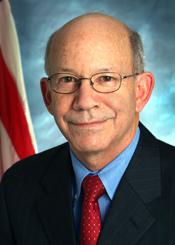 Rep. Peter A. DeFazio (D-OR)
Description
An amendment numbered 6 printed in House Report 113-339 to strike the National Environmental Policy Act waivers in the bill.
Legislative Activity
Stay on top of the latest movement without scrolling through every action
House amendment not agreed to: On agreeing to the DeFazio amendment (A005) Failed by recorded vote: 185 - 237 (Roll no. 38).(consideration: CR H1611-1612)
February 5, 2014 • 2:21 PM
View full timeline
House amendment not agreed to: On agreeing to the DeFazio amendment (A005) Failed by recorded vote: 185 - 237 (Roll no. 38).(consideration: CR H1611-1612)
February 5, 2014 • 2:21 PM
Roll call votes on amendments in House
February 5, 2014 • 2:21 PM
Amendment failed in Committee of the Whole
February 5, 2014 • 2:21 PM
Amendment failed in Committee of the Whole
February 5, 2014 • 2:21 PM
On agreeing to the DeFazio amendment (A005) Failed by recorded vote: 185 - 237 (Roll no. 38). (consideration: CR H1611-1612)
February 5, 2014 • 2:21 PM
House amendment offered
February 4, 2014
House amendment offered/reported by: Amendment (A005) offered by Mr. DeFazio.(consideration: CR H1578-1579; text: CR H1578)
February 4, 2014 • 3:27 PM
Amendment (A005) offered by Mr. DeFazio. (consideration: CR H1578-1579; text: CR H1578)
February 4, 2014 • 3:27 PM
Votes
1 roll call on this amendment
Text
Offered
SPORTSMEN'S HERITAGE AND RECREATIONAL ENHANCEMENT ACT OF 2013
The Committee resumed its sitting.
The Acting CHAIR (Mr. Holding). The gentleman from Oregon is
recognized.
Mr. DeFAZIO. Mr. Chairman, I yield as much time as he may consume to
the gentleman from Mississippi (Mr. Thompson), cochair of the
Sportsmen's Caucus.
Mr. THOMPSON of Mississippi. Mr. Chairman, let me thank the ranking
member of the committee, the gentleman from Oregon, for allowing me to
speak in support of this legislation even though he has reserved time
in opposition.
Mr. Chairman, I rise in support of H.R. 3590, the Sportsmen's
Heritage And Recreational Enhancement Act of 2013. Today's bill is the
product of the work of members of the bipartisan Congressional
Sportsmen's Caucus, which I serve as cochair. The Congressional
Sportsmen's Caucus is the largest caucus in Congress, boasting nearly
300 members. The caucus seeks to advance hunting, angling, shooting,
and trapping legislative priorities. Today's bill is comprised of eight
individual bills that seek to promote these interests.
Mr. Chairman, not only is hunting and fishing a great passion for
millions of individuals like myself, it is also a major contributor to
the U.S. economy. Mississippi, home to some of the world's finest duck,
whitetail, and sport fishing, contributed $2.2 billion to the economy
in 2011 alone.
My congressional district receives scores of visitors each year,
including some Members of this body, who come to enjoy the vast natural
resources that the Mississippi Delta has to offer. When these
individuals visit Mississippi, they hire local outfitters, stay in our
hotels, eat at our restaurants, pay State hunting fees, and purchase
hunting gear like Primos brand hunting calls, which are produced in my
district in Flora, Mississippi. In fact, it has been estimated that
hunting and fishing supports 33,000 jobs in Mississippi.
Mr. Chairman, the bill before us today makes improvements to a wide
range of issues, including the ability to purchase duck stamps online;
statutorily establish the Wildlife Hunting and Heritage Conservation
Council, which was administratively formed by Secretaries Salazar and
Vilsack in 2012. It also reduces a financial burden on States and local
governments for target range construction and maintenance. It also
excludes commercial ammo and fishing tackle from being classified as
toxic substances, which the EPA has agreed. It also directs the
Secretary of the Interior and the Secretary of Agriculture to issue a
permit and assess an annual fee for commercial filming crews of five
people or fewer for activities on Federal lands and waterways
administered by the Secretary. It also allows law-abiding citizens to
transport firearms across Army Corps of Engineers projects like the
hundreds of miles of levee that I have in my district. And it also
opens up more Federal land to hunting and fishing.
Mr. Chairman, while this bill makes tremendous strides to meet the
needs of sportsmen, there are several other provisions that were not
included in this bill that we must continue to push for, including an
overhaul of the Red Snapper Management in the Gulf of Mexico, the
ability to convert decommissioned oil rigs to fish habitat, and the
reauthorization of the Land and Water Conservation Fund. I look forward
to working with my colleagues to address these issues.
Mr. Chairman, I urge my colleagues to join me in supporting H.R.
3590.
Mr. BENISHEK. I yield 2 minutes to the gentleman from Virginia (Mr.
Wittman).
Mr. WITTMAN. Mr. Chairman, I rise today to offer my support for H.R.
3590, the Sportsmen's Heritage And Recreational Enhancement Act of
2013, better known as the SHARE Act.
I commend my friend and cochair of the Congressional Sportsmen's
Caucus, Representative Bob Latta of Ohio, for his leadership in guiding
this bill to the floor.
I am also proud to join with the Sportsmen's Caucus cochairs, both
Representative Latta and Representative Bennie Thompson of Mississippi,
and vice chair Representative Tim Walz of Minnesota in support of this
important bill.
As a member of the Natural Resources Committee, I would also like to
thank Chairman Doc Hastings for his work and cooperation on behalf of
America's sportsmen to support this legislation through the committee
process.
As a sportsman, I am humbled to advocate for this community and help
introduce this legislation to advance priorities for American anglers,
hunters, and conservationists.
This commonsense package will expand opportunities for recreation,
support fair treatment, and modernize programs for sportsmen, and
includes a proposal I authored to allow migratory waterfowl hunters to
purchase their annual Federal duck stamp online.
As vice chair of the Congressional Sportsmen's Caucus, I can proudly
say that this provision is important to waterfowl hunters across the
country. Title V, the Permanent Electronic Duck Stamp Act, is supported
by the Congressional Sportsmen's Foundation and Ducks Unlimited.
I would also like to acknowledge Representative Ron Kind as an
original cosponsor of the Permanent Electronic Duck Stamp Act. The
gentleman from Wisconsin is a dedicated conservationist and longtime
supporter and friend to sportsmen.
There is no cost to taxpayers. There is broad bipartisan support for
this innovative idea, and this convenient 21st century delivery system
will be utilized by thousands of American sportsmen in the future.
{time} 1430
Again, I would encourage my colleagues to support this important
package, H.R. 3590, the Sportsmen's Heritage And Recreational
Enhancement Act.
Mr. DeFAZIO. Mr. Chair, I just inquire as to how much time remains on
either side?
The ACTING CHAIR. The gentleman from Oregon (Mr. DeFazio) has 19\1/2\
minutes remaining. The gentleman from Michigan (Mr. Benishek) has 21\1/
2\ minutes remaining.
Mr. DeFAZIO. I yield 5 minutes to the gentleman from California (Mr.
FARR).
Mr. FARR. Mr. Chairman, I rise today in opposition to this
legislation, and I would hope that my colleagues will read it and look
before they leap. It is called the Sportsmen's Heritage And
Recreational Enhancement Act of 2013. Unfortunately, this is mired in a
muck of text in the legislation that I think does just the opposite of
enhancement. It ought to read, ``Kill the Habitat and Wildlife and
Enjoy a Dead Forest Act.''
This bill diminishes the conservation measures designed to protect
the habitat for wildlife by creating loopholes in the Wilderness Act
and weakens the National Environmental Policy Act, NEPA, process.
Title I, for example, amends the Toxic Substances Control Act to
prohibit the EPA from regulating toxic substances contained in bullets,
angling lures, and other hunting equipment with respect to toxic
substances.
It is not just people that are affected by toxic substances; so are
animals. Here they prohibit barring lead in bullets. Now, California is
a big hunter's State. Guess what? California State law prohibits the
use of lead. Why? Because the Federal Government has spent millions,
millions, and millions of dollars trying to restore the California
condor. Does that count? Ask the Ventana and Post Ranch Inn. Post Ranch
is $1,000 a night--nobody can afford that--but it is filled all the
time. Why? Because you can see condors and mountain lions and sea
otters and other things that we have protected by protecting their
environment.
What does a condor die from? It eats dead things. It eats things that
have been killed by bullets. It eats that lead, and guess what? It
kills the condor. It is done over and over again. There is no question
about this. This is the number
[[Page H1567]]
one cause of death in condors in California after we spent all this
money trying to get them restored. This act wipes all that out.
It is going to hurt the economy, and you know what? People call
themselves sportsmen. The sportsmen I know don't want to kill the
wildlife by poison or destroying the habitat. That is why the bill
passed in California banning lead bullets. This one prohibits States
like California from doing that.
Even the military is moving toward pursuing a lead-free environment
for their small arms. So it is a serious problem. This bill bans that.
This is nuts.
Lead poisoning from ammunition is the way you kill off wildlife, not
by a good shot. You kill it off by the poison that is left behind. That
is why Governor Brown signed into law a ban on lead bullets, and they
phased it in to 2019. This follows what at least 30 other States have
already done in regulating lead ammunition in some manner.
So, if we really want to protect and enhance the environment, then we
ought to do what the original conservationists did who were the hunters
by switching to non-toxic ammunition, and allow them to continue on
good conservation efforts, which is the heritage of hunters in this
country.
This legislation is a step backwards for sportsmen. I am a fisherman.
I certainly don't want to put stuff in the ocean or in lakes that is
toxic, and conservation practices protect our public lands, our open
spaces, and our wilderness areas.
So, I urge my colleagues to look before you leap. Don't jump in just
because there are a bunch of people endorsing this bill. Look at the
type. Look what it does. Look at the small print. I urge you to oppose
this legislation until it can really be legislation that will be a
Sportsmen's Heritage And Recreational Enhancement Act. As of now, it
deserves your opposition.
Mr. BENISHEK. I yield myself 2 minutes of the time.
Mr. Chairman, I rise today in support of H.R. 3590, the Sportsmen's
Heritage And Recreational Enhancement Act of 2013, or the SHARE Act.
I would like to talk a little bit about title VIII of the bill, which
is the text of a bill that I introduced, the Recreational Fishing and
Hunting Heritage and Opportunities Act. Like many of my colleagues here
in Congress, hunting and fishing are an important part of the lives of
the constituents in my district. I grew up in north Michigan, and like
many of my constituents, I spent my summers fishing, my Octobers
hunting grouse in the U.P. woods.
These traditions of spending quality time outdoors with our kids and
grandkids are the kind of things that we must make sure are preserved
for generations to come.
Mr. Chairman, this portion of the SHARE Act seeks to create an ``open
until closed'' policy for sportsmen's use of Federal lands. As you
know, nearly a quarter of the United States land mass, or over 500
million acres, are managed by the Bureau of Land Management, the Fish
and Wildlife Service, and the Forest Service. These lands are all owned
by all Americans. It is important that the right to fully utilize these
lands is ensured for future generations.
Over the years, legislative ambiguity in the Wilderness Act has
opened the door for numerous lawsuits over the country. Rather than
embracing sportsmen and -women for the conservationists that they are,
anti-hunting and environmental groups have pursued an agenda of
eliminating heritage activities on Federal lands for years. These
groups look for loopholes in the law to deprive our constituents the
right to use their own Federal lands.
Recreational anglers, hunters, and sporting organizations, many of
whom have endorsed this bill, are supporters of the conservation
movement and continue to provide direct support to the wildlife
managers and enforcement officers at the State, local, and Federal
levels. These dedicated sportsmen and -women from the shorelines of
Lake Superior to the beaches of the Pacific Ocean deserve to know that
the lands that they cherish will not be closed off to future
generations.
This is a bipartisan issue. In fact, Presidents Clinton and Bush both
issued executive orders recognizing the value of these heritage
activities. It is time we finally closed these loopholes, firmed up the
language and made sure that future generations will always be able to
enjoy the outdoors--hunting, fishing, and shooting or just taking a
walk in the woods.
The Acting CHAIR. The time of the gentleman has expired.
Mr. BENISHEK. I yield myself an additional 15 seconds.
Mr. Chairman, I would encourage all of my colleagues to join me today
in supporting this important piece of commonsense legislation.
I reserve the balance of my time.
Mr. DeFAZIO. Mr. Chairman, may I inquire how many more speakers does
the gentleman have?
Mr. BENISHEK. I have six more speakers, Mr. Chairman.
Mr. DeFAZIO. I have no more speakers except myself, so I would
suggest the gentleman go ahead.
I reserve the balance of my time.
Mr. BENISHEK. Mr. Chairman, I yield 2 minutes to the gentleman from
Montana (Mr. Daines).
Mr. DAINES. Mr. Chairman, I rise today in support of H.R. 3590, the
SHARE Act.
As a fifth-generation Montanan and as a lifelong sportsman, I know
that hunting, fishing, motorized recreation, and hiking are simply a
way of life for us in Montana. The outdoors is a critical aspect of our
culture, and as 30 percent of our State is owned by the Federal
Government, we depend on responsible stewardship and public access to
these lands. Unfortunately, our Federal Government too often imposes
rules and regulations that prevent responsible land use and our freedom
to use the land that we pay for.
Roughly 2 million acres in Montana are inaccessible to the public.
That is the most of any State in the Nation. Many of our hunting and
fishing opportunities are locked away. The SHARE Act is an important
bill that will protect Montanans' access to public lands for outdoor
recreation. Too often, the Federal Government forgets that hunters,
anglers, outdoorsmen--those whose livelihoods and passions rely on the
land--respect our outdoor landscape the most and are the best stewards
of our public lands.
Here we have the Federal Government trying to expand its authority
over lead bullets, keeping millions of dollars spent on ammo and
fishing tackle by hunters and anglers from being used for conservation
and wildlife management. Like its Senate counterpart, the SPORT Act,
this bill would protect our sportsmen and industries that manufacture
these goods from these unnecessary regulations.
The SHARE Act would also protect our Second Amendment rights where
the administration has tried to constrain them. It ensures that State
and local governments are consulted in decisions managing shooting
ranges, and it ensures that real outdoorsmen, instead of a bunch of
Washington bureaucrats, are advising the administration on conservation
and sportsmen issues.
Simply stated, the SHARE Act is an important bill to protect
America's outdoor heritage and to ensure the responsible use of our
public lands. I urge the passage of this bill.
Mr. BENISHEK. Mr. Chairman, at this time, I yield 2 minutes to the
gentleman from Ohio (Mr. Latta).
Mr. LATTA. I thank the gentleman for yielding.
Mr. Chairman, I rise today in support of H.R. 3590, the Sportsmen's
Heritage And Recreational Enhancement Act, or SHARE Act.
I have introduced this legislation on behalf of the Congressional
Sportsmen's Caucus, of which I am the cochairman with Congressman
Bennie Thompson, whom I thank for his work. I also would like to thank
Chairman Hastings for his support of the various bills contained in
this sportsmen's package, as well as to thank Chairman Shuster and
Chairman Upton. I would also like to thank all of my colleagues who
have introduced the individual bills that make up this package
legislation.
As a lifelong hunter and outdoorsman, issues relating to hunting and
conservation are extremely important to me. This legislation includes
various pro-sportsmen's and pro-sportswomen's items that will help
ensure our outdoor traditions are protected and advanced. H.R. 3590
also addresses some of the most current concerns of America's hunters,
recreational anglers, shooters, and trappers.
[[Page H1568]]
Title III of the bill is legislation I introduced related to public
lands filming. This provision directs the Secretary of the Interior and
the Secretary of Agriculture, for any film crew of five persons or
fewer, to require a permit and assess an annual fee of $200 for
commercial filming activities or similar projects on Federal lands and
waterways administered by the Secretary. This prohibits the Secretary,
for persons holding such a permit, from assessing any additional fee
for commercial filming activities and similar projects that occur in
those areas during public hours.
I have also introduced the language contained in title VII, which
permanently establishes the Wildlife and Hunting Heritage Conservation
Council Advisory Committee. This council advises the Secretaries of the
Interior and Agriculture on wildlife and habitat conservation,
recreational hunting, and shooting. Authorization of the council is
vital to ensuring that hunters maintain an advisory capacity role
across future administrations. The passage of H.R. 3590 will not only
elevate the stature of the council, it will also provide the levels of
certainty and stability necessary to ensure the council's ability to
engage in assisting the government in devising and implementing the
innovative, long-term solutions that are often necessary to address
policy issues important to sportsmen and sportswomen.
The Acting CHAIR. The time of the gentleman has expired.
Mr. BENISHEK. I yield the gentleman an additional 30 seconds.
Mr. LATTA. The passage of H.R. 3590 is important to our sportsmen and
-women to allow open access to Federal lands, as well as to provide the
needed certainty for the rules surrounding these activities. These
hunters and anglers provide a tremendous economic benefit to our
country. In 2011, they spent over $90 billion. In my home State of
Ohio, sportsmen and sportswomen spent $2.85 billion on hunting and
fishing. That is more than the revenues for corn, the State's top-
grossing agriculture commodity that year.
H.R. 3590 is good for the sporting and conservation communities, and
I urge my colleagues to support the bill.
Mr. DeFAZIO. I yield myself such time as I may consume.
Mr. Chairman, if the gentleman from Ohio (Mr. Latta) would remain on
the floor for a moment, I would like to direct to the gentleman a
question about the filming provision. I am curious as to what problems
specifically have been identified regarding filming permits. The second
question would be: Is it the gentleman's intent that they should be
able to use mechanized filming on tracks and otherwise motorized
filming in wilderness areas?
With that, I yield to the gentleman from Ohio (Mr. Latta).
Mr. LATTA. I appreciate the gentleman for yielding.
Mr. Chairman, first, there are a lot of smaller companies out there
that don't have the large film crews and that don't have the large
backups when it comes to funding in order to be able to do these types
of activities. So I want to make sure that those individuals have that
ability to be out there with a smaller fee so they can go ahead and
make the films they want to make.
{time} 1445
Mr. DeFAZIO. Reclaiming my time, as I understand the current process,
there is not one large fee. The fees vary in terms of the agency. If it
is a one-person crew or a four-person crew, whatever, the fees would be
smaller. If it is a mega film coming from Hollywood, they would charge
a larger fee, is my understanding.
I am just wondering if there has been a specific case where someone
has come to the gentleman and said, Gee, we are a two-person crew, and
they want to charge us $10,000. Do we have any specific examples?
I yield to the gentleman.
Mr. LATTA. I thank the gentleman for yielding.
Again, what we have had has come to us from the discussions we had
with the sporting community. Again, this is a product of multiple
groups coming together. When we looked at the cost of the fee, et
cetera, they thought it would be appropriate at this level of $200 for
the annual fee, again, for these very small groups out there that want
to go out and film.
Mr. DeFAZIO. Further, the issue of mechanized filming equipment,
motorized equipment being used in wilderness areas. And I yield to the
gentleman.
Mr. LATTA. That is one of the sections in the title that would permit
that.
Mr. DeFAZIO. Does the gentleman feel that we should waive the
Wilderness Act for film crews, but not other activities?
I yield to the gentleman.
Mr. LATTA. I thank the gentleman for yielding.
Again, when you look at mechanized vehicles, it can be anything from
a very small ATV. You might not be talking about a truck, or something
like that, but something very small.
Mr. DeFAZIO. Reclaiming my time, I think this is a solution in search
of a problem. We have had no testimony before the committee and no
specifics were provided here. I believe it is an overly broad
provision. If we had cases where extortionate fees were being charged
for small groups or unreasonable fees that weren't following this scale
basis that the agency tells me they follow, then I would share the
gentleman's concerns.
With that, I reserve the balance of my time.
Mr. BENISHEK. Mr. Chair, I yield 2 minutes to the gentleman from
Florida (Mr. Miller).
Mr. MILLER of Florida. Mr. Chairman, I thank Chairman Hastings for
his support in including H.R. 322, the Hunting, Fishing, and
Recreational Shooting Protection Act, as title I of the sportsmen's
package.
I also want to thank the Congressional Sportsmen's Caucus colleagues
and the leadership of Chairman Bob Latta and Bennie Thompson for their
efforts to protect sportsmen's rights and preserve our Nation's
heritage.
Title I of this measure simply clarifies the existing intent of law
regarding EPA's authority under the Toxic Substances Control Act with
respect to traditional ammunition and fishing tackle that contain lead
components. This legislation would prevent the EPA from expanding its
regulatory authority under TSCA into an area where fish and wildlife
agencies are better positioned to manage.
What the several antihunting and antifishing groups who insist on the
expansion fail to recognize is that the ammunition, firearms, and
tackle industries, along with sportsmen and -women, are the ones that
are footing the bill to manage, protect, and create the same species'
habitat that they claim they are trying to save. There is no sound
evidence of traditional ammo and fishing tackle with lead components
causing harm to wildlife populations or human health that would warrant
a complete ban.
I would also say that one of my colleagues came to the floor earlier
and said that this particular piece of legislation would in fact
prevent States like California from banning lead ammunition. That is
not true. Doing so in disregard of the intent of the law, the EPA would
devastate countless domestic manufacturing facilities, drive up the
cost for law enforcement and for our military, destroying thousands of
jobs and hurting wildlife conservation funding--all at the expense of
the taxpayer, and that is a cost that should not be borne.
Mr. DeFAZIO. Mr. Chairman, if the gentleman had remained on the floor
for a moment, I was going to direct a question to him, which is: Since
the EPA has found it does not have legal authority to regulate these
substances, why do we need to pass a law to prevent a law from being
passed? Which I guess is what we are trying to do here. In case we
wanted to ever consider a law to do this, we would say, Well, we
already passed a law to prohibit that.
Because the EPA says they don't have the authority to do this, it is
not going to happen. There was a petition filed. It was rejected. End
of story.
With that, I reserve the balance of my time.
Mr. BENISHEK. Mr. Chairman, at this time I yield 1 minute to the
gentleman from Pennsylvania (Mr. Shuster).
Mr. SHUSTER. I thank the gentleman.
Mr. Chairman, I rise today in support of H.R. 3590, the Sportsmen's
Heritage And Recreational Enhancement Act.
The bill protects the Second Amendment rights of visitors to Army
Corps
[[Page H1569]]
recreation lands. The Army Corps of Engineers has more outdoor
recreation visitors than the National Park Service or the Forest
Service lands. My district is home to many of these recreational lands,
such as Lake Raystown or the Youghiogheny River.
While we currently have protections for American's Second Amendment
rights in National Park lands and forest lands, the same rights are not
protected on Corps properties. This bill corrects that. It removes
unnecessary firearm restrictions while maintaining the safety and
security of Corps buildings and property.
I urge all Members to support the Second Amendment and vote in favor
of H.R. 3590, the Sportsmen's Heritage And Recreational Enhancement
Act.
Mr. DeFAZIO. Mr. Chairman, I yield myself such time as I may consume.
I would like to ask the chairman a question regarding that, since
this is under the jurisdiction of our committee and I am not aware that
we held a hearing on this issue.
I yield to the gentleman.
Mr. SHUSTER. I don't believe we did this year, but I think in the
past we did.
Mr. DeFAZIO. Reclaiming my time, I have many Corps areas in my
district, and I am not aware of restrictions, except there are
restricted areas because a number of these projects have sensitive
equipment that operate spillways and dams and other things, and those
are high security areas post-9/11.
I am wondering if the gentleman's interpretation of this is that it
would allow people to carry sidearms into these high security areas.
I yield to the gentleman.
Mr. SHUSTER. It protects people's rights, just like in the State
forests and other properties of the Federal Government, to carry
firearms; law-abiding citizens. I think it is something reasonable, and
something I support. I thank the gentleman for the inquiry.
Mr. DeFAZIO. Reclaiming my time, I am a strong supporter of the
Second Amendment, a gun owner myself. I haven't had a single complaint
about Corps restrictions in my State, and that would include areas
where we have had tampering with machinery that relates to spillways
and dams--potential terrorism. I wouldn't want to facilitate terrorism.
If we are talking about general Corps areas and lands being managed,
fine, but if we are talking about sensitive, secure areas that have to
be protected and guarded, I don't see why we would allow civilian
firearm carry within those sensitive protected areas, which would make
us vulnerable to terrorism.
Terrorists without a weapon, I suppose they could bring in a weapon
anyway. They could violate the law, but if someone were noted bringing
a weapon into one of those areas now, they would be asked to leave or
apprehended.
So I am concerned about those aspects, and I think that my committee
and Homeland Security should have looked at this issue before it was
brought to the floor without a hearing.
With that, I reserve the balance of my time.
Mr. BENISHEK. Mr. Chairman, I yield 2 minutes to the gentleman from
Ohio (Mr. Gibbs).
Mr. GIBBS. Mr. Chairman, I rise in support of H.R. 3590, the
Sportsmen's Heritage and Recreational Enhancement Act of 2013.
I would like to speak specifically to title VI of the bill.
The fundamental constitutional right to bear arms must be protected
for all law-abiding citizens. Americans deserve the right to exercise
their rights to not only enjoy recreational activities, but also
provide self-defense for themselves and their loved ones.
In the 111th Congress, this body passed legislation that ultimately
became law which allows for guns to be legally possessed and carried on
lands within our National Parks. Following enactment of that
legislation, the Army Corps of Engineers immediately issued the
following release:
Public Law 111-024 does not apply to Corps projects or
facilities. The passage of this new law does not affect
application of title 36 regulations.
The Corps administers over 11.7 million acres of land, including 400
lakes and river projects, 90,000 campsites, and 4,000 miles of trails.
Much of this land is remote and without quick access to emergency
services or law enforcement, so the ability to carry a firearm in the
case of emergency is imperative.
This Army Corps policy preempts State regulatory frameworks for
transporting and carrying firearms, thus invalidating concealed weapons
permits and other State laws that allow law-abiding citizens to
exercise their Second Amendment rights.
Title VI of the bill is aimed at protecting these rights by ensuring
the right to carry at U.S. Army Corps of Engineers Water Resource
Development Projects. Specifically, this legislation prohibits the
Secretary of the Army from enforcing any regulation that prevents an
individual from possessing firearms on these properties, thereby
restoring the continuity to Federal law.
Gun owners need to able to exercise their Second Amendment rights
when they are legally camping, hunting, and fishing on Army Corps
projects.
I would like to thank my colleague from Ohio, Representative Latta,
for including my bill into this piece of legislation.
I urge Members to support title VI and this legislation as a whole.
Mr. DeFAZIO. Mr. Chairman, I would inquire how many more speakers the
gentleman has.
Mr. BENISHEK. We just have one more speaker, and I will close after
that.
Mr. DeFAZIO. Mr. Chairman, I continue to reserve the balance of my
time.
Mr. BENISHEK. Mr. Chairman, I yield 2 minutes to the gentleman from
California (Mr. Hunter).
Mr. HUNTER. Mr. Chair, I thank the gentleman, the ranking member, and
the committee as well, for putting in H.R. 2463, the Target Practice
and Marksmanship Training Support Act, that Congressman Walz from
Minnesota and myself wrote.
Basically, what this does is allow Americans to use Federal lands
that they pay for in order to go out and shoot for sport at target
ranges. With fewer ranges today, providing greater flexibility to
States for the purpose of maintaining public shooting venues will go a
long way to restoring recreational opportunities and promoting gun
safety.
In San Diego, there are no public ranges that we can use. We have to
go to an indoor range or to someone's private ranch. There are no more
public facilities.
The Target Practice and Marksmanship Training Support Act uses
existing resources to allow Americans greater access to lands on which
to safely practice recreational and competitive shooting. Shooting
sports participants already provide significant support to conservation
efforts through excise taxes on firearms and ammunition. Public
shooting ranges will continue to serve the interests of families and
communities, providing a safe place for target practice and instruction
while also sustaining jobs and supporting local businesses.
This is a great bill. I would urge my colleagues to support it
because shooting--and shooting well--is an American tradition. You
shouldn't have to join the Marine Corps to learn that.
Mr. DeFAZIO. Mr. Chairman, I yield myself such time as I may consume.
I would agree with the gentleman. That came out of committee
unanimously. It is a true bipartisan proposal. I learned to shoot
through the Y in a basement range with a .22. That is where I started.
We have got to learn somewhere.
The public lands is another place for families to go and learn to
shoot. So that is one of the noncontroversial parts of the bill. In
fact, four of the components of this bill could have been brought up
yesterday under suspension or even, I believe, unanimous consent.
Definitely under suspension. They definitely would have passed them.
They have been previously considered by committee, subject to hearings,
and the language was agreed upon. Unfortunately, the majority has
insisted, although I also believe that the title would get unanimous
consent in this body--it is a great title--but sometimes we attach
provisions to great titles that aren't necessary or belie that title.
Some of the components of this, which I have talked about--the
potential for degradation of wetlands management, wildlife refuge
management, intrusions into wilderness areas--are
[[Page H1570]]
inappropriate and unnecessary. We can do a little political
``gotcha''--you voted against this bill that has this great title, so
that means you are against sportsmen and fishing and hunters and
families enjoying those activities.
{time} 1500
I am not, and very few, if any, Members of this body are. But, be
that as it may, we have pointed out a number of the problems in this
legislation.
Legislating is really a pretty difficult exercise, to do real things,
to do things that actually would benefit our wildlife resources and
hunting and fishing activities. One would be Congressman Daines'
proposal to reauthorize the Land and Water Conservation Fund.
Every day development proposals move forward that take more and more
wildlife areas, more and more wetlands, more and more forests out of
access to hunting and fishing and recreation in many cases. The Land
and Water Conservation Fund has been a key in protecting those lands,
when jeopardized, and purchasing from willing sellers to prevent that
kind of development.
Though we are still collecting the tax that funds the Land and Water
Conservation Fund--yes, we are collecting the tax. Even the Republicans
haven't proposed that we do away with that tax because they are
spending Land and Water Conservation Funds on other things; God only
knows what. Some of the earmarks in a bill we will take up later this
week. I don't know.
But they are spending hundreds of millions of dollars that are
supposed to go to benefit sportsmen and -women, hunters, fishers,
wildlife, and protect those areas and manage them reasonably with that
full access. They are spending that money somewhere else, so they don't
want to take away the tax, but they don't want to reauthorize the Land
and Water Conservation Fund. That is a shame, and that would be a much
bigger benefit than anything else that we are doing here today.
We have a number of bipartisan wilderness proposals pending: Mr.
Reichert, from Washington State, Alpine Lakes; Mr. Benishek, Sleeping
Bear Dunes; and others that are pending. Those things would benefit
since wilderness does allow hunting and fishing and does provide a
degree of protection for those lands that is unparalleled. That would
be an experience for horseback hunters, people who walk in on their own
two feet. But there are plenty of places to go in a motorized way. It
is a little more rare to have an opportunity to do that from horseback
or hiking.
But we are not considering those today because those are
controversial. So instead, we have this kind of hash that we are
calling one thing and doing a number of other things with.
We have the proposal that we have a problem with unidentified film
crews who have never come forward, who might be charged too much or
need to use motorized equipment in wilderness areas and so, therefore,
we are just going to open them up. That is kind of a heck of a way to
legislate, really.
We are worried that maybe some units, and definitely the dam areas of
the Corps of Engineers, prohibit individuals carrying weapons. That is
not exactly an intrusion. They can't carry a weapon into an airport.
You can't carry a weapon into the Capitol. You can't carry a weapon
into a Federal courthouse, and you can't carry a weapon to a dam site
where tampering with equipment could cause a massive flood or dam
failure. It makes a little bit of sense to me, but the bill says, no,
that is an infringement on the Second Amendment. I think it is a
reasonable step by the government. So we are going to open that up,
again, without any hearings identifying any problems with access.
I have a lot of Corps projects in my State. I have never had a
constituent call and say, gee, I want to go on to this Corps property
and bring my gun. I have got a concealed weapons permit, and I have
carried a gun on many Federal lands where there is no restriction, and
I supported the park provision last year. But we are creating another
imaginary problem so we can add yet another title to this hash of a
bill. So I am sorry that we are having to go forward in this way.
I did support a less controversial measure for sportsmen heritage in
the last Congress, and even that didn't go anywhere in the Senate. This
one already has an affirmed veto threat from the White House, and the
Senate isn't going to take it up.
But we can pretend we did something here today, and some people get
excited about the fact that we did something here today that will never
happen. We could, and it is much harder, agree on a bipartisan measure
for reasonable measures to protect people's right to hunt and fish and
bear arms, but we are not going to do that. So let's get on with the
political show.
Mr. Chairman, with that, I yield back the balance of my time.
Mr. HASTINGS of Washington. Mr. Chairman, I yield myself the balance
of my time.
Mr. Chairman, let me just make a couple of points. I want to make a
very, very broad point on what the intent of this legislation is,
because it is aimed at uses of public lands.
Now, I have always been of the mind that public lands, particularly
Federal lands, unless Congress designates otherwise, then the uses of
those lands should be for multiple purposes. Now, obviously recreation,
i.e., hunting and fishing, would be part of that.
So what this bill seeks to do, then, is to provide certainty into
Federal laws that, indeed, multiple uses--in this case, hunting and
fishing and recreational use--will be on public lands. There is nothing
really more complicated than that.
What has caused this legislation to be brought forward is because of
actions of certain bureaucracies within certain parts of the Federal
Government that have a different decision, if you will, or a different
idea of that, and they slow down this recreational activity. So this
seeks to put certainty in that.
Lastly, let me just respond to the arguments that we heard about the
Land and Water Conservation Fund. Mr. Chairman, that is a program.
There are people that think it is a very, very good program. There are
those, including me, that feel that sometimes it is not as good as it
is simply because you acquire private land for the Federal Government.
We can't maintain what we have. That should be a reason for, I guess,
pause anyway.
But the reason I think that the Rules Committee did not make that
particular amendment in order is for a very, very good reason. We talk
about regular order around here. The Land and Water Conservation Fund
statute does not expire until 2015. So I know, as chairman of the House
Natural Resources Committee, that the subcommittee in charge of that
particular legislation is going to have hearings and we are going to go
through the legislative process in order to reauthorize that.
So to rail against the idea that that amendment was not made in order
somehow continues to break the program is simply not the case. The
program is in place until it expires in 2015, and I have no doubt that
our committee will come up with legislation to do the proper
reauthorization.
So, with that, Mr. Chairman, I think it is a very, very good bill,
and I urge my colleagues to support it.
Mr. Chairman, I yield back the balance of my time.
The Acting CHAIR (Mr. Latham). All time for general debate has
expired.
Pursuant to the rule, the bill shall be considered for amendment
under the 5-minute rule, and shall be considered as read.
The text of the bill is as follows:
H.R. 3590
Be it enacted by the Senate and House of Representatives of
the United States of America in Congress assembled,
SECTION 1. SHORT TITLE.
This Act may be cited as the ``Sportsmen's Heritage And
Recreational Enhancement Act of 2013'' or the ``SHARE Act of
2013''.
SEC. 2. TABLE OF CONTENTS.
The table of contents for this Act is as follows:
Sec. 1. Short title.
Sec. 2. Table of contents.
TITLE I--HUNTING, FISHING AND RECREATIONAL SHOOTING PROTECTION ACT
Sec. 101. Short title.
Sec. 102. Modification of definition.
TITLE II--TARGET PRACTICE AND MARKSMANSHIP TRAINING SUPPORT ACT
Sec. 201. Short title.
Sec. 202. Findings; purpose.
Sec. 203. Definition of public target range.
[[Page H1571]]
Sec. 204. Amendments to Pittman-Robertson Wildlife Restoration Act.
Sec. 205. Limits on liability.
Sec. 206. Sense of Congress regarding cooperation.
TITLE III--PUBLIC LANDS FILMING
Sec. 301. Purpose.
Sec. 302. Annual permit and fee for film crews of 5 persons or fewer.
TITLE IV--POLAR BEAR CONSERVATION AND FAIRNESS ACT
Sec. 401. Short title.
Sec. 402. Permits for importation of polar bear trophies taken in sport
hunts in Canada.
TITLE V--PERMANENT ELECTRONIC DUCK STAMP ACT
Sec. 501. Short title.
Sec. 502. Definitions.
Sec. 503. Authority to issue electronic duck stamps.
Sec. 504. State application.
Sec. 505. State obligations and authorities.
Sec. 506. Electronic stamp requirements; recognition of electronic
stamp.
Sec. 507. Termination of State participation.
TITLE VI--ACCESS TO WATER RESOURCES DEVELOPMENT PROJECTS ACT
Sec. 601. Short title.
Sec. 602. Protecting Americans from violent crime.
TITLE VII--WILDLIFE AND HUNTING HERITAGE CONSERVATION COUNCIL ADVISORY
COMMITTEE
Sec. 701. Wildlife and Hunting Heritage Conservation Council Advisory
Committee.
TITLE VIII--RECREATIONAL FISHING AND HUNTING HERITAGE AND OPPORTUNITIES
ACT
Sec. 801. Short title.
Sec. 802. Findings.
Sec. 803. Definitions.
Sec. 804. Recreational fishing, hunting, and shooting.
TITLE I--HUNTING, FISHING AND RECREATIONAL SHOOTING PROTECTION ACT
SEC. 101. SHORT TITLE.
This title may be cited as the ``Hunting, Fishing, and
Recreational Shooting Protection Act''.
SEC. 102. MODIFICATION OF DEFINITION.
Section 3(2)(B) of the Toxic Substances Control Act (15
U.S.C. 2602(2)(B)) is amended--
(1) in clause (v), by striking ``, and'' and inserting ``,
or any component of any such article including, without
limitation, shot, bullets and other projectiles, propellants,
and primers,'';
(2) in clause (vi) by striking the period at the end and
inserting ``, and''; and
(3) by inserting after clause (vi) the following:
``(vii) any sport fishing equipment (as such term is
defined in subsection (a) of section 4162 of the Internal
Revenue Code of 1986) the sale of which is subject to the tax
imposed by section 4161(a) of such Code (determined without
regard to any exemptions from such tax as provided by section
4162 or 4221 or any other provision of such Code), and sport
fishing equipment components.''.
TITLE II--TARGET PRACTICE AND MARKSMANSHIP TRAINING SUPPORT ACT
SEC. 201. SHORT TITLE.
This title may be cited as the ``Target Practice and
Marksmanship Training Support Act''.
SEC. 202. FINDINGS; PURPOSE.
(a) Findings.--Congress finds that--
(1) the use of firearms and archery equipment for target
practice and marksmanship training activities on Federal land
is allowed, except to the extent specific portions of that
land have been closed to those activities;
(2) in recent years preceding the date of enactment of this
Act, portions of Federal land have been closed to target
practice and marksmanship training for many reasons;
(3) the availability of public target ranges on non-Federal
land has been declining for a variety of reasons, including
continued population growth and development near former
ranges;
(4) providing opportunities for target practice and
marksmanship training at public target ranges on Federal and
non-Federal land can help--
(A) to promote enjoyment of shooting, recreational, and
hunting activities; and
(B) to ensure safe and convenient locations for those
activities;
(5) Federal law in effect on the date of enactment of this
Act, including the Pittman-Robertson Wildlife Restoration Act
(16 U.S.C. 669 et seq.), provides Federal support for
construction and expansion of public target ranges by making
available to States amounts that may be used for
construction, operation, and maintenance of public target
ranges; and
(6) it is in the public interest to provide increased
Federal support to facilitate the construction or expansion
of public target ranges.
(b) Purpose.--The purpose of this title is to facilitate
the construction and expansion of public target ranges,
including ranges on Federal land managed by the Forest
Service and the Bureau of Land Management.
SEC. 203. DEFINITION OF PUBLIC TARGET RANGE.
In this title, the term ``public target range'' means a
specific location that--
(1) is identified by a governmental agency for recreational
shooting;
(2) is open to the public;
(3) may be supervised; and
(4) may accommodate archery or rifle, pistol, or shotgun
shooting.
SEC. 204. AMENDMENTS TO PITTMAN-ROBERTSON WILDLIFE
RESTORATION ACT.
(a) Definitions.--Section 2 of the Pittman-Robertson
Wildlife Restoration Act (16 U.S.C. 669a) is amended--
(1) by redesignating paragraphs (2) through (8) as
paragraphs (3) through (9), respectively; and
(2) by inserting after paragraph (1) the following:
``(2) the term `public target range' means a specific
location that--
``(A) is identified by a governmental agency for
recreational shooting;
``(B) is open to the public;
``(C) may be supervised; and
``(D) may accommodate archery or rifle, pistol, or shotgun
shooting;''.
(b) Expenditures for Management of Wildlife Areas and
Resources.--Section 8(b) of the Pittman-Robertson Wildlife
Restoration Act (16 U.S.C. 669g(b)) is amended--
(1) by striking ``(b) Each State'' and inserting the
following:
``(b) Expenditures for Management of Wildlife Areas and
Resources.--
``(1) In general.--Except as provided in paragraph (2),
each State'';
(2) in paragraph (1) (as so designated), by striking
``construction, operation,'' and inserting ``operation'';
(3) in the second sentence, by striking ``The non-Federal
share'' and inserting the following:
``(3) Non-federal share.--The non-Federal share'';
(4) in the third sentence, by striking ``The Secretary''
and inserting the following:
``(4) Regulations.--The Secretary''; and
(5) by inserting after paragraph (1) (as designated by
paragraph (1) of this subsection) the following:
``(2) Exception.--Notwithstanding the limitation described
in paragraph (1), a State may pay up to 90 percent of the
cost of acquiring land for, expanding, or constructing a
public target range.''.
(c) Firearm and Bow Hunter Education and Safety Program
Grants.--Section 10 of the Pittman-Robertson Wildlife
Restoration Act (16 U.S.C. 669h-1) is amended--
(1) in subsection (a), by adding at the end the following:
``(3) Allocation of additional amounts.--Of the amount
apportioned to a State for any fiscal year under section
4(b), the State may elect to allocate not more than 10
percent, to be combined with the amount apportioned to the
State under paragraph (1) for that fiscal year, for acquiring
land for, expanding, or constructing a public target
range.'';
(2) by striking subsection (b) and inserting the following:
``(b) Cost Sharing.--
``(1) In general.--Except as provided in paragraph (2), the
Federal share of the cost of any activity carried out using a
grant under this section shall not exceed 75 percent of the
total cost of the activity.
``(2) Public target range construction or expansion.--The
Federal share of the cost of acquiring land for, expanding,
or constructing a public target range in a State on Federal
or non-Federal land pursuant to this section or section 8(b)
shall not exceed 90 percent of the cost of the activity.'';
and
(3) in subsection (c)(1)--
(A) by striking ``Amounts made'' and inserting the
following:
``(A) In general.--Except as provided in subparagraph (B),
amounts made''; and
(B) by adding at the end the following:
``(B) Exception.--Amounts provided for acquiring land for,
constructing, or expanding a public target range shall remain
available for expenditure and obligation during the 5-fiscal-
year period beginning on October 1 of the first fiscal year
for which the amounts are made available.''.
SEC. 205. LIMITS ON LIABILITY.
(a) Discretionary Function.--For purposes of chapter 171 of
title 28, United States Code (commonly referred to as the
``Federal Tort Claims Act''), any action by an agent or
employee of the United States to manage or allow the use of
Federal land for purposes of target practice or marksmanship
training by a member of the public shall be considered to be
the exercise or performance of a discretionary function.
(b) Civil Action or Claims.--Except to the extent provided
in chapter 171 of title 28, United States Code, the United
States shall not be subject to any civil action or claim for
money damages for any injury to or loss of property, personal
injury, or death caused by an activity occurring at a public
target range that is--
(1) funded in whole or in part by the Federal Government
pursuant to the Pittman-Robertson Wildlife Restoration Act
(16 U.S.C. 669 et seq.); or
(2) located on Federal land.
SEC. 206. SENSE OF CONGRESS REGARDING COOPERATION.
It is the sense of Congress that, consistent with
applicable laws and regulations, the Chief of the Forest
Service and the Director of the Bureau of Land Management
should cooperate with State and local authorities and other
entities to carry out waste removal and other activities on
any Federal
[[Page H1572]]
land used as a public target range to encourage continued use
of that land for target practice or marksmanship training.
TITLE III--PUBLIC LANDS FILMING
SEC. 301. PURPOSE.
The purpose of this title is to provide commercial film
crews of 5 persons or fewer access to film in areas
designated for public use during public hours on Federal
lands and waterways.
SEC. 302. ANNUAL PERMIT AND FEE FOR FILM CREWS OF 5 PERSONS
OR FEWER.
(a) In General.--Section (1)(a) of Public Law 106-206 (16
U.S.C. 460l-6d) is amended by--
(1) redesignating paragraphs (1), (2), and (3) as
subparagraphs (A), (B), and (C), respectively;
(2) striking ``The Secretary of the Interior'' and
inserting ``(1) In general.--Except as provided by paragraph
(3), the Secretary of the Interior'';
(3) inserting ``(2) Other considerations.--'' before ``The
Secretary may include other factors''; and
(4) adding at the end the following new paragraph:
``(3) Special rules for film crews of 5 persons or fewer.--
``(A) For any film crew of 5 persons or fewer, the
Secretary shall require a permit and assess an annual fee of
$200 for commercial filming activities or similar projects on
Federal lands and waterways administered by the Secretary.
The permit shall be valid for commercial filming activities
or similar projects that occur in areas designated for public
use during public hours on all Federal lands waterways
administered by the Secretary for a 12-month period beginning
on the date of issuance of the permit.
``(B) For persons holding a permit described in this
paragraph, the Secretary shall not assess, during the
effective period of the permit, any additional fee for
commercial filming activities and similar projects that occur
in areas designated for public use during public hours on
Federal lands and waterways administered by the Secretary.
``(C) In this paragraph, the term `film crew' includes all
persons present on Federal land under the Secretary's
jurisdiction who are associated with the production of a
certain film.
``(D) The Secretary shall not prohibit, as a motorized
vehicle or under any other purposes, use of cameras or
related equipment used for the purpose of commercial filming
activities or similar projects in accordance with this
paragraph on Federal lands and waterways administered by the
Secretary.''.
(b) Recovery of Costs.--Section (1)(b) of Public Law 106-
206 (16 U.S.C. 460l-6d) is amended by--
(1) striking ``collect any costs'' and inserting ``recover
any costs''; and
(2) striking ``similar project'' and inserting ``similar
projects''.
TITLE IV--POLAR BEAR CONSERVATION AND FAIRNESS ACT
SEC. 401. SHORT TITLE.
This title may be cited as the ``Polar Bear Conservation
and Fairness Act of 2013''.
SEC. 402. PERMITS FOR IMPORTATION OF POLAR BEAR TROPHIES
TAKEN IN SPORT HUNTS IN CANADA.
Section 104(c)(5)(D) of the Marine Mammal Protection Act of
1972 (16 U.S.C. 1374(c)(5)(D)) is amended to read as follows:
``(D)(i) The Secretary of the Interior shall, expeditiously
after the expiration of the applicable 30-day period under
subsection (d)(2), issue a permit for the importation of any
polar bear part (other than an internal organ) from a polar
bear taken in a sport hunt in Canada to any person--
``(I) who submits, with the permit application, proof that
the polar bear was legally harvested by the person before
February 18, 1997; or
``(II) who has submitted, in support of a permit
application submitted before May 15, 2008, proof that the
polar bear was legally harvested by the person before May 15,
2008, from a polar bear population from which a sport-hunted
trophy could be imported before that date in accordance with
section 18.30(i) of title 50, Code of Federal Regulations.
``(ii) The Secretary shall issue permits under clause
(i)(I) without regard to subparagraphs (A) and (C)(ii) of
this paragraph, subsection (d)(3), and sections 101 and 102.
Sections 101(a)(3)(B) and 102(b)(3) shall not apply to the
importation of any polar bear part authorized by a permit
issued under clause (i)(I). This clause shall not apply to
polar bear parts that were imported before June 12, 1997.
``(iii) The Secretary shall issue permits under clause
(i)(II) without regard to subparagraph (C)(ii) of this
paragraph or subsection (d)(3). Sections 101(a)(3)(B) and
102(b)(3) shall not apply to the importation of any polar
bear part authorized by a permit issued under clause (i)(II).
This clause shall not apply to polar bear parts that were
imported before the date of enactment of the Polar Bear
Conservation and Fairness Act of 2013.''.
TITLE V--PERMANENT ELECTRONIC DUCK STAMP ACT
SEC. 501. SHORT TITLE.
This title may be cited as the ``Permanent Electronic Duck
Stamp Act of 2013''.
SEC. 502. DEFINITIONS.
In this title:
(1) Actual stamp.--The term ``actual stamp'' means a
Federal migratory-bird hunting and conservation stamp
required under the Act of March 16, 1934 (16 U.S.C. 718a et
seq.) (popularly known as the ``Duck Stamp Act''), that is
printed on paper and sold through the means established by
the authority of the Secretary immediately before the date of
enactment of this Act.
(2) Automated licensing system.--
(A) In general.--The term ``automated licensing system''
means an electronic, computerized licensing system used by a
State fish and wildlife agency to issue hunting, fishing, and
other associated licenses and products.
(B) Inclusion.--The term ``automated licensing system''
includes a point-of-sale, Internet, telephonic system, or
other electronic applications used for a purpose described in
subparagraph (A).
(3) Electronic stamp.--The term ``electronic stamp'' means
an electronic version of an actual stamp that--
(A) is a unique identifier for the individual to whom it is
issued;
(B) can be printed on paper or produced through an
electronic application with the same indicators as the State
endorsement provides;
(C) is issued through a State automated licensing system
that is authorized, under State law and by the Secretary
under this title, to issue electronic stamps;
(D) is compatible with the hunting licensing system of the
State that issues the electronic stamp; and
(E) is described in the State application approved by the
Secretary under section 504(b).
(4) Secretary.--The term ``Secretary'' means the Secretary
of the Interior.
SEC. 503. AUTHORITY TO ISSUE ELECTRONIC DUCK STAMPS.
(a) In General.--The Secretary may authorize any State to
issue electronic stamps in accordance with this title.
(b) Consultation.--The Secretary shall implement this
section in consultation with State management agencies.
SEC. 504. STATE APPLICATION.
(a) Approval of Application Required.--The Secretary may
not authorize a State to issue electronic stamps under this
title unless the Secretary has received and approved an
application submitted by the State in accordance with this
section. The Secretary may determine the number of new States
per year to participate in the electronic stamp program.
(b) Contents of Application.--The Secretary may not approve
a State application unless the application contains--
(1) a description of the format of the electronic stamp
that the State will issue under this title, including
identifying features of the licensee that will be specified
on the stamp;
(2) a description of any fee the State will charge for
issuance of an electronic stamp;
(3) a description of the process the State will use to
account for and transfer to the Secretary the amounts
collected by the State that are required to be transferred to
the Secretary under the program;
(4) the manner by which the State will transmit electronic
stamp customer data to the Secretary;
(5) the manner by which actual stamps will be delivered;
(6) the policies and procedures under which the State will
issue duplicate electronic stamps; and
(7) such other policies, procedures, and information as may
be reasonably required by the Secretary.
(c) Publication of Deadlines, Eligibility Requirements, and
Selection Criteria.--Not later than 30 days before the date
on which the Secretary begins accepting applications under
this section, the Secretary shall publish--
(1) deadlines for submission of applications;
(2) eligibility requirements for submitting applications;
and
(3) criteria for approving applications.
SEC. 505. STATE OBLIGATIONS AND AUTHORITIES.
(a) Delivery of Actual Stamp.--The Secretary shall require
that each individual to whom a State sells an electronic
stamp under this title shall receive an actual stamp--
(1) by not later than the date on which the electronic
stamp expires under section 506(c); and
(2) in a manner agreed upon by the State and Secretary.
(b) Collection and Transfer of Electronic Stamp Revenue and
Customer Information.--
(1) Requirement to transmit.--The Secretary shall require
each State authorized to issue electronic stamps to collect
and submit to the Secretary in accordance with this section--
(A) the first name, last name, and complete mailing address
of each individual that purchases an electronic stamp from
the State;
(B) the face value amount of each electronic stamp sold by
the State; and
(C) the amount of the Federal portion of any fee required
by the agreement for each stamp sold.
(2) Time of transmittal.--The Secretary shall require the
submission under paragraph (1) to be made with respect to
sales of electronic stamps by a State according to the
[[Page H1573]]
written agreement between the Secretary and the State agency.
(3) Additional fees not affected.--This section shall not
apply to the State portion of any fee collected by a State
under subsection (c).
(c) Electronic Stamp Issuance Fee.--A State authorized to
issue electronic stamps may charge a reasonable fee to cover
costs incurred by the State and the Department of the
Interior in issuing electronic stamps under this title,
including costs of delivery of actual stamps.
(d) Duplicate Electronic Stamps.--A State authorized to
issue electronic stamps may issue a duplicate electronic
stamp to replace an electronic stamp issued by the State that
is lost or damaged.
(e) Limitation on Authority To Require Purchase of State
License.--A State may not require that an individual purchase
a State hunting license as a condition of issuing an
electronic stamp under this title.
SEC. 506. ELECTRONIC STAMP REQUIREMENTS; RECOGNITION OF
ELECTRONIC STAMP.
(a) Stamp Requirements.--The Secretary shall require an
electronic stamp issued by a State under this title--
(1) to have the same format as any other license,
validation, or privilege the State issues under the automated
licensing system of the State; and
(2) to specify identifying features of the licensee that
are adequate to enable Federal, State, and other law
enforcement officers to identify the holder.
(b) Recognition of Electronic Stamp.--Any electronic stamp
issued by a State under this title shall, during the
effective period of the electronic stamp--
(1) bestow upon the licensee the same privileges as are
bestowed by an actual stamp;
(2) be recognized nationally as a valid Federal migratory
bird hunting and conservation stamp; and
(3) authorize the licensee to hunt migratory waterfowl in
any other State, in accordance with the laws of the other
State governing that hunting.
(c) Duration.--An electronic stamp issued by a State shall
be valid for a period agreed to by the State and the
Secretary, which shall not exceed 45 days.
SEC. 507. TERMINATION OF STATE PARTICIPATION.
The authority of a State to issue electronic stamps under
this title may be terminated--
(1) by the Secretary, if the Secretary--
(A) finds that the State has violated any of the terms of
the application of the State approved by the Secretary under
section 504; and
(B) provides to the State written notice of the termination
by not later than the date that is 30 days before the date of
termination; or
(2) by the State, by providing written notice to the
Secretary by not later than the date that is 30 days before
the termination date.
TITLE VI--ACCESS TO WATER RESOURCES DEVELOPMENT PROJECTS ACT
SEC. 601. SHORT TITLE.
This title may be cited as the ``Recreational Lands Self-
Defense Act of 2013''.
SEC. 602. PROTECTING AMERICANS FROM VIOLENT CRIME.
(a) Findings.--Congress finds the following:
(1) The Second Amendment to the Constitution provides that
``the right of the people to keep and bear Arms, shall not be
infringed''.
(2) Section 327.13 of title 36, Code of Federal
Regulations, provides that, except in special circumstances,
``possession of loaded firearms, ammunition, loaded
projectile firing devices, bows and arrows, crossbows, or
other weapons is prohibited'' at water resources development
projects administered by the Secretary of the Army.
(3) The regulations described in paragraph (2) prevent
individuals complying with Federal and State laws from
exercising the second amendment rights of the individuals
while at such water resources development projects.
(4) The Federal laws should make it clear that the second
amendment rights of an individual at a water resources
development project should not be infringed.
(b) Protecting the Right of Individuals To Bear Arms at
Water Resources Development Projects.--The Secretary of the
Army shall not promulgate or enforce any regulation that
prohibits an individual from possessing a firearm including
an assembled or functional firearm at a water resources
development project covered under section 327.0 of title 36,
Code of Federal Regulations (as in effect on the date of
enactment of this Act), if--
(1) the individual is not otherwise prohibited by law from
possessing the firearm; and
(2) the possession of the firearm is in compliance with the
law of the State in which the water resources development
project is located.
TITLE VII--WILDLIFE AND HUNTING HERITAGE CONSERVATION COUNCIL ADVISORY
COMMITTEE
SEC. 701. WILDLIFE AND HUNTING HERITAGE CONSERVATION COUNCIL
ADVISORY COMMITTEE.
The Fish and Wildlife Coordination Act (16 U.S.C. 661 et
seq.) is amended by adding at the end the following:
``SEC. 10. WILDLIFE AND HUNTING HERITAGE CONSERVATION COUNCIL
ADVISORY COMMITTEE.
``(a) Establishment.--There is hereby established the
Wildlife and Hunting Heritage Conservation Council Advisory
Committee (in this section referred to as the `Advisory
Committee') to advise the Secretaries of the Interior and
Agriculture on wildlife and habitat conservation, hunting,
and recreational shooting.
``(b) Duties of the Advisory Committee.--The Advisory
Committee shall advise the Secretaries with regard to--
``(1) implementation of Executive Order No. 13443:
Facilitation of Hunting Heritage and Wildlife Conservation,
which directs Federal agencies `to facilitate the expansion
and enhancement of hunting opportunities and the management
of game species and their habitat';
``(2) policies or programs to conserve and restore
wetlands, agricultural lands, grasslands, forest, and
rangeland habitats;
``(3) policies or programs to promote opportunities and
access to hunting and shooting sports on Federal lands;
``(4) policies or programs to recruit and retain new
hunters and shooters;
``(5) policies or programs that increase public awareness
of the importance of wildlife conservation and the social and
economic benefits of recreational hunting and shooting; and
``(6) policies or programs that encourage coordination
among the public, the hunting and shooting sports community,
wildlife conservation groups, and States, tribes, and the
Federal Government.
``(c) Membership.--
``(1) Appointment.--
``(A) In general.--The Advisory Committee shall consist of
no more than 16 discretionary members and 7 ex officio
members.
``(B) Ex officio members.--The ex officio members are--
``(i) the Director of the United States Fish and Wildlife
Service or a designated representative of the Director;
``(ii) the Director of the Bureau of Land Management or a
designated representative of the Director;
``(iii) the Director of the National Park Service or a
designated representative of the Director;
``(iv) the Chief of the Forest Service or a designated
representative of the Chief;
``(v) the Chief of the Natural Resources Conservation
Service or a designated representative of the Chief;
``(vi) the Administrator of the Farm Service Agency or a
designated representative of the Administrator; and
``(vii) the Executive Director of the Association of Fish
and Wildlife Agencies.
``(C) Discretionary members.--The discretionary members
shall be appointed jointly by the Secretaries from at least
one of each of the following:
``(i) State fish and wildlife agencies.
``(ii) Game bird hunting organizations.
``(iii) Wildlife conservation organizations.
``(iv) Big game hunting organizations.
``(v) Waterfowl hunting organizations.
``(vi) The tourism, outfitter, or guiding industry.
``(vii) The firearms or ammunition manufacturing industry.
``(viii) The hunting or shooting equipment retail industry.
``(ix) Hunting and shooting sports outreach and education
organizations.
``(x) Tribal resource management organizations.
``(xi) The agriculture industry.
``(xii) The ranching industry.
``(D) Eligibility.--Prior to the appointment of the
discretionary members, the Secretaries shall determine that
all individuals nominated for appointment to the Advisory
Committee, and the organization each individual represents,
actively support and promote sustainable-use hunting,
wildlife conservation, and recreational shooting.
``(2) Terms.--
``(A) In general.--Except as provided in subparagraph (B),
members of the Advisory Committee shall be appointed for a
term of 4 years. Members shall not be appointed for more than
3 consecutive or nonconsecutive terms.
``(B) Terms of initial appointees.--As designated by the
Secretary at the time of appointment, of the members first
appointed--
``(i) 6 members shall be appointed for a term of 4 years;
``(ii) 5 members shall be appointed for a term of 3 years;
and
``(iii) 5 members shall be appointed for a term of 2 years.
``(3) Preservation of public advisory status.--No
individual may be appointed as a discretionary member of the
Advisory Committee while serving as an officer or employee of
the Federal Government.
``(4) Vacancy and removal.--
``(A) In general.--Any vacancy on the Advisory Committee
shall be filled in the manner in which the original
appointment was made.
``(B) Removal.--Advisory Committee members shall serve at
the discretion of the Secretaries and may be removed at any
time for good cause.
``(5) Continuation of service.--Each appointed member may
continue to serve after the expiration of the term of office
to which such member was appointed until a successor has been
appointed.
``(6) Chairperson.--The Chairperson of the Advisory
Committee shall be appointed for a
[[Page H1574]]
3-year term by the Secretaries, jointly, from among the
members of the Advisory Committee. An individual may not be
appointed as Chairperson for more than 2 consecutive or
nonconsecutive terms.
``(7) Pay and expenses.--Members of the Advisory Committee
shall serve without pay for such service, but each member of
the Advisory Committee shall be reimbursed for travel and
lodging incurred through attending meetings of the Advisory
Committee approved subgroup meetings in the same amounts and
under the same conditions as Federal employees (in accordance
with section 5703 of title 5, United States Code).
``(8) Meetings.--
``(A) In general.--The Advisory Committee shall meet at the
call of the Secretaries, the chairperson, or a majority of
the members, but not less frequently than twice annually.
``(B) Open meetings.--Each meeting of the Advisory
Committee shall be open to the public.
``(C) Prior notice of meetings.--Timely notice of each
meeting of the Advisory Committee shall be published in the
Federal Register and be submitted to trade publications and
publications of general circulation.
``(D) Subgroups.--The Advisory Committee may establish such
workgroups or subgroups as it deems necessary for the purpose
of compiling information or conducting research. However,
such workgroups may not conduct business without the
direction of the Advisory Committee and must report in full
to the Advisory Committee.
``(9) Quorum.--Nine members of the Advisory Committee shall
constitute a quorum.
``(d) Expenses.--The expenses of the Advisory Committee
that the Secretaries determine to be reasonable and
appropriate shall be paid by the Secretaries.
``(e) Administrative Support, Technical Services, and
Advice.--A designated Federal Officer shall be jointly
appointed by the Secretaries to provide to the Advisory
Committee the administrative support, technical services, and
advice that the Secretaries determine to be reasonable and
appropriate.
``(f) Annual Report.--
``(1) Required.--Not later than September 30 of each year,
the Advisory Committee shall submit a report to the
Secretaries, the Committee on Natural Resources and the
Committee on Agriculture of the House of Representatives, and
the Committee on Energy and Natural Resources and the
Committee on Agriculture, Nutrition, and Forestry of the
Senate. If circumstances arise in which the Advisory
Committee cannot meet the September 30 deadline in any year,
the Secretaries shall advise the Chairpersons of each such
Committee of the reasons for such delay and the date on which
the submission of the report is anticipated.
``(2) Contents.--The report required by paragraph (1) shall
describe--
``(A) the activities of the Advisory Committee during the
preceding year;
``(B) the reports and recommendations made by the Advisory
Committee to the Secretaries during the preceding year; and
``(C) an accounting of actions taken by the Secretaries as
a result of the recommendations.
``(g) Federal Advisory Committee Act.--The Advisory
Committee shall be exempt from the Federal Advisory Committee
Act (5 U.S.C. App.).
``(h) Abolishment of the Existing Wildlife and Hunting
Heritage Conservation Council Advisory Committee.--Effective
on the date of the enactment of this Act, the Wildlife and
Hunting Heritage Conservation Council formed in furtherance
of section 441 of the Revised Statutes (43 U.S.C. 1457), the
Fish and Wildlife Act of 1956 (16 U.S.C. 742a), and other
Acts applicable to specific bureaus of the Department of the
Interior is hereby abolished.''.
TITLE VIII--RECREATIONAL FISHING AND HUNTING HERITAGE AND OPPORTUNITIES
ACT
SEC. 801. SHORT TITLE.
This title may be cited as the ``Recreational Fishing and
Hunting Heritage and Opportunities Act''.
SEC. 802. FINDINGS.
Congress finds that--
(1) recreational fishing and hunting are important and
traditional activities in which millions of Americans
participate;
(2) recreational anglers and hunters have been and continue
to be among the foremost supporters of sound fish and
wildlife management and conservation in the United States;
(3) recreational fishing and hunting are environmentally
acceptable and beneficial activities that occur and can be
provided on Federal public lands and waters without adverse
effects on other uses or users;
(4) recreational anglers, hunters, and sporting
organizations provide direct assistance to fish and wildlife
managers and enforcement officers of the Federal Government
as well as State and local governments by investing volunteer
time and effort to fish and wildlife conservation;
(5) recreational anglers, hunters, and the associated
industries have generated billions of dollars of critical
funding for fish and wildlife conservation, research, and
management by providing revenues from purchases of fishing
and hunting licenses, permits, and stamps, as well as excise
taxes on fishing, hunting, and shooting equipment that have
generated billions of dollars of critical funding for fish
and wildlife conservation, research, and management;
(6) recreational shooting is also an important and
traditional activity in which millions of Americans
participate, safe recreational shooting is a valid use of
Federal public lands, including the establishment of safe and
convenient shooting ranges on such lands, and participation
in recreational shooting helps recruit and retain hunters and
contributes to wildlife conservation;
(7) opportunities to recreationally fish, hunt, and shoot
are declining, which depresses participation in these
traditional activities, and depressed participation adversely
impacts fish and wildlife conservation and funding for
important conservation efforts; and
(8) the public interest would be served, and our citizens'
fish and wildlife resources benefitted, by action to ensure
that opportunities are facilitated to engage in fishing and
hunting on Federal public land as recognized by Executive
Order No. 12962, relating to recreational fisheries, and
Executive Order No. 13443, relating to facilitation of
hunting heritage and wildlife conservation.
SEC. 803. DEFINITIONS.
In this title:
(1) Federal public land.--The term ``Federal public land''
means any land or water that is owned and managed by the
Bureau of Land Management or the Forest Service.
(2) Federal public land management officials.--The term
``Federal public land management officials'' means--
(A) the Secretary of the Interior and Director of Bureau of
Land Management regarding Bureau of Land Management lands and
waters; and
(B) the Secretary of Agriculture and Chief of the Forest
Service regarding the National Forest System.
(3) Hunting.--
(A) In general.--Except as provided in subparagraph (B),
the term ``hunting'' means use of a firearm, bow, or other
authorized means in the lawful--
(i) pursuit, shooting, capture, collection, trapping, or
killing of wildlife;
(ii) attempt to pursue, shoot, capture, collect, trap, or
kill wildlife; or
(iii) the training of hunting dogs, including field trials.
(B) Exclusion.--The term ``hunting'' does not include the
use of skilled volunteers to cull excess animals (as defined
by other Federal law).
(4) Recreational fishing.--The term ``recreational
fishing'' means the lawful--
(A) pursuit, capture, collection, or killing of fish; or
(B) attempt to capture, collect, or kill fish.
(5) Recreational shooting.--The term ``recreational
shooting'' means any form of sport, training, competition, or
pastime, whether formal or informal, that involves the
discharge of a rifle, handgun, or shotgun, or the use of a
bow and arrow.
SEC. 804. RECREATIONAL FISHING, HUNTING, AND SHOOTING.
(a) In General.--Subject to valid existing rights and
subsection (g), and cooperation with the respective State
fish and wildlife agency, Federal public land management
officials shall exercise authority under existing law,
including provisions regarding land use planning, to
facilitate use of and access to Federal public lands,
including National Monuments, Wilderness Areas, Wilderness
Study Areas, and lands administratively classified as
wilderness eligible or suitable and primitive or semi-
primitive areas, for fishing, sport hunting, and recreational
shooting, except as limited by--
(1) statutory authority that authorizes action or
withholding action for reasons of national security, public
safety, or resource conservation;
(2) any other Federal statute that specifically precludes
recreational fishing, hunting, or shooting on specific
Federal public lands, waters, or units thereof; and
(3) discretionary limitations on recreational fishing,
hunting, and shooting determined to be necessary and
reasonable as supported by the best scientific evidence and
advanced through a transparent public process.
(b) Management.--Consistent with subsection (a), the head
of each Federal public land management agency shall exercise
its land management discretion--
(1) in a manner that supports and facilitates recreational
fishing, hunting, and shooting opportunities;
(2) to the extent authorized under applicable State law;
and
(3) in accordance with applicable Federal law.
(c) Planning.--
(1) Evaluation of effects on opportunities to engage in
recreational fishing, hunting, or shooting.--Federal public
land planning documents, including land resources management
plans, resource management plans, and comprehensive
conservation plans, shall include a specific evaluation of
the effects of such plans on opportunities to engage in
recreational fishing, hunting, or shooting.
(2) No major federal action.--No action taken under this
title, or under section 4 of the National Wildlife Refuge
System Administration Act of 1966 (16 U.S.C. 668dd), either
individually or cumulatively with other actions involving
Federal public lands or lands managed by the United States
Fish and Wildlife Service, shall be considered to be a major
Federal action significantly affecting the quality of the
human environment, and no additional identification,
analysis, or
[[Page H1575]]
consideration of environmental effects, including cumulative
effects, is necessary or required.
(3) Other activity not considered.--Federal public land
management officials are not required to consider the
existence or availability of recreational fishing, hunting,
or shooting opportunities on adjacent or nearby public or
private lands in the planning for or determination of which
Federal public lands are open for these activities or in the
setting of levels of use for these activities on Federal
public lands, unless the combination or coordination of such
opportunities would enhance the recreational fishing,
hunting, or shooting opportunities available to the public.
(d) Federal Public Lands.--
(1) Lands open.--Lands under the jurisdiction of the Bureau
of Land Management and the Forest Service, including
Wilderness Areas, Wilderness Study Areas, lands designated as
wilderness or administratively classified as wilderness
eligible or suitable and primitive or semi-primitive areas
and National Monuments, but excluding lands on the Outer
Continental Shelf, shall be open to recreational fishing,
hunting, and shooting unless the managing Federal agency acts
to close lands to such activity. Lands may be subject to
closures or restrictions if determined by the head of the
agency to be necessary and reasonable and supported by facts
and evidence, for purposes including resource conservation,
public safety, energy or mineral production, energy
generation or transmission infrastructure, water supply
facilities, protection of other permittees, protection of
private property rights or interest, national security, or
compliance with other law.
(2) Shooting ranges.--
(A) In general.--The head of each Federal agency shall use
his or her authorities in a manner consistent with this title
and other applicable law, to--
(i) lease or permit use of lands under the jurisdiction of
the agency for shooting ranges; and
(ii) designate specific lands under the jurisdiction of the
agency for recreational shooting activities.
(B) Limitation on liability.--Any designation under
subparagraph (A)(ii) shall not subject the United States to
any civil action or claim for monetary damages for injury or
loss of property or personal injury or death caused by any
activity occurring at or on such designated lands.
(e) Necessity in Wilderness Areas and ``Within and
Supplemental to'' Wilderness Purposes.--
(1) Minimum requirements for administration.--The provision
of opportunities for hunting, fishing and recreational
shooting, and the conservation of fish and wildlife to
provide sustainable use recreational opportunities on
designated Federal wilderness areas shall constitute measures
necessary to meet the minimum requirements for the
administration of the wilderness area, provided that this
determination shall not authorize or facilitate commodity
development, use, or extraction, motorized recreational
access or use that is not otherwise allowed under the
Wilderness Act (16 U.S.C. 1131 et seq.), or permanent road
construction or maintenance within designated wilderness
areas.
(2) Application of wilderness act.--Provisions of the
Wilderness Act (16 U.S.C. 1131 et seq.), stipulating that
wilderness purposes are ``within and supplemental to'' the
purposes of the underlying Federal land unit are reaffirmed.
When seeking to carry out fish and wildlife conservation
programs and projects or provide fish and wildlife dependent
recreation opportunities on designated wilderness areas, the
head of each Federal agency shall implement these
supplemental purposes so as to facilitate, enhance, or both,
but not to impede the underlying Federal land purposes when
seeking to carry out fish and wildlife conservation programs
and projects or provide fish and wildlife dependent
recreation opportunities in designated wilderness areas,
provided that such implementation shall not authorize or
facilitate commodity development, use or extraction, or
permanent road construction or use within designated
wilderness areas.
(f) Report.--Beginning on the second October 1 after the
date of the enactment of this Act and biennially on October 1
thereafter, the head of each Federal agency who has authority
to manage Federal public land on which fishing, hunting, or
recreational shooting occurs shall submit to the Committee on
Natural Resources of the House of Representatives and the
Committee on Energy and Natural Resources of the Senate a
report that describes--
(1) any Federal public land administered by the agency head
that was closed to recreational fishing, sport hunting, or
shooting at any time during the preceding year; and
(2) the reason for the closure.
(g) Closures or Significant Restrictions of 640 or More
Acres.--
(1) In general.--Other than closures established or
prescribed by land planning actions referred to in subsection
(d) or emergency closures described in paragraph (3) of this
subsection, a permanent or temporary withdrawal, change of
classification, or change of management status of Federal
public land that effectively closes or significantly
restricts 640 or more contiguous acres of Federal public land
to access or use for fishing or hunting or activities related
to fishing, hunting, or both, shall take effect only if,
before the date of withdrawal or change, the head of the
Federal agency that has jurisdiction over the Federal public
land--
(A) publishes appropriate notice of the withdrawal or
change, respectively;
(B) demonstrates that coordination has occurred with a
State fish and wildlife agency; and
(C) submits to the Committee on Natural Resources of the
House of Representatives and the Committee on Energy and
Natural Resources of the Senate written notice of the
withdrawal or change, respectively.
(2) Aggregate or cumulative effects.--If the aggregate or
cumulative effect of separate withdrawals or changes
effectively closes or significantly restricts 1,280 or more
acres of land or water, such withdrawals and changes shall be
treated as a single withdrawal or change for purposes of
paragraph (1).
(3) Emergency closures.--Nothing in this title prohibits a
Federal land management agency from establishing or
implementing emergency closures or restrictions of the
smallest practicable area to provide for public safety,
resource conservation, national security, or other purposes
authorized by law. Such an emergency closure shall terminate
after a reasonable period of time unless converted to a
permanent closure consistent with this title.
(h) National Park Service Units Not Affected.--Nothing in
this title shall affect or modify management or use of units
of the National Park System.
(i) No Priority.--Nothing in this title requires a Federal
land management agency to give preference to recreational
fishing, hunting, or shooting over other uses of Federal
public land or over land or water management priorities
established by Federal law.
(j) Consultation With Councils.--In fulfilling the duties
set forth in this title, the heads of Federal agencies shall
consult with respective advisory councils as established in
Executive Order Nos. 12962 and 13443.
(k) Authority of the States.--
(1) In general.--Nothing in this title shall be construed
as interfering with, diminishing, or conflicting with the
authority, jurisdiction, or responsibility of any State to
exercise primary management, control, or regulation of fish
and wildlife under State law (including regulations) on land
or water within the State, including on Federal public land.
(2) Federal licenses.--Nothing in this title shall be
construed to authorize the head of a Federal agency head to
require a license, fee, or permit to fish, hunt, or trap on
land or water in a State, including on Federal public land in
the States, except that this paragraph shall not affect the
Migratory Bird Stamp requirement set forth in the Migratory
Bird Hunting and Conservation Stamp Act (16 U.S.C. 718 et
seq.).
The Acting CHAIR. No amendment to the bill is in order except those
printed in House Report 113-339. Each such amendment may be offered
only in the order printed in the report, may be offered by a Member
designated in the report, shall be considered read, shall be debatable
for the time specified in the report, equally divided and controlled by
the proponent and an opponent, and shall not be subject to a demand for
division of the question.
Amendment No. 1 Offered by Mr. Hastings of Washington
The Acting CHAIR. It is now in order to consider amendment No. 1
printed in House Report 113-339.
Mr. HASTINGS of Washington. Mr. Chairman, I have an amendment at the
desk made in order under the rule.
The Acting CHAIR. The Clerk will designate the amendment.
The text of the amendment is as follows:
Page 1, lines 5 and 6, strike ``of 2013''.
Page 13, line 10, strike ``of 2013''.
Page 15, line 2, strike ``of 2013''.
Page 15, line 7, strike ``of 2013''.
Page 22, line 12, strike ``of 2013''.
Page 27, strike lines 13 and 14 and redesignate the
remaining clauses accordingly.
Page 29, line 20, strike ``shall'' and insert ``may''.
Page 32, line 13, strike ``Effective'' and all that follows
through line 19, and insert the following: ``Upon publication
of the first notice required under section 8(c) of the
Wildlife and Hunting Heritage Conservation Council formed in
furtherance of section 441 of the Revised Statutes (43 U.S.C.
1457), the Fish and Wildlife Act of 1956 (16 U.S.C. 742a),
and other Acts applicable to specific bureaus of the
Department of the Interior is hereby abolished.''.
Page 41, lines 17 and 18, strike ``this determination'' and
insert ``the provision of opportunities for hunting, fishing,
and recreational shooting under the authority of this
title''.
Page 41, line 20, insert ``, road construction or
maintenance,'' after ``access''.
Page 41, lines 22 and 23, strike ``, or permanent road
construction or maintenance''.
Page 42, line 14, strike ``such implementation'' and insert
``the provision of opportunities for hunting, fishing, and
recreational shooting under the authority of this title''.
Page 42, line 16, strike ``or permanent road construction
or use'' and insert ``motorized recreational access, road
construction or maintenance, or use that is not otherwise
allowed under the Wilderness Act (16 U.S.C. 1131 et seq.)''.
[[Page H1576]]
Page 45, line 18, strike ``head''.
At the end of the bill, add the following new title (and
amend the table of contents accordingly):
TITLE IX--RESPECT FOR TREATIES AND RIGHTS
SEC. 901. RESPECT FOR TREATIES AND RIGHTS.
Nothing in this Act or the amendments made by this Act
shall be construed to affect or modify any treaty or other
right of any federally recognized Indian tribe.
The Acting CHAIR. Pursuant to House Resolution 470, the gentleman
from Washington (Mr. Hastings) and a Member opposed each will control 5
minutes.
The Chair recognizes the gentleman from Washington.
Mr. HASTINGS of Washington. Mr. Chairman, I yield myself such time as
I may consume.
Mr. Chairman, this amendment makes several technical and clarifying
changes to the bill, and conforms the bill text to that which was
favorably reported from the Committee on Natural Resources.
Let me cite just some of the small changes in the amendment:
It includes a savings position regarding the effect of the act on
Indian tribes' treaty or other recognized rights. It clarifies that.
It also provides clearer language that the provision of opportunities
to hunt, fish, and shoot on certain Federal lands ``shall not authorize
or facilitate commodity development, use other extraction, motorized
vehicle access, road construction or maintenance or use not otherwise
allowed under the Wilderness Act.'' That clarifies that.
It also incorporates an amendment filed by our colleague, the sponsor
of the legislation, Mr. Latta, to title VII of the bill to correct a
sunset date for the existing advisory council.
So as I understand, the manager's amendment is something that has
been vetted, and I urge its adoption.
Mr. Chairman, I reserve the balance of my time.
Mr. DeFAZIO. Mr. Chairman, I rise in opposition to the amendment.
The Acting CHAIR. The gentleman from Oregon is recognized for 5
minutes.
Mr. DeFAZIO. I appreciate there are some clarifications in this
amendment which we do support, but there are a few remaining
oversights.
There was an amendment by DelBene and Kilmer from Washington State
that specified that tribal jurisdiction is not to be infringed upon,
where this blanket language in the Hastings amendment protecting tribal
rights could well not be read. Supposedly, in a number of places here
we are chasing chimeras, you know, illusions, threats, with some of the
provisions about the film permitting and that.
But this might be real, which this does not deal with the potential
for disputes between tribes and neighboring landowners or between
tribes; and so, therefore, it would have been better to have the
broader language of DelBene and Kilmer, which specified treaty-
protected rights of the individual tribal members are protected,
whereas this amendment only protects the rights of the tribe itself. So
I worry that we are creating a loophole here that doesn't adequately
protect the sovereignty of tribes and all of their members.
The amendment does attempt to address some of the wilderness issues
in title VII, the so-called Recreational Fishing and Hunting Heritage
Act, which fails to address the wilderness issues in title III, filming
on public lands. We have already had extensive discussion of that. No
identified problem, no hearing, nobody has ever said we need this, but
it is in there. We are going to allow mechanized film crews into
wilderness areas.
Then title VII creates a loophole that will allow motorized equipment
and vehicles into Federal wilderness areas--now, not with permanent
roads, with only temporary roads or driving off-road--to facilitate
hunting in wilderness areas or otherwise restricted areas, wildlife
refuges and that. And we still find that very problematic.
Mr. Chairman, I yield back the balance of my time.
Mr. HASTINGS of Washington. Mr. Chairman, I urge adoption of the
amendment, and I yield back the balance of my time.
The Acting CHAIR. The question is on the amendment offered by the
gentleman from Washington (Mr. Hastings).
The amendment was agreed to.
Amendment No. 2 Offered by Mr. Hanna
The Acting CHAIR. It is now in order to consider amendment No. 2
printed in House Report 113-339.
Mr. HANNA. Mr. Chairman, I have an amendment at the desk.
The Acting CHAIR. The Clerk will designate the amendment.
The text of the amendment is as follows:
Page 3, before line 1, insert the following (and conform
the table of contents accordingly):
SEC. 3. REPORT ON ECONOMIC IMPACT.
Not later than 12 months after the date of the enactment of
this Act, the Secretary of Interior shall submit a report to
Congress that assesses expected economic impacts of the Act.
Such report shall include--
(1) a review of any expected increases in recreational
hunting, fishing, shooting, and conservation activities;
(2) an estimate of any jobs created in each industry
expected to support such activities described in paragraph
(1), including in the supply, manufacturing, distribution,
and retail sectors;
(3) an estimate of wages related to jobs described in
paragraph (2); and
(4) an estimate of anticipated new local, State, and
Federal revenue related to jobs described in paragraph (2).
The Acting CHAIR. Pursuant to House Resolution 470, the gentleman
from New York (Mr. Hanna) and a Member opposed each will control 5
minutes.
The Chair recognizes the gentleman from New York.
Mr. HANNA. Mr. Chairman, I rise today in strong support of the SHARE
Act and am pleased to be a sponsor of this bill.
The SHARE Act allows more Americans to enjoy outdoor hobbies such as
hunting, fishing, and recreational shooting on public lands. Not only
do those activities provide our constituents with enjoyable hobbies and
pastimes, they also contribute to our communities by creating and
supporting diverse jobs in every congressional district.
When families travel and actively enjoy the outdoors, they spur
demand for outdoor products and services and create jobs in the
manufacturing, outfitting, retail, lodging, and hospitality industries.
{time} 1515
I am proud that the village of Ilion in my congressional district is
home to our Nation's oldest continually operating manufacturing
company, Remington Arms. Remington manufactures firearms for hunting
and recreational shooting and sustains more than 1,400 well-paying
union jobs in New York's Mohawk Valley.
Legislators in Washington and in Albany should take concrete steps to
support these private sector jobs, not threaten them, and I am pleased
the House is taking this action today. By opening new lands for
recreational use and by making the joys of the outdoors more accessible
to average Americans, we can assist important sectors of our economy
without spending taxpayer dollars.
My amendment would simply quantify the economic impacts of this act
by detailing how the new recreational opportunities it provides will
create jobs, boost wages, and generate new local, State, and Federal
revenue. It is my hope that by highlighting the connection between
sportsmen-friendly Federal policy and growth in outdoor industries,
future Congresses will take additional steps to not only provide our
constituents with greater access to hunting, fishing, shooting, and
conservation pursuits but also help grow jobs in the private sector and
support these American traditions.
Mr. HASTINGS of Washington. Will the gentleman yield?
Mr. HANNA. I yield to the gentleman.
Mr. HASTINGS of Washington. I want to congratulate the gentleman on
offering this amendment. I think putting this aspect into this bill
will help quantify how important hunting and fishing is if you put an
economic component to it. So I congratulate the gentleman.
I plan to support the amendment.
Mr. HANNA. I reserve the balance of my time.
Mr. DeFAZIO. Mr. Chair, I rise in opposition to the amendment.
The Acting CHAIR. The gentleman from Oregon is recognized for 5
minutes.
Mr. DeFAZIO. I believe that the information on the economic impacts
of
[[Page H1577]]
conservation is important. It is something that we don't quantify very
well.
As we have pointed out earlier, some of the provisions of this act,
unfortunately, will fly in the face of conservation, the benefits of
hunting and fishing activities on public lands.
So I think, actually, on balance, the gentleman's requirement here
would be very useful information in the future to help land managers
who have to make decisions between opening up lands to mining or to oil
and gas development versus the benefits the community could realize or
has been realizing or will continue to realize from the recreational
hunting and fishing.
Federal lands had become essentially a reservoir, a place where these
activities are protected, for the most part, from development, with the
exceptions of what I had mentioned earlier. They are some of the
premiere destinations for hunting and fishing in the country.
Again, the chairman and I disagree over the merits of acquiring some
of these lands which are now in private ownership from willing sellers
that potentially will otherwise be slated for development, using the
Land and Water Conservation Fund. I believe that addressing the Land
and Water Conservation Fund proactively would have been useful.
For certain, given the objections to that--because it has not yet
quite expired, even though we are underutilizing it and using the tax
dollars somewhere else--the North American Wetlands Conservation Act
has expired. The Dingell-Wittman amendment was proposed to reauthorize
that critical program, and that was not allowed. So that would also be
something that would show a measurable benefit.
With that, I yield back the balance of my time.
Mr. HANNA. I urge my colleagues to support this amendment to qualify
and quantify the economic impact of the SHARE Act, and I yield back the
balance of my time.
The Acting CHAIR. The question is on the amendment offered by the
gentleman from New York (Mr. Hanna).
The amendment was agreed to.
Amendment No. 3 Offered by Mr. Castro of Texas
The Acting CHAIR. It is now in order to consider amendment No. 3
printed in House Report 113-339.
Mr. CASTRO of Texas. Mr. Chair, I have an amendment at the desk.
The Acting CHAIR. The Clerk will designate the amendment.
The text of the amendment is as follows:
Page 27, after line 18, insert the following:
``(xiii) Women's hunting and fishing advocacy, outreach, or
education organization.
``(xiv) Minority hunting and fishing advocacy, outreach, or
education organization.
The Acting CHAIR. Pursuant to House Resolution 470, the gentleman
from Texas (Mr. Castro) and a Member opposed each will control 5
minutes.
The Chair recognizes the gentleman from Texas.
Mr. CASTRO of Texas. I thank Chairman Hastings and Ranking Member
DeFazio for considering this amendment.
Mr. Chair, this amendment concerns the composition of the Hunting
Heritage Conservation Council Committee, which will advise the
Secretaries of Agriculture and the Interior on policies and programs
related to hunting and recreational activities on Federal lands. More
specifically, the amendment adds a requirement that women and minority
hunting and fishing advocacy, outreach or education organizations are
included as discretionary committee members. Examples of such groups
include the Women's Hunting and Sporting Foundation, Hispanics Enjoying
Camping, Hunting, and Outdoors organization, and the African American
Hunting Organization.
This will bring the number of groups in that discretionary committee
group to 14 from 12.
The groups that I am adding with this amendment were originally
included in the committee's charter. This amendment simply codifies
their inclusion. I am proud to offer the amendment to reflect a more
diverse perspective on America's land use.
Mr. HASTINGS of Washington. Will the gentleman yield?
Mr. CASTRO of Texas. I yield to the gentleman.
Mr. HASTINGS of Washington. I thank the gentleman for offering this
amendment. I think that his amendment, since the idea of the whole
underlying legislation is to expand as much as we can to those that
want to enjoy that, I think his amendment adds to the legislation, and
I am prepared to support it.
I thank the gentleman for yielding.
Mr. DeFAZIO. Will the gentleman yield?
Mr. CASTRO of Texas. I yield to the ranking member.
Mr. DeFAZIO. I thank the gentleman, and I want to congratulate him on
his diligence and on his foresight here to propose this amendment. It
was an oversight in replacing the current council with a new
membership. I am not exactly certain why we need to do that because we
haven't heard particular complaints.
In any case, this is an improvement upon the newly recommended
council to include minorities and women fully engaged, since I see a
lot of those folks out in the back country in my State, and I am sure
you do in Texas, too.
So I am pleased that for one brief moment here, we have a bipartisan
consensus. With that, I congratulate the gentleman.
Mr. CASTRO of Texas. I thank both gentlemen and yield back the
balance of my time.
The Acting CHAIR. Does anyone seek time in opposition?
Seeing none, the question is on the amendment offered by the
gentleman from Texas (Mr. Castro).
The amendment was agreed to.
Amendment No. 4 Offered by Mr. Gallego
The Acting CHAIR. It is now in order to consider amendment No. 4
printed in House Report 113-339.
Mr. GALLEGO. Mr. Chairman, I have an amendment at the desk.
The Acting CHAIR. The Clerk will designate the amendment.
The text of the amendment is as follows:
Page 27, after line 18, insert the following:
``(xiii) Veterans service organization.''.
The Acting CHAIR. Pursuant to House Resolution 470, the gentleman
from Texas (Mr. Gallego) and a Member opposed each will control 5
minutes.
The Chair recognizes the gentleman from Texas.
Mr. GALLEGO. Mr. Chairman, I, too, would like to thank the chairman
and the ranking member for their work on this legislation.
I can think of nothing more important that all of us, I think, can
agree on than the importance of taking care of our veterans and our
veterans' community, especially now that we have so many wounded
warriors coming back. So many groups have taken to outdoor activities
as part of the therapy for wounded warriors, making sure that we really
approach making them whole again in a very real way, and nature is a
huge part of that.
Last night, in fact, this Chamber held a moment of silence to honor
veterans in Afghanistan and Iraq. These are folks who have put their
country above all else. And what this amendment specifically would do
would be to essentially correct what I believe also was an oversight in
ensuring that veterans are also included in this Wildlife and Hunting
Heritage Conservation Council Advisory Committee. Again, it is because
so many veterans groups now in so many places are popping up where the
outdoors is a great part of that therapy and a very important part of
the therapy that many of our wounded warriors are receiving.
This advisory committee, as they give their advice to the
administration, it is important that they do so with a veteran at the
table. It is important that veterans have that voice, and they look at
it with the perspective from a wounded warrior or a veteran, someone
who has served our country in uniform. What is it that we can be doing
to make this experience more meaningful for them?
Again, I appreciate the opportunity very much to offer the amendment.
Mr. HASTINGS of Washington. Will the gentleman yield?
Mr. GALLEGO. I am happy to yield to the gentleman.
Mr. HASTINGS of Washington. I thank the gentleman for yielding.
I want to say that this amendment, I believe, also will add to the
underlying legislation, which, of course, would expand the experience
of hunting and fishing. So the remarks I made to his colleague from
Texas I think are applicable also to this.
[[Page H1578]]
So I endorse this amendment and would tell my friend from Oregon, the
ranking member, that is two for two now.
Mr. DeFAZIO. Will the gentleman yield?
Mr. GALLEGO. I yield to the gentleman from Oregon.
Mr. DeFAZIO. Texas is batting .100 here today.
I would like to thank the gentleman for improving the proposed
composition of the council. I thought your points about the healing
that can come from wounded warriors being in these precious natural
areas in our country is very well taken, and I appreciate that.
Not to create any discord at the moment, but there was another
amendment that wasn't allowed by the Rules Committee, offered by the
gentleman from California, Representative Ruiz, which is in the purview
of the gentleman whose bill is on the floor today, which would have
waived recreation fees for veterans with disabilities, and I hope we
can revisit that issue in the future.
I congratulate the gentleman on his improvement and his recognition
of our veterans.
Mr. GALLEGO. I yield back the balance of my time.
The Acting CHAIR. Does anyone seek time in opposition?
Seeing none, the question is on the amendment offered by the
gentleman from Texas (Mr. Gallego).
The amendment was agreed to.
The Acting CHAIR. It is now in order to consider amendment No. 5
printed in House Report of 113-339.
Amendment No. 6 Offered by Mr. DeFazio
The Acting CHAIR. It is now in order to consider amendment No. 6
printed in House Report 113-339.
Mr. DeFAZIO. Mr. Chair, as the designee of Mr. Ellison, who is
detained at the White House, I have an amendment at the desk.
The Acting CHAIR. The Clerk will designate the amendment.
The text of the amendment is as follows:
Page 38, strike line 20 through page 39, line 6.
Page 39, line 7, strike ``(3)'' and insert ``(2)''.
The Acting CHAIR. Pursuant to House Resolution 470, the gentleman
from Oregon (Mr. DeFazio) and a Member opposed each will control 5
minutes.
The Chair recognizes the gentleman from Oregon.
Mr. DeFAZIO. Mr. Chair, I want to applaud the gentleman from
Minnesota, Congressman Ellison, for bringing this amendment to the
attention of the House.
We have had endless debate about the appropriate role of the National
Environmental Policy Act in both the Natural Resources Committee as
well as the House Committee on Transportation.
The underlying bill, H.R. 3590, includes language which would
eliminate the need for the Fish and Wildlife Service to disclose,
analyze, and take comments on decisions related to management decisions
in national wildlife refuges.
{time} 1530
I repeat that. They would not have to analyze or take comments from
either side on decisions that relate to management decisions in
national wildlife refuges. Never has there been a case made here during
the lead-up to this bill, such as there was, and during the debate why
we need this very broad NEPA exception which would, if they want to
increase hunting, no NEPA analysis, if they want to decrease hunting,
no NEPA analysis, no opportunity for the public to be involved in the
process.
As we learned during the shutdown, the wildlife refuge system
provides a tremendous opportunity--some of it very ephemeral in terms
of seasons--for duck hunters, fishermen, and other sportsmen and -women
across the country. In some densely populated areas like in Congressman
Thompson's district, wildlife refuges are some of the only hunting
areas open to the public, and especially the disabled public.
Why do we need to cut the public out, including disabled Americans,
veterans, anybody, regarding these special places and their management
when no evidence has been presented that NEPA is in any way an
impediment to refuge management? It is just the standard boilerplate:
repeal NEPA anywhere, everywhere, all the time, and maybe sooner or
later it might stick. But it won't, given the veto threat on this bill
and the fact that the Senate isn't going to act on it. But, anyway, it
is in here.
There was an amendment to be offered by Congressman Broun from
Georgia--which I was going to strongly support--which would have fixed
the bill and probably brought a fair number of votes across the aisle
by stripping these extraneous provisions regarding NEPA, wilderness,
and everything that is under attack in this bill that doesn't need to
be under attack in this bill. But I guess somehow, even though it was
made in order, the Republican side has convinced him not to offer the
amendment because it would have passed, and it would have made the bill
better.
So at this point, at least we could support the Ellison amendment as
it relates to national wildlife refuges.
With that, I reserve the balance of my time.
Mr. HASTINGS of Washington. Mr. Chairman, I rise in opposition to the
amendment.
The Acting CHAIR (Mr. Stewart). The gentleman is recognized for 5
minutes.
Mr. HASTINGS of Washington. I yield myself as much time as I may
consume.
Well, Mr. Chairman, I guess all good things come to an end because I
rise in opposition to the gentleman's amendment. I oppose this
amendment because it undermines what I consider to be a fundamental
purpose of the law. The fundamental purpose that we are here for today
is to protect our hunting and fishing traditions on Federal lands. We
are making a clear statement that hunting and fishing are an important
use of our multiple-use Federal lands.
This bill establishes a clear policy that Federal lands should be
open for hunting and fishing unless specifically closed by a
transparent and open Federal process. Let me repeat that, Mr. Chairman,
that Federal lands should be open for hunting and fishing unless
specifically closed by a transparent and open Federal process.
NEPA requires preparation of an environmental impact statement when a
Federal agency proposes to take major Federal action. When H.R. 3590 is
enacted in law, there will be no need for a costly and bureaucratic
process currently necessary to make lands available for hunting and
fishing. That process won't be necessary because it will be the law.
Congress has spoken as to what the law is.
Again, this bill is designed to set out an open--unless specifically
closed--process on BLM and Forest Service lands. As a result, no major
Federal action would be needed or would take place to keep these lands
open to these traditional important uses of our shared Federal lands.
If there is no administrative action, there is no need for an EIS or
NEPA review. However, H.R. 3590 confirms an established understanding
of the law that, should an agency move to close Federal lands, the
agency should then undertake an open and public process before having
the lands closed to our traditional uses.
Now, we know that these provisions are important because they fix a
court-created problem regarding the implementation of the 1997 National
Wildlife Refuge System Improvement Act. We have seen the clear track
record that antihunter groups will use to tie up hunting and fishing
access to Federal lands with endless lawsuits. This bill reverses this
trend and makes our lands open for hunting and fishing. Again, Mr.
Chairman, we are making the policy statement that this will be what the
law of the land is.
H.R. 3590 directs that our conservation dollars be spent on
conservation activities in the field rather than on redundant paperwork
and, of course, endless lawsuits. That is the goal of the bill that
this amendment would undercut and which would undercut our goal of
promoting hunting and fishing.
I urge the defeat of the amendment, and I reserve the balance of my
time.
Mr. DeFAZIO. I yield back the balance of my time.
Mr. HASTINGS of Washington. I urge defeat of the amendment, and I
yield back the balance of my time.
The Acting CHAIR. The question is on the amendment offered by the
gentleman from Oregon (Mr. DeFazio).
[[Page H1579]]
The question was taken; and the Acting Chair announced that the noes
appeared to have it.
Mr. DeFAZIO. Mr. Chairman, I demand a recorded vote.
The Acting CHAIR. Pursuant to clause 6 of rule XVIII, further
proceedings on the amendment offered by the gentleman from Oregon will
be postponed.
Amendment No. 7 Offered by Mr. Smith of Missouri
The Acting CHAIR. It is now in order to consider amendment No. 7
printed in House Report 113-339.
Mr. SMITH of Missouri. Mr. Chairman, I have an amendment.
The Acting CHAIR. The Clerk will designate the amendment.
The text of the amendment is as follows:
Page 44, line 22, strike ``Nothing'' and insert ``Except as
provided by subsection (l), nothing''.
Page 45, after line 24, insert the following:
(l) Motorized Vessels in the Ozark National Scenic
Riverways.--The Secretary of the Interior--
(1) shall manage the Ozark National Scenic Riverways to
allow the use of motorized vessels in a manner that is not
more restrictive than the use restrictions in effect on
November 21, 2013; and
(2) may manage the Ozark National Scenic Riverways to allow
the use of motorized vessels in a manner that is less
restrictive than the use restrictions in effect on November
21, 2013.
The Acting CHAIR. Pursuant to House Resolution 470, the gentleman
from Missouri (Mr. Smith) and a Member opposed each will control 5
minutes.
The Chair recognizes the gentleman from Missouri.
Mr. SMITH of Missouri. Mr. Chairman, thank you for the opportunity to
present this amendment to H.R. 3590 today, the Sportsmen's Heritage And
Recreational Enhancement Act.
As a member of the Natural Resources Committee, I couldn't be prouder
of the work that we have done to continue to protect our sportsmen's
ability to enjoy the outdoors. As such, I am honored to offer my
amendment that would ensure that sportsmen will continue to be able to
use motorized vessels in the Ozark National Scenic Riverways, a
national park contained wholly within my congressional district in
southern Missouri.
The Ozark National Scenic Riverways is a popular destination in
Missouri for fishing, gigging, and trapping. These activities have
traditionally been undertaken by individuals and families for
generations. An economy has arisen in my district selling boats,
motors, and other products to folks who want to gig, fish, and trap
within the rivers.
Recently, the National Park Service has been discussing closing down
areas of the park to motorized vessels and further limiting the
horsepower of these vessels in other areas. The reduction of boat motor
horsepower would limit the number of folks who could be on a boat and
restrict access to families. Banning motorized vessels from areas of
the park where they are currently allowed would further restrict the
public's use and enjoyment of the park.
Banning motorized vessels would also exclude groups from using the
rivers that simply have no other options, like the elderly and disabled
veterans. Why would the Park Service resort to such drastic measures to
block activities that are currently allowed? One explanation is that
they don't want folks to be able to utilize the river as they have for
the past decades.
My amendment would simply preserve the current park regulations as
they are now and how they have been for the last five decades,
preventing the Park Service from regulating sportsmen off the river.
The Ozark National Scenic Riverways was created for the enjoyment of
the public, and it should stay with the public.
Mr. HASTINGS of Washington. Will the gentleman yield?
Mr. SMITH of Missouri. I yield to the gentleman.
Mr. HASTINGS of Washington. I thank the gentleman for yielding.
Mr. Chairman, I think this amendment is in the spirit of the
underlying legislation, which is to make sure that there is access for
hunting and fishing. And here we have, as I said in my opening
statement, the potential of bureaucratic malaise, I guess, slowing down
access to this particular area that the gentleman from Missouri
recommends. I think his amendment adds a great deal to this
legislation, and I intend to support it.
Mr. SMITH of Missouri. I reserve the balance of my time.
Mr. DeFAZIO. I rise in opposition to the gentleman's amendment.
The Acting CHAIR. The gentleman from Oregon is recognized for 5
minutes.
Mr. DeFAZIO. Mr. Chair, I certainly am not an expert on the
gentleman's district and what the exact issue is here; however, I do
know that there has been a proposed management plan that has been out
for comment since November 8. It will close on Friday. I would hope
that the gentleman and concerned parties on either side of the issue
have all weighed in to comment because what we are doing here today in
this bill will not become law. It is already guaranteed a veto threat.
The addition of this to the bill will not help resolve what is a local
issue where the Park Service has to weigh comments from motorized users
and nonmotorized users and then come to a conclusion weighing those
comments and put forward a new management plan. That is the way this is
going to get done.
It shouldn't be done from Washington, D.C. We shouldn't be dictating.
If we get into every individual land use or access decision being made
by every unit of the Park Service, every unit of the Fish and Wildlife
Service and their refuges and every unit of the Forest Service and
every unit of the BLM, we are going to be pretty busy and be embroiled
in a lot of local controversy.
So this, I believe, is premature in that the comment period closes
this week and the process will come to a conclusion. Comments will be
weighed and a decision will be put out for final comment. It is also,
at this point, being added to a bill that is going nowhere.
With that, I yield back the balance of my time.
Mr. HASTINGS of Washington. Will the gentleman yield?
Mr. SMITH of Missouri. I yield to the gentleman.
Mr. HASTINGS of Washington. I thank the gentleman for yielding.
I just want to clarify something, Mr. Chairman, that has been said
here by my friend, the ranking member, that the administration has
issued a veto threat. They have not issued a veto threat. They have
said, and I will just read the last line of their Statement of
Administration Policy. It says:
The administration looks forward to working with Congress
to enact sportsmen and recreation legislation that addresses
the concerns raised with certain provisions of H.R. 3590.
Now, in the letter they do say they have problems with four of the
eight titles. But to simply suggest that the administration has issued
a veto threat on this is simply not correct. And I ask--well, I will
let it go.
Mr. SMITH of Missouri. I yield back the balance of my time.
The Acting CHAIR. The question is on the amendment offered by the
gentleman from Missouri (Mr. Smith).
The amendment was agreed to.
Amendment No. 8 Offered by Mr. Crawford
The Acting CHAIR. It is now in order to consider amendment No. 8
printed in House Report 113-339.
Mr. CRAWFORD. I have an amendment at the desk.
The Acting CHAIR. The Clerk will designate the amendment.
The text of the amendment is as follows:
Add at the end the following:
TITLE __--EXEMPTIONS FOR TAKING MIGRATORY BIRDS ON CERTAIN AGRICULTURAL
LAND
SEC. _01. SHORT TITLE.
This title may be cited as the ``Hunter and Farmer
Protection Act''.
SEC. _02. EXEMPTIONS ON CERTAIN LAND.
Section 3 of the Migratory Bird Treaty Act (16 U.S.C. 704)
is amended by adding at the end the following:
``(c) Exemptions on Certain Land.--
``(1) In general.--Nothing in this section prohibits the
taking of any migratory game bird, including waterfowl,
coots, and cranes, on or over land that--
``(A) contains--
``(i) a standing crop or flooded standing crop, including
an aquatic crop;
``(ii) standing, flooded, or manipulated natural
vegetation;
``(iii) flooded harvested cropland; or
``(iv) an area in a State on which seed or grain has been
scattered solely as the result of an agricultural planting,
harvesting, or
[[Page H1580]]
post-harvest manipulation practice, or a soil stabilization
practice, that the head of the State office of the
Cooperative Extension System of the Department of Agriculture
has determined in accordance with paragraph (2) to be a
normal practice in that State; and
``(B) is not otherwise a baited area.
``(2) State determinations.--
``(A) In general.--The head of a State office of the
Cooperative Extension System may make a determination for
purposes of paragraph (1)(A)(iv) upon the request of the
Secretary of the Interior.
``(B) Revisions.--The head of a State office of the
Cooperative Extension System may revise a determination under
subparagraph (A) as the head of a State office determines to
be necessary to reflect changing agricultural practices.
``(C) Concurrence required.--A determination or revision
under this paragraph shall not be effective for purposes of
this subsection unless the head of the State department of
fish and wildlife concurs therein.''.
The Acting CHAIR. Pursuant to House Resolution 470, the gentleman
from Arkansas (Mr. Crawford) and a Member opposed each will control 5
minutes.
The Chair recognizes the gentleman from Arkansas.
Mr. CRAWFORD. Mr. Chair, I yield myself such time as I consume.
My amendment will provide a limited exemption related to the taking
of migratory game birds over farm fields. In short, it clarifies a
recent interpretation by the Fish and Wildlife Service about what
constitutes a ``baited field.''
In 2012, the agency warned rice growers that some of their fields
that had been rolled--as farmer often do after the harvest to prepare
the field to be planted the next spring--could be off limits to
waterfowl hunting. That summer's drought led to an early rice harvest
in several parts of the country, and heavy rainfall then caused a rare
secondary ``ratoon'' crop to sprout. The Fish and Wildlife Service
cautioned that should rice heads emerge in those fields, their
guidelines stated that any field work, such as rolling, would make it a
baited field where waterfowl hunting would be unlawful.
Waterfowl hunting is a vital industry in my State. Hunters come from
the world over to Arkansas' First District, and farmers, small
businesses, and the rural communities that dot the delta all rely on
the millions of dollars hunters bring with them every year.
My amendment is a commonsense solution that simply states that a
field may not be considered baited as the result of normal agricultural
practices, as determined by the State Office of the Cooperative
Extension Service at the request of the Secretary of the Interior, with
concurrence from that State's Fish and Wildlife Service.
I ask for your support for this important amendment that will protect
farmers from being punished for simply carrying out long-recognized and
responsible agricultural practices.
With that, I yield to the chairman.
Mr. HASTINGS of Washington. I thank the gentleman for yielding, and I
plan to support his amendment.
This is something that it seems like we wrestle with all the time
here on the Federal level. There is uniqueness when you are on the
ground, but yet we write rules and regulations on the one size fits
all. This is clearly a unique situation, and I think the gentleman's
amendment clarifies that very well.
I support the amendment.
Mr. CRAWFORD. I reserve the balance of my time.
Mr. DeFAZIO. Mr. Chair, I rise in opposition to the amendment.
The Acting CHAIR. The gentleman from Oregon is recognized for 5
minutes.
Mr. DeFAZIO. Mr. Chair, we often have conflicts in Oregon. We had a
very substantial conflict relating to geese in terms of farmers'
fields. The resolution was that the birds protected by the Migratory
Bird Act would continue to be protected, but farmers would be able to
hunt with the State license--and I don't know about the gentleman's
State whether or not a State license would be required--the birds that
were not migratory that were becoming pests and were resident in order
to protect their crops.
{time} 1545
This substantially resolved the problem.
I don't know if a similar fix would work here, but an amendment that
gives an open license on the Migratory Bird Act, which has
international implications, the migratory bird treaty, seems to me to
be an extreme measure in this case. Therefore, we would oppose the
amendment.
I yield back the balance of my time.
Mr. CRAWFORD. I yield back the balance of my time.
The Acting CHAIR. The question is on the amendment offered by the
gentleman from Arkansas (Mr. Crawford).
The amendment was agreed to.
Amendment No. 9 Offered by Mr. Fleming
The Acting CHAIR. It is now in order to consider amendment No. 9
printed in House Report 113-339.
Mr. FLEMING. Mr. Chairman, I have an amendment at the desk.
The Acting CHAIR. The Clerk will designate the amendment.
The text of the amendment is as follows:
Add at the end of the bill, add the following (and conform
the table of contents accordingly):
SEC. 805. RESTRICTIONS ON HUNTING IN KISATCHIE NATIONAL
FOREST.
(a) Hunting in Kisatchie National Forest.--Consistent with
the Act of June 4, 1897 (16 U.S.C. 551), the Secretary of
Agriculture may not restrict the use of dogs in deer hunting
activities in Kisatchie National Forest, unless such
restrictions--
(1) apply to the smallest practicable portions of such
unit; and
(2) are necessary to reduce or control trespass onto land
adjacent to such unit.
(b) Prior Restrictions Void.--Any restrictions regarding
the use of dogs in deer hunting activities in Kisatchie
National Forest in force on the date of the enactment of this
Act shall be void and have no force or effect.
(c) Adjacent Landowners.--Landowners whose property abuts a
unit of the Kisatchie National Forest may petition the
Secretary of Agriculture to restrict the use of dogs in deer
hunting activities that take place on such unit which abut
their property. If the Secretary of Agriculture receives a
petition from an adjacent landowner, the Secretary, after
notice and opportunity for a hearing, may impose restrictions
on the use of dogs in deer hunting--
(1) limited to those units of the Kisatchie National Forest
within 300 yards of the boundary of the petitioning
landowner's property; and
(2) consistent with subsection (a).
The Acting CHAIR. Pursuant to House Resolution 470, the gentleman
from Louisiana (Mr. Fleming) and a Member opposed each will control 5
minutes.
The Chair recognizes the gentleman from Louisiana.
Mr. FLEMING. Mr. Chairman, I yield myself such time as I may consume.
My amendment today maintains the State of Louisiana's ability to
regulate hunting within its borders. In a decision announced March 1,
2012, the Forest Service Regional Forester located way over in Atlanta,
Georgia, went over the heads of the Louisiana Department of Wildlife
and Fisheries and the Louisiana Wildlife and Fisheries Commission to
forever prohibit the use of dogs to hunt deer in Kisatchie National
Forest.
Deer hunting has a long and important cultural history within the
State of Louisiana. When French settlers first came to Louisiana in the
18th century, thickets and dense timber covered the area. Most of these
settlers had companion dogs with them, and the most treasured
companions were the deerhounds. The use of dogs helped hunters drive
the deer from the woods onto trails, and the plentiful herds provided
exciting sport and sound nourishment.
The 600-acre Kisatchie National Forest has provided diverse hunting
opportunities for decades, including the use of dogs in hunting a
variety of animals. Oddly enough, the Regional Forester does not
prohibit the use of dogs for hunting raccoon, squirrel, rabbit, and
game birds. The dog deer season in Louisiana has been severely
restricted in recent years, down from 15 days to 7 days in 2012, and
dog deer hunting in the Kisatchie has been limited to certain ranger
districts.
According to communication with the Forest Service, seven Southern
States allow hunting in the national forest within their borders. They
include Alabama, Arkansas, Florida, Mississippi, North Carolina, South
Carolina, and Louisiana. However, this is the first time the Forest
Service has issued a ban on dog deer hunting or hunting deer with dogs
within a specific State.
According to the Forest Service documents, the revenue generated from
dog deer hunting, including the care of
[[Page H1581]]
animals, contributes approximately 18 to 29 direct jobs and results in
roughly $890,000 to $1.4 million of income from hunting tourism and
related activities. By the Forest Service's own assessment, it is
likely that economic benefits are currently being lost as hunters leave
the area to pursue the sport elsewhere. This is having a tangible
economic impact on our State, robbing it of even more jobs.
I would like to emphasize that the State of Louisiana, the Kennel
Club, and Safari Club International support my amendment, and a similar
amendment was accepted by the House with a voice vote last Congress.
I urge support of this amendment.
Mr. HASTINGS of Washington. Will the gentleman yield?
Mr. FLEMING. I yield to the gentleman.
Mr. HASTINGS of Washington. I thank the gentleman for yielding. I
think this is a good amendment, and I support the amendment. The
primary purpose of this legislation is to limit unjustified Federal
bureaucratic limitations on hunting and fishing.
I also want to make a point here that it is important to recognize
that the authority of States to regulate hunting and fishing should be
paramount over the Federal Government. Individual Federal agencies
should not preempt State laws, and it sounds to me like that is what
the gentleman is talking about in his case.
I think the amendment is a good amendment, and I support it.
Mr. FLEMING. I thank the gentleman, and I reserve the balance of my
time.
Mr. DeFAZIO. Mr. Chairman, I rise in opposition to the amendment.
The Acting CHAIR. The gentleman from Oregon is recognized for 5
minutes.
Mr. DeFAZIO. Mr. Chairman, we have talked about major problems
confronting this Congress, and here we are now trying to resolve yet
another local conflict.
After considerable complaints by private property owners about
hunters encroaching on their land to retrieve their dogs that have
gotten lost, driving on their land and that, the Forest Service decided
because of the intermingled ownership to prohibit dog deer hunting.
Now comes the gentleman who says, well, we are going to reopen it. We
will countermand the locally made decision, but we will have a new
process where the private landowners can petition the secretary to re-
close certain areas of the area that are now closed that he is
reopening because of conflicts with their private property. However,
these private property owners' petitions will have to go through the
dreaded NEPA process, and that is, for deciding something as minor as
that, kind of problematic.
You know, I guess maybe we should have a special day here, and I have
some beefs with some Federal agencies ongoing that I would like to
settle with legislation, too. Maybe we should have an open amendment
process some day where every little local issue we have been dealing
with with a Federal agency which is contentious between conflicting
users will be decided by the United States Congress in Washington,
D.C., not at the local level. That is what we are doing here. It is
pretty extraordinary.
I reserve the balance of my time.
Mr. FLEMING. Mr. Chairman, I would like to address the issues brought
up here.
First of all, the gentleman said there were multiple complaints. This
was studied considerably. There was 1,237 responses to a request in
2009, and by October 6, we found that there were 77 percent, a clear
majority of the respondents, who were actually in favor of continuing
the practice of dog deer hunting. This was requested again in 2011, and
there were over 1,300 respondents, and all but 16 were in favor of dog
deer hunting and against the Forest Service proposed ban.
The other thing I would like to address, Mr. Chairman, is this was
not a locally made decision. This was made in Atlanta. This is the
problem. This has been going on for 300 years in the State of
Louisiana. It is a big part of our heritage, and somebody over in
Georgia, in Atlanta, representing the Federal Government, made this
decision, not locally. There was no decision locally. The State
supports this. The local residents support it by a vast majority.
I reserve the balance of my time.
Mr. DeFAZIO. Mr. Chairman, I yield back the balance of my time.
Mr. FLEMING. Mr. Chairman, in closing, I would like to just say that
the people of Louisiana want to see this Forest Service ban overturned.
This was a decision made outside of our borders. In effect, if you
will, even though the people of Louisiana were asked and they gave the
correct answer, it was ignored, and the decision was made by someone
outside of our borders. This was a decision made by somebody in
Atlanta, a Federal employee, interfering with a local issue.
This is a tradition that goes back 300 years, and I think it is
pretty obvious that the people of Louisiana support the continuance of
hunting deer with dogs.
I yield back the balance of my time.
The Acting CHAIR. The question is on the amendment offered by the
gentleman from Louisiana (Mr. Fleming).
The amendment was agreed to.
The Acting CHAIR. The Committee will rise informally.
The Speaker pro tempore (Mr. Holding) assumed the chair.
____________________