Amendment sought to strike sections 528 and 529 which prohibit the use of funds to be used to transfer or release any detainee who is or was held at Guantanamo Bay, Cuba or to construct any facility in the U.S. to house any detainee held at Guantanamo Bay, Cuba.
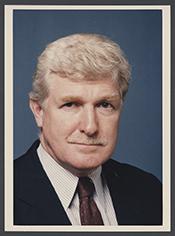 Rep. James P. Moran (D-VA)
Description
An amendment numbered 13 printed in the Congressional Record to strike sections 528 and 529 which prohibit the use of funds to be used to transfer or release any detainee who is or was held at Guantanamo Bay, Cuba or construct any facility in the U.S. to house any detainee held at Guantanamo Bay, Cuba.
Legislative Activity
Stay on top of the latest movement without scrolling through every action
House amendment not agreed to: On agreeing to the Moran amendment (A049) Failed by recorded vote: 169 - 230 (Roll no. 254).(consideration: CR H5005-5006)
May 30, 2014 • 12:09 AM
View full timeline
House amendment not agreed to: On agreeing to the Moran amendment (A049) Failed by recorded vote: 169 - 230 (Roll no. 254).(consideration: CR H5005-5006)
May 30, 2014 • 12:09 AM
Roll call votes on amendments in House
May 30, 2014 • 12:09 AM
Amendment failed in Committee of the Whole
May 30, 2014 • 12:09 AM
On agreeing to the Moran amendment (A049) Failed by recorded vote: 169 - 230 (Roll no. 254). (consideration: CR H5005-5006)
May 30, 2014 • 12:09 AM
House amendment offered
May 29, 2014
House amendment offered/reported by: Amendment (A049) offered by Mr. Moran.(consideration: CR H4970-4971; text: CR H4970)
May 29, 2014 • 6:53 PM
Amendment (A049) offered by Mr. Moran. (consideration: CR H4970-4971; text: CR H4970)
May 29, 2014 • 6:53 PM
Votes
1 roll call on this amendment
Text
Offered
COMMERCE, JUSTICE, SCIENCE, AND RELATED AGENCIES APPROPRIATIONS ACT,
2015
The SPEAKER pro tempore. Pursuant to House Resolution 585 and rule
XVIII, the Chair declares the House in the Committee of the Whole House
on the state of the Union for the further consideration of the bill,
H.R. 4660.
Will the gentleman from California (Mr. Denham) kindly resume the
chair.
{time} 1845
In the Committee of the Whole
Accordingly, the House resolved itself into the Committee of the
Whole House on the state of the Union for the further consideration of
the bill (H.R. 4660) making appropriations for the Departments of
Commerce and Justice, Science, and Related Agencies for the fiscal year
ending September 30, 2015, and for other purposes, with Mr. Denham
(Acting Chair) in the chair.
The Clerk read the title of the bill.
{time} 1845
The Acting CHAIR. When the Committee of the Whole House rose earlier
today, an amendment offered by the gentleman from Georgia (Mr. Austin
Scott) had been disposed of and the bill had been read through page 81,
line 24.
The Clerk will read.
The Clerk read as follows:
Sec. 511. None of the funds made available to the
Department of Justice in this Act may be used to discriminate
against or denigrate the religious or moral beliefs of
students who participate in programs for which financial
assistance is provided from those funds, or of the parents or
legal guardians of such students.
Sec. 512. None of the funds made available in this Act may
be transferred to any department, agency, or instrumentality
of the United States Government, except pursuant to a
transfer made by, or transfer authority provided in, this Act
or any other appropriations Act.
Sec. 513. Any funds provided in this Act used to implement
E-Government Initiatives shall be subject to the procedures
set forth in section 505 of this Act.
Sec. 514. (a) The Inspectors General of the Department of
Commerce, the Department of Justice, the National Aeronautics
and Space Administration, the National Science Foundation,
and the Legal Services Corporation shall conduct audits,
pursuant to the Inspector General Act (5 U.S.C. App.), of
grants or contracts for which funds are appropriated by this
Act, and shall submit reports to Congress on the progress of
such audits, which may include preliminary findings and a
description of areas of particular interest, within 180 days
after initiating such an audit and every 180 days thereafter
until any such audit is completed.
(b) Within 60 days after the date on which an audit
described in subsection (a) by an Inspector General is
completed, the Secretary, Attorney General, Administrator,
Director, or President, as appropriate, shall make the
results of the audit available to the public on the Internet
website maintained by the Department, Administration,
Foundation, or Corporation, respectively. The results shall
be made available in redacted form to exclude--
(1) any matter described in section 552(b) of title 5,
United States Code; and
(2) sensitive personal information for any individual, the
public access to which could be used to commit identity theft
or for other inappropriate or unlawful purposes.
(c) A grant or contract funded by amounts appropriated by
this Act may not be used for the purpose of defraying the
costs of a banquet or conference that is not directly and
programmatically related to the purpose for which the grant
or contract was awarded, such as a banquet or conference held
in connection with planning, training, assessment, review, or
other routine purposes related to a project funded by the
grant or contract.
(d) Any person awarded a grant or contract funded by
amounts appropriated by this Act shall submit a statement to
the Secretary of Commerce, the Attorney General, the
Administrator, Director, or President, as appropriate,
certifying that no funds derived from the grant or contract
will be made available through a subcontract or in any other
manner to another person who has a financial interest in the
person awarded the grant or contract.
(e) The provisions of the preceding subsections of this
section shall take effect 30 days after the date on which the
Director of the Office of Management and Budget, in
consultation with the Director of the Office of Government
Ethics, determines that a uniform set of rules and
requirements, substantially similar to the requirements in
such subsections, consistently apply under the executive
branch ethics program to all Federal departments, agencies,
and entities.
Sec. 515. (a) None of the funds appropriated or otherwise
made available under this Act may be used by the Departments
of Commerce and Justice, the National Aeronautics and Space
Administration, or the National Science Foundation to acquire
a high-impact or moderate-impact information system, as
defined for security categorization in the National Institute
of Standards and Technology's (NIST) Federal Information
Processing Standard Publication 199, ``Standards for Security
Categorization of Federal Information and Information
Systems'' unless the agency has--
(1) reviewed the supply chain risk for the information
systems against criteria developed by NIST to inform
acquisition decisions for high-impact and moderate-impact
information systems within the Federal Government;
(2) reviewed the supply chain risk from the presumptive
awardee against available and relevant threat information
provided by the Federal Bureau of Investigation and other
appropriate agencies; and
(3) in consultation with the Federal Bureau of
Investigation or other appropriate Federal entity, conducted
an assessment of any risk of cyber-espionage or sabotage
associated with the acquisition of such system, including any
risk associated with such system being produced,
manufactured, or assembled by one or more entities identified
by the United States Government as posing a cyber threat,
including but not limited to, those that may be owned,
directed, or subsidized by the People's Republic of China.
(b) None of the funds appropriated or otherwise made
available under this Act may be used to acquire a high-impact
or moderate-impact information system reviewed and assessed
under subsection (a) unless the head of the assessing entity
described in subsection (a) has--
(1) developed, in consultation with NIST and supply chain
risk management experts, a mitigation strategy for any
identified risks;
(2) determined that the acquisition of such system is in
the national interest of the United States; and
(3) reported that determination to the Committees on
Appropriations of the House of Representatives and the
Senate.
Sec. 516. None of the funds made available in this Act
shall be used in any way whatsoever to support or justify the
use of torture by any official or contract employee of the
United States Government.
Sec. 517. (a) Notwithstanding any other provision of law or
treaty, in the current fiscal year and any fiscal year
thereafter, none of the funds appropriated or otherwise made
available under this Act or any other Act may be expended or
obligated by a department, agency, or instrumentality of the
United States to pay administrative expenses or to compensate
an officer or employee of the United States in connection
with requiring an export license for the export to Canada of
components, parts, accessories or attachments for firearms
listed in Category I, section 121.1 of title 22, Code of
Federal Regulations (International Trafficking in Arms
Regulations (ITAR), part 121, as it existed on April 1, 2005)
with a total value not exceeding $500 wholesale in any
transaction, provided that the conditions of subsection (b)
of this section are met by the exporting party for such
articles.
(b) The foregoing exemption from obtaining an export
license--
(1) does not exempt an exporter from filing any Shipper's
Export Declaration or notification letter required by law, or
from being otherwise eligible under the laws of the United
States to possess, ship, transport, or export the articles
enumerated in subsection (a); and
(2) does not permit the export without a license of--
(A) fully automatic firearms and components and parts for
such firearms, other than for end use by the Federal
Government, or a Provincial or Municipal Government of
Canada;
(B) barrels, cylinders, receivers (frames) or complete
breech mechanisms for any firearm
[[Page H4969]]
listed in Category I, other than for end use by the Federal
Government, or a Provincial or Municipal Government of
Canada; or
(C) articles for export from Canada to another foreign
destination.
(c) In accordance with this section, the District Directors
of Customs and postmasters shall permit the permanent or
temporary export without a license of any unclassified
articles specified in subsection (a) to Canada for end use in
Canada or return to the United States, or temporary import of
Canadian-origin items from Canada for end use in the United
States or return to Canada for a Canadian citizen.
(d) The President may require export licenses under this
section on a temporary basis if the President determines,
upon publication first in the Federal Register, that the
Government of Canada has implemented or maintained inadequate
import controls for the articles specified in subsection (a),
such that a significant diversion of such articles has and
continues to take place for use in international terrorism or
in the escalation of a conflict in another nation. The
President shall terminate the requirements of a license when
reasons for the temporary requirements have ceased.
Sec. 518. Notwithstanding any other provision of law, in
the current fiscal year and any fiscal year thereafter, no
department, agency, or instrumentality of the United States
receiving appropriated funds under this Act or any other Act
shall obligate or expend in any way such funds to pay
administrative expenses or the compensation of any officer or
employee of the United States to deny any application
submitted pursuant to 22 U.S.C. 2778(b)(1)(B) and qualified
pursuant to 27 CFR section 478.112 or.113, for a permit to
import United States origin ``curios or relics'' firearms,
parts, or ammunition.
Sec. 519. None of the funds made available in this Act may
be used to include in any new bilateral or multilateral trade
agreement the text of--
(1) paragraph 2 of article 16.7 of the United States-
Singapore Free Trade Agreement;
(2) paragraph 4 of article 17.9 of the United States-
Australia Free Trade Agreement; or
(3) paragraph 4 of article 15.9 of the United States-
Morocco Free Trade Agreement.
Sec. 520. None of the funds made available in this Act may
be used to authorize or issue a national security letter in
contravention of any of the following laws authorizing the
Federal Bureau of Investigation to issue national security
letters: The Right to Financial Privacy Act; The Electronic
Communications Privacy Act; The Fair Credit Reporting Act;
The National Security Act of 1947; USA PATRIOT Act; and the
laws amended by these Acts.
Sec. 521. If at any time during any quarter, the program
manager of a project within the jurisdiction of the
Departments of Commerce or Justice, the National Aeronautics
and Space Administration, or the National Science Foundation
totaling more than $75,000,000 has reasonable cause to
believe that the total program cost has increased by 10
percent or more, the program manager shall immediately inform
the respective Secretary, Administrator, or Director. The
Secretary, Administrator, or Director shall notify the House
and Senate Committees on Appropriations within 30 days in
writing of such increase, and shall include in such notice:
the date on which such determination was made; a statement of
the reasons for such increases; the action taken and proposed
to be taken to control future cost growth of the project;
changes made in the performance or schedule milestones and
the degree to which such changes have contributed to the
increase in total program costs or procurement costs; new
estimates of the total project or procurement costs; and a
statement validating that the project's management structure
is adequate to control total project or procurement costs.
Sec. 522. Funds appropriated by this Act, or made
available by the transfer of funds in this Act, for
intelligence or intelligence related activities are deemed to
be specifically authorized by the Congress for purposes of
section 504 of the National Security Act of 1947 (50 U.S.C.
414) during fiscal year 2015 until the enactment of the
Intelligence Authorization Act for fiscal year 2015.
Sec. 523. None of the funds appropriated or otherwise made
available by this Act may be used to enter into a contract in
an amount greater than $5,000,000 or to award a grant in
excess of such amount unless the prospective contractor or
grantee certifies in writing to the agency awarding the
contract or grant that, to the best of its knowledge and
belief, the contractor or grantee has filed all Federal tax
returns required during the three years preceding the
certification, has not been convicted of a criminal offense
under the Internal Revenue Code of 1986, and has not, more
than 90 days prior to certification, been notified of any
unpaid Federal tax assessment for which the liability remains
unsatisfied, unless the assessment is the subject of an
installment agreement or offer in compromise that has been
approved by the Internal Revenue Service and is not in
default, or the assessment is the subject of a non-frivolous
administrative or judicial proceeding.
(rescissions)
Sec. 524. (a) Of the unobligated balances available for
``Department of Commerce, Departmental Management, Franchise
Fund'', $2,906,000 is hereby rescinded.
(b) Of the unobligated balances available to the Department
of Justice, the following funds are hereby rescinded, not
later than September 30, 2015, from the following accounts in
the specified amounts--
(1) ``Working Capital Fund'', $54,000,000;
(2) ``Legal Activities, Assets Forfeiture Fund'',
$193,000,000;
(3) ``United States Marshals Service, Federal Prisoner
Detention'', $122,000,000;
(4) ``State and Local Law Enforcement Activities, Office on
Violence Against Women, Violence Against Women Prevention and
Prosecution Programs'', $12,200,000;
(5) ``State and Local Law Enforcement Activities, Office of
Justice Programs'', $59,000,000; and
(6) ``State and Local Law Enforcement Activities, Community
Oriented Policing Services'', $26,000,000.
(c) The Department of Justice shall submit to the
Committees on Appropriations of the House of Representatives
and the Senate a report no later than September 1, 2015,
specifying the amount of each rescission made pursuant to
subsection (b).
Sec. 525. None of the funds made available in this Act may
be used to purchase first class or premium airline travel in
contravention of sections 301-10.122 through 301-10.124 of
title 41 of the Code of Federal Regulations.
Sec. 526. None of the funds made available in this Act may
be used to send or otherwise pay for the attendance of more
than 50 employees from a Federal department or agency at any
single conference occurring outside the United States unless
such conference is a law enforcement training or operational
conference for law enforcement personnel and the majority of
Federal employees in attendance are law enforcement personnel
stationed outside the United States.
Mr. WOLF. Mr. Chair, I move to strike the last word.
The Acting CHAIR. The gentleman from Virginia is recognized for 5
minutes.
Mr. WOLF. I yield to the gentleman from Texas.
Mr. FARENTHOLD. Mr. Chair, I would like to engage in a colloquy with
the chairman.
As the gentleman from Virginia is aware, I have serious concerns
about the nonresponsiveness of certain Federal officials to legitimate
congressional oversight activities. In some of these situations, there
have been actions taken by the House to hold these officials in
contempt of Congress.
As the gentleman is aware, I was considering offering an amendment to
this bill that would simply prohibit funding for any Federal employee
who has been found in contempt of Congress. It is my firm belief that
the American people should not be footing the bill for Federal
employees who stonewall Congress or rewarding government officials' bad
behavior. If the average American failed to do his or her job, she
would hardly be rewarded.
However, based on conversations I have had with the chairman and
other Members, I do not plan to offer such an amendment to the bill,
with the understanding that the chairman and the committee will
continue to work with me to assure that this matter is considered in an
appropriate bill.
I would like to ask the gentleman if he would commit to working with
me to find a satisfactory vehicle for addressing the issue of
compensation for public officials found in contempt of Congress.
Mr. WOLF. I thank the gentleman for the opportunity to address this
important issue, and it is an important one. I can assure him that we
will work with him on this as we move forward in the appropriations
process.
Mr. Chair, I yield back the balance of my time.
The Acting CHAIR. The Clerk will read.
The Clerk read as follows:
Sec. 527. None of the funds appropriated or otherwise made
available in this Act may be used in a manner that is
inconsistent with the principal negotiating objective of the
United States with respect to trade remedy laws to preserve
the ability of the United States--
(1) to enforce vigorously its trade laws, including
antidumping, countervailing duty, and safeguard laws;
(2) to avoid agreements that--
(A) lessen the effectiveness of domestic and international
disciplines on unfair trade, especially dumping and
subsidies; or
(B) lessen the effectiveness of domestic and international
safeguard provisions, in order to ensure that United States
workers, agricultural producers, and firms can compete fully
on fair terms and enjoy the benefits of reciprocal trade
concessions; and
(3) to address and remedy market distortions that lead to
dumping and subsidization, including overcapacity,
cartelization, and market-access barriers.
Sec. 528. None of the funds appropriated or otherwise made
available in this or any other Act may be used to transfer,
release, or assist in the transfer or release to or within
the United States, its territories, or possessions Khalid
Sheikh Mohammed or any other detainee who--
[[Page H4970]]
(1) is not a United States citizen or a member of the Armed
Forces of the United States; and
(2) is or was held on or after June 24, 2009, at the United
States Naval Station, Guantanamo Bay, Cuba, by the Department
of Defense.
Amendment No. 13 Offered by Mr. Moran
Mr. MORAN. Mr. Chair, I have an amendment at the desk. The amendment
would strike both section 528 and 529 so I ask that they would be
considered en bloc.
The Acting CHAIR. Is there objection to the consideration of the
amendment at this point?
There was no objection.
The Acting CHAIR. The Clerk will designate the amendment.
The text of the amendment is as follows:
Strike sections 528 and 529.
The Acting CHAIR. Pursuant to the order of the House of today, the
gentleman from Virginia (Mr. Moran) and a Member opposed each will
control 5 minutes.
The Chair recognizes the gentleman from Virginia.
Mr. MORAN. Mr. Chair, I yield myself 3 minutes.
Sections 528 and 529 of this bill would restrict the Department of
Justice from transferring detainees to the United States. The problem
with this is that Guantanamo is now a rallying cry for extremists
around the world. Until we transfer and try these detainees, there is
no denying that Guantanamo is hurting our national security, and so my
amendment would strike sections 528 and 529.
Mr. Chair, we are currently spending $2,670,000 per detainee per year
at Guantanamo compared to $34,000 per year at a high-security Federal
prison here in the United States.
In fiscal year 2014, the Department of Defense estimates that it is
going to spend $435 million in operations and personnel costs to
operate this facility. That money could so much better be spent on
military readiness, medical research, improving the quality of life for
our men and women in uniform.
The fact is, Mr. Chair, nearly 500 defendants charged with crimes
related to international terrorism have been successfully convicted in
the United States since 9/11, quoting a former Gitmo detainee: the
Times Square bomber; the shoe bomber; and a 9/11 coconspirator,
Zacarias Moussaoui. All of them are incarcerated in 98 Federal prisons
here in the United States with no security incidents.
Now, by comparison, military commissions, which is the alternative,
have managed to prosecute eight cases in that time, and many of them
have, in fact, been overturned on appeal.
There are six DOD facilities where Gitmo detainees could be held in
the United States that are currently only at 48 percent capacity.
The political and legal expediency of the detention center at
Guantanamo Bay is not worth the cost to America's reputation around the
world nor to the erosion of our legal and ethical standards here at
home.
I reserve the balance of my time.
Mr. WOLF. Mr. Chairman, I rise in opposition to the amendment.
The Acting CHAIR. The gentleman from Virginia is recognized for 5
minutes.
Mr. WOLF. I want to thank the gentleman. We visited Guantanamo Bay
together. I think any Member who has not been down there, you should go
down and see what is there. These are important provisions that have
been put in appropriation bills for the last several years. They
represent a strong and enduring consensus in Congress.
Striking these provisions would have unknown consequences for U.S.
communities. Imagine bringing Khalid Sheikh Mohammed, who beheaded
Daniel Pearl, and who was the mastermind of the 9/11 attack. About 170
people from my district died in the attack on the Pentagon. Can you
imagine, they were initially going to bring him to New York City, and
Mayor Bloomberg and Senator Schumer all opposed it because they knew
what the impact was going to be and the security requirements. So this
would have an unbelievable impact on communities.
Putting detainees in U.S. prisons, as the administration originally
proposed, would be disruptive and, I think, disastrous. Former FBI
Director Mueller stated: ``To transfer detainees to local jails could
affect or infect other prisoners or have the capability of affecting
events outside the prison system.''
One of the things I think Members have to understand is this. There
was a pirate, if you saw the movie ``Captain Phillips.'' He was
arrested. He was arrested and tried. And they said that he would be
convicted, and there would be no way that he would ever be released.
You ought to go see ``Captain Phillips.'' It is a fascinating movie.
He was tried and he was acquitted, and now he is seeking asylum. He
is in Virginia. He is seeking asylum maybe in Virginia.
There was another case, if you recall, Attorney General Holder said
there is no way that this guy will ever get off, and he was only
convicted on one count; and had that count not been a conviction, he
would have been released.
Lastly, there were Uighurs that were arrested in Tora Bora in a
training camp run by Osama bin Laden. They were there to learn how to
kill Americans, but also to kill Chinese, if you follow the concerns of
the Uighur issue in China. The administration had reserved apartments.
They were in Guantanamo Bay. They reserved apartments in northern
Virginia at Seven Corners for them to live here.
{time} 1900
I know the gentleman is well meaning, but I think to bring Guantanamo
Bay detainees here, people like Khalid Sheikh Mohammed, people like
that, and then what if they ever were tried here and were acquitted,
and then can you imagine they then apply for asylum, because we are now
going to see a case where one pirate acquitted is applying for asylum
and now is living in Virginia and may very well want to stay in
Virginia.
I urge defeat of this amendment, and I reserve the balance of my
time.
Mr. MORAN. Mr. Chairman, how much time do I have remaining?
The Acting CHAIR. The gentleman from Virginia has 2\1/2\ minutes
remaining.
Mr. MORAN. Mr. Chairman, I yield 2 minutes to the gentleman from New
York (Mr. Nadler), from the Judiciary Committee.
Mr. NADLER. Mr. Chairman, I thank the gentleman.
I understand that there is an irrational fear of bringing Guantanamo
detainees into the United States, even though we would only do so to
bring them to justice. In contrast to the military commissions at
Guantanamo, which have not reached one verdict other than by plea, the
Federal Court system in the United States has been extremely successful
at prosecuting terrorists and safely imprisoning them for long periods
of time.
One of the 9/11 terrorists is in a U.S. prison. The shoe bomber is in
a U.S. prison. The underwear bomber is in a U.S. prison. The Times
Square bomber is in a U.S. prison. One of the Boston Marathon bombers
is in a U.S. prison. We have tried and convicted terrorist masterminds
in U.S. courts in my own district.
But others are being held at Guantanamo without any prospect of a
trial. Ever since Magna Carta, we have denied the government the power
to imprison and punish people on mere accusation. Just because the
government labels someone a terrorist doesn't make him one. The
government must be asked to prove the accusation in court. That has
always been a bedrock American principle until we opened Guantanamo.
Now we imprison people indefinitely without trial. By what claim of
right do we do this?
How can we be sure we are punishing actual terrorists and not actual
people when we hold no trials? Mr. Wolf said someone may be acquitted.
If he is acquitted he should be released. That is our basic principle
of justice for the last thousand years.
Guantanamo should be closed and its inmates either tried or released.
It is beyond time to close Guantanamo so it can no longer be used to
rally our enemies to recruit terrorists, to undermine our ability to
bring terrorist suspects to justice, and to violate bedrock American
principles of due process of law.
I am astonished, frankly, that I would hear on the floor of the
United States Congress someone say that people might be acquitted,
therefore, they should be held in jail forever because maybe the
evidence doesn't exist because someone in the government in
[[Page H4971]]
the all powerful, almighty, all knowing bureaucracy says that if
someone is a terrorist that person must be held in jail indefinitely
because maybe we don't have the proof. That is not America.
Mr. WOLF. Mr. Chairman, Politico talks about this case and said:
The failed prosecution of an alleged Somali pirate--and the
fact that that failure could leave him living freely, and
permanently, inside U.S. borders--is highlighting anew the
risks of trying terror suspects in American courts.
Just a few weeks ago, Ali Mohamed Ali was facing the
possibility of a mandatory life sentence in a 2008
shipjacking off the coast of Yemen--an incident much like the
one dramatized in the film `Captain Phillips.' Now, the
Somali native is in immigration detention in Virginia and
seeking permanent asylum in the United States.
One current Federal terrorism prosecutor said the Ali case
and the potential for his eventual release is another reason
why foreign al Qaeda suspects picked up overseas should not
be brought to the United States but should instead be
detained at Guantanamo or some other facility.
I personally would think the very thought of Khalid Sheikh Mohammed,
or some of the people when you go down to Guantanamo Bay and see them,
walking the streets here in the United States should they be
acquitted--they ought not to be brought to the United States.
I yield back the balance of my time.
Mr. MORAN. Mr. Chairman, the person that my good friend refers to is
not a Guantanamo detainee. The reality is that Khalid Sheikh Mohammed
is not representative of the vast majority of Gitmo detainees who were
brought 13, 14 years ago. There are a handful several years later that
were brought to Guantanamo. They are really bad guys. They are kept
separately. But I am talking about the people, 86 percent of whom were
turned in for bounties, the majority of whom were not involved in
combat activity against the United States or its allies.
We ought to look at this Guantanamo population and do what this
country, our Founding Fathers, intended that we do. Give them a right
to trial, prosecute them, and punish them.
I yield back the balance of my time.
Mr. FATTAH. Mr. Chairman, I move to strike the requisite number of
words.
The Acting CHAIR. The gentleman from Pennsylvania is recognized for 5
minutes.
Mr. FATTAH. Mr. Chairman, I rise in support of this amendment.
As for myself, I believe that America and our ideals, the notion that
someone could have their liberty taken, be held with secret evidence,
be denied an opportunity to appear before a court of law, be denied
counsel or outside contact, is something that our country would never
engage in.
The problem with this theory is that we are engaged in it. The
problem is that, under President Bush, Sr., he would say about China:
You all are arresting people with no charges, no public evidence, no
tribunal of any sort, and that this is not part of the civilized world.
I remember questioning the former Speaker of the House, Newt
Gingrich. We had a talk right after 9/11. He was talking, and I said:
Well, if we are a Nation of laws, how are we going to reconcile that in
this new circumstance? He said: It is going to be very difficult. And
here we are. It is very difficult.
We are spending $3 million per prisoner to house people in a foreign
land under charges that we are not prepared to make public, no offering
of a trial, most of whom were turned over for bounty or for ransom paid
out by our government. I don't know how it is that we suggest that we
want to project to the rest of the world what a Nation of laws actually
looks like, but as for me and my district, I am going to cast a vote in
favor of this amendment because the Constitution of the United States
was drafted and written and signed in Philadelphia, and somehow I
believe that the notion that our country would ever come to this moment
is the voice from the source of those who wrote that document at that
time.
I yield back the balance of my time.
The Acting CHAIR. The question is on the amendment offered by the
gentleman from Virginia (Mr. Moran).
The question was taken; and the Acting Chair announced that the noes
appeared to have it.
Mr. MORAN. Mr. Chairman, I demand a recorded vote.
The Acting CHAIR. Pursuant to clause 6 of rule XVIII, further
proceedings on the amendment offered by the gentleman from Virginia
will be postponed.
The Acting CHAIR. The Clerk will read.
The Clerk read as follows:
Sec. 529. (a) None of the funds appropriated or otherwise
made available in this or any other Act may be used to
construct, acquire, or modify any facility in the United
States, its territories, or possessions to house any
individual described in subsection (c) for the purposes of
detention or imprisonment in the custody or under the
effective control of the Department of Defense.
(b) The prohibition in subsection (a) shall not apply to
any modification of facilities at United States Naval
Station, Guantanamo Bay, Cuba.
(c) An individual described in this subsection is any
individual who, as of June 24, 2009, is located at United
States Naval Station, Guantanamo Bay, Cuba, and who--
(1) is not a citizen of the United States or a member of
the Armed Forces of the United States; and
(2) is--
(A) in the custody or under the effective control of the
Department of Defense; or
(B) otherwise under detention at United States Naval
Station, Guantanamo Bay, Cuba.
Sec. 530. To the extent practicable, funds made available
in this Act should be used to purchase light bulbs that are
``Energy Star'' qualified or have the ``Federal Energy
Management Program'' designation.
Sec. 531. The Director of the Office of Management and
Budget shall instruct any department, agency, or
instrumentality of the United States receiving funds
appropriated under this Act to track undisbursed balances in
expired grant accounts and include in its annual performance
plan and performance and accountability reports the
following:
(1) Details on future action the department, agency, or
instrumentality will take to resolve undisbursed balances in
expired grant accounts.
(2) The method that the department, agency, or
instrumentality uses to track undisbursed balances in expired
grant accounts.
(3) Identification of undisbursed balances in expired grant
accounts that may be returned to the Treasury of the United
States.
(4) In the preceding 3 fiscal years, details on the total
number of expired grant accounts with undisbursed balances
(on the first day of each fiscal year) for the department,
agency, or instrumentality and the total finances that have
not been obligated to a specific project remaining in the
accounts.
Sec. 532. (a) None of the funds made available by this Act
may be used for the National Aeronautics and Space
Administration (NASA) or the Office of Science and Technology
Policy (OSTP) to develop, design, plan, promulgate,
implement, or execute a bilateral policy, program, order, or
contract of any kind to participate, collaborate, or
coordinate bilaterally in any way with China or any Chinese-
owned company unless such activities are specifically
authorized by a law enacted after the date of enactment of
this Act.
(b) None of the funds made available by this Act may be
used to effectuate the hosting of official Chinese visitors
at facilities belonging to or utilized by NASA.
(c) The limitations described in subsections (a) and (b)
shall not apply to activities which NASA or OSTP has
certified--
(1) pose no risk of resulting in the transfer of
technology, data, or other information with national security
or economic security implications to China or a Chinese-owned
company; and
(2) will not involve knowing interactions with officials
who have been determined by the United States to have direct
involvement with violations of human rights.
(d) Any certification made under subsection (c) shall be
submitted to the Committees on Appropriations of the House of
Representatives and the Senate no later than 30 days prior to
the activity in question and shall include a description of
the purpose of the activity, its agenda, its major
participants, and its location and timing.
Sec. 533. None of the funds made available by this Act may
be used to pay the salaries or expenses of personnel to deny,
or fail to act on, an application for the importation of any
model of shotgun if--
(1) all other requirements of law with respect to the
proposed importation are met; and
(2) no application for the importation of such model of
shotgun, in the same configuration, had been denied by the
Attorney General prior to January 1, 2011, on the basis that
the shotgun was not particularly suitable for or readily
adaptable to sporting purposes.
Sec. 534. (a) None of the funds made available in this Act
may be used to maintain or establish a computer network
unless such network blocks the viewing, downloading, and
exchanging of pornography.
(b) Nothing in subsection (a) shall limit the use of funds
necessary for any Federal, State, tribal, or local law
enforcement agency or any other entity carrying out criminal
[[Page H4972]]
investigations, prosecution, or adjudication activities.
Sec. 535. The Departments of Commerce and Justice, the
National Aeronautics and Space Administration, and the
National Science Foundation shall submit spending plans,
signed by the respective department or agency head, to the
Committees on Appropriations of the House of Representatives
and the Senate within 60 days after the date of enactment of
this Act.
Sec. 536. None of the funds made available by this Act may
be used to enter into a contract, memorandum of
understanding, or cooperative agreement with, make a grant
to, or provide a loan or loan guarantee to, any corporation
that was convicted of a felony criminal violation under any
Federal law within the preceding 24 months, where the
awarding agency is aware of the conviction, unless the agency
has considered suspension or debarment of the corporation and
has made a determination that this further action is not
necessary to protect the interests of the Government.
Sec. 537. None of the funds made available by this Act may
be used to enter into a contract, memorandum of
understanding, or cooperative agreement with, make a grant
to, or provide a loan or loan guarantee to, any corporation
that has any unpaid Federal tax liability that has been
assessed, for which all judicial and administrative remedies
have been exhausted or have lapsed, and that is not being
paid in a timely manner pursuant to an agreement with the
authority responsible for collecting the tax liability, where
the awarding agency is aware of the unpaid tax liability,
unless the agency has considered suspension or debarment of
the corporation and has made a determination that this
further action is not necessary to protect the interests of
the Government.
Sec. 538. None of the funds made available by this Act may
be obligated or expended to implement the Arms Trade Treaty
until the Senate approves a resolution of ratification for
the Treaty.
Sec. 539. None of the funds made available by this Act may
be used to require a person licensed under section 923 of
title 18, United States Code, to report information to the
Department of Justice regarding the sale of multiple rifles
or shotguns to the same person.
Amendment Offered by Ms. Esty
Ms. ESTY. Mr. Chairman, I have an amendment at the desk. I would like
to offer and withdraw my amendment.
The Acting CHAIR. The Clerk will report the amendment.
The Clerk read as follows:
Page 100, strike lines 7 through 11.
The Acting CHAIR. Pursuant to the order of the House of today, the
gentlewoman from Connecticut (Ms. Esty) and a Member opposed each will
control 5 minutes.
The gentlewoman from Connecticut is recognized for 5 minutes.
Ms. ESTY. Mr. Chairman, my amendment strikes section 539 of the bill.
Section 539 is an unnecessary and harmful gun rider that would bar
the ATF from using any funds to investigate straw purchases or
trafficking of certain highly dangerous weapons.
This ``long gun'' requirement, which has been in effect since 2011,
is an essential tool for law enforcement to combat drug cartels and
weapons trafficking.
In fact, in the first 8 months after the rule was enacted, more than
100 criminals and traffickers were identified for prosecution.
Mr. Chairman, it is clear that the reporting requirement is keeping
guns out of the hands of criminals, and the ATF must be able to
continue to do this important work.
I thank my colleagues who are in support of our gun violence
prevention efforts, today and every day.
I reserve the balance of my time.
Mr. CARTER. Mr. Chairman, I rise in opposition.
The Acting CHAIR. The gentleman from Texas is recognized for 5
minutes.
Mr. CARTER. Mr. Chairman, law-abiding Americans shouldn't have to
sacrifice their right to privacy to exercise their Second Amendment
rights because they live in the southwestern part of the United States.
I don't understand why they want to take the people who stand on the
border and take this onslaught of the failure of the administration to
defend and prosecute those who violate the laws of our country, and
they want to have something that imposes upon our right to privacy and
our right to exercise our Second Amendment rights.
Law enforcement tools are not taken away by the fact that we have
limited this intrusion upon the rights of the people in the States that
are on our southwestern border. In fact, law enforcement has the right
to at any time walk into a Federal firearms dealer and request any
sales records, and they mandatorily must provide them. A bouncer can
walk into a Federal licensed firearms dealer and get these records
every day. The amendment doesn't prohibit gun dealers from reporting
multiple sales of purchases. It just doesn't mandate on four States of
this Union a violation of their right to privacy.
The playing field should be level in anything we do under the law.
But the fact is we are unleveling the playing field for the very people
that stand down in the direct onslaught of the invasion coming across
our southern border as a result of this administration's failure to
properly enforce immigration policy.
This is something that we shouldn't even be discussing, limiting the
ability and making reporting requirements on four States and involving
their right of privacy contrary to the rest of the union. I don't
understand why this is even being discussed.
I oppose the attempts to toss out the Second Amendment rights of the
people of the State of Texas, New Mexico, Arizona and California.
I reserve the balance of my time.
{time} 1915
Ms. ESTY. Mr. Chairman, I yield 3 minutes to the gentlewoman from
Connecticut, Rosa DeLauro, my colleague.
Ms. DeLAURO. Mr. Chair, I rise in support of Congresswoman Esty's
amendment, which strikes a dangerous rider that would bar the Bureau of
Alcohol, Tobacco, Firearms, and Explosives from enforcing a reporting
requirement on certain semiautomatic weapons in four southwest border
States.
It is over 16 months since the tragedy in Newtown, Connecticut, where
six adults and 20 children were murdered in cold blood. It has been
almost a week since the latest mass tragedy that occurred in
California. Nineteen people were shot, and four were killed in New
Orleans last weekend.
Even before what happened at UC Santa Barbara, over 80 Americans were
killed by guns last week, and all of the families who have lost loved
ones--the families in Newtown, in Santa Barbara, and all across
America--are still waiting for Congress to act.
It is no secret that the appropriations bills have been used to
incrementally chip away at the Federal Government's ability to enforce
the gun laws and to protect the public from gun crime.
This is yet another example of the same bad behavior. Currently,
licensed gun dealers in Arizona, California, New Mexico, and Texas are
required to report to the National Tracing Center when a dealer sells
multiple assault rifles to one individual, just as all dealers have
reported multiple handgun sales for over 20 years.
This requirement is narrowly tailored, applying only to the sales of
rifles that are semiautomatic, that are greater than the .22 caliber,
and that hold a detachable magazine.
Multiple assault rifle sales reports help law enforcement crack down
on gun trafficking along the southwest border, where dealers are
disproportionately fueling Mexican cartel violence.
This reporting requirement is effective. During the first 8 months it
was in effect, the ATF initiated 120 investigations based on reports of
multiple sales of assault rifles and recommended the prosecution of
more than 100 defendants in 25 separate cases.
Furthermore, every Federal court has addressed this issue and has
found that requiring dealers in these four border States to report
multiple assault rifle sales is well within the ATF's authority. This
requirement is critical to identifying straw purchasers who put guns in
the hands of criminals.
I urge my colleagues to support this commonsense amendment that will
continue to give ATF the tools it needs to combat gun trafficking and
to keep the public safe.
Mr. CARTER. Mr. Chairman, I want to point out that this recordkeeping
is directed at multiple rifle and shotgun sales of a semiautomatic
character. It becomes a habit around here to call anything that will
fire six shots when you pull the trigger an assault rifle.
In fact, this requires the reporting of semiautomatic shotguns, as
well as of semiautomatic rifles. People all over the United States--and
particularly in our State--hunt every day with these weapons. Families
have these weapons
[[Page H4973]]
in their homes. They are not assault weapons. They are semiautomatic
shotguns and rifles. This reporting requirement is on those weapons,
and it doesn't say anything about assault weapons.
I question the logic of this whole thing when we are talking about
the privacy of the individual under the Second Amendment and about the
right for Americans to keep and bear arms.
Therefore, I think that the language that is in place today is the
right language for the policies of the United States.
I reserve the balance of my time.
Ms. ESTY. Mr. Chairman, I yield 1 minute to the gentlelady from New
York (Mrs. Carolyn B. Maloney), my colleague.
Mrs. CAROLYN B. MALONEY of New York. Mr. Chair, I rise in support of
Representative Esty's amendment to remove this misguided rider that
will only prevent law enforcement from doing its job.
Since the ATF launched this initiative--the so-called long gun rule--
to track multiple purchases of rifles and assault weapons, it has
become a crucial tool with which to investigate and prosecute straw
purchasers who enable the flood of illegal guns to cities and towns
across our Nation. In my home city of New York, 85 percent of guns used
in crimes were originally sold in a different State.
When we see the toll that illegal guns takes on our streets, why do
we in Congress stand idle, now blocking law enforcement from addressing
this crisis?
In the first 8 months of this initiative, the Bureau launched 120
investigations into gun trafficking in high-powered assault weapons,
and a former special agent has called this rule a huge tool to combat
illegal sales.
Please vote ``no'' on this misguided rule.
The Acting CHAIR. The time of the gentlewoman has expired.
Mr. CARTER. Mr. Chairman, I would point out that this law pertains
only to the southwestern border States and that my friends from
Connecticut and New York are not affected by this rule. There is no
reason why you can't buy long guns in New York or in Connecticut and
ship them down to the border. This is discriminatory against four
States and four States only. It is bad policy.
I yield back the balance of my time.
Mr. FATTAH. Mr. Chairman, I move to strike the last word.
The Acting CHAIR. The gentleman from Pennsylvania is recognized for 5
minutes.
Mr. FATTAH. Mr. Chairman, I want to make a couple of points.
One is that this requirement is in place now and has been in place,
and it has not disrupted life. It has saved lives, however.
This requirement does not actually apply to normal shotguns or to
hunting rifles. I think it is important for the House to understand
that it applies to semiautomatics that are greater than a .22 caliber
and that can hold a detachable magazine. All this says is, if somebody
shows up and buys 1,000 of these, the Federal firearms license dealer
needs to report that multiple sale. It is a reasonable thing.
Mr. Chairman, I yield to the gentlelady from New York (Mrs. Lowey),
the ranking member on Appropriations.
Mrs. LOWEY. I want to thank the outstanding ranking member of this
committee for his work on this bill.
Mr. Chairman, I rise in strong support of this amendment. Let me be
very clear. The long gun rider currently in this bill makes it easier
for drug cartels to smuggle weapons across the border and more
difficult for law enforcement to identify straw purchasers and get
weapons out of the hands of dangerous people.
The reporting of multiple purchases for powerful semiautomatic
firearms is the same policy we have had for handguns for decades, and
it saves lives.
Let me be very clear, my friends. The long gun reporting requirement
would not stop a law-abiding person from purchasing a firearm. It only
allows the reporting of multiple sales of powerful, semiautomatic
rifles--greater than the .22 caliber--and only if they can hold
detachable magazines.
The Justice Department found that more than half of the guns
recovered in Mexico in connection with drug cartels originated in the
United States of America. A case study of firearms trafficking by one
drug cartel found that, during a 15-month period, the cartel purchased
251 assault rifles from U.S. gun dealers, all but one of which was
purchased as part of a multiple sale.
Law enforcement needs more, my colleagues, not less to fight drug
cartel violence. Support this amendment. Help law enforcement stop the
trafficking of weapons and save lives.
Mr. FATTAH. In reclaiming my time, I would now like to yield to the
gentlelady from Connecticut (Ms. Esty).
Ms. ESTY. Thank you, Mr. Ranking Member, and thank you for your
leadership on this issue.
I appreciate the kind words of my colleagues and their support for
this amendment.
Mr. MEEKS. Mr. Chair, here I stand in support of an amendment to the
Commerce, Justice, Science and Related Agencies Appropriation Act.
Specifically, the proposed amendment would strike Section 539 of this
bill to allow funding to be used to mandate reporting to the Justice
Department the name of an individual who has purchased multiple long-
barreled arms in five days. The Republicans attempted to disallow the
Justice Department from keeping these records, even though these
records are crucial in cracking down on gun trafficking and straw
purchasing.
I stand in the wake of another unconscionable mass shooting. A recent
wound not yet healed, our nation still mourns the lives that were cut
short by a mentally unstable gunman. I stand not only as a Member of
Congress but also as a concerned United States citizen, outraged by the
fact that no measures have been taken to defend our nation's people
against gun violence. I stand just as many of my distinguished
colleagues have, to implore the Republicans to finally pass gun control
legislation. I also stand in frustration, knowing that the Republicans
will decry such acts of violence as the recent UC-Santa Barbara
massacre but will refuse to take action to protect our nation's
innocent citizens.
I will do everything in my power to convince my colleagues on the
other side of the aisle that it is our duty, as Members of Congress, to
defend our nation's people while also upholding the second amendment of
our Constitution.
Dare I invoke the names of the hundreds of victims of mass-shootings
in the last few years? Should I mention the alarming number of
Americans murdered by guns every day which averages to more than 30
people? Or perhaps I should comment on the startling statistic that 140
Americans are taken to the emergency room every day to be treated for a
gun assault.
Of course, Republicans are aware of the thousands of people who are
injured and murdered by guns every year. They know the toll that gun
violence is taking on the American people. I am sure they also
acknowledge that their pillar of conservatism, the 40th President of
the United States, Ronald Reagan, supported gun control.
Yet, Republicans still attached a gun rider to this bill to bolster
their NRA ratings at the risk of the safety of the American people.
They don't seem to care that less than a week ago, an individual
documented for struggling with mental illnesses legally purchased a
firearm and proceeded to use said firearm to deprive families of their
loved ones. Well, according to the FBI, more than 400 people were
murdered in my home state of New York in 2012 alone and I am outraged.
It is in the honor of the victims of the UC-Santa Barbara tragedy and
their families that I support this amendment. It is in the honor of
those lost in other tragedies, who are not forgotten, and all victims
of gun violence and their families who have wept at funerals that I
support this amendment.
Ms. FRANKEL of Florida. Mr. Chair, once again, Americans are
heartbroken by a gun violence tragedy, mourning the students killed in
Santa Barbara.
Since that mass shooting on Friday, more than 120 others have lost
their lives at the hands of a gun, including an 18-month-old who was
shot in front of his mother this morning in West Palm Beach.
This mother will never see her child go to school, graduate from
college, or walk down the aisle--she will never hear him say, ``I love
you Mom.''
As a former Mayor of an urban city, I've seen firsthand how gun
violence disrupts entire communities and devastates families.
Too many lives have been taken. Too many families have lost their
daughters and sons, their sisters and brothers. And too many people
have endured unimaginable pain and grief caused by senseless acts of
gun violence.
And, it is unbelievable to me about in the wake of more heartbreaking
killings with firearms that the reaction of some in this Congress is to
weaken gun laws. That's why I support the Esty amendment to keep strong
laws against gun trafficking on the books.
[[Page H4974]]
Not only should we pass this amendment, we must do much more to
improve our national background check system and strengthen mental
health intervention and research.
From California to Florida, American families are counting on us to
keep guns out of the hands of criminals and keep our children safe.
With that, Mr. Chairman, I ask unanimous consent to withdraw the
amendment.
The Acting CHAIR. Is there objection to the request of the
gentlewoman from Connecticut?
There was no objection.
The Acting CHAIR. The Clerk will read.
The Clerk read as follows:
Spending Reduction Account
Sec. 540. The amount by which the applicable allocation of
new budget authority made by the Committee on Appropriations
of the House of Representatives under section 302(b) of the
Congressional Budget Act of 1974 exceeds the amount of
proposed new budget authority is $0.
Amendment Offered by Mr. Hastings of Washington
Mr. HASTINGS of Washington. Mr. Chairman, I have an amendment at the
desk.
The Acting CHAIR. The Clerk will report the amendment.
The Clerk read as follows:
At the end of the bill (before the short title) add the
following:
Sec. __. None of the funds made available by this Act
under the heading ``Pacific Coastal Salmon Recovery'' may be
used for grant guidelines or requirements to establish
minimum riparian buffers.
The Acting CHAIR. Pursuant to the order of the House of today, the
gentleman from Washington (Mr. Hastings) and a Member opposed each will
control 5 minutes.
The Chair recognizes the gentleman from Washington.
Mr. HASTINGS of Washington. Mr. Chairman, I yield myself such time as
I may consume.
For the past 15 years, a large part of the success of the salmon
recovery in the Northwest and in other States has been through locally
driven solutions funded through the Pacific Coastal Salmon Recovery
Fund, and I continue to support this program.
This amendment will ensure, however, that these funds continue to
benefit salmon through on-the-ground projects, but without questionable
buffer guidelines imposed by the National Oceanic and Atmospheric
Administration, or NOAA, as a condition of their use.
Agriculture is the background of my central Washington district, and
it is estimated that these and other similarly imposed land set-aside
guidelines by NOAA could restrict the use of vital crop protection
tools on as much as 50 acres of farmland per mile. I am not alone in my
concern about NOAA's use of unverifiable salmon buffer requirements in
other instances.
Last year, the Fourth Circuit Court of Appeals found similar NOAA
salmon buffer requirements in a biological opinion that were based on
scientific standards that ``did not always appear to be logical,
obvious, or even rational.''
In my home State of Washington, over two dozen agricultural
associations strongly oppose NOAA's recommendation of large buffers on
agricultural lands, and one local recovery board group that has
successfully used these funds to improve salmon survival in the upper
Columbia River opposes mandatory buffers tied to these important salmon
grant funds.
Let me be very clear. This amendment won't cut Pacific Coastal Salmon
Recovery funds, nor will it prohibit riparian buffers where they are
appropriate, but it will ensure that NOAA does not make them a
prerequisite for these funds to be awarded for on-the-ground projects,
respecting unique geographical priorities of agricultural areas and
locally driven solutions to salmon recovery.
So, Mr. Chairman, I ask that this amendment be approved, so that the
Federal Pacific Coastal Salmon Recovery funds, which have been proven
effective over the years for farmers and local projects, will not be
used as a backdoor way for NOAA to implement other controversial
guidelines for these buffers.
With that, I reserve the balance of my time.
Mr. FATTAH. Mr. Chairman, I claim the time in opposition.
The Acting CHAIR. The gentleman from Pennsylvania is recognized for 5
minutes.
Mr. FATTAH. Mr. Chairman, with all due respect, this is an attempt to
authorize on an appropriations bill. These buffer zones that have been
put in place under the expertise of NOAA have been part and parcel to
making sure that the salmon in the hatchery system work properly. I
think for us to delve into this at this point is difficult, and the
wording is challenging.
Rather than deal with it here, I would ask if we could talk about it
and see what we could do in conference, and that would be a good thing.
I would hate for us, after having invested tens of millions of dollars
in the salmon, to be taking a rash action here on the floor.
Mr. HASTINGS of Washington. Will the gentleman yield?
Mr. FATTAH. I yield to the gentleman, and I would like to work with
you on this.
Mr. HASTINGS of Washington. I respect that, but let me clarify what
is going on here because the gentleman, with due respect, represents an
urban area, and I represent a rural area. That is self-evident. That is
not criticism. I am just pointing out the obvious.
Mr. FATTAH. In reclaiming my time, it is true that I represent an
urban area, yes. I would be glad to continue to yield.
Mr. HASTINGS of Washington. I thank the gentleman for that
clarification.
I just want to make this point. These are suggested guidelines, and
we have gone through this before. In fact, the EPA is working on this
precisely.
{time} 1930
I oppose what the EPA is doing, as a matter of fact, and most people
on the ground.
I am just simply saying that through the funding mechanism, NOAA
should not be able to impose these guidelines that have a great deal of
controversy in the Pacific Northwest.
I know this is the start of this process. I know NOAA had some
problems with the initial language. We changed that language now. They
can't say they oppose this because this only affects particularly these
guidelines that are being proposed.
So I think the amendment is something that needs to be passed,
frankly, to send a message.
By the time we go through this process, if they want to have some
other adjustments, when they make their adjustments, I would be more
than willing to talk. But I think this amendment should be passed so we
can send a message to NOAA.
Mr. FATTAH. Reclaiming my time, the United States taxpayers have
invested a lot of money for the help of salmon in your neck of the
woods. I am all for it. I like to make sure that whatever we are doing
is correct. We have got treaty obligations. We have got hatcheries. We
have got all kinds of stuff going on with both the Native Americans and
the commercial fishermen operations there.
All I am saying is I don't want to come to the end of the night,
after we have been debating this bill for 2 days, and rush something
forward that may not be the way to go.
It is interestingly worded. I know that you have good intentions. I
would like to work with you and the majority staff and see where we
are. I just can't support this, given the complexities of the issues
and the limitations of me being from an urban area. I want to make sure
I have a complete grasp on the issue.
Mr. HASTINGS of Washington. Will the gentleman yield?
Mr. FATTAH. I yield to the gentleman.
Mr. HASTINGS of Washington. I appreciate that. I simply want to say
that these are issues that I know are unique to mainly the Western part
of the United States.
But in many respects, the gentleman made a statement that really
supports my amendment. Because he said the American taxpayers are
spending billions of dollars on salmon recovery. That is true. So are
the ratepayers in the Bonneville power system. They are paying billions
of dollars for salmon recovery.
The good news is the fish runs in the last 5 years have come back in
record numbers.
To be very honest with you, these guidelines haven't been imposed,
and the salmon are coming back. So why
[[Page H4975]]
would you want to impose these buffer zones when it probably wouldn't
add anything, and when a Federal court has said it is questionable
science anyway.
Mr. FATTAH. Reclaiming my time, a lot of us would love to go out to
dinner tonight and have salmon.
The issue for the science of this is that you can't make a mistake.
This is a multiyear process. You have got a lot going on here. And if
you blow it, you are going to blow it for a big industry that is
important for America.
So I would like to work with you and make sure that we get it right.
And the expertise of NOAA, I think, could be helpful in that process.
I yield back the balance of my time.
Mr. HASTINGS of Washington. Mr. Chairman, how much time do I have
remaining?
The Acting CHAIR. The gentleman has 2\1/2\ minutes remaining.
Mr. HASTINGS of Washington. I yield myself the balance of my time.
I appreciate, again, the ranking member working with me. But I think
this is sufficiently important that we should adopt this amendment.
Again, I will point out the American taxpayers, as have the
ratepayers, spent billions of dollars recovering salmon.
The good news in the Pacific Northwest, as I mentioned, some of the
salmon runs are coming back in record numbers in the last 4 or 5 years.
So if there is something that is before the final part of this bill
becomes a law, and there needs to be some adjustment, I would be more
than happy to talk about it. But I think it is sufficiently important
to send a message right now to NOAA to not impose these guidelines when
the evidence is contrary to what they are trying to do.
So I urge adoption of my amendment, and I yield back the balance of
my time.
The Acting CHAIR. The question is on the amendment offered by the
gentleman from Washington (Mr. Hastings).
The amendment was agreed to.
Amendment Offered by Mr. Doyle
Mr. DOYLE. Mr. Chairman, I have an amendment at the desk.
The Acting CHAIR. The Clerk will report the amendment.
The Clerk read as follows:
At the end of the bill (before the short title), add the
following:
Sec. _. Not later than 60 days after the date of the
enactment of this Act, the Secretary of Commerce, the United
States Trade Representative, and United States International
Trade Commission shall jointly submit to Congress a report on
the following:
(1) The authorities of the Department of Commerce, the
United States Trade Representative, and United States
International Trade Commission, respectively, to impose
sanctions against corporations or other legal entities that
benefit from utilizing trade secrets or other information--
(A) obtained by such corporations or entities through cyber
intrusions or other illegal methods; or
(B) provided to such corporations or entities by a national
government, foreign intelligence service, or other entity
using such means.
(2) If the Department of Commerce, the United States Trade
Representative, or United States International Trade
Commission does not have sufficient authorities described in
paragraph (1), recommendations to improve or broaden the
scope of such authorities to address the matters described in
paragraph (1).
Mr. WOLF. Mr. Chairman, I reserve a point of order on the gentleman's
amendment.
The Acting CHAIR. A point of order is reserved.
Pursuant to the order of the House of today, the gentleman from
Pennsylvania (Mr. Doyle) and a Member opposed each will control 5
minutes.
The Chair recognizes the gentleman from Pennsylvania.
Mr. DOYLE. Mr. Chairman, I want to start off by saying to my good
friend the chairman that I plan to withdraw the amendment.
Mr. Chairman, my good friend and colleague Tim Murphy and I are
offering this bipartisan amendment that directs the Department of
Commerce, the United States Trade Representative, and the United States
International Trade Commission to report to Congress on the sanctions
they can bring against companies that benefit from information acquired
by hacking into private computers in the United States.
The Justice Department recently indicted five Chinese military
officers for stealing commercially valuable information from a number
of companies in the United States. These indictments highlight what we
have known for a long time: namely, that China and governments around
the world are hacking into computers in the United States and using
that information they steal for their own economic advantage.
These hackers have targeted the offices of Westinghouse, U.S. Steel,
the United Steel Workers Union, Alcoa, Allegheny Technologies, and
SolarWorld, five of which are located in Pittsburgh, Pennsylvania.
The information they stole helped Chinese companies in negotiations
or trade disputes with each of the targeted organizations. While these
indictments are the first of their kind, businesses in the United
States have been facing cyber attacks like this for years.
I would like to think that these cyber spies will be prosecuted and
imprisoned for their actions at some point, but that won't do anything
to reverse the damage that they have done. Congress needs to focus
right now--today--on protecting the American workers and businesses who
face these attacks every day.
I would urge my colleagues on both sides of the aisle to support our
amendment and begin taking the necessary measures to counter cyber
espionage against American workers and businesses. This amendment would
take the first step by determining whether the U.S. government has the
tools it needs to do just that.
Let's send a clear message to bad actors around the world that the
United States has the power and the will to punish those that engage in
criminal trade practices.
Mr. Chairman, at this time I yield to my good friend and colleague,
the gentleman from Pennsylvania (Mr. Murphy).
Mr. MURPHY of Pennsylvania. I thank my friend, Mr. Doyle.
On Monday, May 19, the U.S. attorney for the Western District of
Pennsylvania filed an indictment against five members of the Communist
Chinese military, affirming what I as chairman of the Congressional
Steel Caucus and other lawmakers have contended for quite some time.
This indictment proves we are losing manufacturing jobs not because the
U.S. stopped making great products, but because the Chinese Government
is stealing ideas, inventions, and intellectual property straight out
of western Pennsylvania.
The Chinese Government has hacked into our computers, stolen business
blueprints, erected trade barriers, and manipulated currency markets to
give state-owned enterprises an unfair and illegal advantage in the
American marketplace.
For example, in 2010, as American factories were shutting down
because of dumped and illegally traded Chinese pipe, Chinese agents
were trying to cheat in court as well. The Chinese army hacked into
computers at U.S. Steel and the United Steelworkers Union in 2010 to
obtain privileged legal communications about the crucial unfair trade
case then being litigated before the International Trade Commission on
the oil country tubular goods from China.
This amendment will help us continue this effort and apply the same
crackdown on trade crimes. By dumping sophisticated, high-cost oil
country tubular goods onto the U.S. market, countries like China are in
clear violation of their obligations under international trade
agreements.
Western Pennsylvania--nor the rest of this country--won't be a
welcome mat for the Chinese or any foreign competitor to walk over.
Mr. DOYLE. Reclaiming my time, Mr. Chairman, I want to thank Chairman
Wolf for his efforts and support. Hopefully, we can work together to
achieve the goals of this amendment with language in the conference
report or some other means.
Mr. WOLF. Will the gentleman yield?
Mr. DOYLE. I yield to the gentleman from Virginia.
Mr. WOLF. This is one of the better amendments offered today.
Frankly, I will do everything I can to make sure this is in the bill
when it comes to the conference report.
If the Members would take the time to go out and look at the place
whereby you can see all the companies that are being hit, the Chinese
are stealing jobs.
[[Page H4976]]
And so I thank Mr. Doyle and Mr. Murphy for offering this. I will do
everything I can. I think the staff knows how strongly I feel. Mr.
Fattah has been a great help on these issues.
So if the amendment is ruled out of order, we will make sure that we
try to put it in the bill, and I thank both of you for offering it.
Mr. DOYLE. Reclaiming my time, I thank the chairman, and I reserve
the balance of my time.
Mr. FATTAH. Mr. Chairman, I move to strike the last word.
The Acting CHAIR. The gentleman from Pennsylvania is recognized for 5
minutes.
Mr. FATTAH. I want to thank my colleagues from Pennsylvania.
And yes, the case that was referenced centered in Pennsylvania, and
it is a case that is pending before our courts. I won't have much to
say about it other than under our system, an indictment is merely a
charge. We have to go through the process.
But the one thing that we do know--having nothing to do with the
instant case--is Chairman Wolf has worked on this for a number of
years. He has exposed all of us to information about this and arranged
briefings from our highest levels of law enforcement officials in our
country.
And clearly, there is a great deal of cyber snooping going on. It
emanates from a number of different places, China included: Ukraine,
Nigeria--we can go through the laundry list. But we have to do more to
protect ourselves.
I want to thank the gentlemen from Pennsylvania, Mr. Doyle and Mr.
Murphy, for bringing this amendment forward. As the chairman indicated,
we will work with them in a way to make this as concrete as possible as
we go forward.
I yield back the balance of my time.
Mr. DOYLE. Mr. Chairman, I ask unanimous consent to withdraw my
amendment.
The Acting CHAIR. Is there objection to the request of the gentleman
from Pennsylvania?
There was no objection.
Amendment No. 14 Offered by Mrs. Blackburn
Mrs. BLACKBURN. Mr. Chairman, I have an amendment at the desk.
The Acting CHAIR. The Clerk will designate the amendment.
The text of the amendment is as follows:
At the end of the bill, before the short title, insert the
following:
Sec. __. (a) Each amount made available by this Act, except
those amounts made available to the Federal Bureau of
Investigation, is hereby reduced by 1 percent.
(b) The reduction in subsection (a) shall not apply with
respect to the following accounts of the Department of
Justice:
(1) ``Fees and Expenses of Witnesses''.
(2) ``Public Safety Officer Benefits''.
(3) ``United States Trustee System Fund''.
The Acting CHAIR. Pursuant to the order of the House of today, the
gentlewoman from Tennessee (Mrs. Blackburn) and a Member opposed each
will control 5 minutes.
The Chair recognizes the gentlewoman from Tennessee.
Mrs. BLACKBURN. Mr. Chairman, I want to begin first by thanking
Chairman Wolf for his patience. Every single year, as he has shepherded
this appropriations bill, I have come to this floor and offered an
amendment that would include a 1 percent across-the-board spending cut.
He has been very gracious and very kind, even though he opposes. And
even though I appreciate the good work that the committees have done to
reduce spending and to get these levels down, I believe that we can do
more--and that we should be doing more.
I think it is admirable that the committee is showing us a 0.8
percent reduction. But if we would pass my amendment, we would save
another $400 million. And that is a step that we need to take.
I think it is important to realize that this amendment exempts the
$8.5 billion budget that is for the FBI. We think it is important that
they get that for their vital mission that they conduct every single
day in protecting American citizens at home and abroad and in
conducting the activities that do help to keep the homeland and our
people safe.
My amendment will not affect the efforts that are combating
terrorism, cyber crime, human trafficking or violent gangs. It is a
targeted spending cut that will result in a savings to the taxpayers of
over $400 million.
{time} 1945
Given the $51 billion price tag of this bill, I do not feel that it
is asking too much to cut a little bit more.
I think it is important to note also that across-the-board spending
cuts have worked at the State level. There is no reason not to utilize
them here in Washington.
We have heard from so many of our Governors and our mayors that have
trumpeted the use of across-the-board spending cuts. We have heard
Chris Christie, a 9 percent across-the-board spending cut; Rick Perry
in Texas, a 5 percent savings.
We have Governor Cuomo, who was looking at reducing 10 percent across
the board; Schweitzer in Montana, 5 percent across the board.
They work, and there is a reason they do--because it is an equitable
cut.
Mr. Chairman, we are $17 trillion in debt. This is something we can
do for our children and our grandchildren and begin to responsibly roll
back the amount that the Federal Government spends.
At this point in time, we are spending the money that our children
have not made for programs that they do not want and will never, ever
use. What we need to do is be wise stewards of the taxpayer dollar, now
and in the future.
I also think this is an idea that the American people are beginning
to support. I noted a recent poll--Washington Post-ABC News poll. This
was March 6, 2013. Sixty-one percent of the American public actually
supports not a 1 percent or a 2 percent, but a 5 percent across-the-
board cut in all Federal spending.
It is time for us to do a little more to save a little more, to make
a few more spending reductions, and to think about what the addition of
debt--piling on more debt does to our children and our grandchildren
and to their futures.
It is, indeed, capping and trading our children's futures to the
people that hold our publicly-traded debt.
Mr. Chairman, I yield back the balance of my time.
Mr. WOLF. Mr. Chairman, I move to strike the requisite number of
words.
The Acting CHAIR. The gentleman from Virginia is recognized for 5
minutes.
Mr. WOLF. Mr. Chairman, I reluctantly rise in opposition to the
amendment. I understand what the gentlelady is saying, and I think she
makes a powerful case, but I think, to bring it back to this bill, the
allocation for the bill already represents a cut of $398 million below
the FY14 level. Thirty-three individual programs have been terminated
in the bill.
Moreover, and I will end with this, since the beginning of the 112th
Congress, the allocation for Commerce-Justice-Science appropriation has
been cut by $13.1 billion, or over 20 percent, so you have had a 20
percent cut since the 112th.
As a result of that, I would ask for a ``no'' vote.
Mr. Chairman, I yield back the balance of my time.
The Acting CHAIR. The question is on the amendment offered by the
gentlewoman from Tennessee (Mrs. Blackburn).
The question was taken; and the Acting Chair announced that the noes
appeared to have it.
Mrs. BLACKBURN. Mr. Chairman, I demand a recorded vote.
The Acting CHAIR. Pursuant to clause 6 of rule XVIII, further
proceedings on the amendment offered by the gentlewoman from Tennessee
will be postponed.
Amendment Offered by Mr. Engel
Mr. ENGEL. Mr. Chairman, I have an amendment at the desk.
The Acting CHAIR. The Clerk will report the amendment.
The Clerk read as follows:
At the end of the bill (before the short title), insert the
following:
Sec. __. None of the funds made available by this Act may
be used to lease or purchase new light duty vehicles for any
executive fleet, or for an agency's fleet inventory, except
in accordance with Presidential Memorandum--Federal Fleet
Performance, dated May 24, 2011.
The Acting CHAIR. Pursuant to the order of the House of today, the
gentleman from New York (Mr. Engel) and a Member opposed each will
control 5 minutes.
The Chair recognizes the gentleman from New York.
[[Page H4977]]
Mr. ENGEL. Mr. Chairman, on May 24, 2011, President Obama issued a
memorandum on Federal fleet performance that requires all new light-
duty vehicles in the Federal fleet to be alternative fuel vehicles,
such as hybrid, electric, natural gas, or biofuel, by December 31,
2015.
My amendment echoes the Presidential memorandum by prohibiting funds
in the Commerce, Justice, Science, and Related Agencies Appropriations
Act from being used to lease or purchase the new light-duty vehicles,
except in accord with the President's memorandum.
This amendment has been supported by the majority and minority on
appropriations bills eight times over the past few years, and I
understand it will receive similar support today.
Our transportation sector is, by far, the biggest reason we send $600
billion per year to hostile nations to pay for oil at ever-increasing
costs, but America doesn't have to be dependent on foreign sources of
oil for transportation fuel.
Alternative technologies exist today and, when implemented broadly,
will allow any alternative fuel to be used in America's automotive
fleet.
The Federal Government operates the largest fleet of light-duty
vehicles in America. According to GSA, there are over 660,000 vehicles
in the Federal fleet. By supporting a diverse array of vehicle
technologies in our Federal fleet, we will encourage development of
domestic energy resources, including biomass, natural gas, agriculture
waste, hydrogen, renewable electricity, methanol, and ethanol.
When I was in Brazil a few years ago, I saw how they diversified
their fuel by greatly expanding their use of ethanol. When people drove
to a gas station, they saw what a gallon of gasoline would cost and
what an equivalent amount of ethanol would cost and could decide which
was better for them.
If they can do this in Brazil, then we can do it here. We can educate
people on using alternative fuels and let consumers decide which is
best for them.
Expanding the role these energy sources play in our transportation
economy will help break the leverage over Americans held by foreign
government-controlled oil companies and will increase our Nation's
domestic security and protect consumers from price spikes and shortages
in the world oil markets.
I also want to mention that Congresswoman Ileana Ros-Lehtinen and I
have a bill which would mandate that, by a certain amount of time, all
cars in America would be flex-fuel cars. We can build these cars for
under $100 per car, and I think it is ridiculous that we don't do it.
I want to thank Mr. Wolf and Mr. Fattah for their courtesies, and I
ask that the Engel amendment be supported.
Mr. Chairman, I yield back the balance of my time.
Mr. FATTAH. Mr. Chairman, I move to strike the last word.
The Acting CHAIR. The gentleman from Pennsylvania is recognized for 5
minutes.
Mr. FATTAH. I want to thank the gentleman for bringing this amendment
forward. It is so very important that our country move aggressively in
this area.
As you travel around the world, you see other countries doing so much
more in terms of renewable energy and utilizing cleaner energy sources.
In Ireland, it is wind energy. In France, it is nuclear. In Israel,
you have solar along the Dead Sea. Morocco has got one of the largest
solar operations.
One of the things that our government can do to save money, as was
mentioned in the last discussion about the need to save money, is that
we could be moving to a different type of fuel, and we also could be
improving the circumstances under which the air that our grandchildren
will breathe will be healthier.
I want to thank the gentleman for bringing this forward. There are
vehicles that are coming forward that are going to be solar-powered and
powered by other types of alternative fuel. Our military has been
investing very significantly in this regard, in terms of aviation fuel.
There is work for us to do. We can actually do it together, Democrats
and Republicans; and therefore, I rise in support of this amendment.
Mr. Chairman, I yield back the balance of my time.
The Acting CHAIR. The question is on the amendment offered by the
gentleman from New York (Mr. Engel).
The amendment was agreed to.
Amendment No. 15 Offered by Mrs. Blackburn
Mrs. BLACKBURN. Mr. Chairman, I have an amendment at the desk.
The Acting CHAIR. The Clerk will designate the amendment.
The text of the amendment is as follows:
At the end of the bill (before the short title), insert the
following:
Sec. __. None of the funds made available in this Act may
be used for operation, renovation, or construction at Thomson
Correctional Facility in Illinois.
The Acting CHAIR. Pursuant to the order of the House of today, the
gentlewoman from Tennessee (Mrs. Blackburn) and a Member opposed each
will control 5 minutes.
The Chair recognizes the gentlewoman from Tennessee.
Mrs. BLACKBURN. Mr. Chairman, I do rise in support of my amendment to
shut down the Thomson Correctional Center in Illinois. The amendment
would prohibit any funds being made available for operations,
renovation, or construction at Thomson Correctional.
Section 529 of our CJS bill prohibits funds to construct, acquire, or
modify a facility in the U.S. to house detainees. However, my amendment
goes further, by not allowing any funds for operations at Thomson.
In addition, I recognize that CJS also prohibits the use of funds to
transfer Guantanamo detainees to the U.S. However, the administration
has proven resourceful at finding pots of money to achieve their goals.
Thomson Correctional Center is ground zero in this debate. As long as
it remains operational, we run the risk of seeing Guantanamo Bay
detainees on American soil.
One of the President's first acts in office was signing Executive
Order 13492 on January 22, 2009, to close Guantanamo Bay detention
center. The administration has attempted to purchase the facility since
2009 to hold these detainees.
We have the letter from December 15 to Illinois Governor Pat Quinn,
which was signed by several administration officials, including
Secretary of State Hillary Rodham Clinton, stating the following:
As the President has made clear, we need to continue to
detain some individuals currently held at the Guantanamo Bay
detention facility. To securely house these detainees,
Federal agencies plan to work with me and other State
officials to acquire the nearly vacant maximum security
facility in Thomson, Illinois.
It later adds:
The Defense Department will operate part of the facility to
house a limited number of detainees from Guantanamo.
Congress passed language in subsequent bills to prevent the transfer
of detainees from Guantanamo prisons to the U.S. However, the
administration, once again, went behind the intent of Congress and
purchased the Thomson facility in 2012 for $165 million, using money
from various DOJ accounts. Supposedly, that was to combat prison
overcrowding.
Mr. Chairman, today, the prison is still empty.
President Obama also requested $43.7 million in his fiscal year 2014
budget to begin activating Thomson. I think that we all know that this
administration intends to close the Guantanamo Bay detention center.
When it is shut down, those detainees are going to go somewhere.
The handwriting is on the wall. President Obama, Hillary Clinton, and
other Democrats have clearly stated their intent to bring those
detainees to American soil.
I think that it is imperative that we accept this amendment and make
certain that there is no money for operational funds for the Thomson
facility.
Mr. Chairman, I reserve the balance of my time.
Mrs. BUSTOS. Mr. Chairman, I rise to oppose the amendment and seek
time in opposition.
The Acting CHAIR. The gentlewoman from Illinois is recognized for 5
minutes.
Mrs. BUSTOS. Mr. Chairman, I rise to voice my strong opposition to
the amendment offered by the Congresswoman from Tennessee.
[[Page H4978]]
The amendment she offers that aims to deny funding for the Thomson
Correctional Center in Thomson, Illinois, would not only negatively
impact public safety and put our hardworking prison guards in harm's
way, but it would also be a big disservice to our Nation's taxpayers.
On a personal level, it would also be another setback for Thomson,
Illinois, and the surrounding communities that have been thirsting far
too long for the good-paying jobs and the economic opportunity that
will come with the long-awaited opening of this dormant facility.
{time} 2000
When fully opened, the Thomson prison will create 1,100 jobs and will
infuse more than $200 million into our local community. But making sure
this facility remains on track to open has very important ramifications
for communities across our country as well.
Due to the shortage of prison bed space, high security prisons are
today operating at 53 percent over capacity. This is especially
alarming when considering that nearly nine out of every 10 high-
security inmates have a history of violence. This overcrowding has put
our hardworking prison guards and staff at facilities from coast to
coast at risk of harm every day while they are on the job.
My husband ran our county jail for more than a decade, and I can tell
you, I understand this on a very personal level.
Let me quote the Government Accountability Office, which says that
overcrowding has affected Bureau of Prisons' ``institutions,
institution staff, and the infrastructure of Bureau of Prisons
facilities, and has contributed to inmate misconduct, which affects
staff and inmate security and safety.''
Opening the Thomson prison will add critical high-security beds that
will help alleviate overcrowding and make our prisons safer for guards,
staff, and inmates.
In addition to increasing safety, opening the Thomson Correctional
Center would also save taxpayers' hard-earned money. The cost of
constructing a new facility comparable to Thomson would exceed $400
million and take 3 to 4 years to complete. That is more than double the
funding needed to open the existing Thomson facility. In short, by
purchasing Thomson from the State of Illinois, the Federal Government
potentially saves the taxpayers hundreds of millions of dollars.
Finally, the U.S. Attorney General has pledged, most recently at his
House appropriations hearing, that no detainees from Guantanamo could
or would be transferred to Thomson--zero, none. Additionally, there is
language in the underlying bill that prohibits this. It is simply not
going to happen. I repeat: it is not going to happen.
The Bureau of Prisons has already designated funding for the
activation of Thomson prison, and local job hiring has already begun.
We cannot turn the clock back now. To even make that attempt is a
display of contempt for the American taxpayer.
The opening of the Thomson prison is good for prison guards. It helps
relieve an overcrowded prison system and pays respect to our
hardworking taxpayers who are seeking common sense, no more nonsense.
I urge all of my colleagues to stand with me in opposing this foolish
and misguided amendment.
Mr. Chairman, I reserve the balance of my time.
Mr. WOLF. Mr. Chairman, I move to strike the requisite number of
words.
The Acting CHAIR. The gentleman from Virginia is recognized for 5
minutes.
Mr. WOLF. Mr. Chairman, I rise in strong support of the amendment.
There are other priorities within the Bureau of Prisons, including
bringing online two other recently constructed facilities and
maintaining sufficient staffing levels at existing facilities to ensure
safety.
I am also concerned--and I think what the problem is, if I could just
maybe speak to the gentlelady from Illinois. I think if the
administration were saying that there will never be any Guantanamo
detainees transferred, but the problem is we see the veto threat on the
DOD bill. No one is trying to hurt your community, and I commend you
for fighting for it; but every time you begin to kind of say, okay, we
will go that way, you then begin to see the veto threats. The
administration has not set a veto threat to this bill but has expressed
concern with regard to our Guantanamo Bay language.
And my sense is, if honestly, ethically, morally we were all
convinced no Guantanamo Bay transfers--and, quite frankly, I don't
think you want Khalid Sheikh Mohammed to come to your local community
either. So I think you would probably agree with me as much as
anything. But if there was convincing evidence that they were never
going to be brought there, then I wouldn't have any problem.
But I think the gentlelady from Tennessee raises a very, very good,
good point. And every time you come back to that, it always comes back
to, we are going to veto that.
So I think it is a good amendment. I guess the challenge would be:
How could we remove this so that this does not become a problem?
Eventually, I can understand. I think you make a legitimate case. But
the hurdle is Members up here on both sides of the aisle believe that
the administration ultimately will take people from Guantanamo to
Thomson, and that becomes a problem.
If you could remove that risk whereby nobody will ever come back to
it, then I think this problem would go away. Until that time, I think
it is going to be a battle constantly, constantly, constantly. And I
know that Senator Durbin has made a strong effort, but there are some
of us on this side who believe that it becomes a big political issue,
too.
So if you can somehow make it whereby there is some convincing and
not run the risk of, in 2 or 3 years from now, say, ``Ah-hah, we have
got you; we are going to take them there,'' then I think this problem
would probably go away. But until that time, I support the gentlelady's
amendment.
I yield back the balance of my time.
Mrs. BUSTOS. Mr. Chairman, I yield 1 minute to the gentleman from
Iowa (Mr. Loebsack).
Mr. LOEBSACK. I thank my good friend and colleague from Illinois, who
has been a real leader on this issue.
Mr. Chairman, like Congresswoman Bustos, I rise in opposition to this
amendment today. This amendment would harm our economy and would add
greater stress to our prison system as well.
Iowans and Illinoisans have waited for years for a solution on the
Thomson Correctional Center. For too long, politics in Washington--
which I think is on display again tonight, unfortunately--got in the
way of creating jobs in our region, and for me, it is in eastern Iowa.
It is a type of partisan game that really must end. And I do appreciate
the comments from my colleagues on both sides of the aisle on this.
The Thomson prison will bring more than 1,000 new jobs at a time when
families badly need them and will spur economic development in our
region. Money for this facility was included in the FY14 omnibus bill
that we just passed in January, and it makes no sense to me to prevent
progress on a facility that we just voted to enhance 4 months ago.
In addition to those economic benefits, I hope that I don't need to
remind my colleagues of the fact that we have a capacity problem in our
Nation's prisons. The problem only grows worse when we intentionally
prevent more facilities from operating. And, again, while I understand
the arguments that have been made tonight against it, those folks will
not come here.
Mrs. BLACKBURN. Mr. Chairman, I would just like to remind my
colleagues of a couple of things. Number one, going back to the letter
dated December 15, 2009, it says in the letter: ``The Defense
Department will operate part of the facility to house a limited number
of detainees from Guantanamo Bay.''
Now, I have to ask my colleagues: Who do you think is going to be
there? This is a prison that is empty. It is empty right now. We know
what is going to happen. This is going to be used to receive Guantanamo
Bay detainees.
The 9/11 families support this amendment. It is supported by these
families. They do not want to see Khalid Sheikh Mohammed and other
detainees here
[[Page H4979]]
on American soil. They do not want them to have access to our civilian
court system. And passing this amendment will save us millions of
taxpayer dollars that could end up being used not only to house, not
only to give access to the courts, but to pay for lawyers to defend
enemies who have taken up arms against our brave men and women in
uniform.
It was clear from 2009 what the intent was. It said it in the letter:
``The Defense Department will operate part of the facility to house a
limited number of detainees.''
I encourage support, and I yield back the balance of my time.
Mr. FATTAH. Mr. Chairman, I move to strike the last word.
The Acting CHAIR. The gentleman from Pennsylvania is recognized for 5
minutes.
Mr. FATTAH. Let me say a couple of things. One is I am opposed to
this amendment.
Now, generally, I am opposed to us building new prisons. I think we
would be much better off building new schools. But there are
circumstances in which people have to be incarcerated to protect
society from them.
I want to talk about one young man who lost his life, and I think it
is important relative to this amendment. His name was Eric Williams. It
was February of 2013. He worked for us. He worked for the Federal
Government. He worked in a Federal prison in Pennsylvania, and he lost
his life because of the overcrowding there.
So one of the things is that, if we are going to imprison more people
than any other nation on the face of the Earth, then we have to do it.
And we can't do it on the cheap. We have to have facilities that are
well staffed so that our guards and the people who work for us are not
put in unsafe circumstances.
Now, this political nonsense, this is a new theme of some of my
colleagues on the other side. We can't pass immigration reform because
the President might not do something or might do something. We can't do
this prison that we have already invested money in because the
President might do something or not do something. So it is kind of like
this hyperconcern about what the President may do.
We should do our job, and our job is that, if we want to take the
prison census from 20,000 to 220,000, then we have to have the
facilities. We can't stand on the floor and vote for prison sentences
that go out years and decades, have people tried through the DOJ that
we are funding, and then have no place to incarcerate them. It doesn't
work that way.
So this amendment makes no sense, that you would have a facility that
the taxpayers have paid for, you have a system that is overcrowded, you
have people like Eric Williams who have lost their lives trying to do a
job on behalf of the American public, and then we have politics
intrude. This is not about criminal justice management. This is about
politics. This is about, well, you know, Obama and this and that.
There is no place in America in which we can have a circumstance in
which we incarcerate someone and make sure--we don't have any breakouts
from Federal maximum security prisons. If you did, the Congress would
be excited about it. It hasn't happened. So the idea that we can't
incarcerate people safely is defied by the facts. What we can't do is
safeguard our prison staff if we put them in a situation where
overcrowding exists.
So I would hope that we would reject this amendment.
Mr. WOLF. Will the gentleman yield?
Mr. FATTAH. I would be glad to yield to the gentleman from Virginia.
Mr. WOLF. It boils down to the issue of trust.
I was specifically told by the Justice Department that the Uighurs
from Guantanamo Bay would not be released. We had a meeting in my
office. The White House was there. They were all there. They said they
will not be released.
We got a call from somebody in the administration who called us to
say that the helicopters are getting ready and leaving Guantanamo. And,
by the way, they have leased an apartment at Seven Corners. These were
three people who had been picked up at Tora Bora in a camp.
I understand. I mean, if we could work this thing out, I would be
happy.
So when you see the veto message, as the gentlelady from Tennessee
said, the concern is that they will just blink and come and go. But
they looked me directly in the eye and said: We will not release these
inmates.
And then had I not gotten that telephone call--and, quite frankly, I
think this person who stopped them from being released was the current
mayor of Chicago, to his credit.
And so that is the concern we have. There needs to be a basic trust
that if somebody says something, there is absolutely no question that
that is the word and it will never happen.
But I thank the gentleman for his comments.
Mr. FATTAH. Reclaiming my time, when I was back in school, I read a
paper called ``Metaphysical Madness,'' and the essence of it was that
in politics the question was: How do you get ambitious, vindictive
people to agree on something? That is how you make progress. Well, I
don't know that we want to be vindictive. But the point here is that we
still have to, in some way, come to a shared agreement about how this
country is going to go forward.
If you think the majority leader of the U.S. Senate, who is from
Illinois, is going to have this bill moved forward with this language
in it, it is not going to happen. We are just asking for a bottleneck.
So we should stop wasting time and find a way to go forward.
I yield back the balance of my time.
The Acting CHAIR. The question is on the amendment offered by the
gentlewoman from Tennessee (Mrs. Blackburn).
The question was taken; and the Acting Chair announced that the ayes
appeared to have it.
Mrs. BUSTOS. Mr. Chairman, I demand a recorded vote.
The Acting CHAIR. Pursuant to clause 6 of rule XVIII, further
proceedings on the amendment offered by the gentlewoman from Tennessee
will be postponed.
{time} 2015
Amendment Offered by Ms. Bonamici
Ms. BONAMICI. Mr. Chairman, I have an amendment at the desk.
The Acting CHAIR (Mr. Harper). The Clerk will report the amendment.
The Clerk read as follows:
At the end of the bill (before the short title), insert the
following:
Sec. __. None of the funds made available in this Act to
the Department of Justice may be used to prevent a State from
implementing its own State laws that authorize the use,
distribution, possession, or cultivation of industrial hemp,
as defined in section 7606 of the Agricultural Act of 2014
(Public Law 113-79).
The Acting CHAIR. Pursuant to the order of the House of today, the
gentlewoman from Oregon (Ms. Bonamici) and a Member opposed each will
control 5 minutes.
The Chair recognizes the gentlewoman from Oregon.
Ms. BONAMICI. Mr. Chairman, my bipartisan amendment is very simple.
It would move our country in line with industrialized countries around
the world that long ago recognized the importance of industrial hemp as
a natural resource, an agricultural commodity, and a versatile
component in thousands of commercial products.
In fact, not only does this amendment bring America in line with much
of the rest of the industrialized world, it brings America back in line
with its own history. George Washington and Thomas Jefferson grew it.
The first drafts of our Constitution and many of our first laws were
written on paper made from it. In fact, during World War II, the USDA
encouraged patriotic American farmers to raise it for the war effort.
They even produced a promotional film entitled ``Hemp for Victory,''
and now at least 16 States have passed laws that will allow their
farmers to grow it.
Unfortunately, the Federal Government stands in the way of family
farmers who want to be able to grow industrial hemp. The senseless
classification of hemp as a Schedule I drug does not further public
safety, but it does rob our farm economies of a potentially
multibillion dollar crop that can be used to make everything from rope
to soap. In fact, it seems like the only thing you can't make out of
hemp is dope.
Despite the fact that American farmers can't grow industrial hemp,
hemp products here in this country account
[[Page H4980]]
for nearly $500 million in annual sales. Now, that is a sizable
industry, but nothing compared to the economic impact that full-scale
cultivation and commercialization would have if States were permitted
to implement their laws and our hemp did not have to get imported from
other countries.
This amendment would only allow farmers to grow hemp in accordance
with their State's laws. It simply divests the Department of Justice
and the DEA of their ability to treat industrial hemp like marijuana
because it is not like marijuana. So far, 16 States have seen the value
that hemp provides, and have passed laws to allow farmers to grow hemp
and to closely regulate it.
Farmers in those States across the country are waiting for the
Federal Government to get out of their way. But because the Department
of Justice refuses to acknowledge what Washington and Jefferson knew--
that hemp is an important agricultural commodity, it is not marijuana--
these State laws must take a back seat to Federal overreach.
The National Association of State Departments of Agriculture and the
American Farm Bureau Federation agree that we should allow our farmers
to grow industrial hemp.
I urge my colleagues to support this bipartisan amendment, and I
reserve the balance of my time.
Mr. WOLF. Mr. Chairman, I rise in opposition to the amendment.
The Acting CHAIR. The gentleman from Virginia is recognized for 5
minutes.
Mr. WOLF. The amendment seeks to fix a problem that does not exist.
There is no restriction on use and transfer of domestically produced or
traded industrial hemp products or seed. They never sought a license.
They have every right to do this had they got a license. And the DEA
had a responsibility, as the Customs and Border Patrol does, to ensure
that imports are legal and safe, including the imports of agriculture
products. The responsibility falls to those who seek to import these
products to secure necessary import licenses in a timely way to ensure
Federal law enforcement can do its job and confirm that the commodity
imported is legal.
There is no reason to restrict the exercise of this important law
enforcement mission. So they never sought a license, and that is what
the problem was.
Mr. Chairman, I reserve the balance of my time.
Ms. BONAMICI. Mr. Chairman, may I please inquire as to the remaining
time?
The Acting CHAIR. The gentlewoman from Oregon has 2 minutes
remaining.
Ms. BONAMICI. I yield 1 minute to the gentleman from Oregon (Mr.
Blumenauer).
Mr. BLUMENAUER. Mr. Chair, I appreciate the gentlelady's courtesy as
I appreciate her leadership on this.
The matter is that 22 States have moved to reduce the barriers, 17
States now, including our home State of Oregon, have removed barriers
to production. But there is uncertainty. As a matter of fact, I think
my friend from Kentucky may talk about a problem they had in the State
of Kentucky now.
We need to approve this amendment to get the Federal Government out
of the way of a revolution that is taking place at the State level.
States across the country understand that this is an important
commodity, it is part of our heritage, and it is part of our future.
The DEA has more important things to do than interfere with legal
activities at the State level.
We need to remove the cloud of uncertainty and approve this
amendment, and I respectfully request that people approve it.
Mr. WOLF. Mr. Chairman, I continue to reserve the balance of my time.
Ms. BONAMICI. Mr. Chairman, I yield 1 minute to the gentleman from
Kentucky (Mr. Massie), my cosponsor.
Mr. MASSIE. Mr. Chairman, officials in my home State of Kentucky were
recently forced to file a lawsuit in Federal Court to compel the DEA to
release industrial hemp seeds intended for a university research pilot
program. What a waste of time, money, and the court system's limited
resources.
States can't launch industrial hemp pilot programs if the DEA seizes
the seeds before they reach their destination. And although the DEA did
recently agree to release the seeds, they still insist that they have
the authority to regulate industrial hemp--which was clearly conveyed
to the States in the farm bill.
Isn't it ironic that thousands of pounds of cocaine and heroin are
somehow passing across our borders every week, yet the DEA thinks that
seizing hemp seeds, industrial hemp seeds, is a worthwhile use of its
time and resources? I say it is not.
I urge my colleagues to vote for this amendment.
Mr. WOLF. Mr. Chairman, I continue to reserve the balance of my time.
Mr. FATTAH. Mr. Chairman, I move to strike the last word.
The Acting CHAIR. The gentleman from Pennsylvania is recognized for 5
minutes.
Mr. FATTAH. Mr. Chairman, I yield to the gentleman from Colorado (Mr.
Polis) as a courtesy to my colleague to speak on the question of hemp.
Mr. POLIS. Mr. Speaker, I would like to thank the gentleman from
Pennsylvania as well as the gentlewoman from Oregon and the gentleman
from Kentucky.
I am very pleased to support both this amendment as well as a very
similar one along with Representatives Massie, Blumenauer, Bonamici,
and Barr, thanking them for their leadership on a very commonsense
issue that helps my home State of Colorado.
Last year, I was thrilled to be part of a successful effort to pass
an amendment to the farm bill that allows colleges like Colorado State
University in my district to grow hemp and cultivate hemp for academic
and agricultural research purposes. But in no other instance can I
think of urgent emails and texts that I have got from farmers where
they are in dire straits and need my help in getting the seed they need
to grow their crop approved through our own State Department of
Agriculture.
Our current ag commissioner in Colorado is a former colleague of ours
in this body, former Congressman John Salazar, as some of you may
recall. He is our ag commissioner. They set up a rule process around
industrial hemp farming. But farmers are unable to get the seed they
need to be able to grow their legal crop.
Industrial hemp is critical for our economy. It is already used in
countless products from clothing to a flag that is flown over this very
United States Capitol last year to, in fact, some of the very first
American flags, which were made of hemp. And yet we are forced to
import it from other countries, driving jobs away from American
agriculture and farmers to farms overseas.
It is really hard to grow industrial hemp when the DEA, without any
clear reason, any argument, or any sense throws itself down as a
roadblock to success. The DEA recently seized industrial hemp seeds
intended for a university research pilot program. It is essential that
our institutions of higher education are not prevented from growing or
cultivating hemp seed.
In addition, hemp, as we know, is an important agricultural commodity
and a historic one. We can do a lot better as a country. That is why
Representative Bonamici and others are offering this very simple
amendment which states that the DOJ and DEA cannot use funds to prevent
State agricultural agencies and universities from growing industrial
hemp in States where it is always legal.
Let us have access to the seed to ensure that we can continue to grow
this crop here doing the research we need to ensure that the next great
generation of hemp products that are bought and sold in our country are
made in America. I urge my colleagues to vote ``yes'' on the Bonamici
amendment as well as the Massie amendment. I thank the gentleman from
Pennsylvania kindly.
Mr. FATTAH. Reclaiming my time, in the hope that perhaps whatever the
circumstances that might emerge from these couple of amendments, maybe
it might bring greater harmony in our country.
I yield back the balance of my time.
Mr. WOLF. Mr. Chairman, how much time do I have remaining?
The Acting CHAIR. The gentleman from Virginia has 4 minutes
remaining.
Mr. WOLF. I yield the balance of my time to the gentleman from
Virginia (Mr. Goodlatte), the chairman of the Judiciary Committee.
[[Page H4981]]
Mr. GOODLATTE. I thank the gentleman for yielding, and I join him in
opposition to this amendment.
Mr. Chair, the purpose of this amendment ostensibly is to make it
easier to import seeds for the purpose of research with regard to
growing or cultivating industrial hemp, and for that reason the
amendment is unnecessary and inappropriate. Current law imposes no
impediment to legitimate research on industrial hemp being carried out
in accordance with section 7606 of the Agricultural Act of 2014.
Under current law, institutions of higher education and State
Departments of Agriculture may import the seeds needed to conduct
research authorized by section 7606 of the Agricultural Act.
Parliamentary Inquiries
Ms. BONAMICI. Parliamentary inquiry.
The Acting CHAIR. Does the gentleman yield for a parliamentary
inquiry?
Mr. GOODLATTE. I do not. I don't have enough time, I don't believe,
to finish my remarks.
The Acting CHAIR. The gentleman from Virginia is recognized.
Mr. GOODLATTE. Such institutions of higher education or State
departments of agriculture simply need to first become registered with
the DEA as an importer or as a researcher and, second, obtain an import
permit authorizing the shipment of seeds.
The process is not burdensome. Within the last 10 days, the DEA
registered two State departments of agriculture in Colorado and
Kentucky to import industrial hemp seeds and issued an import permit to
the Kentucky department of agriculture.
Ms. BONAMICI. Mr. Chairman, parliamentary inquiry.
The Acting CHAIR. Does the gentleman yield for a parliamentary
inquiry?
Ms. BONAMICI. It is a parliamentary inquiry.
The Acting CHAIR. The Member having the floor would need to yield for
a parliamentary inquiry to be entertained.
Mr. GOODLATTE. I do not yield, Mr. Chairman.
The Acting CHAIR. The gentleman does not yield.
The gentleman from Virginia may proceed.
Ms. BONAMICI. Mr. Chairman, parliamentary inquiry.
The Acting CHAIR. As the Chair stated, the gentleman from Virginia
controls the time.
Ms. BONAMICI. Mr. Chairman, I just want to make sure the record is
clear. There are two amendments. It appears that the gentleman is
talking about the other amendment.
The Acting CHAIR. The gentlewoman is not recognized.
The gentleman from Virginia may proceed.
Mr. GOODLATTE. This amendment would require the U.S. Customs and
Border Protection to choose between ignoring existing law or barring
all imports of seeds. Removing DEA from the registration and permit
process without changing existing law would eliminate the only lawful
means of importing Cannabis seeds for industrial hemp cultivation
pursuant to section 7606.
To protect our Nation from the importation of potentially dangerous
materials, our customs laws have always required the importer to
demonstrate before the materials enter this country that the materials
may lawfully be imported. In carrying out this function, the CBP
consults with the appropriate government agencies, including the
Department of Justice and the DEA. By cutting the DOJ and DEA out of
this process, the amendment creates uncertainty and could potentially
be construed to require CBP to allow any shipment by anyone to enter
the U.S. as long as the shipper claims the goods are industrial hemp
seeds. Since there is no way to tell just from looking at a bag of
seeds whether they will actually yield Cannabis plants that fall within
the TAT limits of section 7606, CPB, DOJ, and DEA consultation is
important.
Requiring CBP to accept bare representations from anyone claiming to
be a legitimate importer exposes the possibility of others importing
any item under the guise of industrial hemp. The existing permit and
registration process provides some protection against that risk. For
that reason, I would join in opposing the amendment.
Mr. Chairman, I yield back the balance of my time.
{time} 2030
Parliamentary Inquiry
Mr. FATTAH. Parliamentary inquiry, Mr. Chairman.
The Acting CHAIR. The gentleman will state his parliamentary inquiry.
Mr. FATTAH. There may be some confusion. The entire comments of the
gentleman who just spoke, the chairman of the Judiciary Committee, was
on an amendment offered by the gentleman from Kentucky (Mr. Massie).
That is not the amendment that was being debated and is being offered
by my colleague from Kentucky, and we were trying to clarify that
because the House could be confused.
The Acting CHAIR. In response to the inquiry, the Clerk will report
the pending amendment.
The Clerk read the amendment.
The Acting CHAIR. The question is on the amendment offered by the
gentlewoman from Oregon (Ms. Bonamici).
The question was taken; and the Acting Chair announced that the noes
appeared to have it.
Ms. BONAMICI. Mr. Chairman, I demand a recorded vote.
The Acting CHAIR. Pursuant to clause 6 of rule XVIII, further
proceedings on the amendment offered by the gentlewoman from Oregon
will be postponed.
Amendment Offered by Mr. Walberg
Mr. WALBERG. Mr. Chairman, I have an amendment at the desk.
The Acting CHAIR. The Clerk will report the amendment.
The Clerk read as follows:
At the end of the bill (before the short title), insert the
following:
Sec. __. None of the funds made available in this Act may
be used for the Investigative and Public Affairs Unit of the
Federal Bureau of Investigation except for the Ten Most
Wanted Fugitives, the Most Wanted Terrorists, and missing
children programs.
The Acting CHAIR. Pursuant to the order of the House of today, the
gentleman from Michigan (Mr. Walberg) and a Member opposed each will
control 5 minutes.
The Chair recognizes the gentleman from Michigan.
Mr. WALBERG. Mr. Chairman, taxpayers should not foot the bill for the
FBI to be consultants for Hollywood producers. However, this is the
case with the FBI Investigative Publicity and Public Affairs Unit.
Although this unit does important work like publicize the Most Wanted
Fugitives list, it also provides screenwriters, as well as movie and TV
producers, advice on costumes, props, scenery, and weapons, as well as
b-roll footage and fact-checking.
Now, I am confident that Hollywood and their hundred-million-dollar
production budgets can afford to hire ex-FBI agents to consult on their
projects. It just seems to make good common sense.
This unit's activities and most of its $1.5 million annual budget
should be highlighted for what it really is, and that is Department of
Justice waste.
If Hollywood can make millions from these movies and television
shows, such as ``Without a Trace,'' ``CSI,'' and ``The Closer,'' and
also movies like ``Shooter,'' featuring--and no relation I might add--
Mark Wahlberg, that grossed over $80 million, as well as ``The
Kingdom,'' which also grossed over $80 million, it does not need, I
believe, the American taxpayer and FBI to help fund its research.
Therefore, I ask my colleagues to support my amendment that simply
states that no taxpayer funds can be used by the unit except--and I
make this clear--it doesn't zero out the entire budget, but funds can
only be used by this unit for the Ten Most Wanted Fugitives, the Most
Wanted Terrorists, and missing children programs. I think it is a
reasonable amendment, Mr. Chairman, and I ask for support of this
amendment.
I reserve the balance of my time.
Mr. FATTAH. Mr. Chairman, I rise in opposition to this amendment.
The Acting CHAIR. The gentleman from Pennsylvania is recognized for 5
minutes.
Mr. FATTAH. It won't take long to make this point. All of us grew up
during a time in which part of the ability to attract people to Federal
service, particularly to law enforcement, were
[[Page H4982]]
shows that highlighted the FBI and its prowess, but think about it
today, in order to recruit people, in order to have job fairs and
career fairs and to communicate information about the agency.
For instance, it is trying to recruit now people who can help in
cyber crimes, and they have had a problem getting people who can get
past some of the screening, so they have to do even more public
relations in order to attract people who are capable of helping to
build the cases like some of the ones which were discussed here earlier
on the floor in which American companies were being cyber hacked and
they were stealing essentially American jobs and wealth in that
process.
I think, in this effort to separate the FBI from Hollywood, we might
be separating the agency from its ability to promote itself. There is
no Member of Congress that doesn't understand and appreciate the fact
that there are times in which you need to be able to communicate with
the public, and so it is the case with a Federal agency.
I think that the amendment--and I understand the impulse, and I am
sure there is waste, and I can show you waste in the FBI and in any of
these other agencies, but I don't believe that communicating with the
American public is something that we should consider as wasteful. I,
therefore, oppose the amendment.
I yield back the balance of my time.
Mr. WALBERG. Mr. Chairman, I would concur with the need to
communicate; but, again, we are talking over 600 Hollywood projects,
most of which are grossing millions of dollars, $80 million, as I
mentioned, for ``Shooter,'' $80 million for ``The Kingdom.''
It seems like, with that kind of grossing that is taking place,
taxpayers shouldn't be on the bill to support the research that goes
on. You have retired FBI agents, CIA, and others that can be brought in
to do the research, as well as consult on these films.
We want accuracy, and yet we also understand that the taxpayer should
only be footing the bill as necessary, and I don't think this is.
Nothing against Mark Wahlberg or any others that are being used in
these movies, especially with my name attached.
I still think the taxpayer deserves consideration here, and so I ask
for this reasonable amendment to be supported. It allows the continued
working on Most Wanted Fugitives and Most Wanted Terrorists and missing
children programs. I think that is legitimate. Beyond that, I reject
it. I ask for support of the amendment.
I yield back the balance of my time.
The Acting CHAIR. The question is on the amendment offered by the
gentleman from Michigan (Mr. Walberg).
The question was taken; and the Acting Chair announced that the ayes
appeared to have it.
Mr. WALBERG. Mr. Chairman, I demand a recorded vote.
The Acting CHAIR. Pursuant to clause 6 of rule XVIII, further
proceedings on the amendment offered by the gentleman from Michigan
will be postponed.
Amendment No. 21 Offered by Mr. Grayson
Mr. GRAYSON. Mr. Chairman, I have an amendment at the desk.
The Acting CHAIR. The Clerk will designate the amendment.
The text of the amendment is as follows:
At the end of the bill (before the short title), add the
following new section:
Sec. __. None of the funds made available by this Act may
be used to enter into a contract with any offeror or any of
its principals if the offeror certifies, as required by
Federal Acquisition Regulation, that the offeror or any of
its principals:
(A) within a three-year period preceding this offer has
been convicted of or had a civil judgment rendered against it
for: commission of fraud or a criminal offense in connection
with obtaining, attempting to obtain, or performing a public
(Federal, State, or local) contract or subcontract; violation
of Federal or State antitrust statutes relating to the
submission of offers; or commission of embezzlement, theft,
forgery, bribery, falsification or destruction of records,
making false statements, tax evasion, violating Federal
criminal tax laws, or receiving stolen property; or
(B) are presently indicted for, or otherwise criminally or
civilly charged by a governmental entity with, commission of
any of the offenses enumerated above in subsection (A); or
(C) within a three-year period preceding this offer, has
been notified of any delinquent Federal taxes in an amount
that exceeds $3,000 for which the liability remains
unsatisfied.
The Acting CHAIR. Pursuant to the order of the House of today, the
gentleman from Florida (Mr. Grayson) and a Member opposed each will
control 5 minutes.
The Chair recognizes the gentleman from Florida.
Mr. GRAYSON. Mr. Chairman, just for the sake of perfect clarity, may
I have the first few words of the amendment read.
The Acting CHAIR. Without objection, the Clerk will report the
amendment.
There was no objection.
The Clerk read the amendment.
Mr. GRAYSON (during the reading). Mr. Chairman, I ask unanimous
consent that the amendment be considered as read.
The SPEAKER pro tempore. Is there objection to the request of the
gentleman from Florida?
There was no objection.
The SPEAKER pro tempore. The Chair recognizes the gentleman from
Florida.
Mr. GRAYSON. Mr. Chairman, this amendment is identical to other
amendments that have been inserted by voice vote into every
appropriations bill this year and last year that has been considered
under an open rule.
This amendment would expand the list of parties the Federal
Government is prohibited from contracting with because of misconduct on
the part of those contractors. This list would include contractors who
have been convicted of fraud; have violated Federal or State antitrust
laws; who have been convicted of embezzlement, theft, forgery, bribery,
violation of Federal tax laws, and other items outlined in section
52.209-5 of title 48 of the Code of Federal Regulations.
These are all offenses which any contractor doing business with the
Federal Government must disclose to the contracting officer, but oddly
enough, the contracting officer, absent this amendment, would then be
free to ignore these transgressions and award contracts to the
offending entities.
I commend the authors of this bill for their inclusion of sections
536 and 537. I still believe, however, that we can improve on the bill
by prohibiting agencies from contracting with those entities who have
engaged in the activities described above.
It is my hope that this amendment will remain noncontroversial, as it
has been, and, again, will be passed unanimously by the House.
I yield back the balance of my time.
Mr. WOLF. Mr. Chairman, I move to strike the requisite number of
words.
The Acting CHAIR. The gentleman from Virginia is recognized for 5
minutes.
Mr. WOLF. I accept the amendment, and I yield back the balance of my
time.
The Acting CHAIR. The question is on the amendment offered by the
gentleman from Florida (Mr. Grayson).
The amendment was agreed to.
Amendment No. 25 Offered by Mr. Rohrabacher
Mr. ROHRABACHER. Mr. Chairman, I have an amendment at the desk
preprinted in the Congressional Record.
The Acting CHAIR. The Clerk will designate the amendment.
The text of the amendment is as follows:
At the end of the bill (before the short title), insert the
following:
Sec. __. None of the funds made available in this Act to
the Department of Justice may be used, with respect to the
States of Alabama, Alaska, Arizona, California, Colorado,
Connecticut, Delaware, District of Columbia, Florida, Hawaii,
Illinois, Iowa, Kentucky, Maine, Maryland, Massachusetts,
Michigan, Minnesota, Mississippi, Missouri, Montana, Nevada,
New Hampshire, New Jersey, New Mexico, Oregon, Rhode Island,
South Carolina, Tennessee, Utah, Vermont, Washington, and
Wisconsin, to prevent such States from implementing their own
State laws that authorize the use, distribution, possession,
or cultivation of medical marijuana.
The Acting CHAIR. Pursuant to the order of the House of today, the
gentleman from California (Mr. Rohrabacher) and a Member opposed each
will control 5 minutes.
The Chair recognizes the gentleman from California.
Mr. ROHRABACHER. Mr. Chairman, I rise to speak in favor of my
amendment, which would prohibit the Department of Justice from using
any of
[[Page H4983]]
the funds appropriated in this bill to prevent States from implementing
their own medical marijuana laws. Twenty-nine States have enacted laws
that allow patients access to medical marijuana and its derivatives,
such as CBD oils.
It is no surprise then that public opinion is shifting, too. A recent
Pew Research Center survey found that 61 percent of Republicans and a
whooping 76 percent of Independents favor making medical marijuana
legal and available to their patients who need it.
As I have said, 29 States have already enacted laws that will permit
patients access to medical marijuana and their derivatives. By the way,
80 percent of Democrats feel the same way.
Despite this overwhelming shift in public opinion, the Federal
Government continues its hard-line oppression against medical
marijuana. For those of us who routinely talk about the 10th Amendment,
which we do in conservative ranks, and respect for State laws, this
amendment should be a no-brainer.
Our amendment gives all of us an opportunity to show our constituents
that we are truly constitutionalists and that we mean what we say when
we talk about the importance of the 10th Amendment.
In addition, this also gives us the opportunity to prove that we
really do believe in respecting the doctor-patient relationship.
I proudly offer this amendment that has the support of my colleagues
on both sides of the aisle. I am joined by Republican cosponsors Don
Young, Tom McClintock, Dr. Paul Broun, Steve Stockman, and Justin
Amash, as well as Democrat cosponsors Sam Farr, Earl Blumenauer, Steve
Cohen, Jared Polis, Barbara Lee, and Dina Titus.
I urge my colleagues to support our commonsense, states' rights,
compassionate, fiscally responsible amendment.
I reserve the balance of my time.
Mr. WOLF. Mr. Chairman, I rise in opposition to the amendment.
The Acting CHAIR. The gentleman from Virginia is recognized for 5
minutes.
Mr. WOLF. I yield myself 1 minute.
The following national medical organizations are currently opposed to
medical marijuana: American Medical Association, American Cancer
Society, American Glaucoma Society, Glaucoma Research Foundation,
American Academy of Pediatrics, American Academy of Child and
Adolescent Psychiatry, and American Psychiatric Association.
Also, recent research has demonstrated that marijuana use during teen
years decreases IQ rates by an average of eight points.
I yield 2 minutes to the gentleman from Maryland (Mr. Harris).
{time} 2045
Mr. HARRIS. Mr. Chair, I rise to oppose the amendment. My State is
named in the amendment.
Look, everyone supports compassionate, effective medical care for
patients with cancer, epilepsy, chronic pain. You will probably hear
anecdotal reports, maybe even during the testimony this evening, about
how medical marijuana can solve some of these problems.
There are two problems with medical marijuana. First, it is the
camel's nose under the tent; and second, the amendment as written would
tie the DEA's hands beyond medical marijuana.
With regard to the camel's nose under the tent, let me just quote
from the DEA report just published this month: Organizers behind the
medical marijuana movement did not really concern themselves with
marijuana as a medicine. They just saw it as a means to an end, which
is the legalization of marijuana for recreational purposes. They did
not deal with ensuring that the product meets the standards of modern
medicine: quality, safety, and efficacy.
Because, Mr. Chairman, the term ``medical marijuana'' is generally
used to refer--and this is from the NIH. We respect the NIH. This is
the National Institute on Drug Abuse: The term ``medical marijuana'' is
generally used to refer to the whole, unprocessed marijuana plant or
its crude extracts.
Mr. Chairman, that is not what medicine is about. Medicine is about
refining the components THC and CBD, actually making sure they are
efficacious, giving the exact dose, not two joints a day, not a brownie
here, a biscuit there. That is not modern medicine. In fact, the DEA
supports those studies, looking at the safety and efficacy and dosing
regimens for these, THC, CBD. They have licensed some of the drugs.
Mr. Chairman, according to the National Institute on Drug Abuse,
medical and street marijuana are not different. Most marijuana sold in
dispensaries as medicine, again reading from the National Institute on
Drug Abuse, is the same quality and carries the same health risks as
marijuana sold on the street.
Mr. Chairman, we know there are health problems. The problem is that
the way the amendment is drafted, in a State like Maryland which has
medical marijuana, if we ever legalized it, the amendment would stop
the DEA from going after more than medical marijuana.
Mr. WOLF. Mr. Chair, how much time do I have remaining?
The Acting CHAIR. The gentleman from Virginia has 2\1/2\ minutes
remaining.
Mr. WOLF. Mr. Chair, I reserve the balance of my time.
Mr. ROHRABACHER. Mr. Chair, how much time do I have remaining?
The Acting CHAIR. The gentleman from California has 2\1/2\ minutes
remaining.
Mr. ROHRABACHER. We have 2\1/2\ minutes each.
I yield 1 minute to my colleague from Kentucky (Mr. Massie).
Mr. MASSIE. Mr. Chair, I am not here to talk about brownies and
biscuits. I am here to talk about a serious medical issue, cannabidiol,
the CBD oil that comes from the cannabis plant. It is very low in THC
and is nonpsychoactive. Research has shown very promising results in
children with epilepsy, autism, and other neurological disorders. CBD
oil is also showing promising results in adults with Alzheimer's,
Parkinson's, and PTSD.
We need to remove the roadblocks to these potential medical
breakthroughs. This amendment would do that. The Federal Government
should not countermand State law. In this case, the absurd result of
that is that medical discoveries are being blocked.
I encourage my colleagues to support this amendment.
Mr. WOLF. Mr. Chair, I yield the balance of my time to the gentleman
from Louisiana, Dr. Fleming.
Mr. FLEMING. Mr. Chairman, let me say that in this discussion you may
have heard reference to the 10th Amendment and the Commerce Clause. Let
me address that. I want to get that out of the way, because I have
talked tremendously over the past few days and weeks about the dangers
of marijuana.
This controversy came before the U.S. Supreme Court in 2005 in
Gonzales v. Raich. The Supreme Court reviewed the Federal Government's
authority to enforce the Controlled Substances Act. In a 6-3 decision,
Justice Scalia, a strong states' rights advocate, concurred with the
majority ruling that the CSA does not violate the Commerce Clause or
the principles of State sovereignty.
Just to read what he said:
Not only is it impossible to distinguish controlled
substances manufactured and distributed intrastate from
controlled substances manufactured and distributed
interstate, but it hardly makes sense to speak in such terms.
Drugs like marijuana are fungible commodities, as the Court explains
marijuana that is grown at home and possessed for personal use is never
more than an instant from the interstate market, and this is so whether
or not the possession is for medicinal use or lawful use under the laws
of a particular State.
Again, if we want to make a statement principle on the Tenth
Amendment, fine, but don't do it on the backs of our kids and our
grandkids. This is dangerous for them. How do we know this? The health
risks: brain development, schizophrenia, increased risk of stroke. A
study at Northwestern University recently showed profound changes in
the brain just in casual marijuana users. Heart complications, three
times normal in such use. Recent studies shows, as I said, not only
damage in certain structures in the brain, but the same structures that
attend to motivation, which again underlines the amotivational syndrome
that we have all heard about.
[[Page H4984]]
So again, it is settled law. The Supreme Court has already spoken on
the constitutionality of this. It is settled when it comes to medicine.
We hear anecdotal stories, but there is no widespread accepted use of
marijuana, medicinal marijuana and so forth. There is no acceptance of
this by the medical community. It is not evidence-based. Fine, if you
want to do research on it, but this will take away the ability of the
Department of Justice to protect our young people.
The Acting CHAIR. The time of the gentleman from Virginia has
expired.
Mr. ROHRABACHER. Mr. Chair, I yield 1 minute to the gentleman from
Georgia (Mr. Broun), our doctor in the House. We do believe in the
doctor-patient relationship and that the government shouldn't
interfere.
Mr. BROUN of Georgia. Mr. Chair, I am a family physician and an
addictionologist. Marijuana is addicting if it is used improperly. But
used medically, and there are very valid medical reasons to utilize
extracts or products from marijuana in medical procedures, it is a very
valid medical use under the direction of a doctor. It is actually less
dangerous than some narcotics that doctors prescribe all over this
country.
Also, this is a states' rights, states' power issue, because many
States across the country--in fact, my own State of Georgia is
considering allowing the medical use under the direction of a
physician. This is a states' rights, Tenth Amendment issue. We need to
reserve the states' powers under the Constitution.
Please support this amendment.
Mr. FATTAH. Mr. Chair, I move to strike the last word, and I yield to
the gentleman from Oregon (Mr. Blumenauer).
Mr. BLUMENAUER. Mr. Chair, I am listening to our friends on the other
side of the aisle in opposition here and the notion about camel's nose,
this train has already left the station. Eighteen years ago, the State
of California voters approved medical marijuana. We now have 22 States
that are doing so.
My good friend from Georgia is right. I mean, there are a million
Americans now with the legal right to medical marijuana as prescribed
by a physician. The problem is that the Federal Government is getting
in the way. The Federal Government makes it harder for doctors and
researchers to be able to do what I think my friend from Louisiana
wants than it is for parents to self-medicate with buying marijuana for
a child with violent epilepsy.
This amendment is important to get the Federal Government out of the
way. Let this process work going forward where we can have respect for
states' rights and something that makes a huge difference to hundreds
of thousands of people around the country now and more in the future.
Mr. FATTAH. Mr. Chair, I yield to the gentleman from California (Mr.
Farr).
Mr. FARR. Mr. Chair, I rise in support of this amendment as a
coauthor of it and to point out this is six Democrats and six
Republicans that are authoring this. There are 33 States, three of
which have just passed laws and the Governors have indicated they will
sign them.
This is essentially saying, look, if you are following State law, you
are a legal resident doing your business under State law, the Feds just
can't come in and bust you and bust the doctors and bust the patient.
It is more than half the States. So you don't have to have any opinion
about the value of marijuana. This doesn't change any laws. This
doesn't affect one law, just lists the States that have already
legalized it only for medical purposes, only medical purposes, and
says, Federal Government, in those States, in those places, you can't
bust people. It seems to me a practical, reasonable amendment in this
time and age.
Mr. FATTAH. Reclaiming my time, I yield to the gentlewoman from
Nevada (Ms. Titus).
Ms. TITUS. Mr. Chair, for the District of Columbia and 22 States,
including Nevada, with laws in place allowing the legal use of some
form of marijuana for medical purposes, this commonsense amendment
simply ensures that patients do not have to live in fear when following
the laws of their States and the recommendations of their doctors.
Physicians in those States will not be prosecuted for prescribing the
substance, and local businesses will not be shut down for dispensing
the same.
I urge you vote in favor.
Mr. FATTAH. I yield to the gentlewoman from Oakland, California,
Congresswoman Lee.
Ms. LEE of California. Mr. Chairman, I rise in strong support of this
bipartisan amendment, which I am proud to cosponsor along with my
colleagues. This amendment will provide much-needed clarity to patients
and businesses in my home State of California and 31 other
jurisdictions that provide safe and legal access to medicine. We should
allow for the implementation of the will of the voters to comply with
State laws rather than undermining our democracy.
In States with medical marijuana laws, patients face uncertainty
regarding their treatment, and small business owners who have invested
millions creating jobs and revenue have no assurances for the future.
It is past time for the Justice Department to stop its unwarranted
persecution of medical marijuana and put its resources where they are
needed.
In States with medical marijuana laws, people with multiple
sclerosis, glaucoma, cancer, HIV, and AIDS and other medical issues
continue to face uncertainty when it comes to accessing the medicine
that they need to provide some relief. So it is time to pass this. It
is time to give these patients the relief that they need.
This is the humanitarian thing to do, it is the democratic thing to
do, and I hope this body will vote for it and pass it on a bipartisan
basis. It is long overdue. Enough is enough.
Mr. FATTAH. Reclaiming my time, I yield back the balance of my time.
Mr. WOLF. Mr. Chair, I move to strike the requisite number of words,
and I yield to the gentleman from Maryland, Dr. Harris.
Mr. HARRIS. Mr. Chair, marijuana is neither safe nor legal. Let's get
it straight. The Controlled Substances Act makes marijuana in the
United States illegal because it is not safe.
{time} 2100
Mr. Chairman, there is more and more evidence every day that it is
not safe. The effect on the brains, developing brains of teenagers and
young adults, is becoming more and more clear, as the doctor from
Louisiana has talked about, the effect on affect, the effect on mood;
it is not safe.
Mr. Chairman, this is not a medicine. This would be like me as a
physician saying: You know, I think you need penicillin, go chew on
some mold. Of course I wouldn't do that. I write: for 250 milligrams of
penicillin q.6 hours times 10 days. I don't write: chew on a mold a
couple of times a day.
Mr. Chairman, why don't we have therapeutic tobacco? Nicotine, one of
the substances in tobacco, purified is actually useful as a drug to
treat autosomal dominant nocturnal frontal lobe epilepsy. Nobody writes
a prescription: smoke a couple of cigarettes and cure your epilepsy.
But that is what we are being asked to do.
Mr. Chairman, worse than that, this blurs the line in those States
that have gone beyond medical marijuana. For instance, in Colorado,
under Amendment 64, a person can grow six plants under the new law for
general use, but if it is medical marijuana you can grow as many plants
as you want as long you can prove you have a medicinal use.
So how is the DEA going to enforce anything when, under this
amendment, they are prohibited from going into that person's house
growing as many plants as they want, because that is legal under the
medical marijuana part of the law, not under the new law?
Mr. Chairman, this is not the right place for this. The Ogden
memorandum from this administration clearly states that the Department
of Justice does not prioritize prosecution for medical marijuana--
clearly states it. They don't do it. This is a solution in search of a
problem that opens many other doors to the dangers of marijuana.
Mr. WOLF. Mr. Chairman, I yield the balance of my time to the
gentleman from Louisiana (Dr. Fleming).
Mr. FLEMING. May I inquire as to how much time is remaining.
The Acting CHAIR. The gentleman from Virginia has 2\1/2\ minutes
remaining.
Mr. FLEMING. Mr. Chairman, I thank my friend, Mr. Wolf.
Look, first of all, let's be clear, marijuana is an addicting
substance. It is
[[Page H4985]]
schedule I, it is against Federal law, it was passed that way into the
CSA in 1970.
What this amendment would do is, it wouldn't change the law, it would
just make it difficult, if not impossible, for the DEA and the
Department of Justice to enforce the law.
Members on my side have been criticizing President Obama for
selective enforcement of ObamaCare and for immigration and other laws
like that. So now we are going to start going down the road of
selective enforcement for our drug policy.
Medicinal marijuana, what is it exactly? Folks, I can tell you it is
nothing more than the end run around the laws against the legalization
of marijuana. There is nothing medical or medicinal about it. It is not
accepted by physicians. Oh, somebody claims it may do something for
glaucoma, perhaps. Well, maybe it will, maybe it won't. But there are a
lot more drugs that do a much better job than that and they are much
safer.
But the most important thing I want everybody to know, Mr. Chairman,
today is the fact that marijuana is highly addicting. It is the most
common diagnosis for addiction in admissions to rehab centers for young
people. Why in the world do we want to take away drug enforcement and
leave our young people out there vulnerable? Yes, you say it can only
be used by adults. Well, if it is sitting around on shelves at home the
kids are going to get into it. We are already hearing about Colorado
fourth-graders dealing with it. We hear about more poisonings in the
emergency room.
If you look at other places that have gone down this road like
Alaska, they retracted from their legalization. So I don't think we
should accept at all that this is history in the making and that we are
never going to go back. You look at Amsterdam, they put a lot more
restrictions back in the control even in that very, very liberal
nation.
So for that and many reasons I would just say tonight from a legal
standpoint this amendment would not be constitutional. Our laws are
currently constitutional, as found so in 2005 by the Supreme Court. And
this is an extremely dangerous drug for our children and future adults
and future generations.
Mr. WOLF. I yield back the remainder of my time.
Mr. ROHRABACHER. Is this the close of the debate?
The Acting CHAIR. The gentleman from California is correct.
Mr. ROHRABACHER. Mr. Chairman, this is the most incredible debate we
have had. Over half the States have already gone through every argument
that was presented and decided against what you just heard. There are
doctors at every one of those States that participated in a long debate
over this and found exactly the opposite of what we have heard today.
Some people are suffering and if a doctor feels that he needs to
prescribe something to alleviate that suffering, it is immoral for this
government to get in the way, and that is what is happening. The State
governments have recognized that a doctor has a right to treat his
patient any way he sees fit, and so did our Founding Fathers.
I ask for support of my amendment, and I yield back the balance of my
time.
The Acting CHAIR. The question is on the amendment offered by the
gentleman from California (Mr. Rohrabacher).
The question was taken; and the Acting Chair announced that the noes
appeared to have it.
Mr. ROHRABACHER. Mr. Chairman, I demand a recorded vote.
The Acting CHAIR. Pursuant to clause 6 of rule XVIII, further
proceedings on the amendment offered by the gentleman from California
will be postponed.
Amendment No. 20 Offered by Mr. Grayson
Mr. GRAYSON. Mr. Chairman, I have an amendment at the desk.
The Acting CHAIR (Mr. Rodney Davis of Illinois). The Clerk will
designate the amendment.
The text of the amendment is as follows:
At the end of the bill (before the short title), add the
following new section:
Sec._. None of the funds made available by this Act may be
used by the Federal Bureau of Prisons to solicit, offer, or
award a contract in which the federal government is required
to provide a minimum number of inmates to a private
correctional institution or a private detention center.
Mr. GRAYSON. For avoidance of data, I would like to have the first
few words of the amendment read, please.
The Acting CHAIR. Without objection, the Clerk will report the
amendment.
There was no objection.
The Clerk read the amendment.
The Acting CHAIR. Pursuant to the order of the House of today, the
gentleman from Florida (Mr. Grayson) and a Member opposed each will
control 5 minutes.
The Chair recognizes the gentleman from Florida.
Mr. GRAYSON. Mr. Chairman, this amendment is simple. It prohibits the
Federal Bureau of Prisons from soliciting, offering, or awarding a
contract--and by the way, I am talking about a new contract, not an
existing contract--to a for-profit prison that guarantees the number of
prisoners that will be housed there.
I believe it is not only bad policy but fundamentally immoral to
guarantee that our government will incarcerate a specific number of
people so that a for-profit entity can guarantee its profit margin.
Whether or not we agree on the main impetus for incarceration--
punishment, rehabilitation, or some combination of both--I would hope
that we can all agree that a perverse conflict of interest, such as the
one that this amendment addresses, should not be allowed to exist to be
able to guarantee a profit on human bodies.
This amendment seeks to eliminate any potential for a repeat of the
``kids for cash'' scandal that unfolded in 2008. In that instance, two
judges from Pennsylvania accepted money from the builder of two private
for-profit juvenile facilities in return for imposing harsh sentences
on juveniles brought before their courts. All told, those two
individuals received $2.6 million in payments from the managers at that
company.
American citizens' freedom and the length of a convicted person's
prison sentence should never be a line item on a business sheet. I
would hate to imagine a world in which certain segments of our society
could honestly question whether or not they are being targeted purely
for filling an incarceration quota guaranteed to a for-profit prison.
Let me be clear. I may not like for-profit prisons, but this
amendment would not ban them nor would it have any effect on existing
contracts that the Federal Government has already entered into. What it
does do is it bans a practice of guaranteeing under new contracts a
specific number of human beings that will be jailed or imprisoned in a
given year. I think that is wrong. I hope that you do too.
I urge a ``yes'' vote on this amendment, and I yield back the balance
of my time.
Mr. WOLF. Mr. Chairman, I rise in opposition to the amendment.
The Acting CHAIR. The gentleman from Virginia is recognized for 5
minutes.
Mr. WOLF. Mr. Chairman, I am concerned what this means for the Bureau
of Prisons. I am inclined to maybe take the amendment. I think that is
one of the concerns, somebody comes in without knowing.
Mr. GRAYSON. Will the gentleman yield for a question?
Mr. WOLF. I yield to the gentleman from Florida.
Mr. GRAYSON. The author of this amendment, namely me, is open to
whatever ameliorating second order amendments the gentleman may care to
offer. I think we may be on the same wavelength here, and I would not
oppose a second order amendment if the gentleman so sought one.
Mr. WOLF. Well, we may be, and I think that is probably not a bad
idea.
Mr. Chairman, I yield to the gentleman from Virginia (Mr. Goodlatte),
the chairman of the full Judiciary Committee.
Mr. GOODLATTE. Mr. Chairman, I have reservations about this that are
very significant. I would oppose this amendment very strongly in its
current form.
All private prison contracts provide for a guaranteed population.
Without this, the contractors would operate at a significant risk which
could only be addressed by significantly raising their annual operating
cost, and also such language would adversely impact competition. Would
contractors be willing to propose a 1,000 bed facility without
[[Page H4986]]
guaranteed minimums for private prison services? Lack of competition
would likely result in higher costs.
But here is the thing. The Federal Bureau of Prisons has both prisons
operated by the government and prisons that they privately contract
for. So there is never an instance where they are going to house
somebody just for the purpose of meeting the obligations here. If the
prison population declines and they have a contractual obligation to
house them in the private prison, they will reduce the population in
the government-operated facility.
The Bureau of Prisons certainly wants to retain the ability to
strategically prepare and issue solicitations which allow for
guaranteed population minimums.
Also, with regard to children, there are so few children in the
Federal prison population because we don't want to put them in a
Federal-operated prison with adults, we usually contract out for the
incarceration of juveniles. To pass this amendment would make that
increasingly more difficult.
Mr. GRAYSON. Will the gentleman yield for a question again?
Mr. WOLF. I yield to the gentleman from Florida.
Mr. GRAYSON. Would the gentleman agree that the gentleman's
principles of guaranteeing a contract to the prison companies can be
achieved by simply giving them a certain dollar amount in the contract,
which I will concede my amendment does not prohibit? All my amendment
prohibits is guaranteeing a certain number of bodies. Would the
gentleman concede that allowing them to get their guaranteed contract
through dollar amounts would achieve the same purpose, and would the
gentleman concede that this amendment allows that?
Mr. GOODLATTE. First of all, let me say that it would not achieve the
purpose of having a competitive bid process for the operation of
prisons. Because if you would accept that premise you would have the
Federal Government offering contracts; then if they are not utilizing
those contracts the taxpayers are going to suffer the loss as a result
of that.
As long as the Federal Government, which operates a very large prison
system, has both publicly-run facilities and privately contracts you
are not going to have the problem that the gentleman's amendment is
concerned about addressing, and that is somehow people being
incarcerated simply for the purpose of meeting the contractual
obligations.
Mr. WOLF. Mr. Chairman, I am going to rise in opposition to the
amendment. There are just so many questions. I think Chairman Goodlatte
raises them.
We are open to work with you as we go through it. It is quarter after
9. Nobody is there at the Bureau of Prisons. We are not going to get a
constructive answer, and we don't want to do something that causes
damage.
One, I am going to oppose the amendment. Mr. Goodlatte was so
convincing.
And secondly, we will be willing to work with you though to see.
Because I understand what you are trying to do, and I am sort of
sympathetic to it. But for now with the way it is drafted I will oppose
the amendment and ask for a ``no'' vote.
I yield back the balance of my time.
{time} 2115
Mr. FATTAH. Mr. Chairman, I move to strike the last word.
The Acting CHAIR. The gentleman from Pennsylvania is recognized for 5
minutes.
Mr. FATTAH. Mr. Chairman, I hate to be the bearer of bad news, but
the prison system that the Federal Government is operating, which has
been growing exponentially over the last decade, will have gobbled up--
by the time we pass this bill--about a fourth of the DOJ's budget. This
is like the Pac-Man arcade game that keeps eating money.
Now, there are very interesting things going on in the land. There
are Democrats and Republicans. There are the most conservative people
in our country and the most liberal who are saying things that are
fascinating, like we need to stop incarcerating so many people, that
America really should not be the leading nation in the world in the
percentage of people that we put in jail and that maybe we need to
rethink part of what we are doing.
We have the problem of having very violent criminals we don't seem to
have enough prison space for because we are locking up nonviolent
people for things that we should probably find some way to have
diversions for.
We have had multiple amendments today for diversion programs. You
might not want to call them that, but that is what they are--drug
courts, veterans courts. These are vehicles by which to divert people
from the prison system because we know something about the prison
system.
We know that, if you put people in there, the most likely
circumstance is that they are going to go back again and again and
again and that they are going to go back for increasingly more serious
and more violent activities because the one thing that is happening in
the prisons is that they are becoming involved in a vocation that is
essentially antisocial.
I am not dealing with the amendment itself because the chairman is
right, in that we need to know what it says, and we need to act in a
responsible way, but we should not be, in any way, under some illusion
that we are going to continue, as a country, to just put more and more
people away.
It doesn't make sense, and as politicians who are supposed to be
leading the most powerful nation in the world, we need to start to make
some sense on this point.
Mr. GOODLATTE. Will the gentleman yield?
Mr. FATTAH. I yield to the gentleman from Virginia.
Mr. GOODLATTE. I thank the gentleman for yielding.
Mr. Chairman, I agree with the gentleman. That is why, last year, we
launched an overcriminalization of Federal law task force. We are
looking at prison overpopulation and who is getting sentenced and what
kind of alternative sentencing should be looked at and what kind of
attention should be given to prisoners when they are in prison, so that
we reduce the recidivism rate, which also can reduce the prison
population.
As to one of the things I think we should do, there are a number of
States that are seeing declining populations in their prisons, and they
are not getting high recidivism rates. We should be looking at those
States and finding out what they are doing.
Mr. FATTAH. In reclaiming my time, I can tell you that those are
States that the chairman and the former ranking member, Mollohan--and
now myself--have been investing in, in the Justice reinvestment
programs, that help States think through how to do just that and
operate a more safe environment for their people.
Mr. Chairman, I hope that the gentleman will withdraw his amendment
and work with the chairman and me, and we will see to what degree we
might be able to meet his concerns.
I yield back the balance of my time.
Mr. GRAYSON. Mr. Chairman, based upon the kind representations of the
Chair and based upon the kind representations of the ranking member, I
ask unanimous consent to withdraw my amendment.
The Acting CHAIR. Is there objection to the request of the gentleman
from Florida?
There was no objection.
Amendment Offered by Mr. Holding
Mr. HOLDING. Mr. Chairman, I have an amendment at the desk.
The Acting CHAIR. The Clerk will report the amendment.
The Clerk read as follows:
At the end of the bill, before the short title, add the
following:
Sec. __. None of the funds made available by this Act may
be used to transfer or temporarily assign employees to the
Office of the Pardon Attorney for the purpose of screening
clemency applications.
The Acting CHAIR. Pursuant to the order of the House of today, the
gentleman from North Carolina (Mr. Holding) and a Member opposed each
will control 5 minutes.
The Chair recognizes the gentleman from North Carolina.
Mr. HOLDING. Mr. Chairman, my amendment prohibits funds from this
bill from being used to transfer or to detail employees to the Office
of the Pardon Attorney.
The President possesses the constitutional authority to grant
reprieves and pardons for offenses against the United States. However,
in the first 5 years of this President's administration, President
Obama granted fewer pardons and
[[Page H4987]]
commutations than any of his recent predecessors.
Earlier this year, the Deputy Attorney General took the unprecedented
step of asking the defense bar for assistance in recruiting candidates
for executive clemency, specifically Federal drug offenders.
The Justice Department intends to beef up its pardon attorney's
office to process applications for commutations of sentence for Federal
drug offenders. This is clear, and this amendment would prohibit that.
The Constitution gives the President the pardon power, but the fact
that the President has finally chosen to use that power and to use it
solely on behalf of drug offenders shows that this is little more than
a political ploy by the administration to bypass Congress yet again.
This is not as the Founders intended, an exercise of the power to
provide for exceptions in favor of unfortunate guilt, but the use of
the pardon power to benefit an entire class of offenders who were duly
convicted in a court of law and is serving a sentence. It is also just
the latest example of executive overreach by this administration.
I am urging the support of this amendment.
I reserve the balance of my time.
Mr. FATTAH. Mr. Chairman, I claim the time in opposition.
The Acting CHAIR. The gentleman from Pennsylvania is recognized for 5
minutes.
Mr. FATTAH. Mr. Chairman, this is impractical. If there were a
resignation in the office and if you needed to have a temporary
detailee, it would be prohibited from this amendment. The last thing we
would want is the President using such extraordinary power without the
benefit of proper staff and due diligence.
I yield back the balance of my time.
Mr. HOLDING. Mr. Chairman, I yield the balance of my time to the
gentleman from Virginia (Mr. Goodlatte), the chairman of the full
committee.
Mr. GOODLATTE. I thank the gentleman for yielding.
Mr. Chairman, no one denies the constitutional power of the President
to grant clemency. The question here is whether this power is being
used by the President of the United States as a way around the
enforcement of the law as passed by the Congress when you invite mass
representations of defense attorneys that thousands of their clients
are entitled to have clemency granted to them. That is not a proper use
of this power, and the Congress should not fund that office for that
purpose.
I think the gentleman's amendment is well-advised, and I strongly
support it, and I urge my colleagues to vote ``yes'' on the Holding
amendment.
Mr. HOLDING. I yield back the balance of my time.
The Acting CHAIR. The question is on the amendment offered by the
gentleman from North Carolina (Mr. Holding).
The question was taken; and the Acting Chair announced that the ayes
appeared to have it.
Mr. FATTAH. Mr. Chairman, I demand a recorded vote.
The Acting CHAIR. Pursuant to clause 6 of rule XVIII, further
proceedings on the amendment offered by the gentleman from North
Carolina will be postponed.
Amendment Offered by Mr. Flores
Mr. FLORES. Mr. Chairman, I have an amendment at the desk.
The Acting CHAIR. The Clerk will report the amendment.
The Clerk read as follows:
At the end of the bill (before the short title), insert the
following:
Sec. __. None of the funds made available by this Act may
be used to implement Executive Order 13547 (75 Fed. Reg.
43023, relating to the stewardship of oceans, coasts, and the
Great Lakes), including the National Ocean Policy developed
under such Executive Order.
The Acting CHAIR. Pursuant to the order of the House of today, the
gentleman from Texas (Mr. Flores) and a Member opposed each will
control 5 minutes.
The Chair recognizes the gentleman from Texas.
Mr. FLORES. Mr. Chair, I rise today to offer a simple amendment to
address an overreach by the executive branch of our government.
My amendment bans the use of Federal funds for the implementation of
Executive Order No. 13547. Executive Order No. 13547, signed in 2010,
requires that 63-plus bureaucracies essentially zone the ocean and the
sources thereof.
This amendment addresses a critical executive branch encroachment
into the powers of Congress as set forth in our Constitution. The
activities being conducted under E.O. 13547 have not been authorized by
Congress, nor have appropriations been made by Congress to fund these
activities.
Mr. Chair, since 2010, this body has voted several times in support
of this amendment in a bipartisan manner. Today, I am offering this
amendment, again, because concerns have been raised that the effects of
the recently created National Ocean Policy may extend well beyond
restricting the ocean and inland activities.
I reserve the balance of my time.
Mr. FATTAH. Mr. Chairman, I claim the time in opposition.
The Acting CHAIR. The gentleman from Pennsylvania is recognized for 5
minutes.
Mr. FATTAH. Mr. Chairman, I yield such time as she may consume to the
gentlelady from California (Mrs. Capps).
Mrs. CAPPS. Mr. Chairman, I rise in opposition to this harmful
amendment. This amendment would cripple the important ocean planning
efforts supported by the National Ocean Policy.
Our oceans are not just important to coastal regions, like the one I
represent on the central coast of California, but they are important to
our Nation as a whole, and the many uses of the ocean, such as tourism,
shipping, fishing, and construction, are increasingly complex and
require a cohesive decisionmaking process.
That is why I support funding for the National Ocean Policy, which
simply aims to coordinate marine activities in harmony with existing
laws. By reducing redundancies and conflicting government actions, we
can remove burdens on ocean stakeholders and better focus our efforts
on the more serious issues jeopardizing ocean health, and we can give
our local communities the ability to make informed choices about how
they use their marine environments.
A vote against the National Ocean Policy is a vote against government
efficiency through smart ocean planning.
I urge a ``no'' vote on this amendment.
Mr. FATTAH. Mr. Chairman, I yield such time as he may consume to the
gentleman from California (Mr. Farr).
Mr. FARR. Mr. Chairman, I rise in opposition to this.
I was around when this National Ocean Policy was before Congress and
was heard in the committee. In fact, the commission that created it was
created by Congress, and the members were appointed by President George
Bush, and those members included members of the oil and gas industry.
They came up with recommendations that we need to do the conflicts of
sea resolution, and that is what the National Ocean Policy does. It
gets all of the Federal agencies together, and because they are
together and can talk about what they each do when they are in
conflict, the priorities it supports are consistent with the Gulf of
Mexico Alliance, which is supported by Governor Perry and the Gulf
State Governors.
It supports activities at Texas A&M, as they have signed a letter
opposing any legislation that would undermine the National Ocean
Policy. It affects the Texas coastal programs based in Houston, and
they have also signed a letter in opposition to this amendment.
A local example of National Ocean Policy work is with the Army Corps
of Engineers, the Navy, NOAA, the U.S. Geological Survey, and NASA.
They have all worked on sensitive shorelines just north and south of
Houston, which are key destinations for birders and beachgoers. They
were able to resolve the critical conflicts between these agencies.
Also, it would have an impact on the Port of Houston.
So there are reasons you want to avoid a conflict of interest. This
is a great one with which to do it. We do it in law enforcement, we do
it in firefighting, and we ought to do it with our conflicts in the
oceans. Oppose this amendment.
Mr. FATTAH. Mr. Chairman, I yield such time as she may consume to the
gentlelady from the great State of Maine (Ms. Pingree).
[[Page H4988]]
Ms. PINGREE of Maine. Thank you for yielding me the time and for
recognizing that it is the great State of Maine.
Mr. Chairman, I oppose this amendment, which would block funding for
the implementation of the National Ocean Policy.
This important policy seeks to improve the coordinated management of
our oceans and coasts to address the most pressing issues facing our
oceans, our resources, and our coastal communities. I happen to live on
an island 12 miles off the coast of Maine, so I am well aware of the
need for the improved coordination between Federal agencies and the
inclusion of stakeholders in the policymaking process.
The National Ocean Policy brings together a variety of agencies at a
single table, and it improves government efficiency and decision
outcomes.
The work and research conducted under the National Ocean Policy
supports tens of millions of jobs, which, in turn, generate billions of
dollars for our coastal communities.
{time} 2130
For example, in Maine, working waterfronts are critically important
to Maine's coastal economy. These working waterfronts are critical for
a variety of water-dependent activities, like ports and fishing docks,
that are at the heart of our coastal culture and economy.
These water-dependent businesses, many of which are icons in Maine,
are struggling to maintain their access to water in the face of
increasing development pressure.
The National Ocean Policy will provide a framework to preserve
waterfront access to traditional groups like fishermen. It is an
extremely important issue for fishermen and the residents of Maine.
One of the constituents in my district, Richard Nelson, a lobsterman,
says: ``The ocean is our workplace, our cultural heritage, and it
economically sustains us and our extended communities.''
I urge my colleagues to join me in supporting wise stewardship of our
Nation's oceans and our ocean economy by opposing this amendment.
Mr. FATTAH. Reclaiming the balance of my time, without oceans that
are alive and healthy, we are going to be challenged ourselves to live.
Our Nation has the responsibility for the greatest amount of oceans
anywhere in the world. It is tough being the United States of America.
We have some responsibility.
We now, for the first time ever, have an ocean policy, and the
gentleman offers a proposal to prohibit the implementation of a policy
to create better health for our coastal communities and for our oceans.
I reject the amendment, and hope that the House would do likewise.
I yield back the balance of my time.
Mr. FLORES. Mr. Chairman, may I inquire how much time I have
remaining?
The Acting CHAIR. The gentleman from Texas has 3\3/4\ minutes
remaining.
Mr. FLORES. Mr. Chairman, first of all, I think now that you have
heard the arguments against my amendment, it is important to set the
record straight as far as what the real history was.
Congress did pass an act to establish a National Ocean Commission.
That Commission was appointed by President Bush. And it made
recommendations, but it did nothing else.
Those recommendations were considered by the 108th, 109th, 110th, and
111th Congresses, and Congress elected to take no action on those
recommendations. Therefore, it is the intent of Congress that no
further activity take place.
The President has wired around Congress by signing this executive
order to establish a commission to empower 63 agencies to go spend
money for which no funds have been appropriated and under which it has
no statutory authority.
I have got 93 interests that include fishing, agricultural, farming,
energy, and other industries that are concerned about the impact of
this Federal overreach.
Again, this is a simple amendment that just stands up for the
constitutional rights of this Congress to create the statutes under
which this activity can be conducted.
We may not be against ocean planning. What we are for, though, is for
the Constitution and to stand up for our congressional rights to enact
the statutes related to this activity.
I yield back the balance of my time.
The Acting CHAIR. The question is on the amendment offered by the
gentleman from Texas (Mr. Flores).
The amendment was agreed to.
Amendment Offered by Mr. Poe of Texas
Mr. POE of Texas. Mr. Chairman, I have an amendment at the desk.
The Acting CHAIR. The Clerk will report the amendment.
The Clerk read as follows:
At the end of the bill (before the short title), insert the
following:
Sec. 541. None of the funds made available in this Act may
be used to enforce section 221 of title 13, United States
Code, with respect to the American Community Survey.
The Acting CHAIR. Pursuant to the order of the House of today, the
gentleman from Texas (Mr. Poe) and a Member opposed each will control 5
minutes.
The Chair recognizes the gentleman from Texas.
Mr. POE of Texas. Mr. Chairman, the American Community Survey, first
of all, is not the Census. What it is is a survey conducted by the
Census Bureau of a portion of the American population every year. It
has 48 questions, and those questions are intrusive.
There is, in my opinion, intimidation by the Community Survey workers
to get this information from citizens.
A single mother in my district told me one of the workers came by her
house and started peeping in the window, knocking on the door, and sat
in the street waiting for her to come home from work to get this
information from her.
The information is intrusive. It violates the right of privacy, in my
opinion. It asks questions like: How many times have you been married?
Does anyone in your household have a mental problem? What time do you
go to work? And: How many toilets do you have?
It is 48 very intrusive questions.
My amendment is very simple. It prohibits the Federal Government from
enforcing a potential fine against a person for failure to fill out
this information. Right now, if a person doesn't fill out this
information, Community Survey workers tell the citizen that they can be
fined $5,000.
Do we really want to fine Americans $5,000 for not telling the
government how many toilets they have in their home?
There are other ways this information can be gathered by the
government without being intrusive and without violating the right of
privacy.
I would ask Members to support my amendment to prohibit a fine being
imposed on the American Community Survey, and I reserve the balance of
my time.
Mr. FATTAH. Mr. Chairman, I rise in opposition to the amendment.
The Acting CHAIR. The gentleman from Pennsylvania is recognized for 5
minutes.
Mr. FATTAH. I will not take more than 50 seconds.
Simply put, the notion that we as a country are better off having
less information defies most logic that I can think of at this hour of
the night.
I think more information is probably good, and I would ask that we
vote against this amendment.
I yield back the balance of my time.
Mr. POE of Texas. Mr. Chairman, I would make this simple comment.
This information can be gathered by other means without violating the
right of privacy of citizens, and I yield back the balance of my time.
The Acting CHAIR. The question is on the amendment offered by the
gentleman from Texas (Mr. Poe).
The amendment was agreed to.
Amendment No. 10 Offered by Ms. Jackson Lee
Ms. JACKSON LEE. Mr. Chairman, I have an amendment at the desk.
The Acting CHAIR. The Clerk will designate the amendment.
The text of the amendment is as follows:
At the end of bill, before the short title, add the
following new section:
Sec. __. None of the funds made available by this Act for
the ``DEPARTMENT OF JUSTICE--administrative review and
appeals'' may be used in contravention of sections 509 and
510 of title 28, United States Code.
The Acting CHAIR. Pursuant to the order of the House of today, the
gentlewoman from Texas (Ms. Jackson Lee)
[[Page H4989]]
and a Member opposed each will control 5 minutes.
The Chair recognizes the gentlewoman from Texas.
Ms. JACKSON LEE. Mr. Chairman, my amendment is a simple amendment, as
well, that I can imagine nothing more than bipartisan support for.
First of all, I want to again thank the chairman, Mr. Wolf, and the
ranking member, for their steadfastness and leadership on this
appropriations bill, and to again acknowledge Mr. Wolf in his service
and tenure not only to his district, but to the Nation.
I believe that we all have come for the common understanding that
this Nation is founded on principles of due process and justice, and as
well the recognition that we have a system of criminal justice laws
that there are people who will be incarcerated.
I am very glad that I serve on the Judiciary Committee, where my
chairman, Chairman Goodlatte, along with Ranking Member Conyers,
established an overcriminalization task force.
With that in mind, it is to discuss how you look at laws and be fair
to the individual that may be the victim, but also the person that was
the perpetrator, or to look at the different charges and various
offenses and determine whether or not today, in 2014, they are still
appropriate.
My amendment is an amendment that addresses the question of the
existing authority of the Attorney General to manage executive
responsibilities under 28 U.S.C. 509 and 28 U.S.C. 510 as relates to
authorizing the performance by any other officer and as it relates to
all functions of agencies and employees.
It speaks to the question of prison overcrowding. It is
straightforward, as I indicated. It makes a positive contribution to
the problem.
The United States incarcerates nearly 25 percent of the world's
inmates, even though it only has 5 percent of the world's population.
Thirty years ago, there were less than 30,000 inmates in the Federal
system. Today, there are nearly 216,000--an increase of 800 percent.
Mr. Chairman, I have worked on this issue for almost two decades. In
the early 1990s, I offered an amendment for good time, early release
legislation, to look at providing relief to inmates who had been in the
Federal system and reached the age of 45, had in fact not been engaged
in any violent crime with a weapon, and had no violent incidents while
they were incarcerated. We made the recommendation that we would have
the opportunity to release those older inmates.
I am very glad to say that Senator Kennedy had the same kind of
legislation. Over the years, we managed to get it into the
authorization bill.
But, as I indicated, no other country imprisons a larger percentage
of its population. The prison system costs $6.5 billion. That is part
of the appropriations today.
My amendment will alleviate this overcrowding by clarifying that
nothing in this bill prohibits the Attorney General from exercising his
statutory authorities to expand the use of executive clemency to
address prison overcrowding and redress sentencing injustices, so long
as he does so in a manner consistent with the law and the Constitution.
Much of the overcrowding of our Federal prison system is a direct and
proximate result of a proliferation of offenses carrying mandatory
minimums. That is the basis of the Over-Criminalization Task Force.
Again, I applaud the Judiciary Committee for that.
Heretofore, we had the 100 to 1 disparity between crack and powder
cocaine. We in the Judiciary Committee changed that, along with the
Senate. The President signed that legislation.
We now know the cost of imprisoning so many nonviolent offenders is
fiscally unsustainable and morally unjustifiable. Remember, my emphasis
has been that which is within the context of the law. And the
legislation that I offered for the good time, early release was for
nonviolent offenders.
It will take the combined efforts of policymakers, reform advocates,
legal professionals, and private citizens to solve the problem. I can
assure you there is a bar of lawyers that are interested in making sure
that their clients come under the law and are treated fairly under the
law.
My amendment gives life to this question by allowing the Attorney
General, whoever it might be, to act within the law.
Just quickly, I give an example of Clarence Aaron of Mobile, Alabama,
who was arrested in 1992 with 20 kilograms of power cocaine and
distributed it as crack cocaine. It was in 1992. He received an
enormous sentence. He was a first-time offender, and received a life
sentence.
These are the kinds of issues that can be addressed if we are acting
within the law.
My amendment simply says to act within the law using the authority
that is given and to be able to address these questions of the
overincarceration of persons and to give people a second chance.
I ask my colleagues to support my amendment.
Thank you for this opportunity to briefly explain my amendment.
Let me offer my appreciation and thanks to Ranking Member Fattah and
to Chairman Wolf for their work on this legislation and decades long
commitment to the administration of justice and to developing sensible
reforms to make our criminal justice system better.
Thank you for the opportunity to explain my amendment, which is
simple, straightforward, and makes a positive contribution to the
problem of overcrowding in our federal prisons.
The United States incarcerates nearly 25 percent of the world's
inmates, even though it only has 5 percent of the world's population.
Thirty years ago, there were less than 30,000 inmates in the federal
system; today, there are nearly 216,000, an increase of 800 percent!
No other country imprisons a larger percentage of its population than
the United States or spends anywhere near the $6.5 billion that we
spend annually on prison administration.
The Jackson Lee Amendment will help alleviate this overcrowding by
clarifying that nothing in the bill prohibits the Attorney General from
exercising his statutory authorities to expand the use of executive
clemency to address prison overcrowding and redress sentencing
injustices so long as he does so in a manner consistent with law and
the Constitution.
Text of Amendment
At the end of bill, before the short title, add the
following new section:
Sec. __. None of the funds made available by this Act for
the ``DEPARTMENT OF JUSTICE--ADMINISTRATIVE REVIEW AND
APPEALS'' may be used in contravention of sections 509 and
510 of title 28, United States Code.
Much of the overcrowding of our federal prison system is the direct
and proximate result of proliferation of offenses carrying mandatory
minimums and the prior unjust and discriminatory 100 to 1 disparity
between crack and powder cocaine sentences in federal law.
We now know the cost of imprisoning so many non-violent offenders is
fiscally unsustainable and morally unjustifiable and it will take the
combined efforts of policy makers, reform advocates, legal
professionals, and private citizens to solve the problem.
There is no shortage of stories about the damage done to the lives of
thousands of individuals and their families by the draconian sentencing
laws passed by Congress and state legislatures beginning in the late
1980s in the ``War on Drugs.''
An example is Clarence Aaron, of Mobile, Alabama who was arrested in
1992 by federal law enforcement officers and charged with conspiring to
process 20 kilograms of powder cocaine and distribute it as crack
cocaine.
Even though this was his first offense, Clarence was sentenced to
life in prison without the possibility of parole because the judge was
powerless to adjust the punishment to fit the crime because he was
required by law to impose the sentence called for by the then-mandatory
federal sentencing guidelines.
The case of Clarence Aaron case is not an aberration. The sad fact is
that half of all inmates in the federal system (52%) were incarcerated
for drug offenses, a rate more than three times as great (17%) as found
in the state penal system.
And the racial and ethnic composition of federal inmates incarcerated
for drug offenses is equally troubling because while whites and African
Americans use drugs at similar rates, African Americans are much more
likely to be arrested and sentenced for drug offenses.
Indeed, African Americans and Hispanics comprise more than 6 in 10
federal inmates incarcerated for drug offenses.
And African American offenders receive sentences that are 10 percent
longer than white offenders for the same crimes and are 21 percent more
likely to receive mandatory-minimum sentences than white defendants
according to the U.S. Sentencing Commission.
In 2010, after years of working to reform our drug sentencing laws,
our efforts finally bore fruit when the Congress passed and President
[[Page H4990]]
Obama signed into law the ``Fair Sentencing Act of 2010'' (P.L. 111-
220), which finally ended the discriminatory 100:1 sentencing ratio.
But since the provisions of the ``Fair Sentencing Act'' are not
retroactive there is still much work left to be done.
We need to keep working for reform until all federal inmates
sentenced under the old regime are afforded the opportunity to have
their sentences reconsidered under the provisions of current law.
Fortunately, Clarence Aaron will not be one of those who still must
wait because after serving more than 20 years in federal prison, he was
freed on April 17 because he was one of eight persons granted executive
clemency, or a reduction in sentence, by President Obama on December
19, 2013.
The power to grant a reduction in sentence is among the powers vested
exclusively to, and committed to the sound discretion of, the President
by the Pardon Clause (Art. II, Sec. 2, Clause 1) of the U.S.
Constitution.
In exercising clemency powers under the Constitution, the President
typically relies upon the counsel and recommendations of the Attorney
General.
President Obama's grant of executive clemency to Clarence Aaron and
seven others was an act of simple justice and a welcome development.
So too is the announcement by the Department of Justice that it
intends to be more aggressive in identifying and recommending to the
President additional candidates for executive clemency consideration.
Let me emphasize that executive clemency is not amnesty. These
inmates have been incarcerated for many years.
Applications for executive clemency that are most likely to receive
favorable consideration are those submitted by non-violent, low-level
drug offenders who were not leaders of, or had any significant ties to,
large-scale organizations, gangs, or cartels.
Mr. Chair, until and unless the provisions of the ``Fair Sentencing
Act of 2010'' (P.L. 111-220), are made retroactive, the need for
innovative and effective measures to reduce prison overcrowding and
bring greater fairness to federal sentencing policy will remain great.
The Jackson Lee Amendment ensures that Attorney General retains the
latitude to develop and implement policies relating to requests for
executive clemency for deserving petitioners, which will help reduce
prison overcrowding and save the taxpayers millions of dollars.
I urge my colleagues to support the Jackson Lee Amendment.
[From Justice News]
Department of Justice Office of Public Affairs--Announcing New Clemency
Initiative, Deputy Attorney General James M. Cole Details Broad New
Criteria for Applicants
As part of the Justice Department's new clemency
initiative, Deputy Attorney General James M. Cole announced
six criteria the department will consider when reviewing and
expediting clemency applications from federal inmates.
Under the new initiative, the department will prioritize
clemency applications from inmates who meet all of the
following factors:
1. They are currently serving a federal sentence in prison
and, by operation of law, likely would have received a
substantially lower sentence if convicted of the same
offense(s) today;
2. They are non-violent, low-level offenders without
significant ties to large scale criminal organizations, gangs
or cartels;
3. They have served at least 10 years of their prison
sentence;
4. They do not have a significant criminal history;
5. They have demonstrated good conduct in prison; and
6. They have no history of violence prior to or during
their current term of imprisonment.
``For our criminal justice system to be effective, it needs
to not only be fair; but it also must be perceived as being
fair,'' said Deputy Attorney General Cole. ``Older, stringent
punishments that are out of line with sentences imposed under
today's laws erode people's confidence in our criminal
justice system, and I am confident that this initiative will
go far to promote the most fundamental of American ideals--
equal justice under law.''
In December 2013, President Obama commuted the sentences of
eight individuals who were sentenced under an outdated
regime--many of whom would have already paid their debt to
society if they had been sentenced under current law. Since
that time, President Obama has said he wants to consider more
applications for clemency from inmates similarly situated.
28 U.S.C. Sec. 509: The Attorney General may from time to
time make such provisions as he considers appropriate
authorizing the performance by any other officer, employee,
or agency of the Department of Justice of any function of the
Attorney General.
28 U.S.C. Sec. 509: All functions of other officers of the
Department of Justice and all functions of agencies and
employees of the Department of Justice are vested in the
Attorney General except the functions--
1. vested by subchapter II of chapter 5 of title 5 in
administrative law judges employed by the Department of
Justice;
2. of the Federal Prison Industries, Inc.; and
3. of the Board of Directors and officers of the Federal
Prison Industries, Inc.
The Acting CHAIR. The time of the gentlewoman has expired.
Mr. WOLF. Mr. Chairman, I move to strike the requisite number of
words.
The Acting CHAIR. The gentleman from Virginia is recognized for 5
minutes.
Mr. WOLF. Mr. Chairman, I accept the amendment. I understand it says
you must follow the law.
I accept the amendment, and I yield back the balance of my time.
The Acting CHAIR. The question is on the amendment offered by the
gentlewoman from Texas (Ms. Jackson Lee).
The amendment was agreed to.
Amendment Offered by Mr. Massie
Mr. MASSIE. Mr. Chairman, I have an amendment at the desk.
The Acting CHAIR. The Clerk will report the amendment.
The Clerk read as follows:
At the end of the bill (before the short title), insert
the following:
Sec. __. None of the funds made available by this Act may
be used in contravention of section 7606 (``Legitimacy of
Industrial Hemp Research'') of the Agricultural Act of 2014
(Pub. L. No. 113-79) by the Department of Justice or the Drug
Enforcement Administration.
The Acting CHAIR. Pursuant to the order of the House of today, the
gentleman from Kentucky (Mr. Massie) and a Member opposed each will
control 5 minutes.
The Chair recognizes the gentleman from Kentucky.
Mr. MASSIE. Mr. Chairman, I rise today with four of my colleagues to
offer a bipartisan amendment that simply requires the DEA to comply
with Federal law.
Despite clear language in the recently passed farm bill that
specifically allows State agricultural agencies and universities to
grow industrial hemp for research, the DEA decided to ignore the plain
text of a Federal statute.
Officials in my home State of Kentucky were recently forced to file a
lawsuit in Federal court to compel the DEA to release industrial hemp
seeds intended for a university research pilot program. What a waste of
time, money, and the court system's limited resources.
{time} 2145
States cannot launch industrial hemp pilot programs if the DEA seizes
the seeds before they reach their destination, and although the DEA did
recently agree to release the seeds, my amendment ensures that this
type of DEA action won't happen again.
If this were simply about seeds, I wouldn't be here. We have got that
resolved, but there are further issues. There are more issues.
For instance, the DEA has been very ambiguous on whether they are
going to assert authority to say that hemp can't be grown on private
property. Listen, where else are you going to grow it? It is not like
the government has farms.
The farm bill is clear on this language. The farm bill says that the
State authorities shall register these sites, not the DEA; yet the DEA
refuses to acknowledge that.
Furthermore, with regard to the seeds, the DEA requires--and this I
find ridiculous--that the seeds--and these are industrial hemp seeds
with no active THC--must be kept under lock and key, with only three
keys available.
The way we have got these stored in Kentucky now is you put your
handprint on the door and you can get into these hemp seeds. You want
to know how ridiculous that is?
By the end of this growing season, we are going to have thousands of
pounds of hemp seeds, not 250 pounds of hemp seeds. The question is:
What is the DEA going to do going forward?
We just want them to simply obey the law. The fact is that growing
hemp for research purposes has always been legal. So why hasn't it been
done? Because it required interfacing with the DEA, and the DEA
purposely used regulations to stop any of this research.
The farm bill that I cosponsored was to clear the way for hemp
industrial research, not to perpetuate a broken
[[Page H4991]]
process where the DEA obfuscates and delays, but to give that freedom
to State and local governments.
Mr. Chairman, I reserve the balance of my time.
Mr. WOLF. Mr. Chairman, I rise in opposition to the amendment.
The Acting CHAIR. The gentleman from Virginia is recognized for 5
minutes.
Mr. WOLF. Mr. Chairman, I yield such time as he may consume to the
gentleman from Virginia (Mr. Goodlatte), the chairman of the Judiciary
Committee.
Mr. GOODLATTE. Mr. Chairman, this is where I came in a little while
ago. The gentlewoman was correct, that I was speaking earlier about
this amendment and not hers. However, I oppose both these amendments.
The principle is the same.
With regard to this amendment, I would say to the gentleman that the
gentleman's amendment in the farm bill is new law, and it is being
implemented, but it does not exclude the role of the DEA.
Your amendment here today would strip funds from the ability of the
DEA to be involved, and the involvement is as described in your
amendment with regard to the confiscation, seizure, and otherwise
impeding the importation, transfer, and movement in interstate or
interstate commerce of seeds intended for the purpose of growing or
cultivating industrial hemp.
Mr. MASSIE. Will the gentleman yield?
Mr. GOODLATTE. I yield to the gentleman from Kentucky.
Mr. MASSIE. That is not my amendment that you just read.
Mr. GOODLATTE. Okay. What is your amendment then?
I yield to the gentleman.
Mr. MASSIE. The Clerk read it, but if you may, it says:
None of the funds made available by this Act may be used in
contravention of section 7606 (``Legitimacy of Industrial
Hemp Research'') of the Agricultural Act of 2014 by the
Department of Justice or the Drug Enforcement Administration.
My amendment at the desk says nothing about seeds.
Mr. GOODLATTE. Okay. Well, seeds or hemp, you have to still have the
involvement of the DEA because seeds and hemp can be used to grow
marijuana, as well as to grow hemp.
So if you don't have the ability to determine, just by looking at it,
whether or not it is something that is going to be used for research
purposes for hemp or whether it is going to be used to grow illegal
marijuana to be sold to whoever, you need to have the DEA involved in
that process.
If you take the DEA out of the process, which your amendment in the
farm bill did not do and which I would strongly oppose having occur
now, you are going to have a situation where this law will be honored
in name only and will not be used for the purpose for which I presume
you intended it, which is to do research with regard to the growing of
hemp.
That is not what you are going to have here because you cannot
determine, for example, the THC limits of cannabis plants simply by
looking at them. You have got to have this examined, you have got to
have it licensed, and that is a proper thing to do since the law
requires it to be done.
The DEA needs to fulfill the role that the law requires them to do
for that very purpose. As a result, I must strongly oppose this
amendment.
Mr. MASSIE. Mr. Chairman, how much time do I have remaining?
The Acting CHAIR. The gentleman from Kentucky has 2\1/2\ minutes
remaining.
Mr. FATTAH. Will the gentleman be willing to share a minute of that
with our side?
Mr. MASSIE. Yes. I yield 1 minute to the gentlewoman from Oregon (Ms.
Bonamici).
Ms. BONAMICI. Mr. Chair, I rise in support of the bipartisan
amendment I am proud to cosponsor with Mr. Massie of Kentucky.
This amendment simply says that none of the funds in the CJS bill can
be used by the Department of Justice or the DEA in contravention of the
section of the farm bill--the duly-enacted farm bill, which I supported
for many reasons, one of which was that it had an industrial hemp
research program, that authorizes industrial hemp research.
This is very simple. We passed a bipartisan farm bill. Its provisions
are law. In Kentucky, one of the States conducting research, the DEA
intervened. Only when Kentucky sued did the DEA get out of the way.
The amendment restates a law that is already on the books, but maybe
the DEA needs to hear it twice. Remember, it is rope, not dope.
I urge an ``aye'' vote.
Mr. MASSIE. I hope the chairman will vote for my amendment.
Basically, it just says that we are going to enforce the farm bill, the
language of the farm bill, and the farm bill is very clear in its
language. It says no other Federal law withstanding.
Isn't it ironic that thousands of pounds of cocaine and heroin are
somehow passing our borders every week? Yet the DEA thinks that seizing
industrial hemp seeds in Kentucky is worthwhile use of its time and
resources.
Furthermore, what are they going to do this fall when we harvest the
hemp seeds?
There is no import-export there. These are Kentucky hemp seeds once
they are grown in Kentucky. There is no Federal nexus this fall, so I
hope that the farm bill and the language in the farm bill will be
honored. We voted for it. It was signed by the President.
Our amendment is simple. It states that no funds may be used by the
Department of Justice or Drug Enforcement Administration to violate the
clear language of the farm bill, which says: States are allowed to grow
and cultivate industrial hemp if the industrial hemp is grown or
cultivated for the purposes of research conducted under an agricultural
pilot program or other agricultural or academic research.
The DEA is not above Congress. It is not above the law. Executive
branch agencies like the DEA must follow the laws passed by the
legislative branch.
Please join us in support of this commonsense, reasonable amendment.
Mr. Chairman, I yield back the balance of my time.
The Acting CHAIR. The question is on the amendment offered by the
gentleman from Kentucky (Mr. Massie).
The question was taken; and the Acting Chair announced that the ayes
appeared to have it.
Mr. GOODLATTE. Mr. Chairman, I demand a recorded vote.
The Acting CHAIR. Pursuant to clause 6 of rule XVIII, further
proceedings on the amendment offered by the gentleman from Kentucky
will be postponed.
Amendment Offered by Mr. Huffman
Mr. HUFFMAN. Mr. Chairman, I have an amendment at the desk.
The Acting CHAIR. The Clerk will report the amendment.
The Clerk read as follows:
At the end of the bill (before the short title), insert the
following:
Sec. __. None of the funds made available by this Act may
be used to assess or collect the fee established by section
660.115 of title 50, Code of Federal Regulations.
The Acting CHAIR. Pursuant to the order of the House of today, the
gentleman from California (Mr. Huffman) and a Member opposed each will
control 5 minutes.
The Chair recognizes the gentleman from California.
Mr. HUFFMAN. Mr. Chairman, I yield myself such time as I may consume.
Mr. Chairman, I want to begin by thanking two of my colleagues, Mr.
DeFazio and Ms. Herrera Beutler, for their hard work. I have been
collaborating with them on this and related efforts to bring relief to
our west coast fishermen.
This is a simple amendment. It would defer for 1 year the collection
of a cost recovery fee in the west coast trawl program and provide some
relief to groundfish fishermen who are facing mounting costs at a time
when they can ill afford it.
The west coast groundfish industry has been rebuilding its stocks for
several years. They have made hard decisions and taken hard cuts to
ensure the long-term sustainability of that fishery, and they should be
commended for that.
One aspect of that rebuilding plan was the adoption of a catch share
program which, under the Magnuson-Stevens Act, required the collection
of a fee to cover costs of managing the program, and that was
implemented this year.
[[Page H4992]]
Mr. WOLF. Will the gentleman yield?
Mr. HUFFMAN. I yield to the gentleman from Virginia.
Mr. WOLF. We accept the amendment.
Mr. HUFFMAN. I thank the gentleman. I yield back the balance of my
time.
The Acting CHAIR. The question is on the amendment offered by the
gentleman from California (Mr. Huffman).
The amendment was agreed to.
Amendment No. 24 Offered by Mr. Southerland
Mr. SOUTHERLAND. Mr. Chairman, I have an amendment at the desk.
The Acting CHAIR. The Clerk will designate the amendment.
The text of the amendment is as follows:
At the end of the bill (before the short title), insert the
following:
Sec. __. None of the funds made available by this Act may
be used to develop, approve, or implement a new limited
access privilege program (as that term is used in section
303A of the Magnuson-Stevens Fishery Conservation and
Management Act (16 U.S.C. 1853a)) that are not already
developed, approved, or implemented for any fishery under the
jurisdiction of the South Atlantic, Mid-Atlantic, New
England, or Gulf of Mexico Fishery Management Council.
The Acting CHAIR. Pursuant to the order of the House of today, the
gentleman from Florida (Mr. Southerland) and a Member opposed each will
control 5 minutes.
The Chair recognizes the gentleman from Florida.
Mr. SOUTHERLAND. Mr. Chairman, I yield myself as much time as I may
consume.
I rise today in support of the Southerland-Tierney-Jones amendment, a
bipartisan provision that reaffirms, for the third time, the House's
intent that no funding under the underlying bill should be allocated
for new limited access privilege programs, also known as catch shares
in the Atlantic and the Gulf of Mexico fisheries.
Catch shares is a fishery management tool that allocates a portion of
a once-open public fishery to a select group of fishermen, forcing the
others off the water and out of business. Put more simply, it is cap-
and-trade for the oceans.
Our bipartisan amendment takes a big step towards halting the
perpetuation of economic harm on our coastal communities, one of which
my family has lived in for 200 years.
Let me be clear, our amendment has zero impact on catch shares
already in place. If you have catch shares now, you will have them
tomorrow, but we owe our fishermen a voice in addressing these issues
through the House and Senate reauthorization of the Magnuson-Stevens
Fishery Management Act before we consider funding for the development,
implementation, or approval of new catch share programs. That is proper
process. It is common sense.
I encourage all of my colleagues from both sides of the aisle to
support this bipartisan Southerland-Tierney-Jones amendment and
preventing the funding of development, implementation, and approval of
new catch share programs going forward.
Mr. Chairman, I reserve the balance of my time.
Mr. WOLF. Mr. Chairman, I move to strike the requisite number of
words. We accept the amendment.
Mr. FATTAH. If the chairman would yield, we have a member of the
committee who wanted to say a few words on this and had some concerns.
She is only going to take a minute.
Mr. WOLF. I yield to the gentlewoman from Maine.
Ms. PINGREE of Maine. Mr. Chairman, I want to oppose the amendment
offered here tonight because I think we shouldn't be prohibiting any
new catch share programs because it is such an important tool to manage
our Nation's fisheries. This effectively supersedes the Regional
Fisheries Management Council process that was already set up by
Congress.
We have a lot of families in Maine who have very deep ties to the
ocean, generations of Mainers who have worked in the fishing industry,
but fisheries are facing a crisis.
Every year, our fishermen struggle to make a living on fewer fish and
fewer trips going out fishing. The New England Fisheries Management
Council is working very hard to develop solutions for these challenges
by implementing catch share programs as an effective way to manage the
fisheries.
This results in success stories, many that we have seen in Maine.
Take a look at Port Clyde, one of our largest inshore fisheries
communities. The fishermen in this sector have developed a fishermen's
cooperative, Port Clyde Fresh Catch, as a way to market their fish
using environmentally conscious fishing methods.
The result is sustainable fish, better quality fish, better prices
for the fishermen. Membership in the sector has led to a profitable and
sustainable on and offshore fishing industry.
I just want to say that fishermen in New England are not being forced
into enrolling in the catch share programs. They can choose to stay in
the common pool fishery or join a sector, but if we remove catch share
as a management option, we would only be hindering fisheries management
efforts around our Nation, stifling the creativity and innovation
within the fishing industry, and preventing fishermen from working in
an industry that is safer and more profitable.
{time} 2200
Catch shares work. I have seen the benefits firsthand in Maine. I
don't think we should be denying fishing communities the chance to
improve their industry by removing a management option.
Mr. WOLF. Mr. Chairman, I yield to the gentleman from Pennsylvania
(Mr. Fattah).
Mr. FATTAH. Mr. Chairman, I respect Chairman Wolf's ability to accept
the amendment. I just wanted to register my opposition to it.
And I thank the gentleman for yielding.
Mr. WOLF. I yield back the balance of my time.
Mr. SOUTHERLAND. Mr. Chairman, I also want to remind my colleagues
that no one was a greater champion of my amendment than former
Massachusetts Congressman Barney Frank. He is definitely a stalwart in
New England fisheries. So though he is not here, his spirit in favor of
this amendment rings true.
I yield the balance of my time to the gentleman from Georgia (Mr.
Austin Scott).
Mr. AUSTIN SCOTT of Georgia. Mr. Chairman, I would like to thank the
gentleman from Florida (Mr. Southerland) for his work on this issue and
his leadership on it, and I would like to thank the Democrats for
allowing us to have this.
I want to just tell you, as a father who spends time in the Gulf of
Mexico, in 2007, we were allowed to fish, as a family, 194 days out of
the year. For 194 days, I could go out with my son and we could catch
snapper, and we could catch up to four fish apiece. Today, we have now
been reduced to 9 days. We have lost 95 percent. Mr. Chairman, 95
percent of the time that a family could spend on the water fishing
together has been taken from us as sportsmen in the Gulf of Mexico with
regard to red snapper.
So I want to thank the gentleman from Florida (Mr. Southerland) for
his work on this. I want to thank the other Members of the House for
understanding us and how important this issue is to those of us who are
the recreational anglers.
Mr. SOUTHERLAND. Mr. Chairman, I yield back the balance of my time.
Mr. WEBER of Texas. Mr. Chairman, I rise in opposition to the
amendment.
The Acting CHAIR. The gentleman is recognized for 5 minutes.
Mr. WEBER of Texas. Mr. Chairman, I want to start by saying that I
want every father and son to be able to fish year-round in our Federal
waters. Nine days is a problem--it absolutely is a problem--and I look
forward to working with both the gentlemen from Florida and Georgia to
ensure open access to our Federal waters.
I am also upset with NOAA and their continuously low stock assessment
and flawed assessment methods.
My opposition to this amendment comes from the negative impacts that
it will have on head boat captains in the EFP. This is a pilot program.
The Texas gulf coast, the area that I proudly represent, has a strong
fishing heritage. Recreational and commercial fishing supports nearly
40,000 jobs in my State and generates $4.2 billion in sales.
I have talked to fishermen in my district, Mr. Chairman, and they are
[[Page H4993]]
against this amendment. They don't believe that the bureaucrats in
Washington, D.C., should be telling--I agree with the gentlelady from
Maine--regional fishing councils and local fishermen how to manage
their fishery.
The Gulf of Mexico Fishery Management Council is comprised of local
fishermen and folks that have lived on the gulf their whole life. This
council is developing and testing a very successful pilot program,
where head boat captains have access to the water year-round--not just
9 days, year-round.
Under this program, they catch the same amount of fish but have the
flexibility and freedom to go out when it is most convenient for their
customers. I have heard from my constituents, and they want this
program to grow, like the gentlelady said. This amendment would gut
that pilot program and kick people out of the water.
Mr. Chairman, as a proud conservative, I believe that fishery
management decisions should be made at the local level. Given the
challenges our fishermen face, Congress should ensure local councils
have all the tools in the fishery management toolbox available to them.
I will vote against this amendment, and I urge my colleagues to do
the same.
Mr. Chairman, I yield back the balance of my time.
The Acting CHAIR. The question is on the amendment offered by the
gentleman from Florida (Mr. Southerland).
The question was taken; and the Acting Chair announced that the ayes
appeared to have it.
Mr. WEBER of Texas. Mr. Chairman, I demand a recorded vote.
The Acting CHAIR. Pursuant to clause 6 of rule XVIII, further
proceedings on the amendment offered by the gentleman from Florida will
be postponed.
Amendment Offered by Mr. Ellison
Mr. ELLISON. Mr. Chairman, I have an amendment at the desk.
The Acting CHAIR. The Clerk will report the amendment.
The Clerk read as follows:
At the end of the bill (before the short title), insert the
following:
Sec. __. None of the funds made available in this Act may
be used in contravention of any of the following:
(1) The fifth and 14th amendments to the Constitution of
the United States.
(2) Title VI of the Civil Rights Act of 1964 (relating to
nondiscrimination in federally assisted programs).
(3) Section 809(c)(1) of the Omnibus Crime Control and Safe
Streets Act of 1968 (relating to prohibition of
discrimination).
(4) Section 210401(a) of the Violent Crime and Law
Enforcement Act of 1994 (relating to unlawful police pattern
or practice).
Mr. ELLISON (during the reading). Mr. Chairman, I ask unanimous
consent that the amendment be considered as read.
The Acting CHAIR. Is there objection to the request of the gentleman
from Minnesota?
There was no objection.
The Acting CHAIR. Pursuant to the order of the House of today, the
gentleman from Minnesota (Mr. Ellison) and a Member opposed each will
control 5 minutes.
The Chair recognizes the gentleman from Minnesota.
Mr. WOLF. Will the gentleman yield?
Mr. ELLISON. I yield to the gentleman from Virginia.
Mr. WOLF. Mr. Chairman, I have read that amendment. It says that you
are to follow the law. I agree with that, so I accept the amendment.
Mr. ELLISON. I will take ``yes'' for an answer, Mr. Chairman.
So with that, I yield back the balance of my time.
The Acting CHAIR. The question is on the amendment offered by the
gentleman from Minnesota (Mr. Ellison).
The amendment was agreed to.
Amendment Offered by Mr. Perry
Mr. PERRY. I have an amendment at the desk, Mr. Chair.
The Acting CHAIR. The Clerk will report the amendment.
The Clerk read as follows:
Page 100, after line 17, insert the following new section:
Sec. 541. None of the funds made available by this Act may
be used for the National Aeronautics and Space
Administration's Advanced Food Technology Project.
The Acting CHAIR. Pursuant to the order of the House of today, the
gentleman from Pennsylvania (Mr. Perry) and a Member opposed each will
control 5 minutes.
The Chair recognizes the gentleman from Pennsylvania.
Mr. PERRY. Mr. Chairman, I would like to thank Chairman Wolf for
offering me this opportunity.
This amendment prohibits the funding for NASA's Advanced Food
Technology project, the AFT. The AFT project is responsible for
providing spaceflight crews with a food system that is safe,
nutritious, and acceptable to the crew while efficiently balancing
appropriate vehicle mass, volume, waste, and food preparation time for
exploration missions to Mars. The problem is we are not going to Mars
anytime soon.
Since we have accepted as a fact that other nations such as Russia
will be taking the lead on space exploration and we have no plans to go
back into space over the next fiscal year--at least to Mars--there is
no reason to waste taxpayer money on food research for a mission to
Mars.
This project has been highlighted as a source of waste for years by
my colleagues in the United States Senate, starting with NASA's use of
taxpayer money to develop pizza and hundreds of other recipes for,
again, a mission to Mars, which NASA has no plans to undertake. I want
to ensure that taxpayer funding is not wasted on projects that are not
going to happen.
I urge passage of this amendment, and I reserve the balance of my
time.
Mr. WOLF. Mr. Chairman, I move to strike the requisite number of
words.
The Acting CHAIR. The gentleman from Virginia is recognized for 5
minutes.
Mr. WOLF. I accept the amendment and yield back the balance of my
time.
Mr. FATTAH. Mr. Chair, I rise in opposition to the amendment.
The Acting CHAIR. The gentleman from Pennsylvania is recognized for 5
minutes.
Mr. FATTAH. Mr. Chairman, with brevity, I reject the entire predicate
of the amendment, that we are not going to Mars or that Russia is
leading space exploration or any of the other things.
However, I understand the gentleman would not like to not waste the
taxpayers' money, and, therefore, he has offered this amendment. The
chairman has accepted it. But the idea that our country is not the
leading premier nation in the world in space exploration, I do not
accept.
And with that point, I yield back the balance of my time.
Mr. PERRY. I yield back the balance of my time.
The Acting CHAIR. The question is on the amendment offered by the
gentleman from Pennsylvania (Mr. Perry).
The amendment was agreed to.
Amendment Offered by Mr. Ellison
Mr. ELLISON. I have an amendment at the desk, Mr. Chairman.
The Acting CHAIR. The Clerk will report the amendment.
The Clerk read as follows:
At the end of the bill (before the short title), add the
following new section:
None of the funds made available by this Act may be used to
enter into a contract with any person whose disclosures of a
proceeding with a disposition outlined in 48 CFR 52.209-
7(c)(1)(i), (ii), (iii), or (iv) in the Federal Awardee
Performance and Integrity Information System include the term
``Fair Labor Standards Act.''
Mr. ELLISON (during the reading). Mr. Chairman, I ask unanimous
consent that the amendment be considered as read.
The Acting CHAIR. Is there objection to the request of the gentleman
from Minnesota?
There was no objection.
The Acting CHAIR. Pursuant to the order of the House of today, the
gentleman from Minnesota (Mr. Ellison) and a Member opposed each will
control 5 minutes.
The Chair recognizes the gentleman from Minnesota.
Mr. ELLISON. Mr. Chairman, no hardworking American should ever have
to worry about whether her employer will refuse to pay her when she
works overtime or take money out of her paycheck, especially if she
works for a Federal contractor. This practice is known as wage theft.
Right now, Federal contractors who violate the Fair Labor Standards
Act are still allowed to apply for Federal contracts. My amendment
would deny Federal contracts to those who violate the Fair Labor
Standards Act to deny workers the pay they have earned. The
[[Page H4994]]
amendment ensures that those in violation of the law do not get
taxpayer support. We should only reward good actors.
Taxpayer money must be spent wisely, and as the largest purchaser of
goods and services, the Federal Government must find a way to make sure
that funds are going to companies that treat their workers fairly and
according to the law and that give every American family a chance to
succeed. More importantly, it signals to working Americans around the
country that wage theft will not be tolerated.
Low-wage workers are fighting back. They are demanding that they be
treated fairly. And now it is time for Congress to stand with these
low-wage workers and say clearly that wage theft is not anything that
we are willing to tolerate.
So we may not agree on the minimum wage or we may not agree on a lot
of other things, but I believe Americans on both sides of the aisle
believe that a penny earned is a penny that must be paid. Any time a
Federal contractor is found to have violated a worker's rights and is
found to have been guilty of that, according to the law, that Federal
contractor should not benefit from the money in this particular bill.
So with the remainder of my time, I would like to just add that this
is a very serious problem. A recent report by the Health, Education,
Labor and Pensions Committee in the United States Senate reveals that
32 percent of the largest Department of Labor penalties for wage theft
were levied against Federal contractors. There should be a consequence.
Similarly, the National Employment Law Project study found that 21
percent of Federal contract workers were not paid overtime, and 11
percent have been forced to work off the clock.
So, Mr. Chairman, I do hope that we can get cooperation from all
Members on this.
I yield the remainder of my time to the gentlewoman from Texas (Ms.
Jackson Lee).
Ms. JACKSON LEE. Mr. Chairman, I rise in support of the gentleman's
amendment and will add the point that many of these Federal workers are
women who are the head of their household, and, therefore, the
undermining of their compensation based upon overtime and the theft of
wages because they are not paid fully for their work and hours really
undermines the family.
{time} 2215
So I believe that this is a very important amendment, and I ask my
colleagues to support the gentleman.
Mr. ELLISON. I yield back the balance of my time.
Mr. WOLF. Mr. Chairman, I move to strike the requisite number of
words.
The Acting CHAIR. The gentleman from Virginia is recognized for 5
minutes.
Mr. WOLF. Mr. Chairman, I rise in opposition to the amendment. No one
knows what the amendment does. If you know what this amendment does,
you should vote for it because nobody else seems to know. And that is
one of the problems of these things coming rolling in at 10:15. I don't
know what it does, and I wouldn't want to vote for it since I don't
know what it does. So if you know what it does and you are for it, you
can vote for it. But no one knows what it does.
So I strongly urge, in the interest of making sure that this place
does not mess up, a ``no'' vote. I yield back the balance of my time.
The Acting CHAIR. The question is on the amendment offered by the
gentleman from Minnesota (Mr. Ellison).
The question was taken; and the Acting Chair announced that the noes
appeared to have it.
Mr. ELLISON. Mr. Chairman, I demand a recorded vote.
The Acting CHAIR. Pursuant to clause 6 of rule XVIII, further
proceedings on the amendment offered by the gentleman from Minnesota
will be postponed.
Amendment Offered by Mr. Broun of Georgia
Mr. BROUN of Georgia. Mr. Chairman, I have an amendment at the desk.
The Acting CHAIR. The Clerk will report the amendment.
The Clerk read as follows:
At the end of the bill, before the short title, insert the
following:
Sec. ___. None of the funds made available in this Act may
be used for a loan guarantee for Innovative Technologies in
Manufacturing under the heading ``Economic Development
Administration, Economic Development Assistance Programs.''
Mr. BROUN of Georgia (during the reading). Mr. Chairman, I ask
unanimous consent that the amendment be considered as read.
The Acting CHAIR. Is there objection to the request of the gentleman
from Georgia?
There was no objection.
The Acting CHAIR. Pursuant to the order of the House of today, the
gentleman from Georgia (Mr. Broun) and a Member opposed each will
control 5 minutes.
The Chair recognizes the gentleman from Georgia.
Mr. BROUN of Georgia. Mr. Chairman, this amendment would prohibit
funds from being used for the loan guarantee program created by the
America COMPETES Act of 2010, a program which is essentially an $84
billion science experiment in stimulus spending.
The America COMPETES Act directed the Commerce Department to
establish loan guarantees within the Innovative Technologies in
Manufacturing program of the Economic Development Administration, or
EDA.
These government-backed loans are meant to provide small or medium-
sized manufacturers with new opportunities to use, manufacture, or
commercialize any innovative technology. However, authorization for
America COMPETES ran out in 2013 with little passing interest from
industry. In fact, not one loan has been issued under this program to
date--not one, not the first one.
In July of 2013, the Government Accountability Office found that the
EDA had done nothing with its appropriated funds outside of
establishing a staffing budget and a timeline for executing the
program. At the same time, GAO noted that EDA officials had reached out
to the Small Business Administration for technical assistance on how to
run a loan guarantee program.
Mr. Chairman, think about this for a moment. If one government agency
needs to consult another government agency about how to run a program
which is similar to a program that is already established elsewhere, is
the new program really necessary?
There are similar programs sprinkled throughout the Federal
Government, yet we keep authorizing more and more. Congress needs to
seriously reevaluate this approach and instead focus on real innovation
in manufacturing. I would submit that if the Federal Government simply
stopped taxing small and medium-sized businesses out of the country--or
out of business--we would see an immediate increase in growth and new
jobs, no new programs needed.
The America COMPETES loan guarantee program is a wasteful,
duplicative attempt to spur innovation in manufacturing by creating
more bureaucracy, and we should not allow it to go any further. Not one
loan has been put out by this program.
I urge my colleagues to support this amendment. I reserve the balance
of my time.
Mr. FATTAH. Mr. Chair, I rise in opposition to the amendment.
The Acting CHAIR. The gentleman from Pennsylvania is recognized for 5
minutes.
Mr. FATTAH. So we have had about 30,000 small and medium
manufacturers close their shop in our country over last 20 years. We
have 11 million Americans who go to work every day making things with
their hands. We still lead the world as the number one manufacturer,
but what used to be an absolute lead is now relative. Part of the
challenge is technology.
This Congress has provided writeoffs for new machinery and other
types of write-downs on capital equipment. We need to fortify our
manufacturing base, and we also need to provide technical support. We
provide billions of dollars to our National Laboratories. I went out to
visit Oak Ridge in Tennessee. They have a manufacturing center there
that helps small manufacturers think through their challenges. And the
last thing we need to do is to retreat on this battlefield on
manufacturing.
So the gentleman from Georgia is headed in the wrong direction. I
hope
[[Page H4995]]
that the Congress does not follow him. I will be voting against this
amendment, and I support this technology loan guarantee program. In
fact, I authored it in this bill, and, yes, it has been built up over
the last couple years to make sure that before they do anything that
they do it correctly because we want to get it right.
But the one thing we should be certain about is that small and medium
manufacturers, which are at the heart of our manufacturing industry in
our country, they need our support, and this is a way to help them. It
is not a handout, it is a loan, and it is actually a loan guarantee.
It is a way to go to help manufacturers across our land, and I hope
that even at this late hour that we not fall victim to the suggestion
that we can't do what we should do to make sure that this country can
continue to lead in this critical area.
I yield back the remainder of my time.
Mr. BROUN of Georgia. Mr. Chairman, during the public comment period,
there was absolutely zero interest in this program--zero. The SBA
already does this. I am all for manufacturing. I am all for small and
medium businesses. But we do not need this program. It is an $84
billion program with no interest in it within small or medium
businesses. Not one loan has been given out. All it has done is fund
the bureaucrats that are established to do this program, and no loans
have been made since 2010. In 4 years, zero loans, zero interest. We
need to eliminate it.
I yield back the balance of my time.
The Acting CHAIR. The question is on the amendment offered by the
gentleman from Georgia (Mr. Broun).
The amendment was agreed to.
Amendment Offered by Mr. Grayson
Mr. GRAYSON. Mr. Chairman, I have an amendment at the desk.
The Acting CHAIR. The Clerk will report the amendment.
The Clerk read as follows:
At the end of the bill (before the short title), add the
following new section:
Sec. __. None of the funds made available by this Act may
be used to negotiate an agreement that includes a waiver of
the `Buy American Act'.
The Acting CHAIR. Pursuant to the order of the House of today, the
gentleman from Florida (Mr. Grayson) and a Member opposed each will
control 5 minutes.
The Chair recognizes the gentleman from Florida.
Mr. GRAYSON. Mr. Chairman, this concerns the Buy American Act and how
it interacts with the work of the Trade Representative under this bill.
The Buy American Act dates back to every Republican's favorite
President, President Hoover, who signed it into office on his last day
in office in 1933. It requires the U.S. Government to prefer U.S.-made
products in its purchases, and there already is precedent for this in
the trade organization agreement called the WTO 1996 Agreement on
Government Procurement. The Buy American Act was specifically excluded
from the government procurement agreements program.
We are coming up upon a time when, according to news reports, the
President may be presenting us with trade agreements. He may be
presenting us with a fast track procedure for those trade agreements.
The fast track procedure would basically give us a take-it-or-leave-it
situation on these principles. Obviously, these trade agreements that
have been negotiated are complex, but I think that we shouldn't be
throwing out the baby with the bath water.
This is an 80-year-old law. It requires that the American Government
give preference to American-made products when making procurement
decisions. This is a commonsense principle that guides purchasing
throughout the Federal Government, as it should.
Hard-earned American taxpayer dollars should be reused here at home.
They should be going back into our economy and putting Americans back
to work. I would hate to see this fundamental principle of government
procurement slurred or undermined in any way by any agreement that is
now being negotiated by the Trade Representative or anybody else in
this administration or any future administration.
Therefore, I submit this amendment to make certain that the
agreements now being negotiated, the ones being negotiated in the
future, respect this basic, fundamental principle that American dollars
and American jobs are what the American Government is all about.
Mr. Chairman, I yield back the balance of my time.
The Acting CHAIR. Does any Member seek recognition on the amendment?
If not, the question is on the amendment offered by the gentleman from
Florida (Mr. Grayson).
The amendment was agreed to.
Amendment Offered by Mr. Salmon
Mr. SALMON. Mr. Chairman, I have an amendment at the desk.
The Acting CHAIR. The Clerk will report the amendment.
The Clerk read as follows:
Page 100, after line 17, insert the following new section:
Sec. 541. None of the funds made available to the National
Science Foundation by this Act may be used to examine climate
effects on tea quality and socioeconomic responses under
award number 1313775-CNH.
The Acting CHAIR. Pursuant to the order of the House of today, the
gentleman from Arizona (Mr. Salmon) and a Member opposed each will
control 5 minutes.
The Chair recognizes the gentleman from Arizona.
Mr. SALMON. Mr. Chairman, I rise to offer an amendment to cut all
funding for the National Science Foundation's program to study the
climate effects on tea quality and socioeconomic responses in China and
other locations. In fact, I find it deeply troubling that while our
country is facing fiscal challenges of gigantic proportions, staring
down over $17.5 trillion in debt, that I can quickly find programs such
as this that are being funded on the back of the American taxpayer.
To date, this program has already received about $1 million in
funding. Regardless of whether or not you believe that we must get our
national debt under control, I believe we can all agree that these are
difficult times for American families. With this in mind, how can we
seriously look our constituents in the face and assure them we are
looking out for their best interest when we allow their money to be
spent like this?
While I certainly understand the value of predicting agricultural
trends for tea, I believe that that is a task that ought to be left to
the private sector, the ones that benefit from this kind of
information.
Now, amendments like this are a high watermark. If we can't make the
easy choices to eliminate these kinds of programs, how are we going to
do the tough cuts? In a time where things are tough enough for the
average American family, we certainly don't need to add another burden
such as programs like this. And I might just say, finally, that our
history has shown us that government getting involved in tea policy, as
Great Britain did, can lead to a very, very slippery slope. I think
government needs to stay out of tea policy.
I reserve the balance of my time.
Mr. FATTAH. Mr. Chairman, I rise in opposition to the amendment.
The Acting CHAIR (Mr. Reed). The gentleman from Pennsylvania is
recognized for 5 minutes.
Mr. FATTAH. I will take about 50 seconds.
Mr. Chairman, I am opposed to this amendment. I think intruding on
the National Science Foundation and the work that is based on merit and
peer-reviewed science, we should not be using politics in the political
process as a substitute for it.
I hope that Congress would in its wisdom vote against the amendment
offered by my friend, and I yield back the balance of my time.
Mr. SALMON. Mr. Chairman, I yield as much time as he may consume to
the gentleman from Louisiana (Mr. Scalise).
Mr. SCALISE. Mr. Chairman, I want to thank my colleague for bringing
this amendment forward. I rise in strong support of the amendment.
Mr. Chairman, we are talking about appropriations bills, and, of
course, people across the country are concerned, as we are, about the
fact that our country is spending money we don't have. Washington
spends almost 40 cents of every dollar with borrowed money. This is
money we are borrowing from countries like China, ironically, and then
here you have an
[[Page H4996]]
amendment that highlights the fact that we are spending money through
the National Science Foundation on grants to study the effects of
global warming on tea grown in China.
I mean, is this part of the deal that we cut with China when they
loan us money to continue deficit spending? This is ludicrous. This is
a classic example of wasteful Washington spending. And I commend,
again, the gentleman for bringing this amendment because there are
opportunities we have to highlight areas of wasteful Washington
spending where we should at least be able to agree, as Republicans and
Democrats, that every single dollar we are looking at we ought to ask
the first question: Is this program--is this program worth borrowing
money not only from countries like China, but borrowing money from our
children? Our children are going to have to pay for these bills. And
does this really rise to that level that it is worth borrowing money
from our children, who are going to be getting that credit card bill,
$931,000 of tax payer money, to study the effects of climate change on
tea grown in China?
{time} 2230
This is ludicrous. This is ludicrous spending. We ought not be doing
it. We ought to at least be able to set priorities and agree, as
Republicans and Democrats, that we are going to get serious about
fiscal responsibility, and it starts with the little things.
This is not billions and trillions that we are talking about, but
this is how you get to billions and trillions of dollars of debt. So
while China holds maybe over a trillion dollars of our debt, I don't
think it is going to cause any kind of international relations problem,
that fact that we are going to say we should not spend $931,000 of
money we don't have that is being borrowed from countries like China to
study the effects of global warming on tea grown in China.
This is ludicrous. This doesn't pass the laugh test. When they say it
is not all of the tea in China, this is a place where we should agree
to stop spending taxpayer money on something that is incredibly
wasteful.
Again, this is money borrowed from our children and borrowed from
countries like China. We ought not be doing it.
Again, I thank the gentleman for bringing this amendment. It is a
great example where we should be able to agree and say enough is
enough.
Mr. SALMON. I will just say in summation, I think the gentleman from
Louisiana (Mr. Scalise) said it very well, and that is: How in the
world are we going to get to the serious cuts to try to get our budget
balanced if we can't even cut a million dollars to give to China to see
how China's tea is going to grow with climate change?
This is ridiculous. If we can't do an easy thing like this, I fear
for America.
I yield back the balance of my time.
The Acting CHAIR. The question is on the amendment offered by the
gentleman from Arizona (Mr. Salmon).
The amendment was agreed to.
Amendment Offered by Mr. Grayson
Mr. GRAYSON. Mr. Chairman, I have an amendment at the desk.
The Acting CHAIR. The Clerk will report the amendment.
The Clerk read as follows:
At the end of the bill (before the short title), add the
following new section:
Sec._. None of the funds made available by this Act may be
used to compel a journalist or reporter to testify about
information or sources that the journalist or reporter states
in a motion to quash the subpeona that he has obtained as a
journalist or reporter and that he regards as confidential.
The Acting CHAIR. Pursuant to the order of the House of today, the
gentleman from Florida (Mr. Grayson) and a Member opposed each will
control 5 minutes.
The Chair recognizes the gentleman from Florida.
Mr. GRAYSON. Mr. Chair, I regret bringing this up at 10:30 at night.
I apologize for that because this is a weighty matter, and I think it
deserves fair consideration. I hope we are not all too tired to deny
this question the attention that it deserves.
The purpose of this amendment is to raise the possibility of a
Federal shield law that corresponds to shield law already in place in
49 States, but not at the level of the Federal Government.
A shield law is legislation designed to protect a reporter's
privilege or the right of news reporters to refuse to testify as to
information and sources of information obtained during a news gather
and dissemination process. In short, a reporter should not be forced to
reveal his or her source, and that is in fact the law in 49 States, the
only exception being Wyoming.
This has come up in court cases at the Federal level and at the
Supreme Court level, beginning with the 1972 case Branzburg v. Hayes,
which I think poses this question in the microcosm.
In that case, a reporter wanted to inform his readers about the
nature of the drug hashish, and he realized the only way to go about
that was to find and interview people who had actually used the drug
hashish, and so he did that.
After he published his article, relying upon these two confidential
sources, at that point, he was subpoenaed to provide those sources,
compromising their identity and compromising the principle of
protecting your sources.
This is an issue that comes up from time to time, often at the State
level, occasionally at the Federal level.
Some of us may remember the case of the Plame affair, the CIA leak
scandal. A reporter was asked to release the name of the person to whom
he had been perceived to leak regarding Valerie Plame. Reporters were
asked, in general: Who are your sources with regards to this leak?
One reporter, Judith Miller of The New York Times, was jailed for 85
days in 2005 for refusing to disclose her source in the government
probe.
At this point, under current law, journalists are in a quandary. They
realize the need to protect their sources. That right is recognized in
49 States, but it is not codified at the Federal level, so what I seek
to do at this late hour today is to do just that.
I think this is a very important principle, as Branzburg pointed out,
that springs from the foundation of our law. The Constitution and the
First Amendment provide for freedom of speech and of the press. It is
completely incongruous to say we have freedom of the press, but the
Federal Government can subpoena your sources and put them and you in
prison--you, if you don't comply.
This is something that should have been handled perhaps years, if not
decades ago. It falls upon us tonight, at this late hour, to try to
handle it ourselves. I respectfully submit this amendment as being a
much-needed and long-delayed clarification that the Federal Government
treats this matter no differently than 49 States now do, and therefore,
I ask for support on this amendment.
I reserve the balance of my time.
Mr. WOLF. Mr. Chairman, I move to strike the requisite number of
words.
The Acting CHAIR. The gentleman from Virginia is recognized for 5
minutes.
Mr. WOLF. I rise in opposition to the amendment. It is significant
change. The authorizers should be looking at this. This is not
something to put on an appropriation bill at 10:35 at night.
I listened to the gentleman, and a lot of what he said, I seem to
agree with, but you have to really look at this and have hearings, and
for those reasons, I urge a ``no'' vote.
Mr. GOODLATTE. Will the gentleman yield?
Mr. WOLF. I yield to the gentleman from Virginia.
Mr. GOODLATTE. I thank the gentleman for yielding. I share the
gentleman from Florida's interest and support for shield laws as well,
but I don't believe this has been carefully vetted. There are
implications here about exactly who has the right to make the
determination about whether or not funds could or could not be used.
The way the language reads suggests that maybe the reporter would have
that right, rather than a court.
To me, this is not the best way to go about doing this. We will
continue to work on shield law legislation in the House Judiciary
Committee, which has passed out forms of shield law in the past, and we
will continue to work on it.
I must oppose this amendment in these circumstances. I don't think
this is the right place to legislate something as complicated as this
issue.
Mr. WOLF. Reclaiming my time, I thank the gentleman for his comments
and think he is exactly right.
Mr. FATTAH. Will the gentleman yield?
[[Page H4997]]
Mr. WOLF. I yield to the gentleman from Pennsylvania.
Mr. FATTAH. Without claiming my own time, I just want to support the
thrust of this proposed amendment, which is that we should provide a
shield law. The idea that, in 2005, a reporter was jailed for over 85
days is wrong, and we do want to have the freedom.
We have a constitutional responsibility to protect the freedom of
press, but I agree with the chairman, we don't want to do it on an
appropriations bill at 10:30 at night. We want to make sure it is clear
what we are doing, so I oppose the amendment under those circumstances.
I thank the gentleman for yielding me this time.
Mr. WOLF. Mr. Chairman, I yield back the balance of my time.
Mr. GRAYSON. Mr. Chairman, I want to point out that the Supreme Court
decision that we are talking about here was decided in 1972. There have
already been hearings. There has been plenty of draft legislation. It
is hard enough to get anything voted on around here. It is time to vote
on this.
After 42 years since the Supreme Court first addressed this, we don't
have this body on record saying whether or not there should be a
Federal shield law. I understand the reservations that have been
expressed, but the time is now.
The reporters in this country have waited long enough. It is time to
be fair and show fealty to the First Amendment and to pass this
amendment tonight.
I yield back the balance of my time.
The Acting CHAIR. The question is on the amendment offered by the
gentleman from Florida (Mr. Grayson).
The question was taken; and the Acting Chair announced that the noes
appeared to have it.
Mr. GRAYSON. Mr. Chairman, I demand a recorded vote.
The Acting CHAIR. Pursuant to clause 6 of rule XVIII, further
proceedings on the amendment offered by the gentleman from Florida will
be postponed.
Amendment Offered by Mr. Gosar
Mr. GOSAR. Mr. Chairman, I have an amendment at the desk.
The Acting CHAIR. The Clerk will report the amendment.
The Clerk read as follows:
At the end of the bill (before the short title), insert the
following:
Sec.__. None of the funds made available by this Act may be
used to create or maintain a national firearm registry.
Sec.__. None of the funds made available by this Act may be
used to study the social effects of online interactive games.
Sec.__. None of the funds made available by this Act may be
used to study how humans react to popular baby names.
Sec.__. None of the funds made available by this Act may be
used to study how humans react to trends in popular culture.
Sec.__. None of the funds made available by this Act may be
used to study any facet of professional or collegiate sports,
their games, or their playoff systems.
Sec.__. None of the funds made available by this Act may be
used to study whether or not humans are more or less
racially-focused when seeking love online.
Sec.__. None of the funds made available by this Act may be
used to study the effects of romance novels on human
activities.
Sec.__. None of the funds made available by this Act may be
used to study whether or not any social media application is
able to predict trends in the stock market or any global
trading market.
Sec.__. None of the funds made available by this Act may be
used to study how rumors are started.
Sec.__. None of the funds made available by this Act may be
used to study how much housework a member of one household
creates for the rest of such household.
Sec.__. None of the funds made available by this Act may be
used to study the relationship between online virtual world
users and their avatars.
Sec.__. None of the funds made available by this Act may be
used to study how long animals can run on treadmills.
Sec.__. None of the funds made available by this Act may be
used to study how humans ride bikes.
Sec.__. None of the funds made available by this Act may be
used to study robot rodeo hoedowns (defined as assemblies of
robotic devices brought to central locations for the purposes
of being programmed to move in unison for no other purpose
than entertainment, record-setting, or to generally recreate
or attempt to recreate any form of dance) or what they look
like.
Sec.__. None of the funds made available by this Act may be
used to study how dog became man's best friend.
Sec.__. None of the funds made available by this Act may be
used to continue to withhold from the Treasury undisbursed
grant balances for grants which were initiated before January
1, 2013.
Sec.__. None of the funds made available by this Act may be
used to instruct any financial institution to designate a
firearms dealer as a ``high-risk'' merchant customer for the
purposes of restricting or regulating commerce.
Mr. GOSAR (during the reading). Mr. Chairman, I ask unanimous consent
to dispense with the reading.
The Acting CHAIR. Is there objection to the request of the gentleman
from Arizona?
There was no objection.
Mr. WOLF. Mr. Chairman, I reserve a point of order on the gentleman's
amendment.
The Acting CHAIR. A point of order is reserved.
Pursuant to the order of the House of today, the gentleman from
Arizona (Mr. Gosar) and a Member opposed each will control 5 minutes.
The Chair recognizes the gentleman from Arizona.
Mr. GOSAR. Mr. Chairman, I rise today to offer a multifaceted
amendment to limit funds within the Commerce, Justice, Science, and
Related Agencies Appropriations Act to programs that are
constitutional, appropriate, and sane.
For the sake of time, I will just highlight some of the provisions
within my amendment.
My amendment protects Second Amendment rights and individual
liberties. It does so by prohibiting a Federal firearm registry from
being created with funds in this bill. Similar language has previously
passed the House.
I also want to bring the House's attention to some of the ludicrous
studies that taxpayers have funded via the National Science Foundation.
First, I appreciate the National Science Foundation's mission and its
work. The National Science Foundation grantees and funds have been
instrumental in advances in the Internet, astronomy, energy, chemistry,
and many other important aspects of scientific scholarship; but, like
our well-funded government operations, the bureaucracy begins to grow
and proper oversight of the grant process begins to wane.
In 2011, Senator Tom Coburn released a publication titled ``The
National Science Foundation: Under the Microscope.'' In that document,
he outlined a litany of wasteful, superfluous, and seemingly idiotic
studies, some of which I will outline here.
There was a study on human reaction to popular baby names. There was
a $580,000 grant to study racial preferences in online dating. There
was nearly $1 million in multiple grants to study how rumors are
started.
There have been nearly two decades of grants awarded to a certain
panel in which the National Science Foundation has granted about $60
million. One of the panel's studies covered how much housework a man
creates for a wife in his household. There was a $90,000 grant to study
the relationship between a researcher and their online avatar in
virtual worlds and differences in their behaviors.
Since 2000, grants provided by the National Science Foundation have
been used to study crustaceans running on tiny treadmills after being
exposed to different microbes.
These little shrimp were also given tiny backpacks to weigh them
down, so researchers could study test variables such as weight and
resistance. In 2011, the lab said it planned to build treadmills and
create studies for lobsters and blue crabs as well. This amendment
would prevent these types of abuses.
There was a 2009 grant disbursed to the tune of $300,000, to study
how humans ride bicycles. There was another $300,000, which actually
came from the stimulus funds, that was disbursed to a married couple to
travel to seven countries around the world to study stray dogs in an
effort to discover how dogs became man's best friend. Sounds like a
heck of a honeymoon to me.
Possibly the most ridiculous grant highlighted by Senator Coburn's
report was a National Science Foundation grant to support a robot rodeo
hoedown. Let me repeat that: a robot rodeo hoedown. I would like to
point out how laughable it was to my staff to work with legislative
counsel to define what a hoedown is for the purpose of this amendment.
The project involved programming small robots to dance to ``Chicken
[[Page H4998]]
Coop Shuffle,'' but I suppose the event wasn't a total loss. It
produced hundreds of YouTube views.
I want to, again, thank Senator Coburn and his staff for producing
these reports that shed light on these issues. My amendment will not
prohibit all future ridiculous taxpayer-funded studies, but hopefully,
I can take part in shedding a little bit of light of those that are the
most egregious.
The hope is that those people awarding these moneys wake up and use a
little more discretion with hard-earned taxpayer money, but I have a
feeling I will be back here next year offering a similar amendment. I
urge passage of this commonsense amendment.
I reserve the balance of my time.
Point of Order
Mr. WOLF. Mr. Chairman, I make a point of order against the amendment
because it proposes to change existing law and constitutes legislation
in an appropriation bill and, therefore, violates clause 2 of rule XXI.
The rule states in pertinent part:
``An amendment to a general appropriation bill shall not be in order
if changing existing law.''
The amendment requires new determinations.
I ask for a ruling from the Chair.
The Acting CHAIR. Does any other Member wish to be heard on the point
of order? If not, the Chair is prepared to rule.
The Chair finds that this amendment includes language requiring a new
determination. The amendment, therefore, constitutes legislation in
violation of clause 2 of rule XXI. The point of order is sustained, and
the amendment is not in order.
{time} 2245
Amendment Offered by Mr. Gosar
Mr. GOSAR. Mr. Chair, I have an amendment at the desk.
The Acting CHAIR. The Clerk will report the amendment.
The Clerk read as follows:
At the end of the bill, before the short title, add the
following:
Sec. __. None of the funds made available by this Act may
be used to obtain the contents of wire or electronic
communications in a remote computing service as described in
section 2703(b)(1)(B) of title 18, United States Code.
The Acting CHAIR. Pursuant to the order of the House of today, the
gentleman from Arizona (Mr. Gosar) and a Member opposed each will
control 5 minutes.
The Chair recognizes the gentleman from Arizona.
Mr. GOSAR. Mr. Chair, I rise today to offer an amendment which seeks
to correct a serious injustice against U.S. citizens and the United
States Constitution.
As many of us learned from the intelligence disclosures last year,
the Federal Government is engaged in a wide variety of surveillance
practices. These practices, though mostly focused internationally, also
encompass domestic communications on a regular basis.
I hear many in the executive branch--and the legislative branch, no
doubt--making excuses as to why this happens or how that is not all
that bad, but I say that it is. It is an absolute violation of our
basic civil liberties and the Fourth Amendment.
I could go on and on about the different practices that violate our
Constitution and the trust of the people, but my amendment focuses on
one simple statute, one simple statute I believe almost everyone will
agree needs to be changed. Section 2703 of title 18, U.S.C., United
States Code, allows the Federal Government to obtain your personal
emails in your email account if they are 180 days or older. It is
essentially a carte blanche authority to do so.
What is it about a piece of email being 180 days old that suddenly
makes it the business of the government? What is it about a piece of
email being 180 days old that suddenly makes it no longer your
property? After 6 months, are those emails suddenly a threat to
national security? Moreover, if these personal emails do discuss plots
against the Nation, in many cases it is a little too little, a little
too late to do anything since the government is 6 months behind the
ball.
I do not know anyone who can make a legitimate argument to keep this
provision of law. I know of no real justification.
To put support for this amendment in perspective, I will point out
that there are a handful of bills in the House that abolish or
significantly alter this provision of law.
One of these bills is H.R. 1847, introduced by my friend and
colleague Congressman Matt Salmon of Arizona. The other is H.R. 1852,
introduced by my friend Congressman Kevin Yoder of Kansas. If you add
up all the Republicans and Democrats cosponsoring these two bills
alone, the number is 217, just about enough to pass this amendment. I
can tell you that our constituencies certainly do not accept this gross
violation of privacy and abuse of power.
We saw a good bill in the U.S. Freedom Act get watered down and
mutilated last week, which was a disgrace. I supported the original act
because it made real reforms. I voted against the version that came to
the floor because it extended section 215 of the PATRIOT Act for
another 2 years.
But can we not agree on this one simple change?
Must the NSA or the FBI or the Department of Homeland Security have
access to our emails that are several years old with no other
justification than an arbitrary date? I think not.
I urge passage of my commonsense amendment.
With that, I yield to the gentleman from Virginia (Mr. Goodlatte) of
the Judiciary Committee.
Mr. GOODLATTE. Mr. Chair, I thank the gentleman from Arizona (Mr.
Gosar) for raising this important issue.
The Electronic Communications Privacy Act was written long before the
Internet was in common use. It is out of date. It needs to be
modernized. It needs to have some of the requirements that not only the
gentleman has noted, but also some of the courts of appeals have noted.
However, the particular way this amendment works on the particular
section of the Stored Communications Act, which is a part of the
Electronic Communications Privacy Act, has implications beyond what I
think the gentleman intends would have a significant impact on not only
Federal, but also State and local law enforcement ability to carry out
their job.
If the gentleman would agree to work with me, as have the two
individuals that you referred to have introduced bills and many others
in this Congress who know that this needs to be modified--I have had
conversations with Senator Leahy, chairman of the Judiciary Committee
in the Senate, and we have agreed that this is a priority for both of
us to significantly reform this law and address some of the very
concerns that the gentleman raises. If he would agree to withdraw the
amendment, I would look forward to working with him and others to
accomplish that goal in what I think would be a better setting. We have
already held two hearings on this issue, and we will be continuing to
work on this in an expeditious manner in the Judiciary Committee.
Mr. GOSAR. Mr. Chair, with the understanding that the chairman has
given, I ask unanimous consent to withdraw the amendment.
The Acting CHAIR. Is there objection to the request of the gentleman
from Arizona?
There was no objection.
Amendment Offered by Mr. Perry
Mr. Perry. Mr. Chair, I have an amendment at the desk.
The Acting CHAIR. The Clerk will report the amendment.
The Clerk read as follows:
At the end of the bill (before the short title), insert the
following:
Sec. _. None of the funds appropriated or otherwise made
available by this Act may be used to design, implement,
administer, or carry out the U.S. Global Climate Research
Program National Climate Assessment, the Intergovernmental
Panel on Climate Change's Fifth Assessment Report, the United
Nation's Agenda 21 sustainable development plan, or the May
2013 Technical Update of the Social Cost of Carbon for
Regulatory Impact Analysis Under Executive Order 12866.
Mr. PERRY (during the reading). Mr. Chair, I ask unanimous consent to
dispense with the reading.
The Acting CHAIR. Is there objection to the request of the gentleman
from Pennsylvania?
There was no objection.
The Acting CHAIR. Pursuant to the order of the House of today, the
gentleman from Pennsylvania (Mr. Perry)
[[Page H4999]]
and a Member opposed each will control 5 minutes.
The Chair recognizes the gentleman from Pennsylvania.
Mr. PERRY. Mr. Chair, it is my understanding the chairman accepts the
amendment. If that is the case, I yield to the chairman.
Mr. WOLF. I accept the amendment.
Mr. PERRY. Mr. Chair, I yield back the balance of my time.
The Acting CHAIR. The question is on the amendment offered by the
gentleman from Pennsylvania (Mr. Perry).
The amendment was agreed to.
Amendment Offered by Mr. Duffy
Mr. DUFFY. Mr. Chair, I have an amendment at the desk.
The Acting CHAIR. The Clerk will report the amendment.
The Clerk read as follows:
At the end of the bill (before the short title), insert the
following:
Sec. __. None of the funds made available by this Act may
be used to relinquish the responsibility of the National
Telecommunications and Information Administration with
respect to Internet domain name system functions, including
responsibility with respect to the authoritative root zone
file and the Internet Assigned Numbers Authority functions.
The Acting CHAIR. Pursuant to the order of the House of today, the
gentleman from Wisconsin (Mr. Duffy) and a Member opposed each will
control 5 minutes.
The Chair recognizes the gentleman from Wisconsin.
Mr. DUFFY. Mr. Chair, I think most Americans are aware that the
President has recently stated that he intends to transfer the core
functions of the Internet to an international or foreign body. What my
amendment does today will prohibit the President from using any of
these funds to relinquish control of those core functions to the
Internet.
I think this is an incredibly important amendment because America and
our zest for freedom of speech has made sure that the Internet is an
open forum for dialogue, an open forum for ideas. By relinquishing
these rights or core functions to a foreign body, I don't think we will
retain the current system of the Internet and the current rights of
freedom of speech that the Internet currently enjoys.
If you look at stakeholders, you have a say in how the Internet is
run. I think when we use the term ``stakeholders,'' what we are really
referring to are foreign governments and corporations. I think we have
to ask the question: Do we think that China, that Russia, that Iran,
who have a say in the core functions of the Internet, have the same
concern for the freedom of speech that we Americans do?
I think it is important that this institution use its control of the
purse strings to limit the President's authority to transfer those core
functions to this foreign body.
With that, I reserve the balance of my time.
Mr. WOLF. Mr. Chair, I move to strike the requisite number of words.
The Acting CHAIR. The gentleman from Virginia is recognized for 5
minutes.
Mr. WOLF. Mr. Chair, I strongly support the gentleman's amendment,
and I appreciate him offering it.
Have you seen how difficult it is to get sanctions in Syria from
Putin? sanctions against the Sudanese with regard to the genocide from
China?
The gentleman is right. I accept the amendment and urge all Members
to accept the amendment.
I yield back the balance of my time.
Mr. DUFFY. Mr. Chair, I yield 1 minute to the gentleman from
California (Mr. Royce).
Mr. ROYCE. I thank the gentleman.
Mr. Chair, I rise in support of Mr. Duffy's amendment.
The current way the Internet is governed is soon set to change, as we
all know, and the question remains: Who will take over? The answer will
have consequences for human rights, for the global economy, as well as
Internet security and stability.
We must get it right. It is important to the future of our economy.
It is important to the type of world we want to live in. We need to
ensure the continuation of an open and accessible Internet which can
serve to fulfill people's aspirations for freedom and for democracy.
And when it comes to Internet policy, the administration has botched
consultations over the transition of the duties at the NTIA.
We cannot allow countries to use their influence to stifle speech and
commerce on the Internet. This amendment will give us more time to
ensure we get this right.
The Acting CHAIR. The time of the gentleman from Wisconsin has
expired.
Mr. FATTAH. Mr. Chair, I rise in opposition to this amendment.
The Acting CHAIR. The gentleman from Pennsylvania is recognized for 5
minutes.
Mr. FATTAH. Mr. Chair, the process that the gentleman seeks to
intervene in with this amendment started some 16 years ago. And I would
like the Congressional Record to reflect this, that apparently if a
Presidential election doesn't go in the right direction, the other
team's notion is to yank all of the authority away from the person who
did win.
Unfortunately in our democracy, it doesn't work like that. When they
are not calling for some Member of the Cabinet to resign or doing
something else to intervene in the President's authority, they have
these theories. Well, this new theory is that Obama has concocted some
strategy to turn over the Internet to our enemies.
This is a process that started 16 years ago, and through the Bush
administration and the Clinton administration. It is a process having
to do with what we might want to call the yellow pages for the
Internet, the domain names and how people can create their addresses on
the Internet.
The theory of the Internet was to have no government in control. The
Chamber of Commerce of the United States of America has been one of the
major proponents of this. I don't believe that anyone on the other team
would suggest that somehow they have concocted this scheme with the
President to have us empower the Syrians or someone with control of the
Internet.
So it is hard for me to focus on this as a substantive matter,
because the truth is so far from what has been stated it is hard to
reconcile the two things. But the point here is that one of the things
that we have tried to say to the rest of the world is that the Internet
is not controlled by government, that it is an opportunity for people
to enjoy an American ideal, which is freedom of speech, freedom of
association.
There were those on the other team who were happy when, during the
Arab Spring, people were using social media and Twitter to interact
against oppressive regimes around the world. So we have this kind of
selective amnesia on these issues. It seems to come into play having
anything to do with the Obama administration. There is nothing I can do
about it this evening. Maybe it is covered under the Affordable Care
Act. But I oppose this amendment, and I oppose the knee-jerk,
irresponsible actions that would suggest to countries like China and
others that we want to control the Internet versus we want it to be an
opportunity for people to gather information, speak freely, and
associate freely.
I yield back the balance of my time.
The Acting CHAIR. The question is on the amendment offered by the
gentleman from Wisconsin (Mr. Duffy).
The question was taken; and the Acting Chair announced that the ayes
appeared to have it.
Mr. FATTAH. Mr. Chair, I demand a recorded vote.
The Acting CHAIR. Pursuant to clause 6 of rule XVIII, further
proceedings on the amendment offered by the gentleman from Wisconsin
will be postponed.
Amendment Offered by Mr. Garrett
Mr. GARRETT. Mr. Chair, I have an amendment at the desk.
The Acting CHAIR. The Clerk will report the amendment.
The Clerk read as follows:
At the end of the bill (before the short title), insert the
following:
Sec. __. None of the funds made available in this Act may
be used by the Department of Justice to enforce the Fair
Housing Act in a manner that relies upon an allegation of
liability under 24 C.F.R. 100.500.
Mr. GARRETT (during the reading). Mr. Chair, I ask unanimous consent
that the amendment be considered read.
The Acting CHAIR. Is there objection to the request of the gentleman
from New Jersey?
There was no objection.
The Acting CHAIR. Pursuant to the order of the House of today, the
gentleman from New Jersey (Mr. Garrett)
[[Page H5000]]
and a Member opposed each will control 5 minutes.
The Chair recognizes the gentleman from New Jersey.
{time} 2300
Mr. GARRETT. Mr. Chairman, I rise today to offer an amendment that
stops the Justice Department from using one of the most dangerous and
illogical legal theories of all times: the theory of disparate impact.
In short, disparate impact liability allows the government to allege
discrimination on the basis of race or other factors based solely on
the statistical analysis that finds disproportionate results among
different groups of people.
In recent years, the Justice Department has increasingly used this
dubious theory in lawsuits against mortgage lenders, insurers, and
landlords, and forced these companies to pay multimillion dollar
settlements.
What is wrong with this, one might ask? Well, under disparate impact,
one could never intentionally discriminate in any way, and even then
have strong antidiscriminatory policies in place, and still be found to
have discriminated.
If, for example, a mortgage lender uses a completely objective
standard to assess the credit risk, such as the debt-to-income ratio,
they can still be found to have discriminated if the data show
different loan approval rates for different groups of consumers.
Some of these statistical differences and outcomes may actually be
due to discrimination, but others may not be. It is impossible to tell
which is which from the statistics alone. Under disparate impact it
doesn't matter though. All statistical differences are considered by
themselves discrimination.
To be clear, none of us have a tolerance for intentional
discrimination. If there is intentional discrimination, we must
prosecute it to the fullest extent of the law. The Justice Department's
use of disparate impact, however, tries to fight one injustice with
another.
On a more practical level, disparate impact will make it difficult,
if not impossible, for lenders to make rational economic decisions
about risk. Lenders will feel the pressure to weaken their current
standards to keep their lending statistics in line with whatever the
Justice Department bureaucrats consider nondiscriminatory.
We have seen what this discriminatory and damaging risky lending can
do to our economy. It is truly reckless for our government to be
encouraging those dangerous and short-sighted practices to continue.
Ironically, disparate impact forces lenders, insurers, and landlords
to constantly take race, ethnicity, gender, and other factors into
account or risk running afoul of the Justice Department.
You and I both know, Mr. Chairman, that even an accusation of
discrimination could have a devastating impact on a small business.
I quote Roger Clegg, who is the president and general counsel for the
Center for Equal Opportunity. He said:
The disparate impact standard for antidiscrimination law
pushes people to do one of two things: Get rid of legitimate
selection criteria, or use a racial double standard to ensure
that the numbers come out right.
On balance, Mr. Chairman, disparate impact will make it more
difficult and expensive for families to buy a home, and will result in
more discrimination not less.
For these reasons, both philosophical and practical, I ask my
colleagues to reject this misguided theory by supporting my amendment.
I reserve the balance of my time.
Parliamentary Inquiry
Mr. FATTAH. Mr. Chairman, parliamentary inquiry.
The Acting CHAIR (Mr. Conaway). The gentleman will state his
parliamentary inquiry.
Mr. FATTAH. Mr. Chairman, I want to know whether I can raise a point
of order against this amendment.
The Acting CHAIR. The amendment is already pending.
Mr. FATTAH. Mr. Chairman, I rise in opposition.
The Acting CHAIR. The gentleman from Pennsylvania is recognized for 5
minutes.
Mr. FATTAH. Mr. Chairman, I won't waste the Congress' time going
through a great deal of debate. But as brief as I can, what the
gentleman's amendment says is no matter what the result, if whole
classifications of people are discriminated against based on a set of
policies, the DOJ can do nothing about it. That is the America he
wants, and I hope the Congress would register our opinion on it when we
get a chance to vote. We will be seeking a roll call vote on this
matter.
Mr. GARRETT. Will the gentleman yield?
Mr. FATTAH. I yield to the gentleman from New Jersey.
Mr. GARRETT. You just said something. You said that the Justice
Department will not go after them if a whole set of policies result in
discriminations.
Mr. FATTAH. Reclaiming my time, what I said is what the gentleman
offers to the House is an opportunity where no matter what the result,
if whole classifications of people are left out, i.e., there is a
disparate impact, that DOJ can't go after it. That is what you offered
to the House.
I appreciate your offering, and we will see what kind of America we
would like to have when we cast a vote on this.
I yield back the balance of my time.
Mr. GARRETT. Mr. Chairman, I think what America wants is to only be
able to bring lawsuits against discrimination when there was, in fact,
intentional discrimination, not just because, at the end result from
some statistics, some may believe that there was discrimination. If
there was intentional discrimination, this amendment does not do
anything that would prevent the Justice Department from proceeding.
I would like to enter into the Record support for legislation from a
number of organizations, including the Consumer Mortgage Coalition,
Credit Union National Association, National Association of Federal
Credit Unions, and also NAMIC, PCI, and American Insurance Association,
which in part states:
All 50 States have a strong and comprehensive
antidiscrimination regulatory regime, including definitions
of unacceptable conduct and full panoply of enforcement tools
that includes rate approval, license revocation, and fines.
There is no evidence that these regimes are insufficient.
Furthermore, they state:
Under the disparate impact theory, even when a lender takes
every step to prevent discrimination and treats all consumers
fairly and equally, a neutral policy can serve as a basis for
very serious and harmful results.
And ``could increase the cost and undermine the availability of
credit throughout the economy.''
American Bankers Association, American Financial Services
Association, Consumer Mortgage Coalition, Credit Union
National Association, Independent Community Bankers of
America, Mortgage Bankers Association, National
Association of Federal Credit Unions
May 29, 2014.
Dear Members of the U.S. House of Representatives: The
undersigned organizations support Representative Garrett's
amendment to H.R. 4660, the Commerce, Justice, Science, and
Related Agencies Appropriations Act for Fiscal Year 2015. The
amendment would prohibit any funds made available by the Act
from being used for litigation in which the Department of
Justice (DOJ) seeks to prove illegal discrimination based on
the ``disparate impact'' theory.
All of our organizations and their member companies view
illegal discrimination in housing and lending as morally,
ethically, and legally abhorrent and do not tolerate it in
any size, shape or form. They are committed to providing
financial services to American consumers in full compliance
with all lending laws.
Recently, the Department of Justice, along with the
Consumer Financial Protection Bureau (CFPB), entered into a
$98 million settlement with Ally Financial and Ally Bank over
allegations that it discriminated against minority borrowers
in its indirect auto lending program. The order represents
the federal government's largest auto loan discrimination
settlement in history. The CFPB and DOJ based their
allegations solely on a disparate impact theory of
discrimination. They do not allege that Ally intentionally
discriminated against any consumers. This settlement was only
a part of a larger joint effort between the CFPB and DOJ to
address disparate impact in the auto lending market.
Disparate impact claims also have been brought under the
Fair Housing Act pursuant to rules issued by the Department
of Housing and Urban Development. This is notwithstanding
that the basis for such claims under the Act is in
considerable dispute.
Under the disparate impact theory, even when a lender takes
every step to prevent
[[Page H5001]]
discrimination and treats all consumers fairly and equally, a
neutral policy can serve as a basis for very serious and
harmful claims in the absence of intentional discrimination.
Smaller lenders, in particular, will find it difficult to
manage this type of litigation risk. Left unchecked,
disparate impact enforcement could increase the cost and
undermine the availability of credit throughout the economy.
We ask the Members of the House of Representatives to vote
in favor of Representative Garrett's amendment.
National Association of Mutual Insurance Companies,
Property Casualty Insurers Association of America,
American Insurance Association
May 29, 2014.
Hon. John Boehner,
Speaker of the House of Representatives, Washington, DC.
Hon. Nancy Pelosi,
Minority Leader, Washington, DC.
Dear Speaker Boehner and Minority Leader Pelosi: The
undersigned insurance trade organizations strongly support
Rep. Scott Garrett's amendment to H.R. 4660 to prevent the
Department of Justice (DOJ) from using funds to litigate in
order to prove illegal discrimination based on the
``disparate impact'' theory. In particular, we are concerned
about the use of the ``disparate impact'' theory in relation
to a Housing and Urban Development (HUD) rule (24 C.F.R.
100.500) issued on February 15, 2013. The new rule would
allow HUD and DOJ to hold insurers liable for discrimination
when a housing-related practice has a discriminatory effect
based on ``disparate impact'' theory.
We individually and collectively abhor any unfair
discrimination in any aspect of insurance. However,
application of the rule to the provision and pricing of
homeowners insurance as HUD intends is impractical and
contrary to existing State and Federal law. All 50 States
have a strong and comprehensive anti-discrimination
regulatory regime, including definitions of unacceptable
conduct and a full panoply of enforcement tools that includes
rate approval, license revocation, and fines. There is no
evidence that these regimes have been insufficient.
The rule could be used to challenge common and regulator-
approved factors used for risk-based pricing--including an
applicant's claims history, construction materials, the
presence or absence of a security system, and distance from a
firehouse--if they were found to result in a statistical
disparity for a class defined by race, ethnicity, or gender.
However, accurate risk classification is essential to the
business of insurance and treating similar risk profiles in a
similar manner is a form of reasonable and fair underwriting
that is at the very heart of the business of insurance. The
rule ignores this and under it, an insurance company acting
in full compliance with a State rating law standard could see
itself challenged under the ``disparate impact'' theory.
Accordingly, the rule is impractical and contrary to
existing law. Therefore, we support passage of Mr. Garrett's
amendment to H.R. 4660 to prevent DOJ from funding litigation
to prove illegal discrimination based on the ``disparate
impact'' theory.
Sincerely,
American Insurance Association, National Association of
Mutual Insurance Companies, Property Casualty Insurers
Association of America.
Mr. GARRETT. In the end, Mr. Speaker, what we are intending to do
here is to allow for the Justice Department to proceed when there is
evidence of intentional discrimination. But when there is no evidence
whatsoever, when it is purely on statistics, then it should not proceed
under that theory of law.
With that, I yield back the balance of my time.
Mr. FATTAH. Mr. Chairman. I move to strike the last word.
The Acting CHAIR. The gentleman from Pennsylvania is recognized for 5
minutes.
Mr. FATTAH. Mr. Chairman, I want to make just one other point here.
Every single Federal appellate court has upheld a way to proceed in
terms of looking at the impact of policies.
What the gentleman offers is that if American baseball looks like it
looked prior to Jackie Robinson, that that is just perfectly fine. I
happen to think that American baseball is a little bit as a pastime
more enjoyable for all of us after the Jackie Robinson decision, which
was to take into account those who have been left out and to take an
affirmative action to include them in. That is the America I want my
children to grow up in.
I yield back the balance of my time.
The Acting CHAIR. The question is on the amendment offered by the
gentleman from New Jersey (Mr. Garrett).
The question was taken; and the Acting Chair announced that the ayes
appeared to have it.
Mr. FATTAH. Mr. Chairman, I demand a recorded vote.
The Acting CHAIR. Pursuant to clause 6 of rule XVIII, further
proceedings on the amendment offered by the gentleman from New Jersey
will be postponed.
Amendment Offered by Mr. Luetkemeyer
Mr. LUETKEMEYER. Mr. Chairman, I have an amendment at the desk.
The Acting CHAIR. The Clerk will report the amendment.
The Clerk read as follows:
At the end of the bill (before the short title), insert the
following:
Sec. __. None of the funds made available in this Act may
be used to carry out Operation Choke Point.
The Acting CHAIR. Pursuant to the order of the House of today, the
gentleman from Mr. Missouri (Mr. Luetkemeyer) and a Member opposed each
will control 5 minutes.
The Chair recognizes the gentleman from Missouri.
Mr. LUETKEMEYER. Mr. Chairman, how does the Federal Government get
rid of an industry it simply doesn't like? Easy. It cuts that industry
off from the financial services it needs to operate.
Sound impossible? Sure, it does. However, that is exactly what the
Department of Justice is doing in conjunction with the FDIC. This
program even has a name: Operation Choke Point. It is designed to force
legally operating and licensed entities out of business by choking them
off from the financial services they need.
What started with nondepository lenders is spreading to other
industries. Media reports indicate that DOJ is now pressuring financial
institutions that service the gun and ammunition industries. As a
former bank examiner and banker, I know how they are using the power of
their position to intimidate the banks and undermine the banks' ability
to serve their customers who are doing a legal business. It is just
plain wrong, Mr. Chairman.
However, I want to be very clear. I strongly support DOJ's authority
to go after the bad actors. Those actions should be commended and
should not be inhibited. But what cannot be tolerated is the Federal
Government using its authority to broadly target entire industries,
including those that obey the law and are living within the rules.
The staff report just released in the Oversight Committee summarizes
853 pages of internal DOJ documents. Many of these internal documents
show that even DOJ officials question the legality of their actions,
and yet they continue.
This isn't a Republican or Democrat issue. This isn't a conservative
or liberal issue. This is an issue of DOJ stepping outside the law.
We have worked on a bipartisan basis to inform DOJ and other
regulators of the unintended consequences of Operation Choke Point, but
those concerns have fallen on deaf ears.
As a result, this bipartisan amendment is an important step to
ensuring that DOJ can continue to do its job, but makes clear the
Department must not abuse its authorities.
With that, Mr. Chairman, I yield 2 minutes to the gentleman from
Colorado (Mr. Perlmutter), my good friend.
Mr. PERLMUTTER. Mr. Chairman, I thank Mr. Luetkemeyer.
I supported the original intent of Operation Choke Point, which
sought to restrict online payday lenders, usually operating from
overseas, from lending in States that prohibit payday lending, but the
program expanded and is now being pushed well beyond its stated
objective.
Eliminating fraud and illegal transactions from our Nation's payment
system should continue to be a priority for the Department of Justice
and other Federal regulators, but employing a ``dragnet'' on companies
engaged in legitimate business activities is wrong.
State banking commissioners have also expressed concerns the Federal
agencies are attempting to deny essential banking services to lawful
State-licensed firms.
Operation Choke Point pressures banks to close accounts and stop
processing payments for those businesses that pose a reputational risk.
What is happening here is this approach, this dragnet approach,
causes a chilling effect on legitimate businesses and legitimate
banking services. As a consequence, going after bad guys, the
Department of Justice needs to do that, but not in such a broad, all-
inclusive way to chill legitimate business.
[[Page H5002]]
That is why I support this amendment, and ask for an ``aye'' vote.
Mr. LUETKEMEYER. With that, Mr. Chairman, I just want to close by
saying I appreciate the gentleman from Colorado's support.
This is an agency that has gone well beyond the scope of its
authority. It even questions its own authority in its internal memos.
The original intent is questionable, but at this point it has gone well
beyond even the original intent. There is now even a list of other
industries to go after.
I think that this is a situation where we need to stop what is going
on, and I think my amendment clearly sets out what needs to be done.
With that, I yield back the balance of my time.
Mr. WOLF. Mr. Chairman, I move to strike the requisite number of
words.
The Acting CHAIR. The gentleman from Virginia is recognized for 5
minutes.
Mr. WOLF. Mr. Chairman, I rise in opposition to the amendment.
Consumer and financial fraud are major crimes in the country, and fraud
investigations are a matter of high priority for the FBI.
I just think this issue ought to be addressed by the committee of
jurisdiction. In this case, the Judiciary Committee, also the Financial
Services Committee.
We do hear stories of, outside of military bases, veterans being
exploited.
I am just concerned about what it actually means, and I think it
ought to be looked at by the committee of jurisdiction and not by the
Appropriations Committee at 11:15 at night. So for that reason I oppose
the amendment.
I yield back the balance of my time.
Mr. FATTAH. Mr. Chair, I move to strike the last word.
The Acting CHAIR. The gentleman from Pennsylvania is recognized for 5
minutes.
Mr. FATTAH. I concur with the chairman. Maybe it will get approved,
but not in our bill and not at this time because we don't completely
understand it.
I yield back the balance of my time.
The Acting CHAIR. The question is on the amendment offered by the
gentleman from Missouri (Mr. Luetkemeyer).
The amendment was agreed to.
Amendment Offered by Mr. King of Iowa
Mr. KING of Iowa. Mr. Chairman, I have an amendment at the desk.
The Acting CHAIR. The Clerk will report the amendment.
The Clerk read as follows:
At the end of the bill (before the short title), insert the
following:
Sec. __. None of the funds made available by this Act
under the heading ``Department of Justice--Office of Justice
Programs--State and Local Law Enforcement Assistance'' may be
used in contravention of section 642(a) of the Illegal
Immigration Reform and Immigrant Responsibility Act of 1996
(8 U.S.C. 1373(a)).
The Acting CHAIR. Pursuant to the order of the House of today, the
gentleman from Iowa (Mr. King) and a Member opposed each will control 5
minutes.
The Chair recognizes the gentleman from Iowa.
{time} 2315
Mr. KING of Iowa. Mr. Chairman, my amendment prohibits any of the
funds used within this portion of the bill from going to cities that
have passed and enacted what we call sanctuary cities or sanctuary
political subdivisions. The section of the code that we refer to, 8
U.S.C. 1373, reads this way:
Notwithstanding any other provision of Federal, State, or
local law, a Federal, State, or local government entity or
official may not prohibit or in any way restrict any
government entity or official from sending to or receiving
from the Immigration and Naturalization Service, which would
now be ICE, information regarding the citizenship or
immigration status, lawful or unlawful, of any individual.
This is current law. We have multiple cities in the country that are
violating current law, and they are doing so with impunity, and when we
send funds out of this appropriations bill to those cities, it simply
ignores an opportunity that we have to restrain these cities, which is
for them to come back and comply with Federal law.
I was brought up in a law enforcement family. I had the Constitution
waved at me on a regular basis. It was expressed to me clearly that it
is the supreme law of the land, and the enumerator powers in it, which
this Congress does assert and defend, are included within 8 U.S.C.
1373.
In other words, Mr. Chairman, if these cities and if these political
subdivisions disagree with Federal law, they can come here and ask
Congress to change the law, but to defy it and to do so with the level
of impunity that they have cannot be accepted by the United States
Congress. We have a responsibility to assert our constitutional and
statutory authority.
That is what my amendment does. It says any cities that have
sanctuary policies and that implement those sanctuary policies are not
going to receive funds out of this section of the bill, and the dollar
figure we are dealing with here is from a fund of $1.235 billion.
I would point out that, today, the Secretary of Homeland Security,
Jeh Johnson, testified before the Judiciary Committee. He was speaking
specifically of Secure Communities, the act that allows for
fingerprints to be transferred back and forth between the Department of
Homeland Security, the FBI, or the NCIC.
He said:
Even with the Secure Communities issue, we have mayors and
Governors pursuing laws that limit the effectiveness of
Secure Communities.
This addresses Secure Communities in this way, and it addresses
sanctuary city policies, of which the Secure Communities policy,
according to Secretary Jeh Johnson, is a very worthy one.
So this supports at least the tone of the message delivered today in
the Judiciary Committee, and it supports what this Congress has done
multiple times in the past. I urge the adoption of my amendment.
I reserve the balance of my time.
Mr. FATTAH. Mr. Chairman, I rise in opposition.
The Acting CHAIR. The gentleman from Pennsylvania is recognized for 5
minutes.
Mr. FATTAH. Mr. Chairman, obviously, between the Garrett amendment on
disparate impact and this, this is, I guess, not actually part of their
effort to reach out for a greater fan base--the idea that local
communities can't make decisions in their own interests and that we
need the heavy hand of the Federal Government to herd them into some
particular set of responsibilities that are actually our
responsibilities.
Immigration law is our responsibility. It is not a local community's
responsibility. When the fire department shows up, it is supposed to
put the fire out, not worry about where someone's papers are. I just
think that it is somewhat contradictory of what we hear from the other
team about where they are headed, but this might be representative
thereof, rather than doing comprehensive immigration reform.
We must do our job as the United States Congress. Now, the Senate has
done its job. The President has said that he wants to sign a
comprehensive bill. The Chamber of Commerce and all of the various
religious and faith-based groups in our country have come forward, but
rather than the Congress taking up a bill--any bill--on immigration
reform, what we have is this constant effort to get at local
communities that are just trying to make the best of a very tough
situation that the Federal Government is creating.
Now, we will burden them because we don't want to take our
responsibility and enact a comprehensive immigration program.
I am opposed to this amendment, but I am pleased that the gentleman
has reminded us that this is, in essence, the immigration program that
has some currency from the majority party. We should do something
different than this, and we can.
There are 218 votes on this floor that would do comprehensive
immigration reform if we would bring it, then we wouldn't have to deal
with these kinds of amendments year in and year out, bill in and bill
out, because we would have dealt with the problem.
I yield back the balance of my time.
Mr. KING of Iowa. Mr. Chairman, I would point out that these
political subdivisions, particularly in the cities, are contravening
and ordering their officers not to cooperate with Federal immigration
officers, refusing to allow them to collaborate with or to transport or
to otherwise cooperate with our Federal immigration officers.
We simply cannot have a law enforcement structure in the United
States
[[Page H5003]]
where you don't have local and State and Federal officers cooperating
with each other. It is not good for our communities' security, and it
is not good for our national security.
This is in defiance with and in contravention of Federal law that
directs that they cannot do this. They write these ordinances anyway in
defiance of the law, and this Congress must assert its primary
authority over the funding that flows to those communities.
If we fail to do that, we shouldn't be surprised if there are many
other Federal laws that are contravened or defied, so I would urge its
adoption.
I yield back the balance of my time.
The Acting CHAIR. The question is on the amendment offered by the
gentleman from Iowa (Mr. King).
The question was taken; and the Acting Chair announced that the ayes
appeared to have it.
Mr. FATTAH. Mr. Chairman, I demand a recorded vote.
The Acting CHAIR. Pursuant to clause 6 of rule XVIII, further
proceedings on the amendment offered by the gentleman from Iowa will be
postponed.
Amendment Offered by Mr. Meadows
Mr. MEADOWS. Mr. Chairman, I have an amendment at the desk.
The Acting CHAIR. The Clerk will report the amendment.
The Clerk read as follows:
At the end of the bill (before the short title), insert the
following:
Sec. _. None of the funds made available by this Act may
be used to negotiate or enter into a trade agreement that
establishes a limit on greenhouse gas emissions. The
limitation described in this section shall not apply in the
case of the administration of a tax or tariff.
Mr. MEADOWS (during the reading). Mr. Chairman, I ask unanimous
consent that the amendment be considered as read.
The Acting CHAIR. Is there objection to the request of the gentleman
from North Carolina?
There was no objection.
The Acting CHAIR. Pursuant to the order of the House of today, the
gentleman from North Carolina (Mr. Meadows) and a Member opposed each
will control 5 minutes.
The Chair recognizes the gentleman from North Carolina.
Mr. MEADOWS. Mr. Chairman, I have a very simple amendment. Currently,
there are negotiations going on with the USTR. This amendment would
prohibit funding to have any of the negotiations to enter into a trade
agreement that would establish a limit on greenhouse gas emissions.
The 110th Congress--Democratically-controlled Congress--rejected the
cap-and-trade in 2009. It would be very clear in supporting this
amendment that we would carry on the will of the House in terms of
making sure that we wouldn't use any funds to circumvent the will of
Congress.
Additionally, the U.S. Chamber of Commerce came out recently with
proposed rules from the EPA, which are set to come out next week, that
would indicate that these types of rules could cost anywhere in the
neighborhood of 3.5 million jobs over the next 15 years.
With that, I yield back the balance of my time.
The Acting CHAIR. Does any Member wish to seek time in opposition to
the gentleman's amendment?
Seeing none, the question is on the amendment offered by the
gentleman from North Carolina (Mr. Meadows).
The question was taken; and the Acting Chair announced that the ayes
appeared to have it.
Mr. FATTAH. Mr. Chairman, I demand a recorded vote.
The Acting CHAIR. Pursuant to clause 6 of rule XVIII, further
proceedings on the amendment offered by the gentleman from North
Carolina will be postponed.
Amendment Offered by Mr. Hudson
Mr. HUDSON. Mr. Chairman, I have an amendment at the desk.
The Acting CHAIR. The Clerk will report the amendment.
The Clerk read as follows:
At the end of the bill (before the short title), insert the
following:
Sec. __. None of the amounts made available by this Act
may be used for any program not authorized by law as of the
date of the enactment of this Act.
The Acting CHAIR. Pursuant to the order of the House of today, the
gentleman from North Carolina (Mr. Hudson) and a Member opposed each
will control 5 minutes.
The Chair recognizes the gentleman from North Carolina.
Mr. HUDSON. Mr. Chairman, I rise this evening to offer an amendment
to the CJS appropriations bill that would prohibit the funding for any
program that is not authorized by law.
For far too long, Congress has continued to appropriate spending on
government programs with little or no oversight. Our country has
essentially been on autopilot towards a cliff of fiscal and economic
disaster.
This has resulted in a massive and out-of-control, bloated
bureaucracy. In this bill alone, there are 141 unauthorized programs.
Some of these programs were last authorized in 1993, and there are
others that have never been authorized.
In total, these unauthorized and unchecked programs in this
legislation receive $57 billion. With over $17 trillion in debt, it is
time for us to say: enough is enough.
Mr. FATTAH. Will the gentleman yield?
Mr. HUDSON. Yes, I will yield to the gentleman from Pennsylvania when
I get a second.
Mr. Chairman, my amendment prohibits funding in the bill for
unauthorized programs. It parallels my Sunset Act of 2014, H.R. 3847,
which would force Congress to actually do oversight and evaluate each
individual program.
This type of sweeping reform would dramatically overhaul the way
Washington budgets and spends hard-earned taxpayer dollars, and it
would allow Congress to finally take back control, scale back our
bloated bureaucracy, and provide accountability for the Federal
Government.
I yield back the balance of my time.
Mr. FATTAH. Mr. Chairman, I claim the time in opposition.
The Acting CHAIR. The gentleman from Pennsylvania is recognized for 5
minutes.
Mr. FATTAH. Mr. Chairman, I thought the gentleman would yield for a
second.
My question was that a large swath of our bill has not been
authorized, including NASA, so we have to deal with transport back and
forth to the International Space Station.
Even though it has not been reauthorized, your amendment, as written,
would seem to prohibit NASA from being able to conduct life-sustaining
activities relative to the space station.
That was my question. The gentleman neglected to yield, but I will
have it stand as a rhetorical question for the moment, and I oppose the
amendment.
I yield back the balance of my time.
Mr. HUDSON. Mr. Chairman, I ask unanimous consent to withdraw my
amendment.
The Acting CHAIR. Is there objection to the request of the gentleman
from North Carolina?
There was no objection.
Amendment No. 16 Offered by Mr. Collins of Georgia
Mr. COLLINS of Georgia. Mr. Chairman, I have an amendment at the
desk.
The Acting CHAIR. The Clerk will designate the amendment.
The text of the amendment is as follows:
At the end of the bill (before the short title) insert the
following:
Sec. ___. None of the funds made available by this Act may
be used to provide assistance to a State, or political
subdivision of a State, that has in effect any law, policy,
or procedure in contravention of immigration laws (as defined
in section 101(a)(17) of the Immigration and Nationality Act
(8 U.S.C. 1101(a)(17))).
Mr. COLLINS of Georgia (during the reading). Mr. Chairman, I ask
unanimous consent to dispense with the reading.
The Acting CHAIR. Is there objection to the request of the gentleman
from Georgia?
There was no objection.
The Acting CHAIR. Pursuant to the order of the House of today, the
gentleman from Georgia (Mr. Collins) and a Member opposed each will
control 5 minutes.
The Chair recognizes the gentleman from Georgia.
Mr. COLLINS of Georgia. Mr. Chairman, I do appreciate the
opportunity, and it looks like I am probably bringing up the boots. I
think I am on a boat, as they say. I am the last one coming in.
I just want to thank the chairman and the ranking member for the
time.
[[Page H5004]]
I have been watching all night, and I just want to thank you all for
the work you have done on this bill, and I look forward to offering
this amendment.
Mr. Chairman, I rise to offer this amendment to ensure that no funds
appropriated under H.R. 4660 are used to assist States and localities
whose laws and policies are in direct contradiction to Federal
immigration law and enforcement efforts.
State and local jurisdictions are implementing policies that directly
contradict U.S. Immigration and Customs Enforcement's statutorily-
mandated mission to identify and ultimately remove illegal aliens who
are currently incarcerated.
Not only do these policies go against the spirit and the letter of
the laws enacted by this body, but they ultimately do a disservice to
the very communities that they are designed to protect.
Local jurisdictions are increasingly implementing policies that bar
State and local officials, including law enforcement officials, from
asking people about their immigration statuses, from reporting them to
Federal immigration authorities, or otherwise cooperating with or
assisting Federal immigration authorities.
Some jurisdictions are even going farther to defy Federal law by
implementing antidetainer policies that restrict local and State police
from cooperating with Federal authorities that are seeking to remove
aliens who have been arrested and charged with other crimes, and when
local sheriffs choose to follow the Federal law and honor ICE
detainers, some have been slapped with a lawsuit for cooperating with
these detainers.
In response to a number of local jurisdictions for their refusing to
honor ICE detainers in all or in many cases, former ICE Director John
Morton warned of what would occur.
He said that:
The approach of one particular county is ultimately going
to lead to additional crimes that would have been prevented
had we been able to enforce the law as the law is presently
written.
I ask my colleagues to join me in support of this amendment and send
a clear message that, if localities and jurisdictions refuse to honor
ICE detainers and implement policies in contradiction to Federal
immigration law, they should not be eligible to receive funds under
this act, specifically Federal reimbursement grants under the State
Criminal Alien Assistance Program.
With that, Mr. Chair, I reserve the balance of my time.
{time} 2330
Mr. FATTAH. Mr. Chairman, I rise in opposition to the amendment.
The Acting CHAIR. The gentleman from Pennsylvania is recognized for 5
minutes.
Mr. FATTAH. Mr. Chairman, I reluctantly rise in direct opposition to
the amendment, and I rise with mixed emotions. I am very pleased this
is the last amendment. But, nonetheless, I am opposed to it--not in the
main. That is to say, of course, none of the funds in this bill should
be used to operate contrary to our laws, but some of the vagueness of
the language as it intersects with State and local communities and
decisions they may make.
So, for instance, a local community may say that in an emergency
situation public safety officers should not engage in questions about
whether you have papers or not. Or, when you are seeking information
about a child that has been kidnapped, and you go to a certain home or
family, you shouldn't be questioning them about their immigration
status when you are trying to save a child who could be in imminent
danger.
There could be circumstances in which this apparent language would
create a real problem.
I reluctantly oppose the amendment. I thank the gentleman for joining
the party and closing us out tonight, and I yield back the balance of
my time.
Mr. COLLINS of Georgia. Mr. Chairman, I do appreciate the ranking
member's opinion on that. As the son of a Georgia State trooper, I
think the descriptions that you have just made are basically a little
bit of hyperbole in the sense that when an officer or others go in an
emergency and have this situation in which they would not act in the
best interest of the situation which they are in.
All we are simply saying is we are not going to give Federal funds to
cities and localities and States who want to directly contradict
immigration local law in the normal course of business. That is exactly
what this amendment does, and will continue to do so.
I reserve the balance of my time.
Mr. FATTAH. Mr. Chairman, I move to strike the last word.
The Acting CHAIR. The gentleman from Pennsylvania is recognized for 5
minutes.
Mr. FATTAH. Mr. Chairman, I yield to the gentleman from Maryland (Mr.
Hoyer), the minority leader.
Mr. HOYER. I thank the gentleman for yielding.
Mr. Chairman, first, let me briefly say I rise to speak on this bill
which directly impacts our economy, our competitiveness, and our
ability to create jobs that pay well and open doors of opportunity.
While there are many positives to this bill--not limited to the
strong support of NASA and the Goddard Space Flight Center, which is in
my district, as well as robust funding for the National Science
Foundation--this bill nonetheless makes two deep cuts to vital programs
that protect against crime, promote innovation, and facilitate exports.
But the reason I wanted to come to the floor is because I wanted to
take a moment to congratulate my friend, Representative Frank Wolf of
Virginia, the chairman of the subcommittee who is managing this bill on
the Republican side.
Frank was elected in 1980. I was elected a few months later in a
special election in 1981. We served together for 23 years on the
Appropriations Committee. We served all that time until I left when I
was elected majority leader.
We served on the Helsinki Commission together, which fought for human
rights while the Soviet Union existed and so many were enslaved behind
the Iron Curtain.
Frank Wolf has chaired this subcommittee for many, many years. He has
done so with honor, with honesty, and with fairness.
He and I have served together in this House for 33 years. We sat
together on the Appropriations Committee, as I said, for 23. When he
retires at the end of this Congress, it will be a significant loss to
the people of his district and to this House, which he has served so
well.
We may sit, Frank, on opposite sides of the aisle, but that has done
nothing to diminish the friendship and alliance we have forged over the
course of our service together, and the level of respect I have for him
as a legislator and as a human being.
He has been indefatigable, Mr. Chairman, in his work on behalf of his
constituents, on behalf of our Federal employees, and on behalf of the
interests of the Washington metropolitan area.
This is his final Commerce, Justice, and Science appropriations bill,
at least as being initiated on this House floor.
I know his passion and professionalism when it comes to these issues
will be greatly missed, not only by the many outside groups that
provide input to him and the subcommittee each year, but to his
Democratic colleagues on the subcommittee, including Ranking Member
Chaka Fattah, with whom he has worked so well, and previous ranking
members who have worked well with him. I applaud them for their work.
Frank Wolf is a principled, courageous, tenacious advocate for human
rights in every corner of the Earth. I have traveled with him
frequently behind the Iron Curtain to argue for those who were
discriminated against, whose human rights were undermined, and whose
civil rights did not exist.
Frank Wolf is always prepared to go anywhere, anytime, in the
toughest of circumstances, by himself and yes, with others, to advocate
on behalf of those who had no advocate.
I have had the privilege of working with Congressman Wolf on many
issues over the years. I have always found him focused on the merits of
issues and not on their politics.
Mr. Chairman, I join all my colleagues in thanking him for his
service to this House, to the subcommittee, to the Nation he served in
the uniform of the United States Army, and to the people of his
district.
[[Page H5005]]
I look forward, Frank, to working with you the balance of this year
as you continue your focus and advocacy on behalf of the issues which
you so ably support.
The 113th Congress will come to an end, and Frank Wolf will leave us.
He will still have many things to accomplish. He will still make many
significant and important contributions to his country and to his
community.
I know that all the Members join me, Frank, in thanking you for your
service, your dedication, and your friendship.
Mr. ROGERS of Kentucky. Will the gentleman yield?
Mr. FATTAH. I yield to the gentleman.
Mr. ROGERS of Kentucky. I think we all owe thanks to Frank Wolf and
Mr. Fattah for all of the work that they have done today.
This has been a long, hard slog. There has been dozens of amendments
and almost endless debate, but they have stayed at the chore and they
have guided us through this maze that we have been coming through--and,
I think, done really well.
So I want to thank both of them for the hard work they have done on
this bill yesterday, last night, and today and tonight.
In addition to what the minority leader has said about Frank Wolf, I
want to say that he and I came here together in the same class. There
are only three of us left out of 54 now; two after he leaves.
Frank Wolf, as the leader has said, never fails in compassion and
honesty and transparency. He is above board. What you see is what you
get. They say that character is when you do the right thing when no one
is watching. Certainly, that is true of Frank Wolf.
He is a patriot. He served his State, his district, his Nation, and
the people of the world, for that matter, in an exemplary way. I can
think of no one in this body that I have served with in these years
together who better exemplifies honesty, integrity, and devotion to his
country and family as has Frank Wolf.
So, Frank, we are going to miss you dearly. This is the last time
that you will chair this bill on the House floor. You have been a great
chairman of this subcommittee which I had the pleasure and honor of
serving as chairman of for several years, and as a member of that
subcommittee for many, many years. No one has done it better.
Our hearts are open when it comes to our love of Frank Wolf. We wish
him the very best in the next chapter of his life.
Mr. FATTAH. Reclaiming my time, I yield back the balance of my time.
Mr. COLLINS of Georgia. Mr. Chairman, I yield back the balance of my
time.
The Acting CHAIR. The question is on the amendment offered by the
gentleman from Georgia (Mr. Collins).
The amendment was agreed to.
Amendment Offered by Mr. Walberg
Mr. WALBERG. Mr. Chairman, I ask unanimous consent that my request
for a recorded vote on my amendment be withdrawn to the end that the
amendment stand adopted by the earlier voice vote.
The Acting CHAIR. The Clerk will redesignate the amendment.
The Clerk redesignated the amendment.
The Acting CHAIR. Without objection, the request for a recorded vote
is withdrawn, and the amendment stands adopted in accordance with the
earlier voice vote thereon.
There was no objection.
Announcement by the Acting Chair
The Acting CHAIR. Pursuant to clause 6 of rule XVIII, proceedings
will now resume on those amendments on which further proceedings were
postponed, in the following order:
Amendment No. 13 by Mr. Moran of Virginia.
Amendment No. 14 by Mrs. Blackburn of Tennessee.
Amendment No. 15 by Mrs. Blackburn of Tennessee.
Amendment by Ms. Bonamici of Oregon.
Amendment No. 25 by Mr. Rohrabacher of California.
Amendment by Mr. Holding of North Carolina.
Amendment by Mr. Massie of Kentucky.
Amendment No. 24 by Mr. Southerland of Florida.
Amendment by Mr. Ellison of Minnesota.
Amendment by Mr. Grayson of Florida.
Amendment by Mr. Duffy of Wisconsin.
Amendment by Mr. Garrett of New Jersey.
Amendment by Mr. King of Iowa.
Amendment by Mr. Meadows of North Carolina.
The Chair will reduce to 2 minutes the time for any electronic vote
after the first vote in this series.
Amendment No. 13 Offered by Mr. Moran
The Acting CHAIR. The unfinished business is the demand for a
recorded vote on the amendment offered by the gentleman from Virginia
(Mr. Moran) on which further proceedings were postponed and on which
the noes prevailed by voice vote.
The Clerk will redesignate the amendment.
The Clerk redesignated the amendment.
Recorded Vote
The Acting CHAIR. A recorded vote has been demanded.
A recorded vote was ordered.
The vote was taken by electronic device, and there were--ayes 169,
noes 230, not voting 32, as follows:
[Roll No. 254]
AYES--169
Amash
Bass
Beatty
Becerra
Bera (CA)
Bishop (GA)
Bishop (NY)
Blumenauer
Bonamici
Brady (PA)
Braley (IA)
Brown (FL)
Butterfield
Capps
Capuano
Cardenas
Carney
Carson (IN)
Cartwright
Castro (TX)
Chu
Cicilline
Clark (MA)
Clarke (NY)
Clyburn
Cohen
Connolly
Conyers
Cooper
Costa
Courtney
Crowley
Cummings
Davis (CA)
Davis, Danny
DeFazio
DeGette
Delaney
DeLauro
DelBene
Deutch
Doggett
Doyle
Duncan (TN)
Edwards
Ellison
Engel
Enyart
Eshoo
Esty
Farr
Fattah
Foster
Frankel (FL)
Fudge
Gabbard
Garamendi
Gibson
Grayson
Grijalva
Gutierrez
Hahn
Hanabusa
Heck (WA)
Higgins
Himes
Hinojosa
Holt
Honda
Horsford
Hoyer
Huffman
Israel
Jackson Lee
Jeffries
Johnson (GA)
Johnson, E. B.
Jones
Kaptur
Keating
Kelly (IL)
Kennedy
Kildee
Kilmer
Kind
Kirkpatrick
Kuster
Langevin
Larsen (WA)
Larson (CT)
Lee (CA)
Levin
Loebsack
Lofgren
Lowenthal
Lowey
Lujan Grisham (NM)
Lujan, Ben Ray (NM)
Lynch
Maloney, Carolyn
Matsui
McCollum
McDermott
McGovern
Meeks
Meng
Michaud
Miller, George
Moore
Moran
Nadler
Napolitano
Neal
Negrete McLeod
Nolan
O'Rourke
Pallone
Pascrell
Pastor (AZ)
Payne
Pelosi
Perlmutter
Peters (CA)
Pingree (ME)
Pocan
Polis
Price (NC)
Quigley
Rice (SC)
Richmond
Roybal-Allard
Rush
Ryan (OH)
Sanchez, Linda T.
Sanford
Sarbanes
Schakowsky
Schiff
Schneider
Schrader
Schwartz
Scott (VA)
Scott, David
Serrano
Sewell (AL)
Sherman
Sires
Smith (WA)
Speier
Stewart
Stockman
Swalwell (CA)
Takano
Thompson (CA)
Thompson (MS)
Tierney
Titus
Tonko
Tsongas
Van Hollen
Vargas
Veasey
Velazquez
Visclosky
Walz
Wasserman Schultz
Welch
Yarmuth
Yoho
NOES--230
Aderholt
Amodei
Bachmann
Bachus
Barber
Barletta
Barr
Barrow (GA)
Barton
Bentivolio
Bishop (UT)
Black
Blackburn
Boustany
Brady (TX)
Bridenstine
Brooks (AL)
Brooks (IN)
Broun (GA)
Brownley (CA)
Buchanan
Bucshon
Burgess
Bustos
Byrne
Calvert
Camp
Cantor
Carter
Cassidy
Chabot
Coble
Coffman
Cole
Collins (GA)
Collins (NY)
Conaway
Cook
Cotton
Crawford
Crenshaw
Cuellar
Culberson
Daines
Davis, Rodney
Denham
Dent
DeSantis
DesJarlais
Diaz-Balart
Duffy
Duncan (SC)
Ellmers
Farenthold
Fincher
Fitzpatrick
Fleischmann
Fleming
Forbes
Fortenberry
Foxx
Franks (AZ)
Frelinghuysen
Gallego
Garcia
Gardner
Garrett
Gerlach
Gibbs
Gingrey (GA)
Gohmert
Goodlatte
Gosar
Gowdy
Granger
Graves (GA)
Graves (MO)
Green, Gene
Griffin (AR)
Griffith (VA)
Grimm
Guthrie
Hall
Hanna
Harper
Harris
Hastings (WA)
Heck (NV)
Hensarling
Herrera Beutler
Holding
Hudson
Huelskamp
Huizenga (MI)
Hultgren
Hunter
Issa
Jenkins
Johnson (OH)
Johnson, Sam
Jolly
Jordan
Joyce
Kelly (PA)
King (IA)
King (NY)
Kingston
Kinzinger (IL)
Kline
Labrador
LaMalfa
Lamborn
Lance
Latham
Latta
Lipinski
LoBiondo
Long
Lucas
Luetkemeyer
Lummis
Maffei
Maloney, Sean
Marchant
Marino
Massie
[[Page H5006]]
Matheson
McCarthy (CA)
McCaul
McClintock
McHenry
McIntyre
McKeon
McKinley
McMorris Rodgers
McNerney
Meadows
Meehan
Messer
Mica
Miller (FL)
Miller (MI)
Mullin
Mulvaney
Murphy (FL)
Neugebauer
Noem
Nugent
Nunes
Nunnelee
Olson
Owens
Paulsen
Pearce
Perry
Peters (MI)
Peterson
Petri
Pittenger
Pitts
Poe (TX)
Pompeo
Posey
Price (GA)
Rahall
Reed
Reichert
Renacci
Ribble
Rigell
Roby
Roe (TN)
Rogers (AL)
Rogers (KY)
Rogers (MI)
Rohrabacher
Rokita
Rooney
Roskam
Ross
Rothfus
Royce
Ruiz
Runyan
Ruppersberger
Ryan (WI)
Salmon
Sanchez, Loretta
Scalise
Schock
Schweikert
Scott, Austin
Sensenbrenner
Sessions
Shea-Porter
Shimkus
Simpson
Sinema
Smith (MO)
Smith (NE)
Smith (NJ)
Smith (TX)
Southerland
Stivers
Stutzman
Terry
Thompson (PA)
Thornberry
Tiberi
Tipton
Turner
Upton
Valadao
Wagner
Walberg
Walden
Walorski
Weber (TX)
Webster (FL)
Wenstrup
Westmoreland
Whitfield
Williams
Wilson (SC)
Wittman
Wolf
Womack
Yoder
Young (AK)
Young (IN)
NOT VOTING--32
Benishek
Bilirakis
Campbell
Capito
Castor (FL)
Chaffetz
Clay
Cleaver
Cramer
Dingell
Duckworth
Flores
Green, Al
Hartzler
Hastings (FL)
Hurt
Lankford
Lewis
McAllister
McCarthy (NY)
Miller, Gary
Murphy (PA)
Palazzo
Rangel
Ros-Lehtinen
Shuster
Slaughter
Vela
Waters
Waxman
Wilson (FL)
Woodall
{time} 0008
Ms. JENKINS, Messrs. GRAVES of Missouri and McKINLEY changed their
vote from ``aye'' to ``no.''
Messrs. JONES, STOCKMAN, and LARSON of Connecticut changed their vote
from ``no'' to ``aye.''
So the amendment was rejected.
The result of the vote was announced as above recorded.
Amendment No. 14 Offered by Mrs. Blackburn
The Acting CHAIR. The unfinished business is the demand for a
recorded vote on the amendment offered by the gentlewoman from
Tennessee (Mrs. Blackburn) on which further proceedings were postponed
and on which the noes prevailed by voice vote.
The Clerk will redesignate the amendment.
The Clerk redesignated the amendment.
Recorded Vote
The Acting CHAIR. A recorded vote has been demanded.
A recorded vote was ordered.
The Acting CHAIR. This is a 2-minute vote.
The vote was taken by electronic device, and there were--ayes 148,
noes 253, not voting 30, as follows:
[Roll No. 255]
AYES--148
Amash
Barr
Barrow (GA)
Barton
Bentivolio
Bilirakis
Bishop (UT)
Black
Blackburn
Boustany
Brady (TX)
Bridenstine
Brooks (IN)
Broun (GA)
Buchanan
Bucshon
Burgess
Capps
Carter
Chabot
Coble
Coffman
Collins (GA)
Collins (NY)
Conaway
Cook
Cooper
Cotton
Daines
DeSantis
DesJarlais
Duffy
Duncan (SC)
Duncan (TN)
Farenthold
Fincher
Fleischmann
Fleming
Flores
Foxx
Franks (AZ)
Gardner
Garrett
Gibbs
Gingrey (GA)
Gohmert
Goodlatte
Gosar
Gowdy
Granger
Graves (GA)
Graves (MO)
Griffith (VA)
Guthrie
Hall
Harper
Harris
Hensarling
Holding
Hudson
Huelskamp
Huizenga (MI)
Hultgren
Hunter
Hurt
Issa
Johnson (OH)
Johnson, Sam
Jones
Jordan
Kelly (PA)
King (IA)
Kingston
Kline
Labrador
LaMalfa
Lamborn
Lance
Latta
Long
Luetkemeyer
Lummis
Marchant
Massie
Matheson
McAllister
McCarthy (CA)
McCaul
McClintock
McHenry
McMorris Rodgers
Messer
Mica
Miller (FL)
Miller (MI)
Mulvaney
Murphy (PA)
Neugebauer
Olson
Paulsen
Pearce
Perry
Peterson
Petri
Pittenger
Pitts
Poe (TX)
Polis
Pompeo
Price (GA)
Ribble
Rice (SC)
Rigell
Roe (TN)
Rohrabacher
Rokita
Rothfus
Royce
Ryan (WI)
Salmon
Sanford
Scalise
Schweikert
Scott, Austin
Sensenbrenner
Sessions
Smith (MO)
Smith (NE)
Smith (TX)
Southerland
Stockman
Stutzman
Terry
Thornberry
Tipton
Upton
Wagner
Walberg
Walden
Walorski
Weber (TX)
Wenstrup
Williams
Wilson (FL)
Wilson (SC)
Yoder
Yoho
Young (IN)
NOES--253
Aderholt
Amodei
Bachmann
Bachus
Barber
Barletta
Bass
Beatty
Becerra
Bera (CA)
Bishop (GA)
Bishop (NY)
Blumenauer
Bonamici
Brady (PA)
Braley (IA)
Brooks (AL)
Brown (FL)
Brownley (CA)
Bustos
Butterfield
Byrne
Calvert
Cantor
Capuano
Cardenas
Carney
Carson (IN)
Cartwright
Cassidy
Castor (FL)
Castro (TX)
Chu
Cicilline
Clark (MA)
Clarke (NY)
Clyburn
Cohen
Cole
Connolly
Conyers
Costa
Courtney
Crawford
Crenshaw
Crowley
Cuellar
Culberson
Cummings
Davis (CA)
Davis, Danny
Davis, Rodney
DeFazio
DeGette
Delaney
DeLauro
DelBene
Denham
Dent
Deutch
Diaz-Balart
Doggett
Doyle
Edwards
Ellison
Ellmers
Engel
Enyart
Eshoo
Esty
Farr
Fattah
Fitzpatrick
Forbes
Fortenberry
Foster
Frankel (FL)
Frelinghuysen
Fudge
Gabbard
Gallego
Garamendi
Garcia
Gerlach
Gibson
Grayson
Green, Gene
Griffin (AR)
Grimm
Gutierrez
Hahn
Hanabusa
Hanna
Hastings (WA)
Heck (NV)
Heck (WA)
Herrera Beutler
Higgins
Himes
Hinojosa
Holt
Honda
Horsford
Hoyer
Huffman
Israel
Jackson Lee
Jeffries
Jenkins
Johnson (GA)
Johnson, E. B.
Jolly
Joyce
Keating
Kelly (IL)
Kennedy
Kildee
Kilmer
Kind
King (NY)
Kinzinger (IL)
Kirkpatrick
Kuster
Langevin
Larsen (WA)
Latham
Lee (CA)
Levin
Lipinski
LoBiondo
Loebsack
Lofgren
Lowenthal
Lowey
Lucas
Lujan Grisham (NM)
Lujan, Ben Ray (NM)
Lynch
Maffei
Maloney, Sean
Marino
Matsui
McCollum
McDermott
McGovern
McIntyre
McKeon
McKinley
McNerney
Meadows
Meehan
Meeks
Meng
Michaud
Miller, George
Moore
Moran
Mullin
Murphy (FL)
Nadler
Napolitano
Neal
Negrete McLeod
Noem
Nolan
Nugent
Nunes
Nunnelee
O'Rourke
Owens
Pallone
Pascrell
Pastor (AZ)
Payne
Pelosi
Perlmutter
Peters (CA)
Peters (MI)
Pingree (ME)
Pocan
Posey
Price (NC)
Quigley
Rahall
Reed
Reichert
Renacci
Richmond
Roby
Rogers (AL)
Rogers (KY)
Rogers (MI)
Rooney
Roskam
Ross
Roybal-Allard
Ruiz
Runyan
Ruppersberger
Rush
Ryan (OH)
Sanchez, Linda T.
Sanchez, Loretta
Sarbanes
Schakowsky
Schiff
Schneider
Schock
Schrader
Schwartz
Scott (VA)
Scott, David
Serrano
Sewell (AL)
Shea-Porter
Sherman
Shimkus
Simpson
Sinema
Sires
Smith (NJ)
Smith (WA)
Speier
Stewart
Stivers
Swalwell (CA)
Takano
Thompson (CA)
Thompson (MS)
Thompson (PA)
Tiberi
Tierney
Titus
Tonko
Tsongas
Turner
Valadao
Van Hollen
Vargas
Veasey
Velazquez
Visclosky
Walz
Wasserman Schultz
Webster (FL)
Welch
Westmoreland
Whitfield
Wittman
Wolf
Womack
Yarmuth
Young (AK)
NOT VOTING--30
Benishek
Camp
Campbell
Capito
Chaffetz
Clay
Cleaver
Cramer
Dingell
Duckworth
Green, Al
Grijalva
Hartzler
Hastings (FL)
Kaptur
Lankford
Larson (CT)
Lewis
Maloney, Carolyn
McCarthy (NY)
Miller, Gary
Palazzo
Rangel
Ros-Lehtinen
Shuster
Slaughter
Vela
Waters
Waxman
Woodall
{time} 0011
So the amendment was rejected.
The result of the vote was announced as above recorded.
Stated against:
Mr. LARSON of Connecticut. Mr. Chair, on rollcall No. 255, I was
unexpectedly detained and therefore missed the vote. Had I been
present, I would have voted ``nay.''
Amendment No. 15 Offered by Mrs. Blackburn
The Acting CHAIR. The unfinished business is the demand for a
recorded vote on the amendment offered by the gentlewoman from
Tennessee (Mrs. Blackburn) on which further proceedings were postponed
and on which the ayes prevailed by voice vote.
The Clerk will redesignate the amendment.
The Clerk redesignated the amendment.
Recorded Vote
The Acting CHAIR. A recorded vote has been demanded.
A recorded vote was ordered.
The Acting CHAIR. This is a 2-minute vote.
The vote was taken by electronic device, and there were--ayes 198,
noes 208, not voting 25, as follows:
[Roll No. 256]
AYES--198
Aderholt
Amodei
Bachmann
Bachus
Barletta
Barr
Barton
Bentivolio
Bilirakis
Bishop (UT)
Black
Blackburn
Boustany
Brady (TX)
Bridenstine
Brooks (AL)
Brooks (IN)
Broun (GA)
Buchanan
Bucshon
Burgess
[[Page H5007]]
Byrne
Calvert
Cantor
Carter
Cassidy
Chabot
Coble
Coffman
Cole
Collins (GA)
Collins (NY)
Conaway
Cook
Cotton
Crawford
Crenshaw
Culberson
Daines
Dent
DeSantis
DesJarlais
Duffy
Duncan (SC)
Duncan (TN)
Ellmers
Farenthold
Fincher
Fitzpatrick
Fleischmann
Fleming
Flores
Forbes
Fortenberry
Foxx
Franks (AZ)
Frelinghuysen
Gardner
Garrett
Gerlach
Gibbs
Gingrey (GA)
Gohmert
Goodlatte
Gosar
Gowdy
Granger
Graves (GA)
Graves (MO)
Griffin (AR)
Griffith (VA)
Grimm
Guthrie
Hall
Hanna
Harper
Harris
Hastings (WA)
Hensarling
Herrera Beutler
Holding
Hudson
Huelskamp
Huizenga (MI)
Hunter
Hurt
Issa
Jenkins
Johnson (OH)
Johnson, Sam
Jolly
Jones
Jordan
Kelly (PA)
King (IA)
King (NY)
Kingston
Kline
Labrador
LaMalfa
Lamborn
Lance
Latham
Latta
LoBiondo
Long
Lucas
Luetkemeyer
Lummis
Marchant
Marino
Massie
Matheson
McAllister
McCarthy (CA)
McCaul
McClintock
McHenry
McKeon
McKinley
McMorris Rodgers
Meadows
Meehan
Mica
Miller (FL)
Miller (MI)
Mullin
Mulvaney
Murphy (PA)
Neugebauer
Noem
Nugent
Nunes
Nunnelee
Olson
Paulsen
Pearce
Perry
Peterson
Petri
Pittenger
Pitts
Poe (TX)
Pompeo
Posey
Price (GA)
Reichert
Renacci
Roby
Roe (TN)
Rogers (AL)
Rogers (KY)
Rogers (MI)
Rohrabacher
Rooney
Ross
Rothfus
Royce
Runyan
Ryan (WI)
Salmon
Scalise
Schweikert
Scott, Austin
Sensenbrenner
Sessions
Smith (MO)
Smith (NE)
Smith (NJ)
Smith (TX)
Southerland
Stewart
Stivers
Stockman
Stutzman
Terry
Thompson (PA)
Thornberry
Tiberi
Tipton
Turner
Upton
Wagner
Walberg
Walden
Walorski
Weber (TX)
Wenstrup
Westmoreland
Williams
Wilson (SC)
Wittman
Wolf
Womack
Yoder
Yoho
Young (AK)
Young (IN)
NOES--208
Amash
Barber
Barrow (GA)
Bass
Beatty
Becerra
Bera (CA)
Bishop (GA)
Bishop (NY)
Blumenauer
Bonamici
Brady (PA)
Braley (IA)
Brown (FL)
Brownley (CA)
Bustos
Butterfield
Camp
Capps
Capuano
Cardenas
Carney
Carson (IN)
Cartwright
Castor (FL)
Castro (TX)
Chu
Cicilline
Clark (MA)
Clarke (NY)
Clyburn
Cohen
Connolly
Conyers
Cooper
Costa
Courtney
Crowley
Cuellar
Cummings
Davis (CA)
Davis, Danny
Davis, Rodney
DeFazio
DeGette
Delaney
DeLauro
DelBene
Denham
Deutch
Diaz-Balart
Doggett
Doyle
Edwards
Ellison
Engel
Enyart
Eshoo
Esty
Farr
Fattah
Foster
Frankel (FL)
Fudge
Gabbard
Gallego
Garamendi
Garcia
Gibson
Grayson
Green, Gene
Grijalva
Gutierrez
Hahn
Hanabusa
Heck (NV)
Heck (WA)
Higgins
Himes
Hinojosa
Holt
Honda
Horsford
Hoyer
Huffman
Hultgren
Israel
Jackson Lee
Jeffries
Johnson (GA)
Johnson, E. B.
Joyce
Kaptur
Keating
Kelly (IL)
Kennedy
Kildee
Kilmer
Kind
Kinzinger (IL)
Kirkpatrick
Kuster
Langevin
Larsen (WA)
Larson (CT)
Lee (CA)
Levin
Lipinski
Loebsack
Lofgren
Lowenthal
Lowey
Lujan Grisham (NM)
Lujan, Ben Ray (NM)
Lynch
Maffei
Maloney, Carolyn
Maloney, Sean
Matsui
McCollum
McDermott
McGovern
McIntyre
McNerney
Meeks
Meng
Messer
Michaud
Miller, George
Moore
Moran
Murphy (FL)
Nadler
Napolitano
Neal
Negrete McLeod
Nolan
O'Rourke
Owens
Pallone
Pascrell
Pastor (AZ)
Payne
Pelosi
Perlmutter
Peters (CA)
Peters (MI)
Pingree (ME)
Pocan
Polis
Price (NC)
Quigley
Rahall
Reed
Ribble
Rice (SC)
Richmond
Rigell
Rokita
Roskam
Roybal-Allard
Ruiz
Ruppersberger
Rush
Ryan (OH)
Sanchez, Linda T.
Sanchez, Loretta
Sanford
Sarbanes
Schakowsky
Schiff
Schneider
Schock
Schrader
Schwartz
Scott (VA)
Scott, David
Serrano
Sewell (AL)
Shea-Porter
Sherman
Shimkus
Simpson
Sinema
Sires
Smith (WA)
Speier
Swalwell (CA)
Takano
Thompson (CA)
Thompson (MS)
Tierney
Titus
Tonko
Tsongas
Valadao
Van Hollen
Vargas
Veasey
Velazquez
Visclosky
Walz
Wasserman Schultz
Webster (FL)
Welch
Whitfield
Wilson (FL)
Yarmuth
NOT VOTING--25
Benishek
Campbell
Capito
Chaffetz
Clay
Cleaver
Cramer
Dingell
Duckworth
Green, Al
Hartzler
Hastings (FL)
Lankford
Lewis
McCarthy (NY)
Miller, Gary
Palazzo
Rangel
Ros-Lehtinen
Shuster
Slaughter
Vela
Waters
Waxman
Woodall
{time} 0015
So the amendment was rejected.
The result of the vote was announced as above recorded.
Amendment Offered by Ms. Bonamici
The Acting CHAIR. The unfinished business is the demand for a
recorded vote on the amendment offered by the gentlewoman from Oregon
(Ms. Bonamici) on which further proceedings were postponed and on which
the noes prevailed by voice vote.
The Clerk will redesignate the amendment.
The Clerk redesignated the amendment.
Recorded Vote
The Acting CHAIR. A recorded vote has been demanded.
A recorded vote was ordered.
The Acting CHAIR. This will be a 2-minute vote.
The vote was taken by electronic device, and there were--ayes 237,
noes 170, not voting 24, as follows:
[Roll No. 257]
AYES--237
Amash
Amodei
Barber
Barr
Bass
Beatty
Becerra
Bentivolio
Bera (CA)
Bilirakis
Bishop (GA)
Bishop (NY)
Blumenauer
Bonamici
Brady (PA)
Braley (IA)
Brooks (AL)
Broun (GA)
Brown (FL)
Brownley (CA)
Bucshon
Butterfield
Capps
Capuano
Cardenas
Carney
Carson (IN)
Cartwright
Cassidy
Castor (FL)
Castro (TX)
Chu
Cicilline
Clark (MA)
Clarke (NY)
Clyburn
Coble
Coffman
Cohen
Collins (NY)
Conaway
Connolly
Conyers
Cooper
Costa
Courtney
Crowley
Cummings
Daines
Davis (CA)
Davis, Danny
Davis, Rodney
DeFazio
DeGette
Delaney
DeLauro
DelBene
DeSantis
DesJarlais
Deutch
Doggett
Doyle
Duckworth
Edwards
Ellison
Ellmers
Engel
Enyart
Eshoo
Esty
Farr
Fattah
Flores
Fortenberry
Foster
Frankel (FL)
Fudge
Gabbard
Garamendi
Gardner
Garrett
Gibson
Graves (GA)
Grayson
Griffith (VA)
Grijalva
Gutierrez
Hahn
Hanabusa
Hanna
Heck (NV)
Heck (WA)
Herrera Beutler
Higgins
Himes
Holt
Honda
Horsford
Hoyer
Huelskamp
Huffman
Hunter
Hurt
Israel
Jackson Lee
Jeffries
Jenkins
Johnson (GA)
Johnson, E. B.
Jones
Kaptur
Keating
Kelly (IL)
Kennedy
Kildee
Kilmer
Kind
Kinzinger (IL)
Kirkpatrick
Kline
Kuster
Langevin
Larsen (WA)
Lee (CA)
Levin
Lipinski
Loebsack
Lofgren
Lowenthal
Lowey
Lujan Grisham (NM)
Lujan, Ben Ray (NM)
Lummis
Maffei
Maloney, Carolyn
Maloney, Sean
Massie
Matsui
McClintock
McCollum
McDermott
McGovern
McKinley
McNerney
Meeks
Meng
Messer
Michaud
Miller, George
Moore
Moran
Mulvaney
Nadler
Napolitano
Neal
Negrete McLeod
Nolan
O'Rourke
Owens
Pallone
Pascrell
Pastor (AZ)
Payne
Pelosi
Perlmutter
Perry
Peters (CA)
Peters (MI)
Peterson
Petri
Pingree (ME)
Pocan
Poe (TX)
Polis
Price (NC)
Quigley
Reed
Ribble
Rice (SC)
Richmond
Rigell
Roe (TN)
Rohrabacher
Rokita
Roybal-Allard
Ruppersberger
Rush
Ryan (OH)
Sanchez, Linda T.
Sanchez, Loretta
Sanford
Sarbanes
Schakowsky
Schiff
Schneider
Schrader
Schwartz
Schweikert
Scott (VA)
Scott, David
Serrano
Shea-Porter
Sherman
Sinema
Sires
Smith (WA)
Speier
Stivers
Stockman
Stutzman
Swalwell (CA)
Takano
Thompson (CA)
Thompson (MS)
Tierney
Titus
Tonko
Tsongas
Upton
Valadao
Van Hollen
Vargas
Veasey
Velazquez
Visclosky
Walden
Walorski
Walz
Welch
Wenstrup
Westmoreland
Whitfield
Wilson (FL)
Yarmuth
Yoho
Young (AK)
Young (IN)
NOES--170
Aderholt
Bachmann
Bachus
Barletta
Barrow (GA)
Barton
Bishop (UT)
Black
Blackburn
Boustany
Brady (TX)
Bridenstine
Brooks (IN)
Buchanan
Burgess
Bustos
Byrne
Calvert
Camp
Cantor
Carter
Chabot
Cole
Collins (GA)
Cook
Cotton
Crawford
Crenshaw
Cuellar
Culberson
Denham
Dent
Diaz-Balart
Duffy
Duncan (SC)
Duncan (TN)
Farenthold
Fincher
Fitzpatrick
Fleischmann
Fleming
Forbes
Foxx
Franks (AZ)
Frelinghuysen
Gallego
Garcia
Gerlach
Gibbs
Gingrey (GA)
Gohmert
Goodlatte
Gosar
Gowdy
Granger
Graves (MO)
Green, Gene
Griffin (AR)
Grimm
Guthrie
Hall
Harper
Harris
Hastings (WA)
Hensarling
Hinojosa
Holding
Hudson
Huizenga (MI)
Hultgren
Issa
Johnson (OH)
Johnson, Sam
Jolly
Jordan
Joyce
Kelly (PA)
King (IA)
King (NY)
Kingston
Labrador
LaMalfa
Lamborn
Lance
Larson (CT)
Latham
Latta
LoBiondo
Long
Lucas
Luetkemeyer
Lynch
Marchant
Marino
Matheson
McAllister
McCarthy (CA)
McCaul
McHenry
[[Page H5008]]
McIntyre
McKeon
McMorris Rodgers
Meadows
Meehan
Mica
Miller (FL)
Miller (MI)
Mullin
Murphy (FL)
Murphy (PA)
Neugebauer
Noem
Nugent
Nunes
Nunnelee
Olson
Paulsen
Pearce
Pittenger
Pitts
Pompeo
Posey
Price (GA)
Rahall
Reichert
Renacci
Roby
Rogers (AL)
Rogers (KY)
Rogers (MI)
Rooney
Roskam
Ross
Rothfus
Royce
Ruiz
Runyan
Ryan (WI)
Salmon
Scalise
Schock
Scott, Austin
Sensenbrenner
Sessions
Sewell (AL)
Shimkus
Simpson
Smith (MO)
Smith (NE)
Smith (NJ)
Smith (TX)
Southerland
Stewart
Terry
Thompson (PA)
Thornberry
Tiberi
Tipton
Turner
Wagner
Walberg
Wasserman Schultz
Weber (TX)
Webster (FL)
Williams
Wilson (SC)
Wittman
Wolf
Womack
Yoder
NOT VOTING--24
Benishek
Campbell
Capito
Chaffetz
Clay
Cleaver
Cramer
Dingell
Green, Al
Hartzler
Hastings (FL)
Lankford
Lewis
McCarthy (NY)
Miller, Gary
Palazzo
Rangel
Ros-Lehtinen
Shuster
Slaughter
Vela
Waters
Waxman
Woodall
{time} 0018
Mr. CAMP changed his vote from ``aye'' to ``no.''
Mr. CONAWAY changed his vote from ``no'' to ``aye.''
So the amendment was agreed to.
The result of the vote was announced as above recorded.
Amendment No. 25 Offered by Mr. Rohrabacher
The Acting CHAIR. The unfinished business is the demand for a
recorded vote on the amendment offered by the gentleman from California
(Mr. Rohrabacher) on which further proceedings were postponed and on
which the noes prevailed by voice vote.
The Clerk will redesignate the amendment.
The Clerk redesignated the amendment.
Recorded Vote
The Acting CHAIR. A recorded vote has been demanded.
A recorded vote was ordered.
The Acting CHAIR. This is a 2-minute vote.
The vote was taken by electronic device, and there were--ayes 219,
noes 189, not voting 23, as follows:
[Roll No. 258]
AYES--219
Amash
Amodei
Bachus
Barber
Beatty
Becerra
Bentivolio
Bera (CA)
Bishop (GA)
Bishop (NY)
Bishop (UT)
Blumenauer
Bonamici
Brady (PA)
Braley (IA)
Brooks (AL)
Broun (GA)
Brown (FL)
Brownley (CA)
Bustos
Butterfield
Capps
Capuano
Cardenas
Carney
Carson (IN)
Cartwright
Castor (FL)
Castro (TX)
Chu
Cicilline
Clark (MA)
Clarke (NY)
Clyburn
Coffman
Cohen
Collins (NY)
Connolly
Conyers
Costa
Courtney
Crowley
Cummings
Daines
Davis (CA)
Davis, Danny
Davis, Rodney
DeFazio
DeGette
Delaney
DeLauro
DelBene
DeSantis
Deutch
Doggett
Doyle
Duckworth
Duncan (SC)
Edwards
Ellison
Ellmers
Engel
Enyart
Eshoo
Esty
Farr
Fattah
Foster
Frankel (FL)
Fudge
Gabbard
Garamendi
Garcia
Garrett
Graves (GA)
Grayson
Green, Gene
Grijalva
Gutierrez
Hahn
Hanabusa
Hanna
Hastings (WA)
Heck (NV)
Heck (WA)
Higgins
Himes
Holt
Honda
Horsford
Hoyer
Huffman
Hunter
Israel
Jackson Lee
Jeffries
Johnson (GA)
Johnson, E. B.
Jones
Joyce
Kaptur
Kelly (IL)
Kildee
Kilmer
Kind
Kirkpatrick
Kuster
Langevin
Larsen (WA)
Larson (CT)
Lee (CA)
LoBiondo
Loebsack
Lofgren
Lowenthal
Lowey
Luetkemeyer
Lujan Grisham (NM)
Lujan, Ben Ray (NM)
Lummis
Lynch
Maffei
Maloney, Carolyn
Maloney, Sean
Massie
Matsui
McClintock
McCollum
McDermott
McGovern
McNerney
Meeks
Meng
Michaud
Miller, George
Moore
Moran
Mulvaney
Murphy (FL)
Nadler
Napolitano
Neal
Negrete McLeod
Nolan
O'Rourke
Owens
Pallone
Pascrell
Pastor (AZ)
Payne
Pelosi
Perlmutter
Perry
Peters (CA)
Peters (MI)
Petri
Pingree (ME)
Pocan
Polis
Price (NC)
Quigley
Reed
Ribble
Rice (SC)
Richmond
Rigell
Rogers (AL)
Rohrabacher
Roybal-Allard
Ruiz
Runyan
Ruppersberger
Rush
Ryan (OH)
Sanchez, Linda T.
Sanchez, Loretta
Sanford
Sarbanes
Schakowsky
Schiff
Schneider
Schock
Schrader
Schwartz
Schweikert
Scott (VA)
Scott, David
Serrano
Shea-Porter
Sherman
Sinema
Sires
Smith (WA)
Speier
Stewart
Stockman
Swalwell (CA)
Takano
Thompson (CA)
Thompson (MS)
Tierney
Titus
Tonko
Tsongas
Upton
Van Hollen
Vargas
Veasey
Velazquez
Visclosky
Walden
Walz
Welch
Westmoreland
Woodall
Yarmuth
Yoho
Young (AK)
Young (IN)
NOES--189
Aderholt
Bachmann
Barletta
Barr
Barrow (GA)
Barton
Bass
Bilirakis
Black
Blackburn
Boustany
Brady (TX)
Bridenstine
Brooks (IN)
Buchanan
Bucshon
Burgess
Byrne
Calvert
Camp
Cantor
Carter
Cassidy
Chabot
Coble
Cole
Collins (GA)
Conaway
Cook
Cooper
Cotton
Crawford
Crenshaw
Cuellar
Culberson
Denham
Dent
DesJarlais
Diaz-Balart
Duffy
Duncan (TN)
Farenthold
Fincher
Fitzpatrick
Fleischmann
Fleming
Flores
Forbes
Fortenberry
Foxx
Franks (AZ)
Frelinghuysen
Gallego
Gardner
Gerlach
Gibbs
Gibson
Gingrey (GA)
Gohmert
Goodlatte
Gosar
Gowdy
Granger
Graves (MO)
Griffin (AR)
Griffith (VA)
Grimm
Guthrie
Hall
Harper
Harris
Hensarling
Herrera Beutler
Hinojosa
Holding
Hudson
Huelskamp
Huizenga (MI)
Hultgren
Hurt
Issa
Jenkins
Johnson (OH)
Johnson, Sam
Jolly
Jordan
Keating
Kelly (PA)
Kennedy
King (IA)
King (NY)
Kingston
Kinzinger (IL)
Kline
Labrador
LaMalfa
Lamborn
Lance
Latham
Latta
Levin
Lipinski
Long
Lucas
Marchant
Marino
Matheson
McAllister
McCarthy (CA)
McCaul
McHenry
McIntyre
McKeon
McKinley
McMorris Rodgers
Meadows
Meehan
Messer
Mica
Miller (FL)
Miller (MI)
Mullin
Murphy (PA)
Neugebauer
Noem
Nugent
Nunes
Nunnelee
Olson
Paulsen
Pearce
Peterson
Pittenger
Pitts
Poe (TX)
Pompeo
Posey
Price (GA)
Rahall
Reichert
Renacci
Roby
Roe (TN)
Rogers (KY)
Rogers (MI)
Rokita
Rooney
Roskam
Ross
Rothfus
Royce
Ryan (WI)
Salmon
Scalise
Scott, Austin
Sensenbrenner
Sessions
Sewell (AL)
Shimkus
Simpson
Smith (MO)
Smith (NE)
Smith (NJ)
Smith (TX)
Southerland
Stivers
Stutzman
Terry
Thompson (PA)
Thornberry
Tiberi
Tipton
Turner
Valadao
Wagner
Walberg
Walorski
Wasserman Schultz
Weber (TX)
Webster (FL)
Wenstrup
Whitfield
Williams
Wilson (FL)
Wilson (SC)
Wittman
Wolf
Womack
Yoder
NOT VOTING--23
Benishek
Campbell
Capito
Chaffetz
Clay
Cleaver
Cramer
Dingell
Green, Al
Hartzler
Hastings (FL)
Lankford
Lewis
McCarthy (NY)
Miller, Gary
Palazzo
Rangel
Ros-Lehtinen
Shuster
Slaughter
Vela
Waters
Waxman
{time} 0022
So the amendment was agreed to.
The result of the vote was announced as above recorded.
Amendment Offered by Mr. Holding
The Acting CHAIR. The unfinished business is the demand for a
recorded vote on the amendment offered by the gentleman from North
Carolina (Mr. Holding) on which further proceedings were postponed and
on which the ayes prevailed by voice vote.
The Clerk will redesignate the amendment.
The Clerk redesignated the amendment.
Recorded Vote
The Acting CHAIR. A recorded vote has been demanded.
A recorded vote was ordered.
The Acting CHAIR. This is a 2-minute vote.
The vote was taken by electronic device, and there were--ayes 219,
noes 189, not voting 23, as follows:
[Roll No. 259]
AYES--219
Aderholt
Amodei
Bachmann
Bachus
Barletta
Barr
Barrow (GA)
Barton
Bentivolio
Bilirakis
Bishop (UT)
Black
Blackburn
Boustany
Brady (TX)
Bridenstine
Brooks (AL)
Brooks (IN)
Broun (GA)
Buchanan
Bucshon
Burgess
Byrne
Calvert
Camp
Cantor
Carter
Cassidy
Chabot
Coble
Coffman
Cole
Collins (GA)
Collins (NY)
Conaway
Cook
Cotton
Crawford
Crenshaw
Culberson
Daines
Davis, Rodney
Denham
Dent
DeSantis
DesJarlais
Diaz-Balart
Duffy
Duncan (SC)
Duncan (TN)
Ellmers
Farenthold
Fincher
Fitzpatrick
Fleischmann
Fleming
Flores
Forbes
Fortenberry
Foxx
Franks (AZ)
Frelinghuysen
Gardner
Garrett
Gerlach
Gibbs
Gingrey (GA)
Gohmert
Goodlatte
Gosar
Gowdy
Granger
Graves (GA)
Graves (MO)
Griffin (AR)
Griffith (VA)
Grimm
Guthrie
Hall
Hanna
Harper
Harris
Hastings (WA)
Heck (NV)
Hensarling
Herrera Beutler
Holding
Hudson
Huelskamp
Huizenga (MI)
Hultgren
Hunter
Hurt
[[Page H5009]]
Issa
Jenkins
Johnson (OH)
Johnson, Sam
Jolly
Jones
Jordan
Joyce
Kelly (PA)
King (IA)
King (NY)
Kingston
Kinzinger (IL)
Kline
LaMalfa
Lamborn
Lance
Latham
Latta
LoBiondo
Long
Lucas
Luetkemeyer
Lummis
Marchant
Marino
McAllister
McCarthy (CA)
McCaul
McClintock
McHenry
McIntyre
McKeon
McKinley
McMorris Rodgers
McNerney
Meadows
Messer
Mica
Miller (FL)
Miller (MI)
Mullin
Mulvaney
Murphy (PA)
Neugebauer
Noem
Nugent
Nunes
Nunnelee
Olson
Paulsen
Pearce
Perry
Peterson
Petri
Pittenger
Pitts
Poe (TX)
Pompeo
Posey
Price (GA)
Rahall
Reed
Reichert
Renacci
Ribble
Rice (SC)
Rigell
Roby
Roe (TN)
Rogers (AL)
Rogers (KY)
Rogers (MI)
Rohrabacher
Rokita
Roskam
Ross
Rothfus
Royce
Runyan
Ryan (WI)
Salmon
Sanford
Scalise
Schock
Schweikert
Scott, Austin
Sensenbrenner
Sessions
Shimkus
Simpson
Smith (MO)
Smith (NE)
Smith (NJ)
Smith (TX)
Southerland
Stewart
Stivers
Stockman
Stutzman
Terry
Thornberry
Tiberi
Tipton
Turner
Upton
Valadao
Wagner
Walberg
Walden
Walorski
Weber (TX)
Webster (FL)
Wenstrup
Westmoreland
Whitfield
Williams
Wilson (SC)
Wittman
Wolf
Womack
Woodall
Yoder
Yoho
Young (AK)
Young (IN)
NOES--189
Amash
Barber
Bass
Beatty
Becerra
Bera (CA)
Bishop (GA)
Bishop (NY)
Blumenauer
Bonamici
Brady (PA)
Braley (IA)
Brown (FL)
Brownley (CA)
Bustos
Butterfield
Capps
Capuano
Cardenas
Carney
Carson (IN)
Cartwright
Castor (FL)
Castro (TX)
Chu
Cicilline
Clark (MA)
Clarke (NY)
Clyburn
Cohen
Connolly
Conyers
Cooper
Costa
Courtney
Crowley
Cuellar
Cummings
Davis (CA)
Davis, Danny
DeFazio
DeGette
Delaney
DeLauro
DelBene
Deutch
Doggett
Doyle
Duckworth
Edwards
Ellison
Engel
Enyart
Eshoo
Esty
Farr
Fattah
Foster
Frankel (FL)
Fudge
Gabbard
Gallego
Garamendi
Garcia
Gibson
Grayson
Green, Gene
Grijalva
Gutierrez
Hahn
Hanabusa
Heck (WA)
Higgins
Himes
Hinojosa
Holt
Honda
Horsford
Hoyer
Huffman
Israel
Jackson Lee
Jeffries
Johnson (GA)
Johnson, E. B.
Kaptur
Keating
Kelly (IL)
Kennedy
Kildee
Kilmer
Kind
Kirkpatrick
Kuster
Labrador
Langevin
Larsen (WA)
Larson (CT)
Lee (CA)
Levin
Lipinski
Loebsack
Lofgren
Lowenthal
Lowey
Lujan Grisham (NM)
Lujan, Ben Ray (NM)
Lynch
Maffei
Maloney, Carolyn
Maloney, Sean
Massie
Matheson
Matsui
McCollum
McDermott
McGovern
Meehan
Meeks
Meng
Michaud
Miller, George
Moore
Moran
Murphy (FL)
Nadler
Napolitano
Neal
Negrete McLeod
Nolan
O'Rourke
Owens
Pallone
Pascrell
Pastor (AZ)
Payne
Pelosi
Perlmutter
Peters (CA)
Peters (MI)
Pingree (ME)
Pocan
Polis
Price (NC)
Quigley
Richmond
Rooney
Roybal-Allard
Ruiz
Ruppersberger
Rush
Ryan (OH)
Sanchez, Linda T.
Sanchez, Loretta
Sarbanes
Schakowsky
Schiff
Schneider
Schrader
Schwartz
Scott (VA)
Scott, David
Serrano
Sewell (AL)
Shea-Porter
Sherman
Sinema
Sires
Smith (WA)
Speier
Swalwell (CA)
Takano
Thompson (CA)
Thompson (MS)
Thompson (PA)
Tierney
Titus
Tonko
Tsongas
Van Hollen
Vargas
Veasey
Velazquez
Visclosky
Walz
Wasserman Schultz
Welch
Wilson (FL)
Yarmuth
NOT VOTING--23
Benishek
Campbell
Capito
Chaffetz
Clay
Cleaver
Cramer
Dingell
Green, Al
Hartzler
Hastings (FL)
Lankford
Lewis
McCarthy (NY)
Miller, Gary
Palazzo
Rangel
Ros-Lehtinen
Shuster
Slaughter
Vela
Waters
Waxman
{time} 0025
Mr. CONAWAY changed his vote from ``no'' to ``aye.''
So the amendment was agreed to.
The result of the vote was announced as above recorded.
Amendment Offered by Mr. Massie
The Acting CHAIR. The unfinished business is the demand for a
recorded vote on the amendment offered by the gentleman from Kentucky
(Mr. Massie) on which further proceedings were postponed and on which
the ayes prevailed by voice vote.
The Clerk will redesignate the amendment.
The Clerk redesignated the amendment.
Recorded Vote
The Acting CHAIR. A recorded vote has been demanded.
A recorded vote was ordered.
The Acting CHAIR. This is a 2-minute vote.
The vote was taken by electronic device, and there were--ayes 246,
noes 162, not voting 23, as follows:
[Roll No. 260]
AYES--246
Amash
Barber
Barr
Bass
Beatty
Becerra
Bentivolio
Bera (CA)
Bishop (GA)
Bishop (NY)
Blumenauer
Bonamici
Brady (PA)
Braley (IA)
Broun (GA)
Brown (FL)
Brownley (CA)
Bucshon
Butterfield
Capps
Capuano
Cardenas
Carney
Carson (IN)
Cartwright
Cassidy
Castor (FL)
Castro (TX)
Chu
Cicilline
Clark (MA)
Clarke (NY)
Clyburn
Coffman
Cohen
Collins (NY)
Connolly
Conyers
Cooper
Costa
Courtney
Crowley
Cuellar
Cummings
Daines
Davis (CA)
Davis, Danny
Davis, Rodney
DeFazio
DeGette
Delaney
DeLauro
DelBene
Denham
DeSantis
DesJarlais
Deutch
Doggett
Doyle
Duckworth
Duffy
Duncan (TN)
Edwards
Ellison
Ellmers
Engel
Enyart
Eshoo
Esty
Farr
Fattah
Flores
Fortenberry
Foster
Frankel (FL)
Fudge
Gabbard
Gallego
Garamendi
Garcia
Gardner
Garrett
Gibson
Gowdy
Graves (GA)
Grayson
Griffith (VA)
Grijalva
Guthrie
Gutierrez
Hahn
Hanabusa
Hanna
Hastings (WA)
Heck (NV)
Heck (WA)
Herrera Beutler
Higgins
Himes
Holt
Honda
Horsford
Hoyer
Huelskamp
Huffman
Hunter
Hurt
Israel
Jackson Lee
Jeffries
Jenkins
Johnson, E. B.
Jones
Kaptur
Keating
Kelly (IL)
Kennedy
Kildee
Kilmer
Kind
Kinzinger (IL)
Kirkpatrick
Kline
Kuster
Labrador
Langevin
Larsen (WA)
Larson (CT)
Lee (CA)
Lipinski
Loebsack
Lofgren
Lowenthal
Lowey
Lujan Grisham (NM)
Lujan, Ben Ray (NM)
Lummis
Maffei
Maloney, Carolyn
Maloney, Sean
Marchant
Massie
Matsui
McClintock
McCollum
McDermott
McGovern
Meeks
Meng
Messer
Michaud
Miller, George
Moore
Moran
Mulvaney
Nadler
Napolitano
Neal
Negrete McLeod
Nolan
Nunnelee
O'Rourke
Owens
Pallone
Pascrell
Pastor (AZ)
Paulsen
Payne
Pelosi
Perlmutter
Perry
Peters (CA)
Peters (MI)
Peterson
Petri
Pingree (ME)
Pocan
Poe (TX)
Polis
Price (NC)
Quigley
Reed
Ribble
Rice (SC)
Richmond
Rigell
Roe (TN)
Rohrabacher
Rokita
Roybal-Allard
Ruppersberger
Rush
Ryan (OH)
Sanchez, Loretta
Sanford
Sarbanes
Schakowsky
Schiff
Schneider
Schock
Schrader
Schwartz
Schweikert
Scott (VA)
Scott, David
Serrano
Shea-Porter
Sherman
Shimkus
Sinema
Sires
Smith (WA)
Speier
Stivers
Stockman
Stutzman
Swalwell (CA)
Takano
Thompson (CA)
Thompson (MS)
Tierney
Tipton
Titus
Tonko
Tsongas
Upton
Valadao
Van Hollen
Vargas
Veasey
Velazquez
Visclosky
Walden
Walorski
Walz
Welch
Wenstrup
Westmoreland
Whitfield
Wilson (FL)
Wilson (SC)
Woodall
Yarmuth
Yoho
Young (AK)
Young (IN)
NOES--162
Aderholt
Amodei
Bachmann
Bachus
Barletta
Barrow (GA)
Barton
Bilirakis
Bishop (UT)
Black
Blackburn
Boustany
Brady (TX)
Bridenstine
Brooks (AL)
Brooks (IN)
Buchanan
Burgess
Bustos
Byrne
Calvert
Camp
Cantor
Carter
Chabot
Coble
Cole
Collins (GA)
Conaway
Cook
Cotton
Crawford
Crenshaw
Culberson
Dent
Diaz-Balart
Duncan (SC)
Farenthold
Fincher
Fitzpatrick
Fleischmann
Fleming
Forbes
Foxx
Franks (AZ)
Frelinghuysen
Gerlach
Gibbs
Gingrey (GA)
Gohmert
Goodlatte
Gosar
Granger
Graves (MO)
Green, Gene
Griffin (AR)
Grimm
Hall
Harper
Harris
Hensarling
Hinojosa
Holding
Hudson
Huizenga (MI)
Hultgren
Issa
Johnson (GA)
Johnson (OH)
Johnson, Sam
Jolly
Jordan
Joyce
Kelly (PA)
King (IA)
King (NY)
Kingston
LaMalfa
Lamborn
Lance
Latham
Latta
Levin
LoBiondo
Long
Lucas
Luetkemeyer
Lynch
Marino
Matheson
McAllister
McCarthy (CA)
McCaul
McHenry
McIntyre
McKeon
McKinley
McMorris Rodgers
McNerney
Meadows
Meehan
Mica
Miller (FL)
Miller (MI)
Mullin
Murphy (FL)
Murphy (PA)
Neugebauer
Noem
Nugent
Nunes
Olson
Pearce
Pittenger
Pitts
Pompeo
Posey
Price (GA)
Rahall
Reichert
Renacci
Roby
Rogers (AL)
Rogers (KY)
Rogers (MI)
Rooney
Roskam
Ross
Rothfus
Royce
Ruiz
Runyan
Ryan (WI)
Salmon
Sanchez, Linda T.
Scalise
Scott, Austin
Sensenbrenner
Sessions
Sewell (AL)
Simpson
Smith (MO)
Smith (NE)
Smith (NJ)
Smith (TX)
Southerland
Stewart
Terry
Thompson (PA)
Thornberry
Tiberi
Turner
Wagner
Walberg
[[Page H5010]]
Wasserman Schultz
Weber (TX)
Webster (FL)
Williams
Wittman
Wolf
Womack
Yoder
NOT VOTING--23
Benishek
Campbell
Capito
Chaffetz
Clay
Cleaver
Cramer
Dingell
Green, Al
Hartzler
Hastings (FL)
Lankford
Lewis
McCarthy (NY)
Miller, Gary
Palazzo
Rangel
Ros-Lehtinen
Shuster
Slaughter
Vela
Waters
Waxman
{time} 0029
Ms. PELOSI changed her vote from ``no'' to ``aye.''
So the amendment was agreed to.
The result of the vote was announced as above recorded.
Amendment No. 24 Offered by Mr. Southerland
The Acting CHAIR. The unfinished business is the demand for a
recorded vote on the amendment offered by the gentleman from Florida
(Mr. Southerland) on which further proceedings were postponed and on
which the ayes prevailed by voice vote.
The Clerk will redesignate the amendment.
The Clerk redesignated the amendment.
Recorded Vote
The Acting CHAIR. A recorded vote has been demanded.
A recorded vote was ordered.
The Acting CHAIR. This will be a 2-minute vote.
The vote was taken by electronic device, and there were--ayes 185,
noes 223, not voting 23, as follows:
[Roll No. 261]
AYES--185
Amash
Bachmann
Barletta
Barr
Barrow (GA)
Bentivolio
Bilirakis
Bishop (NY)
Bishop (UT)
Black
Blackburn
Boustany
Bridenstine
Brooks (IN)
Broun (GA)
Buchanan
Bucshon
Burgess
Calvert
Camp
Cantor
Capuano
Carson (IN)
Chabot
Coble
Coffman
Cole
Collins (GA)
Collins (NY)
Conaway
Cook
Cotton
Courtney
Crawford
Crenshaw
Daines
Davis, Rodney
DeFazio
Denham
Dent
DeSantis
DesJarlais
Diaz-Balart
Doyle
Duffy
Duncan (SC)
Duncan (TN)
Ellmers
Fincher
Fleischmann
Franks (AZ)
Frelinghuysen
Garcia
Gardner
Garrett
Gerlach
Gibbs
Gingrey (GA)
Gohmert
Gosar
Gowdy
Graves (GA)
Graves (MO)
Grimm
Guthrie
Harris
Heck (NV)
Holding
Hudson
Huizenga (MI)
Hultgren
Hunter
Issa
Jenkins
Johnson (OH)
Jones
Jordan
Joyce
Keating
Kelly (PA)
Kennedy
King (IA)
King (NY)
Kinzinger (IL)
Kline
Labrador
Lamborn
Larsen (WA)
Latham
Latta
LoBiondo
Long
Lucas
Luetkemeyer
Lummis
Lynch
Marchant
Marino
Massie
Matheson
McAllister
McCarthy (CA)
McCaul
McClintock
McIntyre
McKeon
McKinley
Meadows
Meehan
Messer
Mica
Miller (FL)
Miller (MI)
Mullin
Mulvaney
Murphy (PA)
Neal
Neugebauer
Noem
Nugent
Nunes
Olson
Pallone
Paulsen
Pearce
Perry
Petri
Pittenger
Pompeo
Posey
Price (GA)
Reed
Ribble
Roe (TN)
Rogers (KY)
Rogers (MI)
Rohrabacher
Rokita
Rooney
Roskam
Ross
Rothfus
Royce
Runyan
Ryan (WI)
Salmon
Scalise
Schock
Schweikert
Scott, Austin
Sensenbrenner
Sherman
Shimkus
Simpson
Smith (MO)
Smith (NE)
Smith (NJ)
Smith (TX)
Southerland
Stewart
Stivers
Stockman
Stutzman
Terry
Tierney
Tipton
Turner
Upton
Valadao
Wagner
Walberg
Walden
Walorski
Webster (FL)
Wenstrup
Westmoreland
Whitfield
Williams
Wilson (SC)
Wolf
Woodall
Yoder
Yoho
Young (AK)
Young (IN)
NOES--223
Aderholt
Amodei
Bachus
Barber
Barton
Bass
Beatty
Becerra
Bera (CA)
Bishop (GA)
Blumenauer
Bonamici
Brady (PA)
Brady (TX)
Braley (IA)
Brooks (AL)
Brown (FL)
Brownley (CA)
Bustos
Butterfield
Byrne
Capps
Cardenas
Carney
Carter
Cartwright
Cassidy
Castor (FL)
Castro (TX)
Chu
Cicilline
Clark (MA)
Clarke (NY)
Clyburn
Cohen
Connolly
Conyers
Cooper
Costa
Crowley
Cuellar
Culberson
Cummings
Davis (CA)
Davis, Danny
DeGette
Delaney
DeLauro
DelBene
Deutch
Doggett
Duckworth
Edwards
Ellison
Engel
Enyart
Eshoo
Esty
Farenthold
Farr
Fattah
Fitzpatrick
Fleming
Flores
Forbes
Fortenberry
Foster
Foxx
Frankel (FL)
Fudge
Gabbard
Gallego
Garamendi
Gibson
Goodlatte
Granger
Grayson
Green, Gene
Griffin (AR)
Griffith (VA)
Grijalva
Gutierrez
Hahn
Hall
Hanabusa
Hanna
Harper
Hastings (WA)
Heck (WA)
Hensarling
Herrera Beutler
Higgins
Himes
Hinojosa
Holt
Honda
Horsford
Hoyer
Huelskamp
Huffman
Hurt
Israel
Jackson Lee
Jeffries
Johnson (GA)
Johnson, E. B.
Johnson, Sam
Jolly
Kaptur
Kelly (IL)
Kildee
Kilmer
Kind
Kingston
Kirkpatrick
Kuster
LaMalfa
Lance
Langevin
Larson (CT)
Lee (CA)
Levin
Lipinski
Loebsack
Lofgren
Lowenthal
Lowey
Lujan Grisham (NM)
Lujan, Ben Ray (NM)
Maffei
Maloney, Carolyn
Maloney, Sean
Matsui
McCollum
McDermott
McGovern
McHenry
McMorris Rodgers
McNerney
Meeks
Meng
Michaud
Miller, George
Moore
Moran
Murphy (FL)
Nadler
Napolitano
Negrete McLeod
Nolan
Nunnelee
O'Rourke
Owens
Pascrell
Pastor (AZ)
Payne
Pelosi
Perlmutter
Peters (CA)
Peters (MI)
Peterson
Pingree (ME)
Pitts
Pocan
Poe (TX)
Polis
Price (NC)
Quigley
Rahall
Reichert
Renacci
Rice (SC)
Richmond
Rigell
Roby
Rogers (AL)
Roybal-Allard
Ruiz
Ruppersberger
Rush
Ryan (OH)
Sanchez, Linda T.
Sanchez, Loretta
Sanford
Sarbanes
Schakowsky
Schiff
Schneider
Schrader
Schwartz
Scott (VA)
Scott, David
Serrano
Sessions
Sewell (AL)
Shea-Porter
Sinema
Sires
Smith (WA)
Speier
Swalwell (CA)
Takano
Thompson (CA)
Thompson (MS)
Thompson (PA)
Thornberry
Tiberi
Titus
Tonko
Tsongas
Van Hollen
Vargas
Veasey
Velazquez
Visclosky
Walz
Wasserman Schultz
Weber (TX)
Welch
Wilson (FL)
Wittman
Womack
Yarmuth
NOT VOTING--23
Benishek
Campbell
Capito
Chaffetz
Clay
Cleaver
Cramer
Dingell
Green, Al
Hartzler
Hastings (FL)
Lankford
Lewis
McCarthy (NY)
Miller, Gary
Palazzo
Rangel
Ros-Lehtinen
Shuster
Slaughter
Vela
Waters
Waxman
{time} 0033
Messrs. PALLONE and AMASH changed their vote from ``no'' to ``aye.''
So the amendment was rejected.
The result of the vote was announced as above recorded.
Amendment Offered by Mr. Ellison
The Acting CHAIR. The unfinished business is the demand for a
recorded vote on the amendment offered by the gentleman from Minnesota
(Mr. Ellison) on which further proceedings were postponed and on which
the noes prevailed by voice vote.
The Clerk will redesignate the amendment.
The Clerk redesignated the amendment.
Recorded Vote
The Acting CHAIR. A recorded vote has been demanded.
A recorded vote was ordered.
The Acting CHAIR. This will be a 2-minute vote.
The vote was taken by electronic device, and there were--ayes 196,
noes 211, not voting 24, as follows:
[Roll No. 262]
AYES--196
Barber
Barrow (GA)
Bass
Beatty
Becerra
Bera (CA)
Bilirakis
Bishop (NY)
Blumenauer
Bonamici
Brady (PA)
Braley (IA)
Brown (FL)
Brownley (CA)
Bustos
Butterfield
Capps
Capuano
Cardenas
Carney
Carson (IN)
Cartwright
Castor (FL)
Castro (TX)
Chu
Cicilline
Clark (MA)
Clarke (NY)
Clyburn
Coffman
Cohen
Connolly
Conyers
Cooper
Costa
Courtney
Crowley
Cuellar
Cummings
Davis (CA)
Davis, Danny
DeFazio
DeGette
Delaney
DeLauro
DelBene
Deutch
Doggett
Doyle
Duckworth
Duncan (TN)
Edwards
Ellison
Engel
Enyart
Eshoo
Esty
Farr
Fattah
Fitzpatrick
Foster
Frankel (FL)
Fudge
Gabbard
Gallego
Garamendi
Garcia
Gibson
Grayson
Green, Gene
Grijalva
Gutierrez
Hahn
Hanabusa
Heck (WA)
Higgins
Himes
Hinojosa
Holt
Honda
Horsford
Hoyer
Huffman
Israel
Jackson Lee
Jeffries
Johnson (GA)
Johnson, E. B.
Kaptur
Keating
Kelly (IL)
Kennedy
Kildee
Kilmer
Kind
Kirkpatrick
Kuster
Langevin
Larsen (WA)
Larson (CT)
Lee (CA)
Levin
Lipinski
LoBiondo
Loebsack
Lofgren
Lowenthal
Lowey
Lujan Grisham (NM)
Lujan, Ben Ray (NM)
Lynch
Maffei
Maloney, Carolyn
Maloney, Sean
Matheson
Matsui
McCollum
McDermott
McGovern
McIntyre
McKinley
McNerney
Meeks
Meng
Michaud
Miller, George
Moore
Moran
Murphy (FL)
Nadler
Napolitano
Neal
Negrete McLeod
Nolan
O'Rourke
Owens
Pallone
Pascrell
Pastor (AZ)
Payne
Pelosi
Perlmutter
Peters (CA)
Peters (MI)
Peterson
Pingree (ME)
Pocan
[[Page H5011]]
Poe (TX)
Polis
Price (NC)
Quigley
Rahall
Richmond
Roybal-Allard
Ruiz
Runyan
Ruppersberger
Rush
Ryan (OH)
Sanchez, Linda T.
Sanchez, Loretta
Sarbanes
Schakowsky
Schiff
Schneider
Schrader
Schwartz
Scott (VA)
Scott, David
Serrano
Sewell (AL)
Shea-Porter
Sherman
Sinema
Sires
Smith (WA)
Speier
Swalwell (CA)
Takano
Thompson (CA)
Thompson (MS)
Tierney
Titus
Tonko
Tsongas
Van Hollen
Vargas
Veasey
Velazquez
Visclosky
Walz
Wasserman Schultz
Welch
Wilson (FL)
Yarmuth
Young (AK)
NOES--211
Aderholt
Amash
Amodei
Bachmann
Bachus
Barletta
Barr
Barton
Bentivolio
Bishop (UT)
Black
Blackburn
Boustany
Brady (TX)
Bridenstine
Brooks (AL)
Brooks (IN)
Broun (GA)
Buchanan
Bucshon
Burgess
Byrne
Calvert
Camp
Cantor
Carter
Cassidy
Chabot
Coble
Cole
Collins (GA)
Collins (NY)
Conaway
Cook
Cotton
Crawford
Crenshaw
Culberson
Daines
Davis, Rodney
Denham
Dent
DeSantis
DesJarlais
Diaz-Balart
Duffy
Duncan (SC)
Ellmers
Farenthold
Fincher
Fleischmann
Fleming
Flores
Forbes
Fortenberry
Foxx
Franks (AZ)
Frelinghuysen
Gardner
Garrett
Gerlach
Gibbs
Gingrey (GA)
Gohmert
Goodlatte
Gosar
Gowdy
Granger
Graves (GA)
Graves (MO)
Griffin (AR)
Griffith (VA)
Grimm
Guthrie
Hall
Hanna
Harper
Harris
Hastings (WA)
Heck (NV)
Hensarling
Herrera Beutler
Holding
Hudson
Huelskamp
Huizenga (MI)
Hultgren
Hunter
Hurt
Issa
Jenkins
Johnson (OH)
Johnson, Sam
Jolly
Jones
Jordan
Joyce
Kelly (PA)
King (IA)
King (NY)
Kingston
Kinzinger (IL)
Kline
Labrador
LaMalfa
Lamborn
Lance
Latham
Latta
Long
Lucas
Luetkemeyer
Lummis
Marchant
Marino
Massie
McAllister
McCarthy (CA)
McCaul
McClintock
McHenry
McKeon
McMorris Rodgers
Meadows
Meehan
Messer
Mica
Miller (FL)
Miller (MI)
Mullin
Mulvaney
Murphy (PA)
Neugebauer
Noem
Nugent
Nunes
Nunnelee
Olson
Paulsen
Pearce
Perry
Petri
Pittenger
Pitts
Pompeo
Posey
Price (GA)
Reed
Reichert
Renacci
Ribble
Rice (SC)
Rigell
Roby
Roe (TN)
Rogers (AL)
Rogers (KY)
Rogers (MI)
Rohrabacher
Rokita
Rooney
Roskam
Ross
Rothfus
Royce
Ryan (WI)
Salmon
Sanford
Scalise
Schock
Schweikert
Scott, Austin
Sensenbrenner
Sessions
Shimkus
Simpson
Smith (MO)
Smith (NE)
Smith (NJ)
Smith (TX)
Southerland
Stewart
Stivers
Stockman
Stutzman
Terry
Thompson (PA)
Thornberry
Tiberi
Tipton
Turner
Upton
Valadao
Wagner
Walberg
Walden
Walorski
Weber (TX)
Webster (FL)
Wenstrup
Westmoreland
Whitfield
Williams
Wilson (SC)
Wittman
Wolf
Womack
Woodall
Yoder
Yoho
Young (IN)
NOT VOTING--24
Benishek
Bishop (GA)
Campbell
Capito
Chaffetz
Clay
Cleaver
Cramer
Dingell
Green, Al
Hartzler
Hastings (FL)
Lankford
Lewis
McCarthy (NY)
Miller, Gary
Palazzo
Rangel
Ros-Lehtinen
Shuster
Slaughter
Vela
Waters
Waxman
{time} 0036
So the amendment was rejected.
The result of the vote was announced as above recorded.
Stated against:
Mr. POE of Texas. Mr. Chair, on rollcall No. 262, I intended to vote
``no'' rather than the recorded vote of ``yes.'' I would have voted
``no.''
Amendment Offered by Mr. Grayson
The Acting CHAIR. The unfinished business is the demand for a
recorded vote on the amendment offered by the gentleman from Florida
(Mr. Grayson) on which further proceedings were postponed and on which
the noes prevailed by voice vote.
The Clerk will redesignate the amendment.
The Clerk redesignated the amendment.
Recorded Vote
The Acting CHAIR. A recorded vote has been demanded.
A recorded vote was ordered.
The Acting CHAIR. This will be a 2-minute vote.
The vote was taken by electronic device, and there were--ayes 225,
noes 183, not voting 23, as follows:
[Roll No. 263]
AYES--225
Amash
Barber
Bass
Beatty
Becerra
Bentivolio
Bera (CA)
Bilirakis
Bishop (GA)
Bishop (NY)
Blumenauer
Bonamici
Brady (PA)
Braley (IA)
Broun (GA)
Brown (FL)
Brownley (CA)
Burgess
Bustos
Butterfield
Capps
Capuano
Cardenas
Carney
Carson (IN)
Cartwright
Cassidy
Castor (FL)
Castro (TX)
Chu
Cicilline
Clark (MA)
Clarke (NY)
Clyburn
Cohen
Collins (NY)
Conaway
Conyers
Cooper
Courtney
Crowley
Cuellar
Cummings
Daines
Davis (CA)
Davis, Danny
DeFazio
DeGette
Delaney
DeLauro
DelBene
Dent
Deutch
Doggett
Doyle
Duckworth
Duncan (SC)
Duncan (TN)
Edwards
Ellison
Ellmers
Engel
Enyart
Eshoo
Esty
Farenthold
Farr
Fattah
Fitzpatrick
Flores
Foster
Frankel (FL)
Franks (AZ)
Fudge
Gabbard
Gallego
Garamendi
Garcia
Gardner
Garrett
Gibbs
Gibson
Gosar
Grayson
Green, Gene
Grijalva
Gutierrez
Hahn
Hanabusa
Hanna
Harris
Heck (WA)
Higgins
Himes
Holt
Honda
Horsford
Huffman
Israel
Jackson Lee
Jeffries
Johnson, E. B.
Jones
Jordan
Kaptur
Keating
Kelly (IL)
Kennedy
Kildee
Kilmer
Kind
Kirkpatrick
Kuster
Labrador
LaMalfa
Lamborn
Langevin
Larsen (WA)
Larson (CT)
Lee (CA)
Levin
Loebsack
Lofgren
Lowenthal
Lowey
Lujan Grisham (NM)
Lujan, Ben Ray (NM)
Lummis
Lynch
Maffei
Maloney, Carolyn
Maloney, Sean
Massie
Matheson
Matsui
McClintock
McCollum
McDermott
McGovern
McNerney
Meadows
Meeks
Meng
Miller, George
Moore
Moran
Murphy (FL)
Murphy (PA)
Nadler
Napolitano
Neal
Negrete McLeod
Nolan
O'Rourke
Owens
Pallone
Pascrell
Pastor (AZ)
Payne
Pelosi
Perlmutter
Peters (CA)
Peters (MI)
Peterson
Pingree (ME)
Pocan
Poe (TX)
Polis
Posey
Price (NC)
Quigley
Reed
Richmond
Rogers (AL)
Rohrabacher
Rooney
Ross
Roybal-Allard
Runyan
Ruppersberger
Rush
Ryan (OH)
Salmon
Sanchez, Linda T.
Sanchez, Loretta
Sanford
Sarbanes
Schakowsky
Schiff
Schneider
Schrader
Schwartz
Schweikert
Scott, David
Serrano
Shea-Porter
Sherman
Sinema
Smith (NJ)
Smith (WA)
Speier
Stockman
Swalwell (CA)
Takano
Thompson (CA)
Thompson (MS)
Tiberi
Tierney
Tipton
Titus
Tsongas
Upton
Van Hollen
Vargas
Veasey
Velazquez
Visclosky
Walden
Walz
Wasserman Schultz
Welch
Westmoreland
Wilson (FL)
Yarmuth
Young (AK)
NOES--183
Aderholt
Amodei
Bachmann
Bachus
Barletta
Barr
Barrow (GA)
Barton
Bishop (UT)
Black
Blackburn
Boustany
Brady (TX)
Bridenstine
Brooks (AL)
Brooks (IN)
Buchanan
Bucshon
Byrne
Calvert
Camp
Cantor
Carter
Chabot
Coble
Coffman
Cole
Collins (GA)
Connolly
Cook
Costa
Cotton
Crawford
Crenshaw
Culberson
Davis, Rodney
Denham
DeSantis
DesJarlais
Diaz-Balart
Duffy
Fincher
Fleischmann
Fleming
Forbes
Fortenberry
Foxx
Frelinghuysen
Gerlach
Gingrey (GA)
Gohmert
Goodlatte
Gowdy
Granger
Graves (GA)
Graves (MO)
Griffin (AR)
Griffith (VA)
Grimm
Guthrie
Hall
Harper
Hastings (WA)
Heck (NV)
Hensarling
Herrera Beutler
Hinojosa
Holding
Hoyer
Hudson
Huelskamp
Huizenga (MI)
Hultgren
Hunter
Hurt
Issa
Jenkins
Johnson (GA)
Johnson (OH)
Johnson, Sam
Jolly
Joyce
Kelly (PA)
King (IA)
King (NY)
Kingston
Kinzinger (IL)
Kline
Lance
Latham
Latta
Lipinski
LoBiondo
Long
Lucas
Luetkemeyer
Marchant
Marino
McAllister
McCarthy (CA)
McCaul
McHenry
McIntyre
McKeon
McKinley
McMorris Rodgers
Meehan
Messer
Mica
Michaud
Miller (FL)
Miller (MI)
Mullin
Mulvaney
Neugebauer
Noem
Nugent
Nunes
Nunnelee
Olson
Paulsen
Pearce
Perry
Petri
Pittenger
Pitts
Pompeo
Price (GA)
Rahall
Reichert
Renacci
Ribble
Rice (SC)
Rigell
Roby
Roe (TN)
Rogers (KY)
Rogers (MI)
Rokita
Roskam
Rothfus
Royce
Ruiz
Ryan (WI)
Scalise
Schock
Scott (VA)
Scott, Austin
Sensenbrenner
Sessions
Sewell (AL)
Shimkus
Simpson
Sires
Smith (MO)
Smith (NE)
Smith (TX)
Southerland
Stewart
Stivers
Stutzman
Terry
Thompson (PA)
Thornberry
Tonko
Turner
Valadao
Wagner
Walberg
Walorski
Weber (TX)
Webster (FL)
Wenstrup
Whitfield
Williams
Wilson (SC)
Wittman
Wolf
Womack
Woodall
Yoder
Yoho
Young (IN)
NOT VOTING--23
Benishek
Campbell
Capito
Chaffetz
Clay
Cleaver
Cramer
Dingell
Green, Al
Hartzler
Hastings (FL)
Lankford
Lewis
McCarthy (NY)
Miller, Gary
Palazzo
Rangel
Ros-Lehtinen
Shuster
Slaughter
Vela
Waters
Waxman
{time} 0039
So the amendment was agreed to.
[[Page H5012]]
The result of the vote was announced as above recorded.
Amendment Offered by Mr. Duffy
The Acting CHAIR. The unfinished business is the demand for a
recorded vote on the amendment offered by the gentleman from Wisconsin
(Mr. Duffy) on which further proceedings were postponed and on which
the ayes prevailed by voice vote.
The Clerk will redesignate the amendment.
The Clerk redesignated the amendment.
Recorded Vote
The Acting CHAIR. A recorded vote has been demanded.
A recorded vote was ordered.
The Acting CHAIR. This is a 2-minute vote.
The vote was taken by electronic device, and there were--ayes 229,
noes 178, not voting 24, as follows:
[Roll No. 264]
AYES--229
Aderholt
Amash
Amodei
Bachmann
Bachus
Barletta
Barr
Barrow (GA)
Bentivolio
Bilirakis
Bishop (UT)
Black
Blackburn
Boustany
Brady (TX)
Bridenstine
Brooks (AL)
Brooks (IN)
Broun (GA)
Buchanan
Bucshon
Burgess
Byrne
Calvert
Camp
Cantor
Capuano
Carter
Cassidy
Chabot
Coble
Coffman
Cole
Collins (GA)
Collins (NY)
Conaway
Cook
Cotton
Crawford
Crenshaw
Culberson
Daines
Davis, Rodney
Denham
Dent
DeSantis
DesJarlais
Diaz-Balart
Duffy
Duncan (SC)
Duncan (TN)
Ellmers
Farenthold
Fincher
Fitzpatrick
Fleischmann
Fleming
Flores
Forbes
Fortenberry
Foxx
Franks (AZ)
Frelinghuysen
Gabbard
Gardner
Garrett
Gerlach
Gibbs
Gibson
Gingrey (GA)
Gohmert
Goodlatte
Gosar
Gowdy
Granger
Graves (GA)
Graves (MO)
Grayson
Green, Gene
Griffin (AR)
Griffith (VA)
Grimm
Guthrie
Hall
Hanna
Harper
Harris
Hastings (WA)
Heck (NV)
Hensarling
Herrera Beutler
Holding
Hudson
Huelskamp
Huizenga (MI)
Hultgren
Hunter
Hurt
Issa
Jenkins
Johnson (OH)
Johnson, Sam
Jolly
Jones
Jordan
Joyce
Kelly (PA)
King (IA)
King (NY)
Kingston
Kinzinger (IL)
Kline
Labrador
LaMalfa
Lamborn
Lance
Latham
Latta
LoBiondo
Long
Lucas
Luetkemeyer
Lummis
Maffei
Marchant
Marino
Massie
McAllister
McCarthy (CA)
McCaul
McClintock
McHenry
McIntyre
McKeon
McKinley
McMorris Rodgers
Meadows
Meehan
Messer
Mica
Miller (FL)
Miller (MI)
Mullin
Mulvaney
Murphy (PA)
Neugebauer
Noem
Nugent
Nunes
Nunnelee
Olson
Pearce
Perry
Peterson
Petri
Pittenger
Pitts
Poe (TX)
Pompeo
Posey
Price (GA)
Rahall
Reed
Reichert
Renacci
Ribble
Rice (SC)
Rigell
Roby
Roe (TN)
Rogers (AL)
Rogers (KY)
Rogers (MI)
Rohrabacher
Rokita
Rooney
Roskam
Ross
Rothfus
Royce
Runyan
Ryan (WI)
Salmon
Sanford
Scalise
Schock
Schweikert
Scott, Austin
Sensenbrenner
Sessions
Shimkus
Simpson
Smith (MO)
Smith (NE)
Smith (NJ)
Smith (TX)
Southerland
Stewart
Stivers
Stockman
Stutzman
Terry
Thompson (PA)
Thornberry
Tiberi
Tierney
Tipton
Turner
Upton
Valadao
Wagner
Walberg
Walden
Walorski
Weber (TX)
Webster (FL)
Wenstrup
Westmoreland
Whitfield
Williams
Wilson (SC)
Wittman
Wolf
Womack
Woodall
Yoder
Yoho
Young (AK)
Young (IN)
NOES--178
Barber
Barton
Bass
Beatty
Becerra
Bera (CA)
Bishop (GA)
Bishop (NY)
Blumenauer
Bonamici
Brady (PA)
Braley (IA)
Brown (FL)
Brownley (CA)
Bustos
Butterfield
Capps
Cardenas
Carney
Carson (IN)
Cartwright
Castor (FL)
Castro (TX)
Chu
Cicilline
Clark (MA)
Clarke (NY)
Clyburn
Cohen
Connolly
Conyers
Cooper
Costa
Courtney
Crowley
Cuellar
Cummings
Davis (CA)
Davis, Danny
DeFazio
DeGette
Delaney
DeLauro
DelBene
Deutch
Doggett
Doyle
Duckworth
Edwards
Ellison
Engel
Enyart
Eshoo
Esty
Farr
Fattah
Foster
Frankel (FL)
Fudge
Gallego
Garamendi
Garcia
Grijalva
Gutierrez
Hahn
Hanabusa
Heck (WA)
Higgins
Himes
Hinojosa
Holt
Honda
Horsford
Hoyer
Huffman
Israel
Jackson Lee
Jeffries
Johnson (GA)
Johnson, E. B.
Kaptur
Keating
Kelly (IL)
Kennedy
Kildee
Kilmer
Kind
Kirkpatrick
Kuster
Langevin
Larsen (WA)
Larson (CT)
Lee (CA)
Levin
Lipinski
Loebsack
Lofgren
Lowenthal
Lowey
Lujan Grisham (NM)
Lujan, Ben Ray (NM)
Lynch
Maloney, Carolyn
Maloney, Sean
Matheson
Matsui
McCollum
McDermott
McGovern
McNerney
Meeks
Meng
Michaud
Miller, George
Moore
Moran
Murphy (FL)
Nadler
Napolitano
Neal
Negrete McLeod
Nolan
O'Rourke
Owens
Pallone
Pascrell
Pastor (AZ)
Payne
Pelosi
Perlmutter
Peters (CA)
Peters (MI)
Pingree (ME)
Pocan
Polis
Price (NC)
Quigley
Richmond
Roybal-Allard
Ruiz
Ruppersberger
Rush
Ryan (OH)
Sanchez, Linda T.
Sanchez, Loretta
Sarbanes
Schakowsky
Schiff
Schneider
Schrader
Schwartz
Scott (VA)
Scott, David
Serrano
Sewell (AL)
Shea-Porter
Sherman
Sinema
Sires
Smith (WA)
Speier
Swalwell (CA)
Takano
Thompson (CA)
Thompson (MS)
Titus
Tonko
Tsongas
Van Hollen
Vargas
Veasey
Velazquez
Visclosky
Walz
Wasserman Schultz
Welch
Wilson (FL)
Yarmuth
NOT VOTING--24
Benishek
Campbell
Capito
Chaffetz
Clay
Cleaver
Cramer
Dingell
Green, Al
Hartzler
Hastings (FL)
Lankford
Lewis
McCarthy (NY)
Miller, Gary
Palazzo
Paulsen
Rangel
Ros-Lehtinen
Shuster
Slaughter
Vela
Waters
Waxman
{time} 0042
So the amendment was agreed to.
The result of the vote was announced as above recorded.
Stated for:
Mr. PAULSEN. Mr. Chair, on rollcall No. 264, I missed the vote. Had I
been present, I would have voted ``yes.''
Amendment Offered by Mr. Garrett
The Acting CHAIR. The unfinished business is the demand for a
recorded vote on the amendment offered by the gentleman from New Jersey
(Mr. Garrett) on which further proceedings were postponed and on which
the ayes prevailed by voice vote.
The Clerk will redesignate the amendment.
The Clerk redesignated the amendment.
Recorded Vote
The Acting CHAIR. A recorded vote has been demanded.
A recorded vote was ordered.
The Acting CHAIR. This will be a 2-minute vote.
The vote was taken by electronic device, and there were--ayes 216,
noes 190, not voting 25, as follows:
[Roll No. 265]
AYES--216
Aderholt
Amash
Amodei
Bachmann
Bachus
Barletta
Barr
Barton
Bentivolio
Bilirakis
Bishop (UT)
Black
Blackburn
Boustany
Brady (TX)
Bridenstine
Brooks (AL)
Brooks (IN)
Broun (GA)
Buchanan
Bucshon
Burgess
Byrne
Calvert
Camp
Cantor
Carter
Cassidy
Chabot
Coble
Coffman
Cole
Collins (GA)
Collins (NY)
Conaway
Cook
Cotton
Crawford
Crenshaw
Culberson
Daines
Davis, Rodney
Denham
Dent
DeSantis
DesJarlais
Diaz-Balart
Duffy
Duncan (SC)
Duncan (TN)
Ellmers
Farenthold
Fincher
Fitzpatrick
Fleischmann
Fleming
Flores
Fortenberry
Foxx
Franks (AZ)
Gardner
Garrett
Gerlach
Gibbs
Gingrey (GA)
Gohmert
Goodlatte
Gosar
Gowdy
Granger
Graves (GA)
Graves (MO)
Griffin (AR)
Griffith (VA)
Grimm
Guthrie
Hall
Harper
Harris
Hastings (WA)
Heck (NV)
Hensarling
Herrera Beutler
Holding
Hudson
Huelskamp
Huizenga (MI)
Hultgren
Hunter
Hurt
Issa
Jenkins
Johnson (OH)
Johnson, Sam
Jolly
Jones
Jordan
Joyce
Kelly (PA)
King (IA)
King (NY)
Kingston
Kinzinger (IL)
Kline
Labrador
LaMalfa
Lamborn
Lance
Latham
Latta
LoBiondo
Long
Lucas
Luetkemeyer
Lummis
Marchant
Marino
Massie
McAllister
McCarthy (CA)
McCaul
McClintock
McHenry
McKeon
McKinley
McMorris Rodgers
McNerney
Meadows
Meehan
Messer
Mica
Miller (FL)
Miller (MI)
Mullin
Mulvaney
Murphy (PA)
Neugebauer
Noem
Nugent
Nunes
Nunnelee
Olson
Paulsen
Pearce
Perry
Petri
Pittenger
Pitts
Poe (TX)
Pompeo
Posey
Price (GA)
Reed
Reichert
Renacci
Ribble
Rice (SC)
Rigell
Roby
Roe (TN)
Rogers (AL)
Rogers (KY)
Rogers (MI)
Rohrabacher
Rokita
Roskam
Ross
Rothfus
Royce
Runyan
Ryan (WI)
Salmon
Sanford
Scalise
Schock
Schweikert
Scott, Austin
Sensenbrenner
Sessions
Shimkus
Simpson
Smith (MO)
Smith (NE)
Smith (NJ)
Smith (TX)
Southerland
Stewart
Stivers
Stockman
Stutzman
Terry
Thompson (PA)
Thornberry
Tiberi
Tipton
Upton
Valadao
Wagner
Walberg
Walden
Walorski
Weber (TX)
Webster (FL)
Wenstrup
Westmoreland
Whitfield
Williams
Wilson (SC)
Wittman
Wolf
Womack
Woodall
Yoder
Yoho
Young (AK)
Young (IN)
[[Page H5013]]
NOES--190
Barber
Barrow (GA)
Bass
Beatty
Becerra
Bera (CA)
Bishop (GA)
Bishop (NY)
Blumenauer
Bonamici
Brady (PA)
Braley (IA)
Brown (FL)
Brownley (CA)
Bustos
Butterfield
Capps
Capuano
Cardenas
Carney
Carson (IN)
Cartwright
Castor (FL)
Castro (TX)
Chu
Cicilline
Clark (MA)
Clarke (NY)
Clyburn
Cohen
Connolly
Conyers
Cooper
Costa
Courtney
Crowley
Cuellar
Cummings
Davis (CA)
Davis, Danny
DeFazio
DeGette
Delaney
DeLauro
DelBene
Deutch
Doggett
Doyle
Duckworth
Edwards
Ellison
Engel
Enyart
Eshoo
Esty
Farr
Fattah
Forbes
Foster
Frankel (FL)
Frelinghuysen
Fudge
Gabbard
Gallego
Garamendi
Garcia
Gibson
Grayson
Green, Gene
Grijalva
Gutierrez
Hahn
Hanabusa
Hanna
Heck (WA)
Higgins
Himes
Hinojosa
Holt
Honda
Horsford
Hoyer
Huffman
Israel
Jackson Lee
Jeffries
Johnson (GA)
Johnson, E. B.
Kaptur
Keating
Kelly (IL)
Kennedy
Kildee
Kilmer
Kind
Kirkpatrick
Kuster
Langevin
Larsen (WA)
Larson (CT)
Lee (CA)
Levin
Lipinski
Loebsack
Lofgren
Lowenthal
Lowey
Lujan Grisham (NM)
Lujan, Ben Ray (NM)
Lynch
Maffei
Maloney, Carolyn
Maloney, Sean
Matheson
Matsui
McCollum
McDermott
McGovern
McIntyre
Meeks
Meng
Michaud
Miller, George
Moore
Moran
Murphy (FL)
Nadler
Napolitano
Negrete McLeod
Nolan
O'Rourke
Owens
Pallone
Pascrell
Pastor (AZ)
Payne
Pelosi
Perlmutter
Peters (CA)
Peters (MI)
Peterson
Pingree (ME)
Pocan
Polis
Price (NC)
Quigley
Rahall
Richmond
Roybal-Allard
Ruiz
Ruppersberger
Rush
Ryan (OH)
Sanchez, Linda T.
Sanchez, Loretta
Sarbanes
Schakowsky
Schiff
Schneider
Schrader
Schwartz
Scott (VA)
Scott, David
Serrano
Sewell (AL)
Shea-Porter
Sherman
Sinema
Sires
Smith (WA)
Speier
Swalwell (CA)
Takano
Thompson (CA)
Thompson (MS)
Tierney
Titus
Tonko
Tsongas
Turner
Van Hollen
Vargas
Veasey
Velazquez
Visclosky
Walz
Wasserman Schultz
Welch
Wilson (FL)
Yarmuth
NOT VOTING--25
Benishek
Campbell
Capito
Chaffetz
Clay
Cleaver
Cramer
Dingell
Green, Al
Hartzler
Hastings (FL)
Lankford
Lewis
McCarthy (NY)
Miller, Gary
Neal
Palazzo
Rangel
Rooney
Ros-Lehtinen
Shuster
Slaughter
Vela
Waters
Waxman
{time} 0045
So the amendment was agreed to.
The result of the vote was announced as above recorded.
Stated against:
Mr. McNERNEY. Mr. Chair, during rollcall vote No. 265 on H.R. 4660, I
mistakenly recorded my vote as ``aye'' when I should have voted
``nay''.
Amendment Offered by Mr. King of Iowa
The Acting CHAIR. The unfinished business is the demand for a
recorded vote on the amendment offered by the gentleman from Iowa (Mr.
King) on which further proceedings were postponed and on which the ayes
prevailed by voice vote.
The Clerk will redesignate the amendment.
The Clerk redesignated the amendment.
Recorded Vote
The Acting CHAIR. A recorded vote has been demanded.
A recorded vote was ordered.
The Acting CHAIR. This will be a 2-minute vote.
The vote was taken by electronic device, and there were--ayes 214,
noes 194, not voting 23, as follows:
[Roll No. 266]
AYES--214
Aderholt
Amash
Amodei
Bachmann
Bachus
Barletta
Barr
Barrow (GA)
Bentivolio
Bilirakis
Bishop (UT)
Black
Blackburn
Boustany
Brady (TX)
Bridenstine
Brooks (AL)
Brooks (IN)
Broun (GA)
Buchanan
Bucshon
Burgess
Byrne
Calvert
Camp
Cantor
Carter
Cassidy
Chabot
Coble
Cole
Collins (GA)
Collins (NY)
Conaway
Cook
Cotton
Crawford
Crenshaw
Culberson
Daines
Davis, Rodney
Dent
DeSantis
DesJarlais
Duffy
Duncan (SC)
Duncan (TN)
Ellmers
Fincher
Fitzpatrick
Fleischmann
Fleming
Flores
Forbes
Fortenberry
Foxx
Franks (AZ)
Frelinghuysen
Gardner
Garrett
Gerlach
Gibbs
Gibson
Gingrey (GA)
Gohmert
Goodlatte
Gosar
Gowdy
Granger
Graves (GA)
Graves (MO)
Griffin (AR)
Griffith (VA)
Grimm
Guthrie
Hall
Hanna
Harper
Harris
Hastings (WA)
Hensarling
Holding
Hudson
Huelskamp
Huizenga (MI)
Hultgren
Hunter
Hurt
Issa
Jenkins
Johnson (OH)
Johnson, Sam
Jolly
Jones
Jordan
Joyce
Kelly (PA)
King (IA)
King (NY)
Kingston
Kinzinger (IL)
Kline
Labrador
LaMalfa
Lamborn
Lance
Latham
Latta
LoBiondo
Long
Lucas
Luetkemeyer
Lummis
Marchant
Marino
Massie
McAllister
McCarthy (CA)
McCaul
McClintock
McHenry
McIntyre
McKeon
McKinley
McMorris Rodgers
Meadows
Meehan
Messer
Mica
Miller (FL)
Miller (MI)
Mullin
Mulvaney
Murphy (PA)
Neugebauer
Noem
Nugent
Nunes
Nunnelee
Olson
Paulsen
Pearce
Perry
Petri
Pittenger
Pitts
Poe (TX)
Pompeo
Posey
Price (GA)
Reed
Renacci
Ribble
Rice (SC)
Rigell
Roby
Roe (TN)
Rogers (AL)
Rogers (KY)
Rogers (MI)
Rohrabacher
Rokita
Rooney
Roskam
Ross
Rothfus
Royce
Runyan
Ryan (WI)
Salmon
Sanford
Scalise
Schock
Schweikert
Scott, Austin
Sensenbrenner
Sessions
Shimkus
Simpson
Smith (MO)
Smith (NE)
Smith (NJ)
Smith (TX)
Southerland
Stewart
Stivers
Stockman
Stutzman
Terry
Thompson (PA)
Thornberry
Tiberi
Tipton
Turner
Upton
Wagner
Walberg
Walden
Walorski
Weber (TX)
Webster (FL)
Wenstrup
Westmoreland
Whitfield
Williams
Wilson (SC)
Wittman
Wolf
Womack
Woodall
Yoder
Yoho
Young (AK)
Young (IN)
NOES--194
Barber
Barton
Bass
Beatty
Becerra
Bera (CA)
Bishop (GA)
Bishop (NY)
Blumenauer
Bonamici
Brady (PA)
Braley (IA)
Brown (FL)
Brownley (CA)
Bustos
Butterfield
Capps
Capuano
Cardenas
Carney
Carson (IN)
Cartwright
Castor (FL)
Castro (TX)
Chu
Cicilline
Clark (MA)
Clarke (NY)
Clyburn
Coffman
Cohen
Connolly
Conyers
Cooper
Costa
Courtney
Crowley
Cuellar
Cummings
Davis (CA)
Davis, Danny
DeFazio
DeGette
Delaney
DeLauro
DelBene
Denham
Deutch
Diaz-Balart
Doggett
Doyle
Duckworth
Edwards
Ellison
Engel
Enyart
Eshoo
Esty
Farenthold
Farr
Fattah
Foster
Frankel (FL)
Fudge
Gabbard
Gallego
Garamendi
Garcia
Grayson
Green, Gene
Grijalva
Gutierrez
Hahn
Hanabusa
Heck (NV)
Heck (WA)
Herrera Beutler
Higgins
Himes
Hinojosa
Holt
Honda
Horsford
Hoyer
Huffman
Israel
Jackson Lee
Jeffries
Johnson (GA)
Johnson, E. B.
Kaptur
Keating
Kelly (IL)
Kennedy
Kildee
Kilmer
Kind
Kirkpatrick
Kuster
Langevin
Larsen (WA)
Larson (CT)
Lee (CA)
Levin
Lipinski
Loebsack
Lofgren
Lowenthal
Lowey
Lujan Grisham (NM)
Lujan, Ben Ray (NM)
Lynch
Maffei
Maloney, Carolyn
Maloney, Sean
Matheson
Matsui
McCollum
McDermott
McGovern
McNerney
Meeks
Meng
Michaud
Miller, George
Moore
Moran
Murphy (FL)
Nadler
Napolitano
Neal
Negrete McLeod
Nolan
O'Rourke
Owens
Pallone
Pascrell
Pastor (AZ)
Payne
Pelosi
Perlmutter
Peters (CA)
Peters (MI)
Peterson
Pingree (ME)
Pocan
Polis
Price (NC)
Quigley
Rahall
Reichert
Richmond
Roybal-Allard
Ruiz
Ruppersberger
Rush
Ryan (OH)
Sanchez, Linda T.
Sanchez, Loretta
Sarbanes
Schakowsky
Schiff
Schneider
Schrader
Schwartz
Scott (VA)
Scott, David
Serrano
Sewell (AL)
Shea-Porter
Sherman
Sinema
Sires
Smith (WA)
Speier
Swalwell (CA)
Takano
Thompson (CA)
Thompson (MS)
Tierney
Titus
Tonko
Tsongas
Valadao
Van Hollen
Vargas
Veasey
Velazquez
Visclosky
Walz
Wasserman Schultz
Welch
Wilson (FL)
Yarmuth
NOT VOTING--23
Benishek
Campbell
Capito
Chaffetz
Clay
Cleaver
Cramer
Dingell
Green, Al
Hartzler
Hastings (FL)
Lankford
Lewis
McCarthy (NY)
Miller, Gary
Palazzo
Rangel
Ros-Lehtinen
Shuster
Slaughter
Vela
Waters
Waxman
{time} 0048
So the amendment was agreed to.
The result of the vote was announced as above recorded.
Amendment Offered by Mr. Meadows
The Acting CHAIR. The unfinished business is the demand for a
recorded vote on the amendment offered by the gentleman from North
Carolina (Mr. Meadows) on which further proceedings were postponed and
on which the ayes prevailed by voice vote.
The Clerk will redesignate the amendment.
The Clerk redesignated the amendment.
Recorded Vote
The Acting CHAIR. A recorded vote has been demanded.
A recorded vote was ordered.
[[Page H5014]]
The Acting CHAIR. This will be a 2-minute vote.
The vote was taken by electronic device, and there were--ayes 226,
noes 179, not voting 26, as follows:
[Roll No. 267]
AYES--226
Aderholt
Amash
Amodei
Bachmann
Bachus
Barletta
Barr
Barrow (GA)
Barton
Bentivolio
Bilirakis
Bishop (UT)
Black
Blackburn
Boustany
Brady (TX)
Bridenstine
Brooks (AL)
Brooks (IN)
Broun (GA)
Buchanan
Bucshon
Burgess
Byrne
Calvert
Camp
Cantor
Carter
Cassidy
Chabot
Coble
Coffman
Cole
Collins (GA)
Collins (NY)
Conaway
Cook
Cotton
Crawford
Crenshaw
Cuellar
Culberson
Daines
Davis, Rodney
Denham
Dent
DeSantis
DesJarlais
Diaz-Balart
Duffy
Duncan (SC)
Duncan (TN)
Ellmers
Enyart
Farenthold
Fincher
Fleischmann
Fleming
Flores
Forbes
Fortenberry
Foxx
Franks (AZ)
Frelinghuysen
Gardner
Garrett
Gerlach
Gibbs
Gingrey (GA)
Gohmert
Goodlatte
Gosar
Gowdy
Granger
Graves (GA)
Graves (MO)
Grayson
Griffin (AR)
Griffith (VA)
Grimm
Guthrie
Hall
Hanna
Harper
Harris
Hastings (WA)
Heck (NV)
Hensarling
Herrera Beutler
Holding
Hudson
Huelskamp
Huizenga (MI)
Hultgren
Hunter
Hurt
Issa
Jenkins
Johnson (OH)
Johnson, Sam
Jolly
Jones
Jordan
Joyce
Kelly (PA)
King (IA)
King (NY)
Kingston
Kinzinger (IL)
Kline
Labrador
LaMalfa
Lamborn
Lance
Latham
Latta
LoBiondo
Long
Lucas
Luetkemeyer
Lummis
Marchant
Marino
Massie
McAllister
McCarthy (CA)
McCaul
McClintock
McHenry
McIntyre
McKeon
McKinley
McMorris Rodgers
Meadows
Meehan
Messer
Mica
Miller (FL)
Miller (MI)
Mullin
Mulvaney
Murphy (PA)
Neugebauer
Noem
Nugent
Nunes
Nunnelee
Olson
Paulsen
Pearce
Perry
Peterson
Petri
Pittenger
Pitts
Poe (TX)
Pompeo
Posey
Price (GA)
Rahall
Reed
Reichert
Renacci
Ribble
Rice (SC)
Rigell
Roby
Roe (TN)
Rogers (AL)
Rogers (KY)
Rogers (MI)
Rohrabacher
Rokita
Rooney
Roskam
Ross
Rothfus
Royce
Runyan
Ryan (WI)
Salmon
Sanford
Scalise
Schock
Schweikert
Scott, Austin
Sensenbrenner
Sessions
Shimkus
Simpson
Smith (MO)
Smith (NE)
Smith (NJ)
Smith (TX)
Southerland
Stewart
Stivers
Stockman
Stutzman
Terry
Thompson (PA)
Thornberry
Tiberi
Tipton
Turner
Upton
Valadao
Wagner
Walberg
Walden
Walorski
Weber (TX)
Webster (FL)
Wenstrup
Westmoreland
Whitfield
Williams
Wilson (SC)
Wittman
Wolf
Womack
Woodall
Yoder
Yoho
Young (AK)
Young (IN)
NOES--179
Barber
Bass
Beatty
Becerra
Bera (CA)
Bishop (GA)
Bishop (NY)
Blumenauer
Bonamici
Brady (PA)
Braley (IA)
Brown (FL)
Brownley (CA)
Bustos
Butterfield
Capps
Capuano
Cardenas
Carney
Carson (IN)
Cartwright
Castor (FL)
Castro (TX)
Chu
Cicilline
Clark (MA)
Clarke (NY)
Clyburn
Cohen
Connolly
Conyers
Cooper
Costa
Courtney
Crowley
Cummings
Davis (CA)
Davis, Danny
DeFazio
DeGette
Delaney
DeLauro
DelBene
Deutch
Doggett
Doyle
Duckworth
Edwards
Ellison
Engel
Eshoo
Esty
Farr
Fitzpatrick
Foster
Frankel (FL)
Fudge
Gabbard
Gallego
Garamendi
Garcia
Gibson
Green, Gene
Grijalva
Gutierrez
Hahn
Hanabusa
Heck (WA)
Higgins
Himes
Hinojosa
Holt
Honda
Horsford
Hoyer
Huffman
Israel
Jackson Lee
Jeffries
Johnson (GA)
Johnson, E. B.
Keating
Kelly (IL)
Kennedy
Kildee
Kilmer
Kind
Kirkpatrick
Kuster
Langevin
Larsen (WA)
Larson (CT)
Lee (CA)
Levin
Lipinski
Loebsack
Lofgren
Lowenthal
Lowey
Lujan Grisham (NM)
Lujan, Ben Ray (NM)
Lynch
Maffei
Maloney, Carolyn
Maloney, Sean
Matheson
Matsui
McCollum
McDermott
McGovern
McNerney
Meeks
Meng
Michaud
Miller, George
Moore
Moran
Murphy (FL)
Nadler
Napolitano
Neal
Negrete McLeod
O'Rourke
Owens
Pallone
Pascrell
Pastor (AZ)
Payne
Pelosi
Perlmutter
Peters (CA)
Peters (MI)
Pingree (ME)
Pocan
Polis
Price (NC)
Quigley
Richmond
Roybal-Allard
Ruiz
Ruppersberger
Rush
Ryan (OH)
Sanchez, Linda T.
Sanchez, Loretta
Sarbanes
Schakowsky
Schiff
Schneider
Schrader
Schwartz
Scott (VA)
Scott, David
Serrano
Sewell (AL)
Shea-Porter
Sherman
Sinema
Sires
Smith (WA)
Speier
Swalwell (CA)
Takano
Thompson (CA)
Thompson (MS)
Tierney
Titus
Tonko
Tsongas
Van Hollen
Vargas
Veasey
Velazquez
Visclosky
Walz
Wasserman Schultz
Welch
Wilson (FL)
Yarmuth
NOT VOTING--26
Benishek
Campbell
Capito
Chaffetz
Clay
Cleaver
Cramer
Dingell
Fattah
Green, Al
Hartzler
Hastings (FL)
Kaptur
Lankford
Lewis
McCarthy (NY)
Miller, Gary
Nolan
Palazzo
Rangel
Ros-Lehtinen
Shuster
Slaughter
Vela
Waters
Waxman
{time} 0051
So the amendment was agreed to.
The result of the vote was announced as above recorded.
The Acting CHAIR. The Clerk will read the last two lines of the bill.
The Clerk read as follows:
This Act may be cited as the ``Commerce, Justice, Science,
and Related Agencies Appropriations Act, 2015''.
Mr. WOLF. Mr. Chairman, I move the Committee do now rise and report
the bill back to the House with sundry amendments, with the
recommendation that the amendments be agreed to and that the bill, as
amended, do pass.
The motion was agreed to.
Accordingly, the Committee rose; and the Speaker pro tempore (Mr.
Westmoreland) having assumed the chair, Mr. Conaway, Acting Chair of
the Committee of the Whole House on the state of the Union, reported
that that Committee, having had under consideration the bill (H.R.
4660) making appropriations for the Departments of Commerce and
Justice, Science, and Related Agencies for the fiscal year ending
September 30, 2015, and for other purposes, directed him to report the
bill back to the House with sundry amendments adopted in the Committee
of the Whole, with the recommendation that the amendments be agreed to
and that the bill, as amended, do pass.
The SPEAKER pro tempore. Under House Resolution 585, the previous
question is ordered.
Is a separate vote demanded on any amendment reported from the
Committee of the Whole? If not, the Chair will put them en gros.
The amendments were agreed to.
The SPEAKER pro tempore. The question is on the engrossment and third
reading of the bill.
The bill was ordered to be engrossed and read a third time, and was
read the third time.
Motion to Recommit
Ms. MOORE. Mr. Speaker, I have a motion to recommit at the desk.
The SPEAKER pro tempore. Is the gentlewoman opposed to the bill?
Ms. MOORE. Yes, sir, in its current form.
The SPEAKER pro tempore. The Clerk will report the motion to
recommit.
The Clerk read as follows:
M_. __ moves to recommit the bill H.R. 4660 to the
Committee on Appropriations with instructions to report the
same back to the House forthwith with the following
amendments:
Page 38, line 2 (relating to amounts made available for
Violence Against Women Prevention and Prosecution Programs),
after the dollar amount, insert ``(increased by
$1,000,000)''.
Page 38, line 8 (relating to amounts made available for
grants to combat violence against women), after the dollar
amount, insert ``(increased by $1,000,000)''.
Page 44, line 6 (relating to amounts made available for
State and Local Law Enforcement Assistance), after the dollar
amount, insert ``(increased by $1,000,000)''.
Page 47, line 21 (relating to amounts made available for
grants to address backlogs of sexual assault kits at law
enforcement agencies), after the dollar amount, insert
``(increased by $1,000,000)''.
Page 52, line 18 (relating to amounts made available for
Community Oriented Policing Services (COPS) Programs), after
the dollar amount, insert ``(increased by $3,000,000)''.
Page 53, line 6 (relating to amounts made available for
grants for the hiring and rehiring of additional career law
enforcement officers under the COPS Program), after the
dollar amount, insert ``(increased by $3,000,000)''.
Page 70, line 17, after the first dollar amount, insert
``(reduced by $5,000,000)''.
Ms. MOORE (during the reading). Mr. Speaker, I ask unanimous consent
to dispense with the reading.
The SPEAKER pro tempore. Is there objection to the request of the
gentlewoman from Wisconsin?
There was no objection.
The SPEAKER pro tempore. The gentlewoman from Wisconsin is recognized
for 5 minutes.
Ms. MOORE. Mr. Speaker, this is the final amendment of this bill.
This amendment will not kill the bill nor will it merely send it back
to committee, but rather, if adopted, the bill
[[Page H5015]]
will immediately proceed to final passage as amended.
Mr. Speaker, this motion to recommit is straightforward and simple.
It would increase funding for three critical priorities: first, our
chronically underfunded Violence Against Women Act programs; second,
for grants to process the backlog on rape kits; and, third, for our
Community Oriented Policing Services, COPS, grants program, which was
slashed deeply in the appropriations bill before us tonight.
Now, given the limited time that I have and the late hour that I have
to discuss all these issues, I just want to focus my remarks on one of
the Nation's staggering backlogs that we haven't talked about. We have
talked, and importantly, about the backlog at the Veterans
Administration, but we have been silent about the backlog of the sexual
assault kits that have not been analyzed. We have not seen a similar
amount of attention paid to the crisis in these rape kits that have
been backlogged.
We have all heard these harrowing tales from our communities from
young women and men who have waited so long for justice--and waited,
and waited, and waited, and waited some more. These victims have not
only endured the initial assault, but they have also endured an
invasive exam to collect DNA shortly after the attack.
Mr. Speaker, these exams last for over 4 hours in some cases. It is
unimaginable how difficult this is to bear. It takes so much courage
for a victim to come forward and endure in hopes that the perpetrator
will be caught. You know, it is the very least we owe to these victims
to process all of the evidence, yet thousands of victims across the
country never hear anything ever again.
Police already possess the evidence that is needed to identify and
convict the perpetrators of these crimes, yet criminals remain at large
primarily because these unprocessed kits remain in back rooms,
warehouses, and labs. And given the sad reality that most sex offenders
are recidivists, it is imperative that we close the loop on these old
cases so offenders don't seek out new victims.
Part of the terror of being raped is knowing that the perpetrator is
still out there, he can come back to get you, someone else, you don't
know who he is, and it puts not only that individual in terror, but
puts the whole community in terror.
On the aggregate level, the Department of Justice has tallied about
400,000 rape kits that remain sitting in evidence lockers, largely
because local authorities can't afford the $500 to $1,500 it costs to
test these kits. Some of these kits go back to the 1980s. And even
though this evidence is old, Mr. Speaker, we shouldn't assume that they
are meaningless.
In Detroit, law enforcement personnel, as an example, are currently
analyzing 11,000 abandoned kits they found in a warehouse. Six years,
these kits have been sitting there for 6 years. After processing only
10 percent of these rape kits, they have identified 46 serial rapists
that they have identified.
{time} 0100
In New York City, they showed that after they processed their backlog
of 17,000 kits, the arrest rate for rape kits increased from 40 percent
to 70 percent.
The overwhelmingly scourge of backlogged kits require nothing less
than a national commitment, Mr. Speaker, including a dedicated response
from the United States Congress.
I am pleased that the bill before us tonight fulfills the request
from the Obama administration to provide funding for a new grant
program to inventory and test rape kits, develop units to pursue new
investigative leads, and offer support to victims during the process.
The new investment through this bipartisan bill is an important first
step.
However, through simple addition, we can tally the pending cost of
clearing the backlog.
Mr. Speaker, I yield back the balance of my time.
Mr. WOLF. Mr. Speaker, I rise in opposition to the motion to
recommit.
The SPEAKER pro tempore. The gentleman from Virginia is recognized
for 5 minutes.
Mr. WOLF. Mr. Speaker, we have now spent more than 15 hours debating
and amending this bipartisan bill--and I appreciate Mr. Fattah's help
in it--that sufficiently and responsibly funds Federal programs that
provide for our safety and economic well-being.
This legislation ensures that our laws are enforced, that our
businesses have the tools needed to succeed, and that uncertainty
doesn't hinder progress.
This bill already provides targeted increases for counterterrorism
and cybersecurity, fights the scourge of drug abuse, and bolsters
American scientific innovation and manufacturing.
This is also a landmark bill for reducing violence against women. It
strengthens services for victims of domestic violence, sexual assault,
and stalking by funding above the current level and above the
President's request for these programs.
In addition, it increases funding for victim assistance and programs
that will address human trafficking.
After amendments, the bill includes $41 million for the Community
Response Teams to address the sexual assault kit backlog program.
This is $6 million--17 percent--above the President's request.
The bill also includes $125 million for core DNA programs, including
the Debbie Smith program.
This is $25 million above the President's request.
Moreover, we do all this while staying within our allocation for this
bill--$400 million less than last year. Making commonsense reductions
and eliminating waste wherever possible helps make a more efficient
government that won't create undue doubt about the fiscal future of the
Nation.
The bill has had bipartisan support throughout the process, and I
believe it deserves bipartisan support today.
I urge my colleagues to reject this motion to recommit and pass H.R.
4660 tonight, and I yield back the balance of my time.
The SPEAKER pro tempore. Without objection, the previous question is
ordered on the motion to recommit.
There was no objection.
The SPEAKER pro tempore. The question is on the motion to recommit.
The question was taken; and the Speaker pro tempore announced that
the noes appeared to have it.
Recorded Vote
Ms. MOORE. Mr. Speaker, I demand a recorded vote.
A recorded vote was ordered.
The SPEAKER pro tempore. Pursuant to clause 9 of rule XX, this 5-
minute vote on the motion to recommit will be followed by a 5-minute
vote on passage of the bill.
The vote was taken by electronic device, and there were--ayes 185,
noes 220, answered ``present'' 2, not voting 24, as follows:
[Roll No. 268]
AYES--185
Barber
Barrow (GA)
Bass
Beatty
Becerra
Bera (CA)
Bishop (GA)
Bishop (NY)
Blumenauer
Bonamici
Brady (PA)
Braley (IA)
Brown (FL)
Brownley (CA)
Bustos
Butterfield
Capps
Capuano
Cardenas
Carney
Carson (IN)
Cartwright
Castor (FL)
Castro (TX)
Chu
Cicilline
Clark (MA)
Clarke (NY)
Clyburn
Cohen
Connolly
Conyers
Cooper
Costa
Courtney
Crowley
Cuellar
Cummings
Davis (CA)
Davis, Danny
DeFazio
DeGette
Delaney
DeLauro
DelBene
Deutch
Doggett
Doyle
Duckworth
Edwards
Ellison
Engel
Enyart
Eshoo
Esty
Farr
Fattah
Foster
Frankel (FL)
Fudge
Gabbard
Gallego
Garamendi
Garcia
Grayson
Green, Gene
Grijalva
Gutierrez
Hahn
Hanabusa
Heck (WA)
Higgins
Himes
Hinojosa
Holt
Honda
Horsford
Hoyer
Huffman
Israel
Jackson Lee
Jeffries
Johnson (GA)
Kaptur
Keating
Kelly (IL)
Kennedy
Kildee
Kilmer
Kind
Kirkpatrick
Kuster
Langevin
Larsen (WA)
Larson (CT)
Lee (CA)
Levin
Lipinski
Loebsack
Lowenthal
Lowey
Lujan Grisham (NM)
Lujan, Ben Ray (NM)
Lynch
Maffei
Maloney, Carolyn
Maloney, Sean
Matheson
Matsui
McCollum
McDermott
McGovern
McIntyre
McNerney
Meeks
Meng
Michaud
Miller, George
Moore
Moran
Murphy (FL)
Nadler
Napolitano
Neal
Negrete McLeod
Nolan
O'Rourke
Owens
Pallone
Pascrell
Pastor (AZ)
Payne
Pelosi
Perlmutter
Peters (CA)
Peters (MI)
Peterson
Pingree (ME)
Pocan
Polis
Price (NC)
Quigley
Rahall
Richmond
Roybal-Allard
Ruiz
Ruppersberger
Rush
Ryan (OH)
Sanchez, Linda T.
Sanchez, Loretta
Sarbanes
Schakowsky
Schiff
Schneider
[[Page H5016]]
Schrader
Schwartz
Scott (VA)
Scott, David
Serrano
Sewell (AL)
Shea-Porter
Sherman
Sinema
Sires
Smith (WA)
Speier
Swalwell (CA)
Takano
Thompson (CA)
Thompson (MS)
Tierney
Titus
Tonko
Tsongas
Van Hollen
Vargas
Veasey
Velazquez
Visclosky
Walz
Wasserman Schultz
Welch
Wilson (FL)
Yarmuth
NOES--220
Aderholt
Amash
Amodei
Bachmann
Bachus
Barletta
Barr
Barton
Bentivolio
Bilirakis
Bishop (UT)
Black
Blackburn
Boustany
Brady (TX)
Bridenstine
Brooks (AL)
Brooks (IN)
Broun (GA)
Buchanan
Bucshon
Burgess
Byrne
Calvert
Camp
Cantor
Carter
Cassidy
Chabot
Coble
Coffman
Cole
Collins (GA)
Collins (NY)
Conaway
Cook
Cotton
Crawford
Crenshaw
Culberson
Daines
Davis, Rodney
Denham
Dent
DeSantis
DesJarlais
Diaz-Balart
Duffy
Duncan (SC)
Duncan (TN)
Ellmers
Farenthold
Fincher
Fitzpatrick
Fleischmann
Fleming
Flores
Forbes
Fortenberry
Foxx
Franks (AZ)
Frelinghuysen
Garrett
Gerlach
Gibbs
Gibson
Gingrey (GA)
Gohmert
Goodlatte
Gosar
Gowdy
Granger
Graves (GA)
Graves (MO)
Griffin (AR)
Griffith (VA)
Grimm
Guthrie
Hall
Hanna
Harper
Harris
Hastings (WA)
Heck (NV)
Hensarling
Herrera Beutler
Holding
Hudson
Huelskamp
Huizenga (MI)
Hultgren
Hunter
Hurt
Issa
Jenkins
Johnson (OH)
Johnson, Sam
Jolly
Jones
Jordan
Joyce
Kelly (PA)
King (IA)
King (NY)
Kingston
Kinzinger (IL)
Kline
Labrador
LaMalfa
Lamborn
Lance
Latham
Latta
LoBiondo
Long
Lucas
Luetkemeyer
Lummis
Marchant
Marino
Massie
McAllister
McCarthy (CA)
McCaul
McClintock
McHenry
McKeon
McKinley
McMorris Rodgers
Meadows
Meehan
Messer
Mica
Miller (FL)
Miller (MI)
Mullin
Mulvaney
Murphy (PA)
Neugebauer
Noem
Nugent
Nunes
Nunnelee
Olson
Paulsen
Pearce
Perry
Petri
Pittenger
Pitts
Poe (TX)
Pompeo
Posey
Price (GA)
Reed
Reichert
Renacci
Ribble
Rice (SC)
Rigell
Roby
Roe (TN)
Rogers (AL)
Rogers (KY)
Rogers (MI)
Rohrabacher
Rokita
Rooney
Roskam
Ross
Rothfus
Royce
Runyan
Ryan (WI)
Salmon
Sanford
Scalise
Schock
Schweikert
Scott, Austin
Sensenbrenner
Sessions
Shimkus
Simpson
Smith (MO)
Smith (NE)
Smith (NJ)
Smith (TX)
Southerland
Stewart
Stivers
Stockman
Stutzman
Terry
Thompson (PA)
Thornberry
Tiberi
Tipton
Turner
Upton
Valadao
Wagner
Walberg
Walden
Walorski
Weber (TX)
Webster (FL)
Wenstrup
Westmoreland
Whitfield
Williams
Wilson (SC)
Wittman
Wolf
Womack
Woodall
Yoder
Yoho
Young (AK)
Young (IN)
ANSWERED ``PRESENT''--2
Johnson, E. B.
Lofgren
NOT VOTING--24
Benishek
Campbell
Capito
Chaffetz
Clay
Cleaver
Cramer
Dingell
Gardner
Green, Al
Hartzler
Hastings (FL)
Lankford
Lewis
McCarthy (NY)
Miller, Gary
Palazzo
Rangel
Ros-Lehtinen
Shuster
Slaughter
Vela
Waters
Waxman
{time} 0108
So the motion to recommit was rejected.
The result of the vote was announced as above recorded.
The SPEAKER pro tempore. The question is on the passage of the bill.
Under clause 10 of rule XX, the yeas and nays are ordered.
This is a 5-minute vote.
The vote was taken by electronic device, and there were--yeas 321,
nays 87, not voting 23, as follows:
[Roll No. 269]
YEAS--321
Aderholt
Amodei
Bachmann
Bachus
Barber
Barletta
Barr
Barrow (GA)
Barton
Beatty
Bentivolio
Bera (CA)
Bilirakis
Bishop (GA)
Bishop (NY)
Bishop (UT)
Black
Blackburn
Boustany
Brady (PA)
Braley (IA)
Bridenstine
Brooks (AL)
Brooks (IN)
Brown (FL)
Brownley (CA)
Buchanan
Bucshon
Burgess
Bustos
Butterfield
Byrne
Calvert
Camp
Cantor
Capps
Carney
Carson (IN)
Carter
Cartwright
Cassidy
Castor (FL)
Chabot
Chu
Clyburn
Coble
Coffman
Cohen
Cole
Collins (GA)
Collins (NY)
Conaway
Cook
Costa
Cotton
Crawford
Crenshaw
Crowley
Cuellar
Culberson
Cummings
Daines
Davis (CA)
Davis, Rodney
Delaney
DelBene
Denham
Dent
DeSantis
DesJarlais
Deutch
Diaz-Balart
Doyle
Duckworth
Duffy
Duncan (SC)
Ellmers
Engel
Enyart
Esty
Farenthold
Farr
Fattah
Fincher
Fitzpatrick
Fleischmann
Fleming
Flores
Forbes
Fortenberry
Foster
Foxx
Frankel (FL)
Frelinghuysen
Fudge
Gallego
Garamendi
Garcia
Gardner
Garrett
Gerlach
Gibbs
Gibson
Gohmert
Goodlatte
Gosar
Gowdy
Granger
Graves (GA)
Graves (MO)
Grayson
Green, Gene
Griffin (AR)
Griffith (VA)
Grimm
Guthrie
Hall
Hanna
Harper
Harris
Hastings (WA)
Heck (NV)
Hensarling
Herrera Beutler
Higgins
Himes
Hinojosa
Holding
Honda
Horsford
Hoyer
Hudson
Huelskamp
Huizenga (MI)
Hultgren
Hunter
Hurt
Israel
Issa
Jackson Lee
Jenkins
Johnson (GA)
Johnson (OH)
Johnson, E. B.
Johnson, Sam
Jolly
Jordan
Joyce
Kaptur
Keating
Kelly (IL)
Kelly (PA)
Kilmer
King (IA)
King (NY)
Kingston
Kinzinger (IL)
Kirkpatrick
Kline
Kuster
LaMalfa
Lamborn
Lance
Langevin
Larsen (WA)
Larson (CT)
Latham
Latta
Levin
Lipinski
LoBiondo
Loebsack
Long
Lowey
Lucas
Luetkemeyer
Lujan Grisham (NM)
Lujan, Ben Ray (NM)
Lynch
Maffei
Maloney, Carolyn
Maloney, Sean
Marchant
Marino
Matsui
McAllister
McCarthy (CA)
McCaul
McHenry
McIntyre
McKeon
McKinley
McMorris Rodgers
McNerney
Meadows
Meehan
Meeks
Meng
Messer
Mica
Michaud
Miller (FL)
Miller (MI)
Mullin
Murphy (FL)
Murphy (PA)
Nadler
Negrete McLeod
Neugebauer
Noem
Nolan
Nugent
Nunes
Nunnelee
O'Rourke
Olson
Owens
Pascrell
Pastor (AZ)
Paulsen
Pearce
Pelosi
Perlmutter
Perry
Peters (CA)
Peters (MI)
Peterson
Pittenger
Poe (TX)
Polis
Pompeo
Posey
Price (GA)
Price (NC)
Rahall
Reed
Reichert
Renacci
Ribble
Rice (SC)
Rigell
Roby
Roe (TN)
Rogers (AL)
Rogers (KY)
Rogers (MI)
Rohrabacher
Rokita
Rooney
Roskam
Ross
Rothfus
Royce
Ruiz
Runyan
Ruppersberger
Ryan (OH)
Ryan (WI)
Salmon
Scalise
Schiff
Schneider
Schock
Schrader
Schwartz
Schweikert
Scott (VA)
Scott, Austin
Scott, David
Sessions
Sewell (AL)
Shea-Porter
Sherman
Shimkus
Simpson
Sinema
Smith (MO)
Smith (NE)
Smith (NJ)
Smith (TX)
Southerland
Stewart
Stivers
Stutzman
Terry
Thompson (CA)
Thompson (MS)
Thompson (PA)
Thornberry
Tiberi
Tipton
Titus
Tonko
Turner
Upton
Valadao
Veasey
Visclosky
Wagner
Walberg
Walden
Walorski
Walz
Wasserman Schultz
Weber (TX)
Webster (FL)
Wenstrup
Westmoreland
Whitfield
Williams
Wilson (FL)
Wilson (SC)
Wittman
Wolf
Womack
Woodall
Yarmuth
Yoder
Yoho
Young (AK)
Young (IN)
NAYS--87
Amash
Bass
Becerra
Blumenauer
Bonamici
Brady (TX)
Broun (GA)
Capuano
Cardenas
Castro (TX)
Cicilline
Clark (MA)
Clarke (NY)
Connolly
Conyers
Cooper
Courtney
Davis, Danny
DeFazio
DeGette
DeLauro
Doggett
Duncan (TN)
Edwards
Ellison
Eshoo
Franks (AZ)
Gabbard
Gingrey (GA)
Grijalva
Gutierrez
Hahn
Hanabusa
Heck (WA)
Holt
Huffman
Jeffries
Jones
Kennedy
Kildee
Kind
Labrador
Lee (CA)
Lofgren
Lowenthal
Lummis
Massie
Matheson
McClintock
McCollum
McDermott
McGovern
Miller, George
Moore
Moran
Mulvaney
Napolitano
Neal
Pallone
Payne
Petri
Pingree (ME)
Pitts
Pocan
Quigley
Richmond
Roybal-Allard
Rush
Sanchez, Linda T.
Sanchez, Loretta
Sanford
Sarbanes
Schakowsky
Sensenbrenner
Serrano
Sires
Smith (WA)
Speier
Stockman
Swalwell (CA)
Takano
Tierney
Tsongas
Van Hollen
Vargas
Velazquez
Welch
NOT VOTING--23
Benishek
Campbell
Capito
Chaffetz
Clay
Cleaver
Cramer
Dingell
Green, Al
Hartzler
Hastings (FL)
Lankford
Lewis
McCarthy (NY)
Miller, Gary
Palazzo
Rangel
Ros-Lehtinen
Shuster
Slaughter
Vela
Waters
Waxman
{time} 0114
So the bill was passed.
The result of the vote was announced as above recorded.
A motion to reconsider was laid on the table.
____________________