To increase by $25,000,000 the amount appropriated for Operation and Maintenance for the Department of Defense for programs, projects, and activities in the continental United States, and to provide an offset.
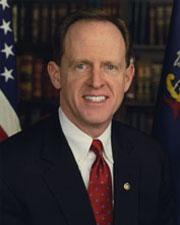 Sen. Patrick J. Toomey (R-PA)
Legislative Activity
Stay on top of the latest movement without scrolling through every action
Roll call votes on amendments in Senate: Amendment SA 115, not having achieved 60 votes in the affirmative, not agreed to in Senate by Yea-Nay Vote. 40 - 59. Record Vote Number: 41.(text as modified: CR S1986)
March 20, 2013
View full timeline
Roll call votes on amendments in Senate: Amendment SA 115, not having achieved 60 votes in the affirmative, not agreed to in Senate by Yea-Nay Vote. 40 - 59. Record Vote Number: 41.(text as modified: CR S1986)
March 20, 2013
Senate amendment not agreed to: Amendment SA 115, not having achieved 60 votes in the affirmative, not agreed to in Senate by Yea-Nay Vote. 40 - 59. Record Vote Number: 41.(text as modified: CR S1986)
March 20, 2013
Considered by Senate. (consideration: CR S1967, S1981-1983, S1986-1987)
March 20, 2013
Amendment SA 115, not having achieved 60 votes in the affirmative, not agreed to in Senate by Yea-Nay Vote. 40 - 59. Record Vote Number: 41. (text as modified: CR S1986)
March 20, 2013
Considered by Senate. (consideration: CR S1914)
March 19, 2013
Considered by Senate. (consideration: CR S1874)
March 18, 2013
Senate amendment submitted
March 14, 2013
Senate amendment proposed (on the floor): Amendment SA 115 proposed by Senator Toomey to Amendment SA 26.(consideration: CR S1840-1843, S1846-1847; text: CR S1840)
March 14, 2013
Amendment SA 115 proposed by Senator Toomey to Amendment SA 26. (consideration: CR S1840-1843, S1846-1847; text: CR S1840) To increase by $25,000,000 the amount appropriated for Operation and Maintenance for the Department of Defense for programs, projects, and activities in the continental United States, and to provide an offset.
March 14, 2013
Votes
1 roll call on this amendment
Amendments
1 amendmentOffered to this amendment
Amendments
1 amendmentOffered to this amendment
Text
Modified
DEPARTMENT OF DEFENSE, MILITARY CONSTRUCTION AND VETERANS AFFAIRS, AND
FULL-YEAR CONTINUING APPROPRIATIONS ACT, 2013

Mr. LEVIN. Mr. President, I will vote for the bill before us because
it ensures the continued operation of government. The overall spending
in the bill conforms to the Budget Control Act yet provides needed
flexibility for agencies to operate as best they can while under
sequestration.
I will continue to seek a comprehensive, bipartisan approach to avoid
the harmful effects of sequestration. Any compromise to do so will
require both prudent spending cuts and additional revenues. Considering
that revenues are necessary as part of the way to alleviate the
negative effects of the sequester, this bill is not the appropriate
vehicle to address our current budgetary situation. I am hopeful that
by passing this bill and ensuring no government shutdown occurs, we can
work in a bipartisan and responsible manner to undo sequestration.
This bill does contain important funding for Michigan, including
$210.5 million for Army research on combat vehicle and automotive
technologies through the Army Tank and Automotive Research, Development
and Engineering Center, TARDEC, in Warren. TARDEC is the Department of
Defense's leading laboratory for research and development of advanced
military vehicle technologies, including efforts to protect Army
vehicles against rocket propelled grenades, improvised explosive
devices and explosively formed projectiles; advanced materials for
tactical vehicle armor; more efficient engines; fuel cell and hybrid
electric vehicles; unmanned ground vehicles; computer simulations for
vehicle design and training of Army personnel; and technology
partnerships with the automotive industry.
The bill also includes funding for the programs of the Army's TACOM
Life Cycle Management Command, LCMC, in Warren. TACOM LCMC is the
Army's lead organization for the development and acquisition of ground
vehicle combat, automotive and armaments technologies and systems.
TACOM LCMC-managed systems include the Abrams main battle tank, Bradley
Fighting Vehicle, Stryker Armored Vehicle, Mine Resistant Ambush
Protected vehicle, and all Army tactical vehicles, such as the HMMWV
and Family of Medium Tactical Vehicles.
The bill provides full funding for transportation programs authorized
under MAP-21, the 2-year transportation bill signed into law in July
that provides critically needed funding for our Nation's roads and
bridges. This is a victory because the CR for the first half of the
year, and the House-passed CR, do not include the full funding levels
authorized in MAP 21.
The bill also provides needed support for American manufacturing. The
Hollings Manufacturing Extension Partnership Program, MEP, receives
level funding at $128.5 million. It is the only Federal program
dedicated to providing technical support and services to small and
medium-sized manufacturers. MEP is a nationwide network of proven
resources that enables manufacturers to compete globally, supports
greater supply chain integration, and provides access to information,
training and technologies that improve efficiency, productivity, and
profitability.

[[Page S1976]]

This program has been used extensively in my home State by the Michigan
Manufacturing Technology Center, which operates the Michigan's
Manufacturing Extension Partnership Program. MMTC works with
manufacturers around the State of Michigan to innovate so they can
become more efficient and profitable in order to grow and create jobs.
The bill protects the life and safety of boaters on the Great Lakes
by including a provision that denies the administration request to
close the U.S. Coast Guard Seasonal Air Facilities in Muskegon. Closing
the station would put at risk the large number of boaters on Lake
Michigan during the summer. The Muskegon facility has been in place
since 1997 and provides an important safety presence during the boating
season on Lake Michigan.
During the course of consideration of the Continuing Resolution, the
Senate adopted by voice vote an amendment offered by Senators Coburn
and McCain that will limit the use of funds of the National Science
Foundation for political science research. The amendment was modified
before it was adopted under an agreement between the sponsors and
Chairman Mikulski and represented a significant improvement over the
original amendment. The amendment as modified allows for political
science research projects to be conducted when the Director of the
National Science Foundation certifies those projects as promoting the
economic interests or national security of the United States. I am
concerned that this amendment will restrict high quality research in
critical areas beyond our national security and economic interests and
creates a threshold for certifying eligible political science research
projects that could eliminate very worthy projects, if it is not
applied wisely and thoughtfully. I hope that a broad interpretation
will avoid unnecessary restrictions of legitimate research.
I am disappointed that the continuing resolution does not provide for
adequate funding for our financial markets regulators, the Securities
and Exchange Commission and the Commodity Futures Trading Commission. I
worked with a number of my colleagues on an amendment to improve their
funding to ensure they have the resources they need to police the
markets. Unfortunately that was not adopted.
On balance, while the bill does not contain sufficient funding for
many programs, it also contains funding important to Michigan and
ensures the continued operation of government. For this reason, I will
vote for it.
Mr. REID. Mr. President, I suggest the absence of a quorum, and ask
the time be equally divided.
The PRESIDING OFFICER. Without objection, it is so ordered.
Mr. COBURN. Mr. President, I ask unanimous consent that the order for
the quorum call be rescinded.
The PRESIDING OFFICER. Without objection, it is so ordered.

Amendment No. 69 to Amendment No. 26

Mr. COBURN. Mr. President, I ask unanimous consent that the pending
amendment be set aside and amendment No. 69 be called up.
The PRESIDING OFFICER. Without objection, it is so ordered.
The clerk will report.
The legislative clerk read as follows:

The Senator from Oklahoma [Mr. Coburn], for himself and Mr.
McCain, proposes an amendment numbered 69 to amendment No.
26.

Mr. COBURN. Mr. President, I ask unanimous consent that the amendment
be considered as read.
The PRESIDING OFFICER. Without objection, it is so ordered.
The amendment is as follows:

(Purpose: To prohibit Urban Area Security Initiative grant recipients
from funding projects that do not improve homeland security)

On page 392, line 25, strike ``training.'' and insert the
following: ``training: Provided further, That none of the
funds made available under paragraph (2) may be used for
employee overtime or backfill pay, for security measures at
sports facilities used for Major League Baseball spring
training, to pay for attendance at conferences, or to
purchase computers or televisions.''

Amendment No. 93 to Amendment 26

Mr. COBURN. Mr. President, I ask unanimous consent that the amendment
be set aside and amendment No. 93 be called up.
The PRESIDING OFFICER. Without objection, it is so ordered.
The clerk will report.
The legislative clerk read as follows:

The Senator from Oklahoma [Mr. Coburn] proposes an
amendment numbered 93 to amendment No. 26.

Mr. COBURN. Mr. President, I ask unanimous consent that the amendment
be considered as read.
The PRESIDING OFFICER. Without objection, it is so ordered.
The amendment is as follows:

(Purpose: To transfer appropriations from the National Heritage
Partnership Program to fund the resumption of public tours of the White
House and visitor services and maintenance at national parks and
monuments)

On page 542, strike lines 3 through 21 and insert the
following:

reopening the white house for public tours and preserving our national
treasures

Sec. 1404. Notwithstanding section 1101--
(1) the amount appropriated for the National Recreation and
Preservation account shall be reduced by $8,100,000, which
shall be taken from the National Heritage Partnership
Program; and
(2) the amount appropriated under section 1401(e) for
``National Park Service, Operation of the National Park
System'' shall be increased by $6,000,000, which shall be
used for expenses related to visitor services and maintenance
of national parks, monuments, sites, national memorials, and
battlefields, including the White House, Grand Canyon
National Park, the Washington Monument, Yellowstone National
Park, and the Flight 93 National Memorial.

Amendment No. 65, as Modified, to Amendment No. 26

Mr. COBURN. Mr. President, I ask unanimous consent that the amendment
be set aside and amendment No. 65, with modifications, at the desk be
called up.
The PRESIDING OFFICER. Without objection, the clerk will report.
The legislative clerk read as follows:

The Senator from Oklahoma [Mr. Coburn], for himself and Mr.
McCain, proposes an amendment numbered 65, as modified, to
amendment No. 26.

Mr. COBURN. Mr. President, I ask unanimous consent that the amendment
be considered as read.
The PRESIDING OFFICER. Without objection, it is so ordered.
The amendment is as follows:

(Purpose: To prohibit the use of funds to carry out the functions of
the Political Science Program in the Division of Social and Economic
Sciences of the Directorate for Social, Behavioral, and Economic
Sciences of the National Science Foundation, except for research
projects that the Director of the National Science Foundation certifies
as promoting national security or the economic interests of the United
States)

On page 193, between lines 11 and 12, insert the following:
Sec. __. (a) None of the funds made available by this Act
may be used to carry out the functions of the Political
Science Program in the Division of Social and Economic
Sciences of the Directorate for Social, Behavioral, and
Economic Sciences of the National Science Foundation, except
for research projects that the Director of the National
Science Foundation certifies as promoting national security
or the economic interests of the United States.
(b) The Director of the National Science Foundation shall
publish a statement of the reason for each certification made
pursuant to subsection (a) on the public website of the
National Science Foundation.
(c) Any unobligated balances for the Political Science
Program described in subsection (a) may be provided for other
scientific research and studies that do not duplicate those
being funded by other Federal agencies.

Amendment No. 70, as Modified, to Amendment No. 26

Mr. COBURN. Mr. President, I ask unanimous consent that the amendment
be set aside, and amendment No. 70, as modified, be called up.
The PRESIDING OFFICER. Without objection, it is so ordered.
The clerk will report.
The legislative clerk read as follows:

The Senator from Oklahoma [Mr. Coburn], for himself and Mr.
McCain, proposes an amendment numbered 70, as modified, to
amendment No. 26.

Mr. COBURN. Mr. President, I ask unanimous consent that the amendment
be considered as read.
The PRESIDING OFFICER. Without objection, it is so ordered.
The amendment is as follows:

After section 573 of title V of division D, insert the
following:
Sec. 574.  Fourteen days after the Secretary of Homeland
Security submits a report required under this division to the
Committees on Appropriations of the Senate and the House of
Representatives, the Secretary

[[Page S1977]]

shall submit a copy of that report to the Committee on
Homeland Security and Governmental Affairs of the Senate and
the Committee on Homeland Security of the House of
Representatives.

Mr. COBURN. Mr. President, I want to comment a minute, before I talk
about the individual amendments, on the process we have seen.
We are going to have several amendments, and this is well in excess
of $1 trillion in spending. We have had four amendments voted on, and I
think unanimous consent will give us seven or eight more. So we are
going to have a total of 12 amendments. All but the first one were not
tabled, but we are at 60-vote margins, which is fine. But for a bill
that spends $1 trillion, to choke down the Senate in a way that does
not allow either side the appropriate opportunity to impact $1 trillion
worth of spending doesn't fit with either the culture or the history of
the Senate, and certainly doesn't fit with the agreement going forward
and the rules changes we had this year.
On a bill that has $1 trillion worth of spending, in past history--if
you look at the 104th, the 105th, the 103rd Congress--bills of that
size would have 70 or 80 amendments, and we are going to choke down to
11 or 12 amendments on this. The question is, Why would we do that? Why
would we limit the discussion and the division of thought, manifested
through votes, for the American people to actually see what we are
doing? There are only two reasons why this is happening. One is--and
from a phone call with the President, in his own words, he wants
sequester to hurt.
Now, think about that for a minute. And he is my friend. I challenged
him on that when he said it to me. But there is a philosophical divide
in this country. The Federal Government over the last 10 years has
grown 89 percent, while the average median income has declined 5
percent. The reason my colleagues want sequester to hurt and be painful
is they want to rationalize that bigger government is better, that we
cannot afford to cut a penny out of the Federal budget. So what we do
is the Federal Government is doing less with more money while every
American is doing more with less money. That goes against the greatest
tradition of our country. It is also a prescription for failure for our
country when we are willing to sacrifice, in the short term, direct
benefits to major segments of our population for a political point.

Nobody has done more oversight on the Federal Government than I have
in the last 8 years, and I will tell you, conservatively, out of the
discretionary budget, $250 billion a year is spent that does not
positively impact this country in any way. Yet we cannot get up
amendments to demonstrate that.
Not only can we not have an amendment up, we cannot even spend the
time on it to have a real debate about it. That is because they really
do not want to debate these issues of waste, duplication, fraud, and
inefficiency.
Then the second reason we are not having amendments, or we are having
amendments at 60 votes, is to provide the political cover. Our country
is in so much trouble it should not matter what party you are in. What
should matter is if we are fixing the long-term problems of our country
in such a way as to secure the future of our country.
What we have seen through this process last week and this week is a
focus on the short term, a focus on the politically expedient, a focus
on the parochial--and from both sides of the aisle. This is not just
Democrats, this is Republicans too. Senator Ayotte can't even get an
amendment to eliminate spending for a missile program that is never
going to be built. It is never going to be built, but we are going to
spend $360 million on it next year because it is a parochial prize to a
member of the Appropriations Committee.
Washington is not sick because it is partisan. Washington is sick
because it is political, and it is short term in its thinking. Nobody
in their right mind, no matter how much it benefits their State, would
say they want to spend $380 million or $360 million--I am not sure of
the exact amount of money--on a program that is never going to come
into fruition unless they are thinking about them and not our country
and not the families of our country and not the programs that have to
be reformed to save them. Nobody would do that. Yet we have 60 votes on
all these amendments we are going to offer because they are going to
offer protection for people to vote on them to know that they will not
even pass, but they can still get the cover for a vote. They can say: I
voted for it but it didn't pass because it has to have 60 votes.
That is the smallest part of the problem. To have to go through what
we have gone through over the last 5 or 6 days and only have had four
votes says something about this place. I would just proffer that I bet
had we had an open amendment process we would have been finished with
this bill yesterday.
When I came here, for the first 2 years you could offer an amendment
for anything at any time at a 51-vote threshold. So all this time we
have wasted in quorum calls or on speaking on issues that have nothing
to do with the bill in front of us is because we really do not want to
govern. What we want is we do not want the body to do its work and have
the input of both sides into a bill--other than in the committee. What
we want is a fixed outcome that will allow the administration to make
sequester as painful as it can be.
So when you shut down packing plants, when the USDA says they cannot
have food inspectors there at the same time the USDA is advertising for
social service workers and event planners--which, if you did not hire
them, could at least give you 52 people not being furloughed for a
week. What is happening to America today is we are focused inward on
the politics rather than our country. We are focused on gaming the
system rather than governing. We are focused on all the wrong things
because it is all about the next election.
We have our eyes so far off the ball that now every bill that comes
to the floor has to have essentially a rules committee of one, which is
the majority leader, deciding whether he wants his members to vote on a
bill. That doesn't have anything to connect with the history of the
Senate. This is no longer the greatest deliberative body in the world
because we do not deliberate; we do not have an open amendment process;
we are too afraid of our own shadows to cast a vote and think we might
have to defend it.
If you cannot defend any and every vote in this body, you do not have
any business being here. To stifle debate and to limit amendments in
the way this bill has done certainly will not breed any goodwill going
forward and certainly does not do service that the American citizens
are due.
Mr. President, I will now take some time to talk about the various
amendments I have called up. Amendment No. 69 is the first amendment I
called up. As the ranking member on Homeland Security and the ranking
member on the Permanent Subcommittee on Investigations, what we know is
Homeland Security, in its grants program, through what is called the
Urban Area Security Initiative, is out of control. They have not
prioritized their funding. They have not put metrics on their funding.
They have not controlled their funding.
We put out a report in December 2012 called Safety At Any Price, and
we highlighted the problems with this particular grant program. No
clear goals, DHS has not established any clear goals for how the funds
should be used to improve national security. The 9/11 Commission warned
against DHS spending becoming pork spending. UASI, this Urban Area
Security Initiative, has become another porkbarrel program providing
public safety subsidies to cities such as in my home State, Tulsa.
No. 3, what we found is a tremendous amount of waste in these grants.
The lack of clear goals has led States and cities to use this funding
on wasteful projects, including paying for overtime for employees;
purchasing computers, printers, televisions, underwater robots,
bearcats--all the things that do not really connect to national
security and the prevention of terrorism.
This amendment prohibits $500 million allocated for the UASI grant
program that has been wasted on items that do not relate to homeland
security. It prohibits the use of funds on overtime, backpay--backfill
pay, security at Major League baseball parks, spring training camps,
attendance at conferences, and the purchase of flat-screen TVs.
The other thing we found in our report is the Department of Homeland

[[Page S1978]]

Security doesn't know what this money was spent on. Not only do they
not have goals and metrics for what the money is supposed to be spent
on, they cannot tell us what the money was spent on because they don't
actually have any record of it. We have spent $35 billion in total on
all DH grant programs since 2003. We have spent $7.1 billion on this
program.

What I can tell you is it has helped some communities, I don't doubt
that, especially during our tough times. It has filled in. But if we
are ever going to get out of the problem we are in as a country in
terms of our debt and deficits, we have to have programs that have
metrics on them that have to be followed up. The grants have to be
followed, and they need to be held to account.
My colleagues, I have no hopes of this passing because most of my
colleagues will not look at the research done on this, will not look at
the ineffectiveness of it, will not look at the waste, and will vote a
party-line vote to defeat this amendment. We will get 45 or 50 votes or
51 or 52, but it will go down. So, consequently, real problems that
have been oversighted by the Permanent Committee on Investigations--
really oversighted by the Department of Homeland Security--the real
solutions to problems will not happen because of the way this place is
being run.
Next, I would like to talk about amendment No. 93. Amendment No. 93
follows a recommendation of the President. It is not my recommendation,
it is the President's recommendation. What this amendment would do is
actually take money that has been directed for expired heritage area
authorizations that were not any recommendations of the President--
actually the President's recommendation was to cut this money in half--
and we are going to do exactly that with this amendment. We are going
to cut it by $8.1 million.
What heritage areas are, when we started them--the 12 heritage areas
this is about are at least 16 years old. One of them is 25 years old.
The whole idea behind heritage areas was to fund them with a grant
program to get them started and then let them run on their own with
State and local funds. They have become a dependency program.
The OMB and the President's budget said we ought to eliminate the
dependency of these by trimming back the amount of money. Instead of
becoming temporary programs directed toward self-sufficiency as
originally intended, these national heritage areas have turned into
permanent entities that continue to grow in number and funding amount--
totally opposite the original authorization intent. In other words,
they are parochial based.
As a matter of fact, one of them, the John Chaffee Blackstone River
National Heritage, has existed for more than 25 years. They actually
thought the funding might get cut, so they created another way to pay
for it, just as the government had intended for them to do, and they
raised the money for it this year. But we are going to fund them anyway
in this appropriations package, this Omnibus appropriations package. It
is not really a CR, it is an Omnibus appropriations. Of these, 12 have
already received $112 million, more than half the total ever spent on
national heritage areas.
So they have been in existence at least 16 years. They should have
become self-sufficient. They need to become self-sufficient, and we
should not be spending the money. What will we do with the money that
will amount to about $16 million? We will turn that money into opening
the tours at the White House, opening Yellowstone National Park and the
rest of the parks. In terms of the way that money is spent out, we will
be able to take $6 million or $7 million of that money and the national
parks will open on time.
Most of you haven't heard about this, but in Jackson Hole, WY, and
Cody, WY, the citizens of that State are raising private money to plow
the snow so Yellowstone National Park can open on time. I want you to
see the contrast because it is important to their livelihood and their
commerce. They are going to sacrifice personally to get that park open
on time. At the same time we are going to send money to 12 national
heritage areas that have been dependent on the Federal Government for
16 years.
Tell me what is wrong with that picture. We are going to create a
dependency, and then we are going to indirectly tax the people of
Wyoming--one of their great areas of commerce, a place where visitors
come to Wyoming to see Yellowstone Park--and have them use their own
post-tax money to pay for that. That cannot fit with the vision of
America that almost everybody else in this country believes in. It
doesn't fit.
Other national parks have reported campgrounds that are going to be
closed to reduce maintenance. So we are going to take this $6 million,
and we are going to use it to help open these parks and allow the Park
Service to have the parks open on time. In the original authorization,
it was not supposed to get any money. They should not have been getting
money for the last 10 years. Instead of creating a dependency in the
program, we are going to take that money and do something for the
American people.
The next amendment is amendment No. 65, as modified. And this is one
that really gets my goat. The National Science Foundation funds lots of
great scientific endeavors in this country. As a matter of fact, they
have about four times as many applications for grants as they have
money to give out. But they spend a considerable amount of money doing
such things as funding ``research in political science.'' In 2008 they
spent $8.6 million funding research in political science, $10.9 million
in 2009, $11 million in 2010, $10.8 million in 2011, and $10.1 million
in 2012. What this amendment does is prohibit the National Science
Foundation from wasting Federal resources on political science projects
and redirects that to other areas within NSF that are going to give the
American people a much greater return on their investment.
Let me give some examples of what they fund: campaigns and elections,
citizen support, and emerging and established democracies, bargaining
processes, electoral choice, democratization, political change in
regimes, transitions. Those are all important things if we were not in
a budget and spending crisis. Tell me whether it would be better to
have the next new computer chip generation developed through a grant at
the National Science Foundation or if the actions of a filibuster in
the Senate are more important to the American people. Which one is a
greater priority? Which one is more important to the further
advancement of this country? I guarantee it is the former and not the
latter.
In the years hence, we are going to be making a lot of choices about
priorities, and every amendment I am putting out here today is about
priorities. Do we fund things that do not adequately or accurately help
us in the short term in creating jobs, in being wise and prudent
spenders of taxpayers' money, or do we fund things that are a low
priority and let things that are high priority suffer? That is
basically what this amendment does. It says: Until we get out of this
pinch, we should not be spending money to--for example, the $251,000
used to study Americans' attitudes toward the Senate. We spent a
quarter of a million dollars last year studying Americans' attitude
toward the Senate; $106,000 was spent to study the rise of candidate-
centered elections over those dominated by political parties; $47,000
was spent to study the President's level of cooperation with Congress
when they utilize Executive orders; $28,000 was spent to examine the
prohibition movement. It has been a long time since we had prohibition
in this country. That has to be a priority for us. How about a quarter
of a million dollars to investigate how people perceive the political
attitudes of others? That has to be important right now. It has to be a
priority right now for our country. We spent $144,000 to track how
politicians change their Web sites over time. Who cares? That money--
$144,000--will keep a whole bunch of meat inspectors at meat plants.
There will not be any furloughs if we get rid of this kind of stuff. I
could go on.
Mr. President, I ask unanimous consent to have printed in the Record
what I consider nonpriority studies that the NFS has funded.
There being no objection, the material was ordered to be printed in
the Record, as follows:

Taxpayers would have realized a better return on their
investment in biomedical research than in political science.

[[Page S1979]]

While political sciences studies may be interesting to the
investigators, as investment in this studies will not yield
the same return on investment or benefit to Americans as
biomedical research.
Consider what grants NIH may have been able to award in
lieu of these ongoing political science investigations:
$251,525 used to study Americans' attitudes towards the
U.S. Senate filibuster from survey results
$106,868 to study the rise of candidate-centered elections
over those dominated by political parties
$47,783 to study American Presidents' level of cooperation
with Congress when they utilize executive orders
$28,356 to examine the Prohibition movement, in part to
help lobbying organizations better understand how to
influence policy debates
$250,000 to investigate how people perceive the political
attitudes of others and operate with group-centered
mentalities
$144,609 to track how politicians change their websites
over time
$20,862 to answer the question, ``What makes politics
interesting?'' and to analyze how individuals process
messages distributed by mass media
$259,231 to execute a national survey on ``the role of
optimism and pessimism in shaping the political beliefs and
behavior of Americans''
$91,016 to study which legislation gets roll call votes and
to guess the outcome when bills do
$23,233 to administer an Internet survey of 1000 people
about ``how citizens react to public political
disagreements''
$236,422 to study how lobbying campaigns, logrolling and
other trades affect bill development over time
These surveys and models are receiving millions of NSF
dollars every year, while groundbreaking biomedical science
falls to the ground. Why should taxpayers have to contribute
to studies of questionable value when so many worthwhile
biomedical research projects go unfunded? NCI received 4,143
applications in 2012 for major R01 grants, and only funded
618 of them, leaving thousands of promising ideas unfunded.
Much of political science's studies have not even generated
useful data. Political science often involves finding a
situation for which researchers can develop a clean model to
predict future outcomes. However, yet one Northwestern
University political scientist famously noted in the New York
Times these models are typically inaccurate.
``It's an open secret in my discipline,'' wrote Jacqueline
Stevens, ``in terms of accurate political predictions (the
field's benchmark for what counts as science), my colleagues
have failed spectacularly and waste colossal amounts of time
and money.''
Increasing funding for the National Science Foundation has
been promoted as a way to bolster our economy, preserve
national security, protect the environment, and educate our
youth. As a result, the agency has enjoyed strong bipartisan
support.
By no longer funding political science and increasing NCI's
budget, Congress has an opportunity to continue improving the
nation's health and to steward more wisely federal resources.
Mr. COBURN. This is where we should be doing our work. We should be
making choices for the American people. We should be making the hard
choices that say this is more important than this. We don't have enough
money. We are borrowing $40 million a second, and we are going to fund
these kinds of political studies that have no benefit except to the
politicians and the political science professors because they are the
ones who will read them. The average American doesn't care. But they do
care whether their meat is going to be safe and whether they are going
to get meat.
Mark my words, this amendment will go down. It won't be passed
because we don't have the courage to make priority choices in the
Senate. We don't have the courage to allow the number of amendments,
such as this--there should have been 30 or 40 such as this--on the
floor to make those choices.
Finally, I will talk about amendment No. 70. This amendment has been
modified. The appropriators have requested that Homeland Security-
related reports--which are demanded in this bill--come to them. They do
appropriate for Homeland Security, but there is an authorizing
committee. It happens to be the Homeland Security and Government
Affairs Committee. What this amendment says is: If you are going to
give information from the administration to appropriations, you might
want to think about giving it to the actual committee that has the
authority to authorize and change the program.
I hope this will be accepted. We are going to get it 14 days after
the appropriators. I don't know what that is all about, but I am
willing to concede. I think Senator Carper and myself ought to see what
the administration is saying to the appropriators about programs that
are run through the Department of Homeland Security. So of all the
amendments we have, I think this is the only one that has any
possibility.
I yield the floor.
The PRESIDING OFFICER. The Senator from Kansas.
Mr. MORAN. Mr. President, I ask unanimous consent to address the
Senate for up to 20 minutes.
The PRESIDING OFFICER. Without objection, it is so ordered.
Mr. MORAN. Mr. President, when I was on the floor this morning, I
outlined the merits of an amendment I tried to have to this continuing
resolution. It is amendment No. 55. It is an amendment that deals with
the air traffic Control Tower Program that the Obama administration has
indicated will be terminated on April 7. I don't want to go over all
the things I talked about this morning, but I do want to talk about how
we got to the point we are today in which apparently this amendment is
not going to be considered by the Senate.
This morning I indicated how, in my view, important this amendment
is. I read from an AP story from Chicago about how air safety was in
jeopardy. There were indications that a plane crash which occurred
previously would not have occurred if there had been an air traffic
control tower present. The complaint by Americans is that our aviation
sector is so frustrated by the political brinkmanship which goes on in
Washington, DC.
Again, this is an important amendment that is about the safety and
security of the American people--particularly those who fly. It is
amazing to me that despite the continued efforts to bring this
amendment to the floor for consideration--not that I expect any
guarantee. There is no such thing as a guarantee that this amendment
would pass. But the inability to have it even considered is very
troubling and surprising to me.
Last week when we started on the continuing resolution, I was pleased
to hear what the majority leader said about the process on the CR. This
was not stated years ago or months ago, it was just last week. The
majority leader said, when he was talking about the continuing
resolution: There will be amendments offered. We are working on a
process to consider those amendments. This week we will be off to
another opportunity for the Senate to return to regular order, an
opportunity for this body to legislate through cooperation, through
compromise, as we used to do. This legislation will be a test of the
Senate's goodwill. We are anxious to move forward and start doing some
legislating. We are going to take all amendments and try to work
through them as quickly as we can. I hope we can move forward and set
up votes on every one of them.
That is the announcement that was made as we started the continuing
resolution. As the majority leader indicated, this legislation will be
a test of the Senate's goodwill. I think the Senate has clearly failed
the test of goodwill. But more than goodwill, we are failing the
American people in taking the steps necessary to secure their safety.
This is not an amendment about me or an amendment about Kansas.
Certainly, I am talking about my home State. There is nothing wrong
with representing our home State which is affected by the loss of these
control towers. There are 43 States--almost all of us--that have
control towers. On April 7, they no longer will be operating.
I indicated this previously, that one of the reasons why I thought
this amendment, perhaps above others, should be considered is because
the Control Tower Program will be eliminated April 7. I am a member of
the Appropriations Committee. I am a member of the Subcommittee on
Transportation. I will work to see that these programs are continued
once we get to the regular appropriation process when the CR is behind
us. My colleagues and I will never have the chance to do that because
in a matter of just a few short days the control towers will be gone.
They will be closed. The lights will be turned off.
So my role as an appropriator and as a Member of the Senate--which I
share with 99 other Senators--and the idea that we would then come back
and restart a program that has disappeared is not going to happen. In
the absence of

[[Page S1980]]

this amendment passing--in the absence of this amendment being
considered and passing--the ability for me to do my job on behalf of a
program that I think matters to the American people disappears.
I have never tried to be a difficult Member. I believe in
collegiality. I believe in the goodwill the majority leader talks
about. But I cannot imagine what I was supposed to have done. It is an
amendment that is germane. I am not here trying to offer an amendment
that doesn't matter to the bill at hand. I am not trying to score
political points, I am not trying to put Democrats on the line for
casting a vote that the voters might object to. There is nothing here
that is political or partisan in nature. I did what I thought I was
supposed to do.
There are 26 cosponsors of this amendment. More than half are
Democrats. The Senators include Inhofe, Roberts, Blumenthal, Blunt,
Johanns, Kirk, Manchin, Hagan, Klobuchar, Baucus, Tester, Enzi, Vitter,
Boozman, Pryor, Merkley, Wyden, Kaine, Warner, Ayotte, Shaheen, Risch,
Crapo, Murphy, Rockefeller, and Wicker. If 26 of us in that group can
agree upon the value of an amendment, why is it the Senate cannot even
take a vote on a germane amendment that is broadly supported? It is
broadly supported outside the Chamber of this Senate. The Aircraft
Owners and Pilots Association, the National Business Aviation
Association, National Air Transport Association, Association of Air
Medical Services--they believe this is important for the ability of
LifeWatch patients--NATCA, the National Air Traffic Controllers
Association, and the American Association of Airport Executives.
This is not a provincial issue that Moran is all about trying to take
care of something for himself, nor is it about trying to create
political difficulties for anybody. We broadly agree on a bipartisan
basis that this amendment should be made in order.
I have been in the Senate for a little more than 2 years. I served
for a number of years in the House of Representatives. One of the
things I thought was true and why I sought the opportunity to serve in
the Senate is that it would be different from the House. Any Member of
the Senate ought to be here--whether Republican or Democrat--on behalf
of their ability to offer amendments.
We had a debate about changing the rules and the proffer was made
that if we would agree to change the rules, amendments would be made in
order. I thought that was a positive development.

Now, it seems to me, while I left the House in hopes of having the
opportunity to represent my constituents as best as I know how and to
represent America as best I know how, somebody stands in my way. I
can't find out who that is. I have not talked to a Senator who is not
supportive of my amendment. Every conversation I have is, well, I think
it is a good idea. I don't know why it is not being made in order.
There is no good explanation.
Who sits down and develops the list and decides which amendment is
important and which one isn't? This ought to be something that is not
turned over to a one-person Rules Committee.
Again, the House and Senate are structured differently. This is a
historic body with a legacy of allowing debate, discussion, and
amendment. And, again, not for purposes outside even the nature of the
bill we are talking about, how can it be controversial to transfer $50
million in a bill that has more than $1 trillion of funding, of
spending? How can it be so difficult to transfer $50 million from two
accounts--unencumbered balances and a research account--to save air
traffic control towers, leave them in place until I at least get the
opportunity to work with my colleagues to extend their life through the
appropriations and legislative process into the future.
So for a Senator such as myself--I lay awake last night from, I don't
know, 3:15 to 4:30 trying to figure out what I could say that would
convince my colleagues to support this amendment or to allow whoever is
making the decision that it can't even be debated and heard and voted
on--I don't know that there are any magic words. It does concern me. It
bothers me greatly.
We ought to all be here protecting the rights of each and every other
Senator. This is important to us as a legislative body, not to us and
our egos as Senators. It is not the sense that we have the right to say
everything--we are Senators, we are important and powerful people--it
is that on behalf of the American people, a person such as myself who
represents 2\1/2\ million Kansans ought to have the ability to bring a
germane amendment to a bill on the Senate floor.
Had we brought these amendments forward, had we agreed to debate and
pass my amendment, we wouldn't be here today still stalled on moving
forward to conclude this business and move to the budget. We could have
debated the amendments and voted on the germane amendments days ago.
But for some reason we once again get bogged down in somebody deciding
that this amendment qualifies to be considered and this one doesn't.
So this is another example of where--again, I guess if we were to
tell the story to the American people, it would be that today we are
going to pass a bill that spends $1.1 trillion, and we have had four or
five amendments offered and perhaps approved, maybe a couple more
today.
This bill has not worked its way through the Appropriations
Committee. It comes from the House. We take it up immediately. It is
written so perfectly that only three or four individual Senators have
the opportunity to alter the bill--not the guarantee to change the bill
but the opportunity to suggest to our colleagues whether it makes sense
and then cast a vote, yes or no, based upon whether what I am saying
has merit. We can't get to the point at which I am given the
opportunity to explain on the Senate floor why this amendment is
something that is important.
I came to the Senate from the U.S. House of Representatives in hopes
that the Senate was different, where individual Members have value
unrelated to their relationship with the Speaker or the minority leader
of the House, unrelated to my relationship with the members of the
Rules Committee. I have not always been the most perfect follower of my
political party. I have tried to do what I think is right, and
therefore I have not always developed the relationship I needed in the
House to be able to get my amendments considered on the House floor.
The Rules Committee is there for a purpose. It is a very unwieldy
body, the U.S. House of Representatives, of 435 Members. Here we have
100. Surely, based upon the history, the legacy, the rules of the
Senate, we have the ability as Senators, whether we are in favor or
disfavor and whether our amendment meets with a person's satisfaction
on behalf of the American people, we have the right to represent their
interests and have votes taken.
The majority leader said the other day that I am an obstructionist. I
lay awake last night thinking, I am not an obstructionist. I am
following the rules. The majority leader said this morning that we need
to show that sequestration is damaging to the country. I didn't even
vote for sequestration, and yet I can't fix a problem that is caused by
somebody else's vote. Again, it is so baffling to me how this works.
I finally found somebody who would tell me they oppose my amendment.
Today I talked to the Secretary of Transportation, who said: The
administration opposes your amendment. So maybe that is the
explanation. I have asked my colleagues on both sides of the aisle why
I can't--a person who followed the rules, who did what one would think
one should do to get an amendment made in order--why can't this
amendment be heard?
The only explanation that I guess makes sense is that there are those
in Washington, DC, who want to prove we cannot cut spending without
consequences that are dramatic. OK, prove that point. Come to the
floor. Have the debate about spending, about budgets, about taxes. Have
this conversation about whether we can afford to cut spending. Prove it
to us. Take the votes. Demonstrate that it can't be done. But to use
sequestration as the example for why we can never cut any money from
any program, particularly on the amendment I am offering, is dangerous.
What it says is, we want to make a political point, as compared to

[[Page S1981]]

worrying about the lives of the American people who fly.
So this circumstance in which I find myself--again this morning I lay
in bed realizing that the radicalization of Senator Moran is occurring.
The only way, apparently, to get an amendment heard is to be difficult.
It is not my personality. It is not my nature. But on behalf of Kansans
and Americans, if what it takes is for me to become more difficult to
deal with so my amendments are considered--it is not about me
personally--so amendments that matter to my constituents and, at least
in my view, to America can be heard--you have to make yourself a pain
around here if that is what is required in the Senate. I hope that is
not the case.

I hope the majority leader is right that this is the path by which we
are going to get back to regular order. I want to be a member of the
Appropriations Committee that works, debates, and discusses, we listen
to witnesses and figure out that we can spend more here, but we have to
spend less money here; this program matters, and this one is
inefficient.
I voted against sequestration because I don't believe across-the-
board cuts are responsible. What that means is that everything deserves
the same reduction. There are things that we do well and that are
appropriate for the government to be involved in, and there are things
that we do poorly and that the government shouldn't be involved in. Yet
we treat them all the same. I want to be a member of the Appropriations
Committee that says: We are going to evaluate each one of these
programs and make decisions about spending, and we are going to choose
to spend money here and not here, or the decision will be made by the
Senate and the House and the President that we are going to raise
revenues so we can spend more money.
But that is not a reason to block this amendment. It is not a reason
to say that those people who are going to be traveling out of 179
airports that have control towers--that their lives are going to be
less safe and secure and run the potential of loss of life and injury
as a result of us trying to prove the point that we apparently can't
cut budgets around here because we want to show there is damage to be
done when that occurs. That is a very dangerous political point.
Mr. INHOFE. Will the Senator yield?
Mr. MORAN. I yield.
Mr. INHOFE. First of all, as a cosponsor of the amendment, I am glad
the Senator is getting around to the merits. Yes, it is a great
injustice the Senator is going through right now, not getting his
amendment heard. I have to say, though, as probably the only active
commercial pilot in here, I jumped on this bill because a lot of people
don't realize that the contract towers are just as in need of control
as the noncontract towers.
The Senator is aware that the University of Oklahoma in northern
Oklahoma is contracted out. I have gone in there before where they are
using all three runways at the same time. It is a huge issue.
But what I want to ask the Senator is, why is it that when the
bureaucracy is opposed to something they, No. 1, won't tell you about
it; No. 2, they go whispering to the President; No. 3, they go
whispering to other people around here?
I went through this same thing, I suggest to my friend from Kansas,
when I passed the Pilot's Bill of Rights. I had 67 cosponsors in the
Senate, and they wouldn't bring it up. For an entire year they never
would bring it up, and we had to rule XIV it on the floor. That is what
is wrong. When we have something everybody is for, it is a good thing,
but somehow--in this case, I know what it is: the same thing that
happened to me. I got mine passed. It took me a year to do it.
Best of luck to the Senator from Kansas. I would only say to him that
this is a time to stay in there and fight for this because this is a
great example to use. Everything that is being cut in government right
now--all of these people who had to wait in line to get in here, there
is no reason to do that. Everything people really want and the things
that are popular, this is what they cut. So the Senator from Kansas is
a victim of that. Just hang in there and try to make it happen.
Mr. MORAN. I thank the Senator from Oklahoma. I know he has great
expertise on the topic of aviation and airports and airplanes.
Again, I am here to decry a system that is failing. And while it is
personally troublesome to me--it bothers me--it is embarrassing not to
be able to accomplish what seems so straightforward and simple. We all
like to have victories, but it is not really about me. Every Member of
the Senate ought to have the opportunity to present germane amendments
and let the will of the Senate--let those 99 other people, as well as
me, make a decision based upon the merits, however we all make
decisions around here or whether we vote for or against something. This
is not about my right as an individual Senator as much as it is about
the rights of all of us on behalf of the American people, on behalf of
our home State and constituencies, to be able to do our jobs.
If there is a political game afloat that is preventing this amendment
from being considered, then I would suggest we have transversed that
plane in which we no longer are caring for Americans but we are caring
about our own political skills, our own political reelection as
compared to what we are here to do.
This place is way too political. This is not a political amendment.
It ought to be made in order. Yet, despite all the efforts, it has not
occurred.
I hope, in the few minutes that remains, there is still a chance that
my unanimous consent request will be agreed to. I appreciate that
others were able--a handful of folks were able to offer their
amendments. I think we ought to have more of that, not less. It is
about the Senate doing its job; it is not just about Senator Moran not
being able to accomplish his on this particular day.
I appreciate the indulgence of my colleagues.
I yield for the Senator from Pennsylvania.
The PRESIDING OFFICER. The Senator from Pennsylvania.

Amendment No. 115

Mr. TOOMEY. Mr. President, I rise to discuss briefly an amendment I
have that is going to be voted on later today, but I wish to begin by
completely agreeing with the Senator from Kansas. It is extremely
unfortunate, to say the very least, that the majority party is so
afraid of casting votes, they are now disallowing the most ordinary,
sensible, germane amendments that transfer modest sums of money from
one account to another account. I am not suggesting that everybody
needs to agree with it. I am not sure I agree with the amendment of the
Senator from Kansas. But the idea that an amendment such as that
shouldn't even have an opportunity to be debated on the Senate floor is
amazing.

Let me address the amendment I have introduced. I will start by
observing that the bill under consideration today significantly
underfunds the Defense Department's operations and maintenance
accounts. The Army's subset of this category of funding is underfunded
by $2 billion. That is just the Army alone. This has implications for
the safety and readiness of our troops. I am not suggesting that my
amendment solves that whole problem--it doesn't, but it makes a modest
step in the right direction.
Just quickly, some of the things the operations and maintenance
account funds--it is a lot. It is maintenance of ships and tanks and
aircrafts. It is avionics and engines and navigation systems. It is
artillery. It is all kinds of things our service men and women use to
fight and to win and to protect themselves. It gets funded through the
operations and maintenance account, and it is not only maintenance of
this important equipment, it is also training--training such as unit
training when an Army battalion, for instance, trains in an exercise
against an opposition force that is modeled after a real-world
potential enemy. That kind of training is very important. It gets
funded out of this account, the operations and maintenance account, and
that account is underfunded. So I would suggest that this is a very
important account, and I think there is almost universal acknowledgment
that it is being underfunded.
Meanwhile, in the same bill, while we are underfunding our operations
and maintenance account, we have a bill that would spend $60 million
forcing the Defense Department to build

[[Page S1982]]

biofuels refineries. This forces our Defense Department to build these
expensive refineries to make very expensive fuel. How do we know it
will be very expensive fuel? How many of us fill up our gas tanks with
biofuels? The component we are forced to buy--the ethanol--is part of
what drives up the cost of gasoline. The fact is that conventional fuel
is much cheaper than these biofuels, but we are going to force the
Defense Department to spend a whole lot of money building a refinery,
the purpose of which is to produce extremely expensive and inefficient
fuel. I would suggest that is a waste of precious resources we can't
afford to waste.
Now, the House Defense appropriations bill did not include this, and
the Senate Armed Services Committee--these are our experts who analyze
this--opposed wasting money this way when they reported the bill out of
committee. Unfortunately, when it got to the floor, it got put in, and
this is our opportunity to correct it.
Now, some have suggested these biofuel refineries are somehow a
solution to the expensive cost of moving fuel to combat zones. The only
problem is this item is going to fund the construction of refineries in
the United States. They are not going to be in combat zones. So that is
just not true.
I would suggest if anyone thinks this is a good idea--to force
taxpayers to build expensive, inefficient refineries to produce very
expensive fuel--shouldn't it at least happen through the Department of
Energy or some other experimental research-oriented institution?
Mr. INHOFE. Mr. President, will the Senator yield?
Mr. TOOMEY. I will be happy to yield to the Senator from Oklahoma.
Mr. INHOFE. I know something about this being the ranking member of
the Armed Services Committee. We went through this.
Is the Senator aware that in one purchase the administration--now, I
am talking about the White House--forced the Navy to buy 450,000
gallons of fuel at $29 a gallon? You can buy it on the open market for
$3 a gallon.
Secondly, I think the Senator does know this because I heard him
mention the Department of Energy, when we formed the Department of
Energy, they were supposed to do all this stuff.
But I would have to make one observation. We have a President, an
administration, that has been cutting dramatically, and we are all
concerned about what has happened to our military, our ability to
defend ourselves. They do it in three ways. No. 1, they cut; No. 2,
they delay; but, No. 3--and this is what we are getting to now--they
take the agenda, and in this case this green agenda, and put it not
where it should be but under the defense budget. So for every dollar
that goes to the green energy programs, the Senator and I would like--
since I am cosponsoring the Senator's amendment--every dollar is
something we cannot spend for our fighters in the field.
Mr. TOOMEY. Well, reclaiming my time, I completely agree with the
Senator from Oklahoma. We already force our Defense Department to waste
enormous amounts of money purchasing fuel that is much more expensive
than readily available alternatives. I think that is a very bad idea.
And I think it is a bad idea to do even more of that in the form of
building these biofuel refinery plants that would further propagate
this ill-conceived process.
If you think it is somehow a good idea to do this then, as the
Senator from Oklahoma suggests, wouldn't it make sense to at least do
this in the Department of Energy rather than wasting precious Defense
Department resources at a time when we know we are underfunding the
operations and maintenance account? This is the reason for my
amendment.
My amendment transfers $60 million out of the biofuel refinery
account in the Defense Department appropriations bill and moves money--
the amount permissible under the budget rules--into the operations and
maintenance account. This is not a complete solution, I understand
that, but it is a modest step in the right direction of providing a
little bit more resources to an area that is badly underfunded.
I urge my colleagues to support my amendment.
I yield the floor.
I suggest the absence of a quorum.
The PRESIDING OFFICER (Mr. Heinrich). The clerk will call the roll.
The bill clerk proceeded to call the roll.
Mr. SESSIONS. Mr. President, I ask unanimous consent that the order
for the quorum call be rescinded.
The PRESIDING OFFICER. Without objection, it is so ordered.
Mr. SESSIONS. Mr. President, I just would briefly say that I believe
Senator Moran, Senator Ayotte, and maybe others have good amendments on
which they are seeking to vote. I am aware that Senator Moran's
amendment, I believe, has 28 cosponsors--a large number of Democratic
cosponsors. Virtually no one seems to be opposed to it, but somehow a
decision has been made by the majority leader to not let him have a
vote.
I believe we need to understand something very fundamental in the
Senate, and we are heading to a crisis on this issue; that is, a duly
elected Senator who serves in this body should be able to bring up an
amendment that is reasonable, that is germane, and get a vote on it. It
is amazing to me that it seems to be now accepted that the majority
leader picks and chooses the people who get their amendments.
I think the Moran amendment, from what I have seen and heard about
it, would pass. So it is not going to pass. It is going to fail because
someone, presumably the leader, has decided they will not get a vote,
and it has been killed in that fashion. That is not the tradition of
the Senate. I am worried about that. We cannot continue that way.
To our new Senators--Republicans and Democrats--you need to
understand that as a Senator, you have a right to have votes that are
legitimate on bills that are legitimately amended. That is where we
are, and I am disappointed those votes have not been allowed.
I thank the Chair and yield the floor.
I suggest the absence of a quorum.
The PRESIDING OFFICER. Will the Senator withhold his suggestion?
Mr. SESSIONS. Mr. President, I withhold my suggestion of the absence
of a quorum.
The PRESIDING OFFICER. The Senator from New York.
Mrs. GILLIBRAND. Mr. President, I rise today in vigorous opposition,
and with very deep concern, to an amendment offered by the Senator from
Oklahoma that would prohibit Urban Areas Security Initiative, or UASI,
funds from being used to be able to pay local public safety employees
overtime and backfill pay.
I share the Senator's commitment to ensuring that homeland security
funds are spent wisely. I believe his efforts are in good faith, and I
am eager to work with him toward this goal. However, as the threat from
al-Qaida has metastasized to the Arabian Peninsula and elsewhere, there
are still terrorists whose objective is to inflict wide-scale harm to
Americans on our homeland.
New York City remains the No. 1 target for terrorists around the
world who want to do us harm. Therefore, we must remain vigilant and
continue to provide local law enforcement with all the tools necessary
to keep us safe. So as well-intentioned as this amendment may be, law
enforcement organizations across the country have been loud and clear:
This is simply the wrong prescription at the wrong time.
This amendment is opposed by a range of law enforcement and first
responder organizations, including the International Association of
Fire Chiefs, the International Association of Firefighters, Major
Cities Chiefs Association, Major County Sheriffs' Association, the
National Fusion Center Association, the National Homeland Security
Coalition, and the U.S. Conference of Mayors.
In fact, I have a letter from our Commissioner Kelly that I ask
unanimous consent be printed in the Record, along with another letter.
There being no objection, the material was ordered to be printed in
the Record, as follows:

The Police Commissioner,

New York, NY, March 15, 2013.
Hon. Thomas Coburn,
Ranking Member, Senate Committee on Homeland Security and
Governmental Affairs, Washington, DC.
Dear Senator Coburn: I am writing to express my concern
about an element of your proposed amendment, Number 69, to
the Consolidated and Further Continuing Appropriations Act
for FY 2013. This amendment would

[[Page S1983]]

prohibit Urban Areas Security Initiative (UASI) grant funds
from being used to pay local public safety employees overtime
and backfill. Such a restriction would jeopardize our
collective efforts to safeguard New York City, which has been
the target of 16 publicized terrorist plots since September
11, 2001.
The New York City Police Department (NYPD) uses UASI
funding to pay for, among other things: overtime expenses
associated with members of the Joint Terrorist Task Force
working on major terrorism investigations with the FBI; and
backfill expenses incurred by sending members of the service
to critical counterterrorism training courses, including a
course on active shooter response, which they cannot attend
during their normal shifts because of regular job
responsibilities.
At times of fiscal constraint, it is essential to direct
the limited homeland security grant funds available to the
programs that are most effective. Without a doubt, the
overtime and backfill funding that the NYPD uses to support
investigations, training, and deployments are essential to
the NYPD's layered approach to security. I appreciate your
attention to this matter and the Homeland Security
Committee's ongoing efforts to ensure that New York City will
continue to benefit from the most robust counterterrorism
program possible.
Sincerely,
Raymond W. Kelly,
Police Commissioner.
____

March 14, 2013.
Hon. Barbara Mikulski,
Chairwoman,
Hon. Richard Shelby,
Ranking Member, Committee on Appropriations, U.S. Senate,
Washington, DC.
Hon. Mary Landrieu,
Chairwoman,
Hon. Dan Coats,
Ranking Member, Subcommittee on Homeland Security, Committee
on Appropriations, U.S. Senate, Washington, DC.
Dear Senators Mikulski, Shelby, Landrieu, and Coats: We are
writing on behalf of local elected officials, major city
police chiefs, sheriffs, intelligence professionals, and
major fire service organizations to express our strong
opposition to the Coburn amendment to the Consolidated and
Further Continuing Appropriations Act for FY 2013. This
amendment would prohibit, among other things, Urban Areas
Security Initiative (UASI) grant funds from being used to pay
local public safety employee overtime or backfill. Such a
restriction would overturn over a decade's worth of policy
and inhibit local security operations at high risk critical
infrastructure sites, major events, and along the border. The
amendment would also prevent first responders from training
and exercising to prevent or respond to terrorist attacks and
other major disasters.
Urban areas use UASI grants to pay overtime to local
personnel to be operationally ready to respond to a potential
terrorist incident and to provide extra security in a
heightened threat environment, often based on federal
intelligence and at the request of federal officials. This
includes protecting critical infrastructure such as nuclear
power plants, chemical facilities, public arenas, and water
treatment plants during high threat periods.
In addition to protecting critical infrastructure, UASI
funded overtime is often used to help pay local responders to
secure major events, including National Special Security
Events such as the G-8 summit, as well as border security
operations at both the northern and southern border. In these
high threat environments, additional local responders
coordinate with and support the Department of Homeland
Security, the Federal Bureau of Investigation, and other
federal agency officials. This amendment would hamper this
federal, state and local coordination that is vitally
important to protecting our homeland.
Prohibiting the use of UASI funds for employee overtime or
backfill pay would eliminate critical training and exercises
for many urban area first responders. The UASI grants enable
first responders, intelligence analysts, and emergency
managers to receive the latest training and test their
capabilities in exercises by paying for overtime and backfill
costs associated with attending the training and exercises.
Personnel who would be negatively impacted by a change to
this policy include fire fighters, public safety bomb squad
members, urban search and rescue team members, intelligence
analysts, special weapons and tactics (SWAT) team members,
and hazardous materials response team members, among others.
With so many public safety agencies short staffed, sending
personnel to training and exercises during overtime is often
the only option. Ending this ability will directly undermine
the Nation's readiness to prevent and respond to the next
major terrorist attack, hurricane, or cyber attack.
If we can provide any further information, please contact
us through the National Homeland Security Coalition Chair Bob
Nations at (901) 222-6702 or
[email protected]
.
Sincerely,
Congressional Fire Services Institute; International
Association of Fire Chiefs; International Association
of Fire Fighters; Major Cities Chiefs Association;
Major County Sheriffs' Association; National Fusion
Center Association; National Homeland Security
Coalition; The United States Conference of Mayors.

Amendment No. 26

Mrs. GILLIBRAND. Under the leadership of New York City Police
Commissioner Raymond Kelly, 16 publicly known terrorist attacks on our
city have been thwarted since 9/11. Our local law enforcement must
continue to have every tool available to them to remain one step ahead
of terrorists at every single turn. Even at a time of fiscal restraint
in Washington, protecting our families from the unimaginable should not
be a place where we make cuts.
According to Police Commissioner Kelly, this amendment would
``jeopardize our collective efforts to safeguard New York City . . . ''
and that ``without a doubt, the overtime and backfill funding that the
NYPD uses to support investigations, training and deployments is
essential to the NYPD's layered approach to security.''
I ask my colleagues to stand with local law enforcement officials, to
stand with the American public who have given us the duty to protect
them. I urge a ``no'' vote on this amendment because, if passed, this
amendment will put the training and security deployments needed to keep
us safe in jeopardy. These are not esoteric programs. We are talking
about programs that include counterterrorism training, region-wide
planning exercises designed to prepare emergency responses to large and
catastrophic events, and boots-on-the-ground security measures,
including heavy weapons training and intelligence sharing.
These overtime funds actually reduce costs. If the NYPD needed to
hire full-time officers or assign current full-time efforts to the
specialized patrol and intelligence duties described, they could not
afford to do so.
So while I commend my colleagues for attempting to be good stewards
of the taxpayers' money, these are cuts that our families cannot
afford. We have a solemn duty to protect the American people. That
should be our first priority in this body. I ask each and every Member
of this body to ask themselves how history will judge them if we fail
to live up to that duty.
I suggest the absence of a quorum.
The PRESIDING OFFICER. The clerk will call the roll.
The bill clerk proceeded to call the roll.
Mr. SCHUMER. Mr. President, I ask unanimous consent that the order
for the quorum call be rescinded.
The PRESIDING OFFICER. Without objection, it is so ordered.
Mr. SCHUMER. Mr. President, I rise in opposition to Coburn amendment
No. 26 which deals----
The PRESIDING OFFICER. All time is expired.
Mr. SCHUMER. Mr. President, I ask unanimous consent for an additional
2 minutes to address this amendment.
The PRESIDING OFFICER. Without objection, it is so ordered.
Mr. SCHUMER. Mr. President, I rise in opposition to Coburn amendment
No. 26. What it does is prevent certain types of funding to be given to
UASI, which is the lifeblood of New York's antiterror programs. It has
gotten rave reviews from people. The person in charge is Ray Kelly, who
is very much in the mainstream, right in the center of our fight
against terrorism, not only in New York but in the country.
As you know, New York City has more than 100 police officers devoted
exclusively to antiterrorism. They work very closely with FBI
taskforces and others. Some of this amendment is befuddling. To say
that UASI, our antiterror division of the New York City Police
Department, could not buy computers, flat screens makes no sense.
The Lower Manhattan Security Initiative is an antiterrorism computer
system. It is one of the mainstays of preventing terror. How do we
fight modern 21st century terrorism and say they cannot use computers.
That makes no since whatsoever. Make no mistake, if this amendment
passes, New York City training and security deployments would be in
jeopardy.
Another aspect is we often need to use overtime in our antiterrorism
units. For instance, we have to guard bridges and tunnels, particularly
when there are threats against them. To have officers constantly
changing because of time commitments and time limitations makes no
sense whatsoever.

[[Page S1984]]

The bottom line is simply New York had a terrible tragedy on 9/11/
2001. America rallied to New York's side, of which we are very
appreciative. One of the ways, one of the most material and important
ways was this U.S. grant. It has been used well. It has received
plaudits from around the country. To tie the hands of the very people
who are leading the fight on terror and saying they can do this but not
this, they can do this but not this, this is the kind of micromanaging
for which I think most people in America resent Washington.
I urge that this amendment be roundly defeated.
I yield the floor.

Vote on Amendment No. 69

The PRESIDING OFFICER. All time has expired.
Under the previous order, the question is on agreeing to Amendment
No. 69 offered by the Senator from Oklahoma, Mr. Coburn.
Ms. MIKULSKI. Mr. President, I ask for the yeas and nays.
The PRESIDING OFFICER. Is there a sufficient second? There is a
sufficient second.
The clerk will call the roll.
The legislative clerk called the roll.
Mr. DURBIN. I announce that the Senator from New Jersey (Mr.
Lautenberg) is necessarily absent.
The PRESIDING OFFICER. Are there any other Senators in the Chamber
desiring to vote?
The result was announced--yeas 48, nays 51, as follows:

[Rollcall Vote No. 39 Leg.]

YEAS--48

Alexander
Ayotte
Barrasso
Baucus
Blunt
Boozman
Burr
Chambliss
Coats
Coburn
Cochran
Corker
Cornyn
Crapo
Cruz
Donnelly
Enzi
Feinstein
Fischer
Flake
Graham
Grassley
Harkin
Hatch
Heller
Hoeven
Inhofe
Isakson
Johanns
Johnson (WI)
Lee
Manchin
McCain
McConnell
Moran
Murkowski
Paul
Portman
Risch
Roberts
Rubio
Scott
Sessions
Shelby
Thune
Toomey
Vitter
Wicker

NAYS--51

Baldwin
Begich
Bennet
Blumenthal
Boxer
Brown
Cantwell
Cardin
Carper
Casey
Collins
Coons
Cowan
Durbin
Franken
Gillibrand
Hagan
Heinrich
Heitkamp
Hirono
Johnson (SD)
Kaine
King
Kirk
Klobuchar
Landrieu
Leahy
Levin
McCaskill
Menendez
Merkley
Mikulski
Murphy
Murray
Nelson
Pryor
Reed
Reid
Rockefeller
Sanders
Schatz
Schumer
Shaheen
Stabenow
Tester
Udall (CO)
Udall (NM)
Warner
Warren
Whitehouse
Wyden

NOT VOTING--1

Lautenberg

The PRESIDING OFFICER. On this vote, the yeas are 48, the nays are
51. Under the previous order requiring 60 votes for the adoption of
this amendment, the amendment is rejected.

Amendment No. 93

Under the previous order, there is 2 minutes of debate equally
divided prior to a vote in relation to amendment No. 93 offered by the
Senator from Oklahoma, Mr. Coburn.
Who yields time?
The Senator from Rhode Island.
Mr. REED. Mr. President, I would like to speak on the amendment, but
I see the sponsor is here. If he has no objection, I will speak, then
ask for a vote.
The Coburn amendment proposes to reduce funding for 49 national
heritage areas by $8 million and redirect $6 million to park
operations. It also strikes the reauthorization of 12 areas located
across the country, including one in my State of Rhode Island but also
in Tennessee, South Carolina, and Georgia, among other States.
The amendment doesn't provide a real fix for the problems with
respect to national park funding. Moving $6 million is not going to
make up for the $134 million cut we have had to impose upon the Park
Service.
In addition, there has been some suggestion this would help restore
White House tours. Those tours are governed by the Secret Service
budget, which is not part of this amendment. So that would not be
affected.
These heritage areas are private-public partnerships. They are not
national parks. They provide huge economic development. They are
located across the country. It is something we should restore,
maintain, and not cut.
With that, I would simply add the National Park Conservation
Association opposes the amendment, and I ask my colleagues to oppose
the amendment.
The PRESIDING OFFICER. The Senator from Oklahoma.
Mr. COBURN. Mr. President, the average age of the heritage areas in
this bill is 16 years. If you look at the original authorization, none
of them was supposed to get any Federal money now. As a matter of fact,
the Senator's heritage area has planned and raised the money for his
area and had an alternative plan to do it.
The fact is, the national parks will open with this amount of money
on time this year, so it will make a big difference in Yellowstone and
all the rest of the national parks. The National Park Service does have
something to do with the White House tours because they can take this
money and allocate that. It is not a Secret Service problem, it is a
national park problem.
I ask for the yeas and nays.
The PRESIDING OFFICER. Is there a sufficient second?
There appears to be a sufficient second.
The clerk will call the roll.
The assistant bill clerk called the roll.
Mr. DURBIN. I announce that the Senator from New Jersey (Mr.
Lautenberg) is necessarily absent.
The Acting PRESIDENT pro tempore. Are there any other Senators in the
Chamber desiring to vote?
The result was announced--yeas 45, nays 54, as follows:

[Rollcall Vote No. 40 Leg.]

YEAS--45

Alexander
Ayotte
Barrasso
Baucus
Blunt
Boozman
Burr
Chambliss
Coats
Coburn
Cochran
Collins
Corker
Cornyn
Crapo
Cruz
Enzi
Fischer
Flake
Graham
Hatch
Heller
Hoeven
Inhofe
Isakson
Johanns
Johnson (WI)
King
Kirk
Lee
McCain
McConnell
Moran
Paul
Portman
Risch
Roberts
Rubio
Scott
Sessions
Shelby
Thune
Toomey
Vitter
Wicker

NAYS--54

Baldwin
Begich
Bennet
Blumenthal
Boxer
Brown
Cantwell
Cardin
Carper
Casey
Coons
Cowan
Donnelly
Durbin
Feinstein
Franken
Gillibrand
Grassley
Hagan
Harkin
Heinrich
Heitkamp
Hirono
Johnson (SD)
Kaine
Klobuchar
Landrieu
Leahy
Levin
Manchin
McCaskill
Menendez
Merkley
Mikulski
Murkowski
Murphy
Murray
Nelson
Pryor
Reed
Reid
Rockefeller
Sanders
Schatz
Schumer
Shaheen
Stabenow
Tester
Udall (CO)
Udall (NM)
Warner
Warren
Whitehouse
Wyden

NOT VOTING--1

Lautenberg
The ACTING PRESIDENT pro tempore. On this vote, the yeas are 45 the
nays are 54. Under the previous order requiring 60 votes for the
adoption of this amendment, the amendment is rejected.
The Senator from Maryland.
Ms. MIKULSKI. Mr. President, what is the next regular order?

Amendment No. 65 to Amendment No. 26

The ACTING PRESIDENT pro tempore. The next amendment is Coburn
amendment No. 65.
Ms. MIKULSKI. Mr. President, we have some good news. The good news is
that the Senator and I have reached an agreement.
There is an acceptable modification. I didn't know if the Senator
wanted to speak on this amendment. May I continue.
This amendment ensures that the NSF funding for political science
research is widely used focusing on national security and economic
interests. I, therefore, believe we can agree to this amendment with a
voice vote.
I ask unanimous consent that the 60-vote threshold be waived for this
amendment.
The ACTING PRESIDENT pro tempore. Is there objection?
Without objection, it is so ordered.
Is there further debate?
Ms. MIKULSKI. Mr. President, I request a voice vote.
The ACTING PRESIDENT pro tempore. The question is on agreeing to the
amendment.
The amendment (No. 65) was agreed to.
Mr. COBURN. Mr. President, I move to reconsider that vote.

[[Page S1985]]

Ms. MIKULSKI. I move to lay that motion on the table.
The motion to lay on the table was agreed to.

Amendment No. 70, as Modified, to Amendment No. 26

The ACTING PRESIDENT pro tempore. The next amendment is Coburn
amendment No. 70, as modified.
The Senator from Louisiana.
Ms. LANDRIEU. Mr. President, I am happy to tell our colleagues we
have also worked this out and can take this by voice vote.
I appreciate the cooperation of the Senator from Oklahoma. We have no
objection to providing the reports to the committee which he has
requested, reports to Homeland Security. However, many of these reports
are expenditure plans, and all we ask is that the Appropriations
Committee receive them 2 weeks in advance. The Senator has agreed to
that, and we have no objection to taking this by voice vote.
Ms. MIKULSKI. I believe we can agree to this amendment with a voice
vote, so I ask unanimous consent that the 60-vote threshold be waived
for the amendment.
The ACTING PRESIDENT pro tempore. Is there objection? Without
objection, it is so ordered.
Is there further debate?
If not, the question is on agreeing to the amendment.
The amendment (No. 70) was agreed to.
Ms. MIKULSKI. Mr. President, I move to reconsider the vote and to lay
that motion on the table.
The motion to lay on the table was agreed to.

Amendment No. 72, as Modified, to Amendment No. 26

Mr. INHOFE. Mr. President, I call up amendment No. 72 and ask for its
immediate consideration.
The ACTING PRESIDENT pro tempore. The clerk will report the
amendment.
The legislative clerk read as follows:

The Senator from Oklahoma [Mr. Inhofe], for himself and
Mrs. Hagan, proposes an amendment numbered 72, as modified,
to amendment No. 26.

Mr. INHOFE. Mr. President, I ask unanimous consent to waive the
reading of the amendment.
The ACTING PRESIDENT pro tempore. Without objection, it is so
ordered.
The amendment is as follows:

(Purpose: To require the continuation of tuition assistance programs
for members of the Armed Forces for the remainder of fiscal year 2013)

At the end of title VIII of division C, add the following:
Sec. 8131. (a) Requirement To Continue Provision of Tuition
Assistance for Members of the Armed Forces.--The Secretaries
of the military departments shall carry out tuition
assistance programs for members of the Armed Forces during
the remainder of fiscal year 2013 using amounts specified in
subsection (b).
(b) Amounts.--The minimum amount used by the Secretary of a
military department for tuition assistance for members of an
Armed Force under the jurisdiction of that Secretary pursuant
to subsection (a) shall be not less than--
(1) the amount appropriated or otherwise made available by
this Act for tuition assistance programs for members of that
Armed Force, minus
(2) an amount that is not more than the percentage of the
reduction required to the Operation and Maintenance account
for that Armed Force for fiscal year 2013 by the budget
sequester required by section 251A of the Balanced Budget and
Emergency Deficit Control Act of 1985.

Mr. INHOFE. Mr. President, I am perfectly willing and I know some of
the Democratic sponsors of the bill, Senator Hagan and others, would be
in agreement to go ahead and accept this by voice vote.
What this does is reverse the decision from the Department of Defense
that took away some of the abilities our troops, when they are brought
into service, have in terms of subsidizing their tuition. So this would
return it to the way it was before.
I have to say quickly and briefly, this is something I have talked
about to our troops in the field. Many of them were so alarmed that it
was even suggested they would take away the very thing that caused them
to enlist in the first place.
I think this is one that is going to enjoy wide bipartisan support
for a voice vote, and I ask for its adoption.
The ACTING PRESIDENT pro tempore. The Senator from North Carolina.
Mrs. HAGAN. I would like to speak on this amendment. I think it is a
very good amendment. We have 100,000 servicemembers in our Active-Duty
military who actually utilized this last year, and 50,000 of them
received diplomas, certificates, and licenses. It truly does help
prepare our servicemembers for a successful transition into the
civilian workforce when they choose to leave the military.
This is good news for a recruitment tool and it is good news as a
retention tool and I think it is imperative that we continue to offer
this tuition assistance benefit to our members.
I certainly want to thank Senator Inhofe for working with me on this
issue. I think it is a very good amendment. I also want to thank
Senators Mikulski, Shelby, Durbin, and Cochran for helping us reach an
agreement and move this amendment forward.
I yield the floor.
The ACTING PRESIDENT pro tempore. The Senator from Maryland.
Ms. MIKULSKI. Mr. President, thanks to the excellent work of both
Senators Inhofe and Hagan, who reached an agreement on this, I believe
we can agree to this amendment with another voice vote.
I ask unanimous consent that all time be yielded back and that a 60-
vote threshold be waived for this amendment.
The ACTING PRESIDENT pro tempore. Is there objection?
Without objection, it is so ordered.
The question is on agreeing to the amendment.
The amendment (No. 72), as modified was agreed to.
Ms. MIKULSKI. Mr. President, I move to reconsider the vote and to lay
that motion on the table.
The motion to lay on the table was agreed to.

Amendment No. 98, as Modified, to Amendment No. 26

Ms. MIKULSKI. Mr. President, I now call up the Mikulski-Shelby
amendment No. 98, as modified.
The ACTING PRESIDENT pro tempore. The clerk will report.
The legislative clerk read as follows:

The Senator from Maryland [Ms. Mikulski], for herself and
Mr. Shelby, proposes an amendment numbered 98, as modified,
to amendment No. 26.

Ms. MIKULSKI. Mr. President, I ask unanimous consent that further
reading be dispensed with.
The ACTING PRESIDENT pro tempore. Without objection, it is so
ordered.
The amendment is as follows:

On page 378, line 3, strike ``a grant for''.
On page 580, line 22, strike ``0.092 percent'' and insert
``0.1 percent''.
On page 585, line 11, strike ``through C'' and insert
``through F''.
On page 586, line 16, strike ``division C'' and insert
``division F''.

Ms. MIKULSKI. Mr. President, this amendment makes technical changes
to citations, bill language related to the Department of Homeland
Security and an adjustment resulting from a CBO scoring.
I believe we can agree to this amendment with a voice vote, so I ask
unanimous consent that the 60-vote threshold be waived for the
amendment. I want to thank Senator Shelby for the excellent work he and
his staff have done in cleaning up this bill for the technical aspects.
The ACTING PRESIDENT pro tempore. Is there objection?
Without objection, it is so ordered.
The question is on agreeing to the amendment.
The amendment (No. 98), as modified, was agreed to.
Ms. MIKULSKI. Mr. President, I move to reconsider the vote and to lay
that motion on the table.
The motion to lay on the table was agreed to.

Amendment No. 129, as Modified, to Amendment No. 26

Mr. LEAHY. Mr. President, I call up my amendment No. 129, as
modified.
The ACTING PRESIDENT pro tempore. The clerk will report.
The legislative clerk read as follows:

The Senator from Vermont [Mr. Leahy], for himself, Ms.
Mikulski and Mr. Shelby, proposes an amendment numbered 129,
as modified.

Mr. LEAHY. Mr. President, I ask unanimous consent that further
reading be dispensed with.
The ACTING PRESIDENT pro tempore. Without objection, it is so
ordered.

[[Page S1986]]

The amendment is as follows:

At the appropriate place, insert the following:
``Notwithstanding section 1101, section 7054(b) in division I
of Public Law 112-74 shall be applied for purposes of this
division by inserting before the period in paragraph (2) `;
or (3) such assistance, license, sale, or transfer is for the
purpose of demilitarizing or disposing of such cluster
munitions'.''.

Mr. LEAHY. Mr. President, this is a technical correction amendment.
Current law prohibits transfers of U.S. cluster munitions that do not
meet certain reliability requirements.
Years ago Japan purchased U.S. cluster munitions that do not meet
such requirements, and that Japan now wants to dispose of. Japan has
contracted with a company in Germany to do this. But transferring the
cluster munitions to Germany violates the law.
Section 1706(c) of the continuing resolution provides an exception to
the prohibition on transfers if the purpose is to dispose of the
cluster munitions.
The Leahy amendment #129, which is supported by Senator Graham, fixes
a minor drafting error. It is a purely technical amendment which does
not affect the substance of section 1706(c).
Mr. President, I suggest we dispose of this amendment by voice vote.
It should not be controversial.
I yield back all time.
The ACTING PRESIDENT pro tempore. The Senator from Maryland.
Ms. MIKULSKI. Mr. President, this too is an amendment I believe we
can agree to with a voice vote. Again, I wish to thank Senator Leahy
for the excellent job he did.
I ask unanimous consent that all time be yielded back and the 60-vote
threshold be waived for this amendment.
The ACTING PRESIDENT pro tempore. Is there objection?
Without objection, it is so ordered.
The question is on agreeing to the amendment, as modified.
The amendment (No. 129), as modified, was agreed to.
Mr. LEAHY. Mr. President, I move to reconsider the vote and to lay
that motion on the table.
The motion to lay on the table was agreed to.
The ACTING PRESIDENT pro tempore.
The Senator from Arkansas.

Amendment No. 82 to Amendment No. 26

Mr. PRYOR. Mr. President, I call up amendment No. 82.
The ACTING PRESIDENT pro tempore. The clerk will report the
amendment.
The legislative clerk read as follows:

The Senator from Arkansas [Mr. Pryor] proposes an amendment
numbered 82 to amendment No. 26.

The amendment is as follows:

On page 84, between lines 3 and 4, insert the following:
Sec. 74__.  Notwithstanding any other provision of this
Act--
(1) the amount made available for buildings operations and
maintenance expenses in the matter before the first proviso
under the heading ``Agriculture Buildings and Facilities and
Rental Payments'' under the heading ``AGRICULTURAL PROGRAMS''
in title I shall be $52,169,000;
(2) the amount made available for necessary expenses to
carry out services authorized by the Federal Meat Inspection
Act, the Poultry Products Inspection Act, and the Egg
Products Inspection Act in the matter before the first
proviso under the heading ``Food Safety and Inspection
Service'' under the heading ``AGRICULTURAL PROGRAMS'' in
title I shall be $1,056,427,000; and
(3) the amount made available to provide competitive grants
to State agencies in the second proviso under the heading
``child nutrition programs'' under the heading ``Food and
Nutrition Service'' under the heading ``DOMESTIC FOOD
PROGRAMS'' in title IV shall be $10,000,000.

Mr. PRYOR. I believe this has been basically agreed to by both sides.
I do not think we will require a rollcall vote. I believe we can go by
voice vote. I thank my cosponsors. We have had several Senators working
on this: Senator Coons, Senator Carper, Senator Hoeven--I appreciate
his great leadership--Senator Moran, who relented earlier and said he
would not object to this, and also Senator Blunt. He has done a
fantastic job of moving this through.
This is about the Food Safety Inspection Service. Basically this has
a very direct impact on the private sector. When these Food Safety
Inspection Service employees are furloughed, that means basically the
processing plant is furloughed. They have to close for the day because
they have to have a food safety inspector there when they are
producing.
I think it is agreeable, and I ask unanimous consent, that we do it
by voice vote. I thank all of my cosponsors.
The ACTING PRESIDENT pro tempore. Is there objection?
Without objection, it is so ordered.
The question is on agreeing to the amendment.
The amendment (No. 82) was agreed to.
Mr. PRYOR. Mr. President, I move to reconsider the vote.
Ms. MIKULSKI. I move to lay that motion on the table.
The motion to lay on the table was agreed to.

Amendment No. 115, As Modified, Withdrawn

The ACTING PRESIDENT pro tempore. Under the previous order, the
Durbin second-degree amendment to the Toomey amendment is withdrawn.
There will be 2 minutes of debate on the Toomey amendment, as
modified.
The amendment, as modified, is as follows:

(Purpose: To increase by $25,000,000 the amount appropriated for
Operation and Maintenance for the Department of Defense for programs,
projects, and activities in the continental United States, and to
provide an offset)

At the end of title VIII of division C, insert the
following:
Sec. 8131. (a) Additional Amount for O&M for Activities in
CONUS.--The aggregate amount appropriated by title II of this
division for operation and maintenance is hereby increased by
$25,000,000, with the amount to be available, as determined
by the Secretary of Defense, for operation and maintenance
expenses of the Department of Defense in connection with
programs, projects, and activities in the continental United
States.
(b) Offset.--The amount appropriated by title III of this
division under the heading ``Defense Production Act
Purchases'' is hereby decreased by $60,000,000, with the
amount of the reduction to be allocated to amounts available
under that heading for Advanced Drop in Biofuel Production.

Mr. TOOMEY. Mr. President, I rise to make the case for this
amendment. I think we all know that this bill funds the Defense
Operations and Maintenance Account to a very large degree. This is a
very important account from which we fund the maintenance of all kinds
of military equipment, from trains to tanks to avionics--you name it,
it gets funded from this account. So too does a whole lot of training
come from this account.
Meanwhile, we have $60 million going to build a biorefinery that
would force the Defense Department to pay too much for fuel. This is
about priorities, and it is my suggestion and my amendment to take $60
million out of this account that would force us to build an
inefficient, expensive refinery to make too-expensive fuel and transfer
it into this Operations and Maintenance Account that we need.
I appreciate the support of the ranking member of the Armed Services
Committee for this amendment, Senator Inhofe, and I urge my colleagues
to vote in its favor.
I ask for the yeas and nays.
The ACTING PRESIDENT pro tempore. Is there a sufficient second?
There is a sufficient second.
The yeas and nays were ordered.
Ms. MIKULSKI. I know Senator Udall wanted to speak against the Toomey
amendment. In his absence, I will comment on the Toomey amendment. I
believe the Senator proposes to cut $60 million from the Advanced Drop-
In Biofuels Production Program. He would move $25 million from these
funds to the Operations and Maintenance Account. The Department of
Defense recognizes that its dependence on foreign oil supplies presents
a real risk to its ability to operate around the world. I agree. As the
largest single customer of oil in the world, DOD spent $17 billion in
fiscal 2011 on oil. DOD estimates that for every 25-cent increase in
the price of a gallon of oil we incur over $1 billion in fuel costs.
Every time oil prices go up, so does the cost of running the Department
of Defense. Imagine if our military were cut off from these supplies.
The Senate has made it clear that there is support for biofuels. The
Senate has voted twice in support of the Department of Defense biofuels
program during floor consideration of the Armed Services Committee
Defense bill. The funds appropriated for this project are available
until expended. When the Departments of Energy and Agriculture are able
to meet their obligations to fund this program, as required by the
National Defense Act,

[[Page S1987]]

the Department of Defense will have their funds ready. The Toomey
amendment would cut a modest investment to provide security
alternatives to petroleum dependence.
I urge the defeat of the amendment.
Mr. REID. Mr. President, this amendment could have a profound impact
on our Nation's energy security by reducing funding for efforts that
support finding clean energy replacements for oil.
High oil prices and tensions in the Middle East could not present a
better national security case for moving quickly away from our
military's overwhelming dependence on oil, especially as currently
supplied to critical operations and facilities in the Middle East, the
Pacific, the Indian Ocean, and elsewhere. The military's dependence on
oil is one of its most significant vulnerabilities; as a recent Army
release noted, our Nation loses one soldier for every 20 convoys
transiting through Afghanistan; fuel comprises 50 percent of the load
carried by these convoys.
Last year, the Department of Defense used 4.3 billion gallons of
petroleum, and spent about $20 billion on fuel. I encourage the
Department of Defense to continue to support efforts that will lower
the risks and future costs to our armed forces by supporting
technologies like solar energy at forward operating bases, the
production and procurement of advanced biofuels and other clean
alternative fuels, and improved energy performance of materials to
lighten and improve the capability, load, and endurance of our troops.
I will continue to do everything that I can to help move the Nation
toward a safer, cleaner, and more secure energy future.
The ACTING PRESIDENT pro tempore. The question is on agreeing to
amendment No. 115, as modified.
The yeas and nays have been ordered.
The clerk will call the roll.
The legislative clerk called the roll.
Mr. DURBIN. I announce that the Senator from New Jersey (Mr.
Lautenberg), is necessarily absent.
The ACTING PRESIDENT pro tempore. Are there any other Senators in the
Chamber desiring to vote?
The result was announced--yeas 40, nays 59, as follows:

[Rollcall Vote No. 41 Leg.]

YEAS--40

Alexander
Ayotte
Barrasso
Boozman
Burr
Casey
Chambliss
Coats
Coburn
Cochran
Corker
Cornyn
Crapo
Cruz
Enzi
Flake
Graham
Hatch
Heller
Hoeven
Inhofe
Isakson
Johnson (WI)
Kirk
Lee
McCain
McConnell
Moran
Paul
Portman
Risch
Roberts
Rubio
Scott
Sessions
Shelby
Thune
Toomey
Vitter
Wicker

NAYS--59

Baldwin
Baucus
Begich
Bennet
Blumenthal
Blunt
Boxer
Brown
Cantwell
Cardin
Carper
Collins
Coons
Cowan
Donnelly
Durbin
Feinstein
Fischer
Franken
Gillibrand
Grassley
Hagan
Harkin
Heinrich
Heitkamp
Hirono
Johanns
Johnson (SD)
Kaine
King
Klobuchar
Landrieu
Leahy
Levin
Manchin
McCaskill
Menendez
Merkley
Mikulski
Murkowski
Murphy
Murray
Nelson
Pryor
Reed
Reid
Rockefeller
Sanders
Schatz
Schumer
Shaheen
Stabenow
Tester
Udall (CO)
Udall (NM)
Warner
Warren
Whitehouse
Wyden

NOT VOTING--1

Lautenberg

The ACTING PRESIDENT pro tempore. Under the previous order requiring
60 votes for the adoption of this amendment, the amendment is rejected.

Vote on Amendment No. 26

Under the previous order, there will be 2 minutes of debate prior to
a vote on the Mikulski-Shelby substitute amendment.
The Senator from Maryland.
Ms. MIKULSKI. Mr. President, before I speak and have time counted
against me, the Senate is not in order.
We are now coming to the last three votes.
The ACTING PRESIDENT pro tempore. The Senate will be in order.
Ms. MIKULSKI. Mr. President, we have three more votes. The first vote
is on the Mikulski-Shelby substitute amendment. This is the bill we
have been working on now for 8 days. After that, we will have a vote on
cloture, and then we will go to final passage. If we could just have
the Senators' attention and if they could stay nearby, we can finish
this expeditiously.
The ACTING PRESIDENT pro tempore. The Senate will be in order.
Ms. MIKULSKI. Mr. President, I now speak on the Mikulski-Shelby
substitute amendment, which is pending.
I urge my colleagues to support this bipartisan continuing
resolution. It accomplishes many things. First, when we pass this, we
will avoid a government shutdown, but we do better than that--we will
protect our national security needs, meet compelling human needs, and
lay the groundwork for investing in science and technology. Second, we
complied with the Budget Control Act--costing no more than $1
trillion--and it is bipartisan.
Mr. SHELBY. Mr. President, I ask for the yeas and nays.
The ACTING PRESIDENT pro tempore. Is there a sufficient second?
There appears to be a sufficient second.
The clerk will call the roll.
The assistant bill clerk called the roll.
Mr. DURBIN. I announce that the Senator from New Jersey (Mr.
Lautenberg) is necessarily absent.
The PRESIDING OFFICER (Mr. Brown). Are there any other Senators in
the Chamber desiring to vote?
The result was announced--yeas 70, nays 29, as follows:

[Rollcall Vote No. 42 Leg.]

YEAS--70

Alexander
Baldwin
Baucus
Begich
Bennet
Blumenthal
Blunt
Boozman
Boxer
Brown
Cantwell
Cardin
Carper
Casey
Chambliss
Cochran
Collins
Coons
Corker
Cornyn
Cowan
Donnelly
Durbin
Feinstein
Franken
Gillibrand
Hagan
Harkin
Hatch
Heinrich
Heitkamp
Hirono
Hoeven
Isakson
Johanns
Johnson (SD)
Kaine
King
Klobuchar
Landrieu
Leahy
Levin
Manchin
McCaskill
McConnell
Menendez
Merkley
Mikulski
Murkowski
Murphy
Murray
Nelson
Portman
Pryor
Reed
Reid
Rockefeller
Sanders
Schatz
Schumer
Shaheen
Shelby
Stabenow
Thune
Udall (CO)
Udall (NM)
Warner
Warren
Whitehouse
Wyden

NAYS--29

Ayotte
Barrasso
Burr
Coats
Coburn
Crapo
Cruz
Enzi
Fischer
Flake
Graham
Grassley
Heller
Inhofe
Johnson (WI)
Kirk
Lee
McCain
Moran
Paul
Risch
Roberts
Rubio
Scott
Sessions
Tester
Toomey
Vitter
Wicker

NOT VOTING--1

Lautenberg

The amendment (No. 26), as modified, as amended, was agreed to.

Cloture Motion

The PRESIDING OFFICER. Under the previous order, there will be 2
minutes of debate prior to a vote on the motion to invoke cloture on
H.R. 933.
The senior Senator from Alabama is recognized.
Mr. SHELBY. Mr. President, we have just voted, as everybody knows, on
the Mikulski-Shelby substitute. Our next vote is a cloture vote. Then,
assuming cloture is invoked, we will have final passage. It is my
understanding that the House is waiting on this bill. I hope we can get
it to them as quickly as we can.
I yield back the remainder of my time.
The PRESIDING OFFICER. The senior Senator from Maryland is
recognized.
Ms. MIKULSKI. Mr. President, I just want to echo the comments by my
vice chairman, Senator Shelby. It is time to bring this bill to
closure, and I would hope we could pass it. I really want to thank
Senator Shelby for the bipartisan tradition in which we have been able
to operate, and I hope we get a 60-vote majority and move this bill and
this country forward.
The PRESIDING OFFICER. All time has expired.
Pursuant to rule XXII, the Chair lays before the Senate the pending
cloture motion, which the clerk will state.
The assistant legislative clerk read as follows:

Cloture Motion

We, the undersigned Senators, in accordance with the
provisions of rule XXII of the

[[Page S1988]]

Standing Rules of the Senate, hereby move to bring to a close
debate on H.R. 933 a bill making appropriations for the
Department of Defense, the Department of Veterans Affairs,
and other departments and agencies for the fiscal year ending
September 30, 2013, and for other purposes.
Harry Reid, Barbara A. Mikulski, Sherrod Brown, Barbara
Boxer, Robert Menendez, Patty Murray, Amy Klobuchar,
Debbie Stabenow, Max Baucus, Tim Johnson, Benjamin L.
Cardin, Johb D. Rockefeller IV, Charles E. Schumer,
Carl Levin, Thomas R. Carper, Richard J. Durbin, Maria
Cantwell.

The PRESIDING OFFICER. By unanimous consent, the mandatory quorum
call has been waived.
The question is, Is it the sense of the Senate that debate on H.R.
933, making appropriations for the Department of Defense, the
Department of Veterans Affairs, and other departments and agencies for
the fiscal year ending September 30, 2013, and for other purposes,
shall be brought to a close?
The yeas and nays are mandatory under the rule.
The clerk will call the roll.
The assistant legislative clerk called the roll.
Mr. DURBIN. I announce that the Senator from New Jersey (Mr.
Lautenberg) is necessarily absent.
The PRESIDING OFFICER. Are there any other Senators in the Chamber
desiring to vote?
The yeas and nays resulted--yeas 63, nays 36, as follows:

[Rollcall Vote No. 43 Leg.]

YEAS--63

Alexander
Baldwin
Baucus
Begich
Bennet
Blumenthal
Blunt
Boozman
Boxer
Brown
Cantwell
Cardin
Carper
Casey
Cochran
Collins
Coons
Cowan
Donnelly
Durbin
Feinstein
Franken
Gillibrand
Hagan
Harkin
Heinrich
Heitkamp
Hirono
Hoeven
Isakson
Johanns
Johnson (SD)
Kaine
King
Klobuchar
Landrieu
Leahy
Levin
Manchin
McCaskill
Menendez
Merkley
Mikulski
Murkowski
Murphy
Murray
Nelson
Pryor
Reed
Reid
Rockefeller
Sanders
Schatz
Schumer
Shaheen
Shelby
Stabenow
Udall (CO)
Udall (NM)
Warner
Warren
Whitehouse
Wyden

NAYS--36

Ayotte
Barrasso
Burr
Chambliss
Coats
Coburn
Corker
Cornyn
Crapo
Cruz
Enzi
Fischer
Flake
Graham
Grassley
Hatch
Heller
Inhofe
Johnson (WI)
Kirk
Lee
McCain
McConnell
Moran
Paul
Portman
Risch
Roberts
Rubio
Scott
Sessions
Tester
Thune
Toomey
Vitter
Wicker

NOT VOTING--1

Lautenberg

The PRESIDING OFFICER. On this vote, the yeas are 63, the nays are
36. Three-fifths of the Senators duly chosen and sworn having voted in
the affirmative, the motion is agreed to.
Under the previous order, all postcloture time is yielded back. Under
the previous order, there will be 2 minutes of debate prior to a vote
on passage of H.R. 933, as amended.
The majority leader.
Mr. REID. Following the statements of Senator Mikulski and Senator
Shelby, I would ask to be recognized.
The PRESIDING OFFICER. Without objection, it is so ordered.
Ms. MIKULSKI. Mr. President, we are now coming to a vote on final
passage of the bill. I am going to thank all of our colleagues who
supported cloture to bring the debate to an end. This is indeed a very
important moment, because as we moved the bill, we have shown that we
have done something pretty terrific in that we have continued a
bipartisan tradition of the Appropriations Committee.
I cannot thank my vice chairman, Senator Shelby, and his staff enough
for their cooperation, as well as the Republican leader and the
Democratic leader, often giving very wise counsel. We had three
principles in this Senate continuing resolution: The House sent us a
bill which we felt was skimpy and spartan. We wanted to not only avoid
a government shutdown--remember, the full funding of the U.S.
Government expires on March 27; we did not want brinkmanship politics;
we did not want ultimatum politics. We wanted to be able to move our
bill forward protecting national security needs and meeting compelling
human needs and complying with the Budget Control Act. This bill will
cost no more than 1.3 trillion, the same as the House continuing
resolution. It does meet the needs of our constituents.
This bill is co-sponsored by my Vice Chairman, Senator Shelby, and I
am so glad he is my partner. We have worked across the aisle and across
the dome to improve the House bill, while at the same time we have kept
poison pills out of the bill, in order to prevent a government
shutdown.
When we began this process, I had three principles for the Senate CR.
First, avoid a government shutdown, while protecting national security
needs and also meeting compelling human needs, such as investing in
human infrastructure like early childhood education and in research and
innovation, so that we can create jobs today and jobs tomorrow. Not
shutting down the government allows us to protect the middle class and
our fragile economic recovery. Second, comply with the Budget Control
Act. The Senate CR provides $1.043 trillion, the same as the House CR.
Third, establish a path to return to regular order for our fiscal year
2014 bills.
This bill meets all three of these principles. We will avoid a
shutdown. We are at $1.043 trillion in total budget authority, as
required by the Budget Control Act. We have shown that we can work in a
bipartisan manner, to move this bill to final passage.
The bill we will vote on today is five full appropriations bills:
Agriculture; Commerce, Justice, Science; Homeland Security; Defense;
and Military Construction and Veterans Affairs.
The remaining seven bills are in the CR: Energy and Water; Financial
Services; Interior and Environment; Labor-HHS; State-Foreign
Operations; Transportation-HUD; and the Legislative Branch. This means
they are provided current funding levels and policies, with some
limited changes to fix pressing problems.
This bill has been on the Senate floor for a week. The Senate has
debated and voted on amendments to eliminate funding for the Affordable
Care Act, cut defense funding for projects in Guam, and cut funding for
defense biofuels programs, among others. This afternoon, we accepted a
number of amendments by voice vote, again, in a very bipartisan
fashion.
I will be the first to admit that this bill is not perfect, but it is
the bill that we need right now. I wanted an omnibus to provide
complete bills for all the departments and agencies of the government,
and not just some. I regret that the bill could not include a \1/2\
percent pay raise for Federal workers, who now face a third year
without a pay increase.
This bipartisan bill keeps Americans safe in their communities. The
Senate bill provides more than the House CR for State and local first
responder grants, providing a $208 million increase above the House CR,
and for fire grants, providing a $33 million increase above the House
CR. The Senate provides more for COPS grants, an $18 million increase
above the House CR, to put a total of 1,400 new police officers on the
beat.
When it comes to infrastructure, this bipartisan bill fully funds
highways, transit, and road safety programs at the authorized levels, a
difference of almost $700 million above the House CR.
This bipartisan bill also supports the innovation needed to grow the
economy and to create jobs today and tomorrow. The Senate bill includes
$174 million more than the House CR for National Science Foundation
basic research. That means 400 more grants supporting 5,000 scientists,
teachers, students, all of them focused on making new discoveries
leading to new products, new companies, and new jobs. For the National
Institutes of Health, the Senate contains $75 million more than the
House CR for research on cancer, Alzheimer's, diabetes, and other
devastating diseases
The Senate bill meets compelling human needs. It includes $33.5
million more than the House CR for Head Start, to help them to
implement reforms and improve quality. The Senate bill includes $250
million more than the House CR for the Women, Infants and Children, a
program that provides basic nutrition support for low-income mothers
and their children. For homeless assistance grants, the Senate bill
contains $147 million more than the House CR for shelter and housing
support for 28,000 more homeless people.

[[Page S1989]]

This legislation will put us on the road to a return to regular order
for our appropriations bills. I am so proud that we have reached across
the aisle and across the dome to come to a bipartisan solution to
funding the government for the next 6 months. I thank my Vice Chairman,
Senator Shelby, for his support, in making this possible.
As we start our work on fiscal year 2014 bills, this process should
serve as a model, showing that the Congress can get its work done, and
can exercise the power of the purse in a bipartisan way.
My vice chairman and I have worked very hard to get to this point to
provide a bill that Democrats and Republicans can support. I hope they
will join with us to vote for final passage of the Senate CR, and
return it to the House, so it can be considered and sent to the
President for his signature.
I urge adoption of this bill and thank everyone for their
cooperation.
The PRESIDING OFFICER. The Senator from Alabama.
Mr. SHELBY. We know we are ready to vote. I urge everyone to support
this bill. It needs to go to the House. The House, I think, is ready to
act on it. This will fund the government through September 30. It is
the first big step toward regular order.
The PRESIDING OFFICER. The majority leader.
Mr. REID. Mr. President, the week before last, the House of
Representatives sent us this important bill to prevent a government
shutdown, to fund the government for the next 6 months. I have said it
before, I say it again: I commend Speaker Boehner for giving this bill
to us at a time where we could do some constructive work on it. The
House did their work on time. We are going to do our work on time.
I applaud and commend my counterpart, Senator McConnell. When that
bill came from the House, he sat down with me and the two managers of
this bill. He said: The House did their work, now we need to do ours.
We could not do all the remaining 10 appropriations bills, but we added
three. That was good. It would not have happened but for Senator
McConnell acknowledging that we needed to get some of this work done.
It could not have happened even though Senator McConnell and I thought
it was a good idea but for the work of Senator Mikulski and Senator
Shelby. They are veteran legislators. They are people who believe in
this institution. They know this institution needs to get back where we
are doing things the way we used to. The way we used to do things was
fund the government in a timely fashion. We have the opportunity to do
that now. We are taking care of the next 6 months.
During this 6 months, the government will be functioning because of
what we have done here. They will work on having 12 appropriations
bills that we will bring to the floor. Everyone should know we are not
going to be able to spend a week on every appropriations bill, but we
need to do all 12 appropriations bills. That is our goal. It is the
goal of the two managers of this bill, it is the goal of the Republican
leader, and it is my goal. We need to do this.
I so appreciate--I say it again--the work done by the two managers of
this bill. They worked in good faith. They both gave up things they
believed in for the greater good. They produced a substitute amendment.
We had added a few things to it. I know people are disappointed because
they wanted to rearrange things differently. I would like to have
rearranged things differently. There are things that are happening in
Nevada because of the sequester that I would like to have taken out of
this bill. They are not good things that are happening either.
I hope this practical, commonsense leadership will be a good sign for
our regular appropriations bills and other work in the future. The work
done by these two managers should be and is exemplary for what needs to
follow. And what is going to follow immediately is our budget. We are
going to have a budget debate. It is going to be a good debate.
We have two differently opposed views as to what should happen to
this country economically. But that is what the Senate is all about, to
allow us to do that. So I say to Senator Murray--everyone has heard me
talk about how good she is, and I really do believe that--I hope she
and Senator Sessions are looking at what was done by these two
Senators. Senator Mikulski and Senator Shelby have totally different
views about how government should operate, but they also have views as
to how the legislative process should operate. Legislation is the art
of compromise. Everybody here has to understand, you are not going to
get everything you want. You cannot throw a monkey wrench into
everything just because you do not get what you want on one issue.
We are going to move to the budget. There will be no votes tonight.
We have a lot of debate time on this bill, and the two managers are
going to determine when the votes will start.
Again, this is a very good day for the Senate. I am very happy we
reached this point.
The bill was ordered to be engrossed for a third reading and was read
the third time.
The PRESIDING OFFICER. Under the previous order, the bill having been
read the third time, the question is, Shall the bill pass?
Mr. REID. I ask for the yeas and nays.
The PRESIDING OFFICER. Is there a sufficient second?
There is a sufficient second.
The clerk will call the roll.
The bill clerk called the roll.
Mr. DURBIN. I announce that the Senator from New Jersey (Mr.
Lautenberg) is necessarily absent.
The PRESIDING OFFICER. Are there any other Senators in the Chamber
desiring to vote?
The result was announced--yeas 73, nays 26, as follows:

[Rollcall Vote No. 44 Leg.]

YEAS--73

Alexander
Baldwin
Barrasso
Baucus
Begich
Bennet
Blumenthal
Blunt
Boozman
Boxer
Brown
Cantwell
Cardin
Carper
Casey
Chambliss
Coats
Cochran
Collins
Coons
Corker
Cornyn
Cowan
Donnelly
Durbin
Feinstein
Franken
Gillibrand
Hagan
Harkin
Hatch
Heinrich
Heitkamp
Hirono
Hoeven
Isakson
Johanns
Johnson (SD)
Kaine
King
Klobuchar
Landrieu
Leahy
Levin
Manchin
McCaskill
McConnell
Menendez
Merkley
Mikulski
Murkowski
Murphy
Murray
Nelson
Pryor
Reed
Reid
Rockefeller
Sanders
Schatz
Schumer
Sessions
Shaheen
Shelby
Stabenow
Thune
Udall (CO)
Udall (NM)
Warner
Warren
Whitehouse
Wicker
Wyden

NAYS--26

Ayotte
Burr
Coburn
Crapo
Cruz
Enzi
Fischer
Flake
Graham
Grassley
Heller
Inhofe
Johnson (WI)
Kirk
Lee
McCain
Moran
Paul
Portman
Risch
Roberts
Rubio
Scott
Tester
Toomey
Vitter

NOT VOTING--1

Lautenberg

The bill (H.R. 933), as amended, was passed.
(The bill will be printed in a future edition of the Record).
Ms. MIKULSKI. Mr. President, I move to reconsider the vote.
Mr. SHELBY. I move to lay that motion on the table.
The motion to lay on the table was agreed to.
The PRESIDING OFFICER. The Senator from Maryland.
Ms. MIKULSKI. Mr. President, this is an enormous victory--that we
just passed this bill and are now sending it to the House. Again, I
wish to thank everyone.
I also wish to say that today is exactly 90 days since I took over
the full Committee on Appropriations. During these 90 days, with
Senator Shelby and his staff and the help and support of many people on
both sides of the aisle, we were able to pass the Sandy urgent
supplemental and we were able to pass the continuing funding
resolution. This is pretty good. It shows we can work on a bipartisan
basis; that we can actually govern and that we can conduct ourselves
with decorum.
I think for all, as they watched the debate that occurred during this
last week, they saw civility, they saw sensibility, they saw, yes,
differing ideas, but at the end of the day, I think we all agreed on
our goal--we want to keep America moving. So I am glad we have moved
this bill to the House and we are going to keep our government
functioning and keep America moving forward.

[[Page S1990]]

Again, I wish to thank everyone for what they have done, and I look
forward to moving the other 12 appropriations bills on a regular basis,
working, again, on a bipartisan basis across the aisle and across the
dome.
I yield the floor, and I suggest the absence of a quorum.
The PRESIDING OFFICER. The clerk will call the roll.
The bill clerk proceeded to call the roll.
Mrs. MURRAY. Mr. President, I ask unanimous consent that the order
for the quorum call be rescinded.
The PRESIDING OFFICER. Without objection, it is so ordered.

____________________