S.Amdt. 1840
What it does: Adds SEC. 3__. USE OF ENERGY AND WATER EFFICIENCY MEASURES IN FEDERAL BUILDINGS at the end of title III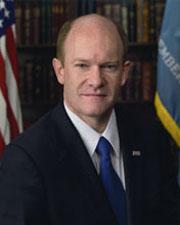 Sen. Christopher A. Coons (D-DE)
What it changes
1 change to S. 1392 · shown in the bill's text
Adds SEC. 3__. USE OF ENERGY AND WATER EFFICIENCY MEASURES IN FEDERAL BUILDINGS at the end of title III
Adds a sectionIn S. 1392 · Placed on Calendar Senate
(b) Administration.--Nothing in this section applies to the High Performance Computing Modernization Program (HPCMP) of the Department of Defense.
Inserted: SEC. 3__. USE OF ENERGY AND WATER EFFICIENCY MEASURES IN FEDERAL BUILDINGS.
Inserted: (a) Findings.--Congress finds the following:
Inserted: (1) Private sector funding and expertise can help address the energy efficiency challenges facing the United States.
Inserted: (2) The Federal Government spends more than $6 billion annually in energy costs.
Inserted: (3) Reducing Federal energy costs can help save money, create jobs, and reduce waste.
Inserted: (4) Energy savings performance contracts and utility energy savings contracts are tools for utilizing private sector investment to upgrade Federal facilities without any up-front cost to the taxpayer.
Inserted: (5) Performance contracting is a way to retrofit Federal buildings using private sector investment in the absence of appropriated dollars. Retrofits seek to reduce energy use, improve infrastructure, protect national security, and cut facility operations and maintenance costs.
Inserted: (b) Implementation of Identified Energy and Water Efficiency Measures.--Section 543(f)(4) of the National Energy Conservation Policy Act (42 U.S.C. 8253(f)(4)) is amended to read as follows:
Inserted: "(4) Implementation of identified energy and water efficiency measures.--
Inserted: "(A) In general.--Not later than 2 years after the completion of each evaluation under paragraph (3), each energy manager shall consider--
Inserted: "(i) implementing any energy- or water-saving or conservation measure that the Federal agency identified in the evaluation conducted under paragraph (3) that is life cycle cost-effective; and
Inserted: "(ii) bundling individual measures of varying paybacks together into combined projects.
Show 9 more inserted paragraphsShow less
Inserted: "(B) Measures not implemented.--The energy manager, as part of the certification system under paragraph (7) and using guidelines developed by the Secretary, shall provide reasons for not implementing any life cycle cost-effective measures under subparagraph (A).".
Inserted: (c) Annual Contracting Goal.--Section 543(f)(10)(C) of the National Energy Conservation Policy Act (42 U.S.C. 8253(f)(10)(C)) is amended--
Inserted: (1) by striking "Each Federal agency" and inserting the following:
Inserted: "(i) In general.--Each Federal agency"; and
Inserted: (2) by adding at the end the following new clauses:
Inserted: "(ii) Tracking.--Each Federal agency shall use the benchmarking systems selected or developed for the agency under paragraph (8) to track energy savings realized by the agency through the implementation of energy- or water-saving or conservation measures pursuant to paragraph (4), and shall submit information regarding such savings to the Secretary to be published on a public website of the Department of Energy.
Inserted: "(iii) Consideration.--Each Federal agency shall consider using energy savings performance contracts or utility energy service contracts to implement energy- or water-saving or conservation measures pursuant to paragraph (4).
Inserted: "(iv) Contracting goal.--It shall be the goal of the Federal Government, in the implementation of energy- or water-saving or conservation measures pursuant to paragraph (4), to enter into energy savings performance contracts or utility energy service contracts equal to $1,000,000,000 in each year during the 5-year period beginning on January 1, 2014.
Inserted: "(v) Report to congress.--Not later than September 30 of each year during the 5-year period referred to in clause (iv), each Federal agency shall submit to the Secretary information regarding progress made by the agency towards achieving the goal described in such clause. Not later than 60 days after each such September 30, the Secretary, acting through the Federal Energy Management Program, shall submit to the Committee on Energy and Commerce of the House of Representatives and the Committee on Energy and Natural Resources of the Senate a report describing the progress made by the Federal Government towards achieving such goal.".
Original wording
At the end of title III, add the following:
Read automatically from the Congressional Record. Check the original before relying on it.
As printed
SA 1840. Mr. COONS submitted an amendment intended to be proposed by him to the bill S. 1392, to promote energy savings in residential buildings and industry, and for other purposes; which was ordered to lie on the table; as follows:
At the end of title III, add the following:
SEC. 3__. USE OF ENERGY AND WATER EFFICIENCY MEASURES IN FEDERAL BUILDINGS.
(a) Findings.--Congress finds the following:
(1) Private sector funding and expertise can help address the energy efficiency challenges facing the United States.
(2) The Federal Government spends more than $6 billion annually in energy costs.
(3) Reducing Federal energy costs can help save money, create jobs, and reduce waste.
(4) Energy savings performance contracts and utility energy savings contracts are tools for utilizing private sector investment to upgrade Federal facilities without any up-front cost to the taxpayer.
(5) Performance contracting is a way to retrofit Federal buildings using private sector investment in the absence of appropriated dollars. Retrofits seek to reduce energy use, improve infrastructure, protect national security, and cut facility operations and maintenance costs.
(b) Implementation of Identified Energy and Water Efficiency Measures.--Section 543(f)(4) of the National Energy Conservation Policy Act (42 U.S.C. 8253(f)(4)) is amended to read as follows:
“(4) Implementation of identified energy and water efficiency measures.--
“(A) In general.--Not later than 2 years after the completion of each evaluation under paragraph (3), each energy manager shall consider--
“(i) implementing any energy- or water-saving or conservation measure that the Federal agency identified in the evaluation conducted under paragraph (3) that is life cycle cost-effective; and
“(ii) bundling individual measures of varying paybacks together into combined projects.
“(B) Measures not implemented.--The energy manager, as part of the certification system under paragraph (7) and using guidelines developed by the Secretary, shall provide reasons for not implementing any life cycle cost-effective measures under subparagraph (A).”.
(c) Annual Contracting Goal.--Section 543(f)(10)(C) of the National Energy Conservation Policy Act (42 U.S.C. 8253(f)(10)(C)) is amended--
(1) by striking “Each Federal agency” and inserting the following:
“(i) In general.--Each Federal agency”; and
(2) by adding at the end the following new clauses:
“(ii) Tracking.--Each Federal agency shall use the benchmarking systems selected or developed for the agency under paragraph (8) to track energy savings realized by the agency through the implementation of energy- or water-saving or conservation measures pursuant to paragraph (4), and shall submit information regarding such savings to the Secretary to be published on a public website of the Department of Energy.
“(iii) Consideration.--Each Federal agency shall consider using energy savings performance contracts or utility energy service contracts to implement energy- or water-saving or conservation measures pursuant to paragraph (4).
“(iv) Contracting goal.--It shall be the goal of the Federal Government, in the implementation of energy- or water-saving or conservation measures pursuant to paragraph (4), to enter into energy savings performance contracts or utility energy service contracts equal to $1,000,000,000 in each year during the 5-year period beginning on January 1, 2014.
“(v) Report to congress.--Not later than September 30 of each year during the 5-year period referred to in clause (iv), each Federal agency shall submit to the Secretary information regarding progress made by the agency towards achieving the goal described in such clause. Not later than 60 days after each such September 30, the Secretary, acting through the Federal Energy Management Program, shall submit to the Committee on Energy and Commerce of the House of Representatives and the Committee on Energy and Natural Resources of the Senate a report describing the progress made by the Federal Government towards achieving such goal.”.
Legislative Activity
Stay on top of the latest movement without scrolling through every action
Senate amendment submitted
August 1, 2013