S.Amdt. 19
What it does: Rewrites section 904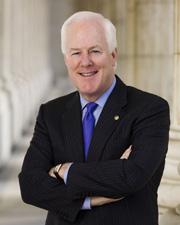 Sen. John Cornyn (R-TX)
What it changes
1 change to S. 47 · shown in the bill's text
Rewrites section 904
ReplacesIn S. 47 · Placed on Calendar Senate
SEC. 904. TRIBAL JURISDICTION OVER CRIMES OF DOMESTIC VIOLENCE.
[inserted: (a) In General.--]Title II of Public Law 90-284 (25 U.S.C. 1301 et seq.) (commonly known as the "Indian Civil Rights Act of 1968") is amended by adding at the end the following:
"SEC. 204. TRIBAL JURISDICTION OVER CRIMES OF DOMESTIC VIOLENCE.
"(a) Definitions.--In this section:
"(1) Dating violence.--The term 'dating violence' means violence committed by a person who is or has been in a social relationship of a romantic or intimate nature with the victim, as determined by the length of the relationship, the type of relationship, and the frequency of interaction between the persons involved in the relationship.
"(2) Domestic violence.--The term 'domestic violence' means violence committed by a current or former spouse or intimate partner of the victim, by a person with whom the victim shares a child in common, by a person who is cohabitating with or has cohabitated with the victim as a spouse or intimate partner, or by a person similarly situated to a spouse of the victim under the domestic- or
[struck: family- violence ][inserted: family-violence ]laws of an Indian tribe that has jurisdiction over the Indian country where the violence occurs."(3) Indian country.--The term 'Indian country' has the meaning given the term in section 1151 of title 18, United States Code.
"(4) Participating tribe.--The term 'participating tribe' means an Indian tribe that
[struck: elects to exercise special domestic violence criminal jurisdiction over the Indian country of that Indian tribe.][inserted: --]Inserted: "(A) elects to exercise special domestic violence criminal jurisdiction over the Indian country of that Indian tribe; and
Inserted: "(B) on request of the Indian tribe, is certified by the Attorney General to be a participating tribe for purposes of this section.
"(5) Protection order.--The term 'protection order'--
"(A) means any injunction, restraining order, or other order issued by a civil or criminal court for the purpose of preventing violent or threatening acts or harassment against, sexual violence against, contact or communication with, or physical proximity to, another person; and
1 unchanged paragraphHide unchanged text
"(B) includes any temporary or final order issued by a civil or criminal court, whether obtained by filing an independent action or as a pendent lite order in another proceeding, if the civil or criminal order was issued in response to a complaint, petition, or motion filed by or on behalf of a person seeking protection.
"(6) Special domestic violence criminal jurisdiction.--The term 'special domestic violence criminal jurisdiction' means the criminal jurisdiction that a participating tribe may exercise under this section but could not otherwise exercise.
"(7) Spouse or intimate partner.--The term 'spouse or intimate partner' has the meaning given the term in section 2266 of title 18, United States Code.
Struck: "(b) Nature of the Criminal Jurisdiction.--
Struck: "(1) In general.--Notwithstanding any other provision of law, in addition to all powers of self-government recognized and affirmed by sections 201 and 203, the powers of self- government of a participating tribe include the inherent power of that tribe, which is hereby recognized and affirmed, to exercise special domestic violence criminal jurisdiction over all persons.
Struck: "(2) Concurrent jurisdiction.--The exercise of special domestic violence criminal jurisdiction by a participating tribe shall be concurrent with the jurisdiction of the United States, of a State, or of both.
Inserted: "(b) Certification of Participating Tribes.--
Inserted: "(1) In general.--Not later than 120 days after receiving a request from an Indian tribe requesting designation as a participating tribe, the Attorney General shall--
Inserted: "(A) certify the Indian tribe as a participating tribe if the Attorney General determines that the Indian tribe is capable of providing all the rights afforded a defendant under subsection (e); and
Inserted: "(B) deny certification of the Indian tribe as a participating tribe if the Attorney General determines that the Indian tribe is not capable of providing all the rights afforded a defendant under subsection (e).
Inserted: "(2) Notice.--If the Attorney General denies certification to an Indian tribe under paragraph (1)(B), the Attorney General shall provide the Indian tribe with written notice of the determination, including the reasons of the Attorney General for not issuing the certification and guidance on how the Indian tribe could be certification.
Inserted: "(c) Nature of the Criminal Jurisdiction.--
Inserted: "(1) In general.--Notwithstanding any other provision of law, a participating tribe may exercise special domestic violence criminal jurisdiction over all persons.
Inserted: "(2) Concurrent jurisdiction.--Subject to subsection (e)(2), the exercise of special domestic violence criminal jurisdiction by a participating tribe shall be concurrent with the jurisdiction of the United States, of a State, or of both.
"(3) Applicability.--Nothing in this section--
"(A) creates or eliminates any Federal or State criminal jurisdiction over Indian country; or
"(B) [inserted: subject to paragraph (2), ]affects the authority of the United States or any State government that has been delegated authority by the United States to investigate and prosecute a criminal violation in Indian country.
"(4) Exceptions.--
"(A) Victim and defendant are both non-indians.--
"(i) In general.--A participating tribe may not exercise special domestic violence criminal jurisdiction over an alleged offense if neither the defendant nor the alleged victim is an Indian.
"(ii) Definition of victim.--In this subparagraph
[struck: and ][inserted: , ]with respect to a criminal proceeding in which a participating tribe exercises special domestic violence criminal jurisdiction based on a violation of a protection order, the term 'victim' means a person specifically protected by a protection order that the defendant allegedly violated."(B) Defendant lacks ties to the indian tribe.--A participating tribe may exercise special domestic violence criminal jurisdiction over a defendant only if the defendant--
"(i) resides in the Indian country of the participating tribe;
2 unchanged paragraphsHide unchanged text
"(ii) is employed in the Indian country of the participating tribe; or
"(iii) is a spouse, intimate partner, or dating partner of--
"(I) a member of the participating tribe; or
"(II) an Indian who resides in the Indian country of the participating tribe.
"(
[struck: c][inserted: d]) Criminal Conduct.--A participating tribe may exercise special domestic violence criminal jurisdiction over a defendant for criminal conduct that[struck: falls into one or more of the following categories:][inserted: --]Struck: "(1) Domestic violence and dating violence.--An act of domestic violence or dating violence that occurs in the Indian country of the participating tribe.
Struck: "(2) Violations of protection orders.--An act that--
Struck: "(A) occurs in the Indian country of the participating tribe; and
Struck: "(B) violates the portion of a protection order that--
Show 12 more struck paragraphsShow less
Struck: "(i) prohibits or provides protection against violent or threatening acts or harassment against, sexual violence against, contact or communication with, or physical proximity to, another person;
Struck: "(ii) was issued against the defendant;
Struck: "(iii) is enforceable by the participating tribe; and
Struck: "(iv) is consistent with section 2265(b) of title 18, United States Code.
Struck: "(d) Rights of Defendants.--In a criminal proceeding in which a participating tribe exercises special domestic violence criminal jurisdiction, the participating tribe shall provide to the defendant--
Struck: "(1) all applicable rights under this Act;
Struck: "(2) if a term of imprisonment of any length may be imposed, all rights described in section 202(c);
Struck: "(3) the right to a trial by an impartial jury that is drawn from sources that--
Struck: "(A) reflect a fair cross section of the community; and
Struck: "(B) do not systematically exclude any distinctive group in the community, including non-Indians; and
Struck: "(4) all other rights whose protection is necessary under the Constitution of the United States in order for Congress to recognize and affirm the inherent power of the participating tribe to exercise special domestic violence criminal jurisdiction over the defendant.
Struck: "(e) Petitions To Stay Detention.--
Inserted: "(1) is punishable by the laws of the participating tribe by a term of imprisonment not to exceed 1 year; and
Inserted: "(2) is covered by 1 or more of the following categories:
Inserted: "(A) Domestic violence and dating violence.--An act of domestic violence or dating violence that occurs in the Indian country of the participating tribe.
Inserted: "(B) Violations of protection orders.--An act that--
Inserted: "(i) occurs in the Indian country of the participating tribe; and
Inserted: "(ii) violates the portion of a protection order that--
Inserted: "(I) prohibits or provides protection against violent or threatening acts or harassment against, sexual violence against, contact or communication with, or physical proximity to, another person;
Inserted: "(II) was issued against the defendant;
Inserted: "(III) is enforceable by the participating tribe; and
Inserted: "(IV) is consistent with section 2265(b) of title 18, United States Code.
Inserted: "(e) Rights of Defendants.--
Inserted: "(1) In general.--In a criminal proceeding in which a participating tribe exercises special domestic violence criminal jurisdiction, the participating tribe shall provide to the defendant--
Show 9 more inserted paragraphsShow less
Inserted: "(A) all applicable rights under this Act;
Inserted: "(B) except as provided in subparagraph (C), all rights described in section 202(c); and
Inserted: "(C) all rights under the Constitution of the United States afforded criminal defendants in State courts, as those rights are interpreted by the courts of the United States.
Inserted: "(2) Other rights.--In addition to rights described in paragraph (1), a defendant over whom a participating tribe exercises special domestic violence criminal jurisdiction shall have all other rights the protection of which is necessary under the Constitution of the United States in order for the participating tribe to exercise special domestic violence criminal jurisdiction over the defendant.
Inserted: "(3) Judicial review of judgment and sentence.--
Inserted: "(A) In general.--Not later than 60 days after the date on which a tribal court enters a final judgment against a defendant in a criminal proceeding in which a participating tribe exercises special domestic violence criminal jurisdiction, the defendant may petition the United States court of appeals for the circuit in which the tribal court is located for review of the judgment and sentence against the defendant.
Inserted: "(B) Issues for review.--The issues for review in a proceeding initiated by a defendant under subparagraph (A) are limited to violations of any right of a defendant secured by this Act, including any right or privilege secured by this section and subsection.
Inserted: "(C) Notice to defendant.--At the time of imposition of judgment and sentence, the court in a criminal proceeding in which the participating tribe is exercising special domestic violence criminal jurisdiction shall inform the defendant of the right to petition for review of the judgment and sentence under this paragraph.
Inserted: "(f) Petitions To Stay Detention.--
"(1) In general.--A person who has filed a petition for a writ of habeas corpus in a court of the United States under section 203 may petition that court to stay further detention of that person by the participating tribe.
"(2) Grant of stay.--A court shall grant a stay described in paragraph (1) if the court--
1 unchanged paragraphHide unchanged text
"(A) finds that there is a substantial likelihood that the habeas corpus petition will be granted; and
"(B) after giving each alleged victim in the matter an opportunity to be heard, finds by clear and convincing evidence that under conditions imposed by the court, the petitioner is not likely to flee or pose a danger to any person or the community if released.
"(3) Notice.--An Indian tribe that has ordered the detention of any person has a duty to timely notify such person of his rights and privileges under this subsection and under section 203.
Struck: "(f) Grants to Tribal Governments.--The Attorney General may award grants to the governments of Indian tribes (or to authorized designees of those governments)--
Inserted: "(g) Subject to Removal.--
Inserted: "(1) In general.--A defendant charged with a crime under this section may petition the appropriate district court of the United States for removal pursuant to section 3245 of title 18, United States Code.
Inserted: "(2) Notice.--Not later than the time at which the defendant makes an initial appearance before the court of the participating tribe or 48 hours after the time of arrest, whichever is earlier, the defendant shall be notified of the right of removal under this subsection.
Inserted: "(h) Grants to Tribal Governments.--The Attorney General may award grants to the governments of Indian tribes--
"(1) to strengthen tribal criminal justice systems to assist Indian tribes in exercising special domestic violence criminal jurisdiction, including--
"(A) law enforcement (including the capacity of law enforcement or court personnel to enter information into and obtain information from national crime information databases);
8 unchanged paragraphsHide unchanged text
"(B) prosecution;
"(C) trial and appellate courts;
"(D) probation systems;
"(E) detention and correctional facilities;
"(F) alternative rehabilitation centers;
"(G) culturally appropriate services and assistance for victims and their families; and
"(H) criminal codes and rules of criminal procedure, appellate procedure, and evidence;
"(2) to provide indigent criminal defendants with the effective assistance of licensed defense counsel, at no cost to the defendant, in criminal proceedings in which a participating tribe prosecutes a crime of domestic violence or dating violence or a criminal violation of a protection order;
"(3) to ensure that, in criminal proceedings in which a participating tribe exercises special domestic violence criminal jurisdiction, jurors are summoned, selected, and instructed in a manner consistent with all applicable requirements; and
"(4) to accord victims of domestic violence, dating violence, and violations of protection orders rights that are similar to the rights of a crime victim described in section 3771(a) of title 18, United States Code, consistent with tribal law and custom.
"(
[struck: g][inserted: i]) Supplement, Not Supplant.--Amounts made available under this section shall supplement and not supplant any other Federal, State, tribal, or local government amounts made available to carry out activities described in this section.Struck: "(h) Authorization of Appropriations.--There are authorized to be appropriated $5,000,000 for each of fiscal years 2014 through 2018 to carry out subsection (f) and to provide training, technical assistance, data collection, and evaluation of the criminal justice systems of participating tribes.".
Inserted: "(j) Prohibition on Lobbying Activity.--Amounts authorized to be appropriated under this section may not be used by any grant recipient to--
Inserted: "(1) lobby any representative of the Department of Justice regarding the award of grant funding under this section; or
Inserted: "(2) lobby any representative of a Federal, State, local, or tribal government regarding the award of grant funding under this section.
Inserted: "(k) Authorization of Appropriations.--There are authorized to be appropriated $5,000,000 for each of fiscal years 2014 through 2018 to carry out subsection (h) and to provide training, technical assistance, data collection, and evaluation of the criminal justice systems of participating tribes.".
Inserted: (b) Removal of Criminal Prosecutions.--Chapter 211 of title 18, United States Code, is amended by adding at the end the following:
Inserted: "Sec. 3245. Removal of criminal prosecutions brought under the Indian Civil Rights Act
Inserted: "(a) Definitions.--In this section:
Inserted: "(1) Covered case.--The term 'covered case' means any tribal domestic violence criminal proceeding brought under section 204 of Public Law 90-284 (commonly known as the 'Indian Civil Rights Act of 1968') over which the United States has concurrent jurisdiction under subsection (b)(2) of that section.
Inserted: "(2) Domestic violence.--The term 'domestic violence' has the meaning given the term in section 40002 of the Violence Against Women Act of 1994 (42 U.S.C. 13925).
Inserted: "(b) Removal Brought by Defendant in Tribal Court.--
Inserted: "(1) Notice of removal.--A defendant charged with a crime pursuant to section 204 of Public Law 90-284 (commonly known as the 'Indian Civil Rights Act of 1968') who seeks removal of the case from a tribal court to a district court of the United States shall file in the district court of the United States for the district and division within which the prosecution is pending--
Inserted: "(A) a notice of removal signed pursuant to Rule 11 of the Federal Rules of Civil Procedure that contains a short and plain statement of the grounds for removal under paragraph (2); and
Show 43 more inserted paragraphsShow less
Inserted: "(B) a copy of all processes, pleadings, and orders served upon the defendant in that action.
Inserted: "(2) Grounds for removal.--
Inserted: "(A) In general.--Subject to subparagraph (B), no case shall be removed unless the defendant has proven by a preponderance of the evidence that a right guaranteed to the defendant under section 204 of Public Law 90-284 (commonly known as the 'Indian Civil Rights Act of 1968') has been or is likely to be violated.
Inserted: "(B) Exception.--Subparagraph (A) shall not apply to a past violation if the participating tribe can prove by a preponderance of the evidence that the participating tribe has adequately remedied the violation.
Inserted: "(3) Requirements.--
Inserted: "(A) Filing.--
Inserted: "(i) In general.--Subject to clause (ii), a defendant seeking removal from a tribal court of a criminal prosecution for domestic violence shall file a notice of removal described in paragraph (1) not later than the time at which a trial begins in the tribal court.
Inserted: "(ii) Relief for good cause.--On the request of a defendant seeking removal from a tribal court of a criminal prosecution for domestic violence, the district court of the United States with jurisdiction may, for good cause, enter an order granting the defendant leave to file after the time period described in clause (i) has expired.
Inserted: "(B) Administration.--
Inserted: "(i) In general.--A notice of removal filed under subparagraph (A) shall include all grounds for the removal.
Inserted: "(ii) Effect.--A failure to state any grounds for removal that exist at the time of the filing of the notice shall constitute a waiver of those grounds.
Inserted: "(iii) Second notice filing.--A defendant may only file a second notice for removal on grounds that did not exist at the time on which the defendant submitted the original notice.
Inserted: "(iv) Relief for good cause.--On the request of a defendant seeking removal from a tribal court of a criminal prosecution for domestic violence, the district court of the United States with jurisdiction may, for good cause, waive the requirements of clauses (i) through (iii).
Inserted: "(C) Effect on tribal court proceedings.--Unless otherwise ordered by the relevant district court of the United States, the filing of a notice of removal under this subsection shall not prevent a tribal court in which the prosecution is pending from proceeding further, except that a judgment of conviction shall not be entered in the case unless the prosecution has been remanded.
Inserted: "(D) District court duties.--
Inserted: "(i) In general.--The district court of the United States in which a notice is filed under this subsection shall--
Inserted: "(I) examine the notice promptly; and
Inserted: "(II) if the district court of the United States determines, based on the notice and any exhibits annexed to the notice, that removal should not be permitted, the district court shall make an order for summary remand of the prosecution.
Inserted: "(ii) Summary remand.--
Inserted: "(I) In general.--If, after a review of the notice under clause (i), the district court of the United States in which the notice is filed determines not to order a summary remand of the prosecution, the district court of the United States shall--
Inserted: "(aa) order an evidentiary hearing to be held promptly; and
Inserted: "(bb) after the evidentiary hearing, dispose of the prosecution as justice requires.
Inserted: "(iii) Notification to tribal court.--If the district court of the United States in which the notice is filed determines to grant the removal of the prosecution--
Inserted: "(I) the district court of the United States shall notify the tribal court in which prosecution is pending of that decision; and
Inserted: "(II) the tribal court shall proceed no further with the prosecution.
Inserted: "(E) Tribal court duties.--
Inserted: "(i) In general.--Not later than 96 hours after a tribal court receives a notice of removal under this subsection, the tribal court shall--
Inserted: "(I) transfer custody of the defendant to Federal authorities; or
Inserted: "(II) release the defendant from custody.
Inserted: "(ii) Orders.--On the transfer or release of a defendant under clause (i), the tribal court may issue a protection order (as defined in section 204 of Public Law 90-284) or an order excluding the defendant from the Indian country of the participating tribe.
Inserted: "(c) Removal Brought by the United States.--
Inserted: "(1) In general.--The United States attorney for the district and division within which a covered case is pending may remove that covered case to the relevant district court of the United States by filing a notice of removal in the district court of the United States and in the tribal court in which the covered case is pending.
Inserted: "(2) Requirements.--
Inserted: "(A) In general.--A United States attorney shall file a notice of removal under this subsection not later than the time at which a trial begins in the tribal court.
Inserted: "(B) Administration.--A notice of removal filed under this subsection shall identify the covered case and state that the tribal court proceeding is being removed to the district court of the United States on the grounds that the United States has commenced or intends to commence a criminal proceeding against the defendant based on some or all of the same acts of domestic violence that gave rise to the tribal court proceeding.
Inserted: "(3) Effect of notice.--Upon receipt of a notice under paragraph (1), the tribal court shall proceed no further with the covered case.
Inserted: "(d) Writ of Habeas Corpus.--If a defendant is in actual custody on process issued by the tribal court--
Inserted: "(1) the district court of the United States with jurisdiction over a proceeding under subsections (b) and (c) shall issue a writ of habeas corpus for the defendant; and
Inserted: "(2) the marshal of the district court of the United States described in paragraph (1) shall--
Inserted: "(A) take the defendant into custody; and
Inserted: "(B) deliver a copy of the writ of habeas corpus to the clerk of the applicable tribal court.".
Inserted: (c) Clerical Amendment.--The table of sections for chapter 211 of title 18, United States Code, is amended by inserting after the item relating to section 3244 the following:
Inserted: "Sec. 3245. Removal of criminal prosecutions brought under the Indian Civil Rights Act.".
Original wording
Strike section 904 and insert the following:
Read automatically from the Congressional Record. Check the original before relying on it.
As printed
SA 19. Mr. CORNYN (for himself and Mr. Crapo) submitted an amendment intended to be proposed by him to the bill S. 47, to reauthorize the Violence Against Women Act of 1994; which was ordered to lie on the table; as follows:
Strike section 904 and insert the following:
SEC. 904. TRIBAL JURISDICTION OVER CRIMES OF DOMESTIC VIOLENCE.
(a) In General.--Title II of Public Law 90-284 (25 U.S.C. 1301 et seq.) (commonly known as the “Indian Civil Rights Act of 1968”) is amended by adding at the end the following:
“SEC. 204. TRIBAL JURISDICTION OVER CRIMES OF DOMESTIC VIOLENCE.
“(a) Definitions.--In this section:
“(1) Dating violence.--The term ‘dating violence' means violence committed by a person who is or has been in a social relationship of a romantic or intimate nature with the victim, as determined by the length of the relationship, the type of relationship, and the frequency of interaction between the persons involved in the relationship.
“(2) Domestic violence.--The term ‘domestic violence' means violence committed by a current or former spouse or intimate partner of the victim, by a person with whom the victim shares a child in common, by a person who is cohabitating with or has cohabitated with the victim as a spouse or intimate partner, or by a person similarly situated to a spouse of the victim under the domestic- or family-violence laws of an Indian tribe that has jurisdiction over the Indian country where the violence occurs.
“(3) Indian country.--The term ‘Indian country' has the meaning given the term in section 1151 of title 18, United States Code.
“(4) Participating tribe.--The term ‘participating tribe' means an Indian tribe that--
“(A) elects to exercise special domestic violence criminal jurisdiction over the Indian country of that Indian tribe; and
“(B) on request of the Indian tribe, is certified by the Attorney General to be a participating tribe for purposes of this section.
“(5) Protection order.--The term ‘protection order'--
“(A) means any injunction, restraining order, or other order issued by a civil or criminal court for the purpose of preventing violent or threatening acts or harassment against, sexual violence against, contact or communication with, or physical proximity to, another person; and
“(B) includes any temporary or final order issued by a civil or criminal court, whether obtained by filing an independent action or as a pendent lite order in another proceeding, if the civil or criminal order was issued in response to a complaint, petition, or motion filed by or on behalf of a person seeking protection.
“(6) Special domestic violence criminal jurisdiction.--The term ‘special domestic violence criminal jurisdiction' means the criminal jurisdiction that a participating tribe may exercise under this section but could not otherwise exercise.
“(7) Spouse or intimate partner.--The term ‘spouse or intimate partner' has the meaning given the term in section 2266 of title 18, United States Code.
“(b) Certification of Participating Tribes.--
“(1) In general.--Not later than 120 days after receiving a request from an Indian tribe requesting designation as a participating tribe, the Attorney General shall--
“(A) certify the Indian tribe as a participating tribe if the Attorney General determines that the Indian tribe is capable of providing all the rights afforded a defendant under subsection (e); and
“(B) deny certification of the Indian tribe as a participating tribe if the Attorney General determines that the Indian tribe is not capable of providing all the rights afforded a defendant under subsection (e).
“(2) Notice.--If the Attorney General denies certification to an Indian tribe under paragraph (1)(B), the Attorney General shall provide the Indian tribe with written notice of the determination, including the reasons of the Attorney General for not issuing the certification and guidance on how the Indian tribe could be certification.
“(c) Nature of the Criminal Jurisdiction.--
“(1) In general.--Notwithstanding any other provision of law, a participating tribe may exercise special domestic violence criminal jurisdiction over all persons.
“(2) Concurrent jurisdiction.--Subject to subsection (e)(2), the exercise of special domestic violence criminal jurisdiction by a participating tribe shall be concurrent with the jurisdiction of the United States, of a State, or of both.
“(3) Applicability.--Nothing in this section--
“(A) creates or eliminates any Federal or State criminal jurisdiction over Indian country; or
“(B) subject to paragraph (2), affects the authority of the United States or any State government that has been delegated authority by the United States to investigate and prosecute a criminal violation in Indian country.
“(4) Exceptions.--
“(A) Victim and defendant are both non-indians.--
“(i) In general.--A participating tribe may not exercise special domestic violence criminal jurisdiction over an alleged offense if neither the defendant nor the alleged victim is an Indian.
“(ii) Definition of victim.--In this subparagraph, with respect to a criminal proceeding in which a participating tribe exercises special domestic violence criminal jurisdiction based on a violation of a protection order, the term ‘victim' means a person specifically protected by a protection order that the defendant allegedly violated.
“(B) Defendant lacks ties to the indian tribe.--A participating tribe may exercise special domestic violence criminal jurisdiction over a defendant only if the defendant--
“(i) resides in the Indian country of the participating tribe;
“(ii) is employed in the Indian country of the participating tribe; or
“(iii) is a spouse, intimate partner, or dating partner of--
“(I) a member of the participating tribe; or
“(II) an Indian who resides in the Indian country of the participating tribe.
“(d) Criminal Conduct.--A participating tribe may exercise special domestic violence criminal jurisdiction over a defendant for criminal conduct that--
“(1) is punishable by the laws of the participating tribe by a term of imprisonment not to exceed 1 year; and
“(2) is covered by 1 or more of the following categories:
“(A) Domestic violence and dating violence.--An act of domestic violence or dating violence that occurs in the Indian country of the participating tribe.
“(B) Violations of protection orders.--An act that--
“(i) occurs in the Indian country of the participating tribe; and
“(ii) violates the portion of a protection order that--
“(I) prohibits or provides protection against violent or threatening acts or harassment against, sexual violence against, contact or communication with, or physical proximity to, another person;
“(II) was issued against the defendant;
“(III) is enforceable by the participating tribe; and
“(IV) is consistent with section 2265(b) of title 18, United States Code.
“(e) Rights of Defendants.--
“(1) In general.--In a criminal proceeding in which a participating tribe exercises special domestic violence criminal jurisdiction, the participating tribe shall provide to the defendant--
“(A) all applicable rights under this Act;
“(B) except as provided in subparagraph (C), all rights described in section 202(c); and
“(C) all rights under the Constitution of the United States afforded criminal defendants in State courts, as those rights are interpreted by the courts of the United States.
“(2) Other rights.--In addition to rights described in paragraph (1), a defendant over whom a participating tribe exercises special domestic violence criminal jurisdiction shall have all other rights the protection of which is necessary under the Constitution of the United States in order for the participating tribe to exercise special domestic violence criminal jurisdiction over the defendant.
“(3) Judicial review of judgment and sentence.--
“(A) In general.--Not later than 60 days after the date on which a tribal court enters a final judgment against a defendant in a criminal proceeding in which a participating tribe exercises special domestic violence criminal jurisdiction, the defendant may petition the United States court of appeals for the circuit in which the tribal court is located for review of the judgment and sentence against the defendant.
“(B) Issues for review.--The issues for review in a proceeding initiated by a defendant under subparagraph (A) are limited to violations of any right of a defendant secured by this Act, including any right or privilege secured by this section and subsection.
“(C) Notice to defendant.--At the time of imposition of judgment and sentence, the court in a criminal proceeding in which the participating tribe is exercising special domestic violence criminal jurisdiction shall inform the defendant of the right to petition for review of the judgment and sentence under this paragraph.
“(f) Petitions To Stay Detention.--
“(1) In general.--A person who has filed a petition for a writ of habeas corpus in a court of the United States under section 203 may petition that court to stay further detention of that person by the participating tribe.
“(2) Grant of stay.--A court shall grant a stay described in paragraph (1) if the court--
“(A) finds that there is a substantial likelihood that the habeas corpus petition will be granted; and
“(B) after giving each alleged victim in the matter an opportunity to be heard, finds by clear and convincing evidence that under conditions imposed by the court, the petitioner is not likely to flee or pose a danger to any person or the community if released.
“(3) Notice.--An Indian tribe that has ordered the detention of any person has a duty to timely notify such person of his rights and privileges under this subsection and under section 203.
“(g) Subject to Removal.--
“(1) In general.--A defendant charged with a crime under this section may petition the appropriate district court of the United States for removal pursuant to section 3245 of title 18, United States Code.
“(2) Notice.--Not later than the time at which the defendant makes an initial appearance before the court of the participating tribe or 48 hours after the time of arrest, whichever is earlier, the defendant shall be notified of the right of removal under this subsection.
“(h) Grants to Tribal Governments.--The Attorney General may award grants to the governments of Indian tribes--
“(1) to strengthen tribal criminal justice systems to assist Indian tribes in exercising special domestic violence criminal jurisdiction, including--
“(A) law enforcement (including the capacity of law enforcement or court personnel to enter information into and obtain information from national crime information databases);
“(B) prosecution;
“(C) trial and appellate courts;
“(D) probation systems;
“(E) detention and correctional facilities;
“(F) alternative rehabilitation centers;
“(G) culturally appropriate services and assistance for victims and their families; and
“(H) criminal codes and rules of criminal procedure, appellate procedure, and evidence;
“(2) to provide indigent criminal defendants with the effective assistance of licensed defense counsel, at no cost to the defendant, in criminal proceedings in which a participating tribe prosecutes a crime of domestic violence or dating violence or a criminal violation of a protection order;
“(3) to ensure that, in criminal proceedings in which a participating tribe exercises special domestic violence criminal jurisdiction, jurors are summoned, selected, and instructed in a manner consistent with all applicable requirements; and
“(4) to accord victims of domestic violence, dating violence, and violations of protection orders rights that are similar to the rights of a crime victim described in section 3771(a) of title 18, United States Code, consistent with tribal law and custom.
“(i) Supplement, Not Supplant.--Amounts made available under this section shall supplement and not supplant any other Federal, State, tribal, or local government amounts made available to carry out activities described in this section.
“(j) Prohibition on Lobbying Activity.--Amounts authorized to be appropriated under this section may not be used by any grant recipient to--
“(1) lobby any representative of the Department of Justice regarding the award of grant funding under this section; or
“(2) lobby any representative of a Federal, State, local, or tribal government regarding the award of grant funding under this section.
“(k) Authorization of Appropriations.--There are authorized to be appropriated $5,000,000 for each of fiscal years 2014 through 2018 to carry out subsection (h) and to provide training, technical assistance, data collection, and evaluation of the criminal justice systems of participating tribes.”.
(b) Removal of Criminal Prosecutions.--Chapter 211 of title 18, United States Code, is amended by adding at the end the following:
“Sec. 3245. Removal of criminal prosecutions brought under
the Indian Civil Rights Act
“(a) Definitions.--In this section:
“(1) Covered case.--The term ‘covered case' means any tribal domestic violence criminal proceeding brought under section 204 of Public Law 90-284 (commonly known as the ‘Indian Civil Rights Act of 1968') over which the United States has concurrent jurisdiction under subsection (b)(2) of that section.
“(2) Domestic violence.--The term ‘domestic violence' has the meaning given the term in section 40002 of the Violence Against Women Act of 1994 (42 U.S.C. 13925).
“(b) Removal Brought by Defendant in Tribal Court.--
“(1) Notice of removal.--A defendant charged with a crime pursuant to section 204 of Public Law 90-284 (commonly known as the ‘Indian Civil Rights Act of 1968') who seeks removal of the case from a tribal court to a district court of the United States shall file in the district court of the United States for the district and division within which the prosecution is pending--
“(A) a notice of removal signed pursuant to Rule 11 of the Federal Rules of Civil Procedure that contains a short and plain statement of the grounds for removal under paragraph (2); and
“(B) a copy of all processes, pleadings, and orders served upon the defendant in that action.
“(2) Grounds for removal.--
“(A) In general.--Subject to subparagraph (B), no case shall be removed unless the defendant has proven by a preponderance of the evidence that a right guaranteed to the defendant under section 204 of Public Law 90-284 (commonly known as the ‘Indian Civil Rights Act of 1968') has been or is likely to be violated.
“(B) Exception.--Subparagraph (A) shall not apply to a past violation if the participating tribe can prove by a preponderance of the evidence that the participating tribe has adequately remedied the violation.
“(3) Requirements.--
“(A) Filing.--
“(i) In general.--Subject to clause (ii), a defendant seeking removal from a tribal court of a criminal prosecution for domestic violence shall file a notice of removal described in paragraph (1) not later than the time at which a trial begins in the tribal court.
“(ii) Relief for good cause.--On the request of a defendant seeking removal from a tribal court of a criminal prosecution for domestic violence, the district court of the United States with jurisdiction may, for good cause, enter an order granting the defendant leave to file after the time period described in clause (i) has expired.
“(B) Administration.--
“(i) In general.--A notice of removal filed under subparagraph (A) shall include all grounds for the removal.
“(ii) Effect.--A failure to state any grounds for removal that exist at the time of the filing of the notice shall constitute a waiver of those grounds.
“(iii) Second notice filing.--A defendant may only file a second notice for removal on grounds that did not exist at the time on which the defendant submitted the original notice.
“(iv) Relief for good cause.--On the request of a defendant seeking removal from a tribal court of a criminal prosecution for domestic violence, the district court of the United States with jurisdiction may, for good cause, waive the requirements of clauses (i) through (iii).
“(C) Effect on tribal court proceedings.--Unless otherwise ordered by the relevant district court of the United States, the filing of a notice of removal under this subsection shall not prevent a tribal court in which the prosecution is pending from proceeding further, except that a judgment of conviction shall not be entered in the case unless the prosecution has been remanded.
“(D) District court duties.--
“(i) In general.--The district court of the United States in which a notice is filed under this subsection shall--
“(I) examine the notice promptly; and
“(II) if the district court of the United States determines, based on the notice and any exhibits annexed to the notice, that removal should not be permitted, the district court shall make an order for summary remand of the prosecution.
“(ii) Summary remand.--
“(I) In general.--If, after a review of the notice under clause (i), the district court of the United States in which the notice is filed determines not to order a summary remand of the prosecution, the district court of the United States shall--
“(aa) order an evidentiary hearing to be held promptly; and
“(bb) after the evidentiary hearing, dispose of the prosecution as justice requires.
“(iii) Notification to tribal court.--If the district court of the United States in which the notice is filed determines to grant the removal of the prosecution--
“(I) the district court of the United States shall notify the tribal court in which prosecution is pending of that decision; and
“(II) the tribal court shall proceed no further with the prosecution.
“(E) Tribal court duties.--
“(i) In general.--Not later than 96 hours after a tribal court receives a notice of removal under this subsection, the tribal court shall--
“(I) transfer custody of the defendant to Federal authorities; or
“(II) release the defendant from custody.
“(ii) Orders.--On the transfer or release of a defendant under clause (i), the tribal court may issue a protection order (as defined in section 204 of Public Law 90-284) or an order excluding the defendant from the Indian country of the participating tribe.
“(c) Removal Brought by the United States.--
“(1) In general.--The United States attorney for the district and division within which a covered case is pending may remove that covered case to the relevant district court of the United States by filing a notice of removal in the district court of the United States and in the tribal court in which the covered case is pending.
“(2) Requirements.--
“(A) In general.--A United States attorney shall file a notice of removal under this subsection not later than the time at which a trial begins in the tribal court.
“(B) Administration.--A notice of removal filed under this subsection shall identify the covered case and state that the tribal court proceeding is being removed to the district court of the United States on the grounds that the United States has commenced or intends to commence a criminal proceeding against the defendant based on some or all of the same acts of domestic violence that gave rise to the tribal court proceeding.
“(3) Effect of notice.--Upon receipt of a notice under paragraph (1), the tribal court shall proceed no further with the covered case.
“(d) Writ of Habeas Corpus.--If a defendant is in actual custody on process issued by the tribal court--
“(1) the district court of the United States with jurisdiction over a proceeding under subsections (b) and (c) shall issue a writ of habeas corpus for the defendant; and
“(2) the marshal of the district court of the United States described in paragraph (1) shall--
“(A) take the defendant into custody; and
“(B) deliver a copy of the writ of habeas corpus to the clerk of the applicable tribal court.”.
(c) Clerical Amendment.--The table of sections for chapter 211 of title 18, United States Code, is amended by inserting after the item relating to section 3244 the following:
“Sec. 3245. Removal of criminal prosecutions brought under the Indian Civil Rights Act.”.
Legislative Activity
Stay on top of the latest movement without scrolling through every action
Senate amendment submitted
February 7, 2013