S.Amdt. 2189
What it does: Adds SEC. 1237. SENSE OF CONGRESS ON IRANIAN NUCLEAR PROGRAM at the end of subtitle C of title XII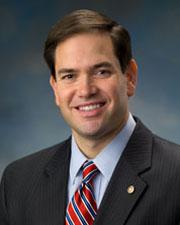 Sen. Marco Rubio (R-FL)
What it changes
1 change to S. 1197 · shown in the bill's text
Adds SEC. 1237. SENSE OF CONGRESS ON IRANIAN NUCLEAR PROGRAM at the end of subtitle C of title XII
Adds a sectionIn S. 1197 · Placed on Calendar Senate
(2) the Committee on Armed Services and the Committee on Foreign Affairs of the House of Representatives.
Inserted: SEC. 1237. SENSE OF CONGRESS ON IRANIAN NUCLEAR PROGRAM.
Inserted: (a) Findings.--Congress makes the following findings:
Inserted: (1) Diplomats from the Islamic Republic of Iran, the European Union, the United States, the United Kingdom, Germany, France, China, and Russia continue to discuss the Government of Iran's illicit nuclear weapons program.
Inserted: (2) President of Iran Hasan Rouhani has in the past bragged about his success in buying time for Iran to make nuclear advances.
Inserted: (3) Iranian Supreme Leader Ayatollah Khamenei, who retains control over Iran's nuclear program, recently claimed that Iran did not desire nuclear weapons but said that if Iran "intended to possess nuclear weapons, no power could stop us".
Inserted: (4) The Government of Iran continues to expand Iran's nuclear and missile programs in violation of multiple United Nations Security Council resolutions.
Inserted: (5) The Government of Iran has a decades-long track record of cheating on and violating commitments regarding its nuclear program and has used more than 10 years of diplomatic negotiations to buy more time to expand its nuclear weapons program.
Inserted: (6) Iran remains the world's number one exporter of terrorism and as recently as 2011 was plotting to assassinate a foreign official on United States soil.
Inserted: (7) Over the last three decades, the Government of Iran and its terrorist proxies have been responsible for the deaths of Americans.
Inserted: (8) The Government of Iran and its terrorist proxies continue to provide military and financial support to the regime of Bashar al-Assad in Syria, aiding his regime's mass killing of civilians.
Inserted: (9) The Government of Iran continues to sow instability in its region and to threaten its neighbors, including United States allies such as Israel.
Inserted: (10) The Government of Iran denies its people their fundamental freedoms, including freedom of the press, freedom of assembly, freedom of religion, and freedom of conscience.
Show 12 more inserted paragraphsShow less
Inserted: (11) International and United States sanctions imposed on Iran have assisted in bringing Iran to the negotiating table.
Inserted: (12) Other countries, such as North Korea, have used diplomatic talks regarding their nuclear programs to allow time for the development of nuclear weapons.
Inserted: (13) Based on the Government of Iran's stockpile of low enriched uranium and its plan to continue installing advanced centrifuges, the Government of Iran could agree to suspend all enrichment above 3.5 percent and still be in a position to produce weapons-grade uranium without detection by the middle of next year.
Inserted: (14) If the Government of Iran starts up its heavy water reactor in Arak, it could establish an alternate pathway to a nuclear weapon, producing enough plutonium each year for one or two nuclear weapons.
Inserted: (15) Nineteen other nations currently access peaceful nuclear energy without any enrichment or reprocessing activities on their soil.
Inserted: (16) The Government of Iran could likewise achieve access to peaceful nuclear energy without enrichment or reprocessing activities on its own soil.
Inserted: (b) Sense of Congress.--It is the sense of Congress that--
Inserted: (1) it shall be the policy of the United States that the Government of Iran will not be allowed to develop a nuclear weapon and that all instruments of United States power and influence remain on the table to prevent this outcome;
Inserted: (2) the Government of Iran does not have an absolute or inherent right to enrichment and reprocessing technologies under the Treaty on the Non-Proliferation of Nuclear Weapons, done at Washington, London, and Moscow July 1, 1968, and entered into force March 5, 1970 (commonly known as the "Nuclear Non-Proliferation Treaty");
Inserted: (3) relief of sanctions related to Iran's nuclear program imposed upon Iran by the United States should only be provided once Iran has completely abandoned its nuclear weapons program, including any enrichment or reprocessing capability, and has provided complete transparency to the International Atomic Energy Agency regarding its work on weaponization of a nuclear device; and
Inserted: (4) until the Government of Iran has taken the actions set forth in paragraph (3), Congress should move to pass a new round of additional sanctions without delay.
Inserted: (c) Rule of Construction.--Nothing in this section shall be construed as an authorization for the use of force or declaration of war.
Original wording
At the end of subtitle C of title XII, add the following:
Read automatically from the Congressional Record. Check the original before relying on it.
As printed
SA 2189. Mr. RUBIO (for himself, Mr. Cruz, Mr. Roberts, Mr. Hatch, and Mr. Cornyn) submitted an amendment intended to be proposed by him to the bill S. 1197, to authorize appropriations for fiscal year 2014 for military activities of the Department of Defense, for military construction, and for defense activities of the Department of Energy, to prescribe military personnel strengths for such fiscal year, and for other purposes; which was ordered to lie on the table; as follows:
At the end of subtitle C of title XII, add the following:
SEC. 1237. SENSE OF CONGRESS ON IRANIAN NUCLEAR PROGRAM.
(a) Findings.--Congress makes the following findings:
(1) Diplomats from the Islamic Republic of Iran, the European Union, the United States, the United Kingdom, Germany, France, China, and Russia continue to discuss the Government of Iran's illicit nuclear weapons program.
(2) President of Iran Hasan Rouhani has in the past bragged about his success in buying time for Iran to make nuclear advances.
(3) Iranian Supreme Leader Ayatollah Khamenei, who retains control over Iran's nuclear program, recently claimed that Iran did not desire nuclear weapons but said that if Iran “intended to possess nuclear weapons, no power could stop us”.
(4) The Government of Iran continues to expand Iran's nuclear and missile programs in violation of multiple United Nations Security Council resolutions.
(5) The Government of Iran has a decades-long track record of cheating on and violating commitments regarding its nuclear program and has used more than 10 years of diplomatic negotiations to buy more time to expand its nuclear weapons program.
(6) Iran remains the world's number one exporter of terrorism and as recently as 2011 was plotting to assassinate a foreign official on United States soil.
(7) Over the last three decades, the Government of Iran and its terrorist proxies have been responsible for the deaths of Americans.
(8) The Government of Iran and its terrorist proxies continue to provide military and financial support to the regime of Bashar al-Assad in Syria, aiding his regime's mass killing of civilians.
(9) The Government of Iran continues to sow instability in its region and to threaten its neighbors, including United States allies such as Israel.
(10) The Government of Iran denies its people their fundamental freedoms, including freedom of the press, freedom of assembly, freedom of religion, and freedom of conscience.
(11) International and United States sanctions imposed on Iran have assisted in bringing Iran to the negotiating table.
(12) Other countries, such as North Korea, have used diplomatic talks regarding their nuclear programs to allow time for the development of nuclear weapons.
(13) Based on the Government of Iran's stockpile of low enriched uranium and its plan to continue installing advanced centrifuges, the Government of Iran could agree to suspend all enrichment above 3.5 percent and still be in a position to produce weapons-grade uranium without detection by the middle of next year.
(14) If the Government of Iran starts up its heavy water reactor in Arak, it could establish an alternate pathway to a nuclear weapon, producing enough plutonium each year for one or two nuclear weapons.
(15) Nineteen other nations currently access peaceful nuclear energy without any enrichment or reprocessing activities on their soil.
(16) The Government of Iran could likewise achieve access to peaceful nuclear energy without enrichment or reprocessing activities on its own soil.
(b) Sense of Congress.--It is the sense of Congress that--
(1) it shall be the policy of the United States that the Government of Iran will not be allowed to develop a nuclear weapon and that all instruments of United States power and influence remain on the table to prevent this outcome;
(2) the Government of Iran does not have an absolute or inherent right to enrichment and reprocessing technologies under the Treaty on the Non-Proliferation of Nuclear Weapons, done at Washington, London, and Moscow July 1, 1968, and entered into force March 5, 1970 (commonly known as the “Nuclear Non-Proliferation Treaty”);
(3) relief of sanctions related to Iran's nuclear program imposed upon Iran by the United States should only be provided once Iran has completely abandoned its nuclear weapons program, including any enrichment or reprocessing capability, and has provided complete transparency to the International Atomic Energy Agency regarding its work on weaponization of a nuclear device; and
(4) until the Government of Iran has taken the actions set forth in paragraph (3), Congress should move to pass a new round of additional sanctions without delay.
(c) Rule of Construction.--Nothing in this section shall be construed as an authorization for the use of force or declaration of war.
Legislative Activity
Stay on top of the latest movement without scrolling through every action
Senate amendment submitted
November 19, 2013