S.Amdt. 2226
What it does: Adds SECTION 1082. PRESERVING FREEDOM FROM UNWARRANTED SURVEILLANCE at the end of subtitle H of title X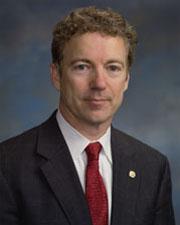 Sen. Rand Paul (R-KY)
What it changes
1 change to S. 1197 · shown in the bill's text
Adds SECTION 1082. PRESERVING FREEDOM FROM UNWARRANTED SURVEILLANCE at the end of subtitle H of title X
Adds a sectionIn S. 1197 · Placed on Calendar Senate
(e) Date for Submittal of Comptroller General of the United States Report.--Subsection (d) of such section is amended by striking "December 30, 2013" and inserting "December 31, 2014".
Inserted: SECTION 1082. PRESERVING FREEDOM FROM UNWARRANTED SURVEILLANCE.
Inserted: (a) Short Title.--This section may be cited as the "Preserving Freedom from Unwarranted Surveillance Act of 2013".
Inserted: (b) Definitions.--In this section--
Inserted: (1) the term "drone" has the meaning given the term "unmanned aircraft" in section 331 of the FAA Modernization and Reform Act of 2012 (49 U.S.C. 40101 note); and
Inserted: (2) the term "law enforcement party" means a person or entity authorized by law, or funded by the Government of the United States, to investigate or prosecute offenses against the United States.
Inserted: (c) Prohibited Use of Drones.--Except as provided in subsection (d), a person or entity acting under the authority, or funded in whole or in part by, the Government of the United States shall not use a drone to gather evidence or other information pertaining to criminal conduct or conduct in violation of a statute or regulation except to the extent authorized in a warrant that satisfies the requirements of the Fourth Amendment to the Constitution of the United States.
Inserted: (d) Exceptions.--This Act does not prohibit any of the following:
Inserted: (1) Patrol of borders.--The use of a drone to patrol national borders to prevent or deter illegal entry of any persons or illegal substances.
Inserted: (2) Exigent circumstances.--The use of a drone by a law enforcement party when exigent circumstances exist. For the purposes of this paragraph, exigent circumstances exist when the law enforcement party possesses reasonable suspicion that under particular circumstances, swift action to prevent imminent danger to the life of an individual is necessary.
Inserted: (3) High risk.--The use of a drone to counter a high risk of a terrorist attack by a specific individual or organization, when the Secretary of Homeland Security determines credible intelligence indicates there is such a risk.
Inserted: (e) Remedies for Violation.--Any aggrieved party may in a civil action obtain all appropriate relief to prevent or remedy a violation of this section.
Inserted: (f) Prohibition on Use of Evidence.--No evidence obtained or collected in violation of this section may be admissible as evidence in a criminal prosecution in any court of law in the United States.
Original wording
At the end of subtitle H of title X, add the following:
Read automatically from the Congressional Record. Check the original before relying on it.
As printed
SA 2226. Mr. PAUL submitted an amendment intended to be proposed by him to the bill S. 1197, to authorize appropriations for fiscal year 2014 for military activities of the Department of Defense, for military construction, and for defense activities of the Department of Energy, to prescribe military personnel strengths for such fiscal year, and for other purposes; which was ordered to lie on the table; as follows:
At the end of subtitle H of title X, add the following:
SECTION 1082. PRESERVING FREEDOM FROM UNWARRANTED SURVEILLANCE.
(a) Short Title.--This section may be cited as the “Preserving Freedom from Unwarranted Surveillance Act of 2013”.
(b) Definitions.--In this section--
(1) the term “drone” has the meaning given the term “unmanned aircraft” in section 331 of the FAA Modernization and Reform Act of 2012 (49 U.S.C. 40101 note); and
(2) the term “law enforcement party” means a person or entity authorized by law, or funded by the Government of the United States, to investigate or prosecute offenses against the United States.
(c) Prohibited Use of Drones.--Except as provided in subsection (d), a person or entity acting under the authority, or funded in whole or in part by, the Government of the United States shall not use a drone to gather evidence or other information pertaining to criminal conduct or conduct in violation of a statute or regulation except to the extent authorized in a warrant that satisfies the requirements of the Fourth Amendment to the Constitution of the United States.
(d) Exceptions.--This Act does not prohibit any of the following:
(1) Patrol of borders.--The use of a drone to patrol national borders to prevent or deter illegal entry of any persons or illegal substances.
(2) Exigent circumstances.--The use of a drone by a law enforcement party when exigent circumstances exist. For the purposes of this paragraph, exigent circumstances exist when the law enforcement party possesses reasonable suspicion that under particular circumstances, swift action to prevent imminent danger to the life of an individual is necessary.
(3) High risk.--The use of a drone to counter a high risk of a terrorist attack by a specific individual or organization, when the Secretary of Homeland Security determines credible intelligence indicates there is such a risk.
(e) Remedies for Violation.--Any aggrieved party may in a civil action obtain all appropriate relief to prevent or remedy a violation of this section.
(f) Prohibition on Use of Evidence.--No evidence obtained or collected in violation of this section may be admissible as evidence in a criminal prosecution in any court of law in the United States.
Legislative Activity
Stay on top of the latest movement without scrolling through every action
Senate amendment submitted
November 19, 2013