S.Amdt. 2292
What it does: Adds SEC. 1054. PROHIBITION RELATING TO TOBACCO PRODUCTS at the end of subtitle F of title X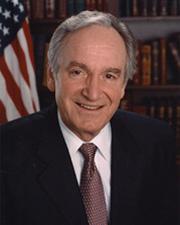 Sen. Tom Harkin (D-IA)
What it changes
1 change to S. 1197 · shown in the bill's text
Adds SEC. 1054. PROHIBITION RELATING TO TOBACCO PRODUCTS at the end of subtitle F of title X
Adds a sectionIn S. 1197 · Placed on Calendar Senate
It is the sense of the Senate that State courts should not consider a military deployment, including past, present, or future deployment, as the sole factor in determining child custody in a State court proceeding involving a parent who is a member of the Armed Forces. The best interest of the child should always prevail in custody cases, but members of the Armed Forces should not lose custody of their children based solely upon service to our country.
Inserted: SEC. 1054. PROHIBITION RELATING TO TOBACCO PRODUCTS.
Inserted: (a) Findings.--Congress makes the following findings:
Inserted: (1) Tobacco use by military personnel has two major economic effects on the Department of Defense, the cost of health care for military personnel (active-duty, retired, and dependents), and the cost of lost productivity.
Inserted: (2) The Department of Defense spends over $1,600,000,000 a year on tobacco-related medical care, increased hospitalization, and lost days of work (according to Department of Defense figures for 2008).
Inserted: (3) Over the next 10 years, the net present value of preventable smoking-attributable health-care expenditures is $19,685,000,000 for the entire population of veterans, an average of $21,444 for each current veteran smoker.
Inserted: (4) The cost of treating individuals for tobacco-related diseases in the TRICARE system is estimated to be over $500,000,000 per year (or 4 percent of the total TRICARE budget) for medical care and $346,000,000 in lost productivity. These expenses are primarily for care of individuals who had cardiovascular disease or respiratory problems. Other tobacco related costs included treatment of cancer, cerebrovascular diseases, and newborn health complications.
Inserted: (5) In 2008, the Department of Veterans Affairs spent over $5,000,000,000 to treat chronic obstructive pulmonary disease. More than 80 percent of chronic obstructive pulmonary disease is attributed to smoking.
Inserted: (6) The Department of Veterans Affairs spent an additional 1,300,000,000 in 2008 on arteriosclerosis, another smoking-related disease.
Inserted: (7) Tobacco use has been implicated in higher dropout rates during and after basic training, poorer visual acuity, and a higher rate of absenteeism in active-duty military personnel in addition to a multitude of health problems.
Inserted: (8) Military retirees and their dependents incur greater tobacco-related health costs than do active-duty members of the military or their dependents.
Inserted: (9) Over 9,200 hospital-bed days for active-duty personnel were attributed to tobacco-related diseases, or about 10 percent of the total Department of Defense hospital-bed days and 1.5 percent of all active-duty hospital-bed days (Helyer et al., 1998).
Inserted: (10) Tobacco-related medical costs amounted to $20,000,000 in a 1997 Centers for Disease Control and Prevention study of smoking in active-duty Air Force personnel, or 6 percent of total Air Force medical system expenditures (2000).
Show 6 more inserted paragraphsShow less
Inserted: (11) A 2007 study (Dall et al) calculated that moderate to heavy smoking was associated with greater absenteeism in the TRICARE Prime enrolled population, 356,000 full time equivalent days were lost per year, and 30,000 full time equivalent days were lost as a result of below-normal work performance.
Inserted: (12) The Centers for Disease Control and Prevention has determined the following mortality rates :
Inserted: (A) Cigarette smoking is associated with about one of every five deaths in the United States each year.
Inserted: (B) Cigarette smoking is associated with more than 440,000 deaths annually (including deaths from secondhand smoke).
Inserted: (C) Life expectancy for smokers is at least 10 years shorter than for nonsmokers.
Inserted: (b) Prohibition.--The Secretary of Defense shall promulgate regulations to prohibit the sale of discounted tobacco products in any commissary store or exchange store under the commissary system and the exchange system operated under chapter 147 of title 10, United States Code.
Original wording
At the end of subtitle F of title X, add the following:
Read automatically from the Congressional Record. Check the original before relying on it.
As printed
SA 2292. Mr. HARKIN submitted an amendment intended to be proposed by him to the bill S. 1197, to authorize appropriations for fiscal year 2014 for military activities of the Department of Defense, for military construction, and for defense activities of the Department of Energy, to prescribe military personnel strengths for such fiscal year, and for other purposes; which was ordered to lie on the table; as follows:
At the end of subtitle F of title X, add the following:
SEC. 1054. PROHIBITION RELATING TO TOBACCO PRODUCTS.
(a) Findings.--Congress makes the following findings:
(1) Tobacco use by military personnel has two major economic effects on the Department of Defense, the cost of health care for military personnel (active-duty, retired, and dependents), and the cost of lost productivity.
(2) The Department of Defense spends over $1,600,000,000 a year on tobacco-related medical care, increased hospitalization, and lost days of work (according to Department of Defense figures for 2008).
(3) Over the next 10 years, the net present value of preventable smoking-attributable health-care expenditures is $19,685,000,000 for the entire population of veterans, an average of $21,444 for each current veteran smoker.
(4) The cost of treating individuals for tobacco-related diseases in the TRICARE system is estimated to be over $500,000,000 per year (or 4 percent of the total TRICARE budget) for medical care and $346,000,000 in lost productivity. These expenses are primarily for care of individuals who had cardiovascular disease or respiratory problems. Other tobacco related costs included treatment of cancer, cerebrovascular diseases, and newborn health complications.
(5) In 2008, the Department of Veterans Affairs spent over $5,000,000,000 to treat chronic obstructive pulmonary disease. More than 80 percent of chronic obstructive pulmonary disease is attributed to smoking.
(6) The Department of Veterans Affairs spent an additional 1,300,000,000 in 2008 on arteriosclerosis, another smoking-related disease.
(7) Tobacco use has been implicated in higher dropout rates during and after basic training, poorer visual acuity, and a higher rate of absenteeism in active-duty military personnel in addition to a multitude of health problems.
(8) Military retirees and their dependents incur greater tobacco-related health costs than do active-duty members of the military or their dependents.
(9) Over 9,200 hospital-bed days for active-duty personnel were attributed to tobacco-related diseases, or about 10 percent of the total Department of Defense hospital-bed days and 1.5 percent of all active-duty hospital-bed days (Helyer et al., 1998).
(10) Tobacco-related medical costs amounted to $20,000,000 in a 1997 Centers for Disease Control and Prevention study of smoking in active-duty Air Force personnel, or 6 percent of total Air Force medical system expenditures (2000).
(11) A 2007 study (Dall et al) calculated that moderate to heavy smoking was associated with greater absenteeism in the TRICARE Prime enrolled population, 356,000 full time equivalent days were lost per year, and 30,000 full time equivalent days were lost as a result of below-normal work performance.
(12) The Centers for Disease Control and Prevention has determined the following mortality rates :
(A) Cigarette smoking is associated with about one of every five deaths in the United States each year.
(B) Cigarette smoking is associated with more than 440,000 deaths annually (including deaths from secondhand smoke).
(C) Life expectancy for smokers is at least 10 years shorter than for nonsmokers.
(b) Prohibition.--The Secretary of Defense shall promulgate regulations to prohibit the sale of discounted tobacco products in any commissary store or exchange store under the commissary system and the exchange system operated under chapter 147 of title 10, United States Code.
Legislative Activity
Stay on top of the latest movement without scrolling through every action
Senate amendment submitted
November 19, 2013