S.Amdt. 2360
What it does: Adds SEC. 1220. DEVELOPMENT OF A COMPREHENSIVE ANTI-CORRUPTION STRATEGY IN AFGHANISTAN at the end of subtitle B of title XII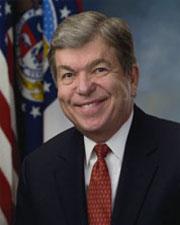 Sen. Roy Blunt (R-MO)
What it changes
1 change to S. 1197 · shown in the bill's text
Adds SEC. 1220. DEVELOPMENT OF A COMPREHENSIVE ANTI-CORRUPTION STRATEGY IN AFGHANISTAN at the end of subtitle B of title XII
Adds a sectionIn S. 1197 · Placed on Calendar Senate
It is the sense of Congress that the Department of Defense should seek not to commence any new long-term nation building or large-scale infrastructure development project in Afghanistan after 2014.
Inserted: SEC. 1220. DEVELOPMENT OF A COMPREHENSIVE ANTI-CORRUPTION STRATEGY IN AFGHANISTAN.
Inserted: (a) Findings.--Congress makes the following findings:
Inserted: (1) According to the Special Inspector General for Afghanistan Reconstruction, as of September 30, 2013, the United States had appropriated approximately $96,600,000,000 for relief and reconstruction assistance in Afghanistan since 2002 without the benefit of a comprehensive anti-corruption strategy.
Inserted: (2) To date, the Department of State and the Government of Afghanistan remain unable to assess the overall progress the United States Government has made to improve the capacity of the Government of Afghanistan to combat corruption.
Inserted: (b) Comprehensive Strategy and Plan.--
Inserted: (1) Restriction on request for proposal agreements.--No funds may be obligated or expended by the Department of State or the Department of Defense to enter into any new request for proposal agreements (RFPs) with the Government of Afghanistan or any third party in Afghanistan until the Secretary of State and the Secretary of Defense, in coordination with the Government of Afghanistan, submit to the appropriate congressional committees--
Inserted: (A) a comprehensive, coordinated strategy for United States anti-corruption efforts in Afghanistan, including goals, objectives, and measurable outcomes; and
Inserted: (B) an updated operational plan for the implementation of the anti-corruption goals and objectives that identifies benchmarks and timelines for the accomplishment of these goals and accounts for the needed funding and personnel resources.
Inserted: (2) National security waiver.--The Secretary of Defense and the Secretary of State may jointly waive the restriction under paragraph (1) on a case-by-case basis if the Secretaries determine that it is in the national security interest of the United States to do so.
Inserted: (c) Appropriate Congressional Committees Defined.--In this section, the term "appropriate congressional committees" means--
Inserted: (1) the congressional defense committees; and
Inserted: (2) the Committee on Foreign Relations of the Senate and the Committee on Foreign Affairs of the House of Representatives.
Original wording
At the end of subtitle B of title XII, add the following:
Read automatically from the Congressional Record. Check the original before relying on it.
As printed
SA 2360. Mr. BLUNT submitted an amendment intended to be proposed by him to the bill S. 1197, to authorize appropriations for fiscal year 2014 for military activities of the Department of Defense, for military construction, and for defense activities of the Department of Energy, to prescribe military personnel strengths for such fiscal year, and for other purposes; which was ordered to lie on the table; as follows:
At the end of subtitle B of title XII, add the following:
SEC. 1220. DEVELOPMENT OF A COMPREHENSIVE ANTI-CORRUPTION STRATEGY IN AFGHANISTAN.
(a) Findings.--Congress makes the following findings:
(1) According to the Special Inspector General for Afghanistan Reconstruction, as of September 30, 2013, the United States had appropriated approximately $96,600,000,000 for relief and reconstruction assistance in Afghanistan since 2002 without the benefit of a comprehensive anti-corruption strategy.
(2) To date, the Department of State and the Government of Afghanistan remain unable to assess the overall progress the United States Government has made to improve the capacity of the Government of Afghanistan to combat corruption.
(b) Comprehensive Strategy and Plan.--
(1) Restriction on request for proposal agreements.--No funds may be obligated or expended by the Department of State or the Department of Defense to enter into any new request for proposal agreements (RFPs) with the Government of Afghanistan or any third party in Afghanistan until the Secretary of State and the Secretary of Defense, in coordination with the Government of Afghanistan, submit to the appropriate congressional committees--
(A) a comprehensive, coordinated strategy for United States anti-corruption efforts in Afghanistan, including goals, objectives, and measurable outcomes; and
(B) an updated operational plan for the implementation of the anti-corruption goals and objectives that identifies benchmarks and timelines for the accomplishment of these goals and accounts for the needed funding and personnel resources.
(2) National security waiver.--The Secretary of Defense and the Secretary of State may jointly waive the restriction under paragraph (1) on a case-by-case basis if the Secretaries determine that it is in the national security interest of the United States to do so.
(c) Appropriate Congressional Committees Defined.--In this section, the term “appropriate congressional committees” means--
(1) the congressional defense committees; and
(2) the Committee on Foreign Relations of the Senate and the Committee on Foreign Affairs of the House of Representatives.
Legislative Activity
Stay on top of the latest movement without scrolling through every action
Senate amendment submitted
November 20, 2013