S.Amdt. 2521
What it does: Adds Subtitle D--Syria Transition Support SEC. 1241. APPROPRIATE CONGRESSIONAL COMMITTEES DEFINED at the end of title XII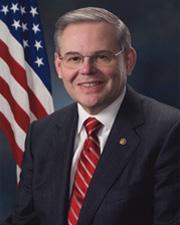 Sen. Robert Menendez (D-NJ)
What it changes
1 change to S. 1197 · shown in the bill's text
Adds Subtitle D--Syria Transition Support SEC. 1241. APPROPRIATE CONGRESSIONAL COMMITTEES DEFINED at the end of title XII
Adds a sectionIn S. 1197 · Placed on Calendar Senate
(2) the Committee on Armed Services and the Committee on Foreign Affairs of the House of Representatives.
Inserted: Subtitle D--Syria Transition Support SEC. 1241. APPROPRIATE CONGRESSIONAL COMMITTEES DEFINED.
Inserted: In this subtitle, except as specifically provided in part III of this subtitle, the term "appropriate congressional committees" means the Committee on Foreign Relations of the Senate and the Committee on Foreign Affairs of the House of Representatives.
Inserted: SEC. 1242. PURPOSES OF ASSISTANCE.
Inserted: The purposes of assistance authorized by this subtitle are--
Inserted: (1) to support transition from the current regime to a just and democratic state that is inclusive and protects the rights of all Syrians regardless of religion, ethnicity, or gender;
Inserted: (2) to assist the people of Syria, especially internally displaced persons and refugees, in meeting basic needs including access to food, health care, shelter, and clean drinking water;
Inserted: (3) to provide political and economic support to those neighboring countries who are hosting refugees fleeing Syria and to international organizations that are providing assistance and coordinating humanitarian relief efforts;
Inserted: (4) to oppose the unlawful use of violence against civilians by all parties to the conflict in Syria;
Inserted: (5) to use a broad array of instruments of national power to expedite a negotiated solution to the conflict in Syria, including the departure of Bashar al-Assad;
Inserted: (6) to recognize the National Coalition for Syrian Revolutionary and Opposition Forces (in this subtitle referred to as the "Syrian Opposition Coalition") as a legitimate representative of the Syrian people;
Inserted: (7) to engage with opposition groups that reflect United States interests and values, most notably the Syrian Opposition Coalition, any legitimate successor groups, including appropriate subgroups within the opposition that are representative of the Syrian people, as well as the broader international community, that are committed to facilitating an orderly transition to a more stable democratic political order, including--
Inserted: (A) protecting human rights, expanding political participation, and providing religious freedom to all Syrians, irrespective of religion, ethnicity, or gender;
Show 76 more inserted paragraphsShow less
Inserted: (B) supporting the rule of law;
Inserted: (C) rejecting terrorism and extremist ideologies;
Inserted: (D) subordinating the military to civilian authority;
Inserted: (E) protecting the Syrian population against sectarian violence and reprisals;
Inserted: (F) cooperating with international counterterrorism and nonproliferation efforts;
Inserted: (G) supporting regional stability and avoiding interference in the affairs of neighboring countries; and
Inserted: (H) establishing a strong justice system and ensuring accountability for conflict-related crimes;
Inserted: (8) to promote the territorial integrity of Syria and continuity of the Syrian state by supporting a post-Assad government that is capable of providing security, services, and political and religious rights to its people;
Inserted: (9) to support efforts to identify and document the activities of those individuals who target or lead units or organizations that target civilian populations and vulnerable populations, including women and children, or have engaged in otherwise unlawful acts, and to ensure that they are held accountable for their actions; and
Inserted: (10) to ensure a stable and appropriate political transition in Syria and limit the threats posed by extremist groups, weapons proliferation, sectarian and ethnic violence, and refugee flows in the aftermath of the current conflict.
Inserted: SEC. 1243. NO AUTHORIZATION FOR THE USE OF MILITARY FORCE.
Inserted: Nothing in this subtitle shall be construed as providing authorization for the use of military force by the United States Armed Forces.
Inserted: PART I--UNITED STATES STRATEGY AND CONGRESSIONAL OVERSIGHT
Inserted: SEC. 1251. REPORT ON UNITED STATES STRATEGY ON SYRIA.
Inserted: (a) In General.--Not later than 60 days after the date of the enactment of this Act, the Secretary of State shall submit to the appropriate congressional committees an unclassified report, with an classified annex, as necessary, on an integrated United States Government strategy to achieve the purposes set forth in section 1242.
Inserted: (b) Metrics.--The strategy referenced in subsection (a) should include specific proposed actions to be taken by each relevant government agency, a timeframe for beginning and completing such actions, and metrics for evaluating the success of each proposed action relative to the purpose of such action.
Inserted: (c) International Engagement Strategy.--The strategy referenced in subsection (a) should specifically include sections describing specific United States Government programs and efforts--
Inserted: (1) to establish international consensus on the transition and post-transition period and government in Syria;
Inserted: (2) to work with the Government of Russia on the situation in Syria and the transition and post-transition period and government in Syria, including how such programs can leverage the shared interests of the United States and Russia in avoiding the expansion of extremist ideologies and terrorist groups in Syria and the region;
Inserted: (3) to work with the Friends of Syria group to ensure that extremist and terrorist groups in Syria are isolated and that the core of the opposition can be brought to the negotiating table; and
Inserted: (4) to build an international consensus to limit and, to the greatest extent possible eliminate, support from the Government of Iran for the Syrian regime, including a potential ban on all commercial flights between Iran and Syria.
Inserted: (d) Congressional Consultation.--The President shall actively consult with the appropriate congressional committees prior to the submission of the report required under subsection (a).
Inserted: SEC. 1252. CONGRESSIONAL OVERSIGHT OF UNITED STATES GOVERNMENT ACTIVITIES IN SYRIA.
Inserted: (a) In General.--The President shall keep Congress, through the appropriate congressional committees, fully and currently informed of all United States Government activities with respect to Syria, including activities and programs conducted or funded pursuant to this subtitle.
Inserted: (b) Reporting.--The President shall provide a classified briefing not less than on a quarterly basis to the appropriate congressional committees detailing all United States Government activities with respect to Syria, including activities and programs conducted or funded pursuant to this subtitle.
Inserted: PART II--HUMANITARIAN ASSISTANCE
Inserted: SEC. 1261. HUMANITARIAN ASSISTANCE TO THE PEOPLE OF SYRIA.
Inserted: (a) Authority.--Notwithstanding any other provision of law that restricts the provision of United States economic or other non-military assistance in Syria, the President is authorized to provide economic and other non-military assistance to meet humanitarian needs to the people of Syria, either directly or through appropriate groups and organizations pursuant to the provisions of the Foreign Assistance Act of 1961 (22 U.S.C. 2151 et seq.) or the Migration and Refugee Assistance Act (22 U.S.C. 2601 et seq.).
Inserted: (b) Rule of Construction.--Nothing in this section shall be construed to authorize new or additional funding for humanitarian needs.
Inserted: SEC. 1262. SENSE OF CONGRESS.
Inserted: Consistent with the policy objectives described in section 1242, it is the sense of Congress that--
Inserted: (1) the United States should continue to coordinate with other donor nations, the United Nations, other multilateral agencies, and nongovernmental organizations to enhance the effectiveness of humanitarian assistance to the people suffering as a result of the crisis in Syria;
Inserted: (2) countries hosting Syrian refugees should be commended for their efforts and should be encouraged to maintain an open border policy for fleeing Syrians;
Inserted: (3) the United States Government should continue to work with these partners to help their national systems accommodate the population influx and also maintain delivery of basic services to their own citizens; and
Inserted: (4) the United States Government should seek to identify humanitarian assistance as originating from the American people wherever possible and to the fullest extent practicable, while maintaining consideration for the health and safety of the implementers and recipients of that assistance and the achievement of United States policy goals and the purposes set forth in section 1242.
Inserted: SEC. 1263. REPORT ON STRATEGY TO COMMUNICATE TO THE SYRIAN PEOPLE ABOUT ASSISTANCE PROVIDED BY THE UNITED STATES GOVERNMENT.
Inserted: (a) In General.--Not later than 90 days after the date of the enactment of this Act, the Secretary of State shall submit to the appropriate congressional committees an unclassified report with a classified annex, as necessary, on an integrated United States Government strategy to ensure that the people of Syria people are made aware to the maximum extent possible of the assistance that the United States Government provides to Syrians both inside Syria and those seeking refuge in neighboring countries.
Inserted: (b) Content.--The report should include the following elements:
Inserted: (1) A discussion of how the United States balances three imperatives of--
Inserted: (A) maximizing the efficacy of aid provided to the people of Syria;
Inserted: (B) ensuring that there is awareness among the people of Syria on the amount and nature of this aid; and
Inserted: (C) leveraging this aid to improve the credibility of the Syrian Opposition Coalition amongst the people of Syria.
Inserted: (2) Methods by which the United States Government and its partners plan to communicate to the people of Syria what assistance the United States has provided.
Inserted: (3) A plan, with specific action, timelines, and evaluation metrics for promoting awareness of the United States Government's assistance to the maximum extent possible while taking into consideration and ensuring the safety of its implementing partners and personnel providing that assistance and the achievement of the United States policy goals and the purposes set forth in section 1242.
Inserted: (4) An assessment of the Syrian Opposition Coalition's Assistance Coordination Unit (ACU)'s, or any appropriate successor entity's, capacity to participate in the distribution of assistance, and a description of steps the United States Government is taking to increase their profile so as to help build their credibility among Syrians.
Inserted: PART III--SYRIA SANCTIONS
Inserted: SEC. 1271. DEFINITIONS.
Inserted: In this part:
Inserted: (1) Appropriate congressional committees.--The term "appropriate congressional committees" means--
Inserted: (A) the Committee on Foreign Relations, the Committee on Finance, and the Committee on Banking, Housing, and Urban Affairs of the Senate; and
Inserted: (B) the Committee on Foreign Affairs, the Committee on Ways and Means, and the Committee on Financial Services of the House of Representatives.
Inserted: (2) Defense article; defense service.--The terms "defense article" and "defense service" have the meanings given those terms in section 47 of the Arms Export Control Act (22 U.S.C. 2794).
Inserted: (3) Person.--The term "person" means an individual or entity.
Inserted: (4) Petroleum.--The term "petroleum" includes crude oil and any mixture of hydrocarbons that exists in liquid phase in natural underground reservoirs and remains liquid at atmospheric pressure after passing through surface separating facilities.
Inserted: (5) Petroleum products.--The term "petroleum products" includes unfinished oils, liquefied petroleum gases, pentanes plus, aviation gasoline, motor gasoline, naptha-type jet fuel, kerosene-type jet fuel, kerosene, distillate fuel oil, residual fuel oil, petrochemical feedstocks, special naphthas, lubricants, waxes, petroleum coke, asphalt, road oil, still gas, miscellaneous products obtained from the processing of crude oil (including lease condensate), natural gas, and other hydrocarbon compounds.
Inserted: (6) United states person.--The term "United States person" means--
Inserted: (A) a natural person who is a citizen or resident of the United States or a national of the United States (as defined in section 101(a) of the Immigration and Nationality Act (8 U.S.C. 1101(a))); and
Inserted: (B) an entity that is organized under the laws of the United States or a jurisdiction within the United States.
Inserted: SEC. 1272. IMPOSITION OF SANCTIONS WITH RESPECT TO SELLING, TRANSFERRING, OR TRANSPORTING DEFENSE ARTICLES, DEFENSE SERVICES, OR MILITARY TRAINING TO THE ASSAD REGIME OF SYRIA.
Inserted: On or after the date that is 30 days after the date of the enactment of this Act, the President may impose sanctions from among the sanctions described in section 1274 with respect to any person that the President determines has, on or after such date of enactment, knowingly participated in or facilitated a significant transaction related to the sale, transfer, or transportation of defense articles, defense services, or military training to the Assad regime of Syria or any successor regime in Syria that the President determines is not a legitimate transitional or replacement government.
Inserted: SEC. 1273. IMPOSITION OF SANCTIONS WITH RESPECT TO PERSONS PROVIDING PETROLEUM OR PETROLEUM PRODUCTS TO THE ASSAD REGIME OF SYRIA.
Inserted: On or after the date that is 30 days after the date of the enactment of this Act, the President shall impose the sanction described in paragraph (5) of section 1274 and 2 or more of the other sanctions described in that section with respect to each person that the President determines has, on or after such date of enactment, knowingly participated in or facilitated a significant transaction related to the sale or transfer of petroleum or petroleum products to the Assad regime of Syria or any successor regime in Syria that the President determines is not a legitimate transitional or replacement government.
Inserted: SEC. 1274. SANCTIONS DESCRIBED.
Inserted: The sanctions the President may impose with respect to a person under sections 1272 and 1273 are the following:
Inserted: (1) Export-import bank assistance.--The President may direct the Export-Import Bank of the United States not to give approval to the issuance of any guarantee, insurance, extension of credit, or participation in the extension of credit in connection with the export of any goods or services to the person.
Inserted: (2) Procurement sanction.--The President may prohibit the United States Government from procuring, or entering into any contract for the procurement of, any goods or services from the person.
Inserted: (3) Arms export prohibition.--The President may prohibit United States Government sales to the person of any item on the United States Munitions List under section 38(a)(1) of the Arms Export Control Act (22 U.S.C. 2778(a)(1)) and require termination of sales to the person of any defense articles, defense services, or design and construction services under that Act (22 U.S.C. 2751 et seq.).
Inserted: (4) Dual-use export prohibition.--The President may deny licenses and suspend existing licenses for the transfer to the person of items the export of which is controlled under the Export Administration Act of 1979 (50 U.S.C. App. 2401 et seq.) (as in effect pursuant to the International Emergency Economic Powers Act (50 U.S.C. 1701 et seq.)) or the Export Administration Regulations under subchapter C of chapter VII of title 15, Code of Federal Regulations.
Inserted: (5) Blocking of assets.--The President may, pursuant to such regulations as the President may prescribe, block and prohibit all transactions in all property and interests in property of the person if such property and interests in property are in the United States, come within the United States, or are or come within the possession or control of a United States person.
Inserted: (6) Visa ineligibility.--In the case of a person that is an alien, the President may direct the Secretary of State to deny a visa to, and the Secretary of Homeland Security to exclude from the United States, the person, subject to regulatory exceptions to permit the United States to comply with the Agreement between the United Nations and the United States of America regarding the Headquarters of the United Nations, signed June 26, 1947, and entered into force November 21, 1947, and other applicable international obligations.
Inserted: SEC. 1275. WAIVERS.
Inserted: (a) General Waiver Authority.--The President may waive the application of section 1272 or 1273 to a person or category of persons for a period of 180 days, and may renew the waiver for additional periods of 180 days, if the President determines and reports to the appropriate congressional committees every 180 days that the waiver is in the vital national security interests of the United States.
Inserted: (b) Waiver for Humanitarian Needs.--The President may waive the application of section 1273 to a person for a period of 180 days, and may renew the waiver for additional periods of 180 days, if the President determines and reports to the appropriate congressional committees every 180 days that the waiver is to necessary to permit the person to conduct or facilitate a transaction that is necessary to meet humanitarian needs of the people of Syria.
Inserted: (c) Form.--Each report submitted under subsection (a) or (b) shall be submitted in unclassified form but may include a classified annex.
Inserted: SEC. 1276. SENSE OF CONGRESS ON SANCTIONS.
Inserted: It is the sense of Congress that the President should work closely with allies of the United States to obtain broad multilateral support for countries to impose sanctions that are equivalent to the sanctions set forth in this part under the laws of those countries.
Original wording
At the end of title XII, add the following:
Read automatically from the Congressional Record. Check the original before relying on it.
As printed
SA 2521. Mr. MENENDEZ submitted an amendment intended to be proposed by him to the bill S. 1197, to authorize appropriations for fiscal year 2014 for military activities of the Department of Defense, for military construction, and for defense activities of the Department of Energy, to prescribe military personnel strengths for such fiscal year, and for other purposes; which was ordered to lie on the table; as follows:
At the end of title XII, add the following:
Subtitle D--Syria Transition Support SEC. 1241. APPROPRIATE CONGRESSIONAL COMMITTEES DEFINED.
In this subtitle, except as specifically provided in part III of this subtitle, the term “appropriate congressional committees” means the Committee on Foreign Relations of the Senate and the Committee on Foreign Affairs of the House of Representatives.
SEC. 1242. PURPOSES OF ASSISTANCE.
The purposes of assistance authorized by this subtitle are--
(1) to support transition from the current regime to a just and democratic state that is inclusive and protects the rights of all Syrians regardless of religion, ethnicity, or gender;
(2) to assist the people of Syria, especially internally displaced persons and refugees, in meeting basic needs including access to food, health care, shelter, and clean drinking water;
(3) to provide political and economic support to those neighboring countries who are hosting refugees fleeing Syria and to international organizations that are providing assistance and coordinating humanitarian relief efforts;
(4) to oppose the unlawful use of violence against civilians by all parties to the conflict in Syria;
(5) to use a broad array of instruments of national power to expedite a negotiated solution to the conflict in Syria, including the departure of Bashar al-Assad;
(6) to recognize the National Coalition for Syrian Revolutionary and Opposition Forces (in this subtitle referred to as the “Syrian Opposition Coalition”) as a legitimate representative of the Syrian people;
(7) to engage with opposition groups that reflect United States interests and values, most notably the Syrian Opposition Coalition, any legitimate successor groups, including appropriate subgroups within the opposition that are representative of the Syrian people, as well as the broader international community, that are committed to facilitating an orderly transition to a more stable democratic political order, including--
(A) protecting human rights, expanding political participation, and providing religious freedom to all Syrians, irrespective of religion, ethnicity, or gender;
(B) supporting the rule of law;
(C) rejecting terrorism and extremist ideologies;
(D) subordinating the military to civilian authority;
(E) protecting the Syrian population against sectarian violence and reprisals;
(F) cooperating with international counterterrorism and nonproliferation efforts;
(G) supporting regional stability and avoiding interference in the affairs of neighboring countries; and
(H) establishing a strong justice system and ensuring accountability for conflict-related crimes;
(8) to promote the territorial integrity of Syria and continuity of the Syrian state by supporting a post-Assad government that is capable of providing security, services, and political and religious rights to its people;
(9) to support efforts to identify and document the activities of those individuals who target or lead units or organizations that target civilian populations and vulnerable populations, including women and children, or have engaged in otherwise unlawful acts, and to ensure that they are held accountable for their actions; and
(10) to ensure a stable and appropriate political transition in Syria and limit the threats posed by extremist groups, weapons proliferation, sectarian and ethnic violence, and refugee flows in the aftermath of the current conflict.
SEC. 1243. NO AUTHORIZATION FOR THE USE OF MILITARY FORCE.
Nothing in this subtitle shall be construed as providing authorization for the use of military force by the United States Armed Forces.
PART I--UNITED STATES STRATEGY AND CONGRESSIONAL OVERSIGHT
SEC. 1251. REPORT ON UNITED STATES STRATEGY ON SYRIA.
(a) In General.--Not later than 60 days after the date of the enactment of this Act, the Secretary of State shall submit to the appropriate congressional committees an unclassified report, with an classified annex, as necessary, on an integrated United States Government strategy to achieve the purposes set forth in section 1242.
(b) Metrics.--The strategy referenced in subsection (a) should include specific proposed actions to be taken by each relevant government agency, a timeframe for beginning and completing such actions, and metrics for evaluating the success of each proposed action relative to the purpose of such action.
(c) International Engagement Strategy.--The strategy referenced in subsection (a) should specifically include sections describing specific United States Government programs and efforts--
(1) to establish international consensus on the transition and post-transition period and government in Syria;
(2) to work with the Government of Russia on the situation in Syria and the transition and post-transition period and government in Syria, including how such programs can leverage the shared interests of the United States and Russia in avoiding the expansion of extremist ideologies and terrorist groups in Syria and the region;
(3) to work with the Friends of Syria group to ensure that extremist and terrorist groups in Syria are isolated and that the core of the opposition can be brought to the negotiating table; and
(4) to build an international consensus to limit and, to the greatest extent possible eliminate, support from the Government of Iran for the Syrian regime, including a potential ban on all commercial flights between Iran and Syria.
(d) Congressional Consultation.--The President shall actively consult with the appropriate congressional committees prior to the submission of the report required under subsection (a).
SEC. 1252. CONGRESSIONAL OVERSIGHT OF UNITED STATES GOVERNMENT ACTIVITIES IN SYRIA.
(a) In General.--The President shall keep Congress, through the appropriate congressional committees, fully and currently informed of all United States Government activities with respect to Syria, including activities and programs conducted or funded pursuant to this subtitle.
(b) Reporting.--The President shall provide a classified briefing not less than on a quarterly basis to the appropriate congressional committees detailing all United States Government activities with respect to Syria, including activities and programs conducted or funded pursuant to this subtitle.
PART II--HUMANITARIAN ASSISTANCE
SEC. 1261. HUMANITARIAN ASSISTANCE TO THE PEOPLE OF SYRIA.
(a) Authority.--Notwithstanding any other provision of law that restricts the provision of United States economic or other non-military assistance in Syria, the President is authorized to provide economic and other non-military assistance to meet humanitarian needs to the people of Syria, either directly or through appropriate groups and organizations pursuant to the provisions of the Foreign Assistance Act of 1961 (22 U.S.C. 2151 et seq.) or the Migration and Refugee Assistance Act (22 U.S.C. 2601 et seq.).
(b) Rule of Construction.--Nothing in this section shall be construed to authorize new or additional funding for humanitarian needs.
SEC. 1262. SENSE OF CONGRESS.
Consistent with the policy objectives described in section 1242, it is the sense of Congress that--
(1) the United States should continue to coordinate with other donor nations, the United Nations, other multilateral agencies, and nongovernmental organizations to enhance the effectiveness of humanitarian assistance to the people suffering as a result of the crisis in Syria;
(2) countries hosting Syrian refugees should be commended for their efforts and should be encouraged to maintain an open border policy for fleeing Syrians;
(3) the United States Government should continue to work with these partners to help their national systems accommodate the population influx and also maintain delivery of basic services to their own citizens; and
(4) the United States Government should seek to identify humanitarian assistance as originating from the American people wherever possible and to the fullest extent practicable, while maintaining consideration for the health and safety of the implementers and recipients of that assistance and the achievement of United States policy goals and the purposes set forth in section 1242.
SEC. 1263. REPORT ON STRATEGY TO COMMUNICATE TO THE SYRIAN PEOPLE ABOUT ASSISTANCE PROVIDED BY THE UNITED STATES GOVERNMENT.
(a) In General.--Not later than 90 days after the date of the enactment of this Act, the Secretary of State shall submit to the appropriate congressional committees an unclassified report with a classified annex, as necessary, on an integrated United States Government strategy to ensure that the people of Syria people are made aware to the maximum extent possible of the assistance that the United States Government provides to Syrians both inside Syria and those seeking refuge in neighboring countries.
(b) Content.--The report should include the following elements:
(1) A discussion of how the United States balances three imperatives of--
(A) maximizing the efficacy of aid provided to the people of Syria;
(B) ensuring that there is awareness among the people of Syria on the amount and nature of this aid; and
(C) leveraging this aid to improve the credibility of the Syrian Opposition Coalition amongst the people of Syria.
(2) Methods by which the United States Government and its partners plan to communicate to the people of Syria what assistance the United States has provided.
(3) A plan, with specific action, timelines, and evaluation metrics for promoting awareness of the United States Government's assistance to the maximum extent possible while taking into consideration and ensuring the safety of its implementing partners and personnel providing that assistance and the achievement of the United States policy goals and the purposes set forth in section 1242.
(4) An assessment of the Syrian Opposition Coalition's Assistance Coordination Unit (ACU)'s, or any appropriate successor entity's, capacity to participate in the distribution of assistance, and a description of steps the United States Government is taking to increase their profile so as to help build their credibility among Syrians.
PART III--SYRIA SANCTIONS
SEC. 1271. DEFINITIONS.
In this part:
(1) Appropriate congressional committees.--The term “appropriate congressional committees” means--
(A) the Committee on Foreign Relations, the Committee on Finance, and the Committee on Banking, Housing, and Urban Affairs of the Senate; and
(B) the Committee on Foreign Affairs, the Committee on Ways and Means, and the Committee on Financial Services of the House of Representatives.
(2) Defense article; defense service.--The terms “defense article” and “defense service” have the meanings given those terms in section 47 of the Arms Export Control Act (22 U.S.C. 2794).
(3) Person.--The term “person” means an individual or entity.
(4) Petroleum.--The term “petroleum” includes crude oil and any mixture of hydrocarbons that exists in liquid phase in natural underground reservoirs and remains liquid at atmospheric pressure after passing through surface separating facilities.
(5) Petroleum products.--The term “petroleum products” includes unfinished oils, liquefied petroleum gases, pentanes plus, aviation gasoline, motor gasoline, naptha-type jet fuel, kerosene-type jet fuel, kerosene, distillate fuel oil, residual fuel oil, petrochemical feedstocks, special naphthas, lubricants, waxes, petroleum coke, asphalt, road oil, still gas, miscellaneous products obtained from the processing of crude oil (including lease condensate), natural gas, and other hydrocarbon compounds.
(6) United states person.--The term “United States person” means--
(A) a natural person who is a citizen or resident of the United States or a national of the United States (as defined in section 101(a) of the Immigration and Nationality Act (8 U.S.C. 1101(a))); and
(B) an entity that is organized under the laws of the United States or a jurisdiction within the United States.
SEC. 1272. IMPOSITION OF SANCTIONS WITH RESPECT TO SELLING, TRANSFERRING, OR TRANSPORTING DEFENSE ARTICLES, DEFENSE SERVICES, OR MILITARY TRAINING TO THE ASSAD REGIME OF SYRIA.
On or after the date that is 30 days after the date of the enactment of this Act, the President may impose sanctions from among the sanctions described in section 1274 with respect to any person that the President determines has, on or after such date of enactment, knowingly participated in or facilitated a significant transaction related to the sale, transfer, or transportation of defense articles, defense services, or military training to the Assad regime of Syria or any successor regime in Syria that the President determines is not a legitimate transitional or replacement government.
SEC. 1273. IMPOSITION OF SANCTIONS WITH RESPECT TO PERSONS PROVIDING PETROLEUM OR PETROLEUM PRODUCTS TO THE ASSAD REGIME OF SYRIA.
On or after the date that is 30 days after the date of the enactment of this Act, the President shall impose the sanction described in paragraph (5) of section 1274 and 2 or more of the other sanctions described in that section with respect to each person that the President determines has, on or after such date of enactment, knowingly participated in or facilitated a significant transaction related to the sale or transfer of petroleum or petroleum products to the Assad regime of Syria or any successor regime in Syria that the President determines is not a legitimate transitional or replacement government.
SEC. 1274. SANCTIONS DESCRIBED.
The sanctions the President may impose with respect to a person under sections 1272 and 1273 are the following:
(1) Export-import bank assistance.--The President may direct the Export-Import Bank of the United States not to give approval to the issuance of any guarantee, insurance, extension of credit, or participation in the extension of credit in connection with the export of any goods or services to the person.
(2) Procurement sanction.--The President may prohibit the United States Government from procuring, or entering into any contract for the procurement of, any goods or services from the person.
(3) Arms export prohibition.--The President may prohibit United States Government sales to the person of any item on the United States Munitions List under section 38(a)(1) of the Arms Export Control Act (22 U.S.C. 2778(a)(1)) and require termination of sales to the person of any defense articles, defense services, or design and construction services under that Act (22 U.S.C. 2751 et seq.).
(4) Dual-use export prohibition.--The President may deny licenses and suspend existing licenses for the transfer to the person of items the export of which is controlled under the Export Administration Act of 1979 (50 U.S.C. App. 2401 et seq.) (as in effect pursuant to the International Emergency Economic Powers Act (50 U.S.C. 1701 et seq.)) or the Export Administration Regulations under subchapter C of chapter VII of title 15, Code of Federal Regulations.
(5) Blocking of assets.--The President may, pursuant to such regulations as the President may prescribe, block and prohibit all transactions in all property and interests in property of the person if such property and interests in property are in the United States, come within the United States, or are or come within the possession or control of a United States person.
(6) Visa ineligibility.--In the case of a person that is an alien, the President may direct the Secretary of State to deny a visa to, and the Secretary of Homeland Security to exclude from the United States, the person, subject to regulatory exceptions to permit the United States to comply with the Agreement between the United Nations and the United States of America regarding the Headquarters of the United Nations, signed June 26, 1947, and entered into force November 21, 1947, and other applicable international obligations.
SEC. 1275. WAIVERS.
(a) General Waiver Authority.--The President may waive the application of section 1272 or 1273 to a person or category of persons for a period of 180 days, and may renew the waiver for additional periods of 180 days, if the President determines and reports to the appropriate congressional committees every 180 days that the waiver is in the vital national security interests of the United States.
(b) Waiver for Humanitarian Needs.--The President may waive the application of section 1273 to a person for a period of 180 days, and may renew the waiver for additional periods of 180 days, if the President determines and reports to the appropriate congressional committees every 180 days that the waiver is to necessary to permit the person to conduct or facilitate a transaction that is necessary to meet humanitarian needs of the people of Syria.
(c) Form.--Each report submitted under subsection (a) or (b) shall be submitted in unclassified form but may include a classified annex.
SEC. 1276. SENSE OF CONGRESS ON SANCTIONS.
It is the sense of Congress that the President should work closely with allies of the United States to obtain broad multilateral support for countries to impose sanctions that are equivalent to the sanctions set forth in this part under the laws of those countries.
Legislative Activity
Stay on top of the latest movement without scrolling through every action
Senate amendment submitted
November 21, 2013