S.Amdt. 2963
What it does: Replaces the bill's text with a full substitute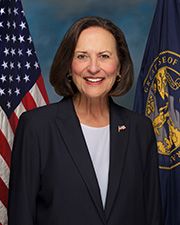 Sen. Deb Fischer (R-NE)
What it changes
1 change to S. 2199 · shown in the bill's text
Replaces the bill's text with a full substitute
Replaces the full textEverything after the enacting clauseIn S. 2199 · Placed on Calendar Senate
SECTION 1. SHORT TITLE.
This Act may be cited as the "
[struck: Paycheck Fairness][inserted: Workplace Advancement] Act".SEC. 2. FINDINGS.
Congress
[struck: finds][inserted: makes] the following[inserted: findings]:Struck: (1) Women have entered the workforce in record numbers over the past 50 years.
Struck: (2) Despite the enactment of the Equal Pay Act in 1963, many women continue to earn significantly lower pay than men for equal work. These pay disparities exist in both the private and governmental sectors. In many instances, the pay disparities can only be due to continued intentional discrimination or the lingering effects of past discrimination.
Struck: (3) The existence of such pay disparities--
Struck: (A) depresses the wages of working families who rely on the wages of all members of the family to make ends meet;
Show 37 more struck paragraphsShow less
Struck: (B) undermines women's retirement security, which is often based on earnings while in the workforce;
Struck: (C) prevents the optimum utilization of available labor resources;
Struck: (D) has been spread and perpetuated, through commerce and the channels and instrumentalities of commerce, among the workers of the several States;
Struck: (E) burdens commerce and the free flow of goods in commerce;
Struck: (F) constitutes an unfair method of competition in commerce;
Struck: (G) leads to labor disputes burdening and obstructing commerce and the free flow of goods in commerce;
Struck: (H) interferes with the orderly and fair marketing of goods in commerce; and
Struck: (I) in many instances, may deprive workers of equal protection on the basis of sex in violation of the 5th and 14th Amendments.
Struck: (4)(A) Artificial barriers to the elimination of discrimination in the payment of wages on the basis of sex continue to exist decades after the enactment of the Fair Labor Standards Act of 1938 (29 U.S.C. 201 et seq.) and the Civil Rights Act of 1964 (42 U.S.C. 2000a et seq.).
Struck: (B) These barriers have resulted, in significant part, because the Equal Pay Act has not worked as Congress originally intended. Improvements and modifications to the law are necessary to ensure that the Act provides effective protection to those subject to pay discrimination on the basis of their sex.
Struck: (C) Elimination of such barriers would have positive effects, including--
Struck: (i) providing a solution to problems in the economy created by unfair pay disparities;
Struck: (ii) substantially reducing the number of working women earning unfairly low wages, thereby reducing the dependence on public assistance;
Struck: (iii) promoting stable families by enabling all family members to earn a fair rate of pay;
Struck: (iv) remedying the effects of past discrimination on the basis of sex and ensuring that in the future workers are afforded equal protection on the basis of sex; and
Struck: (v) ensuring equal protection pursuant to Congress' power to enforce the 5th and 14th Amendments.
Struck: (5) The Department of Labor and the Equal Employment Opportunity Commission have important and unique responsibilities to help ensure that women receive equal pay for equal work.
Struck: (6) The Department of Labor is responsible for--
Struck: (A) collecting and making publicly available information about women's pay;
Struck: (B) ensuring that companies receiving Federal contracts comply with anti-discrimination affirmative action requirements of Executive Order 11246 (relating to equal employment opportunity);
Struck: (C) disseminating information about women's rights in the workplace;
Struck: (D) helping women who have been victims of pay discrimination obtain a remedy; and
Struck: (E) being proactive in investigating and prosecuting equal pay violations, especially systemic violations, and in enforcing all of its mandates.
Struck: (7) The Equal Employment Opportunity Commission is the primary enforcement agency for claims made under the Equal Pay Act, and issues regulations and guidance on appropriate interpretations of the law.
Struck: (8) With a stronger commitment by the Department of Labor and the Equal Employment Opportunity Commission to their responsibilities, increased information as a result of the amendments made by this Act to the Equal Pay Act of 1963, wage data, and more effective remedies, women will be better able to recognize and enforce their rights.
Struck: (9) Certain employers have already made great strides in eradicating unfair pay disparities in the workplace and their achievements should be recognized.
Struck: SEC. 3. ENHANCED ENFORCEMENT OF EQUAL PAY REQUIREMENTS.
Struck: (a) Bona-Fide Factor Defense and Modification of Same Establishment Requirement.--Section 6(d)(1) of the Fair Labor Standards Act of 1938 (29 U.S.C. 206(d)(1)) is amended--
Struck: (1) by striking "No employer having" and inserting "(A) No employer having";
Struck: (2) by striking "any other factor other than sex" and inserting "a bona fide factor other than sex, such as education, training, or experience"; and
Struck: (3) by inserting at the end the following:
Struck: "(B) The bona fide factor defense described in subparagraph (A)(iv) shall apply only if the employer demonstrates that such factor (i) is not based upon or derived from a sex-based differential in compensation; (ii) is job-related with respect to the position in question; and (iii) is consistent with business necessity. Such defense shall not apply where the employee demonstrates that an alternative employment practice exists that would serve the same business purpose without producing such differential and that the employer has refused to adopt such alternative practice.
Struck: "(C) For purposes of subparagraph (A), employees shall be deemed to work in the same establishment if the employees work for the same employer at workplaces located in the same county or similar political subdivision of a State. The preceding sentence shall not be construed as limiting broader applications of the term 'establishment' consistent with rules prescribed or guidance issued by the Equal Opportunity Employment Commission.".
Struck: (b) Nonretaliation Provision.--Section 15 of the Fair Labor Standards Act of 1938 (29 U.S.C. 215(a)(3)) is amended--
Struck: (1) in subsection (a)(3), by striking "employee has filed" and all that follows and inserting "employee--
Struck: "(A) has made a charge or filed any complaint or instituted or caused to be instituted any investigation, proceeding, hearing, or action under or related to this Act, including an investigation conducted by the employer, or has testified or is planning to testify or has assisted or participated in any manner in any such investigation, proceeding, hearing or action, or has served or is planning to serve on an industry Committee; or
Struck: "(B) has inquired about, discussed, or disclosed the wages of the employee or another employee."; and
Inserted: (1) In 1963, Congress passed on a bipartisan basis the Equal Pay Act of 1963 to prohibit discrimination on account of sex in the payment of wages for equal work performed by employees for employers engaged in commerce or in the production of goods for commerce.
Inserted: (2) Following the passage of such Act, in 1964, Congress passed on a bipartisan basis the Civil Rights Act of 1964.
Inserted: (3) Since the passage of both the Equal Pay Act of 1963 and the Civil Rights Act of 1964, women have made significant strides, both in the workforce and in their educational pursuits.
Inserted: (4) Currently, according to a Prudential Research Study, 60 percent of women are the primary earners in their households and the Bureau of Labor Statistics has found that 47 percent of women are members of the workforce.
Inserted: (5) According to the Department of Education, women receive 57 percent of all college degrees, a 33 percent increase from 1970.
Inserted: (6) Women hold the majority of positions in the 5 fastest growing fields, and women are more likely than men to work in professional and related occupations.
Inserted: (7) Despite this significant progress, surveys suggest there is a concern among American women that gender-based pay discrimination still exists.
Inserted: (8) Over the last 15 years, the Equal Employment Opportunity Commission has received on average 2,400 complaints annually alleging gender-based pay discrimination. This represents two to three percent of charges filed with the Commission during the same time period. Even though the Commission determines that no discrimination occurred in a majority of these complaints, the extent to which these allegations continue underscores there is still progress to be made.
Inserted: (9) A number of factors contribute to differences in total compensation, including variations in occupation, education, hours worked, institutional knowledge, and other business reasons and personal choices that shape career paths and earning potential.
Inserted: SEC. 3. PROHIBITION ON WAGE DISCRIMINATION.
Inserted: Pursuant to Federal law in effect on the date of enactment of this Act:
Inserted: (1) In general.--No employer shall discriminate, within any establishment in which employees are employed by the employer, between employees on the basis of sex by paying wages to employees in such establishment at a rate less than the rate at which the employer pays wages to employees of the opposite sex in such establishment for equal work on jobs the performance of which requires equal skill, effort, and responsibility, and which are performed under similar working conditions, except where such payment is made pursuant to--
Show 212 more inserted paragraphsShow less
Inserted: (A) a seniority system;
Inserted: (B) a merit system;
Inserted: (C) a system which measures earnings by quantity or quality of production; or
Inserted: (D) a differential based on any other factor other than sex.
Inserted: (2) Limitation.--An employer who is paying a wage rate differential in violation of this section shall not, in order to comply to comply with the provisions of this section, reduce the wage rate of any employee.
Inserted: (3) Notice.--Every employer, employment agency, and labor organization, as the case may be, shall post and keep posted in conspicuous places upon its premises where notices to employees, applicants for employment, and members are customarily posted, a notice to be prepared or approved by the Equal Employment Opportunity Commission that sets forth excerpts, from or, summaries of, the pertinent provisions of title Act and of title VII of the Civil Rights Act of 1964, and information pertinent to the filing of a complaint.
Inserted: SEC. 4. INDUSTRY OR SECTOR PARTNERSHIP GRANT.
Inserted: (a) Amendment.--Subtitle D of title I of the Workforce Investment Act of 1998 (29 U.S.C. 2911 et seq.) is amended by inserting after section 171 the following:
Inserted: "SEC. 171A. INDUSTRY OR SECTOR PARTNERSHIP GRANT PROGRAM.
Inserted: "(a) Purpose.--It is the purpose of this section to promote industry or sector partnerships that lead collaborative planning, resource alignment, and training efforts across multiple firms for a range of workers employed or potentially employed by a targeted industry cluster, in order to encourage industry growth and competitiveness and to improve worker training, retention, and advancement in targeted industry clusters, including by developing--
Inserted: "(1) immediate strategies for regions and communities to fulfill pressing skilled workforce needs;
Inserted: "(2) long-term plans to grow targeted industry clusters with better training and a more productive workforce;
Inserted: "(3) core competencies and competitive advantages for regions and communities undergoing structural economic redevelopment; and
Inserted: "(4) skill standards, career ladders, job redefinitions, employer practices, and shared training and support capacities that facilitate the advancement of workers at all skill levels.
Inserted: "(b) Definitions.--In this section:
Inserted: "(1) Career ladder.--The term 'career ladder' means an identified series of positions, work experiences, and educational benchmarks or credentials that offer occupational and financial advancement within a specified career field or related fields over time.
Inserted: "(2) Economic self-sufficiency.--The term 'economic self-sufficiency' means, with respect to a worker, earning a wage sufficient to support a family adequately over time, based on factors such as--
Inserted: "(A) family size;
Inserted: "(B) the number and ages of children in the family;
Inserted: "(C) the cost of living in the worker's community; and
Inserted: "(D) other factors that may vary by region.
Inserted: "(3) Eligible entity.--The term 'eligible entity' means--
Inserted: "(A) an industry or sector partnership; or
Inserted: "(B) an eligible State agency.
Inserted: "(4) Eligible state agency.--The term 'eligible State agency' means a State agency designated by the Governor of the State in which the State agency is located for the purposes of the grant program under this section.
Inserted: "(5) High-priority occupation.--The term 'high-priority occupation' means an occupation that--
Inserted: "(A) has a significant presence in an industry cluster;
Inserted: "(B) is in demand by employers;
Inserted: "(C) pays family-sustaining wages that enable workers to achieve economic self-sufficiency, or can reasonably be expected to lead to such wages;
Inserted: "(D) has or is in the process of developing a documented career ladder; and
Inserted: "(E) has a significant impact on a region's economic development strategy.
Inserted: "(6) Industry cluster.--The term 'industry cluster' means a concentration of interconnected businesses, suppliers, research and development entities, service providers, and associated institutions in a particular field that are linked by common workforce needs.
Inserted: "(7) Industry or sector partnership.--The term 'industry or sector partnership' means a workforce collaborative that is described as follows:
Inserted: "(A) Required members.--
Inserted: "(i) In general.--An industry or sector partnership is a workforce collaborative that organizes key stakeholders in a targeted industry cluster into a working group that focuses on the workforce needs of the targeted industry cluster and includes, at the appropriate stage of development of the partnership--
Inserted: "(I) representatives of multiple firms or employers in the targeted industry cluster, including small- and medium-sized employers when practicable;
Inserted: "(II) 1 or more representatives of local boards;
Inserted: "(III) 1 or more representatives of postsecondary educational institutions or other training providers; and
Inserted: "(IV) 1 or more representatives of State workforce agencies or other entities providing employment services.
Inserted: "(ii) Diverse and distinct representation.--No individual may serve as a member in an industry or sector partnership, as defined in this paragraph, for more than 1 of the required categories described in subclauses (I) through (IV) of clause (i).
Inserted: "(B) Authorized members.--An industry or sector partnership may include representatives of--
Inserted: "(i) State or local government;
Inserted: "(ii) State or local economic development agencies;
Inserted: "(iii) other State or local agencies;
Inserted: "(iv) chambers of commerce;
Inserted: "(v) nonprofit organizations;
Inserted: "(vi) philanthropic organizations;
Inserted: "(vii) economic development organizations;
Inserted: "(viii) industry associations; and
Inserted: "(ix) other organizations, as determined necessary by the members comprising the industry or sector partnership.
Inserted: "(8) Industry-recognized.--The term 'industry-recognized', used with respect to a credential, means a credential that--
Inserted: "(A) is sought or accepted by businesses within the industry or sector involved as a recognized, preferred, or required credential for recruitment, screening, or hiring purposes; and
Inserted: "(B) is endorsed by a nationally recognized trade association or organization representing a significant part of the industry or sector, where appropriate.
Inserted: "(9) Nationally portable.--The term 'nationally portable', used with respect to a credential, means a credential that is sought or accepted by businesses within the industry sector involved, across multiple States, as a recognized, preferred, or required credential for recruitment, screening, or hiring purposes.
Inserted: "(10) Targeted industry cluster.--The term 'targeted industry cluster' means an industry cluster that has--
Inserted: "(A) economic impact in a local or regional area, such as advanced manufacturing, clean energy technology, and health care;
Inserted: "(B) immediate workforce development needs, such as advanced manufacturing, clean energy, technology, and health care;
Inserted: "(C) documented career opportunities; and
Inserted: "(D) a demonstrated workforce in which women and minorities have been underrepresented.
Inserted: "(c) Grants Authorized.--
Inserted: "(1) In general.--Subject to the availability of appropriations to carry out this section, the Secretary shall award, on a competitive basis, grants described in paragraph (3) to eligible entities to enable the eligible entities to plan and implement, respectively, the eligible entities' strategic objectives in accordance with subsection (d)(2)(D).
Inserted: "(2) Maximum amount.--
Inserted: "(A) Implementation grants.--An implementation grant awarded under paragraph (3)(A) may not exceed a total of $2,500,000 for a 3-year period.
Inserted: "(B) Renewal grants.--A renewal grant awarded under paragraph (3)(C) may not exceed a total of $1,500,000 for a 3-year period.
Inserted: "(3) Implementation and renewal grants.--
Inserted: "(A) In general.--The Secretary may award an implementation grant under this section to an eligible entity that has established, or is in the process of establishing, an industry or sector partnership.
Inserted: "(B) Duration.--An implementation grant shall be for a duration of not more than 3 years, and may be renewed in accordance with subparagraph (C).
Inserted: "(C) Renewal.--The Secretary may renew an implementation grant for not more than 3 years. A renewal of such grant shall be subject to the requirements of this section, except that the Secretary shall--
Inserted: "(i) prioritize renewals to eligible entities that can demonstrate the long-term sustainability of an industry or sector partnership funded under this section; and
Inserted: "(ii) require assurances that the eligible entity will leverage, in accordance with subparagraph (D)(ii), each year of the grant period, additional funding sources for the non-Federal share of the grant which shall--
Inserted: "(I) be in an amount greater than--
Inserted: "(aa) the non-Federal share requirement described in subparagraph (D)(i)(III); and
Inserted: "(bb) for the second and third year of the grant period, the non-Federal share amount the eligible entity provided for the preceding year of the grant; and
Inserted: "(II) include at least a 50 percent cash match from the State or the industry cluster, or some combination thereof, of the eligible entity.
Inserted: "(D) Federal and non-federal share.--
Inserted: "(i) Federal share.--Except as provided in subparagraph (C)(ii) and clause (iii), the Federal share of a grant under this section shall be--
Inserted: "(I) 90 percent of the costs of the activities described in subsection (f), in the first year of the grant;
Inserted: "(II) 80 percent of such costs in the second year of the grant; and
Inserted: "(III) 70 percent of such costs in the third year of the grant.
Inserted: "(ii) Non-federal.--The non-Federal share of a grant under this section may be in cash or in-kind, and may come from State, local, philanthropic, private, or other sources.
Inserted: "(iii) Exception.--The Secretary may require the Federal share of a grant under this section to be 100 percent if an eligible entity receiving such grant is located in a State or local area that is receiving a national emergency grant under section 173.
Inserted: "(4) Fiscal agent.--Each eligible entity receiving a grant under this section that is an industry or sector partnership shall designate an entity in the partnership as the fiscal agent for purposes of this grant.
Inserted: "(5) Use of grant funds during grant periods.--An eligible entity receiving grant funds under a grant under this section shall expend grant funds or obligate grant funds to be expended by the last day of the grant period.
Inserted: "(d) Application Process.--
Inserted: "(1) Identification of a targeted industry cluster.--In order to qualify for a grant under this section, an eligible entity shall identify a targeted industry cluster that could benefit from such grant by--
Inserted: "(A) working with businesses, industry associations and organizations, labor organizations, State boards, local boards, economic development agencies, and other organizations that the eligible entity determines necessary, to identify an appropriate targeted industry cluster based on criteria that include, at a minimum--
Inserted: "(i) data showing the competitiveness of the industry cluster;
Inserted: "(ii) the importance of the industry cluster to the economic development of the area served by the eligible entity, including estimation of jobs created or preserved;
Inserted: "(iii) the identification of supply and distribution chains within the industry cluster;
Inserted: "(iv) research studies on industry clusters; and
Inserted: "(v) data showing that the industry cluster has a workforce in which women and minorities have been underrepresented; and
Inserted: "(B) working with appropriate employment agencies, workforce investment boards, economic development agencies, community organizations, and other organizations that the eligible entity determines necessary to ensure that the targeted industry cluster identified under subparagraph (A) should be targeted for investment, based primarily on the following criteria:
Inserted: "(i) Demonstrated demand for job growth potential.
Inserted: "(ii) Employment base.
Inserted: "(iii) Wages and benefits.
Inserted: "(iv) Demonstrated importance of the targeted industry cluster to the area's economy.
Inserted: "(v) Workforce development needs.
Inserted: "(2) Application.--An eligible entity desiring to receive a grant under this section shall submit an application to the Secretary at such time, in such manner, and containing such information as the Secretary may require. An application submitted under this paragraph shall contain, at a minimum, the following:
Inserted: "(A) A description of the eligible entity, evidence of the eligible entity's capacity to carry out activities in support of the strategic objectives identified in the application under subparagraph (D), and a description of the expected participation and responsibilities of each of the mandatory partners described in subsection (b)(8)(A).
Inserted: "(B) A description of the targeted industry cluster for which the eligible entity intends to carry out activities through a grant under this section, and a description of how such targeted industry cluster was identified in accordance with paragraph (1).
Inserted: "(C) A description of the workers that will be targeted or recruited by the partnership, including an analysis of the existing labor market, a description of potential barriers to employment for targeted workers, and a description of strategies that will be employed to help workers overcome such barriers.
Inserted: "(D) A description of the strategic objectives that the eligible entity intends to carry out for the targeted industry cluster, which objectives shall include--
Inserted: "(i) recruiting key stakeholders in the targeted industry cluster, such as multiple businesses and employers, labor organizations, local boards, and education and training providers, and regularly convening the stakeholders in a collaborative structure that supports the sharing of information, ideas, and challenges common to the targeted industry cluster;
Inserted: "(ii) identifying the training needs of multiple businesses, especially skill gaps critical to competitiveness and innovation to the targeted industry cluster;
Inserted: "(iii) facilitating economies of scale by aggregating training and education needs of multiple employers;
Inserted: "(iv) helping postsecondary educational institutions, training institutions, apprenticeship programs, and all other training programs authorized under this Act, align curricula, entrance requirements, and programs to industry demand and nationally portable, industry-recognized credentials (or, if not available for the targeted industry, other credentials, as determined appropriate by the Secretary), particularly for higher skill, high-priority occupations validated by the industry;
Inserted: "(v) ensuring that the State agency carrying out the State program under the Wagner-Peyser Act (29 U.S.C. 49 et seq.), including staff of the agency that provide services under such Act, shall inform recipients of unemployment insurance of the job and training opportunities that may result from the implementation of this grant;
Inserted: "(vi) informing and collaborating with organizations such as youth councils, business-education partnerships, apprenticeship programs, secondary schools, and postsecondary educational institutions, and with parents and career counselors, for the purpose of addressing the challenges of connecting disadvantaged adults as defined in section 132(b)(1)(B)(v) and disadvantaged youth as defined in section 127(b) to careers;
Inserted: "(vii) helping companies identify, and work together to address, common organizational and human resource challenges, such as--
Inserted: "(I) recruiting new workers;
Inserted: "(II) implementing effective workplace practices;
Inserted: "(III) retraining dislocated and incumbent workers;
Inserted: "(IV) implementing a high-performance work organization;
Inserted: "(V) recruiting and retaining women in nontraditional occupations;
Inserted: "(VI) adopting new technologies; and
Inserted: "(VII) fostering experiential and contextualized on-the-job learning;
Inserted: "(viii) developing and strengthening career ladders within and across companies, in order to enable dislocated, incumbent and entry-level workers to improve skills and advance to higher-wage jobs;
Inserted: "(ix) improving job quality through improving wages, benefits, and working conditions;
Inserted: "(x) helping partner companies in industry or sector partnerships to attract potential employees from a diverse job seeker base, including individuals with barriers to employment (such as job seekers who are low income, youth, older workers, and individuals who have completed a term of imprisonment), by identifying such barriers through analysis of the existing labor market and implementing strategies to help such workers overcome such barriers; and
Inserted: "(xi) strengthening connections among businesses in the targeted industry cluster, leading to cooperation beyond workforce issues that will improve competitiveness and job quality, such as joint purchasing, market research, or centers for technology and innovation.
Inserted: "(E) A description of the nationally portable, industry-recognized credentials or, if not available, other credentials, related to the targeted industry cluster that the eligible entity proposes to support, develop, or use as a performance measure, in order to carry out the strategic objectives described in subparagraph (D).
Inserted: "(F) A description of the manner in which the eligible entity intends to make sustainable progress toward the strategic objectives.
Inserted: "(G) Performance measures for measuring progress toward the strategic objectives. Such performance measures--
Inserted: "(i) may consider the benefits provided by the grant activities funded under this section for workers employed in the targeted industry cluster, disaggregated by gender and race, such as--
Inserted: "(I) the number of workers receiving nationally portable, industry-recognized credentials (or, if not available for the targeted industry, other credentials) described in the application under subparagraph (E);
Inserted: "(II) the number of workers with increased wages, the percentage of workers with increased wages, and the average wage increase; and
Inserted: "(III) for dislocated or nonincumbent workers, the number of workers placed in sector-related jobs; and
Inserted: "(ii) may consider the benefits provided by the grant activities funded under this section for firms and industries in the targeted industry cluster, such as--
Inserted: "(I) the creation or updating of an industry plan to meet current and future workforce demand;
Inserted: "(II) the creation or updating of published industry-wide skill standards or career pathways;
Inserted: "(III) the creation or updating of nationally portable, industry-recognized credentials, or where there is not such a credential, the creation or updating of a training curriculum that can lead to the development of such a credential;
Inserted: "(IV) the number of firms, and the percentage of the local industry, participating in the industry or sector partnership; and
Inserted: "(V) the number of firms, and the percentage of the local industry, receiving workers or services through the grant funded under this section.
Inserted: "(H) A timeline for achieving progress toward the strategic objectives.
Inserted: "(I) In the case of an eligible entity desiring an implementation grant under this section, an assurance that the eligible entity will leverage other funding sources, in addition to the amount required for the non-Federal share under subsection (c)(3)(D), to provide training or supportive services to workers under the grant program. Such additional funding sources may include--
Inserted: "(i) funding under this title used for such training and supportive services;
Inserted: "(ii) funding under title II;
Inserted: "(iii) economic development funding;
Inserted: "(iv) employer contributions to training initiatives; or
Inserted: "(v) providing employees with employee release time for such training or supportive services.
Inserted: "(e) Award Basis.--
Inserted: "(1) Geographic distribution.--The Secretary shall award grants under this section in a manner to ensure geographic diversity.
Inserted: "(2) Priorities.--In awarding grants under this section, the Secretary shall give priority to eligible entities that--
Inserted: "(A) work with employers within a targeted industry cluster to retain and expand employment in high wage, high growth areas;
Inserted: "(B) focus on helping workers move toward economic self-sufficiency and ensuring the workers have access to adequate supportive services;
Inserted: "(C) address the needs of firms with limited human resources or in-house training capacity, including small- and medium-sized firms;
Inserted: "(D) coordinate with entities carrying out State and local workforce investment, economic development, and education activities; and
Inserted: "(E) work with employers within a targeted industry cluster that has a workforce in which women and minorities have been underrepresented.
Inserted: "(f) Activities.--
Inserted: "(1) In general.--An eligible entity receiving a grant under this section shall carry out the activities necessary to meet the strategic objectives, including planning activities if applicable, described in the entity's application in a manner that--
Inserted: "(A) integrates services and funding sources in a way that enhances the effectiveness of the activities; and
Inserted: "(B) uses grant funds awarded under this section efficiently.
Inserted: "(2) Planning activities.--Planning activities may only be carried out by an eligible entity receiving an implementation grant under this section during the first year of the grant period with not more than $250,000 of the grant funds.
Inserted: "(3) Administrative costs.--An eligible entity may retain a portion of a grant awarded under this section for a fiscal year to carry out the administration of this section in an amount not to exceed 5 percent of the grant amount.
Inserted: "(g) Evaluation and Progress Reports.--
Inserted: "(1) Annual activity report and evaluation.--Not later than 1 year after receiving a grant under this section, and annually thereafter, an eligible entity shall--
Inserted: "(A) report to the Secretary, and to the Governor of the State that the eligible entity serves, on the activities funded pursuant to a grant under this section; and
Inserted: "(B) evaluate the progress the eligible entity has made toward the strategic objectives identified in the application under subsection (d)(2)(D), and measure the progress using the performance measures identified in the application under subsection (d)(2)(G).
Inserted: "(2) Report to the secretary.--An eligible entity receiving a grant under this section shall submit to the Secretary a report containing the results of the evaluation described in subparagraph (B) at such time and in such manner as the Secretary may require.
Inserted: "(h) Administration by the Secretary.--
Inserted: "(1) Administrative costs.--The Secretary may retain not more than 10 percent of the funds appropriated to carry out this section for each fiscal year to administer this section.
Inserted: "(2) Technical assistance and oversight.--The Secretary shall provide technical assistance and oversight to assist the eligible entities in applying for and administering grants awarded under this section. The Secretary shall also provide technical assistance to eligible entities in the form of conferences and through the collection and dissemination of information on best practices. The Secretary may award a grant or contract to 1 or more national or State organizations to provide technical assistance to foster the planning, formation, and implementation of industry cluster partnerships.
Inserted: "(3) Performance measures.--The Secretary shall issue a range of performance measures, with quantifiable benchmarks, and methodologies that eligible entities may use to evaluate the effectiveness of each type of activity in making progress toward the strategic objectives described in subsection (d)(2)(D). Such measures shall consider the benefits of the industry or sector partnership and its activities for workers, firms, industries, and communities.
Inserted: "(4) Dissemination of information.--The Secretary shall--
Inserted: "(A) coordinate the annual review of each eligible entity receiving a grant under this section and produce an overview report that, at a minimum, includes--
Inserted: "(i) the critical learning of each industry or sector partnership, such as--
Inserted: "(I) the training that was most effective;
Inserted: "(II) the human resource challenges that were most common;
Inserted: "(III) how technology is changing the targeted industry cluster; and
Inserted: "(IV) the changes that may impact the targeted industry cluster over the next 5 years; and
Inserted: "(ii) a description of what eligible entities serving similar targeted industry clusters consider exemplary practices, such as--
Inserted: "(I) how to work effectively with postsecondary educational institutions;
Inserted: "(II) the use of internships;
Inserted: "(III) coordinating with apprenticeships and cooperative education programs;
Inserted: "(IV) how to work effectively with schools providing vocational education;
Inserted: "(V) how to work effectively with adult populations, including--
Inserted: "(aa) dislocated workers;
Inserted: "(bb) women in nontraditional occupations; and
Inserted: "(cc) individuals with barriers to employment, such as job seekers who--
Inserted: "(AA) are economically disadvantaged;
Inserted: "(BB) have limited English proficiency;
Inserted: "(CC) require remedial education;
Inserted: "(DD) are older workers;
Inserted: "(EE) are individuals who have completed a sentence for a criminal offense; and
Inserted: "(FF) have other barriers to employment;
Inserted: "(VI) employer practices that are most effective;
Inserted: "(VII) the types of training that are most effective;
Inserted: "(VIII) other areas where industry or sector partnerships can assist each other; and
Inserted: "(IX) alignment of curricula to nationally portable, industry-recognized credentials in the sectors where they are available or, if not available for the sector, other credentials, as described in the application under subsection (d)(2)(E);
Inserted: "(B) make resource materials, including all reports published and all data collected under this section, available on the Internet; and
Inserted: "(C) conduct conferences and seminars to--
Inserted: "(i) disseminate information on best practices developed by eligible entities receiving a grant under this section; and
Inserted: "(ii) provide information to the communities of eligible entities.
Inserted: "(5) Report.--Not later than 18 months after the date of enactment of the Workplace Advancement Act, and on an annual basis thereafter, the Secretary shall transmit a report to Congress on the industry or sector partnership grant program established by this section. The report shall include a description of--
Inserted: "(A) the eligible entities receiving funding;
Inserted: "(B) the activities carried out by the eligible entities;
Inserted: "(C) how the eligible entities were selected to receive funding under this section; and
Inserted: "(D) an assessment of the results achieved by the grant program including findings from the annual reviews described in paragraph (4)(A).
Inserted: "(i) Rule of Construction.--Nothing in this section shall be construed to permit the reporting or sharing of personally identifiable information collected or made available under this section.".
Inserted: (b) Conforming Amendment.--The table of contents in section 1(b) of the Workforce Investment Act of 1998 (20 U.S.C. 9201 note) is amended by inserting after the item relating to section 171 the following:
Inserted: "171A. Industry or sector partnership grant program.".
Inserted: SEC. 5. CONSOLIDATIONS OF RELEVANT JOB TRAINING PROGRAMS AND ACTIVITIES.
Inserted: (a) Report.--The Secretary of Labor, in coordination with the Director of the Office of Management and Budget, shall prepare a report on the consolidations of Federal job training programs and activities determined to be unnecessarily duplicative (referred to in this section as "relevant job training programs and activities"). Such report shall--
Inserted: (1) describe all Federal job training programs and activities;
Inserted: (2) propose consolidations of the relevant job training programs and activities;
Inserted: (3) provide a justification for those Federal job training programs and activities not included in such consolidations;
Inserted: (4) establish a plan to provide for such consolidations, including recommendations for necessary legislation; and
Inserted: (5) contain legislative recommendations for consolidation.
Inserted: (b) Submission.--Not later than 3 months after the date of enactment of this Act, the Secretary of Labor shall submit the report to the appropriate committees of Congress.
Inserted: SEC. 6. ENHANCED ENFORCEMENT OF EQUAL PAY ACT REQUIREMENTS.
Inserted: Section 15(a) of the Fair Labor Standards Act of 1938 (29 U.S.C. 215(a)) is amended--
Inserted: (1) in paragraph (5), by striking the period and inserting "; or"; and
(2) by adding at the end the following:
"(
[struck: c][inserted: 6])[struck: Subsection (][inserted: to discharge or in any other manner retaliate against any employee because such employee has inquired about, discussed, or disclosed comparative compensation information for the purpose of determining whether the employer is compensating an employee in ]a[struck: )(3)(B) ][inserted: manner that provides equal pay for equal work, except that this paragraph ]shall not apply to instances in which an employee who has access to the wage information of other employees as a part of such employee's[struck: essential ]job functions discloses the wages of such other employees to[struck: individuals ][inserted: an individual ]who[struck: do][inserted: does] not otherwise have access to such information, unless such disclosure is in response to a[struck: complaint][inserted: charge] or[struck: charge][inserted: complaint] or in furtherance of an investigation, proceeding, hearing, or action under section 6(d), including an investigation conducted by the[struck: employer. Nothing in this subsection shall be construed to limit the rights of an ]employee[struck: provided under any other provision of law].[struck: ".]Struck: (c) Enhanced Penalties.--Section 16(b) of the Fair Labor Standards Act of 1938 (29 U.S.C. 216(b)) is amended--
Struck: (1) by inserting after the first sentence the following: "Any employer who violates section 6(d) shall additionally be liable for such compensatory damages, or, where the employee demonstrates that the employer acted with malice or reckless indifference, punitive damages as may be appropriate, except that the United States shall not be liable for punitive damages.";
Struck: (2) in the sentence beginning "An action to", by striking "either of the preceding sentences" and inserting "any of the preceding sentences of this subsection";
Struck: (3) in the sentence beginning "No employees shall", by striking "No employees" and inserting "Except with respect to class actions brought to enforce section 6(d), no employee";
Show 74 more struck paragraphsShow less
Struck: (4) by inserting after the sentence referred to in paragraph (3), the following: "Notwithstanding any other provision of Federal law, any action brought to enforce section 6(d) may be maintained as a class action as provided by the Federal Rules of Civil Procedure."; and
Struck: (5) in the sentence beginning "The court in"--
Struck: (A) by striking "in such action" and inserting "in any action brought to recover the liability prescribed in any of the preceding sentences of this subsection"; and
Struck: (B) by inserting before the period the following: ", including expert fees".
Struck: (d) Action by Secretary.--Section 16(c) of the Fair Labor Standards Act of 1938 (29 U.S.C. 216(c)) is amended--
Struck: (1) in the first sentence--
Struck: (A) by inserting "or, in the case of a violation of section 6(d), additional compensatory or punitive damages, as described in subsection (b)," before "and the agreement"; and
Struck: (B) by inserting before the period the following: ", or such compensatory or punitive damages, as appropriate";
Struck: (2) in the second sentence, by inserting before the period the following: "and, in the case of a violation of section 6(d), additional compensatory or punitive damages, as described in subsection (b)";
Struck: (3) in the third sentence, by striking "the first sentence" and inserting "the first or second sentence"; and
Struck: (4) in the last sentence--
Struck: (A) by striking "commenced in the case" and inserting "commenced--
Struck: "(1) in the case";
Struck: (B) by striking the period and inserting "; or"; and
Struck: (C) by adding at the end the following:
Struck: "(2) in the case of a class action brought to enforce section 6(d), on the date on which the individual becomes a party plaintiff to the class action.".
Struck: SEC. 4. TRAINING.
Struck: The Equal Employment Opportunity Commission and the Office of Federal Contract Compliance Programs, subject to the availability of funds appropriated under section 10, shall provide training to Commission employees and affected individuals and entities on matters involving discrimination in the payment of wages.
Struck: SEC. 5. NEGOTIATION SKILLS TRAINING FOR GIRLS AND WOMEN.
Struck: (a) Program Authorized.--
Struck: (1) In general.--The Secretary of Labor, after consultation with the Secretary of Education, is authorized to establish and carry out a grant program.
Struck: (2) Grants.--In carrying out the program, the Secretary of Labor may make grants on a competitive basis to eligible entities, to carry out negotiation skills training programs for girls and women.
Struck: (3) Eligible entities.--To be eligible to receive a grant under this subsection, an entity shall be a public agency, such as a State, a local government in a metropolitan statistical area (as defined by the Office of Management and Budget), a State educational agency, or a local educational agency, a private nonprofit organization, or a community-based organization.
Struck: (4) Application.--To be eligible to receive a grant under this subsection, an entity shall submit an application to the Secretary of Labor at such time, in such manner, and containing such information as the Secretary of Labor may require.
Struck: (5) Use of funds.--An entity that receives a grant under this subsection shall use the funds made available through the grant to carry out an effective negotiation skills training program that empowers girls and women. The training provided through the program shall help girls and women strengthen their negotiation skills to allow the girls and women to obtain higher salaries and rates of compensation that are equal to those paid to similarly situated male employees.
Struck: (b) Incorporating Training Into Existing Programs.--The Secretary of Labor and the Secretary of Education shall issue regulations or policy guidance that provides for integrating the negotiation skills training, to the extent practicable, into programs authorized under--
Struck: (1) in the case of the Secretary of Education, the Elementary and Secondary Education Act of 1965 (20 U.S.C. 6301 et seq.), the Carl D. Perkins Vocational and Technical Education Act of 1998 (20 U.S.C. 2301 et seq.), the Higher Education Act of 1965 (20 U.S.C. 1001 et seq.), and other programs carried out by the Department of Education that the Secretary of Education determines to be appropriate; and
Struck: (2) in the case of the Secretary of Labor, the Workforce Investment Act of 1998 (29 U.S.C. 2801 et seq.), and other programs carried out by the Department of Labor that the Secretary of Labor determines to be appropriate.
Struck: (c) Report.--Not later than 1 year after the date of enactment of this Act, and annually thereafter, the Secretary of Labor and the Secretary of Education shall prepare and submit to Congress a report describing the activities conducted under this section and evaluating the effectiveness of such activities in achieving the purposes of this Act.
Struck: SEC. 6. RESEARCH, EDUCATION, AND OUTREACH.
Struck: The Secretary of Labor shall conduct studies and provide information to employers, labor organizations, and the general public concerning the means available to eliminate pay disparities between men and women, including--
Struck: (1) conducting and promoting research to develop the means to correct expeditiously the conditions leading to the pay disparities;
Struck: (2) publishing and otherwise making available to employers, labor organizations, professional associations, educational institutions, the media, and the general public the findings resulting from studies and other materials, relating to eliminating the pay disparities;
Struck: (3) sponsoring and assisting State and community informational and educational programs;
Struck: (4) providing information to employers, labor organizations, professional associations, and other interested persons on the means of eliminating the pay disparities;
Struck: (5) recognizing and promoting the achievements of employers, labor organizations, and professional associations that have worked to eliminate the pay disparities; and
Struck: (6) convening a national summit to discuss, and consider approaches for rectifying, the pay disparities.
Struck: SEC. 7. ESTABLISHMENT OF THE NATIONAL AWARD FOR PAY EQUITY IN THE WORKPLACE.
Struck: (a) In General.--There is established the Secretary of Labor's National Award for Pay Equity in the Workplace, which shall be awarded, as appropriate, to encourage proactive efforts to comply with section 6(d) of the Fair Labor Standards Act of 1938 (29 U.S.C. 206(d)).
Struck: (b) Criteria for Qualification.--The Secretary of Labor shall set criteria for receipt of the award, including a requirement that an employer has made substantial effort to eliminate pay disparities between men and women, and deserves special recognition as a consequence of such effort. The Secretary shall establish procedures for the application and presentation of the award.
Struck: (c) Business.--In this section, the term "employer" includes--
Struck: (1)(A) a corporation, including a nonprofit corporation;
Struck: (B) a partnership;
Struck: (C) a professional association;
Struck: (D) a labor organization; and
Struck: (E) a business entity similar to an entity described in any of subparagraphs (A) through (D);
Struck: (2) an entity carrying out an education referral program, a training program, such as an apprenticeship or management training program, or a similar program; and
Struck: (3) an entity carrying out a joint program, formed by a combination of any entities described in paragraph (1) or (2).
Struck: SEC. 8. COLLECTION OF PAY INFORMATION BY THE EQUAL EMPLOYMENT OPPORTUNITY COMMISSION.
Struck: Section 709 of the Civil Rights Act of 1964 (42 U.S.C. 2000e-8) is amended by adding at the end the following:
Struck: "(f)(1) Not later than 18 months after the date of enactment of this subsection, the Commission shall--
Struck: "(A) complete a survey of the data that is currently available to the Federal Government relating to employee pay information for use in the enforcement of Federal laws prohibiting pay discrimination and, in consultation with other relevant Federal agencies, identify additional data collections that will enhance the enforcement of such laws; and
Struck: "(B) based on the results of the survey and consultations under subparagraph (A), issue regulations to provide for the collection of pay information data from employers as described by the sex, race, and national origin of employees.
Struck: "(2) In implementing paragraph (1), the Commission shall have as its primary consideration the most effective and efficient means for enhancing the enforcement of Federal laws prohibiting pay discrimination. For this purpose, the Commission shall consider factors including the imposition of burdens on employers, the frequency of required reports (including which employers should be required to prepare reports), appropriate protections for maintaining data confidentiality, and the most effective format for the data collection reports.".
Struck: SEC. 9. REINSTATEMENT OF PAY EQUITY PROGRAMS AND PAY EQUITY DATA COLLECTION.
Struck: (a) Bureau of Labor Statistics Data Collection.--The Commissioner of Labor Statistics shall continue to collect data on women workers in the Current Employment Statistics survey.
Struck: (b) Office of Federal Contract Compliance Programs Initiatives.-- The Director of the Office of Federal Contract Compliance Programs shall ensure that employees of the Office--
Struck: (1)(A) shall use the full range of investigatory tools at the Office's disposal, including pay grade methodology;
Struck: (B) in considering evidence of possible compensation discrimination--
Struck: (i) shall not limit its consideration to a small number of types of evidence; and
Struck: (ii) shall not limit its evaluation of the evidence to a small number of methods of evaluating the evidence; and
Struck: (C) shall not require a multiple regression analysis or anecdotal evidence for a compensation discrimination case;
Struck: (2) for purposes of its investigative, compliance, and enforcement activities, shall define "similarly situated employees" in a way that is consistent with and not more stringent than the definition provided in item 1 of subsection A of section 10-III of the Equal Employment Opportunity Commission Compliance Manual (2000), and shall consider only factors that the Office's investigation reveals were used in making compensation decisions; and
Struck: (3) shall reinstate the Equal Opportunity Survey, as required by section 60-2.18 of title 41, Code of Federal Regulations (as in effect on September 7, 2006), designating not less than half of all nonconstruction contractor establishments each year to prepare and file such survey, and shall review and utilize the responses to such survey to identify contractor establishments for further evaluation and for other enforcement purposes as appropriate.
Struck: (c) Department of Labor Distribution of Wage Discrimination Information.--The Secretary of Labor shall make readily available (in print, on the Department of Labor website, and through any other forum that the Department may use to distribute compensation discrimination information), accurate information on compensation discrimination, including statistics, explanations of employee rights, historical analyses of such discrimination, instructions for employers on compliance, and any other information that will assist the public in understanding and addressing such discrimination.
Struck: SEC. 10. AUTHORIZATION OF APPROPRIATIONS.
Struck: (a) Authorization of Appropriations.--There are authorized to be appropriated $15,000,000 to carry out this Act.
Struck: (b) Prohibition on Earmarks.--None of the funds appropriated pursuant to subsection (a) for purposes of the grant program in section 5 of this Act may be used for a congressional earmark as defined in clause 9(d) of rule XXI of the Rules of the House of Representatives.
Struck: SEC. 11. SMALL BUSINESS ASSISTANCE.
Struck: (a) Effective Date.--This Act and the amendments made by this Act shall take effect on the date that is 6 months after the date of enactment of this Act.
Struck: (b) Technical Assistance Materials.--The Secretary of Labor and the Commissioner of the Equal Employment Opportunity Commission shall jointly develop technical assistance material to assist small businesses in complying with the requirements of this Act and the amendments made by this Act.
Struck: (c) Small Businesses.--A small business shall be exempt from the provisions of this Act to the same extent that such business is exempt from the requirements of the Fair Labor Standards Act pursuant to section 3(s)(1)(A) (i) and (ii) of such Act.
Struck: SEC. 12. RULE OF CONSTRUCTION.
Struck: Nothing in this Act, or in any amendments made by this Act, shall affect the obligation of employers and employees to fully comply with all applicable immigration laws, including any penalties, fines, or other sanctions.
Inserted: Nothing in paragraph (6) shall be construed to limit the rights of an employee provided under any other provision of law.".
Original wording
Strike all after the enacting clause and insert the following:
Read automatically from the Congressional Record. Check the original before relying on it.
As printed
SA 2963. Mrs. FISCHER (for herself, Ms. Collins, Ms. Ayotte, and Ms. Murkowski) submitted an amendment intended to be proposed by her to the bill S. 2199, to amend the Fair Labor Standards Act of 1938 to provide more effective remedies to victims of discrimination in the payment of wages on the basis of sex, and for other purposes; which was ordered to lie on the table; as follows:
Strike all after the enacting clause and insert the following:
SECTION 1. SHORT TITLE.
This Act may be cited as the “Workplace Advancement Act”.
SEC. 2. FINDINGS.
Congress makes the following findings:
(1) In 1963, Congress passed on a bipartisan basis the Equal Pay Act of 1963 to prohibit discrimination on account of sex in the payment of wages for equal work performed by employees for employers engaged in commerce or in the production of goods for commerce.
(2) Following the passage of such Act, in 1964, Congress passed on a bipartisan basis the Civil Rights Act of 1964.
(3) Since the passage of both the Equal Pay Act of 1963 and the Civil Rights Act of 1964, women have made significant strides, both in the workforce and in their educational pursuits.
(4) Currently, according to a Prudential Research Study, 60 percent of women are the primary earners in their households and the Bureau of Labor Statistics has found that 47 percent of women are members of the workforce.
(5) According to the Department of Education, women receive 57 percent of all college degrees, a 33 percent increase from 1970.
(6) Women hold the majority of positions in the 5 fastest growing fields, and women are more likely than men to work in professional and related occupations.
(7) Despite this significant progress, surveys suggest there is a concern among American women that gender-based pay discrimination still exists.
(8) Over the last 15 years, the Equal Employment Opportunity Commission has received on average 2,400 complaints annually alleging gender-based pay discrimination. This represents two to three percent of charges filed with the Commission during the same time period. Even though the Commission determines that no discrimination occurred in a majority of these complaints, the extent to which these allegations continue underscores there is still progress to be made.
(9) A number of factors contribute to differences in total compensation, including variations in occupation, education, hours worked, institutional knowledge, and other business reasons and personal choices that shape career paths and earning potential.
SEC. 3. PROHIBITION ON WAGE DISCRIMINATION.
Pursuant to Federal law in effect on the date of enactment of this Act:
(1) In general.--No employer shall discriminate, within any establishment in which employees are employed by the employer, between employees on the basis of sex by paying wages to employees in such establishment at a rate less than the rate at which the employer pays wages to employees of the opposite sex in such establishment for equal work on jobs the performance of which requires equal skill, effort, and responsibility, and which are performed under similar working conditions, except where such payment is made pursuant to--
(A) a seniority system;
(B) a merit system;
(C) a system which measures earnings by quantity or quality of production; or
(D) a differential based on any other factor other than sex.
(2) Limitation.--An employer who is paying a wage rate differential in violation of this section shall not, in order to comply to comply with the provisions of this section, reduce the wage rate of any employee.
(3) Notice.--Every employer, employment agency, and labor organization, as the case may be, shall post and keep posted in conspicuous places upon its premises where notices to employees, applicants for employment, and members are customarily posted, a notice to be prepared or approved by the Equal Employment Opportunity Commission that sets forth excerpts, from or, summaries of, the pertinent provisions of title Act and of title VII of the Civil Rights Act of 1964, and information pertinent to the filing of a complaint.
SEC. 4. INDUSTRY OR SECTOR PARTNERSHIP GRANT.
(a) Amendment.--Subtitle D of title I of the Workforce Investment Act of 1998 (29 U.S.C. 2911 et seq.) is amended by inserting after section 171 the following:
“SEC. 171A. INDUSTRY OR SECTOR PARTNERSHIP GRANT PROGRAM.
“(a) Purpose.--It is the purpose of this section to promote industry or sector partnerships that lead collaborative planning, resource alignment, and training efforts across multiple firms for a range of workers employed or potentially employed by a targeted industry cluster, in order to encourage industry growth and competitiveness and to improve worker training, retention, and advancement in targeted industry clusters, including by developing--
“(1) immediate strategies for regions and communities to fulfill pressing skilled workforce needs;
“(2) long-term plans to grow targeted industry clusters with better training and a more productive workforce;
“(3) core competencies and competitive advantages for regions and communities undergoing structural economic redevelopment; and
“(4) skill standards, career ladders, job redefinitions, employer practices, and shared training and support capacities that facilitate the advancement of workers at all skill levels.
“(b) Definitions.--In this section:
“(1) Career ladder.--The term ‘career ladder' means an identified series of positions, work experiences, and educational benchmarks or credentials that offer occupational and financial advancement within a specified career field or related fields over time.
“(2) Economic self-sufficiency.--The term ‘economic self-sufficiency' means, with respect to a worker, earning a wage sufficient to support a family adequately over time, based on factors such as--
“(A) family size;
“(B) the number and ages of children in the family;
“(C) the cost of living in the worker's community; and
“(D) other factors that may vary by region.
“(3) Eligible entity.--The term ‘eligible entity' means--
“(A) an industry or sector partnership; or
“(B) an eligible State agency.
“(4) Eligible state agency.--The term ‘eligible State agency' means a State agency designated by the Governor of the State in which the State agency is located for the purposes of the grant program under this section.
“(5) High-priority occupation.--The term ‘high-priority occupation' means an occupation that--
“(A) has a significant presence in an industry cluster;
“(B) is in demand by employers;
“(C) pays family-sustaining wages that enable workers to achieve economic self-sufficiency, or can reasonably be expected to lead to such wages;
“(D) has or is in the process of developing a documented career ladder; and
“(E) has a significant impact on a region's economic development strategy.
“(6) Industry cluster.--The term ‘industry cluster' means a concentration of interconnected businesses, suppliers, research and development entities, service providers, and associated institutions in a particular field that are linked by common workforce needs.
“(7) Industry or sector partnership.--The term ‘industry or sector partnership' means a workforce collaborative that is described as follows:
“(A) Required members.--
“(i) In general.--An industry or sector partnership is a workforce collaborative that organizes key stakeholders in a targeted industry cluster into a working group that focuses on the workforce needs of the targeted industry cluster and includes, at the appropriate stage of development of the partnership--
“(I) representatives of multiple firms or employers in the targeted industry cluster, including small- and medium-sized employers when practicable;
“(II) 1 or more representatives of local boards;
“(III) 1 or more representatives of postsecondary educational institutions or other training providers; and
“(IV) 1 or more representatives of State workforce agencies or other entities providing employment services.
“(ii) Diverse and distinct representation.--No individual may serve as a member in an industry or sector partnership, as defined in this paragraph, for more than 1 of the required categories described in subclauses (I) through (IV) of clause (i).
“(B) Authorized members.--An industry or sector partnership may include representatives of--
“(i) State or local government;
“(ii) State or local economic development agencies;
“(iii) other State or local agencies;
“(iv) chambers of commerce;
“(v) nonprofit organizations;
“(vi) philanthropic organizations;
“(vii) economic development organizations;
“(viii) industry associations; and
“(ix) other organizations, as determined necessary by the members comprising the industry or sector partnership.
“(8) Industry-recognized.--The term ‘industry-recognized', used with respect to a credential, means a credential that--
“(A) is sought or accepted by businesses within the industry or sector involved as a recognized, preferred, or required credential for recruitment, screening, or hiring purposes; and
“(B) is endorsed by a nationally recognized trade association or organization representing a significant part of the industry or sector, where appropriate.
“(9) Nationally portable.--The term ‘nationally portable', used with respect to a credential, means a credential that is sought or accepted by businesses within the industry sector involved, across multiple States, as a recognized, preferred, or required credential for recruitment, screening, or hiring purposes.
“(10) Targeted industry cluster.--The term ‘targeted industry cluster' means an industry cluster that has--
“(A) economic impact in a local or regional area, such as advanced manufacturing, clean energy technology, and health care;
“(B) immediate workforce development needs, such as advanced manufacturing, clean energy, technology, and health care;
“(C) documented career opportunities; and
“(D) a demonstrated workforce in which women and minorities have been underrepresented.
“(c) Grants Authorized.--
“(1) In general.--Subject to the availability of appropriations to carry out this section, the Secretary shall award, on a competitive basis, grants described in paragraph (3) to eligible entities to enable the eligible entities to plan and implement, respectively, the eligible entities' strategic objectives in accordance with subsection (d)(2)(D).
“(2) Maximum amount.--
“(A) Implementation grants.--An implementation grant awarded under paragraph (3)(A) may not exceed a total of $2,500,000 for a 3-year period.
“(B) Renewal grants.--A renewal grant awarded under paragraph (3)(C) may not exceed a total of $1,500,000 for a 3-year period.
“(3) Implementation and renewal grants.--
“(A) In general.--The Secretary may award an implementation grant under this section to an eligible entity that has established, or is in the process of establishing, an industry or sector partnership.
“(B) Duration.--An implementation grant shall be for a duration of not more than 3 years, and may be renewed in accordance with subparagraph (C).
“(C) Renewal.--The Secretary may renew an implementation grant for not more than 3 years. A renewal of such grant shall be subject to the requirements of this section, except that the Secretary shall--
“(i) prioritize renewals to eligible entities that can demonstrate the long-term sustainability of an industry or sector partnership funded under this section; and
“(ii) require assurances that the eligible entity will leverage, in accordance with subparagraph (D)(ii), each year of the grant period, additional funding sources for the non-Federal share of the grant which shall--
“(I) be in an amount greater than--
“(aa) the non-Federal share requirement described in subparagraph (D)(i)(III); and
“(bb) for the second and third year of the grant period, the non-Federal share amount the eligible entity provided for the preceding year of the grant; and
“(II) include at least a 50 percent cash match from the State or the industry cluster, or some combination thereof, of the eligible entity.
“(D) Federal and non-federal share.--
“(i) Federal share.--Except as provided in subparagraph (C)(ii) and clause (iii), the Federal share of a grant under this section shall be--
“(I) 90 percent of the costs of the activities described in subsection (f), in the first year of the grant;
“(II) 80 percent of such costs in the second year of the grant; and
“(III) 70 percent of such costs in the third year of the grant.
“(ii) Non-federal.--The non-Federal share of a grant under this section may be in cash or in-kind, and may come from State, local, philanthropic, private, or other sources.
“(iii) Exception.--The Secretary may require the Federal share of a grant under this section to be 100 percent if an eligible entity receiving such grant is located in a State or local area that is receiving a national emergency grant under section 173.
“(4) Fiscal agent.--Each eligible entity receiving a grant under this section that is an industry or sector partnership shall designate an entity in the partnership as the fiscal agent for purposes of this grant.
“(5) Use of grant funds during grant periods.--An eligible entity receiving grant funds under a grant under this section shall expend grant funds or obligate grant funds to be expended by the last day of the grant period.
“(d) Application Process.--
“(1) Identification of a targeted industry cluster.--In order to qualify for a grant under this section, an eligible entity shall identify a targeted industry cluster that could benefit from such grant by--
“(A) working with businesses, industry associations and organizations, labor organizations, State boards, local boards, economic development agencies, and other organizations that the eligible entity determines necessary, to identify an appropriate targeted industry cluster based on criteria that include, at a minimum--
“(i) data showing the competitiveness of the industry cluster;
“(ii) the importance of the industry cluster to the economic development of the area served by the eligible entity, including estimation of jobs created or preserved;
“(iii) the identification of supply and distribution chains within the industry cluster;
“(iv) research studies on industry clusters; and
“(v) data showing that the industry cluster has a workforce in which women and minorities have been underrepresented; and
“(B) working with appropriate employment agencies, workforce investment boards, economic development agencies, community organizations, and other organizations that the eligible entity determines necessary to ensure that the targeted industry cluster identified under subparagraph (A) should be targeted for investment, based primarily on the following criteria:
“(i) Demonstrated demand for job growth potential.
“(ii) Employment base.
“(iii) Wages and benefits.
“(iv) Demonstrated importance of the targeted industry cluster to the area's economy.
“(v) Workforce development needs.
“(2) Application.--An eligible entity desiring to receive a grant under this section shall submit an application to the Secretary at such time, in such manner, and containing such information as the Secretary may require. An application submitted under this paragraph shall contain, at a minimum, the following:
“(A) A description of the eligible entity, evidence of the eligible entity's capacity to carry out activities in support of the strategic objectives identified in the application under subparagraph (D), and a description of the expected participation and responsibilities of each of the mandatory partners described in subsection (b)(8)(A).
“(B) A description of the targeted industry cluster for which the eligible entity intends to carry out activities through a grant under this section, and a description of how such targeted industry cluster was identified in accordance with paragraph (1).
“(C) A description of the workers that will be targeted or recruited by the partnership, including an analysis of the existing labor market, a description of potential barriers to employment for targeted workers, and a description of strategies that will be employed to help workers overcome such barriers.
“(D) A description of the strategic objectives that the eligible entity intends to carry out for the targeted industry cluster, which objectives shall include--
“(i) recruiting key stakeholders in the targeted industry cluster, such as multiple businesses and employers, labor organizations, local boards, and education and training providers, and regularly convening the stakeholders in a collaborative structure that supports the sharing of information, ideas, and challenges common to the targeted industry cluster;
“(ii) identifying the training needs of multiple businesses, especially skill gaps critical to competitiveness and innovation to the targeted industry cluster;
“(iii) facilitating economies of scale by aggregating training and education needs of multiple employers;
“(iv) helping postsecondary educational institutions, training institutions, apprenticeship programs, and all other training programs authorized under this Act, align curricula, entrance requirements, and programs to industry demand and nationally portable, industry-recognized credentials (or, if not available for the targeted industry, other credentials, as determined appropriate by the Secretary), particularly for higher skill, high-priority occupations validated by the industry;
“(v) ensuring that the State agency carrying out the State program under the Wagner-Peyser Act (29 U.S.C. 49 et seq.), including staff of the agency that provide services under such Act, shall inform recipients of unemployment insurance of the job and training opportunities that may result from the implementation of this grant;
“(vi) informing and collaborating with organizations such as youth councils, business-education partnerships, apprenticeship programs, secondary schools, and postsecondary educational institutions, and with parents and career counselors, for the purpose of addressing the challenges of connecting disadvantaged adults as defined in section 132(b)(1)(B)(v) and disadvantaged youth as defined in section 127(b) to careers;
“(vii) helping companies identify, and work together to address, common organizational and human resource challenges, such as--
“(I) recruiting new workers;
“(II) implementing effective workplace practices;
“(III) retraining dislocated and incumbent workers;
“(IV) implementing a high-performance work organization;
“(V) recruiting and retaining women in nontraditional occupations;
“(VI) adopting new technologies; and
“(VII) fostering experiential and contextualized on-the-job learning;
“(viii) developing and strengthening career ladders within and across companies, in order to enable dislocated, incumbent and entry-level workers to improve skills and advance to higher-wage jobs;
“(ix) improving job quality through improving wages, benefits, and working conditions;
“(x) helping partner companies in industry or sector partnerships to attract potential employees from a diverse job seeker base, including individuals with barriers to employment (such as job seekers who are low income, youth, older workers, and individuals who have completed a term of imprisonment), by identifying such barriers through analysis of the existing labor market and implementing strategies to help such workers overcome such barriers; and
“(xi) strengthening connections among businesses in the targeted industry cluster, leading to cooperation beyond workforce issues that will improve competitiveness and job quality, such as joint purchasing, market research, or centers for technology and innovation.
“(E) A description of the nationally portable, industry-recognized credentials or, if not available, other credentials, related to the targeted industry cluster that the eligible entity proposes to support, develop, or use as a performance measure, in order to carry out the strategic objectives described in subparagraph (D).
“(F) A description of the manner in which the eligible entity intends to make sustainable progress toward the strategic objectives.
“(G) Performance measures for measuring progress toward the strategic objectives. Such performance measures--
“(i) may consider the benefits provided by the grant activities funded under this section for workers employed in the targeted industry cluster, disaggregated by gender and race, such as--
“(I) the number of workers receiving nationally portable, industry-recognized credentials (or, if not available for the targeted industry, other credentials) described in the application under subparagraph (E);
“(II) the number of workers with increased wages, the percentage of workers with increased wages, and the average wage increase; and
“(III) for dislocated or nonincumbent workers, the number of workers placed in sector-related jobs; and
“(ii) may consider the benefits provided by the grant activities funded under this section for firms and industries in the targeted industry cluster, such as--
“(I) the creation or updating of an industry plan to meet current and future workforce demand;
“(II) the creation or updating of published industry-wide skill standards or career pathways;
“(III) the creation or updating of nationally portable, industry-recognized credentials, or where there is not such a credential, the creation or updating of a training curriculum that can lead to the development of such a credential;
“(IV) the number of firms, and the percentage of the local industry, participating in the industry or sector partnership; and
“(V) the number of firms, and the percentage of the local industry, receiving workers or services through the grant funded under this section.
“(H) A timeline for achieving progress toward the strategic objectives.
“(I) In the case of an eligible entity desiring an implementation grant under this section, an assurance that the eligible entity will leverage other funding sources, in addition to the amount required for the non-Federal share under subsection (c)(3)(D), to provide training or supportive services to workers under the grant program. Such additional funding sources may include--
“(i) funding under this title used for such training and supportive services;
“(ii) funding under title II;
“(iii) economic development funding;
“(iv) employer contributions to training initiatives; or
“(v) providing employees with employee release time for such training or supportive services.
“(e) Award Basis.--
“(1) Geographic distribution.--The Secretary shall award grants under this section in a manner to ensure geographic diversity.
“(2) Priorities.--In awarding grants under this section, the Secretary shall give priority to eligible entities that--
“(A) work with employers within a targeted industry cluster to retain and expand employment in high wage, high growth areas;
“(B) focus on helping workers move toward economic self-sufficiency and ensuring the workers have access to adequate supportive services;
“(C) address the needs of firms with limited human resources or in-house training capacity, including small- and medium-sized firms;
“(D) coordinate with entities carrying out State and local workforce investment, economic development, and education activities; and
“(E) work with employers within a targeted industry cluster that has a workforce in which women and minorities have been underrepresented.
“(f) Activities.--
“(1) In general.--An eligible entity receiving a grant under this section shall carry out the activities necessary to meet the strategic objectives, including planning activities if applicable, described in the entity's application in a manner that--
“(A) integrates services and funding sources in a way that enhances the effectiveness of the activities; and
“(B) uses grant funds awarded under this section efficiently.
“(2) Planning activities.--Planning activities may only be carried out by an eligible entity receiving an implementation grant under this section during the first year of the grant period with not more than $250,000 of the grant funds.
“(3) Administrative costs.--An eligible entity may retain a portion of a grant awarded under this section for a fiscal year to carry out the administration of this section in an amount not to exceed 5 percent of the grant amount.
“(g) Evaluation and Progress Reports.--
“(1) Annual activity report and evaluation.--Not later than 1 year after receiving a grant under this section, and annually thereafter, an eligible entity shall--
“(A) report to the Secretary, and to the Governor of the State that the eligible entity serves, on the activities funded pursuant to a grant under this section; and
“(B) evaluate the progress the eligible entity has made toward the strategic objectives identified in the application under subsection (d)(2)(D), and measure the progress using the performance measures identified in the application under subsection (d)(2)(G).
“(2) Report to the secretary.--An eligible entity receiving a grant under this section shall submit to the Secretary a report containing the results of the evaluation described in subparagraph (B) at such time and in such manner as the Secretary may require.
“(h) Administration by the Secretary.--
“(1) Administrative costs.--The Secretary may retain not more than 10 percent of the funds appropriated to carry out this section for each fiscal year to administer this section.
“(2) Technical assistance and oversight.--The Secretary shall provide technical assistance and oversight to assist the eligible entities in applying for and administering grants awarded under this section. The Secretary shall also provide technical assistance to eligible entities in the form of conferences and through the collection and dissemination of information on best practices. The Secretary may award a grant or contract to 1 or more national or State organizations to provide technical assistance to foster the planning, formation, and implementation of industry cluster partnerships.
“(3) Performance measures.--The Secretary shall issue a range of performance measures, with quantifiable benchmarks, and methodologies that eligible entities may use to evaluate the effectiveness of each type of activity in making progress toward the strategic objectives described in subsection (d)(2)(D). Such measures shall consider the benefits of the industry or sector partnership and its activities for workers, firms, industries, and communities.
“(4) Dissemination of information.--The Secretary shall--
“(A) coordinate the annual review of each eligible entity receiving a grant under this section and produce an overview report that, at a minimum, includes--
“(i) the critical learning of each industry or sector partnership, such as--
“(I) the training that was most effective;
“(II) the human resource challenges that were most common;
“(III) how technology is changing the targeted industry cluster; and
“(IV) the changes that may impact the targeted industry cluster over the next 5 years; and
“(ii) a description of what eligible entities serving similar targeted industry clusters consider exemplary practices, such as--
“(I) how to work effectively with postsecondary educational institutions;
“(II) the use of internships;
“(III) coordinating with apprenticeships and cooperative education programs;
“(IV) how to work effectively with schools providing vocational education;
“(V) how to work effectively with adult populations, including--
“(aa) dislocated workers;
“(bb) women in nontraditional occupations; and
“(cc) individuals with barriers to employment, such as job seekers who--
“(AA) are economically disadvantaged;
“(BB) have limited English proficiency;
“(CC) require remedial education;
“(DD) are older workers;
“(EE) are individuals who have completed a sentence for a criminal offense; and
“(FF) have other barriers to employment;
“(VI) employer practices that are most effective;
“(VII) the types of training that are most effective;
“(VIII) other areas where industry or sector partnerships can assist each other; and
“(IX) alignment of curricula to nationally portable, industry-recognized credentials in the sectors where they are available or, if not available for the sector, other credentials, as described in the application under subsection (d)(2)(E);
“(B) make resource materials, including all reports published and all data collected under this section, available on the Internet; and
“(C) conduct conferences and seminars to--
“(i) disseminate information on best practices developed by eligible entities receiving a grant under this section; and
“(ii) provide information to the communities of eligible entities.
“(5) Report.--Not later than 18 months after the date of enactment of the Workplace Advancement Act, and on an annual basis thereafter, the Secretary shall transmit a report to Congress on the industry or sector partnership grant program established by this section. The report shall include a description of--
“(A) the eligible entities receiving funding;
“(B) the activities carried out by the eligible entities;
“(C) how the eligible entities were selected to receive funding under this section; and
“(D) an assessment of the results achieved by the grant program including findings from the annual reviews described in paragraph (4)(A).
“(i) Rule of Construction.--Nothing in this section shall be construed to permit the reporting or sharing of personally identifiable information collected or made available under this section.”.
(b) Conforming Amendment.--The table of contents in section 1(b) of the Workforce Investment Act of 1998 (20 U.S.C. 9201 note) is amended by inserting after the item relating to section 171 the following:
“171A. Industry or sector partnership grant program.”.
SEC. 5. CONSOLIDATIONS OF RELEVANT JOB TRAINING PROGRAMS AND ACTIVITIES.
(a) Report.--The Secretary of Labor, in coordination with the Director of the Office of Management and Budget, shall prepare a report on the consolidations of Federal job training programs and activities determined to be unnecessarily duplicative (referred to in this section as “relevant job training programs and activities”). Such report shall--
(1) describe all Federal job training programs and activities;
(2) propose consolidations of the relevant job training programs and activities;
(3) provide a justification for those Federal job training programs and activities not included in such consolidations;
(4) establish a plan to provide for such consolidations, including recommendations for necessary legislation; and
(5) contain legislative recommendations for consolidation.
(b) Submission.--Not later than 3 months after the date of enactment of this Act, the Secretary of Labor shall submit the report to the appropriate committees of Congress.
SEC. 6. ENHANCED ENFORCEMENT OF EQUAL PAY ACT REQUIREMENTS.
Section 15(a) of the Fair Labor Standards Act of 1938 (29 U.S.C. 215(a)) is amended--
(1) in paragraph (5), by striking the period and inserting “; or”; and
(2) by adding at the end the following:
“(6) to discharge or in any other manner retaliate against any employee because such employee has inquired about, discussed, or disclosed comparative compensation information for the purpose of determining whether the employer is compensating an employee in a manner that provides equal pay for equal work, except that this paragraph shall not apply to instances in which an employee who has access to the wage information of other employees as a part of such employee's job functions discloses the wages of such other employees to an individual who does not otherwise have access to such information, unless such disclosure is in response to a charge or complaint or in furtherance of an investigation, proceeding, hearing, or action under section 6(d), including an investigation conducted by the employee.
Nothing in paragraph (6) shall be construed to limit the rights of an employee provided under any other provision of law.”.
Legislative Activity
Stay on top of the latest movement without scrolling through every action
Senate amendment submitted
April 8, 2014