S.Amdt. 3104
What it does: Adds TITLE __--STOP SUBSIDIZING CHILDHOOD OBESITY ACT wherever appropriate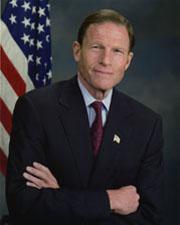 Sen. Richard Blumenthal (D-CT)
What it changes
1 change to H.R. 3474
Adds TITLE __--STOP SUBSIDIZING CHILDHOOD OBESITY ACT wherever appropriate
Adds a titleInserted: TITLE __--STOP SUBSIDIZING CHILDHOOD OBESITY ACT
Inserted: SEC. _01. SHORT TITLE.
Inserted: This title may be cited as the "Stop Subsidizing Childhood Obesity Act".
Inserted: SEC. _02. FINDINGS.
Inserted: Congress finds the following:
Inserted: (1) Childhood obesity has more than doubled in children and tripled in adolescents in the past 30 years. Currently, more than one-third of children and adolescents are overweight or obese.
Inserted: (2) A report by the Robert Wood Johnson Foundation found that if the population of the United States continues on its current trajectory, adult obesity rates could exceed 60 percent in a number of states by 2030.
Inserted: (3) Health-related behaviors, such as eating habits and physical activity patterns, develop early in life and often extend into adulthood. The diets of American children and adolescents depart substantially from recommended patterns that put their health at risk. Overall, American children and youth are not achieving basic nutritional goals. They are consuming excess calories and added sugars and have higher than recommended intakes of sodium, total fat, and saturated fats.
Inserted: (4) Budgets for food marketing to children have spiked into the billions of dollars. According to a 2012 report from the Federal Trade Commission, the total amount spent on food marketing to children is about $2,000,000,000 a year.
Inserted: (5) Companies market food to children through television, radio, Internet, magazines, product placement in movies and video games, schools, product packages, toys, clothing and other merchandise, and almost anywhere a logo or product image can be shown.
Inserted: (6) According to a comprehensive review by the National Academies' Institute of Medicine, studies demonstrate that television food advertising affects children's food choices, food purchase requests, diets, and health.
Inserted: (7) A 2005 report from the Institute of Medicine confirmed that "aggressive marketing of high-calorie foods to children and adolescents has been identified as one of the major contributors to childhood obesity".
Show 38 more inserted paragraphsShow less
Inserted: (8) Nearly three-quarters of the foods advertised on television shows intended for children are for sweets and convenience or fast foods.
Inserted: (9) A study published in the Journal of Law and Economics and funded by the National Institutes of Health found that the elimination of the tax deduction that allows companies to deduct costs associated with advertising food of poor nutritional quality to children could reduce the rates of childhood obesity by 5 to 7 percent.
Inserted: SEC. _03. DENIAL OF DEDUCTION FOR ADVERTISING AND MARKETING DIRECTED AT CHILDREN TO PROMOTE THE CONSUMPTION OF FOOD OF POOR NUTRITIONAL QUALITY.
Inserted: (a) In General.--Part IX of subchapter B of chapter 1 is amended by adding at the end the following new section:
Inserted: "SEC. 280I. DENIAL OF DEDUCTION FOR ADVERTISING AND MARKETING DIRECTED AT CHILDREN TO PROMOTE THE CONSUMPTION OF FOOD OF POOR NUTRITIONAL QUALITY.
Inserted: "(a) In General.--No deduction shall be allowed under this chapter with respect to--
Inserted: "(1) any advertisement or marketing--
Inserted: "(A) primarily directed at children for purposes of promoting the consumption by children of any food of poor nutritional quality, or "(B) of a brand primarily associated with food of poor nutritional quality that is primarily directed at children, and
Inserted: "(2) any of the following which are incurred or provided primarily for purposes described in paragraph (1):
Inserted: "(A) Travel expenses (including meals and lodging).
Inserted: "(B) Goods or services of a type generally considered to constitute entertainment, amusement, or recreation or the use of a facility in connection with providing such goods and services.
Inserted: "(C) Gifts.
Inserted: "(D) Other promotion expenses.
Inserted: "(b) IOM Study.--
Inserted: "(1) In general.--Not later than 60 days after the date of the enactment of this section, the Secretary shall enter into a contract with the Institute of Medicine under which the Institute of Medicine shall develop procedures for the evaluation and identification of--
Inserted: "(A) food of poor nutritional quality, and
Inserted: "(B) brands that are primarily associated with food of poor nutritional quality.
Inserted: "(2) IOM report.--Not later than 12 months after the date of the enactment of this section, the Institute of Medicine shall submit to the Secretary a report that establishes the proposed procedures described in paragraph (1).
Inserted: "(c) Definitions.--In this section:
Inserted: "(1) Brand.--The term 'brand' means a corporate or product name, a business image, or a mark, regardless of whether it may legally qualify as a trademark, used by a seller or manufacturer to identify goods or services and to distinguish them from the goods of a competitor.
Inserted: "(2) Child.--The term 'child' means an individual who is under the age of 14.
Inserted: "(3) Food.--The term 'food' shall include beverages, candy, and chewing gum.
Inserted: "(4) Marketing.--The term 'marketing' means any product or brand advertising or promotional techniques directed at children, including--
Inserted: "(A) advertising (including product placement) on television and radio, in print media, in social media, and on the Internet (including third-party and company-sponsored websites),
Inserted: "(B) the use of characters or mascots, themes, activities, incentives, or any other advertising or promotional techniques contained on the packaging or labeling of a product,
Inserted: "(C) advertising preceding a movie shown in a movie theater or placed on a video (DVD or VHS) or within a video game or mobile application,
Inserted: "(D) promotional content transmitted to televisions, personal computers, and other digital or mobile devices,
Inserted: "(E) advertising displays and promotions at the retail site or events,
Inserted: "(F) specialty or premium items distributed in connection with the sale of a product or a product loyalty program,
Inserted: "(G) character licensing, toy co-branding and cross-promotions,
Inserted: "(H) celebrity and athlete endorsements, and
Inserted: "(I) any advertising or promotional techniques used within a school.
Inserted: "(d) Regulations.--Not later than 18 months after the date of the enactment of this section, the Secretary, in consultation with the Secretary of Health and Human Services and the Federal Trade Commission, shall promulgate such regulations as may be necessary to carry out the purposes of this section, including regulations defining the terms 'directed at children', 'food of poor nutritional quality', and 'brand primarily associated with food of poor nutritional quality' for purposes of this section.".
Inserted: (b) Clerical Amendment.--The table of sections for part IX of subchapter B of chapter 1 is amended by adding at the end the following new item:
Inserted: "Sec. 280I. Denial of deduction for advertising and marketing directed at children to promote the consumption of food of poor nutritional quality.".
Inserted: (c) Effective Date.--The amendments made by this section shall apply to amounts paid or incurred in taxable years beginning 24 months after the date of the enactment of this Act.
Inserted: SEC. _04. ADDITIONAL FUNDING FOR THE FRESH FRUIT AND VEGETABLE PROGRAM.
Inserted: In addition to any other amounts made available to carry out the Fresh Fruit and Vegetable Program under section 19 of the Richard B. Russell National School Lunch Act (42 U.S.C. 1769a), the Secretary of the Treasury (or the Secretary's delegate) shall, on an annual basis, transfer to such program, from amounts in the general fund of the Treasury of the United States, an amount determined by the Secretary of the Treasury (or the Secretary's delegate) to be equal to the increase in revenue for the preceding 12-month period by reason of the enactment of section 280I of the Internal Revenue Code of 1986, as added by this Act.
The amendment doesn't say where this goes; the clerk decides.
Original wording
At the appropriate place, insert the following:
Read automatically from the Congressional Record. Check the original before relying on it.
As printed
SA 3104. Mr. BLUMENTHAL submitted an amendment intended to be proposed by him to the bill H.R. 3474, to amend the Internal Revenue Code of 1986 to allow employers to exempt employees with health coverage under TRICARE or the Veterans Administration from being taken into account for purposes of the employer mandate under the Patient Protection and Affordable Care Act; which was ordered to lie on the table; as follows:
At the appropriate place, insert the following:
TITLE __--STOP SUBSIDIZING CHILDHOOD OBESITY ACT
SEC. _01. SHORT TITLE.
This title may be cited as the “Stop Subsidizing Childhood Obesity Act”.
SEC. _02. FINDINGS.
Congress finds the following:
(1) Childhood obesity has more than doubled in children and tripled in adolescents in the past 30 years. Currently, more than one-third of children and adolescents are overweight or obese.
(2) A report by the Robert Wood Johnson Foundation found that if the population of the United States continues on its current trajectory, adult obesity rates could exceed 60 percent in a number of states by 2030.
(3) Health-related behaviors, such as eating habits and physical activity patterns, develop early in life and often extend into adulthood. The diets of American children and adolescents depart substantially from recommended patterns that put their health at risk. Overall, American children and youth are not achieving basic nutritional goals. They are consuming excess calories and added sugars and have higher than recommended intakes of sodium, total fat, and saturated fats.
(4) Budgets for food marketing to children have spiked into the billions of dollars. According to a 2012 report from the Federal Trade Commission, the total amount spent on food marketing to children is about $2,000,000,000 a year.
(5) Companies market food to children through television, radio, Internet, magazines, product placement in movies and video games, schools, product packages, toys, clothing and other merchandise, and almost anywhere a logo or product image can be shown.
(6) According to a comprehensive review by the National Academies' Institute of Medicine, studies demonstrate that television food advertising affects children's food choices, food purchase requests, diets, and health.
(7) A 2005 report from the Institute of Medicine confirmed that “aggressive marketing of high-calorie foods to children and adolescents has been identified as one of the major contributors to childhood obesity”.
(8) Nearly three-quarters of the foods advertised on television shows intended for children are for sweets and convenience or fast foods.
(9) A study published in the Journal of Law and Economics and funded by the National Institutes of Health found that the elimination of the tax deduction that allows companies to deduct costs associated with advertising food of poor nutritional quality to children could reduce the rates of childhood obesity by 5 to 7 percent.
SEC. _03. DENIAL OF DEDUCTION FOR ADVERTISING AND MARKETING DIRECTED AT CHILDREN TO PROMOTE THE CONSUMPTION OF FOOD OF POOR NUTRITIONAL QUALITY.
(a) In General.--Part IX of subchapter B of chapter 1 is amended by adding at the end the following new section:
“SEC. 280I. DENIAL OF DEDUCTION FOR ADVERTISING AND MARKETING DIRECTED AT CHILDREN TO PROMOTE THE CONSUMPTION OF FOOD OF POOR NUTRITIONAL QUALITY.
“(a) In General.--No deduction shall be allowed under this chapter with respect to--
“(1) any advertisement or marketing--
“(A) primarily directed at children for purposes of promoting the consumption by children of any food of poor nutritional quality, or
“(B) of a brand primarily associated with food of poor nutritional quality that is primarily directed at children, and
“(2) any of the following which are incurred or provided primarily for purposes described in paragraph (1):
“(A) Travel expenses (including meals and lodging).
“(B) Goods or services of a type generally considered to constitute entertainment, amusement, or recreation or the use of a facility in connection with providing such goods and services.
“(C) Gifts.
“(D) Other promotion expenses.
“(b) IOM Study.--
“(1) In general.--Not later than 60 days after the date of the enactment of this section, the Secretary shall enter into a contract with the Institute of Medicine under which the Institute of Medicine shall develop procedures for the evaluation and identification of--
“(A) food of poor nutritional quality, and
“(B) brands that are primarily associated with food of poor nutritional quality.
“(2) IOM report.--Not later than 12 months after the date of the enactment of this section, the Institute of Medicine shall submit to the Secretary a report that establishes the proposed procedures described in paragraph (1).
“(c) Definitions.--In this section:
“(1) Brand.--The term ‘brand' means a corporate or product name, a business image, or a mark, regardless of whether it may legally qualify as a trademark, used by a seller or manufacturer to identify goods or services and to distinguish them from the goods of a competitor.
“(2) Child.--The term ‘child' means an individual who is under the age of 14.
“(3) Food.--The term ‘food' shall include beverages, candy, and chewing gum.
“(4) Marketing.--The term ‘marketing' means any product or brand advertising or promotional techniques directed at children, including--
“(A) advertising (including product placement) on television and radio, in print media, in social media, and on the Internet (including third-party and company-sponsored websites),
“(B) the use of characters or mascots, themes, activities, incentives, or any other advertising or promotional techniques contained on the packaging or labeling of a product,
“(C) advertising preceding a movie shown in a movie theater or placed on a video (DVD or VHS) or within a video game or mobile application,
“(D) promotional content transmitted to televisions, personal computers, and other digital or mobile devices,
“(E) advertising displays and promotions at the retail site or events,
“(F) specialty or premium items distributed in connection with the sale of a product or a product loyalty program,
“(G) character licensing, toy co-branding and cross-promotions,
“(H) celebrity and athlete endorsements, and
“(I) any advertising or promotional techniques used within a school.
“(d) Regulations.--Not later than 18 months after the date of the enactment of this section, the Secretary, in consultation with the Secretary of Health and Human Services and the Federal Trade Commission, shall promulgate such regulations as may be necessary to carry out the purposes of this section, including regulations defining the terms ‘directed at children', ‘food of poor nutritional quality', and ‘brand primarily associated with food of poor nutritional quality' for purposes of this section.”.
(b) Clerical Amendment.--The table of sections for part IX of subchapter B of chapter 1 is amended by adding at the end the following new item:
“Sec. 280I. Denial of deduction for advertising and marketing directed at children to promote the consumption of food of poor nutritional quality.”.
(c) Effective Date.--The amendments made by this section shall apply to amounts paid or incurred in taxable years beginning 24 months after the date of the enactment of this Act.
SEC. _04. ADDITIONAL FUNDING FOR THE FRESH FRUIT AND VEGETABLE PROGRAM.
In addition to any other amounts made available to carry out the Fresh Fruit and Vegetable Program under section 19 of the Richard B. Russell National School Lunch Act (42 U.S.C. 1769a), the Secretary of the Treasury (or the Secretary's delegate) shall, on an annual basis, transfer to such program, from amounts in the general fund of the Treasury of the United States, an amount determined by the Secretary of the Treasury (or the Secretary's delegate) to be equal to the increase in revenue for the preceding 12-month period by reason of the enactment of section 280I of the Internal Revenue Code of 1986, as added by this Act.
Legislative Activity
Stay on top of the latest movement without scrolling through every action
Senate amendment submitted
May 15, 2014