S.Amdt. 3621
What it does: Adds SEC. ___. TAX EFFECT TRANSPARENCY wherever appropriate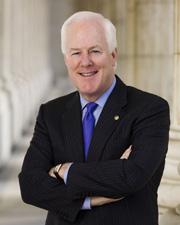 Sen. John Cornyn (R-TX)
What it changes
1 change to S. 2569
Adds SEC. ___. TAX EFFECT TRANSPARENCY wherever appropriate
Adds a sectionInserted: SEC. ___. TAX EFFECT TRANSPARENCY.
Inserted: (a) In General.--Chapter 2 of title 1, United States Code, is amended by inserting after section 102 the following:
Inserted: "Sec. 102a. Tax effect transparency
Inserted: "(a) In General.--Each Act of Congress, bill, resolution, conference report thereon, or amendment there to, that modifies Federal tax law shall contain a statement describing the general effect of the modification on Federal tax law.
Inserted: "(b) Failure To Comply.--
Inserted: "(1) In general.--A failure to comply with subsection (a) shall give rise to a point of order in either House of Congress, which may be raised by any Senator during consideration in the Senate or any Member of the House of Representatives during consideration in the House of Representatives.
Inserted: "(2) Nonexclusivity.--The availability of a point of order under this section shall not affect the availability of any other point of order.
Inserted: "(c) Disposition of Point of Order in the Senate.--
Inserted: "(1) In general.--Any Senator may raise a point of order that any matter is not in order under subsection (a).
Inserted: "(2) Waiver.--
Inserted: "(A) In general.--Any Senator may move to waive a point of order raised under paragraph (1) by an affirmative vote of three-fifths of the Senators duly chosen and sworn.
Inserted: "(B) Procedures.--For a motion to waive a point of order under subparagraph (A) as to a matter--
Show 14 more inserted paragraphsShow less
Inserted: "(i) a motion to table the point of order shall not be in order;
Inserted: "(ii) all motions to waive one or more points of order under this section as to the matter shall be debatable for a total of not more than 1 hour, equally divided between the Senator raising the point of order and the Senator moving to waive the point of order or their designees; and
Inserted: "(iii) a motion to waive the point of order shall not be amendable.
Inserted: "(d) Disposition of Point of Order in the House of Representatives.--
Inserted: "(1) In general.--If a Member of the House of Representatives makes a point of order under this section, the Chair shall put the question of consideration with respect to the proposition of whether any statement made under subsection (a) was adequate or, in the absence of such a statement, whether a statement is required under subsection (a).
Inserted: "(2) Consideration.--For a point of order under this section made in the House of Representatives--
Inserted: "(A) the question of consideration shall be debatable for 10 minutes, equally divided and controlled by the Member making the point of order and by an opponent, but shall otherwise be decided without intervening motion except one that the House of Representatives adjourn or that the Committee of the Whole rise, as the case may be;
Inserted: "(B) in selecting the opponent, the Speaker of the House of Representatives should first recognize an opponent from the opposing party; and
Inserted: "(C) the disposition of the question of consideration with respect to a measure shall be considered also to determine the question of consideration under this section with respect to an amendment made in order as original text.
Inserted: "(e) Rulemaking Authority.--The provisions of this section are enacted by the Congress--
Inserted: "(1) as an exercise of the rulemaking power of the House of Representatives and the Senate, respectively, and as such they shall be considered as part of the rules of each House, respectively, or of that House to which they specifically apply, and such rules shall supersede other rules only to the extent that they are inconsistent therewith; and
Inserted: "(2) with full recognition of the constitutional right of either House to change such rules (so far as relating to such House) at any time, in the same manner, and to the same extent as in the case of any other rule of such House.".
Inserted: (b) Clerical Amendment.--The table of sections at the beginning of chapter 2 of title 1, United States Code, is amended by inserting after the item relating to section 102 the following new item:
Inserted: "102a. Tax effect transparency.".
The amendment doesn't say where this goes; the clerk decides.
Original wording
At the appropriate place, insert the following:
Read automatically from the Congressional Record. Check the original before relying on it.
As printed
SA 3621. Mr. CORNYN submitted an amendment intended to be proposed by him to the bill S. 2569, to provide an incentive for businesses to bring jobs back to America; which was ordered to lie on the table; as follows:
At the appropriate place, insert the following:
SEC. ___. TAX EFFECT TRANSPARENCY.
(a) In General.--Chapter 2 of title 1, United States Code, is amended by inserting after section 102 the following:
“Sec. 102a. Tax effect transparency
“(a) In General.--Each Act of Congress, bill, resolution, conference report thereon, or amendment there to, that modifies Federal tax law shall contain a statement describing the general effect of the modification on Federal tax law.
“(b) Failure To Comply.--
“(1) In general.--A failure to comply with subsection (a) shall give rise to a point of order in either House of Congress, which may be raised by any Senator during consideration in the Senate or any Member of the House of Representatives during consideration in the House of Representatives.
“(2) Nonexclusivity.--The availability of a point of order under this section shall not affect the availability of any other point of order.
“(c) Disposition of Point of Order in the Senate.--
“(1) In general.--Any Senator may raise a point of order that any matter is not in order under subsection (a).
“(2) Waiver.--
“(A) In general.--Any Senator may move to waive a point of order raised under paragraph (1) by an affirmative vote of three-fifths of the Senators duly chosen and sworn.
“(B) Procedures.--For a motion to waive a point of order under subparagraph (A) as to a matter--
“(i) a motion to table the point of order shall not be in order;
“(ii) all motions to waive one or more points of order under this section as to the matter shall be debatable for a total of not more than 1 hour, equally divided between the Senator raising the point of order and the Senator moving to waive the point of order or their designees; and
“(iii) a motion to waive the point of order shall not be amendable.
“(d) Disposition of Point of Order in the House of Representatives.--
“(1) In general.--If a Member of the House of Representatives makes a point of order under this section, the Chair shall put the question of consideration with respect to the proposition of whether any statement made under subsection (a) was adequate or, in the absence of such a statement, whether a statement is required under subsection (a).
“(2) Consideration.--For a point of order under this section made in the House of Representatives--
“(A) the question of consideration shall be debatable for 10 minutes, equally divided and controlled by the Member making the point of order and by an opponent, but shall otherwise be decided without intervening motion except one that the House of Representatives adjourn or that the Committee of the Whole rise, as the case may be;
“(B) in selecting the opponent, the Speaker of the House of Representatives should first recognize an opponent from the opposing party; and
“(C) the disposition of the question of consideration with respect to a measure shall be considered also to determine the question of consideration under this section with respect to an amendment made in order as original text.
“(e) Rulemaking Authority.--The provisions of this section are enacted by the Congress--
“(1) as an exercise of the rulemaking power of the House of Representatives and the Senate, respectively, and as such they shall be considered as part of the rules of each House, respectively, or of that House to which they specifically apply, and such rules shall supersede other rules only to the extent that they are inconsistent therewith; and
“(2) with full recognition of the constitutional right of either House to change such rules (so far as relating to such House) at any time, in the same manner, and to the same extent as in the case of any other rule of such House.”.
(b) Clerical Amendment.--The table of sections at the beginning of chapter 2 of title 1, United States Code, is amended by inserting after the item relating to section 102 the following new item:
“102a. Tax effect transparency.”.
Legislative Activity
Stay on top of the latest movement without scrolling through every action
Senate amendment submitted
July 23, 2014