S.Amdt. 3659
What it does: Adds SEC. __. ENDING CONFLICTS OF INTERESTS on page 4, line 9 of the amendment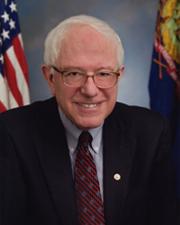 Sen. Bernard Sanders (I-VT)
What it changes
1 change to S.Amdt. 3608
Adds SEC. __. ENDING CONFLICTS OF INTERESTS on page 4, line 9 of the amendment
Adds a sectionInserted: SEC. __. ENDING CONFLICTS OF INTERESTS.
Inserted: (a) Findings.--Congress finds the following:
Inserted: (1) In October 2011, the Government Accountability Office found that--
Inserted: (A) allowing members of the banking industry to both elect and serve on the boards of directors of Federal reserve banks poses reputational risks to the Federal Reserve System;
Inserted: (B) 18 former and current members of the boards of directors of Federal reserve banks were affiliated with banks and companies that received emergency loans from the Federal Reserve System during the financial crisis;
Inserted: (C) many of the members of the boards of directors of Federal reserve banks own stock or work directly for banks that are supervised and regulated by the Federal Reserve System. These board members oversee the operations of the Federal reserve banks, including salary and personnel decisions;
Inserted: (D) under current regulations, members of a board of directors of a Federal reserve bank who are employed by the banking industry or own stock in financial institutions can participate in decisions involving how much interest to charge to financial institutions receiving loans from the Federal Reserve System, and the approval or disapproval of Federal Reserve credit to healthy banks and banks in "hazardous" condition;
Inserted: (E) 21 members of the boards of directors of Federal reserve banks were involved in making personnel decisions in the division of supervision and regulation under the Federal Reserve System; and
Inserted: (F) the Federal Reserve System does not publicly disclose when it grants a waiver to its conflict of interest regulations.
Inserted: (2) Allowing currently employed banking industry executives to serve as directors on the boards of directors of Federal reserve banks is a clear conflict of interest that must be eliminated.
Inserted: (3) No one who works for or invests in a firm receiving direct financial assistance from the Federal Reserve System should be allowed to sit on any board of directors of a Federal reserve bank or be employed by the Federal Reserve System.
Inserted: (b) Class A Members.--The tenth undesignated paragraph of section 4 of the Federal Reserve Act (12 U.S.C. 302) (relating to Class A) is amended by striking "chosen by and be representative of the stockholding banks" and inserting "designated by the Board of Governors of the Federal Reserve System, from among persons who are not employed in any capacity by a stockholding bank".
Show 5 more inserted paragraphsShow less
Inserted: (c) Class B.--The eleventh undesignated paragraph of section 4 of the Federal Reserve Act (12 U.S.C. 302) (relating to Class B) is amended by striking "be elected" and inserting "be designated by the Board of Governors of the Federal Reserve System".
Inserted: (d) Limitations on Boards of Directors.--The fourteenth and fifteenth undesignated paragraphs of section 4 of the Federal Reserve Act (12 U.S.C. 303) (relating to Class B and Class C, respectively) are amended to read as follows:
Inserted: "No employee of a bank holding company or other entity regulated by the Board of Governors of the Federal Reserve System may serve on the board of directors of any Federal reserve bank.
Inserted: "No employee of the Federal Reserve System or board member of a Federal reserve bank may own any stock or invest in any company that is regulated by the Board of Governors of the Federal Reserve System, without exception.".
Inserted: (e) Reports to Congress.--The Comptroller General of the United States shall report annually to Congress beginning 1 year after the date of enactment of this Act to make sure that the provisions of this section are followed.
Original wording
On page 4 of the amendment, after line 9, insert the following:
Read automatically from the Congressional Record. Check the original before relying on it.
As printed
SA 3659. Mr. SANDERS (for himself and Mr. Begich) submitted an amendment intended to be proposed to amendment SA 3608 submitted by Mr. Paul and intended to be proposed to the bill S. 2569, to provide an incentive for businesses to bring jobs back to America; which was ordered to lie on the table; as follows:
On page 4 of the amendment, after line 9, insert the following:
SEC. __. ENDING CONFLICTS OF INTERESTS.
(a) Findings.--Congress finds the following:
(1) In October 2011, the Government Accountability Office found that--
(A) allowing members of the banking industry to both elect and serve on the boards of directors of Federal reserve banks poses reputational risks to the Federal Reserve System;
(B) 18 former and current members of the boards of directors of Federal reserve banks were affiliated with banks and companies that received emergency loans from the Federal Reserve System during the financial crisis;
(C) many of the members of the boards of directors of Federal reserve banks own stock or work directly for banks that are supervised and regulated by the Federal Reserve System. These board members oversee the operations of the Federal reserve banks, including salary and personnel decisions;
(D) under current regulations, members of a board of directors of a Federal reserve bank who are employed by the banking industry or own stock in financial institutions can participate in decisions involving how much interest to charge to financial institutions receiving loans from the Federal Reserve System, and the approval or disapproval of Federal Reserve credit to healthy banks and banks in “hazardous” condition;
(E) 21 members of the boards of directors of Federal reserve banks were involved in making personnel decisions in the division of supervision and regulation under the Federal Reserve System; and
(F) the Federal Reserve System does not publicly disclose when it grants a waiver to its conflict of interest regulations.
(2) Allowing currently employed banking industry executives to serve as directors on the boards of directors of Federal reserve banks is a clear conflict of interest that must be eliminated.
(3) No one who works for or invests in a firm receiving direct financial assistance from the Federal Reserve System should be allowed to sit on any board of directors of a Federal reserve bank or be employed by the Federal Reserve System.
(b) Class A Members.--The tenth undesignated paragraph of section 4 of the Federal Reserve Act (12 U.S.C. 302) (relating to Class A) is amended by striking “chosen by and be representative of the stockholding banks” and inserting “designated by the Board of Governors of the Federal Reserve System, from among persons who are not employed in any capacity by a stockholding bank”.
(c) Class B.--The eleventh undesignated paragraph of section 4 of the Federal Reserve Act (12 U.S.C. 302) (relating to Class B) is amended by striking “be elected” and inserting “be designated by the Board of Governors of the Federal Reserve System”.
(d) Limitations on Boards of Directors.--The fourteenth and fifteenth undesignated paragraphs of section 4 of the Federal Reserve Act (12 U.S.C. 303) (relating to Class B and Class C, respectively) are amended to read as follows:
“No employee of a bank holding company or other entity regulated by the Board of Governors of the Federal Reserve System may serve on the board of directors of any Federal reserve bank.
“No employee of the Federal Reserve System or board member of a Federal reserve bank may own any stock or invest in any company that is regulated by the Board of Governors of the Federal Reserve System, without exception.”.
(e) Reports to Congress.--The Comptroller General of the United States shall report annually to Congress beginning 1 year after the date of enactment of this Act to make sure that the provisions of this section are followed.
Legislative Activity
Stay on top of the latest movement without scrolling through every action
Senate amendment submitted
July 24, 2014