In the nature of a substitute.
What it does: Replaces the bill's text with a full substitute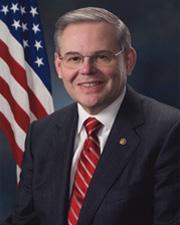 Sen. Robert Menendez (D-NJ)
What it changes
1 change to S. 2142 · shown in the bill's text
Replaces the bill's text with a full substitute
Replaces the full textEverything after the enacting clauseIn S. 2142 · Reported to Senate
2 unchanged paragraphsHide unchanged text
SECTION 1. SHORT TITLE.
This Act may be cited as the "Venezuela Defense of Human Rights and Civil Society Act of 2014".
SEC. 2. FINDINGS.
Congress makes the following findings:
(1) The Central Bank of Venezuela and the National Statistical Institute of Venezuela
[struck: have ]stated that the [inserted: annual ]inflation rate in Venezuela[struck: was 56.30 percent ]in 2013[inserted: was 56.30], the highest level of inflation in the Western Hemisphere and the third highest level of inflation in the world behind South Sudan and Syria.(2) The Central Bank of Venezuela and the Government of Venezuela have imposed a series of currency controls that has exacerbated economic problems and, according to the World Economic Forum, has become the most problematic factor for doing business in Venezuela.
(3) The Central Bank of Venezuela
[struck: and the National Statistical Institute of Venezuela have ]declared that the scarcity index of Venezuela reached[struck: 28][inserted: 29.4] percent in[struck: December 2013][inserted: March 2014], which signifies that [inserted: fewer than ]one in 4 basic goods is unavailable at any given time.[inserted: The Central Bank has not released any information on the scarcity index since that time.](4) Since 1999, violent crime in Venezuela has risen sharply and the Venezuelan Violence Observatory, an independent nongovernmental organization, found the national per capita murder rate to be 79 per 100,000 people in 2013.
(5) The international nongovernmental organization Human Rights Watch recently stated, "Under the leadership of President
[struck: Chavez][inserted: Chaavez] and now President Maduro, the accumulation of power in the executive branch and the erosion of human rights guarantees have enabled the government to intimidate, censor, and prosecute its critics.".(6) The Country Reports on Human Rights Practices for 2013 of the Department of State maintained that in Venezuela "the government did not respect judicial independence or permit judges to act according to the law without fear of retaliation" and "the government used the judiciary to intimidate and selectively prosecute political, union, business, and civil society leaders who were critical of government policies or actions".
(7) The Government of Venezuela has detained foreign journalists and threatened and expelled international media outlets operating in Venezuela, and the international nongovernmental organization Freedom House declared that Venezuela's "media climate is permeated by intimidation, sometimes including physical attacks, and strong antimedia rhetoric by the government is common".
(8) Since February 4, 2014, the Government of Venezuela has responded to antigovernment protests with violence and killings perpetrated by [inserted: its ]public security forces
[struck: , and by arresting and unjustly charging opposition leader Leopoldo Lopes with criminal incitement, conspiracy, arson, and intent to damage property].Inserted: (9) In May 2014, Human Rights Watch found that the unlawful use of force perpetrated against antigovernment protesters was "part of a systematic practice by the Venezuelan security forces".
(
[struck: 9][inserted: 10]) As of[struck: March 13][inserted: September 1], 2014,[struck: 23][inserted: 41] people had been killed,[struck: more than 100 people ][inserted: approximately 3,000 ]had been[struck: injured][inserted: arrested unjustly], and[struck: dozens had been unjustly detained ][inserted: more than 150 remained in prison and faced criminal charges ]as a result of antigovernment demonstrations throughout Venezuela.Inserted: (11) Opposition leader Leopoldo Lopez was arrested on February 18, 2014, in relation to the protests and was unjustly charged with criminal incitement, conspiracy, arson, and property damage. Since his arrest, Lopez has been held in solitary confinement and has been denied 58 out of 60 of his proposed witnesses at his ongoing trial.
Inserted: (12) As of September 1, 2014, not a single member of the public security forces of the Government of Venezuela had been held accountable for acts of violence perpetrated against antigovernment protesters.
SEC. 3. SENSE OF CONGRESS REGARDING ANTIGOVERNMENT PROTESTS IN VENEZUELA AND THE NEED TO PREVENT FURTHER VIOLENCE IN VENEZUELA.
It is the sense of Congress that--
1 unchanged paragraphHide unchanged text
(1) the United States aspires to a mutually beneficial relationship with Venezuela based on respect for human rights and the rule of law and a functional and productive relationship on issues of public security, including counternarcotics and counterterrorism;
(2) the United States supports the people of Venezuela in their efforts to realize their full economic potential and to advance representative democracy, human rights, and the rule of law within their country;
(3) the chronic mismanagement by the Government of Venezuela of its economy has produced conditions of economic hardship and scarcity of basic goods and foodstuffs for the people of Venezuela;
(4) the failure of the Government of Venezuela to guarantee minimal standards of public security for its citizens has led the country to become one of the most violent [inserted: and corrupt ]in the world;
(5) the Government of Venezuela continues to take steps to remove checks and balances on the executive, politicize the judiciary, undermine the independence of the legislature through use of executive decree powers, persecute and prosecute its political opponents, curtail freedom of the press, and limit the free expression of its citizens;
(6)
[struck: the people of Venezuela][inserted: Venezuelans], responding to ongoing economic hardship, high levels of crime and violence, and the lack of basic political rights and individual freedoms, have turned out in demonstrations in Caracas and throughout the country to protest the[struck: inability][inserted: failure] of the Government of Venezuela to[struck: ensure][inserted: protect] the political and economic well-being of its citizens; and(7) the repeated use of violence perpetrated by the National Guard and security personnel of Venezuela, as well as persons acting on behalf of the Government of Venezuela,
[struck: in relation to the ][inserted: against ]antigovernment[struck: protests][inserted: protesters] that began on February 4, 2014, is intolerable and the use of unprovoked violence by protesters is also a matter of serious concern.SEC. 4. UNITED STATES POLICY TOWARD VENEZUELA.
It is the policy of the United States--
(1) to support the people of Venezuela in their aspiration to live under conditions of peace and representative democracy as defined by the Inter-American Democratic Charter of the Organization of American States;
(2) to work in concert with the other member states within the Organization of American States, as well as the countries of the European Union, to ensure the peaceful resolution of the current situation in Venezuela and the immediate cessation of violence against antigovernment protestors;
(3) to hold accountable government and security officials in Venezuela responsible for or complicit in the use of force in relation to
[struck: the ]antigovernment protests[struck: that began on February 4, 2014, ]and similar future acts of violence; and(4) to continue to support the development of democratic political processes and independent civil society in Venezuela.
SEC. 5. SANCTIONS ON PERSONS RESPONSIBLE FOR VIOLENCE IN VENEZUELA.
(a) In General.--The President shall impose the sanctions described in subsection (b) with respect to any [inserted: foreign ]person, including
[struck: a][inserted: any] current or former official of the Government of Venezuela or[struck: a][inserted: any] person acting on behalf of that Government, that the President determines--(1) has perpetrated, or is responsible for ordering
[struck: , controlling, ][inserted: ]or otherwise directing, significant acts of violence or serious human rights abuses in Venezuela against persons associated with the antigovernment protests in Venezuela that began on February 4, 2014;(2) has
[struck: directed][inserted: ordered] or[struck: ordered ][inserted: otherwise directed ]the arrest or prosecution of a person [inserted: in Venezuela ]primarily because of the person's legitimate exercise of freedom of expression or assembly; or(3) has [inserted: knowingly ]materially assisted, sponsored, or provided significant financial, material, or technological support for, or goods or services in support of, the commission of acts described in paragraph (1) or (2).
(b) Sanctions Described.--
(1) In general.--The sanctions described in this subsection are the following:
1 unchanged paragraphHide unchanged text
(A) Asset blocking.--The exercise of all powers granted to the President by the International Emergency Economic Powers Act (50 U.S.C. 1701 et seq.) to the extent necessary to block and prohibit all transactions in all property and interests in property of a person determined by the President to be subject to subsection (a) if such property and interests in property are in the United States, come within the United States, or are or come within the possession or control of a United States person.
(B) Exclusion from the united states and revocation of visa or other documentation.--In the case of an alien determined by the President to be subject to subsection (a), denial of a visa to, and exclusion from the United States of, the alien, and revocation in accordance with section 221(i) of the Immigration and Nationality Act (8 U.S.C. 1201(i)), of any visa or other documentation of the alien.
(2) Penalties.--A person that violates, attempts to violate, conspires to violate, or causes a violation of paragraph (1)(A) or any regulation, license, or order issued to carry out paragraph (1)(A) shall be subject to the penalties set forth in subsections (b) and (c) of section 206 of the International Emergency Economic Powers Act (50 U.S.C. 1705) to the same extent as a person that commits an unlawful act described in subsection (a) of that section.
Inserted: (3) Exception relating to importation of goods.--The requirement to block and prohibit all transactions in all property and interests in property under paragraph (1)(A) shall not include the authority to impose sanctions on the importation of goods.
(
[struck: 3][inserted: 4]) Exception to comply with united nations headquarters agreement.--Sanctions under paragraph (1)(B) shall not apply to an alien if admitting the alien into the United States is necessary to permit the United States to comply with the Agreement regarding the Headquarters of the United Nations, signed at Lake Success June 26, 1947, and entered into force November 21, 1947, between the United Nations and the United States, or other applicable international obligations.(c) Waiver.--The President may waive the application of sanctions under subsection (b) with respect to a person if the President--
(1) determines that such a waiver is in the national
[struck: security interests ][inserted: interest ]of the United States; and(2) on or before the date on which the waiver takes effect, submits to the Committee on Foreign Relations and the Committee on Banking Housing, and Urban Affairs of the Senate and the Committee on Foreign Affairs and the Committee on Financial Services of the House of Representatives a notice of and justification for the waiver.
(d) Regulatory Authority.--The President shall issue such regulations, licenses, and orders as are necessary to carry out this section.
Inserted: (e) Termination.--The requirement to impose sanctions under this section shall terminate on December 31, 2016.
(
[struck: e][inserted: f]) Definitions.--In this section:(1) Admitted; alien.--The terms "admitted" and "alien" have the meanings given those terms in section 101 of the Immigration and Nationality Act (8 U.S.C. 1101).
(2) Financial institution.--The term "financial institution" has the meaning given that term in section 5312 of title 31, United States Code.
Struck: (3) Materially assisted.--The term "materially assisted" means the provision of assistance that is significant and of a kind directly relevant to acts described in paragraph (1) or (2) of subsection (a).
(
[struck: 4][inserted: 3])[struck: United states ][inserted: Foreign ]person.--The term "[struck: United States ][inserted: foreign ]person" means[struck: --][inserted: a person that is not a United States person.]Inserted: (4) Good.--The term "good" has the meaning given that term in section 16 of the Export Administration Act of 1979 (50 U.S.C. App. 2415) (as continued in effect pursuant to the International Emergency Economic Powers Act (50 U.S.C. 1701 et seq.)).
Inserted: (5) Knowingly.--The term "knowingly", with respect to conduct, a circumstance, or a result, means that a person has actual knowledge, or should have known, of the conduct, the circumstance, or the result.
Inserted: (6) Materially assisted.--The term "materially assisted" means the provision of assistance that is significant and of a kind directly relevant to acts described in paragraph (1) or (2) of subsection (a).
Inserted: (7) United states person.--The term "United States person" means--
(A) a United States citizen or an alien lawfully admitted for permanent residence to the United States; or
(B) an entity organized under the laws of the United States or of any jurisdiction within the United States, including a foreign branch of such an entity.
Struck: SEC. 6. SUPPORT FOR CIVIL SOCIETY IN VENEZUELA.
Struck: (a) In General.--The Secretary of State and the Administrator of the United States Agency for International Development shall, subject to the availability of appropriations, directly or through nongovernmental organizations--
Struck: (1) defend internationally recognized human rights for the people of Venezuela;
Struck: (2) strengthen the organizational and operational capacity of democratic civil society in Venezuela;
Show 15 more struck paragraphsShow less
Struck: (3) support the efforts of independent media outlets to broadcast, distribute, and share information beyond the limited means available as of the date of the enactment of this Act;
Struck: (4) facilitate open and uncensored access to the Internet for the people of Venezuela;
Struck: (5) improve transparency and accountability of institutions that are part of the Government of Venezuela;
Struck: (6) provide support to civil society organizations, activists, and peaceful demonstrators in Venezuela that have been targeted for exercising internationally recognized civil and political rights, as well as journalists targeted for activities related to the work of a free press; and
Struck: (7) provide support for democratic organizing and election monitoring in Venezuela.
Struck: (b) Strategy Requirement.--Not later than 60 days after the date of the enactment of this Act, the President shall submit a strategy to carry out the activities described in subsection (a) to--
Struck: (1) the Committee on Foreign Relations of the Senate and the Committee on Foreign Affairs of the House of Representatives; and
Struck: (2) the Committee on Appropriations of the Senate and the Committee on Appropriations of the House of Representatives.
Struck: (c) Authorization of Appropriations.--
Struck: (1) In general.--There is authorized to be appropriated to the Secretary of State $15,000,000 for fiscal year 2015 to carry out subsection (a). Amounts appropriated for the activities set forth in subsection (a) shall be used pursuant to the authorization and requirements contained in this section. Additional amounts may be authorized to be appropriated under provisions of law.
Struck: (2) Notification requirement.--
Struck: (A) In general.--Funds appropriated or otherwise made available pursuant to paragraph (1) may not be obligated until until 15 days after the date on which the President has provided notice of intent to obligate such funds to--
Struck: (i) the Committee on Foreign Relations of the Senate and the Committee on Foreign Affairs of the House of Representatives; and
Struck: (ii) the Committee on Appropriations of the Senate and the Committee on Appropriations of the House of Representatives.
Struck: (B) Waiver.--The President may waive the requirement under subparagraph (A) if the President determines that failure to waive that requirement would pose a substantial risk to human health or welfare, in which case notification shall be provided as early as practicable, but in no event later than 3 days after taking the action to which such notification requirement was applicable in the context of the circumstances necessitating such waiver.
SEC.
[struck: 7][inserted: 6]. REPORT ON BROADCASTING, INFORMATION DISTRIBUTION, AND CIRCUMVENTION TECHNOLOGY DISTRIBUTION IN VENEZUELA.(a) In General.--Not later than 30 days after the date of the enactment of this Act, the Chairman of the Broadcasting Board of Governors (in this section referred to as the "Board") shall submit to Congress a report that includes--
(1) a thorough evaluation of the governmental, political, and technological obstacles faced by the people of Venezuela in their efforts to obtain accurate, objective, and comprehensive news and information about domestic and international affairs;
2 unchanged paragraphsHide unchanged text
(2) an assessment of current efforts relating to broadcasting, information distribution, and circumvention technology distribution in Venezuela, by the United States Government and otherwise; and
(3) a strategy for expanding such efforts in Venezuela, including recommendations for additional measures to expand upon current efforts.
(b) Elements.--The report required by subsection (a) shall include--
(1) an assessment of the current level of Federal funding dedicated to broadcasting, information distribution, and circumvention technology distribution in Venezuela by the Board before the date of the enactment of this Act;
(2) an assessment of
[struck: whether ][inserted: the extent to which ]the current level and type of news and related programming and content provided by the Voice of America[struck: is sufficiently ][inserted: and other sources is ]addressing the informational needs of the people of Venezuela; and(3)
[struck: specific measures ][inserted: recommendations ]for increasing broadcasting, information distribution, and circumvention technology distribution in Venezuela.Original wording
Strike all after the enacting clause and insert the following:
Read automatically from the Congressional Record. Check the original before relying on it.
As printed
SA 3974. Mr. REID (for Mr. Menendez) proposed an amendment to the bill S. 2142, to impose targeted sanctions on persons responsible for violations of human rights of antigovernment protesters in Venezuela, to strengthen civil society in Venezuela, and for other purposes; as follows:
Strike all after the enacting clause and insert the following:
SECTION 1. SHORT TITLE.
This Act may be cited as the “Venezuela Defense of Human Rights and Civil Society Act of 2014”.
SEC. 2. FINDINGS.
Congress makes the following findings:
(1) The Central Bank of Venezuela and the National Statistical Institute of Venezuela stated that the annual inflation rate in Venezuela in 2013 was 56.30, the highest level of inflation in the Western Hemisphere and the third highest level of inflation in the world behind South Sudan and Syria.
(2) The Central Bank of Venezuela and the Government of Venezuela have imposed a series of currency controls that has exacerbated economic problems and, according to the World Economic Forum, has become the most problematic factor for doing business in Venezuela.
(3) The Central Bank of Venezuela declared that the scarcity index of Venezuela reached 29.4 percent in March 2014, which signifies that fewer than one in 4 basic goods is unavailable at any given time. The Central Bank has not released any information on the scarcity index since that time.
(4) Since 1999, violent crime in Venezuela has risen sharply and the Venezuelan Violence Observatory, an independent nongovernmental organization, found the national per capita murder rate to be 79 per 100,000 people in 2013.
(5) The international nongovernmental organization Human Rights Watch recently stated, “Under the leadership of President Chaavez and now President Maduro, the accumulation of power in the executive branch and the erosion of human rights guarantees have enabled the government to intimidate, censor, and prosecute its critics.”.
(6) The Country Reports on Human Rights Practices for 2013 of the Department of State maintained that in Venezuela “the government did not respect judicial independence or permit judges to act according to the law without fear of retaliation” and “the government used the judiciary to intimidate and selectively prosecute political, union, business, and civil society leaders who were critical of government policies or actions”.
(7) The Government of Venezuela has detained foreign journalists and threatened and expelled international media outlets operating in Venezuela, and the international nongovernmental organization Freedom House declared that Venezuela's “media climate is permeated by intimidation, sometimes including physical attacks, and strong antimedia rhetoric by the government is common”.
(8) Since February 4, 2014, the Government of Venezuela has responded to antigovernment protests with violence and killings perpetrated by its public security forces.
(9) In May 2014, Human Rights Watch found that the unlawful use of force perpetrated against antigovernment protesters was “part of a systematic practice by the Venezuelan security forces”.
(10) As of September 1, 2014, 41 people had been killed, approximately 3,000 had been arrested unjustly, and more than 150 remained in prison and faced criminal charges as a result of antigovernment demonstrations throughout Venezuela.
(11) Opposition leader Leopoldo Lopez was arrested on February 18, 2014, in relation to the protests and was unjustly charged with criminal incitement, conspiracy, arson, and property damage. Since his arrest, Lopez has been held in solitary confinement and has been denied 58 out of 60 of his proposed witnesses at his ongoing trial.
(12) As of September 1, 2014, not a single member of the public security forces of the Government of Venezuela had been held accountable for acts of violence perpetrated against antigovernment protesters.
SEC. 3. SENSE OF CONGRESS REGARDING ANTIGOVERNMENT PROTESTS IN VENEZUELA AND THE NEED TO PREVENT FURTHER VIOLENCE IN VENEZUELA.
It is the sense of Congress that--
(1) the United States aspires to a mutually beneficial relationship with Venezuela based on respect for human rights and the rule of law and a functional and productive relationship on issues of public security, including counternarcotics and counterterrorism;
(2) the United States supports the people of Venezuela in their efforts to realize their full economic potential and to advance representative democracy, human rights, and the rule of law within their country;
(3) the chronic mismanagement by the Government of Venezuela of its economy has produced conditions of economic hardship and scarcity of basic goods and foodstuffs for the people of Venezuela;
(4) the failure of the Government of Venezuela to guarantee minimal standards of public security for its citizens has led the country to become one of the most violent and corrupt in the world;
(5) the Government of Venezuela continues to take steps to remove checks and balances on the executive, politicize the judiciary, undermine the independence of the legislature through use of executive decree powers, persecute and prosecute its political opponents, curtail freedom of the press, and limit the free expression of its citizens;
(6) Venezuelans, responding to ongoing economic hardship, high levels of crime and violence, and the lack of basic political rights and individual freedoms, have turned out in demonstrations in Caracas and throughout the country to protest the failure of the Government of Venezuela to protect the political and economic well-being of its citizens; and
(7) the repeated use of violence perpetrated by the National Guard and security personnel of Venezuela, as well as persons acting on behalf of the Government of Venezuela, against antigovernment protesters that began on February 4, 2014, is intolerable and the use of unprovoked violence by protesters is also a matter of serious concern.
SEC. 4. UNITED STATES POLICY TOWARD VENEZUELA.
It is the policy of the United States--
(1) to support the people of Venezuela in their aspiration to live under conditions of peace and representative democracy as defined by the Inter-American Democratic Charter of the Organization of American States;
(2) to work in concert with the other member states within the Organization of American States, as well as the countries of the European Union, to ensure the peaceful resolution of the current situation in Venezuela and the immediate cessation of violence against antigovernment protestors;
(3) to hold accountable government and security officials in Venezuela responsible for or complicit in the use of force in relation to antigovernment protests and similar future acts of violence; and
(4) to continue to support the development of democratic political processes and independent civil society in Venezuela.
SEC. 5. SANCTIONS ON PERSONS RESPONSIBLE FOR VIOLENCE IN VENEZUELA.
(a) In General.--The President shall impose the sanctions described in subsection (b) with respect to any foreign person, including any current or former official of the Government of Venezuela or any person acting on behalf of that Government, that the President determines--
(1) has perpetrated, or is responsible for ordering or otherwise directing, significant acts of violence or serious human rights abuses in Venezuela against persons associated with the antigovernment protests in Venezuela that began on February 4, 2014;
(2) has ordered or otherwise directed the arrest or prosecution of a person in Venezuela primarily because of the person's legitimate exercise of freedom of expression or assembly; or
(3) has knowingly materially assisted, sponsored, or provided significant financial, material, or technological support for, or goods or services in support of, the commission of acts described in paragraph (1) or (2).
(b) Sanctions Described.--
(1) In general.--The sanctions described in this subsection are the following:
(A) Asset blocking.--The exercise of all powers granted to the President by the International Emergency Economic Powers Act (50 U.S.C. 1701 et seq.) to the extent necessary to block and prohibit all transactions in all property and interests in property of a person determined by the President to be subject to subsection (a) if such property and interests in property are in the United States, come within the United States, or are or come within the possession or control of a United States person.
(B) Exclusion from the united states and revocation of visa or other documentation.--In the case of an alien determined by the President to be subject to subsection (a), denial of a visa to, and exclusion from the United States of, the alien, and revocation in accordance with section 221(i) of the Immigration and Nationality Act (8 U.S.C. 1201(i)), of any visa or other documentation of the alien.
(2) Penalties.--A person that violates, attempts to violate, conspires to violate, or causes a violation of paragraph (1)(A) or any regulation, license, or order issued to carry out paragraph (1)(A) shall be subject to the penalties set forth in subsections (b) and (c) of section 206 of the International Emergency Economic Powers Act (50 U.S.C. 1705) to the same extent as a person that commits an unlawful act described in subsection (a) of that section.
(3) Exception relating to importation of goods.--The requirement to block and prohibit all transactions in all property and interests in property under paragraph (1)(A) shall not include the authority to impose sanctions on the importation of goods.
(4) Exception to comply with united nations headquarters agreement.--Sanctions under paragraph (1)(B) shall not apply to an alien if admitting the alien into the United States is necessary to permit the United States to comply with the Agreement regarding the Headquarters of the United Nations, signed at Lake Success June 26, 1947, and entered into force November 21, 1947, between the United Nations and the United States, or other applicable international obligations.
(c) Waiver.--The President may waive the application of sanctions under subsection (b) with respect to a person if the President--
(1) determines that such a waiver is in the national interest of the United States; and
(2) on or before the date on which the waiver takes effect, submits to the Committee on Foreign Relations and the Committee on Banking Housing, and Urban Affairs of the Senate and the Committee on Foreign Affairs and the Committee on Financial Services of the House of Representatives a notice of and justification for the waiver.
(d) Regulatory Authority.--The President shall issue such regulations, licenses, and orders as are necessary to carry out this section.
(e) Termination.--The requirement to impose sanctions under this section shall terminate on December 31, 2016.
(f) Definitions.--In this section:
(1) Admitted; alien.--The terms “admitted” and “alien” have the meanings given those terms in section 101 of the Immigration and Nationality Act (8 U.S.C. 1101).
(2) Financial institution.--The term “financial institution” has the meaning given that term in section 5312 of title 31, United States Code.
(3) Foreign person.--The term “foreign person” means a person that is not a United States person.
(4) Good.--The term “good” has the meaning given that term in section 16 of the Export Administration Act of 1979 (50 U.S.C. App. 2415) (as continued in effect pursuant to the International Emergency Economic Powers Act (50 U.S.C. 1701 et seq.)).
(5) Knowingly.--The term “knowingly”, with respect to conduct, a circumstance, or a result, means that a person has actual knowledge, or should have known, of the conduct, the circumstance, or the result.
(6) Materially assisted.--The term “materially assisted” means the provision of assistance that is significant and of a kind directly relevant to acts described in paragraph (1) or (2) of subsection (a).
(7) United states person.--The term “United States person” means--
(A) a United States citizen or an alien lawfully admitted for permanent residence to the United States; or
(B) an entity organized under the laws of the United States or of any jurisdiction within the United States, including a foreign branch of such an entity.
SEC. 6. REPORT ON BROADCASTING, INFORMATION DISTRIBUTION, AND CIRCUMVENTION TECHNOLOGY DISTRIBUTION IN VENEZUELA.
(a) In General.--Not later than 30 days after the date of the enactment of this Act, the Chairman of the Broadcasting Board of Governors (in this section referred to as the “Board”) shall submit to Congress a report that includes--
(1) a thorough evaluation of the governmental, political, and technological obstacles faced by the people of Venezuela in their efforts to obtain accurate, objective, and comprehensive news and information about domestic and international affairs;
(2) an assessment of current efforts relating to broadcasting, information distribution, and circumvention technology distribution in Venezuela, by the United States Government and otherwise; and
(3) a strategy for expanding such efforts in Venezuela, including recommendations for additional measures to expand upon current efforts.
(b) Elements.--The report required by subsection (a) shall include--
(1) an assessment of the current level of Federal funding dedicated to broadcasting, information distribution, and circumvention technology distribution in Venezuela by the Board before the date of the enactment of this Act;
(2) an assessment of the extent to which the current level and type of news and related programming and content provided by the Voice of America and other sources is addressing the informational needs of the people of Venezuela; and
(3) recommendations for increasing broadcasting, information distribution, and circumvention technology distribution in Venezuela.
Legislative Activity
Stay on top of the latest movement without scrolling through every action
Senate amendment submitted
December 8, 2014
View full timeline
Senate amendment submitted
December 8, 2014
Senate amendment agreed to: Amendment SA 3974 agreed to in Senate by Unanimous Consent.
December 8, 2014
Senate amendment agreed to: Amendment SA 3974 agreed to in Senate by Unanimous Consent.
December 8, 2014
Senate amendment proposed (on the floor): Amendment SA 3974 proposed by Senator Reid for Senator Menendez.(consideration: CR S6398)
December 8, 2014
Amendment SA 3974 proposed by Senator Reid for Senator Menendez. (consideration: CR S6398) In the nature of a substitute.
December 8, 2014
Amendment SA 3974 agreed to in Senate by Unanimous Consent.
December 8, 2014