To express the sense of the Senate on underutilized facilities of the National Aeronautics and Space Administration and their potential use.
What it does: Adds SEC. __. SENSE OF SENATE ON UNDERUTILIZED FACILITIES OF THE NATIONAL AERONAUTICS AND SPACE ADMINISTRATION AND THEIR POTENTIAL USE wherever appropriate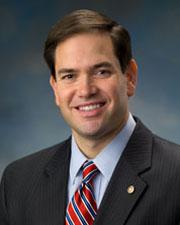 Sen. Marco Rubio (R-FL)
What it changes
1 change to S.Con.Res. 8
Adds SEC. __. SENSE OF SENATE ON UNDERUTILIZED FACILITIES OF THE NATIONAL AERONAUTICS AND SPACE ADMINISTRATION AND THEIR POTENTIAL USE wherever appropriate
Adds a sectionInserted: SEC. __. SENSE OF SENATE ON UNDERUTILIZED FACILITIES OF THE NATIONAL AERONAUTICS AND SPACE ADMINISTRATION AND THEIR POTENTIAL USE.
Inserted: (a) Findings.--The Senate finds the following:
Inserted: (1) The National Aeronautics and Space Administration (NASA) is the ninth largest real property holder of the Federal Government, with more than 124,000 acres and more than 4,900 buildings and other structures with a replacement value of more than $30,000,000,000.
Inserted: (2) The annual operation and maintenance costs of the National Aeronautics and Space Administration have increased steadily, and, as of 2012, the Administration has more than $2,300,000,000 in annual deferred maintenance costs.
Inserted: (3) According to Office of Inspector General (OIG) of the National Aeronautics and Space Administration, the Administration continues to retain real property that is underutilized, does not have identified future mission uses, or is duplicative of other assets in its real property inventory.
Inserted: (4) The Office of Inspector General, the Government Accountability Office (GAO), and Congress have identified the aging and duplicative infrastructure of the National Aeronautics and Space Administration as a high priority and longstanding management challenge.
Inserted: (5) In the NASA Authorization Act of 2010, Congress directed the National Aeronautics and Space Administration to examine its real property assets and downsize to fit current and future missions and expected funding levels, paying particular attention to identifying and removing unneeded or duplicative infrastructure.
Inserted: (6) The Office of Inspector General found at least 33 facilities, including wind tunnels, test stands, airfields, and launch infrastructure, that were underutilized or for which National Aeronautics and Space Administration managers could not identify a future mission use and that the need for these facilities have declined in recent years as a result of changes in the mission focus of the Administration, the condition and obsolescence of some facilities, and the advent of alternative testing methods.
Inserted: (7) The Office of Inspector General found that the National Aeronautics and Space Administration has taken steps to minimize the costs of continuing to maintain some of these facilities by placing them in an inactive state or leasing them to other parties.
Inserted: (8) The National Aeronautics and Space Administration has a series of initiatives underway that, in the judgment of the Office of Inspector General, are "positive steps towards 'rightsizing' its real property footprint", and the Office of Inspector General has concluded that "it is imperative that NASA move forward aggressively with its infrastructure reduction efforts".
Inserted: (9) Existing and emerging United States commercial launch and exploration capabilities are providing cargo transportation to the International Space Station and offer the potential for providing crew support, access to the International Space Station, and missions to low Earth orbit while the National Aeronautics and Space Administration focuses its efforts on heavy-lift capabilities and deep space missions.
Inserted: (10) National Aeronautics and Space Administration facilities and property that are underutilized, duplicative, or no longer needed for Administration requirements could be utilized by commercial users and State and local entities, resulting in savings for the Administration and a reduction in the burden of the Federal Government to fund space operations.
Show 4 more inserted paragraphsShow less
Inserted: (b) Sense of Senate.--It is the sense of the Senate that the levels in this concurrent resolution assume--
Inserted: (1) the National Aeronautics and Space Administration should move forward with plans to reduce its infrastructure and, to the greatest extent practicable, make property available for lease to a government or private tenant or report the property to the General Services Administration (GSA) for sale or transfer to another entity;
Inserted: (2) the National Aeronautics and Space Administration should pursue opportunities for streamlined sale or lease of property and facilities, including for exclusive use, to a private entity, or expedited conveyance or transfer to a State or political subdivision, municipality, instrumentality of a State, or Department of Transportation-licensed launch site operators for the promotion of commercial or scientific space activity and for developing and operating space launch facilities; and
Inserted: (3) leasing or transferring underutilized facilities and properties to commercial space entities or State or local governments will reduce operation and maintenance costs for the National Aeronautics and Space Administration, save money for the Federal Government, and promote commercial space and the exploration goals of the Administration and the United States.
The amendment doesn't say where this goes; the clerk decides.
Original wording
At the appropriate place, insert the following:
Read automatically from the Congressional Record. Check the original before relying on it.
As printed
SA 623. Mr. RUBIO proposed an amendment to the concurrent resolution S. Con. Res. 8, setting forth the congressional budget for the United States Government for fiscal year 2014, revising the appropriate budgetary levels for fiscal year 2013, and setting forth the appropriate budgetary levels for fiscal years 2015 through 2023; as follows:
At the appropriate place, insert the following:
SEC. __. SENSE OF SENATE ON UNDERUTILIZED FACILITIES OF THE NATIONAL AERONAUTICS AND SPACE ADMINISTRATION AND THEIR POTENTIAL USE.
(a) Findings.--The Senate finds the following:
(1) The National Aeronautics and Space Administration (NASA) is the ninth largest real property holder of the Federal Government, with more than 124,000 acres and more than 4,900 buildings and other structures with a replacement value of more than $30,000,000,000.
(2) The annual operation and maintenance costs of the National Aeronautics and Space Administration have increased steadily, and, as of 2012, the Administration has more than $2,300,000,000 in annual deferred maintenance costs.
(3) According to Office of Inspector General (OIG) of the National Aeronautics and Space Administration, the Administration continues to retain real property that is underutilized, does not have identified future mission uses, or is duplicative of other assets in its real property inventory.
(4) The Office of Inspector General, the Government Accountability Office (GAO), and Congress have identified the aging and duplicative infrastructure of the National Aeronautics and Space Administration as a high priority and longstanding management challenge.
(5) In the NASA Authorization Act of 2010, Congress directed the National Aeronautics and Space Administration to examine its real property assets and downsize to fit current and future missions and expected funding levels, paying particular attention to identifying and removing unneeded or duplicative infrastructure.
(6) The Office of Inspector General found at least 33 facilities, including wind tunnels, test stands, airfields, and launch infrastructure, that were underutilized or for which National Aeronautics and Space Administration managers could not identify a future mission use and that the need for these facilities have declined in recent years as a result of changes in the mission focus of the Administration, the condition and obsolescence of some facilities, and the advent of alternative testing methods.
(7) The Office of Inspector General found that the National Aeronautics and Space Administration has taken steps to minimize the costs of continuing to maintain some of these facilities by placing them in an inactive state or leasing them to other parties.
(8) The National Aeronautics and Space Administration has a series of initiatives underway that, in the judgment of the Office of Inspector General, are “positive steps towards ‘rightsizing' its real property footprint”, and the Office of Inspector General has concluded that “it is imperative that NASA move forward aggressively with its infrastructure reduction efforts”.
(9) Existing and emerging United States commercial launch and exploration capabilities are providing cargo transportation to the International Space Station and offer the potential for providing crew support, access to the International Space Station, and missions to low Earth orbit while the National Aeronautics and Space Administration focuses its efforts on heavy-lift capabilities and deep space missions.
(10) National Aeronautics and Space Administration facilities and property that are underutilized, duplicative, or no longer needed for Administration requirements could be utilized by commercial users and State and local entities, resulting in savings for the Administration and a reduction in the burden of the Federal Government to fund space operations.
(b) Sense of Senate.--It is the sense of the Senate that the levels in this concurrent resolution assume--
(1) the National Aeronautics and Space Administration should move forward with plans to reduce its infrastructure and, to the greatest extent practicable, make property available for lease to a government or private tenant or report the property to the General Services Administration (GSA) for sale or transfer to another entity;
(2) the National Aeronautics and Space Administration should pursue opportunities for streamlined sale or lease of property and facilities, including for exclusive use, to a private entity, or expedited conveyance or transfer to a State or political subdivision, municipality, instrumentality of a State, or Department of Transportation-licensed launch site operators for the promotion of commercial or scientific space activity and for developing and operating space launch facilities; and
(3) leasing or transferring underutilized facilities and properties to commercial space entities or State or local governments will reduce operation and maintenance costs for the National Aeronautics and Space Administration, save money for the Federal Government, and promote commercial space and the exploration goals of the Administration and the United States.
Legislative Activity
Stay on top of the latest movement without scrolling through every action
Senate amendment proposed (on the floor): Amendment SA 623 proposed by Senator Rubio.(consideration: CR S2308-2311; text: CR S2310)
March 23, 2013
View full timeline
Senate amendment proposed (on the floor): Amendment SA 623 proposed by Senator Rubio.(consideration: CR S2308-2311; text: CR S2310)
March 23, 2013
Senate amendment agreed to: Amendment SA 623 agreed to in Senate by Unanimous Consent.
March 23, 2013
Amendment SA 623 proposed by Senator Rubio. (consideration: CR S2308-2311; text: CR S2310) To express the sense of the Senate on underutilized facilities of the National Aeronautics and Space Administration and their potential use.
March 23, 2013
Amendment SA 623 agreed to in Senate by Unanimous Consent.
March 23, 2013
Senate amendment submitted
March 22, 2013