S.Amdt. 100Senate114th Congress (2015-2017)2nd degree
S.Amdt. 100
Sponsored by 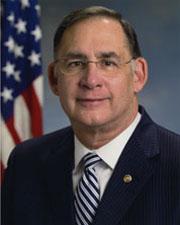 Sen. John Boozman (R-AR)
Sen. John Boozman (R-AR)Submitted January 22, 2015
Legislative Activity
Stay on top of the latest movement without scrolling through every action
Floor
Latest Action
Senate amendment submitted
January 22, 2015
View full timeline
Floor
Senate amendment submitted
January 22, 2015
Floor
Senate amendment submitted
January 22, 2015
Text
Submitted
SA 100. Mr. BOOZMAN submitted an amendment intended to be proposed to
amendment SA 2 proposed by Ms. Murkowski (for herself, Mr. Hoeven, Mr.
Barrasso, Mr. Risch, Mr. Lee, Mr. Flake, Mr. Daines, Mr. Manchin, Mr.
Cassidy, Mr. Gardner, Mr. Portman, Mr. Alexander, and Mrs. Capito) to
the bill S. 1, to approve the Keystone XL Pipeline; which was ordered
to lie on the table; as follows:

At the end, add the following:

TITLE II--PRIVATE PROPERTY RIGHTS PROTECTION ACT OF 2015

SEC. 201. SHORT TITLE.

This title may be cited as the ``Private Property Rights
Protection Act of 2015''.

SEC. 202. DEFINITIONS.

In this title the following definitions apply:
(1) Economic development.--
(A) In general.--The term ``economic development''--
(i) means taking private property, without the consent of
the owner, and conveying or leasing such property from one
private person or entity to another private person or entity
for commercial enterprise carried on for profit, or to
increase tax revenue, tax base, employment, or general
economic health; and
(ii) does not include--

(I) conveying private property--

(aa) to public ownership, such as for a road, hospital,
airport, or military base;
(bb) to an entity, such as a common carrier, that makes the
property available to the general public as of right, such as
a railroad or public facility;
(cc) for use as a road or other right of way or means, open
to the public for transportation, whether free or by toll; or
(dd) for use as an aqueduct, flood control facility,
pipeline, or similar use;

(II) removing blighted property;
(III) leasing property to a private person or entity that
occupies an incidental part of public property or a public
facility, such as a retail establishment on the ground floor
of a public building;
(IV) acquiring abandoned property;
(V) clearing defective chains of title;
(VI) taking private property for use by a utility,
including a utility providing electric, natural gas,
telecommunications, water and wastewater services, either
directly to the public or indirectly through provision of
such services at the wholesale level for resale to the
public; or
(VII) redeveloping of a brownfield site, as defined in
section 101 of the Comprehensive Environmental Response,
Compensation, and Liability Act of 1980 (42 U.S.C. 9601).

(B) Blighted property.--In subparagraph (A)(ii)(II), the
term ``blighted property'' means a structure--
(i) that was inspected by the appropriate local government
and cited for one or more enforceable housing, maintenance,
or building code violations that--

(I) affect the safety of the occupants or the public; and
(II) involve one or more of the following:

(aa) a roof or roof framing element;
(bb) support walls, beams, or headers;
(cc) foundation, footings, or subgrade conditions;
(dd) light or ventilation;
(ee) fire protection, including egress;
(ff) internal utilities, including electricity, gas, and
water;
(gg) flooring or flooring elements; or
(hh) walls, insulation, or exterior envelope;
(ii) in which the cited housing, maintenance, or building
code violations have not been remedied within a reasonable
time after 2 notices to cure the noncompliance; and
(iii) that the satisfaction of those enforceable, cited and
uncured housing, maintenance, and building code violations
cost more than 50 percent of the assessor's taxable market
value for the building, excluding land value, for property
taxes payable in the year in which the condemnation is
commenced.
(C) Abandoned property.--In subparagraph (A)(ii)(IV), the
term ``abandoned property'' means property--
(i) that has been substantially unoccupied or unused for
any commercial or residential purpose for at least 1 year by
a person with a legal or equitable right to occupy the
property;
(ii) that has not been maintained; and
(iii) for which property taxes have not been paid for at
least 2 years.
(2) Federal economic development funds.--The term ``Federal
economic development funds'' means any Federal funds
distributed to or through States or political subdivisions of
States under Federal laws designed to improve or increase the
size of the economies of States or political subdivisions of
States.
(3) State.--The term ``State'' means each of the several
States, the District of Columbia, the Commonwealth of Puerto
Rico, or any other territory or possession of the United
States.

SEC. 203. PROHIBITION ON EMINENT DOMAIN ABUSE BY FOREIGN
CORPORATIONS.

(a) In General.--No State or political subdivision of a
State shall delegate its power of eminent domain to a foreign
corporation over property--
(1) that is--
(A) to be used for economic development; or
(B) used for economic development within 7 years after that
exercise; and
(2) if that State or political subdivision receives Federal
economic development funds during any fiscal year in which
the property is so used or intended to be used.
(b) Ineligibility for Federal Funds.--
(1) In general.--Except as provided in subsection (c), a
violation of subsection (a) by a State or political
subdivision of a State shall render such State or political
subdivision ineligible for any Federal economic development
funds for a period of 2 fiscal years following a final
judgment on the merits by a court of competent jurisdiction
that such subsection has been violated.
(2) Agency requirements.--An agency charged with
distributing Federal economic development funds to a State or
political subdivision of a State that violates subsection (a)
shall withhold such funds for such 2-year period and any such
funds distributed to such State or political subdivision
shall be returned or reimbursed by such State or political
subdivision to the appropriate agency or authority of the
Federal Government, or component thereof.
(c) Opportunity to Cure Violation.--A State or political
subdivision shall not be ineligible for Federal economic
development funds under subsection (b) if such State or
political subdivision--
(1) returns all real property the taking of which was found
by a court of competent jurisdiction to have constituted a
violation of subsection (a);
(2) replaces any other property destroyed and repairs any
other property damaged as a result of such violation; and
(3) pays applicable penalties and interest.

SEC. 204. PROHIBITION ON EMINENT DOMAIN ABUSE BY STATES.

No State or political subdivision of a State shall exercise
its power of eminent domain, or allow the exercise of such
power by any person or entity to which such power has been
delegated, over property--
(1) that is--
(A) to be used for economic development; or
(B) used for economic development within 7 years after that
exercise; and
(2) if that State or political subdivision receives Federal
economic development funds during any fiscal year in which
the property is so used or intended to be used.

SEC. 205. PROHIBITION ON EMINENT DOMAIN ABUSE BY THE FEDERAL
GOVERNMENT.

The Federal Government, including any authority of the
Federal Government, shall not exercise its power of eminent
domain over property that is to be used for economic
development.

SEC. 206. RELIGIOUS AND NONPROFIT ORGANIZATIONS.

(a) Prohibition on States.--No State or political
subdivision of a State shall exercise its power of eminent
domain, or allow the exercise of such power by any person or
entity to which such power has been delegated, over property
of a religious or other nonprofit organization by reason of
the nonprofit or tax-exempt status of such organization, or
any quality related thereto, if that State or political
subdivision receives Federal economic development funds
during any fiscal year in which it does so.
(b) Ineligibility for Federal Funds.--
(1) In general.--A violation of subsection (a) by a State
or political subdivision of a State shall render such State
or political subdivision ineligible for any Federal economic
development funds for a period of 2 fiscal years following a
final judgment on the merits by a court of competent
jurisdiction that such subsection has been violated.
(2) Agency requirements.--An agency charged with
distributing Federal economic development funds to a State or
political subdivision of a State that violates subsection (a)
shall withhold such funds for such 2-year period and any such
funds distributed to such State or political subdivision
shall be returned or reimbursed by such State or political
subdivision to the appropriate agency or authority of the
Federal Government, or component thereof.
(c) Prohibition on Federal Government.--The Federal
Government or any authority of the Federal Government shall
not exercise its power of eminent domain over property of a
religious or other nonprofit organization by reason of the
nonprofit or tax-exempt status of such organization, or any
quality related thereto.

SEC. 207. PRIVATE RIGHT OF ACTION.

(a) Cause of Action.--
(1) In general.--An owner of private property whose
property is subject to eminent domain who suffers injury as a
result of a violation of any provision of this title with
respect to that property, or tenant of property that is
subject to eminent domain who

[[Page S430]]

suffers injury as a result of a violation of any provision of
this title with respect to that property, may bring a civil
action to enforce any provision of this title in the
appropriate Federal or State court, which may include seeking
appropriate relief through a preliminary injunction or a
temporary restraining order.
(2) No immunity.--A State shall not be immune under the
11th Amendment to the Constitution of the United States from
a civil action brought under paragraph (1) in a Federal or
State court of competent jurisdiction.
(3) Burden of proof.--In a civil action brought under
paragraph (1), the defendant has the burden to show by clear
and convincing evidence that the taking is not for economic
development.
(b) Limitation on Bringing Action.--A civil action brought
by a property owner or tenant under this section may be
brought if the property is used for economic development
following the conclusion of any condemnation proceedings
condemning the property of such property owner or tenant, but
shall not be brought later than 7 years following the
conclusion of any such proceedings.
(c) Attorneys' Fee and Other Costs.--In any action or
proceeding under this section, the court shall award a
prevailing plaintiff costs, including reasonable attorneys'
fees and expert fees.

SEC. 208. REPORTING OF VIOLATIONS TO ATTORNEY GENERAL.

(a) Submission of Report to Attorney General.--An owner of
private property whose property is subject to eminent domain
who suffers injury as a result of a violation of any
provision of this title with respect to that property, or
tenant of property that is subject to eminent domain who
suffers injury as a result of a violation of any provision of
this title with respect to that property, may report the
violation to the Attorney General.
(b) Investigation by Attorney General.--Upon receiving a
report of an alleged violation of a provision of this title,
the Attorney General shall conduct an investigation to
determine whether a violation exists.
(c) Notification of Violation.--If the Attorney General
concludes that a violation of this title does exist, the
Attorney General shall notify the applicable authority of the
Federal Government, State, or political subdivision of a
State that--
(1) the Attorney General has determined there is a
violation of this title;
(2) the authority of the Federal Government, State, or
political subdivision of a State has 90 days from the date of
the notification to demonstrate to the Attorney General
that--
(A) it is not in violation of this title; or
(B) it has cured the violation by returning all real
property the taking of which the Attorney General finds to
have constituted a violation of this title and replacing any
other property destroyed and repairing any other property
damaged as a result of such violation.
(d) Attorney General's Bringing of Action to Enforce Act.--
(1) In general.--If, at the end of the 90-day period
described in subsection (c), the Attorney General determines
that the applicable authority of the Federal Government,
State, or political subdivision of a State is still in
violation of this title or has not cured its violation as
described in subsection (c)(2)(B), the Attorney General shall
bring a civil action in an appropriate Federal or State court
to enforce this title, which may include seeking appropriate
relief through a preliminary injunction or a temporary
restraining order, unless the property owner or tenant who
reported the violation has already brought a civil action to
enforce this title.
(2) Intervention.--If a property owner or tenant has
brought a civil action as described in paragraph (1), the
Attorney General shall seek to intervene if the Attorney
General determines that intervention is necessary in order to
enforce this title.
(3) No immunity.--A State shall not be immune under the
11th Amendment to the Constitution of the United States from
a civil action brought under paragraph (1) in a Federal or
State court of competent jurisdiction.
(4) Burden of proof.--In a civil action brought under
paragraph (1), the defendant has the burden to show by clear
and convincing evidence that the taking is not for economic
development.
(e) Limitation on Bringing Action.--An action brought by
the Attorney General under this section may be brought if the
property is used for economic development following the
conclusion of any condemnation proceedings condemning the
property of an owner or tenant who reports a violation of
this title to the Attorney General, but shall not be brought
later than 7 years following the conclusion of any such
proceedings.
(f) Attorneys' Fee and Other Costs.--In any action or
proceeding under this section, if the Attorney General is a
prevailing plaintiff, the court shall award the Attorney
General costs, including reasonable attorneys' fees and
expert fees.

SEC. 209. NOTIFICATION BY ATTORNEY GENERAL.

(a) Notification to States and Political Subdivisions.--
(1) Statute.--Not later than 30 days after the date of
enactment of this Act, the Attorney General shall provide to
the chief executive officer of each State the text of this
title and a description of the rights of property owners and
tenants under this title.
(2) Economic development funds.--
(A) In general.--Not later than 120 days after the date of
enactment of this Act, and every year thereafter, the
Attorney General shall compile a list of the Federal laws
under which Federal economic development funds are
distributed.
(B) Notification.--The Attorney General shall--
(i) provide each list compiled under subparagraph (A) to--

(I) the chief executive officer of each State; and
(II) the authorities in each State and political
subdivisions of each State empowered to take private property
and convert it to public use subject to just compensation for
the taking; and

(ii) make each such list available on the Internet website
maintained by the Department of Justice for use by the
public.
(b) Notification to Property Owners and Tenants.--Not later
than 30 days after the date of enactment of this Act, the
Attorney General shall publish in the Federal Register and
make available on the Internet website maintained by the
Department of Justice a notice containing the text of this
title and a description of the rights of property owners and
tenants under this title.

SEC. 210. REPORTS.

(a) In General.--Not later than 1 year after the date of
enactment of this Act, and every year thereafter, the
Attorney General shall submit to the Chairman and Ranking
Member of the Committee on the Judiciary of the Senate and
the Chairman and Ranking Member of the Committee on the
Judiciary of the House of Representatives a report
identifying States and political subdivisions of States that
have used eminent domain in violation of this title, which
shall--
(1) identify each private civil action brought as a result
of a State's or political subdivision's violation of this
title;
(2) identify all violations reported by property owners and
tenants under section 208(a);
(3) identify the percentage of minority residents compared
to the surrounding nonminority residents and the median
incomes of those impacted by a violation of this title;
(4) identify each civil action brought by the Attorney
General under section 208(d);
(5) identify all States or political subdivisions that have
lost Federal economic development funds as a result of a
violation of this title, and describe the type and amount of
Federal economic development funds lost in each State or
political subdivision and the agency that is responsible for
withholding such funds; and
(6) discuss all instances in which a State or political
subdivision has cured a violation as described in section
203(c) or section 208(c)(2)(B).
(b) Duty of States.--Each State or political subdivision of
a State that is a defendant in a private civil action brought
under this title shall have the duty to report to the
Attorney General such information with respect to such State
and local authorities as the Attorney General needs to make
the report required under subsection (a).
(c) Report by Federal Agencies on Regulations and
Procedures Relating to Eminent Domain.--Not later than 180
days after the date of enactment of this Act, the head of
each agency shall review all rules, regulations, and
procedures of the agency and submit to the Attorney General a
report on the activities of that agency to bring its rules,
regulations, and procedures into compliance with this title.

SEC. 211. SENSE OF CONGRESS REGARDING RURAL AMERICA.

(a) Findings.--Congress finds the following:
(1) The founders realized the fundamental importance of
property rights when they codified the Takings Clause of the
Fifth Amendment to the Constitution of the United States,
which requires that private property shall not be taken ``for
public use, without just compensation''.
(2) Rural lands are unique in that they are not
traditionally considered high tax revenue-generating
properties for State and local governments. In addition,
farmland and forest land owners need to have long-term
certainty regarding their property rights in order to make
the investment decisions to commit land to these uses.
(3) Ownership rights in rural land are fundamental building
blocks for our Nation's agriculture industry, which continues
to be one of the most important economic sectors of our
economy.
(4) In the wake of the Supreme Court's decision in Kelo v.
City of New London, abuse of eminent domain is a threat to
the property rights of all private property owners, including
rural land owners.
(b) Sense of Congress.--It is the sense of Congress that:
(1) The use of eminent domain for the purpose of economic
development is a threat to agricultural and other property in
rural America and that Congress should protect the property
rights of the people of the United States, including those
who reside in rural areas.
(2) Property rights are central to liberty in this country
and to its economy.
(3) The use of eminent domain to take farmland and other
rural property for economic development threatens liberty,
rural economies, and the economy of the United States.

[[Page S431]]

(4) The taking of farmland and rural property will have a
direct impact on existing irrigation and reclamation
projects.
(5) The use of eminent domain to take rural private
property for private commercial uses will force increasing
numbers of activities from private property onto this
Nation's public lands, including its National forests,
National parks, and wildlife refuges, which can overburden
the infrastructure of these lands, reducing the enjoyment of
such lands by the people of the United States.
(6) The people of the United States should not have to fear
the taking their homes, farms, or businesses by the
government to give to other persons.
(7) Governments should not abuse the power of eminent
domain to force rural property owners from their land in
order to develop rural land into industrial and commercial
property.
(8) Congress has a duty to protect the property rights of
rural Americans in the face of eminent domain abuse.

SEC. 212. SENSE OF CONGRESS.

It is the policy of the United States to encourage,
support, and promote the private ownership of property and to
ensure that the constitutional and other legal rights of
private property owners are protected by the Federal
Government.

SEC. 213. BROAD CONSTRUCTION.

This title shall be construed in favor of a broad
protection of private property rights, to the maximum extent
permitted by the terms of this title and the Constitution.

SEC. 214. LIMITATION ON STATUTORY CONSTRUCTION.

Nothing in this title may be construed to supersede, limit,
or otherwise affect any provision of the Uniform Relocation
Assistance and Real Property Acquisition Policies Act of 1970
(42 U.S.C. 4601 et seq.).

SEC. 215. SENSE OF CONGRESS.

It is the sense of Congress that any and all precautions
shall be taken by the Federal Government, States, and
political subdivisions of States to avoid the unfair or
unreasonable taking of property away from survivors of
Hurricane Katrina who own, were bequeathed, or assigned such
property, for economic development purposes or for the
private use of others.

SEC. 216. DISPROPORTIONATE IMPACT ON MINORITIES.

If a court determines that a violation of this title has
occurred, and that the violation has a disproportionately
high impact on the poor or minorities, the Attorney General
shall use reasonable efforts to locate and inform former
owners and tenants of the violation and any remedies they may
have.

SEC. 217. SEVERABILITY AND EFFECTIVE DATE.

(a) Severability.--If any provision of this title, or the
application of such provision to any person or circumstance,
is held to be invalid, the remainder of this title, or the
application of such provision to other persons or
circumstances, shall not be affected.
(b) Effective Date.--This title--
(1) shall take effect upon the first day of the first
fiscal year that begins after the date of enactment of this
Act; and
(2) shall not apply to any project for which condemnation
proceedings have been initiated before the date of enactment
of this Act.
______