To express the sense of Congress regarding climate change and infrastructure.
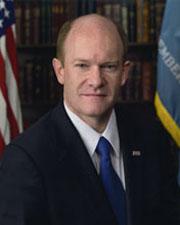 Sen. Christopher A. Coons (D-DE)
Legislative Activity
Stay on top of the latest movement without scrolling through every action
Roll call votes on amendments in Senate: Amendment SA 115, under the order of 1/17/15, not having achieved 60 votes in the affirmative, was not agreed to in Senate by Yea-Nay Vote. 47 - 51. Record Vote Number: 38.
January 28, 2015
View full timeline
Roll call votes on amendments in Senate: Amendment SA 115, under the order of 1/17/15, not having achieved 60 votes in the affirmative, was not agreed to in Senate by Yea-Nay Vote. 47 - 51. Record Vote Number: 38.
January 28, 2015
Senate amendment not agreed to: Amendment SA 115, under the order of 1/17/15, not having achieved 60 votes in the affirmative, was not agreed to in Senate by Yea-Nay Vote. 47 - 51. Record Vote Number: 38.
January 28, 2015
Considered by Senate. (consideration: CR S556, S571)
January 28, 2015
Amendment SA 115, under the order of 1/17/15, not having achieved 60 votes in the affirmative, was not agreed to in Senate by Yea-Nay Vote. 47 - 51. Record Vote Number: 38.
January 28, 2015
Senate amendment proposed (on the floor): Amendment SA 115 proposed by Senator Coons to Amendment SA 2.(consideration: CR S526-527; text: CR S526)
January 27, 2015
Amendment SA 115 proposed by Senator Coons to Amendment SA 2. (consideration: CR S526-527; text: CR S526) To express the sense of Congress regarding climate change and infrastructure.
January 27, 2015
Senate amendment submitted
January 22, 2015
Senate amendment submitted
January 22, 2015
Votes
1 roll call on this amendment
Amendments
3 amendmentsOffered to this amendment
Amendments
3 amendmentsOffered to this amendment
Text
Submitted
SA 115. Mr. COONS submitted an amendment intended to be proposed to
amendment SA 2 proposed by Ms. Murkowski (for herself, Mr. Hoeven, Mr.
Barrasso, Mr. Risch, Mr. Lee, Mr. Flake, Mr. Daines, Mr. Manchin, Mr.
Cassidy, Mr. Gardner, Mr. Portman, Mr. Alexander, and Mrs. Capito) to
the bill S. 1, to approve the Keystone XL Pipeline; which was ordered
to lie on the table; as follows:

At the appropriate place, insert the following:

SEC. __. SENSE OF CONGRESS REGARDING CLIMATE CHANGE AND
INFRASTRUCTURE.

It is the sense of Congress that--
(1) climate change is already impacting the safety and
reliability of the critical infrastructure systems of the
United States, including buildings, roads, bridges, tunnels,

[[Page S436]]

rail, ports, airports, levees, dams, and military
installations through sea level rise, rising temperatures,
and more frequent and intense extreme weather events such as
droughts, floods, wildfires, and heat waves;
(2) significant energy, industrial and transportation
infrastructure in the United States is located near the
coast, in floodplains, or in other areas vulnerable to sea
level rise;
(3) the impacts to infrastructure described in paragraph
(1) have caused tangible economic costs that are likely to
increase over time;
(4) it is fiscally prudent to prepare for and seek to
mitigate the impacts described in paragraph (1), as it is
estimated that every dollar spent on mitigation saves $4 in
disaster relief;
(5) the Federal Government self-insures, offers insurance
programs such as crop insurance and the national flood
insurance program, and, in the case of extreme weather
events, also serves as the insurer of last resort for public
and private infrastructure;
(6) the Federal Government has a crucial role to play as a
partner in working with State, local, tribal, and territorial
jurisdictions to help ensure coordinated efforts to keep
communities resilient;
(7) the role of the Federal Government should include
prioritizing climate resilient projects when administering
Federal grants, providing technical support, and sharing of
data and information in user-friendly and accessible formats,
among other actions;
(8) Federal agency climate change adaptation plans that
assess the risk to physical assets and missions of the
Federal agencies can help create savings for taxpayers; and
(9) Federal agencies, including the Department of Defense,
should quantify the economic value of the physical risks of
the agencies from climate change.
______