S.Amdt. 117Senate114th Congress (2015-2017)2nd degree
S.Amdt. 117
Sponsored by 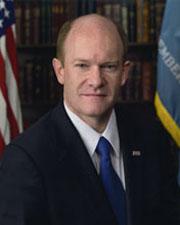 Sen. Christopher A. Coons (D-DE)
Sen. Christopher A. Coons (D-DE)Submitted January 22, 2015
Legislative Activity
Stay on top of the latest movement without scrolling through every action
Floor
Latest Action
Senate amendment submitted
January 22, 2015
View full timeline
Floor
Senate amendment submitted
January 22, 2015
Floor
Senate amendment submitted
January 22, 2015
Text
Submitted
SA 117. Mr. COONS (for himself and Mr. Gardner) submitted an
amendment intended to be proposed to amendment SA 2 proposed by Ms.
Murkowski (for herself, Mr. Hoeven, Mr. Barrasso, Mr. Risch, Mr. Lee,
Mr. Flake, Mr. Daines, Mr. Manchin, Mr. Cassidy, Mr. Gardner, Mr.
Portman, Mr. Alexander, and Mrs. Capito) to the bill S. 1, to approve
the Keystone XL Pipeline; which was ordered to lie on the table; as
follows:

At the appropriate place, insert the following:

SEC. __. SENSE OF SENATE.

(a) Findings.--The Senate finds that--
(1) Energy Savings Performance Contracts and Utility Energy
Service Contracts were first authorized by Congress in 1986
and 1992 respectively and reduce energy costs and consumption
at Federal buildings and facilities without relying on
additional appropriations;
(2) the contracts described in paragraph (1) are financed
by a third-party and realize sufficient energy savings to
cover the cost of the financed improvements over the contract
term;
(3) the contractor provides a guarantee of energy savings
for the Energy Savings Performance Contract and the utility
provides energy savings performance assurances or guarantees
of the savings for the Utility Energy Service Contract;
(4) performance-based contracting is an opportunity for
significant savings so much so that the Oak Ridge National
Laboratory has determined that under an Energy Savings
Performance Contract the total cost savings delivered to the
Government is nearly twice the guaranteed amount;
(5) the Energy Independence and Security Act of 2007
required a Government-wide audit of facilities and, although
to date only \1/2\ of those buildings have been surveyed, it
has been established that at least $9,000,000,000 worth of
energy savings that could be achieved within a decade;
(6) the Office of Management and Budget first recognized
savings from Energy Savings Performance Contracts and Utility
Energy Service Contracts on an annual basis throughout the
term of the contract as far back as 1998;
(7) the Congressional Budget Office instead has determined
that the full cost of the authority to enter into the long-
term contracts for capital investments be scored upfront as
new mandatory spending while the savings in energy costs that
flow from these investments be realized over time as part of
the annual appropriations process;
(8) the process described in paragraph (7) has continued to
hinder the ability of Congress to pass legislation ensuring
additional energy and cost savings to the Federal Government
through utilization of these contracts despite the proven
savings; and
(9) there is broad bipartisan and bicameral recognition in
Congress of the value of these energy saving contracts.
(b) Sense of Senate.--It is the sense of the Senate that
legislation regarding Energy Savings Performance Contracts
and Utility Energy Service Contracts, and legislation which
may lead to the use of those contracts by the Federal
Government, should receive Congressional scoring treatment
that allows future year guaranteed discretionary savings to
be counted against the mandatory spending attributed to
undertaking such contracts.
______