S.Amdt. 1297Senate114th Congress (2015-2017)2nd degree
S.Amdt. 1297
Sponsored by 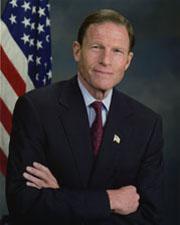 Sen. Richard Blumenthal (D-CT)
Sen. Richard Blumenthal (D-CT)Submitted May 18, 2015
Legislative Activity
Stay on top of the latest movement without scrolling through every action
Floor
Latest Action
Senate amendment submitted
May 18, 2015
View full timeline
Floor
Senate amendment submitted
May 18, 2015
Floor
Senate amendment submitted
May 18, 2015
Text
Submitted
SA 1297. Mr. BLUMENTHAL (for himself, Mr. Brown, and Ms. Baldwin)
submitted an amendment intended to be proposed to amendment SA 1221
proposed by Mr. Hatch to the bill H.R. 1314, to amend the Internal
Revenue Code of 1986 to provide for a right to an administrative appeal
relating to adverse determinations of tax-exempt status of certain
organizations; which was ordered to lie on the table; as follows:

In section 104, strike subsection (d) and insert the
following:

[[Page S2984]]

(d) Consultations With the Public.--
(1) Transparency requirements for trade negotiations.--
(A) In general.--Except as provided in subparagraph (C),
the United States Trade Representative shall make available
to Members of Congress and the public, through means
including publication on a publicly available Internet
website, all formal proposals advanced by the United States
in negotiations for a trade agreement pursuant to this title
not later than 5 calendar days after the earliest of--
(i) the date on which the proposal is shared with another
party to the negotiations;
(ii) the date on which the proposal is submitted to an
advisory committee established under section 135 of the Trade
Act of 1974 (19 U.S.C. 2155); or
(iii) the date on which the proposal is cleared through the
interagency process established to approve official positions
in trade negotiations.
(B) Classified proposals shared with foreign governments.--
If text proposed by the United States Trade Representative to
be included in a trade agreement is classified and is shared
with any official of a foreign government, that text shall be
declassified when the text is shared with that official and
made available to Members of Congress and the public in
accordance with subparagraph (A).
(C) Exceptions.--The Trade Representative shall not be
required to make available under subparagraph (A)--
(i) any formal proposal advanced by the United States in
negotiations for a trade agreement that is intended to be
contained in the provisions of the agreement relating to
market access for goods and relates to such market access; or
(ii) subject to subparagraph (B), any classified
information that does not constitute a formal proposal
advanced by the United States in negotiations for a trade
agreement.
(D) Formal proposal defined.--
(i) In general.--In this paragraph, the term ``formal
proposal advanced by the United States in negotiations for a
trade agreement''--

(I) means any proposed language, position paper, summary of
position, or other document that--

(aa) includes analysis or other language intended to inform
negotiations for a trade agreement;
(bb) is offered or intended to be offered on behalf of the
United States to any party to the negotiations; and
(cc) reflects the official position of the United States
with respect to the negotiations; and

(II) includes any communication regarding the negotiations
that is shared with other parties to the negotiations after
being cleared through the interagency process established to
approve official positions in trade negotiations or that is
submitted to an advisory committee established under section
135 of the Trade Act of 1974 (19 U.S.C. 2155).

(ii) Exclusion.--The term ``formal proposal'' does not
include any communication between negotiators or other
officials participating in negotiations for a trade agreement
that is not intended to reflect the official position of the
United States, including any communication not cleared
through the interagency process described in clause (i)(II).
(E) Effective date.--
(i) In general.--The provisions of this paragraph apply
with respect to negotiations for a trade agreement initiated
on or after or pending on the date of the enactment of this
Act.
(ii) Pending trade agreements.--In the case of a trade
agreement pending on the date of the enactment of this Act,
the President shall, not more than 30 calendar days after
such date of enactment, make available to Members of Congress
and the public all formal proposals that have been advanced
by the United States in negotiations for that trade agreement
in accordance with this paragraph.
(F) Sharing of information with members of congress and
staff.--Nothing in this section shall be construed to prevent
or otherwise limit the sharing of classified or unclassified
information with Members of Congress and staff in accordance
with subsections (a) and (b).
(2) Guidelines for public engagement.--
(A) In general.--In carrying out the requirements of
paragraph (1), the United States Trade Representative, in
consultation with the chairmen and the ranking members of the
Committee on Ways and Means of the House of Representatives
and the Committee on Finance of the Senate, respectively--
(i) shall, not later than 120 days after the date of the
enactment of this Act, develop written guidelines on public
access to information regarding negotiations conducted under
this title; and
(ii) may make such revisions to the guidelines as may be
necessary from time to time.
(B) Purposes.--The guidelines developed under subparagraph
(A) shall--
(i) facilitate transparency;
(ii) encourage public participation; and
(iii) promote collaboration in the negotiation process.
(C) Content.--The guidelines developed under subparagraph
(A) shall include procedures that--
(i) provide for rapid disclosure of information in forms
that the public can readily find and use; and
(ii) provide frequent opportunities for public input
through Federal Register requests for comment and other
means.
(D) Dissemination.--The United States Trade Representative
shall disseminate the guidelines developed under subparagraph
(A) to all Federal agencies that could have jurisdiction over
laws affected by trade negotiations.
______