S.Amdt. 1363Senate114th Congress (2015-2017)2nd degree
S.Amdt. 1363
Sponsored by 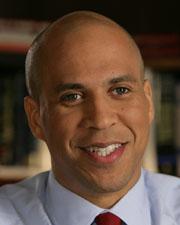 Sen. Cory A. Booker (D-NJ)
Sen. Cory A. Booker (D-NJ)Submitted May 18, 2015
Legislative Activity
Stay on top of the latest movement without scrolling through every action
Floor
Latest Action
Senate amendment submitted
May 18, 2015
View full timeline
Floor
Senate amendment submitted
May 18, 2015
Floor
Senate amendment submitted
May 18, 2015
Text
Submitted
SA 1363. Mr. BOOKER submitted an amendment intended to be proposed to
amendment SA 1221 proposed by Mr. Hatch to the bill H.R. 1314, to amend
the Internal Revenue Code of 1986 to provide for a right to an
administrative appeal relating to adverse determinations of tax-exempt
status of certain organizations; which was ordered to lie on the table;
as follows:

At the end, add the following:

TITLE III--MISCELLANEOUS PROVISIONS

Subtitle A--Tax Credit for Apprenticeship Programs

SEC. 301. CREDIT FOR EMPLOYEES PARTICIPATING IN QUALIFIED
APPRENTICESHIP PROGRAMS.

(a) In General.--Subpart D of part IV of subchapter A of
chapter 1 of the Internal Revenue Code of 1986 is amended by
adding at the end the following new section:

``SEC. 45S. EMPLOYEES PARTICIPATING IN QUALIFIED
APPRENTICESHIP PROGRAMS.

``(a) In General.--For purposes of section 38, the
apprenticeship credit determined under this section for the
taxable year is an amount equal to the sum of the applicable
credit amounts (as determined under subsection (b)) for each
of apprentice of the employer that exceeds the applicable
apprenticeship level (as determined under subsection (e))
during such taxable year.
``(b) Applicable Credit Amount.--For purposes of subsection
(a), the applicable credit amount for each apprentice for
each taxable year is equal to--
``(1) $1,500, in the case of an apprentice who--
``(A) has not attained 25 years of age at the close of the
taxable year, or
``(B) is certified as eligible to apply for adjustment
assistance under section 222 of the Trade Act of 1974, and
``(2) $1,000, in the case of any apprentice not described
in paragraph (1).
``(c) Limitation on Number of Years Which Credit May Be
Taken Into Account.--The apprenticeship credit shall not be
allowed for more than 2 taxable years with respect to any
apprentice.
``(d) Apprentice.--For purposes of this section, the term
`apprentice' means any employee who is employed by the
employer--
``(1) in an officially recognized apprenticeable
occupation, as determined by the Office of Apprenticeship of
the Employment and Training Administration of the Department
of Labor, and
``(2) pursuant to an apprentice agreement registered with--
``(A) the Office of Apprenticeship of the Employment and
Training Administration of the Department of Labor, or
``(B) a recognized State apprenticeship agency, as
determined by the Office of Apprenticeship of the Employment
and Training Administration of the Department of Labor.
``(e) Applicable Apprenticeship Level.--
``(1) In general.--For purposes this section, the
applicable apprenticeship level shall be equal to--
``(A) in the case of any apprentice described in subsection
(b)(1), the amount equal to 80 percent of the average number
of such apprentices of the employer for the 3 taxable years
preceding the taxable year for which the credit is being
determined, rounded to the next lower whole number; and
``(B) in the case of any apprentices described in
subsection (b)(2), the amount equal to 80 percent of the
average number of such apprentices of the employer for the 3
taxable years preceding the taxable year for which the credit
is being determined, rounded to the next lower whole number.
``(2) First year of new apprenticeship programs.--In the
case of an employer which did not have any apprentices during
any taxable year in the 3 taxable years preceding the taxable
year for which the credit is being determined, the applicable
apprenticeship level shall be equal to zero.
``(f) Coordination With Other Credits.--The amount of
credit otherwise allowable under sections 45A, 51(a), and
1396(a) with respect to any employee shall be reduced by the
credit allowed by this section with respect to such employee.
``(g) Certain Rules To Apply.--Rules similar to the rules
of subsections (i)(1) and (k) of section 51 shall apply for
purposes of this section.''.
(b) Credit Made Part of General Business Credit.--
Subsection (b) of section 38 of the Internal Revenue Code of
1986 is amended by striking ``plus'' at the end of paragraph
(35), by striking the period at the end of paragraph (36) and
inserting ``, plus'', and by adding at the end the following
new paragraph:
``(37) the apprenticeship credit determined under section
45S(a).''.
(c) Denial of Double Benefit.--Subsection (a) of section
280C of the Internal Revenue Code of 1986 is amended by
inserting ``45S(a),'' after ``45P(a),''.
(d) Clerical Amendment.--The table of sections for subpart
D of part IV of subchapter A of chapter 1 of the Internal
Revenue Code of 1986 is amended by adding at the end the
following new item:

``Sec. 45S. Employees participating in qualified apprenticeship
programs.''.
(e) Effective Date.--The amendments made by this section
shall apply to individuals commencing apprenticeship programs
after the date of the enactment of this Act.
(f) Limitation on Government Printing Costs.--Not later
than 90 days after the date of enactment of this Act, the
Director of the Office of Management and Budget shall
coordinate with the heads of Federal departments and
independent agencies to--
(1) determine which Government publications could be
available on Government websites and no longer printed and to
devise a strategy to reduce overall Government printing costs
over the 10-year period beginning with fiscal year 2015,
except that the Director shall ensure that essential printed
documents prepared for social security recipients, medicare
beneficiaries, and other populations in areas with limited
Internet access or use continue to remain available;
(2) establish government wide Federal guidelines on
employee printing; and
(3) issue guidelines requiring every department, agency,
commission, or office to list at a prominent place near the
beginning of each publication distributed to the public and
issued or paid for by the Federal Government--
(A) the name of the issuing agency, department, commission,
or office;
(B) the total number of copies of the document printed;
(C) the collective cost of producing and printing all of
the copies of the document; and
(D) the name of the entity publishing the document.

Subtitle B--Build America Bonds

SEC. 311. BUILD AMERICA BONDS MADE PERMANENT.

(a) In General.--Subparagraph (B) of section 54AA(d)(1) of
the Internal Revenue Code of 1986 is amended by inserting
``or during a period beginning on or after the date of the
enactment of the Bipartisan Congressional Trade Priorities
and Accountability Act of 2015,'' after ``January 1, 2011,''.
(b) Reduction in Credit Percentage to Bondholders.--
Subsection (b) of section 54AA of such Code is amended to
read as follows:
``(b) Amount of Credit.--
``(1) In general.--The amount of the credit determined
under this subsection with respect to any interest payment
date for a build America bond is the applicable percentage of
the amount of interest payable by the issuer with respect to
such date.
``(2) Applicable percentage.--For purposes of paragraph
(1), the applicable percentage shall be determined under the
following table:

``In the case of a bond issued                           The applicable
during calendar year:                                  percentage is:
2009 or 2010......................................................35
2014..............................................................31
2015..............................................................30
2016..............................................................29
2017 and thereafter............................................28.''.
(c) Special Rules.--Subsection (f) of section 54AA of such
Code is amended by adding at the end the following new
paragraph:
``(3) Application of other rules.--
``(A) In general.--Notwithstanding any other provision of
law, a build America bond shall be considered a recovery zone
economic development bond (as defined in section 1400U-2) for
purposes of application of section 1601 of title I of
division B of Public Law 111-5 (26 U.S.C. 54C note).
``(B) Public transportation projects.--Recipients of any
financial assistance authorized under this section that funds
public transportation projects, as defined in Title 49,
United States Code, must comply with the grant requirements
described under section 5309 of such title.''.

[[Page S3003]]

(d) Extension of Payments to Issuers.--
(1) In general.--Section 6431 of such Code is amended--
(A) by inserting ``or during a period beginning on or after
the date of the enactment of the Bipartisan Congressional
Trade Priorities and Accountability Act of 2015,'' after
``January 1, 2011,'' in subsection (a), and
(B) by striking ``before January 1, 2011'' in subsection
(f)(1)(B) and inserting ``during a particular period''.
(2) Conforming amendments.--Subsection (g) of section 54AA
of such Code is amended--
(A) by inserting ``or during a period beginning on or after
the date of the enactment of the Bipartisan Congressional
Trade Priorities and Accountability Act of 2015,'' after
``January 1, 2011,'', and
(B) by striking ``Qualified Bonds Issued Before 2011'' in
the heading and inserting ``Certain Qualified Bonds''.
(e) Reduction in Percentage of Payments to Issuers.--
Subsection (b) of section 6431 of such Code is amended--
(1) by striking ``The Secretary'' and inserting the
following:
``(1) In general.--The Secretary'',
(2) by striking ``35 percent'' and inserting ``the
applicable percentage'', and
(3) by adding at the end the following new paragraph:
``(2) Applicable percentage.--For purposes of this
subsection, the term `applicable percentage' means the
percentage determined in accordance with the following table:

``In the case of a qualified bond                        The applicable
issued during calendar year:                           percentage is:
2009 or 2010......................................................35
2014..............................................................31
2015..............................................................30
2016..............................................................29
2017 and thereafter............................................28.''.
(f) Current Refundings Permitted.--Subsection (g) of
section 54AA of such Code is amended by adding at the end the
following new paragraph:
``(3) Treatment of current refunding bonds.--
``(A) In general.--For purposes of this subsection, the
term `qualified bond' includes any bond (or series of bonds)
issued to refund a qualified bond if--
``(i) the average maturity date of the issue of which the
refunding bond is a part is not later than the average
maturity date of the bonds to be refunded by such issue,
``(ii) the amount of the refunding bond does not exceed the
outstanding amount of the refunded bond, and
``(iii) the refunded bond is redeemed not later than 90
days after the date of the issuance of the refunding bond.
``(B) Applicable percentage.--In the case of a refunding
bond referred to in subparagraph (A), the applicable
percentage with respect to such bond under section 6431(b)
shall be the lowest percentage specified in paragraph (2) of
such section.
``(C) Determination of average maturity.--For purposes of
subparagraph (A)(i), average maturity shall be determined in
accordance with section 147(b)(2)(A).
``(D) Issuance restriction not applicable.--Subsection
(d)(1)(B) shall not apply to a refunding bond referred to in
subparagraph (A).''.
(g) Clarification Related to Levees and Flood Control
Projects.--Subparagraph (A) of section 54AA(g)(2) of such
Code is amended by inserting ``(including capital
expenditures for levees and other flood control projects)''
after ``capital expenditures''.
(h) Gross-Up of Payment to Issuers in Case of
Sequestration.--In the case of any payment under section
6431(b) of the Internal Revenue Code of 1986 made after the
date of the enactment of this Act to which sequestration
applies, the amount of such payment shall be increased to an
amount equal to--
(1) such payment (determined before such sequestration),
multiplied by
(2) the quotient obtained by dividing 1 by the amount by
which 1 exceeds the percentage reduction in such payment
pursuant to such sequestration.
For purposes of this subsection, the term ``sequestration''
means any reduction in direct spending ordered in accordance
with a sequestration report prepared by the Director of the
Office and Management and Budget pursuant to the Balanced
Budget and Emergency Deficit Control Act of 1985 or the
Statutory Pay-As-You-Go Act of 2010.
(i) Effective Date.--The amendments made by this section
shall apply to obligations issued on or after the date of the
enactment of this Act.

Subtitle C--Export Promotion Reform

SEC. 321. IMPROVED COORDINATION OF EXPORT PROMOTION
ACTIVITIES OF FEDERAL AGENCIES THROUGH TRADE
PROMOTION COORDINATING COMMITTEE.

(a) Duties of Committee.--Section 2312(b) of the Export
Enhancement Act of 1988 (15 U.S.C. 4727(b)) is amended--
(1) in paragraph (5), by striking ``and'' after the
semicolon;
(2) by redesignating paragraph (6) as paragraph (7); and
(3) by inserting after paragraph (5) the following:
``(4) in making the assessments under paragraph (5), review
the proposed annual budget of each agency described in that
paragraph under procedures established by the TPCC for such
review, before the agency submits that budget to the Office
of Management and Budget and the President for inclusion in
the budget of the President submitted to Congress under
section 1105(a) of title 31, United States Code; and''.
(b) Strategic Plan.--Section 2312(c) of the Export
Enhancement Act of 1988 is amended--
(1) by redesignating paragraphs (3) through (6) as
paragraphs (4) through (7), respectively; and
(2) by inserting after paragraph (2) the following:
``(3) in conducting the review and developing the plan
under paragraph (2), take into account recommendations from a
representative number of United States exporters, in
particular small businesses and medium-sized businesses, and
representatives of United States workers;''.
(c) Implementation.--Section 2312 of the Export Enhancement
Act of 1988 is amended by adding at the end the following:
``(g) Implementation.--The President shall take such steps
as are necessary to provide the chairperson of the TPCC with
the authority to ensure that the TPCC carries out each of its
duties under subsection (b) and develops and implements the
strategic plan under subsection (c).''.
(d) Small Business Defined.--Section 2312 of the Export
Enhancement Act of 1988, as amended by subsection (c), is
further amended by adding at the end the following:
``(h) Small Business Defined.--In this section, the term
`small business' means a small business concern as defined
under section 3 of the Small Business Act (15 25 U.S.C.
632).''.

SEC. 322. EFFECTIVE DEPLOYMENT OF UNITED STATES COMMERCIAL
SERVICE RESOURCES IN FOREIGN OFFICES.

Section 2301(c)(4) of the Export Enhancement Act of 1988
(15 U.S.C. 4721(c)(4)) is amended--
(1) by redesignating subparagraphs (B) through (F) as
subparagraphs (C) through (G), respectively; and
(2) by striking ``(4) Foreign offices.--(A) The Secretary
may'' and inserting the following:
``(4) Foreign offices.--(A)(i) In consultation with the
Trade Promotion Coordinating Committee established under
section 2312(a), the Secretary shall, not less frequently
than once every 5 years--
``(I) conduct a global assessment of overseas markets to
identify those markets with the greatest potential for
increasing United States exports; and
``(II) deploy Commercial Service personnel and other
resources on the basis of the global assessment conducted
under subclause (I).
``(ii) Each global assessment conducted under clause (i)(I)
shall take into account recommendations from a representative
number of United States exporters, in particular small
businesses (as defined in section 2312(h)) and medium-sized
businesses, and representatives of United States workers.
``(iii) Not later than 180 days after the date of the
enactment of the Bipartisan Congressional Trade Priorities
and Accountability Act of 2015, and not less frequently than
once every 5 years thereafter, the Secretary shall submit to
Congress the results of the most recent global assessment
conducted under clause (i)(I) and a plan for deployment of
personnel and resources under clause (i)(II) on the basis of
that global assessment.
``(B) The Secretary may' ''.

SEC. 323. STRENGTHENED COMMERCIAL DIPLOMACY IN SUPPORT OF
UNITED STATES EXPORTS.

(a) Development of Plan.--Section 207(c) of the Foreign
Service Act of 1980 (22 U.S.C. 3927(c)) is amended by
inserting before the period at the end the following: ``,
including through the development of a plan, drafted in
consultation with the Trade Promotion Coordinating Committee
established under section 2312(a) of the Export Enhancement
Act of 1988 (15 U.S.C. 4727(a)), for effective diplomacy to
remove or reduce obstacles to exports of United States goods
and services''.
(b) Assessments and Promotions.--Section 603 of the Foreign
Service Act of 1980 (22 U.S.C. 4003) is amended--
(1) in subsection (b), by striking the second sentence; and
(2) by adding at the end the following:
``(c)(1) Precepts for selection boards responsible for
recommending promotions into and within the Senior Foreign
Service shall emphasize performance which demonstrates the
strong policy formulation capabilities, executive leadership
qualities, and highly developed functional and area
expertise, which are required for the Senior Foreign Service.
``(2) Precepts described in paragraph (1) related to
functional and area expertise shall include, with respect to
members of the Service with responsibilities relating to
economic affairs, expertise on the effectiveness of efforts
to promote the export of United States goods and services in
accordance with a commercial diplomacy plan developed
pursuant to section 207(c).''.
(c) Inspector General.--Section 209(b) of the Foreign
Service Act of 1980 (22 U.S.C. 3929(b)) is amended--
(1) in paragraph (4), by striking ``and'' at the end;
(2) by redesignating paragraph (5) as paragraph (6); and
(3) by inserting after paragraph (4) the following:
``(5) the effectiveness of commercial diplomacy relating to
the promotion of exports of United States goods and services;
and''.

[[Page S3004]]

Subtitle D--STEM Education

SEC. 331. GRANTS FOR STEM EDUCATION.

(a) Purpose.--The purpose of this section is to improve
student academic achievement in science, technology,
engineering, and mathematics, including computer science,
by--
(1) improving instruction in such subjects through grade
12;
(2) improving student engagement in, and increasing student
access to, such subjects;
(3) improving the quality and effectiveness of classroom
instruction by recruiting, training, and supporting highly
rated teachers and providing robust tools and supports for
students and teachers in such subjects; and
(4) closing student achievement gaps, and preparing more
students to be college and career ready in such subjects.
(b) Definitions.--In this section:
(1) Terms in the esea.--The terms ``elementary school'',
``secondary school'', ``Secretary'', and ``State educational
agency'' shall have the meanings given the terms in section
9101 of the Elementary and Secondary Education Act of 1965
(20 U.S.C. 7801).
(2) Eligible entity.--The term ``eligible entity'' means--
(A) a State educational agency; or
(B) a State educational agency in partnership with 1 or
more State educational agencies.
(3) State.--The term ``State'' means--
(A) any of the 50 States;
(B) the District of Columbia;
(C) the Bureau of Indian Education; or
(D) the Commonwealth of Puerto Rico.
(c) Reservations.--
(1) In general.--From the amounts appropriated for this
section for a fiscal year, the Secretary shall reserve--
(A) not more than 2 percent to provide technical assistance
to States under this section;
(B) not more than 5 percent for State capacity-building
grants under this section, if the Secretary is awarding such
grants in accordance with paragraph (2); and
(C) 10 percent for STEM Master Teacher Corps programs
described under subsection (g)(2).
(2) Capacity-building grants.--
(A) In general.--In any year for which funding is
distributed competitively, as described in subsection (e)(1),
the Secretary may award 1 capacity-building grant to each
State that does not receive a grant under subsection (e), on
a competitive basis, to enable such State to become more
competitive in future years.
(B) Duration.--Grants awarded under subparagraph (A) shall
be for a period of 1 year.
(d) Formula Grants.--
(1) In general.--For each fiscal year for which the amount
appropriated to carry out this section, and not reserved
under subsection (c)(1), is equal to or more than
$300,000,000, the Secretary shall award grants to States,
based on the formula described in paragraph (2) to carry out
activities described in subsection (g)(1).
(2) Distribution of funds.--The Secretary shall allot to
each State--
(A) an amount that bears the same relationship to 35
percent of the excess amount described in paragraph (1) as
the number of individuals ages 5 through 17 in the State, as
determined by the Secretary on the basis of the most recent
satisfactory data, bears to the number of those individuals
in all such States, as so determined; and
(B) an amount that bears the same relationship to 65
percent of the excess amount as the number of individuals
ages 5 through 17 from families with incomes below the
poverty line in the State, as determined by the Secretary on
the basis of the most recent satisfactory data, bears to the
number of those individuals in all such States, as so
determined.
(3) Funding minimum.--No State receiving an allotment under
this subsection may receive less than \1/2\ of 1 percent of
the total amount allotted under paragraph (1) for a fiscal
year.
(4) Puerto rico.--The amount allotted under paragraph (2)
to the Commonwealth of Puerto Rico for a fiscal year may not
exceed \1/2\ of 1 percent of the total amount allotted under
paragraph (1) for such fiscal year.
(5) Reallotment of unused funds.--If a State does not
successfully apply, the Secretary shall reallot the amount of
the State's allotment to the remaining States in accordance
with this subsection.
(e) Competitive Grants.--
(1) In general.--For each fiscal year for which the amount
appropriated to carry out this section, and not reserved
under subsection (c)(1), is less than $300,000,000, the
Secretary shall award grants, on a competitive basis, to
eligible entities to enable such eligible entities to carry
out the activities described in subsection (g)(1).
(2) Duration.--Grants awarded under this subsection shall
be for a period of not more than 3 years.
(3) Renewal.--
(A) In general.--If an eligible entity demonstrates
progress on the performance metrics established under
subsection (h)(1), the Secretary may renew a grant for an
additional 2-year period.
(B) Reduced funding.--Grant funds awarded under
subparagraph (A) shall be awarded at a reduced amount.
(f) Applications.--Each eligible entity or State desiring a
grant under this section, whether through a competitive grant
under subsection (e) or through an allotment under subsection
(d), shall submit an application to the Secretary at such
time, in such manner, and accompanied by such information as
the Secretary may require.
(g) Authorized Activities.--
(1) In general.--Each State or eligible entity receiving a
grant under this section shall use such grant funds to carry
out activities to promote the subject fields of science,
technology, engineering, and mathematics in elementary
schools and secondary schools.
(2) STEM master teacher corps.--The Secretary shall use
funds reserved in accordance with subsection (c)(1)(C) to
establish STEM Master Teacher Corps programs, which shall be
programs that--
(A) elevate the status of the science, technology,
engineering, and mathematics teaching profession by
recognizing and rewarding outstanding teachers in those
subjects; and
(B) attract and retain effective science, technology,
engineering, and mathematics teachers, particularly in high-
need schools, by offering them additional compensation,
instructional resources, and instructional leadership roles.
(h) Performance Metrics and Report.--
(1) Performance metrics.--The Secretary, acting through the
Director of the Institute of Education Sciences, shall
establish performance metrics to evaluate the effectiveness
of the activities carried out under this section.
(2) Annual report.--Each State or eligible entity that
receives a grant under this section shall prepare and submit
an annual report to the Secretary, which shall include
information relevant to the performance metrics described in
paragraph (1).
(i) Evaluation.--The Secretary shall--
(1) acting through the Director of the Institute of
Education Sciences, and in consultation with the Director of
the National Science Foundation--
(A) evaluate the implementation and impact of the
activities supported under this section, including progress
measured by the metrics established under subsection (h)(1);
and
(B) identify best practices to improve instruction in
science, technology, engineering, and mathematics subjects;
and
(2) disseminate, in consultation with the National Science
Foundation, research on best practices to improve instruction
in science, technology, engineering, and mathematics
subjects.

SEC. 332. INNOVATIVE INSPIRATION SCHOOL GRANT PROGRAM.

(a) Definitions.--In this section:
(1) Local educational agency.--The term ``local educational
agency'' has the meaning given the term in section 9101 of
the Elementary and Secondary Education Act of 1965 (20 U.S.C.
7801).
(2) Low-income student.--The term ``low-income student''
means a student who is eligible for a free or reduced price
lunch under the Richard B. Russell National School Lunch Act
(42 U.S.C. 1751 et seq.).
(3) Secondary school.--The term ``secondary school'' has
the meaning given the term in section 9101 of the Elementary
and Secondary Education Act of 1965 (20 U.S.C. 7801).
(4) Secretary.--The term ``Secretary'' means the Secretary
of Education.
(5) STEM.--The term ``STEM'' means science, technology,
engineering (including robotics), or mathematics, and
includes the field of computer science.
(6) Non-traditional stem teaching method.--The term ``non-
traditional STEM teaching method'' means a STEM education
method or strategy such as incorporating self-directed
student learning, inquiry-based learning, cooperative
learning in small groups, collaboration with mentors in the
field of study, and participation in STEM-related
competitions.
(b) Goals of Program.--The goals of the Innovation
Inspiration grant program are--
(1) to provide opportunities for local educational agencies
to support non-traditional STEM teaching methods;
(2) to support the participation of students in nonprofit
STEM competitions;
(3) to foster innovation and broaden interest in, and
access to, careers in the STEM fields by investing in
programs supported by educators and professional mentors who
receive hands-on training and ongoing communications that
strengthen the interactions of the educators and mentors
with--
(A) students who are involved in STEM activities; and
(B) other students in the STEM classrooms and communities
of such educators and mentors; and
(4) to encourage collaboration among students, engineers,
and professional mentors.
(c) Program Authorized.--
(1) In general.--The Secretary is authorized to award
grants, on a competitive basis, to local educational agencies
to enable the local educational agencies--
(A) to promote STEM in secondary schools and after school
programs;
(B) to support the participation of secondary school
students in non-traditional STEM teaching methods; and
(C) to broaden secondary school students' access to careers
in STEM.
(2) Duration.--The Secretary shall award each grant under
this section for a period of not more than 5 years.
(3) Amounts.--The Secretary shall award a grant under this
section in an amount that is sufficient to carry out the
goals of this section.
(d) Application.--

[[Page S3005]]

(1) In general.--Each local educational agency desiring a
grant under this section shall submit an application to the
Secretary at such time, in such manner, and containing such
information as the Secretary may reasonably require.
(2) Priority.--In awarding grants under this section, the
Secretary shall give priority to applications from local
educational agencies that propose to carry out activities
that target--
(A) a rural or urban school;
(B) a low-performing school or local educational agency; or
(C) a local educational agency or school that serves low-
income students.
(e) Uses of Funds.--
(1) In general.--Each local educational agency that
receives a grant under this section shall use the grant funds
for any of the following:
(A) STEM education and career activities.--Promotion of
STEM education and career activities.
(B) Purchase of parts.--The purchase of parts and supplies
needed to support participation in non-traditional STEM
teaching methods.
(C) Teacher incentives and stipends.--Incentives and
stipends for teachers involved in non-traditional STEM
teaching methods outside of their regular teaching duties.
(D) Support and expenses.--Support and expenses for student
participation in regional and national nonprofit STEM
competitions.
(E) Additional materials and support.--Additional materials
and support, such as equipment, facility use, technology,
broadband access, and other expenses, directly associated
with non-traditional STEM teaching and mentoring.
(F) Other activities.--Carrying out other activities that
are related to the goals of the grant program, as described
in subsection (b).
(2) Prohibition.--A local educational agency shall not use
grant funds awarded under this section to participate in any
STEM competition that is not a nonprofit competition.
(3) Administrative costs.--Each local educational agency
that receives a grant under this section may use not more
than 2 percent of the grant funds for costs related to the
administration of the grant project.
(f) Matching Requirement.--
(1) In general.--Subject to paragraph (2), each local
educational agency that receives a grant under this section
shall secure, toward the cost of the activities assisted
under the grant, from non-Federal sources, an amount equal to
50 percent of the grant. The non-Federal contribution may be
provided in cash or in-kind.
(2) Waiver.--The Secretary may waive all or part of the
matching requirement described in paragraph (1) for a local
educational agency if the Secretary determines that applying
the matching requirement would result in a serious financial
hardship or a financial inability to carry out the goals of
the grant project.
(g) Supplement, Not Supplant.--Grant funds provided to a
local educational agency under this section shall be used to
supplement, and not supplant, funds that would otherwise be
used for activities authorized under this section.
(h) Evaluation.--The Secretary shall establish an
evaluation program to determine the efficacy of the grant
program established by this section, which shall include
comparing students participating in a grant project funded
under this section to similar students who do not so
participate, in order to assess the impact of student
participation on--
(1) what courses a student takes in the future; and
(2) a student's postsecondary study.

Subtitle E--Extension of Tax Credit for Research Expenses

SEC. 341. TEMPORARY EXTENSION OF RESEARCH CREDIT.

(a) In General.--Paragraph (1) of section 41(h) of the
Internal Revenue Code of 1986 is amended by striking
``December 31, 2014'' and inserting ``December 31, 2019''.
(b) Effective Date.--The amendments made by this section
shall apply to amounts paid or incurred after December 31,
2014.

Subtitle F--Hollings Manufacturing Extension Partnership

SEC. 351. AUTHORIZATION OF APPROPRIATIONS FOR HOLLINGS
MANUFACTURING EXTENSION PARTNERSHIP.

There is authorized to be appropriated to the Secretary of
Commerce to carry out the Hollings Manufacturing Extension
Partnership under sections 25 and 26 of the National
Institute of Standards and Technology Act (15 U.S.C. 278k and
278l)--
(1) for each of fiscal years 2016 through 2021,
$192,450,000; and
(2) for fiscal year 2022 and each fiscal year thereafter,
such sums as may be necessary.
______