To express the sense of the Senate on the nuclear force improvement program of the Air Force.
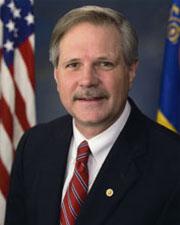 Sen. John Hoeven (R-ND)
Legislative Activity
Stay on top of the latest movement without scrolling through every action
Senate amendment proposed (on the floor): Amendment SA 1485 proposed by Senator McCain for Senator Hoeven to Amendment SA 1463.(consideration: CR S3912-3915; text: CR S3912-3913)
June 9, 2015
View full timeline
Senate amendment proposed (on the floor): Amendment SA 1485 proposed by Senator McCain for Senator Hoeven to Amendment SA 1463.(consideration: CR S3912-3915; text: CR S3912-3913)
June 9, 2015
Senate amendment agreed to: Amendment SA 1485 agreed to in Senate by Unanimous Consent.
June 9, 2015
Amendment SA 1485 proposed by Senator McCain for Senator Hoeven to Amendment SA 1463. (consideration: CR S3912-3915; text: CR S3912-3913) To express the sense of the Senate on the nuclear force improvement program of the Air Force.
June 9, 2015
Amendment SA 1485 agreed to in Senate by Unanimous Consent.
June 9, 2015
Senate amendment submitted
June 3, 2015
Senate amendment submitted
June 3, 2015
Text
Submitted
SA 1485. Mr. HOEVEN (for himself and Mr. Tester) submitted an
amendment intended to be proposed to amendment SA 1463 proposed by Mr.
McCain to the bill H.R. 1735, to authorize appropriations for fiscal
year 2016 for military activities of the Department of Defense and for
military construction, to prescribe military personnel strengths for
such fiscal year, and for other purposes; which was ordered to lie on
the table; as follows:

At the appropriate place, insert the following:

SEC. 1637. SENSE OF SENATE ON THE NUCLEAR FORCE IMPROVEMENT
PROGRAM OF THE AIR FORCE.

(a) Findings.--The Senates makes the following findings:
(1) On February 6, 2014, Air Force Global Strike Command
(AFGSC) initiated a force improvement program for the
Intercontinental Ballistic Missile (ICBM) force designed to
improve mission effectiveness, strengthen culture and morale,
and identify areas in need of investment by soliciting input
from airmen performing ICBM operations.

[[Page S3688]]

(2) The ICBM force improvement program generated more than
300 recommendations to strengthen ICBM operations and served
as a model for subsequent force improvement programs in other
mission areas, such as bomber operations and sustainment.
(3) On May 28, 2014, as part of the nuclear force
improvement program, the Air Force announced it would make
immediate improvements in the nuclear mission of the Air
Force, including enhancing career opportunities for airmen in
the nuclear career field, ensuring training activities
focused on performing the mission in the field, reforming the
personnel reliability program, establishing special pay rates
for positions in the nuclear career field, and creating a new
service medal for nuclear deterrence operations.
(4) Chief of Staff of the Air Force Mark Welsh has said
that, as part of the nuclear force improvement program, the
Air Force will increase nuclear-manning levels and strengthen
professional development for the members of the Air Force
supporting the nuclear mission of the Air Force in order ``to
address shortfalls and offer our airmen more stable work
schedule and better quality of life''.
(5) Secretary of the Air Force Deborah Lee James, in
recognition of the importance of the nuclear mission of the
Air Force, proposed elevating the grade of the commander of
the Air Force Global Strike Command from lieutenant general
to general, and on March 30, 2015, the Senate confirmed a
general as commander of that command.
(6) The Air Force redirected more than $160,000,000 in
fiscal year 2014 to alleviate urgent, near-term shortfalls
within the nuclear mission of the Air Force as part of the
nuclear force improvement program.
(7) The Air Force plans to spend more than $200,000,000 on
the nuclear force improvement program in fiscal year 2015,
and requested more than $130,000,000 for the program for
fiscal year 2016.
(8) Secretary of Defense Chuck Hagel said on November 14,
2014, that ``[t]he nuclear mission plays a critical role in
ensuring the Nation's safety. No other enterprise we have is
more important''.
(9) Secretary Hagel also said that the budget for the
nuclear mission of the Air Force should increase by 10
percent over a five-year period.
(10) Section 1652 of the Carl Levin and Howard P. ``Buck''
McKeon National Defense Authorization Act for Fiscal Year
2015 (Public Law 113-201; 128 Stat. 3654; 10 U.S.C. 491 note)
declares it the policy of the United States ``to ensure that
the members of the Armed Forces who operate the nuclear
deterrent of the United States have the training, resources,
and national support required to execute the critical
national security mission of the members''.
(b) Sense of Senate.--It is the sense of the Senate that--
(1) the nuclear mission of the Air Force should be a top
priority for the Department of the Air Force and for
Congress;
(2) the members of the Air Force who operate and maintain
the Nation's nuclear deterrent perform work that is vital to
the security of the United States;
(3) the nuclear force improvement program of the Air Force
has made significant near-term improvements for the members
of the Air Force in the nuclear career field of the Air
Force;
(4) Congress should support long-term investments in the
Air Force nuclear enterprise that sustain the progress made
under the nuclear force improvement program;
(5) the Air Force should--
(A) regularly inform Congress on the progress being made
under the nuclear force improvement program and its efforts
to strengthen the nuclear enterprise; and
(B) make Congress aware of any additional actions that
should be taken to optimize performance of the nuclear
mission of the Air Force and maximize the strength of the
United States strategic deterrent; and
(6) future budgets for the Air Force should reflect the
importance of the nuclear mission of the Air Force and the
need to provide members of the Air Force assigned to the
nuclear mission the best possible support and quality of
life.
______