To express the sense of Congress that the United States should prioritize and fund adaptation projects in communities in the United States while also helping to fund climate change adaptation in developing countries.
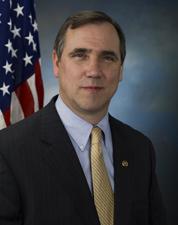 Sen. Jeff Merkley (D-OR)
Legislative Activity
Stay on top of the latest movement without scrolling through every action
Considered by Senate. (consideration: CR S621, S626)
January 29, 2015
View full timeline
Considered by Senate. (consideration: CR S621, S626)
January 29, 2015
Proposed amendment SA 174 withdrawn in Senate. (consideration: CR S626)
January 29, 2015
Considered by Senate. (consideration: CR S556)
January 28, 2015
Senate amendment proposed (on the floor): Amendment SA 174 proposed by Senator Merkley to Amendment SA 2.
January 27, 2015
Amendment SA 174 proposed by Senator Merkley to Amendment SA 2. (consideration: CR S520; text: CR S520) To express the sense of Congress that the United States should prioritize and fund adaptation projects in communities in the United States while also helping to fund climate change adaptation in developing countries.
January 27, 2015
Senate amendment submitted
January 26, 2015
Senate amendment submitted
January 26, 2015
Text
Submitted
SA 174. Mr. MERKLEY submitted an amendment intended to be proposed to
amendment SA 2 proposed by Ms. Murkowski (for herself, Mr. Hoeven, Mr.
Barrasso, Mr. Risch, Mr. Lee, Mr. Flake, Mr. Daines, Mr. Manchin, Mr.
Cassidy, Mr. Gardner, Mr. Portman, Mr. Alexander, and Mrs. Capito) to
the bill S. 1, to approve the Keystone XL Pipeline; which was ordered
to lie on the table; as follows:

At the appropriate place, insert the following:

SEC. __. SENSE OF CONGRESS REGARDING FUNDING OF CLIMATE
CHANGE ADAPTATION PROGRAMS.

It is the sense of Congress that--
(1) President Obama has committed $3,000,000,000 from the
United States to the Green Climate Fund, with the objective
of helping developing countries deal with the impacts of
climate change and advancing mitigation efforts;
(2) many communities in the United States, including many
rural and indigenous communities, face social and economic
challenges that rival those in developing countries and are
also being impacted by climate change;
(3) these communities include indigenous and traditional
communities in the Arctic region of the United States;
(4) similar opportunities for adaptation projects exist
across rural and other vulnerable communities in the United
States; and
(5) the United States should prioritize and fund adaptation
projects in vulnerable communities in the United States,
including rural and indigenous communities, while also
helping to fund climate change adaptation and mitigation in
developing countries.
______