S.Amdt. 1750Senate114th Congress (2015-2017)2nd degree
S.Amdt. 1750
Sponsored by 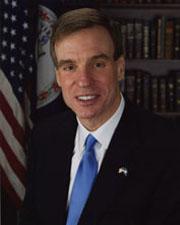 Sen. Mark R. Warner (D-VA)
Sen. Mark R. Warner (D-VA)Submitted June 4, 2015
Legislative Activity
Stay on top of the latest movement without scrolling through every action
Floor
Latest Action
Senate amendment submitted
June 4, 2015
View full timeline
Floor
Senate amendment submitted
June 4, 2015
Floor
Senate amendment submitted
June 4, 2015
Text
Submitted
SA 1750. Mr. WARNER submitted an amendment intended to be proposed to
amendment SA 1463 proposed by Mr. McCain to the bill H.R. 1735, to
authorize appropriations for fiscal year 2016 for military activities
of the Department of Defense and for military construction, to
prescribe military personnel strengths for such fiscal year, and for
other purposes; which was ordered to lie on the table; as follows:

At the appropriate place, insert the following:

SEC. __. UNMANNED AERIAL SYSTEMS RESEARCH PROGRAM.

(a) Requirement to Develop and Deploy UAS Technologies.--
The Secretary of Defense and the Director of National
Intelligence shall work in conjunction with the Secretary of
Homeland Security, the Secretary of Transportation, the
Administrator of the National Aeronautics and Space
Administration, the heads of other Federal agencies, existing
UAS test sites designated by the Federal Aviation
Administration, the private sector, and academia on the
research and development of technologies to safely detect,
identify, classify, and deconflict UAS in the national air
space, integrate UAS, and deploy proven UAS mitigation
technologies--
(1) to ensure that UAS operate safely in the national air
space;
(2) to ensure that, as the commercial use of UAS
technologies increase and are safely integrated into the
national air space, the United States is taking full
advantage of existing and developmental technologies to
detect, identify, classify, track, and counteract UAS in and
around restricted and controlled air space, such as airports,
military training areas, National Special Security Events,
and sensitive national security locations;
(3) to yield important insights for the Department of
Defense, intelligence community, Department of Homeland
Security, and civilian and private sector applications;
(4) to provide intelligence, reconnaissance, and
surveillance capabilities over widely dispersed and expansive
territories; and
(5) to improve methods for protecting privacy and civil
liberties related to the use of UAS.
(b) UAS Defined.--In this section, the term ``UAS'' means
unmanned aerial systems.
______