S.Amdt. 1891Senate114th Congress (2015-2017)2nd degree
S.Amdt. 1891
Sponsored by 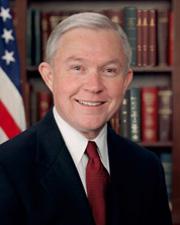 Sen. Jeff Sessions (R-AL)
Sen. Jeff Sessions (R-AL)Submitted June 9, 2015
Legislative Activity
Stay on top of the latest movement without scrolling through every action
Floor
Latest Action
Senate amendment submitted
June 9, 2015
View full timeline
Floor
Senate amendment submitted
June 9, 2015
Floor
Senate amendment submitted
June 9, 2015
Text
Submitted
SA 1891. Mr. SESSIONS submitted an amendment intended to be proposed
to amendment SA 1463 proposed by Mr. McCain to the bill H.R. 1735, to
authorize appropriations for fiscal year 2016 for military activities
of the Department of Defense, for military construction, and for
defense activities of the Department of Energy, to prescribe military
personnel strengths for such fiscal year, and for other purposes; which
was ordered to lie on the table; as follows:

At the end of subtitle C of title XII, add the following:

SEC. 1242. SENSE OF CONGRESS ON IRAN NEGOTIATIONS.

(a) Findings.--Congress makes the following findings:
(1) President Barack Obama and administration officials
have routinely spoken about taking a hard line when dealing
with Iran on the subject of their nuclear program and related
sanctions.
(2) On September 25, 2012, in a speech to the United
Nations General Assembly, President Obama stated: ``Make no
mistake: A nuclear-armed Iran is not a challenge that can be
contained. . .the United States will do what we must to
prevent Iran from obtaining a nuclear weapon.''
(3) On April 2, 2015, in an address in the Rose Garden,
President Obama stated that ``Iran has also agreed to the
most robust and intrusive inspections and transparency
regime,'' and declared, ``This deal was not based on trust.
It's based on unprecedented verification.''
(4) On April 2, 2015, in an interview with Andrea Mitchell
of NBC, in Lausanne, Switzerland, Secretary of State John
Kerry when asked, ``Mr. Secretary, President Obama said if
Iran cheats, we will know it. How can you be so sure? They've
cheated before''; stated, ``Well, we have extraordinary,
extensive verification measures that have not been applied
before. We will have state-of-the-art television cameras
within centrifuge production facilities. We will have cradle-
to-grave tracking of uranium--uranium from the mine to the
mill to the yellowcake to gas to the centrifuge to out and
where it goes in spent fuel. So we have--that is an amazing
amount--and we have a new dispute process which will allow us
to be able to finalize access where we need it.''
(5) April 8, 2015, on the ``PBS NewsHour,'' Secretary Kerry
said that in any final agreement, Iran would also have to
resolve outstanding questions with the International Atomic
Energy Agency over suspected military dimensions of the
nuclear program. ``It will be part of a final agreement,'' he
said. ``It has to be.''
(6) Iran's supreme leader, Ayatollah Ali Khamenei, has
routinely spoken out openly against the United States and any
sanctions against Iran's nuclear program.

[[Page S3940]]

(7) On April 9, 2015, the Wall Street Journal, in response
to the nuclear deal, reported, ``The 75-year-old cleric also
said Iran's government and security forces wouldn't permit
outside inspections of the country's military sites, which
are officially nonnuclear but where United Nations
investigators suspect Tehran conducted tests related to
atomic weapons development.''
(8) On May 20, 2015, in a graduation speech at the Imam
Hussein Military University in Tehran, Ayatollah Ali Khamenei
ruled out allowing international inspectors to interview
Iranian nuclear scientists as part of any potential deal on
its nuclear program, and reiterated that ``regarding
inspections, we have said that we will not let foreigners
inspect any military center''.
(9) The stated positions of the United States requiring
``robust and intrusive'' inspections of Iran's nuclear sites
and any other sites where nuclear activities may be carried
out or may have been conducted previously is essential to any
effective agreement that would provide relief from sanctions.
(10) The public statements of Ayatollah Ali Khamenei and
other top Iranian leaders suggest they may refuse to grant
such inspections as are required to ensure the nuclear
agreement is complied with.
(b) Sense of Congress.--It is the sense of Congress that--
(1) the Government of Iran's stated opposition to
inspections represents decisive questions and suggest a
verifiable agreement may be unachievable; and
(2) no nuclear agreement with Iran that does not include
robust inspections and proper verification of all Iran's
nuclear programs and related military installations and
access to nuclear supporting scientists should be accepted.
______