S.Amdt. 1915Senate114th Congress (2015-2017)2nd degree
S.Amdt. 1915
Sponsored by 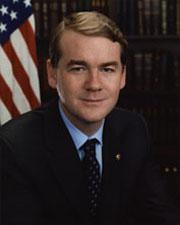 Sen. Michael F. Bennet (D-CO)
Sen. Michael F. Bennet (D-CO)Submitted June 9, 2015
Legislative Activity
Stay on top of the latest movement without scrolling through every action
Floor
Latest Action
Senate amendment submitted
June 9, 2015
View full timeline
Floor
Senate amendment submitted
June 9, 2015
Floor
Senate amendment submitted
June 9, 2015
Text
Submitted
SA 1915. Mr. BENNET submitted an amendment intended to be proposed to
amendment SA 1463 proposed by Mr. McCain to the bill H.R. 1735, to
authorize appropriations for fiscal year 2016 for military activities
of the Department of Defense, for military construction, and for
defense activities of the Department of Energy, to prescribe military
personnel strengths for such fiscal year, and for other purposes; which
was ordered to lie on the table; as follows:

At the end of subtitle G of title X, add the following:

SEC. 1085. SENSE OF SENATE ON THE IMPORTANCE OF INTERAGENCY
COOPERATION FOR THE UNITED STATES NORTHERN
COMMAND.

(a) Findings.--The Senate makes the following findings:
(1) The Commander of United States Northern Command
(USNORTHCOM) testified before the Committee on Armed Services
of the Senate that since September 11, 2001, ``resurgent
state actors have invested in new capabilities that make
North America vulnerable in ways not seen in a generation''
and particularly that the ``unpredictable cascading impacts
of a cyberspace attack have the potential to easily outpace
those of a natural disaster''.
(2) The Joint Cyber Center was established in the United
States Northern Command to integrate cybersecurity efforts
into headquarters missions by improving situational awareness
in the cyber domain, improving the defense of the networks of
the Command, and providing cyber consequence response and
recovery support to civil authorities.
(3) The responsibilities of United States Northern Command
for homeland defense (including countering illegal drugs and
combating transnational organized crime) and defense support
of civil authorities (including domestic disaster relief
operations during wildfires, hurricanes, earthquakes, and
floods) depend on interagency partnerships and cooperation.
(4) During the past fire season, Air Force Reserve and Air
National Guard C-130 aircraft equipped with the United States
Forest Service Modular Airborne Fire Fighting System made 132
airdrops, releasing nearly 250,000 gallons of fire retardant
to combat wildfires.
(5) The regional partnership of United States Northern
Command with Mexico and the Bahamas in combating the
trafficking of illegal drugs and persons and in training law
enforcement and disaster relief personnel depends on
cooperation with other agencies of the United States
Government such as the Department of State, Department of
Homeland Security, and the Federal Bureau of Investigation.
(6) The Commander of United States Northern Command is also
the Commander of the North American Aerospace Defense Command
(NORAD), the bi-national command with Canada. For more than
57 years, the United States has partnered with our vital ally
to the north to provide aerospace warning, aerospace defense,
and maritime warning in defense of North America. Since
September 11, 2001, North American Aerospace Defense Command
fighters have responded to more than 5,000 possible air
threats in the United States and flown more than 62,500
sorties in defense of our homeland. Successful execution on
the North American Aerospace Defense Command mission relies
heavily on timely communication and seamless integration with
numerous agencies of the United States Government such as the
Federal Aviation Administration, the Department of Homeland
Security, and Federal law enforcement agencies.
(b) Sense of Senate.--It is the sense of the Senate that--
(1) continued interagency cooperation is vital to the
successful discharge of the missions of the United States
Northern Command, including homeland defense, cybersecurity,
counterterrorism, counterdrug efforts, and defense support of
civil authorities; and
(2) the United States Northern Command should continue its
efforts to integrate cyberspace operations into its
contingency plans and training exercises to understand better
how cyber-attacks could be mitigated or prevented and how
other Federal and

[[Page S3947]]

State government partners can effectively respond should such
attacks occur.
______