To end discrimination based on actual or perceived sexual orientation or gender identity in public schools.
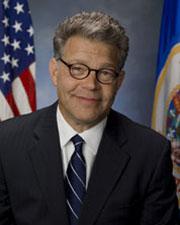 Sen. Al Franken (D-MN)
Legislative Activity
Stay on top of the latest movement without scrolling through every action
Senate amendment not agreed to: Amendment SA 2093, under the order of 7/14/15, not having achieved 60 votes in the affirmative, was not agreed to in Senate by Yea-Nay Vote. 52 - 45. Record Vote Number: 236.
July 14, 2015
View full timeline
Senate amendment not agreed to: Amendment SA 2093, under the order of 7/14/15, not having achieved 60 votes in the affirmative, was not agreed to in Senate by Yea-Nay Vote. 52 - 45. Record Vote Number: 236.
July 14, 2015
Roll call votes on amendments in Senate: Amendment SA 2093, under the order of 7/14/15, not having achieved 60 votes in the affirmative, was not agreed to in Senate by Yea-Nay Vote. 52 - 45. Record Vote Number: 236.
July 14, 2015
Considered by Senate. (consideration: CR S5023, S5040-5045, S5046-5047)
July 14, 2015
Amendment SA 2093, under the order of 7/14/15, not having achieved 60 votes in the affirmative, was not agreed to in Senate by Yea-Nay Vote. 52 - 45. Record Vote Number: 236.
July 14, 2015
Considered by Senate. (consideration: CR S4994)
July 13, 2015
Senate amendment proposed (on the floor): Amendment SA 2093 proposed by Senator Murray for Senator Franken to Amendment SA 2089.(consideration: CR S4925-4926; text: CR S4925)
July 9, 2015
Amendment SA 2093 proposed by Senator Murray for Senator Franken to Amendment SA 2089. (consideration: CR S4925-4926; text: CR S4925) To end discrimination based on actual or perceived sexual orientation or gender identity in public schools.
July 9, 2015
Senate amendment submitted
July 7, 2015
Senate amendment submitted
July 7, 2015
Votes
1 roll call on this amendment
Text
Submitted
SA 2093. Mr. FRANKEN (for himself, Ms. Baldwin, Mr. Bennet, Mr.
Booker, Mrs. Boxer, Mr. Brown, Ms. Cantwell, Mr. Cardin, Mr. Carper,
Mr. Casey, Mr. Coons, Mr. Durbin, Mrs. Feinstein, Mrs. Gillibrand, Mr.
Heinrich, Ms. Heitkamp, Ms. Hirono, Mr. Kaine, Ms. Klobuchar, Mr.
Leahy, Mr. Markey, Mr. Manchin, Mrs. McCaskill, Mr. Menendez, Mr.
Merkley, Ms. Mikulski, Mr. Murphy, Mrs. Murray, Mr. Peters, Mr. Reed,
Mr. Sanders, Mr. Schatz, Mr. Schumer, Mrs. Shaheen, Ms. Stabenow, Mr.
Tester, Mr. Udall, Ms. Warren, Mr. Whitehouse, Mr. Wyden, and Mr. Kirk)
submitted an amendment intended to be proposed to amendment SA 2089
submitted by Mr. Alexander (for himself and Mrs. Murray) to the bill S.
1177, to reauthorize the Elementary and Secondary Education Act of 1965
to ensure that every child achieves; which was ordered to lie on the
table; as follows:

At the end of part B of title X, insert the following:

SEC. __. STUDENT NON-DISCRIMINATION.

(a) Short Title.--This section may be cited as the
``Student Non-Discrimination Act of 2015''.
(b) Findings and Purposes.--
(1) Findings.--Congress makes the following findings:
(A) Public school students who are lesbian, gay, bisexual,
or transgender (referred to in this section as ``LGBT''), or
are perceived to be LGBT, or who associate with LGBT people,
have been and are subjected to pervasive discrimination,
including harassment, bullying, intimidation, and violence,
and have been deprived of equal educational opportunities, in
schools in every part of the Nation.
(B) While discrimination of any kind is harmful to students
and to the education system, actions that target students
based on sexual orientation or gender identity represent a
distinct and severe problem that remains inadequately
addressed by current Federal law.
(C) Numerous social science studies demonstrate that
discrimination at school has contributed to high rates of
absenteeism, academic underachievement, dropping out, and
adverse physical and mental health consequences among LGBT
youth.
(D) When left unchecked, discrimination in schools based on
sexual orientation or gender identity can lead, and has led,
to life-threatening violence and to suicide.
(E) Public school students enjoy a variety of
constitutional rights, including rights to equal protection,
privacy, and free expression, which are infringed when school
officials engage in or fail to take prompt and effective
action to stop discrimination on the basis of sexual
orientation or gender identity.
(F) Provisions of Federal statutory law expressly prohibit
discrimination on the basis of race, color, sex, religion,
disability, and national origin. The Department of Education
and the Department of Justice, as well as numerous courts,
have correctly interpreted the prohibitions on sex
discrimination to include discrimination based on sex
stereotypes and gender identity, even when that sex-based
discrimination coincides or overlaps with discrimination
based on sexual orientation. However, the absence of express
Federal law prohibitions on discrimination on the basis of
sexual orientation and gender identity has created
unnecessary uncertainty that risks limiting access to legal
remedies under Federal law for LGBT students and their
parents.
(2) Purposes.--The purposes of this section are--
(A) to ensure that all students have access to public
education in a safe environment free from discrimination,
including harassment, bullying, intimidation, and violence,
on the basis of sexual orientation or gender identity;
(B) to provide a comprehensive Federal prohibition of
discrimination in public schools based on actual or perceived
sexual orientation or gender identity;
(C) to provide meaningful and effective remedies for
discrimination in public schools based on actual or perceived
sexual orientation or gender identity;
(D) to invoke congressional powers, including the power to
enforce the 14th Amendment to the Constitution of the United
States and to provide for the general welfare pursuant to
section 8 of article I of the Constitution and the power to
make all laws necessary and proper for the execution of the
foregoing powers pursuant to section 8 of article I of the
Constitution, in order to prohibit discrimination in public
schools on the basis of sexual orientation or gender
identity; and

[[Page S4781]]

(E) to allow the Department of Education and the Department
of Justice to effectively combat discrimination based on
sexual orientation and gender identity in public schools,
through regulation and enforcement, as the Departments have
issued regulations under and enforced title IX of the
Education Amendments of 1972 (20 U.S.C. 1681 et seq.) and
other nondiscrimination laws in a manner that effectively
addresses discrimination.
(c) Definitions and Rule.--
(1) Definitions.--For purposes of this section:
(A) Educational agency.--The term ``educational agency''
means a local educational agency, an educational service
agency, or a State educational agency, as those terms are
defined in section 9101 of the Elementary and Secondary
Education Act of 1965 (20 U.S.C. 7801).
(B) Gender identity.--The term ``gender identity'' means
the gender-related identity, appearance, or mannerisms or
other gender-related characteristics of an individual, with
or without regard to the individual's designated sex at
birth.
(C) Harassment.--The term ``harassment'' means conduct that
is sufficiently severe, persistent, or pervasive to limit a
student's ability to participate in or benefit from a program
or activity of a public school or educational agency,
including acts of verbal, nonverbal, or physical aggression,
intimidation, or hostility, if such conduct is based on--
(i) a student's actual or perceived sexual orientation or
gender identity; or
(ii) the actual or perceived sexual orientation or gender
identity of a person with whom a student associates or has
associated.
(D) Program or activity.--The terms ``program or activity''
and ``program'' have the same meanings given such terms as
applied under section 606 of the Civil Rights Act of 1964 (42
U.S.C. 2000d-4a) to the operations of public entities under
paragraph (2)(B) of such section.
(E) Public school.--The term ``public school'' means an
elementary school (as the term is defined in section 9101 of
the Elementary and Secondary Education Act of 1965 (20 U.S.C.
7801)) that is a public institution, and a secondary school
(as so defined) that is a public institution.
(F) Sexual orientation.--The term ``sexual orientation''
means homosexuality, heterosexuality, or bisexuality.
(G) Student.--The term ``student'' means an individual
within the age limits for which the State provides free
public education who is enrolled in a public school or who,
regardless of official enrollment status, attends classes or
participates in the programs or activities of a public school
or local educational agency.
(2) Rule.--Consistent with Federal law, in this section the
term ``includes'' means ``includes but is not limited to''.
(d) Prohibition Against Discrimination.--
(1) In general.--No student shall, on the basis of actual
or perceived sexual orientation or gender identity of such
individual or of a person with whom the student associates or
has associated, be excluded from participation in, be denied
the benefits of, or be subjected to discrimination under any
program or activity receiving Federal financial assistance.
(2) Harassment.--For purposes of this section,
discrimination includes harassment of a student on the basis
of actual or perceived sexual orientation or gender identity
of such student or of a person with whom the student
associates or has associated.
(3) Retaliation prohibited.--
(A) Prohibition.--No person shall be excluded from
participation in, be denied the benefits of, or be subjected
to discrimination, retaliation, or reprisal under any program
or activity receiving Federal financial assistance based on
the person's opposition to conduct made unlawful by this
section.
(B) Definition.--For purposes of this paragraph,
``opposition to conduct made unlawful by this section''
includes--
(i) opposition to conduct believed to be made unlawful by
this section or conduct that could be believed to become
unlawful under this section if allowed to continue;
(ii) any formal or informal report, whether oral or
written, to any governmental entity, including public schools
and educational agencies and employees of the public schools
or educational agencies, regarding conduct made unlawful by
this section, conduct believed to be made unlawful by this
section, or conduct that could be believed to become unlawful
under this section if allowed to continue;
(iii) participation in any investigation, proceeding, or
hearing related to conduct made unlawful by this section,
conduct believed to be made unlawful by this section, or
conduct that could be believed to become unlawful under this
section if allowed to continue; and
(iv) assistance or encouragement provided to any other
person in the exercise or enjoyment of any right granted or
protected by this section,

if in the course of that expression, the person involved does
not purposefully provide information known to be false to any
public school or educational agency or other governmental
entity regarding conduct made unlawful by this section, or
conduct believed to be made unlawful by this section, or
conduct that could be believed to become unlawful under this
section if allowed to continue.
(e) Federal Administrative Enforcement; Report to
Congressional Committees.--
(1) Requirements.--Each Federal department and agency which
is empowered to extend Federal financial assistance to any
education program or activity, by way of grant, loan, or
contract other than a contract of insurance or guaranty, is
authorized and directed to effectuate the provisions of
subsection (d) with respect to such program or activity by
issuing rules, regulations, or orders of general
applicability which shall be consistent with achievement of
the objectives of the statute authorizing the financial
assistance in connection with which the action is taken. No
such rule, regulation, or order shall become effective unless
and until approved by the President.
(2) Enforcement.--Compliance with any requirement adopted
pursuant to this subsection may be effected--
(A) by the termination of or refusal to grant or to
continue assistance under such program or activity to any
recipient as to whom there has been an express finding on the
record, after opportunity for hearing, of a failure to comply
with such requirement, but such termination or refusal shall
be limited to the particular political entity, or part
thereof, or other recipient as to whom such a finding has
been made, and shall be limited in its effect to the
particular program, or part thereof, in which such
noncompliance has been so found; or
(B) by any other means authorized by law,
except that no such action shall be taken until the
department or agency concerned has advised the appropriate
person or persons of the failure to comply with the
requirement and has determined that compliance cannot be
secured by voluntary means.
(3) Reports.--In the case of any action terminating, or
refusing to grant or continue, assistance because of failure
to comply with a requirement imposed pursuant to this
subsection, the head of the Federal department or agency
shall file with the committees of the House of
Representatives and Senate having legislative jurisdiction
over the program or activity involved a full written report
of the circumstances and the grounds for such action. No such
action shall become effective until 30 days have elapsed
after the filing of such report.
(f) Private Cause of Action.--
(1) Private cause of action.--Subject to paragraph (3), and
consistent with the cause of action recognized under title VI
of the Civil Rights Act of 1964 (42 U.S.C. 2000d et seq.) and
title IX of the Education Amendments of 1972 (20 U.S.C. 1681
et seq.), an aggrieved individual may bring an action in a
court of competent jurisdiction, asserting a violation of
this section. Aggrieved individuals may be awarded all
appropriate relief, including equitable relief, compensatory
damages, and costs of the action.
(2) Rule of construction.--This subsection shall not be
construed to preclude an aggrieved individual from obtaining
remedies under any other provision of law or to require such
individual to exhaust any administrative complaint process or
notice of claim requirement before seeking redress under this
subsection.
(3) Statute of limitations.--For actions brought pursuant
to this subsection, the statute of limitations period shall
be determined in accordance with section 1658(a) of title 28,
United States Code. The tolling of any such limitations
period shall be determined in accordance with the law
governing actions under section 1979 of the Revised Statutes
(42 U.S.C. 1983) in the State in which the action is brought.
(g) Cause of Action by the Attorney General.--The Attorney
General is authorized to institute for or in the name of the
United States a civil action for a violation of this section
in any appropriate district court of the United States
against such parties and for such relief as may be
appropriate, including equitable relief and compensatory
damages. Whenever a civil action is instituted for a
violation of this section, the Attorney General may intervene
in such action upon timely application and shall be entitled
to the same relief as if the Attorney General had instituted
the action. Nothing in this section shall adversely affect
the right of any person to sue or obtain relief in any court
for any activity that violates this section, including
regulations promulgated pursuant to this section.
(h) State Immunity.--
(1) State immunity.--A State shall not be immune under the
11th Amendment to the Constitution of the United States from
suit in Federal court for a violation of this section.
(2) Waiver.--A State's receipt or use of Federal financial
assistance for any program or activity of a State shall
constitute a waiver of sovereign immunity, under the 11th
Amendment or otherwise, to a suit brought by an aggrieved
individual for a violation of subsection (d).
(3) Remedies.--In a suit against a State for a violation of
this section, remedies (including remedies both at law and in
equity) are available for such a violation to the same extent
as such remedies are available for such a violation in the
suit against any public or private entity other than a State.
(i) Attorney's Fees.--Section 722(b) of the Revised
Statutes (42 U.S.C. 1988(b)) is amended by inserting ``the
Student Non-Discrimination Act of 2015,'' after ``Religious
Land Use and Institutionalized Persons Act of 2000,''.
(j) Effect on Other Laws.--

[[Page S4782]]

(1) Federal and state nondiscrimination laws.--Nothing in
this section shall be construed to preempt, invalidate, or
limit rights, remedies, procedures, or legal standards
available to victims of discrimination or retaliation, under
any other Federal law or law of a State or political
subdivision of a State, including titles IV and VI of the
Civil Rights Act of 1964 (42 U.S.C. 2000c et seq., 2000d et
seq.), title IX of the Education Amendments of 1972 (20
U.S.C. 1681 et seq.), section 504 of the Rehabilitation Act
of 1973 (29 U.S.C. 794), the Americans with Disabilities Act
of 1990 (42 U.S.C. 12101 et seq.), or section 1979 of the
Revised Statutes (42 U.S.C. 1983). The obligations imposed by
this section are in addition to those imposed by titles IV
and VI of the Civil Rights Act of 1964 (42 U.S.C. 2000c et
seq., 2000d et seq.), title IX of the Education Amendments of
1972 (20 U.S.C. 1681 et seq.), section 504 of the
Rehabilitation Act of 1973 (29 U.S.C. 794), the Americans
with Disabilities Act of 1990 (42 U.S.C. 12101 et seq.), and
section 1979 of the Revised Statutes (42 U.S.C. 1983).
(2) Free speech and expression laws and religious student
groups.--Nothing in this section shall be construed to alter
legal standards regarding, or affect the rights available to
individuals or groups under, other Federal laws that
establish protections for freedom of speech and expression,
such as legal standards and rights available to religious and
other student groups under the First Amendment and the Equal
Access Act (20 U.S.C. 4071 et seq.).
(k) Severability.--If any provision of this section, or any
application of such provision to any person or circumstance,
is held to be unconstitutional, the remainder of this
section, and the application of the provision to any other
person or circumstance shall not be impacted.
(l) Effective Date.--This section shall take effect 60 days
after the date of enactment of this section and shall not
apply to conduct occurring before the effective date of this
section.
______