To ensure that States have policies or procedures that prohibit aiding or abetting of sexual abuse, and for other purposes.
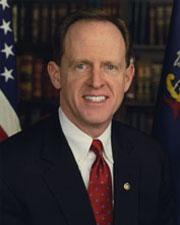 Sen. Patrick J. Toomey (R-PA)
Legislative Activity
Stay on top of the latest movement without scrolling through every action
Senate amendment agreed to: Amendment SA 2094 as modified agreed to in Senate by Yea-Nay Vote. 98 - 0. Record Vote Number: 228.
July 9, 2015
View full timeline
Senate amendment agreed to: Amendment SA 2094 as modified agreed to in Senate by Yea-Nay Vote. 98 - 0. Record Vote Number: 228.
July 9, 2015
Roll call votes on amendments in Senate: Amendment SA 2094 as modified agreed to in Senate by Yea-Nay Vote. 98 - 0. Record Vote Number: 228.
July 9, 2015
Considered by Senate. (consideration: CR S4904, S4906-4907, S4908, S4914; text as modified: CR S4906-4907)
July 9, 2015
Amendment SA 2094 as modified agreed to in Senate by Yea-Nay Vote. 98 - 0. Record Vote Number: 228.
July 9, 2015
Considered by Senate. (consideration: CR S4806, S4828-4829)
July 8, 2015
Senate amendment submitted
July 7, 2015
Senate amendment proposed (on the floor): Amendment SA 2094 proposed by Senator Toomey to Amendment SA 2089.(consideration: CR S4675, S4676-4677; text: CR S4676-4677)
July 7, 2015
Senate amendment submitted
July 7, 2015
Amendment SA 2094 proposed by Senator Toomey to Amendment SA 2089. (consideration: CR S4675, S4676-4677; text: CR S4676-4677) To ensure that States have policies or procedures that prohibit aiding or abetting of sexual abuse, and for other purposes.
July 7, 2015
Votes
1 roll call on this amendment
Text
Modified
EVERY CHILD ACHIEVES ACT OF 2015

The PRESIDING OFFICER. Under the previous order, the Senate will
resume consideration of S. 1177, which the clerk will report.
The legislative clerk read as follows:

A bill (S. 1177) to reauthorize the Elementary and
Secondary Education Act of 1965 to ensure that every child
achieves.

Pending:

Alexander/Murray amendment No. 2089, in the nature of a
substitute.
Alexander (for Fischer) amendment No. 2079 (to amendment
No. 2089), to ensure local governance of education.
Murray (for Peters) amendment No. 2095 (to amendment No.
2089), to allow local educational agencies to use parent and
family engagement funds for financial literacy activities.
Toomey amendment No. 2094 (to amendment No. 2089), to
protect our children from convicted pedophiles, child
molesters, and other sex offenders infiltrating our schools
and from schools ``passing the trash''--helping pedophiles
obtain jobs at other schools.

The PRESIDING OFFICER. The Senator from Tennessee.
Mr. ALEXANDER. Mr. President, the Democratic leader and the
Republican leader have created an environment in which we can succeed
on this bill, and I am grateful to them for that. I listened to their
remarks this morning about some things that have gone on in the past in
the Senate. My late friend Alex Haley, the author of ``Roots,'' used to
say: Find the good and praise it. And so what I would like to do is
thank the majority leader for putting the bill on the floor. Only he
can do that and give us a chance to debate it. I thank the Democratic
leader for creating an environment in which we can have a large number
of amendments and succeed.
I thank the Senator from Washington, Mrs. Patty Murray, who suggested
the way we proceed today. We fell into some partisan differences in the
last two Congresses that made that impossible, and she has, as much as
anybody, helped solve that problem.
We are making good progress. We have adopted a number of amendments.
We voted on some others. Some have passed, and some have been defeated.
People have had a chance to have their say. Senator Murray and I have
received a large number of amendments--several dozen, actually, that
Senators on both sides have offered--that we have agreed to recommend
to the full Senate we adopt by consent.
In addition to that, we adopted 29 amendments in the committee
consideration, and many of those were amendments from Democratic
Members of the Senate. So I think most Senators--in fact, I haven't
heard a single one say that they haven't had a chance to have their say
on No Child Left Behind.
Yesterday, I put into the Record an op-ed from the Washington Post by
the Virginia Secretary of Education Anne Holton, who made the argument
that States, like Virginia, are well prepared to accept the
responsibility for higher standards, better teaching, and real
accountability. Over the last 15 years, that has happened in every
State.
It reminds us that this bill we are debating only provides 4 percent
of the dollars that pay for our 100,000 public schools in the country.
We have some other money that the Federal Government spends--4 percent
or 5 percent more--for those schools, but this bill spends 4 percent.
Most of the money, most of the responsibility, most of the opportunity
for success is with parents, classroom teachers, and others who are
close to the children.
The consensus we have developed, the bipartisan consensus--again,
with the bill Senator Murray and I put together and improved by our
committee and now being improved on the floor--is that while we keep
the important measures of the accountability, so we know what children
in South Dakota and Tennessee and Washington State are learning and not
learning, so we can tell if anyone is left behind, that we restore to
States the responsibility for figuring out what to do about the tests.
That has broad-scale support.
Superintendents were in town yesterday from all over the country;
they told us that. Governors are calling us; they tell us that. The
major teachers organizations in the country tell us we do not need, in
effect, a national school board. Those decisions need to be made by
teachers who cherish the children in their classroom and the parents
who put them there and school board members who care for them and
Governors and legislators who are closer to home. So this bill isn't
easy to do, but because of that consensus, we are making good progress.
I will submit following my remarks an article from earlier this week
from Newsweek entitled, ``The Education Law Everyone Wants to Fix.''
The House of Representatives said it wants to fix it last night. The
progress we are making suggests the Senate wants to fix it. We know all
across the country Governors, legislators, teachers, school
superintendents, and parents want to end the confusion and anxiety in
the 100,000 public schools.
We will be having more votes, hopefully today just before lunch, and
then we will continue with the bill.
Mr. President, I ask unanimous consent that following my remarks, the
article from Newsweek entitled ``The Education Law Everyone Wants to
Fix'' be printed in the Record.
On a different subject, which I will not elaborate on today, I wish
to also include, following my remarks, an article I wrote for the Wall
Street Journal yesterday about the cost of going to college. I think it
is unfortunate that so many politicians and pundits say that Americans
can't afford college when in fact most of them can. It is never easy,
but it is important for them to know that for low-income Americans, for
example, the first 2 years of college are free or nearly free at a
community college; and there are many other ways colleges,
universities, the Federal Government, and taxpayers try to make it easy
for a larger number of Americans to go to college. That is a debate
Senator Murray and I are already working on. We will bring the
reauthorization of the higher education bill before the Senate
hopefully later this year.
Mr. President, I ask unanimous consent that my op-ed from the Wall
Street Journal be printed in the Record following my remarks.
Mr. President, there are a number of Senators who wish to come to the
floor to speak today. I encourage any Senator who hasn't presented
their amendment to go ahead and do that. I am

[[Page S4905]]

hopeful that soon we will have an agreement to have a number of votes
before lunch.
I yield the floor.
There being no objection, the material was ordered to be printed in
the Record, as follows:

[From Newsweek, July 3, 2015]

The Education Law Everyone Wants to Fix

(By Emily Cadei)

When it comes to setting standards for America's public
schools, there's a remarkable degree of consensus: The system
the federal government has in place--known as No Child Left
Behind--doesn't work. Fixing it, however, is about to set off
a new round of fierce political combat in Washington, D.C.,
and draw in 2016 candidates as well.
Both the House and Senate are set to debate the 2001 No
Child Left Behind law next week. Passed with bipartisan
support--including the unlikely pairing of President George
W. Bush and Massachusetts liberal Sen. Ted Kennedy--it sought
to set national standards for school and student achievement,
and mandated testing to make sure they were keeping up as
well as funding incentives to keep schools on track.
But the goals that the 2001 law set turned out to be far
too ambitious and, the chorus of critics say, too rigid.
``Teaching to the test'' is a refrain heard across the
country. Test results have become an end-all, be-all,
complain teachers and parents, Democrats and Republicans,
alike.
No Child Left Behind ``simplified all of school
accountability to be a performance on a math test or a
reading test,'' says Mary Kusler, director of government
relations for the National Education Association, which
lobbies on behalf of teachers and other education
professionals. That, Kusler says, ``has corrupted the
education our children are receiving because it has reduced
our schools to this reduce and punish system.''
The two parties have very different visions for overhauling
the law, however. Those in the middle, the House and Senate
leaders that have drafted the legislation, are now faced with
walking a tightrope between a measure that will win
sufficient Republican support in the House but still get a
signature from President Obama. That's no easy task--the law
has technically been expired since 2007, but Congress has not
been able to muster the political consensus to reauthorize it
since then. It's still being implemented, though, because
Congress continues to provide funding for the vast majority
of its programs.
In the Senate, Tennessee Republican Lamar Alexander, a
former Secretary of Education, and Washington Democrat Patty
Murray have crafted a proposal that passed their Health,
Education, Labor and Pensions Committee unanimously in April.
Their legislation would maintain the testing regimen put in
place by No Child Left Behind but give states more
flexibility in how they use test results to measure
performance. That's earned the hearty endorsement of teachers
and groups like NBA, as well as business associations--which
are usually on opposite sides of the education policy debate.
In order to get Democrats on board, Alexander dropped one big
Republican priority from the bill--a provision that would
link federal funding for students from low-income areas to
the individual child, rather than the school district in
which they reside, which is how the system works now.
Republicans argue this ``portability'' measure gives children
and their families an opportunity to go to better schools but
Democrats say it will just weaken already struggling schools.
It's part of a broader fight over ``school choice'' and
whether students can use public funds to go to the school
they want--even private school--via things like vouchers.
That, says Kusler, defeats the whole purpose of the law,
which is aimed at improving low-performing schools and
``serving historically underserved populations.''
The House bill, sponsored by Minnesota Republican John
Kline, includes the portability provision Republicans favor.
That prompted a veto threat from the White House in February.
But even with that provision, Kline's bill has had trouble
winning conservative support. Republican leaders initially
planned to hold a vote on it in late February but changed
their minds at the last minute when it became apparent they
didn't have enough GOP support. Members aligned with the Tea
Party argue the overhaul still spends too much money and
leaves too much power in the hands of the federal government.
They're insisting on a vote on an amendment that would give
states the option of opting out of No Child Left Behind
requirements entirely, a proposal known in shorthand as A-
PLUS.
``There's just no conceivable way they can bring the Kline
bill onto the floor without bringing up A-PLUS,'' says Dan
Holler, spokesman for Heritage Action for America, the
advocacy arm of the conservative Heritage Foundation.
Holler's group came out in strong opposition to the bill in
February and plans to continue to oppose it unless that
provision is included in the House bill. He argues that the
House needs to pass the most conservative bill possible,
given that they'll then have to negotiate a final text with
the Senate.
Given how toxic No Child Left Behind has become, 2016
candidates on the campaign trail are going to be hard-pressed
to avoid the debate. There could be 100 amendments or more
filed in the Senate, which means the four Republican senators
running for president will have to weigh in on plenty of
thorny questions surrounding education policy as it relates
to race, inequality and states' rights.
Even those candidates who won't be voting, however, are
bound to be questioned on the topic. Education policy has
become a litmus test on the Right, with conservatives
rallying against any attempts to nationalize what they
believe should be state or local decisions. They've mainly
focused on plans for a national curriculum, known as Common
Core, which is not part of the No Child Left Behind law. But
Common Core is indirectly linked, since states have adopted
it to meet the testing and accountability standards that No
Child Left Behind created.
Many Republican governors that initially embraced the
Common Core standards, including 2016 long shots Chris
Christie of New Jersey and Bobby Jindal of Louisiana, have
backed away from them amidst the conservative backlash.
Former Florida Gov. Jeb Bush is one of the few (along with
Gov. John Kasich of Ohio) who has stood by Common Core. He
also once offered the Obama administration support in its
efforts to reauthorize No Child Left Behind, according to an
email the website Buzzfeed published last month. Those
education stands are a big reason for conservatives'
simmering distrust of this son and brother of past
presidents.
The teachers' unions, meanwhile, continue to hold
tremendous sway in the Democratic primary, and their
endorsements remain up for grabs in 2016. Dark horse
candidate Martin O'Malley, the former governor of Maryland,
is clearly eyeing that vote, and is scheduled to hold an
education event followed by a meeting with the NBA of New
Hampshire next week.
The presidential race also offers a rationale to
conservative holdouts opposed to the No Child Left Behind
reauthorization, which would be effective for as long as five
years. With the possibility of a Republican sweeping into the
White House, some argue it's best to stick to the status quo
for now, and tackle a more ambitious overhaul once a more
conservative president is in office (they hope).
But Kusler, for one, is hopeful that the pressure from all
sides to fix an unworkable law will ultimately force a
political compromise--opposed to kicking the can down the
road further. ``I am entirely optimistic that we will get
this done. We have never been so close,'' she says. ``We have
created a perfect storm here.''
____

[From the Wall Street Journal, July 6, 2015]

College Too Expensive? That's a Myth

(By Lamar Alexander)

Pell grants, state aid, modest loans and scholarships put a
four-year public institution within the reach of most.
Paying for college never is easy, but it's easier than most
people think. Yet some politicians and pundits say students
can't afford a college education. That's wrong. Most of them
can.
Public two-year colleges, for example, are free or nearly
free for low-income students. Nationally, community college
tuition and fees average $3,300 per year, according to the
College Board. The annual federal Pell grant for these
students--which does not have to be paid back--also averages
$3,300.
At public four-year colleges, tuition and fees average
about $9,000. At the University of Tennessee, Knoxville,
tuition and fees are $11,800. One third of its students have
a Pell grant (up to $5,775 depending on financial need), and
98% of instate freshmen have a state Hope Scholarship,
providing up to $3,500 annually for freshmen and sophomores
and up to $4,500 for juniors or seniors. States run a variety
of similar programs--$11.2 billion in financial aid in 2013,
85% in the form of scholarships, according to the National
Association of State Student Grant and Aid Programs.
The reality is that, for most students, a four-year public
institution is also within financial reach.
What about really expensive private colleges? Across the
country 15% of students attend private universities where
tuition and fees average $31,000, according to the College
Board. Georgetown University costs even more: about $50,000 a
year. Its president, John DeGioia, told me how Georgetown--
and many other so-called elite colleges--help make a degree
affordable.
First, Georgetown determines what a family can afford to
pay. It asks the student to borrow $17,000 over four years
and work 10-15 hours a week under its work-study program.
Georgetown pays the remainder--at a total cost of about $100
million a year.
Apart from grants, work and savings, there are federal
student loans. We hear a lot of questions about these loans.
Are taxpayers generous enough? Is borrowing for college a
good investment? Are students borrowing too much?
An undergraduate today can get a federal loan of up to
$5,500 his first year. The annual loan limit rises to $7,500
his junior and senior years. The fixed interest rate for new
loans this year is, by law, 4.29%. A recent graduate may pay
back the loan using no more than 10% of his disposable
income. And if at that rate he doesn't pay it off in 20
years, taxpayers forgive the loan.
Are students borrowing too much? The College Board reports
that a student who graduates from a four-year institution
carries, on average, a debt of about $27,000. This is about
the same amount of the average new

[[Page S4906]]

car loan, according to the information-services company
Experian Automotive. The total amount of outstanding student
loans is $1.2 trillion. The total amount of auto loans
outstanding in the U.S. is $950 billion.
But a student loan is a lot better investment. Cars
depreciate. College degrees appreciate. The College Board
estimates that a four-year degree will increase an
individual's lifetime earnings by $1 million, on average.
What about the scary stories of students with $100,000 or
more in debt? These represent only 4% of all student loans,
and 90% of the borrowers are doctors, lawyers, business
school graduates and others who have earned graduate degrees.
About seven million federal student loan borrowers are in
default, defined as failing to make a loan payment in at
least nine months. That's about one in 10 of all outstanding
federal student loans in default--although the Education
Department says most of those loans eventually get paid back.
Here are five steps the federal government can take to make
it easier for students to finance their college education:
Allow students to use Pell grants year-round, not only for
the traditional fall and spring academic terms, to complete
their degrees more rapidly.
Simplify the confusing 108-question federal student-aid
application form and consolidate the nine loan repayment
programs to two: a standard repayment program and one based
on their income.
Change the laws and regulations that discourage colleges
from counseling students against borrowing too much.
Require colleges to share in the risk of lending to
students. This will ensure that they have some interest in
encouraging students to borrow wisely, graduate on time, and
be able to pay back what they owe.
Clear out the federal red tape that soaks up state dollars
that could otherwise go to help reduce tuition. The Boston
Consulting Group found that in one year Vanderbilt University
spent a startling $150 million complying with federal rules
and regulations governing higher education, adding more than
$11,000 to the cost of each Vanderbilt student's $43,000 in
tuition. America's more than 6,000 colleges receive on
average one new rule, regulation or guidance letter each
workday from the Education Department.
It is vital that more Americans earn their college degrees,
for their own benefit and that of the country. A report by
Georgetown University's Center on Education in the Workforce
tells us that if we don't, we'll fall short by five million
workers with postsecondary education in five years.

Mr. ALEXANDER. Mr. President, I suggest the absence of a quorum.
The PRESIDING OFFICER. The clerk will call the roll.
The senior assistant legislative clerk proceeded to call the roll.
Mrs. MURRAY. Mr. President, I ask unanimous consent that the order
for the quorum call be rescinded.
The PRESIDING OFFICER. Without objection, it is so ordered.
Mrs. MURRAY. Mr. President, making sure our Nation's students get a
quality education is critical for our ability--our country's ability--
to lead the world in the years to come, and a good education can be a
ticket to the middle class. It is also important for building an
economy from the middle out, not just from the top down.
Of course, yesterday the House of Representatives passed their
partisan bill to reauthorize the Nation's K-12 education bill. While
that is another important step in the process to finally fix the badly
broken No Child Left Behind law, I am disappointed that House
Republicans have chosen to take a partisan approach in their bill that
is unacceptable to Democrats and will never become law.
I appreciate the work that ranking member Bobby Scott put into the
House Democratic substitute. I am looking forward to coming together
with him as well as Chairman Kline in a conference. I truly hope House
Republicans will be ready to join ranking member Bobby Scott and other
House and Senate Democrats, Senate Republicans, and the administration
as we work to get this done in a way that works for all students and
families. I am looking forward to continuing that work here today in
the Senate.
Again, I truly want to thank my colleague, the senior Senator from
Tennessee, for working with me on our bipartisan bill, and I appreciate
Chairman Alexander's cooperation in working in a bipartisan way through
this process. I join him this morning in encouraging our colleagues to
file their amendments so we can continue making progress on this
important piece of legislation.
Our bipartisan bill, the Every Child Achieves Act, is a good step in
the right direction to fix No Child Left Behind. It gives our States
more flexibility, while also including Federal guardrails to make sure
all students have access to a quality public education. We are not done
yet. I want to work to continue to improve and strengthen the bill.
One example, today we will talk about an amendment to help shine a
light on inequalities in education that still exist in our country. I
thank Senator Warren for offering her amendment. I look forward to that
discussion. That amendment will help States, districts, and schools
better analyze student achievement data so they can help their students
achieve. So I hope our colleagues will pass that amendment.
I am looking forward to getting started again today to work through
this issue and a number of others we have, and I hope to continue to
work in a bipartisan way to make sure all students have access to a
quality education, again, regardless of where they live or how they
learn or how much money they make.
I look forward to today's discussion. Again, I thank our colleagues
on the other side of the aisle for working with us to fix this badly
broken bill.
I yield the floor.
The PRESIDING OFFICER. The Senator from Tennessee.
Mr. ALEXANDER. Mr. President, I wish to acknowledge the comments of
the Senator from Washington. Before she was here, I commented on her
leadership and on how the Democratic leader as well as the Republican
leader have created an environment in which we can succeed. We govern a
complex country such as ours by consensus, and I think the way we are
doing things is a pretty good example of the way we can do that.
I am glad the House of Representatives acted. We have a process for
this called conference. We haven't been doing conferences much lately.
But she and I both talked with Chairman Kline and Representative Scott.
If we should succeed next week, as I believe we will, why then we will
have a conference with the House of Representatives, and we will
develop a bill we hope the President will be comfortable signing. We
are not here just to make a speech. We want to resolve this. As I said
in the article I put in earlier, this is the education law everyone
wants fixed. In our constitutional system of government, we don't fix
it unless the House and Senate agree and the President signs it.
So that is our goal, and we are continuing to make steps, thanks to
the leadership of Senator Murray and others.
I suggest the absence of a quorum.
The PRESIDING OFFICER. The clerk will call the roll.
The senior assistant legislative clerk proceeded to call the roll.
Mr. ALEXANDER. Mr. President, I ask unanimous consent that the order
for the quorum call be rescinded.
The PRESIDING OFFICER. Without objection, it is so ordered.
Mr. ALEXANDER. Mr. President, I ask unanimous consent that the time
until 11:30 a.m. today be equally divided between the two managers or
their designees and that it be in order to call up the following
amendments: Daines amendment No. 2110, Warren amendment No. 2120, Brown
amendment No. 2099, Portman amendment No. 2147, Manchin amendment No.
2103, Kaine amendment No. 2096, Heller amendment No. 2121, Feinstein
amendment No. 2087; that the Toomey amendment be modified with the
changes at the desk; further, that at 11:30 a.m., the Senate vote in
relation to the amendments in the order listed, with a vote in relation
to the Toomey amendment, as modified, after disposition of the Brown
amendment, with a 60-affirmative vote threshold for adoption of the
Daines amendment, and with no second-degree amendments in order to any
of the amendments prior to the votes; that there be 2 minutes equally
divided prior to each vote, and that upon the disposition of the
Feinstein amendment, the Senate vote in relation to the Fischer
amendment No. 2079.
The PRESIDING OFFICER. Is there objection?
Without objection, it is so ordered.
The amendment (No. 2094), as modified, is as follows:

(Purpose: To ensure that States have policies or procedures that
prohibit aiding or abetting of sexual abuse, and for other purposes)

At the end of title IX, add the following:

[[Page S4907]]

SEC. __. PROHIBITION ON AIDING AND ABETTING SEXUAL ABUSE.

Subpart 2 of part F of title IX (20 U.S.C. 7901 et seq.),
as amended by sections 4001(3) and 9114, and redesignated by
section 9106(1), is further amended by adding at the end the
following:

``SEC. 9539. PROHIBITION ON AIDING AND ABETTING SEXUAL ABUSE.

``(a) In General.--A State, State educational agency, or
local educational agency in the case of a local educational
agency designated under State law, that receives Federal
funds under this Act shall have laws, regulations, or
policies that prohibit any person who is a school employee,
contractor, or agent, or any State educational agency or
local educational agency, from assisting a school employee,
contractor, or agent in obtaining a new job, apart from the
routine transmission of administrative and personnel files,
if the person or agency knows, or recklessly disregards
credible information indicating, that such school employee,
contractor, or agent engaged in sexual misconduct regarding a
minor in violation of the law.
``(b) Exception.--The requirements of subsection (a) shall
not apply if the credible information described in such
subsection--
``(1)(A) has been properly reported to a law enforcement
agency with jurisdiction over the alleged misconduct; and
``(B) has been properly reported to any other authorities
as required by Federal, State, or local law, including title
IX of the Education Amendments of 1972 (20 U.S.C. 1681 et
seq.) and the regulations implementing such title under part
106 of title 34, Code of Federal Regulations, or any
succeeding regulations; and
``(2)(A) the case has been officially closed or the
prosecutor with jurisdiction over the alleged misconduct has
investigated the allegations and notified school officials
that there is insufficient information to establish probable
cause that the school employee, contractor, or agent engaged
in sexual misconduct regarding a minor;
``(B) the school employee, contractor, or agent has been
charged with, and exonerated of, the alleged misconduct; or
``(C) the case remains open but there have been no charges
filed against, or indictment of, the school employee,
contractor, or agent within 4 years of the date on which the
information was reported to a law enforcement agency.
``(c) Prohibition.--The Secretary shall not have the
authority to mandate, direct, or control the specific
measures adopted by a State, State educational agency, or
local educational agency under this section.
``(d) Construction.--Nothing in this section shall be
construed to prevent a State from adopting, or to override a
State law, regulation, or policy that provides, greater or
additional protections to prohibit any person who is a school
employee, contractor, or agent, or any State educational
agency or local educational agency, from assisting a school
employee who engaged in sexual misconduct regarding a minor
in violation of the law in obtaining a new job.''.

Mr. ALEXANDER. Mr. President, for the information of Senators, we
expect the first four amendments in this series to require rollcall
votes, with the rest of the amendments being adopted by a voice vote.
I thank the Senator from Washington for working with us to create
this agreement.
I suggest the absence of a quorum.
The PRESIDING OFFICER. The clerk will call the roll.
The senior assistant legislative clerk proceeded to call the roll.
Mr. TOOMEY. Mr. President, I ask unanimous consent that the order for
the quorum call be rescinded.
The PRESIDING OFFICER. Without objection, it is so ordered.

Amendment No. 2094, as Modified

Mr. TOOMEY. Mr. President, I wish to speak about my amendment, which
is part of the unanimous consent agreement that was just agreed to. I
have a number of thank yous I need to go through.
I will start by thanking the cosponsors of this amendment, starting
with Senator Manchin, who has been with me in this battle for a very
long time now. But I wish to thank the other cosponsors, including
Senators McConnell, Alexander, Cotton, Capito, Gardner, Heller, Inhofe,
Johnson, McCain, Roberts, and Vitter.
I am on the floor of the Senate to explain to people what we have
done and are going to vote on later today. I believe that this
amendment is very constructive, and I am very optimistic and hopeful
this will pass.
This amendment is based on a bill that I introduced with Senator
Manchin over a year and a half ago, which was called the Protecting
Students from Sexual and Violent Predators Act. I have spoken about
this a number of times because I feel very strongly about this. The
fact is that while the overwhelming majority of our school employees
across America are wonderful people and some of the great role models
of our lives, it is also a fact that there are predators in our
schools. That is a sad fact, but it is true. We know this for many
reasons, not the least of which is that last year alone there were 459
school employees arrested across America for sexual misconduct with the
kids that they are supposed to be protecting.
So far this year we are on a path of arresting people at a rate that
exceeds that of last year. We know this is a huge problem.
It came to my attention because of the absolutely horrific story of a
young boy named Jeremy Bell. Sadly, that story began in Pennsylvania,
where a teacher was molesting the students under his charge. He was
molesting little boys. The school figured out what was going on and
reported it to the authorities. But as much as they wanted to, the
authorities were never able to assemble enough evidence to mount a
prosecution. So the school did something despicable. What the school
decided to do was to make this predator someone else's problem. So they
wrote a letter of recommendation and said: You just leave, take this
letter with you, and find employment elsewhere.
Well, this is a pedophile. This is a predator they did this for, and
of course he left and became someone else's problem. He was hired in
West Virginia as a schoolteacher. Eventually, he became principal, and
of course, he serially molested the children in that school, finally
culminating in the rape and murder of a little boy named Jeremy Bell.
The practice of sending a letter of recommendation on behalf of a
known predator is so appalling that most of us can't imagine anyone
would do it. But the sad truth is that it has happened so frequently
that it even has a name. It is called passing the trash. In prosecution
circles and in the circles of people who are advocates for children who
are victims of these horrendous crimes, they know this all too well.
Passing the trash is all too common a practice as a way for schools to
make these predators someone else's problems.
Well, the initial amendment that I filed this bill, mirroring the
legislation that Senator Manchin and I introduced, attempted to deal
with this problem in two ways. One, in the first place, was to
establish a thorough Federal standard for background checks for school
employees, and the second was to have a prohibition against passing the
trash--to make it illegal for someone to knowingly recommend for hire a
sexual predator.
As for the first part, the background check part, we have had
disagreements among ourselves as to how to do that and whether to do
that. There have been deep disagreements, and despite many
conversations with my colleagues, we have not been able to reach an
agreement on how to proceed on that. I am disappointed that we have not
reached an agreement, but I understand that we don't have the votes to
pass that portion. So I have agreed to put that aside for now. I have
not agreed to abandon this cause of establishing the most rigorous
possible background checks, but we will have that fight another day and
hopefully at a time when we have the votes to pass it.
What is really terrific news is that we have reached an agreement on
the other part of our legislation, the part that prohibits this
despicable, horrendous practice of passing the trash--the very action
that enabled the predator to get the job that enabled him, in turn, to
rape and kill young Jeremy Bell. Having reached this agreement, I am
confident that we will be able to pass this amendment later today. If
we do, it will be the first time that the Senate has established that
this despicable practice will no longer be tolerated anywhere in the
country.
This is a huge victory for America's children. It is as simple as
that. When we pass this in the Senate, and when it eventually becomes
law, which I am confident it will, the fact is our kids are going to be
safer. There are a lot of States that already have some legislation
that prohibits passing the trash within their State, but no State can
force another State to forbid this practice from coming across the line
and into their State. That is why this always needed a Federal
response, and I am really thrilled that today I think we are going to
have that Federal response.

[[Page S4908]]

I need to thank a lot of folks. I see my colleague from West Virginia
has joined us, and I will start with him. Senator Manchin has been a
great partner in this effort since we started over a year and a half
ago. I am sure he will have something to add about this entire process.
I also wish to thank the chairman of the committee, Senator
Alexander, and Ranking Member Murray for all of the help they have
provided in getting us to this place. In particular, I have to thank
Senator Alexander and his staff, together with my staff. I also have to
mention Dimple Gupta, who has worked tirelessly on this issue.
We had many long and often difficult conversations. We started in
what seemed like irreconcilable differences about this topic. But
because we persisted and everybody approached this in a cooperative
fashion, despite the stiff opposition that there was at times, we were
able to find common ground.
I also need to acknowledge some outside groups that made it possible
for us to find this common ground: the National Children's Alliance,
the Association of Prosecuting Attorneys, many child advocate groups
across Pennsylvania and across the country, law enforcement groups, and
prosecutors. Even the American Academy of Pediatricians has been
helpful in getting us here.
I will close with this: This is exactly the way the Senate is
supposed to work. This is the way it is supposed to happen. As people
who share a common vision, we all want to make sure our kids are in the
safest possible environment when they go to school. We started with
wildly different views about how to get there. When the Senate is
working well, it works exactly as it is working now with regular order
on the Senate floor, going through the committee process, and having a
ranking member and a chairman who are willing to work with individual
Members on their priorities. People came together to figure out where
their common ground was, how to get this done, and how to put the
interest of their constituents, the American people--and in this case
our kids and grandkids--ahead of political considerations.
I am really thrilled that I think we have reached that point on this
really important amendment. So I urge all of my colleagues to support
this amendment. I hope it will have very broad support. I want to say
thanks to all of the colleagues who helped to make this happen.

I yield the floor.
The PRESIDING OFFICER. The Senator from West Virginia.
Mr. MANCHIN. Mr. President, first of all, let me say to my colleague,
Senator Toomey from Pennsylvania, that I have enjoyed working with him
on many ventures, if you will, but this is one that is particularly
gratifying now that we have finally come to an agreement. I think it is
bipartisan all the way. I think it will pass. It makes all the sense in
the world. It was Jeremy Bell from my State of West Virginia who was
the victim of this tragic crime that could have been prevented if we
had just known. That is what this is all about. As Senator Toomey has
said, we are not going to give up on making sure we can find out who
these perpetrators are, if they have a record we can follow and trace
and keep them out of the school system before they ever begin their
careers. That is a situation on which we will continue to be very
vigilant.
Again, I thank Senator Toomey for his commitment and his hard work.
His staff and our staff enjoyed working together. We will continue to
work on many endeavors that will benefit most importantly the children
of this great country of ours in our respective States.
I thank Senator Alexander and Senator Murray for including my
amendment--another amendment I will be speaking about--to promote
volunteerism and community service. This is an issue about which I feel
very strongly. I go all over the State of West Virginia and speak in
different parts of the country, and I speak to young people and ask
them if they feel as if they own the country.
I say: Do you have ownership? Do you believe this is your country?
They look at me very strangely. They really don't feel as though they
have ownership.
I ask them: In the Constitution and in the preamble where it says a
government of the people, by the people, and for the people, whom are
we speaking about? It is you. It is your government. You own it. What
have you done to invest in it? Are you taking care of it? Are you doing
preventive maintenance?
I am often reminded of the five promises that were made, which were
started by Colin Powell and his five promises committee. It is an idea
that my wife and I, when I was Governor of West Virginia, endorsed. We
have a five promise program that we still support in West Virginia.
The five promises are simply these:
Every child when they are born into this world should have a loving,
caring adult in their life, somebody who unconditionally loves them.
Sometimes, unfortunately, it is not always the biological parents or
the biological family, but every child deserves to have unconditional
love.
Second, every child must have a safe place where harm can't enter
their life, where they know they will be kept safe. Every child
deserves that.
Third, every child deserves a healthy start. We know that nutrition
is important and basically the ability to provide good nutrition.
Sometimes, because of economic conditions, the opportunity doesn't
always exist. That is a responsibility we have as the greatest country
on Earth, the superpower that we are. Every child should have a healthy
start.
Fourth, every child should grow to earn a skill, learn a skill, be
able to obtain a skill that will carry them to be a successful adult in
life.
I will speak about the fifth promise in just a moment.
Giving back to our communities, contributing our time and services to
improve our world--this is something everybody can do. We can't use the
excuse of ``I am sorry, my family is not wealthy enough for me to do
something''--that is not an excuse--or ``I am sorry, I live in a rural
area where I just don't have that available to me.'' There is a need
everywhere in the world. In every part of this great country, there is
a need for people to give something back and do something to
contribute, to reach out and help somebody of lesser means, or maybe
they don't have any assistance whatsoever in their life. There is an
opportunity for every person to give.
I learned from my grandparents. I watched them open up their home and
make sure there was always a bed for a stranger, make sure there was
always food, and make sure there were a few rules we had to live by.
You couldn't swear when there were too many young children around, you
couldn't drink, and you had to work and provide something. If that was
the case, then my grandparents took care of you and they wanted to
share with you. They are pretty simple rules to live by.
Unfortunately, true public service is not there. We for some reason
have thought it was somebody else's responsibility to take care of--
just offer a government program, a Federal or State program. What
happened to reaching across the room, if you will, or reaching across
your town or your community or your State to help people? Our world is
different, but our commitment to our neighbors shouldn't be. That is
one value that doesn't change. One person can still have a meaningful
impact on another person's life. We know that.
My amendment with Senator Shaheen basically aims to counter this
trend by giving every school the flexibility to use their Federal
funding on programs that promote volunteerism and community service.
That is all. It is optional. It is not mandatory. But if one believes
that is such an intricate part of our responsibility as an educator, to
make sure these young people have a chance to get into a food bank or a
food pantry or a homeless shelter or a senior citizen opportunity to
help people in need, or a nursing home--given that chance, they can use
some of those resources they will have through this updated bill we are
about to pass, which I think is historical and much needed--this
amendment will allow them to do that. That is all we have asked for.
I am very appreciative that both Chairman Alexander and Ranking
Member Murray have accepted this.
My amendment today is part of keeping General Powell's fifth promise.
I

[[Page S4909]]

spoke about the four promises. The fifth promise is this: Every child
should grow to be a loving, caring adult and give something back. We
can't teach that one. People have to earn that one. People have to
learn that for themselves. Sometimes people are able to get it from
where they live, the family they live with, the community around them.
Sometimes people see it and they know it is the right thing to do. This
is going to provide an opportunity in an educational setting to find
one's lot in life, to be able to give something back, to be able to
grow into a loving, caring adult. That is what this is all about.
So I believe very strongly in this amendment. I believe very strongly
that it is going to help the youth of America to be able to be
Americans and what is expected of us as Americans--to help one another.
I would say that an investment in community service pays off both for
our students and our communities. In 2013, that 1 year, U.S. taxpayers
invested $1.7 billion in our national service programs that we have to
date. The total social return on this investment is estimated to be
$6.5 billion--almost a 4-to-1 return in the value we receive back as a
society. I don't think we can get a better return on an investment than
having the youth of America being able to give something back and learn
that fifth promise to be a caring, loving adult and be able to carry
this tradition on.
With that, I appreciate very much the chairman and the ranking member
accepting this amendment. I think it will greatly help the school
systems of America to be able to be involved in volunteerism, without
social media but truly hands on. So I think this is something we need.
I am appreciative, and I thank my colleagues.
With that, I yield the floor.
The PRESIDING OFFICER. The Senator from Ohio.
Mr. PORTMAN. Mr. President, I thank my colleague from West Virginia.
He was just speaking about a need for us to support our young people.
In essence, what he was saying is they can use their God-given
abilities to be able to give back, and that is what the amendment I
wish to speak to is all about.
I appreciate the fact that the chairman and ranking member have
agreed to take a look at this amendment. In fact, my understanding is
that Senator Alexander is going to be offering this amendment later.
This amendment has to do with substance abuse. It has to do with our
young people. Unfortunately, we are seeing a younger and younger age of
first use of drugs. We are seeing also, unfortunately, more and more
young people who struggle with addiction.
In the legislation and in the underlying law, there are provisions
for prevention, and that is incredibly important. If we can get our
young people not to go down this road, we can avoid some devastating
consequences to them and to their future, to their families, and to
their communities.
If we look at the use today, in my home State of Ohio--I was just
home the day before yesterday at a conference on this issue of heroin
use and prescription drug use by our young people. It is growing. It is
a huge problem. The No. 1 cause of death now in Ohio is overdose from
these drugs. It is no longer car accidents, as it has been in the past.
We must focus on this issue, and the most effective way, of course, is
through prevention and education, which I strongly support, and it is
in the underlying bill.
What is not in the bill, though, is to provide support services for
our young people should they be struggling with addiction. This is
incredibly important. So the legislation I am offering along with
Senator Whitehouse simply provides recovery and support services for
our young people who fall victim to the dangers of drugs. We have a
responsibility to do this, in my view, again not just to focus, as the
underlying legislation does, on drug prevention and early intervention
but also to focus on providing these important recovery services to
students in schools and communities so they could overcome their
addiction and achieve their God-given abilities and again be productive
members of society, which the Senator from Pennsylvania and the Senator
from West Virginia were speaking about. I encourage my colleagues to
support this amendment.
The second amendment I wish to speak about that I understand also may
be offered later and included in a package--and I appreciate the
chairman and ranking member taking a look at this--has to do with
homeless youth. This is an amendment which basically enables us to
streamline the current process, where it is very difficult to establish
that somebody is homeless. In fact, under our current law, one has to
go through quite a process with HUD, the Department of Housing and
Urban Development. I am told there are sometimes up to maybe 10 or 12
different documents one has to go through. This streamlines the process
and allows the counselors who are already in the schools to be able to
make the determination to help get services to these kids.
Homeless youth in America is now at an alltime high. We are told that
1 in 45 children is homeless each year. By the way, that is 1.6 million
children. So I hope this amendment, which is amendment No. 2087, to
help homeless youth will also be one we will be able to take up here on
the floor. Senator Feinstein and I are offering it together. It is one
that is bipartisan, and it is one that will help foster greater
community collaboration between agencies and departments by
streamlining the process and allowing these counselors who are already
in the schools to get the training they need to be able to support
these kids, to more quickly identify them and provide the services they
need.
I thank my colleague from Montana for allowing me to speak about
these two very important amendments. I thank Senator Murray and Senator
Alexander for giving this very serious consideration in the
legislation. I hope these amendments can be adopted on a bipartisan
basis.
I yield the floor.
The PRESIDING OFFICER. The Senator from Montana.

Amendment No. 2110 to Amendment No. 2089

Mr. DAINES. Mr. President, I ask to set aside the pending amendment
in order to call up amendment No. 2110.
The PRESIDING OFFICER. The amendment is set aside.
The clerk will report.
The senior assistant legislative clerk read as follows:

The Senator from Montana [Mr. Daines] proposes an amendment
numbered 2110 to amendment No. 2089.

Mr. DAINES. Mr. President, I ask unanimous consent that the reading
of the amendment be dispensed with.
The PRESIDING OFFICER. Without objection, it is so ordered.
The amendment is as follows:

(Purpose: To allow a State to submit a declaration of intent to the
Secretary of Education to combine certain funds to improve the academic
achievement of students)

After part B of title X, insert the following:

PART C--A PLUS ACT

SECTION 10301. SHORT TITLE; PURPOSE; DEFINITIONS.

(a) Short Title.--This part may be cited as the ``Academic
Partnerships Lead Us to Success Act'' or the ``A PLUS Act''.
(b) Purpose.--The purposes of this part are as follows:
(1) To give States and local communities added flexibility
to determine how to improve academic achievement and
implement education reforms.
(2) To reduce the administrative costs and compliance
burden of Federal education programs in order to focus
Federal resources on improving academic achievement.
(3) To ensure that States and communities are accountable
to the public for advancing the academic achievement of all
students, especially disadvantaged children.
(c) Definitions.--
(1) In general.--Except as otherwise provided, the terms
used in this part have the meanings given the terms in
section 9101 of the Elementary and Secondary Education Act of
1965 (20 U.S.C. 7801 et seq.).
(2) Other terms.--In this part:
(A) Accountability.--The term ``accountability'' means that
public schools are answerable to parents and other taxpayers
for the use of public funds and shall report student progress
to parents and taxpayers regularly.
(B) Declaration of intent.--The term ``declaration of
intent'' means a decision by a State, as determined by State
Authorizing Officials or by referendum, to assume full
management responsibility for the expenditure of Federal
funds for certain eligible programs for the purpose of
advancing, on a more comprehensive and effective basis, the
educational policy of such State.
(C) State.--The term ``State'' has the meaning given such
term in section 1122(e) of the Elementary and Secondary
Education Act of 1965 (20 U.S.C. 6332(e)).

[[Page S4910]]

(D) State authorizing officials.--The term ``State
Authorizing Officials'' means the State officials who shall
authorize the submission of a declaration of intent, and any
amendments thereto, on behalf of the State. Such officials
shall include not less than 2 of the following:
(i) The governor of the State.
(ii) The highest elected education official of the State,
if any.
(iii) The legislature of the State.
(E) State designated officer.--The term ``State Designated
Officer'' means the person designated by the State
Authorizing Officials to submit to the Secretary, on behalf
of the State, a declaration of intent, and any amendments
thereto, and to function as the point-of-contact for the
State for the Secretary and others relating to any
responsibilities arising under this part.

SEC. 10302. DECLARATION OF INTENT.

(a) In General.--Each State is authorized to submit to the
Secretary a declaration of intent permitting the State to
receive Federal funds on a consolidated basis to manage the
expenditure of such funds to advance the educational policy
of the State.
(b) Programs Eligible for Consolidation and Permissible Use
of Funds.--
(1) Scope.--A State may choose to include within the scope
of the State's declaration of intent any program for which
Congress makes funds available to the State if the program is
for a purpose described in the Elementary and Education
Secondary Act of 1965 (20 U.S.C. 6301). A State may not
include any program funded pursuant to the Individuals with
Disabilities Education Act (20 U.S.C. 1400 et seq.).
(2) Uses of funds.--Funds made available to a State
pursuant to a declaration of intent under this part shall be
used for any educational purpose permitted by State law of
the State submitting a declaration of intent.
(3) Removal of fiscal and accounting barriers.--Each State
educational agency that operates under a declaration of
intent under this part shall modify or eliminate State fiscal
and accounting barriers that prevent local educational
agencies and schools from easily consolidating funds from
other Federal, State, and local sources in order to improve
educational opportunities and reduce unnecessary fiscal and
accounting requirements.
(c) Contents of Declaration.--Each declaration of intent
shall contain--
(1) a list of eligible programs that are subject to the
declaration of intent;
(2) an assurance that the submission of the declaration of
intent has been authorized by the State Authorizing
Officials, specifying the identity of the State Designated
Officer;
(3) the duration of the declaration of intent;
(4) an assurance that the State will use fiscal control and
fund accounting procedures;
(5) an assurance that the State will meet the requirements
of applicable Federal civil rights laws in carrying out the
declaration of intent and in consolidating and using the
funds under the declaration of intent;
(6) an assurance that in implementing the declaration of
intent the State will seek to advance educational
opportunities for the disadvantaged;
(7) a description of the plan for maintaining direct
accountability to parents and other citizens of the State;
and
(8) an assurance that in implementing the declaration of
intent, the State will seek to use Federal funds to
supplement, rather than supplant, State education funding.
(d) Duration.--The duration of the declaration of intent
shall not exceed 5 years.
(e) Review and Recognition by the Secretary.--
(1) In general.--The Secretary shall review the declaration
of intent received from the State Designated Officer not more
than 60 days after the date of receipt of such declaration,
and shall recognize such declaration of intent unless the
declaration of intent fails to meet the requirements under
subsection (c).
(2) Recognition by operation of law.--If the Secretary
fails to take action within the time specified in paragraph
(1), the declaration of intent, as submitted, shall be deemed
to be approved.
(f) Amendment to Declaration of Intent.--
(1) In general.--The State Authorizing Officials may direct
the State Designated Officer to submit amendments to a
declaration of intent that is in effect. Such amendments
shall be submitted to the Secretary and considered by the
Secretary in accordance with subsection (e).
(2) Amendments authorized.--A declaration of intent that is
in effect may be amended to--
(A) expand the scope of such declaration of intent to
encompass additional eligible programs;
(B) reduce the scope of such declaration of intent by
excluding coverage of a Federal program included in the
original declaration of intent;
(C) modify the duration of such declaration of intent; or
(D) achieve such other modifications as the State
Authorizing Officials deem appropriate.
(3) Effective date.--The amendment shall specify an
effective date. Such effective date shall provide adequate
time to assure full compliance with Federal program
requirements relating to an eligible program that has been
removed from the coverage of the declaration of intent by the
proposed amendment.
(4) Treatment of program funds withdrawn from declaration
of intent.--Beginning on the effective date of an amendment
executed under paragraph (2)(B), each program requirement of
each program removed from the declaration of intent shall
apply to the State's use of funds made available under the
program.

SEC. 10303. TRANSPARENCY FOR RESULTS OF PUBLIC EDUCATION.

(a) In General.--Each State operating under a declaration
of intent under this part shall inform parents and the
general public regarding the student achievement assessment
system, demonstrating student progress relative to the
State's determination of student proficiency, as described in
paragraph (2), for the purpose of public accountability to
parents and taxpayers.
(b) Accountability System.--The State shall determine and
establish an accountability system to ensure accountability
under this part.
(c) Report on Student Progress.--Not later than 1 year
after the effective date of the declaration of intent, and
annually thereafter, a State shall disseminate widely to
parents and the general public a report that describes
student progress. The report shall include--
(1) student performance data disaggregated in the same
manner as data are disaggregated under section 1111(b)(3)(A)
of the Elementary and Secondary Education Act of 1965 (20
U.S.C. 6311(b)(3)(A)); and
(2) a description of how the State has used Federal funds
to improve academic achievement, reduce achievement
disparities between various student groups, and improve
educational opportunities for the disadvantaged.

SEC. 10304. ADMINISTRATIVE EXPENSES.

(a) In General.--Except as provided in subsection (b), the
amount that a State with a declaration of intent may expend
for administrative expenses shall be limited to 1 percent of
the aggregate amount of Federal funds made available to the
State through the eligible programs included within the scope
of such declaration of intent.
(b) States Not Consolidating Funds Under Part a of Title
I.--If the declaration of intent does not include within its
scope part A of title I of the Elementary and Secondary
Education Act of 1965 (20 U.S.C. 6311 et seq.), the amount
spent by the State on administrative expenses shall be
limited to 3 percent of the aggregate amount of Federal funds
made available to the State pursuant to such declaration of
intent.

SEC. 10305. EQUITABLE PARTICIPATION OF PRIVATE SCHOOLS.

Each State consolidating and using funds pursuant to a
declaration of intent under this part shall provide for the
participation of private school children and teachers in the
activities assisted under the declaration of intent in the
same manner as participation is provided to private school
children and teachers under section 9501 of the Elementary
and Secondary Education Act of 1965 (20 U.S.C. 7881).

Mr. DAINES. Mr. President, as a fifth-generation Montanan, a product
of Montana public schools, a husband of an elementary school teacher,
and the father of four children, including one of them who has a degree
in elementary education, I understand how important a first-rate
education is to our kids' future.
As I meet with parents and educators across Montana, they frequently
share concerns about the one-size-fits-all student performance and
teacher qualification metrics that currently dictate Federal funding as
part of No Child Left Behind. While well-intended, many of these
metrics have proven difficult for schools in rural areas to achieve.
As the Senate debates the Every Child Achieves Act to reform our
Nation's education policies, one of my priorities will be fighting to
increase local control over academic standards and education policies
and working to push back against burdensome Federal regulations that
often place our schools in a straitjacket.
For example, the U.S. Department of Education has incentivized States
to adopt common core standards by offering exemptions from No Child
Left Behind regulations and making extra Federal education funds
accessible through programs such as Race to the Top to States that
adopt common core. However, as are many Montanans, I am deeply
concerned that the Federal Government's obvious efforts to back States
into adopting such programs is an inappropriate interference in
education policy decisions that should be made by the States, should be
made by the parents, by the teachers, and local school boards.
If we are serious about wanting to make future generations as
fortunate as ours, it is critical that we prepare our children to excel
in a globally competitive economy. Our children should

[[Page S4911]]

receive a well-rounded education that focuses on core subjects,
including reading, writing, science, and math, as well as technical and
vocational disciplines and training in the arts.
It is clear that the Federal Government's one-size-fits-none approach
isn't working. That is why I am introducing the academic partnerships
lead us to success amendment, or A-PLUS for short. It is an amendment
to the Every Child Achieves Act. I thank the chairman and the ranking
member, Senator Alexander and Senator Murray, for allowing a vote on
this amendment today.
This measure will help expand local control of our schools and return
Federal education dollars where they belong--closer to classrooms. With
A-PLUS, the States should be freed and will be freed from Washington
unworkable teacher standards. States would be free from Washington-
knows-best performance metrics. States would be free from Washington's
failed test requirements. States would be held accountable by parents
and teachers because a bright light would shine directly on the
decisions made by State capitals and local school districts.

With freedom from Federal mandates comes more responsibility,
transparency, and accountability from the States. It would empower our
States, our local schools, our teachers, and our parents to work
together to develop solutions that best fit the unique needs of each
child. The A-PLUS amendment goes a long way toward returning
responsibility for our kids' education closer to home and reduces the
influence of the Federal Government over our classrooms.
I thank Senators Grassley, Cruz, Vitter, Johnson, Lee, Lankford,
Blunt, Crapo, Rubio, and Gardner for sponsoring my A-PLUS amendment,
and I ask my other Senate colleagues to join us in empowering our
schools to serve our students, not DC bureaucrats, and support this
important amendment.
I see my colleague Senator Lee of Utah is here, and I yield my time
for his comments on this amendment.
The PRESIDING OFFICER. The Senator from Utah.
Mr. LEE. I thank the Senator.
Mr. President, the work the Senate is engaged in this week is long
overdue. The last time the Elementary and Secondary Education Act was
updated was 14 years ago. Congress gave the country No Child Left
Behind, a policy that by all accounts has been a failure. That is why
in 2012 the Obama administration began offering waivers to States,
allowing them to opt out of the coercive and ineffective requirements
that No Child Left Behind imposed on America's school districts and
classrooms. But State and local school boards quickly learned, just as
parents and teachers did, these so-called waivers didn't solve the
fundamental problems created by No Child Left Behind; they further
entrenched that problem. These weren't waivers in any meaningful sense
because they came with a new set of strings attached that only
reinforced the authority of Washington, DC, to micromanage the policies
and the curriculum of classrooms all around the country. They did not
give State and local policymakers the freedom and flexibility to use
education funding in a way that would best meet the needs of students
and truly empower every child to succeed. No. Instead, they forced
teachers, school boards, and State officials to choose between the
lesser of two evils--either, on one hand, abide by the Federal mandates
of No Child Left Behind or, on the other hand, accept the Federal
mandates prescribed by common core and Race to the Top.
The underlying bill we will vote on next week makes the same mistake,
and unless it is amended, we can expect it in turn to have the same
disappointing results. More kids will be trapped in failing schools,
their opportunities in life predetermined by their parents' ZIP Code
rather than their God-given talents and their own individual desire to
learn and succeed. More teachers can be rewarded on the basis of the
number of years they have been on the job rather than on the basis of
the number of kids they have helped to graduate. And more parents will
regrettably but understandably lose faith in the public education
system, knowing it is designed to serve the ideological whims of
Federal politicians and Federal bureaucrats instead of the educational
needs of their children.
That is why I am here this morning to offer my support and to
encourage my colleagues to offer their support for an amendment to the
proposed reauthorization of the Elementary and Secondary Education Act,
an amendment that would help us avoid the serious mistakes of the past.
The basic premise, the basic animating principle behind the bill
before the Senate, as it now stands, and the basic premise, basic
principle behind No Child Left Behind and common core is that when it
comes to running the classroom, Washington bureaucrats and politicians
know better than America's teachers, parents, and local school boards.
The principle behind the A-PLUS amendment is essentially the opposite;
that no one is in a better position to make decisions about a child's
education than his or her parents, guardians, teachers, counselors, and
principals. If you believe in this principle as I do--and as experience
instructs all of us to do--then you must support the A-PLUS Act because
it empowers every child's parents, guardians, teachers, counselors, and
principals to make the greatest impact on their education and on their
lives, and it would do so without eliminating any Federal mandates--
coercive and ineffective though they may be--and would simply give
States the choice to opt out of them, no strings attached.
Here is how the A-PLUS act works. If a State's legislators determine
that the Federal Government's approach to education reform has not
improved academic achievement in their State, they have an alternative.
They can submit to the U.S. Department of Education a declaration of
intent outlining their State-directed education reform initiatives. In
States that choose to opt out, education officials will no longer have
to spend all of their time complying with onerous one-size-fits-all
Federal mandates. Instead, they will have the freedom and flexibility
to listen and respond to the needs and recommendations of parents,
teachers, principals, and school boards. They will be able to make
their education funds go further by consolidating programs and funding
sources, and they will be able to improve the educational opportunities
to disadvantaged children by designing their State's policies to be
more responsive and more targeted.
This amendment isn't about States' rights so much as it is about
children's rights, such as the right to a good education. It would
secure those rights by empowering America's teachers and parents to
pursue innovative policies, such as charter schools and school vouchers
and pay-for-success initiatives that have proven to be successful in
classrooms all around the country.
The bill the Senate will vote on next week may be well-intentioned in
its reauthorization of the Elementary and Secondary Education Act, but
it misdiagnoses the problem of the status quo. Our education system
needs to be reformed, not in spite of excessive Federal control but
because of it. The A-PLUS Act recognizes this fact, and it takes
critical steps to rebuild our education policy around it.
I urge my colleagues to support the A-PLUS amendment. The success of
America's children depends upon it.
I thank my friend and distinguished colleague from Montana and yield
my time back to him.
The PRESIDING OFFICER. The Senator from Montana.
Mr. DAINES. I thank the Senator from Utah for his remarks and his
insights to empower schools, parents, and States to have more control
over their children's future through education. This measure will help
expand local control of our schools. It will return Federal education
dollars to where they belong; that is, close to the classrooms.
Just before I came down to the floor to speak, I was in my office
with some high school students from Montana from communities like St.
Regis, Hobson, Missoula, Clyde Park, Stevensville. They are the bright
future of our State. As I chatted with them about this amendment, they,
too, agreed that by shifting control back to the States, to the local
school boards, to the parents, that individual and effective solutions
can be created to address the multitude of unique challenges facing our
schools and our students across the

[[Page S4912]]

country. Through these laboratories of democracy, Americans can watch
and learn how students can benefit when innovative reforms are
implemented at the local level.
I thank my colleagues, and I urge my Senate colleagues to join us in
empowering our schools to serve their students, not DC bureaucrats, and
support this important amendment.
I yield back.
The PRESIDING OFFICER (Mrs. Fischer). The Senator from Tennessee.

Amendments Nos. 2147 and 2121 to Amendment No. 2089

Mr. ALEXANDER. Madam President, I ask to set aside the pending
amendment to call up the following amendments en bloc: Portman
amendment No. 2147 and Heller amendment No. 2121.
The PRESIDING OFFICER. The clerk will report.
The legislative clerk read as follows:

The Senator from Tennessee [Mr. Alexander] proposes
amendments en bloc numbered 2147 and 2121 to amendment No.
2089.

Mr. ALEXANDER. Madam President, I ask unanimous consent that the
reading of the amendments be dispensed with.
The PRESIDING OFFICER. Without objection, it is so ordered.
The amendments are as follows:

amendment no. 2147

(Purpose: To promote recovery support services for students)

On page 422, line 22, insert ``recovery support services,''
after ``referral,''.
On page 439, line 16, insert ``recovery support services,''
after ``mentoring,''.

amendment no. 2121

(Purpose: To ensure timely and meaningful consultation between State
educational agencies and Governors in the development of State plans
under titles I and II and section 9302)

On page 800, between lines 17 and 18, insert the following:

SEC. 9115A. CONSULTATION WITH THE GOVERNOR.

Subpart 2 of part F of title IX (20 U.S.C. 7901 et seq.),
as amended by sections 4001(3), 9114, and 9115, and
redesignated by section 9106(1), is further amended by adding
at the end the following:

``SEC. 9540. CONSULTATION WITH THE GOVERNOR.

``(a) In General.--A State educational agency shall consult
in a timely and meaningful manner with the Governor, or
appropriate officials from the Governor's office, in the
development of State plans under titles I and II and section
9302.
``(b) Timing.--The consultation described in subsection (a)
shall include meetings of officials from the State
educational agency and the Governor's office and shall
occur--
``(1) during the development of such plan; and
``(2) prior to submission of the plan to the Secretary.
``(c) Joint Signature Authority.--A Governor shall have 30
days prior to the State educational agency submitting the
State plan under title I or II or section 9302 to the
Secretary to sign such plan. If the Governor has not signed
the plan within 30 days of delivery by the State educational
agency to the Governor, the State educational agency shall
submit the plan to the Secretary without such signature.''.

The PRESIDING OFFICER. The Senator from Washington.

Amendments Nos. 2120, 2099, 2103, 2096, and 2087 to Amendment No. 2089

Mrs. MURRAY. Madam President, I ask to set aside the pending
amendment in order to call up the following amendments en bloc as
provided for under the previous order and ask that they be reported by
number: Warren No. 2120, Brown No. 2099, Manchin No. 2103, Kaine No.
2096, and Feinstein No. 2087.
The PRESIDING OFFICER. The clerk will report the amendments by
number.
The legislative clerk read as follows:

The Senator from Washington [Mrs. Murray] proposes
amendments en bloc numbered 2120, 2099, 2103, 2096, and 2087
to amendment No. 2089.

The amendments are as follows:

amendment no. 2120

(Purpose: To amend section 1111(d) of the Elementary and Secondary
Education Act of 1965 regarding the cross-tabulation of student data)

On page 75, strike line 1 and all that follows through line
4 on page 76 and insert the following:
``(iii) Technical assistance.--Upon request by a State or
local educational agency, the Secretary shall provide
technical assistance to States and local educational agencies
in collecting, cross-tabulating, or disaggregating data in
order to meet the requirements of this paragraph.
``(C) Minimum requirements.--Each State report card
required under this subsection shall include the following
information:
``(i) A clear and concise description of the State's
accountability system under subsection (b)(3), including the
goals for all students and for each of the categories of
students, as defined in subsection (b)(3)(A), the indicators
used in the accountability system to evaluate school
performance described in subsection (b)(3)(B), and the
weights of the indicators used in the accountability system
to evaluate school performance.
``(ii) Information on student achievement on the academic
assessments described in subsection (b)(2) at each level of
achievement, as determined by the State under subsection
(b)(1), for all students and disaggregated and cross-
tabulated in accordance with the following:

``(I) Such information shall be disaggregated by each
category of students described in subsection (b)(2)(B)(xi),
homeless status, and status as a child in foster care and,
within each category of students described in subsection
(b)(2)(B)(xi), cross-tabulated by--

``(aa) each major racial and ethnic group, gender, English
proficiency, and children with or without disabilities; and
``(bb) any other category of students that the State
chooses to include.

``(II) The disaggregation or cross-tabulation for a
category described in subclause (I) shall not be required in
a case in which the number of students in the category is
insufficient to yield statistically reliable information or
the results of such disaggregation or cross-tabulation would
reveal personally identifiable information about an
individual student.

``(iii) For all students and disaggregated by each category
of students described in subsection (b)(2)(B)(xi), the
percentage of students assessed and not assessed.
``(iv)(I) For all students, and disaggregated and cross-
tabulated in accordance with subclauses (II) and (III)--

``(aa) information on the performance on the other academic
indicator under subsection (b)(3)(B)(ii)(II)(aa) used by the
State in the State accountability system; and
``(bb) high school graduation rates, including 4-year
adjusted cohort graduation rates and, at the State's
discretion, extended-year adjusted cohort graduation rates.

``(II) The information described in subclause (I) shall be
disaggregated by each of the categories of students, as
defined in subsection (b)(3)(A), and, within each such
disaggregation category, cross-tabulated by--

``(aa) each major racial and ethnic group, gender, English
proficiency, and children with or without disabilities; and
``(bb) any other category of students that the State
chooses to include.

``(III) The disaggregation or cross-tabulation for a
category described in subclause (II) shall not be required in
a case in which the number of students in the category is
insufficient to yield statistically reliable information or
the results of such disaggregation or cross-tabulation would
reveal personally identifiable information about an
individual student.

On page 89, between lines 5 and 6, insert the following:
``(5) Cross-tabulation provisions.--
``(A) Cross-tabulation data not used for accountability.--
Nothing in this subsection shall be construed to require
groups of students obtained by cross-tabulating data under
this subsection to be considered categories of students under
subsection (b)(3)(A) for purposes of the State accountability
system under subsection (b)(3) or section 1114.
``(B) Cross-tabulated data implementation.--Information
obtained by cross-tabulating data under this subsection shall
be widely accessible to the public in accordance with
paragraph (1)(B)(i)(III) and, upon request, by any additional
public means that the State determines.

amendment no. 2099

(Purpose: To amend part A of title IV of the Elementary and Secondary
Education Act of 1965 to allow funds provided under such part to be
used for a site resource coordinator)

On page 447, between lines 16 and 17, insert the following:
``(X) designating a site resource coordinator at a school
or local educational agency to provide a variety of services,
such as--
``(i) establishing partnerships within the community to
provide resources and support for schools;
``(ii) ensuring all service and community partners are
aligned with the academic expectations of a community school
in order to improve student success; and
``(iii) strengthening relationships between schools and
communities; and

amendment no. 2103

(Purpose: To enable local educational agencies to use funds under part
A of title IV of the Elementary and Secondary Education Act of 1965 for
programs and activities that promote volunteerism and community
service)

On page 444, strike line 2 and insert the following:

school; or
``(iii) promote volunteerism and community service;''.

amendment no. 2096

(Purpose: To add career and technical education as a core academic
subject)

On page 759, line 3, insert ``career and technical
education,'' after ``music,''.

[[Page S4913]]

amendment no. 2087

(Purpose: To provide for additional means of certifying children,
youth, parents, and families as homeless)

On page 813, line 8, insert before the semicolon the
following: ``, and provide training on the definitions of
terms related to homelessness specified in sections 103, 401,
and 725 to the personnel (including personnel of preschool
and early childhood education programs provided through the
local educational agency) and the liaison''.
On page 827, strike line 22 and insert the following:
nator.
``(E) Certifying homeless status.--A local educational
agency liaison or member of the personnel of a local
educational agency who receives training described in
subsection (f)(6) may certify a child or youth who is
participating in a program provided by the local educational
agency, or a parent or family of such a child or youth, who
meets the eligibility requirements of this Act for a program
or service authorized under title IV, as eligible for the
program or service.''; and

Mrs. MURRAY. Madam President, I suggest the absence of a quorum.
The PRESIDING OFFICER. The clerk will call the roll.
The legislative clerk proceeded to call the roll.
Mr. WYDEN. Madam President, I ask unanimous consent that the order
for the quorum call be rescinded.
The PRESIDING OFFICER. Without objection, it is so ordered.
The Senator from Oregon.
(The remarks of Mr. Wyden pertaining to the introduction of S. 1740
are printed in today's Record under ``Statements on Introduced Bills
and Joint Resolutions.'')
Mr. WYDEN. Madam President, I suggest the absence of a quorum.
The PRESIDING OFFICER. The clerk will call the roll.
The legislative clerk proceeded to call the roll.
Mr. ALEXANDER. Madam President, I ask unanimous consent that the
order for the quorum call be rescinded.
The PRESIDING OFFICER. Without objection, it is so ordered.
Mr. ALEXANDER. I suggest the absence of a quorum.
The PRESIDING OFFICER. The clerk will call the roll.
The legislative clerk proceeded to call the roll.
Mr. ALEXANDER. Madam President, I ask unanimous consent that the
order for the quorum call be rescinded.
The PRESIDING OFFICER. Without objection, it is so ordered.

Amendment No. 2110

The PRESIDING OFFICER. Under the previous order, there will be 2
minutes of debate prior to a vote in relation to amendment No. 2110,
offered by the Senator from Montana, Mr. Daines, which is subject to a
60-affirmative-vote threshold for adoption.
The Senator from Montana.
Mr. DAINES. Madam President, the academic partnerships lead us to
success amendment--also called A-PLUS--gives States greater flexibility
in allocating Federal education funding and ensuring academic
achievement. Here is what it does. States would be allowed to obtain
Federal education funding in the form of block grants. States would
submit a declaration of intent to the Department of Education to
consolidate Federal education programs and funding and redirect sources
toward State-directed education reform initiatives. What this does is
allow State and local leaders to exercise greater control over the use
of Federal education funds to address the needs of local students and
target scarce resources to areas of highest need.
I ask my Senate colleagues to join me in empowering our schools to
serve their students, not DC Democrats, and support this important
amendment.
The PRESIDING OFFICER. The Senator from Tennessee.
Mr. ALEXANDER. Madam President, this amendment is well-intentioned,
unnecessary, won't pass, and undermines the bipartisan agreement we
reached to try to move in exactly the direction the Senator from
Montana suggested. In addition, the House of Representatives rejected
it last night.
I recommend instead that my friends who want more local control of
the schools vote for our bipartisan agreement, which ends the common
core mandate, ends waivers in 42 States, reverses the trend of national
school boards, and which, in my opinion, would be the biggest step
toward restoring local control to public schools in the last 25 years.
I urge a ``no'' vote on a well-intentioned, unnecessary idea which
won't become law and which might help undermine the bipartisan proposal
that has a very good chance of becoming law.
Madam President, I ask unanimous consent that the votes following the
first vote in this series be 10 minutes in length.
The PRESIDING OFFICER. Without objection, it is so ordered.
The question is on agreeing to the amendment.
Mr. ALEXANDER. I ask for the yeas and nays.
The PRESIDING OFFICER. Is there a sufficient second?
There is a sufficient second.
The clerk will call the roll.
The legislative clerk called the roll.
Mr. CORNYN. The following Senator is necessarily absent: the Senator
from Florida (Mr. Rubio).
Mr. DURBIN. I announce that the Senator from Maine (Mr. King) is
necessarily absent.
The PRESIDING OFFICER. Are there any other Senators in the Chamber
desiring to vote?
The result was announced--yeas 44, nays 54, as follows:

[Rollcall Vote No. 226 Leg.]

YEAS--44

Ayotte
Barrasso
Blunt
Boozman
Burr
Cassidy
Coats
Cornyn
Cotton
Crapo
Cruz
Daines
Enzi
Ernst
Fischer
Flake
Gardner
Graham
Grassley
Heller
Hoeven
Inhofe
Isakson
Johnson
Lankford
Lee
McCain
McConnell
Moran
Paul
Perdue
Risch
Roberts
Rounds
Sasse
Scott
Sessions
Shelby
Sullivan
Thune
Tillis
Toomey
Vitter
Wicker

NAYS--54

Alexander
Baldwin
Bennet
Blumenthal
Booker
Boxer
Brown
Cantwell
Capito
Cardin
Carper
Casey
Cochran
Collins
Coons
Corker
Donnelly
Durbin
Feinstein
Franken
Gillibrand
Hatch
Heinrich
Heitkamp
Hirono
Kaine
Kirk
Klobuchar
Leahy
Manchin
Markey
McCaskill
Menendez
Merkley
Mikulski
Murkowski
Murphy
Murray
Nelson
Peters
Portman
Reed
Reid
Sanders
Schatz
Schumer
Shaheen
Stabenow
Tester
Udall
Warner
Warren
Whitehouse
Wyden

NOT VOTING--2

King
Rubio
The PRESIDING OFFICER. Under the previous order requiring 60 votes
for the adoption of this amendment, the amendment is rejected.
The Senator from Tennessee.

Amendment No. 2120

Mr. ALEXANDER. Madam President, if I could have the attention of
Senators, I ask unanimous consent that the order relating to the Warren
amendment be vitiated and the amendment remain pending while Senator
Murray and I work with Senator Warren on the language in the bill.
So we won't be voting on the Warren amendment today, but it will
remain pending. That leaves votes on two amendments: Senator Brown's
amendment and Senator Toomey's amendment.
The PRESIDING OFFICER. Is there objection?
Without objection, it is so ordered.

Amendment No. 2099

The PRESIDING OFFICER. Under the previous order, there will be 2
minutes of debate equally divided prior to a vote in relation to
amendment No. 2099, offered by the Senator from Washington, Mrs.
Murray, for Mr. Brown.
The Senator from Washington.
Mrs. MURRAY. Madam President, I know Senator Brown is on his way. But
I just want to let Senators know that too often our Nation's students
show up to school hungry or lacking adequate school supplies. Many of
our teachers, as we know, are really struggling to provide students
with an education, while they are also dealing with the compounding
problems brought on by poverty.
Site resource coordinators, which this amendment addresses, operate
through a community school model, are able to bolster the number of
resources in schools, and increase the number of services offered to
students and their families.
So what this amendment does is that it would further that goal by
allowing

[[Page S4914]]

title IV funds to be used for site coordinators.
I thank Senator Brown for offering this amendment.
The PRESIDING OFFICER. The Senator from Tennessee.
Mr. ALEXANDER. Madam President, I remind Senators that this and the
next vote are 10-minute votes.
The PRESIDING OFFICER. Who yields time?
Mr. ALEXANDER. I yield back the time.
Mrs. MURRAY. I yield back the time.
The PRESIDING OFFICER. Is there objection?
Without objection, all time is yielded back.
The question occurs on agreeing to the amendment.
Mr. ALEXANDER. I ask for the yeas and nays.
The PRESIDING OFFICER. Is there a sufficient second?
There appears to be a sufficient second.
The clerk will call the roll.
The senior assistant legislative clerk called the roll.
Mr. CORNYN. The following Senator is necessarily absent: the Senator
from Florida (Mr. Rubio).
Mr. DURBIN. I announce that the Senator from Maine (Mr. King) is
necessarily absent.
The PRESIDING OFFICER. Are there any other Senators in the Chamber
desiring to vote?
The result was announced--yeas 98, nays 0, as follows:

[Rollcall Vote No. 227 Leg.]

YEAS--98

Alexander
Ayotte
Baldwin
Barrasso
Bennet
Blumenthal
Blunt
Booker
Boozman
Boxer
Brown
Burr
Cantwell
Capito
Cardin
Carper
Casey
Cassidy
Coats
Cochran
Collins
Coons
Corker
Cornyn
Cotton
Crapo
Cruz
Daines
Donnelly
Durbin
Enzi
Ernst
Feinstein
Fischer
Flake
Franken
Gardner
Gillibrand
Graham
Grassley
Hatch
Heinrich
Heitkamp
Heller
Hirono
Hoeven
Inhofe
Isakson
Johnson
Kaine
Kirk
Klobuchar
Lankford
Leahy
Lee
Manchin
Markey
McCain
McCaskill
McConnell
Menendez
Merkley
Mikulski
Moran
Murkowski
Murphy
Murray
Nelson
Paul
Perdue
Peters
Portman
Reed
Reid
Risch
Roberts
Rounds
Sanders
Sasse
Schatz
Schumer
Scott
Sessions
Shaheen
Shelby
Stabenow
Sullivan
Tester
Thune
Tillis
Toomey
Udall
Vitter
Warner
Warren
Whitehouse
Wicker
Wyden

NOT VOTING--2

King
Rubio

The amendment (No. 2099) was agreed to.

Amendment No. 2094, as Modified

The PRESIDING OFFICER. Under the previous order, there will be 2
minutes of debate equally divided prior to a vote in relation to
amendment No. 2094, as modified, offered by the Senator from
Pennsylvania, Mr. Toomey.
The Senator from Pennsylvania.
Mr. TOOMEY. Madam President, this amendment is really very simple. It
is designed to protect children from sexual predators. We know we have
a problem because every year we arrest hundreds of school employees
across the country for the sexual abuse of children who are supposed to
be in their care.
This measure will help that problem by a very simple requirement that
States pass legislation to prohibit knowingly recommending for hire a
teacher who has abused children. This is common sense.
I am very grateful to my colleagues for helping us get here,
especially Senator Manchin. He has been a great partner in this effort
for a long time now. I want to thank Senator Alexander and Senator
Murray for their work in helping us find the common ground that could
get to a great bipartisan solution for a real problem.
I yield to the Senator from West Virginia.
The PRESIDING OFFICER. The Senator from West Virginia.
Mr. MANCHIN. Madam President, I appreciate the hard work Senator
Toomey has put in. Our staffs have worked together. I wish to thank
Chairman Alexander and Ranking Member Murray for their hard work on
this. This young man from West Virginia, Jeremy Bell, was the victim of
a crime that was preventable if we had known. We did not know. This
person who basically was a predator was passed down to West Virginia
without West Virginia having any knowledge at all. This will prevent
this from happening anywhere in the country.
I urge all of my colleagues to please support this piece of
legislation. This amendment is most reasonable. It will protect your
children.
Mr. ALEXANDER. Madam President, I ask for 30 seconds for Senator
Murray and me to make a brief comment.
The PRESIDING OFFICER. Without objection, it is so ordered.
Mr. ALEXANDER. I want to thank the Senator from Pennsylvania and the
Senator from West Virginia for working with Senator Murray and me and
others to come to a conclusion on this. They feel passionately about
it. They have worked hard on it. They deserve credit for that. I am
glad to be a cosponsor of it, and I plan to vote for it.
The PRESIDING OFFICER. The Senator from Washington.
Mrs. MURRAY. Madam President, I join with the chairman in thanking
the Senators from Pennsylvania and West Virginia and for working with
our staffs to create this new version. I think this amendment gets at a
real problem by ensuring that suspected abusers do not transfer to
other States and districts. It is a positive step. I urge its adoption.
The PRESIDING OFFICER. The question is on agreeing to the amendment,
as modified.
Mr. MANCHIN. I ask for the yeas and nays.
The PRESIDING OFFICER. Is there a sufficient second?
There appears to be a sufficient second.
The clerk will call the roll.
The bill clerk called the roll.
Mr. CORNYN. The following Senator is necessarily absent: the Senator
from Florida (Mr. Rubio).
Mr. DURBIN. I announce that the Senator from Maine (Mr. King) is
necessarily absent.
The PRESIDING OFFICER. Are there any other Senators in the Chamber
desiring to vote?
The result was announced--yeas 98, nays 0, as follows:

[Rollcall Vote No. 228 Leg.]

YEAS--98

Alexander
Ayotte
Baldwin
Barrasso
Bennet
Blumenthal
Blunt
Booker
Boozman
Boxer
Brown
Burr
Cantwell
Capito
Cardin
Carper
Casey
Cassidy
Coats
Cochran
Collins
Coons
Corker
Cornyn
Cotton
Crapo
Cruz
Daines
Donnelly
Durbin
Enzi
Ernst
Feinstein
Fischer
Flake
Franken
Gardner
Gillibrand
Graham
Grassley
Hatch
Heinrich
Heitkamp
Heller
Hirono
Hoeven
Inhofe
Isakson
Johnson
Kaine
Kirk
Klobuchar
Lankford
Leahy
Lee
Manchin
Markey
McCain
McCaskill
McConnell
Menendez
Merkley
Mikulski
Moran
Murkowski
Murphy
Murray
Nelson
Paul
Perdue
Peters
Portman
Reed
Reid
Risch
Roberts
Rounds
Sanders
Sasse
Schatz
Schumer
Scott
Sessions
Shaheen
Shelby
Stabenow
Sullivan
Tester
Thune
Tillis
Toomey
Udall
Vitter
Warner
Warren
Whitehouse
Wicker
Wyden

NOT VOTING--2

King
Rubio

The amendment (No. 2094), as modified, was agreed to.

Amendment No. 2147

The PRESIDING OFFICER. Under the previous order, there will be 2
minutes of debate, equally divided, prior to a vote in relation to
amendment No. 2147, offered by the Senator from Tennessee, Mr.
Alexander, for Mr. Portman.
The Senator from Washington.
Mrs. MURRAY. Madam President, I ask unanimous consent that the
Senator from Virginia be given 1 minute and the Senator from California
be given 1 minute to speak prior to the five voice votes.
The PRESIDING OFFICER. Is there objection?
Without objection, it is so ordered.
The Senator from Virginia.

Amendment No. 2096

Mr. KAINE. Madam President, I rise to speak on amendment No. 2096.
CTE is a core academic subject. I grew up working in my dad's iron-
working and welding shop. I ran a school that taught kids to be
carpenters and welders in Honduras many

[[Page S4915]]

years ago, and what I learned is that high-quality technical education
is an important part of the educational spectrum. We downgraded it for
a number of years, but there is a renaissance now.
What my amendment would do is it would go into the current Federal
law and specify that career and technical education programs are core
curricula. Originally, English, math, and science were. This bill
broadens what is a core curriculum to include computer science and
foreign languages. This amendment would make plain that high-quality
career and technical education is a core academic subject.
I wish to thank Senators Ayotte, Merkley, Scott, Baldwin, and Warner
as cosponsor. I also thank the chairman and ranking member for bringing
this bipartisan bill to the floor.
This is commonsense and bipartisan. I hope it will pass.
The PRESIDING OFFICER. The Senator from California.

Amendment No. 2087

Mrs. FEINSTEIN. Madam President, I rise to speak on amendment No.
2087. It is pretty simple what this amendment would do, and I present
it on behalf of Senator Portman and myself. It assures that homeless
children have access to HUD housing.
Today, we have 1.3 million children homeless in this country. In my
State, we have 310,000. The problem is getting a clear definition of an
individual who is homeless. This bill would allow the appropriate
authorities in a school to certify that a youngster is homeless, so we
don't have a conflict between the HUD certification and the school
certification. It is long overdue. I believe it will be helpful. I am
very hopeful this amendment will pass with a very big vote.
I thank the Chair, and I thank Senator Portman.
The PRESIDING OFFICER. The Senator from Washington.
Mrs. MURRAY. I yield back our remaining debate time on the final
amendments.
The PRESIDING OFFICER. All Democratic debate time is yielded back.
Mr. ALEXANDER. Madam President, I yield back all Republican time.
The PRESIDING OFFICER. All time is yielded back.

Vote on Amendment No. 2147

The question is on agreeing to amendment No. 2147.
The amendment (No. 2147) was agreed to.

Vote on Amendment No. 2103

The PRESIDING OFFICER. The question is on agreeing to amendment No.
2103.
The amendment (No. 2103) was agreed to.

Vote on Amendment No. 2096

The PRESIDING OFFICER. The question is on agreeing to amendment No.
2096.
The amendment (No. 2096) was agreed to.

Vote on Amendment No. 2121

The PRESIDING OFFICER. The question is on agreeing to amendment No.
2121.
The amendment (No. 2121) was agreed to.

Vote on Amendment No. 2087

The PRESIDING OFFICER. The question is on agreeing to amendment No.
2087.
The amendment (No. 2087) was agreed to.

Vote on Amendment No. 2079

The PRESIDING OFFICER. The question is on agreeing to amendment No.
2079.
The amendment (No. 2079) was agreed to.
The PRESIDING OFFICER. The majority leader.

____________________