S.Amdt. 2250Senate114th Congress (2015-2017)2nd degree
S.Amdt. 2250
Sponsored by 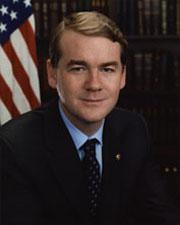 Sen. Michael F. Bennet (D-CO)
Sen. Michael F. Bennet (D-CO)Submitted July 14, 2015
Legislative Activity
Stay on top of the latest movement without scrolling through every action
Floor
Latest Action
Senate amendment submitted
July 14, 2015
View full timeline
Floor
Senate amendment submitted
July 14, 2015
Floor
Senate amendment submitted
July 14, 2015
Text
Submitted
SA 2250. Mr. BENNET (for himself and Mr. Carper) submitted an
amendment intended to be proposed to amendment SA 2089 submitted by Mr.
Alexander (for himself and Mrs. Murray) to the bill S. 1177, to
reauthorize the Elementary and Secondary Education Act of 1965 to
ensure that every child achieves; which was ordered to lie on the
table; as follows:

On page 336, between lines 4 and 5, insert the following:

``PART C--TEACHER, TEACHER LEADER, PRINCIPAL, OR OTHER SCHOOL LEADER
PATHWAYS

``SEC. 2251. PROGRAM AUTHORIZED.

``From the funds made available under section 2256(a) and
not reserved under section 2256(b) for each fiscal year, the
Secretary is authorized to award grants, on a competitive
basis, to eligible entities to enable such eligible entities
to create or expand evidence-based programs that provide
pathways into teaching, teacher leadership, and school
administration that employ innovative approaches to
recruitment, competitive selection, preparation, and
placement of new teachers, teacher leaders, principals, and
other school leaders to teach or lead in and meet the
specific needs of local educational agencies with a high
share of high-need schools.

``SEC. 2252. DEFINITIONS.

``In this part:
``(1) Eligible entity.--The term `eligible entity' means--
``(A) one or more institutions of higher education or
nonprofit organizations with a demonstrated record of--
``(i) preparing teachers, principals, or other school
leaders who meet a high standard of performance in the
classroom, including by increasing student learning; and
``(ii) placing a significant percentage of those teachers,
principals, or other school leaders in high-need schools,
including in low-performing high-need schools, and, as
appropriate within those schools, in high-need fields,
subjects, or geographic areas; or
``(B) a high-need local educational agency or consortium of
such agencies that has--
``(i) a demonstrated record of preparing teachers,
principals, or other school leaders who meet a high standard
of performance, including by increasing student learning; or
``(ii) a promising new preparation model that meets the
description of evidence-based under subclause (I) or (II) of
section 9101(23)(A)(i).
``(2) Graduate.--The terms `program graduates',
`graduates', and `graduate' may include program participants
who are teachers of record, principals, or other school
leaders.

``SEC. 2253. APPLICATIONS.

``(a) In General.--An eligible entity that desires a grant
under this part shall submit an application to the Secretary
at such time, in such manner, and containing such information
and assurances as the Secretary may reasonably require.
``(b) Contents.--Each application shall--
``(1) describe how the eligible entity will implement an
evidence-based teacher, principal, or other school leader
preparation program that prepares teachers, principals, or
other school leaders to meet a high standard of performance
in the classroom or school, including by increasing student
learning, and shall include a description of how the eligible
entity will--
``(A) recruit and competitively select candidates,
especially from underrepresented groups, with high potential
to be effective teachers, principals, or other school leaders
in high-need schools;
``(B) prepare candidates to meet the specific needs of
high-need schools and, as appropriate within those schools,
to teach or lead in high-need fields or subjects, or across
the entire school, including providing sustained, rigorous,
high-quality school-based clinical preparation and on-the-job
support; and
``(C) determine if an individual participating in the
program is attaining, or has attained, the competencies
needed to complete the training and succeed in the classroom
or school, and ensure a high standard for exit from the
program while providing counseling to individuals who have
not attained those competencies needed to complete the
training;
``(2) identify local educational agencies to be served
under the grant and describe how the eligibly entity
determined the educator quality needs of each local
educational agency and how the activities to be conducted

[[Page S5086]]

under the grant program will meet such needs;
``(3) identify any partners that will be involved in
developing or implementing projects under the grant and the
role of those partners in implementing the program, including
any partner that will provide training to prospective
teachers, principals, or other school leaders;
``(4) if applying to expand an existing preparation model
by an experienced provider to more candidates or to a new
geographic area, provide data about the eligible entity's
record of producing teachers, principals, or other school
leaders who--
``(A) have been hired to teach or lead in high-need
schools;
``(B) meet a high standard of performance in classrooms or
in school administration, including increasing student
learning; and
``(C) have high early career retention rates in high-need
schools;
``(5) describe how the eligible entity will maintain a
system to track and report on the success of program
graduates based on multiple measures, including if
applicable, as appropriate, and if feasible--
``(A) the percentage of graduates who are effective under a
State evaluation system, or if the eligible entity operates
in a State that has no State evaluation system, a local
educational agency evaluation system, that uses multiple
measures of educator performance, including student learning
and growth, and provides clear, timely, and useful feedback
that identifies needs and guides professional development;
``(B) student learning, including growth of students taught
or lead by the graduate;
``(C) the percentage of program participants who become
teachers, principals, or other school leaders in a high-need
or low-performing school;
``(D) the percentage of graduates who remain in high-need
schools for 3 years or more;
``(E) graduate and supervisor feedback; and
``(F) certification pass rate; and
``(6) describe how the eligible entity will maintain
specialized accreditation or demonstrate that graduates have
content and pedagogical knowledge and high-quality clinical
preparation, and have met rigorous exit requirements.
``(c) Priority.--In awarding grants under this part,--
``(1) the Secretary shall give priority to an applicant
that includes an entity that will implement or expand a
preparation program or activities in a program that has
strong or moderate evidence; and
``(2) the Secretary may give priority to an application
that includes an eligible entity that will rigorously
evaluate the program and activities funded by the grant in a
manner that will help further build the evidence base in the
field relevant to this part.

``SEC. 2254. SELECTION CRITERIA.

``In awarding grants under this part, the Secretary--
``(1) shall consider--
``(A) the proposed program's level of evidence; and
``(B) the extent to which an eligible entity will--
``(i) rigorously evaluate the programs and activities
funded by the grant in a manner that will help further build
the evidence base in the field relevant to this part;
``(ii) comprehensively track and report on the
effectiveness of program graduates based on multiple
measures, including performance at the classroom or school
level, placement and retention in high-need schools, or other
indicators of teacher, principal, or other school leader
quality, and use data to continuously improve the program;
``(iii) prepare prospective teachers, principals, or other
school leaders to meet specific local educational agency
needs in high-need and low-performing schools;
``(iv) if applicable, prepare prospective teachers to teach
in high-need fields or subjects within high-need schools;
``(v) ensure a high standard for entry to and exit from the
program; and
``(vi) align the coursework and clinical preparation
provided to prospective teachers, principals, or other school
leaders being prepared under the grant, as appropriate, with
the content areas the individuals will be teaching or
leading, the school environment in which the individuals will
be working (including significant special populations the
individuals may be working with), and the instructional
activities the individuals will be expected to perform or
lead; and
``(2) may consider the extent to which an eligible entity--
``(A) allows prospective teachers, principals, or other
school leaders being prepared under the grant to demonstrate
competency on subject-matter tests;
``(B) recruits, competitively selects, and prepares
veterans of the Armed Forces (including those recently
separated from military service) or candidates from
underrepresented groups who--
``(i) have strong potential to be effective educators in
high-need schools; and
``(ii) are interested in beginning a career as a teacher,
principal, or other school leader; or
``(C) will provide a teacher residency program or a school
leader residency program.

``SEC. 2255. USES OF FUNDS.

``(a) In General.--A recipient of a grant under this part
may use grant funds to carry out evidence-based teacher,
principal, or other school leader preparation programs that
prepare teachers, principals, or other school leaders to meet
a high standard of performance in the classroom or school,
including by increasing student learning, and to teach and
lead in high-need schools, which may include activities to--
``(1) rigorously recruit and competitively select
candidates with the strongest potential to be effective
educators in high-need schools, especially from
underrepresented groups;
``(2) provide robust, continuous, and high-quality school-
based clinical experiences, which may include teacher
residency programs or school leader residency programs;
``(3) develop program participants' ability to analyze
quantitative and qualitative student data to inform planning,
instructional decisions, and professional development;
``(4) train candidates to implement personalized learning
environments, tools, resources, and activities, including
through the effective use of educational technology;
``(5) prepare teachers in classroom management,
instructional planning and delivery, subject matter, and
teaching skills;
``(6) place candidates who are prepared to immediately meet
a high standard of performance on the job in teaching or
leadership positions in high-need schools and classrooms;
``(7) provide induction, mentoring, and support programs
for early career program graduates;
``(8) train teacher, principal, or other school leader
candidates on how to effectively communicate and engage with
parents, relatives, and other family members to improve
student outcomes; and
``(9) provide training and compensation for staff in
schools that are used for a proposed clinical portion of the
preparation program, as well as the development of curriculum
and training materials for such staff.
``(b) Stipends, Service, Waiver, Repayment.--
``(1) A grantee may use a portion of its grant funds under
this part to provide a stipend and other support services for
prospective teachers, teacher leaders, principals, or other
school leaders selected for programs under the grant.
``(2) Where applicable, the grantee shall establish such
rules for length of service, waiver of service, repayment
requirements, and amount of stipends, for Federal funds used
under this part for stipends and other support services for
prospective teachers, teacher leaders, principals, or other
school leaders selected for programs under the grant, as the
Secretary deems appropriate. A grantee shall use any
repayment recovered under those rules to carry out additional
activities that are consistent with the purpose of this part.

``SEC. 2256. AUTHORIZATION OF APPROPRIATIONS.

``(a) In General.--For the purposes of carrying out this
part, there are authorized to be appropriated such sums as
may be necessary for each of fiscal years 2016 through 2021.
``(b) Reservation.--From the funds made available under
subsection (a) for any fiscal year, the Secretary may reserve
not more than 5 percent for national leadership activities,
including--
``(1) technical assistance to grantees; and
``(2) evaluation of the effectiveness of the program
assisted under this part, which shall be conducted by a third
party or by the Institute of Education Sciences.''.
______