S.Amdt. 3099Senate114th Congress (2015-2017)2nd degree
S.Amdt. 3099
Sponsored by 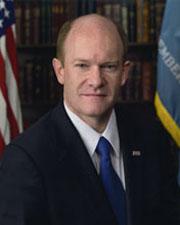 Sen. Christopher A. Coons (D-DE)
Sen. Christopher A. Coons (D-DE)Submitted January 28, 2016
Legislative Activity
Stay on top of the latest movement without scrolling through every action
Floor
Latest Action
Senate amendment submitted
January 28, 2016
View full timeline
Floor
Senate amendment submitted
January 28, 2016
Floor
Senate amendment submitted
January 28, 2016
Text
Submitted
SA 3099. Mr. COONS submitted an amendment intended to be proposed to
amendment SA 2953 proposed by Ms. Murkowski to the bill S. 2012, to
provide for the modernization of the energy policy of the United
States, and for other purposes; which was ordered to lie on the table;
as follows:

On page 359, strike line 7 and insert the following:

SEC. 4204. IMPLEMENTING NEW NATIONAL OPPORTUNITIES TO
VIGOROUSLY ACCELERATE TECHNOLOGY, ENERGY, AND
SCIENCE.

(a) Definition of National Laboratory.--
(1) In general.--In this section, the term ``National
Laboratory'' means a nonmilitary national laboratory owned by
the Department.
(2) Inclusions.--The term ``National Laboratory''
includes--
(A) Ames Laboratory;
(B) Argonne National Laboratory;
(C) Brookhaven National Laboratory;
(D) Fermi National Accelerator Laboratory;
(E) Idaho National Laboratory;
(F) Lawrence Berkeley National Laboratory;
(G) National Energy Technology Laboratory;
(H) National Renewable Energy Laboratory;
(I) Oak Ridge National Laboratory;
(J) Pacific Northwest National Laboratory;
(K) Princeton Plasma Physics Laboratory;
(L) Savannah River National Laboratory;
(M) Stanford Linear Accelerator Center;
(N) Thomas Jefferson National Accelerator Facility; and
(O) any laboratory operated by the National Nuclear
Security Administration, with respect to the civilian energy
activities conducted at the laboratory.
(b) Agreements for Commercializing Technology Pilot
Program.--
(1) In general.--The Secretary shall carry out the
Agreements for Commercializing Technology pilot program of
the Department, as announced by the Secretary on December 8,
2011, in accordance with this subsection.
(2) Terms.--Each agreement entered into pursuant to the
pilot program referred to in paragraph (1) shall provide to
the contractor of the applicable National Laboratory, to the
maximum extent determined to be appropriate by the Secretary,
increased authority to negotiate contract terms, such as
intellectual property rights, indemnification, payment
structures, performance guarantees, and multiparty
collaborations.
(3) Eligibility.--
(A) In general.--Notwithstanding any other provision of law
(including regulations), any National Laboratory may enter
into an agreement pursuant to the pilot program referred to
in paragraph (1).
(B) Agreements with non-federal entities.--To carry out
subparagraph (A) and subject to subparagraph (C), the
Secretary shall permit the directors of the National
Laboratories to execute agreements with non-Federal entities,
including non-Federal entities already receiving Federal
funding that will be used to support activities under
agreements executed pursuant to subparagraph (A).
(C) Restriction.--The requirements of chapter 18 of title
35, United States Code (commonly known as the ``Bayh-Dole
Act'') shall apply if--
(i) the agreement is a funding agreement (as that term is
defined in section 201 of that title); and
(ii) at least 1 of the parties to the funding agreement is
eligible to receive rights under that chapter.
(4) Submission to secretary.--Each affected director of a
National Laboratory shall submit to the Secretary, with
respect to each agreement entered into under this
subsection--
(A) a summary of information relating to the relevant
project;
(B) the total estimated costs of the project;
(C) estimated commencement and completion dates of the
project; and
(D) other documentation determined to be appropriate by the
Secretary.
(5) Certification.--The Secretary shall require the
contractor of the affected National Laboratory to certify
that each activity carried out under a project for which an
agreement is entered into under this subsection--
(A) is not in direct competition with the private sector;
and
(B) does not present, or minimizes, any apparent conflict
of interest, and avoids or neutralizes any actual conflict of
interest, as a result of the agreement under this subsection.
(6) Extension.--The pilot program referred to in paragraph
(1) shall be extended for a term of 3 years after the date of
enactment of this Act.
(7) Reports.--
(A) Initial report.--Not later than 60 days after the date
described in paragraph (6), the Secretary, in coordination
with directors of the National Laboratories, shall submit to
the Committee on Energy and Natural Resources of the Senate
and the Committee on Science, Space, and Technology of the
House of Representatives a report that--
(i) assesses the overall effectiveness of the pilot program
referred to in paragraph (1);
(ii) identifies opportunities to improve the effectiveness
of the pilot program;
(iii) assesses the potential for program activities to
interfere with the responsibilities of the National
Laboratories to the Department; and
(iv) provides a recommendation regarding the future of the
pilot program.
(B) Annual reports.--Annually, the Secretary, in
coordination with the directors of the National Laboratories,
shall submit to the Committee on Energy and Natural Resources
of the Senate and the Committee on Science, Space, and
Technology of the House of Representatives a report that
accounts for all incidences of, and provides a justification
for, non-Federal entities using funds derived from a Federal
contract or award to carry out agreements entered into under
this subsection.
(c) Public-private Partnerships for Commercialization.--
(1) In general.--Subject to paragraphs (2) through (4), the
Secretary shall delegate to directors of the National
Laboratories signature authority with respect to any
agreement described in paragraph (2) the total cost of which
(including the National Laboratory contributions and project
recipient cost share) is less than $1,000,000, if the
agreement falls within the scope of--
(A) a strategic plan for the National Laboratory that has
been approved by the Department; or
(B) the most recent congressionally approved budget for
Department activities to be carried out by the National
Laboratory.
(2) Agreements.--Paragraph (1) applies to--
(A) a cooperative research and development agreement;
(B) a non-Federal work-for-others agreement; and
(C) any other agreement determined to be appropriate by the
Secretary, in collaboration with the directors of the
National Laboratories.
(3) Limitation.--Paragraph (1) does not apply to an
agreement with a majority-foreign-owned company.
(4) Administration.--
(A) Accountability.--The director of the affected National
Laboratory and the affected contractor shall carry out an
agreement under this subsection in accordance with applicable
policies of the Department, including by ensuring that the
agreement does not compromise any national security,
economic, or environmental interest of the United States.
(B) Certification.--The director of the affected National
Laboratory and the affected contractor shall certify that
each activity carried out under a project for which an
agreement is entered into under this subsection does not
present, or minimizes, any apparent conflict of interest, and
avoids or neutralizes any actual conflict of interest, as a
result of the agreement under this subsection.
(C) Availability of records.--On entering an agreement
under this subsection, the director of a National Laboratory
shall submit to the Secretary for monitoring and review all
records of the National Laboratory relating to the agreement.
(D) Rates.--The director of a National Laboratory may
charge higher rates for services performed under a
partnership agreement entered into pursuant to this
subsection, regardless of the full cost of recovery, if the
funds are exclusively used to support further research and
development activities at the applicable National Laboratory.
(5) Conforming amendment.--Section 12 of the Stevenson-
Wydler Technology Innovation Act of 1980 (15 U.S.C. 3710a) is
amended--
(A) in subsection (a)--
(i) by redesignating paragraphs (1) and (2) as
subparagraphs (A) and (B), respectively, and indenting the
subparagraphs appropriately;
(ii) by striking ``Each Federal agency'' and inserting the
following:
``(1) In general.--Except as provided in paragraph (2),
each Federal agency''; and
(iii) by adding at the end the following:
``(2) Exception.--Notwithstanding paragraph (1), in
accordance with section 4204(c)(1) of the Energy Policy
Modernization Act of 2015, approval by the Secretary of
Energy shall not be required for any technology transfer
agreement proposed to be entered into by a National
Laboratory of the Department of Energy, the total cost of
which (including the National Laboratory contributions and
project recipient cost share) is less than $1,000,000.''; and
(B) in subsection (b), by striking ``subsection (a)(1)''
each place it appears and inserting ``subsection (a)(1)(A)''.
(d) Funding Competitiveness for Institutions of Higher
Education and Other Nonprofit Institutions.--
Section 988(b) of the Energy Policy Act of 2005 (42 U.S.C.
16352(b)) is amended--
(1) in paragraph (1), by striking ``Except as provided in
paragraphs (2) and (3)'' and inserting ``Except as provided
in paragraphs (2), (3), and (4)''; and
(2) by adding at the end the following:
``(4) Exemption for institutions of higher education and
other nonprofit institutions.--
``(A) In general.--Paragraph (1) shall not apply to a
research or development activity performed by an institution
of higher education or nonprofit institution (as defined in

[[Page S371]]

section 4 of the Stevenson-Wydler Technology Innovation Act
of 1980 (15 U.S.C. 3703)).
``(B) Termination date.--The exemption under subparagraph
(A) shall apply during the 6-year period beginning on the
date of enactment of this paragraph.''.
(e) Savings Clause.--Nothing in this section abrogates or
otherwise affects the primary responsibilities of any
National Laboratory to the Department.

SEC. 4205. MICROLAB TECHNOLOGY COMMERCIALIZATION.

______