S.Amdt. 3130Senate114th Congress (2015-2017)
S.Amdt. 3130
Sponsored by 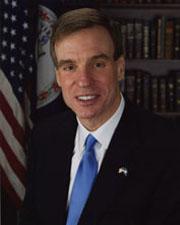 Sen. Mark R. Warner (D-VA)
Sen. Mark R. Warner (D-VA)Submitted January 28, 2016
Legislative Activity
Stay on top of the latest movement without scrolling through every action
Floor
Latest Action
Senate amendment submitted
January 28, 2016
View full timeline
Floor
Senate amendment submitted
January 28, 2016
Floor
Senate amendment submitted
January 28, 2016
Text
Submitted
SA 3130. Mr. WARNER (for himself and Mr. Manchin) submitted an
amendment intended to be proposed by him to the bill S. 2012, to
provide for the modernization of the energy policy of the United
States, and for other purposes; which was ordered to lie on the table;
as follows:

At the appropriate place, insert the following:

SEC. __. ENERGY PRODUCTIVITY INNOVATION CHALLENGE.

(a) Purpose.--The purpose of this section is to assist
energy policy innovation in the States to promote the goal of
doubling electric and thermal energy productivity by January
1, 2030.
(b) Definitions.--In this section:
(1) Energy productivity.--The term ``energy productivity''
means, in the case of a State or Indian tribe, the gross
State or tribal product per British thermal unit of energy
consumed in the State or tribal land of the Indian tribe,
respectively.
(2) Indian tribe.--The term ``Indian tribe'' has the
meaning given the term in section 4 of the Indian Self-
Determination and Education Assistance Act (25 U.S.C. 450b).
(3) Secretary.--The term ``Secretary'' means the Secretary
of Energy.
(4) State.--The term ``State'' has the meaning given the
term in section 3 of the Energy Policy and Conservation Act
(42 U.S.C. 6202).
(c) Phase 1: Initial Allocation of Grants to States.--
(1) In general.--Not later than 30 days after the date of
enactment of this Act, the Secretary shall issue an
invitation to States to submit plans to participate in an
electric and thermal energy productivity challenge in
accordance with this subsection.
(2) Grants.--
(A) In general.--Subject to subsection (f), the Secretary
shall use funds made available under subsection (g)(2)(A) to
provide an initial allocation of grants to not more than 25
States.
(B) Amount.--The amount of a grant provided to a State
under this subsection shall be not less than $500,000 nor
more than $1,750,000.
(3) Submission of plans.--To receive a grant under this
subsection, not later than 90 days after the date of issuance
of the invitation under paragraph (1), a State (in
consultation with energy utilities, regulatory bodies, and
others) shall submit to the Secretary an application to
receive the grant by submitting a revised State energy
conservation plan under section 362 of the Energy Policy and
Conservation Act (42 U.S.C. 6322).
(4) Decision by secretary.--
(A) Basis.--The Secretary shall base the decision of the
Secretary on an application submitted under this subsection
on--
(i) plans for improvement in electric and thermal energy
productivity consistent with this section; and
(ii) other factors determined appropriate by the Secretary,
including geographic diversity.
(B) Ranking.--The Secretary shall--
(i) rank revised plans submitted under this subsection in
order of the greatest to least likely contribution to
improving energy productivity in the State; and
(ii) provide grants under this subsection in accordance
with the ranking and the scale and scope of a plan.
(5) Plan requirements.--A plan submitted under paragraph
(3) shall provide--
(A) a description of the manner in which--
(i) energy savings will be monitored and verified and
energy productivity improvements will be calculated using
inflation-adjusted dollars;
(ii) a statewide baseline of energy use and potential
resources for calendar year 2010 will be established to
measure improvements;
(iii) the plan will promote achievement of energy savings
and demand reduction goals;
(iv) public and private sector investments in energy
efficiency will be leveraged with available Federal funding;
and
(v) the plan will not cause cost-shifting among utility
customer classes or negatively impact low-income populations;
and
(B) an assurance that--
(i) the State energy office required to submit the plan,
the energy utilities in the State participating in the plan,
and the State public service commission are cooperating and
coordinating programs and activities under this section;
(ii) the State is cooperating with local units of
government, Indian tribes, and energy utilities to expand
programs as appropriate; and
(iii) grants provided under this section will be used to
supplement and not supplant Federal, State, or ratepayer-
funded programs or activities in existence on the date of
enactment of this Act.
(6) Uses.--A State may use grants provided under this
subsection to promote--
(A) the expansion of policies and programs that will
advance industrial energy efficiency, waste heat recovery,
combined heat and power, and waste heat-to-power utilization;
(B) the expansion of policies and programs that will
advance energy efficiency construction and retrofits for
public and private commercial buildings (including schools,
hospitals, and residential buildings, including multifamily
buildings) such as through expanded energy service
performance contracts, equivalent utility energy service
contracts, zero net-energy buildings, and improved building
energy efficiency codes;
(C) the expansion of residential policies and programs
designed to implement best practice policies and tools for
residential retrofit programs that--
(i) reduce administrative and delivery costs for energy
efficiency projects;
(ii) encourage streamlining and automation to support
contractor engagement; and
(iii) implement systems that encourage private investment
and market innovation;
(D) the establishment or expansion of incentives in the
electric utility sector to enhance demand response and energy
efficiency, including consideration of additional incentives
to promote the purposes of section 111(d) of the Public
Utility Regulatory Policies Act of 1978 (16 U.S.C. 2621(d)),
such as appropriate, cost-effective policies regarding rate
structures, grid improvements, behavior change, combined heat
and power and waste heat-to-power incentives, financing of
energy efficiency programs, data use incentives, district
heating, and regular energy audits; and
(E) leadership by example, in which State activities
involving both facilities and vehicle fleets can be a model
for other action to promote energy efficiency and can be
expanded with Federal grants provided under this section.
(d) Phase 2: Subsequent Allocation of Grants to States.--
(1) Reports.--Not later than 18 months after the receipt of
grants under subsection (c), each State (in consultation with
other parties described in paragraph (2)(C)(vi)) that
received grants under subsection (c) may submit to the
Secretary a report that describes--
(A) the performance of the programs and activities carried
out with the grants; and
(B) in consultation with other parties described in
paragraph (2)(C)(vi), the manner in which additional funds
would be used to carry out programs and activities to promote
the purposes of this section.
(2) Grants.--
(A) In general.--Not later than 180 days after the date of
the receipt of the reports required under paragraph (1),
subject to subsection (f), the Secretary shall use amounts
made available under subsection (g)(2)(B) to provide grants
to not more than 6 States to carry out the programs and
activities described in paragraph (1)(B).
(B) Amount.--The amount of a grant provided to a State
under this subsection shall be not more than $15,000,000.
(C) Basis.--The Secretary shall base the decision of the
Secretary to provide grants under this subsection on--
(i) the performance of the State in the programs and
activities carried out with grants provided under subsection
(c);
(ii) the potential of the programs and activities described
in paragraph (1)(B) to achieve the purposes of this section;
(iii) the desirability of maintaining a total project
portfolio that is geographically and functionally diverse;
(iv) the amount of non-Federal funds that are leveraged as
a result of the grants to ensure that Federal dollars are
leveraged effectively;
(v) plans for continuation of the improvements after the
receipt of grants under this section; and
(vi) demonstrated effort by the State to involve diverse
groups, including--

(I) investor-owned, cooperative, and public power
utilities;
(II) local governments; and

[[Page S392]]

(III) nonprofit organizations.

(e) Allocation of Grants to Indian Tribes.--
(1) In general.--Not later than 30 days after the date of
enactment of this Act, the Secretary shall invite Indian
tribes to submit plans to participate in an electric and
thermal energy productivity challenge in accordance with this
subsection.
(2) Submission of plans.--To receive a grant under this
subsection, not later than 90 days after the date of issuance
of the invitation under paragraph (1), an Indian tribe shall
submit to the Secretary a plan to increase electric and
thermal energy productivity by the Indian tribe.
(3) Decision by secretary.--
(A) In general.--Not later than 90 days after the
submission of plans under paragraph (2), the Secretary shall
make a final decision on the allocation of grants under this
subsection.
(B) Basis.--The Secretary shall base the decision of the
Secretary under subparagraph (A) on--
(i) plans for improvement in electric and thermal energy
productivity consistent with this section;
(ii) plans for continuation of the improvements after the
receipt of grants under this section; and
(iii) other factors determined appropriate by the
Secretary, including--

(I) geographic diversity; and
(II) size differences among Indian tribes.

(C) Limitation.--An individual Indian tribe shall not
receive more than 20 percent of the total amount available to
carry out this subsection.
(f) Administration.--
(1) Independent evaluation.--To evaluate program
performance and effectiveness under this section, the
Secretary shall consult with the National Research Council
regarding requirements for data and evaluation for recipients
of grants under this section.
(2) Coordination with state energy conservation programs.--
(A) In general.--Grants to States under this section shall
be provided through additional funding to carry out State
energy conservation programs under part D of title III of the
Energy Policy and Conservation Act (42 U.S.C. 6321 et seq.).
(B) Relationship to state energy conservation programs.--
(i) In general.--A grant provided to a State under this
section shall be used to supplement (and not supplant) funds
provided to the State under part D of title III of the Energy
Policy and Conservation Act (42 U.S.C. 6321 et seq.).
(ii) Minimum funding.--A grant shall not be provided to a
State for a fiscal year under this section if the amount of
funding provided to all State grantees under the base formula
for the fiscal year under part D of title III of the Energy
Policy and Conservation Act (42 U.S.C. 6321 et seq.) is less
than $50,000,000.
(3) Voluntary participation.--The participation of a State
in a challenge established under this section shall be
voluntary.
(g) Authorization of Appropriations.--
(1) In general.--There is authorized to be appropriated to
carry out this section $100,000,000 for the period of fiscal
years 2017 and 2018.
(2) Allocation.--Of the total amount of funds made
available under paragraph (1)--
(A) 30 percent shall be used to provide an initial
allocation of grants to States under subsection (c);
(B) 61 percent shall be used to provide a subsequent
allocation of grants to States under subsection (d);
(C) 4 percent shall be used to make grants to Indian tribes
under subsection (e); and
(D) 5 percent shall be available to the Secretary for the
cost of administration and technical support to carry out
this section.
(h) Offset.--Section 422(f) of the Energy Independence and
Security Act of 2007 (42 U.S.C. 17082(f)) is amended--
(1) in paragraph (3), by striking ``and'' after the
semicolon at the end; and
(2) by striking paragraph (4) and inserting the following:
``(4) $200,000,000 for each of fiscal years 2013 through
2016;
``(5) $150,000,000 for each of fiscal years 2017 and 2018;
and
``(6) $200,000,000 for fiscal year 2019.''.
______